
AI-generated image
Hiroshima oyster nabe (kaki nabe)
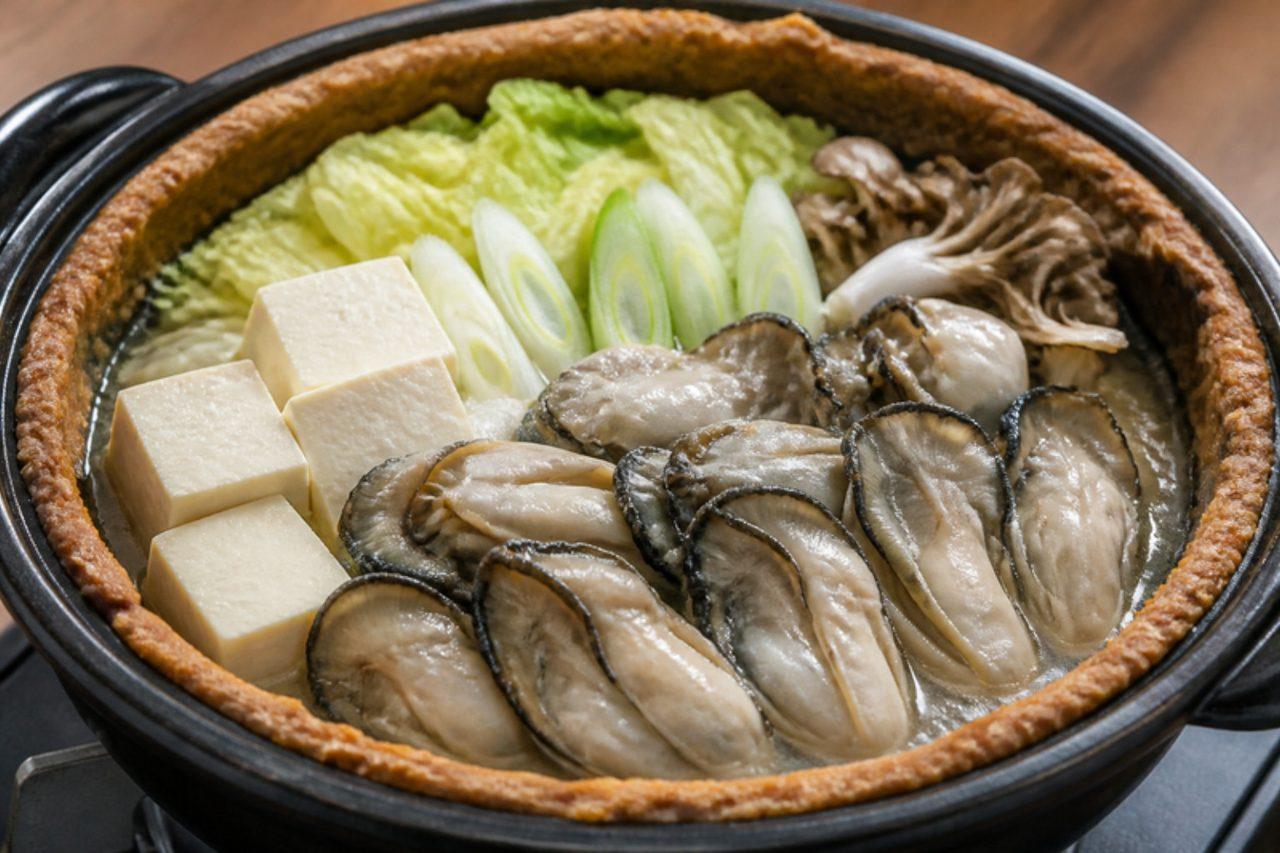
かき鍋 (kaki nabe): plump oysters and tofu in a hot pot with a wall of miso around the rim

Hiroshima Bay is lined with oyster rafts, and from late autumn to early spring the city's restaurants put kaki nabe on the menu. In the version called dote nabe, a thick band of sweetened miso is smeared around the inside of the pot like a riverbank, then melts into the broth bit by bit as you eat. Cabbage, tofu, leek and mushrooms go in first; the oysters only need a few minutes at the end. It is cooked at the table on a portable burner, so everyone eats it as it is ready. Chef's tip: rinse the shucked oysters in a bowl with potato starch and a little salt, then in clean water; the grey starch pulls out grit and slime and leaves them clean-tasting.
- Total time
- 40 min
- Difficulty
- medium
- Serves
- 4
Ingredients
For the miso rim
- 3 ½ oz white (shiro) miso
- 1 ¾ oz red (aka) miso
- 2 tbsp sugar
- 2 tbsp mirincontains alcohol; see step 2 for an alcohol-free swap
For the broth
- 4 ¼ cups water
- ⅓ oz kombu (dried kelp)about a 10 cm piece
For the pot
- 14 oz shucked oystersabout 20, cooking grade
- 2 tbsp potato starch or cornflourfor cleaning the oysters
- 1 tsp saltfor cleaning the oysters
- 10 ½ oz firm tofucut into 3 cm cubes
- 14 oz Chinese leaf (napa cabbage)cut into 5 cm pieces
- 1 leek or Japanese long onionsliced on the diagonal
- 6 fresh shiitake mushroomsstems removed
- 3 ½ oz enoki mushroomsroots trimmed, pulled into clumps
To finish
- 14 oz cooked udon noodles (optional)for the end of the meal
Shop this recipe on Amazon
What you'll need
Spices & pantry
Fresh ingredients (4)
Links open Amazon in a new tab. As an Amazon Associate, WhatToEat.Today earns from qualifying purchases.
Method
0/9 doneStep 1: Put 4 ¼ cups water and ⅓ oz kombu (dried kelp) in a wide, shallow pot (a donabe or a casserole about 26 cm across) and leave to soak while you prepare everything else.
10 minStep 2: Mix 3 ½ oz white (shiro) miso, 1 ¾ oz red (aka) miso, 2 tbsp sugar and 2 tbsp mirin in a bowl to a thick, smooth paste. Mirin contains a little alcohol; for an alcohol-free paste use 2 tbsp water and an extra 1 tsp sugar instead.
2 minStep 3: Put 14 oz shucked oysters in a bowl with 2 tbsp potato starch or cornflour and 1 tsp salt and stir gently with your fingers for 30 seconds until the starch turns grey. Rinse in two changes of cold water and drain on kitchen paper. If you bought oysters in the shell, discard any that are open and do not close when tapped.
3 minStep 4: Bring the kombu water slowly to a bare simmer over medium heat. Lift out the kombu just before it boils, add ½ oz bonito flakes (katsuobushi), turn off the heat and leave for 3 minutes, then strain through a sieve lined with kitchen paper. Pour the broth back into the pot.
10 minStep 5: Spread the miso paste in a thick band, about 3 cm deep, around the inside wall of the pot just above the broth line, so it sits like a bank around the edge.
2 minStep 6: Arrange 14 oz Chinese leaf (napa cabbage), 1 leek or Japanese long onion, 10 ½ oz firm tofu, 6 fresh shiitake mushrooms and 3 ½ oz enoki mushrooms in sections in the pot. Cover and simmer over medium heat until the cabbage stems are tender.
8 minStep 7: Add 3 ½ oz crown daisy (shungiku) or spinach and push them down into the broth. Scrape a little miso from the rim into the broth with a ladle, taste, and keep adding until it is as rich as you like.
1 minStep 8: Lay the oysters in the broth and simmer gently for at least 3 minutes, until they are plump, the edges have curled and the flesh is firm and opaque right through. Common mistake: boiling the oysters hard or for a long time; they shrink and turn rubbery, so keep the pot at a gentle bubble and serve them as soon as they are cooked.
3 minStep 9: Bring the pot to the table and ladle oysters, vegetables and broth into small bowls. When the pot is nearly empty, add 14 oz cooked udon noodles to the last of the miso broth and heat for 2 to 3 minutes for a final course.
3 min
Nutrition per serving
- Calories
- 290 kcal
- Protein
- 21 g
- Carbs
- 27 g
- Fat
- 10 g
- Fibre
- 6 g
Nutrition values are estimates.
KrazyBadal
Good to know
- How long does hiroshima oyster nabe (kaki nabe) take?
- About 40 minutes in total: 15 minutes to prepare and 25 minutes to cook.
- How many people does it serve?
- 4 as written. Change the servings above the ingredients and every amount scales to match.
- What can I use instead of sugar?
- Caster sugar, same amount.
- What can I use instead of mirin?
- Rice vinegar with ½ tsp sugar per tbsp.
Reviews
No reviews yet. Be the first to cook it.
Rate this recipe
Sign in to rate and review this recipe.
You might also like

Moreton Bay bugsSlipper lobster with garlic butter
Moreton Bay bugs are the flat, shovel-nosed slipper lobsters caught off the Queensland coast around Brisbane and the Sunshine Coast, and for Queenslanders they are a summer treat, split and grilled at the beach house. The tail meat is sweet and rich, somewhere between lobster and prawn. Buy them raw, frozen or fresh, from a fishmonger and ask them to halve them if you like. A common mistake is overcooking, which makes the meat rubbery; it is ready the moment it turns white. Chef's tip: grill flesh side down first to mark it, then turn and baste in the shell.
 Australian


Yaki onigiriGrilled rice balls
Yaki onigiri (焼きおにぎり) are rice balls grilled until they form a crisp, toasty crust, then brushed with soy sauce glaze. They are eaten all over Japan, at izakaya, at barbecues and from the freezer section, as a snack or with miso soup. The inside stays soft and steamy while the outside crackles. Best eaten hot, straight from the pan. Chef's tip: let the shaped rice balls dry for 10 minutes before they go in the pan. A drier surface forms a better crust and won't stick, and the glaze goes on only at the end so it doesn't burn.

All i pebreEel and potato paprika stew
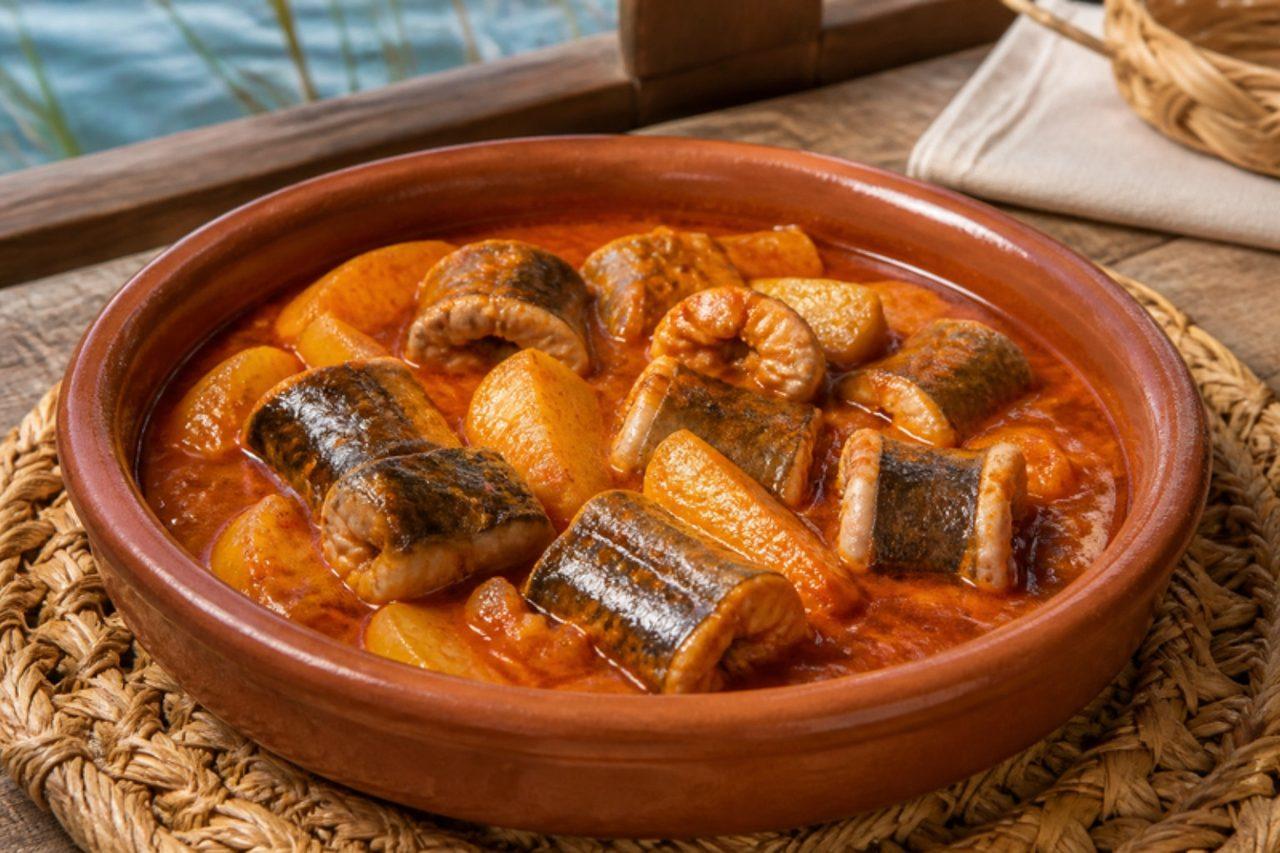
In El Palmar and the other villages around the Albufera lagoon south of Valencia, the restaurants that are famous for paella serve something older first: all i pebre, "garlic and pepper", a brick-red stew of lagoon eel and potatoes thickened with a pounded almond and fried-bread picada. It is rich, garlicky and gently hot, eaten with bread to mop up the sauce. Ask your fishmonger to skin and cut the eel, and handle it with gloves: raw eel blood is irritating, though harmless once cooked. If you can't find eel, monkfish or hake works well. A common mistake is letting the paprika burn; it turns bitter in seconds, so add it off the heat. Chef's tip: break the potatoes with a knife instead of cutting cleanly; the rough edges release starch and thicken the sauce.
 Spanish

Perfect for:Winter warmers