
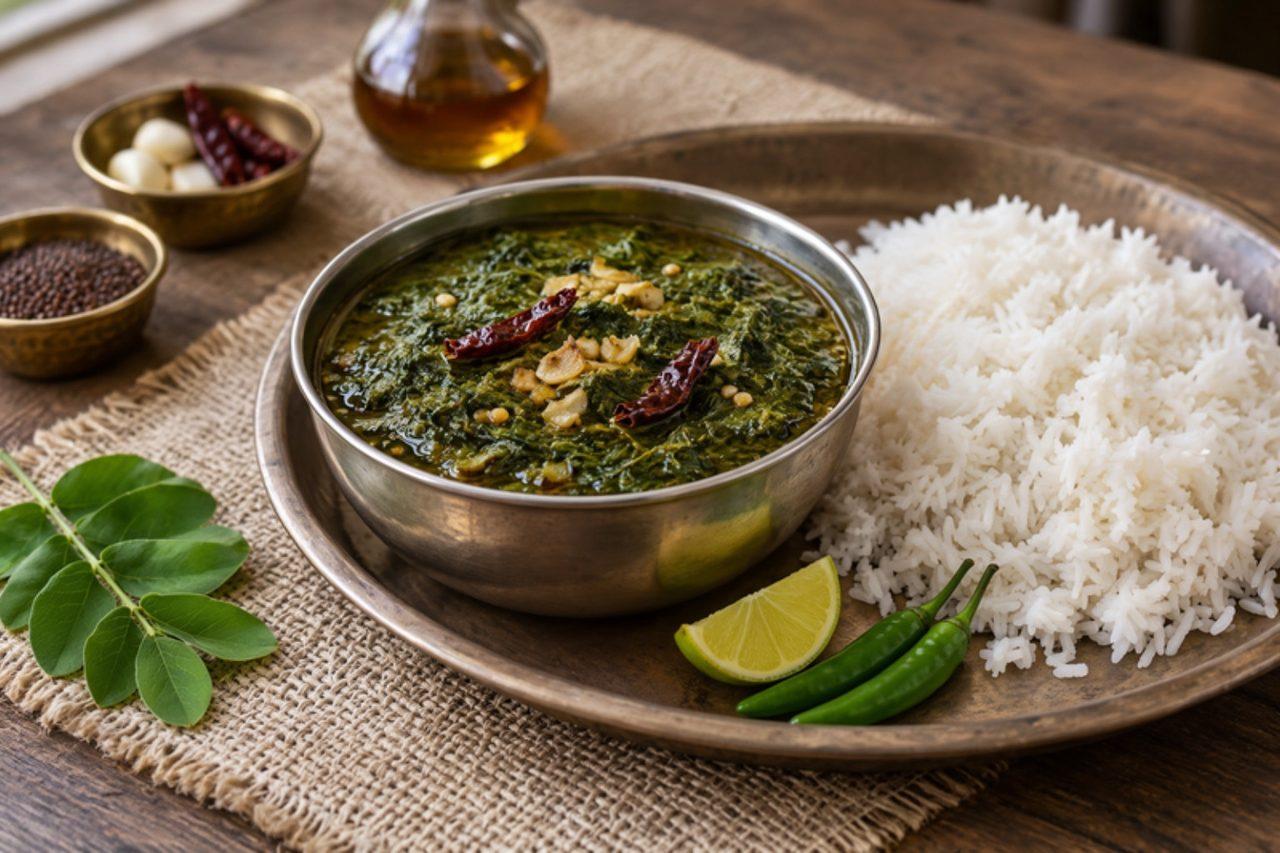
AI-generated image
Koinar saag
कोइनार साग: young kachnar leaves cooked with garlic, chilli and mustard oil



In Jharkhand's spring, as the kachnar (Bauhinia) trees put out pale tender leaves, Santhal, Munda and Oraon families gather them for koinar saag, a slightly tangy, earthy green cooked with lots of garlic in mustard oil and eaten with rice and dal or with madua roti. Some households dry the leaves to use through the summer. The usual mistake is using older, darker leaves, which stay tough and fibrous however long you cook them. Chef's tip: blanch the leaves first and squeeze them hard; it softens the faint astringency and the saag absorbs the garlic oil better.
- Total time
- 25 min
- Difficulty
- easy
- Serves
- 4
Ingredients
For the saag
- 10 ½ oz young kachnar leaves (koinar)or tender spinach
- 2 tbsp mustard oil
- 8 garlic clovesthinly sliced
- 1 green chillichopped
- ½ tsp salt
- ¼ tsp ground turmeric
Shop this recipe on Amazon
Fresh ingredients (1)
Links open Amazon in a new tab. As an Amazon Associate, WhatToEat.Today earns from qualifying purchases.
Method
0/4 doneStep 1: Blanch 10 ½ oz young kachnar leaves (koinar) in boiling water for 3 minutes, drain, cool and squeeze out as much water as you can. Chop finely.
6 minStep 2: Heat 2 tbsp mustard oil in a kadhai until it smokes lightly, then lower the heat.
2 minStep 3: Add 2 dried red chillies, 8 garlic cloves and 1 green chilli and fry 1–2 minutes until the garlic turns light gold.
2 minStep 4: Add the leaves, ½ tsp salt and ¼ tsp ground turmeric and stir-fry 5–6 minutes over medium heat until dry, glossy and well coated. Serve with rice.
6 min
Nutrition per serving
- Calories
- 95 kcal
- Protein
- 3 g
- Carbs
- 6 g
- Fat
- 7 g
- Fibre
- 4 g
Nutrition values are estimates.
KrazyBadal
Good to know
- How long does koinar saag take?
- About 25 minutes in total: 10 minutes to prepare and 15 minutes to cook.
- How many people does it serve?
- 4 as written. Change the servings above the ingredients and every amount scales to match.
- Is it vegan?
- Yes. It has no meat, fish, dairy or eggs.
- Is it gluten free?
- Yes, as written. Check the labels on stock, sauces and spice mixes, which sometimes contain gluten.
- What can I use instead of garlic cloves?
- ½ tsp garlic paste or ⅛ tsp garlic powder per clove.
- What can I use instead of green chilli?
- A pinch of chilli flakes per chilli.
Reviews
No reviews yet. Be the first to cook it.
Rate this recipe
Sign in to rate and review this recipe.
You might also like

Masala khakhra
Khakhra are thin chapaties roasted slowly on a griddle until they turn crisp, like a cracker. This masala version adds gram flour, fresh fenugreek, turmeric and chilli to the wheat dough. They are a light Gujarati breakfast or tea-time snack, and lovely with pickle, chutney or a smear of butter. You can also make them in a roti maker.


Caramelised clay-pot tofu and mushrooms
Kho is the slow braise of the Mekong Delta: food simmered in a little clay pot (nồi đất) with dark caramel and seasoning until the sauce is sticky and the flavours go deep. This vegetarian cousin of cá kho tộ (braised fish) uses golden tofu and meaty mushrooms in place of fish, cooked in coconut water, as cooks do in the south, and finished with plenty of black pepper. Serve it bubbling in its pot with steamed rice and a sour soup or plain boiled vegetables. Chef's tip: take the caramel (nước màu) to a deep mahogany, darker than you think, just before it smokes; pale caramel only tastes sweet, while dark caramel gives the bittersweet, smoky flavour of a real kho.
 Vietnamese

Sabudana khichdi
Sabudana khichdi is the dish that sees Maharashtra through every vrat (fast), from Navratri to Ekadashi, but it's so good that people eat it any day of the week. Soaked sago pearls are tossed in a pan with crushed roasted peanuts, cubes of potato, cumin and green chilli until each pearl turns glassy and separate, then finished with lemon and coriander. It's soft, chewy, nutty and gently hot. Fasting rules vary from family to family, so check yours; this version uses rock salt and no asafoetida, onion or garlic. Traditionally it's cooked in ghee; use ghee instead of oil if you aren't keeping it vegan. Chef's tip: soak the sago in just enough water to cover by the height of the pearls themselves, no more; too much water is the reason khichdi turns into one sticky lump.
