
AI-generated image
Kola kenda
Herbal red rice porridge
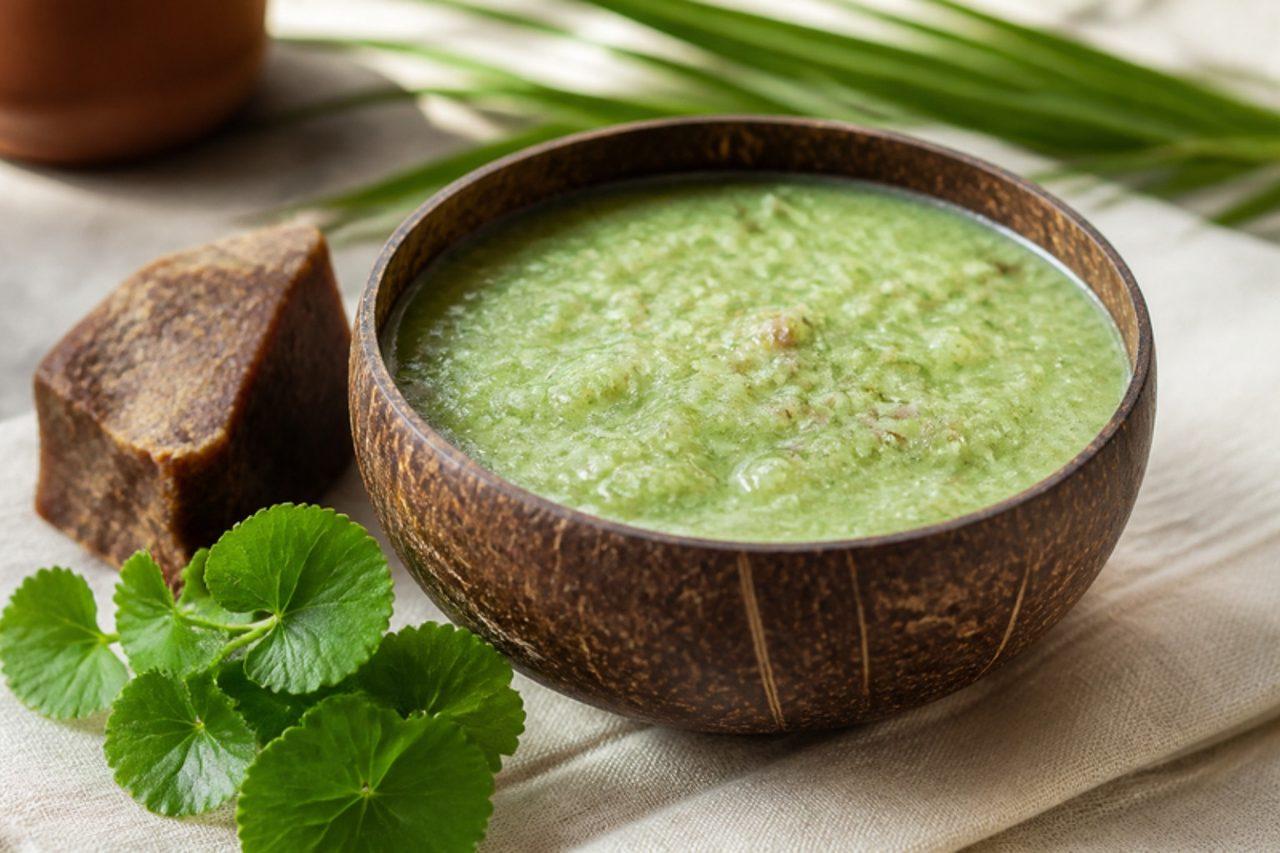
කොළ කැඳ (kola kenda): green herbal porridge of red rice, coconut milk and gotu kola juice, drunk at breakfast with jaggery



Early in the morning, outside bus stands in Kandy and along the walking paths of Colombo's parks, vendors ladle bright green kola kenda from big pots into cups, handing each customer a lump of jaggery to bite between sips. It is a thin, savoury porridge of red rice cooked until it breaks down, enriched with coconut milk and coloured with the juice of fresh leaves, most often gotu kola, though cooks also use hathawariya, mukunuwenna or even curry leaves. The taste is grassy, slightly bitter and very restoring, and older Sri Lankans drink it as a daily tonic. The leaf juice must never boil; adding it to a bubbling pot is the mistake that turns the porridge khaki and dulls the fresh flavour. Chef's tip: blend the leaves with cold water and strain them through a fine sieve, so the kenda stays silky with no stringy bits.
- Total time
- 40 min
- Difficulty
- easy
- Serves
- 4
Ingredients
For the porridge
- 3 ½ oz red rice (raw)washed
- 5 cups water
- 2 cloves garliclightly crushed
- 3 /4 tsp salt
- ¾ cup coconut milk
For the green juice
- 2 ⅛ oz gotu kola (pennywort) leaveswashed, with soft stems; or a mix of gotu kola and spinach
- ¾ cup cold water
To serve
- 2 ⅛ oz kithul or palm jaggery (optional)broken into pieces
Shop this recipe on Amazon
What you'll need
Spices & pantry
Fresh ingredients (1)
Links open Amazon in a new tab. As an Amazon Associate, WhatToEat.Today earns from qualifying purchases.
Method
0/5 doneStep 1: Put 3 ½ oz red rice (raw), 5 cups water and 2 cloves garlic in a large saucepan, bring to the boil, then simmer partly covered for 22–25 minutes, stirring now and then, until the grains are very soft and starting to break up.
25 minStep 2: Meanwhile blend 2 ⅛ oz gotu kola (pennywort) leaves with ¾ cup cold water until completely smooth, then strain through a fine sieve, pressing on the pulp.
Step 3: Stir 3 /4 tsp salt and ¾ cup coconut milk into the rice and simmer gently for 2–3 minutes until creamy; add a splash of hot water if it is thicker than pouring cream.
3 minStep 4: Take the pan off the heat and stir in the green juice until the porridge is evenly green.
Step 5: Serve warm straight away in cups, with 2 ⅛ oz kithul or palm jaggery on the side.
Nutrition per serving
- Calories
- 180 kcal
- Protein
- 3 g
- Carbs
- 25 g
- Fat
- 8 g
- Fibre
- 2 g
Nutrition values are estimates.
KrazyBadal
Good to know
- How long does kola kenda take?
- About 40 minutes in total: 10 minutes to prepare and 30 minutes to cook.
- How many people does it serve?
- 4 as written. Change the servings above the ingredients and every amount scales to match.
- Is it vegan?
- Yes. It has no meat, fish, dairy or eggs.
- Is it gluten free?
- Yes, as written. Check the labels on stock, sauces and spice mixes, which sometimes contain gluten.
- What can I use instead of red rice (raw)?
- Any long-grain rice, same amount.
- What can I use instead of garlic?
- ½ tsp garlic paste or ⅛ tsp garlic powder per clove.
Reviews
No reviews yet. Be the first to cook it.
Rate this recipe
Sign in to rate and review this recipe.
You might also like

Sabudana khichdiSago with peanuts and potato
Sabudana khichdi is the dish that sees Maharashtra through every vrat (fast), from Navratri to Ekadashi, but it's so good that people eat it any day of the week. Soaked sago pearls are tossed in a pan with crushed roasted peanuts, cubes of potato, cumin and green chilli until each pearl turns glassy and separate, then finished with lemon and coriander. It's soft, chewy, nutty and gently hot. Fasting rules vary from family to family, so check yours; this version uses rock salt and no asafoetida, onion or garlic. Traditionally it's cooked in ghee; use ghee instead of oil if you aren't keeping it vegan. Chef's tip: soak the sago in just enough water to cover by the height of the pearls themselves, no more; too much water is the reason khichdi turns into one sticky lump.
 Indian


Doi chiraFlattened rice with curd
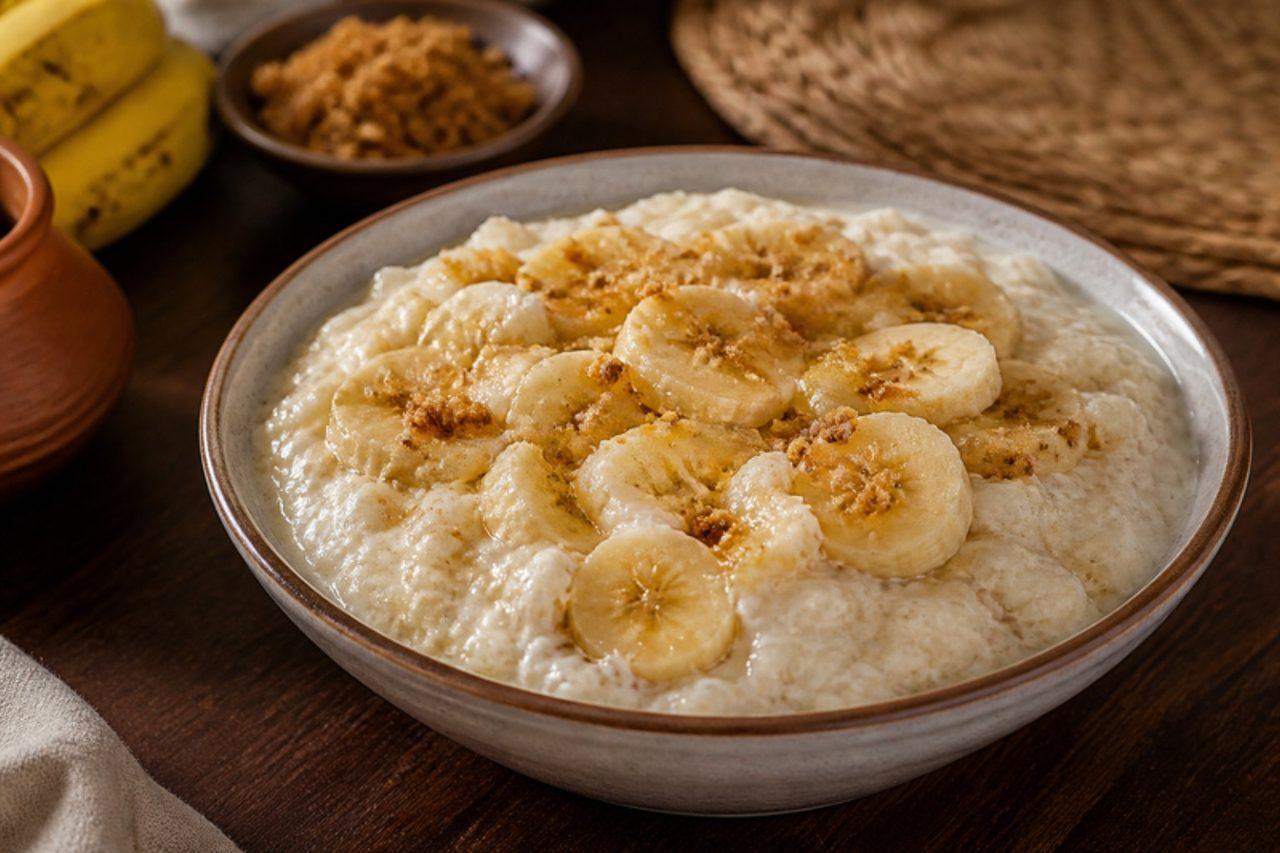
Nothing is cooked for doi chira, which is why it has been the breakfast of farmers and fishermen in Barisal for generations: flattened rice is rinsed, softened in thick, slightly sour curd and sweetened with jaggery or sugar, then mashed together with a ripe banana. The texture is soft and creamy with a little chew from the rice flakes, and the taste is cool, sweet and tangy. It is eaten on hot summer mornings, at village fairs and as part of the Pohela Boishakh spread, and it is a favourite of children and of anyone fasting who wants something gentle. The usual misstep is soaking the chira for too long, which turns it to paste; a quick rinse is all it needs before the curd does the rest. Chef's tip: use thick-cut chira, not the thin kind for frying, so the flakes hold their shape.
 Bangladeshi

Polos curryYoung green jackfruit curry
Polos is the tiny unripe jackfruit picked in the Western and Sabaragamuwa provinces long before it sweetens, and cooked low and slow it becomes one of the island's most loved festival curries, especially at Sinhala and Tamil New Year in April and at wedding lunches. The firm, pale flesh soaks up a very dark roasted curry powder, garlic, ginger, goraka (a smoky souring fruit) and coconut milk until it turns almost black-brown and tastes rich, sour and meaty. Fresh polos is hard to find abroad; tinned young green jackfruit in brine works well. A frequent mistake is not cooking it long enough, which leaves it squeaky; the pieces must be soft enough to break with a spoon. Chef's tip: oil your hands and knife before cutting fresh jackfruit; the sticky white sap washes off oiled skin but not dry skin.
