
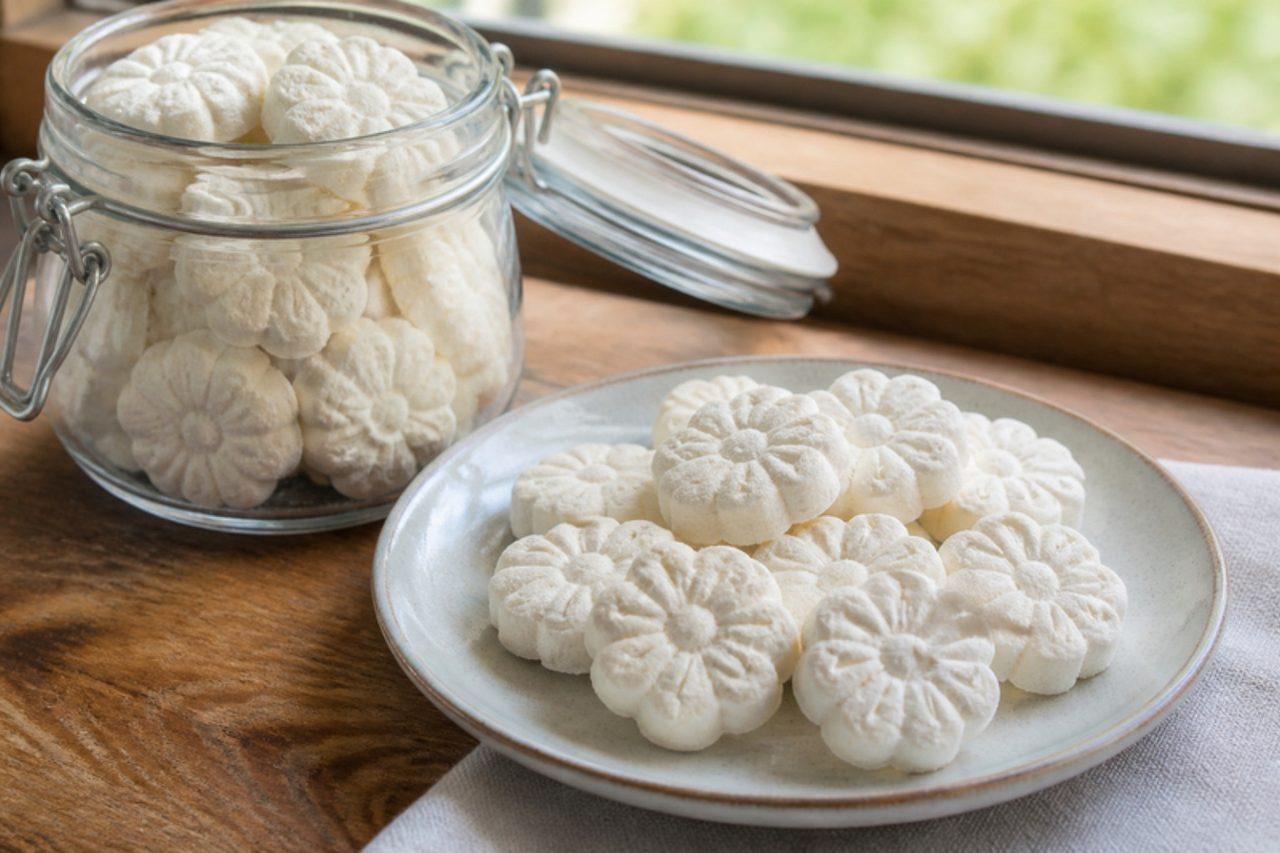
AI-generated image
Kue bangkit
Tapioca coconut flower cookies
Melt-in-the-mouth tapioca and coconut milk flower cookies from Riau


Jars of kue bangkit sit on coffee tables across Riau and the Sumatran coast at Lebaran, and Chinese-Indonesian families bake the same little white flowers for Lunar New Year. They are made from tapioca starch slowly roasted with pandan leaves, then bound with sugar, egg yolk and thick coconut milk and pressed into tiny flower shapes. When they are right they feel crisp and light in the hand and then dissolve instantly on the tongue, leaving the taste of coconut and pandan. The step people rush is roasting the starch; it must be dry-fried until feather-light, or the cookies bake hard and chalky. Chef's tip: keep the dough covered with a cloth while you work, because tapioca dough dries in minutes and then crumbles in the mould.
- Total time
- 106 min
- Difficulty
- medium
- Serves
- 20
Ingredients
For the starch
- 9 oz tapioca starch
- 4 pandan leavesknotted
For the dough
- 3 ⅛ oz icing sugar
- ½ cup thick coconut milkfrom the top of the can, as needed
- 1 pinch salt
To finish
- 2 tbsp tapioca starchfor the moulds
Shop this recipe on Amazon
Spices & pantry
Fresh ingredients (1)
Links open Amazon in a new tab. As an Amazon Associate, WhatToEat.Today earns from qualifying purchases.
Method
0/8 doneStep 1: Put 9 oz tapioca starch and 4 pandan leaves in a wide pan over low heat. Stir constantly for 25–30 minutes, until the pandan leaves are dry and brittle and the starch feels very light and squeaks when pressed between your fingers. It must not colour.
28 minStep 2: Discard the pandan, sift the starch and leave it to cool completely, at least 30 minutes.
30 minStep 3: Whisk 2 egg yolks and 3 ⅛ oz icing sugar until thick and pale, about 3 minutes, then whisk in 1 pinch salt.
3 minStep 4: Heat the oven to 300°F (275°F fan) and line two trays with baking paper.
Step 5: Stir the yolk mixture into the cooled starch, then add ½ cup thick coconut milk a spoonful at a time, kneading lightly, until it forms a soft, smooth dough like play dough that does not crack when pressed. Cover with a damp cloth.
Step 6: Dust a small flower mould or cookie cutter with 2 tbsp tapioca starch. Press small pieces of dough into it, level off and tap out onto the trays, or roll the dough 1 cm thick and cut flowers. Mark the tops with tweezers or a toothpick if you like.
Step 7: Bake for 15–18 minutes, until firm and dry with only the faintest tinge of colour on the base; they should stay white on top.
18 minStep 8: Cool completely on the trays, then store in an airtight jar. They keep crisp for up to a month.
Nutrition per serving
- Calories
- 85 kcal
- Protein
- 0 g
- Carbs
- 17 g
- Fat
- 2 g
- Fibre
- 0 g
Nutrition values are estimates.
KrazyBadal
Good to know
- How long does kue bangkit take?
- About 106 minutes in total: 70 minutes to prepare and 36 minutes to cook.
- How many people does it serve?
- 20 as written. Change the servings above the ingredients and every amount scales to match.
- Is it vegetarian?
- Yes. It has no meat or fish.
- Is it gluten free?
- Yes, as written. Check the labels on stock, sauces and spice mixes, which sometimes contain gluten.
- Can I make it ahead?
- Yes. It keeps well, so you can cook it earlier in the day or the day before and reheat it.
- What can I use instead of icing sugar?
- Caster sugar, same amount.
- What can I use instead of thick coconut milk?
- Single cream, same amount (not dairy free).
Reviews
No reviews yet. Be the first to cook it.
Rate this recipe
Sign in to rate and review this recipe.
You might also like

Sayur lodehVegetables in coconut milk
Sayur lodeh is everyday cooking in Central Java, made in big pots in Solo and Semarang kitchens and ladled over rice, with lontong rice cakes at Lebaran, or alongside opor and sambal goreng on festive tables. It's soupy rather than thick: a fragrant broth of coconut milk, galangal, lemongrass and lime leaf that carries chunks of aubergine, long beans, chayote and sweetcorn, plus tempeh and tofu to make it a meal. The flavour is mellow and slightly sweet, so the heat comes from sambal on the side. Chef's tip: keep the pot at a gentle simmer once the coconut milk goes in and stir now and then — a rolling boil splits the coconut milk into oily curds.


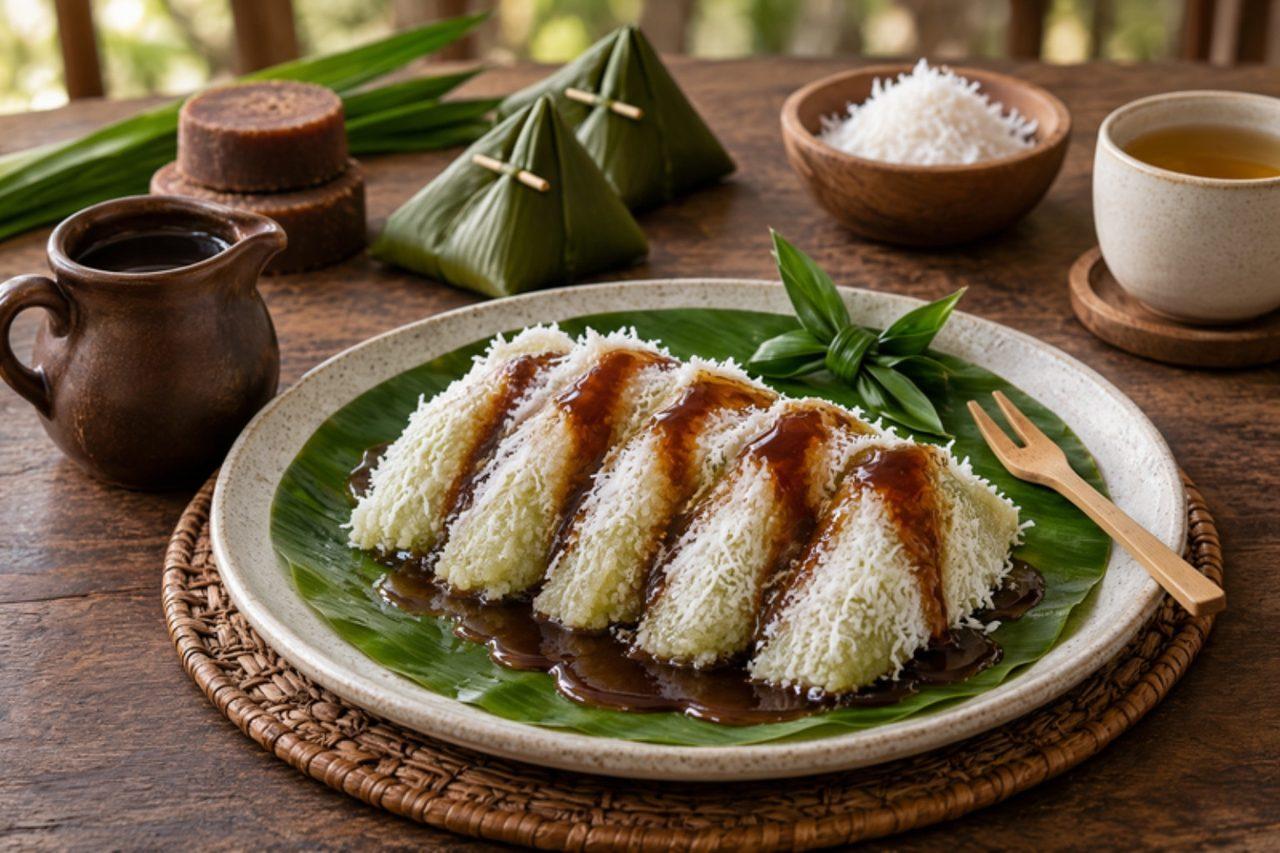
LupisSticky rice with coconut sugar
At morning markets across Central and East Java, vendors unwrap banana-leaf triangles of chewy sticky rice, roll them in fresh grated coconut and drench them in dark palm sugar syrup, all served on a square of leaf. Lupis is breakfast and snack at once, eaten with sweet tea. The common mistake is packing the leaves too full: the rice swells as it cooks, so fill each cone only two-thirds, or the parcels split and turn watery. Chef's tip: steam the grated coconut with a pinch of salt for 5 minutes before using it; it keeps longer and the salt sharpens the caramel taste of the syrup.
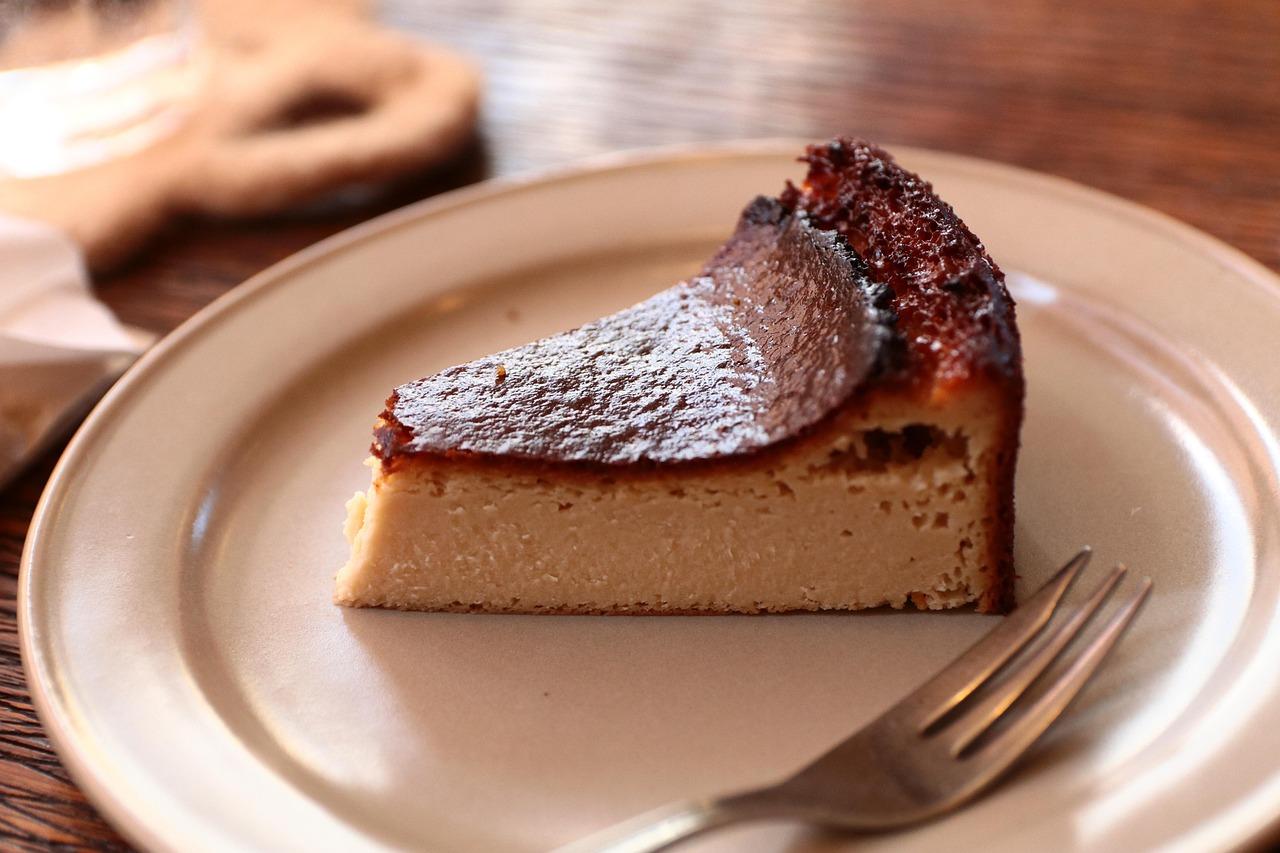
Basque burnt cheesecake
This crustless cheesecake was created in the early 1990s at La Viña, a pintxos bar in the old town of San Sebastián (Donostia) in the Basque Country, and is now famous around the world. It's baked very hot so the top caramelises almost black and the sides rise and crack, while the middle stays soft and creamy, almost runny. There's no base and no water bath, and the rough, rustic look is the point: it's lined with crumpled baking paper. La Viña uses a spoonful of wheat flour; cornflour does the same job and keeps it gluten free. Chef's tip: take it out of the oven while the centre still wobbles like a soft set custard; it firms up as it cools, and if it looks set in the oven, the middle will be dry instead of creamy.
 Spanish