
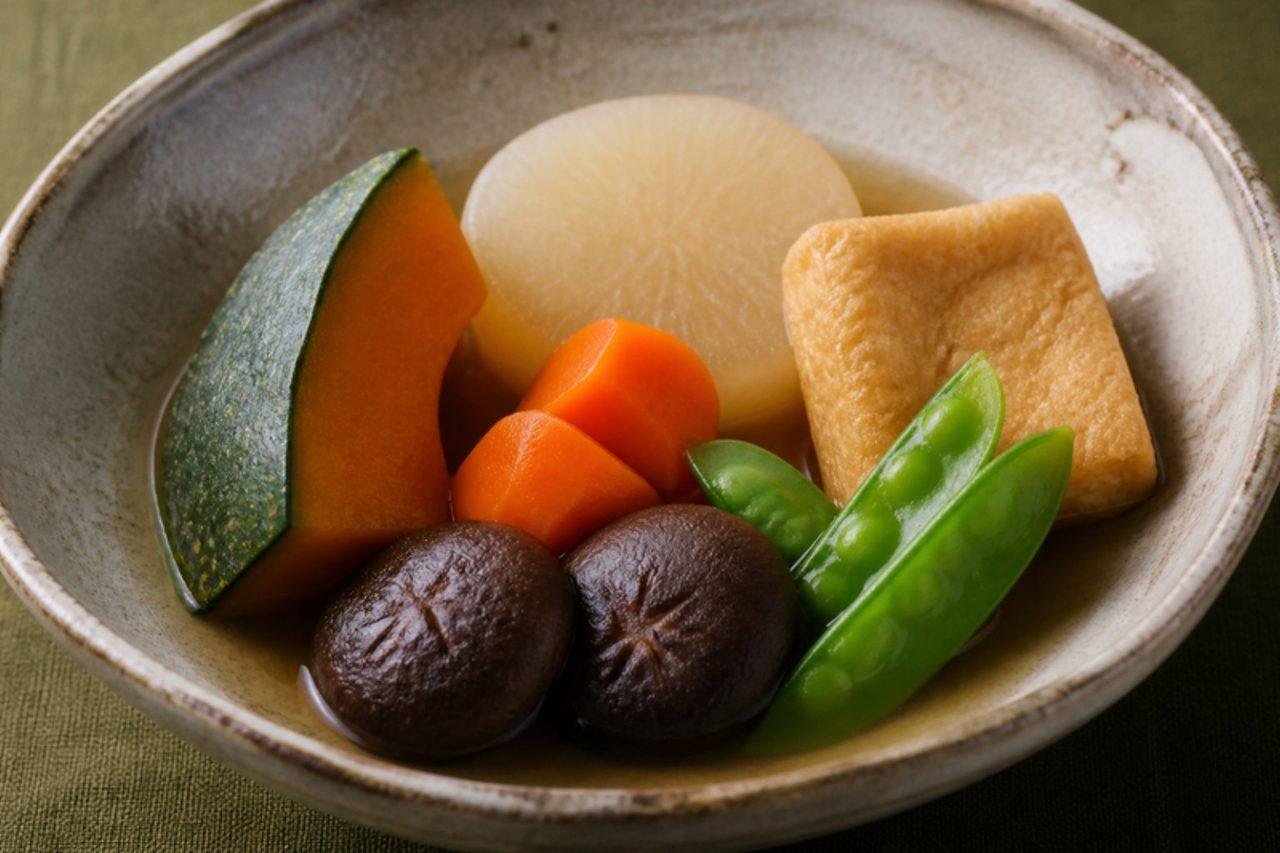
AI-generated image
Kyoto takiawase
炊き合わせ・おばんざい (takiawase, obanzai): kabocha, daikon, carrot and shiitake each simmered apart, then served together

Obanzai is what Kyoto calls its everyday home cooking: thrifty, seasonal side dishes that families keep in the fridge and that small restaurants line up in bowls along the counter. Takiawase, 'simmered together', is one of its finest. Each vegetable is cooked separately in a pale, delicate broth, so the kabocha stays orange, the daikon turns translucent and the carrot keeps its colour, then they are arranged side by side in one dish. Kyoto cooks season with light-coloured usukuchi soy, which is saltier than regular soy but doesn't darken the food. Serve it warm or at room temperature with rice and miso soup. Chef's tip: let everything cool in its broth. The vegetables soak up most of their flavour as they cool, not while they boil.
- Total time
- 55 min
- Difficulty
- easy
- Serves
- 4
Ingredients
For the broth
For the vegetables
Method
0/7 doneStep 1: Bevel the cut edges of 10 ½ oz daikon radish with a peeler so they don't crumble, and cut a shallow cross into one face. Simmer in 2 cups water from rinsing rice, or plain water with 1 tbsp rice over medium heat for 15 minutes, until a skewer goes in easily. The starchy water takes away the radish's bitter edge. Drain and rinse.
15 minStep 2: Mix 3 ¼ cups kombu-shiitake dashi, 3 tbsp usukuchi (light-coloured) soy sauce, 3 tbsp mirin, 1 tbsp sugar and ¼ tsp salt. Divide between two saucepans.
Step 3: In the first pan, simmer the daikon and 4 dried shiitake mushrooms over low heat for 15 minutes, lid slightly ajar, until the daikon looks translucent.
15 minStep 4: In the second pan, lay 10 ½ oz kabocha squash skin side down in one layer with 1 carrot and 1 aburaage (fried tofu pouch). Cover with a small lid or a circle of baking paper resting on the food and simmer over low heat for 10–12 minutes until the kabocha is just tender.
12 minStep 5: Common mistake: stirring the kabocha. It breaks and clouds the broth. Shake the pan gently instead, and don't let it boil.
Step 6: Blanch 8 mangetout in boiling salted water for 1 minute, then plunge into cold water so they stay bright green.
1 minStep 7: Leave both pans to cool for at least 20 minutes so the vegetables absorb the broth. Arrange the vegetables in groups in shallow bowls, spoon over a little broth and add the mangetout. Serve warm or at room temperature; it keeps 3 days in the fridge.
Nutrition per serving
- Calories
- 130 kcal
- Protein
- 5 g
- Carbs
- 24 g
- Fat
- 3 g
- Fibre
- 5 g
Nutrition values are estimates.
KrazyBadal
Good to know
- How long does kyoto takiawase take?
- About 55 minutes in total: 20 minutes to prepare and 35 minutes to cook.
- How many people does it serve?
- 4 as written. Change the servings above the ingredients and every amount scales to match.
- Is it vegan?
- Yes. It has no meat, fish, dairy or eggs.
- Can I make it ahead?
- Yes. It keeps well, so you can cook it earlier in the day or the day before and reheat it.
- What can I use instead of mirin?
- Rice vinegar with ½ tsp sugar per tbsp.
- What can I use instead of sugar?
- Caster sugar, same amount.
Reviews
No reviews yet. Be the first to cook it.
Rate this recipe
Sign in to rate and review this recipe.
You might also like
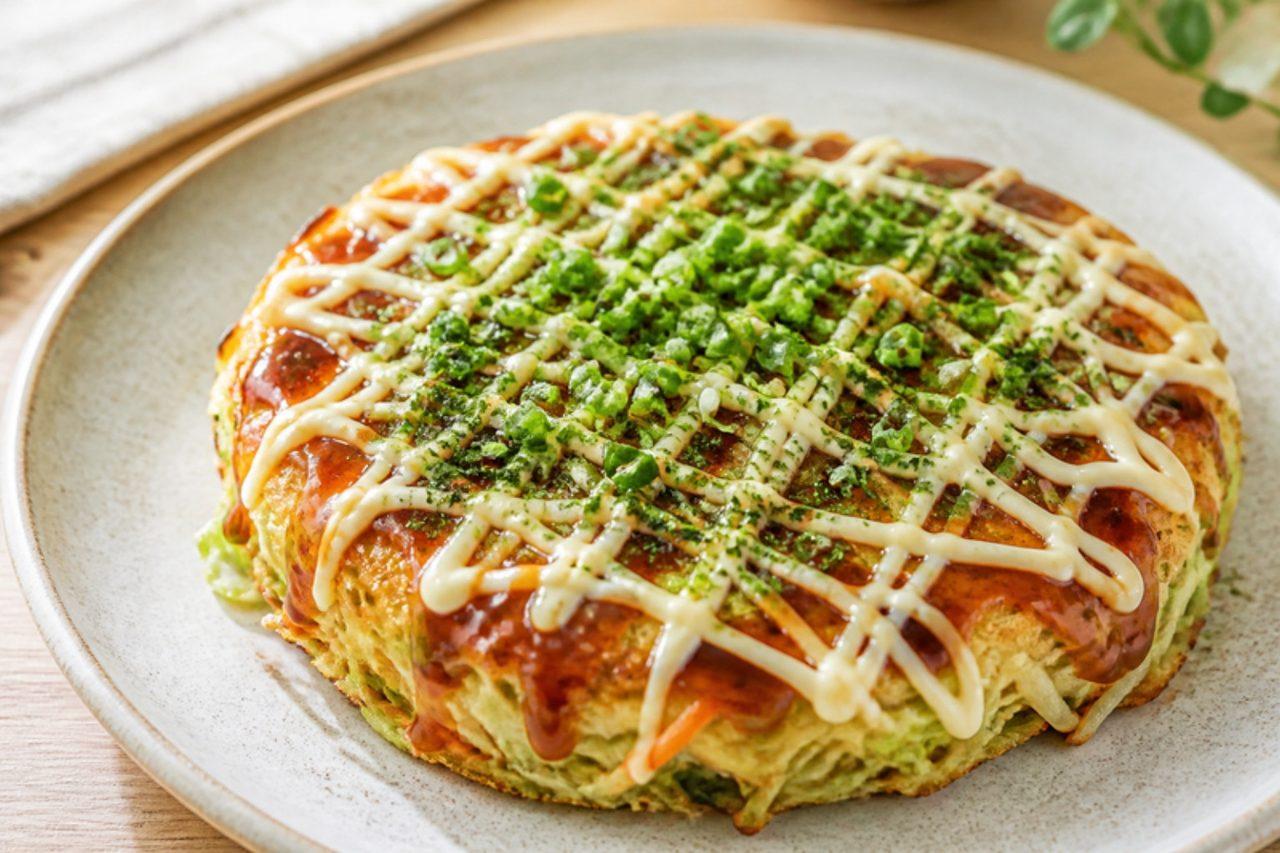
Okonomiyaki
Okonomiyaki (お好み焼き, 'grilled as you like it') is the pride of Osaka, where it's cooked on hot iron griddles in lively restaurants. Finely shredded cabbage is folded into a light batter with egg and spring onion, then fried into a thick, soft pancake with a crisp outside. It's painted with a fruity brown sauce and zigzagged with mayonnaise. Bonito flakes are usual on top; this vegetarian version uses seaweed flakes and pickled ginger instead. Chef's tip: don't press the pancake down with your spatula while it cooks. Osaka cooks leave it alone so the cabbage steams inside and stays light and fluffy; pressing squeezes out the air.

Miso soup
Miso soup (味噌汁) is drunk every day in homes all over Japan, at breakfast as well as dinner, beside a bowl of rice. The base is dashi; this vegan version uses kombu and dried shiitake instead of bonito, which gives it a deep, rounded flavour. Silken tofu and wakame seaweed are the classic fillings. It takes ten minutes; just remember not to boil the miso. Chef's tip: add the miso at the very end and never let it boil. Boiling kills the miso's fresh, fermented aroma; Japanese cooks say the soup should only 'smile', with the surface barely trembling.

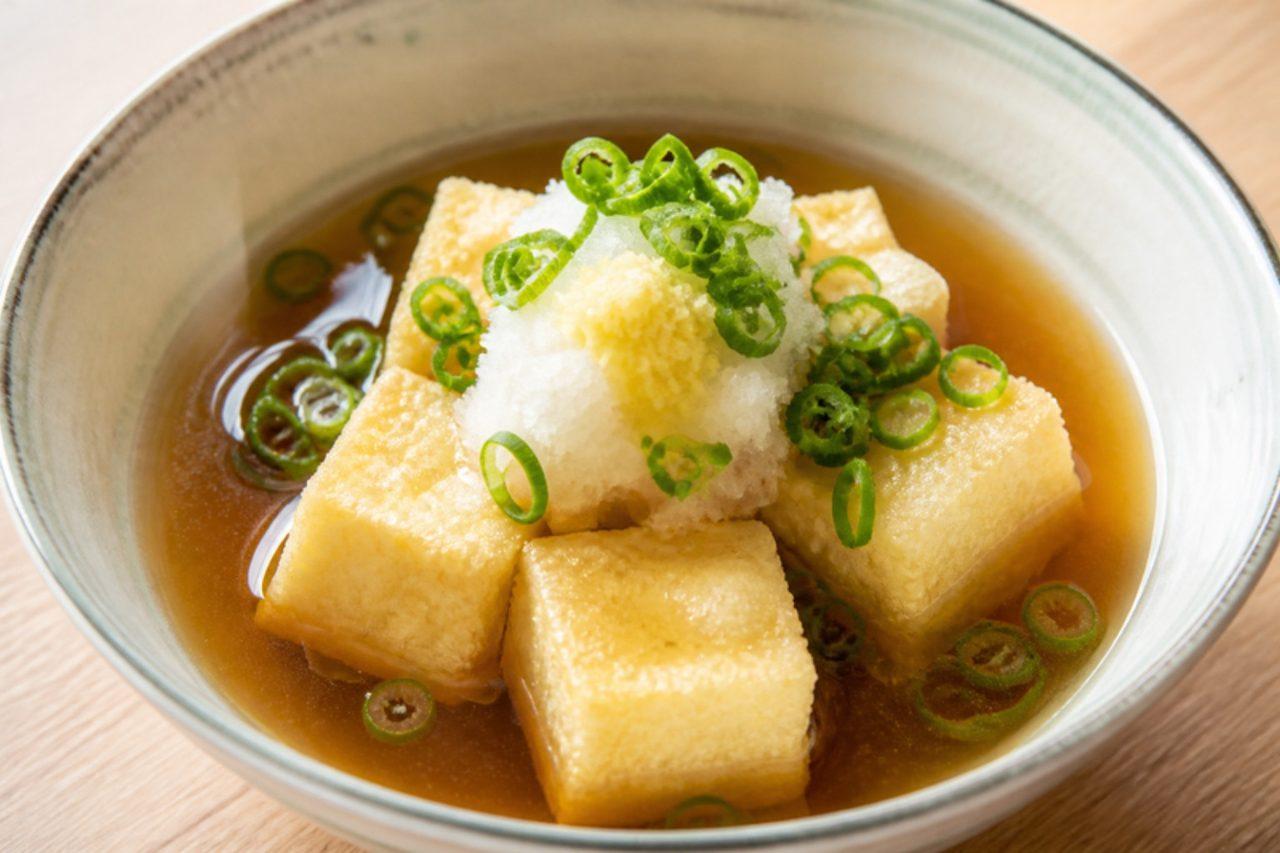
Agedashi tofu
Agedashi tofu (揚げ出し豆腐) is a classic izakaya dish eaten all over Japan: cubes of soft tofu dusted in potato starch, fried until they form a thin, crisp shell, then bathed in a hot, savoury broth. The coating turns silky as it soaks up the sauce while the tofu inside stays creamy. Usually topped with bonito flakes; here it's grated daikon, ginger and spring onion with a kombu-shiitake broth instead. Chef's tip: coat the tofu in starch right before it goes into the oil, not ahead of time; if it sits, the starch turns damp and the coating fries up gummy instead of crisp.