
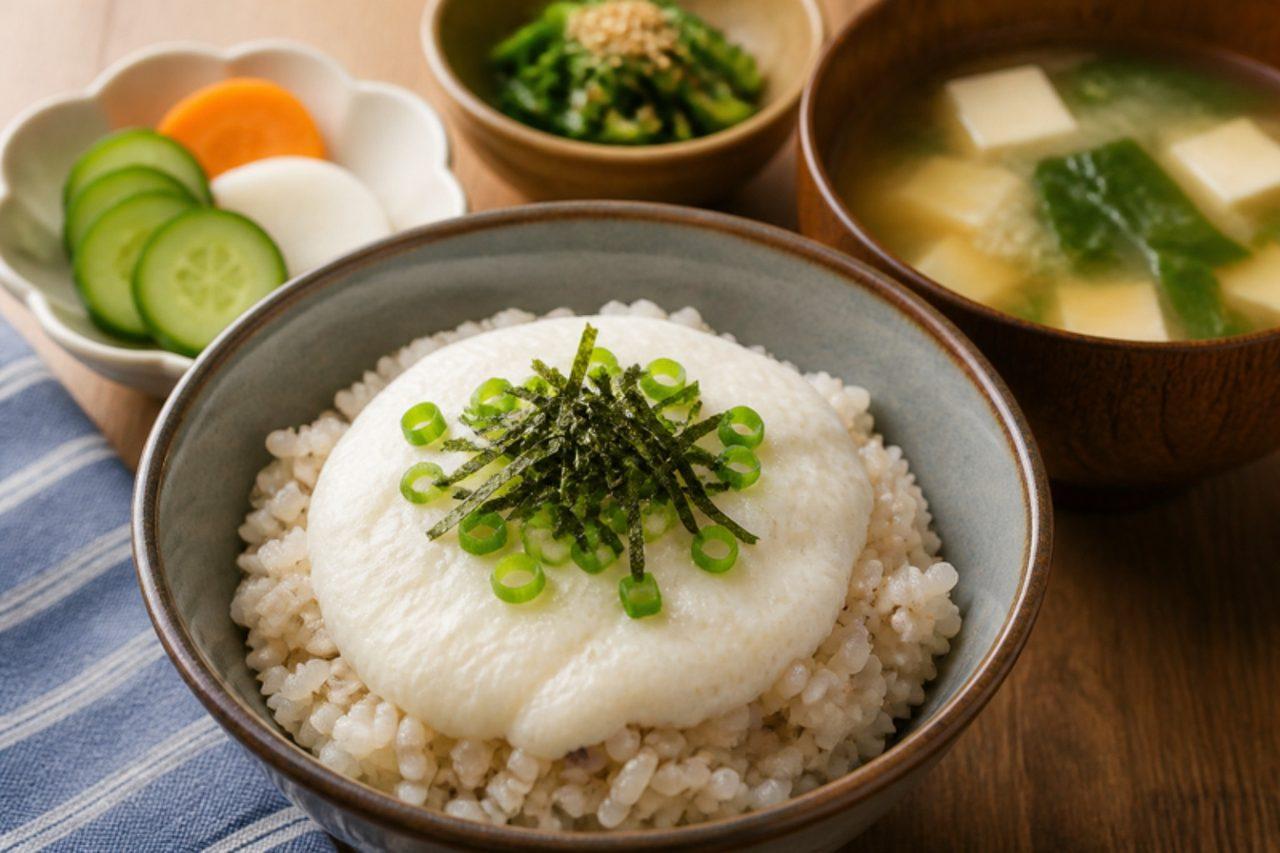
AI-generated image
Mugi gohan with tororo
Barley rice with grated yam
Mugi gohan (麦ごはん): rice cooked with pressed barley, topped with grated mountain yam


Mugi gohan, white rice cooked with flattened barley, was everyday food in rural Japan and is back on family tables for its nutty chew and fibre. In Shizuoka and along the old Tokaido road it is famously eaten as mugitoro: barley rice under a pour of grated nagaimo yam loosened with seasoned dashi, slurped quickly at lunch. A portion is about 300 kcal and gives roughly 8 g of protein, so it is light rather than high in protein. The usual mistake is using the plain rice water ratio: barley drinks more, so add extra water or the grains stay hard. Raw nagaimo can make sensitive skin itch, so peel it with gloves on. The dashi here is made from kombu and shiitake, with no bonito. Chef's tip: grate the yam on the finest side of the grater and beat it with a spoon for a minute; it turns light and fluffy and coats the rice evenly.
- Total time
- 70 min
- Difficulty
- easy
- Serves
- 5
Ingredients
For the barley rice
- 10 ½ oz Japanese short-grain rice
- 2 ⅛ oz pressed barley (oshimugi)
- 2 cups water
For the tororo
- ⅛ oz kombu
- 1 cup water
- 10 ½ oz nagaimo (Chinese yam)peeled with gloves on
- 1 ½ tbsp soy sauce
- ½ tsp sugar
To serve
- 2 spring onionthinly sliced
- 1 sheet nori (optional)cut into thin strips
Shop this recipe on Amazon
What you'll need
Spices & pantry
Fresh ingredients (1)
Links open Amazon in a new tab. As an Amazon Associate, WhatToEat.Today earns from qualifying purchases.
Method
0/6 doneStep 1: Put ⅛ oz kombu and 2 dried shiitake mushrooms in 1 cup water and leave to soak for at least 30 minutes while you prepare the rice.
30 minStep 2: Rinse 10 ½ oz Japanese short-grain rice until the water runs nearly clear, then add 2 ⅛ oz pressed barley (oshimugi) and rinse once more. Drain, put in the rice pot with 2 cups water and soak for 30 minutes.
30 minStep 3: Bring the rice to the boil over a medium-high heat, cover, turn to low and cook for 15 minutes without lifting the lid. Leave off the heat, covered, for 10 minutes. The barley should be plump and soft with a little chew.
25 minStep 5: Grate 10 ½ oz nagaimo (Chinese yam) on the finest side of a grater into a bowl. Beat in the cooled dashi a spoonful at a time until it has the texture of loose yoghurt.
Step 6: Fluff the barley rice with a damp paddle and divide between bowls. Spoon the tororo over, and top with 2 spring onion and 1 sheet nori. Eat straight away.
Nutrition per serving
- Calories
- 300 kcal
- Protein
- 8 g
- Carbs
- 62 g
- Fat
- 1 g
- Fibre
- 4 g
Nutrition values are estimates.
KrazyBadal
Good to know
- How long does mugi gohan with tororo take?
- About 70 minutes in total: 40 minutes to prepare and 30 minutes to cook.
- How many people does it serve?
- 5 as written. Change the servings above the ingredients and every amount scales to match.
- Is it vegan?
- Yes. It has no meat, fish, dairy or eggs.
- What can I use instead of japanese short-grain rice?
- Any long-grain rice, same amount.
- What can I use instead of dried shiitake mushrooms?
- Aubergine, diced, same weight.
Reviews
No reviews yet. Be the first to cook it.
Rate this recipe
Sign in to rate and review this recipe.
You might also like

Yaki onigiriGrilled rice balls
Yaki onigiri (焼きおにぎり) are rice balls grilled until they form a crisp, toasty crust, then brushed with soy sauce glaze. They are eaten all over Japan, at izakaya, at barbecues and from the freezer section, as a snack or with miso soup. The inside stays soft and steamy while the outside crackles. Best eaten hot, straight from the pan. Chef's tip: let the shaped rice balls dry for 10 minutes before they go in the pan. A drier surface forms a better crust and won't stick, and the glaze goes on only at the end so it doesn't burn.


Miso soup
Miso soup (味噌汁) is drunk every day in homes all over Japan, at breakfast as well as dinner, beside a bowl of rice. The base is dashi; this vegan version uses kombu and dried shiitake instead of bonito, which gives it a deep, rounded flavour. Silken tofu and wakame seaweed are the classic fillings. It takes ten minutes; just remember not to boil the miso. Chef's tip: add the miso at the very end and never let it boil. Boiling kills the miso's fresh, fermented aroma; Japanese cooks say the soup should only 'smile', with the surface barely trembling.
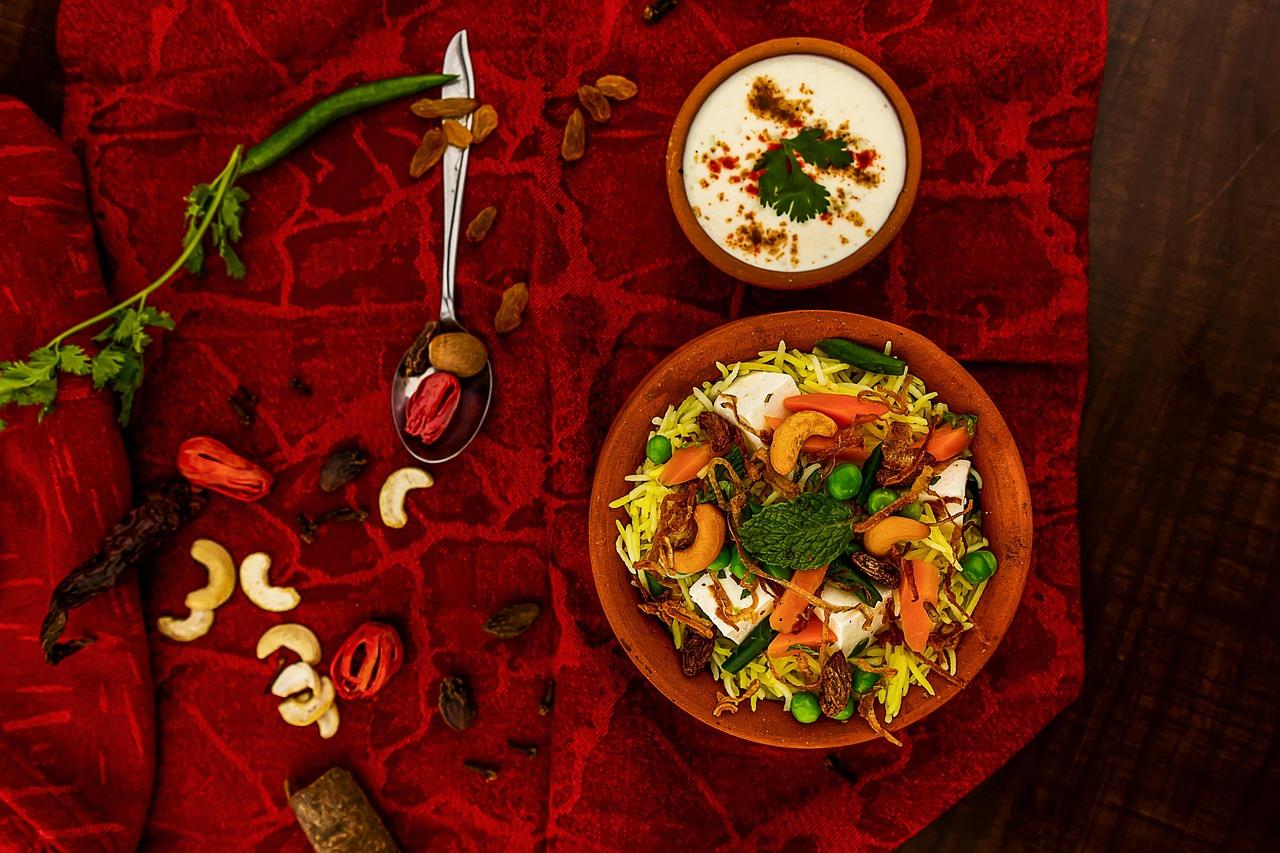
Paneer biryaniRice and moong dal in coconut milk
A mild, creamy biryani: rice and husked green gram roasted in ghee, then cooked in coconut milk with peas, carrots, potatoes, peanuts and cashews, and finished with soft fried paneer and a fresh coriander yogurt. Serve hot, garnished with more fried cashews and paneer.
 Indian
