
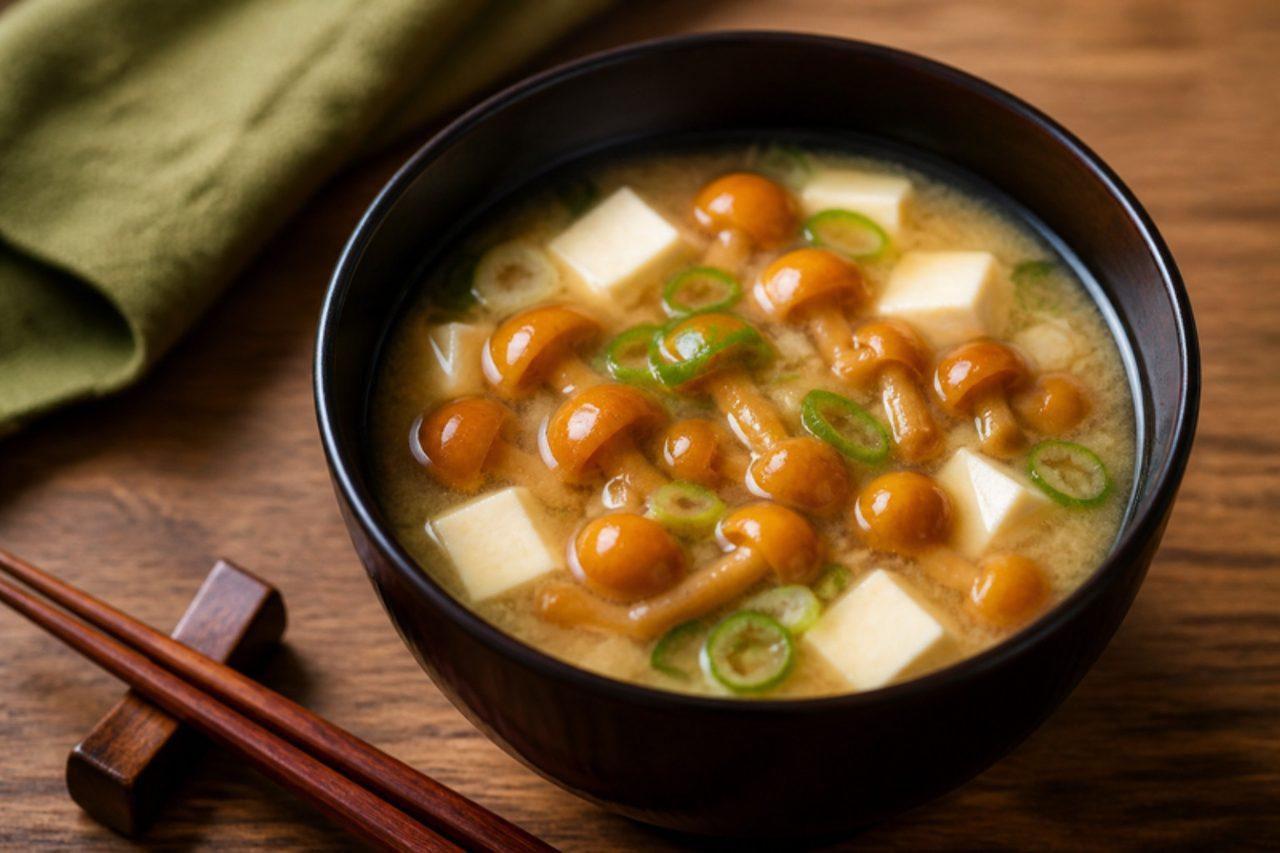
AI-generated image
Nameko jiru
Nameko mushroom miso soup
Nameko jiru (なめこ汁): miso soup with slippery nameko mushrooms, silken tofu and spring onion


Nameko jiru is one of the most common miso soups in Japan, made in homes from Tohoku to Kyushu for breakfast or dinner, especially in autumn and winter when the small amber nameko mushrooms are cheap. The mushrooms have a natural silky coating that gives the soup a gently thickened, slippery feel, which the Japanese love. Homes usually use bonito dashi; this is the vegetarian version, with kombu and dried shiitake. A bowl has about 7 g of protein, from the tofu and miso. The most common mistake is boiling the soup after the miso goes in: it kills the aroma and turns the miso grainy. Chef's tip: give nameko only a quick rinse in a sieve, and never scrub away the gel; that coating is what makes the soup.
- Total time
- 15 min
- Difficulty
- easy
- Serves
- 4
Ingredients
For the vegetarian dashi
- 3 ¼ cups water
- ⅓ oz kombua piece about 10 cm square
For the soup
- 7 oz nameko mushroomsor small shimeji mushrooms
- 5 ½ oz silken tofucut into 1.5 cm cubes
- 3 tbsp red or mixed miso
- 2 spring onionsthinly sliced
Shop this recipe on Amazon
What you'll need
Spices & pantry
Fresh ingredients (3)
Links open Amazon in a new tab. As an Amazon Associate, WhatToEat.Today earns from qualifying purchases.
Method
0/6 doneStep 1: Put 3 ¼ cups water, ⅓ oz kombu and 2 dried shiitake mushrooms in a pan and leave to soak for at least 30 minutes, or overnight in the fridge (not counted in the times).
Step 2: Set the pan over a medium-low heat. Lift out the kombu just as small bubbles appear around the edge, before it boils, or the dashi turns slimy and bitter.
5 minStep 3: Take out the shiitake, slice them thinly and return them to the pan. Rinse 7 oz nameko mushrooms briefly in a sieve under cold water and add them.
Step 4: Simmer gently for 2 minutes, until the mushrooms are tender and the broth looks very slightly glossy. Slide in 5 ½ oz silken tofu and warm through for 1 minute.
3 minStep 5: Turn the heat right down. Put 3 tbsp red or mixed miso in a ladle, dip it into the broth and stir with chopsticks until it dissolves, then stir it through. Heat until steaming but not bubbling.
Step 6: Ladle into bowls, scatter with 2 spring onions and serve at once, with rice.
Nutrition per serving
- Calories
- 70 kcal
- Protein
- 7 g
- Carbs
- 6 g
- Fat
- 3 g
- Fibre
- 3 g
Nutrition values are estimates.
KrazyBadal
Good to know
- How long does nameko jiru take?
- About 15 minutes in total: 5 minutes to prepare and 10 minutes to cook.
- How many people does it serve?
- 4 as written. Change the servings above the ingredients and every amount scales to match.
- Is it vegan?
- Yes. It has no meat, fish, dairy or eggs.
- What can I use instead of dried shiitake mushrooms?
- Aubergine, diced, same weight.
- What can I use instead of nameko mushrooms?
- Aubergine, diced, same weight.
Reviews
No reviews yet. Be the first to cook it.
Rate this recipe
Sign in to rate and review this recipe.
You might also like
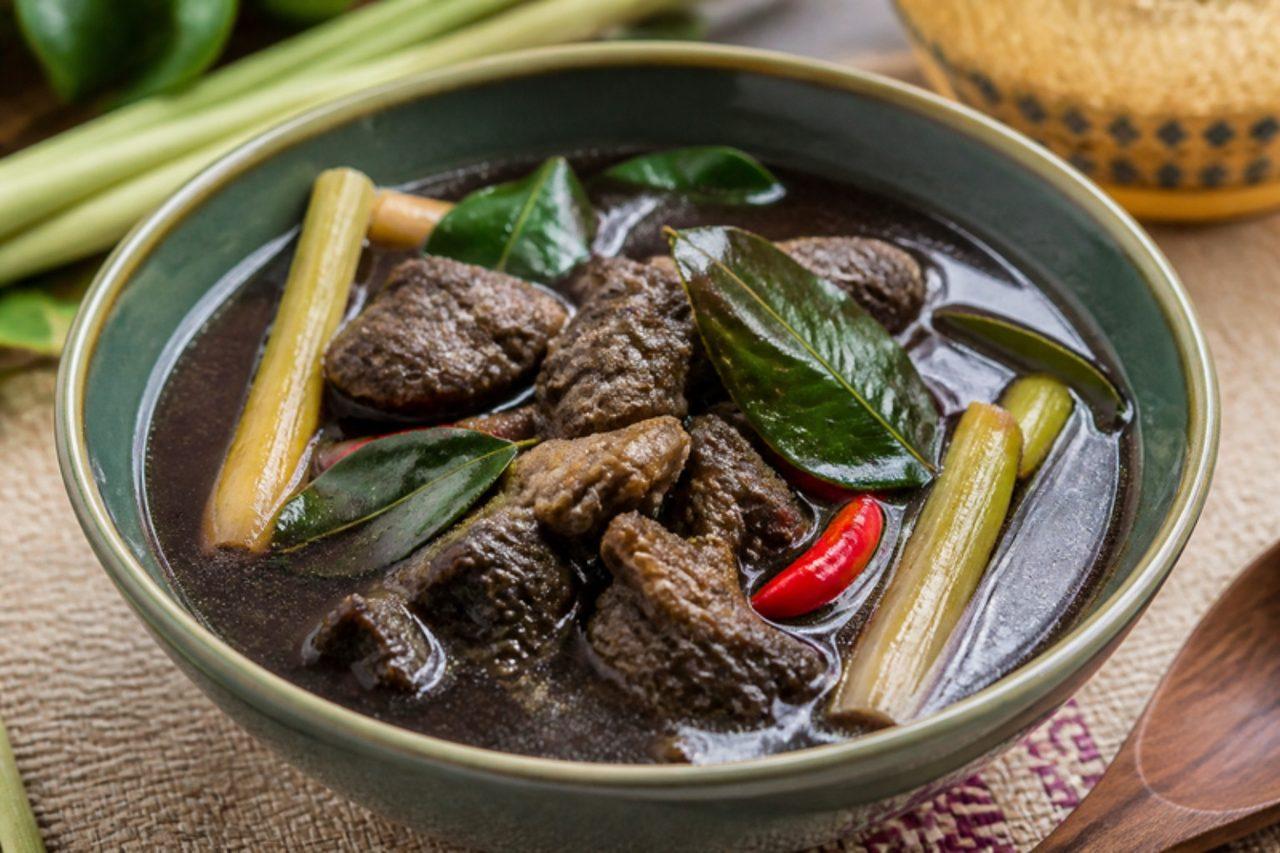
Tiyula itumBlack beef soup
Tiyula itum, 'black soup', is the pride of the Tausug people of Sulu in the far south of the Philippines, cooked for weddings, Eid celebrations and when guests come home. Beef (it is a halal, pork-free dish) is simmered with ginger, lemongrass and turmeric, then darkened with pamapa itum, a paste of grated coconut toasted until almost black and pounded with spices. The broth looks dramatic but tastes smoky, earthy and gently peppery, with heat from chillies. Serve it with plain rice. Chef's tip: toast the coconut slowly, stirring all the time, until it is very dark brown but not ashy; burnt-to-ash coconut tastes bitter and ruins the soup.
 Filipino

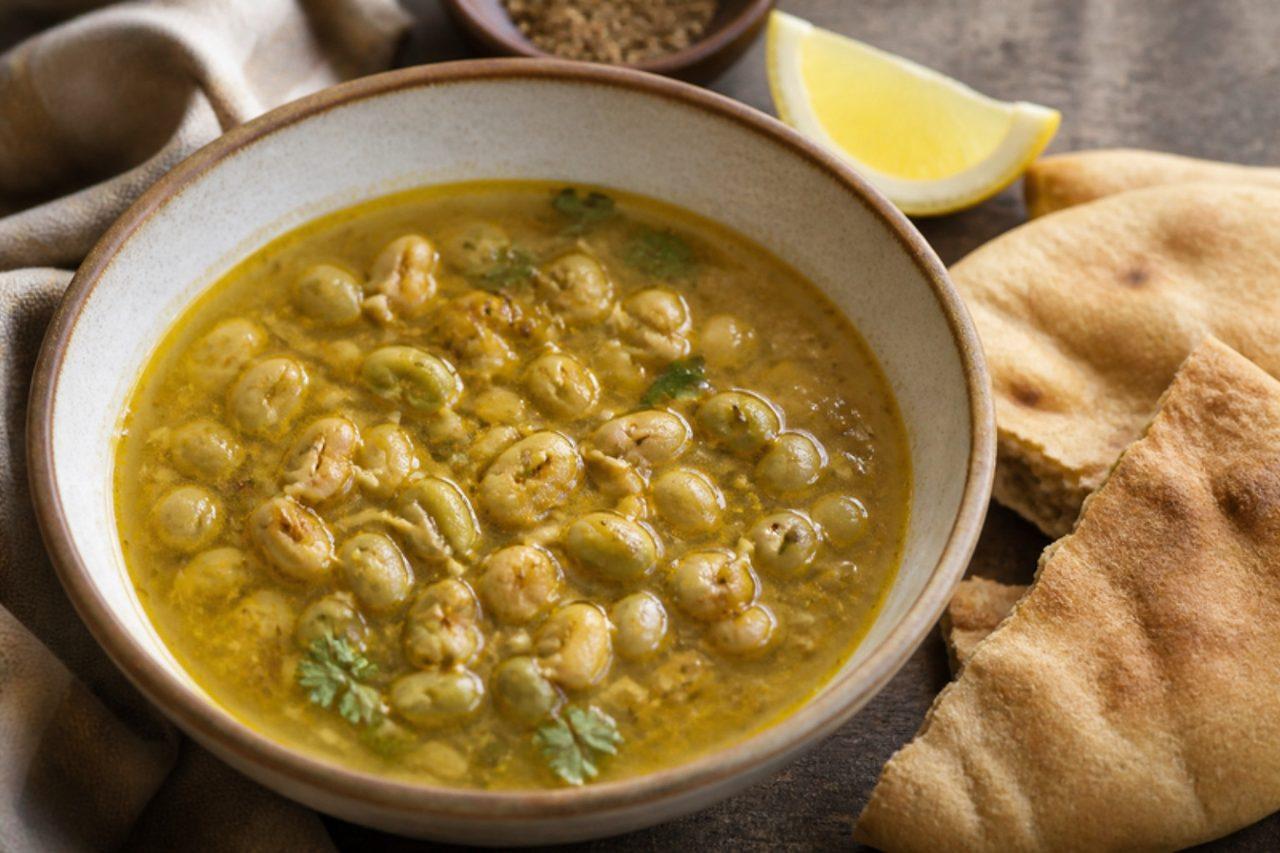
Ful nabitSprouted fava bean soup
Sprouted beans are ladled out with their cooking liquor in Cairo homes when the weather turns cold or someone is feeling run down, and Egyptians swear by the broth as a pick-me-up. The beans are soaked and left to sprout for a few days, then simmered with onion, garlic and cumin into a light, earthy soup that is sharpened at the table with plenty of lemon. You can eat the beans with a spoon or pop them from their skins. Allow 3 to 4 days for sprouting, although the hands-on work is only about 20 minutes. People with G6PD deficiency (favism) must not eat fava beans. Chef's tip: stop the sprouting when the shoots are about 1 cm long; longer sprouts taste grassy and bitter.
 Egyptian


Yaki onigiriGrilled rice balls
Yaki onigiri (焼きおにぎり) are rice balls grilled until they form a crisp, toasty crust, then brushed with soy sauce glaze. They are eaten all over Japan, at izakaya, at barbecues and from the freezer section, as a snack or with miso soup. The inside stays soft and steamy while the outside crackles. Best eaten hot, straight from the pan. Chef's tip: let the shaped rice balls dry for 10 minutes before they go in the pan. A drier surface forms a better crust and won't stick, and the glaze goes on only at the end so it doesn't burn.