
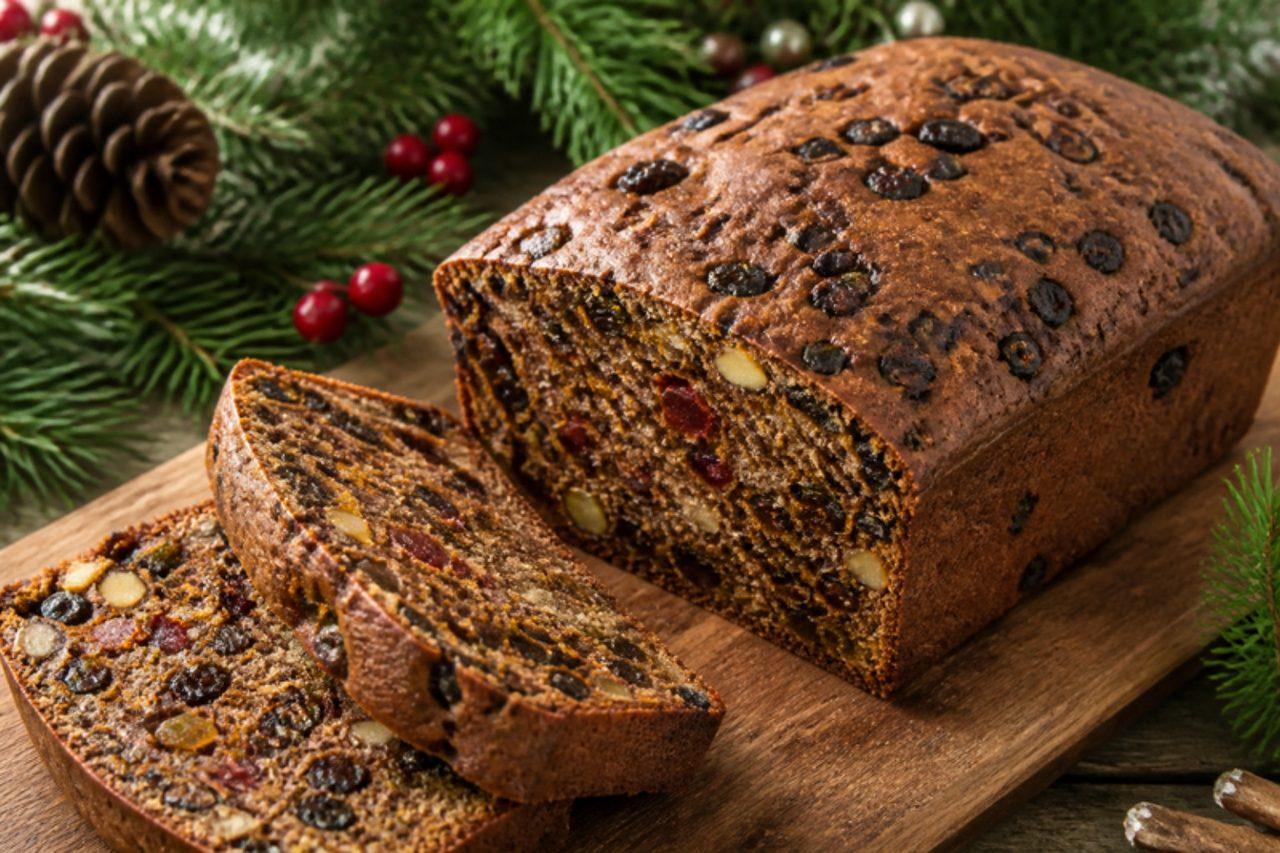
AI-generated image
Pan de Pascua
Spiced Christmas fruit cake
Chile's spiced Christmas cake with walnuts and candied fruit

From late November every Santiago bakery and supermarket stacks loaves of pan de Pascua, and families exchange them like Christmas cards. Despite the name ('Christmas bread') it is a cake: dense, dark and spiced with cinnamon, ginger and clove, crowded with raisins, candied fruit and walnuts, and often moistened with honey and manjar (dulce de leche). It goes with a glass of cola de mono, the Chilean Christmas drink of coffee and milk. The fruit is usually soaked in rum or pisco; here it soaks in orange juice, and the spirit is an option. Fruit that sinks into a sticky layer at the bottom is the usual complaint, so toss it in a spoonful of the flour first. Chef's tip: wrap the loaves in baking paper and keep them for 3–4 days before cutting; the spices mellow and the crumb gets moister.
- Total time
- 110 min
- Difficulty
- medium
- Serves
- 16
Ingredients
For the fruit
- 5 ½ oz raisins
- 5 ½ oz candied mixed fruitchopped
- 4 oz walnutsroughly chopped
- ¼ cup orange juice
- ¼ cup pisco or dark rum (optional)optional, in place of the orange juice
For the cake
- 5 ½ oz buttersoftened, plus a little for the tins
- 5 ½ oz soft brown sugar
- 3 ½ oz dulce de leche (manjar)
- 2 tbsp honey
- 3 eggs
- 10 ½ oz plain flour
- 2 tsp baking powder
- 1 tsp ground cinnamon
- ½ tsp ground ginger
- ¼ tsp ground cloves
- ½ tsp ground nutmeg
- 1 orangefinely grated zest
- ¼ cup milk
Shop this recipe on Amazon
What you'll need
Spices & pantry
Links open Amazon in a new tab. As an Amazon Associate, WhatToEat.Today earns from qualifying purchases.
Method
0/9 doneStep 1: Put 5 ½ oz raisins and 5 ½ oz candied mixed fruit in a bowl with ¼ cup orange juice (or ¼ cup pisco or dark rum). Leave to soak for 20 minutes, stirring once.
20 minStep 2: Heat the oven to 350°F (300°F fan). Butter two 900 g loaf tins and line them with baking paper.
Step 3: Beat 5 ½ oz butter and 5 ½ oz soft brown sugar for 3 minutes, until light, then beat in 3 ½ oz dulce de leche (manjar) and 2 tbsp honey.
3 minStep 4: Beat in 3 eggs one at a time.
Step 5: Whisk 10 ½ oz plain flour with 2 tsp baking powder, 1 tsp ground cinnamon, ½ tsp ground ginger, ¼ tsp ground cloves and ½ tsp ground nutmeg. Drain the fruit (add any liquid to the milk), add 4 oz walnuts, and toss with 2 tbsp of the flour mixture so everything is coated.
Step 7: Divide between the tins and level the tops.
Step 8: Bake for 55–65 minutes, until dark golden and firm, and a skewer pushed into the centre comes out clean. Cover with foil after 40 minutes if the tops are browning fast.
60 minStep 9: Cool in the tins for 15 minutes, then turn out onto a rack. Once cold, wrap well; it keeps for 2 weeks.
Nutrition per serving
- Calories
- 300 kcal
- Protein
- 5 g
- Carbs
- 42 g
- Fat
- 13 g
- Fibre
- 2 g
Nutrition values are estimates.
KrazyBadal
Good to know
- How long does pan de Pascua take?
- About 110 minutes in total: 45 minutes to prepare and 65 minutes to cook.
- How many people does it serve?
- 16 as written. Change the servings above the ingredients and every amount scales to match.
- Is it vegetarian?
- Yes. It has no meat or fish.
- Can I make it ahead?
- Yes. It keeps well, so you can cook it earlier in the day or the day before and reheat it.
- What can I use instead of walnuts?
- Pecans or chocolate chips, same amount.
- What can I use instead of orange juice?
- Mandarin or pineapple juice, same amount.
Reviews
No reviews yet. Be the first to cook it.
Rate this recipe
Sign in to rate and review this recipe.
You might also like
Leche con plátanoBanana milk
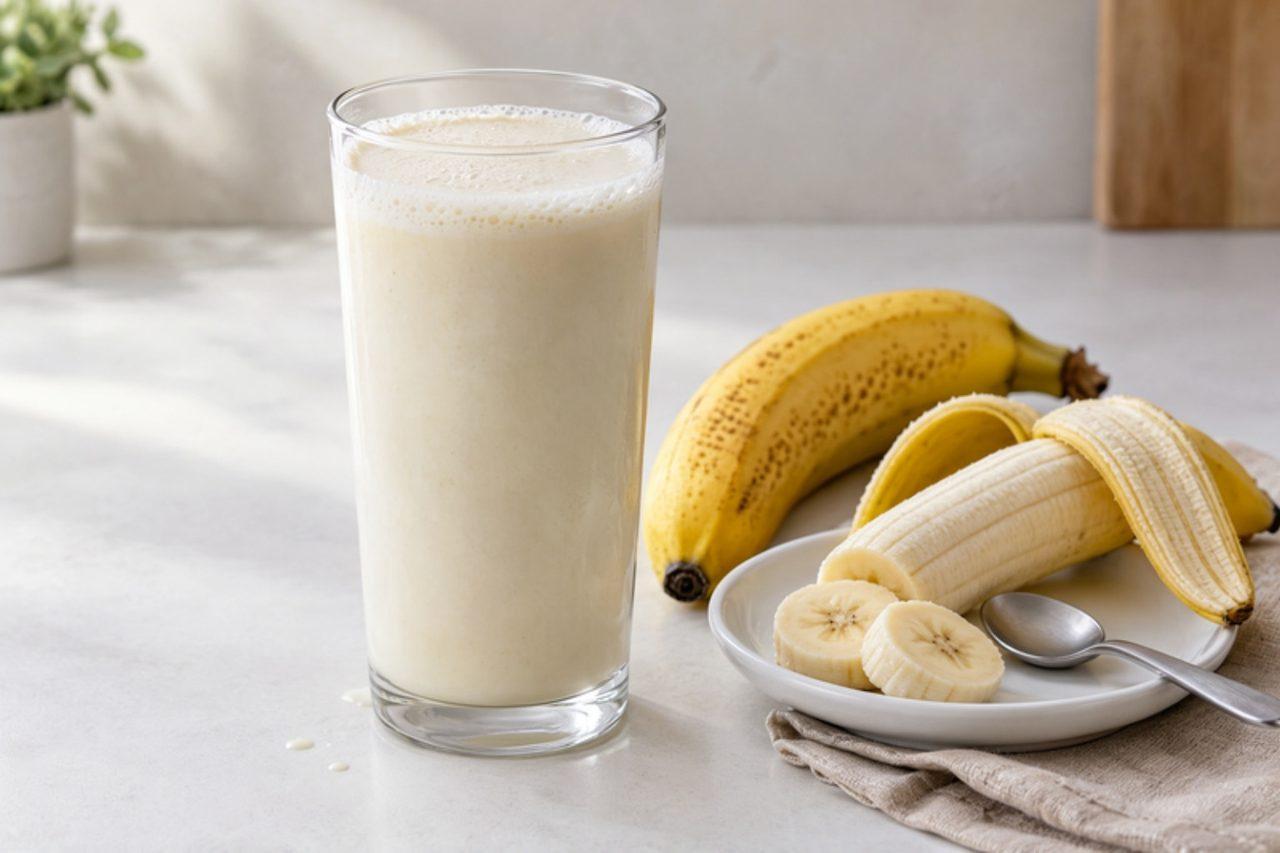
Ask anyone who grew up in Chile, from Arica to Punta Arenas, what they drank after school and many will say leche con plátano. It is made in a blender in two minutes, usually at onces, the late-afternoon tea, alongside marraqueta rolls with butter or avocado, and it is the first thing many children learn to make by themselves. It is pale, foamy and thick enough to leave a moustache, tasting simply of sweet ripe banana and cold milk, sometimes with a pinch of cinnamon. The common mistake is making it ahead: within half an hour the banana turns the milk greyish-beige and the foam collapses, so blend it just before drinking. It is ready when it is completely smooth, light and frothy, with no banana lumps at the bottom of the jug. Use bananas with a few brown freckles: they are sweet enough that you may need little or no sugar. Chef's tip: slice and freeze overripe bananas, then blend them straight from the freezer; the drink comes out icy and extra thick without any ice.

Huevos a la copaSoft-boiled eggs in a glass
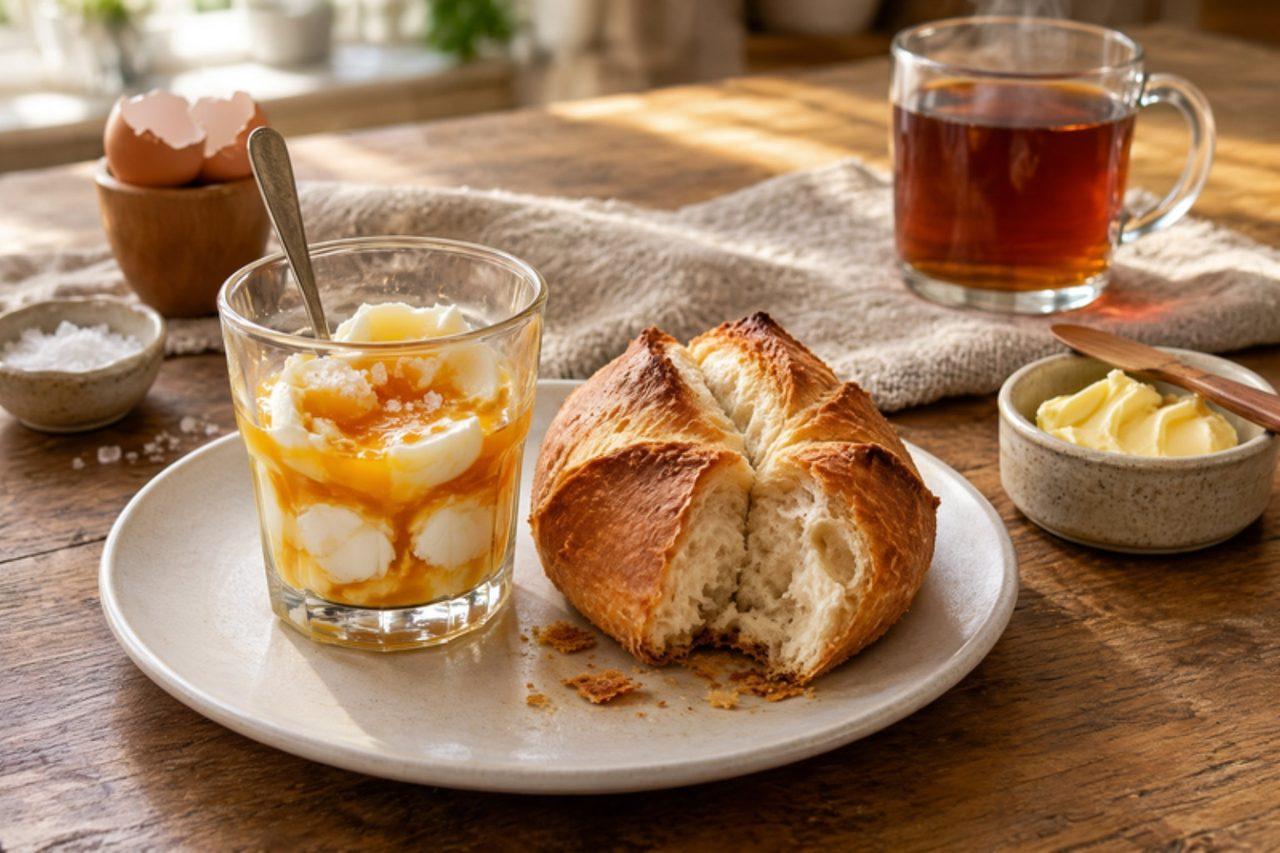
In Chilean homes, huevos a la copa are a weekday breakfast and a sick-day comfort: eggs boiled until the whites are just set and the yolks still runny, then scooped out of their shells into a small glass (the copa), broken up with a spoon, salted and eaten with warm marraqueta for dipping. The common mistake is timing from cold water, which makes the result unpredictable; lower the eggs into water that is already boiling. Runny yolks are not suitable for pregnant people, young children, older or vulnerable people; for them, boil the eggs for 9–10 minutes until fully set. If you need it gluten free, serve with gluten-free bread. Chef's tip: a tiny knob of butter stirred into the hot egg in the glass makes it silky.
Basque burnt cheesecake
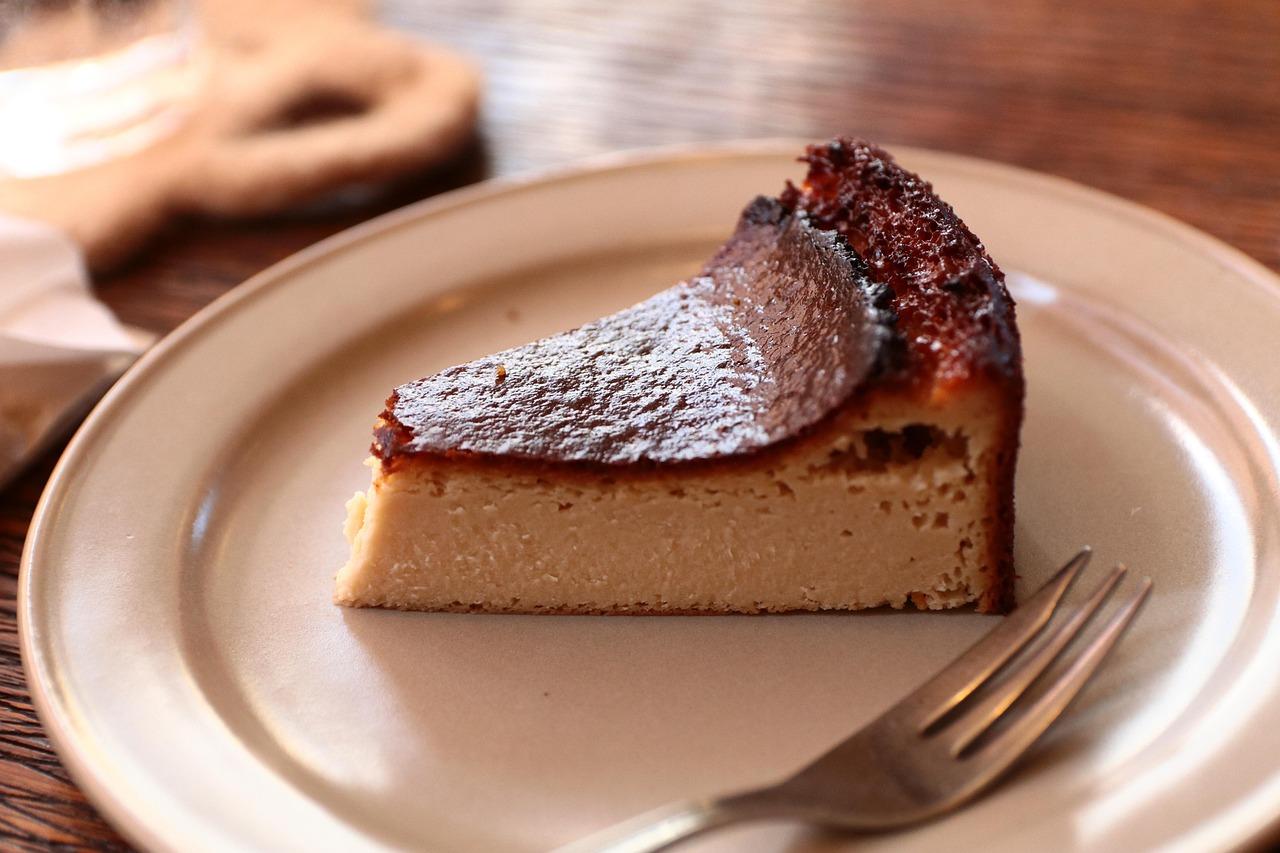
This crustless cheesecake was created in the early 1990s at La Viña, a pintxos bar in the old town of San Sebastián (Donostia) in the Basque Country, and is now famous around the world. It's baked very hot so the top caramelises almost black and the sides rise and crack, while the middle stays soft and creamy, almost runny. There's no base and no water bath, and the rough, rustic look is the point: it's lined with crumpled baking paper. La Viña uses a spoonful of wheat flour; cornflour does the same job and keeps it gluten free. Chef's tip: take it out of the oven while the centre still wobbles like a soft set custard; it firms up as it cools, and if it looks set in the oven, the middle will be dry instead of creamy.
 Spanish
Perfect for:Christmas