
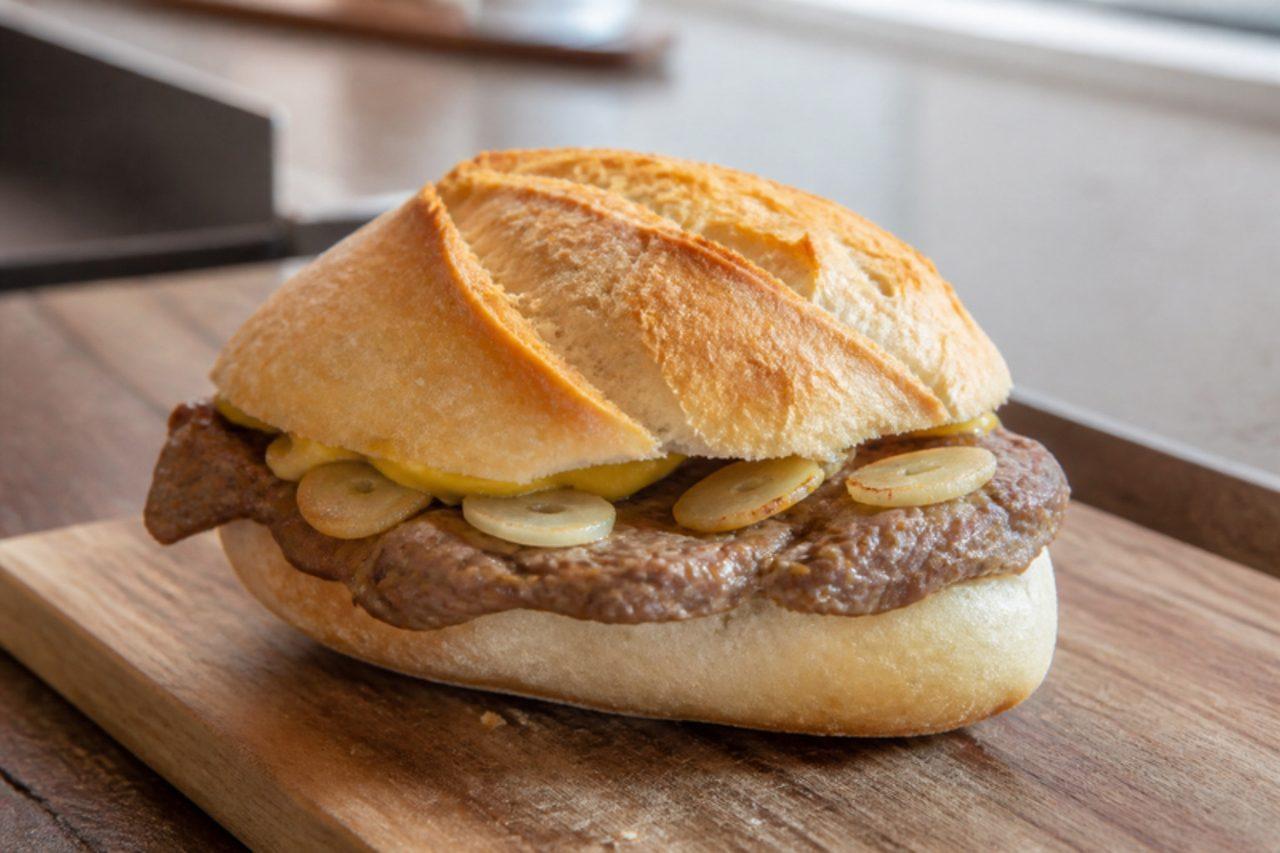
AI-generated image
Prego no pão
Garlic steak roll
Prego no pão: a thin garlic-fried steak in a crusty roll, Lisbon's favourite late-night bite

Lisbon diners order a prego at the end of a long seafood lunch, at football matches and after midnight from a beach-bar hatch: a thin slice of beef, beaten flat, fried hard in garlic and bay and stuffed into a crusty papo-seco roll. The name means 'nail', perhaps for the garlic that is hammered into the meat. Mustard or a dash of piri-piri is all it needs. A common mistake is a thick steak; it must be thin enough to cook in a minute a side or it steams and turns grey. Chef's tip: dip the cut side of the roll in the hot pan juices just before you close it.
- Total time
- 20 min
- Difficulty
- easy
- Serves
- 4
Ingredients
- 4 beef sirloin or rump steaksabout 120 g each
- 4 cloves garliccrushed
- 1 tsp coarse salt
- 3 tbsp olive oil
- 3 tbsp water
- 4 crusty white bread rollssplit
- 4 tsp yellow mustard (optional)
- 1 tsp piri-piri sauce (optional)
Shop this recipe on Amazon
What you'll need
Fresh ingredients (2)
Links open Amazon in a new tab. As an Amazon Associate, WhatToEat.Today earns from qualifying purchases.
Method
0/5 doneStep 1: Lay each 4 beef sirloin or rump steaks steak between sheets of baking paper and beat with a rolling pin until about 5 mm thick. Rub on half the 2 cloves garlic and 1 tsp coarse salt and leave for 10 minutes.
10 minStep 2: Heat 3 tbsp olive oil in a large frying pan over a medium heat with 2 bay leaves and the rest of 2 cloves garlic until it sizzles and smells sweet, about 1 minute.
1 minStep 3: Turn the heat to high, add the steaks and fry for 1 minute a side, until well browned outside. They will be slightly pink in the middle; cook another minute if you prefer them well done.
3 minStep 4: Lift the steaks out, add 3 tbsp water to the pan and scrape up the browned bits for 30 seconds to make a little garlicky sauce. Remove the bay.
Step 5: Press the cut sides of 4 crusty white bread rolls into the pan juices, put a steak in each and add 4 tsp yellow mustard or 1 tsp piri-piri sauce if you like. Eat straight away.
Nutrition per serving
- Calories
- 420 kcal
- Protein
- 32 g
- Carbs
- 38 g
- Fat
- 16 g
- Fibre
- 2 g
Nutrition values are estimates.
KrazyBadal
Good to know
- How long does prego no pão take?
- About 20 minutes in total: 10 minutes to prepare and 10 minutes to cook.
- How many people does it serve?
- 4 as written. Change the servings above the ingredients and every amount scales to match.
- What can I use instead of garlic?
- ½ tsp garlic paste or ⅛ tsp garlic powder per clove.
- What can I use instead of bay leaves?
- Leave it out, or a pinch of dried thyme (it's a background flavour).
Reviews
No reviews yet. Be the first to cook it.
Rate this recipe
Sign in to rate and review this recipe.
You might also like

Pork souvlaki
This is a pork recipe. Walk through any Greek town after dark, from Athens to Thessaloniki, and the smell of souvlaki stands drifts down the street; cubes of pork shoulder grilled on thin skewers are the country's favourite cheap supper, eaten standing up or at a plastic-table taverna. At home you marinate the meat in lemon, olive oil, garlic and dried oregano, grill it hard and fast, and pile it on warm pitta with tzatziki, tomato and red onion. Chef's tip: cut the pork into even 2.5 cm cubes and leave a little fat on; lean loin dries out, shoulder stays juicy over high heat.
 Greek
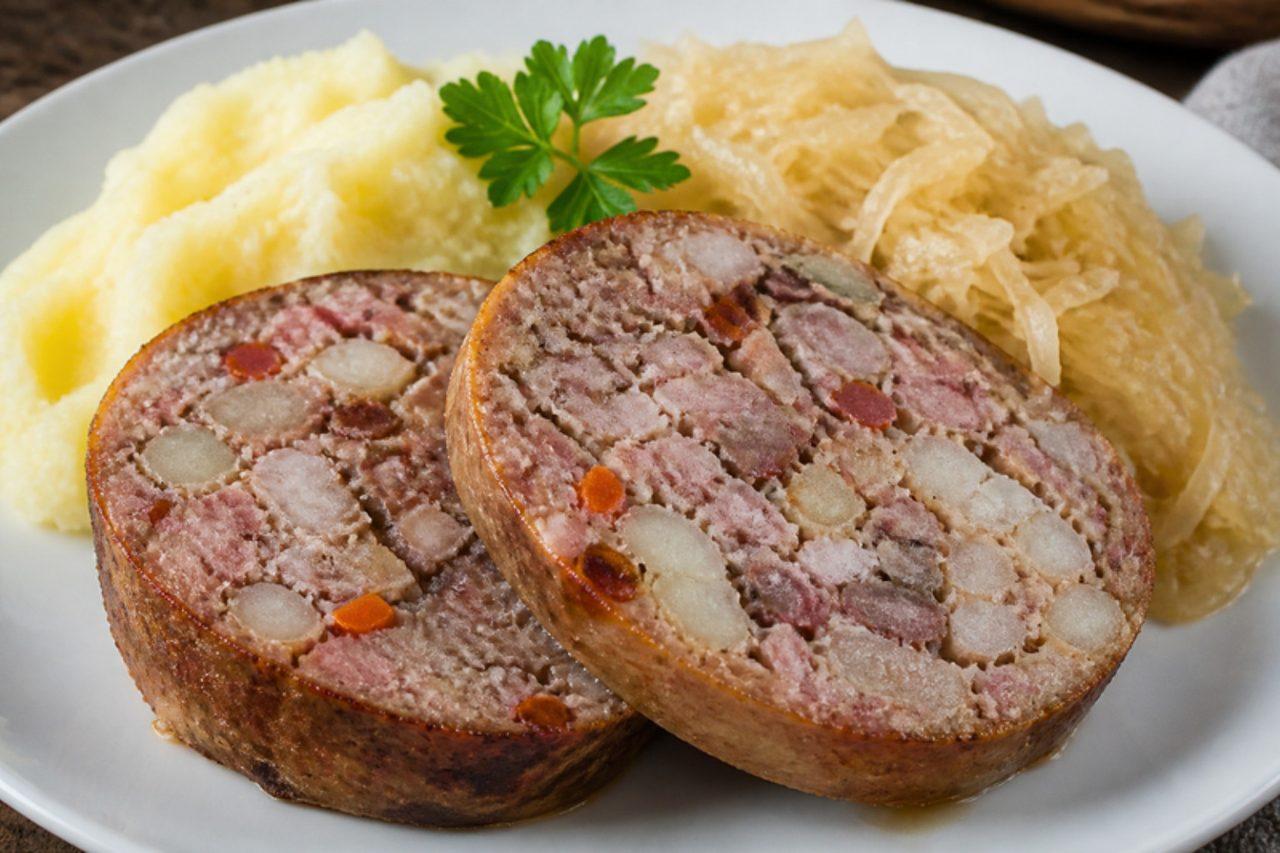
Pfälzer SaumagenStuffed pig's stomach
Saumagen is the pride of the Palatinate, served at wine-village festivals and family dinners from the Haardt hills to Ludwigshafen. A cleaned pig's stomach is stuffed with diced pork shoulder, pork sausage meat, potato and carrot seasoned with marjoram and nutmeg, poached slowly, then sliced thick and fried until crusty. The stomach works only as a casing and is ordered from a butcher; if you can't get one, bake the same filling in a covered terrine in a water bath. Serve with sauerkraut and mashed potato. Chef's tip: fill the stomach only three-quarters full, or it bursts as the potatoes swell.
 German

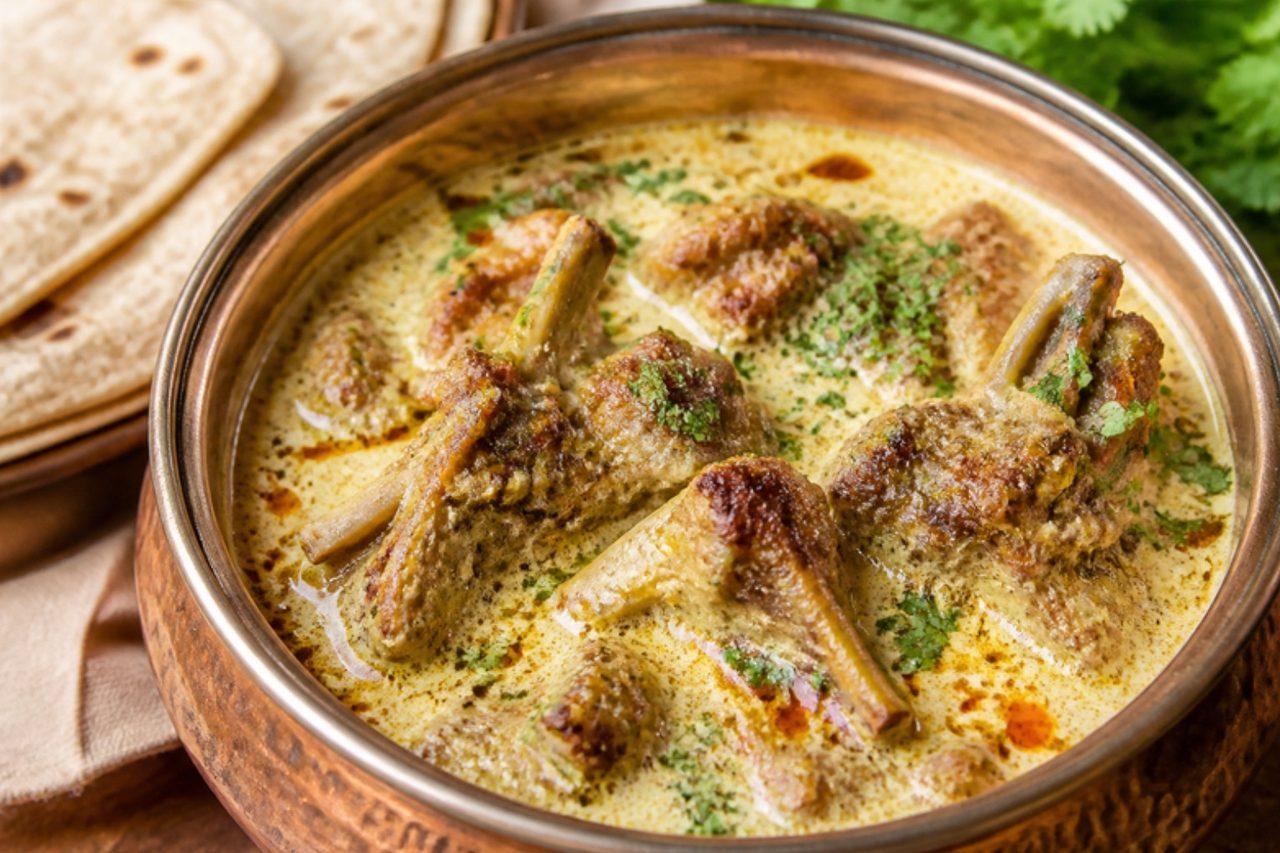
Chha goshtLamb in buttermilk gravy
Up in the hill villages of Himachal Pradesh, where flocks are walked to summer pastures, lamb is often cooked in chhaachh, the thin buttermilk left after churning butter. Thickened with a spoonful of gram flour, it makes a pale, gently sour gravy that is milder and lighter than the red curries of the plains, and it is a favourite at dhams, the festive meals of the Kangra and Chamba valleys. Serve it with steamed rice or makki ki roti. Chef's tip: whisk the gram flour into the buttermilk until there are no lumps before it goes near the pot; once it hits the heat, any lumps stay lumps.
 Indian