
AI-generated image
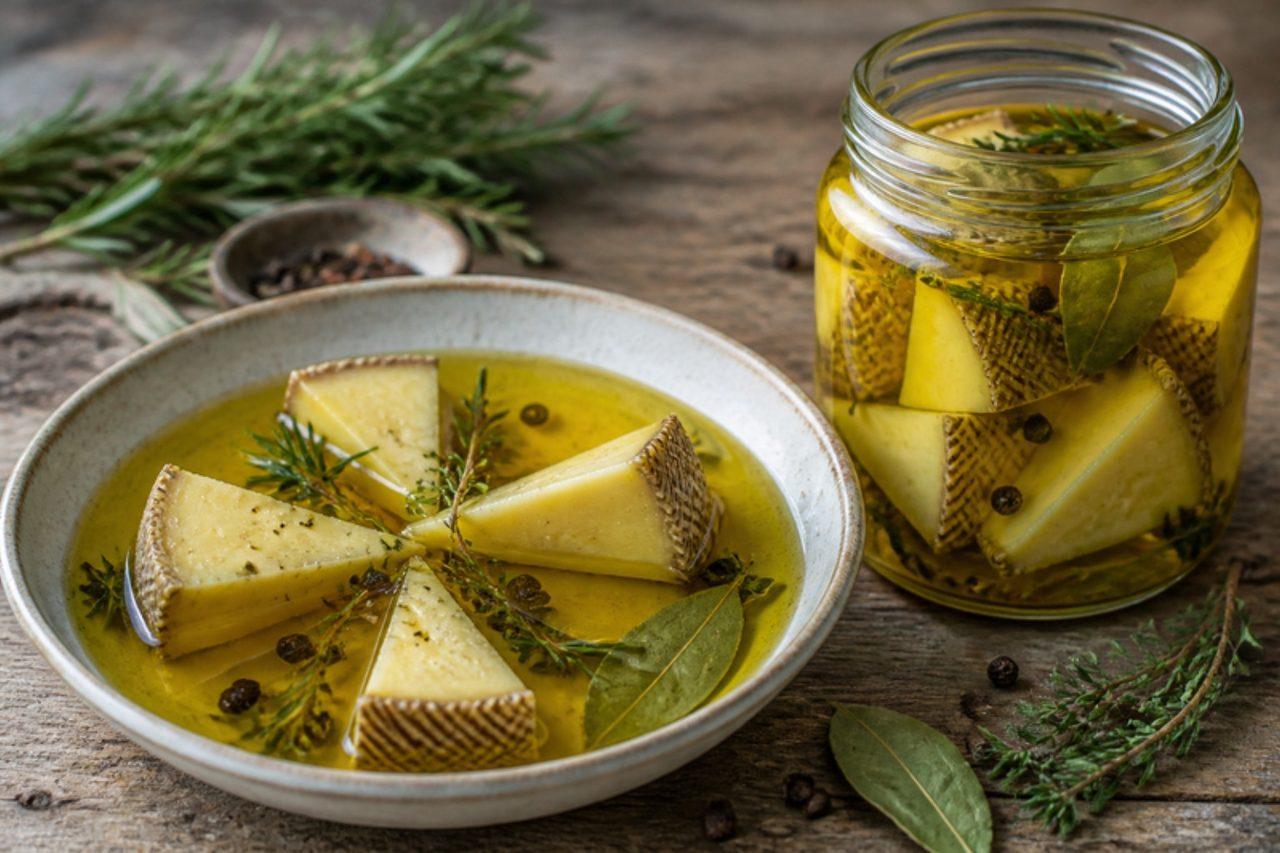
Queso manchego en aceite
Sheep's cheese preserved in olive oil
Queso manchego en aceite: ewe's-milk cheese wedges kept in olive oil with herbs


Manchego farmhouses have long stored cheese under olive oil so it would keep through the hot months; the oil seals it, softens the rind and deepens the flavour. In bars across Toledo and Ciudad Real a saucer of these oil-darkened wedges arrives with bread as soon as you sit down. PDO manchego is made with animal rennet; if you eat vegetarian, choose a ewe's-milk cheese made with vegetable or microbial rennet. Chef's tip: use a cheese aged at least three months; young cheese goes soft and greasy in the oil.
- Total time
- 15 min
- Difficulty
- easy
- Serves
- 8
Ingredients
- 14 oz semi-cured manchego cheeseaged 3–6 months, rind removed if waxed
- 1 ¾ cups extra virgin olive oilenough to cover
- 2 sprigs rosemarywashed and dried completely
- 3 sprigs thymewashed and dried completely
- 1 tsp black peppercorns
- 2 bay leavesdried
Shop this recipe on Amazon
Fresh ingredients (1)
Links open Amazon in a new tab. As an Amazon Associate, WhatToEat.Today earns from qualifying purchases.
Method
0/4 doneStep 1: Cut 14 oz semi-cured manchego cheese into wedges about 1 cm thick. If the rind is natural (not waxed), you can leave it on; it softens and is edible.
Step 3: Layer the cheese in a clean, dry jar with the herbs, 1 tsp black peppercorns and 2 bay leaves, then pour in 1 ¾ cups extra virgin olive oil until everything is covered by at least 1 cm.
Step 4: Seal and keep in the fridge for at least 3 days and up to 2 weeks. The oil turns cloudy when cold; take the jar out 30 minutes before serving, lift out wedges with a clean fork and serve at room temperature with bread. The leftover oil is lovely on toast.
Nutrition per serving
- Calories
- 310 kcal
- Protein
- 13 g
- Carbs
- 0 g
- Fat
- 28 g
- Fibre
- 0 g
Nutrition values are estimates.
KrazyBadal
Good to know
- How long does queso manchego en aceite take?
- About 15 minutes in total.
- How many people does it serve?
- 8 as written. Change the servings above the ingredients and every amount scales to match.
- Is it vegetarian?
- Yes. It has no meat or fish.
- Is it gluten free?
- Yes, as written. Check the labels on stock, sauces and spice mixes, which sometimes contain gluten.
- Can I make it ahead?
- Yes. It keeps well, so you can cook it earlier in the day or the day before and reheat it.
- What can I use instead of black peppercorns?
- Ground black pepper, a little less than the amount.
- What can I use instead of bay leaves?
- Leave it out, or a pinch of dried thyme (it's a background flavour).
Reviews
No reviews yet. Be the first to cook it.
Rate this recipe
Sign in to rate and review this recipe.
You might also like
Taiwanese grilled corn
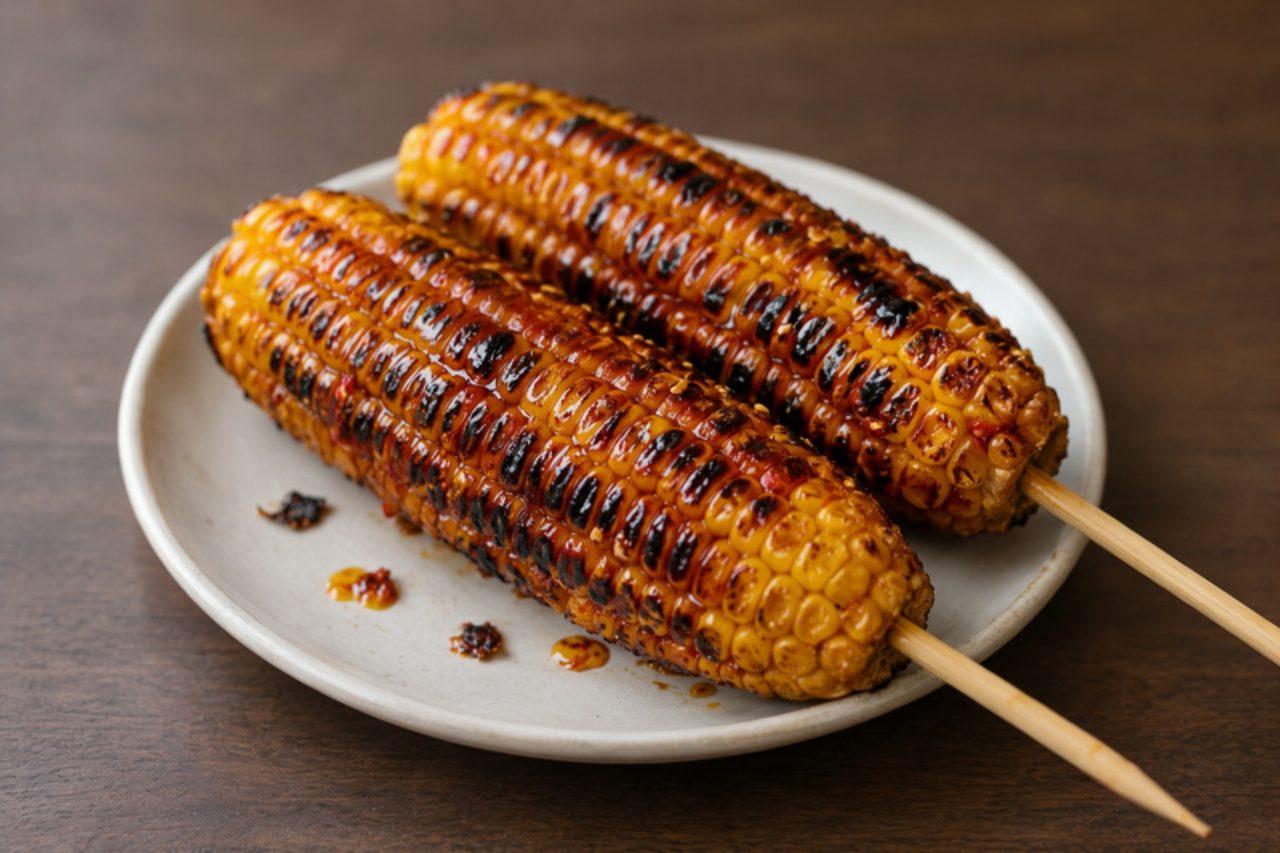
At Raohe and Shilin night markets the grilled-corn stalls are easy to find: look for the queue and the smoky, sweet smell. Cobs are par-cooked, then turned slowly over charcoal while the cook brushes them with a dark glaze of sacha sauce, thick soy paste, garlic and chilli, layer after layer, until the kernels are sticky, slightly charred and deeply savoury. It is eaten hot from a paper sleeve while walking the market. Sacha (shacha) sauce, a Taiwanese barbecue paste, usually contains dried fish and shrimp; vegetarian sacha is sold in Asian shops. Contains soy, wheat and fish. Chef's tip: brush thin coats and turn often; one thick coat burns before the corn chars.
 Taiwanese

Masala khakhraCrisp roasted wheat crackers
Khakhra are thin chapaties roasted slowly on a griddle until they turn crisp, like a cracker. This masala version adds gram flour, fresh fenugreek, turmeric and chilli to the wheat dough. They are a light Gujarati breakfast or tea-time snack, and lovely with pickle, chutney or a smear of butter. You can also make them in a roti maker.
 Indian

Lumpiang sariwaFresh vegetable spring rolls
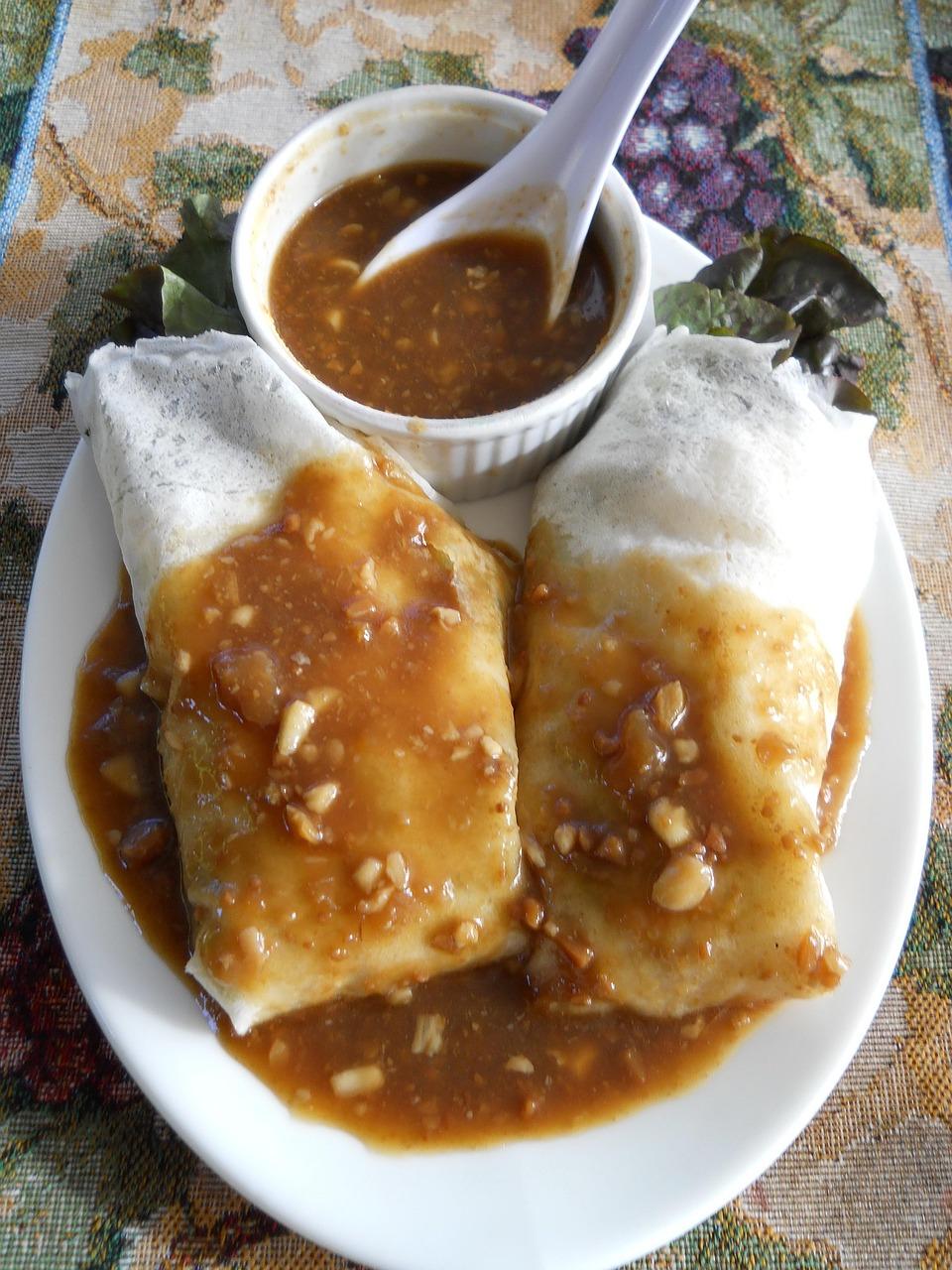
Lumpiang sariwa ('fresh lumpia') is the unfried cousin of the crisp Filipino spring roll, served at fiestas, family gatherings and as a substantial afternoon merienda around Manila and the Tagalog provinces. A thin, soft egg crepe is wrapped around a lettuce leaf and a warm sauté of sweet potato, jicama, carrot, green beans, cabbage and tofu, then covered in a glossy brown garlic sauce and a shower of crushed peanuts. In Negros the filling is heart of palm (ubod) instead. It is eaten with a knife and fork, or carefully by hand. Chef's tip: make the crepes thin enough that you can almost see light through them; thick ones turn rubbery and hide the filling.
 Filipino