
AI-generated image
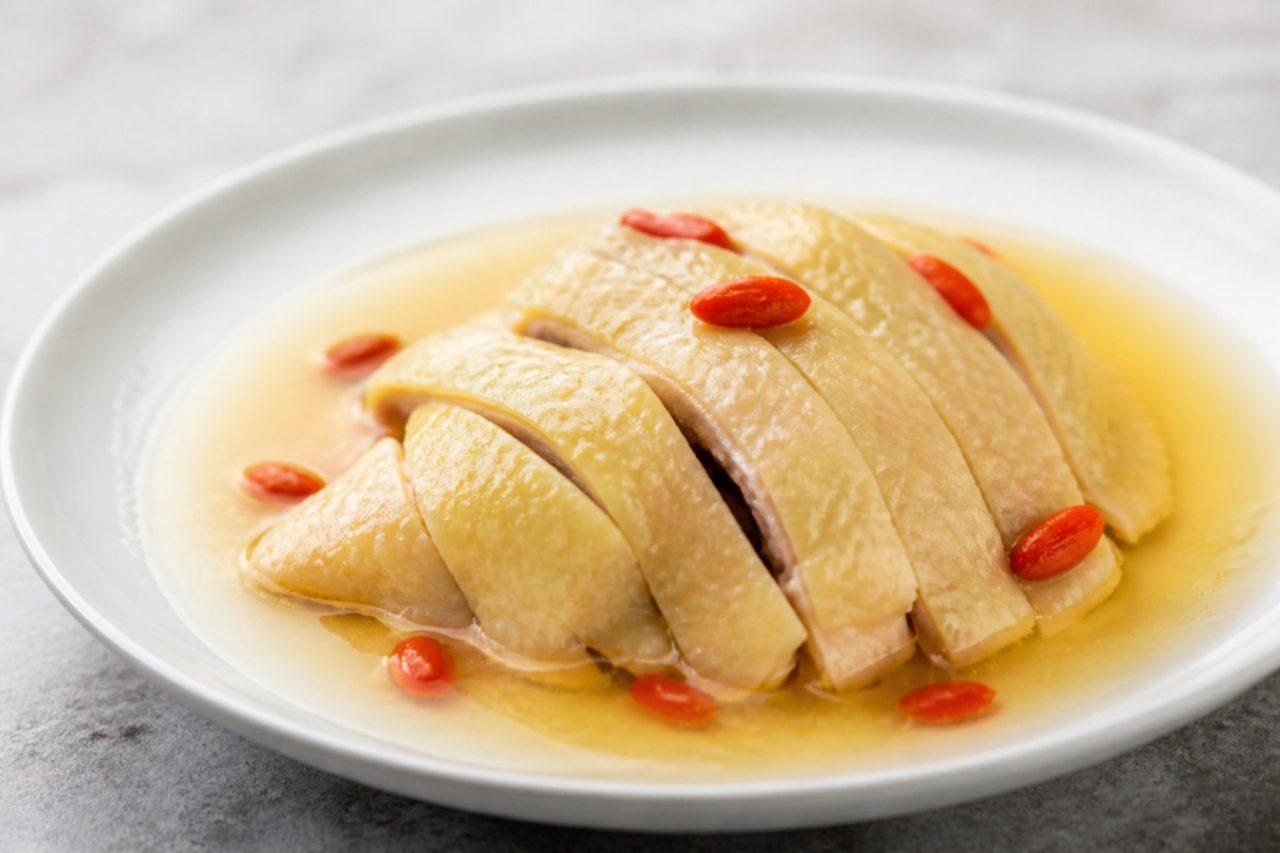
Shanghai drunken chicken
醉鸡 zuì jī — poached chicken steeped in Shaoxing wine and served cold, with an alcohol-free version

Shanghai's cold-dish counters always have a tray of drunken chicken: smooth, pale poached chicken with jelly-like skin, steeped overnight in a fragrant, slightly sweet bath of Shaoxing wine. Please note that the wine here is not cooked, so the classic dish contains alcohol and is not suitable for children, during pregnancy or for anyone avoiding alcohol. For them, make the fragrant alcohol-free version given in the ingredients, which steeps the chicken in stock with goji berries, dried tangerine peel and a little rice vinegar. Serve it chilled as a starter in summer or at Chinese New Year with other cold dishes. Chef's tip: plunge the chicken into iced water straight after poaching; the quick chill is what gives the skin its springy texture.
- Total time
- 60 min
- Difficulty
- medium
- Serves
- 4
Ingredients
For poaching
- 4 bone-in chicken legsabout 1 kg in total, skin on
- 5 slices fresh ginger
- 3 spring onionsknotted
- 1 tbsp salt
- 8 ¼ cups water
- 1 ⅛ lb ice cubesfor an ice bath
For the marinade
- 1 ¼ cups Shaoxing winecontains alcohol; it is not cooked. For the alcohol-free version use 300 ml extra cooled chicken stock and add the tangerine peel and rice vinegar below
- ¾ cup cooled poaching stockfrom poaching the chicken
- 1 tbsp dried goji berries
- 1 tsp sugar
- 1 tsp salt
For the alcohol-free version (instead of the wine)
- 1 piece dried tangerine peel (optional)about 5 cm
- 1 tbsp rice vinegar (optional)
Shop this recipe on Amazon
Spices & pantry
Fresh ingredients (3)
Links open Amazon in a new tab. As an Amazon Associate, WhatToEat.Today earns from qualifying purchases.
Method
0/7 doneStep 1: Bring 8 ¼ cups water to the boil in a large pan with 5 slices fresh ginger, 3 spring onions and 1 tbsp salt. Add 4 bone-in chicken legs, return to a gentle simmer and cook over a low heat for 15 minutes.
15 minStep 2: Turn off the heat, cover and leave the chicken in the hot water for 15 minutes more. Check the thickest part next to the bone: it must reach 165°F (165 °F) and the juices run clear. If not, simmer for 5 minutes more and check again.
15 minStep 3: Meanwhile fill a large bowl with 1 ⅛ lb ice cubes and cold water. Lift the chicken straight into the ice bath and leave for 10 minutes, until cold through.
10 minStep 4: Strain the poaching liquid, skim off the fat and cool 200 ml of it quickly by standing the jug in cold water. This is ¾ cup cooled poaching stock.
Step 5: Mix ¾ cup cooled poaching stock with 1 ¼ cups Shaoxing wine, 1 tbsp dried goji berries, 1 tsp sugar and 1 tsp salt in a container just large enough to hold the chicken. For the alcohol-free version, mix ¾ cup cooled poaching stock with 300 ml more cooled stock, 1 tbsp dried goji berries, 1 tsp sugar, 1 tsp salt, 1 piece dried tangerine peel and 1 tbsp rice vinegar instead.
Step 6: Put the chicken in, making sure it is submerged, cover and marinate in the fridge for at least 6 hours and up to 24. The chicken must go into the fridge within 2 hours of cooking. Don't leave it on the counter to steep.
Step 7: To serve, lift the chicken out, chop it through the bone into 2 cm pieces with a heavy cleaver and arrange on a plate. Spoon over a little of the cold marinade with some of the goji berries. Eat within 3 days.
Nutrition per serving
- Calories
- 330 kcal
- Protein
- 38 g
- Carbs
- 4 g
- Fat
- 15 g
- Fibre
- 0 g
Nutrition values are estimates.
KrazyBadal
Good to know
- How long does shanghai drunken chicken take?
- About 60 minutes in total: 15 minutes to prepare and 45 minutes to cook.
- How many people does it serve?
- 4 as written. Change the servings above the ingredients and every amount scales to match.
- Can I make it ahead?
- Yes. It keeps well, so you can cook it earlier in the day or the day before and reheat it.
- What can I use instead of fresh ginger?
- ¼ tsp ground ginger per tbsp fresh (add it with the spices).
- What can I use instead of spring onions?
- Chives, or a little finely sliced onion.
Reviews
No reviews yet. Be the first to cook it.
Rate this recipe
Sign in to rate and review this recipe.
You might also like
Arroz con pitu de caleyaSoupy rice with chicken
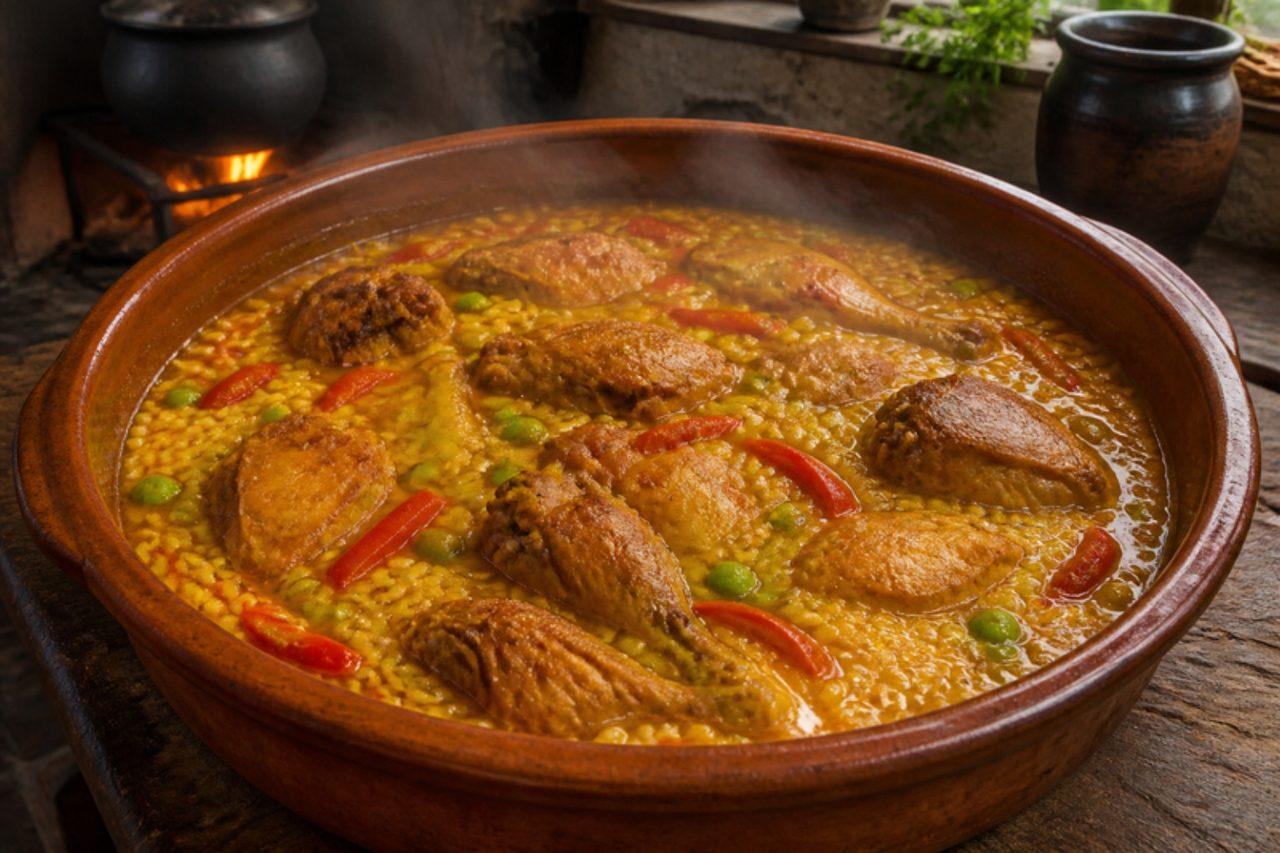
A pitu de caleya is a cockerel raised free in the lanes, or caleyas, of rural Asturias; its firm, flavourful meat needs long stewing, and families around Villaviciosa and Grado still cook it for feast days. The stew is often finished as a soupy rice, so the deep chicken juices go into every grain. Use the best free-range chicken you can find. The braise includes dry white wine; replace it with extra stock and a squeeze of lemon if you want it alcohol-free. Chef's tip: brown the chicken slowly and deeply; that colour is where the flavour of the whole pot comes from.
 Spanish
Char siuHoney roast pork
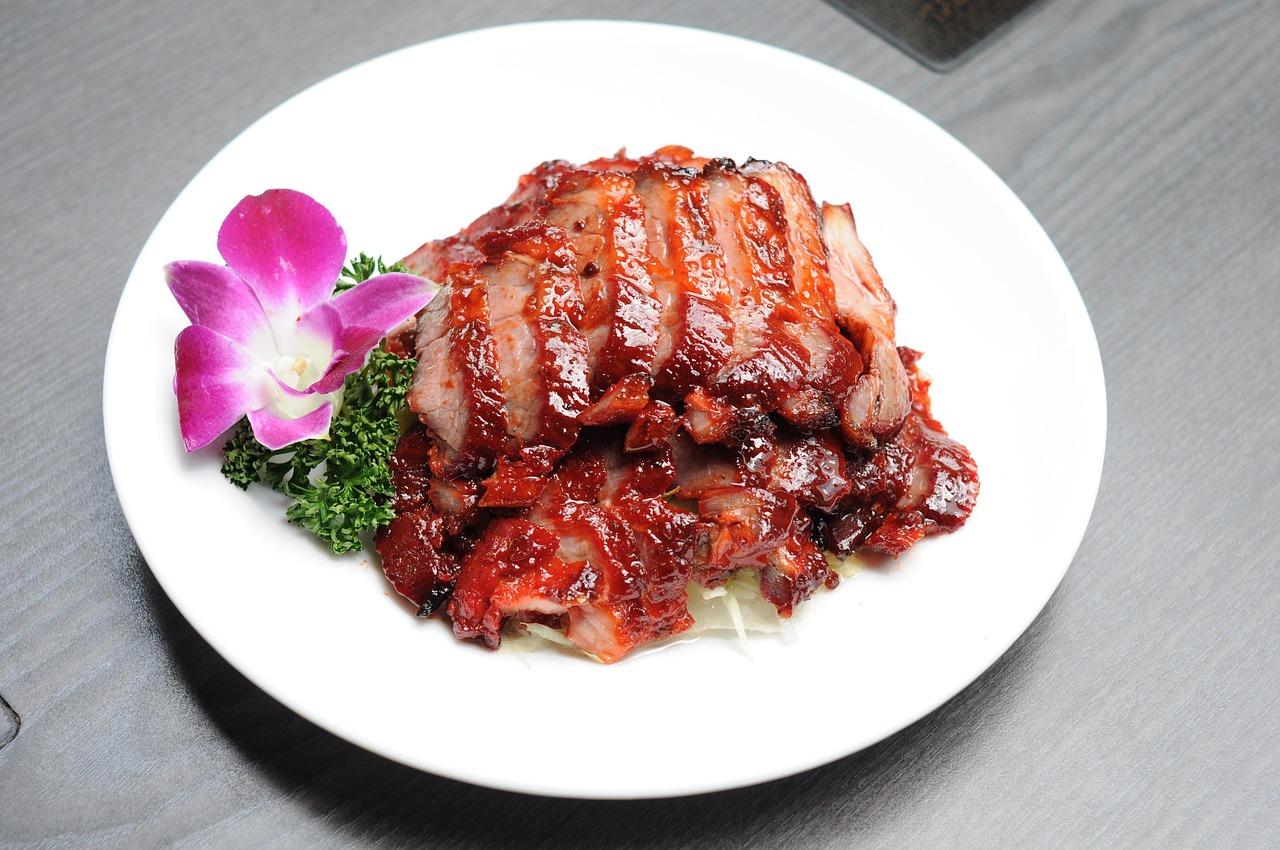
Hanging in long glossy strips in the windows of Guangzhou's siu mei shops, char siu is the roast pork Cantonese families pick up on the way home to put on rice, noodles or into steamed buns. The outside is lacquered, sweet and a little charred at the edges; the inside stays juicy, savoury and faintly scented with five-spice. Shoulder (pork butt) is the cut to use, because its marbling keeps the strips moist through a hot oven. Marinate it overnight in the fridge, roast it the next day and eat it warm with steamed rice and blanched greens, or cold in fried rice and noodle soups. Chef's tip: save the honey for the last ten minutes; brushed on at the start it burns black long before the pork is cooked.
Wuhan mianwoRice and soybean fritter rings
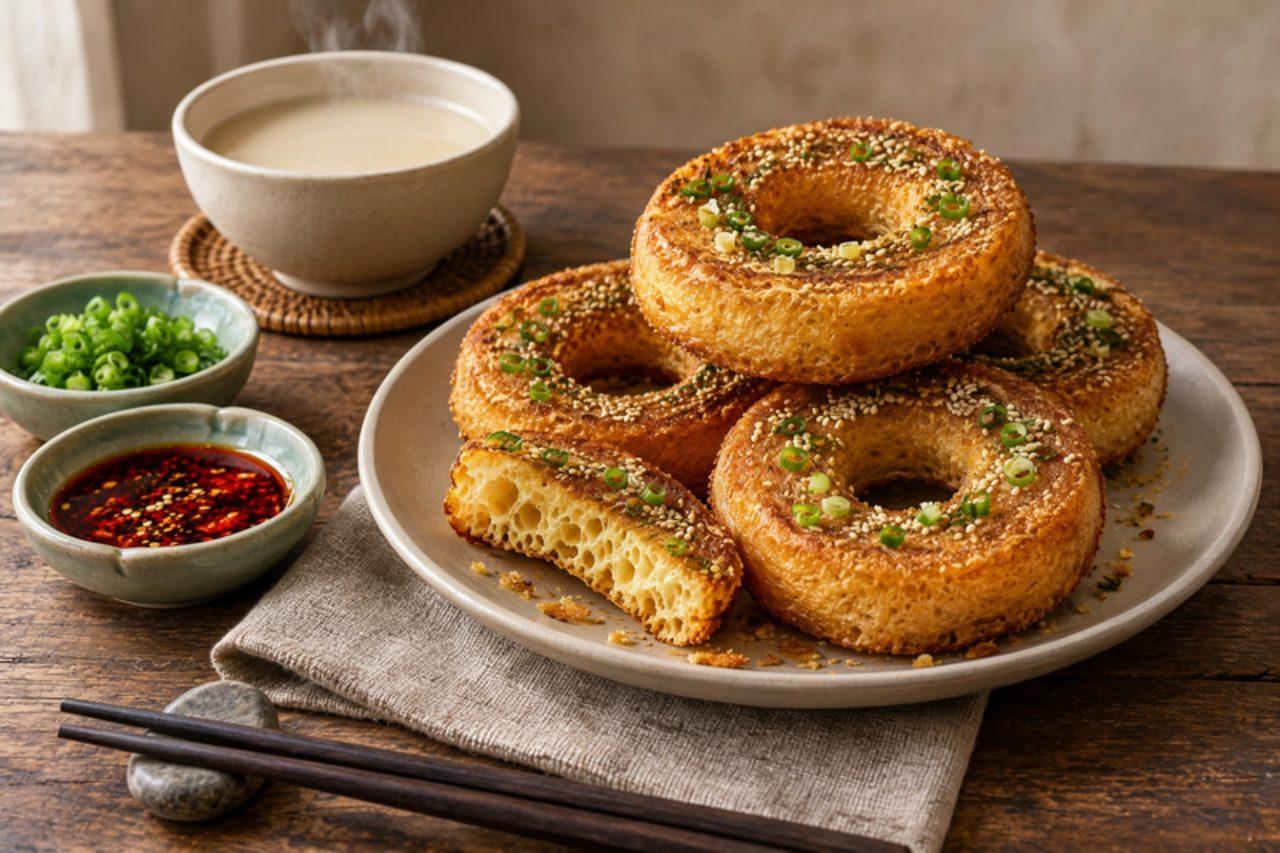
Wuhan people call breakfast "guozao", and mianwo is one of its icons: a ring of rice and soybean batter fried in a special ladle with a raised centre, so it ends up thick and soft round the rim and thin and crackly in the middle, flecked with sesame and spring onion. It is eaten with hot dry noodles or a bowl of soy milk. The mistake is oil that is too cool: the batter soaks it up and turns greasy; it must hiss strongly the moment it goes in. Without a mianwo ladle, use a deep ladle and spread the batter thinner in the middle with a spoon. Chef's tip: give the batter a quick stir before every fritter, because the rice settles to the bottom fast.

