
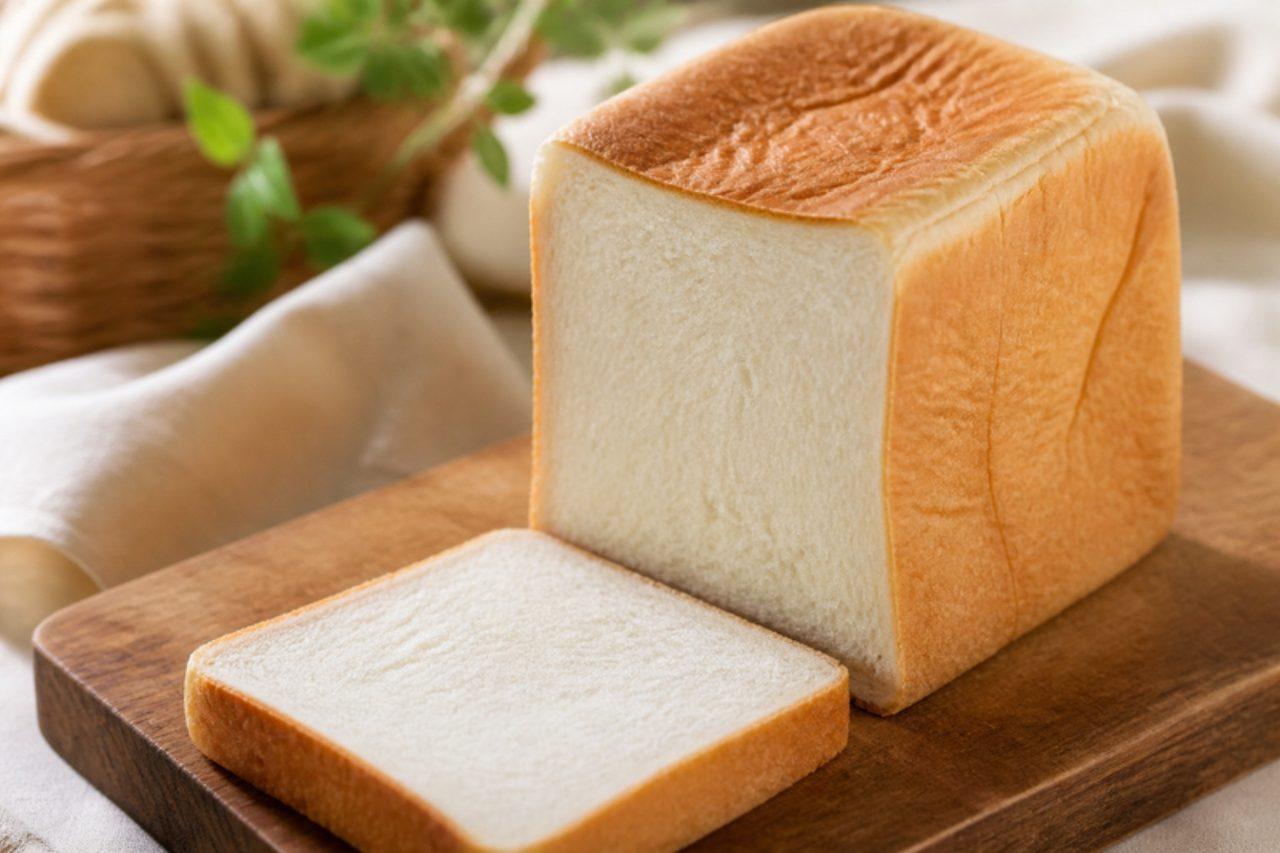
AI-generated image
Shokupan (Japanese milk bread)
食パン · Tall, feathery-soft milk loaf for thick toast

Shokupan is the everyday sandwich loaf of Japan, sold by the half loaf at bakeries from Sapporo to Fukuoka and toasted in thick slabs for breakfast with butter and jam. Its feathery, pull-apart crumb comes from a cooked flour paste (yudane-style) that lets the dough hold more water, so the bread stays soft for days. You need a 900 g loaf tin and a few hours of mostly waiting. The usual mistake is slicing it while hot, which squashes the delicate crumb into gummy layers; let it cool fully. Chef's tip: roll each piece of dough into a tight spiral before it goes into the tin, which gives the tall, even rise and those stringy, tearable layers.
- Total time
- 75 min
- Difficulty
- medium
- Serves
- 12
Ingredients
For the flour paste
- ½ cup milk
For the dough
- 12 ½ oz strong white bread flour
- 1 oz sugar
- ¼ oz salt
- ½ cup milklukewarm
- 1 eggbeaten
- 1 oz unsalted buttersoftened
- ½ tsp vegetable oilfor the bowl
To glaze
- 1 tbsp milk
Shop this recipe on Amazon
What you'll need
Fresh ingredients (3)
Links open Amazon in a new tab. As an Amazon Associate, WhatToEat.Today earns from qualifying purchases.
Method
0/8 doneStep 1: Whisk ⅞ oz strong white bread flour and ½ cup milk in a small pan over a low heat, stirring all the time, until it thickens to a smooth paste that leaves trails, about 149°F. Cool to room temperature.
4 minStep 2: In a large bowl mix 12 ½ oz strong white bread flour, 1 oz sugar, ¼ oz salt and ⅛ oz fast-action dried yeast (keep the salt and yeast apart at first). Add the cooled paste, ½ cup milk and 1 egg and bring together into a sticky dough.
Step 3: Knead for 10 minutes, then work in 1 oz unsalted butter a little at a time. Keep kneading until the dough is smooth and stretches into a thin, see-through sheet without tearing.
15 minStep 4: Shape into a ball, put in a bowl greased with ½ tsp vegetable oil, cover and leave somewhere warm until doubled.
60 minStep 5: Grease a 900 g loaf tin. Knock back the dough and divide into 3 equal pieces. Roll each into an oval, fold the sides in to the middle, then roll it up tightly from the short end into a spiral.
10 minStep 6: Set the three rolls side by side in the tin, seams down. Cover and leave until the dough rises about 1 cm above the rim.
50 minStep 7: Heat the oven to 350°F. Brush the top with 1 tbsp milk and bake until deep golden and the loaf sounds hollow when tapped underneath (an inner temperature of about 194°F).
35 minStep 8: Turn out at once onto a rack and leave until completely cold, at least 2 hours, before slicing.
120 min
Nutrition per serving
- Calories
- 190 kcal
- Protein
- 6 g
- Carbs
- 31 g
- Fat
- 4 g
- Fibre
- 1 g
Nutrition values are estimates.
KrazyBadal
Good to know
- How long does shokupan (Japanese milk bread) take?
- About 75 minutes in total: 40 minutes to prepare and 35 minutes to cook.
- How many people does it serve?
- 12 as written. Change the servings above the ingredients and every amount scales to match.
- Is it vegetarian?
- Yes. It has no meat or fish.
- Can I make it ahead?
- Yes. It keeps well, so you can cook it earlier in the day or the day before and reheat it.
- What can I use instead of strong white bread flour?
- Plain flour, same amount (the dough will be softer and rise a little less).
- What can I use instead of milk?
- Oat, soy or almond milk, same amount (use unsweetened for savoury dishes).
Reviews
No reviews yet. Be the first to cook it.
Rate this recipe
Sign in to rate and review this recipe.
You might also like

Yaki onigiriGrilled rice balls
Yaki onigiri (焼きおにぎり) are rice balls grilled until they form a crisp, toasty crust, then brushed with soy sauce glaze. They are eaten all over Japan, at izakaya, at barbecues and from the freezer section, as a snack or with miso soup. The inside stays soft and steamy while the outside crackles. Best eaten hot, straight from the pan. Chef's tip: let the shaped rice balls dry for 10 minutes before they go in the pan. A drier surface forms a better crust and won't stick, and the glaze goes on only at the end so it doesn't burn.


Miso soup
Miso soup (味噌汁) is drunk every day in homes all over Japan, at breakfast as well as dinner, beside a bowl of rice. The base is dashi; this vegan version uses kombu and dried shiitake instead of bonito, which gives it a deep, rounded flavour. Silken tofu and wakame seaweed are the classic fillings. It takes ten minutes; just remember not to boil the miso. Chef's tip: add the miso at the very end and never let it boil. Boiling kills the miso's fresh, fermented aroma; Japanese cooks say the soup should only 'smile', with the surface barely trembling.
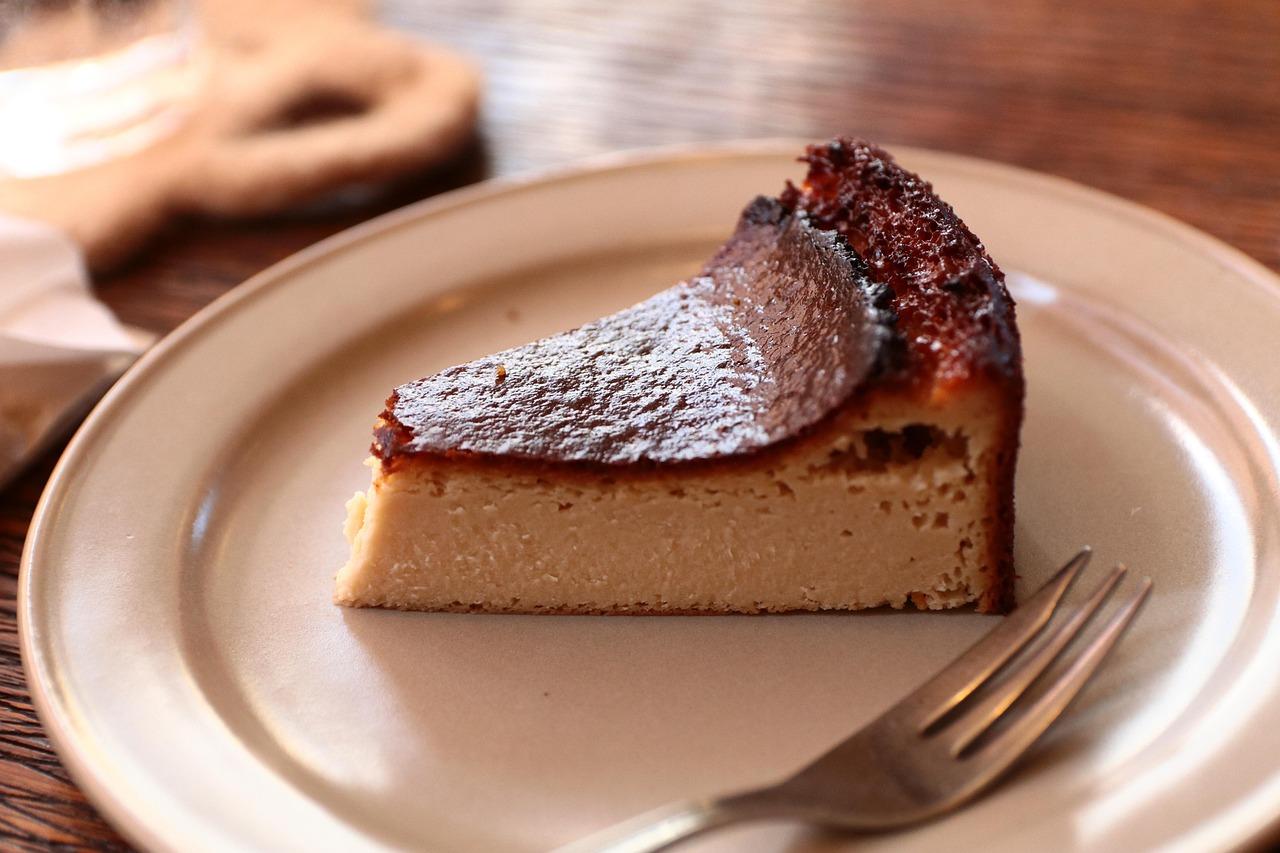
Basque burnt cheesecake
This crustless cheesecake was created in the early 1990s at La Viña, a pintxos bar in the old town of San Sebastián (Donostia) in the Basque Country, and is now famous around the world. It's baked very hot so the top caramelises almost black and the sides rise and crack, while the middle stays soft and creamy, almost runny. There's no base and no water bath, and the rough, rustic look is the point: it's lined with crumpled baking paper. La Viña uses a spoonful of wheat flour; cornflour does the same job and keeps it gluten free. Chef's tip: take it out of the oven while the centre still wobbles like a soft set custard; it firms up as it cools, and if it looks set in the oven, the middle will be dry instead of creamy.
 Spanish
