
AI-generated image
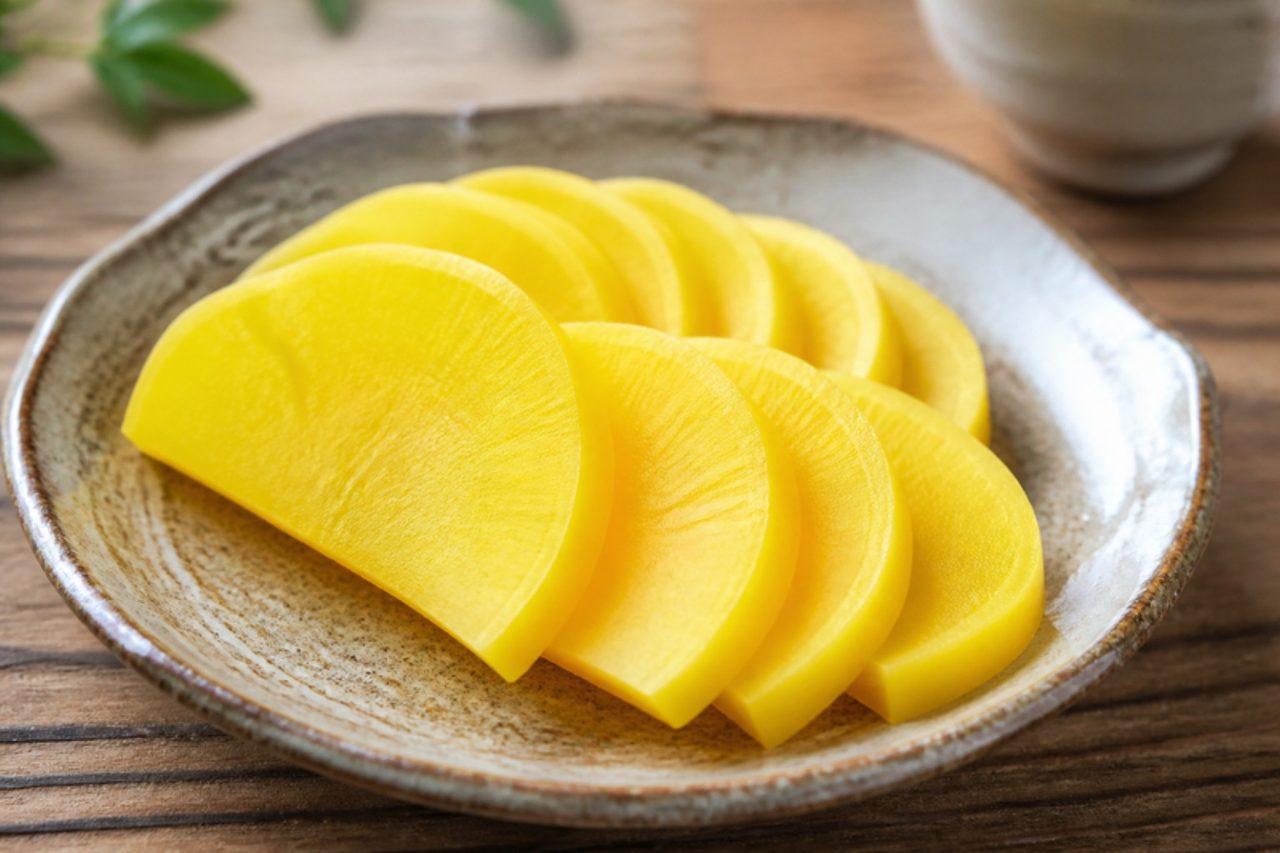
Takuan (pickled daikon)
沢庵 · Sun-dried daikon pickled in rice bran until yellow and crunchy



Each autumn in the farmhouses of Miyazaki and Kanagawa, whole daikon are strung up under the eaves to dry in the wind before being packed into barrels of rice bran, and the bright yellow, crunchy slices that come out weeks later sit beside almost every bowl of rice in Japan. Homemade takuan is milder and sweeter than shop-bought, with a gentle ferment and no artificial colour; persimmon peel and a little turmeric give the golden tone. The active work is about two hours, but the radish needs 5–10 days of drying and 3–4 weeks in the bran. The common mistake is underdrying: the daikon must bend into a U without snapping, or it will turn watery and soft. Chef's tip: keep the tub somewhere cool (below 15 °C) and press it with a heavy weight, so the brine rises over the radishes within a few days.
- Total time
- 120 min
- Difficulty
- hard
- Serves
- 24
Ingredients
- 2 daikon radishesabout 1.5 kg in all, unpeeled, scrubbed
- 10 ½ oz rice bran (nuka)toasted in a dry pan until it smells nutty
- 2 ⅛ oz coarse sea salt
- 2 ⅛ oz sugar
- ⅓ oz kombusnipped into strips
- ½ oz dried persimmon peel or dried apple peel (optional)
- ½ tsp ground turmeric
Shop this recipe on Amazon
Spices & pantry
Fresh ingredients (1)
Links open Amazon in a new tab. As an Amazon Associate, WhatToEat.Today earns from qualifying purchases.
Method
0/8 doneStep 1: Hang 2 daikon radishes in a cool, airy, shady place (or lay on a rack in a breezy spot), out of rain and frost. Leave for 5–10 days, until each radish bends into a U shape without cracking.
30 minStep 2: Mix 10 ½ oz rice bran (nuka), 2 ⅛ oz coarse sea salt, 2 ⅛ oz sugar and ½ tsp ground turmeric thoroughly in a bowl.
5 minStep 3: Cut off the leaves and tails. If the radishes are longer than your container, cut them in half. Rub each one all over with a handful of the bran mixture.
10 minStep 4: Scatter a layer of bran mix in a clean food-safe tub. Pack in the radishes tightly in one layer, filling gaps, then scatter over some ⅓ oz kombu, 2 dried red chillies and ½ oz dried persimmon peel or dried apple peel and more bran. Repeat, finishing with a thick layer of bran.
20 minStep 5: Cover with a clean plate or lid that fits inside the tub and weigh it down with about 3 kg (a bag of water in a bag works). Cover the top with a cloth.
5 minStep 6: Keep somewhere cool, below 59°F. Within 3–5 days the radishes should release a brine that rises to the plate. If it hasn't, add a little more salt mixed with 100 ml cold boiled water.
Step 7: Leave for 3–4 weeks, until a radish is yellow right through and tastes tangy and sweet. Throw the batch away if you see fuzzy coloured mould or it smells rotten (a thin white film skimmed off the top is normal).
Step 8: To serve, rinse off the bran and slice thinly. Keep the rest in the bran, or wrap cut pieces and refrigerate for up to 2 weeks.
Nutrition per serving
- Calories
- 20 kcal
- Protein
- 0 g
- Carbs
- 4 g
- Fat
- 0 g
- Fibre
- 1 g
Nutrition values are estimates.
KrazyBadal
Good to know
- How long does takuan (pickled daikon) take?
- About 120 minutes in total.
- How many people does it serve?
- 24 as written. Change the servings above the ingredients and every amount scales to match.
- Is it vegan?
- Yes. It has no meat, fish, dairy or eggs.
- Is it gluten free?
- Yes, as written. Check the labels on stock, sauces and spice mixes, which sometimes contain gluten.
- Can I make it ahead?
- Yes. It keeps well, so you can cook it earlier in the day or the day before and reheat it.
- What can I use instead of sugar?
- Caster sugar, same amount.
- What can I use instead of ground turmeric?
- Leave it out (it mostly adds colour).
Reviews
No reviews yet. Be the first to cook it.
Rate this recipe
Sign in to rate and review this recipe.
You might also like

Yaki onigiriGrilled rice balls
Yaki onigiri (焼きおにぎり) are rice balls grilled until they form a crisp, toasty crust, then brushed with soy sauce glaze. They are eaten all over Japan, at izakaya, at barbecues and from the freezer section, as a snack or with miso soup. The inside stays soft and steamy while the outside crackles. Best eaten hot, straight from the pan. Chef's tip: let the shaped rice balls dry for 10 minutes before they go in the pan. A drier surface forms a better crust and won't stick, and the glaze goes on only at the end so it doesn't burn.


Miso soup
Miso soup (味噌汁) is drunk every day in homes all over Japan, at breakfast as well as dinner, beside a bowl of rice. The base is dashi; this vegan version uses kombu and dried shiitake instead of bonito, which gives it a deep, rounded flavour. Silken tofu and wakame seaweed are the classic fillings. It takes ten minutes; just remember not to boil the miso. Chef's tip: add the miso at the very end and never let it boil. Boiling kills the miso's fresh, fermented aroma; Japanese cooks say the soup should only 'smile', with the surface barely trembling.
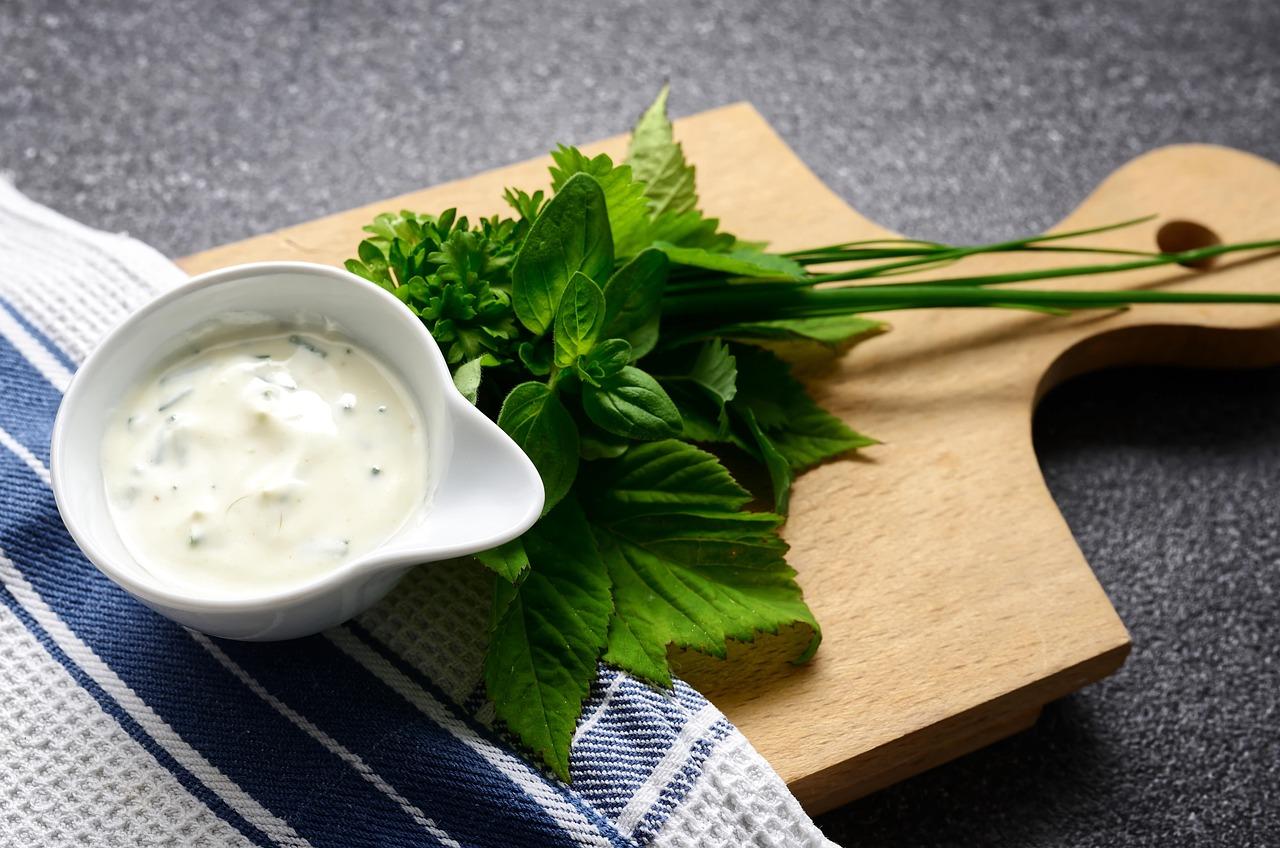
Sour cream dip
A simple, tangy dip made with thick home-made cottage cheese (hung yogurt) or ready-made sour cream, seasoned with garlic, chilli, black pepper and vinegar. Serve it cold with crisps, nachos and jacket potatoes. The book's other dips use this as their 'sour cream'.
