
AI-generated image
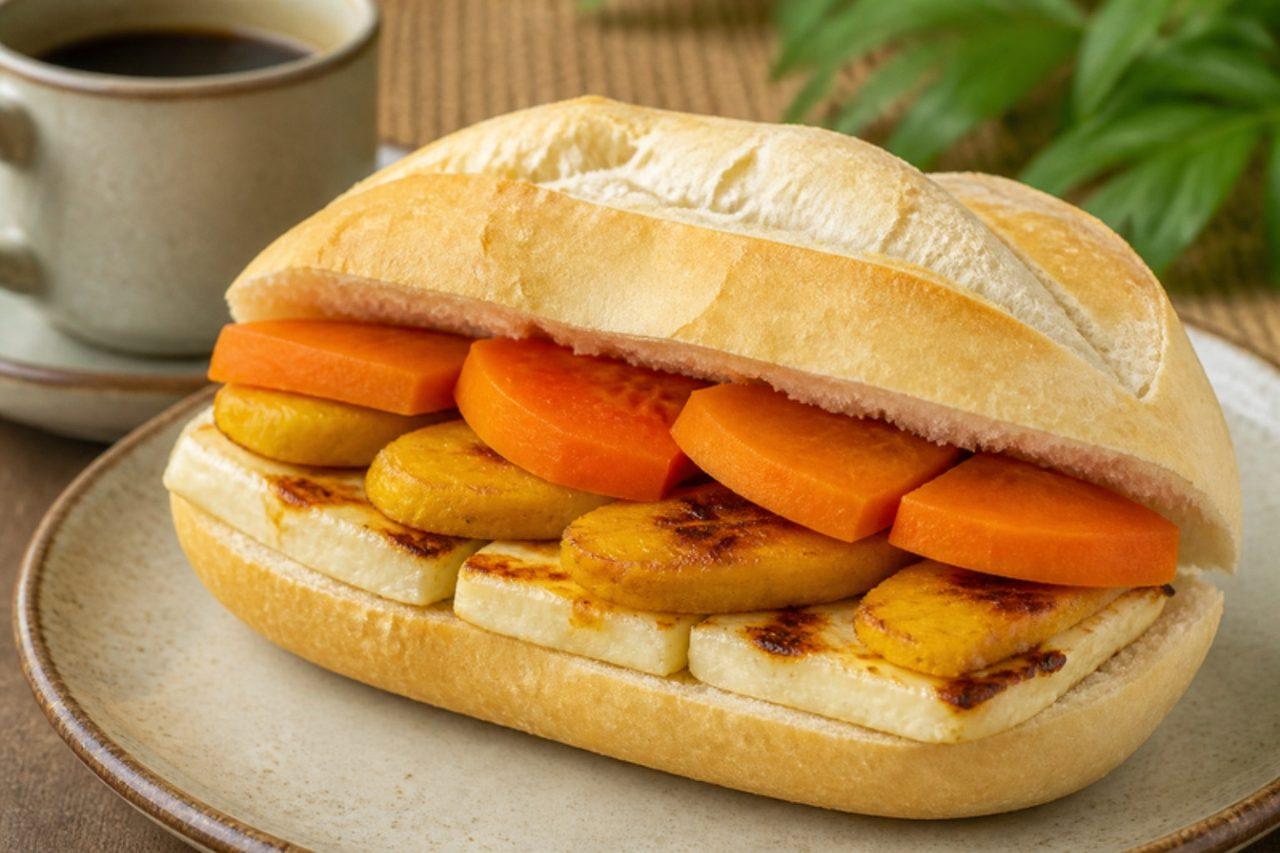
X-caboquinho
X-caboquinho: Manaus breakfast roll with tucumã palm fruit, fried plantain and melted coalho cheese

Manaus starts the day with this sandwich, sold from cafés, street stalls and market counters near the Mercado Adolpho Lisboa. A crusty roll is split, buttered and toasted, then filled with slices of fried pacovã plantain, a slab of melted coalho cheese and shavings of tucumã, an orange Amazon palm fruit with an oily, nutty, slightly earthy flavour. The name plays on 'caboclo', the riverside people of the Amazon, and amazonenses defend it as a symbol of local pride. Frozen tucumã slices are sold in some Brazilian shops; there is no true substitute, though thin slices of ripe avocado give a different but pleasant result. Use a vegetarian coalho or halloumi, as most coalho uses animal rennet. People often add the tucumã to the hot pan, but it should go in cool and raw for its fresh flavour. Chef's tip: fry the plantain until really dark at the edges; its caramel sweetness is what balances the salty cheese and the palm fruit.
- Total time
- 20 min
- Difficulty
- easy
- Serves
- 4
Ingredients
- ⅔ oz buttersoft
- 2 ripe plantain (banana pacovã)yellow with black spots, peeled and sliced lengthways
- 2 tbsp neutral oil
- 7 oz queijo coalhoin 4 slices; microbial rennet or vegetarian halloumi
- 4 oz tucumã pulpsliced thinly; frozen from Brazilian shops, or ripe avocado
Shop this recipe on Amazon
Spices & pantry
Fresh ingredients (2)
Links open Amazon in a new tab. As an Amazon Associate, WhatToEat.Today earns from qualifying purchases.
Method
0/4 doneStep 1: Heat 2 tbsp neutral oil in a large frying pan over a medium heat. Fry 2 ripe plantain (banana pacovã) for 3 minutes each side, until deep golden and caramelised at the edges. Move to a plate.
6 minStep 2: Put 7 oz queijo coalho in the same pan and cook for 1–2 minutes each side, until browned and softened. Keep warm.
3 minStep 3: Split 4 crusty white rolls (pão francês), spread the cut sides with ⅔ oz butter and toast them in the pan or a griddle for 2 minutes, until crisp and golden.
2 minStep 4: Fill each roll with plantain, a slice of hot cheese and a layer of 4 oz tucumã pulp. Press the lids down and eat at once, with a strong black coffee.
Nutrition per serving
- Calories
- 520 kcal
- Protein
- 17 g
- Carbs
- 58 g
- Fat
- 25 g
- Fibre
- 5 g
Nutrition values are estimates.
KrazyBadal
Good to know
- How long does x-caboquinho take?
- About 20 minutes in total: 5 minutes to prepare and 15 minutes to cook.
- How many people does it serve?
- 4 as written. Change the servings above the ingredients and every amount scales to match.
- Is it vegetarian?
- Yes. It has no meat or fish.
- What can I use instead of butter?
- The same weight of ghee or coconut oil (for frying and most baking).
Reviews
No reviews yet. Be the first to cook it.
Rate this recipe
Sign in to rate and review this recipe.
You might also like
Zapiekanka
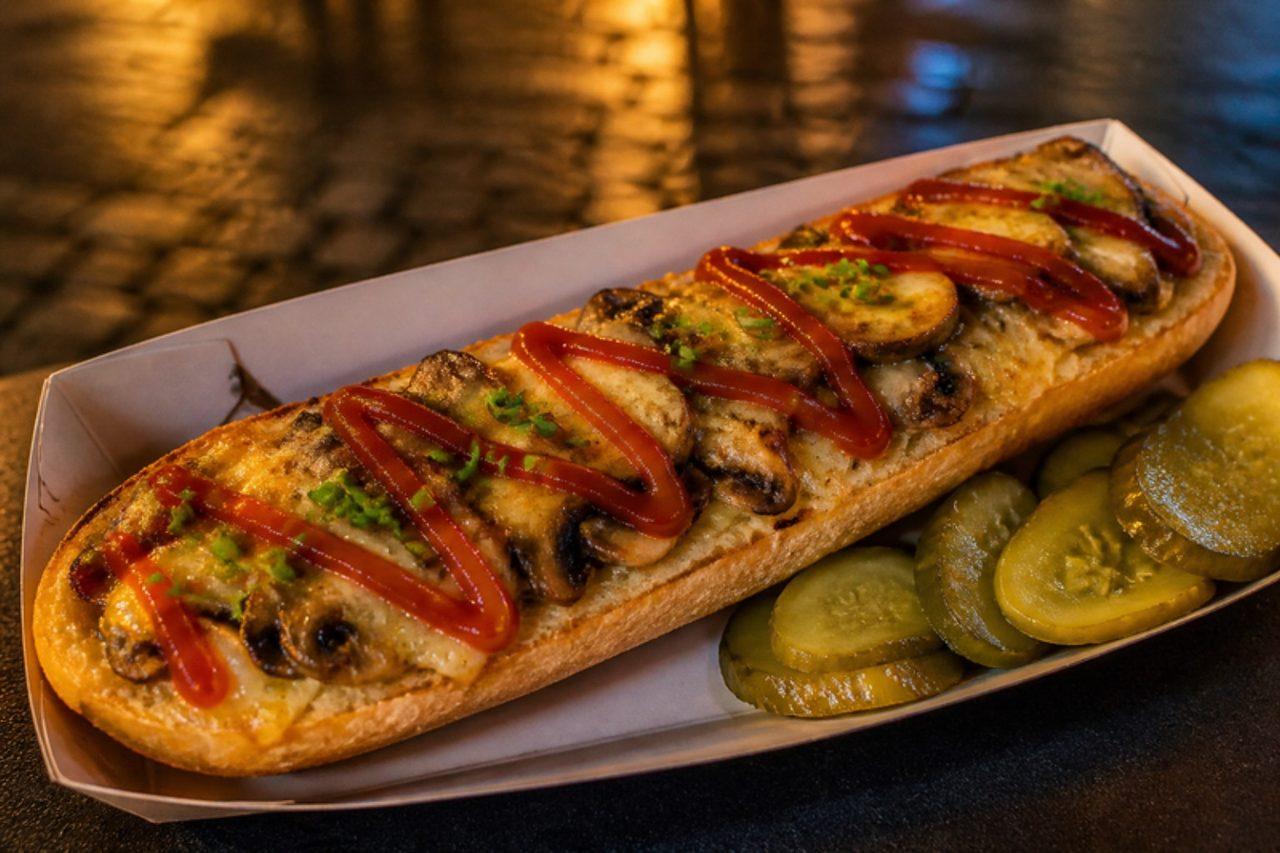
Zapiekanka is Polish street food born in the 1970s and perfected at the hatch windows around Plac Nowy in Kraków's Kazimierz district, where students and night owls queue for one at midnight. Half a long baguette is topped with mushrooms fried with onion, covered in grated cheese and baked until crisp at the edges and bubbling, then finished with a zigzag of ketchup and chives. The classic version has no meat at all. Use a hard cheese made with vegetarian rennet (many supermarket mild Cheddars and Goudas are). Chef's tip: fry the mushrooms until completely dry before they go on the bread; wet mushrooms make the baguette soggy instead of crisp.
 Polish
Bobó de camarão
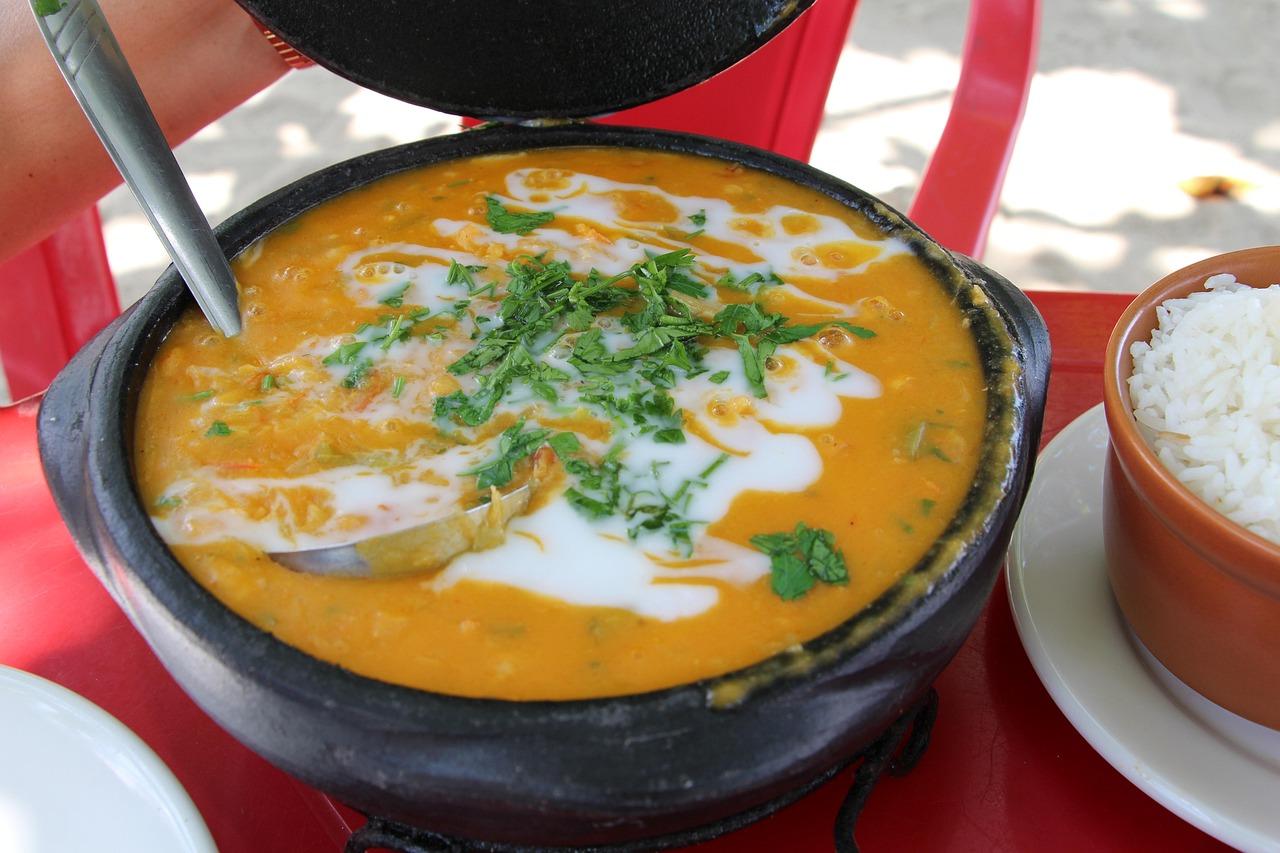
Velvety, coral-coloured and rich with coconut, bobó de camarão is what Bahian families put on the table when there is something to celebrate, and beach restaurants from Praia do Forte to Itacaré serve it in clay pots with white rice and farofa. Cassava is boiled until it falls apart, blended with coconut milk into a smooth cream, then folded into prawns cooked with onion, tomato, peppers and a slick of dendê oil. The result is somewhere between a stew and a thick sauce, sweet from the prawns and gently earthy from the cassava. A frequent mistake is boiling the prawns in the purée for too long, which leaves them tough and curled; they go in at the very end. Cassava must always be cooked right through, never eaten raw: cut out the woody core and boil it until a knife meets no resistance. Chef's tip: blend the cassava while it is still hot, with some of its cooking water; cold cassava turns gluey in the blender.

Limonada suíça
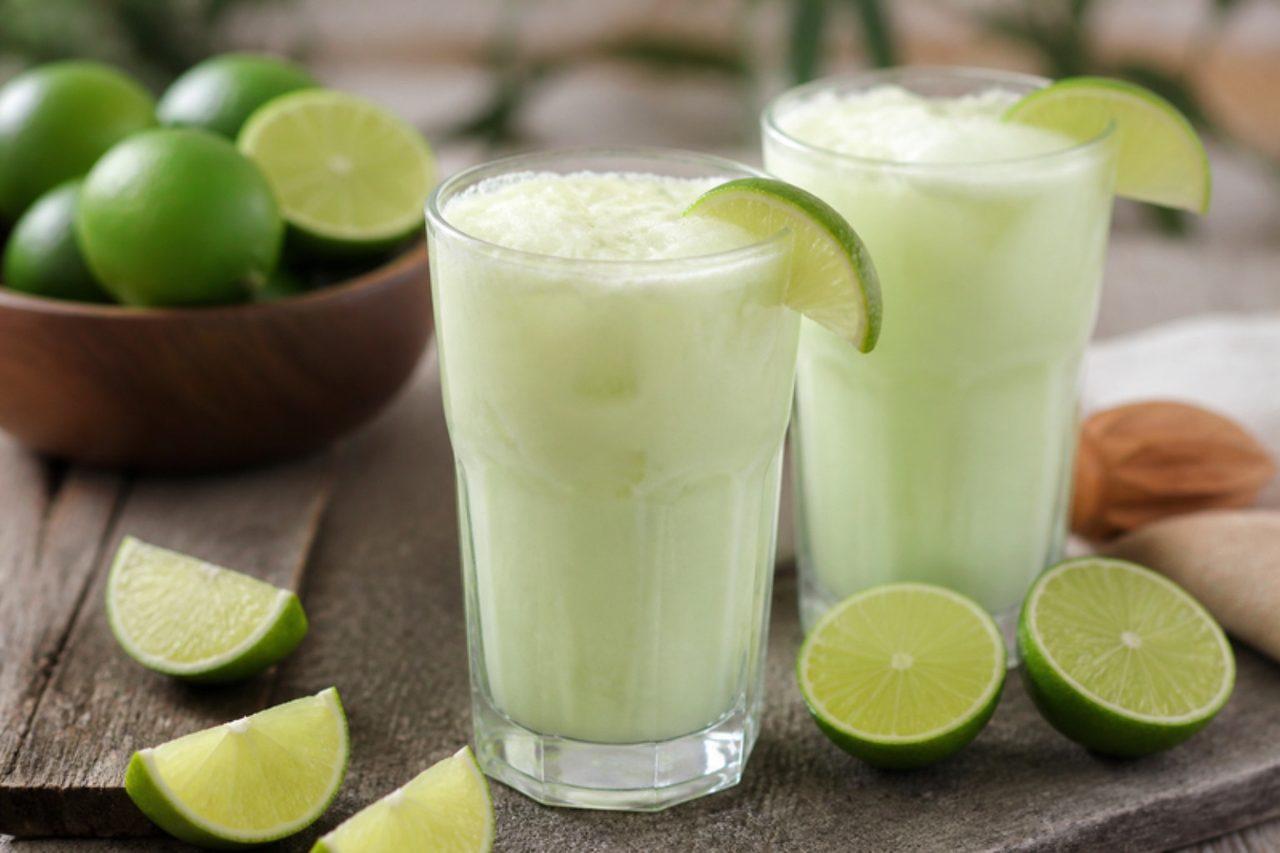
Limonada suíça is the creamy, frothy limeade served in juice bars and lunch counters all over Brazil. Despite the name ('Swiss lemonade'), nobody knows of any Swiss link, and it's made with whole Tahiti limes, blended briefly, skin and all, then strained and sweetened with condensed milk. It's cold, zingy and pale green, perfect with a hot lunch. Chef's tip: blend for no more than 10–15 seconds. Lime peel gives the drink its wonderful perfume, but blended too long it releases bitterness from the pith; serve it straight away for the same reason.