
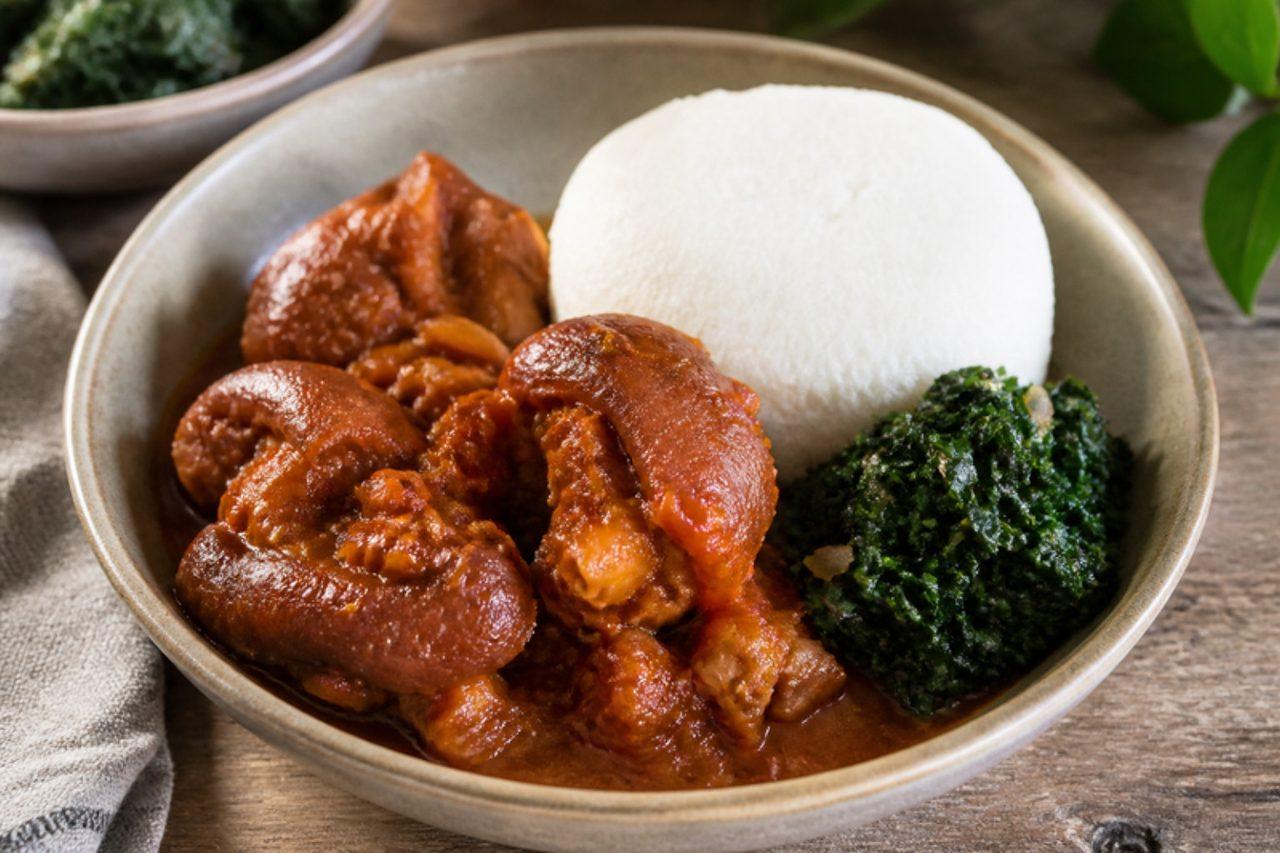
AI-generated image
Mazondo
Braised cow trotters
Mazondo: Zimbabwean cow trotters slow-stewed with onion and tomato

Mazondo is beer-hall and roadside-braai food in Chitungwiza and Harare's high-density suburbs, and a Saturday treat in homes where someone has the patience to tend the pot. Cow trotters are simmered for hours until the skin and tendons melt into a sticky, gelatinous gravy that coats the lips, then finished with onion, tomato and a little curry powder. It is rich and deeply savoury, eaten with the fingers and a mound of sadza to soak up the sauce. Buy the trotters already cleaned and cut by a butcher; the common mistake is rushing the simmer, which leaves them rubbery and tough instead of falling off the bone. Chef's tip: a pressure cooker cuts the simmer to about an hour, but finish with the lid off so the gravy reduces and turns glossy.
- Total time
- 240 min
- Difficulty
- medium
- Serves
- 4
Ingredients
For the trotters
- 3 ⅓ lb cow trotterscleaned, scraped and cut into pieces by the butcher
- 10 ½ cups waterplus more as needed
- 2 tsp salt
For the gravy
- 2 tbsp sunflower oil
- 2 onionssliced
- 3 garlic clovescrushed
- 2 tsp mild curry powdercheck the label is gluten free
- 3 tomatoeschopped
- ½ tsp ground black pepper
- 1 red chilli (optional)chopped
Shop this recipe on Amazon
Fresh ingredients (3)
Links open Amazon in a new tab. As an Amazon Associate, WhatToEat.Today earns from qualifying purchases.
Method
0/10 doneStep 1: Rinse 3 ⅓ lb cow trotters well under cold running water and check for any stray hairs, scraping them off with a sharp knife.
Step 2: Put the trotters in a large pot with 10 ½ cups water and bring to the boil over a high heat. Skim off the grey foam that rises for the first 10 minutes.
15 minStep 3: Add 1 ½ tsp salt and 2 bay leaves, cover, turn the heat to low and simmer gently, topping up with boiling water so the pieces stay covered.
180 minStep 4: Check the trotters: they are ready when the skin is soft and wobbly and a fork pulls the meat and gristle easily from the bone. If they still feel rubbery, keep simmering and check every 20 minutes.
Step 5: Lift out the trotters with a slotted spoon, discard the bay leaves and keep about 500 ml of the cooking liquid.
Step 6: Heat 2 tbsp sunflower oil in a wide heavy pan over a medium heat and fry 2 onions until soft and golden at the edges.
8 minStep 7: Stir in 3 garlic cloves, 2 tsp mild curry powder and 1 red chilli if using, and fry until fragrant.
1 minStep 8: Add 3 tomatoes and cook, stirring, until they break down and the oil starts to pool at the edges of the pan.
6 minStep 9: Return the trotters to the pan with the reserved cooking liquid, ½ tsp ground black pepper and the rest of ½ tsp salt. Simmer uncovered over a medium-low heat, turning the pieces now and then, until the gravy is thick, sticky and clings to them.
15 minStep 10: Taste for salt and serve hot with sadza. The pieces have been simmered for hours, so they are well beyond the safe 160°F all through.
Nutrition per serving
- Calories
- 430 kcal
- Protein
- 52 g
- Carbs
- 9 g
- Fat
- 20 g
- Fibre
- 2 g
Nutrition values are estimates.
KrazyBadal
Good to know
- How long does mazondo take?
- About 240 minutes in total: 20 minutes to prepare and 220 minutes to cook.
- How many people does it serve?
- 4 as written. Change the servings above the ingredients and every amount scales to match.
- Is it gluten free?
- Yes, as written. Check the labels on stock, sauces and spice mixes, which sometimes contain gluten.
- What can I use instead of bay leaves?
- Leave it out, or a pinch of dried thyme (it's a background flavour).
- What can I use instead of onions?
- 2 shallots per onion.
Reviews
No reviews yet. Be the first to cook it.
Rate this recipe
Sign in to rate and review this recipe.
You might also like

Pork souvlaki
This is a pork recipe. Walk through any Greek town after dark, from Athens to Thessaloniki, and the smell of souvlaki stands drifts down the street; cubes of pork shoulder grilled on thin skewers are the country's favourite cheap supper, eaten standing up or at a plastic-table taverna. At home you marinate the meat in lemon, olive oil, garlic and dried oregano, grill it hard and fast, and pile it on warm pitta with tzatziki, tomato and red onion. Chef's tip: cut the pork into even 2.5 cm cubes and leave a little fat on; lean loin dries out, shoulder stays juicy over high heat.
 Greek
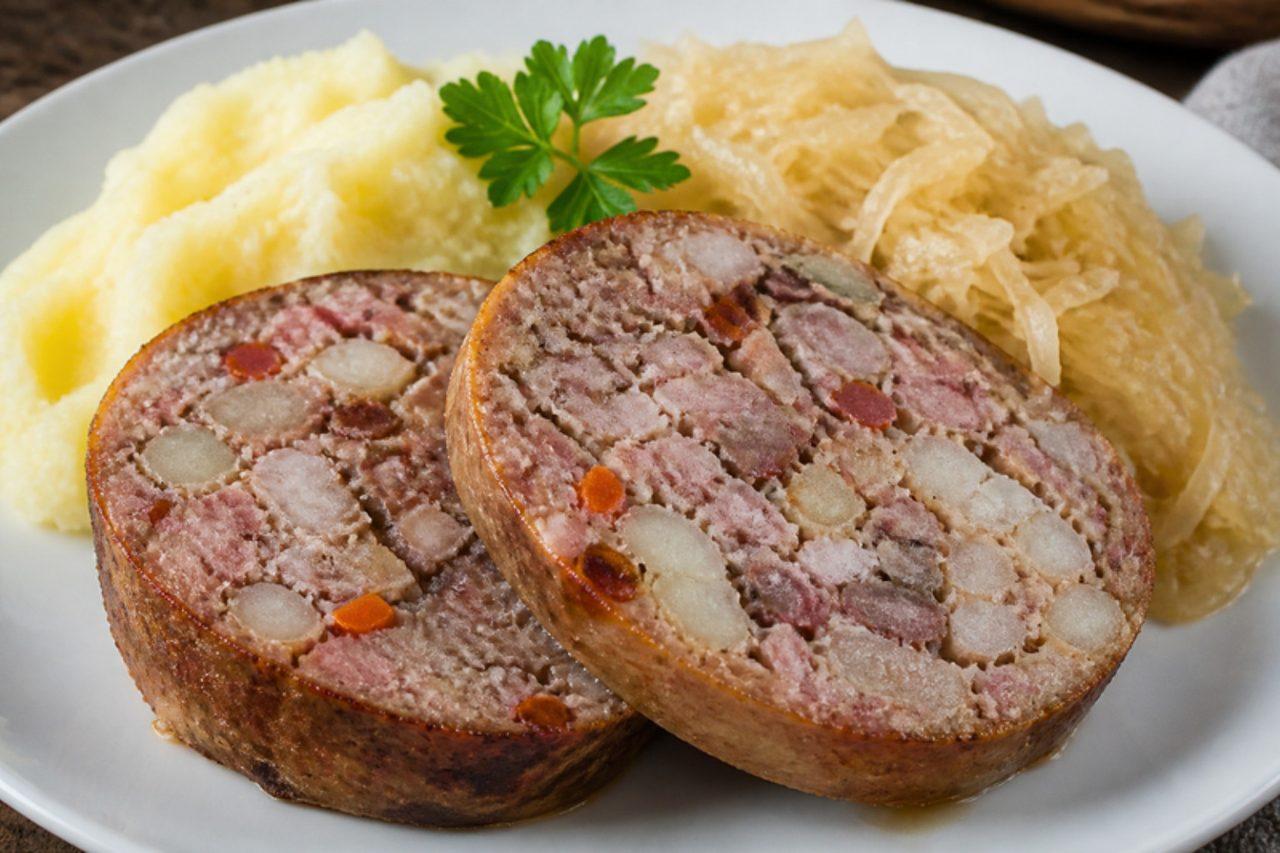
Pfälzer SaumagenStuffed pig's stomach
Saumagen is the pride of the Palatinate, served at wine-village festivals and family dinners from the Haardt hills to Ludwigshafen. A cleaned pig's stomach is stuffed with diced pork shoulder, pork sausage meat, potato and carrot seasoned with marjoram and nutmeg, poached slowly, then sliced thick and fried until crusty. The stomach works only as a casing and is ordered from a butcher; if you can't get one, bake the same filling in a covered terrine in a water bath. Serve with sauerkraut and mashed potato. Chef's tip: fill the stomach only three-quarters full, or it bursts as the potatoes swell.
 German

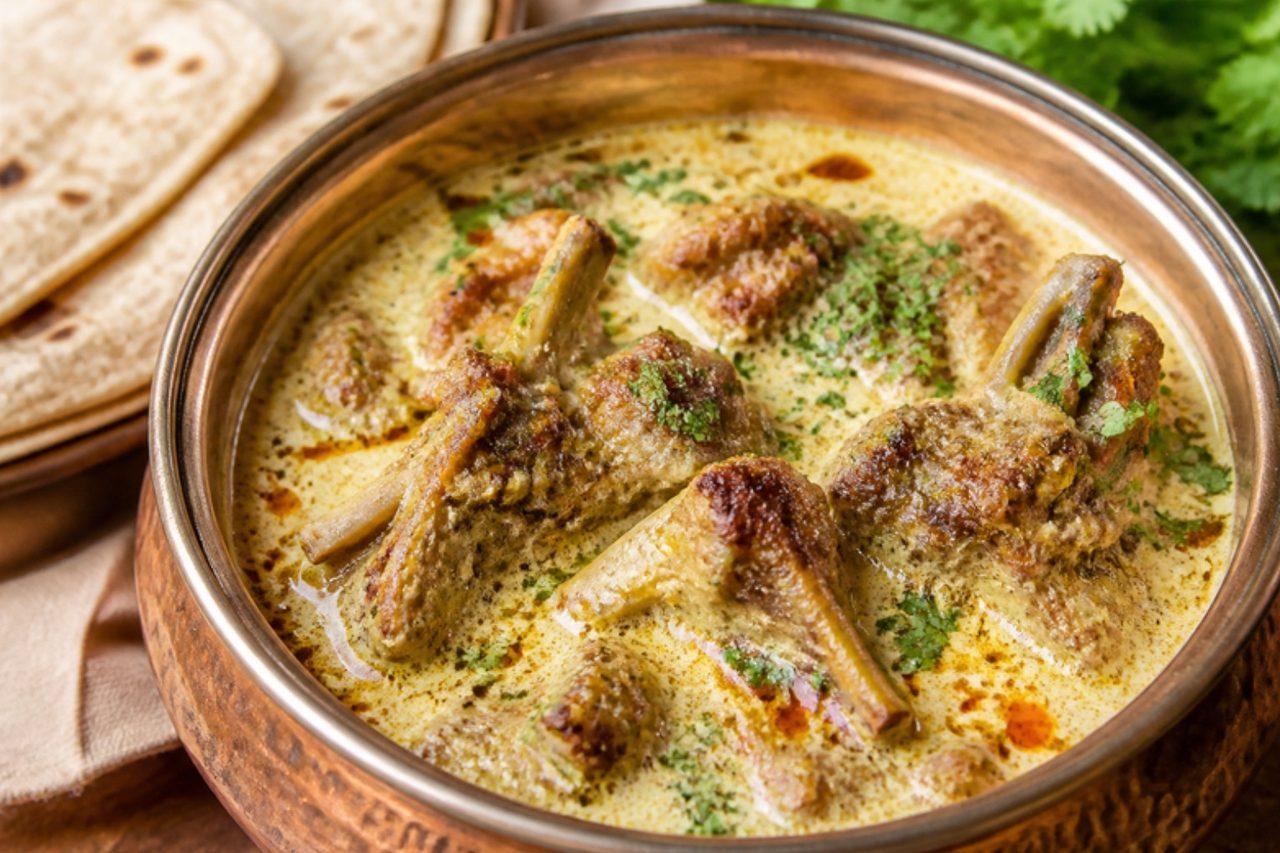
Chha goshtLamb in buttermilk gravy
Up in the hill villages of Himachal Pradesh, where flocks are walked to summer pastures, lamb is often cooked in chhaachh, the thin buttermilk left after churning butter. Thickened with a spoonful of gram flour, it makes a pale, gently sour gravy that is milder and lighter than the red curries of the plains, and it is a favourite at dhams, the festive meals of the Kangra and Chamba valleys. Serve it with steamed rice or makki ki roti. Chef's tip: whisk the gram flour into the buttermilk until there are no lumps before it goes near the pot; once it hits the heat, any lumps stay lumps.
 Indian