Skip to content

Recipes with scotch bonnet pepper

31 recipes that use scotch bonnet pepper, with photos, step-by-step instructions and cook times. The quickest, Mango chow, takes 10 minutes. It is most often cooked with garlic, onion and thyme.

Got a few things in the fridge? Search by everything you have

Saheena

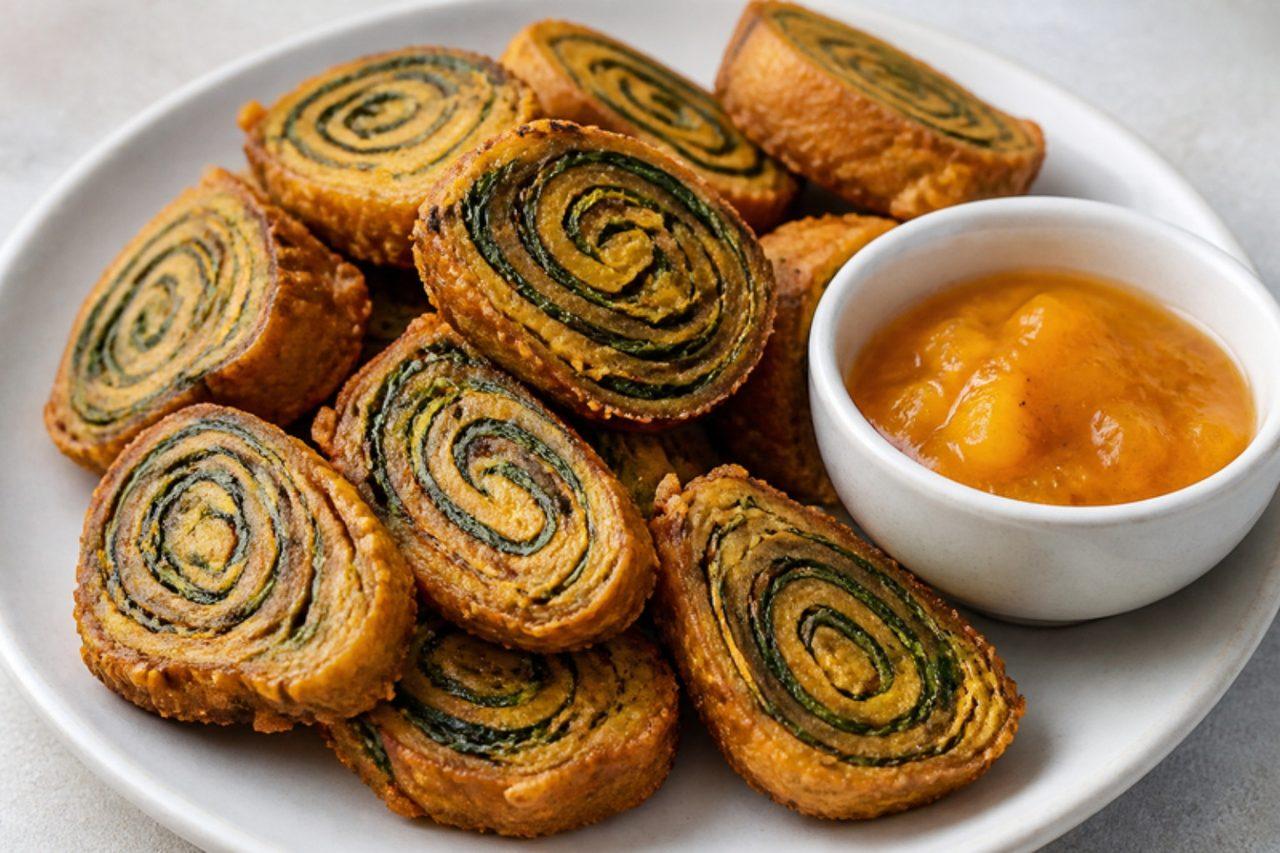
Saheena is an old Indo-Trinidadian snack sold by street vendors and doubles men, especially in Central and South Trinidad. Young dasheen (taro) leaves are spread with a spiced batter of ground split peas, garlic, turmeric and pepper, rolled up like a Swiss roll, steamed, then sliced into rounds and fried until crisp. Each slice shows green spirals of leaf and gold batter, and tastes earthy, savoury and garlicky. Serve with tamarind sauce or mango chutney. If you can't get dasheen leaves, large spinach or Swiss chard leaves work. Chef's tip: always cook dasheen leaves thoroughly. They contain crystals that make your throat itch if undercooked, which is why the rolls are steamed right through before frying.

by KrazyBadal 1 views
Jerk tofu and vegetables

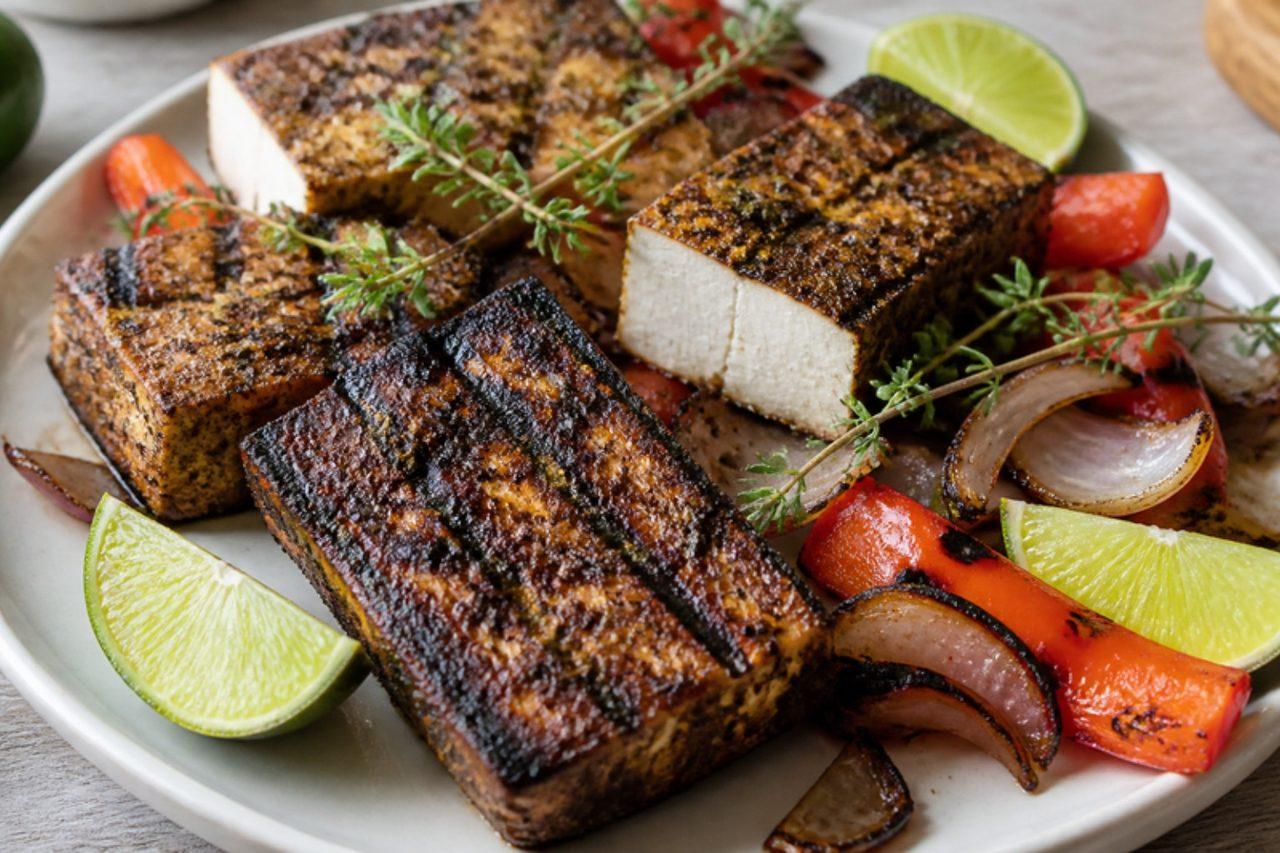
Jerk was born in the hills of Portland parish, where Maroon communities slow-cooked spiced meat over pimento wood, and Boston Bay is still its home today. The heart of it is the wet marinade: spring onion, thyme, scotch bonnet and plenty of pimento (allspice), blitzed into a coarse green-brown paste. Here it clings to slabs of pressed tofu and chunky vegetables that are charred until sticky at the edges, smoky, hot and fragrant. Serve with rice and peas, fried ripe plantain or festival and a squeeze of lime. Chef's tip: toast whole pimento berries in a dry pan and grind them yourself; ready-ground allspice tastes flat, and the warm clove-pepper perfume of fresh pimento is what makes jerk taste like jerk.

50 minVegetarianVeganSpicy
by KrazyBadal 0 views

Rice and peas

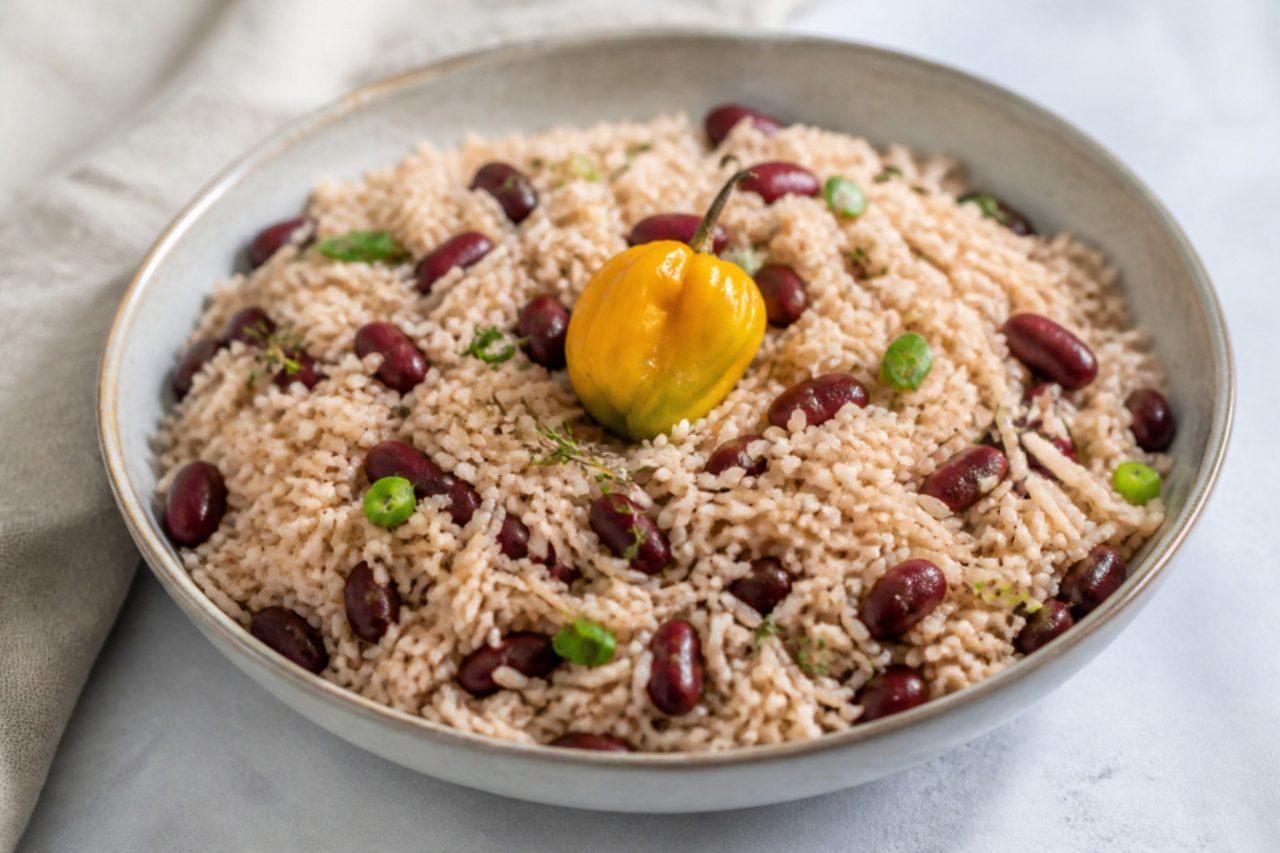
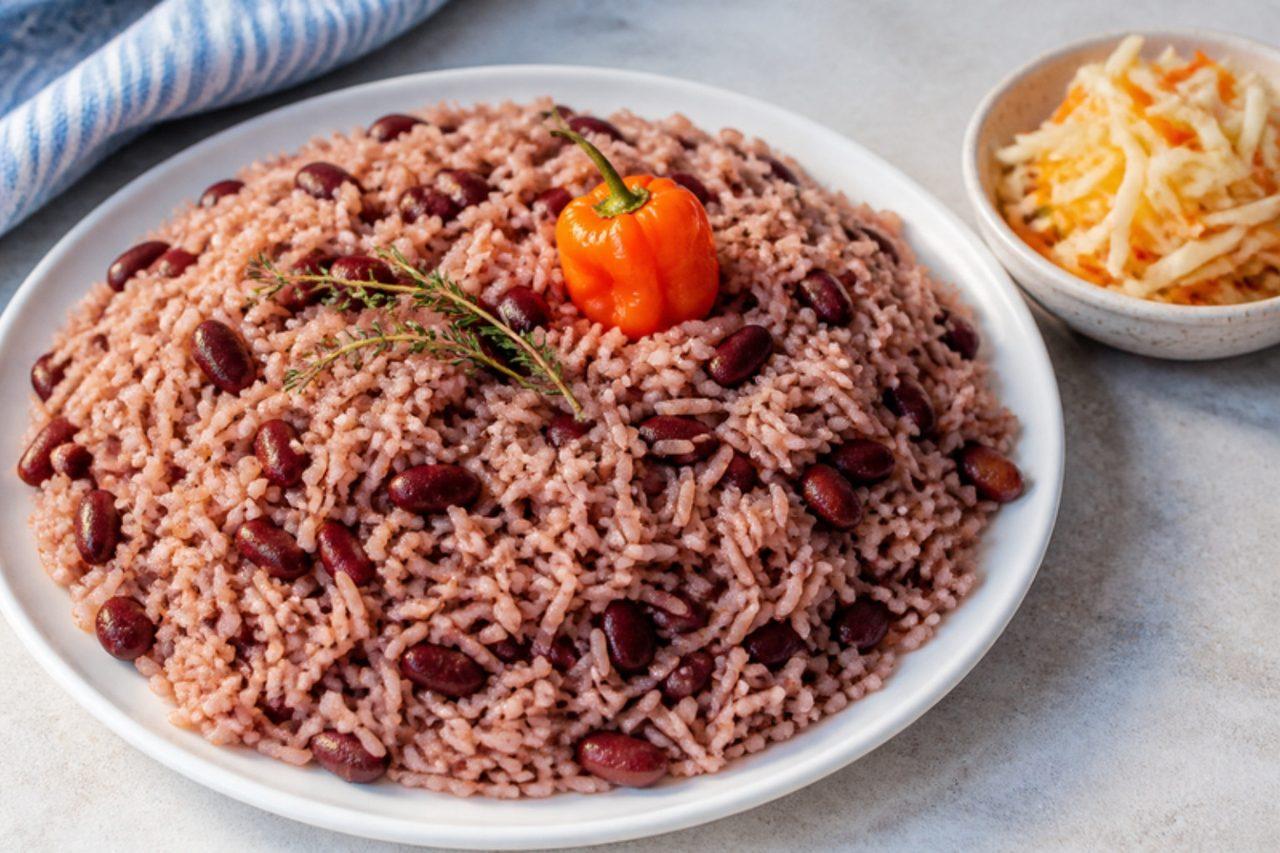
No Sunday dinner anywhere in Jamaica is complete without rice and peas, and 'peas' here means red kidney beans. The beans tint the rice a soft pinkish brown, the coconut milk makes it rich and creamy, and a whole scotch bonnet sitting on top perfumes the pot with fruity heat without burning anyone. Serve with jerk tofu, Ital stew, steamed cabbage and fried ripe plantain. This version uses tinned beans and their liquid for an everyday cook; with dried beans, soak 250 g overnight and simmer them for about an hour first, then use their cooking water. Chef's tip: once the rice goes in, don't stir it. Cover the pot tightly (a sheet of foil under the lid helps) and let the steam do the work, so the grains come out separate and fluffy instead of mushy.

by KrazyBadal 0 views

Ital stew

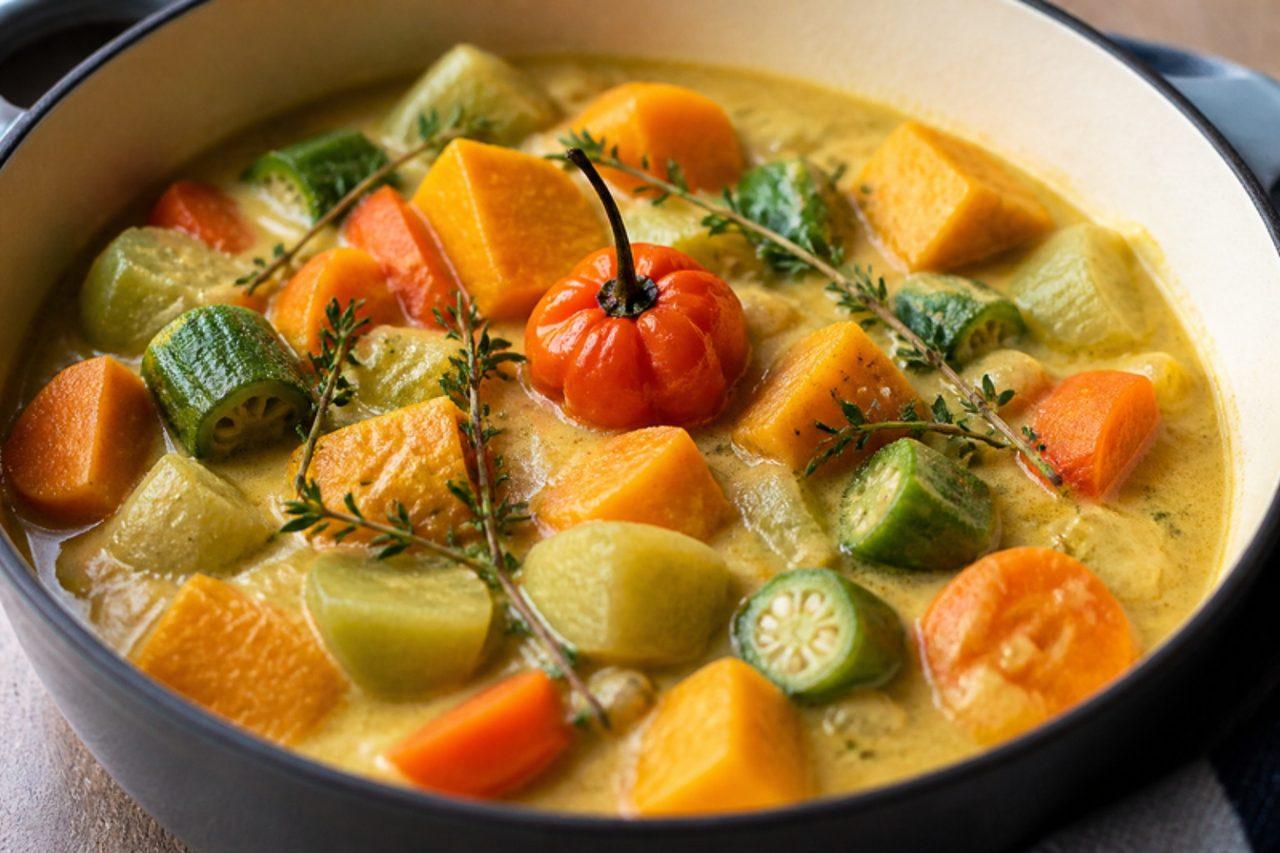
Ital food is the cooking of the Rastafari, found from the hills of St Andrew to roadside Ital shops in Westmoreland and St Thomas. It is plant-based, close to the earth and traditionally made without added salt, built on fresh 'food' (ground provisions) and greens. This stew is golden and gently sweet, thickened by melting pumpkin and silky okra, with coconut milk, thyme and pimento giving warmth and a whole scotch bonnet giving fruity heat. Serve with rice and peas or boiled green bananas. Chef's tip: cut half the pumpkin very small and the other half in big chunks. The small pieces collapse into the coconut milk and thicken it naturally, while the big ones hold their shape.

45 minCurriesVeganGluten free
by KrazyBadal 0 views

Jamaican callaloo

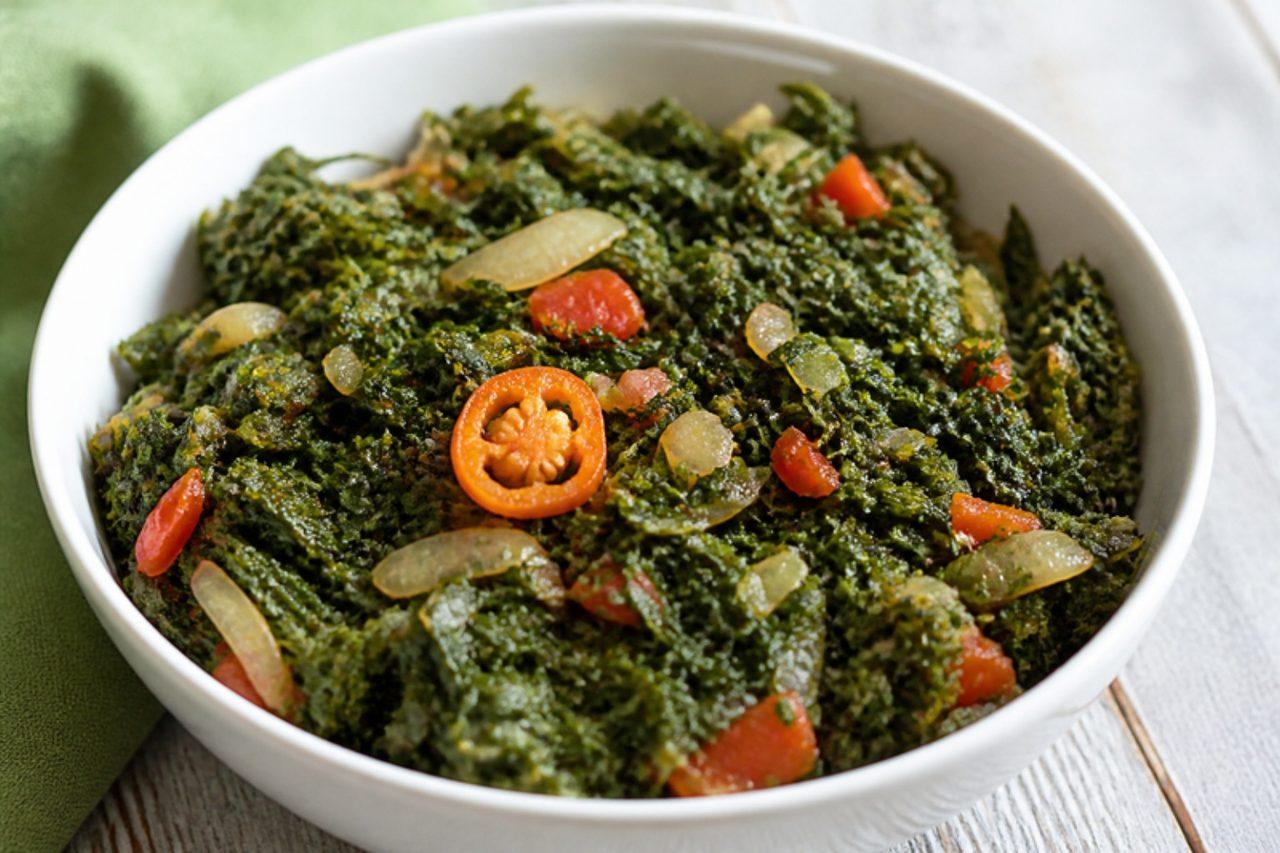
In Jamaica, callaloo means the leaves and tender stems of a type of amaranth, sold in big bundles in every market from Coronation Market in Kingston to Santa Cruz in St Elizabeth. It's steamed down with onion, tomato, garlic and thyme into soft, savoury greens with a mild mineral sweetness, and eaten at breakfast with fried dumplings, boiled green bananas or hard dough bread, or as a side at dinner. Spinach or Swiss chard can stand in if you can't find callaloo. Chef's tip: peel the fibrous skin from the thicker stems with a small knife and slice the stems and leaves finely across, about 1 cm wide. That's how Jamaican cooks get callaloo that's tender all the way through rather than stringy.

20 minSidesVeganGluten free
by KrazyBadal 0 views

Stew peas with spinners

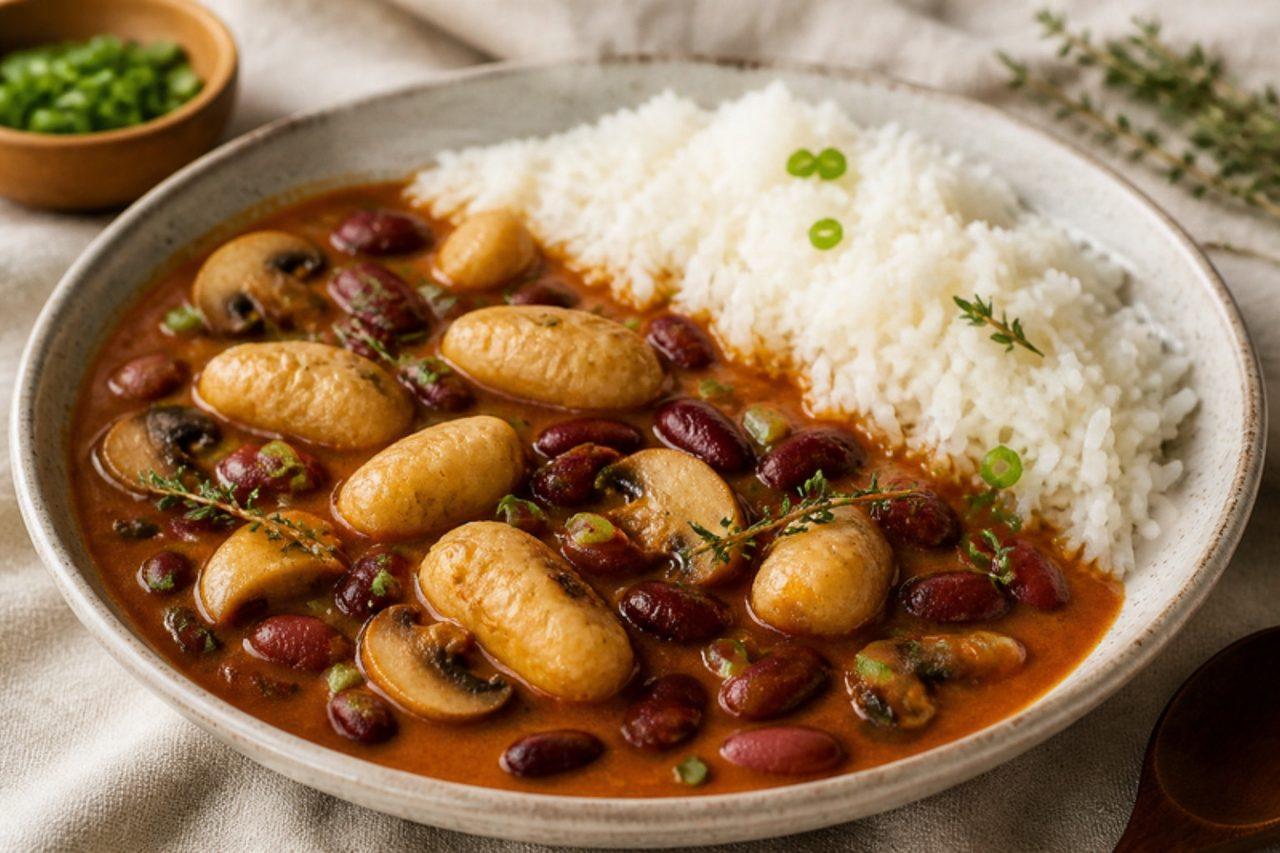
Stew peas is a thick, comforting Jamaican one-pot of red kidney beans simmered in coconut milk until creamy, studded with 'spinners', small hand-rolled dumplings. It's a classic Wednesday or Saturday dinner across the island, usually cooked with pig's tail and salt beef. Here mushrooms browned hard and a little smoked paprika bring the savoury depth instead, so nothing is missing. Serve over plain white rice. Chef's tip: when the beans are soft, crush a ladleful against the side of the pot. Stew peas should be thick enough to coat the back of a spoon, and the crushed beans give that body without any flour.

95 minCurriesVegan
by KrazyBadal 0 views

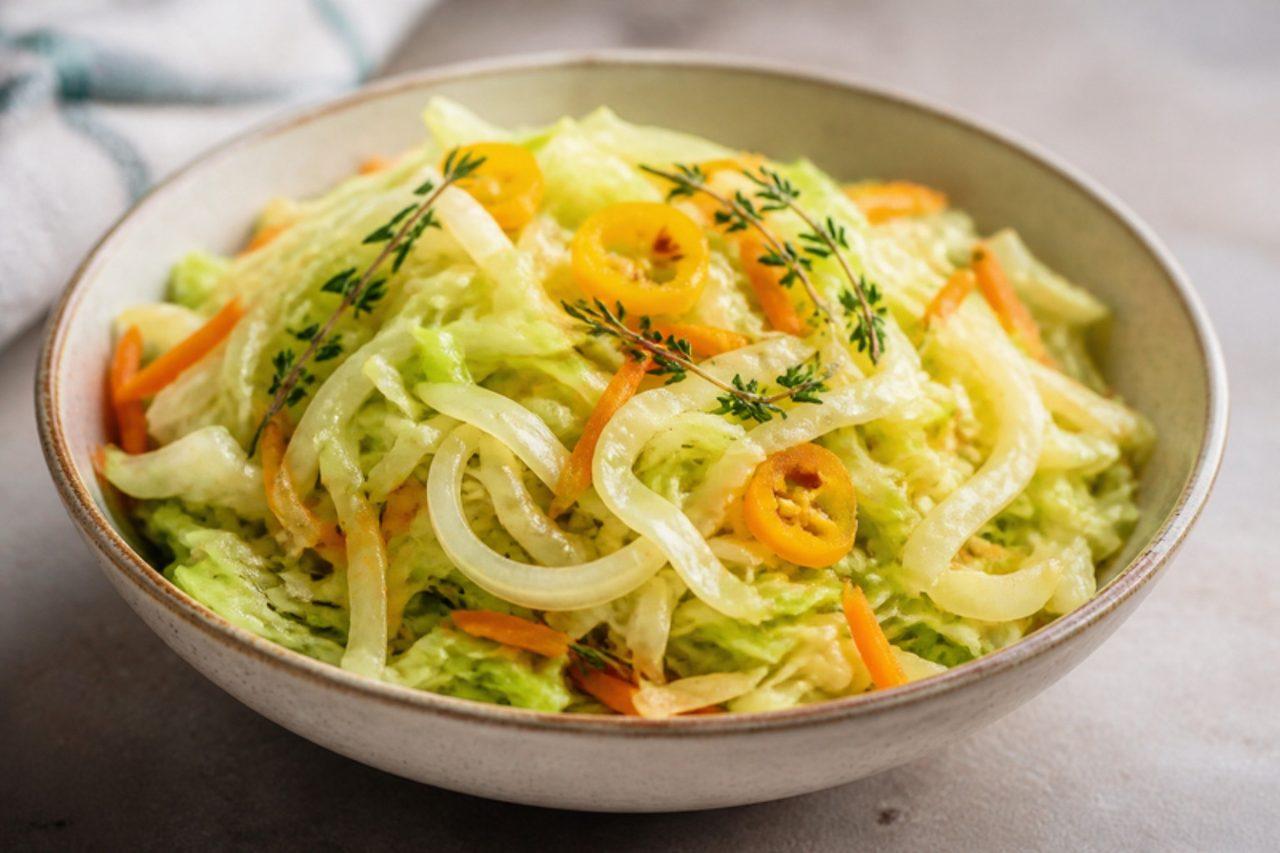
Steamed cabbage

Steamed cabbage is the everyday side dish of Jamaican home cooking, served at breakfast with fried dumplings and at dinner beside rice and peas or stew peas. Shredded cabbage and carrot are cooked with very little water, so they steam in their own juices and turn sweet, peppery and glossy rather than soggy. Chef's tip: use only a splash of water and keep the lid on. The cabbage should be tender-crisp and still pale green, never boiled limp, so take it off the heat while it still has a little bite.

15 minSidesVeganGluten free
by KrazyBadal 0 views

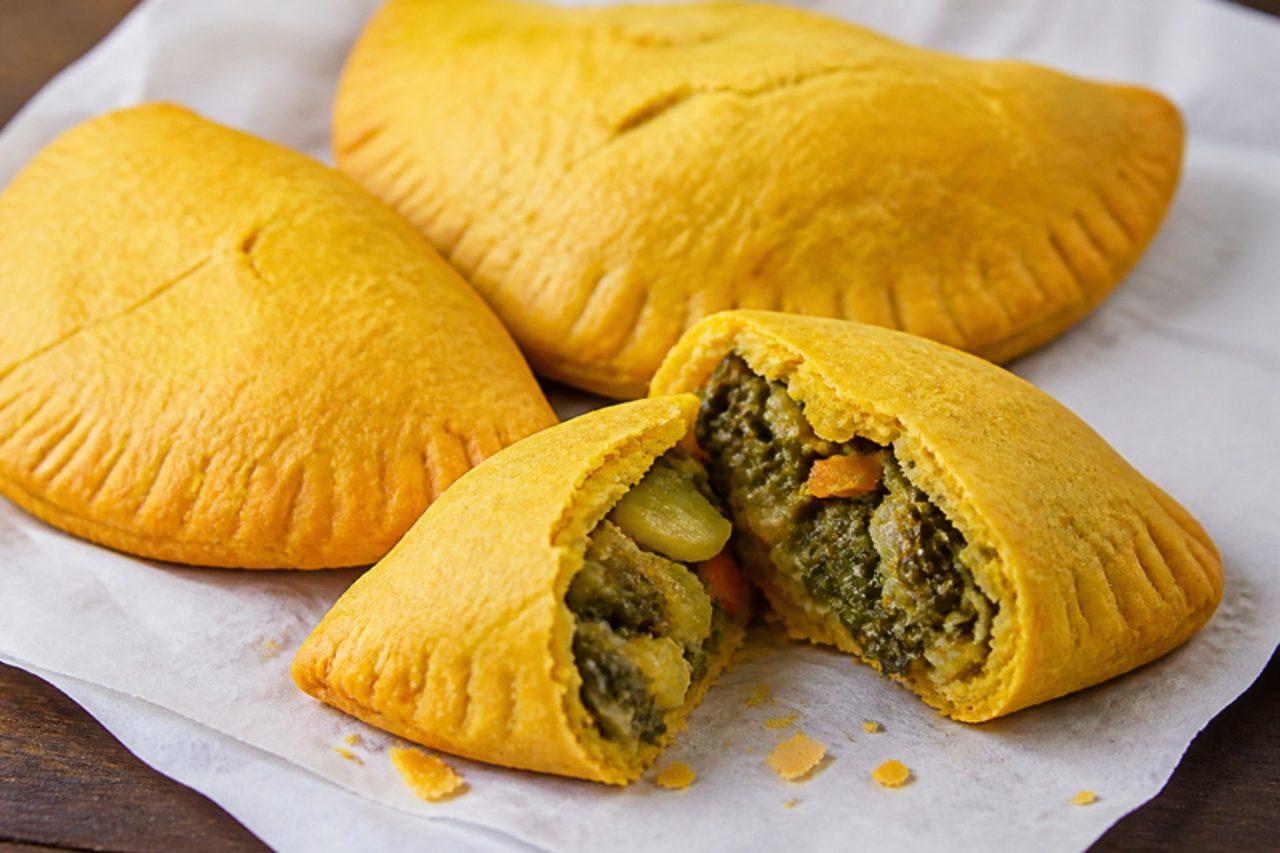
Vegetable patties

The patty is Jamaica's favourite grab-and-go food, sold hot from glass cases in patty shops and school canteens across the island, from Half Way Tree in Kingston to Montego Bay. Its signature is the pastry: short, flaky and bright yellow from turmeric, wrapped around a spicy filling and crimped with a fork. This vegetarian version is filled with callaloo, potato, carrot and peas seasoned with curry, thyme and scotch bonnet. Eat them warm, on their own or squeezed inside soft coco bread. Chef's tip: use half butter and half solid vegetable shortening in the pastry, and keep everything cold. The shortening gives the patty its crumbly, flaky snap and the butter gives the flavour.

by KrazyBadal 0 views

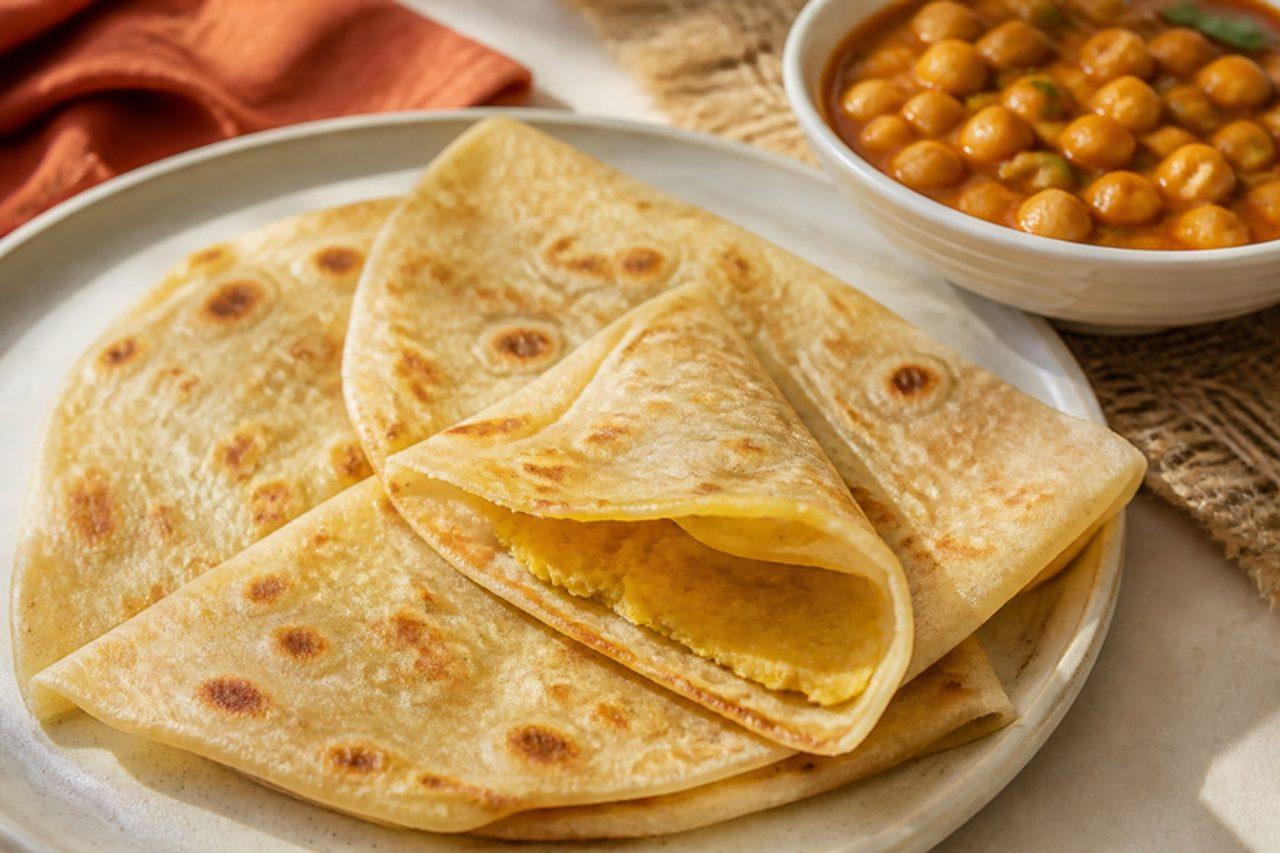
Dhalpuri roti

Dhalpuri is the pride of Trinidad's Indo-Caribbean kitchens and roti shops, from Chaguanas to San Fernando: a large, soft, thin roti with a hidden layer of finely ground, seasoned yellow split peas. It's wrapped around curry channa and aloo, curry pumpkin or curry mango to make a 'roti', or torn and eaten alongside. It came with Indian indentured workers in the 1800s and became something distinctly Trini: thinner and softer than an Indian dal paratha, cooked on a flat iron 'tawa'. Chef's tip: the split peas must be boiled only until just tender, drained, then dried and ground into a fine, dry powder. Any dampness and the roti will burst when you roll it out.

by KrazyBadal 0 views

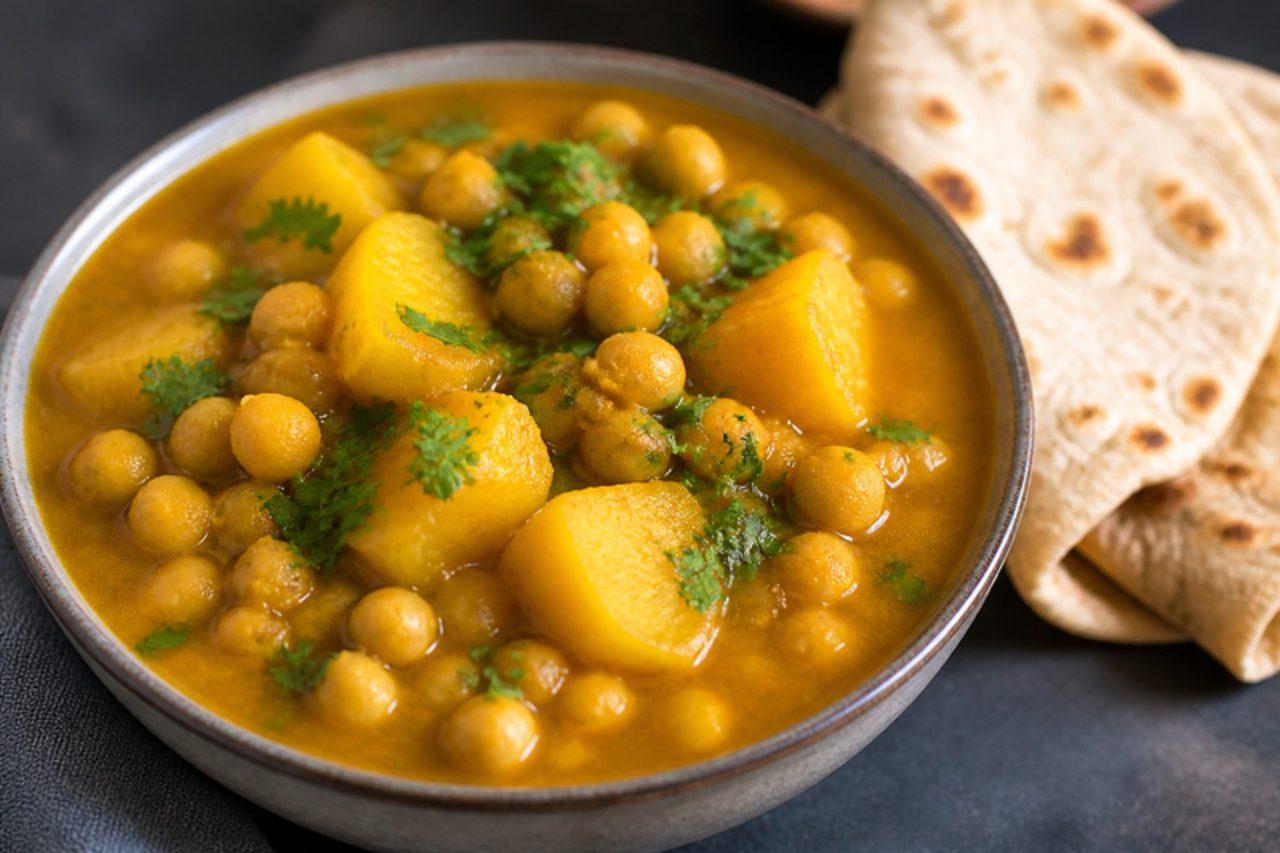
Curry channa and aloo

Curry channa and aloo is a staple of Trinidad's Indo-Caribbean home cooking: chickpeas and potatoes simmered in a turmeric-gold Caribbean curry until the potatoes start to break down and thicken the sauce. It's what fills a dhalpuri or buss-up-shut roti in roti shops from Chaguanas to Penal, and it's at every Hindu wedding and Divali feast. It isn't an Indian chana masala: there's no tomato or garam masala, the curry powder is the Caribbean kind, heavy with turmeric, coriander and fenugreek, and it's finished with shado beni (culantro) and green seasoning. Chef's tip: 'chunkay' the curry. Fry the curry paste in hot oil until it darkens, turns grainy and the oil separates before you add the chickpeas. Raw curry tastes dusty and flat; fried curry tastes rich and round.

45 minCurriesVeganGluten free
by KrazyBadal 0 views

Curry mango

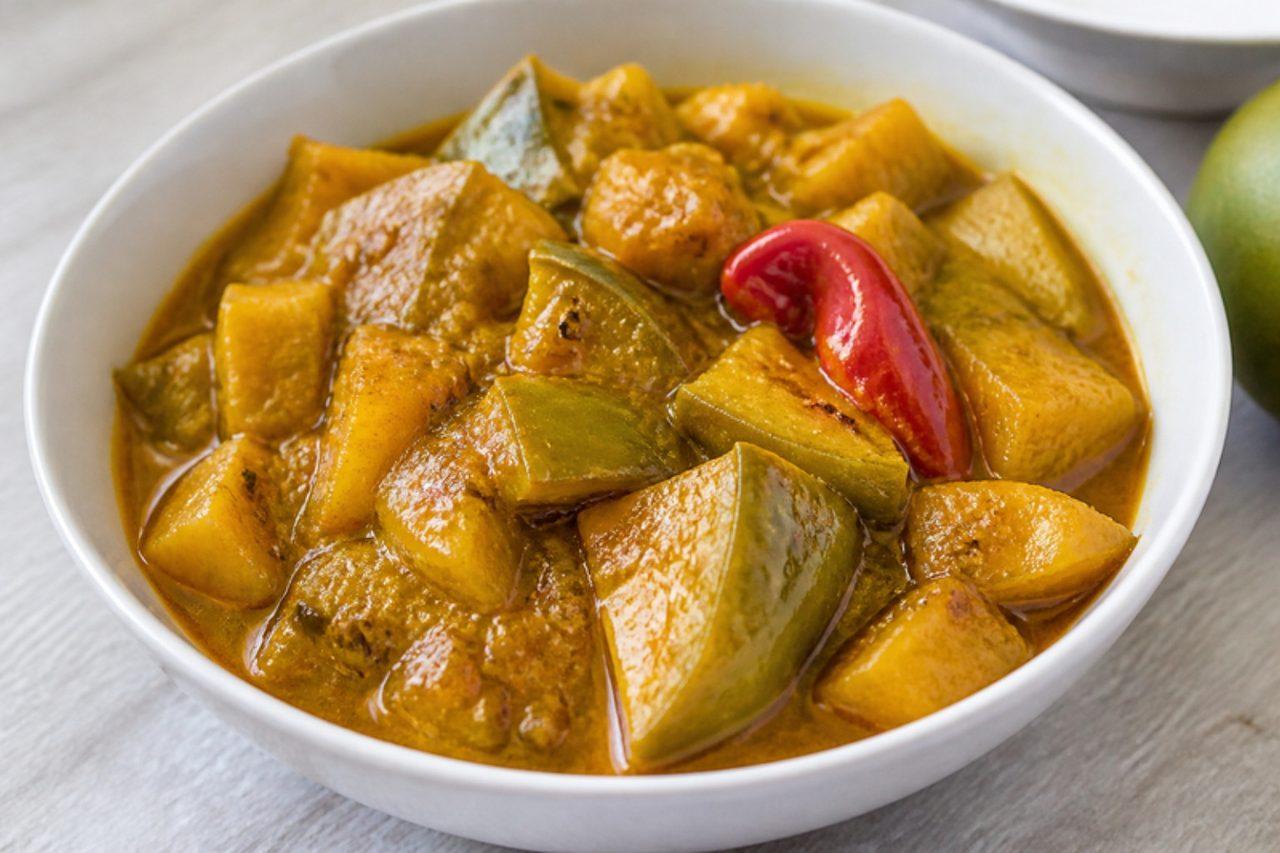
Curry mango is a Trinidadian favourite on the 'seven-curry' plate at Hindu weddings, pujas and Divali, served on a sohari (water-lily) leaf beside dhal, rice, pumpkin and channa. Hard green or half-ripe mangoes are chopped, skin, seed and all, then cooked in curry with garlic, roasted geera and a little sugar until tender and glossy. It's sour, sweet, salty and hot at once, and a spoonful brightens any rice and curry or a roti. Chef's tip: leave the skin on and add the sugar a little at a time. The skin keeps the pieces whole, and the right balance is when you taste sour first, then sweet, then the heat comes through.

by KrazyBadal 0 views

Pholourie with tamarind chutney

Pholourie are little round fritters sold by the bag at doubles stands, school gates and parties all over Trinidad, especially through Divali and Christmas. A turmeric-yellow batter made with ground split peas and flour is dropped by the spoonful into hot oil, where it puffs into crisp-skinned, soft, spongy balls. They're always served with a sticky tamarind chutney spiked with garlic, shado beni and pepper. Unlike Indian pakoras, there are no vegetables in the batter: pholourie is all about the soft, light dough and the dip. Chef's tip: beat the batter hard for a few minutes until it's thick, smooth and falls off the spoon in a sticky blob. Well-beaten batter traps air, so the pholourie puff up round and light instead of flat and greasy.

by KrazyBadal 0 views

Aloo pie

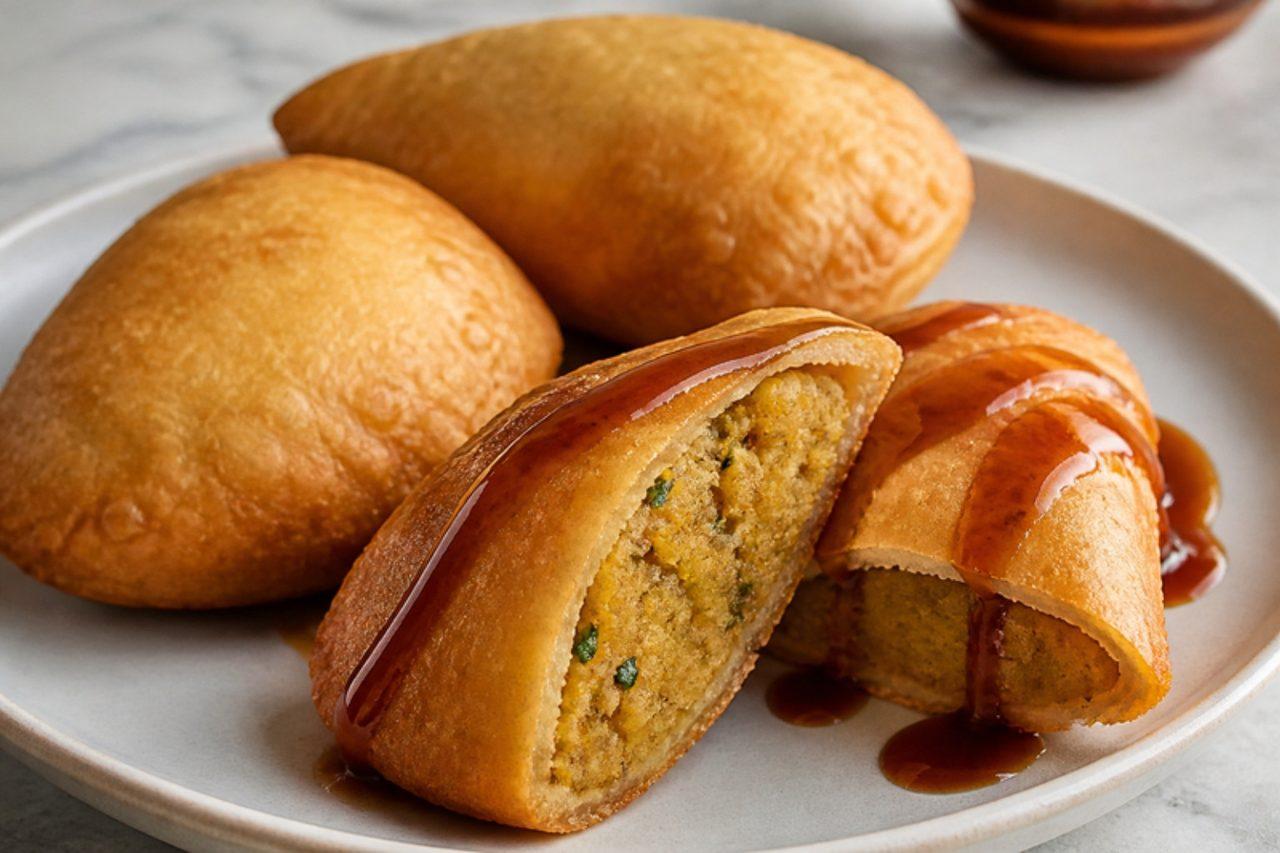
Aloo pie is a Trinidadian street snack: a soft, chewy fried dough shaped like a big half-moon, filled with mashed potato seasoned with roasted geera, garlic, pepper and shado beni. It's sold at doubles stands, roti shops and school canteens all over the island, and the classic way to eat it is split open and loaded with curry channa, tamarind sauce and pepper. It's softer and breadier than an Indian samosa. Chef's tip: roast the geera seeds yourself until they're dark brown and fragrant, then grind them. That deep, smoky cumin flavour is what makes Trini aloo pie taste the way it should.

by KrazyBadal 0 views

Vegetable pelau

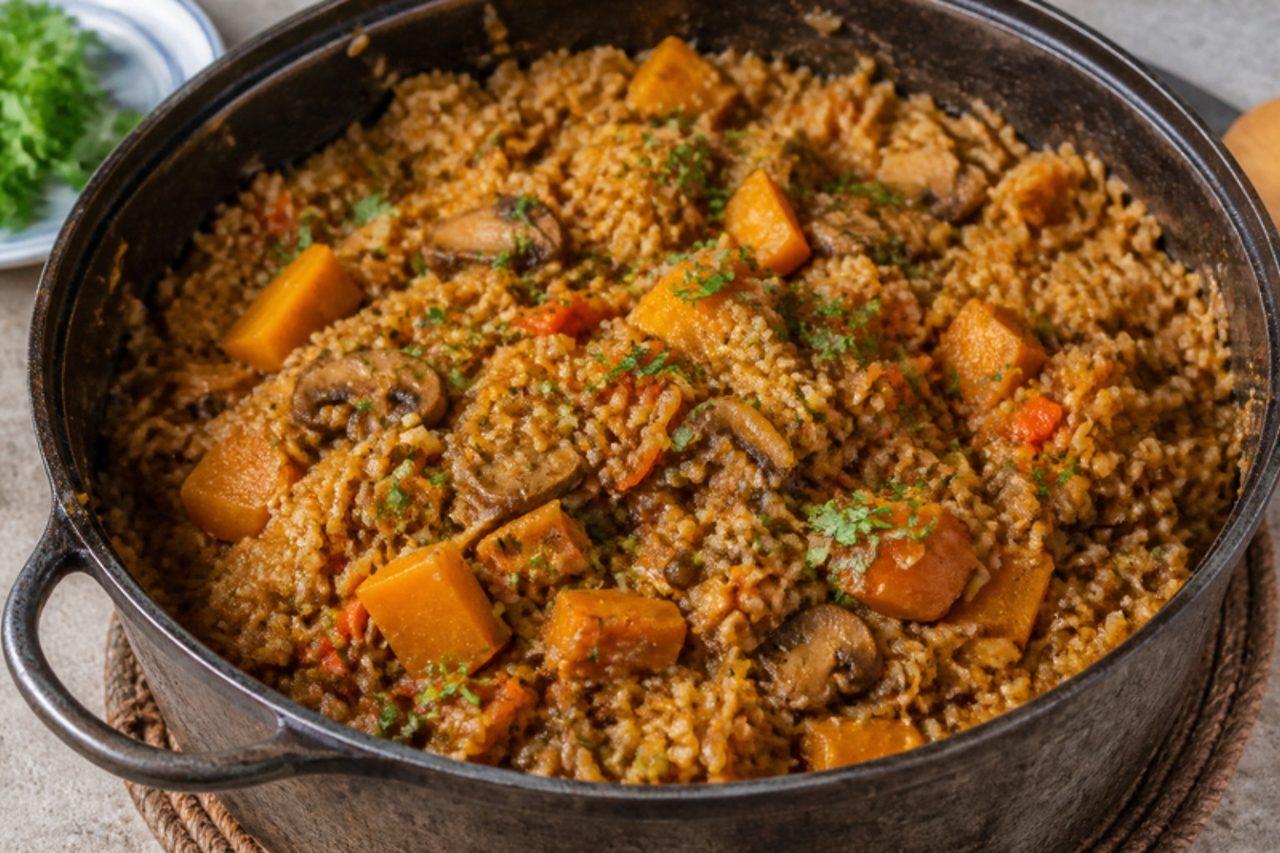
Pelau is the dish of the Trinidad beach lime and family gathering: rice and pigeon peas cooked in one big pot, coloured a deep brown by sugar caramelised in oil until almost burnt, then simmered with coconut milk, green seasoning and a whole hot pepper. It's usually made with chicken; here deeply browned mushrooms and chunks of pumpkin carry the savoury depth, so it's still rich, smoky-sweet and moreish. Serve with coleslaw, sliced cucumber and pepper sauce. Chef's tip: let the sugar go further than feels safe: it should melt, froth and turn the colour of dark chocolate, just starting to smoke, before anything goes in. Too pale and the pelau tastes sweet; too black and it's bitter.

by KrazyBadal 0 views

Trini callaloo soup

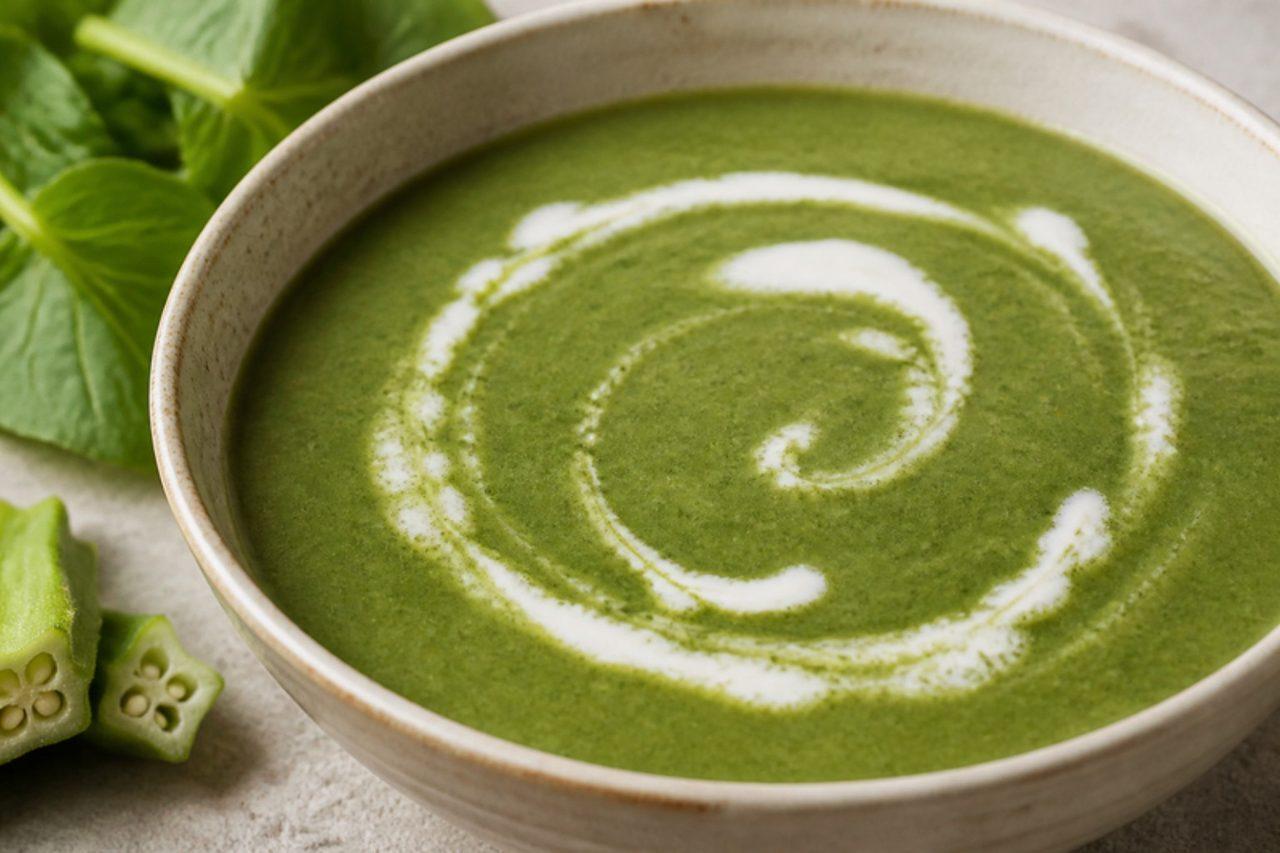
Callaloo is Trinidad and Tobago's national dish and part of the classic Sunday lunch, served beside rice, macaroni pie and stewed peas. Dasheen bush (young taro leaves) is simmered with okra, pumpkin, coconut milk, onion, garlic, chives and thyme, then beaten smooth with a wooden swizzle stick into a thick, velvety green soup. It's usually cooked with crab or salt pork; this vegetarian version leaves them out and adds a pinch of smoked paprika for depth. Spinach and Swiss chard can replace dasheen. Chef's tip: cook the dasheen leaves for at least 25–30 minutes. They must be very soft, both to swizzle silky smooth and because undercooked dasheen leaves make your throat itch.

50 minSoupsVeganGluten free
by KrazyBadal 0 views

Macaroni pie

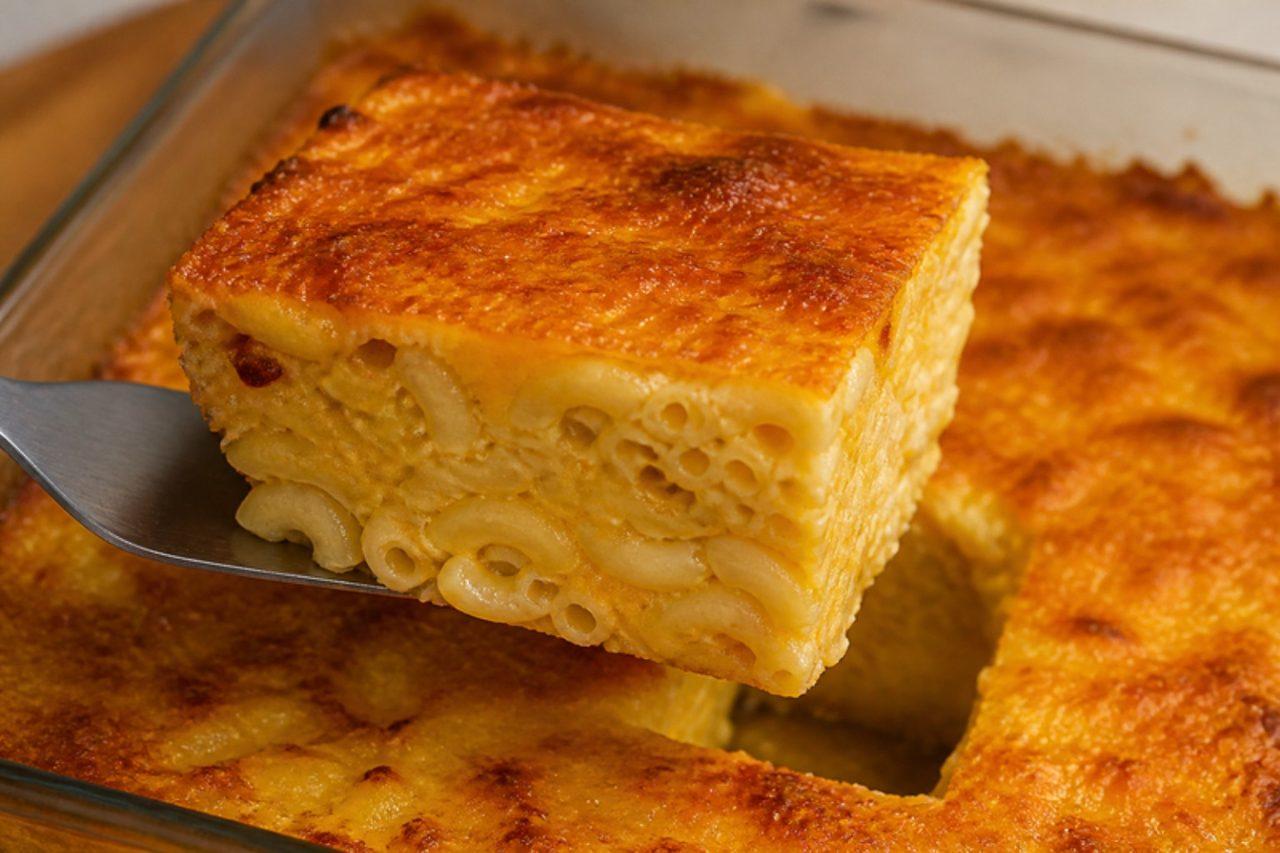
Macaroni pie is a must on the Trinidadian Sunday lunch table, beside callaloo, rice, stew and salad. It isn't a saucy macaroni cheese but a firm bake: macaroni mixed with sharp cheddar, evaporated milk, eggs, mustard and a little onion and pepper, baked until golden and set enough to cut into neat squares. Kids love it, and it's just as good cold the next day. Chef's tip: let the pie rest for 20 minutes after it comes out of the oven. It firms up as it cools slightly, so you get clean, proper slices instead of a soft heap.

by KrazyBadal 0 views

Mango chow

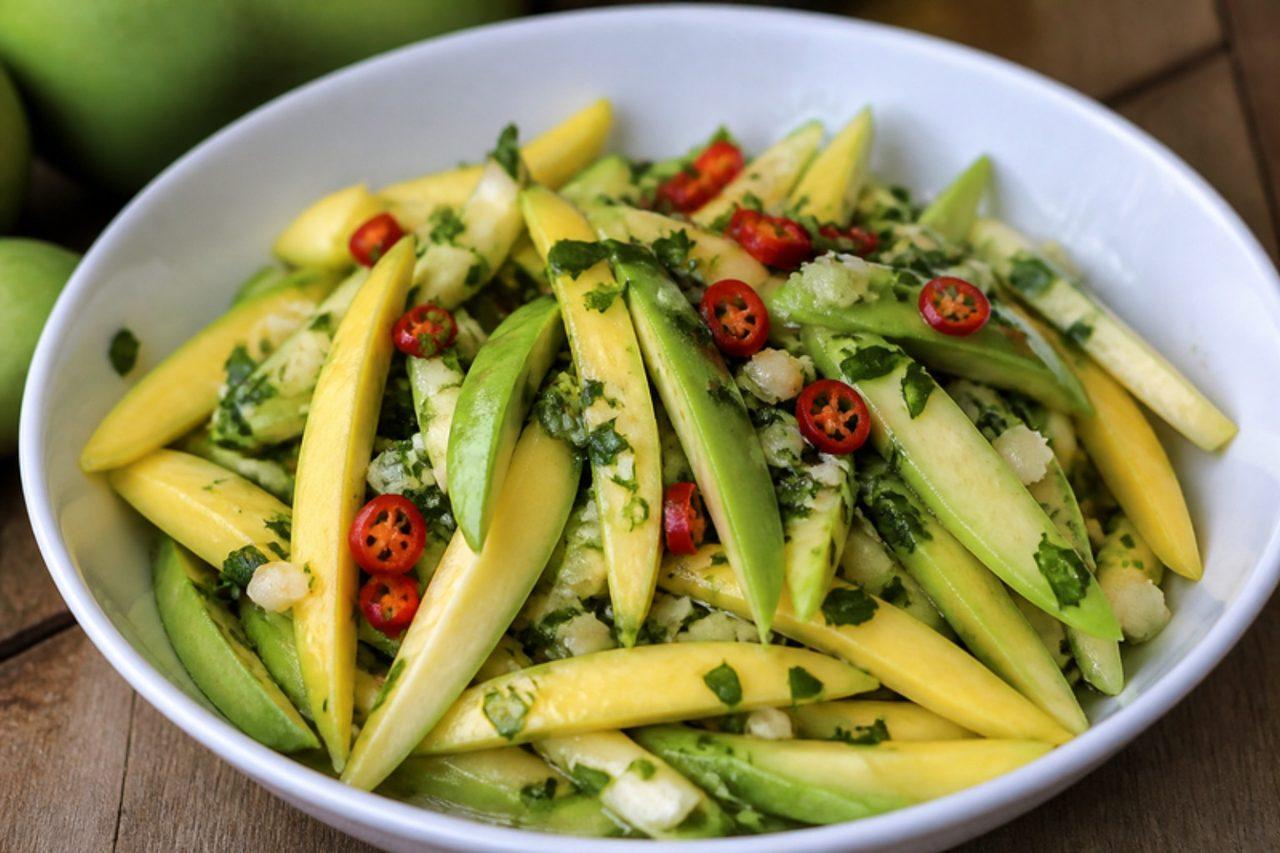
Chow is what Trinidadians eat on a hot afternoon: fruit, most often half-ripe mango, sliced and tossed with lime juice, salt, garlic, chopped shado beni and plenty of hot pepper. It's sold in little bags at roadside stands, beach stalls and outside schools all over the island. It's crunchy, sour, salty, garlicky and fiery all at once. Pineapple, cucumber and pommecythere (golden apple) are made the same way. Chef's tip: let the chow sit for 10 minutes before eating. The salt and lime draw out the mango's juice into a tangy, peppery 'pickle' liquid, and that juice is the best part.

10 minSaladsVeganSpicy
by KrazyBadal 0 views

Epis

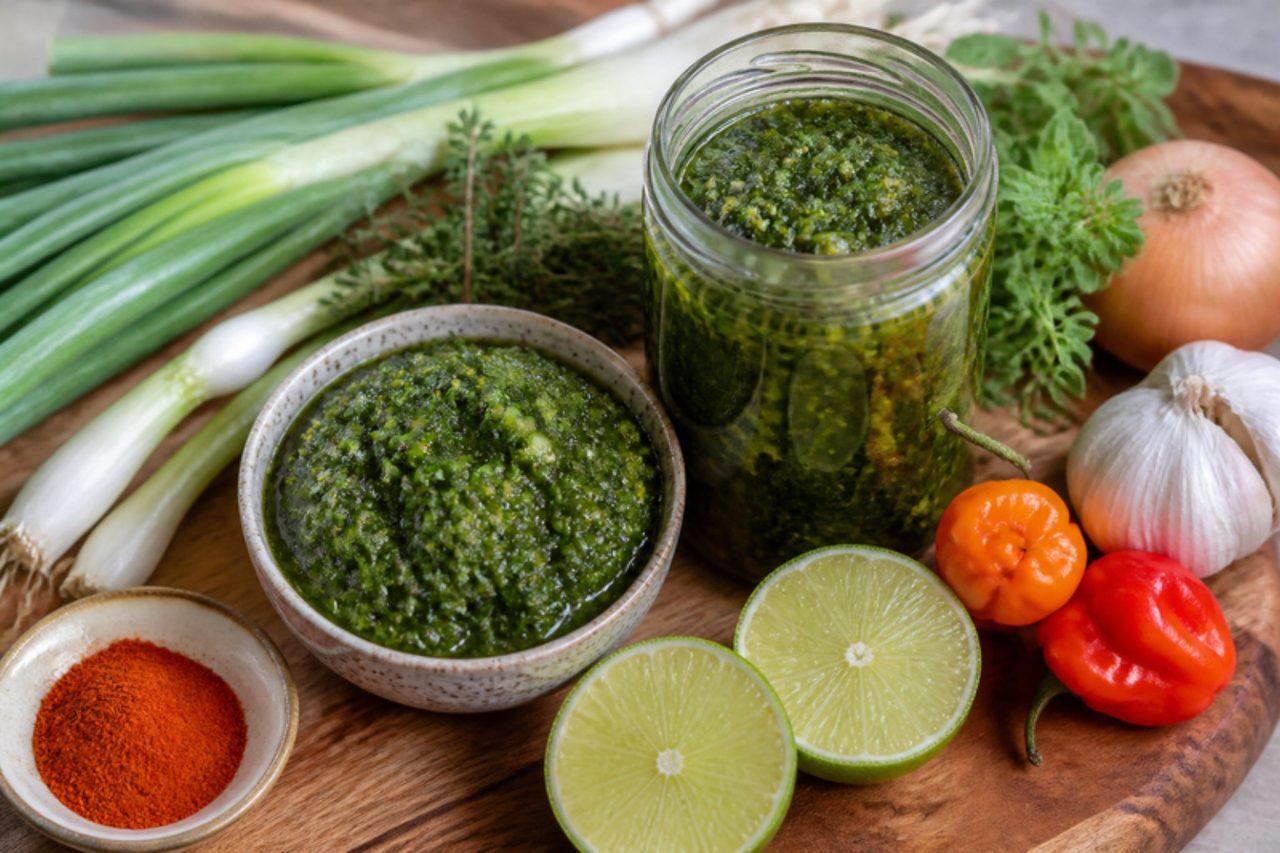
Epis is the jar that lives in every Haitian fridge, in Port-au-Prince flats and in Haitian kitchens in Miami, Montreal and Boston alike, and it's made fresh most weeks. Flat-leaf parsley, spring onion, garlic, sweet peppers and thyme are pounded or blended with a few cloves, a little scotch bonnet, oil and lime into a loose green paste. It is the first thing into the pot for rice and beans, legim and soup joumou, and it's rubbed over vegetables and tofu before they're fried. Raw it smells bright and herby; cooked it turns sweet, savoury and gently warm with clove. Chef's tip: use whole cloves and grind them yourself; just three or four give epis its signature warmth, but more turns it medicinal.

15 minBasicsVeganGluten free
by KrazyBadal 0 views

Pikliz

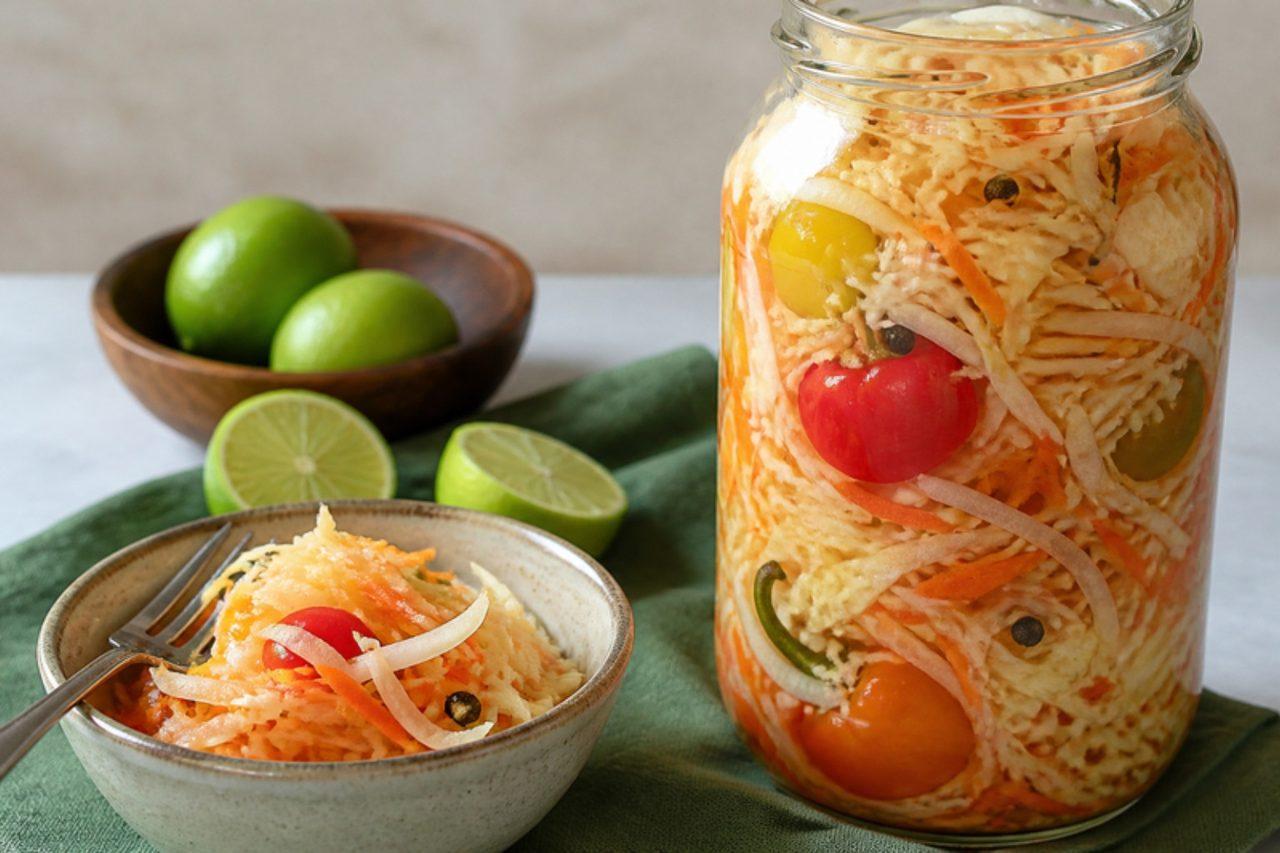
Pikliz is the fiery slaw-pickle that sits on every Haitian table, in a big glass jar in the middle, and no plate of fried food in Haiti is served without it: it's spooned over fried plantain (bannann peze), fritters and rice. Shredded cabbage, carrot, onion and peppers are packed with hot scotch bonnets, cloves and peppercorns, then drowned in vinegar and lime. After a few days it is crunchy, sour and properly hot, and the vinegar itself becomes a hot sauce you sprinkle over everything. Chef's tip: slice the scotch bonnets thinly rather than leaving them whole; the heat spreads evenly through the jar and every forkful has a kick.

by KrazyBadal 0 views

Diri djon djon

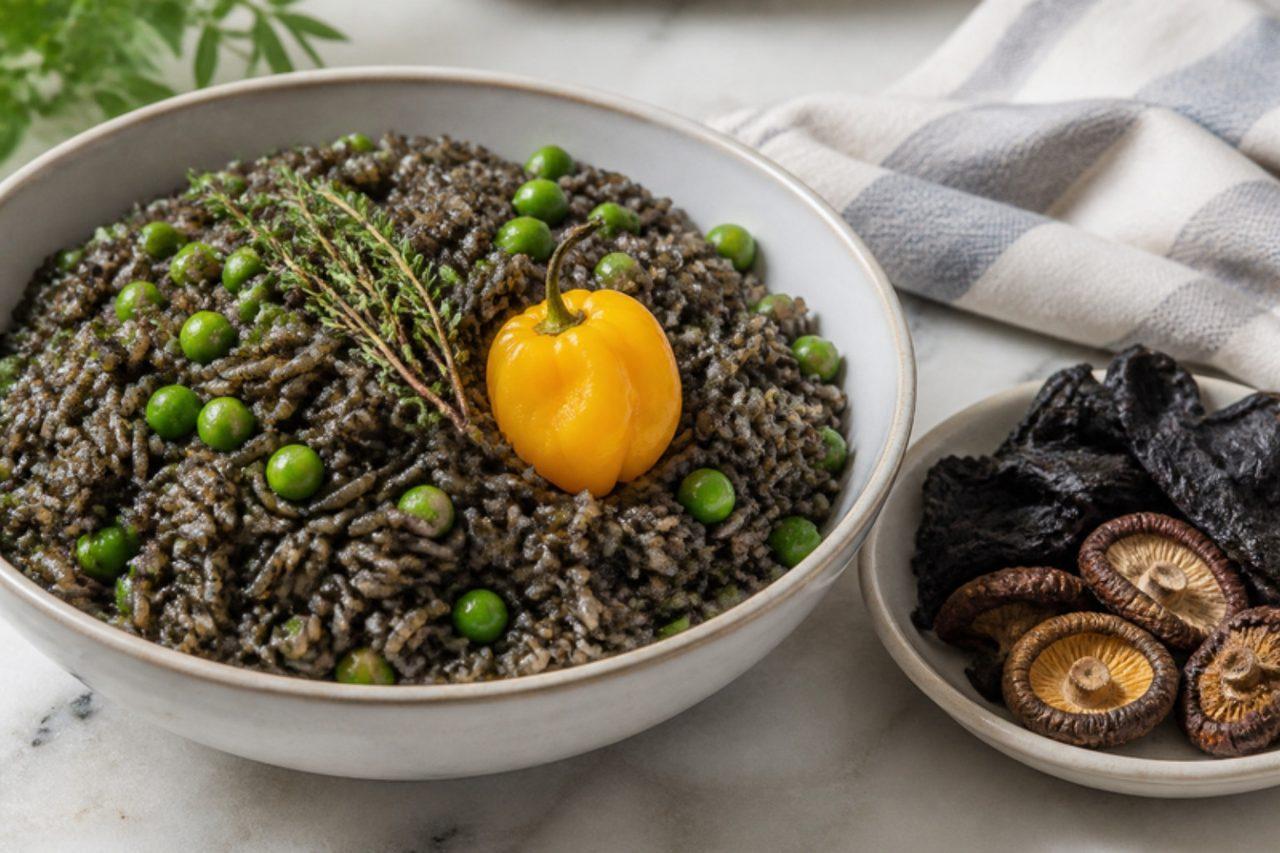
Diri djon djon comes from northern Haiti, around Cap-Haïtien, where the tiny black djon djon mushrooms are gathered and dried. Soaked in hot water, they give an inky liquid that turns rice a striking grey-black and makes it taste deeply earthy and savoury. It's the rice for weddings, baptisms and big Sunday lunches, cooked with epis, cloves and green peas or butter beans, a whole scotch bonnet laid on top for perfume. Dried djon djon is sold in Haitian and Caribbean shops and online. Chef's tip: avoid djon djon stock cubes, which are often made with chicken fat and add little real flavour; use the dried mushrooms, and add a few dried shiitake for even more depth.

by KrazyBadal 0 views

Diri kole ak pwa

Diri kole ak pwa, rice 'stuck together' with beans, is the plate Haitians call their national dish, cooked in homes from Jacmel to Gonaïves and served most days of the week. Unlike rice and peas from elsewhere in the Caribbean, there's usually no coconut milk: red beans are simmered first, then their dark, savoury cooking liquid goes into the rice with fried epis, thyme and cloves, so the grains turn a rich reddish-brown and taste of beans all the way through. A whole scotch bonnet adds fruity heat without fire. Chef's tip: fry the drained beans in the epis until their skins blister and catch slightly; that browning gives the rice its deep, almost smoky taste.

by KrazyBadal 0 views

Soup joumou

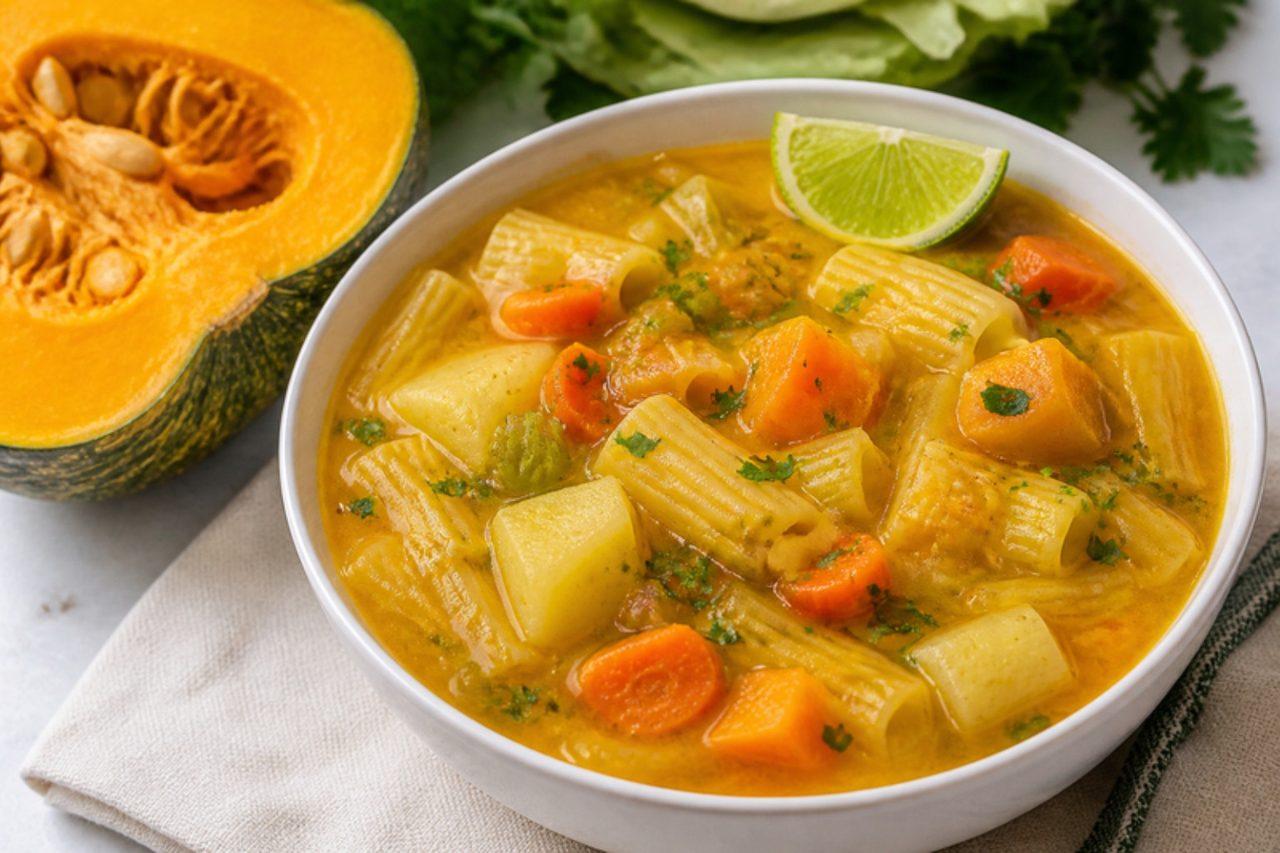
Every 1 January, Haitian families from Port-au-Prince to Brooklyn wake up to soup joumou. It marks independence from France on 1 January 1804: under French rule, enslaved Haitians cooked this pumpkin soup but were forbidden to eat it, so the free people of the new nation made it their own as a dish of freedom. In 2021 it was added to UNESCO's list of the intangible cultural heritage of humanity. The base is a velvety purée of joumou (Caribbean pumpkin) with epis, and in it simmer chunks of carrot, potato, cabbage, celery and turnip, with pasta and a squeeze of lime. It's usually made with beef; this vegetable version is full and golden, rich enough for the day. Chef's tip: roast half the pumpkin before puréeing it; the caramelised edges give the soup the depth that slow-cooked meat usually provides.

90 minSoupsVegan
by KrazyBadal 0 views

Legim

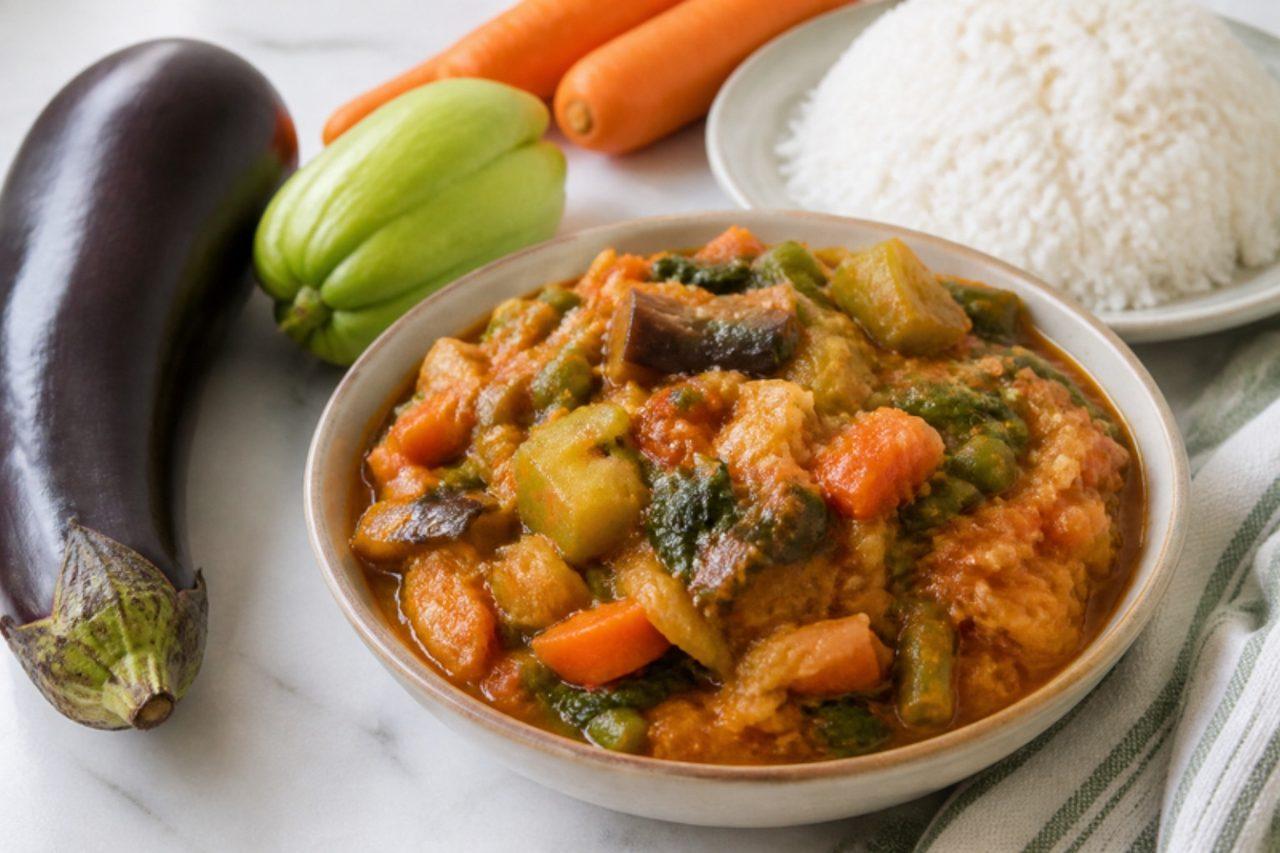
Legim (from the French légumes) is a Haitian Sunday dish, made in big pots in Port-au-Prince and the countryside and eaten with white rice or diri kole. Aubergine, cabbage, chayote (mirliton), carrots and spinach or watercress are cooked down slowly with epis and tomato paste until soft, then crushed with a pilon or spoon into a thick, rough, savoury mash. It's often cooked with beef or crab; this vegetable version is just as traditional for the days without meat. It tastes deep and green, gently sweet from the carrot and warm from clove and scotch bonnet. Chef's tip: cook it uncovered at the end until the liquid has almost gone and the oil shows at the edges; that's when the flavours concentrate and it stops tasting boiled.

75 minCurriesVeganGluten free
by KrazyBadal 0 views

Bajan seasoning

Every cook in Barbados keeps a jar of Bajan seasoning, and families in Bridgetown and St Philip guard their own blend. It's a wet, coarse paste of spring onion, onion, garlic, fresh thyme, marjoram and parsley, sharpened with lime and given a backbone of clove, paprika and scotch bonnet. Bajans press it into slits in fish and meat; here it goes into stews, onto roasted vegetables, tofu and halloumi, and into the stew for cou-cou. It smells strongly herby and peppery, and keeps for weeks. Chef's tip: marjoram is the herb that makes it Bajan; don't skip it, and use fresh if you can find it.

20 minBasicsVeganGluten freeSpicy
by KrazyBadal 0 views

Bajan pepper sauce

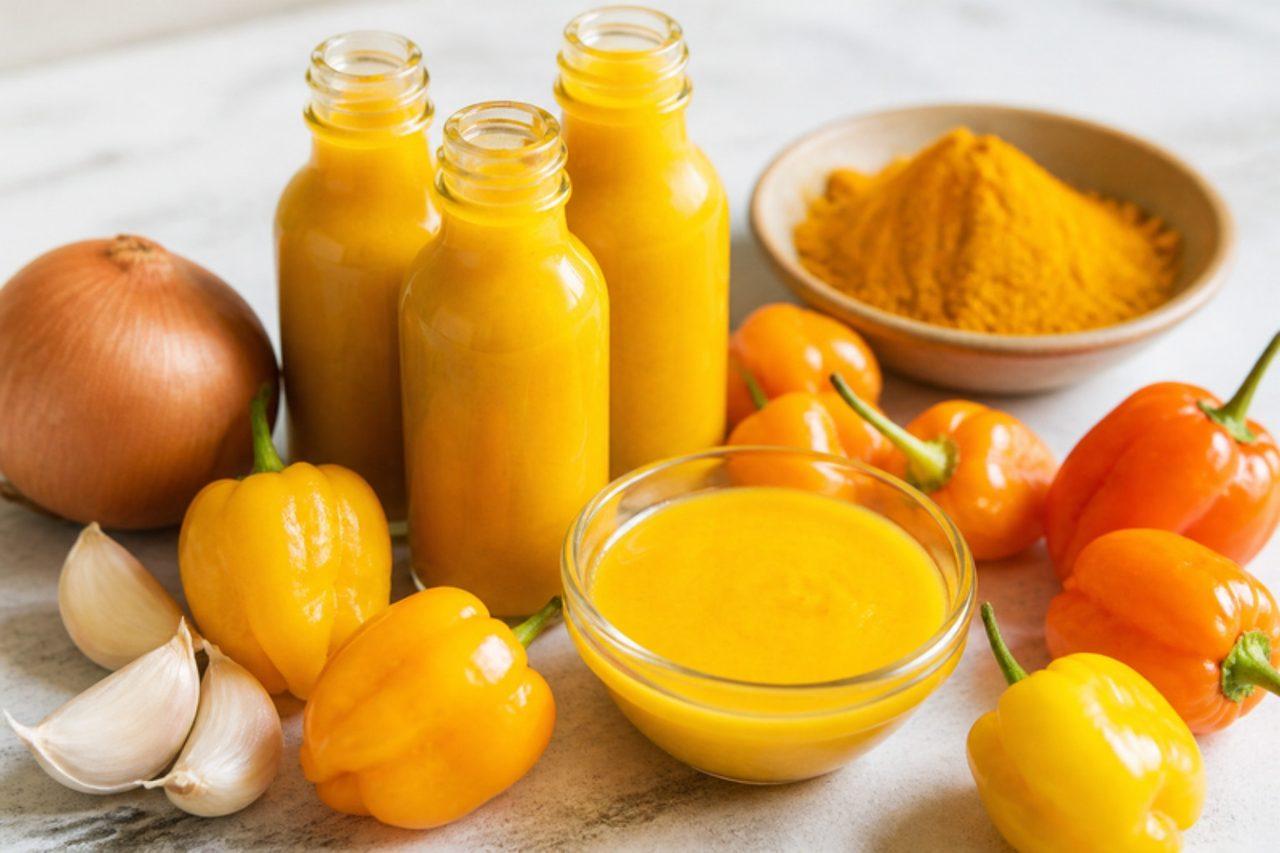
On every table in Barbados, from rum shops in Oistins to Sunday lunch at home, there's a bottle of yellow pepper sauce. Bajan pepper sauce is unlike the red sauces of other islands: scotch bonnets are blended with onion, yellow mustard, turmeric and vinegar, which give it its colour and a tangy, mellow edge under the fierce, fruity heat. A few drops lift fish cakes, cou-cou, macaroni pie and rice. Chef's tip: let it rest for a few days before using; the mustard and vinegar soften the raw onion and the heat becomes rounder.

by KrazyBadal 0 views

Ackee and saltfish

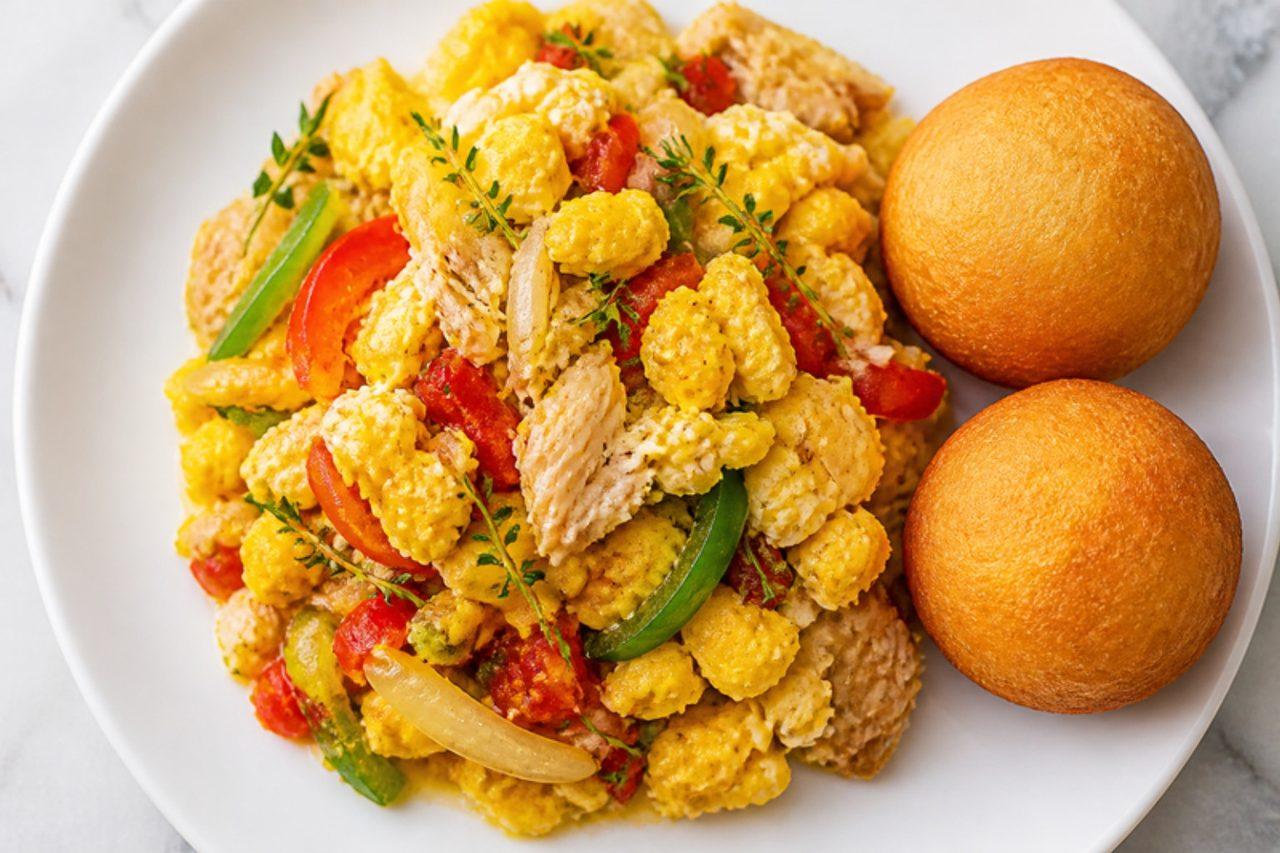
On a Jamaican Sunday morning, from Kingston yards to country kitchens in St Mary, the smell of salt cod frying with onion, thyme and scotch bonnet means breakfast is nearly ready. The ackee itself is a red tree fruit whose cream-coloured flesh cooks up soft and mild, a lot like scrambled egg, and it soaks up the salty fish and peppery oil around it. It is eaten with fried dumplings, boiled green banana, roast breadfruit or hard dough bread, and is just as welcome at lunch. A note on safety: ackee is only safe when the pod has ripened on the tree and opened by itself, and the black seeds and pink membrane are removed. Outside Jamaica, tinned ackee is the safe, easy choice and is what this recipe uses. Chef's tip: soak the saltfish overnight and then boil it once; taste a flake before it goes in the pan, because you can always add salt but you can't take it out.

50 minFishGluten free
by KrazyBadal 0 views

Jamaican curry goat

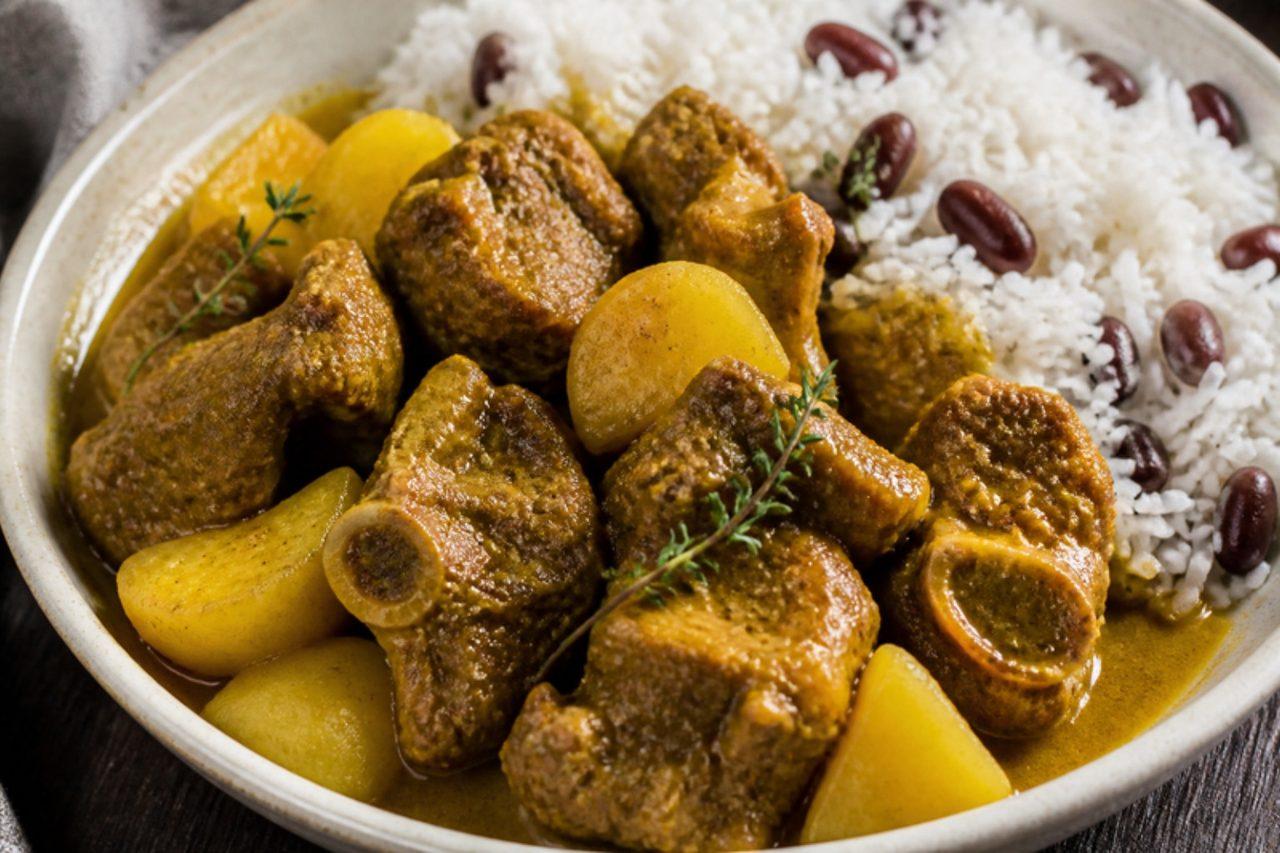
No Jamaican wedding, nine-night or big Sunday family lunch is complete without a pot of curry goat, often cooked outdoors in a huge pot by whoever has the steadiest hand with the seasoning. It came to the island with Indian indentured workers in the 1800s and became fully Jamaican with scotch bonnet, pimento and thyme. The bone-in pieces are seasoned overnight, browned with the curry powder until it darkens, then simmered for a couple of hours into a rich, brick-yellow gravy with soft potatoes that thicken it. Serve with white rice or rice and peas and a little fried plantain. If you can't find goat, bone-in mutton or lamb shoulder works the same way. Chef's tip: 'burn' the curry first; fry the curry powder in hot oil for a minute until it darkens and smells toasty before the meat goes in, and the gravy will never taste raw or chalky.

160 minCurriesGluten freeSpicy
by KrazyBadal 0 views

Brown stew chicken

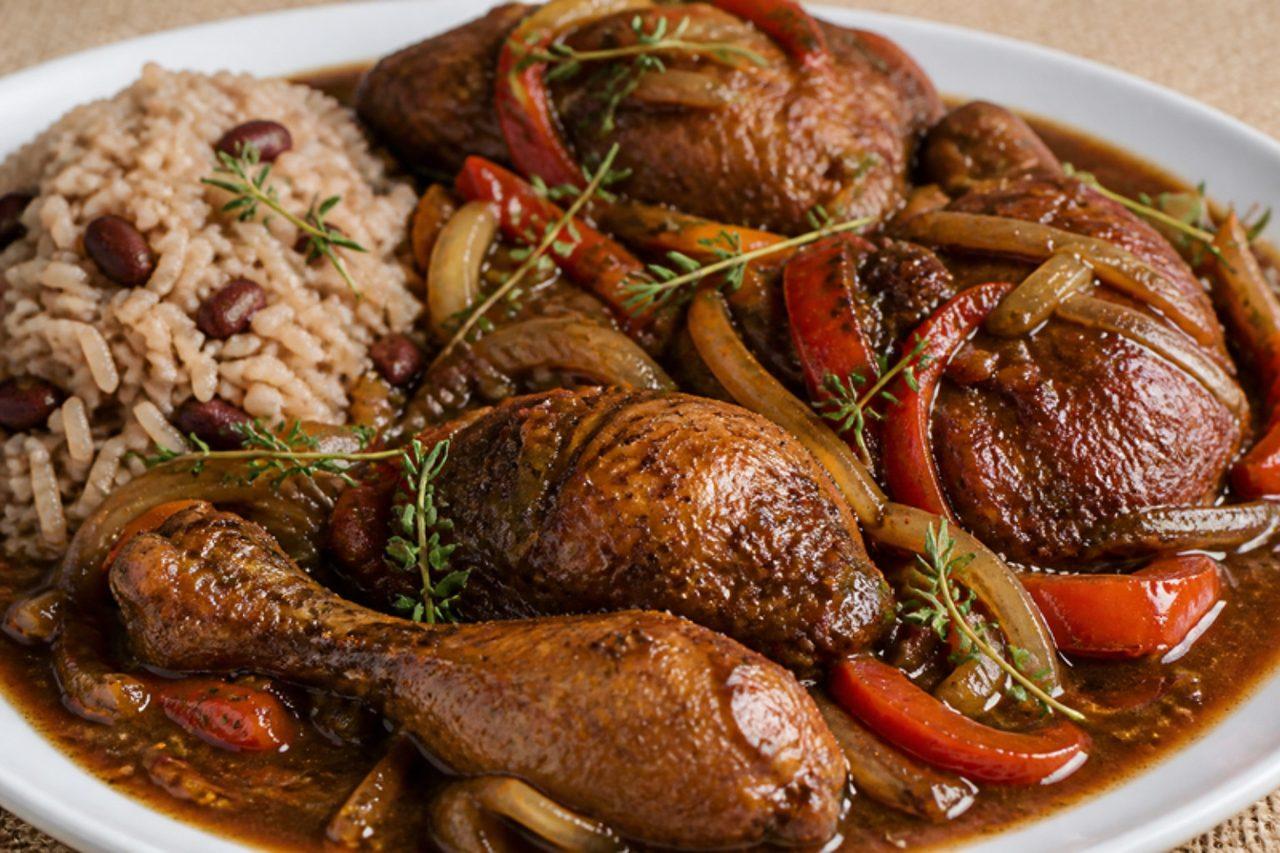
Ask a Jamaican what was on the table for weekday dinner growing up and brown stew chicken will be near the top of the list, served at home and at every cookshop from Montego Bay to Spanish Town. The deep colour comes from 'browning': sugar caramelised in hot oil until it is dark, then the seasoned chicken is turned in it so every piece takes on a mahogany coat. Peppers, onion, tomato and thyme simmer down into a sticky, savoury gravy that begs for a pile of white rice, rice and peas or boiled dumplings. Chef's tip: season the chicken the night before and dry each piece well before it goes into the caramel; wet chicken spits violently and won't take on that deep brown colour.

70 minChickenGluten free
by KrazyBadal 0 views

Escovitch fish

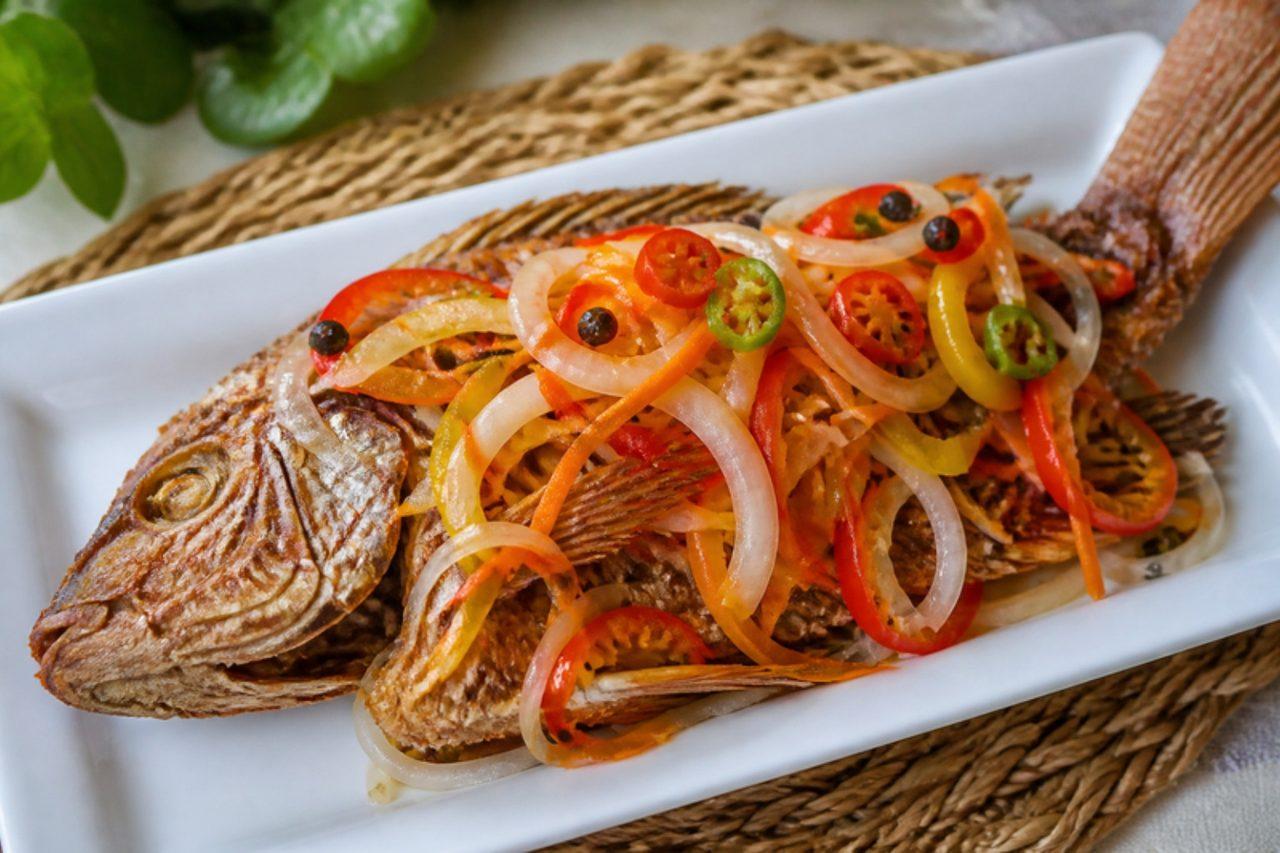
Good Friday in Jamaica means fish, and escovitch fish is the dish families line up for, though you'll also find it any day at the seaside stalls of Hellshire Beach and Port Royal. Whole red snapper (or thick fillets) are seasoned, fried until the skin shatters, then buried under onion, carrot, chocho and peppers that have been briefly warmed in vinegar with pimento and scotch bonnet. The fish soaks up the sharp, hot pickle as it sits, so it is as good at room temperature as it is fresh from the pan. Serve with bammy or festival. Chef's tip: make the pickle while the fish fries and pour it over hot fish; it sinks in better, and a few hours later the flavour is even deeper.

45 minFishGluten freeSpicy
by KrazyBadal 0 views

Oxtail with butter beans

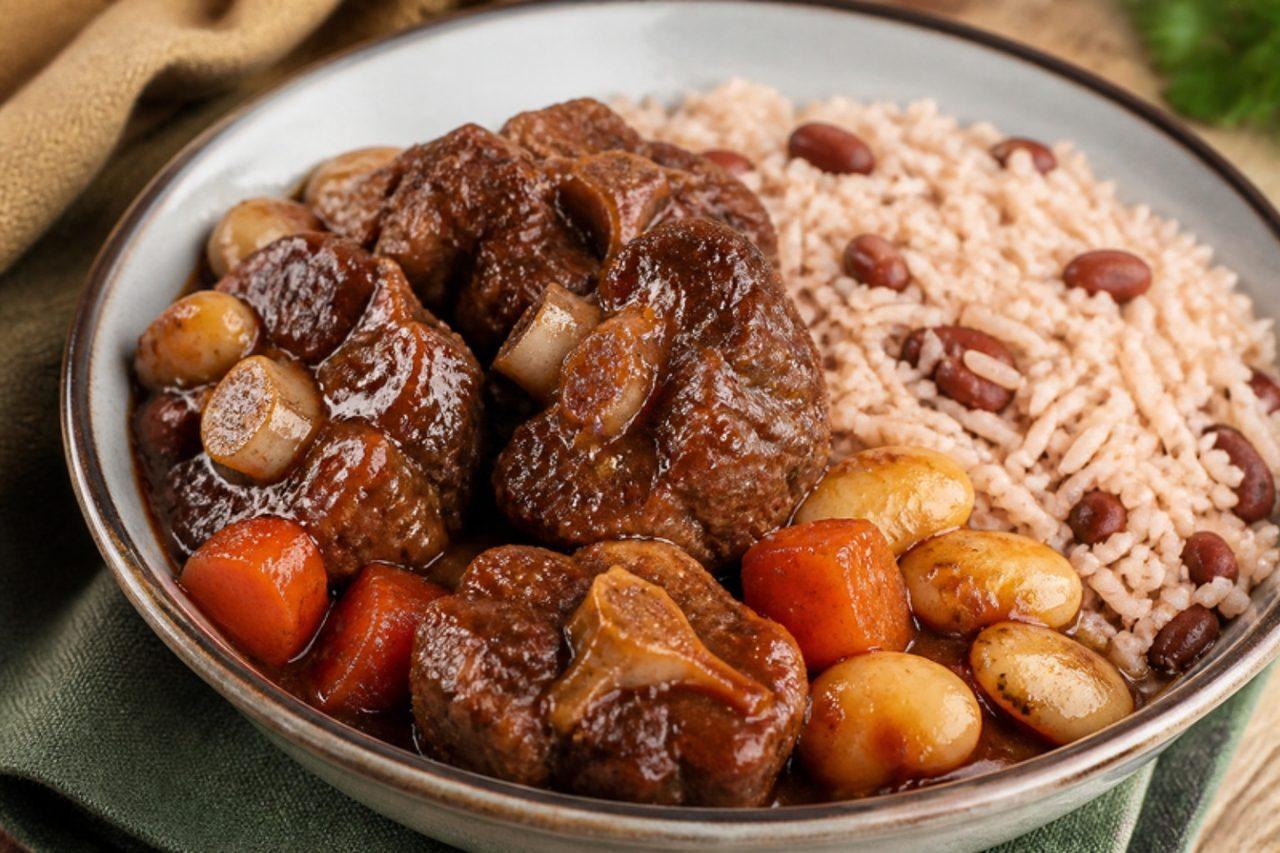
Oxtail started out as a cheap cut in Jamaica and is now the Sunday-best dish that cookshops in Kingston sell out of first, and that people across the diaspora queue for on Saturdays. The bony pieces are seasoned overnight, browned hard, then braised slowly for hours with pimento, thyme and whole scotch bonnet until the meat slides off the bone and the gravy turns glossy with gelatine. Butter beans go in near the end to soak up the gravy. Serve with rice and peas, steamed cabbage and fried plantain. Chef's tip: cook it a day ahead, chill, and lift off the hard layer of fat before reheating; the gravy is cleaner and the flavour deeper.

235 minMeat
by KrazyBadal 0 views

Tobago curry crab and dumpling

On Tobago, curry crab and dumpling is the dish people travel for, eaten with fingers on Sunday afternoons and sold at the Store Bay food huts near Crown Point, where a plate is half the reason to visit. Blue crabs are cleaned, rubbed with green seasoning, 'burnt' in curry and simmered in coconut milk until the shells turn red and the sauce goes rich, spicy and sweet with crab. Long, flat flour dumplings cook right in the gravy and soak it all up. It's messy, so have bowls for shells and plenty of napkins. Chef's tip: crack the claws lightly before they go in the pot, so the curry can get inside and the meat is easy to pull out at the table.

90 minFishSpicy
by KrazyBadal 0 views

Goes well with scotch bonnet pepper