Skip to content
WhatToEat.Today

Vegan Indian recipes

Indian dishes with no dairy, ghee, eggs or meat. (681 recipes)

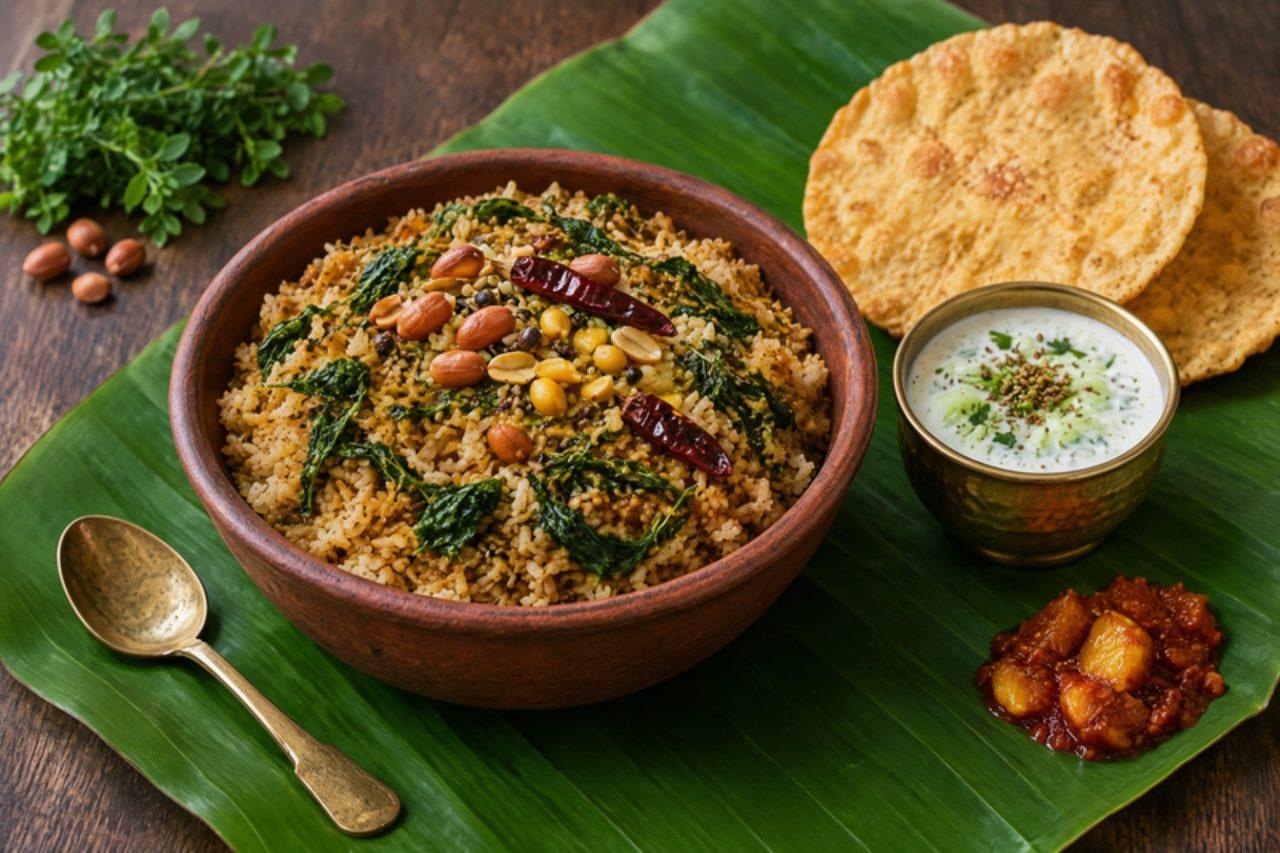
Verkadalai sadam (peanut rice)

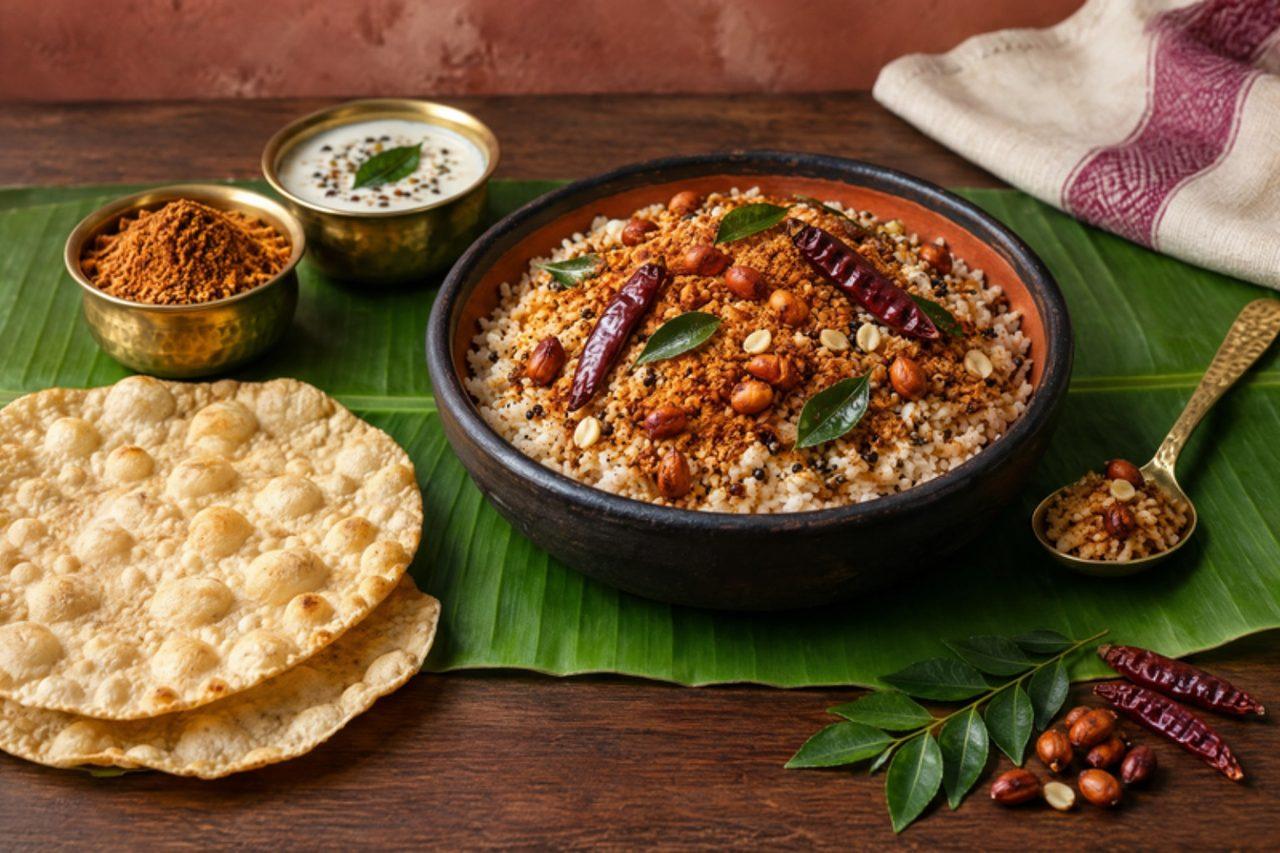
Peanut rice is the filling variety rice that Tamil and Kannada parents send when the school day ends with games: roasted peanuts, dry coconut, sesame and red chillies are ground into a coarse powder and tossed through rice in a curry leaf tempering. It tastes a little like a savoury peanut brittle, and it stays good at room temperature for hours. The mistake is grinding the peanuts too long; they turn into peanut butter and the rice clumps. Pulse in short bursts and stop while it is still sandy. Chef's tip: keep a few whole roasted peanuts aside and add them at the end for crunch.

by KrazyBadal 0 views
Menthya soppu bath (fenugreek leaf rice)

In Bengaluru and Mysuru, a "bath" is a one-pan rice dish seasoned with its own roasted spice powder, and menthya soppu bath is the winter version, made when bunches of fresh fenugreek are cheap. Unlike Tamil variety rices, the rice is cooked right in the masala with the leaves, tamarind and a touch of jaggery, so it comes out soft, tangy and gently bitter. The common mistake is using too much methi stalk, which makes the rice harshly bitter; strip the leaves and use only the softest stems. Chef's tip: a teaspoon of jaggery and a squeeze of tamarind balance the bitterness better than extra salt.

by KrazyBadal 0 views
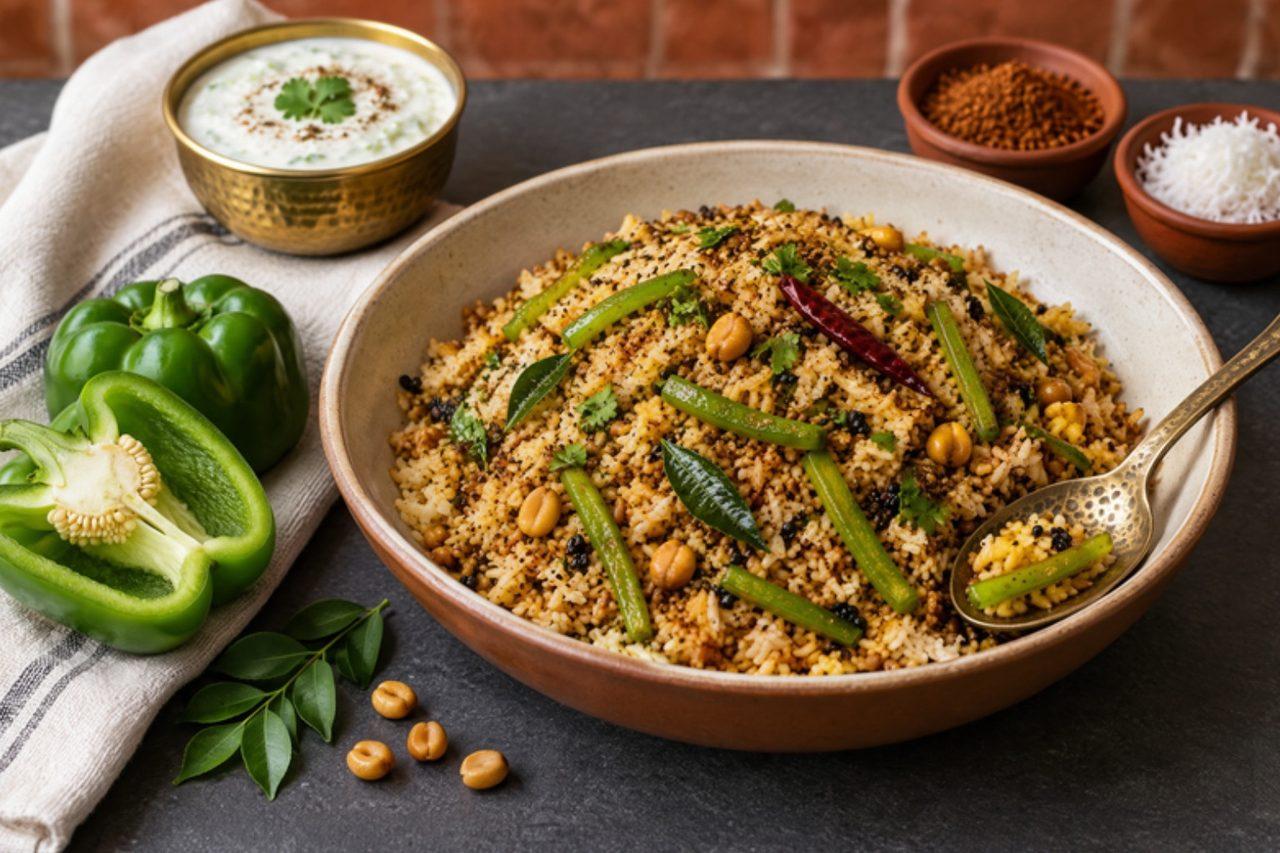
Capsicum rice (capsicum bath)

Every Bengaluru darshini has its own capsicum bath, and at home it is a favourite for office lunch boxes because the peppers stay crunchy until noon. Green peppers are sautéed just until glossy, then tossed with rice and a freshly roasted powder of coriander seeds, chana dal, dry coconut and red chillies. The mistake is cooking the peppers until soft; they release water and the rice turns soggy, so keep them bright and crisp. Chef's tip: add the powder to the hot oil off the heat for a few seconds before the rice goes in; it blooms the spices without burning the coconut.

by KrazyBadal 0 views
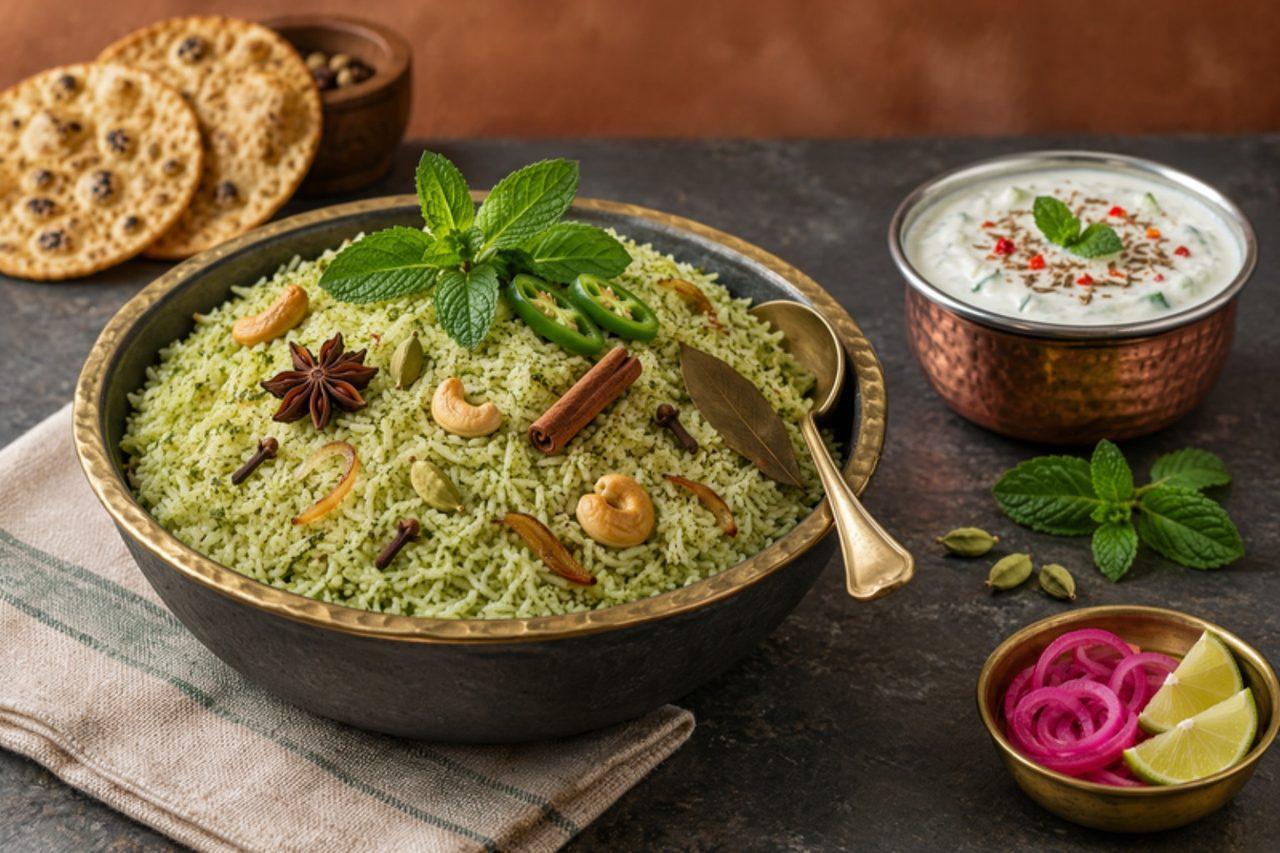
Pudina pulao (mint pulao)

Mint pulao turns up in tiffins from Hyderabad to Delhi in summer, when mint grows like a weed on balconies, and it is a lunch box that still smells fresh at one o'clock. Basmati is fried with whole spices and onion, then cooked in water coloured with a paste of mint, coriander, green chilli and ginger. The mistake is boiling the mint paste for a long time before the rice goes in, which turns it khaki and bitter; add it, stir for a minute, and get the rice in. Chef's tip: a squeeze of lime in the cooking water keeps the green colour brighter.

by KrazyBadal 0 views
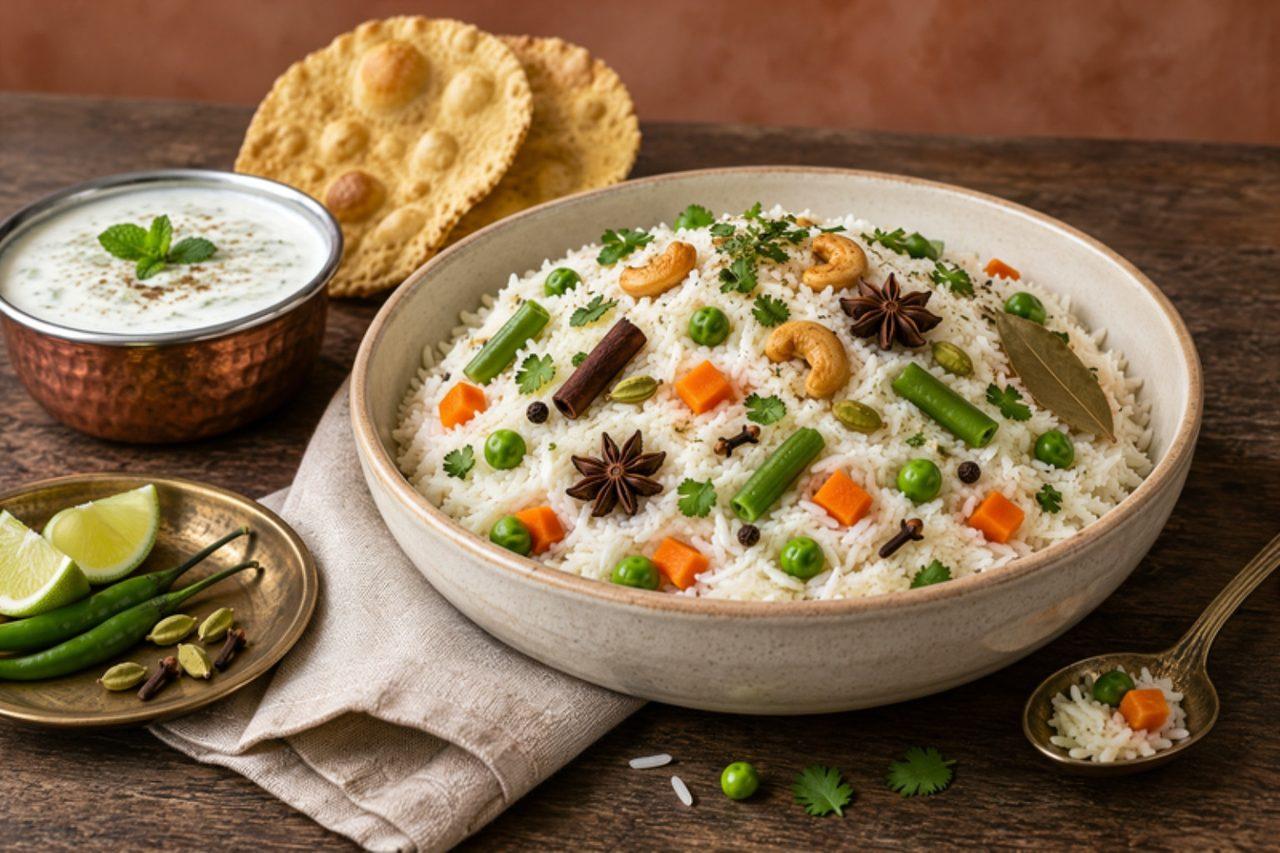
Vegetable pulao

This is the plain, comforting pulao that gets packed for small children all over India, from Kolkata to Bengaluru: no chilli heat, just whole spices, a little fried onion and plenty of carrot, beans and peas. It is just as good warm or at room temperature, with a pot of raita or a few potato wedges alongside. The mistake is stirring the rice once the water goes in, which breaks the grains and makes it gluey; cover the pan and leave it alone. Chef's tip: cut the vegetables the size of a pea, so a child's spoon gets rice and vegetables in every bite.

by KrazyBadal 0 views
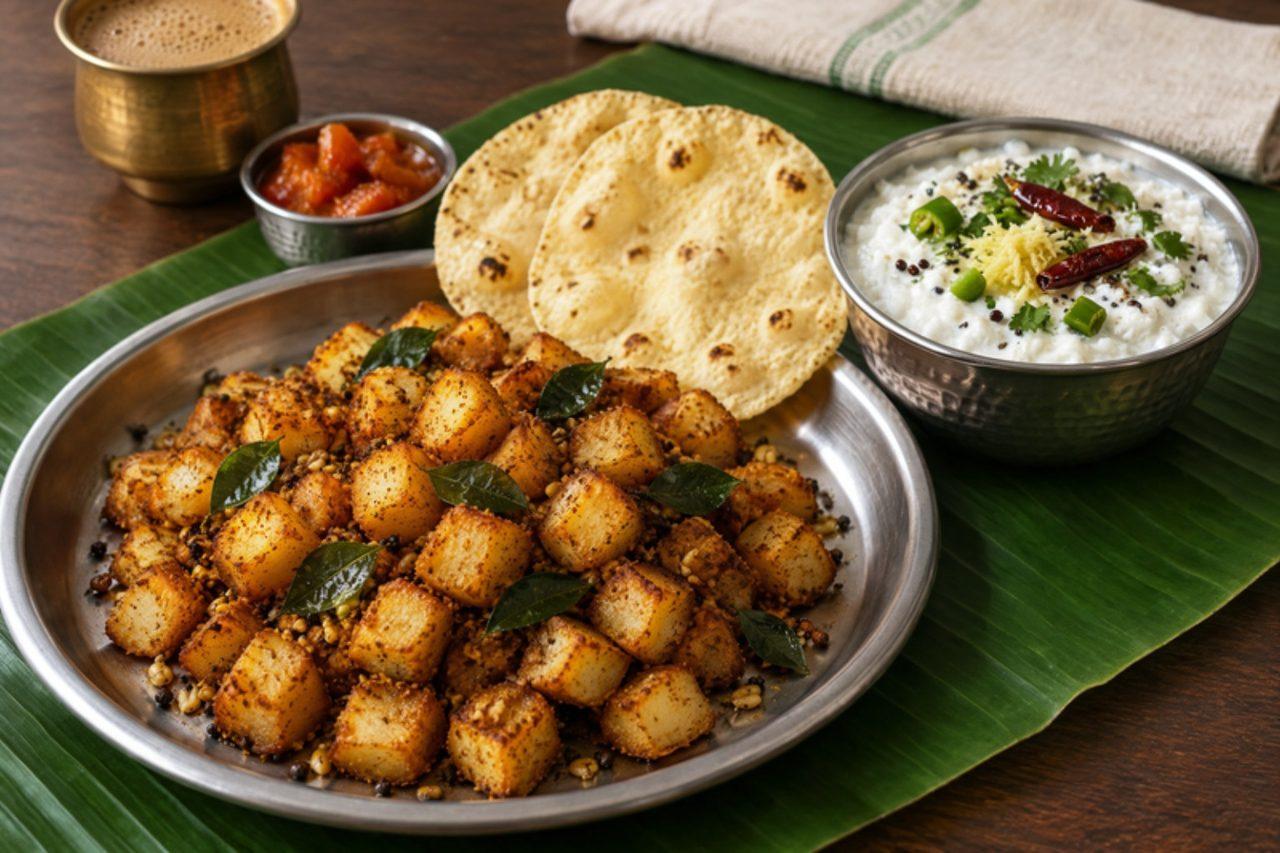
Urulaikizhangu roast (Tamil potato roast)

In Tamil lunch boxes, curd rice almost always comes with this: small cubes of boiled potato roasted slowly in a cast-iron pan with sambar powder, chilli and curry leaves until they are dark, crusty and chewy at the edges. It is a dry side, so it does not leak into the rice, and it tastes as good cold as hot. The mistake is stirring all the time; the potatoes need to sit undisturbed against the hot pan for a few minutes at a time to build the crust. Chef's tip: a teaspoon of rice flour scattered over in the last few minutes makes the coating even crisper.

by KrazyBadal 0 views
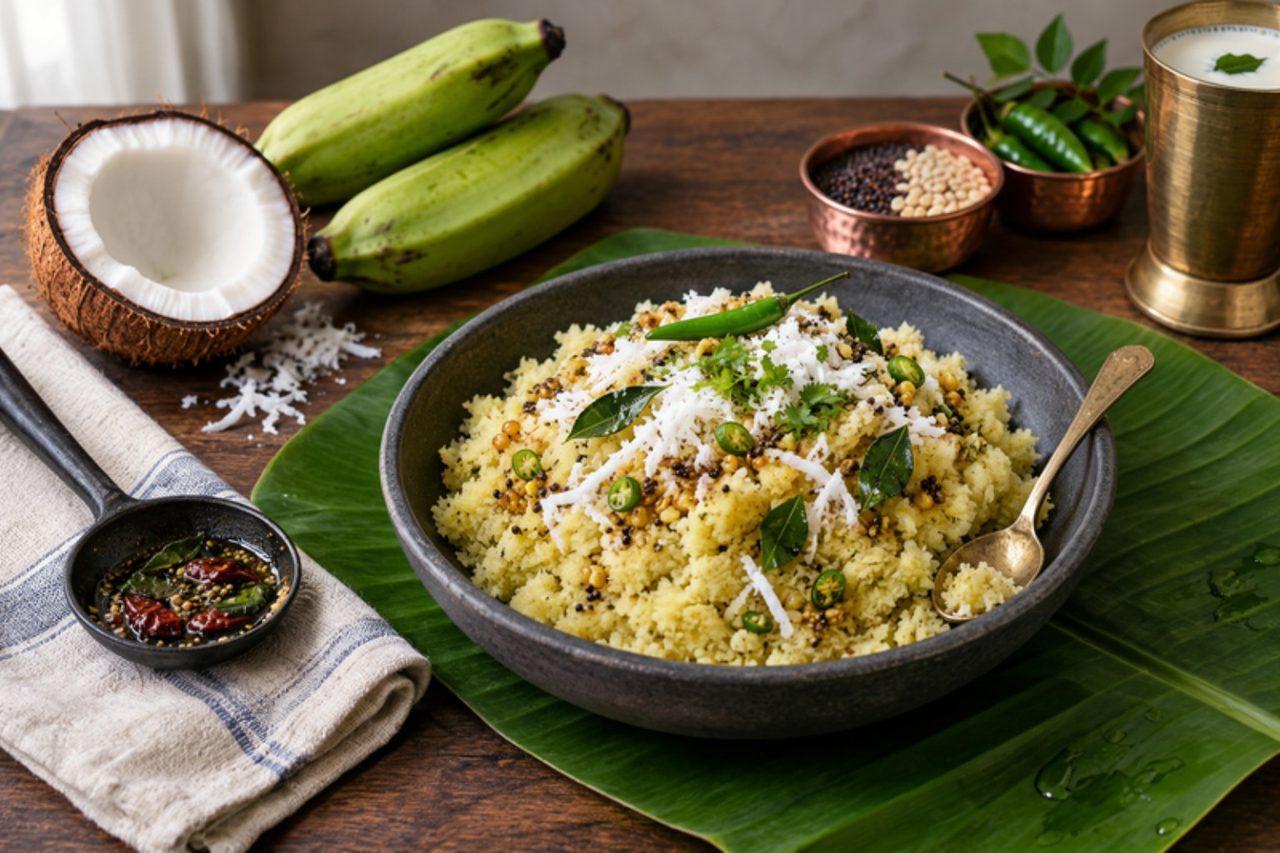
Vazhakkai podimas (raw banana podimas)

Podimas comes from Tamil Brahmin kitchens in Thanjavur and Chennai, where green plantain is boiled whole, grated into soft crumbs and tossed with a tempering of mustard, dal, ginger, green chilli and coconut, then sharpened with lemon. It is light and fluffy, and it sits happily next to sambar rice or rasam rice in a tiffin. The mistake is overboiling the plantain: it turns sticky and will not grate into crumbs. Pull it out as soon as a knife slides in with a little resistance. Chef's tip: grate it on the large holes of a box grater while still warm, then let it cool before tossing, so the shreds stay separate.

by KrazyBadal 0 views

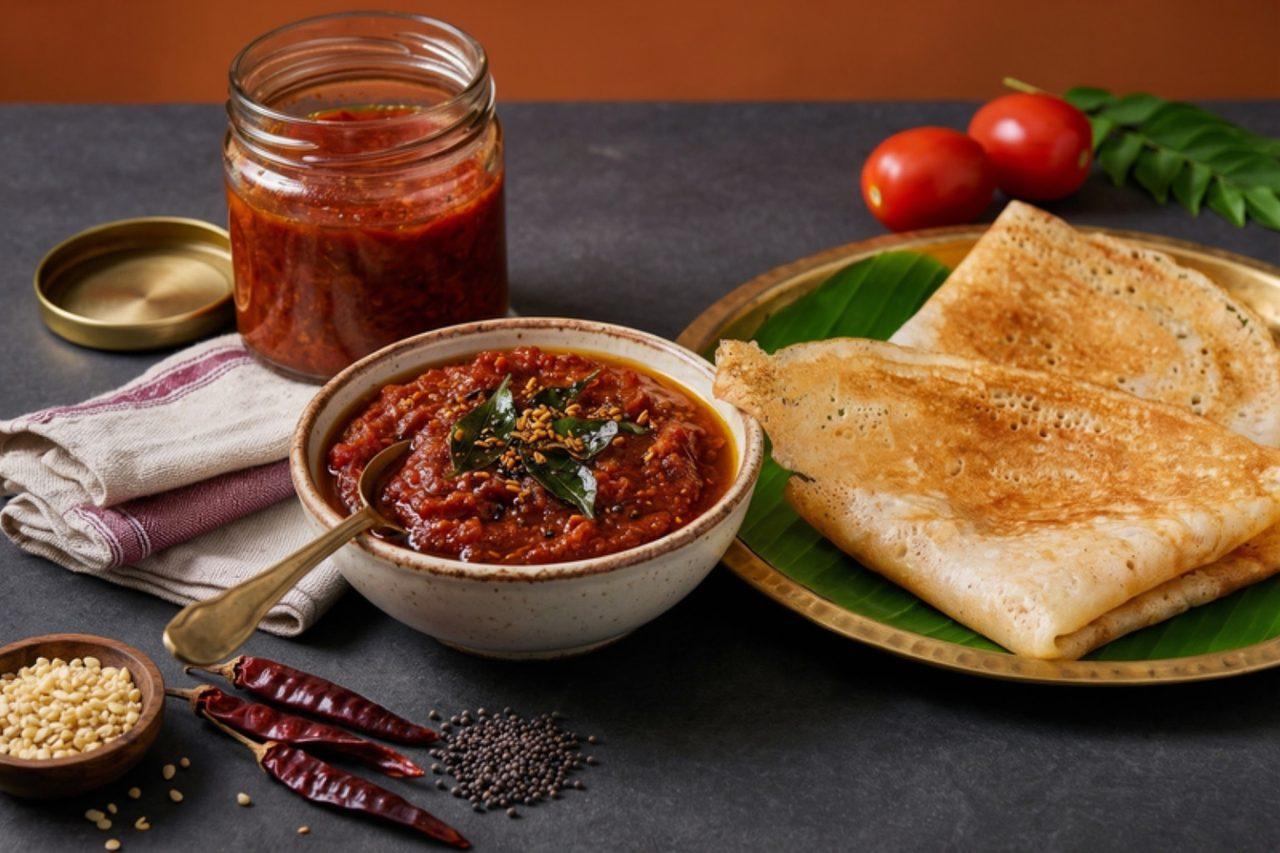
Tomato thokkuSpiced tomato preserve

Thokku is the Tamil answer to a jar of chutney: ripe tomatoes cooked down slowly in plenty of gingelly oil with red chilli, tamarind and roasted fenugreek until thick, dark and glossy. A spoonful turns plain curd rice, idli or chapati into a proper lunch box, and travellers from Madurai carry it for trips because it keeps for weeks. The mistake is stopping too early; it is ready only when the oil floats free around the edges and a spoon dragged across the pan leaves a clean trail. Chef's tip: roast the fenugreek seeds until reddish before grinding; raw fenugreek makes the thokku bitter.

by KrazyBadal 0 views
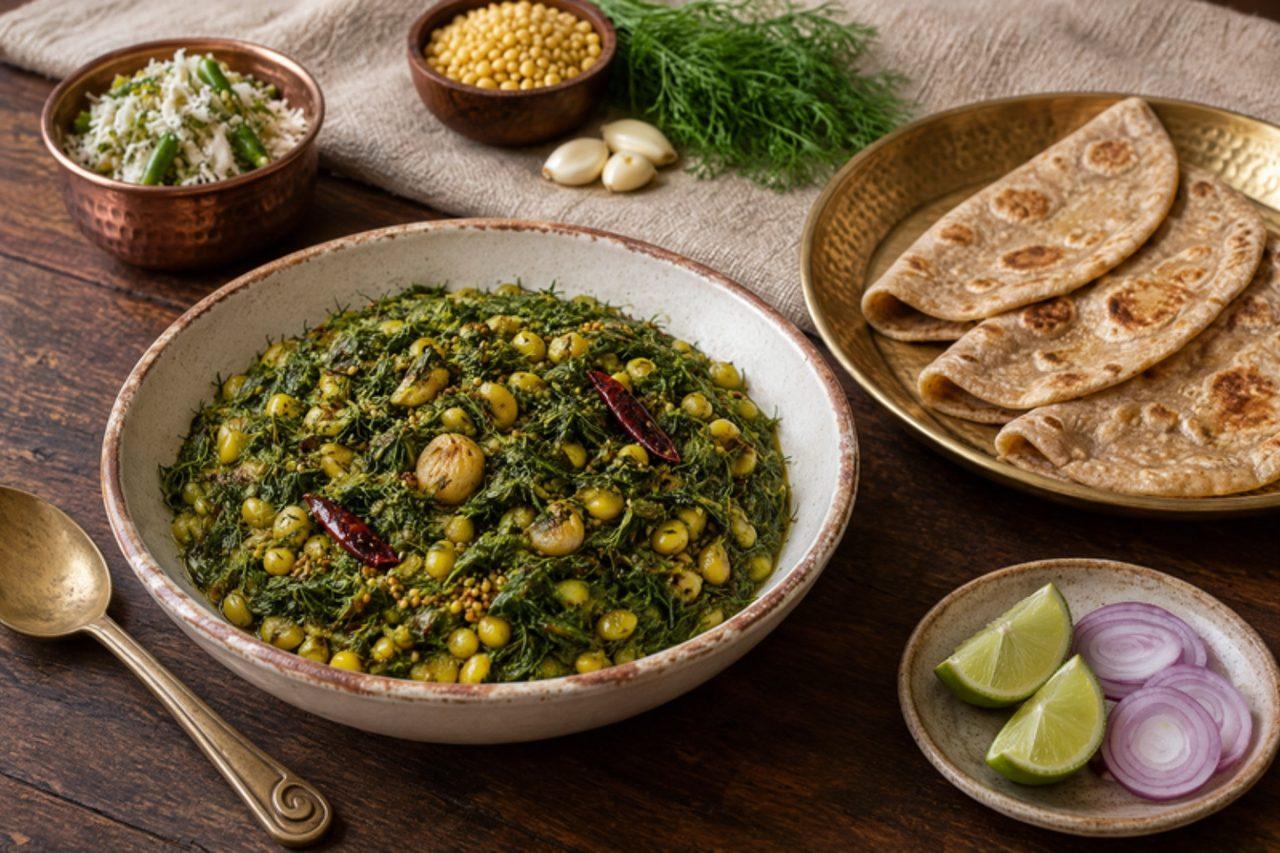
Shepu bhaji (dill and moong dal)

In Pune and the villages of western Maharashtra, bunches of shepu (dill) come to market in winter, and this dry bhaji of dill and soaked yellow moong dal is packed with bhakri or chapati in the lunch dabba. The dill wilts down to a soft, aromatic tangle, and the moong dal gives it body and a little protein. The mistake is adding water: the leaves release plenty of their own, and extra liquid makes the bhaji stew and lose its fresh, sharp smell. Chef's tip: soak the moong dal for at least 30 minutes beforehand, so it cooks through in the dill's own steam without turning mushy.

by KrazyBadal 0 views
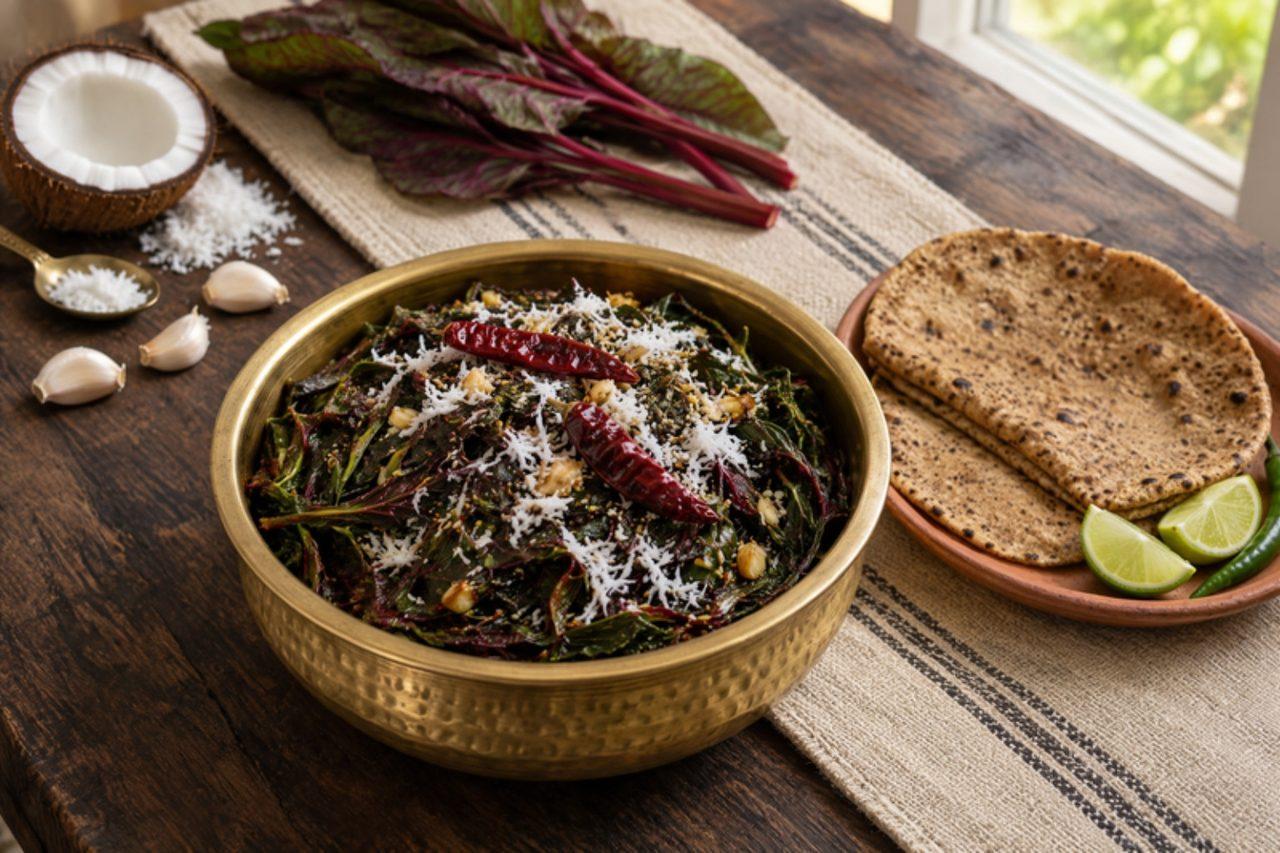
Lal mathachi bhaji (red amaranth stir-fry)

In Mumbai and the Konkan, bunches of red math (amaranth) with their magenta stems come in during the monsoon, and this quick garlicky bhaji turns the dabba's chapatis pink at the edges. It is cooked fast in a hot pan so the leaves stay bright, then finished with a little fresh coconut, the coastal touch that sets it apart from the Bengali way with the same leaf. The mistake is cooking it covered for a long time, which turns it grey and watery. Chef's tip: chop the tender stems finely and cook them for a minute before the leaves go in, so everything is done at the same moment.

by KrazyBadal 0 views
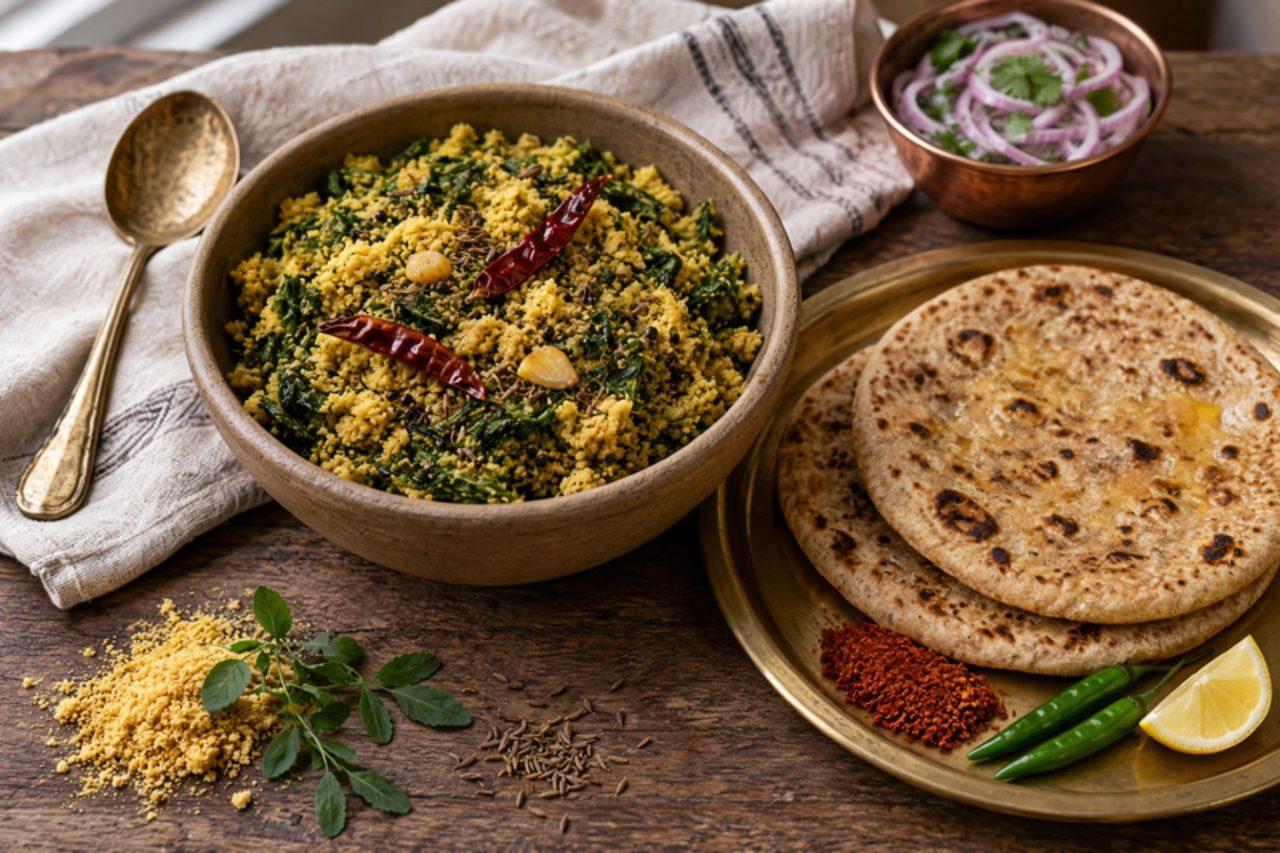
Methi besan bhajiFenugreek and gram flour stir-fry

Farmers in Vidarbha and households in Jodhpur both make a version of this: chopped methi leaves cooked down and then dusted with roasted besan until the whole pan turns into dry, savoury crumbs that cling to a chapati. Because it has almost no moisture, it is one of the best sabzis for a long journey or a hot day's dabba. The mistake is adding raw gram flour straight to the leaves, which leaves a pasty, raw taste. Roast the besan dry until it smells like biscuits first. Chef's tip: sprinkle a few drops of water over the crumbs and cover for a minute at the end, so they soften just enough without turning into a paste.

by KrazyBadal 0 views
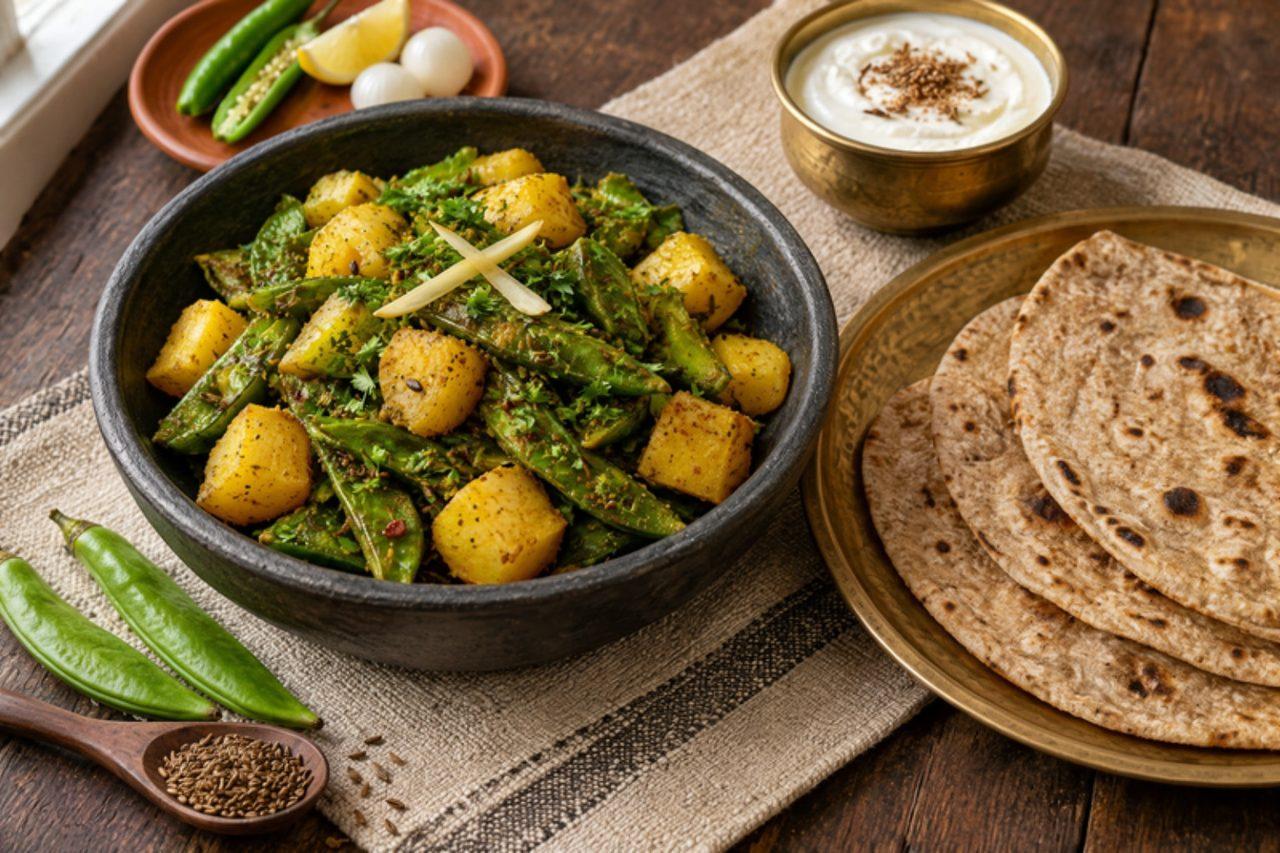
Sem ki sabzi (flat beans with potato)

When flat green sem pods fill the sabzi carts in Lucknow and Jaipur in winter, they go into this dry stir-fry with potato and a crackle of ajwain, the classic partner for paratha in an office dabba. The beans stay a little firm and sweet, the potato soaks up the spices, and nothing drips into the roti. The mistake is leaving the stringy edges on the pods; they never soften. Snap the tip and pull the string down each side before chopping. Chef's tip: cook covered for the first half to steam the beans tender, then uncover and turn up the heat so the potatoes catch and brown.

by KrazyBadal 0 views

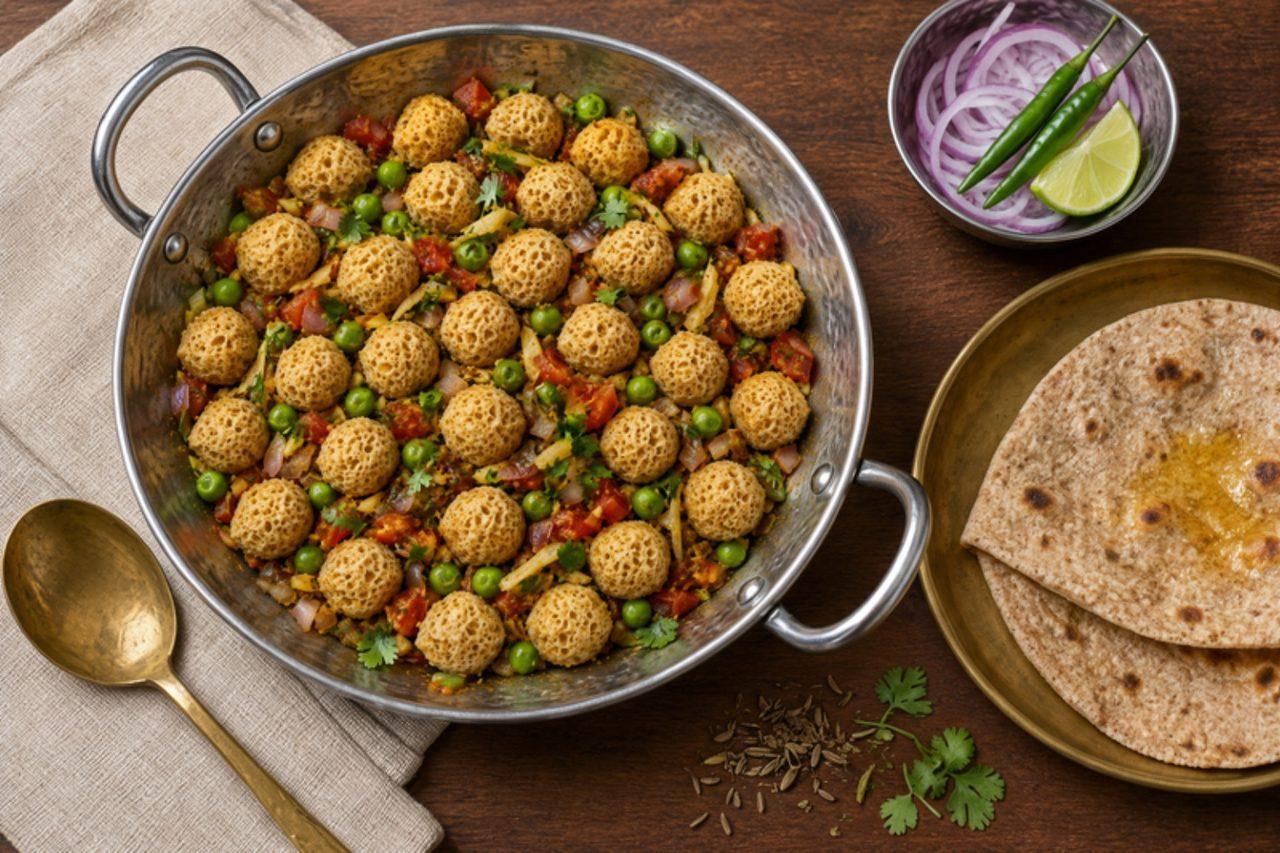
Soya chunks sabziDry soya chunk curry

Soya chunks, called nutrela or meal maker across India, are a hostel and office-tiffin favourite from Delhi to Hyderabad because they are cheap, keep for months and soak up masala like a sponge. Here they are boiled, squeezed and cooked dry with onion, tomato and garam masala until each chunk is glossy and coated. The mistake is not squeezing hard enough: water left inside dilutes the masala and the chunks taste of nothing. Squeeze them in a fist, twice. Chef's tip: soak them in hot salted water with a pinch of turmeric, so they are seasoned all the way through.

by KrazyBadal 0 views
Aloo bhindiPotato and okra stir-fry

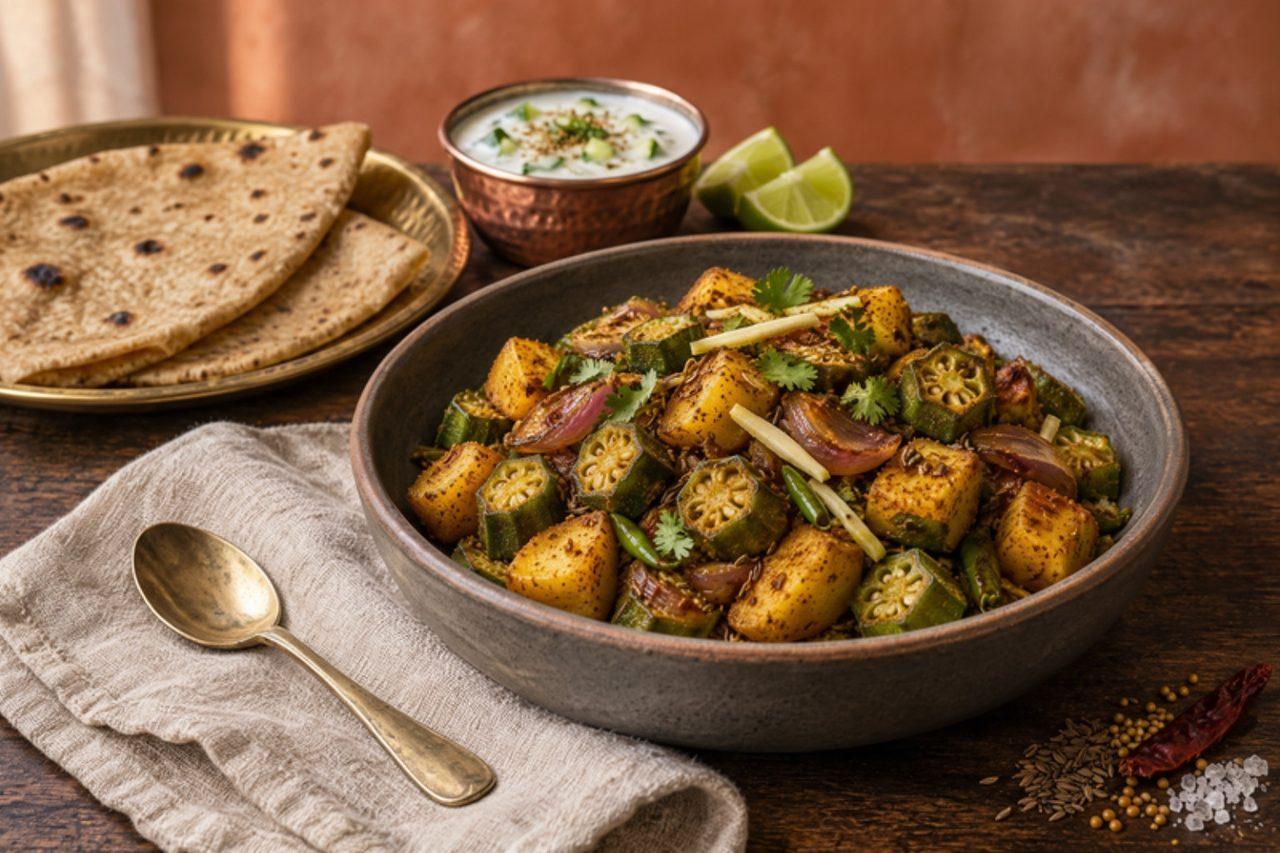
Aloo bhindi is the sabzi that Delhi children are happiest to find in their dabba with soft phulkas: okra fried until its edges crisp, potato cubes browned alongside, and sliced onion cooked sweet, all dusted with amchur and cumin. The single big mistake is washing the okra and cutting it wet, which releases slime that never cooks off. Wash it, dry every pod with a cloth and wait half an hour before slicing. Chef's tip: add the salt only at the very end; salt draws moisture out of the okra and makes it sticky.

by KrazyBadal 0 views
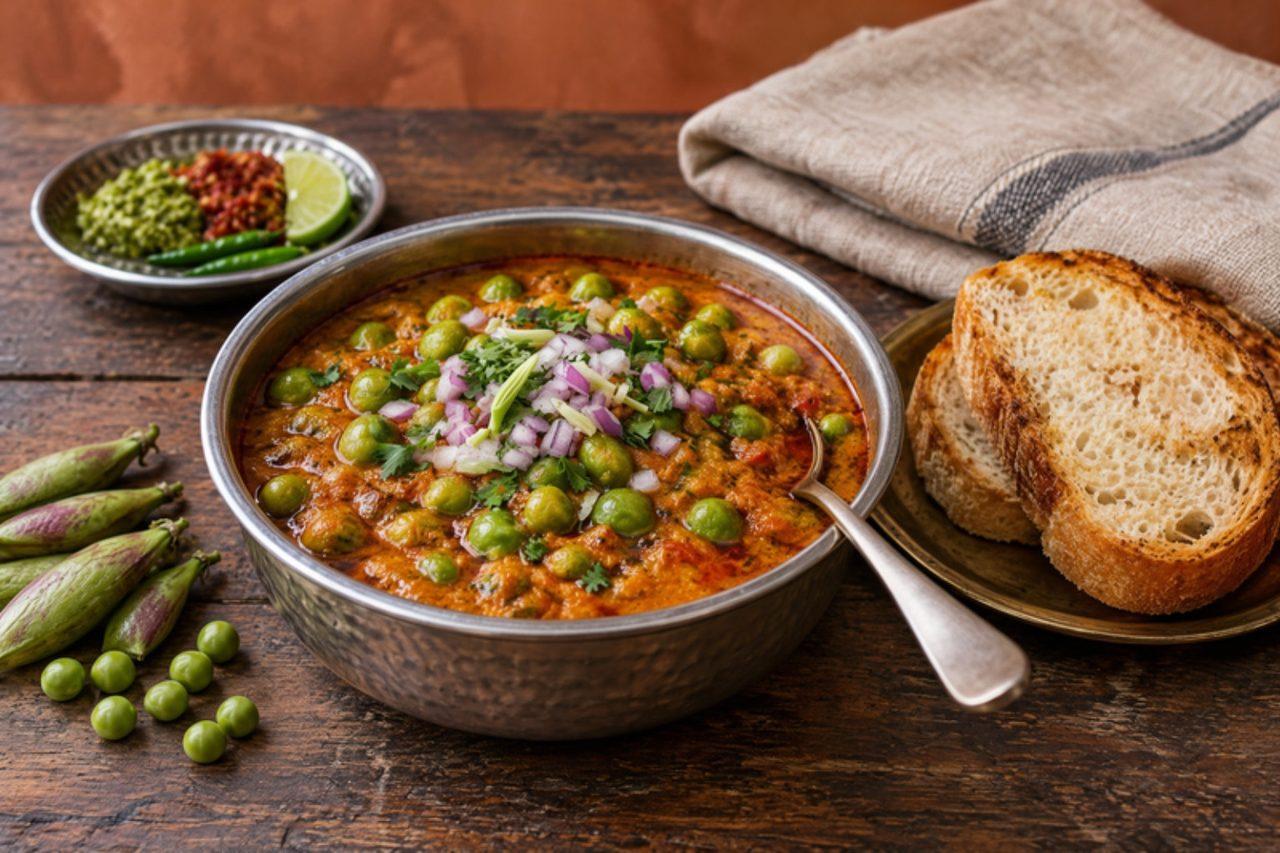
Gobi matar (cauliflower and peas)

In Punjab and Uttar Pradesh, winter means cauliflower and fresh peas, and gobi matar is what fills countless school and office dabbas between November and February. It is cooked dry, so the florets brown a little at the edges, sweetened by the peas and sharpened by plenty of ginger. The mistake is cooking the cauliflower covered with water until it is soft and smells of cabbage; steam it briefly in its own moisture, then fry it uncovered. Chef's tip: cut the florets so they have one flat side; that face sits on the pan and browns while the rest steams tender.

by KrazyBadal 0 views
Pineapple gojjuSweet and sour pineapple gravy

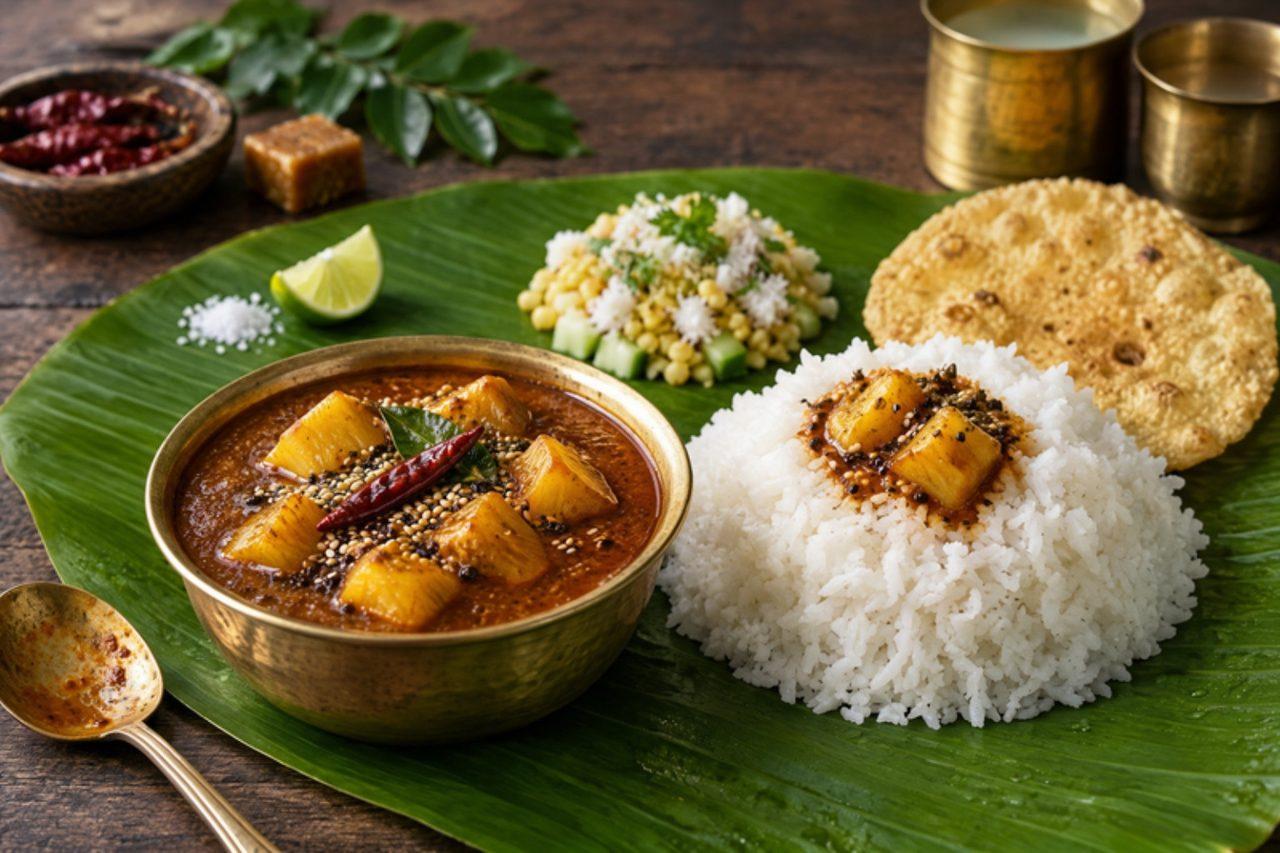
Pineapple gojju turns up on banana leaves at Kannada weddings, housewarmings and Ugadi feasts, where its bright sweet-sour-hot taste cuts through the rice, saaru and payasa. Ripe pineapple is simmered with tamarind and jaggery, then thickened with a roasted paste of sesame, coconut, chilli and lentils until glossy. It is eaten in small spoonfuls with rice or chapati, or as a relish on the side. The usual mistake is adding the jaggery too early and boiling it hard, which makes it sticky and dull; let the pineapple soften first. It keeps for 4 days in the fridge. Chef's tip: toast the sesame seeds separately and add them last, so they stay nutty and you can hear them crackle.

by KrazyBadal 0 views

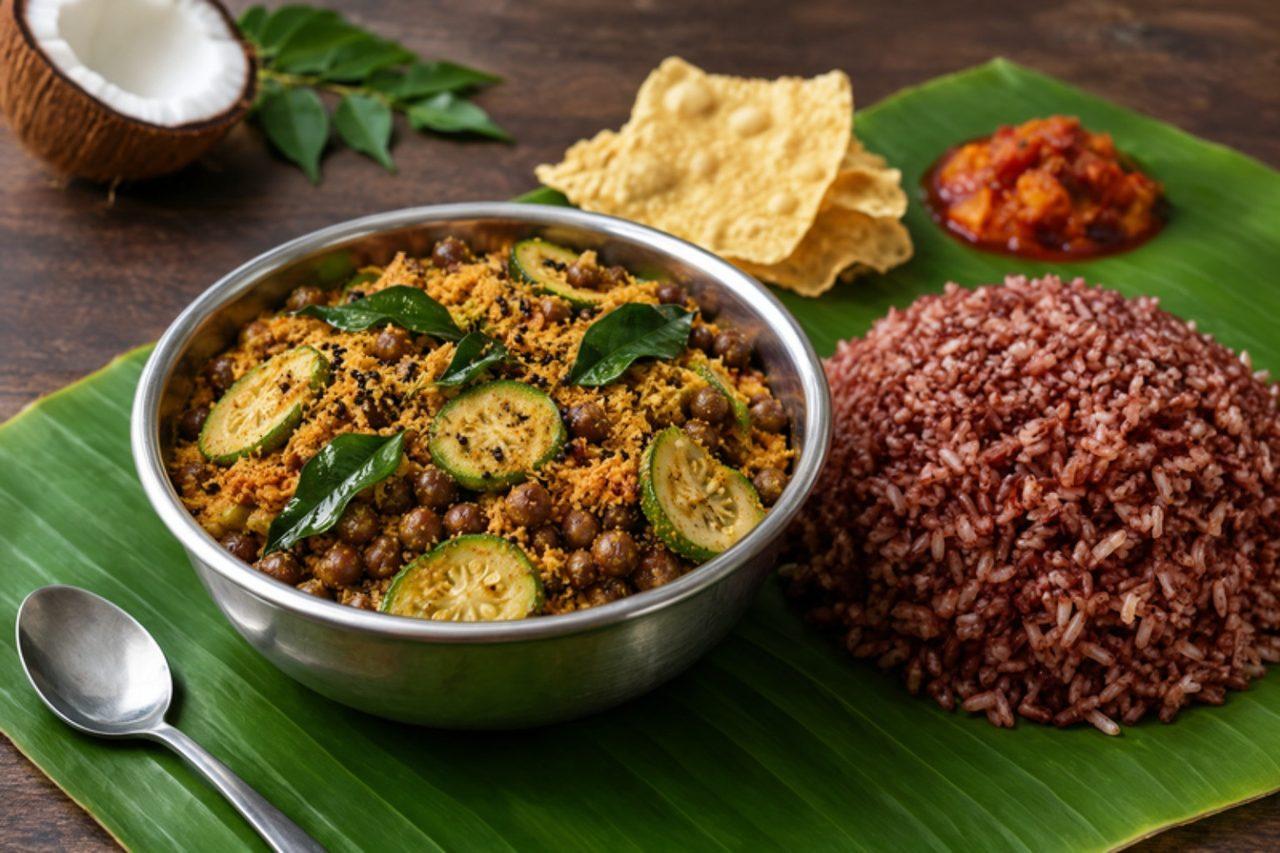
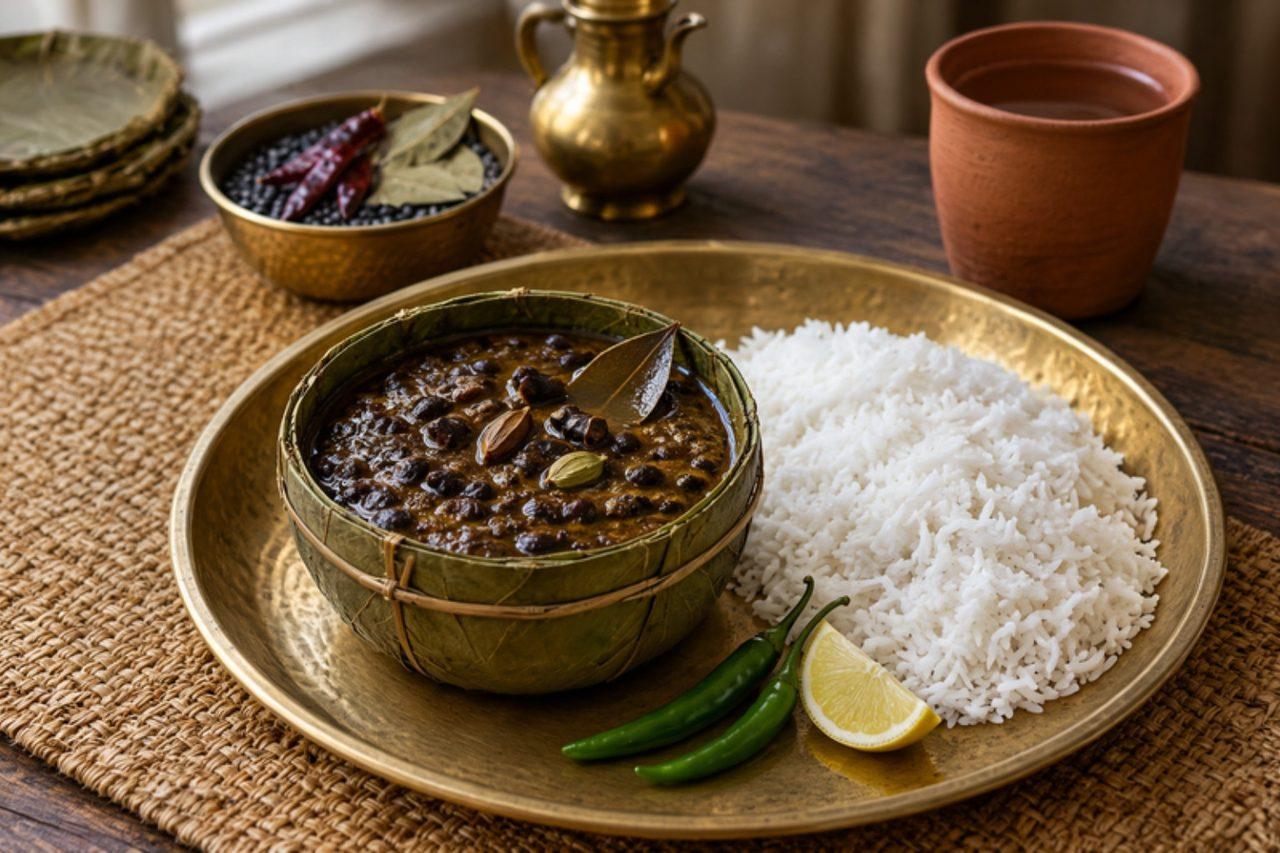
Kadle manoliBlack chickpea and coconut curry

Kadle manoli is a Konkani dish from Mangaluru and Udupi, cooked for festive meals, Saturday temple days and family gatherings, where it sits beside rice, dalitoy and papad. Black chickpeas and quartered ivy gourd are cooked together, then tossed in a coarse, roasted masala of coconut, byadgi chillies and coriander, a little tamarind and a coconut-oil tempering. It is dry-ish, coating each piece rather than swimming in gravy. The usual mistake is cutting the ivy gourd into rounds; slice it lengthwise into quarters so it stays crunchy-tender. Slow-cooker: cook the soaked chana and gourd with 500 ml water on low for 7 hours, then stir in the masala and heat through. Chef's tip: grind the masala coarse, with very little water, so it clings to the chickpeas and stays fragrant.

by KrazyBadal 0 views
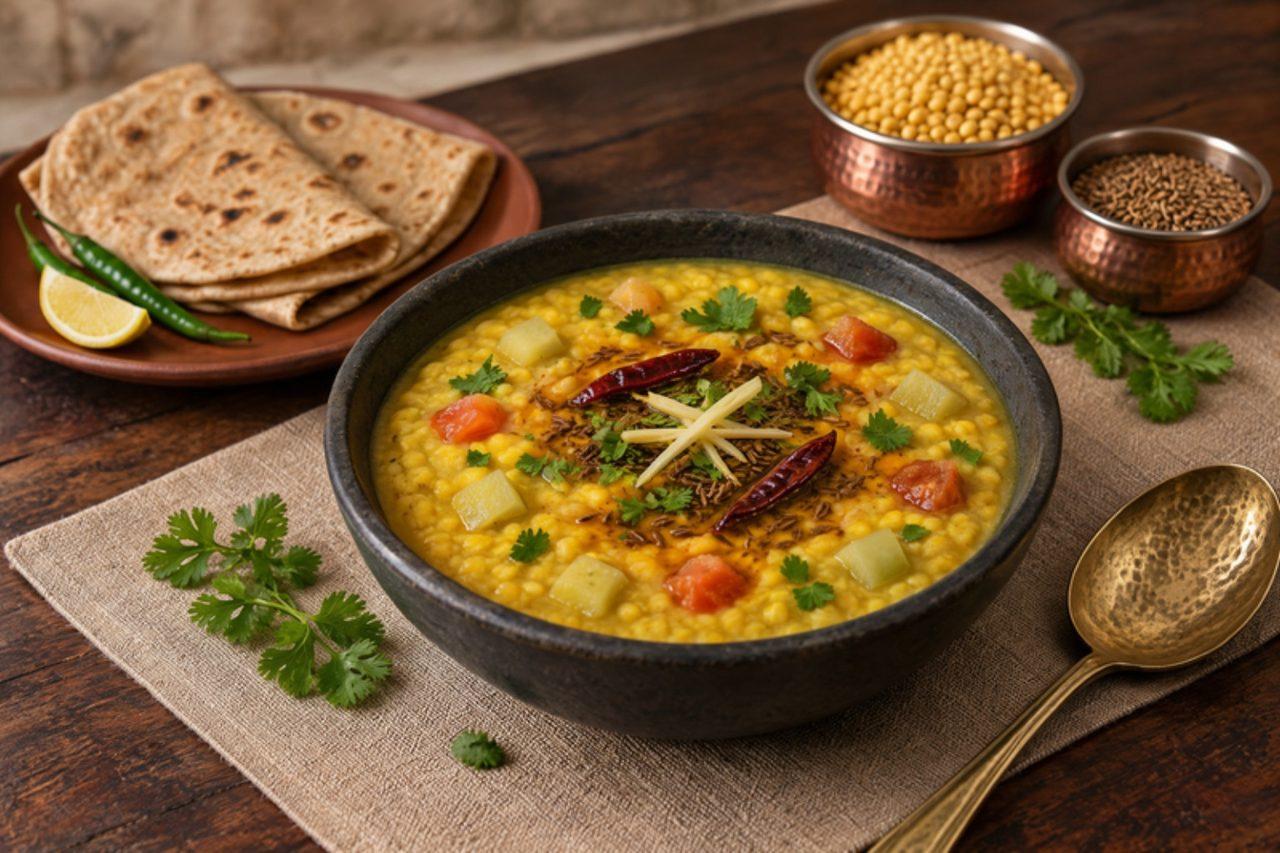
Lauki chana dalBottle gourd and chana dal

In Punjabi and Haryanvi homes lauki chana dal is a weekday staple, and it travels in the dabba's lidded steel bowl beside rotis or rice. Chana dal holds its shape while the bottle gourd melts into it, so the dal is thick enough not to slosh about. The mistake is adding the lauki at the start with the dal: it collapses into strings and turns the dal watery. Add it once the dal is half cooked. Chef's tip: choose a young, pale-green lauki that your nail dents easily; an old one is bitter and seedy, so taste a small piece raw and discard it if it is bitter.

by KrazyBadal 0 views
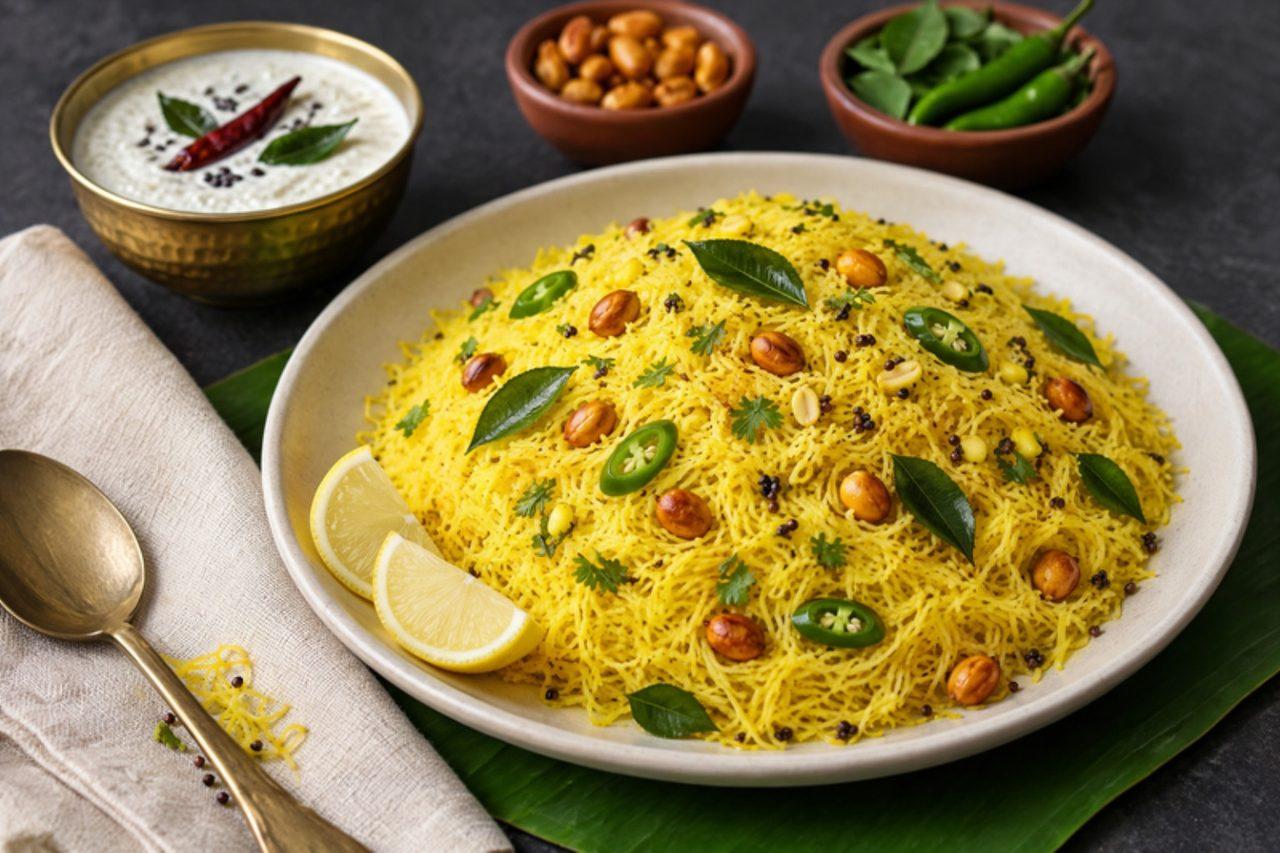
Lemon sevai (lemon rice noodles)

Sevai is pressed rice-flour vermicelli, and in Tamil Nadu and the Mysuru region the lemon version is a lighter alternative to lemon rice for a school lunch box. Today most homes use dried rice sevai, softened in hot water and steamed, then tossed with a turmeric tempering of mustard, dal, peanuts and green chilli and plenty of lemon. The common mistake is soaking the dry sevai too long, so it breaks into short mushy bits; it should be just pliable before it goes into the steamer. Chef's tip: toss with a fork, not a spoon, and lift rather than stir so the strands stay long.

by KrazyBadal 0 views
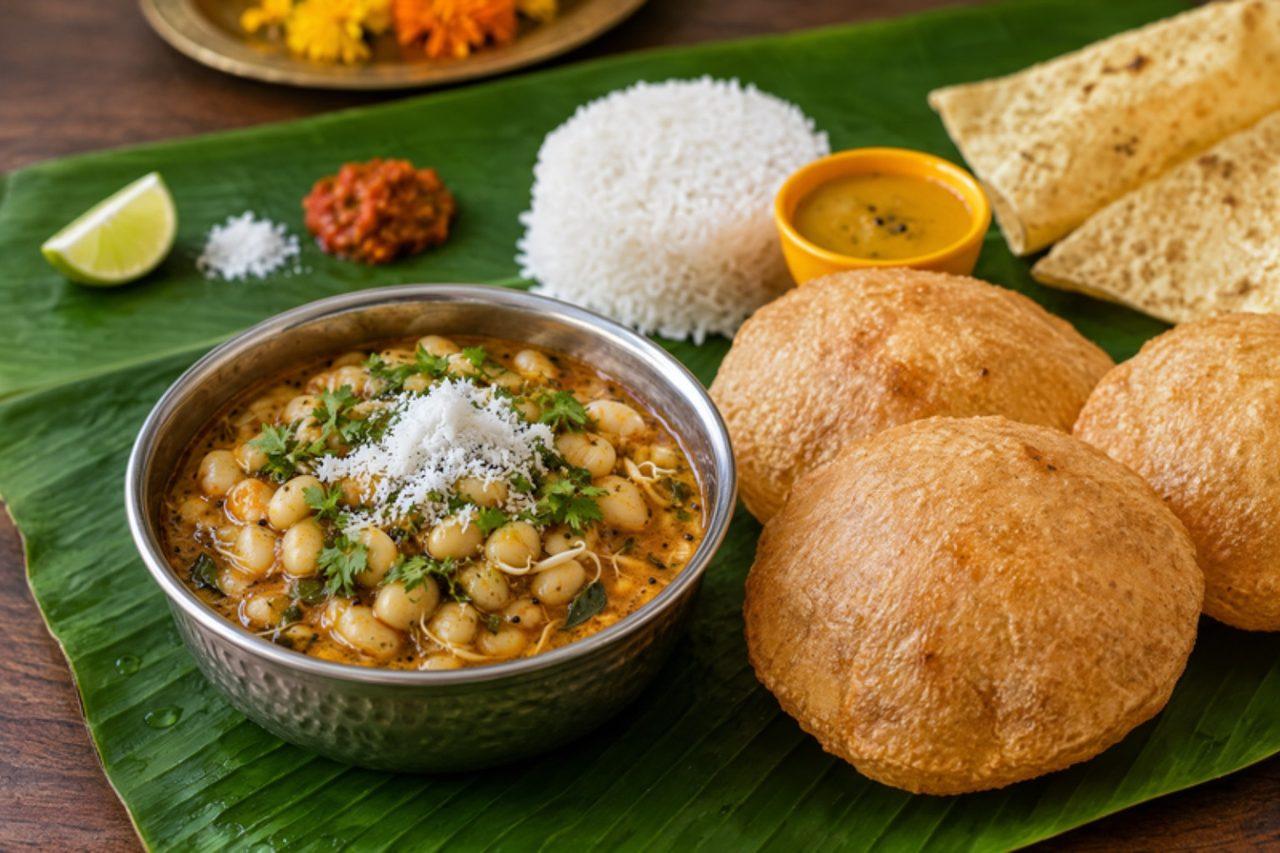
Dalimbi usalSprouted field bean curry

In Konkan and Pune homes, dalimbi usal is a festival dish, cooked for Ganesh Chaturthi, weddings and thread ceremonies and served on the thali beside puran poli and rice. Dalimbi are dried field beans (val) that are soaked, sprouted and peeled; the work takes two days but turns them creamy and sweet. They are simmered gently with fresh coconut, goda masala, kokum and a little jaggery, without onion or garlic. Field beans must always be cooked until fully soft; never eat them raw or half-cooked. The usual mistake is boiling them hard, which bursts the soft peeled beans into mash; keep the simmer gentle. Chef's tip: soak the sprouted beans in warm water for 30 minutes before peeling, and the skins slip off with a pinch.

by KrazyBadal 0 views
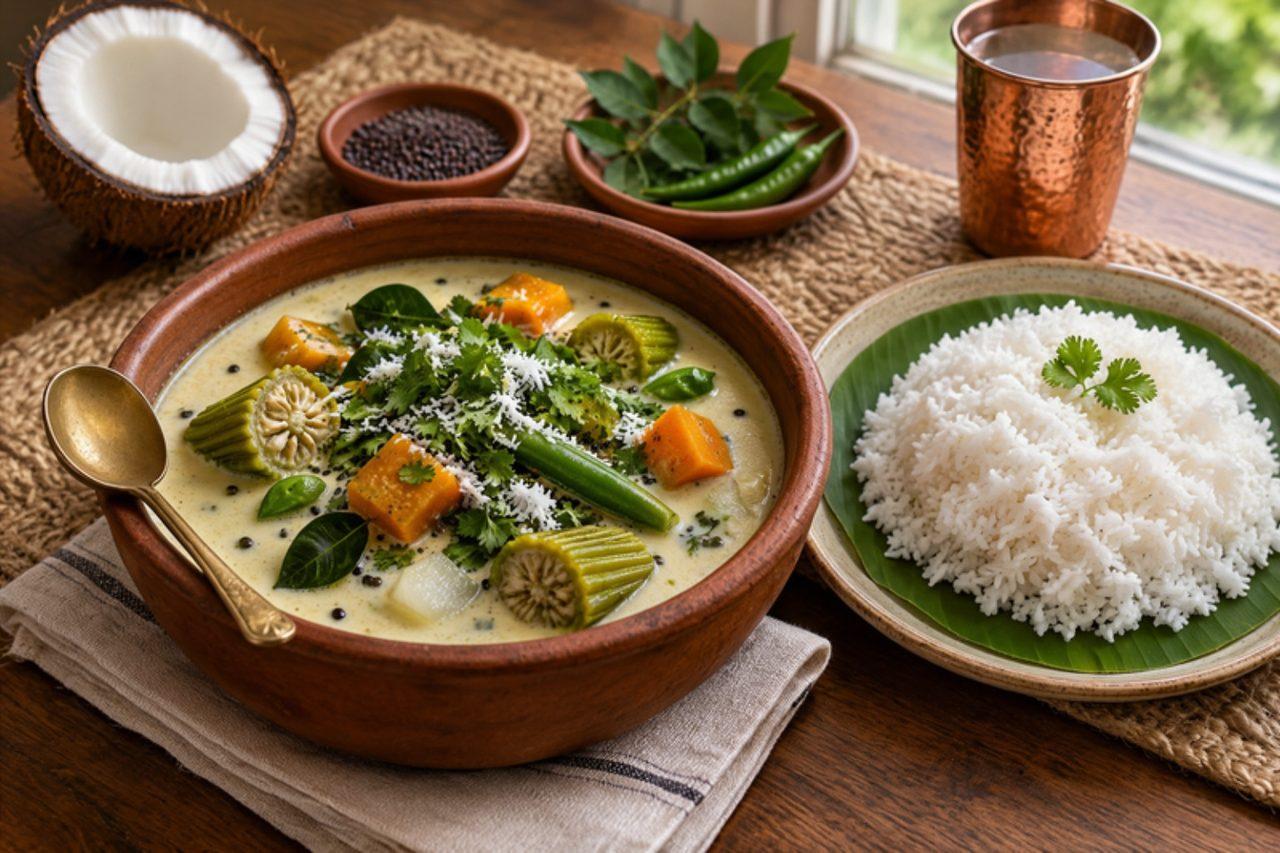
Val valMixed vegetables in coconut gravy

Val val is a gentle Goan Saraswat stew of mixed vegetables in coconut milk, cooked for festive meals at Ganesh Chaturthi, weddings and temple feasts in Ponda and Margao, where it balances hot curries and fried fish-free starters on the plate. Drumsticks, pumpkin, green beans and potato cook in thin coconut milk with green chilli and cumin, then thick coconut milk is stirred in at the end for a creamy, pale, mildly sweet sauce. Eat it with rice, or with puris for a feast. The usual mistake is boiling it after the thick coconut milk goes in, which splits it into oily curds. Chef's tip: grind the cumin with the green chillies and a spoon of coconut milk; it gives a fresh warmth without colouring the white sauce.

by KrazyBadal 0 views
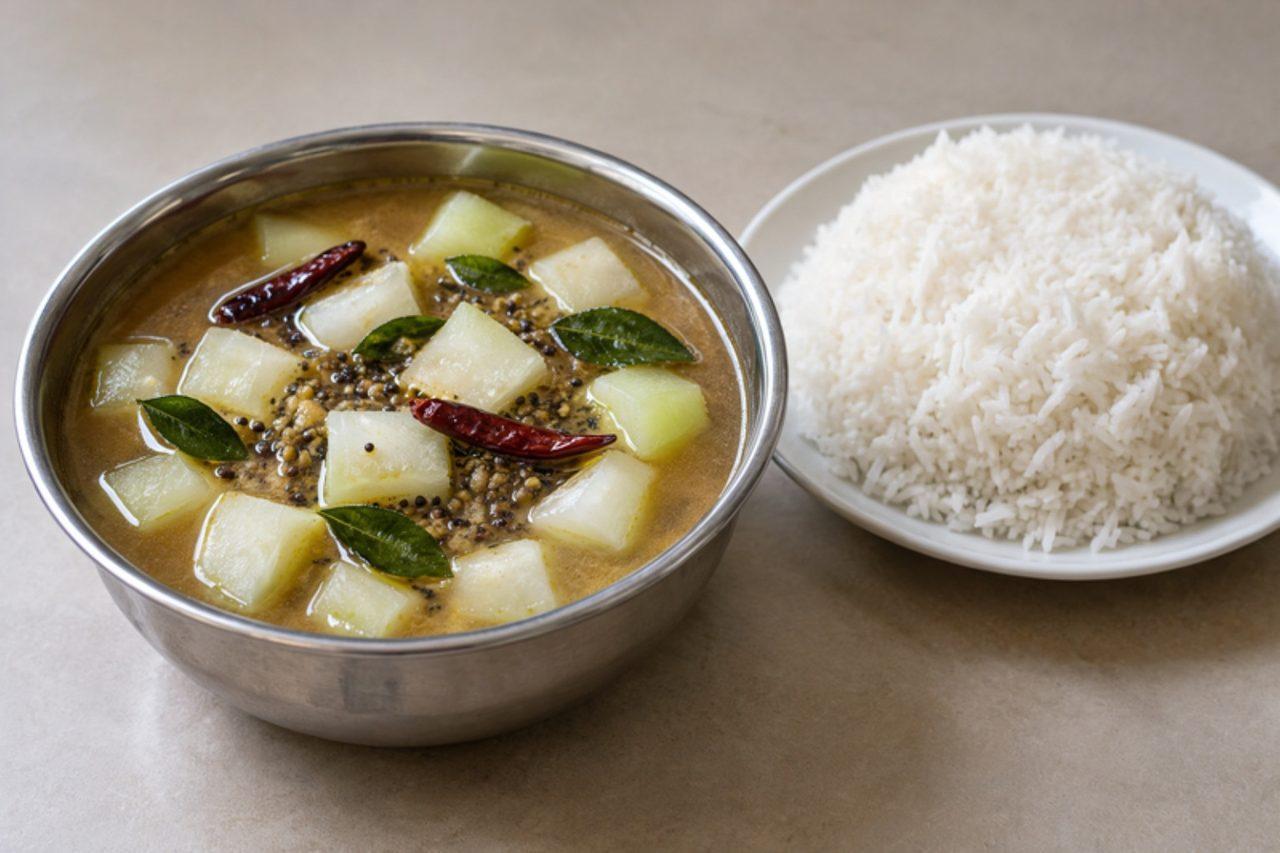
Sev tameta nu shaakSev and tomato curry

Sev tameta nu shaak is roadside-dhaba and home food from Kathiyawad in Saurashtra, cooked when the vegetable basket is nearly empty but there are tomatoes and a tin of sev. Ripe tomatoes simmer with garlic, red chilli and a little jaggery into a thin, sweet-sour-hot gravy, and a handful of crisp gram-flour sev goes on top at the very last moment, so it is half-crunchy, half-soft when you eat it with bajra rotla, thepla or rotli. The usual mistake is stirring the sev in too early, which turns the curry into a paste. Most sev is made from gram flour, but check the packet if you avoid gluten. Chef's tip: use thick sev (ratlami or bhavnagari), which holds its crunch far longer than nylon sev.

by KrazyBadal 0 views
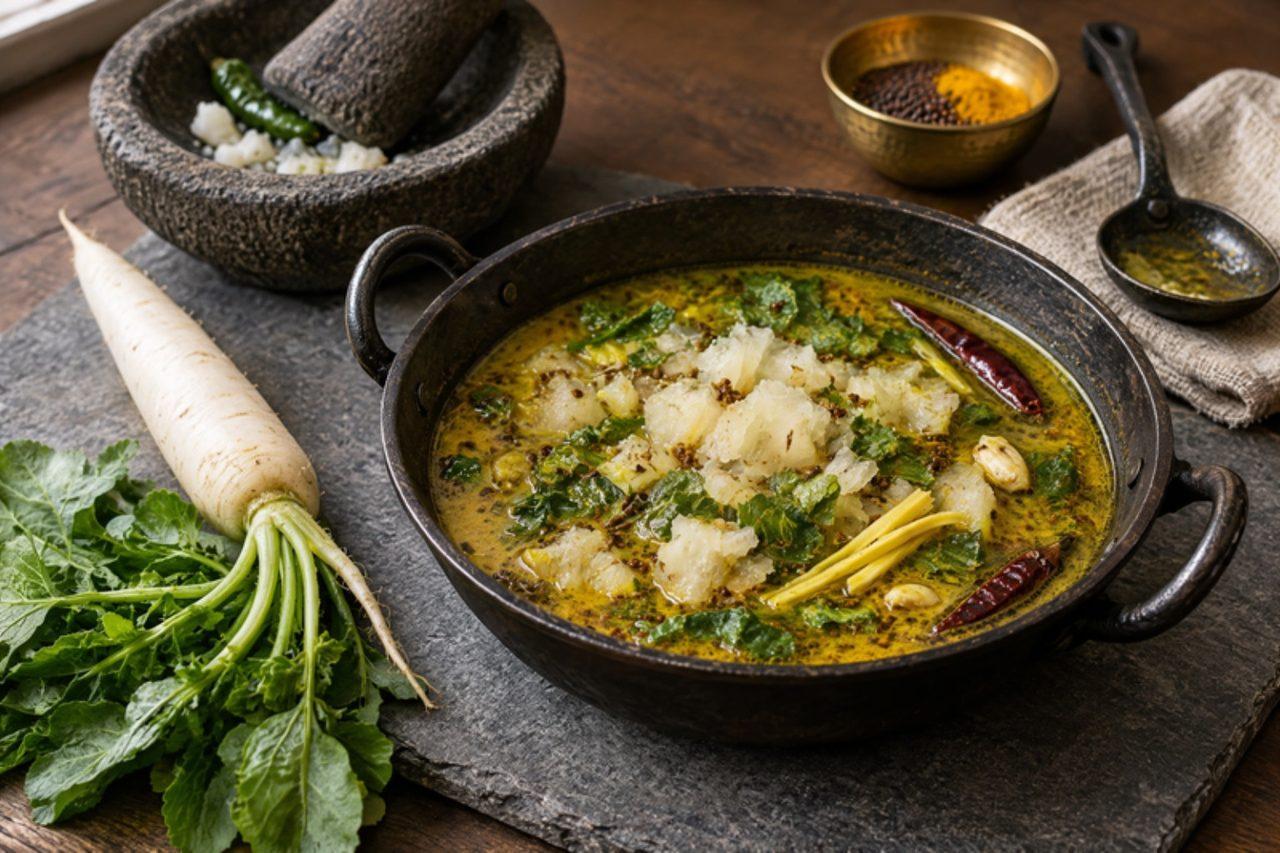
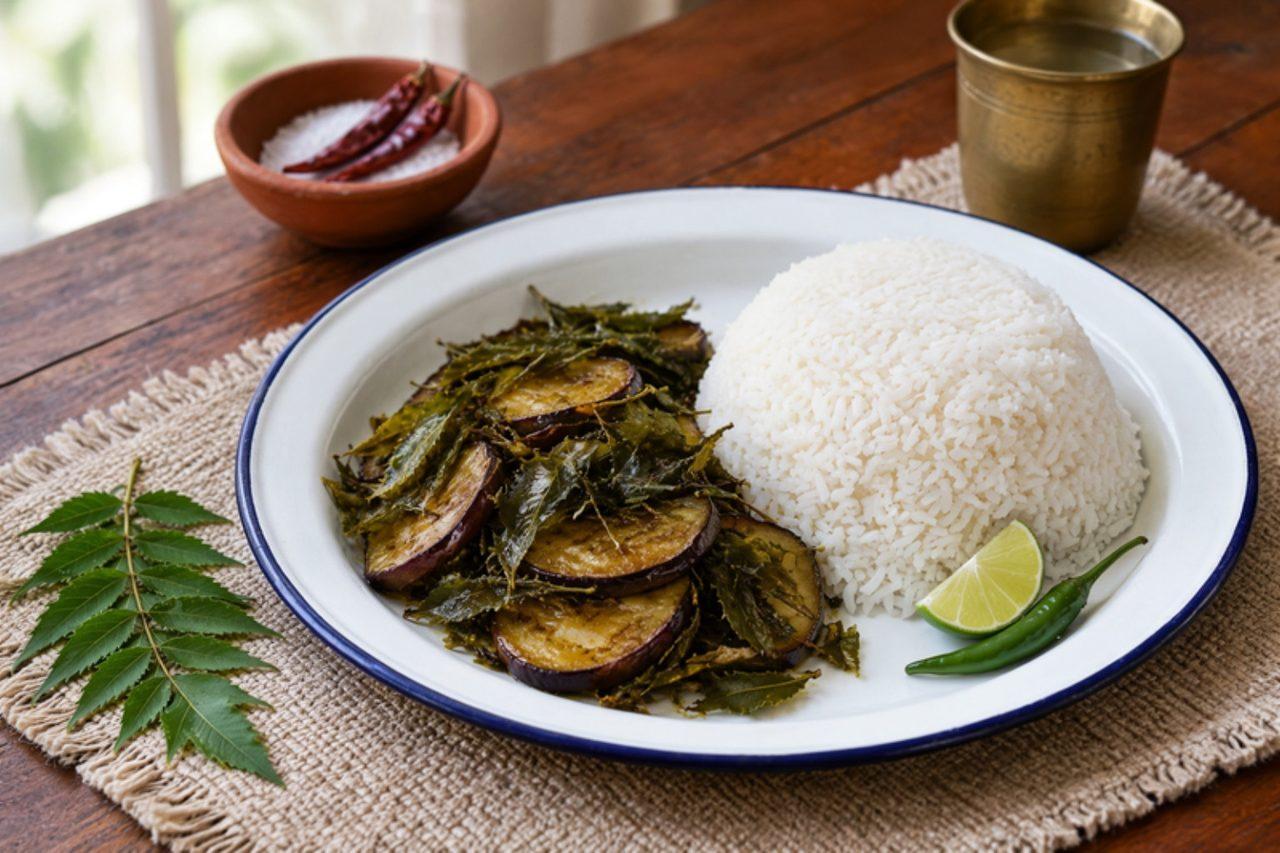
Neem begunNeem leaves with aubergine

Neem begun opens a traditional Bengali lunch in spring, especially around Poila Baisakh, when the neem trees of West Bengal put out soft new leaves. A few tender leaves are fried crisp in mustard oil, then tossed with small cubes of fried aubergine so the bitterness is softened by the creamy brinjal. Eat a spoonful or two with the first mouthfuls of rice, before the dal. It is suitable as part of a balanced diet and is meant to be eaten in small amounts, as Bengali cooks always have. About 110 kcal and 7 g carbohydrate per portion. The usual mistake is frying the neem too long, which turns it black and acrid; it needs only seconds. Chef's tip: dry the leaves completely on a cloth before they go into the oil, or they spit and steam instead of crisping.

by KrazyBadal 0 views
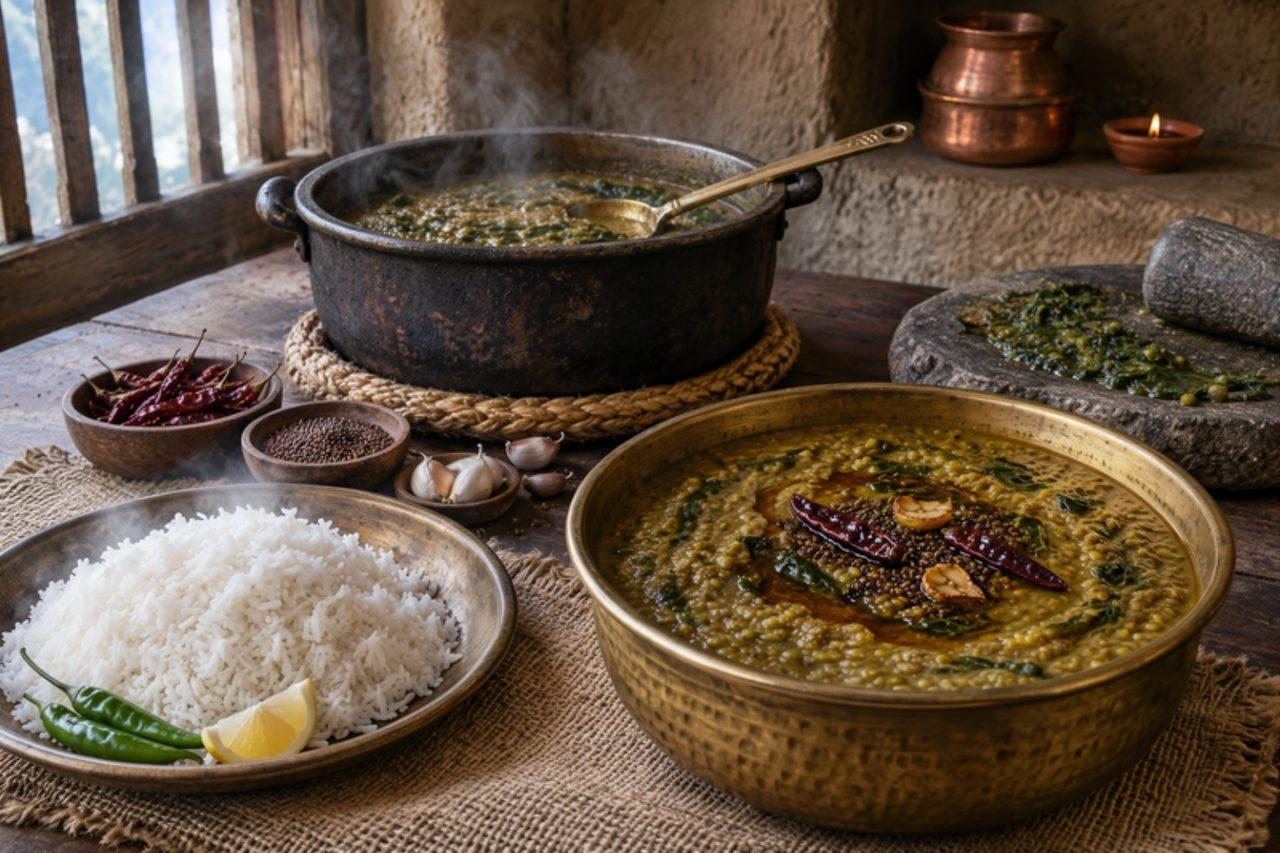
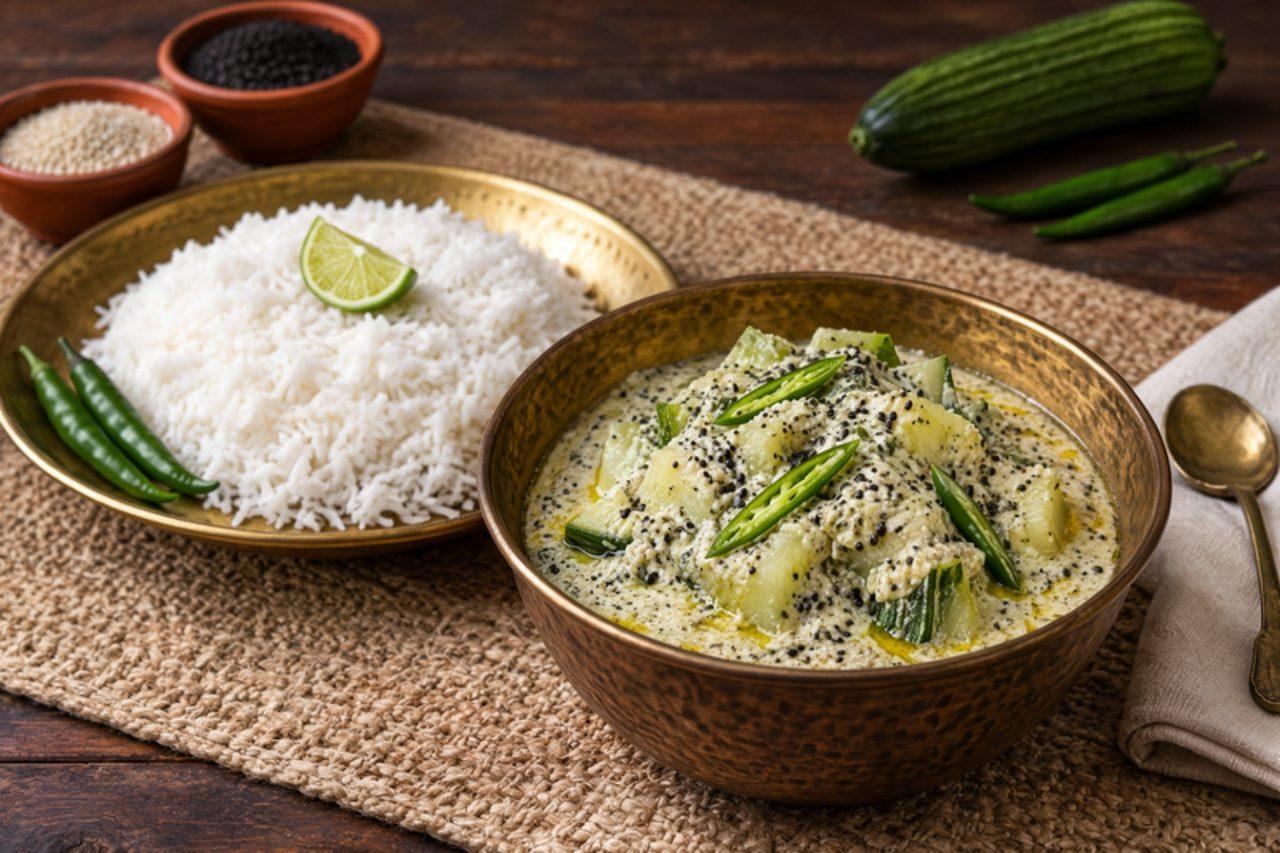
Jhinge postoRidge gourd with poppy seeds
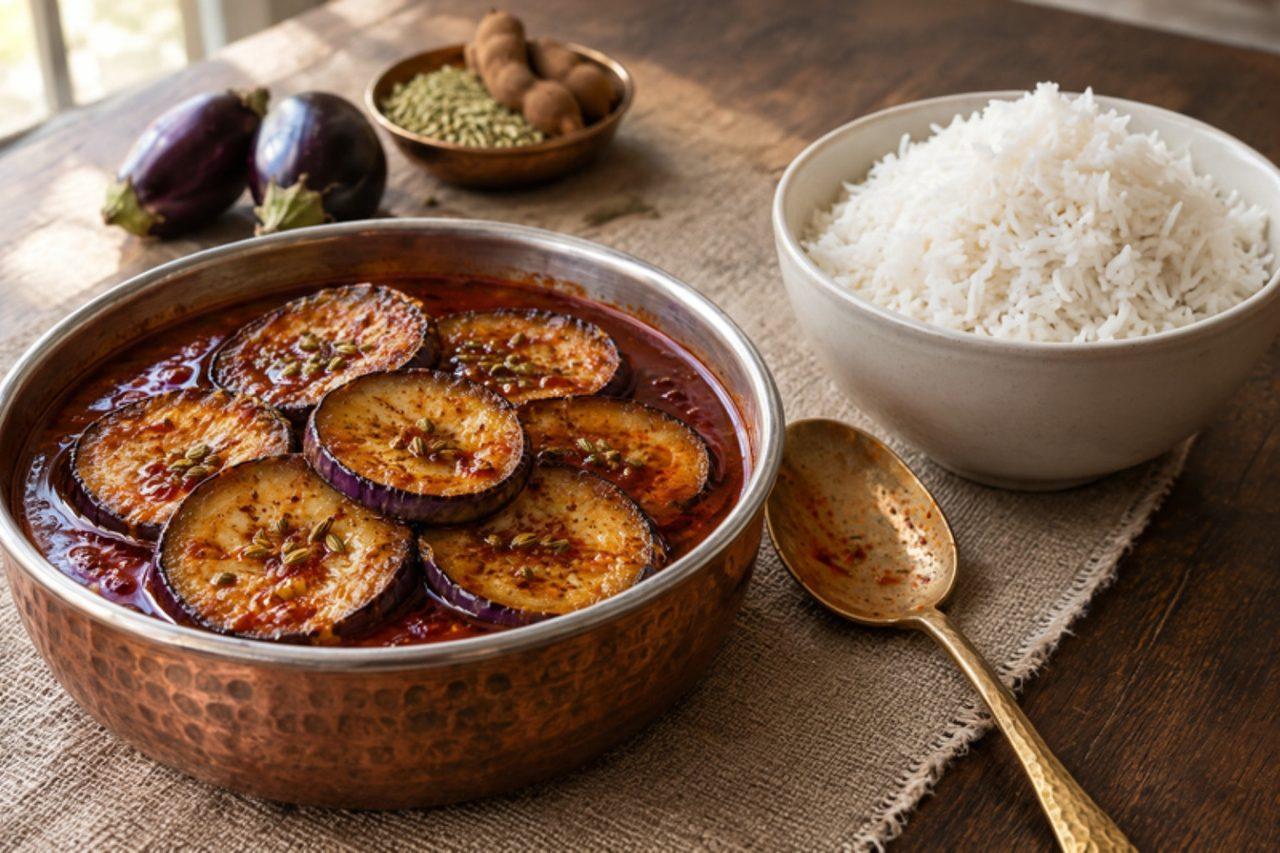
Jhinge posto is a summer staple of West Bengal and especially the Bankura and Birbhum districts, where poppy seed (posto) goes into almost every everyday lunch. Ridge gourd is cooked in its own juices with nigella seeds and green chilli, then coated in a creamy paste of ground white poppy seeds, giving a mild, nutty, slightly sweet dish. Serve it with rice and dal, or with a millet roti for a lower-GI plate. It is suitable as part of a balanced diet. About 150 kcal and 9 g carbohydrate per portion. The usual mistake is adding water: the gourd releases plenty, and extra water makes the posto runny. Chef's tip: soak the poppy seeds in hot water for 20 minutes before grinding so the paste is smooth, not gritty.

by KrazyBadal 0 views

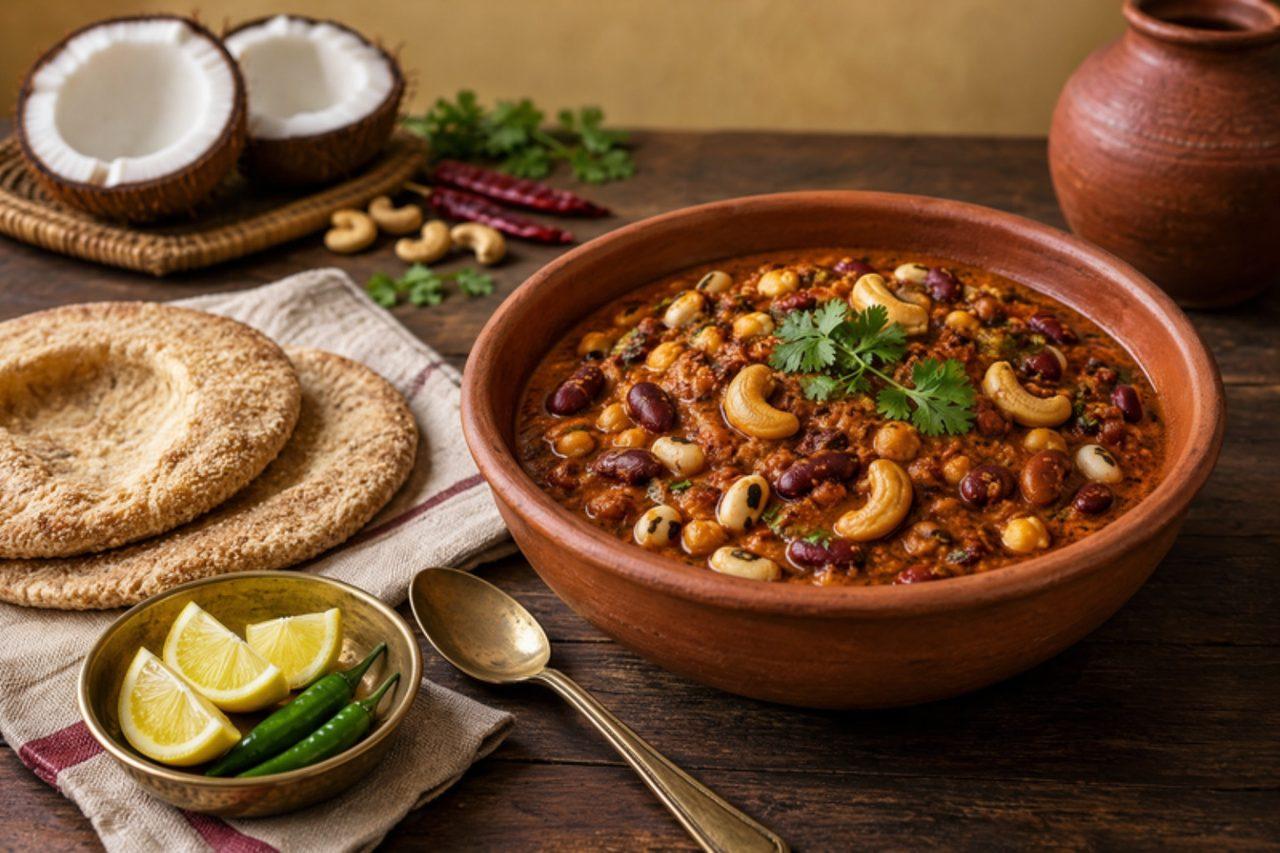
TondakMixed beans and cashew gravy

Tondak is a Goan Saraswat dish cooked in homes around Ponda and Margao for festivals, weddings and Sunday lunches: mixed beans and plump cashews in a gravy of roasted coconut, red chillies and coriander seeds. The beans soften into the reddish-brown sauce while the cashews stay buttery, making it filling and rich in protein. Serve it with a little rice or a millet bhakri and a vegetable side. It is suitable as part of a balanced diet. About 380 kcal and 34 g carbohydrate per portion. The usual mistake is grinding raw coconut; it must be roasted to a deep golden brown first or the gravy tastes flat. Chef's tip: dried kidney beans must be soaked overnight and boiled hard for 10 minutes before they simmer, so do this even if you then use a slow cooker or pressure cooker.

by KrazyBadal 0 views

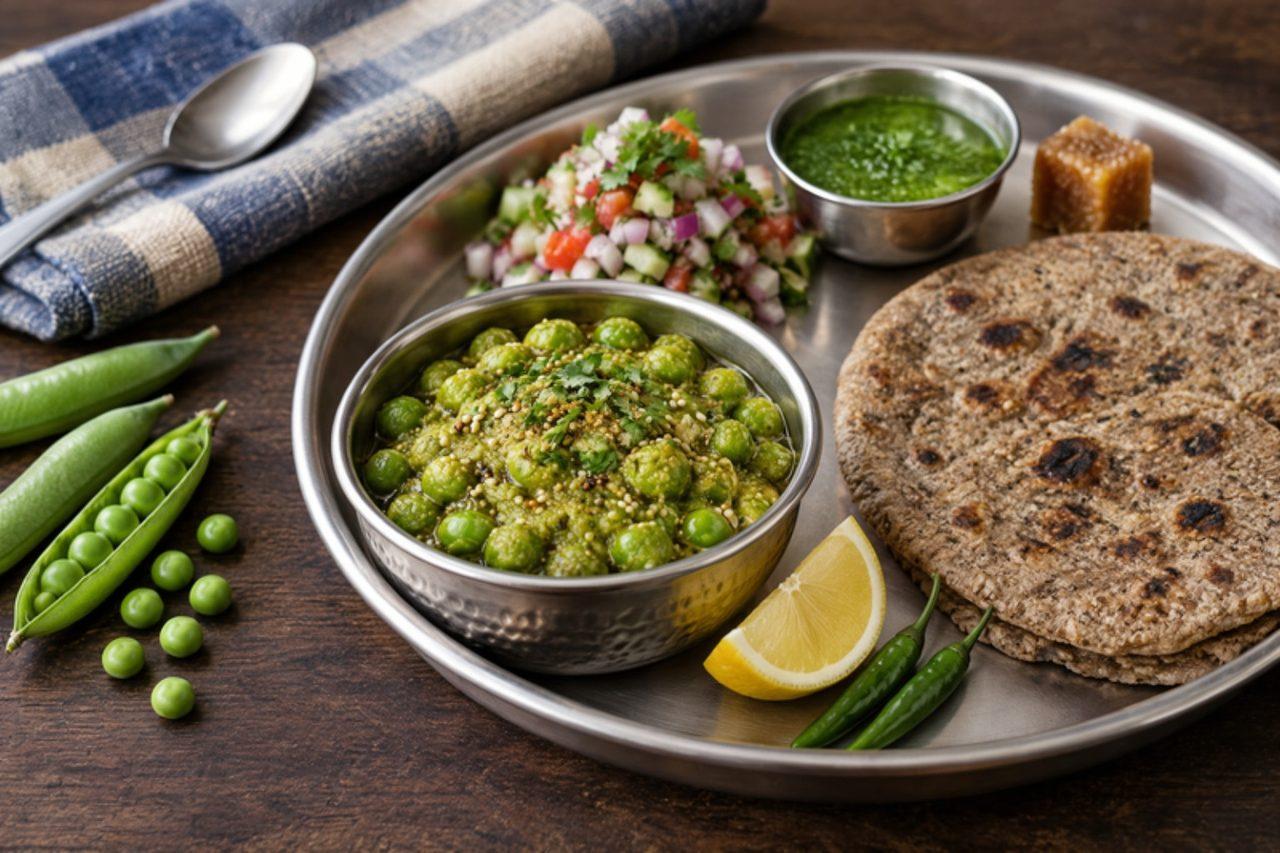
Tuver tothaGreen pigeon peas in garlic gravy

Tuver totha is a winter street-stall and wedding favourite from Mehsana and the villages of North Gujarat, eaten hot on cold evenings when fresh green tuver is in season. The peas are boiled soft, then simmered in a fiery, garlicky gravy of onion, tomato and green chilli and finished with chopped onion, coriander and lemon. In Gujarat it is mopped up with bread; for a lower-GI plate serve it with a bajra rotla or a small bowl of brown rice. It is suitable as part of a balanced diet. About 260 kcal and 30 g carbohydrate per portion. The usual mistake is undercooking the peas, which then stay chalky in the gravy. Out of season, use frozen green pigeon peas, or dried green tuver soaked overnight and pressure-cooked. Chef's tip: mash a ladle of the cooked peas and stir them back in so the gravy thickens without any flour.

by KrazyBadal 0 views

Gogji razmaKidney beans with turnips

In the Kashmir valley, gogji razma is a winter comfort dish, made in heavy pots when turnips are sweet after the first snow and dried beans from Bhaderwah fill the store. Red kidney beans and turnip chunks simmer in a thin, red gravy flavoured with mustard oil, ground fennel, dried ginger and Kashmiri chilli, without any onion or tomato. Serve with a modest bowl of rice or a millet roti and a green salad. It is suitable as part of a balanced diet. About 300 kcal and 38 g carbohydrate per portion. The usual mistake is slow-cooking dried kidney beans without boiling them hard first; raw kidney beans are unsafe, so soak them overnight and boil hard for 10 minutes before simmering. Chef's tip: add the turnips only when the beans are almost soft, so they keep their shape and sweetness.

by KrazyBadal 0 views

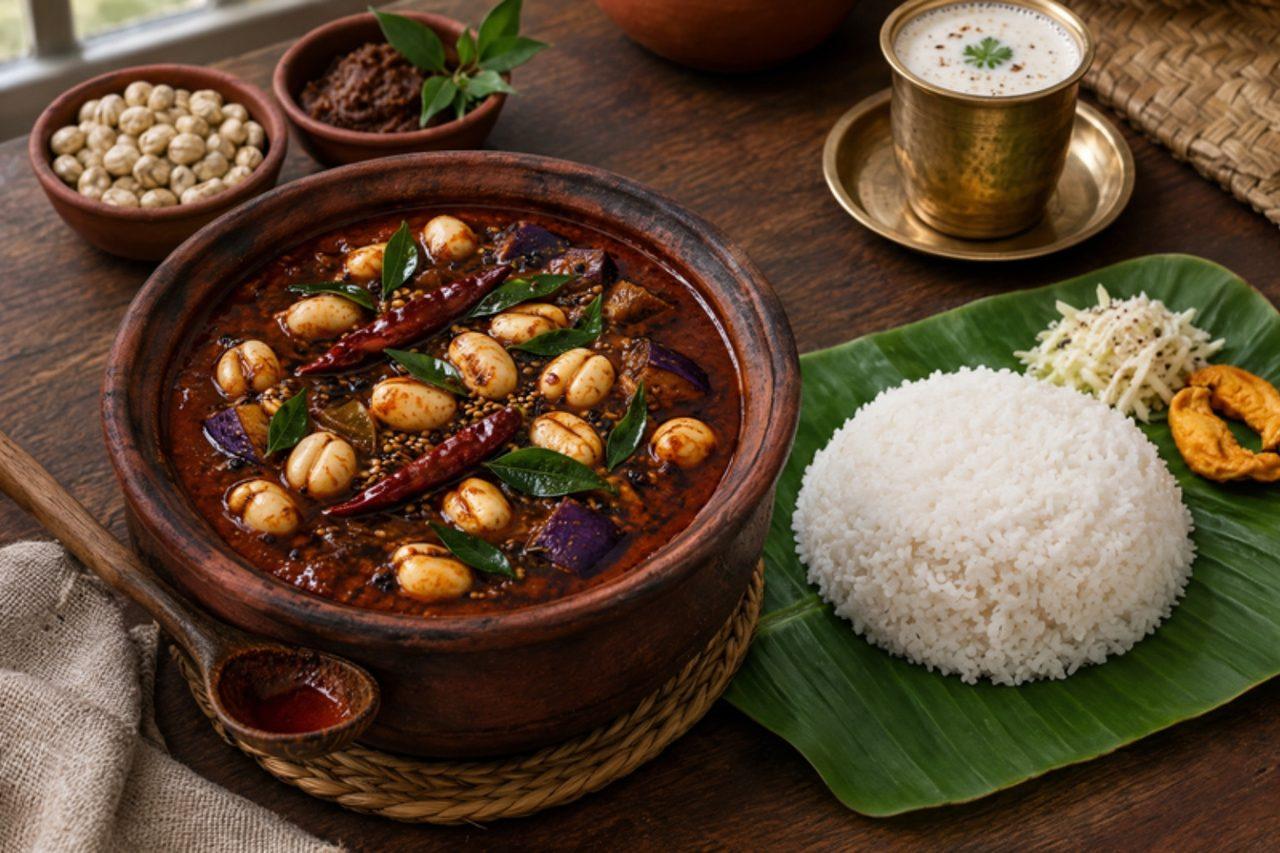
Mochai kottai kuzhambuField bean gravy

Across Tamil Nadu, from Madurai to Tirunelveli, mochai kottai kuzhambu is a winter and weekend curry: dried field beans and small brinjals stewed in a thick tamarind and sambar-powder gravy with shallots and garlic. It is cooked in a big batch, because everyone agrees it tastes better the next day, and eaten with rice, a spoon of sesame oil and appalam or a simple keerai. The beans turn creamy and the brinjal melts into the sauce. Dried field beans must be soaked and boiled until completely soft; never eat them undercooked. The usual mistake is adding the tamarind before the beans are tender, because acid stops them softening. Slow-cooker: boil the soaked beans hard on the hob for 10 minutes first, then cook everything on low for 6 hours. Chef's tip: fry the brinjal in the oil before the gravy goes in, so it holds its shape instead of dissolving.

by KrazyBadal 0 views

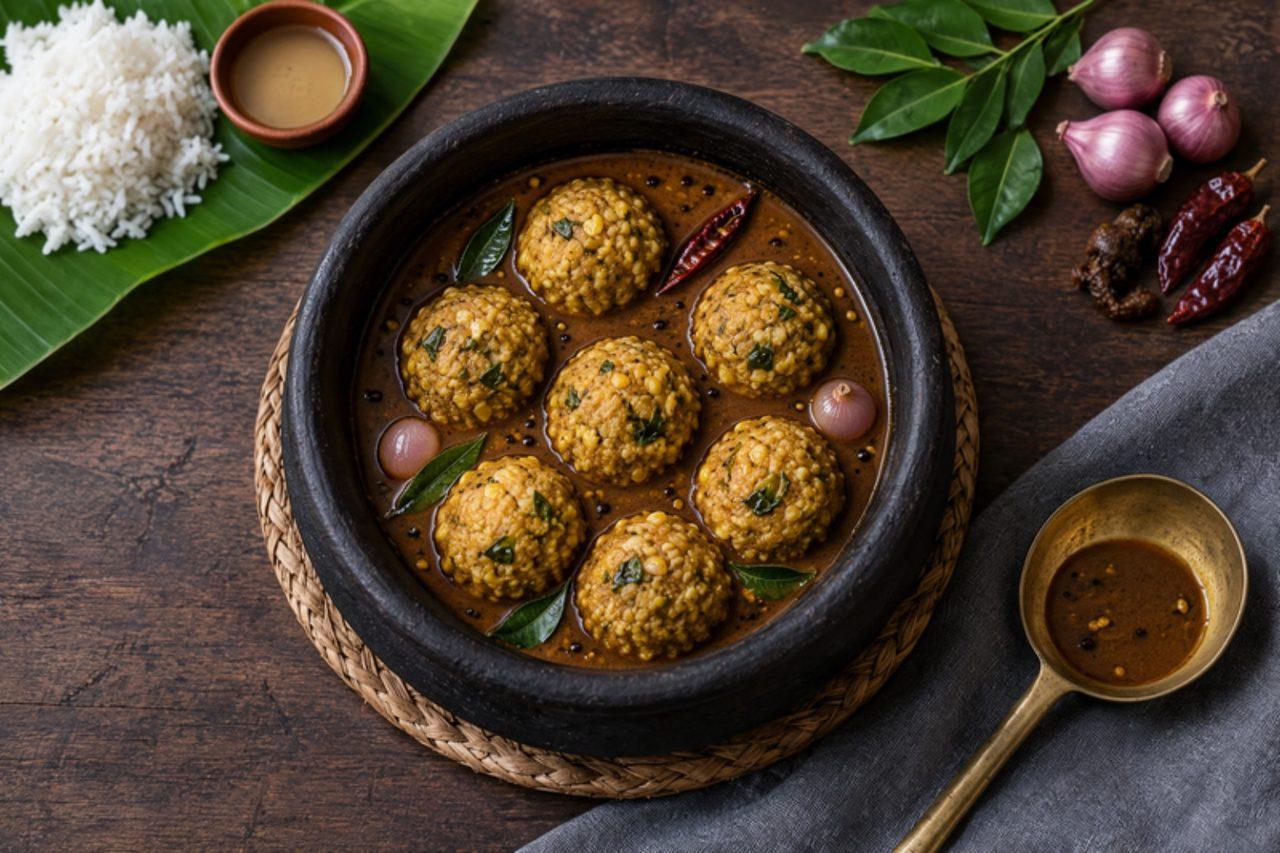
Paruppu urundai kuzhambuLentil dumpling gravy

Paruppu urundai kuzhambu is a Sunday-lunch treat in Tamil homes from Chennai to Coimbatore: coarse balls of soaked chana and toor dal, spiked with fennel, chilli and shallot, dropped raw into a bubbling tamarind gravy where they steam and firm up. The dumplings come out soft inside and soak up the sour, spicy sauce, and the crumbs that escape thicken the gravy. Serve it with plain rice, a spoon of sesame oil and a vegetable poriyal. The usual mistake is stirring as soon as the balls go in, which breaks them; leave them alone until they float and feel firm. Chef's tip: drop one test ball in first; if it cracks, knead a spoon of rice flour into the mixture before shaping the rest.

by KrazyBadal 0 views

Lilva tuvar nu shaakGreen pigeon pea curry

From December to February, Gujarati markets fill with fresh tuvar pods, and families in Surat, Vadodara and Ahmedabad spend evenings shelling them for lilva dishes. This simple shaak cooks the sweet, nutty green pigeon peas with ginger, green chilli, ajwain and a fistful of coriander, with a squeeze of lemon and a pinch of sugar for the classic Gujarati balance. Eat it with bajra rotla, rotli or khichdi. The usual mistake is cooking the peas too long, which turns them grey and floury; they should stay green and tender. Chef's tip: frozen lilva from Indian grocers work well outside the season; add them straight from frozen and shorten the cooking time.

by KrazyBadal 0 views

Batata nu rasawalu shaakPotato curry in thin gravy

Batata nu rasawalu shaak is the potato curry that arrives with hot puris at Gujarati wedding breakfasts, Sunday brunches and festival thalis, and it is one of the first curries children in Gujarat love. Soft potato chunks float in a thin, red, sweet-and-sour gravy with mustard seed, curry leaves and hing, lightly spicy and very comforting. Serve with puri, rotli or plain rice. The usual mistake is cutting the potatoes in uneven pieces, so some fall apart while others stay hard; cut them all the same size. Chef's tip: once the potatoes are cooked, mash a few against the side of the pan; the starch gives the rasa (gravy) body without any flour.

by KrazyBadal 0 views

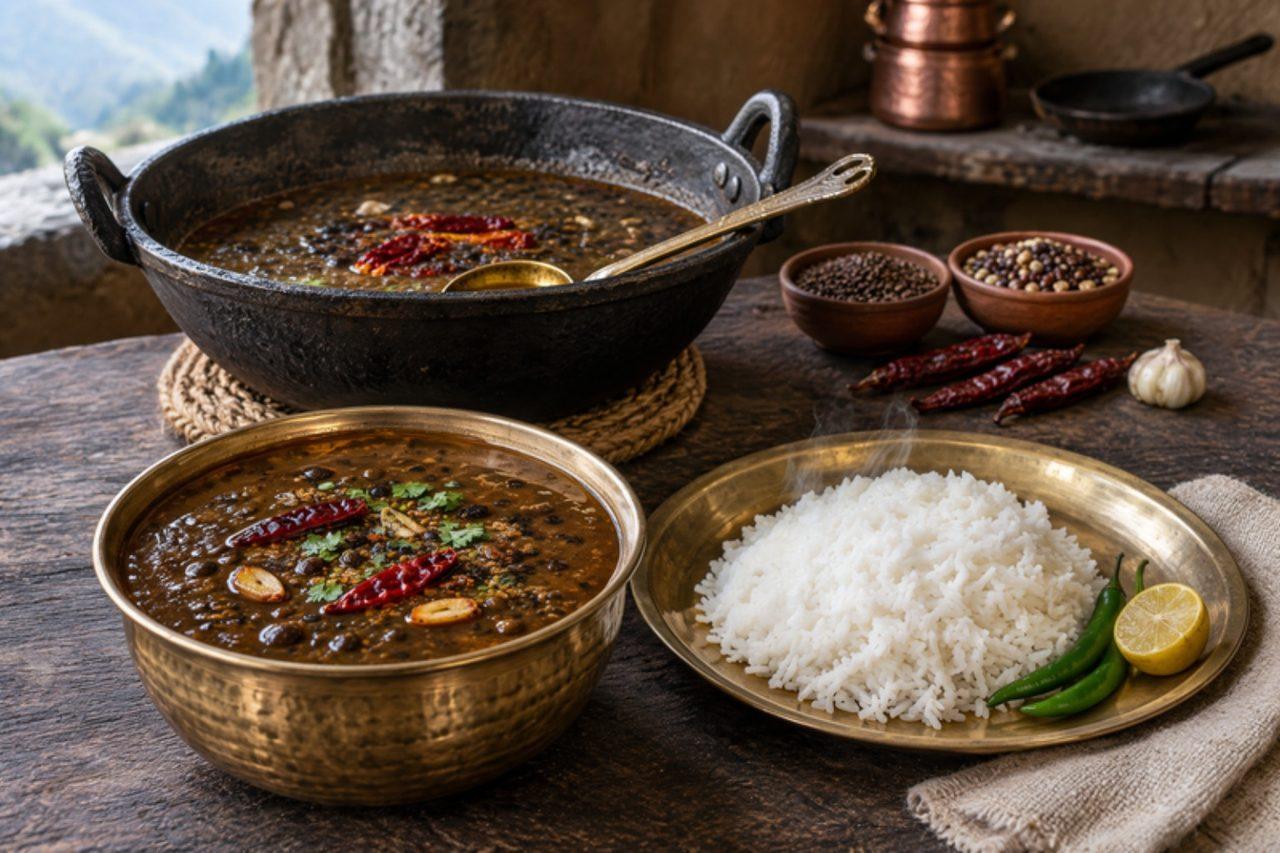
Teliya maahBlack lentils in mustard oil

Teliya maah is one of the dishes of the Himachali dham, the feast cooked by hereditary cooks (botis) in big brass pots for weddings and temple fairs in Mandi, Kangra and Chamba, and served on leaf plates with rice. Whole black urad is cooked slowly with plenty of mustard oil, whole spices, ginger and fennel until each bean is soft but whole and glossy with oil; like most dham dishes, it uses no onion or garlic. Serve with rice and a sour madra or khatta. The usual mistake is stirring hard once the urad is soft, which turns it into a mushy dal instead of separate, oily beans. Slow-cooker option: put the soaked urad, spices and water on low for 8 hours, then finish uncovered on the hob. Chef's tip: heat the mustard oil until it smokes, then let it cool for a minute, which takes away its raw bite before the spices go in.

by KrazyBadal 0 views

Kumaoni rasMixed dal broth

In the hill villages of Kumaon in Uttarakhand, ras is cooked through the cold months in a heavy iron kadhai that sits on the fire for hours; the iron turns the broth dark and earthy, and families drink it with rice or mandua (finger millet) roti. Several whole dals, here horse gram (gahat), black soybeans (bhatt), black urad and green moong, are simmered until their liquid becomes a rich, brown, silky broth, lightly thickened with ground rice and finished with a crackling mustard-oil tempering of jakhya seeds. The cooked dal solids are eaten too, as a dry side. The usual mistake is hurrying: the broth needs long, slow simmering to turn silky and full-flavoured. Chef's tip: jakhya (wild mustard seed) is sold in Uttarakhand shops; cumin is a fair stand-in.

by KrazyBadal 0 views

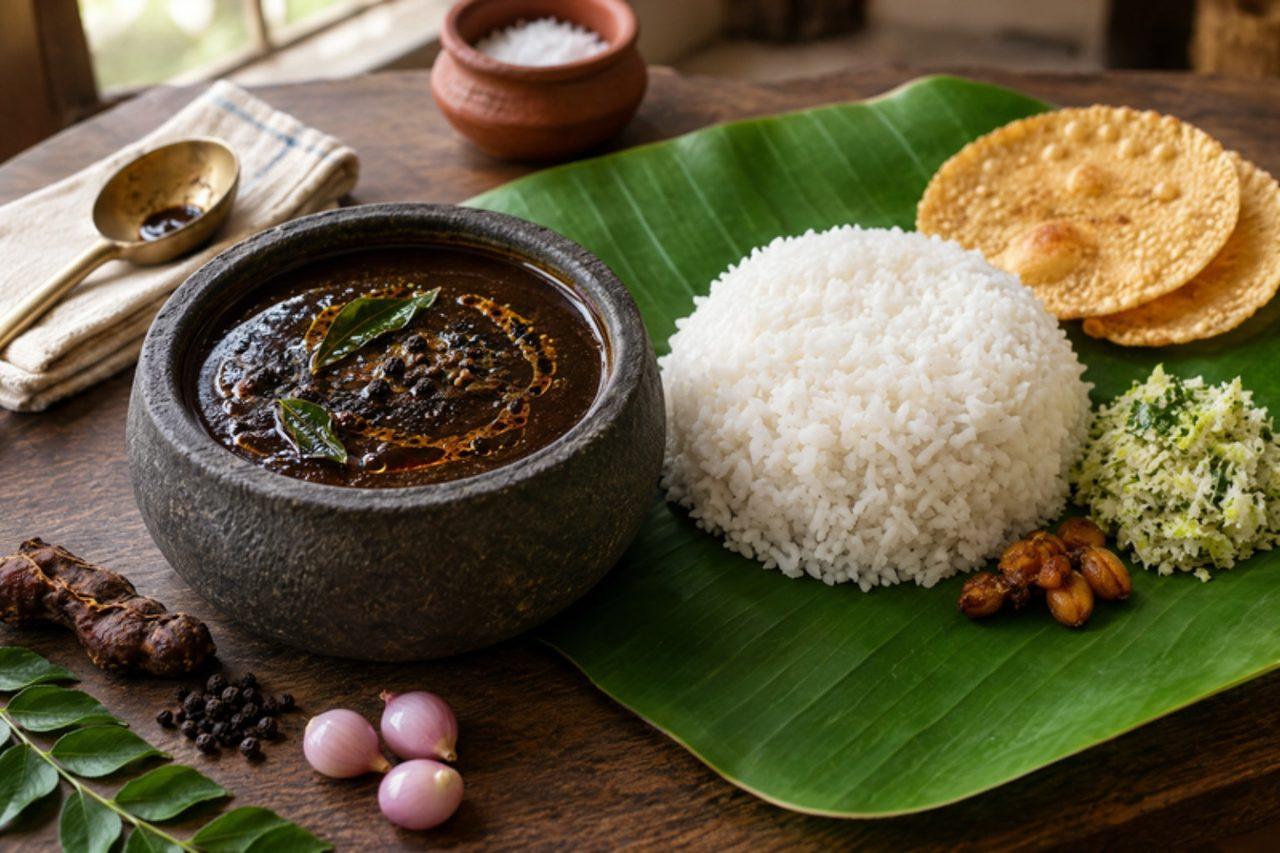
Milagu kuzhambuBlack pepper tamarind gravy

Milagu kuzhambu is the Tamil Brahmin travel curry: a dark, peppery tamarind gravy cooked down in sesame oil until thick, packed in a steel tin for train journeys and pilgrimages because it keeps for days without spoiling. At home it is mixed into hot rice with a spoon of ghee, on rainy days or when someone has a cold, and eaten with a plain poriyal or appalam. A little goes a long way: it is sharp, hot and slightly sweet. The usual mistake is pulling it off the heat too soon; it must reduce until the oil floats on top, or it tastes raw and won't keep. Store it covered in the fridge for up to 5 days and always use a dry spoon. Chef's tip: roast the pepper and lentils on a low heat until you smell them, not until they darken, because burnt pepper turns the whole pot bitter.

by KrazyBadal 0 views

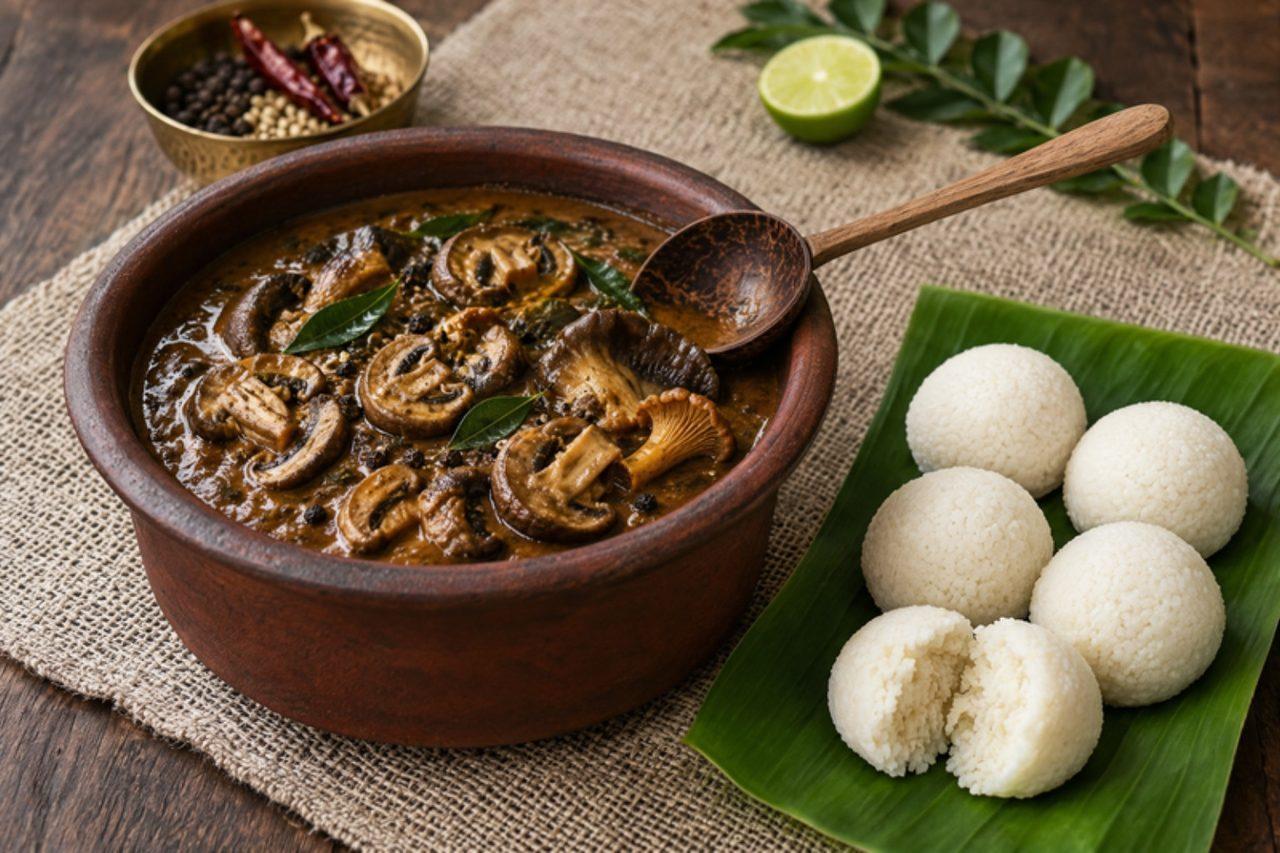
Kumm curryMushroom curry

In Kodagu (Coorg), the first monsoon rains bring wild mushrooms called kumm up through the coffee estates, and Kodava families cook them at once into this thick, dark, peppery curry to eat with akki otti (rice rotis) or steamed rice. Mushrooms simmer down with onion and coconut in a paste of spices roasted almost black, sharpened with a drop of kachampuli, Coorg's dark fruit vinegar. Cultivated mushrooms work very well. The usual mistake is adding all the mushrooms to a cool pan, so they stew in their liquid and turn rubbery; let the pan get hot first. Chef's tip: never cook mushrooms you have foraged yourself unless an expert has identified them; use a mix of button, oyster and shiitake instead.

by KrazyBadal 0 views

Sorakaya pulusuBottle gourd in tamarind gravy

Sorakaya pulusu is everyday Telugu home cooking from Vijayawada to Visakhapatnam, made on weekdays when there's a bottle gourd in the basket and the family wants something light and sour with rice. Soft pieces of gourd simmer in a thin tamarind broth balanced with a little jaggery, chilli and onion, thickened only lightly with rice flour, and finished with a mustard and fenugreek tempering. Mix it into hot rice with a spoon of ghee or eat it with a crisp vada. The usual mistake is overcooking the gourd to mush; it should be tender and translucent but still in pieces. Chef's tip: taste a raw slice of the gourd before cooking, and throw it away if it is bitter, because bitter bottle gourd should not be eaten.

by KrazyBadal 0 views

ThechwaniCrushed radish curry

Thechwani is a winter dish from the hill villages of Garhwal, Uttarakhand, cooked when the radishes are fat and sweet. Instead of chopping, the radish (or potato) is bashed with a stone or pestle so it cracks into rough pieces with lots of surface, then simmered in an iron kadhai with mustard oil, jakhya seeds and a little tomato. The broken pieces soak up the spices, and the iron pot darkens the gravy. It is eaten with rice or mandua (finger-millet) roti. Jakhya, a crunchy wild seed, is sold in hill stores; cumin is the swap. The usual mistake is slicing the radish neatly with a knife, which keeps the spices on the outside. Chef's tip: add the radish greens, finely chopped, in the last 5 minutes for colour and a peppery bite.

by KrazyBadal 0 views

PhaanuGround mixed lentil stew

Phaanu is everyday food in Garhwal's hill villages, from Pauri to Tehri, made on cold days and in large pots for family gatherings. Mixed lentils are soaked overnight, ground to a coarse paste and simmered slowly in an iron pot until the paste turns into a thick, earthy stew, with spinach or other greens and a mustard-oil and jakhya tempering. It is eaten with steamed rice and a little ghee. The usual mistake is adding the paste to the pot and walking away; for the first 10 minutes it must be stirred constantly or it forms lumps and sticks to the bottom. Chef's tip: whisk the lentil paste into cold water before it goes on the heat; it thickens smoothly and never catches.

by KrazyBadal 0 views

Tschok wangunSour tamarind aubergine

Tschok wangun is a Kashmiri Pandit dish from the Srinagar valley, cooked on ordinary weekdays and on fasting days when onion and garlic are kept out of the kitchen. Thick wedges of aubergine are fried in smoking mustard oil, then simmered in a thin, tart tamarind broth flavoured with ground fennel, dried ginger and Kashmiri chilli, so the pieces keep their shape but turn silky inside. Serve it with plain steamed rice and a bowl of dal. The usual mistake is adding the tamarind before the aubergine is properly fried: the pieces then soak up the sour liquid, collapse and taste raw. Chef's tip: heat the mustard oil until it just smokes, then let it cool for a minute before frying, which takes away its harsh edge.

by KrazyBadal 0 views

Chapor ghontoFried lentil cake vegetable curry

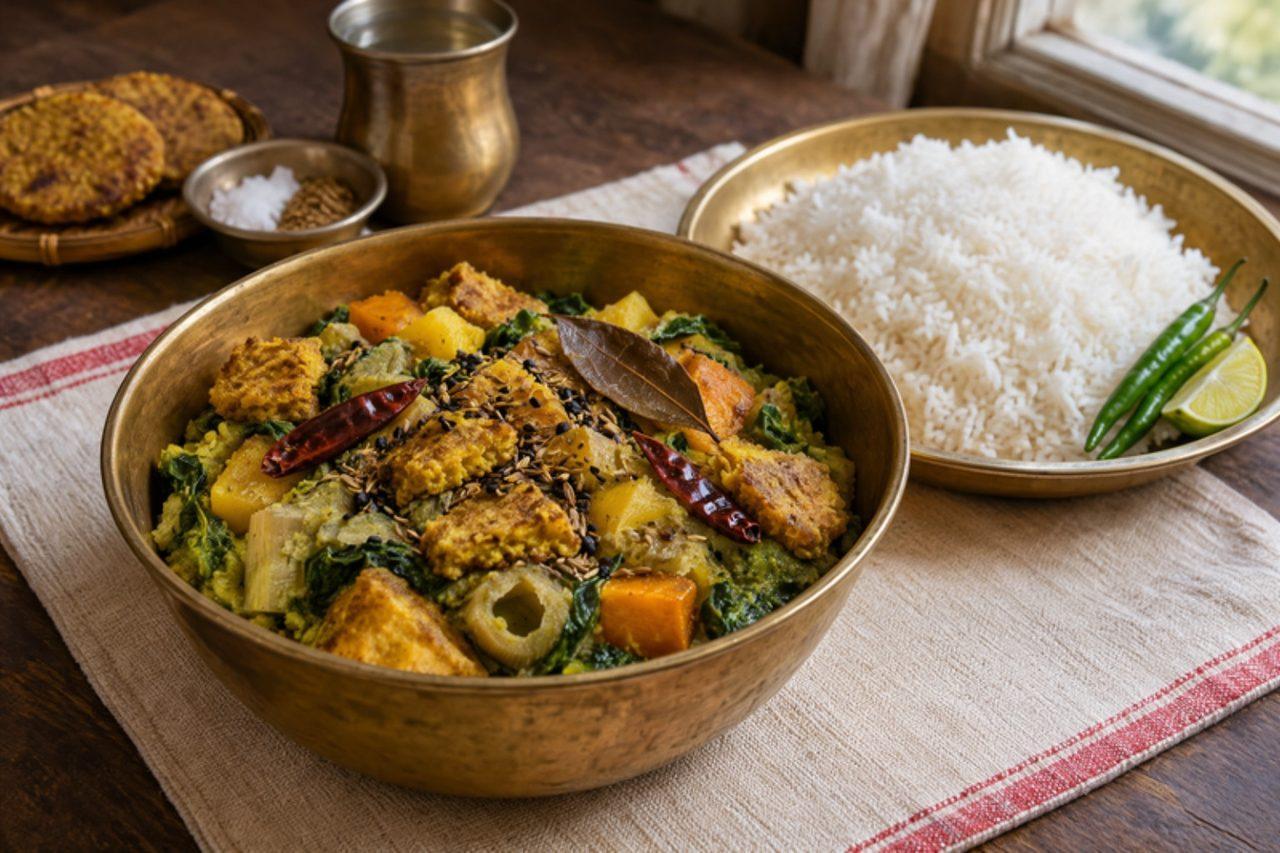
In West Bengal, chapor ghonto is the thrifty, comforting dish that turns up at weekday lunch and on the vegetarian days of the Durga Puja season. Soaked yellow peas are ground and fried into small savoury cakes (chapor), then broken into a slow-cooked mix of potato, pumpkin and banana stem tempered with panch phoron, ginger and a little sugar, until everything turns soft, jammy and lightly sweet. Eat it with plain rice and a squeeze of lime. The usual mistake is stirring the chapor in too early, so they dissolve into mush; add them in the last ten minutes. Chef's tip: soak the banana stem in water with a pinch of turmeric as you slice it and pull away the fibres that wind round your finger, or it stays stringy.

by KrazyBadal 0 views

Ou tenga dalMasoor dal with elephant apple

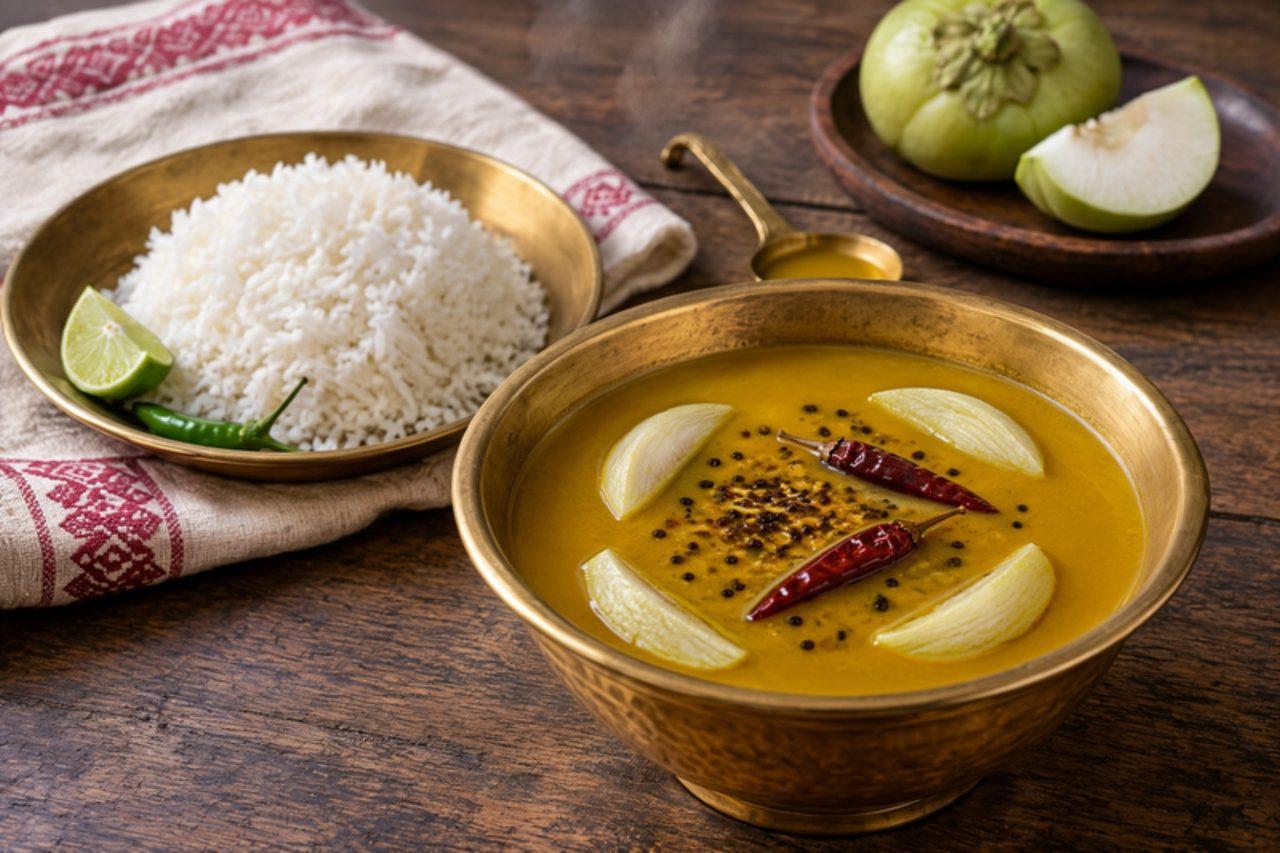
Assamese cooks love a sour note, and ou tenga dal is the everyday lentil dish of Upper Assam's homes in the monsoon and autumn, when elephant apples (ou tenga) fall from the trees. Split masoor is boiled thin with turmeric and slices of the hard, tart fruit, then tempered with mustard oil, panch phoron and garlic, so it tastes bright, fruity and comforting. Serve with rice, or with a millet roti and a green vegetable for a lower-GI plate. It is suitable as part of a balanced diet. About 190 kcal and 26 g carbohydrate per portion. The usual mistake is adding the fruit too late, so its sourness never comes out; it must cook with the lentils from the start. If you can't find it, use a slice of green mango or 1 tsp tamarind. Chef's tip: bruise the ou tenga slices with a pestle so they release their juice.

by KrazyBadal 0 views

Kadha (spiced herbal decoction)

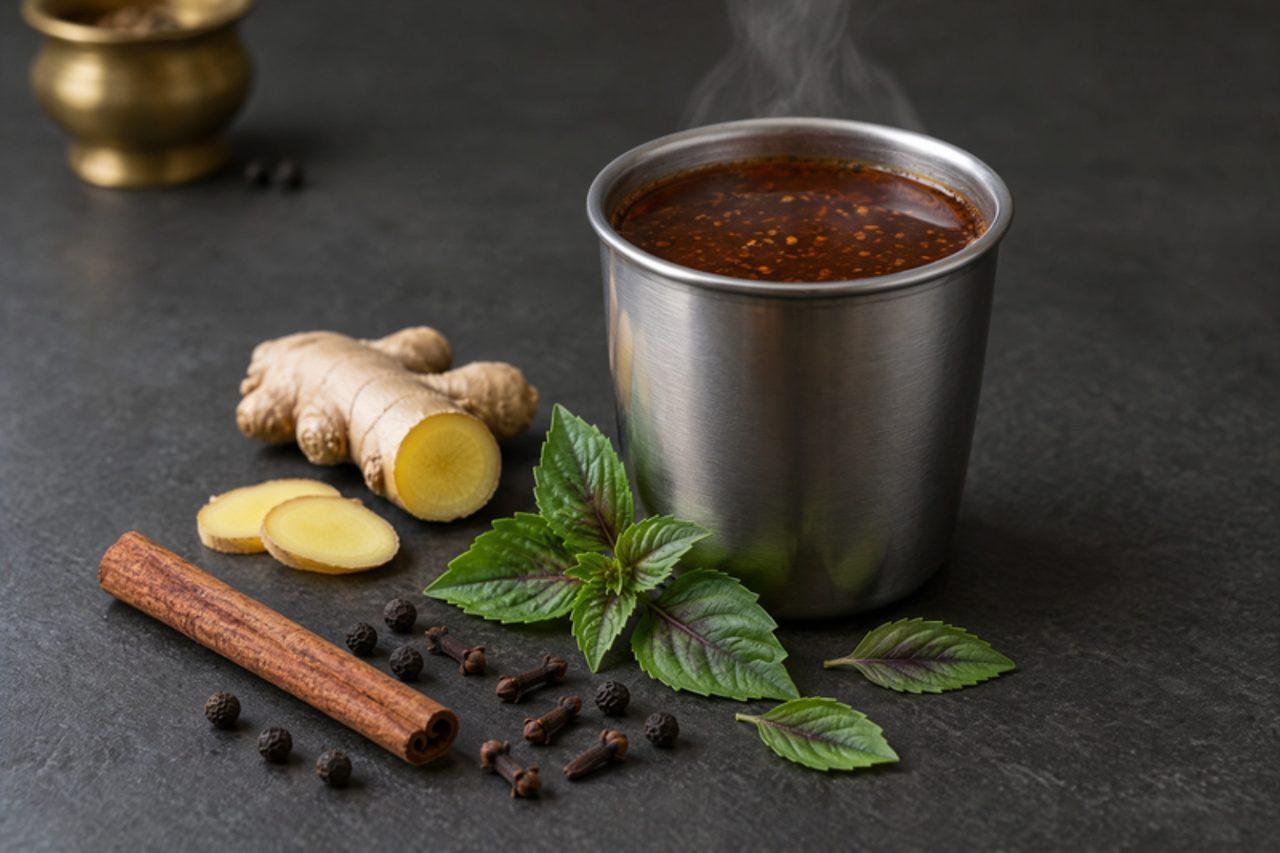
When the fog settles over Delhi, Lucknow and the plains of Uttar Pradesh in December, or whenever the monsoon brings coughs round the house, someone puts a pan of kadha on the stove. Tulsi leaves, ginger, black pepper, cinnamon, cloves and sometimes a little ajwain are boiled hard until the water reduces by half, then sweetened with jaggery and sipped in small cups, morning or night. It is not a gentle tea: it is hot, peppery, clove-numbing and earthy, with a dark amber colour and a sweet edge. It is traditionally drunk for coughs and colds; it does not replace medical care, and anyone who is pregnant, on medication or giving it to small children should keep it mild and check with a doctor. The common mistake is simmering it gently like tea: kadha needs a steady boil so the spices give up their strength and the liquid reduces. It is ready when the volume has halved and the brew is deep amber and pungent. Chef's tip: crush the pepper and cloves just before they go in; whole spices hardly flavour the water in this short time.

by KrazyBadal 0 views

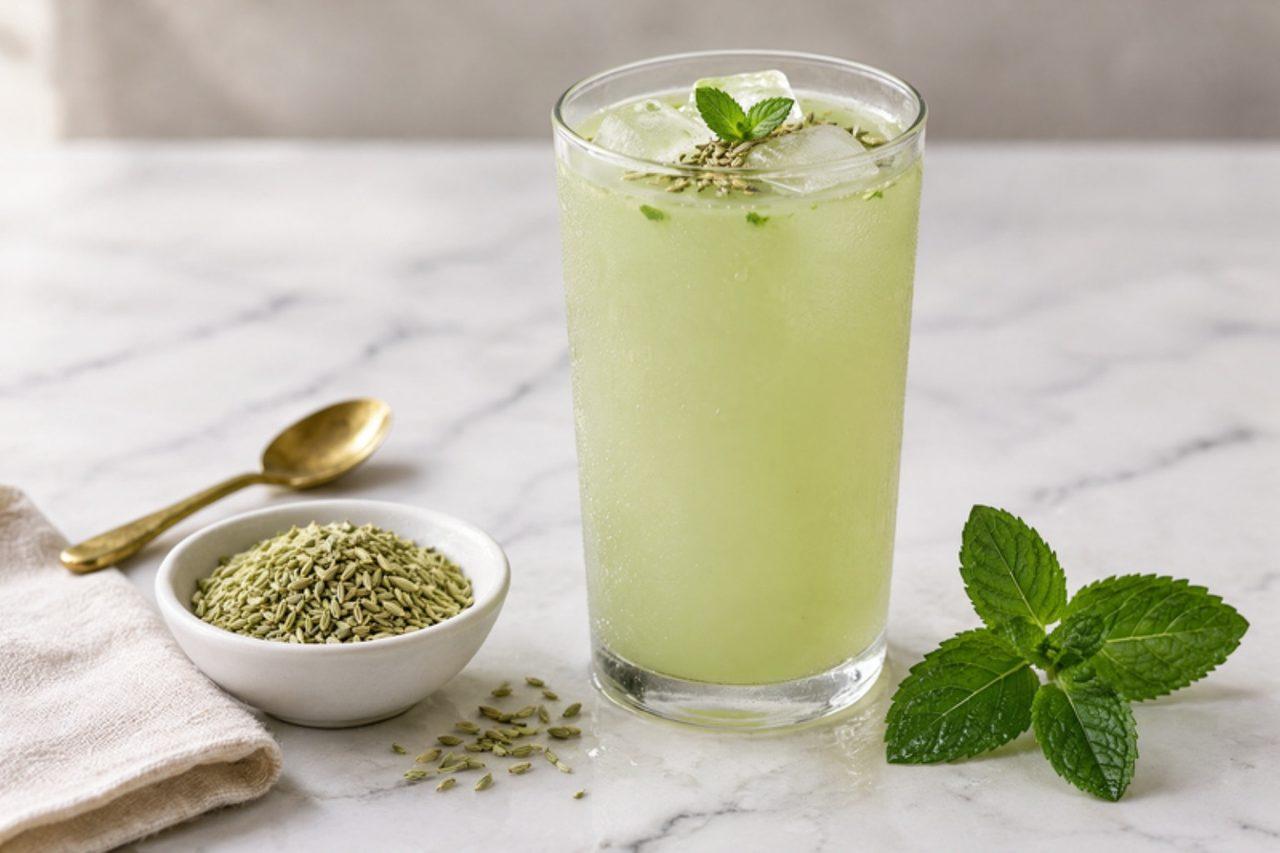
Variyali sharbat (fennel cooler)

On May afternoons in Ahmedabad and Surat, when the loo wind blows and nobody wants a hot drink, Gujarati homes keep a bottle of variyali sharbat concentrate in the fridge. Fennel seeds are soaked, ground with rock sugar, strained and mixed with lemon and a little black pepper, then diluted with iced water for guests, after lunch, or to break a fast, since nothing in it is off-limits on upvas days if you use rock salt. It is pale green and cloudy, with a sweet aniseed taste, a sharp lemon finish and a faint peppery tingle. The common mistake is grinding dry fennel straight away: it stays gritty and the flavour is harsh. Soak the seeds for at least two hours so they swell and grind into a smooth paste. It is ready when the strained concentrate is silky, smells clearly of fennel and tastes very sweet, as it will be diluted three or four times. The concentrate keeps 5 days in the fridge in a clean bottle. Chef's tip: add a few mint leaves or a pinch of cardamom when grinding for a more rounded cooler.

by KrazyBadal 0 views

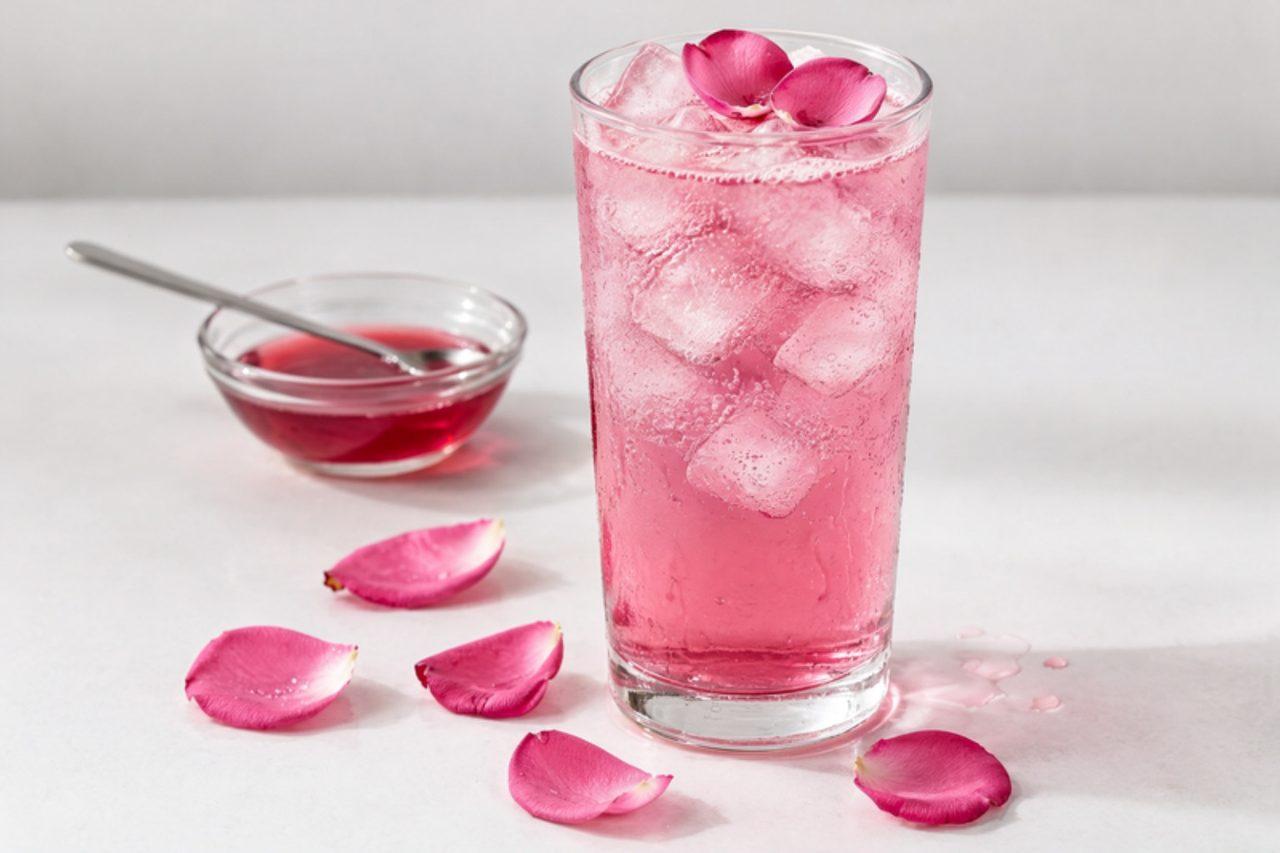
Paneer soda (rose soda)

Every Tamil town once had a soda shop with crates of Codd-neck bottles sealed by a glass marble, and the pop of the marble being pushed down was the sound of a hot afternoon. Paneer here means rose water, not cheese, and paneer soda is rose syrup topped with that sharp local fizz, sold in Madurai, Tiruchi and Coimbatore by the bus stand and at temple festival stalls in Chithirai and Vaikasi, the hottest months. It is sweet and floral at first, then the bubbles and a touch of lime cut through and leave the mouth clean. The mistake most people make is boiling the rose water with the sugar: the scent cooks away and you are left with plain syrup. Make the syrup first, let it cool, and only then stir in the rose water. The syrup is ready when it is clear and slightly thickened, like thin honey, and the finished drink should be rosy pink and still foaming as you hand it over. Chef's tip: chill the syrup, the soda and the glasses well; warm soda loses its fizz the moment it meets the syrup.

by KrazyBadal 0 views

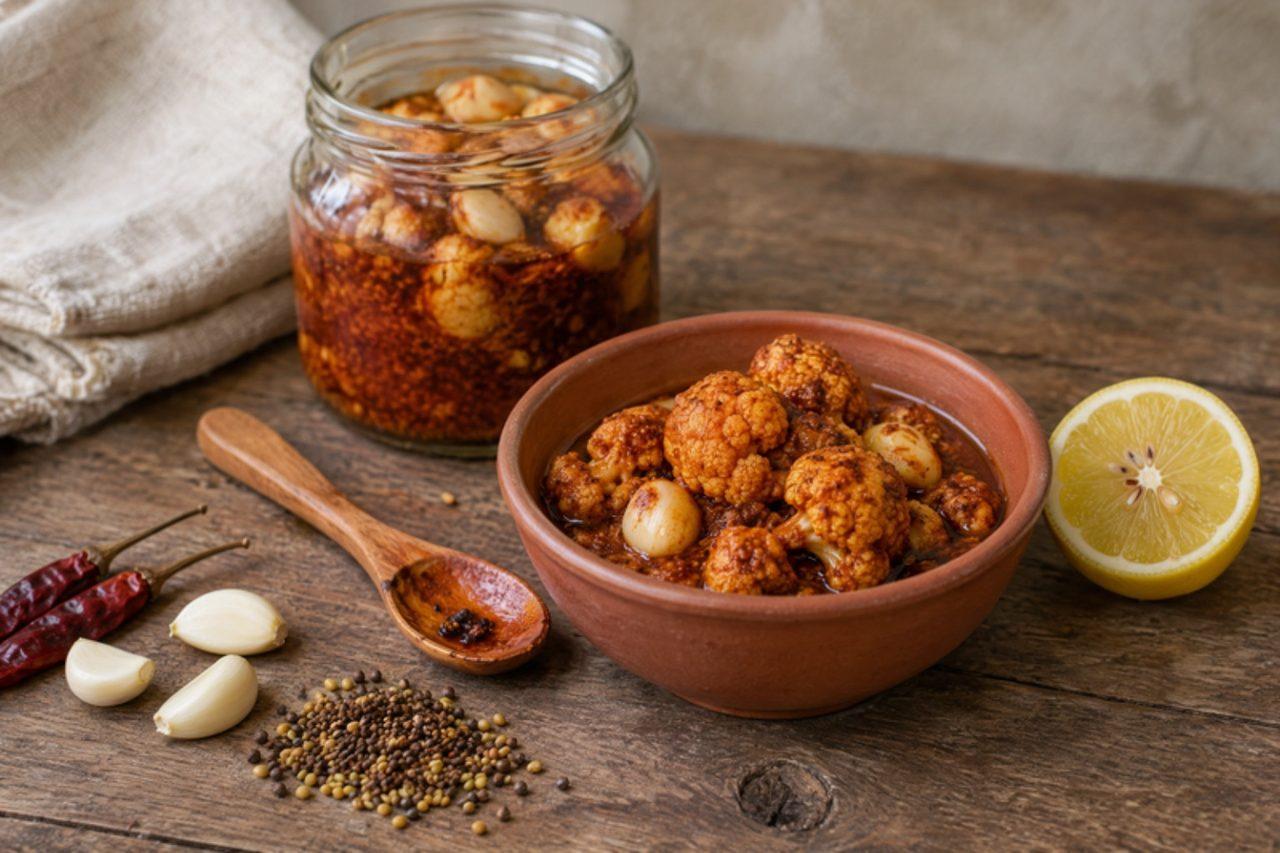
Cauliflower avakayaCauliflower pickle

When the mango jars run low and the Andhra and Telangana winter brings piles of dense white cauliflower to the markets, from December to February, households make a cauliflower avakaya. Lemon juice stands in for the sour mango, and the florets are coated in the same masala of mustard powder, chilli, salt, fenugreek and garlic, tempered with gingelly oil. After two days the florets have soaked up the masala but still crunch; the pickle is hot, nose-tingling and bright with lemon. Serve it with hot rice and ghee, with chapati, or beside a plain dal. Cauliflower is not acidic by itself and this pickle contains raw garlic, so it is always kept in the fridge, with plenty of lemon. Common mistake: packing florets that are still damp; wash them in hot salted water to drive out any insects, then dry them for several hours until no moisture remains. It is ready when the florets taste seasoned to the core and the oil and lemon have formed a glossy red sauce. Chef's tip: cut the florets small, about 2 cm, so the masala can reach the middle.

by KrazyBadal 0 views

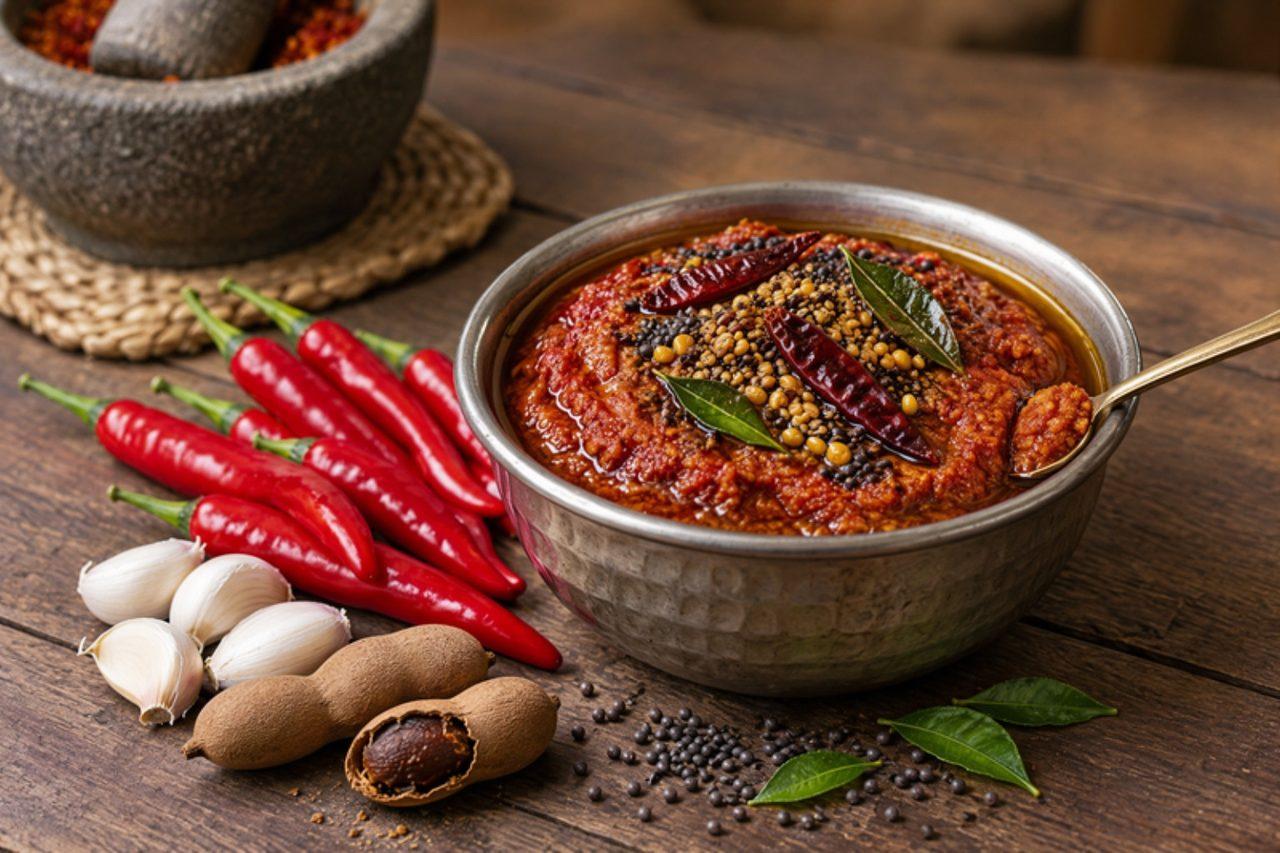
Pandu mirapakaya pachadiRipe red chilli pickle

Guntur is chilli country, and when the fields turn red between January and March, Andhra kitchens buy fresh, fully ripe red chillies by the kilo for this pachadi. The chillies are chopped, salted and packed with tamarind for two days, then ground coarse with roasted fenugreek and sealed under a tempering of gingelly oil, mustard and hing. The result is brick red, fiery and fruity rather than smoky, with a sour backbone from the tamarind and a faint bitterness from the methi. A teaspoon is mashed into hot rice with a spoon of ghee or sesame oil, and it is just as good beside idli, dosa or pesarattu. The big mistake is washing the chillies and grinding them while still damp: water is what makes this pachadi spoil, so wipe them dry and leave them on a cloth for a few hours. It is ready when the paste is thick and glossy and the oil pools on top. Salt here is high on purpose, about 12 g for every 100 g of chillies, and the tamarind makes it acidic; even so, keep it in the fridge, where it lasts up to 6 months. Chef's tip: mix in a few Byadgi or Kashmiri chillies with the hot Guntur ones for a deeper red without extra fire.

by KrazyBadal 0 views

Chintakaya pachadiGreen tamarind pickle

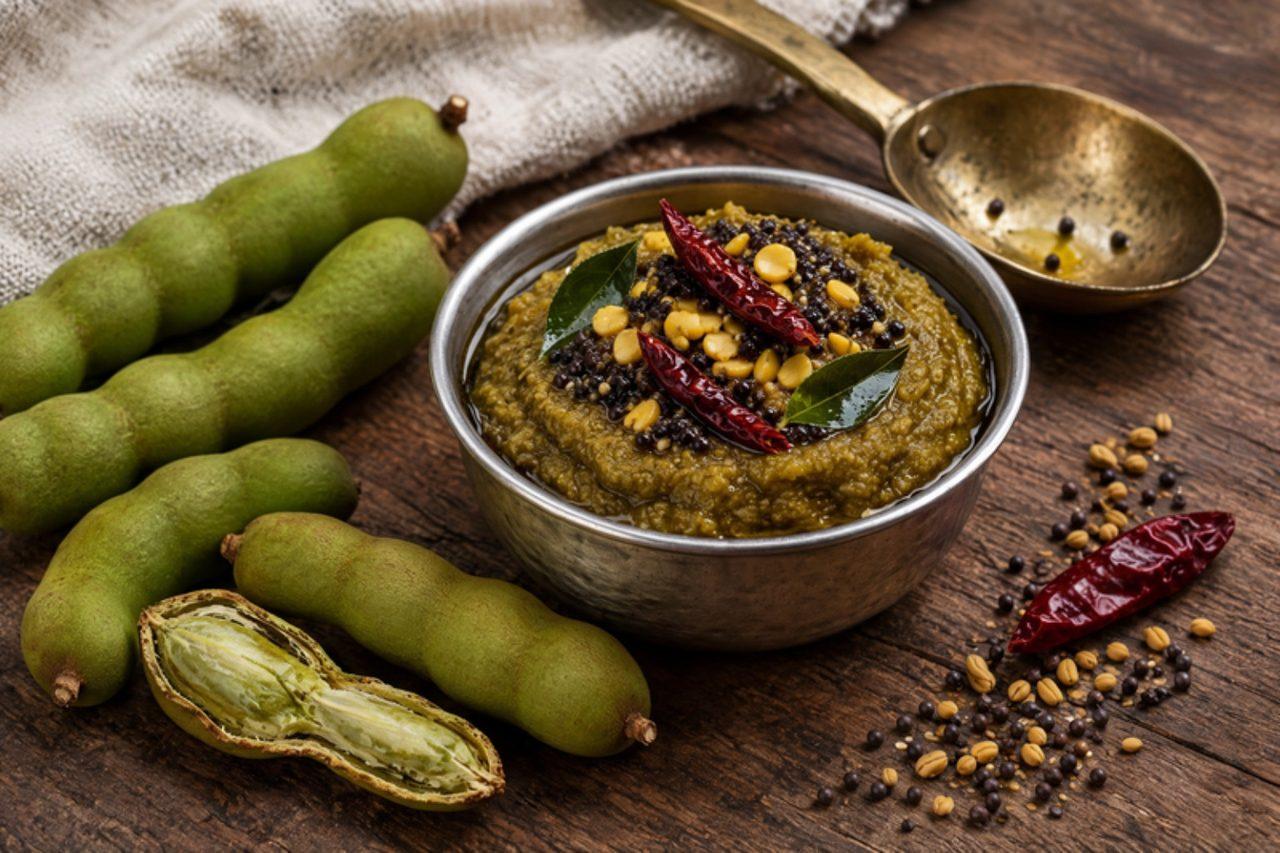
In Telangana and coastal Andhra, the tamarind trees hang heavy with tender green pods from December to February, and every household that can lays in a jar of chintakaya before the pods ripen and turn brown. The raw pods are pounded with salt and turmeric and left to mature into a sharp, olive-green base that keeps for the whole year. Small portions are then ground with chillies and finished with a crackling tadka whenever the family wants it. The taste is pure, mouth-puckering sourness with a fresh, almost apple-like green note, very different from ripe tamarind. Mix it into hot rice with sesame oil, or eat it with jonna rotte (sorghum flatbread) and raw onion. The common mistake is to let wet pods into the jar: wash the tamarind the day before, then spread it to dry completely. The salted base is very acidic and roughly 15% salt, so it keeps in a cool cupboard; the finished pachadi with chillies belongs in the fridge and is best within 3 weeks. It is ready when the paste is coarse, dark green and smells sharply sour. Chef's tip: roast dried chillies for a smoky winter version, or use green chillies for a brighter, fresher heat.

by KrazyBadal 0 views

FafdaGram flour strips with papaya salad

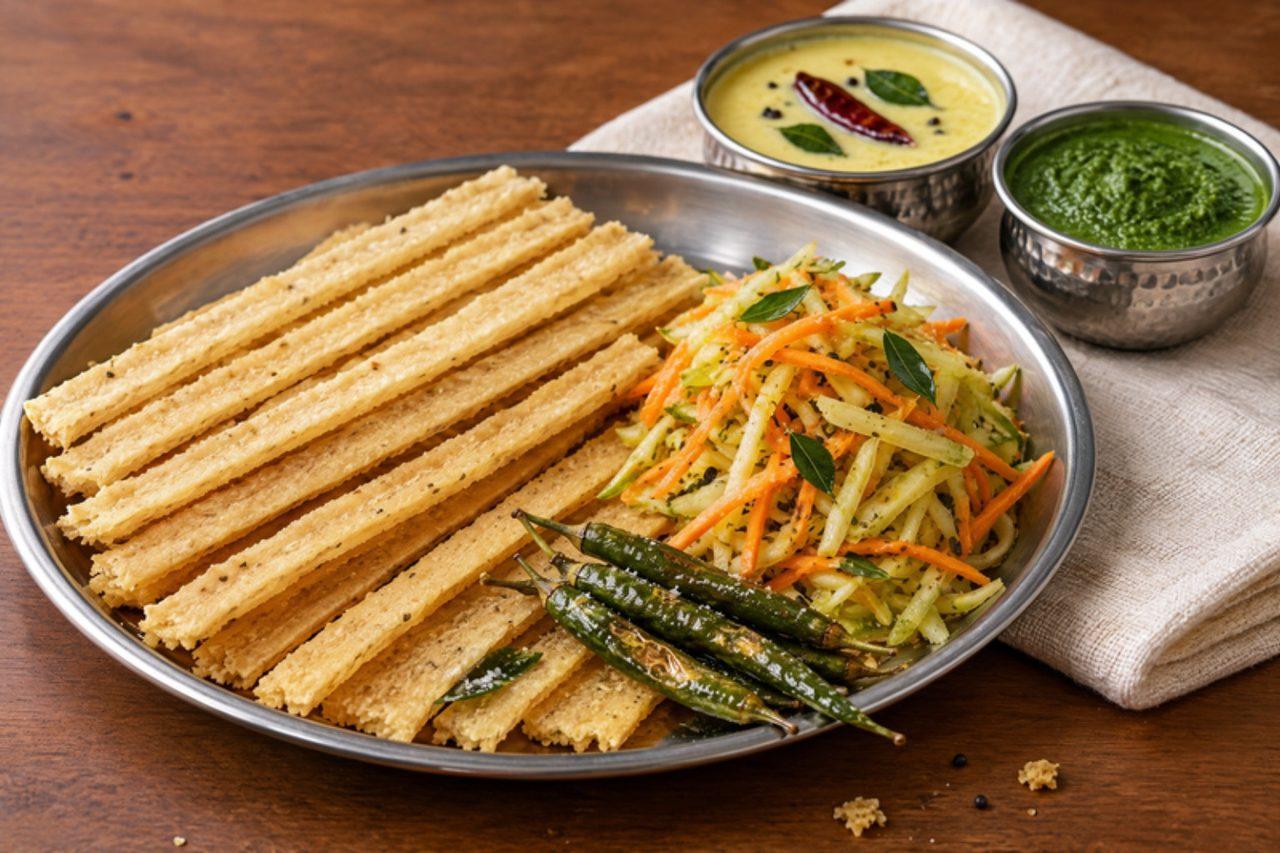
On Sunday mornings, and above all on Dussehra, Ahmedabad queues outside its farsan shops for paper parcels of fafda: long, pale-gold strips of gram flour dough, crisp and gently salty with carom, eaten beside hot jalebi, a sour-sweet raw papaya relish called sambharo and whole fried chillies. The real craft is the shaping, done by pushing a little log of dough along a wooden board with the heel of the hand until it stretches into a thin ribbon. Chef's tip: knead the dough with your knuckles for a full 5 minutes until it turns smooth and slightly shiny, or the strips tear as you push them.

by KrazyBadal 0 views

Showing 48 of 681 recipes

Show more recipes

Page 18 of 29

More collections