Skip to content
WhatToEat.Today

Vegan Indian recipes

Indian dishes with no dairy, ghee, eggs or meat. (681 recipes)

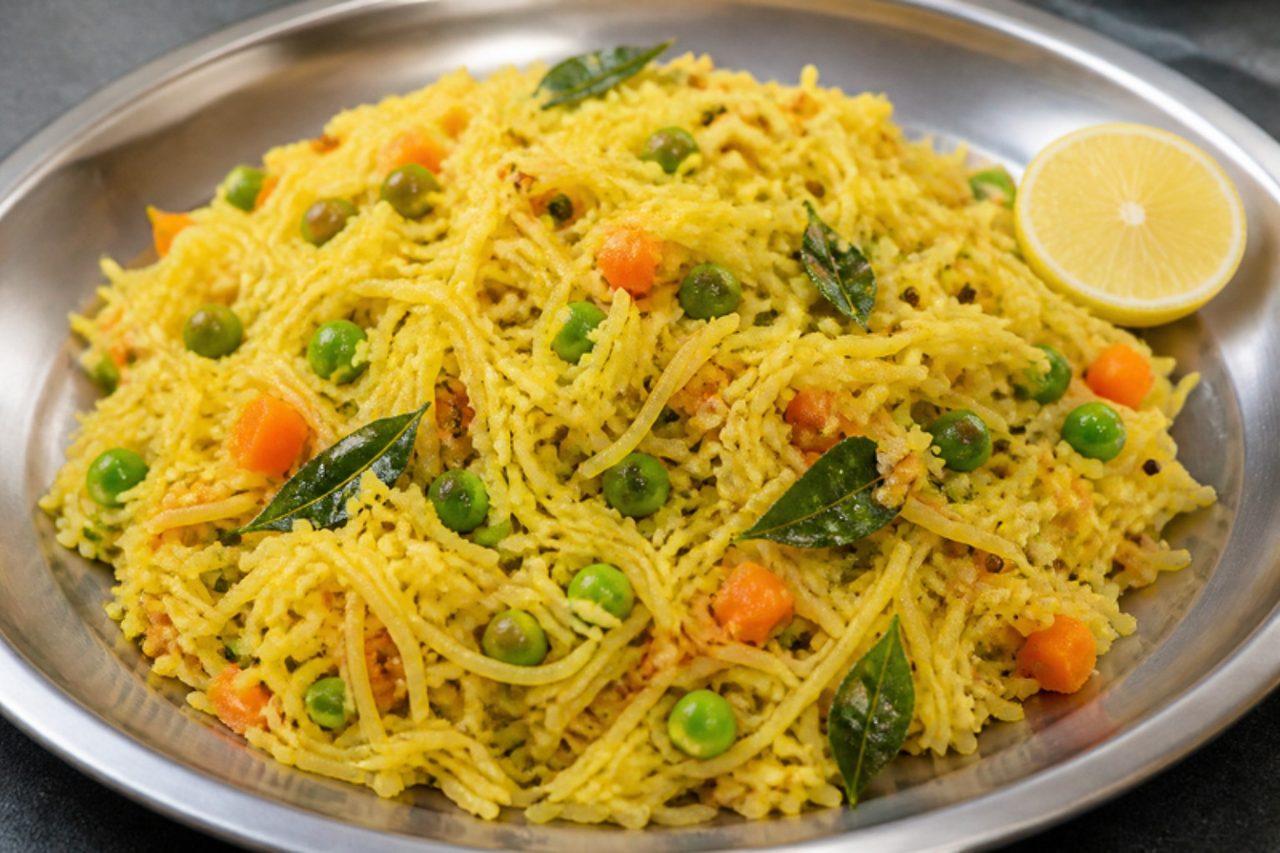
Shavige bathVegetable vermicelli

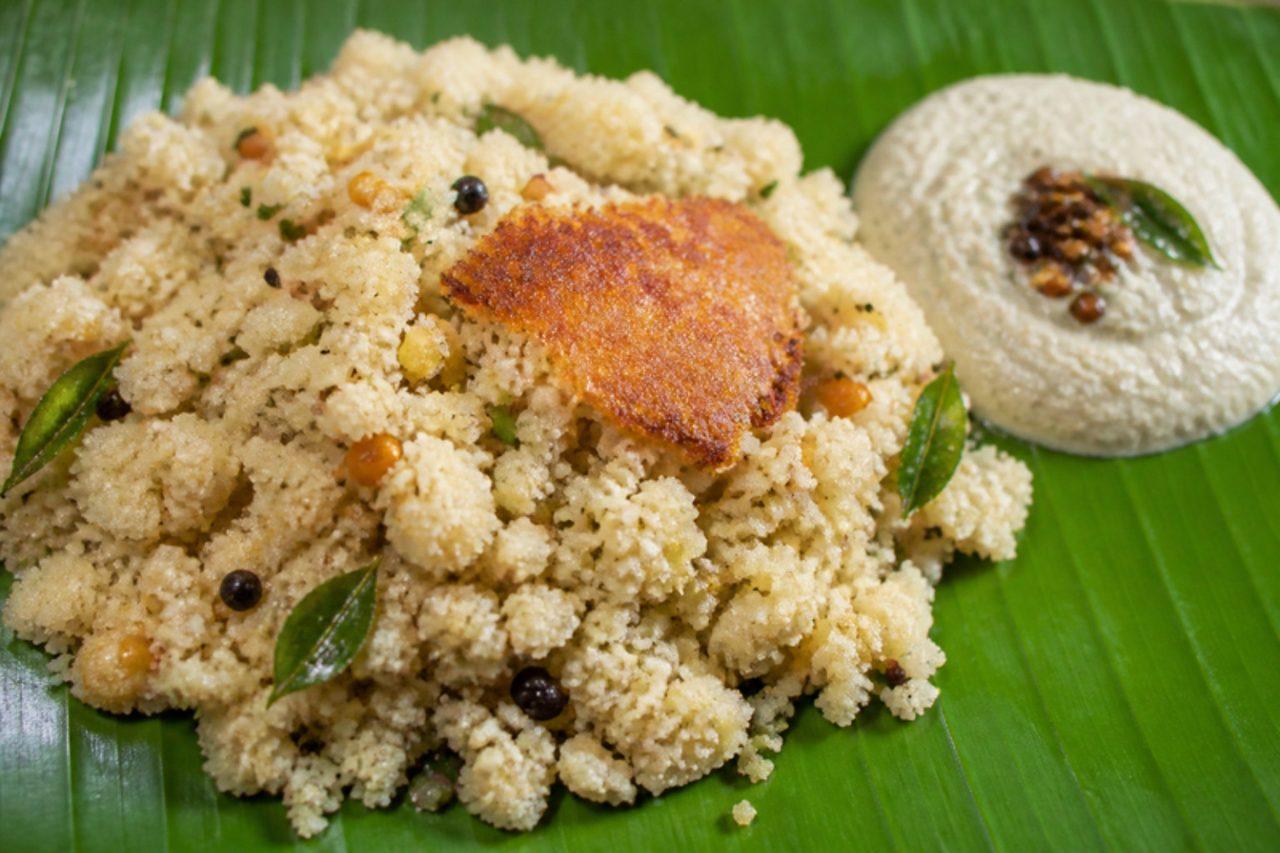
Shavige bath, also called shavige uppittu, is a weekday breakfast across Karnataka and a regular on Bengaluru darshini menus next to kesari bath. Roasted wheat vermicelli is cooked in a tempering of mustard, dals, curry leaves and ginger with onion and vegetables, then finished with lemon and coriander so the strands are separate, soft and lightly tangy. A common mistake is too much water: the vermicelli clumps into a paste, so use just over twice its weight and let it steam covered. Chef's tip: roast the vermicelli in a spoonful of oil until golden even if it's sold pre-roasted; it stays in separate strands.

by KrazyBadal 0 views
HolanRoasted green chickpeas

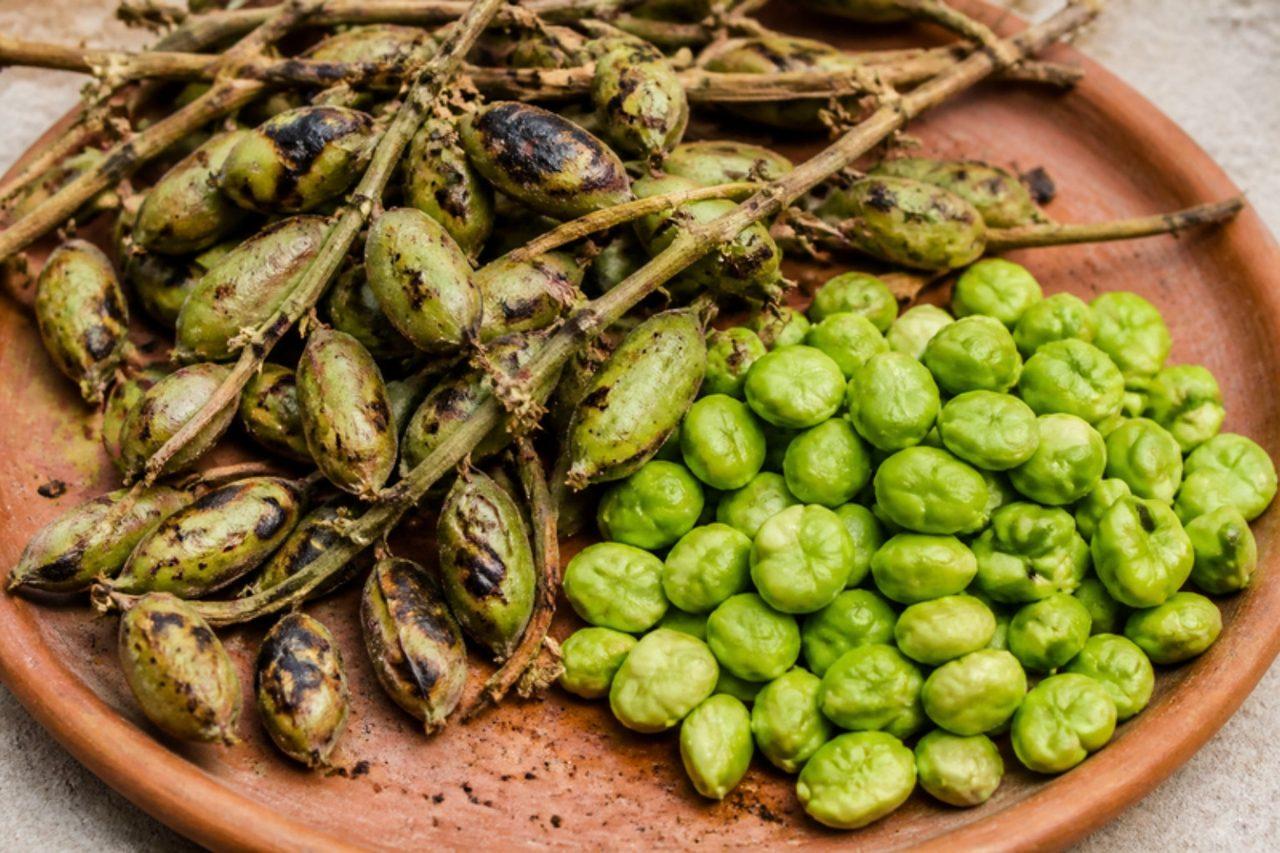
In late winter, around the time of Holi, village children in rural Punjab pull up bunches of green chickpea plants from the edge of the field and throw them onto a small fire of dry stalks. Once the pods blacken they rake them out and shell them hot, blowing on their fingers, and the bright green peas inside taste smoky, sweet and nutty. At home you can do the same in a heavy iron kadai. The mistake is leaving them on until the pods are fully burnt; by then the peas inside are dry and hard. Stop when the pods are blistered black in patches and the peas are just tender. Chef's tip: a pinch of salt and chilli with a squeeze of lemon on the shelled peas turns them into a quick chaat.

by KrazyBadal 0 views
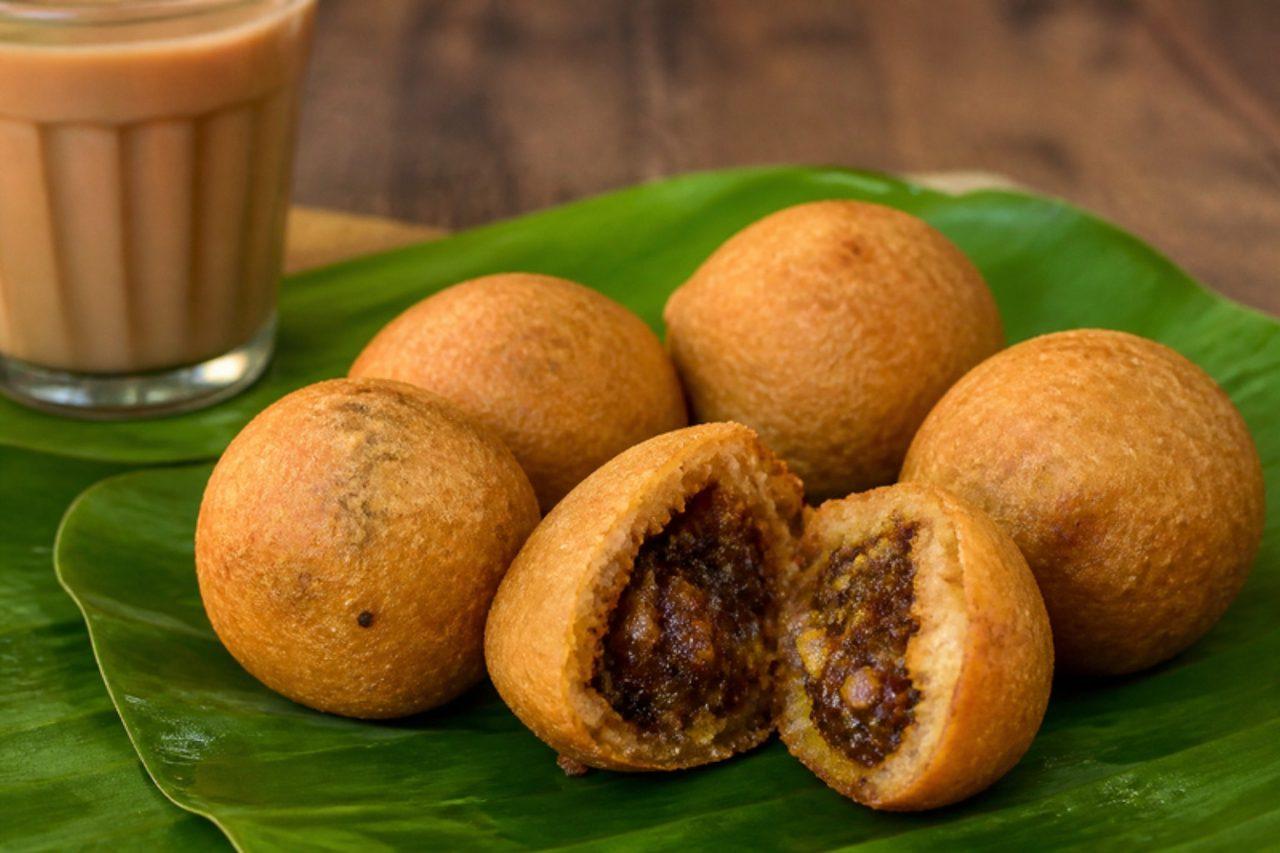
BooreluChana dal and jaggery dumplings

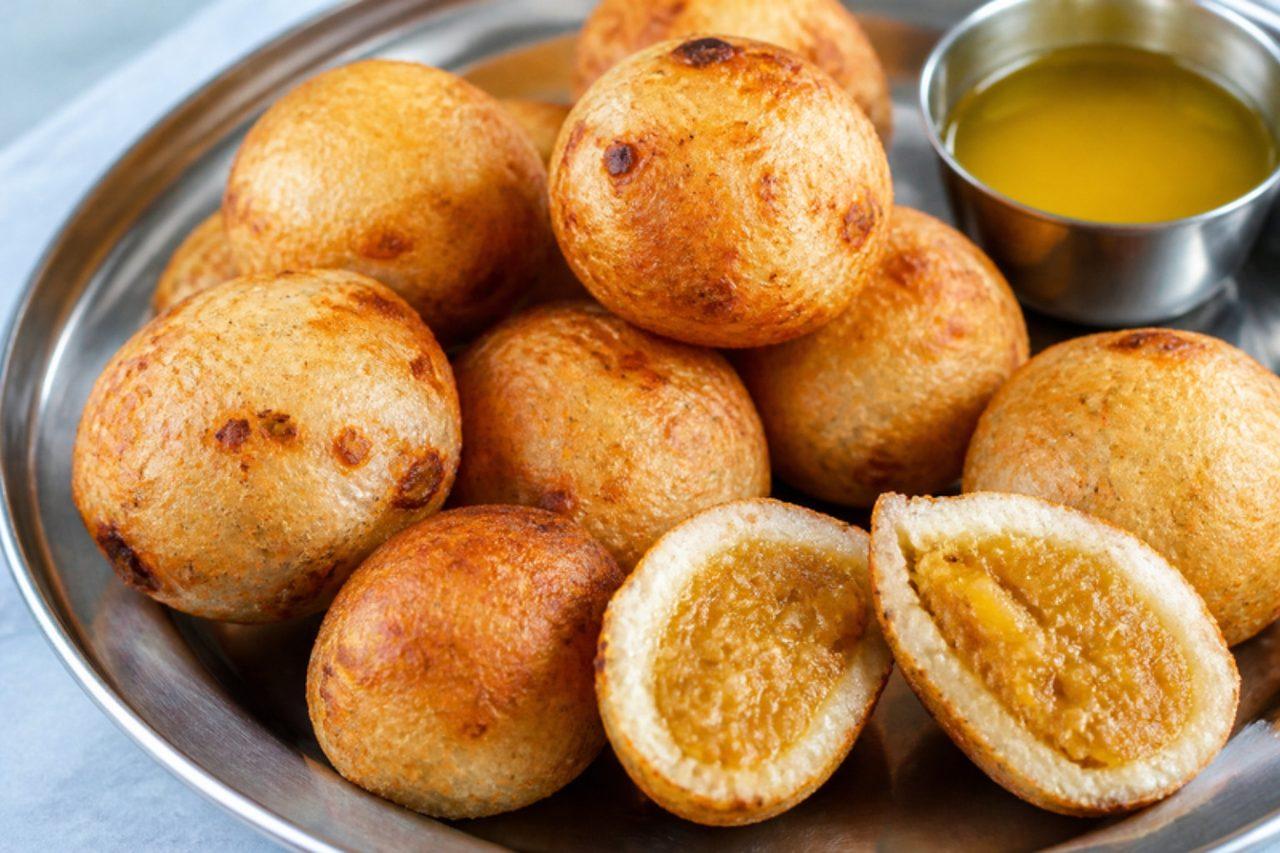
Boorelu, also called poornalu, are the sweet that Telugu homes fry for Sankranti, Varalakshmi Vratam and weddings, and that a bride's family traditionally sends to her in-laws by the basketful. A soft ball of cooked chana dal, jaggery, coconut and cardamom is dipped in a thick batter of urad dal and rice and fried until the shell is crisp and blistered while the filling stays fudgy. They are eaten warm, split open with a spoon of ghee for those who take dairy. The usual mistake is a filling that is too wet: it bursts through the batter in the oil and splatters, so cook the dal and jaggery until it holds a firm ball. Chef's tip: grind the batter thick like idli batter and add salt; the slight saltiness of the shell is what makes the sweet filling sing.

by KrazyBadal 0 views
Ugadi pachadiSix-taste new year relish

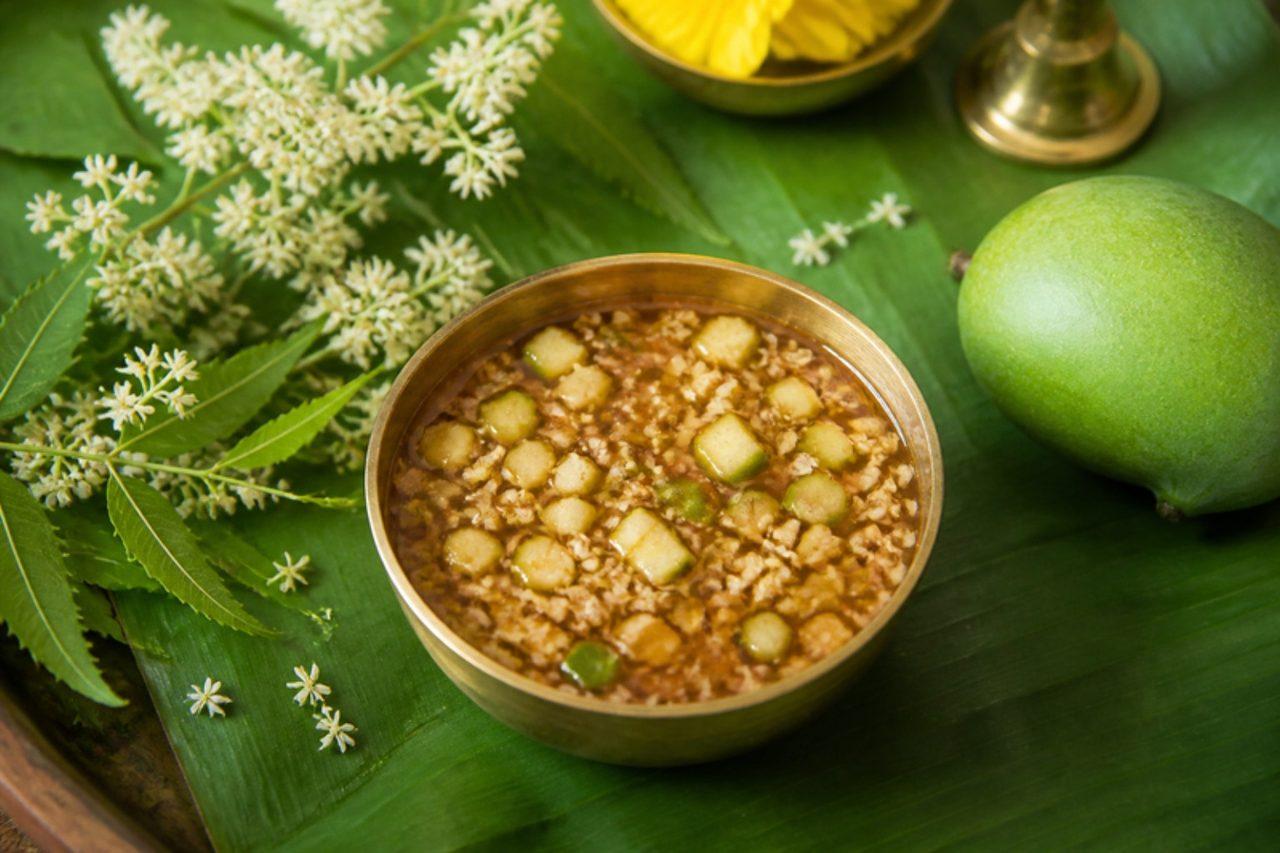
On Ugadi morning in Andhra Pradesh, Telangana and Karnataka, the first thing anyone eats after the oil bath and prayers is a spoonful of this pachadi, handed round in a small steel cup. Each ingredient stands for a feeling the coming year will bring: jaggery for joy, bitter neem flowers for sorrow, sour tamarind for disgust, raw mango for surprise, pepper for anger and salt for fear, so tasting them together is a quiet promise to accept whatever comes. In Maharashtra, Gudi Padwa begins with a close cousin, tender neem leaves ground with jaggery, cumin and tamarind. The finished pachadi is thin, sweet first, then sharp and faintly bitter. The common mistake is a heavy hand with neem: half a spoon too much and bitterness drowns every other taste. Stir until the jaggery has dissolved completely and no grains crunch against the spoon. Chef's tip: make it on the morning itself, as the cut mango softens and the neem turns muddy if it sits overnight.

by KrazyBadal 0 views
Shakkariya nu shaakSweet potato with peanuts

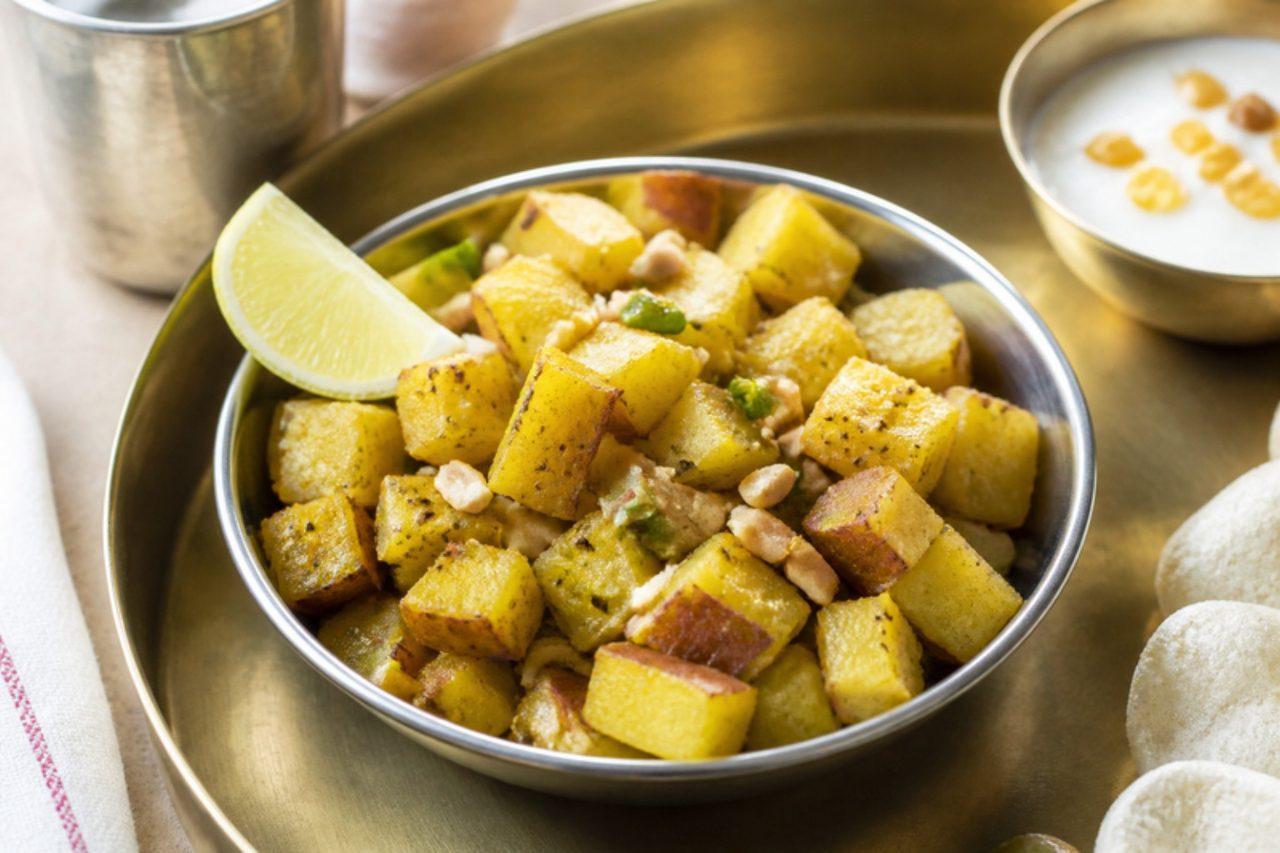
Gujarati families keeping the Mahashivratri upvas often fill the thali with shakkariya nu shaak, a quick dry curry of sweet potato cubes tempered with cumin and green chilli, finished with crushed roasted peanuts, a little sugar and a squeeze of lemon. It is sweet, tangy and gently hot, and is eaten with rajgira puri, sabudana khichdi or a bowl of farali kadhi. Only rock salt and green chilli are used here; many households avoid turmeric and red chilli powder on fasting days, and some do not eat cumin either, so adjust to your own family's custom. Common mistake: stirring too hard once the cubes soften, which turns the shaak into mash; turn gently, and stop cooking when a cube gives way when pressed but still holds its shape. Chef's tip: soak the cubes in water while you prepare the rest; it rinses off surface starch so they brown instead of sticking.

by KrazyBadal 0 views
Vanela gathiyaSoft hand-rolled gram flour ropes

Walk into any farsan stall in Rajkot, Junagadh or Jamnagar before nine in the morning and you will see a man rolling vanela gathiya on a wooden plank with the heel of his hand, sliding each rope straight into the kadai. They are soft and puffy inside rather than crunchy, salty with ajwain and pepper, and are eaten hot with sweet-sour papaya sambharo, fried green chillies and kadhi chutney, with a glass of tea. The hard part is the rolling: the dough is very soft and needs a confident, quick push and drag. The common mistake is under-beating the dough, which leaves the gathiya flat and heavy. Chef's tip: keep a bowl of water with a spoon of oil beside you and wet the board and your palm before every rope.

by KrazyBadal 0 views
Mangai pachadiRaw mango and jaggery relish

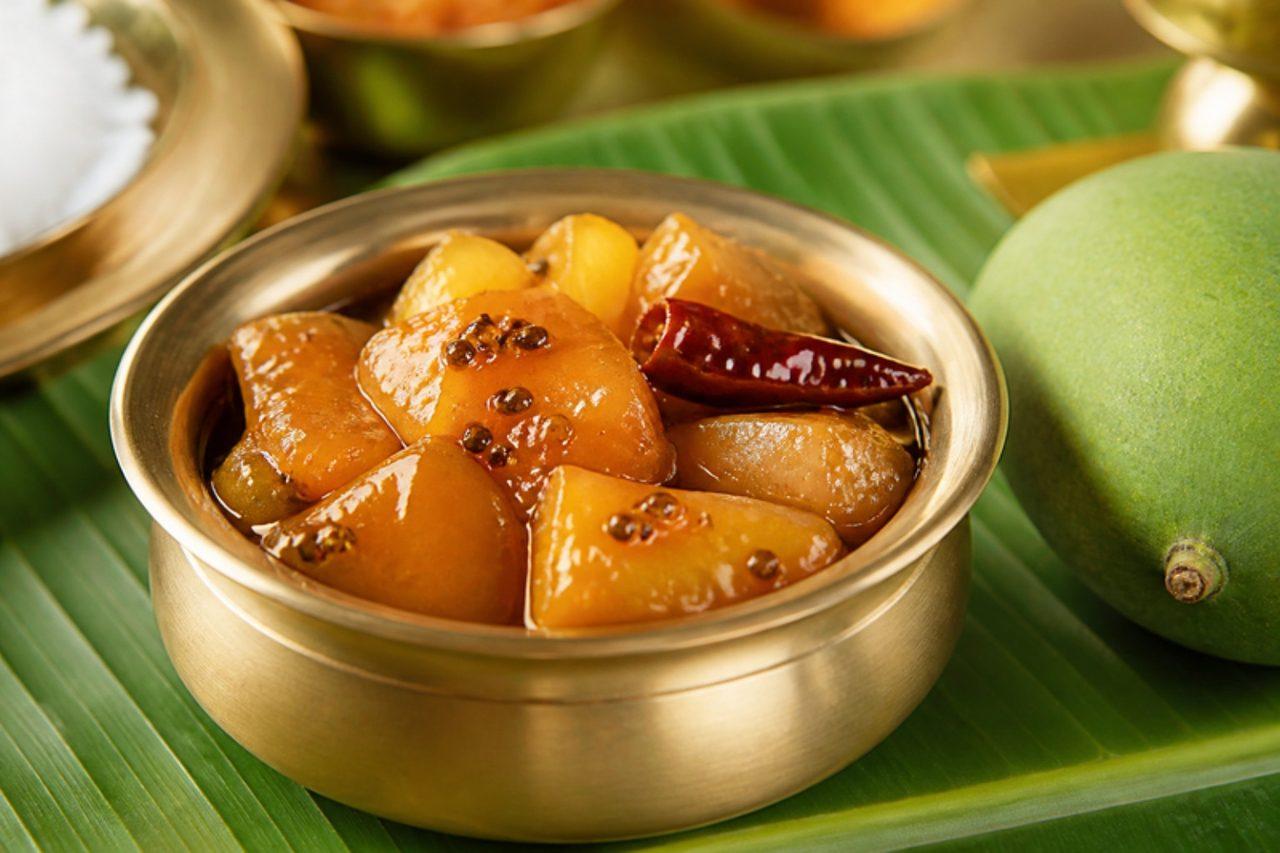
Every Tamil New Year plate in April has a small heap of mangai pachadi, sweet, sour, hot and bitter at once, so that the first meal of the year tastes of everything life will bring. Chunks of raw mango are cooked soft, simmered in jaggery and finished with a mustard tempering and a pinch of fried neem flowers. It is glossy and thick, eaten in small spoonfuls with rice, sambar and payasam. The common mistake is cooking it down too far: it thickens a lot as it cools, so stop when the syrup coats the spoon but still drips off slowly. Cook the mango first until a piece mashes easily; jaggery added to hard mango stops it softening. Chef's tip: choose firm, very sour mangoes; sweet, half-ripe ones go mushy and lose the sharp contrast.

by KrazyBadal 0 views
Kolkata vegetable chopCrumbed vegetable croquettes

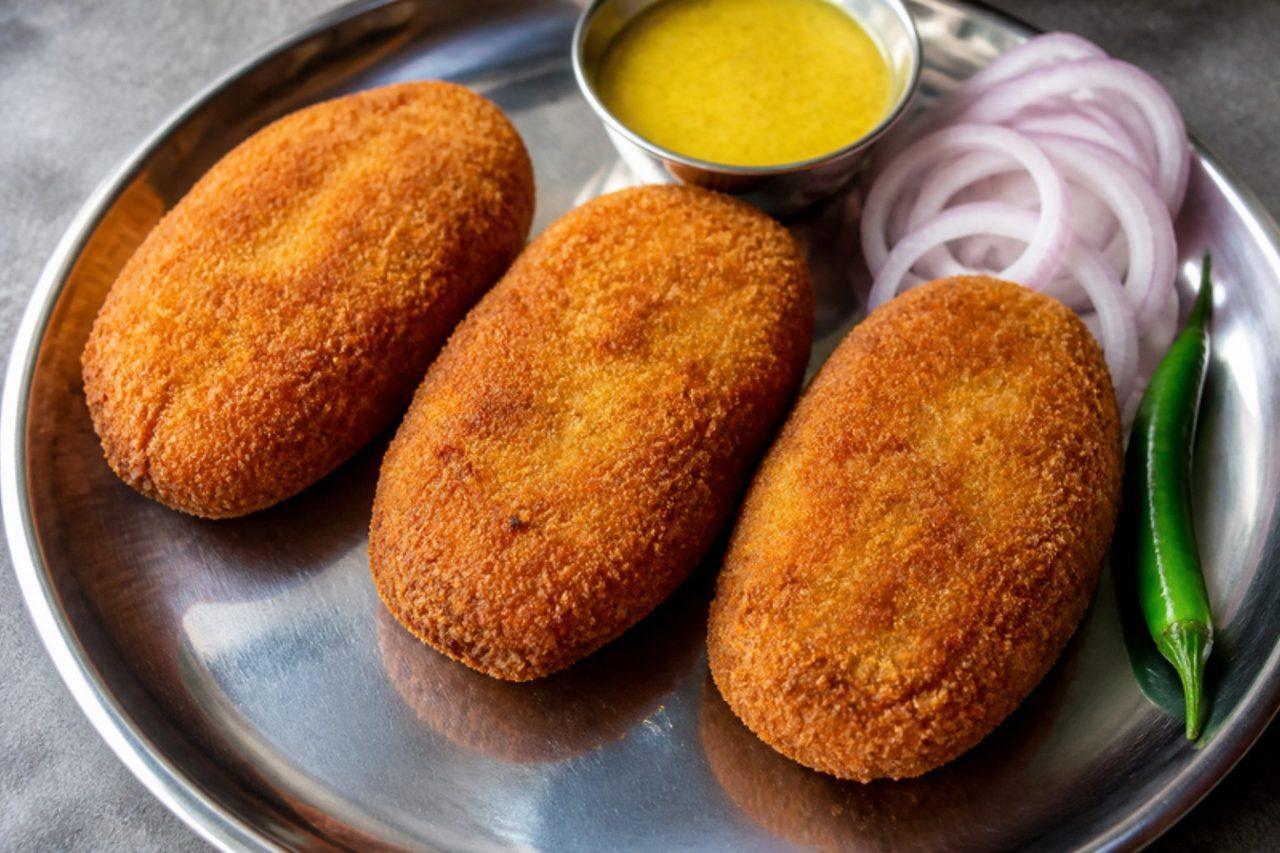
Walk between Kolkata's Durga Puja pandals in the evening and the smell that follows you is of telebhaja stalls frying vegetable chop. These are oval croquettes of mashed potato with grated beetroot, carrot and roasted peanuts, spiced with ginger, chilli and bhaja moshla, coated in a flour-water batter and breadcrumbs and fried until shatteringly crisp; inside they are soft, sweet and a vivid pink. They are eaten hot with kasundi, ketchup or sliced cucumber and onion. Common mistake: leaving the filling wet, which makes the chops split in the oil; cook the beetroot mix until it is dry enough to roll without sticking. Chef's tip: coat the chops twice (batter, crumbs, batter, crumbs) and chill them for 20 minutes before frying; the double coat is what gives the pandal crunch.

by KrazyBadal 0 views
Bharela marchaStuffed green chillies

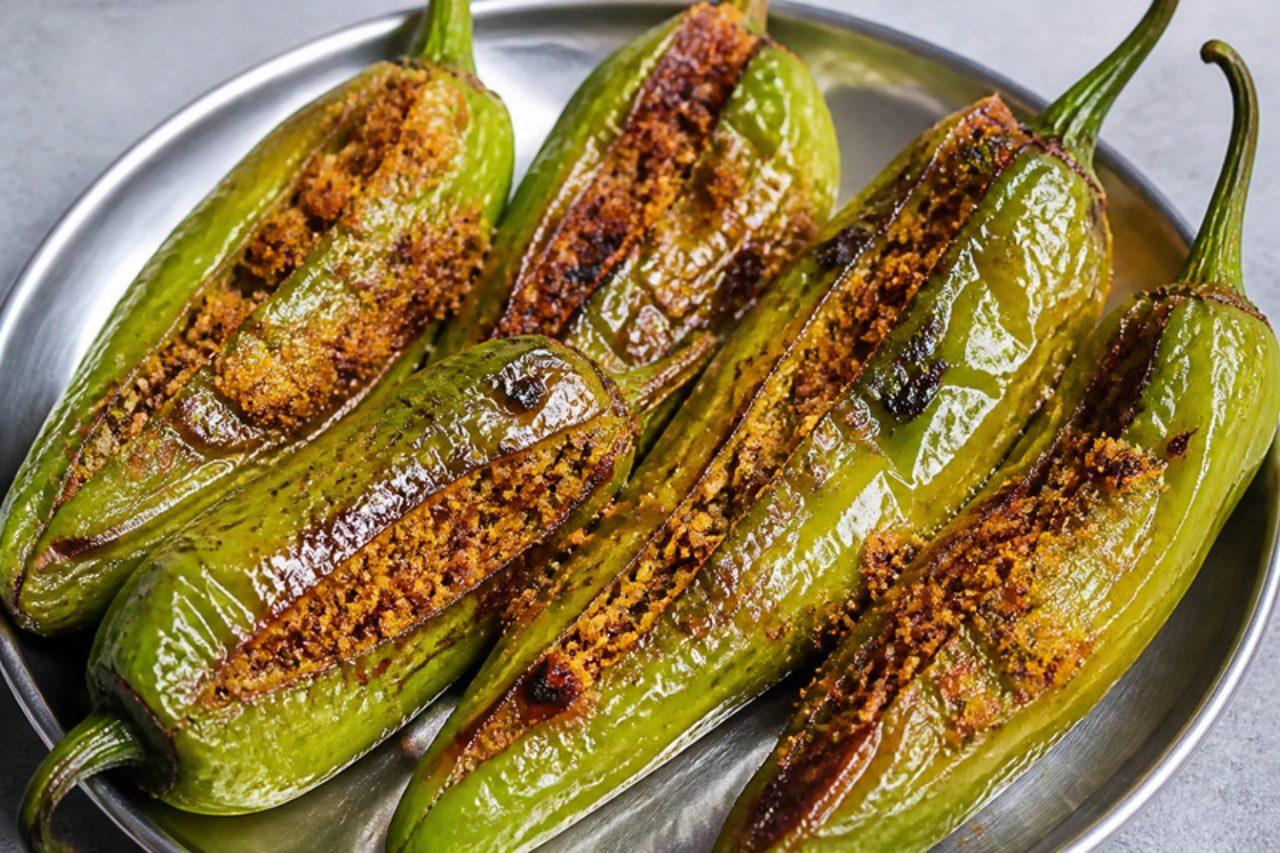
In Kathiawad, bharela marcha are made with the long, fat and fairly mild bhavnagri chillies that come in every winter, and they sit beside a thali of rotla, kadhi and khichdi as a sweet-sour-hot side. The filling is besan roasted in oil until nutty, mixed with sugar, lemon, turmeric and dhana-jiru, and the chillies are cooked covered on low heat until soft and blistered in patches. A common mistake is using small, very hot chillies; choose large mild ones, or the dish is too fierce to eat. Chef's tip: slit the chillies only on one side and scrape out the seeds and ribs; the heat drops right down and the filling stays inside.

by KrazyBadal 0 views
Semiya upmaSavoury vermicelli

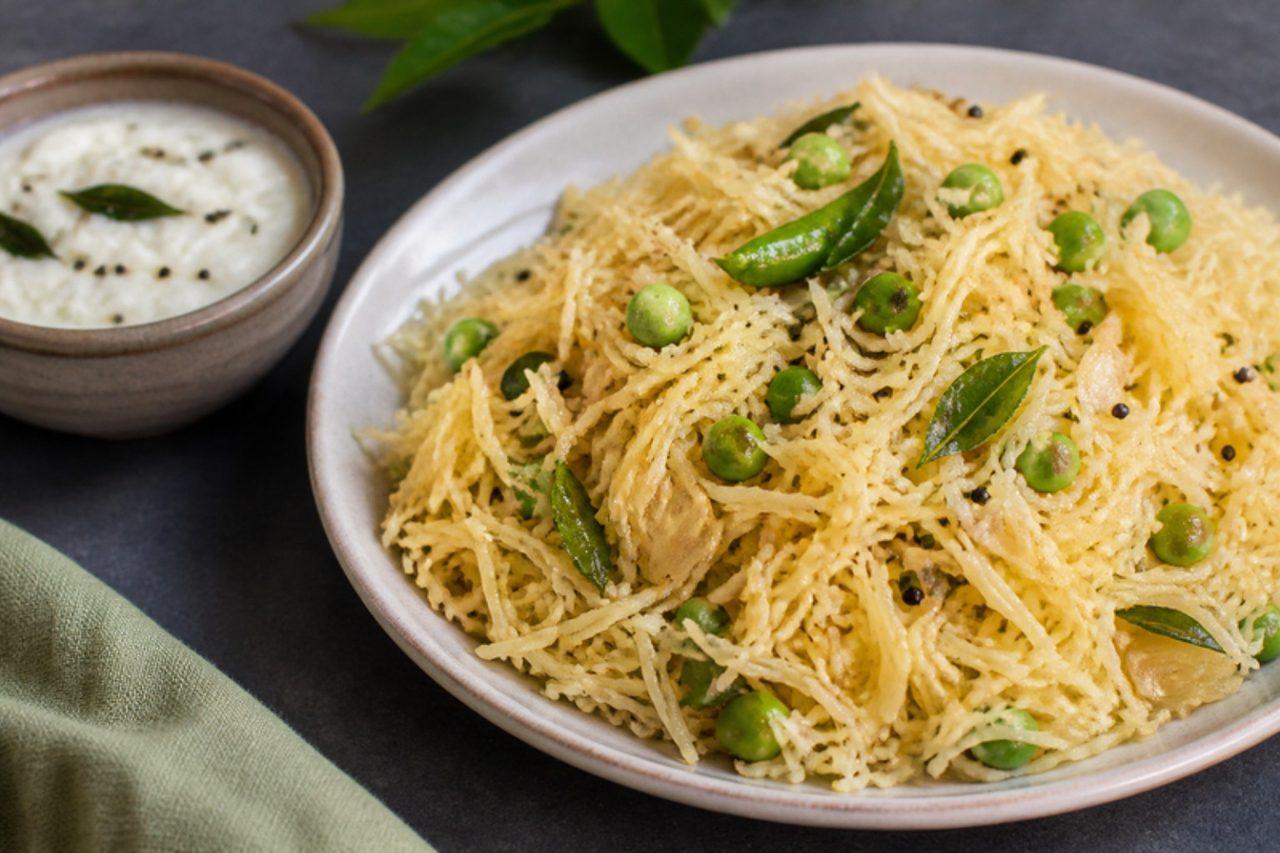
Semiya upma is a fixture of Tamil home cooking, from Coimbatore to Chennai, made for breakfast, for school tiffin boxes and very often for a light dinner when nobody wants a heavy meal. Ready-roasted wheat vermicelli is cooked in a tempering of mustard seeds, dal, curry leaves, onion and green chilli with a handful of peas until each strand is soft and separate. It is mild and savoury with a squeeze of lemon, and children love it. The common mistake is adding too much water, which turns the vermicelli into a sticky lump. Chef's tip: once the water is absorbed, take the pan off the heat and leave it covered for 2 minutes; the strands finish cooking in the steam and stay separate.

by KrazyBadal 0 views
Vaal nu shaakDried field beans with ajwain

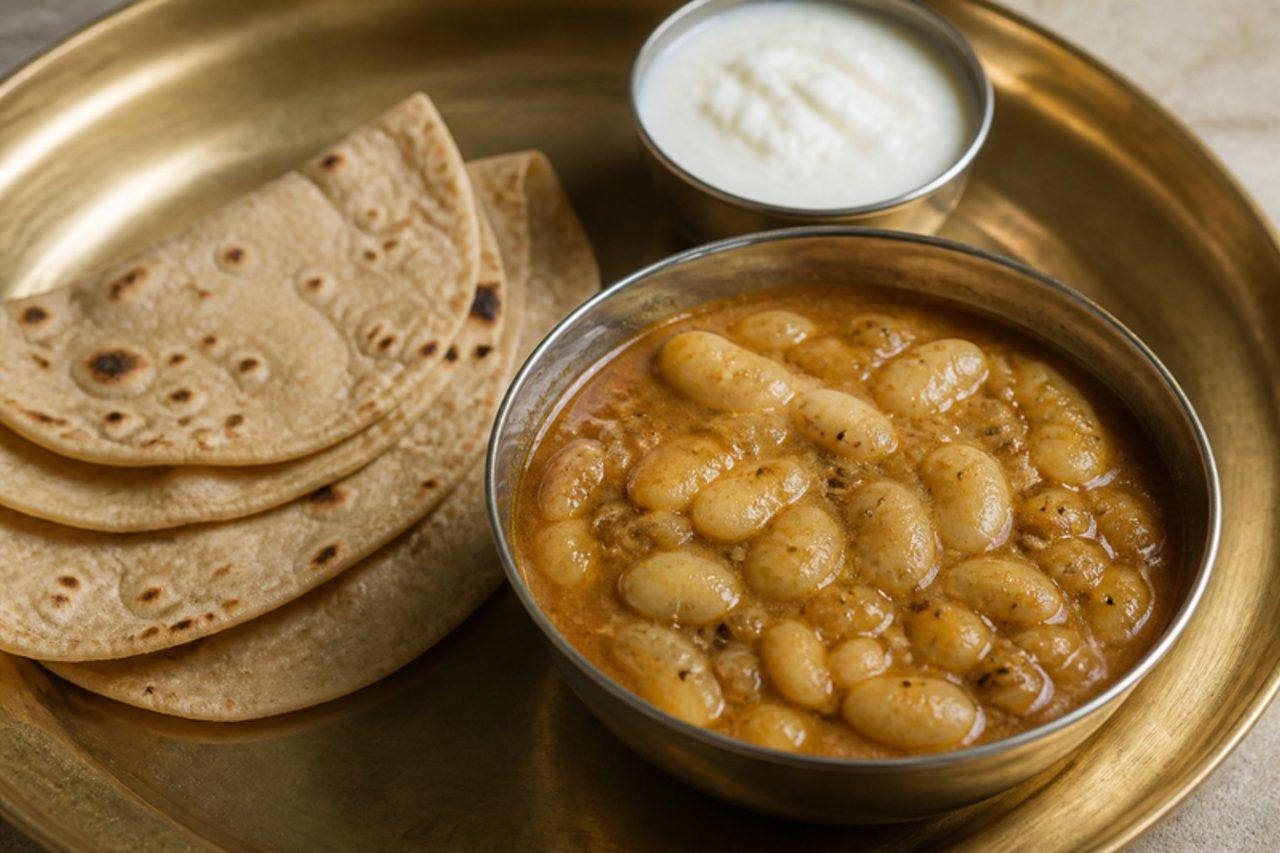
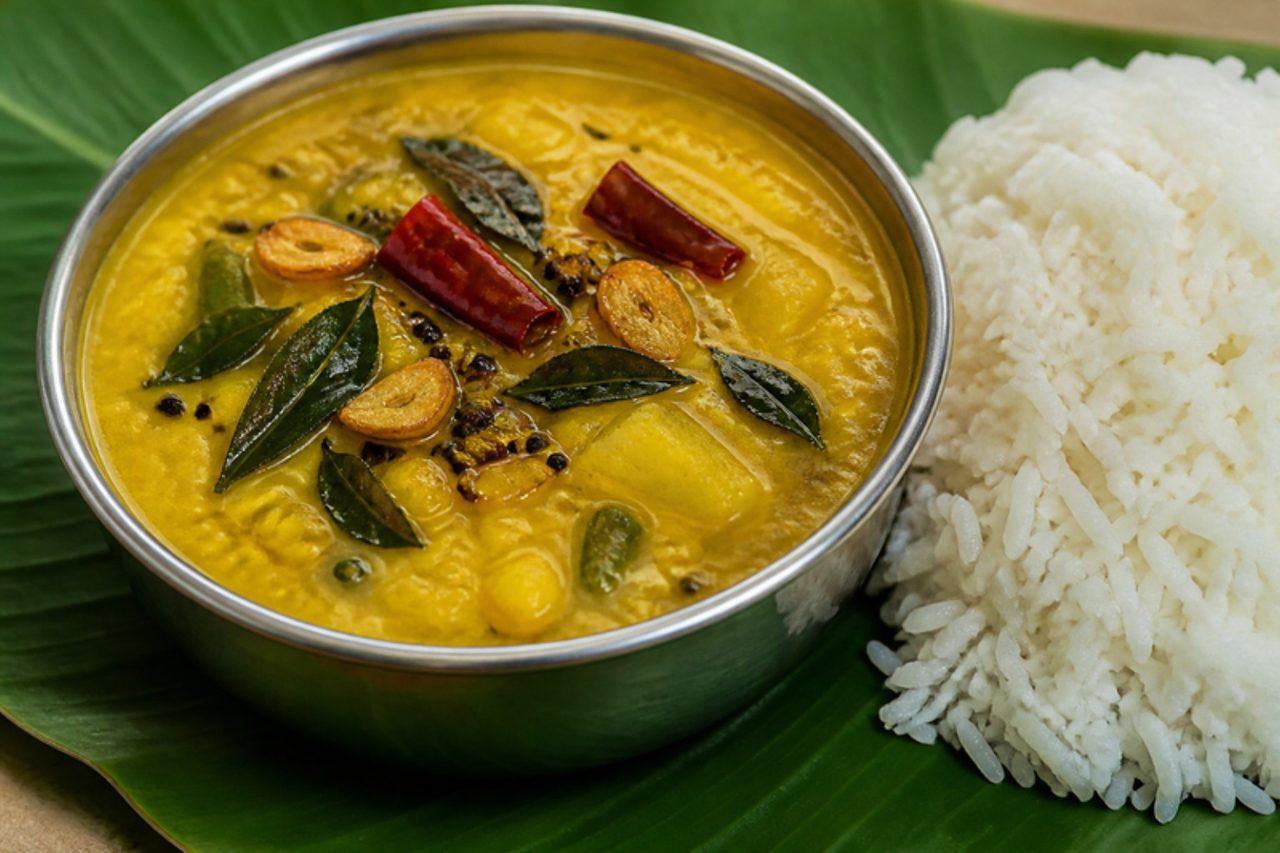
During the eight days of Paryushan many Gujarati Jain families stop eating green, leafy and fresh vegetables, so the kitchen turns to dried pulses, and vaal (dried field beans) cooked soft with ajwain and hing is a regular on the thali. This recipe is fully Jain: no onion, no garlic, no fresh ginger and no root vegetables, with dry ginger powder for warmth and amchur instead of tomato for sourness. The beans are creamy and a little bitter-sweet, balanced by jaggery, and are eaten with rotli, rice and kadhi, finished before sunset in strict homes. Common mistake: using beans that have not soaked long enough; they stay hard and split unevenly. Cook them until one squashes easily between your thumb and finger, but not so long that they burst. Chef's tip: ajwain and hing make vaal much easier to digest, so do not skip the tempering; for a gluten-free dish use a gluten-free hing.

by KrazyBadal 0 views
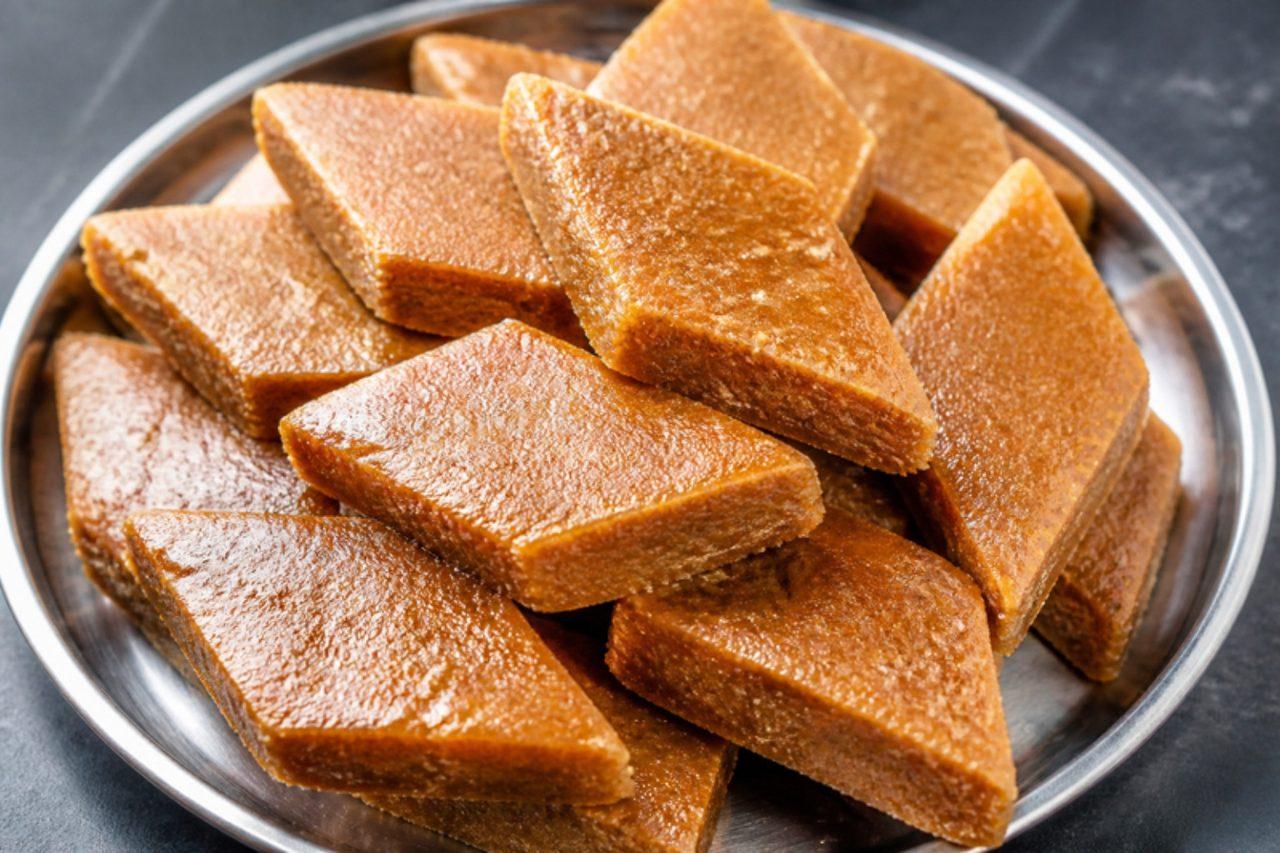
Tal ni chikkiSesame jaggery brittle

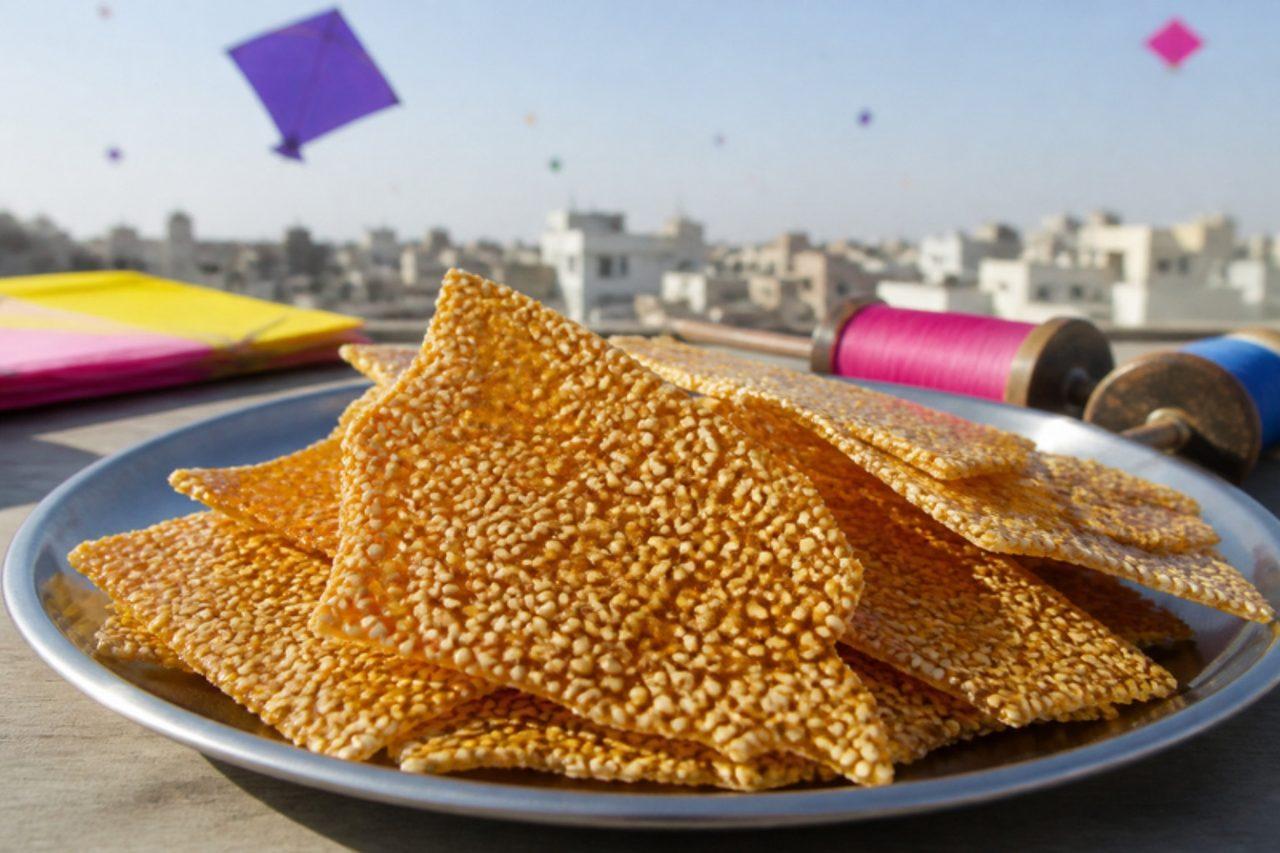
On 14 January every Gujarati rooftop fills with kite-flyers, and somewhere between the manja reels there is always a tin of tal ni chikki, broken into shards. The thinnest kind, tal sankli, is rolled out so fine you can almost see through it; it shatters with a snap and tastes of toasted sesame and dark caramel. It is a two-ingredient sweet where everything depends on the jaggery. Common mistake: pulling the jaggery off the heat too soon; it must reach the hard-crack stage, when a drop in cold water sets instantly and snaps cleanly, or the chikki stays chewy and sticks to the teeth. Chef's tip: work fast and roll on the greased back of a steel thali; if it hardens before you finish, warm it in the pan for a few seconds.

by KrazyBadal 0 views
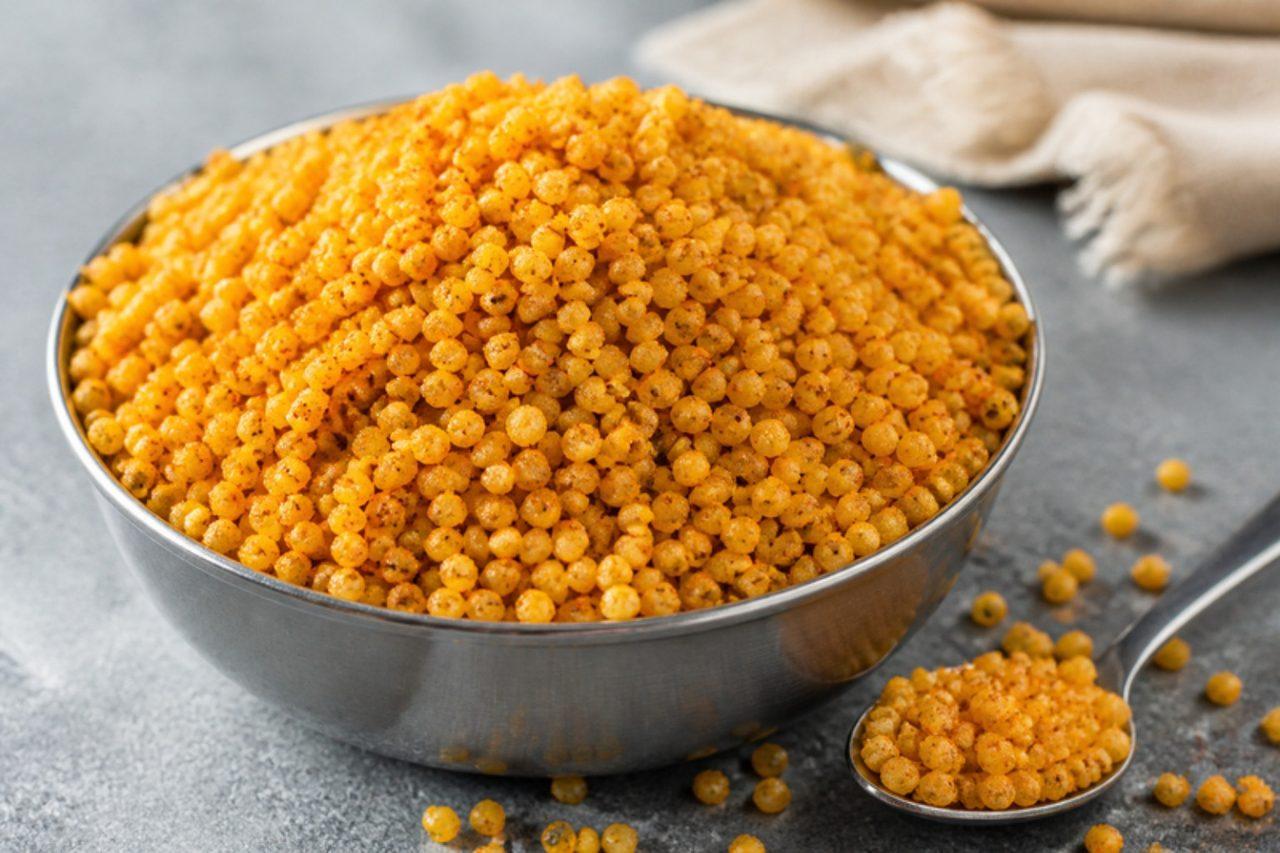
Lasaniya sevGarlic gram flour sev

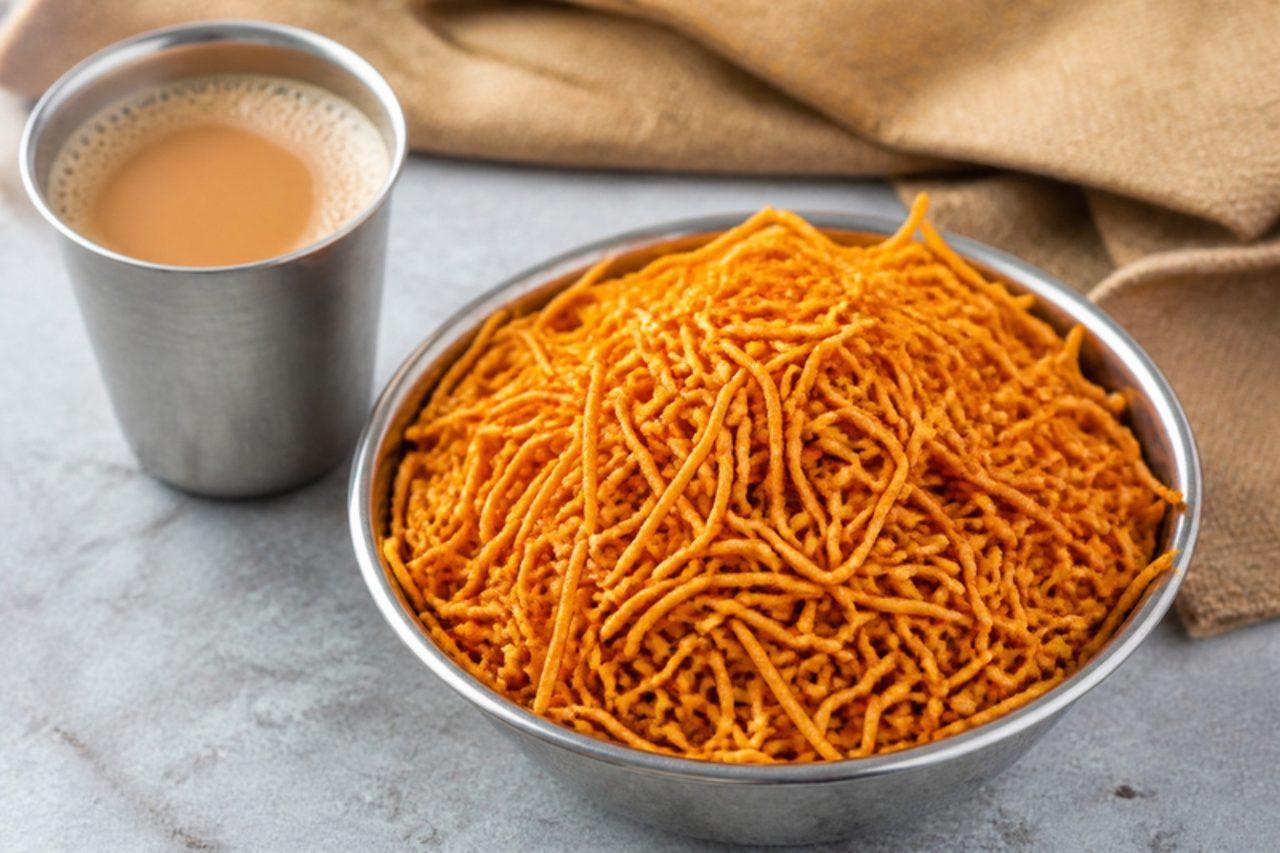
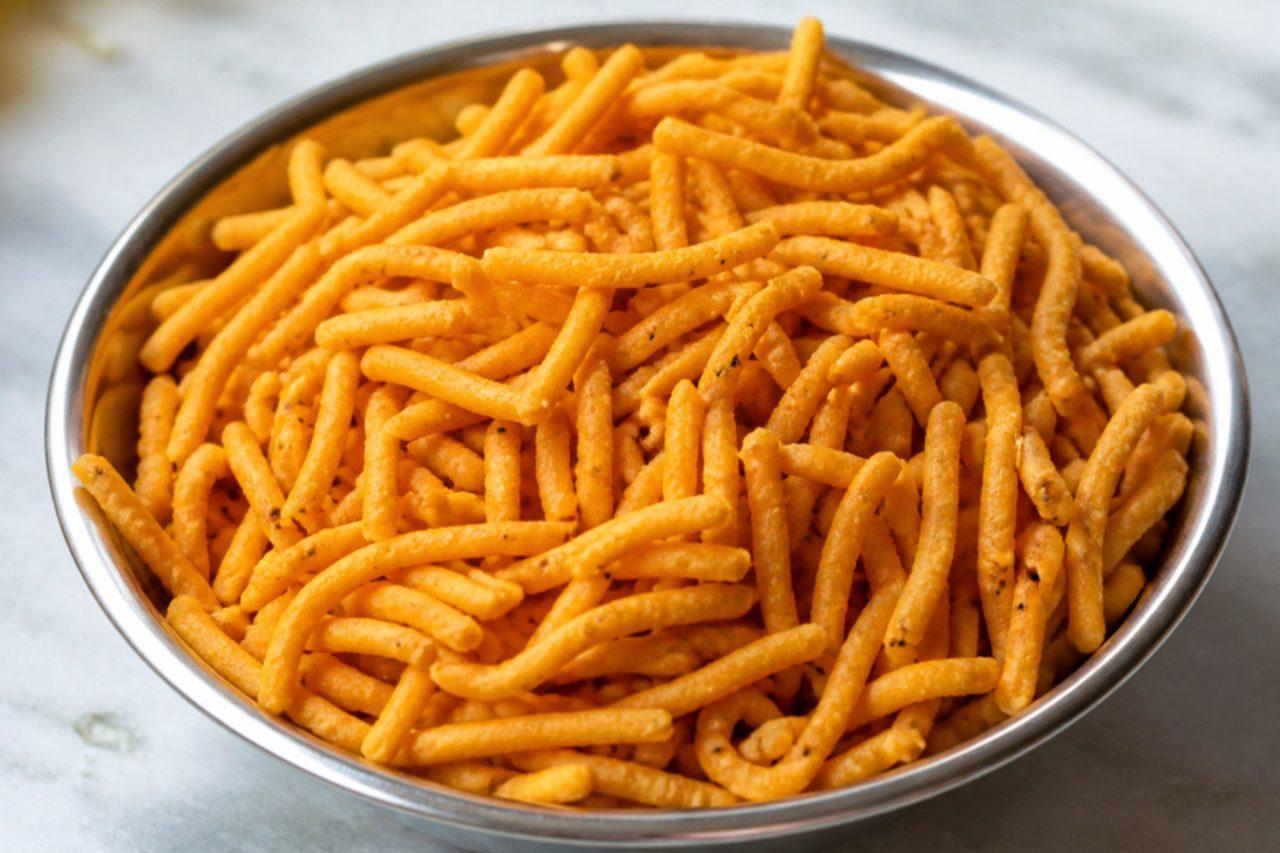
Every Kathiawadi and Ahmedabadi farsan shop keeps a tin of lasaniya sev, the red, garlic-packed cousin of plain sev, and many homes press a batch before Diwali or a long train journey. Pounded garlic and red chilli go into the gram flour dough, so each fine noodle is crunchy, hot and strongly garlicky. It is eaten by the handful with tea, sprinkled on poha or mixed into chevdo. The common mistake is leaving garlic in pieces: they block the sev press and burn in the oil, so grind the garlic to a smooth paste and sieve it in with a spoon of water. Chef's tip: break the sev into the oil in one round spiral and fry only until the bubbling stops; overfried sev turns bitter and dark.

by KrazyBadal 0 views
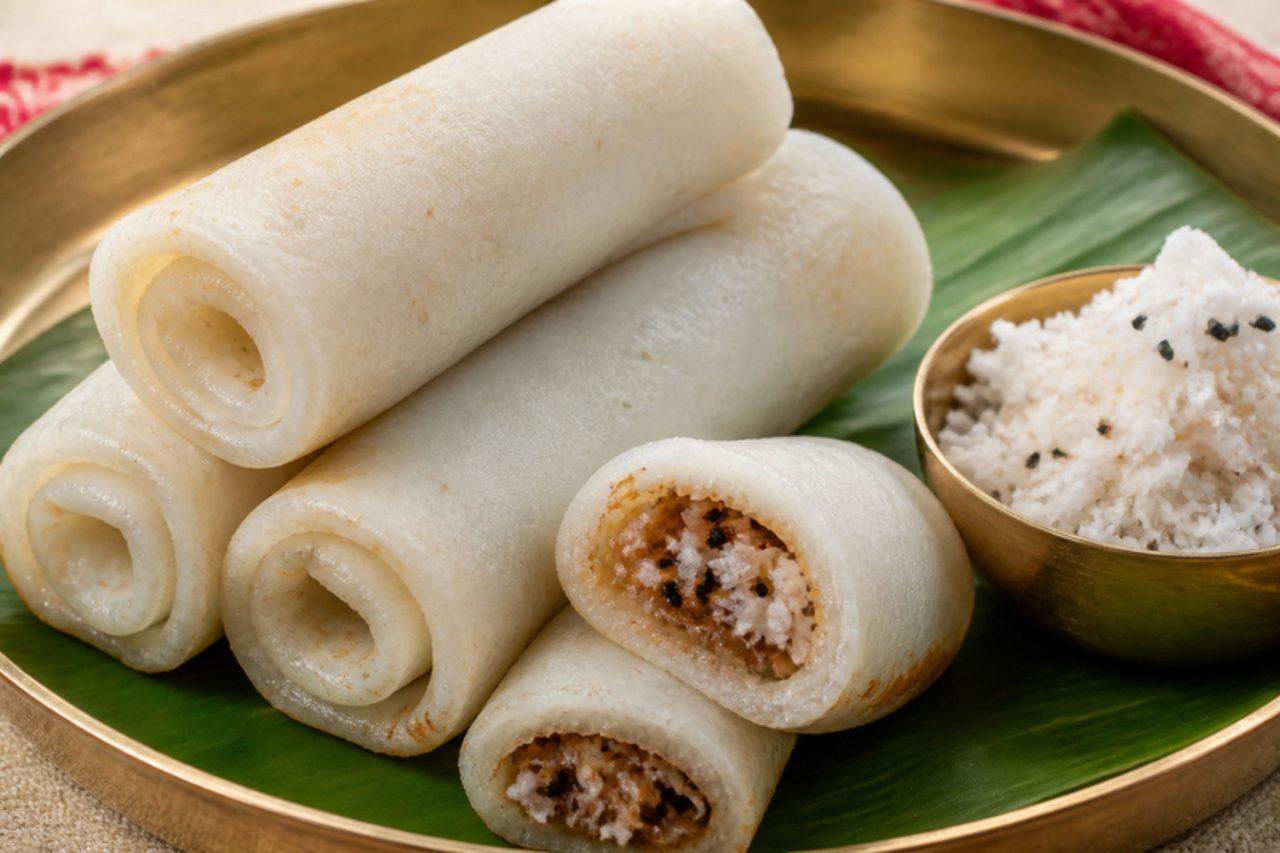
SaruchakliThin rice and urad dal crêpes

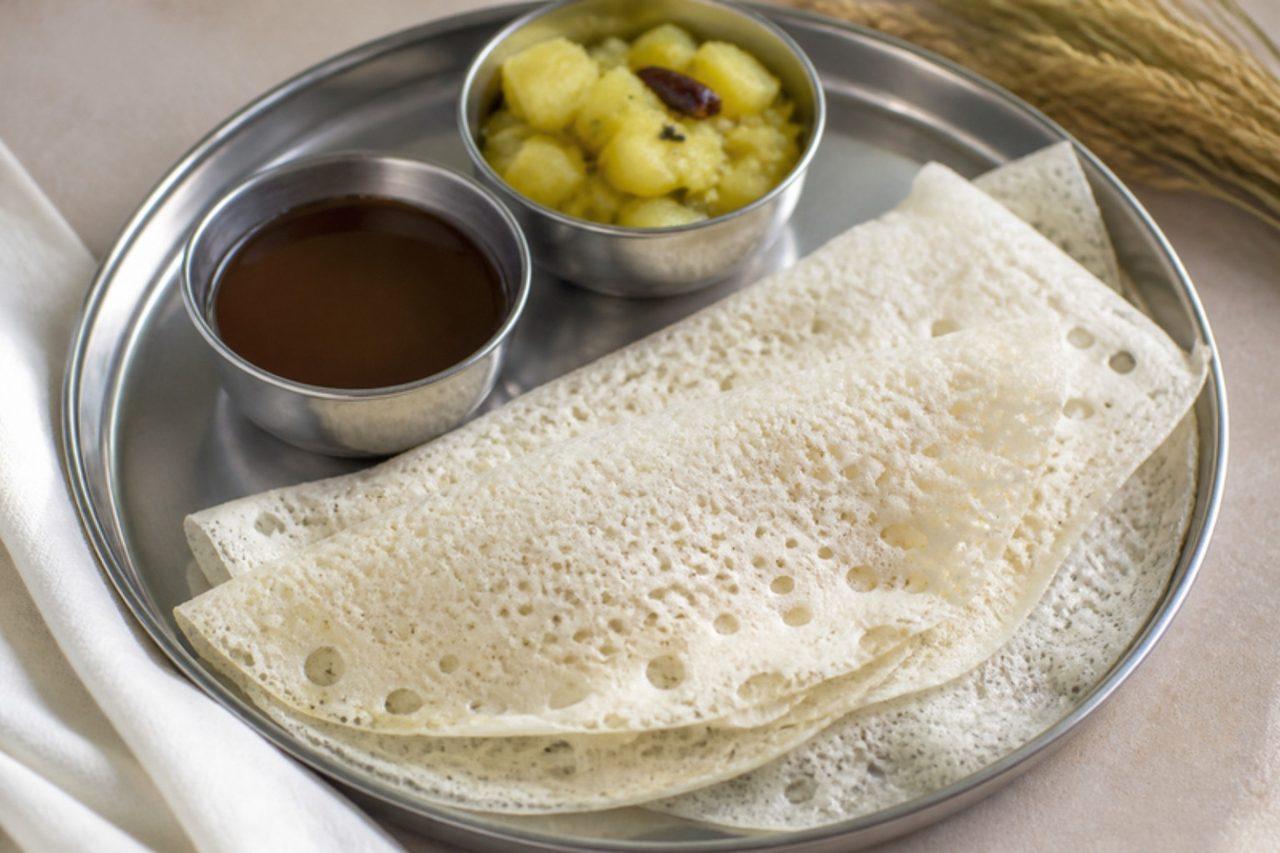
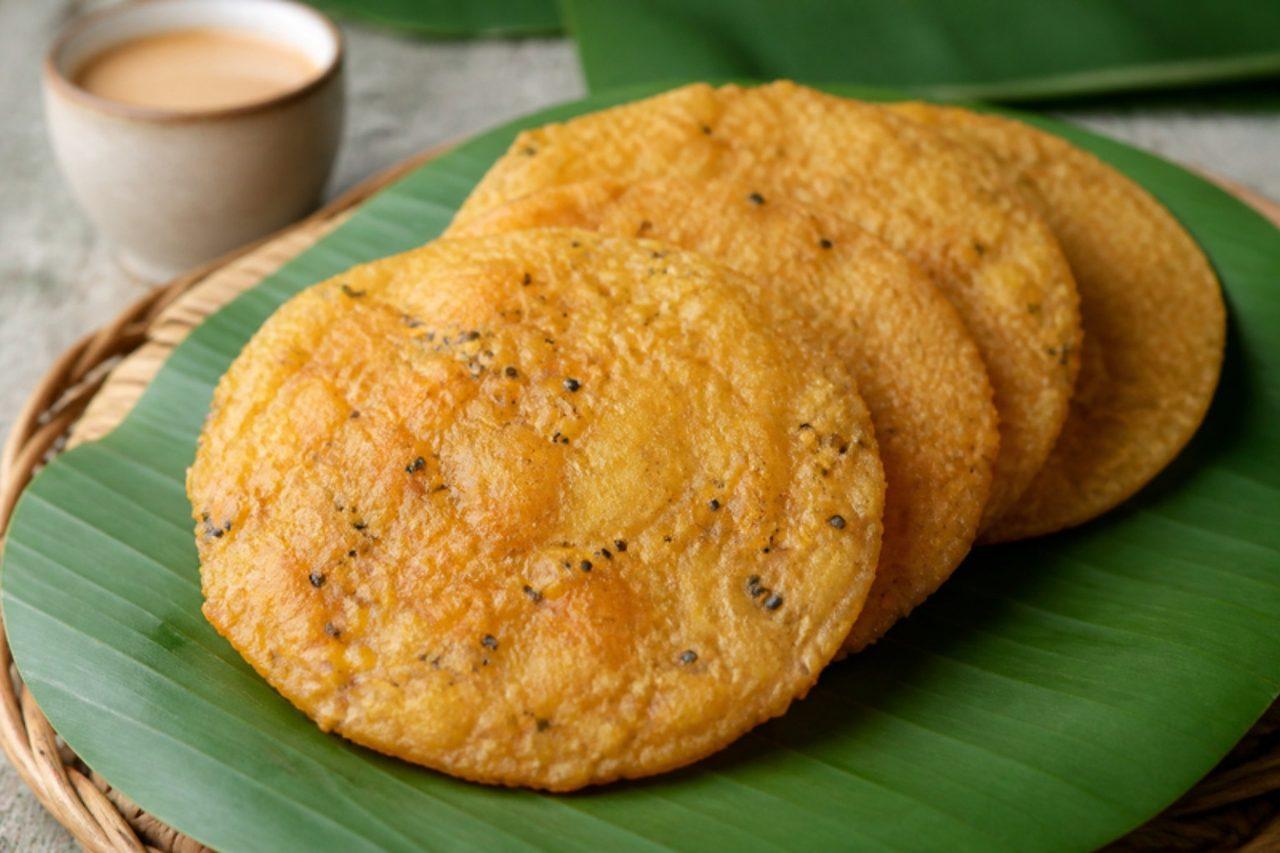
In Bengal, Poush Sankranti in mid-January is pithe-puli day, when the new rice and the first nolen gur (date-palm jaggery) of winter turn into a table of pithas, and saruchakli is the plain, savoury-leaning one that starts the meal. A thin batter of soaked rice and urad dal is spread on a hot pan to make delicate, lacy crêpes with crisp edges and a soft centre, eaten rolled with nolen gur or with a light potato curry. Common mistake: a batter that is too thick; it should pour like single cream so it spreads thin, and the crêpe is ready when the edges lift and turn golden and the top looks dry. Chef's tip: brush the pan with a cut half potato dipped in oil between each saruchakli; it greases evenly and stops sticking.

by KrazyBadal 0 views
Kalkandu vadaiSweet urad dal rock sugar vadai

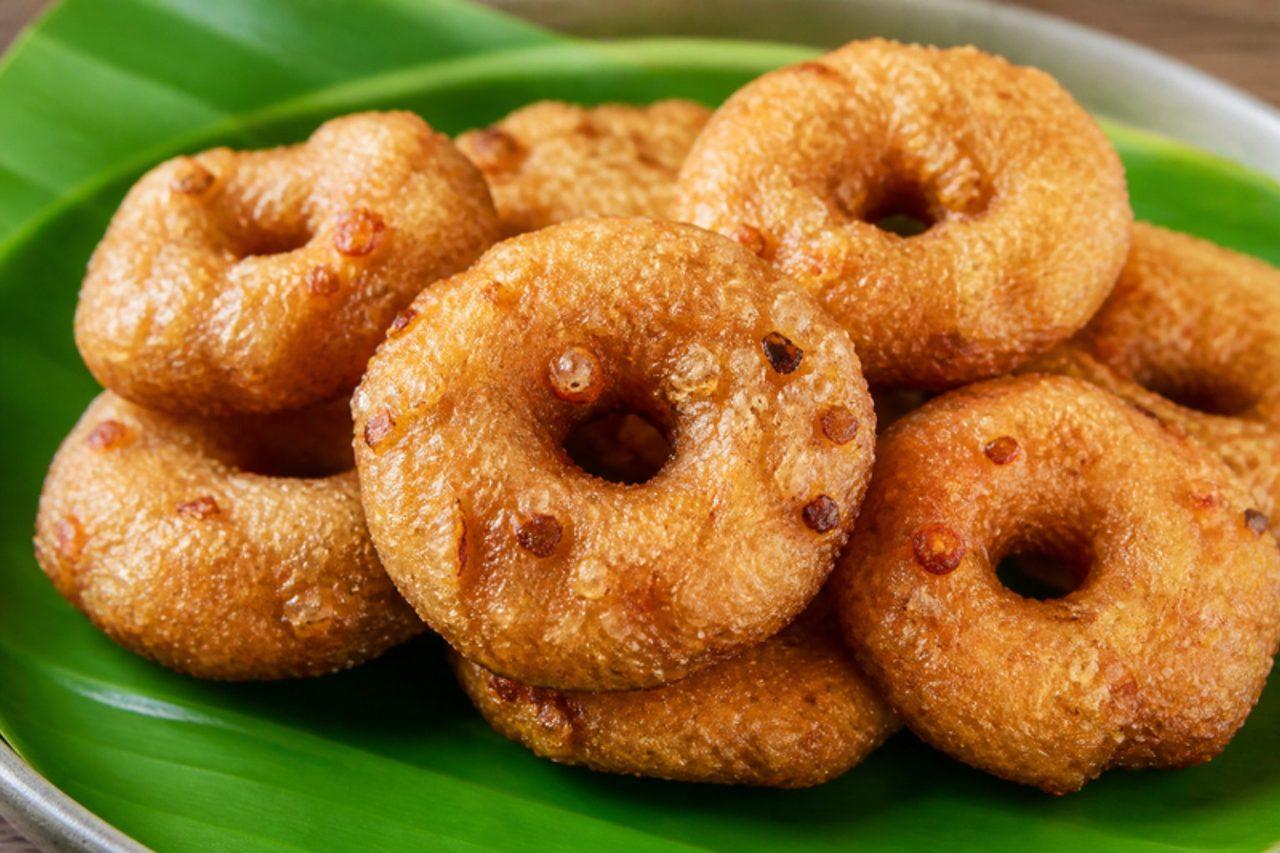
Kalkandu vadai is the sweet cousin of medu vadai, made in Chettinad homes for festivals and for the trays that go to a bride's house. Soaked urad dal and a little rice are ground fluffy and mixed with crushed kalkandu (rock sugar) and coconut, then fried into small golden rounds that are crisp outside, soft inside, with pockets of melted crystal sugar. They are eaten warm with coffee. A common mistake is grinding the rock sugar in with the batter, which turns the batter runny; crush it coarsely and fold it in just before frying. Chef's tip: fry these on slightly lower heat than savoury vadai, because sugar browns fast and burns before the centre cooks.

by KrazyBadal 0 views
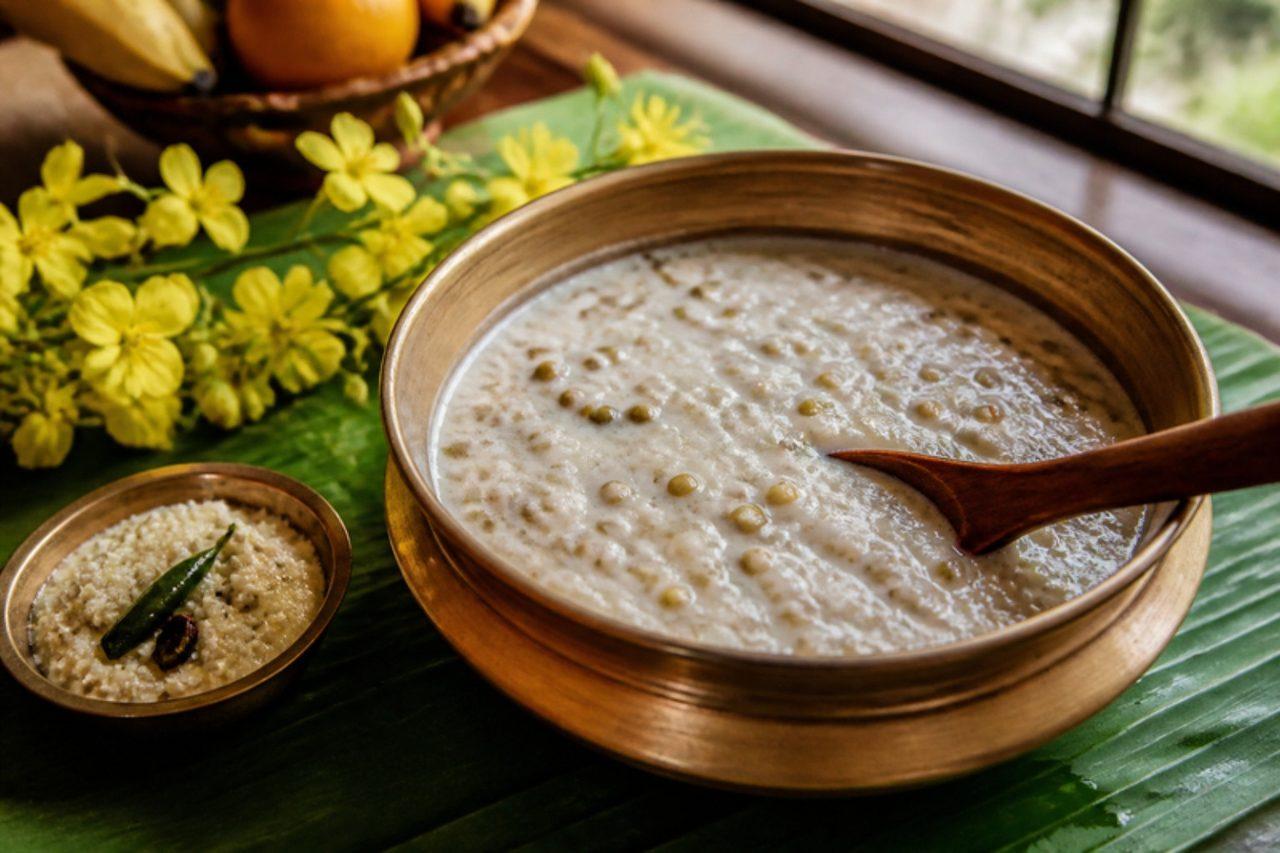
Vishu kanjiRice and green gram porridge

In Kerala, Vishu starts before sunrise with the kani, when each member of the family is led with closed eyes to see a tray of rice, gold-yellow konna flowers, fruit, a mirror and a lamp, so the year begins with something lucky. Breakfast afterwards, in many central Kerala homes, is this kanji: rice and lightly roasted whole green gram cooked soft and finished with coconut milk, eaten with a dry chakka or pumpkin side and pappadam. It is mild, creamy and nourishing, nothing like a plain rice gruel. The common mistake is boiling the thick coconut milk, which splits it and turns the kanji grainy; it goes in at the end, off the boil. It is ready when the gram has burst and the rice falls apart when stirred. Chef's tip: a few crushed cumin seeds and a shallot fried in coconut oil spooned over each bowl make it taste festive.

by KrazyBadal 0 views
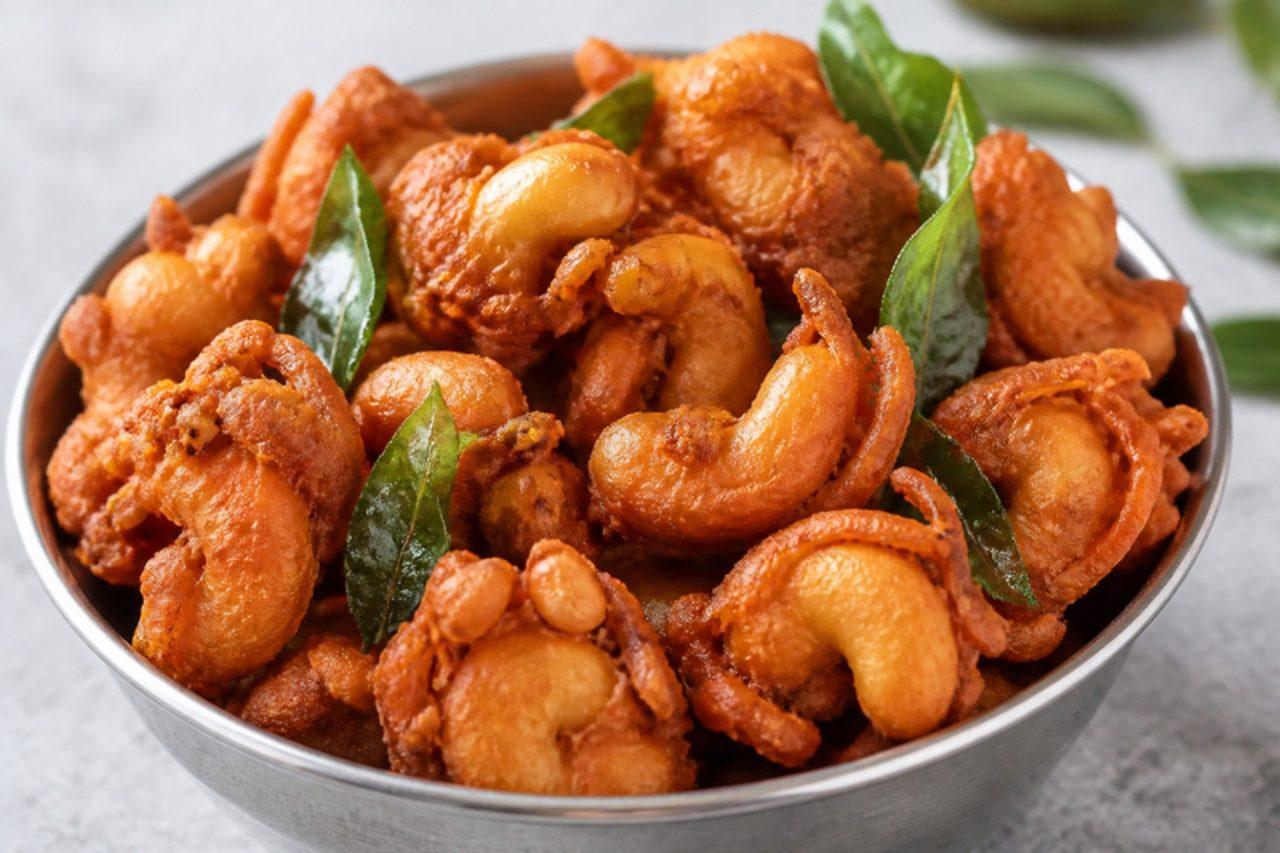
Cashew pakodaCashew fritters

Cashew pakoda is the luxurious version of onion pakoda sold at Tamil sweet stalls and Chennai's old sweet shops, especially at Deepavali, when it's packed in boxes alongside mixture and ribbon pakoda. The cashews sit in a lacy, crunchy coat of besan with onion, curry leaves and fennel. The mistake is making a wet batter: this isn't a dipping batter but a crumbly mix squeezed onto the cashews, so add water only by the spoonful. Chef's tip: fry on medium heat so the cashews toast inside the coat; too hot and the coat browns while the nuts stay pale and soft.

by KrazyBadal 0 views
SukhiyanGreen gram jaggery fritters

Sukhiyan is one of the old nalumani palaharam, the 'four o'clock' snacks of central Kerala, sold in glass cases in Kottayam and Ernakulam tea shops next to unniyappam and banana fritters. Whole green gram is cooked soft and mashed with melted jaggery, coconut and cardamom, then rolled into balls, dipped in a light batter and fried. The outside is thin and slightly crisp, the inside soft and earthy-sweet, lovely with strong black tea. A common mistake is a wet filling; if the jaggery mix is not cooked until it leaves the pan, the balls crack and leak in the oil. Chef's tip: a pinch of salt and a little turmeric in the batter give the classic golden colour and balance the sweetness.

by KrazyBadal 0 views
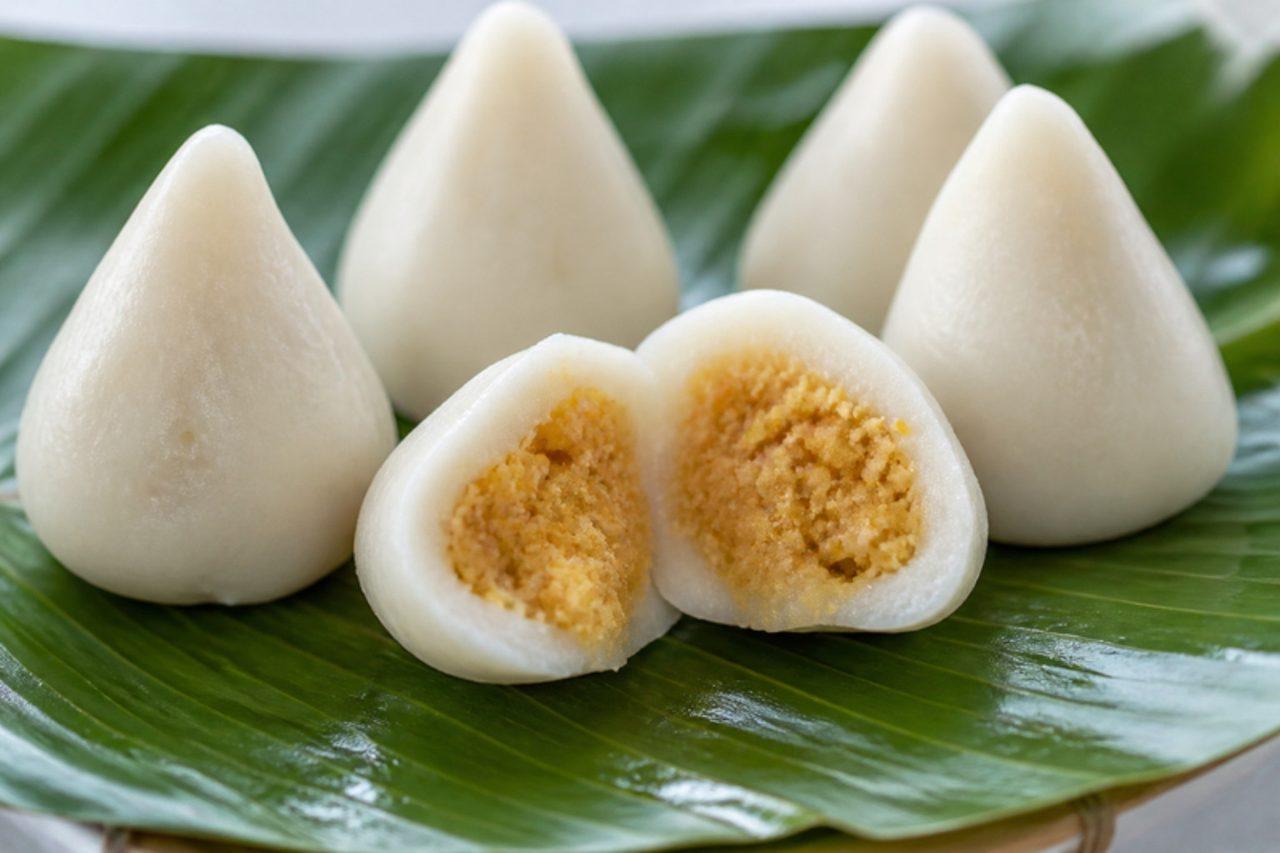
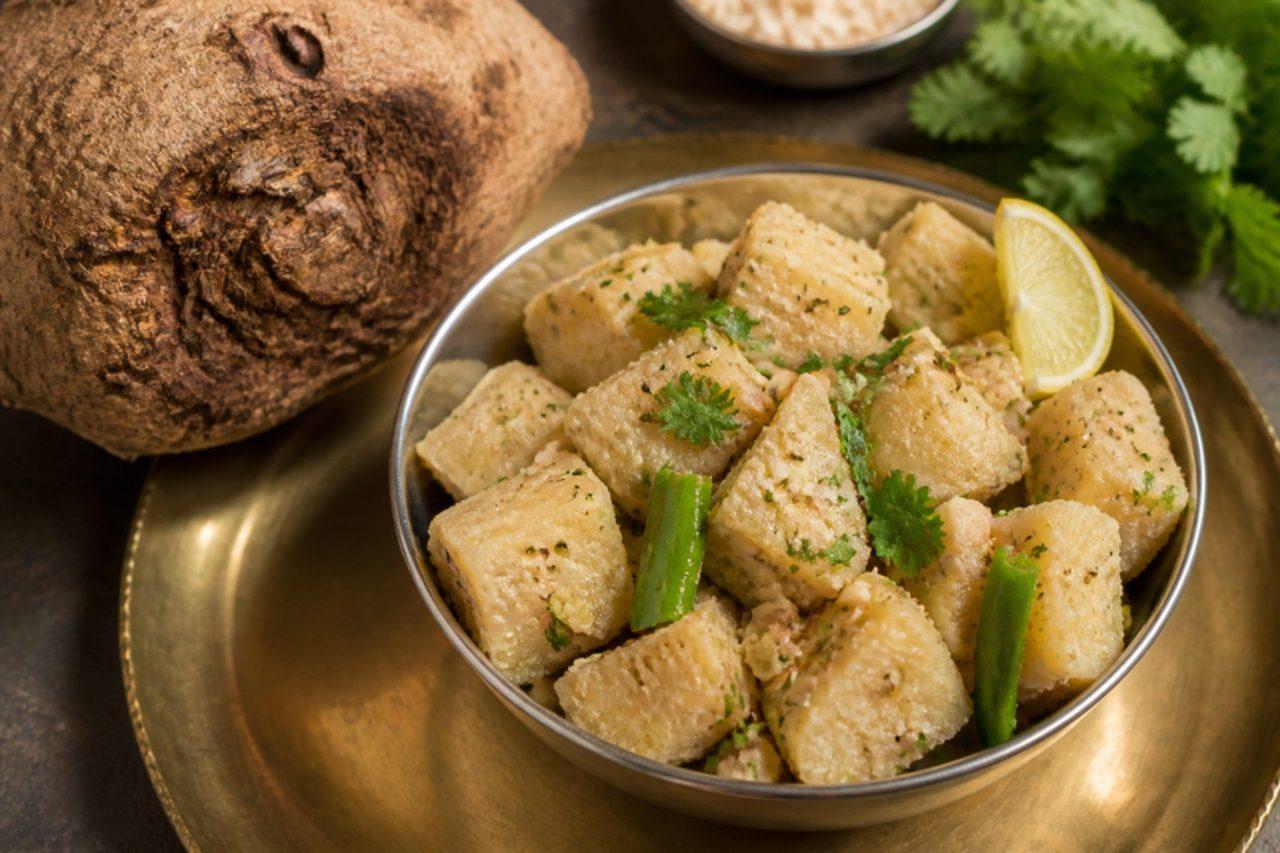
Suran nu shaakYam with cumin and peanuts

Suran, the knobbly elephant-foot yam, is a favourite of the Gujarati farali table on Mahashivratri and Ekadashi: boiled until tender, then stir-fried with cumin, green chilli and crushed peanuts and sharpened with lemon. It is filling and earthy, a little like a dense potato, and goes well with rajgira thepla or farali kadhi. Because suran is a root vegetable it is not eaten by Jains, so this is a Hindu fasting dish only; some families also skip cumin on a fast. Raw suran contains crystals that make the hands and throat itch, so wear gloves when peeling and always boil it with something sour. Common mistake: under-boiling to keep the cubes firm; undercooked suran scratches the throat. Boil until a cube is soft right through when pierced. Chef's tip: a few pieces of kokum in the boiling water work as well as lemon and give a pleasant blush to the yam.

by KrazyBadal 0 views
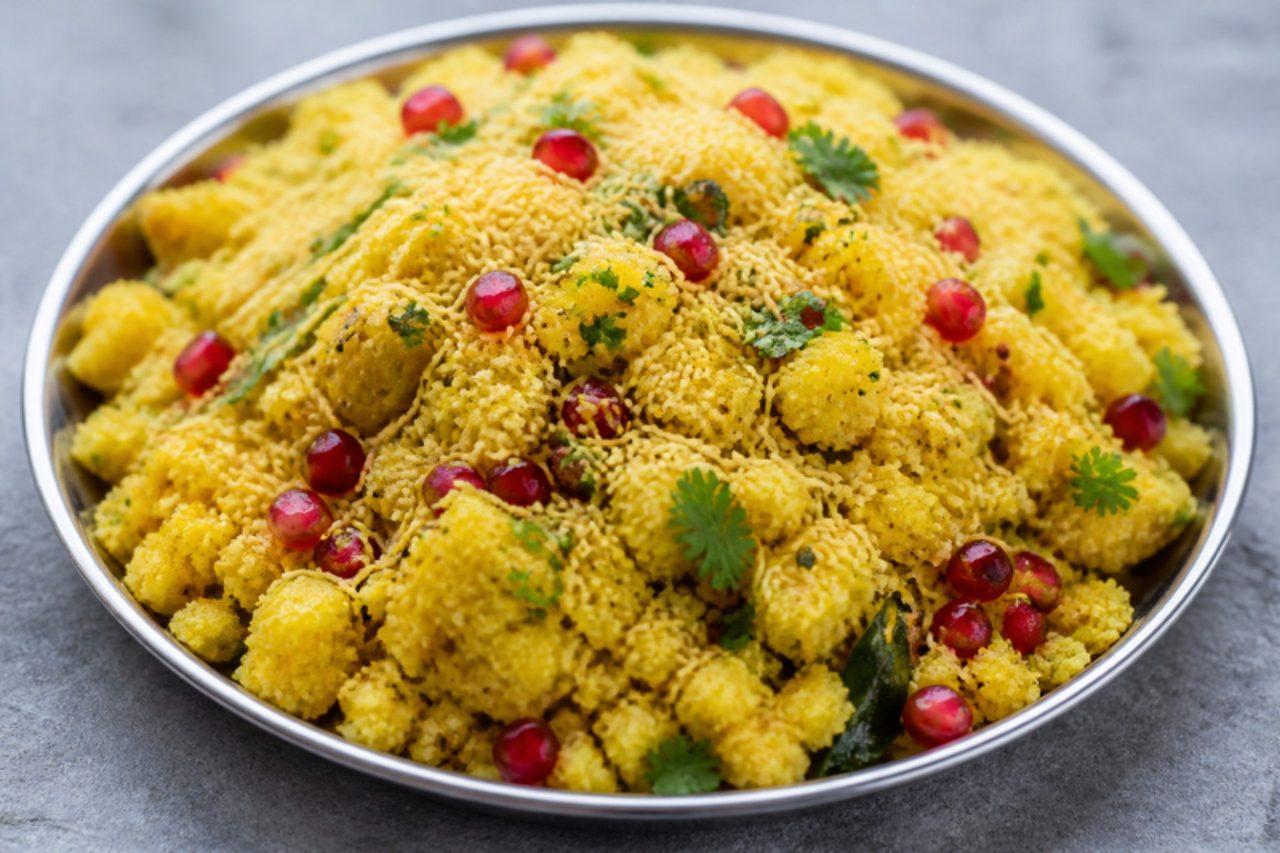
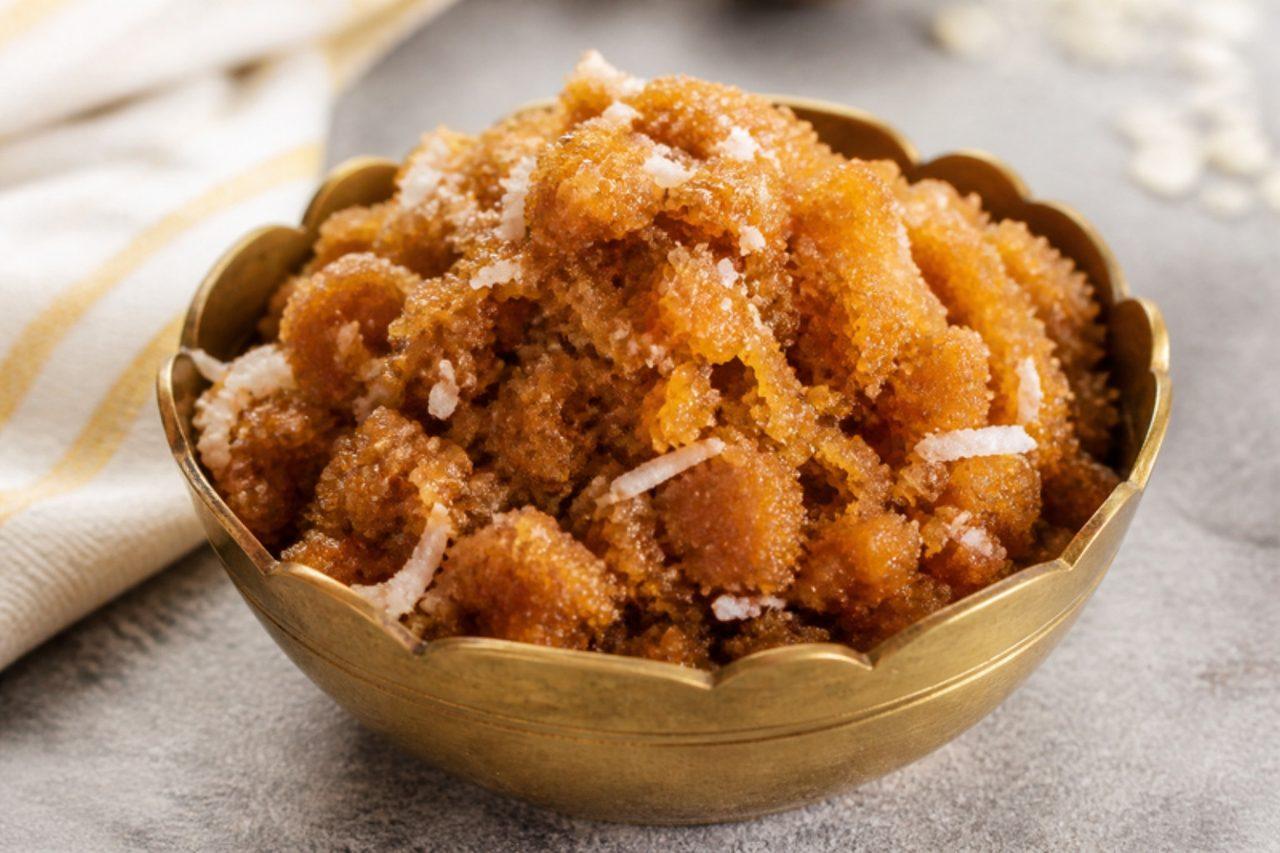
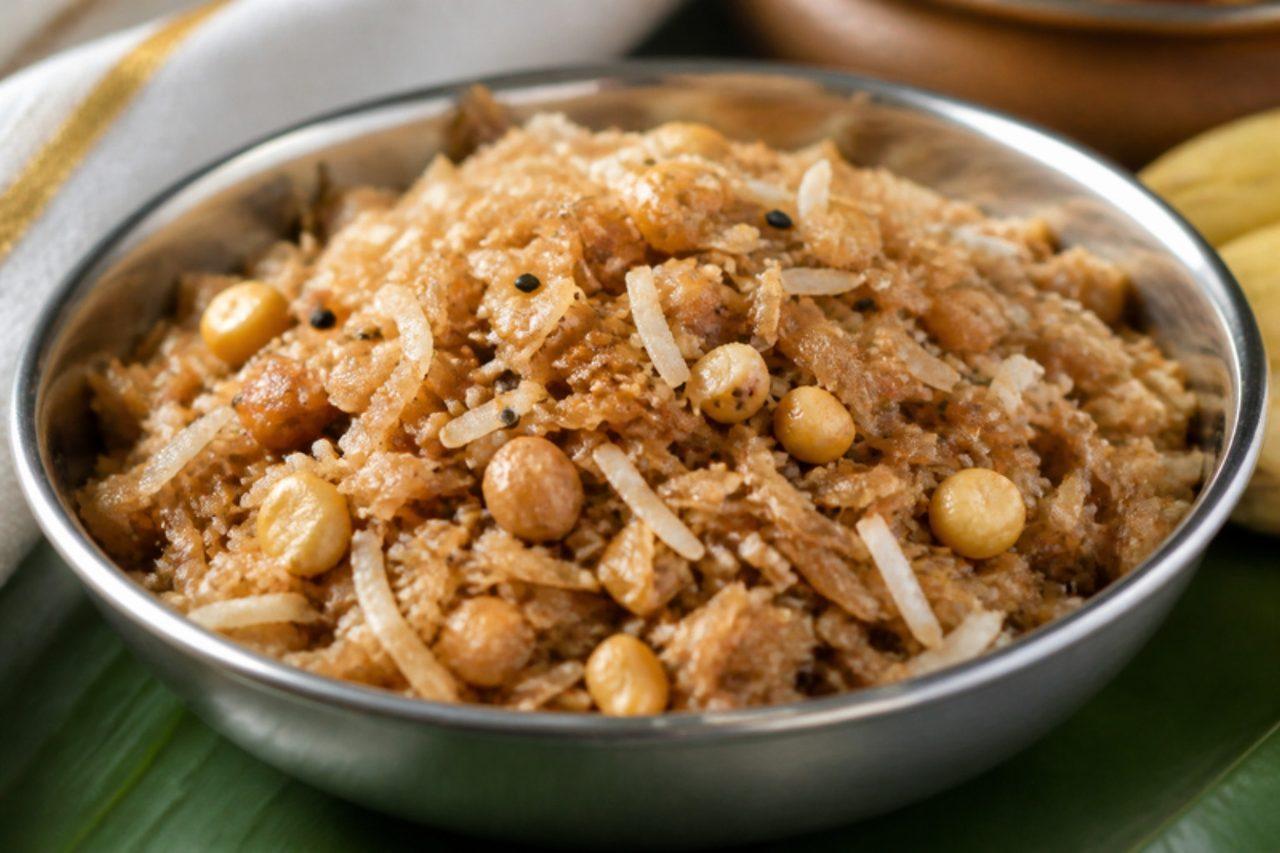
Aval vilayichathuFlattened rice with jaggery and coconut

Aval vilayichathu is the quickest sweet in a Kerala kitchen, made in Palakkad and Thrissur homes for evening tea, for children back from school, or as an offering for Krishna on Janmashtami. Thick beaten rice is stirred into hot jaggery syrup with coconut, then finished with toasted sesame, roasted chana and coconut slivers so it turns chewy, dry and fragrant. A common mistake is adding the aval while the syrup is too thin; the flakes go mushy instead of glazing, so cook the jaggery and coconut until thick first. Chef's tip: use thick red aval if you can find it; it keeps a bite and has a gentle nutty taste.

by KrazyBadal 0 views
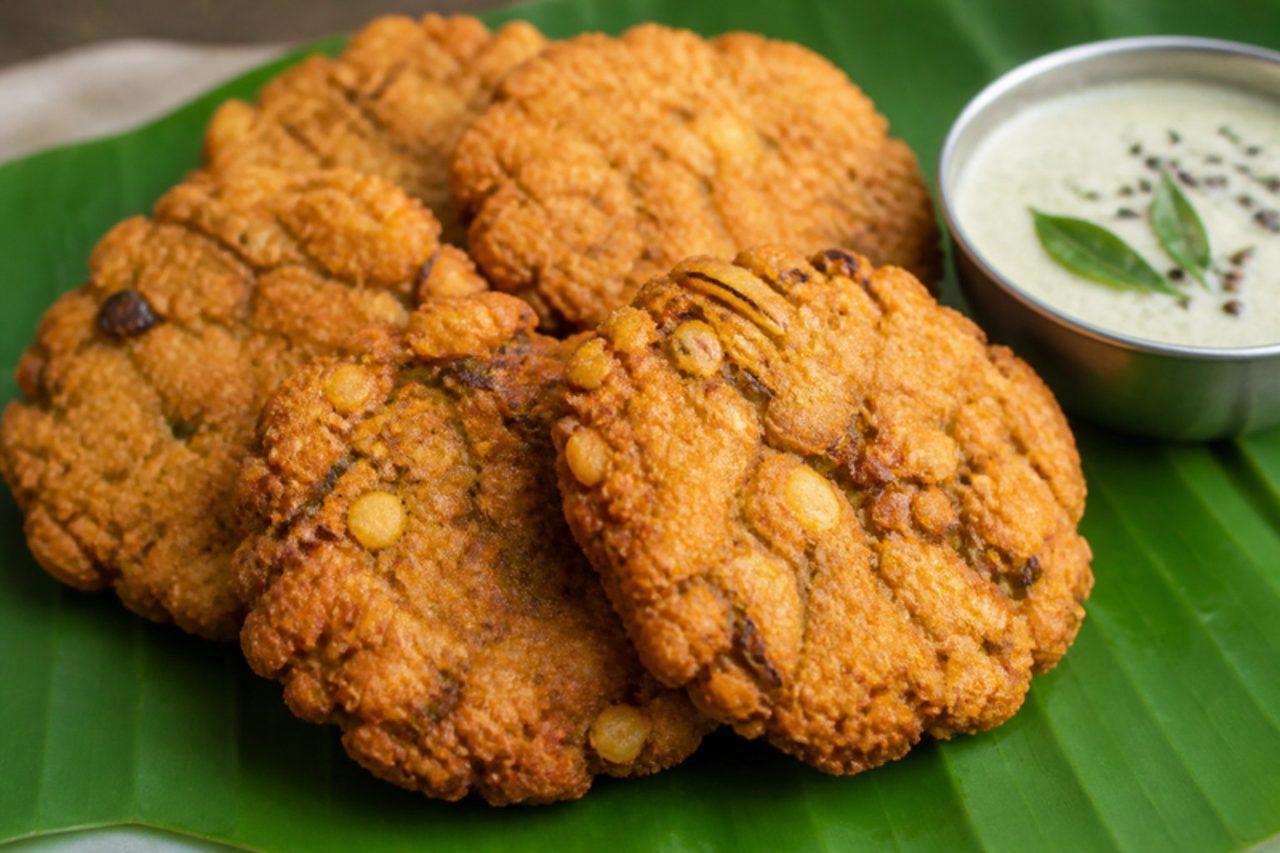
ManoharamRice flour sticks in jaggery syrup

Manoharam is a Chettinad sweet made for weddings and the sweet trays of Deepavali, often shaped into a tall cone for the bridal seer. Short, crisp sticks of rice and moong flour are pressed and fried, then tossed in a jaggery syrup cooked to the hard-ball stage, so the syrup sets around them into a crunchy, molasses-sweet cluster. It is eaten in small pieces with coffee and keeps for weeks. The usual mistake is undercooked syrup, which never sets and leaves the sticks soggy; test it in cold water until it snaps. Chef's tip: have the fried sticks warm and ready in a wide greased bowl before the syrup reaches the right stage, as it starts setting within a minute.

by KrazyBadal 0 views
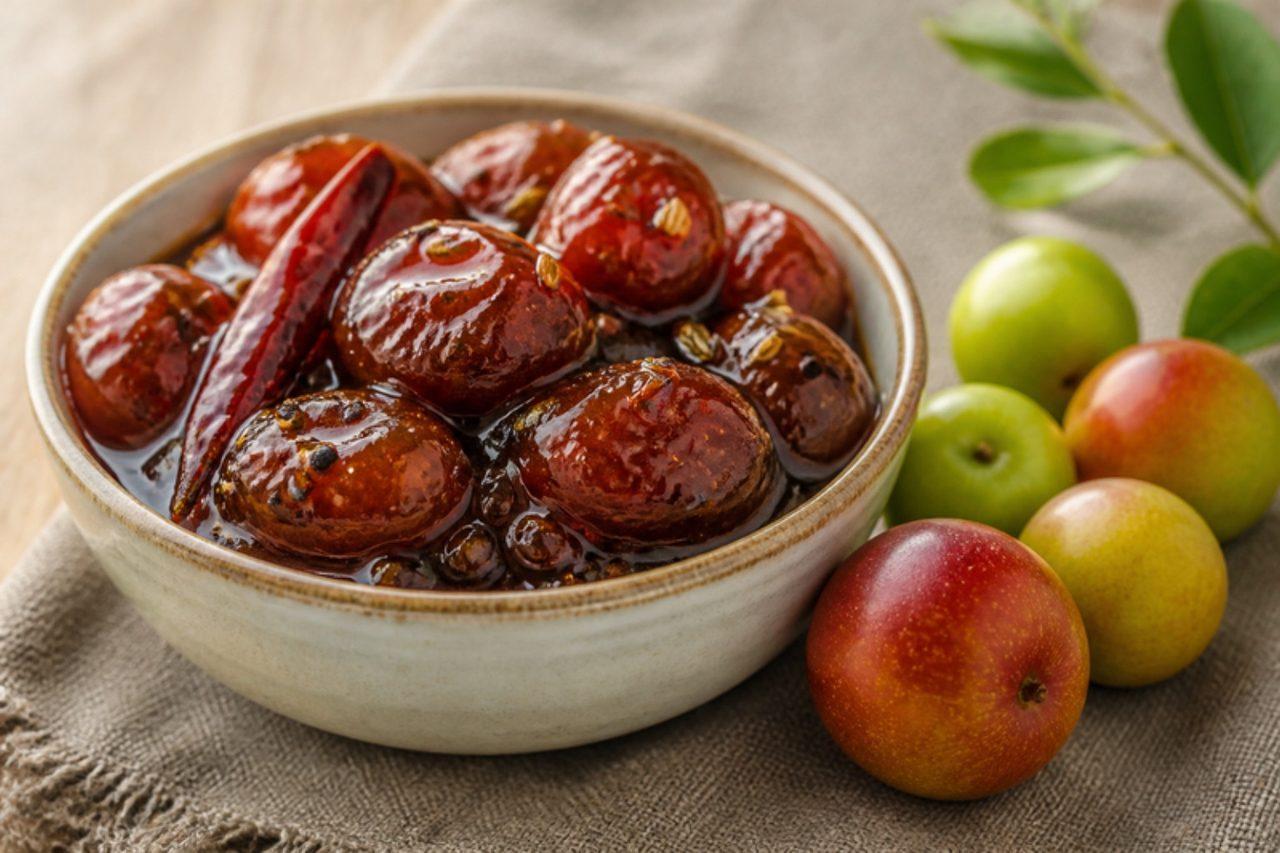
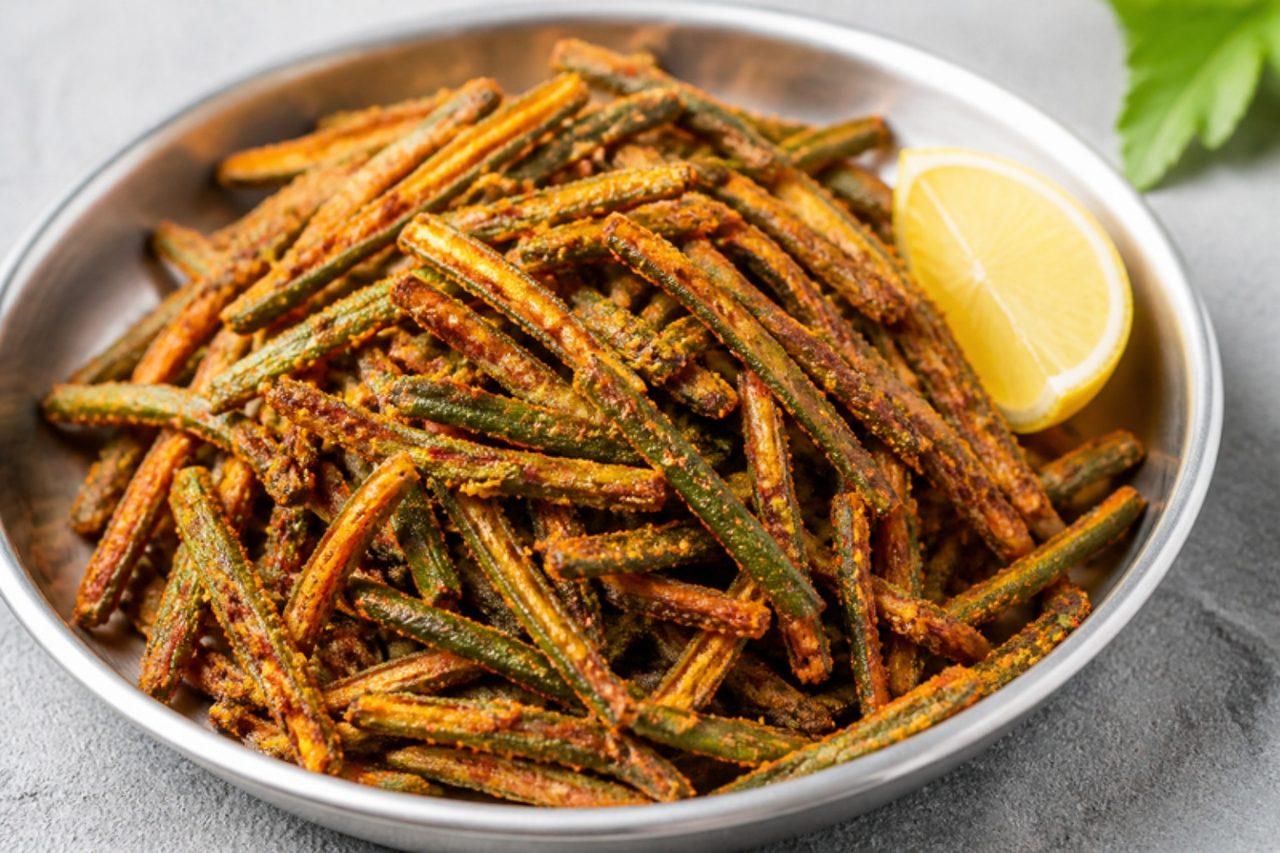
Kurkuri bhindiCrispy fried okra strips

Kurkuri bhindi is the dhaba and wedding-buffet side that disappears first: thin, slivered okra tossed in a dry coat of besan, chilli and amchur and fried until it shatters. In Punjabi and Delhi homes it is served as a tea-time snack, scattered over dal-chawal or eaten by the handful while the rest of dinner cooks. The mistake almost everyone makes once is washing the okra and slicing it while still damp: the coating turns into gluey lumps and the strips go limp. Wash it an hour ahead and dry it completely. Chef's tip: toss the slivers with the spices first and add the flours only just before frying, so the okra cannot release liquid into the coating.

by KrazyBadal 0 views
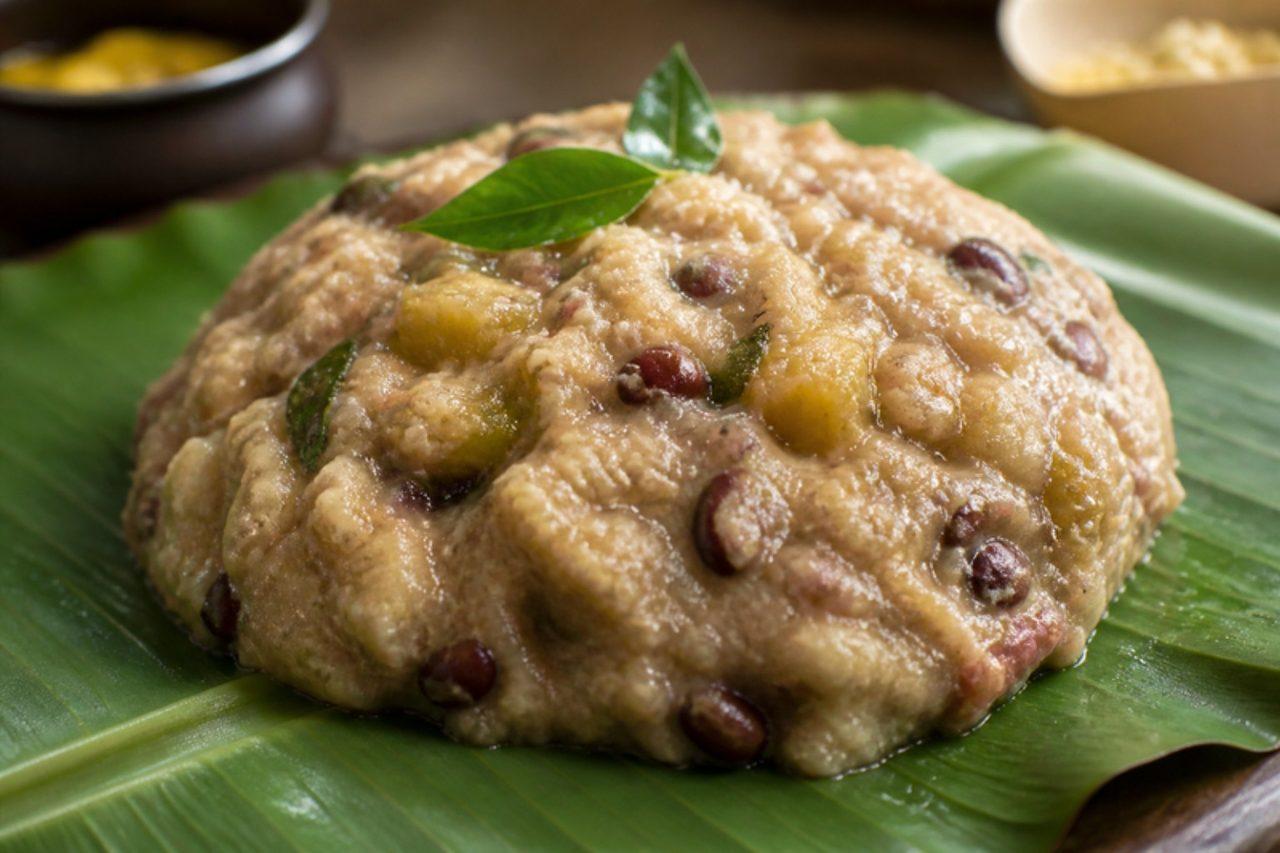
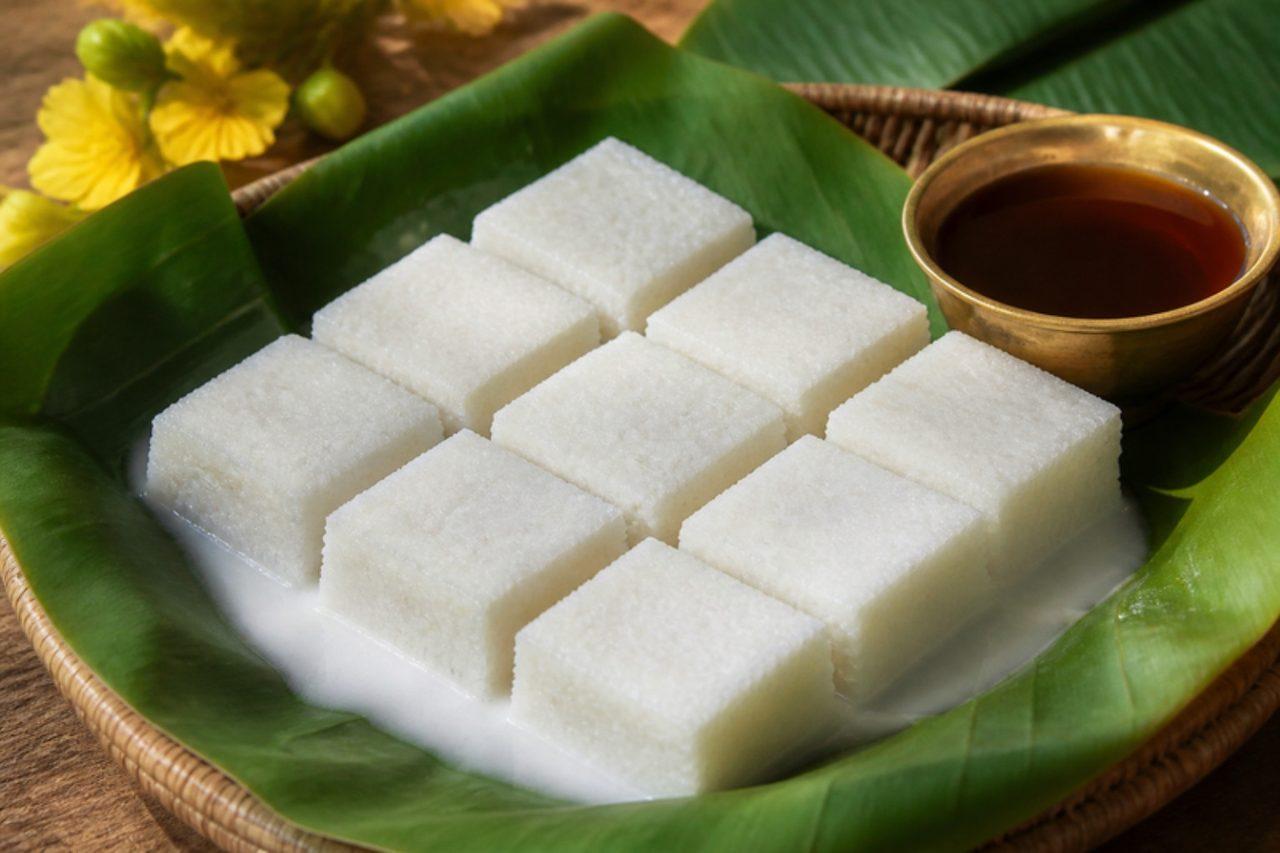
Vishu kattaCoconut milk rice squares
Around Thrissur and Palakkad the Vishu breakfast table is not complete without katta, rice cooked slowly in coconut milk until it can be spread on a plate, set and cut like a cake. Families eat the squares two ways: with a pour of dark jaggery syrup for sweetness, or with a hot, sour curry for those who prefer savoury on a festival morning. Set, it is soft, rich and faintly salty, with the scent of cumin. The common mistake is rushing it on a high flame; the coconut milk splits and the rice catches before it turns creamy. It is ready when the whole mass comes away from the sides of the pan and holds a ridge when you draw a spoon through it. Chef's tip: smooth the top with a piece of banana leaf or the back of a wet spoon, and cut the katta only once it is fully cool, or the squares will tear.

by KrazyBadal 0 views

Koova payasamArrowroot pudding

In central Kerala, the morning of Thiruvathira begins with a bath before dawn and a bowl of koova, arrowroot starch that many families still pound and wash out from their own garden roots. Cooked with jaggery and coconut milk, it turns into a glossy, wobbly pudding that is light on the stomach for a day without rice. The texture should be silky and pourable while hot, thickening as it cools. Common mistake: tipping the powder straight into hot liquid, which gives lumps you can never whisk out; slake it in cold coconut milk first and stir all the time, and it is ready when it turns from cloudy white to clear and coats the back of a spoon. It is fasting-safe as written (arrowroot, jaggery, coconut and cardamom only), and Gujarati farari cooks use the same starch; check your own family's fasting rules if you add anything else. Chef's tip: melt and strain the jaggery separately and let it cool a little before adding, so the coconut milk does not split.

by KrazyBadal 0 views

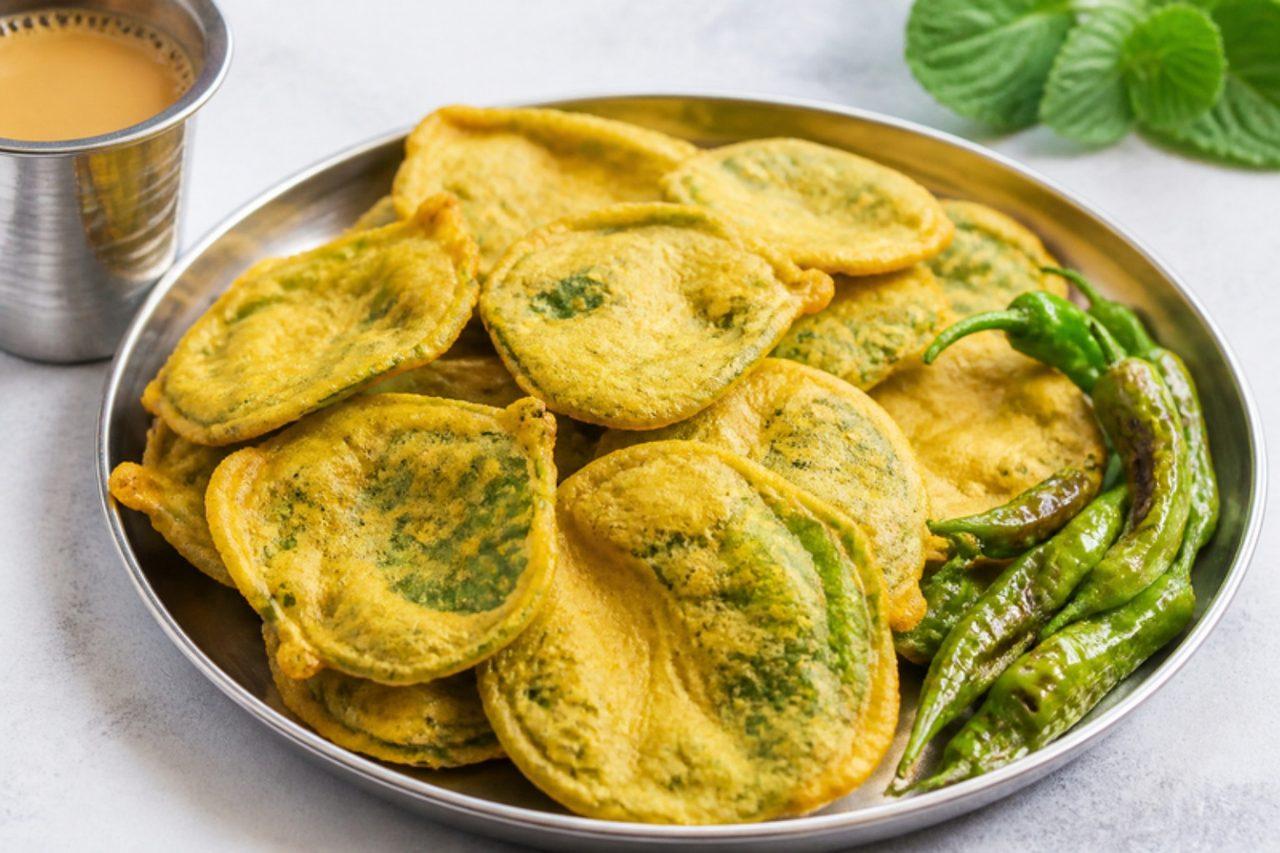
Ajma na pan na bhajiyaBorage leaf fritters

Ajma na pan, the thick, fuzzy, thyme-scented leaves of the Indian borage plant (also called karpooravalli or Mexican mint), grow in pots on balconies all over Gujarat, and on rainy evenings they are picked straight into the bhajiya batter. Each leaf is dipped whole in thin spiced besan and fried into a crisp, lacy fritter with a soft, herbal centre that tastes of ajwain and pepper. The usual mistake is a thick batter: it hides the leaf and fries doughy, so keep it like pouring cream and let excess drip off. Chef's tip: pat the leaves completely dry after washing, or the batter will slide off in the oil.

by KrazyBadal 0 views

Khari bundiSalted gram flour pearls

Khari bundi is the salted boondi that Gujarati cooks keep in a jar for raita, bhel, dahi puri and Diwali farsan mixes, and that farsan shops in Ahmedabad sell by the kilo. A pourable gram flour batter is tapped through a perforated ladle into hot oil, where it puffs into crunchy little pearls, then tossed while warm with salt, red chilli and black pepper. The common mistake is getting the batter consistency wrong: too thick and the drops grow tails, too thin and they spread flat, so test a few drops before frying the whole lot. Chef's tip: hold the ladle about 10 cm above the oil and tap its edge, never press the batter through.

by KrazyBadal 0 views

Kholasapori pithaRice pancakes with coconut and jaggery

Kholasapori means 'pressed in the khola', the shallow clay pan that every Assamese kitchen brings out for Magh Bihu, when guests are offered a plate of pitha before anything else. These are thicker and softer than the crisp til pitha: a loose batter of sticky rice flour is spread on the hot pan, filled with coconut and jaggery and folded over, so the outside is lightly speckled and the inside chewy and sweet. A heavy cast-iron pan stands in well for the khola. Common mistake: a pan that is too hot; the batter should set slowly with no browning in the first minute, and it is ready to fold when the edges lift and the top no longer looks wet. Chef's tip: wipe the pan with a cloth dipped in oil between each pitha rather than pouring oil in, so they stay pale and even.

by KrazyBadal 0 views

HaalbaiRice, coconut and jaggery fudge

Haalbai is a home sweet of Malnad and coastal Karnataka, from Shivamogga to Udupi, made for festivals like Ganesha Chaturthi and Deepavali or simply when there's fresh coconut in the house. Soaked rice is ground with coconut, then cooked with jaggery and cardamom until it thickens into a glossy mass that sets soft and slightly chewy, almost like a firm halwa. A common mistake is stopping too early; if it isn't cooked until it leaves the sides and a drop rolls into a ball, it never sets for cutting. Chef's tip: stir with a long wooden spoon and wear an oven glove, because the thick mix bubbles and spits towards the end.

by KrazyBadal 0 views

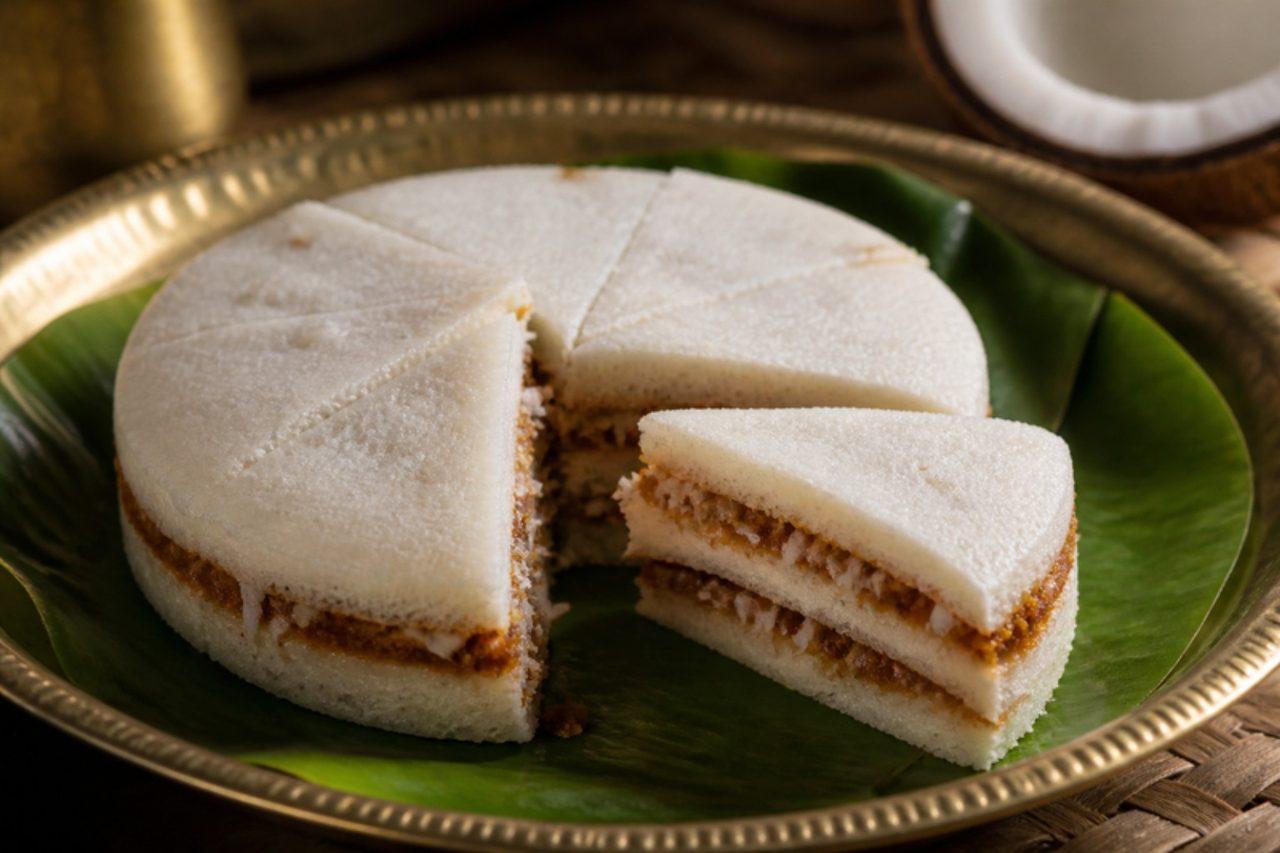
Tekeli pithaSteamed coconut jaggery rice cake

In Assamese homes the nights before Magh Bihu are spent making pitha, and tekeli pitha is the one named after the pot it is cooked on: a cloth is tied over the mouth of a tekeli (a small clay water pot), and damp rice flour, coconut and jaggery are piled on top and steamed by the water boiling underneath. It comes off as a soft, crumbly cake, sweet in the middle and plain at the edges, eaten warm with tea on Bihu morning or packed into the bhogali spread. Any narrow-necked pot or saucepan works at home. Common mistake: using dry shop rice flour straight from the packet; it needs to be just damp enough to clump when pressed, or the cake falls apart, and it is done when the top looks matt and a skewer comes out clean, about 10–12 minutes. Chef's tip: soak and grind your own rice flour if you can; flour from soaked rice, dried for an hour, gives the softest pitha.

by KrazyBadal 0 views

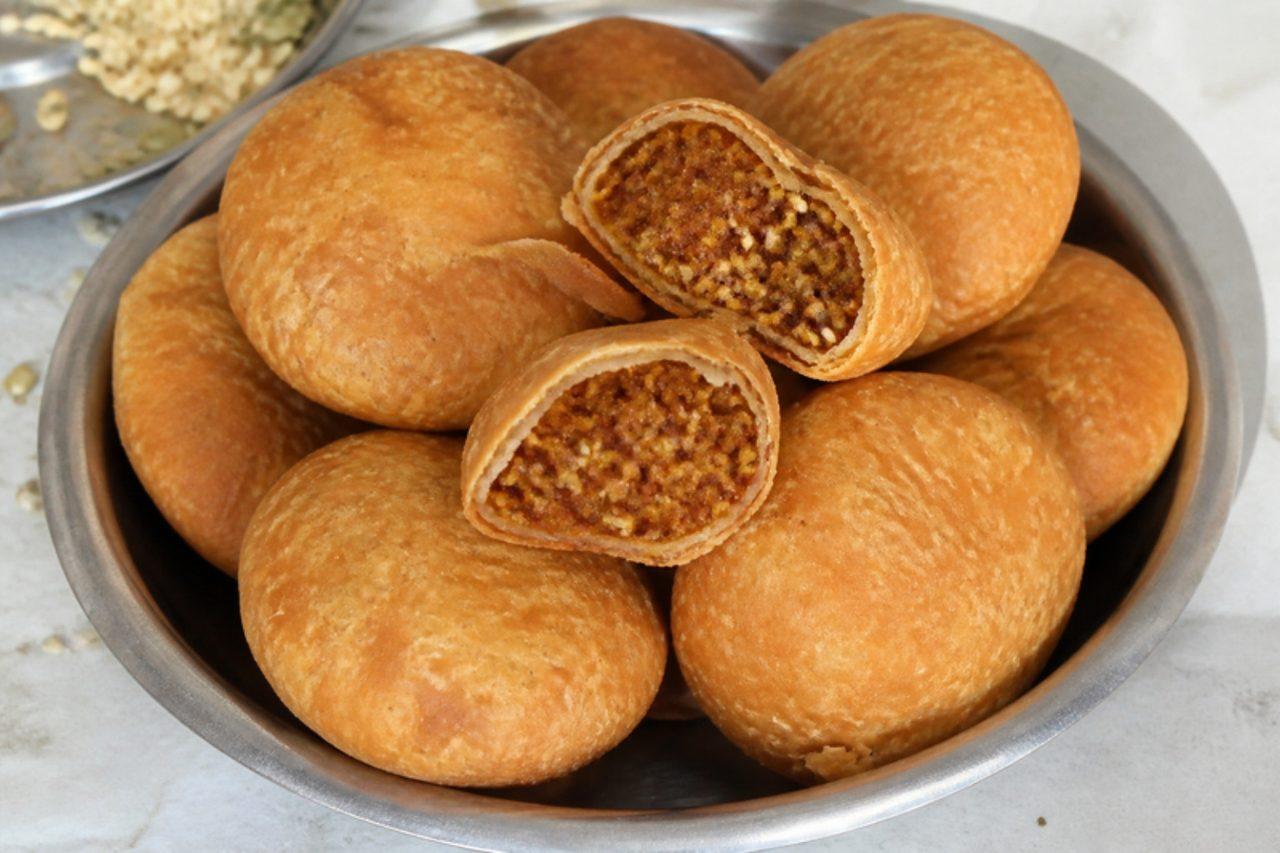
Jamnagari kachoriDry sweet-spicy kachori

Jamnagari kachori are the little dry kachori that travel: Gujarati families buy them by the box in Jamnagar and carry them abroad, because the filling has no water in it and they keep for a month. The pastry is short and crisp, and the filling is a crumbly mix of roasted besan, dry coconut, sesame, fennel, coriander seed, sugar, raisins and a hit of chilli and dry mango, sweet, sour and hot at once. They are a tea-time snack and part of every Diwali tray. The common mistake is frying them fast; they need a long, slow fry on low heat so the pastry cooks crisp all the way through. Chef's tip: roast the besan for the filling until it smells nutty and just darkens, or the kachori taste raw and floury.

by KrazyBadal 0 views

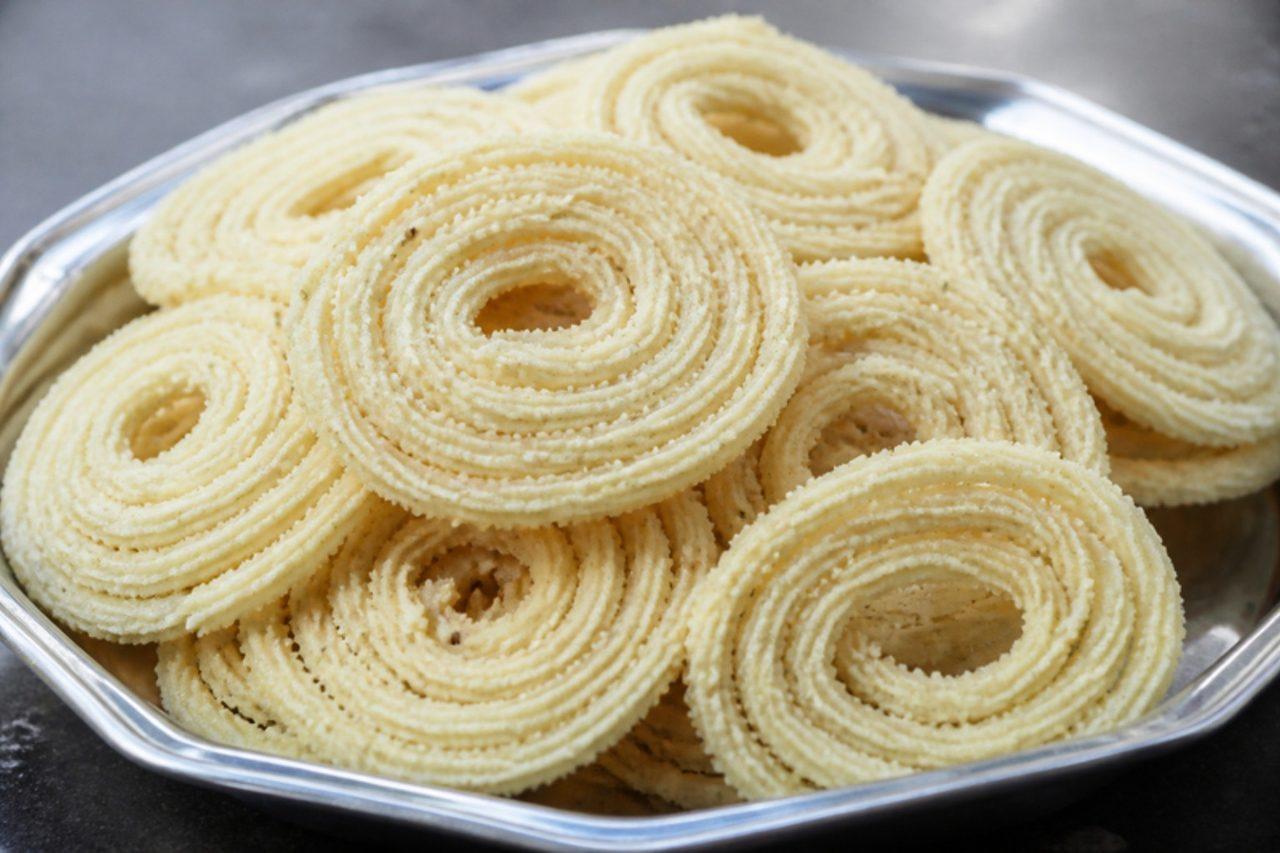
ThenkuzhalRice and urad flour spirals

Thenkuzhal is the plain, pale murukku of Tamil Nadu, especially in Chettinad and Thanjavur kitchens, pressed through a single-hole plate into neat spirals for Deepavali and Krishna Jayanthi. Unlike butter murukku, it relies on roasted urad flour and a spoon of hot oil for its crunch, with cumin and a little sesame for flavour, and it should be cream-coloured, smooth and light. It is eaten with coffee and kept in tins for weeks. The common mistake is a dough that is too stiff, which breaks while pressing and gives a rough, cracked surface; it should be soft enough to pipe smoothly. Chef's tip: press the spirals onto the back of an oiled slotted spoon or a square of parchment and slide them into the oil, so they keep their shape.

by KrazyBadal 0 views

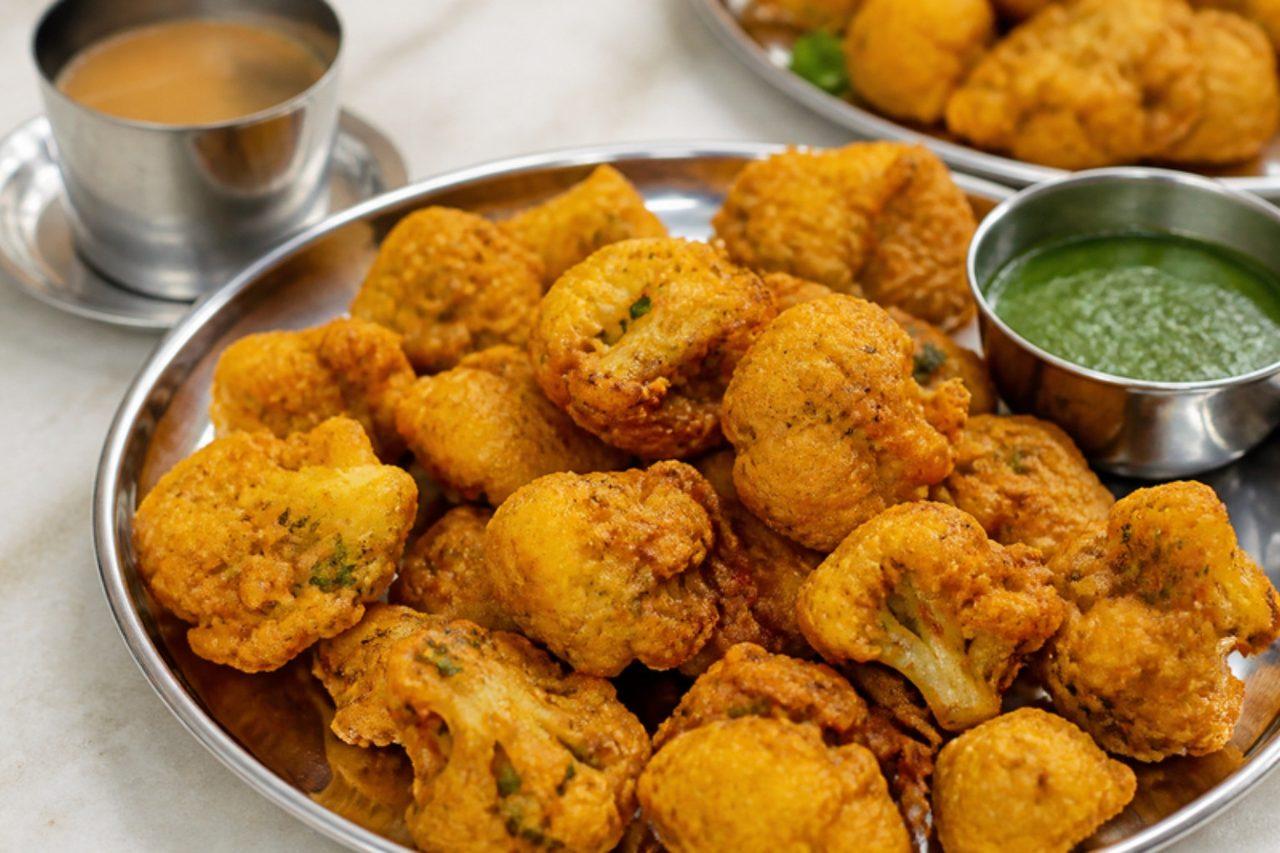
Gobhi pakoraCauliflower fritters

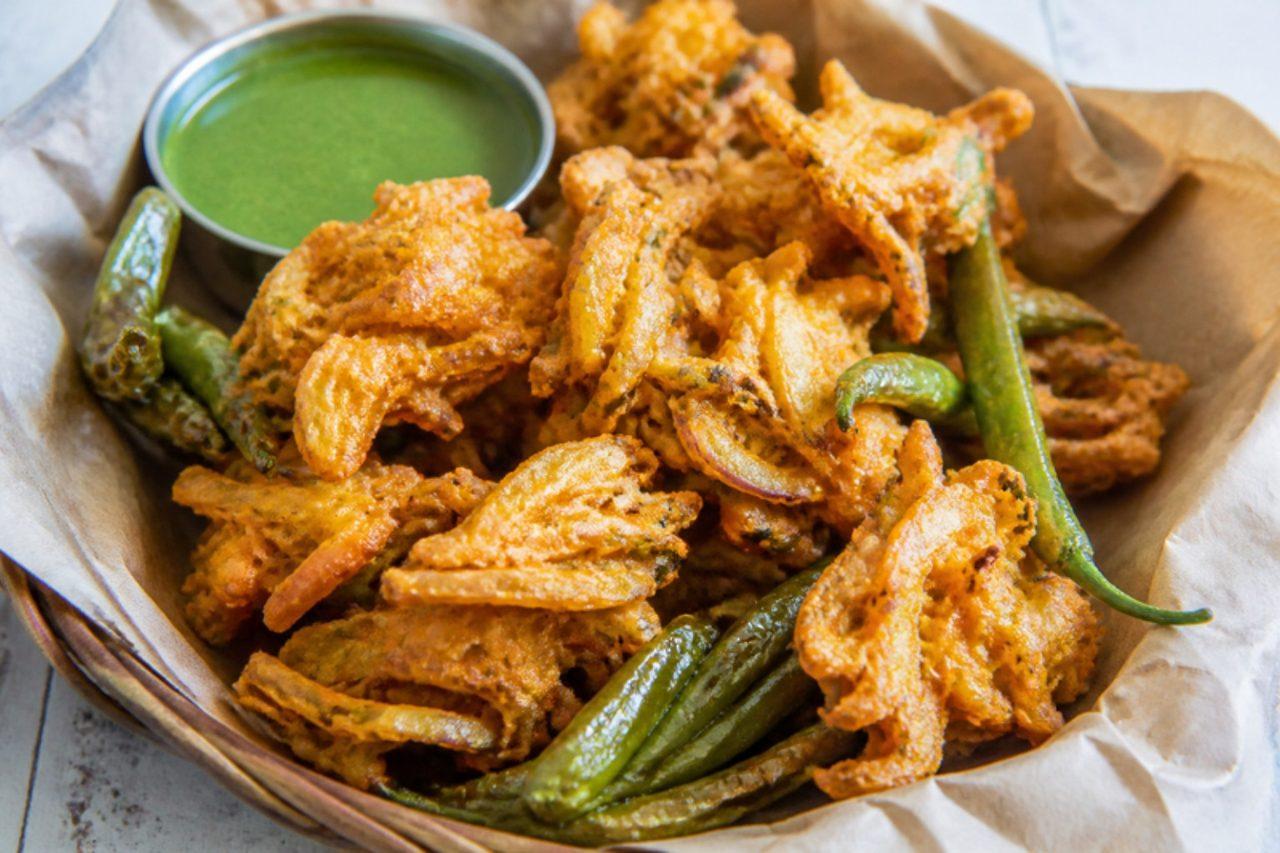
When the first winter cauliflowers arrive in the Punjab sabzi mandi, half of them end up as gobhi pakore, fried on a rainy afternoon or on a cold Sunday evening and eaten straight from the kadai with mint chutney and a steaming glass of tea. The batter is thick and rough with ajwain, chilli and a spoon of rice flour, so it fries into a craggy, crunchy shell around a soft, sweet floret. The usual mistake is dropping raw, thick florets into the oil: the batter is brown long before the stalk is cooked, so give the florets a two-minute dip in boiling salted water first and dry them well. Chef's tip: fry them once until pale gold, rest for five minutes, then fry again for a minute just before serving; the second fry keeps them crisp for much longer.

by KrazyBadal 0 views

Ulundu kozhukattaiUrad dal-filled rice dumplings

On Vinayaka Chaturthi, Tamil kitchens make two kinds of kozhukattai side by side: sweet ones with coconut and jaggery, and these savoury ulundu kozhukattai, filled with a crumbly, peppery urad dal 'usili'. The thin rice-flour shell turns translucent when steamed, and the filling is soft, savoury and fragrant with curry leaves. The mistake is a wet filling: if the ground dal isn't steamed and then crumbled dry in the pan, it leaks and the shells split. Chef's tip: make the shells as thin as you can while still holding the filling; thick shells taste stodgy.

by KrazyBadal 0 views

Sev khamniCrumbled khaman with sev

Sev khamni belongs to Surat's evening farsan counters and to Ahmedabad, where the richer, nuttier version is sold as amiri khaman. Coarsely ground chana dal is steamed into soft khaman, crumbled, and tossed in a hot tempering of mustard, sesame, garlic and green chilli with sugar and lemon, so it is sweet, sour, hot and moist all at once. It is heaped on a plate and covered with fine sev, coriander and pomegranate, and eaten with a spoon at tea time or as a party starter. The common mistake is crumbling the khaman while hot, which turns it to paste; let it cool fully first and break it with your fingertips. Chef's tip: add the sev only at the table, or it softens within minutes.

by KrazyBadal 0 views

Vazhaipoo vadaiBanana flower dal fritters

In villages around Thanjavur and Tirunelveli, where banana groves edge the paddy fields, a fresh banana flower means vazhaipoo vadai for the afternoon tiffin. The florets add a faint bitter-nutty flavour and a meaty bite to the crunchy dal base, and fennel keeps it fragrant. The mistake most people make is skipping the cleaning: each floret has a hard stigma and a papery hood that stay tough and bitter, so pull both out before chopping. Drop the chopped flower straight into buttermilk or turmeric water so it doesn't turn black. Chef's tip: oil your hands with a few drops of the frying oil while you clean the flower, the sticky sap then washes off easily.

by KrazyBadal 0 views

Kul er chutneyJujube chutney

Many Bengali families do not eat kul (Indian jujube, or ber) all winter until it has been offered to Goddess Saraswati, so on Saraswati Puja the first taste usually comes as this glossy chutney at the end of the khichuri bhog. Fresh or dried kul is simmered with jaggery, a tempering of panch phoron and dried red chilli in mustard oil, and finished with a touch of roasted spice powder, giving a sticky, sweet, sour and mildly hot relish. Dried kul gives a darker, chewier chutney; fresh kul is brighter and tangier. Common mistake: cooking it too thick on the stove; the chutney sets firmer as it cools, so stop when the syrup coats a spoon and runs off slowly. Chef's tip: prick each fresh kul with a fork before cooking so the syrup gets inside instead of the fruit bursting.

by KrazyBadal 0 views

Thiruvathira puzhukkuTubers and plantain with coconut

On Thiruvathira, in the Malayalam month of Dhanu, Kerala women keep a vow for Shiva and Parvati: they stay off rice, dance the thiruvathirakali in a circle at night and eat a plate built from the earth's tubers instead. Puzhukku is the heart of that plate, a thick, gently spiced mash of elephant-foot yam, colocasia, sweet potato, raw plantain and red cowpeas folded through a coarse paste of coconut, green chilli and cumin, then finished with raw coconut oil and curry leaves. Each tuber goes in at its own time so the pieces end up tender but still recognisable. Common mistake: stirring hard once everything is soft, which turns it into glue; it is done when a piece of yam crushes easily against the side of the pot and the water has almost gone, then you only fold. Eat it warm with koova payasam or a glass of buttermilk. Chef's tip: undercooked yam and colocasia can make the throat itch, so taste a piece before adding the coconut and keep cooking if it is still firm in the centre.

by KrazyBadal 0 views

Puli avalTamarind flattened rice

Puli aval is the quick cousin of tamarind rice from Tamil Nadu, cooked in Kumbakonam and Tirunelveli homes as an evening tiffin or a light supper when there's no rice left in the pot. Thick flattened rice is soaked in tamarind water, then tossed into a crackling tempering of mustard seeds, dals, red chilli and peanuts. It tastes tangy, a little sweet and nutty, with soft flakes and crunchy bits. The common mistake is drowning the aval in tamarind water so it turns to porridge; it only needs to be moistened, not soaked. Chef's tip: let the tempered aval sit, covered and off the heat, for 2 minutes before serving so the flakes soften evenly and drink in the tamarind.

by KrazyBadal 0 views

Pappada vadaFried pappadam fritters

Pappada vada is a Kerala tea-shop snack from the stretch between Thrissur and Palakkad, where a jar of them sits on the counter beside the banana fritters for the four o'clock chai break. Plain urad pappadams are dunked in a thin, chilli-red rice-flour batter with sesame and hing, then fried until the coating turns into a glassy, bubbly crust around the crisp pappadam inside. They are salty, peppery and loud to eat, and they keep in a tin for a week. The usual mistake is a thick batter: it fries into a hard, oily shell, so it should coat the back of a spoon thinly, like single cream. Chef's tip: use the small Kerala pappadams, not the big spiced Punjabi ones, and fry two at a time so the oil stays hot.

by KrazyBadal 0 views

Arisi upmaBroken rice and dal upma

Arisi upma is the old Tamil country breakfast and evening dinner, especially in Tirunelveli and Madurai homes, made from rice and toor dal coarsely broken at home and cooked in a heavy pot. The best part is the 'kaanthal', the crisp golden crust that forms on the bottom, which families fight over. The mistake is too much water, which gives a sticky porridge; use about two and a half times the volume of the broken rice. Chef's tip: once cooked, leave it on the lowest heat with a lid for ten minutes, undisturbed, to build that crust.

by KrazyBadal 0 views

Set dosaThick spongy dosas

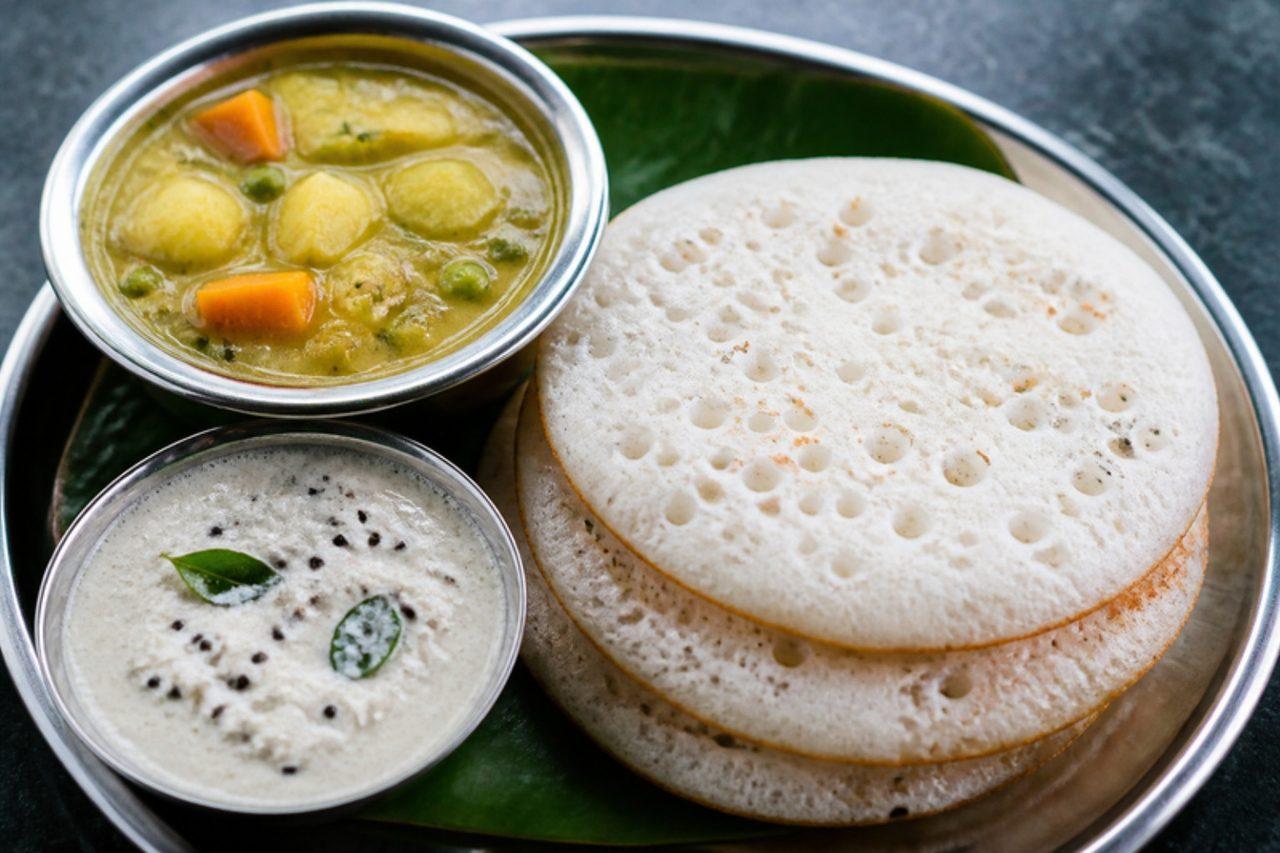
Set dosa is a Bengaluru darshini breakfast, ordered as a 'set' of three small, thick, pancake-soft dosas served with vegetable sagu and coconut chutney, often before the office rush or at a lazy Sunday table. Poha and a high share of rice make the batter rise into a holey, spongy dosa that's cooked on one side only. A common mistake is spreading it thin like a crisp dosa; pour it and just nudge it into a thick round so it stays soft. Chef's tip: cover the dosa for a minute while it cooks so the steam sets the top and the holes stay open.

by KrazyBadal 0 views

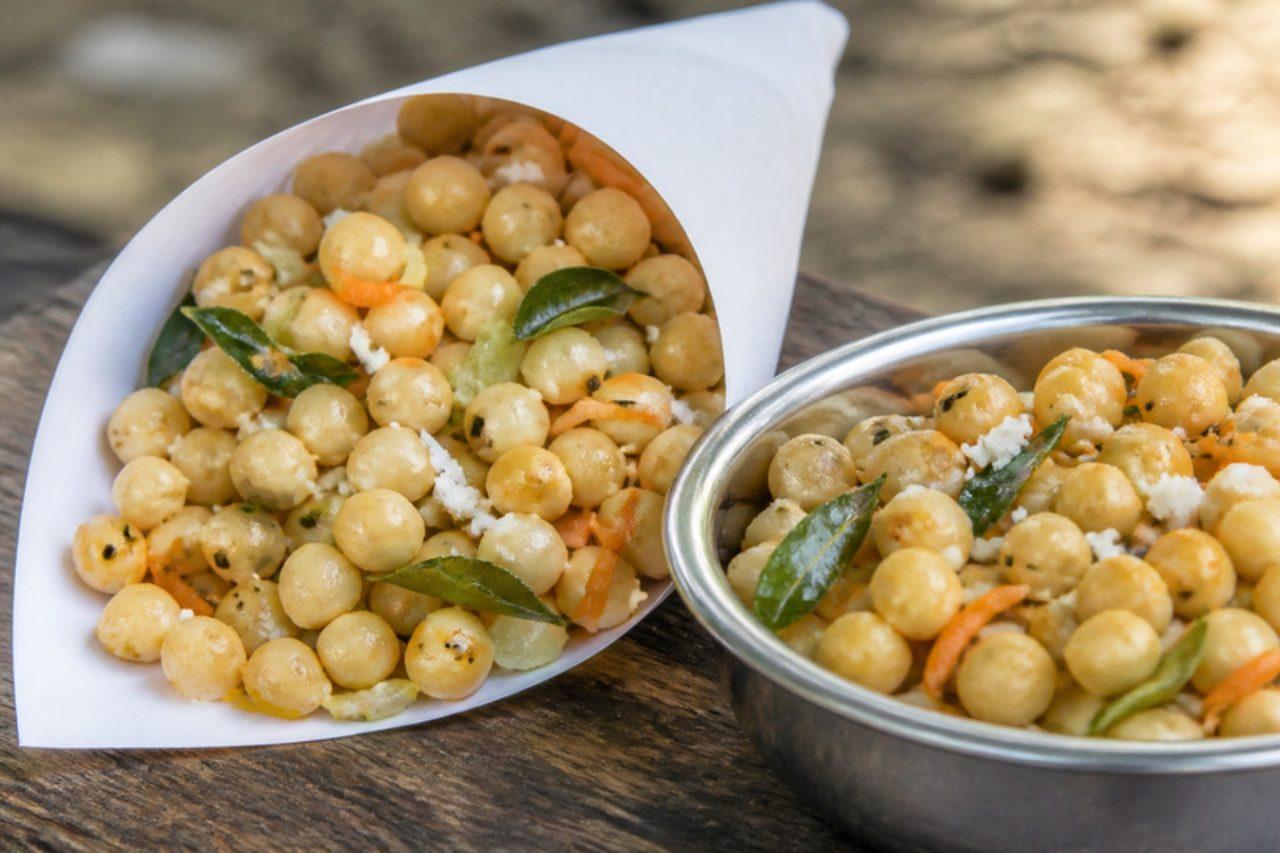
Pattani sundalSpiced white pea salad

Walk along Marina Beach in Chennai at sunset and boys with brass pots sell pattani sundal in paper cones, warm, tangy with raw mango and bright with grated carrot. At home it is also made for Navaratri, when a different sundal is offered and shared each evening. The mistake is overcooking the peas to mush: they should be tender but keep their shape, so pressure-cook for only two to three whistles. Chef's tip: add the coconut, mango and carrot off the heat, so they stay fresh and crunchy against the warm peas.

by KrazyBadal 0 views

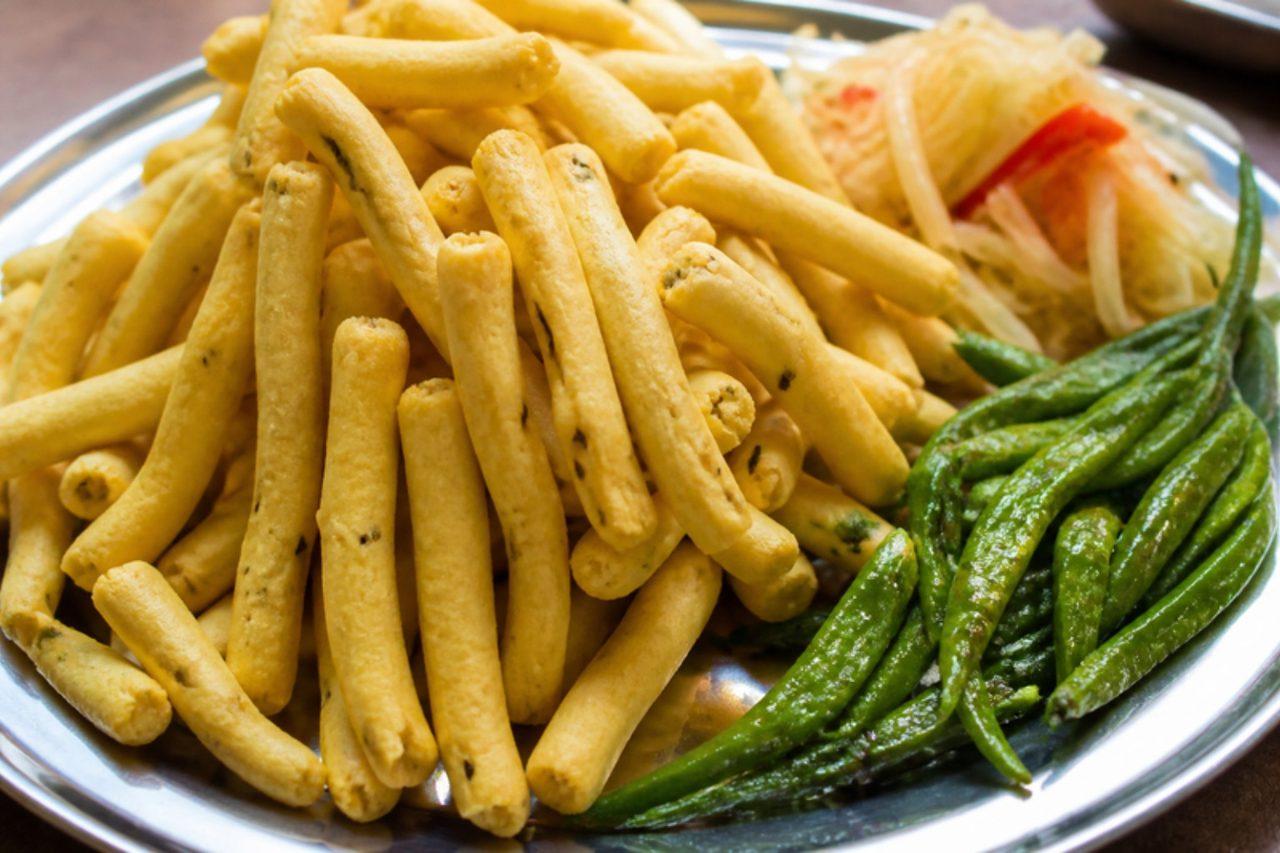
Bhavnagari gathiyaCrunchy gram flour sticks

Bhavnagar is Gujarat's gathiya town, and its namkeen shops sell these thick, knobbly sticks by the kilo, warm in the morning with fried chillies and papaya sambharo, and boxed up for relatives abroad. They are thicker than any sev, with a rough, bubbly surface from being rubbed through a flat perforated gathiya jharo (or pressed through the largest disc of a sev press), and the dough is beaten with oil and soda so they stay light and crunchy rather than hard. Ajwain and coarse black pepper give them their warmth. The common mistake is a stiff dough: it will not pass through the holes and the gathiya come out dense. Chef's tip: beat the oil, water and soda together until white and frothy before adding the flour; that is what makes them airy.

by KrazyBadal 0 views

Kacha kela na vadaRaw banana fritters

In Jain homes in Ahmedabad, Palanpur and Mumbai's Gujarati neighbourhoods, raw green banana takes the place of potato, so these vada are the Jain answer to batata vada, made for paryushan-season tea and for guests. The bananas are boiled, mashed and spiced with dry ginger, green chilli, lemon and a little sugar, rolled into balls, dipped in gram flour batter and fried. They taste much like batata vada but are slightly firmer, sweeter and fruity. There is no onion, garlic, potato or fresh ginger in this version. The common mistake is overboiling the bananas until they are waterlogged; the filling then goes sticky and the vada split in the oil, so cook them only until a knife slides in. Chef's tip: mash the bananas while warm with a potato masher, not a blender, so the filling stays light.

by KrazyBadal 0 views

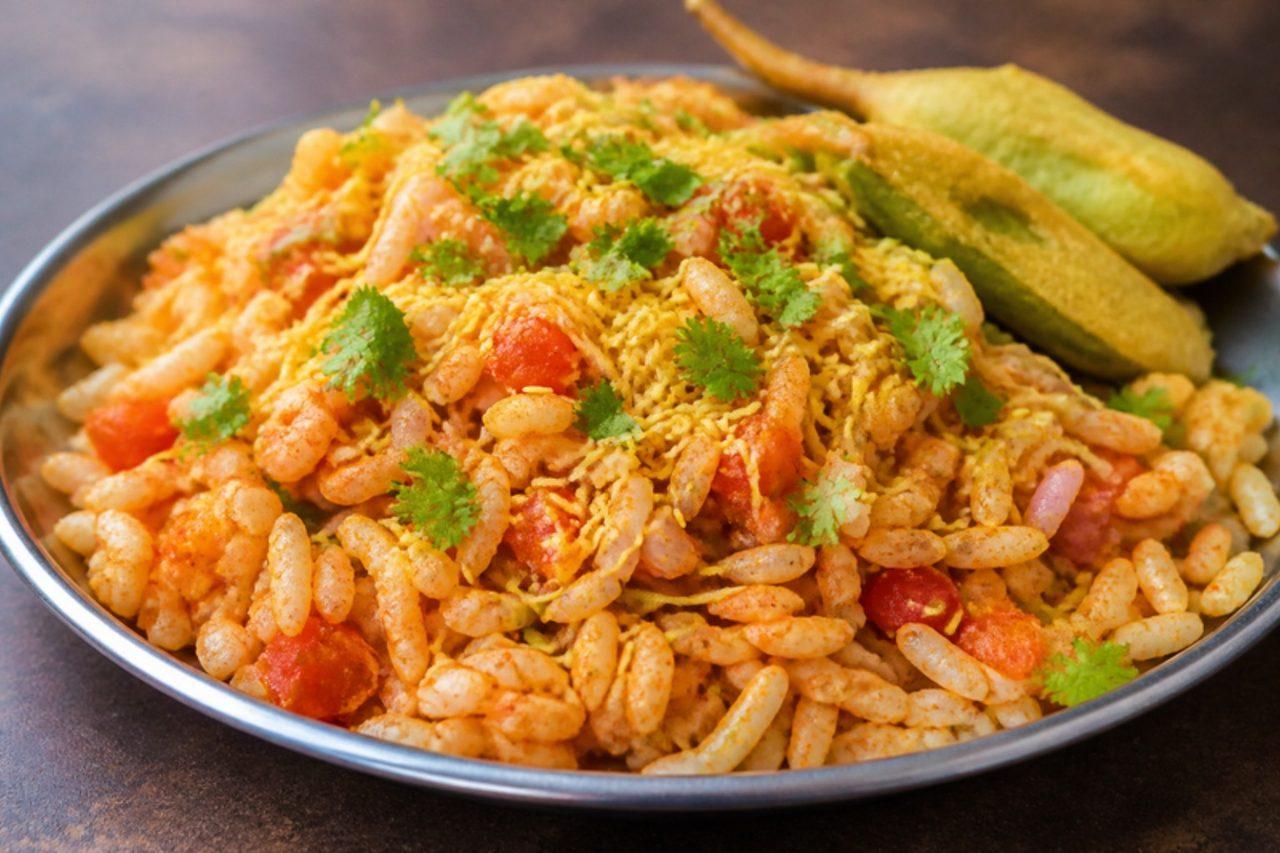
GirmitPuffed rice with onion masala

Girmit is north Karnataka's evening street snack, mixed to order on the carts of Hubballi and Dharwad and eaten with a fried green chilli bajji on the side. Puffed rice is tossed in a quick tadka of onion, tomato, tamarind and jaggery, then thickened with roasted gram powder so each grain is coated rather than wet, and finished with sev and coriander. It's tangy, sweet and spicy in one mouthful. The common mistake is adding the puffed rice too early or using too much tamarind water; it goes soggy within minutes, so toss it off the heat and serve at once. Chef's tip: warm the puffed rice in a dry pan for a minute first; crisp mandakki takes the masala without going limp.

by KrazyBadal 0 views

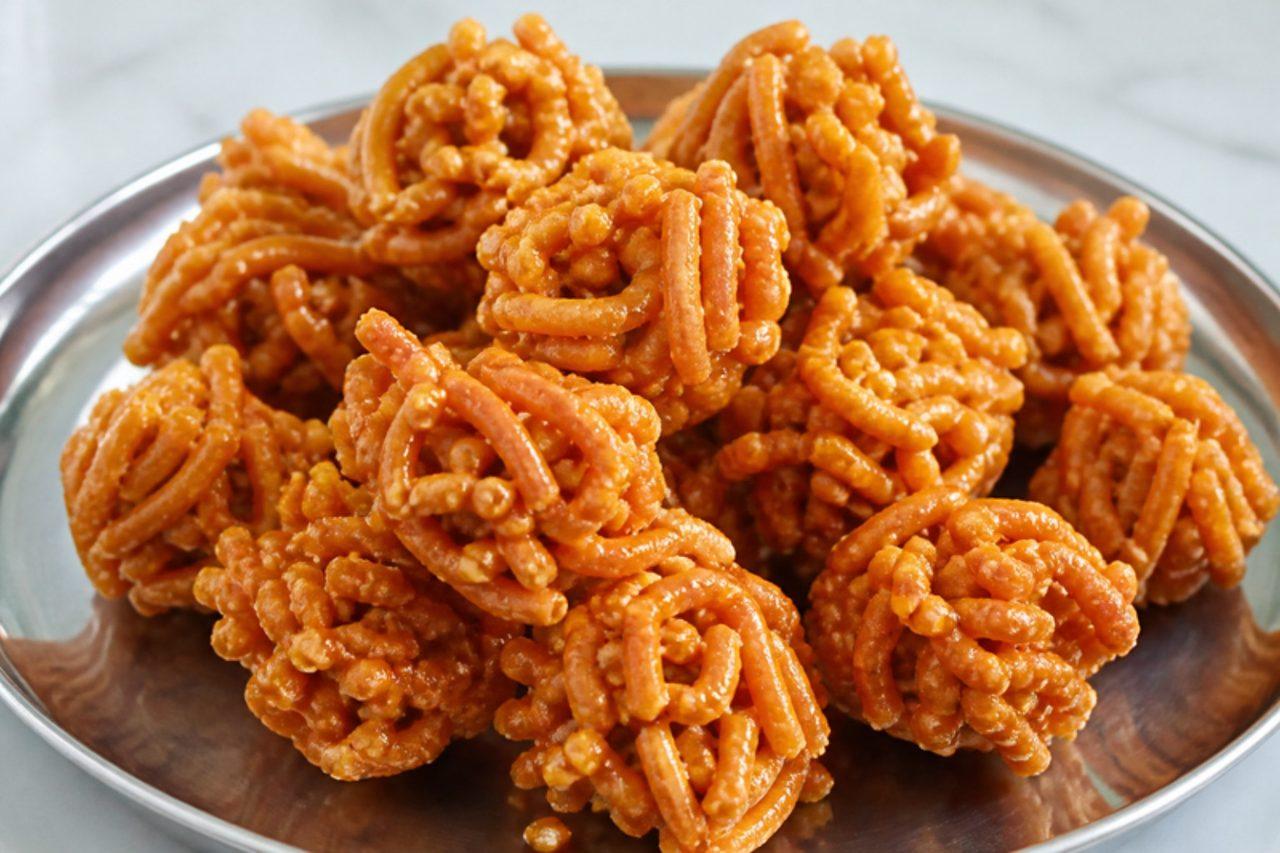
Kara sevPeppery gram flour sev

Kara sev is sold by the kilo in Sattur and Tirunelveli sweet shops, where it is bagged next to halwa for travellers to take home. The sticks are thicker and knobblier than north Indian sev, with crushed black pepper and garlic giving a slow burn. The most common mistake is a dough that is too stiff: it won't press through the mould and the sev cracks into crumbs, so it should be soft enough to squeeze easily. Chef's tip: press the dough with the flat ridged blade straight over the oil and let it break off in short pieces, then crush any long ones once cooled.

by KrazyBadal 0 views

Kanda bhajiyaOnion fritters

The first heavy monsoon shower in Gujarat sends half the state to the kitchen for kanda bhajiya, eaten piping hot with masala chai, fried green chillies and a dab of chutney. Thin onion slices are salted until they weep, then tossed with just enough gram flour to bind them into rough, airy clusters that fry up crunchy and sweet. The common mistake is mixing a wet batter and dunking the onions in it: you get heavy, oily bhajiya, so let the onions' own juice do most of the work and add water only by the teaspoon. Chef's tip: a spoonful of hot frying oil stirred into the mix just before frying makes the clusters lighter and crisper.

by KrazyBadal 0 views

Mamidikaya pappuToor dal with raw mango

Ugadi falls just as the first green mangoes reach Andhra markets, so the festive lunch nearly always has a pot of mamidikaya pappu beside the pulihora and pachadi. Toor dal is cooked soft, then sharpened with chunks of sour raw mango and slit green chillies, and finished with a sizzling tempering of garlic, dried red chilli and curry leaves. Mixed into hot rice with a spoon of ghee, it is tangy, mellow and comforting. The common mistake is cooking the mango with raw dal: its acid stops the lentils from softening, so always cook the dal to a smooth mush first. The mango is ready when a piece crushes easily but still holds its shape. Chef's tip: mangoes vary hugely in sourness, so add half, taste after five minutes and add the rest only if the dal needs more bite.

by KrazyBadal 0 views

Jamnagari ghughraPotato and pea fried pastries

In the evening the lanes near Jamnagar's Darbargadh fill with ghughra carts, where crimped half-moon pastries are fried by the hundred, split open on the plate and drenched in green chutney, sweet date chutney and red garlic chutney, then finished with masala and fine sev. The filling is a coarse mash of potato and green peas with ginger, chilli and a touch of sugar and lemon; the pastry is thin and blistered. It is street food eaten standing up, messy and hot. The common mistake is frying on high heat, which gives a pale, soft crust with raw spots around the crimped edge. Chef's tip: seal the edges with a little water and twist the pleats tightly, or the filling escapes and spits.

by KrazyBadal 0 views

PonkRoasted green sorghum with sev

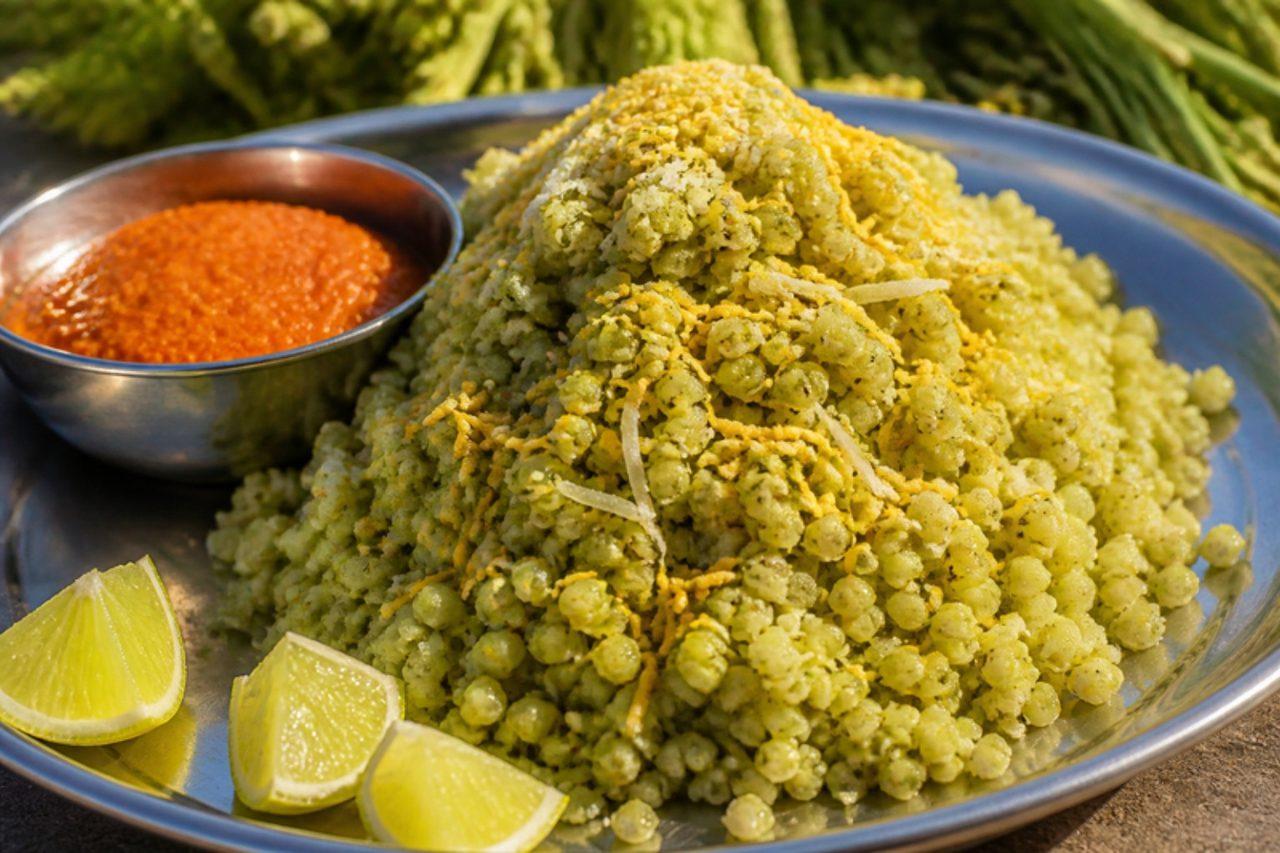
From December to February the roadsides outside Surat fill with ponk stalls, where young green jowar heads are roasted in pits of hot coals, beaten in a cloth and sold warm by the paper plate. The soft, milky grains taste sweet and grassy, and Surtis eat them with three things: peppery lemon sev, sugar-coated sev and a fiery garlic chutney. At home you can buy fresh ponk grains in Gujarati shops in winter and give them a quick toss in a hot pan, which brings back some of that smoky edge. The common mistake is roasting them too long; the grains should stay soft and juicy, not turn hard like popcorn kernels. Chef's tip: ponk goes stale within a day, so buy it the morning you plan to eat it and keep it wrapped in a damp cloth until then.

by KrazyBadal 0 views

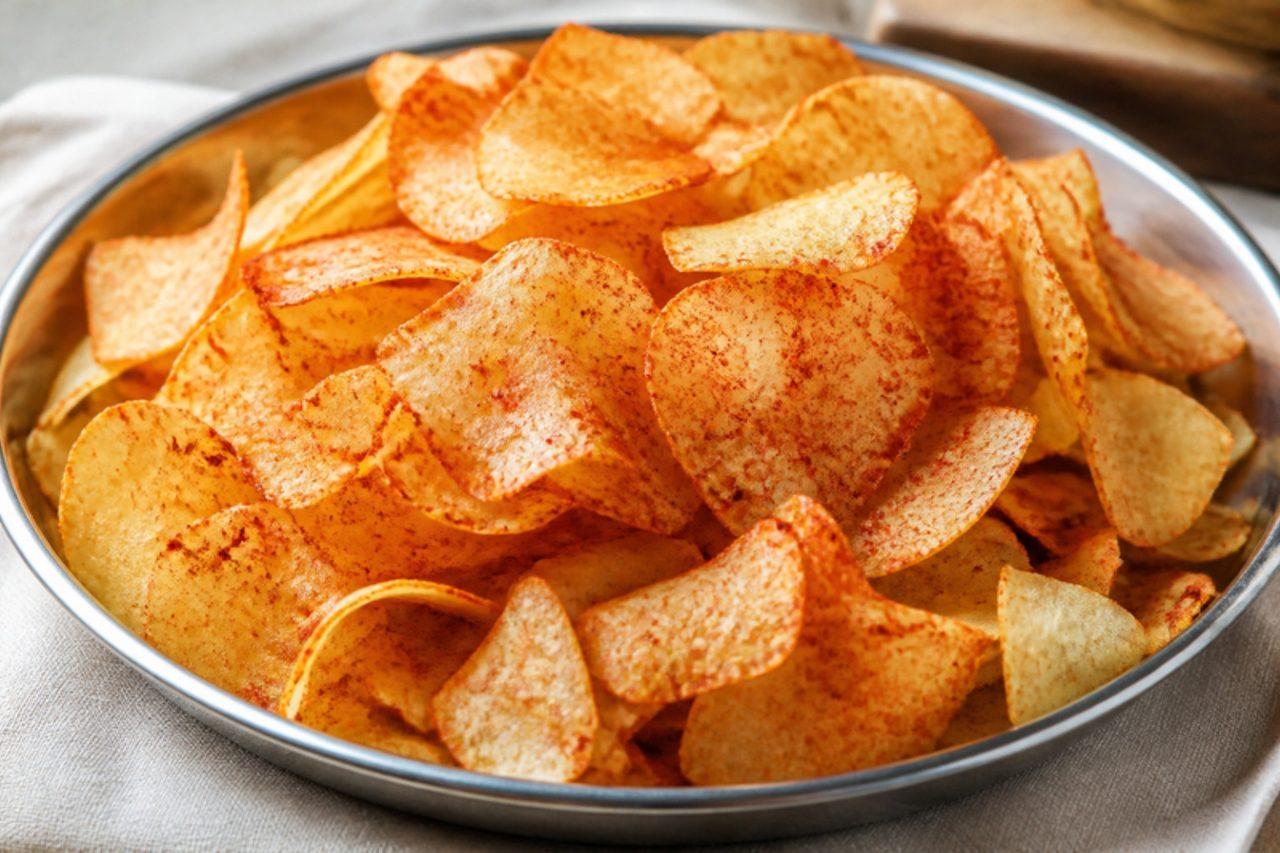
Kappa varuthathuTapioca chips

Kappa varuthathu, crisp tapioca chips, are sold by weight in Kerala bakeries from Thiruvananthapuram to Kozhikode and fried at home whenever fresh tapioca is cheap after the monsoon. Peeled roots are shaved very thin, fried in coconut oil with a splash of salt water, and dusted with chilli powder while still hot. They are lighter and crunchier than banana chips, with a faint sweetness under the heat. A common mistake is crowding the pan: the slices stick together and steam instead of crisping, so fry a single handful at a time. Chef's tip: soak the slices in cold water for 10 minutes and dry them thoroughly; it washes off surface starch so the chips stay pale and separate.

by KrazyBadal 0 views

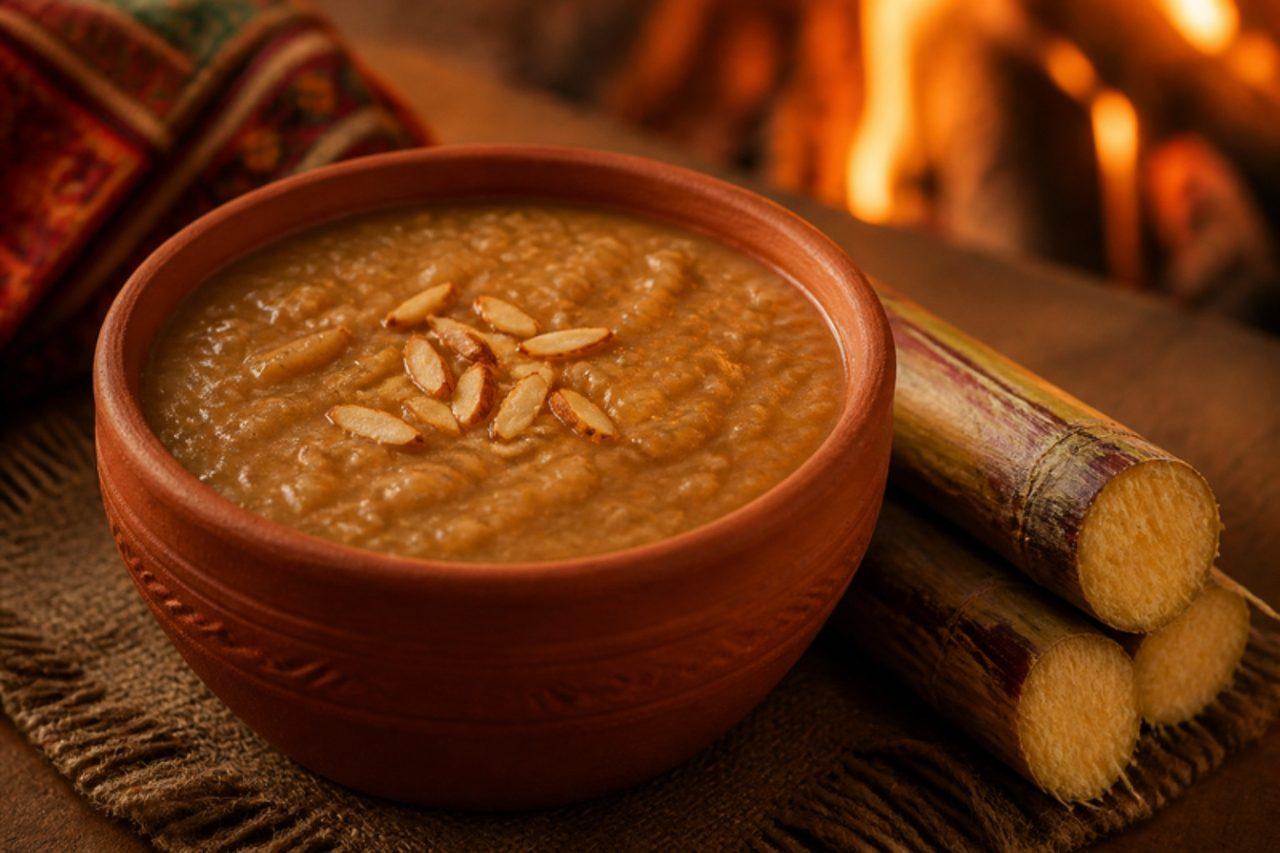
Rauh di kheerRice in sugarcane juice

In Punjabi villages the cane harvest is in by Lohri, and on the night of the bonfire a pot of rice is set to cook slowly in fresh sugarcane juice (rauh) with no milk and no added sugar. The custom is to leave it to cool overnight and eat it cold the next morning, on Maghi, so you will often hear 'poh rinni, magh khaadi': cooked in Poh, eaten in Magh. It sets into a soft, brown, gently caramel pudding that tastes of cane. Common mistake: cooking on a high heat; the juice catches and turns bitter, so simmer it low and stir from the bottom, and it is done when the rice is very soft and the kheer coats the back of a spoon thickly. Chef's tip: skim off all the grey scum as the juice first comes to the boil, or the kheer tastes earthy.

by KrazyBadal 0 views

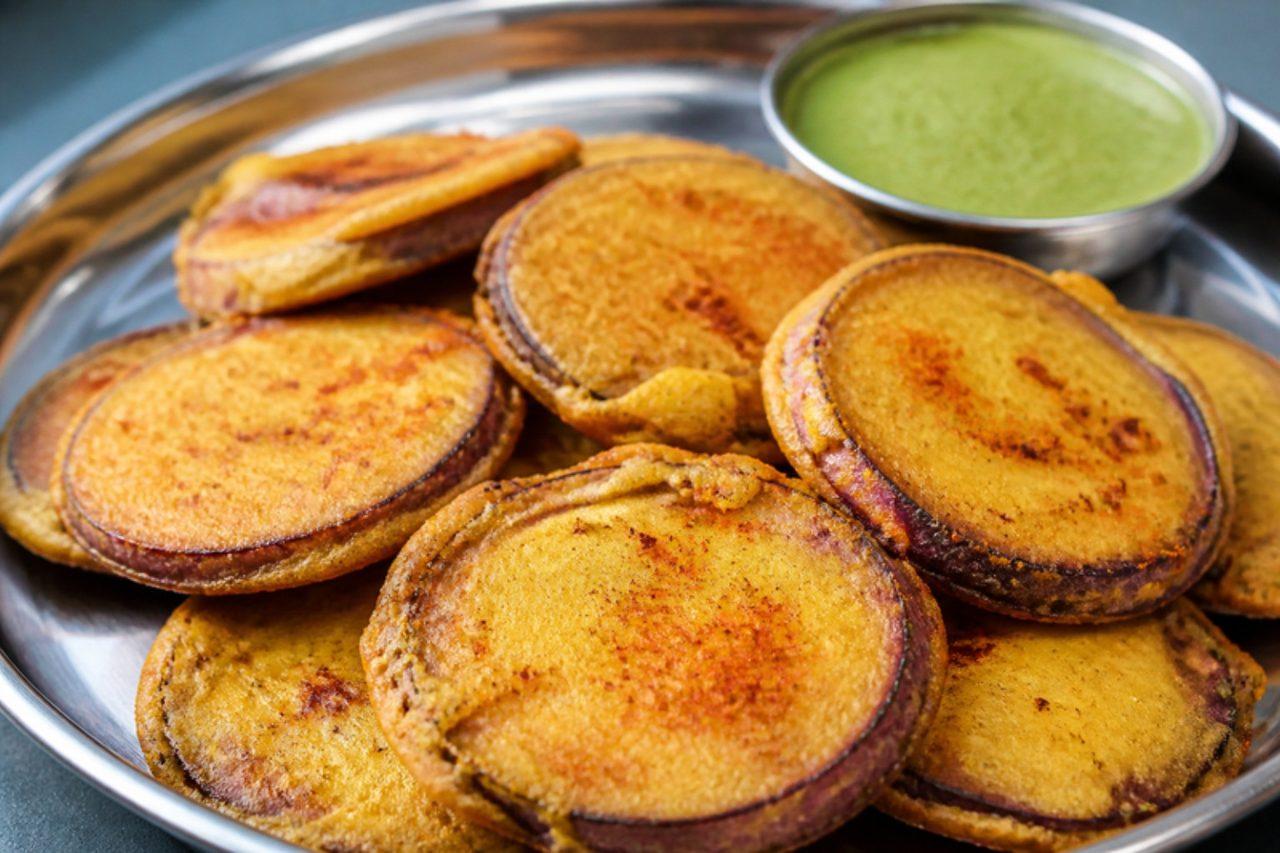
Ratalu puriFried purple yam slices

Ratalu puri belongs to Surat's evening snack trail, where farsan sellers on Chowk Bazaar fry purple yam slices to order and shake a tangy masala over them while they are still sizzling. Inside the crisp, golden coat the yam turns creamy and faintly sweet, and the masala of dry mango, black salt and chilli wakes everything up. They are eaten hot with green chutney, usually on cool winter evenings when ratalu is in season. A common mistake is cutting the yam too thick: slices thicker than 3 mm stay raw in the middle by the time the batter browns. Chef's tip: oil your hands before peeling ratalu, as the raw sap can make skin itch.

by KrazyBadal 0 views

ChalimidiRice flour and jaggery sweet

Chalimidi is a no-cook-flour sweet from Andhra and Telangana, offered to the goddess at Navaratri and Nagula Chavithi and handed out at naming ceremonies and baby showers. Soaked rice is dried, pounded into fresh flour and stirred into a thick jaggery syrup with coconut, so it sets into a soft, damp, slightly crumbly dough that is shaped into small balls. It tastes of molasses and cardamom and is eaten as it is, at room temperature. The most common mistake is undercooking the syrup: a thin syrup leaves the chalimidi sticky and pasty, so cook it to a firm soft-ball stage. Chef's tip: use freshly ground soaked rice, not shop rice flour; the slightly damp flour is what gives chalimidi its tender bite.

by KrazyBadal 0 views

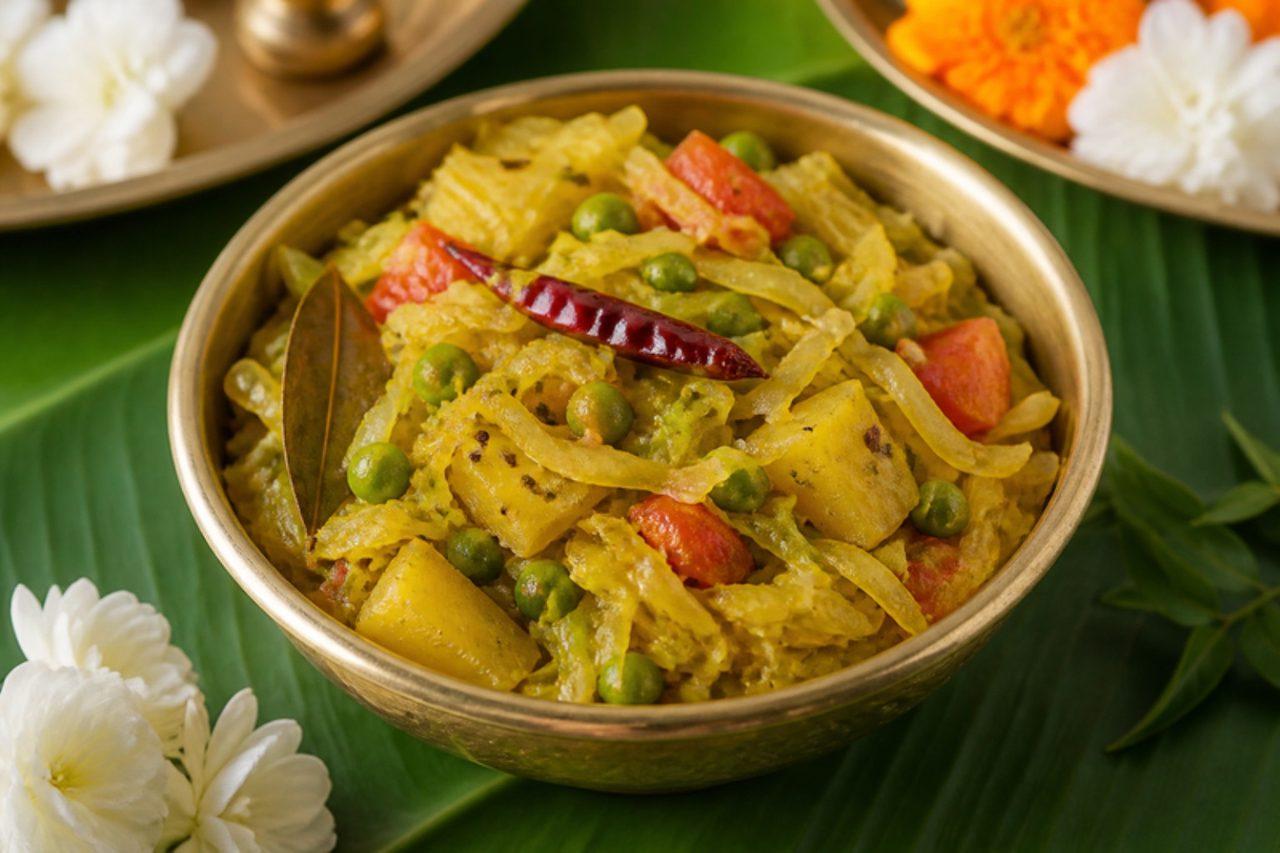
Bandhakopir torkariCabbage with peas and potato

In Bengali homes and pandal kitchens during Durga Puja, the bhog plate needs a dry vegetable beside the khichuri, and bandhakopir torkari is one of the favourites. Cabbage is shredded fine and cooked slowly with potato, peas, ginger and whole cumin, with no onion or garlic because it is offered to the goddess before it is eaten. A pinch of sugar and a final dusting of garam masala make it gently sweet and fragrant. Serve it with khichuri, luchi or plain rice and dal. Common mistake: covering the pan for the whole time, which steams the cabbage grey and watery; cook it mostly uncovered so the liquid evaporates and the edges just start to brown. Chef's tip: salt the shredded cabbage for 10 minutes and squeeze it lightly before cooking; it cooks faster and soaks up the spices better.

by KrazyBadal 0 views

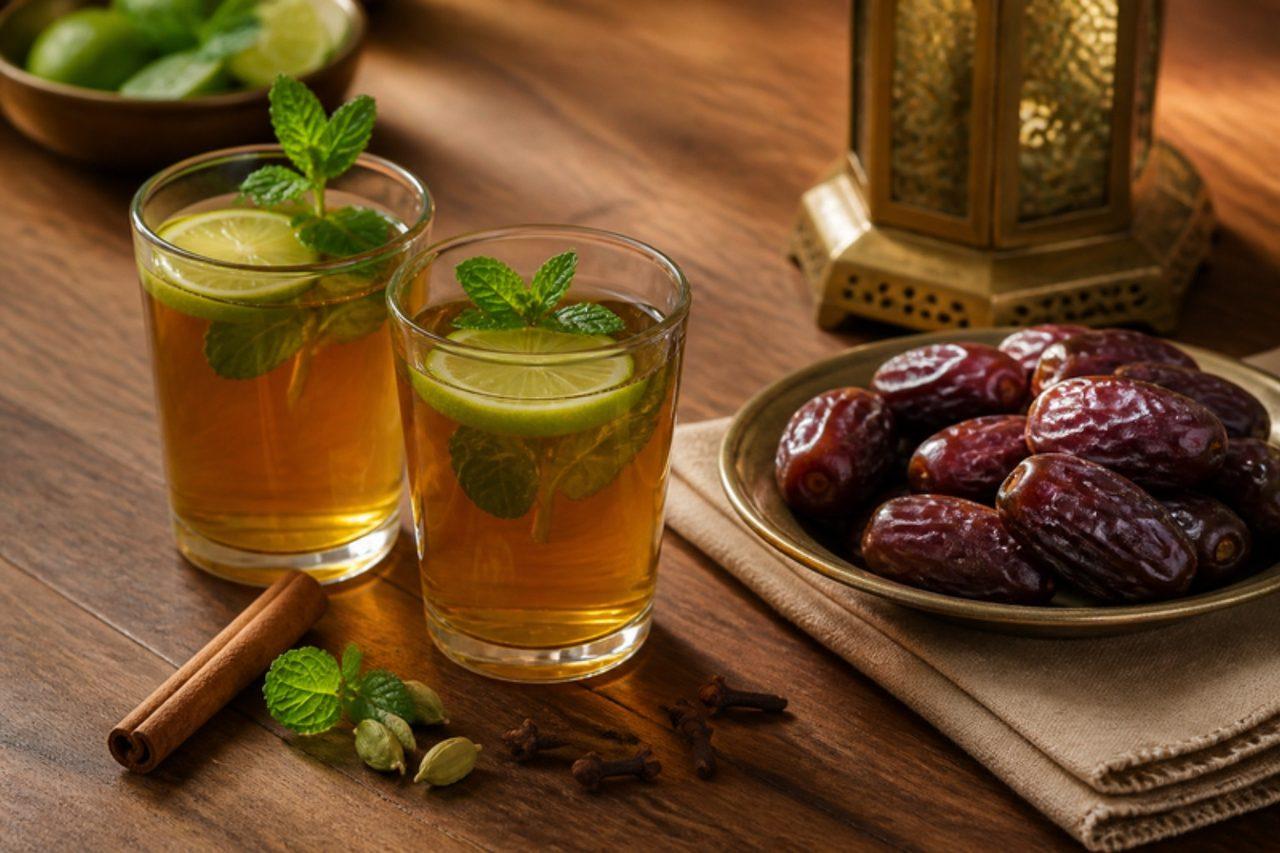
SulaimaniSpiced lemon black tea

In Kozhikode, sulaimani is the clear amber tea poured after a heavy biryani, and in Ramadan it is the glass that follows the dates at iftar. A little loose black tea is brewed with cardamom, clove and cinnamon, then sweetened and sharpened with fresh lime so it is light, warming and gently fragrant. Chef's tip: steep the tea for only two minutes; sulaimani should be bright and clear, never strong and bitter.

by KrazyBadal 0 views

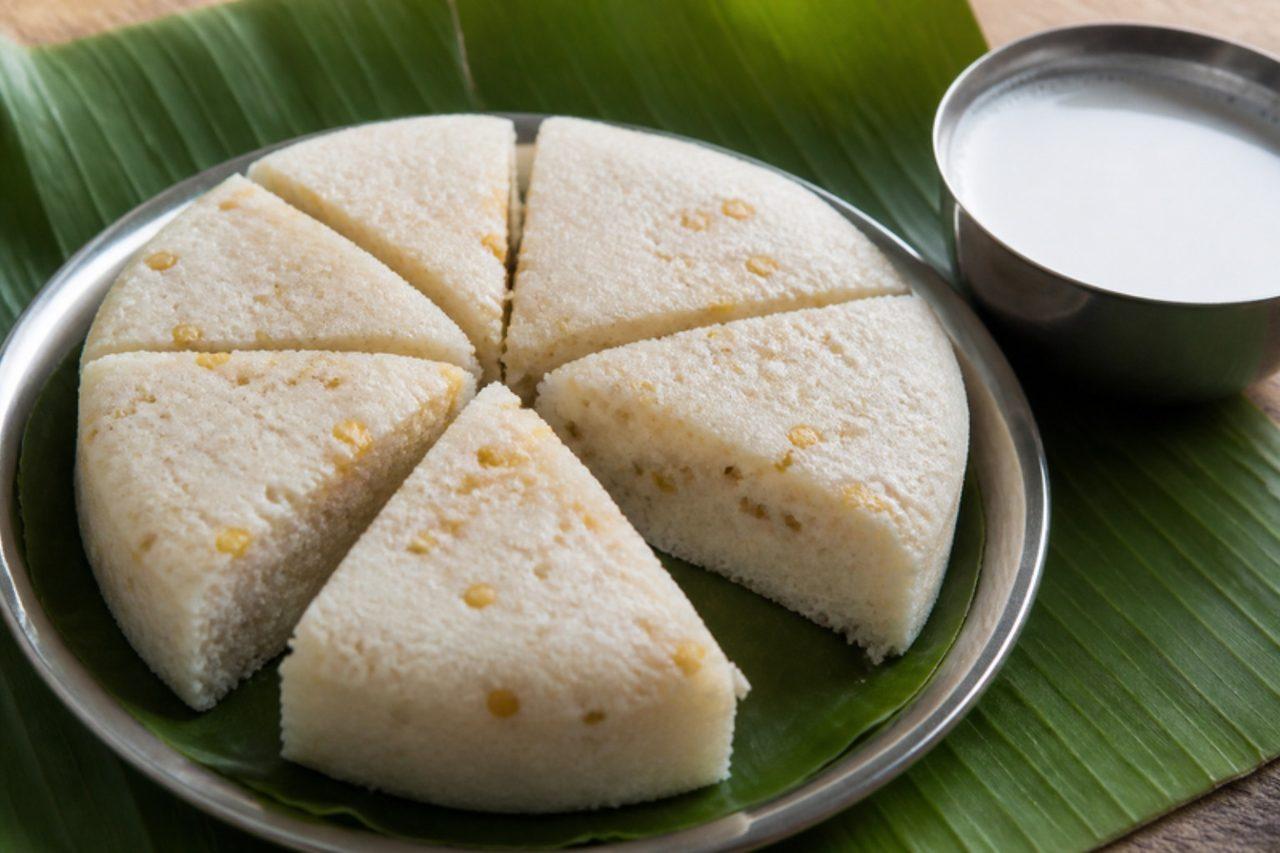
Pesaha appamUnleavened rice and lentil cake

On Pesaha, Maundy Thursday, Syrian Christian families in Kerala gather in the evening for a meal that remembers the Last Supper. The head of the house cuts the Pesaha appam (indri appam), an unleavened, steamed cake of roasted rice flour, urad dal and coconut, marked with a cross made from the palm leaves blessed on Palm Sunday, and shares it with everyone, dipped in sweet Pesaha paal. It is soft, dense and lightly savoury. Chef's tip: grind the soaked urad dal and coconut together very finely; the batter should be smooth and thick, like idli batter.

by KrazyBadal 0 views

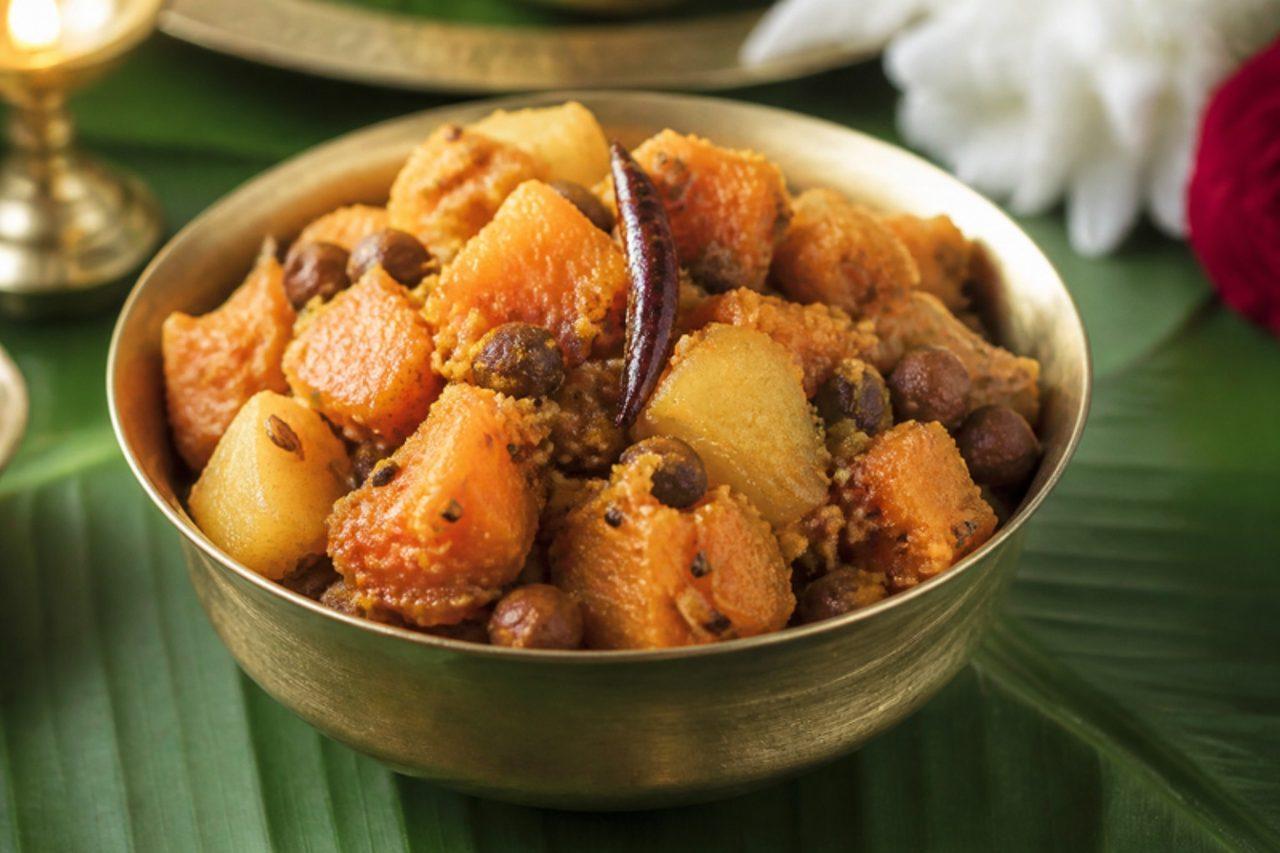
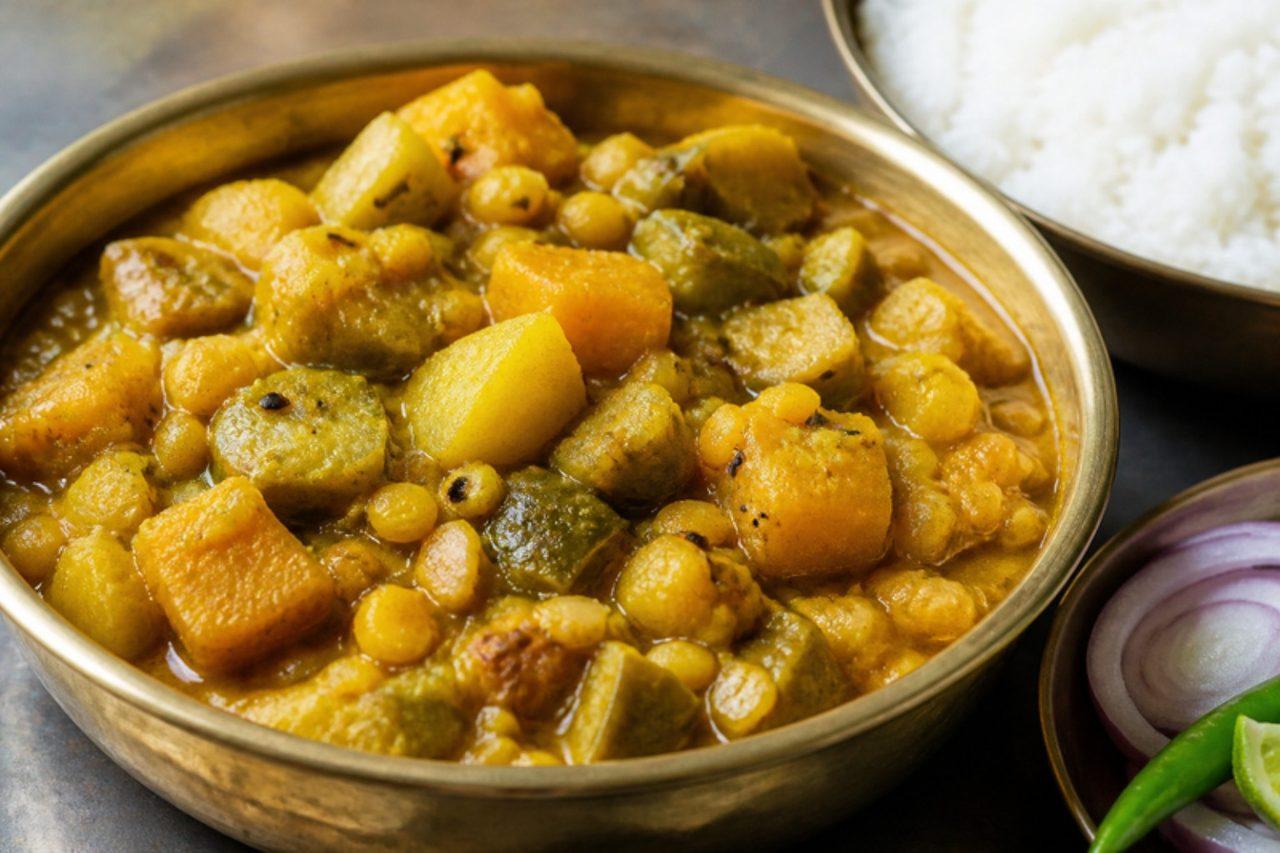
Kumror chhokkaPumpkin, potato and chickpeas

Kumror chhokka is the soft, sweet-savoury pumpkin dish that turns up on the niramish bhog plate at Durga Puja, next to khichuri and luchi, and at Bengali vegetarian feasts all year. Red pumpkin and potato are cooked down with soaked chickpeas, panch phoron (the Bengali five-spice), ginger and a pinch of sugar, until the pumpkin half melts and coats everything. There is no onion or garlic, which keeps it fit for the offering. It is mild, a little sweet and comforting. Common mistake: cutting the pumpkin and potato the same size; pumpkin cooks much faster, so cut it into bigger pieces, and stop when the potato is soft and some of the pumpkin has broken down. Chef's tip: a teaspoon of ghee and a pinch of roasted cumin powder stirred in at the very end makes it taste like the pandal version.

by KrazyBadal 0 views

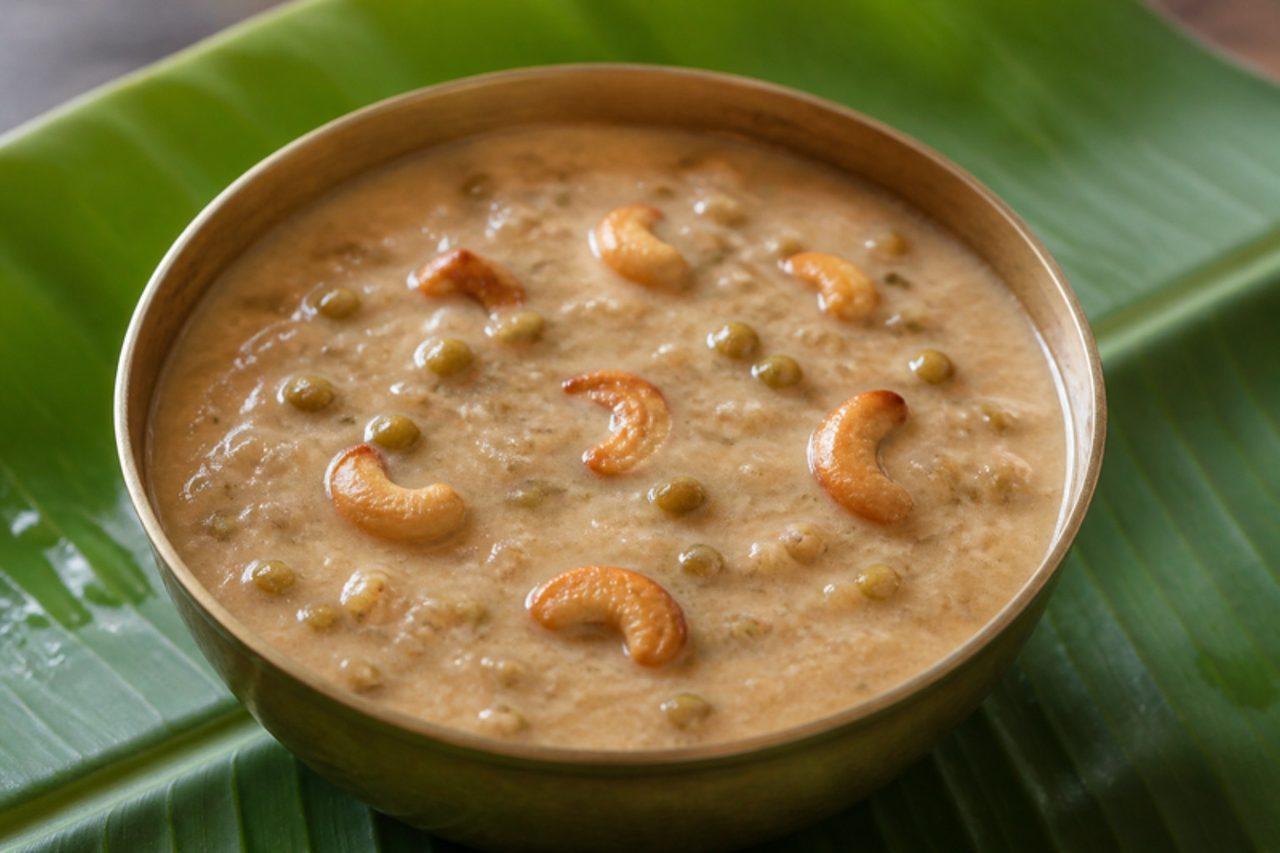
VornGreen gram and coconut milk sweet

On 8 September, Mangalorean Catholics celebrate Monti Fest, the feast of Mary's Nativity, which is also a harvest festival: new ears of grain are blessed at church and shared at home, and the family eats a vegetarian feast of new-season vegetables. Vorn, a pudding of split green gram (moong) cooked with coconut milk, jaggery and cardamom, is the sweet that ends it. It is like a gentle payasam, vegan and gluten free. Chef's tip: dry-roast the moong dal until fragrant before cooking it, which gives vorn its nutty flavour.

by KrazyBadal 0 views

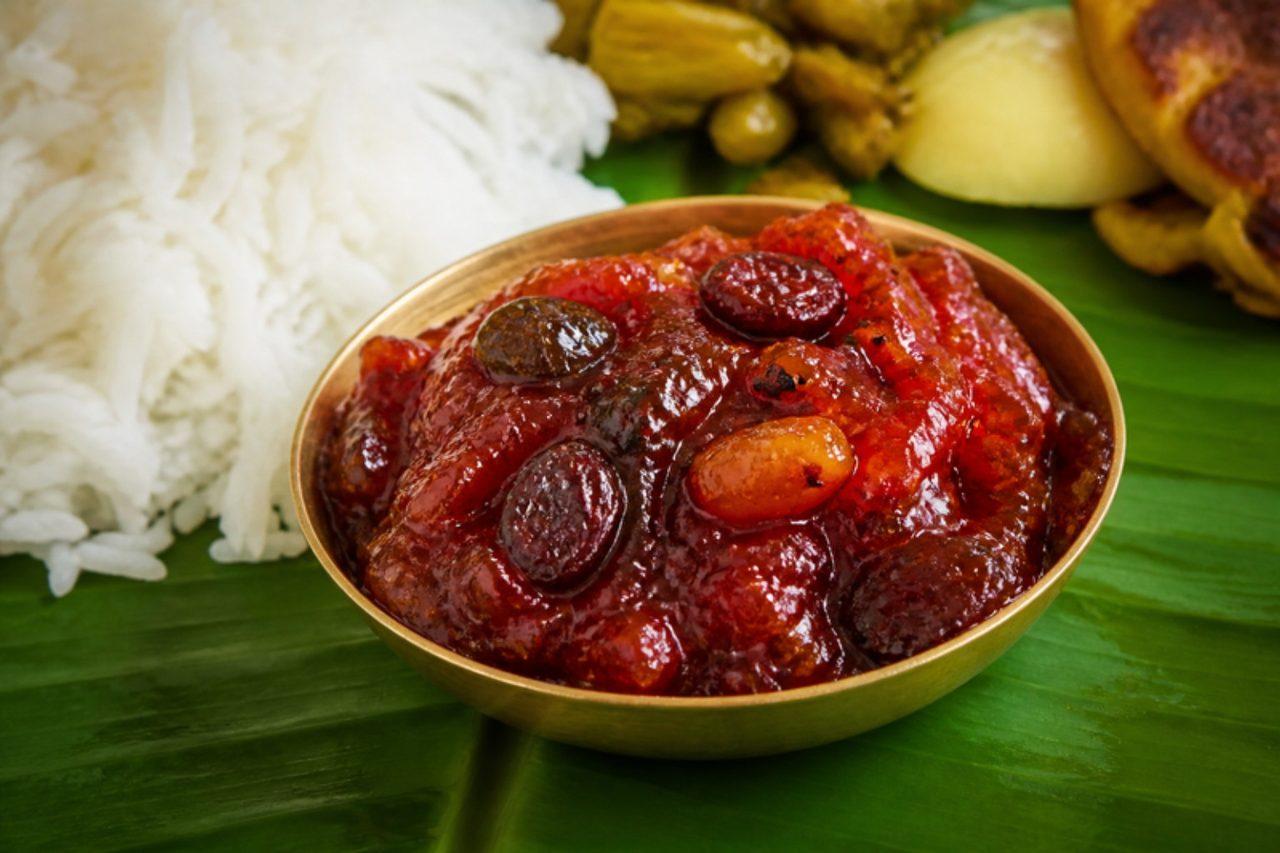
Tomato khejur chutneyTomato and date chutney

A Bengali festive meal ends with chutney, and during Durga Puja the bhog plate's last stop is often this glossy tomato and date chutney. Ripe tomatoes are cooked with a mustard-seed and dried-chilli tempering, then sweetened with sugar and stoned dates and studded with raisins until it turns jammy and sticky. It is eaten as its own course after the vegetables, to clean the palate before the sweets. Common mistake: taking it off the heat too early so it stays watery; it is ready when a spoon drawn through the pan leaves a clear line for a second and the chutney looks shiny. Chef's tip: add a few strips of aamsotto (dried mango leather) with the dates if you have it; it gives the deep, fruity sourness of the pandal chutney.

by KrazyBadal 0 views

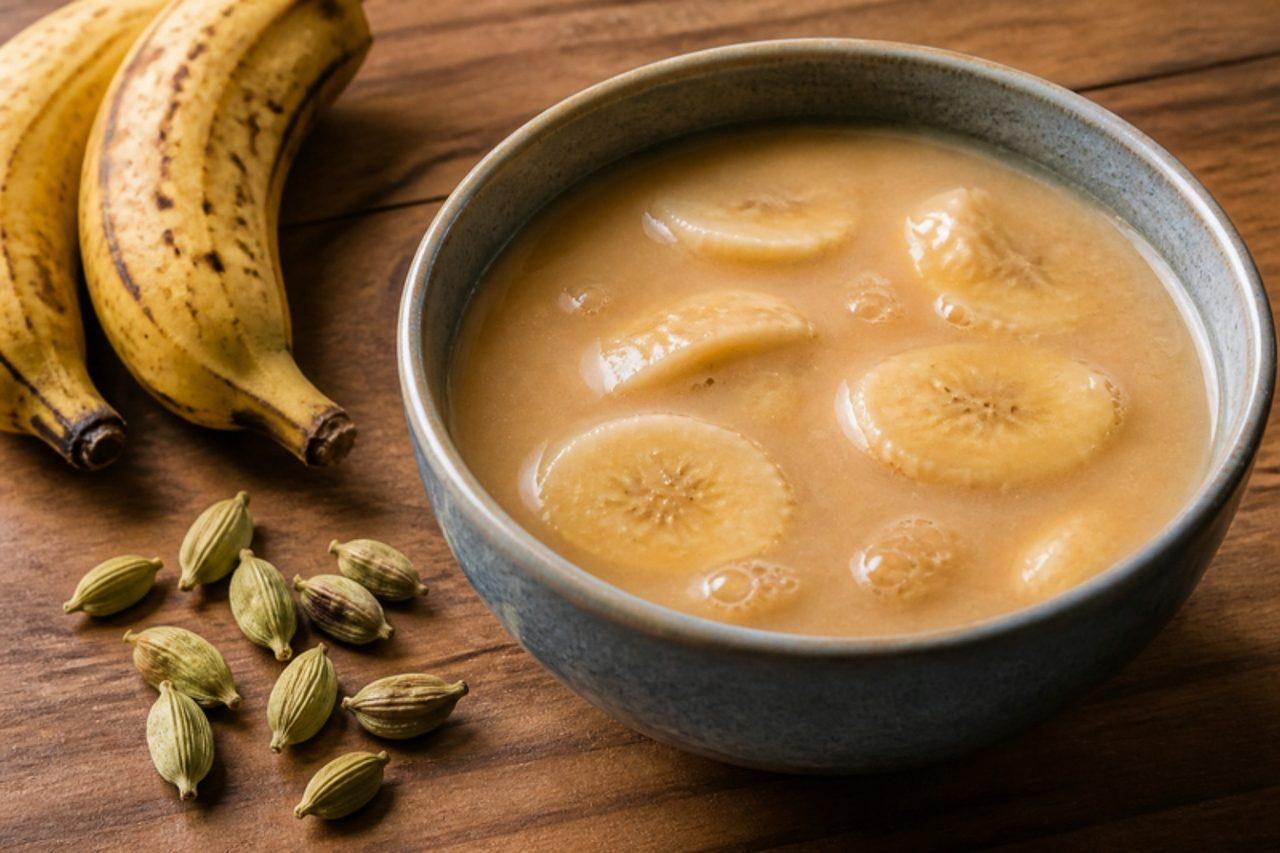
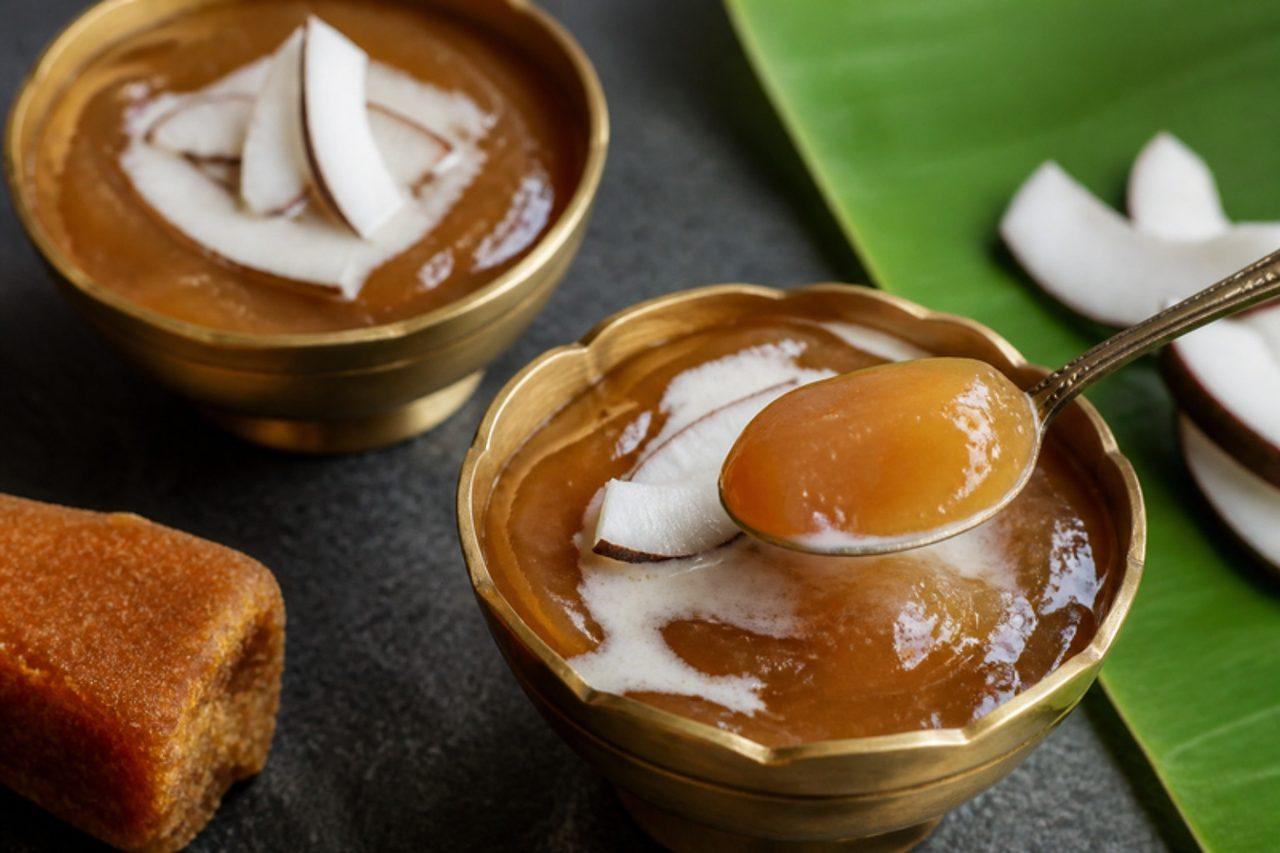
Pesaha paalCoconut milk and jaggery drink

Pesaha paal ('Passover milk') is the sweet dip served with Pesaha appam at the Maundy Thursday supper in Kerala's Syrian Christian homes. Coconut milk is simmered with melted jaggery, a little roasted rice flour to thicken it, cardamom and dried ginger until it becomes a warm, silky drink. The family dips pieces of the blessed appam into it after the evening prayers. It is vegan and gluten free, and ready in half an hour. Chef's tip: strain the jaggery syrup before adding the coconut milk, as jaggery often carries grit.

by KrazyBadal 0 views

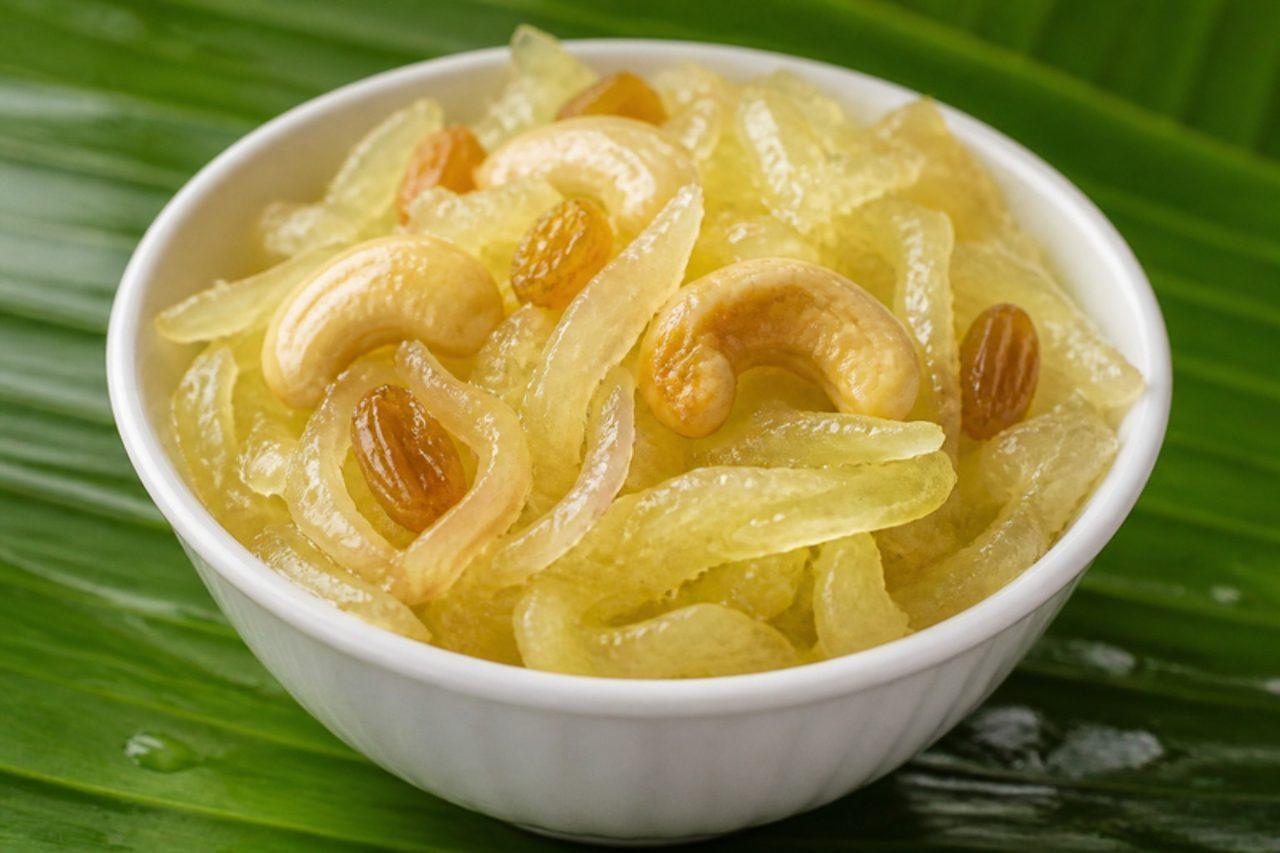
Plastic chutneyRaw papaya chutney

Plastic chutney gets its funny name from the way the thin slices of raw papaya turn clear and glassy, like cellophane, as they cook in syrup. It is the chutney of every Bengali wedding feast and of the Durga Puja bhog, served in a small heap at the end of the meal, sweet, sharp with lime, and dotted with raisins. No onion or garlic goes near it. Common mistake: cutting the papaya too thick or cooking it on high heat; thick slices stay opaque and chewy, while a fast boil caramelises the syrup before the papaya turns clear. The chutney is ready when every slice is see-through and the syrup coats a spoon. Chef's tip: soak the sliced papaya in water with a pinch of baking soda for 15 minutes, then rinse; this helps the slices stay crisp-tender and turn translucent evenly.

by KrazyBadal 0 views

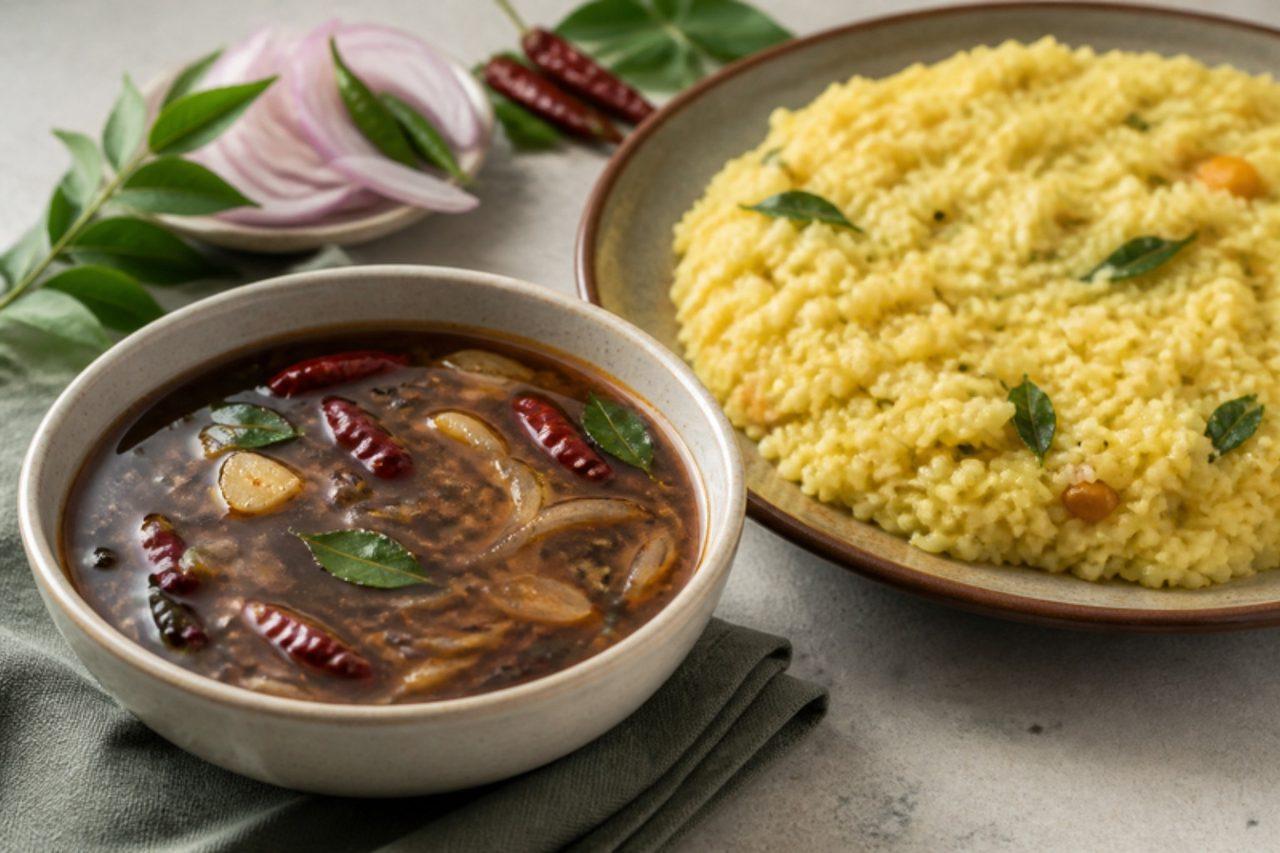
Hyderabadi khattaSour tamarind sauce

In Hyderabad the pre-dawn sehri meal of Ramadan is often khichdi, kheema and khatta: a thin, sour tamarind and onion sauce, tempered with curry leaves, garlic and dried chilli, ladled over the soft rice and lentils to wake up the palate at four in the morning. It is runny like a rasam, tart and savoury with just a little heat. Chef's tip: fry the onion only until soft, not brown, so the khatta stays light and sharp.

by KrazyBadal 0 views

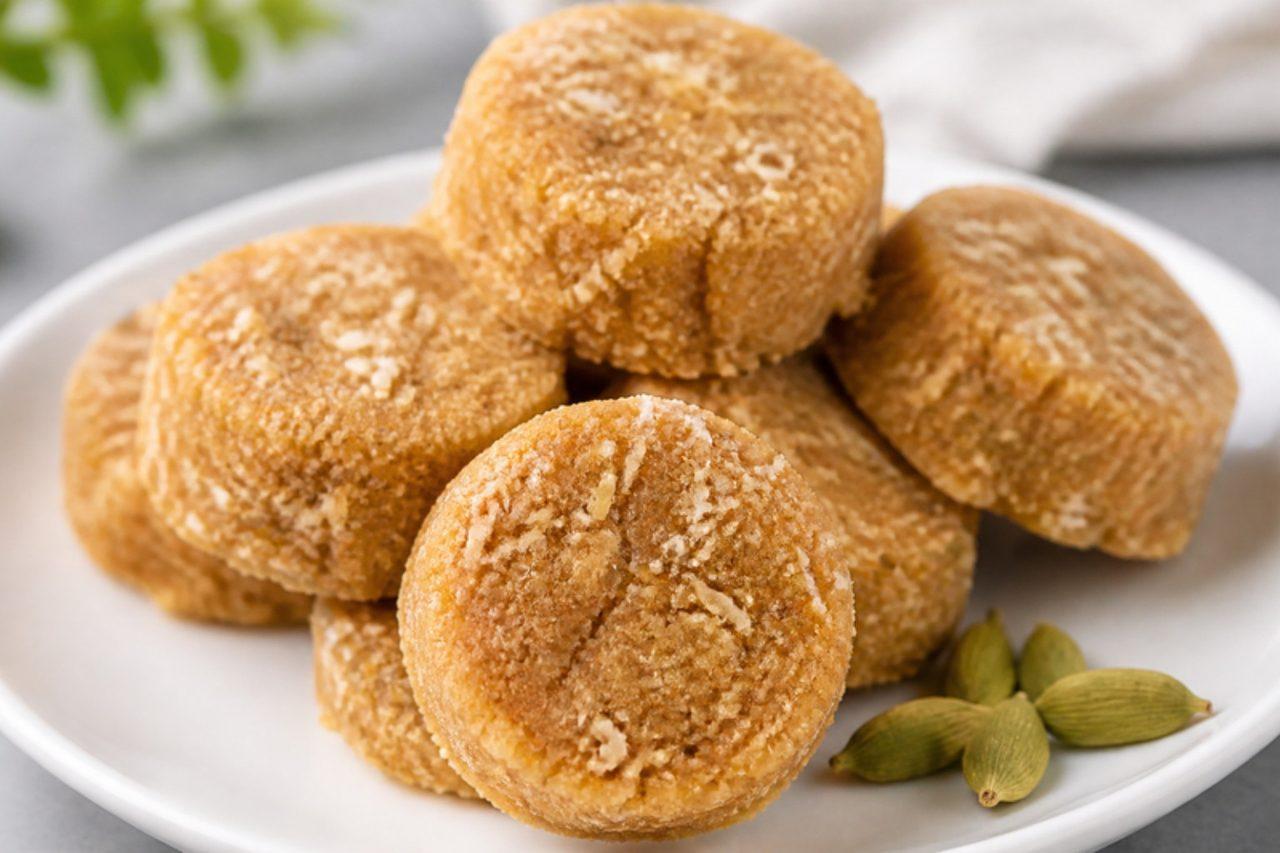
PinacaRice flour, jaggery and coconut cakes

Pinaca is one of the oldest Goan Christmas sweets in the kuswar tray, made in the weeks before Christmas from three things: rice flour roasted until golden and nutty, jaggery and freshly grated coconut. They are pressed into small cakes or squares and have a soft, crumbly, toffee-like bite. They are vegan and gluten free. Chef's tip: take your time roasting the rice flour, as it is the roasting that gives pinaca its flavour, but stir constantly because it burns at the edges.

by KrazyBadal 0 views

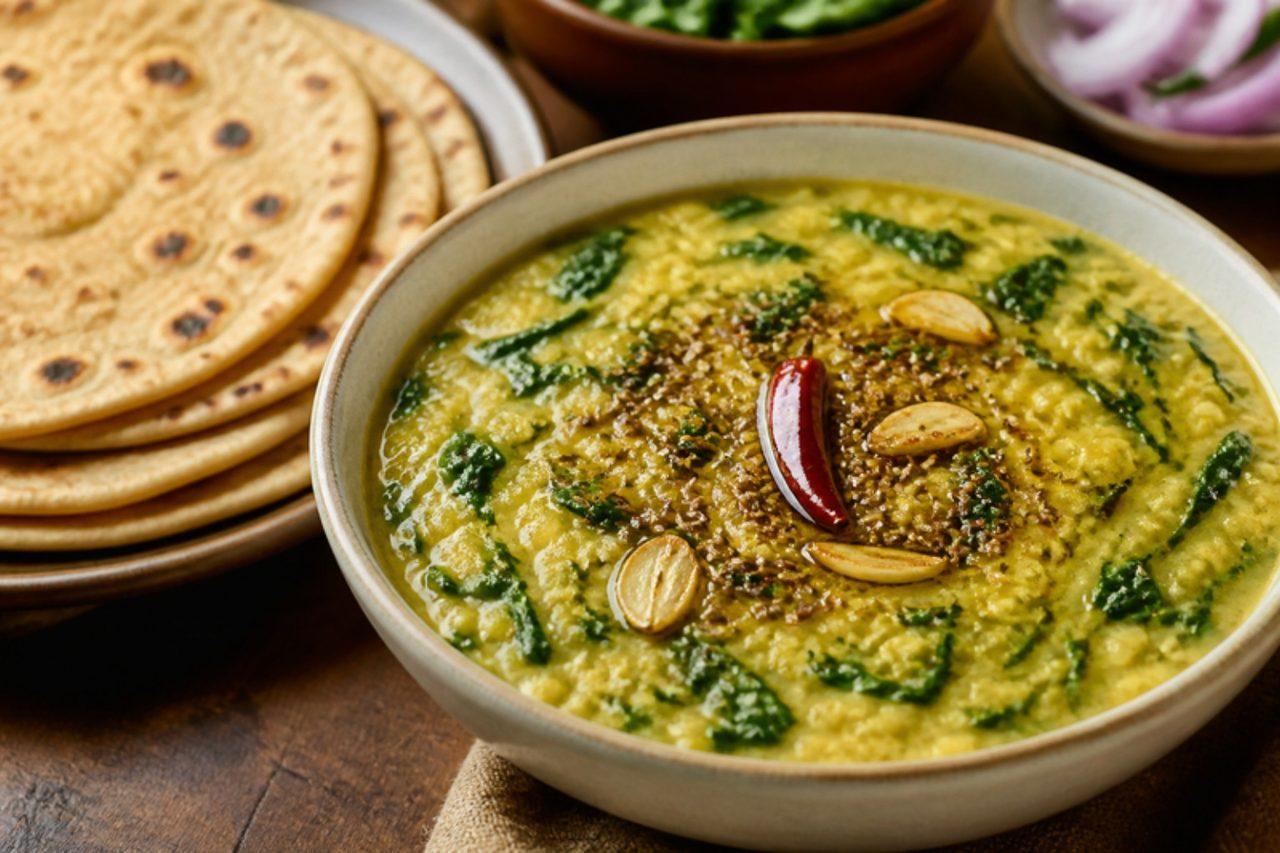
Methi dalLentils with fenugreek leaves

In Punjab, Rajasthan and Delhi homes, methi dal arrives in late autumn and winter, when bunches of fresh fenugreek are cheap and fragrant at every vegetable cart. The leaves are stirred into a pot of soft toor and moong dal, where their gentle bitterness balances the earthy lentils, and a cumin and garlic tadka goes over the top. It is a light everyday dinner with phulka or rice. A portion gives about 21 g of protein from the two dals, for about 350 kcal. The most common mistake is cooking the leaves for too long or chopping in the thick stems, which makes the dal bitter and stringy: use only leaves and tender tips and add them for the last few minutes. Chef's tip: toss the chopped leaves with a pinch of salt, leave them for 10 minutes and squeeze out the green juice; it takes the harsh edge off the bitterness without losing the flavour.

by KrazyBadal 0 views

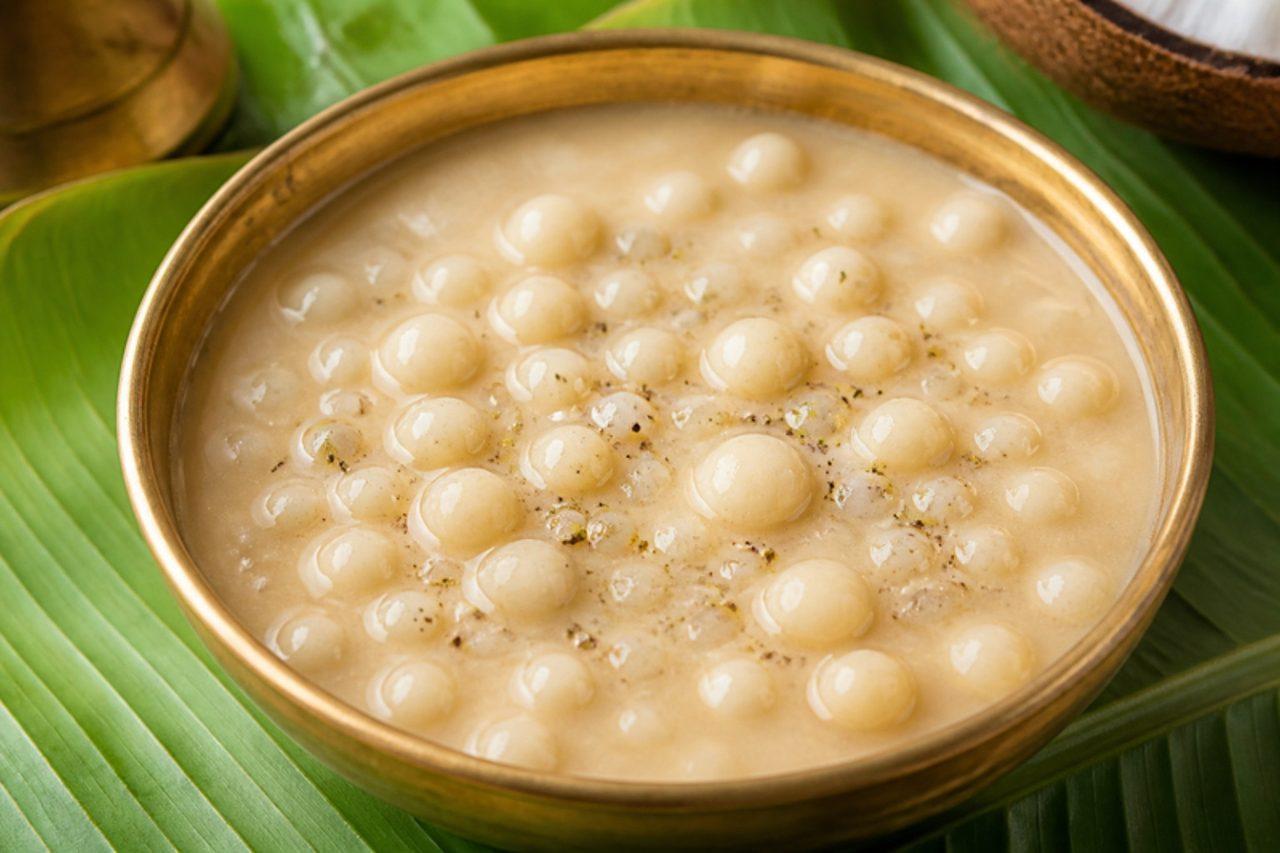
Paal kozhukattai (rice dumplings in sweet coconut milk)

Paal kozhukattai is made in Tamil Nadu homes for Vinayaka Chaturthi and on rainy evenings when something warm and sweet is wanted. Tiny pearls of rice-flour dough are cooked in thin coconut milk until they float and turn glossy, then the pot is sweetened with jaggery and finished with thick coconut milk and cardamom. The dumplings are soft and chewy, the liquid creamy and caramel-coloured, and the whole thing is served warm in small bowls, or at room temperature as part of a festival offering. It is naturally egg-free and vegan: the rice flour, scalded with boiling water, holds the dumplings together, and its starch thickens the coconut milk as they cook. Chef's tip: once the thick coconut milk goes in, keep it below a boil; boiling it hard is the common mistake that splits the coconut milk and makes it oily.

by KrazyBadal 0 views

Avarekalu saaruField bean and coconut curry

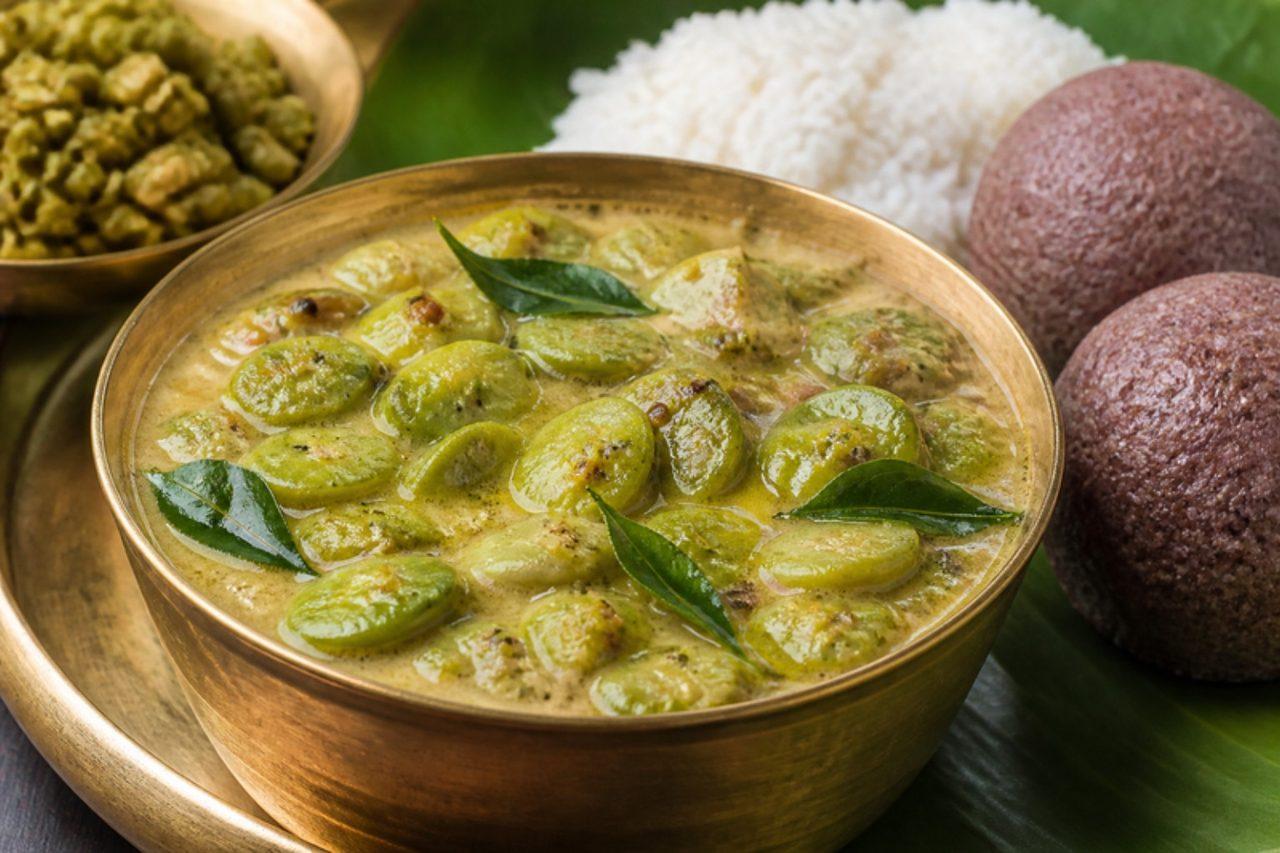
When the avarekai (hyacinth bean) season comes to Bengaluru and Mysuru in December and January, the city celebrates with a whole street festival of avarekalu dishes, and this thin, fragrant saaru is the one cooked at home for lunch with ragi mudde or rice. The tender beans, popped out of their pods, are simmered in a gravy of coconut, roasted spices and a little tamarind and jaggery. Fresh beans are watery, so a portion gives about 12 g of protein, from the beans, a little toor dal and the coconut; that is why it is not tagged High protein. Frozen shelled avarekalu from Indian grocers works well out of season. The most common mistake is undercooking the beans: like all hyacinth beans they must be cooked until completely soft, never eaten raw or half-cooked. Chef's tip: for the classic hitikida flavour, soak the shelled beans in warm water for 30 minutes and squeeze each one out of its skin; it takes time but gives a creamier, sweeter saaru.

by KrazyBadal 0 views

Gongura pappuLentils with sour roselle leaves

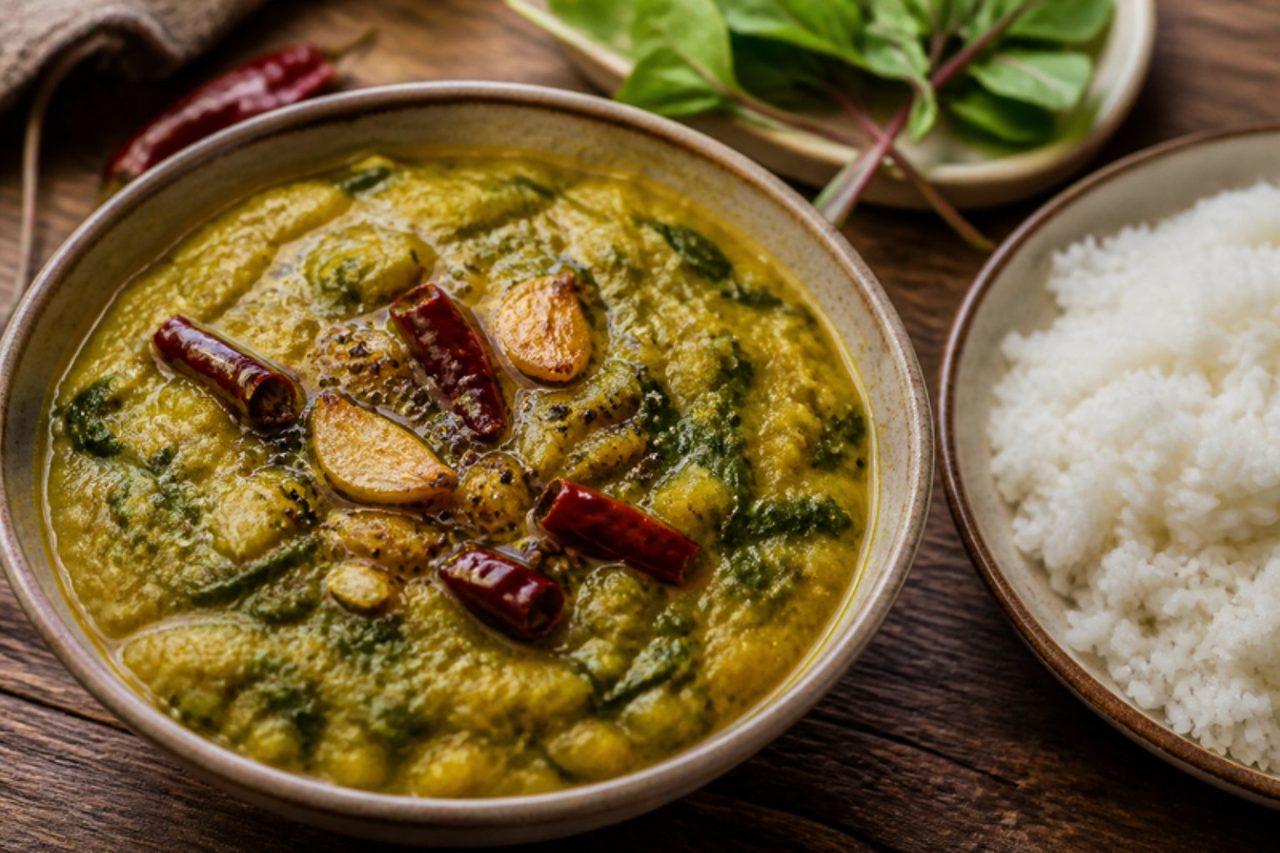
In Guntur, Vijayawada and across Telangana, gongura pappu is the everyday lunch dal that people who move away miss most: toor dal cooked soft with handfuls of sour roselle leaves, which melt into a tangy, olive-green purée, then finished with a sizzling tempering of garlic and dried red chillies. It is eaten mixed into hot rice with a spoon of ghee or oil and a crisp papad. A portion gives about 20 g of protein, almost all from the toor dal, and about 23 g with a plate of rice. Gongura is sold in Indian grocers in bunches; you need only the leaves. The most common mistake is cooking the leaves in an aluminium or iron pan: their acid reacts with the metal and the dal turns dark and tastes metallic, so use a steel or enamelled pot. Chef's tip: mash the dal and wilted leaves together hard with a whisk or wooden masher before tempering; a smooth, creamy pappu carries the sourness evenly instead of in stringy patches.

by KrazyBadal 0 views

Aamras (spiced mango pulp)

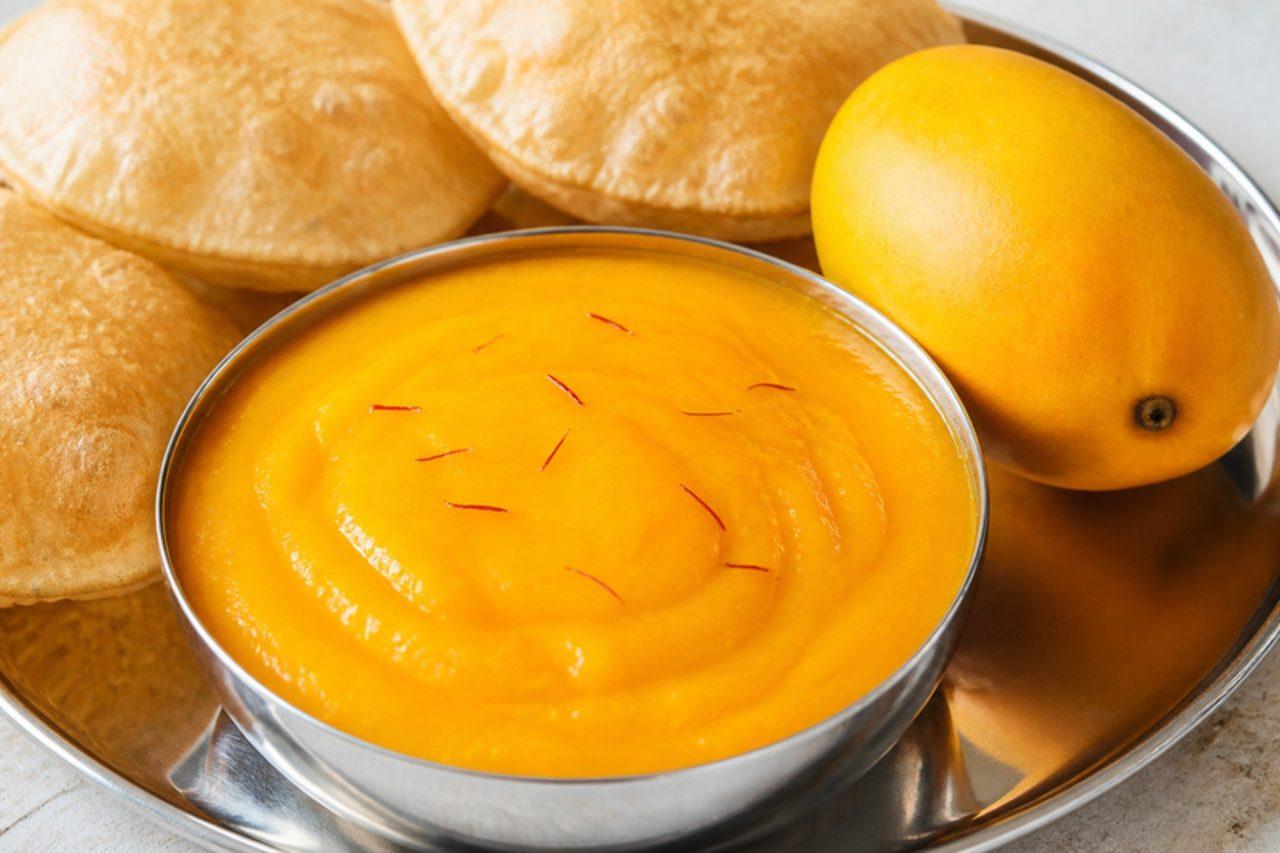
When Kesar mangoes reach Ahmedabad and Alphonsos reach Pune in April and May, aamras appears at almost every summer lunch in Gujarat and Maharashtra. It's simply ripe mango pulp, thick and silky, with a pinch of dry ginger to help digestion, a little cardamom and sometimes a spoon of sugar if the fruit isn't sweet enough. It's eaten as part of the meal rather than after it, scooped up with hot puris, alongside a potato sabzi and dal; in Maharashtra it's also served at Akshaya Tritiya and Gudi Padwa. Spoon it out chilled in bowls, or offer it to children by itself. It is naturally egg-free and vegan: the mango's own thick pulp gives all the body, so nothing needs to bind or set it. Chef's tip: use only soft, fragrant, fully ripe mangoes and press the pulp through a sieve if they are fibrous; under-ripe fruit is the common mistake that makes aamras sour and thin.

by KrazyBadal 0 views

Chana ghassiBlack chickpea coconut curry

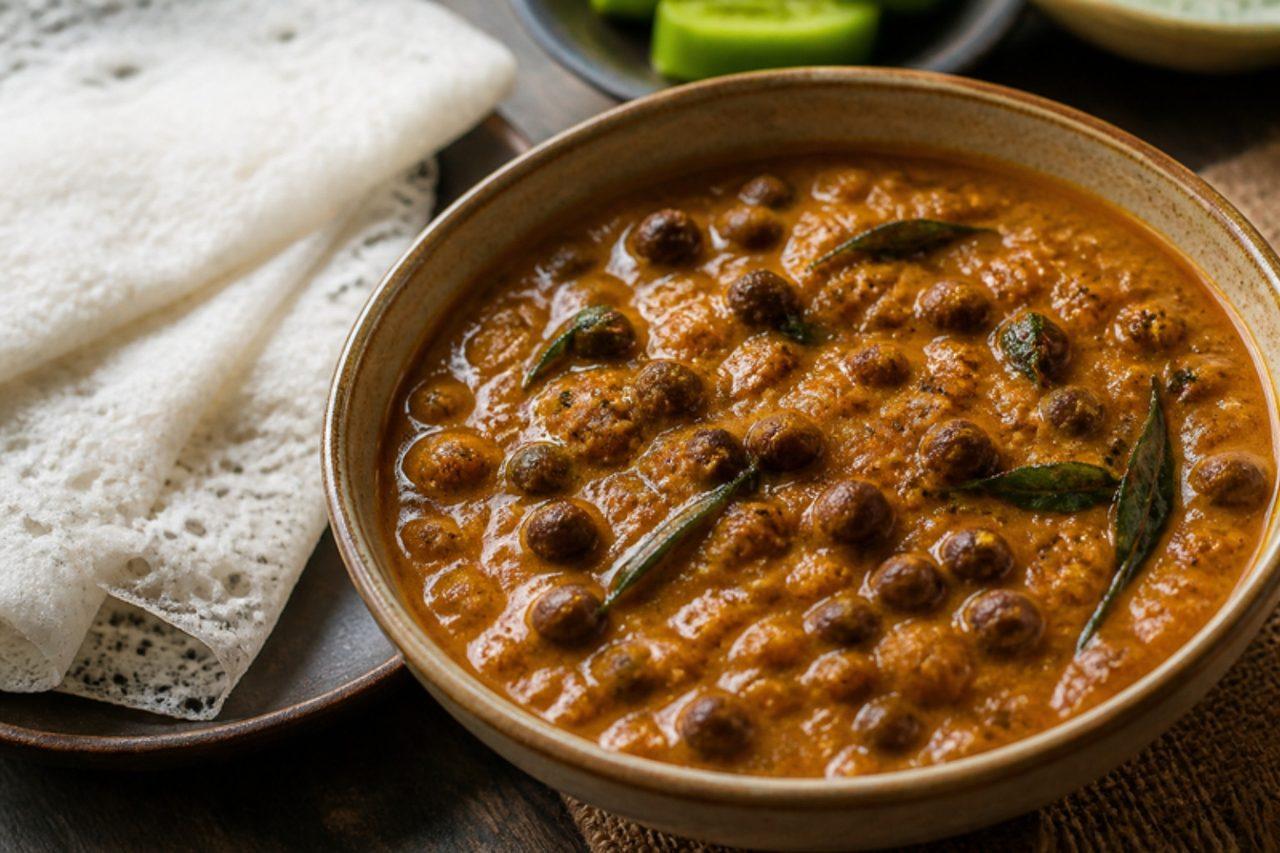
Chana ghassi is a Mangalorean and Udupi favourite, cooked for Sunday breakfast with soft neer dosa or for a weekday lunch over boiled rice. Small black chickpeas are simmered until tender and then cooked in a russet gravy of coconut and spices roasted in coconut oil, sharpened with tamarind and finished with fried onion and curry leaves. A portion gives about 21 g of protein, mostly from the black chickpeas with a little from the coconut. The chickpeas need 8 hours of soaking first (overnight is easiest), which is not counted in the times. The most common mistake is under-roasting the coconut and spices: the gravy then tastes raw and flat instead of deep and toasty. Chef's tip: roast the dried chillies, coriander and fenugreek first and the coconut last, until it turns an even reddish brown; grind it with a little of the chickpea cooking water for the smoothest gravy.

by KrazyBadal 0 views

Ghanta tarkariMixed vegetables with dried peas

Ghanta is the Odia one-pot of everything the winter market offers, cooked in Bhubaneswar and Cuttack homes for festival days and pujas, and in a similar form in the temple kitchens at Puri. Pumpkin, raw banana, sweet potato, aubergine and beans are cooked with soaked dried peas and chana dal until the pulses thicken it into a soft, chunky stew, seasoned with ginger, cumin and a light panch phoron tempering. A portion gives about 20 g of protein from the dried peas, chana dal and vegetables. The dried peas and chana dal need 8 hours of soaking first (overnight), which is not counted in the times. The most common mistake is adding all the vegetables at once: pumpkin melts to mush while the raw banana is still hard, so add them in two stages. Chef's tip: grind the ginger and cumin with a little water to a fresh paste rather than using powder; it is what gives ghanta its clean, warm flavour.

by KrazyBadal 0 views

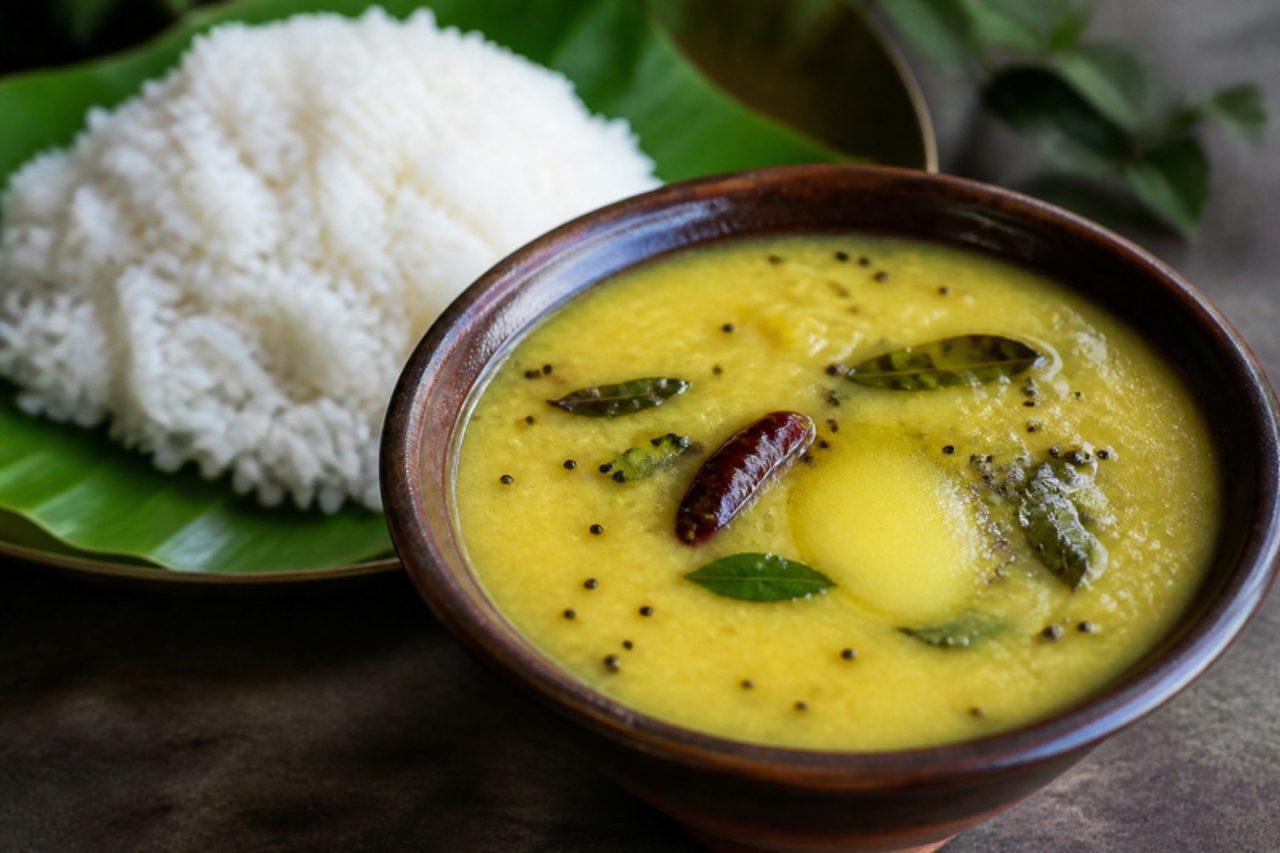
DalithoyMild toor dal with mustard

Dalithoy is the comfort dal of Konkani-speaking families in Goa, Mangalore and Udupi, eaten almost daily at lunch with red rice, and the first thing many make for someone recovering from illness. It is deliberately simple: toor dal cooked very soft with ginger and green chilli, thinned to a pourable soup and finished with coconut oil, mustard seeds, curry leaves and a good pinch of asafoetida. A portion gives about 19 g of protein from the toor dal, or about 23 g with a plate of rice, for about 330 kcal. With a pressure cooker it is on the table in half an hour. The most common mistake is skimping on the asafoetida or burning it: it is the main flavour here, so add it off the heat at the end of the tempering. Chef's tip: whisk the cooked dal until it is completely smooth before thinning it; dalithoy should be silky, with no whole grains left.

by KrazyBadal 0 views

Showing 72 of 681 recipes

Show more recipes

Page 7 of 29

More collections