Skip to content

Vegetarian Indian dinners

Dal, sabzi, curries and rice dishes for a meat-free Indian dinner. (880 recipes)

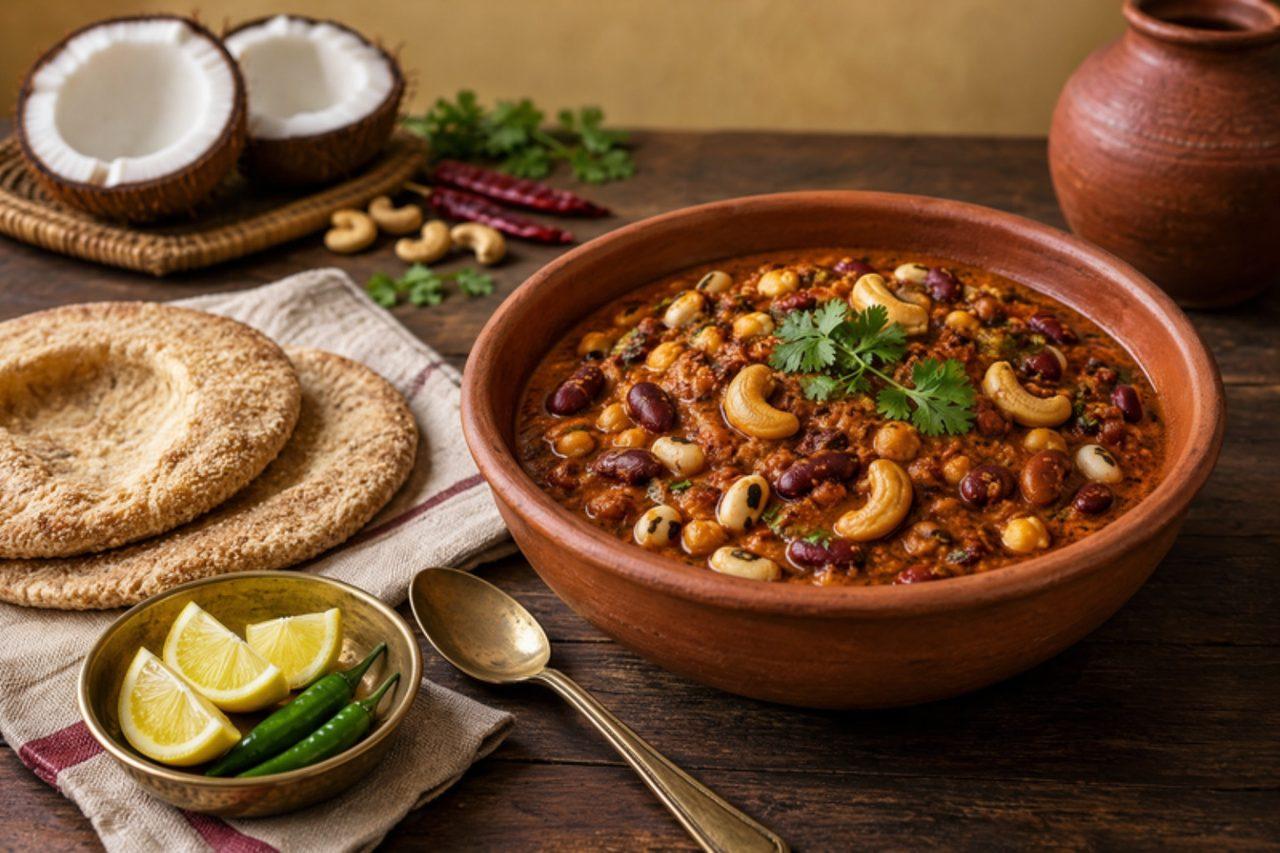
TondakMixed beans and cashew gravy

Tondak is a Goan Saraswat dish cooked in homes around Ponda and Margao for festivals, weddings and Sunday lunches: mixed beans and plump cashews in a gravy of roasted coconut, red chillies and coriander seeds. The beans soften into the reddish-brown sauce while the cashews stay buttery, making it filling and rich in protein. Serve it with a little rice or a millet bhakri and a vegetable side. It is suitable as part of a balanced diet. About 380 kcal and 34 g carbohydrate per portion. The usual mistake is grinding raw coconut; it must be roasted to a deep golden brown first or the gravy tastes flat. Chef's tip: dried kidney beans must be soaked overnight and boiled hard for 10 minutes before they simmer, so do this even if you then use a slow cooker or pressure cooker.

by KrazyBadal 0 views

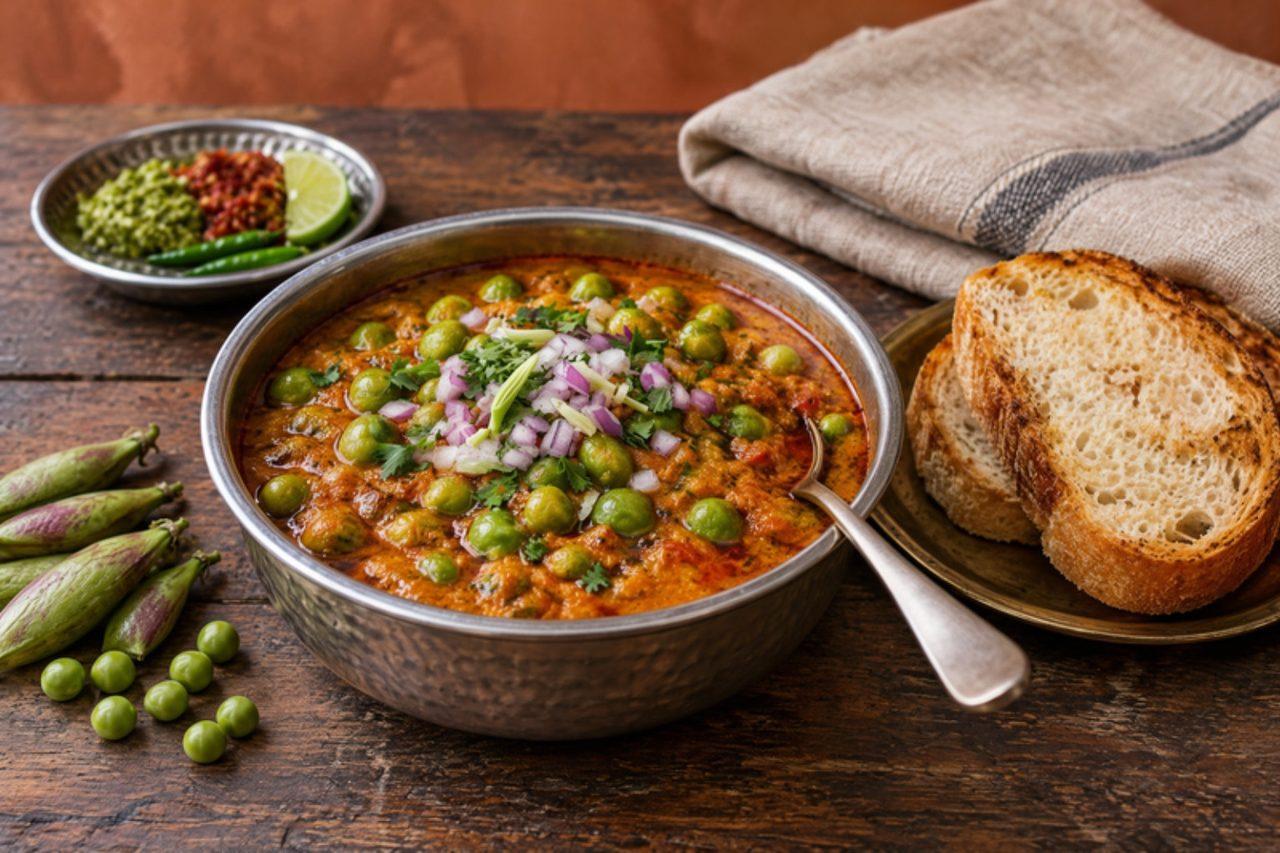
Tuver tothaGreen pigeon peas in garlic gravy

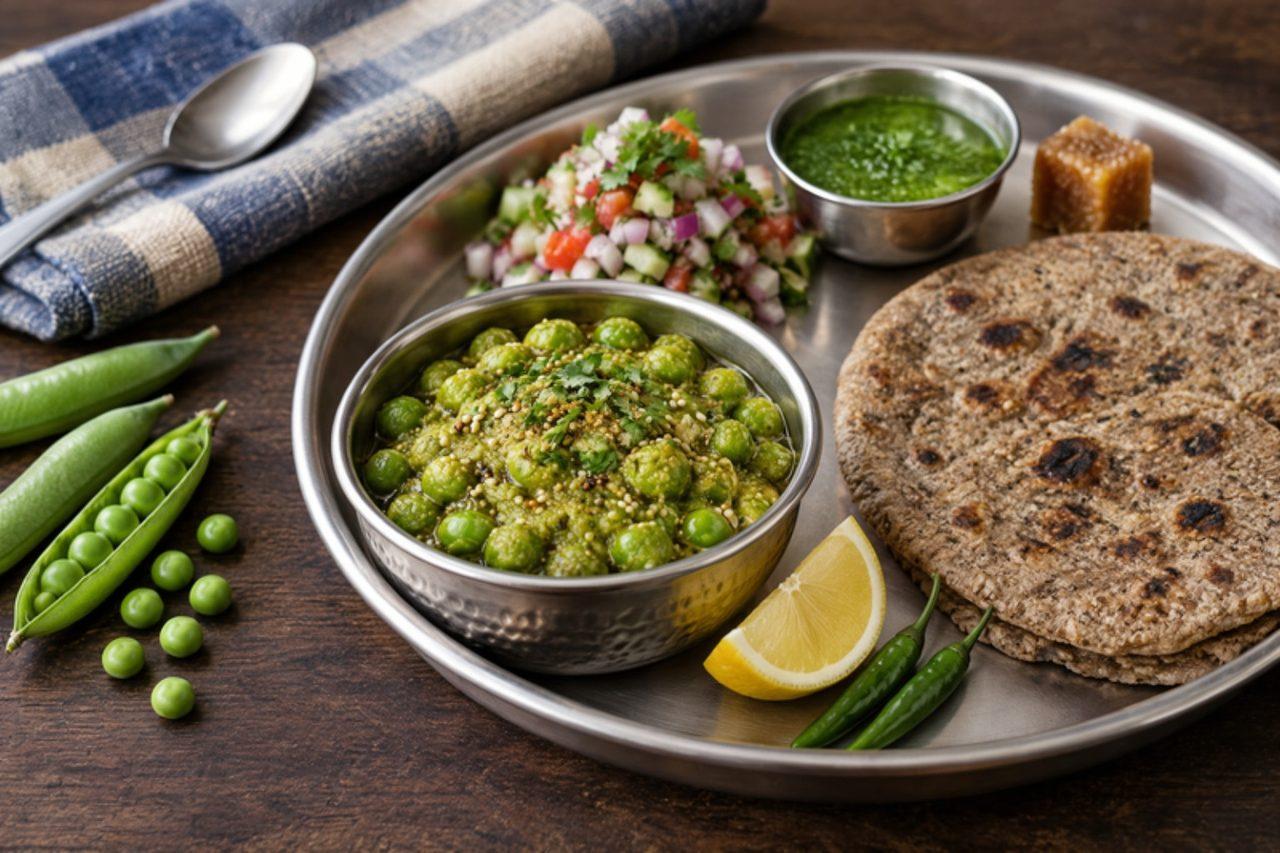
Tuver totha is a winter street-stall and wedding favourite from Mehsana and the villages of North Gujarat, eaten hot on cold evenings when fresh green tuver is in season. The peas are boiled soft, then simmered in a fiery, garlicky gravy of onion, tomato and green chilli and finished with chopped onion, coriander and lemon. In Gujarat it is mopped up with bread; for a lower-GI plate serve it with a bajra rotla or a small bowl of brown rice. It is suitable as part of a balanced diet. About 260 kcal and 30 g carbohydrate per portion. The usual mistake is undercooking the peas, which then stay chalky in the gravy. Out of season, use frozen green pigeon peas, or dried green tuver soaked overnight and pressure-cooked. Chef's tip: mash a ladle of the cooked peas and stir them back in so the gravy thickens without any flour.

by KrazyBadal 0 views

Gogji razmaKidney beans with turnips

In the Kashmir valley, gogji razma is a winter comfort dish, made in heavy pots when turnips are sweet after the first snow and dried beans from Bhaderwah fill the store. Red kidney beans and turnip chunks simmer in a thin, red gravy flavoured with mustard oil, ground fennel, dried ginger and Kashmiri chilli, without any onion or tomato. Serve with a modest bowl of rice or a millet roti and a green salad. It is suitable as part of a balanced diet. About 300 kcal and 38 g carbohydrate per portion. The usual mistake is slow-cooking dried kidney beans without boiling them hard first; raw kidney beans are unsafe, so soak them overnight and boil hard for 10 minutes before simmering. Chef's tip: add the turnips only when the beans are almost soft, so they keep their shape and sweetness.

by KrazyBadal 0 views

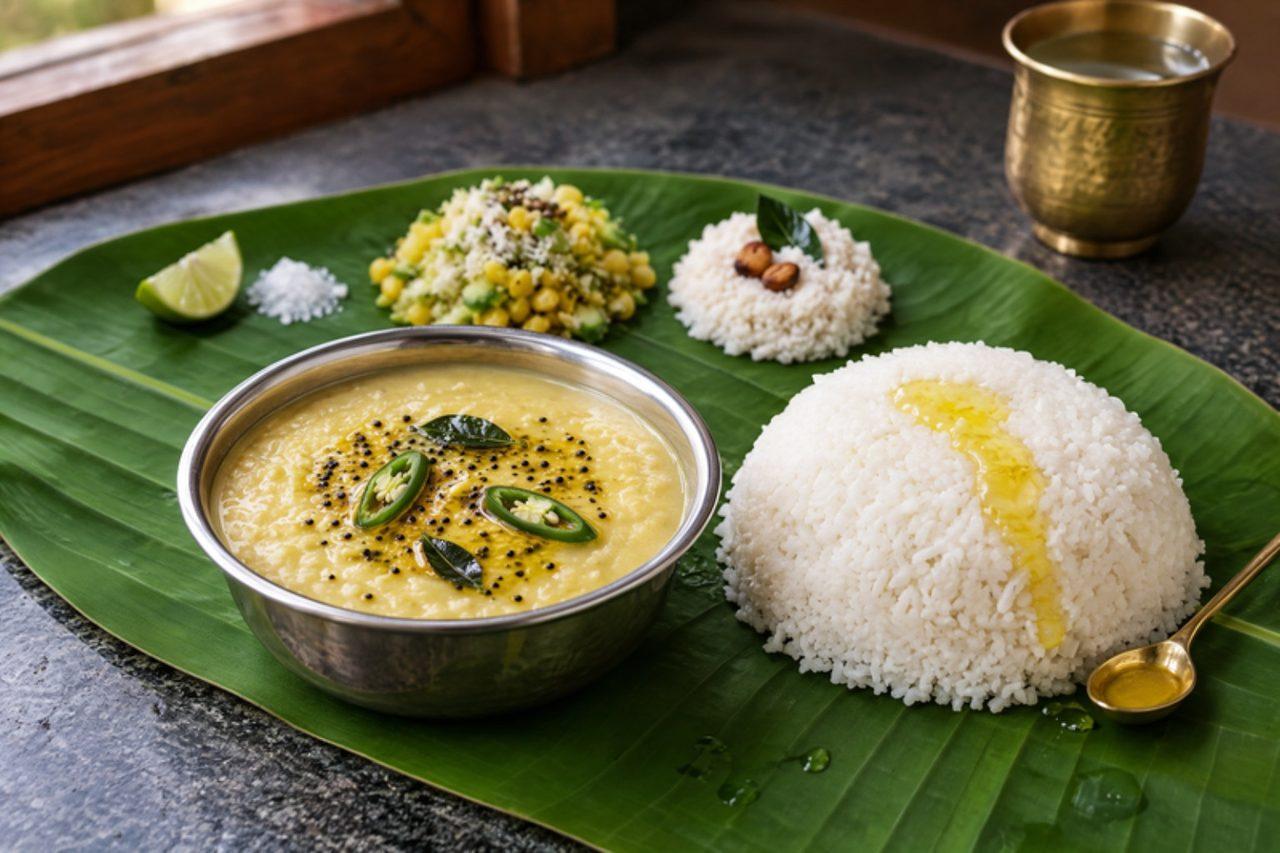
TovveToor dal with green chilli

Tovve is the plainest dal of the Udupi temple kitchens and of Kannada homes along the coast: toor or moong cooked soft, seasoned with green chilli and ginger and finished with a sizzling ghee tempering. There is no tomato, no onion and no masala, so it is the first dal children eat and what families cook for a light dinner or after a fast, with rice, a spoon of ghee and a lemon pickle. Its flavour depends on a well-cooked dal, so it must be soft enough to fall apart when stirred. The usual mistake is adding salt before the dal is tender, which keeps it grainy. Chef's tip: whisk the cooked dal hard for 30 seconds before tempering; the smooth, creamy texture is what makes tovve taste of more than its few ingredients.

by KrazyBadal 0 views

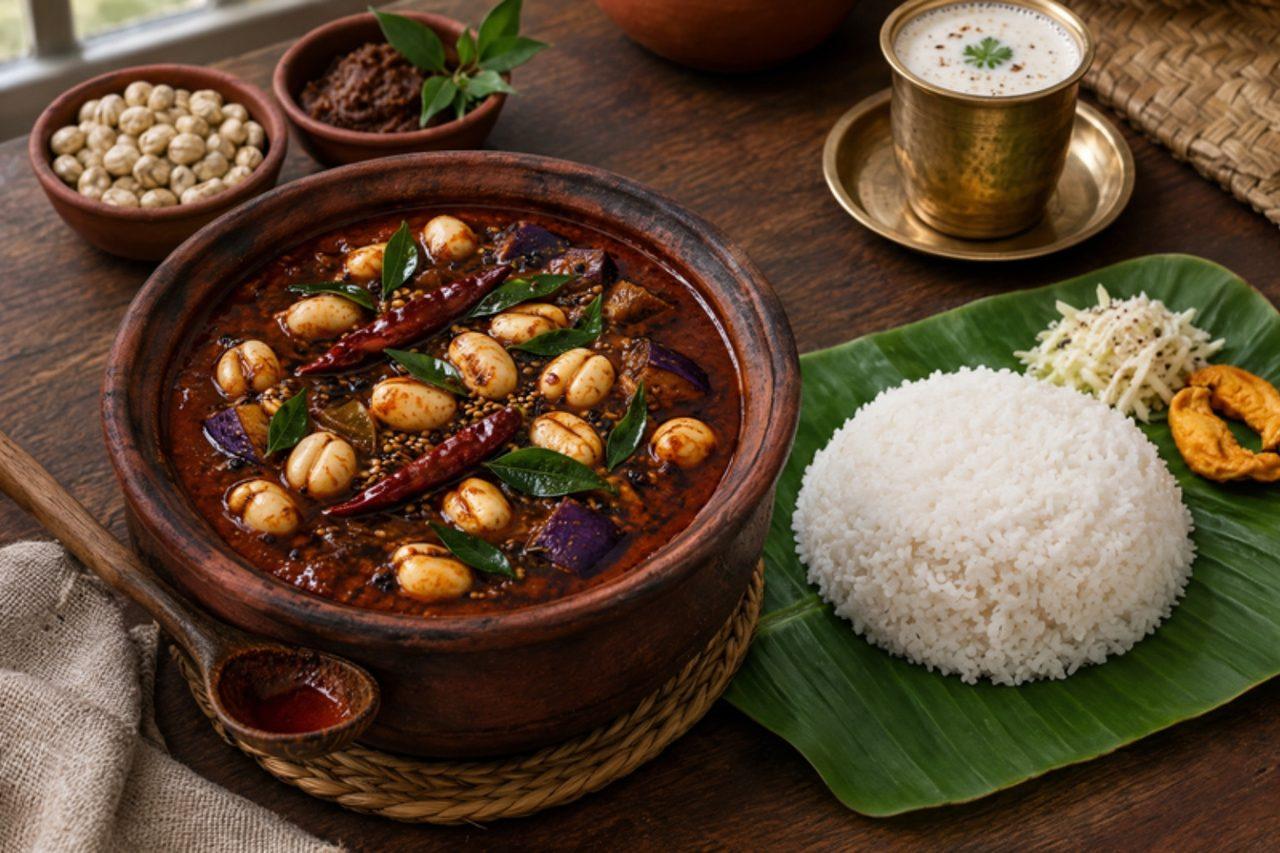
Mochai kottai kuzhambuField bean gravy

Across Tamil Nadu, from Madurai to Tirunelveli, mochai kottai kuzhambu is a winter and weekend curry: dried field beans and small brinjals stewed in a thick tamarind and sambar-powder gravy with shallots and garlic. It is cooked in a big batch, because everyone agrees it tastes better the next day, and eaten with rice, a spoon of sesame oil and appalam or a simple keerai. The beans turn creamy and the brinjal melts into the sauce. Dried field beans must be soaked and boiled until completely soft; never eat them undercooked. The usual mistake is adding the tamarind before the beans are tender, because acid stops them softening. Slow-cooker: boil the soaked beans hard on the hob for 10 minutes first, then cook everything on low for 6 hours. Chef's tip: fry the brinjal in the oil before the gravy goes in, so it holds its shape instead of dissolving.

by KrazyBadal 0 views

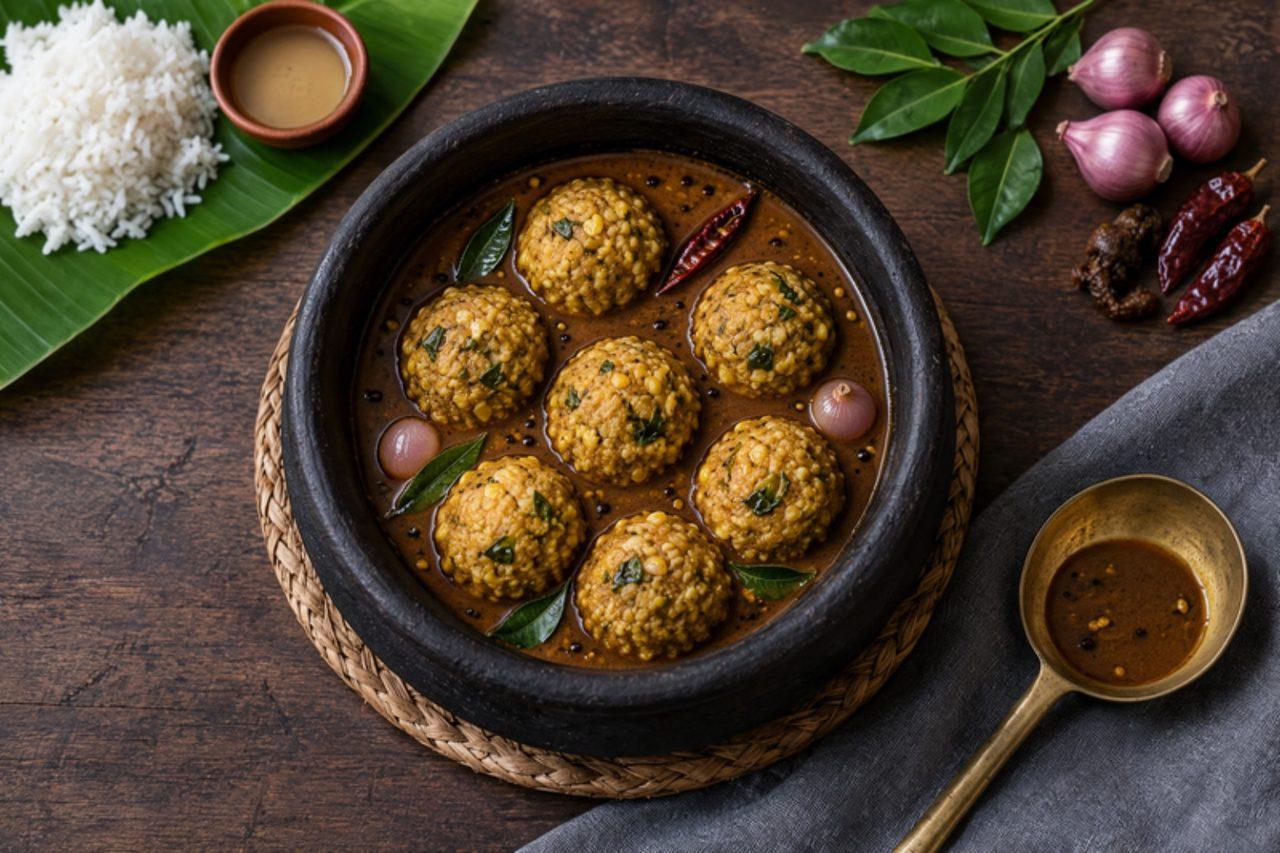
Paruppu urundai kuzhambuLentil dumpling gravy

Paruppu urundai kuzhambu is a Sunday-lunch treat in Tamil homes from Chennai to Coimbatore: coarse balls of soaked chana and toor dal, spiked with fennel, chilli and shallot, dropped raw into a bubbling tamarind gravy where they steam and firm up. The dumplings come out soft inside and soak up the sour, spicy sauce, and the crumbs that escape thicken the gravy. Serve it with plain rice, a spoon of sesame oil and a vegetable poriyal. The usual mistake is stirring as soon as the balls go in, which breaks them; leave them alone until they float and feel firm. Chef's tip: drop one test ball in first; if it cracks, knead a spoon of rice flour into the mixture before shaping the rest.

by KrazyBadal 0 views

Lilva tuvar nu shaakGreen pigeon pea curry

From December to February, Gujarati markets fill with fresh tuvar pods, and families in Surat, Vadodara and Ahmedabad spend evenings shelling them for lilva dishes. This simple shaak cooks the sweet, nutty green pigeon peas with ginger, green chilli, ajwain and a fistful of coriander, with a squeeze of lemon and a pinch of sugar for the classic Gujarati balance. Eat it with bajra rotla, rotli or khichdi. The usual mistake is cooking the peas too long, which turns them grey and floury; they should stay green and tender. Chef's tip: frozen lilva from Indian grocers work well outside the season; add them straight from frozen and shorten the cooking time.

by KrazyBadal 0 views

Batata nu rasawalu shaakPotato curry in thin gravy

Batata nu rasawalu shaak is the potato curry that arrives with hot puris at Gujarati wedding breakfasts, Sunday brunches and festival thalis, and it is one of the first curries children in Gujarat love. Soft potato chunks float in a thin, red, sweet-and-sour gravy with mustard seed, curry leaves and hing, lightly spicy and very comforting. Serve with puri, rotli or plain rice. The usual mistake is cutting the potatoes in uneven pieces, so some fall apart while others stay hard; cut them all the same size. Chef's tip: once the potatoes are cooked, mash a few against the side of the pan; the starch gives the rasa (gravy) body without any flour.

by KrazyBadal 0 views

Teliya maahBlack lentils in mustard oil

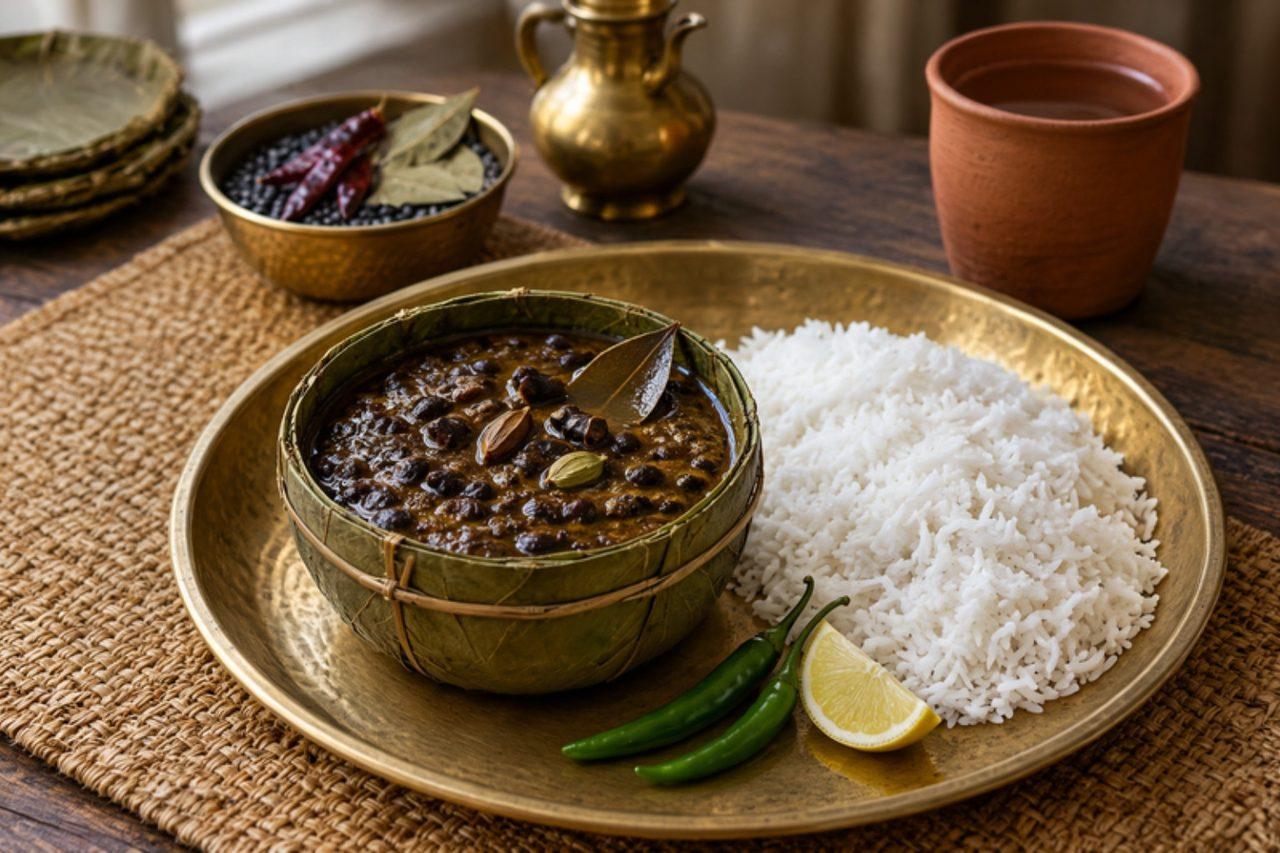
Teliya maah is one of the dishes of the Himachali dham, the feast cooked by hereditary cooks (botis) in big brass pots for weddings and temple fairs in Mandi, Kangra and Chamba, and served on leaf plates with rice. Whole black urad is cooked slowly with plenty of mustard oil, whole spices, ginger and fennel until each bean is soft but whole and glossy with oil; like most dham dishes, it uses no onion or garlic. Serve with rice and a sour madra or khatta. The usual mistake is stirring hard once the urad is soft, which turns it into a mushy dal instead of separate, oily beans. Slow-cooker option: put the soaked urad, spices and water on low for 8 hours, then finish uncovered on the hob. Chef's tip: heat the mustard oil until it smokes, then let it cool for a minute, which takes away its raw bite before the spices go in.

by KrazyBadal 0 views

Kumaoni rasMixed dal broth

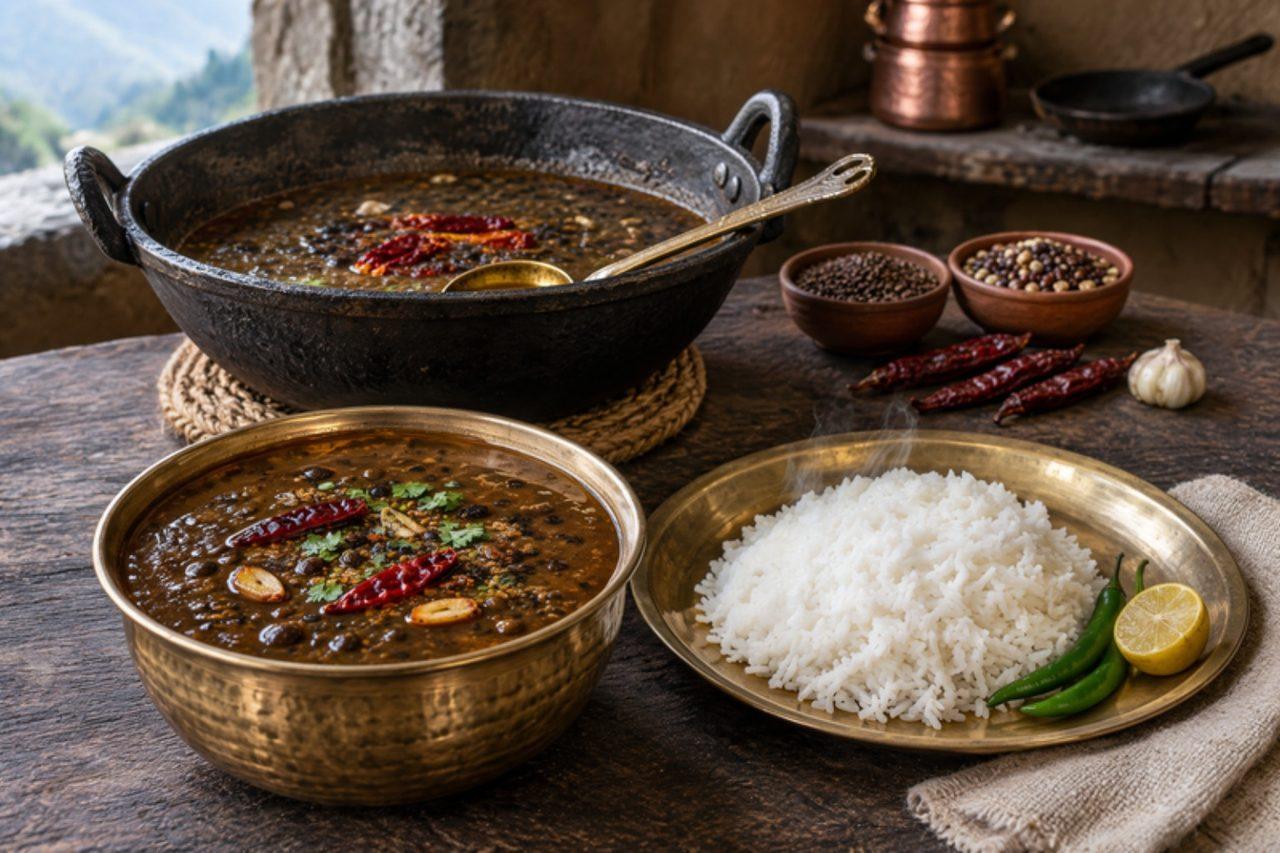
In the hill villages of Kumaon in Uttarakhand, ras is cooked through the cold months in a heavy iron kadhai that sits on the fire for hours; the iron turns the broth dark and earthy, and families drink it with rice or mandua (finger millet) roti. Several whole dals, here horse gram (gahat), black soybeans (bhatt), black urad and green moong, are simmered until their liquid becomes a rich, brown, silky broth, lightly thickened with ground rice and finished with a crackling mustard-oil tempering of jakhya seeds. The cooked dal solids are eaten too, as a dry side. The usual mistake is hurrying: the broth needs long, slow simmering to turn silky and full-flavoured. Chef's tip: jakhya (wild mustard seed) is sold in Uttarakhand shops; cumin is a fair stand-in.

by KrazyBadal 0 views

Chhena tarkariFried cheese cube curry

In Odia homes, from Cuttack to Puri, chhena tarkari is the special curry for a Sunday lunch, a guest or a festival day when the household eats no onion or garlic. Fresh chhena, the soft cheese Odisha also turns into rasagola, is pressed, cut into cubes and fried golden, then simmered with potato in a thin gravy of tomato, ginger and roasted cumin. The cubes stay soft and soak up the sauce, and the dish is eaten with rice, puri or paratha. Chhena is made by curdling milk with lemon juice, so it contains no rennet. The usual mistake is boiling the gravy hard after the chhena goes in, which breaks the cubes into crumbs. Chef's tip: fry the chhena cubes until golden on two sides only, then rest them in warm water for five minutes; they swell and turn spongy, just like an Odia grandmother's.

by KrazyBadal 0 views

Milagu kuzhambuBlack pepper tamarind gravy

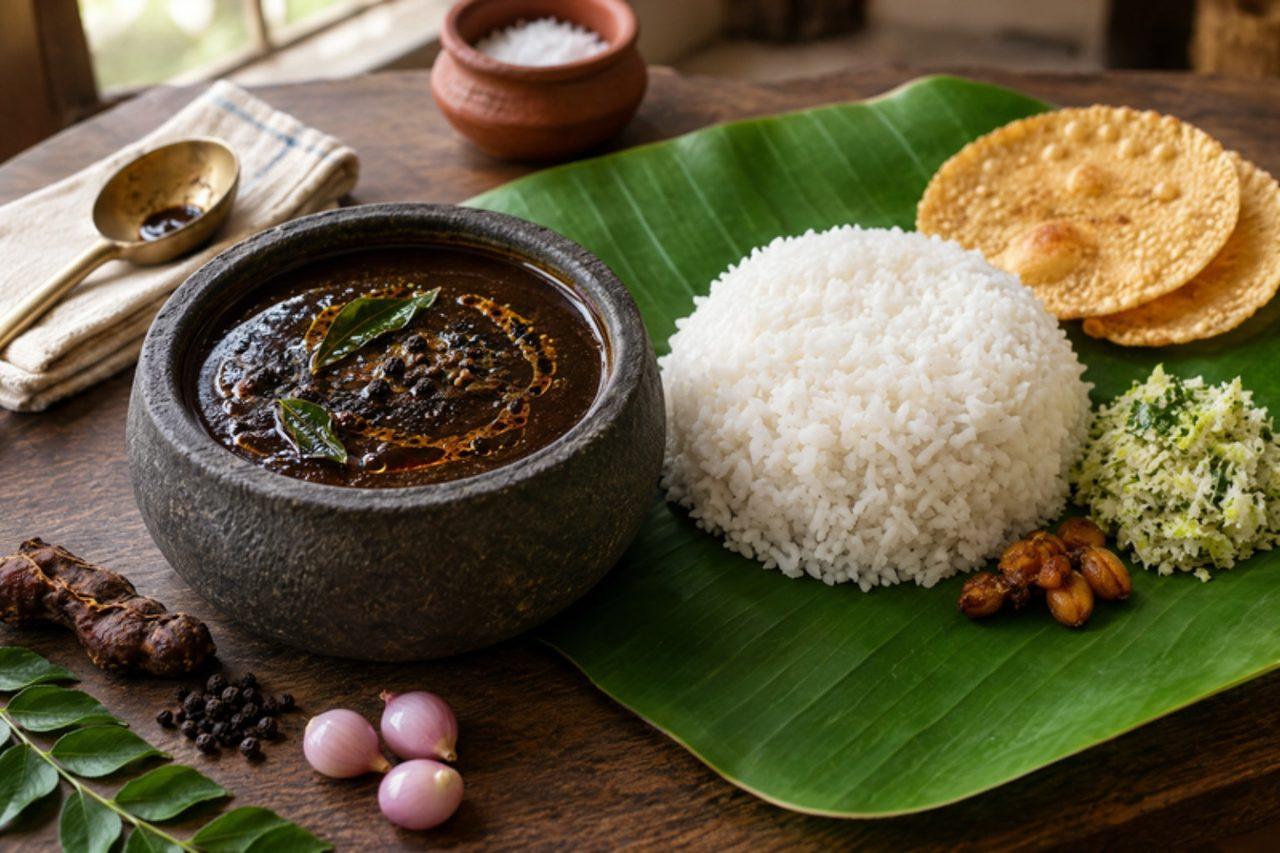
Milagu kuzhambu is the Tamil Brahmin travel curry: a dark, peppery tamarind gravy cooked down in sesame oil until thick, packed in a steel tin for train journeys and pilgrimages because it keeps for days without spoiling. At home it is mixed into hot rice with a spoon of ghee, on rainy days or when someone has a cold, and eaten with a plain poriyal or appalam. A little goes a long way: it is sharp, hot and slightly sweet. The usual mistake is pulling it off the heat too soon; it must reduce until the oil floats on top, or it tastes raw and won't keep. Store it covered in the fridge for up to 5 days and always use a dry spoon. Chef's tip: roast the pepper and lentils on a low heat until you smell them, not until they darken, because burnt pepper turns the whole pot bitter.

by KrazyBadal 0 views

Bathua raitaChenopodium leaf yogurt

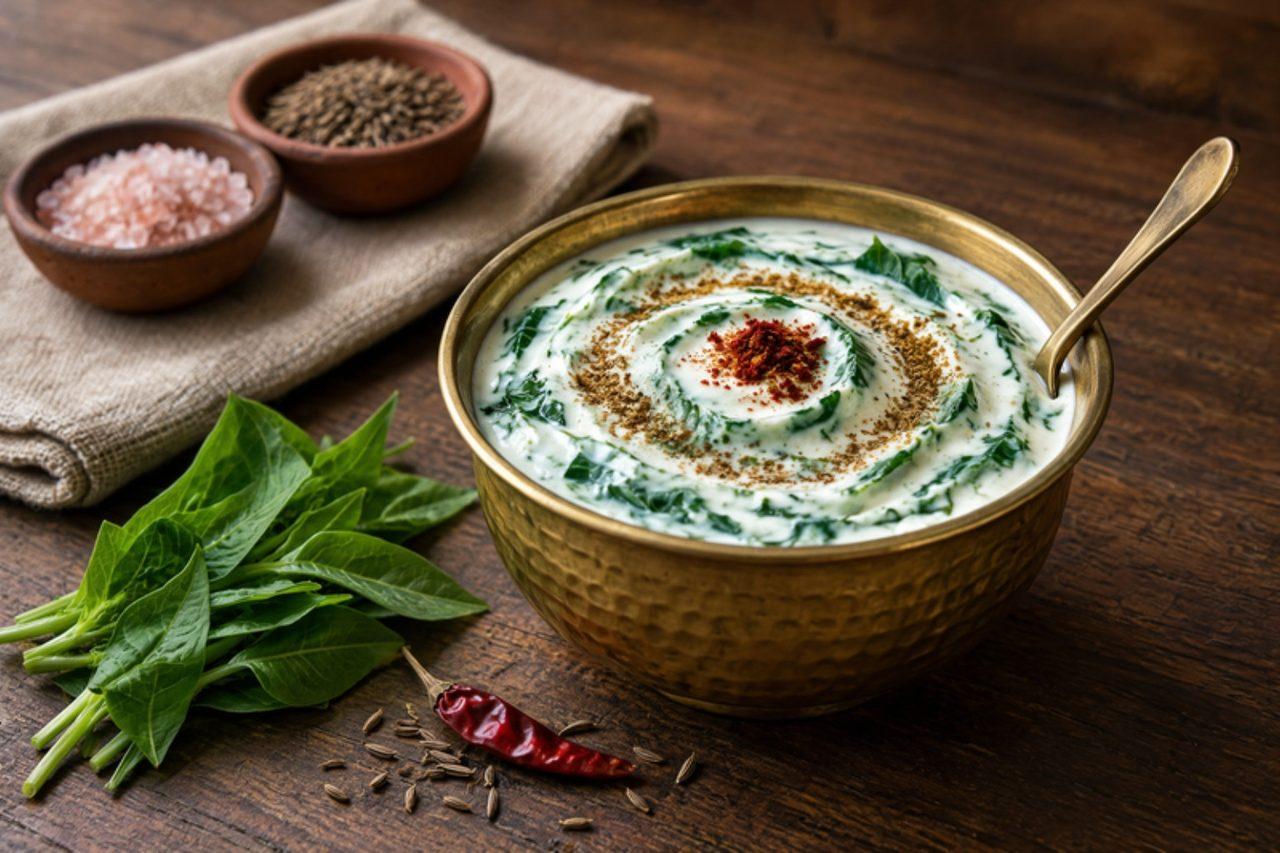
Bathua (chenopodium or lamb's quarters) grows wild in the wheat fields of western Uttar Pradesh and Haryana in winter, and from December to February families blanch it and stir it into yogurt as a cooling raita beside paratha, dal or bajra roti. The leaves are boiled briefly, chopped and folded into whisked yogurt with roasted cumin, black salt and a little green chilli, so it tastes earthy, tangy and fresh. It is suitable as part of a balanced diet. About 90 kcal and 7 g carbohydrate per portion. The usual mistake is adding the greens while they are still hot or wet, which makes the yogurt thin and grainy; squeeze them dry and cool them first. Chef's tip: grind half the blanched leaves to a paste so the raita turns an even pale green.

by KrazyBadal 0 views

Kala vatana amtiBlack pea curry

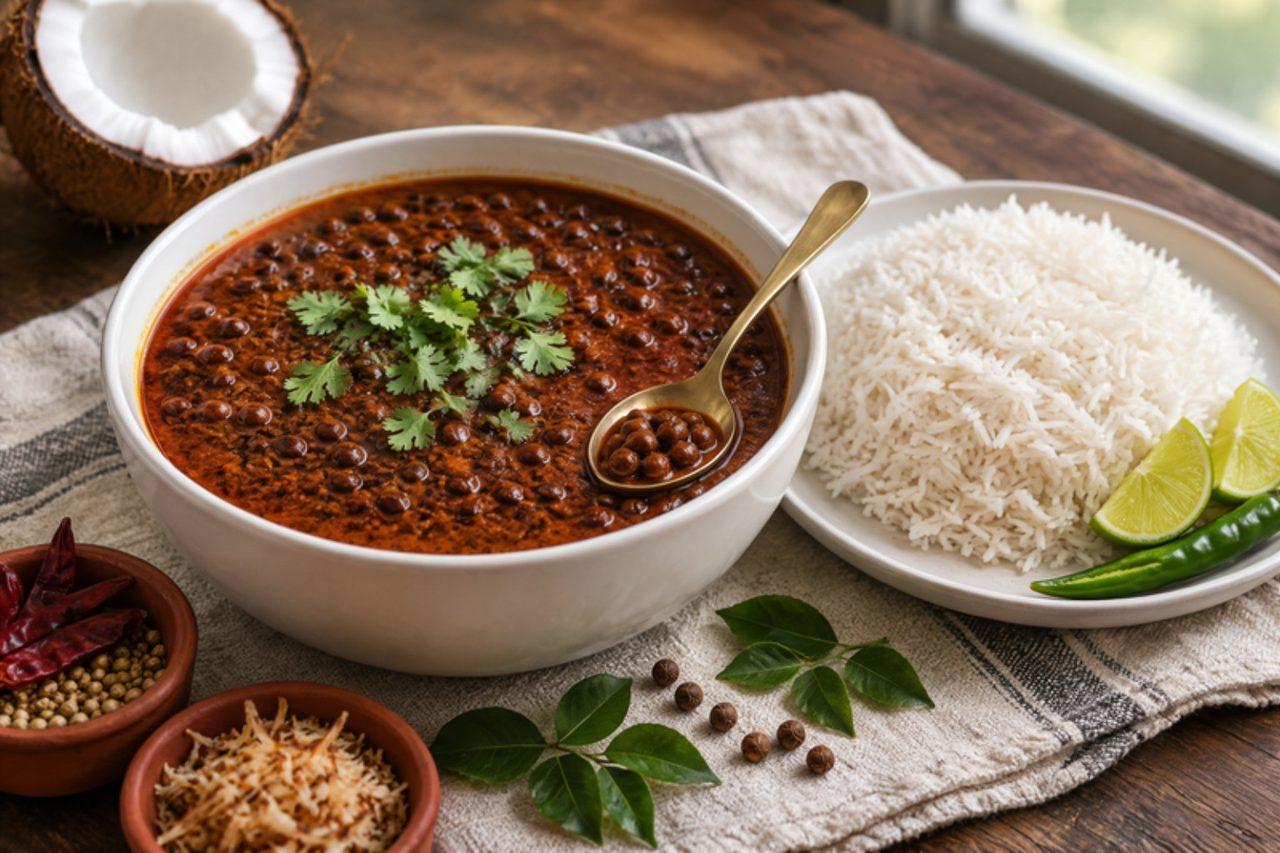
On the Konkan coast around Malvan and Sindhudurg, kala vatana amti is cooked for Sunday lunch and festive meals, and it is the vegetarian partner to fluffy fried vade made from rice and pulse flour. Small dried black peas simmer until creamy in a dark, aromatic gravy of onion and dried coconut roasted until brown, ground with Malvani masala, then soured with kokum. Serve with vade, rice or jowar bhakri. The usual mistake is not soaking the peas long enough, so they stay hard however long they cook; soak them for at least 8 hours. Slow-cooker option: cook the soaked peas with the water on low for 7 hours, then stir in the masala and simmer 15 minutes. Chef's tip: roast the coconut and onion slowly on a medium heat until deep brown but never black, as that colour gives the gravy its depth.

by KrazyBadal 0 views

Kumm curryMushroom curry

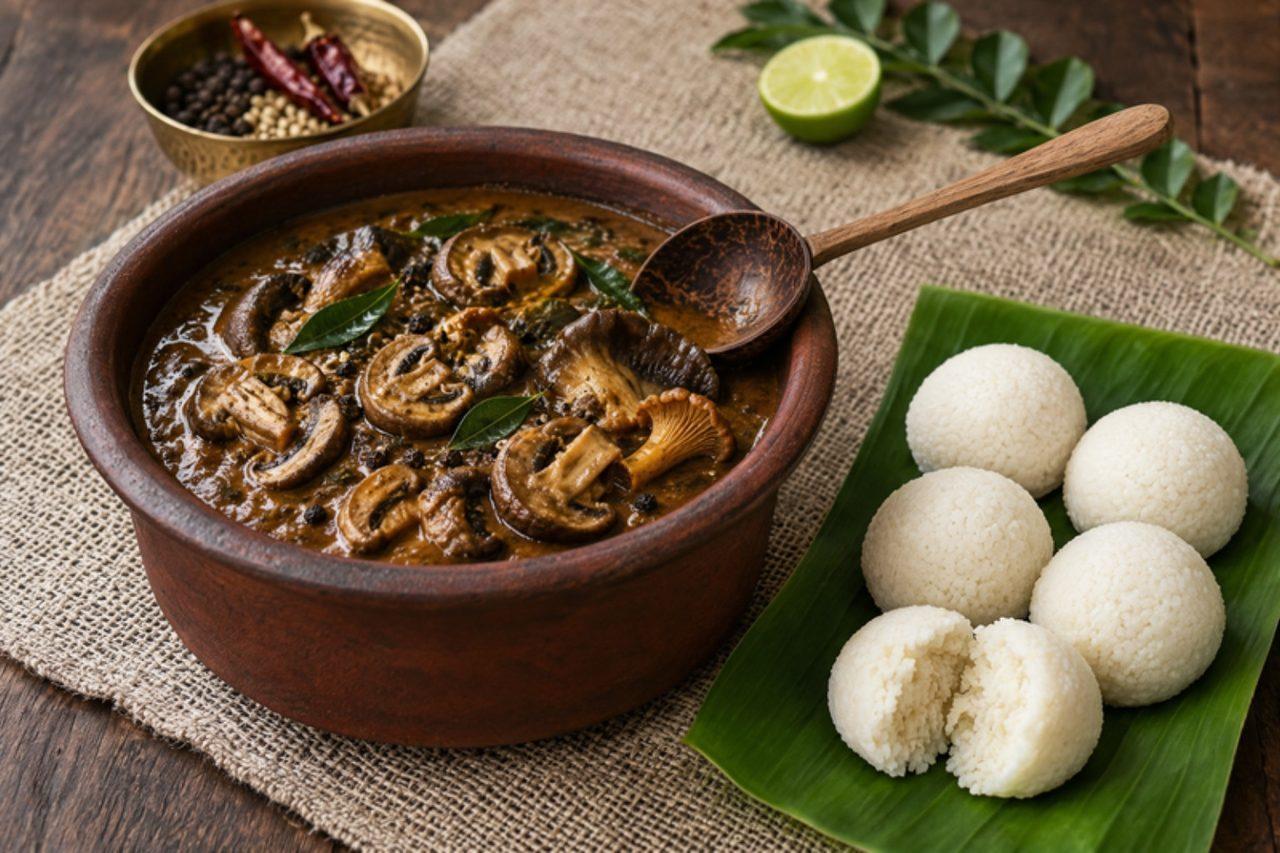
In Kodagu (Coorg), the first monsoon rains bring wild mushrooms called kumm up through the coffee estates, and Kodava families cook them at once into this thick, dark, peppery curry to eat with akki otti (rice rotis) or steamed rice. Mushrooms simmer down with onion and coconut in a paste of spices roasted almost black, sharpened with a drop of kachampuli, Coorg's dark fruit vinegar. Cultivated mushrooms work very well. The usual mistake is adding all the mushrooms to a cool pan, so they stew in their liquid and turn rubbery; let the pan get hot first. Chef's tip: never cook mushrooms you have foraged yourself unless an expert has identified them; use a mix of button, oyster and shiitake instead.

by KrazyBadal 0 views

Sorakaya pulusuBottle gourd in tamarind gravy

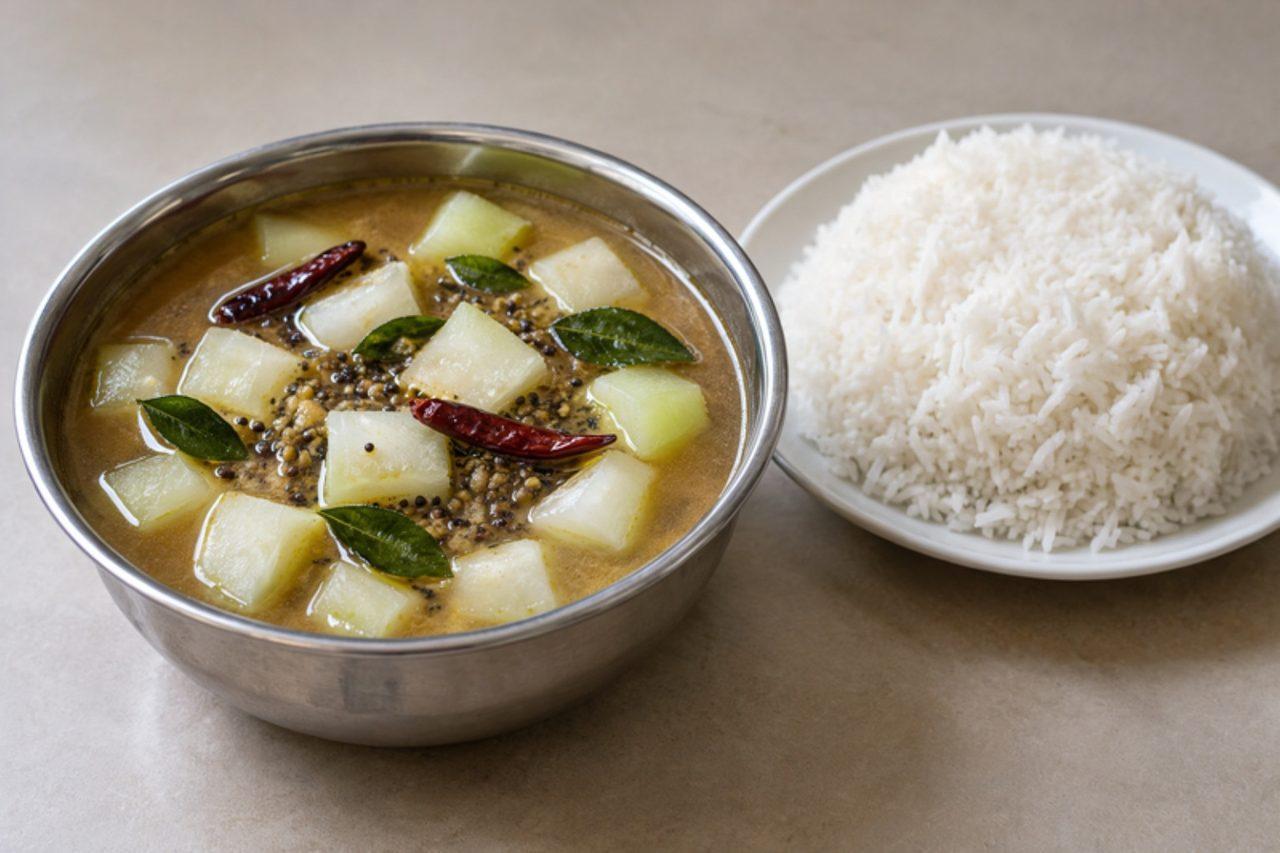
Sorakaya pulusu is everyday Telugu home cooking from Vijayawada to Visakhapatnam, made on weekdays when there's a bottle gourd in the basket and the family wants something light and sour with rice. Soft pieces of gourd simmer in a thin tamarind broth balanced with a little jaggery, chilli and onion, thickened only lightly with rice flour, and finished with a mustard and fenugreek tempering. Mix it into hot rice with a spoon of ghee or eat it with a crisp vada. The usual mistake is overcooking the gourd to mush; it should be tender and translucent but still in pieces. Chef's tip: taste a raw slice of the gourd before cooking, and throw it away if it is bitter, because bitter bottle gourd should not be eaten.

by KrazyBadal 0 views

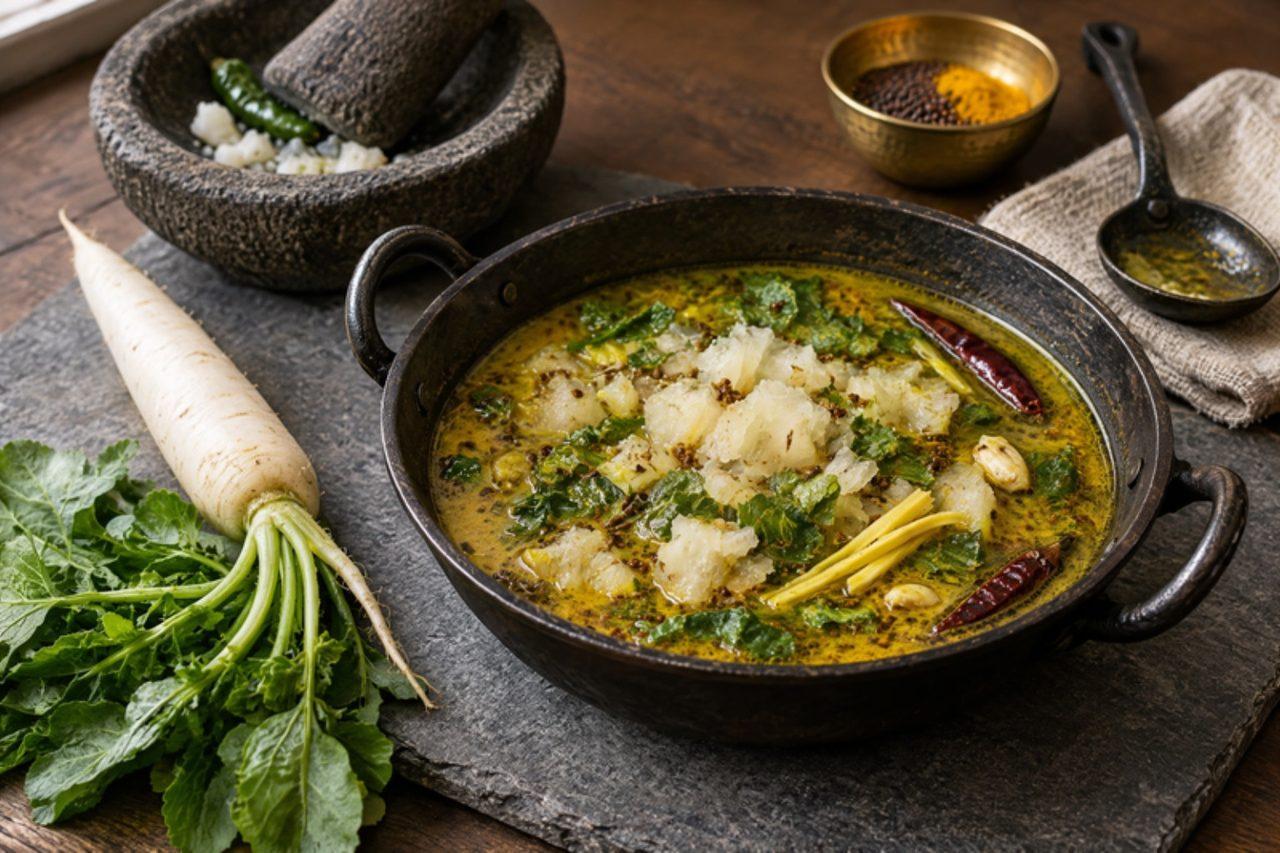
ThechwaniCrushed radish curry

Thechwani is a winter dish from the hill villages of Garhwal, Uttarakhand, cooked when the radishes are fat and sweet. Instead of chopping, the radish (or potato) is bashed with a stone or pestle so it cracks into rough pieces with lots of surface, then simmered in an iron kadhai with mustard oil, jakhya seeds and a little tomato. The broken pieces soak up the spices, and the iron pot darkens the gravy. It is eaten with rice or mandua (finger-millet) roti. Jakhya, a crunchy wild seed, is sold in hill stores; cumin is the swap. The usual mistake is slicing the radish neatly with a knife, which keeps the spices on the outside. Chef's tip: add the radish greens, finely chopped, in the last 5 minutes for colour and a peppery bite.

by KrazyBadal 0 views

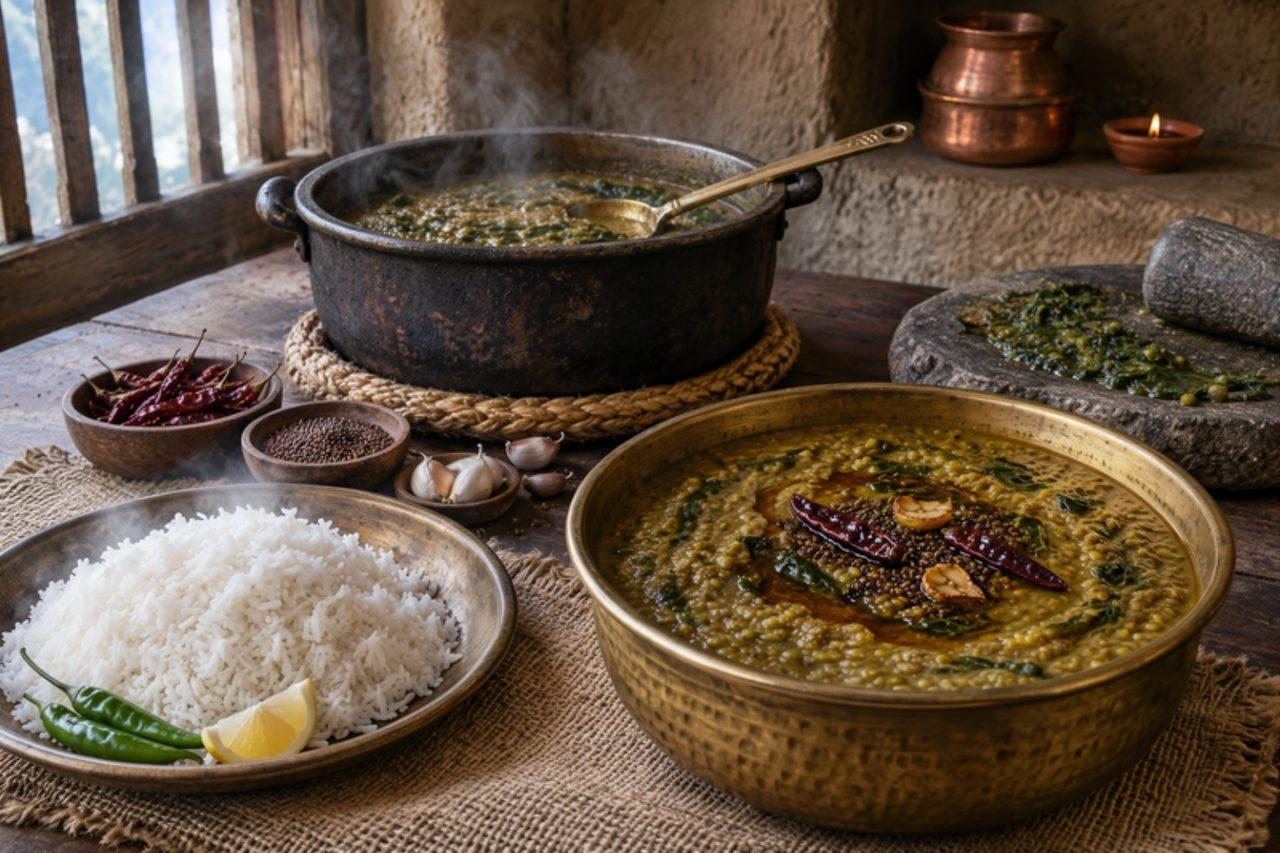
PhaanuGround mixed lentil stew

Phaanu is everyday food in Garhwal's hill villages, from Pauri to Tehri, made on cold days and in large pots for family gatherings. Mixed lentils are soaked overnight, ground to a coarse paste and simmered slowly in an iron pot until the paste turns into a thick, earthy stew, with spinach or other greens and a mustard-oil and jakhya tempering. It is eaten with steamed rice and a little ghee. The usual mistake is adding the paste to the pot and walking away; for the first 10 minutes it must be stirred constantly or it forms lumps and sticks to the bottom. Chef's tip: whisk the lentil paste into cold water before it goes on the heat; it thickens smoothly and never catches.

by KrazyBadal 0 views

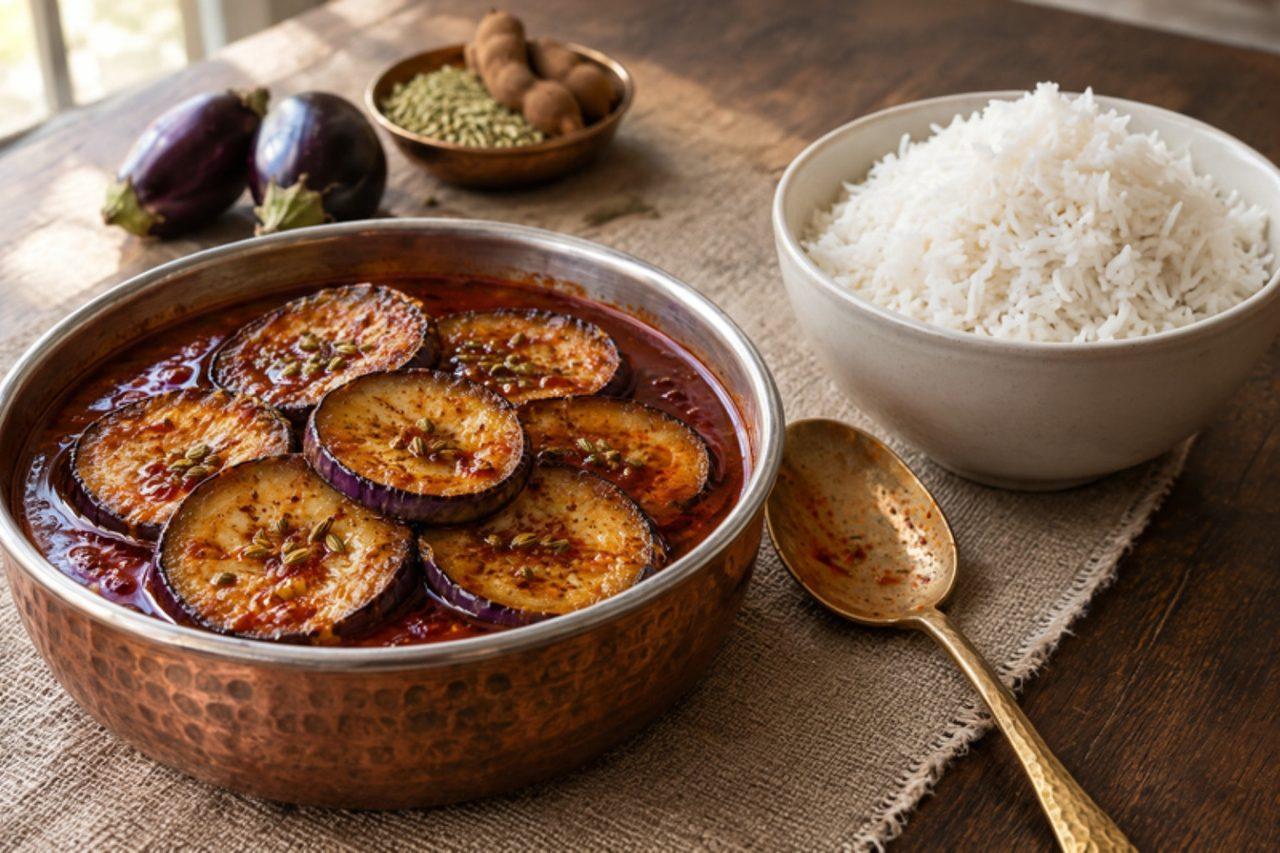
Tschok wangunSour tamarind aubergine

Tschok wangun is a Kashmiri Pandit dish from the Srinagar valley, cooked on ordinary weekdays and on fasting days when onion and garlic are kept out of the kitchen. Thick wedges of aubergine are fried in smoking mustard oil, then simmered in a thin, tart tamarind broth flavoured with ground fennel, dried ginger and Kashmiri chilli, so the pieces keep their shape but turn silky inside. Serve it with plain steamed rice and a bowl of dal. The usual mistake is adding the tamarind before the aubergine is properly fried: the pieces then soak up the sour liquid, collapse and taste raw. Chef's tip: heat the mustard oil until it just smokes, then let it cool for a minute before frying, which takes away its harsh edge.

by KrazyBadal 0 views

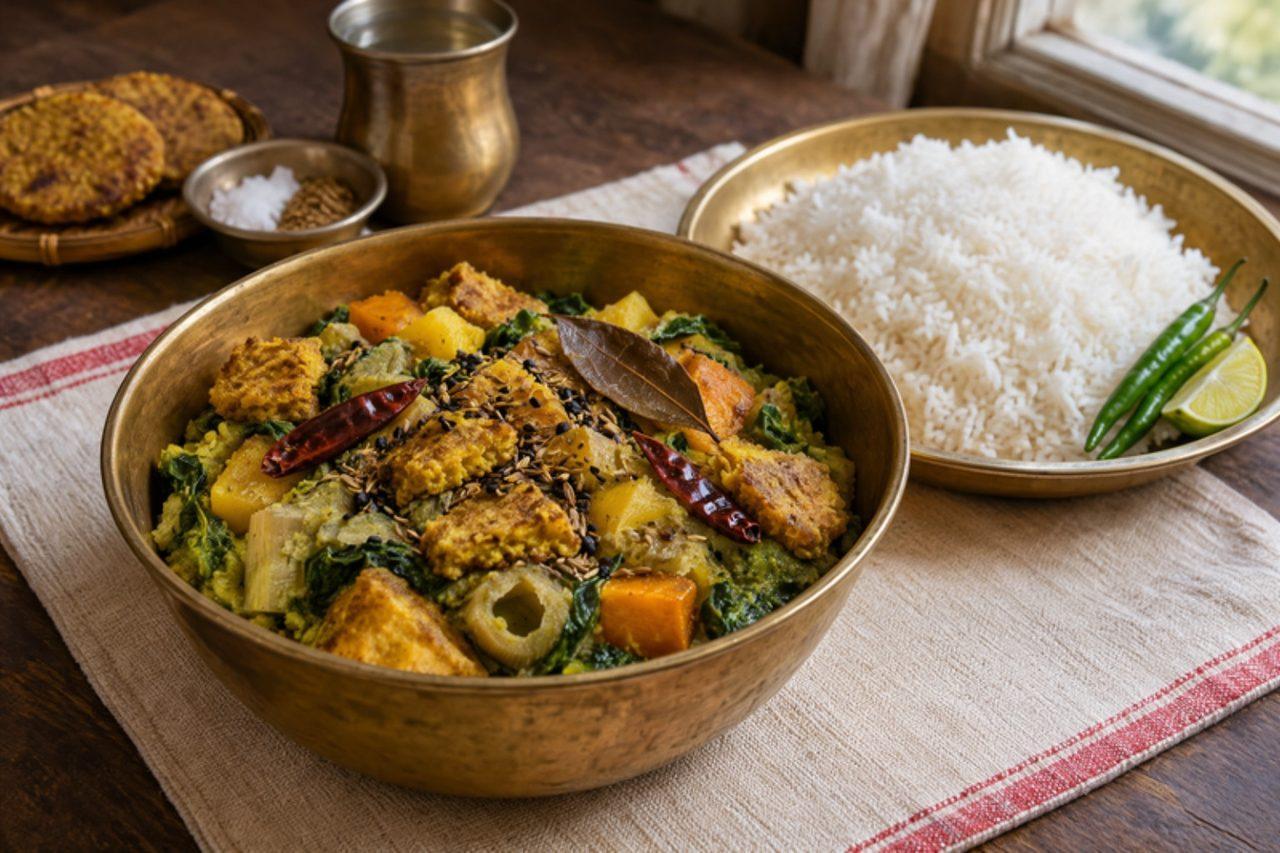
Chapor ghontoFried lentil cake vegetable curry

In West Bengal, chapor ghonto is the thrifty, comforting dish that turns up at weekday lunch and on the vegetarian days of the Durga Puja season. Soaked yellow peas are ground and fried into small savoury cakes (chapor), then broken into a slow-cooked mix of potato, pumpkin and banana stem tempered with panch phoron, ginger and a little sugar, until everything turns soft, jammy and lightly sweet. Eat it with plain rice and a squeeze of lime. The usual mistake is stirring the chapor in too early, so they dissolve into mush; add them in the last ten minutes. Chef's tip: soak the banana stem in water with a pinch of turmeric as you slice it and pull away the fibres that wind round your finger, or it stays stringy.

by KrazyBadal 0 views

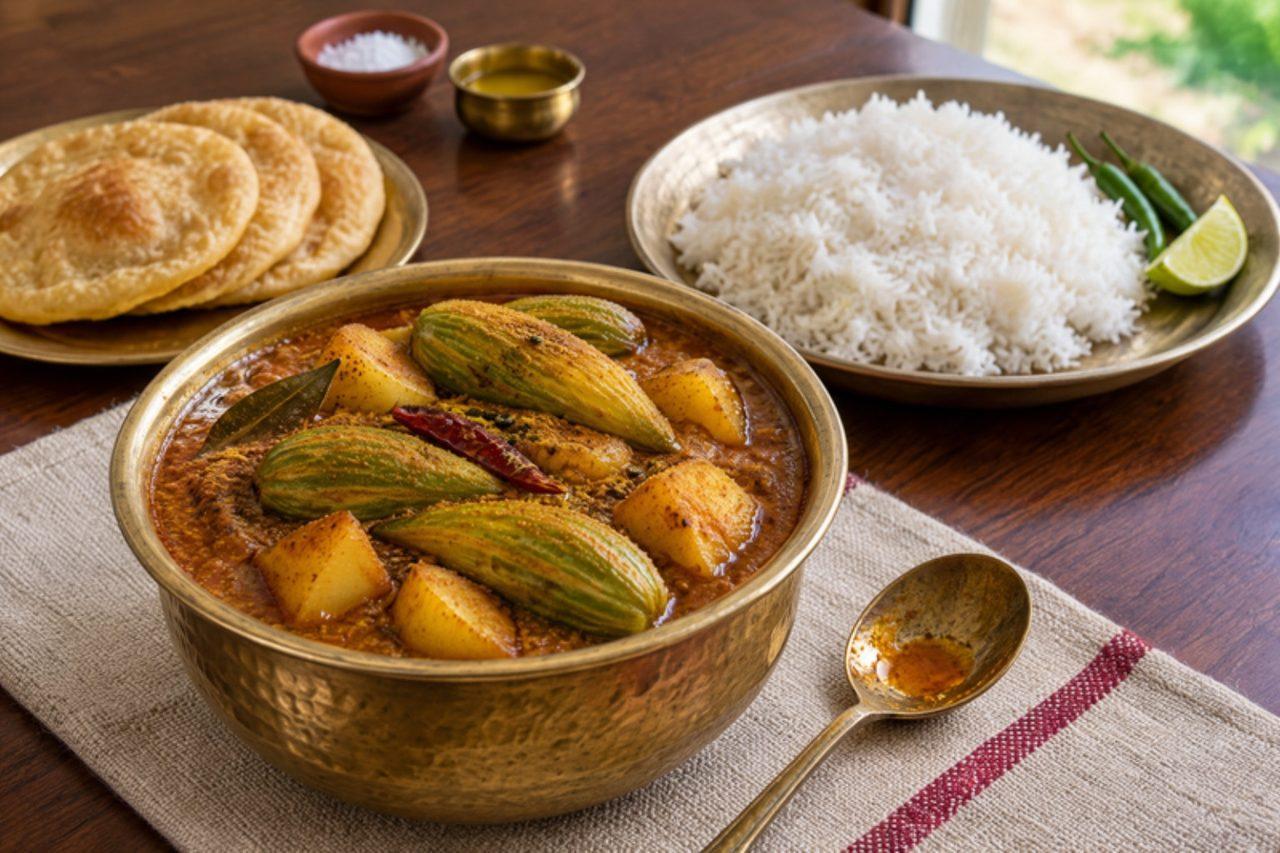
Aloo potoler dalnaPotato and pointed gourd curry

Pointed gourd (potol) floods the markets of Kolkata in summer, and aloo potoler dalna is how most Bengali homes cook it for a weekday lunch or a light Sunday meal. Half-peeled gourds and halved potatoes are fried until golden, then simmered in a loose gravy of ginger, cumin and tomato and finished with ghee and garam masala, so it tastes warm and gently sweet rather than hot. Serve it with rice or luchi. The usual mistake is peeling the gourds completely, which makes them fall apart; scrape off only the waxy skin in stripes. Chef's tip: prick each gourd once with a fork before frying so the gravy can soak into the seeds.

by KrazyBadal 0 views

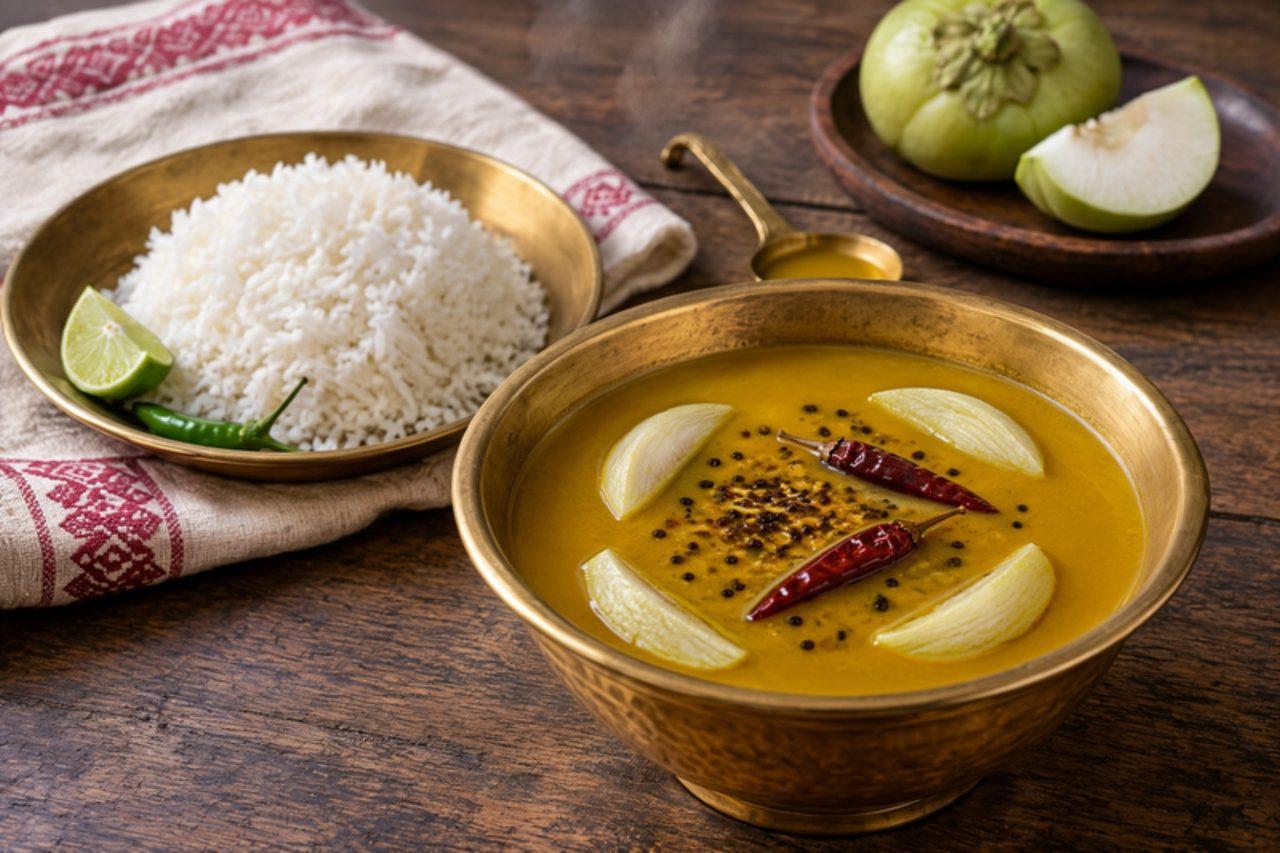
Ou tenga dalMasoor dal with elephant apple

Assamese cooks love a sour note, and ou tenga dal is the everyday lentil dish of Upper Assam's homes in the monsoon and autumn, when elephant apples (ou tenga) fall from the trees. Split masoor is boiled thin with turmeric and slices of the hard, tart fruit, then tempered with mustard oil, panch phoron and garlic, so it tastes bright, fruity and comforting. Serve with rice, or with a millet roti and a green vegetable for a lower-GI plate. It is suitable as part of a balanced diet. About 190 kcal and 26 g carbohydrate per portion. The usual mistake is adding the fruit too late, so its sourness never comes out; it must cook with the lentils from the start. If you can't find it, use a slice of green mango or 1 tsp tamarind. Chef's tip: bruise the ou tenga slices with a pestle so they release their juice.

by KrazyBadal 0 views

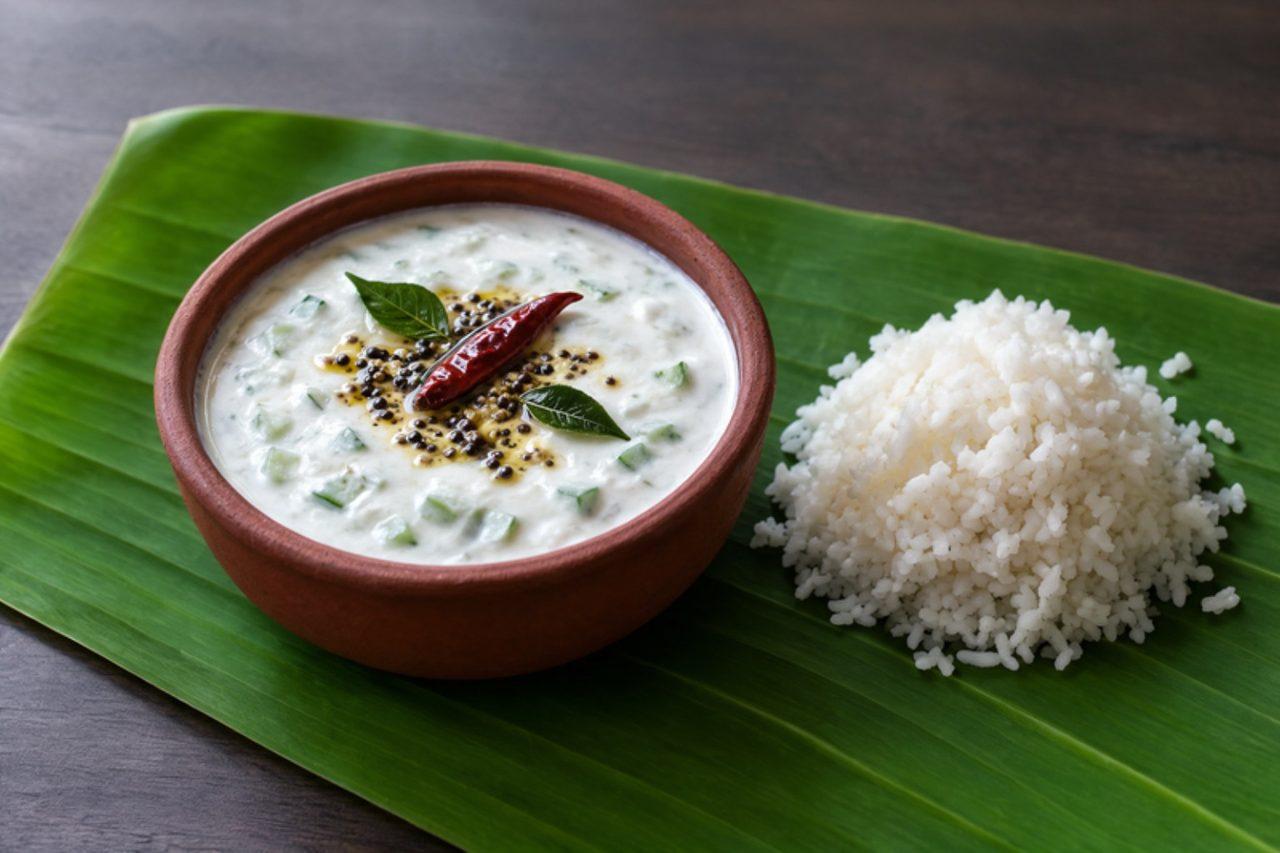
Vellarikka pachadiCucumber yogurt curry

Vellarikka pachadi is one of the cooling yogurt dishes on the Kerala sadya, the banana-leaf feast served at Onam and weddings, and it turns up at everyday lunches across Thrissur and Kottayam too. Diced cucumber is softened briefly, then folded into thick yogurt with a paste of coconut, green chilli and crushed mustard seed, and finished with mustard seeds and curry leaves crackled in coconut oil. Coconut and curd carry the flavour, so it needs only a pinch of salt: about 0.25 g salt per portion. The usual mistake is adding the yogurt to hot cucumber, which splits it; let the cucumber cool first. Serve with rice and a dry vegetable thoran. Chef's tip: grind the coconut paste with a few raw mustard seeds; their gentle pungency is what makes a pachadi taste of Kerala.

by KrazyBadal 0 views

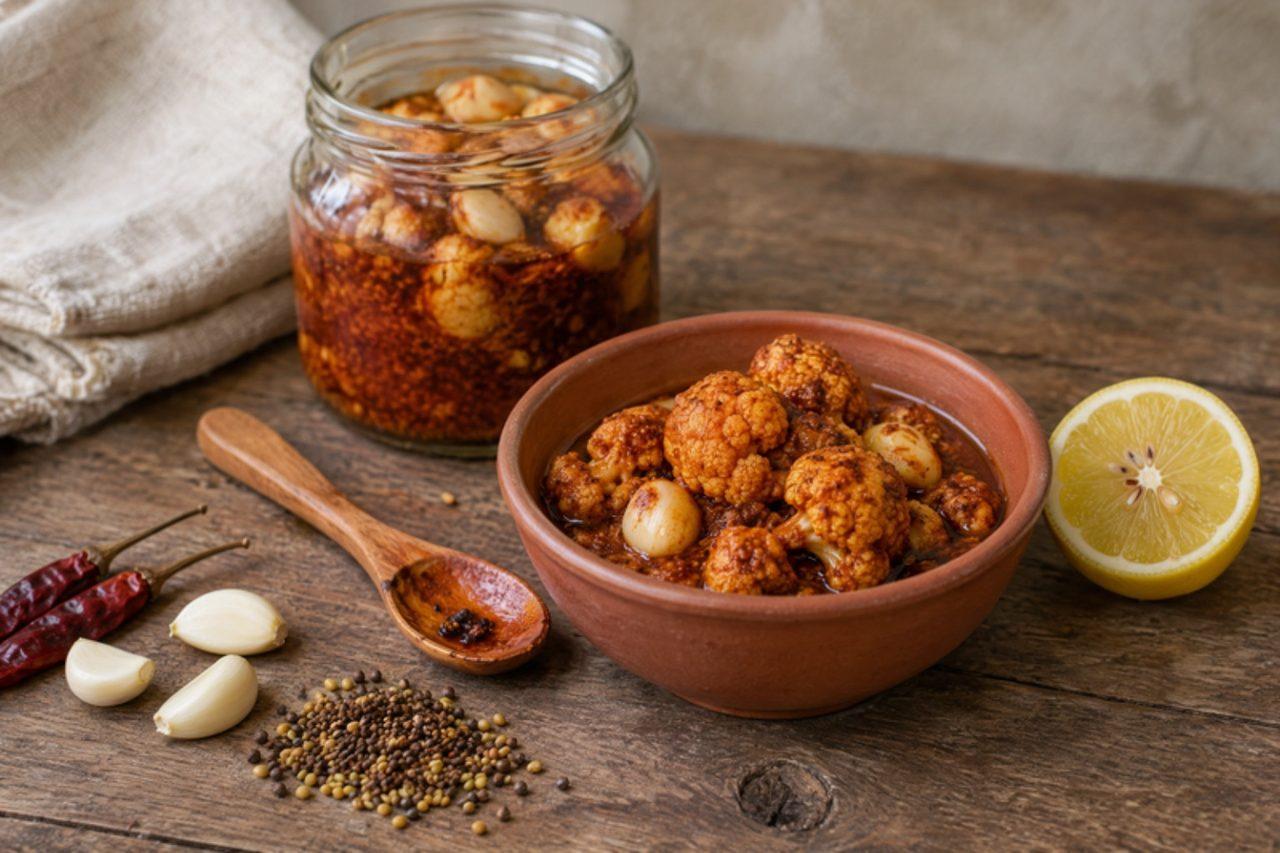
Cauliflower avakayaCauliflower pickle

When the mango jars run low and the Andhra and Telangana winter brings piles of dense white cauliflower to the markets, from December to February, households make a cauliflower avakaya. Lemon juice stands in for the sour mango, and the florets are coated in the same masala of mustard powder, chilli, salt, fenugreek and garlic, tempered with gingelly oil. After two days the florets have soaked up the masala but still crunch; the pickle is hot, nose-tingling and bright with lemon. Serve it with hot rice and ghee, with chapati, or beside a plain dal. Cauliflower is not acidic by itself and this pickle contains raw garlic, so it is always kept in the fridge, with plenty of lemon. Common mistake: packing florets that are still damp; wash them in hot salted water to drive out any insects, then dry them for several hours until no moisture remains. It is ready when the florets taste seasoned to the core and the oil and lemon have formed a glossy red sauce. Chef's tip: cut the florets small, about 2 cm, so the masala can reach the middle.

by KrazyBadal 0 views

Showing 24 of 880 recipes

Show more recipes

Page 21 of 37

More collections