Skip to content

Vegetarian Korean recipes

Bibimbap, banchan, noodles and stews without meat or fish. (149 recipes)

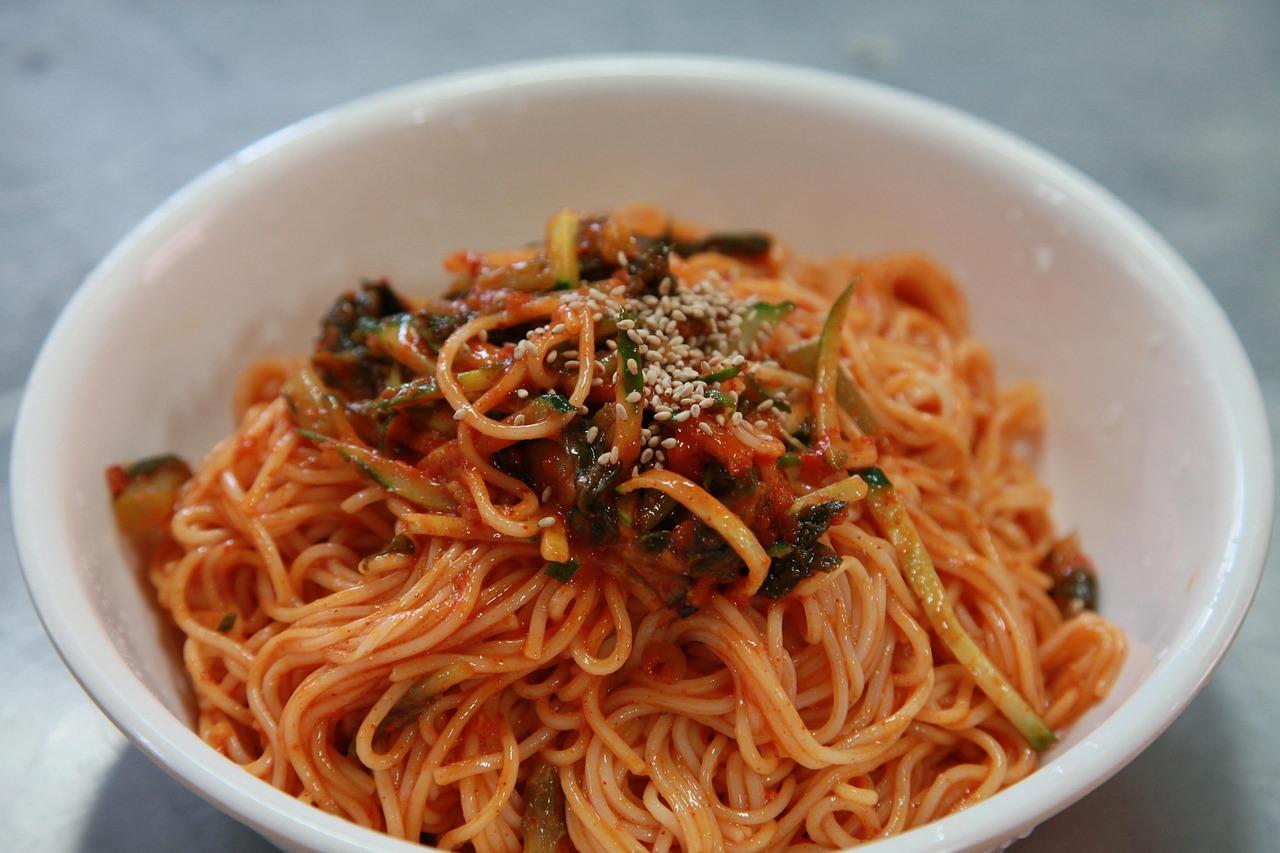
Bibim guksuCold spicy noodles

Bibim guksu (비빔국수) is a bowl of chilled thin wheat noodles mixed with a sweet, tangy and fiery gochujang dressing and topped with crunchy cucumber, lettuce and kimchi. It is a summer favourite all over Korea, quick enough for lunch and refreshing on a hot day. The noodles are rinsed in cold water until springy, then tossed with the sauce just before eating. Many versions add half a boiled egg; this one is fully vegan. Chef's tip: rinse the noodles hard in cold water, rubbing them like laundry, then drain them really well. Leftover starch or water dulls the dressing and makes the noodles sticky.

by KrazyBadal 0 views

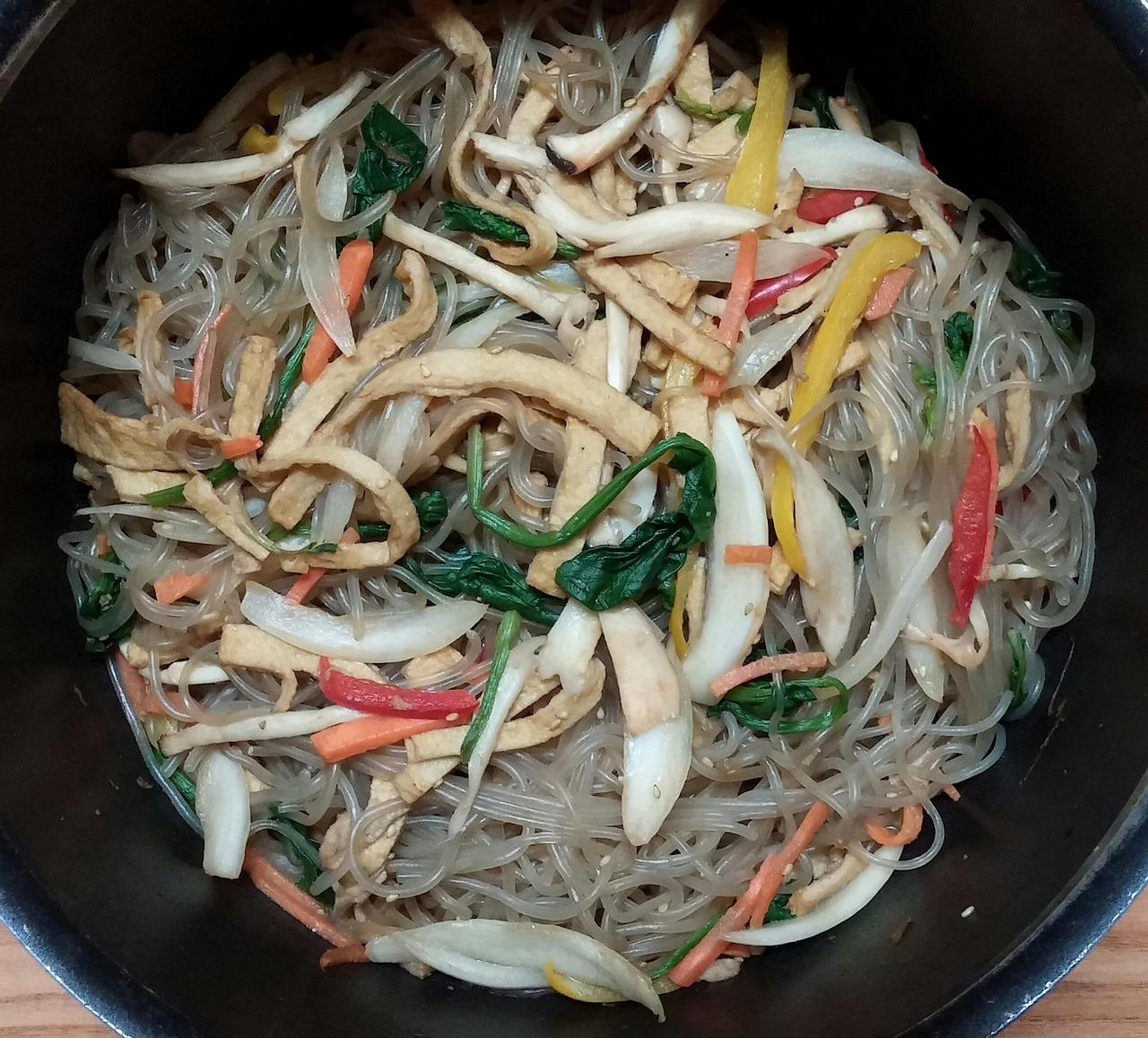
JapchaeGlass noodles with vegetables

Japchae (잡채) is a dish of chewy, translucent sweet potato starch noodles tossed with spinach, mushrooms and brightly coloured vegetables in a sweet soy and sesame dressing. It is made all over Korea for birthdays, holidays and big family meals, because it can be prepared ahead and is eaten warm or at room temperature. Each vegetable is cooked quickly on its own, then everything is mixed by hand so the noodles soak up the seasoning. Older recipes include beef; this one uses shiitake for the savoury depth. Chef's tip: dress the noodles while they are still hot and keep each vegetable crisp. Overcooked noodles clump and turn gluey, so pull them as soon as they are clear and chewy.

by KrazyBadal 0 views

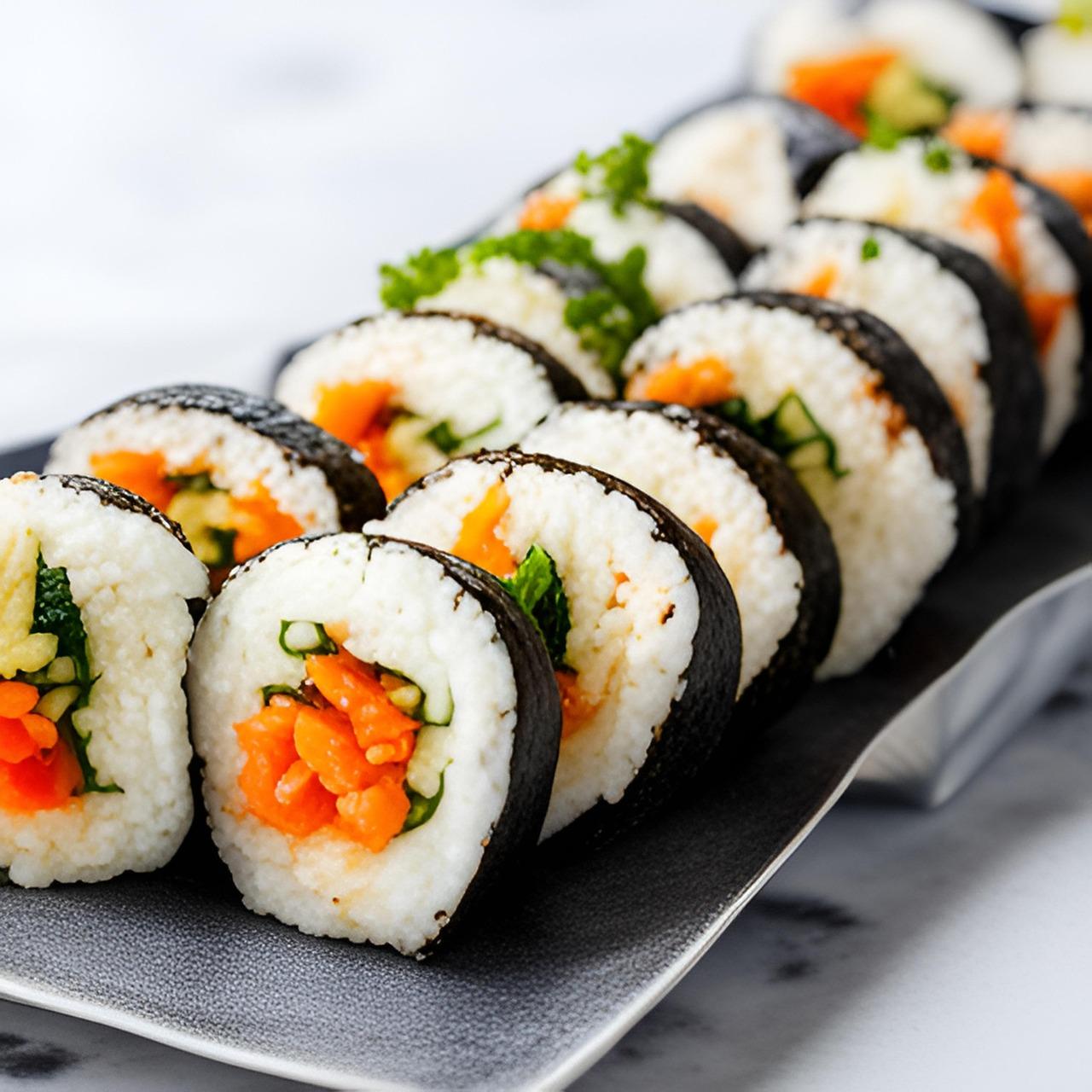
Gimbap

Gimbap (김밥) are rolls of sesame-seasoned rice and colourful fillings wrapped in roasted seaweed, then sliced into rounds. They are the classic Korean picnic and lunchbox food, sold on almost every street corner nationwide. Unlike sushi rice, gimbap rice is seasoned with salt and sesame oil rather than vinegar, so it tastes nutty and savoury. This vegetarian version is filled with omelette strips, garlicky spinach, carrot, soy-glazed tofu, cucumber and the bright yellow pickled radish called danmuji. They keep well for a few hours, so they are good to make ahead for a trip. Chef's tip: season the rice while it is warm and spread it thin, no more than a few grains deep. Thick rice and wet fillings are the two reasons rolls burst or go soggy.

by KrazyBadal 0 views

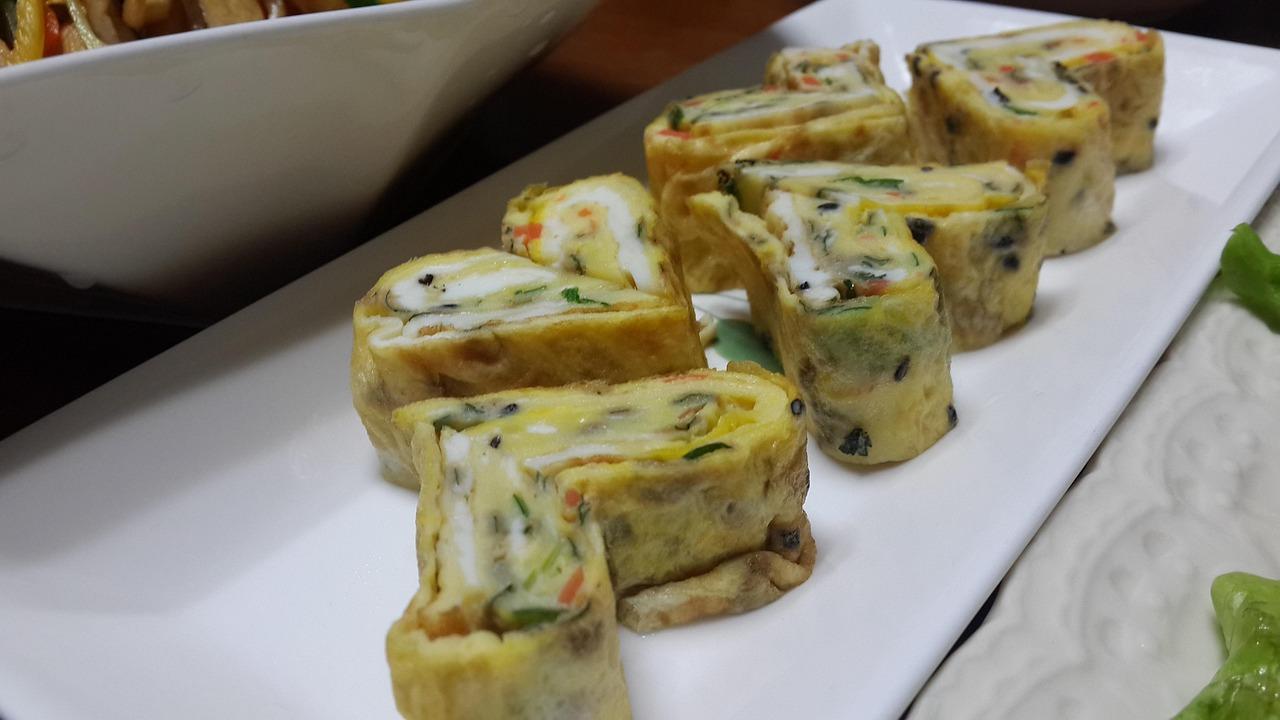
Gyeran mariRolled omelette

Gyeran mari (계란말이) is a Korean rolled omelette: beaten egg with finely chopped vegetables, cooked in thin layers and rolled up in the pan, then cut into thick slices that show a neat spiral. It is a much-loved side dish and lunchbox favourite nationwide, and children enjoy it with a little ketchup. The trick is a low heat, so the egg stays soft and yellow rather than brown. Serve warm or at room temperature with rice. Chef's tip: roll while the top of each layer is still slightly wet. The runny egg is the glue, and it keeps the roll soft and in one piece.

by KrazyBadal 0 views

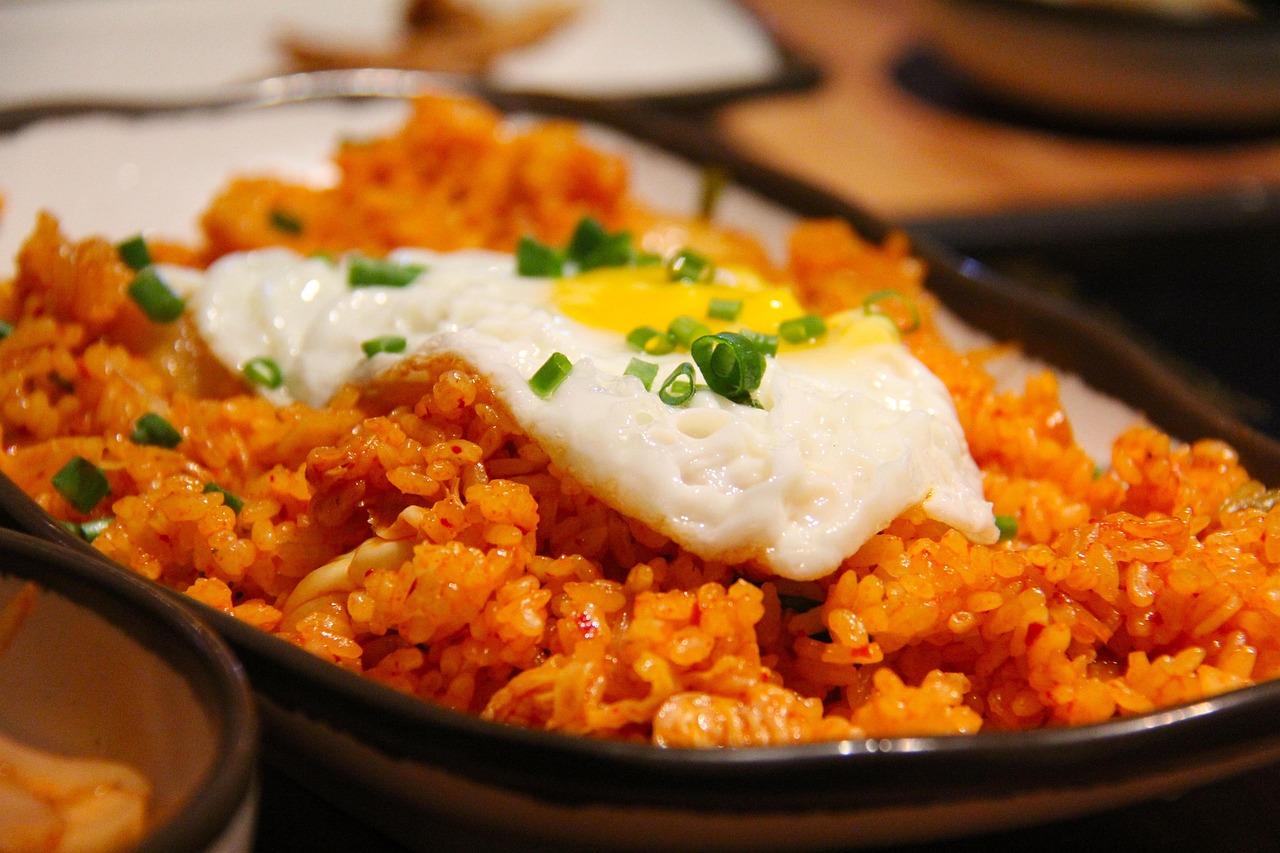
Kimchi fried rice

Kimchi fried rice (김치볶음밥, kimchi bokkeumbap) is the dish Korean households all over the country make when the kimchi has turned sour and there is leftover rice in the fridge. The kimchi and its juice are fried first so they caramelise, then the rice is tossed through until every grain is red, tangy and a little smoky. A fried egg with a runny yolk on top makes it a meal. Use well-fermented vegetarian kimchi, such as the baechu kimchi in this collection; many shop-bought kimchis contain fish sauce or shrimp, so check the label. Chef's tip: the kimchi must be properly sour, at least two or three weeks old. Fresh kimchi makes a flat, watery fried rice; fry it until it catches slightly before the rice goes in.

by KrazyBadal 0 views

Showing 5 of 149 recipes

Page 7 of 7

More collections