

AI-generated image
Bossam kimchi
보쌈김치: salted cabbage leaves folded into parcels round radish, pear, chestnut, jujube and pine nuts, the jewelled kimchi of old Gaeseong



Bossam kimchi comes from Gaeseong, the old Goryeo capital just north of today's border, and it is the kimchi families make with special care at kimjang time in late November and set out for Seollal guests. Instead of rubbing seasoning into whole cabbage halves, the inner leaves are folded around a rich filling of radish, Korean pear, chestnut, jujube, pine nuts and herbs, then wrapped in large outer leaves like a gift. Unwrapped at the table, it is crisp, juicy and sweet from the pear, with mellow chilli heat and the savoury depth of salted shrimp. Traditional versions add raw oysters; here they are optional. Raw oysters are not safe for pregnant people, babies, older people or anyone with weak immunity, so leave them out for those guests or for any kimchi you mean to keep beyond 3 days. The common mistake is under-rinsing the cabbage, which makes every parcel too salty; rinse three times and taste a stem. It is ready after 3–4 days in the fridge, when the juice turns pleasantly sour and slightly fizzy. Chef's tip: tie each parcel with a blanched scallion if the leaves won't stay closed.
- Total time
- 130 min
- Difficulty
- hard
- Serves
- 12
Ingredients
For the cabbage
- 1 napa cabbageabout 2 kg
- 10 ½ oz coarse sea salt200 g for the brine, 100 g for the stems
- 8 ¼ cups water
For the rice paste
- 1 tbsp glutinous rice flour
- ¾ cup water
For the filling
- 14 oz Korean radish (mu) or daikoncut into 4 cm matchsticks
- 1 tsp fine sea salt
- 8 garlic clovesfinely grated
- ½ oz fresh gingerfinely grated
- 2 tbsp salted fermented shrimp (saeujeot)finely chopped
- 3 tbsp fish sauce
- 1 tbsp sugar
- 1 Korean (nashi) pearabout 300 g, peeled and cut into matchsticks; a firm, juicy pear works
- 8 peeled chestnutsraw or cooked, thinly sliced
- 6 dried jujubes (red dates)pitted and slivered
- 1 ⅜ oz minari (water dropwort)cut into 4 cm lengths; watercress is the best substitute
- 4 scallionscut into 4 cm lengths
- 2 tbsp pine nuts
- 5 ½ oz very fresh shucked oysters (optional)optional; skip for pregnant people, babies, older people and anyone with weak immunity
For the parcel brine
- 1 ¼ cups water
- 1 tsp fine sea salt
Shop this recipe on Amazon
Spices & pantry
Fresh ingredients (5)
Links open Amazon in a new tab. As an Amazon Associate, WhatToEat.Today earns from qualifying purchases.
Method
0/15 doneStep 1: Clean the storage container: wash a glass jar or lidded box in hot soapy water, rinse, then dry it upside down in a 250°F oven for 10 minutes (or pour boiling water through it and air-dry). Let it cool; everything that touches the kimchi must be clean and dry. Use a container big enough for 12 parcels in one or two layers.
Step 2: Cut the 1 napa cabbage in half lengthwise through the root. Dissolve 200 g of 10 ½ oz coarse sea salt in 8 ¼ cups water (a 10% brine) and dunk both halves in it, then sprinkle the remaining salt between the leaves, mostly on the thick white stems.
10 minStep 3: Leave the cabbage cut side up for 8 hours (or overnight in a cool room), turning it halfway. It is ready when a thick stem bends without snapping.
Step 4: Rinse the cabbage under cold running water three times, separating the leaves, and taste a stem: it should be pleasantly salty, not harsh. Drain cut side down in a colander for 1 hour.
10 minStep 5: Whisk 1 tbsp glutinous rice flour into ¾ cup water in a small pan and cook over a medium heat, stirring, until it thickens into a glossy, translucent porridge, about 5 minutes. Cool completely.
5 minStep 6: Toss 14 oz Korean radish (mu) or daikon with 1 tsp fine sea salt and leave 20 minutes until it bends, then squeeze out the liquid with your hands.
20 minStep 7: Stir 4 tbsp gochugaru (Korean chilli flakes) into the cooled rice paste and let it bloom 5 minutes, then mix in 8 garlic cloves, ½ oz fresh ginger, 2 tbsp salted fermented shrimp (saeujeot), 3 tbsp fish sauce and 1 tbsp sugar.
5 minStep 8: Add the squeezed radish and rub the seasoning in with gloved hands until evenly red.
3 minStep 9: Gently fold in 1 Korean (nashi) pear, 8 peeled chestnuts (save a few slices for topping), 6 dried jujubes (red dates), 1 ⅜ oz minari (water dropwort) and 4 scallions. Fold in 5 ½ oz very fresh shucked oysters only if using them and everyone eating is a healthy adult; rinse them first in cold salted water and drain well.
Step 10: Pick out the 24 largest outer cabbage leaves for wrapping. Cut the remaining inner leaves and hearts into 4 cm pieces and mix them into the filling.
Step 11: Line a small rice bowl with two crossed outer leaves, stem ends in the middle. Spoon in about 1/12 of the filling, press it down and top with a few 2 tbsp pine nuts and the saved chestnut slices.
3 minStep 12: Fold the leaf tops over to close the parcel, lift it out and place it, seam down, in the container. Repeat to make 12 parcels, packing them snugly.
25 minStep 13: Stir 1 tsp fine sea salt into 1 ¼ cups water with any juice left in the mixing bowl and pour it round the parcels. Press a piece of baking paper on top and close the lid.
Step 14: Leave at cool room temperature (15–64°F) for 1 day until small bubbles appear, then refrigerate. Eat within 2 weeks, or within 3 days if you added oysters. Normal: tangy smell, cloudy pink juice, light fizz. Discard if you see fuzzy or coloured mould or it smells rotten or feels slimy.
Step 15: To serve, lift one parcel into a shallow bowl with a clean spoon, open the leaves at the table and spoon some juice over.
Nutrition per serving
- Calories
- 70 kcal
- Protein
- 3 g
- Carbs
- 14 g
- Fat
- 2 g
- Fibre
- 3 g
Nutrition values are estimates.
KrazyBadal
Good to know
- How long does bossam kimchi take?
- About 130 minutes in total: 120 minutes to prepare and 10 minutes to cook.
- How many people does it serve?
- 12 as written. Change the servings above the ingredients and every amount scales to match.
- Is it gluten free?
- Yes, as written. Check the labels on stock, sauces and spice mixes, which sometimes contain gluten.
- Is it very spicy?
- It has some heat. Use less chilli for a milder version, or more if you like it hot.
- Can I make it ahead?
- Yes. It keeps well, so you can cook it earlier in the day or the day before and reheat it.
- What can I use instead of napa cabbage?
- Savoy or spring greens, same weight.
- What can I use instead of garlic cloves?
- ½ tsp garlic paste or ⅛ tsp garlic powder per clove.
Reviews
No reviews yet. Be the first to cook it.
Rate this recipe
Sign in to rate and review this recipe.
You might also like
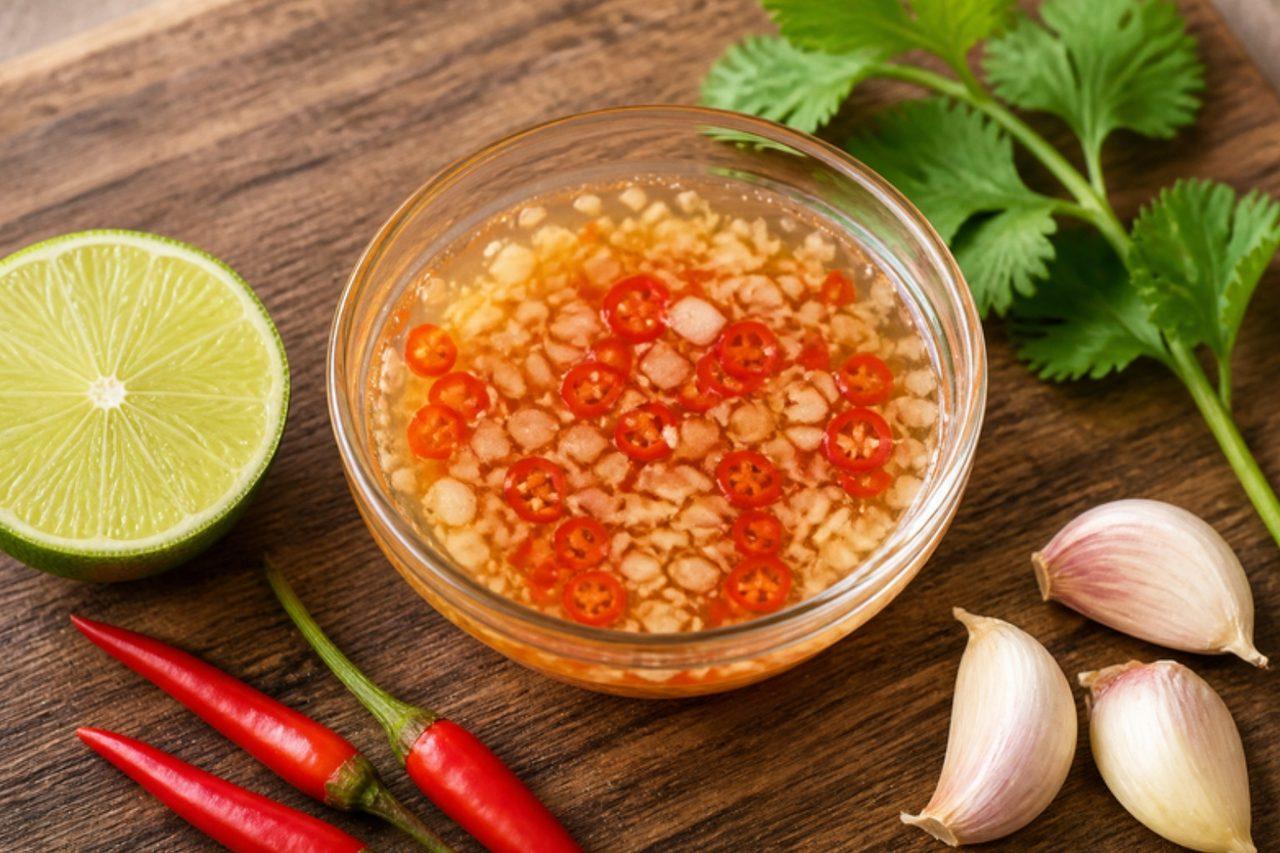
Vegan nuoc cham
Nước chấm is the dipping sauce that goes with almost everything in Vietnam: spring rolls, bánh xèo, noodle salads and broken rice. Buddhist vegetarian cooks, all over the country, make it without fish sauce, using light soy sauce and a little coconut water for the deep, rounded taste. It should be thin, clear and pale amber, with flecks of garlic and chilli floating on top. Chef's tip: dissolve the sugar in the warm water first, then add the lime and soy, and stir in the garlic and chilli last, pounded with a pinch of sugar, so they float on the surface instead of sinking.
 Vietnamese

Mint and onion chutney
Onions fried gently until soft and sweet, then blended with fresh mint, green chilli and lemon juice. It's a mellow, fresh-tasting chutney that is great with bhajias, samosas, kebabs and tikka, or spread in sandwiches.
 Indian

Sour cream dip
A simple, tangy dip made with thick home-made cottage cheese (hung yogurt) or ready-made sour cream, seasoned with garlic, chilli, black pepper and vinegar. Serve it cold with crisps, nachos and jacket potatoes. The book's other dips use this as their 'sour cream'.