
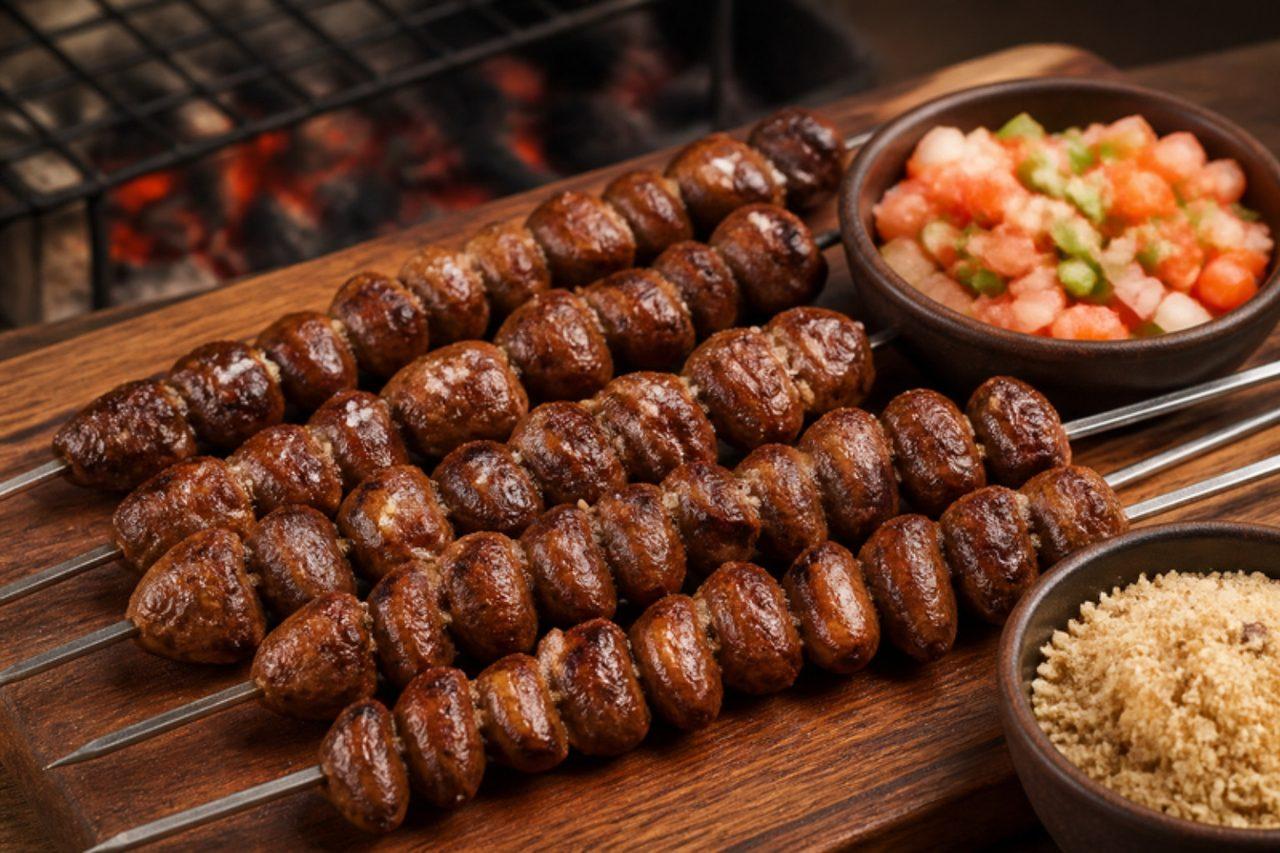
AI-generated image
Coração de frango
Grilled chicken hearts
Coração de frango: chicken hearts skewered with coarse salt and garlic, grilled over charcoal


No gaúcho churrasco in Rio Grande do Sul is complete without a skewer of chicken hearts, and in the rodízio steakhouses of São Paulo they come round on swords between the cuts of beef. Rich and slightly chewy, they need nothing more than coarse salt, garlic and a quick turn over hot coals, and they are eaten straight off the skewer while the bigger meats cook. Chef's tip: trim off the fat and the small tubes at the top of each heart, which turn tough and bitter on the grill.
- Total time
- 27 min
- Difficulty
- easy
- Serves
- 4
Ingredients
Ingredients
- 1 ¾ lb chicken hearts
- 4 cloves garliccrushed
- 1 tbsp lime juice
- 1 tbsp olive oil
- 1 ½ tsp coarse sea salt (sal grosso)
- ½ tsp black pepper
- 1 vinagrete or farofa, to serve (optional)
Shop this recipe on Amazon
What you'll need
Spices & pantry
Fresh ingredients (3)
Links open Amazon in a new tab. As an Amazon Associate, WhatToEat.Today earns from qualifying purchases.
Method
0/5 doneStep 1: If using wooden skewers, soak them in water for 20 minutes. Trim the fat and any tubes from the top of the 1 ¾ lb chicken hearts and rinse them under cold water.
10 minStep 2: Toss the hearts with the 4 cloves garlic, 1 tbsp lime juice, 1 tbsp olive oil and ½ tsp black pepper, cover and leave in the fridge for 20 minutes.
20 minStep 3: Thread 8–10 hearts onto each skewer and rub them all over with the coarse 1 ½ tsp coarse sea salt (sal grosso).
5 minStep 4: Grill over hot coals or on a very hot griddle for 10–12 minutes, turning often, until well browned and firm, with no pink inside and 165°F at the centre. Leaving them on much past that point is the usual mistake and turns them rubbery.
12 minStep 5: Serve straight off the skewers with 1 vinagrete or farofa, to serve.
0 min
Nutrition per serving
- Calories
- 240 kcal
- Protein
- 26 g
- Carbs
- 1 g
- Fat
- 14 g
- Fibre
- 0 g
Nutrition values are estimates.
KrazyBadal
Good to know
- How long does coração de frango take?
- About 27 minutes in total: 15 minutes to prepare and 12 minutes to cook.
- How many people does it serve?
- 4 as written. Change the servings above the ingredients and every amount scales to match.
- Is it gluten free?
- Yes, as written. Check the labels on stock, sauces and spice mixes, which sometimes contain gluten.
- What can I use instead of garlic?
- ½ tsp garlic paste or ⅛ tsp garlic powder per clove.
- What can I use instead of lime juice?
- Lemon juice, same amount.
Reviews
No reviews yet. Be the first to cook it.
Rate this recipe
Sign in to rate and review this recipe.
You might also like
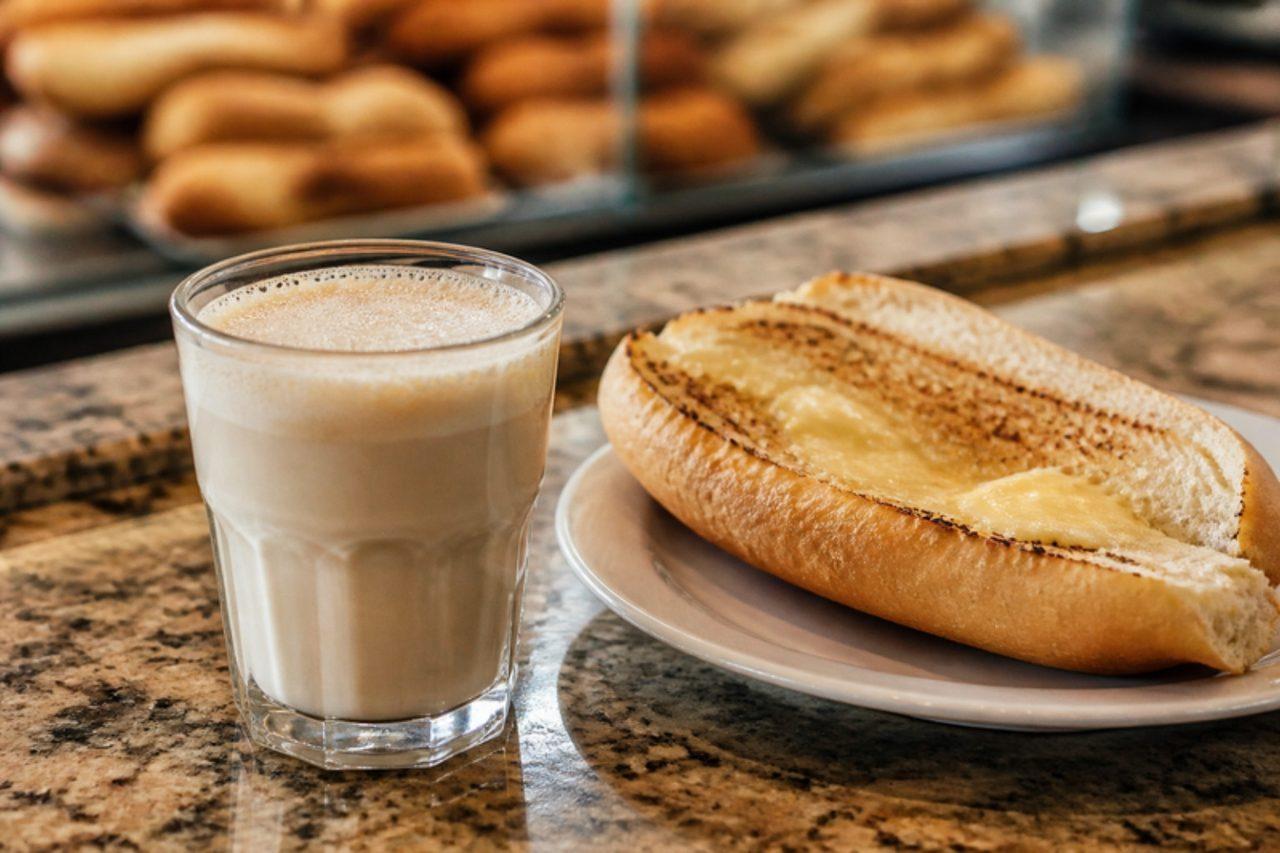
PingadoHot milk with coffee
Order 'um pingado' at the balcão of any São Paulo padaria at 7 in the morning and the attendant pours hot milk into a ridged glass tumbler (the copo americano) and 'drips' in a splash of strong coffee, hence the name. It is milkier and gentler than a média (half coffee, half milk), creamy and lightly sweet, usually drunk standing up with a pão na chapa, a toasted buttered roll. At home you need strong filter coffee and milk heated until steaming. Scalding the milk is the frequent mistake, as boiled milk tastes flat and forms a skin. Chef's tip: froth the hot milk for a few seconds with a whisk or by pouring it back and forth between two jugs before adding the coffee, as padaria machines do.

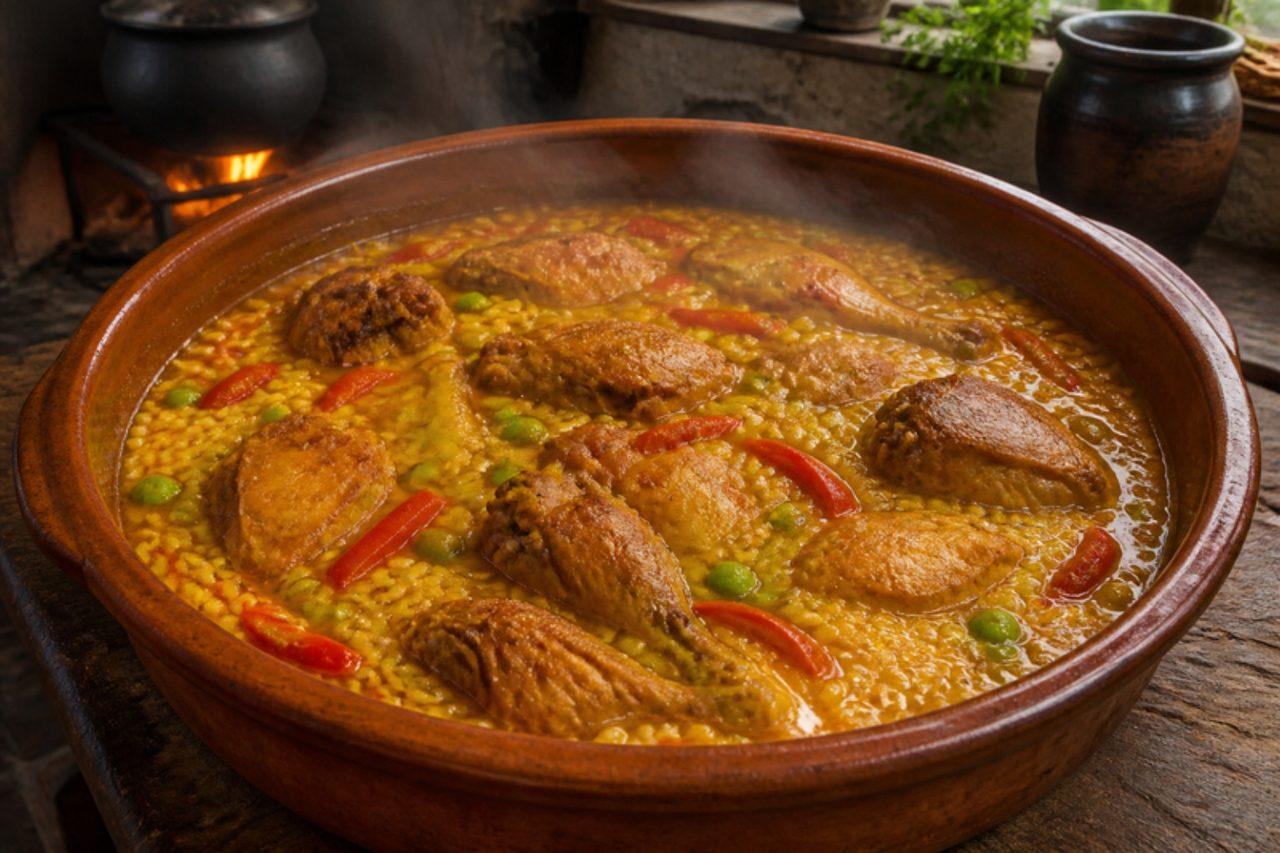
Arroz con pitu de caleyaSoupy rice with chicken
A pitu de caleya is a cockerel raised free in the lanes, or caleyas, of rural Asturias; its firm, flavourful meat needs long stewing, and families around Villaviciosa and Grado still cook it for feast days. The stew is often finished as a soupy rice, so the deep chicken juices go into every grain. Use the best free-range chicken you can find. The braise includes dry white wine; replace it with extra stock and a squeeze of lemon if you want it alcohol-free. Chef's tip: brown the chicken slowly and deeply; that colour is where the flavour of the whole pot comes from.
 Spanish
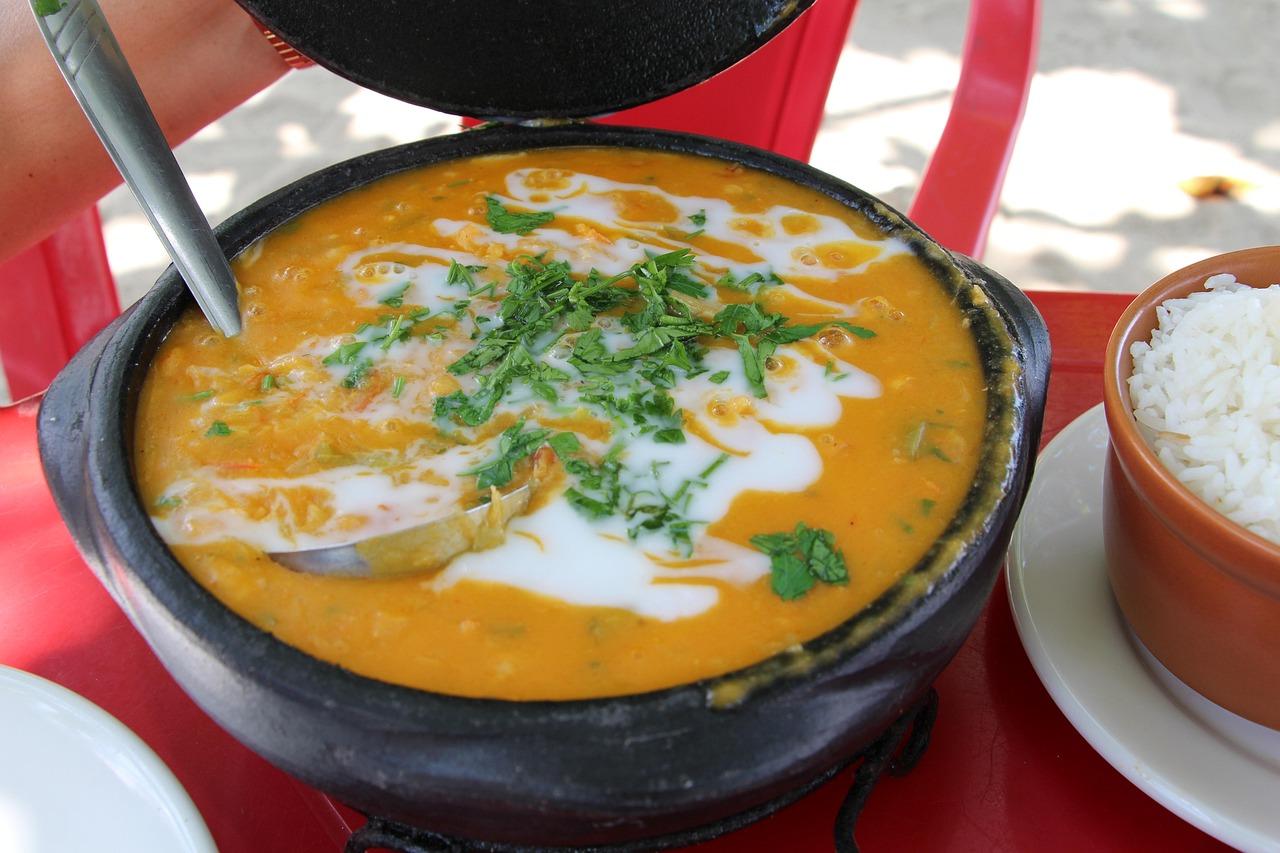
Bobó de camarãoPrawns in cassava and coconut purée
Velvety, coral-coloured and rich with coconut, bobó de camarão is what Bahian families put on the table when there is something to celebrate, and beach restaurants from Praia do Forte to Itacaré serve it in clay pots with white rice and farofa. Cassava is boiled until it falls apart, blended with coconut milk into a smooth cream, then folded into prawns cooked with onion, tomato, peppers and a slick of dendê oil. The result is somewhere between a stew and a thick sauce, sweet from the prawns and gently earthy from the cassava. A frequent mistake is boiling the prawns in the purée for too long, which leaves them tough and curled; they go in at the very end. Cassava must always be cooked right through, never eaten raw: cut out the woody core and boil it until a knife meets no resistance. Chef's tip: blend the cassava while it is still hot, with some of its cooking water; cold cassava turns gluey in the blender.