
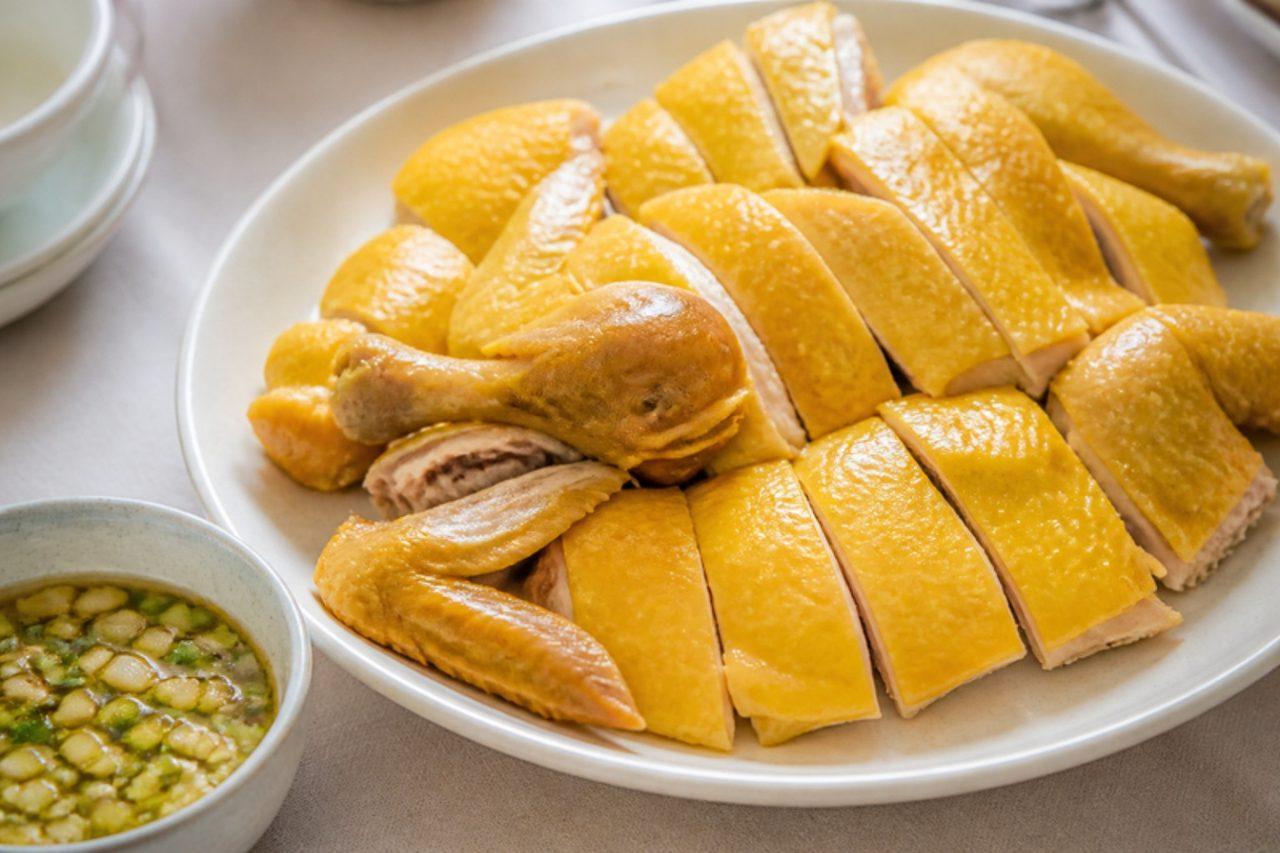
AI-generated image
Hakka salt-baked chicken
盐焗鸡 yánjú jī: Dongjiang whole chicken cooked buried in hot salt


Hakka families in the Dongjiang river valley of eastern Guangdong are said to have invented this dish by burying chickens in hot salt to cook and keep them while on the move. Wrapped in paper and surrounded by sizzling coarse salt in a wok, the bird cooks in its own juices: the skin turns golden and taut, the meat stays dense and moist, and sand ginger gives it a warm, peppery perfume. It is a celebration dish in Meizhou and Huizhou, served chopped on the bone, at room temperature or warm, with plain rice, blanched greens and a little sand ginger dip. Chef's tip: dry the chicken uncovered in the fridge before wrapping it; wet skin steams instead of roasting and turns flabby.
- Total time
- 90 min
- Difficulty
- medium
- Serves
- 4
Ingredients
For the chicken
- 2 ⅝ lb whole chickenabout 1.2 kg, giblets removed
- 1 ½ tsp fine salt
- 2 tsp sand ginger powder (shajiang)ground dried kencur; 1 tsp for the rub, 1 tsp for the dip
- 1 oz fresh gingersliced
- 3 spring onionscut into lengths
For baking
- 5 ½ lb coarse sea salt or rock saltit can be reused for this dish
- 2 sheets baking paperabout 50 cm square each
- 4 tbsp neutral oil1 tbsp for the paper, 3 tbsp for the dip
For the dip
- ½ tsp fine salt
Shop this recipe on Amazon
What you'll need
Spices & pantry
Fresh ingredients (3)
Links open Amazon in a new tab. As an Amazon Associate, WhatToEat.Today earns from qualifying purchases.
Method
0/11 doneStep 1: Pat the 2 ⅝ lb whole chicken dry inside and out with kitchen paper. Mix 1 ½ tsp fine salt with 1 tsp sand ginger powder (shajiang) and rub it all over the skin and inside the cavity. Keep the board you use for raw chicken separate, and wash it and your hands right after.
Step 2: Stuff the cavity with 1 oz fresh ginger, 3 spring onions and 1 star anise. Set the chicken on a rack over a plate and leave it uncovered in the fridge for at least 30 minutes (up to overnight) to dry the skin.
30 minStep 3: Brush one sheet of 2 sheets baking paper with 1 tbsp neutral oil. Wrap the chicken tightly in it, then wrap it again in the second sheet so no skin is exposed. Tie with kitchen string if it won't stay closed.
Step 4: Put 5 ½ lb coarse sea salt or rock salt in a large, heavy wok (about 36 cm) or a lidded cast-iron pot. Stir it over a high heat for 10–12 minutes, until it is very hot and a few grains start to pop.
12 minStep 5: Scoop out about two-thirds of the salt into a heatproof bowl. Nestle the wrapped chicken breast side up on the salt left in the wok, then pour the rest over so the bird is completely buried.
Step 6: Cover with a lid and cook over a medium-low heat for 25 minutes. You should hear a faint crackle; if it is silent, turn the heat up a little.
25 minStep 7: Scoop the salt aside, turn the chicken over with tongs (protect your hands), bury it again and cook covered for another 25–30 minutes.
30 minStep 8: Unearth the chicken and pierce the thickest part of the thigh through the paper with a thermometer: it must read 165°F (165 °F), and the juices should run clear, not pink. If not, rebury it for another 10 minutes. A common mistake is pulling it early because the outside looks done; the salt cooks gently and the thighs lag behind.
Step 9: Brush off the salt, unwrap the chicken over a tray (save the juices) and rest it for 10 minutes before chopping into pieces on the bone.
10 minStep 10: For the dip, put the rest of 1 tsp sand ginger powder (shajiang) and ½ tsp fine salt in a small heatproof bowl. Heat the rest of 3 tbsp neutral oil in a small pan until shimmering and pour it over; stir in a spoonful of the saved juices.
2 minStep 11: Arrange the chicken on a plate, spoon over a little of the juices and serve with the dip. Let the salt cool completely, then store it in a jar for next time.
Nutrition per serving
- Calories
- 390 kcal
- Protein
- 40 g
- Carbs
- 1 g
- Fat
- 25 g
- Fibre
- 0 g
Nutrition values are estimates.
KrazyBadal
Good to know
- How long does hakka salt-baked chicken take?
- About 90 minutes in total: 30 minutes to prepare and 60 minutes to cook.
- How many people does it serve?
- 4 as written. Change the servings above the ingredients and every amount scales to match.
- Is it gluten free?
- Yes, as written. Check the labels on stock, sauces and spice mixes, which sometimes contain gluten.
- What can I use instead of fresh ginger?
- ¼ tsp ground ginger per tbsp fresh (add it with the spices).
- What can I use instead of spring onions?
- Chives, or a little finely sliced onion.
Reviews
No reviews yet. Be the first to cook it.
Rate this recipe
Sign in to rate and review this recipe.
You might also like
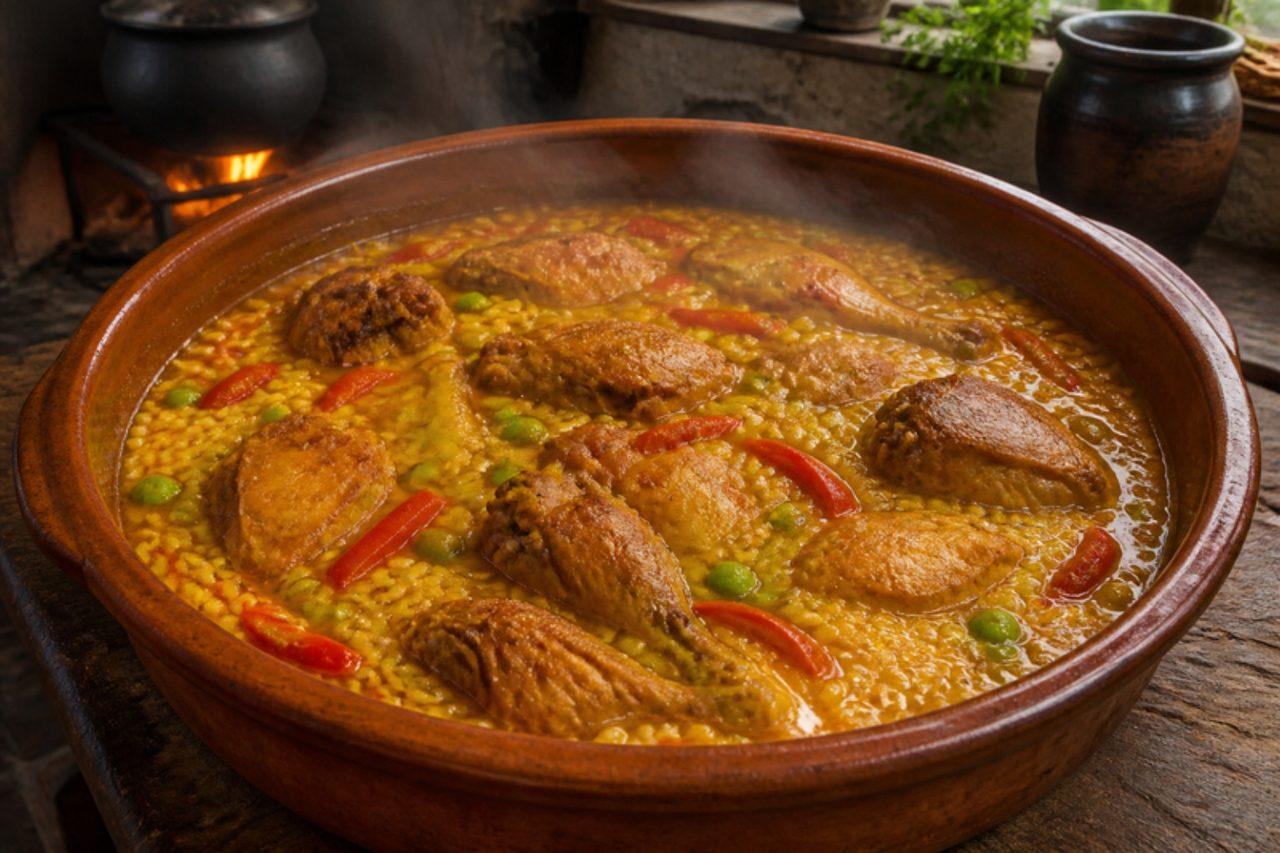
Arroz con pitu de caleyaSoupy rice with chicken
A pitu de caleya is a cockerel raised free in the lanes, or caleyas, of rural Asturias; its firm, flavourful meat needs long stewing, and families around Villaviciosa and Grado still cook it for feast days. The stew is often finished as a soupy rice, so the deep chicken juices go into every grain. Use the best free-range chicken you can find. The braise includes dry white wine; replace it with extra stock and a squeeze of lemon if you want it alcohol-free. Chef's tip: brown the chicken slowly and deeply; that colour is where the flavour of the whole pot comes from.
 Spanish
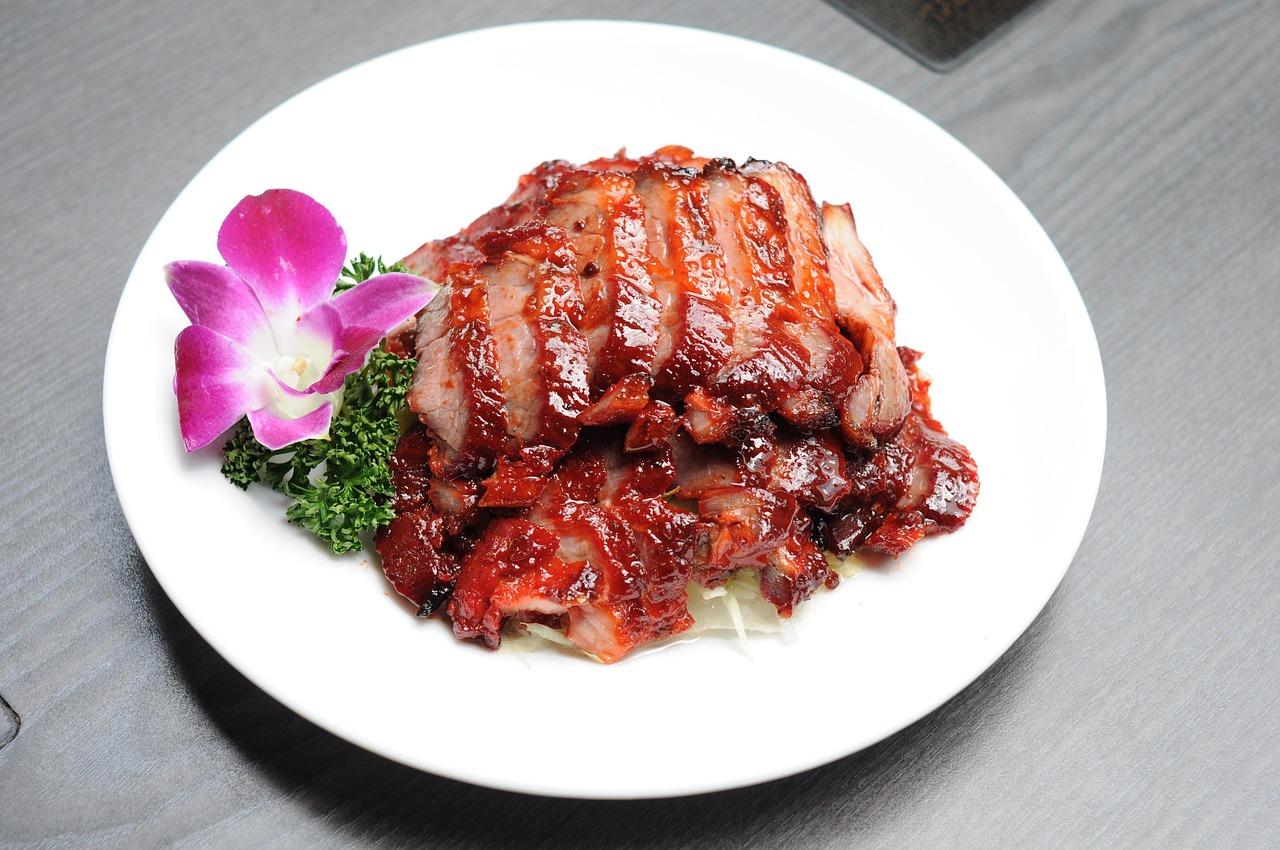
Char siuHoney roast pork
Hanging in long glossy strips in the windows of Guangzhou's siu mei shops, char siu is the roast pork Cantonese families pick up on the way home to put on rice, noodles or into steamed buns. The outside is lacquered, sweet and a little charred at the edges; the inside stays juicy, savoury and faintly scented with five-spice. Shoulder (pork butt) is the cut to use, because its marbling keeps the strips moist through a hot oven. Marinate it overnight in the fridge, roast it the next day and eat it warm with steamed rice and blanched greens, or cold in fried rice and noodle soups. Chef's tip: save the honey for the last ten minutes; brushed on at the start it burns black long before the pork is cooked.
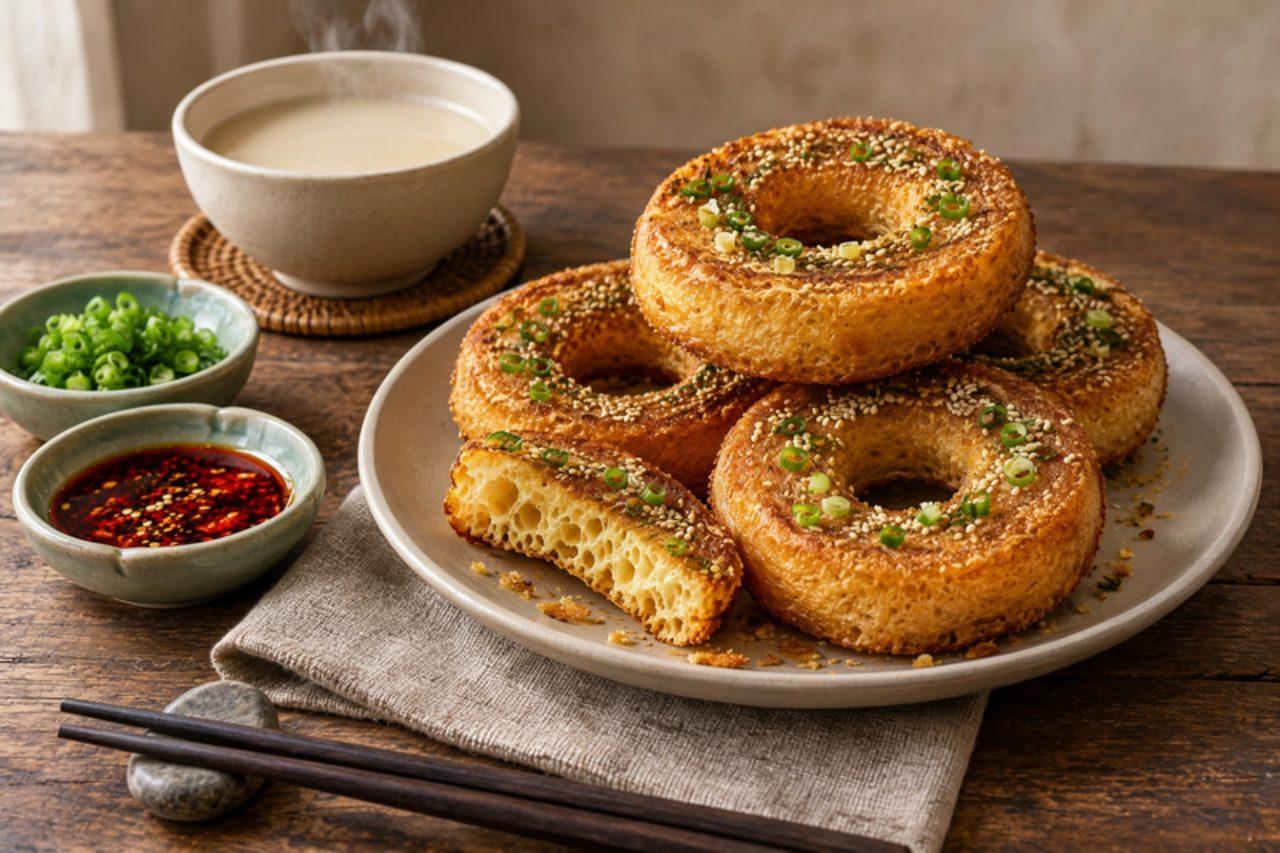
Wuhan mianwoRice and soybean fritter rings
Wuhan people call breakfast "guozao", and mianwo is one of its icons: a ring of rice and soybean batter fried in a special ladle with a raised centre, so it ends up thick and soft round the rim and thin and crackly in the middle, flecked with sesame and spring onion. It is eaten with hot dry noodles or a bowl of soy milk. The mistake is oil that is too cool: the batter soaks it up and turns greasy; it must hiss strongly the moment it goes in. Without a mianwo ladle, use a deep ladle and spread the batter thinner in the middle with a spoon. Chef's tip: give the batter a quick stir before every fritter, because the rice settles to the bottom fast.

