
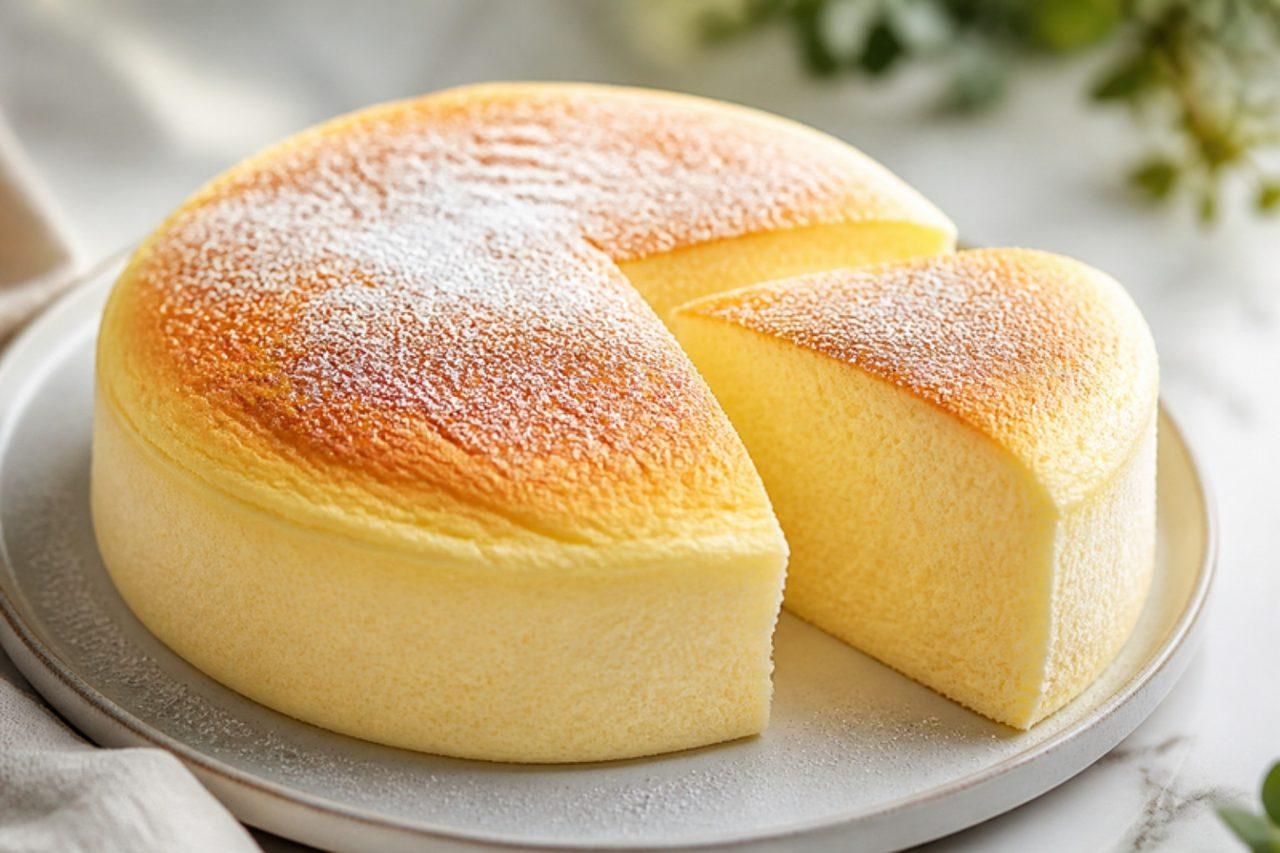
AI-generated image
Japanese cheesecake
スフレチーズケーキ: light, jiggly soufflé cheesecake baked in a water bath
 Japanese
 soufflé cheesecake (スフレチーズケーキ) is soft, airy and barely sweet, somewhere between a cheesecake and a chiffon sponge, and it wobbles when it comes out of the oven. It became popular in Japanese bakeries in the 1960s and later spread from Osaka and Fukuoka shops around the world. Cream cheese is folded with stiffly whipped meringue and baked slowly in a water bath so it rises without cracking. It takes patience, but the result melts in the mouth. Chef's tip: whip the meringue only to soft-to-medium peaks and bake low and slow in the water bath. Over-whipped egg whites and a hot oven are the two reasons this cake cracks and then collapses.
- Total time
- 100 min
- Difficulty
- hard
- Serves
- 8
Ingredients
For the cheese base
- 9 oz full-fat cream cheeseat room temperature
- 1 ¾ oz butter
- ½ cup milk
- 2 ⅛ oz plain flour
- ⅔ oz cornflour
- ½ lemonjuice and finely grated zest
- 1 tsp vanilla extract
For the meringue
- 6 egg whitesfrom the eggs above, cold
- ¼ tsp cream of tartar
- 4 ½ oz caster sugar
To finish
- 2 tbsp apricot jam (optional)warmed, to glaze
- 1 tsp icing sugar (optional)for dusting
Shop this recipe on Amazon
What you'll need
Fresh ingredients (7)
Links open Amazon in a new tab. As an Amazon Associate, WhatToEat.Today earns from qualifying purchases.
Method
0/9 doneStep 1: Heat the oven to 325°F (275°F fan). Line the base and sides of a 20 cm round cake tin (not loose-bottomed, or wrap the outside in a double layer of foil) with baking paper, letting the paper stand 5 cm above the rim.
Step 2: Put 9 oz full-fat cream cheese, 1 ¾ oz butter and ½ cup milk in a heatproof bowl over a pan of barely simmering water and stir for 5 minutes until completely smooth. Take off the heat and cool for 5 minutes.
5 minStep 3: Whisk in 6 egg yolks one at a time, then sift in 2 ⅛ oz plain flour and ⅔ oz cornflour and whisk until smooth. Stir in ½ lemon and 1 tsp vanilla extract. Strain through a sieve into a large bowl to remove any lumps.
Step 4: In a very clean bowl, whisk 6 egg whites with ¼ tsp cream of tartar until foamy. Add 4 ½ oz caster sugar a spoonful at a time and keep whisking until the meringue holds soft-to-medium peaks that bend over at the tip. Stiff peaks make the cake crack.
Step 5: Whisk a third of the meringue into the cheese mixture to loosen it, then gently fold in the rest in two batches with a large spatula, until no white streaks remain. Be gentle; the air is what makes the cake rise.
Step 6: Pour into the tin and tap it on the worktop twice to burst big bubbles. Stand the tin in a deep roasting tray and pour in hot water to come 2 cm up the sides.
Step 7: Bake for 25 minutes at 325°F, then turn the oven down to 275°F (250°F fan) and bake for 45–50 minutes more, until risen, golden on top and the middle springs back when pressed lightly.
70 minStep 8: Turn off the oven and leave the cake inside with the door slightly open for 15 minutes so it cools slowly and doesn't sink.
15 minStep 9: Lift out of the tin by the paper and peel the paper away while still warm. Brush with 2 tbsp apricot jam for a shine, or dust with 1 tsp icing sugar. Eat slightly warm, when it's at its most jiggly, or chill for a denser, creamier cake. It keeps for 3 days in the fridge.
Nutrition per serving
- Calories
- 330 kcal
- Protein
- 9 g
- Carbs
- 34 g
- Fat
- 18 g
- Fibre
- 0 g
Nutrition values are estimates.
KrazyBadal
Good to know
- How long does japanese cheesecake take?
- About 100 minutes in total: 30 minutes to prepare and 70 minutes to cook.
- How many people does it serve?
- 8 as written. Change the servings above the ingredients and every amount scales to match.
- Is it vegetarian?
- Yes. It has no meat or fish.
- What can I use instead of full-fat cream cheese?
- Mascarpone, same amount.
- What can I use instead of butter?
- The same weight of ghee or coconut oil (for frying and most baking).
Reviews
No reviews yet. Be the first to cook it.
Rate this recipe
Sign in to rate and review this recipe.
You might also like

Yaki onigiriGrilled rice balls
Yaki onigiri (焼きおにぎり) are rice balls grilled until they form a crisp, toasty crust, then brushed with soy sauce glaze. They are eaten all over Japan, at izakaya, at barbecues and from the freezer section, as a snack or with miso soup. The inside stays soft and steamy while the outside crackles. Best eaten hot, straight from the pan. Chef's tip: let the shaped rice balls dry for 10 minutes before they go in the pan. A drier surface forms a better crust and won't stick, and the glaze goes on only at the end so it doesn't burn.


Miso soup
Miso soup (味噌汁) is drunk every day in homes all over Japan, at breakfast as well as dinner, beside a bowl of rice. The base is dashi; this vegan version uses kombu and dried shiitake instead of bonito, which gives it a deep, rounded flavour. Silken tofu and wakame seaweed are the classic fillings. It takes ten minutes; just remember not to boil the miso. Chef's tip: add the miso at the very end and never let it boil. Boiling kills the miso's fresh, fermented aroma; Japanese cooks say the soup should only 'smile', with the surface barely trembling.
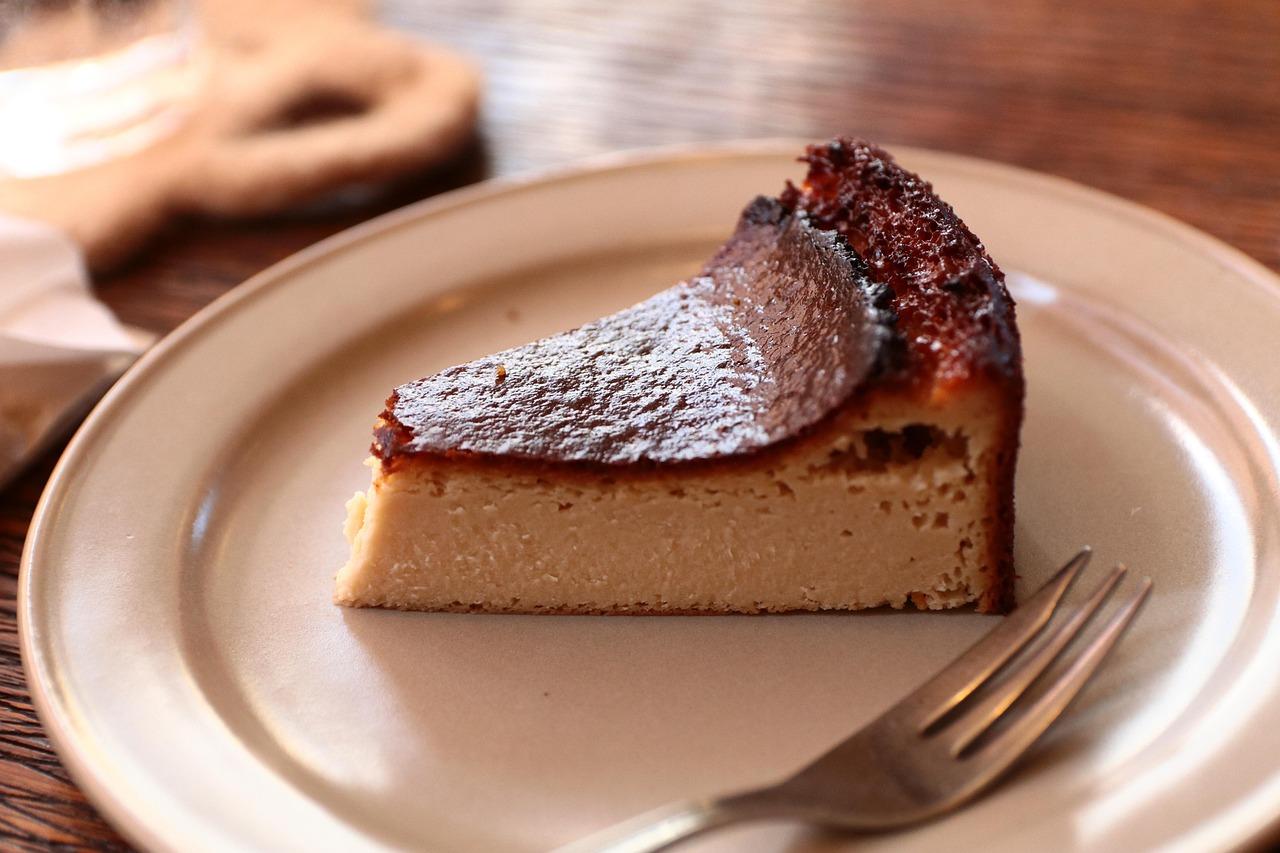
Basque burnt cheesecake
This crustless cheesecake was created in the early 1990s at La Viña, a pintxos bar in the old town of San Sebastián (Donostia) in the Basque Country, and is now famous around the world. It's baked very hot so the top caramelises almost black and the sides rise and crack, while the middle stays soft and creamy, almost runny. There's no base and no water bath, and the rough, rustic look is the point: it's lined with crumpled baking paper. La Viña uses a spoonful of wheat flour; cornflour does the same job and keeps it gluten free. Chef's tip: take it out of the oven while the centre still wobbles like a soft set custard; it firms up as it cools, and if it looks set in the oven, the middle will be dry instead of creamy.
 Spanish
