

AI-generated image
Louise slice
Jam and coconut meringue slice
New Zealand shortcake with raspberry jam and coconut meringue
 New Zealand
Louise slice, or Louise cake, is a New Zealand tea-time classic found on church cake stalls and in grandma's tins from Invercargill to Whangārei. A buttery shortcake base is spread with raspberry jam and topped with a chewy coconut meringue that bakes to pale gold. It is light and pretty, and very easy. A common mistake is baking the meringue too hot, which browns it before it sets inside. Chef's tip: spread the meringue right to the edges so the jam doesn't bubble through.
- Total time
- 60 min
- Difficulty
- medium
- Serves
- 16
Ingredients
For the base
- 3 ½ oz buttersoftened
- 1 ¾ oz caster sugar
- 7 oz plain flour
- 1 tsp baking powder
- 5 ½ oz raspberry jam
For the topping
- 3 ½ oz caster sugar
- 2 ⅞ oz desiccated coconut
Shop this recipe on Amazon
Fresh ingredients (3)
Links open Amazon in a new tab. As an Amazon Associate, WhatToEat.Today earns from qualifying purchases.
Method
0/6 doneStep 1: Heat the oven to 350°F (325°F fan) and line a 20 × 30 cm tin.
5 minStep 2: Beat 3 ½ oz butter and 1 ¾ oz caster sugar, then beat in 2 egg yolks. Mix in 7 oz plain flour and 1 tsp baking powder and press evenly into the tin.
5 minStep 3: Bake for 12–15 minutes until just set and pale. Spread with 5 ½ oz raspberry jam.
15 minStep 4: Whisk 2 egg whites to stiff peaks, add 3 ½ oz caster sugar a spoonful at a time and whisk until glossy. Fold in 2 ⅞ oz desiccated coconut.
5 minStep 5: Spread over the jam right to the edges and bake for 20–25 minutes until light golden and crisp on top.
25 minStep 6: Cool completely in the tin before cutting into squares.
60 min
Nutrition per serving
- Calories
- 210 kcal
- Protein
- 3 g
- Carbs
- 28 g
- Fat
- 10 g
- Fibre
- 1 g
Nutrition values are estimates.
KrazyBadal
Good to know
- How long does louise slice take?
- About 60 minutes in total: 20 minutes to prepare and 40 minutes to cook.
- How many people does it serve?
- 16 as written. Change the servings above the ingredients and every amount scales to match.
- Is it vegetarian?
- Yes. It has no meat or fish.
- What can I use instead of butter?
- The same weight of ghee or coconut oil (for frying and most baking).
- What can I use instead of caster sugar?
- Caster sugar, same amount.
Reviews
No reviews yet. Be the first to cook it.
Rate this recipe
Sign in to rate and review this recipe.
You might also like
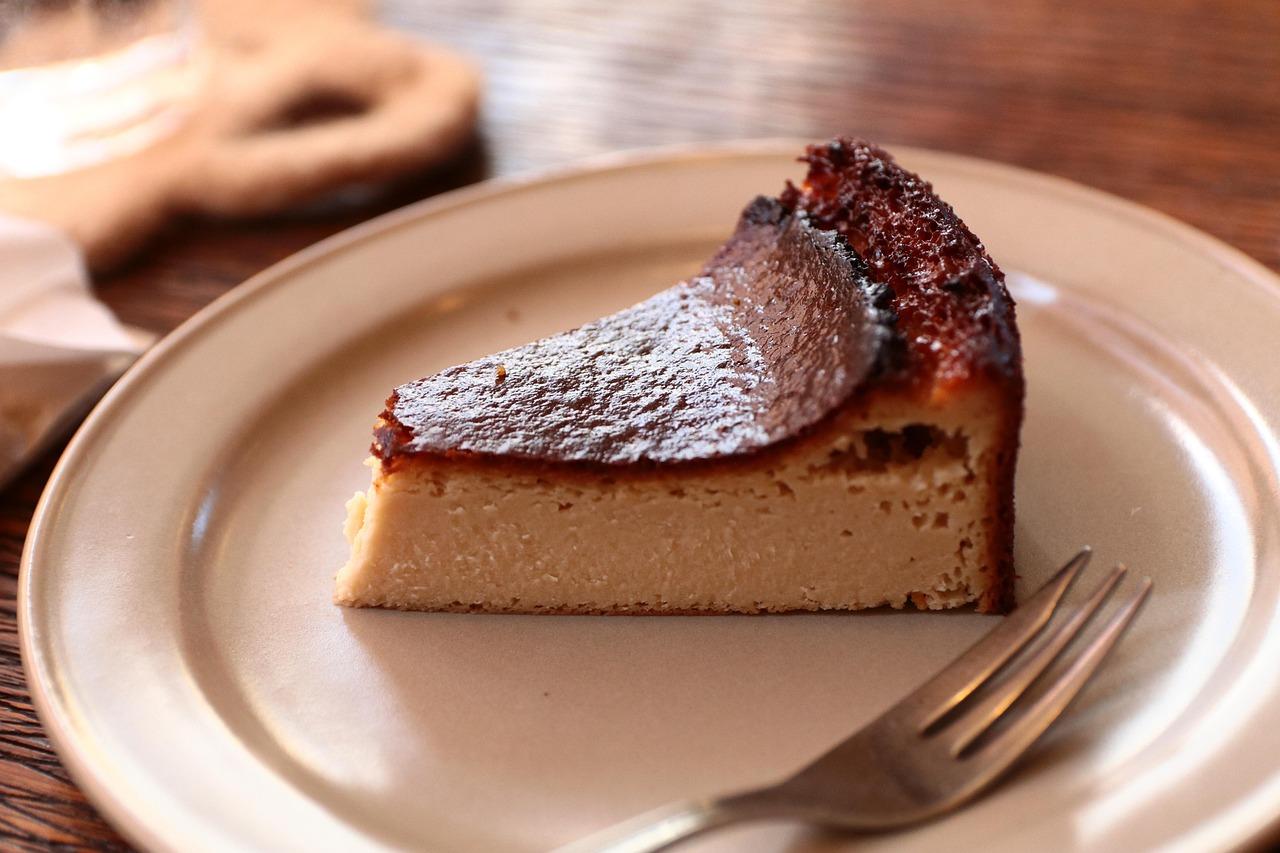
Basque burnt cheesecake
This crustless cheesecake was created in the early 1990s at La Viña, a pintxos bar in the old town of San Sebastián (Donostia) in the Basque Country, and is now famous around the world. It's baked very hot so the top caramelises almost black and the sides rise and crack, while the middle stays soft and creamy, almost runny. There's no base and no water bath, and the rough, rustic look is the point: it's lined with crumpled baking paper. La Viña uses a spoonful of wheat flour; cornflour does the same job and keeps it gluten free. Chef's tip: take it out of the oven while the centre still wobbles like a soft set custard; it firms up as it cools, and if it looks set in the oven, the middle will be dry instead of creamy.
 Spanish

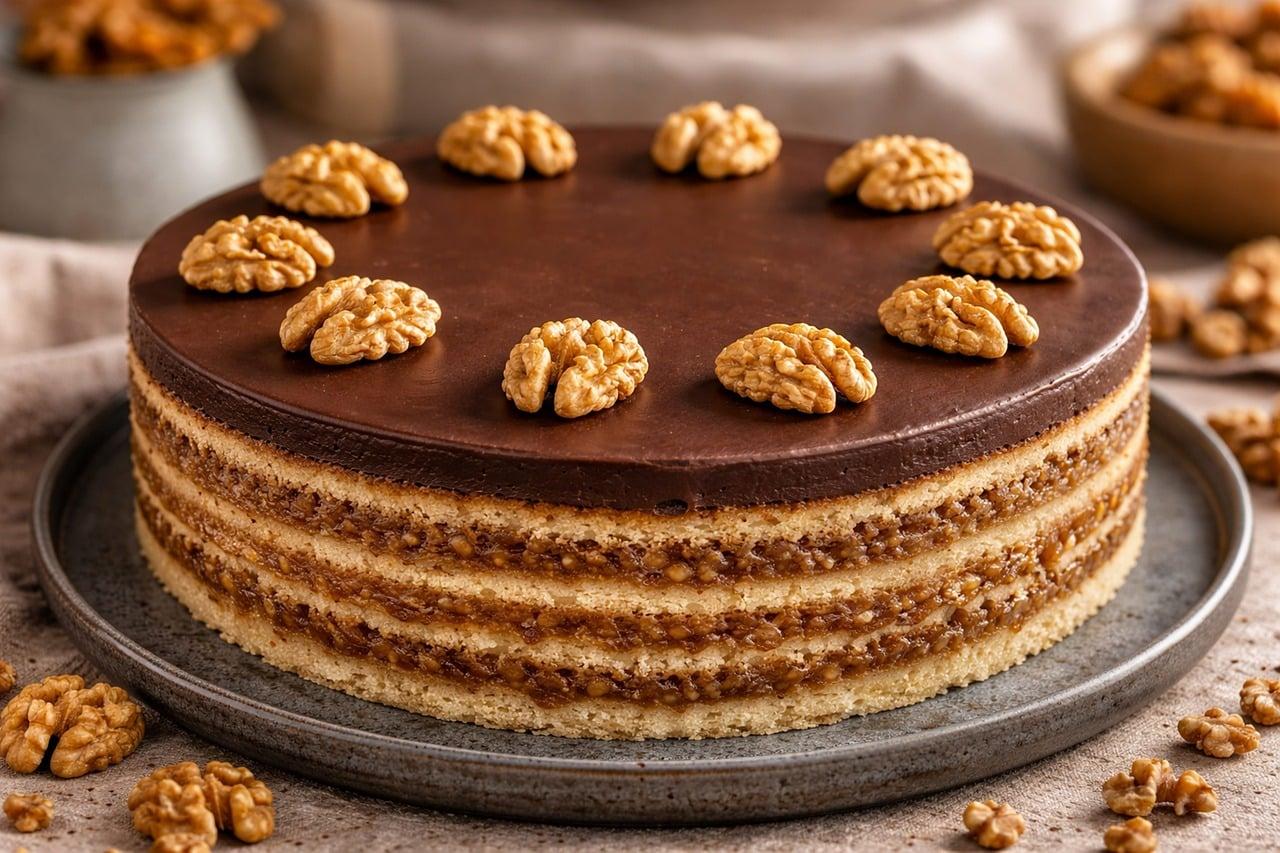
Reform tortaWalnut meringue chocolate cake
Belgrade pastry shops have sold reform torta since the early twentieth century, and it is still the cake Serbian families bring out for birthdays, weddings and the slava. Three thin layers of walnut meringue, crisp at the edge and chewy inside, are stacked with a dense chocolate butter cream made with egg yolks cooked over steam until thick. It is very rich, so cut thin slices and serve with strong coffee. The usual slip is beating the butter into a chocolate mixture that is still warm, which melts it and splits the cream; let it cool to room temperature first. Chef's tip: assemble the cake the day before; overnight in the fridge the meringue softens a little and the cake slices cleanly with a hot knife.

MounaOrange-flower brioche
Oran's mouna came over with Spanish settlers as the Easter mona, and it is still baked for spring outings, recalling the Easter Monday picnics once held at the Santa Cruz chapel above the city. It is a tall, light, golden brioche with a crackly sugar crust, softly flavoured with orange-flower water and lemon zest rather than butter-heavy, and it tears into long, feathery strands. Eat it with coffee or hot chocolate, plain or with jam. The dough is slow and sticky, so give it time. Chef's tip: let the dough rise slowly overnight in the fridge after the first knead; it becomes easier to shape and the flavour deepens.
 Algerian
Perfect for:Tea-time