
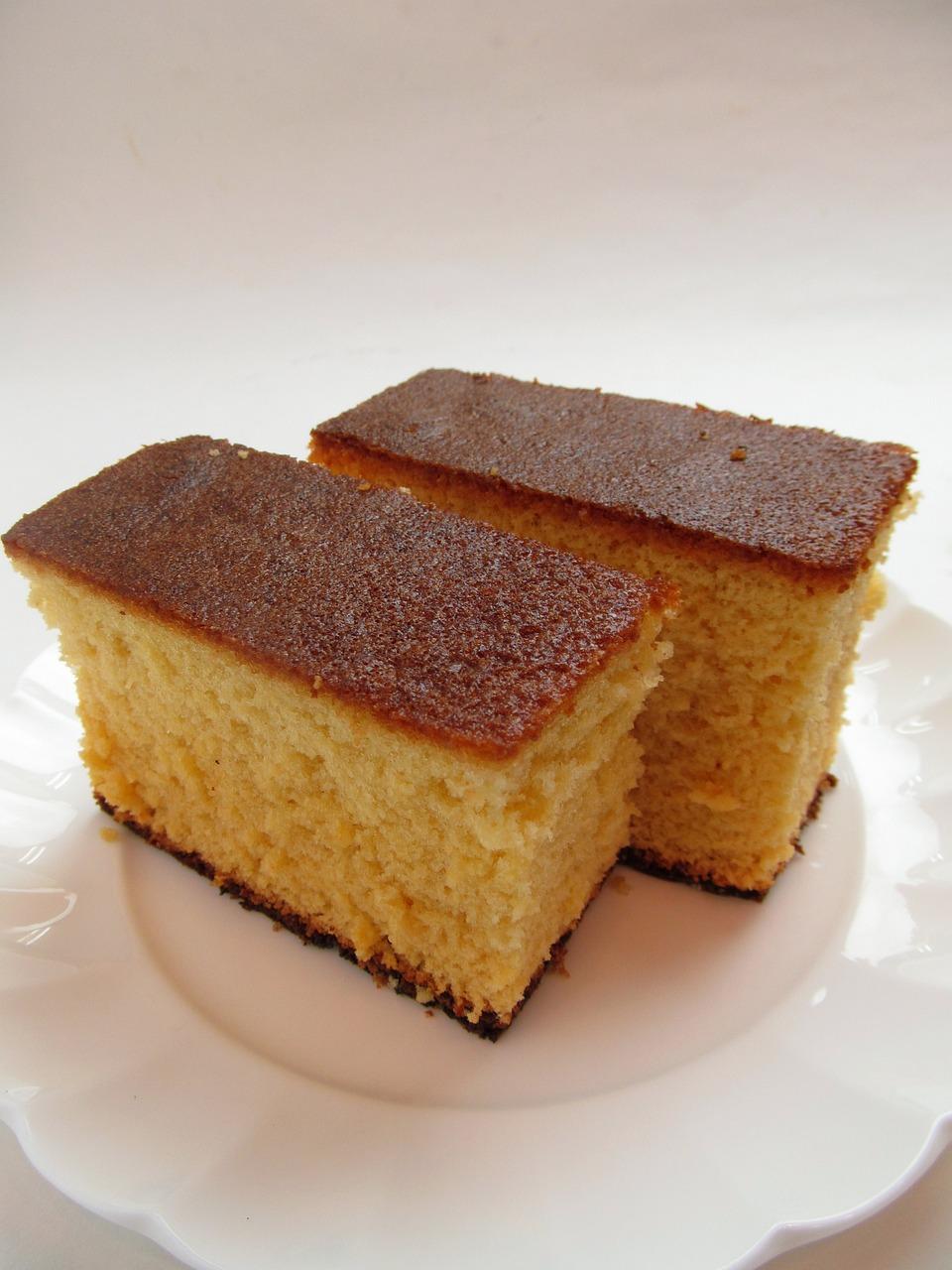
Nagasaki castella
Honey sponge cake
カステラ (kasutera): Nagasaki's dense, moist honey sponge with a dark top and crunchy sugar base
 Japanese
Castella arrived in Nagasaki with Portuguese traders in the 16th century, when the port was Japan's only window to Europe, and the name probably comes from 'pão de Castela', bread from Castile. Over 400 years Nagasaki's bakers turned it into something their own: a tall, fine-crumbed sponge made only of eggs, sugar, flour and honey, with a dark, sticky top and a layer of crunchy zarame sugar crystals at the bottom. It's still sold in long wooden boxes at old shops near the harbour and given as a formal gift. Cut it into neat slices and serve with green tea. Chef's tip: wrap the cake in cling film while still warm and rest it overnight. Its moist, springy texture develops as it rests.
- Total time
- 75 min
- Difficulty
- medium
- Serves
- 10
Ingredients
- 5 eggslarge, at room temperature
- 5 ½ oz caster sugar
- 1 ¾ oz honey
- 2 tbsp hot water
- 2 tbsp milk
- 4 ½ oz bread floursifted twice
- 1 tbsp honeyfor the top
- 1 tsp water
Shop this recipe on Amazon
What you'll need
Spices & pantry
Links open Amazon in a new tab. As an Amazon Associate, WhatToEat.Today earns from qualifying purchases.
Method
0/10 doneStep 1: Heat the oven to 325°F (275°F fan). Line a 21 × 12 cm loaf tin or 18 cm square tin with baking paper, with the paper standing 5 cm above the rim. Scatter 2 tbsp coarse sugar (zarame or demerara) over the base.
Step 3: Put 5 eggs and 5 ½ oz caster sugar in a heatproof bowl set over a pan of barely simmering water. Whisk until the mix feels just warm, about 104°F, then take it off the heat.
3 minStep 4: Beat with an electric whisk on high for 6–8 minutes until pale, tripled in volume and thick enough that a trail of batter sits on top for 3 seconds. Beat in the honey mixture.
8 minStep 5: Turn the whisk to low and beat for 2 minutes more to break up large bubbles. Sift in 4 ½ oz bread flour in three parts, folding with a balloon whisk or spatula until no dry flour remains.
2 minStep 6: Pour into the tin. Drag a skewer through the batter in a zigzag and tap the tin firmly on the counter twice to release air pockets.
Step 7: Bake for 45–50 minutes until deep brown on top and a skewer comes out clean. If the top darkens too fast after 25 minutes, lay a sheet of foil loosely over it.
50 minStep 8: Common mistake: opening the oven in the first 30 minutes. The cool air makes the cake sink and turn dense and wet in the middle.
Step 9: Mix 1 tbsp honey and 1 tsp water and brush over the hot cake. Turn it out upside down onto cling film, peel off the paper from the sides, then wrap tightly with the top facing down. Rest overnight at room temperature.
Step 10: Unwrap, trim the sides with a serrated knife and cut into 2.5 cm slices with a hot, wiped knife.
Nutrition per serving
- Calories
- 210 kcal
- Protein
- 6 g
- Carbs
- 38 g
- Fat
- 3 g
- Fibre
- 0 g
Nutrition values are estimates.
KrazyBadal
Good to know
- How long does nagasaki castella take?
- About 75 minutes in total: 25 minutes to prepare and 50 minutes to cook.
- How many people does it serve?
- 10 as written. Change the servings above the ingredients and every amount scales to match.
- Is it vegetarian?
- Yes. It has no meat or fish.
- What can I use instead of eggs?
- 1 tbsp ground flaxseed + 3 tbsp water per egg, left for 5 minutes (baking only; vegan).
- What can I use instead of caster sugar?
- Caster sugar, same amount.
Reviews
No reviews yet. Be the first to cook it.
Rate this recipe
Sign in to rate and review this recipe.
You might also like

Yaki onigiriGrilled rice balls
Yaki onigiri (焼きおにぎり) are rice balls grilled until they form a crisp, toasty crust, then brushed with soy sauce glaze. They are eaten all over Japan, at izakaya, at barbecues and from the freezer section, as a snack or with miso soup. The inside stays soft and steamy while the outside crackles. Best eaten hot, straight from the pan. Chef's tip: let the shaped rice balls dry for 10 minutes before they go in the pan. A drier surface forms a better crust and won't stick, and the glaze goes on only at the end so it doesn't burn.


Miso soup
Miso soup (味噌汁) is drunk every day in homes all over Japan, at breakfast as well as dinner, beside a bowl of rice. The base is dashi; this vegan version uses kombu and dried shiitake instead of bonito, which gives it a deep, rounded flavour. Silken tofu and wakame seaweed are the classic fillings. It takes ten minutes; just remember not to boil the miso. Chef's tip: add the miso at the very end and never let it boil. Boiling kills the miso's fresh, fermented aroma; Japanese cooks say the soup should only 'smile', with the surface barely trembling.
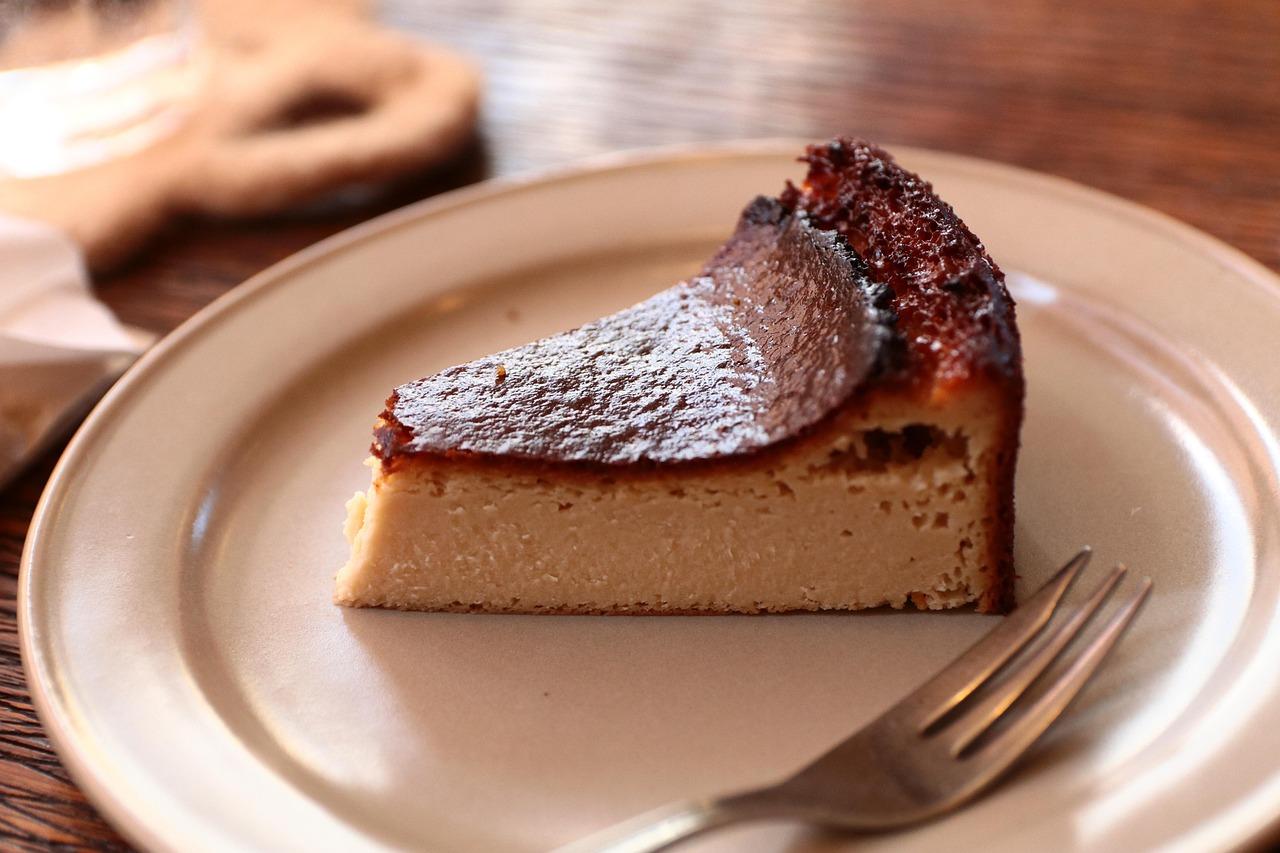
Basque burnt cheesecake
This crustless cheesecake was created in the early 1990s at La Viña, a pintxos bar in the old town of San Sebastián (Donostia) in the Basque Country, and is now famous around the world. It's baked very hot so the top caramelises almost black and the sides rise and crack, while the middle stays soft and creamy, almost runny. There's no base and no water bath, and the rough, rustic look is the point: it's lined with crumpled baking paper. La Viña uses a spoonful of wheat flour; cornflour does the same job and keeps it gluten free. Chef's tip: take it out of the oven while the centre still wobbles like a soft set custard; it firms up as it cools, and if it looks set in the oven, the middle will be dry instead of creamy.
 Spanish

Perfect for:Tea-time