
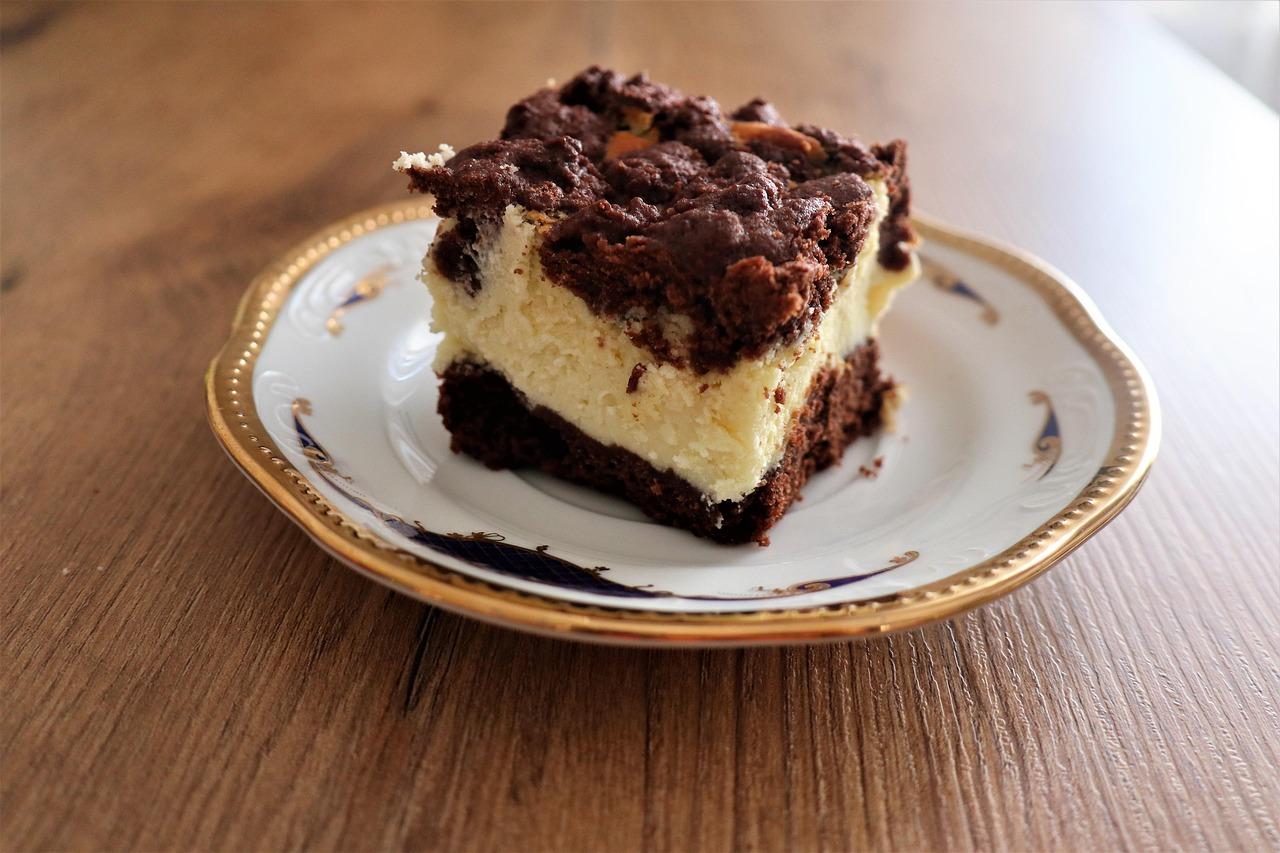
Russischer Zupfkuchen
Chocolate shortcrust cheesecake
Chocolate shortcrust cheesecake with torn dough on top

Despite the name, Russischer Zupfkuchen is a West German invention, a 1990s café-counter hit that spread from a baking-powder company's recipe card into every coffee-and-cake afternoon from Hamburg to Munich. A crisp cocoa shortcrust holds a pale, creamy quark cheesecake, and torn pieces ('gezupft', plucked) of the same dark dough are scattered on top, where they bake into crunchy chocolate islands. Serve it cold, in tall wedges, with filter coffee. Cutting it warm is the common mistake: the filling slumps and the base cracks, so chill it for several hours first. Chef's tip: keep a third of the dough frozen for 15 minutes before tearing it; firm pieces hold their rough shape and don't sink into the filling.
- Total time
- 105 min
- Difficulty
- medium
- Serves
- 12
Ingredients
For the chocolate dough
- 10 ½ oz plain flour
- 1 oz cocoa powder
- 1 tsp baking powder
- 5 ½ oz caster sugar
- 1 egg
- 5 ½ oz buttercold, diced
For the filling
- 1 ⅛ lb quarkfull-fat
- 5 ½ oz caster sugar
- 3 eggs
- 4 ½ oz buttermelted and cooled
- 1 ⅜ oz cornflour
- 2 tsp vanilla extract
- 1 tsp lemon zest
Shop this recipe on Amazon
What you'll need
Fresh ingredients (4)
Links open Amazon in a new tab. As an Amazon Associate, WhatToEat.Today earns from qualifying purchases.
Method
0/8 doneStep 1: Mix 10 ½ oz plain flour, 1 oz cocoa powder, 1 tsp baking powder and 5 ½ oz caster sugar. Add 1 egg and 5 ½ oz butter and work quickly into a smooth dough with your hands or a mixer.
Step 2: Take off a third of the dough, wrap it and put it in the freezer. Wrap the rest and chill for 30 minutes.
30 minStep 3: Heat the oven to 350°F (300°F fan). Grease a 26 cm springform tin.
Step 4: Press the chilled dough over the base and about 4 cm up the sides of the tin in an even layer.
Step 5: Whisk 1 ⅛ lb quark, 5 ½ oz caster sugar, 3 eggs, 4 ½ oz butter, 1 ⅜ oz cornflour, 2 tsp vanilla extract and 1 tsp lemon zest until smooth, and pour into the case.
Step 6: Tear the frozen dough into small rough pieces, about the size of a hazelnut, and scatter them over the filling.
Step 7: Bake for 60–65 minutes, until the filling has risen slightly and is set at the edges with only a slight wobble in the centre.
63 minStep 8: Turn off the oven, open the door a crack and leave the cake inside for 15 minutes to stop it cracking. Then cool in the tin and chill for at least 4 hours.
240 min
Nutrition per serving
- Calories
- 410 kcal
- Protein
- 9 g
- Carbs
- 47 g
- Fat
- 21 g
- Fibre
- 2 g
Nutrition values are estimates.
KrazyBadal
Good to know
- How long does russischer Zupfkuchen take?
- About 105 minutes in total: 40 minutes to prepare and 65 minutes to cook.
- How many people does it serve?
- 12 as written. Change the servings above the ingredients and every amount scales to match.
- Is it vegetarian?
- Yes. It has no meat or fish.
- Can I make it ahead?
- Yes. It keeps well, so you can cook it earlier in the day or the day before and reheat it.
- What can I use instead of plain flour?
- Self-raising flour, same amount (then leave out the baking powder).
- What can I use instead of cocoa powder?
- Drinking chocolate, same amount (sweeter, so cut the sugar).
Reviews
No reviews yet. Be the first to cook it.
Rate this recipe
Sign in to rate and review this recipe.
You might also like
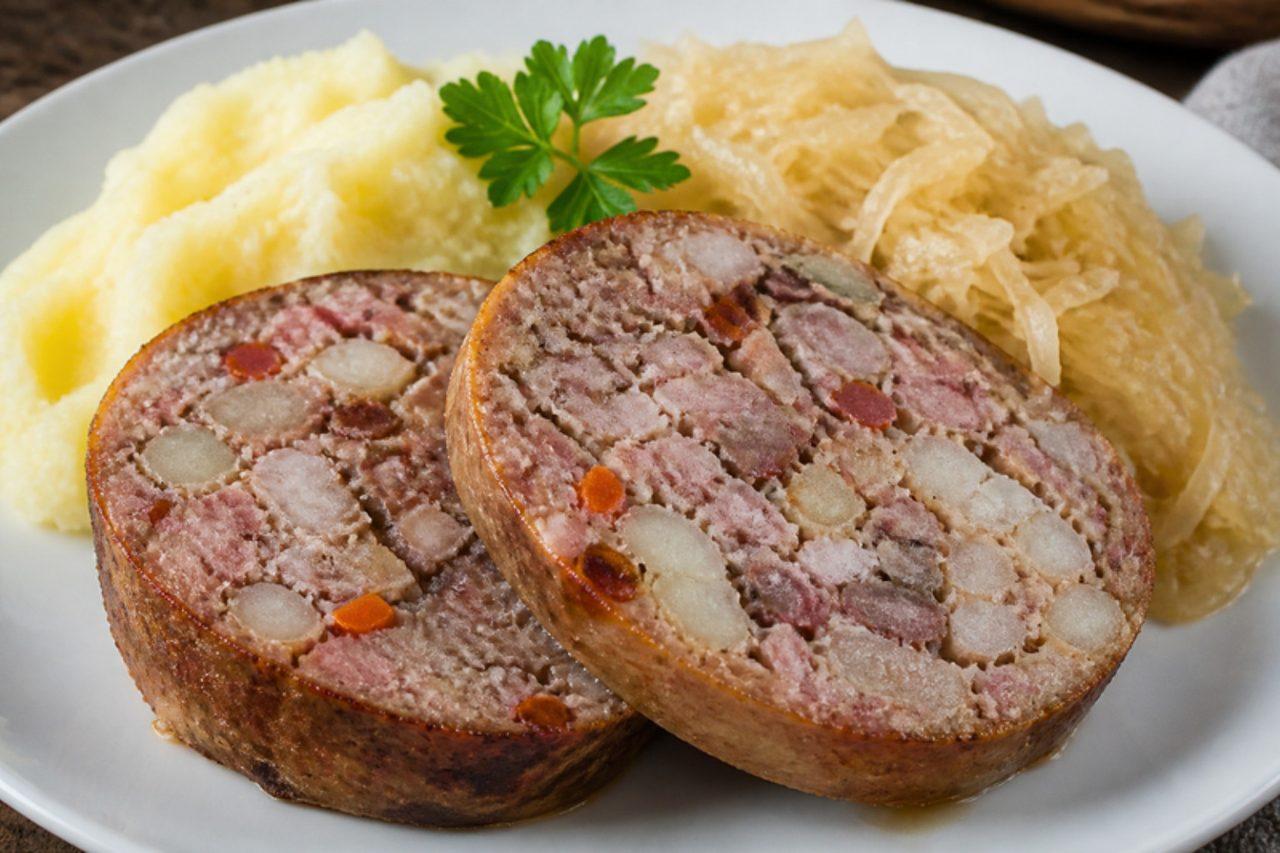
Pfälzer SaumagenStuffed pig's stomach
Saumagen is the pride of the Palatinate, served at wine-village festivals and family dinners from the Haardt hills to Ludwigshafen. A cleaned pig's stomach is stuffed with diced pork shoulder, pork sausage meat, potato and carrot seasoned with marjoram and nutmeg, poached slowly, then sliced thick and fried until crusty. The stomach works only as a casing and is ordered from a butcher; if you can't get one, bake the same filling in a covered terrine in a water bath. Serve with sauerkraut and mashed potato. Chef's tip: fill the stomach only three-quarters full, or it bursts as the potatoes swell.

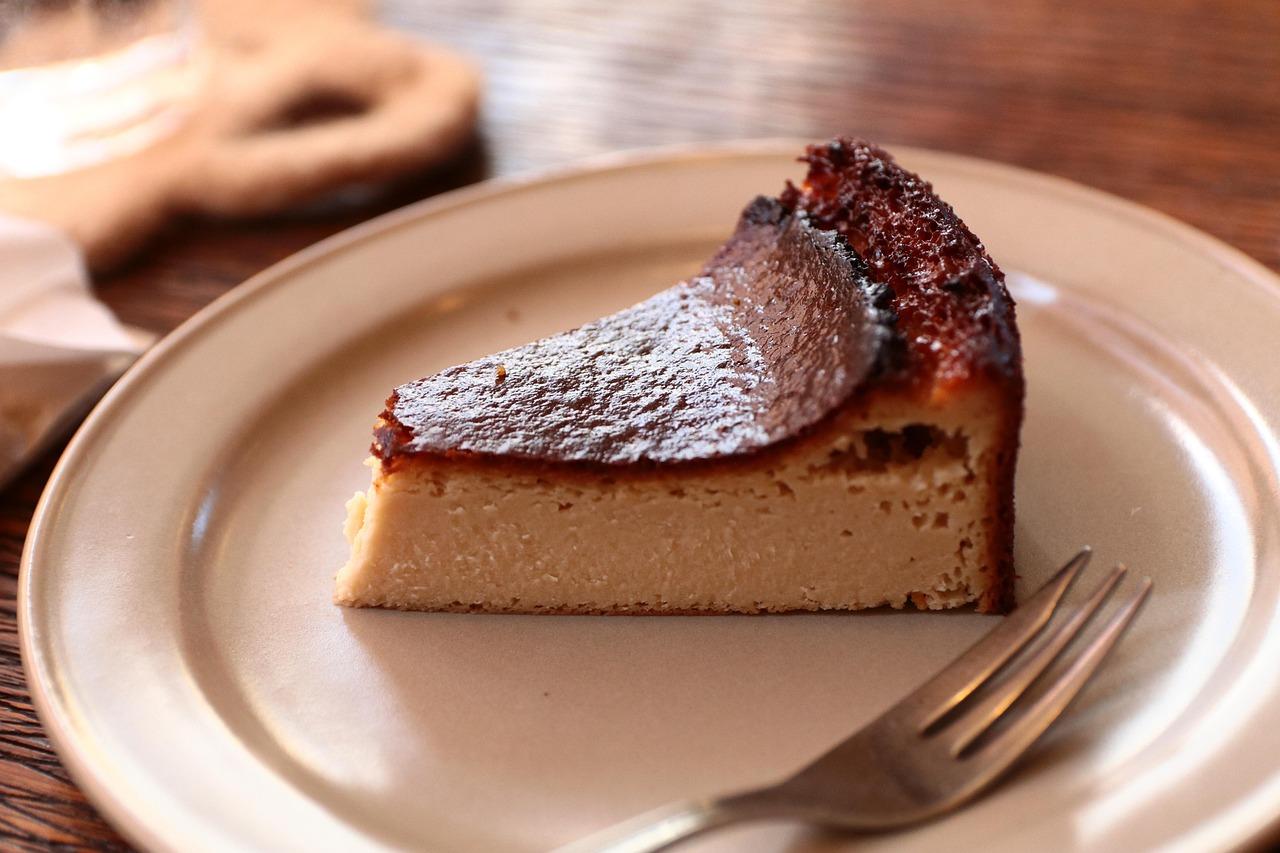
Basque burnt cheesecake
This crustless cheesecake was created in the early 1990s at La Viña, a pintxos bar in the old town of San Sebastián (Donostia) in the Basque Country, and is now famous around the world. It's baked very hot so the top caramelises almost black and the sides rise and crack, while the middle stays soft and creamy, almost runny. There's no base and no water bath, and the rough, rustic look is the point: it's lined with crumpled baking paper. La Viña uses a spoonful of wheat flour; cornflour does the same job and keeps it gluten free. Chef's tip: take it out of the oven while the centre still wobbles like a soft set custard; it firms up as it cools, and if it looks set in the oven, the middle will be dry instead of creamy.
 Spanish
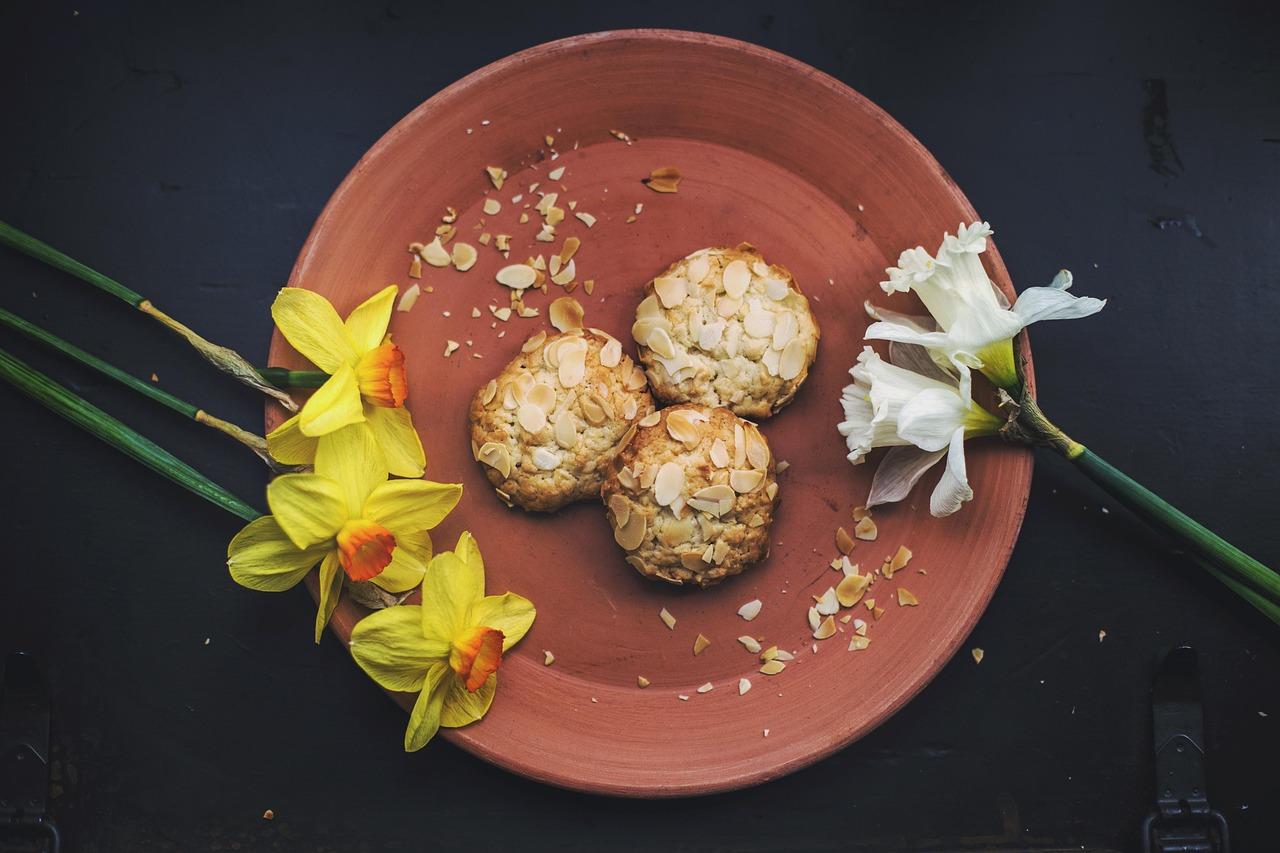
Almond cookiesOat, coconut and almond cookies
A big batch of crunchy cookies with rolled oats, coconut, chopped almonds and chunks of cooking chocolate. For a change, use cashew nuts instead of almonds.