
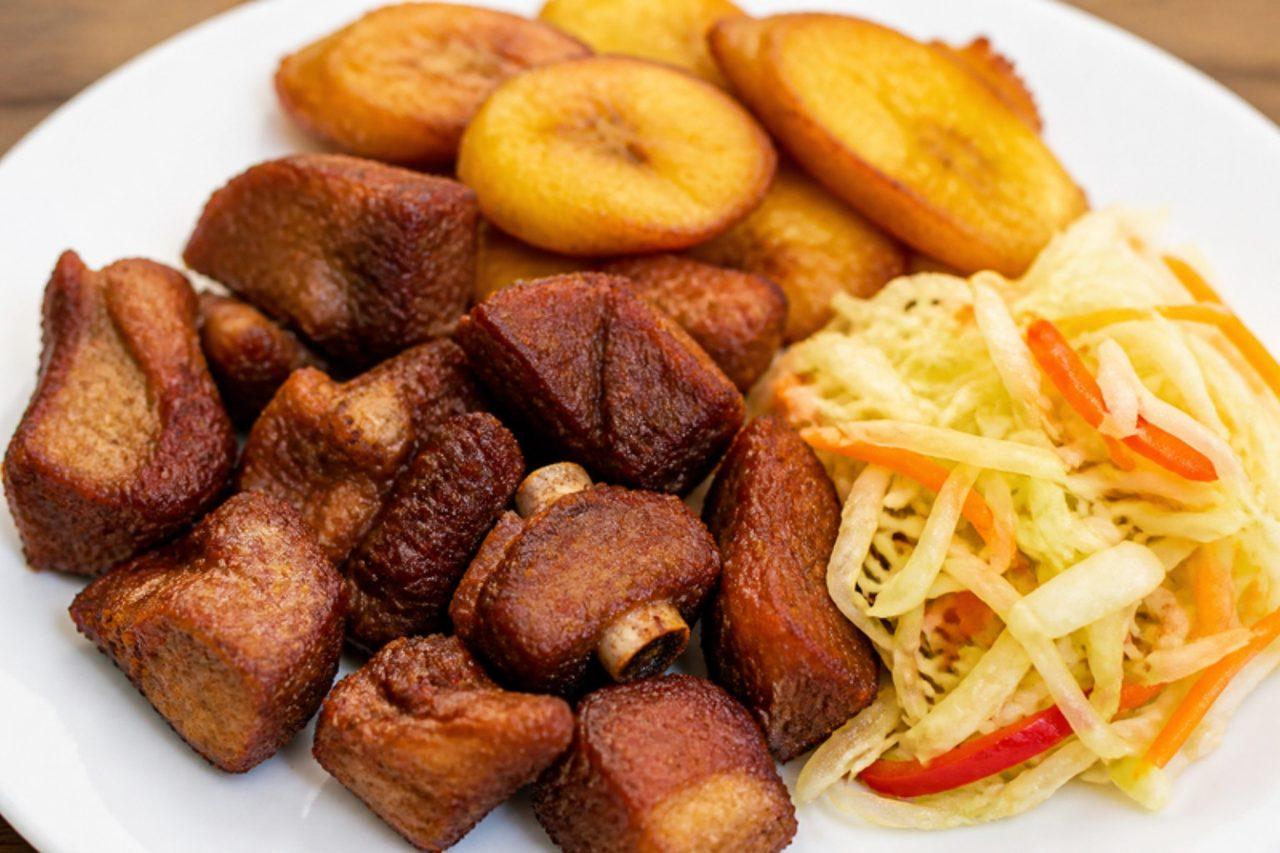
AI-generated image
Tasso kabrit
Tasso kabrit: Haitian fried goat with sour orange and epis


Tasso kabrit is festival and Sunday food all over Haiti: chunks of goat soaked in sour orange and epis, simmered until tender in the marinade, then fried hard until the edges turn crisp and dark. It is piled onto platters with fried plantain (bannann peze), pikliz and sòs ti malis, and is a must at first communions and New Year gatherings. The mistake many people make is frying the goat before it is fully tender; the long simmer comes first, or the meat stays tough however crisp it looks. Ask the butcher to cut bone-in goat shoulder or leg into pieces. Chef's tip: boil the simmering liquid down to a sticky glaze and toss the fried goat in it at the end.
- Total time
- 120 min
- Difficulty
- medium
- Serves
- 6
Ingredients
- 3 ⅓ lb bone-in goatshoulder or leg, cut into 5 cm pieces
- ¾ cup sour orange juiceor 100 ml orange juice with 50 ml lime juice
- 1 limehalved, for washing the meat
- 4 cloves garliccrushed
- 4 sprigs thyme
- 1 scotch bonnet pepperpierced once
- 2 tsp salt
- 2 cups water
- 2 cups vegetable oilfor frying
Shop this recipe on Amazon
Fresh ingredients (3)
Links open Amazon in a new tab. As an Amazon Associate, WhatToEat.Today earns from qualifying purchases.
Method
0/6 doneStep 1: Rub the goat pieces all over with the cut 1 lime and rinse them under cold water, the Haitian way of cleaning meat. Pat dry.
Step 2: Mix ¾ cup sour orange juice, 5 tbsp Haitian epis (green seasoning), 4 cloves garlic, 4 sprigs thyme, 4 whole cloves, 1 scotch bonnet pepper and 2 tsp salt, coat 3 ⅓ lb bone-in goat in it and marinate in the fridge for at least 4 hours or overnight.
240 minStep 3: Put the goat and marinade in a heavy pot with 2 cups water, bring to the boil, cover and simmer gently for 1 hour 15 minutes, until the meat pulls easily from the bone.
75 minStep 4: Lift out the goat with a slotted spoon. Boil the liquid hard for 10 minutes until reduced to a few spoonfuls of glaze.
10 minStep 5: Heat 2 cups vegetable oil in a deep pan to 350°F and fry the goat in batches for 4–5 minutes, until crisp and deep brown at the edges. Drain on kitchen paper.
10 minStep 6: Toss the fried goat in the reduced glaze and serve hot with fried plantain and pikliz.
Nutrition per serving
- Calories
- 420 kcal
- Protein
- 42 g
- Carbs
- 6 g
- Fat
- 25 g
- Fibre
- 1 g
Nutrition values are estimates.
KrazyBadal
Good to know
- How long does tasso kabrit take?
- About 120 minutes in total: 20 minutes to prepare and 100 minutes to cook.
- How many people does it serve?
- 6 as written. Change the servings above the ingredients and every amount scales to match.
- Is it gluten free?
- Yes, as written. Check the labels on stock, sauces and spice mixes, which sometimes contain gluten.
- What can I use instead of sour orange juice?
- Mandarin or pineapple juice, same amount.
- What can I use instead of lime?
- Lemon, same amount.
Reviews
No reviews yet. Be the first to cook it.
Rate this recipe
Sign in to rate and review this recipe.
You might also like

Pork souvlaki
This is a pork recipe. Walk through any Greek town after dark, from Athens to Thessaloniki, and the smell of souvlaki stands drifts down the street; cubes of pork shoulder grilled on thin skewers are the country's favourite cheap supper, eaten standing up or at a plastic-table taverna. At home you marinate the meat in lemon, olive oil, garlic and dried oregano, grill it hard and fast, and pile it on warm pitta with tzatziki, tomato and red onion. Chef's tip: cut the pork into even 2.5 cm cubes and leave a little fat on; lean loin dries out, shoulder stays juicy over high heat.
 Greek
Tteokgalbi
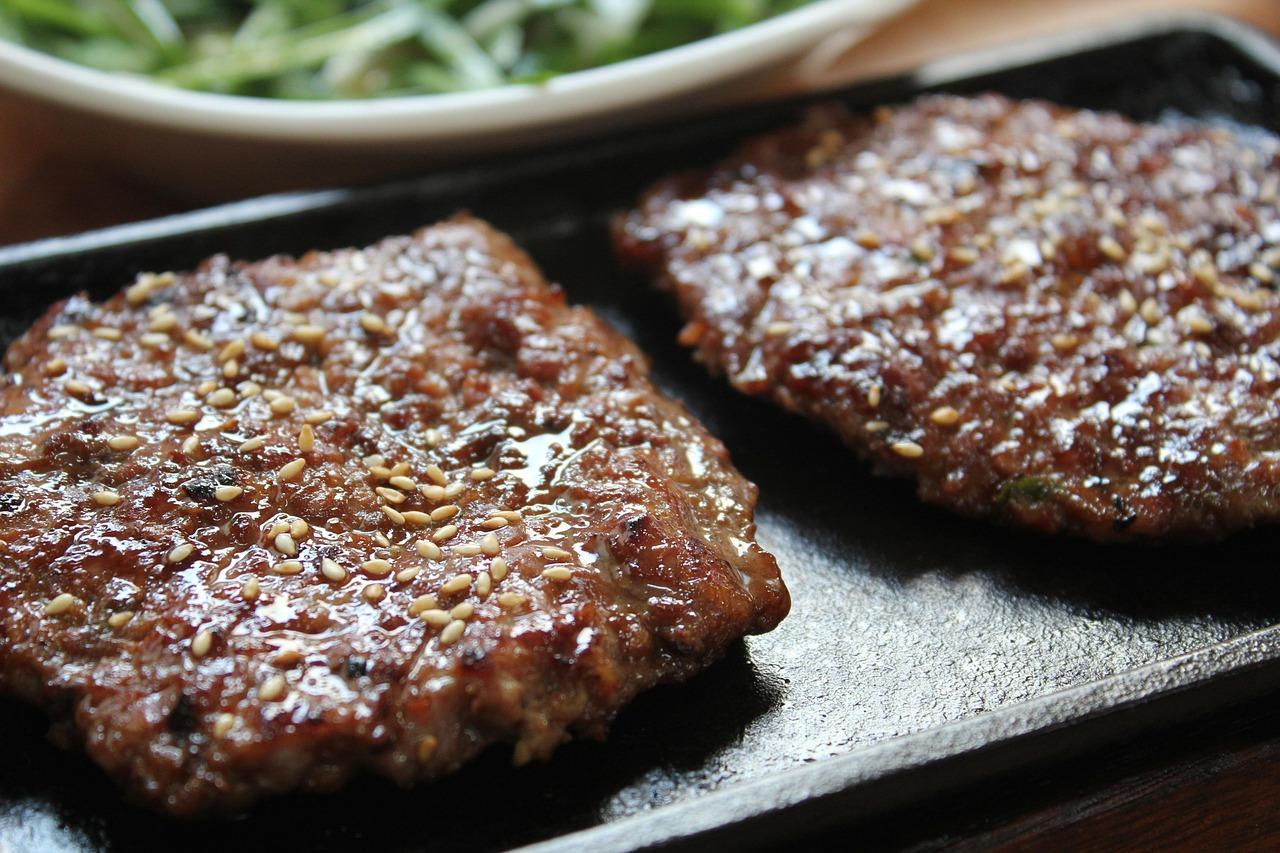
Tteokgalbi is rib meat chopped finely, pressed back into neat slabs and grilled, so it's soft enough to eat without struggling with a bone. Two places in South Jeolla claim it: Damyang, the bamboo county, where all-beef patties come with rice steamed in bamboo tubes, and Gwangju's Songjeong district, whose restaurant street near the railway station mixes beef with pork. This home version uses minced beef and pork, seasoned with soy, garlic and pear, then brushed with a soy and honey glaze as it cooks. Serve with rice, lettuce and a few banchan; leftovers are good cold in a lunchbox. Chef's tip: slap the mince against the bowl for a few minutes; it turns sticky and the patties hold together on the grill without any breadcrumbs.
 Korean
Soup joumou
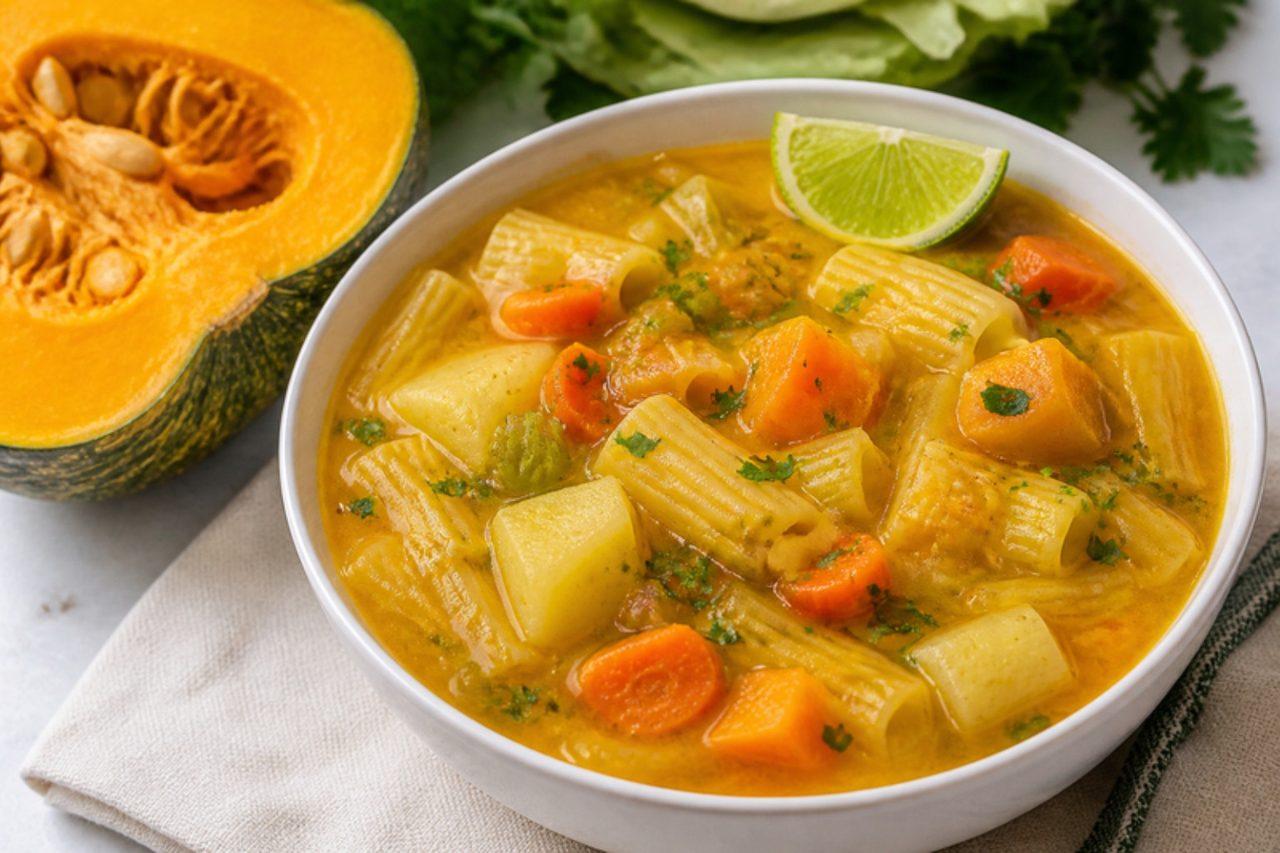
Every 1 January, Haitian families from Port-au-Prince to Brooklyn wake up to soup joumou. It marks independence from France on 1 January 1804: under French rule, enslaved Haitians cooked this pumpkin soup but were forbidden to eat it, so the free people of the new nation made it their own as a dish of freedom. In 2021 it was added to UNESCO's list of the intangible cultural heritage of humanity. The base is a velvety purée of joumou (Caribbean pumpkin) with epis, and in it simmer chunks of carrot, potato, cabbage, celery and turnip, with pasta and a squeeze of lime. It's usually made with beef; this vegetable version is full and golden, rich enough for the day. Chef's tip: roast half the pumpkin before puréeing it; the caramelised edges give the soup the depth that slow-cooked meat usually provides.
