Skip to content

Recipes with cool boiled water

6 recipes that use cool boiled water, with photos, step-by-step instructions and cook times. The quickest, Kishmish panir, takes 25 minutes. It is most often cooked with koji spores, bamboo shoot and dried black soybeans.

Got a few things in the fridge? Search by everything you have

Pixian doubanjiang

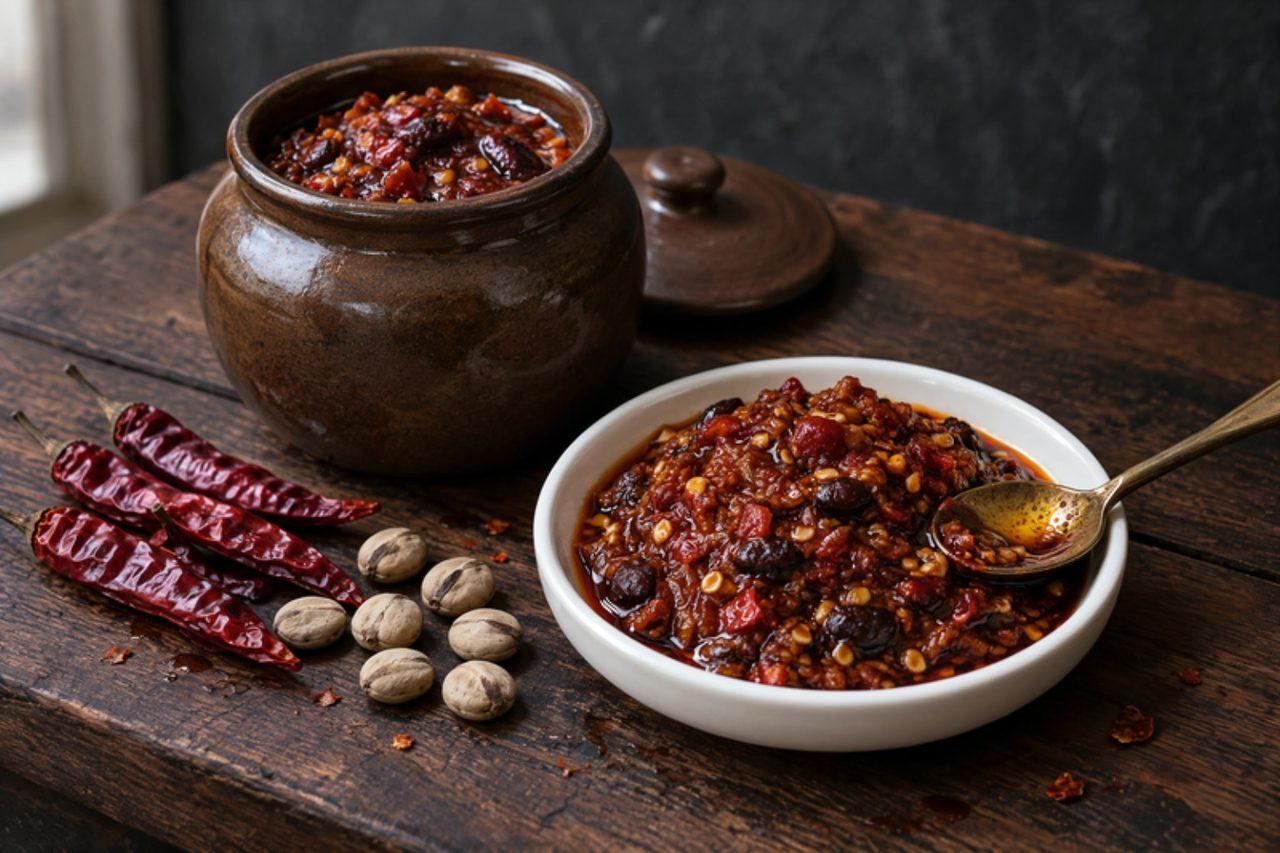
Pixian, now part of greater Chengdu, has made doubanjiang since the 1600s: broad beans are moulded into a koji, chillies are chopped and salted in high summer, and the two are combined in huge open clay vats left in the courtyards to sun by day and breathe by night, stirred every morning for a year or more. The paste darkens from bright red to a glossy red-brown and becomes salty, savoury, deeply fruity and only moderately hot. Fried in oil until the oil turns red, it is the foundation of mapo tofu, twice-cooked pork and boiled fish in chilli oil. This home version takes about three months. Use koji spores for a clean bean ferment, and do not cut the salt: homemade bean pastes are low-acid, and the high salt (about 15%) is what makes them safe. Common mistake: sealing the jar airtight in the warm months; it needs air and daily stirring, so cover it with a cloth or loose lid. Normal: darkening colour, a winey-savoury smell, a little liquid. Discard if fuzzy mould spreads or grows coloured (green, black, pink) patches, or it smells putrid. It is ready when the paste is red-brown and tastes rounded, not raw. Chef's tip: fry it slowly in oil until it smells toasty.

by KrazyBadal 0 views

Douchi

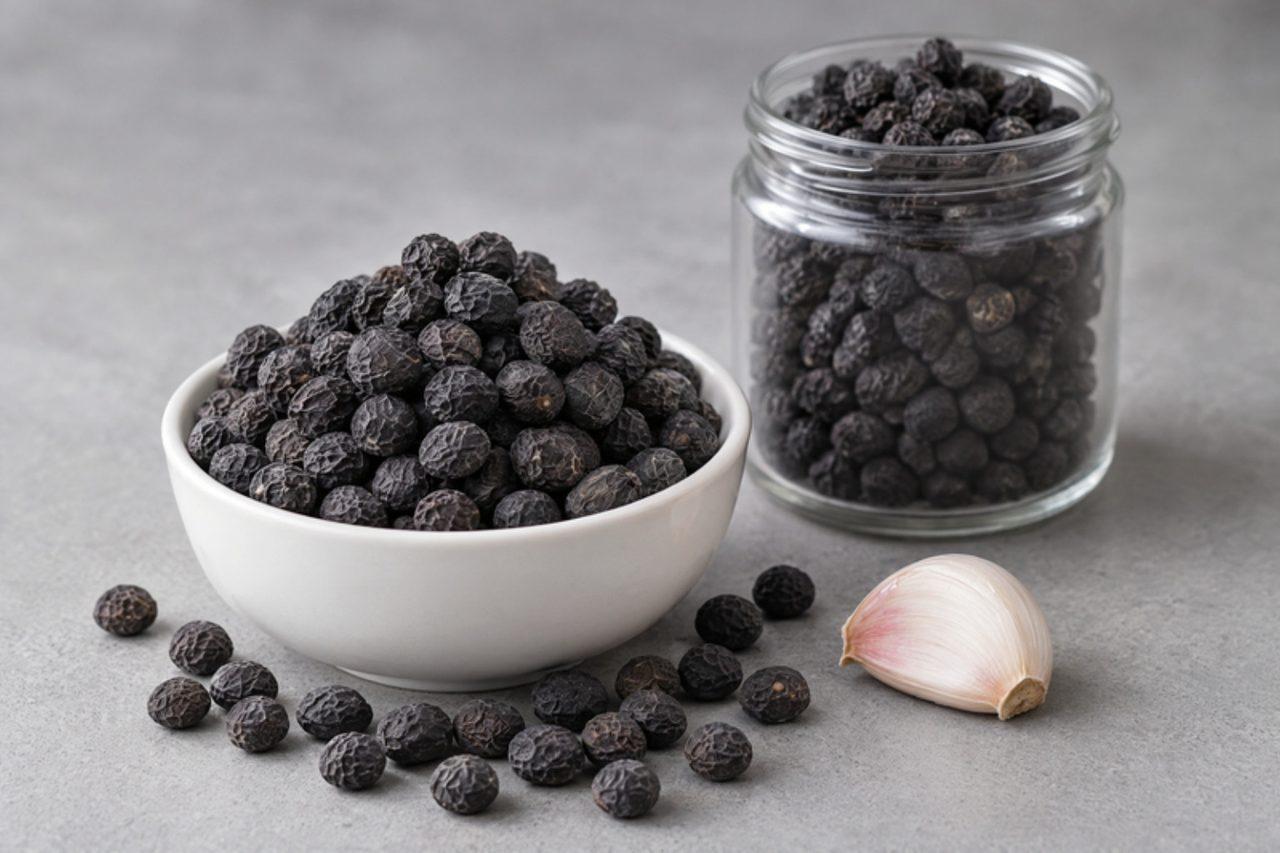
Yangjiang in western Guangdong and Liuyang in Hunan are the two great douchi towns, and both traditionally make their fermented black beans in the dry season, when beans can be moulded indoors and dried in the sun without spoiling. Cooked black soybeans are covered until a yellow-green koji mould grows over them, then washed, salted, packed and fermented for weeks before drying. The result is wrinkled, soft-chewy beans with an intense salty, savoury, almost chocolate-dark flavour. A spoonful steamed with spare ribs or a whole fish, stir-fried with bitter melon or pounded into Hunan's chilli dishes seasons the whole plate. At home, buying koji spores (Aspergillus oryzae) is far more reliable than waiting for wild moulds. Common mistake: letting the beans sit wet or warm in a sealed container during the moulding stage; they must breathe at 28–32 °C. Good koji smells sweet and chestnut-like; discard any batch with black, pink or bright coloured mould, slime or a rotten smell. Keep the salt as given. It is ready when the beans are dark, wrinkled and dry outside but supple within. Store dried douchi in the fridge for 1 year. Chef's tip: rinse and lightly crush the beans before cooking.

by KrazyBadal 0 views

Suan sun

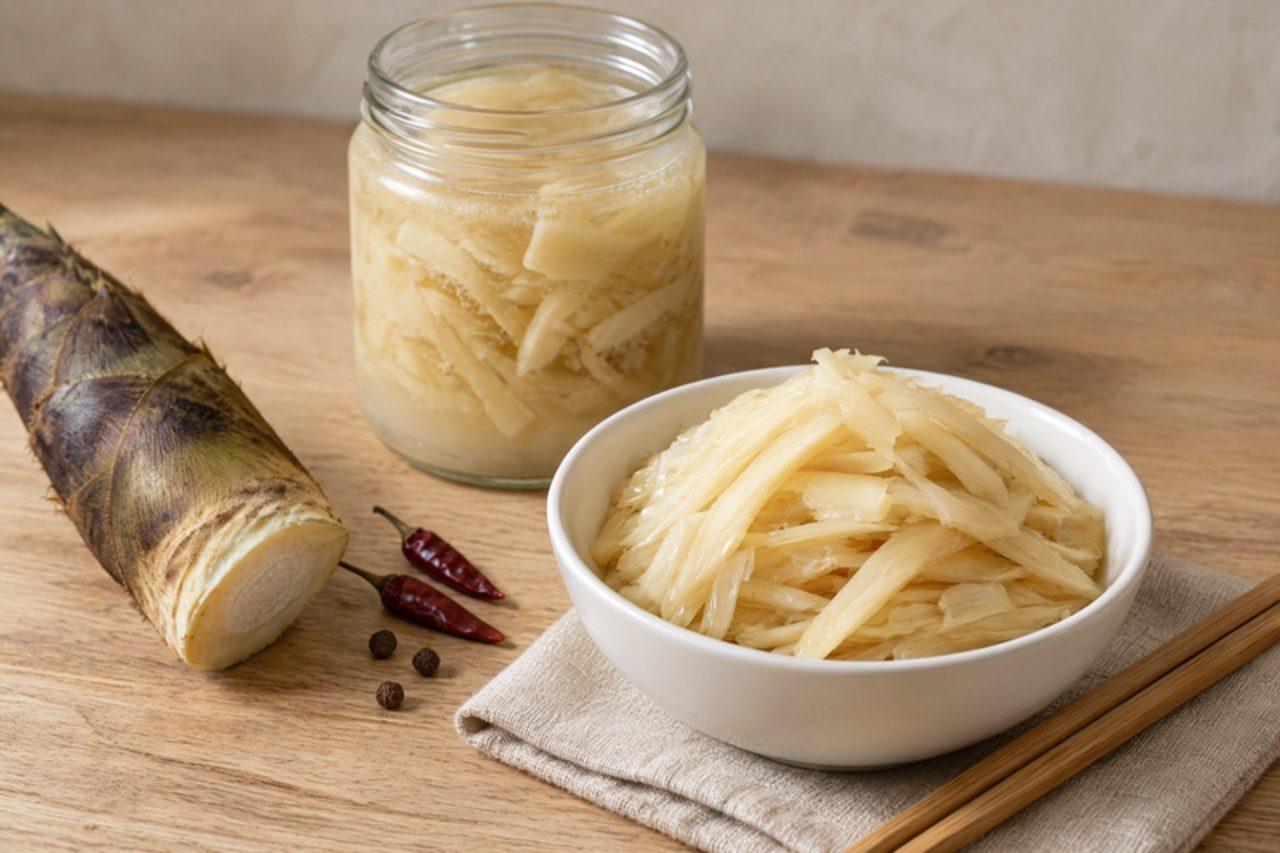
In Liuzhou in Guangxi, spring and early summer bring fresh bamboo shoots, and every household fills big jars with sliced shoots in water to sour. The smell of suan sun is legendary, sour, funky and a little like strong cheese, but cooked into a bowl of luosifen (river-snail rice noodle soup), stir-fried with pork and chilli, or simmered with duck, it turns into a deep, savoury tang that locals crave. The slices stay crisp. Fresh shoots contain natural compounds that release cyanide, so suan sun is always cooked before eating: boil it for at least 10 minutes in your dish, and never eat it raw from the jar. Canned or vacuum-packed cooked shoots will not sour on their own; use fresh shoots, or add a little brine from an earlier ferment. Common mistake: letting slices float above the brine, where they go soft and mouldy; keep everything submerged under a weight. Normal: cloudy brine, bubbles, a sharp sour, funky smell, and a flat white film you can skim. Bad: fuzzy coloured mould, pink or black slime, or a rotten-egg, putrid smell; discard. It is ready after 2–3 weeks, when it tastes clearly sour. Chef's tip: ferment it in a shed; the smell travels.

by KrazyBadal 0 views

Dongbei suan cai

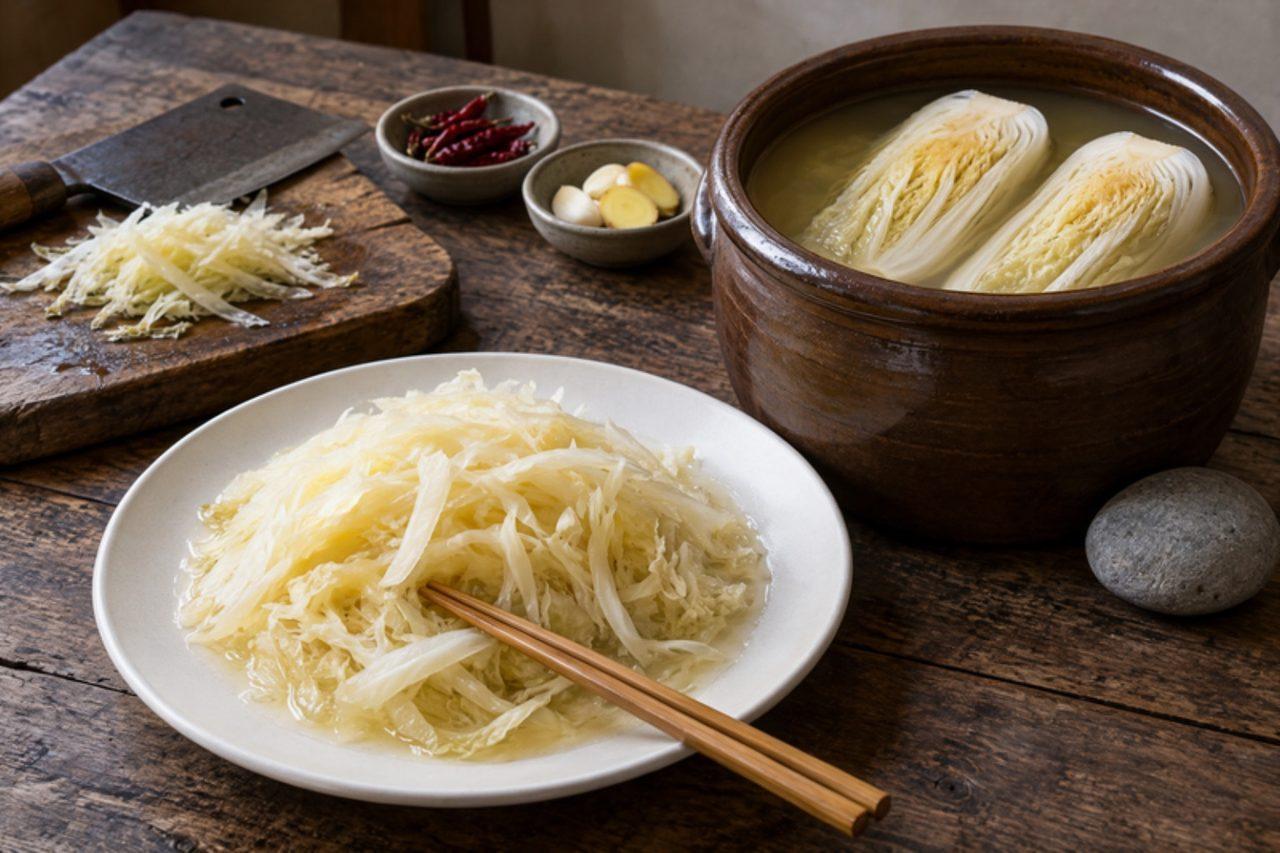
In Harbin, Changchun and Shenyang, late October is when families buy napa cabbage by the cartload, scald it, and pack it head to tail into big glazed crocks on the balcony, weighed down with a smooth river stone. A month later, as winter sets in, it has become suan cai: pale, almost translucent leaves with a clean, lactic sourness and a soft crunch at the rib. It is shredded into suan cai bai rou (sour cabbage with pork belly), stuffed into dumplings for Spring Festival and simmered in hot pots through the long winter. Common mistake: fermenting somewhere warm; above about 20 °C the cabbage softens and can go slimy, so use the coolest spot you have. Normal signs are fine bubbles, a cloudy brine and a sharp sour smell; a flat white film (kahm yeast) can be skimmed off. Fuzzy coloured mould, pink or black patches, or a putrid smell mean discard the lot. Do not eat it before 3 weeks: it is ready when the leaves are uniformly pale yellow-green and taste fully sour. Then keep it in the brine in the fridge for 2 months. Chef's tip: rinse and squeeze the shreds before cooking to soften the sourness.

by KrazyBadal 0 views

Kishmish panir

Spring in Kabul is announced by sellers who appear on street corners with trays of soft white panir laid on leaves and a heap of dark red raisins beside it, and kishmish panir becomes the snack of the season. The cheese is unripened and barely salted, milky and springy like a just-set curd, and the chewy, sweet-tart raisins are eaten alongside it in alternate mouthfuls, usually with a piece of naan and a glass of green tea. Afghan panir is set with rennet, traditionally animal rennet, so use a vegetarian (microbial) rennet to keep it vegetarian, and always start with pasteurised milk. The batch that refuses to set has nearly always been made with UHT or ultra-filtered milk, which will not curdle with rennet. Chef's tip: soak the raisins in cold water for half an hour first; they plump up and stop tasting dusty.

by KrazyBadal 0 views

Jben (fresh Moroccan cheese)

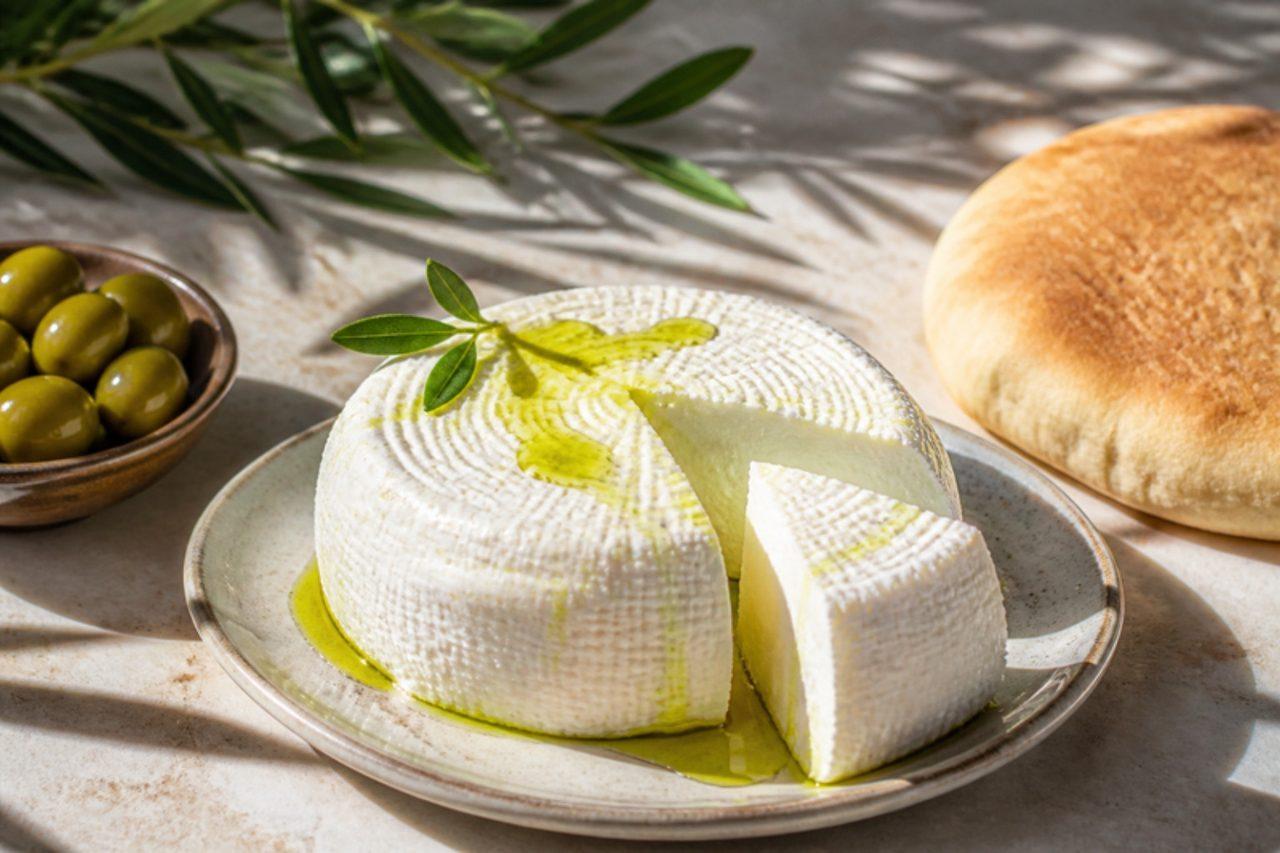
On the road into Chefchaouen, women from the Rif villages sit with rounds of jben wrapped in palm leaves, a fresh, soft, lightly salted cheese with a clean, milky tang. Breakfast in the north often means a slab of it drizzled with olive oil, sprinkled with dried thyme or za'atar, with olives, honey and warm bread. Traditionally jben is curdled with animal rennet (sometimes with thistle or fig sap), so check if you buy it; this home version uses vegetarian (microbial) rennet and pasteurised milk, and is drained in the fridge. Hands-on time is about an hour; the curd then needs 1–2 hours to set and 4–6 hours to drain. Keep it chilled and eat it within 4 days. Chef's tip: avoid UHT and ultra-pasteurised milk, which will not set into a firm curd; ordinary pasteurised whole milk works well.

by KrazyBadal 0 views

Goes well with cool boiled water