Skip to content
Recipes

All recipes

Vegetarian, or something you can't eat? Set your diet once and we'll hide recipes that don't fit.

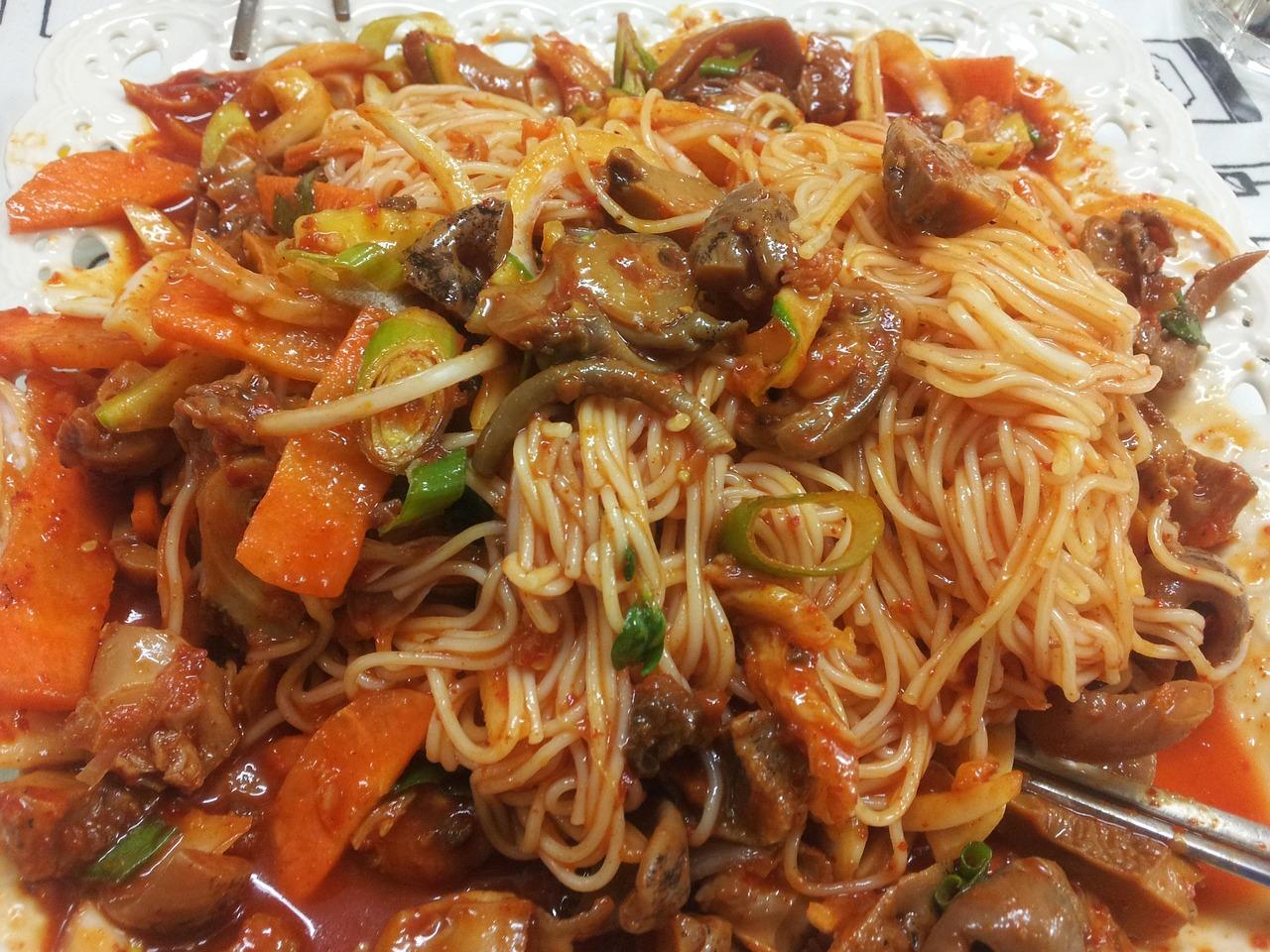
Golbaengi muchimSpicy whelk and noodle salad

Golbaengi muchim belongs to Seoul's Euljiro, where a narrow 'golbaengi alley' of old bars has served this fiery salad to office workers after dark since the 1970s. Tender canned whelks are tossed with crunchy vegetables in a sweet, sour and spicy gochujang dressing, and piled beside thin wheat noodles that soak up the extra sauce. It is a bold sharing plate, best with cold drinks. Use whelks from a sealed, undamaged can: discard any can that is bulging, leaking or badly dented, or contents that smell off. The common mistake is dressing the noodles with everything else, which turns them into a soggy clump. Chef's tip: save 2 tablespoons of the can juice and mix it into the dressing; it carries the sweet sea flavour through the whole dish.

25 minKoreanFishSpicy
by KrazyBadal 0 views

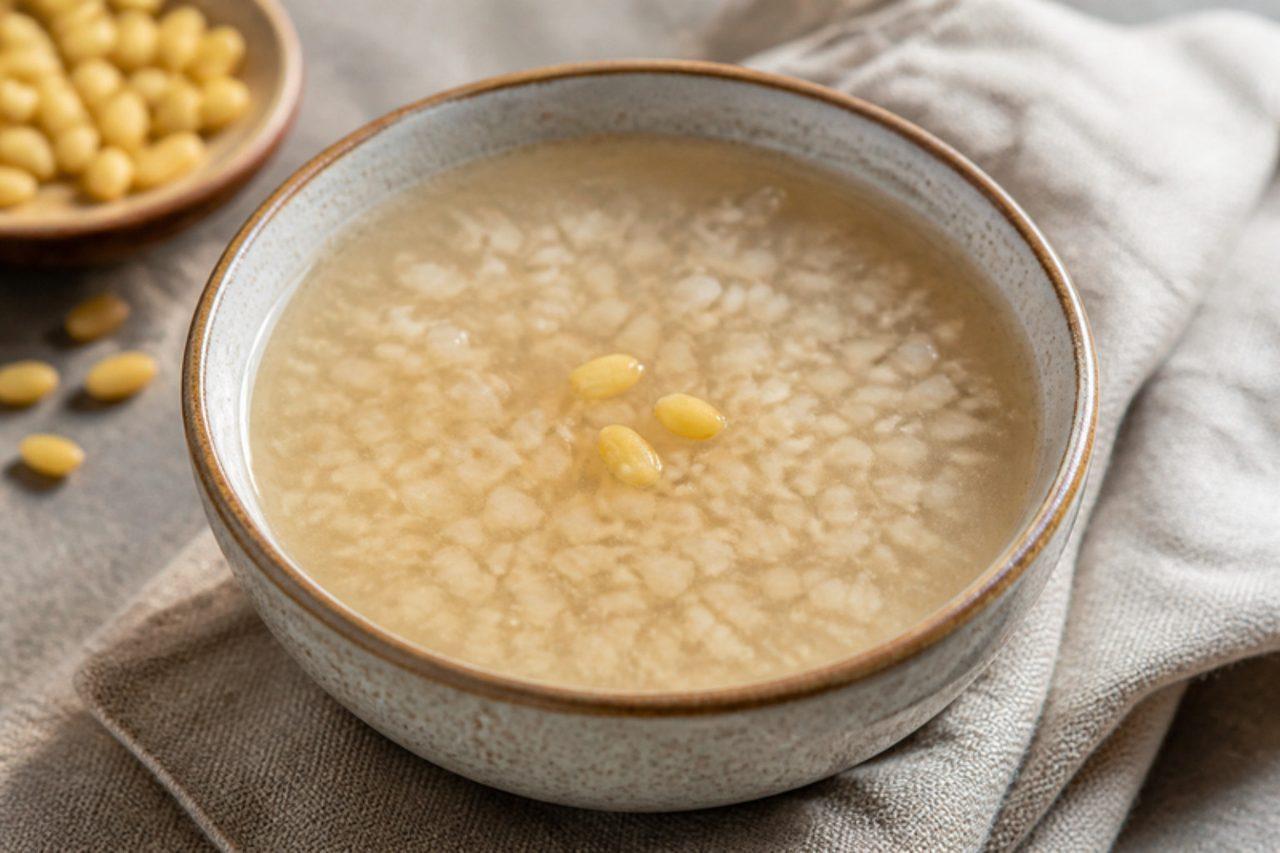
SikhyeSweet rice punch

Every Korean jjimjilbang (bathhouse) sells sikhye in little cans, and every grandmother makes a big pot of it before Seollal and Chuseok to sip after the heavy holiday meal, because it is believed to help digestion. Barley malt water and cooked rice are kept warm for several hours until enzymes turn the rice starch into sugar and the grains float up to the top, then the drink is boiled with ginger and chilled until icy. It is mild, lightly sweet and nutty, with soft rice grains to slurp. The usual mistake is letting it get too hot while it ferments: above about 65 °C the enzymes stop working and the grains never float. Contains barley (gluten). Chef's tip: use the rice cooker's 'keep warm' setting; it holds the perfect temperature on its own.

320 minKoreanDrinksVegan
by KrazyBadal 0 views

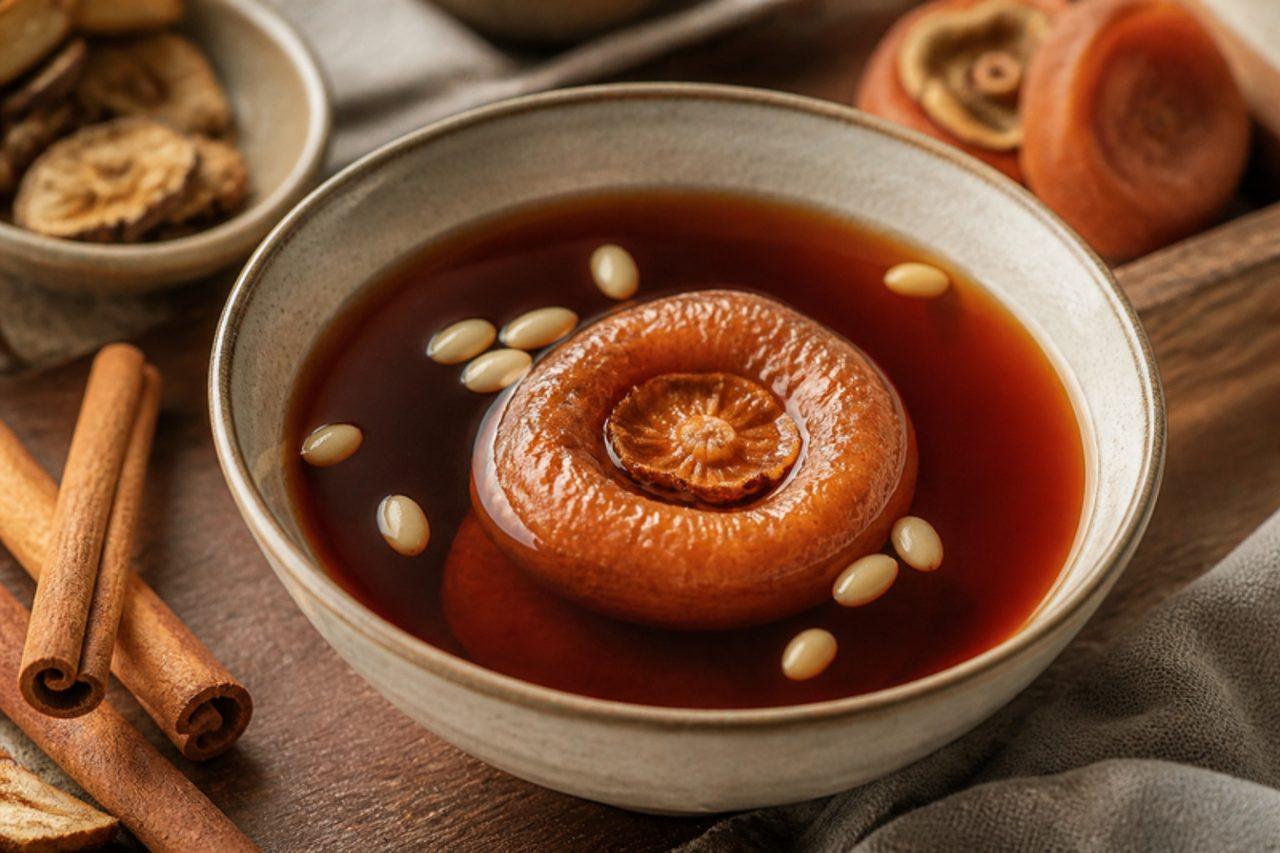
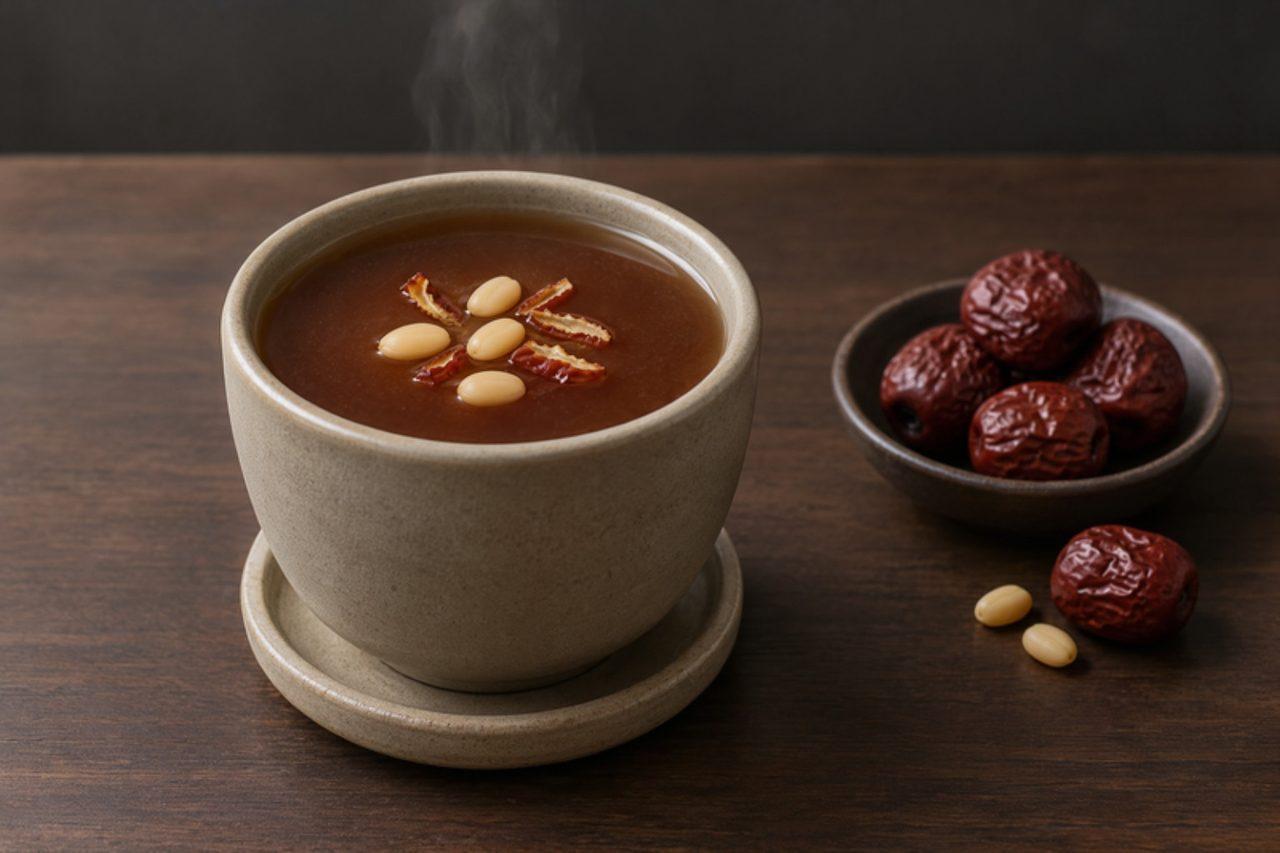
SujeonggwaCinnamon persimmon punch

After a big Seollal feast in Seoul, sujeonggwa comes out ice-cold in small bowls, dark red-brown and fragrant with cinnamon and ginger, with a soft dried persimmon and a few pine nuts floating in each one. It is the punch of the New Year season, made a day or two ahead and kept on a cold balcony. The cinnamon and ginger are boiled separately and then combined, which keeps each flavour clean. The common mistake is boiling the cinnamon too long or too hard: it turns bitter and cloudy, so keep it to a gentle simmer. Contains pine nuts. Chef's tip: soak the dried persimmons in the cooled punch only a few hours before serving, so they soften without falling apart.

by KrazyBadal 0 views

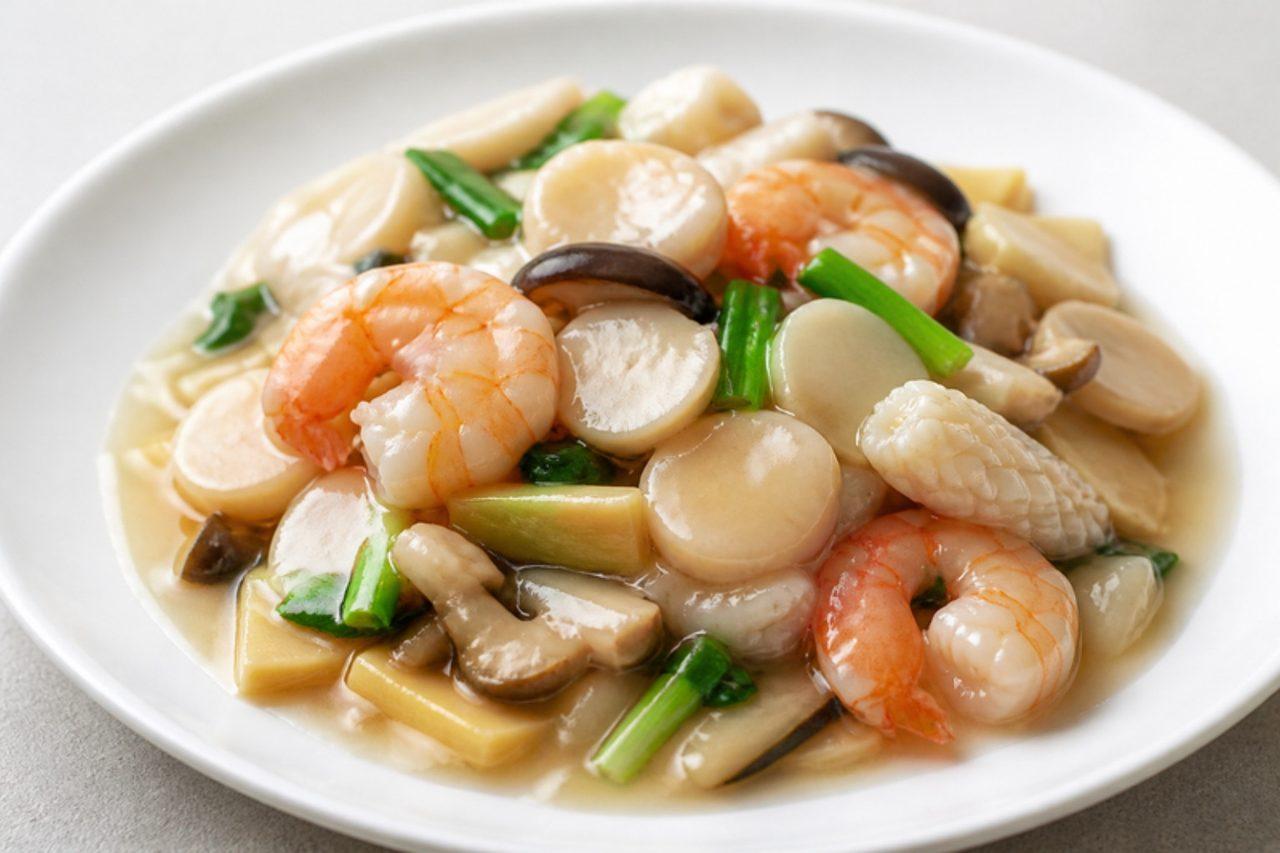
YusanseulSeafood in white sauce

Yusanseul is the elegant seafood dish of Korean-Chinese banquet tables in Seoul and Incheon, ordered for weddings, birthdays and business dinners as the gentle counterpoint to fiery jjamppong. Prawns, squid and scallops are shredded with mushrooms, bamboo shoots and spring onion and bound in a silky, lightly salted white sauce, tender and clean-tasting. A splash of rice wine goes into the hot wok and bubbles away before the sauce; leave it out for an alcohol-free version. Buy seafood that smells only of the sea: discard any prawns, squid or scallops that smell of ammonia or feel slimy. The common mistake is cooking the seafood in the sauce from raw, which makes the squid rubbery; blanch it briefly first. Chef's tip: cut everything into the same fine strips so each spoonful carries a little of everything.

45 minKoreanFish
by KrazyBadal 0 views

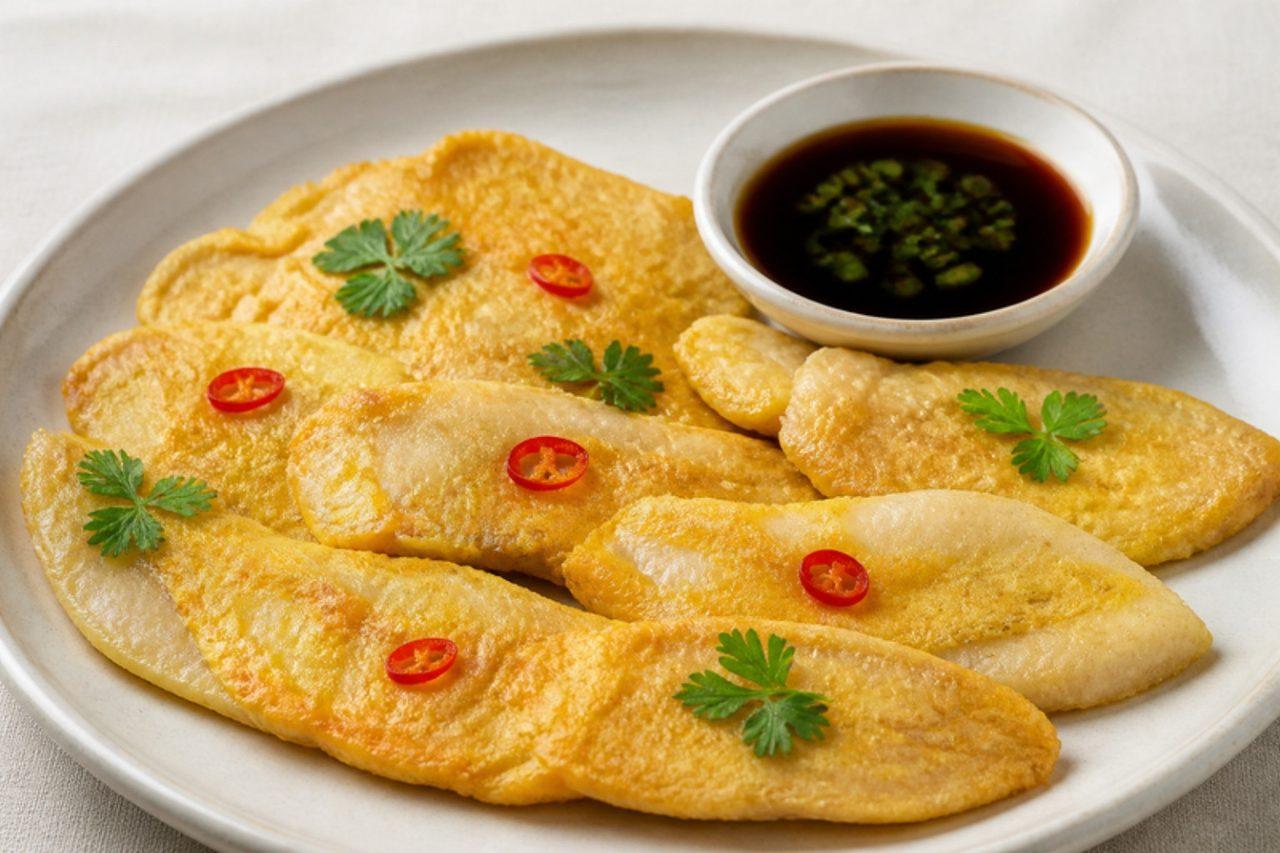
Saengseon jeonEgg-battered fish slices

Saengseon jeon is one of the golden jeon laid out on ancestral rite tables at Chuseok and Seollal, especially in coastal homes along the East Sea, where pollock and cod are the holiday fish. Thin slices of white fish are seasoned, floured, dipped in egg and fried gently, giving delicate, tender fish inside a soft yellow coat. They are eaten with a soy-vinegar dip. The common mistake is cutting the fish too thick, so the egg browns before the centre is cooked. Chef's tip: slice the fillets while they are still half-frozen; you can cut neat 7 mm slices that cook in the time it takes the egg to set.

35 minKoreanFish
by KrazyBadal 0 views

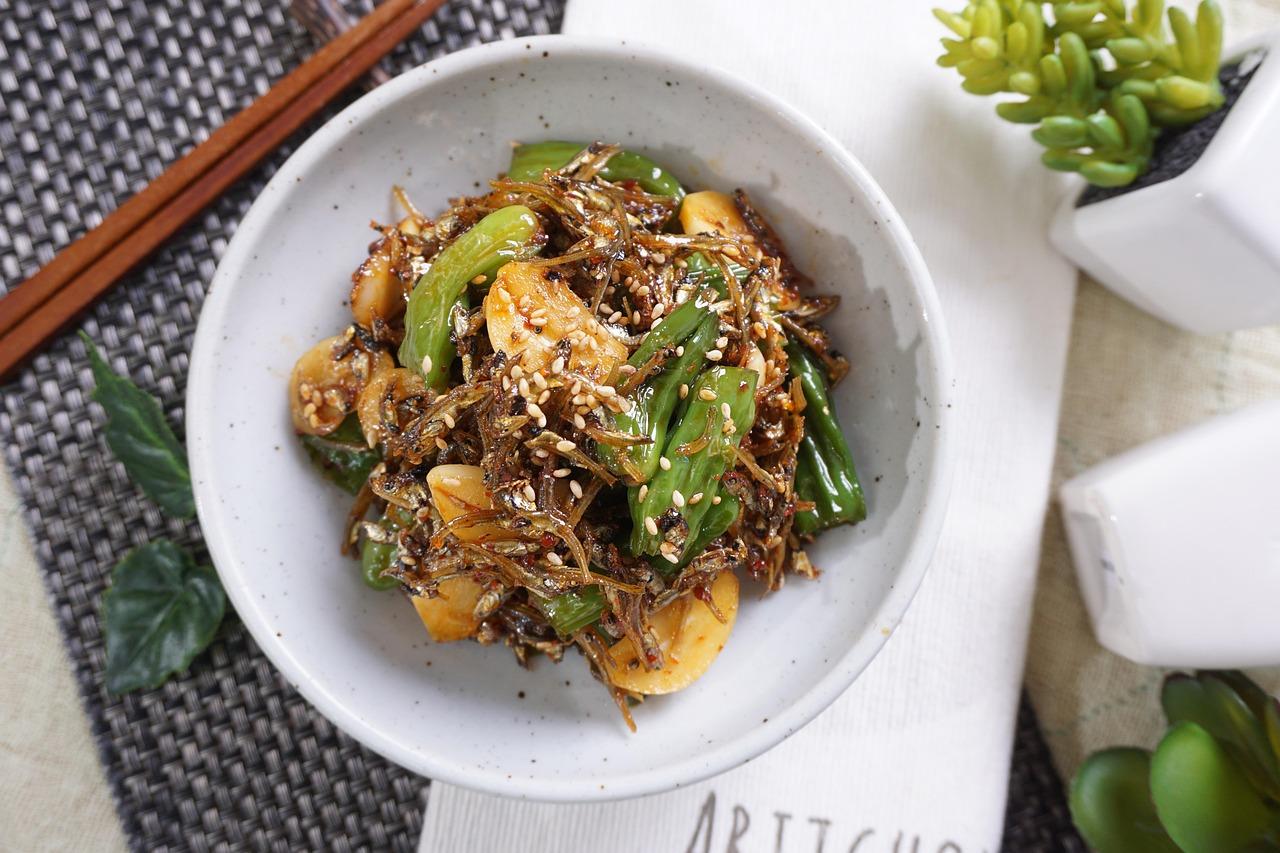
Myeolchi bokkeumSweet stir-fried anchovies

Myeolchi bokkeum is the lunchbox banchan of Korea, made with tiny dried anchovies landed and sun-dried on the southern coast around Tongyeong and Namhae, the country's anchovy heartland. The little fish are toasted in a dry pan, then tossed in garlic oil and a quick soy and rice-syrup glaze, so they end up crunchy, sweet, salty and deeply savoury. A small dish goes alongside rice at almost every Korean meal. The common mistake is adding the syrup over a high heat: it caramelises into a hard sheet that welds the anchovies into a brick. Chef's tip: take the pan off the heat before the syrup goes in and toss; the pan's leftover warmth is enough to glaze without hardening.

15 minKoreanFish
by KrazyBadal 0 views

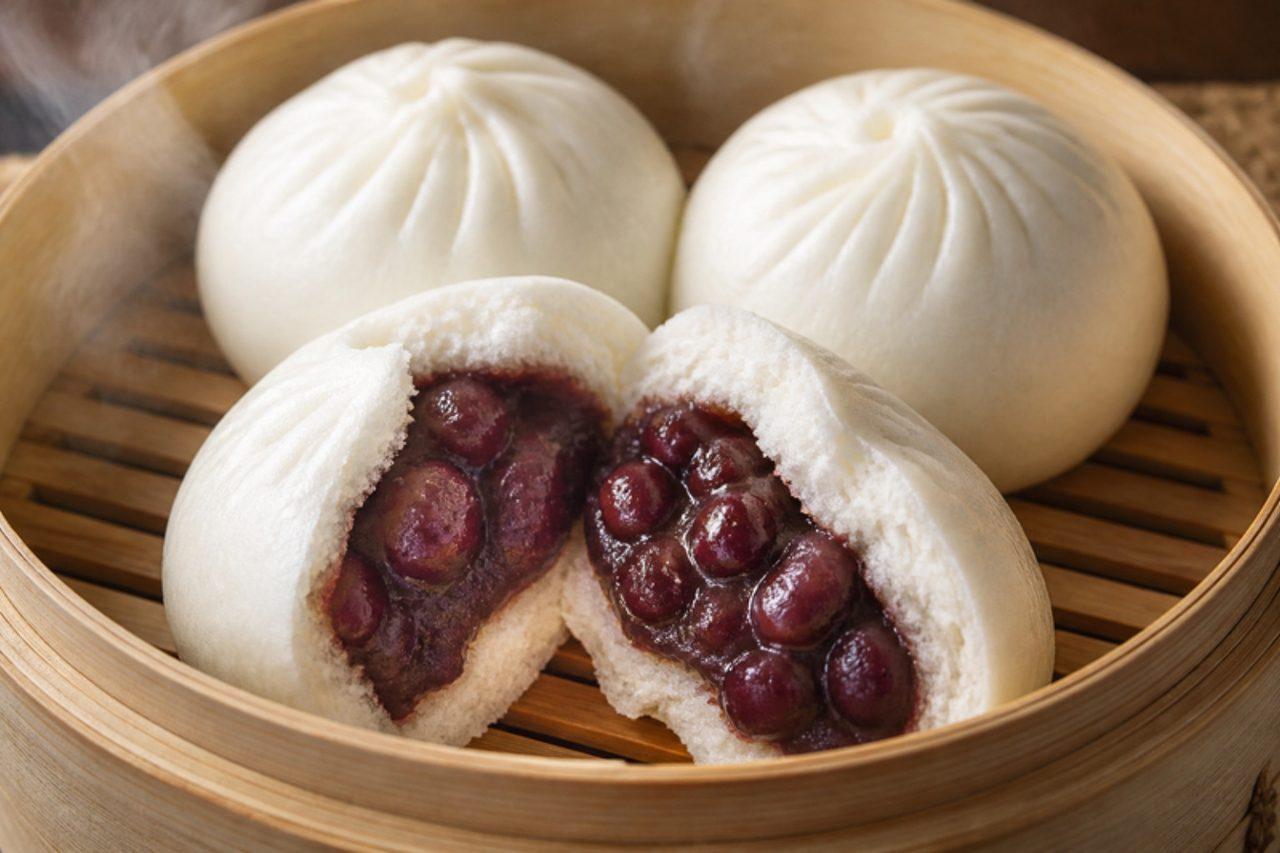
HoppangRed bean steamed buns

When the first cold snap hits, Korean convenience stores bring out glass steamer cabinets full of hoppang, and office workers grab one for breakfast on the way to the subway. The bun is soft, slightly sweet yeasted dough wrapped around a thick, smooth red bean paste, steamed until pillowy and eaten piping hot. Making them at home takes a morning but they freeze perfectly. The usual mistake is opening the lid too early or steaming over too fierce a heat: the buns collapse and wrinkle, so keep a steady medium heat and leave them to rest 5 minutes before lifting the lid. Contains wheat. Chef's tip: let the shaped buns rise on squares of baking paper; you can move them into the steamer without squashing them.

120 minKoreanBakingVegan
by KrazyBadal 0 views

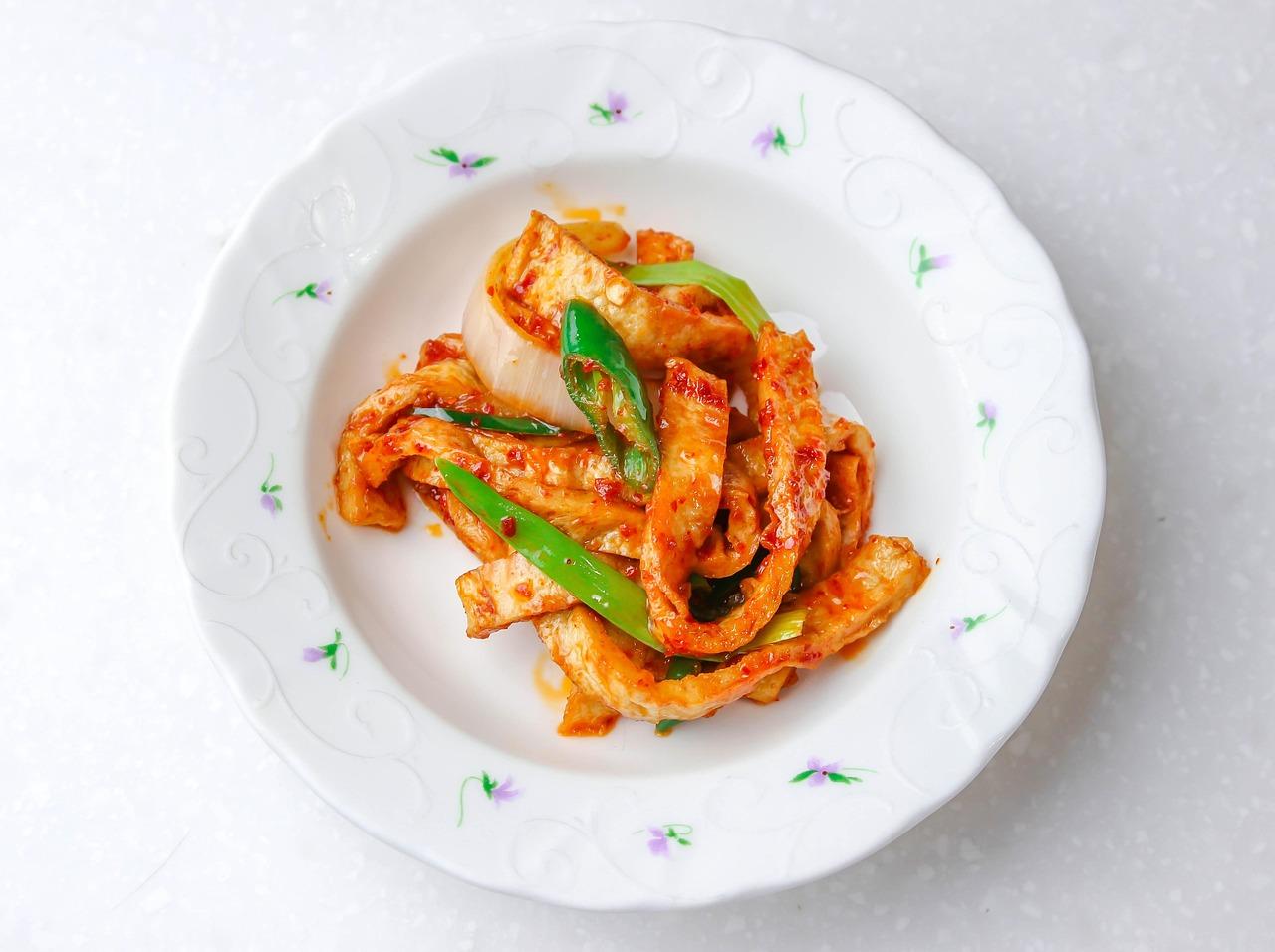
Eomuk bokkeumStir-fried fish cake

Busan's fish cake makers on the old docks near Bupyeong market made eomuk famous, and eomuk bokkeum is how Korean homes everywhere turn a pack of fish cake sheets into a quick side dish for school lunchboxes. Strips of fish cake are stir-fried with onion, carrot and pepper in a sweet soy glaze, staying soft and bouncy with crisp vegetable bites. Most children love it, and a pinch of chilli flakes makes a grown-up version. The common mistake is frying the fish cake straight from the packet: its frying oil turns the dish greasy and dulls the sauce. Chef's tip: pour boiling water over the strips and drain before cooking; they soak up the glaze much better.

18 minKoreanFish
by KrazyBadal 0 views

Maesil-cha (green plum tea)

In early June the hillsides of Gwangyang are picked clean of hard green maesil, and Korean kitchens across the country fill with jars of plums buried in sugar. Over about a hundred days the sugar draws out the fruit's juice and becomes maesil-cheong, a golden syrup that is both a cooking ingredient and a drink. Iced, it is the summer cooler; hot, it is traditionally drunk after a heavy meal for digestion. It tastes bright and tart, like green apple and apricot, rounded by the sugar. The common mistake is putting damp plums or plums with stalks into the jar: water and stalk ends invite mould and unwanted fermentation. Pick out each stalk with a toothpick and dry the fruit completely. The syrup is ready when the plums have shrivelled and float in clear amber liquid. A little foaming early on is normal, but if it smells strongly of alcohol, grows fuzzy mould or turns slimy, discard it. Remove the plums at 100 days, because their stones contain natural compounds best kept out of a long-stored syrup. Chef's tip: use half white and half light brown sugar for a rounder, toffee-edged syrup.

by KrazyBadal 0 views

Daechu-cha (jujube tea)

Boeun county in North Chungcheong is famous for its large, sweet jujubes, harvested each October and sold at a lively autumn festival. Once dried, they become daechu-cha, the deep amber tea Korean traditional teahouses in Insadong and Jeonju serve from late autumn to early spring, topped with pine nuts. Long, slow simmering with ginger and a stick of cinnamon draws out a flavour like dates, caramel and baked apple; pressing the softened flesh through a sieve gives the tea its velvety, almost soup-thick body. It is traditionally drunk to warm up on cold nights. The common mistake is simply boiling whole jujubes and straining: the skins stay sealed, the tea comes out thin and pale, and most of the sweetness is thrown away. Slit each jujube, simmer until the flesh slides off the stone, then mash the pulp through the sieve. It is ready when the liquid has reduced by about half, is dark amber and lightly coats a spoon. Keep it covered in the fridge for up to 5 days and reheat gently. Chef's tip: a few slices of fresh ginger added in the last 20 minutes give a brighter heat than ginger boiled for the whole time.

110 minKoreanDrinksGluten free
by KrazyBadal 0 views

Sungnyung (scorched rice tea)

Before electric rice cookers, every Korean pot of rice left a golden crust, nurungji, stuck to the bottom. Rather than waste it, cooks poured in water and simmered it while the family ate, and the warm, cloudy sungnyung was drunk at the end of the meal in place of tea. Older Koreans still describe it as the taste of home, and many Seoul restaurants that cook rice in stone pots finish by pouring water over the crust at the table. It tastes of toasted grain and has a faint natural sweetness, with soft pieces of crust to spoon up at the bottom. Without a stone pot you can make the crust from leftover rice in a frying pan. The common mistake is rushing the crust over high heat: it blackens on the outside and turns the drink bitter while the middle stays soft. Keep the heat low and patient, and aim for even golden-brown. The crust is ready when it lifts away from the pan in one sheet and smells like popcorn; the sungnyung is ready when the water is milky and pale gold. Chef's tip: make extra crust, dry it completely and keep it in a jar, so you can make sungnyung in ten minutes any evening.

by KrazyBadal 0 views

Jugo de macaWarm maca drink

Before dawn at markets in Huancayo, Cusco and Lima, juice ladies ladle hot jugo de maca from big pots for workers on their way in: maca root, a turnip relative grown above 4,000 metres in the Junín highlands, simmered with milk, cinnamon and cloves and sweetened with honey or sugar. It tastes malty and toasty, a bit like butterscotch. The common mistake is stirring the powder straight into hot milk, which leaves gritty lumps; whisk it into a little cold milk first. Maca is not usually advised in pregnancy, so ask your doctor first if you are pregnant. Chef's tip: use gelatinised (cooked) maca powder if you can find it; it dissolves smoothly and is gentler on the stomach.

by KrazyBadal 0 views

Pisco sour

Lima drinks its pisco sour as the aperitif before a long ceviche lunch, and celebrates it every year on the first Saturday of February; the recipe took shape in the city's bars in the 1920s. It is for adults only and stronger than its pillowy look suggests. Underneath a thick white foam you get sharp Peruvian lime, a clean sweetness and the floral, grapey warmth of quebranta pisco, with the bitters adding a spicy smell to every sip. The texture should be silky, almost creamy, never thin. The classic mistake is squeezing the limes too hard or too early: the oil from the pith turns the drink bitter within half an hour. Halve the limes, press each half gently by hand just before mixing and stop when the juice slows. The egg white is raw, so use pasteurised egg white for anyone pregnant, for babies, older people or anyone unwell, or swap in 30 ml aquafaba. It is ready when the foam stands about 1 cm high and is firm enough to hold the drops of bitters on its surface. Sip one slowly and drink responsibly. Chef's tip: shake once without ice first to whip the egg white, then again with ice; the foam will be twice as thick.

by KrazyBadal 0 views

Misutgaru (multigrain powder drink)

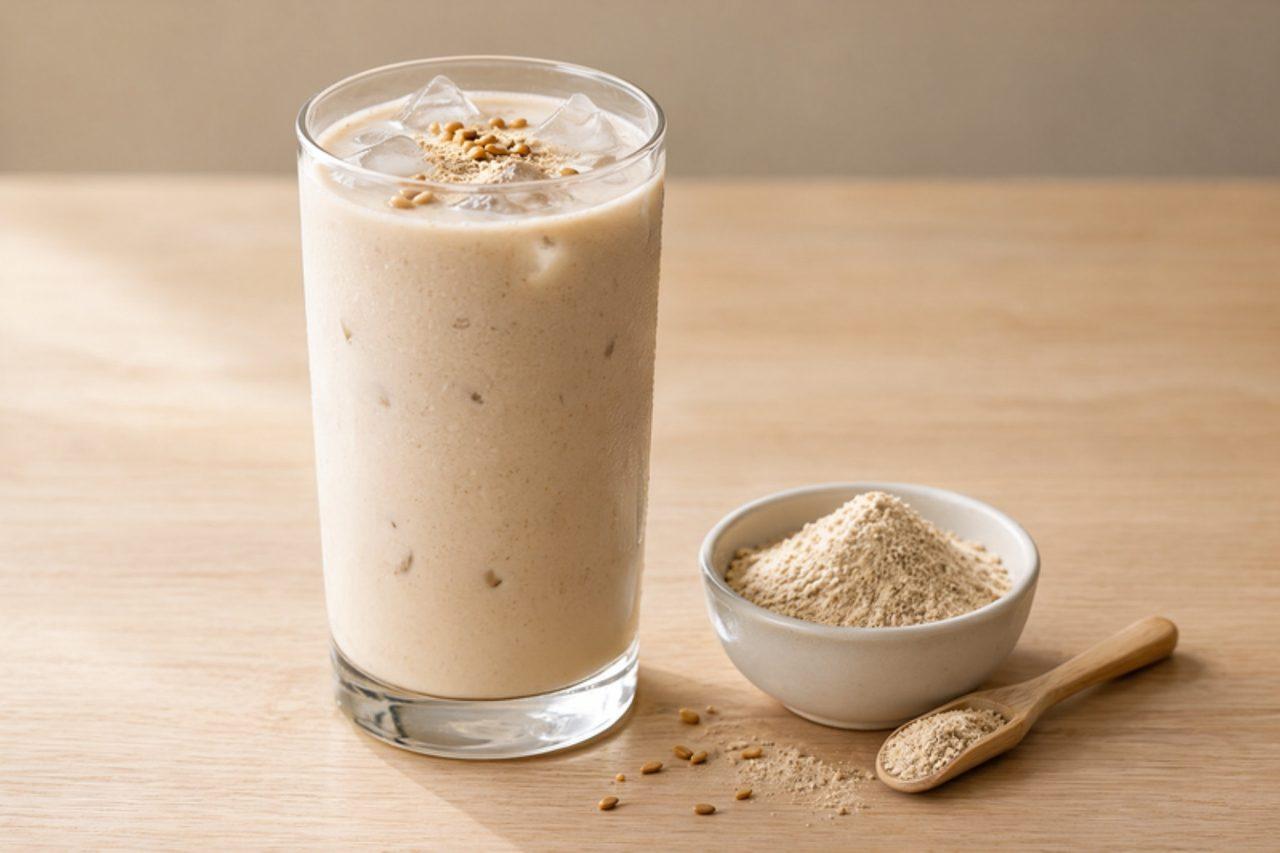
Misutgaru began as travellers' food, a powder of roasted grains that kept for weeks and could be stirred into water on the road. Today it is the drink of Korean summer: mothers shake it with cold milk for breakfast before school, office workers buy it as misutgaru latte from cafés, and farmers drink it at midday in the fields of July. The powder is a mix of roasted barley, glutinous and brown rice, black and yellow soybeans, and sesame, and it tastes of toasted cereal and peanut, lightly sweet, with a thick, creamy body that fills you up like a light meal. The common mistake is tipping the powder into a full glass of milk and stirring: it floats, clumps into dry balls and never fully mixes. Shake it in a jar with a little liquid first, or blend it, then add the rest. It is ready when the drink is smooth, beige and frothy with no dry flecks, and slightly thickened after a minute's rest. Use water or soy milk for a dairy-free version, and note that the barley means it is not gluten free. Chef's tip: a pinch of salt makes the grain flavour taste rounder and less flat.

by KrazyBadal 0 views

Yuja-cha (citron tea)

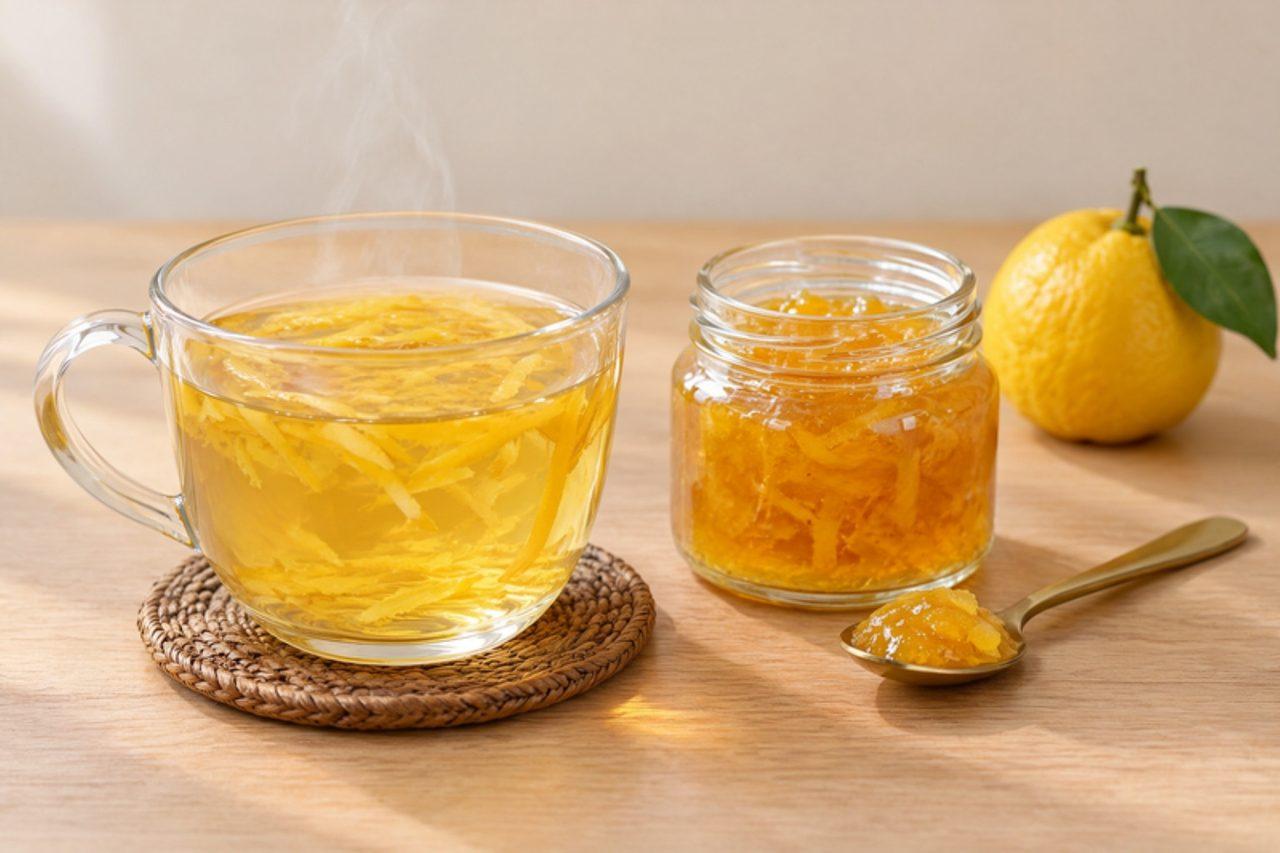
Goheung, on the southern coast of South Jeolla, is Korea's yuja country: in November the groves turn gold and families slice the knobbly citrons for yuja-cheong, the honeyed preserve that becomes tea all winter. From December to March a spoonful in hot water is offered to guests, to students cramming late and to anyone with a scratchy throat, as it is traditionally drunk for colds. The tea is sweet, floral and sharp, with soft, chewy strands of peel that you eat at the end with a spoon. The common mistake is leaving the fruit damp or the pith too thick: wet fruit lets mould in, and thick white pith makes the preserve bitter. Scrub, dry completely and pare away any pith thicker than a few millimetres. The cheong is ready after a day or two, when the sugar has dissolved into a clear, glossy syrup around the peel. Keep it in the fridge for up to three months, always with a dry spoon; throw it away if you see fuzzy mould, smell alcohol or it bubbles. No yuja? Japanese yuzu is the same fruit; otherwise use 2 lemons and 2 mandarins. Chef's tip: soak the seeds in a little of the honey and add that liquid back for a silkier syrup.

by KrazyBadal 0 views

Chilcano de piscoPisco and ginger ale highball

When Lima's grey winter finally lifts and summer reaches the beaches south of the city, the chilcano takes over from the pisco sour: lighter, longer and made for an afternoon. Peru even gives it a Semana del Chilcano each January, and it is poured at weekend lunches with chifa or fried fish. This is a highball for adults only: pisco poured over a tall glass of ice with fresh lime and ginger ale, finished with a few drops of bitters. It should taste crisp and fizzy, with the ginger and lime lifting the floral grape notes of the pisco rather than hiding them. The common mistake is using too little ice and warm ginger ale, which gives a sweet, diluted drink that goes flat in minutes. Fill the glass to the top with ice and keep the ginger ale in the fridge until the last second. It is ready when the glass is frosty, the bubbles race up the sides and the bitters drift through the top as a pink haze. Light it may be, but drink responsibly. Chef's tip: try a fruit-infused pisco, made by steeping passion fruit or mandarin peel in the bottle for a few days; Limeños love a chilcano de maracuyá.

by KrazyBadal 0 views

Misutgaru drinkRoasted multigrain shake

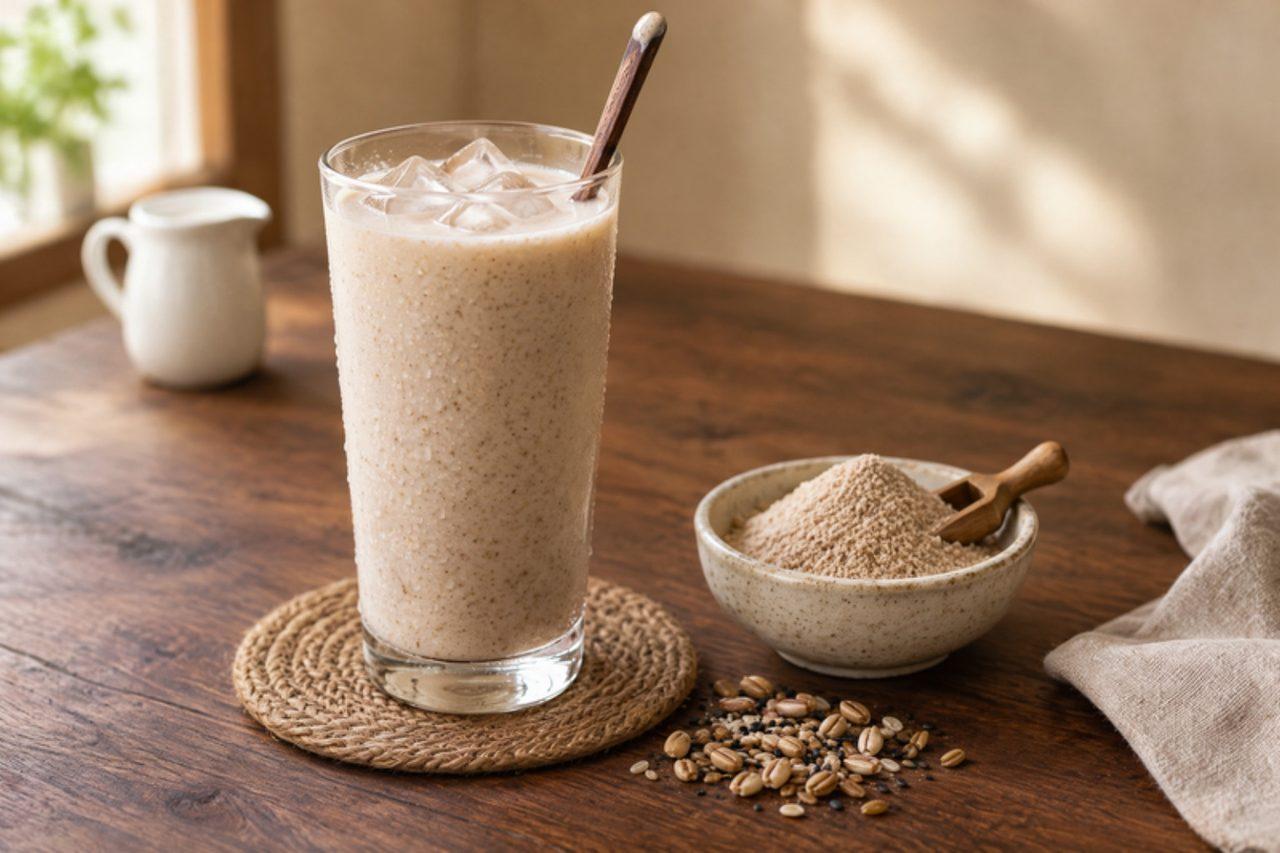
Misutgaru is a fine beige powder of roasted grains and beans, usually barley, brown rice, glutinous rice, black beans and sesame, and Korean mums have shaken it into cold milk for rushed breakfasts for generations. It tastes like toasted cereal and a little like peanut butter, and it fills you up until lunch. The mistake is stirring the powder straight into a full glass, which leaves dry lumps floating on top; shake it in a jar or whisk it into a little liquid first. Honey is not suitable for babies under one. Chef's tip: add a few ice cubes to the jar before shaking, which breaks up any lumps and froths the drink.

by KrazyBadal 0 views

Jogi guiGrilled yellow croaker

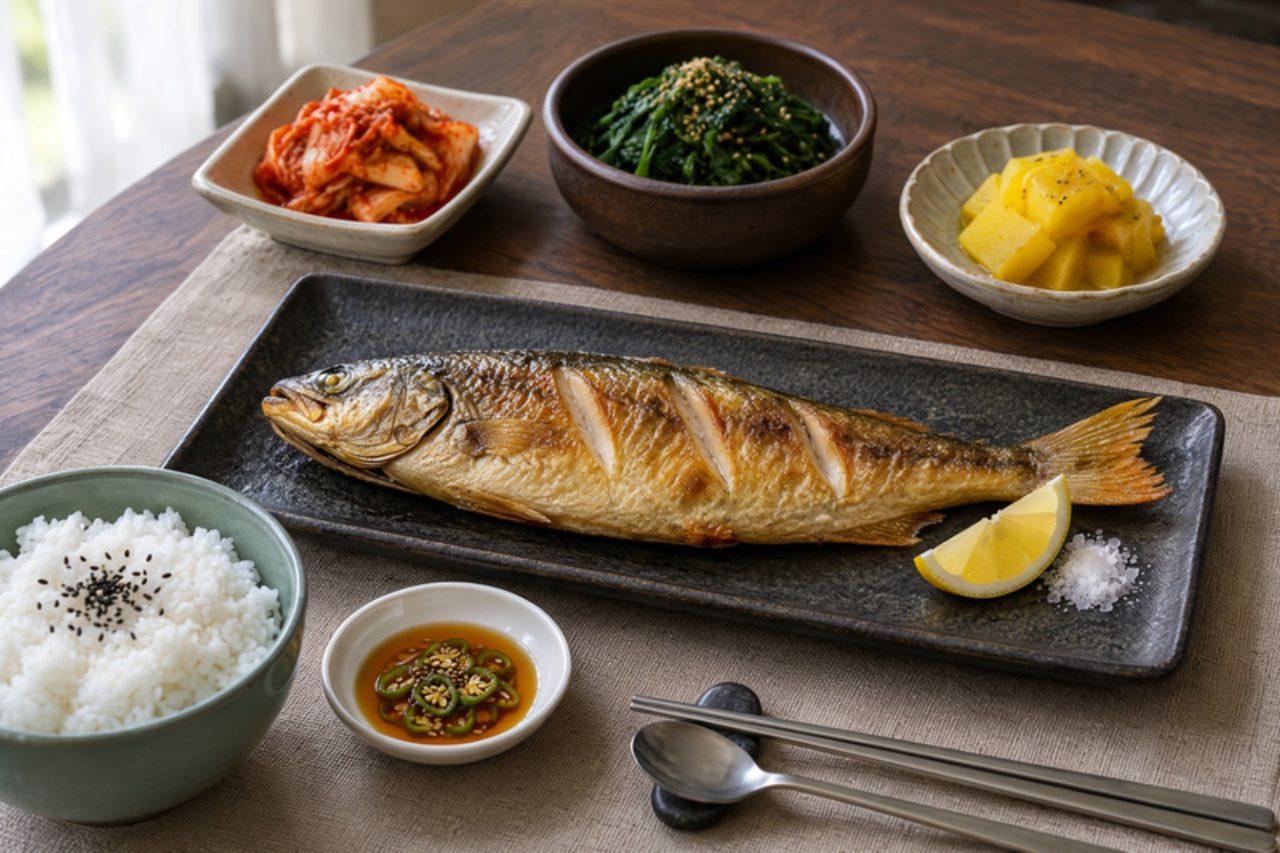
Yellow croaker from Yeonggwang on Korea's west coast is so prized that dried gulbi are given as gifts at Chuseok, and a simply grilled or pan-roasted croaker is a classic of the family table and of ancestral memorial meals. The fish is salted, dried briefly and cooked whole until the skin crackles and the flesh comes away in sweet, moist flakes; you eat it with rice, kimchi and a few vegetable banchan. Suitable as part of a balanced diet: high in protein with no batter or flour. About 210 kcal and 1 g carbohydrate per portion. The usual mistake is turning the fish too early, so the skin tears and sticks; wait until it releases on its own. Small sea bream or red mullet work if you cannot find croaker. Chef's tip: pat the fish completely dry and leave it uncovered in the fridge for 30 minutes before cooking for the crispest skin.

25 minKoreanFishGluten free
by KrazyBadal 0 views

Ssanghwa-cha (herbal tonic tea)

Ssanghwa-cha is the strongest thing on the menu of an old Korean dabang. From the 1960s these smoky tea rooms served it in thick ceramic cups, dark as coffee, with pine nuts, slivered jujube and walnut floating on top; in winter some still slide a raw egg yolk in, which this recipe leaves out. The brew comes from Korean herbal tradition, where ssanghwa-tang is drunk to warm up and recover from tiredness after hard work or a cold. It tastes earthy and bitter at first, then sweet from licorice and jujube, with warmth from cinnamon and ginger and a celery-like perfume from angelica. Herbal shops sell the roots in pre-measured packs. The common mistake is boiling it hard: the liquid reduces too fast and turns harsh. Keep a gentle simmer with the lid ajar for two hours. It is ready when it is very dark brown, reduced to about a third and smells of cinnamon and roots. Because it contains licorice and angelica, skip it if you are pregnant or breastfeeding, have high blood pressure, or take blood thinners or other medicines unless your doctor agrees. Chef's tip: a second, lighter brew from the same roots is good with honey.

135 minKoreanDrinksVeganGluten free
by KrazyBadal 0 views

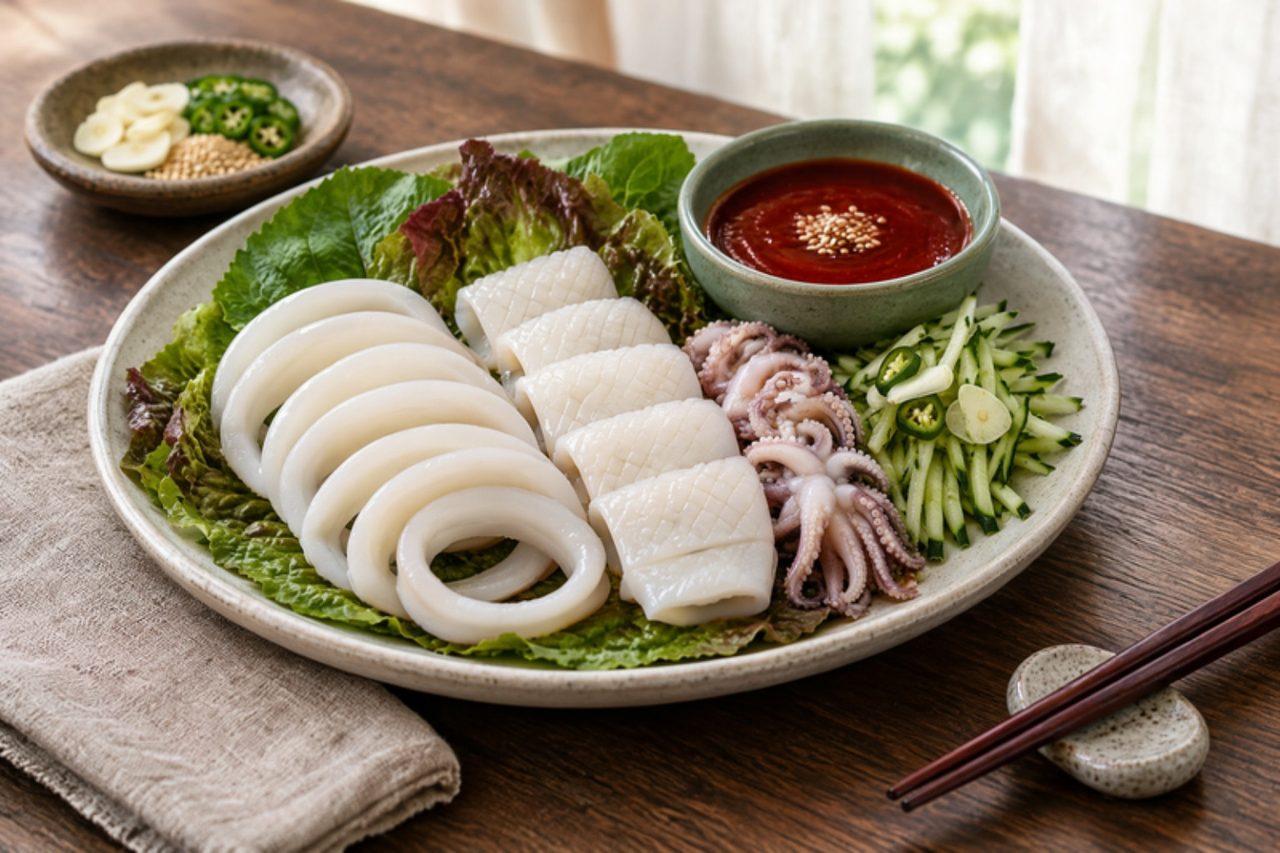
Ojingeo sukhoeBlanched squid with chilli sauce

Ojingeo sukhoe is a summer favourite in the fishing towns of Gangwon and on Ulleungdo island, where squid are landed overnight and served at home and in harbour restaurants within hours. The squid is scored, blanched for barely a minute so it stays tender, sliced into rings and eaten with crisp cucumber, lettuce and chogochujang, a tangy chilli-vinegar sauce. Suitable as part of a balanced diet: lean protein and fresh vegetables. About 160 kcal and 10 g carbohydrate per portion; the teaspoon of sugar in the sauce is optional, or use a sweetener. The usual mistake is overcooking: squid goes from tender to rubbery after about 90 seconds. Chef's tip: plunge it into iced water the moment it curls, so the cooking stops instantly.

15 minKoreanFish
by KrazyBadal 0 views

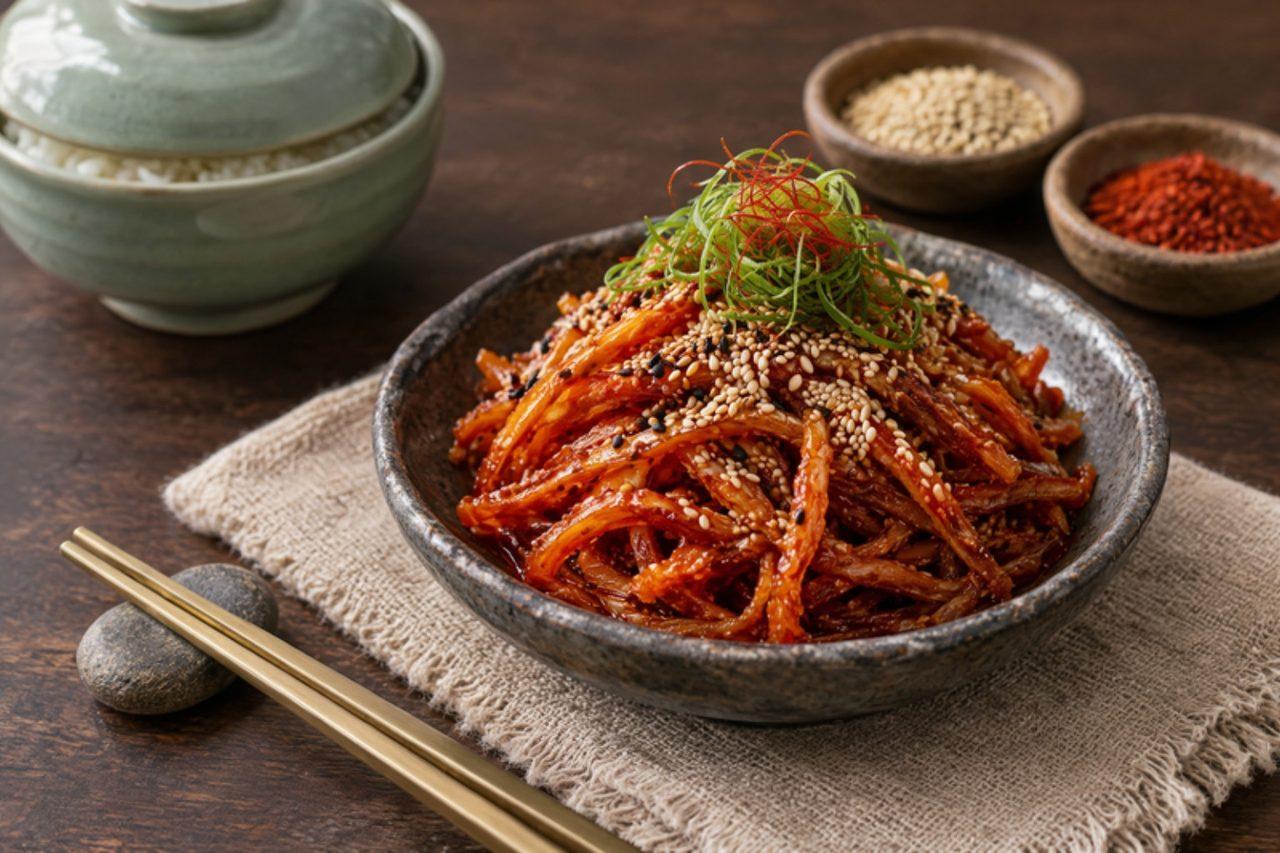
Jinmichae bokkeumGlazed dried squid strips

Jinmichae, shredded seasoned dried squid, is one of the most popular banchan in Korean lunchboxes: chewy, sweet and a little spicy, and it keeps for a week. Children across Korea find it in their dosirak and parents make a big tub on Sunday. The common mistake is glazing it over the heat, which turns the squid hard as wire; mix the strips into the warm sauce off the heat. Chef's tip: soak the squid briefly in water first and squeeze it out, so it stays tender even straight from the fridge.

15 minKoreanFishSpicy
by KrazyBadal 0 views

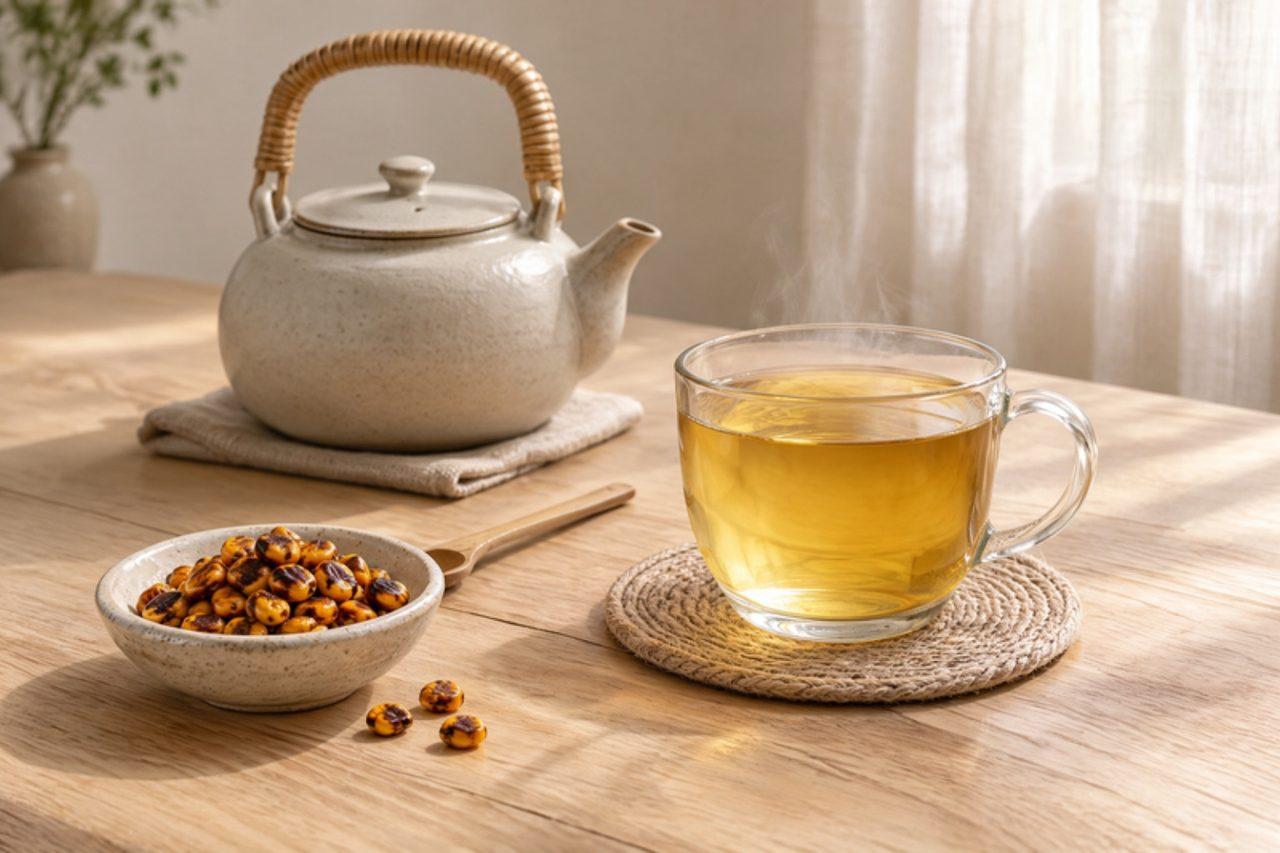
Oksusu-chaRoasted corn tea

Oksusu-cha is the tea Korean households boil by the kettleful and keep in the fridge in old glass bottles, drunk instead of water with meals from Seoul apartments to Gangwon farmhouses, chilled in summer and hot in winter. Dried corn kernels are roasted until dark golden, then simmered to make a pale amber tea that tastes gently sweet and toasty, though nothing is added at all. About 0.0 g salt per glass. The usual mistake is boiling the kernels too long, which makes the tea cloudy and starchy; 15 minutes is plenty. Ready-roasted corn kernels are sold in Korean shops; if roasting your own, use dried corn, not fresh or tinned. Chef's tip: mix in a spoon of roasted barley for the classic boricha blend, rounder and more nutty, though no longer gluten free.

by KrazyBadal 0 views

Escabeche de pescadoFried fish in sweet-sour onion sauce

In Lima, escabeche de pescado belongs to the criollo kitchen of the old city: it turns up on Friday lunch menus, on buffet tables, and above all in Lent and Holy Week, when families eat fish and this dish can be made the day before. Fish is fried until golden, then covered in a warm sauce of thick-cut red onion softened in oil with garlic, ají amarillo, ají panca, cumin and vinegar, and left to cool so the flavours soak in. It is served cold or at room temperature with boiled sweet potato, hard-boiled egg and purple botija olives. It tastes tangy, sweet and gently fruity-hot, with crunchy onion over tender fish. The fish here is fully cooked, but because it is a cold seafood dish, pregnant people, babies, older people and anyone with weak immunity should eat it well chilled and within 2 days. Common mistake: stewing the onions until limp; they should only lose their raw bite. It is ready when the sauce has soaked a little into the fish and smells of vinegar and toasted chilli. Chef's tip: use thick fillets of corvina or bonito; thin fillets break under the sauce.

by KrazyBadal 0 views

Jugo surtidoMixed fruit juice

Step up to any juguería in Lima's Mercado de Surquillo or a barrio market at breakfast time and order a surtido: the juicer drops papaya, banana, pineapple and freshly squeezed orange into a tall blender, sometimes a slice of cooked beetroot for colour or a splash of milk, and pours you a big glass with the rest left in the jug for your 'yapa', the free refill. It is thick but still pourable, sweet from ripe fruit with a sharp orange edge, the kind of drink that stands in for breakfast before a long day. The common mistake is adding lots of ice and water, which makes it thin and frothy rather than velvety. Use cold fruit and freshly squeezed orange juice as the liquid. It is ready when it coats the glass and no lumps of banana are left. This version is fruit only; stalls also make it with milk if you prefer. Drink it straight away: papaya and banana go brown and bitter within half an hour. Chef's tip: use very ripe papaya with orange flesh; under-ripe papaya tastes of nothing and gives a faintly bitter aftertaste.

by KrazyBadal 0 views

Showing 24 of 63 recipes

Show more recipes

Page 1 of 3