Skip to content
WhatToEat.Today

Vegetarian Korean recipes

Bibimbap, banchan, noodles and stews without meat or fish. (156 recipes)

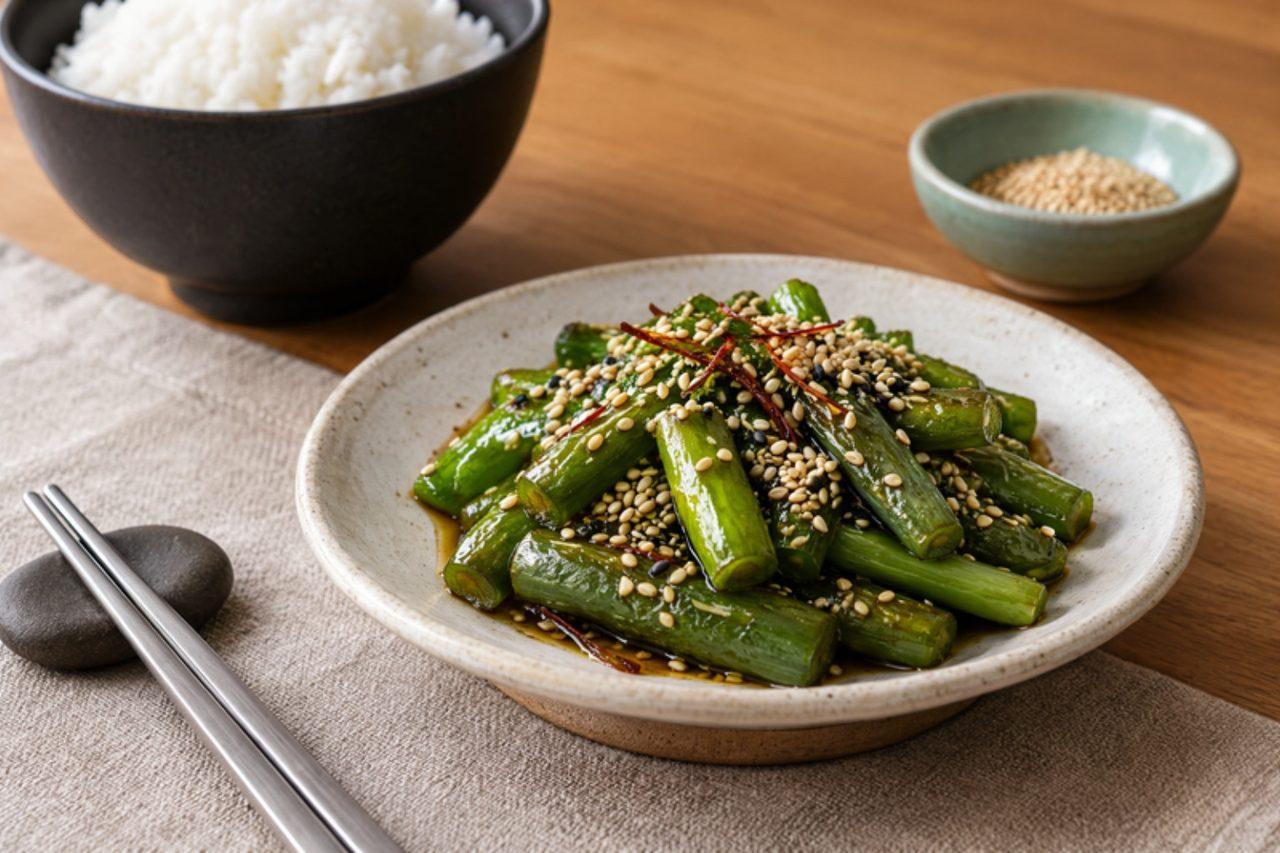
Maneuljjong bokkeumGarlic scape stir-fry

In late spring Korean markets sell thick bundles of garlic scapes, the curly green shoots of the garlic plant, and they become maneuljjong bokkeum, a sweet-salty, glossy banchan that keeps for days and is a dependable dosirak side. The scapes taste of mild garlic and stay pleasantly snappy. The common mistake is glazing them too early, before they are tender, so the syrup burns and the scapes stay woody. Chef's tip: fry the scapes in oil first until they turn bright green and slightly blistered, then add the sauce and toss for only a minute.

by KrazyBadal 0 views

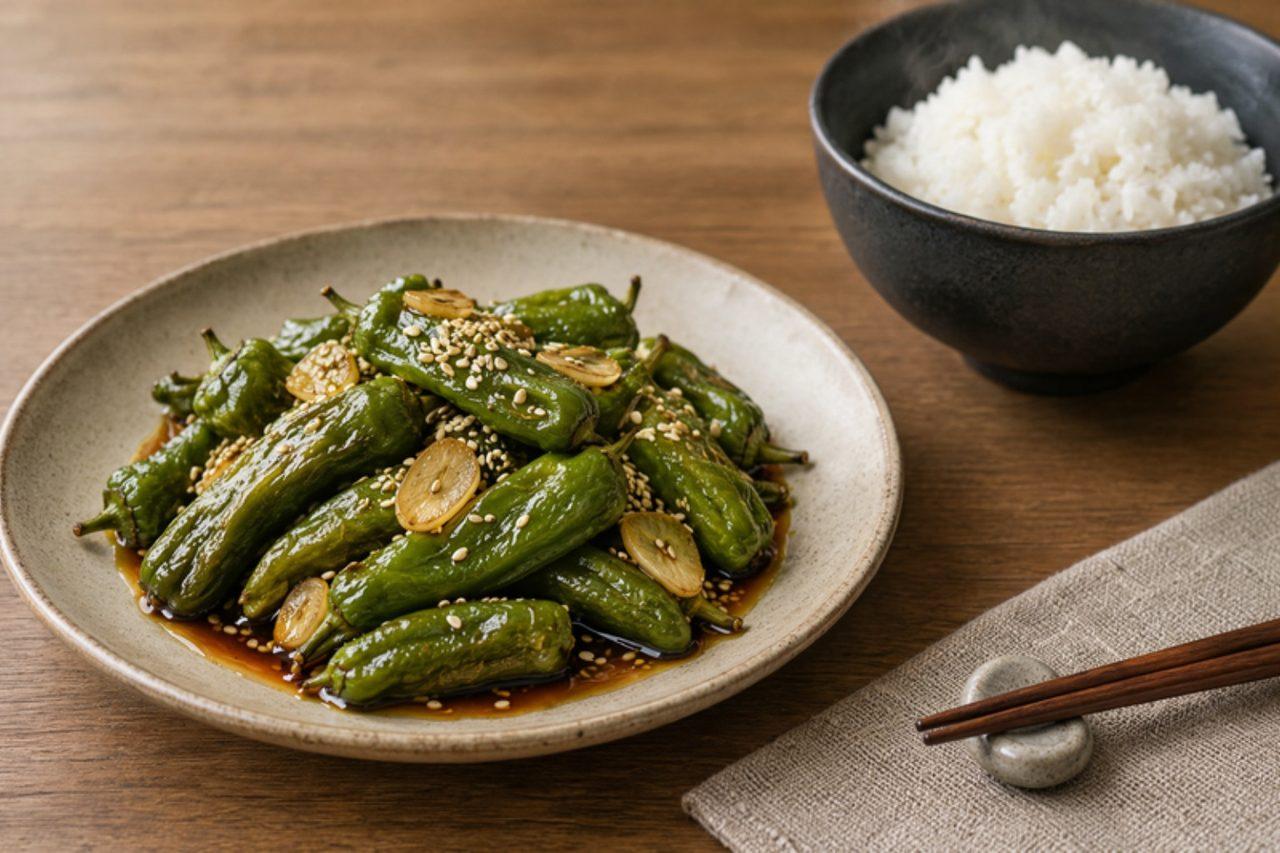
Kkwari-gochu jorimBraised shishito peppers

Kkwari-gochu, the small wrinkly peppers the Japanese call shishito, are braised all over Korea into a soft, garlicky, sweet-soy banchan that sits in the fridge ready for the dosirak. Many households add dried anchovies; this version leaves them out and keeps it vegan, with a few toasted sesame seeds for crunch. Most peppers are mild, but about one in ten is surprisingly hot. The common mistake is leaving the peppers whole and unpierced, so they puff up and never take in the sauce. Chef's tip: prick each pepper with a fork once or twice, and the braising liquid soaks right into it.

by KrazyBadal 0 views
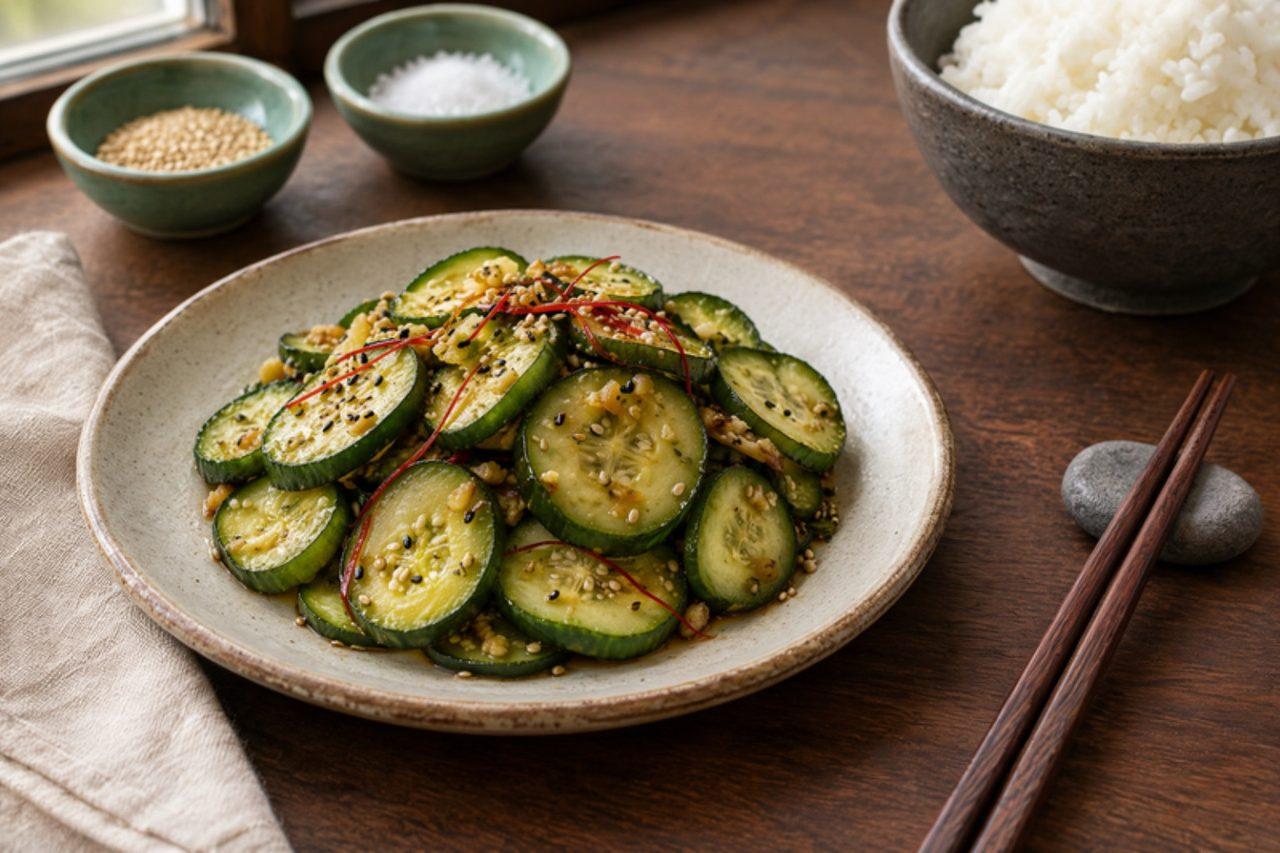
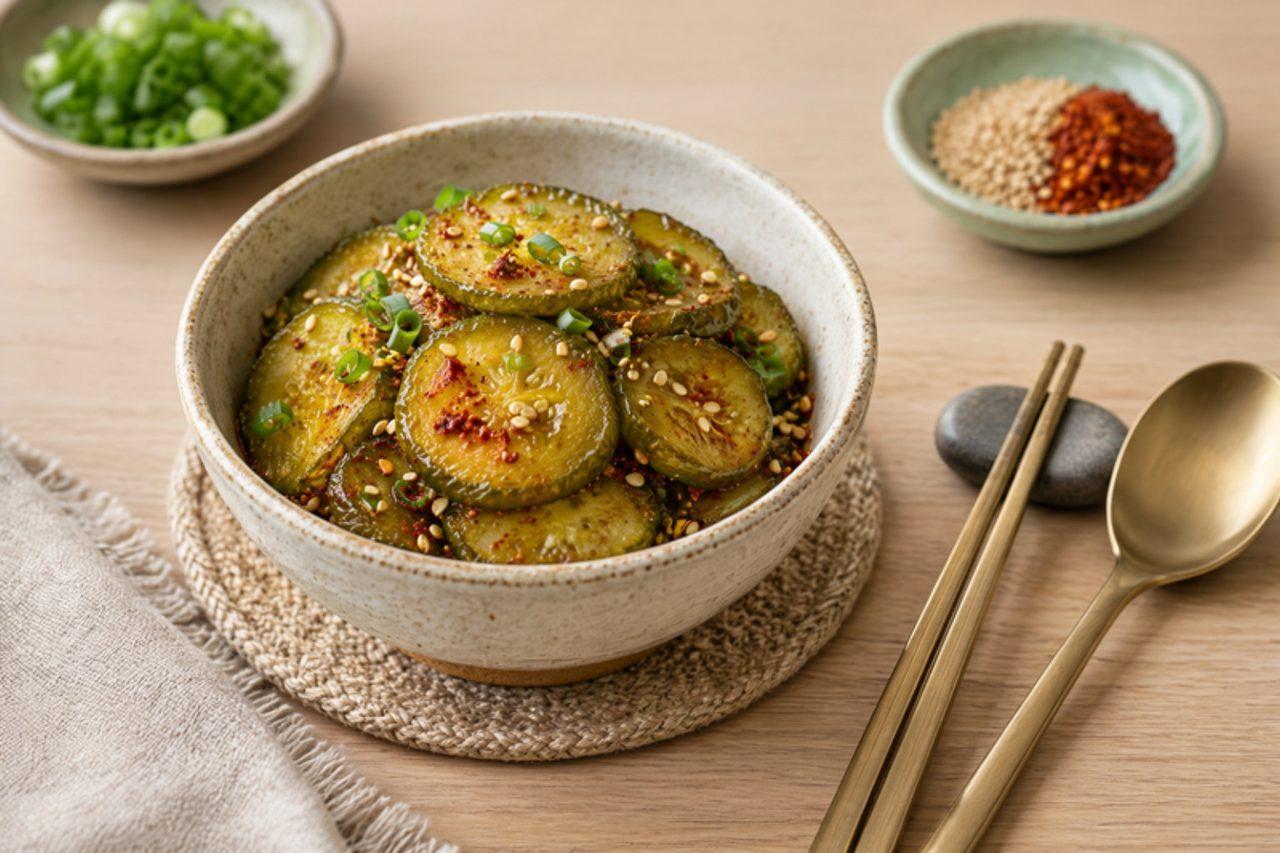
Oi bokkeumStir-fried cucumber

Cooked cucumber sounds odd until you try oi bokkeum, a Korean banchan in which salted, squeezed slices are flashed in a hot pan with garlic and sesame. They come out bright green and squeaky-crunchy, like a warm pickle, and they hold up beautifully in a dosirak because the salting has already drawn out the water that would make other cucumber sides soggy. The common mistake is frying too long; past a minute or two the slices go soft. Chef's tip: spread the cooked cucumber on a plate to cool at once rather than leaving it in the hot pan, so it keeps its colour.

by KrazyBadal 0 views
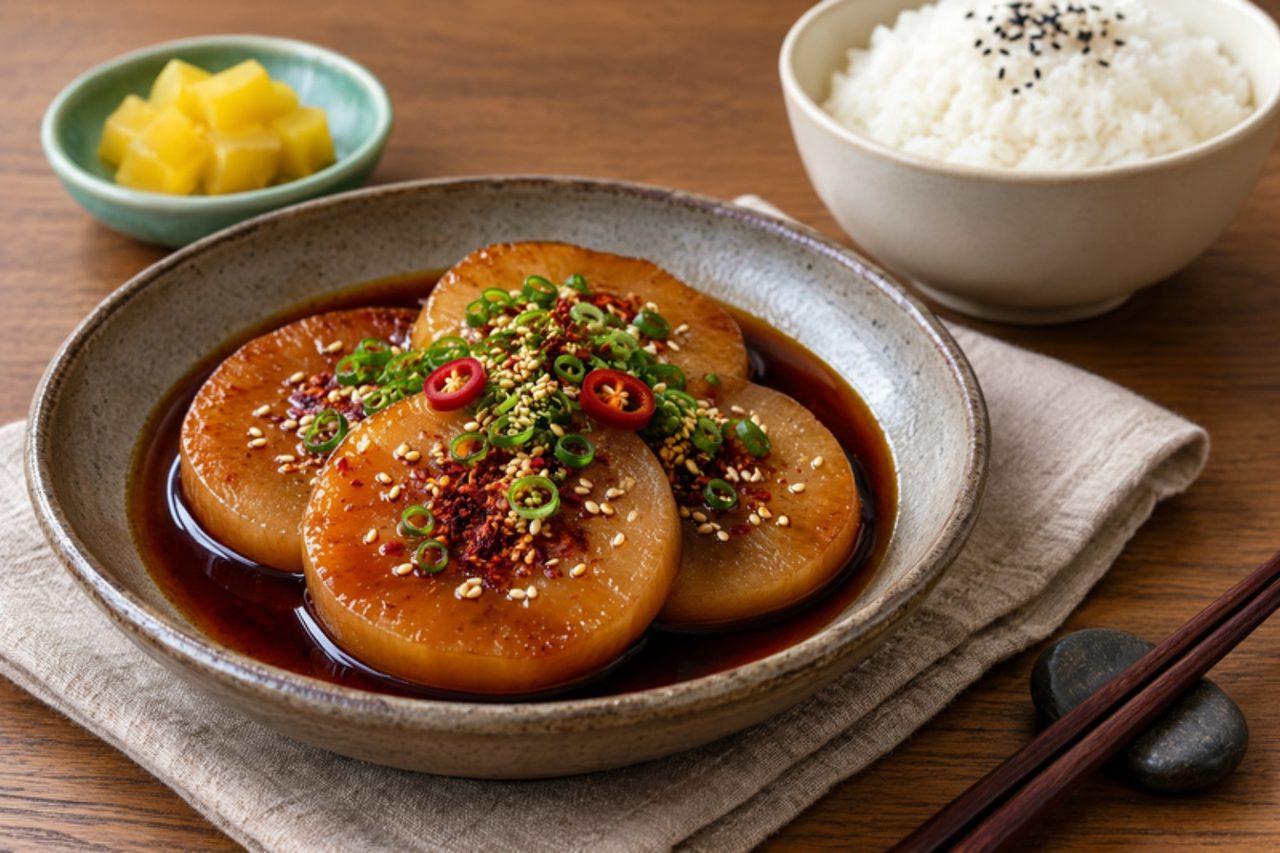
Mu jorimBraised radish

In Korean homes, when the winter radishes are sweet and juicy, they are cut into thick rounds and braised slowly in soy, chilli flakes and garlic until they turn amber and almost melting. Mackerel or hairtail is often cooked on top; this version leaves the fish out and uses a quick kelp broth for depth. It is even better the next day, cold, in a dosirak. The common mistake is cutting the radish thin, so it breaks up before it has absorbed the sauce. Chef's tip: simmer the radish in the broth alone first, until a chopstick slides in, and only then add the soy, so the salt does not toughen it.

by KrazyBadal 0 views
GimjabanFried seasoned seaweed

Korean children grow up eating gimjaban scattered over rice or rolled into jumeokbap rice balls, and a little tub of it is the easiest way to make a plain dosirak exciting. It is laver seaweed toasted, crushed and stirred in a pan with sesame oil, a little sugar and plenty of sesame seeds until crisp and savoury-sweet. The common mistake is adding the soy sauce while the pan is very hot, which turns the flakes soggy and clumped. Chef's tip: mix the soy and sugar into the oil first, then toss in the crushed seaweed off the heat and return it to a gentle flame just to dry out.

by KrazyBadal 0 views
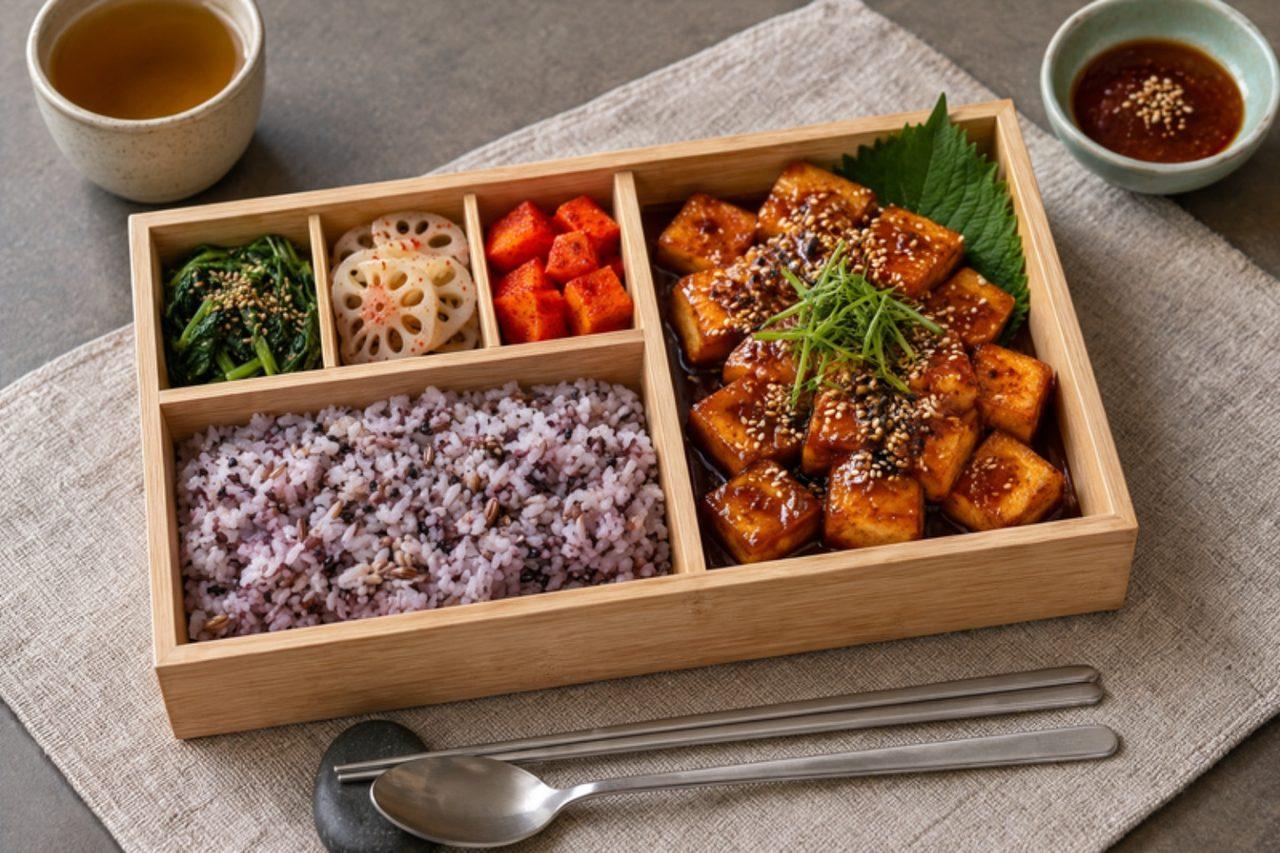
Dubu gangjeongSticky fried tofu cubes

Gangjeong usually means sticky glazed fried chicken, but Korean mothers make this tofu version for the dosirak because the starch coating stays crisp even after a morning in the lunchbox. The glaze is mild, sweet and garlicky, so children love it; add gochujang for the grown-ups. The common mistake is skipping the pressing, which leaves wet tofu that spits in the oil and goes soggy under the sauce. Chef's tip: let the fried cubes cool for two minutes before glazing, and boil the sauce to large, slow bubbles first, so it clings instead of soaking in.

by KrazyBadal 0 views
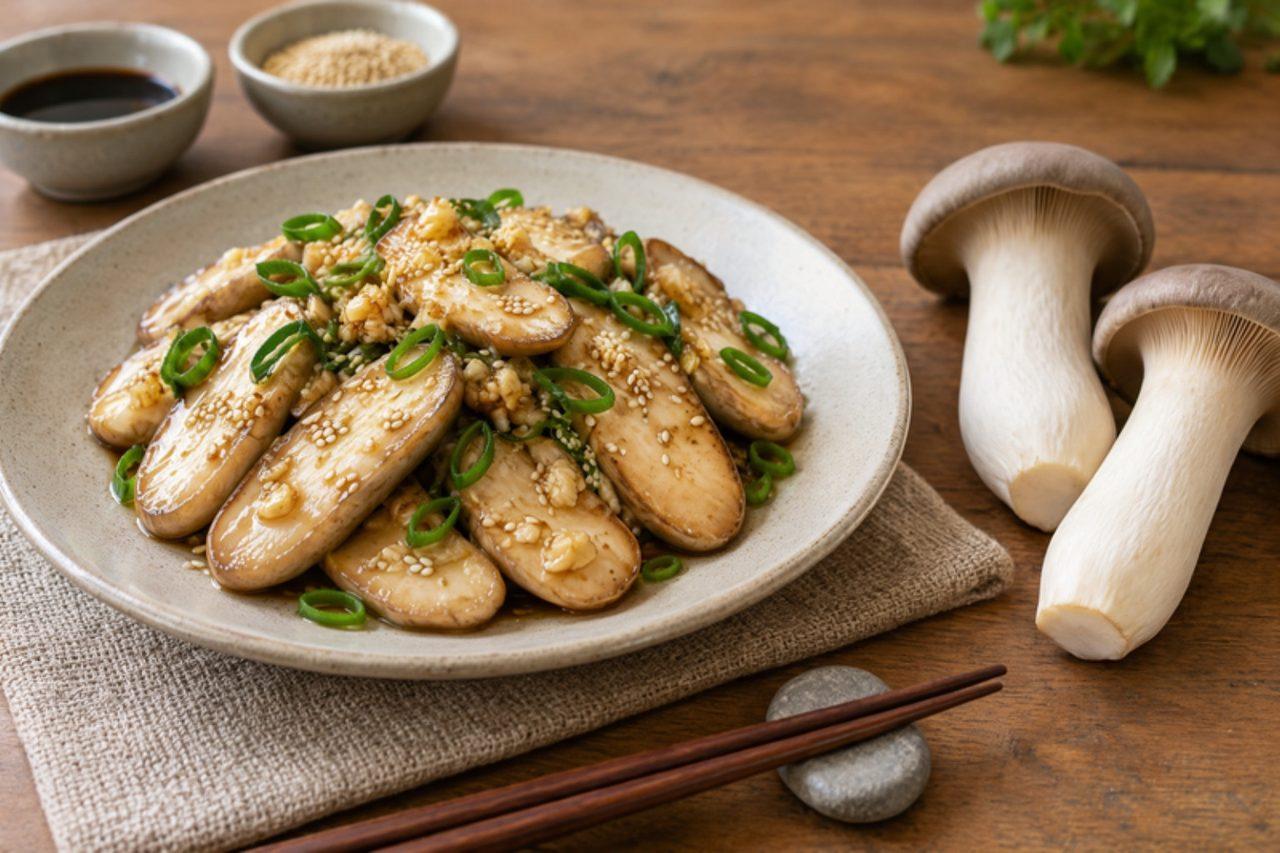
Saesongi beoseot bokkeumKing oyster mushroom stir-fry

King oyster mushrooms, saesongi in Korean, are cheap and meaty, and this quick stir-fry is a staple in Korean home kitchens for dinner banchan and next-day dosirak alike. The thick stems turn juicy and almost scallop-like, seasoned with just soy, garlic and spring onion. The common mistake is salting or saucing the mushrooms as soon as they hit the pan, which draws out their water so they stew instead of browning. Chef's tip: let the slices sear undisturbed in a hot pan until golden on one side before you add anything else.

by KrazyBadal 0 views
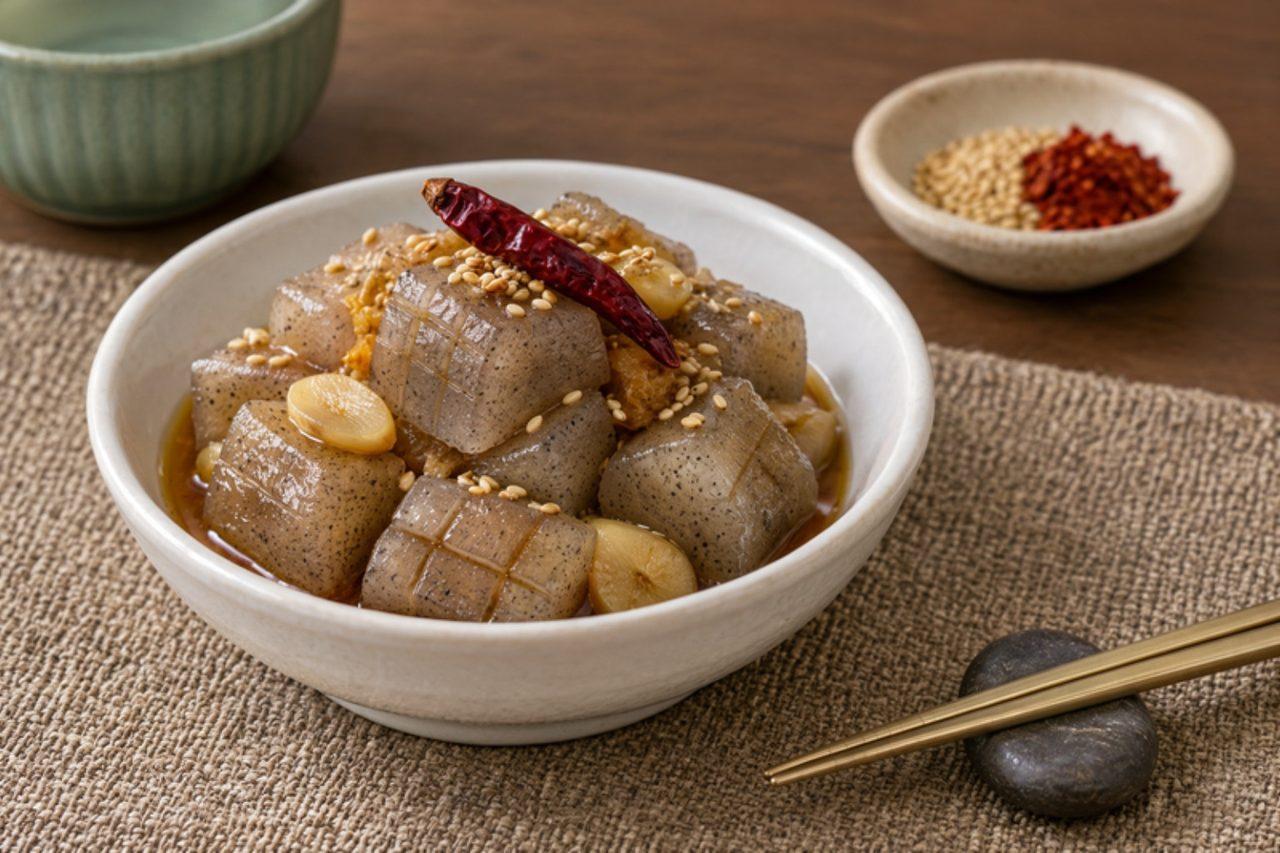
Konnyak jorimBraised konjac

Konjac, the grey, jelly-like block made from a root called devil's tongue, has almost no calories, and in Korea it is braised in sweet soy until glossy and chewy, a popular dosirak banchan that never wilts. Its texture is the point: bouncy, with a savoury glaze clinging to every scored cube. The common mistake is skipping the blanch, which leaves konjac's slight fishy smell from the alkaline water it is set in. Chef's tip: score a shallow criss-cross on the cubes or tear them with a spoon rather than cutting, and the sauce grips the rough surfaces.

by KrazyBadal 0 views

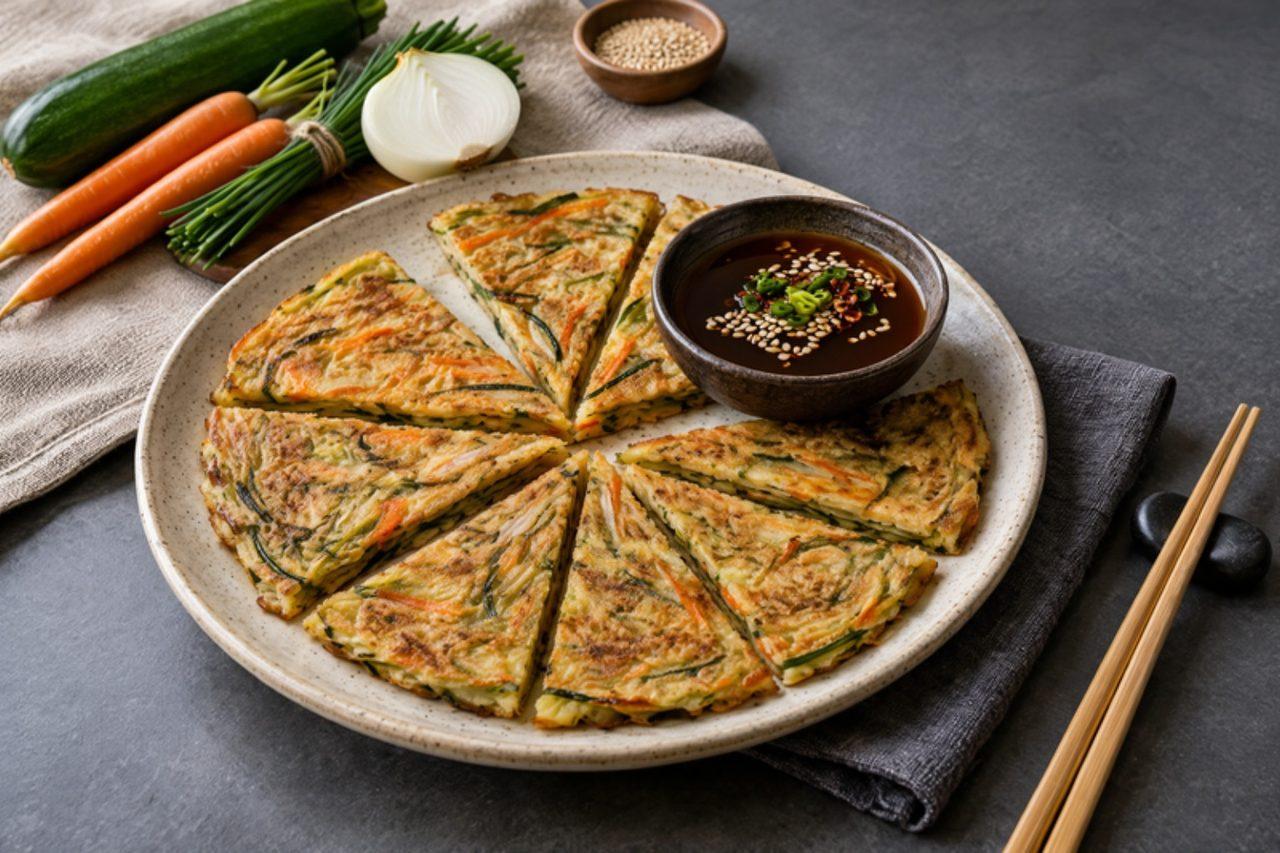
Yachae jeonVegetable pancakes

Korean fridge-clearing at its best: courgette, carrot, onion and chives shredded thin and bound with just enough batter to hold them together, then fried into lacy pancakes. Hot, they are a rainy-day snack with makgeolli; cut into wedges the next day, they fill a dosirak and taste good cold. The common mistake is too much batter, which gives a thick, doughy pancake; the vegetables should look barely coated. Chef's tip: use ice-cold water in the batter and press each pancake flat with the spatula after flipping, for crisp edges that last until lunchtime.

by KrazyBadal 0 views
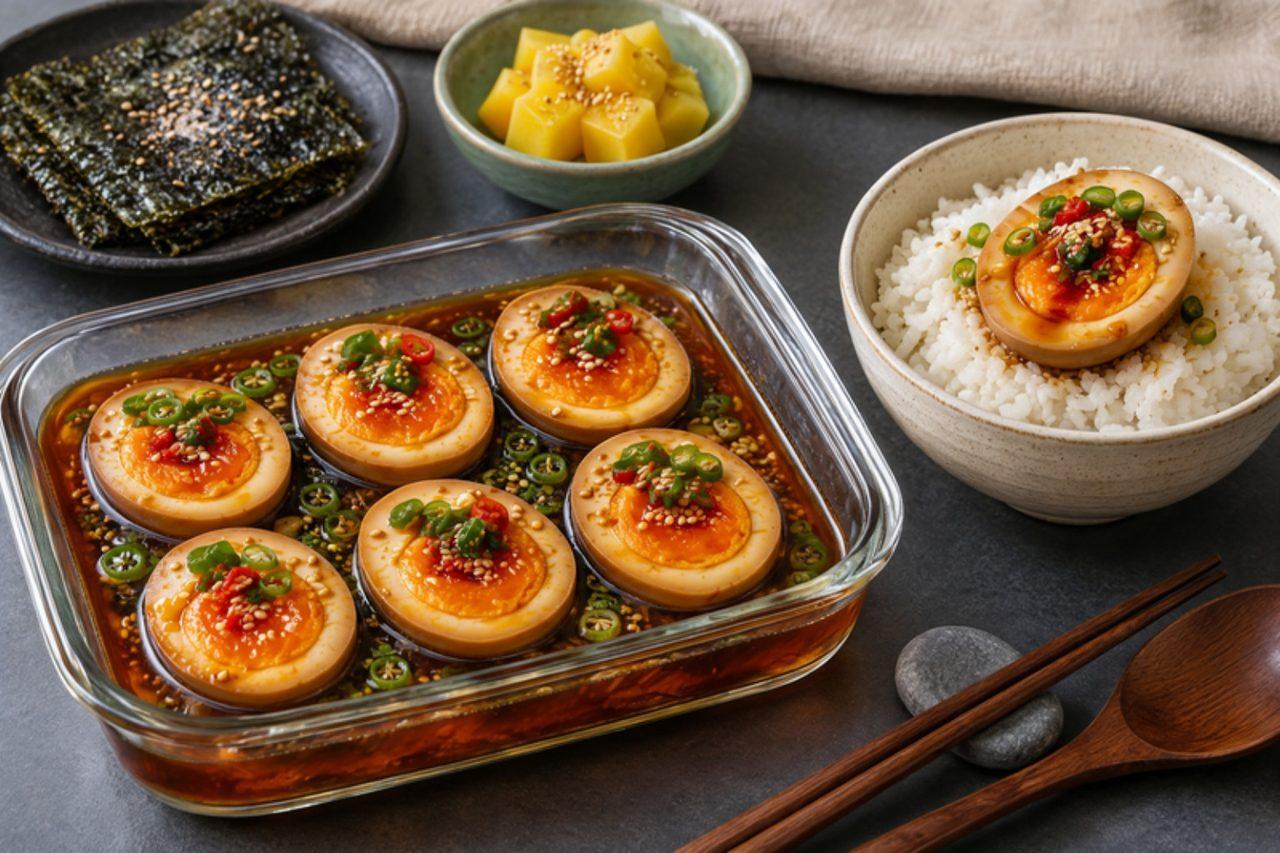
Mayak gyeranMarinated soft-boiled eggs

The name means "addictive eggs", and these soy-marinated eggs with their soft, fudgy yolks went viral in Seoul before landing in lunchboxes across Korea; one egg on a bowl of rice is a whole dosirak. The marinade is loaded with garlic, chilli and spring onion, and is spooned over the rice too. The common mistake is peeling the eggs warm, which tears the soft whites; chill them in iced water first. They need at least 6 hours in the fridge. For pregnant women, young children and anyone with a weakened immune system, boil the eggs for 10 minutes until fully set. Chef's tip: start the eggs straight from the fridge into boiling water and time them exactly, so every yolk sets the same way.

by KrazyBadal 0 views
OgokbapFive-grain rice

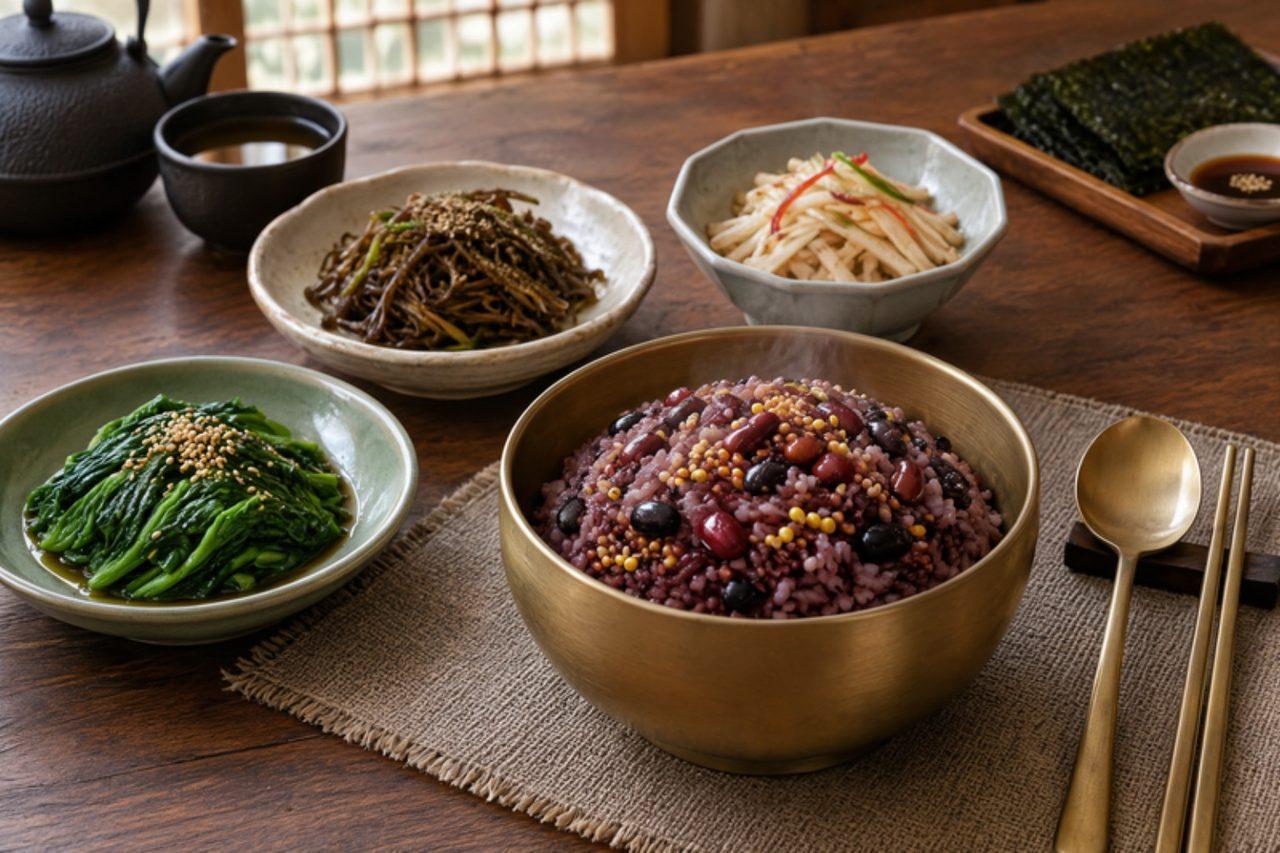
Ogokbap is cooked across Korea for Jeongwol Daeboreum, the first full moon of the lunar year, when families share five-grain rice with nine kinds of dried namul and crack nuts to wish for good health. Sticky rice, millet, sorghum, black soybeans and adzuki beans cook together into a chewy, purple-tinged rice with a nutty, gently sweet flavour. It is good any time of year beside soup and banchan. The usual mistake is putting the adzuki beans in raw with the rice: they stay hard while the rice turns soft, so parboil them first. Chef's tip: keep a little of the adzuki cooking water for the rice, as it gives ogokbap its lovely rosy colour.

by KrazyBadal 0 views
Ssanghwa-cha (herbal tonic tea)

Ssanghwa-cha is the strongest thing on the menu of an old Korean dabang. From the 1960s these smoky tea rooms served it in thick ceramic cups, dark as coffee, with pine nuts, slivered jujube and walnut floating on top; in winter some still slide a raw egg yolk in, which this recipe leaves out. The brew comes from Korean herbal tradition, where ssanghwa-tang is drunk to warm up and recover from tiredness after hard work or a cold. It tastes earthy and bitter at first, then sweet from licorice and jujube, with warmth from cinnamon and ginger and a celery-like perfume from angelica. Herbal shops sell the roots in pre-measured packs. The common mistake is boiling it hard: the liquid reduces too fast and turns harsh. Keep a gentle simmer with the lid ajar for two hours. It is ready when it is very dark brown, reduced to about a third and smells of cinnamon and roots. Because it contains licorice and angelica, skip it if you are pregnant or breastfeeding, have high blood pressure, or take blood thinners or other medicines unless your doctor agrees. Chef's tip: a second, lighter brew from the same roots is good with honey.

135 minKoreanDrinksVeganGluten free
by KrazyBadal 0 views

Hobak jjigaeCourgette and tofu stew

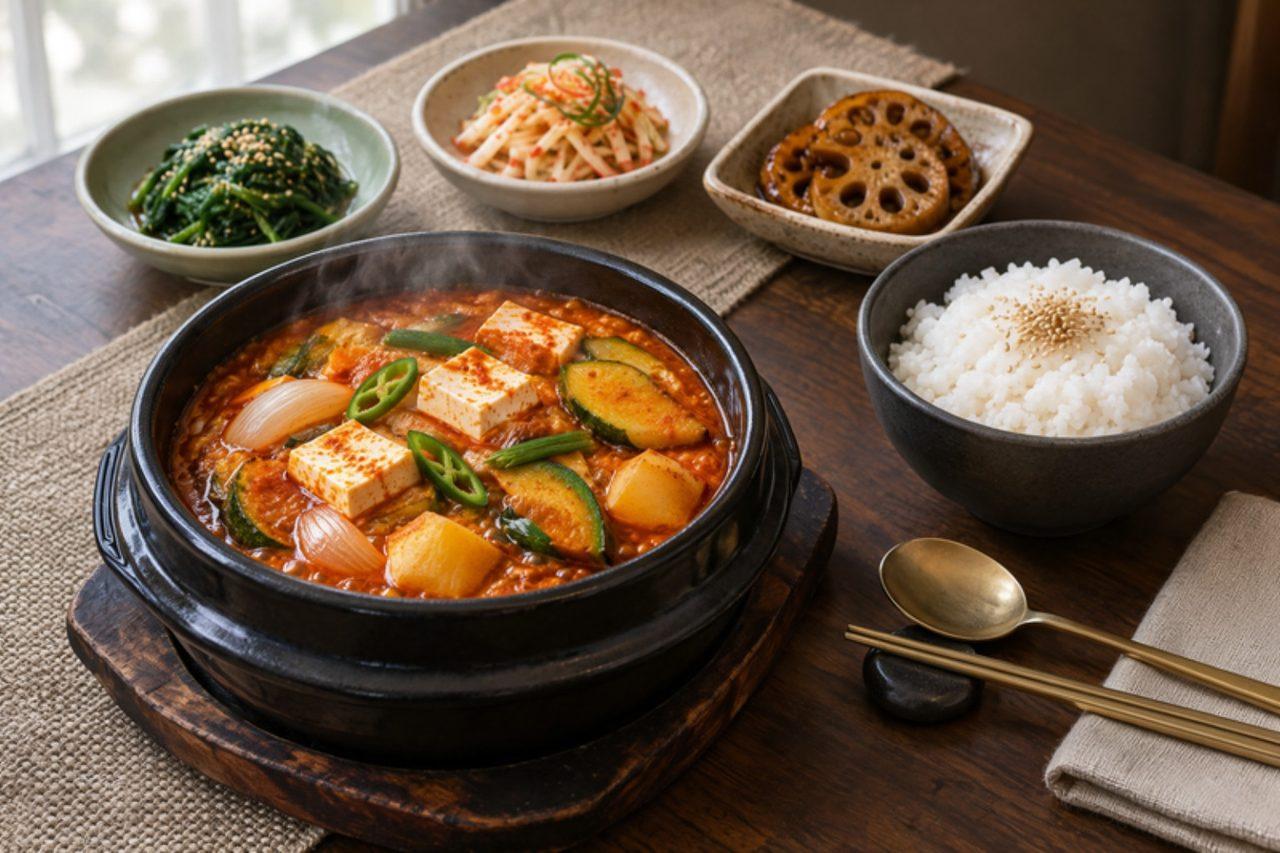
Hobak jjigae is the late-summer stew of Korean home kitchens, made when the garden throws up more courgettes (aehobak) than anyone can eat, and it lands on the table in its own pot next to rice and kimchi on any ordinary weeknight. Potato and soft tofu soften in a red, gently spicy broth of gochujang and kelp, and the courgette turns silky without falling apart. Most cooks start with anchovy stock; this one uses dried kelp and shiitake so it stays vegan. The usual mistake is adding the courgette with the potato, which leaves it mushy and grey by the time the potato is cooked. Chef's tip: a final splash of soup soy sauce (guk-ganjang) seasons the broth more deeply than salt without darkening it.

by KrazyBadal 0 views
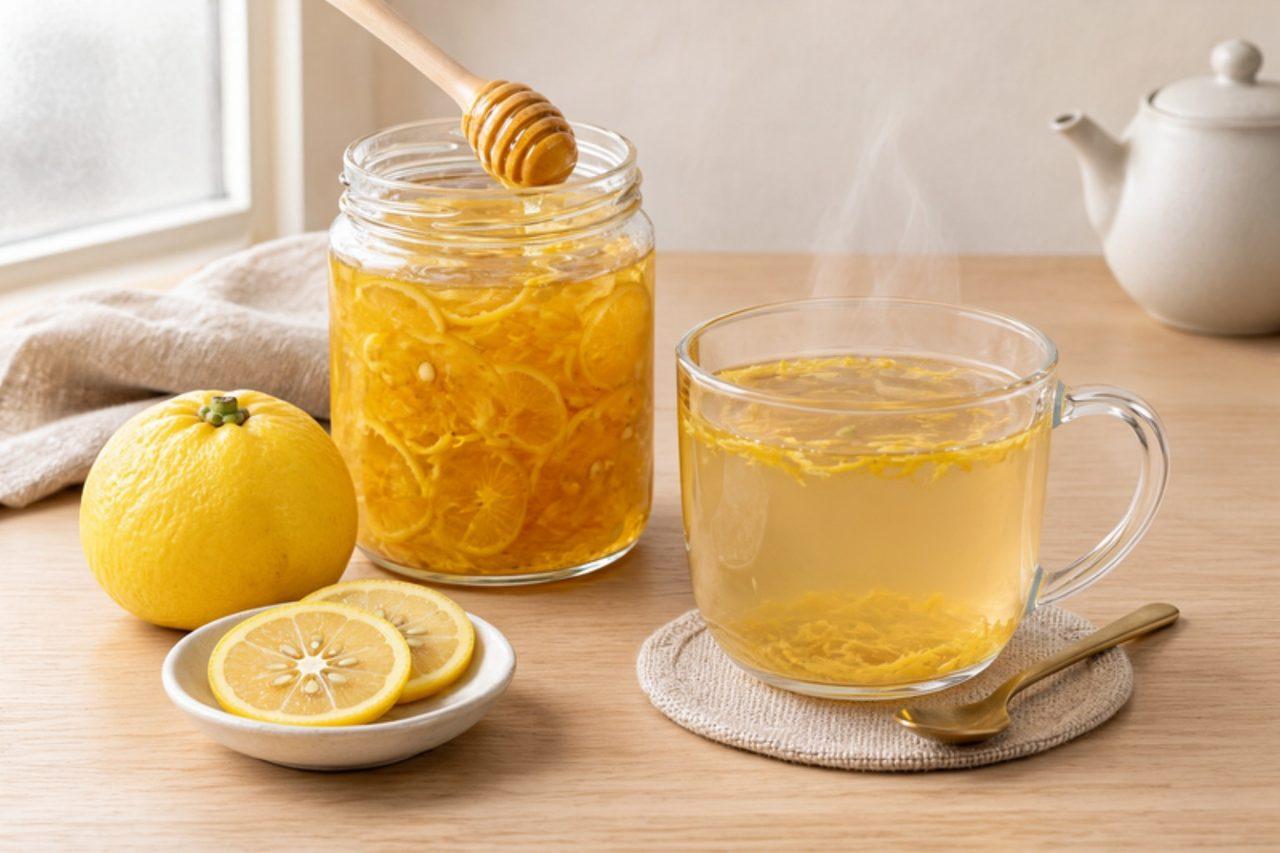
Yuja-cha (citron tea)

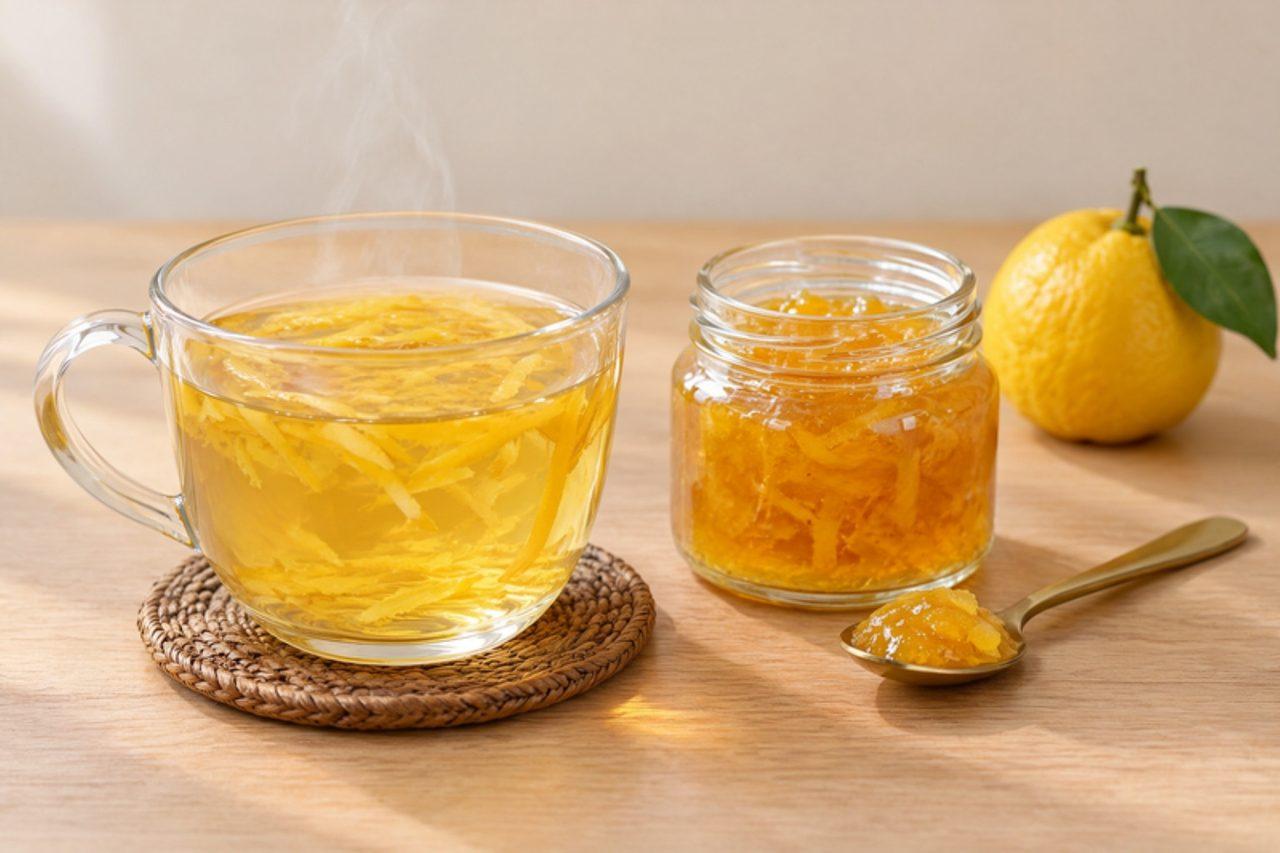
Goheung, on the southern coast of South Jeolla, is Korea's yuja country: in November the groves turn gold and families slice the knobbly citrons for yuja-cheong, the honeyed preserve that becomes tea all winter. From December to March a spoonful in hot water is offered to guests, to students cramming late and to anyone with a scratchy throat, as it is traditionally drunk for colds. The tea is sweet, floral and sharp, with soft, chewy strands of peel that you eat at the end with a spoon. The common mistake is leaving the fruit damp or the pith too thick: wet fruit lets mould in, and thick white pith makes the preserve bitter. Scrub, dry completely and pare away any pith thicker than a few millimetres. The cheong is ready after a day or two, when the sugar has dissolved into a clear, glossy syrup around the peel. Keep it in the fridge for up to three months, always with a dry spoon; throw it away if you see fuzzy mould, smell alcohol or it bubbles. No yuja? Japanese yuzu is the same fruit; otherwise use 2 lemons and 2 mandarins. Chef's tip: soak the seeds in a little of the honey and add that liquid back for a silkier syrup.

by KrazyBadal 0 views
Sungnyung (scorched rice tea)

Before electric rice cookers, every Korean pot of rice left a golden crust, nurungji, stuck to the bottom. Rather than waste it, cooks poured in water and simmered it while the family ate, and the warm, cloudy sungnyung was drunk at the end of the meal in place of tea. Older Koreans still describe it as the taste of home, and many Seoul restaurants that cook rice in stone pots finish by pouring water over the crust at the table. It tastes of toasted grain and has a faint natural sweetness, with soft pieces of crust to spoon up at the bottom. Without a stone pot you can make the crust from leftover rice in a frying pan. The common mistake is rushing the crust over high heat: it blackens on the outside and turns the drink bitter while the middle stays soft. Keep the heat low and patient, and aim for even golden-brown. The crust is ready when it lifts away from the pan in one sheet and smells like popcorn; the sungnyung is ready when the water is milky and pale gold. Chef's tip: make extra crust, dry it completely and keep it in a jar, so you can make sungnyung in ten minutes any evening.

by KrazyBadal 0 views
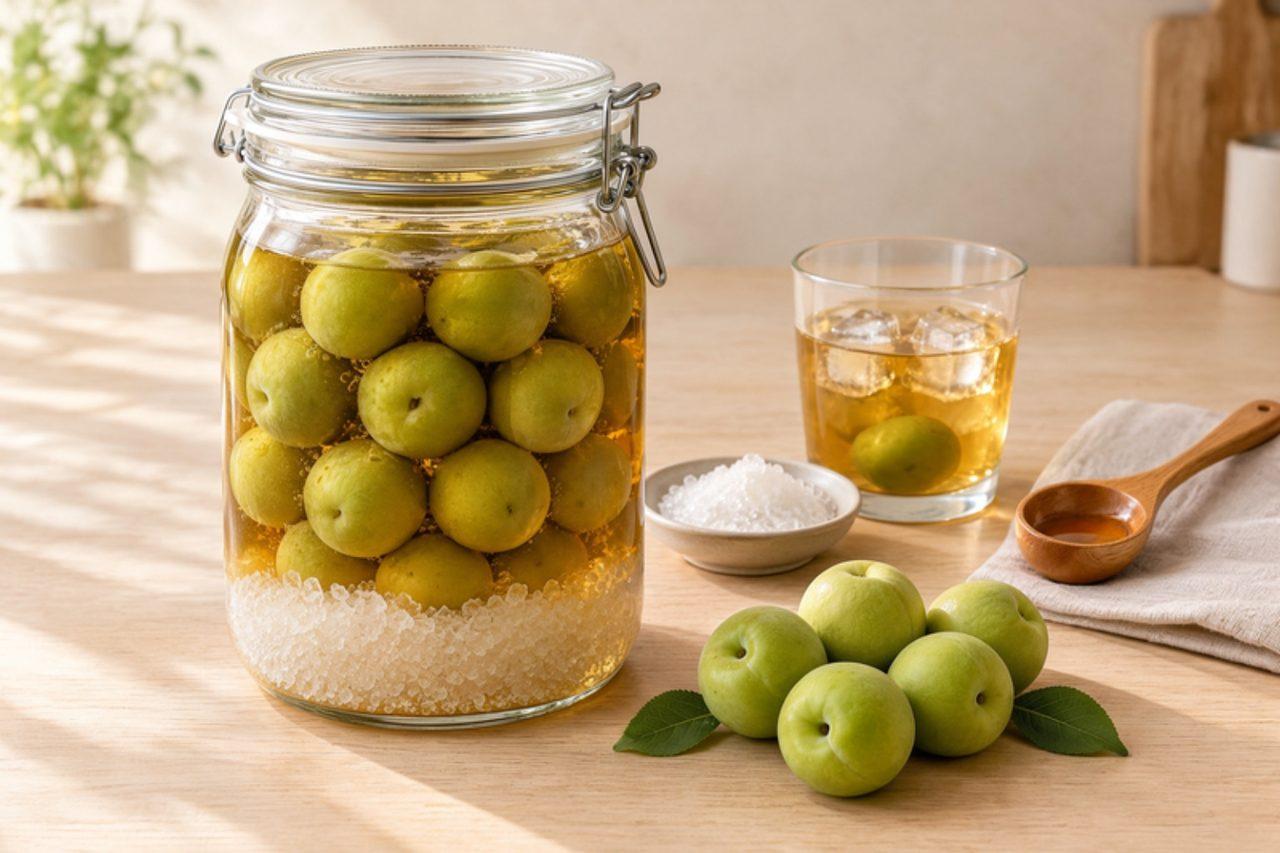
Maesil-cha (green plum tea)

In early June the hillsides of Gwangyang are picked clean of hard green maesil, and Korean kitchens across the country fill with jars of plums buried in sugar. Over about a hundred days the sugar draws out the fruit's juice and becomes maesil-cheong, a golden syrup that is both a cooking ingredient and a drink. Iced, it is the summer cooler; hot, it is traditionally drunk after a heavy meal for digestion. It tastes bright and tart, like green apple and apricot, rounded by the sugar. The common mistake is putting damp plums or plums with stalks into the jar: water and stalk ends invite mould and unwanted fermentation. Pick out each stalk with a toothpick and dry the fruit completely. The syrup is ready when the plums have shrivelled and float in clear amber liquid. A little foaming early on is normal, but if it smells strongly of alcohol, grows fuzzy mould or turns slimy, discard it. Remove the plums at 100 days, because their stones contain natural compounds best kept out of a long-stored syrup. Chef's tip: use half white and half light brown sugar for a rounder, toffee-edged syrup.

by KrazyBadal 0 views

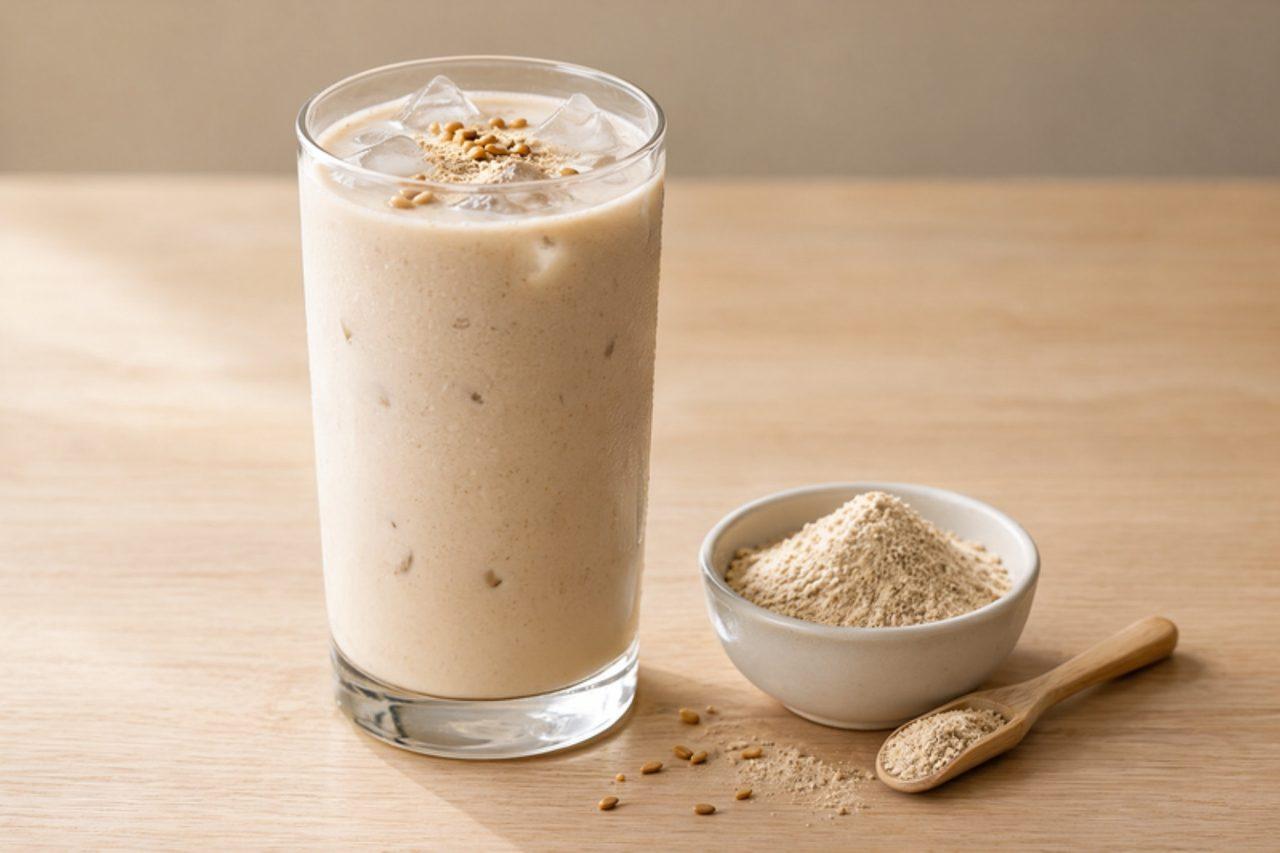
Misutgaru (multigrain powder drink)

Misutgaru began as travellers' food, a powder of roasted grains that kept for weeks and could be stirred into water on the road. Today it is the drink of Korean summer: mothers shake it with cold milk for breakfast before school, office workers buy it as misutgaru latte from cafés, and farmers drink it at midday in the fields of July. The powder is a mix of roasted barley, glutinous and brown rice, black and yellow soybeans, and sesame, and it tastes of toasted cereal and peanut, lightly sweet, with a thick, creamy body that fills you up like a light meal. The common mistake is tipping the powder into a full glass of milk and stirring: it floats, clumps into dry balls and never fully mixes. Shake it in a jar with a little liquid first, or blend it, then add the rest. It is ready when the drink is smooth, beige and frothy with no dry flecks, and slightly thickened after a minute's rest. Use water or soy milk for a dairy-free version, and note that the barley means it is not gluten free. Chef's tip: a pinch of salt makes the grain flavour taste rounder and less flat.

by KrazyBadal 0 views
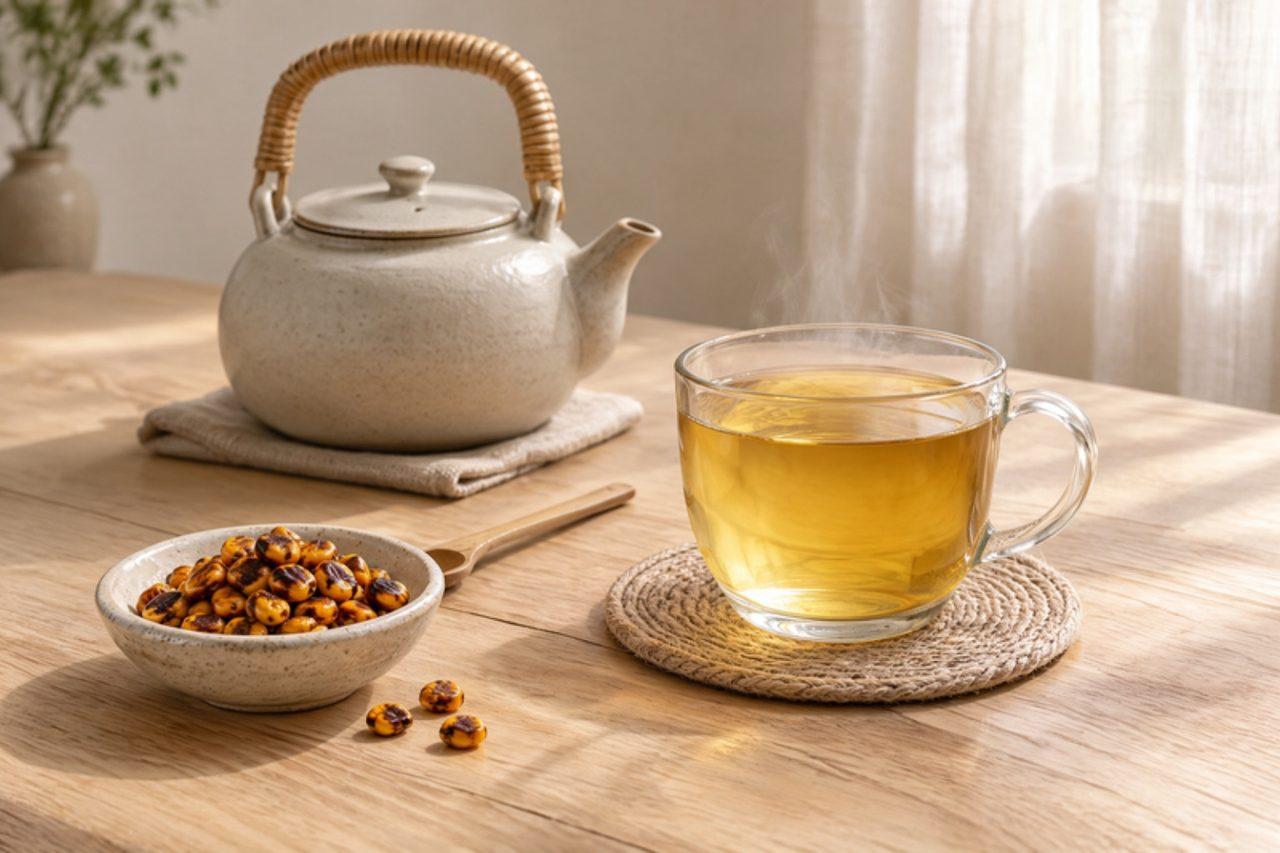
Oksusu-chaRoasted corn tea

Oksusu-cha is the tea Korean households boil by the kettleful and keep in the fridge in old glass bottles, drunk instead of water with meals from Seoul apartments to Gangwon farmhouses, chilled in summer and hot in winter. Dried corn kernels are roasted until dark golden, then simmered to make a pale amber tea that tastes gently sweet and toasty, though nothing is added at all. About 0.0 g salt per glass. The usual mistake is boiling the kernels too long, which makes the tea cloudy and starchy; 15 minutes is plenty. Ready-roasted corn kernels are sold in Korean shops; if roasting your own, use dried corn, not fresh or tinned. Chef's tip: mix in a spoon of roasted barley for the classic boricha blend, rounder and more nutty, though no longer gluten free.

by KrazyBadal 0 views
OijiSalt-brined cucumber pickle

Oiji is the Korean way of keeping early-summer cucumbers into the dog days. In June, when short, thin-skinned pickling cucumbers flood markets from Seoul to the southern provinces, they are packed into a crock and covered with boiling salt brine, which keeps them crisp. A week later they are olive-gold, wrinkled and sour-salty. Nobody eats them straight: they are sliced, soaked and squeezed, then dressed as oiji muchim with chilli flakes, garlic and sesame, or floated in cold water with vinegar and spring onion as oiji naengguk, a cooling summer soup. Over rice on a hot afternoon, the crunch is everything. The brine is about 10% salt (200 g per 2 litres of water), strong enough to keep them all summer. The common mistake is leaving any cucumber above the brine; it softens and moulds, so weigh them down well. It is ready when the cucumbers are evenly yellow-green, wrinkled and firm, and the brine smells cleanly sour. Normal: cloudy brine and bubbles; bad: fuzzy coloured mould, mushy or slimy cucumbers, a rotten smell. Chef's tip: squeeze the soaked slices in a cotton cloth as hard as you can before dressing; the drier they are, the better they crunch.

by KrazyBadal 0 views
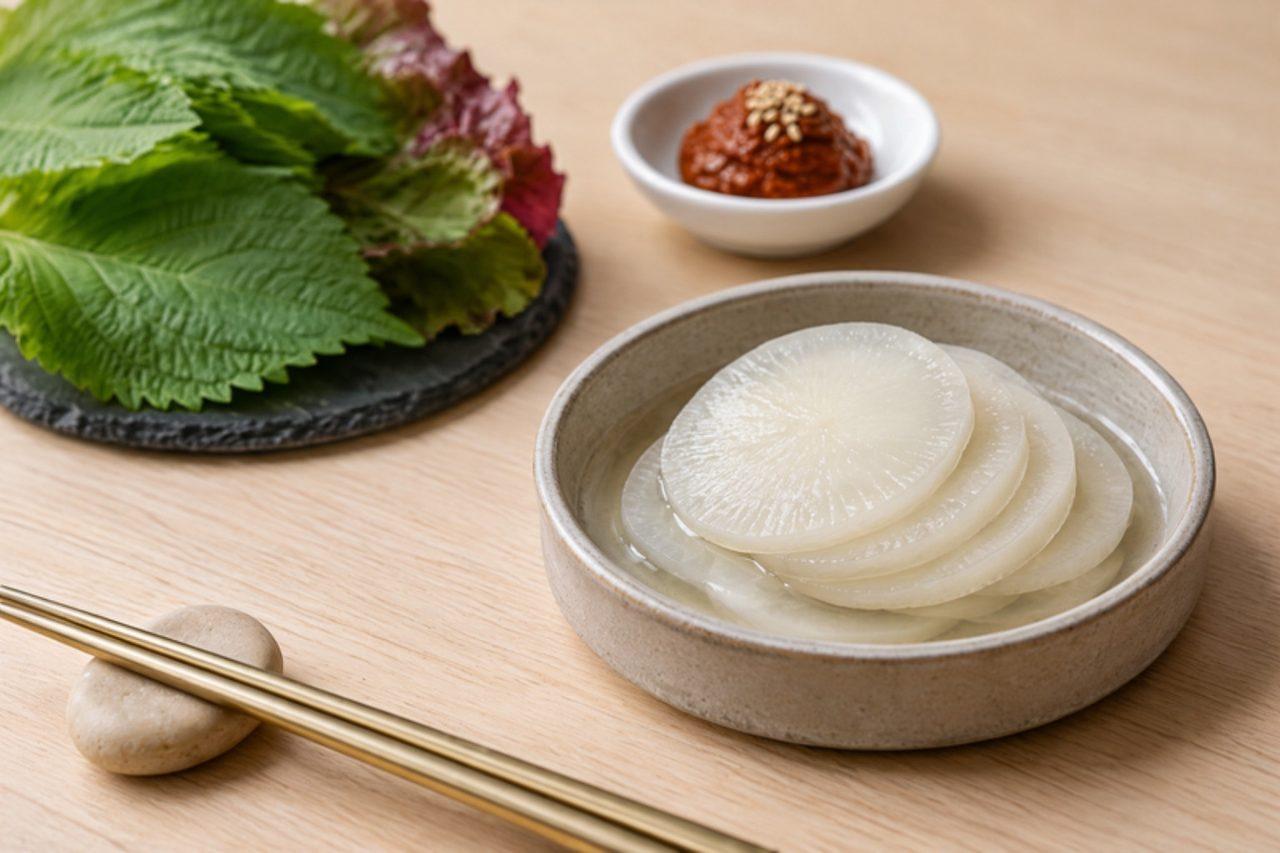
Ssam-muPickled radish wraps

Ssam-mu is what you find in a little dish at every Korean barbecue restaurant, from Seoul's pork-belly alleys to suburban galbi houses: translucent discs of radish, sweet and sharp, to fold around a piece of hot meat with a dab of ssamjang. At home it is a year-round fridge staple, especially in winter when Korean radish (mu) is at its sweetest, and it is just as good wrapped around grilled king oyster mushrooms or tofu. Each round is cool, crisp at the edge and pliable enough to fold without breaking, with a clean sweet-sour taste that cuts through rich, smoky food. The vinegar must be at least 5% acidity, and the brine should be no weaker than 2 parts water to 1 part vinegar. The common mistake is slicing too thick: over 1.5 mm the rounds crack when you fold them, so use a mandoline set to 1 mm. It is ready when the slices are translucent, bend easily and taste sweet-sour right through, after about a day. Daikon works if you cannot find Korean radish; choose a fat one. Chef's tip: add a slice of raw beetroot for pink rounds, or a pinch of turmeric for the yellow ones in Korean shops.

by KrazyBadal 0 views
YujacheongYuja citron preserve

When the first frost comes to Goheung in South Jeolla and Namhae island in November, the yuja orchards turn gold, and households slice the knobbly, deeply perfumed fruit into sugar to make yujacheong. Through the winter, a few spoonfuls in a mug of hot water make yuja-cha, the tea Koreans reach for on cold evenings and when they feel a cold coming on; it is also spooned over yoghurt, toast or into salad dressings. It tastes floral, sharp and sweet, with tender strips of peel and a thick golden syrup. The sugar is what preserves it: equal weights of fruit and sugar, kept in the fridge once the sugar dissolves. The common mistake is leaving it warm too long: after a day or two on the counter it can start to ferment and fizz, so move it to the fridge as soon as the sugar has mostly melted. It is ready after about a week, when the peel is translucent and the syrup thick. No yuja? Use Meyer lemons, or two lemons for every mandarin. Bubbles or a boozy smell mean it has started to ferment: refrigerate it at once; mould means throw it away. Chef's tip: scrub the skins with baking soda first; you are eating the whole peel, so it must be spotless.

by KrazyBadal 0 views
MaesilcheongGreen plum syrup

In early June, Gwangyang in South Jeolla holds its plum festival under hillsides of maesil trees, and across Korea families buy crates of hard green maesil plums to make maesilcheong. The plums are layered with an equal weight of sugar in big glass jars, and over 100 days the sugar draws out their juice into a tart, fruity amber syrup. It is the Korean kitchen's all-purpose sweetener: a spoonful in a marinade for bulgogi, in salad dressings and in kimchi, and diluted with cold water as a summer drink traditionally taken after a heavy meal. It tastes sweet, sour and almond-scented. Expect a little natural fermentation: a few bubbles and a trace of alcohol (well under 1%) are normal while the sugar dissolves, so keep the lid loose. The common mistake is wet fruit: any water left on the plums or stem scars can lead to mould, so dry them for hours. Ready when the plums have shrivelled and float, and the syrup is clear amber. Raw green plum stones contain compounds that release cyanide: never crush, bite or eat the stones, and remove the fruit after 100 days. No maesil? Use hard green apricots, with the same care. Chef's tip: use half brown sugar for a deeper colour and caramel note.
by KrazyBadal 0 views

Twigim (vegetable and egg)

Twigim is the fried side of Seoul's bunsik stalls: a glass case of sweet potato, vegetable fritters, boiled eggs and squid in a thicker, crunchier batter than Japanese tempura. Around the student bars of Sinchon and in Tongin Market, people order a mixed plate in the evening and have the pieces snipped and drowned in tteokbokki sauce. Squid is the other classic; this version keeps it vegetarian. It contains egg and wheat. Chef's tip: fry everything twice, the second time hotter, the way the stalls do; it is the secret to batter that stays crisp under sauce.

by KrazyBadal 0 views

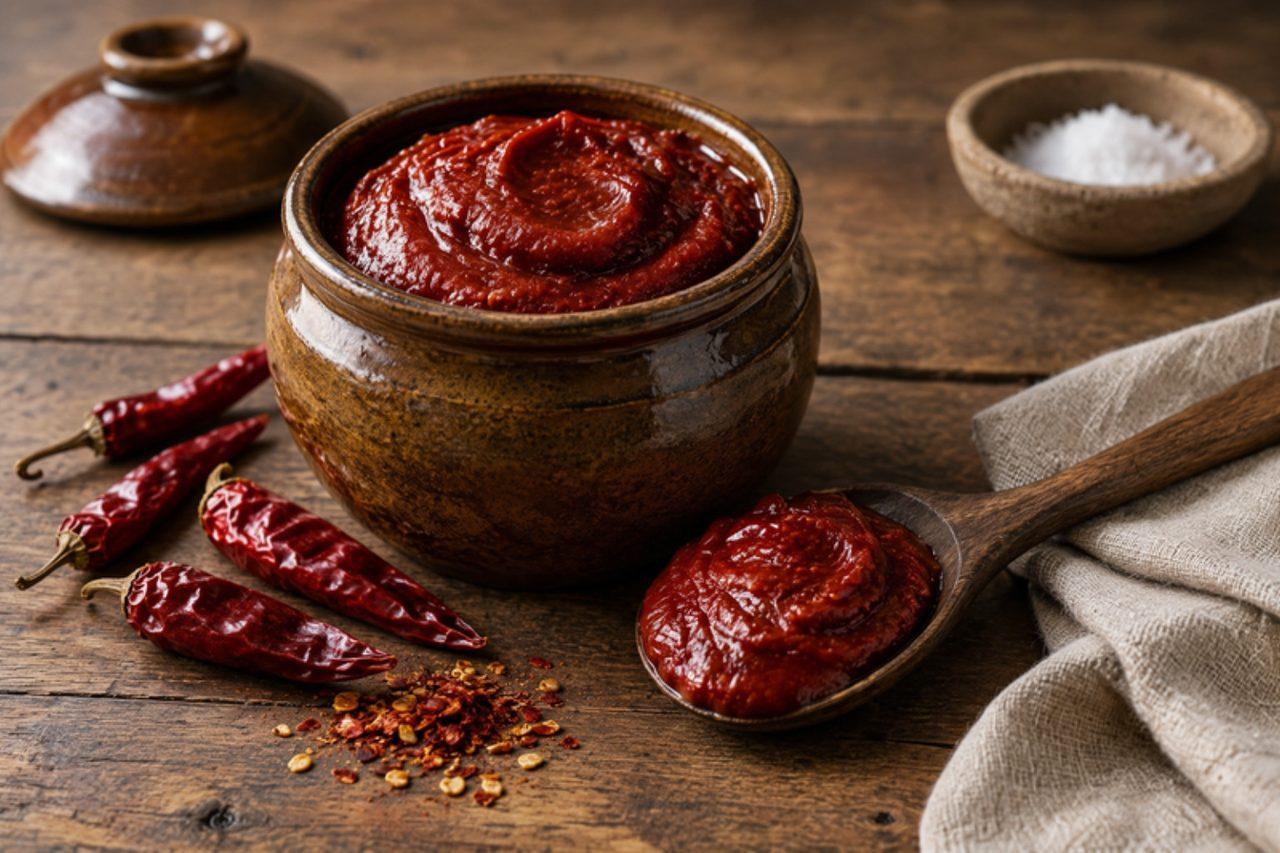
Homemade gochujangChilli bean paste

Sunchang, a small county in North Jeolla, is so tied to gochujang that it holds a jang festival every October, but the paste itself is traditionally made in the cold weeks of late winter, when there are no flies and it can ferment slowly in glazed onggi jars on the sunny jangdokdae terrace. Glutinous rice flour is broken down by barley malt into a sweet, runny porridge, boiled down, then beaten with fine chilli powder, fermented soybean (meju) powder, rice syrup and salt. Young, it is bright, sweet and fiery; after two or three months it darkens to brick red and gains a round, savoury depth, thick enough to hold a ridge on the spoon. It goes into bibimbap, tteokbokki, ssamjang, stews and marinades all year. Common mistake: adding the chilli and salt while the porridge is still hot, which dulls the colour and can make the paste turn sour; wait until it is lukewarm. It is ready when it is glossy, deep red, and smells sweet and earthy with no sharp, boozy note. Chef's tip: hold the malt and rice at 55–60 °C on a rice cooker's keep-warm setting; any hotter and the malt enzymes stop working, so the porridge never thins.

210 minKoreanBasicsVeganSpicy
by KrazyBadal 0 views

Homemade doenjangFermented soybean paste

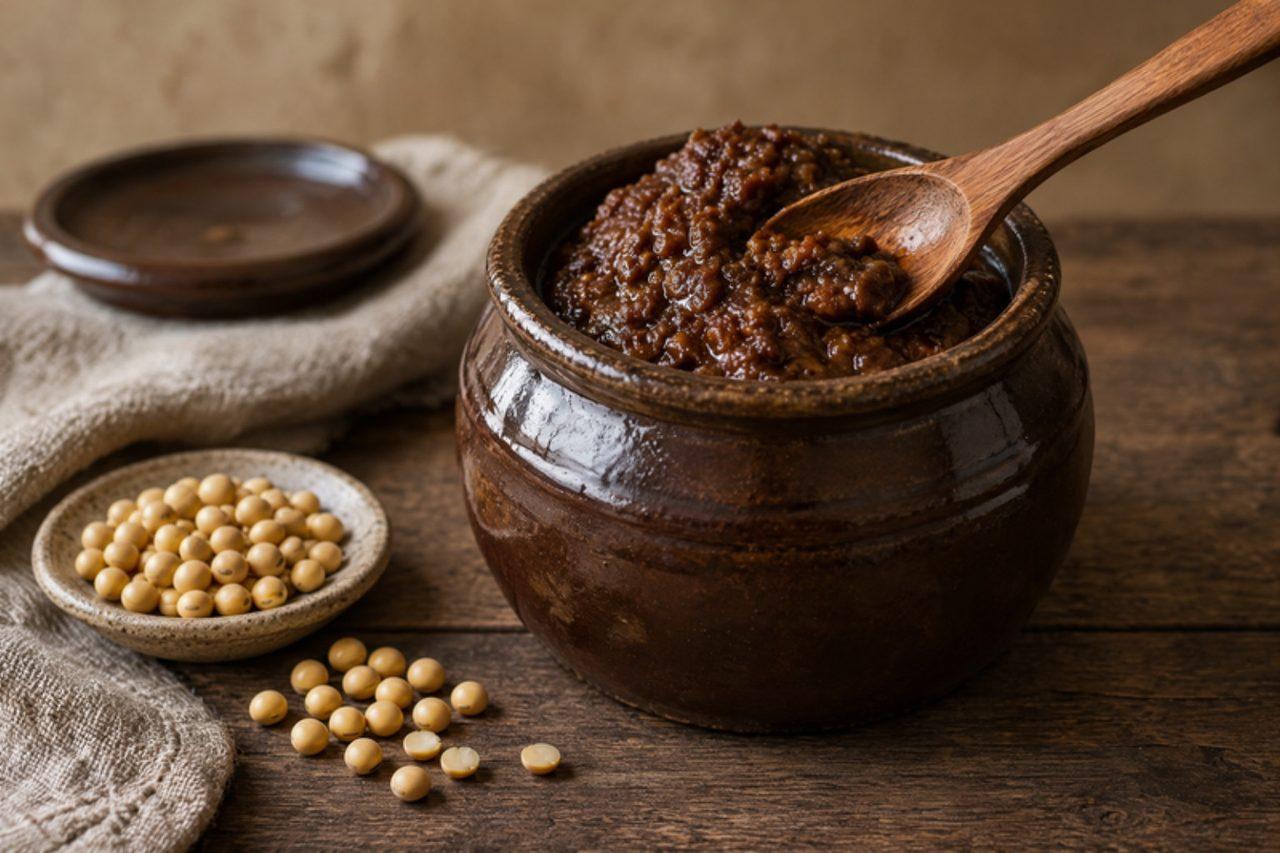
Doenjang starts in late autumn, after the soybean harvest, when Korean households used to boil beans in a cauldron, pound them into bricks and hang the meju from the rafters on straw ropes to grow a white, sweet-smelling bloom over the winter. In early spring, on a clear dry day, the bricks are dropped into salt brine in an onggi jar with dried chillies, jujubes and a red-hot piece of charcoal. Some six to eight weeks later the dark liquid is drawn off and boiled into soup soy sauce (guk-ganjang), and the softened bricks are mashed into doenjang, which ripens through the summer. It is chunkier, saltier and funkier than miso, with a nutty, almost smoky depth: the backbone of doenjang-jjigae, ssamjang and spinach namul. Common mistake: making the brick too thick or drying it in a warm, still room, so the centre rots before it dries; keep it about 6 cm thick and hang it where air moves. The paste is ready when it is mid-brown, smells of toasted nuts and soy, and tastes salty-sweet rather than sharp. Chef's tip: you can buy dried meju blocks from Korean grocers and start at the brining step.

300 minKoreanBasicsVeganGluten free
by KrazyBadal 0 views

Tornado potatoSpiral potato on a stick

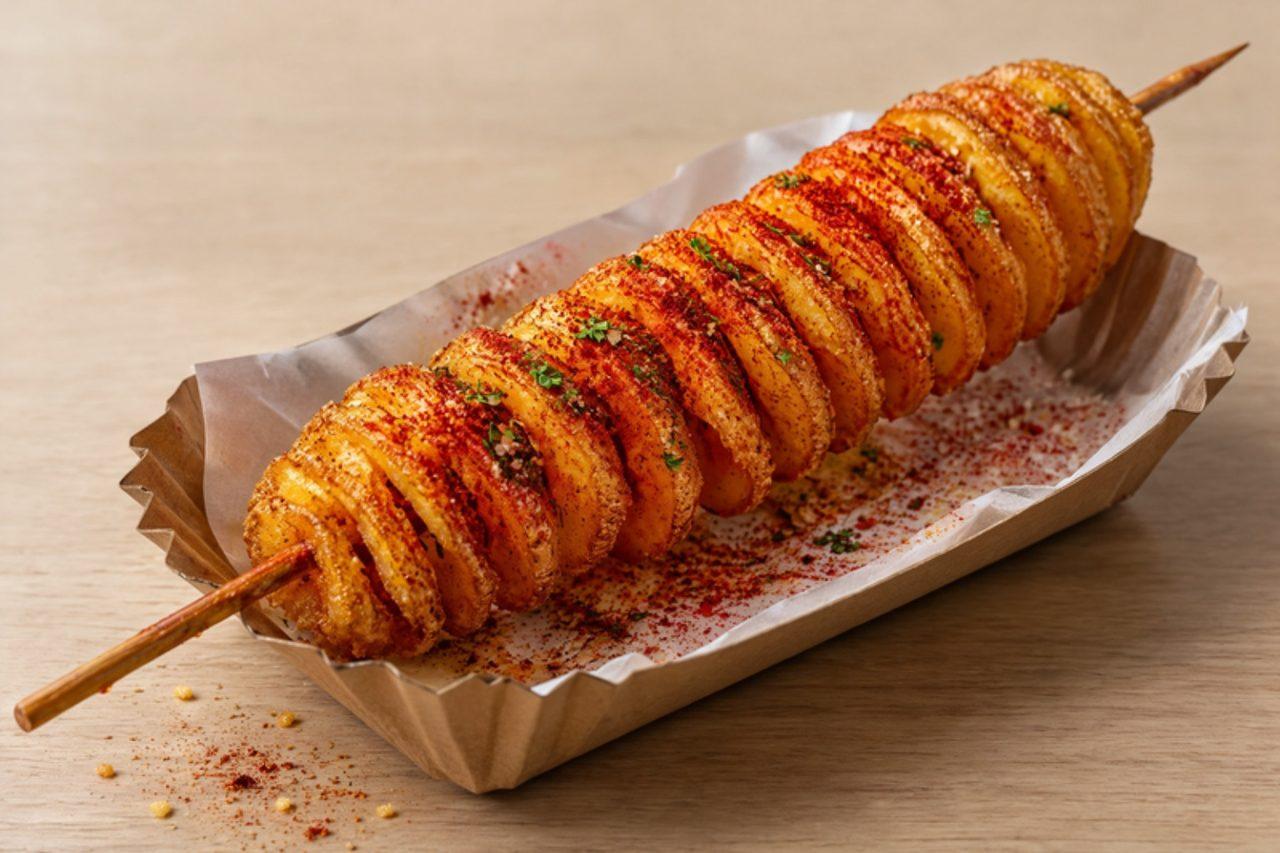
The tornado potato took off at the evening carts of Myeong-dong and the weekend crowds in Hongdae, where vendors twist a whole potato onto a long stick with a special drill and fry it into a crisp golden spiral. People walk around eating it from the top down while they shop. At the stalls it is dusted with cheese or honey-butter powder; this home version stays vegan with a smoky paprika, garlic and onion seasoning that children love. Chef's tip: stretch the spiral out along the stick so there is a gap between each turn, or the inside stays pale and soft.

by KrazyBadal 0 views

KkwabaegiTwisted doughnuts

Kkwabaegi are the twisted doughnuts piled high at Namdaemun and Mangwon markets and in the little neighbourhood shops that open in the afternoon, sold three or four to a paper bag while still warm. A little glutinous rice flour in the yeast dough makes them springy and slightly chewy rather than cakey, and the cinnamon sugar crunches on the outside. They contain wheat, milk and egg. Chef's tip: twist the rope tightly and let it twist back on itself; it should hold its shape without you pinching it.

by KrazyBadal 0 views

GimmariFried seaweed glass noodle rolls

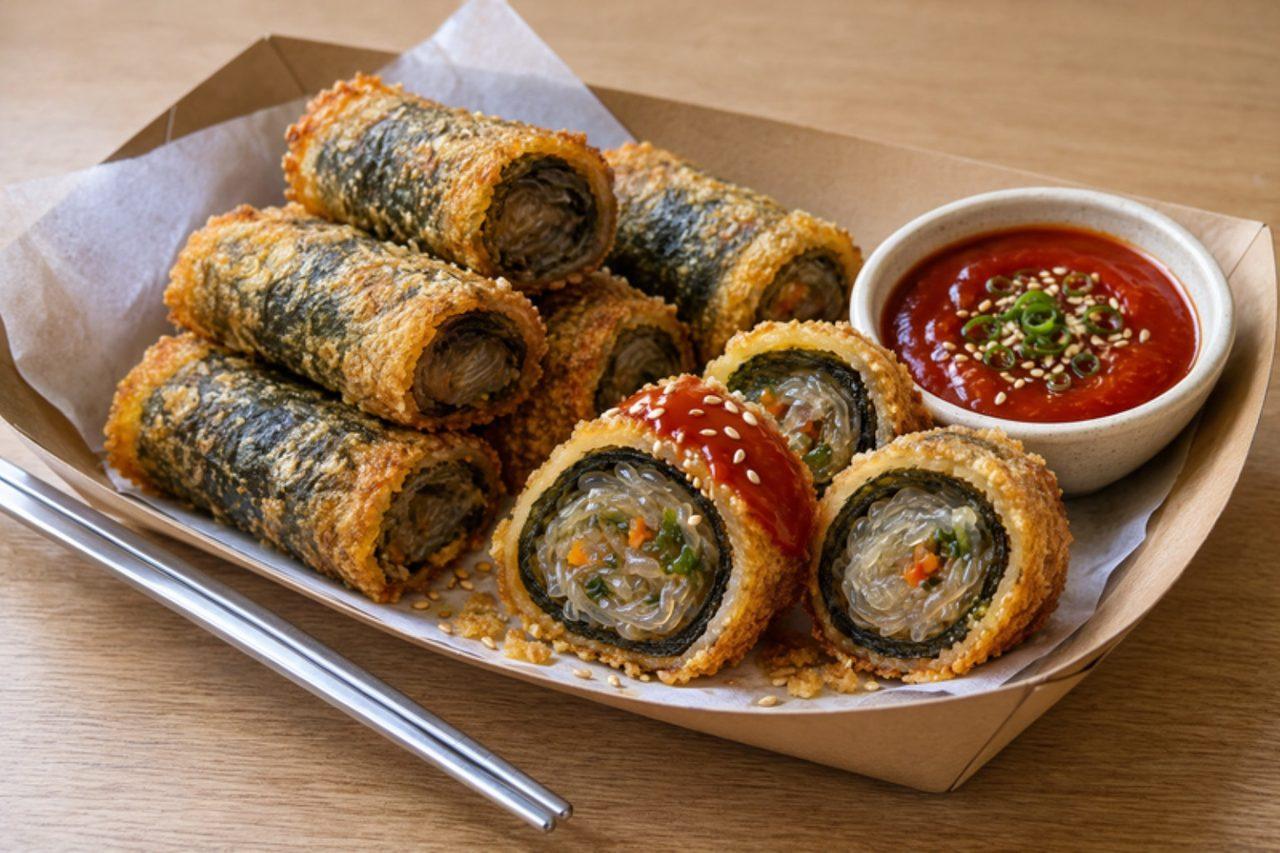
Gimmari, literally "seaweed rolls", sit in a golden heap on every bunsik stall in Seoul, from the snack alleys of Mangwon Market to the carts outside schools at four o'clock. Seasoned sweet-potato glass noodles are rolled tightly in sheets of gim, dipped in a thin batter and fried, and most people ask for them to be cut up and dunked straight into the stall's sweet-spicy tteokbokki sauce. The outside crackles; the noodles inside stay soft and savoury. Chef's tip: season the noodles boldly; the seaweed and batter mute them.

by KrazyBadal 0 views

Omegi tteokMillet rice cakes with red bean

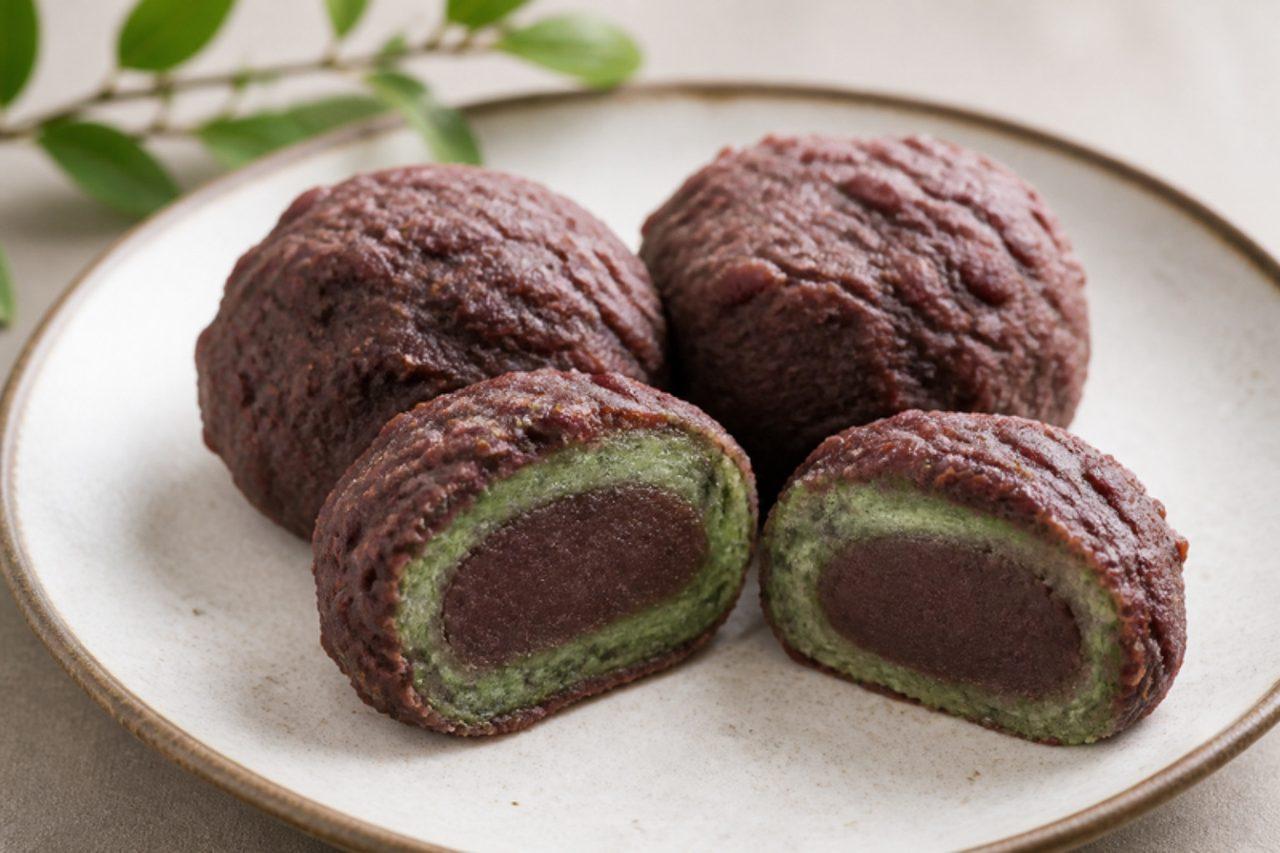
Omegi tteok (오메기떡) are Jeju's best-known rice cakes: small dark-green rounds of glutinous millet and rice dough flavoured with mugwort, filled with sweet red bean, and rolled in a coat of mashed red beans or toasted nuts. Jeju farmers grew millet on fields too stony for rice, and the dough was once fermented into omegi-sul, the island's rice wine. Now they are bought in boxes at Seogwipo's Olle market as the island's favourite gift, kept in the freezer and thawed for tea time. Chef's tip: knead the dough with boiling water while it is still hot; mugwort and millet need the heat to bind into a smooth, stretchy dough.

by KrazyBadal 0 views

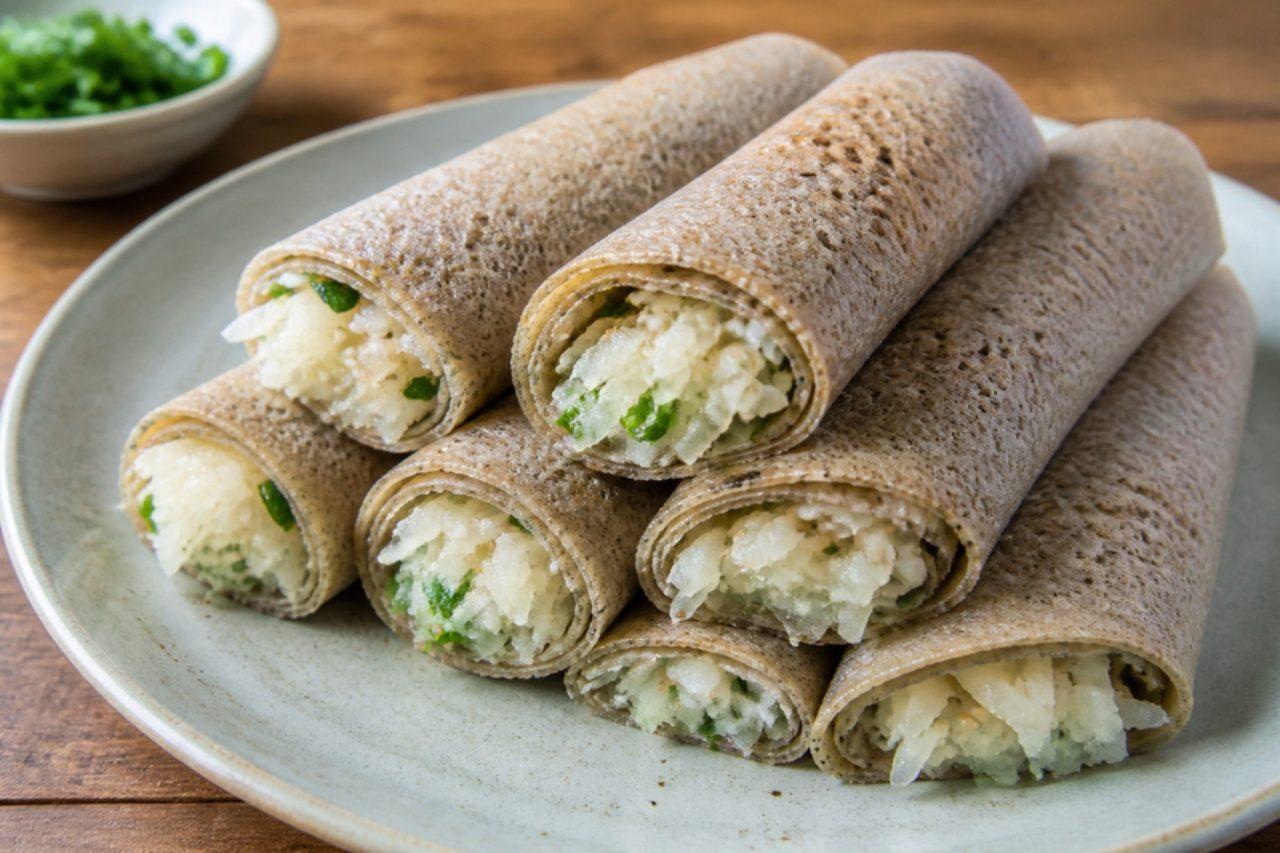
BingtteokBuckwheat crepe rolls with radish

Bingtteok (빙떡) comes from Jeju island, where volcanic soil grew buckwheat and radish better than rice. Thin, almost translucent buckwheat crêpes are rolled around a filling of blanched radish seasoned only with salt, sesame and spring onion. The flavour is gentle and nutty, and it was traditionally brought to funerals, weddings and village gatherings, sometimes with a cup of makgeolli. Today you find it at Jeju's Dongmun and Seogwipo markets beside more fiery snacks. Chef's tip: pour a little batter and swirl the pan fast, or spread it with the back of a ladle; bingtteok crêpes should be so thin you can almost see through them.

by KrazyBadal 0 views

HeotjesatbapRice with seven vegetable sides

In Andong, the old Confucian town of North Gyeongsang, the scholars of the yangban class were said to want the food from jesa, the rite offered to ancestors, without waiting for a rite to come round, so they cooked the same dishes and called them heotjesatbap (헛제삿밥), 'fake rite rice'. Restaurants by Andong's dam still serve it: a bowl of rice to be mixed with brown, white and green namul and seasoned with soy sauce, never chilli, because ritual food avoids red pepper and garlic. The full table includes grilled fish and beef skewers; this vegetarian version keeps the vegetables and tofu jeon that make up most of it. Chef's tip: cook each namul separately with only salt, soy or sesame, so each keeps its own taste and colour when you mix the bowl.

by KrazyBadal 0 views

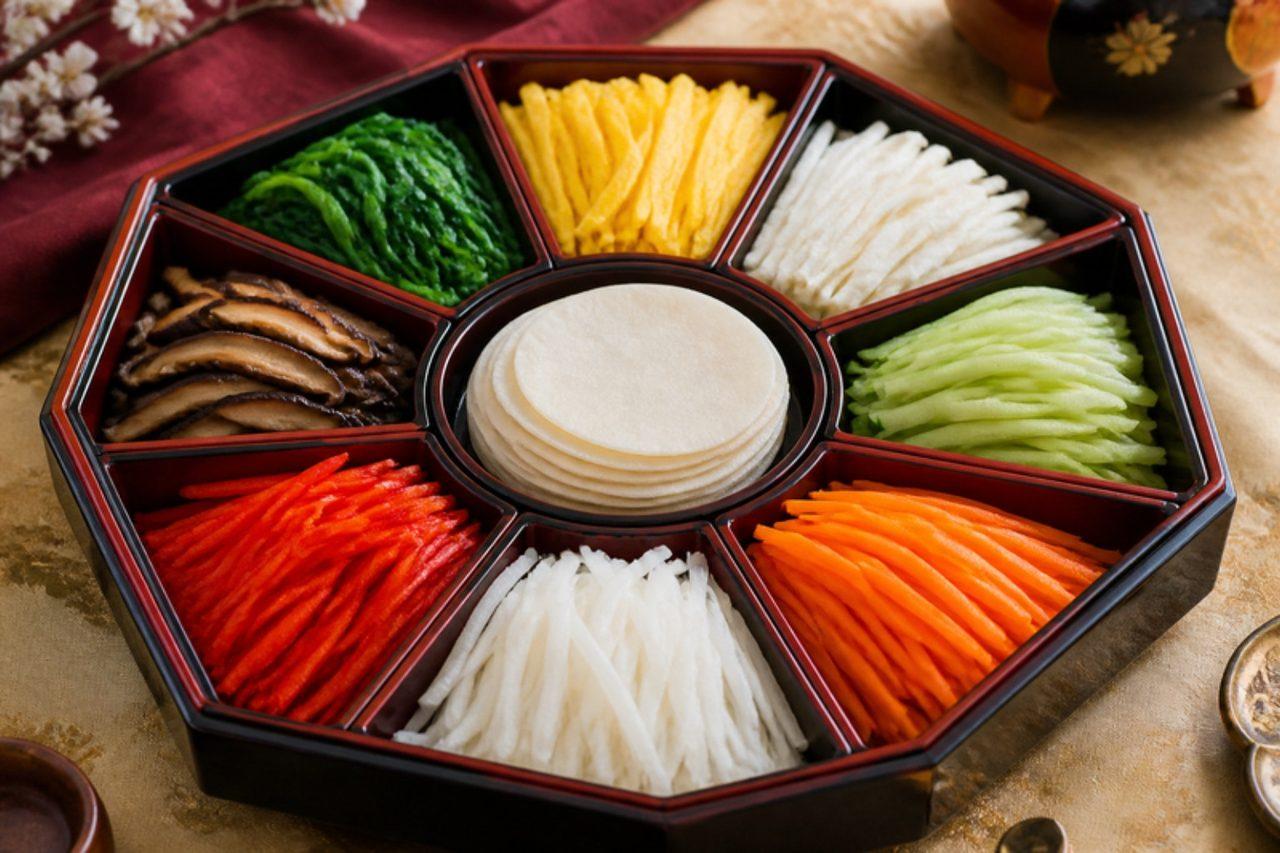
GujeolpanNine-section vegetable platter

Gujeolpan (구절판) takes its name from the octagonal lacquered tray it is served on: eight outer compartments of finely cut, separately seasoned fillings around a stack of paper-thin wheat crêpes in the middle. It was a dish of the Seoul royal court and noble households, and it still appears at weddings, 60th birthdays and Seollal tables, where everyone builds their own little rolls. Classic trays include beef; this one keeps all the colour with shiitake, wood ear, cucumber, carrot, peppers, radish and yellow and white egg. It takes patience rather than skill. Chef's tip: cut every filling into matchsticks the same length as the crêpes are wide, about 5 cm, so each roll closes neatly.

by KrazyBadal 0 views

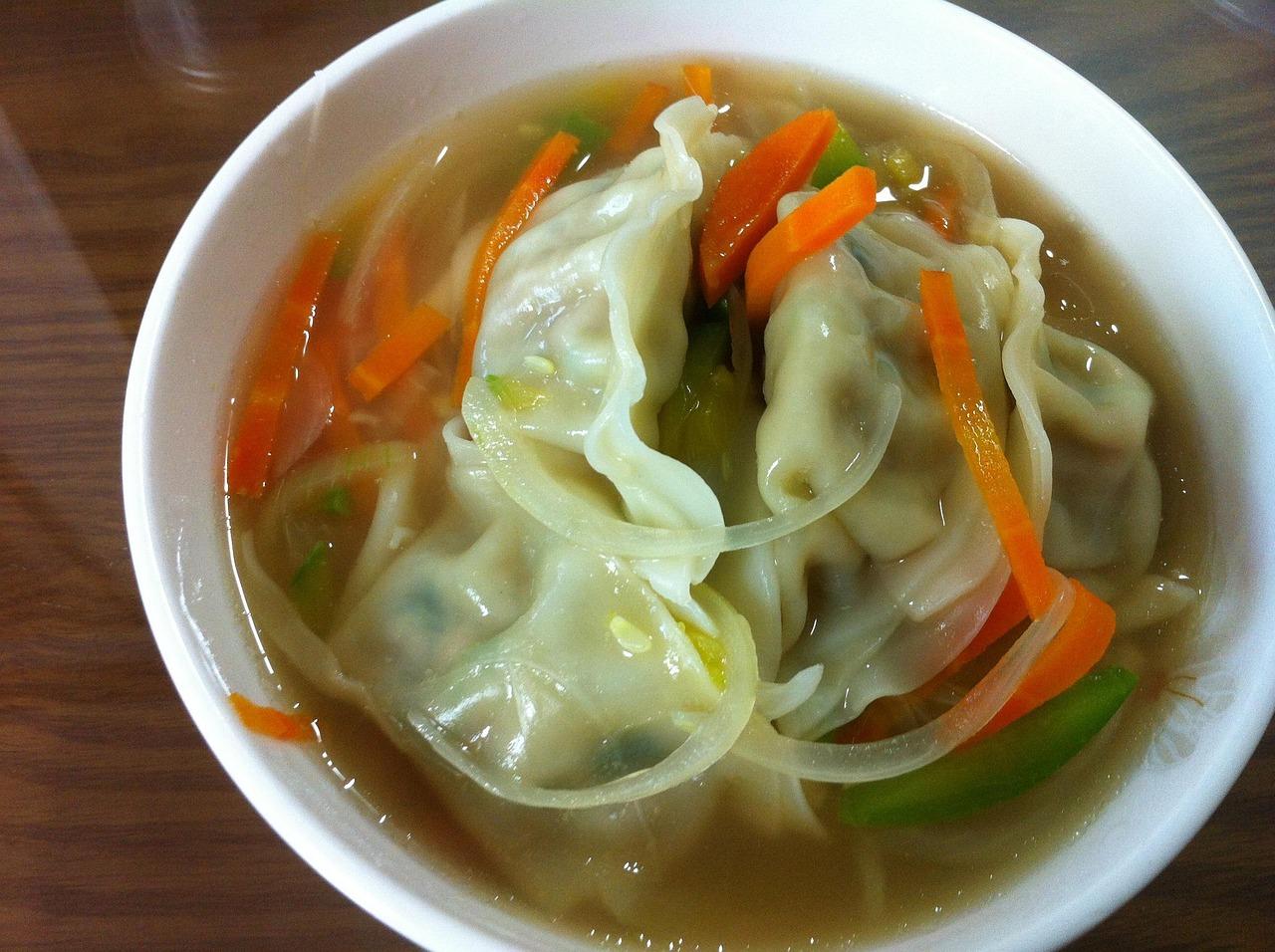
Vegetable mandu-gukVegetable dumpling soup

In Seoul and the surrounding Gyeonggi province, the first meal of Seollal (Lunar New Year) is often mandu-guk (만두국): plump dumplings and coin-shaped rice cakes floating in clear broth, finished with ribbons of yellow and white egg and strips of toasted laver. The northern half of the peninsula has always favoured dumplings over rice cake soup, and Seoul families tend to combine the two. These mandu are filled with tofu, glass noodles, cabbage, mushrooms and chives, and the broth is a kelp and shiitake stock instead of beef. Fold the dumplings a day ahead and the soup comes together in 15 minutes. Chef's tip: squeeze the tofu and cabbage hard in a cloth; a wet filling turns the wrappers soggy and the dumplings split in the pot.

by KrazyBadal 0 views

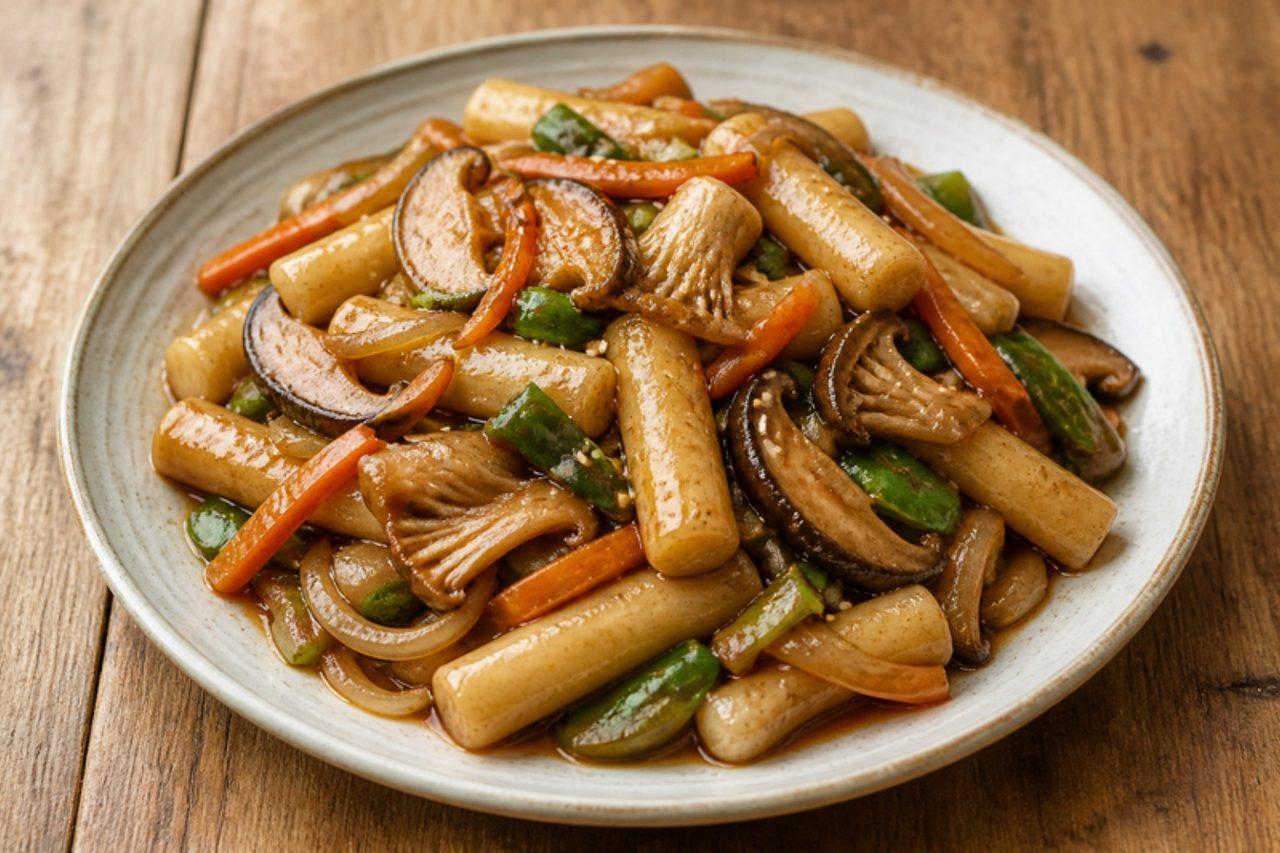
Gungjung tteokbokkiSoy rice cakes with mushrooms

Long before red gochujang tteokbokki took over Seoul's street stalls, the Joseon palace kitchens served gungjung tteokbokki (궁중떡볶이): chewy cylinders of rice cake tossed in a glossy soy and sesame glaze with mushrooms, peppers and onion. It is mild, savoury-sweet and fragrant with toasted sesame, which makes it the version Korean parents cook for children and for anyone who can't take heat. The court recipe used beef; shiitake and oyster mushrooms carry the same savoury depth here. Eat it warm as a snack or alongside rice and kimchi. Chef's tip: soften the rice cakes in hot water before they meet the pan, or the outsides scorch while the centres stay hard.

by KrazyBadal 0 views

Gat kimchiMustard leaf kimchi

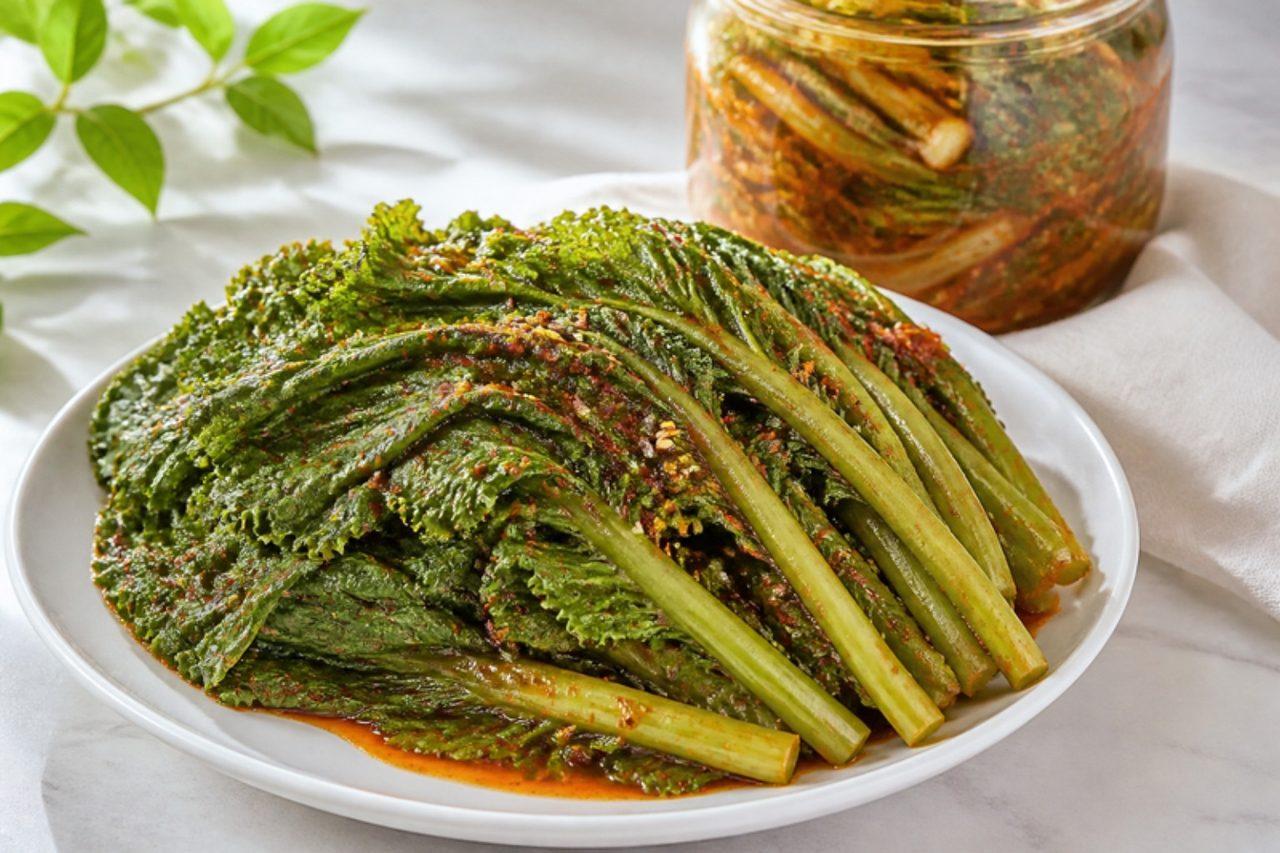
Dolsan island, off the port city of Yeosu in South Jeolla, grows a purple-tinged mustard green called gat that is milder and more tender than mainland mustard leaves, and gat kimchi (갓김치) made from it is the region's pride. The leaves keep a hot, wasabi-like bite that softens and turns tangy after a week or two of fermenting. Jeolla kimchi is usually heavy with fish sauce and salted anchovy; this version gets its depth from a kelp-and-rice porridge, pear, onion and soy, so it is vegan. Eat it with plain rice, noodles or on the side of jeon. Chef's tip: salt the leaves stems-first and turn them halfway; the thick stems need longer than the leaves.

by KrazyBadal 0 views

Jeonju kongnamul gukbapBean sprout rice soup

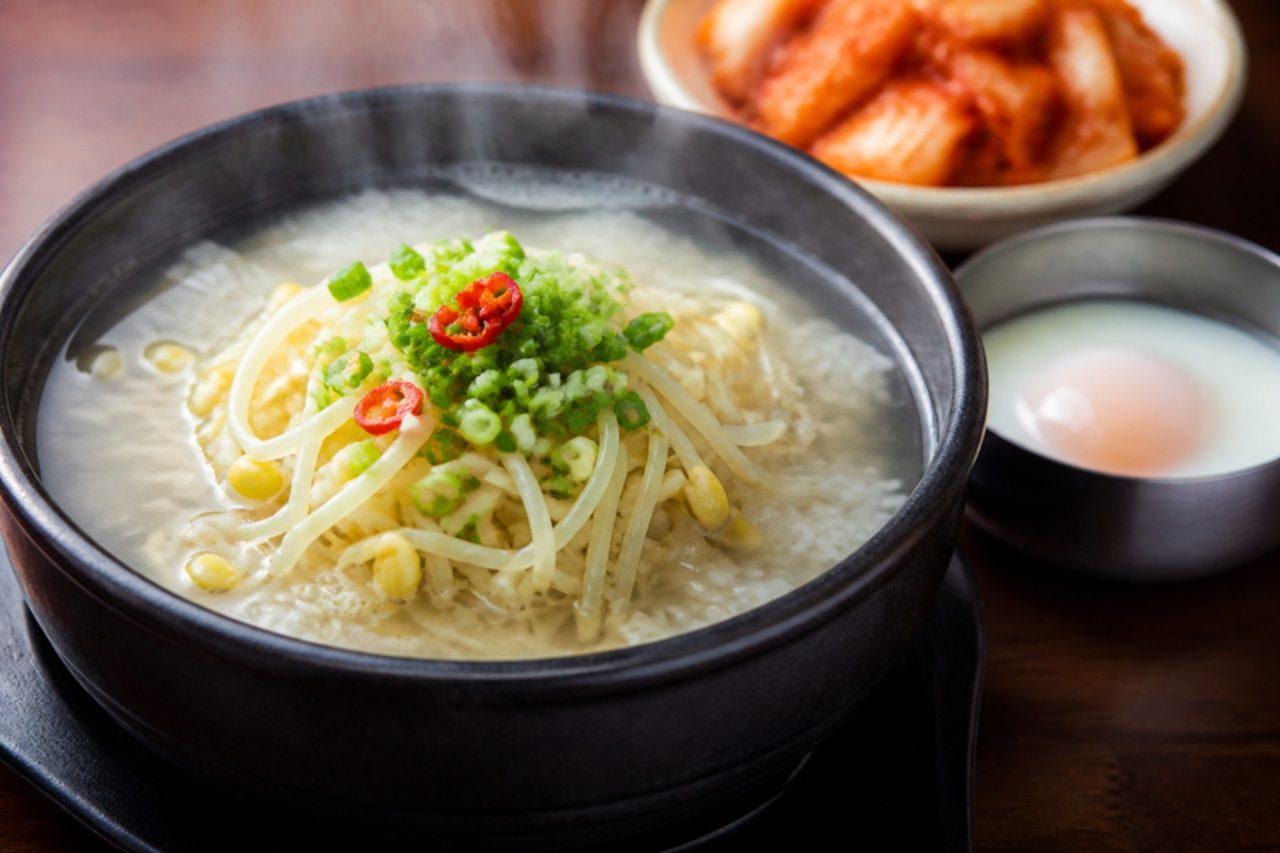
Jeonju, the North Jeolla city known for bibimbap, starts its day with kongnamul gukbap (콩나물국밥): a scalding clay bowl of clear soybean-sprout broth over rice, sharp with garlic and chilli, served before dawn to market traders and, famously, to anyone with a hangover. Many Jeonju shops bring a half-cooked egg in a separate cup, which you season with a little broth and crumbled seaweed and slurp first. The usual broth is anchovy based, with salted shrimp at the table; here it is kelp, shiitake and soup soy sauce. Chef's tip: keep the lid on while the sprouts cook and don't open it until they are done; lifting it early is said to give them a raw, grassy smell.

by KrazyBadal 0 views

Hodu gwajaWalnut-shaped red bean cakes

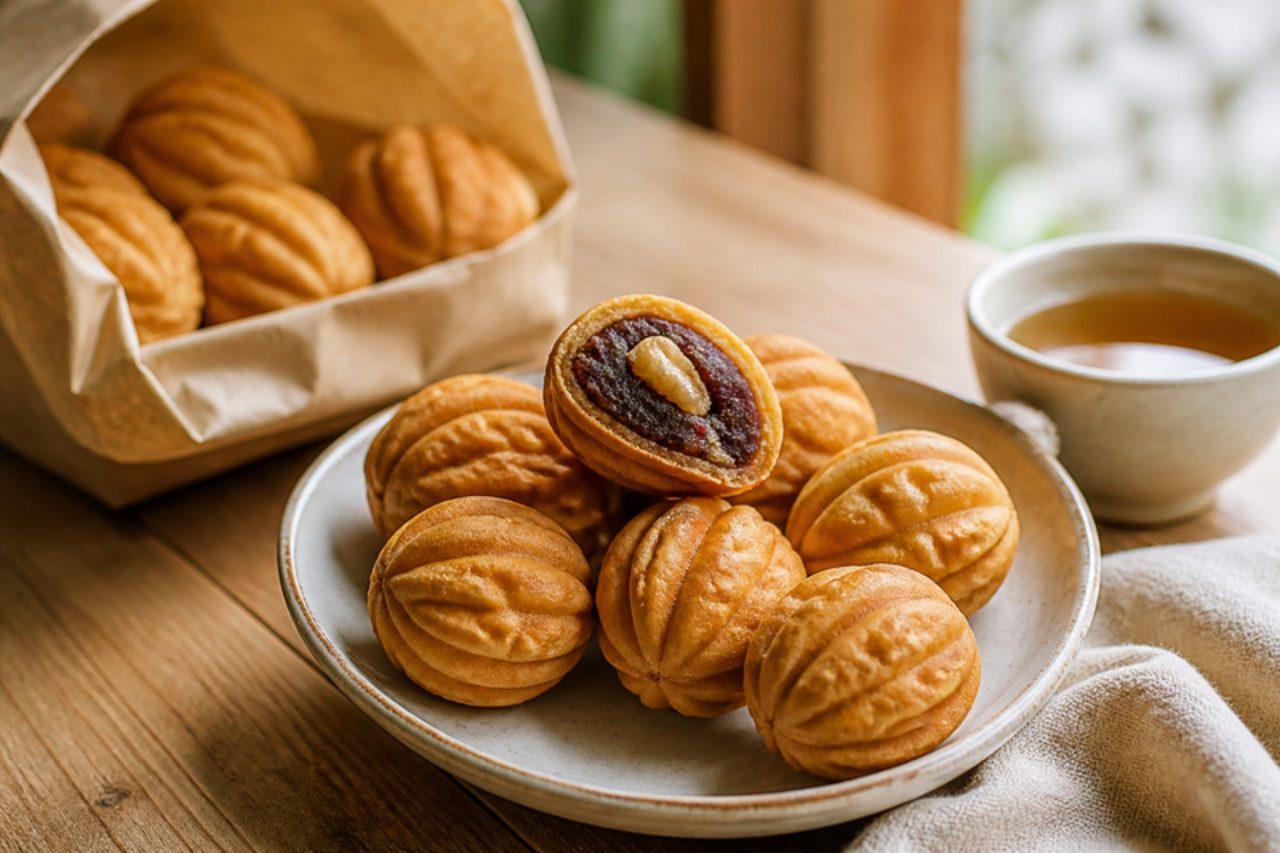
Hodu gwaja (호두과자) were first sold at Cheonan station in South Chungcheong in the 1930s, and the town's walnut orchards still supply the pieces of nut hidden in every one. Today you find them in paper bags at every motorway service station in Korea: bite-sized, walnut-shaped cakes with a soft, eggy shell around sweet red bean paste and a chunk of walnut. They are made in a hinged cast-iron mould; a madeleine or Japanese takoyaki pan works too, though the shape will differ. Eat them warm, on the day. Chef's tip: heat the mould properly before the first batch; the first cakes are always the palest, so judge doneness by the colour of the later ones.

by KrazyBadal 0 views

Chodang sundubuSoft silken tofu

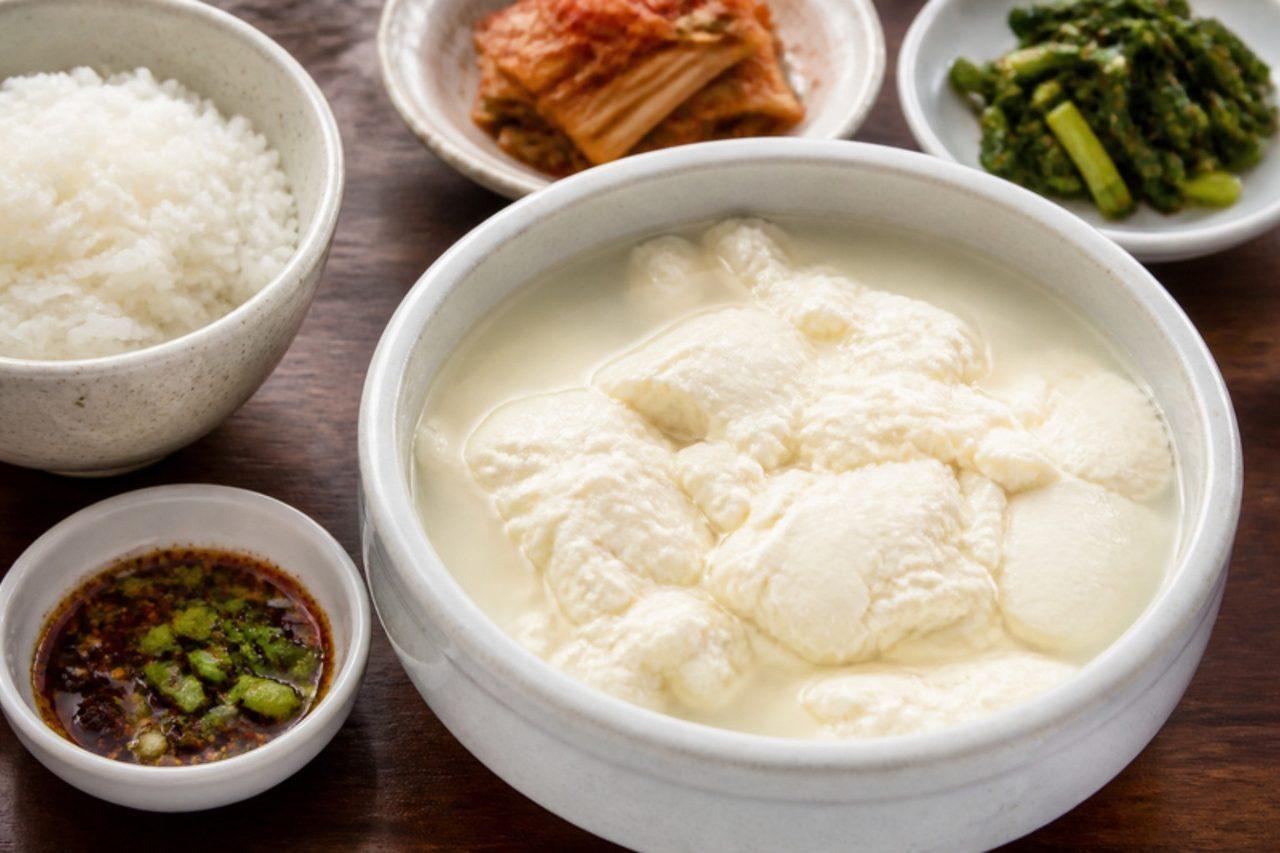
In Chodang village on the edge of Gangneung, tofu houses have curdled soy milk with clean seawater from the East Sea for generations, and the result, chodang sundubu (초당순두부), is served warm in a bowl before it has been pressed: soft, quivering curds in their own pale whey, with a soy dressing to spoon over. It is breakfast and lunch there, eaten with rice, kimchi and a few banchan, and tastes sweet and clean in a way packaged tofu never does. At home, nigari (the mineral salt left from seawater) gives the same effect. Use plain, unsweetened soy milk with at least 7% soy or make your own. Chef's tip: add the nigari off the heat and stir only once or twice; stirring after the curds start to form breaks them into grains.

by KrazyBadal 0 views

MakguksuCold buckwheat noodles

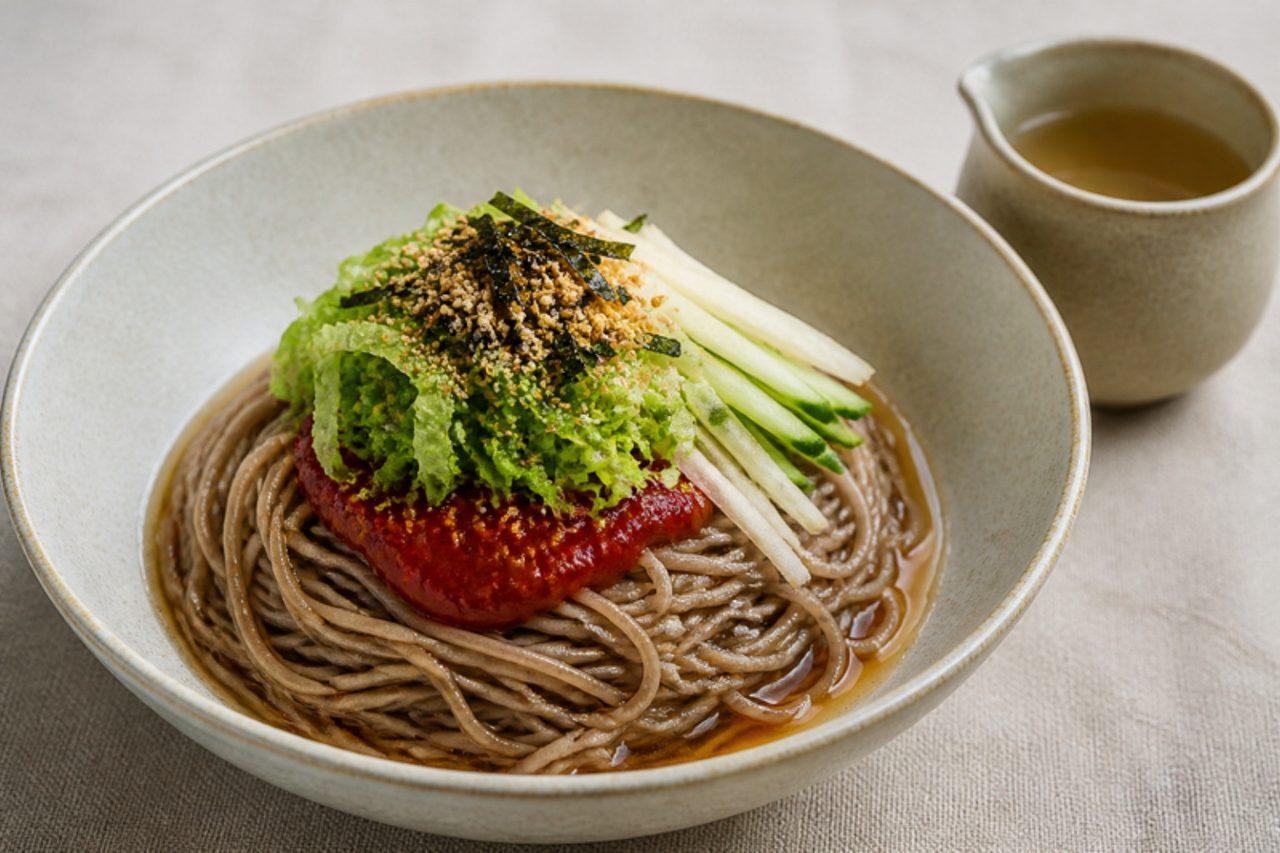
Chuncheon, the lake city in Gangwon, is famous for two things: spicy grilled chicken and makguksu (막국수), coarse buckwheat noodles served icy cold. The name roughly means 'roughly made noodles', and the dish started as simple farm food in a region where buckwheat grew better than rice. In summer, makguksu houses serve it in a sweet, sour and spicy dressing with crunchy cucumber, sweet pear and sesame, often with a jug of chilled broth on the side to pour in halfway. This one is dressed with gochujang, vinegar and pear, and a cold kelp broth. Chef's tip: rinse the cooked noodles under cold running water and rub them between your hands until the water runs clear, then chill them in iced water; that washes off the starch and gives them their springy bite.

by KrazyBadal 0 views

Gamja jeonPotato pancakes

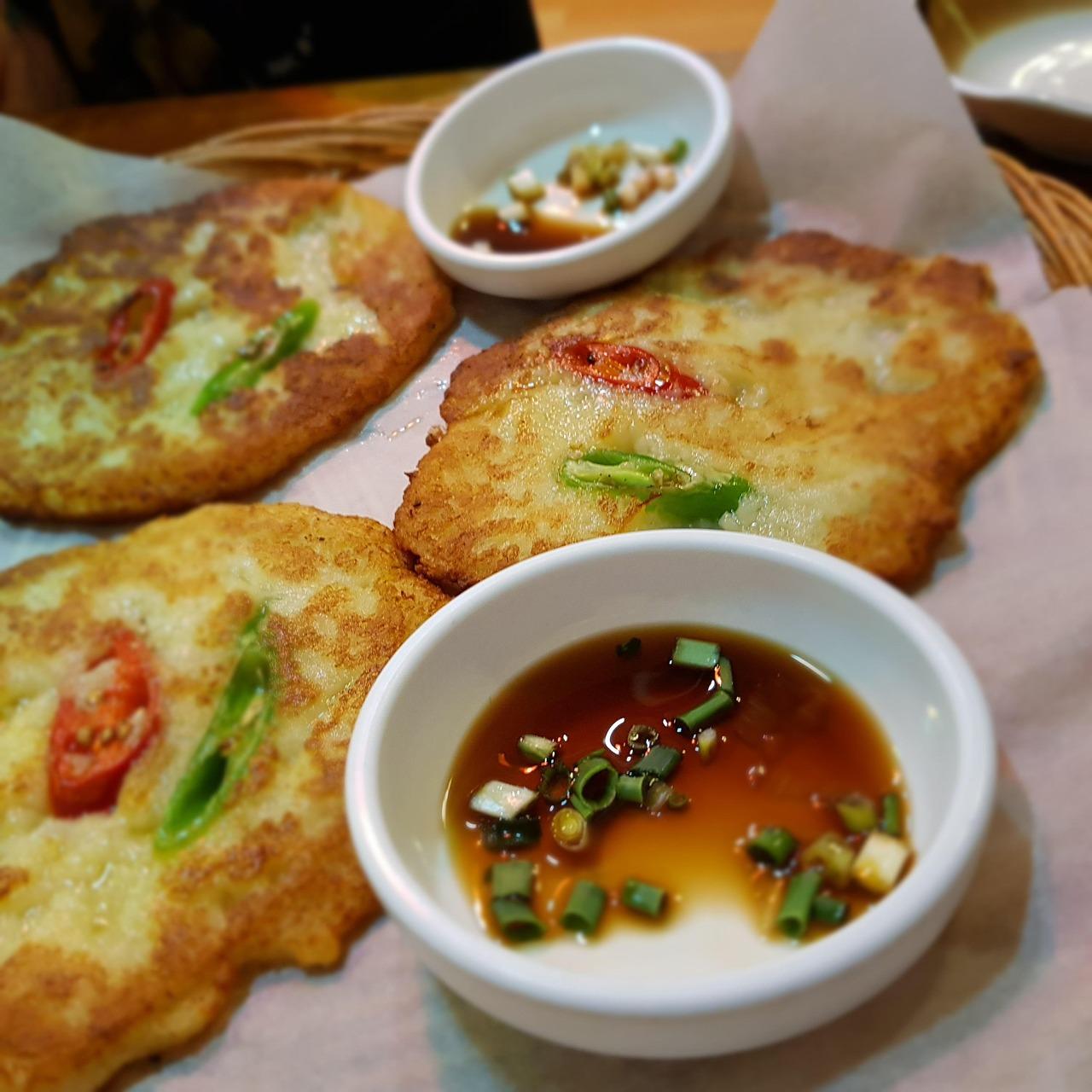
On rainy afternoons in Gangwon province, roadside stalls and mountain trail restaurants fry gamja jeon (감자전): pancakes of nothing but grated potato, salt and a few slices of chilli, fried in plenty of oil until the edges turn lacy and glassy-crisp while the middle stays soft and chewy. It is a different thing from a Western rösti, made from a wet purée rather than shreds. Eat them hot with a sharp soy dipping sauce and a bowl of makgeolli or barley tea. Chef's tip: press each pancake thin with the back of a spoon as soon as it hits the pan; thick ones stay gluey inside.

by KrazyBadal 0 views

Gamja ongsimiPotato dumpling soup

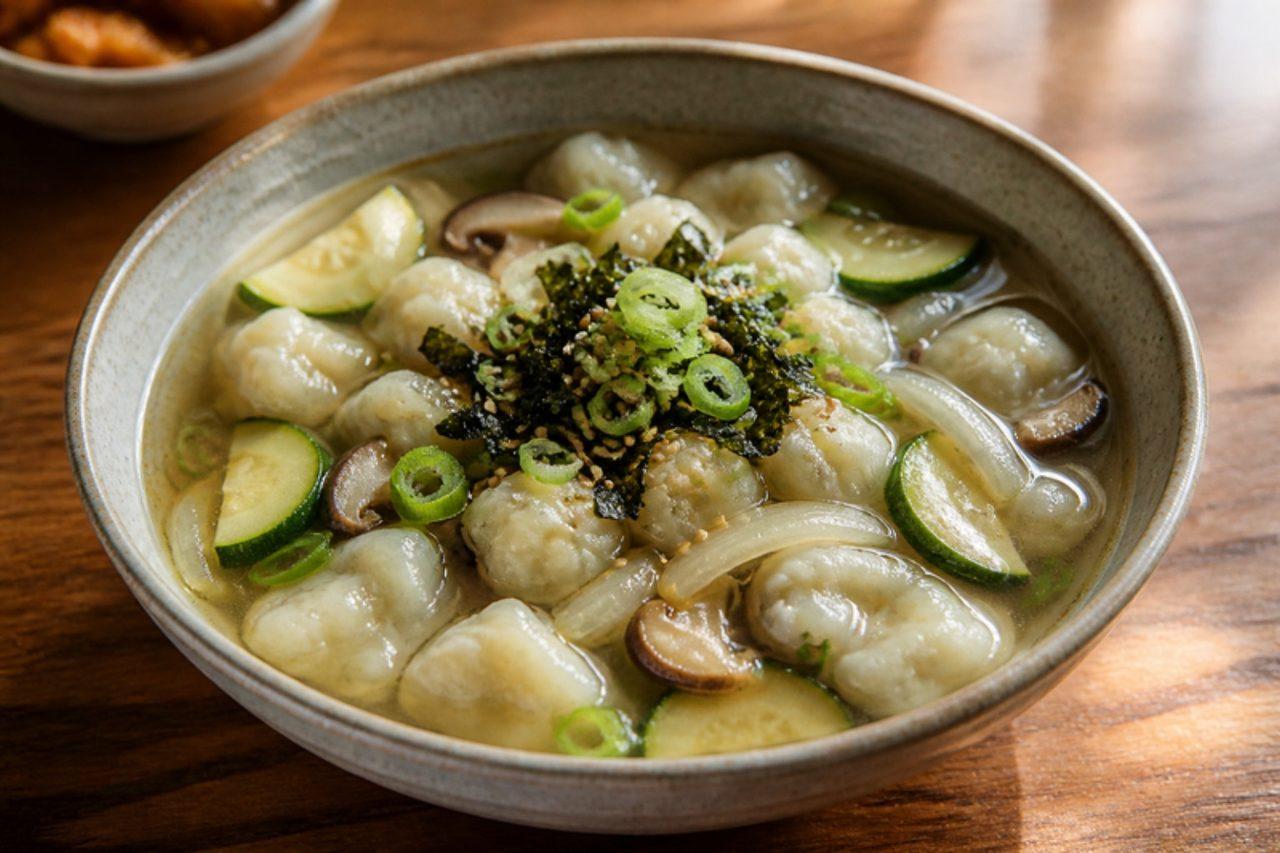
Ongsimi (옹심이) means 'little bird egg' in the Gangwon dialect, and it describes the small, chewy dumplings that Gangneung cooks make from grated potato and its own starch. Gangwon's mountains grow more potatoes than rice, and ongsimi restaurants around Gangneung still serve the dumplings in plain anchovy or kelp broth with courgette, sometimes with knife-cut noodles added. This version uses kelp and shiitake, so it is vegan and gluten free if you season with tamari. The dumplings are translucent, slippery and springy, nothing like gnocchi. Chef's tip: let the potato water stand until the white starch settles at the bottom, then add every bit of that starch back to the grated potato; it is what makes the dumplings chewy.

by KrazyBadal 0 views

GyeongdanGlutinous rice balls

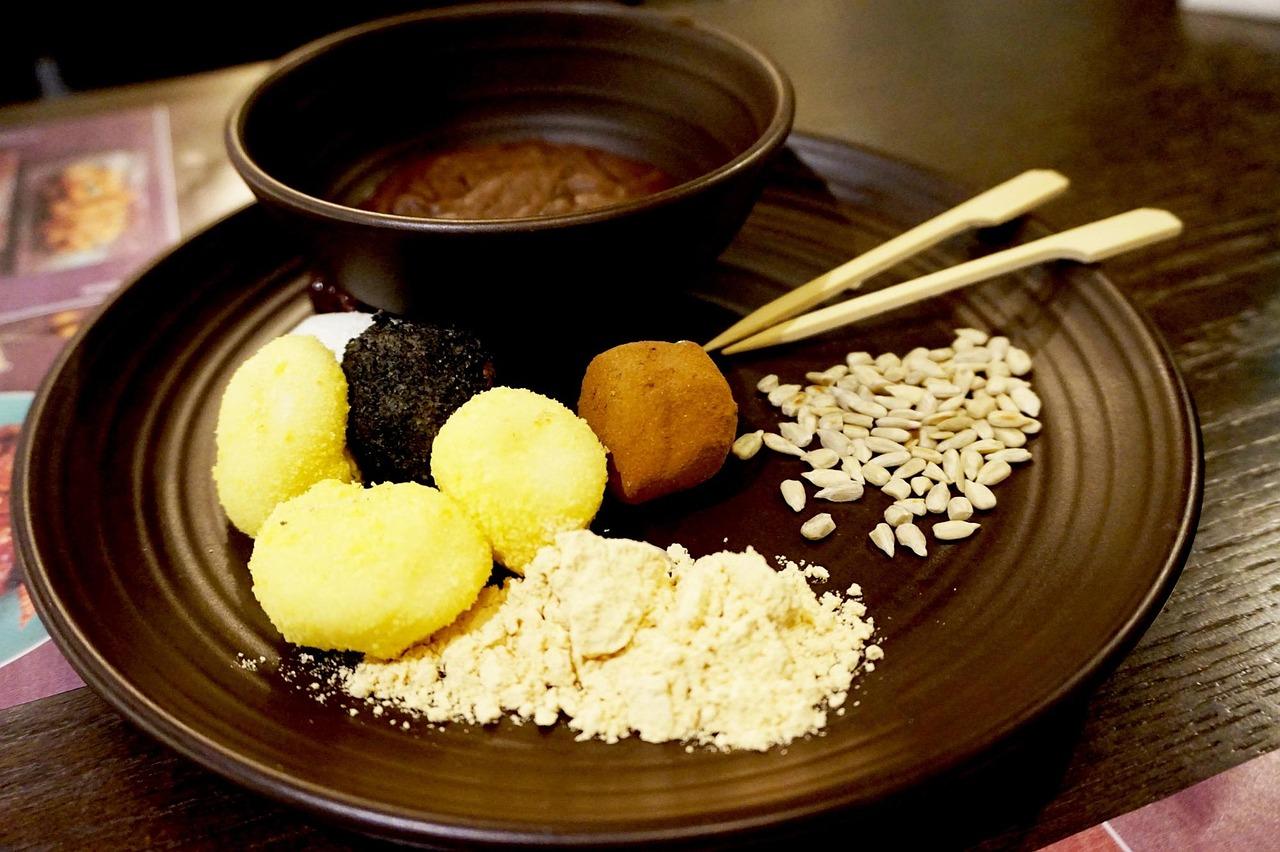
Gyeongdan (경단) are small balls of boiled glutinous rice dough, filled or plain, and rolled in coloured coatings: golden roasted soybean powder, black sesame, green or toasted coconut. In Seoul they are made for a baby's 100th day and first birthday, and sold in rice-cake shops all year in mixed boxes. They are only lightly sweet, soft and stretchy, best eaten the day they are made with a cup of barley tea. Children love rolling them. Chef's tip: mix the dough with very hot water a spoonful at a time; it should feel like soft play-dough, and if it cracks when you roll a ball it needs a little more.

by KrazyBadal 0 views

Hallabong adeSparkling tangerine drink

Hallabong (한라봉) is Jeju's pride: a large, sweet, easy-peel tangerine with a knob on top that is said to look like Hallasan, the island's volcano. Every café on Jeju sells hallabong ade (한라봉에이드), a tall glass of hallabong syrup topped up with sparkling water and ice, often with the fruit sliced into it. Koreans make the syrup, hallabong-cheong, by layering the sliced fruit with sugar in jars; this quick version is ready in 10 minutes. Outside Korea, use dekopon, sumo or any very sweet mandarin. Chef's tip: add a squeeze of lemon to the syrup; hallabong is so sweet that the drink tastes flat without a little extra acid.

by KrazyBadal 0 views

Kimchi fried rice

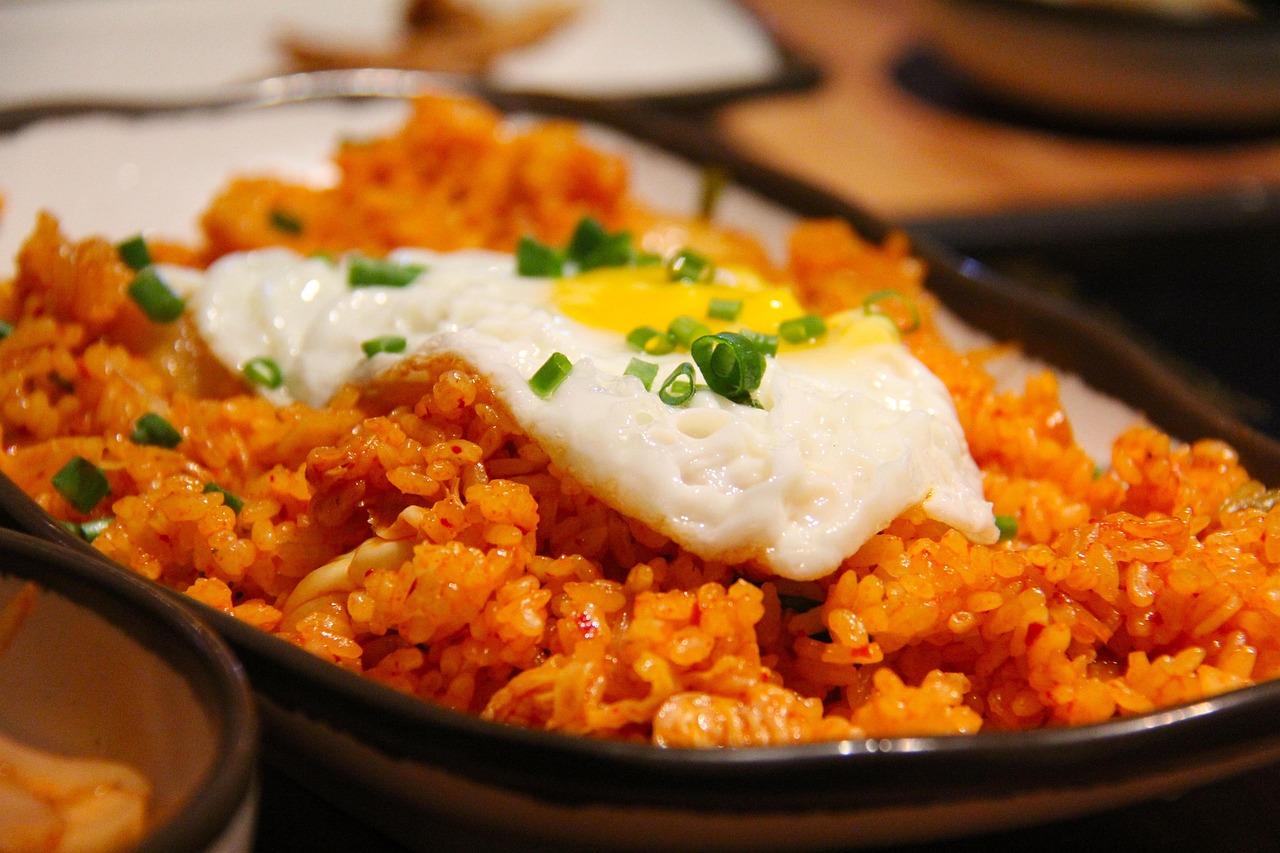
Kimchi fried rice (김치볶음밥, kimchi bokkeumbap) is the dish Korean households all over the country make when the kimchi has turned sour and there is leftover rice in the fridge. The kimchi and its juice are fried first so they caramelise, then the rice is tossed through until every grain is red, tangy and a little smoky. A fried egg with a runny yolk on top makes it a meal. Use well-fermented vegetarian kimchi, such as the baechu kimchi in this collection; many shop-bought kimchis contain fish sauce or shrimp, so check the label. Chef's tip: the kimchi must be properly sour, at least two or three weeks old. Fresh kimchi makes a flat, watery fried rice; fry it until it catches slightly before the rice goes in.

by KrazyBadal 0 views

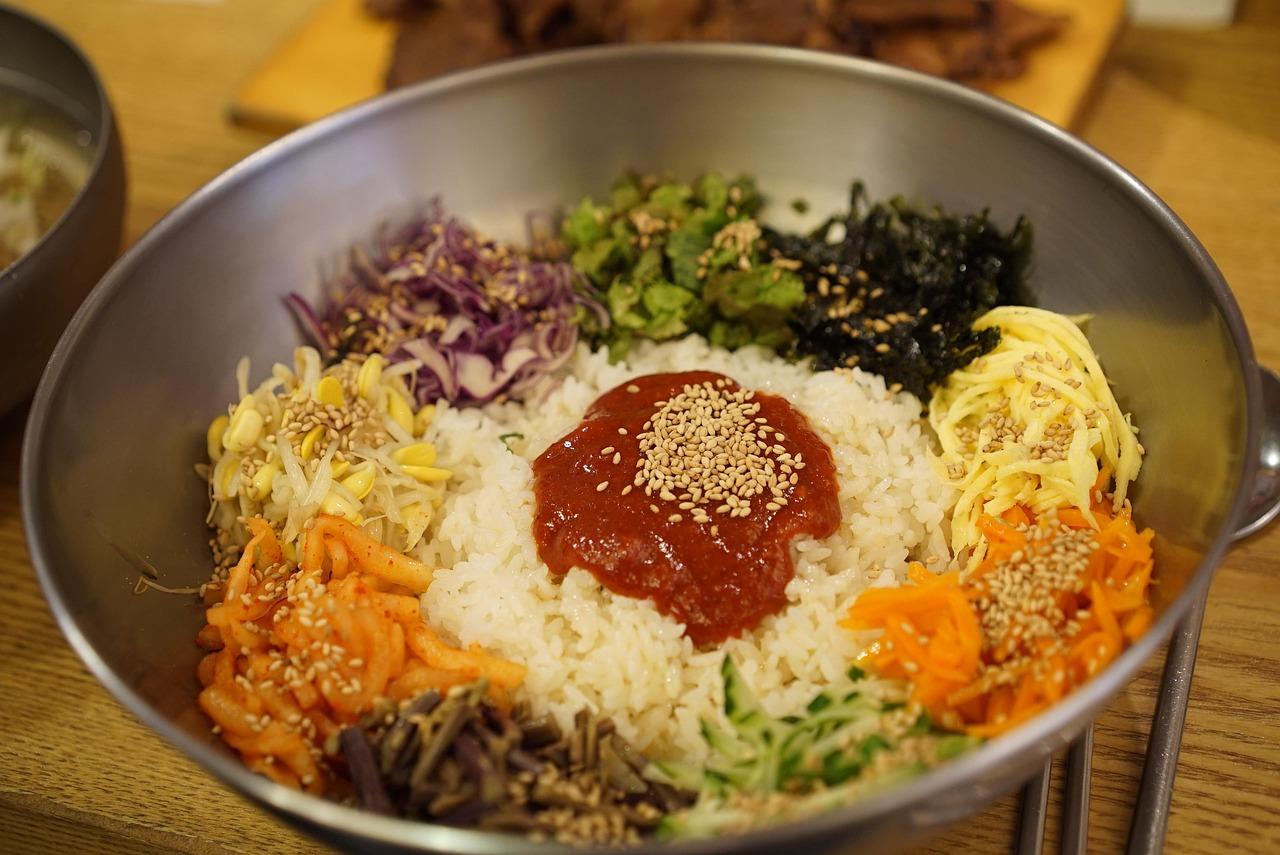
BibimbapRice bowl with seasoned vegetables

Bibimbap (비빔밥) means 'mixed rice': a bowl of warm rice topped with small heaps of separately seasoned vegetables, a fried egg and a spoonful of gochujang sauce, all stirred together at the table. The city of Jeonju in North Jeolla province is famous for it and serves it with a dozen or more toppings; this home version keeps five that are easy to find. Each vegetable is cooked on its own so it keeps its colour and texture, and the sauce brings sweetness, heat and a nutty sesame finish. Serve with kimchi and a light soup. Chef's tip: season every vegetable on its own, lightly, and taste each one. If each heap is good alone, the mixed bowl will be balanced; if they are all dressed alike, the bowl tastes flat.

by KrazyBadal 0 views

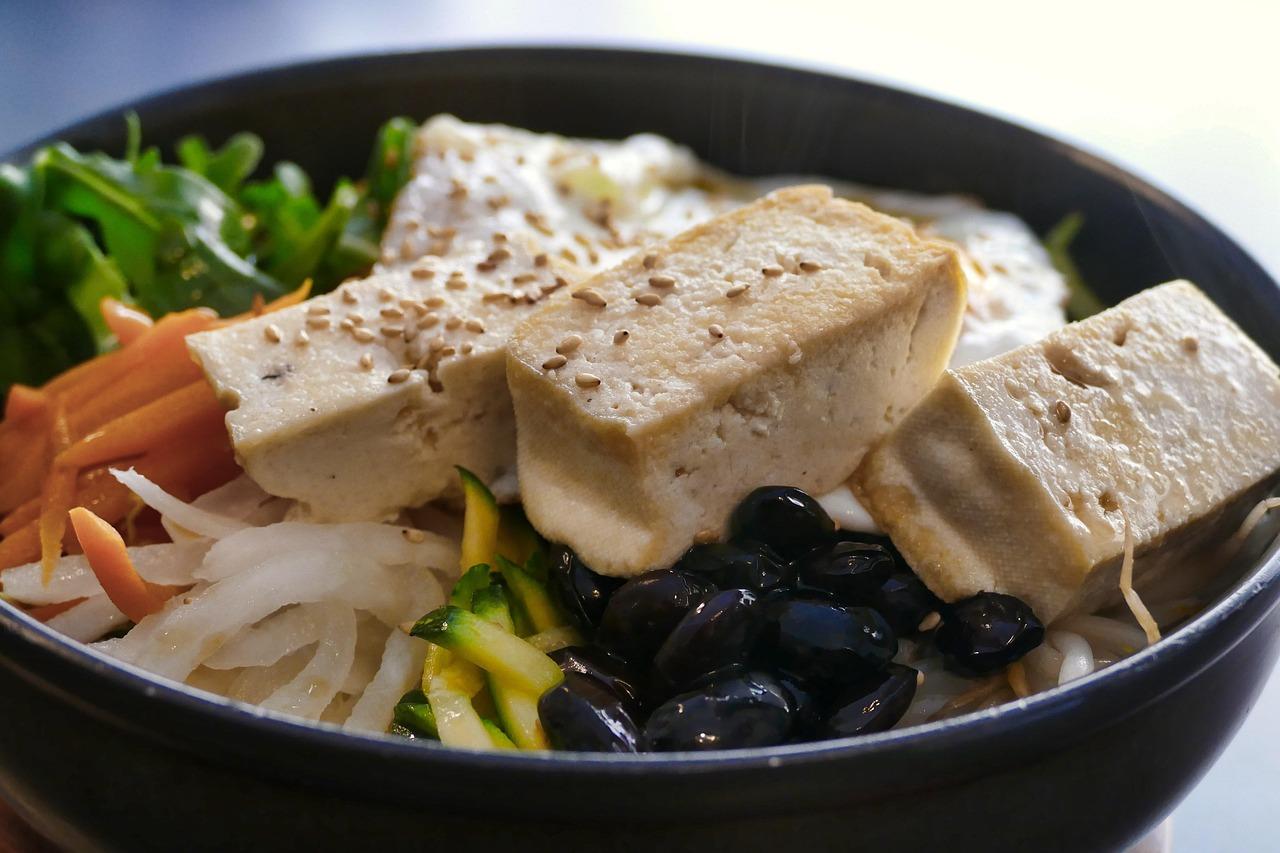
Dolsot bibimbapStone pot rice bowl with vegetables

Dolsot bibimbap (돌솥비빔밥) is bibimbap served in a heavy stone pot (dolsot) that is heated on the hob until the rice touching the stone turns into a crackling golden crust, called nurungji. It is eaten all over Korea and is still sizzling when it reaches the table. This vegetarian version tops the rice with seasoned spinach, bean sprouts, carrot, mushrooms and pan-fried tofu, and an egg that cooks gently in the heat of the pot. A small cast-iron pan works if you don't have stone bowls. Chef's tip: listen to the pot. A steady crackle with a toasty, nutty smell means the crust is forming; a sharp burnt smell means the heat is too high.

by KrazyBadal 0 views

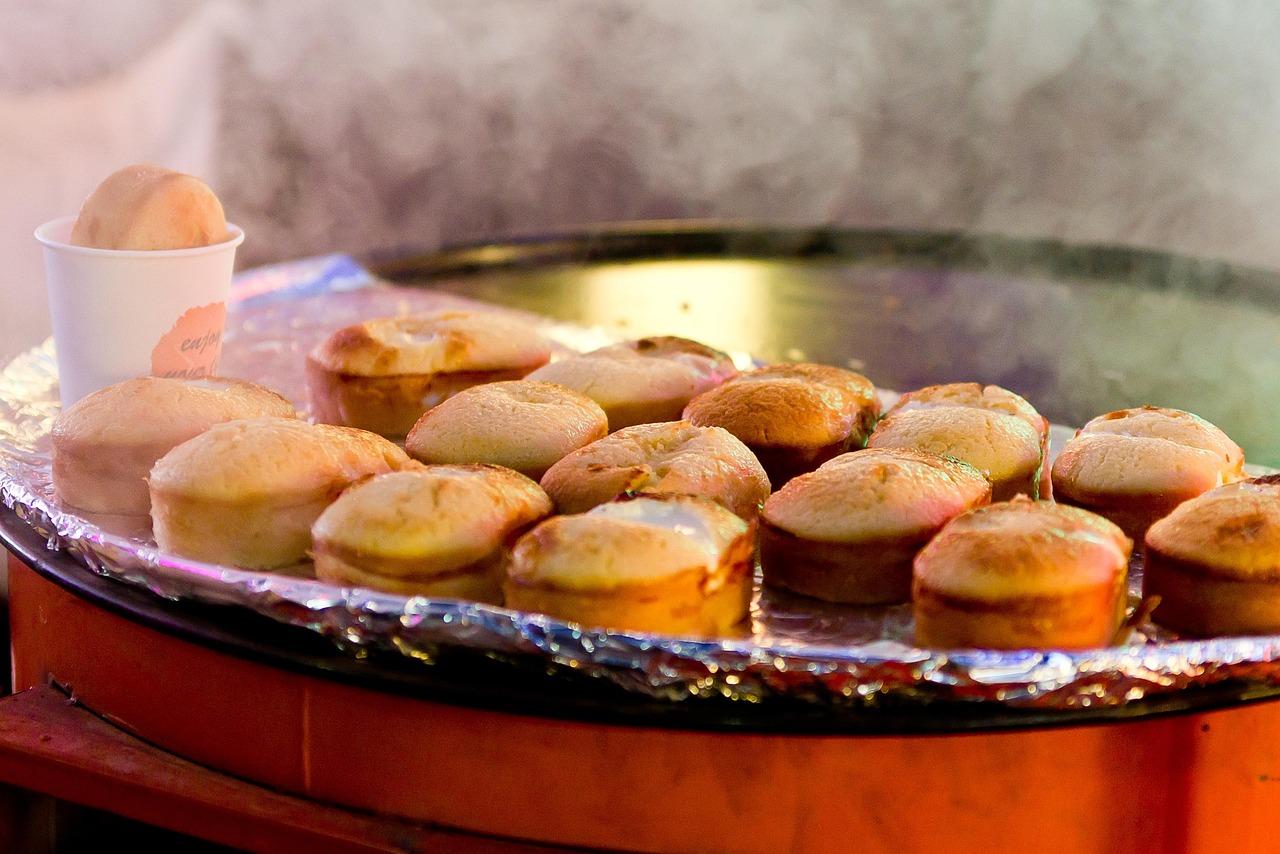
GyeranppangSweet egg bread

Gyeranppang (계란빵), or egg bread, is a winter street snack from Seoul: a small, sweet and fluffy bun with a whole egg baked right on top. Vendors bake them in special oval moulds, but a muffin tin works well at home. The soft, slightly sweet batter and the savoury egg are a lovely mix, making it a popular breakfast on the go. Bake until the white is just set if you like the yolk soft, or a few minutes longer for a firm yolk. Chef's tip: fill the moulds only a third full, so the egg sits in the batter as it rises rather than sliding off the side.

by KrazyBadal 0 views

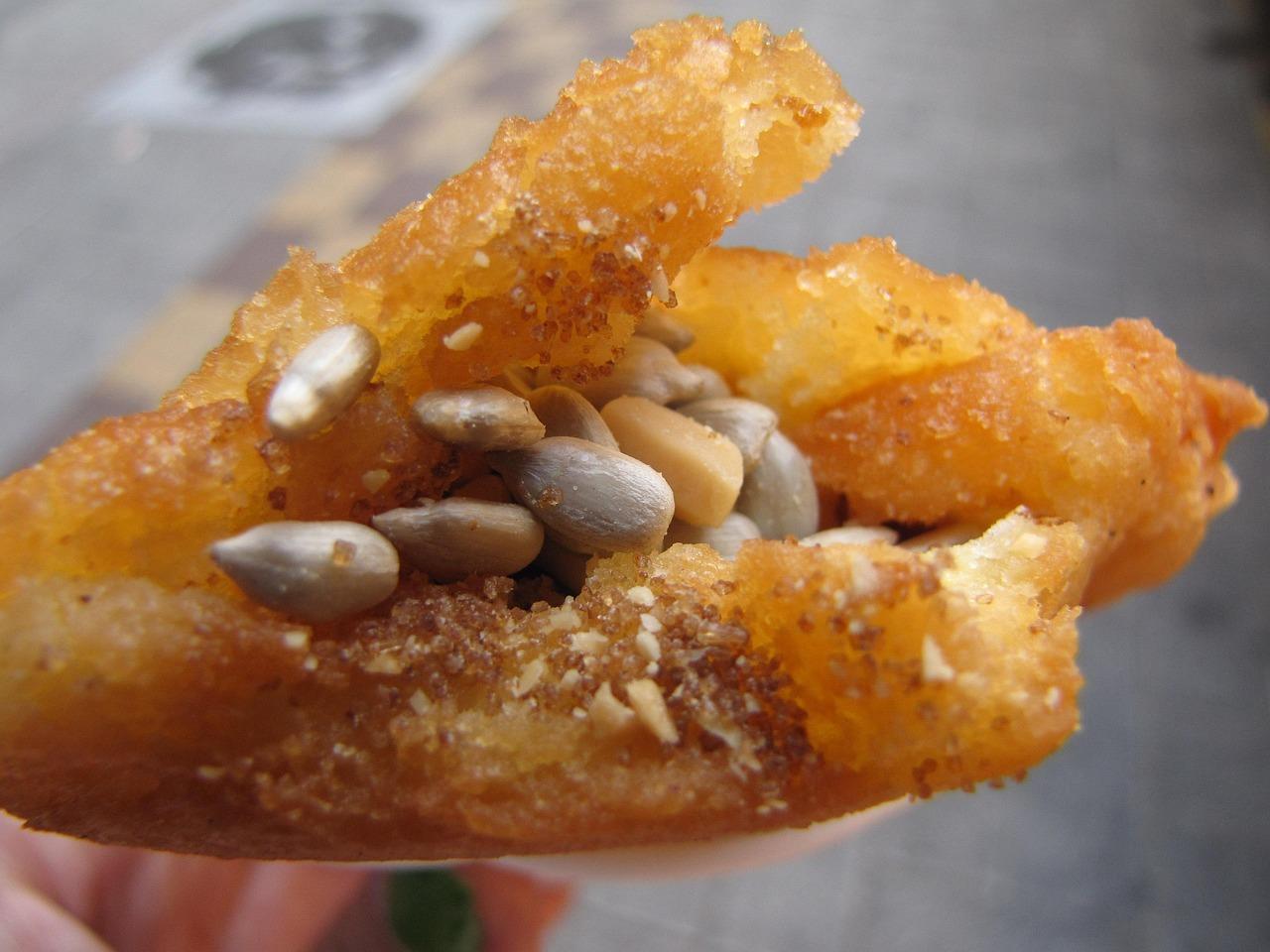
HotteokFilled sweet fried pancakes

Hotteok (호떡) are chewy, yeasted pancakes filled with brown sugar and cinnamon that melt into a hot syrup as they fry. They are a winter street snack all over Korea, but Busan is known for ssiat hotteok (씨앗호떡), where the fried pancake is slit open and stuffed with a handful of toasted sunflower and pumpkin seeds. Glutinous rice flour in the dough makes it soft and stretchy. Be careful with the first bite, as the filling is very hot. This dough uses milk, so it is vegetarian; use water instead for a dairy-free version. Chef's tip: rest the dough until it has properly doubled and is full of bubbles, and keep your hands oiled. A sticky, well-risen dough gives the chewy, stretchy texture.

by KrazyBadal 0 views

Showing 48 of 156 recipes

Show more recipes

Page 6 of 7

More collections