Skip to content

Vegan Indian recipes

Indian dishes with no dairy, ghee, eggs or meat. (672 recipes)

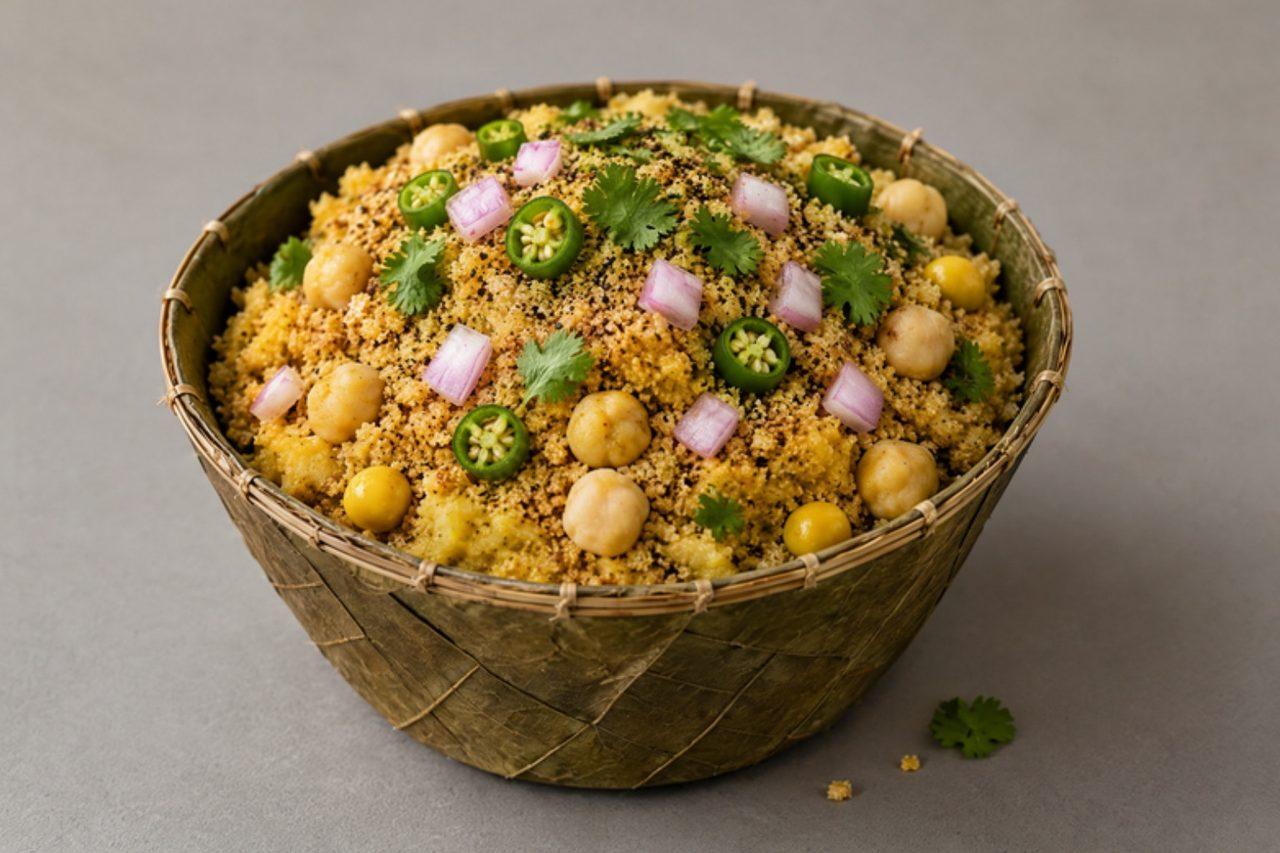
Kelli chanaSpiced chickpea snack

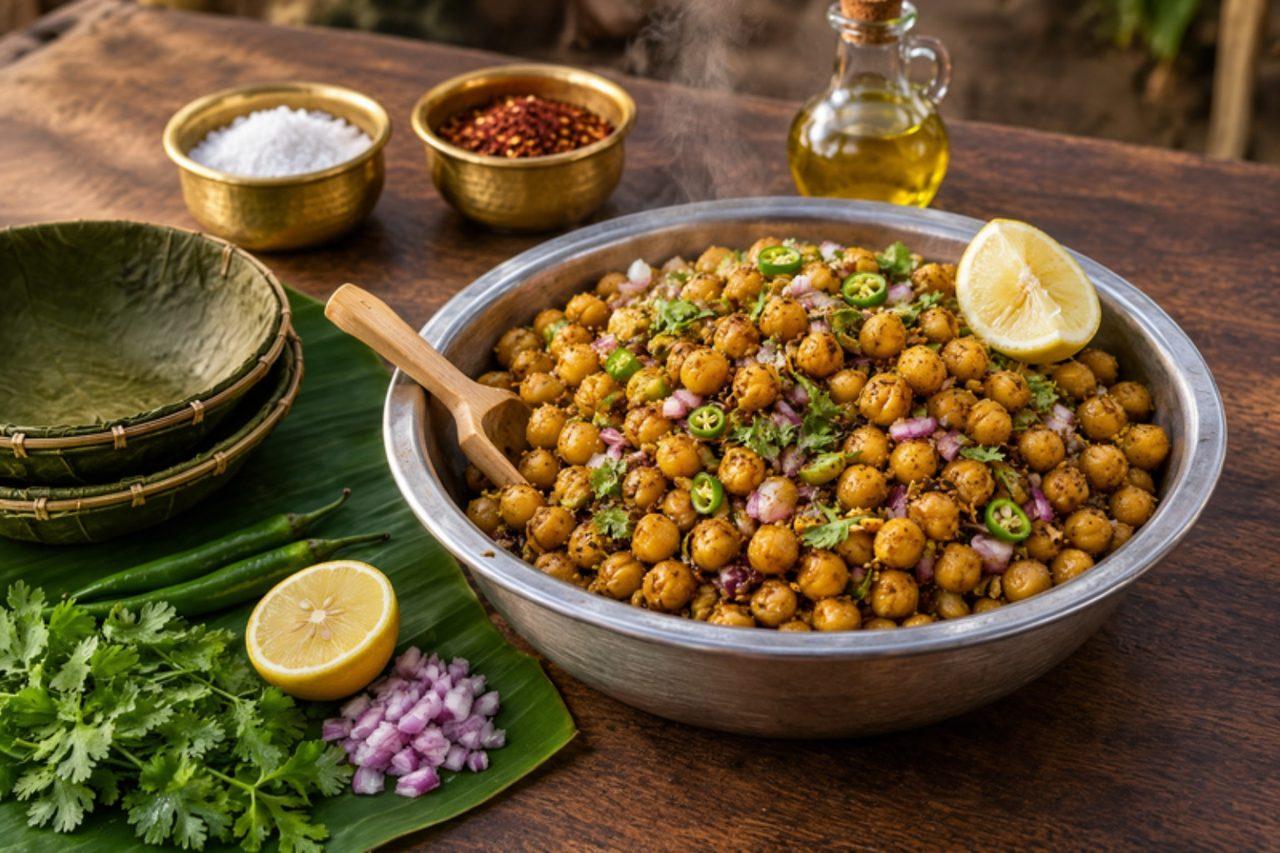
On Imphal evenings, kelli chana is sold from steaming pots at street stalls and outside markets: boiled chickpeas tossed while hot with raw onion, chilli, coriander and lemon, sometimes with a spoon of roasted chilli. It is a cheap, filling snack before dinner. The mistake is using under-cooked chickpeas, which stay hard; they should squash easily between finger and thumb. Chef's tip: toss the chickpeas while still hot so they soak up the lemon and salt.

by KrazyBadal 0 views

Lauki koftaBottle gourd balls in gravy

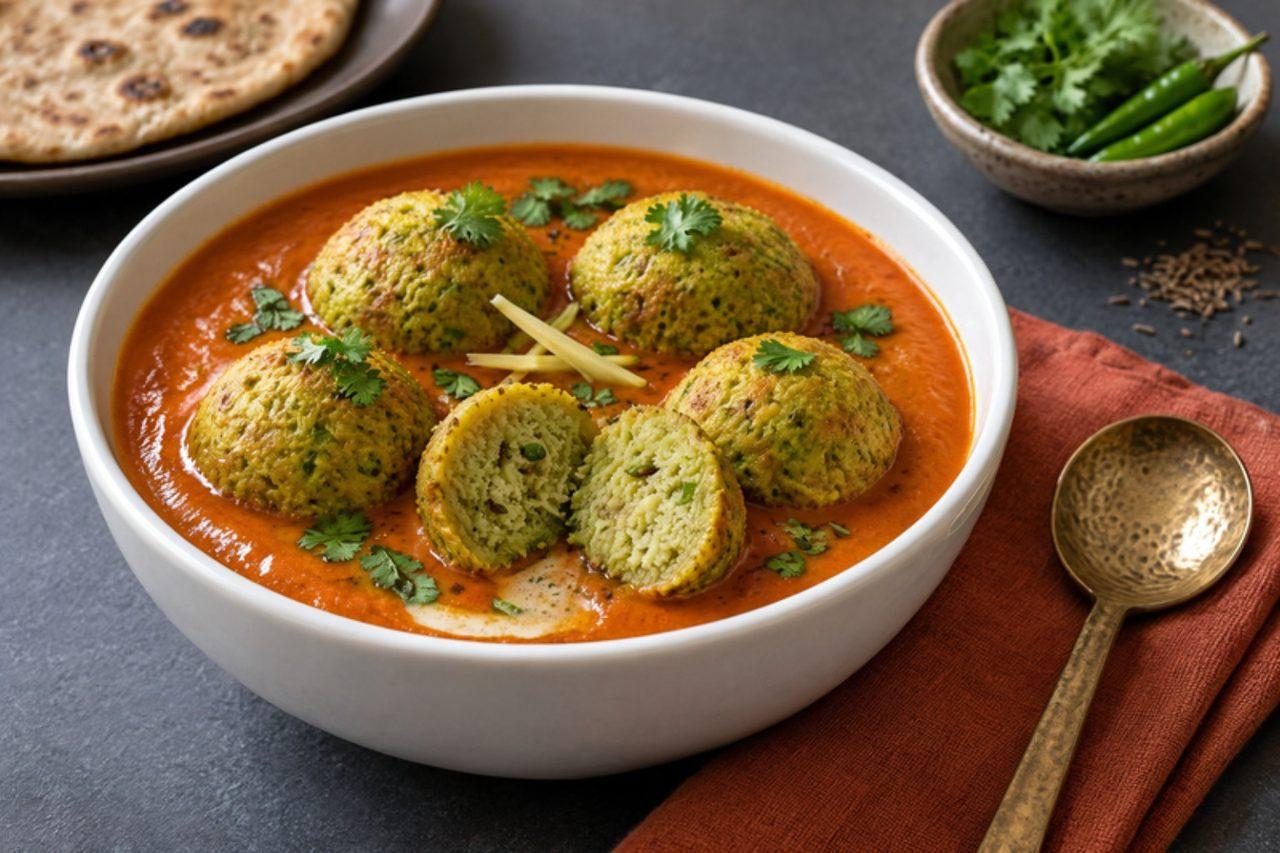
Lauki kofta is how North Indian mothers in Punjab and Uttar Pradesh smuggle the humble bottle gourd onto a party table: the gourd is grated and squeezed, bound with gram flour, fried into soft balls and slipped into an onion-tomato gravy. It is a Sunday-lunch and dinner-party curry with phulka, jeera rice or laccha paratha. The classic mistake is not squeezing the lauki hard enough; wet mixture splutters in the oil and the koftas fall apart. Chef's tip: save the squeezed lauki juice and use it in place of water in the gravy, so none of its flavour is wasted.

by KrazyBadal 0 views

Methi gajarCarrots with fenugreek leaves

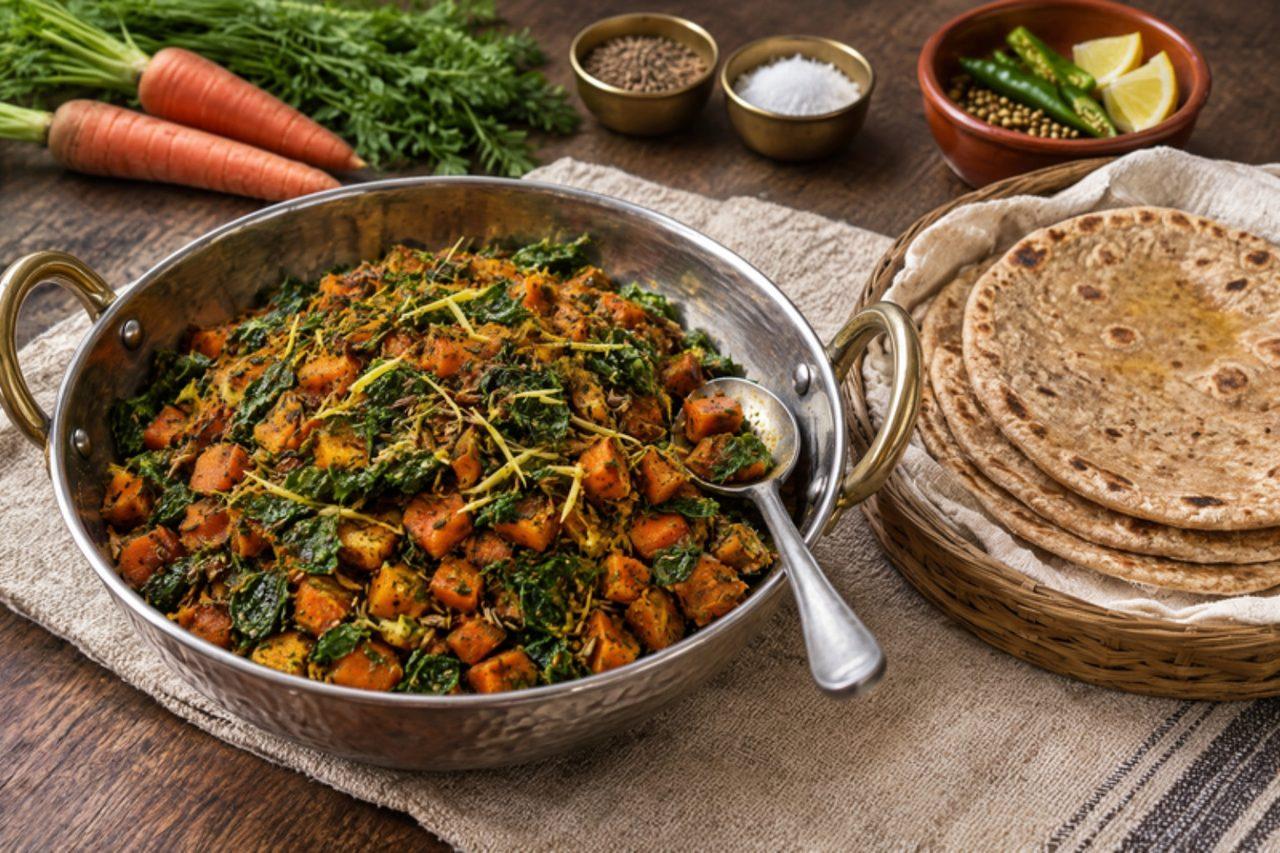
When the long red Delhi carrots and bunches of fresh methi fill the winter markets of Haryana and Punjab, this quick dry sabzi turns up beside every plate of rotis and dal. The slight bitterness of the fenugreek leaves and the sweetness of the carrots balance each other, helped along by a pinch of sugar and a squeeze of lemon. It takes about 25 minutes. The common mistake is adding the methi too early, which makes it bitter and dark. Chef's tip: rub the chopped methi with a little salt and squeeze it after 10 minutes; this tames the bitterness without losing the fragrance.

by KrazyBadal 0 views

Kumbakonam kadappaMoong dal and potato gravy

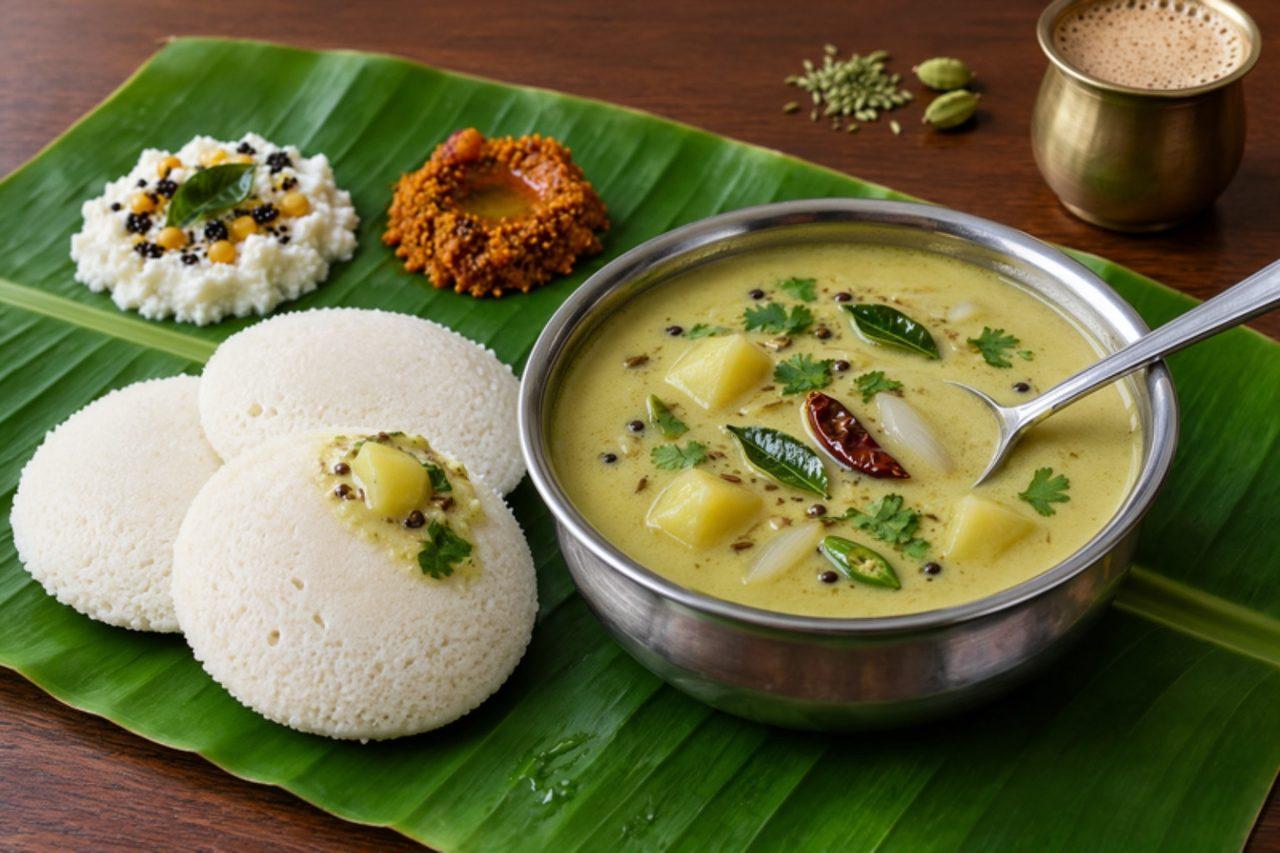
Kadappa belongs to the temple town of Kumbakonam in Thanjavur district, where it is ladled beside idli, dosa and soft poori at breakfast, a mild gravy of moong dal and potato thickened with a paste of coconut, roasted gram, fennel and green chilli. Its gentle, aromatic taste is a world away from sambar. The common mistake is boiling it hard after the coconut goes in; the paste separates and loses its fragrance, so heat it just to a simmer. Chef's tip: a teaspoon of poppy seeds ground into the paste gives the creamy body of the Kumbakonam hotels.

by KrazyBadal 0 views

Chagem pombaMustard greens and fermented soybean

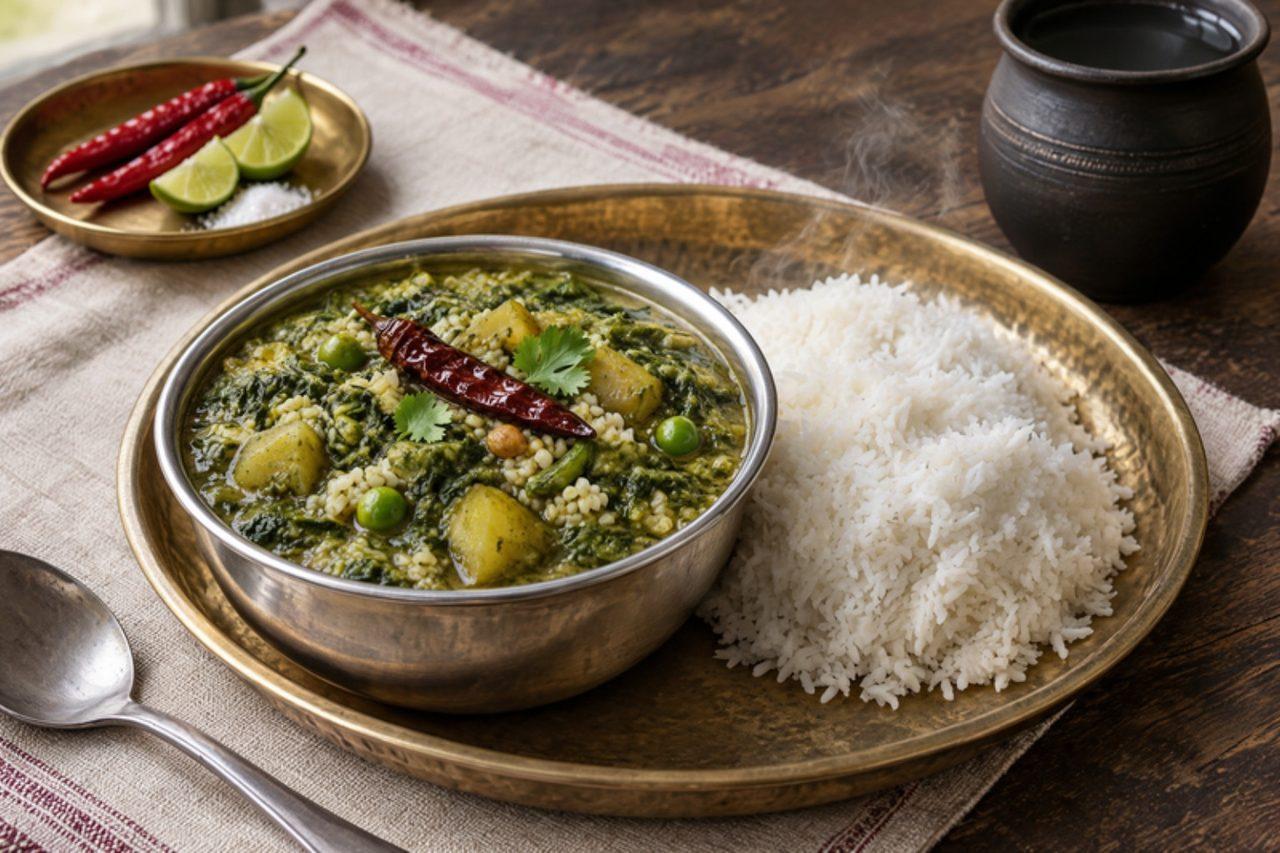
Chagem pomba is a thick Meitei stew of mustard leaves and seasonal vegetables, bound with rice flour and flavoured with hawaijar, Manipur's sticky fermented soybean; it is cooked especially for Ningol Chakouba and family gatherings, and eaten with rice. To make hawaijar, keep boiled, drained soybeans wrapped in leaves at 30–40 °C for 3 days until stringy and pungent; discard if black, green or pink mould appears or it smells rotten. The mistake is adding dry rice flour straight to the pot, which forms lumps: whisk it into water first. Chef's tip: bought natto or kinema replaces hawaijar well.

by KrazyBadal 0 views

Koova kurukku (arrowroot porridge)

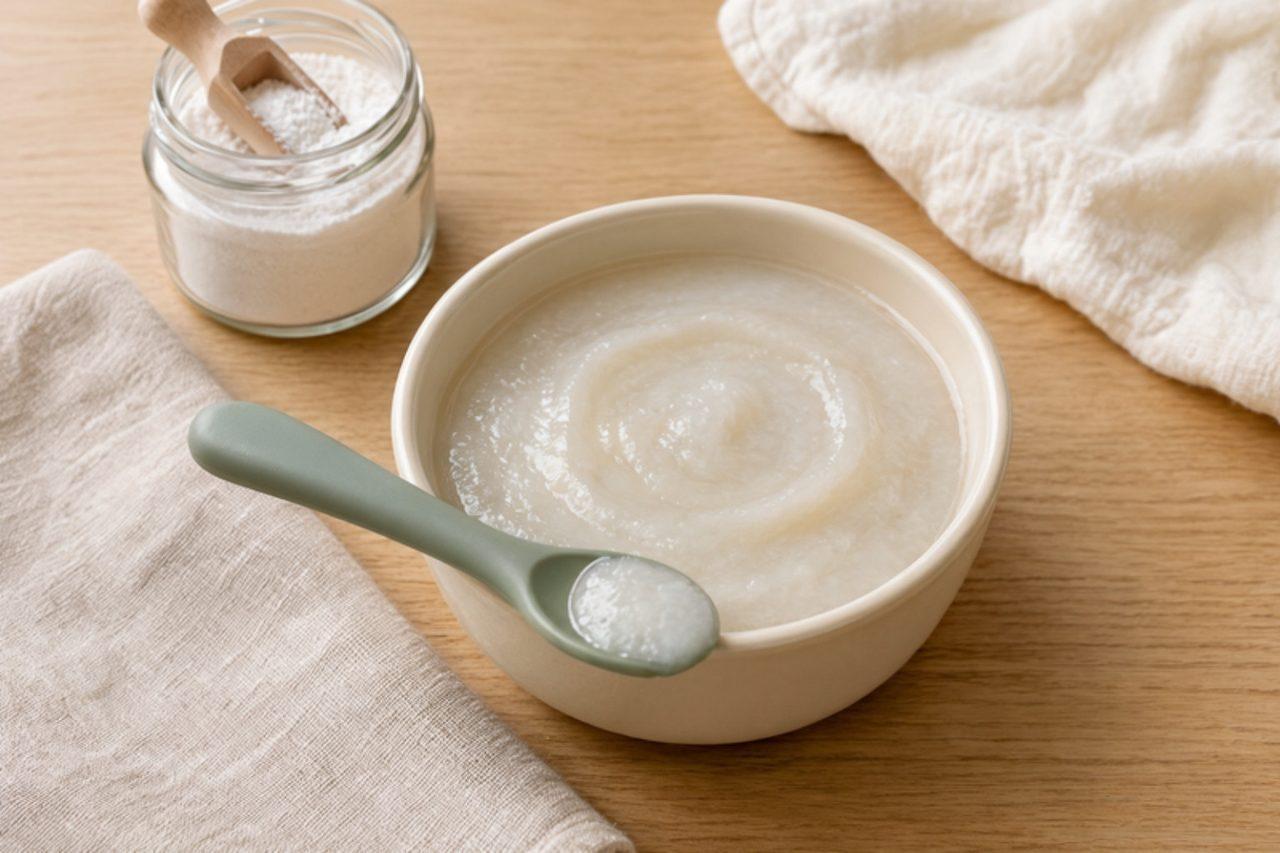
Koova, the arrowroot that grows in Kerala's backyards, is dug, washed, grated and dried into a snow-white powder that many families in Thrissur and Kottayam still make themselves. Stirred with water over a low flame, it turns from chalky to clear and glossy in a few minutes, and this kurukku is a classic first spoonful at six months, often given in the hot months because it is thought to be cooling. It is very mild and smooth. No salt, sugar, jaggery or honey goes in for babies. It is free of the major allergens. Chef's tip: buy pure koova or arrowroot powder, not a cornflour blend, and stop cooking the moment the whole pan turns translucent.

by KrazyBadal 0 views

Shev bhajiGram flour shev in spicy gravy

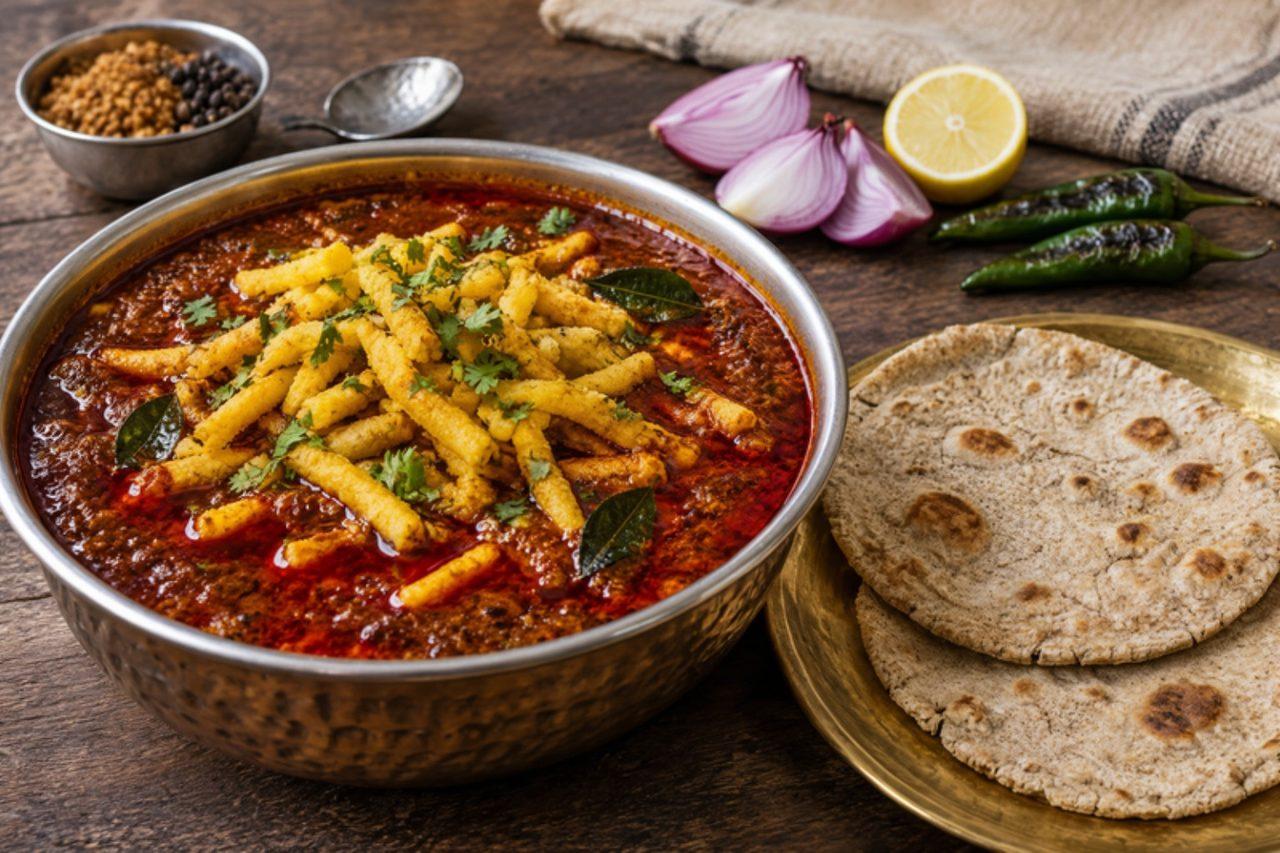
Shev bhaji comes from Khandesh, around Jalgaon and Dhule, where dhabas and homes make a gravy black with roasted onion, dry coconut and a dark Khandeshi masala and drop in thick, crunchy shev just before serving. It is eaten with jowar bhakri or chapati, often at roadside eateries in the winter. The mistake almost everyone makes is adding the shev too early; it swells and turns to paste, so add it at the table. Food note: shop-bought shev can contain wheat or regular hing, so check the packet if you need it gluten free. Chef's tip: roast the onion and coconut until truly dark brown, but not burnt; that is where the colour comes from.

by KrazyBadal 0 views

Lucknowi matar chaatWhite pea chaat

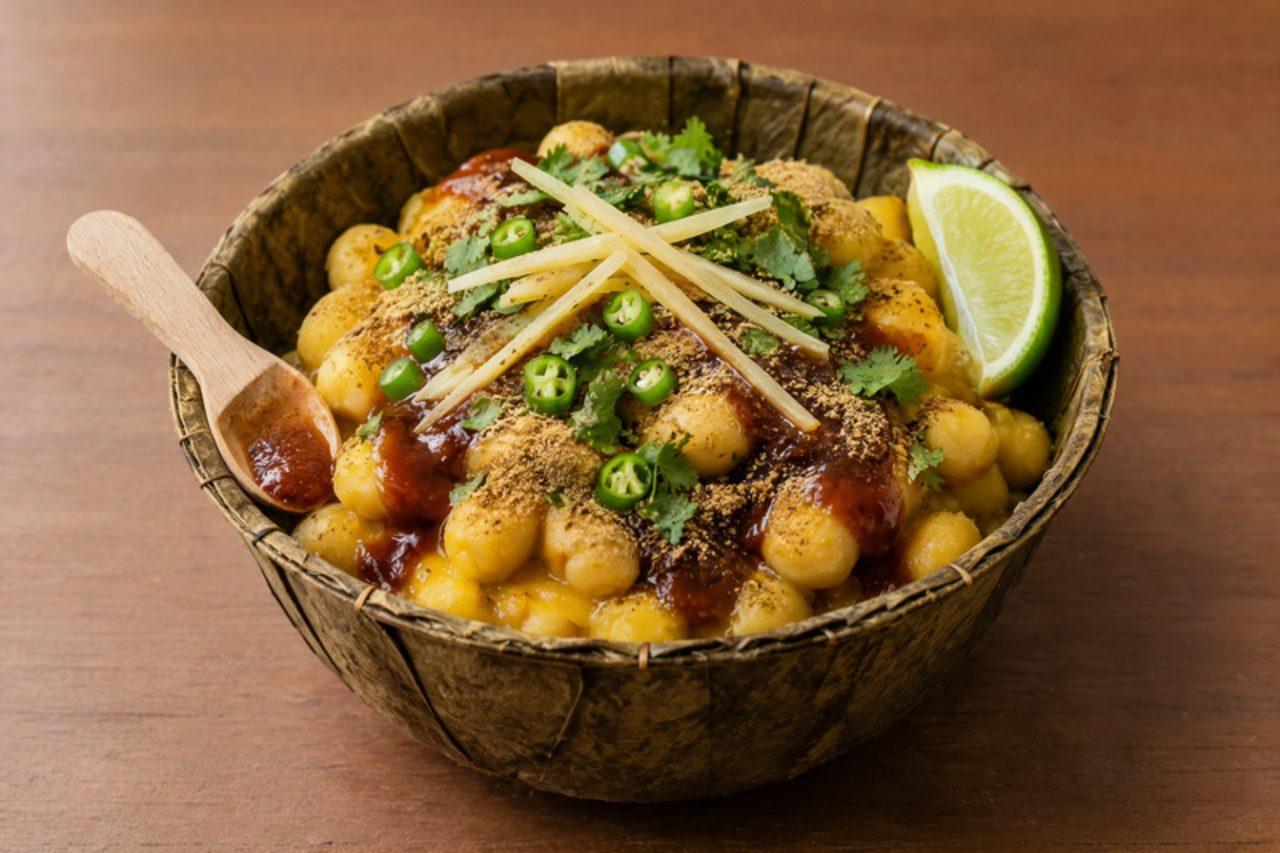
In Aminabad and around the Chowk in old Lucknow, matar chaat is ladled hot out of huge brass handis that sit on embers all evening, especially through the cold months. Dried white peas are cooked until they collapse into a creamy, soupy mass, then each leaf bowl is topped with shredded ginger, green chilli, raw onion, lime, roasted spices and a trickle of sweet tamarind chutney. It is warming, sour and gently hot. Chef's tip: cook the peas until a good number break down; that creamy liquid is what makes it Lucknowi.

by KrazyBadal 0 views

Moong dal pakodeMoong dal fritters

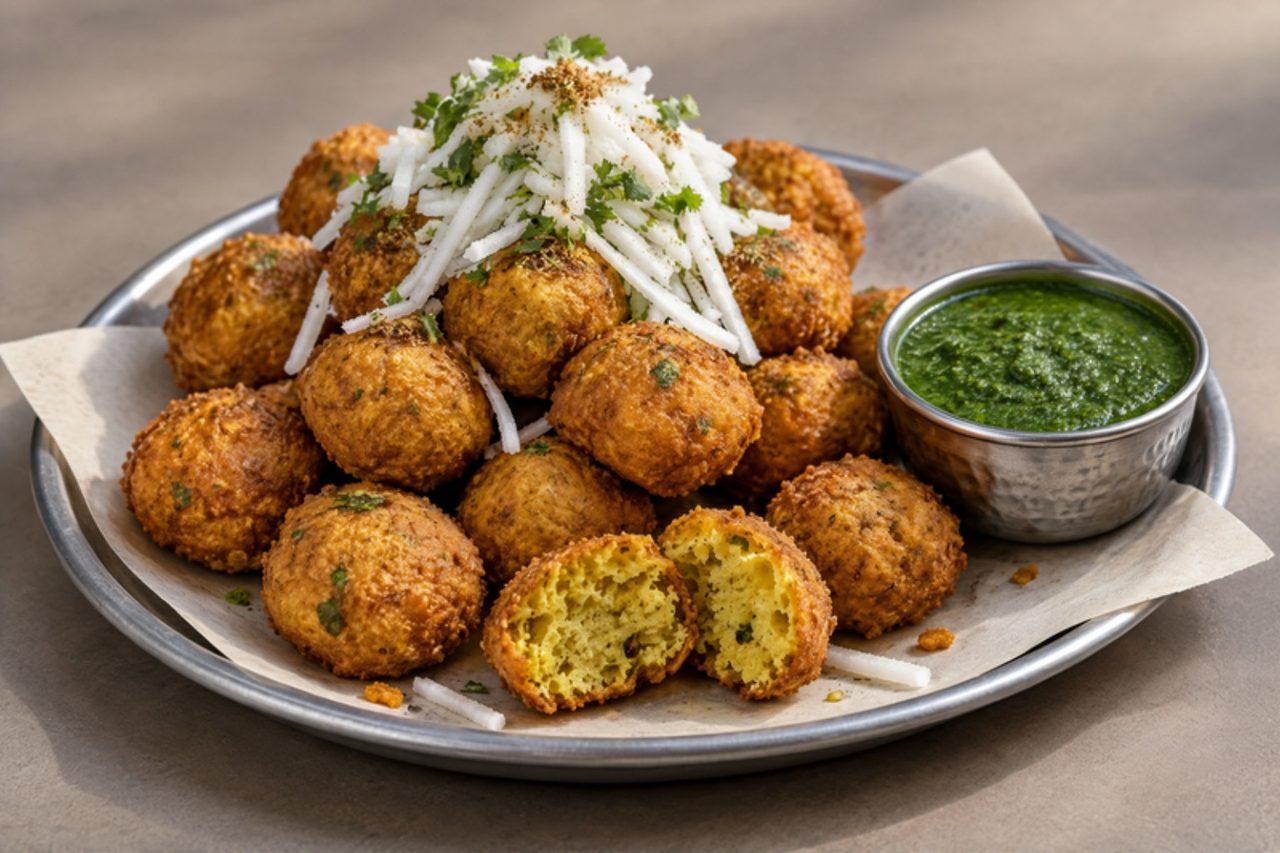
When the monsoon breaks over Delhi, the pakora stalls of Lajpat Nagar and the lanes off Chandni Chowk do their best trade, and moong dal pakode are the favourite: light, airy balls of soaked and coarsely ground yellow lentils, fried until crunchy and served in paper plates with grated white radish and green chutney. They are naturally gluten free and vegan. Chef's tip: beat the ground batter hard with your hand for a few minutes; the trapped air is what makes them fluffy inside.

by KrazyBadal 0 views

Lebu chaBlack tea with lime

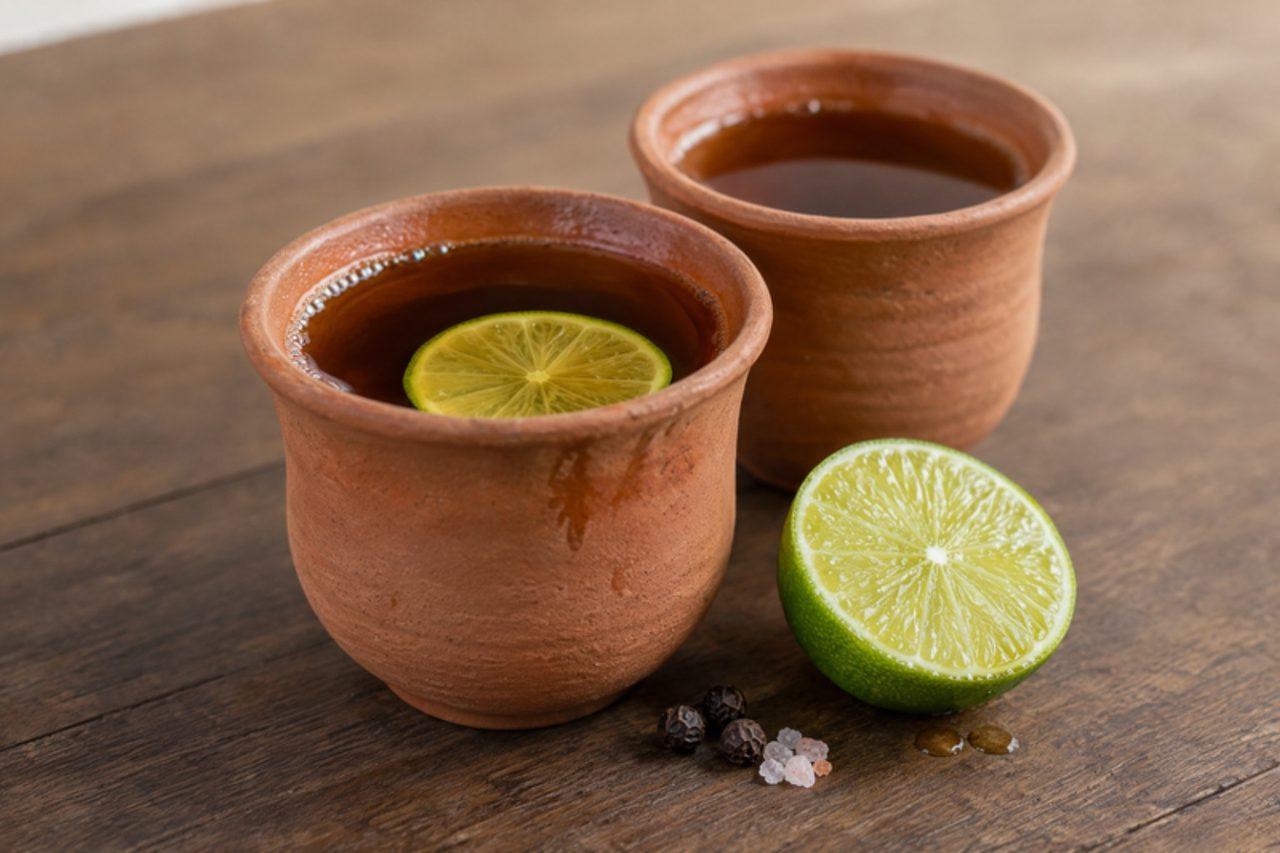
Along College Street and around Esplanade, the tea sellers who pour lebu cha into little unglazed clay cups (bhaar) are the fuel of Kolkata's famous evening adda, the long arguments over books and football. It is weak black tea, sweetened, sharpened with fresh lime and finished with a pinch of sulphurous black salt and roasted cumin, so it tastes sweet, sour and faintly savoury. It is drunk hot in every season and the cup is thrown away. Chef's tip: steep the tea briefly; long-brewed tea plus lime turns harsh and astringent.

by KrazyBadal 0 views

Kulle chaatStuffed cucumber chaat

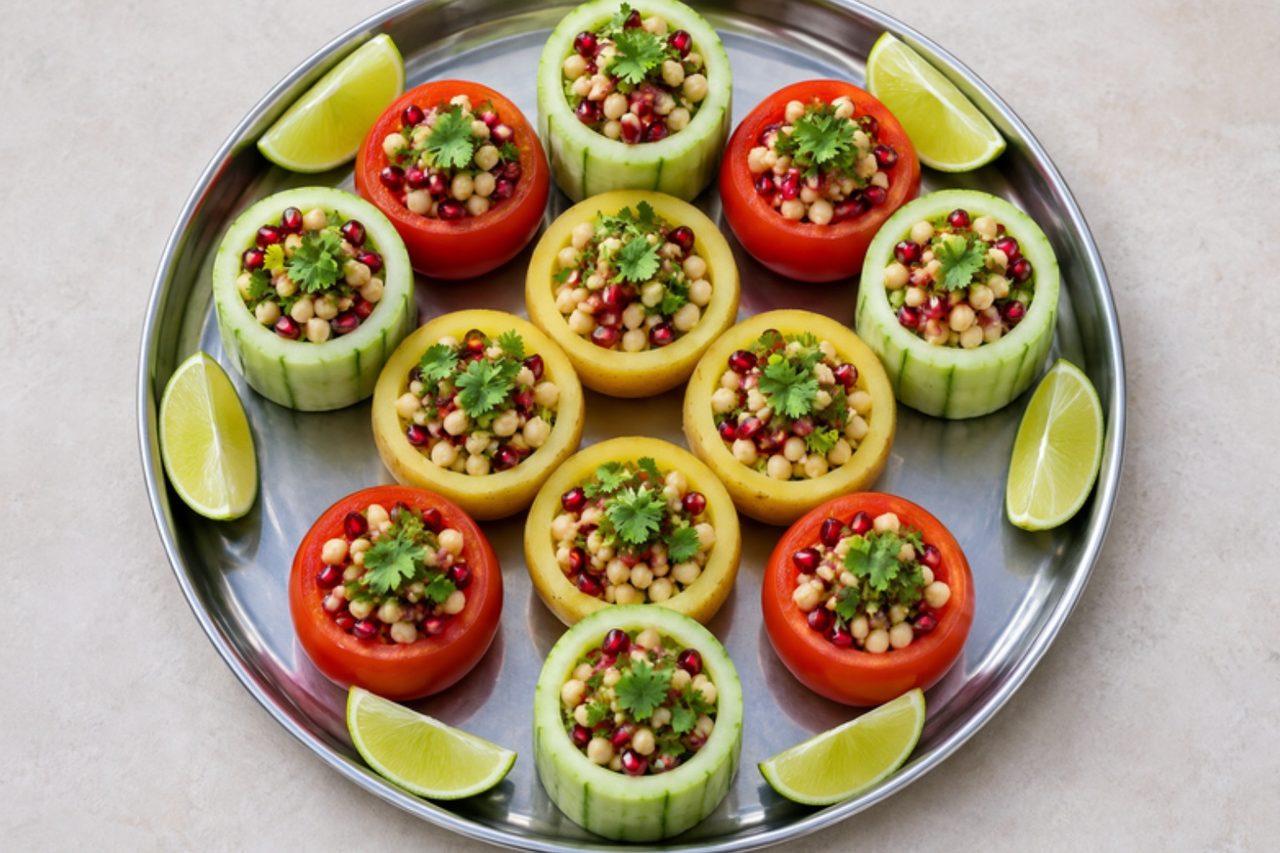
Kulle chaat comes from the lanes of Chandni Chowk around Chawri Bazar, where a couple of old stalls carve fruit and vegetables into little cups and fill them with chickpeas, pomegranate and lime. It is the cooling chaat of Delhi's scorching summer afternoons: no frying, no yoghurt, just juicy, crunchy cups dusted with chaat masala and black salt. Children love picking them up whole. Chef's tip: season the inside of each empty cup with lime and chaat masala before filling, so every bite is tangy right through.

by KrazyBadal 0 views

Hinger kochuriUrad dal stuffed puffed bread

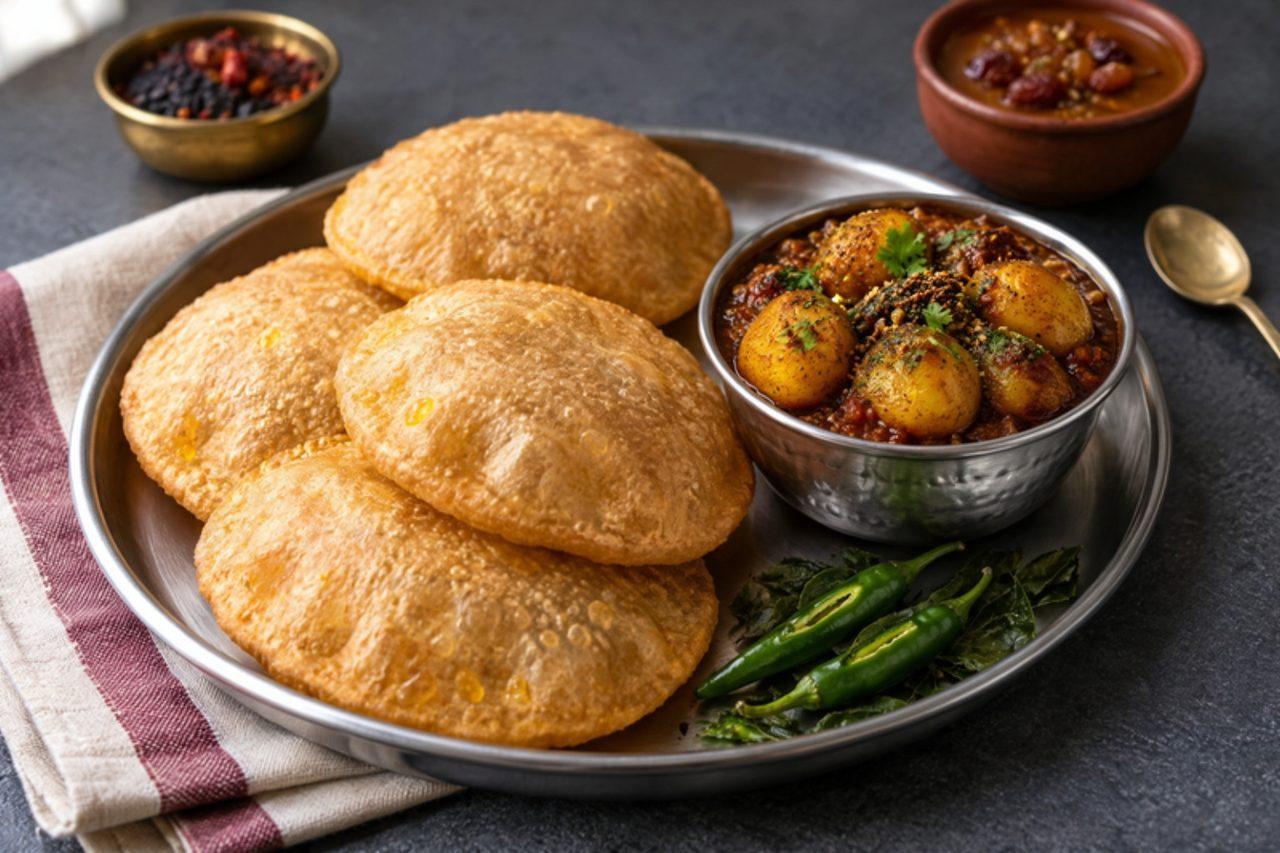
In Kolkata's sweetshops, Sunday breakfast often means hinger kochuri: soft, white-flour puris stuffed with a smear of urad dal paste perfumed strongly with hing, fried puffy and served with aloo dum or a sweet-sour pumpkin chhokka. They are smaller and softer than North Indian kachoris, closer to a stuffed luchi. The hing must be generous; it is the point of the dish. The common mistake is a wet filling, which steams the dough from inside and stops it puffing; cook the dal paste until it leaves the pan dry. Chef's tip: roll gently from the centre outwards so the thin filling layer stays even and the kochuri puffs all over.

by KrazyBadal 0 views

HinkejvuTaro and mustard leaf stew

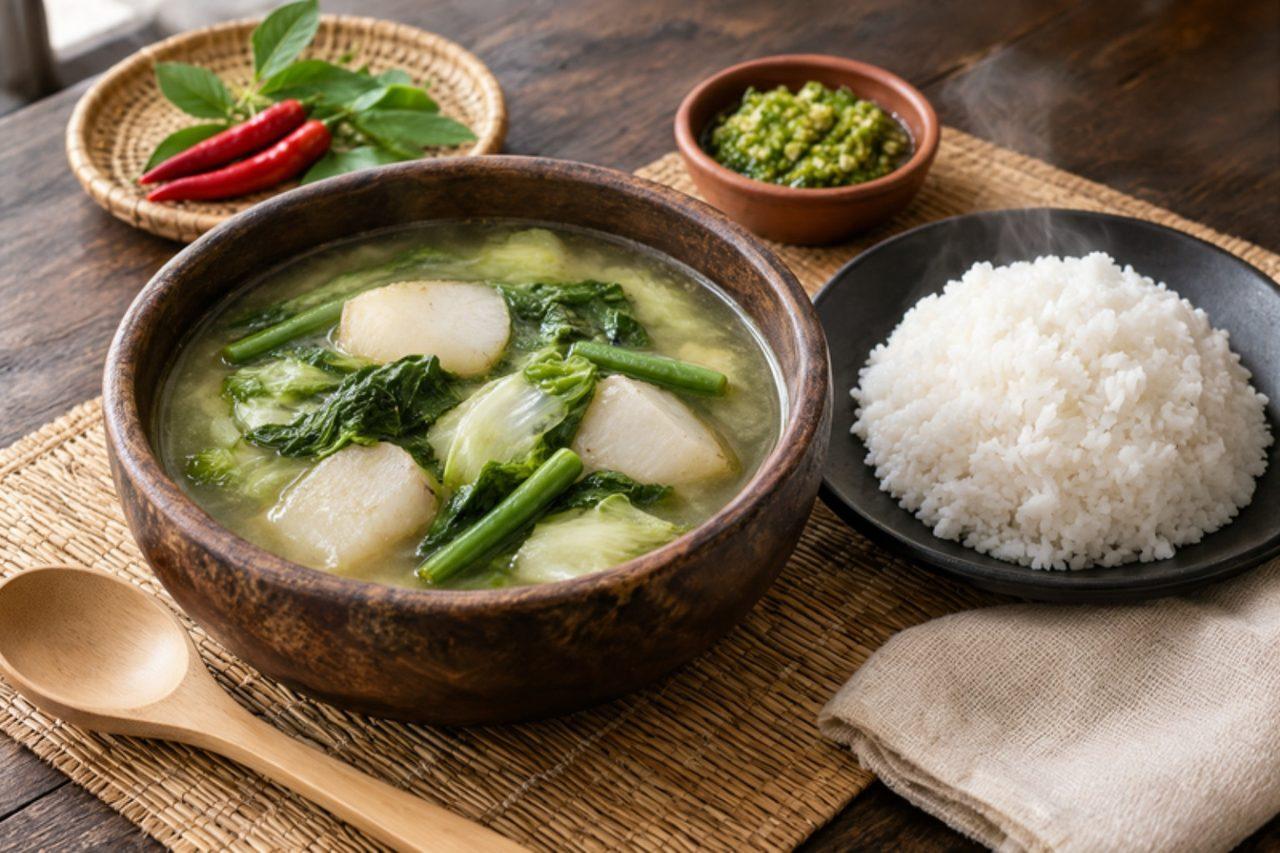
Hinkejvu is a light Sumi Naga everyday dish from Nagaland's Zunheboto district, where colocasia, cabbage, mustard leaves and beans are simmered together with only ginger, chilli and salt. It is eaten with plain rice and a smoky chutney, often after a heavier meat dish the day before. The common mistake is adding oil or spices, which hides the clean vegetable flavour; Naga home cooking relies on the produce. Chef's tip: cook the colocasia until it starts to break and thicken the broth slightly.

by KrazyBadal 0 views

ChurmurCrushed puchka chaat

When you have eaten your fill of puchka at the stalls in Vivekananda Park or outside Gariahat market in the evening, the puchkawala will make you a churmur: the same crisp shells crushed into the same spicy potato filling with tamarind water, onion and coriander, served in a leaf bowl. It is part chaat, part crunchy salad, and puckeringly sour. Chef's tip: crush the shells into big shards, not crumbs, and fold them in last so some stay crisp.

by KrazyBadal 0 views

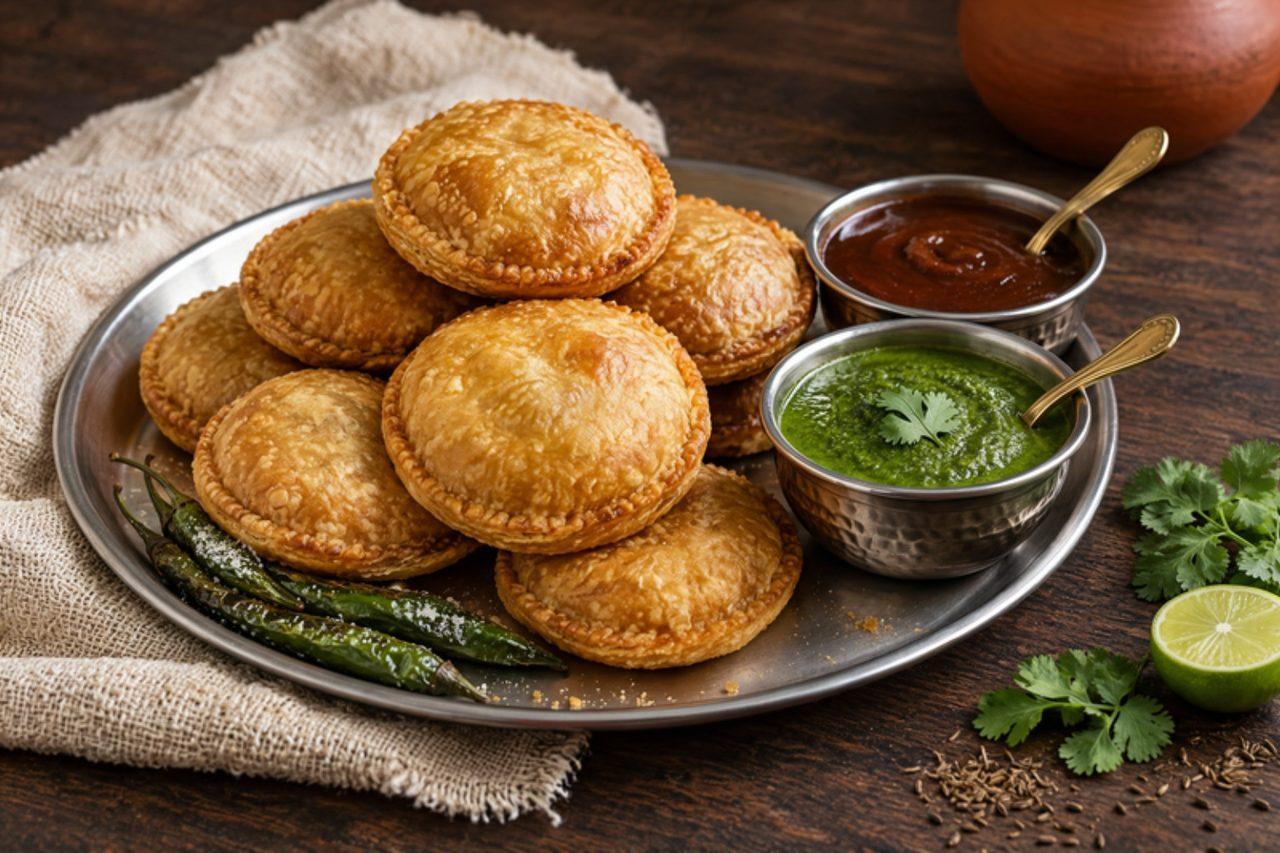
Shegaon kachoriDal-stuffed fried pastries

Shegaon, a temple town in Vidarbha, is known across Maharashtra for its small, round, crisp kachoris, sold by the boxful at the railway station and carried home by pilgrims and travellers. The stuffing is dry and spicy, made of roasted gram flour, crushed dal, fennel, coriander and a good pinch of hing, and the pastry is short and flaky. They are eaten with sweet tamarind chutney, or broken into hot kadhi. The common mistake is frying on high heat, which browns the pastry before it turns flaky; these need a slow fry. Chef's tip: the stuffing must be cold and crumbly when you fill the dough; warm stuffing turns pasty and bursts the kachoris.

by KrazyBadal 0 views

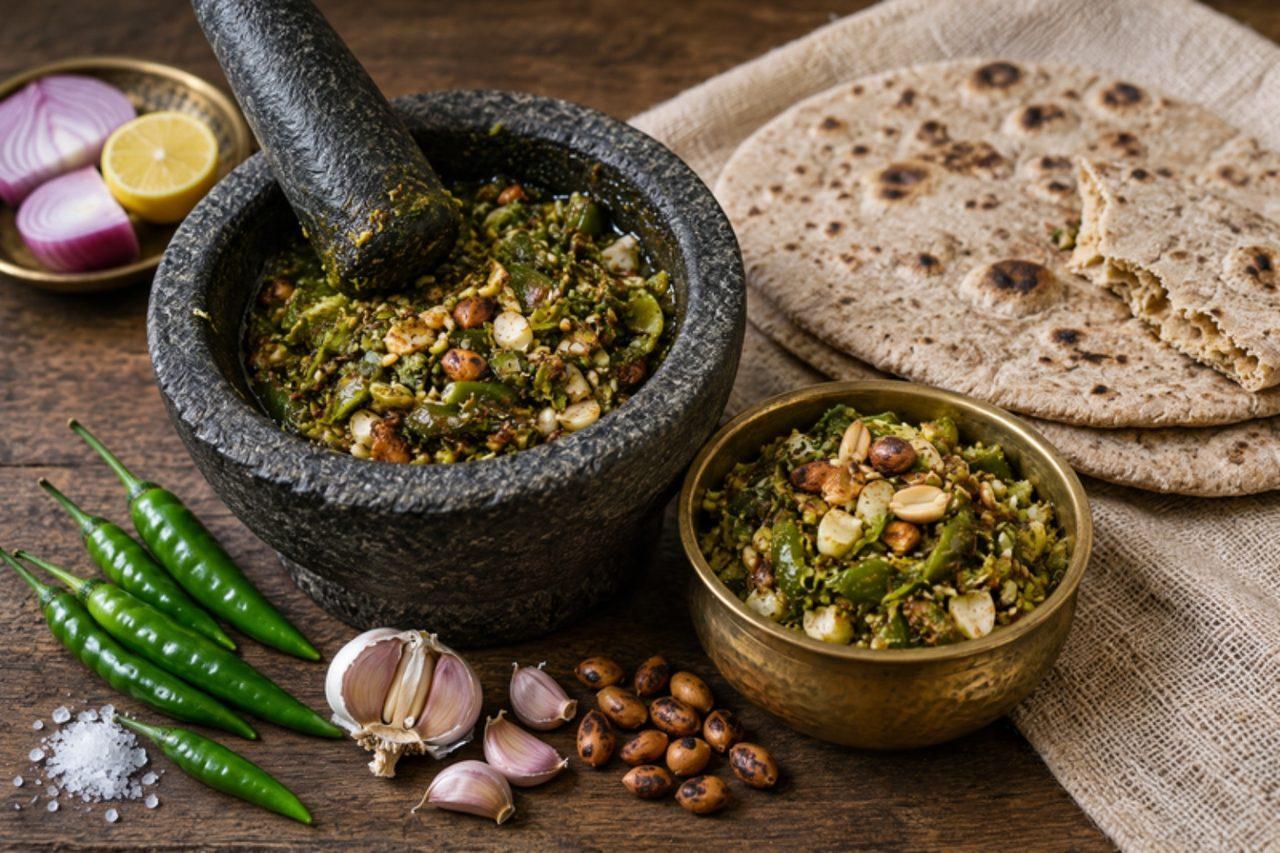
Mirchi thechaPounded chilli, garlic and peanut relish

Thecha is the fiery pounded chilli relish of rural Maharashtra, from the Desh villages around Satara and Kolhapur, eaten with jowar bhakri and a raw onion at a farmhand's lunch and now a fixture of Pune's Marathi restaurants. Green chillies and garlic are blistered in a pan, then crushed with peanuts in a stone mortar. The common mistake is blending it smooth in a mixer; thecha should be coarse and rustic, so pound it or pulse briefly. Chef's tip: wear gloves or oil your fingers when handling this many chillies, and wash the pan straight away.

by KrazyBadal 0 views

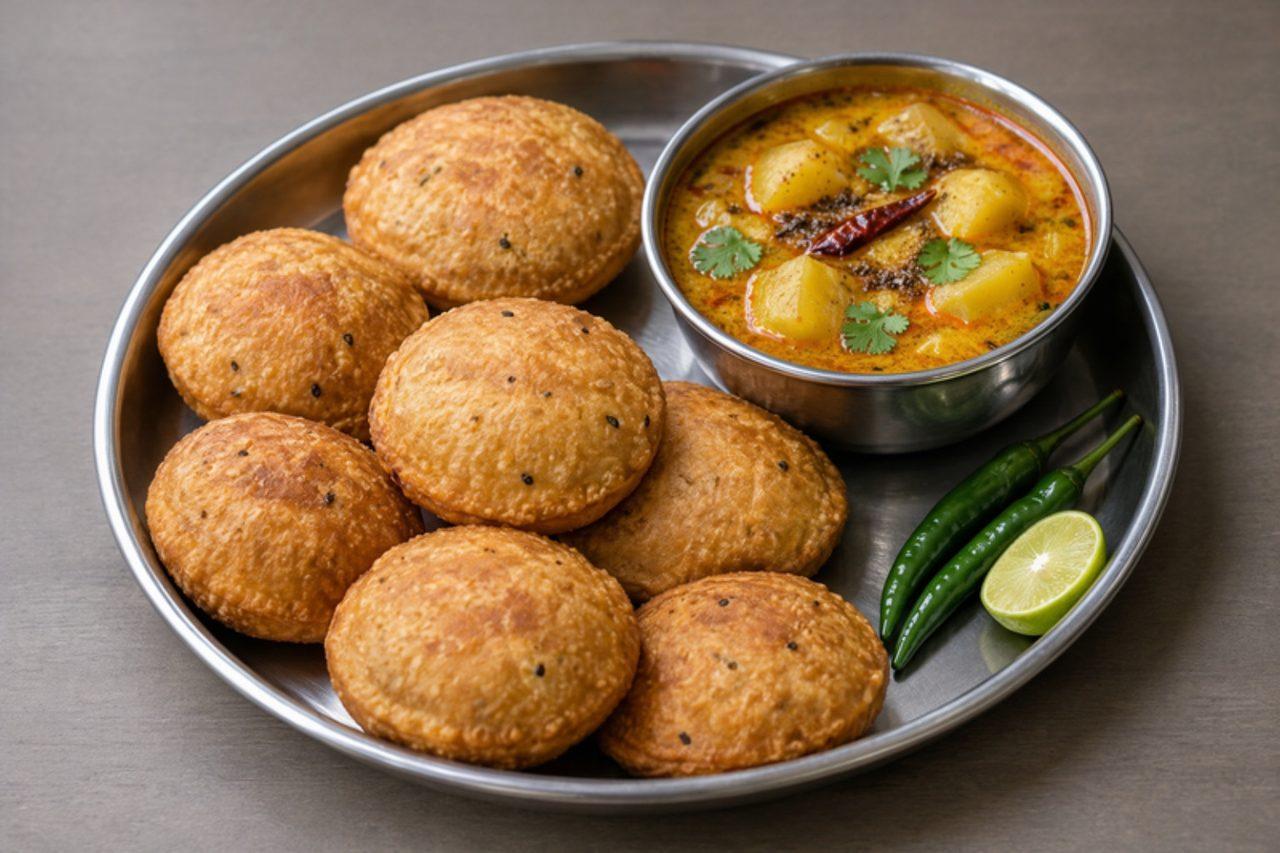
Club kachoriSmall spiced kachoris

In the narrow lanes of Burrabazar and Bowbazar, sweet shops start frying club kachori before eight in the morning for traders and office-goers, who eat four or five standing up with a ladle of thin, gingery potato curry poured into a sal-leaf bowl. The kachoris are small and puffed like balloons, with a thin layer of peppery ground urad dal inside the crust. Chef's tip: soak the dal ahead (from the night before is easiest) and grind it with almost no water, so the paste is thick enough to roll without breaking through.

by KrazyBadal 0 views

MiscutRaw mango pickle

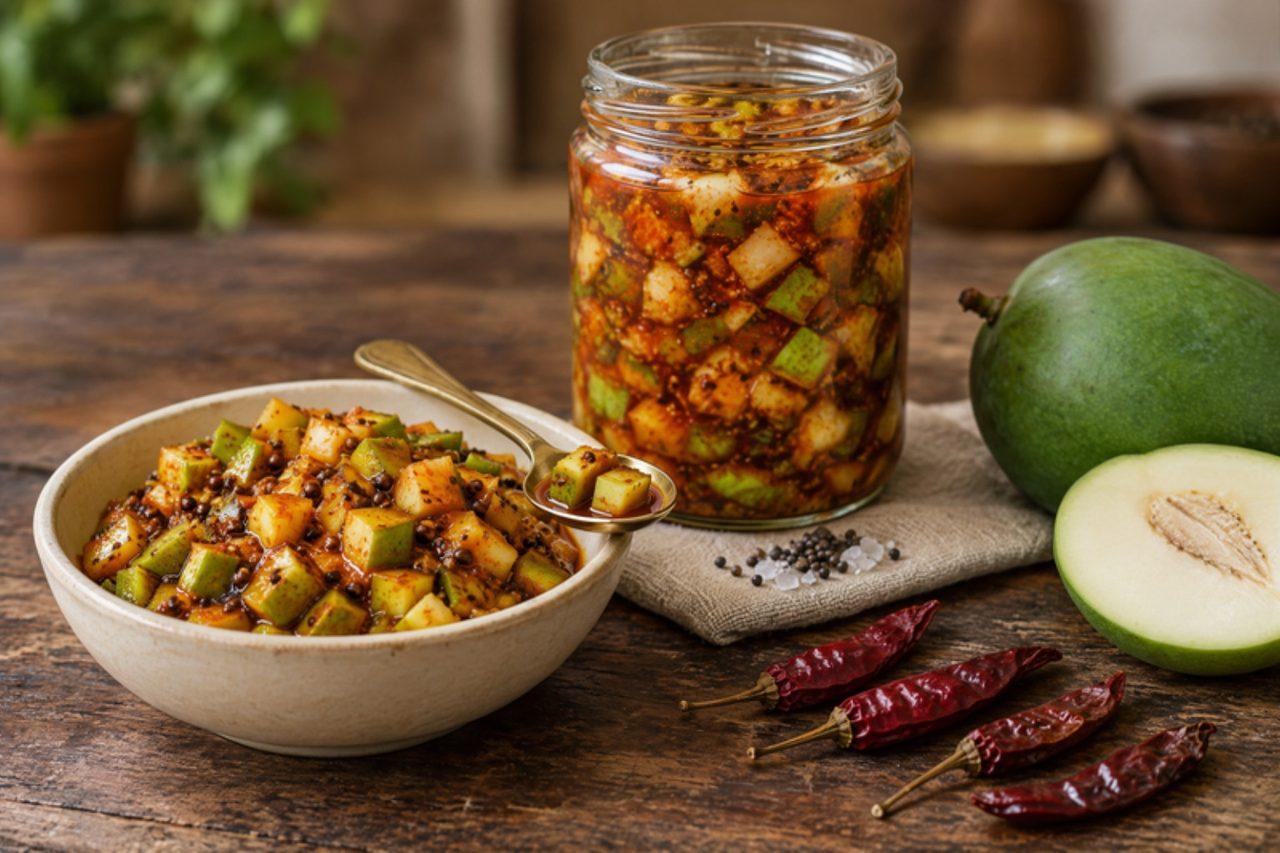
Before the monsoon breaks over Goa in late May, the first small, tender mangoes are knocked from the trees in Salcete and Bardez villages and cut for miscut, the pickle Goan Catholic families keep for the rainy months when fishing stops and the table relies on rice, curry and preserves. Unlike Gujarati pickles, miscut leans on toddy or cane vinegar: the mango is salted overnight, then folded into a paste of Kashmiri chilli, mustard, fenugreek, turmeric, garlic and ginger ground in vinegar, and finished with oil. It is sour, hot and garlicky, the mango still crisp, and a spoonful brightens a plate of red rice and dried-fish curry or a simple pez (rice gruel). Common mistake: grinding the masala in water; it must be vinegar only, or the pickle spoils. It is ready after 4–5 days, when the vinegar has soaked into the mango and the raw-garlic bite has gone. Because it contains fresh garlic and ginger, keep it in the fridge for up to 3 months, always covered by liquid, dry spoon each time; discard if you see mould, fizzing, sliminess or smell anything off. Chef's tip: use mangoes whose stones have not yet hardened so you can slice straight through.

by KrazyBadal 0 views

ChutagiWheat pasta in vegetable soup

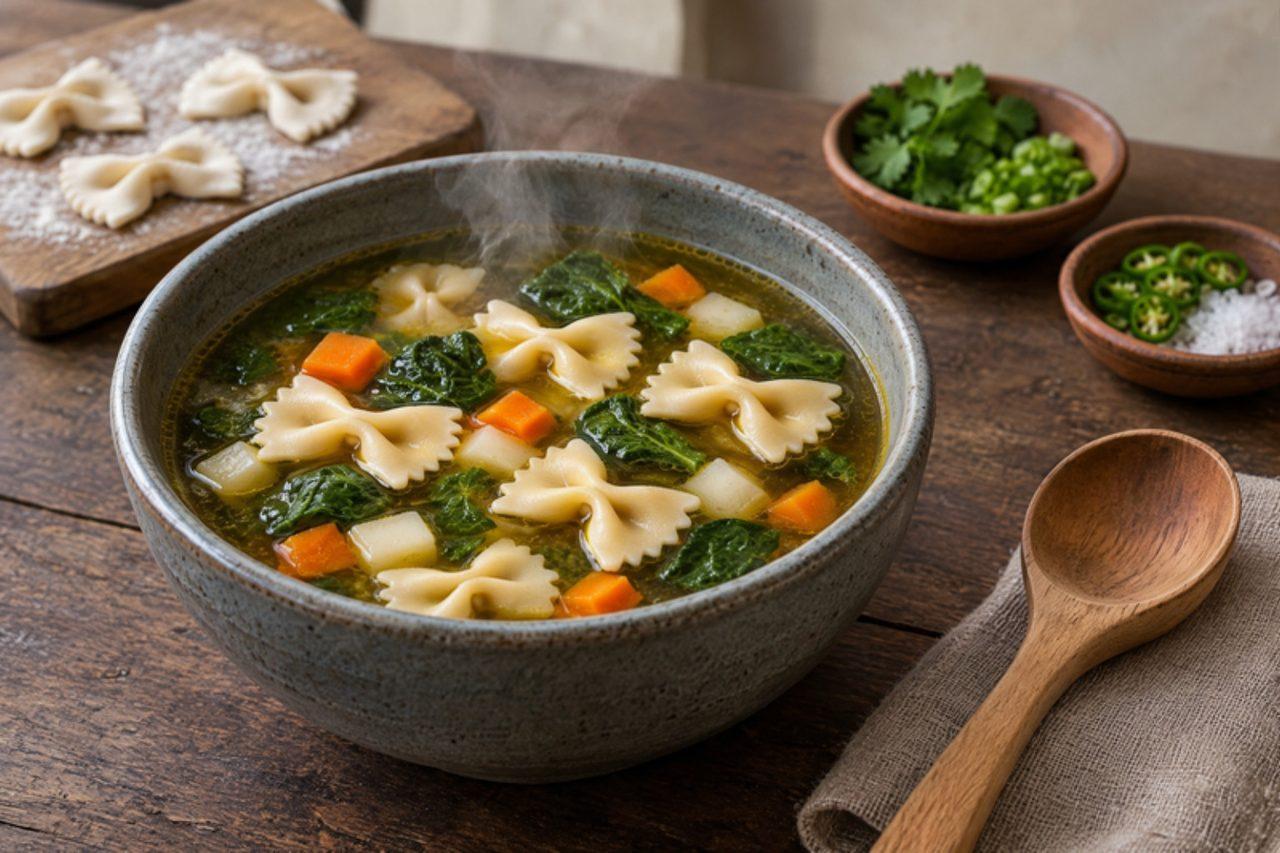
In Leh and the villages along the Indus, chutagi is the one-pot supper of the long winter: little hand-pinched bow-ties of wheat dough dropped into a broth of turnip, carrot, onion and greens. Families sit around the stove pinching the dough together while the pot comes to the boil, and the soup is eaten piping hot, often with a spoon of chilli paste on the side. The broth is light but the pasta makes it filling. The usual mistake is rolling the dough too thick, which leaves the centres of the bows doughy; roll it about as thin as a coin. Chef's tip: let the shaped bows dry on a floured tray for ten minutes before they go in, so they hold their pinched centre instead of opening up in the pot.

by KrazyBadal 0 views

Chinese bhelCrispy noodle bhel

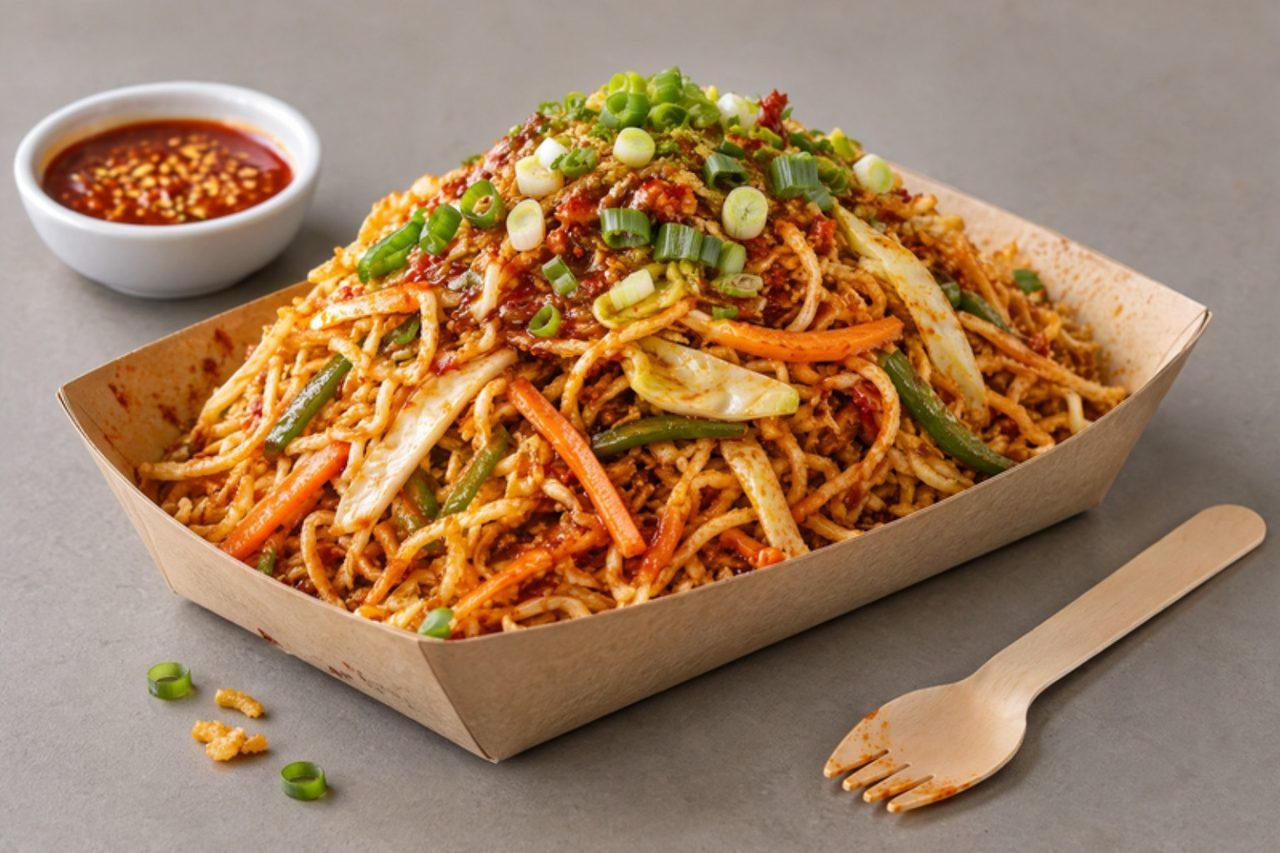
Mumbai's Indo-Chinese carts, parked outside colleges in Dadar and Matunga from late afternoon, sell this street invention that borrows the idea of bhel and swaps the puffed rice for golden fried noodles. Raw shredded cabbage, carrot and capsicum are thrown in with Schezwan sauce, ketchup, a dash of soy and vinegar, and tossed so fast the noodles still crackle when you eat them. Chef's tip: dry the boiled noodles thoroughly on a tray before frying; wet noodles spit and fry up chewy rather than crisp.

by KrazyBadal 0 views

Adrak ka acharGinger pickle

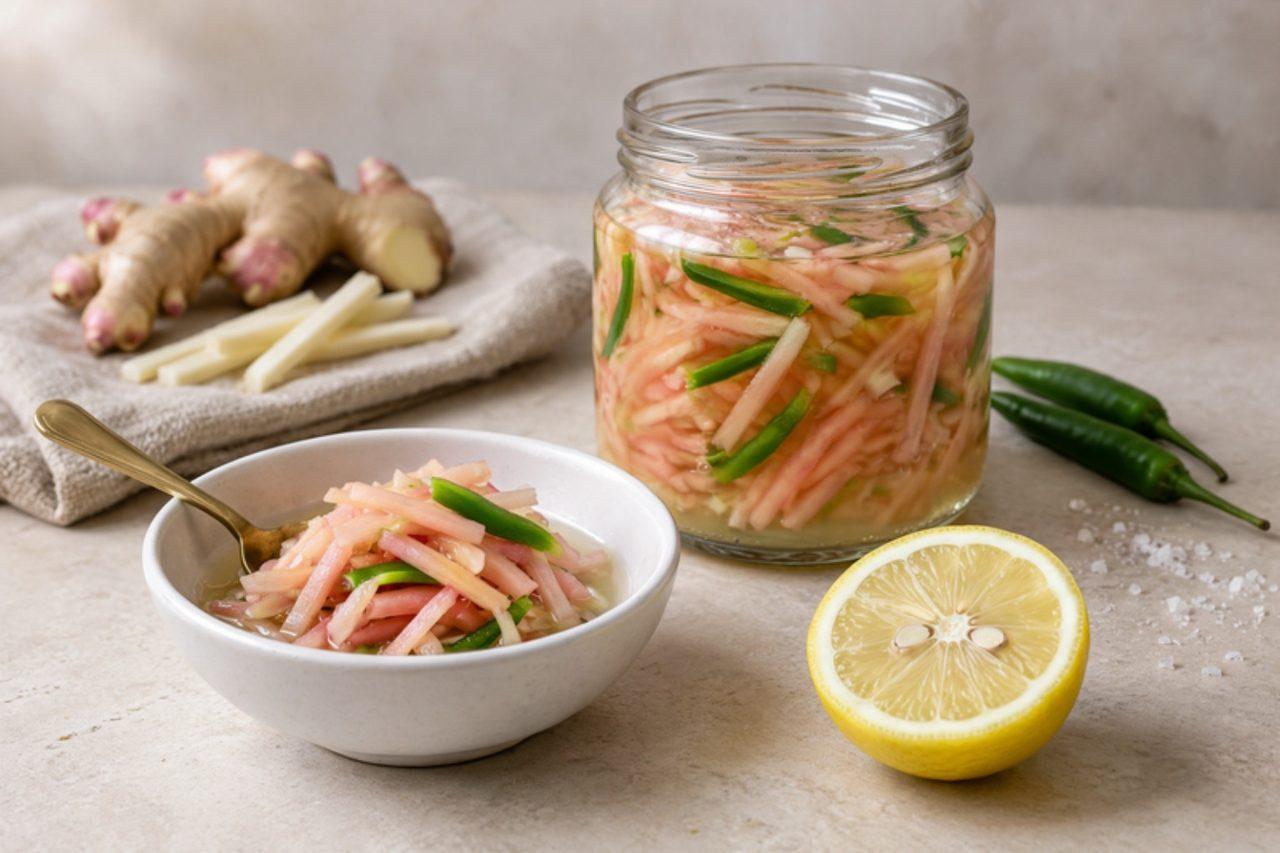
Walk into a Punjabi dhaba in winter and there is often a steel bowl of ginger matchsticks soaking in lemon juice beside the onion rings. Adrak ka achar is the simplest pickle of all: tender ginger, green chilli, salt and lemon, nothing cooked. Young ginger with thin, pinkish skin reacts with the acid and turns a pretty pale pink within a day; older ginger stays yellow but tastes just as good. The flavour is clean, hot and sour, with crunch, and a forkful cuts the richness of sarson ka saag, makki ki roti, chole bhature or a heavy dal makhani. Common mistake: cutting the ginger thick or using fibrous old roots, which stay woody and harsh; slice thin enough to see light through. It is ready when the ginger has softened slightly, the juice tastes less sharp and the slices have taken colour. Fresh ginger in lemon juice keeps in the fridge for up to 2 weeks; discard it if mould appears, the juice turns slimy or the smell turns from fresh-sour to musty. Chef's tip: a pinch of black salt (kala namak) added at the end gives it that dhaba-style sulphurous edge.

by KrazyBadal 0 views

Nadru acharLotus stem pickle

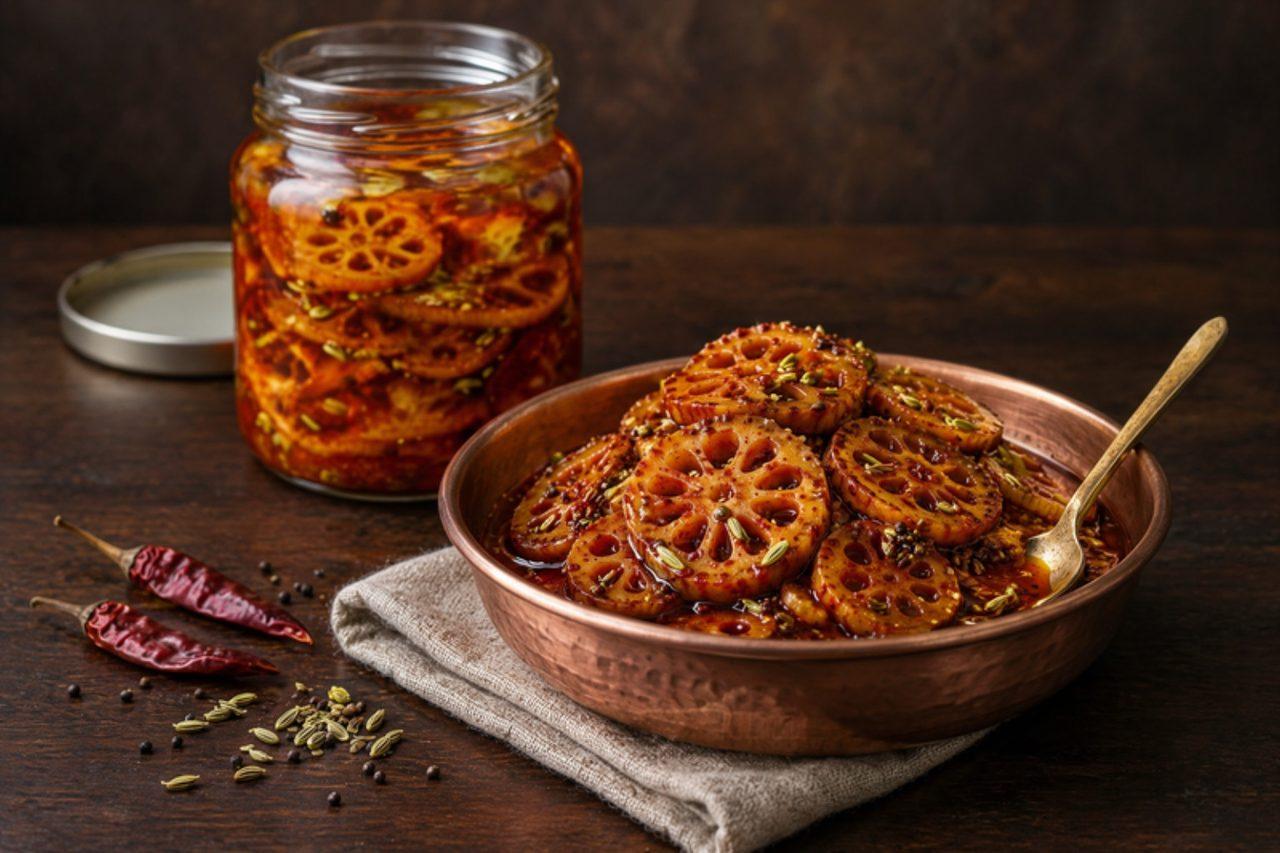
On the lakes around Srinagar, lotus stems are pulled up through the late autumn into winter and sold in muddy bundles at the floating market on Dal Lake. Kashmiri Pandit and Muslim households alike turn some of the harvest into nadru achar, a winter pickle eaten with rice, haakh (collard greens) and nadru yakhni when fresh vegetables are scarce. Thin slices are blanched, dried and dressed with mustard oil, ground fennel, sonth (dry ginger), deep-red Kashmiri chilli and vinegar. The result is crunchy rather than soft, earthy and lacy, with a warm, slightly smoky heat. Common mistake: not washing the hollow channels; mud hides inside, so rinse every slice under running water. Lotus stem grows in lake water and must always be cooked before pickling; never pickle it raw. It is ready when the slices have taken the red colour right into the holes and taste sour through, about 2 days. Keep it in the fridge for up to 1 month, under oil, with a dry spoon; discard if you see mould, fizzing or slime, or smell anything rotten. Chef's tip: buy stems that are pale cream and closed at both ends; open ends let mud in.

by KrazyBadal 0 views

PanchkutaFive desert vegetables with spices

Panchkuta is the Marwari answer to a land where fresh vegetables are scarce: five sun-dried desert foods, ker berries, sangri beans, kumatiya seeds, gunda (lasoda) and amchur, soaked back to life and cooked in mustard oil with red chilli. Jodhpur and Bikaner families keep it for Sheetla Ashtami, when food is cooked a day ahead, and for wedding thalis with bajra roti, because it keeps for days without spoiling. The common mistake is cutting the soaking short; under-soaked ker and sangri stay leathery and bitter. Chef's tip: boil the soaked ker on its own and throw away the first water, which carries most of its bitterness.

by KrazyBadal 0 views

Lingad ka acharFiddlehead fern pickle

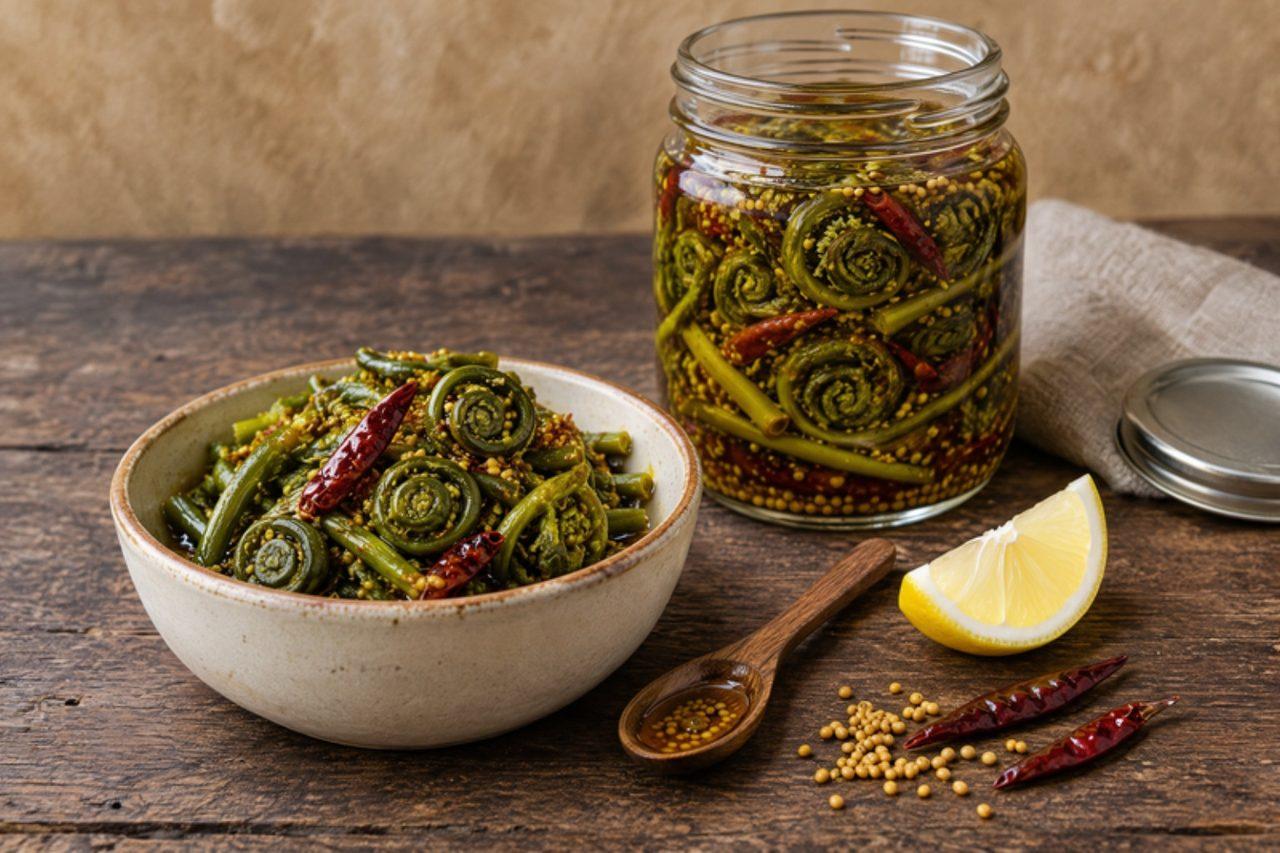
In Kullu, Mandi and Kangra, the monsoon brings lingad, the curled young shoots of the vegetable fern that grows along streams and terrace edges. Villagers pick them in the morning and sell them by the bundle; what is not stir-fried with potato goes into a small jar of pickle to stretch the short season. The shoots are blanched, dressed with mustard oil, crushed mustard seed, red chilli and lemon, and the result is green, crisp and faintly like asparagus with a nutty mustard heat. It is eaten with siddu, rice and madra, or simply with a hot roti. Outside the Himalaya, use ostrich fern fiddleheads, which appear in spring in North America and Europe. Fern shoots must always be cooked; raw or undercooked fiddleheads can upset the stomach badly. Common mistake: only flash-blanching them; boil for the full time. It is ready after a night in the fridge, when the coils have dulled to olive and taste tangy. Keep it in the fridge for up to 10 days; discard if you see mould, slime or smell anything off. Chef's tip: rub off the brown papery scales between your palms under running water before you weigh them.

by KrazyBadal 0 views

Showing 24 of 672 recipes

Show more recipes

Page 13 of 28

More collections