Skip to content
WhatToEat.Today

Vegetarian Indian dinners

Dal, sabzi, curries and rice dishes for a meat-free Indian dinner. (880 recipes)

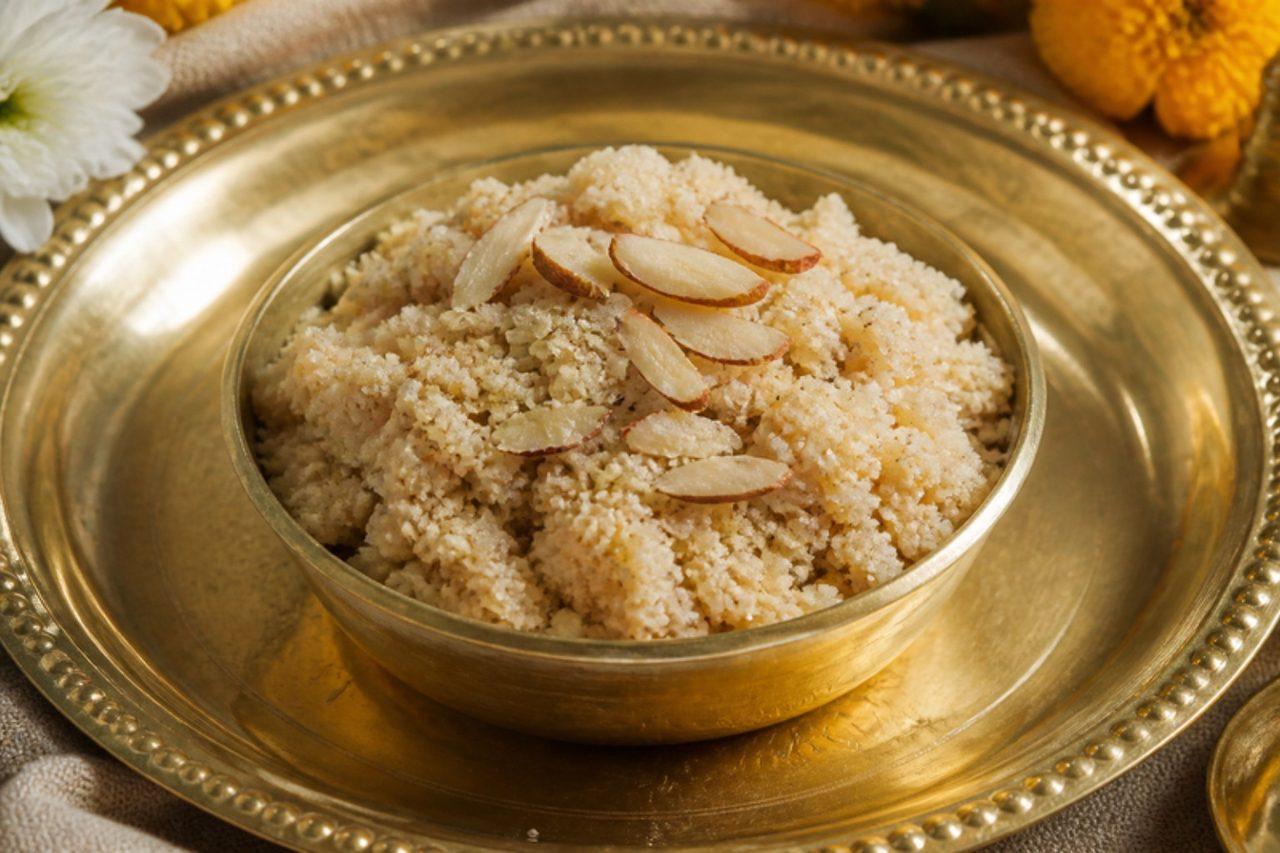
Alwar milk cakeGrainy reduced-milk sweet

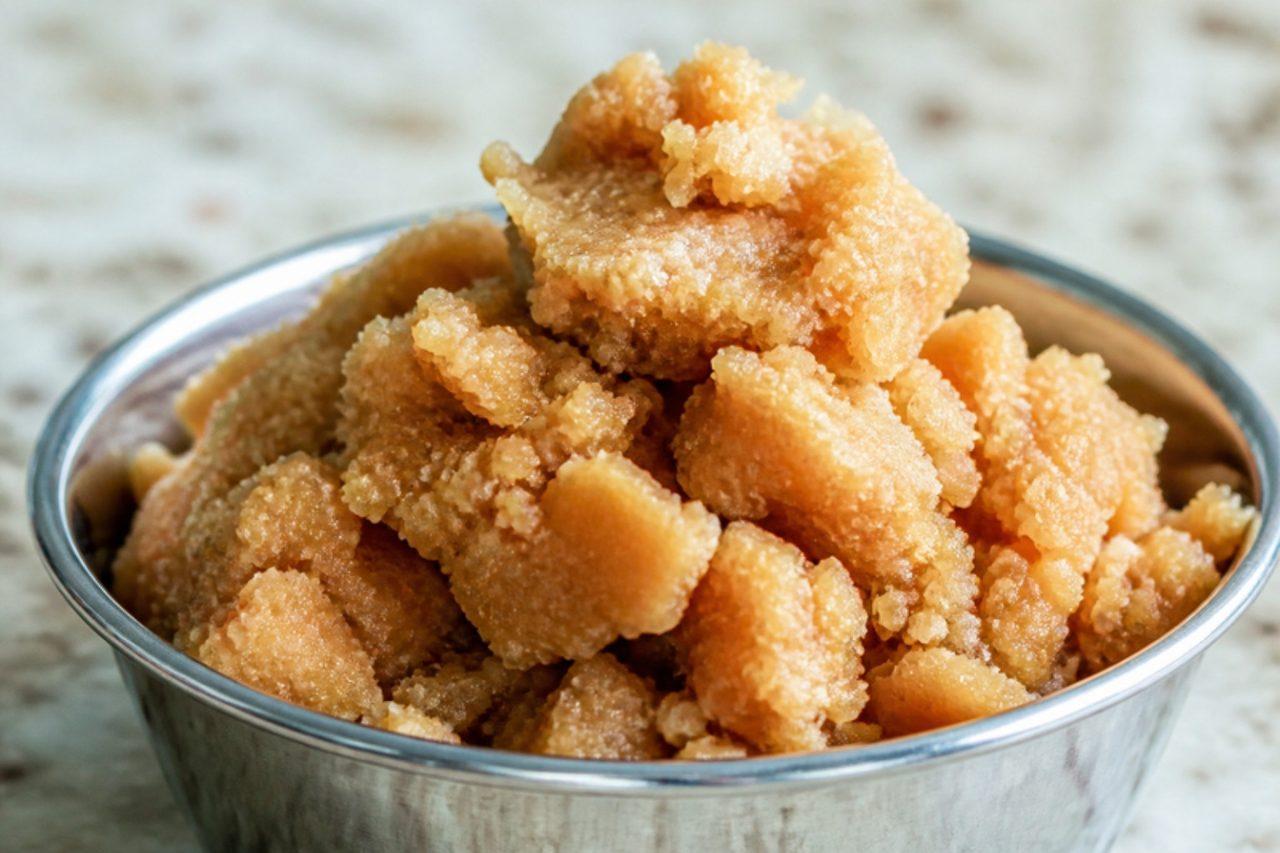
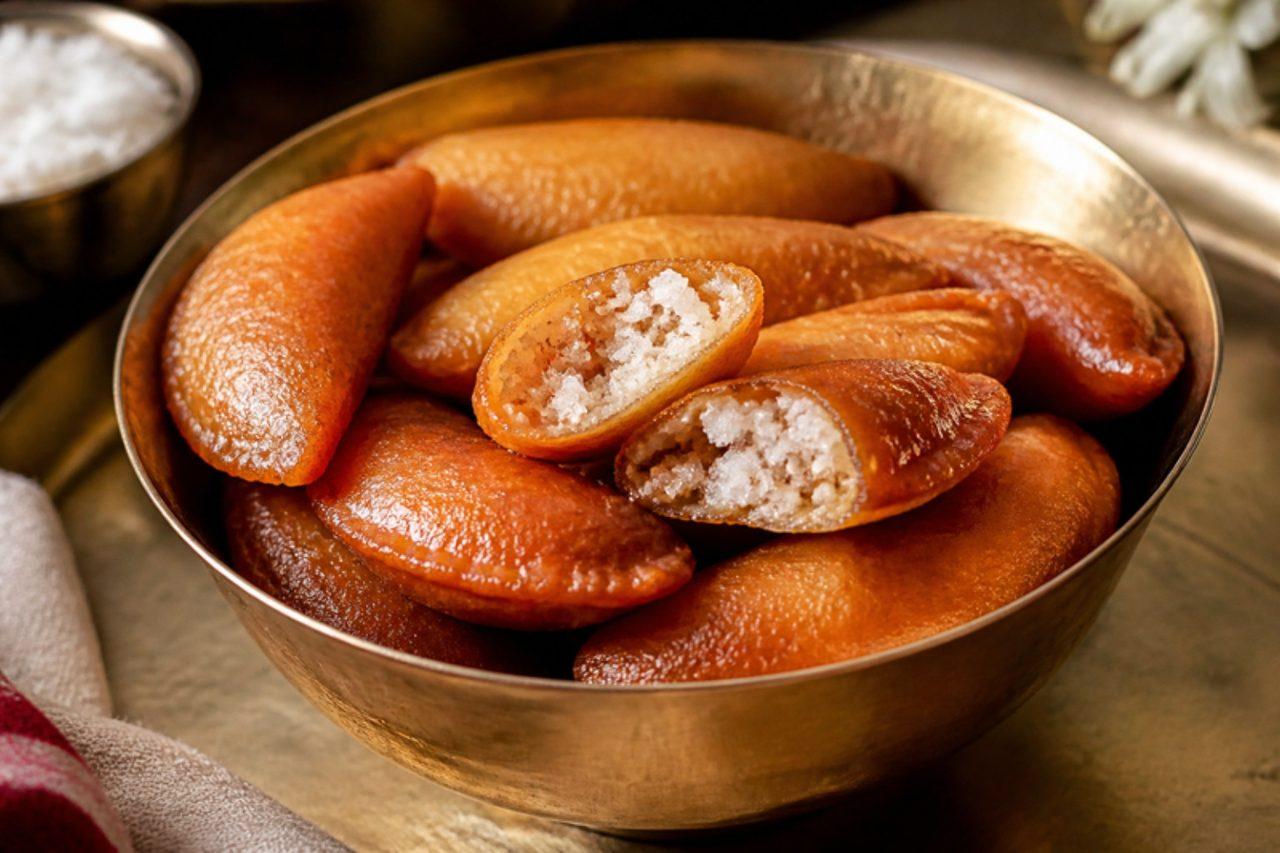
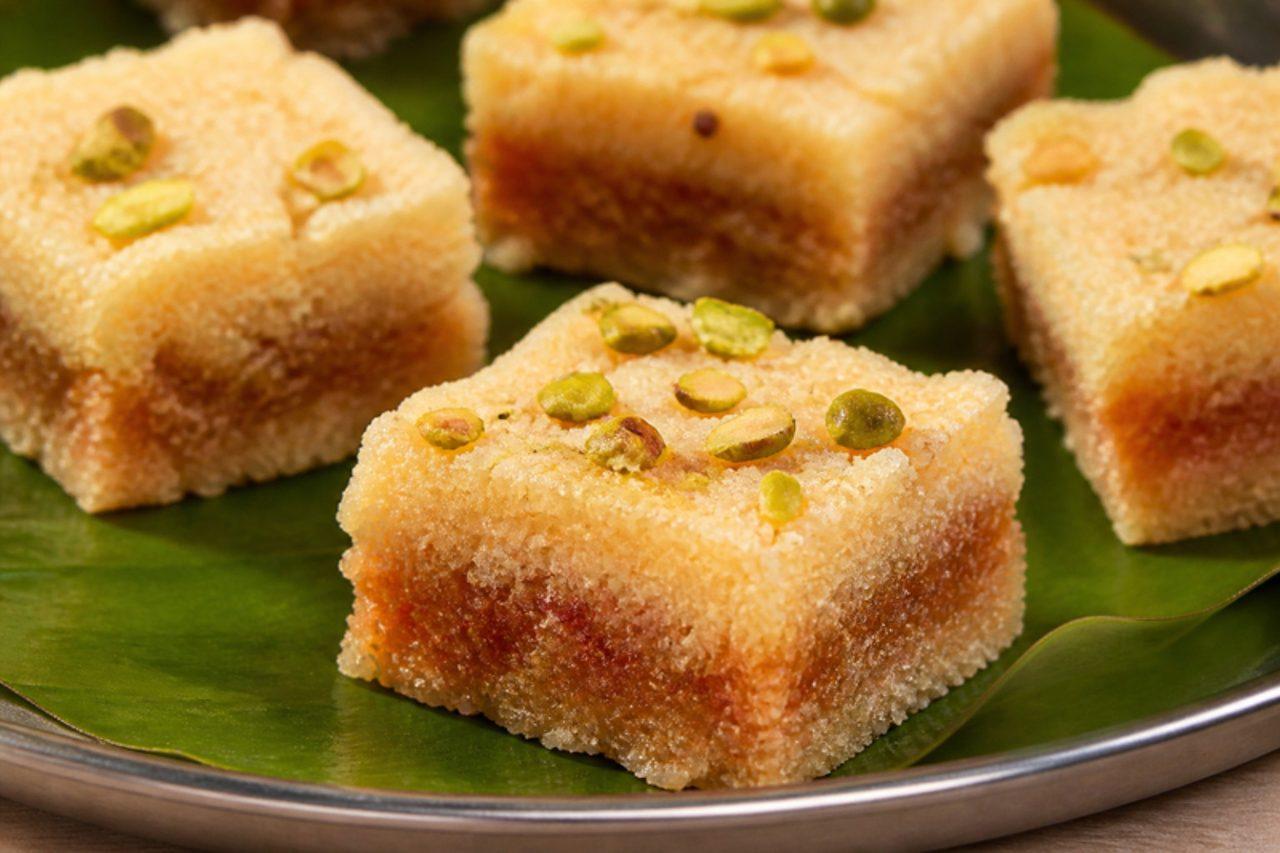
Sweet boxes swapped on Raksha Bandhan in Rajasthan very often hold Alwar milk cake: a dense slab of full-fat milk reduced for hours with sugar, then left to set slowly in its own heat so the middle caramelises dark brown while the edges stay pale and grainy. Unlike kalakand, it uses no chhena at all; the grain comes from souring the milk just a little as it reduces, and the colour from long, patient cooking. It is fudgy, milky and toffee-like. Common mistake: hurrying the last stage on a high flame, which scorches the base instead of browning it; the mass is ready when it leaves the sides of the pan as one sticky lump and the ghee starts to show at the edges. Chef's tip: wrap the filled tin in a thick towel and leave it overnight; that slow cooling is what browns the centre.

by KrazyBadal 0 views

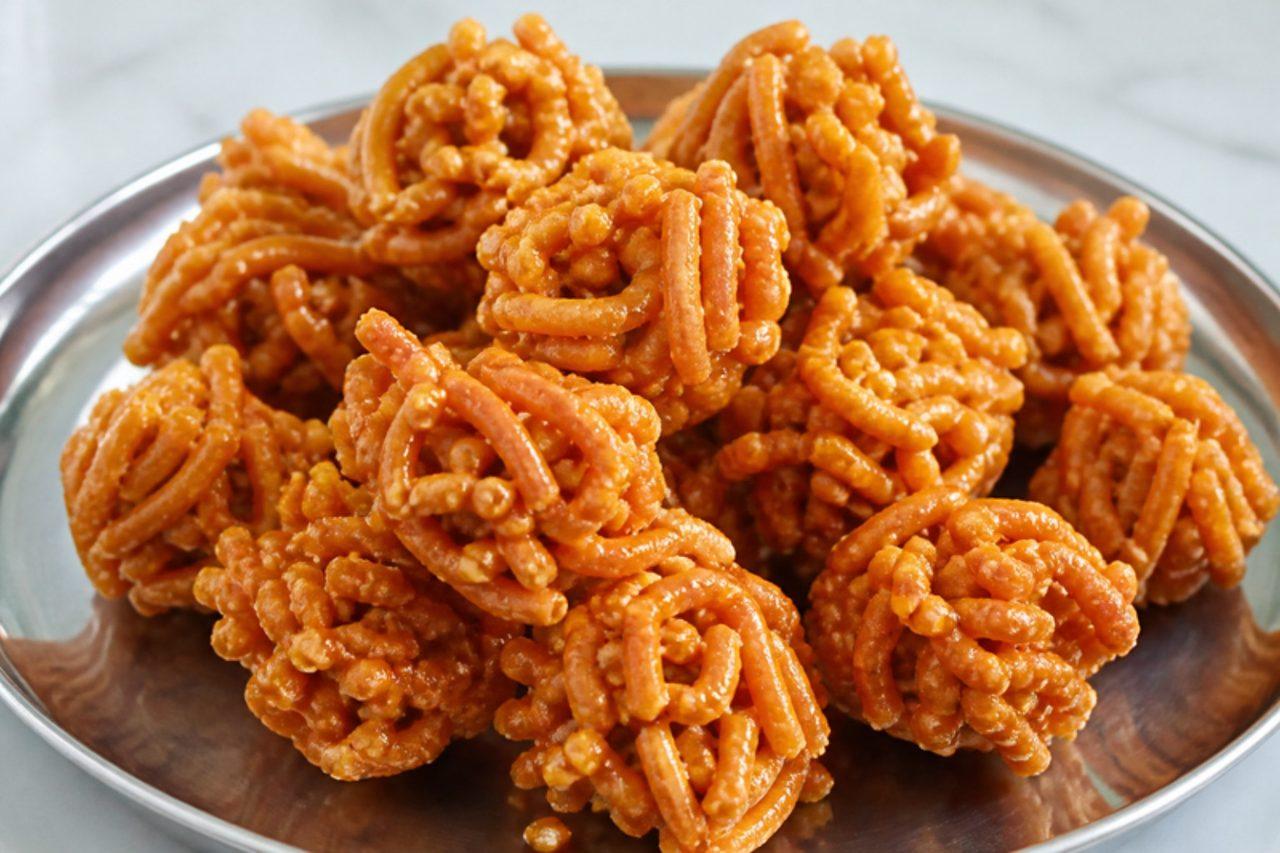
ManoharamRice flour sticks in jaggery syrup

Manoharam is a Chettinad sweet made for weddings and the sweet trays of Deepavali, often shaped into a tall cone for the bridal seer. Short, crisp sticks of rice and moong flour are pressed and fried, then tossed in a jaggery syrup cooked to the hard-ball stage, so the syrup sets around them into a crunchy, molasses-sweet cluster. It is eaten in small pieces with coffee and keeps for weeks. The usual mistake is undercooked syrup, which never sets and leaves the sticks soggy; test it in cold water until it snaps. Chef's tip: have the fried sticks warm and ready in a wide greased bowl before the syrup reaches the right stage, as it starts setting within a minute.

by KrazyBadal 0 views

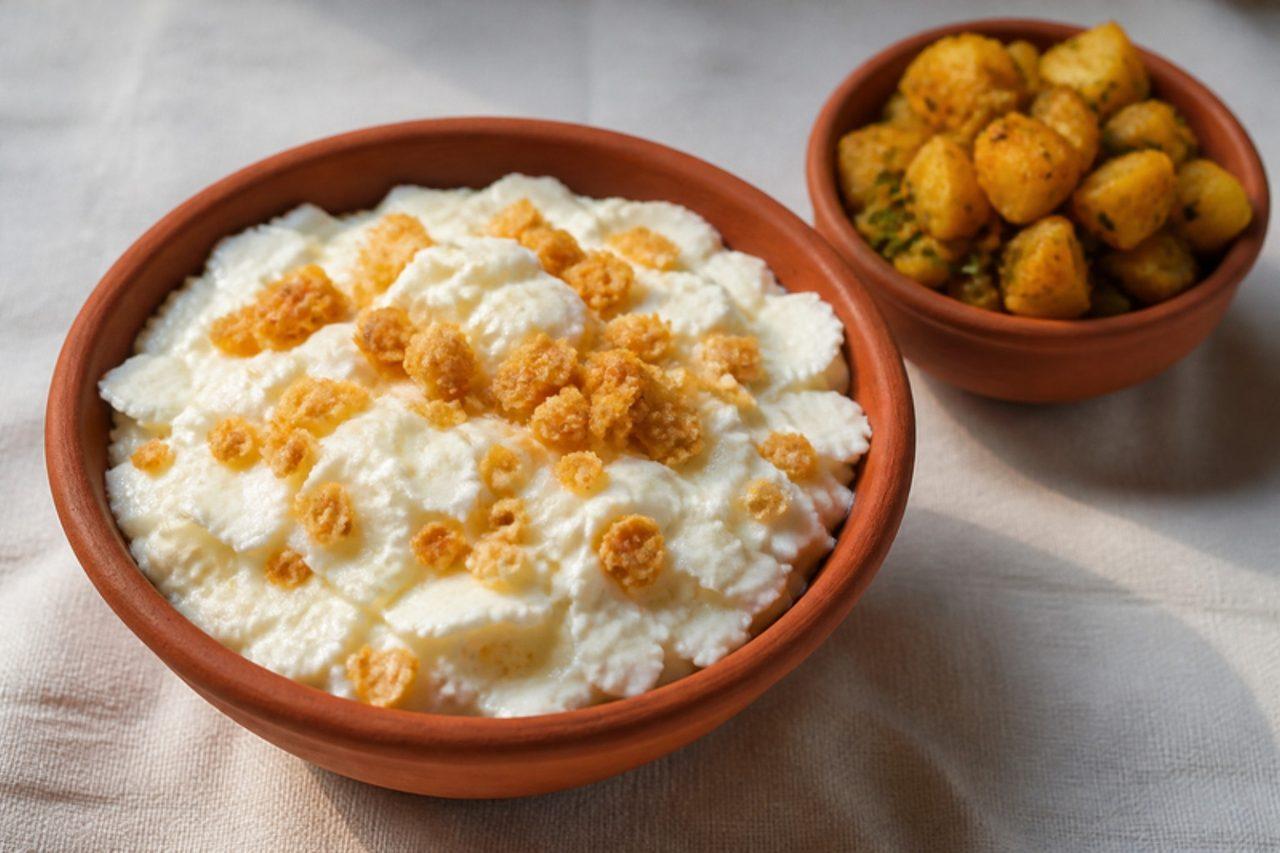
Dahi churaFlattened rice with curd and jaggery

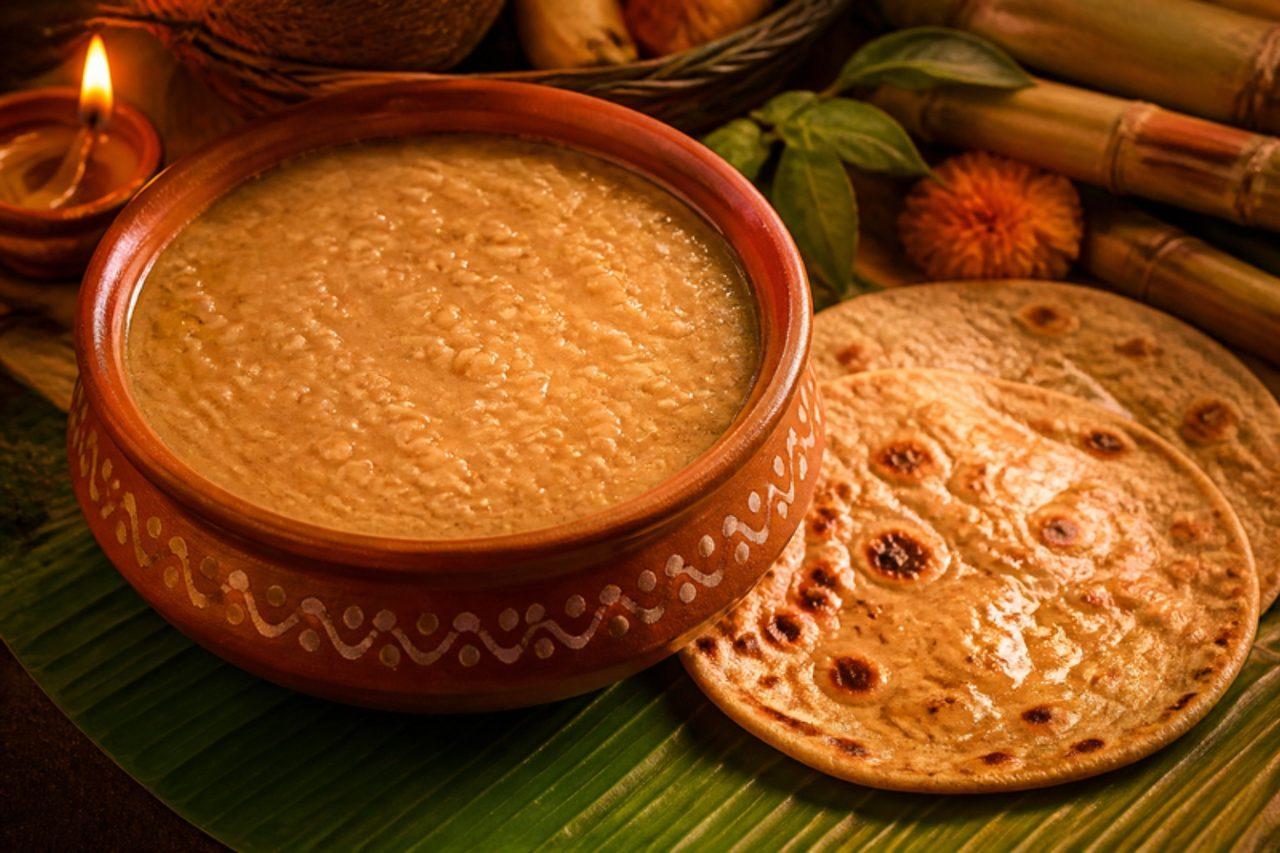
Dahi chura belongs to Bihar and eastern Uttar Pradesh: it is the traditional Makar Sankranti breakfast, but on summer nights in Patna and Gaya it is also the supper that needs no stove at all. Thick chura (flattened rice) is rinsed, mixed with creamy set curd and sweetened with jaggery, then eaten with a spicy potato sabzi or a pinch of pickle alongside. It is cool, mildly sweet and gently chewy. The usual mistake is soaking the chura in water, which leaves it soggy and dilutes the curd. Chef's tip: rinse the chura and let it drain for two minutes so the flakes swell from the water clinging to them, then add the curd.

by KrazyBadal 0 views

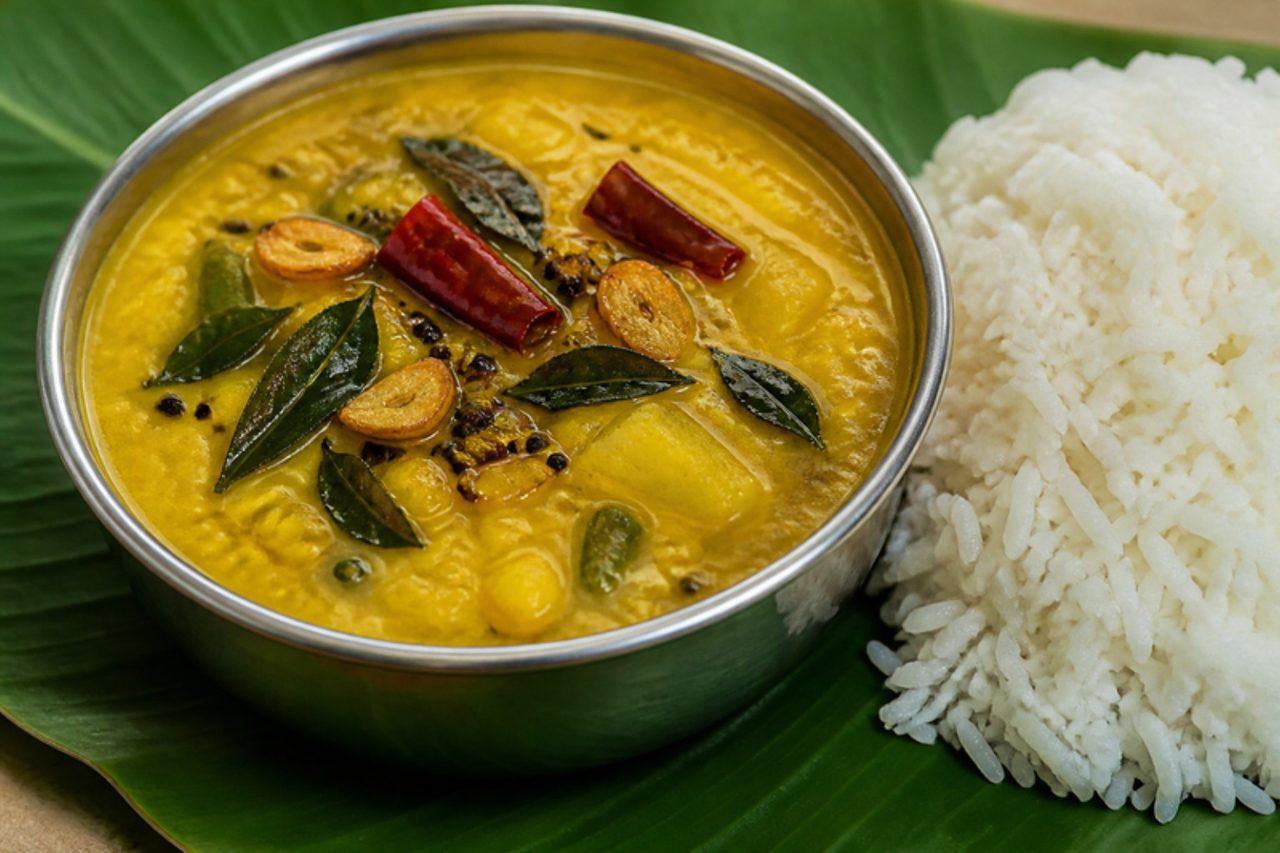
Mamidikaya pappuToor dal with raw mango

Ugadi falls just as the first green mangoes reach Andhra markets, so the festive lunch nearly always has a pot of mamidikaya pappu beside the pulihora and pachadi. Toor dal is cooked soft, then sharpened with chunks of sour raw mango and slit green chillies, and finished with a sizzling tempering of garlic, dried red chilli and curry leaves. Mixed into hot rice with a spoon of ghee, it is tangy, mellow and comforting. The common mistake is cooking the mango with raw dal: its acid stops the lentils from softening, so always cook the dal to a smooth mush first. The mango is ready when a piece crushes easily but still holds its shape. Chef's tip: mangoes vary hugely in sourness, so add half, taste after five minutes and add the rest only if the dal needs more bite.

by KrazyBadal 0 views

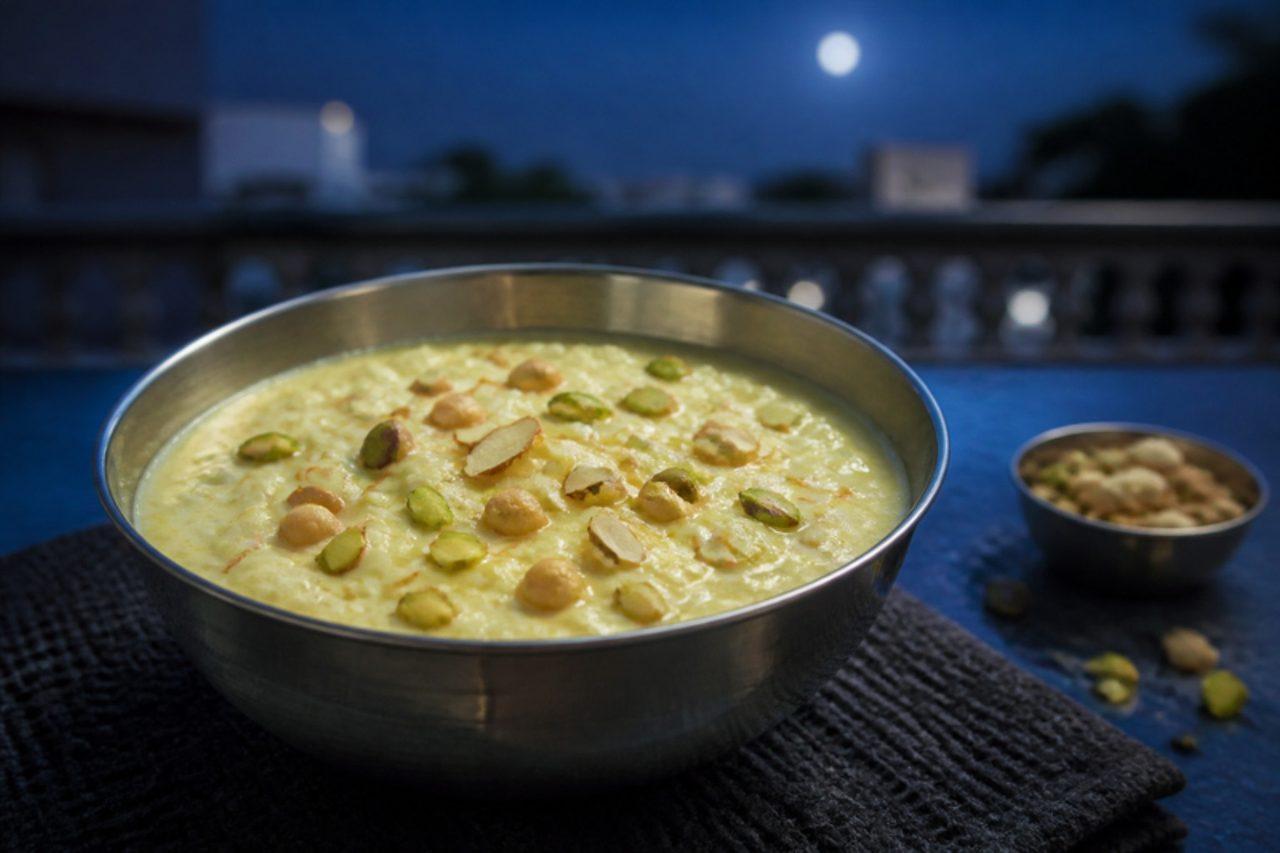
Doodh pauvaChilled saffron milk with flattened rice

Sharad Poonam, the brightest full moon of the year, ends the Navratri season in Gujarat; families sing garba late into the night and leave a bowl of doodh pauva out under the moon, believing its rays make it healing, before eating it cold together. It is thin poha soaked in reduced, sweetened milk with cardamom, saffron and nuts, cooling, soft and lightly creamy, the Gujarati cousin of Maharashtra's Kojagiri masala doodh. Common mistake: adding poha to hot milk or too early, so it turns to porridge; chill the milk first and stir the poha in only 10–15 minutes before eating, when the flakes are soft but still separate. Chef's tip: simmer the milk down by a quarter before chilling; a little reduction gives body without needing cream.

by KrazyBadal 0 views

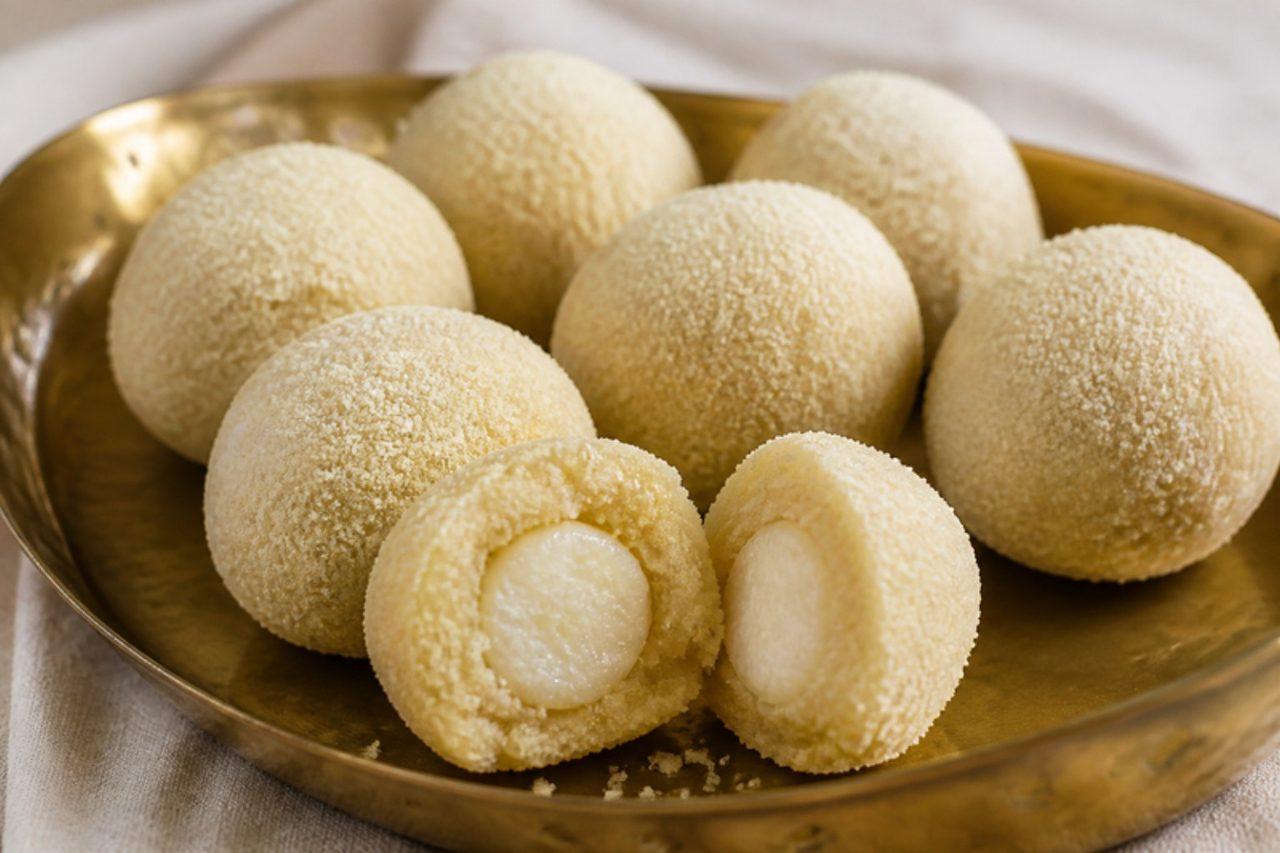
Kheer kadamKhoya-coated chhena balls

Kheer kadam, named after the round kadam flower, is a sweet-shop showpiece that Bengali families buy, or proudly make, for Bhai Phonta: a small rasgulla-like chhena ball is soaked in syrup, squeezed, wrapped in a layer of sweetened khoya and rolled in more grated khoya so it looks fuzzy like the flower. You bite through dense, milky fudge into a juicy centre. Common mistake: wrapping the balls while they are still full of syrup; the khoya slides off and goes sticky. Squeeze them gently until they feel damp, not wet. The centres are cooked when they have doubled in size and sink in cool water. Chef's tip: cook the khoya only until it stops sticking to the pan and holds together; overcooked khoya cracks when you shape it.

by KrazyBadal 0 views

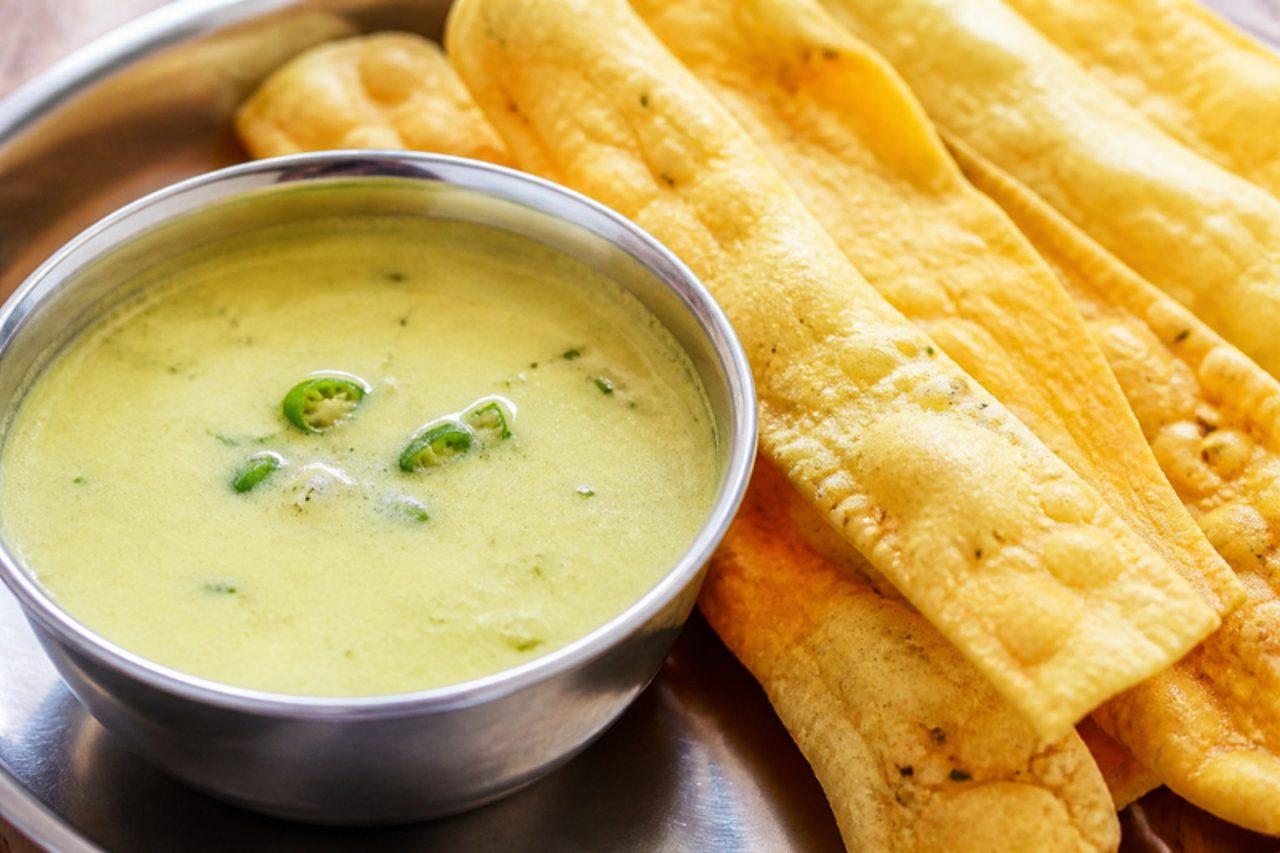
Kadhi chutneyGram flour buttermilk dip

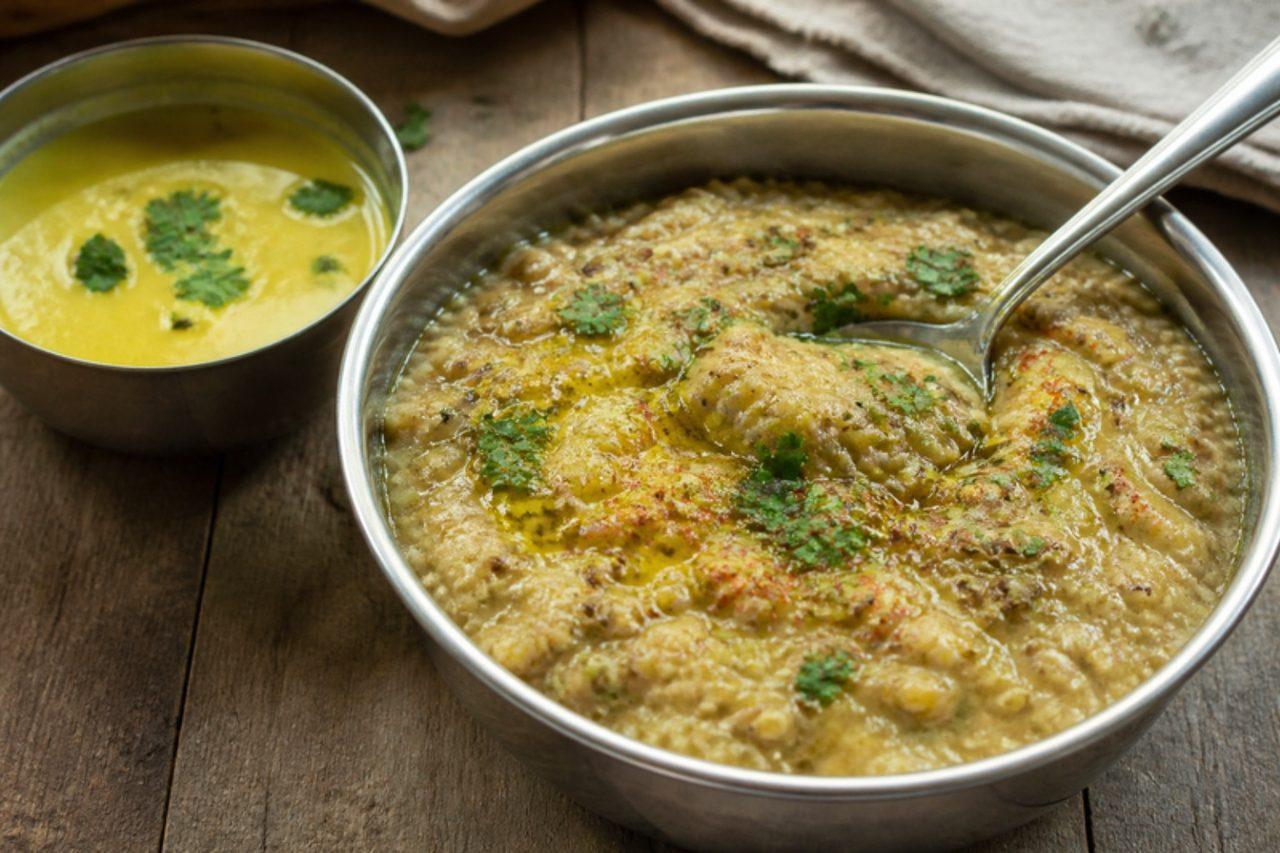
Order fafda-jalebi on a Sunday morning in Ahmedabad or Rajkot and alongside it comes a small bowl of pale yellow kadhi chutney, a thin, sweet-sour dip of gram flour and buttermilk simmered with green chilli and ginger. It is runnier than a kadhi you would eat with rice, so the crisp farsan can be dunked and dragged through it. The flavour is gentle, a little tangy and a little sweet, which balances salty, peppery snacks. The common mistake is letting it boil hard right after adding the buttermilk, which makes it grainy and split. Chef's tip: it thickens as it cools; loosen it with a splash of water to a pouring, single-cream consistency before serving.

by KrazyBadal 0 views

KundaCaramelised milk sweet

Kunda is the pride of Belagavi, where sweet shops near the old market have made it for over a century, and boxes go to weddings and Diwali visits across north Karnataka and Goa. Milk is reduced with a little curd so it turns grainy, then cooked with sugar that has been partly caramelised, ending as a soft, crumbly, toffee-brown sweet that tastes of burnt milk and cardamom. A common mistake is caramelising all the sugar; only a third should be darkened, or the kunda turns bitter instead of rich. Chef's tip: use full-fat milk and a wide heavy pan, and scrape the browned bits from the sides back in; they carry most of the flavour.

by KrazyBadal 0 views

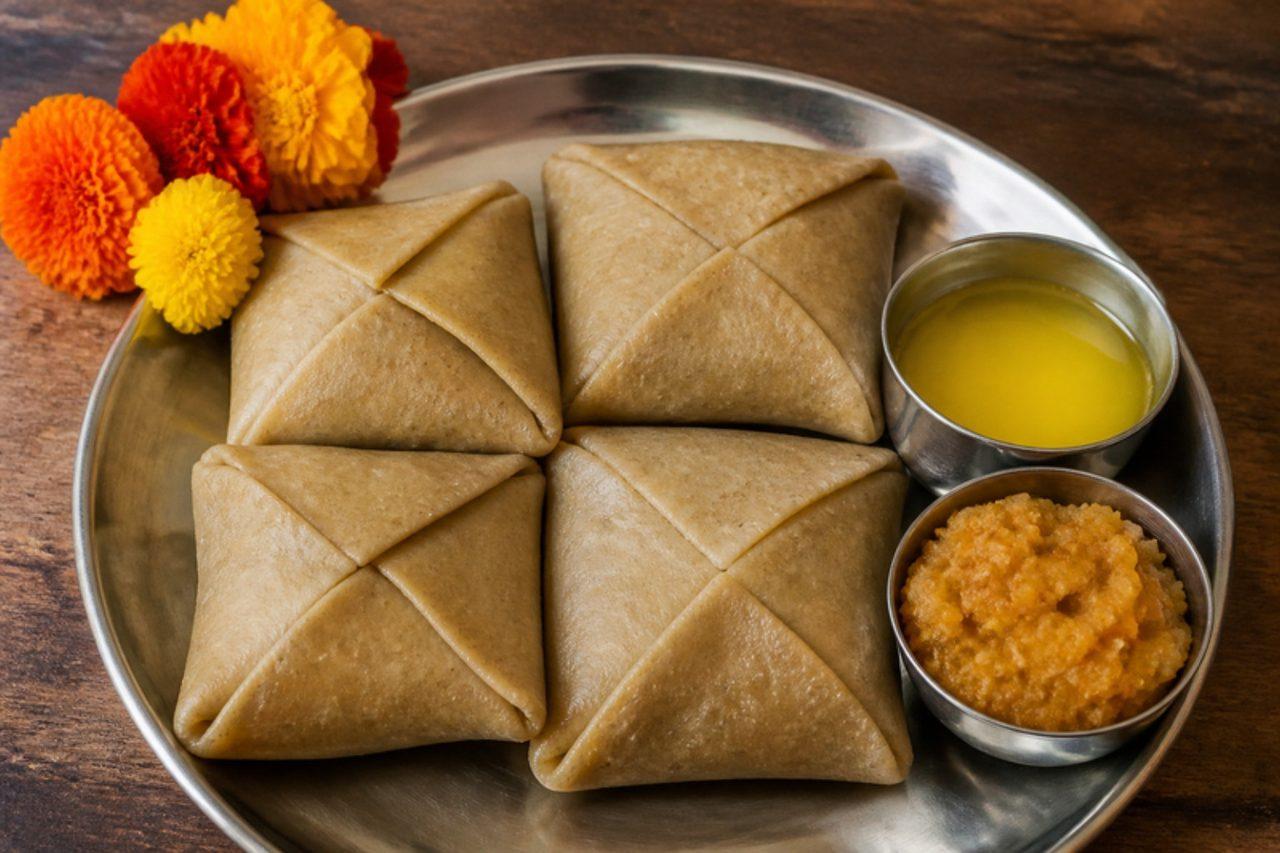
DindeSteamed chana jaggery parcels

On Nag Panchami in Maharashtra, women draw snakes in turmeric, offer milk and lahya at anthills, and by custom nothing is cut, chopped or fried on the tava that day, so the festival sweet is dinde: wheat-dough squares folded around puran (chana dal and jaggery) and steamed. They are soft, a little chewy and fragrant with nutmeg and cardamom, eaten warm with ghee. Common mistake: wet puran that leaks; cook the dal and jaggery until the mixture is thick and a spoon stands upright in it, then cool before filling. Chef's tip: steam the dinde on a greased banana leaf or plate and keep the seams down, so they keep their square shape.

by KrazyBadal 0 views

SunthavadaDry ginger, coconut and sugar mix

At exactly noon on Ram Navami, when Maharashtrian temples and homes rock a decorated cradle to mark Rama's birth, each person is handed a spoonful of sunthavada: dry ginger powder, toasted dry coconut, poppy seeds and sugar pounded together into a fragrant, warming powder. The same mix is given at Janmashtami midnight. It is sweet, nutty and gently fiery from the ginger. Common mistake: burning the coconut; it should be toasted on a low heat only until it turns pale gold and smells sweet, then cooled before grinding so it does not turn oily. Chef's tip: grind in short pulses; long grinding releases the coconut oil and the powder clumps.

by KrazyBadal 0 views

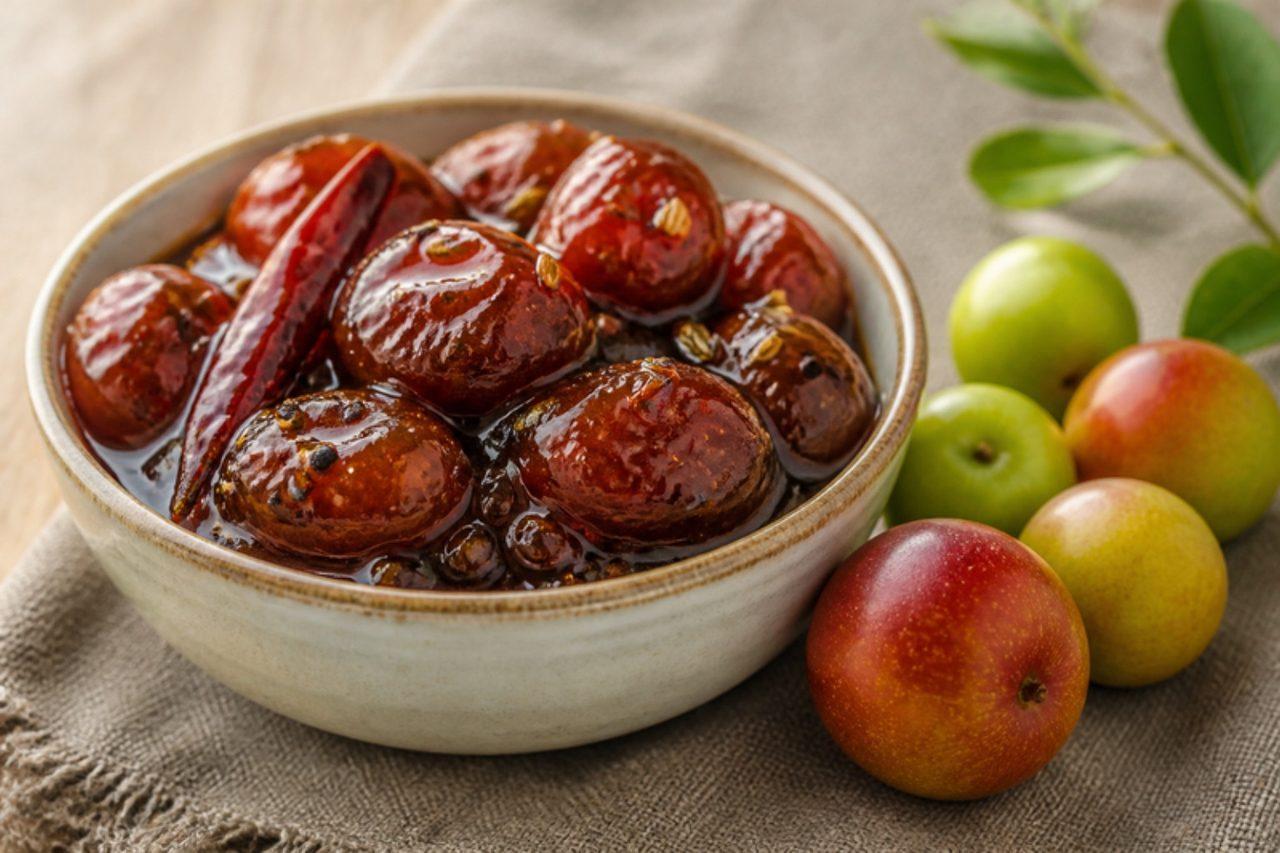
Kul er chutneyJujube chutney

Many Bengali families do not eat kul (Indian jujube, or ber) all winter until it has been offered to Goddess Saraswati, so on Saraswati Puja the first taste usually comes as this glossy chutney at the end of the khichuri bhog. Fresh or dried kul is simmered with jaggery, a tempering of panch phoron and dried red chilli in mustard oil, and finished with a touch of roasted spice powder, giving a sticky, sweet, sour and mildly hot relish. Dried kul gives a darker, chewier chutney; fresh kul is brighter and tangier. Common mistake: cooking it too thick on the stove; the chutney sets firmer as it cools, so stop when the syrup coats a spoon and runs off slowly. Chef's tip: prick each fresh kul with a fork before cooking so the syrup gets inside instead of the fruit bursting.

by KrazyBadal 0 views

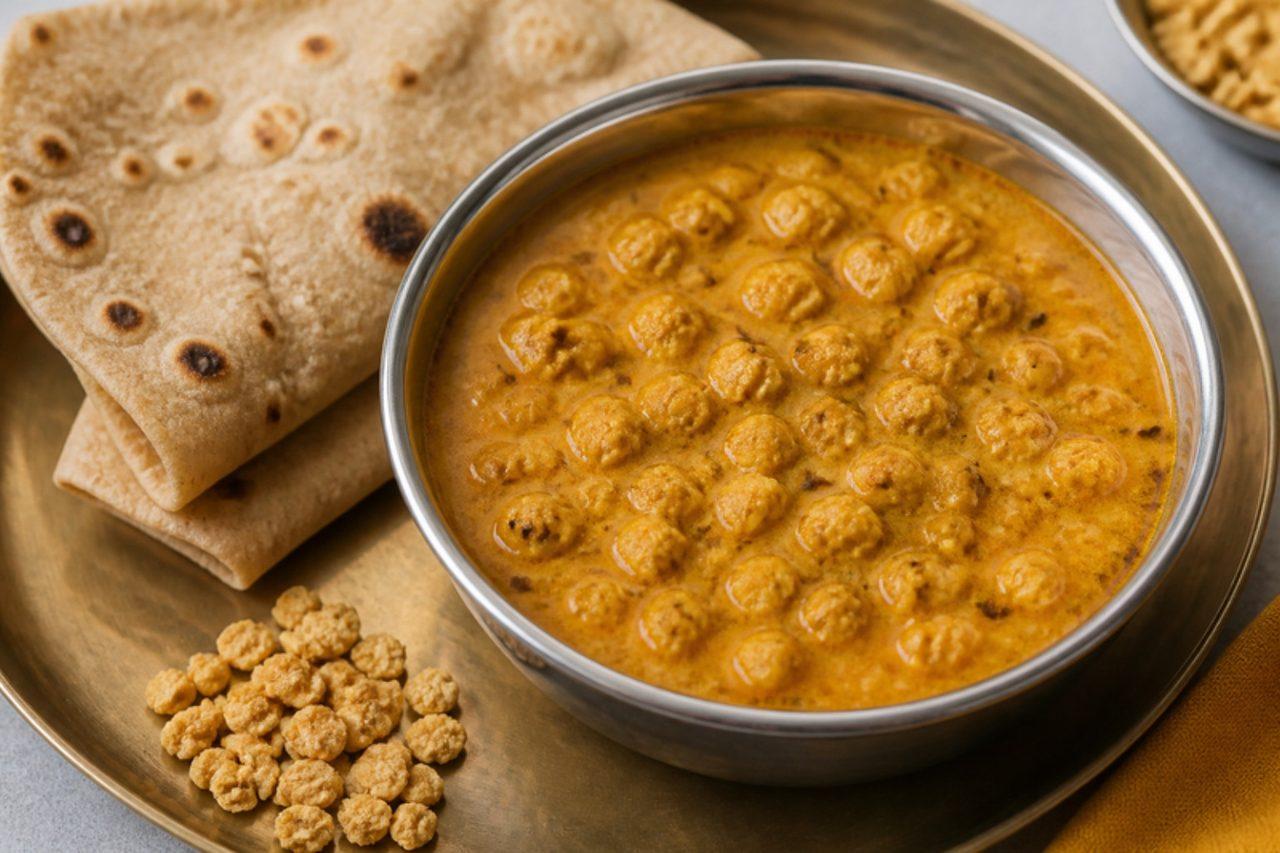
Mangodi ki sabziMoong dal nuggets in yogurt gravy

Mangodi are little sun-dried nuggets of ground moong dal that Rajasthani women make in summer and store for months; during Paryushan, when Marwari Jain homes give up green vegetables, they become the sabzi itself. Here they are fried golden, then simmered in a spiced yoghurt gravy with no onion, garlic, fresh ginger or tomato, so the dish is fully Jain. The nuggets soak up the tangy gravy and turn soft but still a little chewy; serve with phulka or bajra roti. Use freshly set curd, as many Jains avoid curd kept overnight. Common mistake: pouring yoghurt straight into a hot pan, which makes it split into grainy curds; whisk it with gram flour first and keep stirring until it comes to the boil. Chef's tip: fry the mangodi until deep golden; pale ones stay hard in the middle however long they simmer.

by KrazyBadal 0 views

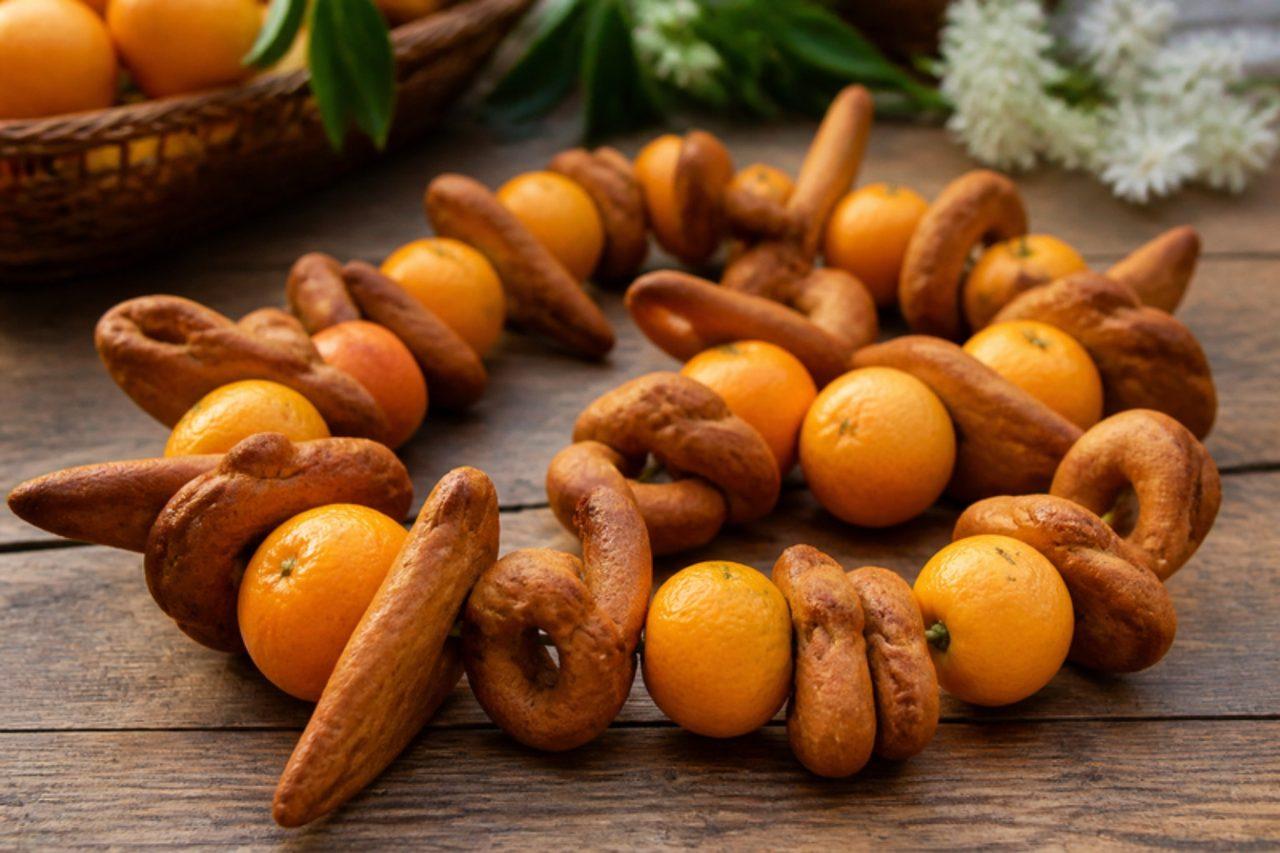
GhughuteFried jaggery dough shapes

In Kumaon, Makar Sankranti is Ghughutiya, and the evening before, families knead wheat flour with jaggery and shape it into little drums (damru), swords, knots and flowers, fry them and thread them into necklaces with an orange in the middle. The next morning children wear the garlands and call the crows: 'kale kale, ghughuti mala khale', offering them the first bites before eating the rest themselves. The ghughute are crisp outside and slightly chewy within, gently sweet with fennel. Common mistake: oil that is too hot; they darken in seconds but stay doughy inside, so fry on a medium heat until they are an even deep gold and sound hollow when tapped. Chef's tip: keep the dough quite stiff, like for mathri; soft dough loses its shapes in the oil.

by KrazyBadal 0 views

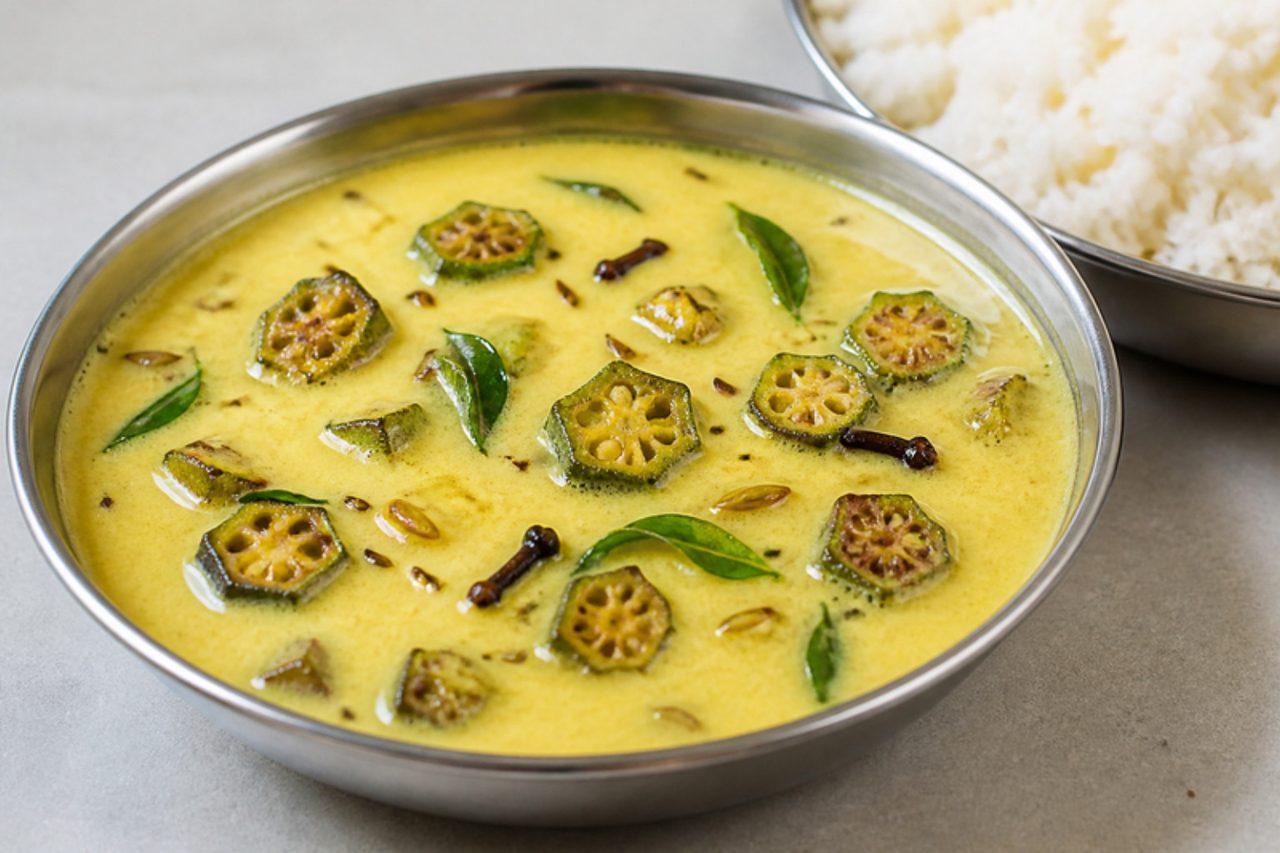
Bhinda ni kadhiYogurt kadhi with fried okra

Bhinda ni kadhi is a summer and monsoon favourite in Gujarati homes from Ahmedabad to Surat, when okra is cheap: the familiar sweet, tangy yogurt kadhi gets a handful of okra rounds fried until crisp at the edges, which soak up the sauce and add body. It is poured over steamed rice or khichdi for a light lunch. Frying the okra first keeps it from going slimy. The common mistake is boiling the kadhi fast before it has thickened, which curdles the yogurt; keep stirring and keep the heat low until it reaches a simmer. Chef's tip: add the okra only in the last few minutes so the rounds stay whole and a little crisp.

by KrazyBadal 0 views

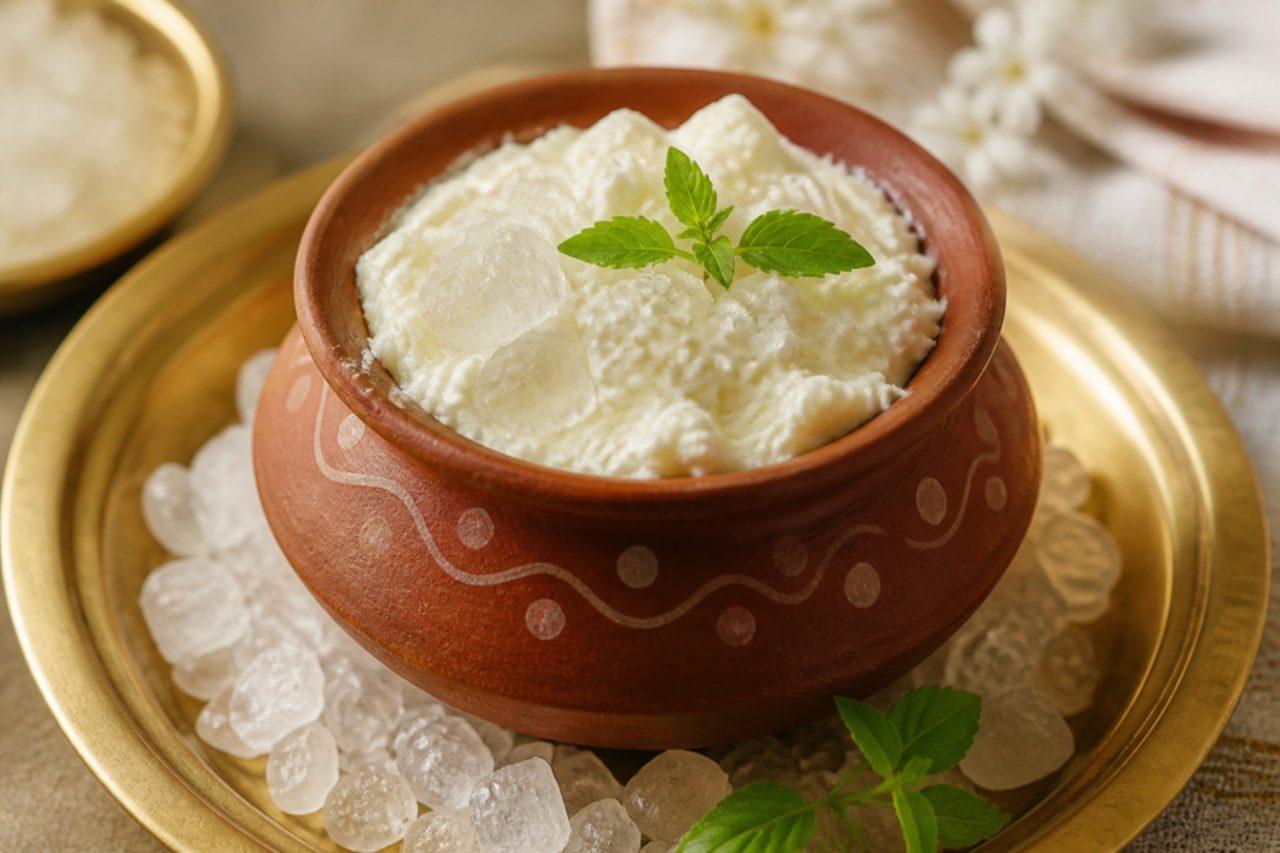
Makhan mishriFresh butter with rock sugar

Stories from Mathura and Vrindavan tell of the child Krishna stealing butter from the pots of the cowherd women, so at midnight on Janmashtami the first offering in the temples and at home is a bowl of fresh white butter mixed with mishri, the rock-sugar crystals. The butter is churned from cream at home, so it is soft, cool and lightly tangy, and the sugar crunches against it. It is eaten as prasad in tiny spoonfuls, often with a tulsi leaf on top. Common mistake: churning warm cream, which turns greasy instead of breaking; the cream must be fridge-cold, and the butter is ready when yellow-white clumps separate cleanly from thin buttermilk. Chef's tip: rinse the butter in iced water two or three times and press it with a spoon; washing out the buttermilk keeps it fresh for a day.

by KrazyBadal 0 views

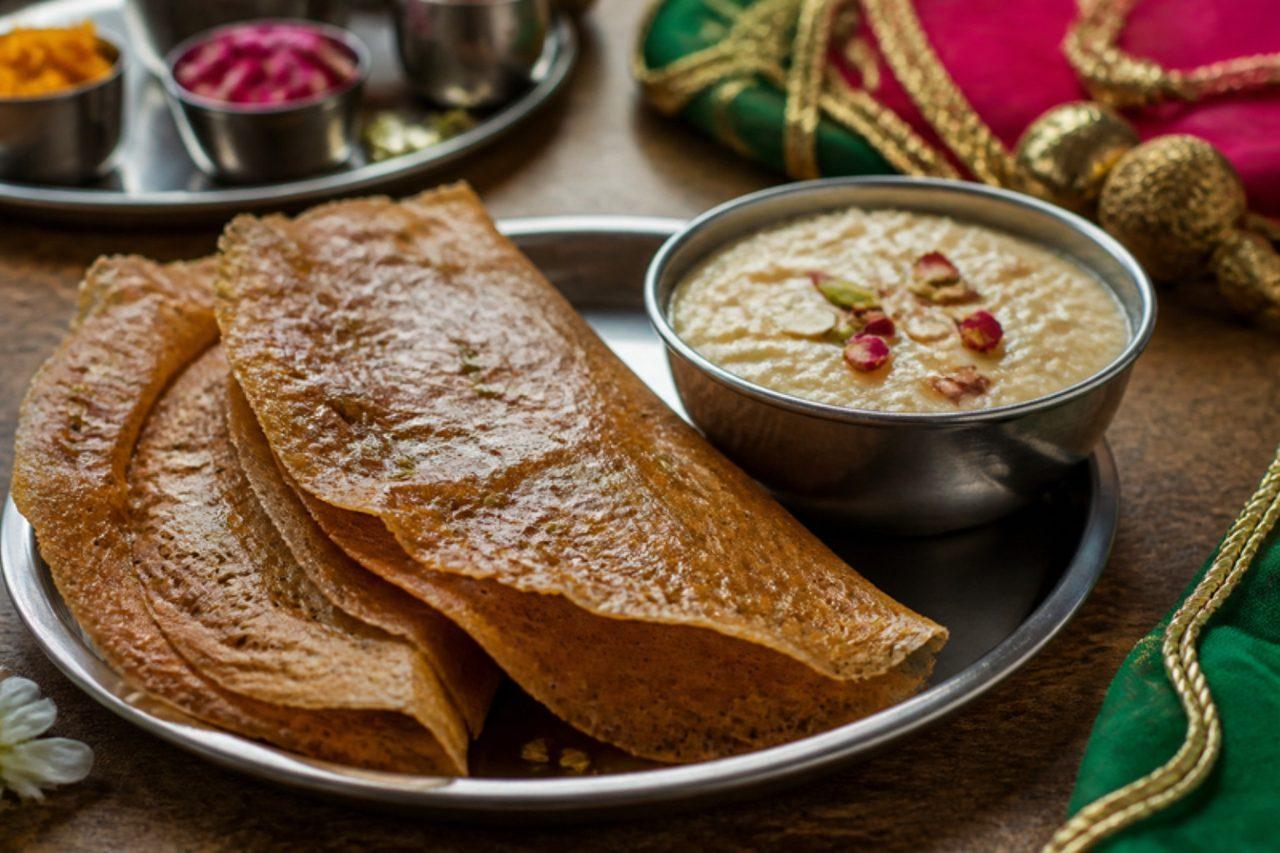
Meethe pudeJaggery fennel pancakes

Teeyan, Punjab's monsoon festival of Teej, is when married daughters visit their parents, girls swing from neem trees and dance giddha, and the food that comes out on rainy afternoons is kheer with meethe pude: thin wheat-flour pancakes sweetened with jaggery and fennel, shallow-fried in ghee until lacy at the edges. They are soft in the middle and crisp round the rim. Common mistake: a thick batter, which gives heavy, doughy pude; it should pour like single cream, and each pancake is ready to flip when the edges brown and lift from the pan. Chef's tip: rest the batter for 20 minutes so the flour hydrates; the pude spread thinner and crisp better.

by KrazyBadal 0 views

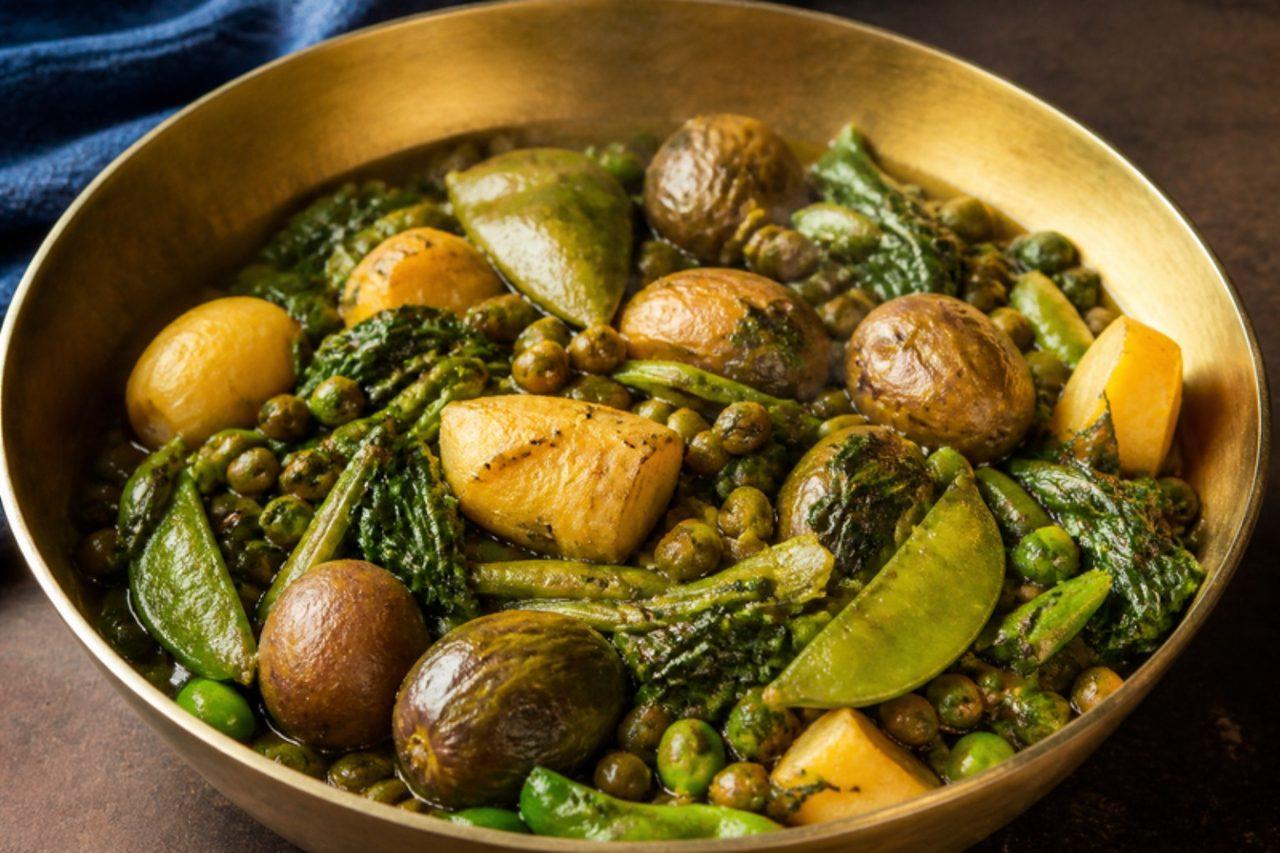
Gota sheddhoBoiled whole moong and winter vegetables

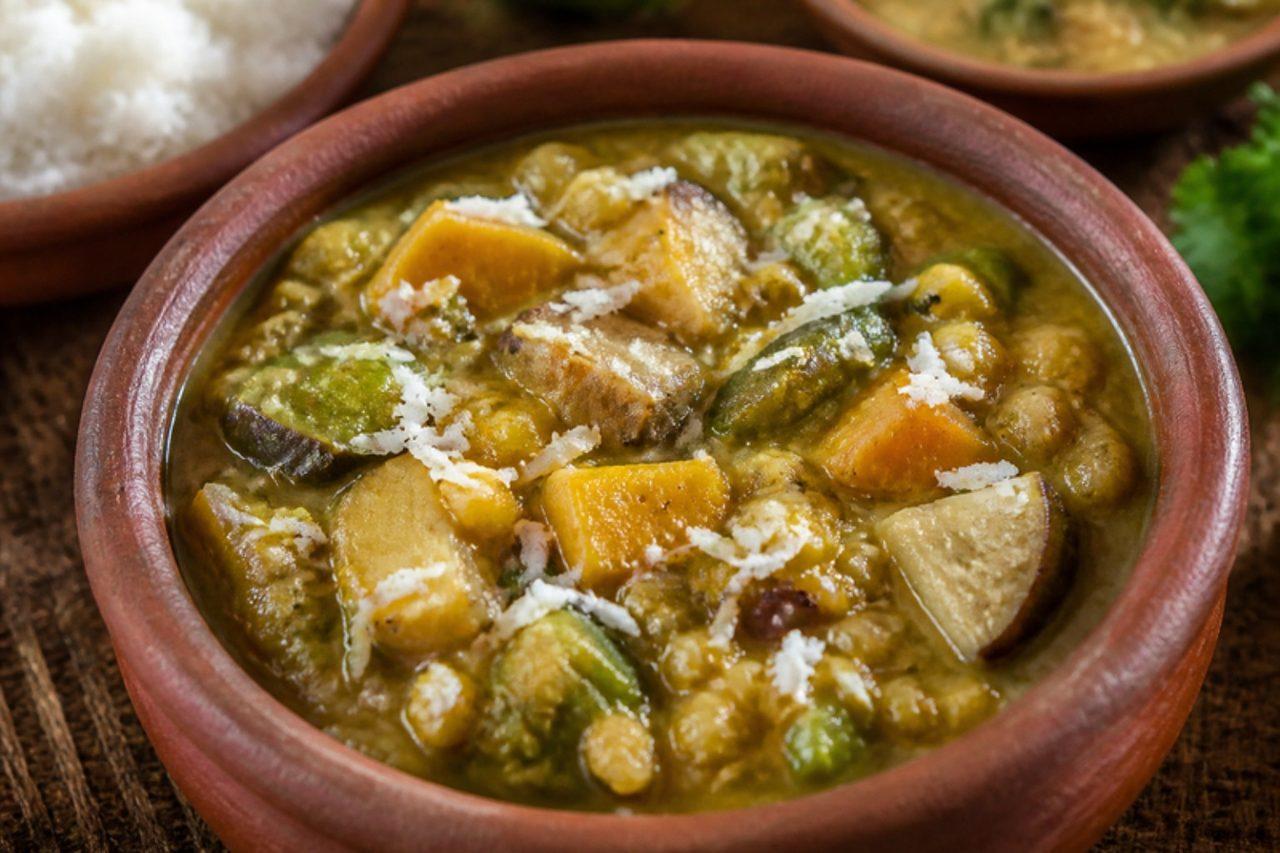
Gota sheddho is cooked by West Bengali families on the night of Saraswati Puja and eaten cold the next morning, on Sheetal Shashthi, a day when the stove is left to rest. Everything goes into the pot whole, which is what gota means: roasted green moong, small potatoes, sweet potatoes, flat beans, peas, baby aubergines and a handful of spinach, boiled with green chillies and salt and finished with raw mustard oil. It is simple, mild and surprisingly good, with the pungent oil lifting the soft vegetables and creamy moong. Common mistake: cutting the vegetables; they must stay whole so they hold their shape overnight. Cook until the moong is tender and a potato is soft when pierced, but the aubergines still hold together. Chef's tip: dry-roast the moong until it smells nutty before boiling; it gives the whole pot a toasty depth.

by KrazyBadal 0 views

Puli avalTamarind flattened rice

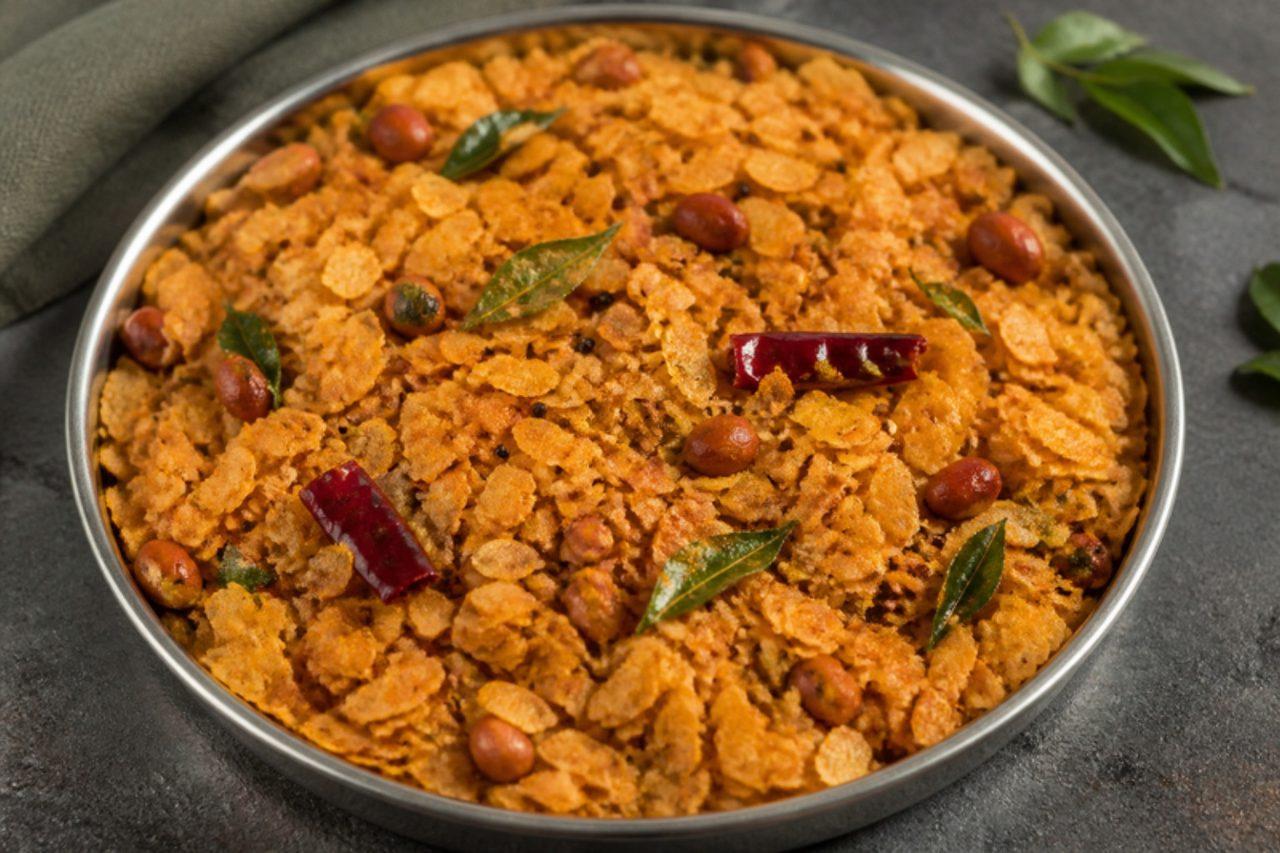
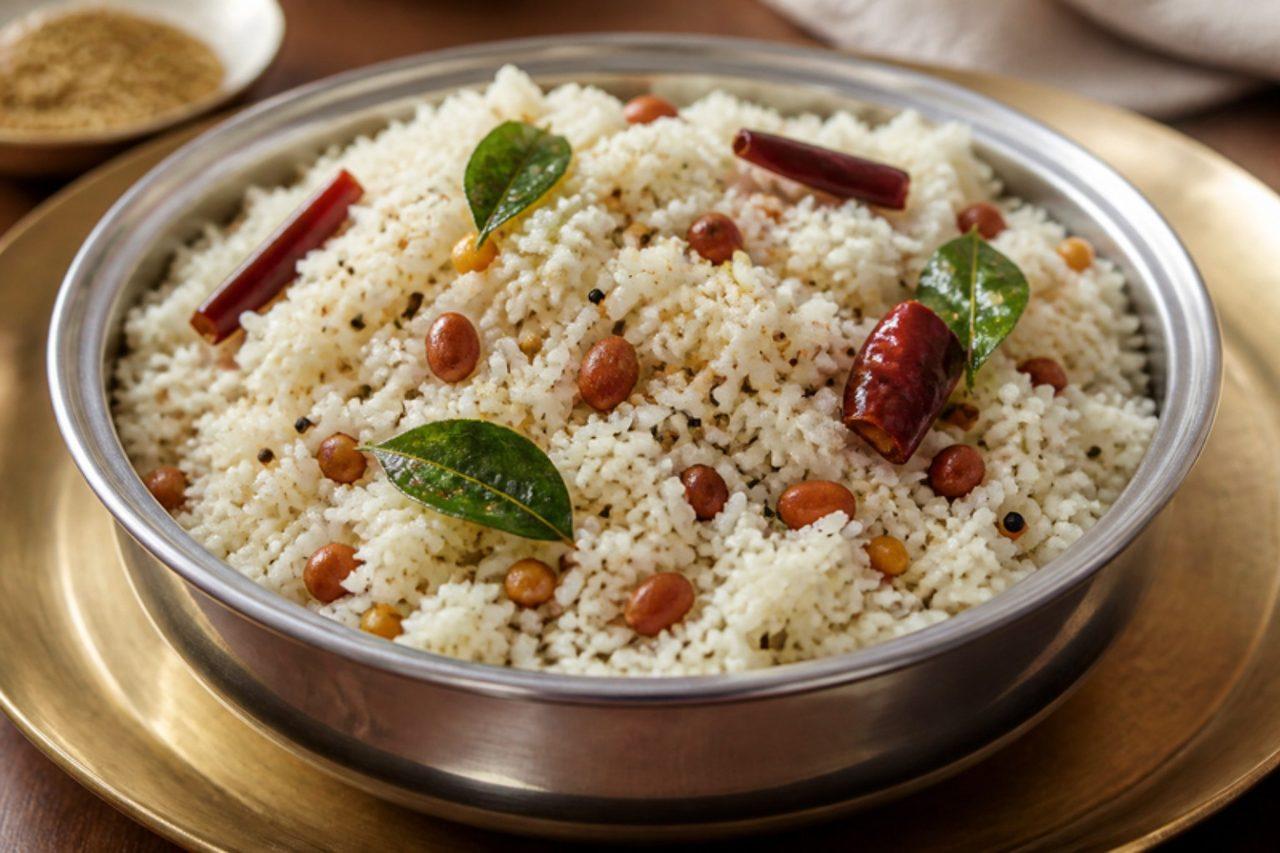
Puli aval is the quick cousin of tamarind rice from Tamil Nadu, cooked in Kumbakonam and Tirunelveli homes as an evening tiffin or a light supper when there's no rice left in the pot. Thick flattened rice is soaked in tamarind water, then tossed into a crackling tempering of mustard seeds, dals, red chilli and peanuts. It tastes tangy, a little sweet and nutty, with soft flakes and crunchy bits. The common mistake is drowning the aval in tamarind water so it turns to porridge; it only needs to be moistened, not soaked. Chef's tip: let the tempered aval sit, covered and off the heat, for 2 minutes before serving so the flakes soften evenly and drink in the tamarind.

by KrazyBadal 0 views

TambittuRoasted rice flour jaggery laddus

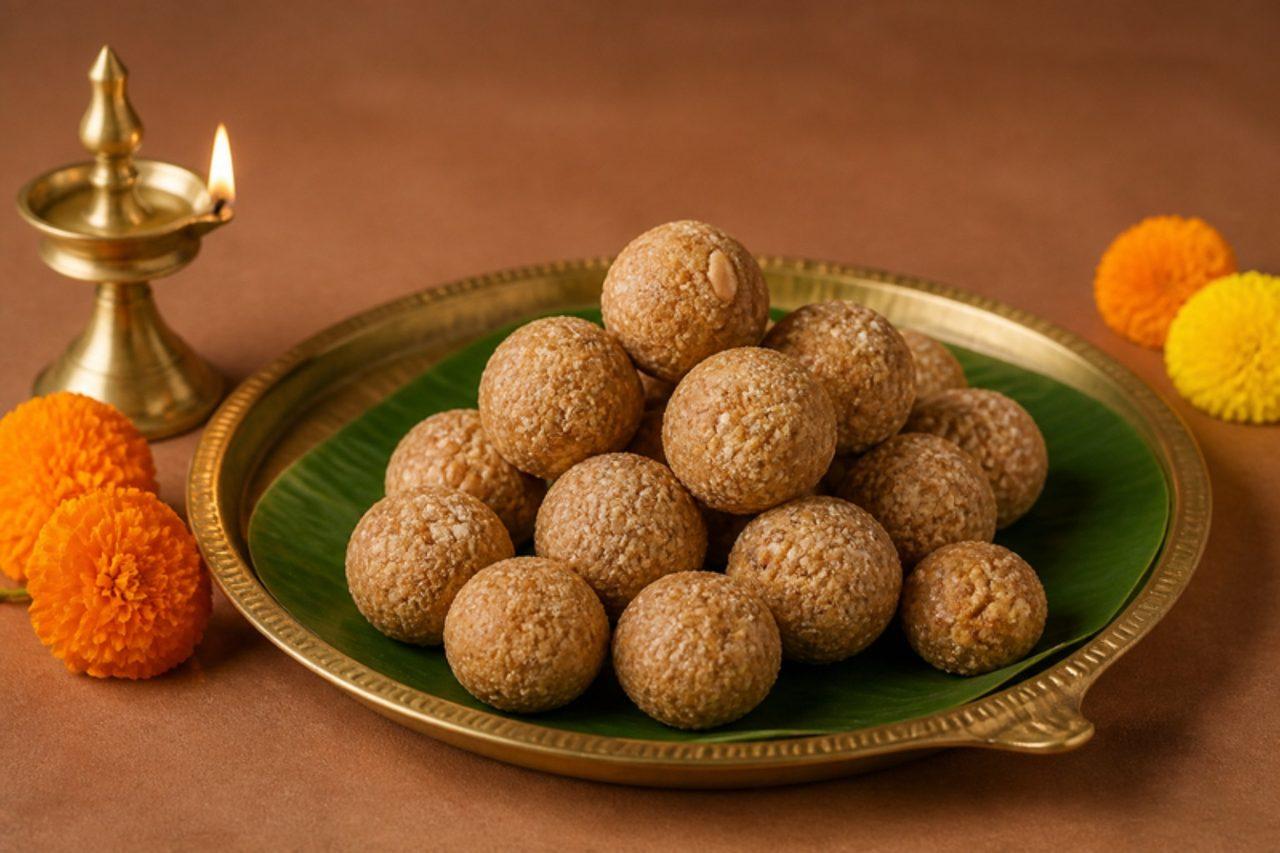
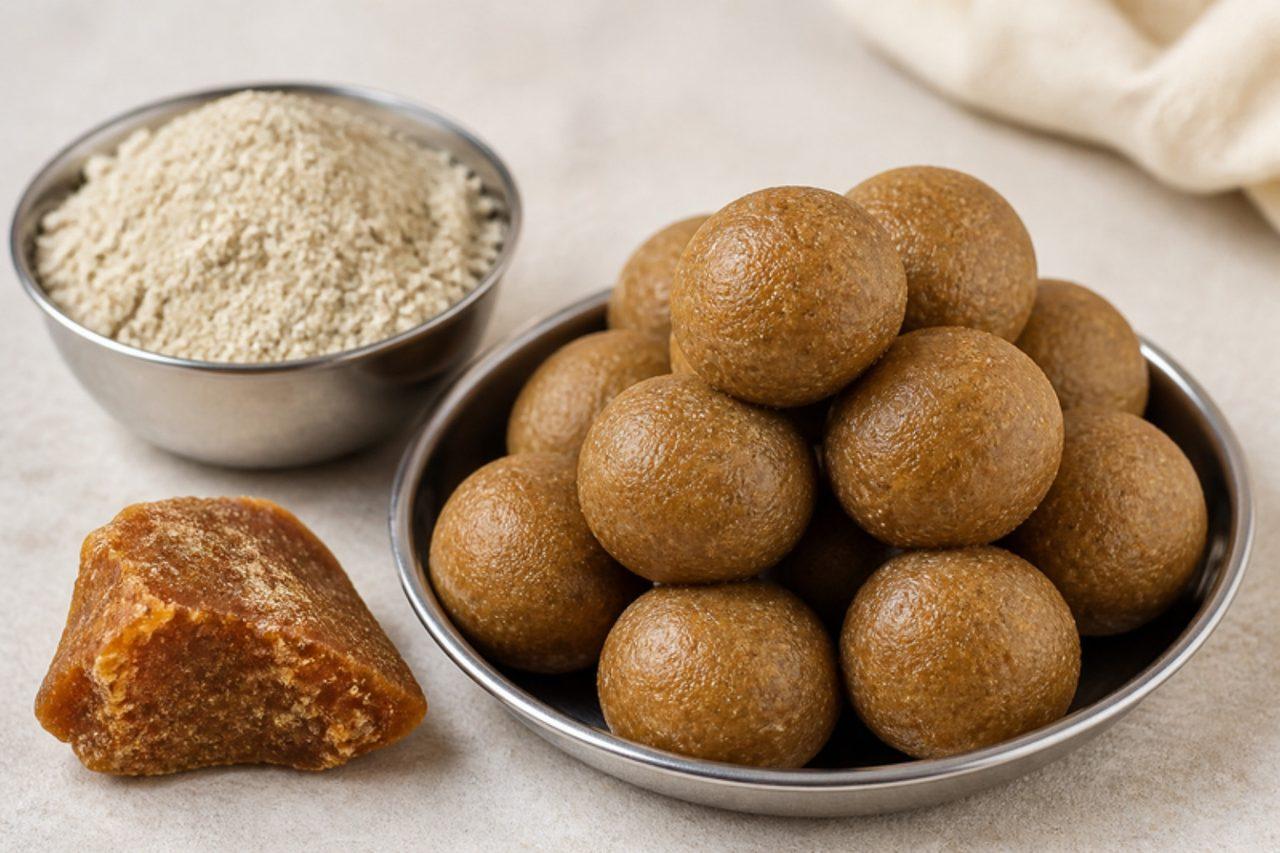
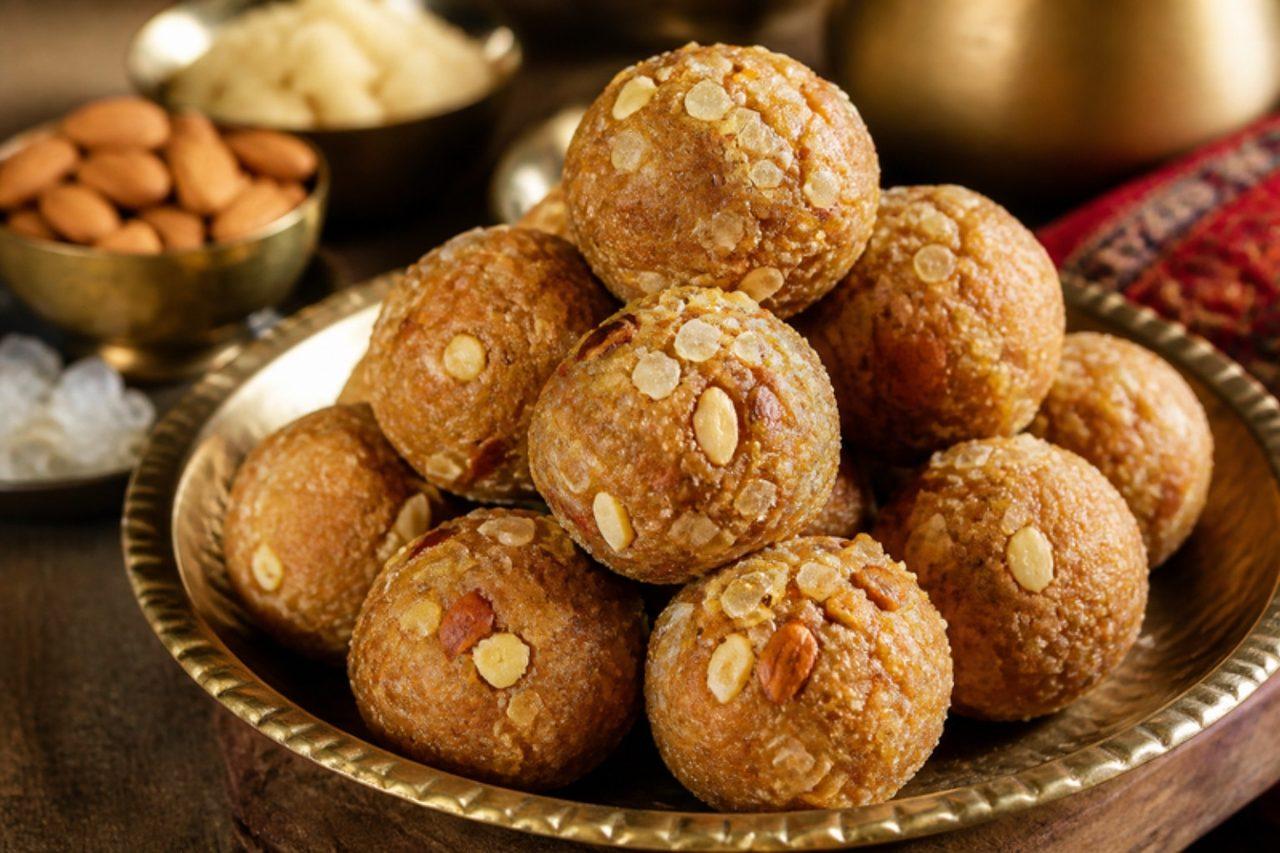
Nagara Panchami in Karnataka is a festival of sisters and brothers as much as of snakes: women offer milk to the stone naga images under peepal trees, and the sweets made at home are tambittu, laddus of roasted rice flour, roasted gram, coconut and sesame bound with jaggery syrup and ghee. They are crumbly-soft and earthy, and a few are also offered at Varamahalakshmi. Common mistake: binding with thin syrup, which leaves the laddus wet and collapsing; boil the jaggery only to a soft-ball stage, when a drop in cold water forms a soft ball you can pick up. Chef's tip: roast the rice flour until it just smells toasty and is barely cream-coloured; too dark and the laddus taste bitter.

by KrazyBadal 0 views

Tal ni chikkiSesame jaggery brittle

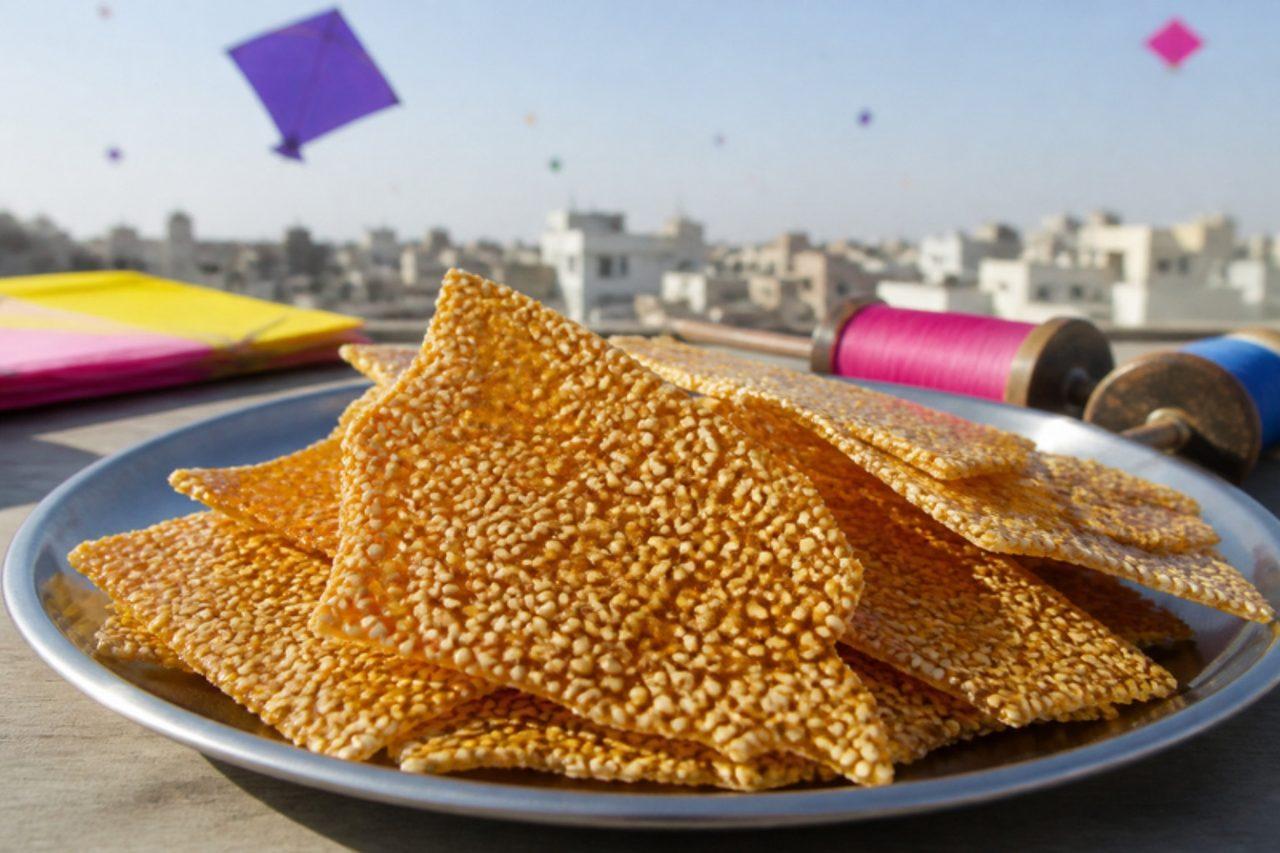
On 14 January every Gujarati rooftop fills with kite-flyers, and somewhere between the manja reels there is always a tin of tal ni chikki, broken into shards. The thinnest kind, tal sankli, is rolled out so fine you can almost see through it; it shatters with a snap and tastes of toasted sesame and dark caramel. It is a two-ingredient sweet where everything depends on the jaggery. Common mistake: pulling the jaggery off the heat too soon; it must reach the hard-crack stage, when a drop in cold water sets instantly and snaps cleanly, or the chikki stays chewy and sticks to the teeth. Chef's tip: work fast and roll on the greased back of a steel thali; if it hardens before you finish, warm it in the pan for a few seconds.

by KrazyBadal 0 views

Vella seedaiJaggery-glazed rice flour balls

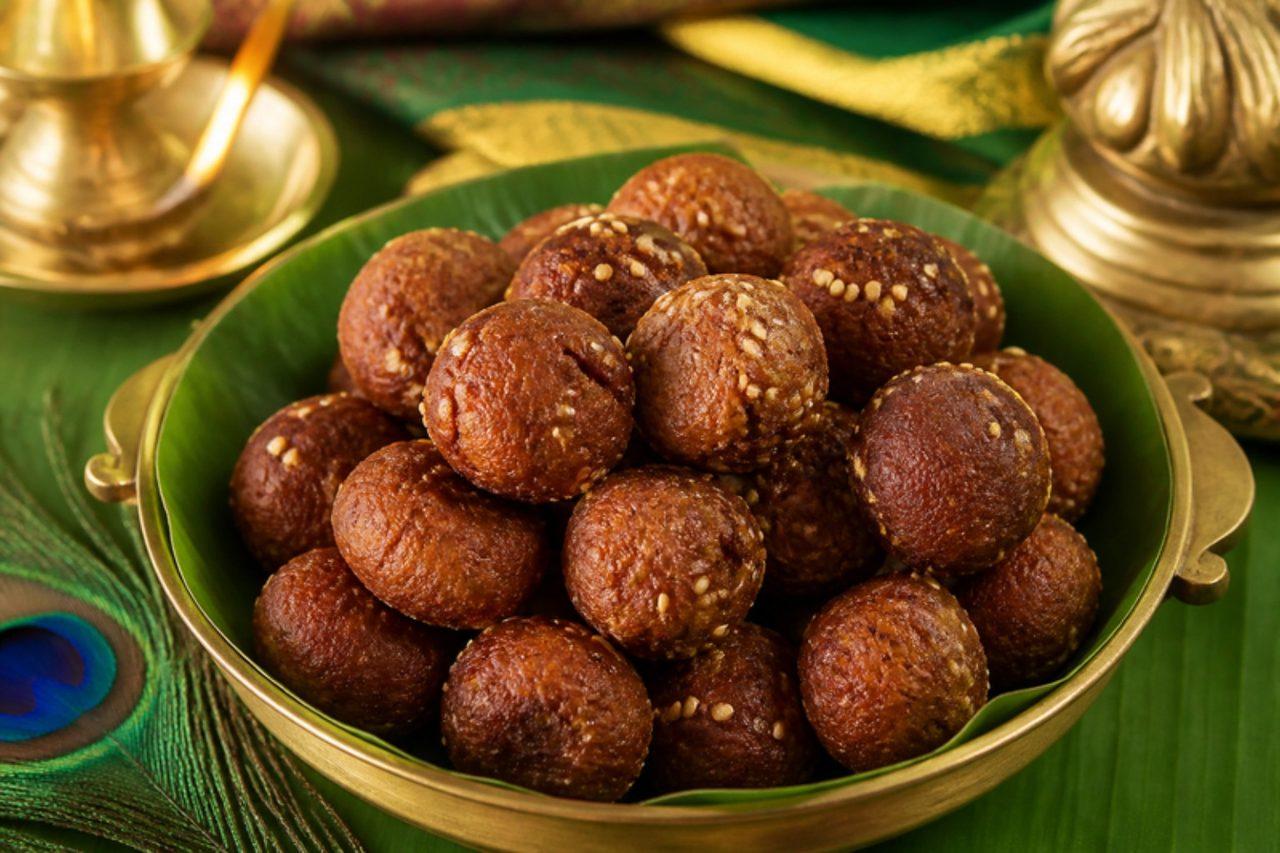
Next to the salty seedai on the Gokulashtami tray in Tamil Nadu sit vella seedai, the sweet twin: rice and urad flour kneaded with jaggery syrup, sesame and cardamom, rolled into slightly larger balls and fried to a deep brown crunch. They are offered to Krishna with butter, aval and fruit, then shared with neighbours. Common mistake: using hot syrup, which cooks the flour into a sticky mass and makes the balls burst; the syrup should be strained, cooled to warm and only cooked to a thin, sticky stage, not to a string. They are fried when the oil goes quiet and they turn deep golden-brown. Chef's tip: let the dough rest covered for 30 minutes before rolling; it firms up and the balls hold their shape.

by KrazyBadal 0 views

KulerBajra ghee jaggery balls

On Nag Pancham, Gujarati women draw a snake in kumkum on the wall or visit a nag temple and offer kuler with milk and cotton: a raw sweet of fine bajra flour rubbed with ghee and jaggery, rolled into soft balls. Since the day is a cold-food day in many homes, nothing is cooked; the bajra simply soaks up the ghee. It is soft, earthy, sweet and slightly sandy. Common mistake: using coarse or stale bajra flour, which tastes bitter and gritty; use fresh, finely ground flour, and the mix is ready when a handful holds together when squeezed. If you prefer, you can lightly roast the flour first, though that is not the traditional way. Chef's tip: grate the jaggery very finely, or melt it with the ghee and cool slightly, so it blends evenly.

by KrazyBadal 0 views

Tekeli pithaSteamed coconut jaggery rice cake

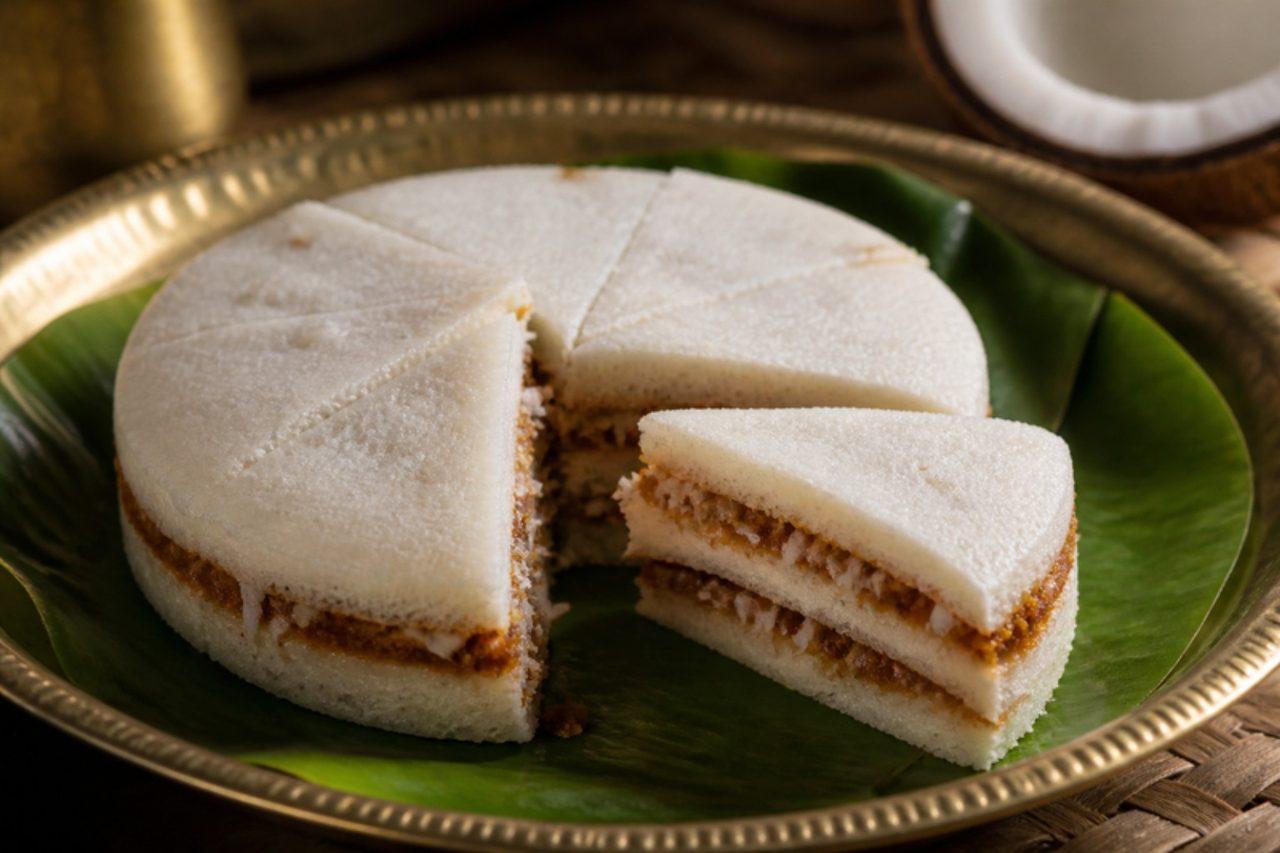
In Assamese homes the nights before Magh Bihu are spent making pitha, and tekeli pitha is the one named after the pot it is cooked on: a cloth is tied over the mouth of a tekeli (a small clay water pot), and damp rice flour, coconut and jaggery are piled on top and steamed by the water boiling underneath. It comes off as a soft, crumbly cake, sweet in the middle and plain at the edges, eaten warm with tea on Bihu morning or packed into the bhogali spread. Any narrow-necked pot or saucepan works at home. Common mistake: using dry shop rice flour straight from the packet; it needs to be just damp enough to clump when pressed, or the cake falls apart, and it is done when the top looks matt and a skewer comes out clean, about 10–12 minutes. Chef's tip: soak and grind your own rice flour if you can; flour from soaked rice, dried for an hour, gives the softest pitha.

by KrazyBadal 0 views

Methi laddooFenugreek and jaggery laddoos

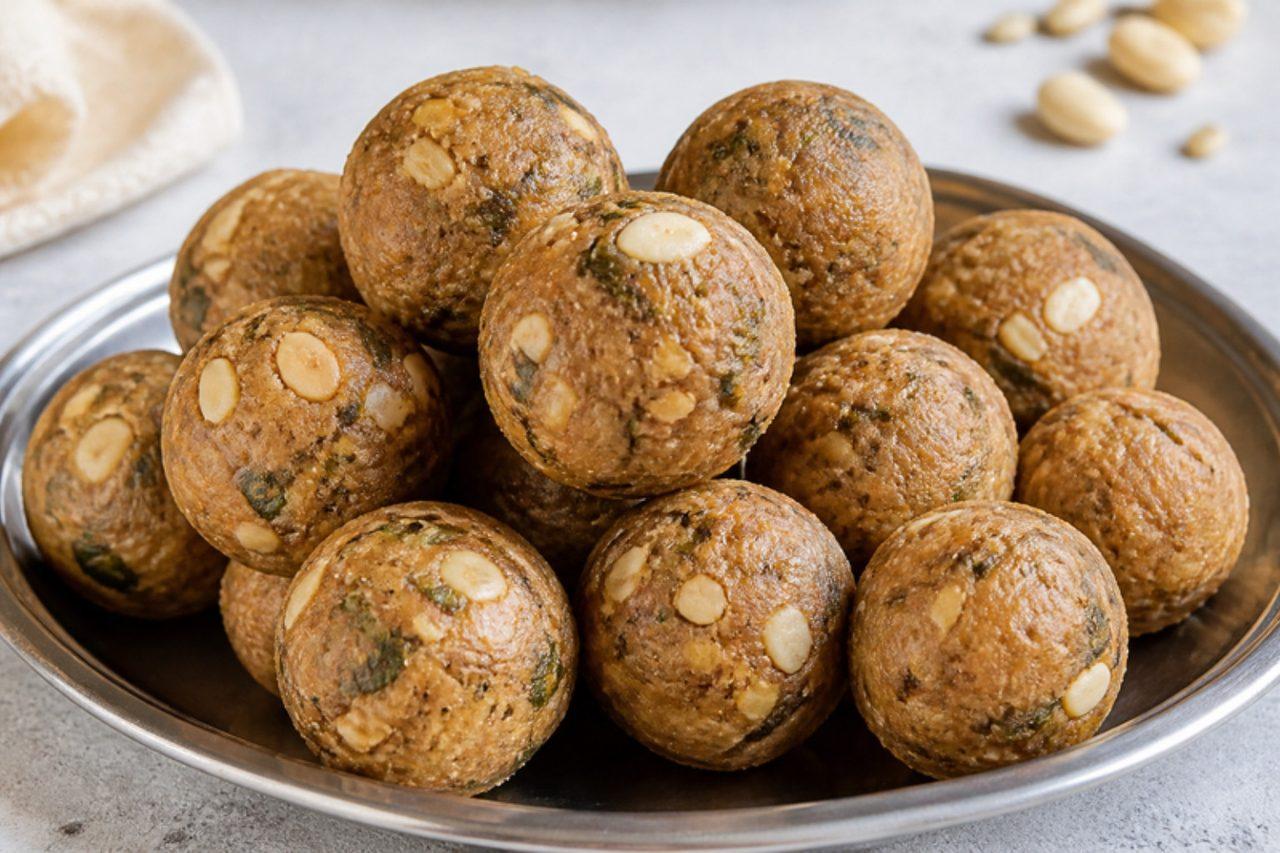
Every Punjabi winter, mothers and grandmothers roast a big batch of methi laddoos and hand out one a day with morning tea or warm milk, for strength and to keep the cold out of the joints. Fenugreek gives a gentle bitterness that the jaggery, ghee and roasted wheat balance into something nutty and warming, with crunch from puffed gond and almonds. The mistake people make is roasting the atta on high heat: it browns outside, stays raw inside and the laddoos taste floury. Keep it low and patient until it smells of biscuits. Chef's tip: soak the fenugreek powder in milk overnight; it softens the bitterness so even children will eat them.

by KrazyBadal 0 views

Rajkoti lili chutneyGreen chilli and peanut chutney

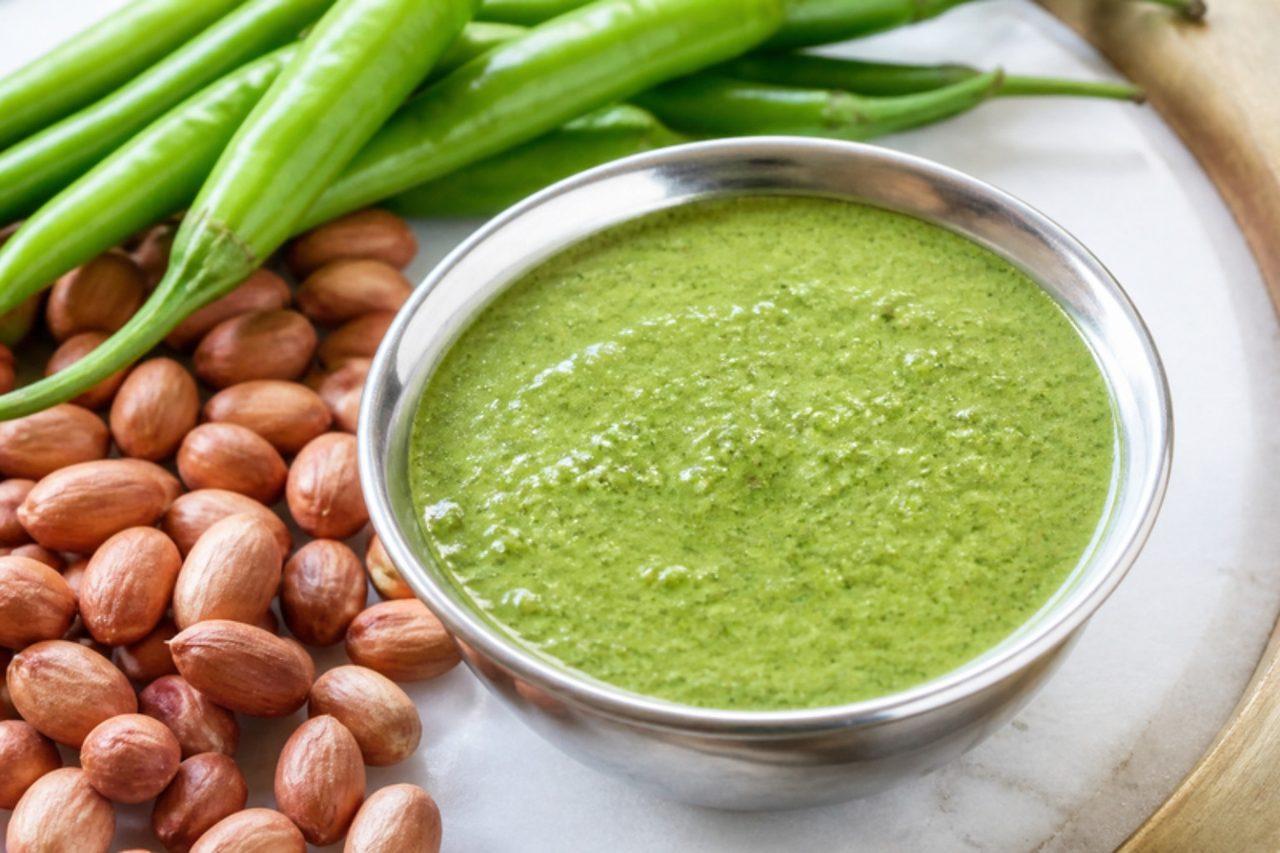
Rajkot is known across Gujarat for its green chutney, sold in little pouches by farsan shops and carried home by every visitor: a hot, smooth paste of green chillies and roasted peanuts with lemon, sugar and a pinch of turmeric, and no coriander at all, which is why it keeps a week in the fridge without turning dark. It is spread in sandwiches, spooned over khichiya papad and served with gathiya, dhokla and bhajiya. The common mistake is adding too much water, which dilutes the heat and makes it spoil faster. Chef's tip: grind it in short bursts so the blender doesn't heat the peanuts and turn the chutney oily.

by KrazyBadal 0 views

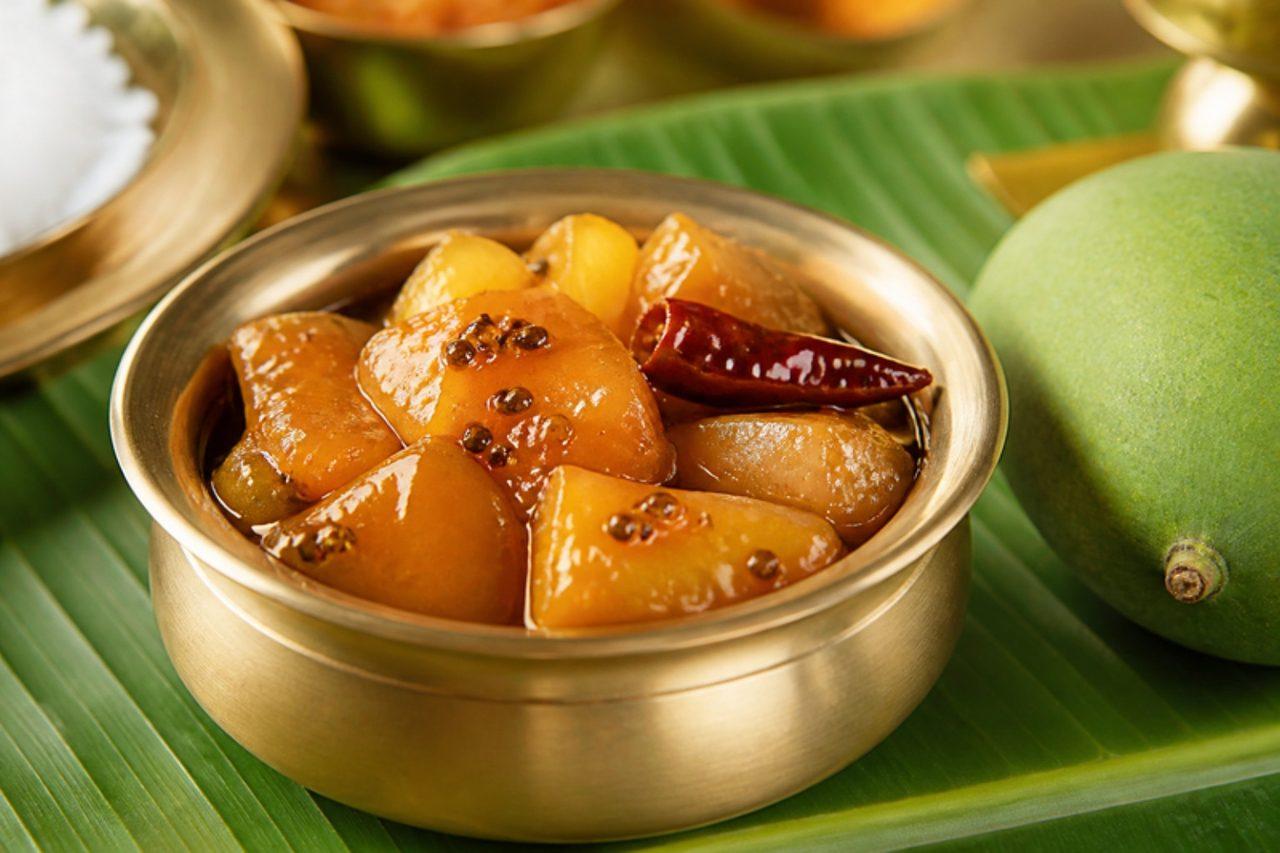
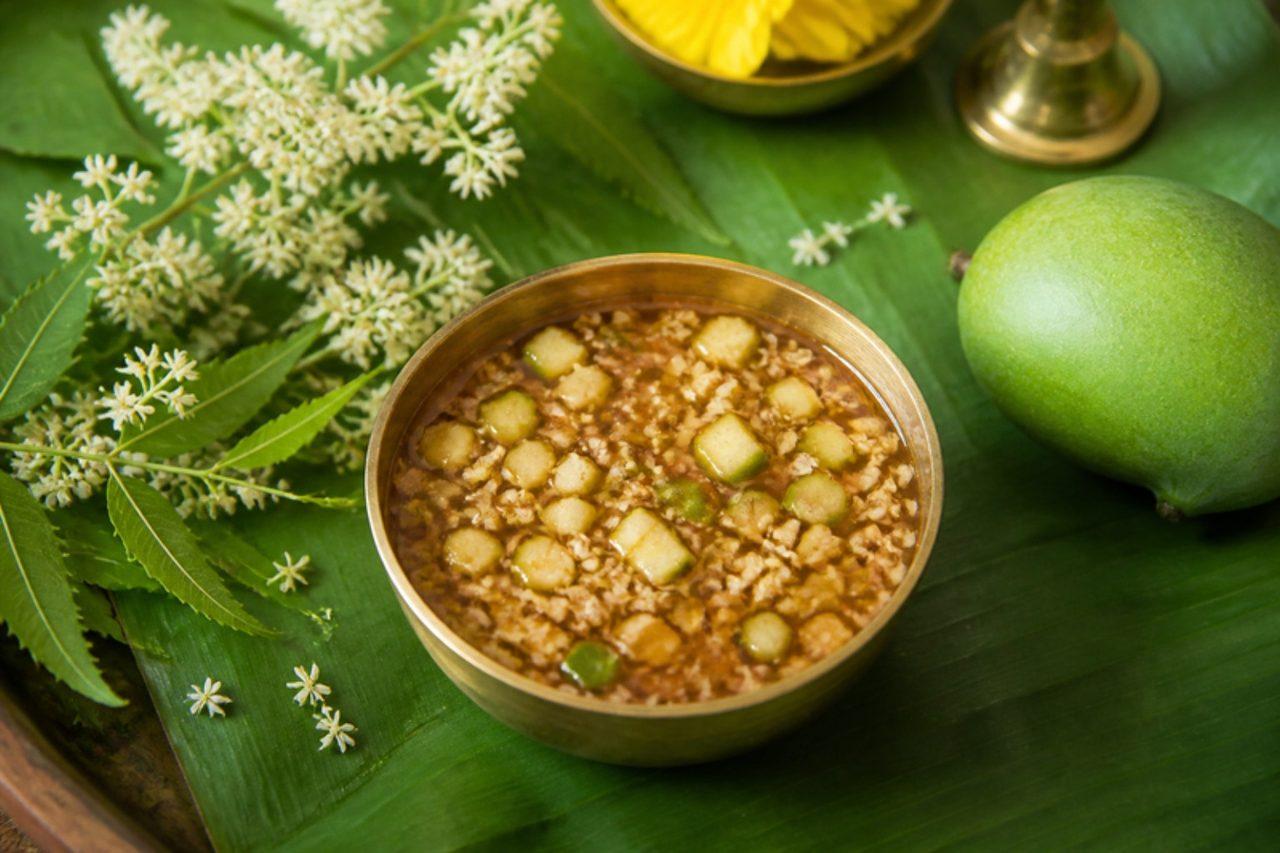
Mangai pachadiRaw mango and jaggery relish

Every Tamil New Year plate in April has a small heap of mangai pachadi, sweet, sour, hot and bitter at once, so that the first meal of the year tastes of everything life will bring. Chunks of raw mango are cooked soft, simmered in jaggery and finished with a mustard tempering and a pinch of fried neem flowers. It is glossy and thick, eaten in small spoonfuls with rice, sambar and payasam. The common mistake is cooking it down too far: it thickens a lot as it cools, so stop when the syrup coats the spoon but still drips off slowly. Cook the mango first until a piece mashes easily; jaggery added to hard mango stops it softening. Chef's tip: choose firm, very sour mangoes; sweet, half-ripe ones go mushy and lose the sharp contrast.

by KrazyBadal 0 views

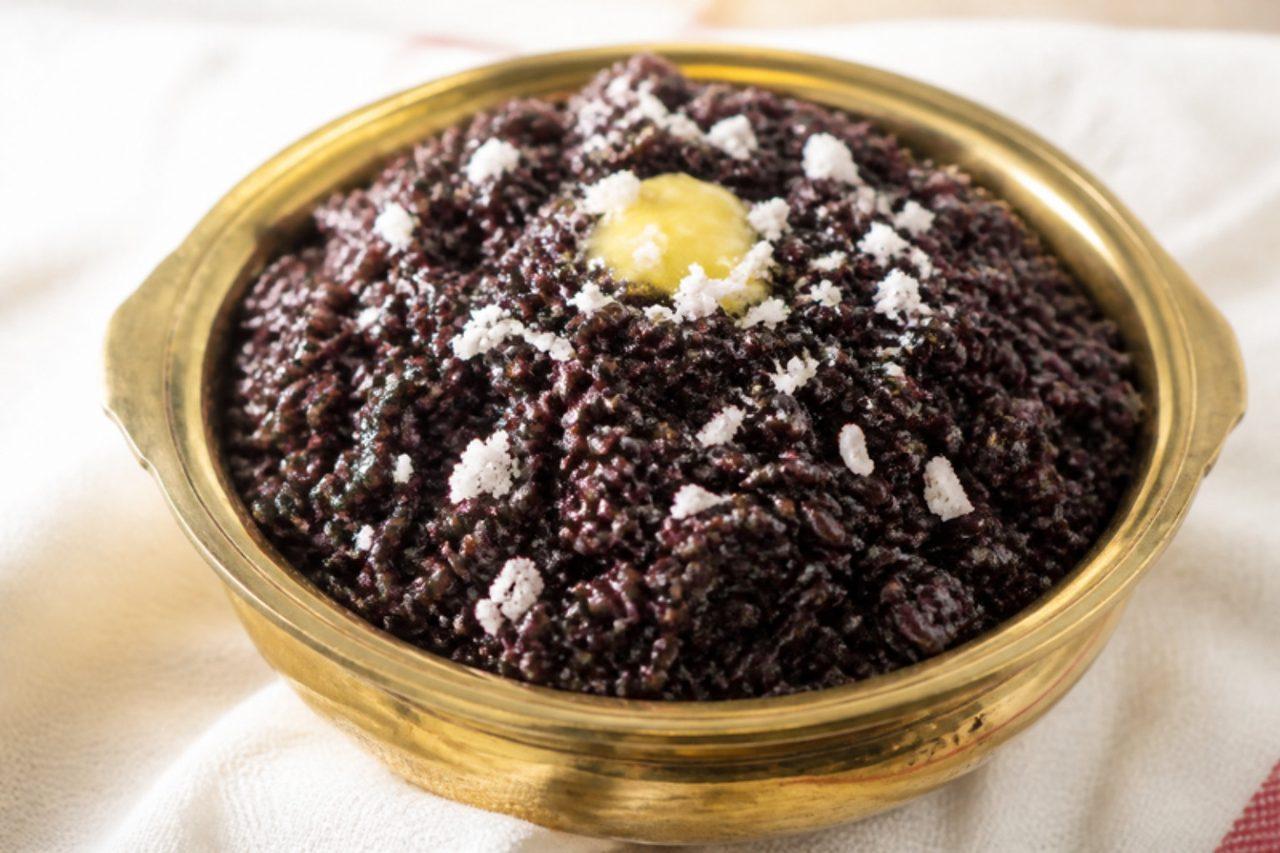
Kavuni arisiBlack rice sweet

Kavuni arisi is the deep purple-black sweet that every Chettiar wedding feast in Karaikudi begins with, a nod to the trading families' old links with Burma, where the black rice came from. The rice is soaked overnight, cooked until soft but still chewy, then mixed with sugar, plenty of fresh grated coconut and a spoon of ghee, so it is nutty, gently sweet and pleasantly sticky. It is eaten warm or at room temperature in small portions. The usual mistake is cooking black rice like white rice; it needs a long soak and a long cook, or the grains stay hard at the centre. Chef's tip: mash a quarter of the cooked rice lightly with the back of a spoon before adding sugar, which makes it hold together the way it does in Chettinad.

by KrazyBadal 0 views

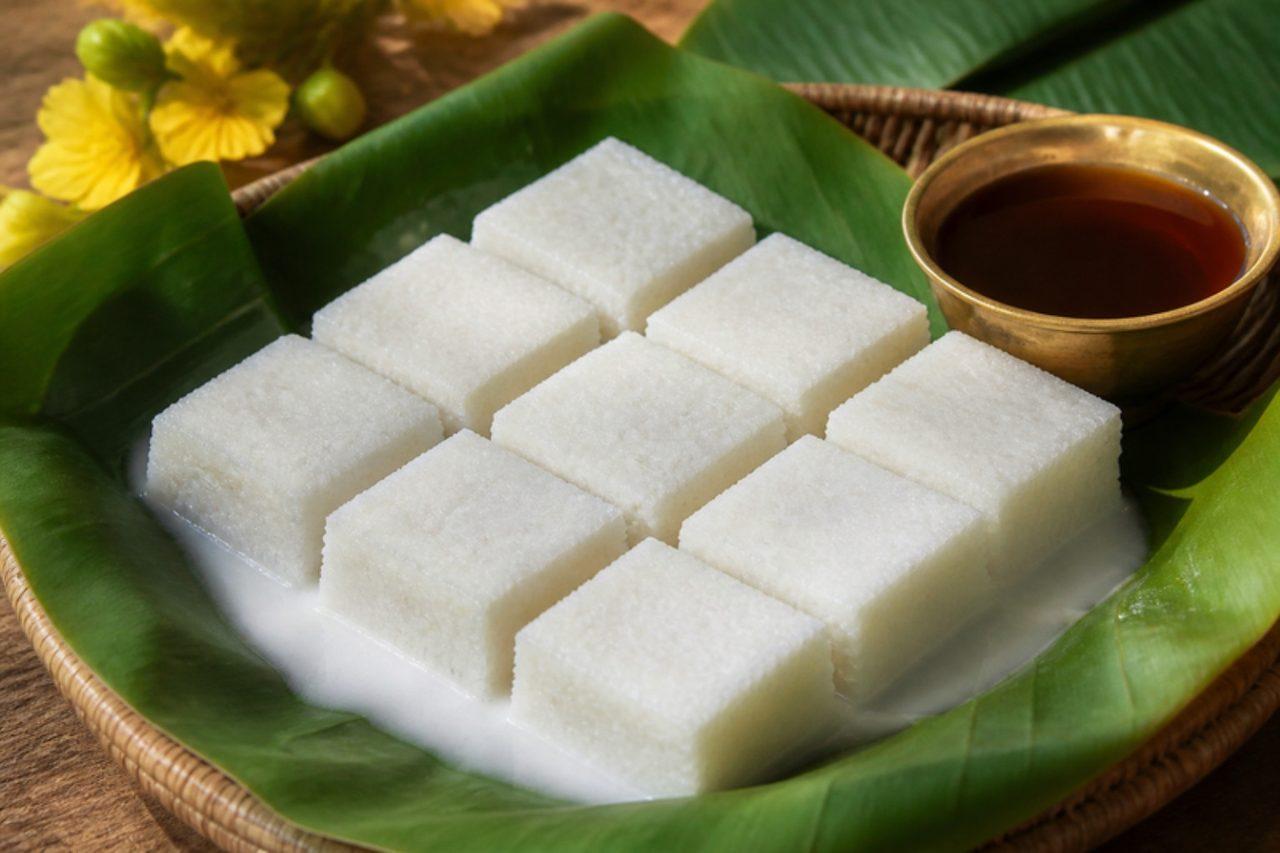
Vishu kattaCoconut milk rice squares

Around Thrissur and Palakkad the Vishu breakfast table is not complete without katta, rice cooked slowly in coconut milk until it can be spread on a plate, set and cut like a cake. Families eat the squares two ways: with a pour of dark jaggery syrup for sweetness, or with a hot, sour curry for those who prefer savoury on a festival morning. Set, it is soft, rich and faintly salty, with the scent of cumin. The common mistake is rushing it on a high flame; the coconut milk splits and the rice catches before it turns creamy. It is ready when the whole mass comes away from the sides of the pan and holds a ridge when you draw a spoon through it. Chef's tip: smooth the top with a piece of banana leaf or the back of a wet spoon, and cut the katta only once it is fully cool, or the squares will tear.

by KrazyBadal 0 views

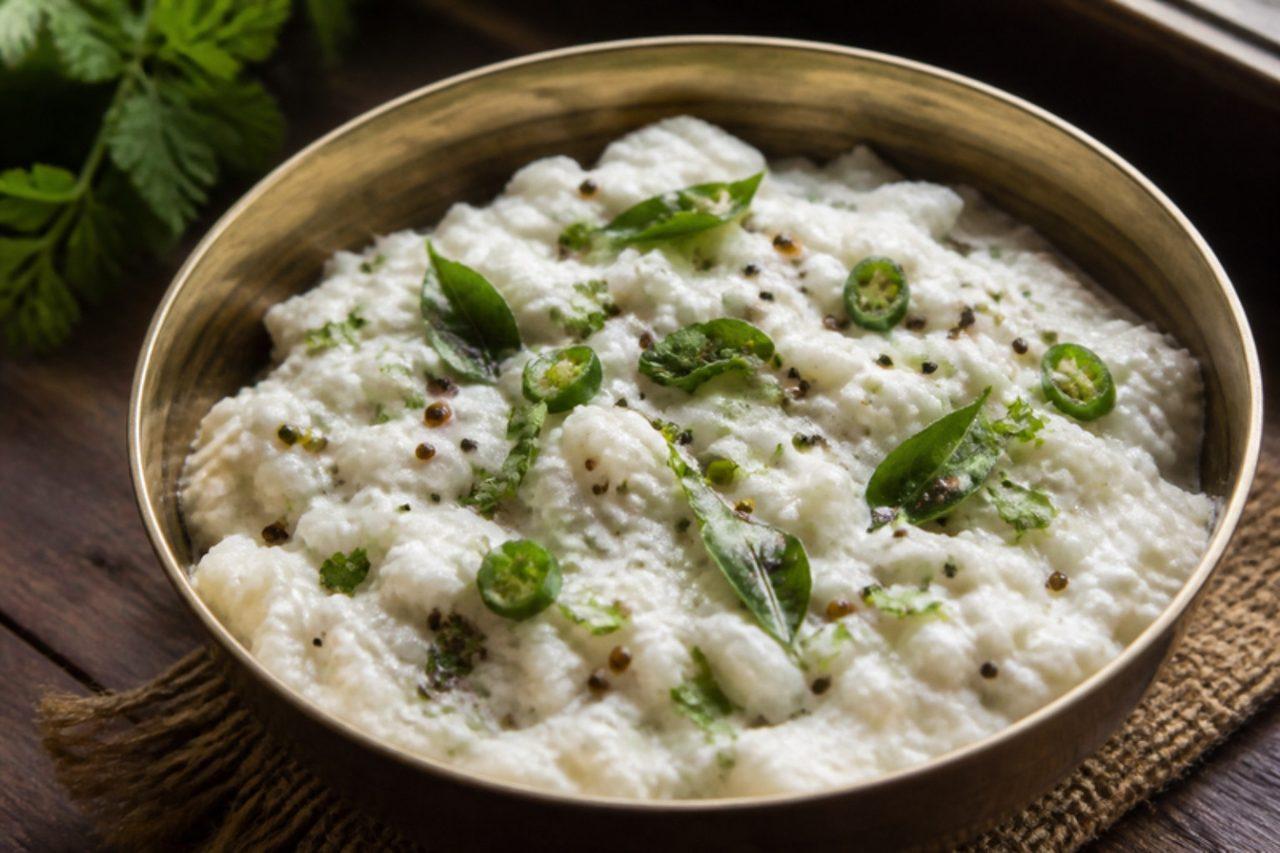
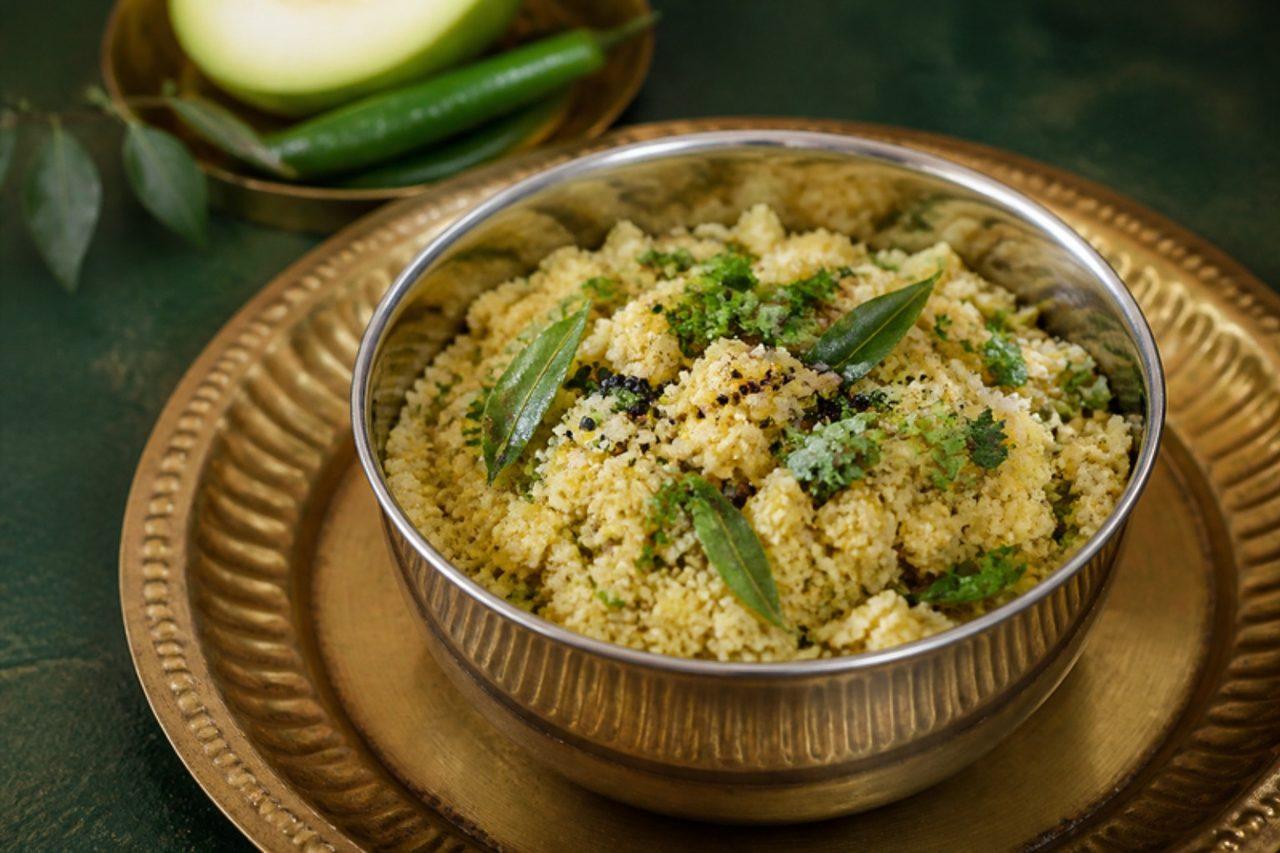
Mosaru avalakkiCurd flattened rice

On hot evenings in Mysuru and Bengaluru, mosaru avalakki is the cooling no-fuss dinner: thin poha folded into thick curd loosened with a little milk, sharpened with ginger and green chilli and finished with a sizzling mustard and curry leaf tempering. It is soft, tangy and refreshing, and often comes with pomegranate seeds or grated cucumber. The common mistake is mixing it too early; thin poha keeps soaking up curd and turns into a stiff paste if it sits. Chef's tip: stir in the milk last, just before serving, so the curd stays creamy and the poha keeps a little bite.

by KrazyBadal 0 views

Kholasapori pithaRice pancakes with coconut and jaggery

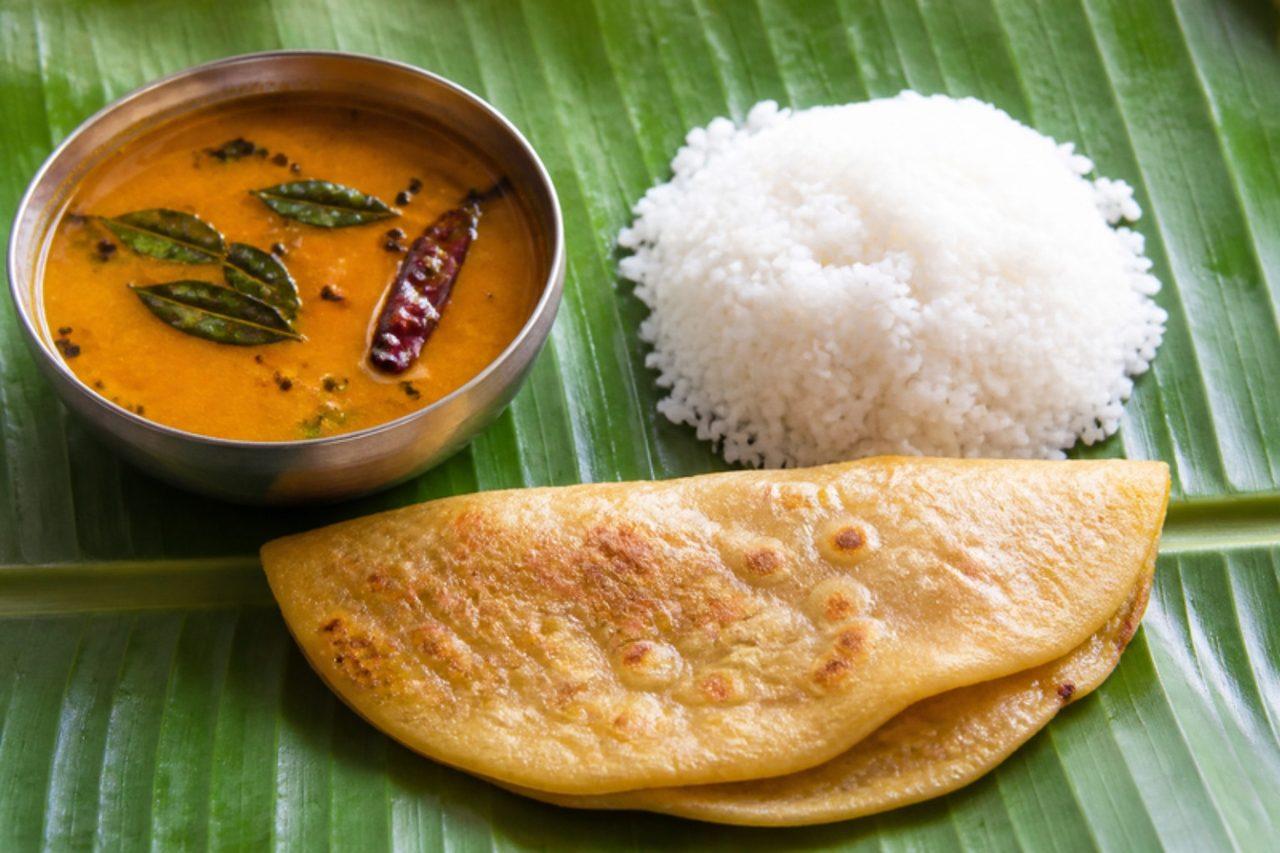
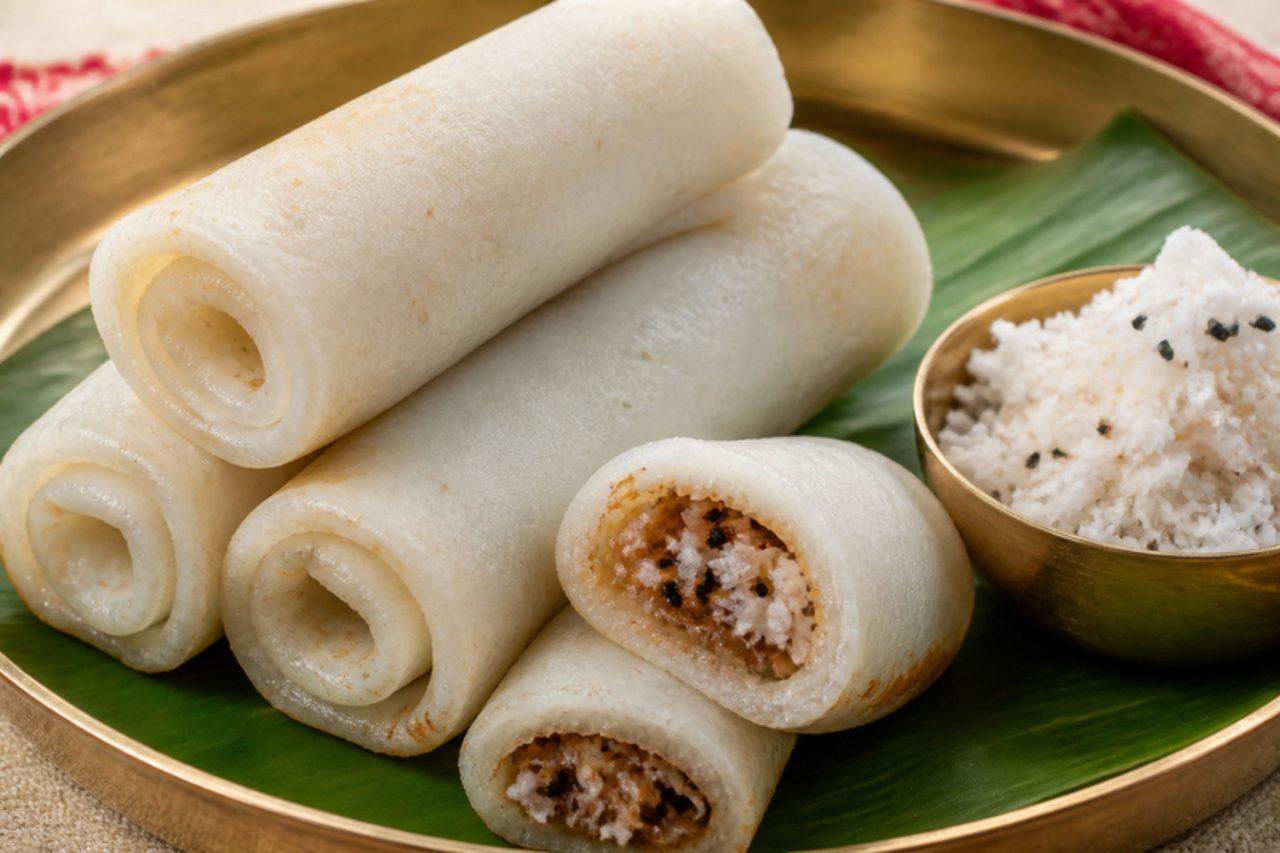
Kholasapori means 'pressed in the khola', the shallow clay pan that every Assamese kitchen brings out for Magh Bihu, when guests are offered a plate of pitha before anything else. These are thicker and softer than the crisp til pitha: a loose batter of sticky rice flour is spread on the hot pan, filled with coconut and jaggery and folded over, so the outside is lightly speckled and the inside chewy and sweet. A heavy cast-iron pan stands in well for the khola. Common mistake: a pan that is too hot; the batter should set slowly with no browning in the first minute, and it is ready to fold when the edges lift and the top no longer looks wet. Chef's tip: wipe the pan with a cloth dipped in oil between each pitha rather than pouring oil in, so they stay pale and even.

by KrazyBadal 0 views

Lauki ki kheerBottle gourd milk pudding

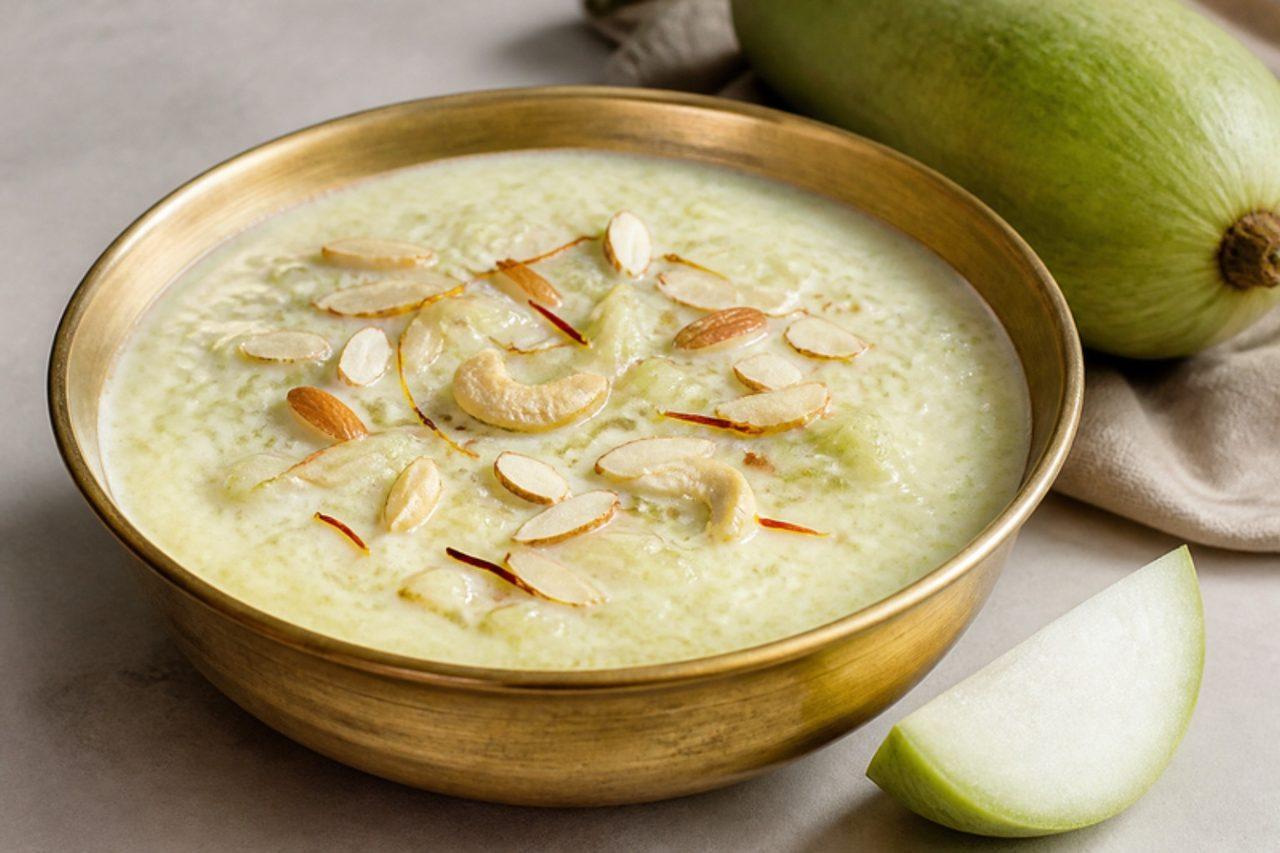
Lauki ki kheer is the light pudding many North Indian families make on Mahashivratri, Navratri and Ekadashi, when rice is off the menu: grated bottle gourd stands in for the grain, softens in ghee and then simmers in milk until it turns pale, creamy and almost translucent. It tastes delicate and milky, with cardamom and a crunch of nuts, and is eaten warm after the evening puja or chilled the next day. Taste a sliver of the raw gourd first; a bitter one can make you ill and must be thrown away. Common mistake: adding the sugar too early, which stops the gourd softening and can make the milk split; add it only once the milk has reduced by about a third and the lauki is tender. Chef's tip: squeeze the grated lauki lightly before cooking, but keep the juice and add it to the milk, so none of the flavour is lost.
by KrazyBadal 0 views

Shakkariya nu shaakSweet potato with peanuts

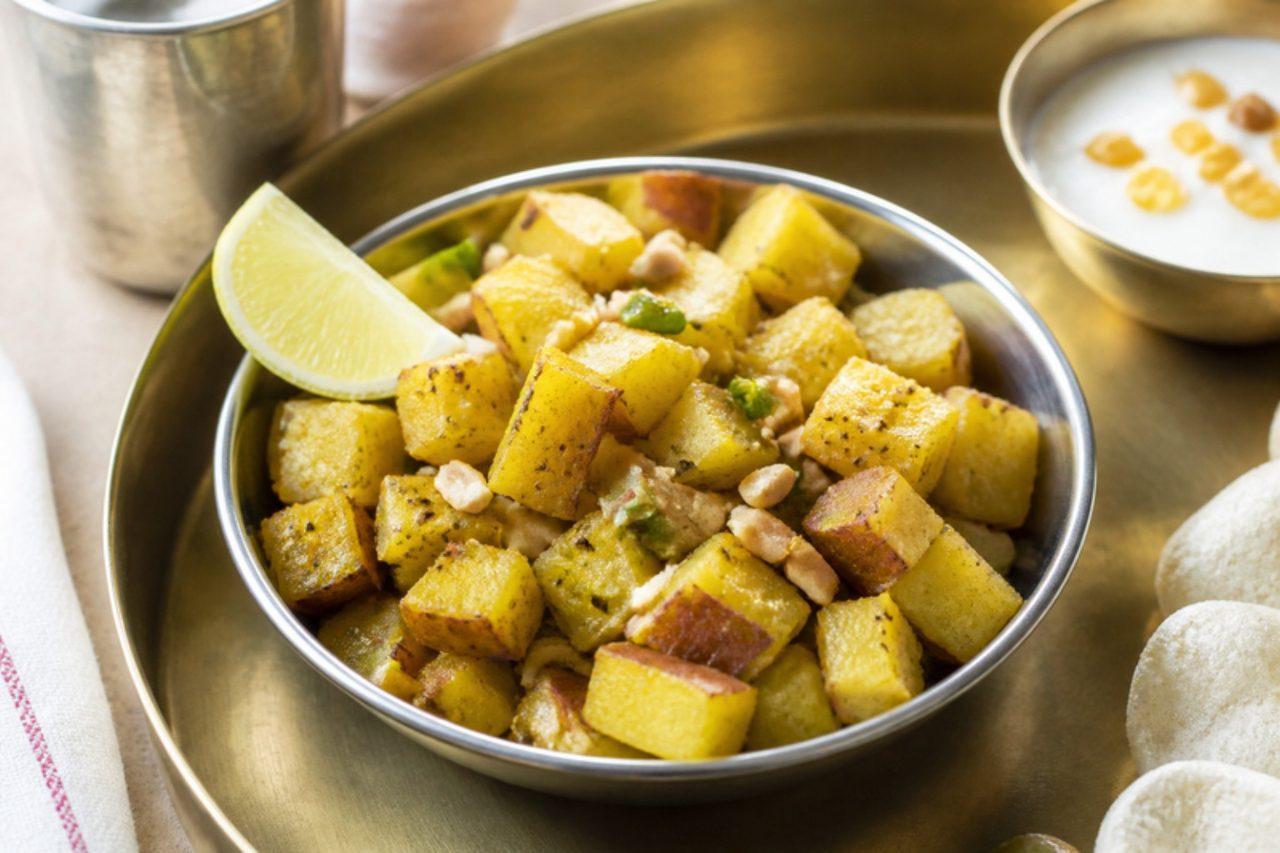
Gujarati families keeping the Mahashivratri upvas often fill the thali with shakkariya nu shaak, a quick dry curry of sweet potato cubes tempered with cumin and green chilli, finished with crushed roasted peanuts, a little sugar and a squeeze of lemon. It is sweet, tangy and gently hot, and is eaten with rajgira puri, sabudana khichdi or a bowl of farali kadhi. Only rock salt and green chilli are used here; many households avoid turmeric and red chilli powder on fasting days, and some do not eat cumin either, so adjust to your own family's custom. Common mistake: stirring too hard once the cubes soften, which turns the shaak into mash; turn gently, and stop cooking when a cube gives way when pressed but still holds its shape. Chef's tip: soak the cubes in water while you prepare the rest; it rinses off surface starch so they brown instead of sticking.

by KrazyBadal 0 views

Ambalappuzha paal payasamSlow-cooked rice milk pudding

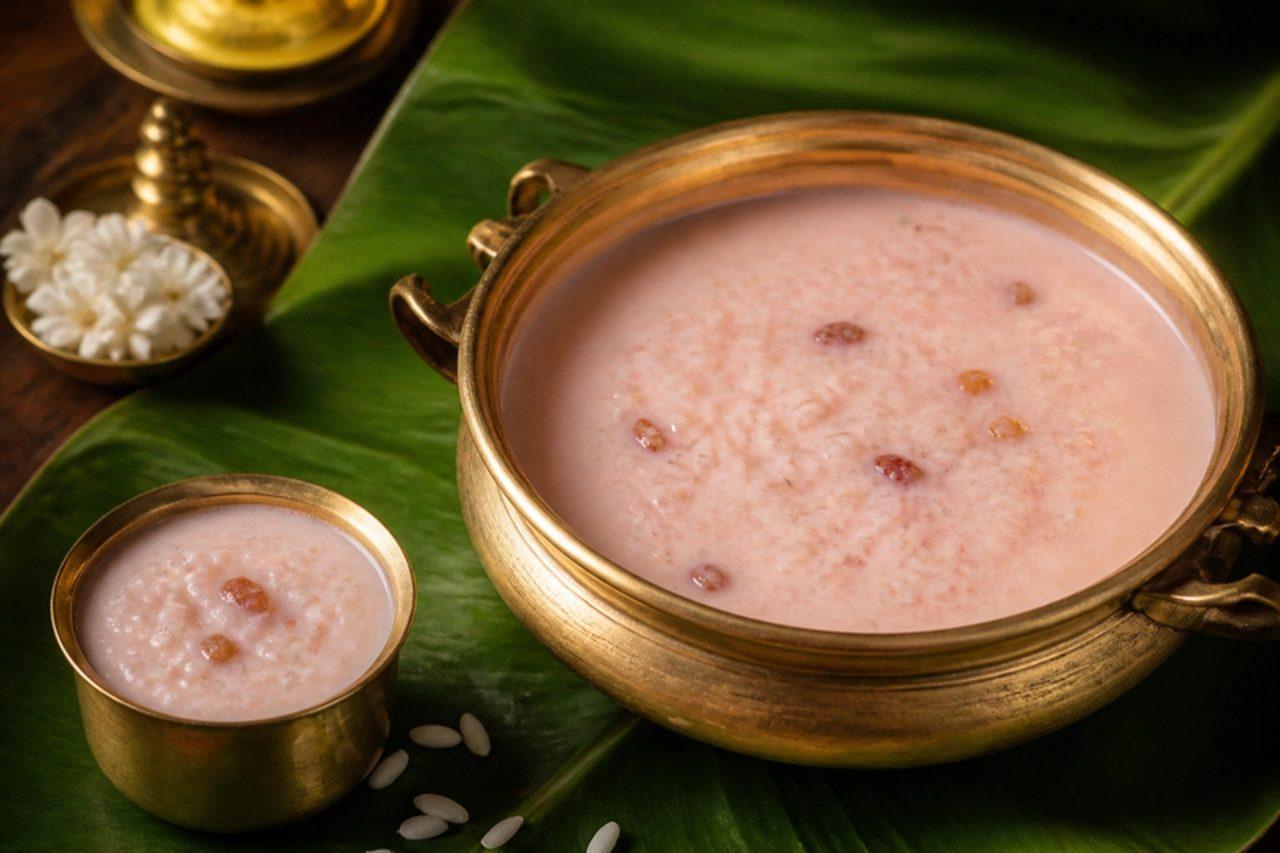
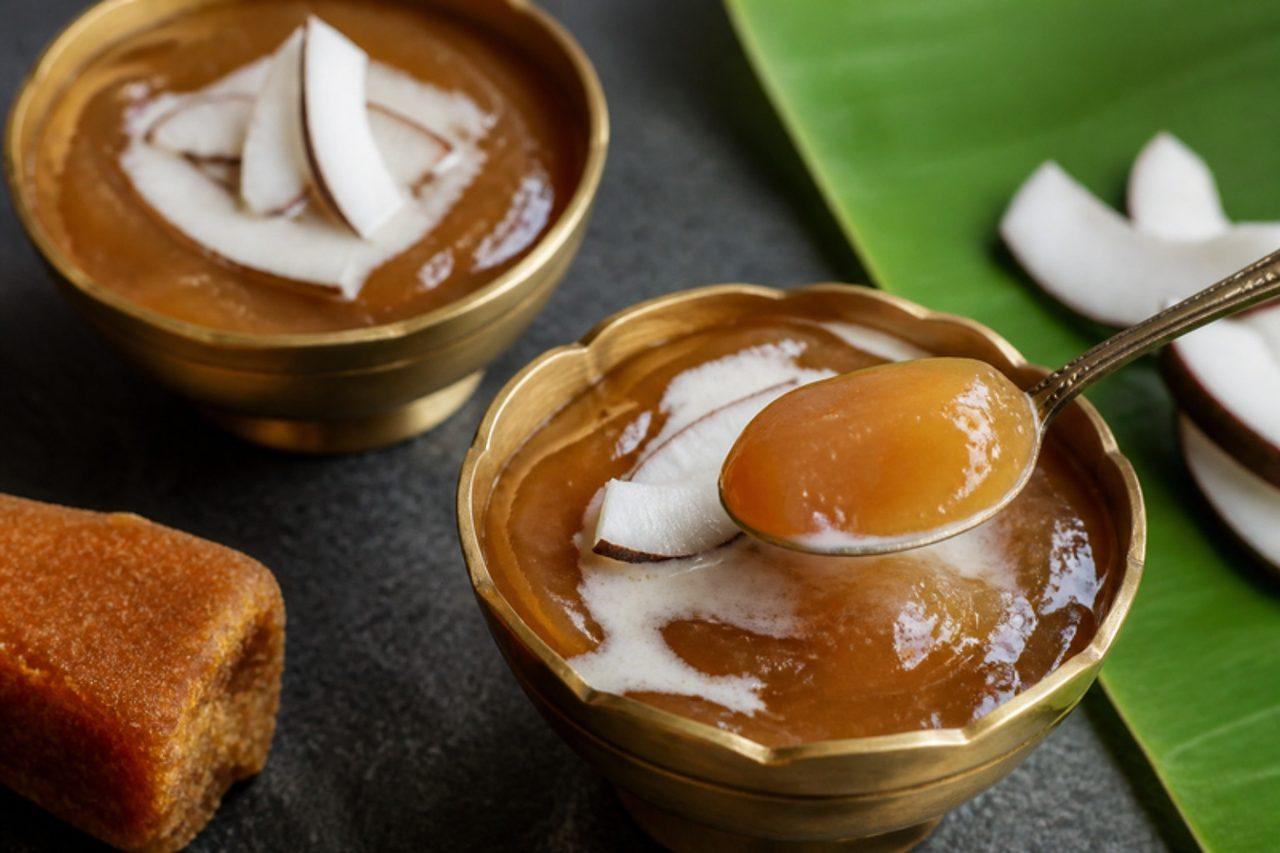
The Krishna temple at Ambalappuzha in Alappuzha is famous for one offering: a paal payasam of rice, milk and sugar boiled in huge bronze vessels until it turns a soft pink. Kerala families make a smaller pot at home for Vishu and Onam, and it is the simplest payasam there is, with no nuts, raisins or spice in the temple style. The colour comes only from long, patient simmering, as the milk sugars slowly caramelise. The common mistake is adding the sugar too early; the rice stays firm and the milk sticks to the base, so wait until a grain crushes to nothing between your fingers. It is ready when it has reduced by about half, coats the spoon thickly and has turned from white to a light rosy beige. Chef's tip: keep it at a steady, lively simmer rather than a low murmur, and stir right across the base every few minutes; the movement is what gives the creamy texture.

by KrazyBadal 0 views

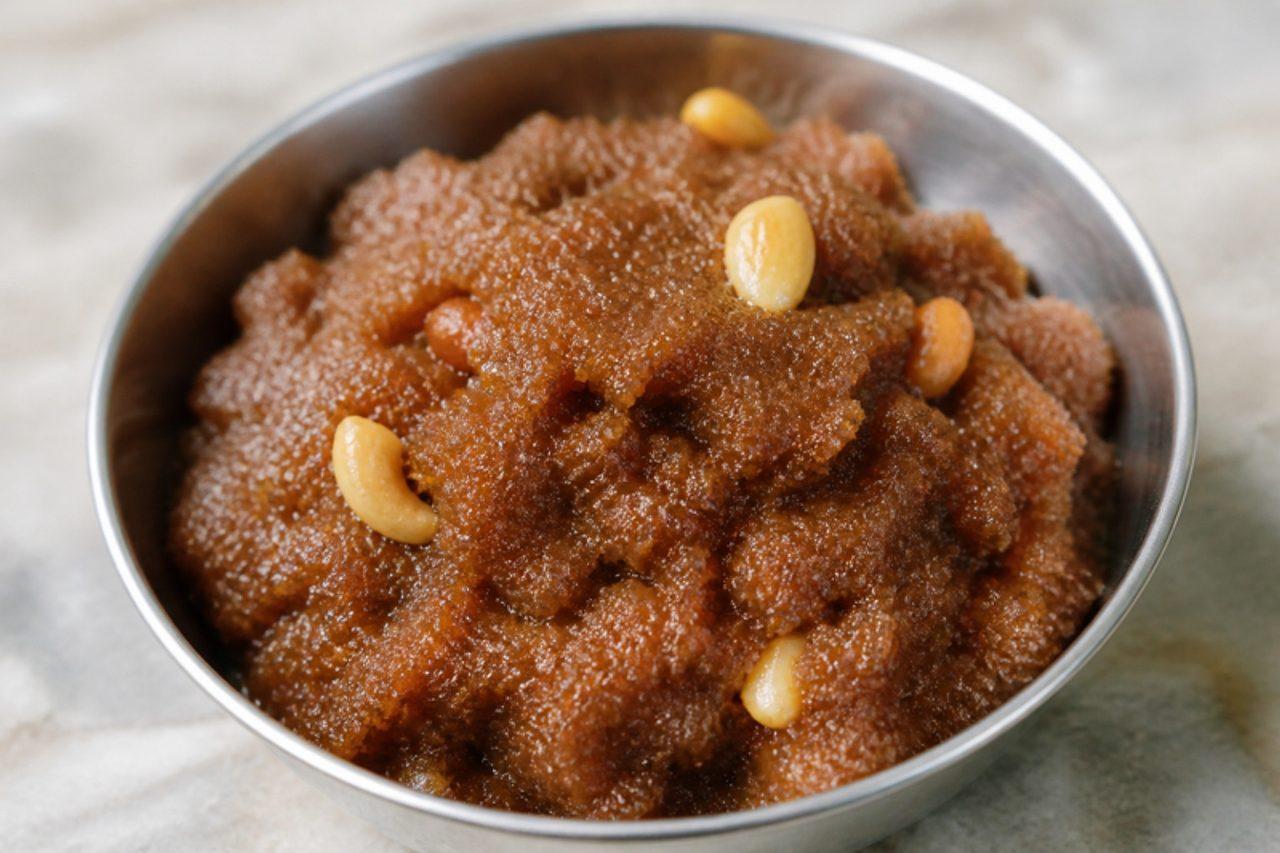
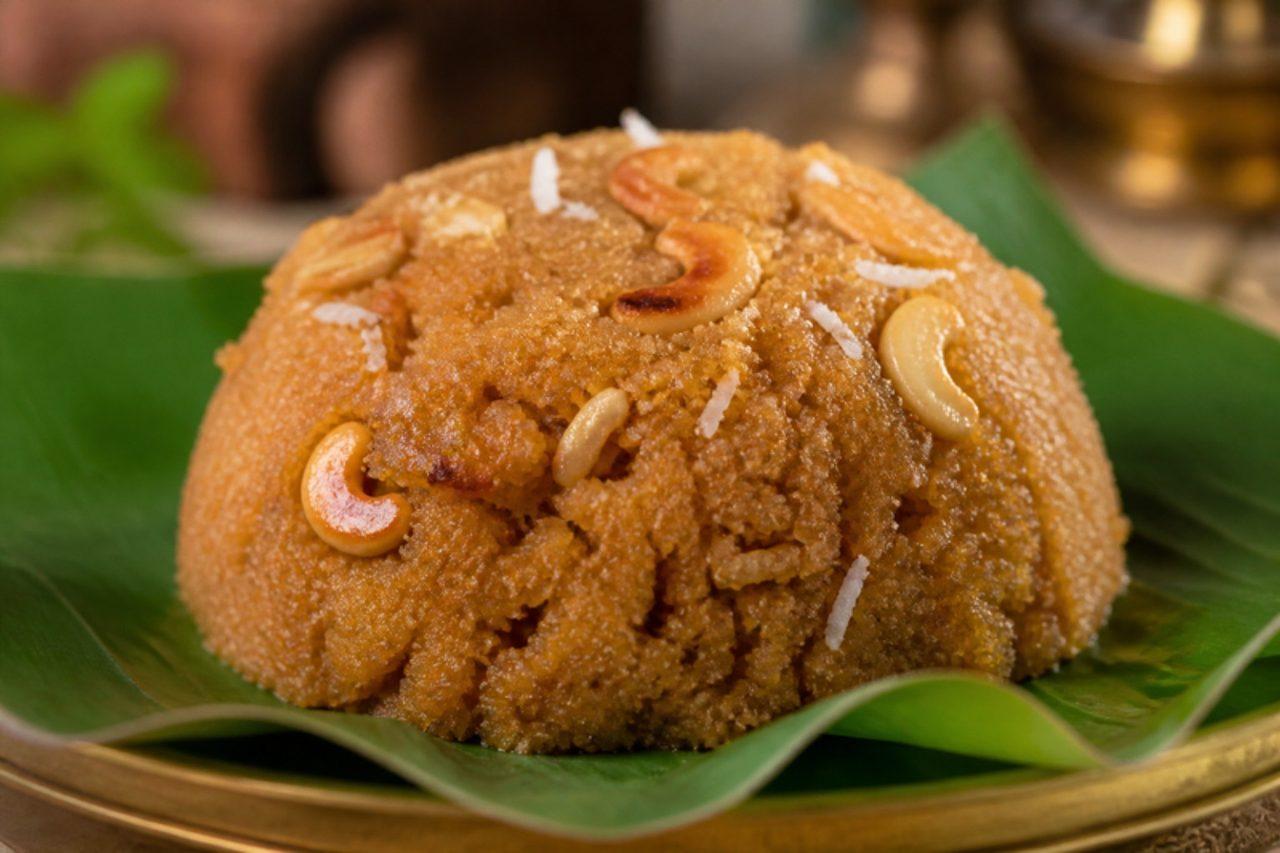
KummayamRoasted urad and moong halwa

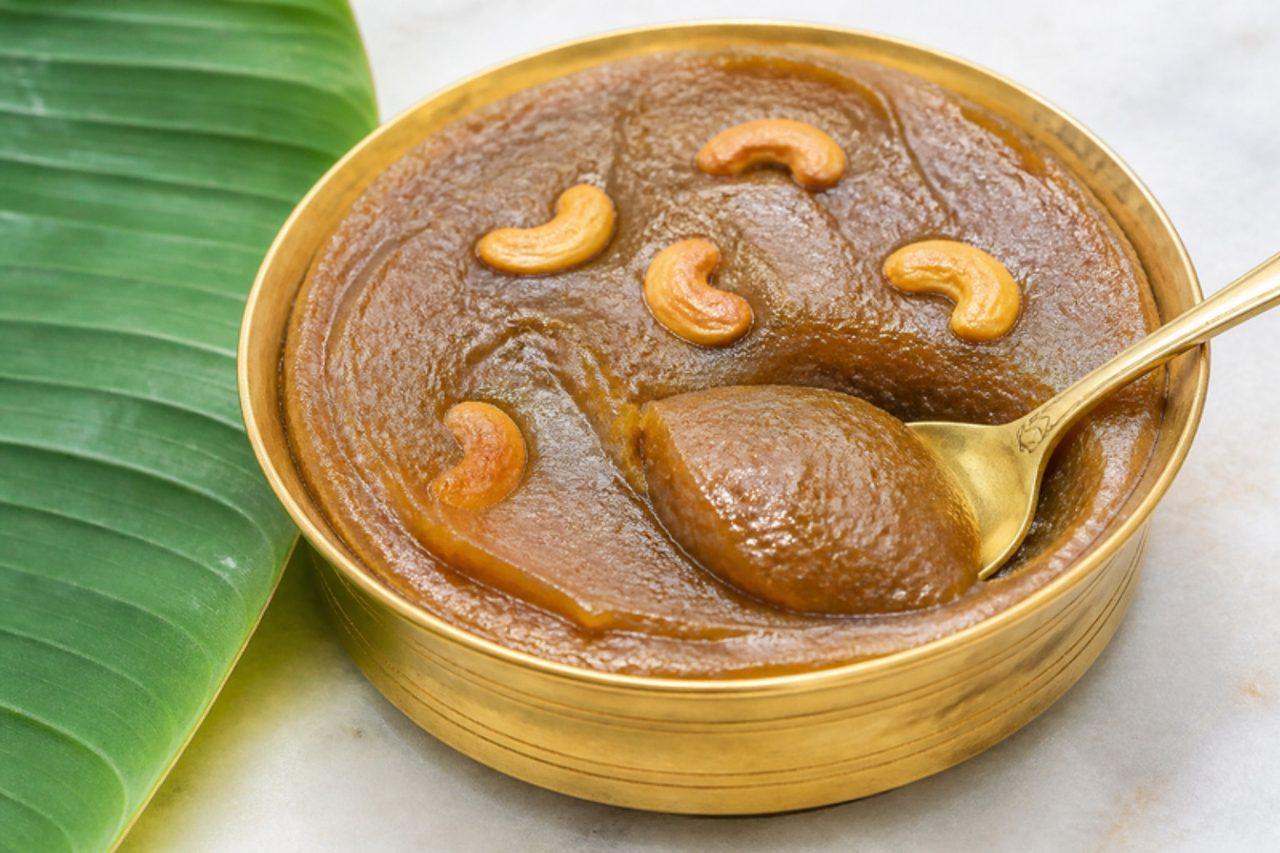
Kummayam, also called aadi kummayam, is the sweet Chettinad homes make in the Tamil month of Aadi (July to August), when it is offered at the temple and shared with family. Urad dal, moong dal and rice are dry-roasted and ground into a flour, then cooked in thin jaggery syrup with ghee until it becomes a soft, glossy, dark halwa that pulls away from the pan. It tastes of roasted lentils and molasses and is eaten warm. The most common mistake is adding the flour to hot syrup in one go, which makes stubborn lumps; whisk it into cool syrup first, then cook. Chef's tip: add the ghee a spoonful at a time towards the end and stop when the halwa turns glossy and comes together in one mass.

by KrazyBadal 0 views

Koova payasamArrowroot pudding

In central Kerala, the morning of Thiruvathira begins with a bath before dawn and a bowl of koova, arrowroot starch that many families still pound and wash out from their own garden roots. Cooked with jaggery and coconut milk, it turns into a glossy, wobbly pudding that is light on the stomach for a day without rice. The texture should be silky and pourable while hot, thickening as it cools. Common mistake: tipping the powder straight into hot liquid, which gives lumps you can never whisk out; slake it in cold coconut milk first and stir all the time, and it is ready when it turns from cloudy white to clear and coats the back of a spoon. It is fasting-safe as written (arrowroot, jaggery, coconut and cardamom only), and Gujarati farari cooks use the same starch; check your own family's fasting rules if you add anything else. Chef's tip: melt and strain the jaggery separately and let it cool a little before adding, so the coconut milk does not split.

by KrazyBadal 0 views

Suran nu shaakYam with cumin and peanuts

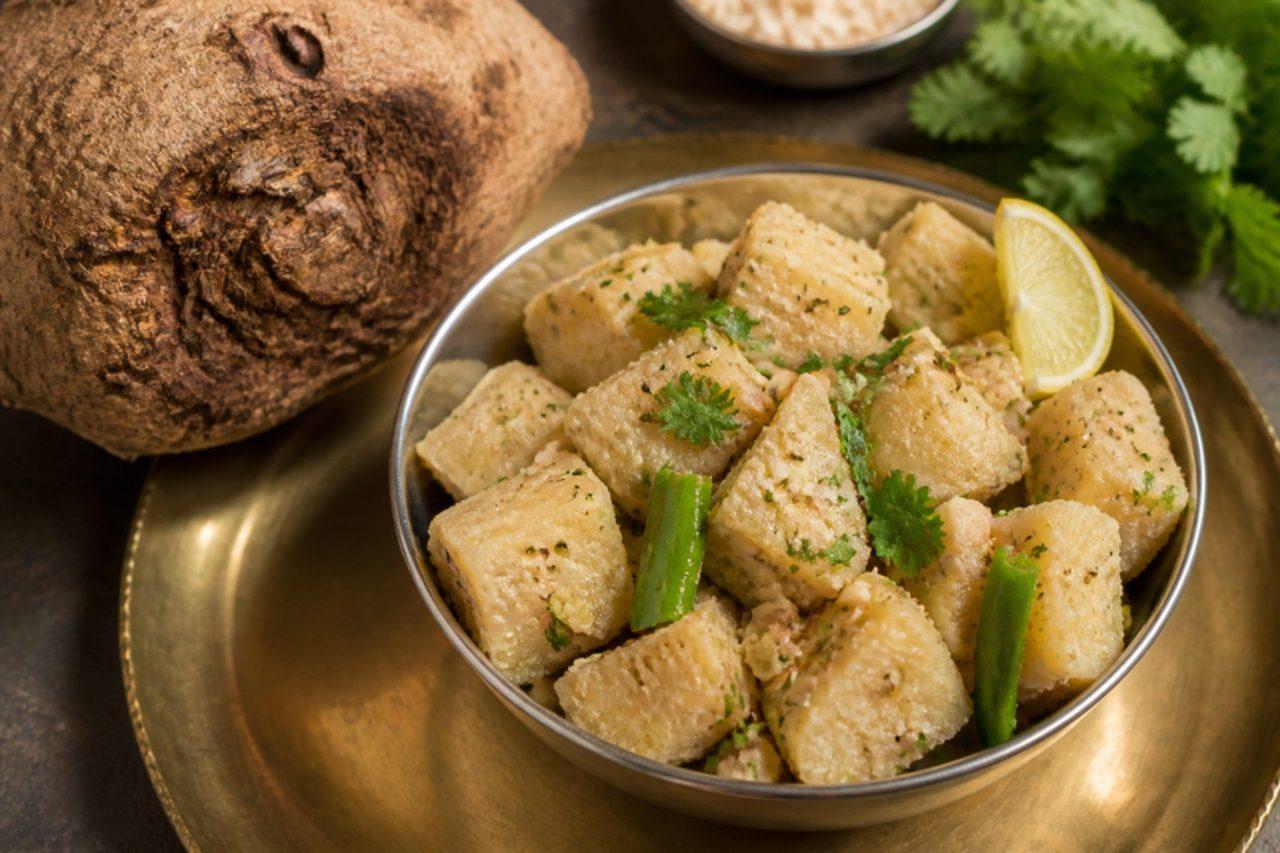
Suran, the knobbly elephant-foot yam, is a favourite of the Gujarati farali table on Mahashivratri and Ekadashi: boiled until tender, then stir-fried with cumin, green chilli and crushed peanuts and sharpened with lemon. It is filling and earthy, a little like a dense potato, and goes well with rajgira thepla or farali kadhi. Because suran is a root vegetable it is not eaten by Jains, so this is a Hindu fasting dish only; some families also skip cumin on a fast. Raw suran contains crystals that make the hands and throat itch, so wear gloves when peeling and always boil it with something sour. Common mistake: under-boiling to keep the cubes firm; undercooked suran scratches the throat. Boil until a cube is soft right through when pierced. Chef's tip: a few pieces of kokum in the boiling water work as well as lemon and give a pleasant blush to the yam.

by KrazyBadal 0 views

Shakarkandi ka halwaSweet potato halwa

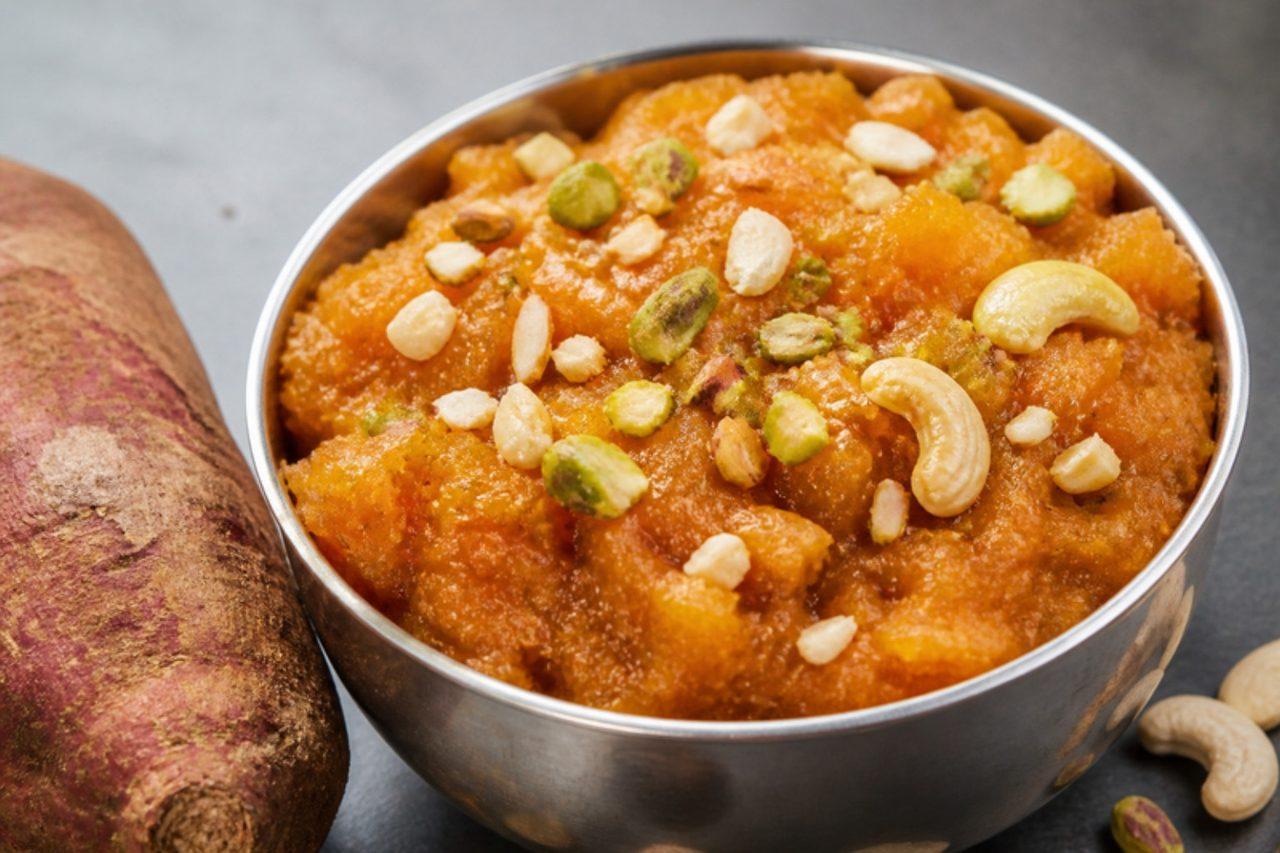
When winter sweet potatoes arrive in North Indian markets, they go straight into the Mahashivratri and Ekadashi fasting kitchen: boiled, mashed and slowly roasted in ghee with sugar and cardamom, they make a soft, fudgy halwa with a natural caramel sweetness. It is offered after the puja and eaten in small bowls, warm, often as the first thing that breaks a day without grains. A few communities do not eat sweet potato on a fast, so check your own tradition. Common mistake: hurrying the roasting; the halwa is ready only when the ghee starts to separate and glisten at the edges and the mixture rolls away from the sides of the pan as one soft mass. Chef's tip: steam or bake the sweet potatoes rather than boiling them in water; drier flesh roasts faster and gives a deeper flavour.
by KrazyBadal 0 views

Narali bhaatCoconut jaggery rice

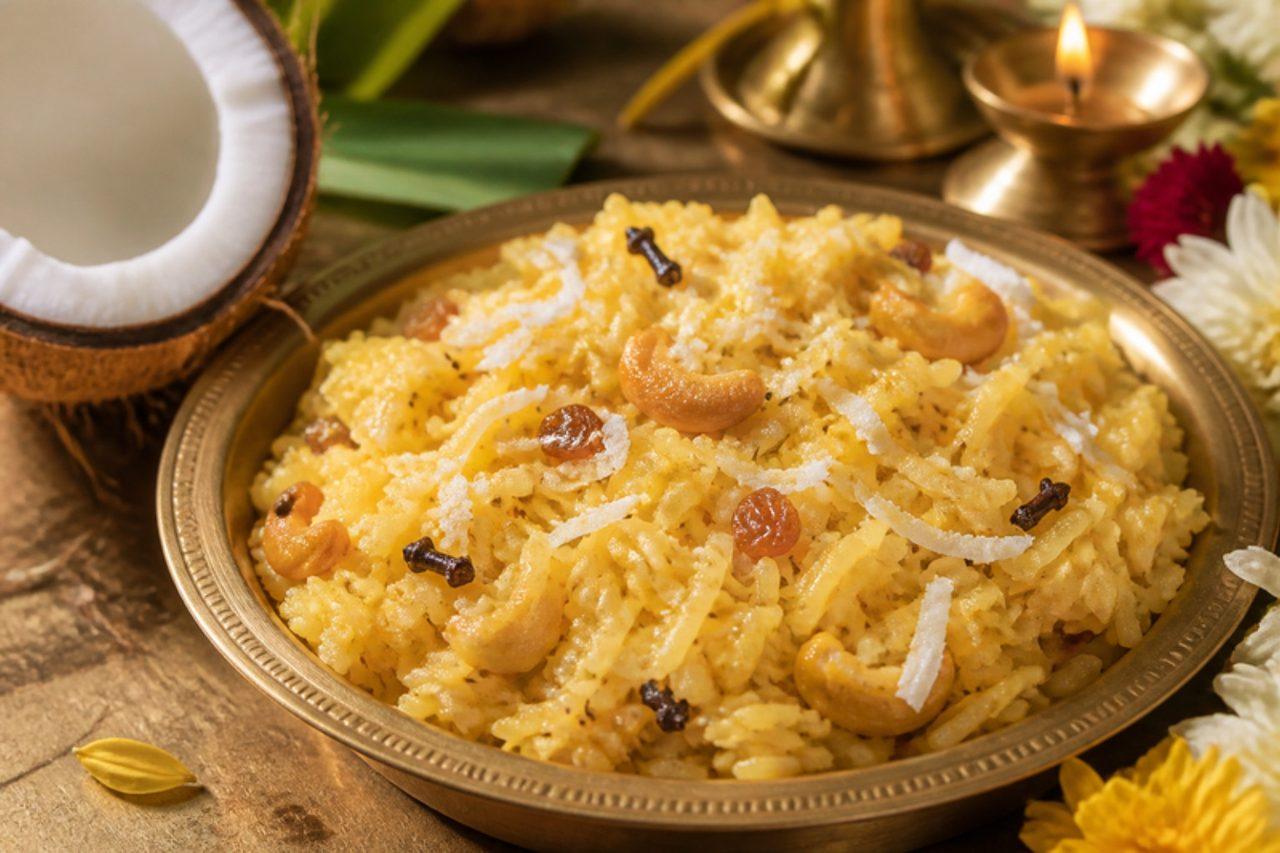
On the full moon of Shravan, Konkan fishing families offer a coconut to the sea to mark the end of the monsoon, and the same day in most Maharashtrian homes is Raksha Bandhan, so sisters and brothers sit down to a plate of narali bhaat. It is basmati or ambemohar rice cooked with fresh grated coconut, jaggery, ghee, clove and cardamom until each grain is glossy, golden-brown and separate, with cashews and raisins through it. It tastes of caramel and coconut, warm and only gently spiced. Common mistake: adding the jaggery to rice that is not fully cooked; jaggery stops rice softening, so the grains must be tender before it goes in, then the mixture is cooked until the syrup is absorbed and the rice looks dry and shiny. Chef's tip: keep the rice slightly undercooked when you first boil it and spread it on a plate to cool; firm, cool grains stay whole when they meet the hot jaggery.

by KrazyBadal 0 views

Sing ni chikkiPeanut jaggery brittle

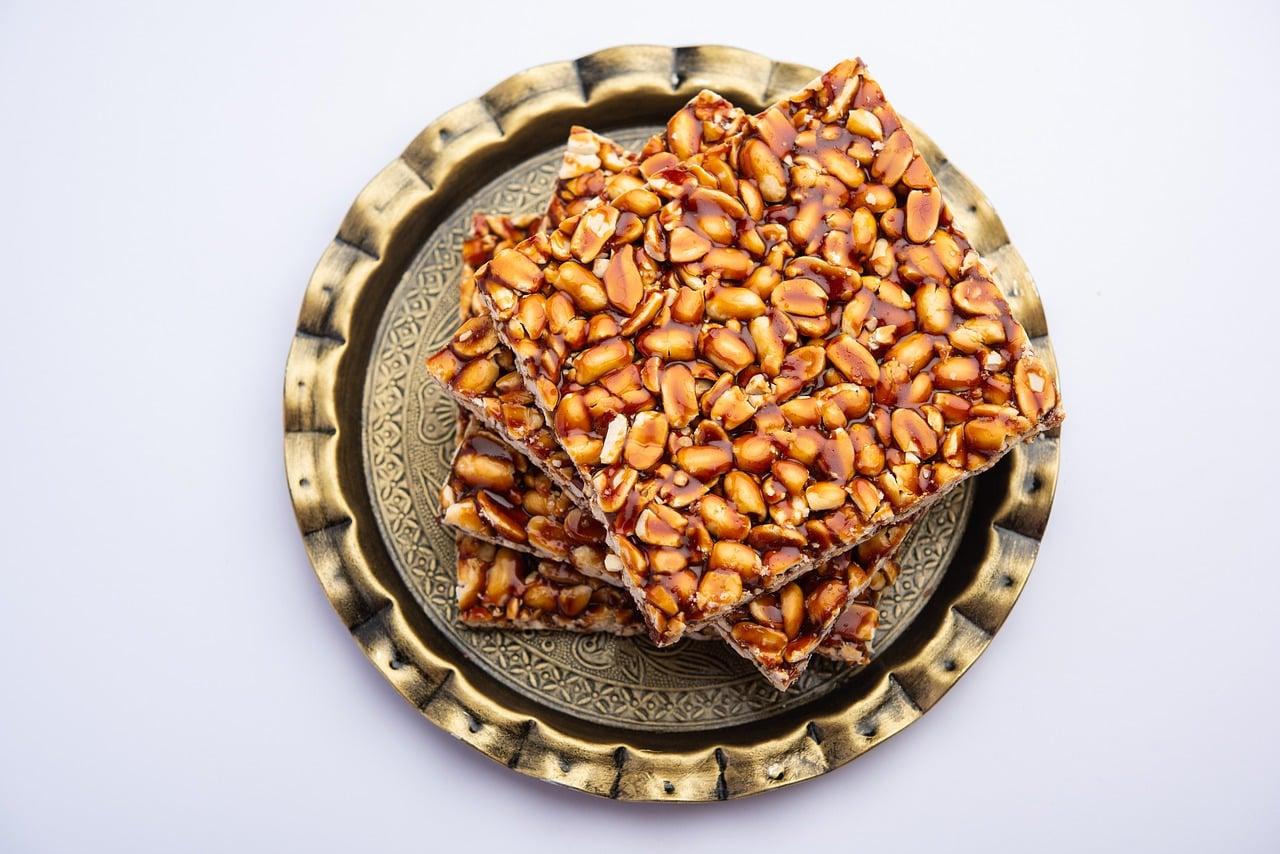
Peanut chikki is the sweet every Gujarati child grows up with, and in the week of Uttarayan, when the sky over Ahmedabad is crowded with kites, households make it by the tray to hand round on the terrace. Halved roasted peanuts are bound in dark jaggery and cut into neat slabs that snap cleanly and taste of caramel and toasted nuts. Common mistake: undercooking the jaggery; it is ready only when a drop in cold water hardens into a ball that cracks when pressed, and when the syrup is foaming and has darkened by a shade. Undercooked syrup gives chikki that bends and pulls out fillings. Chef's tip: rub the skins off the roasted peanuts and split them in half; halves pack together far better than whole nuts and the slabs don't crumble.

by KrazyBadal 0 views

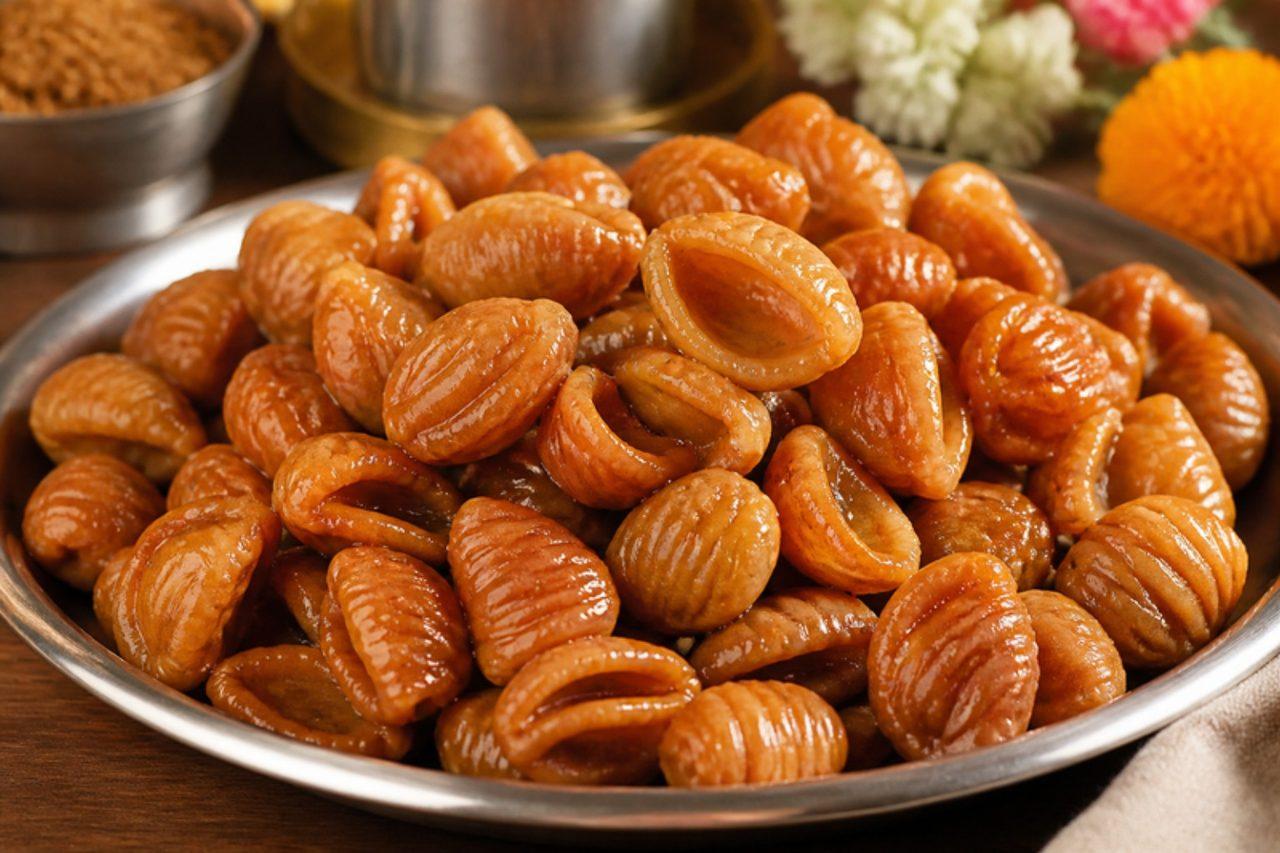
Bellam gavvaluShell-shaped dough in jaggery syrup

In Andhra Pradesh and Telangana, Sankranti is a three-day harvest festival of muggulu (rangoli) in front of every door, haridasu singers in the lanes and tins of fried sweets, and gavvalu are among the first to be made. Small pieces of dough are rolled over a ridged gavvala board or the back of a fork so they curl into little shells (gavvalu means cowrie shells), fried crisp, then tossed in jaggery syrup until each one is glazed with a dry, sugary crust. Common mistake: syrup that is not cooked far enough; it must reach the hard-ball stage, when a drop in water rolls into a firm ball, or the shells turn sticky instead of crisp-coated. Chef's tip: keep tossing after adding the shells until the syrup turns opaque and dry; that is the moment to tip them out.

by KrazyBadal 0 views

Obbattu saaruSpiced dal water rasam

Gowri Habba, Karnataka's version of Hartalika, comes the day before Ganesha Chaturthi, and the feast centres on obbattu (holige), flatbreads stuffed with chana dal and jaggery. Nothing goes to waste: the water the dal was boiled in, plus a spoon of the sweet filling, becomes obbattu saaru, a thin, sweet-sour-spicy rasam with tamarind, a coconut-spice paste and a mustard tadka, poured over rice beside the holige. Common mistake: boiling it hard after the coconut paste goes in, which dulls the flavour and makes it split; bring it just to a froth on top and switch off. Chef's tip: if you are not making holige, boil 50 g chana dal in 700 ml water, keep the water and mash a spoon of the dal with a little jaggery as the 'filling'.

by KrazyBadal 0 views

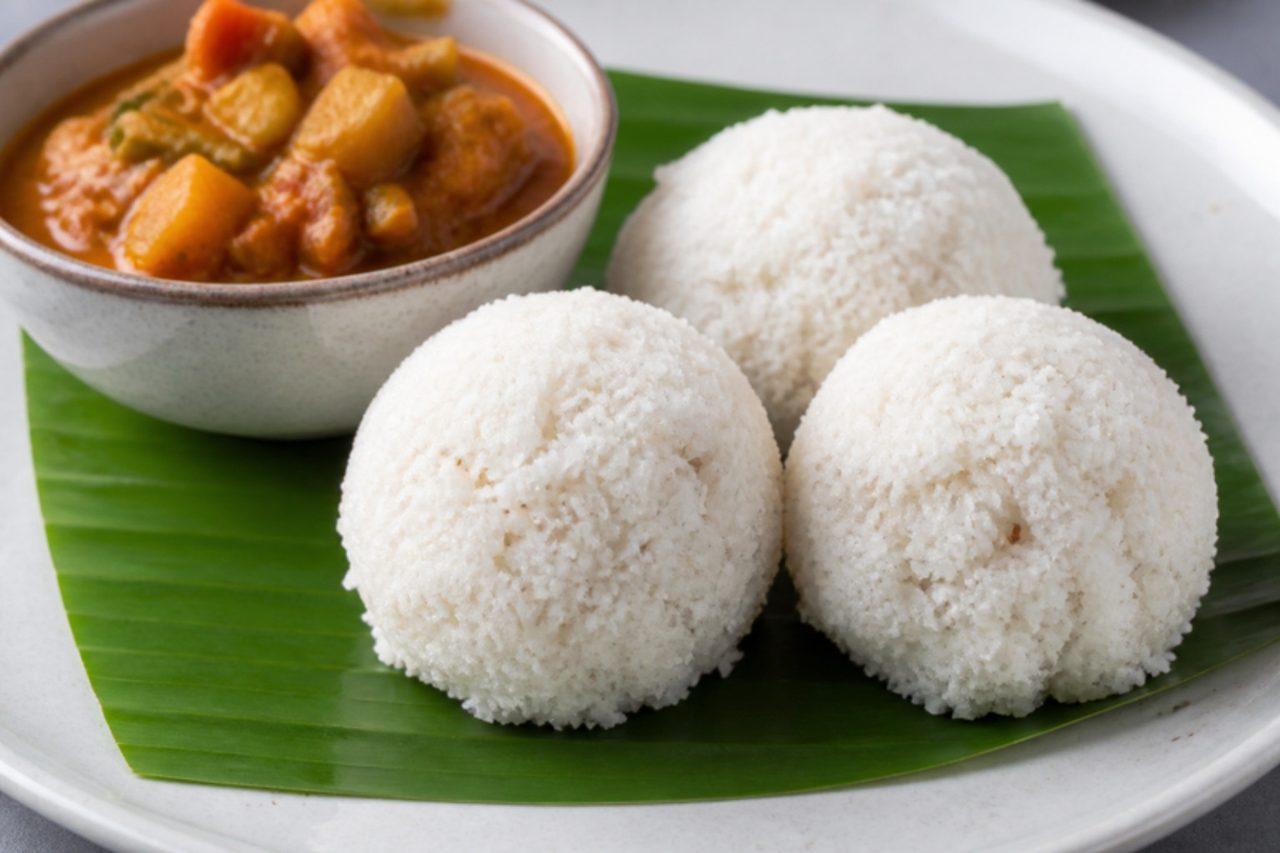
KadambuttuSteamed rice and coconut balls

Kadambuttu are the steamed rice balls of Kodagu (Coorg), made in every Kodava home for breakfast and in great heaps for Puttari, the rice harvest festival in late November or early December. Broken rice is cooked to a thick porridge with coconut, rolled into balls and steamed, so they're dense, slightly sticky and mild, the perfect sponge for a fiery curry; at home they go with pandi curry, but a spicy kadala or mushroom curry works beautifully too. A common mistake is using whole rice flour or fine semolina; you need coarse broken rice, or the balls turn gluey. Chef's tip: wet your palms between each ball so the dough stays smooth and doesn't crack.

by KrazyBadal 0 views

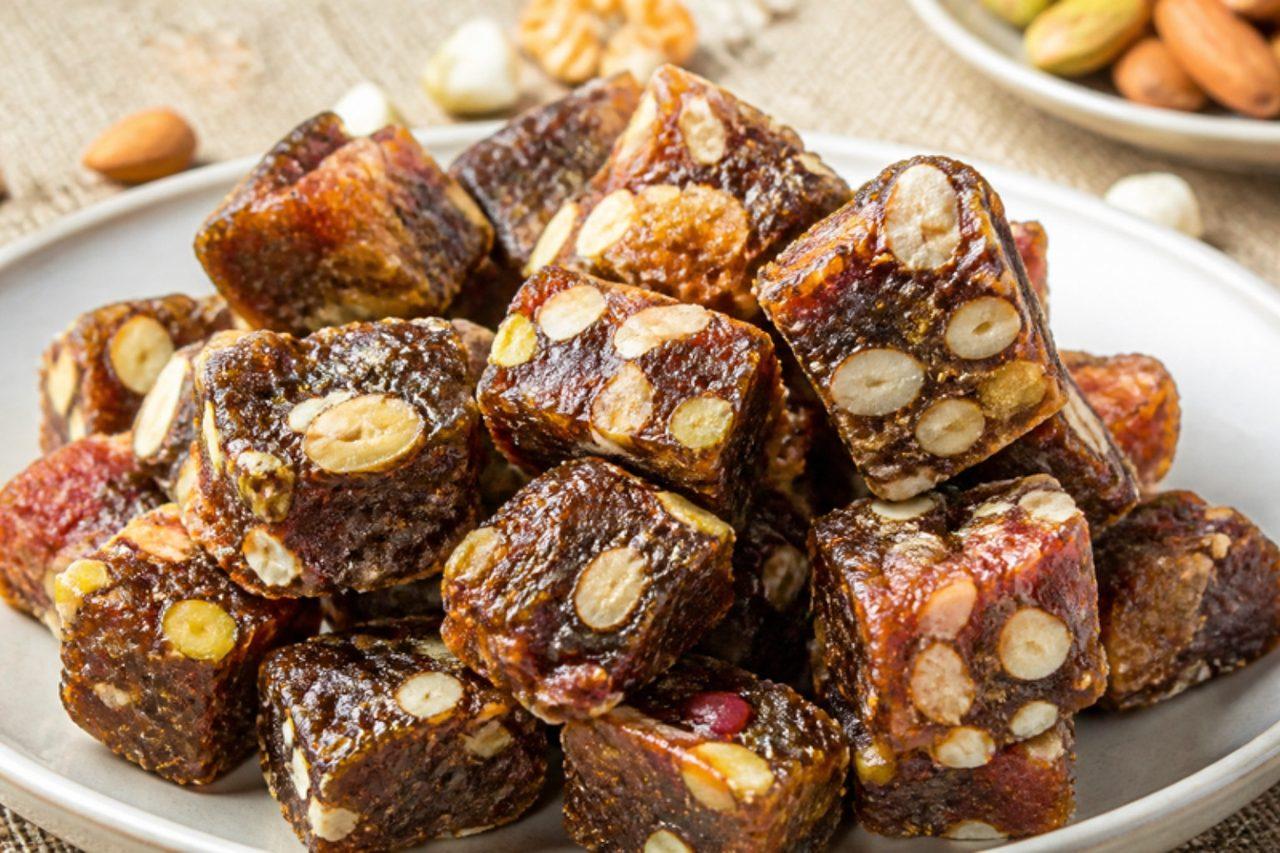
KaradantuEdible gum and jaggery slab

Karadantu is the famous sweet of Gokak in Belagavi district, sold in sweet shops near the Gokak falls and carried home as a gift, and also made in north Karnataka homes for new mothers and in winter. Edible gum is fried in ghee until it puffs like popcorn, then bound with jaggery syrup, dry coconut, poppy seeds and plenty of dry fruit and pressed into slabs. It's dense, chewy-crisp and deeply caramel-tasting. A common mistake is frying the gum on high heat; it browns outside and stays hard and glassy inside. Chef's tip: fry the gum a few pieces at a time in warm ghee and wait for each to swell to three times its size before lifting.

by KrazyBadal 0 views

PalkovaMilk fudge

Srivilliputhur, the temple town of Andal near Virudhunagar, is so famous for its palkova that it has a protected geographical name. Local cows' milk is reduced in wide iron pans over a wood fire with sugar until it becomes a soft, grainy, pale caramel-coloured fudge, sold on banana-leaf squares and eaten as a sweet with tea or after meals. The mistake is turning the heat up to save time; the milk scorches, tastes burnt and the texture turns tough. Chef's tip: use full-fat milk and a wide, heavy pan, and stir the bottom and sides constantly in the last twenty minutes.

by KrazyBadal 0 views

Maa ladduRoasted gram flour laddus

Maa laddu (maladu) is the simplest of the Tamil Deepavali sweets, made in a quarter of an hour from pottukadalai, the roasted split gram sold in every Tamil grocery. Ground with sugar and bound with hot ghee, it melts on the tongue, nutty and cardamom-scented, and it's the laddu grandmothers teach children to roll. The mistake is pouring cold or too little ghee: the powder won't bind and the balls crumble, so add it smoking hot and in stages. Chef's tip: warm the pottukadalai in a dry pan for two minutes before grinding; it brings out the toasty flavour and grinds finer.

by KrazyBadal 0 views

Kaddu bhaatBottle gourd dal with rice

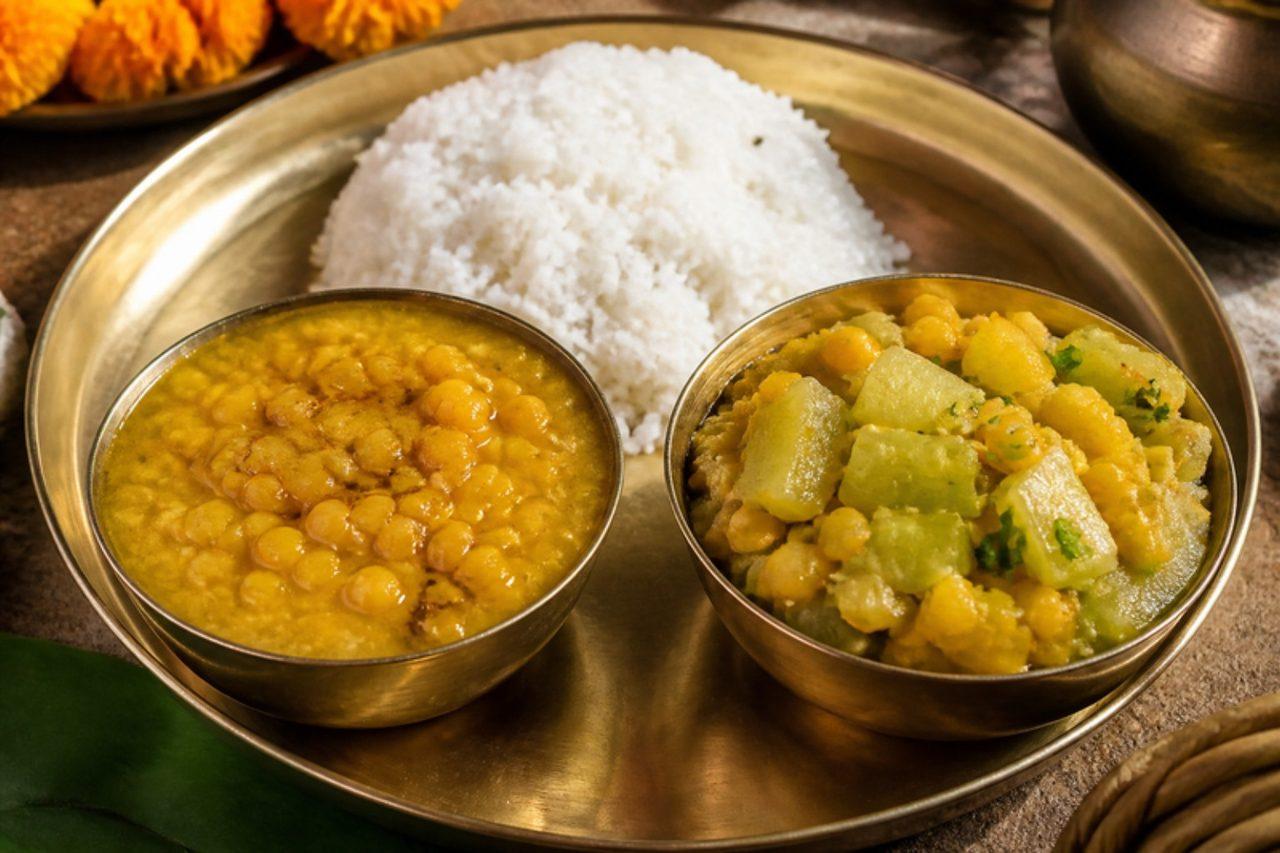
Chhath begins with Nahay-khay: after a holy bath in the Ganga or a pond, the women and men keeping the fast in Bihar and Jharkhand eat one pure, simple meal, and it is always kaddu (bottle gourd) cooked with chana dal, plain rice and a ghee-fried sabzi, seasoned only with sendha namak (rock salt) and no onion or garlic. The dal is mild, soft and sweet from the gourd, with cumin, ginger and green chilli. Common mistake: adding the gourd at the start, so it collapses to mush; cook the chana dal soft first, then simmer the gourd until just translucent. Chef's tip: grate a spoon of fresh ginger into the ghee tadka at the end; it is the main flavour since there is no garlic.

by KrazyBadal 0 views

KandarappamPuffed rice, urad and jaggery cakes

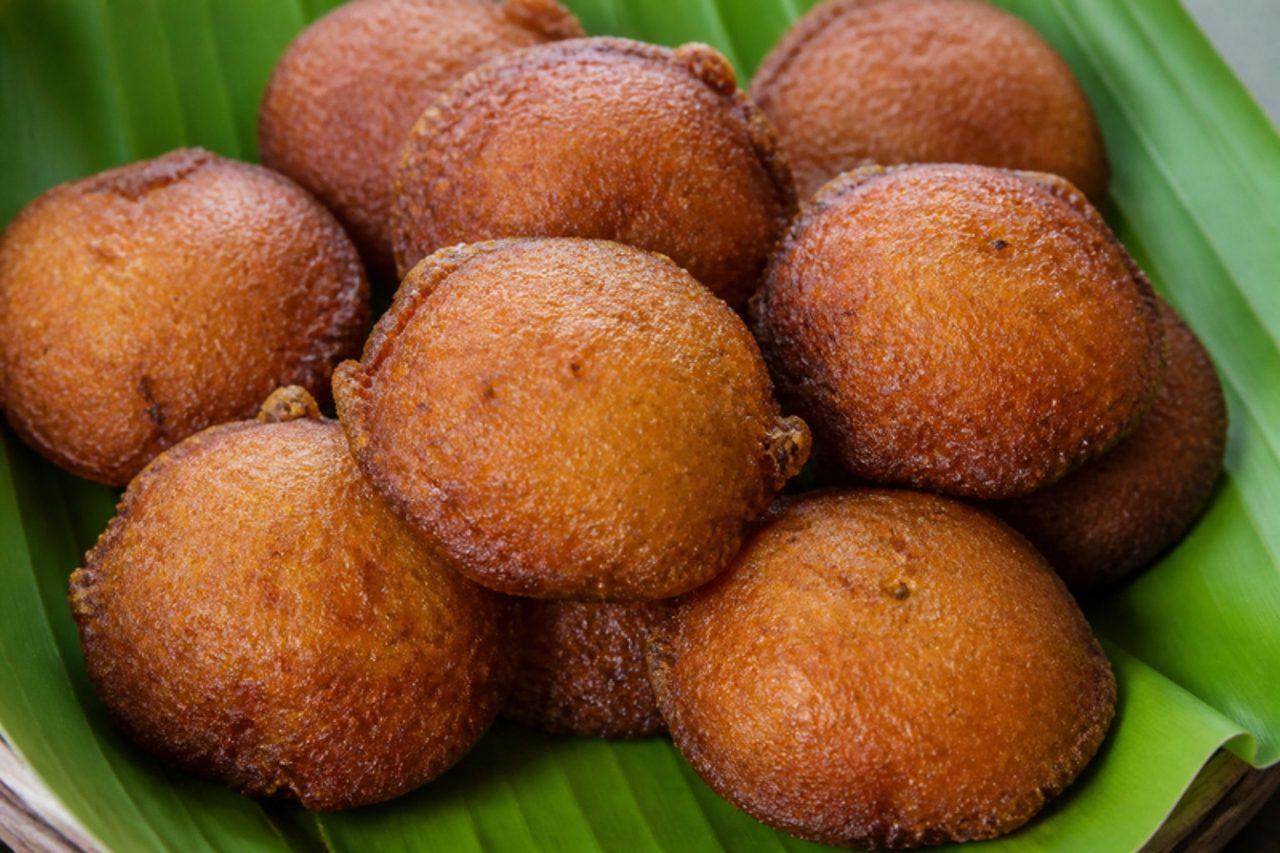
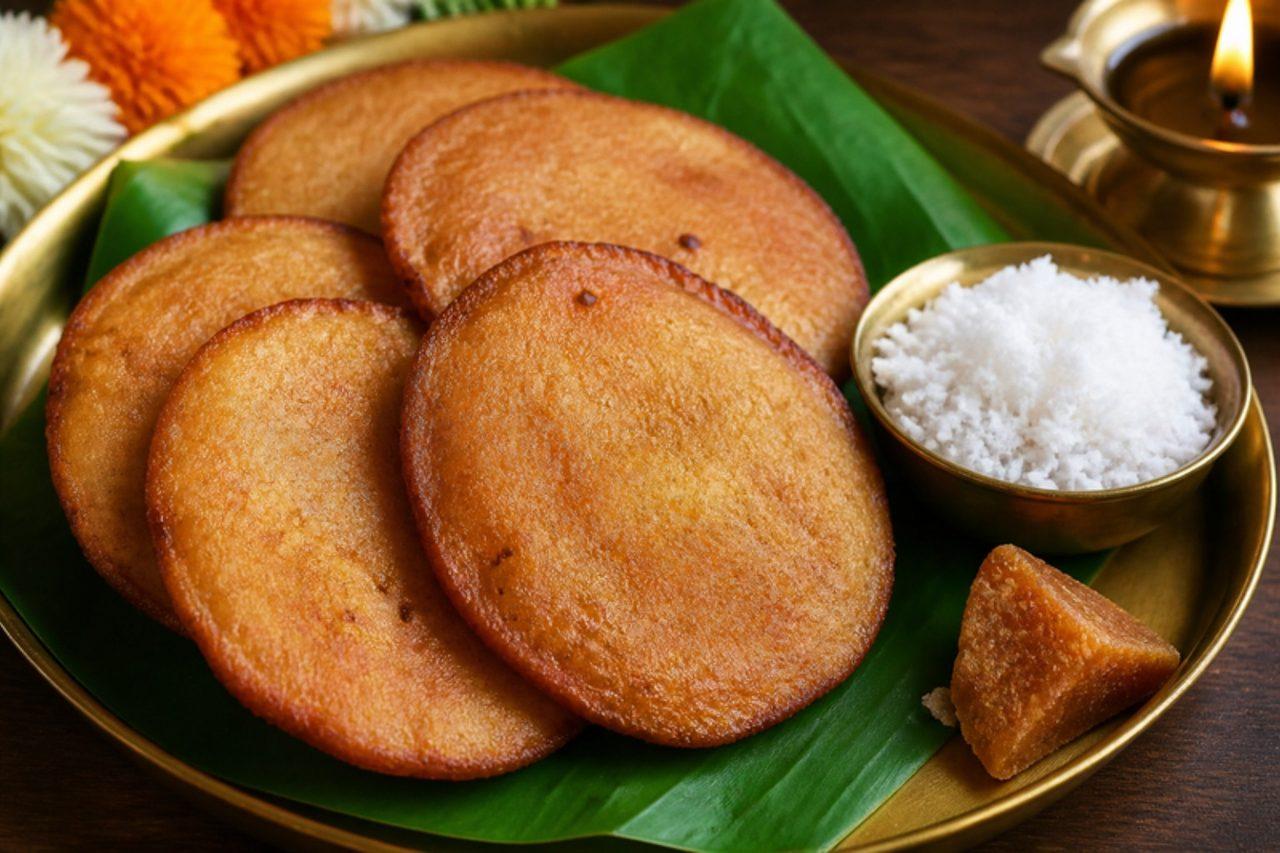
Kandarappam is one of the grand sweets of the Chettiar houses of Karaikudi and Kanadukathan, fried by the dozen for weddings and for Deepavali and kept in big brass tins. A ground batter of raw rice, urad dal and chana dal is sweetened with jaggery and cardamom and ladled into hot oil, where each cake puffs up, turns dark golden and gets a crisp, lacy edge around a spongy middle. They are eaten at room temperature with coffee, often the day after frying, when the flavour has settled. A common mistake is grinding the batter too thin; it spreads into flat discs that soak up oil, so keep it like a thick pancake batter. Chef's tip: fry one test cake first, and if it doesn't puff, add another spoon of rice flour to the batter.

by KrazyBadal 0 views

MahuraMixed vegetables with dal

Mahura is the vegetable curry of the Jagannath temple tradition in Odisha and a fixture on Rath Yatra lunches at home: pumpkin, raw banana, yam, aubergine and sweet potato cooked soft with a little dal and a paste of roasted cumin, ginger, coconut and a touch of jaggery. Like all temple food it uses no onion, garlic, tomato, chilli powder or New World vegetables, so it tastes gentle, earthy and faintly sweet. It is thicker and more vegetable-heavy than dalma, with the dal only binding the vegetables. Common mistake: stirring too much once the pumpkin softens, which melts it into the gravy; the mahura is done when the yam is tender, the vegetables hold their shape and the gravy coats them. Serve with kanika or plain rice. Chef's tip: finish with a pinch of roasted cumin and dry red chilli powder ground together (bhaja masala), which Odia cooks add right at the end.

by KrazyBadal 0 views

Then mittaiSyrup-soaked rice and urad balls

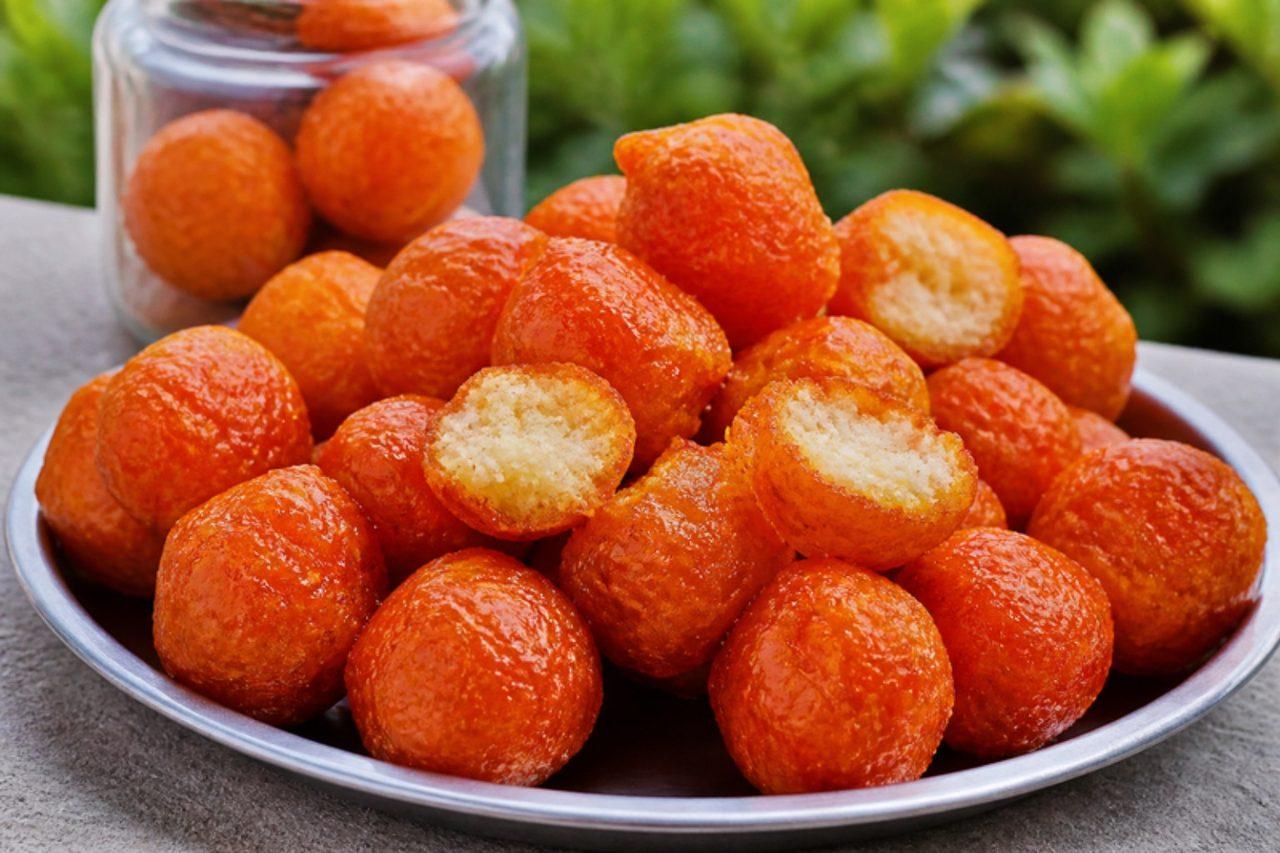
Then mittai, 'honey sweets', were sold from glass jars at the petti kadai outside every Tamil village school in the 1980s and 90s, glossy red balls that crunch and then squirt sweet syrup. They're nostalgic now and great fun to make at home for children's parties. The mistake is frying too hot, which browns the outside before the centre cooks; they should fry slowly to a crisp shell. Chef's tip: let the fried balls cool for a minute before dropping them into warm, not hot, syrup so they stay crisp instead of going soggy.

by KrazyBadal 0 views

Gathiya nu shaakGathiya in yogurt tomato gravy

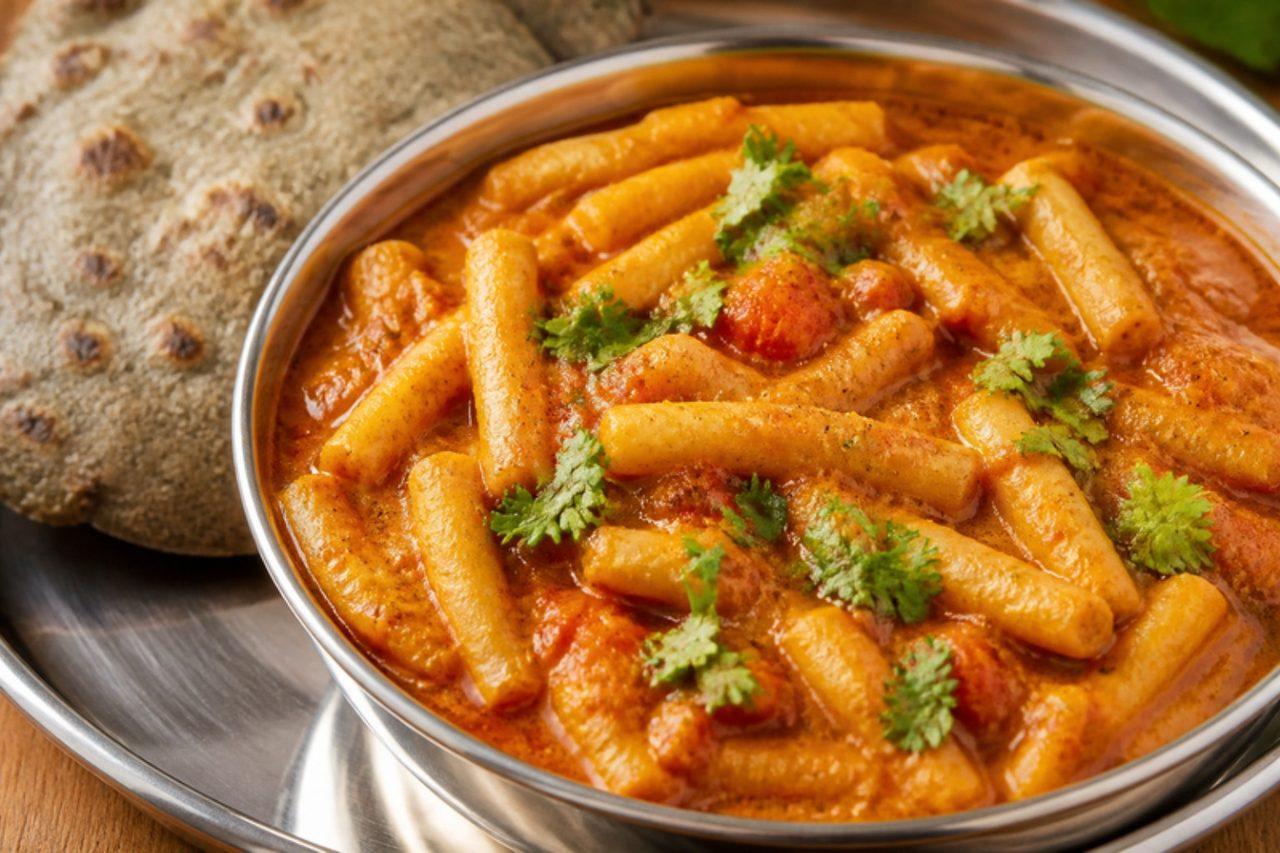
Gathiya nu shaak is a Kathiawadi dhaba standby along the Rajkot and Bhavnagar highways, cooked in ten minutes and eaten with hot bajra rotla, raw onion and buttermilk. A spicy gravy of onion, tomato, garlic and whisked yogurt is brought to a simmer and thick bhavnagari gathiya go in right at the end, so they soften on the outside but keep a little bite at the centre. It is rich, fiery and comforting. The common mistake is adding the gathiya too early or letting them sit in the gravy; they swell and turn to mush. Chef's tip: have everyone at the table before the gathiya go into the pan, and serve within two minutes.

by KrazyBadal 0 views

Kakara pithaFried semolina coconut cakes

In Odisha no festival plate is complete without kakara pitha, and during Durga Puja (and on Prathamastami and Dussehra) Odia homes fry them by the dozen to offer and share. A soft semolina dough cooked in sweetened milk-water is wrapped around a filling of fresh coconut, jaggery, cardamom and a surprising pinch of crushed black pepper, flattened into discs and fried in ghee until golden. They are crisp outside, soft and chewy within, with a gently spicy sweet centre. Common mistake: letting the jaggery filling stay wet, which makes it leak and burst in the hot fat; cook it until it gathers into a ball that leaves the pan clean. Chef's tip: knead the cooked semolina while it is still warm with a little ghee on your palms; it turns smooth and pliable and will not crack as you shape the pitha.

by KrazyBadal 0 views

Talela marchaFried green chillies

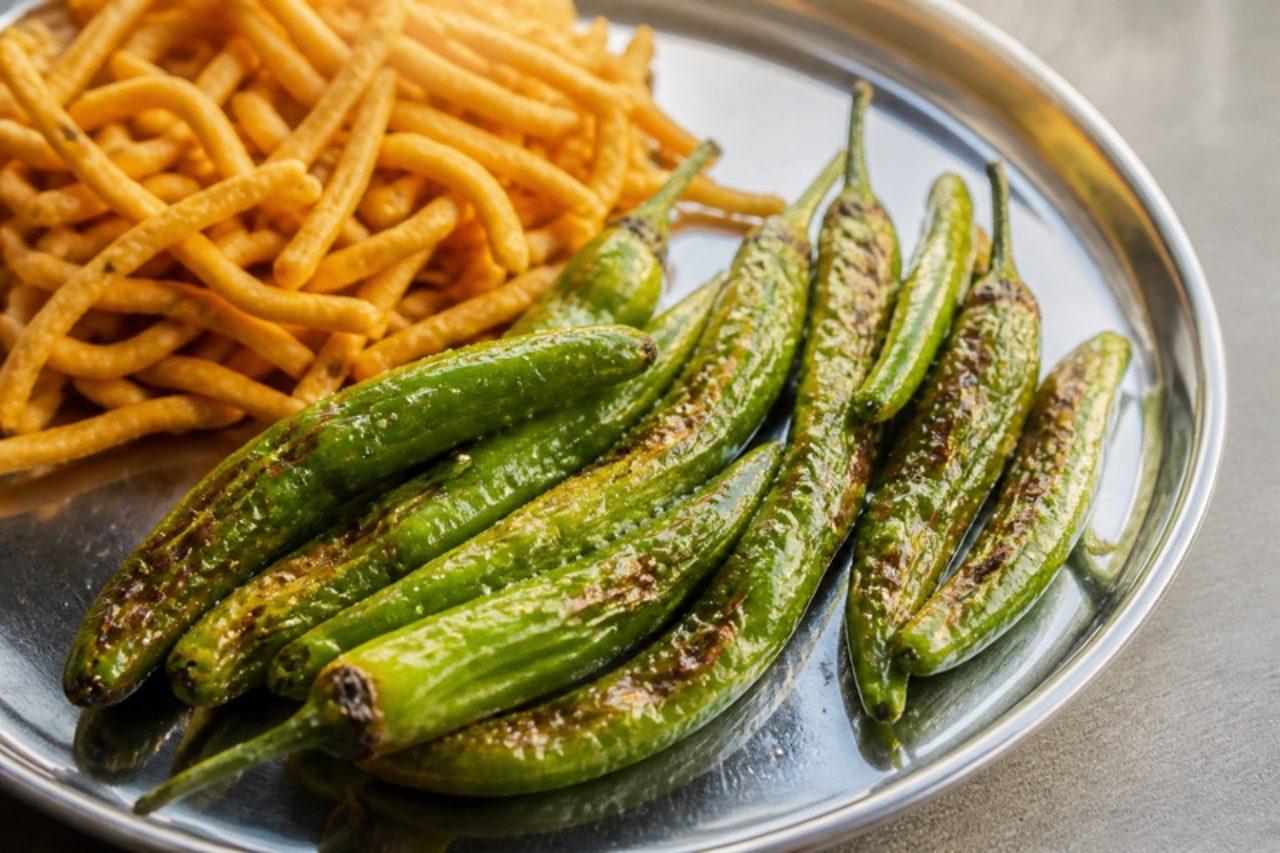
Every plate of gathiya, dalvada or bhajiya sold in Gujarat comes with a little heap of talela marcha, green chillies dropped into the farsan seller's kadai for a few seconds until they blister and turn olive green, then shaken with salt and a squeeze of lemon. Bitten between mouthfuls of farsan they give a fresh, smoky hit of heat. Use thick, fairly mild chillies if you can find them. The common mistake is frying wet chillies: water on the skin makes the oil spit violently. Chef's tip: slit them lengthways first so steam escapes and they don't burst in the oil.

by KrazyBadal 0 views

Ranga alur pitheSweet potato coconut parcels

Poush Sankranti in Bengal is the day for pithe, and ranga alur pithe uses the sweet potatoes that come in with the winter harvest. Boiled sweet potato is kneaded with a little flour into a soft dough, wrapped round a coconut and jaggery filling, fried and then dipped in syrup, so you get a crisp shell, a melting orange layer and a sweet, nutty centre. They are eaten warm on the festival evening or the next day once they have soaked up more syrup. Common mistake: watery sweet potato; boil it whole in its skin and let it steam dry, or the dough gets sticky and the pithe burst in the oil. They are fried enough when they are deep golden and float. Chef's tip: the syrup should be warm and at one-string stage, a thread forming between finger and thumb; too thick and it won't soak in.

by KrazyBadal 0 views

RasiyaJaggery rice kheer

On the evening of Kharna, the second day of Chhath in Bihar and eastern Uttar Pradesh, the vrati who has fasted since dawn cooks rasiya on a new clay chulha over mango wood: arwa rice simmered in milk with jaggery, offered to Chhathi Maiya and eaten with ghee-smeared roti before the 36-hour waterless fast begins. It is pale brown, creamy and tastes of caramel and milk. Common mistake: adding jaggery while the milk is boiling hard, which curdles it; take the pan off the heat, let it calm, then stir in the jaggery, and the kheer is ready when the rice is completely soft and it coats the spoon. Chef's tip: many families cook it with no salt and in a separate pan from everyday cooking; do the same if you are making it for the puja.

by KrazyBadal 0 views

KamarkattuCoconut jaggery candy balls

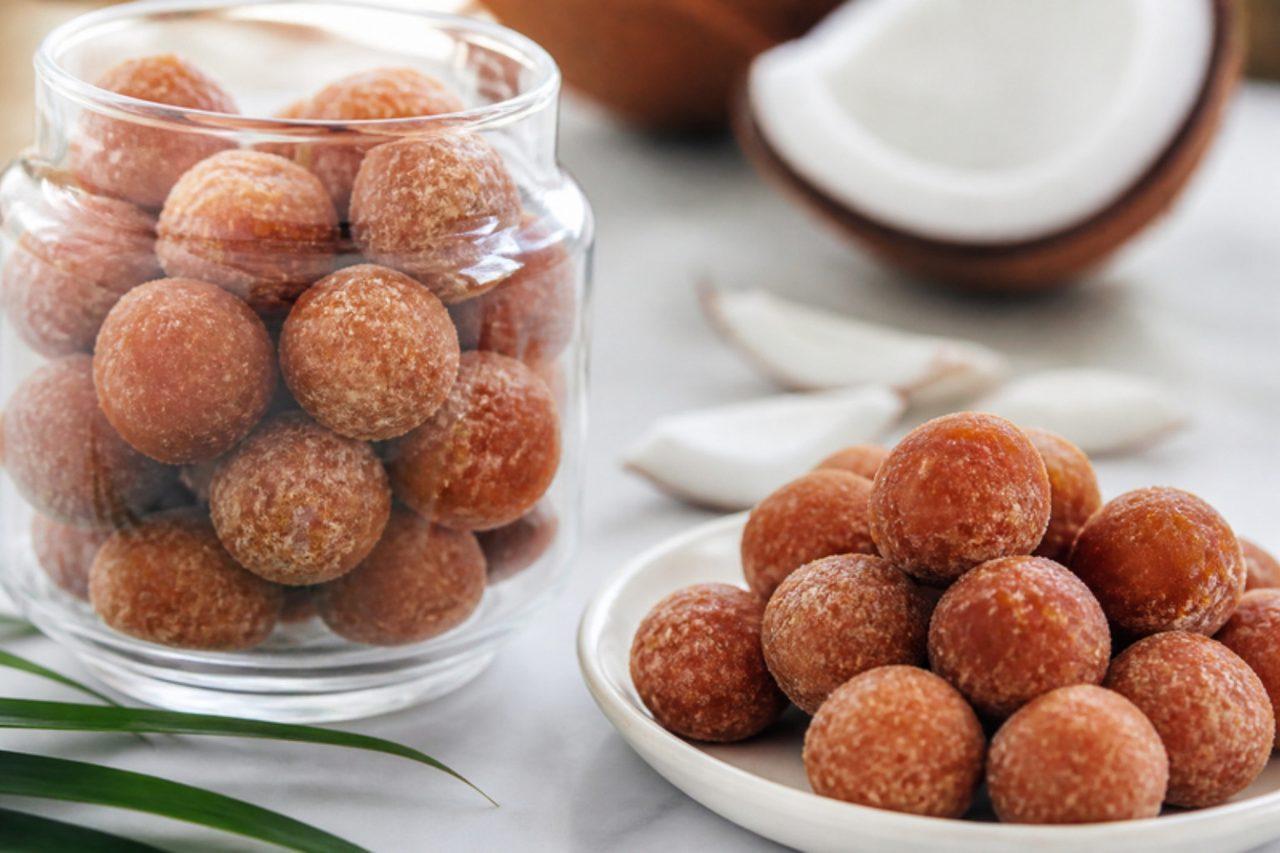
Kamarkattu is the toffee of Tamil village shops, dark, chewy, caramel-scented balls of coconut and jaggery that cost a few paise in the days when children bought sweets one at a time. It's quick to make at home and keeps for a couple of weeks. The mistake is taking the jaggery too far: if the syrup hardens past the soft-ball stage, kamarkattu turns rock hard and pulls fillings. Chef's tip: test a drop in cold water; when it forms a soft ball you can squash, switch off and shape immediately.

by KrazyBadal 0 views

KhichdoWheat, rice and dal porridge

Khichdo is Gujarat's Uttarayan dish of giving: on the morning of the festival big pots of it are cooked and shared with neighbours, cows and anyone in need, because charity on Makar Sankranti is thought to bring blessings. It is a slow, hearty porridge of pounded whole wheat cooked with rice and several dals until everything melts together, finished with a ghee tadka of whole spices, ginger and chilli. Some families make it sweet with jaggery instead. Common mistake: skipping the soaking; the wheat needs a night in water or it never softens, and the khichdo is ready when the grains are bursting and it falls thickly from the ladle. Chef's tip: pounded khichda wheat is sold in Indian shops; cracked whole wheat (not bulgur) also works.
by KrazyBadal 0 views

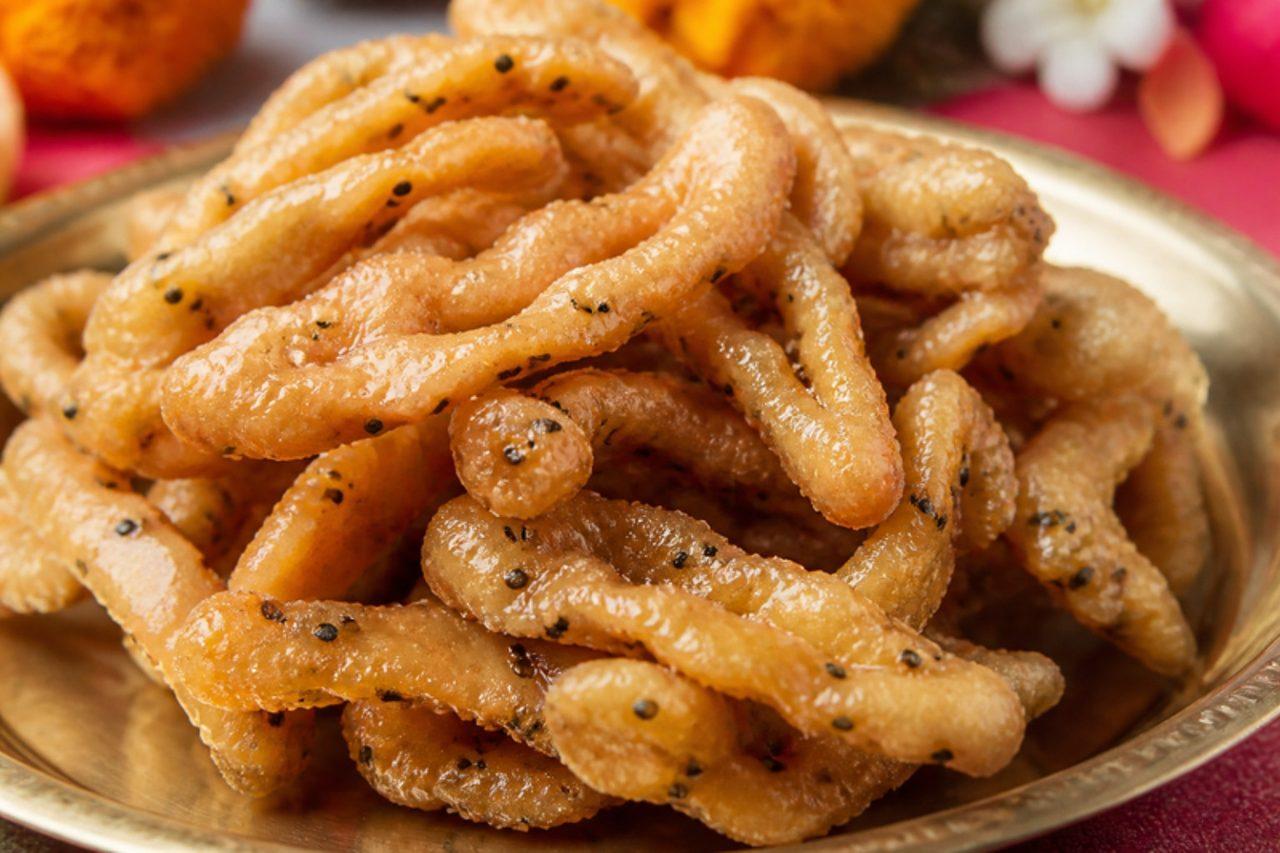
Elo jheloFried dough strips in sugar syrup

Elo jhelo means something like 'messy-tangled', and it describes these knotted, twisted strips of fried dough that Bengali grandmothers make for Bijoya Dashami, when the goddess leaves and everyone shares sweets. The strips are cut, slit and pulled through themselves into a twist, fried slowly until crisp, then dipped in a one-string sugar syrup that sets to a thin, crackly glaze. They keep for weeks in a tin. Common mistake: dipping the strips in syrup that is too thin; it soaks in and makes them soggy. Cook the syrup until a drop pulled between finger and thumb forms one thread. Chef's tip: add a teaspoon of semolina to the dough; it makes elo jhelo crunchier and less likely to soften once glazed.

by KrazyBadal 0 views

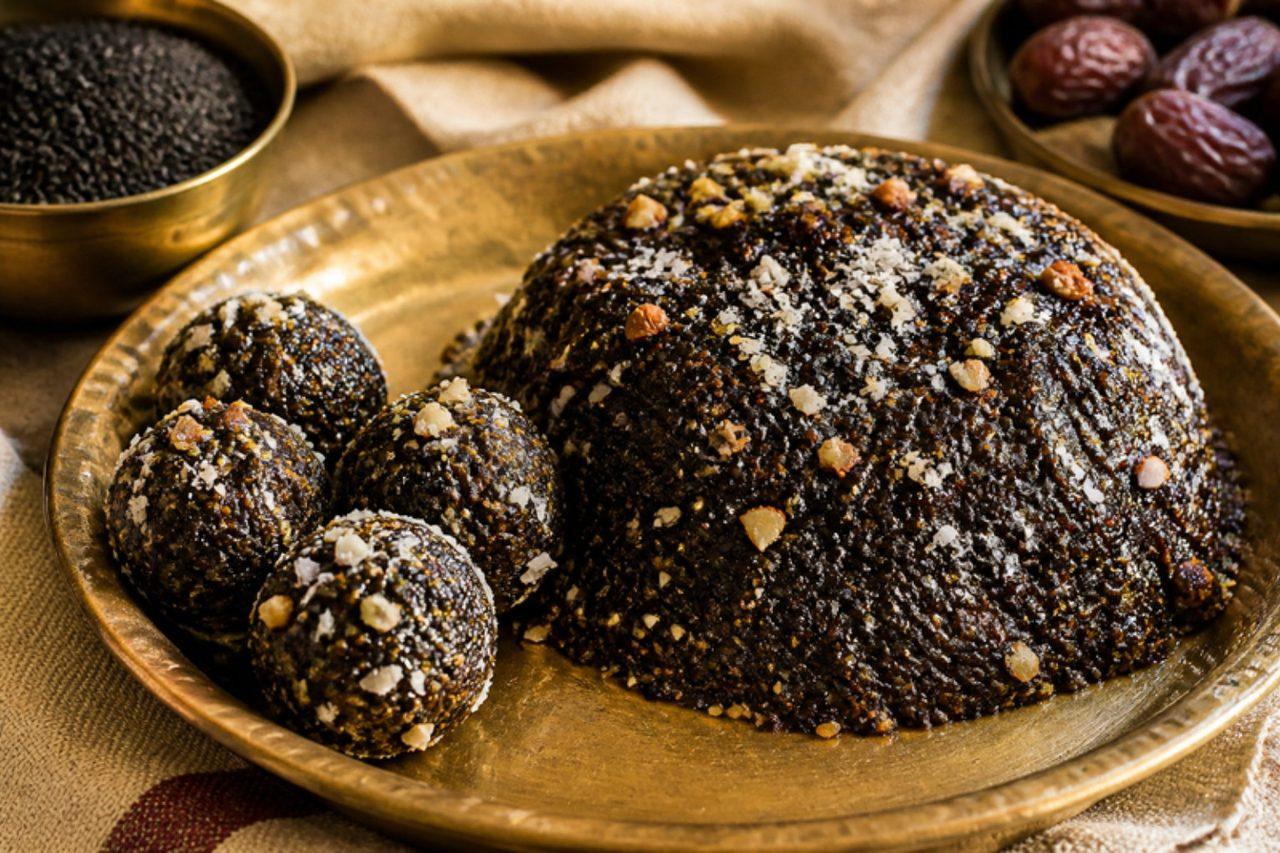
KachariyuBlack sesame and date sweet

In Saurashtra the oil mills (ghani) run day and night through the Uttarayan season, and the first sesame pressed is mixed with dates and jaggery and sold as kachariyu, a dark, sticky, crumbly sweet that tastes of toasted seeds and spice. Families make it at home too and eat a spoonful every winter morning, and a bowl is always out on kite-flying day. The sesame is crushed until it releases its own oil, so it is rich but not greasy. Common mistake: grinding the sesame to a smooth paste; pulse it only until it turns damp and clumps, which keeps the texture grainy. The seeds are toasted enough when they crackle and a few start to jump out of the pan. Chef's tip: add a little ganthoda (pipli root) powder if you can find it, the traditional warming spice in Kathiawadi kachariyu.

by KrazyBadal 0 views

Thiruvathirai kaliRice and moong dal with jaggery

On Arudra Darshan in the Tamil month of Margazhi, temples across Tamil Nadu, Chidambaram above all, celebrate Shiva as Nataraja, and homes offer him kali with ezhu kari kootu at dawn. The rice and a little moong dal are dry-roasted until fragrant, ground to a coarse rava and then cooked in jaggery water until soft and set, a loose, grainy sweet rather than a smooth halwa. Grated coconut, cardamom and plenty of ghee finish it. Common mistake: grinding the roasted rice to a fine flour, which cooks into a sticky paste; you want grains like fine semolina, and the kali is done when it leaves the sides of the pan and the ghee glistens on top. Chef's tip: roast the rice only until it smells like popcorn and turns faintly golden; any darker and the kali tastes bitter.

by KrazyBadal 0 views

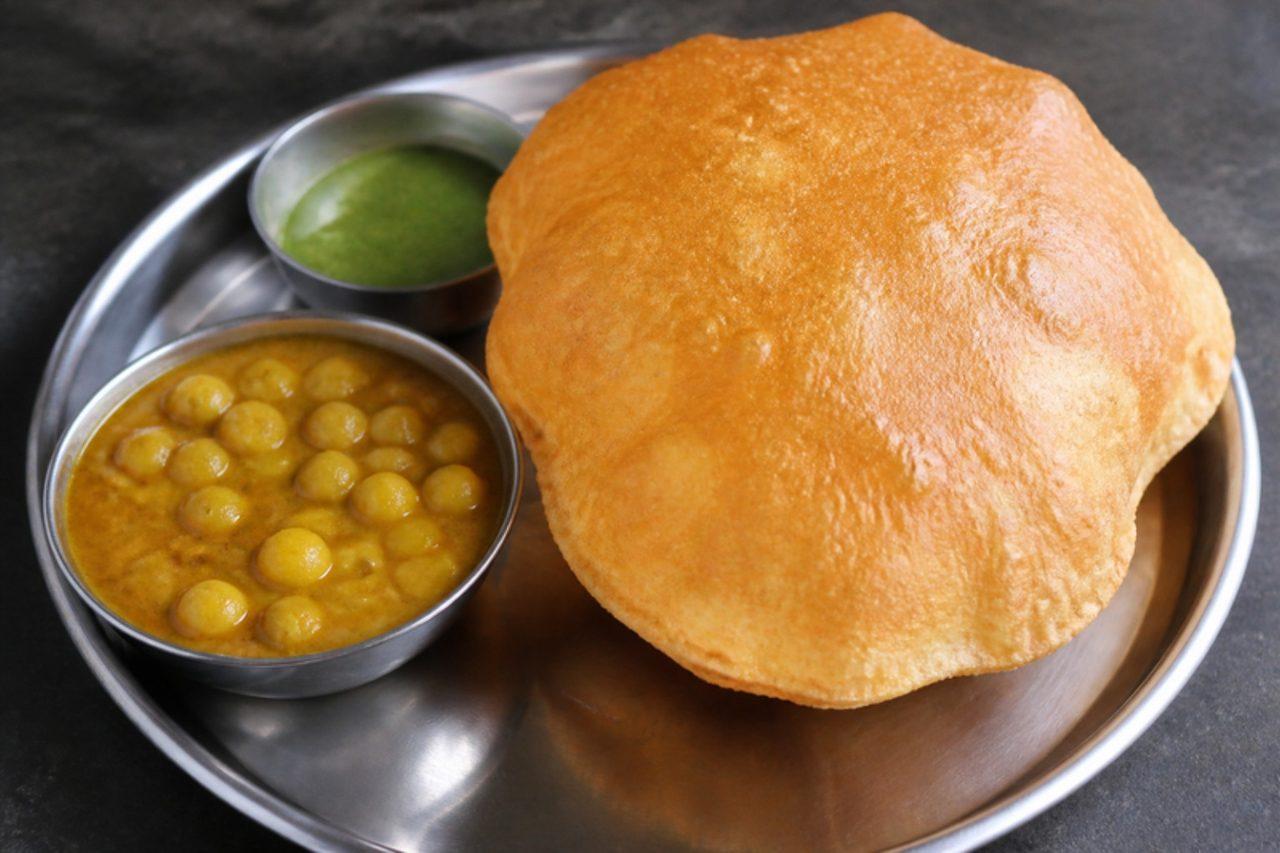
Thunka puriGiant puffed puris

Every Kartik Purnima, Cuttack holds Bali Jatra on the banks of the Mahanadi, a huge open-air fair that remembers the Odia sailors who once set off for Bali and Java; families float little paper and banana-bark boats at dawn and spend the day eating at the stalls. Thunka puri is the fair's famous snack: puris rolled as big as a plate, which balloon into hollow golden domes in the oil and are torn open over a bowl of hot ghugni (yellow pea curry), onion and tamarind chutney. Common mistake: oil that is not hot enough or dough that is too soft; the puri then drinks oil and stays flat. Get the oil to about 190 °C, so a pinch of dough rises at once, and it is done when it is puffed and pale gold on both sides. Chef's tip: slide the puri in, then gently press the centre with a slotted spoon and splash hot oil over the top; it will puff fully within seconds.

by KrazyBadal 0 views

Gond ke ladduEdible gum and flour laddus

When the January cold sets in around Lohri, Punjabi and Marwari kitchens make a tin of gond ke laddu, one of which is eaten each morning with hot milk to keep warm through winter. Edible gum (gond, from the acacia tree) is fried in ghee until it puffs into light crunchy nuggets, then crushed and mixed with ghee-roasted wheat flour, jaggery, dry ginger and plenty of nuts, so the laddus are rich, crumbly and crackle as you bite. Common mistake: frying the gum in oil that is too hot; it browns outside and stays glassy and chewy in the middle, so fry it on a medium heat until each piece swells to twice its size and turns opaque white. The flour is done when it smells nutty, turns golden and the ghee loosens at the edges. Chef's tip: roll the laddus while the mixture is still warm; once it cools it will not bind.

by KrazyBadal 0 views

Ugadi pachadiSix-taste new year relish

On Ugadi morning in Andhra Pradesh, Telangana and Karnataka, the first thing anyone eats after the oil bath and prayers is a spoonful of this pachadi, handed round in a small steel cup. Each ingredient stands for a feeling the coming year will bring: jaggery for joy, bitter neem flowers for sorrow, sour tamarind for disgust, raw mango for surprise, pepper for anger and salt for fear, so tasting them together is a quiet promise to accept whatever comes. In Maharashtra, Gudi Padwa begins with a close cousin, tender neem leaves ground with jaggery, cumin and tamarind. The finished pachadi is thin, sweet first, then sharp and faintly bitter. The common mistake is a heavy hand with neem: half a spoon too much and bitterness drowns every other taste. Stir until the jaggery has dissolved completely and no grains crunch against the spoon. Chef's tip: make it on the morning itself, as the cut mango softens and the neem turns muddy if it sits overnight.

by KrazyBadal 0 views

Ezhu kari kootuSeven vegetable and dal curry

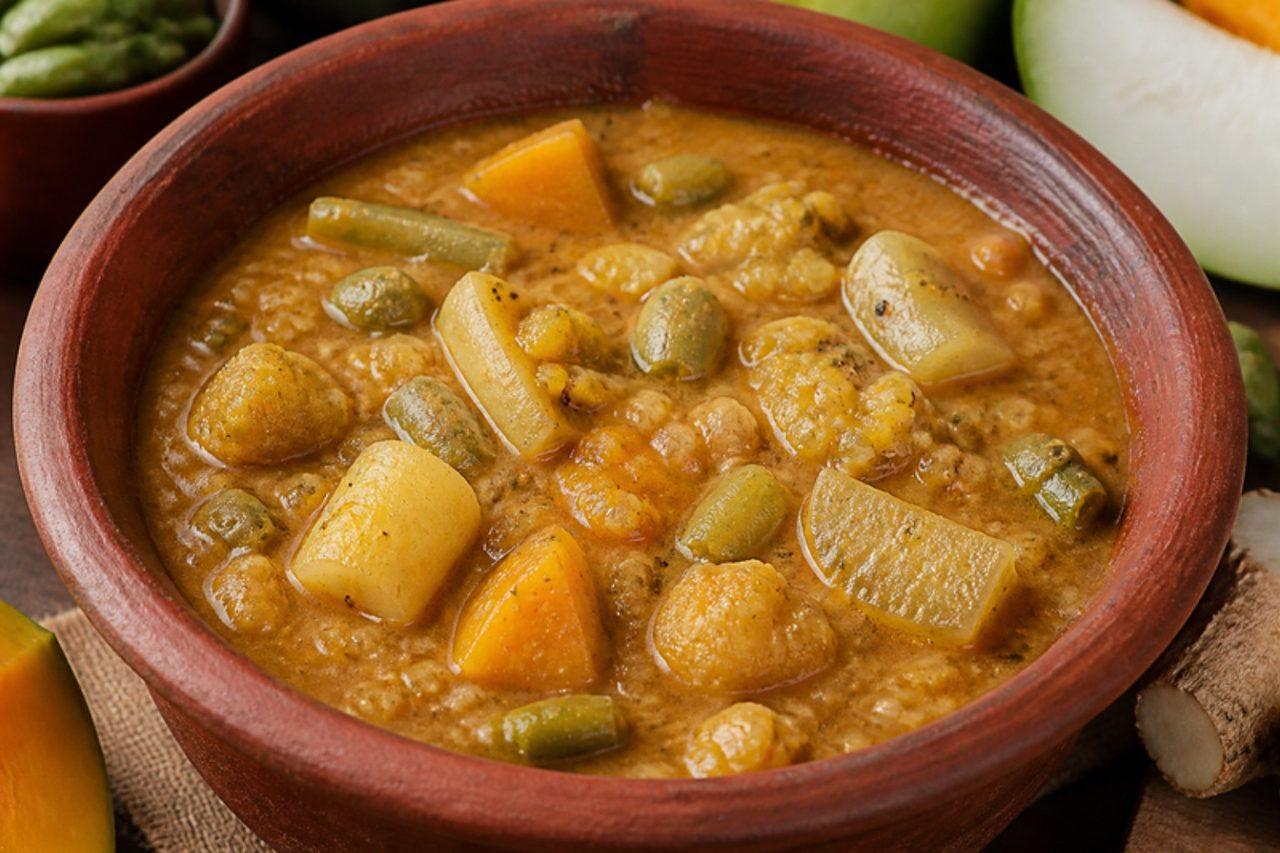
The partner to kali on Arudra Darshan morning is a kootu of seven (ezhu) vegetables, an old Tamil Brahmin custom that uses whatever native winter produce is at the market: pumpkin, ash gourd, raw plantain, sweet potato, broad beans, colocasia and chow-chow are a typical set, and no onion, garlic, tomato or 'English' vegetables go in. They simmer in tamarind water with soft toor dal and a paste of roasted coriander, chana dal, red chillies and coconut, giving a thick, tangy, gently hot stew that cuts the sweetness of the kali. Common mistake: adding tamarind before the vegetables are cooked, which keeps them hard; cook them first in plain water until a knife goes in easily, then add the tamarind and boil until its raw smell has gone. Chef's tip: roast the paste spices until the chana dal turns golden-red, which gives the kootu its depth.

by KrazyBadal 0 views

Urad dal khichdiRice and black lentil khichdi

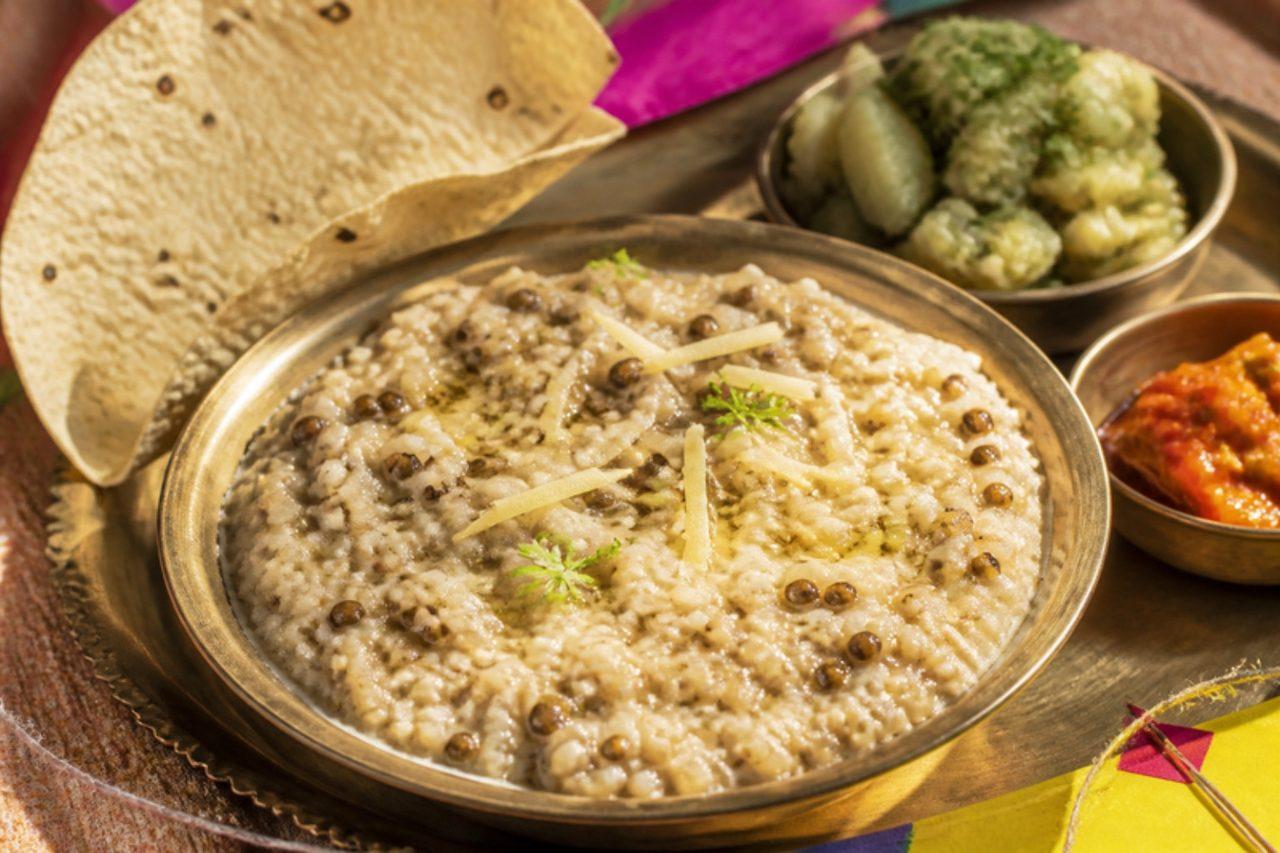
Across Uttar Pradesh and Bihar, Makar Sankranti is simply called Khichdi: after a dip in the Ganga, raw rice and black urad dal are given away as alms, and the same two are cooked at home into this khichdi for lunch. Its four companions are part of the custom: 'khichdi ke chaar yaar, dahi, papad, ghee, achaar', so it comes to the table with curd, roasted papad, a spoon of ghee and pickle, often with aloo or baingan chokha too. The split urad with its black skin gives a creamy, earthy khichdi that is grey-brown and flecked with black. Common mistake: cooking it too dry; urad drinks up water, so it should be soft and loose enough to settle on the plate, and it is done when the dal grains crush easily. Chef's tip: let the cooker release naturally and rest 5 minutes before opening; the khichdi finishes softening in the steam.

by KrazyBadal 0 views

Nuvvula saddiRice with roasted sesame powder

Each family takes several saddulu, flavoured rice dishes, to the lake on Saddula Bathukamma, the last evening of Telangana's flower festival, and swaps them with neighbours after the songs; sesame rice, lemon rice, peanut rice and coconut rice are the usual set. Nuvvula saddi is the nuttiest of them: freshly roasted sesame ground with dried red chilli, tossed through cooked rice with a tempering of mustard seeds, dals, peanuts and curry leaves. It is eaten at room temperature, so the grains must stay separate. Common mistake: grinding the sesame for too long, which turns it to oily paste; pulse only until it looks like coarse sand. The sesame is roasted enough when it crackles, turns light gold and one seed crushes easily between your fingers. Chef's tip: cook the rice a little firm and spread it on a plate to cool before mixing, so it does not break up.

by KrazyBadal 0 views

Ambe dalChana dal with raw mango

Through the month of Chaitra, which opens with Gudi Padwa, Maharashtrian women invite each other home for haldi-kunku, and the plate they send guests away with nearly always holds ambe dal with a glass of kairi panha. It is not a cooked dal at all but a cool, crunchy salad: chana dal soaked for hours, pulsed coarse with green chilli, then tossed with grated raw mango, coconut and a hot mustard tadka. It tastes sour, fresh and gently hot, and it is filling enough for an afternoon visit. The common mistake is grinding it with water into a paste; the dal must stay in tiny separate grains, like coarse couscous, and feel just tender when you bite one. The long time on this recipe is almost all soaking. Chef's tip: grate the mango only just before mixing and add the salt at the end, or the dal turns watery as it stands.
250 minIndianSaladsVeganGluten free
by KrazyBadal 0 views

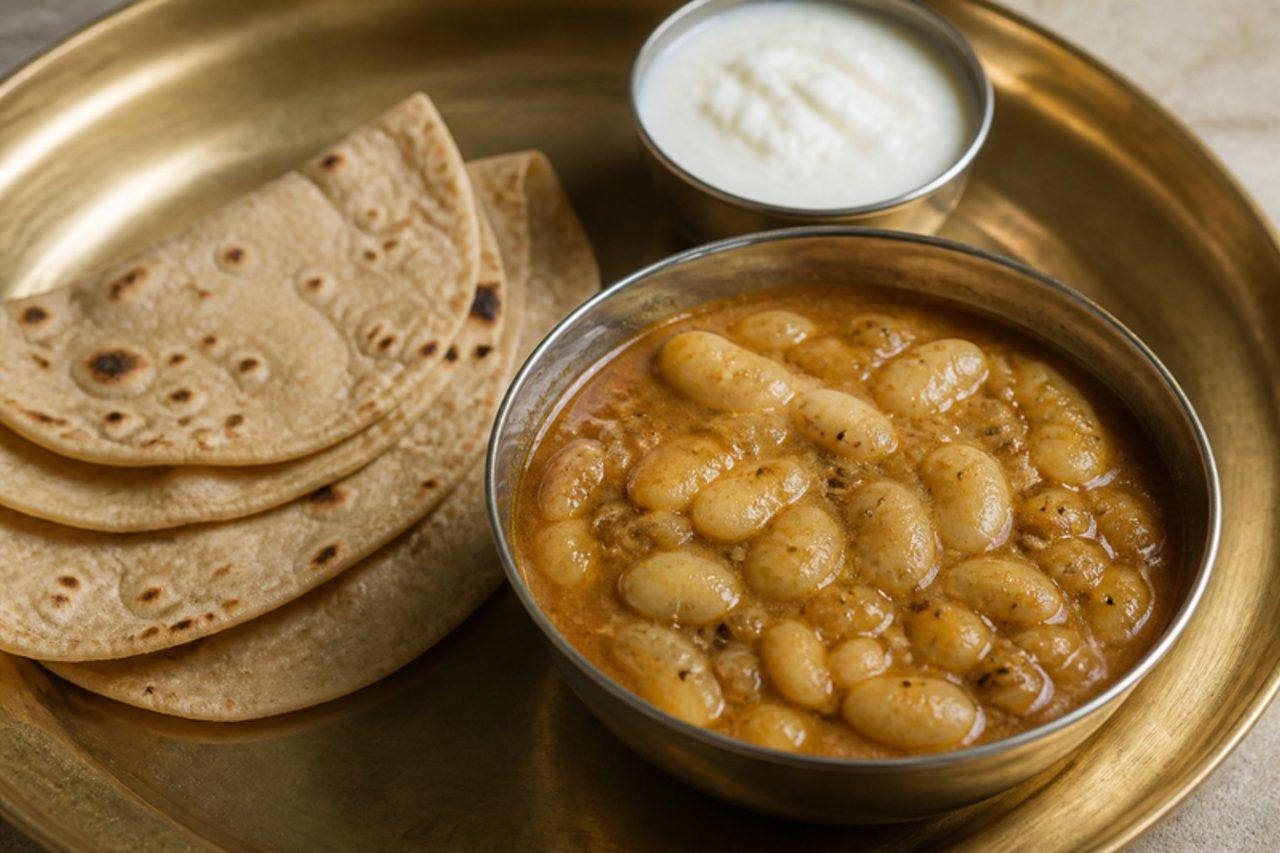
Vaal nu shaakDried field beans with ajwain

During the eight days of Paryushan many Gujarati Jain families stop eating green, leafy and fresh vegetables, so the kitchen turns to dried pulses, and vaal (dried field beans) cooked soft with ajwain and hing is a regular on the thali. This recipe is fully Jain: no onion, no garlic, no fresh ginger and no root vegetables, with dry ginger powder for warmth and amchur instead of tomato for sourness. The beans are creamy and a little bitter-sweet, balanced by jaggery, and are eaten with rotli, rice and kadhi, finished before sunset in strict homes. Common mistake: using beans that have not soaked long enough; they stay hard and split unevenly. Cook them until one squashes easily between your thumb and finger, but not so long that they burst. Chef's tip: ajwain and hing make vaal much easier to digest, so do not skip the tempering; for a gluten-free dish use a gluten-free hing.

by KrazyBadal 0 views

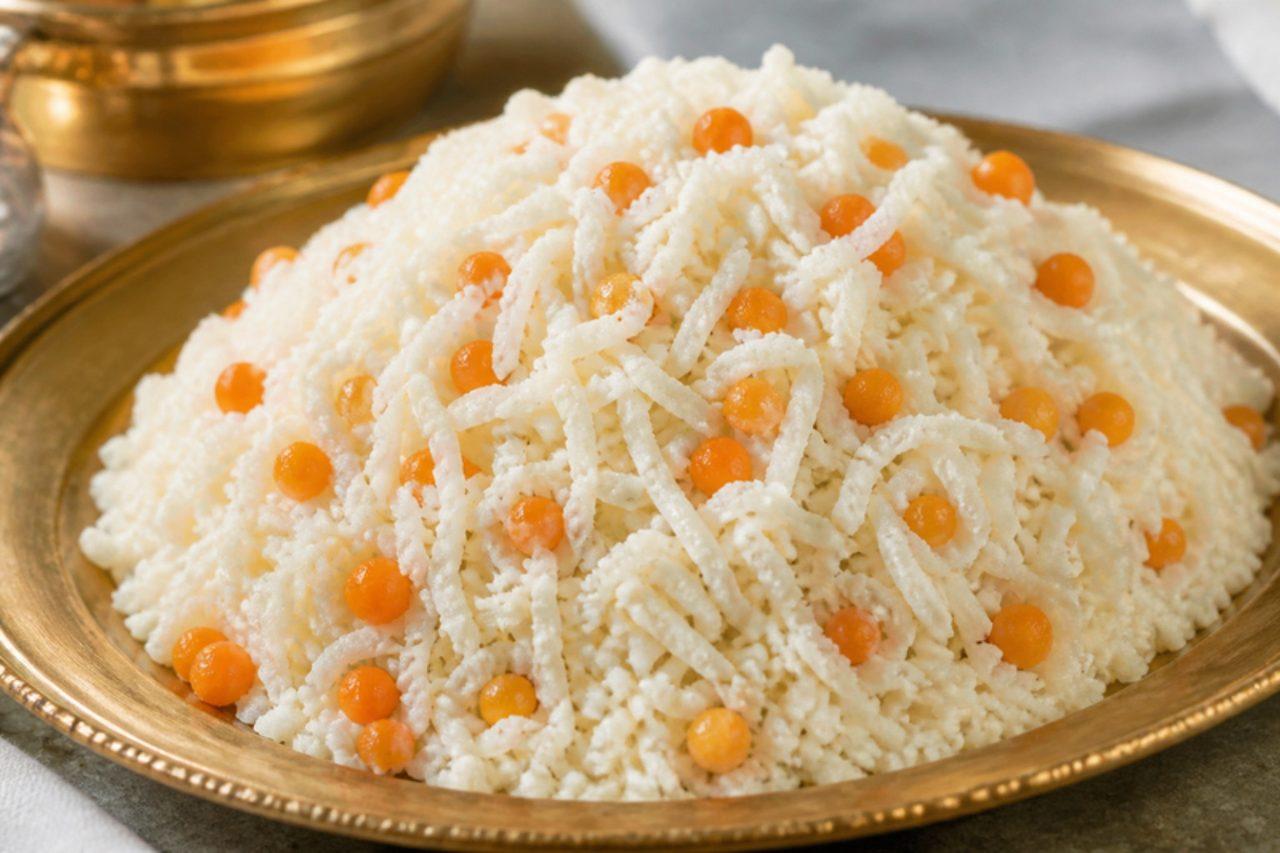
SitabhogChhena strands in syrup

Sitabhog belongs to Bardhaman in West Bengal, and families there and across Bengal like to serve it for Bhai Phonta and at Bijoya: it looks like a bowl of fine white rice, but every grain is a strand of chhena and rice flour pressed into ghee, fried pale and soaked in syrup, then tossed with tiny saffron-tinted nikuti dumplings. It is light, soft and fragrant, best eaten with a spoon at room temperature. Common mistake: frying too hot, which colours the strands; sitabhog should stay ivory, so keep the ghee gentle and lift the strands out as soon as they are firm. The syrup should be at the one-thread stage, so a drop pulled between thumb and finger forms a single short thread. Chef's tip: gobindobhog or any short-grain rice ground to a fine flour gives the most authentic, fragrant strands; sieve it twice.

by KrazyBadal 0 views

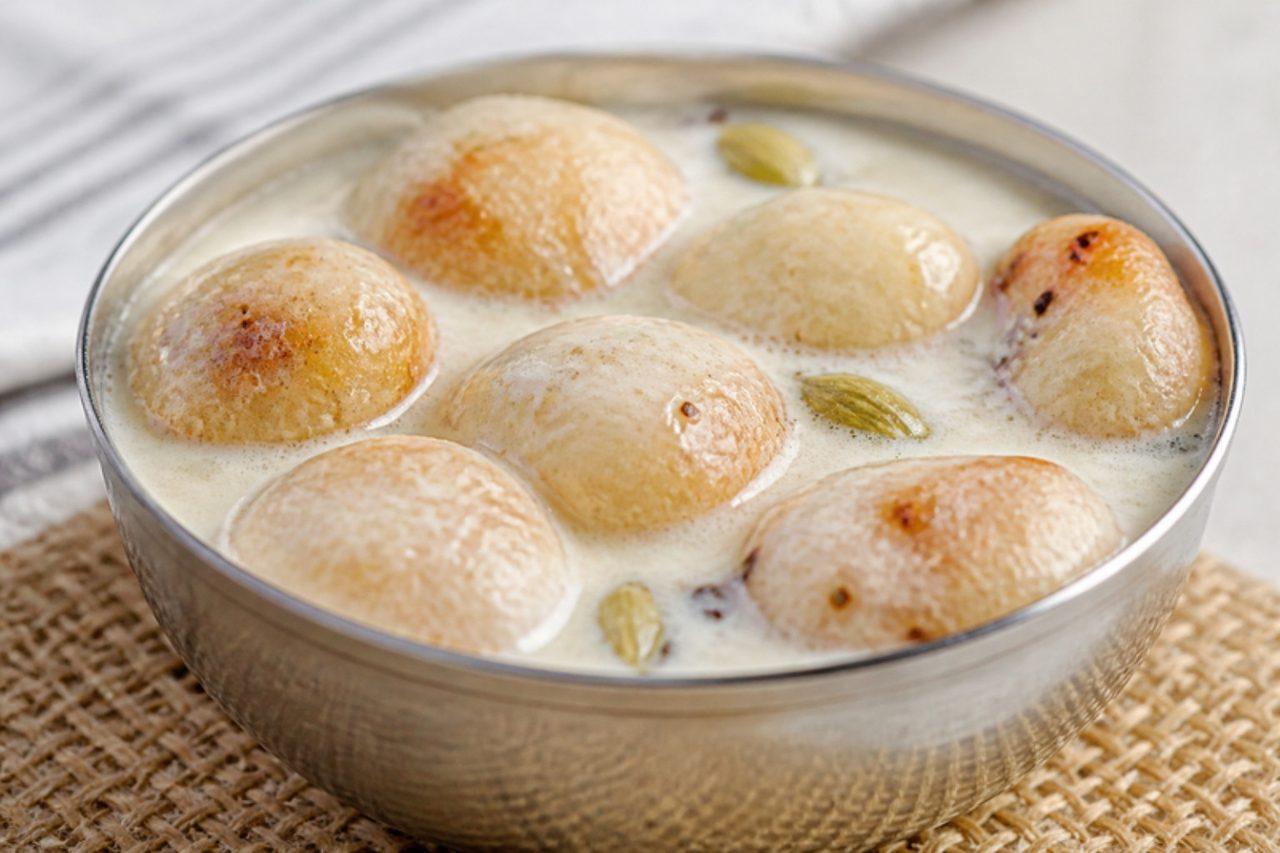
Paal paniyaramFried dumplings in sweet coconut milk

Paal paniyaram is the Chettinad wedding dessert served on the banana leaf at the end of a Karaikudi feast: small marble-sized dumplings of rice and urad are fried pale, dipped briefly in hot water to soften them, then left to soak in sweetened, cardamom-scented coconut milk. They are soft, spongy and cool, eaten with a spoon, chilled or at room temperature. A common mistake is frying until brown and crusty: the dumplings then refuse to soak up the milk. Fry them only until set and barely coloured. Chef's tip: the quick dip in hot water after frying washes off surface oil and opens them up to drink the coconut milk.

by KrazyBadal 0 views

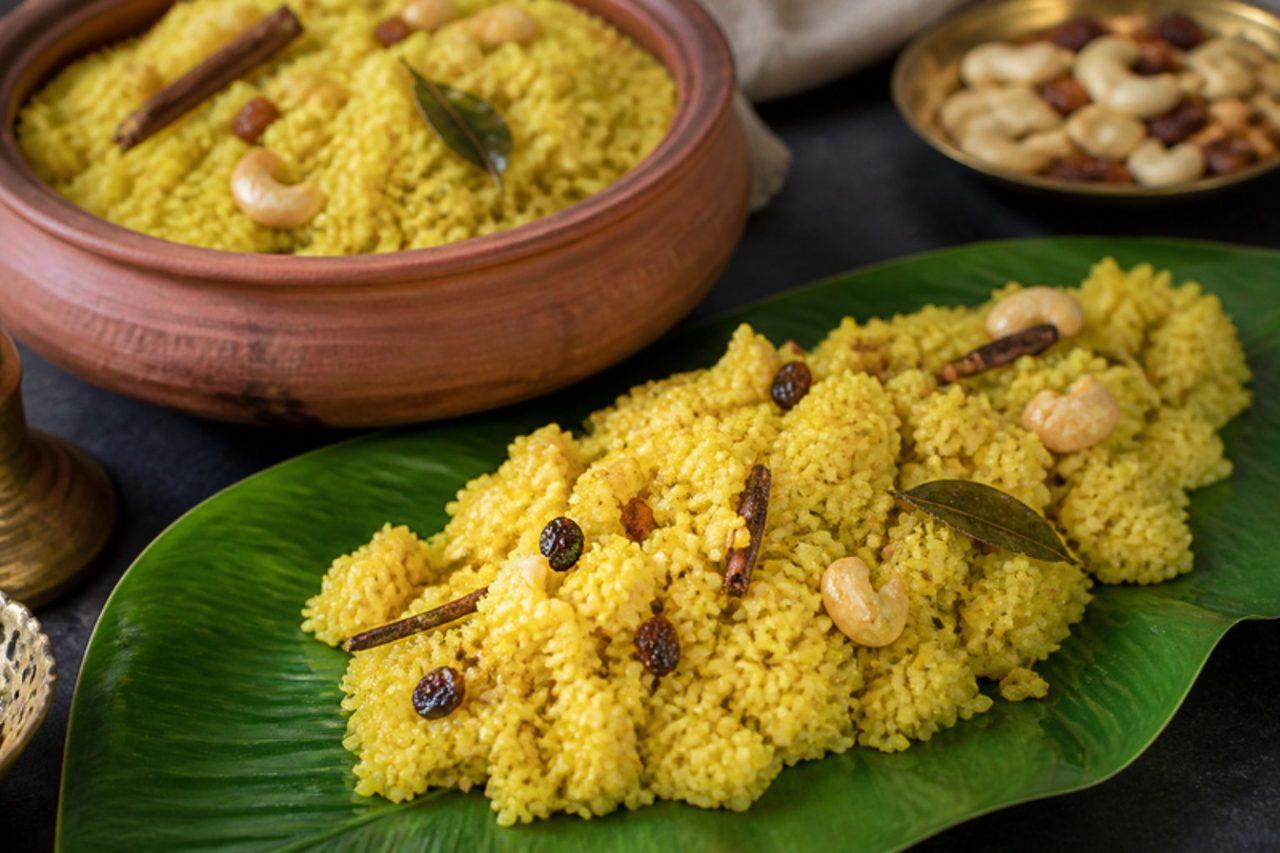
KanikaSweet ghee rice

Kanika is one of the dishes of the Jagannath temple's mahaprasad in Puri, cooked in clay pots over wood fires and sold at the Ananda Bazaar to pilgrims, and Odia homes make it for Rath Yatra, when the deities ride their chariots through the town. It is a fragrant, glossy rice sweetened with sugar and perfumed with cinnamon, bay leaf and cloves in plenty of ghee, studded with fried cashews and raisins. It sits halfway between a pulao and a dessert and is eaten with dalma or a temple-style mahura. Common mistake: adding the sugar at the start, which hardens the grains; cook the rice almost through first, then add the sugar, and it is done when the syrup is absorbed and the ghee shines on the surface. Chef's tip: use a short-grain aromatic rice such as gobindobhog or the Odia arua rice for the true temple texture; basmati works but gives separate, longer grains.

by KrazyBadal 0 views

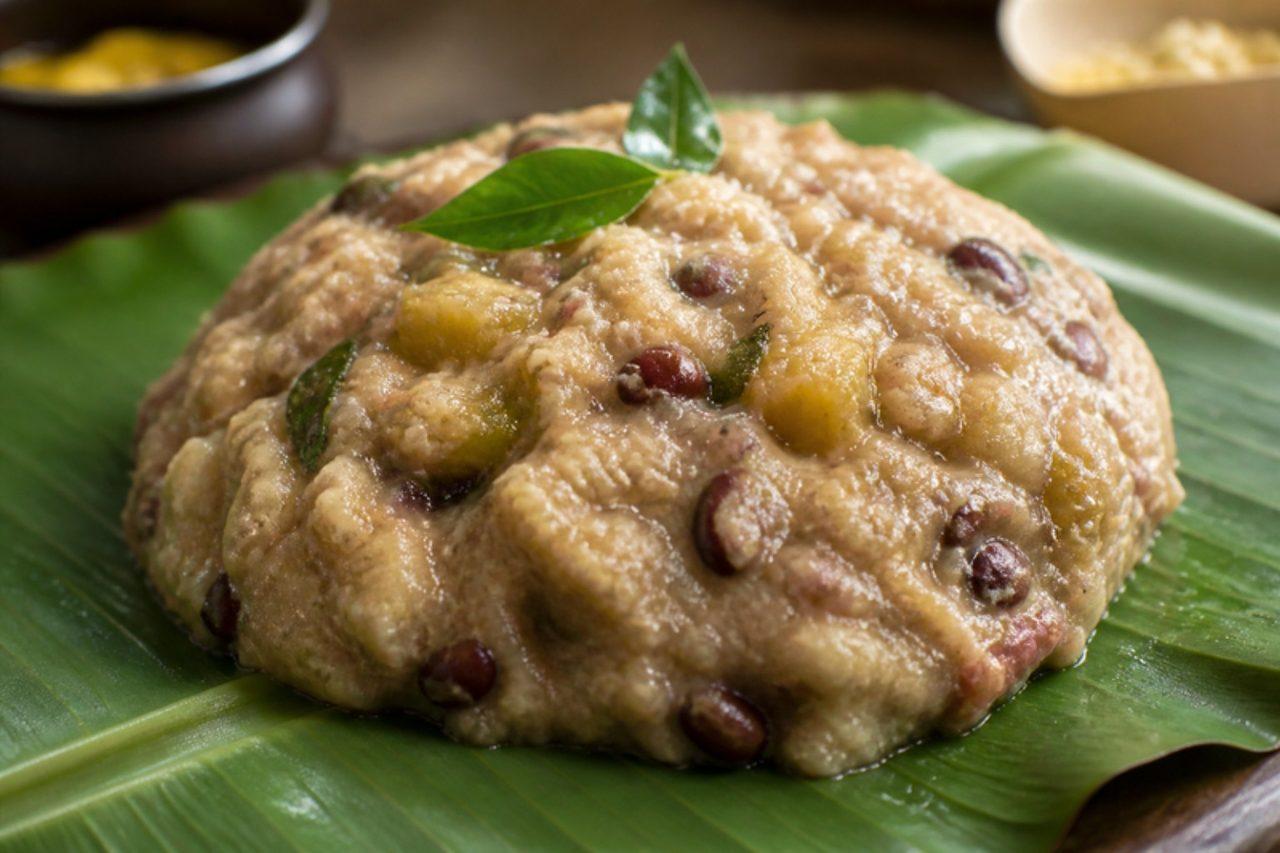
Thiruvathira puzhukkuTubers and plantain with coconut

On Thiruvathira, in the Malayalam month of Dhanu, Kerala women keep a vow for Shiva and Parvati: they stay off rice, dance the thiruvathirakali in a circle at night and eat a plate built from the earth's tubers instead. Puzhukku is the heart of that plate, a thick, gently spiced mash of elephant-foot yam, colocasia, sweet potato, raw plantain and red cowpeas folded through a coarse paste of coconut, green chilli and cumin, then finished with raw coconut oil and curry leaves. Each tuber goes in at its own time so the pieces end up tender but still recognisable. Common mistake: stirring hard once everything is soft, which turns it into glue; it is done when a piece of yam crushes easily against the side of the pot and the water has almost gone, then you only fold. Eat it warm with koova payasam or a glass of buttermilk. Chef's tip: undercooked yam and colocasia can make the throat itch, so taste a piece before adding the coconut and keep cooking if it is still firm in the centre.

by KrazyBadal 0 views

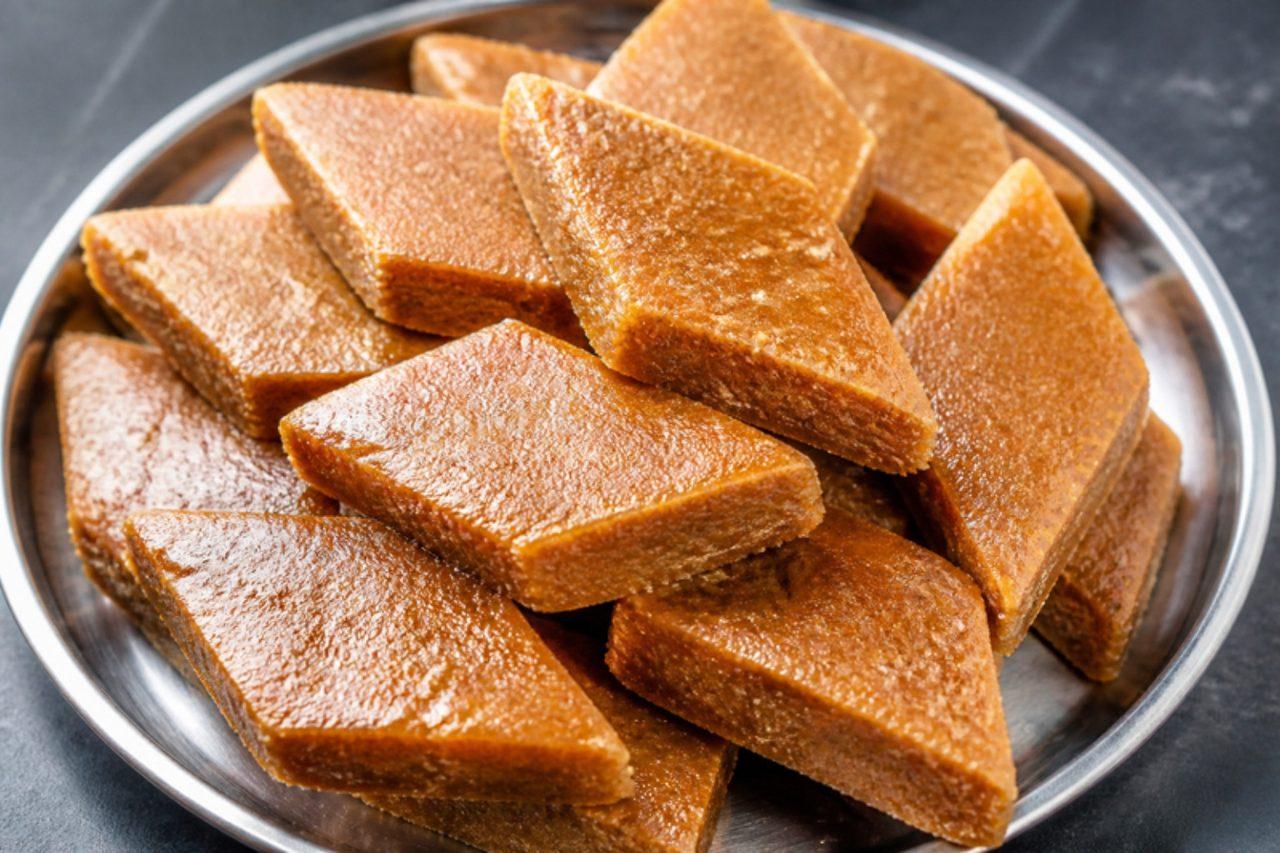
HaalbaiRice, coconut and jaggery fudge

Haalbai is a home sweet of Malnad and coastal Karnataka, from Shivamogga to Udupi, made for festivals like Ganesha Chaturthi and Deepavali or simply when there's fresh coconut in the house. Soaked rice is ground with coconut, then cooked with jaggery and cardamom until it thickens into a glossy mass that sets soft and slightly chewy, almost like a firm halwa. A common mistake is stopping too early; if it isn't cooked until it leaves the sides and a drop rolls into a ball, it never sets for cutting. Chef's tip: stir with a long wooden spoon and wear an oven glove, because the thick mix bubbles and spits towards the end.

by KrazyBadal 0 views

Showing 72 of 880 recipes

Show more recipes

Page 6 of 37

More collections