Skip to content
WhatToEat.Today

Vegetarian Indian dinners

Dal, sabzi, curries and rice dishes for a meat-free Indian dinner. (880 recipes)

SitabhogChhena strands in syrup

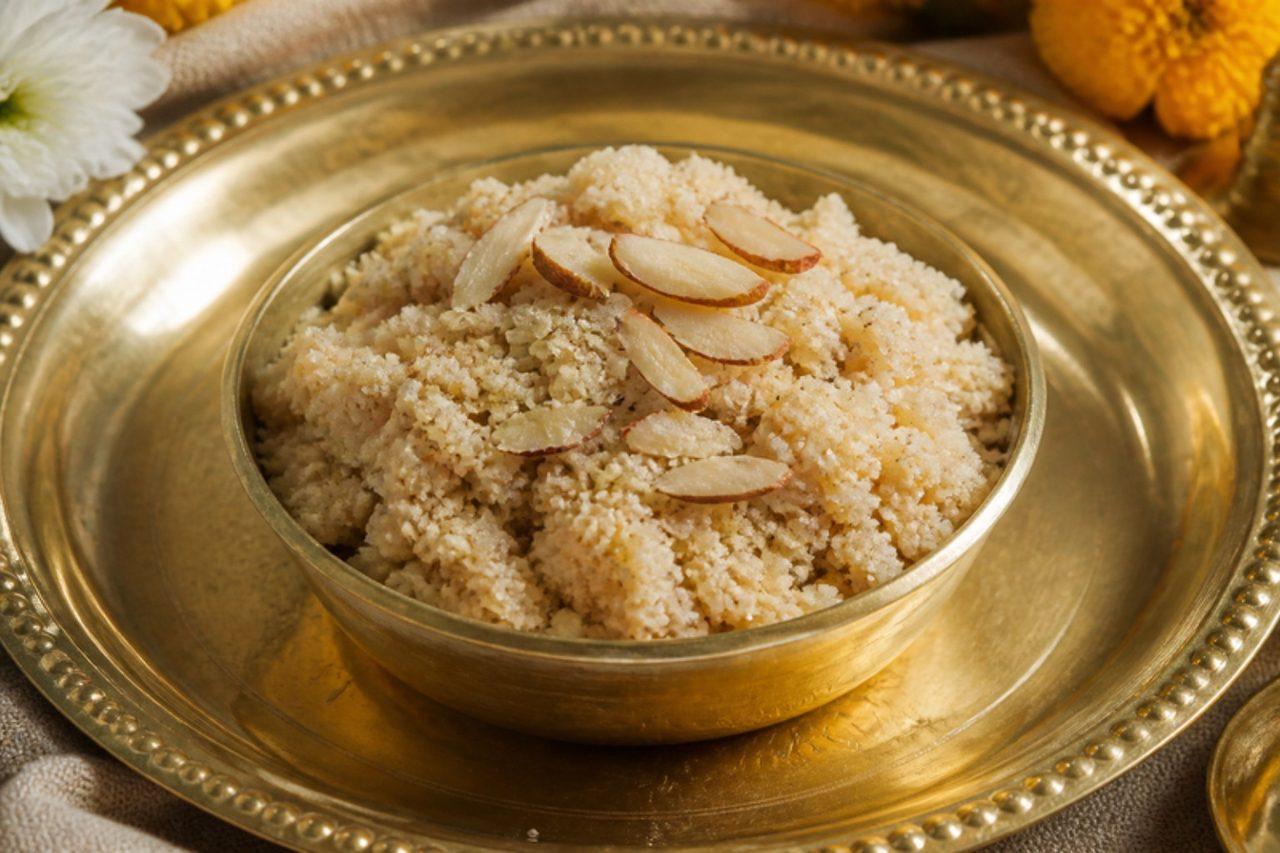
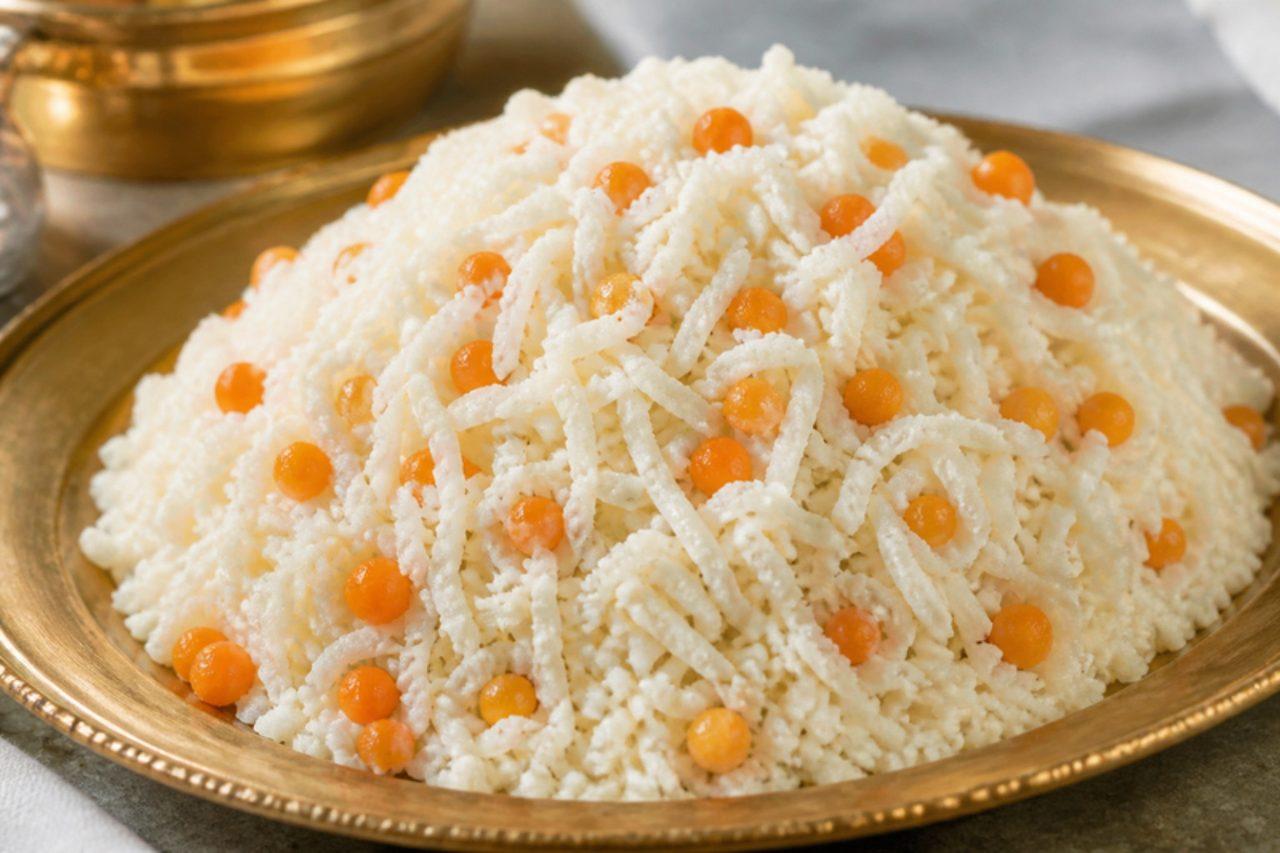
Sitabhog belongs to Bardhaman in West Bengal, and families there and across Bengal like to serve it for Bhai Phonta and at Bijoya: it looks like a bowl of fine white rice, but every grain is a strand of chhena and rice flour pressed into ghee, fried pale and soaked in syrup, then tossed with tiny saffron-tinted nikuti dumplings. It is light, soft and fragrant, best eaten with a spoon at room temperature. Common mistake: frying too hot, which colours the strands; sitabhog should stay ivory, so keep the ghee gentle and lift the strands out as soon as they are firm. The syrup should be at the one-thread stage, so a drop pulled between thumb and finger forms a single short thread. Chef's tip: gobindobhog or any short-grain rice ground to a fine flour gives the most authentic, fragrant strands; sieve it twice.

by KrazyBadal 0 views

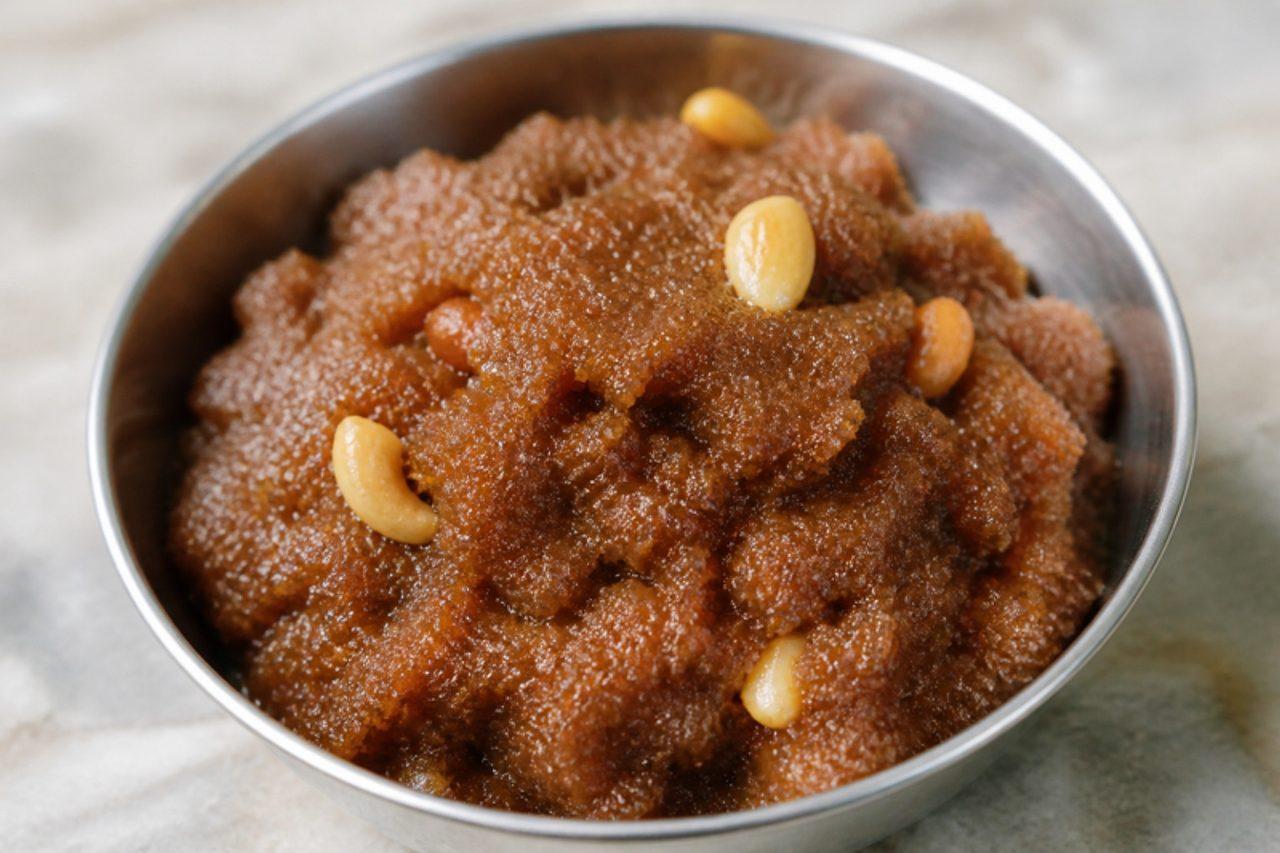
Thiruvathirai kaliRice and moong dal with jaggery

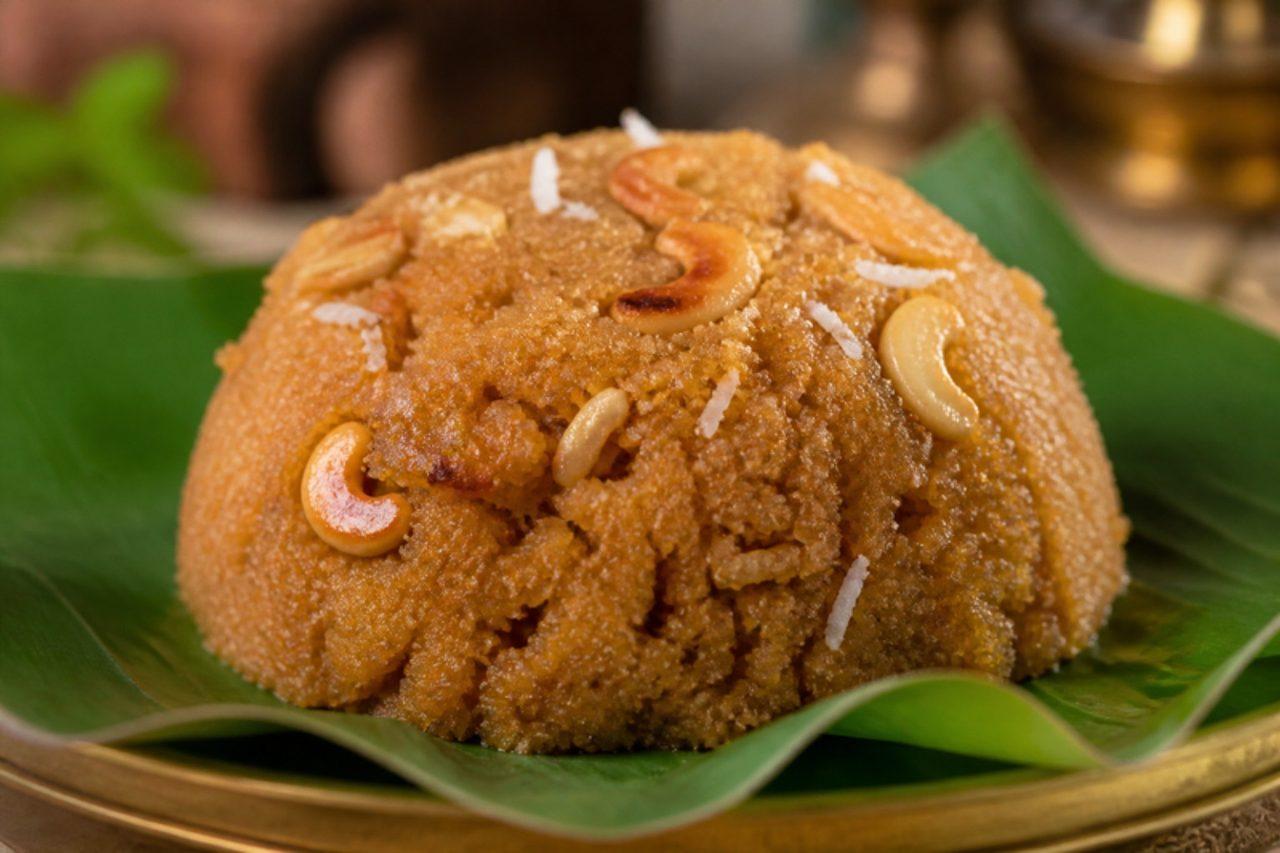
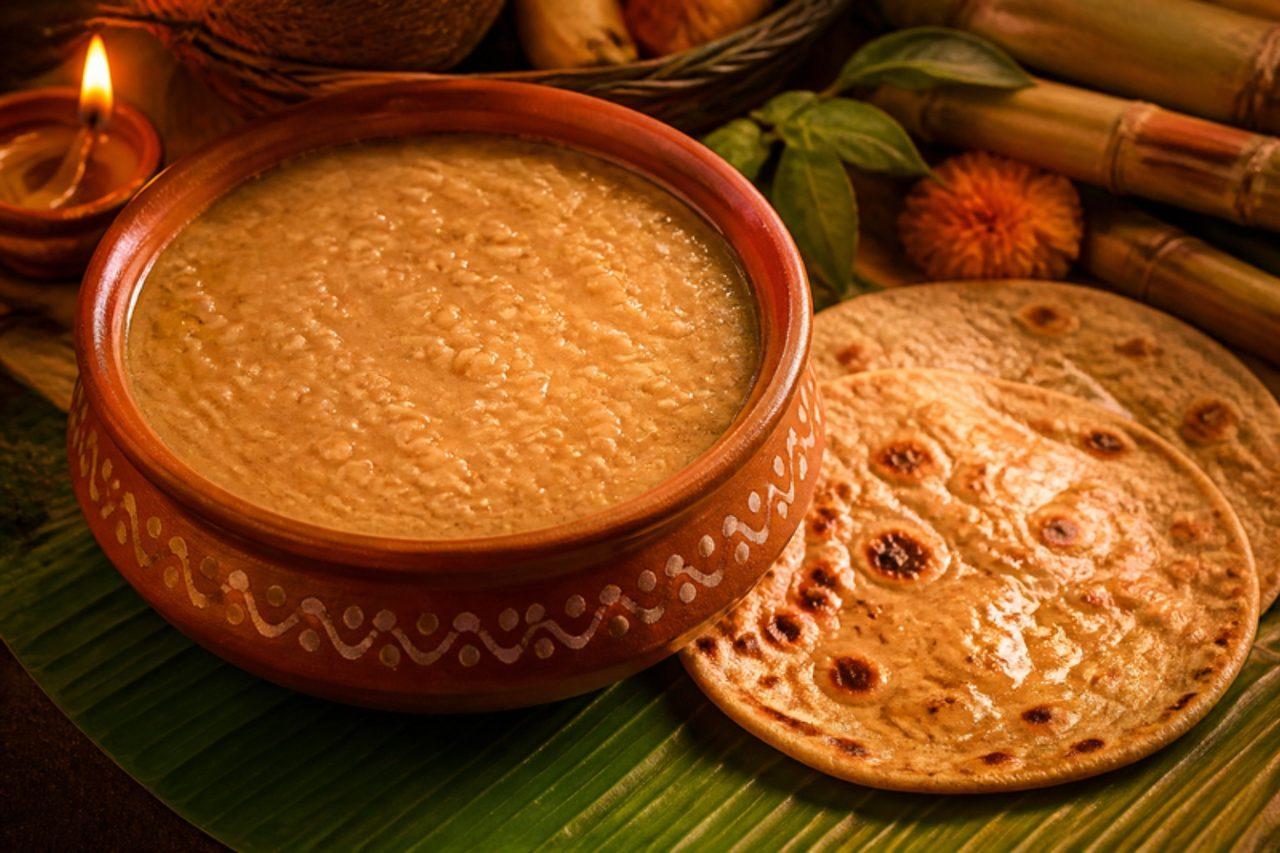
On Arudra Darshan in the Tamil month of Margazhi, temples across Tamil Nadu, Chidambaram above all, celebrate Shiva as Nataraja, and homes offer him kali with ezhu kari kootu at dawn. The rice and a little moong dal are dry-roasted until fragrant, ground to a coarse rava and then cooked in jaggery water until soft and set, a loose, grainy sweet rather than a smooth halwa. Grated coconut, cardamom and plenty of ghee finish it. Common mistake: grinding the roasted rice to a fine flour, which cooks into a sticky paste; you want grains like fine semolina, and the kali is done when it leaves the sides of the pan and the ghee glistens on top. Chef's tip: roast the rice only until it smells like popcorn and turns faintly golden; any darker and the kali tastes bitter.

by KrazyBadal 0 views

Sing ni chutneyPeanut yogurt chutney

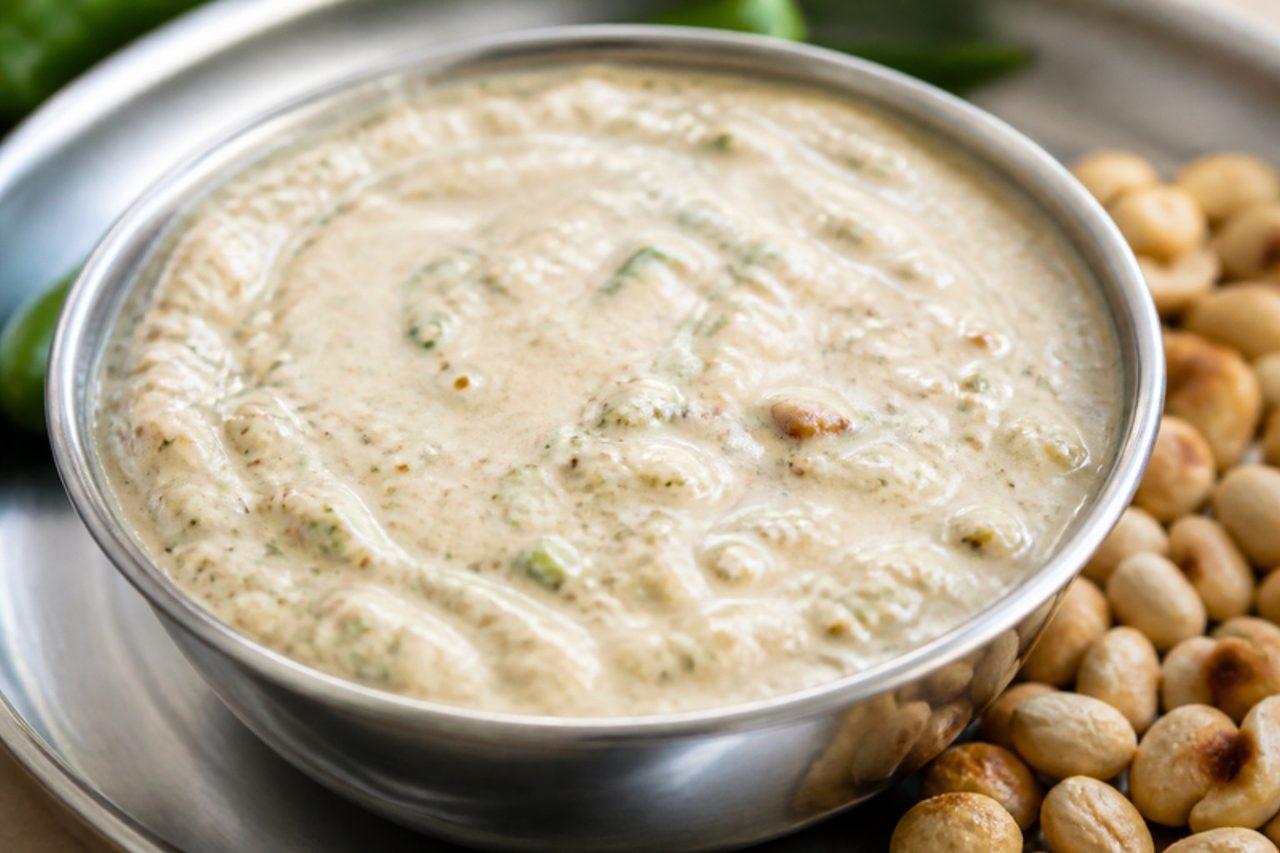
On ekadashi, Shivratri and Navratri fasts, Gujarati homes serve farari pattice, sabudana vada and sweet potato chips with this thick, creamy peanut chutney, and it is just as good the rest of the year with thepla. Roasted peanuts are ground with green chilli, cumin and lemon, then loosened with yogurt into a nutty, tangy dip with a slow chilli warmth. For fasting it is seasoned with rock salt, and it has no onion, garlic or grain. The common mistake is grinding the peanuts with the yogurt from the start; they never break down properly. Chef's tip: grind the peanuts dry first, then add the yogurt and pulse just to mix.

by KrazyBadal 0 views

Ezhu kari kootuSeven vegetable and dal curry

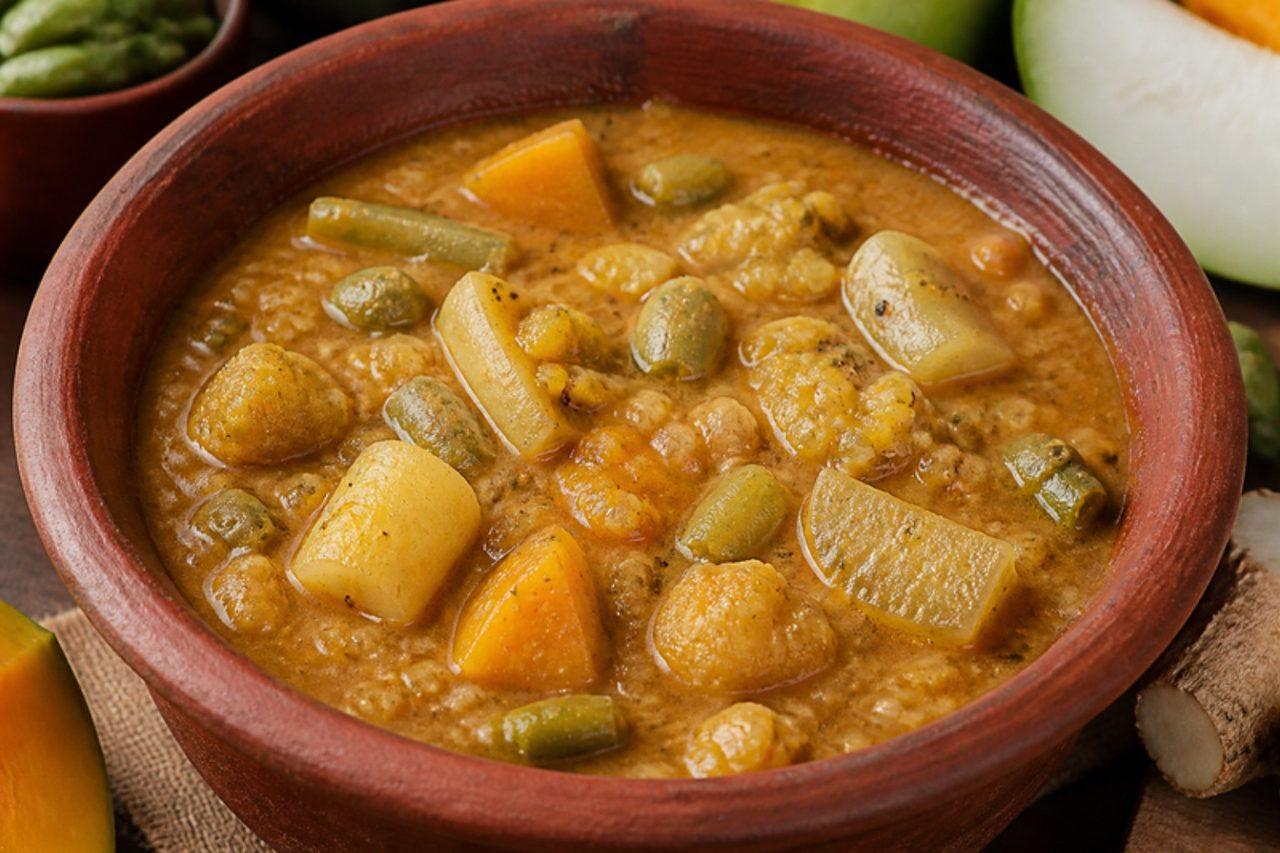
The partner to kali on Arudra Darshan morning is a kootu of seven (ezhu) vegetables, an old Tamil Brahmin custom that uses whatever native winter produce is at the market: pumpkin, ash gourd, raw plantain, sweet potato, broad beans, colocasia and chow-chow are a typical set, and no onion, garlic, tomato or 'English' vegetables go in. They simmer in tamarind water with soft toor dal and a paste of roasted coriander, chana dal, red chillies and coconut, giving a thick, tangy, gently hot stew that cuts the sweetness of the kali. Common mistake: adding tamarind before the vegetables are cooked, which keeps them hard; cook them first in plain water until a knife goes in easily, then add the tamarind and boil until its raw smell has gone. Chef's tip: roast the paste spices until the chana dal turns golden-red, which gives the kootu its depth.

by KrazyBadal 0 views

Nuvvula saddiRice with roasted sesame powder

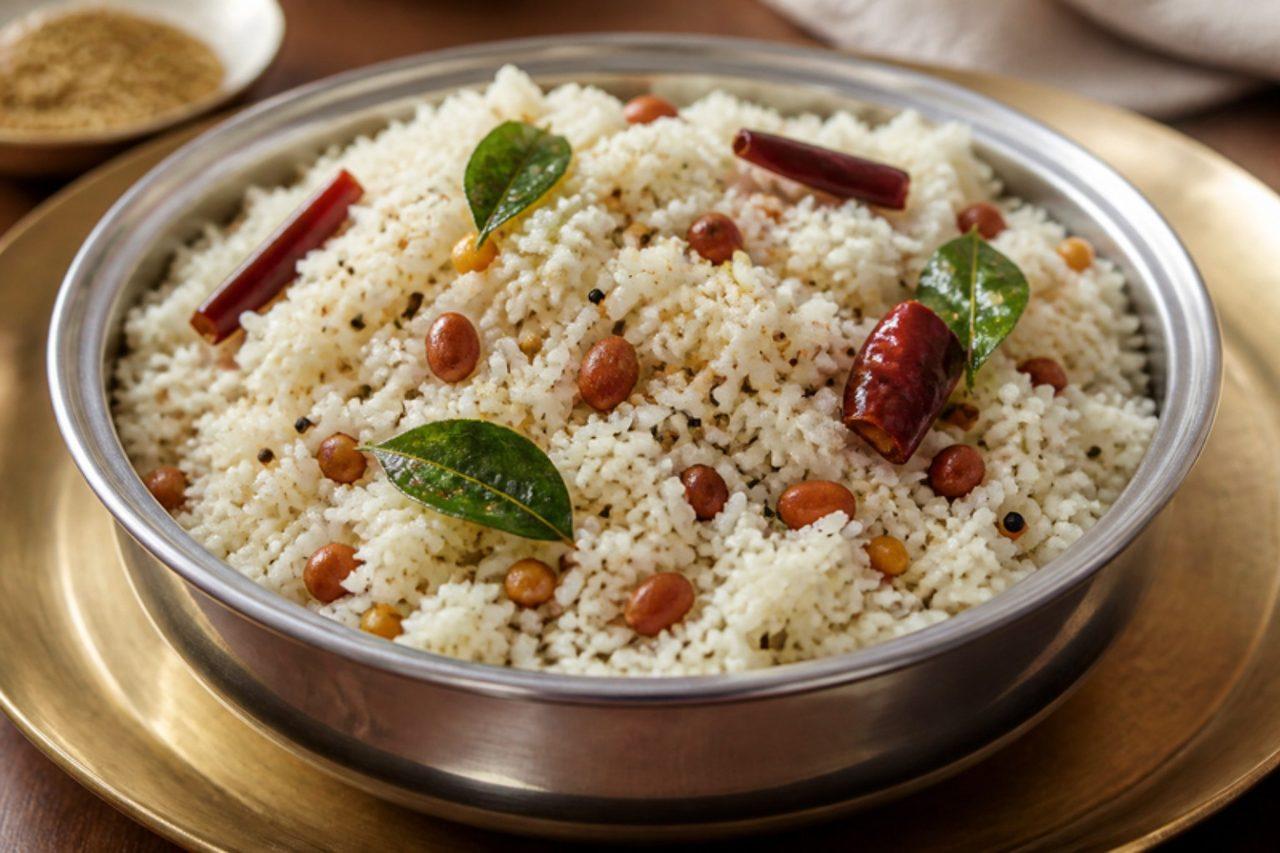
Each family takes several saddulu, flavoured rice dishes, to the lake on Saddula Bathukamma, the last evening of Telangana's flower festival, and swaps them with neighbours after the songs; sesame rice, lemon rice, peanut rice and coconut rice are the usual set. Nuvvula saddi is the nuttiest of them: freshly roasted sesame ground with dried red chilli, tossed through cooked rice with a tempering of mustard seeds, dals, peanuts and curry leaves. It is eaten at room temperature, so the grains must stay separate. Common mistake: grinding the sesame for too long, which turns it to oily paste; pulse only until it looks like coarse sand. The sesame is roasted enough when it crackles, turns light gold and one seed crushes easily between your fingers. Chef's tip: cook the rice a little firm and spread it on a plate to cool before mixing, so it does not break up.

by KrazyBadal 0 views

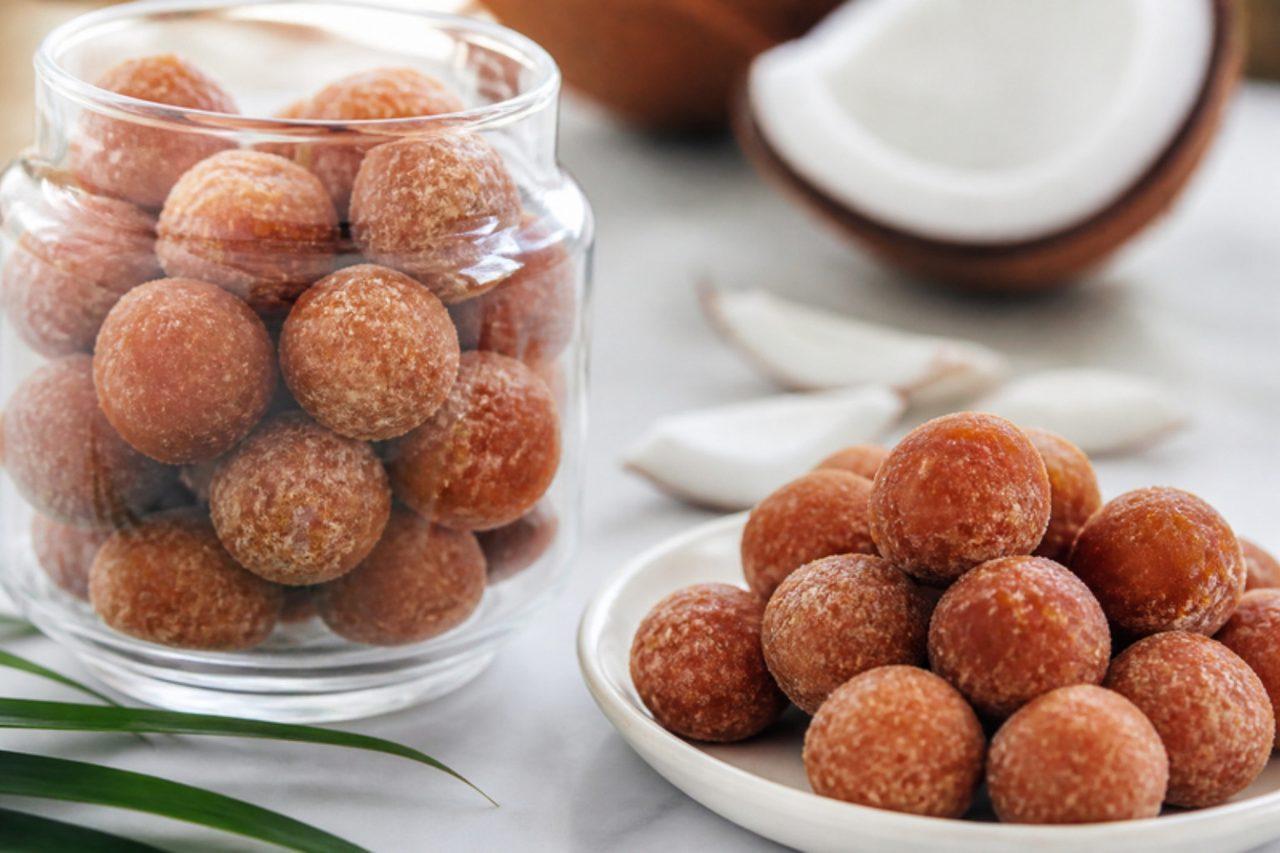
KamarkattuCoconut jaggery candy balls

Kamarkattu is the toffee of Tamil village shops, dark, chewy, caramel-scented balls of coconut and jaggery that cost a few paise in the days when children bought sweets one at a time. It's quick to make at home and keeps for a couple of weeks. The mistake is taking the jaggery too far: if the syrup hardens past the soft-ball stage, kamarkattu turns rock hard and pulls fillings. Chef's tip: test a drop in cold water; when it forms a soft ball you can squash, switch off and shape immediately.

by KrazyBadal 0 views

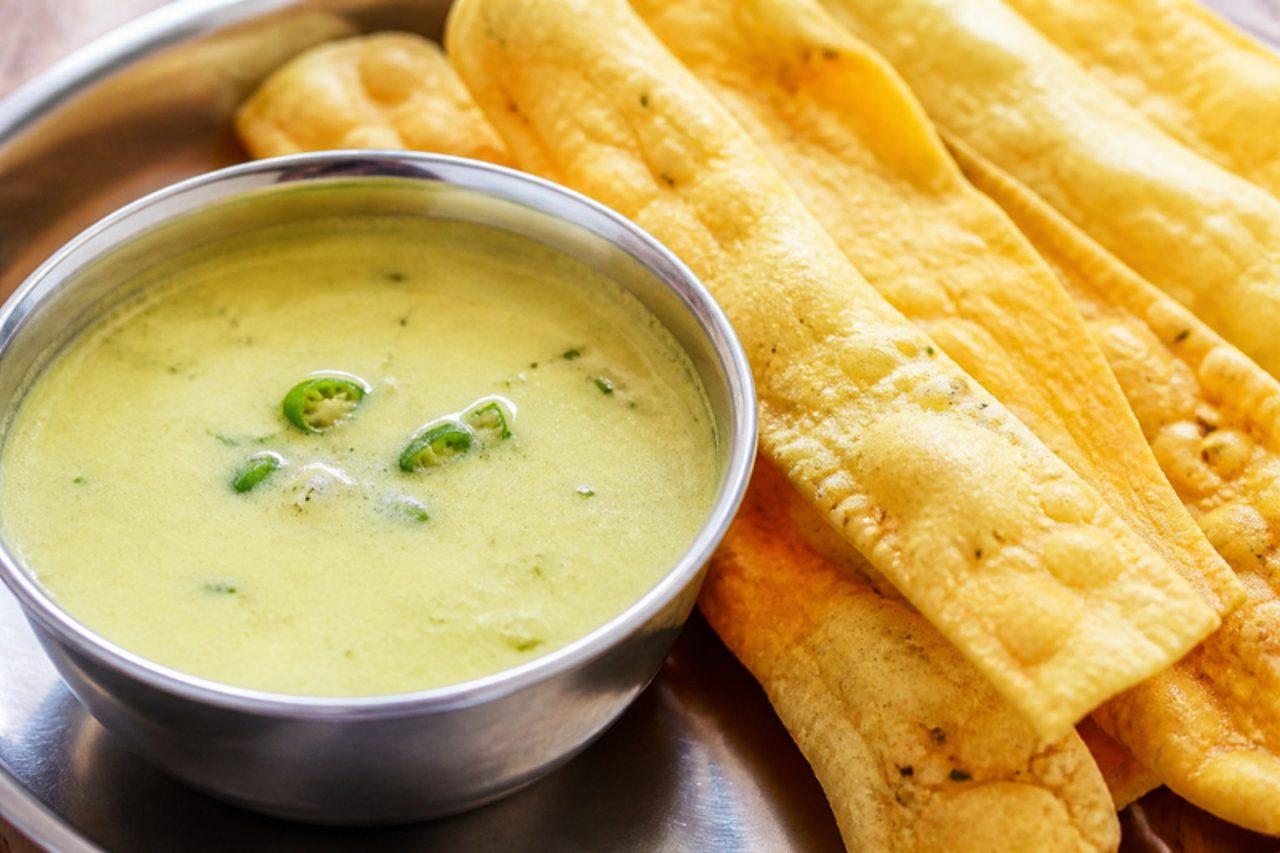
Kadhi chutneyGram flour buttermilk dip

Order fafda-jalebi on a Sunday morning in Ahmedabad or Rajkot and alongside it comes a small bowl of pale yellow kadhi chutney, a thin, sweet-sour dip of gram flour and buttermilk simmered with green chilli and ginger. It is runnier than a kadhi you would eat with rice, so the crisp farsan can be dunked and dragged through it. The flavour is gentle, a little tangy and a little sweet, which balances salty, peppery snacks. The common mistake is letting it boil hard right after adding the buttermilk, which makes it grainy and split. Chef's tip: it thickens as it cools; loosen it with a splash of water to a pouring, single-cream consistency before serving.

by KrazyBadal 0 views

KundaCaramelised milk sweet

Kunda is the pride of Belagavi, where sweet shops near the old market have made it for over a century, and boxes go to weddings and Diwali visits across north Karnataka and Goa. Milk is reduced with a little curd so it turns grainy, then cooked with sugar that has been partly caramelised, ending as a soft, crumbly, toffee-brown sweet that tastes of burnt milk and cardamom. A common mistake is caramelising all the sugar; only a third should be darkened, or the kunda turns bitter instead of rich. Chef's tip: use full-fat milk and a wide heavy pan, and scrape the browned bits from the sides back in; they carry most of the flavour.

by KrazyBadal 0 views

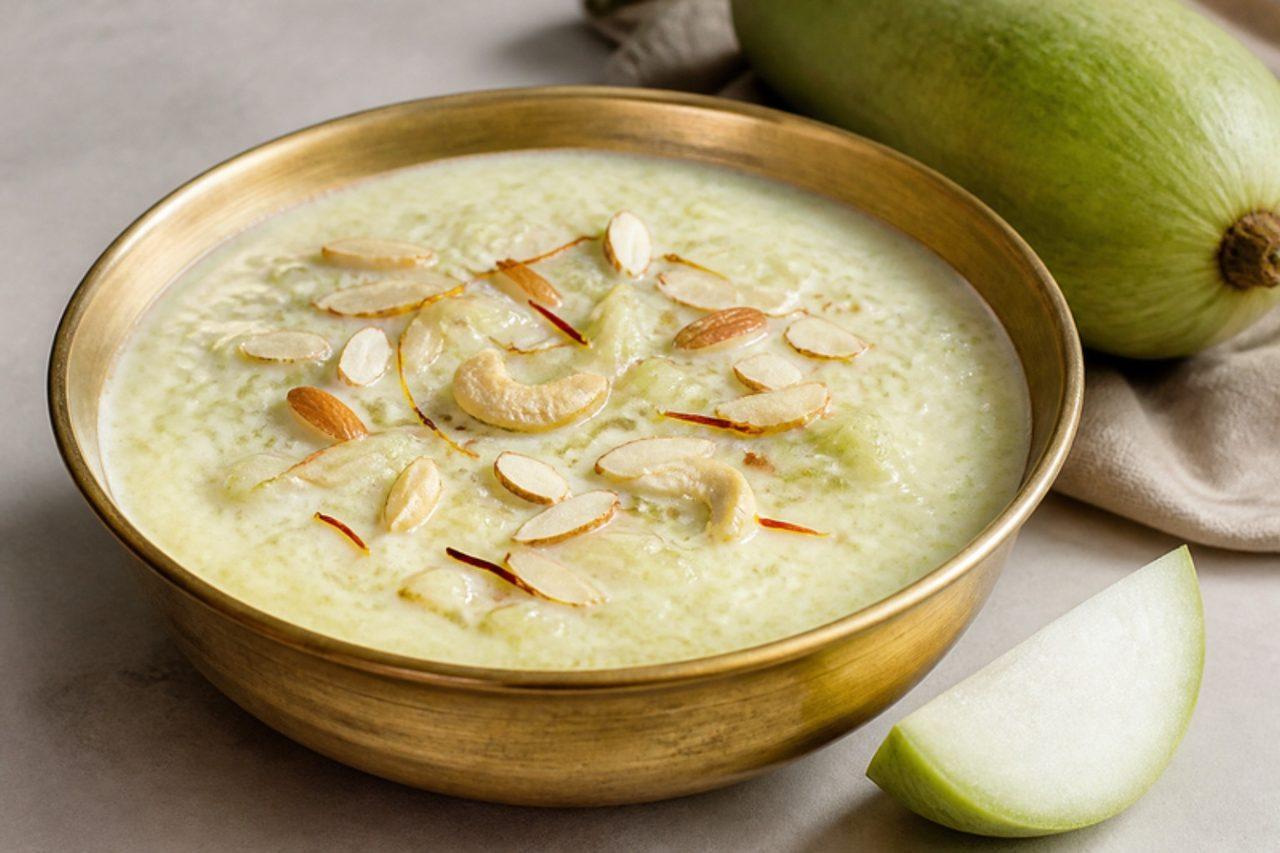
Lauki ki kheerBottle gourd milk pudding

Lauki ki kheer is the light pudding many North Indian families make on Mahashivratri, Navratri and Ekadashi, when rice is off the menu: grated bottle gourd stands in for the grain, softens in ghee and then simmers in milk until it turns pale, creamy and almost translucent. It tastes delicate and milky, with cardamom and a crunch of nuts, and is eaten warm after the evening puja or chilled the next day. Taste a sliver of the raw gourd first; a bitter one can make you ill and must be thrown away. Common mistake: adding the sugar too early, which stops the gourd softening and can make the milk split; add it only once the milk has reduced by about a third and the lauki is tender. Chef's tip: squeeze the grated lauki lightly before cooking, but keep the juice and add it to the milk, so none of the flavour is lost.
by KrazyBadal 0 views

Ranga alur pitheSweet potato coconut parcels

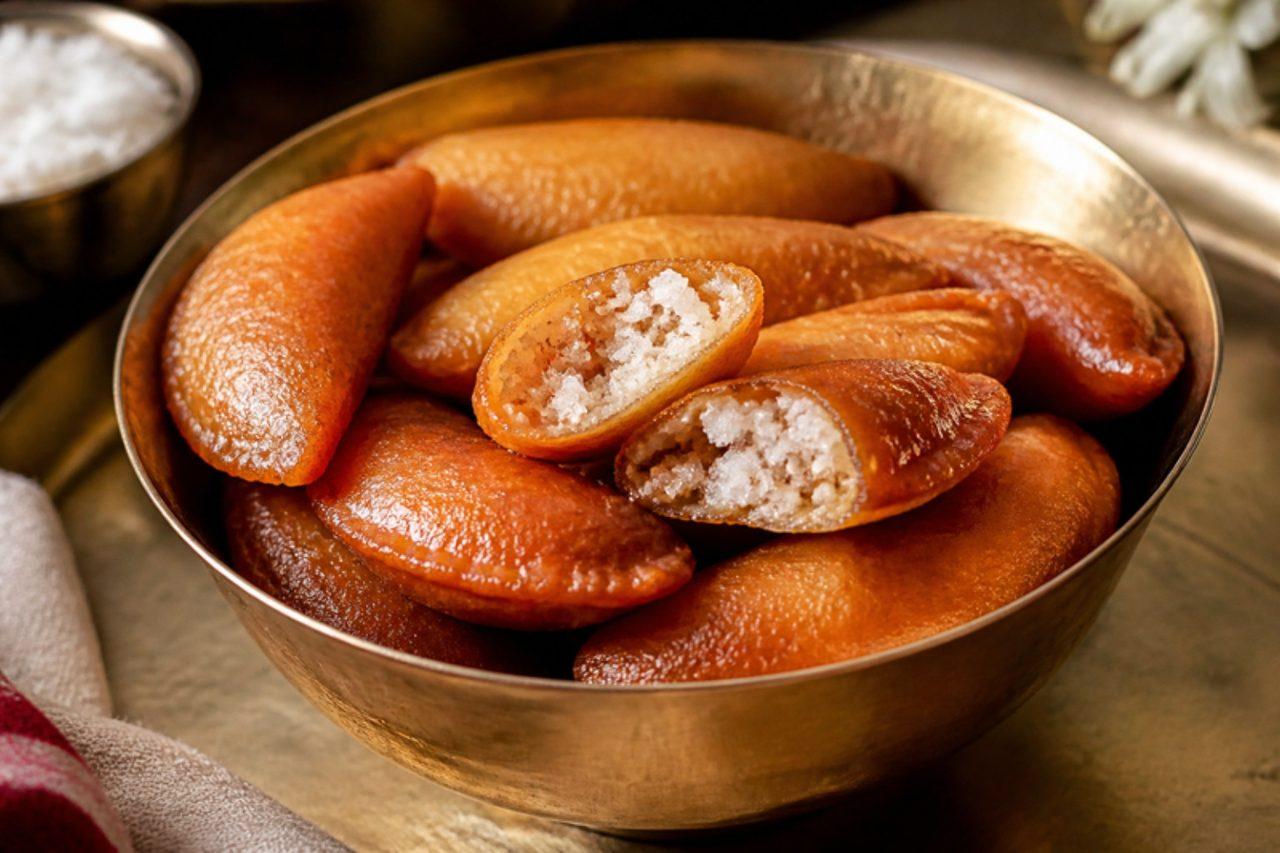
Poush Sankranti in Bengal is the day for pithe, and ranga alur pithe uses the sweet potatoes that come in with the winter harvest. Boiled sweet potato is kneaded with a little flour into a soft dough, wrapped round a coconut and jaggery filling, fried and then dipped in syrup, so you get a crisp shell, a melting orange layer and a sweet, nutty centre. They are eaten warm on the festival evening or the next day once they have soaked up more syrup. Common mistake: watery sweet potato; boil it whole in its skin and let it steam dry, or the dough gets sticky and the pithe burst in the oil. They are fried enough when they are deep golden and float. Chef's tip: the syrup should be warm and at one-string stage, a thread forming between finger and thumb; too thick and it won't soak in.

by KrazyBadal 0 views

Tal ni chikkiSesame jaggery brittle

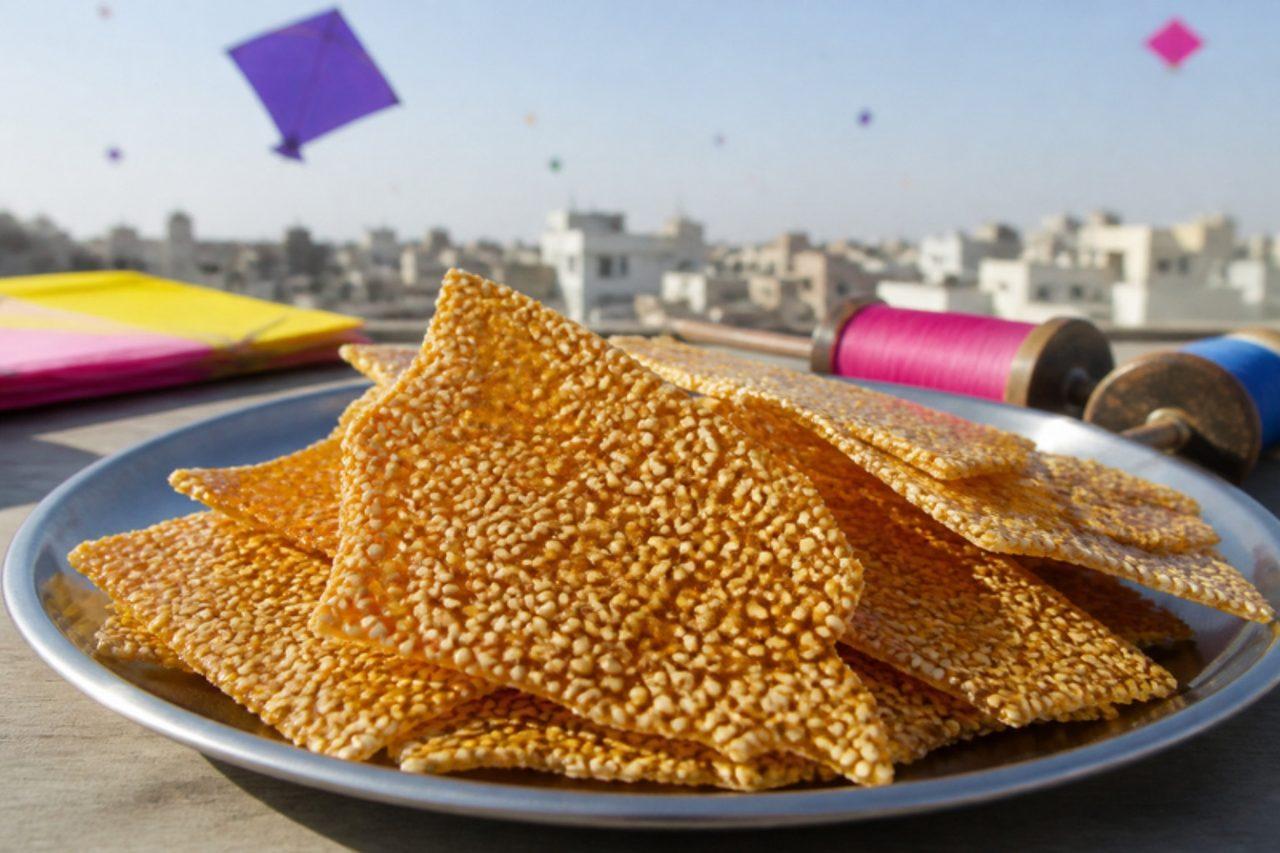
On 14 January every Gujarati rooftop fills with kite-flyers, and somewhere between the manja reels there is always a tin of tal ni chikki, broken into shards. The thinnest kind, tal sankli, is rolled out so fine you can almost see through it; it shatters with a snap and tastes of toasted sesame and dark caramel. It is a two-ingredient sweet where everything depends on the jaggery. Common mistake: pulling the jaggery off the heat too soon; it must reach the hard-crack stage, when a drop in cold water sets instantly and snaps cleanly, or the chikki stays chewy and sticks to the teeth. Chef's tip: work fast and roll on the greased back of a steel thali; if it hardens before you finish, warm it in the pan for a few seconds.

by KrazyBadal 0 views

HaalbaiRice, coconut and jaggery fudge

Haalbai is a home sweet of Malnad and coastal Karnataka, from Shivamogga to Udupi, made for festivals like Ganesha Chaturthi and Deepavali or simply when there's fresh coconut in the house. Soaked rice is ground with coconut, then cooked with jaggery and cardamom until it thickens into a glossy mass that sets soft and slightly chewy, almost like a firm halwa. A common mistake is stopping too early; if it isn't cooked until it leaves the sides and a drop rolls into a ball, it never sets for cutting. Chef's tip: stir with a long wooden spoon and wear an oven glove, because the thick mix bubbles and spits towards the end.

by KrazyBadal 0 views

Tekeli pithaSteamed coconut jaggery rice cake

In Assamese homes the nights before Magh Bihu are spent making pitha, and tekeli pitha is the one named after the pot it is cooked on: a cloth is tied over the mouth of a tekeli (a small clay water pot), and damp rice flour, coconut and jaggery are piled on top and steamed by the water boiling underneath. It comes off as a soft, crumbly cake, sweet in the middle and plain at the edges, eaten warm with tea on Bihu morning or packed into the bhogali spread. Any narrow-necked pot or saucepan works at home. Common mistake: using dry shop rice flour straight from the packet; it needs to be just damp enough to clump when pressed, or the cake falls apart, and it is done when the top looks matt and a skewer comes out clean, about 10–12 minutes. Chef's tip: soak and grind your own rice flour if you can; flour from soaked rice, dried for an hour, gives the softest pitha.

by KrazyBadal 0 views

Kul er chutneyJujube chutney

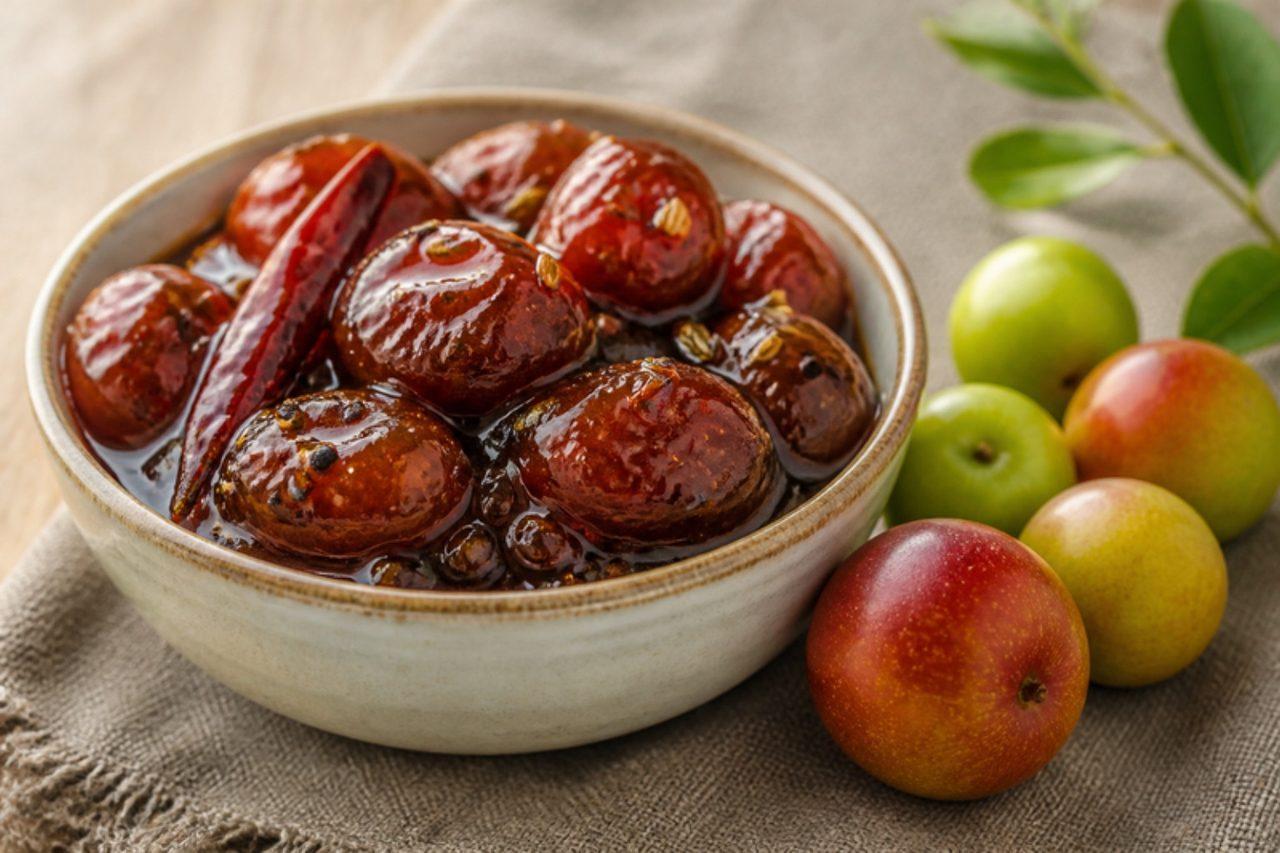
Many Bengali families do not eat kul (Indian jujube, or ber) all winter until it has been offered to Goddess Saraswati, so on Saraswati Puja the first taste usually comes as this glossy chutney at the end of the khichuri bhog. Fresh or dried kul is simmered with jaggery, a tempering of panch phoron and dried red chilli in mustard oil, and finished with a touch of roasted spice powder, giving a sticky, sweet, sour and mildly hot relish. Dried kul gives a darker, chewier chutney; fresh kul is brighter and tangier. Common mistake: cooking it too thick on the stove; the chutney sets firmer as it cools, so stop when the syrup coats a spoon and runs off slowly. Chef's tip: prick each fresh kul with a fork before cooking so the syrup gets inside instead of the fruit bursting.

by KrazyBadal 0 views

Gond ke ladduEdible gum and flour laddus

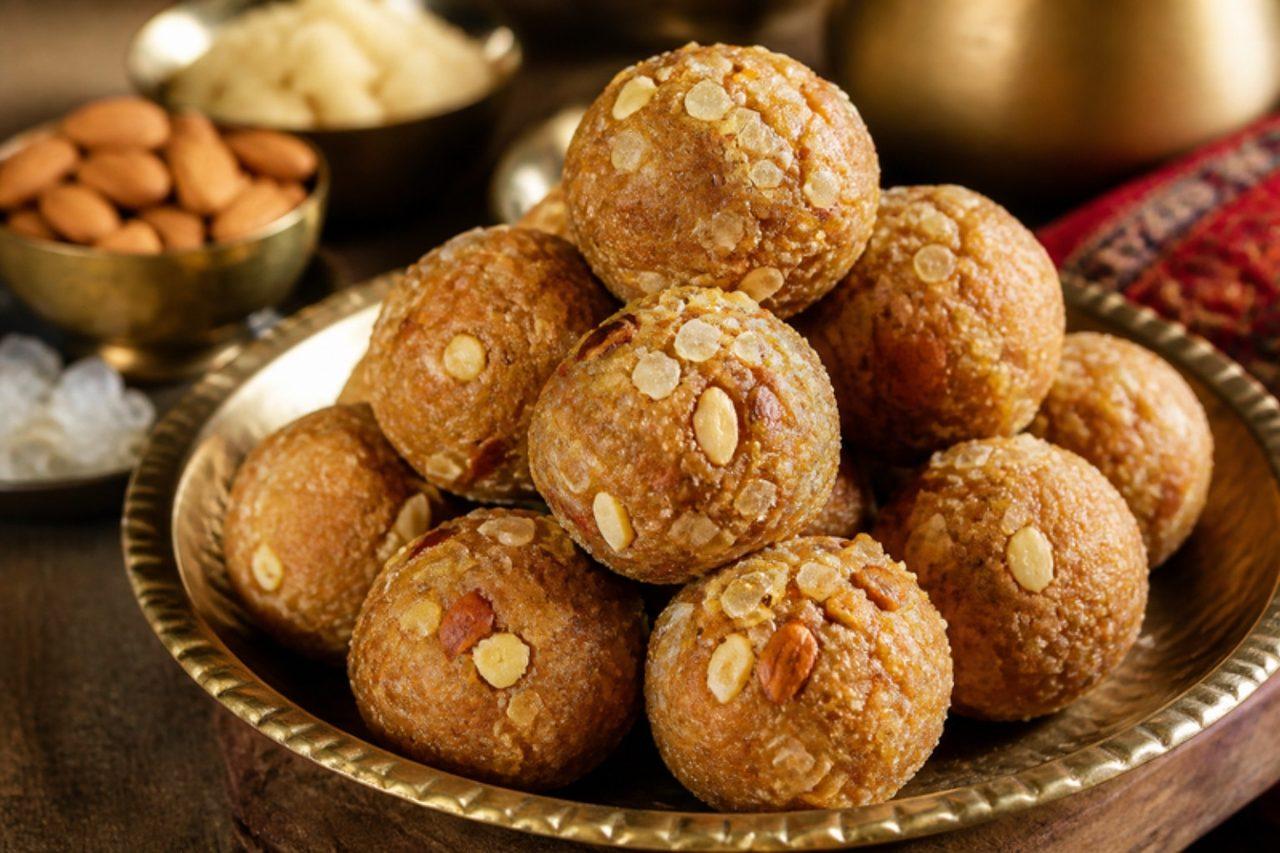
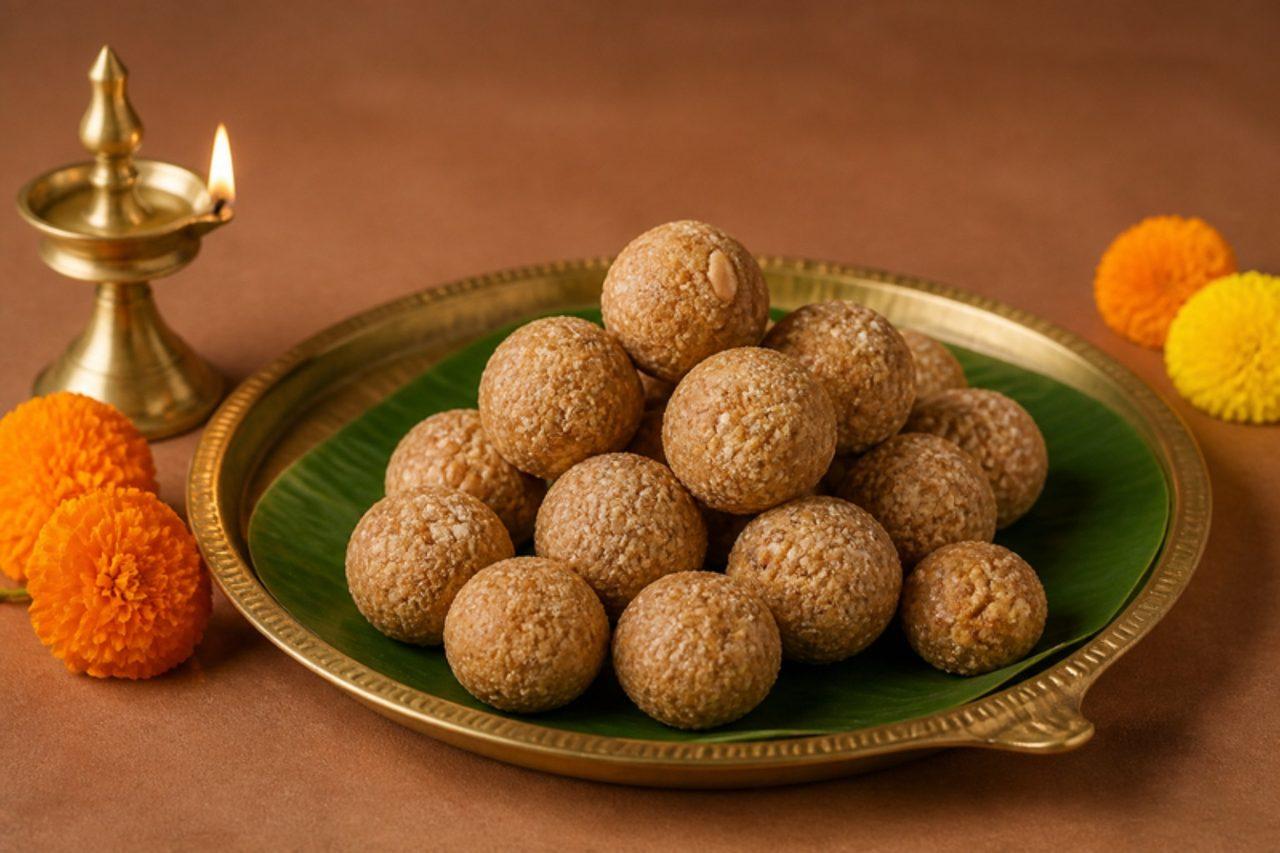
When the January cold sets in around Lohri, Punjabi and Marwari kitchens make a tin of gond ke laddu, one of which is eaten each morning with hot milk to keep warm through winter. Edible gum (gond, from the acacia tree) is fried in ghee until it puffs into light crunchy nuggets, then crushed and mixed with ghee-roasted wheat flour, jaggery, dry ginger and plenty of nuts, so the laddus are rich, crumbly and crackle as you bite. Common mistake: frying the gum in oil that is too hot; it browns outside and stays glassy and chewy in the middle, so fry it on a medium heat until each piece swells to twice its size and turns opaque white. The flour is done when it smells nutty, turns golden and the ghee loosens at the edges. Chef's tip: roll the laddus while the mixture is still warm; once it cools it will not bind.

by KrazyBadal 0 views

Vaal nu shaakDried field beans with ajwain

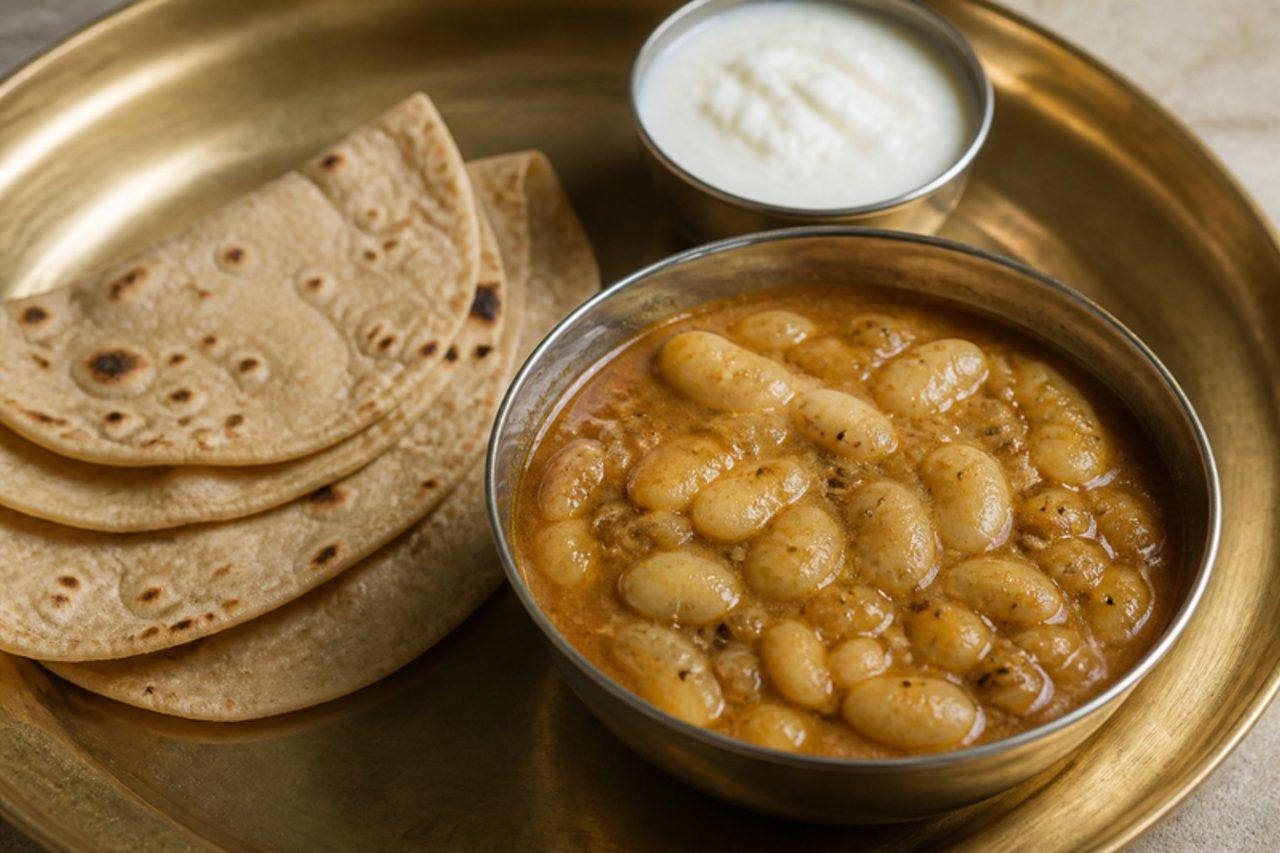
During the eight days of Paryushan many Gujarati Jain families stop eating green, leafy and fresh vegetables, so the kitchen turns to dried pulses, and vaal (dried field beans) cooked soft with ajwain and hing is a regular on the thali. This recipe is fully Jain: no onion, no garlic, no fresh ginger and no root vegetables, with dry ginger powder for warmth and amchur instead of tomato for sourness. The beans are creamy and a little bitter-sweet, balanced by jaggery, and are eaten with rotli, rice and kadhi, finished before sunset in strict homes. Common mistake: using beans that have not soaked long enough; they stay hard and split unevenly. Cook them until one squashes easily between your thumb and finger, but not so long that they burst. Chef's tip: ajwain and hing make vaal much easier to digest, so do not skip the tempering; for a gluten-free dish use a gluten-free hing.

by KrazyBadal 0 views

KulerBajra ghee jaggery balls

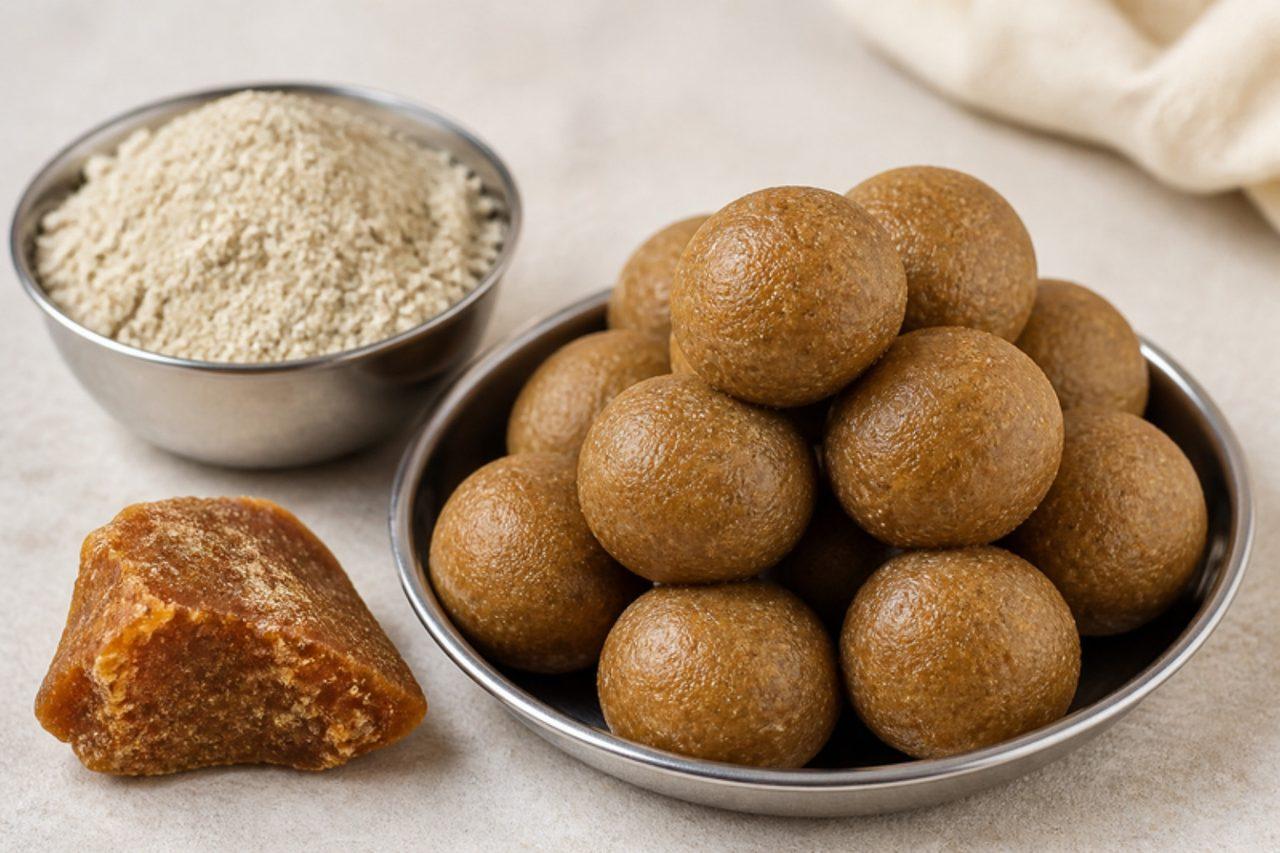
On Nag Pancham, Gujarati women draw a snake in kumkum on the wall or visit a nag temple and offer kuler with milk and cotton: a raw sweet of fine bajra flour rubbed with ghee and jaggery, rolled into soft balls. Since the day is a cold-food day in many homes, nothing is cooked; the bajra simply soaks up the ghee. It is soft, earthy, sweet and slightly sandy. Common mistake: using coarse or stale bajra flour, which tastes bitter and gritty; use fresh, finely ground flour, and the mix is ready when a handful holds together when squeezed. If you prefer, you can lightly roast the flour first, though that is not the traditional way. Chef's tip: grate the jaggery very finely, or melt it with the ghee and cool slightly, so it blends evenly.

by KrazyBadal 0 views

SunthavadaDry ginger, coconut and sugar mix

At exactly noon on Ram Navami, when Maharashtrian temples and homes rock a decorated cradle to mark Rama's birth, each person is handed a spoonful of sunthavada: dry ginger powder, toasted dry coconut, poppy seeds and sugar pounded together into a fragrant, warming powder. The same mix is given at Janmashtami midnight. It is sweet, nutty and gently fiery from the ginger. Common mistake: burning the coconut; it should be toasted on a low heat only until it turns pale gold and smells sweet, then cooled before grinding so it does not turn oily. Chef's tip: grind in short pulses; long grinding releases the coconut oil and the powder clumps.

by KrazyBadal 0 views

Gota sheddhoBoiled whole moong and winter vegetables

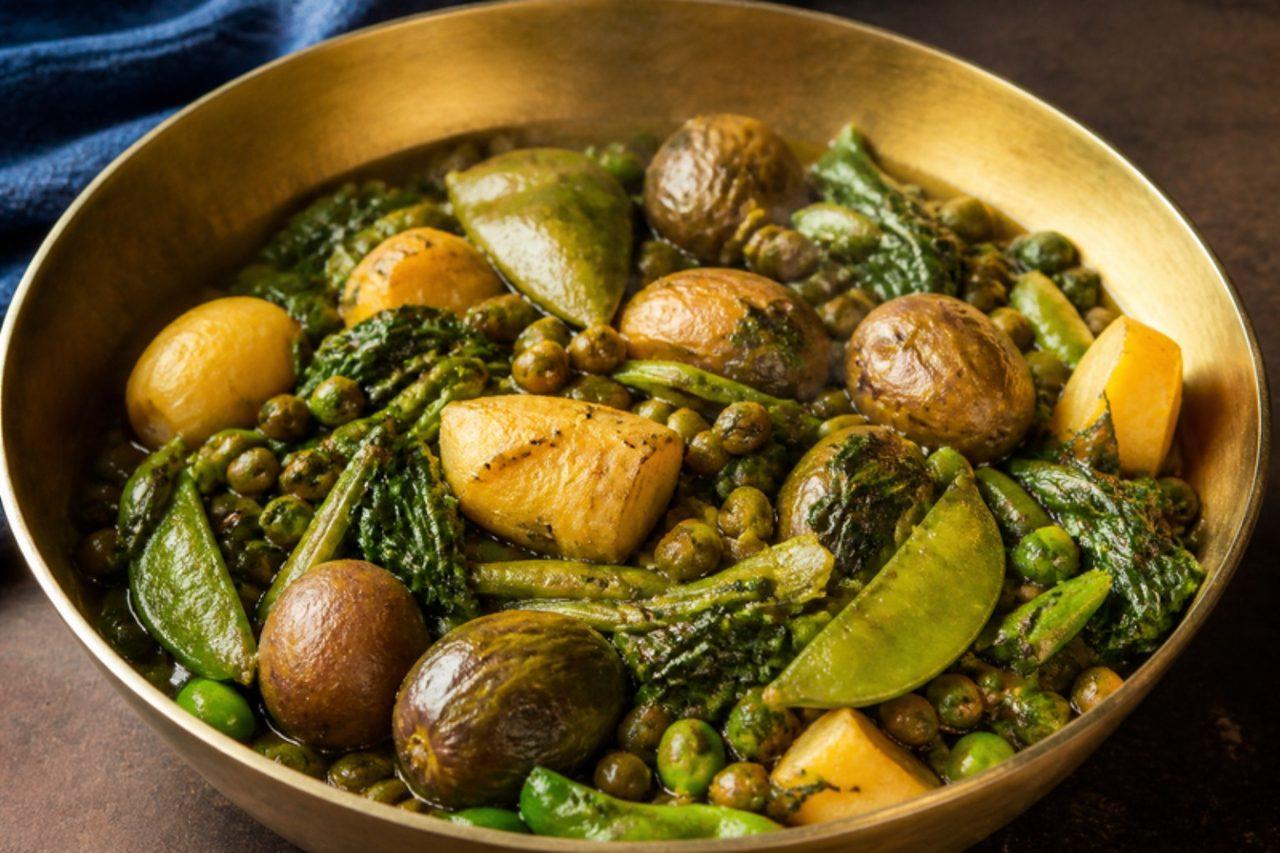
Gota sheddho is cooked by West Bengali families on the night of Saraswati Puja and eaten cold the next morning, on Sheetal Shashthi, a day when the stove is left to rest. Everything goes into the pot whole, which is what gota means: roasted green moong, small potatoes, sweet potatoes, flat beans, peas, baby aubergines and a handful of spinach, boiled with green chillies and salt and finished with raw mustard oil. It is simple, mild and surprisingly good, with the pungent oil lifting the soft vegetables and creamy moong. Common mistake: cutting the vegetables; they must stay whole so they hold their shape overnight. Cook until the moong is tender and a potato is soft when pierced, but the aubergines still hold together. Chef's tip: dry-roast the moong until it smells nutty before boiling; it gives the whole pot a toasty depth.

by KrazyBadal 0 views

Ambalappuzha paal payasamSlow-cooked rice milk pudding

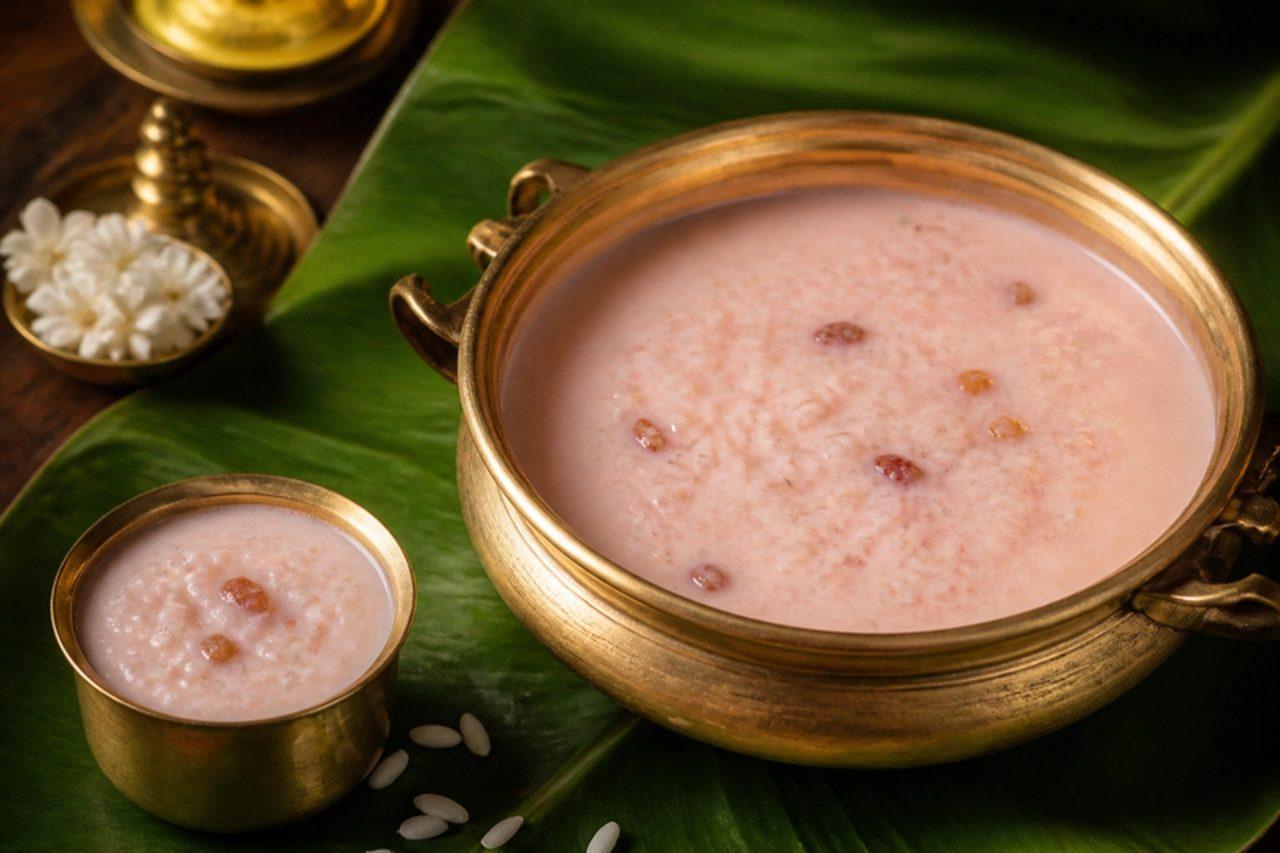
The Krishna temple at Ambalappuzha in Alappuzha is famous for one offering: a paal payasam of rice, milk and sugar boiled in huge bronze vessels until it turns a soft pink. Kerala families make a smaller pot at home for Vishu and Onam, and it is the simplest payasam there is, with no nuts, raisins or spice in the temple style. The colour comes only from long, patient simmering, as the milk sugars slowly caramelise. The common mistake is adding the sugar too early; the rice stays firm and the milk sticks to the base, so wait until a grain crushes to nothing between your fingers. It is ready when it has reduced by about half, coats the spoon thickly and has turned from white to a light rosy beige. Chef's tip: keep it at a steady, lively simmer rather than a low murmur, and stir right across the base every few minutes; the movement is what gives the creamy texture.

by KrazyBadal 0 views

TambittuRoasted rice flour jaggery laddus

Nagara Panchami in Karnataka is a festival of sisters and brothers as much as of snakes: women offer milk to the stone naga images under peepal trees, and the sweets made at home are tambittu, laddus of roasted rice flour, roasted gram, coconut and sesame bound with jaggery syrup and ghee. They are crumbly-soft and earthy, and a few are also offered at Varamahalakshmi. Common mistake: binding with thin syrup, which leaves the laddus wet and collapsing; boil the jaggery only to a soft-ball stage, when a drop in cold water forms a soft ball you can pick up. Chef's tip: roast the rice flour until it just smells toasty and is barely cream-coloured; too dark and the laddus taste bitter.

by KrazyBadal 0 views

RasiyaJaggery rice kheer

On the evening of Kharna, the second day of Chhath in Bihar and eastern Uttar Pradesh, the vrati who has fasted since dawn cooks rasiya on a new clay chulha over mango wood: arwa rice simmered in milk with jaggery, offered to Chhathi Maiya and eaten with ghee-smeared roti before the 36-hour waterless fast begins. It is pale brown, creamy and tastes of caramel and milk. Common mistake: adding jaggery while the milk is boiling hard, which curdles it; take the pan off the heat, let it calm, then stir in the jaggery, and the kheer is ready when the rice is completely soft and it coats the spoon. Chef's tip: many families cook it with no salt and in a separate pan from everyday cooking; do the same if you are making it for the puja.

by KrazyBadal 0 views

KhichdoWheat, rice and dal porridge

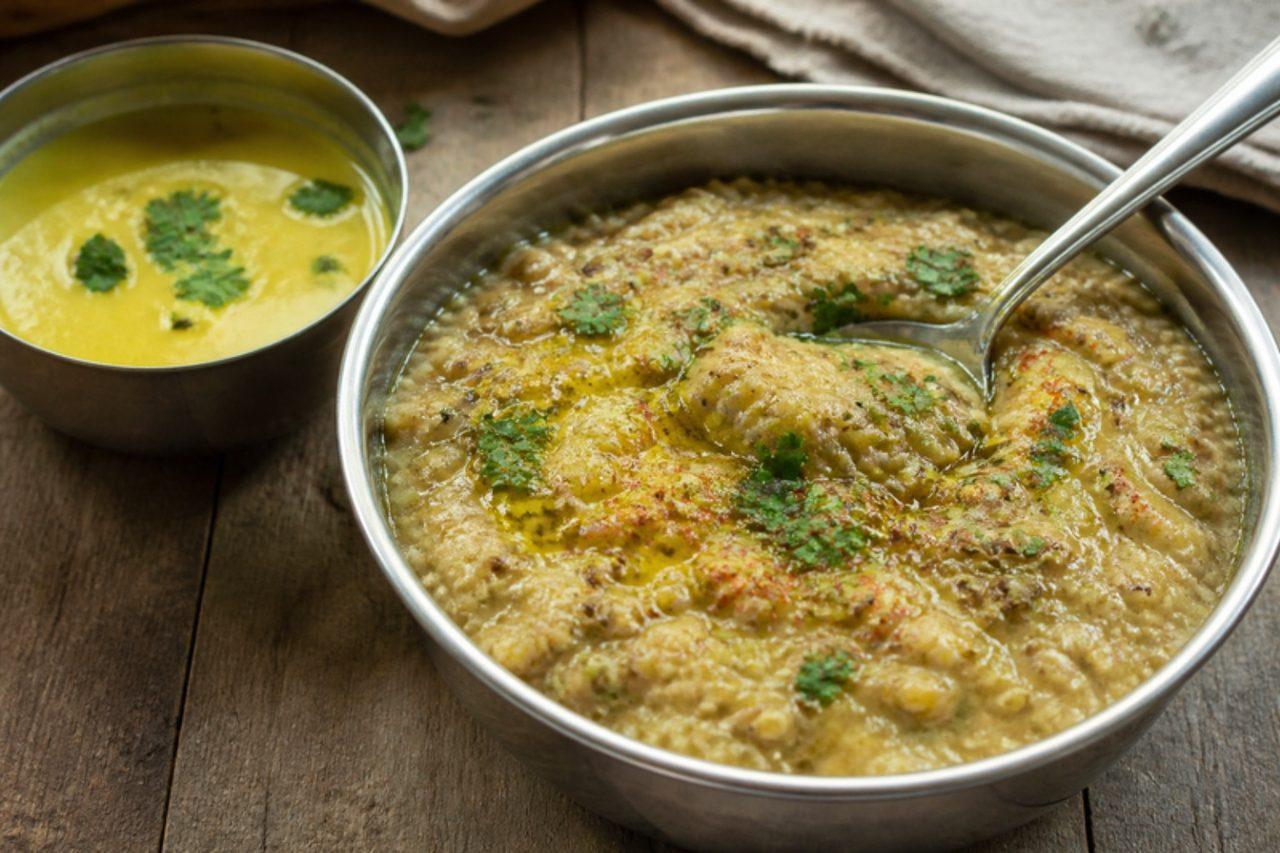
Khichdo is Gujarat's Uttarayan dish of giving: on the morning of the festival big pots of it are cooked and shared with neighbours, cows and anyone in need, because charity on Makar Sankranti is thought to bring blessings. It is a slow, hearty porridge of pounded whole wheat cooked with rice and several dals until everything melts together, finished with a ghee tadka of whole spices, ginger and chilli. Some families make it sweet with jaggery instead. Common mistake: skipping the soaking; the wheat needs a night in water or it never softens, and the khichdo is ready when the grains are bursting and it falls thickly from the ladle. Chef's tip: pounded khichda wheat is sold in Indian shops; cracked whole wheat (not bulgur) also works.
by KrazyBadal 0 views

Bhinda ni kadhiYogurt kadhi with fried okra

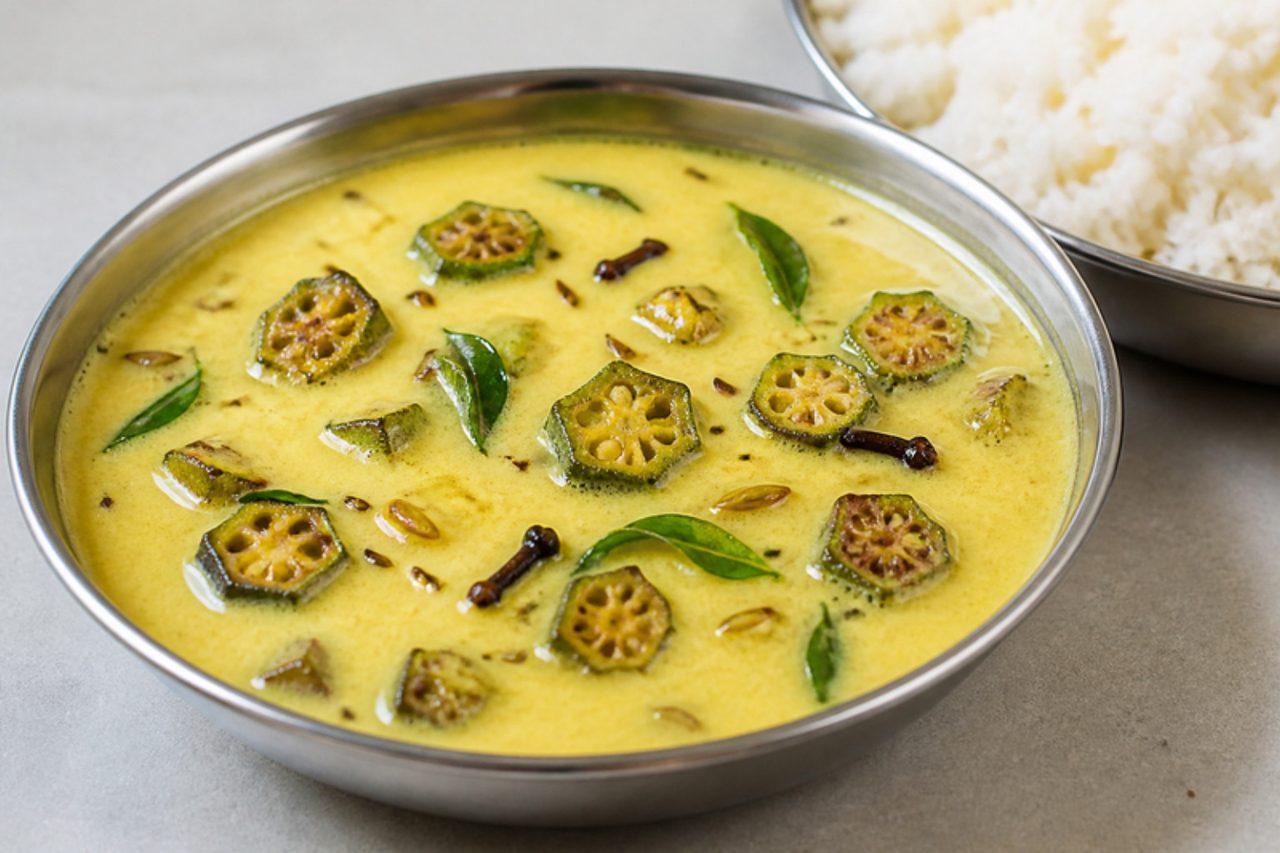
Bhinda ni kadhi is a summer and monsoon favourite in Gujarati homes from Ahmedabad to Surat, when okra is cheap: the familiar sweet, tangy yogurt kadhi gets a handful of okra rounds fried until crisp at the edges, which soak up the sauce and add body. It is poured over steamed rice or khichdi for a light lunch. Frying the okra first keeps it from going slimy. The common mistake is boiling the kadhi fast before it has thickened, which curdles the yogurt; keep stirring and keep the heat low until it reaches a simmer. Chef's tip: add the okra only in the last few minutes so the rounds stay whole and a little crisp.

by KrazyBadal 0 views

BooreluChana dal and jaggery dumplings

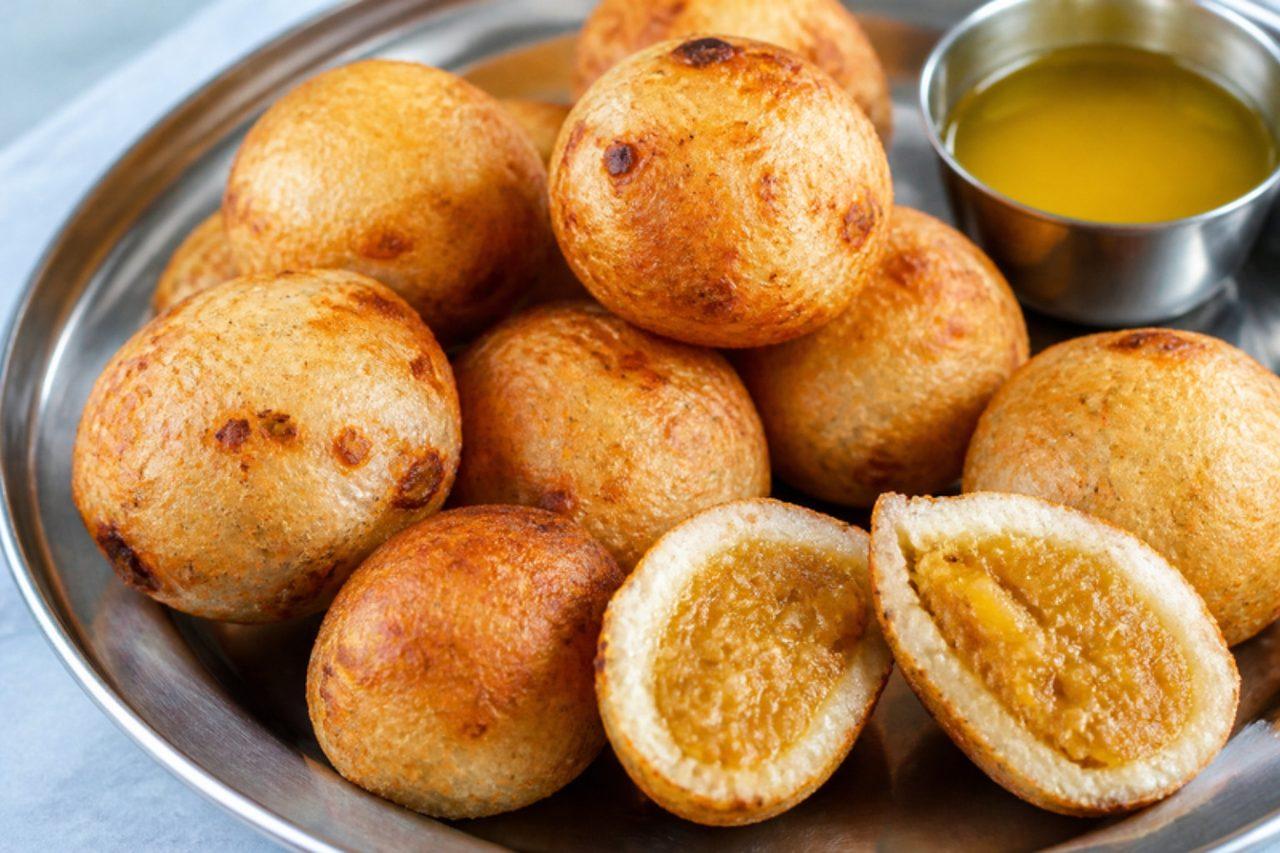
Boorelu, also called poornalu, are the sweet that Telugu homes fry for Sankranti, Varalakshmi Vratam and weddings, and that a bride's family traditionally sends to her in-laws by the basketful. A soft ball of cooked chana dal, jaggery, coconut and cardamom is dipped in a thick batter of urad dal and rice and fried until the shell is crisp and blistered while the filling stays fudgy. They are eaten warm, split open with a spoon of ghee for those who take dairy. The usual mistake is a filling that is too wet: it bursts through the batter in the oil and splatters, so cook the dal and jaggery until it holds a firm ball. Chef's tip: grind the batter thick like idli batter and add salt; the slight saltiness of the shell is what makes the sweet filling sing.

by KrazyBadal 0 views

Langar wali dalBlack gram and chana dal

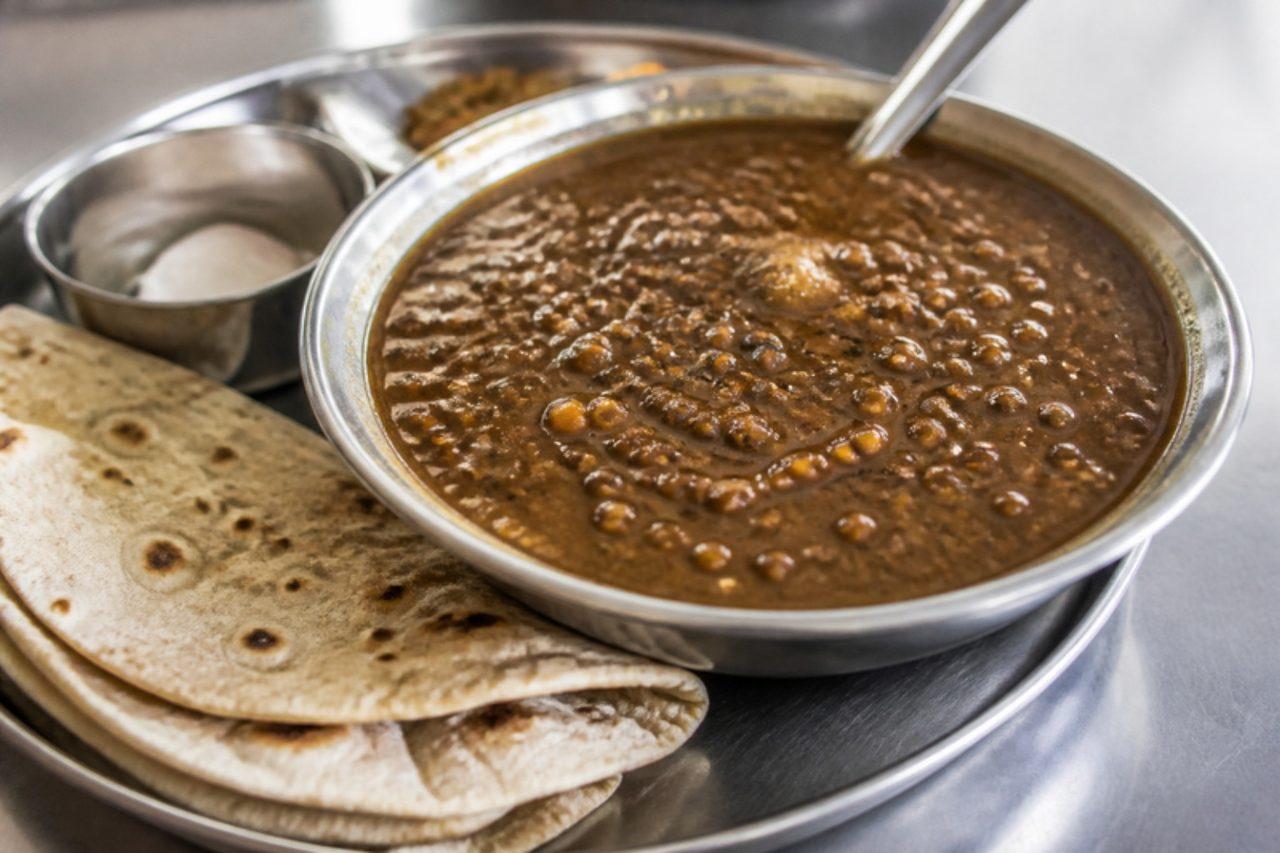
On Gurpurab, the birthdays of the Sikh Gurus, gurdwara kitchens run day and night, and volunteers stir vast pots of maa chholeyan di dal, whole black urad with split chana dal, for everyone who sits in pangat on the floor to eat, whatever their faith. It is plain and honest cooking: the dal simmers for hours with ginger and a little salt and is finished with a simple tadka of ghee, onion, tomato and green chilli, with no cream and no butter swirls. The result is earthy, creamy from slow cooking alone, and very comforting with fresh rotis. Common mistake: rushing it; the urad must be cooked until the skins split and the grains break down when pressed, otherwise the dal stays thin and separate. Chef's tip: mash a ladleful of dal against the side of the pot near the end; this thickens it the way long hours over the langar fire do.

by KrazyBadal 0 views

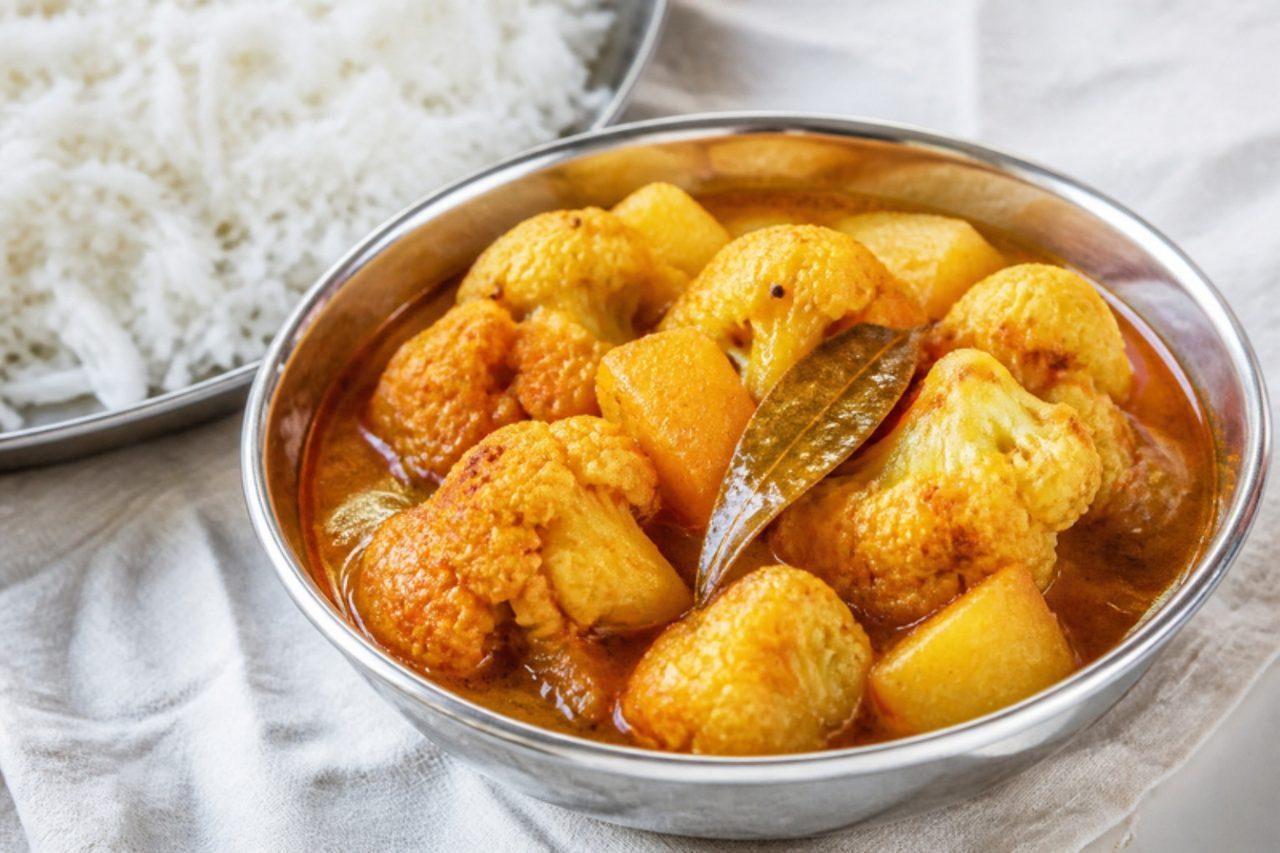
Fulkopir dalnaCauliflower and potato in light gravy

Fulkopir dalna is the gravy dish of a niramish (no onion, no garlic) Bengali menu, and it appears on the Durga Puja bhog table and at home on Navami and Dashami, when many families keep the day's food vegetarian. Large cauliflower florets and potatoes are fried golden and then simmered in a thin, glossy gravy of ginger, cumin, tomato and a little yoghurt, finished with ghee and Bengali garam masala. It should taste mellow, warm and slightly sweet rather than hot. Serve it with luchi or khichuri. Common mistake: boiling the cauliflower in the gravy from raw; fry the florets first until browned in patches, or they turn mushy and taste watery. Chef's tip: whisk the yoghurt with the ground spices before it goes in, and keep the heat low, so the gravy stays smooth instead of splitting.

by KrazyBadal 0 views

Hyderabadi khattaSour tamarind sauce

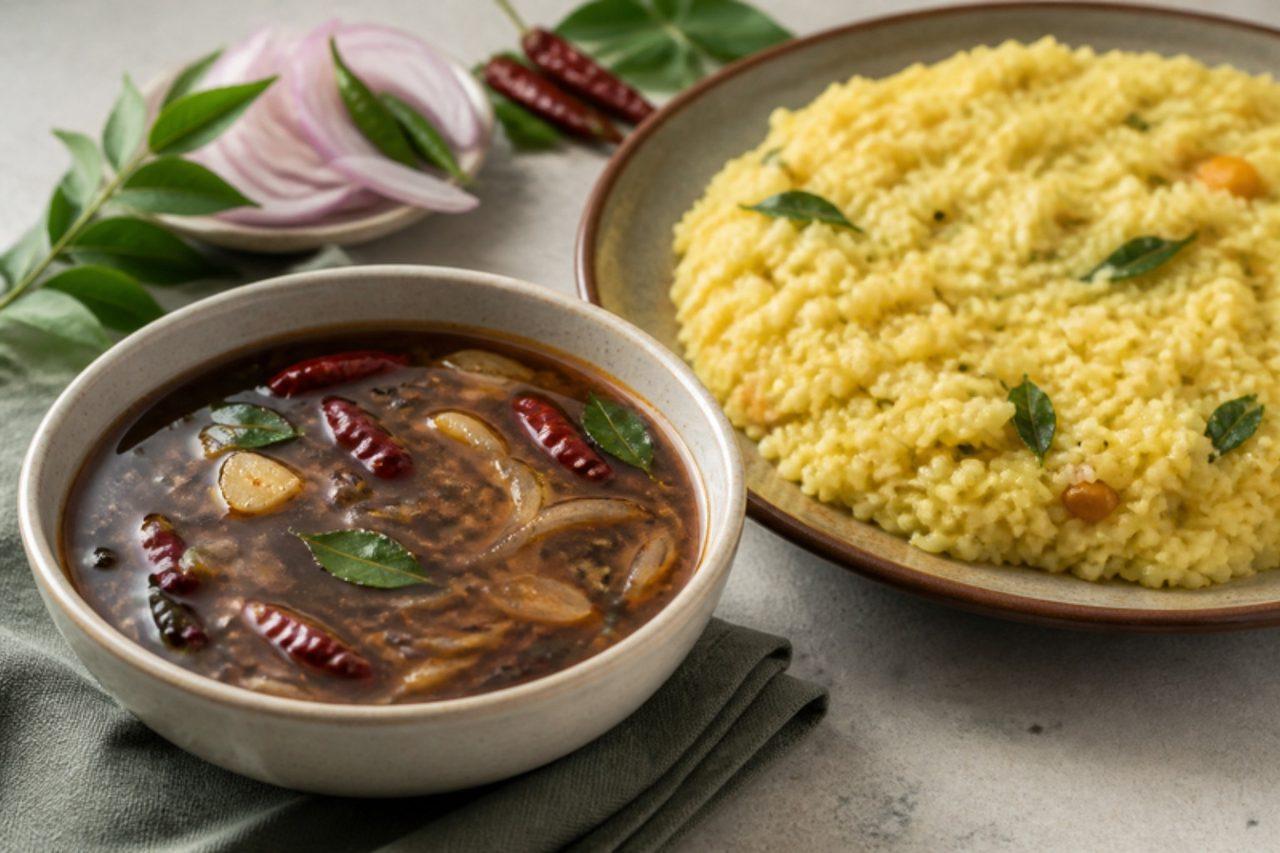
In Hyderabad the pre-dawn sehri meal of Ramadan is often khichdi, kheema and khatta: a thin, sour tamarind and onion sauce, tempered with curry leaves, garlic and dried chilli, ladled over the soft rice and lentils to wake up the palate at four in the morning. It is runny like a rasam, tart and savoury with just a little heat. Chef's tip: fry the onion only until soft, not brown, so the khatta stays light and sharp.

by KrazyBadal 0 views

VornGreen gram and coconut milk sweet

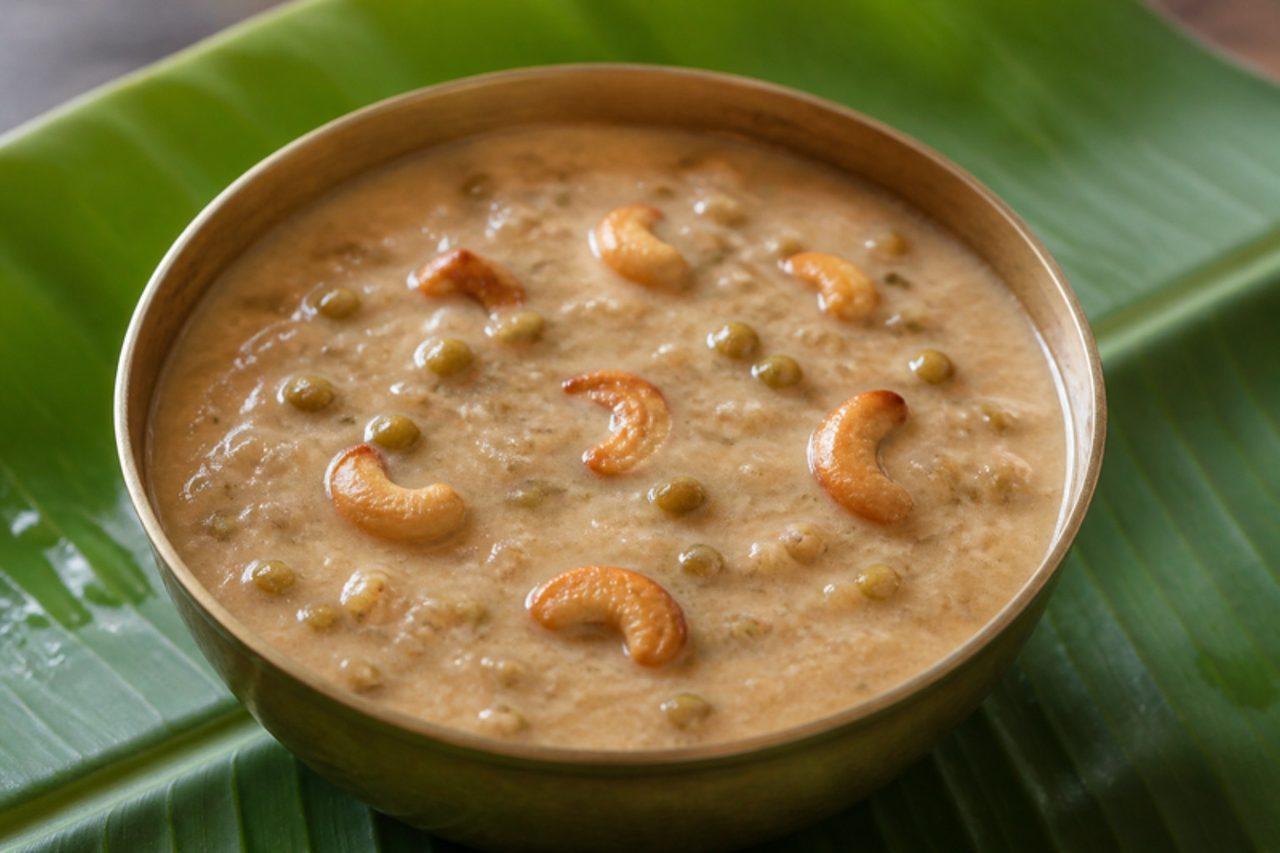
On 8 September, Mangalorean Catholics celebrate Monti Fest, the feast of Mary's Nativity, which is also a harvest festival: new ears of grain are blessed at church and shared at home, and the family eats a vegetarian feast of new-season vegetables. Vorn, a pudding of split green gram (moong) cooked with coconut milk, jaggery and cardamom, is the sweet that ends it. It is like a gentle payasam, vegan and gluten free. Chef's tip: dry-roast the moong dal until fragrant before cooking it, which gives vorn its nutty flavour.

by KrazyBadal 0 views

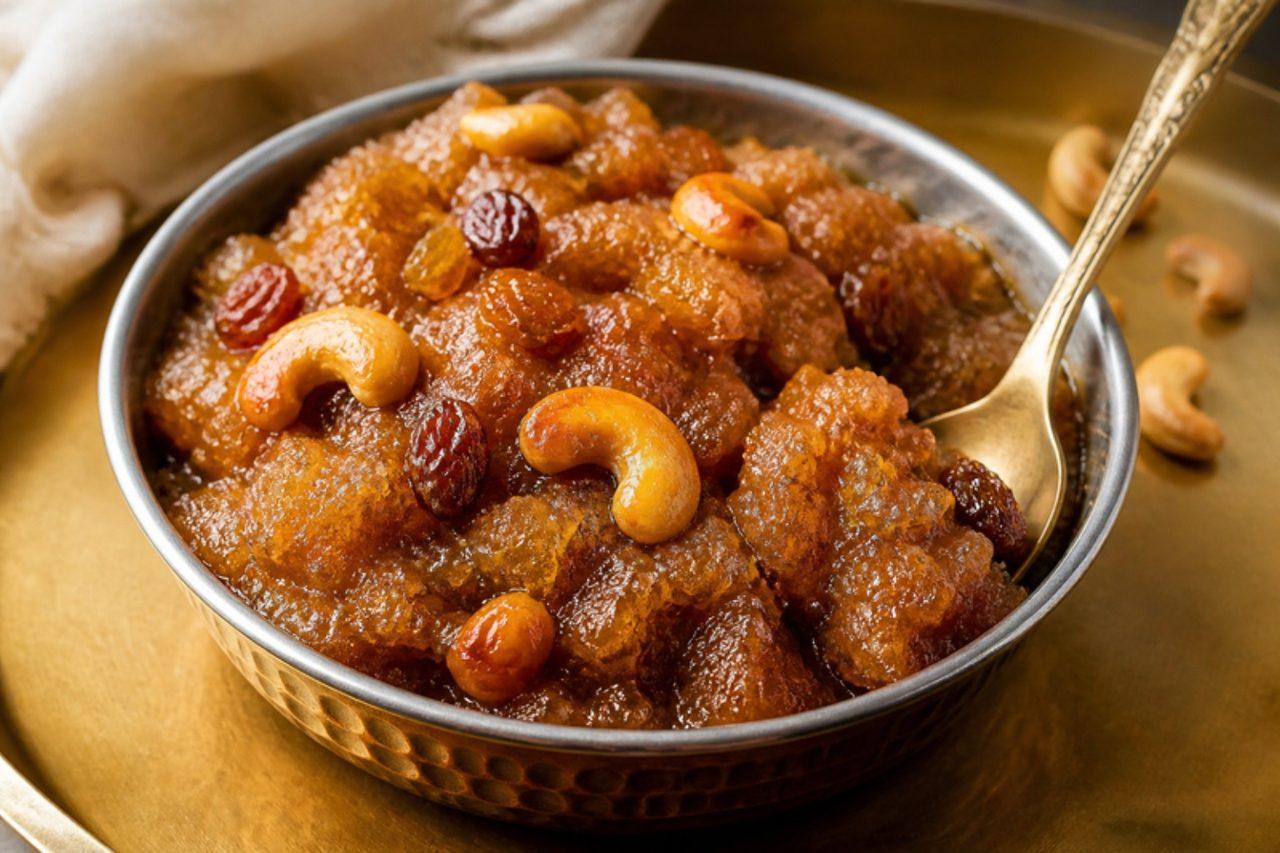
Bread halwaFried bread halwa

At Tamil Muslim weddings and Eid feasts in Chennai and Madurai, the biryani is followed by a spoonful of bread halwa, sticky, golden and glistening with ghee. Cubes of white bread are fried until crisp, then cooked down with milk, sugar and cardamom until they melt into a soft, jammy halwa studded with cashews. Chef's tip: day-old bread fries crisper and soaks up the milk more evenly than fresh.

by KrazyBadal 0 views

Bandhakopir torkariCabbage with peas and potato

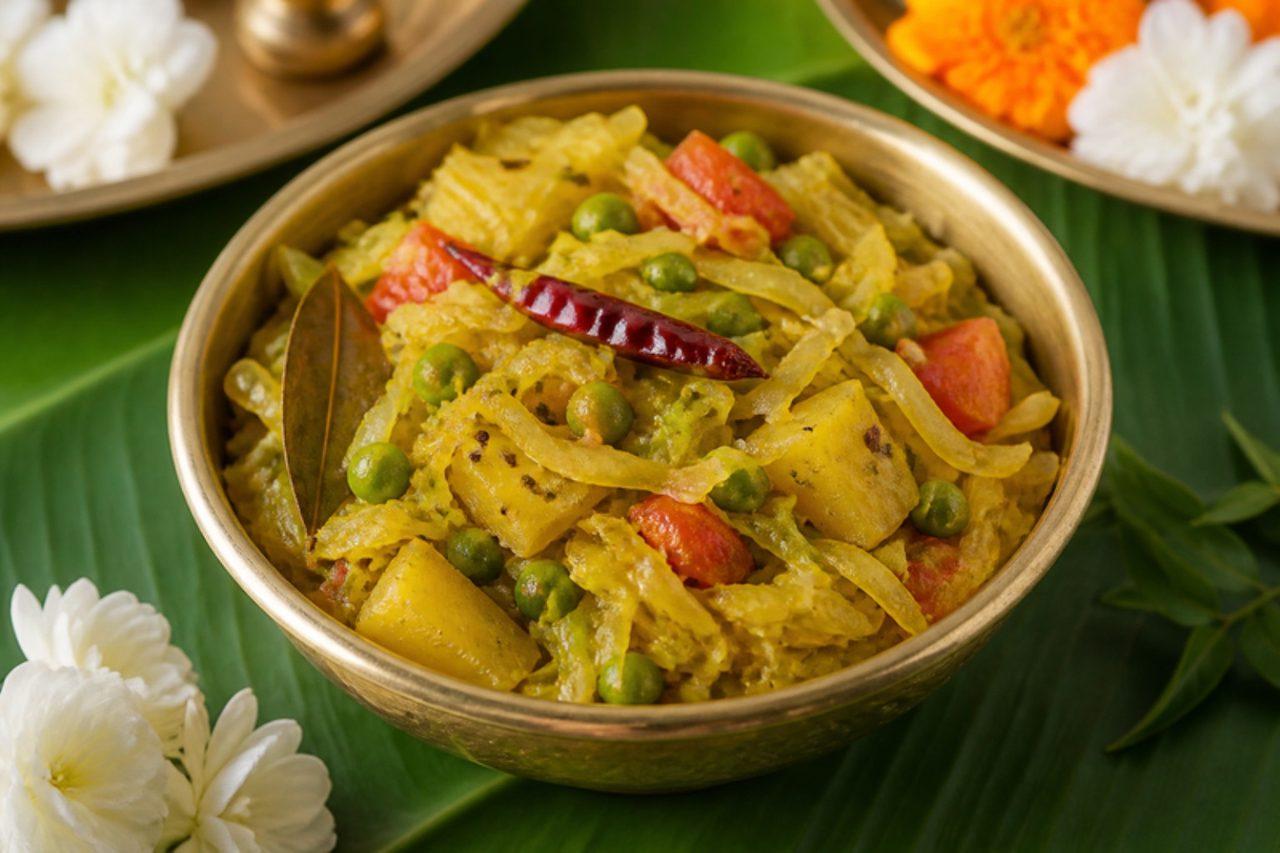
In Bengali homes and pandal kitchens during Durga Puja, the bhog plate needs a dry vegetable beside the khichuri, and bandhakopir torkari is one of the favourites. Cabbage is shredded fine and cooked slowly with potato, peas, ginger and whole cumin, with no onion or garlic because it is offered to the goddess before it is eaten. A pinch of sugar and a final dusting of garam masala make it gently sweet and fragrant. Serve it with khichuri, luchi or plain rice and dal. Common mistake: covering the pan for the whole time, which steams the cabbage grey and watery; cook it mostly uncovered so the liquid evaporates and the edges just start to brown. Chef's tip: salt the shredded cabbage for 10 minutes and squeeze it lightly before cooking; it cooks faster and soaks up the spices better.

by KrazyBadal 0 views

Tomato khejur chutneyTomato and date chutney

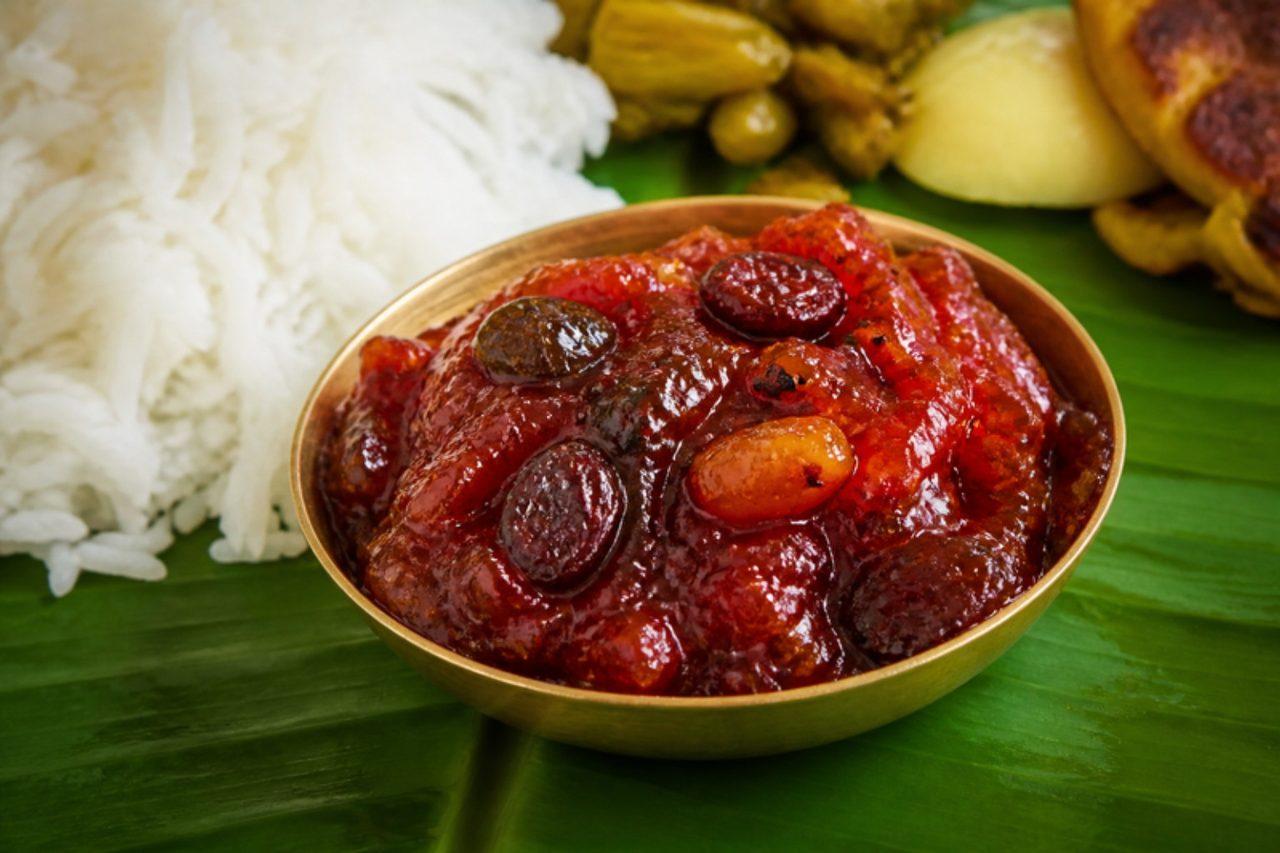
A Bengali festive meal ends with chutney, and during Durga Puja the bhog plate's last stop is often this glossy tomato and date chutney. Ripe tomatoes are cooked with a mustard-seed and dried-chilli tempering, then sweetened with sugar and stoned dates and studded with raisins until it turns jammy and sticky. It is eaten as its own course after the vegetables, to clean the palate before the sweets. Common mistake: taking it off the heat too early so it stays watery; it is ready when a spoon drawn through the pan leaves a clear line for a second and the chutney looks shiny. Chef's tip: add a few strips of aamsotto (dried mango leather) with the dates if you have it; it gives the deep, fruity sourness of the pandal chutney.

by KrazyBadal 0 views

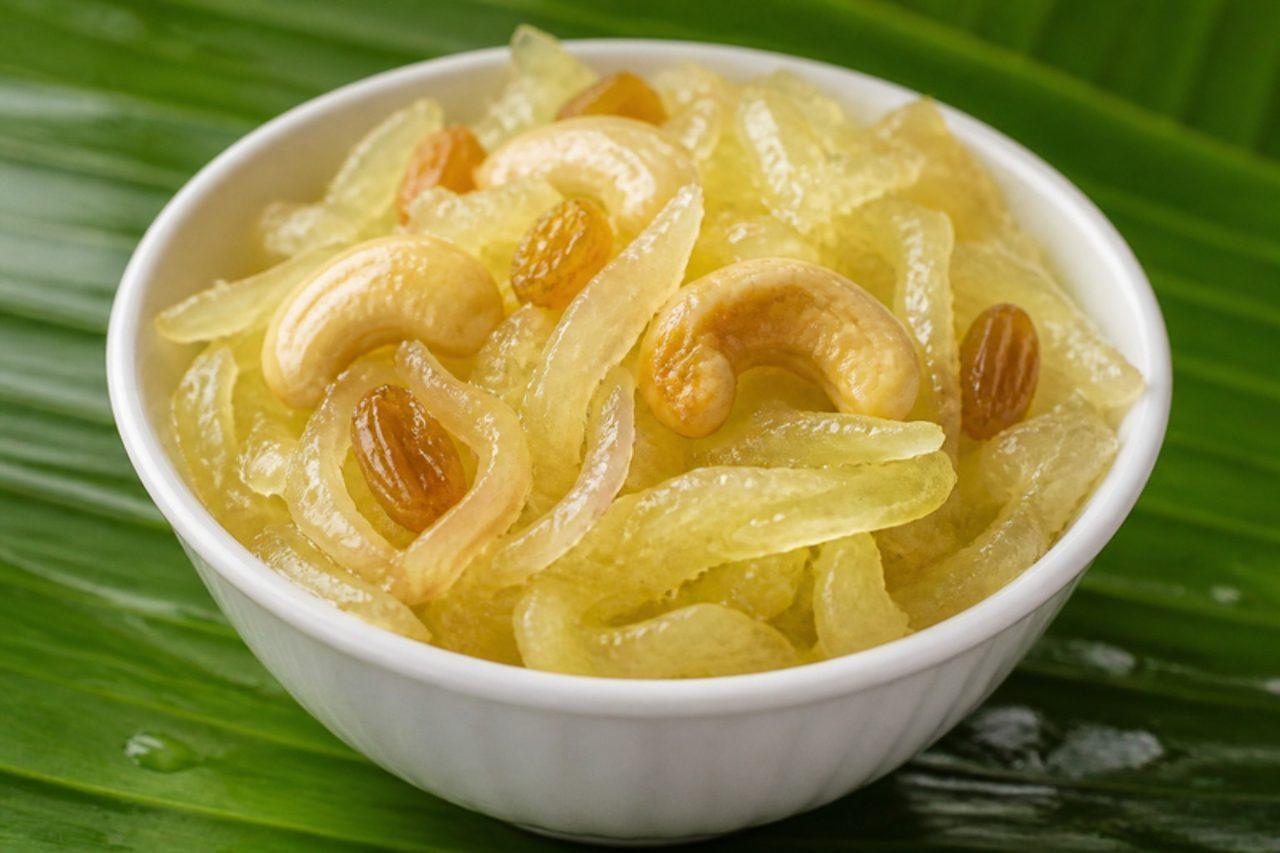
Plastic chutneyRaw papaya chutney

Plastic chutney gets its funny name from the way the thin slices of raw papaya turn clear and glassy, like cellophane, as they cook in syrup. It is the chutney of every Bengali wedding feast and of the Durga Puja bhog, served in a small heap at the end of the meal, sweet, sharp with lime, and dotted with raisins. No onion or garlic goes near it. Common mistake: cutting the papaya too thick or cooking it on high heat; thick slices stay opaque and chewy, while a fast boil caramelises the syrup before the papaya turns clear. The chutney is ready when every slice is see-through and the syrup coats a spoon. Chef's tip: soak the sliced papaya in water with a pinch of baking soda for 15 minutes, then rinse; this helps the slices stay crisp-tender and turn translucent evenly.

by KrazyBadal 0 views

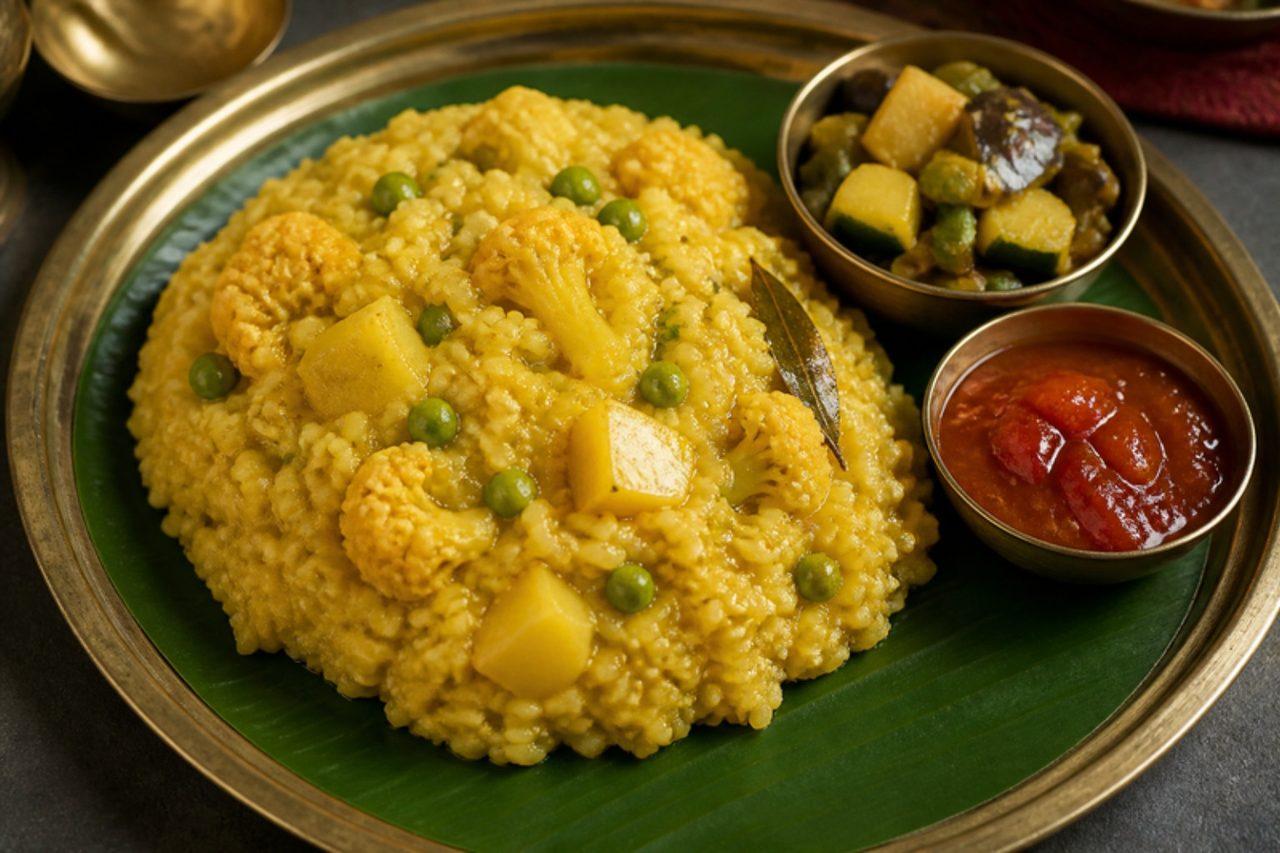
Bhoger khichuriMoong dal and rice with vegetables

On Maha Ashtami, the eighth day of Durga Puja, every para pandal in West Bengal cooks huge pots of bhoger khichuri, offers it to the goddess at noon and then hands it out on sal-leaf plates to anyone in the queue. It is bhog food, so there is no onion or garlic: the flavour comes from dry-roasted moong dal, short, fragrant gobindobhog rice, ginger, whole spices and a generous finish of ghee. The texture should be thick and spoonable, somewhere between a risotto and a porridge, with soft cauliflower, potato and peas through it. Serve it hot with labra, beguni and tomato khejur chutney. Common mistake: skipping the roasting of the dal, which leaves the khichuri flat and pale; roast it until it smells nutty and turns a light biscuit colour. Chef's tip: gobindobhog rice absorbs a lot of water as it stands, so keep a kettle of hot water by the stove and loosen the khichuri just before serving.

by KrazyBadal 0 views

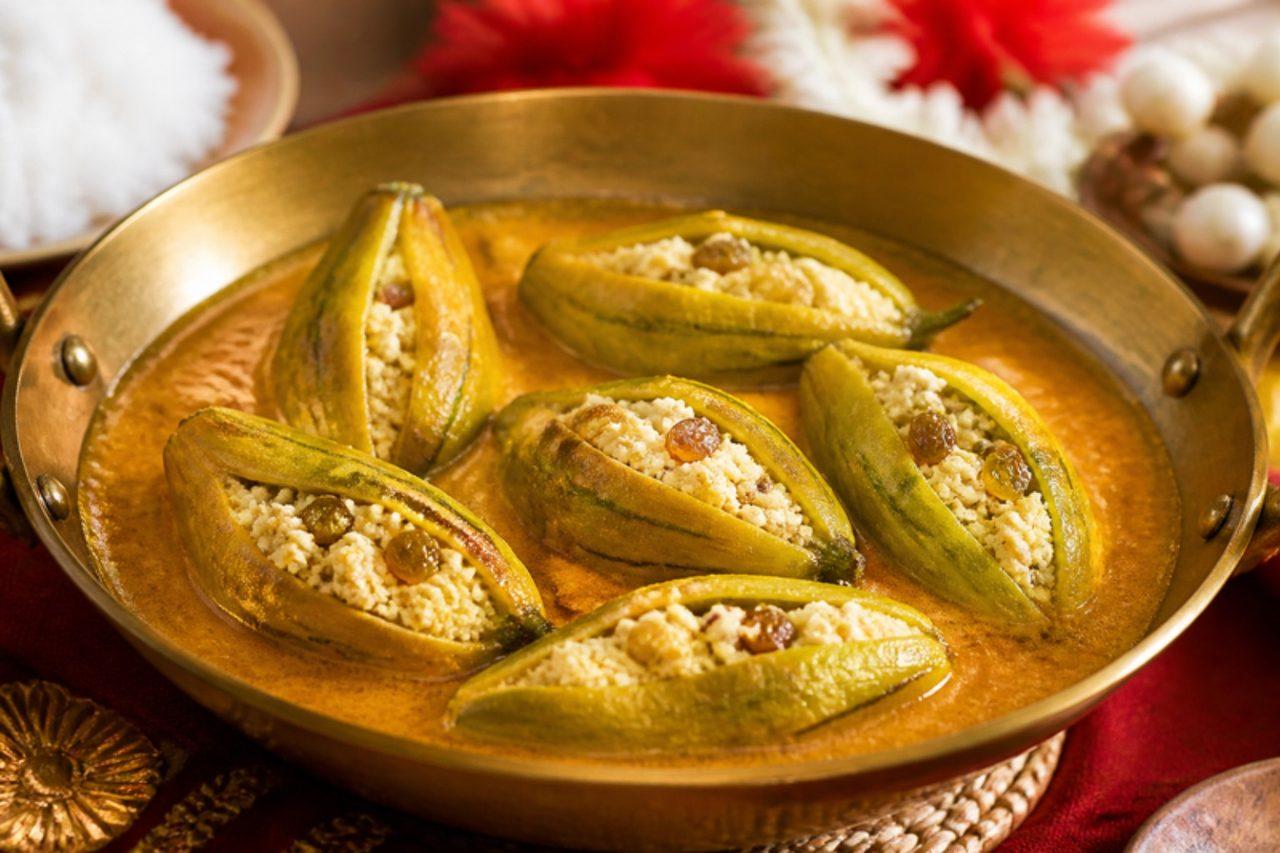
Potoler dormaPaneer-stuffed pointed gourd

Potoler dorma is a showpiece of the Bengali vegetarian table, cooked for Durga Puja Navami lunches, weddings and the jamai shoshti feast. Pointed gourds (potol) are scraped, hollowed, fried, stuffed with paneer, raisins and spices, then simmered in a cashew, yoghurt and tomato gravy that is rich, gently sweet and fragrant with garam masala and ghee. This version keeps to the puja's no-onion, no-garlic style. Common mistake: cutting the gourds open lengthwise; for a dorma you slit only one end and scoop through it with a small spoon, so the filling stays inside while it simmers. The gourd is done when a toothpick slides in easily but the skin is still green and holds its shape. Chef's tip: chop the scooped-out seeds and flesh and cook them into the filling, which adds flavour and wastes nothing.

by KrazyBadal 0 views

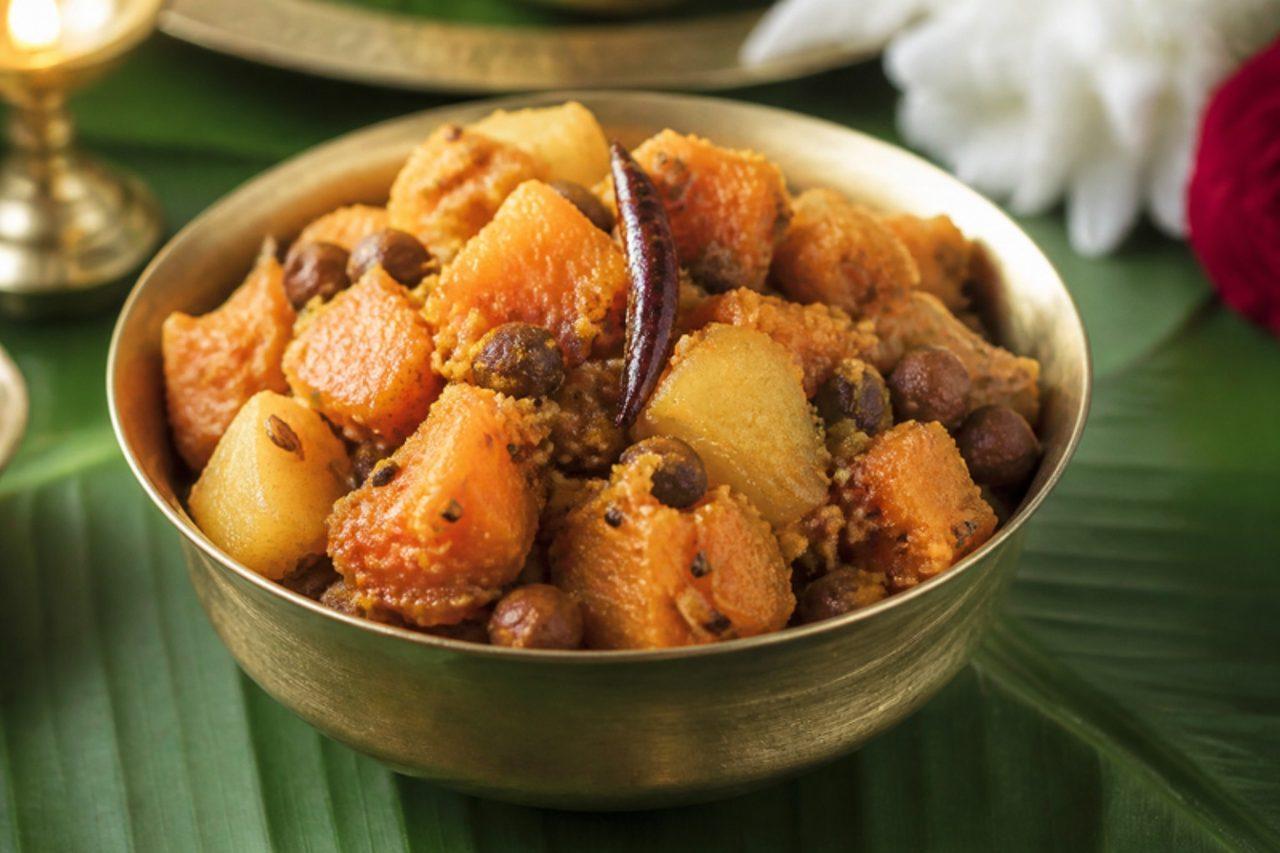
Kumror chhokkaPumpkin, potato and chickpeas

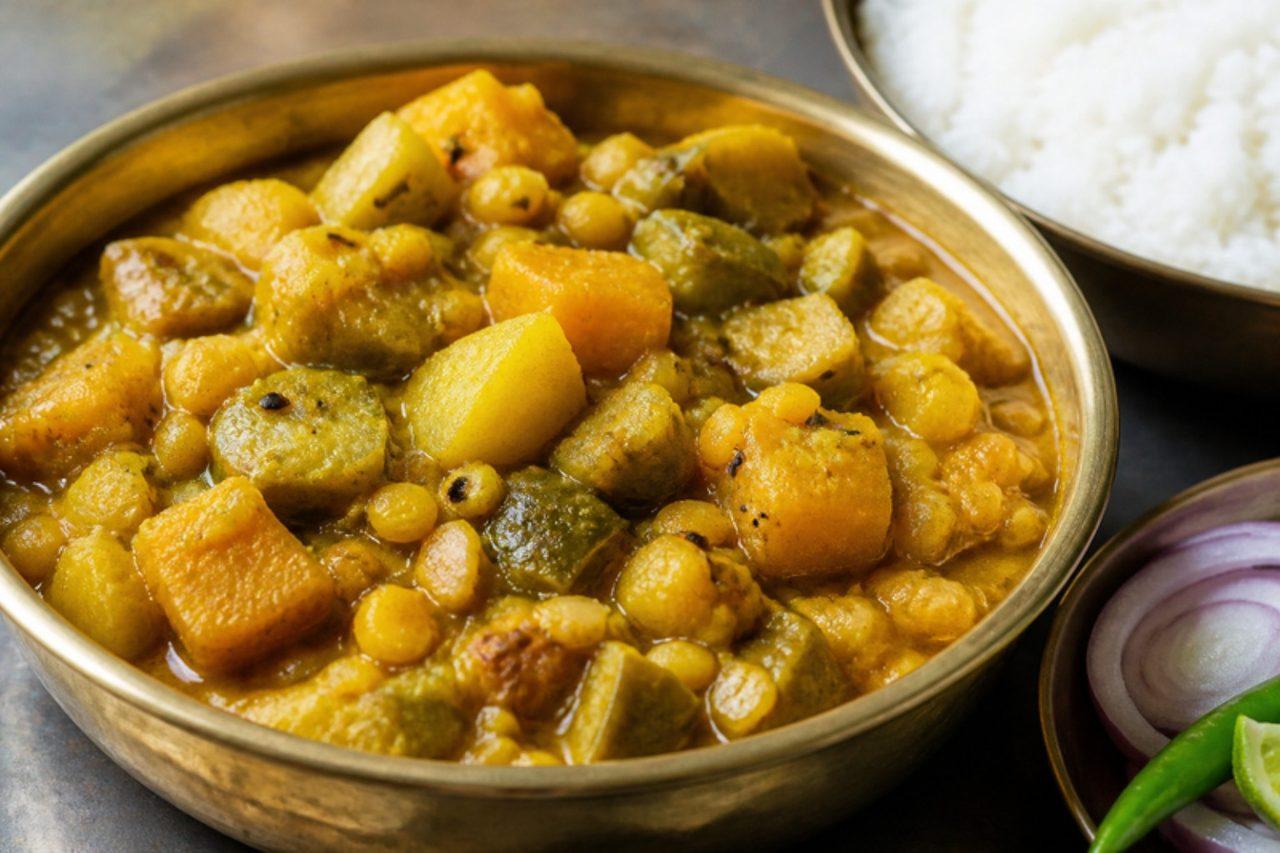
Kumror chhokka is the soft, sweet-savoury pumpkin dish that turns up on the niramish bhog plate at Durga Puja, next to khichuri and luchi, and at Bengali vegetarian feasts all year. Red pumpkin and potato are cooked down with soaked chickpeas, panch phoron (the Bengali five-spice), ginger and a pinch of sugar, until the pumpkin half melts and coats everything. There is no onion or garlic, which keeps it fit for the offering. It is mild, a little sweet and comforting. Common mistake: cutting the pumpkin and potato the same size; pumpkin cooks much faster, so cut it into bigger pieces, and stop when the potato is soft and some of the pumpkin has broken down. Chef's tip: a teaspoon of ghee and a pinch of roasted cumin powder stirred in at the very end makes it taste like the pandal version.

by KrazyBadal 0 views

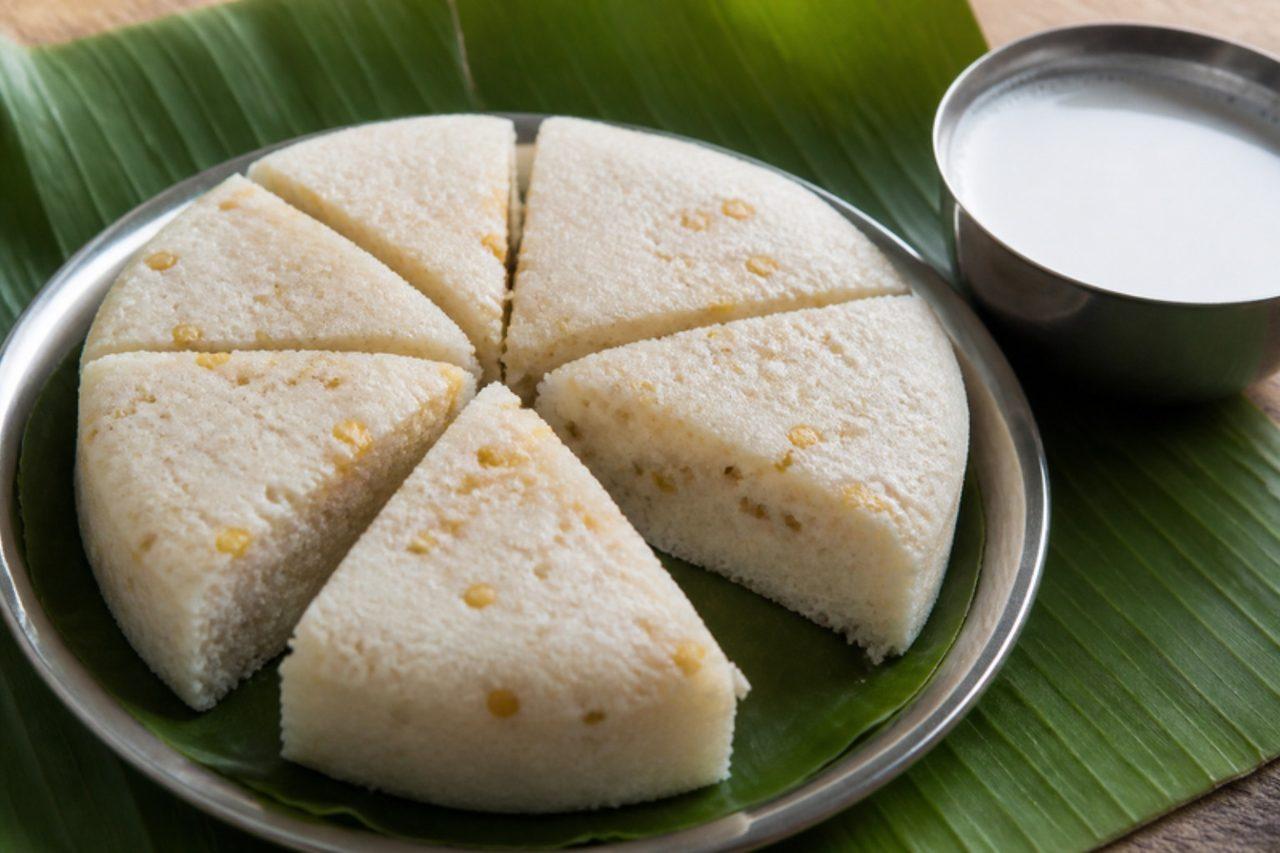
Pesaha appamUnleavened rice and lentil cake

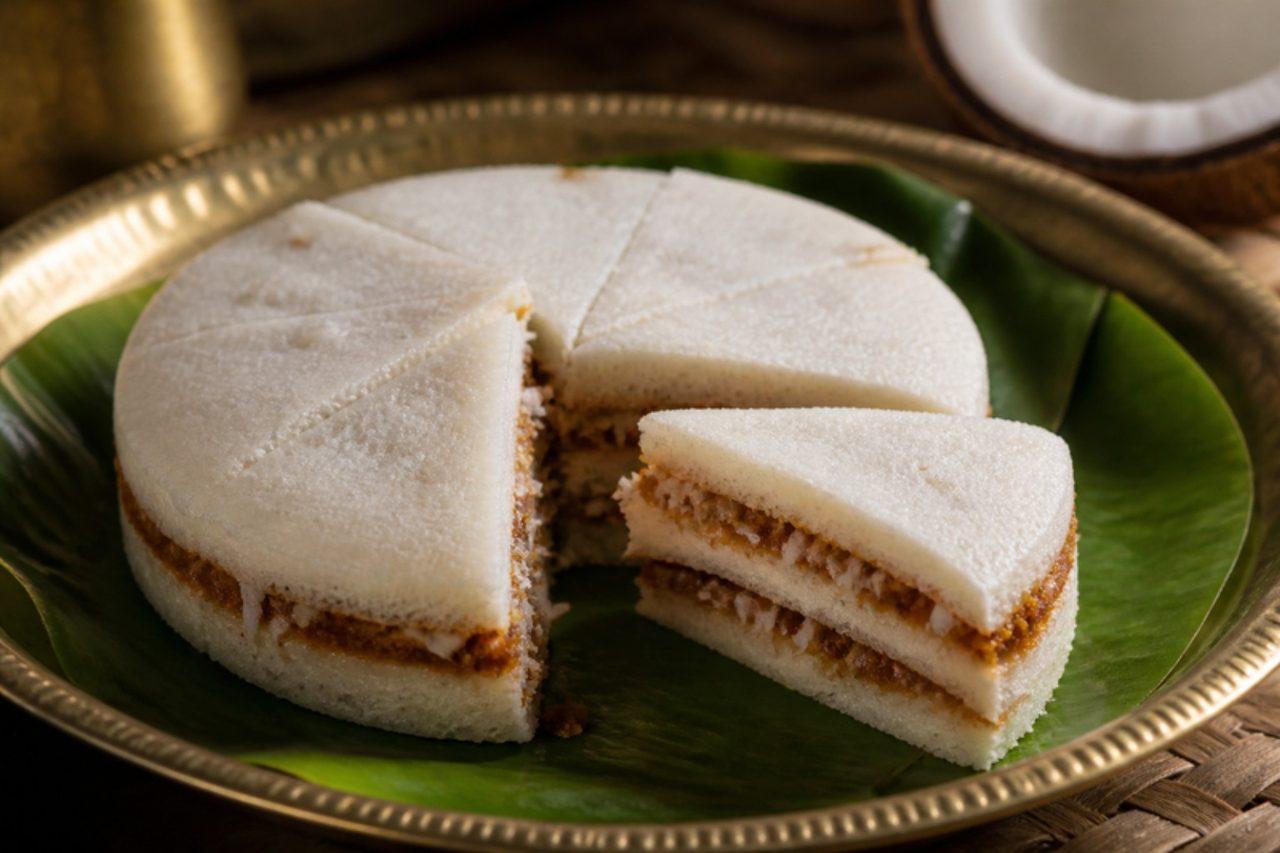
On Pesaha, Maundy Thursday, Syrian Christian families in Kerala gather in the evening for a meal that remembers the Last Supper. The head of the house cuts the Pesaha appam (indri appam), an unleavened, steamed cake of roasted rice flour, urad dal and coconut, marked with a cross made from the palm leaves blessed on Palm Sunday, and shares it with everyone, dipped in sweet Pesaha paal. It is soft, dense and lightly savoury. Chef's tip: grind the soaked urad dal and coconut together very finely; the batter should be smooth and thick, like idli batter.

by KrazyBadal 0 views

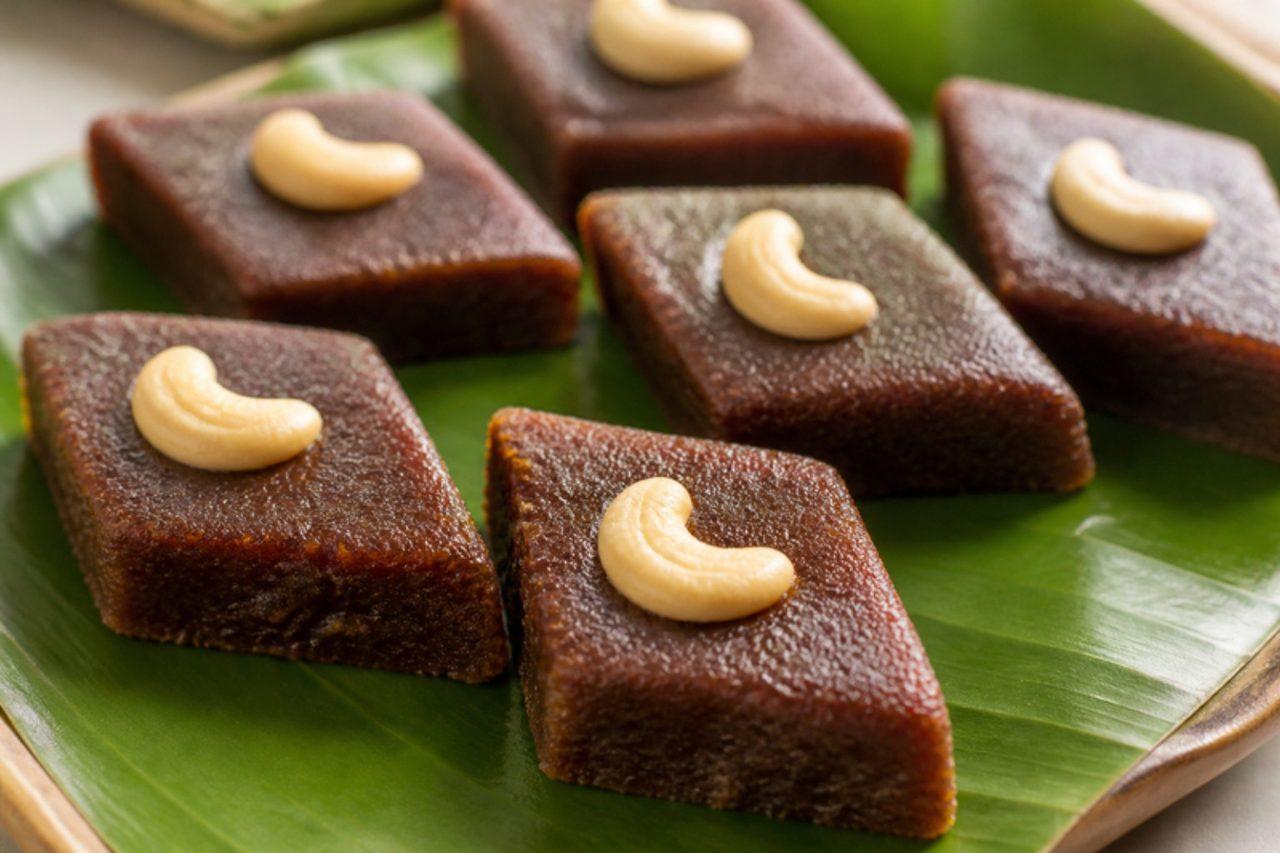
KokadCoconut, jaggery and semolina squares

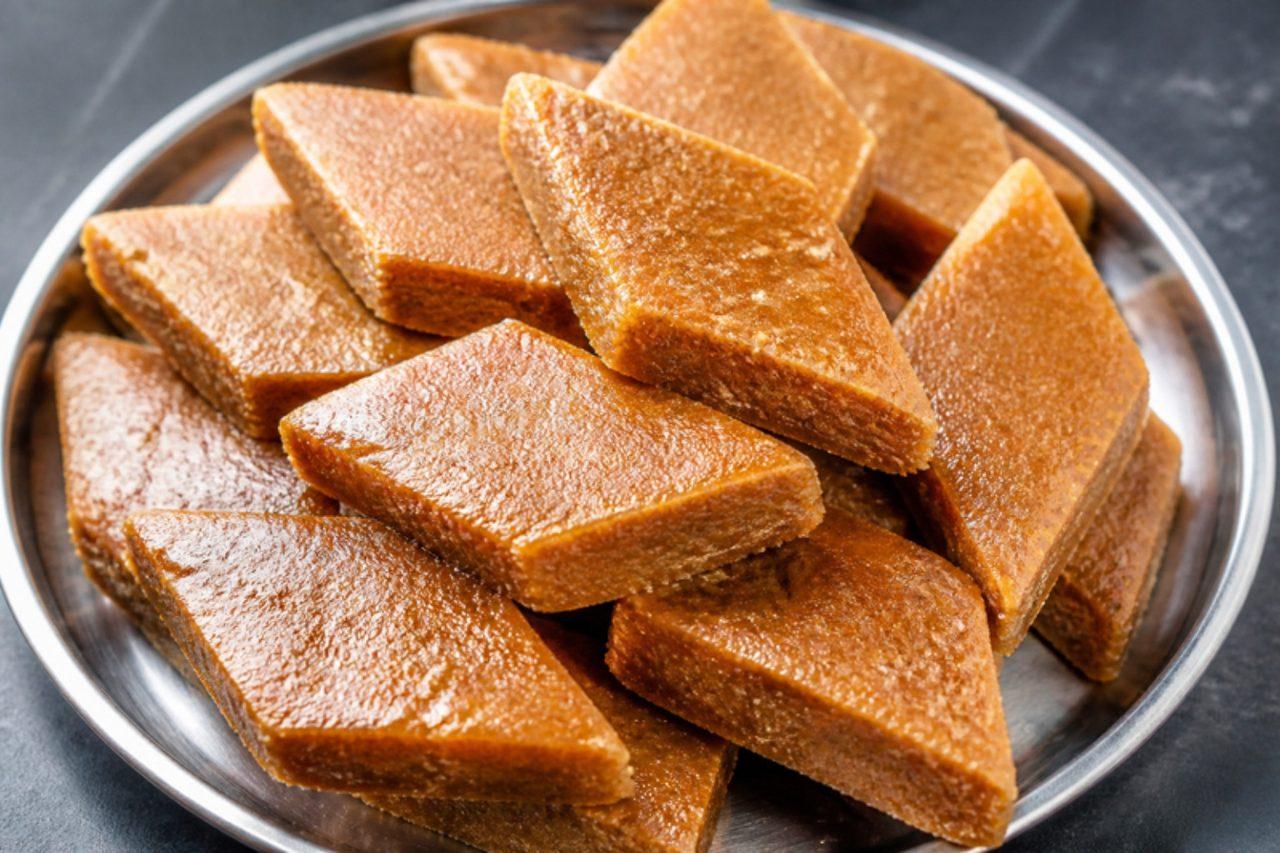
Kokad is one of the sweets in the Goan Christmas kuswar, the tray of homemade sweets Catholic families swap with neighbours in the days around 25 December. Freshly grated coconut is cooked with jaggery, semolina and ghee until it pulls together into a dark, fudgy mass, then pressed into a tray, scored into diamonds and topped with cashews. It is chewy, caramel-sweet and fragrant with cardamom. Chef's tip: roast the semolina in ghee first, until it smells nutty, as raw semolina makes kokad pasty.

by KrazyBadal 0 views

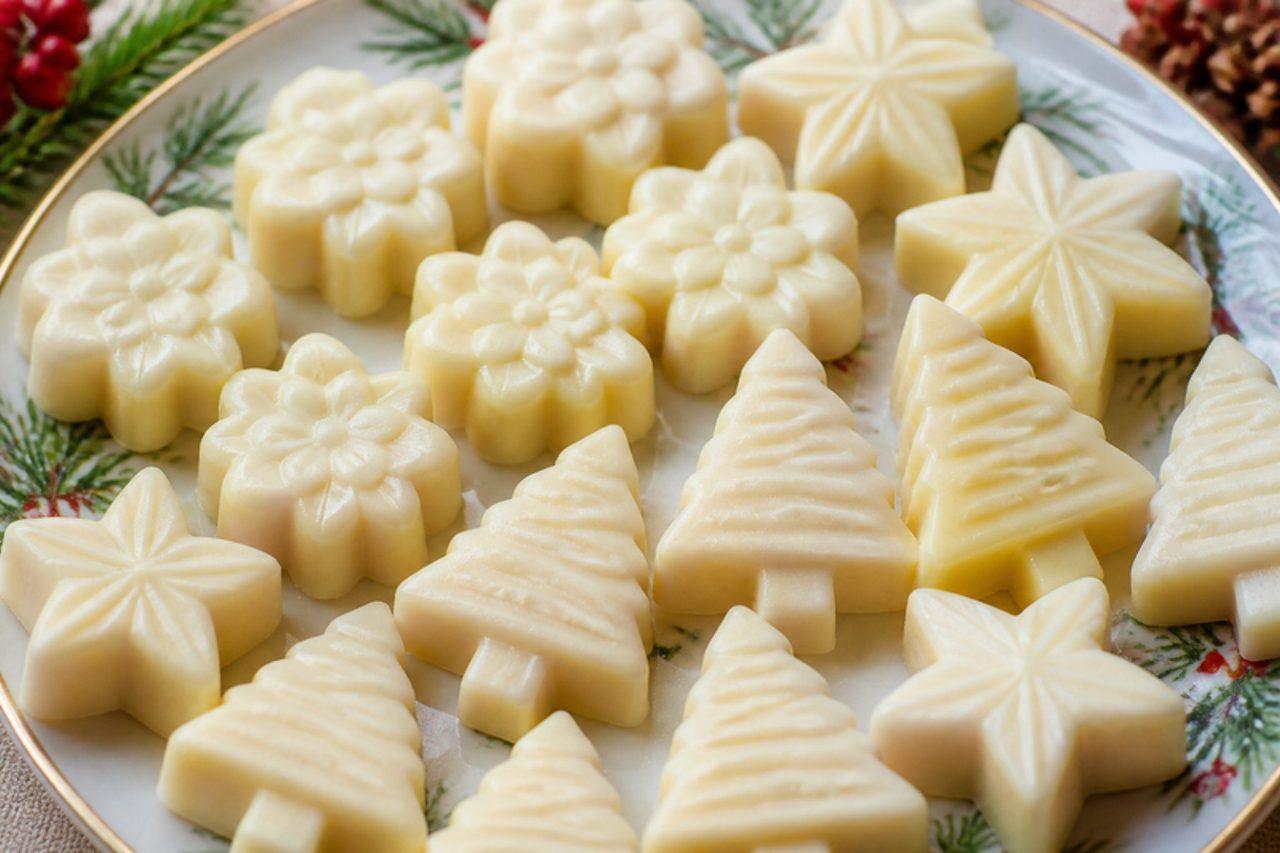
Goan milk creamMilk and cashew sweet

Milk cream is a pale, fudgy Goan Christmas sweet, set in pretty little moulds of flowers, stars and Christmas trees and laid on the kuswar platter beside neureos, bebinca and kulkuls. Whole milk is cooked down with sugar and ground cashews (and sometimes semolina) until it turns into a smooth paste, a little like Indian peda but softer. It is gluten free and very rich, so pieces are small. Chef's tip: dust the moulds with sugar, not flour, so the sweets pop out cleanly with crisp detail.
by KrazyBadal 0 views

PinacaRice flour, jaggery and coconut cakes

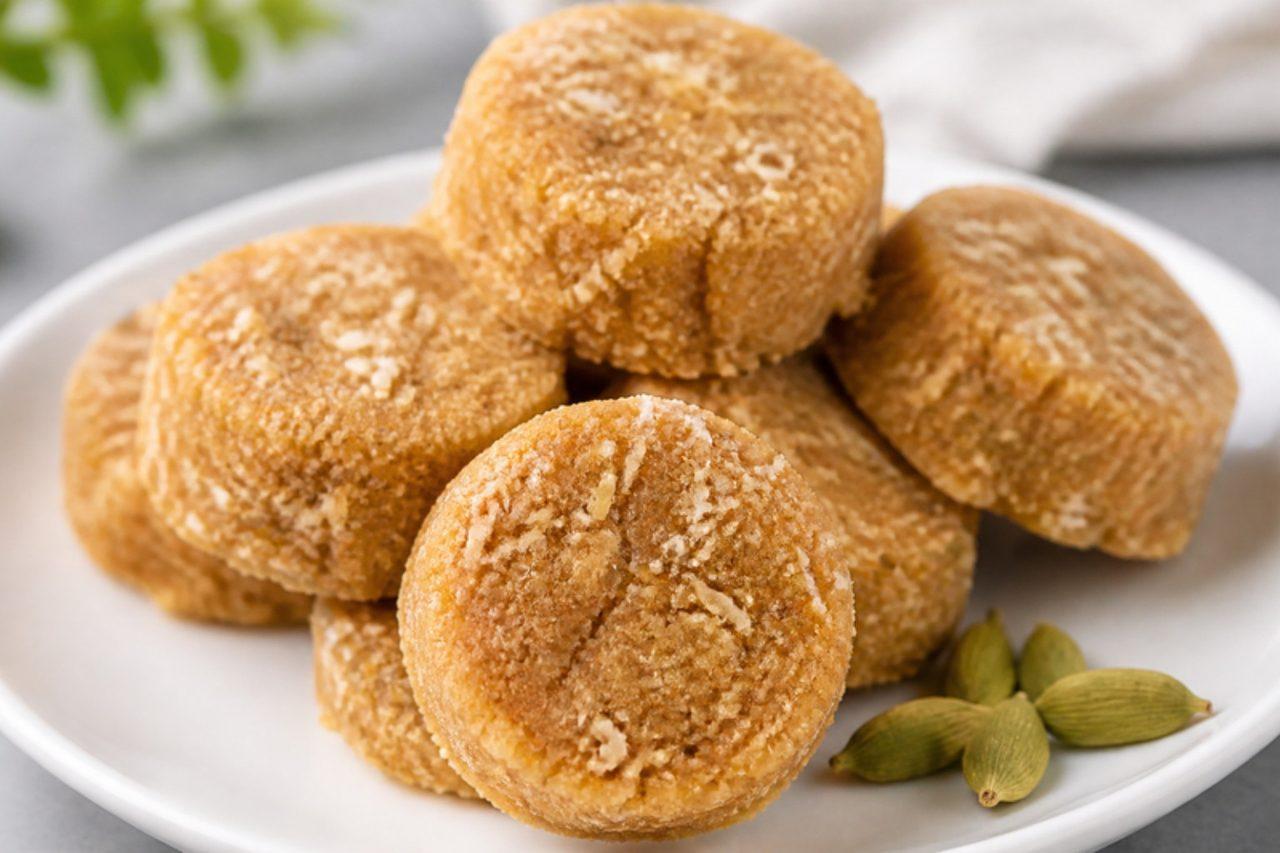
Pinaca is one of the oldest Goan Christmas sweets in the kuswar tray, made in the weeks before Christmas from three things: rice flour roasted until golden and nutty, jaggery and freshly grated coconut. They are pressed into small cakes or squares and have a soft, crumbly, toffee-like bite. They are vegan and gluten free. Chef's tip: take your time roasting the rice flour, as it is the roasting that gives pinaca its flavour, but stir constantly because it burns at the edges.

by KrazyBadal 0 views

Ghanta tarkariMixed vegetables with dried peas

Ghanta is the Odia one-pot of everything the winter market offers, cooked in Bhubaneswar and Cuttack homes for festival days and pujas, and in a similar form in the temple kitchens at Puri. Pumpkin, raw banana, sweet potato, aubergine and beans are cooked with soaked dried peas and chana dal until the pulses thicken it into a soft, chunky stew, seasoned with ginger, cumin and a light panch phoron tempering. A portion gives about 20 g of protein from the dried peas, chana dal and vegetables. The dried peas and chana dal need 8 hours of soaking first (overnight), which is not counted in the times. The most common mistake is adding all the vegetables at once: pumpkin melts to mush while the raw banana is still hard, so add them in two stages. Chef's tip: grind the ginger and cumin with a little water to a fresh paste rather than using powder; it is what gives ghanta its clean, warm flavour.

by KrazyBadal 0 views

DalithoyMild toor dal with mustard

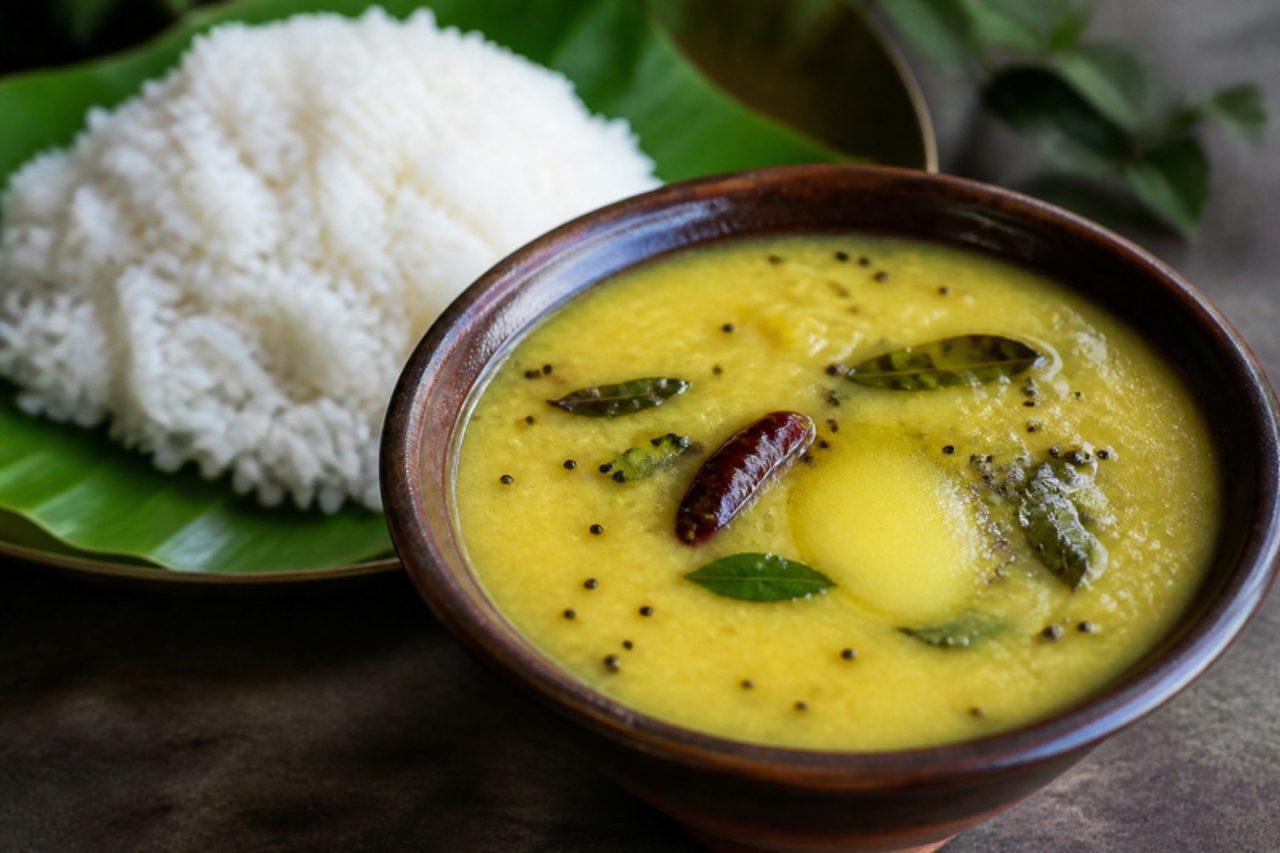
Dalithoy is the comfort dal of Konkani-speaking families in Goa, Mangalore and Udupi, eaten almost daily at lunch with red rice, and the first thing many make for someone recovering from illness. It is deliberately simple: toor dal cooked very soft with ginger and green chilli, thinned to a pourable soup and finished with coconut oil, mustard seeds, curry leaves and a good pinch of asafoetida. A portion gives about 19 g of protein from the toor dal, or about 23 g with a plate of rice, for about 330 kcal. With a pressure cooker it is on the table in half an hour. The most common mistake is skimping on the asafoetida or burning it: it is the main flavour here, so add it off the heat at the end of the tempering. Chef's tip: whisk the cooked dal until it is completely smooth before thinning it; dalithoy should be silky, with no whole grains left.

by KrazyBadal 0 views

Chana ghassiBlack chickpea coconut curry

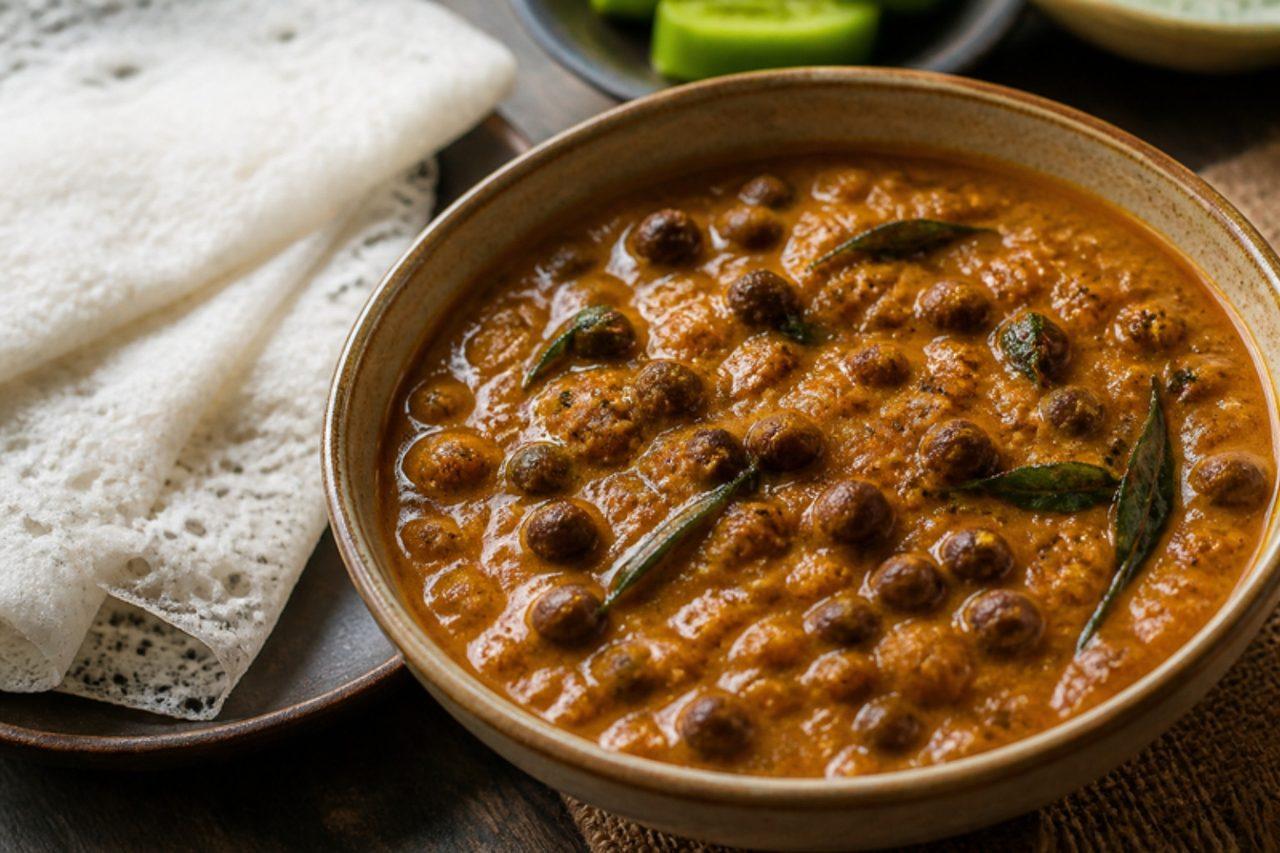
Chana ghassi is a Mangalorean and Udupi favourite, cooked for Sunday breakfast with soft neer dosa or for a weekday lunch over boiled rice. Small black chickpeas are simmered until tender and then cooked in a russet gravy of coconut and spices roasted in coconut oil, sharpened with tamarind and finished with fried onion and curry leaves. A portion gives about 21 g of protein, mostly from the black chickpeas with a little from the coconut. The chickpeas need 8 hours of soaking first (overnight is easiest), which is not counted in the times. The most common mistake is under-roasting the coconut and spices: the gravy then tastes raw and flat instead of deep and toasty. Chef's tip: roast the dried chillies, coriander and fenugreek first and the coconut last, until it turns an even reddish brown; grind it with a little of the chickpea cooking water for the smoothest gravy.

by KrazyBadal 0 views

Methi dalLentils with fenugreek leaves

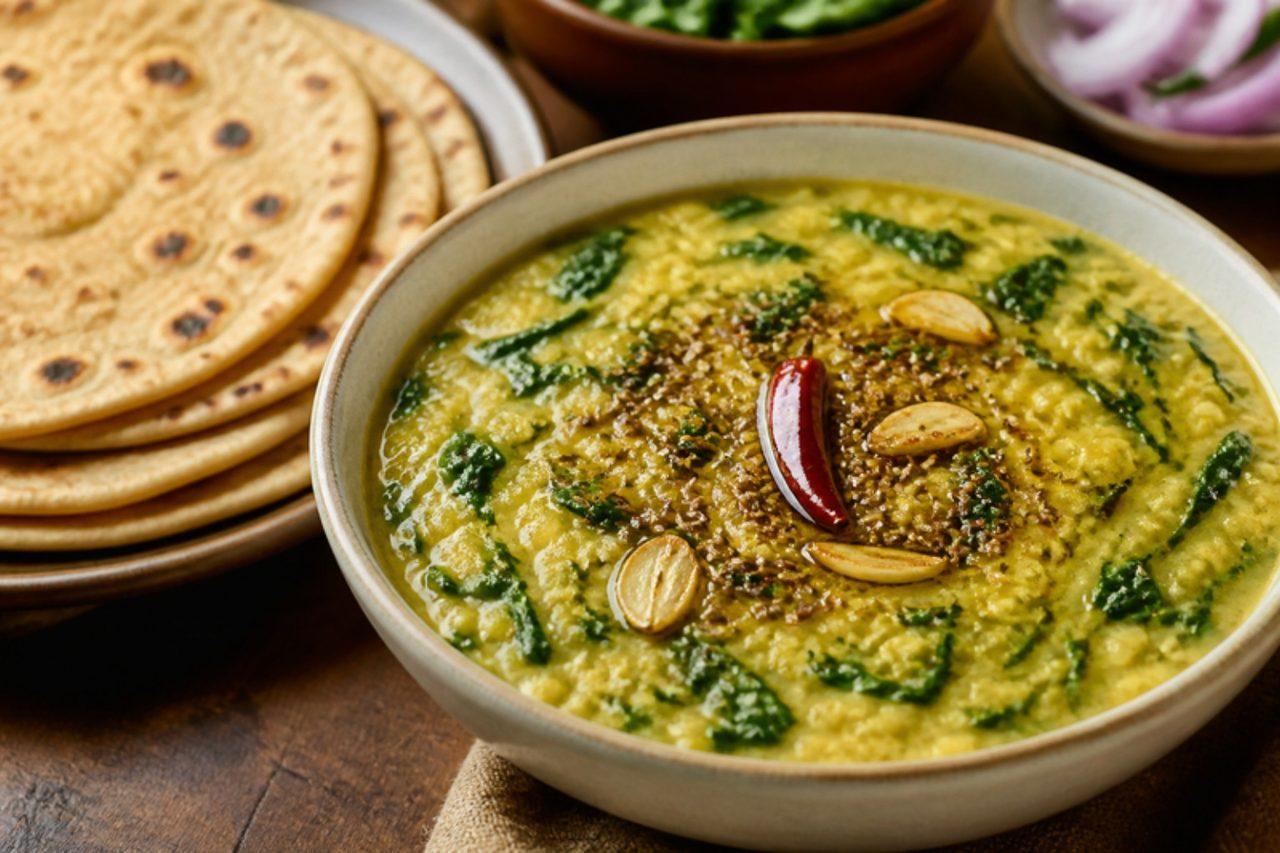
In Punjab, Rajasthan and Delhi homes, methi dal arrives in late autumn and winter, when bunches of fresh fenugreek are cheap and fragrant at every vegetable cart. The leaves are stirred into a pot of soft toor and moong dal, where their gentle bitterness balances the earthy lentils, and a cumin and garlic tadka goes over the top. It is a light everyday dinner with phulka or rice. A portion gives about 21 g of protein from the two dals, for about 350 kcal. The most common mistake is cooking the leaves for too long or chopping in the thick stems, which makes the dal bitter and stringy: use only leaves and tender tips and add them for the last few minutes. Chef's tip: toss the chopped leaves with a pinch of salt, leave them for 10 minutes and squeeze out the green juice; it takes the harsh edge off the bitterness without losing the flavour.

by KrazyBadal 0 views

Bhaja muger dalRoasted moong dal with ginger

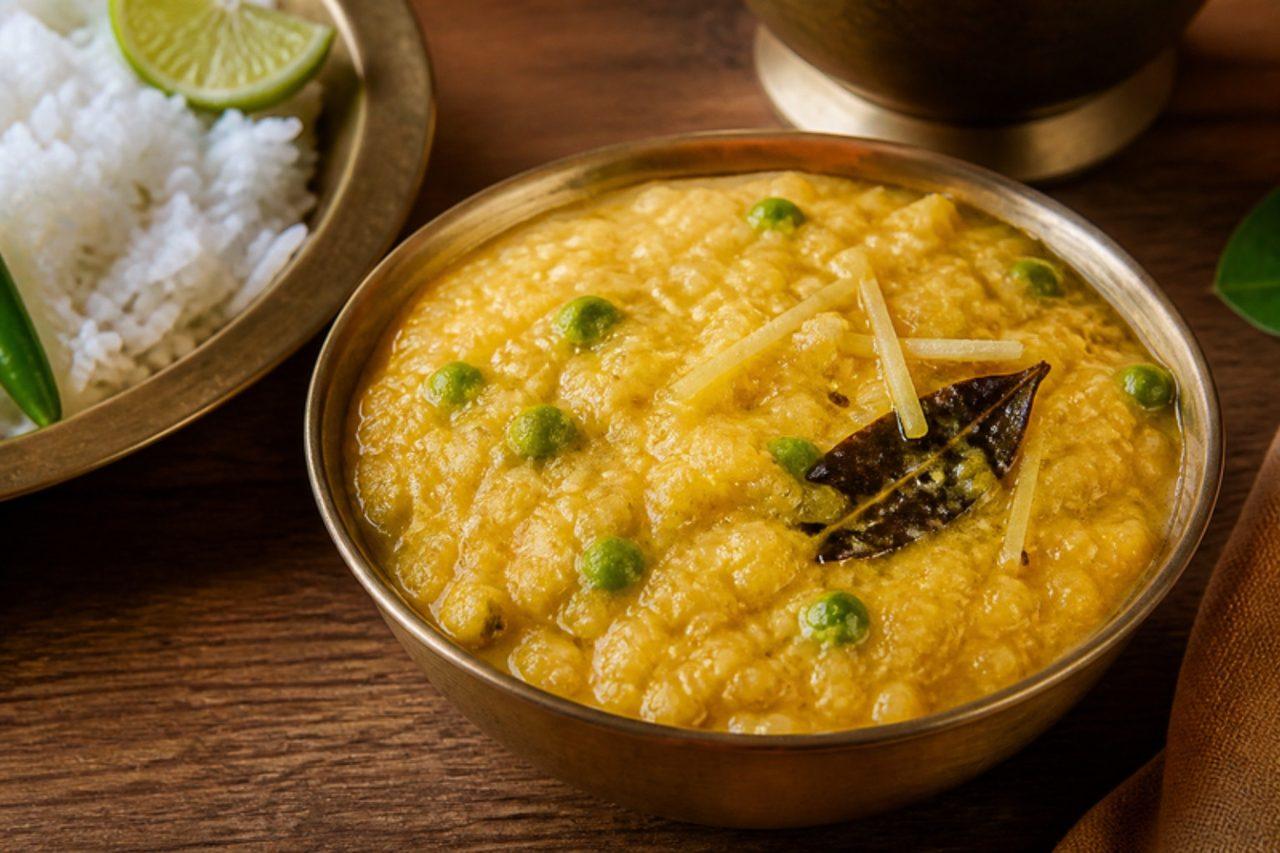
Bengali households in Kolkata make bhaja muger dal on winter weekdays, and it is a fixture of the vegetarian bhog served at Durga Puja and Saraswati Puja. The moong is dry-roasted in a heavy pan until it smells nutty, then cooked soft with ginger and green peas and finished with ghee, bay leaf and a whisper of sugar. The roasting gives it a toasty, almost sweet depth that plain moong dal never has. A portion gives about 21 g of protein from the moong and peas, for about 360 kcal. Serve it with rice and a fried vegetable such as begun bhaja. The most common mistake is roasting over too high a heat: the outside browns while the inside stays raw, and the dal tastes burnt and never softens evenly. Chef's tip: roast only until the dal is a couple of shades darker, pale gold, and you can smell it from the next room; stop the moment you see the first brown spots.
by KrazyBadal 0 views

Kharvas (steamed milk-and-curd pudding, home method)

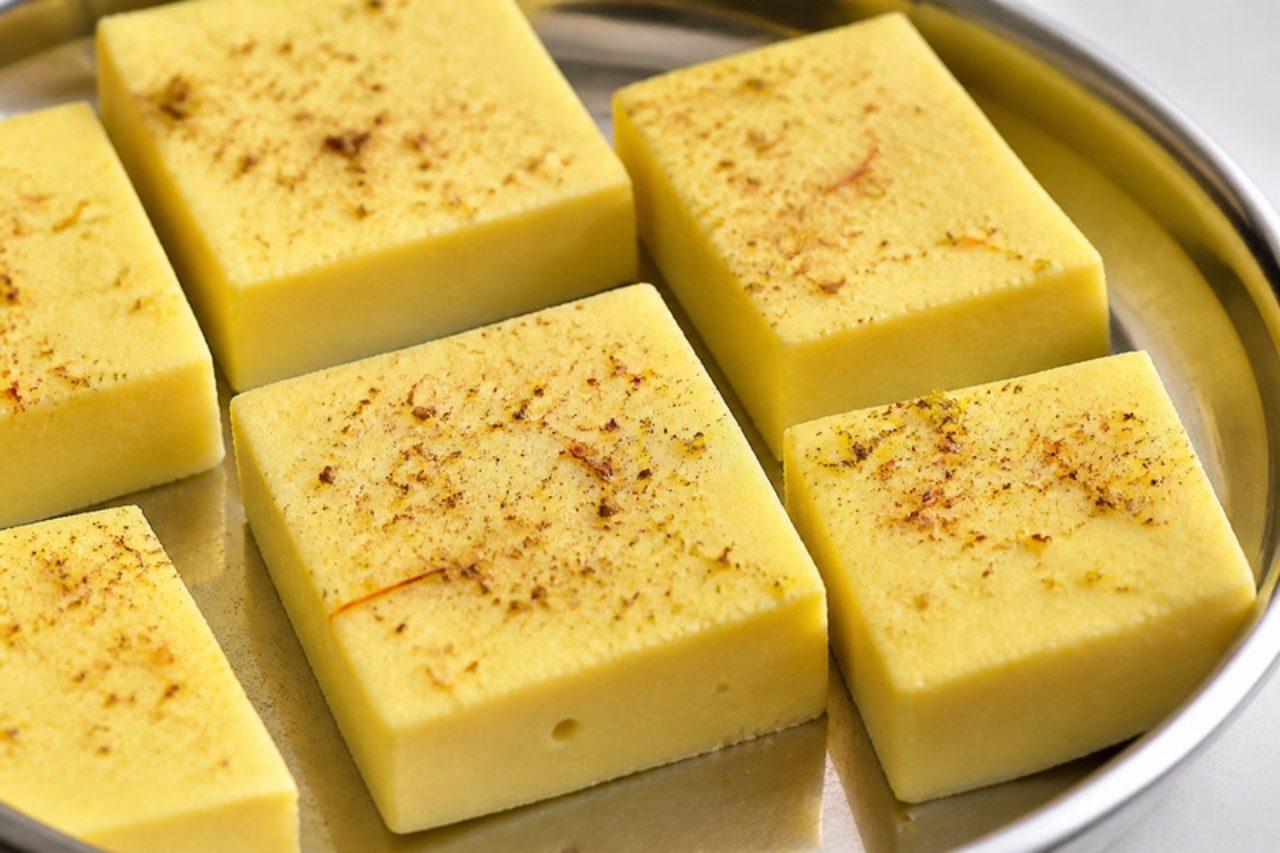
Kharvas is a festive treat in Maharashtra and Gujarat, traditionally made from the first milk a cow gives after calving, which sets into a wobbly pudding when steamed. That milk is hard to find in cities, so home cooks in Pune and Mumbai make a version with ordinary milk, curd and condensed milk, and that is the method here. It is steamed until it sets into a soft, sliceable square with a slightly springy texture, coloured with saffron and lightly sweetened with jaggery, with a hint of nutmeg. Families serve it at room temperature or cold as a teatime sweet, especially in the monsoon and around Ganesh Chaturthi. There is no egg: the curd and condensed milk proteins set on steaming the way colostrum does, and the condensed milk gives body and binds it. Chef's tip: whisk the mixture until completely smooth and strain it, because lumps of curd are the common mistake that leaves holes and a grainy set.

by KrazyBadal 0 views

Aamras (spiced mango pulp)

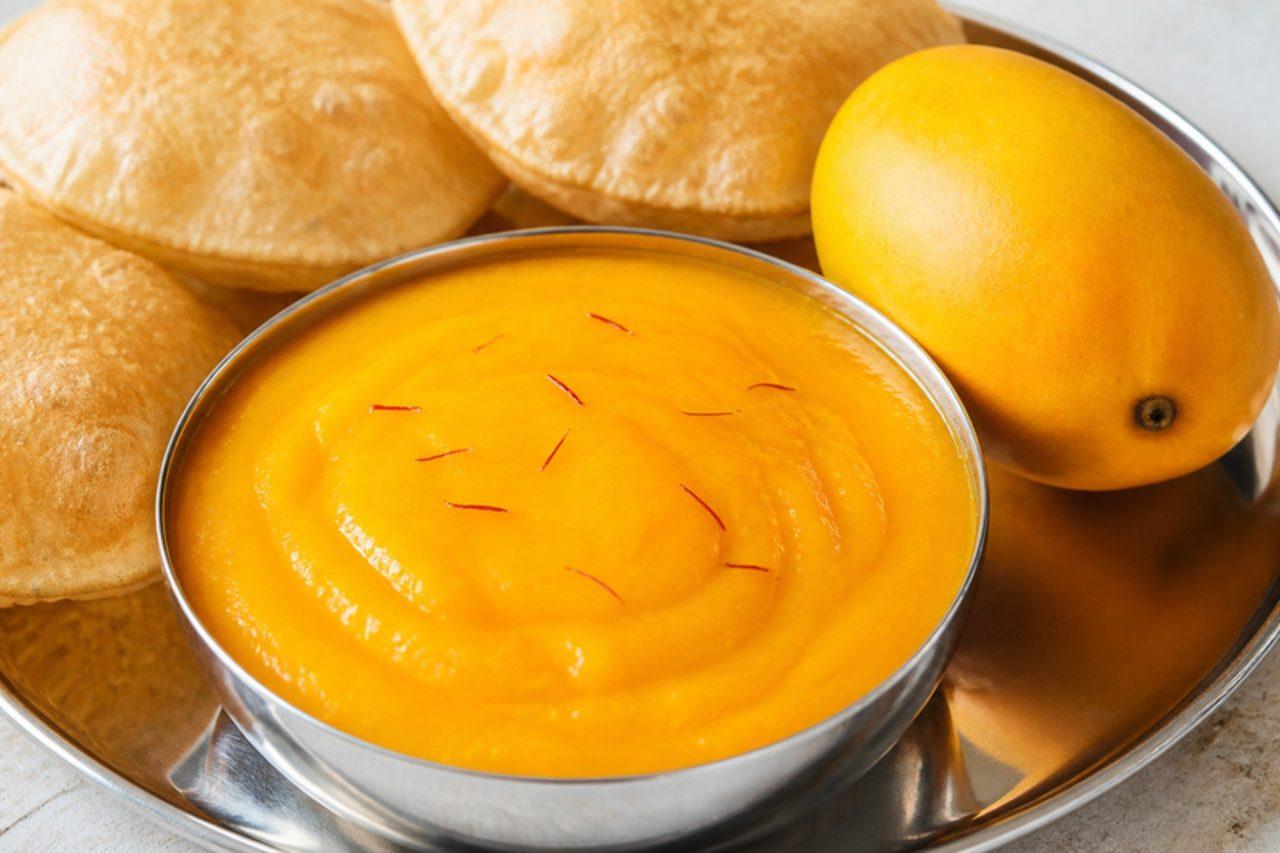
When Kesar mangoes reach Ahmedabad and Alphonsos reach Pune in April and May, aamras appears at almost every summer lunch in Gujarat and Maharashtra. It's simply ripe mango pulp, thick and silky, with a pinch of dry ginger to help digestion, a little cardamom and sometimes a spoon of sugar if the fruit isn't sweet enough. It's eaten as part of the meal rather than after it, scooped up with hot puris, alongside a potato sabzi and dal; in Maharashtra it's also served at Akshaya Tritiya and Gudi Padwa. Spoon it out chilled in bowls, or offer it to children by itself. It is naturally egg-free and vegan: the mango's own thick pulp gives all the body, so nothing needs to bind or set it. Chef's tip: use only soft, fragrant, fully ripe mangoes and press the pulp through a sieve if they are fibrous; under-ripe fruit is the common mistake that makes aamras sour and thin.

by KrazyBadal 0 views

Elaneer payasam (Kerala tender-coconut milk pudding)

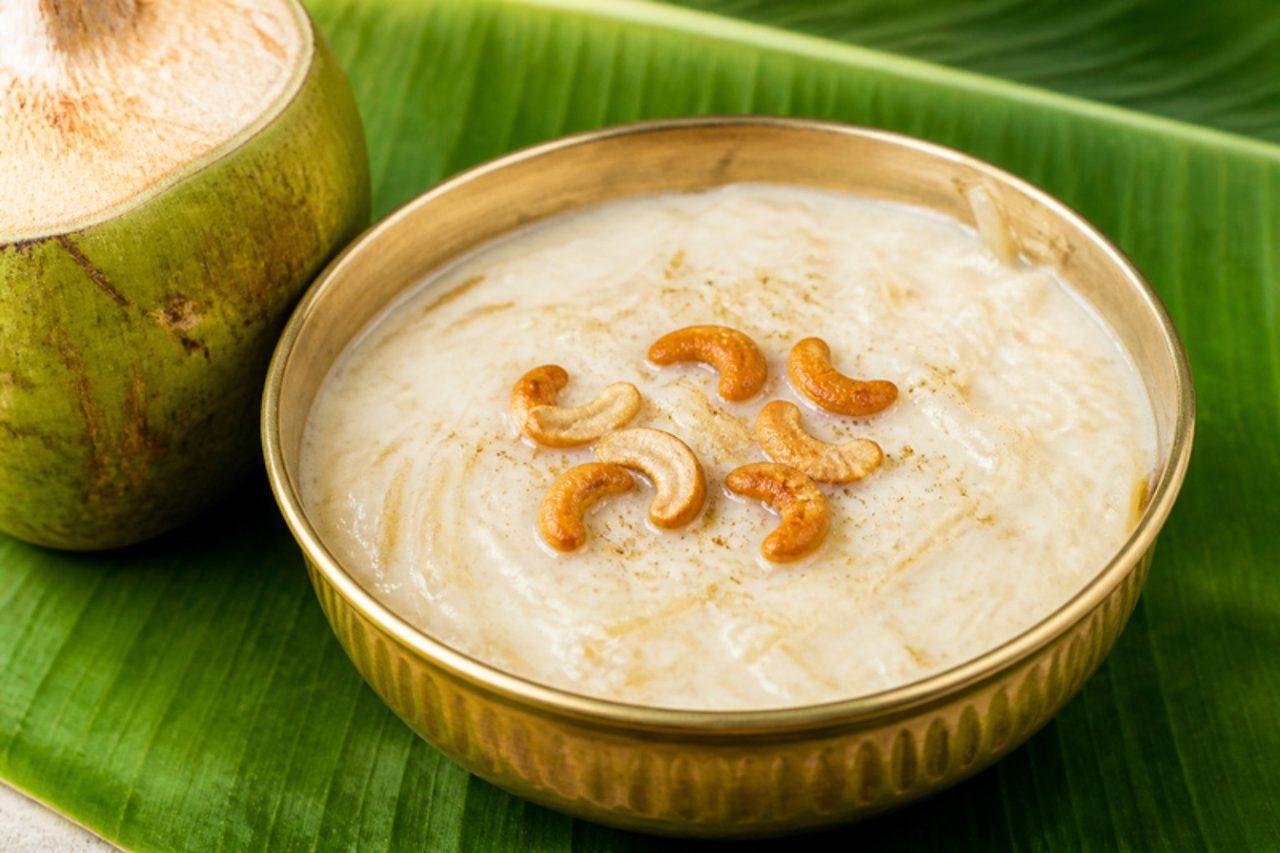
In Kerala, where green coconuts are sold by the roadside all summer, elaneer payasam is the cool, delicate cousin of the hot temple payasams. It turns up at Vishu lunches and summer weddings, and on any hot afternoon when someone has opened a few tender coconuts. Milk is boiled down until creamy and faintly caramel, sweetened, chilled, and only then mixed with slippery spoonfuls of young coconut flesh and a little of its water, so the coconut stays fresh and floral rather than cooked. The pudding is pourable, silky and cold, with soft white strands of coconut through it; serve it in small glasses after a meal or alongside banana chips. It is naturally egg-free: the long reduction of the milk, helped by a little condensed milk, gives the body that a custard would get from yolks. Chef's tip: the common mistake is stirring the coconut water into hot milk, which can make it split and taste sour; let the milk cool completely first.

by KrazyBadal 0 views

Showing 48 of 880 recipes

Show more recipes

Page 7 of 37

More collections