Skip to content
WhatToEat.Today

Vegan Indian recipes

Indian dishes with no dairy, ghee, eggs or meat. (681 recipes)

Dalvada (Ahmedabad moong dal fritters)

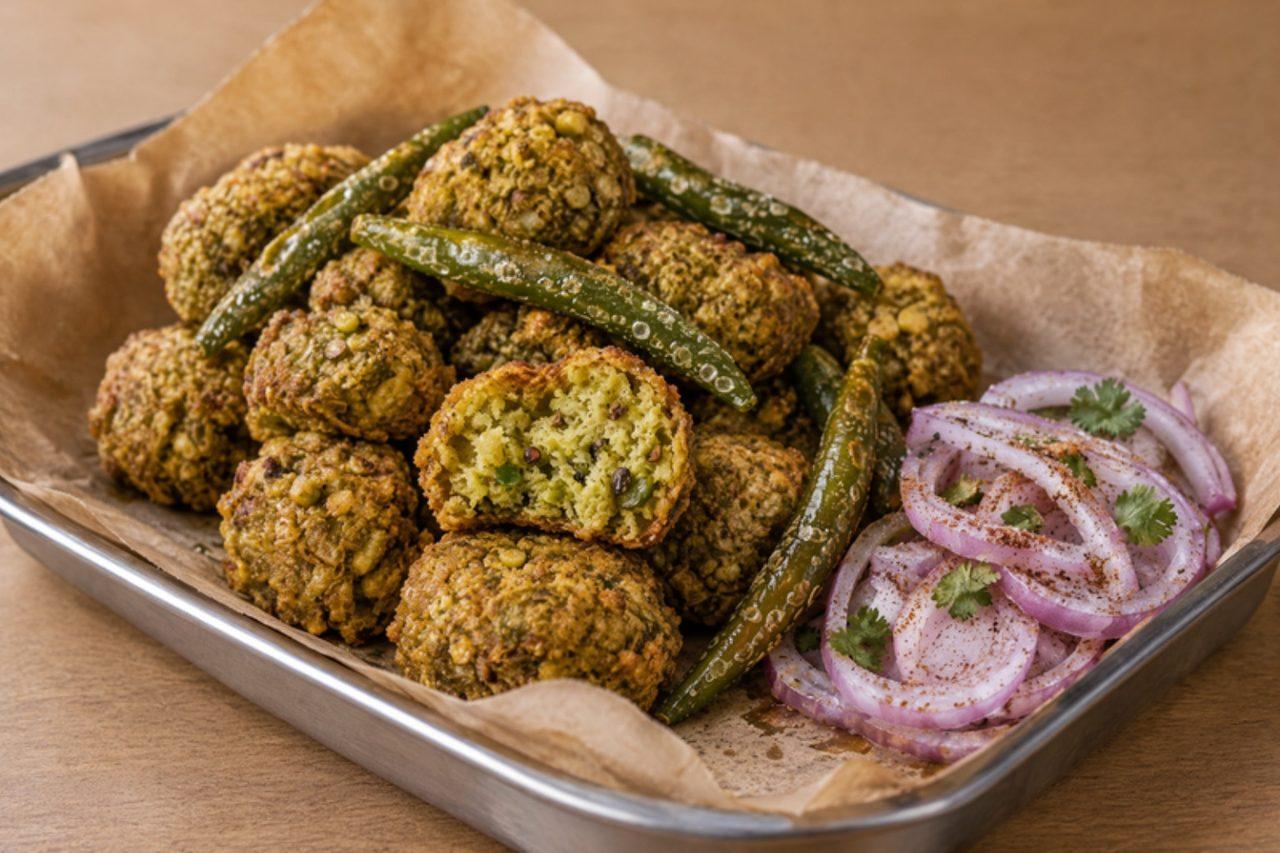
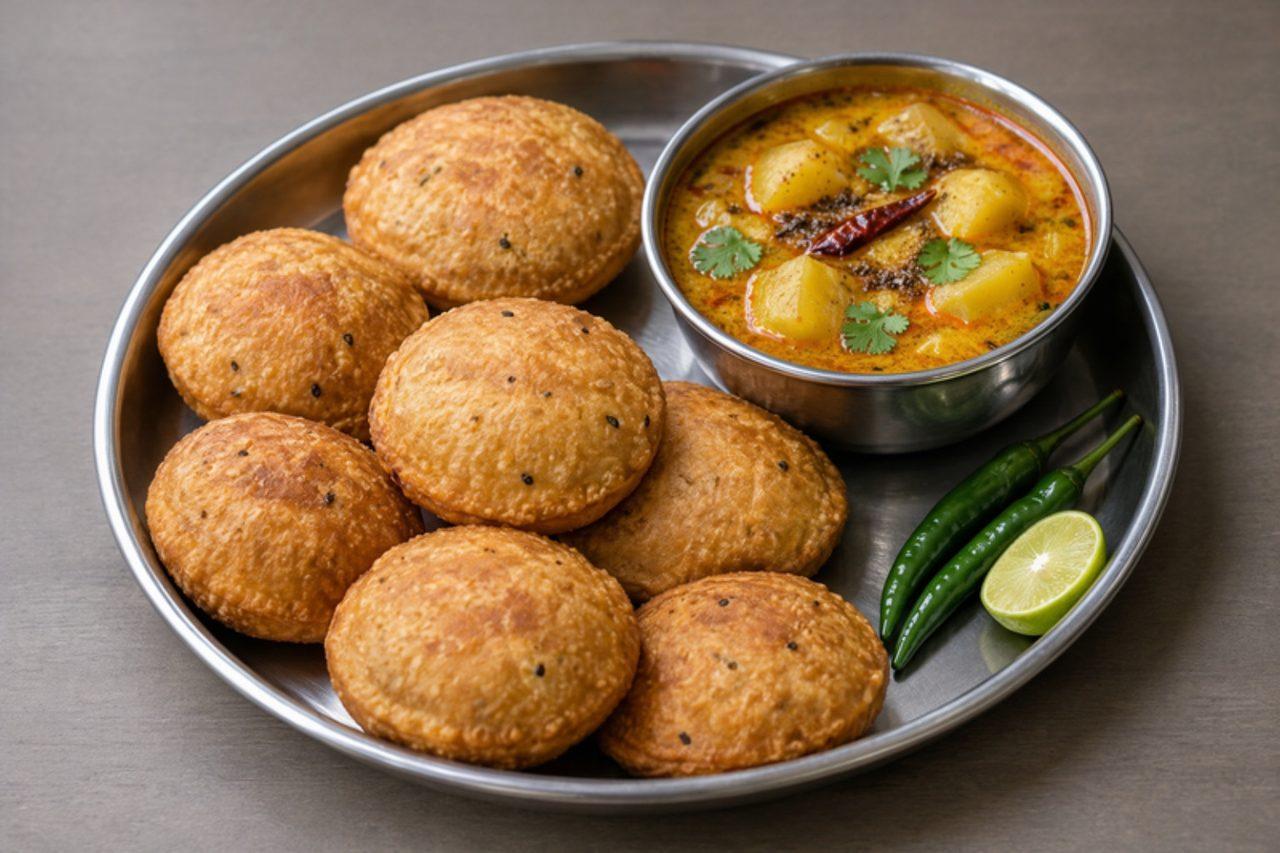
The first monsoon shower in Ahmedabad sends people straight to the dalvada counters by Raipur Darwaja, where fritters of split green moong come out of the karahi by the basketful and are sold by weight with sliced raw onion and salted fried chillies. They are rough and craggy outside, light and steamy inside, warm with ginger and cracked pepper. Eat them hot with masala chai while the rain falls. Chef's tip: grind the dal coarse with almost no water, then whisk the batter by hand for a few minutes; the air you beat in is what keeps them light.

by KrazyBadal 0 views
Burma athoBurmese noodle salad

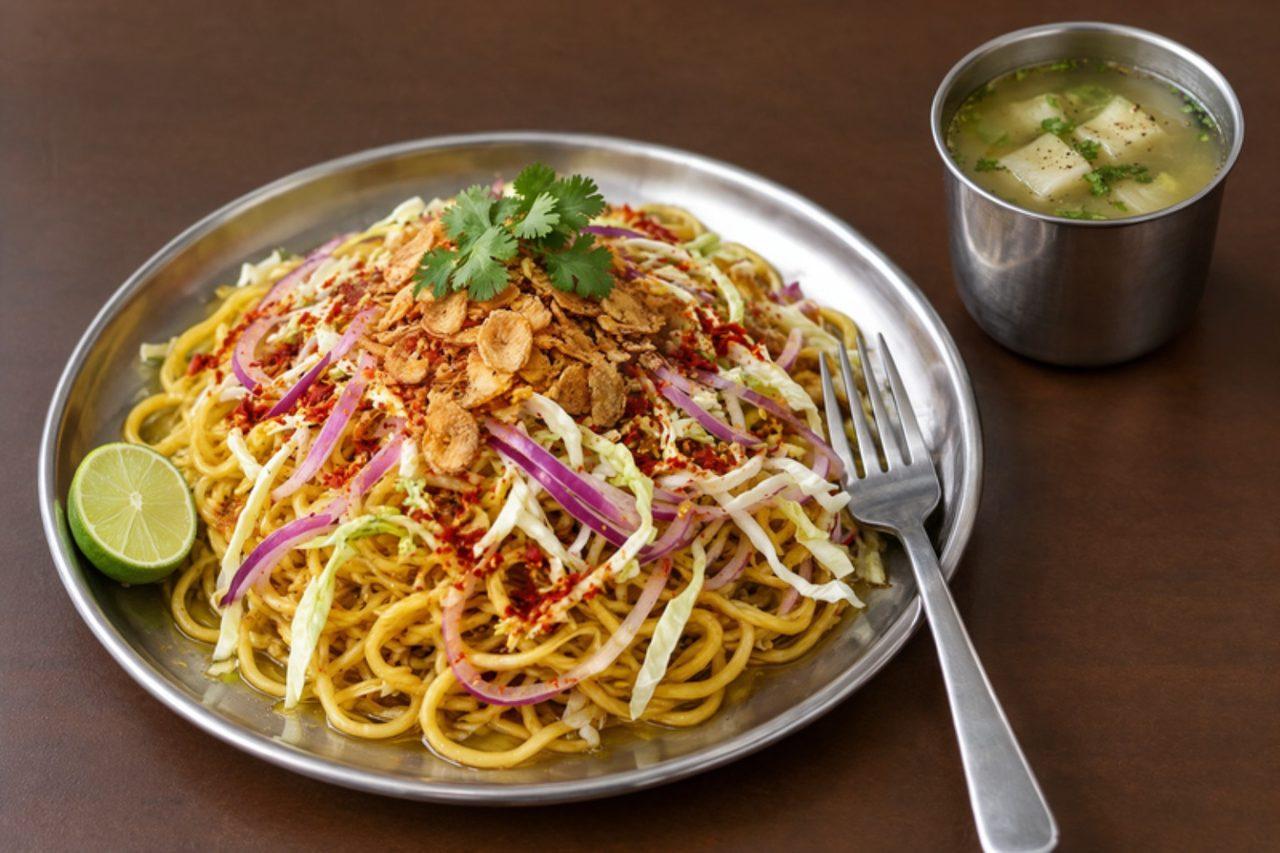
When Tamil families returned from Burma in the 1960s they brought atho with them, and today it is cooked on carts around Burma Bazaar, Parry's Corner and along the roads near the harbour in George Town, busiest at lunch and in the early evening. Cold noodles are mixed by hand with raw cabbage and onion, crisp fried garlic, tamarind, chilli flakes, roasted gram powder and lime, and come with a peppery banana-stem soup on the side. It is sour, hot, crunchy and very moreish. Contains wheat. Chef's tip: fry the garlic slowly until only pale gold; it keeps darkening off the heat and turns bitter if you wait for brown.

by KrazyBadal 0 views
Mushroom kaalanCrisp fried mushroom

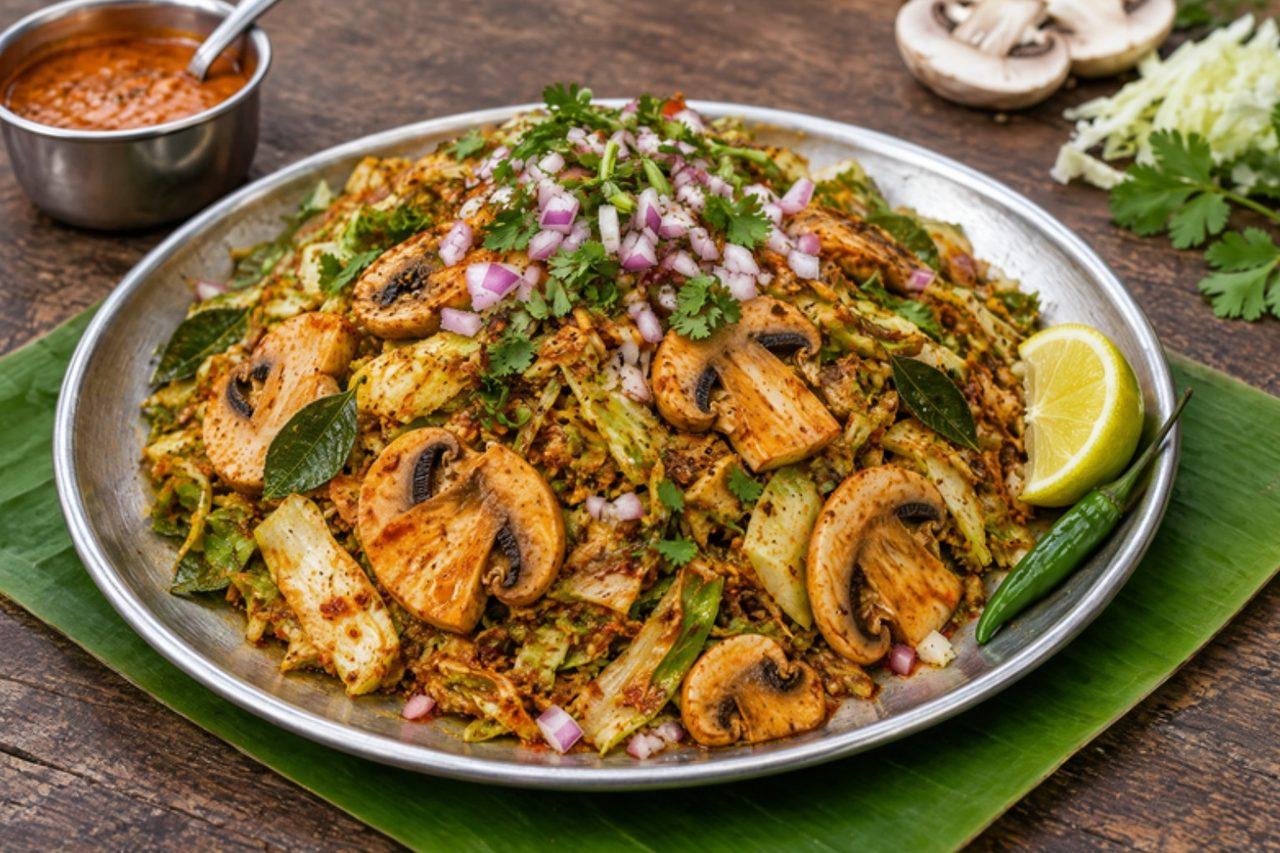
Kaalan is the Chennai evening snack you smell before you see: carts around Pondy Bazaar in T. Nagar and along Besant Nagar beach fry clumps of chopped mushroom and cabbage, then chop them with a steel scraper on a giant tawa into a dark, peppery masala and heap them on paper plates with raw onion and coriander. It is crunchy at first, then soft and spicy as the gravy soaks in. Contains wheat. Chef's tip: mix the batter only when the oil is hot; salted mushrooms start weeping water within minutes and the batter turns sloppy.

by KrazyBadal 0 views
Samosa pavSamosa in a bun

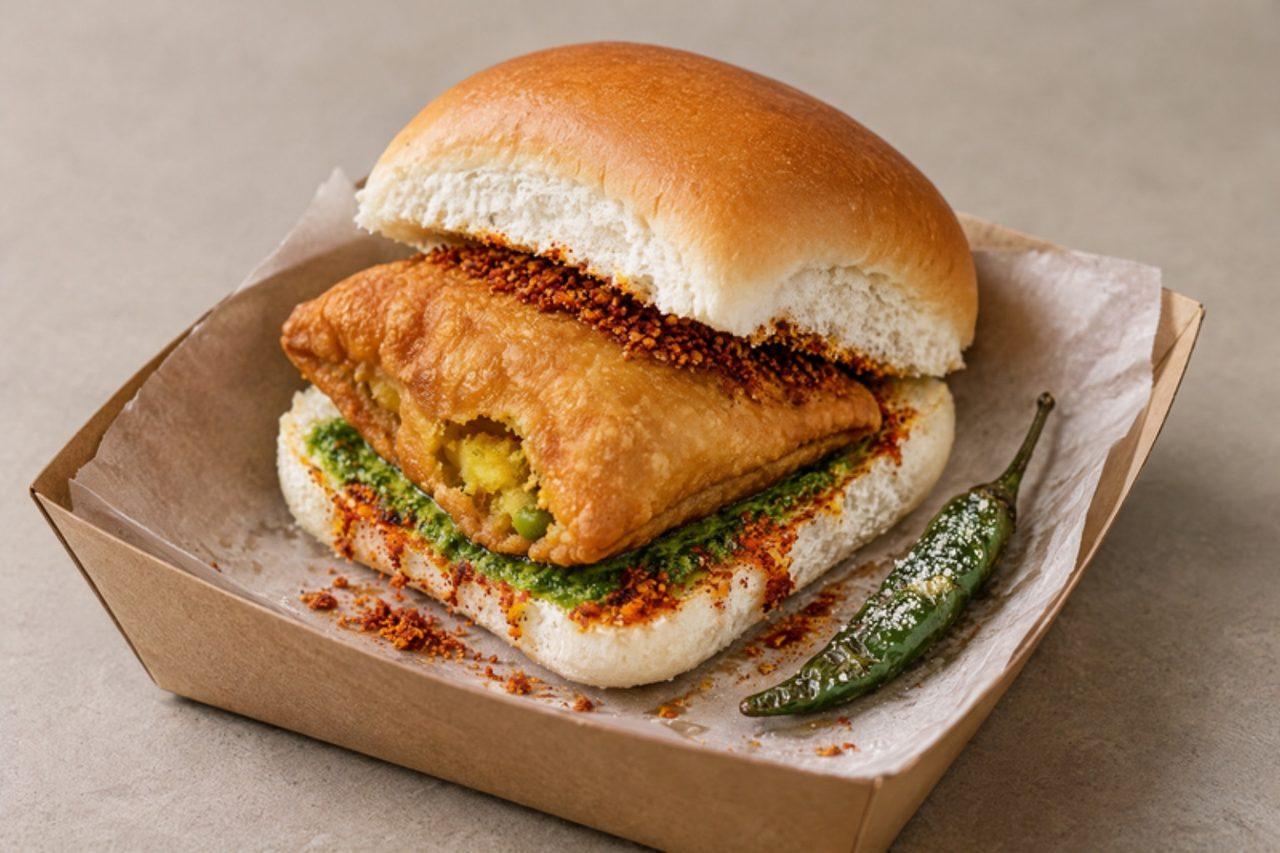
At the steaming kadhais outside Kurla and Ghatkopar stations, and at Sion's famous samosa counters, commuters grab samosa pav on the way to and from the local trains, from breakfast until long after dark. A hot potato samosa is pressed flat inside a soft, split pav with fiery dry garlic chutney and green chutney, and a salted fried green chilli comes on the side. It is filling, cheap, crumbly and hot, and the soft bread soaks up the chutneys. Use dairy-free pav to keep it vegan. Chef's tip: start the samosas in oil that is only warm; slow frying gives the blistered, flaky crust that holds up when squashed.

by KrazyBadal 0 views
Aloo kabliPotato and chickpea chaat

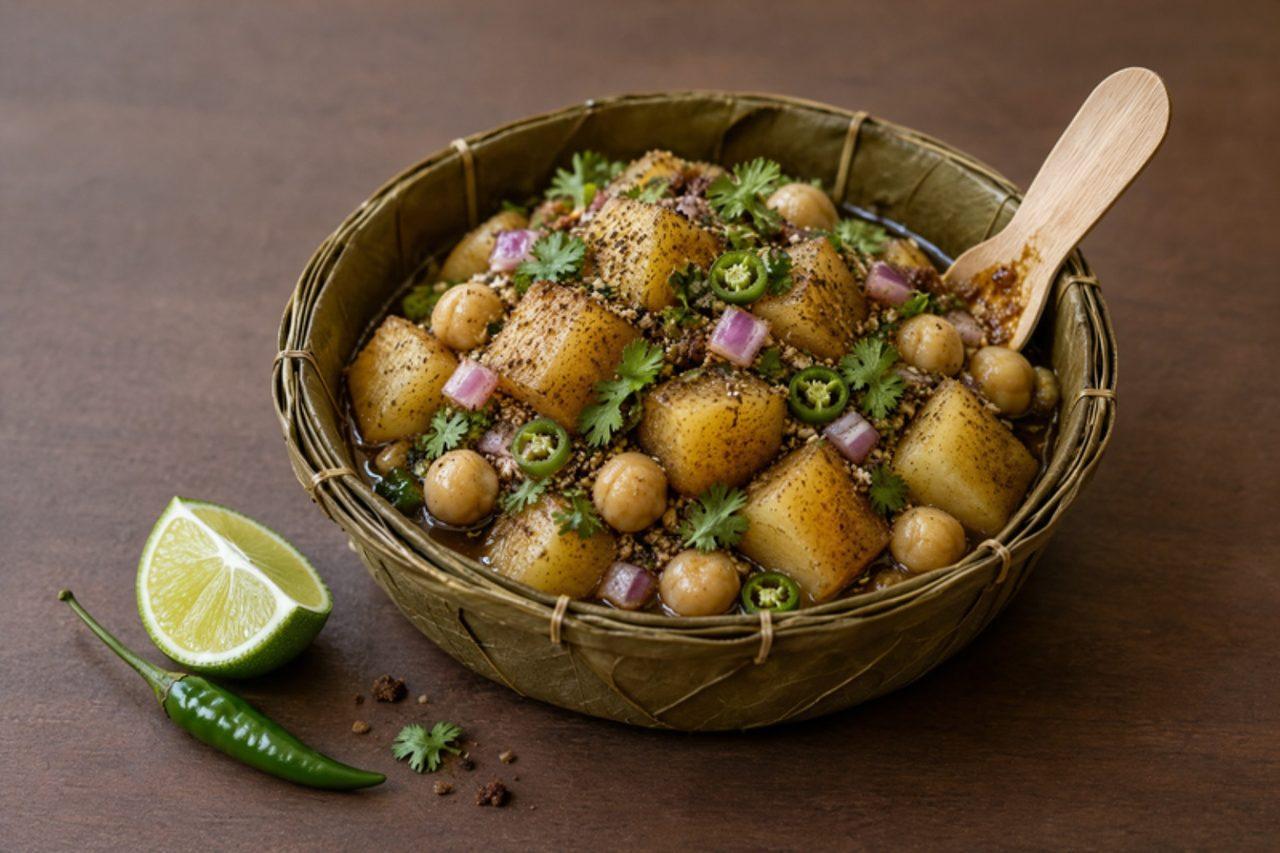
Aloo kabli is the after-school snack of Kolkata: vendors with a big aluminium bowl stand outside the school gates of north Kolkata and around Vivekananda Park from about four o'clock, mixing it to order and spooning it into sal-leaf bowls. Cubes of boiled potato and soft white chickpeas are drenched in sour tamarind water, then seasoned with fresh green chilli, raw onion, roasted cumin and pungent black salt, and finished with a squeeze of lime. It is tangy, smoky and sharp rather than sweet. Chef's tip: dress the potatoes while they are still slightly warm so they drink up the tamarind.

by KrazyBadal 0 views
MagayaSun-dried mango pickle

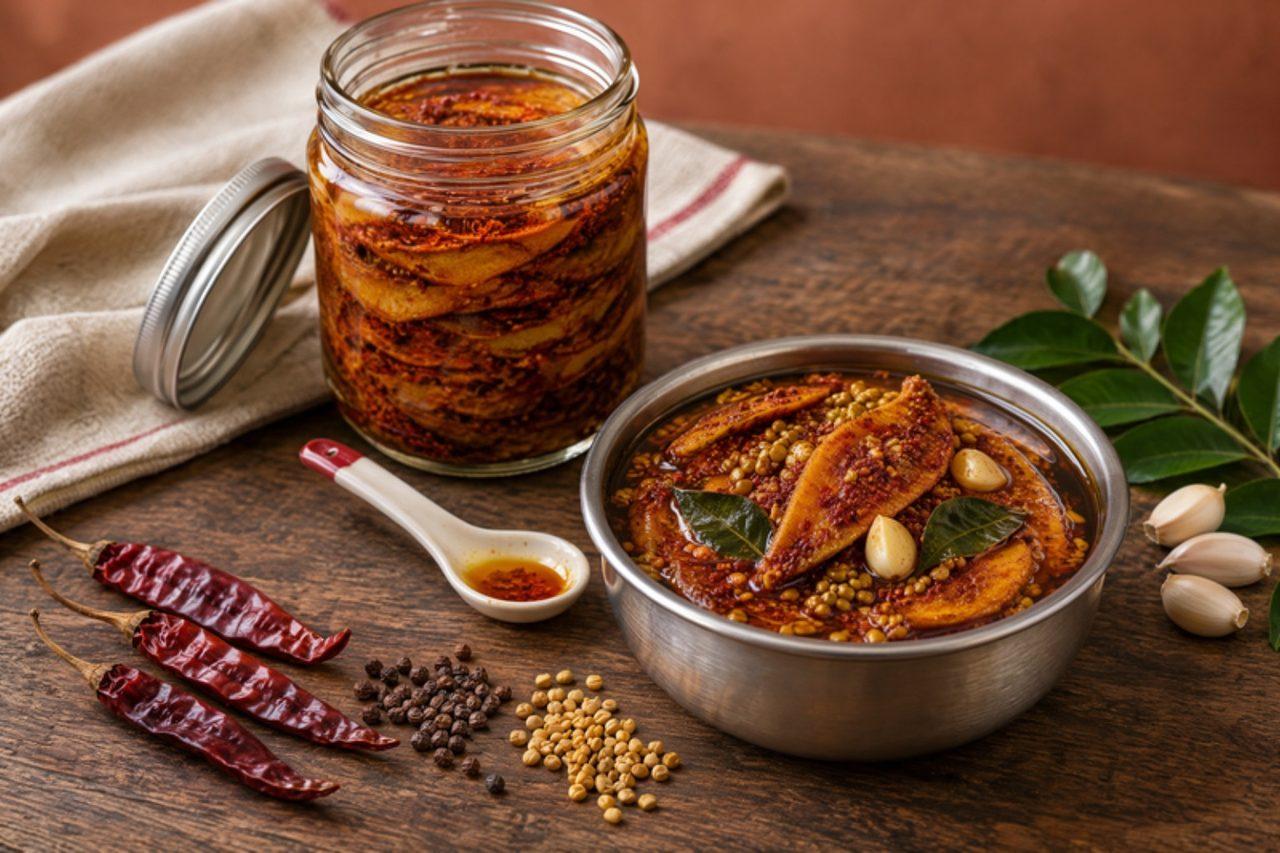
In Andhra Pradesh the pickle season opens around Ugadi, and long before the fiery avakaya is cut, many homes make magaya, the gentler mango pickle. Peeled raw mango is sliced thin and salted until it weeps a yellow brine (magaya ooru), the slices are dried in the hot April sun until leathery, then mixed back into the brine with mustard powder, chilli and fenugreek and sealed under a tempering of gingelly oil. After a week the slices are chewy and soft, tangy and salty, with a rounder heat than avakaya. It is eaten with hot rice and a spoon of ghee, stirred into curd rice, or turned into a raita-like magaya pachadi with yoghurt; the leftover brine is mixed into plain rice. The salt is about 10% of the peeled mango weight (100 g per kg), which, with the fruit's own acid, keeps it safe. Common mistake: drying the slices to hard chips, or too little so they stay wet and mould; stop when they bend without snapping. It is ready when the slices have softened, turned deep red-orange and the oil floats on top. Chef's tip: no sun? A dehydrator or oven at 50 °C dries the slices in 6–8 hours.

by KrazyBadal 0 views
Bellam avakayaSweet raw mango pickle

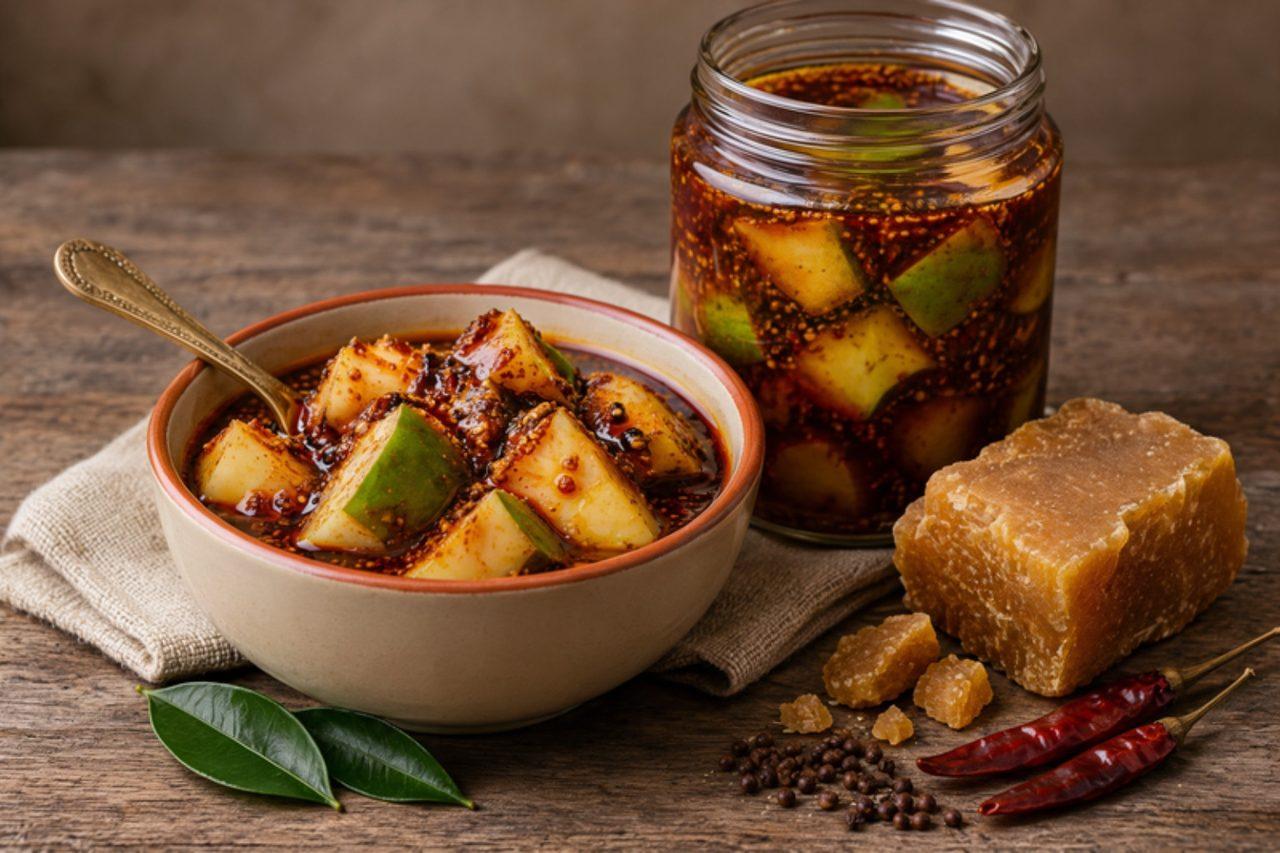
In the Godavari districts of coastal Andhra, the same May afternoon that produces a jar of fiery avakaya usually produces a second jar of bellam avakaya for the children and anyone who likes it sweet. The mangoes are hacked into chunks with their skin and the hard shell of the stone still attached, then tossed with chilli, mustard powder, salt and plenty of grated jaggery. Over three or four days the jaggery melts into a dark, glossy syrup that clings to every piece. It tastes sweet first, then the mustard catches the nose and the chilli warms the back of the throat; the mango stays firm and sour. Eat it with pesarattu, dosa, chapati or curd rice. The salt is about 8% of the mango weight and the fruit is acidic, so it keeps all year under oil in a dry jar. Common mistake: cutting the mangoes wet or leaving sap and water on them; any moisture invites mould, so dry each piece with a cloth. It is ready when no jaggery grains remain and a film of oil rises to the top. Chef's tip: wipe off the milky sap at the stalk end before cutting; it stings the skin and tastes bitter.

by KrazyBadal 0 views
Pesara avakayaMoong dal mango pickle

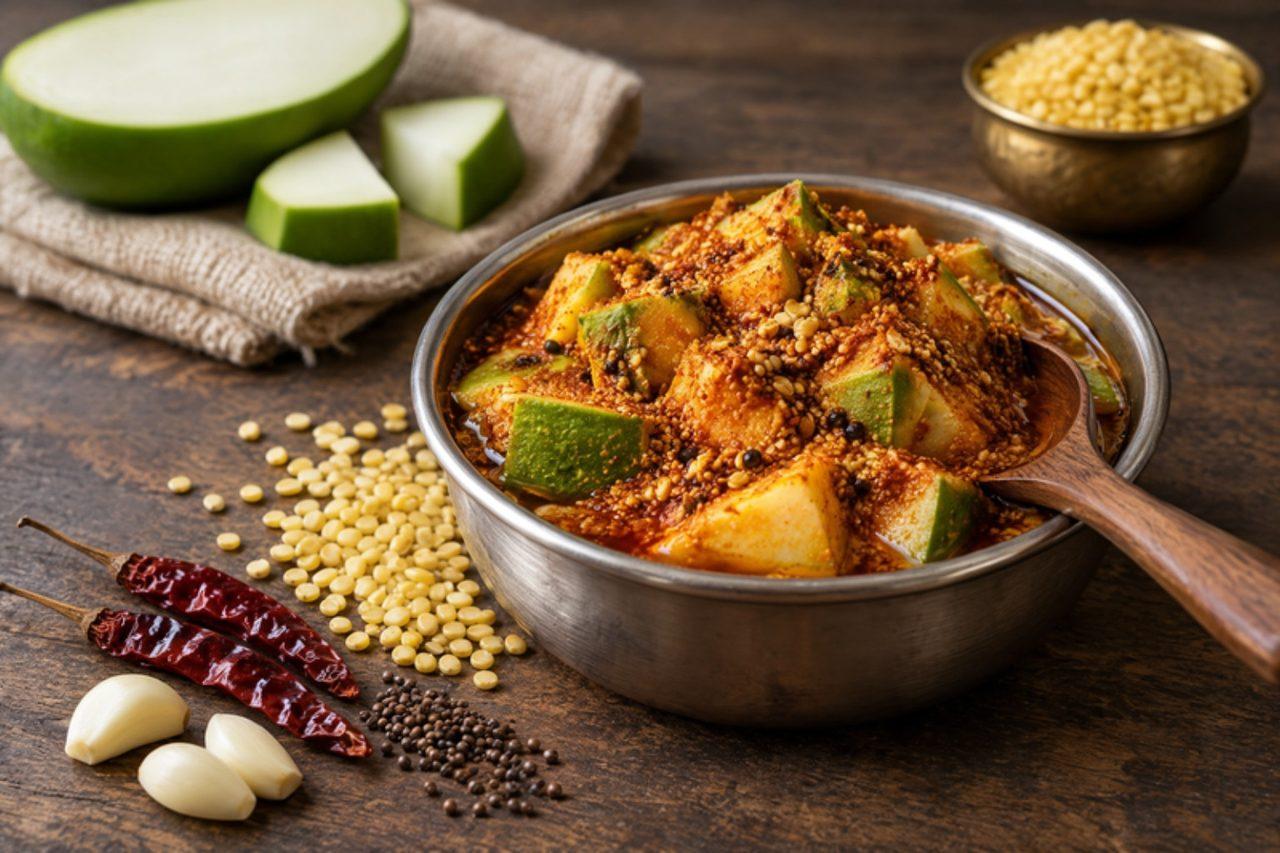
Pesara avakaya is the Krishna and Guntur districts' answer for anyone who finds classic avakaya too sharp. It is cut and mixed in the same summer weeks, from the same sour mangoes, but finely ground raw yellow moong dal replaces most of the mustard. The dal swells in the mango juice and oil and turns the masala thick, nutty and almost creamy, so it clings to each piece, while a little mustard keeps a hint of nose-tingle. It is still properly hot from the chilli. Eat it with hot rice and ghee, with pesarattu, or alongside a plate of curd rice. Some families add garlic; if you do, the jar must live in the fridge. Common mistake: grinding the dal coarsely, which leaves a gritty masala; sift it and regrind the bits. Another is skimping on oil: the dal absorbs a lot, so top up until the pickle is covered. The salt is about 9% of the mango weight. It is ready after three days, when the masala is thick and clinging and oil has risen to the surface. Chef's tip: warm the dal in a dry pan for 2–3 minutes without colouring it; it grinds finer and keeps better.

by KrazyBadal 0 views
Menthi avakayaFenugreek mango pickle

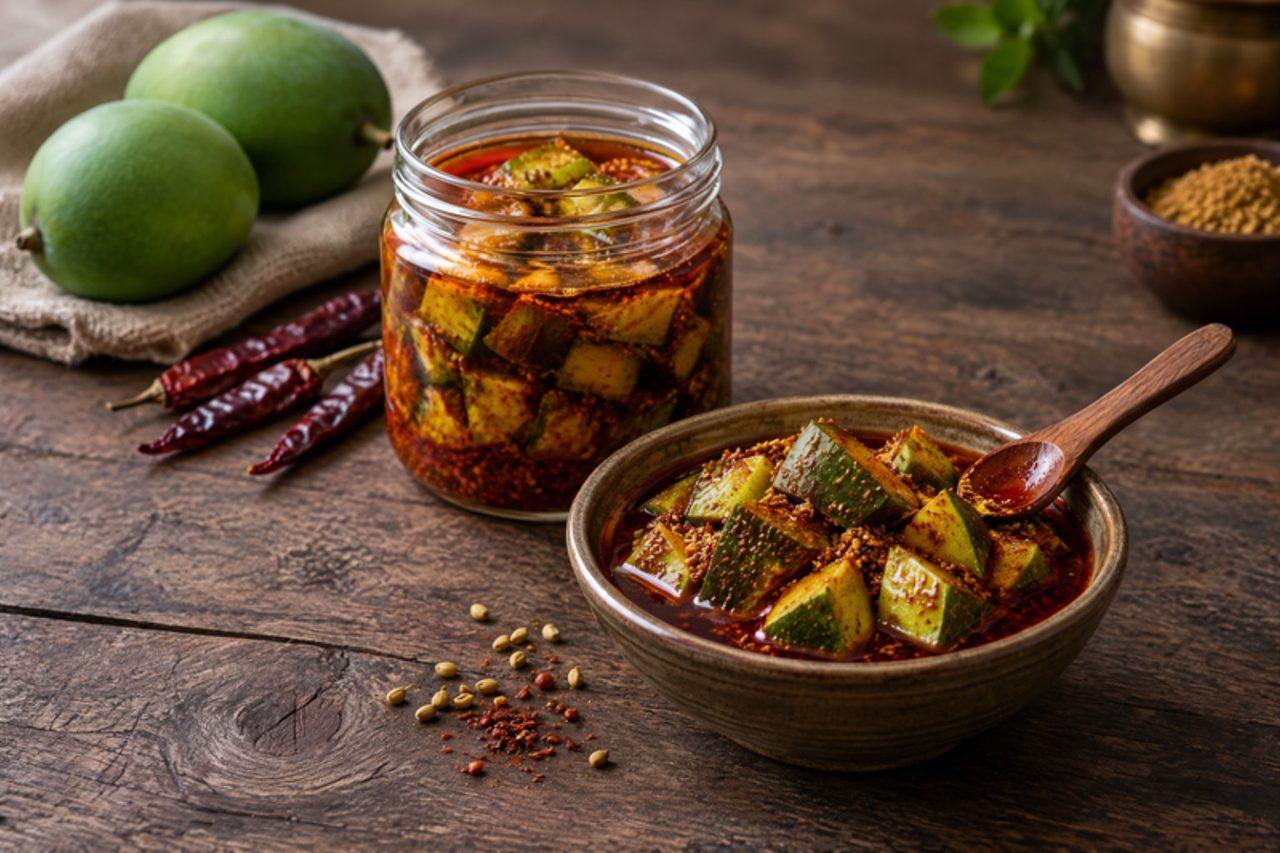
In East Godavari kitchens menthi avakaya is the mango pickle for people who love bitterness: instead of a mustard-heavy masala, it is built on fenugreek seeds roasted until golden and ground, with red chilli, salt and a tempering of mustard seeds and asafoetida in gingelly oil. Families make it in the hottest weeks of May, when the mangoes are at their sourest, and it is traditionally eaten through the summer with hot rice, ghee and a dal. The fenugreek gives a toasty, almost maple-like aroma and a pleasant bitter edge that sits against the sour mango and the chilli heat. The salt is about 9% of the mango weight, and the pickle keeps for a year under oil in a dry jar. Common mistake: roasting the fenugreek too dark; it turns acrid, and that bitterness spreads through the whole jar. Roast it slowly until golden and fragrant, then let it cool before grinding. It is ready after two or three days, when the mango has darkened, the fenugreek smell has mellowed and oil sits on top. Chef's tip: grind the fenugreek only when completely cold, or it turns pasty and clumps.

by KrazyBadal 0 views
DosavakayaCucumber mustard pickle

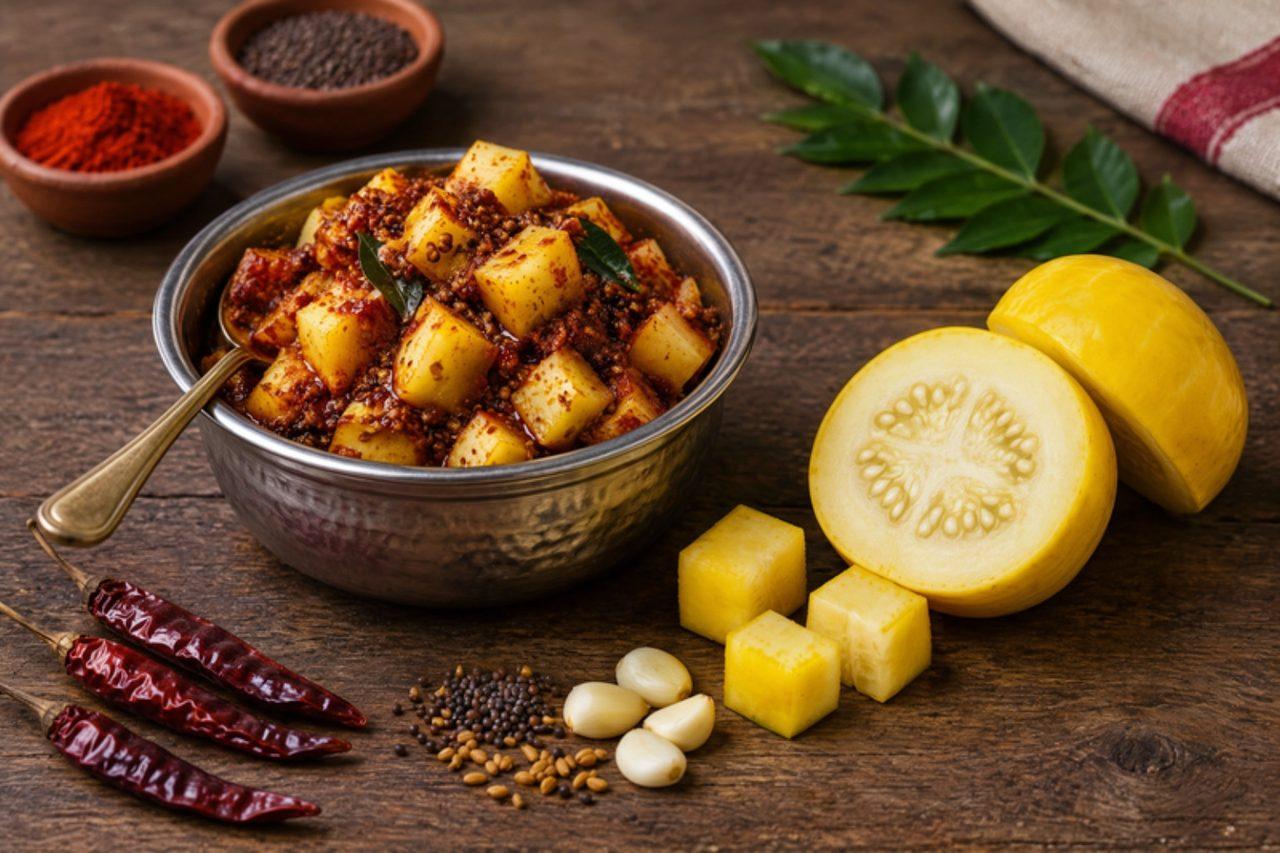
Dosavakaya is the everyday pickle of Andhra homes: no waiting for mango season, just a round yellow dosakaya cubed with its skin on and tossed with mustard powder, chilli, salt, garlic and raw gingelly oil. It is made in minutes, often for Sunday lunch or to go with a festive meal, and eaten over the next few days with hot rice and ghee, pappu or curd rice. It is crunchy, juicy and mustard-sharp, hot and tangy, and the cubes give off a little juice that loosens the masala into a sauce. Dosakaya is sold in Indian grocers abroad; if you cannot find it, use a firm field cucumber, seeded, and add a little extra lemon juice for the missing tang. Because it contains raw garlic and cucumber, it is a fridge pickle: acidified with lemon and eaten within a week. Common mistake: using a bitter cucumber; taste a sliver from each end before you cut, and discard any that taste bitter. It is ready 2–3 hours after mixing, when the masala has turned glossy and the cubes taste seasoned through. Chef's tip: keep the skin on; it holds the crunch.

by KrazyBadal 0 views
Tomato oorugayaTomato and tamarind pickle

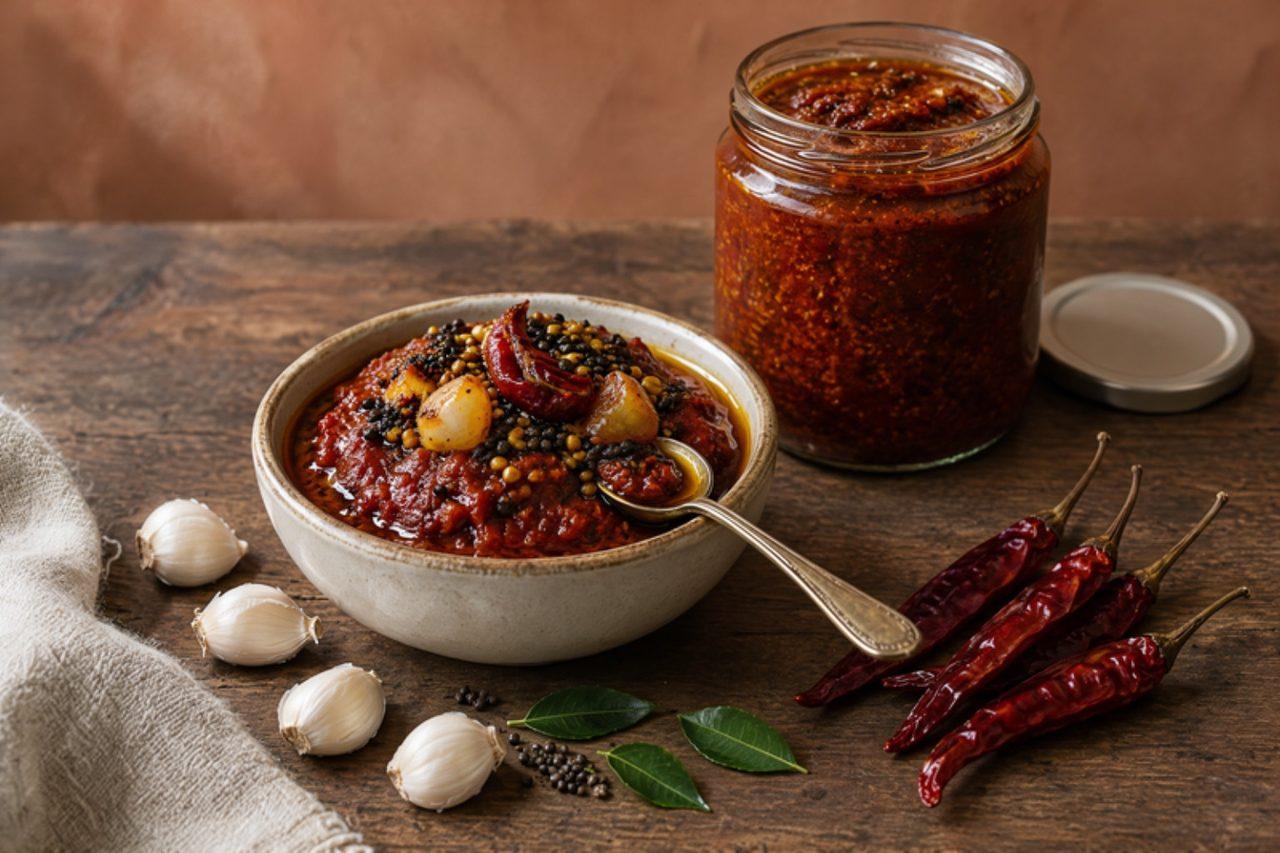
When tomatoes flood the Madanapalle and Kurnool markets in the hot months and prices drop, Andhra cooks turn them into this deep red oorugaya. Chopped tomatoes are salted and cooked down with tamarind until most of the water has gone, then simmered in sesame oil with chilli, garlic and a freshly roasted fenugreek-mustard powder. The texture is a thick, almost jammy paste; the taste is tangy, salty and hot, with the slight bitterness of methi lifting the sweetness of ripe tomato. Mash a spoonful into steaming rice with ghee, or serve it with dosa, upma and curd rice. The common mistake is stopping too early: if water is left in the paste the pickle will spoil within days. Keep cooking until the paste holds together, leaves the sides of the pan and the oil separates and shines on the surface. Because it has garlic and tomatoes are not as acidic as tamarind alone, store it in the fridge, where it keeps up to 2 months. Chef's tip: use firm, fully ripe country tomatoes rather than watery salad ones; you will cook for less time and get a richer colour.

by KrazyBadal 0 views
Maangai thokkuGrated raw mango pickle

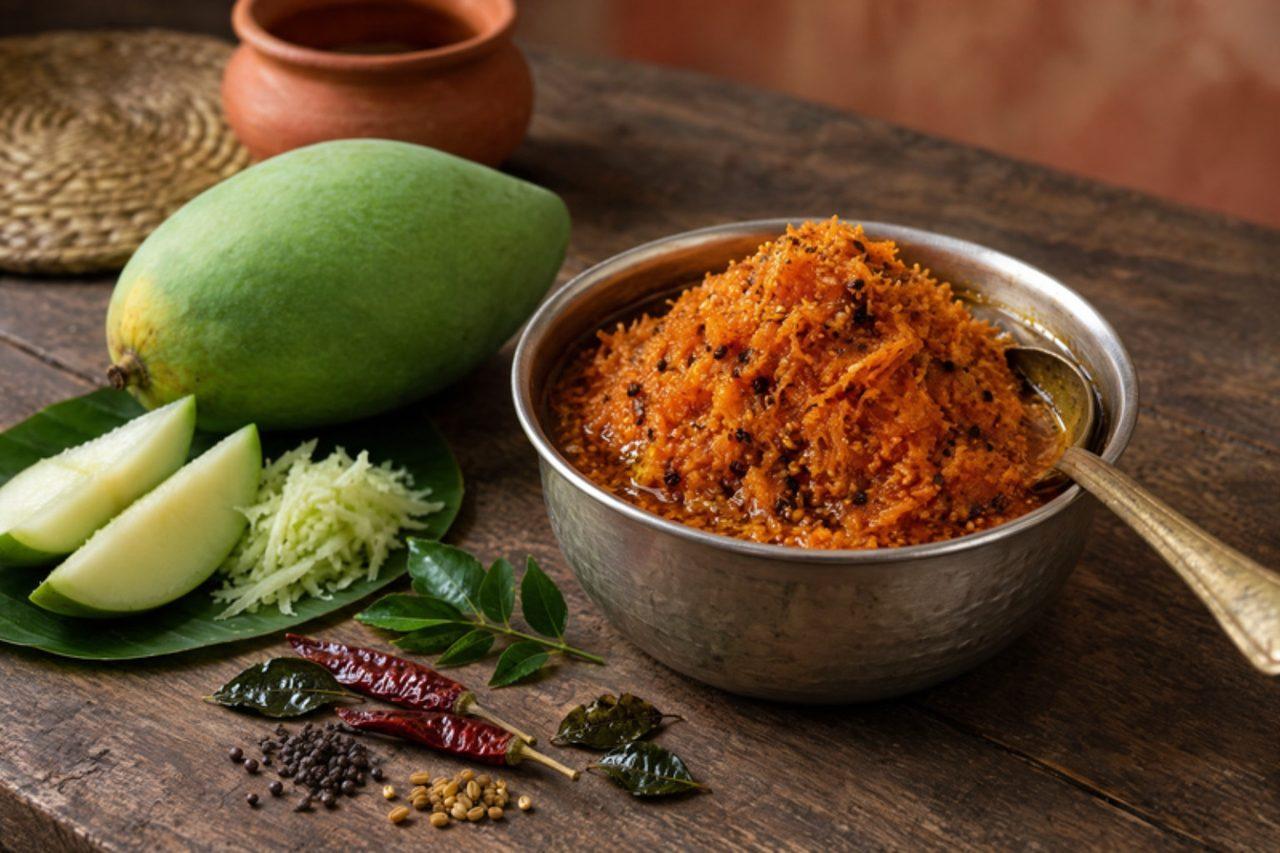
Thokku is the Tamil word for a pickle cooked down to a thick, spoonable mass, and maangai thokku is the one every Tamil Nadu home makes in April and May when the hard, sour Kili mooku (parrot-beak) mangoes are cheap. Grated mango is simmered in nallennai (gingelly oil) with chilli powder, salt and hing until it turns dark, glossy and jam-like, then finished with roasted fenugreek powder. It is sour first, then hot, with a nutty sesame taste and a little bitterness at the end. It is a classic partner for curd rice, a spoonful inside a dosa, or a travel companion with idli and lemon rice for train journeys. The usual mistake is grating the mango too fine or stirring it too little: a fine pulp sticks and burns. Use the large holes of the grater and keep stirring once it thickens. It is done when the mango has darkened, comes away from the pan in one mass and the oil oozes out around the edge. Kept in a dry jar under a film of oil it lasts about 2 weeks in a cool cupboard and 2 months in the fridge. Chef's tip: a teaspoon of jaggery at the end rounds off very sour mangoes without making the thokku sweet.

by KrazyBadal 0 views
Aam ki launjiSweet and sour raw mango relish

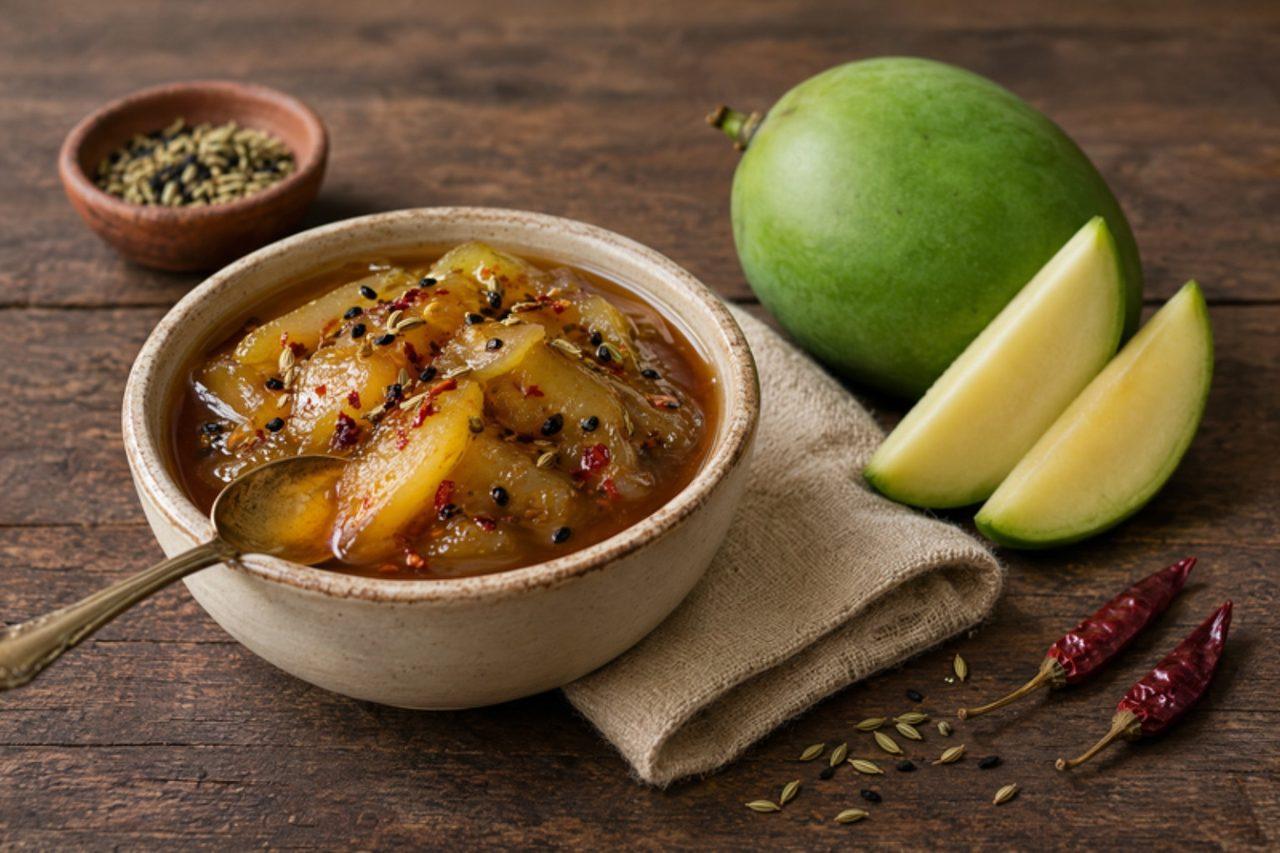
In Rajasthan and across the Hindi belt, launji is the quick mango relish made the day the first raw mangoes come home in April, and it keeps appearing on the thali all through the scorching summer. Unlike the long-cured achaars, it is cooked in 20 minutes: mango pieces in mustard oil with saunf, kalonji, methi and cumin, then simmered with jaggery until glossy. The pieces stay soft but hold their shape in a thick, amber syrup that is sweet first, then sour, with a warm hum of chilli and a liquorice note from the fennel. Eat it with dal-baati, puri, paratha or plain khichdi; in the heat it is believed to cool the body. The common mistake is adding the jaggery too early, so it caramelises and turns bitter before the mango is tender; cook the mango first, then the jaggery. It is ready when the syrup coats the back of a spoon and the mango looks translucent at the edges. It thickens as it cools. Store in a clean jar in the fridge and eat within a week to 10 days. Chef's tip: leave a little peel on some pieces; it gives a pleasant chew and stops the mango from turning to mush.

by KrazyBadal 0 views
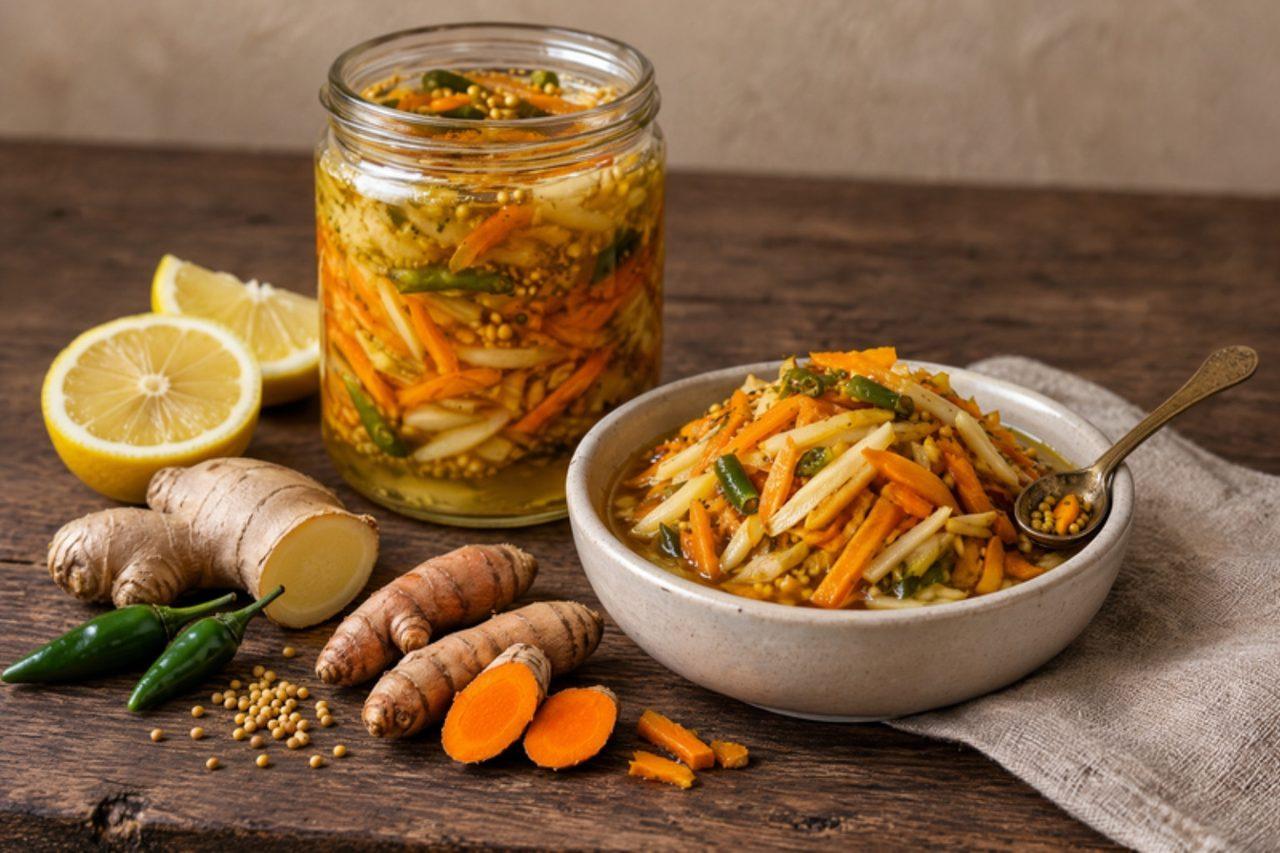
Kachi haldi ka acharFresh turmeric pickle

From December to February, fresh turmeric root turns up in heaps in the mandis of Jaipur, Jodhpur and Udaipur, bright orange inside and earthy-sweet. Rajasthani families eat it as a warming winter food, cooked in ghee as kachi haldi ki sabzi or, more simply, as this fresh pickle with ginger and green chilli. The slivers stay crisp and juicy; they taste peppery and slightly bitter, with sharp lemon and the nose-tingling bite of split mustard seed. It sits beside bajra roti, dal and a winter sabzi, and a few pieces with lunch is the whole point. The common mistake is cutting thick chunks: turmeric is fibrous, so slice it into matchsticks or thin coins so the lemon can soak in. It is ready to eat after 2 days, when the slivers have turned a shade softer and the juice has gone golden. Because it contains fresh ginger and chilli, keep it fully covered in the lemon juice and store it in the fridge, where it keeps for about 4 weeks. Wear gloves and use a steel or glass bowl, as turmeric stains wood, plastic and fingers for days. Chef's tip: pick plump, firm roots with smooth skin; wrinkled ones are dry and woody.

by KrazyBadal 0 views
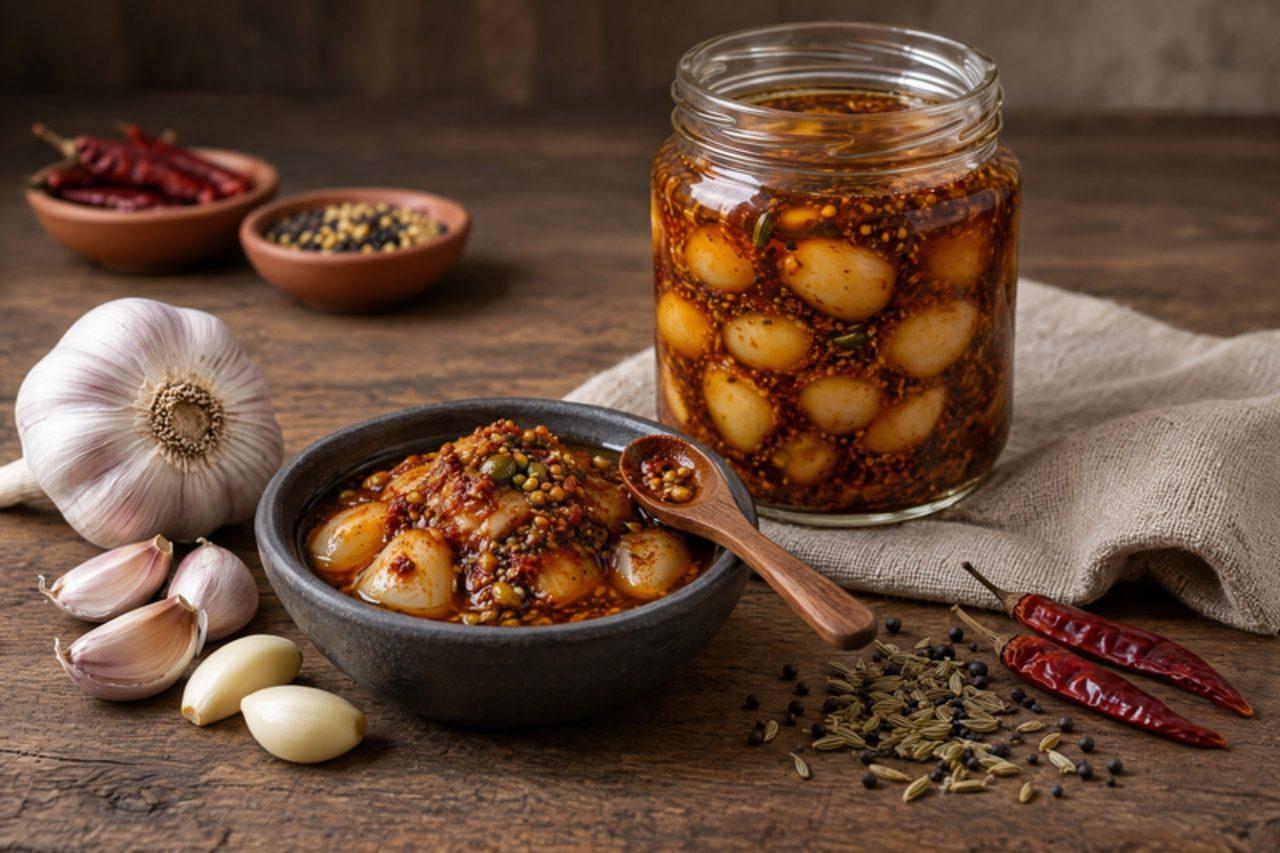
Lehsun ka acharGarlic pickle

Rajasthani homes put up garlic pickle in the dry months after the new crop comes in, and it is the pickle that turns a plain plate of bajra roti and kadhi into a meal. Whole cloves sit in a coarse masala of saunf, methi, mustard, chilli and amchur bound with mustard oil; after a week they are mellow and tender-crisp, pungent and sour with a slight sweetness. Traditionally the jar matures in the sun for days, but garlic in oil at room temperature can carry botulism, so this version is adapted: the cloves are first soaked in lemon juice and vinegar for a day to make them properly acidic, and the pickle matures and lives in the fridge. Use vinegar of at least 5% acidity, never diluted. Don't worry if a few cloves turn blue-green; that is a harmless reaction between garlic and acid. The common mistake is skipping the acid soak to save time; do not. It is ready after a week, when the cloves have lost their raw burn and taste of the masala right through. Keep it in the fridge for up to a month. Chef's tip: choose small, firm desi garlic with tight skins; big soft cloves go limp in the acid.

by KrazyBadal 0 views
Tetul acharTamarind pickle

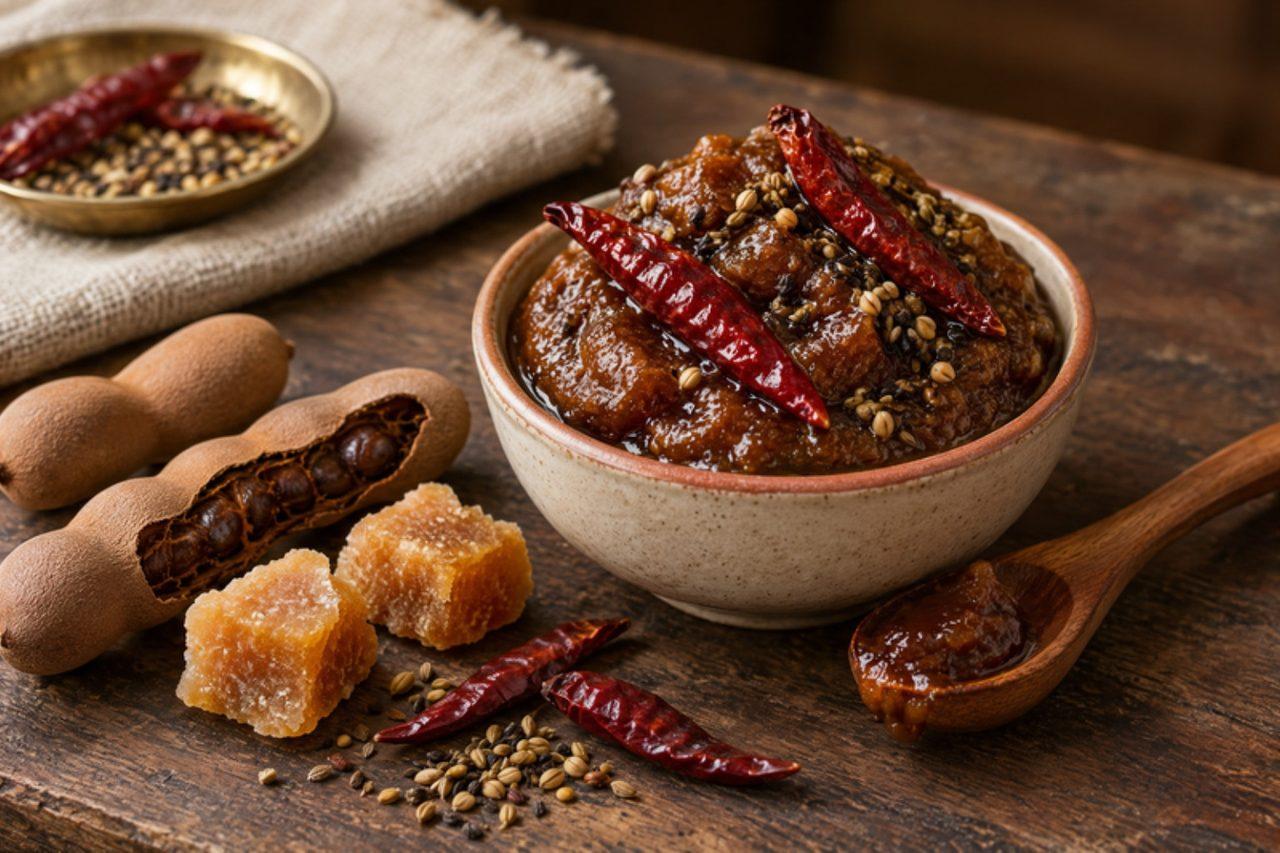
Ask anyone who grew up in Kolkata or a Bengal village about tetul achar and they will remember winter afternoons on the roof, sneaking spoonfuls from jars drying in the sun. Tamarind pulp is cooked down with jaggery, salt and a mustard-oil tempering of panch phoron and dried chilli until it turns sticky, dark and glossy. It tastes sweet and sour in one bite, with a little heat and the bittersweet crackle of fenugreek and nigella from the five-spice. Eat it as a teatime treat, with khichuri, or as the sweet-sour note at the end of a Bengali lunch. The common mistake is cooking it too hard: like toffee, tamarind and jaggery go from glossy to burnt quickly, so keep the heat low near the end and stir. It is ready when it falls from the spoon in a thick ribbon and leaves a trail across the pan; it firms up a lot as it cools. Being very sweet and acidic, it keeps 2 months in a dry jar in a cool cupboard and longer in the fridge. Chef's tip: in winter use khejur gur (date palm jaggery) for a smoky, caramel depth.

by KrazyBadal 0 views
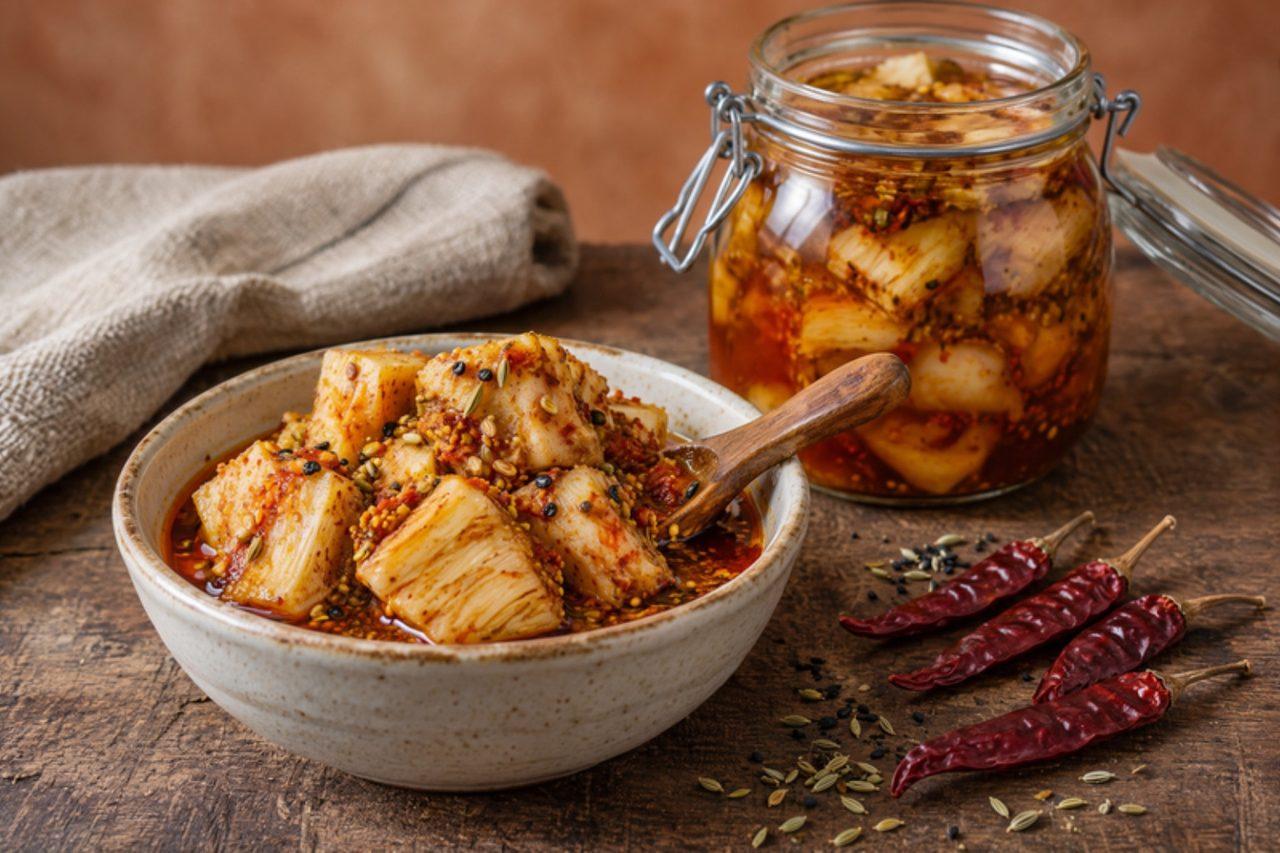
Aam telMango pickle in mustard oil

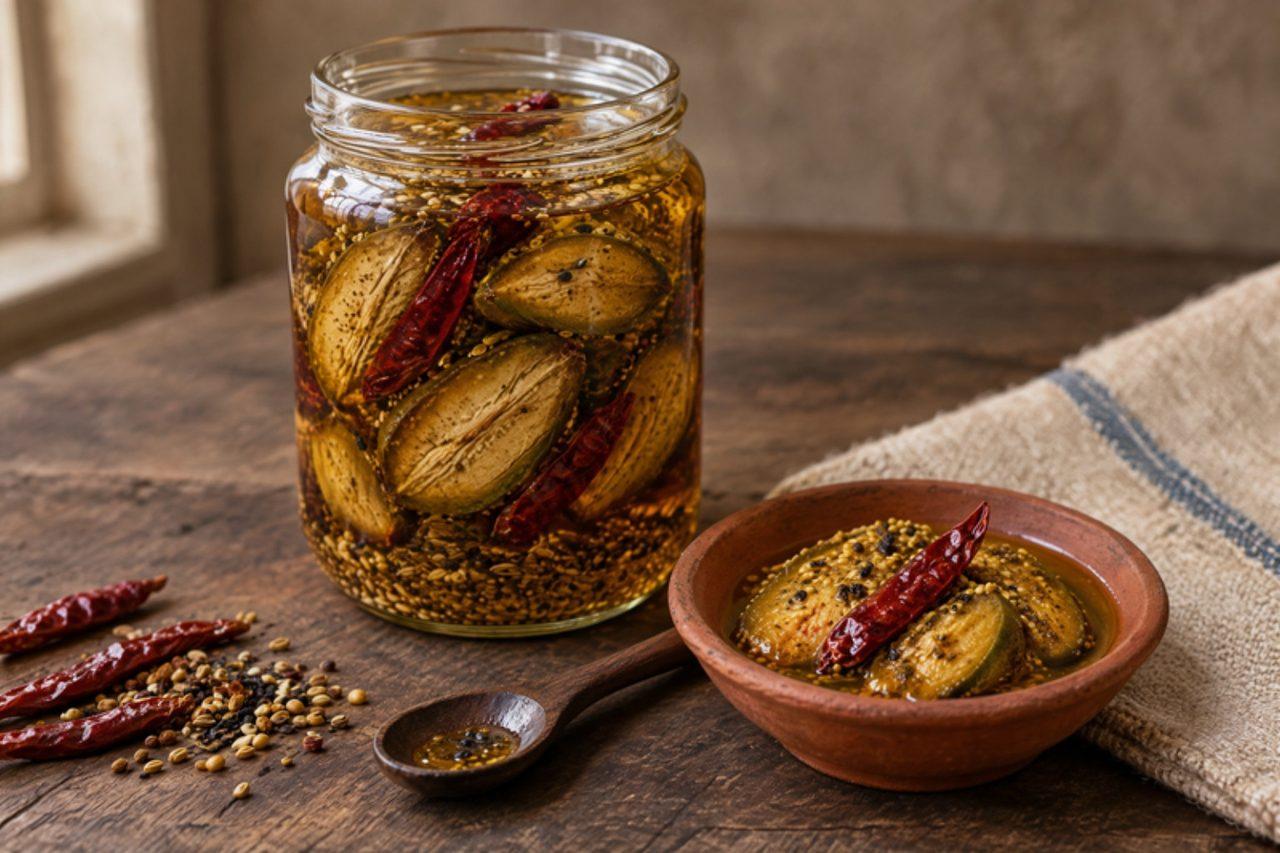
In Bengal the summer of kal-baishakhi storms is also the season of aam tel, mango oil. Slices of hard green mango are salted and sun-dried until leathery, then sunk in mustard oil with roasted panch phoron and chilli and left to steep for a couple of weeks. The mango turns chewy, salty and sour; the oil turns golden, sharp and fruity, and that oil is the real treasure. A spoonful goes into jhalmuri (spiced puffed rice) on every Kolkata street corner, over plain rice with a fried egg or mashed potato, or into a bowl of panta bhat in the heat. The common mistake is not drying the mango enough: if it still feels wet when pressed, it will grow mould under the oil. Dry it until the slices are shrunken, leathery and bend without releasing juice. The pickle is ready when the oil has turned golden and smells strongly of mango and spice. Because the mango is salt-cured and acidic and stays fully under the oil in a dry jar, with no garlic, it keeps up to a year in a cool cupboard; in hot, humid weather keep it in the fridge. Chef's tip: no strong sun? Dry the salted slices in the oven at 60–70 °C with the door propped open, for 5–6 hours.

by KrazyBadal 0 views
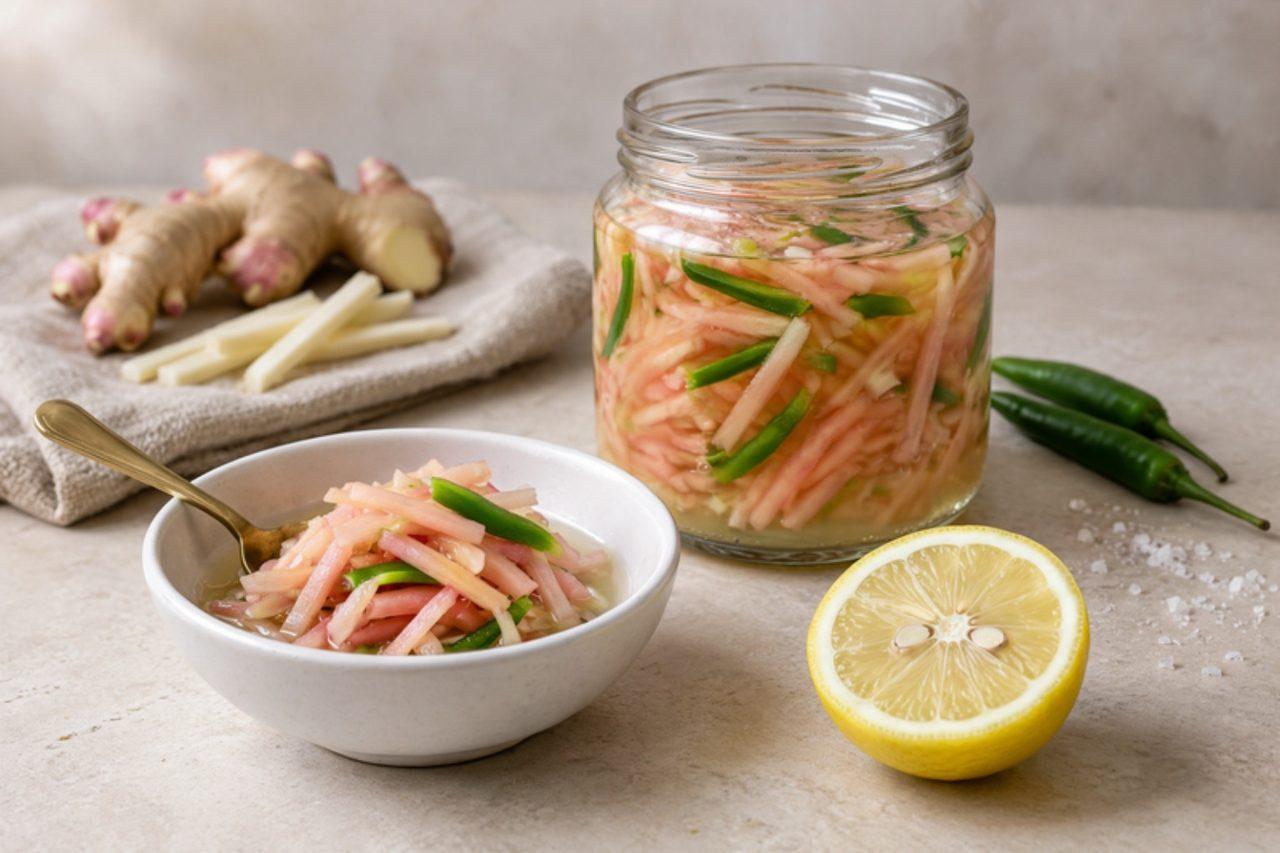
Jolpai acharIndian olive pickle

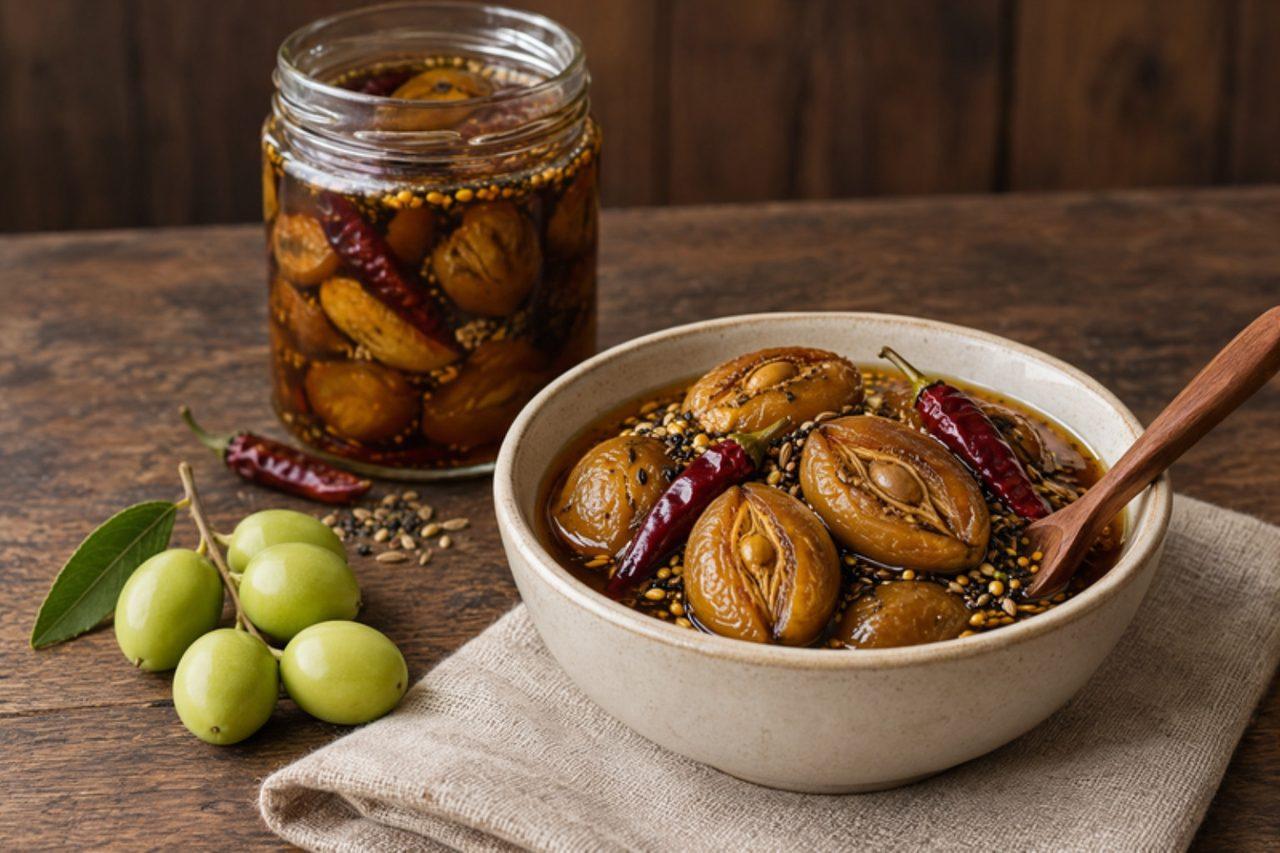
Jolpai, the small, hard, sour Indian olive, appears in Bengal and Bangladesh markets from October to December, and no winter afternoon is complete without a jar of jolpai achar warming in the sun. It is no relation to the Mediterranean olive: it is tart and astringent, almost like a green plum. The olives are boiled, lightly crushed so the flesh splits from the stone, then cooked in mustard oil with panch phoron, dried chilli and plenty of jaggery. The pickle is sticky, sweet-sour and slightly tannic, with soft flesh to nibble off the stones. Eat it with khichuri on a cold evening, with dal-bhaat, or straight from the jar as a snack. The common mistake is under-boiling: the olives must be soft enough to press flat, or the syrup cannot get in and they stay bitter. It is done when the syrup is thick and shiny and clings to the olives. Very sweet and acidic, it keeps a month in a cool cupboard in winter and 3 months in the fridge. Abroad, look for frozen jolpai in Bangladeshi grocers; firm, sour green plums are the closest substitute. Chef's tip: keep a few olives whole and only scored; they give a nicer bite.

by KrazyBadal 0 views
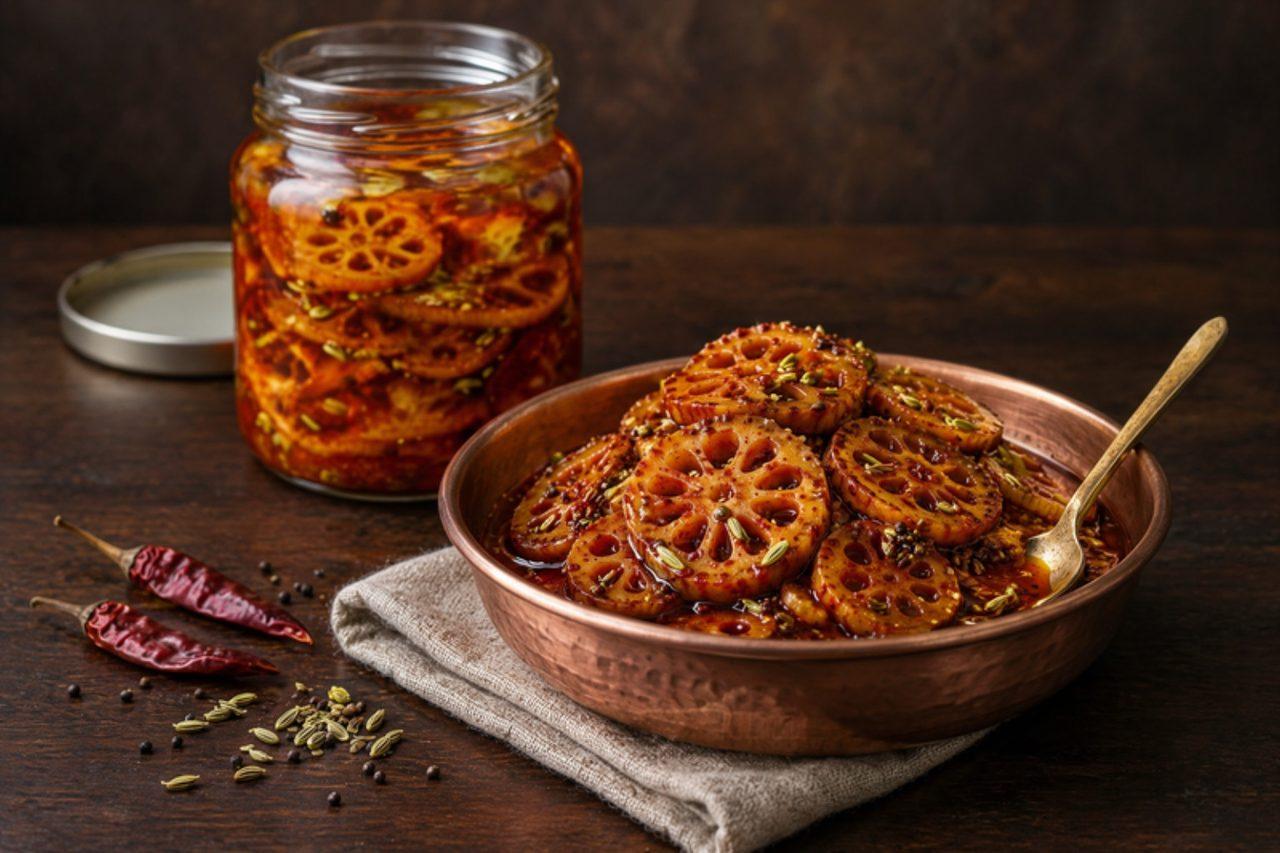
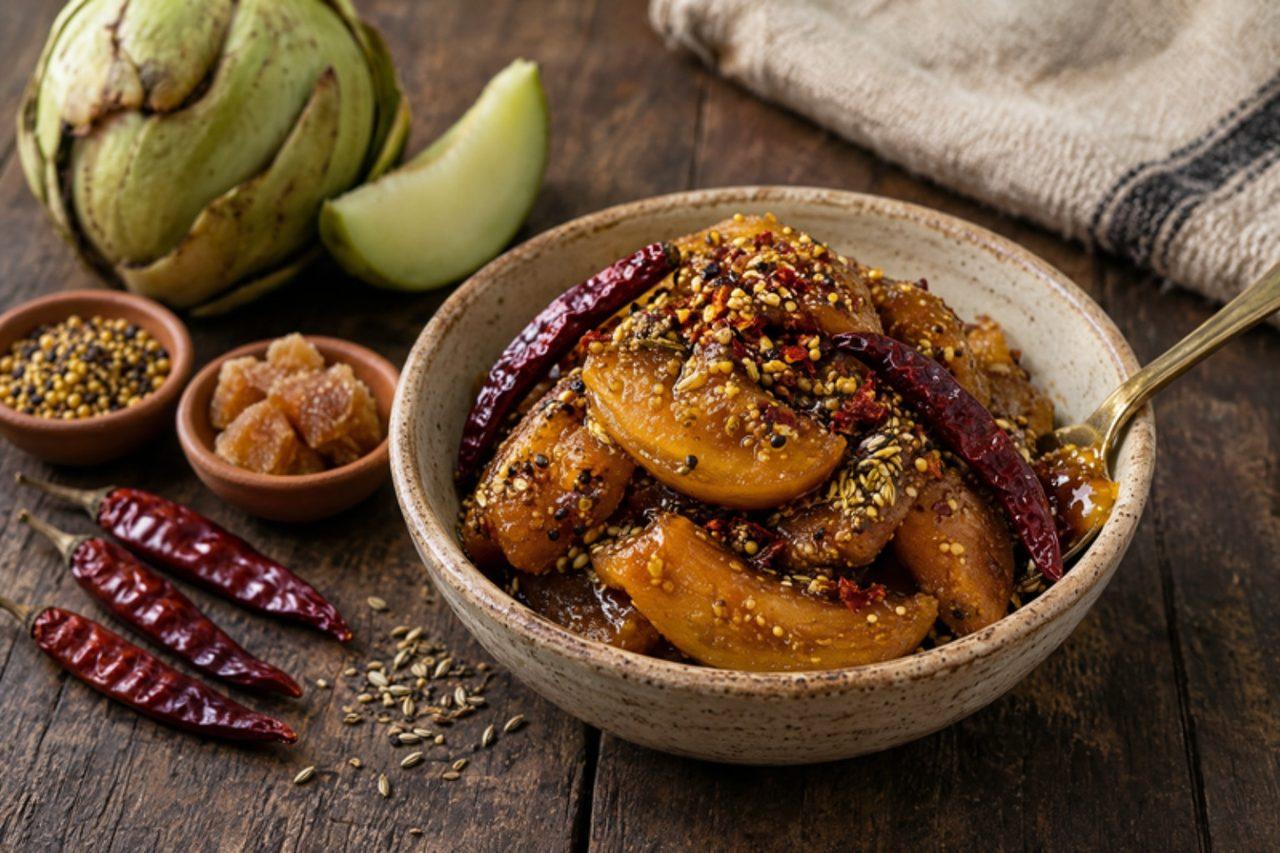
Chalta acharElephant apple pickle

Chalta, the elephant apple, is a big green fruit of tightly wrapped, fleshy petals, and in Bengal it arrives in the markets in autumn, around Durga Puja, staying through early winter. Raw it is so sour and fibrous that it is almost impossible to eat, but cooked with jaggery and mustard it becomes one of the best-loved sweet-sour pickles of the region. The petals soften into chewy, slightly crunchy pieces in a thick, amber syrup, sour and sweet with a sharp kick of ground mustard and chilli. Serve it with dal and rice at the end of a meal, or with khichuri on a rainy day. The common mistake is skipping the pounding: after boiling, the pieces need a few firm knocks with a pestle to break the fibres, or they stay tough and never absorb the syrup. It is ready when the syrup coats a spoon and the chalta pieces look glossy and translucent. Keep it in a clean jar in the fridge for up to a month. Outside India, frozen chalta is sold in Bangladeshi grocers; hard, sour cooking apples with a squeeze of lime are a passable stand-in. Chef's tip: a pinch of ground mustard added at the very end gives the classic nose-tingling bite.

by KrazyBadal 0 views
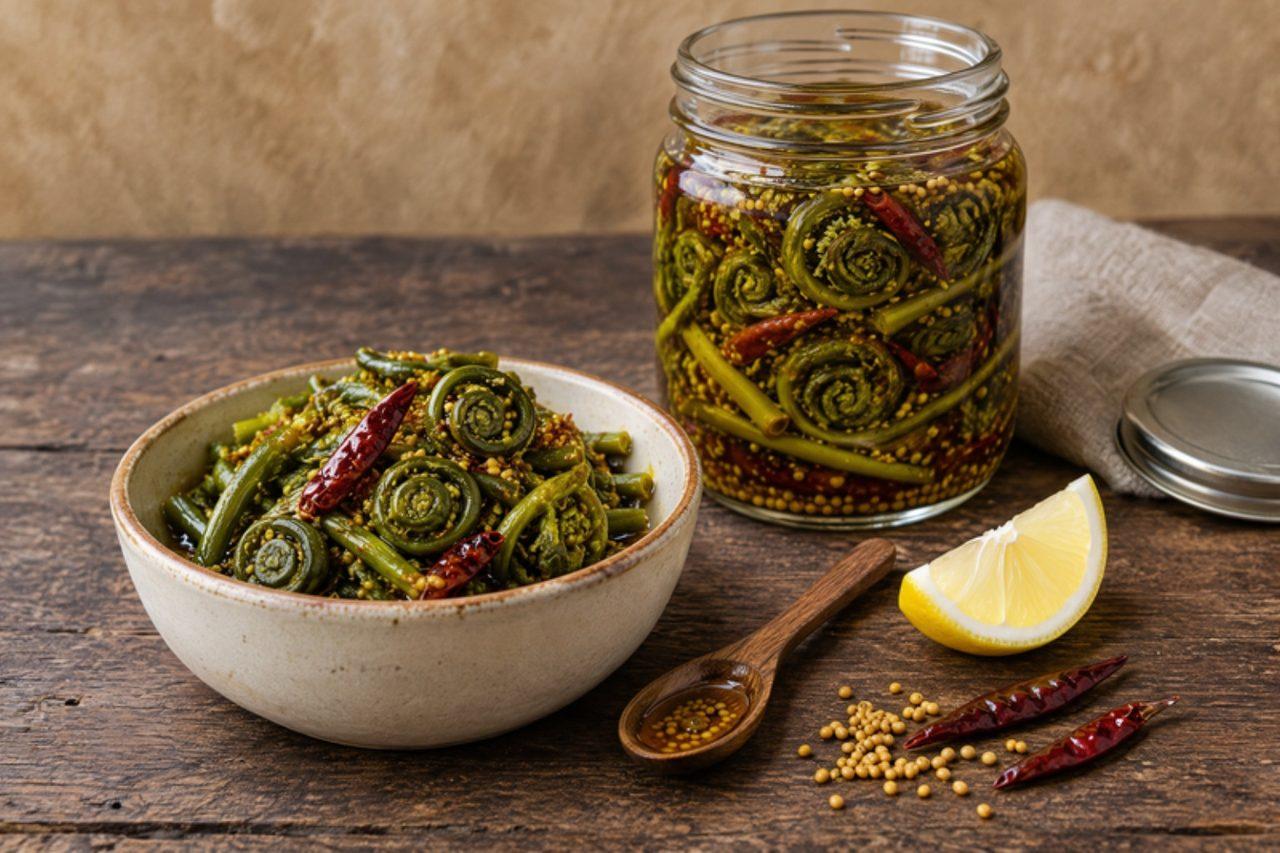
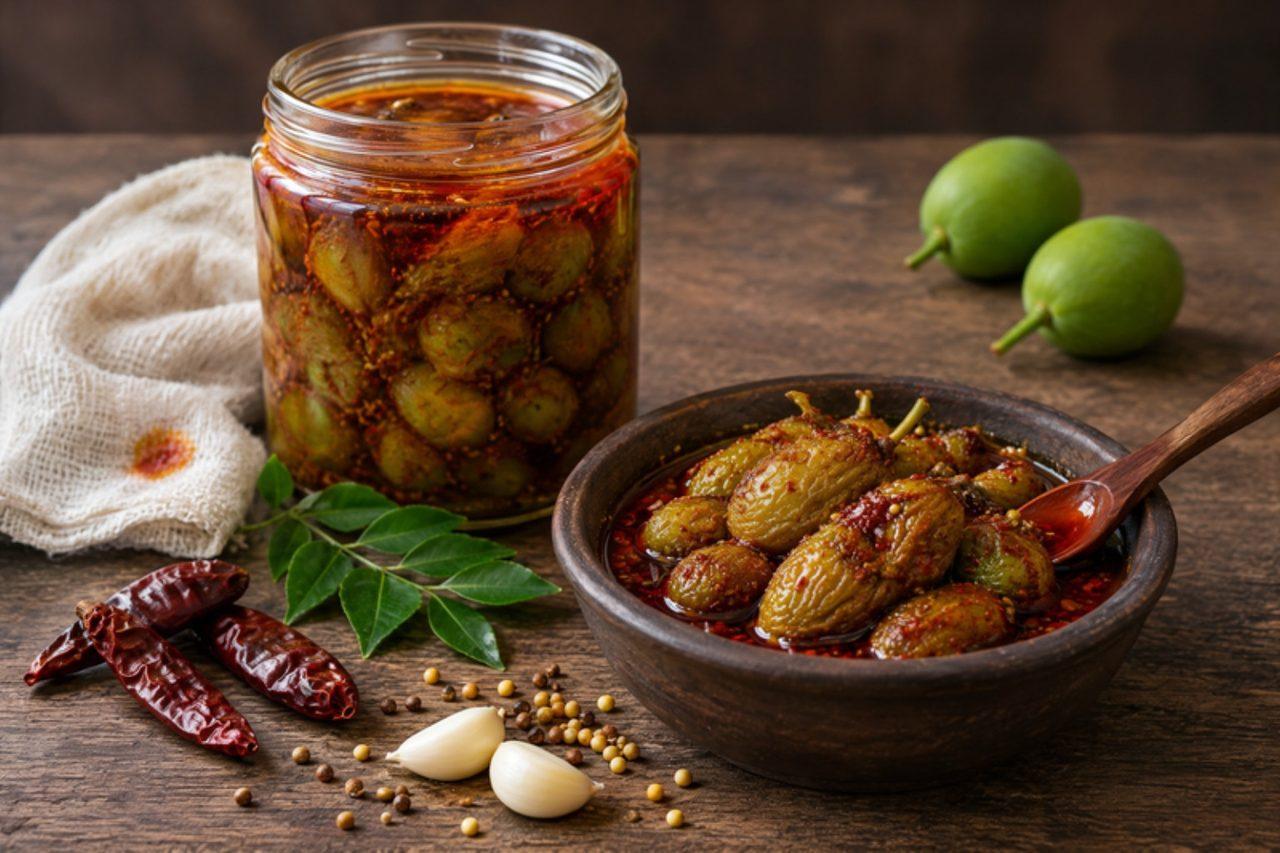
Kannimanga acharBaby mango pickle

In central Kerala, around Thrissur and Kottayam, families watch the mango trees in January and February and pick the tiniest fruit, no bigger than a thumb joint, before the stone hardens. These kannimanga are salted whole in a tall ceramic bharani, left until shrivelled in their own brine, then mixed with freshly ground raw mustard, Kashmiri chilli and hing and left to mature for three or four weeks. This older, oil-free style keeps the mangoes crunchy and the brine thick, red and sinus-clearing from the raw mustard. The flavour is salty, sour and fiercely pungent; one mango and a spoon of brine is enough for a whole bowl of kanji (rice gruel) or curd rice. The common mistake is using water that has not been boiled and cooled, which brings in microbes and turns the brine slimy. It is ready when the mangoes are wrinkled but crisp and the brine tastes mellow rather than raw. Salt is high, about 20 g per 100 g of mango, and the fruit is very acidic; kept fully submerged in a dry jar it lasts a year in a cool place. Abroad, any tiny, hard green mango with a soft stone works. Chef's tip: keep a short stalk on each mango; it stops brine seeping in and softening the fruit.

by KrazyBadal 0 views
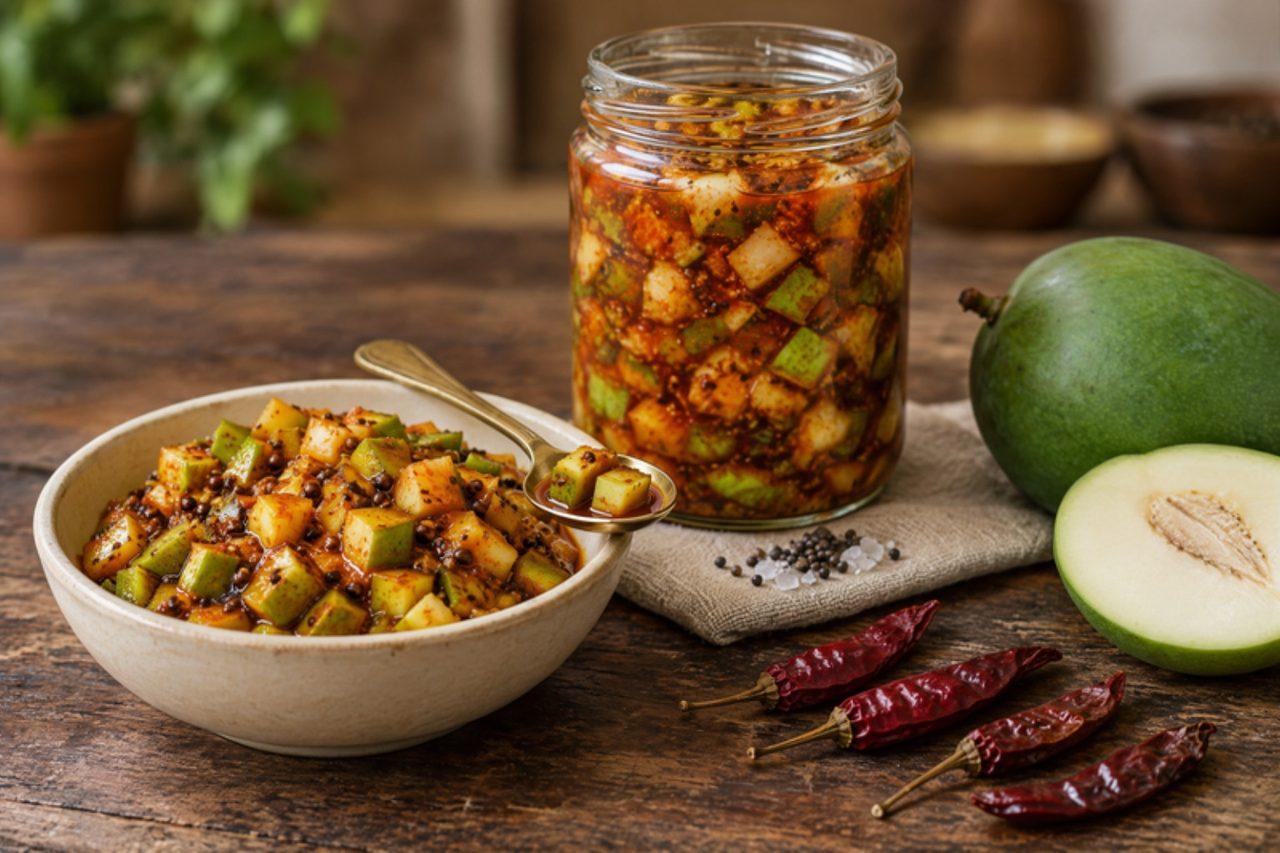
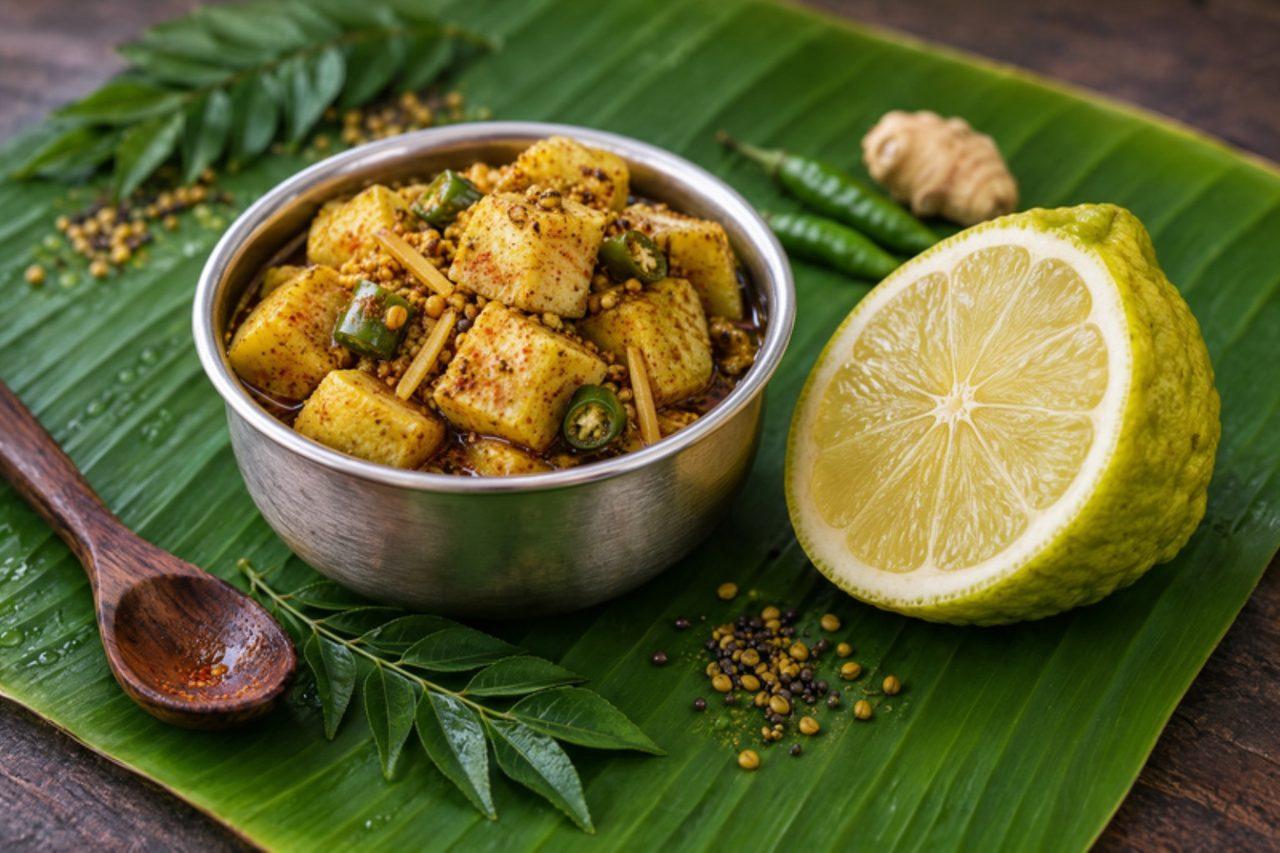
Vadukapuli naranga acharWild lime pickle

Vadukapuli naranga is a large, knobbly, thick-skinned wild lemon grown in Kerala backyards, and it is ripe just in time for Onam in August–September. Cut into small cubes with its spongy white pith and mixed with green chilli, ginger, chilli powder and a sesame-oil tempering, it becomes the pale yellow pickle dabbed on the end of every sadya banana leaf, next to inji puli and mango. It is sour, bitter and fresh at once, with juicy flesh and a soft, absorbent pith that soaks up the spices. It is just as welcome with curd rice or a simple moru curry. The common mistake is leaving the bitter seeds and the tough central core in; take them out or the whole jar turns harsh. It is ready to eat after a day, once the salt has drawn out the juice and the pieces look moist and slightly translucent. Because it has fresh ginger, green chilli and curry leaves, keep it in the fridge and eat within a month. Outside Kerala, use a citron or the biggest thick-skinned lemons you can find. Chef's tip: a spoon of vinegar sharpens the pickle and helps it keep; Kerala Christian homes often add one.

by KrazyBadal 0 views
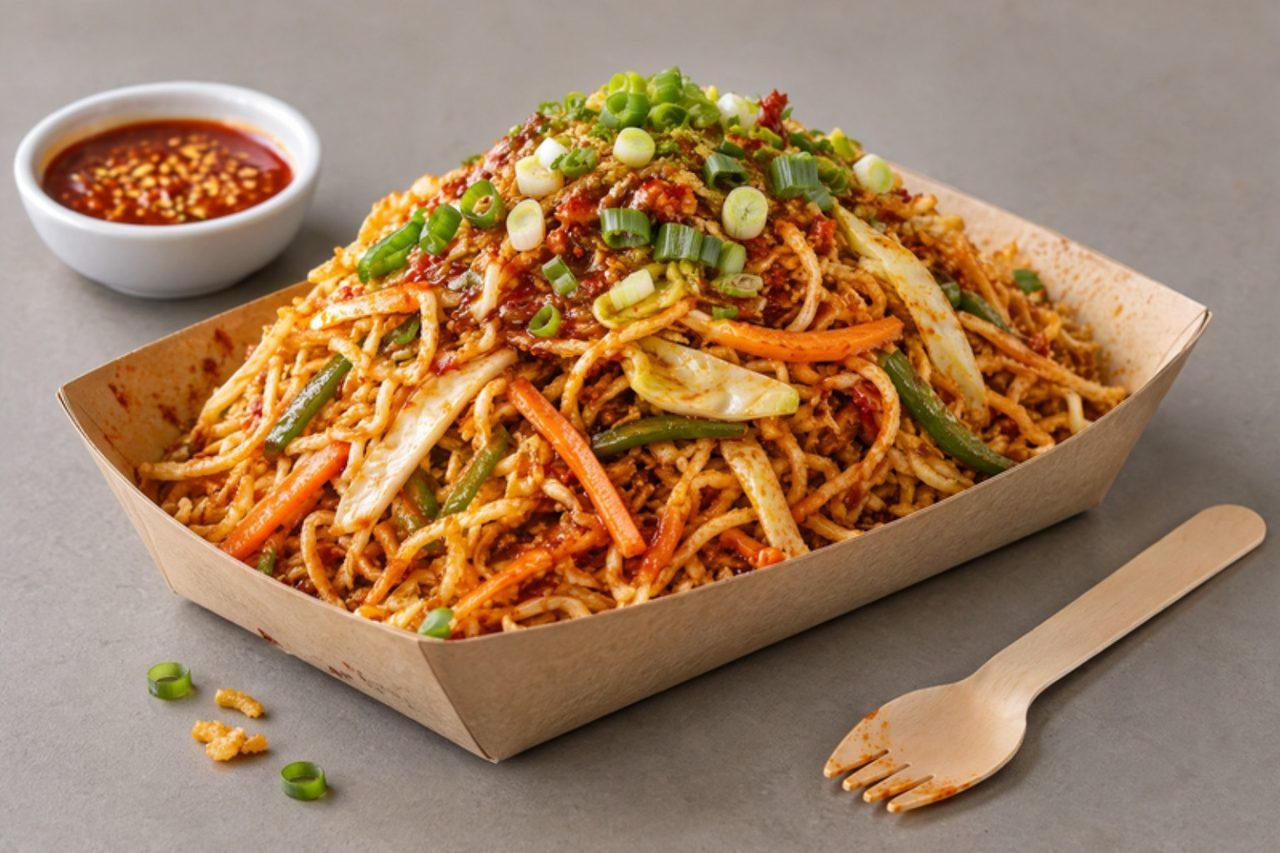
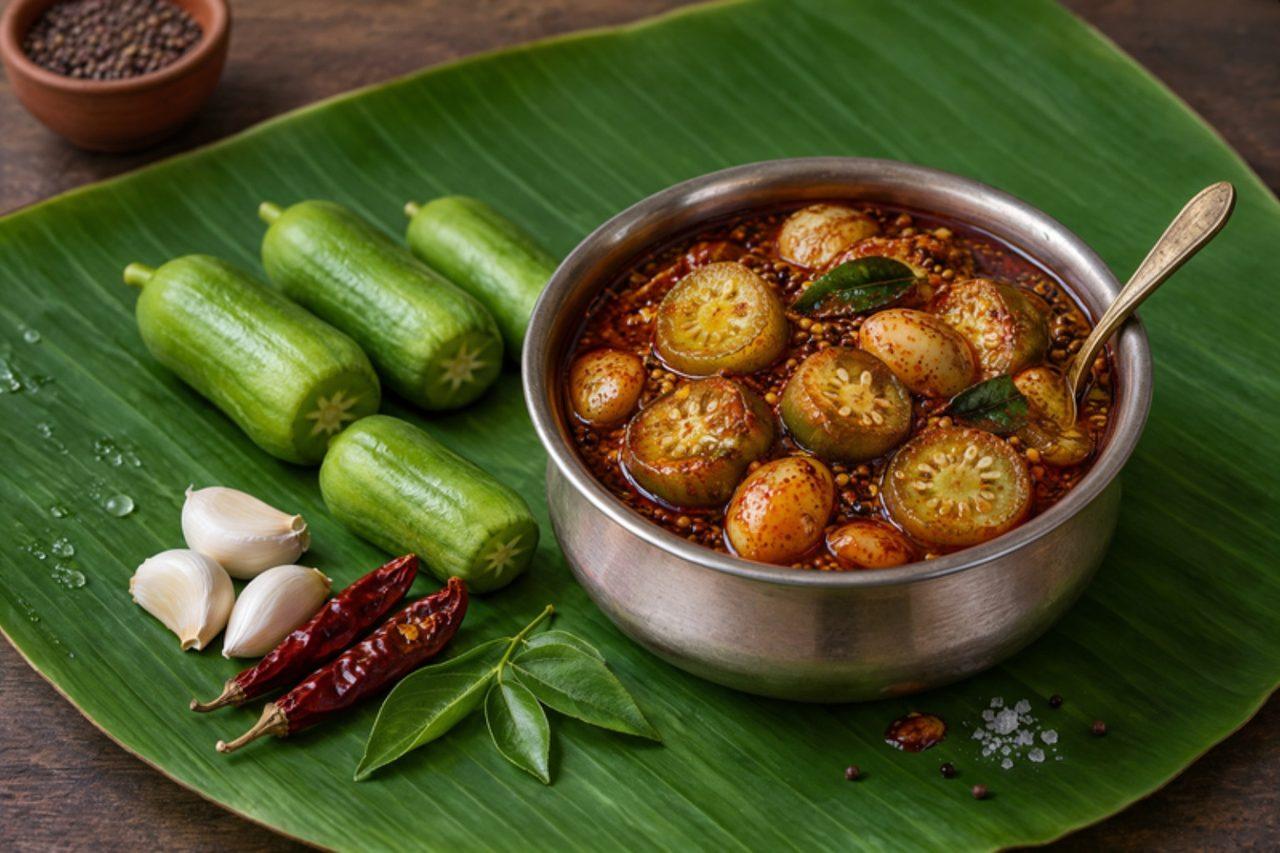
Irumban puli acharBilimbi pickle

Almost every Kerala compound has an irumban puli tree, its trunk studded with clusters of small, cucumber-shaped green fruit so sour they make your eyes water. Through the monsoon months the tree fruits non-stop, and the surplus is salted and turned into this pickle. The bilimbi pieces soften into a tangy, juicy mass in a red masala of chilli, garlic and ginger cooked in gingelly oil, with roasted fenugreek giving a gentle bitterness. Eat it with kanji and payar (rice gruel and green gram), with a simple meal of rice, thoran and moru curry, or with chapati. The common mistake is cooking the fruit for too long: bilimbi is very watery and soft, and if stewed it breaks down to mush. Salt it first to draw out the water, then just warm it through in the masala for a couple of minutes. It is ready when the masala clings to the pieces and the oil glistens on top. Very acidic, but with fresh garlic and ginger, so store it in the fridge and use within a month. Abroad, use sour, green, unripe star fruit (its close relative) or green gooseberries. Chef's tip: dry the salted pieces in the sun for an afternoon for a firmer, chewier pickle.

by KrazyBadal 0 views
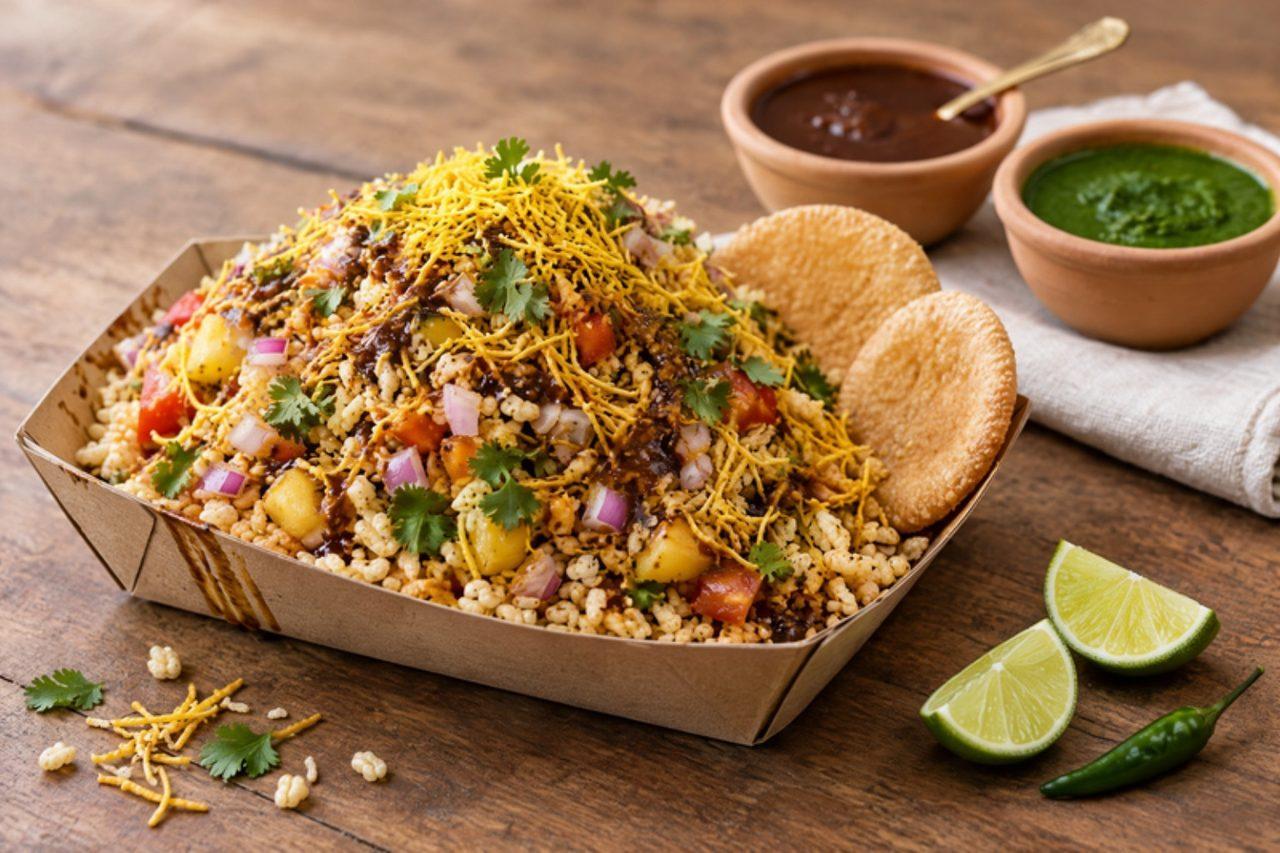
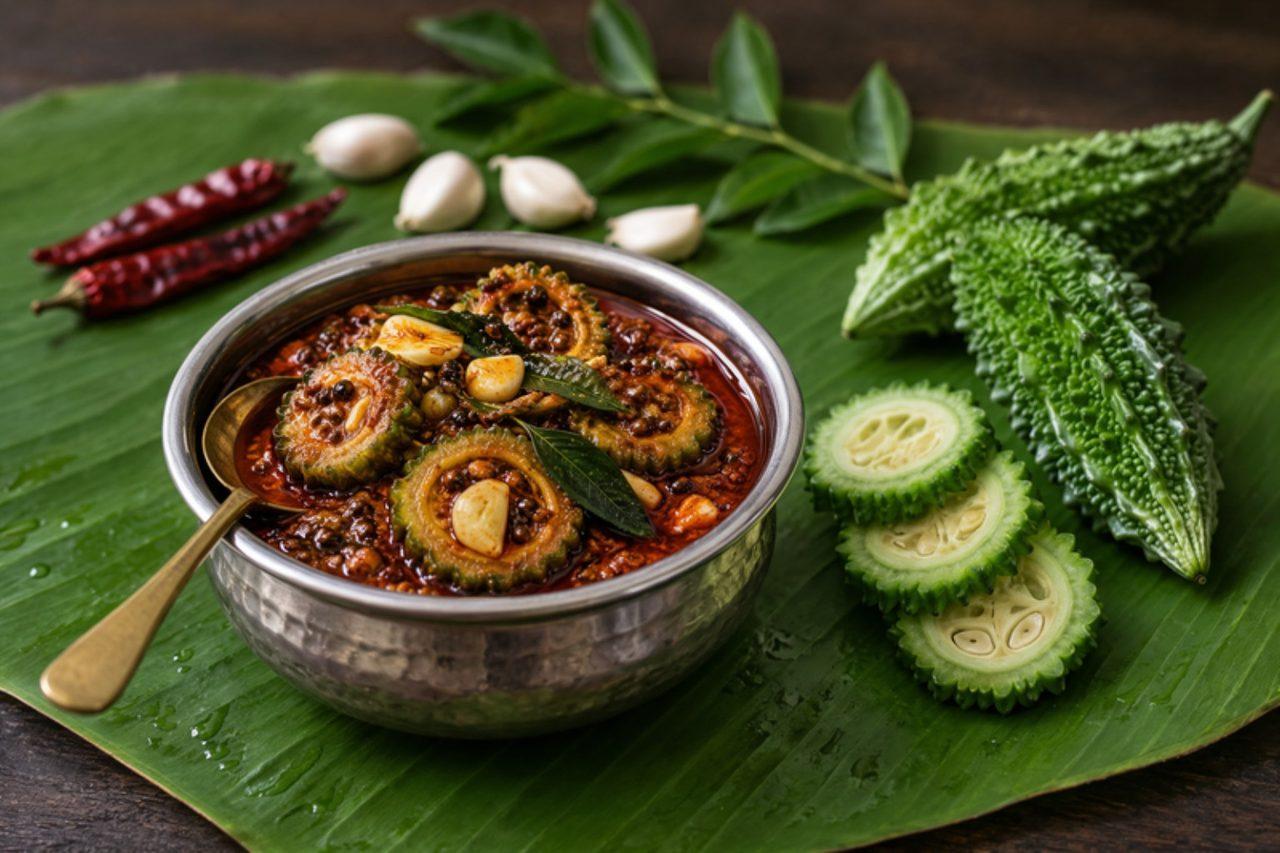
Pavakka acharBitter gourd pickle

Bitter gourd pickle is a speciality of Kerala's Syrian Christian kitchens in Kottayam and Thiruvalla, made through the year and always on the table at Christmas and wedding lunches. Thin rounds of pavakka are salted to tame the bitterness, fried until crisp at the edges, then tossed in a garlicky, ginger-sharp masala of Kashmiri chilli and vinegar cooked in gingelly oil. The pieces stay slightly crunchy and chewy, the masala is tangy and hot, and the bitterness is there but rounded off by a little sugar. Eat it with rice and moru curry, appam or chapati. The common mistake is under-frying: pale, soft pavakka goes soggy and spoils fast in the vinegar. Fry until the rounds are deep golden and the bubbling in the oil almost stops. The masala is ready when the oil separates and the vinegar's sharp smell has mellowed. Because it holds garlic and ginger in oil, the vinegar (at least 5% acidity, never diluted) and the fridge both matter: keep it chilled and eat within a month. Chef's tip: choose small, dark green Kerala pavakka with tight ridges; they are firmer and less watery than the big pale ones.

by KrazyBadal 0 views
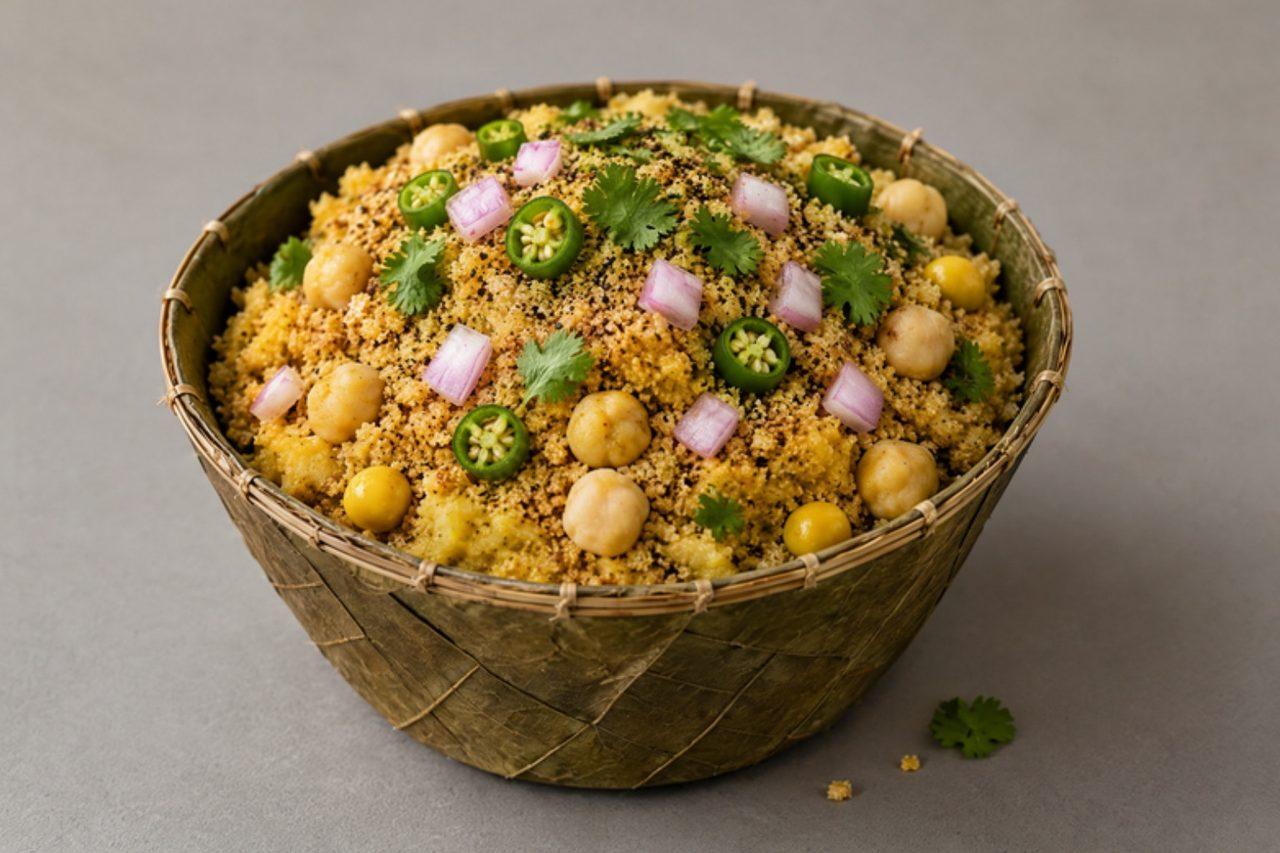
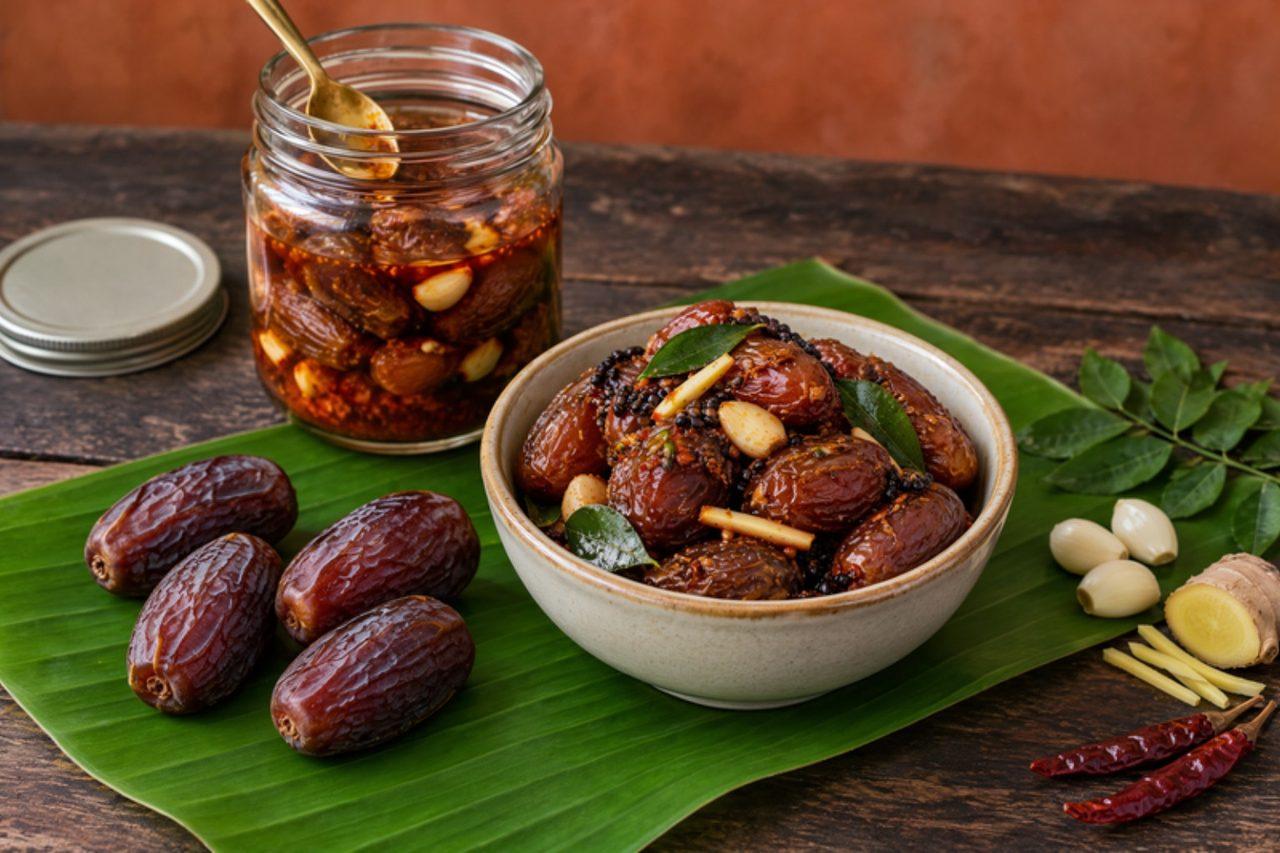
Eenthapazham acharDate pickle

Date pickle came to Kerala with the Gulf, and in Malabar and central Travancore it has become a fixture at weddings, where it sits on the leaf beside the biriyani or the sadya rice. Pitted dates are simmered briefly in a gingelly-oil masala of garlic, ginger, green chilli and Kashmiri chilli, then loosened with vinegar and a little sugar. The dates stay plump and sticky, and the sauce is sweet, sour and gently hot all at once, like a spiced chutney with more punch. Serve it with ghee rice or biriyani, with chapati and a mild kurma, or tucked into a sandwich with cucumber. The common mistake is cooking the dates for too long so they dissolve into paste; add them at the end and warm them through for only a few minutes. It is ready when the masala is glossy and thick enough to cling to each date and the oil shines at the edges. With garlic and ginger in it, the vinegar (at least 5% acidity, undiluted) keeps it sharp, but it still belongs in the fridge: it keeps up to a month. Chef's tip: use soft, semi-dry dates rather than very sticky ones; they hold their shape and soak up the vinegar better.
by KrazyBadal 0 views

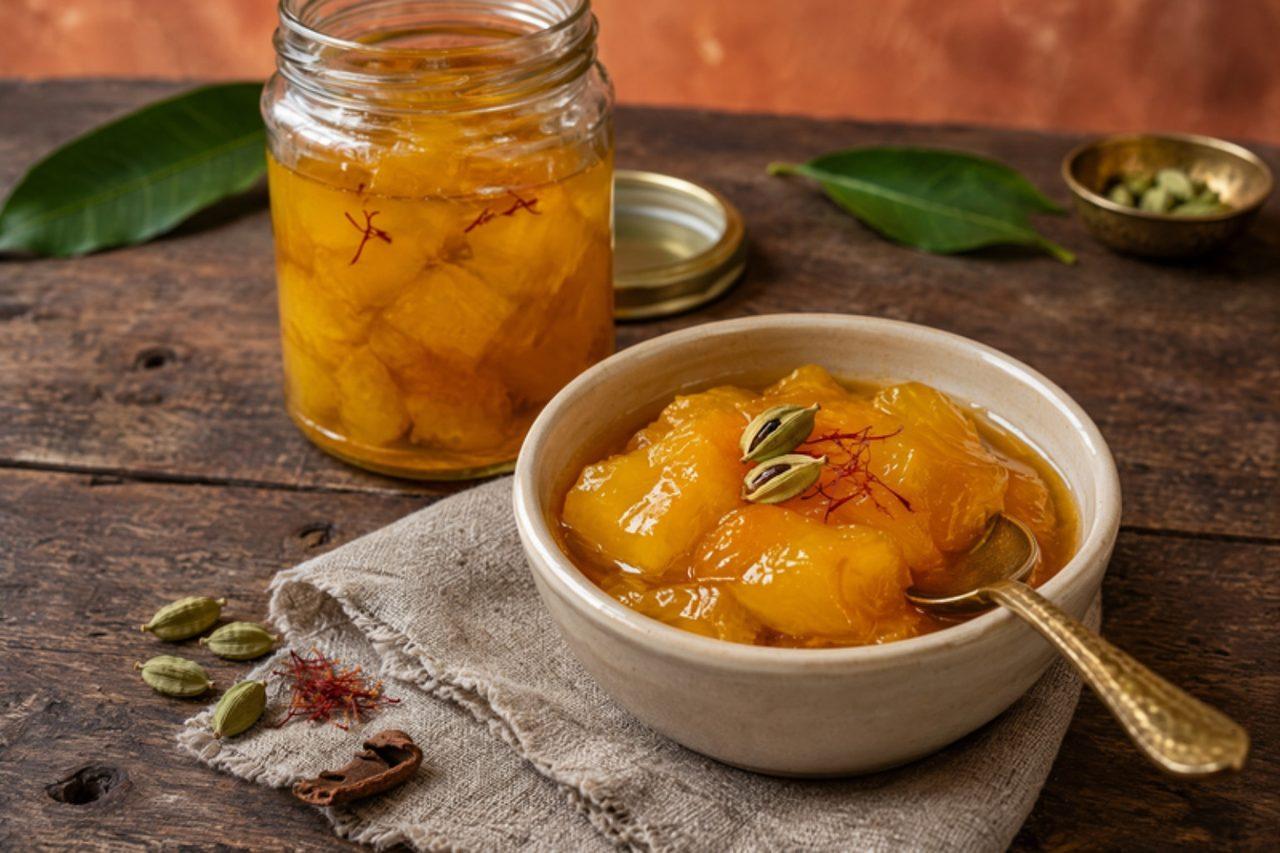
Keri no murabboSweet raw mango preserve

In Gujarat, when the summer stock of pickles goes up in May, murabbo is the gentle, sweet one that children are allowed to dip into freely. Pieces of firm raw mango (rajapuri or totapuri) are cooked slowly in sugar syrup until they turn translucent and glossy, then scented with saffron and cardamom. Unlike chhundo, which is grated and spiked with chilli, murabbo keeps the mango in distinct, tender-firm pieces in a clear, golden syrup; it tastes like candied fruit with a sour edge. Spread it on a warm thepla or rotli, serve it with khakhra at breakfast, or spoon a little beside a Gujarati thali. The common mistake is boiling the mango hard in the syrup, which breaks the pieces and clouds it; keep it at a gentle simmer. It is ready when the pieces look see-through at the edges and the syrup reaches one-string consistency (a cooled drop stretches into a single thread between finger and thumb). With this much sugar it keeps 6 months in a cool cupboard in a sterilised, dry jar, or longer in the fridge. Chef's tip: soak the cut mango in lightly salted water for 10 minutes first; it firms the pieces and stops browning.

by KrazyBadal 0 views

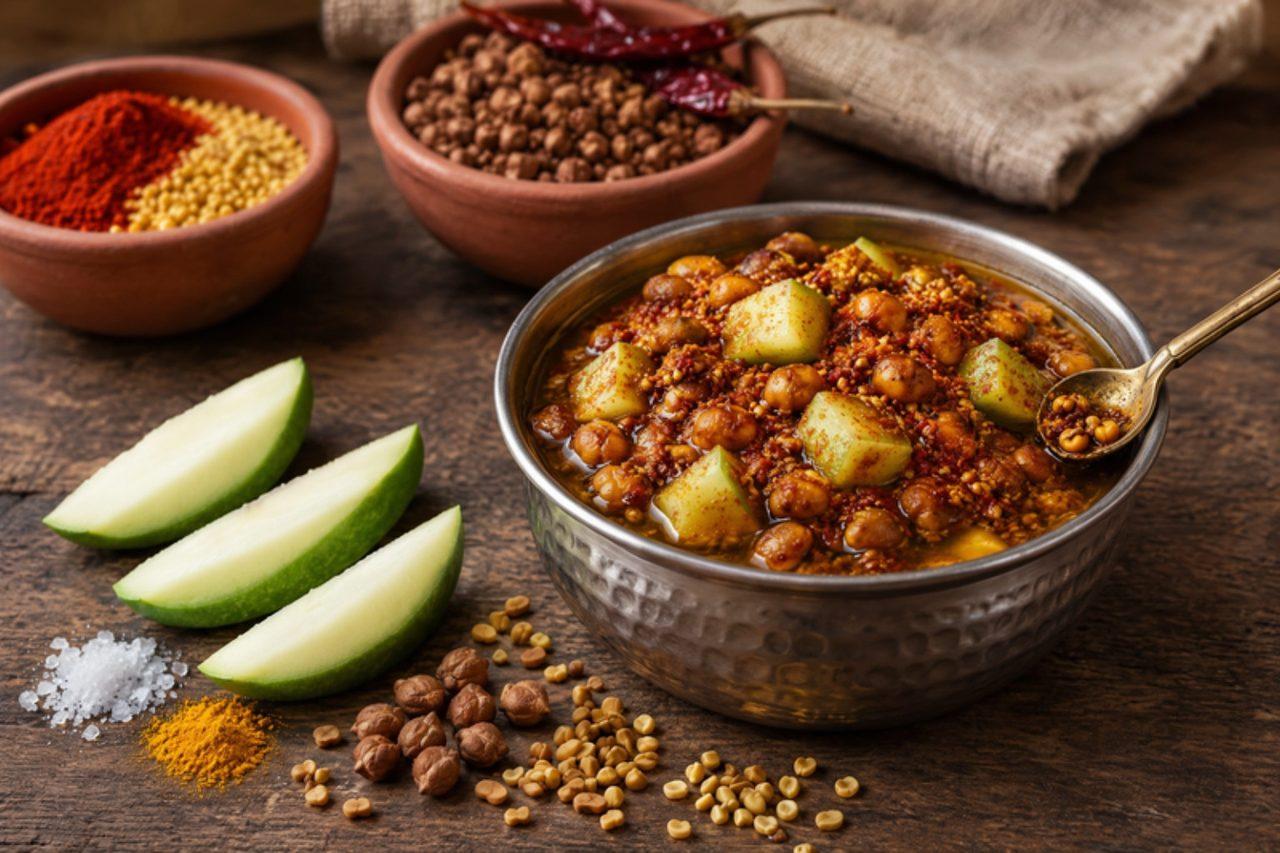
Chana methi nu athanuChickpea and fenugreek pickle

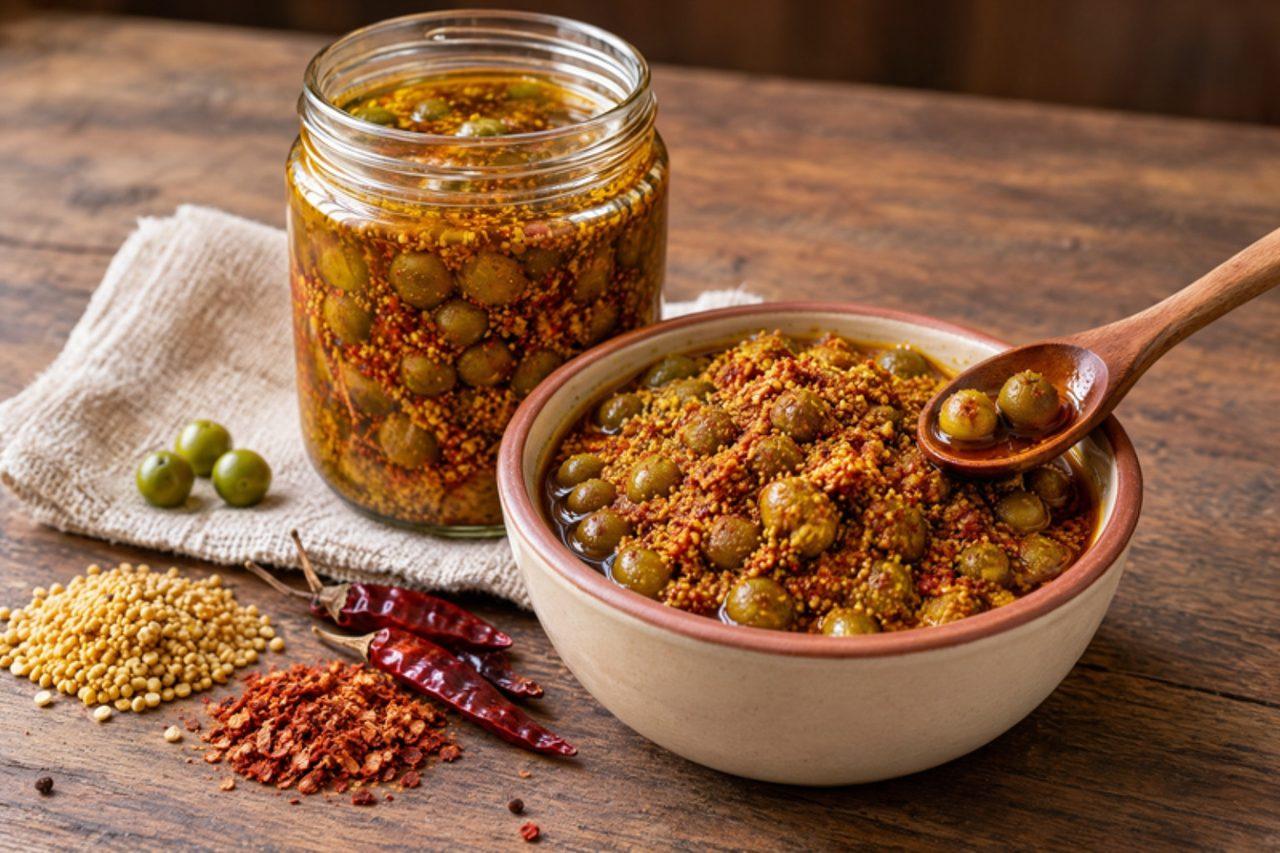
This is the thrifty, protein-rich pickle of Kathiawad and the Gujarati countryside, made in the May pickle season alongside methia keri. Brown chickpeas and fenugreek seeds are soaked until plump, then mixed with salted raw mango, split mustard, chilli and hing and sealed under oil. Over a few days the chana and methi drink up the sour mango juice and soften to a pleasant bite; the methi seeds lose most of their bitterness and turn nutty. The pickle is sour, hot and pungent, with plenty of crunch. A spoonful brightens khichdi-kadhi, bajra rotla or a plain dal-bhaat-shaak lunch. The common mistake is mixing in chickpeas that are still wet after soaking: dry them on a cloth for a few hours or the pickle will turn mouldy. It is ready in 4–5 days, when the chickpeas can be bitten through easily and taste sour all the way in. Because soaked pulses are low in acid, keep this one in the fridge once it is mixed, where it lasts up to 3 months, with the oil always covering the top. Chef's tip: use kala chana (small brown chickpeas); they stay firmer than large white ones.

by KrazyBadal 0 views

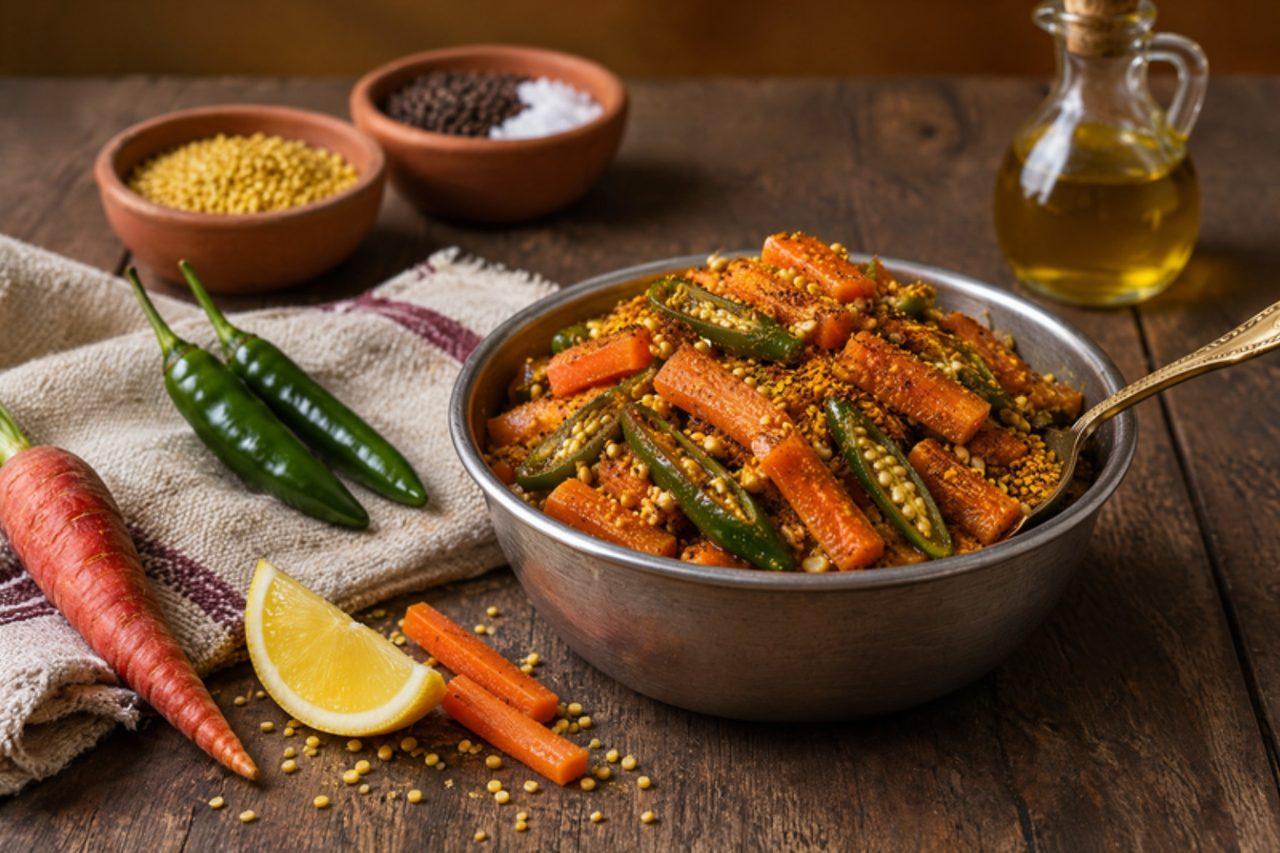
Gajar marcha nu athanuCarrot and chilli pickle

Every Gujarati thali, from Ahmedabad homes to Surat lunch houses, has a little bowl of something fresh and sharp to cut through the dal, kadhi and sweet shaak, and in the cold months it is very often this instant carrot and chilli athanu. Winter brings the sweet, deep red desi carrots and fat, mild bhavnagri chillies, and the pickle is mixed in ten minutes: sticks of both coated in split mustard seed, turmeric, hing, salt and lemon, then dressed with warm oil. It is crunchy, juicy and bright, with the nose-tingling pungency of rai kuria and a clean lemon tang. Eat it with rotli, thepla, khichdi or a full thali. The common mistake is pouring smoking-hot oil straight on, which cooks the mustard and makes it bitter; let the oil cool until just warm. It is ready when the mustard has softened and the carrots look glossy, about an hour after mixing, though it is good straight away. With fresh chilli and no long cure, keep it in the fridge and eat within a week. Chef's tip: if bhavnagri chillies are hard to find, use a mix of mild long green peppers and a couple of hot green chillies.

by KrazyBadal 0 views

Kerda nu athanuDesert berry pickle

Ker is a leafless desert shrub that grows wild across Kutch and the Thar, and in April and May, before the monsoon, it is covered in small green berries that families pick by hand. Fresh ker are fiercely bitter, so they are soaked and boiled until the bitterness fades, then pickled with split mustard, split fenugreek, chilli and lemon juice and covered in oil. The berries are firm, pea-sized and slightly chewy, with a sour, earthy, caper-like flavour under the mustard heat. In Kutch the pickle goes with bajra rotlo and buttermilk, or is mixed into khichdi; across Rajasthan the same berries go into ker sangri. The common mistake is rushing the soaking: if the water is not changed several times the pickle stays harsh. Taste a berry: it should be pleasantly sour-bitter, like an olive, not acrid. It is ready to eat after 3–4 days, once the berries have absorbed the lemon. Boiled ker are low in acid, so the lemon matters and the pickle lives in the fridge, where it keeps up to 2 months. Abroad, use dried ker from Indian grocers (they swell back well), or, at a pinch, capers soaked to remove the salt. Chef's tip: add a few cubes of raw mango in season for extra sourness.

by KrazyBadal 0 views

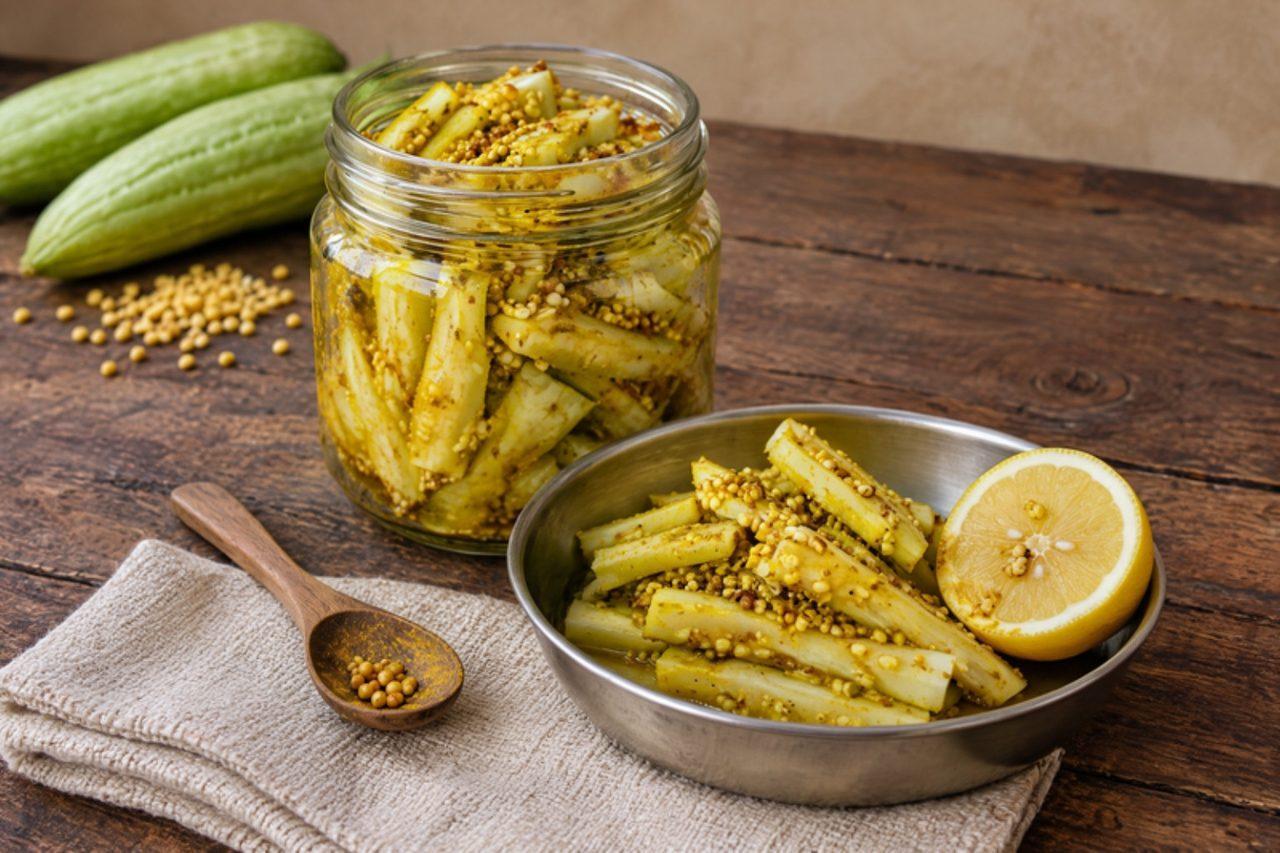
Tindora nu athanuIvy gourd pickle

In Gujarati homes from Surat to Rajkot, tindora nu athanu is the pickle you make on a Tuesday for the rest of the week, not the big summer jar. Thin sticks of tindora (ivy gourd) are tossed with rai na kuria (split mustard seed), salt, turmeric, a pinch of hing and lemon juice, then dressed with warm oil. By the next lunch the mustard has bloomed into a nose-tingling heat, the lemon has softened the raw edge and the sticks are still crunchy, a sharp counterpoint to dal-bhaat, khichdi or a plate of thepla. Choose firm, bright green tindora; once they turn red inside they go soft and seedy. Common mistake: pouring smoking-hot oil straight onto the kuria, which scorches it bitter; let the oil cool until just warm. It is ready when the sticks look slightly glossy and darker and a few drops of juice gather in the jar. Because it is fresh vegetable with little salt, it lives in the fridge and is best eaten within 7 days; throw it out if it smells rotten, turns slimy or grows any mould. Chef's tip: no kuria? Pound yellow mustard seeds coarsely in a mortar; you want cracked halves, not powder.

by KrazyBadal 0 views

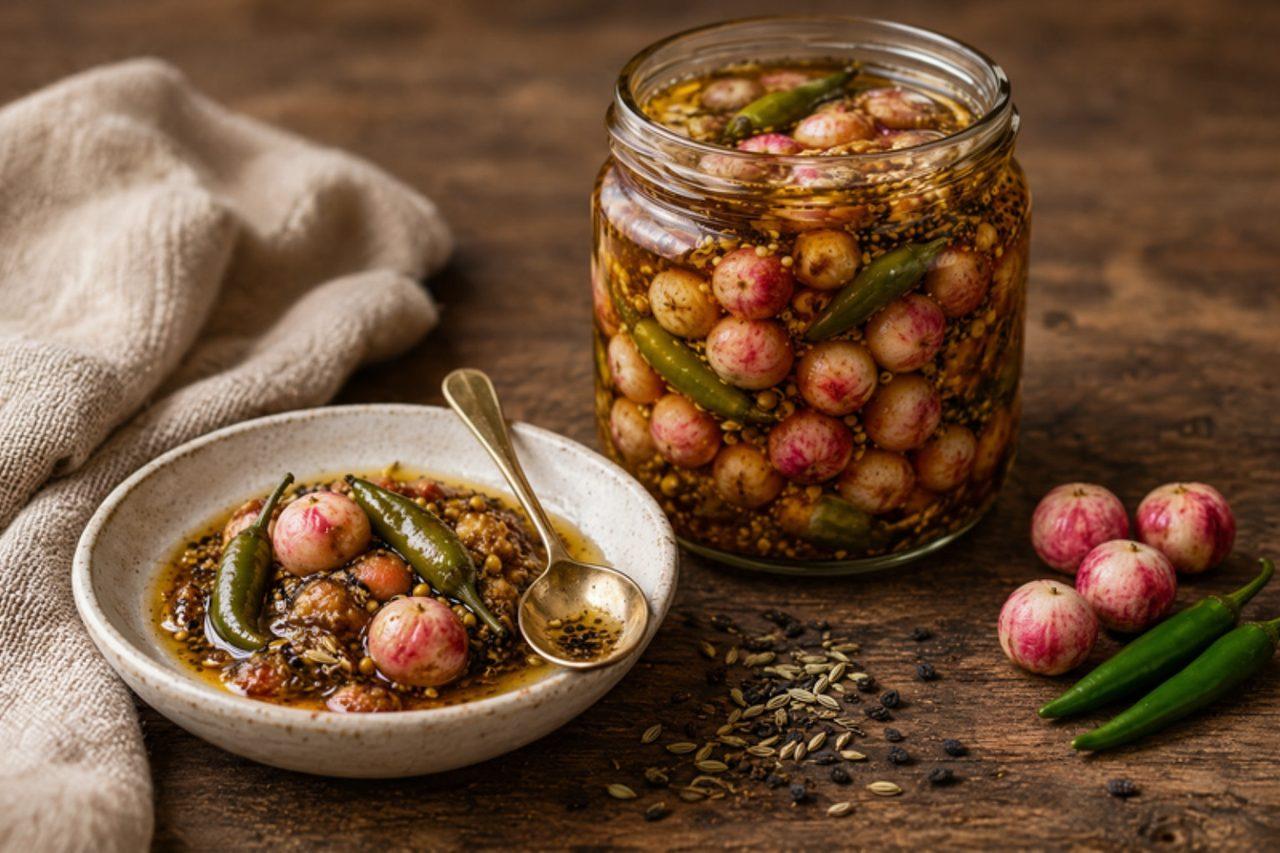
Karonde ka acharKaronda berry pickle

When the thorny karonda bushes along Punjab and Rajasthan field edges fruit in July and August, the small green berries with rosy cheeks end up in jars of karonde ka achar. The fruit is very sour and slightly bitter-milky when raw, so it suits a bold mustard-oil pickle: halved berries and slit green chillies are salted, dried for a day, then tossed with crushed fennel, nigella, fenugreek and mustard. After a week the berries turn soft and sour-tangy, the chillies mellow, and the oil smells of saunf. Eat it with paratha, moong dal khichdi or a plain bowl of curd rice. Karonda is hard to find abroad; firm fresh cranberries are the closest substitute in sourness and size. Common mistake: skipping the drying day; wet fruit thins the oil and invites mould. It is ready when the berries yield to the teeth and the spice coat has darkened. Because it holds fresh green chillies under oil, keep this jar in the fridge for up to 2 months, berries always under oil, dry spoon every time; discard if you see mould, fizzing or an off smell. Chef's tip: wear gloves when halving karonda, the white latex is sticky and stains fingers.

by KrazyBadal 0 views

Kathal ka acharJackfruit pickle

In Lucknow, Kanpur and across Punjab, the hard green jackfruit that arrives in spring and early summer is cooked like meat in kathal ki sabzi, and the rest goes into a jar of kathal ka achar. The chunks are boiled until just tender, dried, then coated in a fierce mix of mustard oil, fennel, nigella, fenugreek and red chilli, sharpened with vinegar and dry mango powder. The texture is the surprise: firm, fibrous and almost meaty, soaking up spice like a sponge. It goes with puri-aloo at a Sunday breakfast or alongside rajma-chawal. Boiled jackfruit is a low-acid vegetable, so this version is deliberately acidified and lives in the fridge. Common mistake: boiling the jackfruit soft; it then breaks into mush in the jar. Stop when a knife meets slight resistance at the core. It is ready after 3 days, when the chunks have turned tawny all the way through and taste sour, not bland. Keep in the fridge for up to 1 month, under oil, with a dry spoon; discard if mould, fizzing, sliminess or a sour-rotten smell appear. Chef's tip: rub your knife and hands with oil before cutting raw jackfruit, or the sticky sap glues everything.

by KrazyBadal 0 views

Adrak ka acharGinger pickle

Walk into a Punjabi dhaba in winter and there is often a steel bowl of ginger matchsticks soaking in lemon juice beside the onion rings. Adrak ka achar is the simplest pickle of all: tender ginger, green chilli, salt and lemon, nothing cooked. Young ginger with thin, pinkish skin reacts with the acid and turns a pretty pale pink within a day; older ginger stays yellow but tastes just as good. The flavour is clean, hot and sour, with crunch, and a forkful cuts the richness of sarson ka saag, makki ki roti, chole bhature or a heavy dal makhani. Common mistake: cutting the ginger thick or using fibrous old roots, which stay woody and harsh; slice thin enough to see light through. It is ready when the ginger has softened slightly, the juice tastes less sharp and the slices have taken colour. Fresh ginger in lemon juice keeps in the fridge for up to 2 weeks; discard it if mould appears, the juice turns slimy or the smell turns from fresh-sour to musty. Chef's tip: a pinch of black salt (kala namak) added at the end gives it that dhaba-style sulphurous edge.

by KrazyBadal 0 views

Nadru acharLotus stem pickle

On the lakes around Srinagar, lotus stems are pulled up through the late autumn into winter and sold in muddy bundles at the floating market on Dal Lake. Kashmiri Pandit and Muslim households alike turn some of the harvest into nadru achar, a winter pickle eaten with rice, haakh (collard greens) and nadru yakhni when fresh vegetables are scarce. Thin slices are blanched, dried and dressed with mustard oil, ground fennel, sonth (dry ginger), deep-red Kashmiri chilli and vinegar. The result is crunchy rather than soft, earthy and lacy, with a warm, slightly smoky heat. Common mistake: not washing the hollow channels; mud hides inside, so rinse every slice under running water. Lotus stem grows in lake water and must always be cooked before pickling; never pickle it raw. It is ready when the slices have taken the red colour right into the holes and taste sour through, about 2 days. Keep it in the fridge for up to 1 month, under oil, with a dry spoon; discard if you see mould, fizzing or slime, or smell anything rotten. Chef's tip: buy stems that are pale cream and closed at both ends; open ends let mud in.

by KrazyBadal 0 views

Lingad ka acharFiddlehead fern pickle

In Kullu, Mandi and Kangra, the monsoon brings lingad, the curled young shoots of the vegetable fern that grows along streams and terrace edges. Villagers pick them in the morning and sell them by the bundle; what is not stir-fried with potato goes into a small jar of pickle to stretch the short season. The shoots are blanched, dressed with mustard oil, crushed mustard seed, red chilli and lemon, and the result is green, crisp and faintly like asparagus with a nutty mustard heat. It is eaten with siddu, rice and madra, or simply with a hot roti. Outside the Himalaya, use ostrich fern fiddleheads, which appear in spring in North America and Europe. Fern shoots must always be cooked; raw or undercooked fiddleheads can upset the stomach badly. Common mistake: only flash-blanching them; boil for the full time. It is ready after a night in the fridge, when the coils have dulled to olive and taste tangy. Keep it in the fridge for up to 10 days; discard if you see mould, slime or smell anything off. Chef's tip: rub off the brown papery scales between your palms under running water before you weigh them.

by KrazyBadal 0 views

MiscutRaw mango pickle

Before the monsoon breaks over Goa in late May, the first small, tender mangoes are knocked from the trees in Salcete and Bardez villages and cut for miscut, the pickle Goan Catholic families keep for the rainy months when fishing stops and the table relies on rice, curry and preserves. Unlike Gujarati pickles, miscut leans on toddy or cane vinegar: the mango is salted overnight, then folded into a paste of Kashmiri chilli, mustard, fenugreek, turmeric, garlic and ginger ground in vinegar, and finished with oil. It is sour, hot and garlicky, the mango still crisp, and a spoonful brightens a plate of red rice and dried-fish curry or a simple pez (rice gruel). Common mistake: grinding the masala in water; it must be vinegar only, or the pickle spoils. It is ready after 4–5 days, when the vinegar has soaked into the mango and the raw-garlic bite has gone. Because it contains fresh garlic and ginger, keep it in the fridge for up to 3 months, always covered by liquid, dry spoon each time; discard if you see mould, fizzing, sliminess or smell anything off. Chef's tip: use mangoes whose stones have not yet hardened so you can slice straight through.

by KrazyBadal 0 views

Chinese bhelCrispy noodle bhel

Mumbai's Indo-Chinese carts, parked outside colleges in Dadar and Matunga from late afternoon, sell this street invention that borrows the idea of bhel and swaps the puffed rice for golden fried noodles. Raw shredded cabbage, carrot and capsicum are thrown in with Schezwan sauce, ketchup, a dash of soy and vinegar, and tossed so fast the noodles still crackle when you eat them. Chef's tip: dry the boiled noodles thoroughly on a tray before frying; wet noodles spit and fry up chewy rather than crisp.

by KrazyBadal 0 views

Bhel puri

On Girgaum and Juhu Chowpatty the bhelwalas set up as the sun drops into the Arabian Sea, and bhel puri is what Mumbai eats while it walks along the sand. Puffed rice, crushed flat puris and boiled potato are tossed in a steel bowl with sweet tamarind and fiery green chutneys, then buried under fine sev and handed over in a folded paper cone with a puri for a spoon. It is crunchy, sweet, sour and hot all at once, and it has to be eaten within minutes. Chef's tip: lay out every component before you start, because the mixing takes thirty seconds and the crunch only lasts about five minutes.

by KrazyBadal 0 views

ChurmurCrushed puchka chaat

When you have eaten your fill of puchka at the stalls in Vivekananda Park or outside Gariahat market in the evening, the puchkawala will make you a churmur: the same crisp shells crushed into the same spicy potato filling with tamarind water, onion and coriander, served in a leaf bowl. It is part chaat, part crunchy salad, and puckeringly sour. Chef's tip: crush the shells into big shards, not crumbs, and fold them in last so some stay crisp.

by KrazyBadal 0 views

Club kachoriSmall spiced kachoris

In the narrow lanes of Burrabazar and Bowbazar, sweet shops start frying club kachori before eight in the morning for traders and office-goers, who eat four or five standing up with a ladle of thin, gingery potato curry poured into a sal-leaf bowl. The kachoris are small and puffed like balloons, with a thin layer of peppery ground urad dal inside the crust. Chef's tip: soak the dal ahead (from the night before is easiest) and grind it with almost no water, so the paste is thick enough to roll without breaking through.

by KrazyBadal 0 views

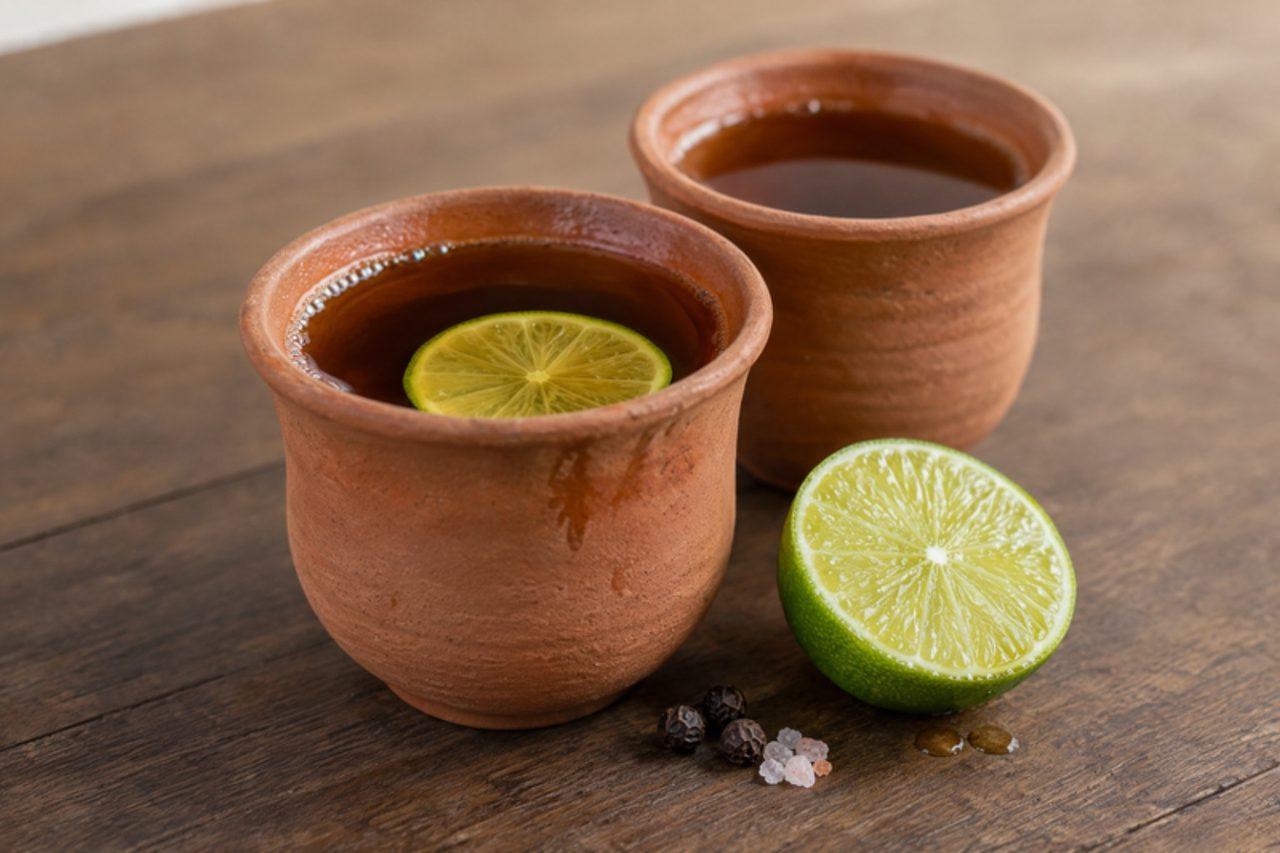
Lebu chaBlack tea with lime

Along College Street and around Esplanade, the tea sellers who pour lebu cha into little unglazed clay cups (bhaar) are the fuel of Kolkata's famous evening adda, the long arguments over books and football. It is weak black tea, sweetened, sharpened with fresh lime and finished with a pinch of sulphurous black salt and roasted cumin, so it tastes sweet, sour and faintly savoury. It is drunk hot in every season and the cup is thrown away. Chef's tip: steep the tea briefly; long-brewed tea plus lime turns harsh and astringent.

by KrazyBadal 0 views

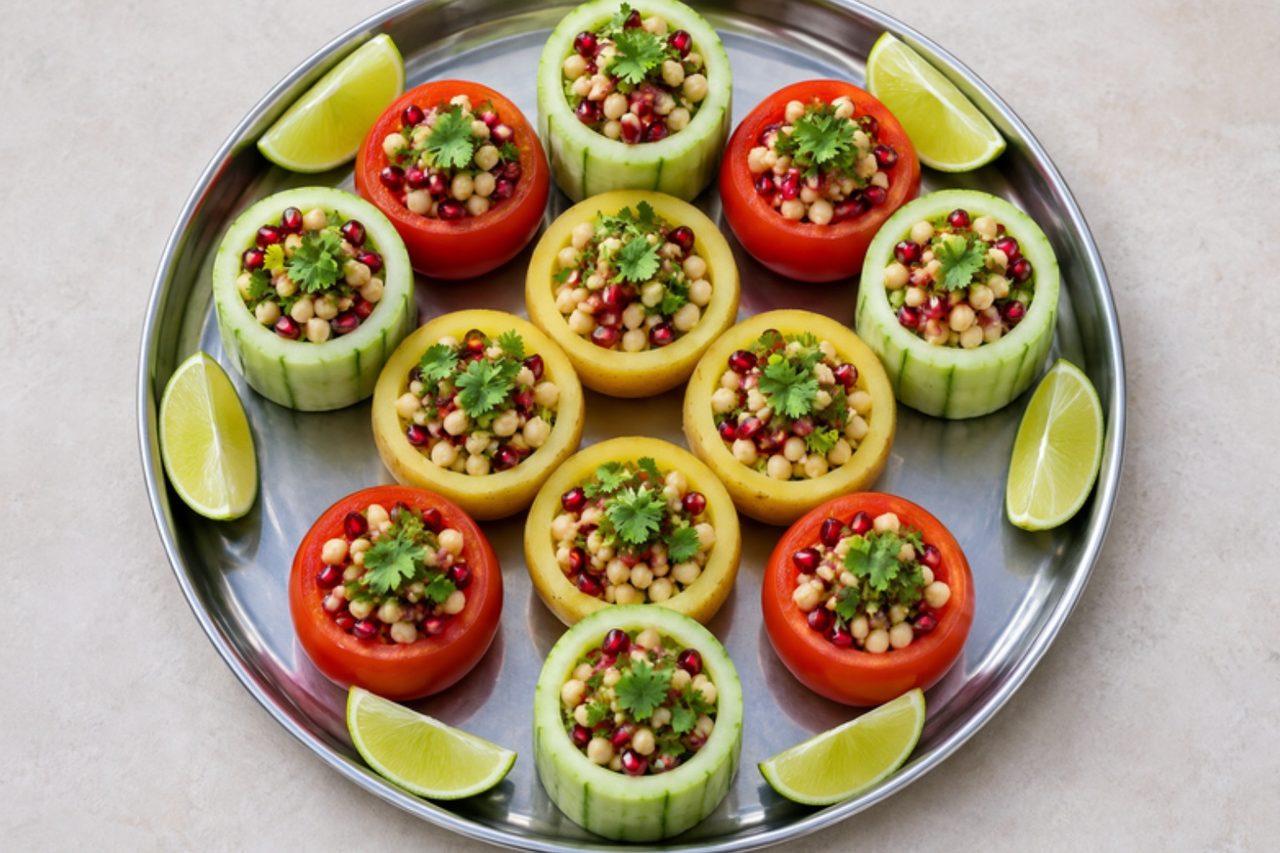
Kulle chaatStuffed cucumber chaat

Kulle chaat comes from the lanes of Chandni Chowk around Chawri Bazar, where a couple of old stalls carve fruit and vegetables into little cups and fill them with chickpeas, pomegranate and lime. It is the cooling chaat of Delhi's scorching summer afternoons: no frying, no yoghurt, just juicy, crunchy cups dusted with chaat masala and black salt. Children love picking them up whole. Chef's tip: season the inside of each empty cup with lime and chaat masala before filling, so every bite is tangy right through.

by KrazyBadal 0 views

Moong dal pakodeMoong dal fritters

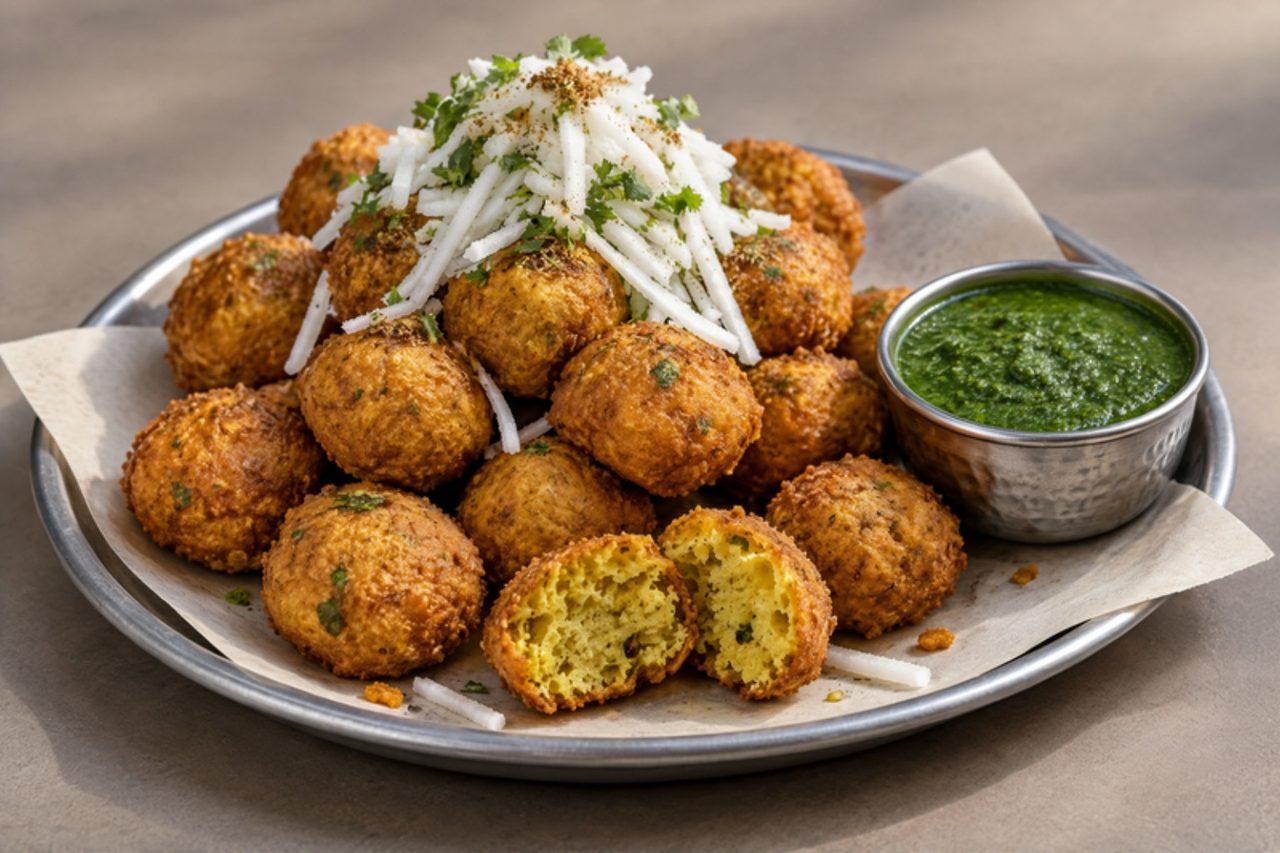
When the monsoon breaks over Delhi, the pakora stalls of Lajpat Nagar and the lanes off Chandni Chowk do their best trade, and moong dal pakode are the favourite: light, airy balls of soaked and coarsely ground yellow lentils, fried until crunchy and served in paper plates with grated white radish and green chutney. They are naturally gluten free and vegan. Chef's tip: beat the ground batter hard with your hand for a few minutes; the trapped air is what makes them fluffy inside.

by KrazyBadal 0 views

Lucknowi matar chaatWhite pea chaat

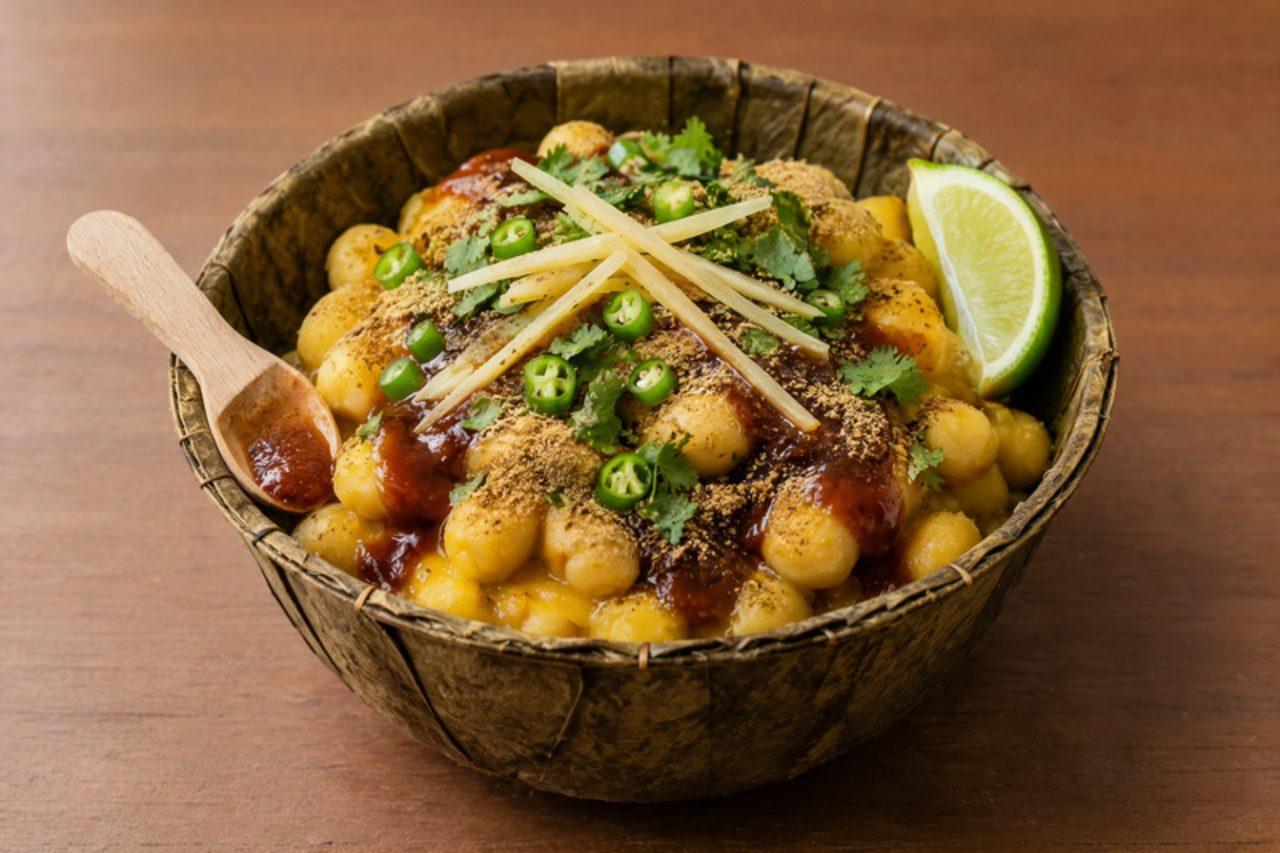
In Aminabad and around the Chowk in old Lucknow, matar chaat is ladled hot out of huge brass handis that sit on embers all evening, especially through the cold months. Dried white peas are cooked until they collapse into a creamy, soupy mass, then each leaf bowl is topped with shredded ginger, green chilli, raw onion, lime, roasted spices and a trickle of sweet tamarind chutney. It is warming, sour and gently hot. Chef's tip: cook the peas until a good number break down; that creamy liquid is what makes it Lucknowi.

by KrazyBadal 0 views

OlanAsh gourd and cowpea stew

Olan is the quietest dish on a Travancore sadya leaf, the banana-leaf feast served in southern Kerala for Onam, weddings and temple festivals. Thin, glassy slices of ash gourd and soft red cowpeas sit in coconut milk with nothing louder than green chilli and curry leaves, and its job is to cool the palate between the tangy, fiery curries around it. The flavour comes from coconut milk added in two stages and a spoonful of raw coconut oil poured over at the end. Eat it with plain rice, or ladle it beside appam on an ordinary weekday. Chef's tip: slice the ash gourd as thin as a coin so it turns translucent in the time the coconut milk takes to thicken.

by KrazyBadal 0 views

ErisseryPumpkin and cowpea curry

Erissery is the golden, slightly sweet pumpkin dish of the Onam sadya in Kerala, and a favourite in homes all through the harvest season when the yellow mathanga pumpkins are piled up in the markets. Soft pumpkin and red cowpeas are bound with a coconut, cumin and green chilli paste, and the whole pot is crowned with grated coconut fried in coconut oil until it turns the colour of cinnamon. That crunchy, nutty topping is what makes it erissery. Serve with rice and parippu, or scoop it up with chapati. Chef's tip: keep the pumpkin pieces large so some stay whole while others melt into the sauce.

by KrazyBadal 0 views

Pazham poriBanana fritters

Pazham pori is what the glass cases of Kerala's roadside tea shops are full of at four in the afternoon: long slices of ripe nendran banana dipped in a sweet batter and fried in coconut oil until puffed and golden. Bite through the crisp, slightly chewy coat and the banana inside is soft, hot and honeyed. People eat them standing at the counter with a glass of frothy, milky chaya, or carry a paper parcel home for the family. Chef's tip: wait until the nendran skins are mostly black; the banana must be fully ripe to turn creamy when fried.

by KrazyBadal 0 views

PehakFermented soybean and chilli chutney

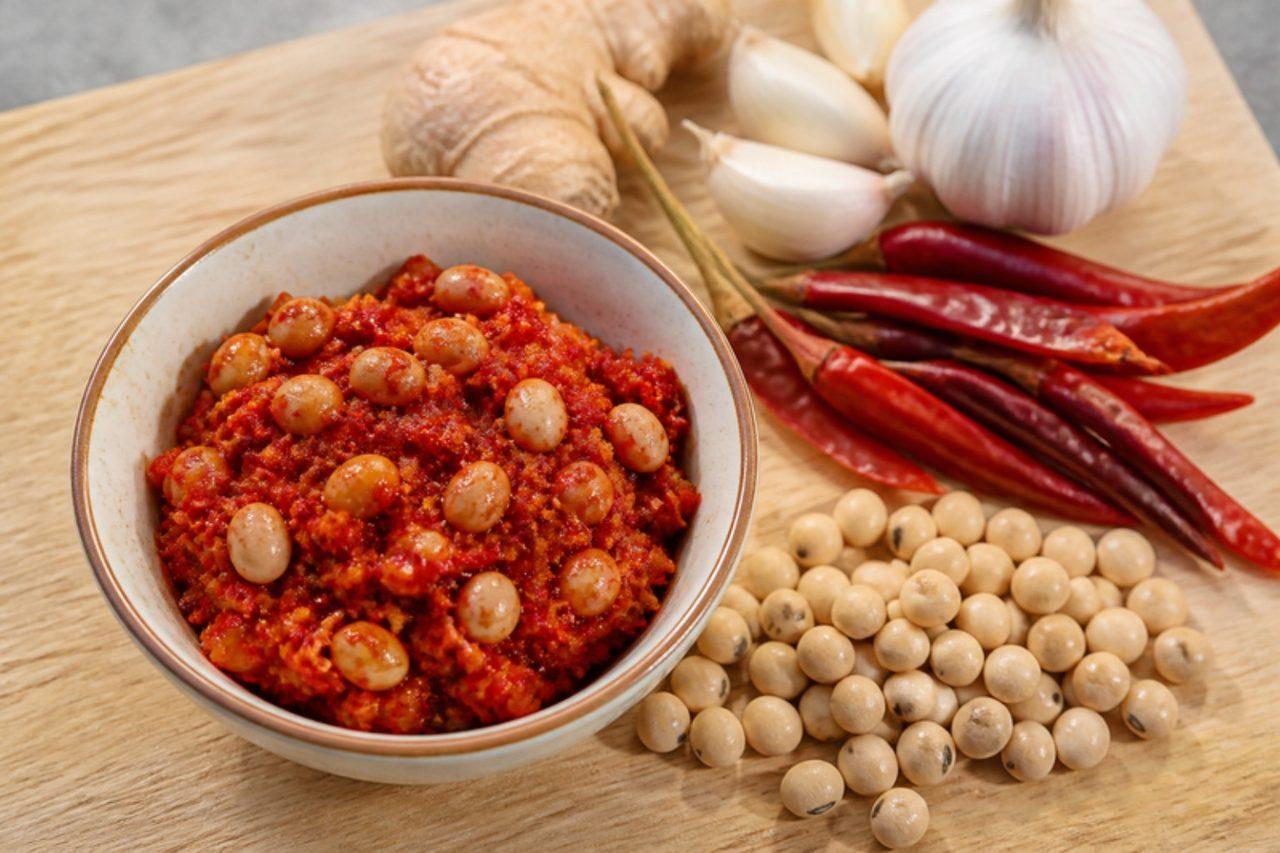
Pehak is the Apatani chutney of the Ziro valley in Arunachal Pradesh: fermented soybean pounded with roasted chillies, ginger and salt into a thick, pungent paste. It goes with nearly every meal, a little at a time, with rice, boiled vegetables or millet. It is savoury, salty and very hot, and it keeps for weeks. Chef's tip: dry-roast the fermented soybean briefly before pounding; it mellows the sharp smell and brings out a toasty depth. Natto or Naga axone work if you can't get local soybean.

by KrazyBadal 0 views

Kerala banana chips

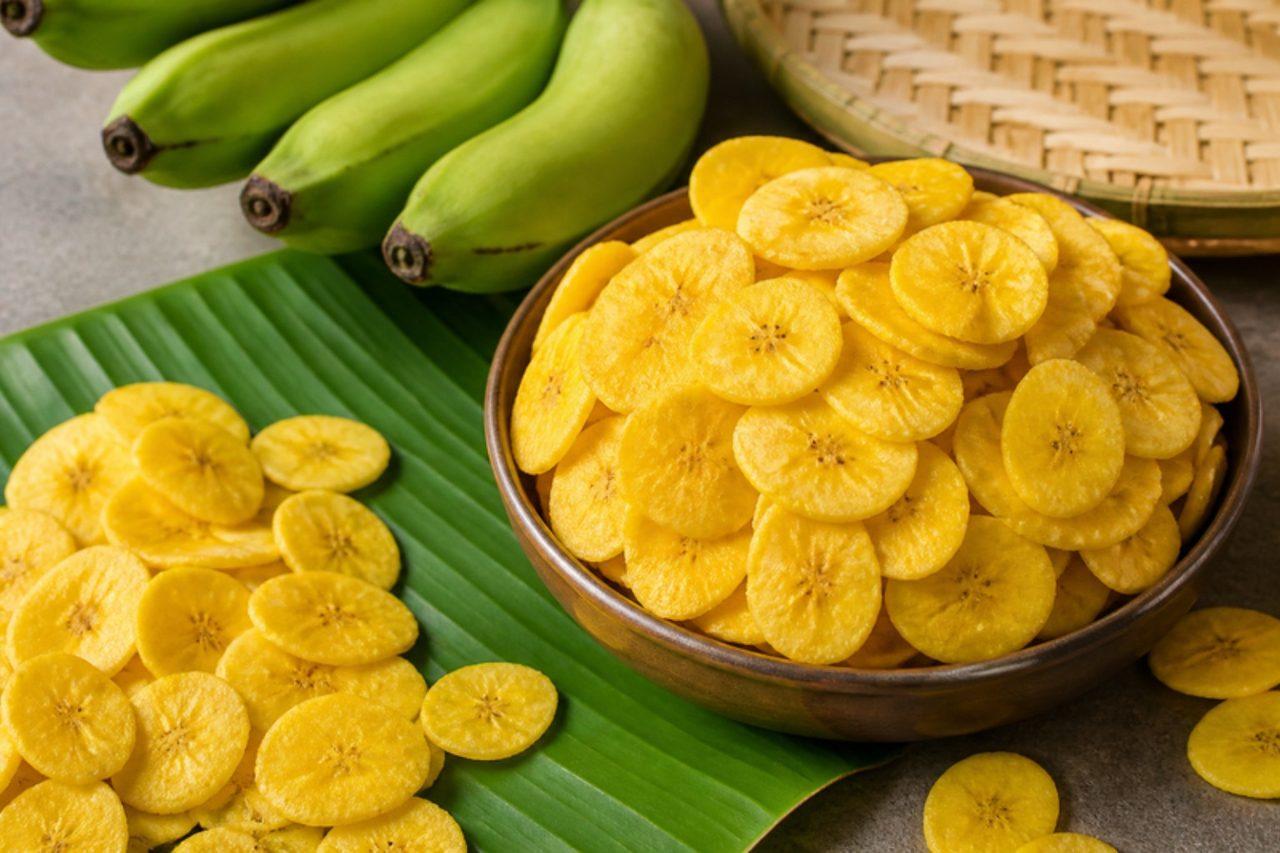
Upperi, the yellow raw-banana chips of Kerala, are fried in huge cauldrons in the snack shops of Kozhikode and Thrissur and handed round in bags at every Onam sadya, where they are one of the first things laid on the leaf. Green nendran bananas are sliced straight into hot coconut oil, and a splash of salted water goes in at the end, so the salt clings to every chip. The result is crisp, golden and faintly sweet, with that unmistakable coconut-oil smell. Chef's tip: rub a little oil on your hands before peeling the bananas; the sap stains skin and is very hard to wash off.

by KrazyBadal 0 views

Showing 48 of 681 recipes

Show more recipes

Page 20 of 29

More collections