Skip to content
WhatToEat.Today

Vegetarian Korean recipes

Bibimbap, banchan, noodles and stews without meat or fish. (156 recipes)

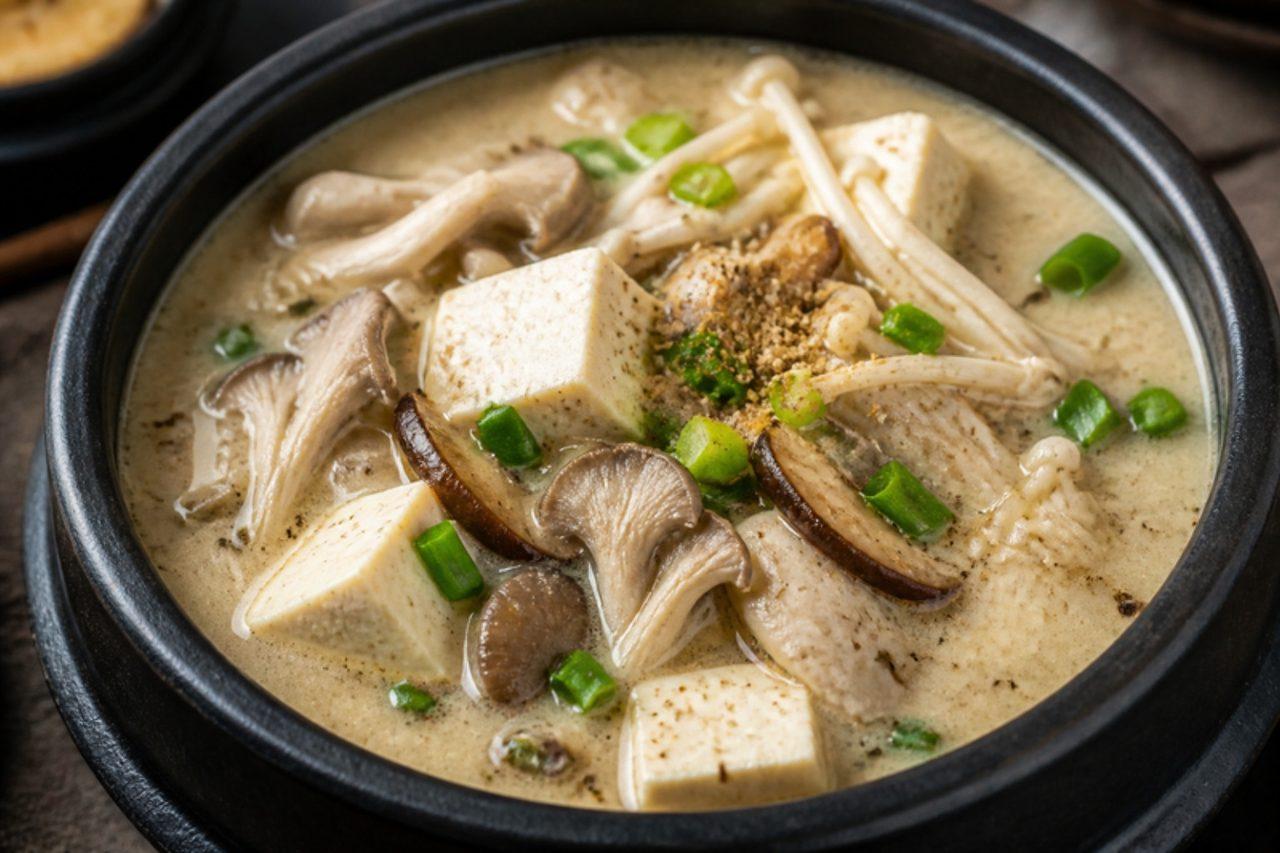
Beoseot deulkkae tangMushroom and perilla seed soup

This creamy, nutty soup is cooked in Korean homes and temple-style restaurants all through autumn and winter, when the first wild mushrooms arrive and people want something warming and gentle. Ground perilla seeds and a spoon of glutinous rice flour turn a plain broth thick and pale, with mixed mushrooms and soft tofu simmered through it. With the perilla and a block of firm tofu, a bowl gives about 24 g of protein, making it a proper main course with rice. The most common mistake is adding the perilla powder too early and boiling it hard, which makes the soup gritty and bitter; stir it in near the end. Chef's tip: buy perilla seed powder that has been skinned (it is paler), for the smoothest, creamiest soup.

by KrazyBadal 0 views

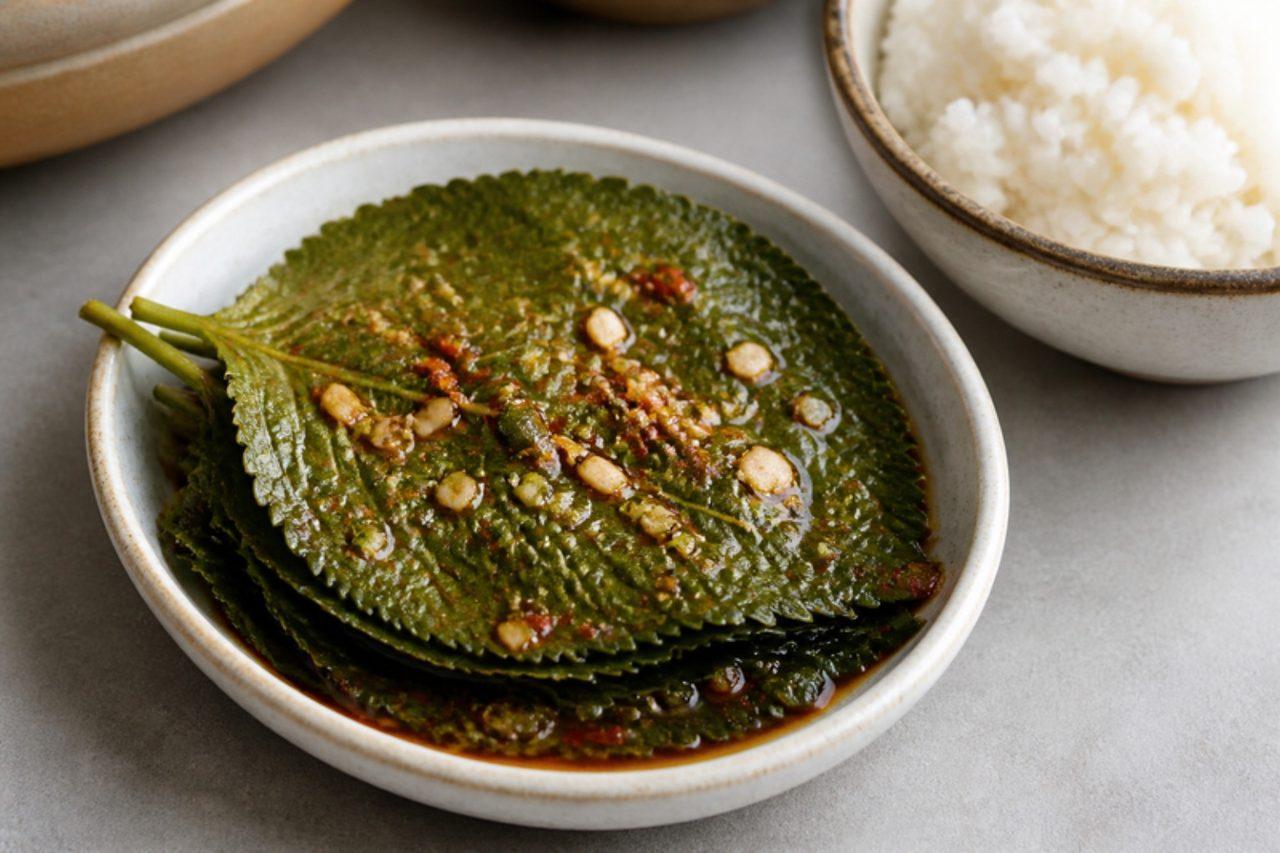
Kkaennip jjimSteamed seasoned perilla leaves

Kkaennip jjim is a homely banchan made in Korean kitchens through the summer, when perilla grows like a weed in back gardens, and it is eaten by wrapping a single soft leaf around a mouthful of rice. The leaves are stacked in pairs with a spoon of soy, garlic and chilli seasoning between each layer, then steamed until they soften and drink up the sauce. Many versions add anchovy stock; this one uses water, so it is vegan. Each portion has about 2 g of protein. The common mistake is steaming too long: the leaves should be tender but still green, about 5 minutes. Chef's tip: seasoning every second leaf rather than every one keeps the stack from getting soggy and salty.

by KrazyBadal 0 views

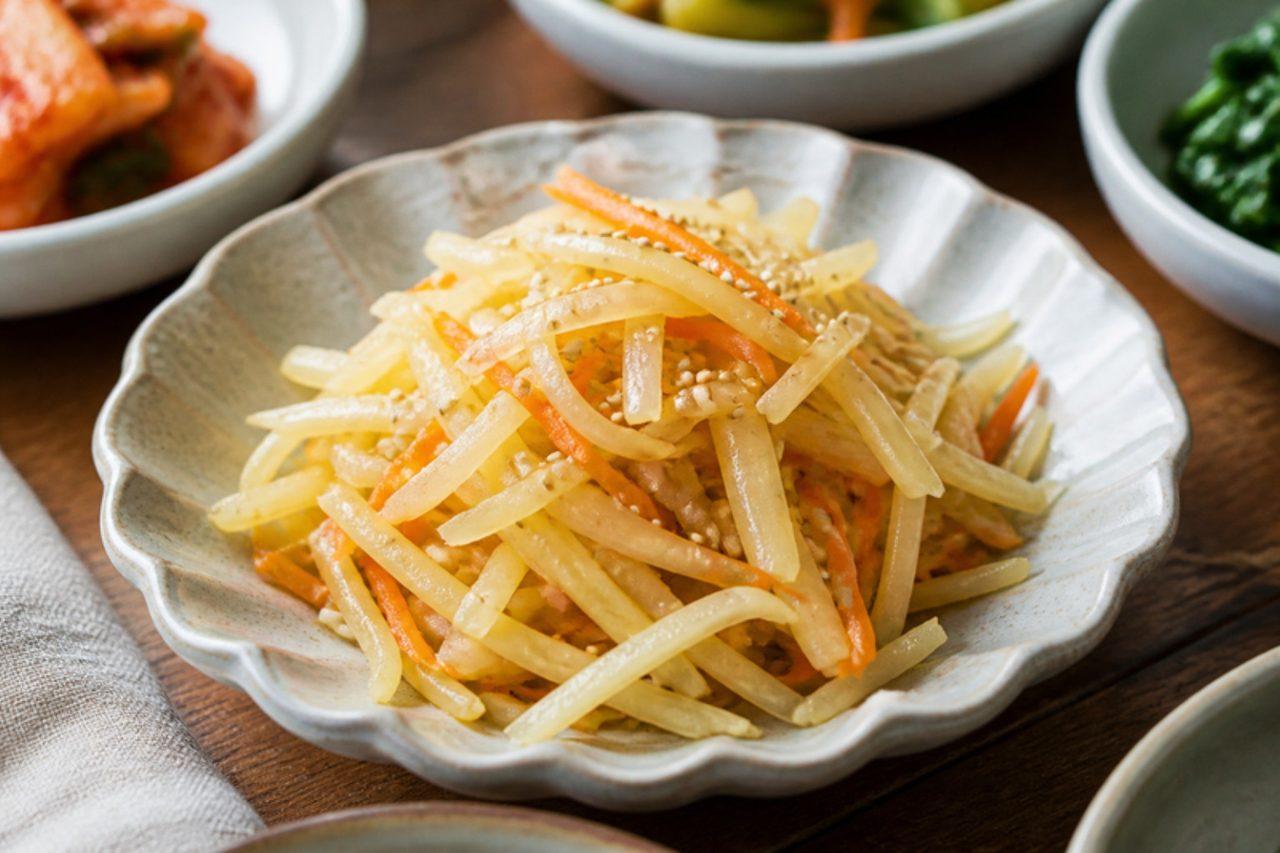
Gamja bokkeumStir-fried potato strips

Gamja bokkeum is one of the banchan Korean mothers pack into lunchboxes and set out at dinner in Seoul and Busan: thin potato strips stir-fried with onion and carrot, seasoned only with salt, a little sesame oil and toasted sesame seeds. The strips should be tender and separate, with a slight bite, not crisp like chips and not mushy. The mistake is skipping the soak, so the surface starch makes the strips stick to each other and the pan and break up. Chef's tip: a quick soak in salted water also seasons the potato through.

by KrazyBadal 0 views

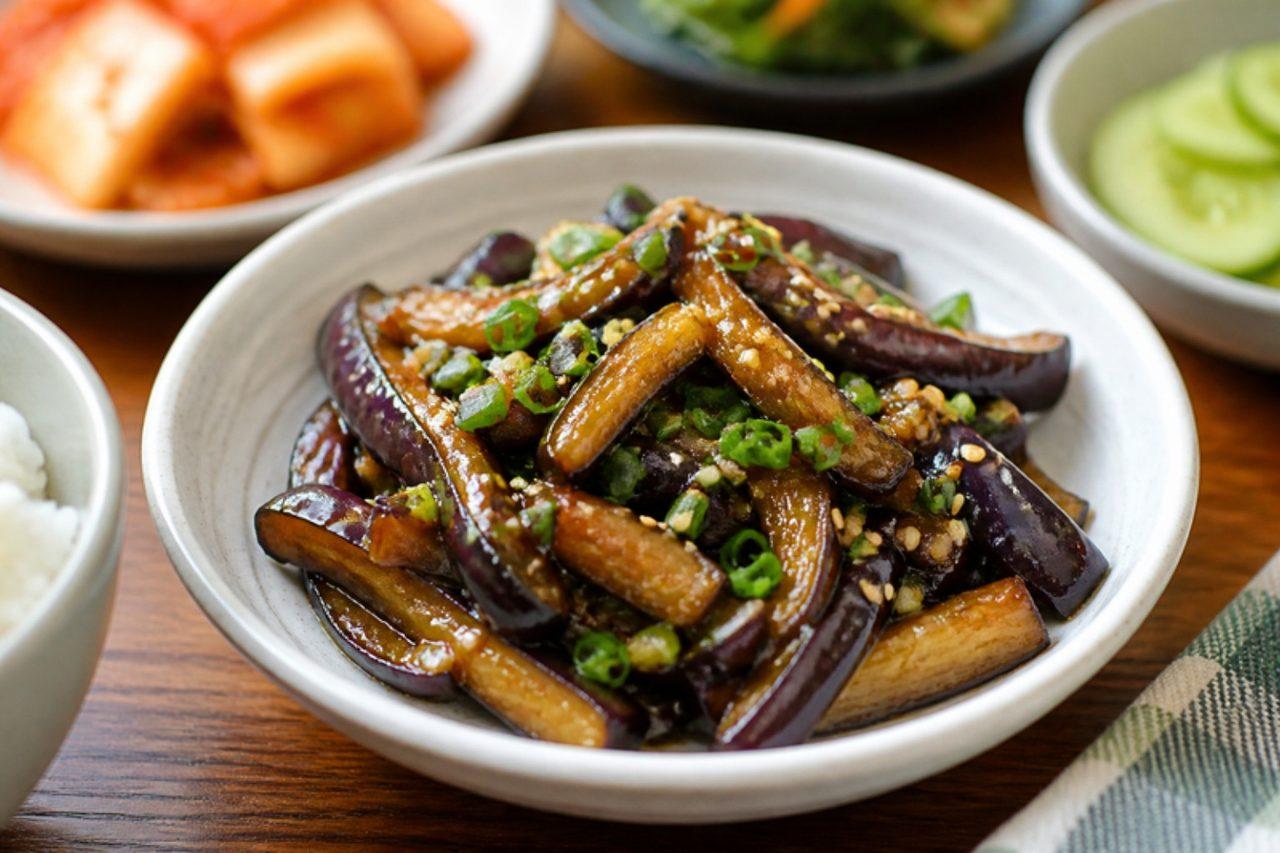
Gaji bokkeumStir-fried aubergine

Gaji bokkeum is a summer banchan in Korean homes, cooked in the weeks when long, thin Korean aubergines fill the markets. Strips of aubergine are seared until soft and caramelised, then tossed in garlic, spring onion, soy sauce and sesame so they turn glossy and savoury-sweet. It sits beside rice and soup at dinner and keeps well in the lunchbox. The mistake is pouring in lots of oil at the start: aubergine soaks it all up and turns greasy. Chef's tip: sear the strips in a moderate amount of oil and add a splash of water if the pan dries; the steam softens them without more oil.

by KrazyBadal 0 views

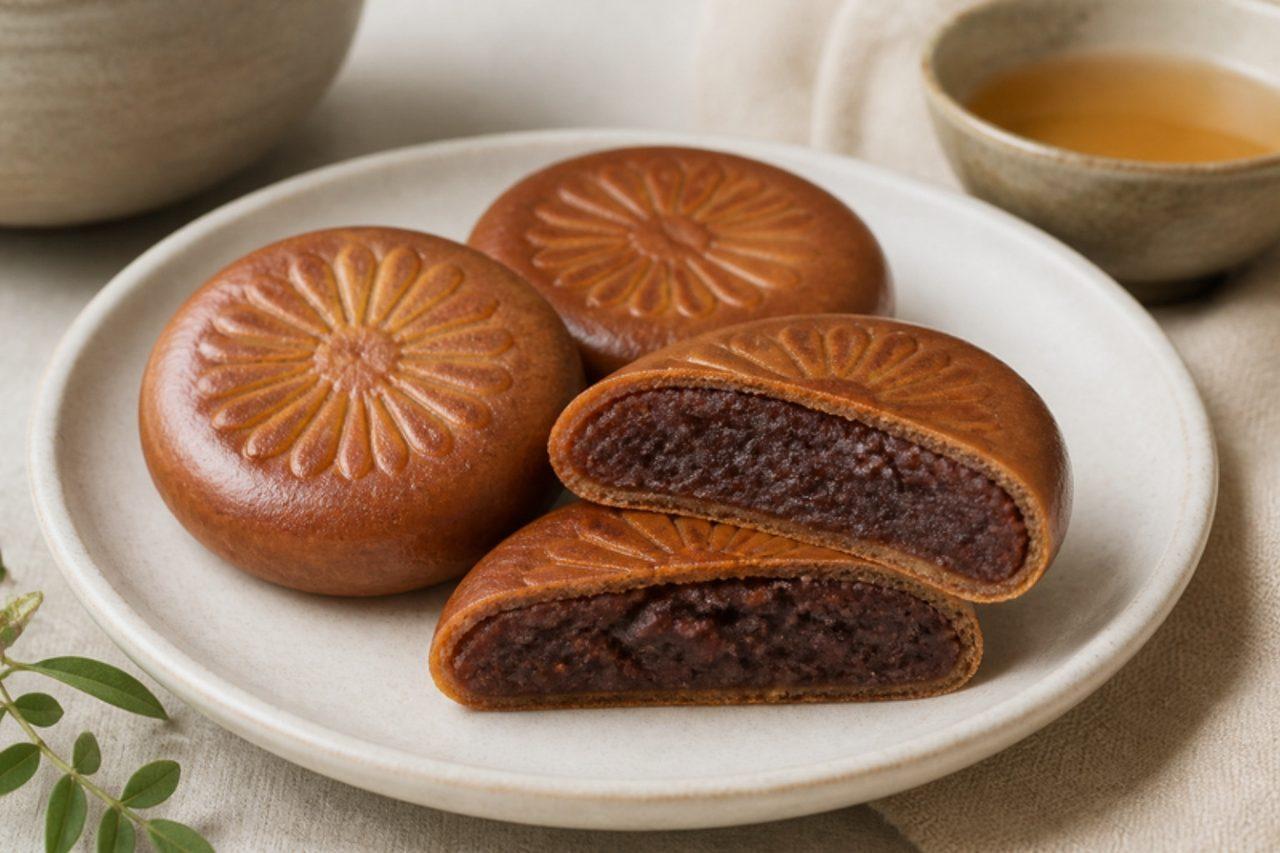
Gyeongju breadRed bean pastries

Near the grassy royal tombs of Gyeongju, the ancient Silla capital, a baker in Hwangnam-dong began making these small round pastries in 1939, and the city's shops have sold them by the boxful ever since. Gyeongju bread (황남빵, also called Gyeongju-ppang) is mostly filling: a generous ball of coarse red bean paste in a skin so thin it looks painted on, stamped with a flower pattern and glazed until shiny brown. It tastes gently sweet and nutty, soft and moist rather than bready, and it is the souvenir every visitor carries home, eaten with barley tea or green tea. The usual mistake is a dough shell that is too thick, which bakes into a cookie and hides the bean flavour; aim for roughly one part dough to two and a half parts filling. Chef's tip: press the pattern in with a small cookie stamp or the back of a citrus press dipped in flour, while the buns are cold and firm, so the design stays sharp.

by KrazyBadal 0 views

Soboro-ppangPeanut streusel buns

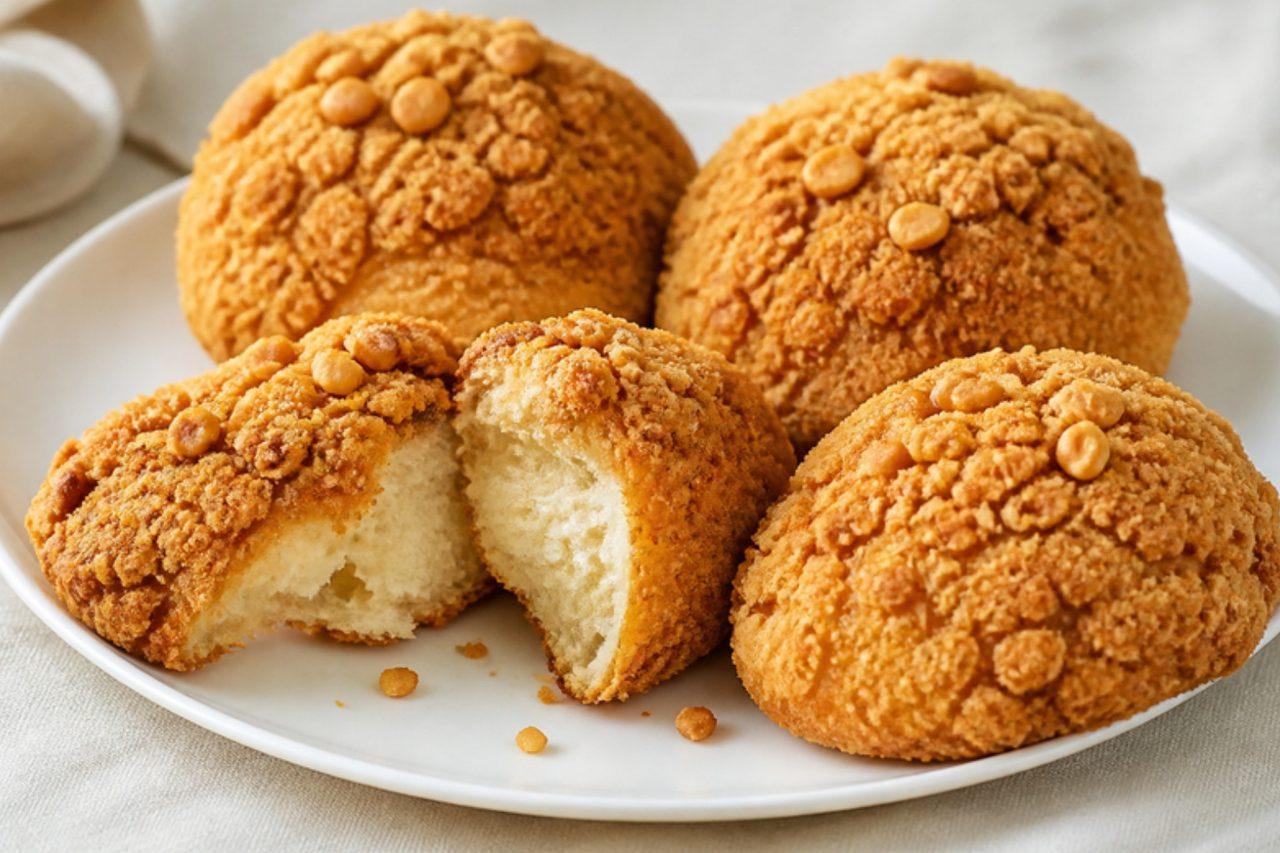
'Soboro' describes something crumbled, and that is exactly what covers these buns: a craggy, peanut-scented streusel that bakes into a sweet, sandy crust over soft milk bread. Soboro-ppang (소보로빵) has been a fixture of Korean neighbourhood bakeries since the 1960s and is still one of the cheapest, most loved buns on the shelf, bought by students after school and eaten with a carton of banana or plain milk. The contrast is the point, crunchy and buttery on top, fluffy and lightly sweet inside. Some bakeries fill them with red bean paste or custard; this is the plain classic. Beating the streusel into a smooth paste is a common mistake, as it melts into a flat lid in the oven, so rub it only into clumpy crumbs and keep it cold. Chef's tip: brush the tops of the dough balls with milk and press them firmly, top down, into a bowl of crumbs; a thick, even coat sticks better than crumbs scattered on afterwards. They contain peanuts.

by KrazyBadal 0 views

Korean corn cheese

Corn cheese arrives sizzling on a small iron plate as a side at Korean barbecue restaurants, and at home it has become a five-minute after-school snack and a favourite for children's sleepovers in Seoul and beyond. Sweet, juicy corn is stirred with a little butter and mayonnaise, then covered in mozzarella and heated until it melts into long strings. Most versions add sugar; this one lets the corn's own sweetness carry it. It contains milk and egg (mayonnaise). Chef's tip: drain and dry the corn really well, or the dish turns watery under the cheese.

by KrazyBadal 0 views

Mayak gimbap (mini gimbap with mustard dip)

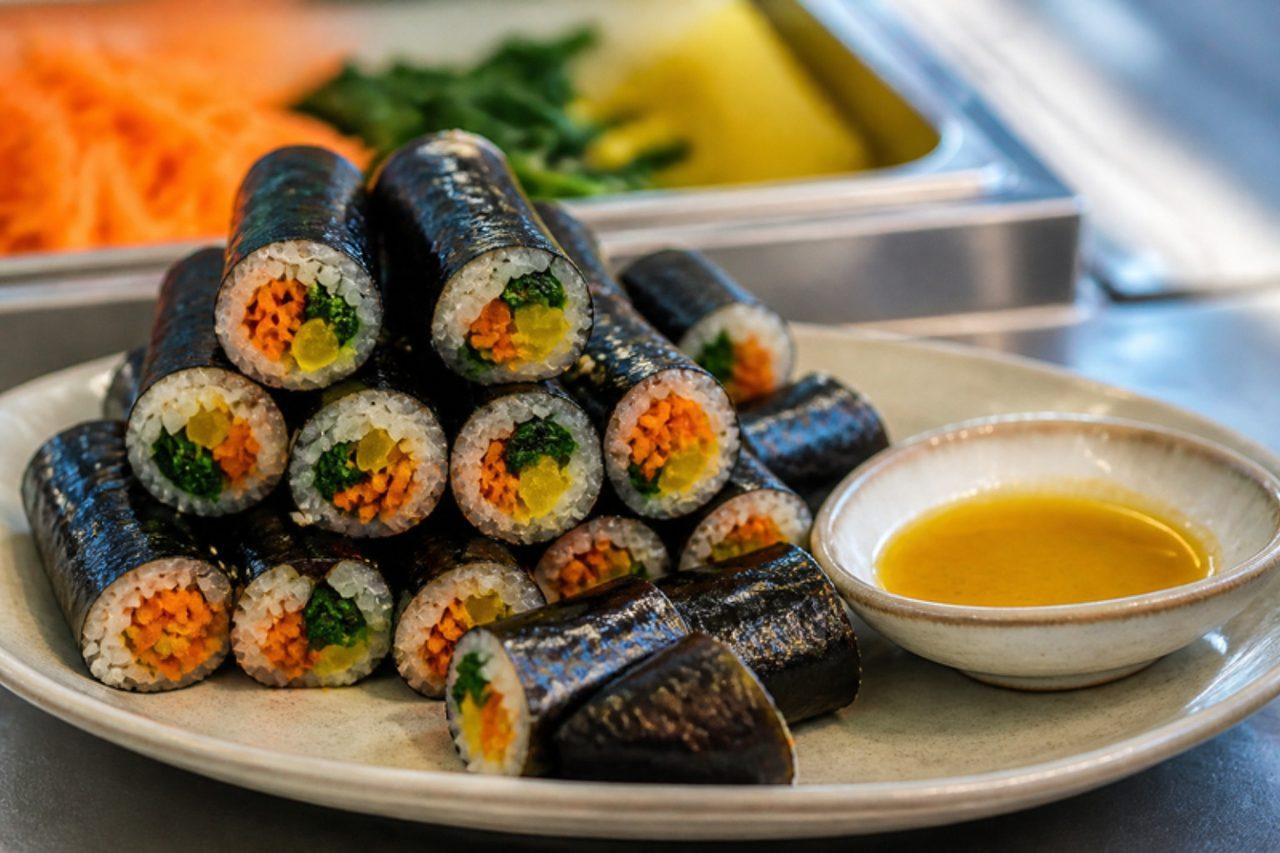
Mayak gimbap began at Gwangjang Market in Seoul, where stallholders roll stubby, finger-sized gimbap and sell them by the plate with a tangy mustard and soy dip. The nickname 'mayak' jokes that they are addictive, and the small size makes them a favourite in Korean children's lunchboxes and snack boxes. They are vegan, with sesame, soya and wheat (soy sauce) and mustard in the dip; leave the mustard out of a child's portion if they prefer it mild. Chef's tip: use only a thin layer of rice; with a mini roll, too much rice is what makes them burst.

by KrazyBadal 0 views

Ssal mieum (Korean first rice gruel)

In Korean homes the weaning journey, called iyusik, begins with ssal mieum, a gruel so thin it is almost a drink. The rice is soaked, blended raw with water and then stirred over a low flame, which gives a finer, silkier result than boiling whole grains. Families offer it at around six months, a spoonful in the morning, before moving on to thicker juk with vegetables a few weeks later. It contains none of the common allergens: no milk, egg, gluten, peanut, tree nuts, soya, sesame or fish. Chef's tip: grind the soaked rice with only part of the water first; a thick slurry blends smoother than a watery one.

by KrazyBadal 0 views

Korean garlic cream cheese bread

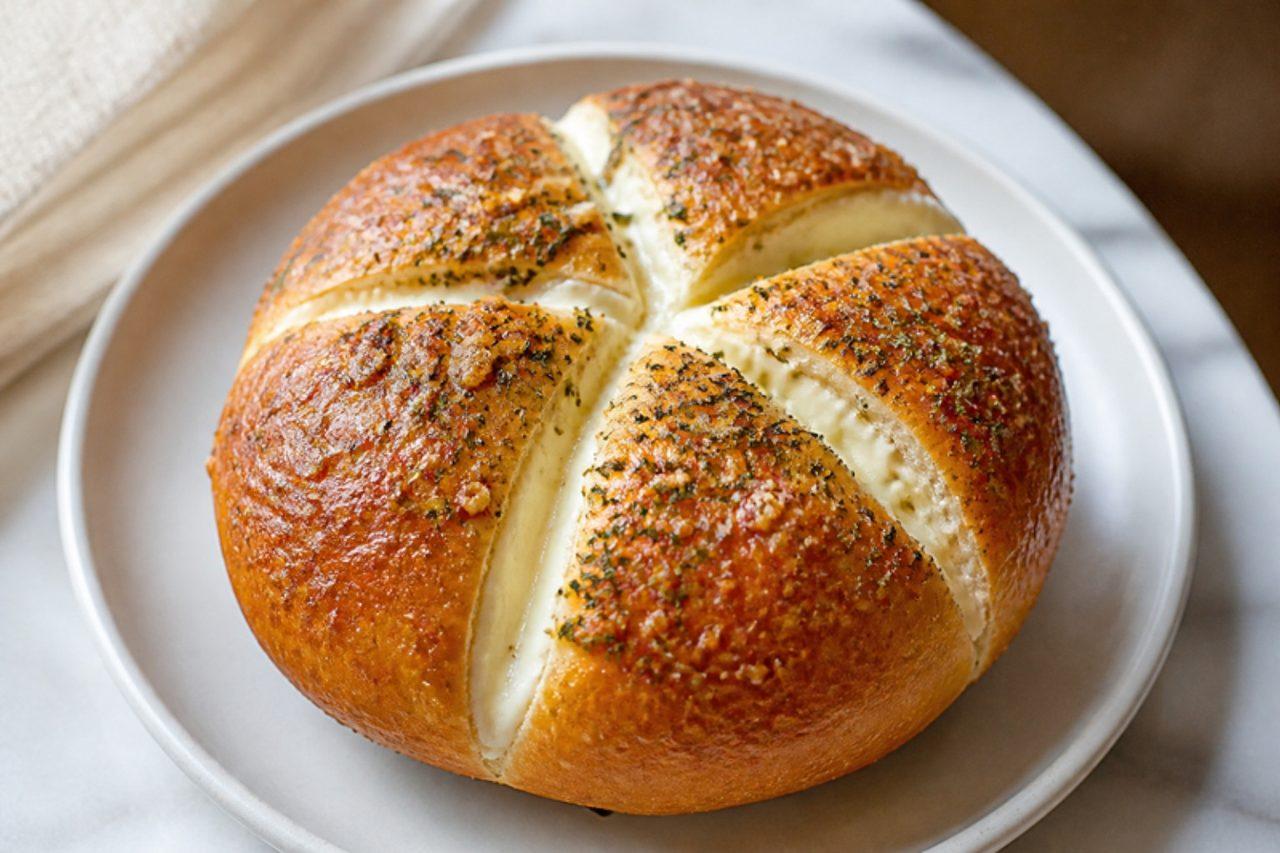
Gangneung, the seaside city on Korea's east coast, made this bun famous: its name, yukjjok maneul-ppang (육쪽마늘빵), means 'six-clove garlic bread', because each round loaf is cut into six wedges like a bulb of garlic. The cuts are piped full of sweet cream cheese, then the whole bun is dunked in a garlicky butter custard and baked again, so it comes out crisp and golden on top, soft and rich inside, sweet, salty and savoury in one bite. Tourists queue for it at market stalls and cafés, and it is now a Korean café favourite eaten with iced americano. The most common slip is cutting right through the base; the wedges then fall apart in the garlic bath, so stop about 1 cm short. Chef's tip: bake and cool the buns a day ahead, or use day-old buns; firm, cooled bread slices cleanly and soaks up the garlic butter without going soggy.

by KrazyBadal 0 views

Dubu buchim tofu fingers

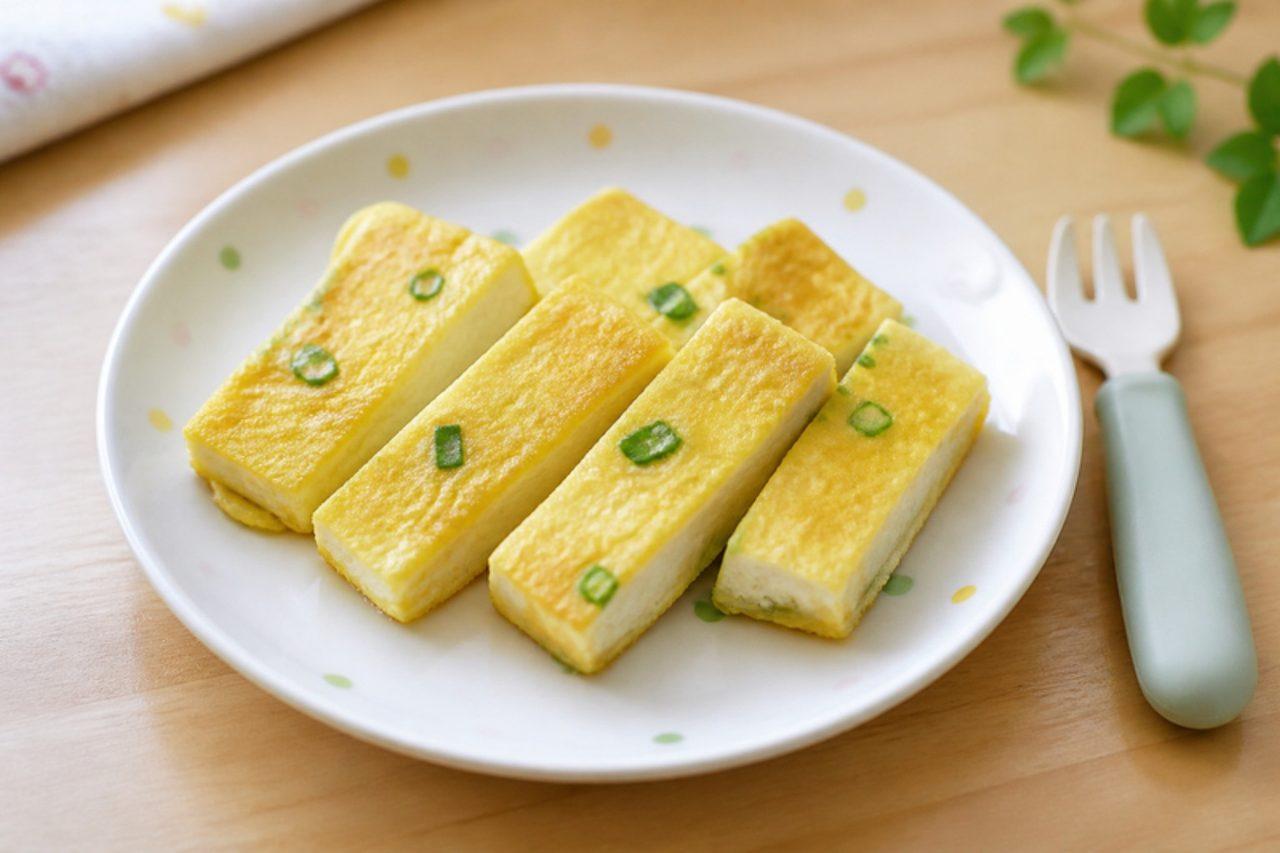
Dubu buchim, slices of tofu dipped in beaten egg and fried until golden, is an everyday Korean banchan, and families cut it into fingers for babies from about nine months to hold and gum. The outside is lightly crisp and the inside custard-soft, with a mild, nutty flavour. For babies it is made without salt, soy sauce or the usual sesame-soy dip; older children and adults can add the dip at the table. It contains soya and egg. Chef's tip: press the tofu well first, so it fries rather than steams and the egg coating sticks.

by KrazyBadal 0 views

Jumeokbap (Korean vegetable rice balls)

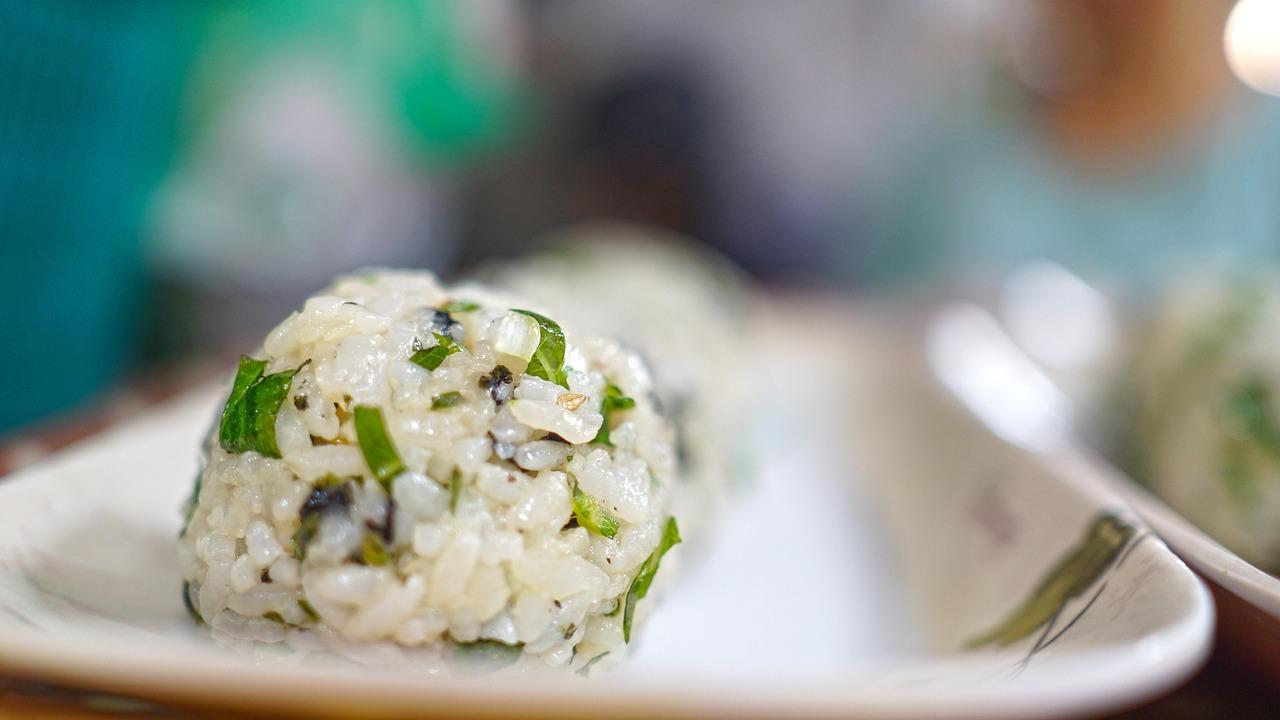
Jumeokbap means 'fist rice', and Korean parents squeeze it together in minutes for picnics, school trips and busy mornings: warm rice tossed with sesame oil, crumbled seasoned laver and tiny pieces of vegetables, then pressed into balls a child can hold. It tastes nutty and gently salty. Tuna with mayonnaise or minced beef is a common addition, but this version is fully vegan. It contains sesame and, from the soy sauce in some seasoned laver, may contain soya and wheat. Chef's tip: mix the rice while it is warm; cold rice won't stick and the balls crumble in the lunchbox.

by KrazyBadal 0 views

Kongnamul bapSoybean sprout rice

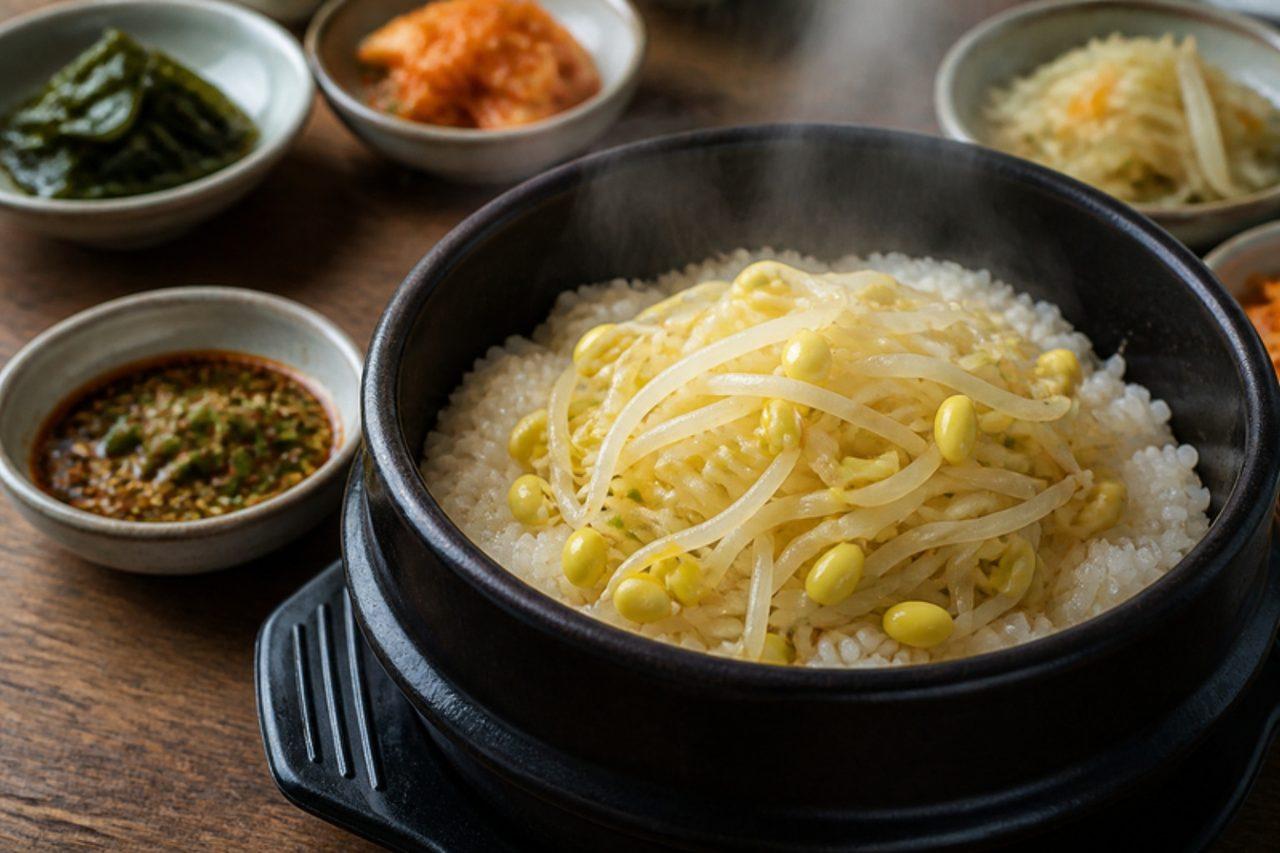
In Jeonju and Jeonbuk, the province famous for its soybean sprouts, kongnamul bap is the humble one-pot supper of winter: rice steamed with a thick layer of crunchy sprouts on top, so they wilt into the grains and give them a sweet, nutty flavour. Each person spoons on a sharp yangnyeom-jang, soy sauce with spring onion, garlic, chilli flakes and sesame, and mixes it through. A portion is about 300 kcal. Many homes add a little minced beef; this version keeps it vegetable-only. The common mistake is using the usual amount of water; the sprouts release a lot of liquid, so cut the water by about a fifth, or the rice turns mushy. Chef's tip: don't lift the lid while it cooks; the sprouts give off a raw, beany smell if the steam escapes halfway.

by KrazyBadal 0 views

Buchu muchimSeasoned garlic chives

In Korean barbecue restaurants from Mapo in Seoul to Busan's Haeundae, a little bowl of dressed garlic chives comes to the table with the grilled pork, and at home buchu muchim is the five-minute banchan made when there is a bunch of chives in the fridge. The flat chives are cut into lengths and tossed raw with gochugaru, soy, vinegar and sesame; they have a punchy garlic-onion bite that cuts through rich meat or a simple bowl of rice. A portion is about 40 kcal. The usual mistake is mixing it hard, which bruises the chives and makes them bitter and slimy; toss lightly with your fingertips. Chef's tip: dress the chives with the oil first, then the salty and sour parts; the oil coats them and keeps them crisp longer.

by KrazyBadal 0 views

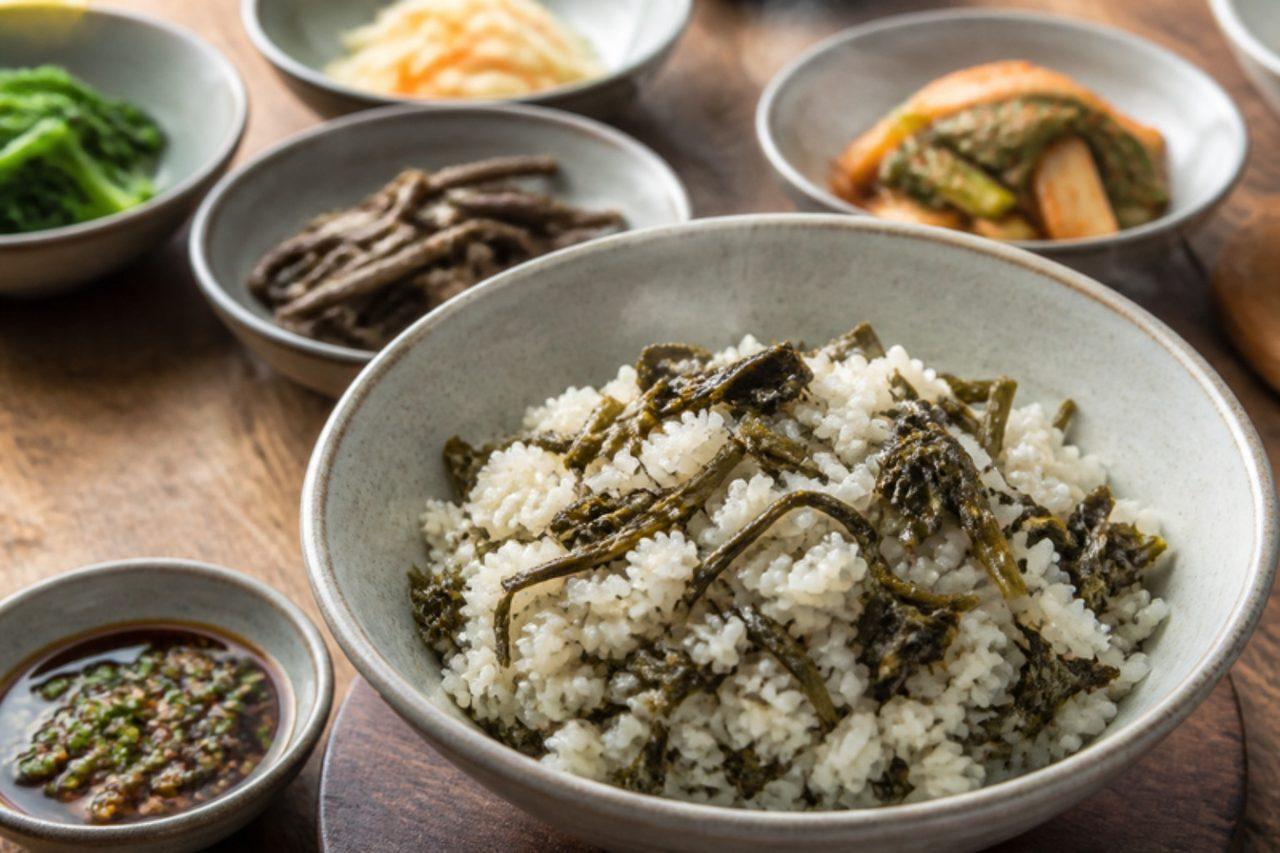
Gondeure bapThistle greens rice

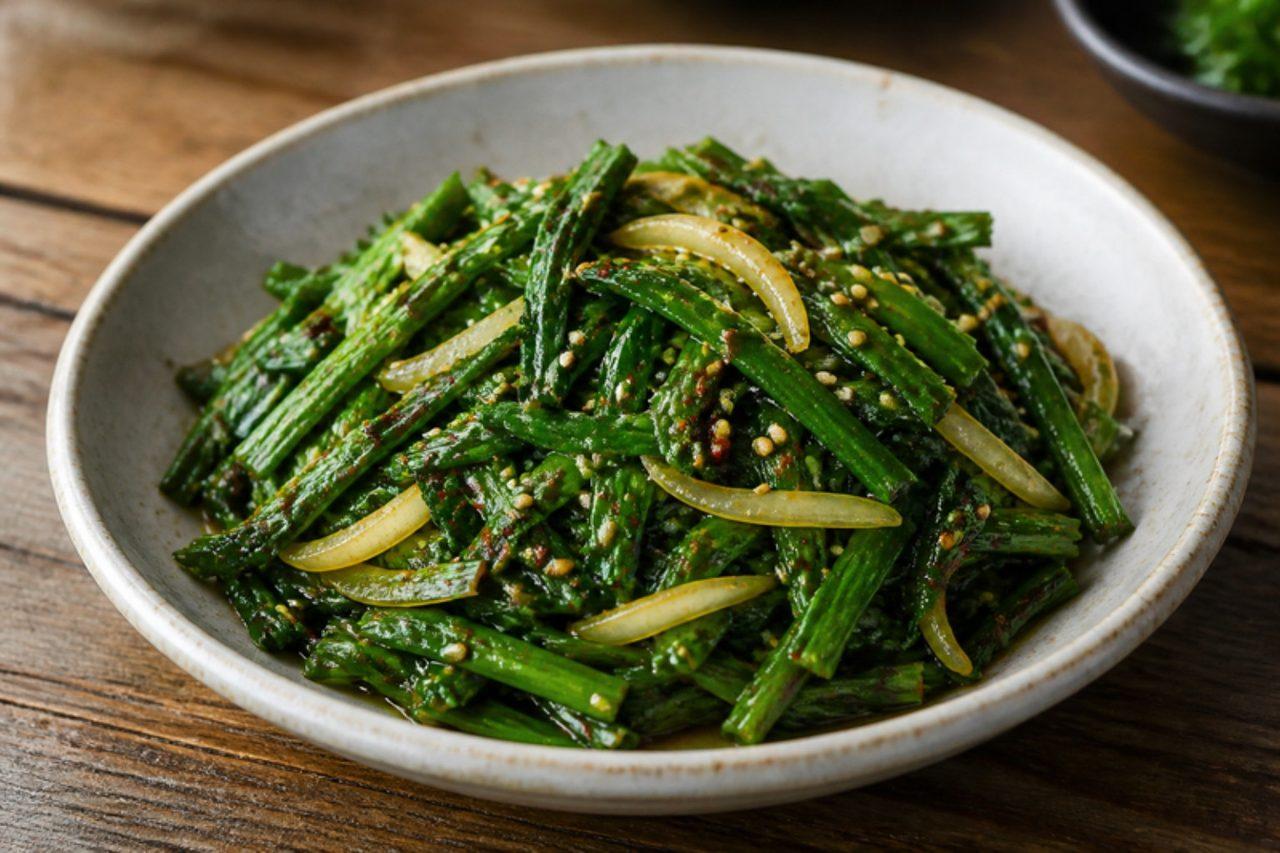
Gondeure, a mountain thistle that grows on the steep slopes of Jeongseon in Gangwon, kept villagers fed through lean springs, and gondeure bap is now what visitors travel to Jeongseon's five-day market to eat: rice cooked with the soft, dried greens and a little perilla oil, served with a soy, spring onion and sesame sauce. It is earthy, mild and fragrant, a little like artichoke. A portion is about 320 kcal. Dried gondeure must be soaked overnight and boiled for 20 minutes beforehand, which is not counted; Korean grocers also sell it ready-boiled and frozen. The common mistake is not squeezing the greens well, which makes the rice wet and soft. Chef's tip: toss the squeezed greens with a spoon of perilla oil and soup soy before they go on the rice; they season the grains as they steam.

by KrazyBadal 0 views

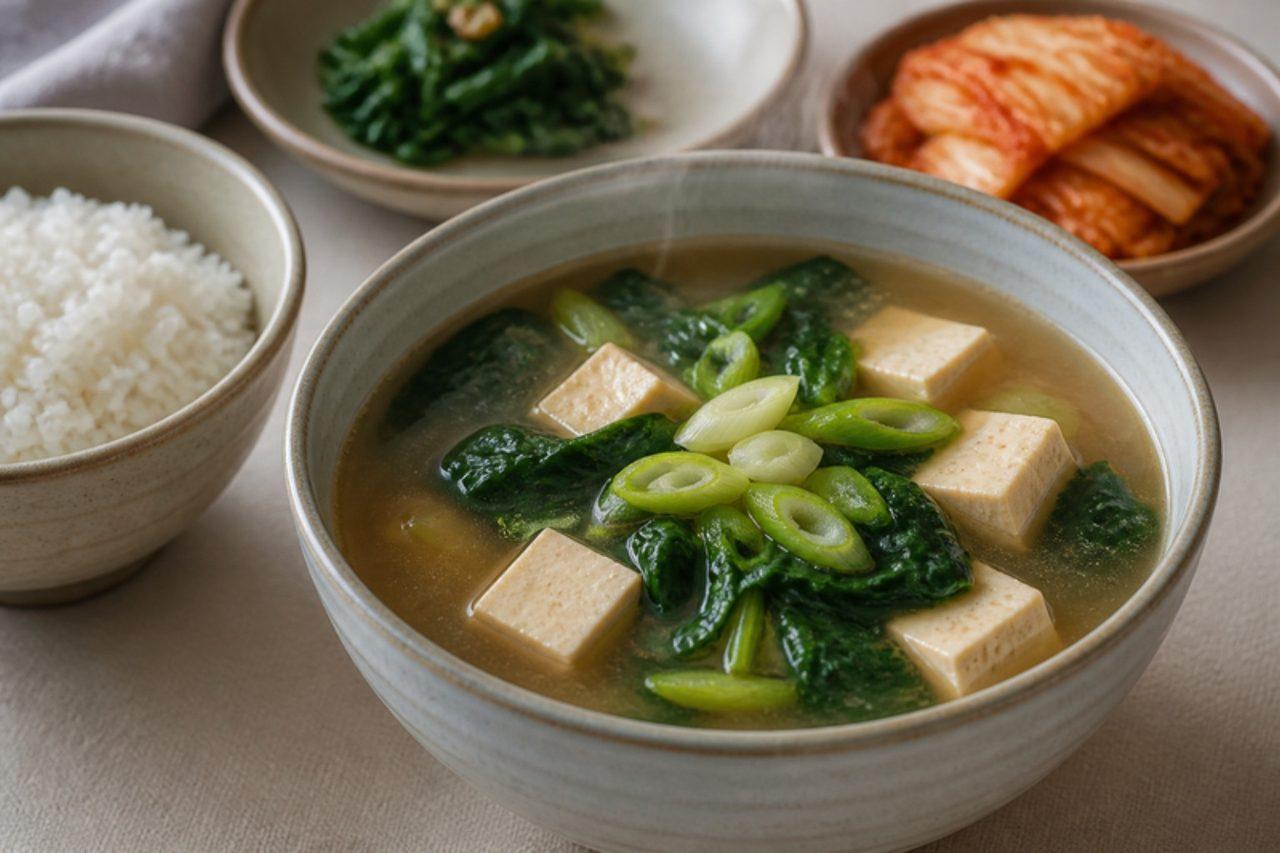
Sigeumchi doenjang gukSpinach soybean paste soup

Spinach doenjang-guk is one of the soups that appears most often on Korean breakfast and dinner tables in winter, when the short, sweet Pohang spinach called pohang-cho arrives from the east coast: a clear, savoury broth of fermented soybean paste with spinach, tofu and spring onion, eaten with rice and kimchi. It is usually made with anchovy stock; this version uses kelp and dried shiitake, so it is vegetarian. A bowl is about 60 kcal. The common mistake is boiling the doenjang hard for a long time, which makes it bitter and dulls its fragrance; dissolve it in, then simmer gently. Chef's tip: push the doenjang through a small sieve into the pot; it dissolves without lumps and leaves the husky bits behind.

by KrazyBadal 0 views

Minari muchimWater dropwort salad

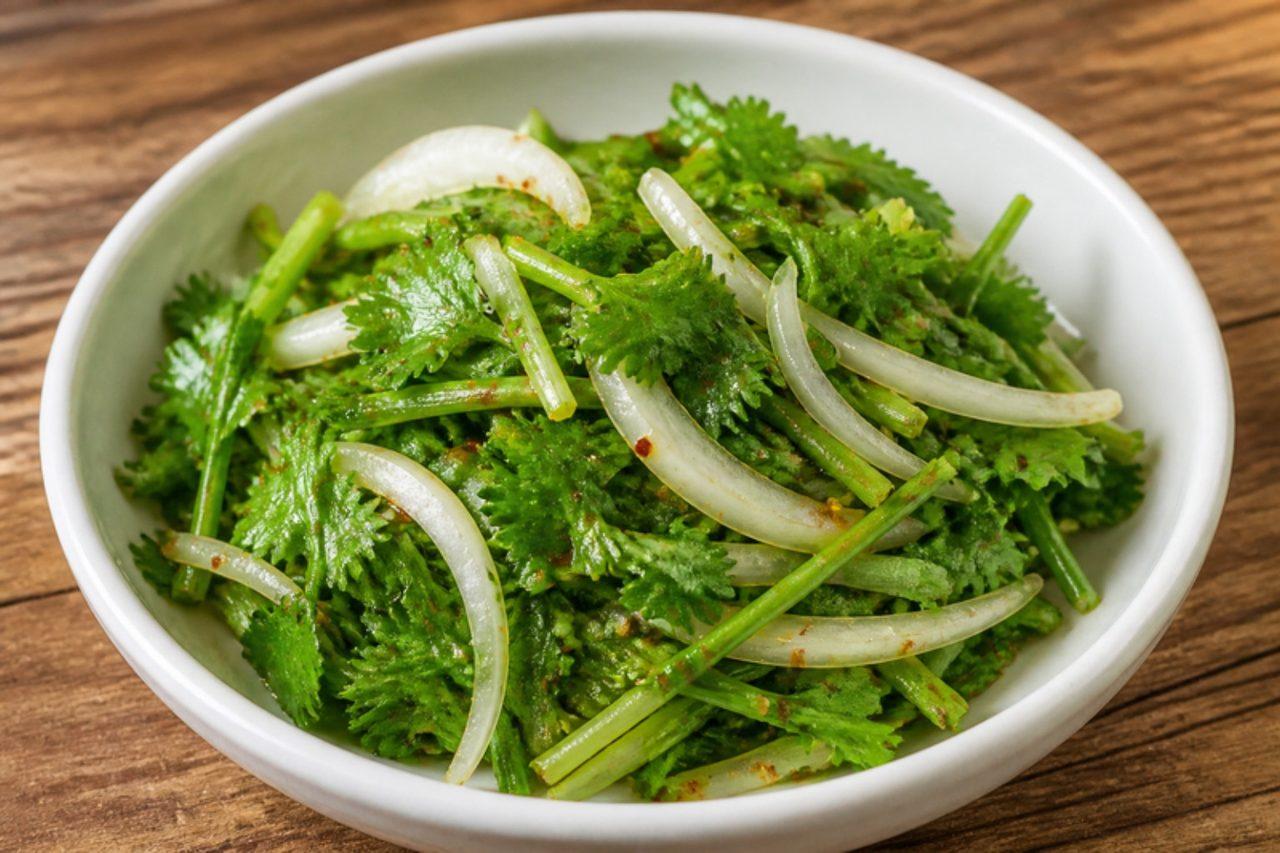
Minari, Korean water dropwort, grows in the wet fields of Cheongdo and around Daegu, and in early spring Koreans eat it raw and crunchy as a sharp, peppery salad: the stems are tossed in a sweet-sour dressing of gochugaru, vinegar, garlic and a touch of sugar, with thinly sliced onion. It is served alongside grilled pork belly or a fish stew to freshen the palate. A portion is about 50 kcal. If minari is hard to find, use watercress or celery leaves with stems. The common mistake is dressing it too early: the leaves wilt and weep within half an hour, so toss it just before eating. Chef's tip: soak the cut minari in iced water for five minutes first; it turns very crisp.

by KrazyBadal 0 views

KongguksuCold soybean noodle soup

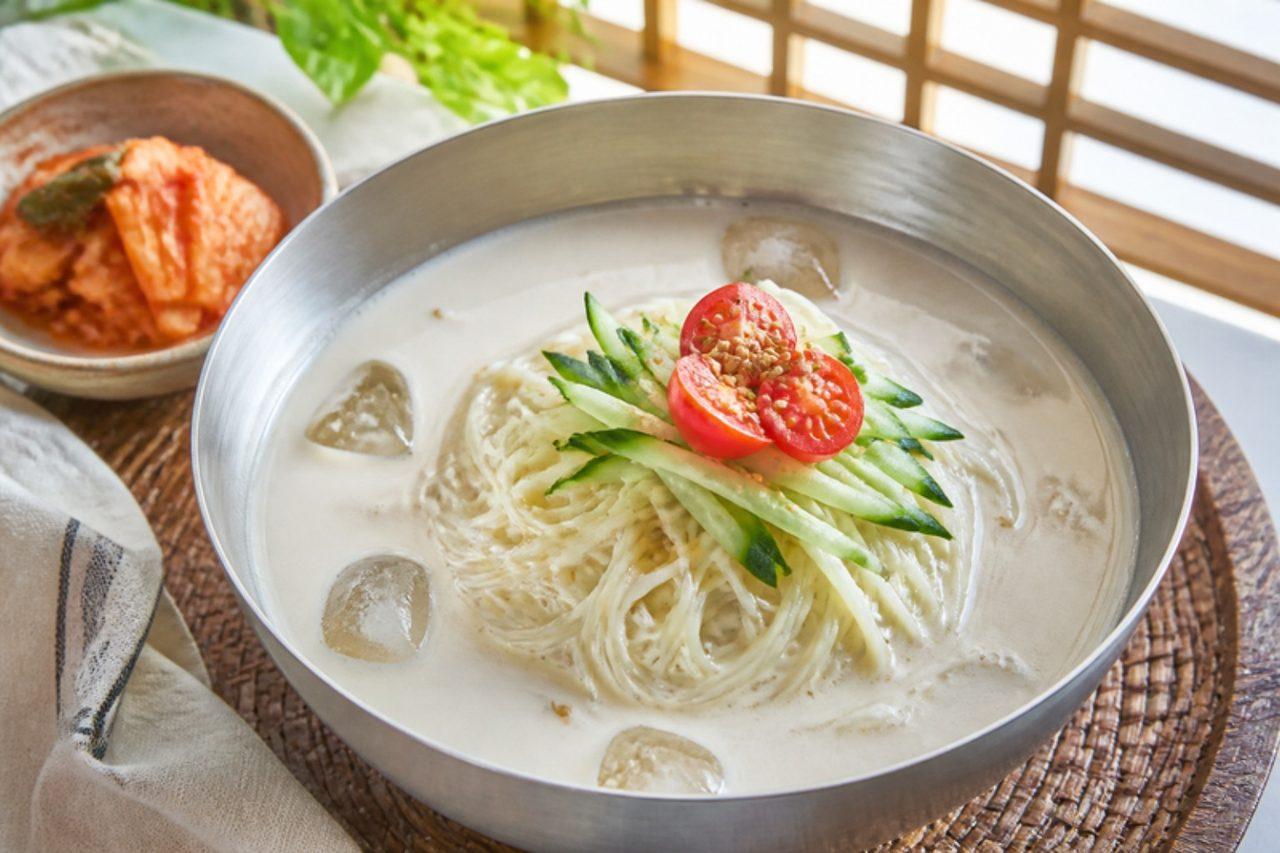
When the monsoon heat settles over Seoul in July, queues form outside old noodle houses near City Hall for kongguksu: thin wheat noodles in an ice-cold, thick, nutty broth of soybeans boiled and blended with their skins, topped with cucumber and sesame. It is plain, rich and very cooling, and people season it at the table with salt (in Seoul) or sugar (in Jeolla). A bowl is about 520 kcal, a full meal with plenty of protein. Soak the soybeans overnight first, not counted in the times. The most common mistake is overboiling the soybeans, which gives a fermented, "meju" smell; boil them for exactly 10–12 minutes and taste one: it should be cooked but not soft. Chef's tip: blend a handful of pine nuts or toasted sesame with the beans; it makes the broth even creamier.

by KrazyBadal 0 views

PatjukRed bean porridge

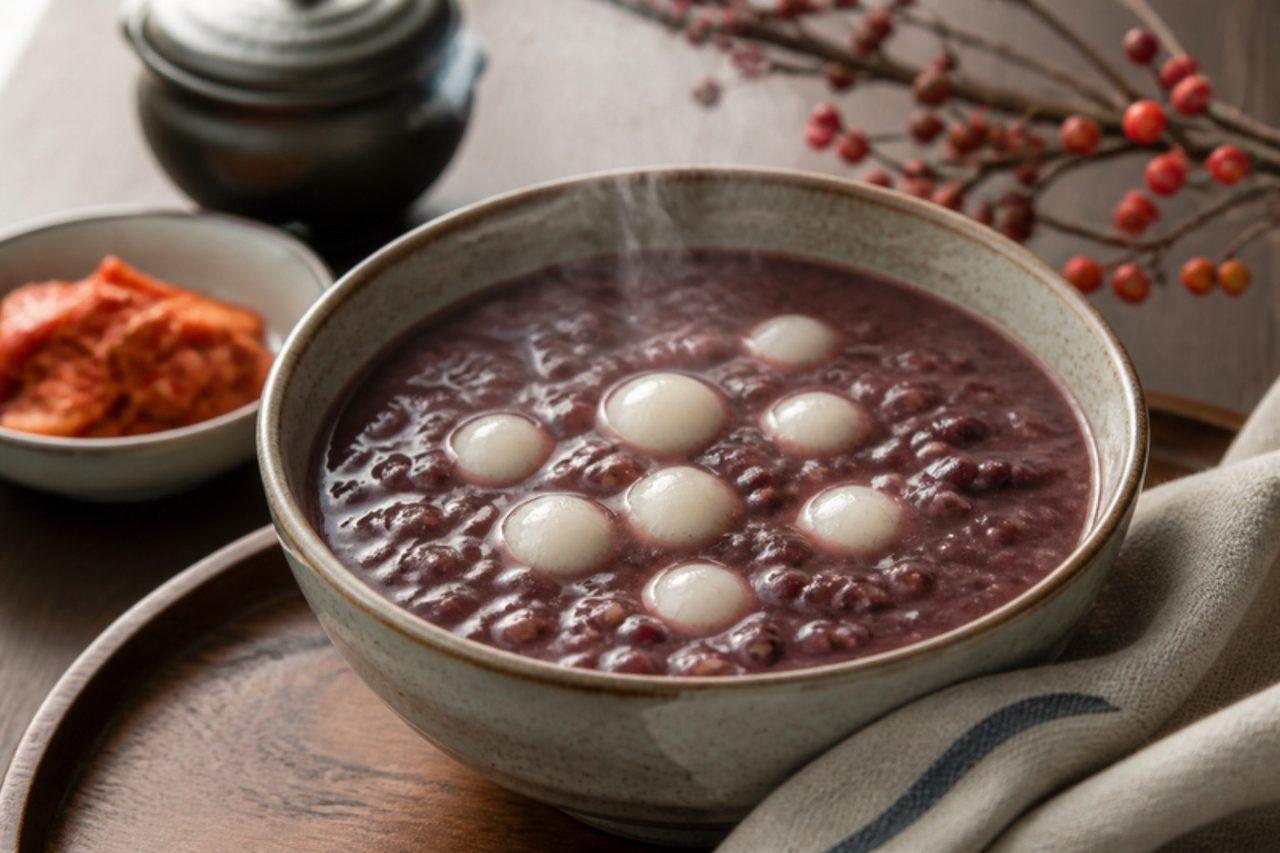
On Dongji, the winter solstice, Korean families eat a bowl of deep red patjuk: the colour was believed to drive away bad spirits on the longest night, and grandmothers still flick a little on the gate. Adzuki beans are boiled soft, pushed through a sieve and simmered with rice into a thick, earthy porridge, and little balls of glutinous rice dough called saealsim, one for each year of your age by tradition, are cooked in it. It is lightly salted; in Jeolla people add sugar. A bowl is about 380 kcal. The most common mistake is not stirring the bottom once the rice goes in; the thick porridge catches and burns quickly. Chef's tip: throw away the first boiling water of the beans; it removes bitterness and makes the porridge taste cleaner.

by KrazyBadal 0 views

Chwinamul muchimSeasoned aster greens

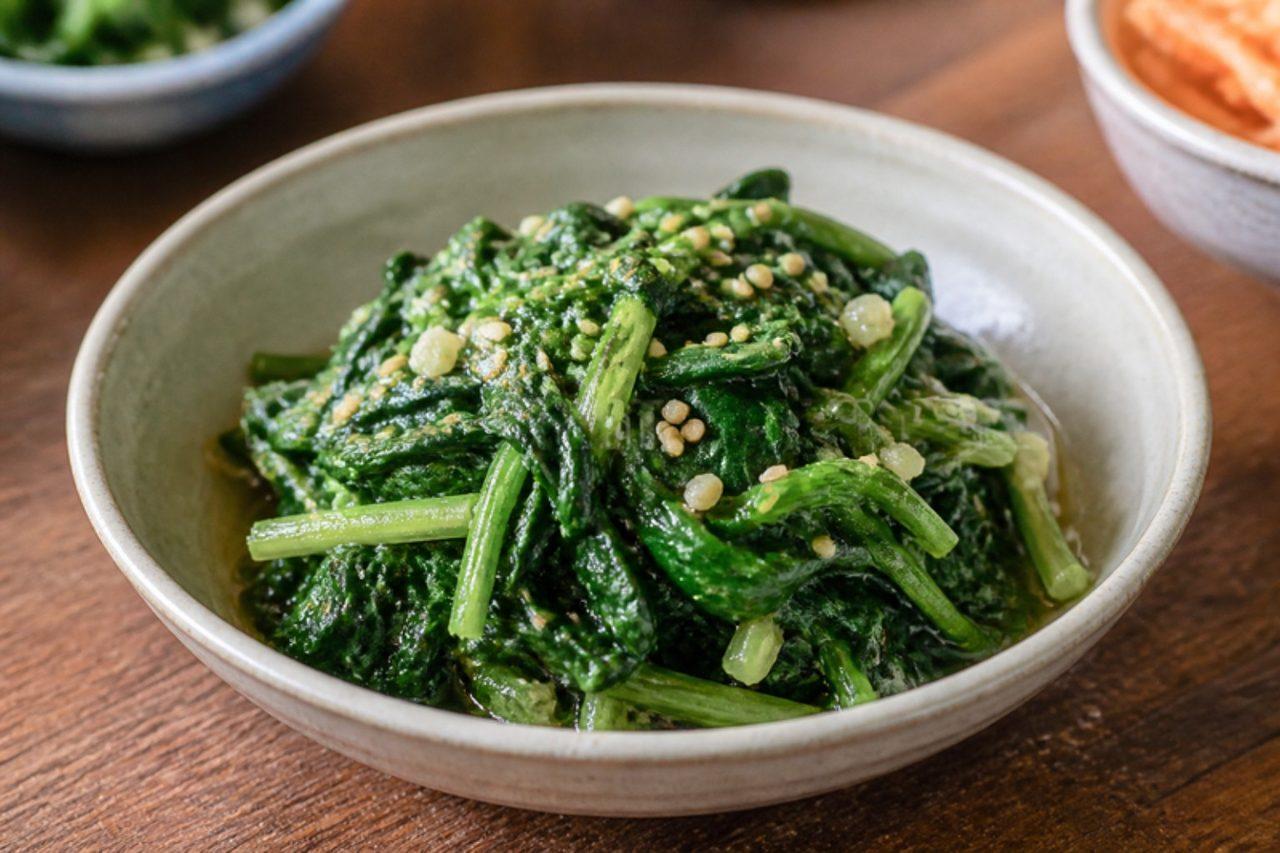
Chwinamul, the wild aster that grows on the mountains of Gangwon and the slopes around Jirisan, is one of the most loved spring greens in Korea, sold by grandmothers at village markets in April and dried for the namul of Daeboreum, the first full moon of the lunar year. Blanched and squeezed, it is seasoned with soup soy sauce, garlic and sesame oil and has a deep, herbal, slightly bitter flavour that wakes up the rice. A portion is about 45 kcal. If you can't find chwinamul, use spinach or watercress, blanched for less time. The common mistake is not squeezing the greens well, so the seasoning slides off; press them firmly in your fist. Chef's tip: season with your fingertips, rubbing the dressing gently into the leaves; Korean cooks call it son-mat, the taste of the hands.

by KrazyBadal 0 views

JapgokbapMultigrain rice

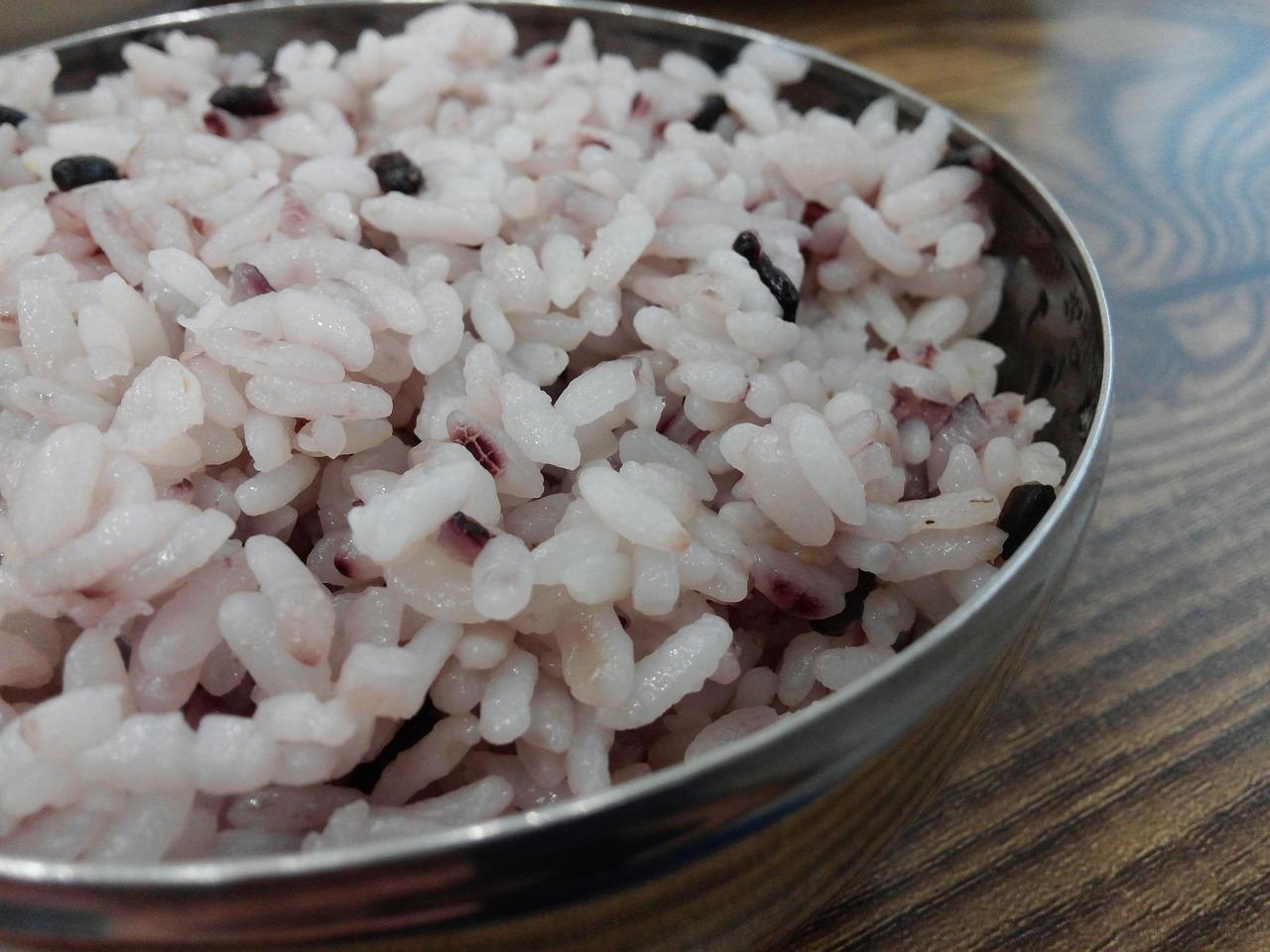
In Korean homes today, the bowl of rice beside the stew is more often japgokbap than plain white: short-grain rice cooked with a handful each of barley, brown rice, black rice, millet and beans, which turns it purple-grey, chewy and nutty. Supermarkets in Seoul sell ready-mixed bags of japgok for the rice cooker, and the habit goes back to times when rice was rationed and stretched with other grains. A portion is about 270 kcal, with far more fibre than white rice. The beans and brown grains need soaking: 4 hours or overnight (not counted). The common mistake is cooking it with the water for white rice; whole grains need about a quarter more. Chef's tip: soak the beans and brown grains separately from the white rice, which only needs 20 minutes; that way nothing ends up hard or mushy.

by KrazyBadal 0 views

Aehobak bokkeumStir-fried courgette

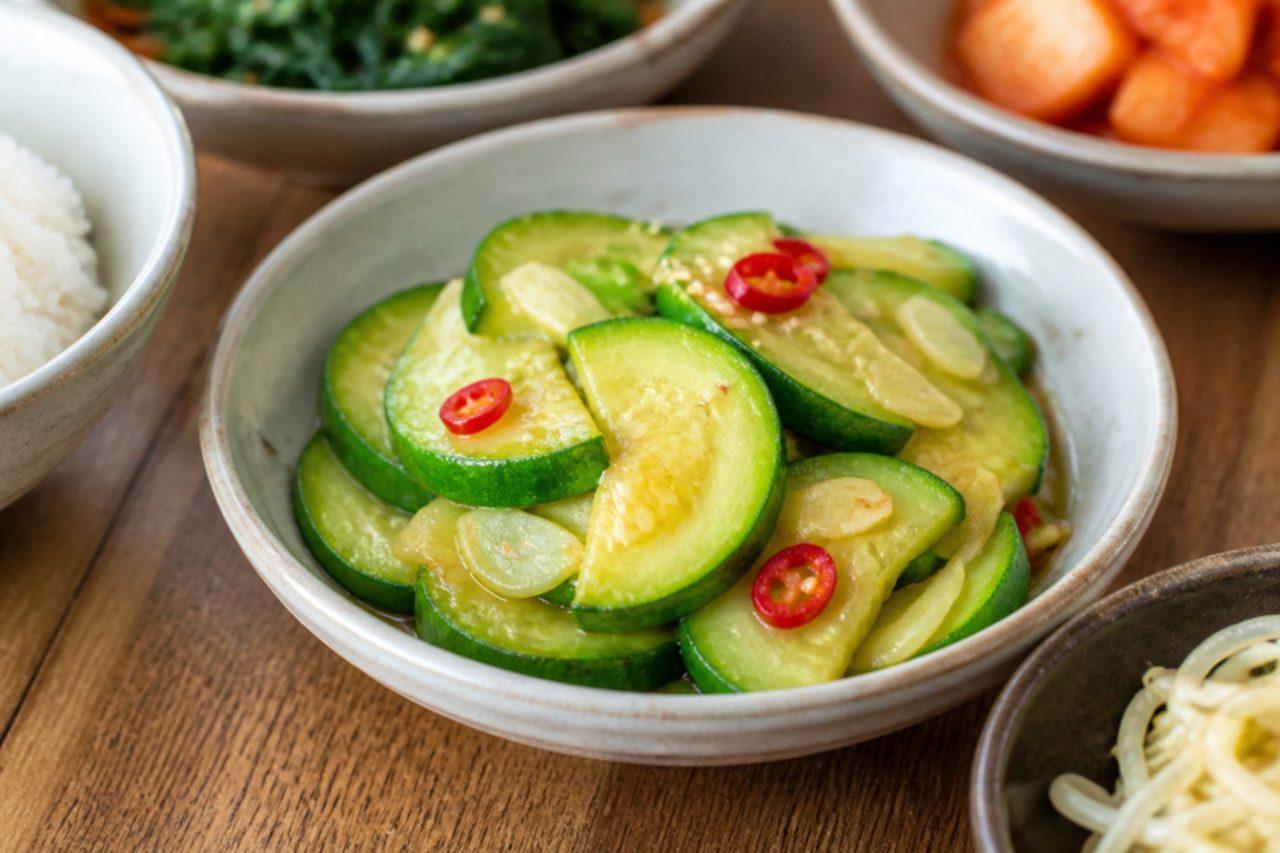
Aehobak, the pale green Korean courgette, is in every market from Gwangjang in Seoul to Busan's Jagalchi all summer, and a quick stir-fry of it is one of the banchan most often on the family table and in school lunches. Half-moon slices are lightly salted, then stir-fried with garlic until just tender and glossy, and finished with sesame. Many homes season it with saeujeot, salted shrimp; this version uses salt and a little soy instead, so it is vegan. A portion is about 45 kcal. The common mistake is overcooking, which leaves limp, watery slices; cook it hot and fast and take it off while the slices still have a little bite. Chef's tip: salting the slices for 10 minutes and patting them dry keeps them firm and stops the pan filling with liquid.

by KrazyBadal 0 views

Sangchu geotjeoriFresh lettuce salad

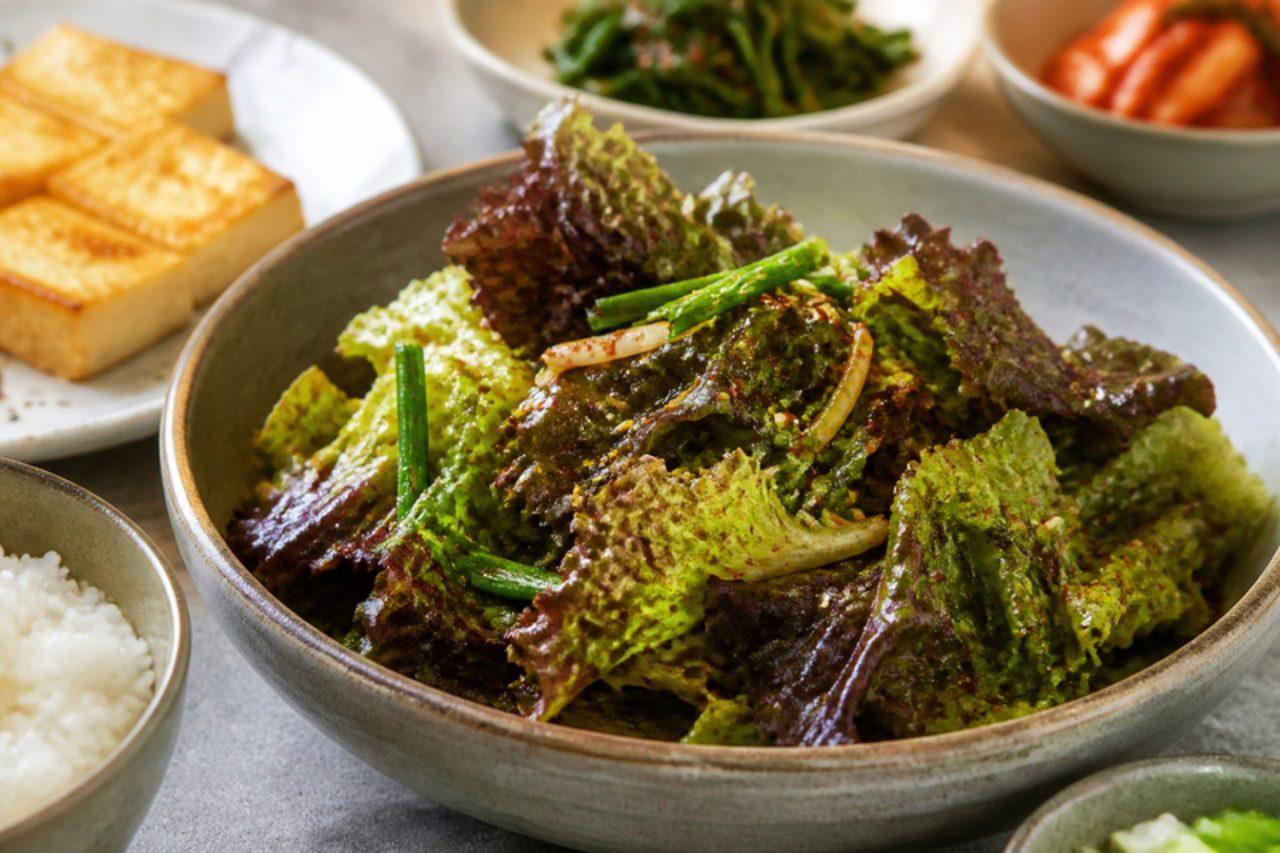
Geotjeori is "fresh kimchi", made to be eaten the same day, and lettuce geotjeori is the summer version Korean families throw together in ten minutes when the leafy red lettuce from the garden or the market in Suwon is piling up: torn leaves and spring onion tossed in a garlicky gochugaru and soy dressing. It goes with grilled meat, bibimbap or just rice. Many homes add fish sauce; this vegan version uses soy and a little more sesame. A portion is about 45 kcal. The most common mistake is dressing it in advance; lettuce goes soggy within minutes, so mix it at the table. Chef's tip: dry the leaves very thoroughly in a salad spinner; any water left on them dilutes the dressing and stops it clinging.

by KrazyBadal 0 views

Ueong jorimBraised burdock root

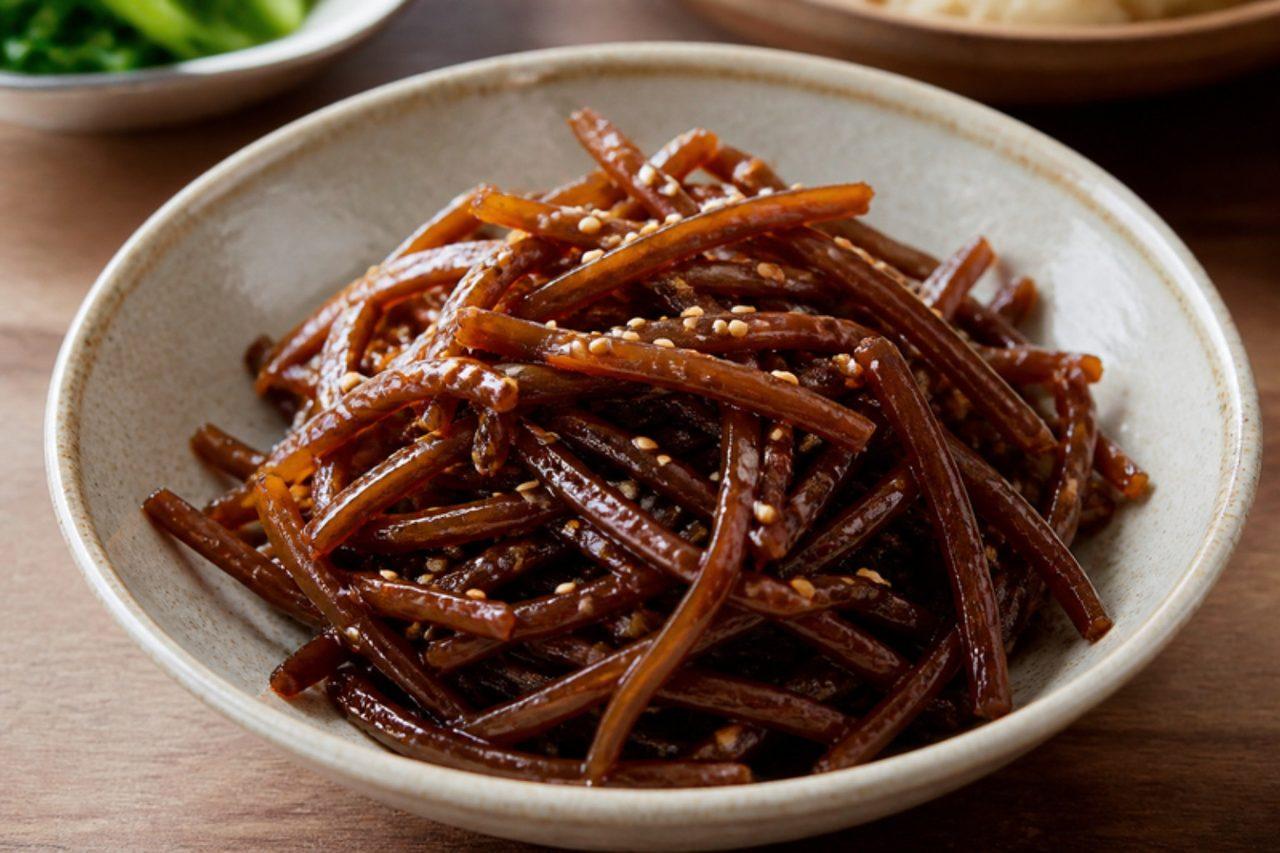
Thin sticks of burdock root braised in soy and sugar until they are dark, glossy and chewy are one of the banchan Korean mothers make in a big batch on a weekend; they keep for a week and go into the lunch boxes of schoolchildren in Seoul and into gimbap rolls. The flavour is earthy, sweet and savoury, with a little stickiness from rice syrup. A portion is about 95 kcal. The common mistake is adding the sweetener too early, which makes the burdock hard; braise in the soy first, and add the syrup at the end for the shine. Chef's tip: soak the cut burdock in water with a splash of vinegar for 10 minutes; it stops it turning grey and takes away the bitter edge.

by KrazyBadal 0 views

Mu namulStir-fried radish strips

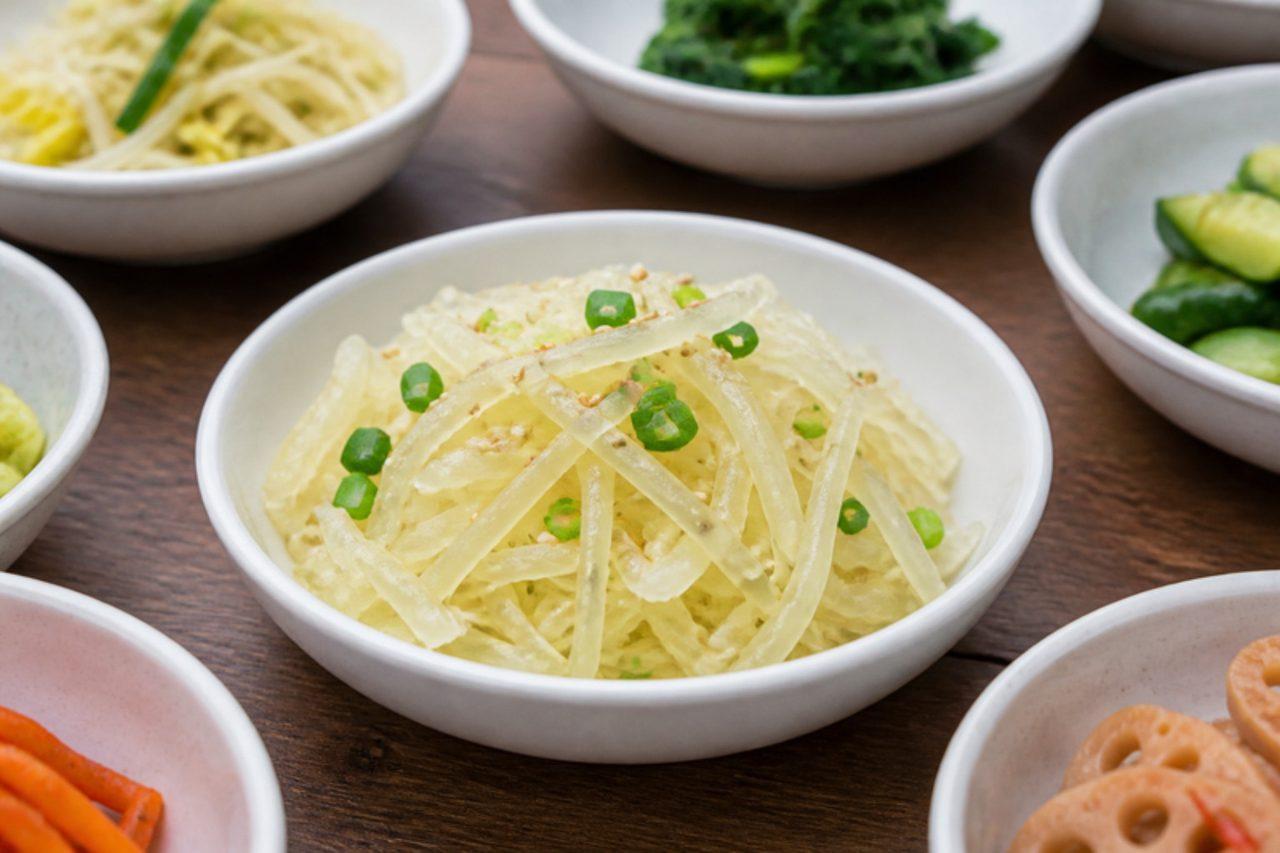
Mu namul is the soft, white radish side dish that appears among the banchan of a Korean home table in autumn and winter, when the fat Korean radishes are at their sweetest, and it is always part of the namul set laid out for Chuseok and ancestral rites in Andong and Seoul. Thin matchsticks of radish are stir-fried with garlic and a pinch of salt, then steamed briefly in their own juice until tender and translucent, and finished with sesame. It is mild, sweet and very gentle on the stomach. A portion is about 50 kcal. The most common mistake is cutting the radish against the grain, so it breaks into short bits; cut lengthways, along the grain, so the strands stay long. Chef's tip: salt the radish first and let it sit for a few minutes; it releases water that it then cooks in, so you need almost no oil.

by KrazyBadal 0 views

Oi sobagiStuffed cucumber kimchi

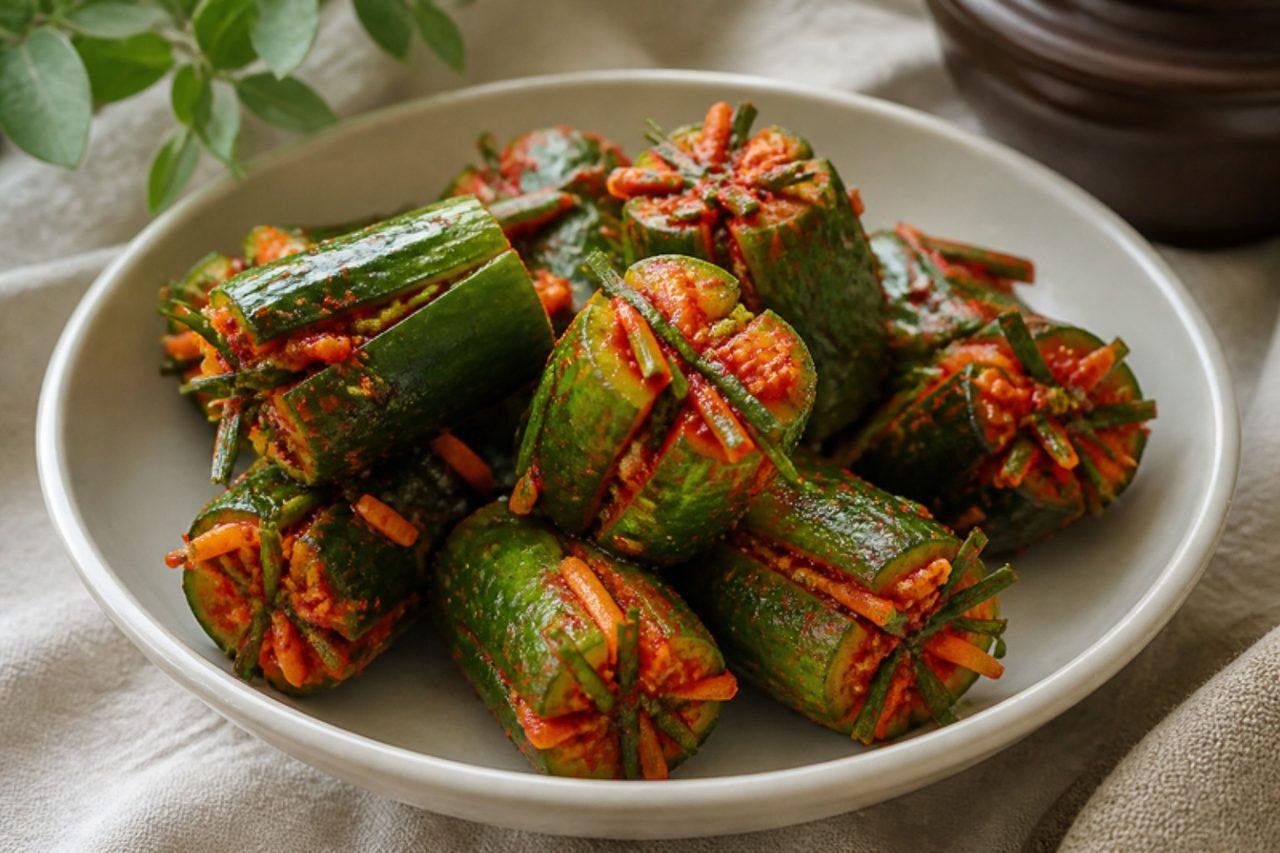
Oi sobagi is the kimchi of early summer, when Korean cucumbers are cheap and sweet and nobody wants to wait weeks for a ferment. Each cucumber is split in a cross, salted until bendy, and stuffed with a bright, garlicky filling of chives, carrot and chilli. It is ready in two days, crunchy and refreshing, perfect with barbecue or cold noodles. This vegan version uses salt and a splash of kelp stock in place of fish sauce. Use a clean glass or ceramic jar or kimchi box scalded with boiling water, and keep the vegetables pressed below the brine; anything sticking out can grow mould. The common mistake is cutting all the way through the ends, which makes the cucumber fall apart; leave 1 cm whole at each end. Chef's tip: salt the cucumbers in hot brine; it keeps them crunchier than dry salt.

by KrazyBadal 0 views

Pa kimchiSpring onion kimchi

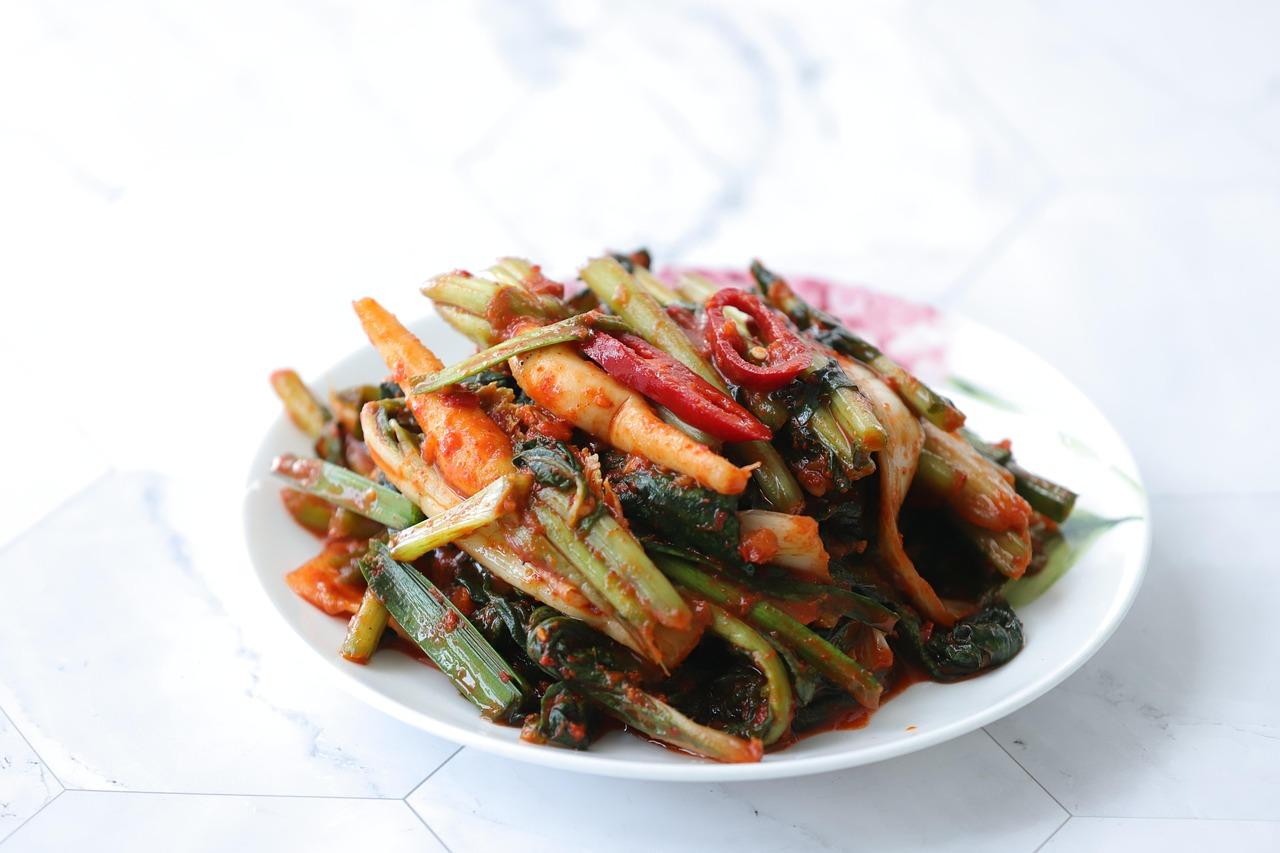
Pa kimchi is a Jeolla province favourite, made with jjokpa, slender spring onions, coated in a thick, glossy chilli paste and left to soften until the onions turn sweet and slippery. In Gwangju and Mokpo it sits next to every bowl of ramyeon and every plate of pork belly. Traditional versions lean on anchovy sauce; this vegan one gets its depth from kelp stock and a little extra salt. The common mistake is salting the whole onion: only the white bulbs need salt, or the green tops go slimy. Use a clean glass or ceramic jar or kimchi box scalded with boiling water, and keep the vegetables pressed below the brine; anything sticking out can grow mould. Chef's tip: lay the onions in the jar in neat bundles, folded in half and wrapped round themselves; they are much easier to lift out and serve.

by KrazyBadal 0 views

Oi muchimSpicy cucumber salad

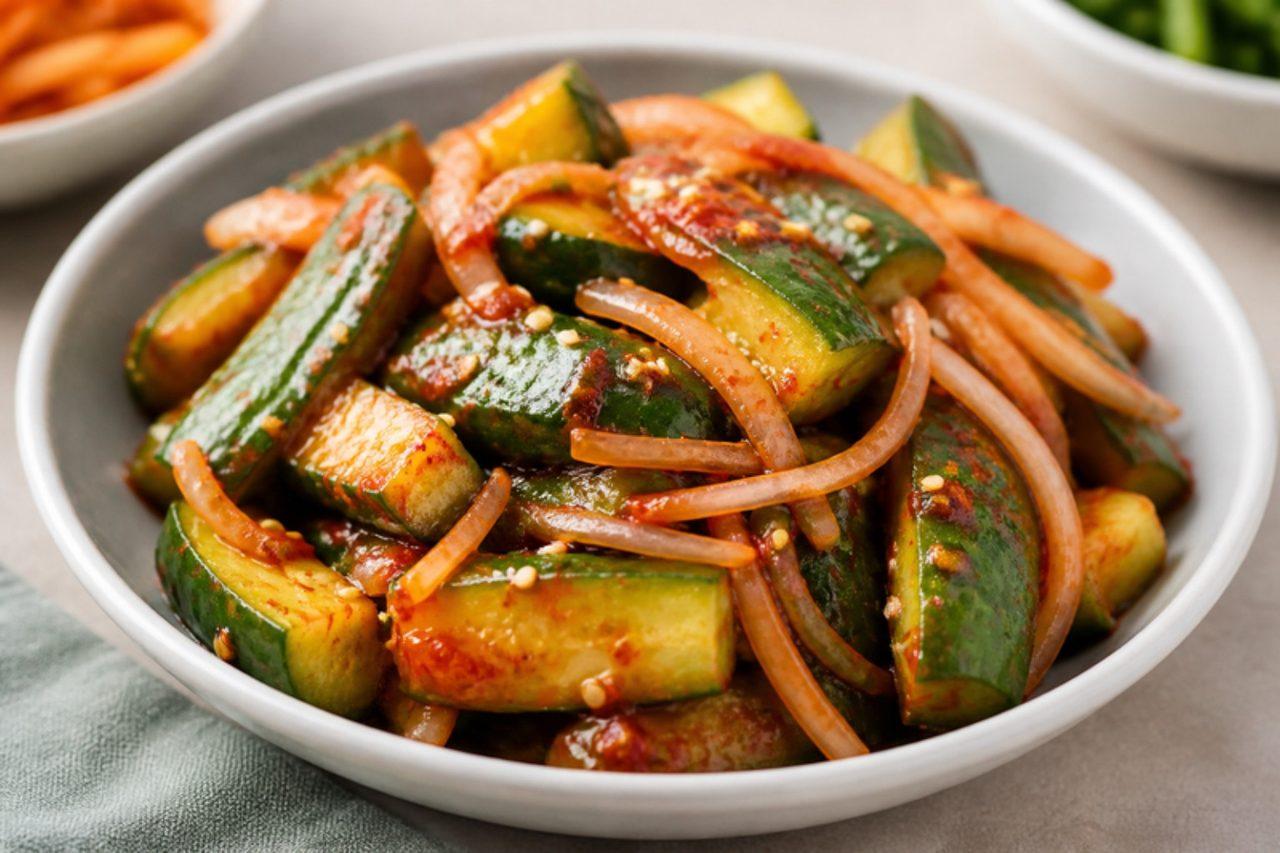
When Korean summers turn sticky, from Daegu's heat to Seoul's monsoon, oi muchim is the ten-minute side dish families make to cool down a hot bowl of rice or a plate of grilled meat. Thin cucumber coins are salted briefly, then tossed with chilli flakes, vinegar, a touch of sugar and sesame, so they stay snappy and bright. It is best made just before eating. The common mistake is skipping the quick salting: unsalted cucumber leaks water into the dressing within minutes and the bowl turns soupy. Chef's tip: a few slivers of onion soaked in cold water for five minutes add sweetness and crunch without any harsh bite.

by KrazyBadal 0 views

KkultteokHoney-filled rice cakes

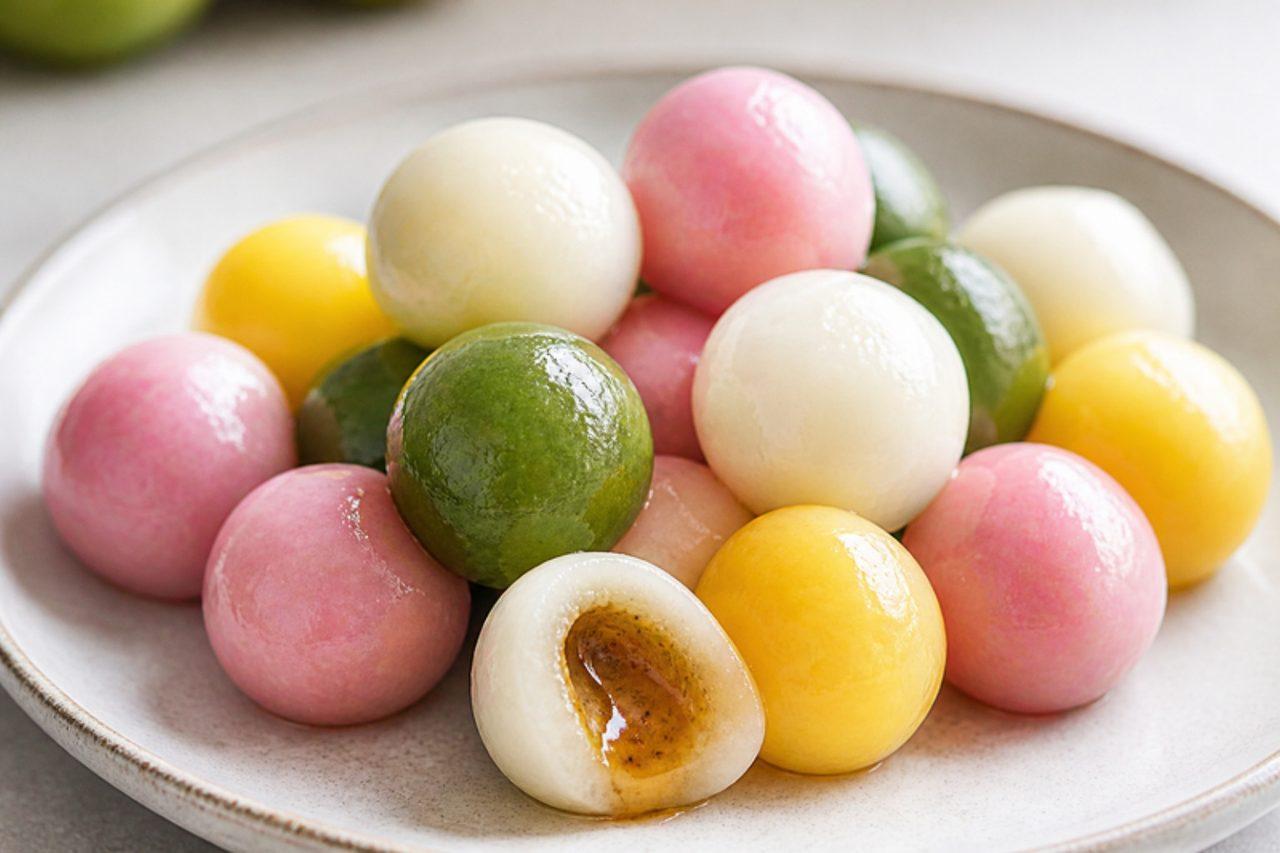
Kkultteok, 'honey rice cake', are the bite-sized coloured balls lined up in the windows of Korean tteok shops and on every Chuseok and birthday tray; bite one and a sweet, runny syrup of brown sugar and sesame bursts out. Despite the name, the filling is usually sugar, which melts into a honey-like syrup as the dumplings cook. The cakes are boiled, cooled in water and glossed with sesame oil. The common mistake is using too much filling or a thin dough, so the balls burst in the pot; keep the wall about 5 mm thick and seal well. Rice cakes are chewy and sticky, a known choking risk: cut them into small pieces for young children and older people and eat them sitting down. The filling is very hot straight from the pot, so let them cool before giving them to children. Chef's tip: let the boiled balls sit 1 minute in ice water; the shell firms up and the syrup inside turns fully liquid.

by KrazyBadal 0 views

Chonggak kimchiPonytail radish kimchi

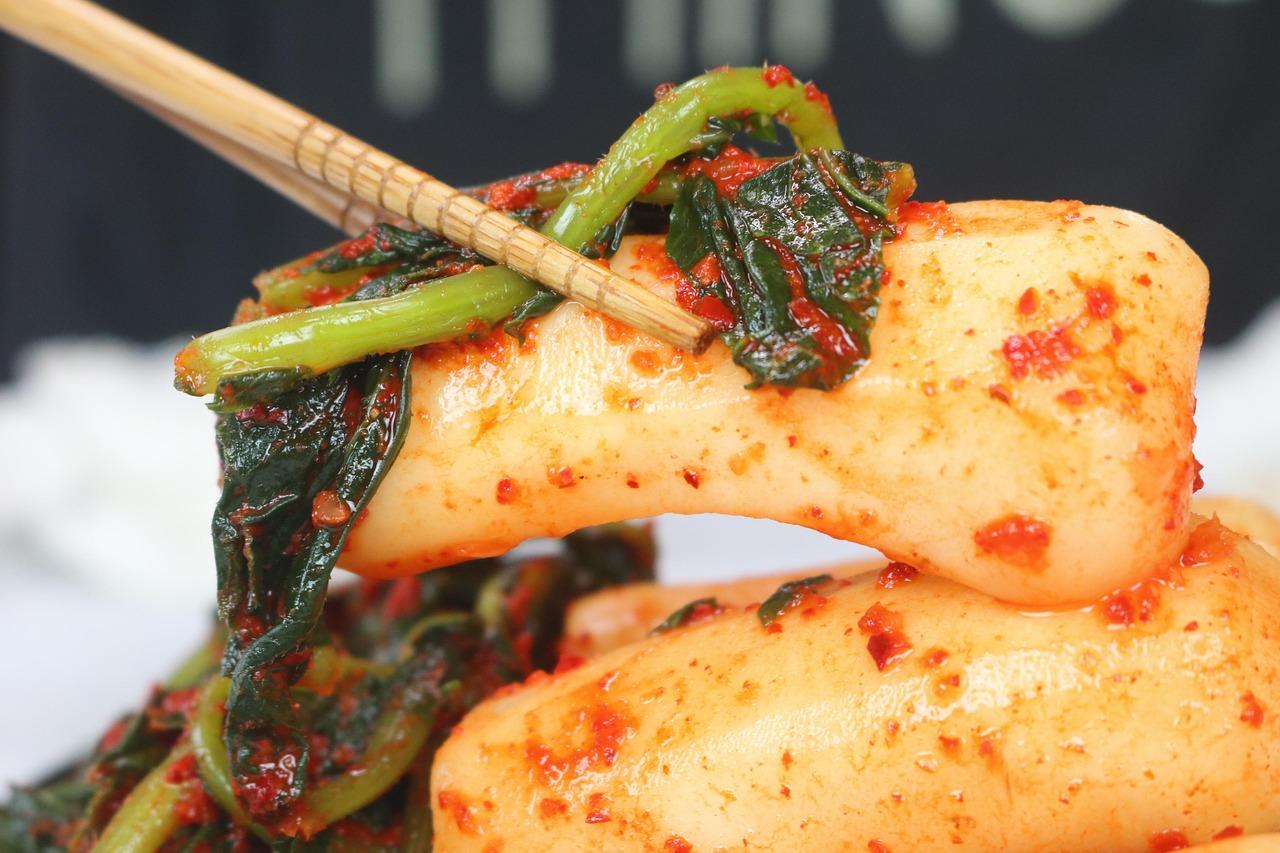
In late autumn, Korean markets fill with bundles of little ponytail radishes, the size of a thumb to a small fist, with long leafy tops, and households make chonggak kimchi alongside their winter cabbage kimchi. The whole radish is fermented with its greens in a thick red paste, so you get a crunchy, juicy bite with a slight bitterness from the leaves. It is the classic partner for a bowl of hot ramyeon or soft tofu stew. This version is vegan, using kelp stock and salt instead of fish sauce and salted shrimp. Use a clean glass or ceramic jar or kimchi box scalded with boiling water, and keep the vegetables pressed below the brine; anything sticking out can grow mould. The common mistake is over-salting: the radish should bend slightly but still snap, so check it often. Chef's tip: cut the bigger radishes in half lengthways so they ferment at the same pace as the small ones.

by KrazyBadal 0 views

SujeonggwaCinnamon persimmon punch

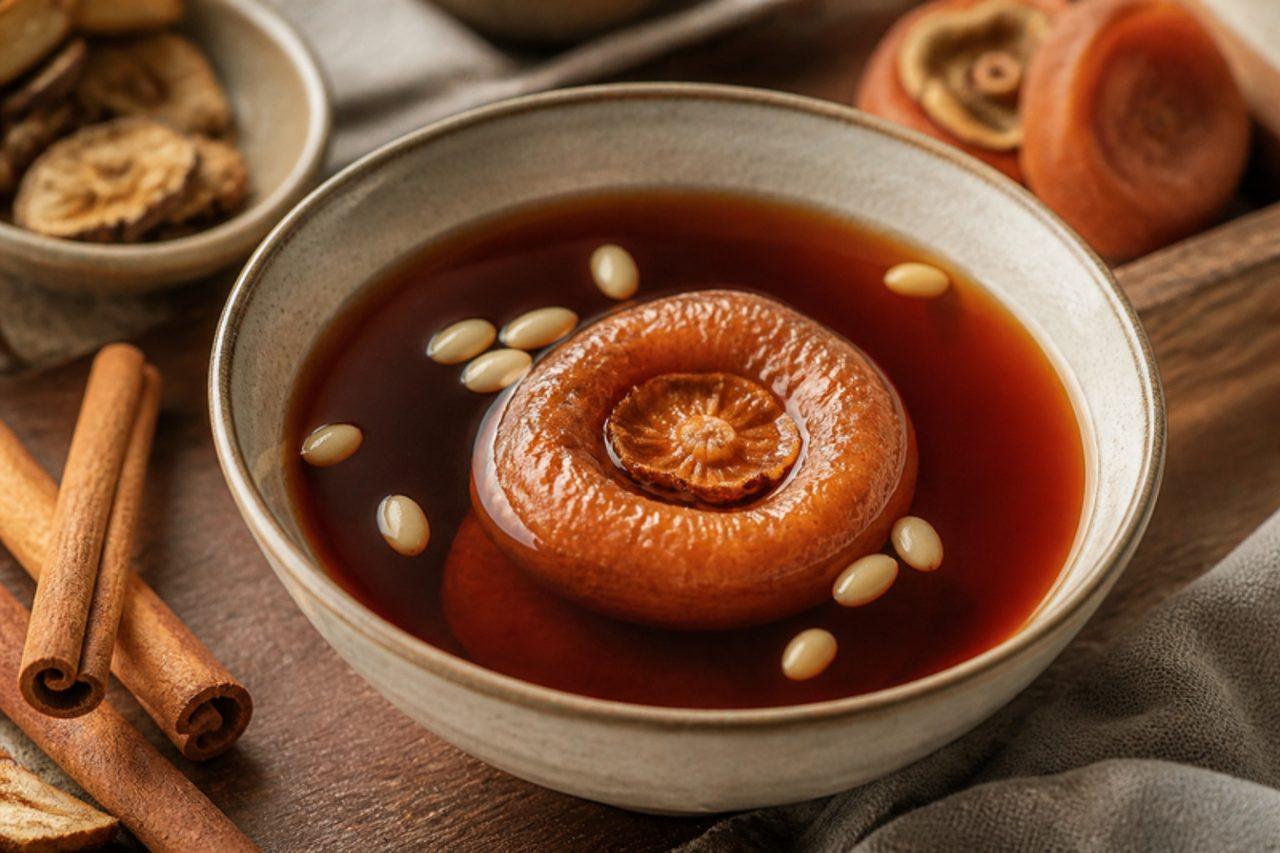
After a big Seollal feast in Seoul, sujeonggwa comes out ice-cold in small bowls, dark red-brown and fragrant with cinnamon and ginger, with a soft dried persimmon and a few pine nuts floating in each one. It is the punch of the New Year season, made a day or two ahead and kept on a cold balcony. The cinnamon and ginger are boiled separately and then combined, which keeps each flavour clean. The common mistake is boiling the cinnamon too long or too hard: it turns bitter and cloudy, so keep it to a gentle simmer. Contains pine nuts. Chef's tip: soak the dried persimmons in the cooled punch only a few hours before serving, so they soften without falling apart.

by KrazyBadal 0 views

SongpyeonStuffed rice cakes

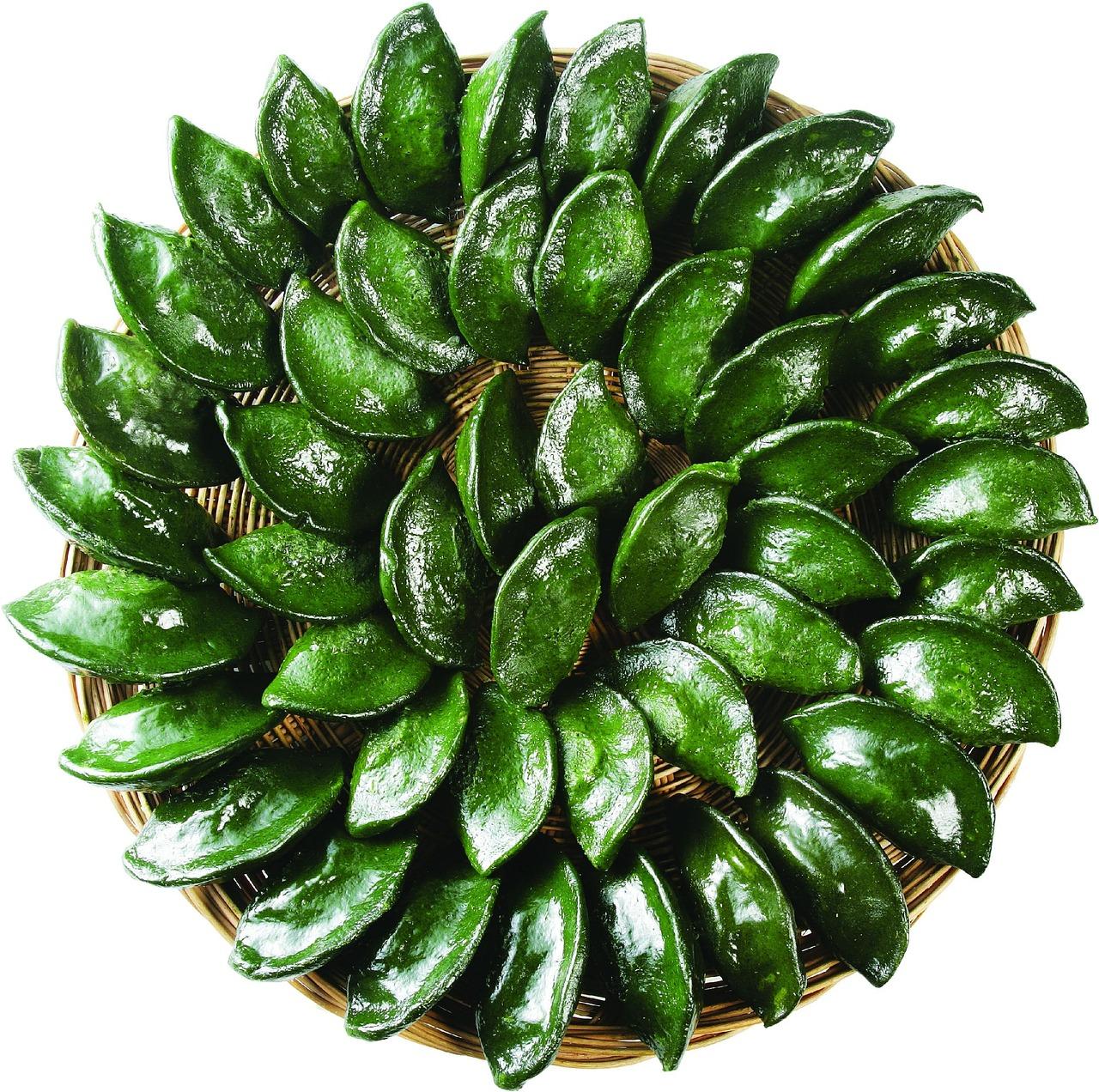
On the eve of Chuseok, the harvest moon festival, families all over Korea sit around one table pinching songpyeon, and the old saying goes that whoever shapes the prettiest ones will have pretty children. The chewy rice-flour shells are filled with crunchy toasted sesame and sugar that melts into a syrup as they steam, and the batch is laid on fresh pine needles so the cakes pick up a faint forest scent. They go to the ancestral table first, then out to everyone with a cup of tea. The common mistake is a dough that is too dry: it cracks while you shape it and splits in the steamer, so it should feel as soft as an earlobe. Rice cakes are dense and sticky, so cut them small for young children and older people and make sure they eat sitting down: they are a known choking risk. Chef's tip: brush the steamed cakes with sesame oil while they are still hot; it stops them sticking together and gives that glossy finish you see at the market.

by KrazyBadal 0 views

Jat jukPine nut porridge

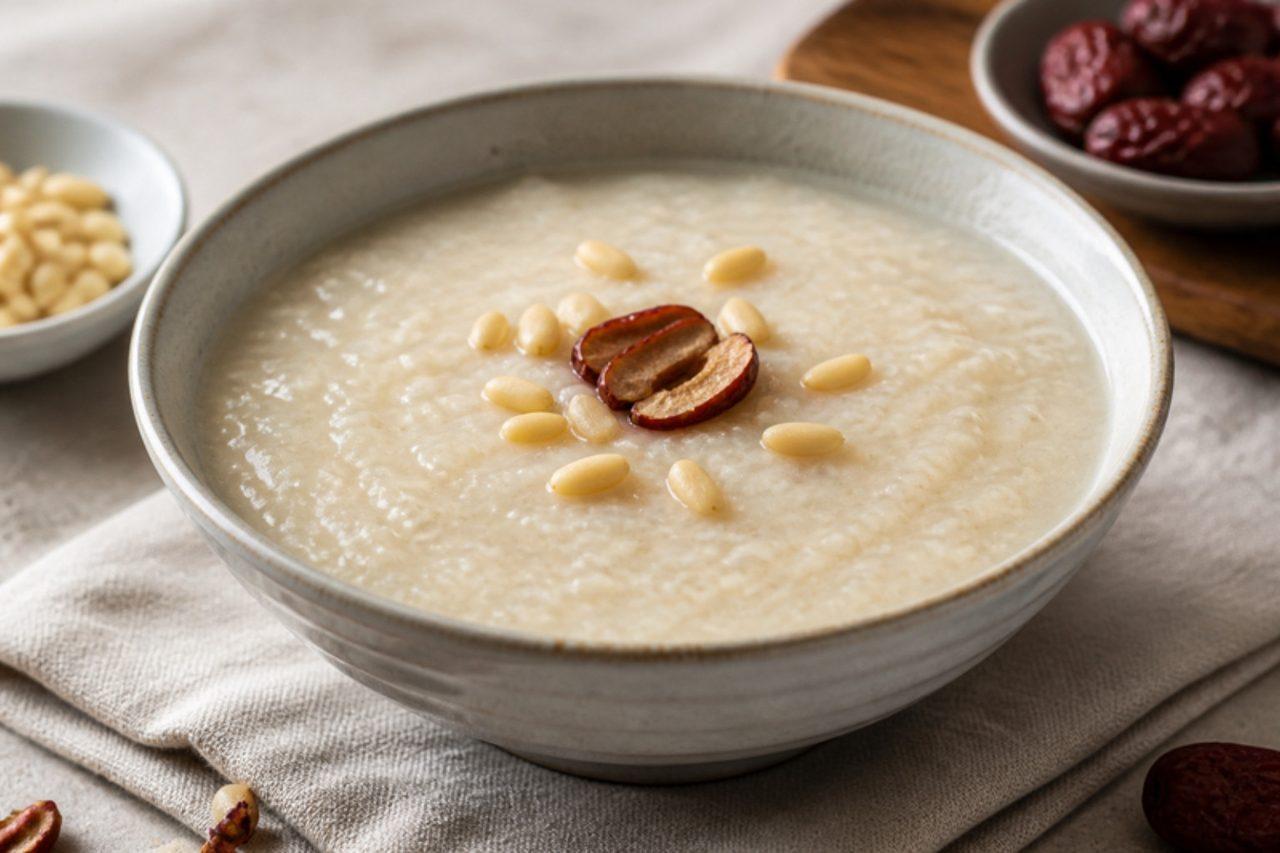
Jat juk is a pale, silky porridge of ground rice and pine nuts, once served to the royal household in Seoul and still made by Korean families for anyone recovering from illness, for elderly parents and as a gentle breakfast. Pine nuts from Gapyeong, Korea's pine nut capital, give it a rich, buttery taste with nothing more than salt. Pine nuts are a tree-nut allergen. The common mistake is adding the pine nut milk too early; its oil makes the rice starch thin out, so the porridge turns watery. Chef's tip: thicken the ground rice first and stir in the pine nut purée only for the last few minutes.

by KrazyBadal 0 views

Yeolmu kimchiYoung radish kimchi

Yeolmu are young radish plants pulled in early summer, mostly leaves and slender stems with a tiny root, and yeolmu kimchi is what Korean families eat through July and August heat, often in yeolmu bibimbap or over cold noodles. It is lighter and juicier than cabbage kimchi, with a thin red brine and a fresh, slightly peppery bite. The big mistake is handling the greens roughly while salting or washing: bruised yeolmu develop a grassy, raw smell, so wash and toss them as gently as salad leaves. Use a clean glass or ceramic jar or kimchi box scalded with boiling water, and keep the vegetables pressed below the brine; anything sticking out can grow mould. Chef's tip: add a boiled, mashed potato to the paste instead of rice porridge; it is the old summer trick for a smoother, sweeter brine.

by KrazyBadal 0 views

InjeolmiSoybean-coated rice cake

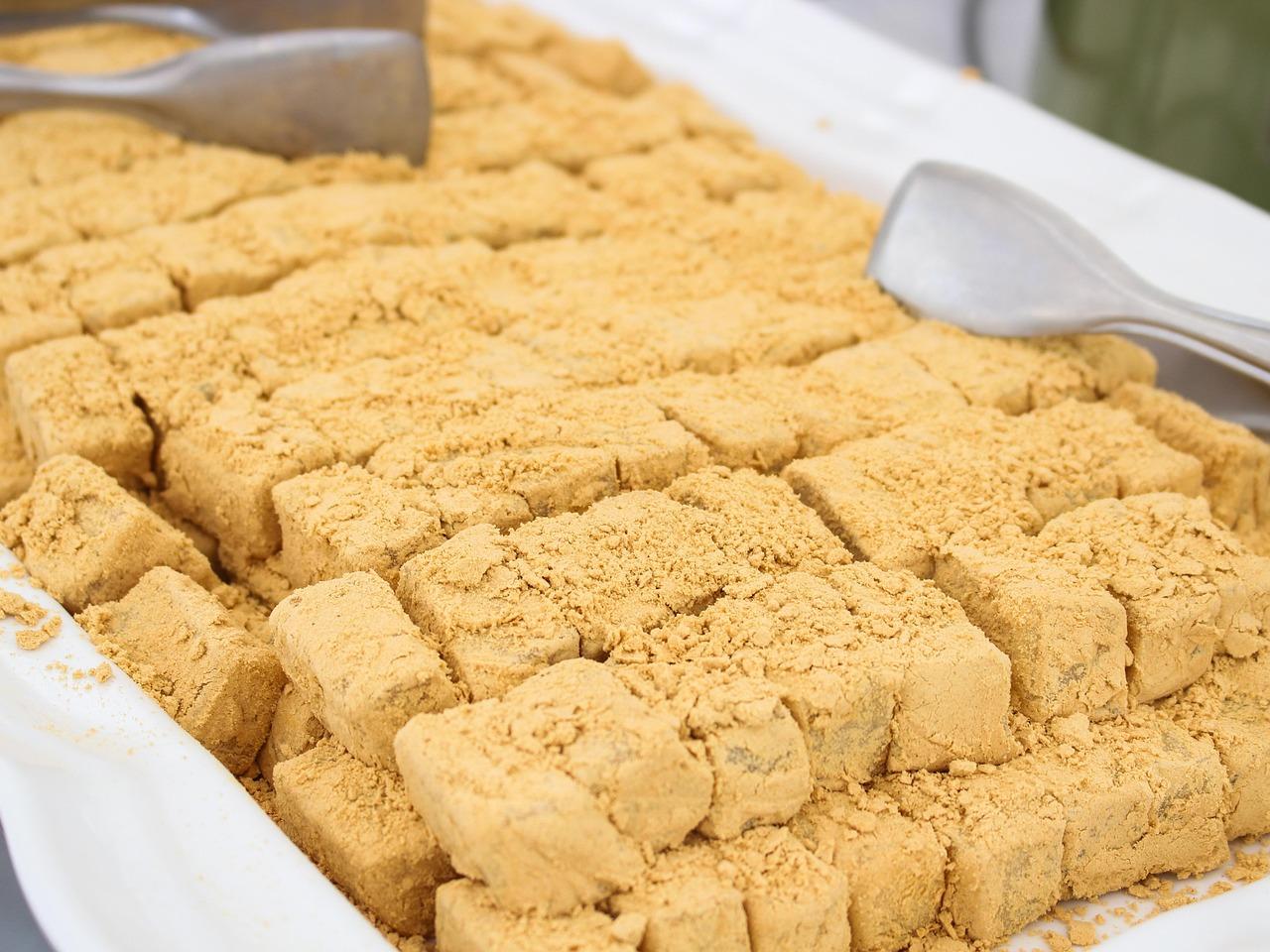
Injeolmi is the rice cake you meet everywhere in Korea, from the tteok shop by a Seoul subway exit to the trays handed round at weddings, Chuseok and housewarmings. Glutinous rice is steamed, pounded until it stretches like soft taffy, then cut into pillows and rolled in nutty, sweet roasted soybean powder. Bingsu cafés now pile it on shaved ice too. The common mistake is under-steaming the dough, which leaves powdery white specks that never turn chewy; keep cooking until it is evenly translucent. Rice cakes are chewy and sticky, a known choking risk: cut them into small pieces for young children and older people and eat them sitting down. Chef's tip: oil the knife and your hands, and cut the warm slab with a dough scraper pressed straight down rather than a sawing knife.

by KrazyBadal 0 views

Baek kimchiWhite kimchi

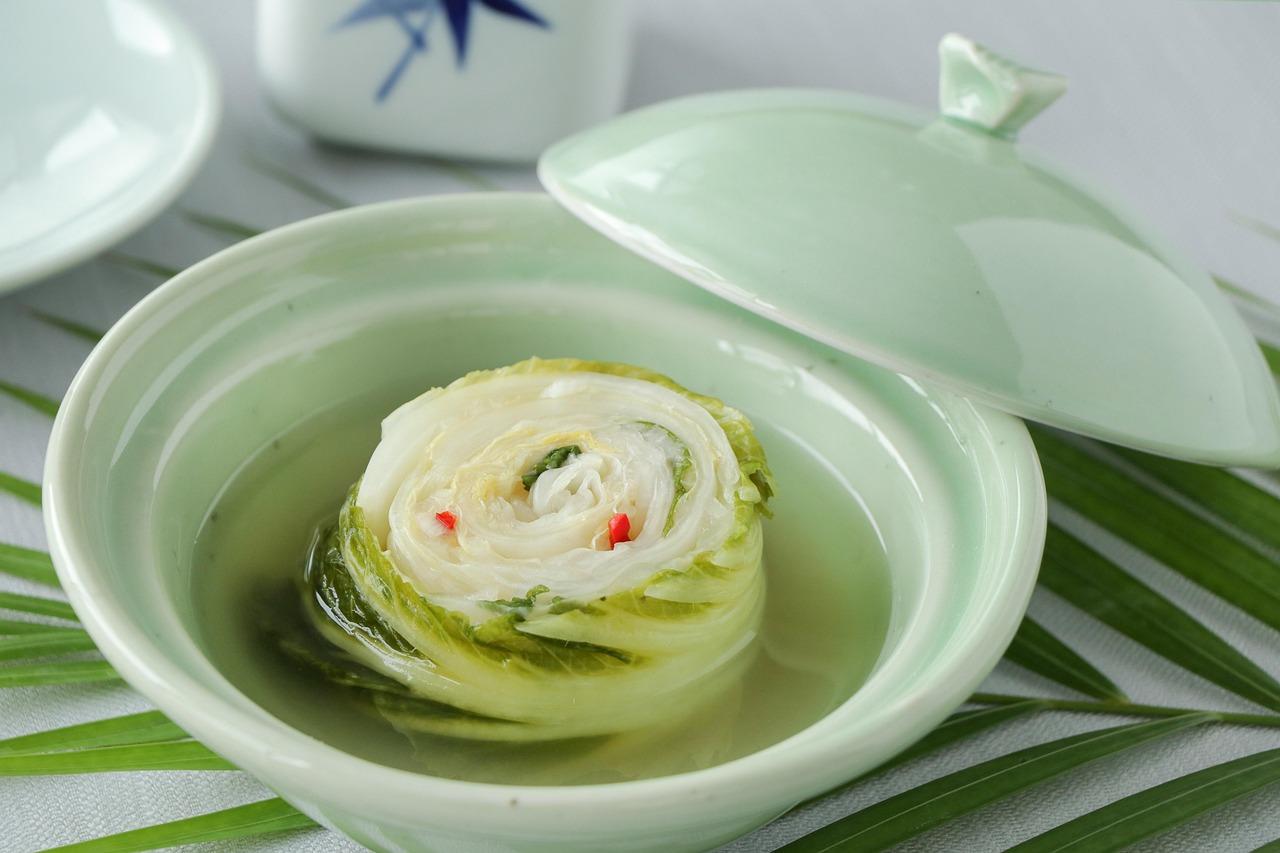
Baek kimchi comes from the Gaeseong and Seoul aristocratic kitchens, where it was served to elders, children and anyone who could not handle chilli. Napa cabbage halves are stuffed with a pale filling of radish, Asian pear, chestnuts, jujubes and pine nuts, then left to ferment in a clear, gently sweet brine. The result is crisp, cool and refreshing, with no heat at all, and it is a good first kimchi for small children. The common mistake is under-salting the cabbage, which leaves it watery and lets it spoil; the thick white stalks must bend without breaking. Contains pine nuts and chestnuts. Use a clean glass or ceramic jar or kimchi box scalded with boiling water, and keep the vegetables pressed below the brine; anything sticking out can grow mould. Chef's tip: wrap each stuffed quarter in its outer leaf; it holds the filling in and keeps the cabbage white.

by KrazyBadal 0 views

DongchimiRadish water kimchi

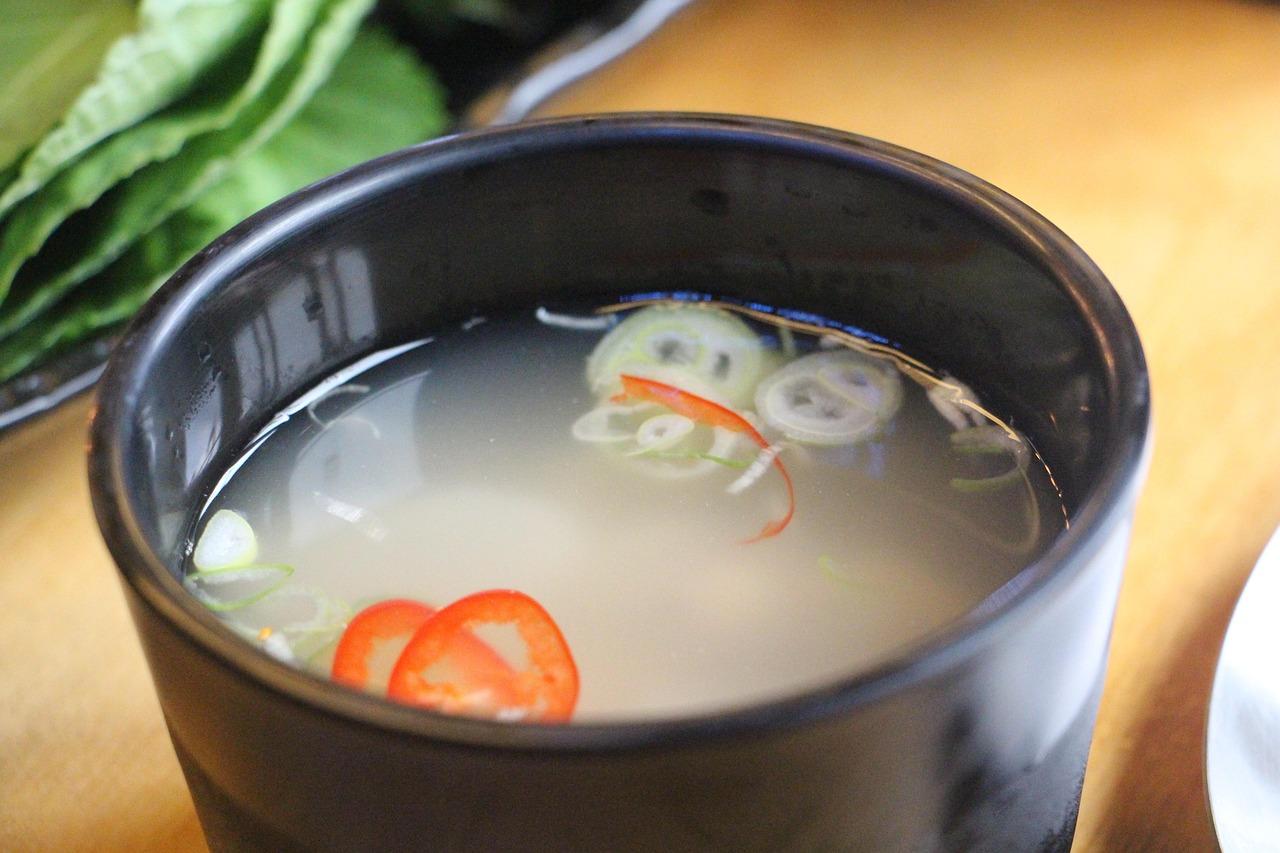
Dongchimi is the winter water kimchi of Korea's north and Gangwon province, traditionally made just before the first frost in a big onggi crock buried in the yard. Whole radishes sit in a clear, salty brine with pear, garlic, ginger and green chillies, and after a few weeks the brine turns tangy, cold and lightly fizzy. It is served with roasted sweet potatoes, rice-cake soup, and is famous as the broth for cold naengmyeon noodles. The common mistake is eating it too early: the brine needs at least two weeks of slow, cold fermentation to lose its raw saltiness. Use a clean glass or ceramic jar or kimchi box scalded with boiling water, and keep the vegetables pressed below the brine; anything sticking out can grow mould. Chef's tip: roll the radishes in salt and leave them overnight before adding the brine; they stay crunchy all winter.

by KrazyBadal 0 views

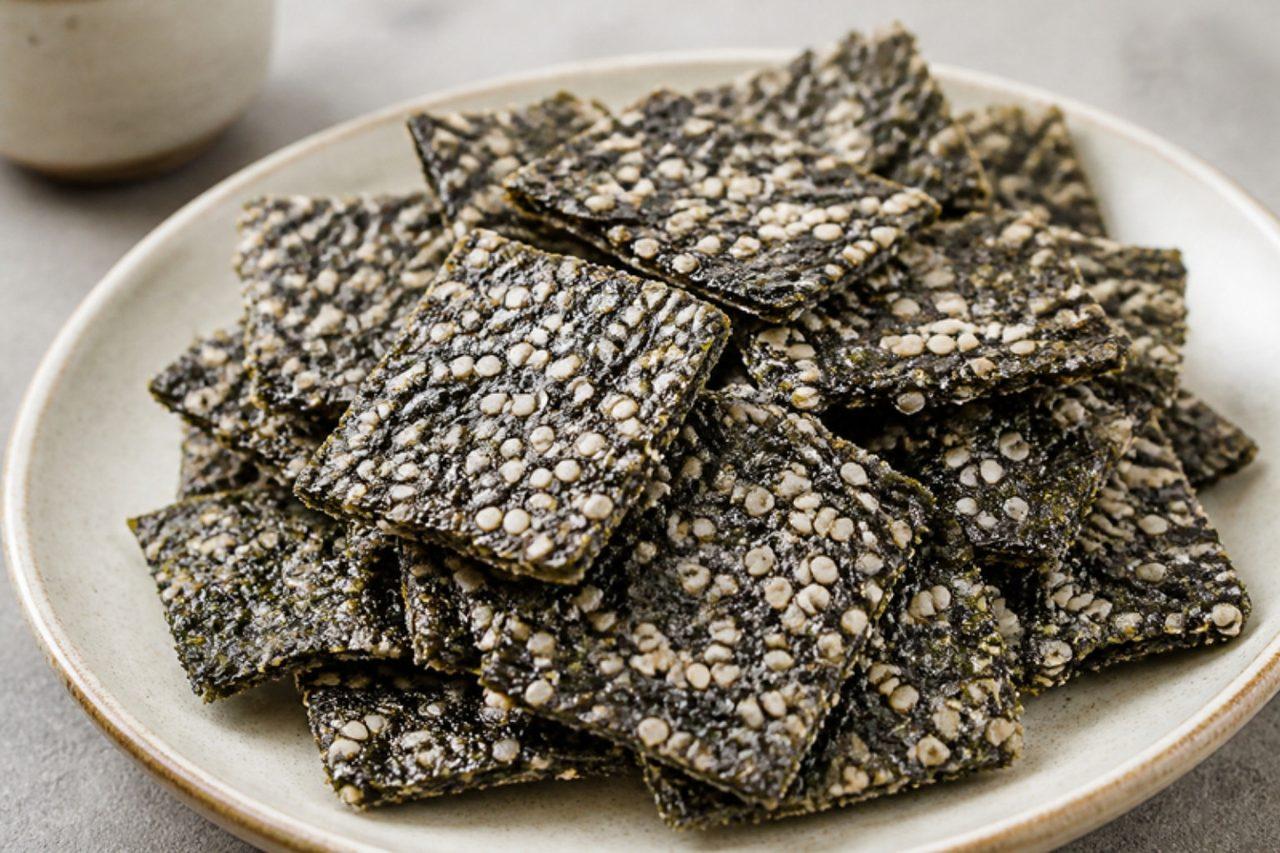
Gim bugakCrisp fried seaweed

Gim bugak is a temple snack that Buddhist nuns and village cooks in South Jeolla, especially around Damyang and Namwon, still make in large batches in autumn: sheets of laver are painted with glutinous rice porridge, scattered with sesame, dried in the sun and fried until they puff into crackling, savoury chips. It is eaten as a banchan with rice or as a snack with tea. The common mistake is frying it before it is completely dry; any damp patches stay chewy and spit in the oil. Chef's tip: cut the dried sheets with scissors before frying; once fried they shatter if you try to cut them.

by KrazyBadal 0 views

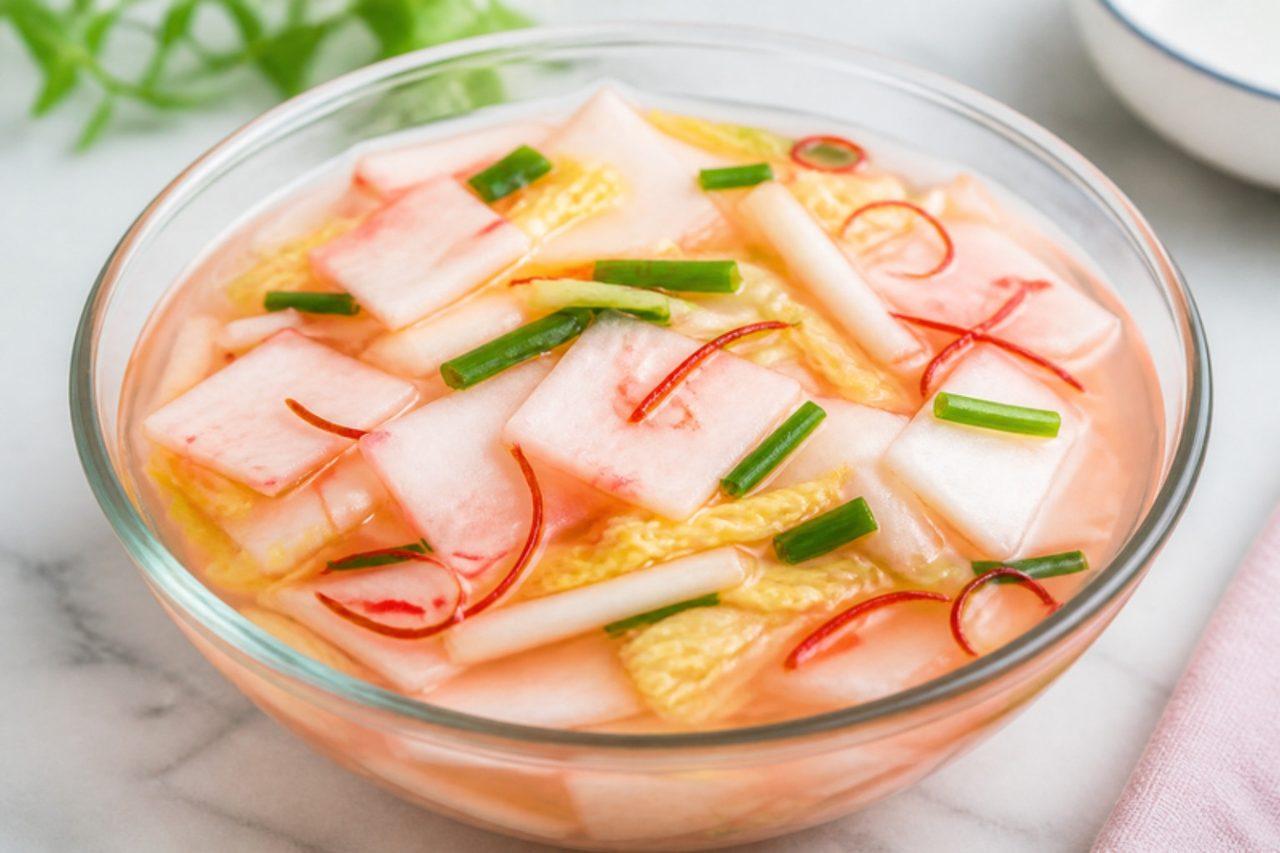
Nabak kimchiRadish water kimchi

Nabak kimchi is the gentle water kimchi Koreans serve in spring and at holiday tables, especially with tteokguk at Seollal, when everyone needs something refreshing after rich food. Thin squares of radish and napa cabbage float in a pale pink, lightly fizzy brine coloured by chilli flakes strained through cloth, so there is colour without much heat. You drink the brine with a spoon as well as eating the vegetables. The common mistake is putting the chilli flakes straight in; they cloud the brine and make it spicy, so always strain them. Use a clean glass or ceramic jar or kimchi box scalded with boiling water, and keep the vegetables pressed below the brine; anything sticking out can grow mould. Chef's tip: add a few slices of apple or Asian pear to the brine; it ferments faster and tastes rounder.

by KrazyBadal 0 views

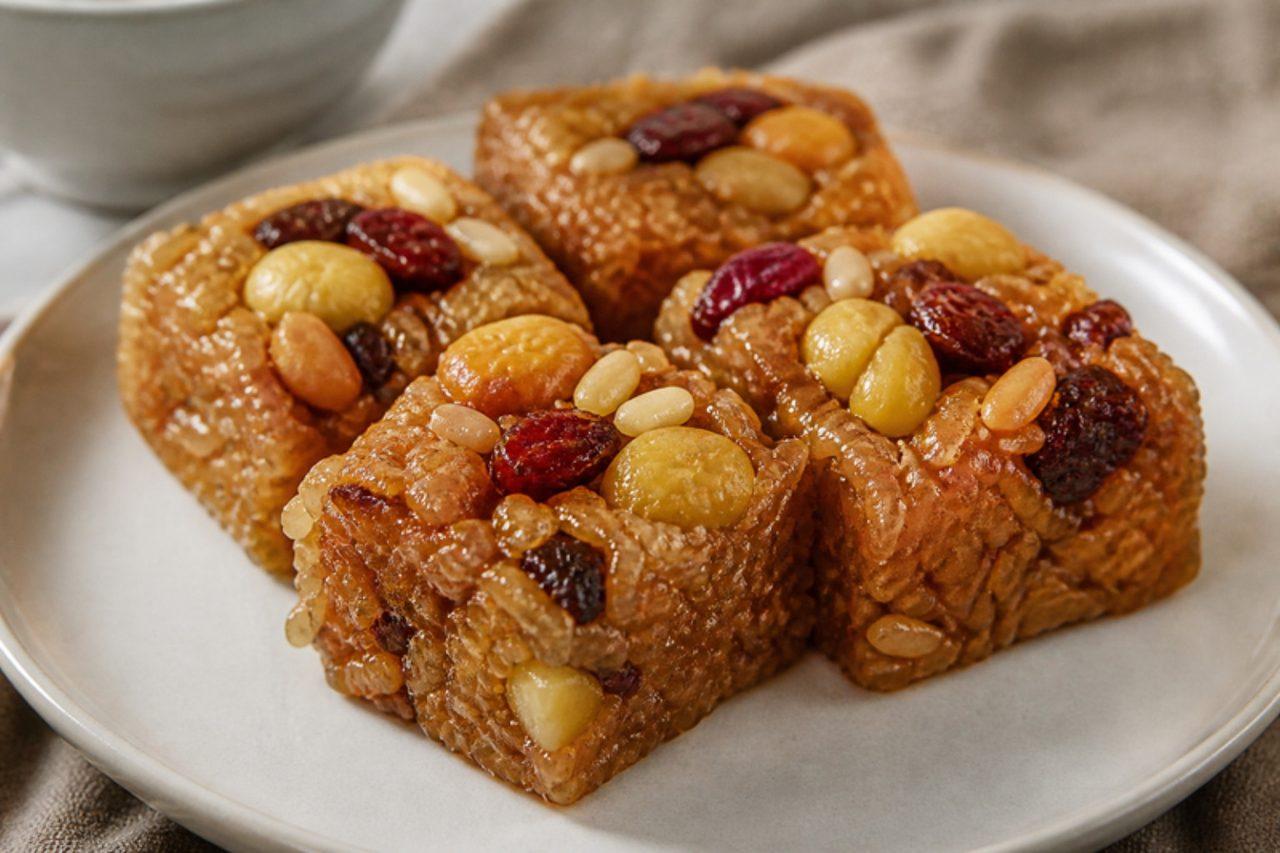
YaksikSweet rice with chestnuts

Yaksik began as a dish for Daeboreum, the first full moon of the lunar year, and is now a standard of Chuseok and Seollal tables and of birthday gifts, cut into neat squares and wrapped in cling film. Glutinous rice is steamed, tossed with dark sugar, soy sauce, sesame oil and cinnamon, then steamed a second time with chestnuts, jujubes and pine nuts until it turns a deep caramel brown and holds together like a soft, chewy cake. The usual mistake is skipping the soak: unsoaked rice stays hard in the centre however long you steam it. Contains soy, sesame and pine nuts. Rice cakes are dense and sticky, so cut them small for young children and older people and make sure they eat sitting down: they are a known choking risk. Chef's tip: caramelise a spoonful of the sugar in a dry pan before adding it; that dark caramel gives the traditional colour without needing extra soy sauce.

by KrazyBadal 0 views

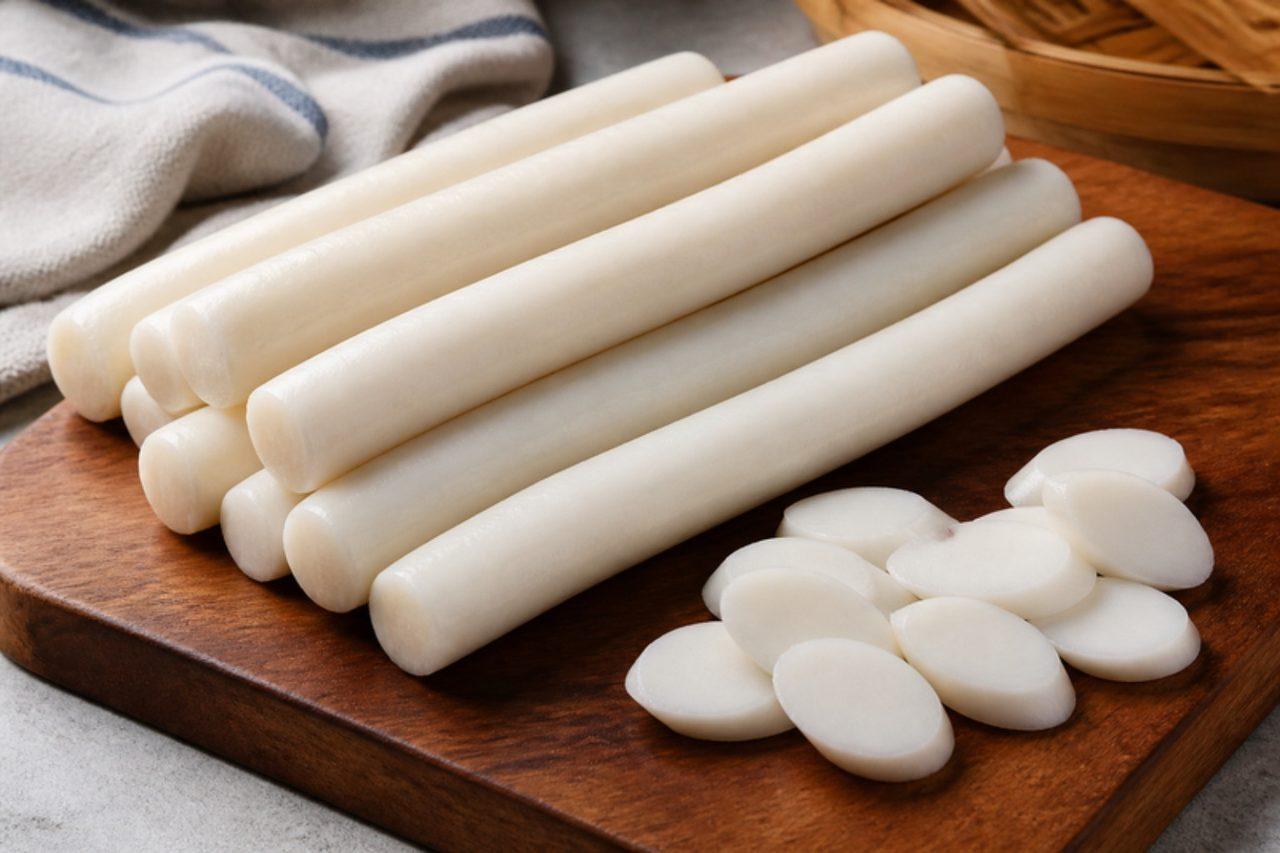
GaraetteokLong cylinder rice cakes

Garaetteok are the long white rice-cake logs that Korean mills churn out before Seollal, when families queue with their own rice to have them pressed and then slice them into ovals for tteokguk, the New Year soup. The length is meant to wish for a long life. Freshly made, they are soft and chewy and eaten warm, dipped in honey or toasted over a grill; once they firm up they are sliced for soup or cut into sticks for tteokbokki. Making them at home is simple, though the logs come out a little less glossy than machine-pressed ones. The usual mistake is rolling the dough when it has cooled: it must be hot to stay smooth. Rice cakes are chewy and sticky, a known choking risk: cut them into small pieces for young children and older people and eat them sitting down. Chef's tip: leave the logs to firm overnight before slicing on the diagonal; they cut cleanly instead of squashing.

by KrazyBadal 0 views

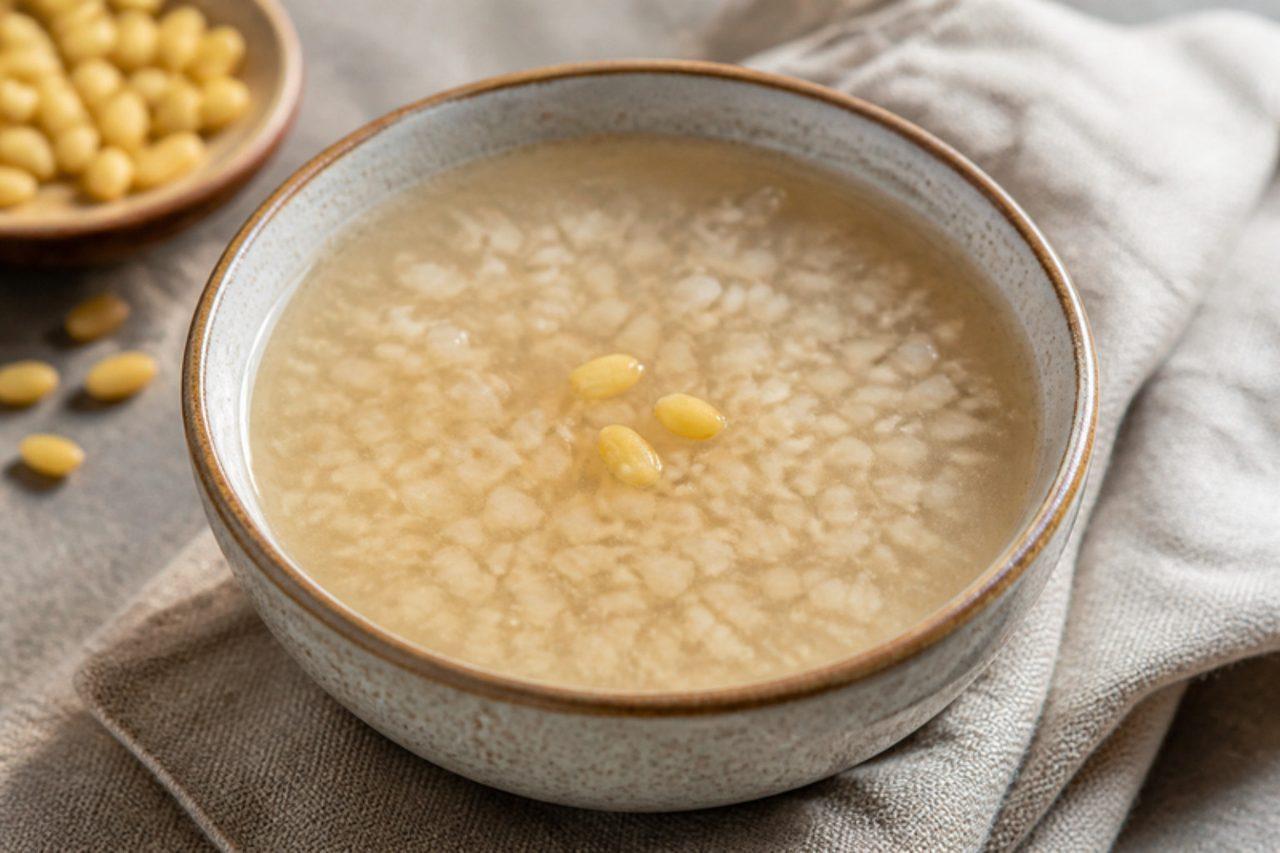
SikhyeSweet rice punch

Every Korean jjimjilbang (bathhouse) sells sikhye in little cans, and every grandmother makes a big pot of it before Seollal and Chuseok to sip after the heavy holiday meal, because it is believed to help digestion. Barley malt water and cooked rice are kept warm for several hours until enzymes turn the rice starch into sugar and the grains float up to the top, then the drink is boiled with ginger and chilled until icy. It is mild, lightly sweet and nutty, with soft rice grains to slurp. The usual mistake is letting it get too hot while it ferments: above about 65 °C the enzymes stop working and the grains never float. Contains barley (gluten). Chef's tip: use the rice cooker's 'keep warm' setting; it holds the perfect temperature on its own.

320 minKoreanDrinksVegan
by KrazyBadal 0 views

DalgonaHoneycomb toffee

Dalgona, or ppopgi, was the 1970s and 80s snack of Seoul alleyways, where an old man with a little stove melted sugar in a ladle and stamped a star or umbrella into it; if you could break the shape out without cracking it you won a free one. It is just sugar and a pinch of baking soda, puffed into a crisp, toffee-brown honeycomb that tastes faintly bitter-sweet. The common mistake is adding too much baking soda, which leaves the candy bitter and soapy; a tiny pinch on the tip of a chopstick is all it needs. Melted sugar reaches about 160 °C and burns badly, so children should watch while an adult does the melting, and should only press shapes once the candy has set a little. Chef's tip: use a stainless-steel ladle or small pan, not non-stick, and keep the flame low; the moment the sugar is clear and amber, take it off.

by KrazyBadal 0 views

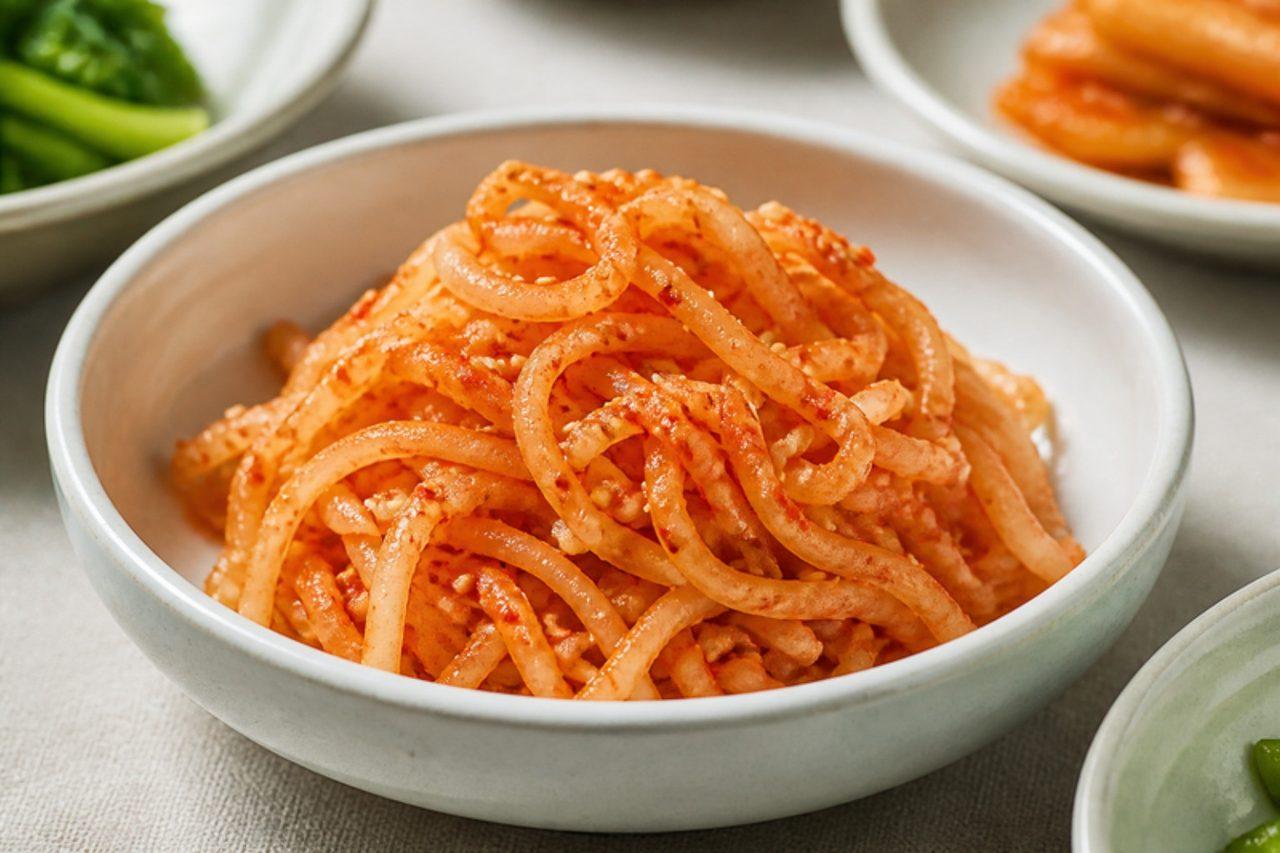
MusaengchaeSpicy radish salad

Musaengchae is the quick radish salad Korean cooks make when the big autumn radishes from Gyeonggi farms come in, and it appears on the side of bibimbap bowls and pork platters all winter. Fine matchsticks of radish are reddened with gochugaru, then seasoned sweet, sour and salty, so every forkful is cold, crisp and lively. This version leaves out the fish sauce, so it is fully vegan. The common mistake is salting the radish before the chilli: the salt draws out water first and the colour ends up pale and patchy. Chef's tip: toss the radish with the chilli flakes on their own first and leave it for 5 minutes; it takes on a deep, even red before anything else goes in.

by KrazyBadal 0 views

Tteok kkochiRice cake skewers

Tteok kkochi is the after-school snack of Korea, sold for a few hundred won from carts outside primary schools, where children cluster round the vendor painting glaze onto the skewers. Cylinders of rice cake are fried until blistered and crisp outside but soft and chewy inside, then brushed with a sticky sauce of gochujang, ketchup and rice syrup. The usual mistake is frying rice cakes that are cold and hard from the fridge: they spit and stay tough in the middle, so soften them in hot water first. Rice cakes are dense and sticky, so cut them small for young children and older people and make sure they eat sitting down: they are a known choking risk. Chef's tip: dry the softened rice cakes very well before frying; water makes the oil spit.

by KrazyBadal 0 views

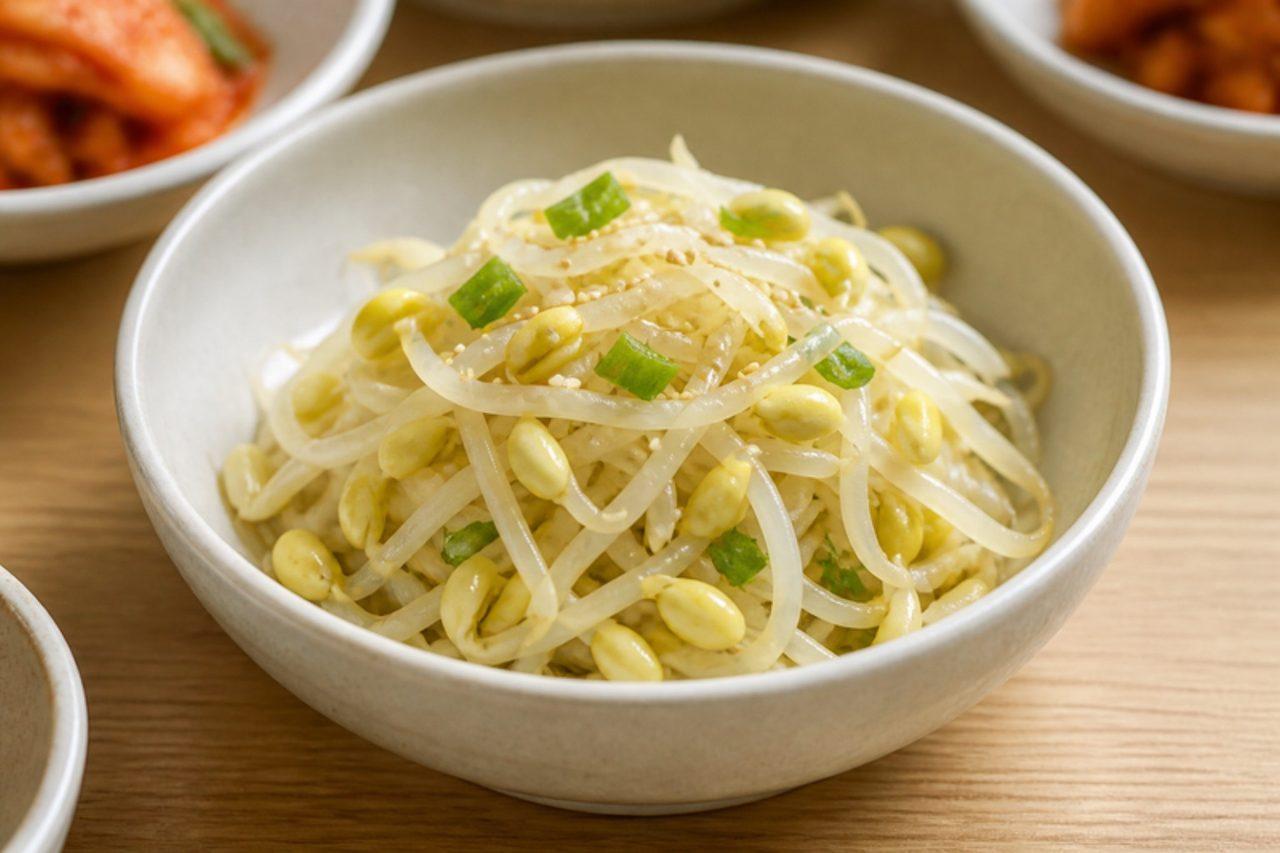
Sukju namulSeasoned bean sprouts

Sukju namul is the most delicate of Korea's sprout dishes, set out on every ancestral-rite table at Chuseok and on everyday trays in Seoul homes because it takes five minutes and costs very little. Mung bean sprouts are blanched for barely a minute, then dressed with salt, a little garlic and sesame oil, so they stay juicy and crunchy with a clean, nutty taste. It belongs in bibimbap too. The common mistake is overcooking: mung bean sprouts go limp and stringy within seconds of being done, so pull them while they still squeak. Chef's tip: plunge them straight into iced water after blanching and squeeze gently; they keep their snap for a whole day.

by KrazyBadal 0 views

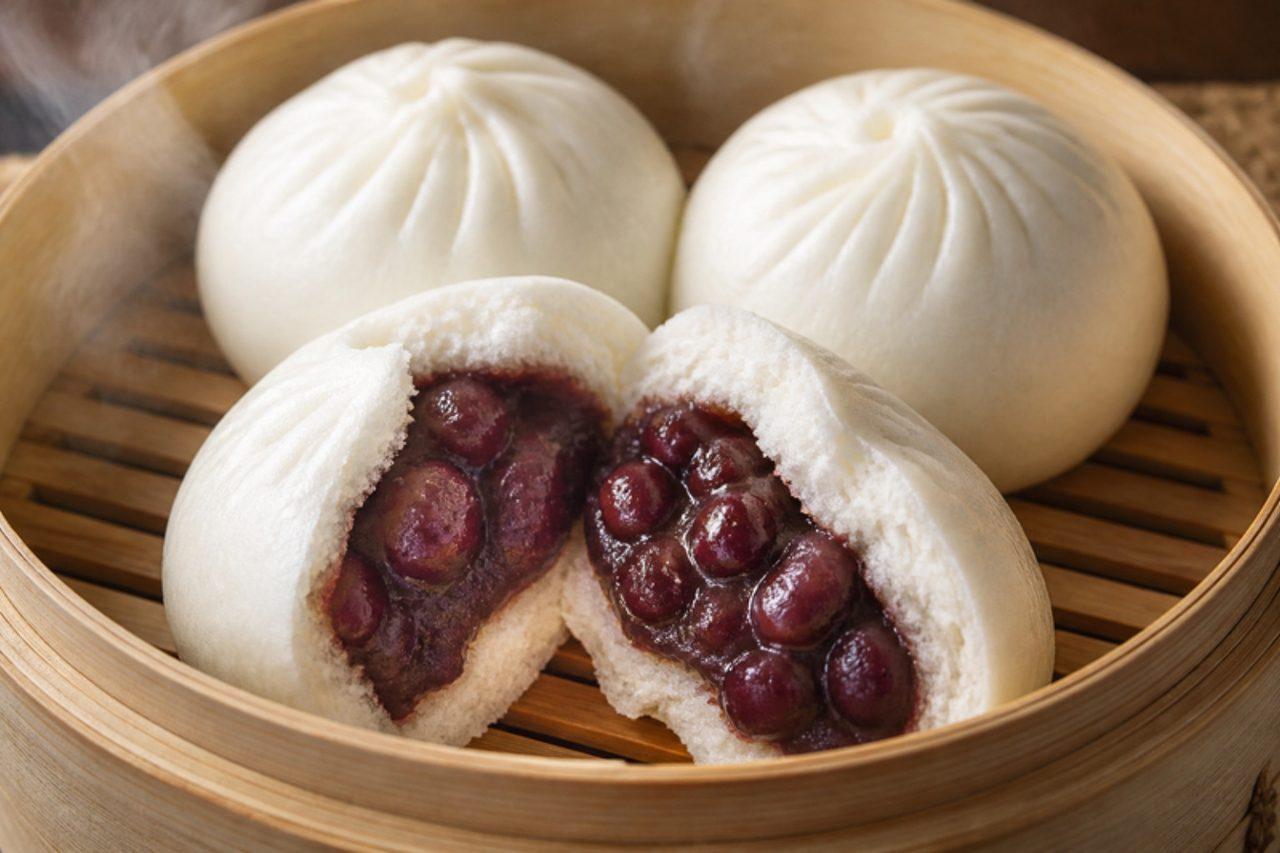
HoppangRed bean steamed buns

When the first cold snap hits, Korean convenience stores bring out glass steamer cabinets full of hoppang, and office workers grab one for breakfast on the way to the subway. The bun is soft, slightly sweet yeasted dough wrapped around a thick, smooth red bean paste, steamed until pillowy and eaten piping hot. Making them at home takes a morning but they freeze perfectly. The usual mistake is opening the lid too early or steaming over too fierce a heat: the buns collapse and wrinkle, so keep a steady medium heat and leave them to rest 5 minutes before lifting the lid. Contains wheat. Chef's tip: let the shaped buns rise on squares of baking paper; you can move them into the steamer without squashing them.

120 minKoreanBakingVegan
by KrazyBadal 0 views
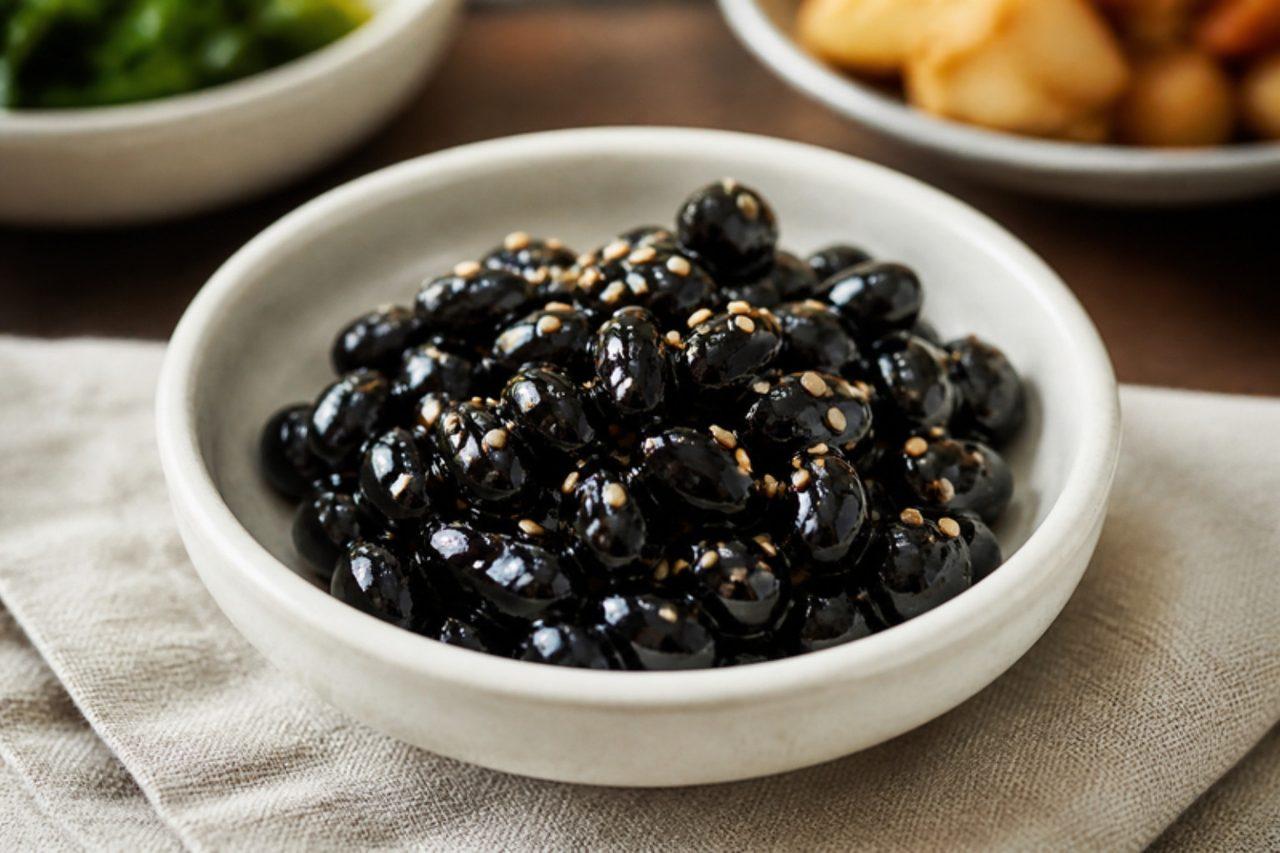
KongjabanSoy-braised black soybeans

Kongjaban is the shiny black bean banchan that sits in a small dish on Korean tables from Gwangju to Seoul and fills countless lunchboxes, because one batch keeps for a week. Dried black soybeans are soaked, simmered in soy and sugar and finished with rice syrup until each bean is chewy, sweet-salty and gleaming. It is a good source of plant protein and children usually love it. The common mistake is adding the syrup too early: it scorches before the beans are tender and makes them hard. Chef's tip: keep the lid off while the beans cook; the steam escaping helps the skins stay intact and wrinkled rather than bursting.

by KrazyBadal 0 views
Showing 48 of 156 recipes
Show more recipes

Page 3 of 7

More collections