


Skip to content
Bibikkan
Featured recipe

Bibikkan

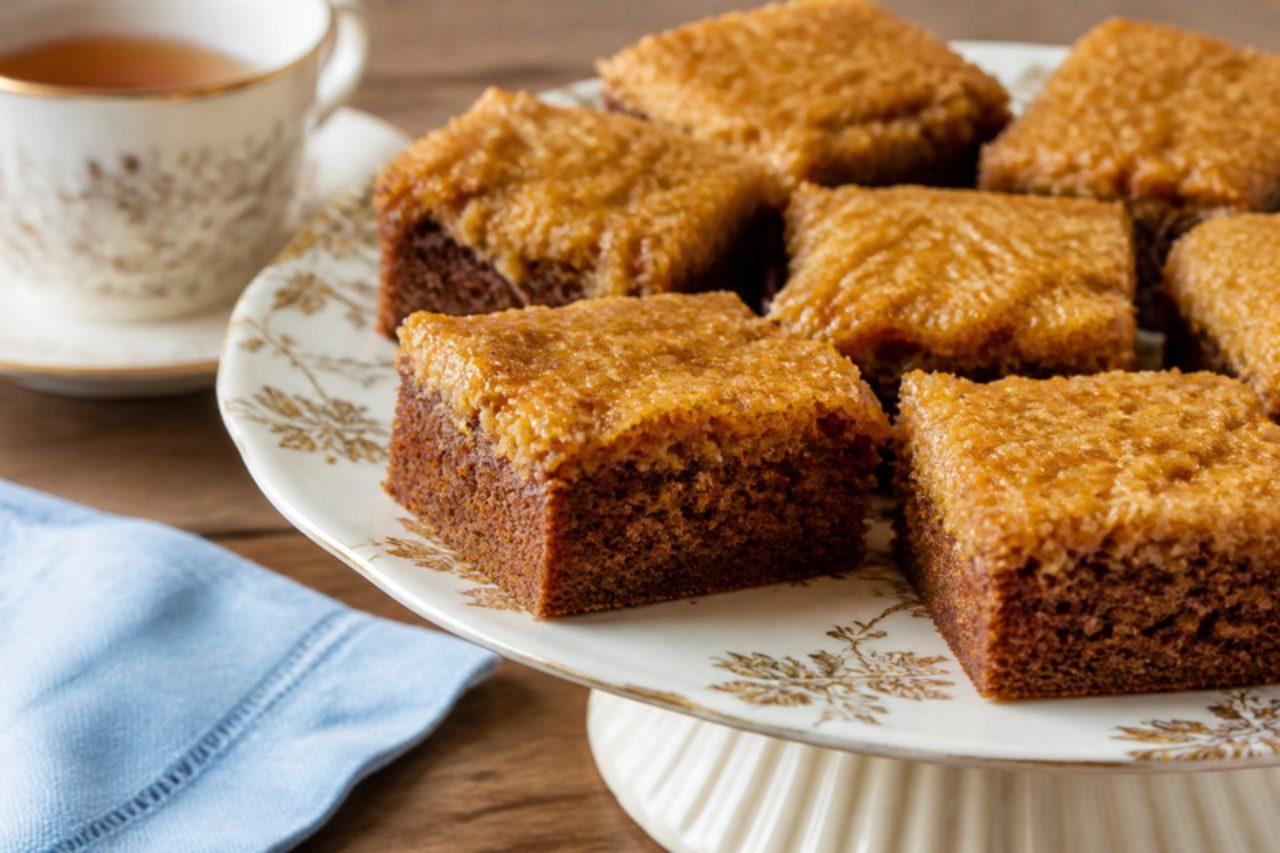
Coconut jaggery cake

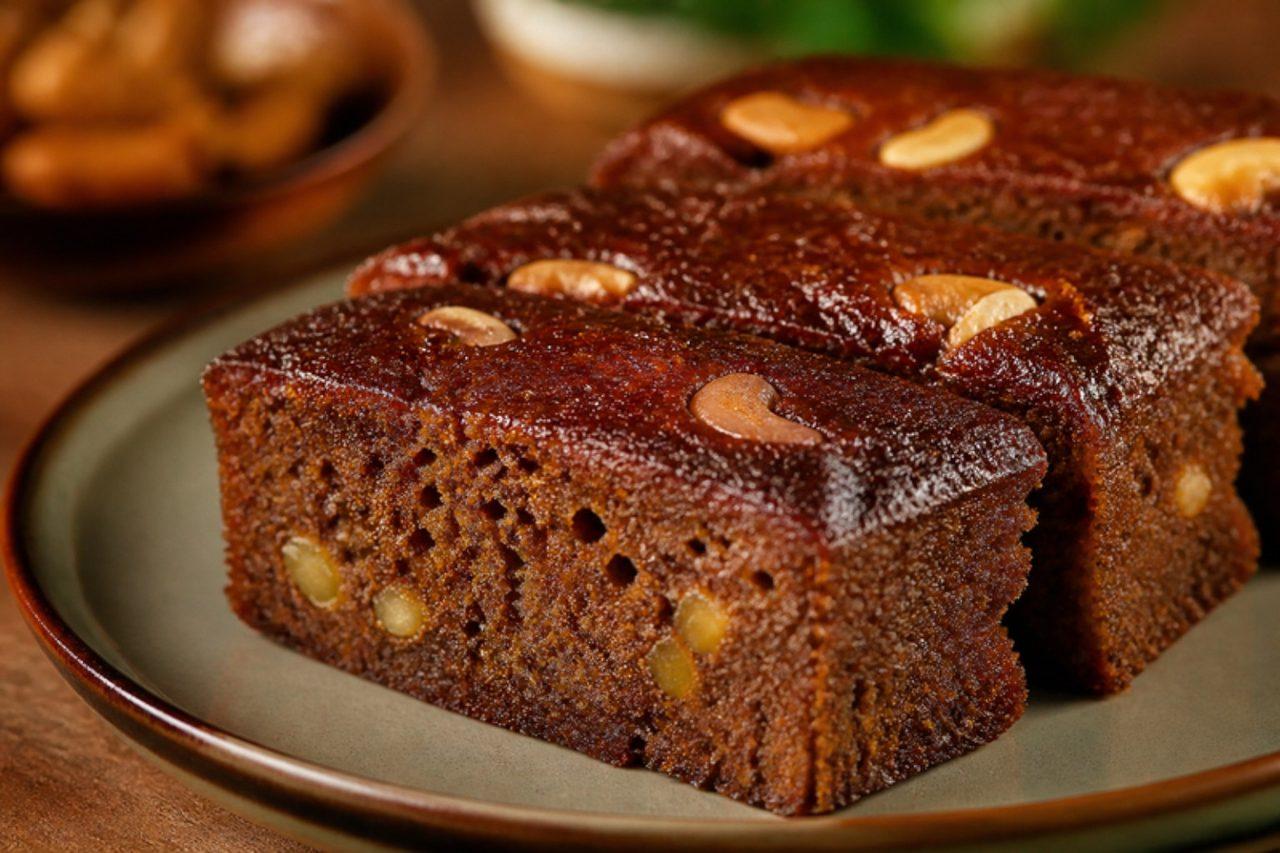
Bibikkan is the darkest, stickiest cake in the Sri Lankan repertoire, baked by Burgher families for Christmas and by Sinhala households for the New Year table, and nobody quite agrees whether its roots lie in Portuguese or local kitchens. Freshly grated coconut is first cooked in melted kithul jaggery, then mixed with roasted semolina, flour, eggs, cashews, raisins, chopped ginger preserve and a mix of cinnamon, cardamom, nutmeg and cloves, and baked until almost black on the outside. The crumb is moist, heavy and chewy with coconut, with a deep treacle sweetness and a warm, spiced finish, and slices are served with tea. Baking it too hot is where it often goes wrong, as the jaggery burns before the middle sets, so keep the oven moderate and cover it if the top darkens early. Chef's tip: cook the coconut in the jaggery until it looks thick and sticky before mixing; that is what gives bibikkan its fudgy texture.

Read more 0 views

What to eat today?

Around the world

Today's trip: Paraguayan

A new country every day, from every cuisine on the site.

Paraguayan

Chipa

Cheese bread rings 50 minMore from Paraguayan (27) →

This week's collection

Kid-friendly dinners
537 recipes · a new collection every Monday

Latest recipes

Kunun gyada (groundnut and rice gruel)

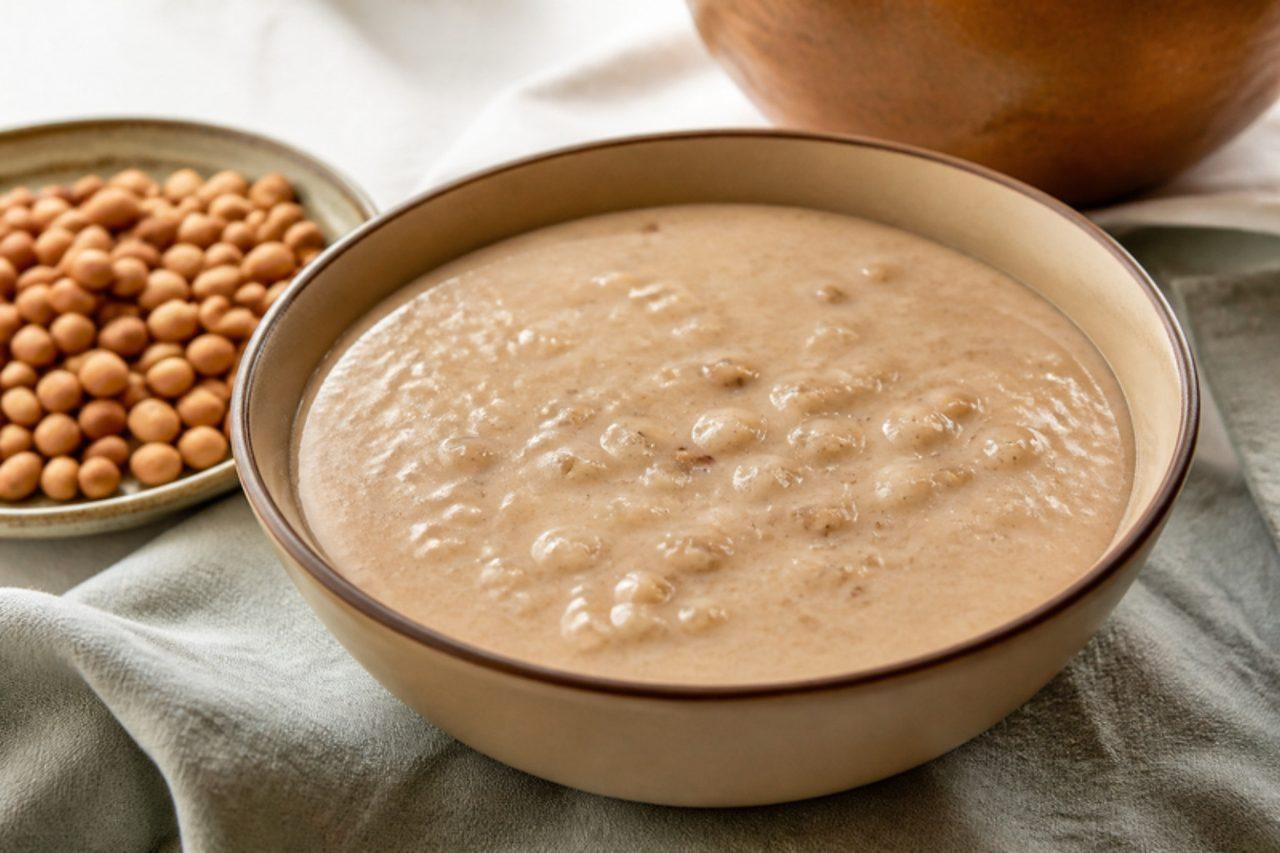
Breakfast sellers in Kano and Zaria pour kunun gyada from big flasks into bowls, steaming hot on cool mornings and at Ramadan suhoor. Raw groundnuts are blended into a milk, boiled with rice until it thickens, and then soured with tamarind, which gives a creamy, nutty, sweet-sour gruel with soft grains of rice. It is filling enough to stand as breakfast on its own, or with a few pieces of kosai. Groundnut milk foams up just like dairy milk and is the cause of the most common mishap, so use a big pan and stay close. A frequent slip is adding the tamarind too early, which can make the groundnut milk curdle; stir it in at the end. Chef's tip: add the tamarind off the heat; boiling it hard can make the gruel split grainily.

by KrazyBadal 0 views

Boiled yam with egg sauce

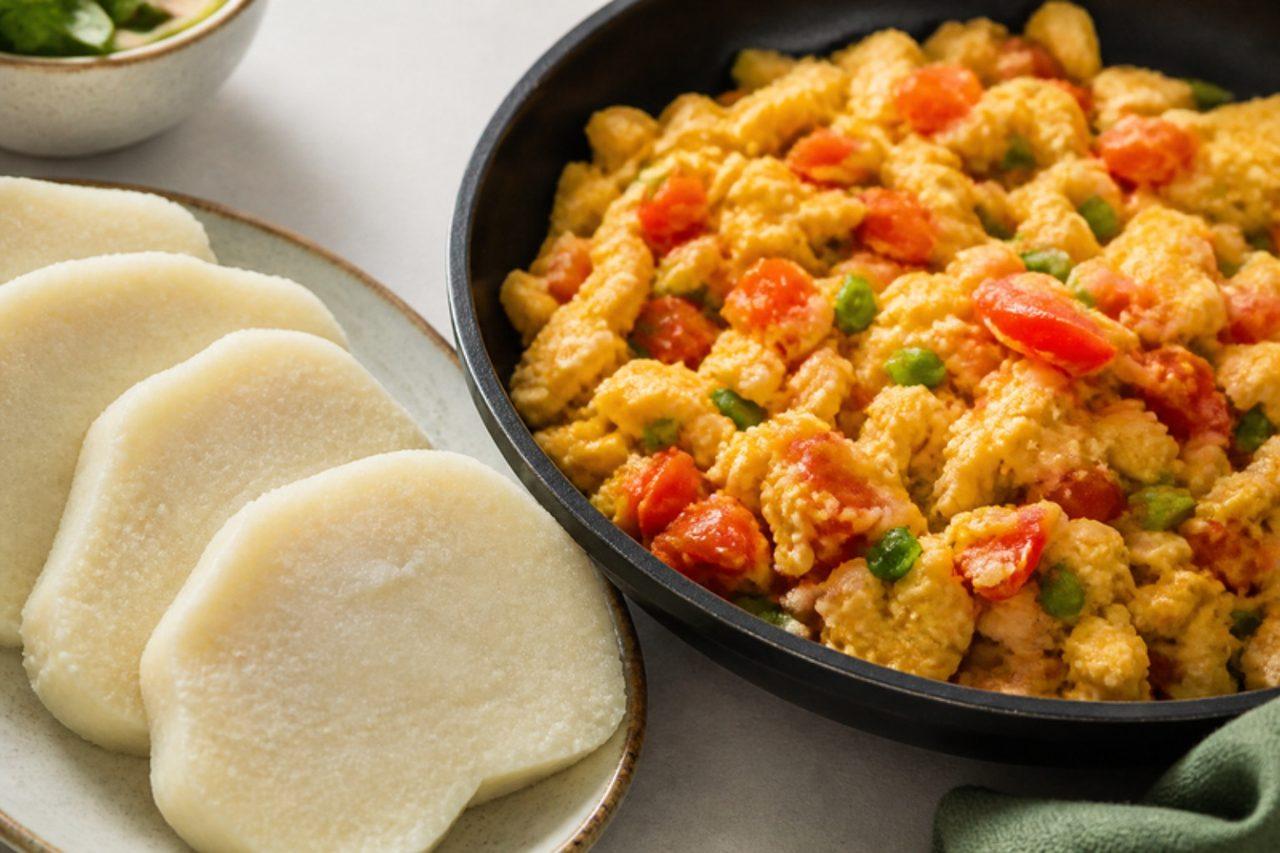
Saturday breakfast in many Nigerian homes means thick slices of boiled white yam and a pan of egg sauce, eggs gently scrambled into a quick fried sauce of tomato, onion and fresh chilli. The yam is fluffy and starchy, the sauce juicy, peppery and soft, and the two are made in the same half hour. It is just as popular for supper. Overcooking the eggs is the usual mistake: take the pan off the heat while they still look slightly wet and they finish in their own warmth. Chef's tip: wear gloves or oil your hands while peeling yam, since the raw skin and flesh can make your hands itch.

by KrazyBadal 0 views

Agidi (set fermented maize in leaves)

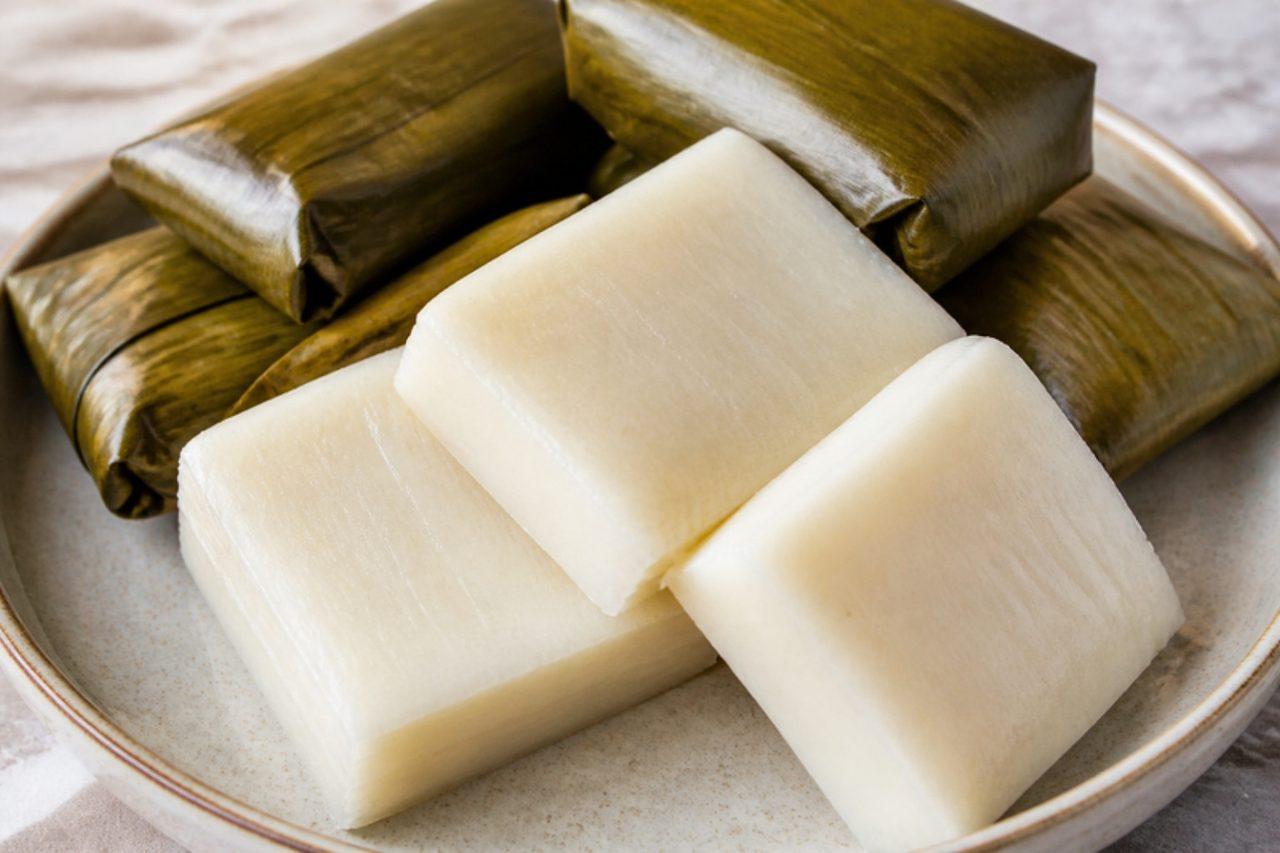
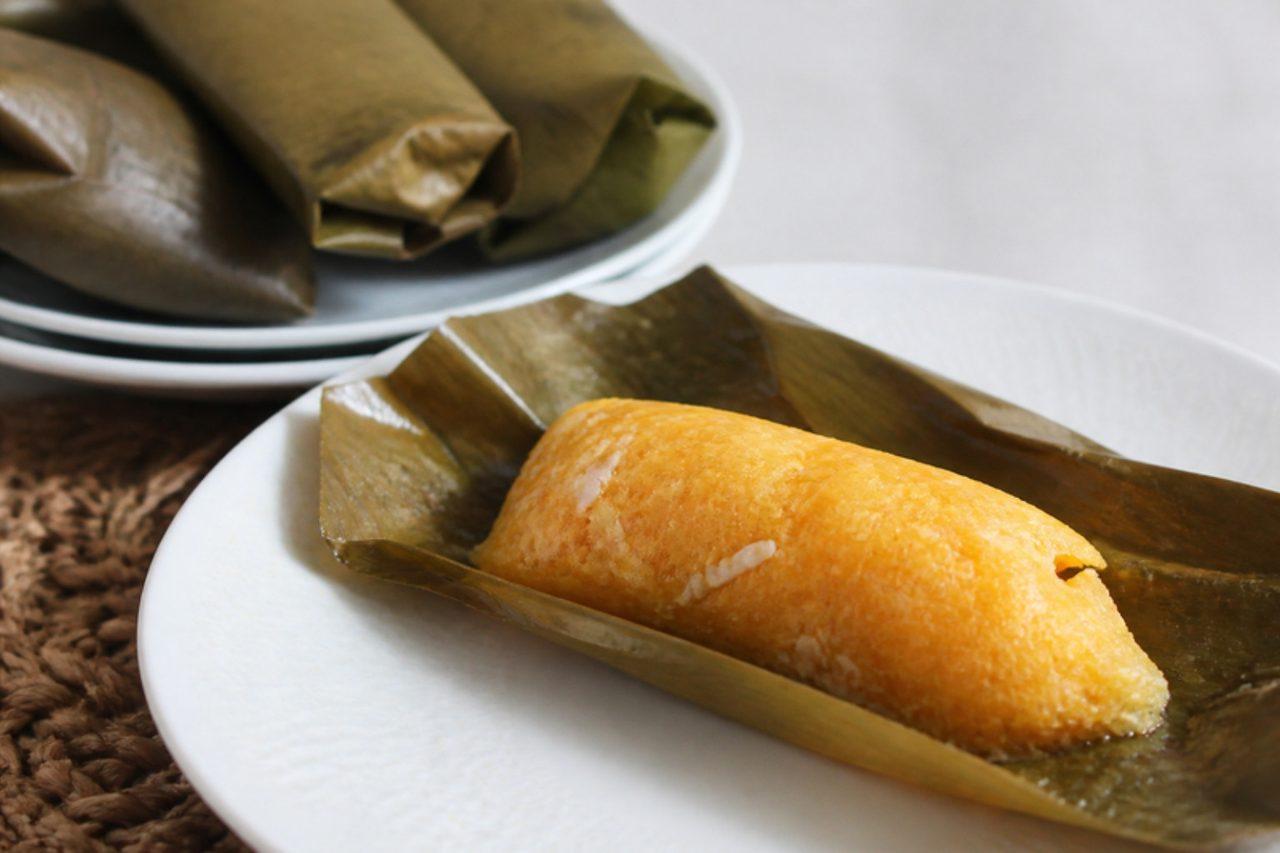
Wrapped in green leaves and stacked in pyramids, ẹ̀kọ (Yoruba) or agidi (Igbo) is the solid form of ogi: the same fermented maize paste cooked much thicker, then left to set into a cool, wobbly block. It tastes gently sour and very clean, which is why it suits a hot pepper stew, moi moi, akara or a bowl of efo. Buka in Lagos and Ibadan sell it at breakfast and lunch. Undercooking is the most common mistake, and the agidi then stays soft and runny, so cook until a spoon leaves a clear trail across the pot. Chef's tip: pass banana leaves quickly over a flame until they turn shiny and supple, and they will fold without tearing.

by KrazyBadal 0 views

Arepa dominicanaSweet cornmeal coconut cake

Not the stuffed corn patty of Venezuela: in the Dominican Republic arepa means a dense, sweet cornmeal cake that grandmothers once baked in a covered pot with hot coals on the lid. The cornmeal is first cooked with coconut milk, milk, butter, sugar and cinnamon into a thick porridge, then baked until it sets with a dark, caramelised crust and a soft, pudding-like centre. It is eaten at merienda with coffee or a glass of cold milk. The common mistake is not cooking the cornmeal long enough on the hob, which leaves the cake gritty. Chef's tip: let the arepa cool completely before slicing; warm, it is too soft to cut cleanly.

by KrazyBadal 0 views

Arepa di pampunaCinnamon pumpkin pancakes

Curaçao and Aruba use the word arepa differently from their South American neighbours: arepa di pampuna are not corn arepas but small, sweet pumpkin pancakes, fried in a little oil and eaten warm for breakfast, or alongside a bowl of soup or stoba at lunch. The mashed pumpkin makes them tender and bright orange, with cinnamon and a little sugar. The mistake is too much flour, which makes them dense; the batter should be thick but soft. Chef's tip: cook the pumpkin the day before and drain it overnight in the fridge for the lightest pancakes.

by KrazyBadal 0 views

Eba (gari swallow)

Students in hostels, office workers at lunchtime buka and families from Warri to Lagos all lean on eba, because it is ready in about five minutes from a bag of gari, the toasted granules of fermented cassava. Stirred into hot water, gari swells into a smooth, firm, slightly tangy dough that you pinch, roll and dip into egusi, okra, ogbono or efo riro. Yellow gari has been fried with a little palm oil and gives a richer, golden eba; white gari is sharper and paler. Chef's tip: pour the gari onto the water, never the water onto the gari, and wait a minute before stirring so every grain soaks evenly.

by KrazyBadal 0 views

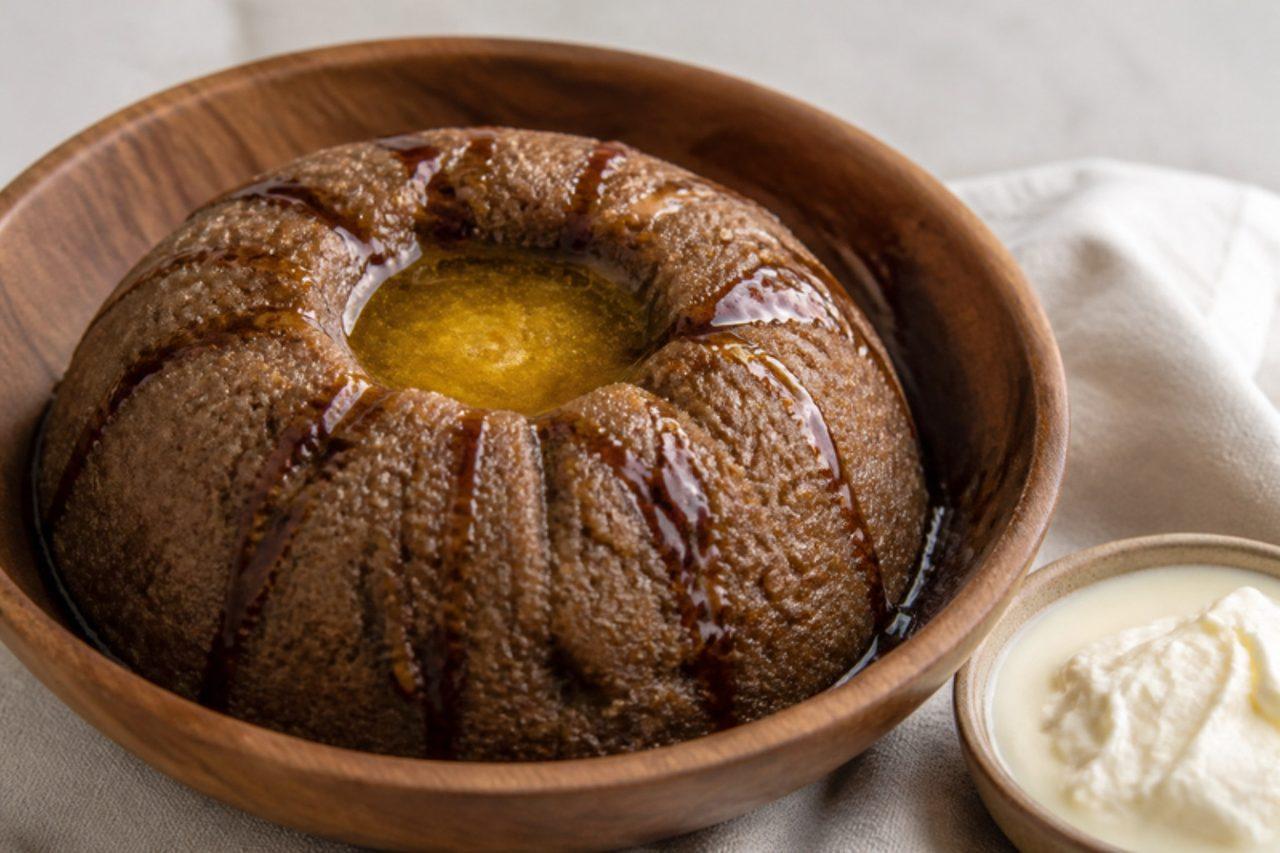
AreekaWholemeal bread with ghee and honey

In the green mountains of Asir in south-west Saudi Arabia, areeka is the breakfast for guests, weddings and cold mornings in Abha: thick wholemeal breads are torn while still hot and kneaded with ghee into a smooth, soft dome, then hollowed out and filled with a pool of warm ghee, mountain honey and date syrup. Everyone eats from the same plate, pinching off pieces and dragging them through the sweet centre. It is rich, warm and comforting, with a nutty wheat flavour. The usual mistake is letting the bread cool before kneading; it must be worked hot or it will not bind. Serve with cardamom coffee or milky tea, and a spoonful of cream if you like. Chef's tip: wear clean rubber gloves so you can knead the bread while it is properly hot.

by KrazyBadal 0 views

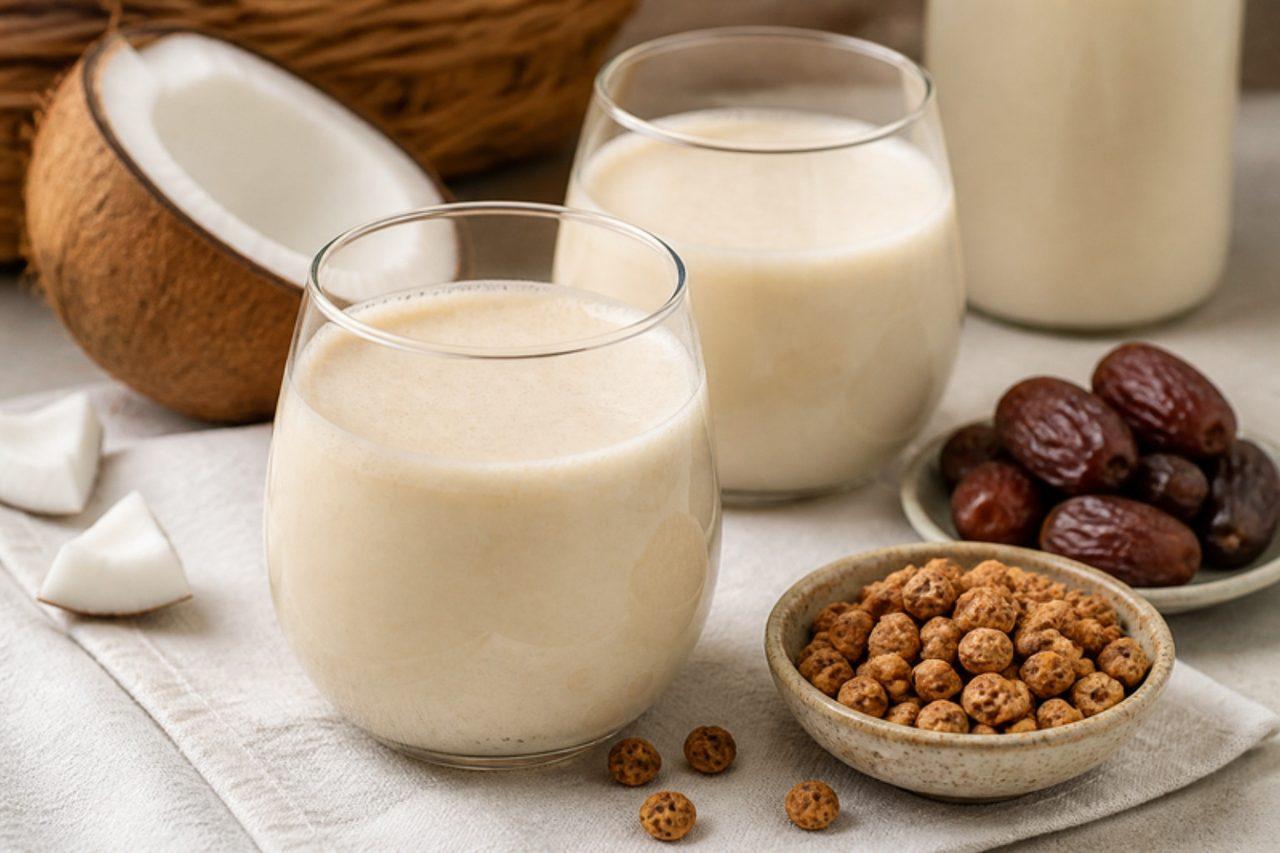
Kunun aya (tiger nut drink)

Street sellers in Jos, Kaduna and Kano keep kunun aya cold in coolers, and on a hot afternoon a glass of the creamy, nutty milk is hard to beat. Tiger nuts, which are small tubers rather than nuts, are soaked until plump, blended with dates, fresh coconut and a little ginger, then strained. Dates do the sweetening, so most people add no sugar at all. Skimping on the soak is the most common mistake; dry tiger nuts give a thin, gritty drink, so soak them for at least 8 hours. Chef's tip: soak them in the fridge and keep everything cold, because the fresh milk sours quickly in the heat.

by KrazyBadal 0 views

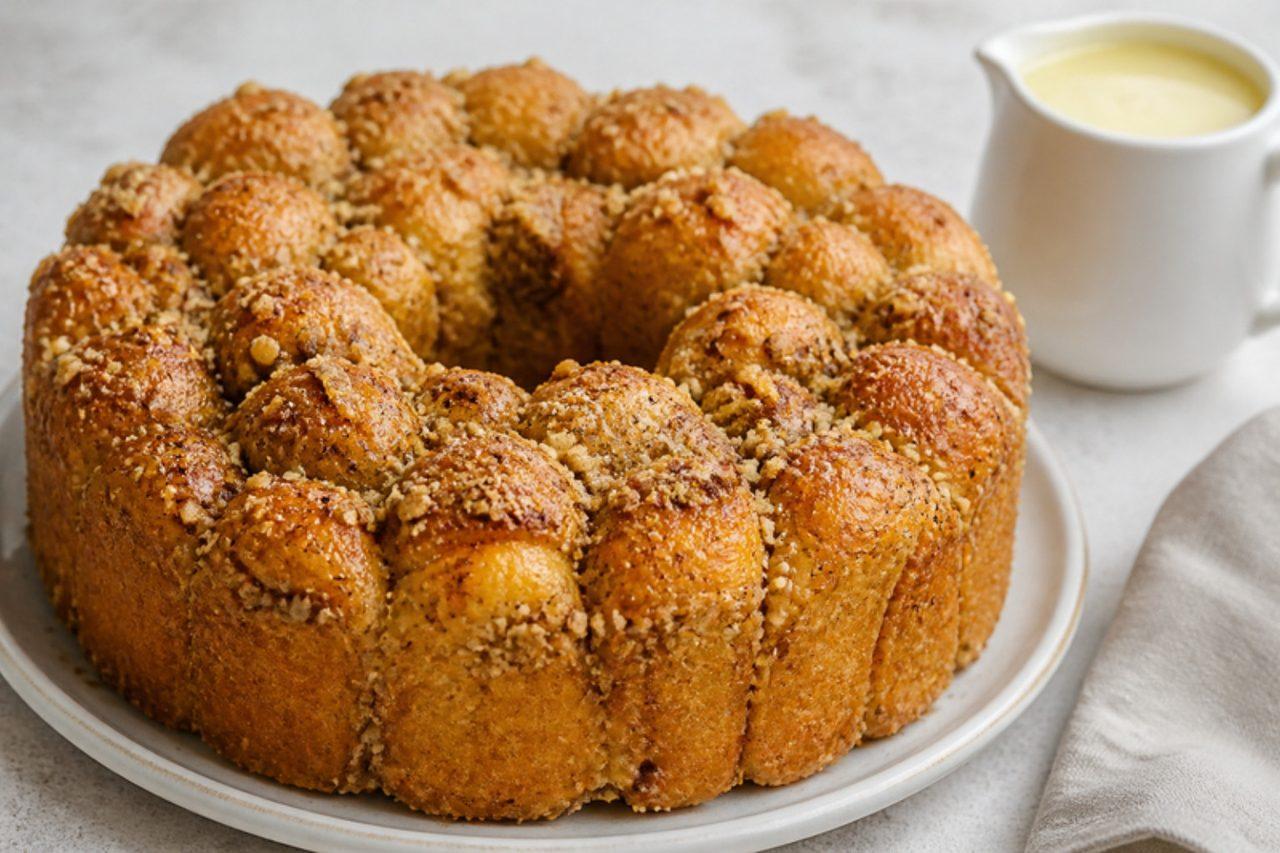
AranygaluskaGolden walnut yeast dumplings

Aranygaluska means golden dumplings, and the pull-apart cake really does come out of the oven bronze and gleaming. Walnut-sized balls of sweet yeast dough are dipped in melted butter, rolled in ground walnuts and sugar, stacked loosely in a ring tin and baked, so the nuts caramelise into a sticky crust. It is a family Sunday pudding all over Hungary and a favourite at school canteens, and Hungarian emigrants took it to America, where it became monkey bread. Pour warm vanilla custard over each helping. Some cooks serve it with a wine custard; this version keeps to vanilla, so it is alcohol-free. Where it goes wrong is packing the balls tightly; leave gaps so they can rise and the walnut coating reaches every side. Chef's tip: spoon a little apricot jam between the layers for a tart note.

by KrazyBadal 0 views

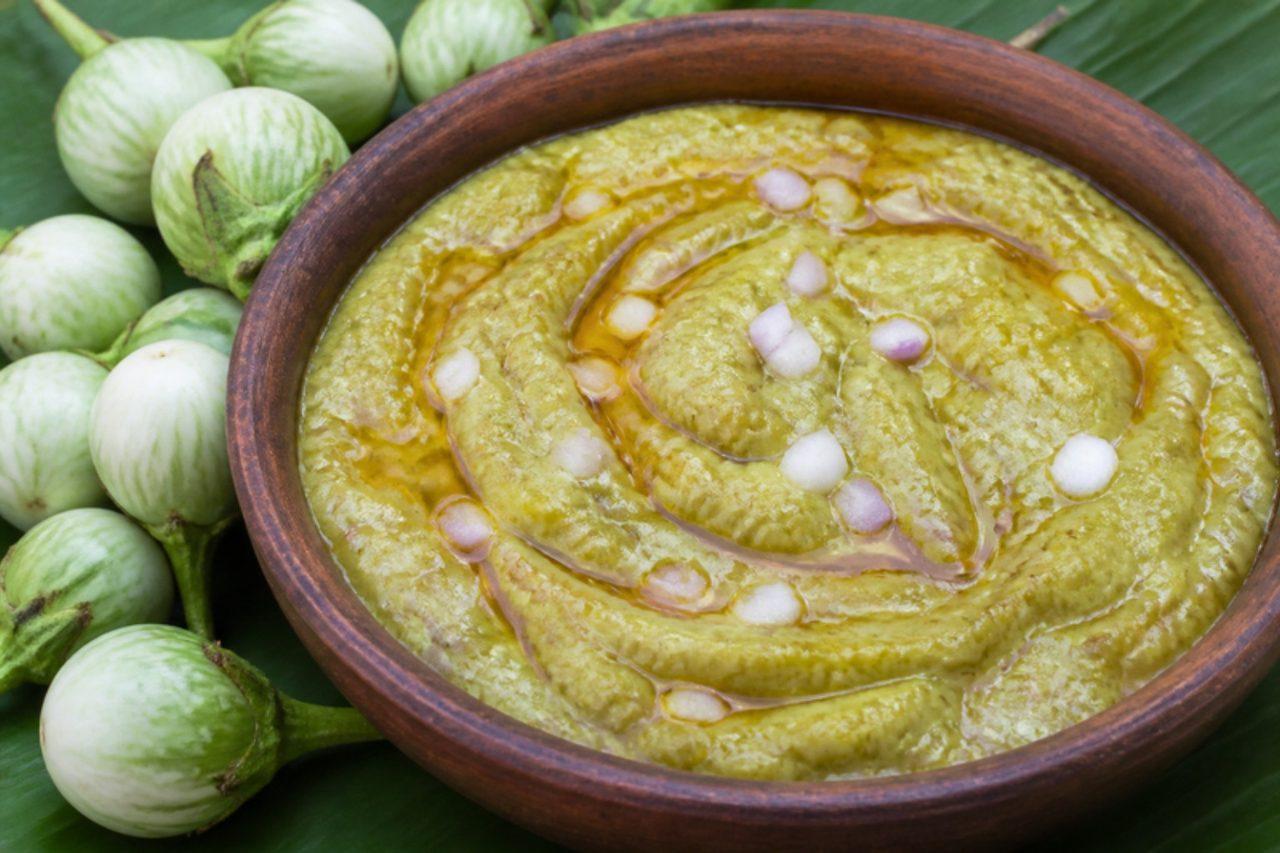
Garden egg sauce

Igbo families in Enugu, Anambra and Imo cook the little white-and-green garden eggs into a soft, chunky sauce to scoop up with boiled yam, plantain or rice. The aubergines are boiled, peeled and mashed, then simmered in palm oil with onion and fresh chilli, giving a smoky-sweet, slightly bitter, very savoury spread. Crayfish or dried fish is often stirred in; leave them out, as here, for a vegan sauce. Chef's tip: soften the garden eggs fully before mashing, or the sauce will be squeaky and raw-tasting instead of creamy.

by KrazyBadal 0 views

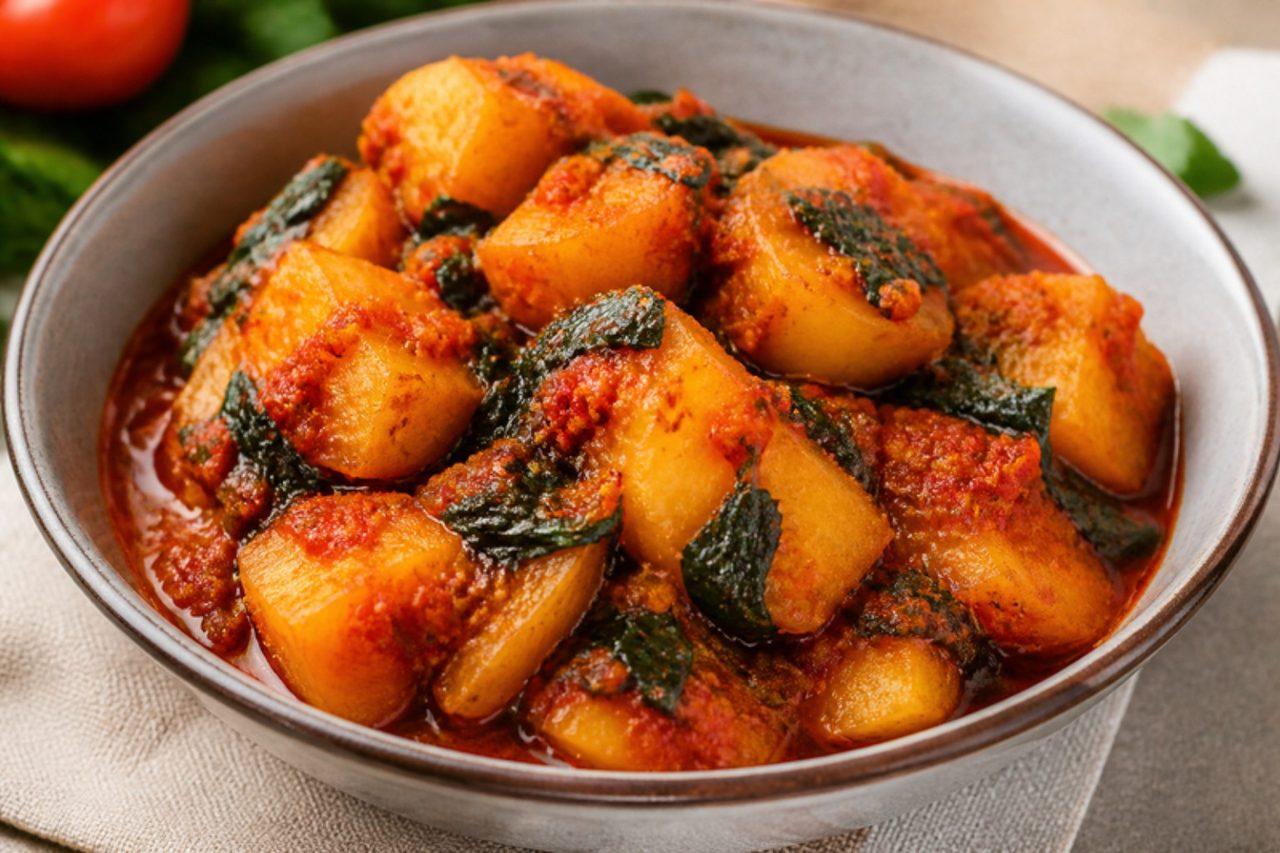
Jos potato pottage

Jos and the cool Plateau highlands grow most of Nigeria's potatoes, which everyone there calls Irish potatoes, and this pottage is how many households cook them on a weeknight. Chunks of potato simmer in a palm-oil, tomato and pepper sauce until some fall apart and thicken the pot while others stay whole, giving a comforting, gently spicy stew. It is often cooked with crayfish or fish; this version keeps it vegan, and children usually love it with the chilli kept mild. Dicing everything small and even is the mistake that turns it into mash, so cut big and small pieces on purpose. Chef's tip: finish with a handful of greens to brighten the orange sauce.

by KrazyBadal 0 views

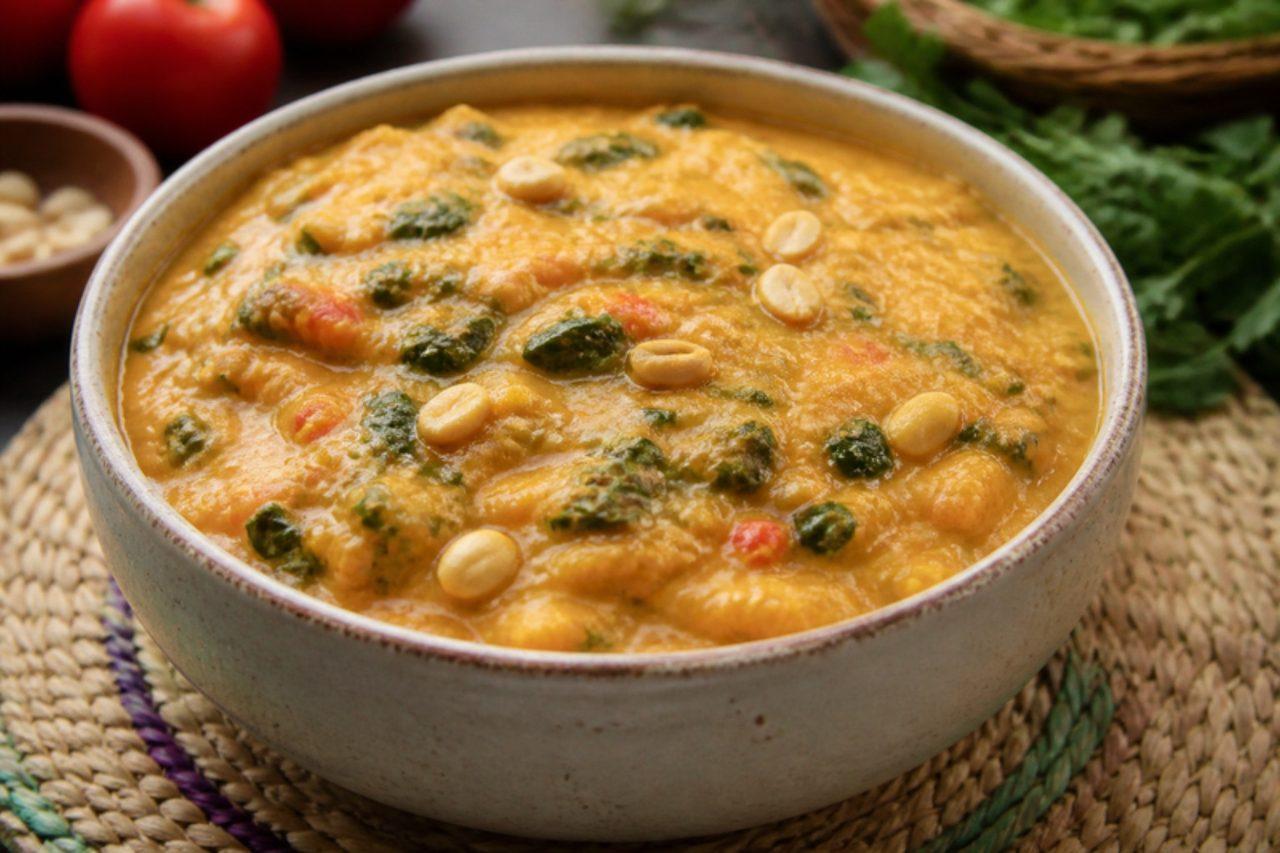
Pate (Nigerian maize porridge with greens)

Not the French spread at all: Nigerian pate is a thick, savoury porridge of coarsely ground maize from Southern Kaduna and the Plateau, where it is everyday food at home and in small chop houses. The maize simmers in a palm-oil and tomato base with groundnut and plenty of leaves until it is soft and spoonable, a bit like a rustic polenta packed with greens. Some cooks use acha (fonio) instead, and many add dried fish or meat; this version is meat-free. Pouring the maize in all at once makes lumps, so rain it in while stirring. Don't stop stirring after adding the maize: lumps form fast and stick to the base. Chef's tip: heat the palm oil gently, just until it melts and turns runny, so it keeps its colour and fruity taste.

by KrazyBadal 0 views

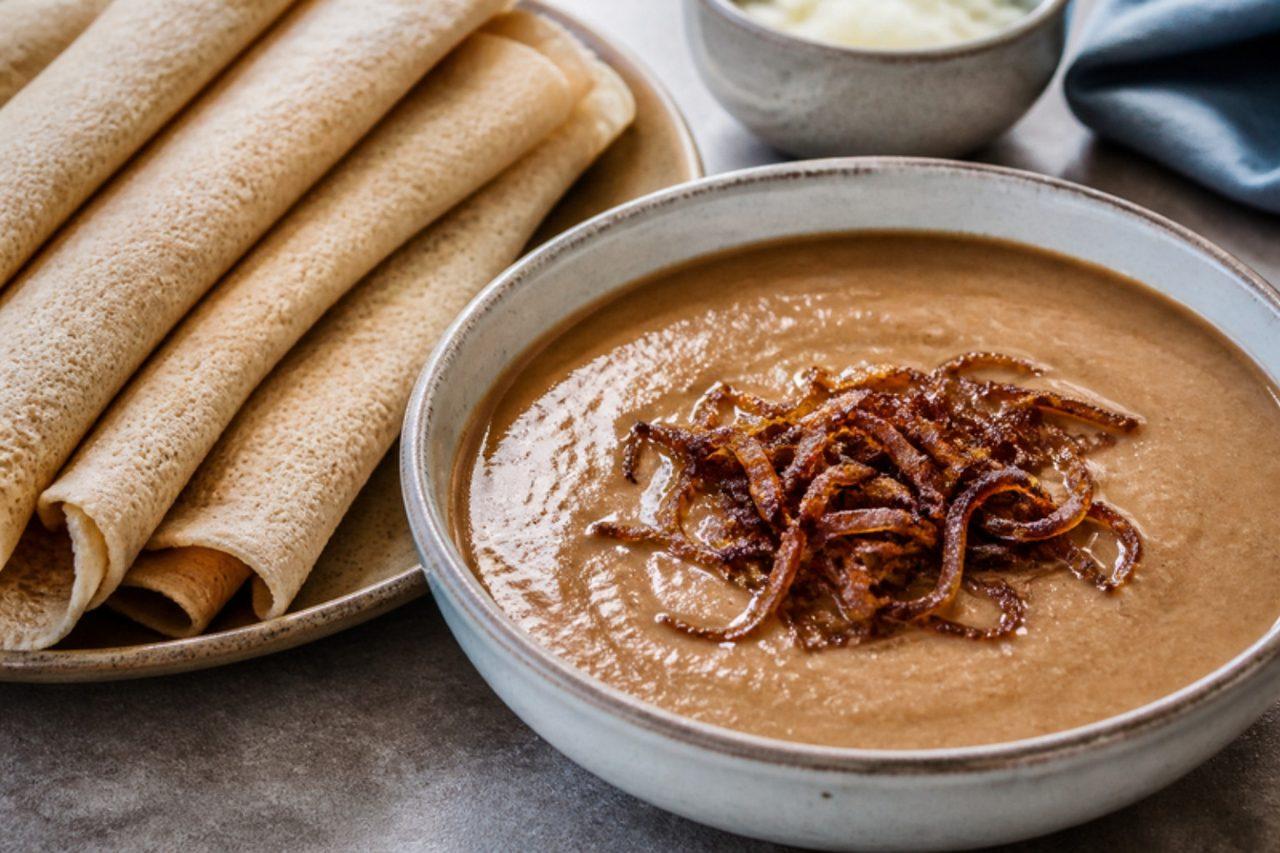
Mullah rob (Sudanese peanut and yoghurt stew)

Rob is the Sudanese word for soured milk, and in Khartoum kitchens it goes into one of the simplest, most comforting stews of all: onions cooked down until sweet, peanut butter stirred in for body, and rob whisked through at the end to make a creamy, tangy, pale-gold sauce. It is everyday food, eaten at lunch with sheets of kisra or a mound of aseeda, and it costs very little to make. Without fermented milk to hand, pasteurised natural yoghurt thinned with water does the job well. Boiling the sauce once the yoghurt is in is the classic mistake, because it curdles into grainy flecks; keep it just below a simmer. Chef's tip: let the onions go properly soft and golden, about 15 minutes; they carry the flavour of the whole dish.

by KrazyBadal 0 views

Fah-fah (Djiboutian spicy goat soup)

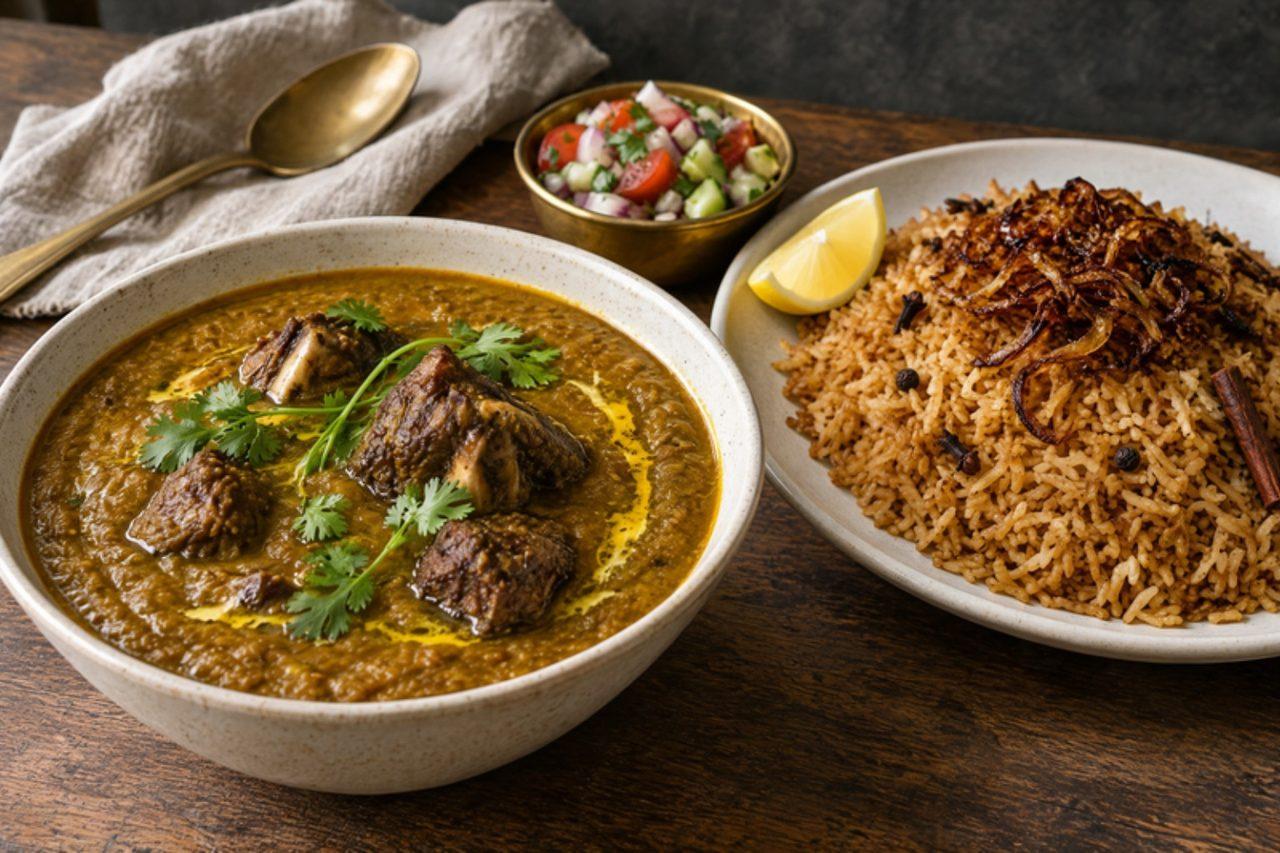
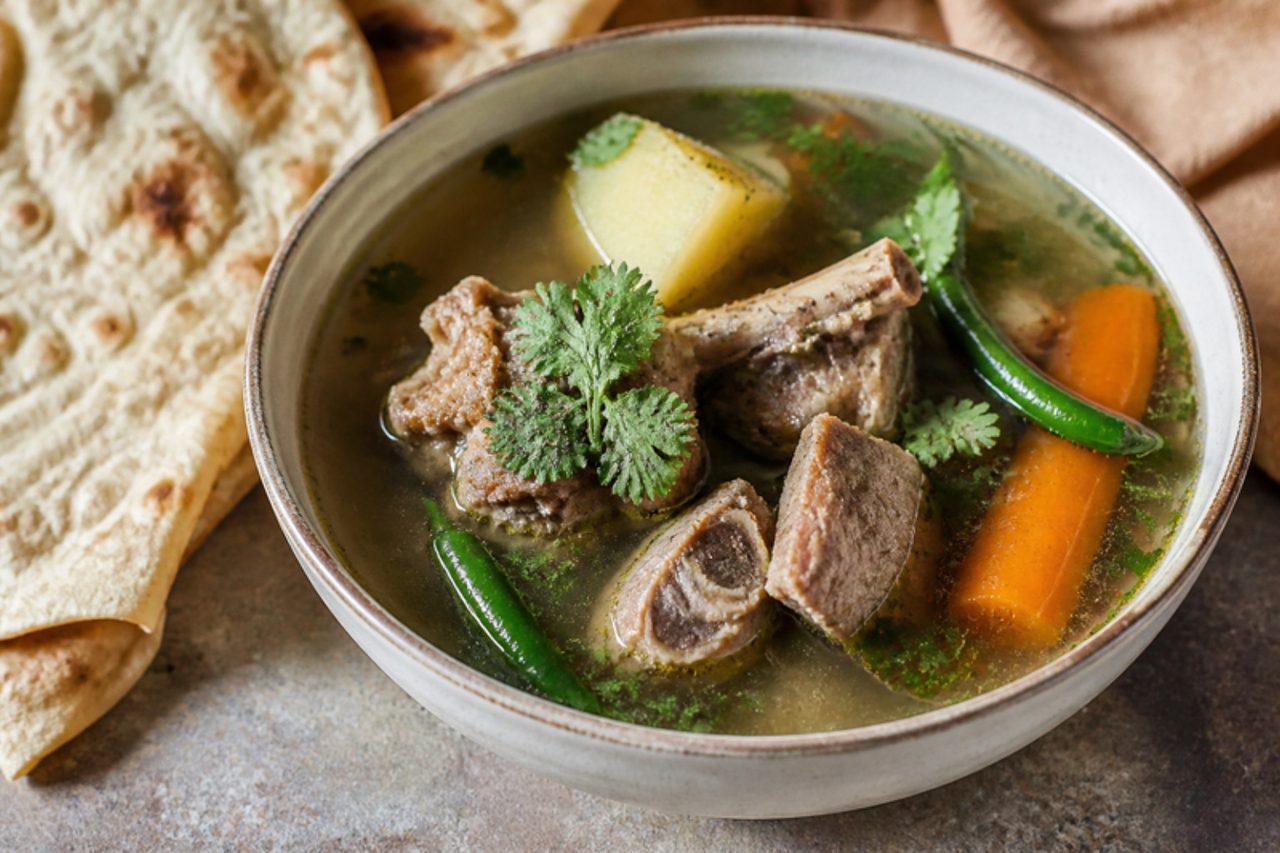
Djibouti City's cafés and Somali-speaking homes across the Horn claim fah-fah as a national dish: a clear but deeply flavoured goat broth simmered on the bone with garlic, cumin and black pepper, filled with potatoes and carrots and sharpened at the end with plenty of green chilli and coriander. It is often eaten at lunch or as a restorative supper, and is especially loved during the cool season and Ramadan, with canjeero torn into the bowl to soak. The broth should be clean-tasting and spicy rather than thick. Letting the soup boil hard makes it cloudy and greasy, so skim well and keep it at a gentle simmer. Don't skip skimming the broth at the start, or the soup stays cloudy and tastes muddy. Chef's tip: add the chilli and coriander only in the final minutes so they stay bright and green.

110 minSomaliSoupsGluten freeSpicy
by KrazyBadal 0 views

Polish-style cauliflower

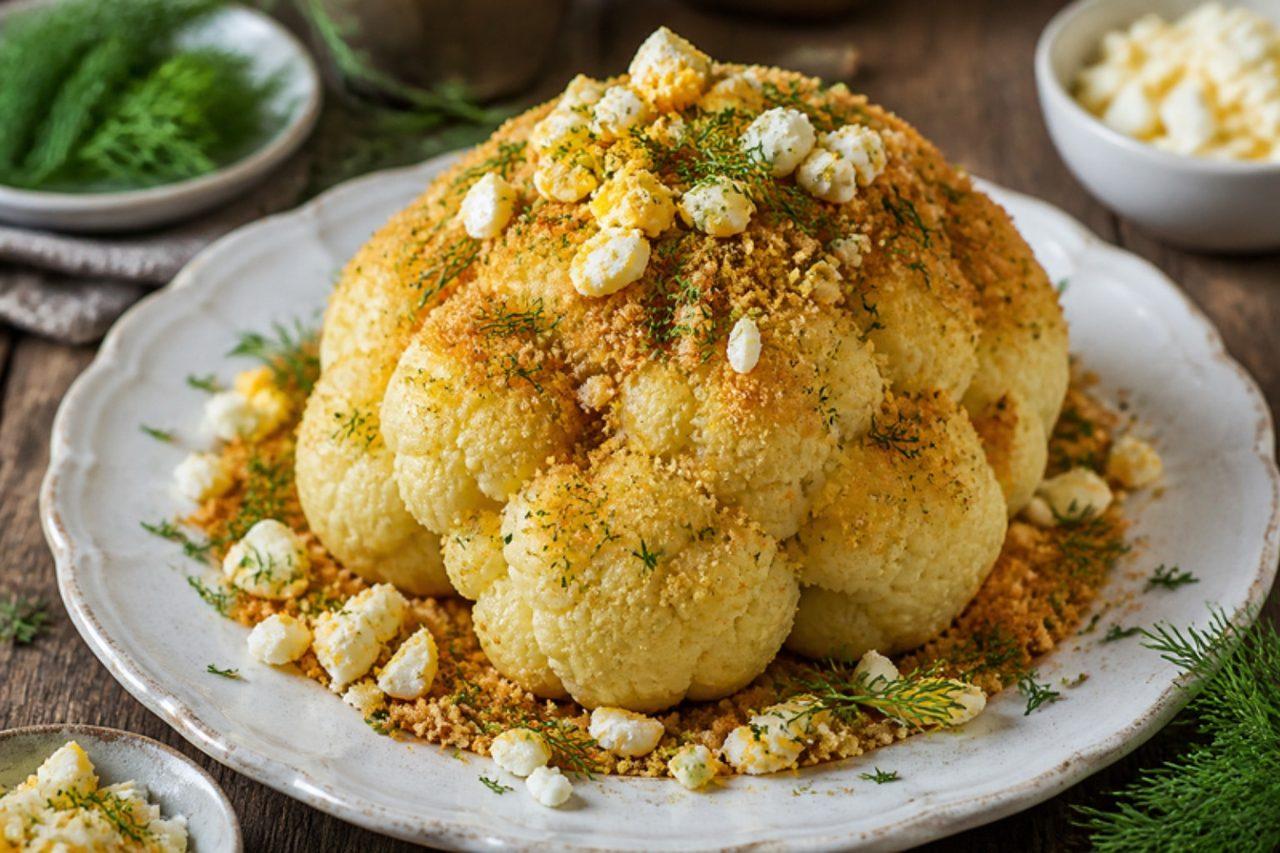
‘Po polsku’ on a Polish menu means one thing: a vegetable topped with crumbs fried in plenty of butter. In Warsaw canteens and on Sunday tables, a whole cauliflower arrives this way next to potatoes and a salad, and children who claim to hate cauliflower eat it happily. The florets are tender and sweet, the crumbs nutty and crisp. A common mistake is boiling the cauliflower until it falls apart; it should keep a slight bite in the stalk. Chef's tip: a pinch of sugar and a splash of milk in the boiling water keep the cauliflower white and sweet.

by KrazyBadal 0 views

KletskoppenLacy almond biscuits

Kletskoppen are the lacy, crackly biscuits of Bruges, sold in the old city's bakeries and served with coffee in the cafés around the Markt: brown sugar, butter and chopped almonds with very little flour (this version uses none), baked until they spread into thin, see-through, toffee-flavoured lace. A common mistake is putting them too close on the tray; they spread enormously and join up. Chef's tip: let them cool for a minute on the tray before lifting, and drape them over a rolling pin while still warm if you want curved tuiles.

by KrazyBadal 0 views

Ogi (pap, fermented maize porridge)

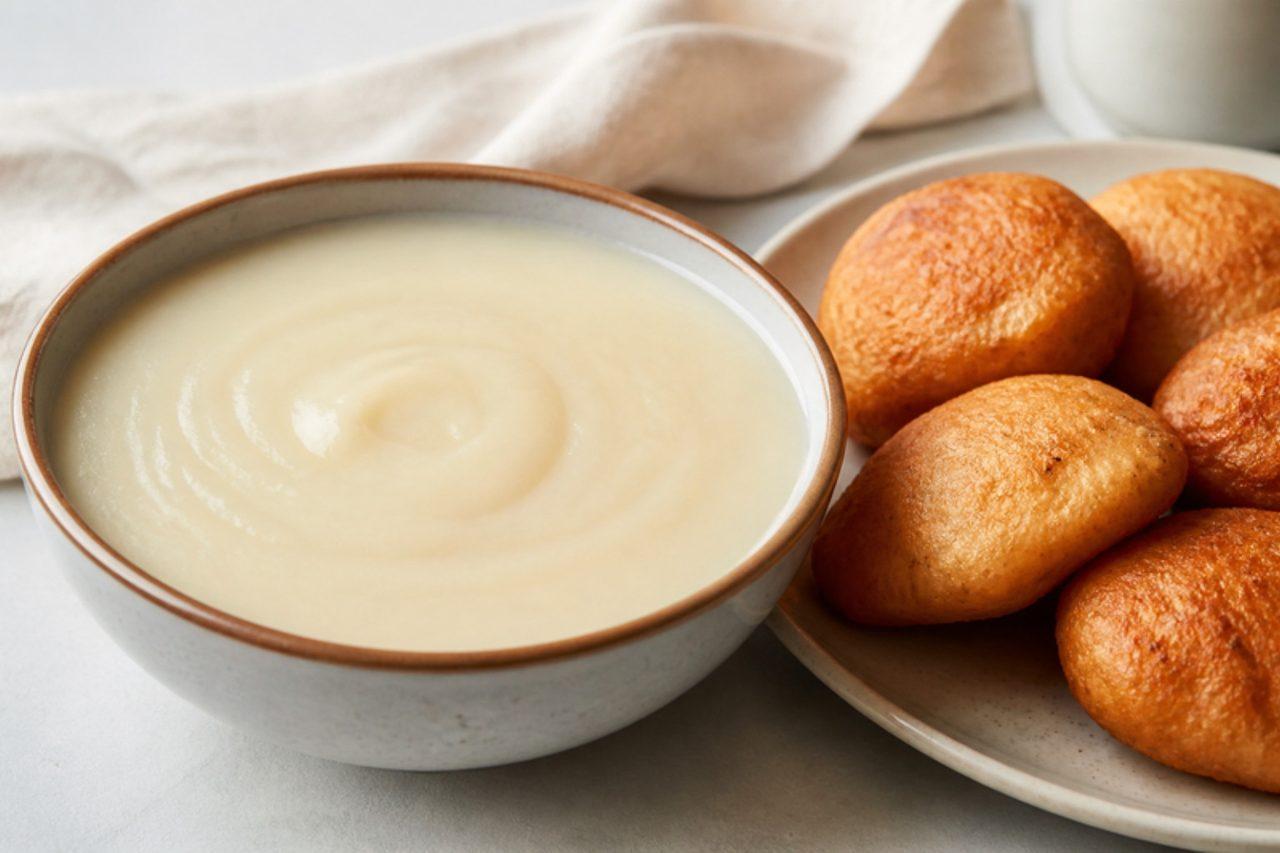
Early mornings across Nigeria smell of akara frying and ogi being stirred: the smooth, pourable porridge that Yoruba homes call ogi and Igbo homes call akamu. It is made from maize soaked for two or three days, ground, sieved and left to settle into a soft white paste, which is sold fresh in markets wrapped in leaves or plastic. Boiling water turns the paste glossy and thick, with a clean sourness that is often softened with sugar and milk. Water that is merely hot rather than boiling is the usual mistake, leaving the pap thin and chalky; if that happens, stir it over a low flame for a minute. Chef's tip: sorghum ogi (ogi baba) is redder and earthier, and millet ogi is lighter; all three cook the same way.

by KrazyBadal 0 views

Alkaki (Hausa syrup-dipped twists)

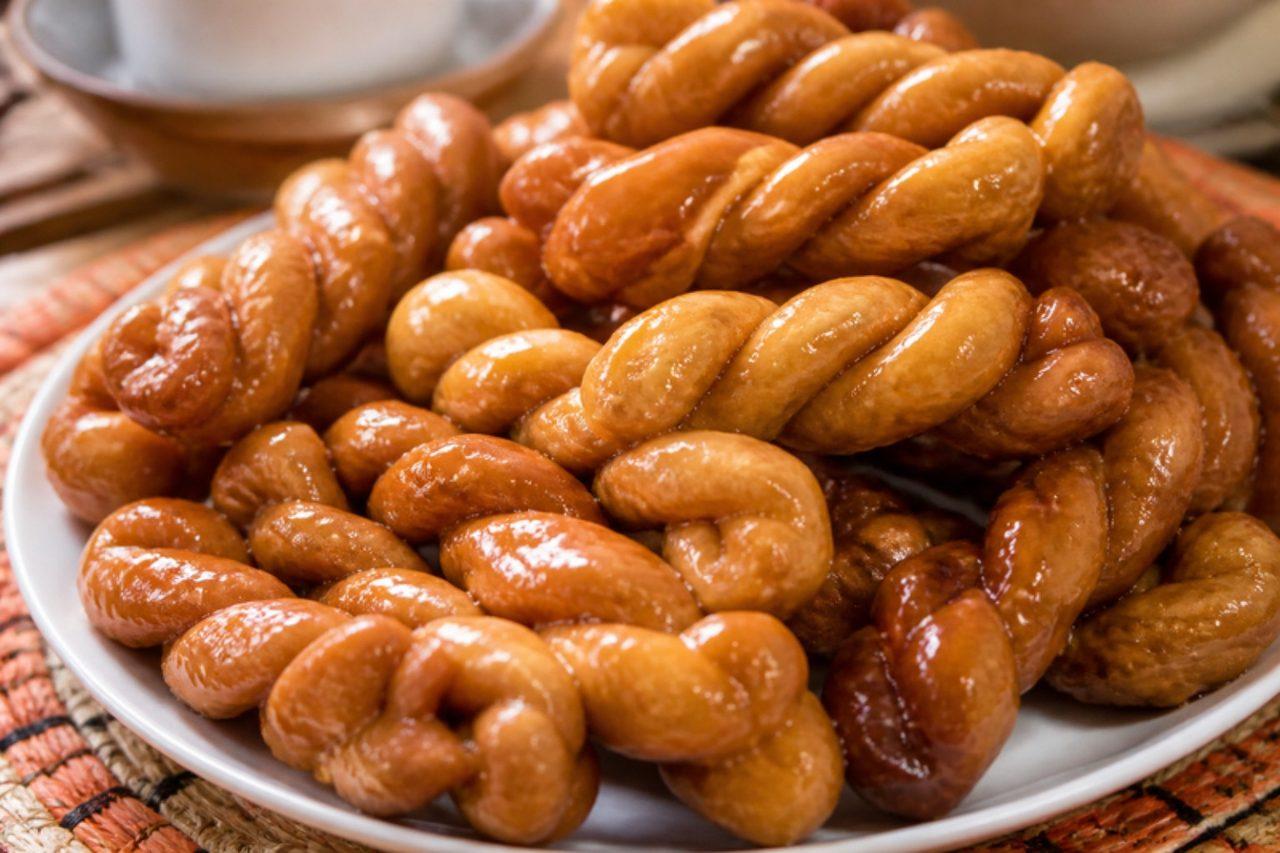
Trays of alkaki are a sign that a Hausa wedding is close: in Sokoto and Kano the twisted fried dough is made in big batches for the bride's family to share out, and again for Sallah visits. The dough is simple flour and water, rolled into ropes and twisted before frying, then dipped in a thick syrup that sets into a thin, crackly white coat. Under it the dough is crunchy at the edges and slightly chewy inside. Frying too hot is the trap; the outside browns while the middle stays raw, so keep the oil moderate and be patient. Chef's tip: boil the syrup until it falls from a spoon in a thin thread, and it will dry glossy rather than sticky.

by KrazyBadal 0 views

Aloo tukTwice-fried pressed potatoes

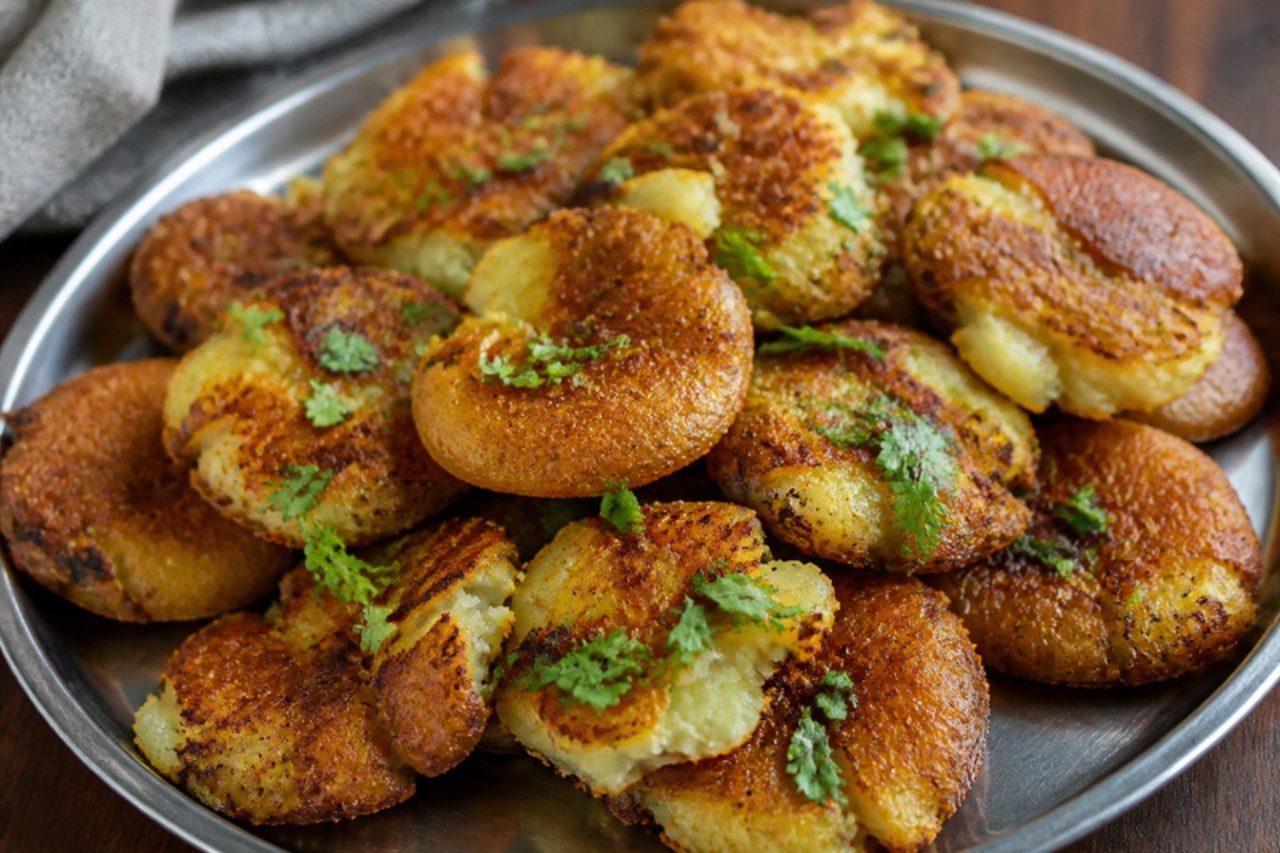
Aloo tuk is the crunch on a Sindhi plate, the thing children steal first: small potatoes boiled, fried, squashed flat and fried again until they are craggy and crisp at the edges and fluffy within, then showered with red chilli, tangy amchur and salt. In Sindhi homes from Karachi to Shikarpur they sit beside Sindhi kadhi and rice or dal and bhuga chawal, and they are also served on their own as a teatime snack with green chutney. The most common error is pressing the potatoes while they are still raw-centred or too hot and wet, which makes them tear instead of flatten neatly. Chef's tip: after the first fry let them cool for five minutes, then press each one under a flat-bottomed bowl so it cracks at the edges, since those cracks become the crispest bits. For children, go easy on the chilli and use more amchur.

by KrazyBadal 0 views

Antiguan ducanaSweet potato coconut dumplings

In Antigua, ducana turns up beside saltfish and chop up on Saturday plates and at Independence celebrations in November, little leaf-wrapped parcels of grated sweet potato and coconut with sugar, raisins and spice, boiled until set. It cuts through the salty fish with a soft, sticky sweetness. Many cooks add a little flour; this version keeps to sweet potato and coconut and is gluten free. The common mistake is wrapping the parcels loosely, so water seeps in and they turn mushy. Chef's tip: grate the sweet potato finely on the small holes and the ducana will hold together without any flour.

by KrazyBadal 0 views

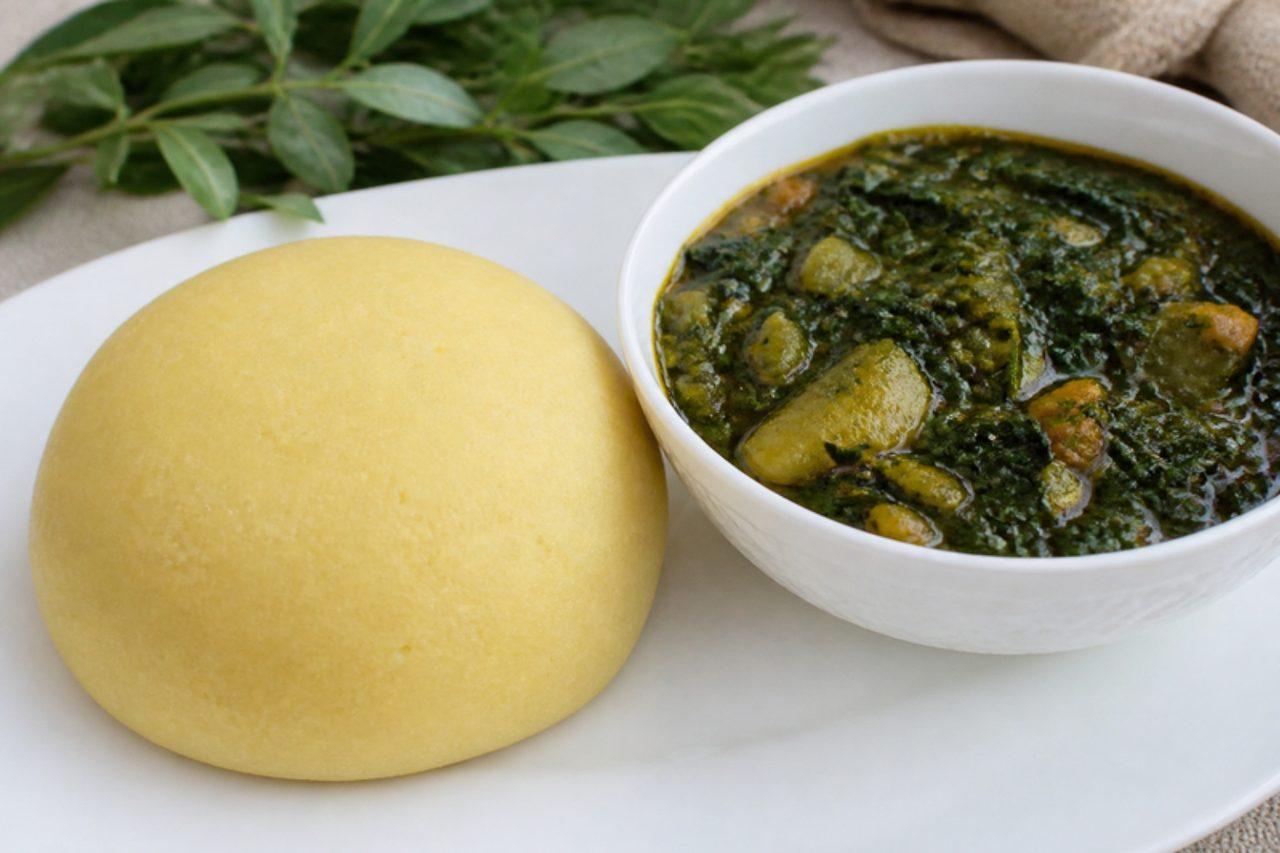
Danwake (bean flour dumplings)

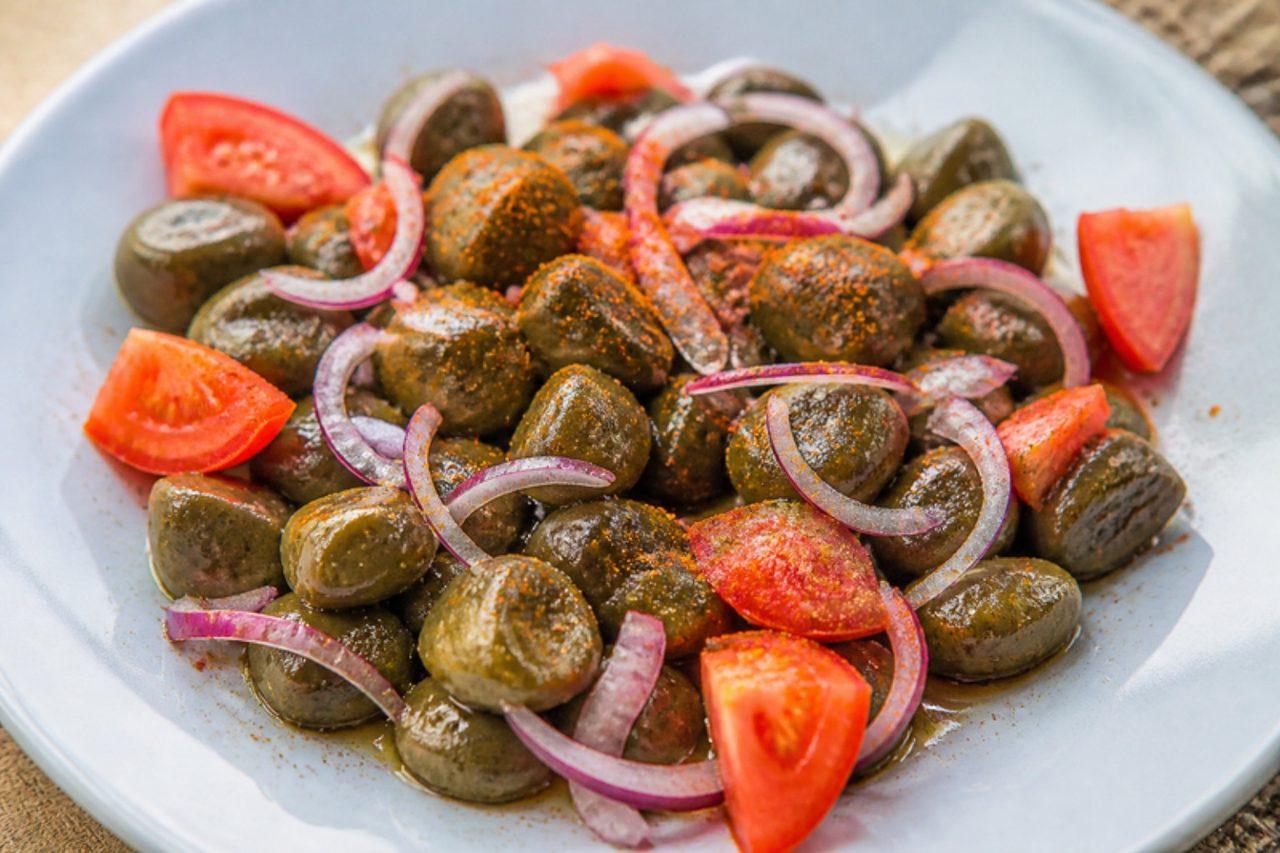
Roadside danwake sellers in Kano and Kaduna ladle the little dumplings out of big pots, then dress them on the plate with groundnut oil, a dusting of fiery yaji, raw onion and tomato. The dough is bean flour stiffened with baobab leaf powder and a pinch of potash or bicarbonate, which gives the dumplings their dark colour and springy bite. Boiled eggs are often served alongside; leave them out, as here, and the dish is fully vegan and still satisfying, thanks to the beans. A dough that is too soft falls apart in the water, so boil one test dumpling before you shape the rest. Chef's tip: drop the cooked dumplings into cold water straight away; it stops them sticking together and firms the surface.

by KrazyBadal 0 views

Masa (Hausa fermented rice cakes)

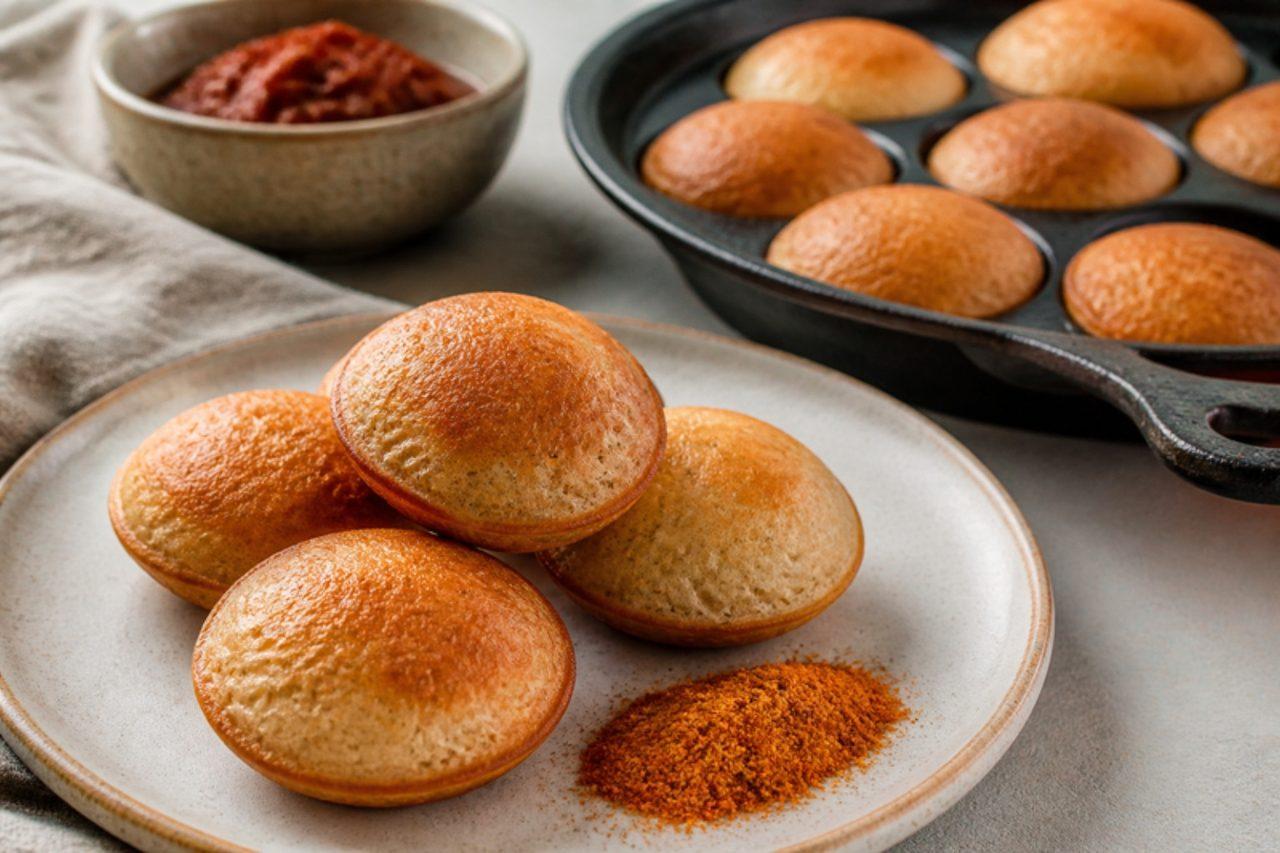
Before sunrise in Kano, Sokoto and Katsina, women set out clay or cast-iron pans with round hollows and fry masa by the dozen for breakfast, and during Ramadan they are a favourite at the breaking of the fast. Soaked rice is ground with a little cooked rice, left to ferment until bubbly, then cooked in the hollows, so each cake is crisp and brown underneath and soft and spongy inside, with a gentle sourness. They are eaten with sugar syrup, yaji pepper or miyan taushe (honey is common too, while syrup keeps them vegan). A thin batter is the classic mistake: it spreads and fries flat, so aim for the thickness of a thick pancake batter. Chef's tip: start the night before, since the rice soaks 8 hours and the batter ferments 4–8 hours more, and use an aebleskiver or paniyaram pan if you have no masa pan.

by KrazyBadal 0 views

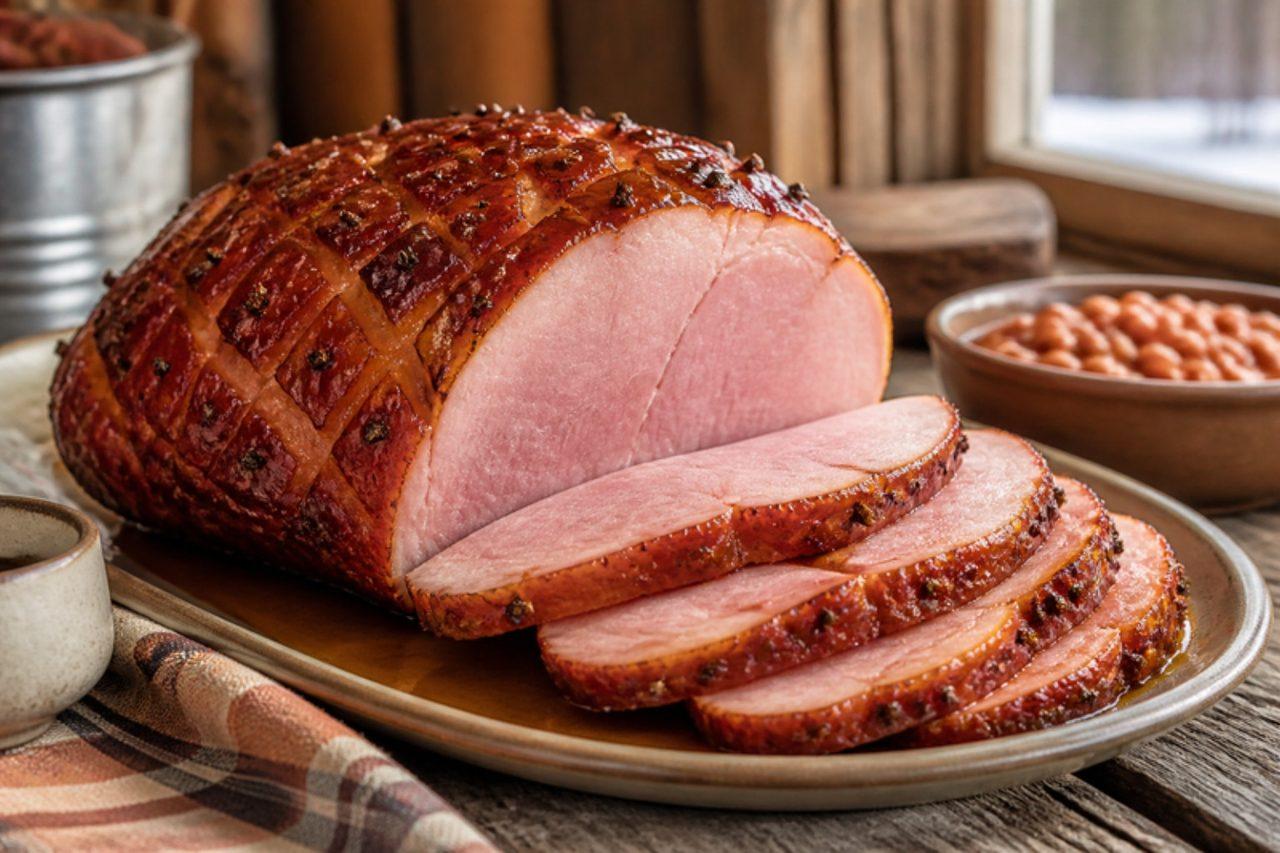
Maple-glazed ham

At the cabanes à sucre of Quebec in March and April, a smoked pork ham baked in maple syrup is the centrepiece of the long tables, carved alongside pea soup, beans and omelette. At home it is an Easter favourite in the Eastern Townships. The ham is simmered, then glazed and baked, basted again and again until it shines. Check the label: most smoked hams are already cooked and only need heating, while uncooked ones need full cooking. A common mistake is glazing too early, which burns the sugar before the ham is hot. Chef's tip: a splash of cider vinegar in the glaze balances the sweetness.

150 minCanadianMeatGluten free
by KrazyBadal 0 views

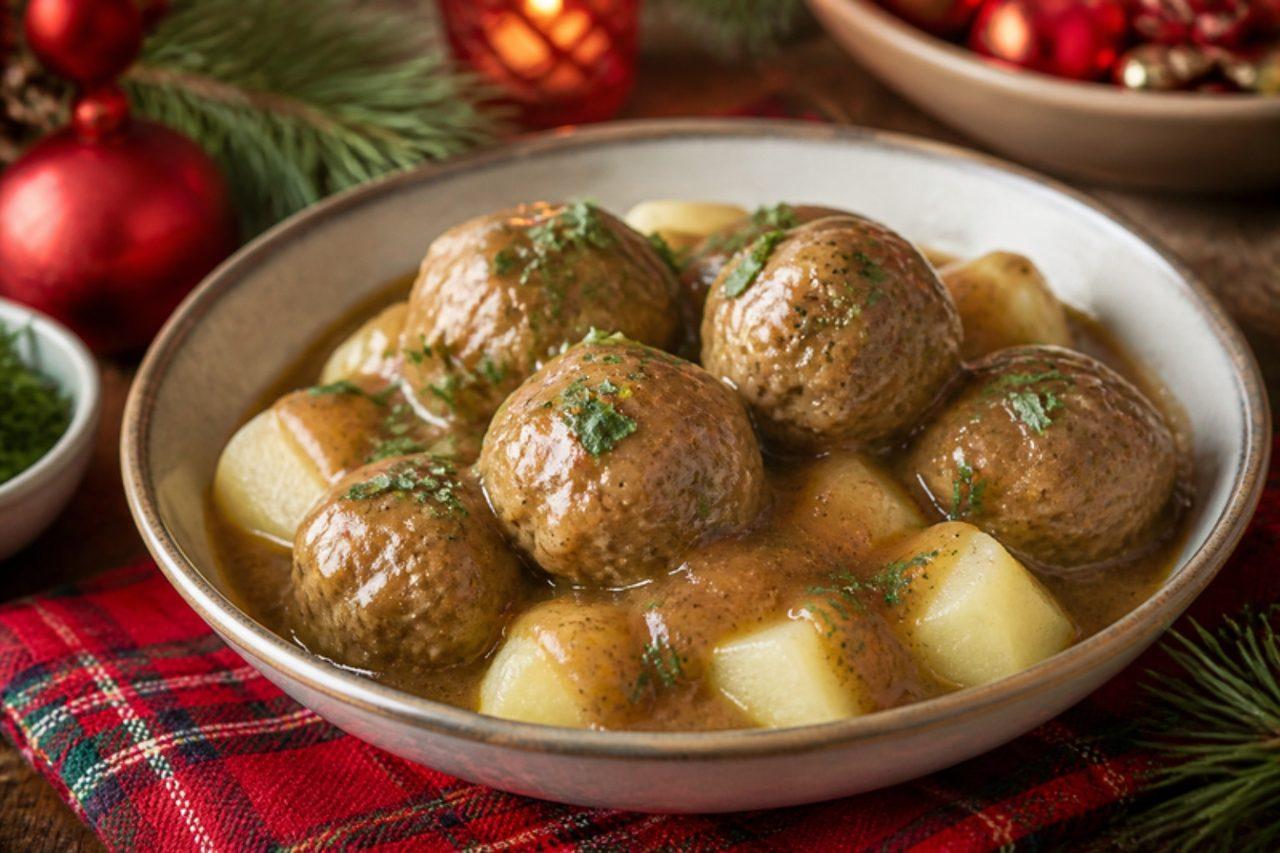
Meatball stew

Ragoût de boulettes is a Quebec Christmas Eve and New Year dish, simmered in big pots for the réveillon in the Saguenay and Beauce, often served with pork hocks and boiled potatoes. The meatballs are made from minced pork, gently spiced with cinnamon, clove and nutmeg, and simmered in a gravy thickened with flour toasted dry in a pan until brown. That toasted flour gives the stew its colour and nutty taste. A common mistake is toasting the flour too quickly so it burns; keep the heat moderate and stir constantly. Chef's tip: it tastes even better the next day, so make it ahead and reheat until piping hot.

150 minCanadianMeat
by KrazyBadal 0 views

Queen Elizabeth cake

Queen Elizabeth cake has been a favourite in Canadian homes and Quebec bakeries since the 1950s, especially around coronations and royal visits, and it still turns up at Montreal family birthdays and Sunday teas. A moist, tender date cake is baked, then covered in a bubbling coconut and brown-sugar topping and put under the grill until it caramelises. It is humble, rich and keeps well for days. A common mistake is walking away from the grill; the topping goes from golden to burnt in under a minute. Chef's tip: soak the dates in boiling water with the bicarbonate so they melt into the crumb.

by KrazyBadal 0 views

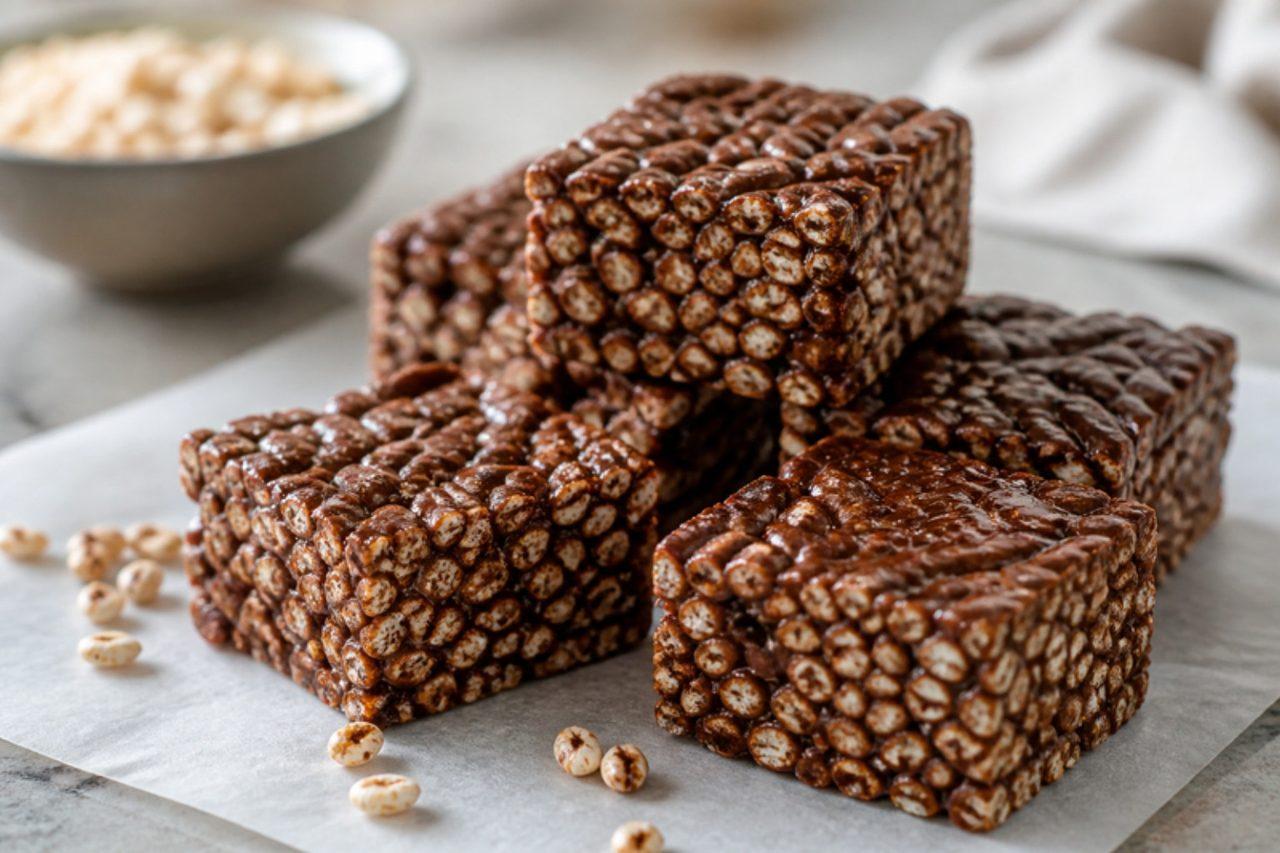
Puffed wheat squares

Puffed wheat squares are the Prairie kids' party treat, made in Alberta and Saskatchewan kitchens for hockey bake sales and lunchboxes since the 1950s. Puffed wheat is stirred into a quick toffee of butter, brown sugar, golden syrup and cocoa, pressed into a pan and cut once set. They are chewy rather than crunchy and very hard to stop eating. A common mistake is boiling the syrup too long, which sets them rock hard; one minute of boiling is enough. Chef's tip: butter your hands, not just the pan, to press the mix down evenly.

by KrazyBadal 0 views

Labrador tea

Labrador tea grows in the bogs and boreal forests right across northern Canada, and Cree, Dene and Inuit families have long dried its leathery, rust-backed leaves for a hot drink on the land and at home. It tastes resinous and piney, a bit like rosemary and eucalyptus, and is often sweetened with a little sugar. The leaves contain natural compounds that are harmful in large amounts, so brew it weak, drink a cup or two, and don't steep it for hours. It is not for pregnant or breastfeeding women. Only pick it if you know the plant well: the poisonous bog laurel grows alongside it; dried leaves from a trusted seller are safest. A common mistake is using a big handful of leaves; one tablespoon makes two cups. Chef's tip: steep below boiling and briefly; a long boil makes it bitter and stronger than you want.

by KrazyBadal 0 views

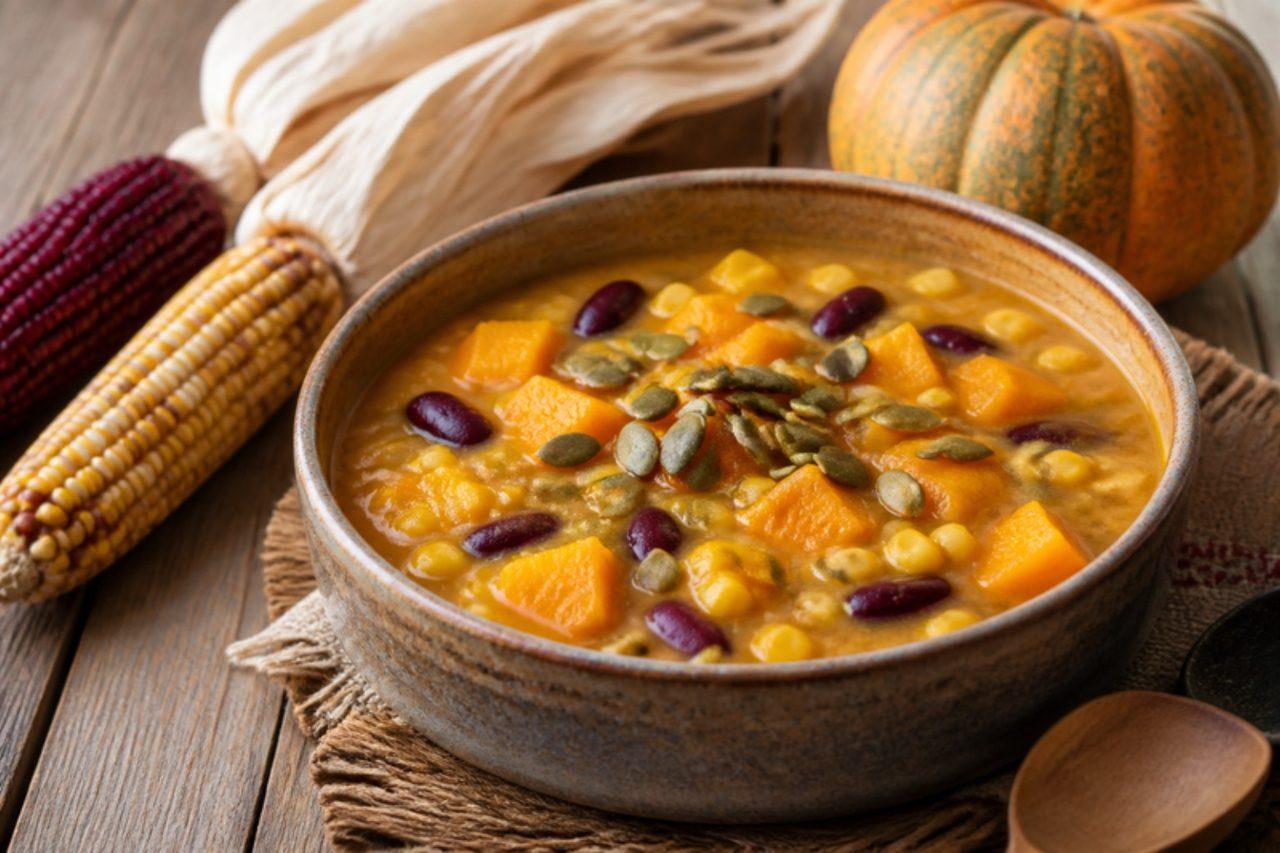
Three Sisters soup

The Three Sisters, corn, beans and squash planted together in one mound, are the heart of Haudenosaunee farming in what is now southern Ontario and Quebec, and of many other Eastern Woodlands nations. Simmered together, they make a filling, golden autumn soup served at harvest gatherings and at home through the winter. This version uses dried beans and fresh squash for a thick, naturally sweet pot. A common mistake is adding the corn too early, which makes it tough; it goes in for the last 10 minutes. Chef's tip: roast half the squash first for a deeper, nuttier flavour.

by KrazyBadal 0 views

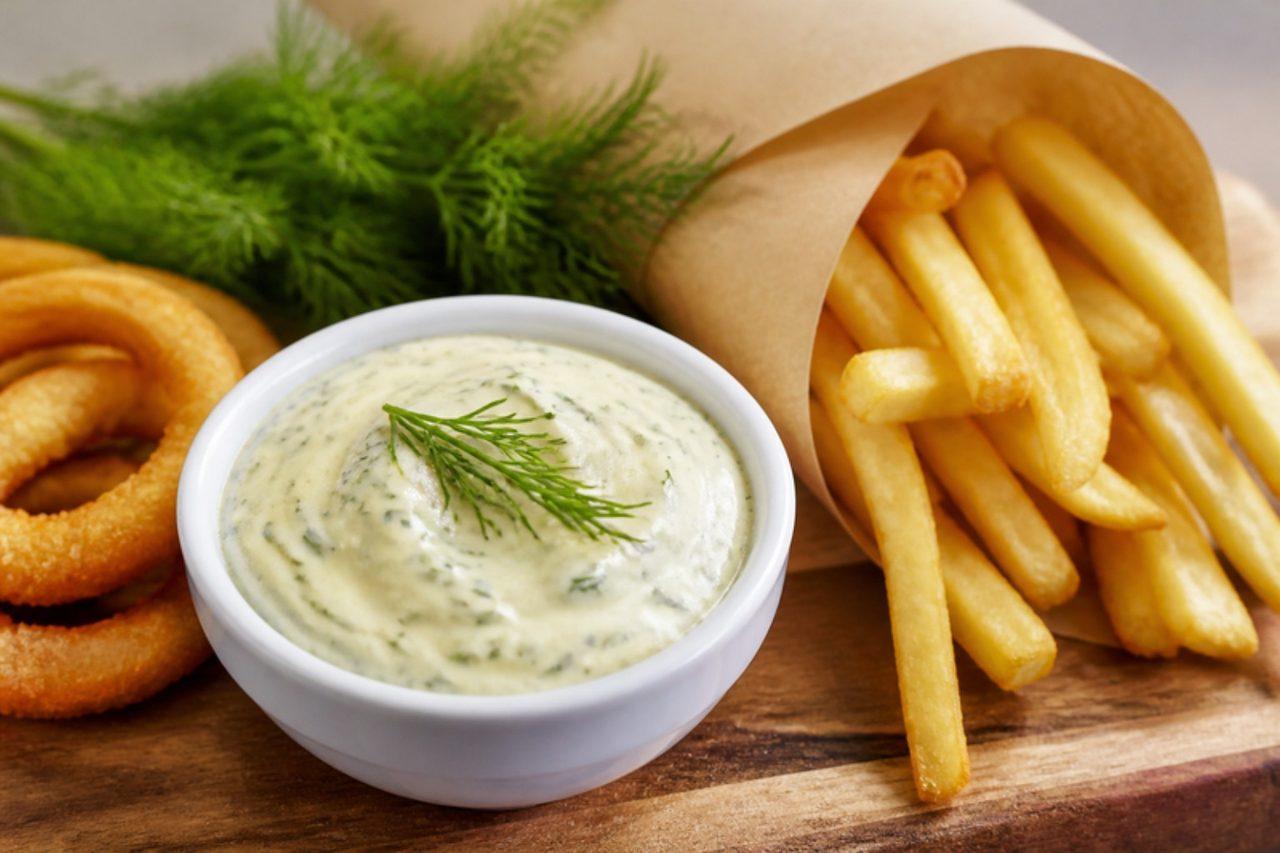
Honey dill sauce

Ask for honey dill anywhere outside Manitoba and you'll get a blank look, but in Winnipeg every pub, burger stand and school canteen serves it with chicken fingers, fries and onion rings. It is simply mayonnaise sweetened with liquid honey and full of fresh dill, and it takes five minutes. It is also good on veggie burgers and baked potatoes. A common mistake is using thick set honey, which won't blend; warm it first. Chef's tip: make it an hour ahead so the dill flavours the whole sauce.

by KrazyBadal 0 views

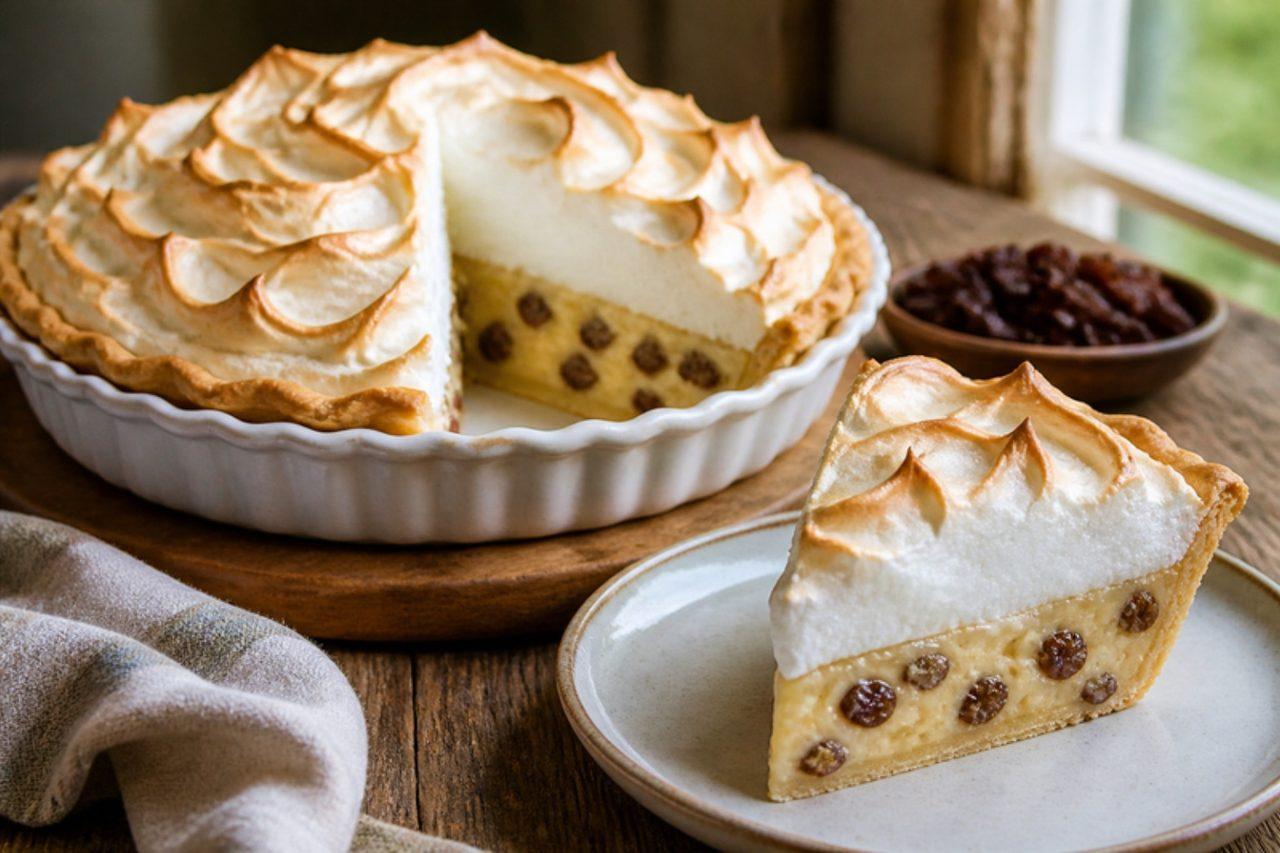
Sour cream raisin pie

Sour cream raisin pie is a farm-kitchen dessert from the Old Order Mennonite communities of Waterloo County, Ontario, found at the St Jacobs market and at church suppers around Elmira. Plump raisins sit in a tangy sour-cream custard, warm with cinnamon and clove, under a tall cloud of meringue. It is made ahead and served cool, cut in generous wedges. A common mistake is spreading the meringue on a cold filling, which makes it weep; spread it while the filling is hot. Chef's tip: simmer the raisins first so they are soft and juicy instead of chewy in the custard.

by KrazyBadal 0 views

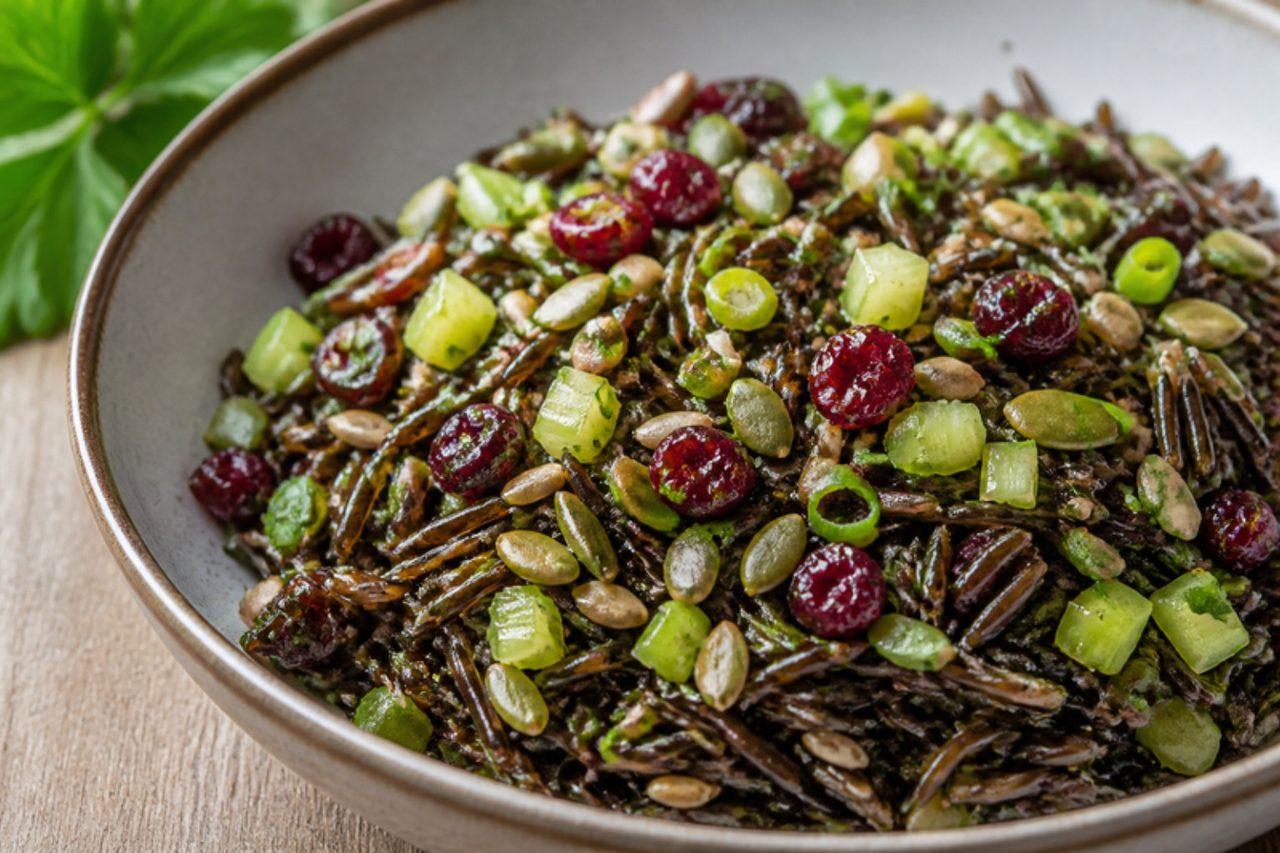
Wild rice salad

Manoomin, true wild rice, is hand-harvested by canoe by Anishinaabe families on the shallow lakes of northern Ontario and Manitoba in late summer, the grains knocked into the boat with cedar sticks. Its nutty, smoky taste is lovely cold in a salad with dried cranberries, toasted sunflower and pumpkin seeds and a light maple vinaigrette, the kind of dish brought to a feast or a summer potluck. Hand-harvested lake rice cooks faster than the black cultivated paddy rice, so check it early. A common mistake is cooking it until it splits wide open and turns mushy. Chef's tip: dress the rice while it is still warm so it drinks in the vinaigrette.

by KrazyBadal 0 views

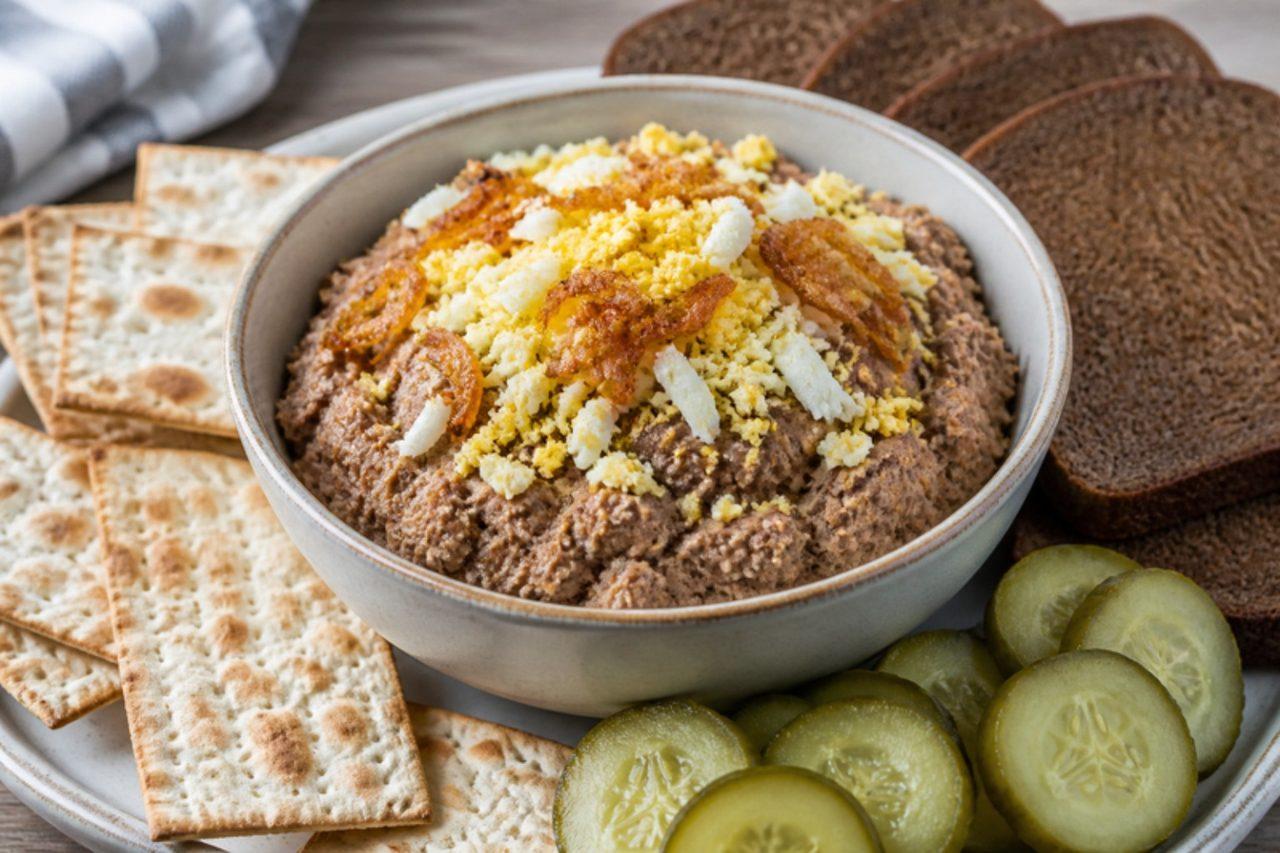
Chopped liver

Chopped liver is the first course of many Friday-night dinners in Ashkenazi homes from Haifa to Petah Tikva, spread on challah before the soup, and Tel Aviv delis still sell it by weight on Thursdays. Chicken livers are cooked through in schmaltz with a mountain of slowly browned onion, then chopped with hard-boiled egg into a coarse, rich spread that is sweet from the onion and deeply savoury. It is served cool, with challah, crackers or rye bread and a pickled cucumber. People often undercook the livers to keep them soft, but for safety they must have no pink left inside; the onion and schmaltz keep the texture tender anyway. Chef's tip: pulse in short bursts or chop by hand; a smooth purée loses the rustic texture that makes this different from a French pâté.

by KrazyBadal 0 views

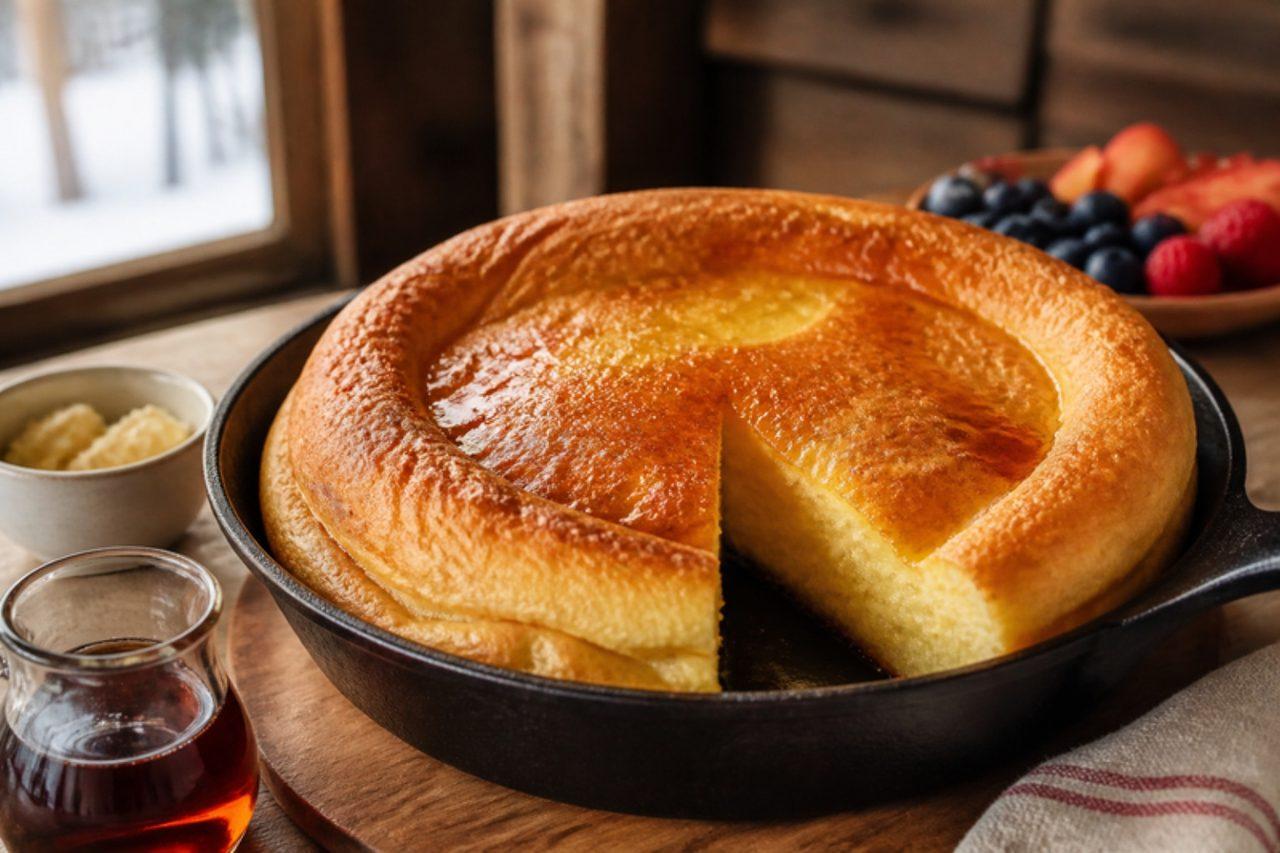
Puffed maple omelette

A tall, golden puffed omelette arrives on every table at the cabanes à sucre of the Laurentians and the Eastern Townships, sliced into wedges and drowned in fresh maple syrup alongside beans and ham. The eggs are separated, the whites whipped and folded back in, then the omelette starts on the hob and finishes in the oven so it rises like a soufflé. It must go to the table at once, before it sinks. A common mistake is beating the whites until stiff and dry, which makes the omelette grainy. Chef's tip: fold the whites in with a large metal spoon in three goes, keeping as much air as you can.

by KrazyBadal 0 views

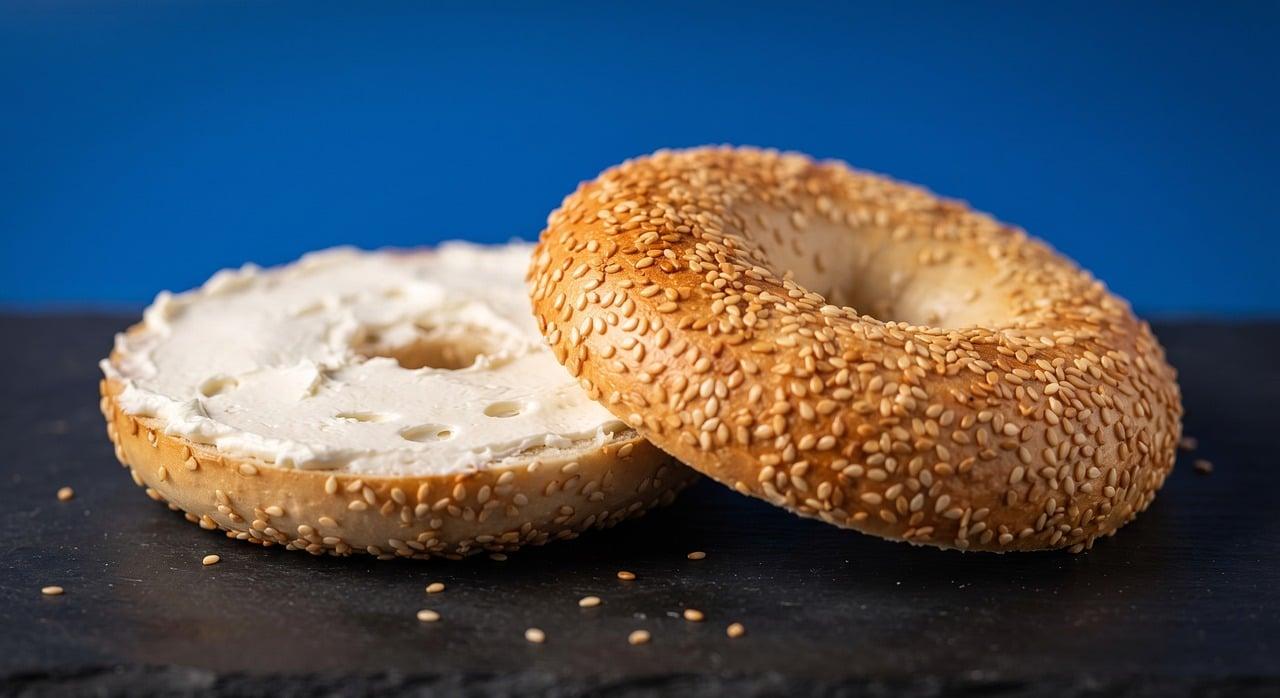
Montreal-style bagels

On Fairmount and St-Viateur streets in Montreal's Mile End the bagel bakeries run all night, rolling dough by hand, boiling it in honey water and baking it on long planks in wood-fired ovens. The result is smaller, sweeter and denser than a New York bagel, with a big hole and a crust thickly coated in sesame. They are eaten warm from the paper bag, plain or with cream cheese. Egg goes into the dough and there is no salt-heavy chew, which is what gives that light sweetness. Chef's tip: bake on the hottest oven setting and on a preheated stone or heavy tray, the closest a home oven gets to the wood fire.

by KrazyBadal 0 views

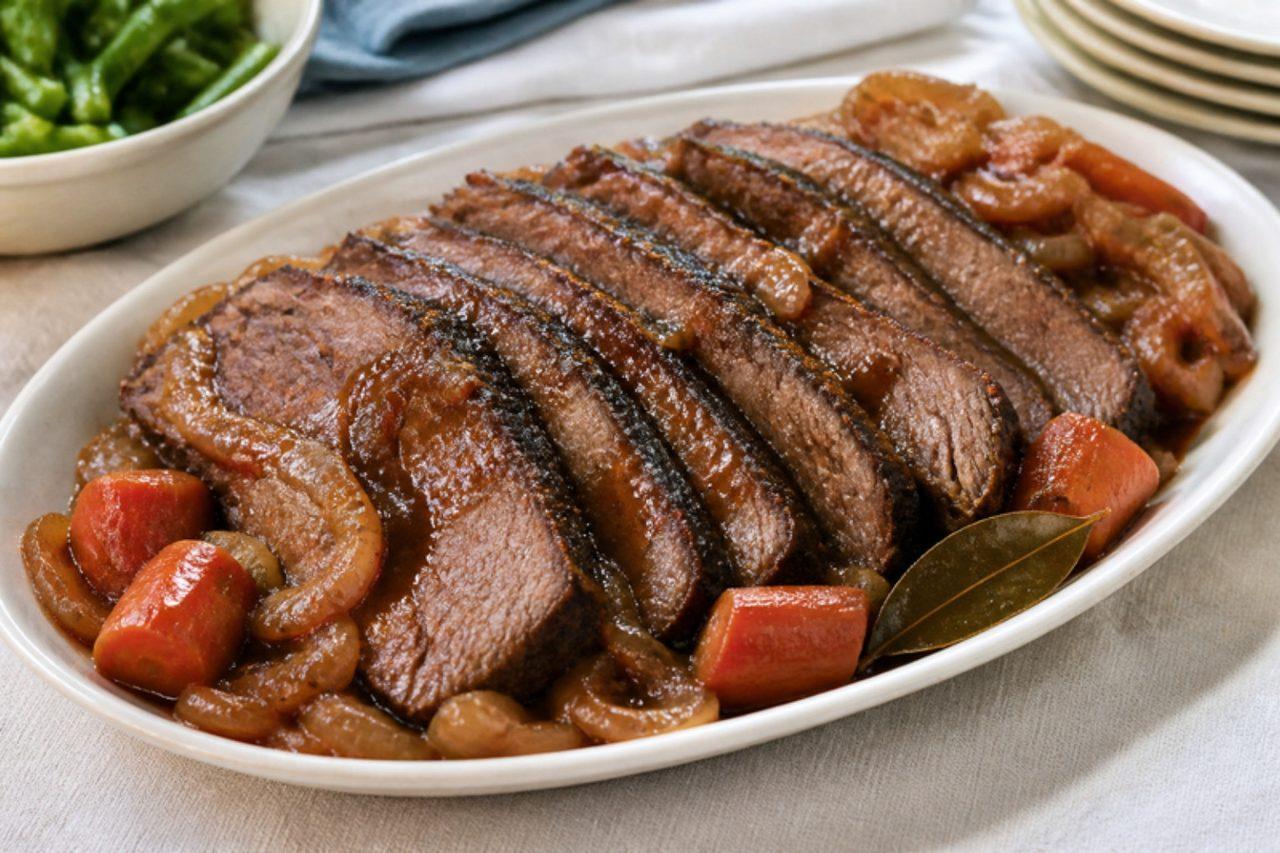
Braised brisket

A slowly braised brisket is the centrepiece of the Rosh Hashanah and Passover table for many Ashkenazi families in Israel, from Ra'anana to Jerusalem's German Colony, often made two days ahead because it slices better and tastes deeper once it has rested in its gravy. The beef sits on a bed of sliced onions with carrots, garlic, tomato paste and a little sugar and vinegar, covered tightly, and cooks for hours until fork-tender, while the onions melt into a rich brown sauce. Serve with potato kugel, tzimmes or mashed potatoes. Slicing it hot and along the grain is the usual mistake: chill it, then cut across the grain into thin slices. Chef's tip: return the slices to the gravy and reheat gently so every piece soaks up the sauce.

260 minIsraeliMeatGluten free
by KrazyBadal 0 views

Tahini cookies

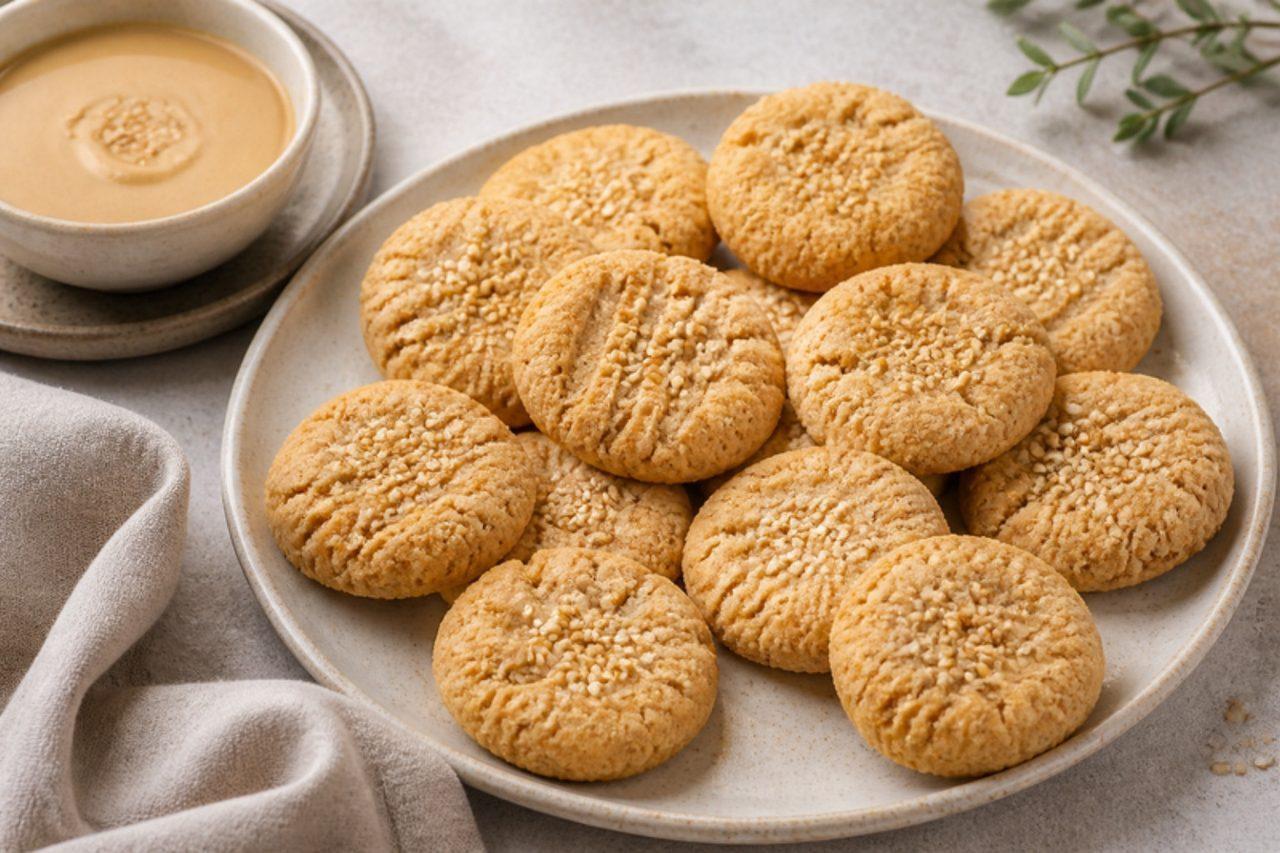
Every Israeli bakery and grandmother's biscuit tin has ugiyot tahini, little domed cookies that crumble and melt on the tongue with a deep, toasty sesame flavour. They are baked for Shabbat coffee, for guests dropping by in Haifa or Jerusalem, and as an easy dairy-free sweet to follow a meat meal. This version uses oil rather than butter, so it is vegan. The mistake is baking until they turn golden all over; they firm up as they cool and should leave the oven pale with just-coloured bases. Chef's tip: stir the tahini jar thoroughly first, since the oil separates and a dry spoonful from the bottom makes sandy, dry cookies.

by KrazyBadal 0 views

Showing 36 of 7,762 recipes

Show more recipes

Page 354 of 863