Skip to content

Lunchbox ideas

Make-ahead food that packs well for school and office lunchboxes. (236 recipes)

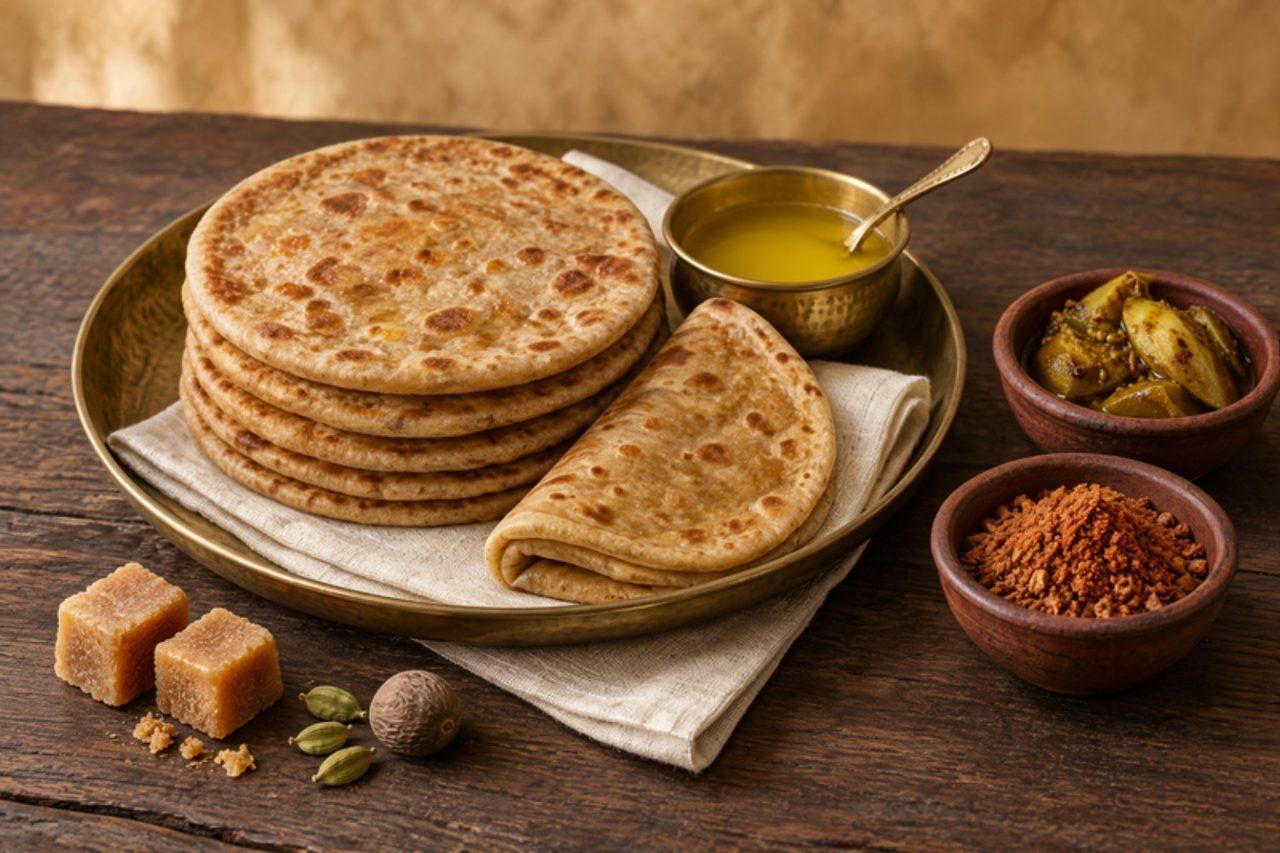
DashmiMilk and jaggery flatbread

Dashmi is the bread Maharashtrian mothers make for pilgrimages, school trips and the first days of a long journey: wholewheat dough kneaded with warm milk instead of water and sweetened with jaggery, cooked on a tawa until soft and spotted. Milk and ghee keep it tender for two or three days without a fridge in cool weather, and children eat it plain or with pickle. The common mistake is rolling it too thin and cooking it on a fierce tawa, which makes it crisp like a khakhra; it should stay soft and pliable. Chef's tip: stack the dashmis in a cloth as they come off the tawa, so the trapped steam softens them further.

by KrazyBadal 0 views

VishetiSugar-glazed fried dough

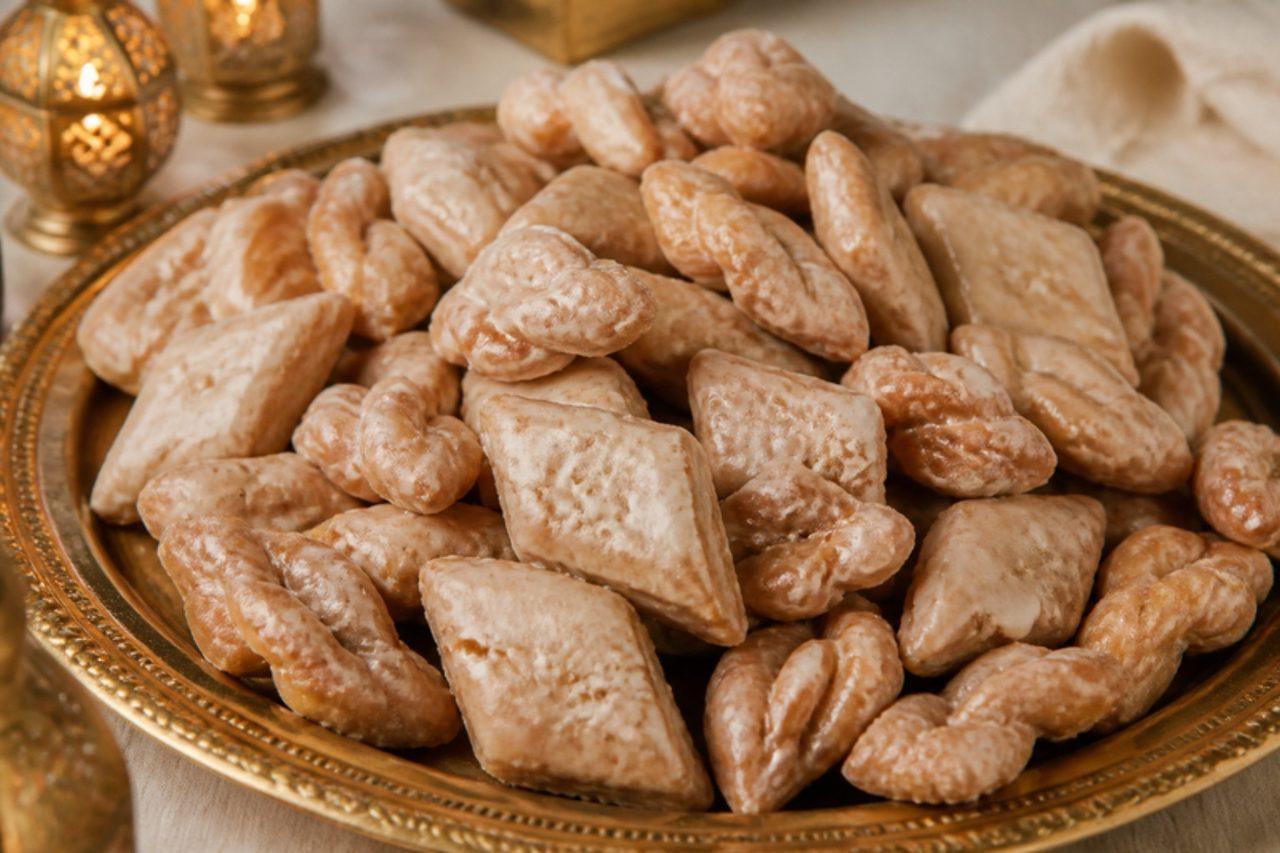
Tins of visheti appear in every Swahili home in Zanzibar and Mombasa in the days before Eid, ready for the visitors who drop by after prayers. They are small diamond or finger-shaped pieces of cardamom-and-coconut dough, fried until crisp and then tossed in boiling syrup until it dries to a crackly white shell; inside they stay crunchy with a faint softness at the heart. Kids love them, and they keep for a week in an airtight tin, so they make a good gift. The tricky bit is the glaze: if you stop stirring too early it stays sticky, and too late it turns to lumps of sugar. This version uses butter and milk powder, so it is vegetarian but not vegan. Chef's tip: keep stirring the visheti in the syrup off the heat until the pan suddenly looks cloudy and dry; that is the moment the coating sets.

by KrazyBadal 0 views

Dousha bao (red bean buns)

All over China, from Beijing breakfast stalls to Shanghai school bags, dousha bao are the sweet buns people grab in the morning and tuck into a lunch box for later: fluffy white yeasted dough wrapped around smooth red bean paste and steamed until springy. They freeze beautifully, so families make a big batch on Sunday. The mistake is opening the steamer lid as soon as the timer goes; the sudden cold makes the buns wrinkle and collapse. Turn off the heat and wait five minutes before lifting the lid. Chef's tip: chill the bean paste and roll it into balls before wrapping; a firm filling is much easier to seal neatly.

by KrazyBadal 0 views

Chocolate cracklesChocolate puffed rice cakes

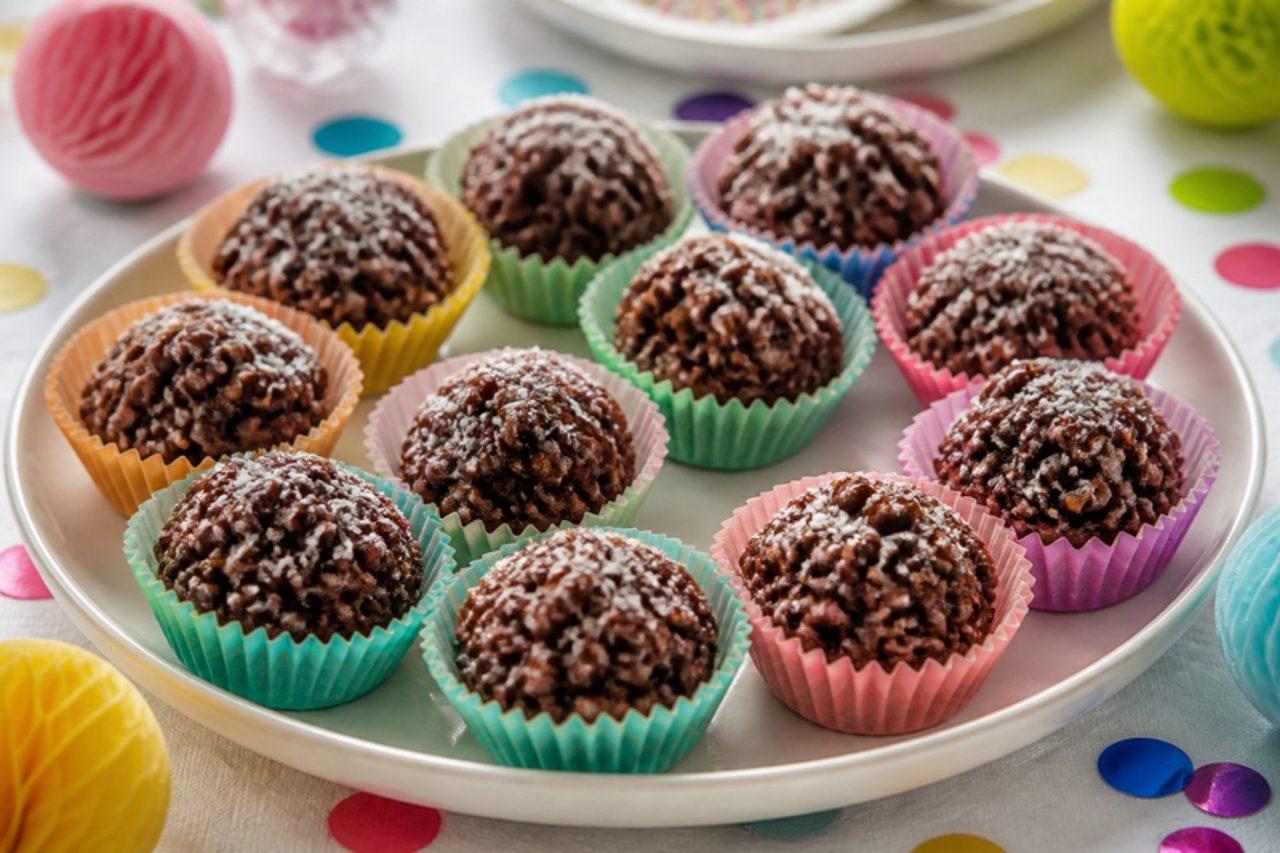
No Australian child's birthday party is complete without chocolate crackles, served in paper patty cases alongside fairy bread at backyard parties from Adelaide to Cairns. Puffed rice cereal is bound with melted solid coconut fat, icing sugar, cocoa and desiccated coconut, then set in the fridge. Kids can make them almost entirely on their own. A common mistake is using hot fat, which makes the mixture greasy; let it cool a few minutes. Chef's tip: use solid white hydrogenated coconut fat sold in blocks, not jarred coconut oil, which won't set firm at room temperature.

by KrazyBadal 0 views

White ChristmasPuffed rice and coconut slice

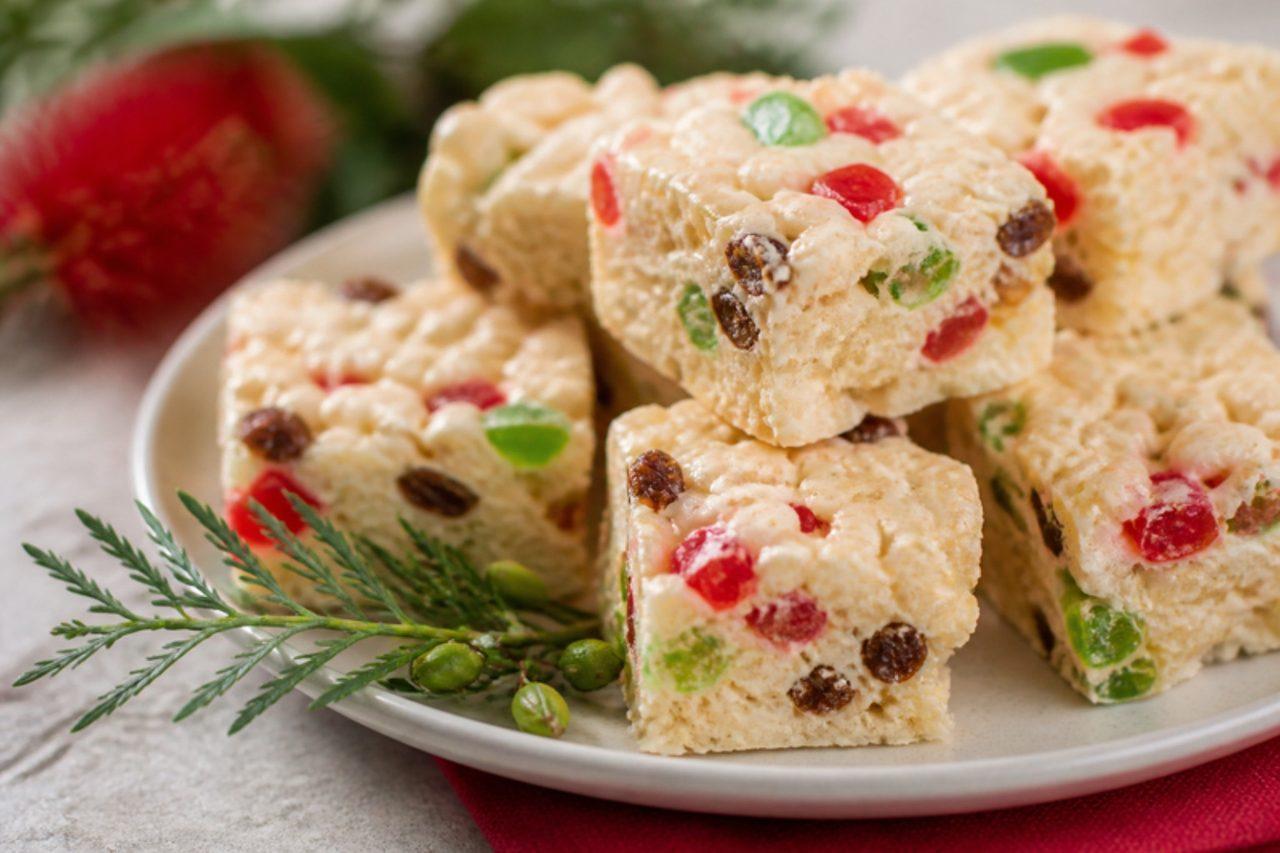
White Christmas is an Australian Christmas tradition from the days when a hot December made baking a misery, a no-bake slice of puffed rice, dried fruit, glacé cherries and coconut set in white chocolate or coconut fat. It is cut into squares and kept in the fridge for drop-in visitors through the holidays. A common mistake is overheating the white chocolate, which seizes; melt it gently. Chef's tip: red and green glacé cherries make it look festive.

by KrazyBadal 0 views

Coconut icePink and white coconut fudge

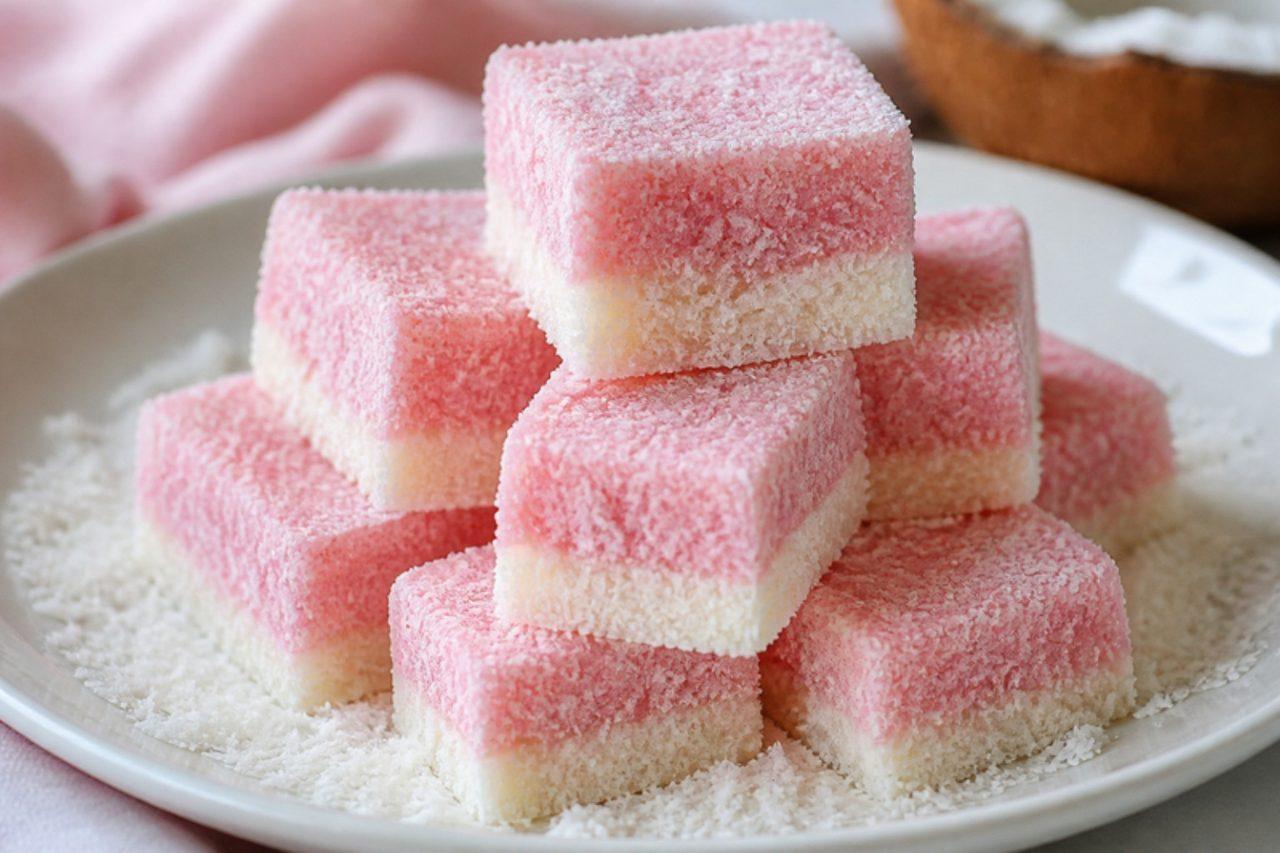
Coconut ice is the pink and white sweet that fills Australian school fete stalls, Christmas hampers and CWA cake tables, a no-cook fudge of desiccated coconut, condensed milk and icing sugar. It is soft, chewy and very sweet, so cut small squares. A common mistake is a mixture that's too wet to hold; add more coconut until it's firm enough to press. Chef's tip: press the white layer first, then the pink, and chill before cutting for sharp stripes.

by KrazyBadal 0 views

Durofrío de mangoFrozen mango milk pops

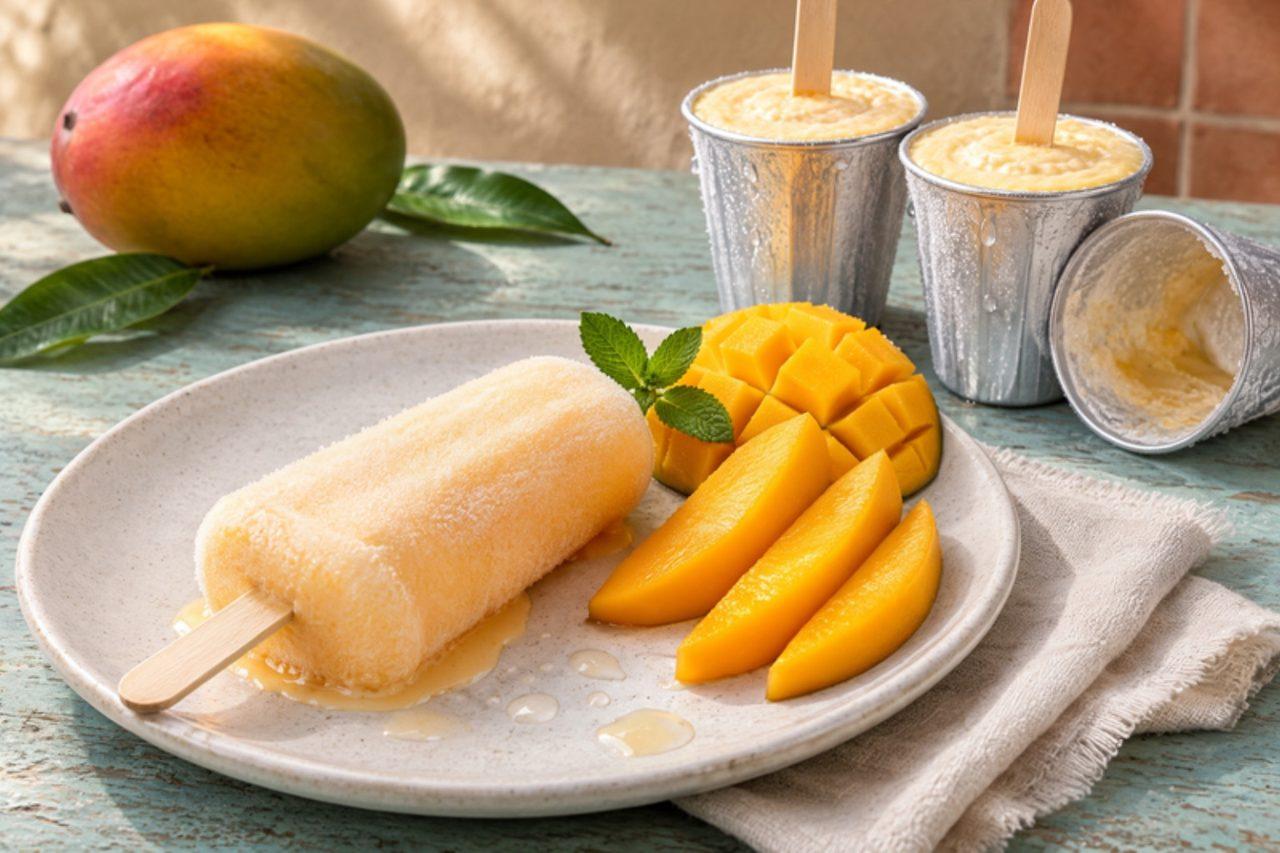
In the hot streets of Centro Habana, durofríos are sold straight from the front windows of family homes: a few pesos buys a frozen cup of fruit juice or fruit and milk, popped out and eaten on a stick or straight from its paper cup. Children queue for them after school in the long summer afternoons, when the sea breeze has dropped. This version blends ripe mango with milk and lime into a creamy, fruity ice that is firm, as the name says ("hard-cold"), rather than soft like ice cream. Swap the milk for water or guava juice for a dairy-free fruit ice. It contains milk. Chef's tip: make the mix taste a little too sweet before freezing; cold dulls sweetness.

by KrazyBadal 0 views

Lolly cakeNo-bake malt biscuit log

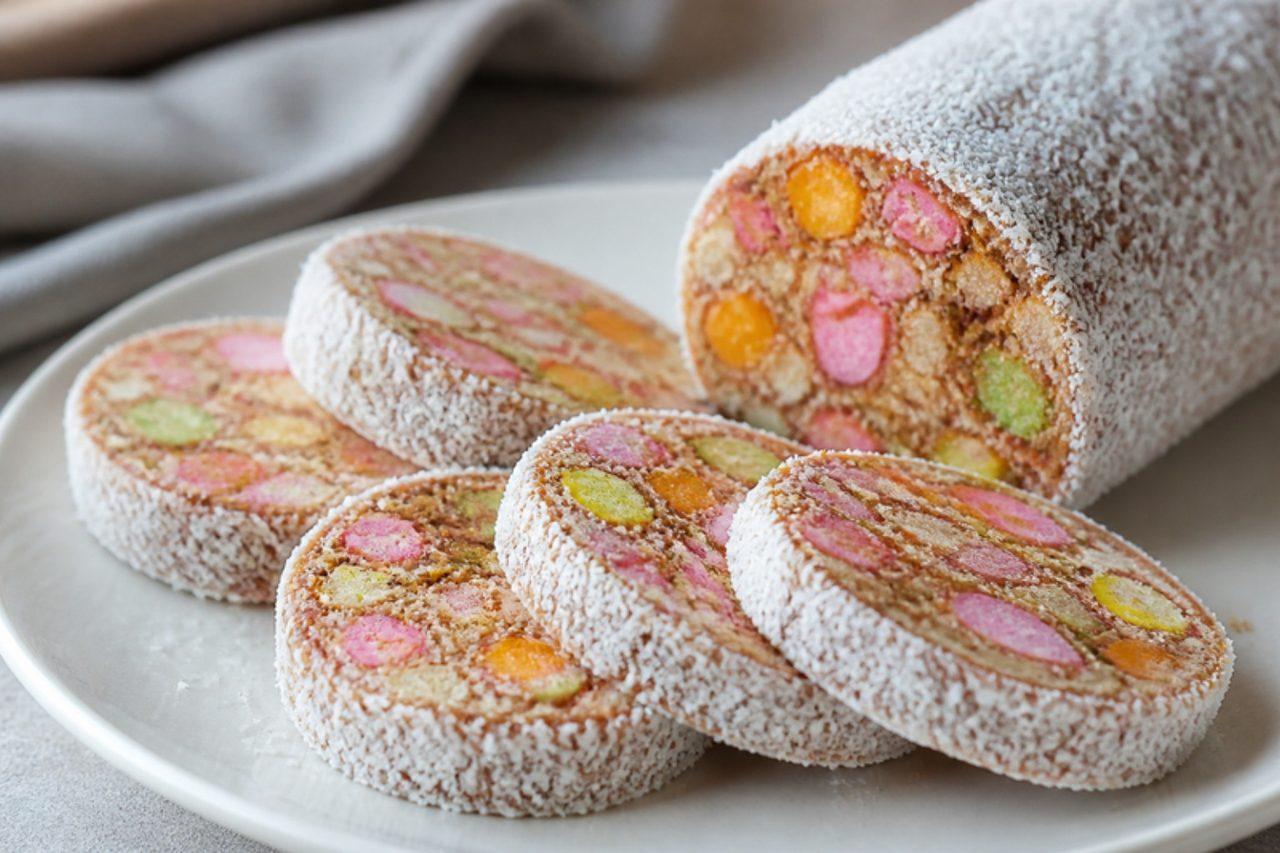
Lolly cake is the no-bake treat every New Zealand child helps make for birthday parties and bake sales, a log of crushed malt biscuits bound with butter and condensed milk, studded with chewy, brightly coloured fruit lollies (fruit puffs) and rolled in coconut. Sliced into rounds, it shows off the colours. A common mistake is crushing the biscuits to dust; leave some small chunks for texture. Many fruit lollies contain gelatine, so choose gelatine-free ones to keep it vegetarian. Chef's tip: wrap the log tightly in cling film and twist the ends so it chills into a neat cylinder.

by KrazyBadal 0 views

Keri no murabboSweet raw mango preserve

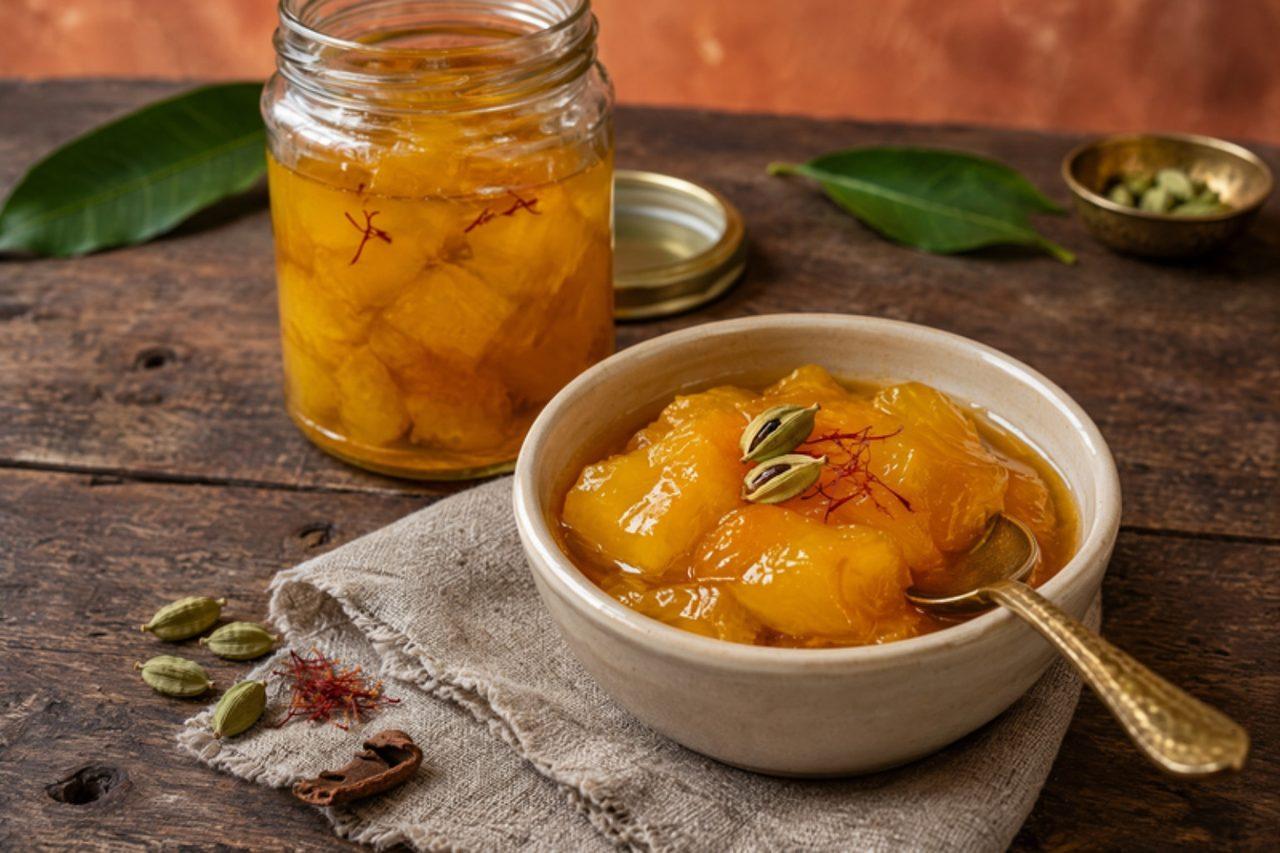
In Gujarat, when the summer stock of pickles goes up in May, murabbo is the gentle, sweet one that children are allowed to dip into freely. Pieces of firm raw mango (rajapuri or totapuri) are cooked slowly in sugar syrup until they turn translucent and glossy, then scented with saffron and cardamom. Unlike chhundo, which is grated and spiked with chilli, murabbo keeps the mango in distinct, tender-firm pieces in a clear, golden syrup; it tastes like candied fruit with a sour edge. Spread it on a warm thepla or rotli, serve it with khakhra at breakfast, or spoon a little beside a Gujarati thali. The common mistake is boiling the mango hard in the syrup, which breaks the pieces and clouds it; keep it at a gentle simmer. It is ready when the pieces look see-through at the edges and the syrup reaches one-string consistency (a cooled drop stretches into a single thread between finger and thumb). With this much sugar it keeps 6 months in a cool cupboard in a sterilised, dry jar, or longer in the fridge. Chef's tip: soak the cut mango in lightly salted water for 10 minutes first; it firms the pieces and stops browning.

by KrazyBadal 0 views

Guyanese tennis rollsSweet lemony buns

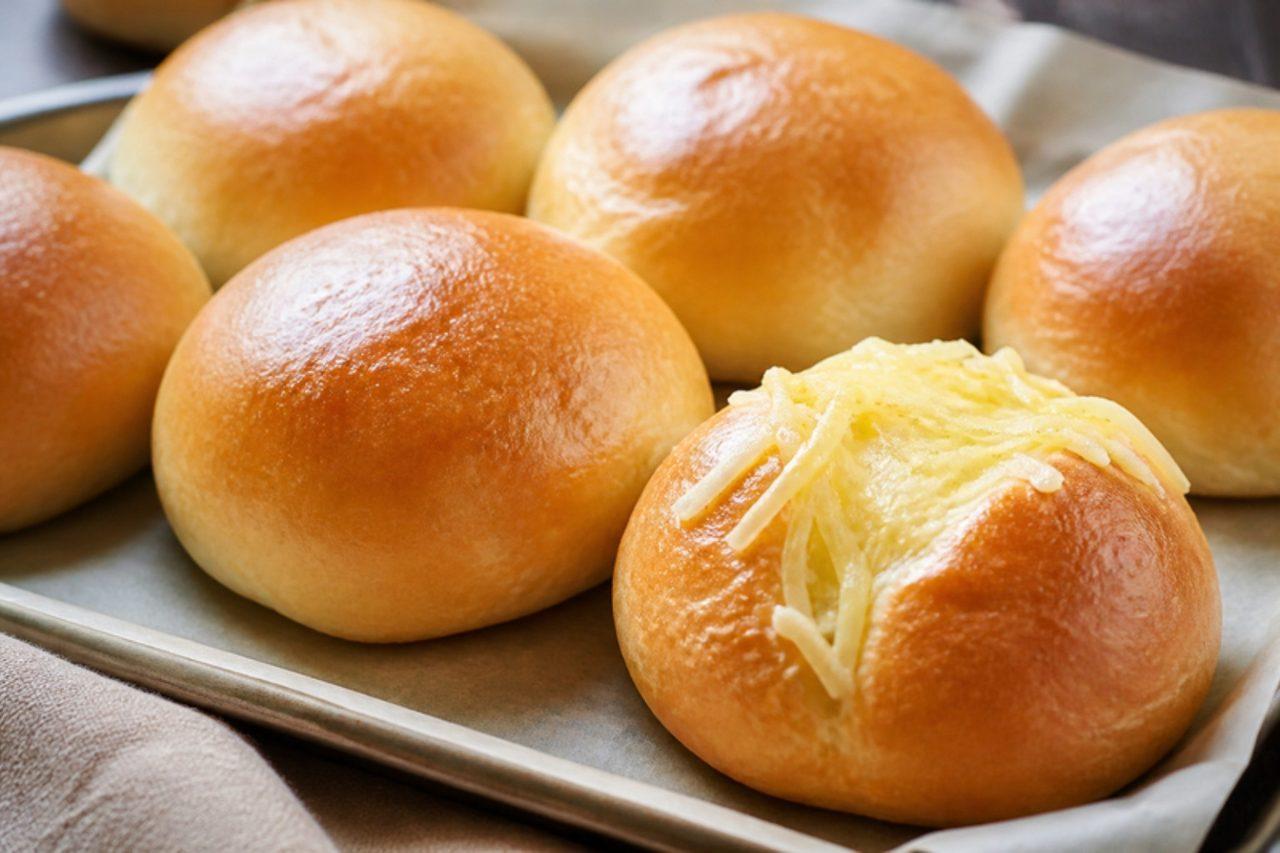
Nobody quite agrees why these buns are named after tennis, but every Guyanese person knows the pairing: a split tennis roll with a thick slice of cheddar, eaten mid-morning or packed for a long bus ride up the East Coast Demerara. They are round, pale golden and very soft, with a gentle sweetness and a hint of lemon zest. Overbaking is the usual problem; they should come out light gold, not brown, so the crust stays tender. Chef's tip: bake the rolls close together on the tray so they rise into each other and keep soft sides, then pull them apart once cool.

by KrazyBadal 0 views

Kesar pendaSaffron milk pendas

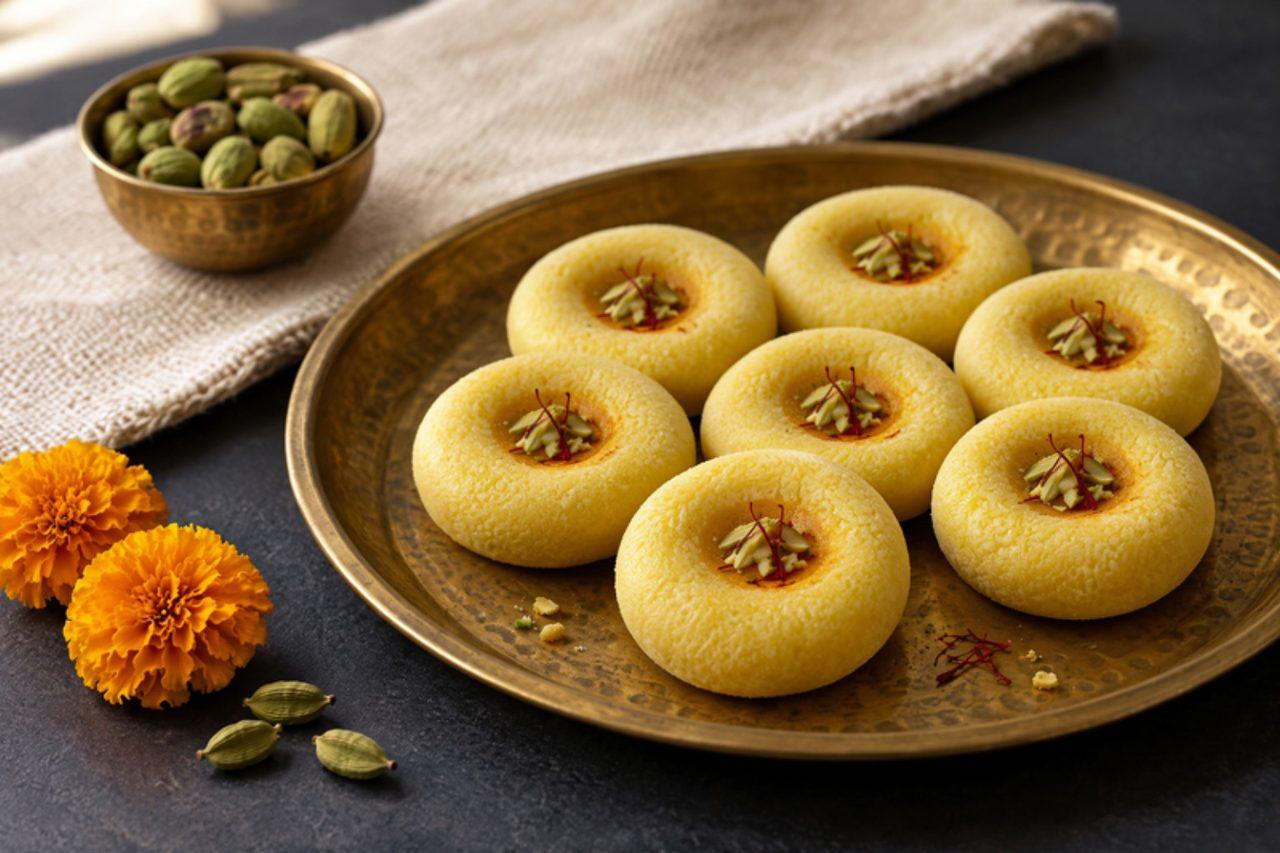
In Ahmedabad, any good news, from exam results to a new home or a newborn, means a box of kesar penda passed around the office and the street. These are soft, creamy pendas of fresh mawa cooked briefly with sugar and plenty of saffron, so they stay pale gold and fudgy, quite unlike the browned pedas of Mathura or Dharwad. The common mistake is overcooking the mawa once the sugar goes in, which turns the pendas dry and cracked at the edges. Chef's tip: stop cooking as soon as a small piece rolls into a smooth ball between your palms; they firm up as they cool.

by KrazyBadal 0 views

Mava ni boiFish-shaped milk sweets

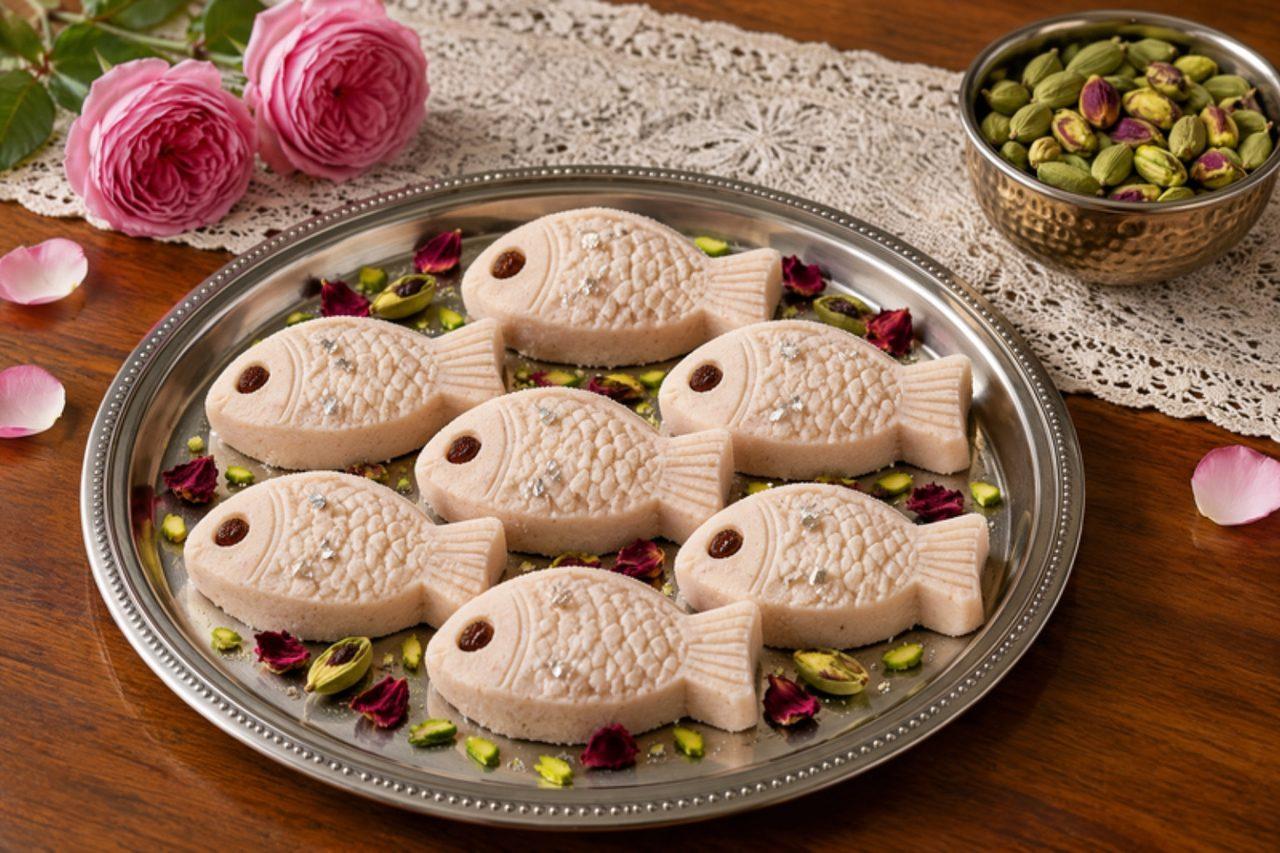
At Parsi weddings and navjotes in Surat, Navsari and Mumbai, the boi, a fish, is a symbol of good luck, and a tray of small pink mawa fish travels with the sagan gifts. There is no fish in them at all: they are a simple sweet of fresh mawa cooked with sugar, tinted the palest pink and pressed into carved fish moulds, with a raisin or a silver ball for the eye. The common mistake is cooking the mawa too long, so it turns crumbly and cracks in the mould instead of taking a clean imprint. Chef's tip: lightly grease the mould with ghee and dust it with a pinch of icing sugar so each fish slips out with sharp scales and fins.

by KrazyBadal 0 views

AppelflapApple puff pastry

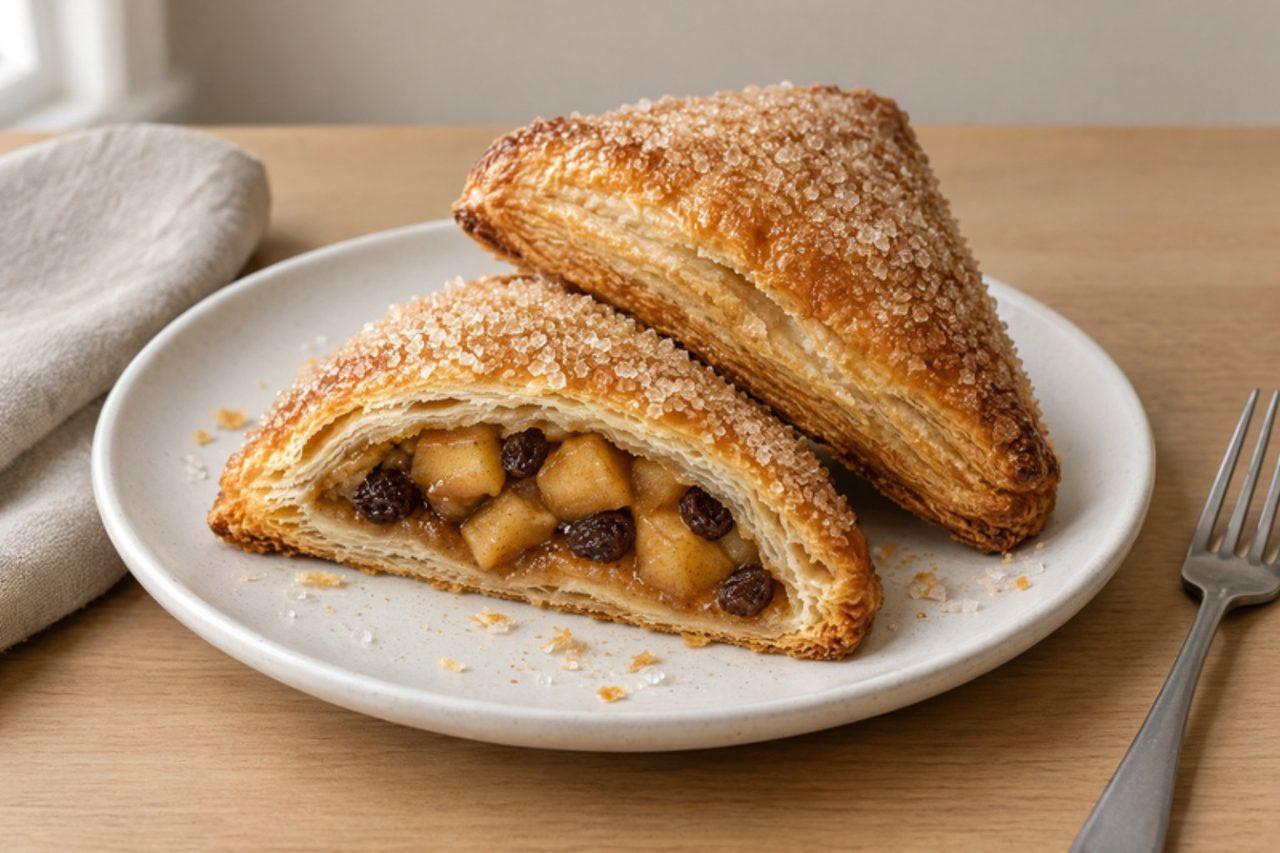
An appelflap is the snack Amsterdammers pick up at the bakery counter or the Albert Cuyp market on a grey afternoon: a triangle of flaky puff pastry, packed with soft cinnamon apple and plump raisins, its top crackling with sugar. You eat it from a paper bag on a bench by the canal, or with a coffee at about four o'clock, and the filling is always hotter than you expect. Chef's tip: cook the apple filling first and let it cool completely; warm filling melts the butter in the pastry and you lose the layers.

by KrazyBadal 0 views

ShankarpaliFried sweet diamond biscuits

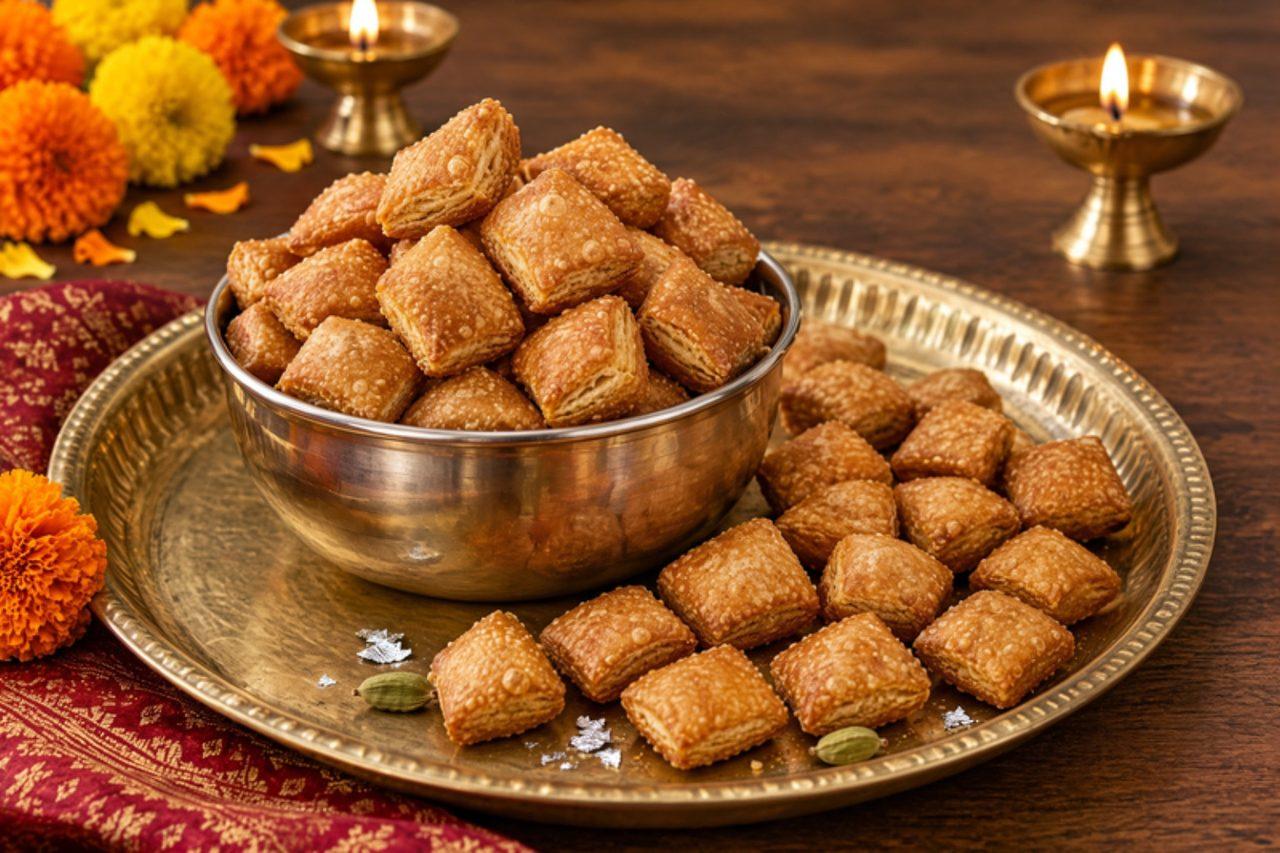
Every Maharashtrian Diwali faral box has a pile of shankarpali: small diamond-shaped biscuits, flaky and crisp, sweet with sugar dissolved in warm milk and ghee. Families make large batches in the week before Diwali alongside chakli and karanji, and the tin is raided until Tulsi Vivah. The common mistake is frying too hot, which browns them outside before the layers crisp, so they soften within a day; fry slowly until pale golden. Chef's tip: dissolve the sugar fully in the warm milk and ghee before adding flour, or sugar crystals burn in the oil as dark specks.

by KrazyBadal 0 views

KabokPuffed rice and sesame balls

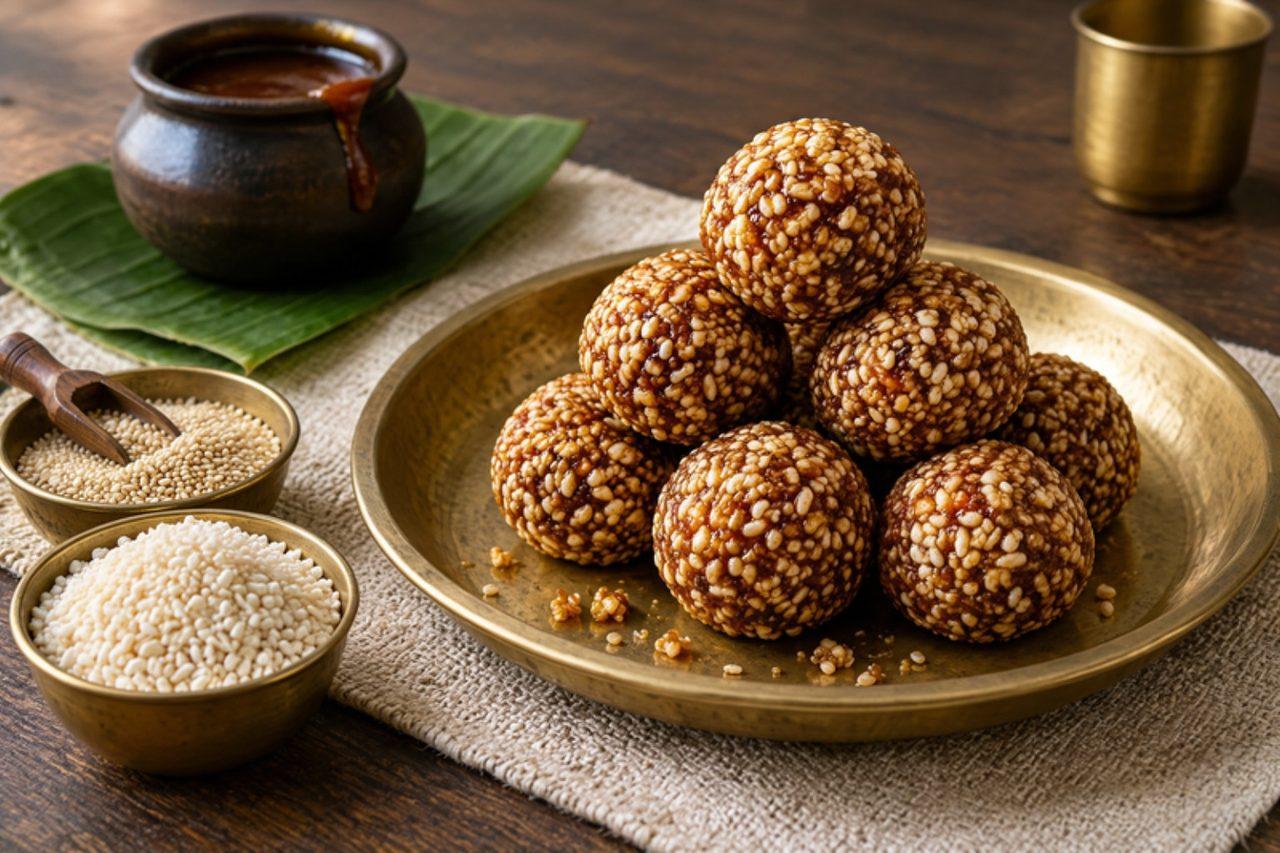
Kabok are crunchy balls of puffed rice and sesame bound with hot jaggery syrup, made in Meitei homes for Yaoshang, Cheiraoba and temple offerings. Black puffed rice is used in some villages, giving dark, toasty kabok. The key is the syrup: cook it to the hard-ball stage, when a drop in cold water sets into a firm ball, or the balls will fall apart. The common mistake is shaping with dry hands; wet them so the hot mixture doesn't stick or burn. Chef's tip: warm the puffed rice in the oven for a few minutes first so it stays crisp.

by KrazyBadal 0 views

Soft idli for babies

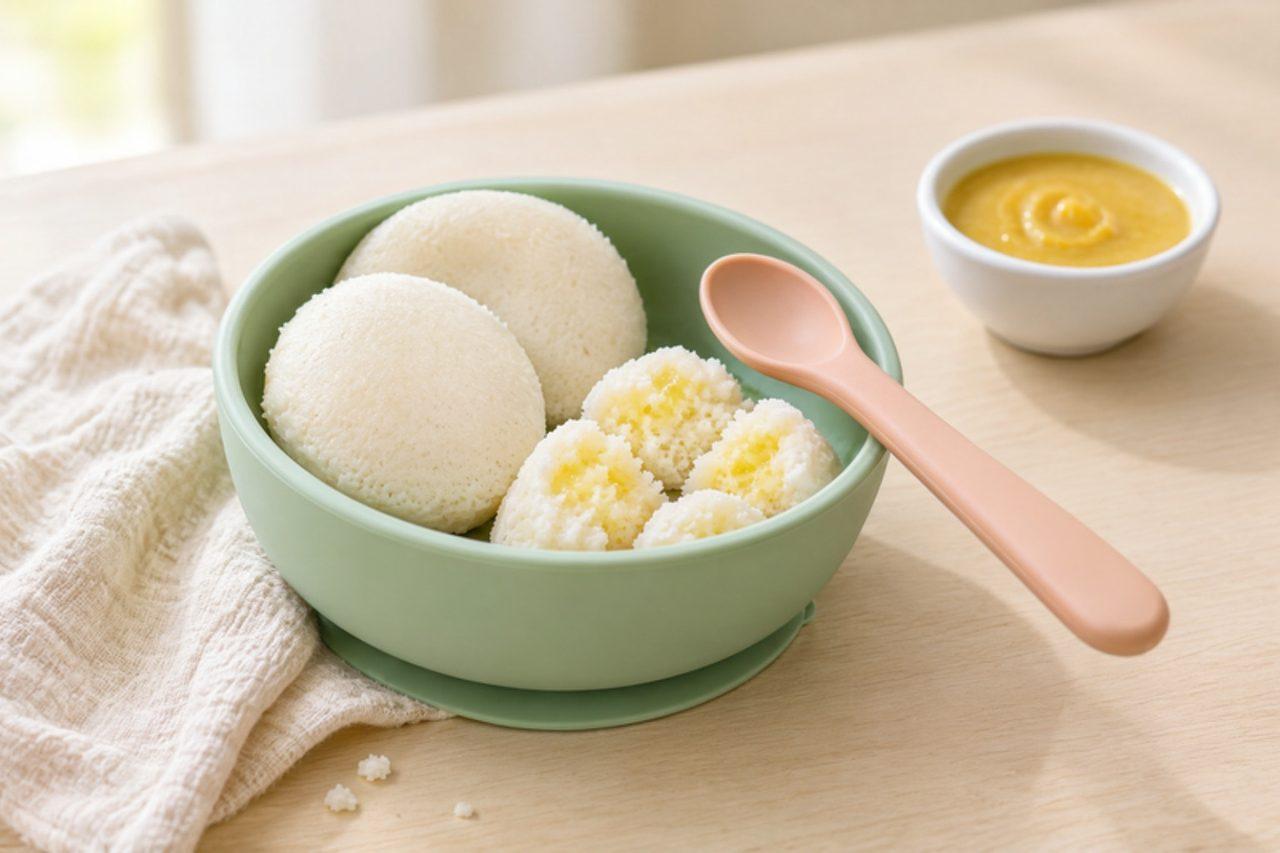
Idli is breakfast across Tamil Nadu, from Chennai's Mylapore tiffin rooms to village kitchens, and a fluffy, plain idli is one of the first finger foods many South Indian babies hold. Since family batter is salted, parents make a separate salt-free batch for babies under one, or steam a few from it before the salt goes in. The cakes are pillowy, faintly sour and melt under the gums, torn into pieces or mashed with ghee or thin dal. They contain no gluten, egg, nuts, soya or sesame; they contain milk only if served with ghee. Chef's tip: grind the urad dal with ice-cold water until it is light and foamy; air in the batter, not salt, is what makes idli soft.

by KrazyBadal 0 views

Bolo de pote (cake in a jar)

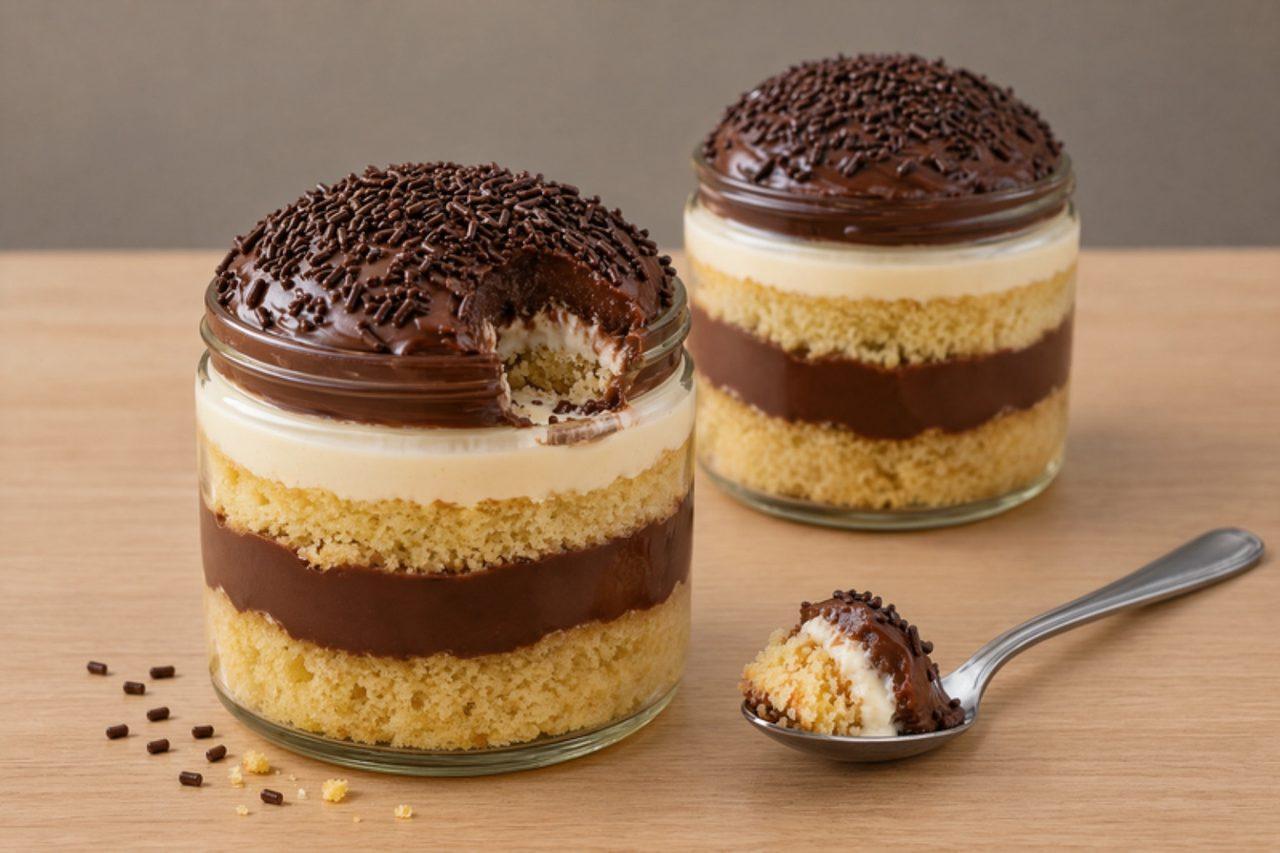
On Sundays, when Avenida Paulista closes to cars, sellers line the pavement with cool boxes of bolo de pote, and the same jars turn up at São Paulo's weekly street fairs and outside metro stations: soft sponge cake layered with creamy fillings and eaten with a spoon. Brigadeiro cream (condensed milk cooked with cocoa) and a sweet, milky cream made with milk powder are the two everyone wants. They are rich and very sweet, so the jars are small. They contain egg, wheat and milk. Chef's tip: take both creams off the heat while they are still a little runny; they thicken as they cool and must stay soft enough to spread.

by KrazyBadal 0 views

Hachis parmentier for toddlersBeef and mash bake for toddlers

Hachis parmentier, France's answer to cottage pie, is a fixture of school canteens and Wednesday family lunches from Lyon to Paris, named after Antoine Parmentier, who championed the potato. This toddler version for children from 12 months uses lean minced beef cooked soft with plenty of carrot and onion, topped with a buttery milk mash and baked until just golden, then cut into soft squares. It is cooked without stock cubes and with no added salt. It contains milk; there is no gluten, egg, nuts or soya. Chef's tip: simmer the meat with a splash of water until it's tender and saucy before topping; dry mince makes a crumbly pie that toddlers struggle with.

60 minFrenchMeatGluten free
by KrazyBadal 0 views

Parovye kotlety for toddlers (steamed cutlets)

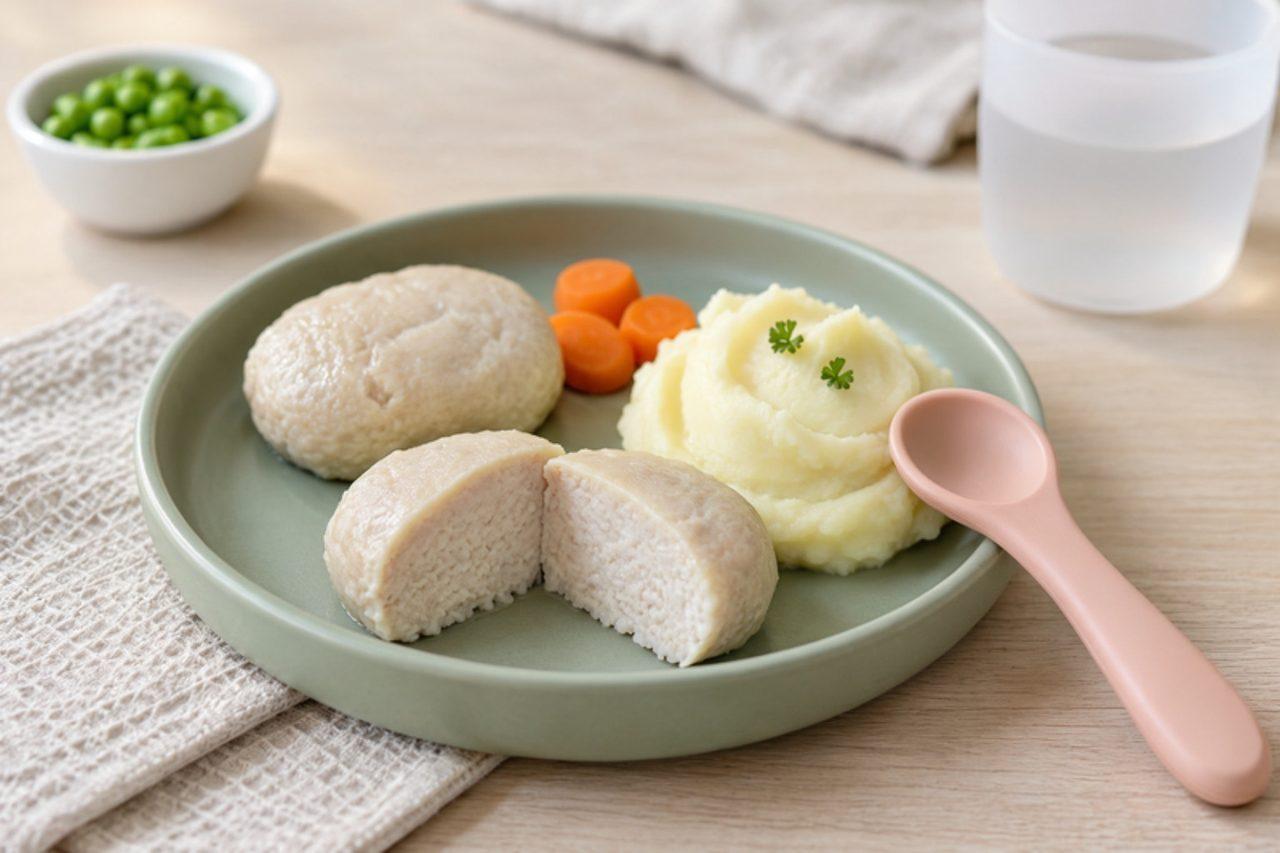
Parovye kotlety, steamed cutlets, are the nursery and kindergarten classic of Russian homes from St Petersburg to Novosibirsk, served with mashed potato or buckwheat at lunch. Minced chicken or turkey is mixed with bread soaked in water and grated onion, shaped into small patties and steamed until soft and juicy, so there is no crust for small gums to struggle with. This version for toddlers from 12 months has no added salt and no egg. It contains wheat (gluten, in the bread); there is no milk, egg, nuts or soya. Chef's tip: beat the mince against the side of the bowl for a minute; it makes the cutlets hold together without egg.

by KrazyBadal 0 views

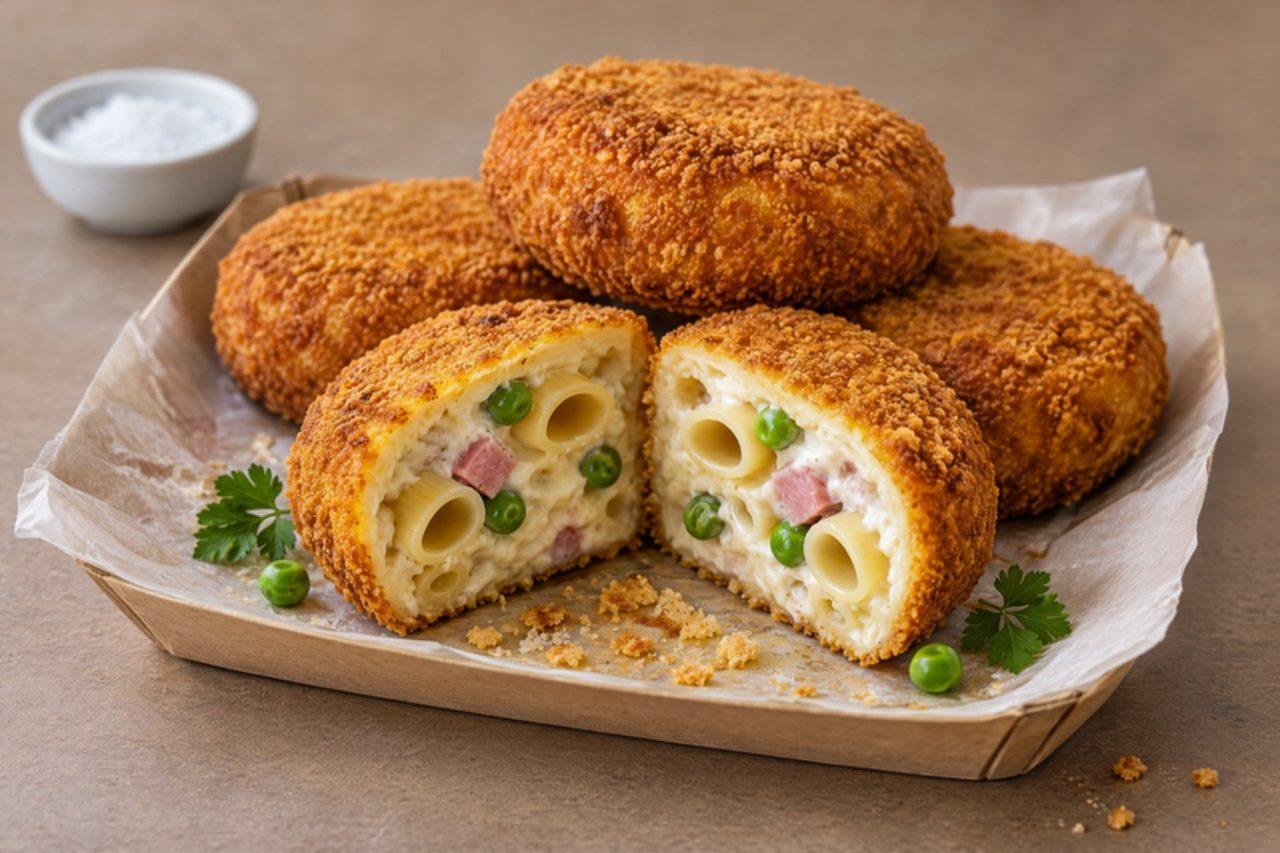
Frittatina di pastaFried pasta rounds

The frittatina is Naples' way of turning a pot of pasta into street food: bucatini bound with thick béchamel, cooked ham (pork), peas and grated cheese, set in rounds, dipped in a flour batter and deep-fried. Pizzerias from Via dei Tribunali to Fuorigrotta fry them as a starter while your pizza bakes, and friggitorie sell them in a napkin to eat on the go, often in the late afternoon. The crust is crisp, the inside creamy with a little chew from the pasta. Chef's tip: chill the shaped rounds overnight; cold, firm frittatine hold their shape in the batter and the oil.

by KrazyBadal 0 views

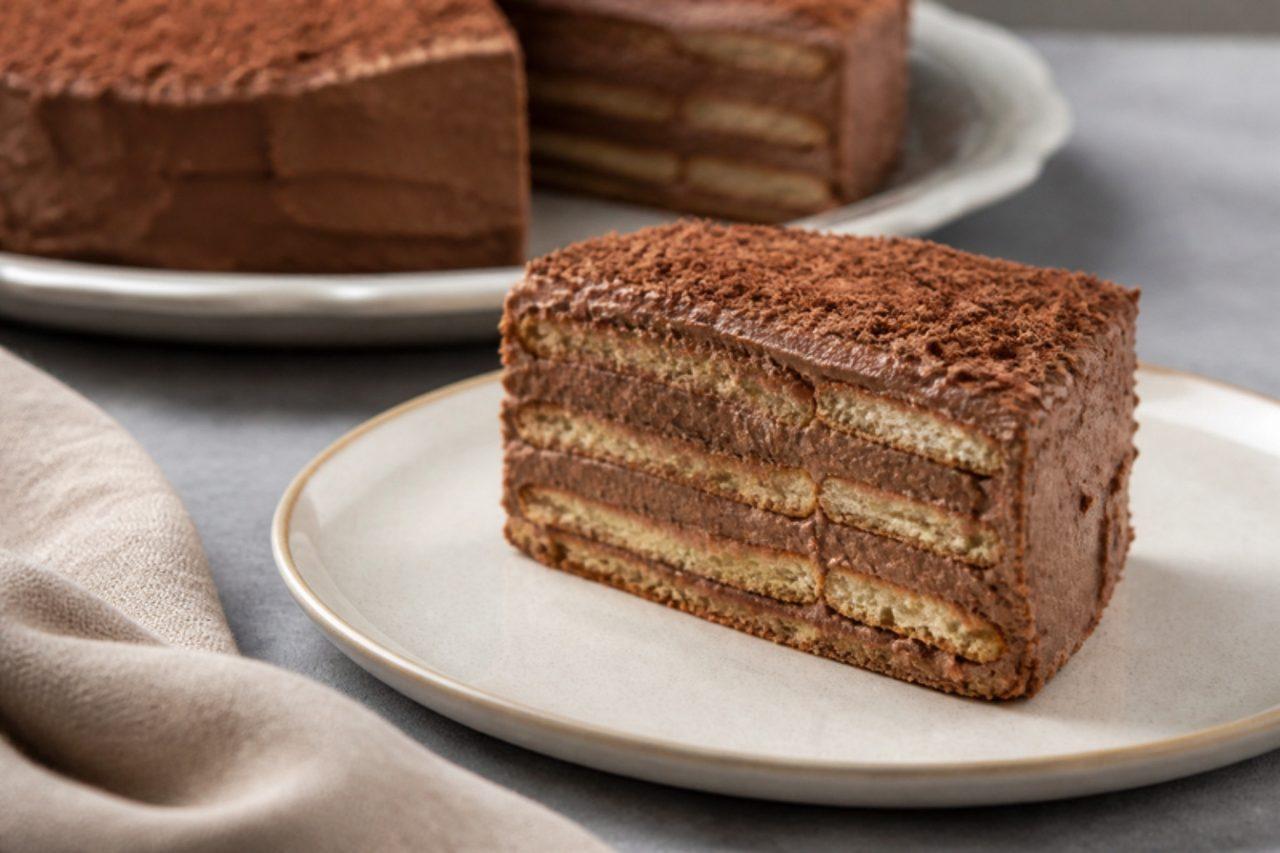
Marquesa de chocolateNo-bake chocolate icebox cake

In Caracas homes the marquesa is the cake you make for a birthday when nobody wants to switch on the oven: plain tea biscuits dipped in vanilla milk and stacked with a rich chocolate cream, then chilled until it slices like a torte. Older recipes fold in raw egg yolks; this one uses whipped cream instead, so it is safe for everyone. The usual mistake is soaking the biscuits too long, so the cake slumps. Chef's tip: dip each biscuit for one second, then let the cream do the softening overnight.

by KrazyBadal 0 views

GimjabanFried seasoned seaweed

Korean children grow up eating gimjaban scattered over rice or rolled into jumeokbap rice balls, and a little tub of it is the easiest way to make a plain dosirak exciting. It is laver seaweed toasted, crushed and stirred in a pan with sesame oil, a little sugar and plenty of sesame seeds until crisp and savoury-sweet. The common mistake is adding the soy sauce while the pan is very hot, which turns the flakes soggy and clumped. Chef's tip: mix the soy and sugar into the oil first, then toss in the crushed seaweed off the heat and return it to a gentle flame just to dry out.

by KrazyBadal 0 views

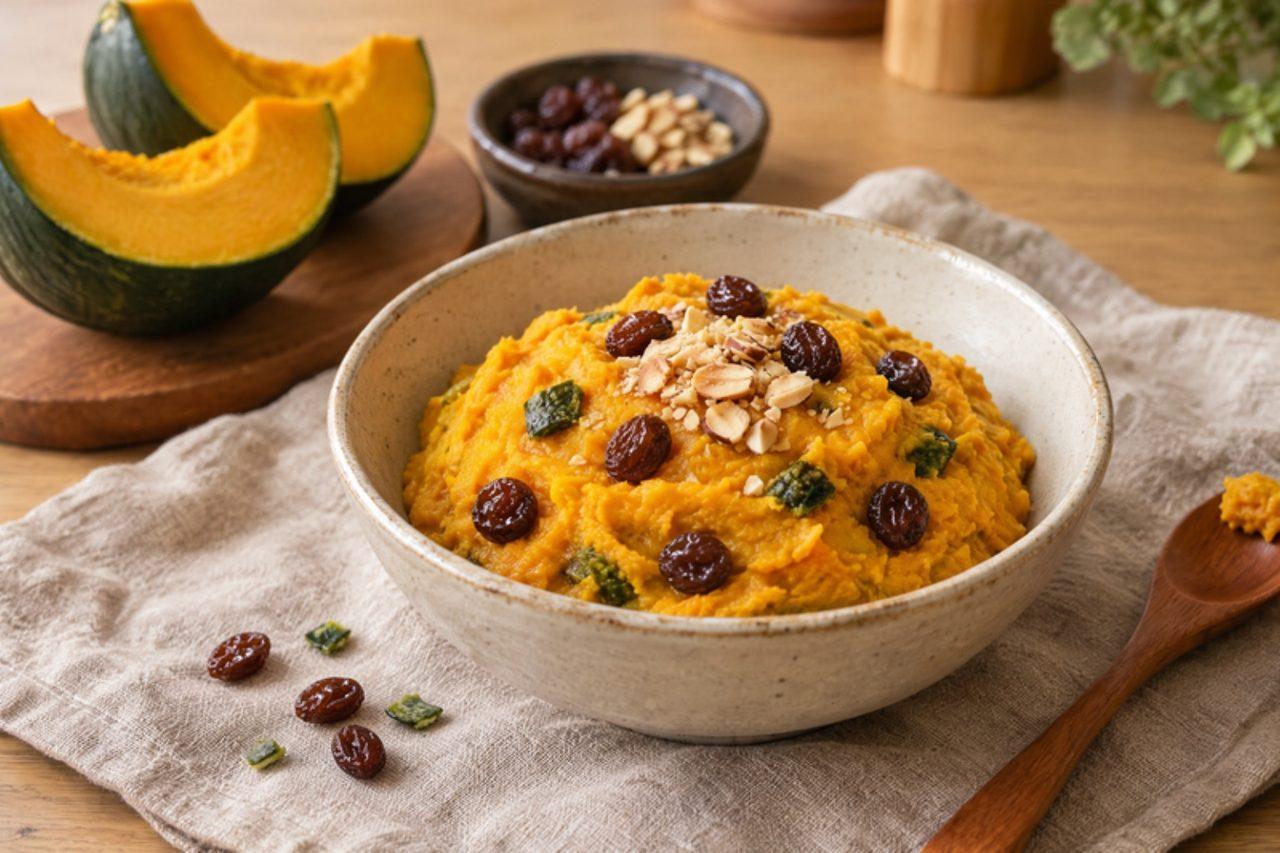
Kabocha saladPumpkin salad

Children across Japan know this golden, chunky salad from their bento boxes and school lunches: steamed kabocha squash crushed with mayonnaise, a few plump raisins and a touch of pepper, sweet enough to pass for dessert. It holds its shape cold, so it fills a bento cup neatly. The common mistake is mashing the squash while it is wet, which gives a watery salad; dry it off in the pan first. Leave some skin on for colour. The mayonnaise contains egg. Chef's tip: dress the squash while it is still warm with the salt and pepper, but add the mayonnaise only once it has cooled, so it stays creamy instead of turning oily.

by KrazyBadal 0 views

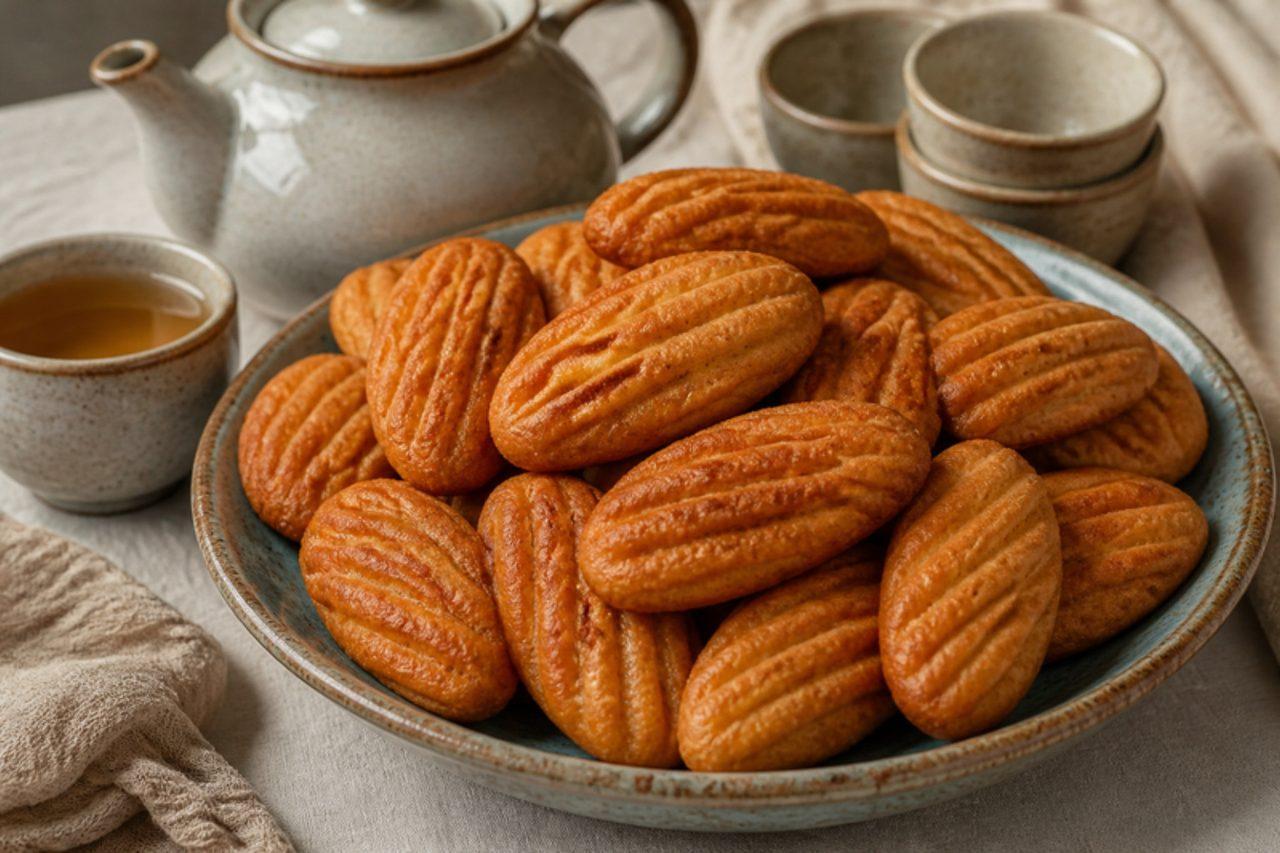
KhajurFried dough cookies

Khajur take their name from dates, which their plump oval shape resembles, but there is no fruit in them: they are little cardamom-scented dough cookies, pressed onto a sieve or the back of a grater for a ridged pattern and fried until deep gold. Afghan families fry great batches before Eid and Nowruz and pack them into tins to offer guests with tea, and Kabul bakeries sell them by the kilo. They are crunchy on the outside with a soft, cakey middle and only gently sweet. Oil that is too hot is the classic error, browning them in a minute while the centres stay raw and doughy; keep it moderate and patient. Chef's tip: fry one test khajur first and break it open, then adjust the heat before frying the rest.

by KrazyBadal 0 views

Kulcha-e-namakiSalted butter biscuits

Kabul bakeries pile glass cases with kulcha, and alongside the sweet ones there are always the salty kulcha-e-namaki, pale little rounds flecked with black nigella that disappear by the handful with green or black tea. They are short and crumbly like shortbread but savoury, with a buttery richness and the oniony bite of the seeds, and at Eid and Nowruz a plate of them sits beside the sweets for guests who prefer something less sugary. They should stay pale, so the big mistake is baking them until brown, which makes the butter taste burnt and the biscuits hard. Chef's tip: chill the shaped biscuits for 15 minutes before baking so they hold their crisp edges.

by KrazyBadal 0 views

Halwat tabaa (stamped jam biscuits)

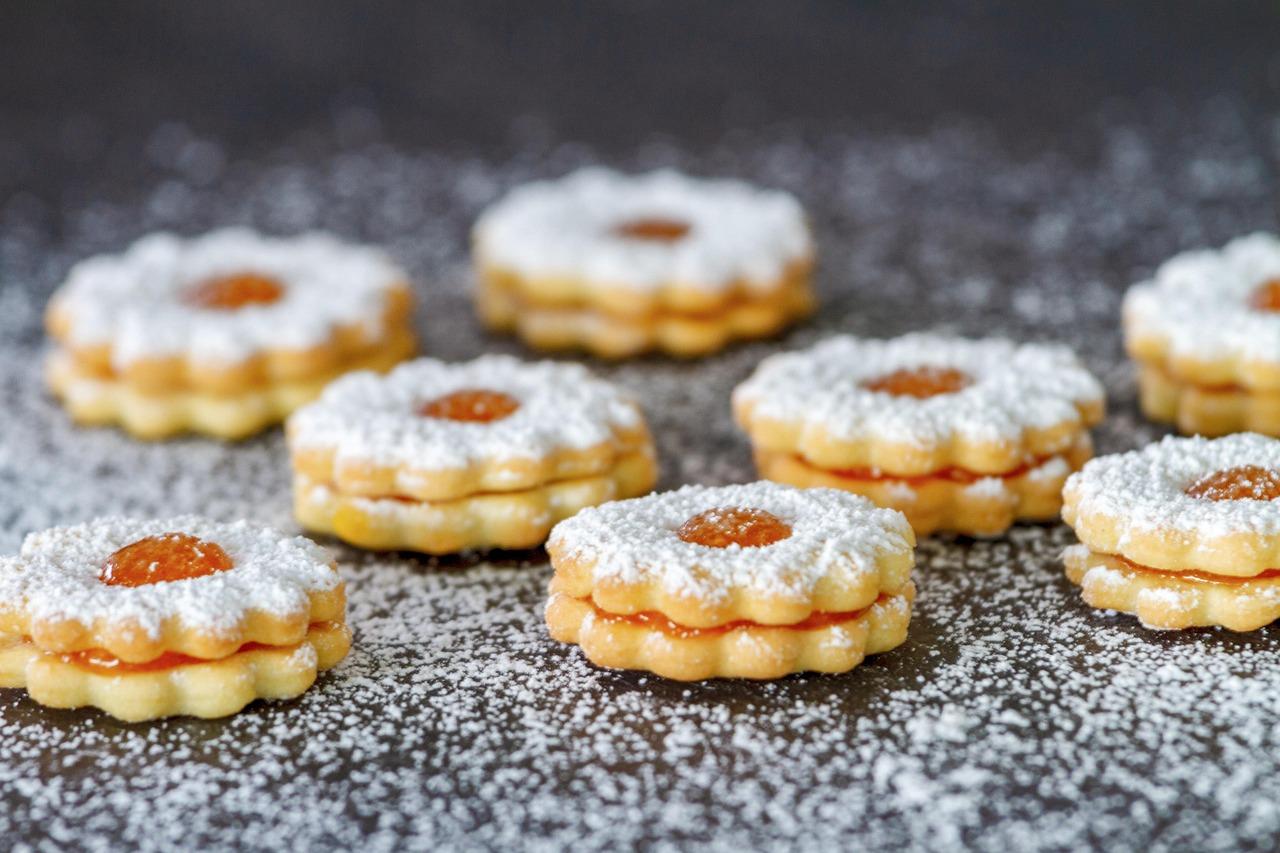
Ask anyone who grew up in Algeria about the night before Eid and they will mention the smell of halwat tabaa baking: buttery shortbread cut and printed with a patterned metal stamp, then sandwiched in pairs with apricot jam. Children love helping to press the patterns, and the biscuits fill the tins offered to neighbours on the morning of the feast. They are tender and short, with a clean vanilla flavour against the tangy jam, and keep well for a week. A fluted round cutter and the tines of a fork will do if you have no stamp. Avoid working the dough too much or letting it get warm, as the stamped pattern then spreads and blurs in the oven. Chef's tip: dip the stamp in flour and tap off the excess before every press; a sticky stamp blurs the pattern, which is the most common disappointment.

by KrazyBadal 0 views

RohtSweet cardamom sesame bread

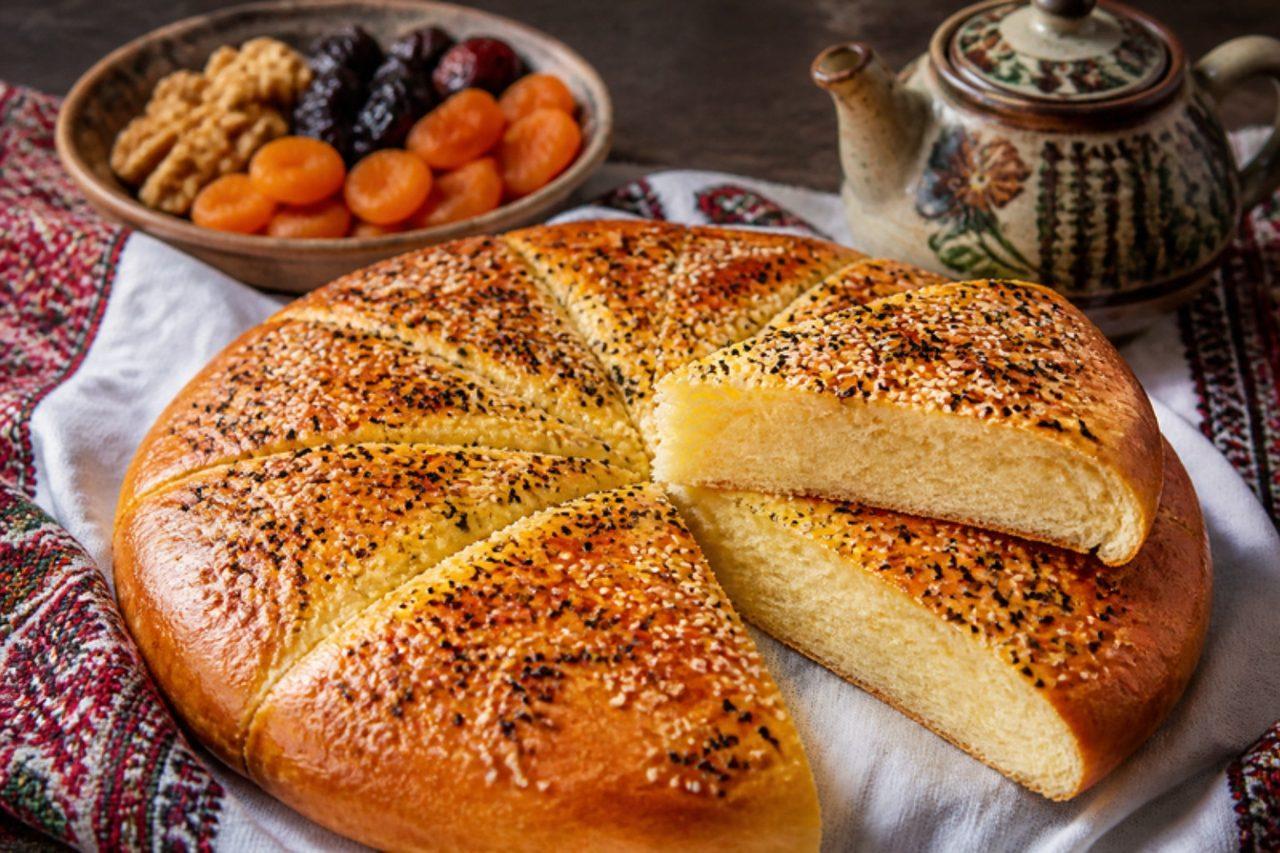
In Mazar-i-Sharif, the city that hosts Afghanistan's biggest Nowruz celebrations, roht is baked by the dozen in the days before the new year and carried to relatives with haft mewa and sweets; families also make it to celebrate a birth or welcome guests home from the Hajj. It is a thick round bread, somewhere between a sweet loaf and a soft cake, golden on top and patterned with sesame and nigella, with a close, tender crumb scented with cardamom. It is torn into pieces and eaten with green tea at any hour of the day. Rich, sugary dough rises slowly, so the common failure is baking it too soon, which gives a dense, heavy round; wait until it has clearly doubled. Chef's tip: press a pattern into the top with a fork or a clean bread stamp before the glaze, so the seeds settle into the grooves.

by KrazyBadal 0 views

Sri Lankan milk toffee

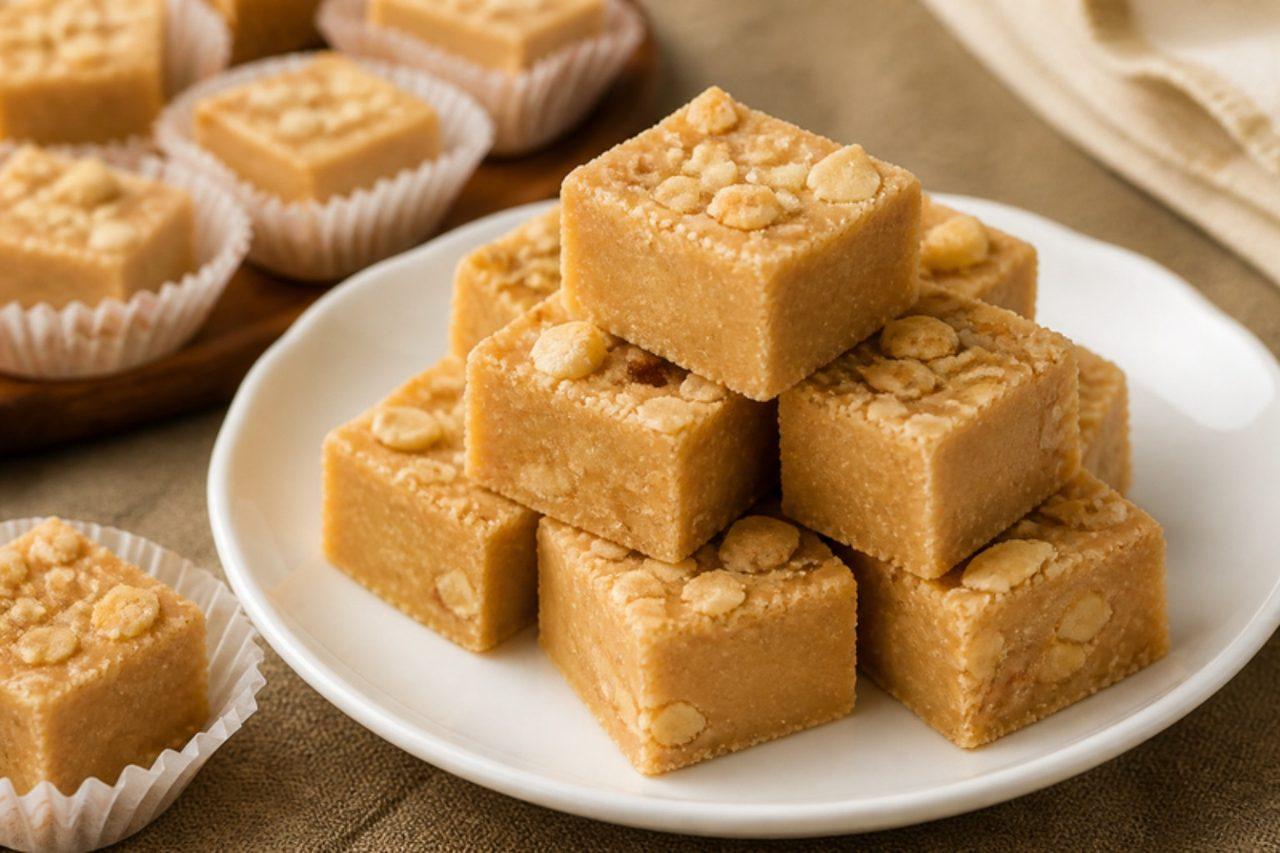
Every school fair, office bake sale and Avurudu table in Sri Lanka has a plate of milk toffee, the pale golden squares that are firm when you pick them up yet melt away in a sweet, slightly grainy crumble in your mouth. A tin of condensed milk is cooked with sugar and butter, stirred constantly for half an hour until it thickens and leaves the pan, then flavoured with chopped cashews and a whisper of cardamom and vanilla. It is simple enough for children to help with, as long as an adult does the hot stirring. Stopping too early is the trap almost everyone falls into, leaving a soft, chewy fudge instead of the proper crumbly snap. Cook until the mixture rolls into a ball, turns a shade darker and a drop set in cold water is firm. Chef's tip: mark the squares with a buttered knife while the toffee is still warm, because once it cools it will only break into rough pieces.

by KrazyBadal 0 views

AamshottoSun-dried mango sheets

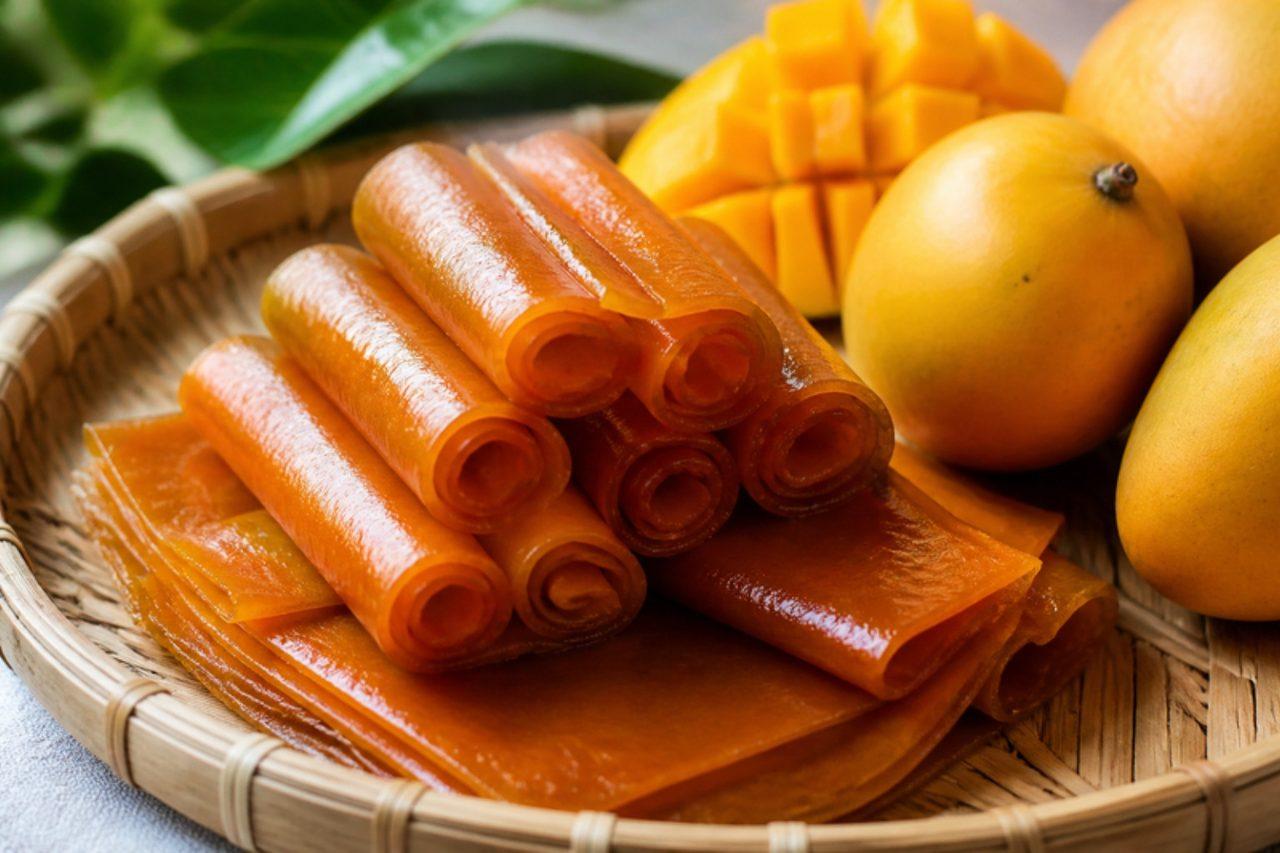
In June the mango orchards of Rajshahi and Chapai Nawabganj produce more fruit than anyone can eat, and on rooftops across the region the surplus is turned into aamshotto, sheets of sweet mango pulp spread thin on bamboo trays and dried in the sun. A fresh layer is spread over the last one each day, so the finished slab is built up from many thin films, chewy, deep orange and intensely fruity. It is cut into strips and kept for the rainy months, eaten as a snack, packed in children's lunchboxes or chopped into chutney. In a damp climate, sun-drying is slow and risks mould, so this version uses a low oven. Spreading the pulp too thick is the classic misjudgement; the middle never dries and stays sticky. Chef's tip: use fibre-free mangoes such as Himsagar, Langra or Alphonso and push the pulp through a sieve for a smooth sheet.

by KrazyBadal 0 views

Bitifoor (Sudanese Eid butter biscuits)

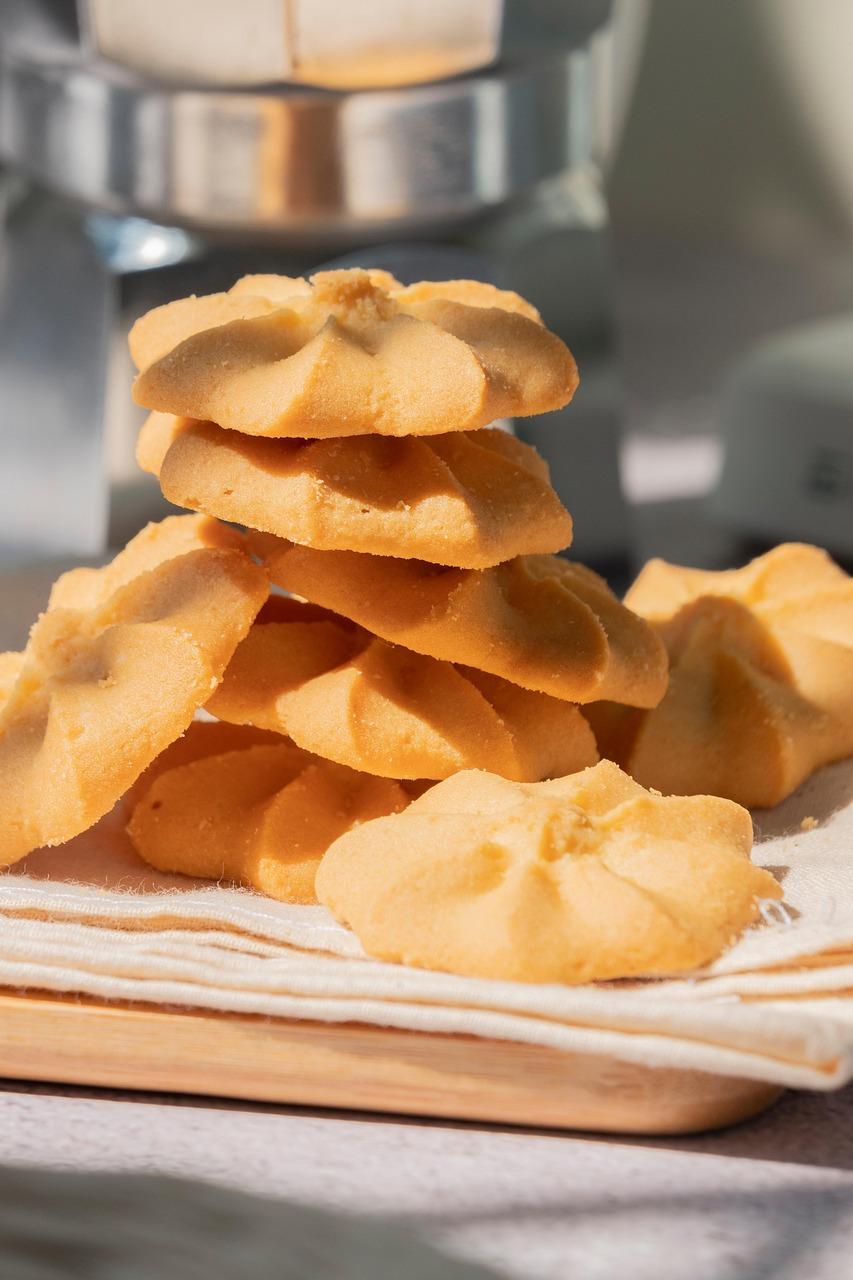
During the last days of Ramadan, Khartoum neighbourhoods smell of butter and vanilla as women bake bitifoor, the piped biscuits whose name comes from the French petit four, for the Eid visits that follow. They are piped into rosettes, fingers and swirls, sometimes topped with a piece of glacé cherry or dipped in chocolate, and arranged on platters with ka'ak and sweets for guests. The texture is melt-in-the-mouth, short and delicate. Over-soft butter is the classic mistake, giving biscuits that spread into flat puddles; use butter soft enough to dent, not oily, and chill the piped trays for 15 minutes. Chef's tip: a little cornflour in the flour keeps them extra tender and crisp.

by KrazyBadal 0 views

Kokoro (crunchy maize sticks)

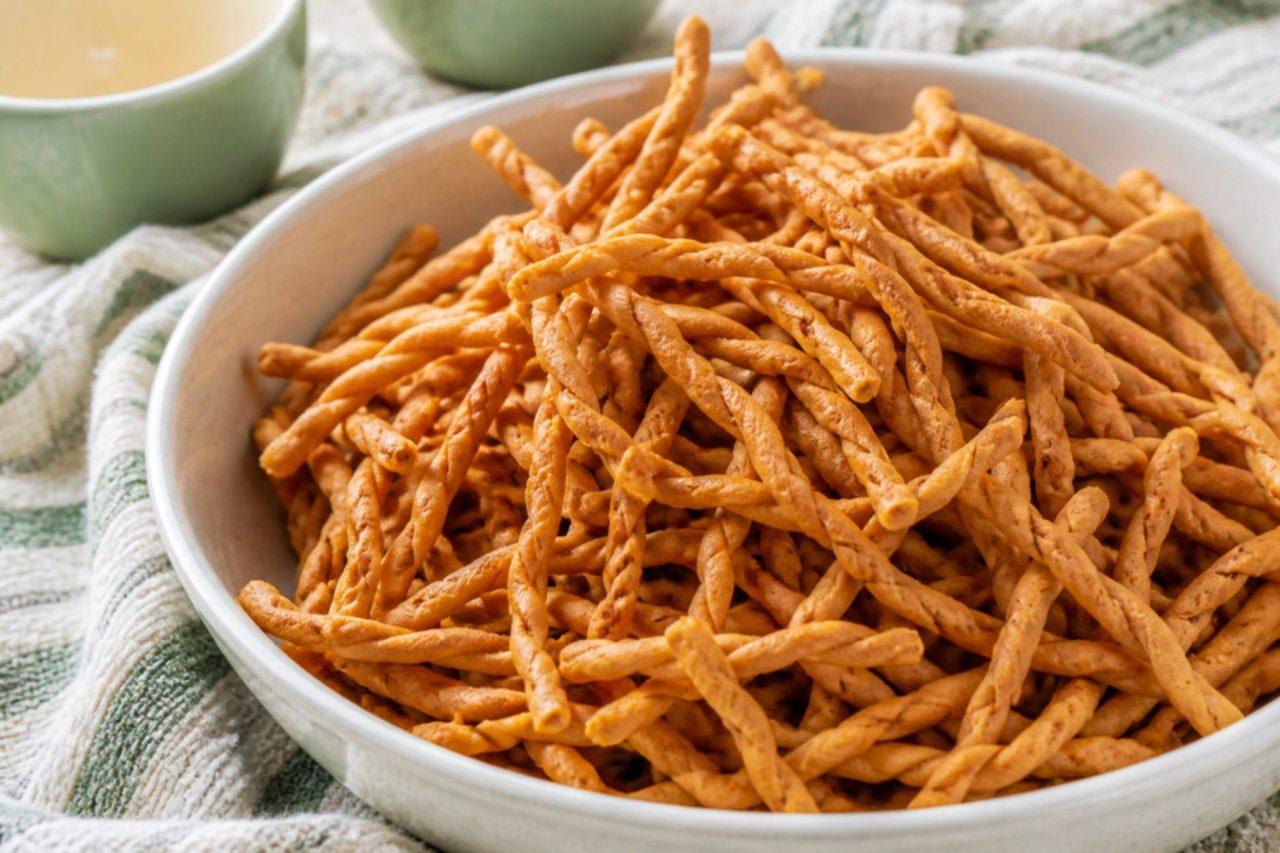
Kokoro is sold in clear bags at motor parks, markets and school gates across the Southwest, and it is the snack people tuck into a pocket for a long bus ride. The dough is made by cooking part of the maize flour with water into a thick paste, then kneading in more flour with a little sugar, salt, chilli and ginger, and rolling it into thin sticks that are fried slowly until hard and golden. The result is very crunchy, lightly sweet and peppery, and it keeps for weeks. Children love it, and it is traditionally eaten with roasted groundnuts or coconut. Avoid frying in oil that is too hot; the outside browns before the sticks are crisp all the way through. Chef's tip: roll the sticks no thicker than a pencil and fry them at a moderate heat so they crisp right through; thick sticks fried hot stay hard outside and doughy inside.

by KrazyBadal 0 views

HamantaschenFilled triangle cookies

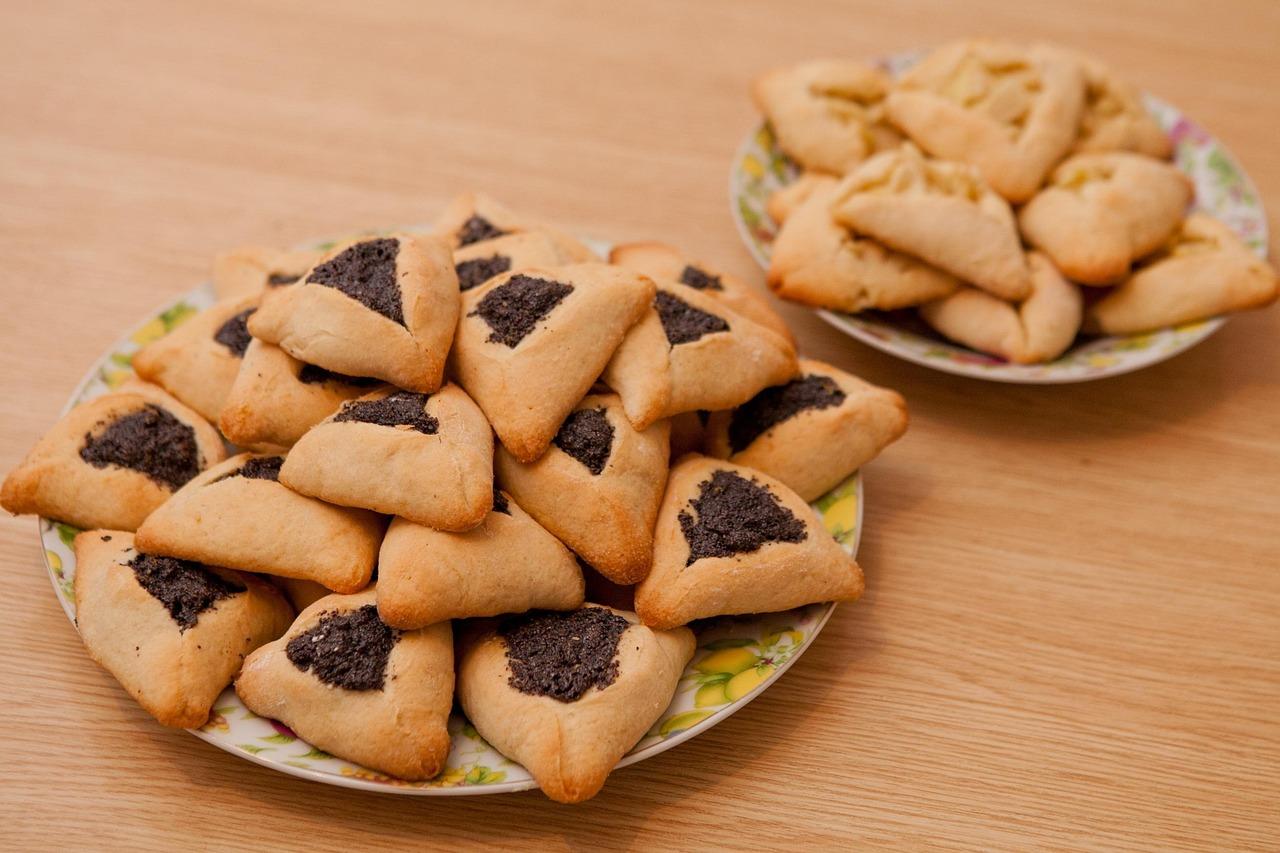
In Israel these are called oznei Haman, 'Haman's ears', and in the weeks before Purim every bakery from Tel Aviv to Be'er Sheva fills its windows with them, while families bake trays at home to pack into mishloach manot gift baskets. A short, lightly orange-scented dough is folded into a three-cornered pocket around a filling of poppy seeds cooked with milk and honey, or a quick date paste. They should be crisp at the edges and tender in the middle. The common mistake is rolling the dough too thin or overfilling, which makes the corners spring open in the oven. Chef's tip: chill the shaped cookies for 15 minutes before baking so the corners keep their sharp pinch.

by KrazyBadal 0 views

FrikkadelsFried spiced meatballs

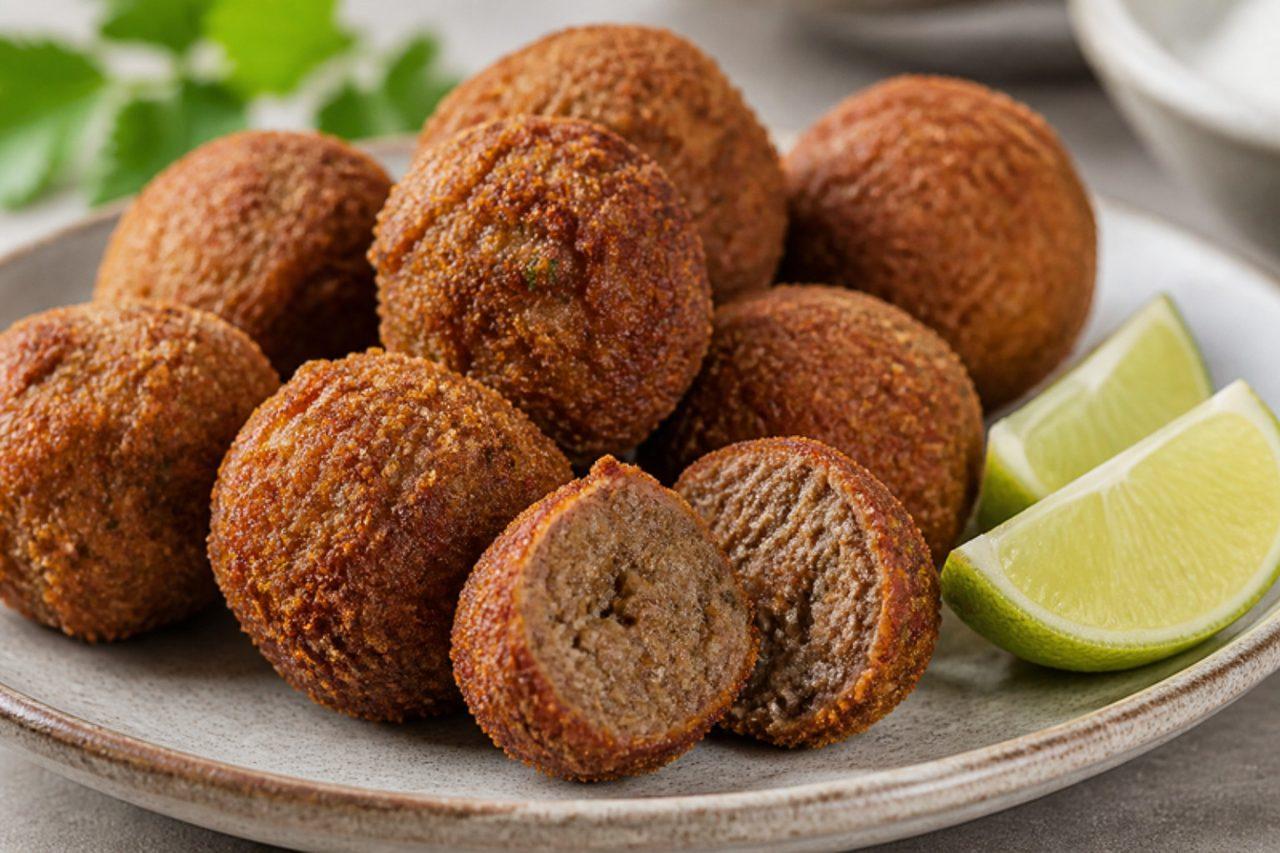
Frikkadels came to Sri Lanka with the Dutch in the 1600s and were reinvented by the Burgher community into small, crumbed, deep-fried meatballs scented with onion, garlic, cinnamon, cloves and dill. They are party food first, piled on platters at Burgher Christmas gatherings, christenings and Colombo club teas, and they are also tucked into lamprais parcels or eaten with a sharp seeni sambol and bread. Good ones are crunchy outside and very juicy within, never dense or dry. The trap to avoid is overworking the mince and skipping the soaked bread, which together make the balls tough. Chef's tip: shape them the size of a walnut and chill them for 30 minutes before crumbing, so the coating sticks and they hold their round shape in the hot oil.

by KrazyBadal 0 views

Lab-e-shireenFruit custard with vermicelli

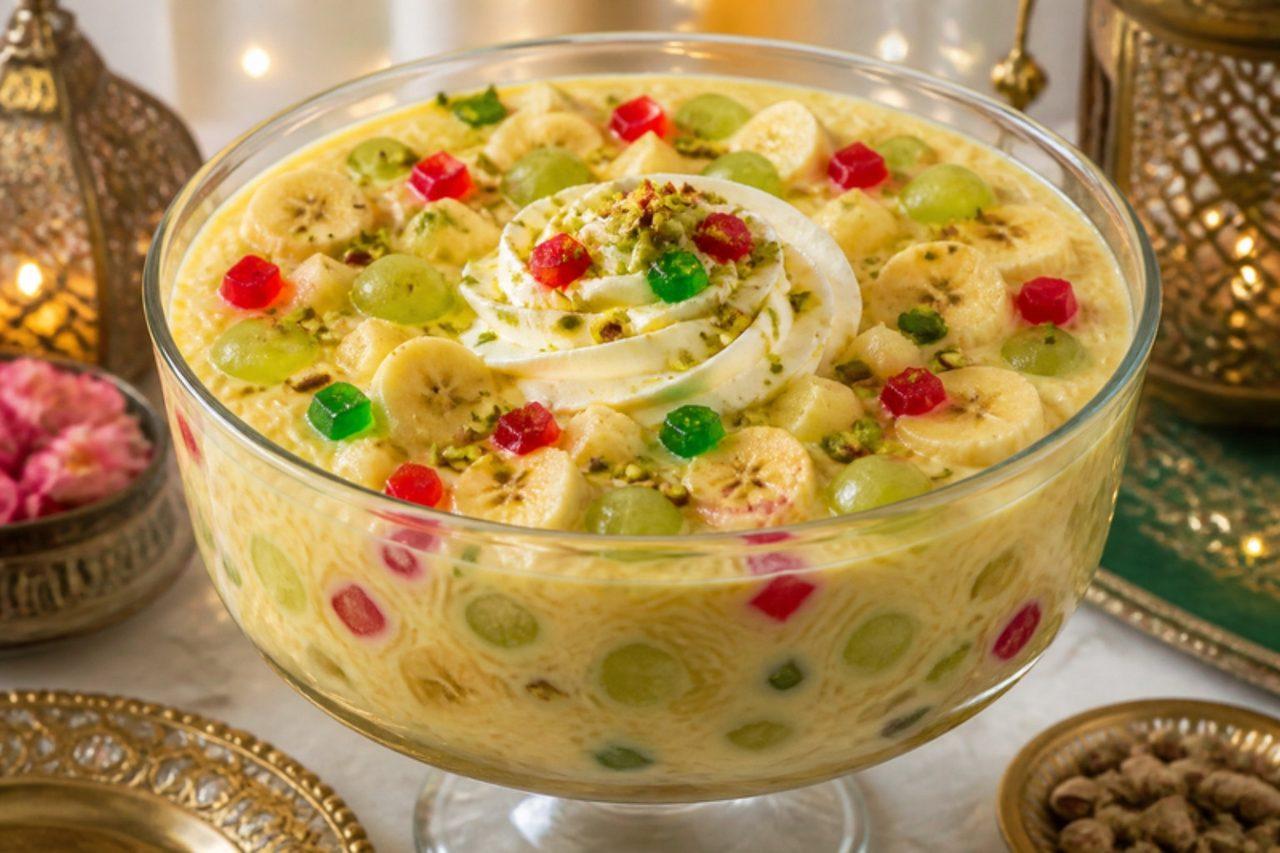
The name means "sweet lips", and on Eid-ul-Fitr afternoons in Karachi and Lahore a glass bowl of it sits in nearly every fridge, waiting for guests who move from house to house. It is a cold, pourable vanilla custard folded through with toasted vermicelli, cubes of red and green jelly, banana, apple, grapes and tinned fruit, finished with cream and sometimes a scatter of nuts. Shop jelly is made with gelatine, so this version sets fruit juice with agar, which also holds up better at room temperature on a crowded table. A lot of cooks get the custard too thick, so once it chills it turns stiff and cannot coat the fruit. Chef's tip: make the jelly and the custard the night before, and stir in the fruit and cream only an hour or two before serving so the bananas stay pale and the vermicelli keeps a little bite.

by KrazyBadal 0 views

Puffed wheat squares

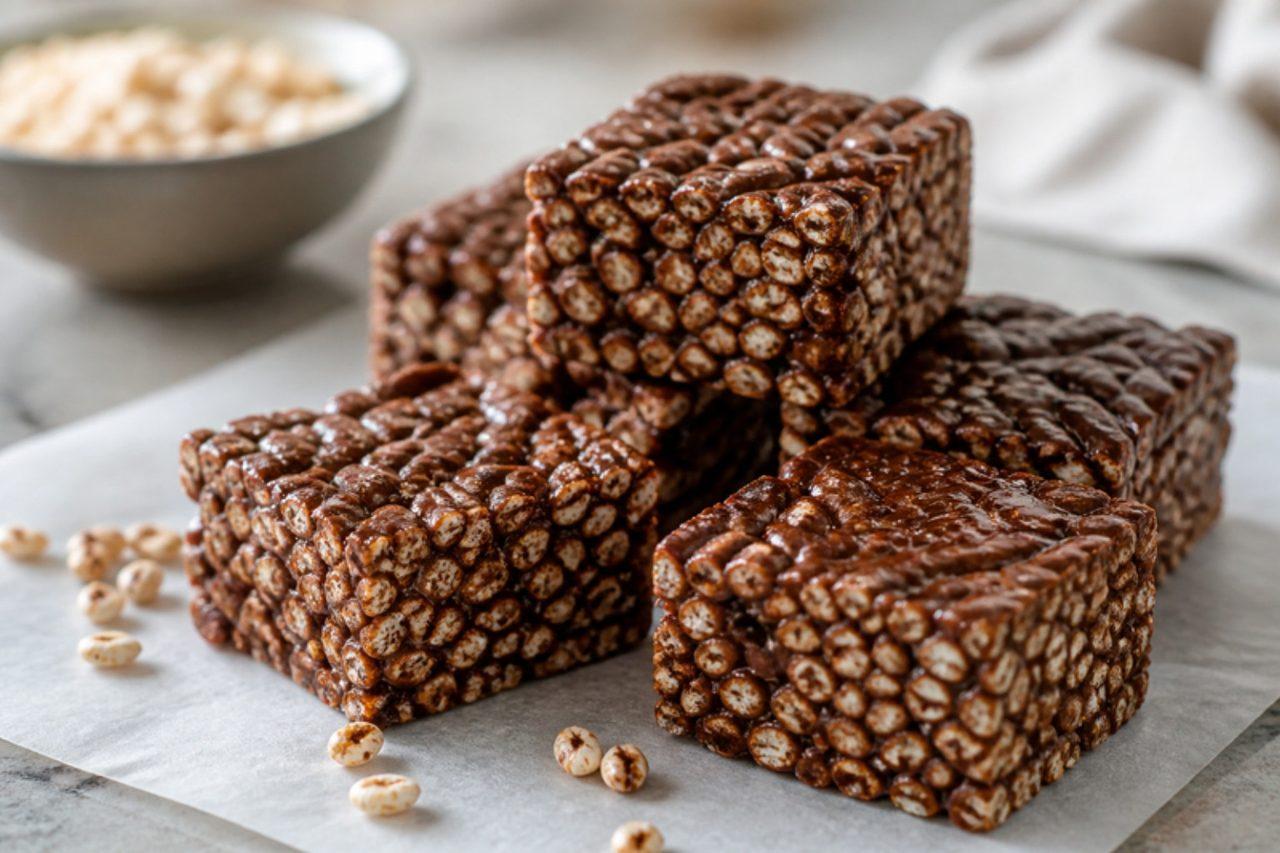
Puffed wheat squares are the Prairie kids' party treat, made in Alberta and Saskatchewan kitchens for hockey bake sales and lunchboxes since the 1950s. Puffed wheat is stirred into a quick toffee of butter, brown sugar, golden syrup and cocoa, pressed into a pan and cut once set. They are chewy rather than crunchy and very hard to stop eating. A common mistake is boiling the syrup too long, which sets them rock hard; one minute of boiling is enough. Chef's tip: butter your hands, not just the pan, to press the mix down evenly.

by KrazyBadal 0 views

Bibikhana pithaBaked rice flour and coconut cake

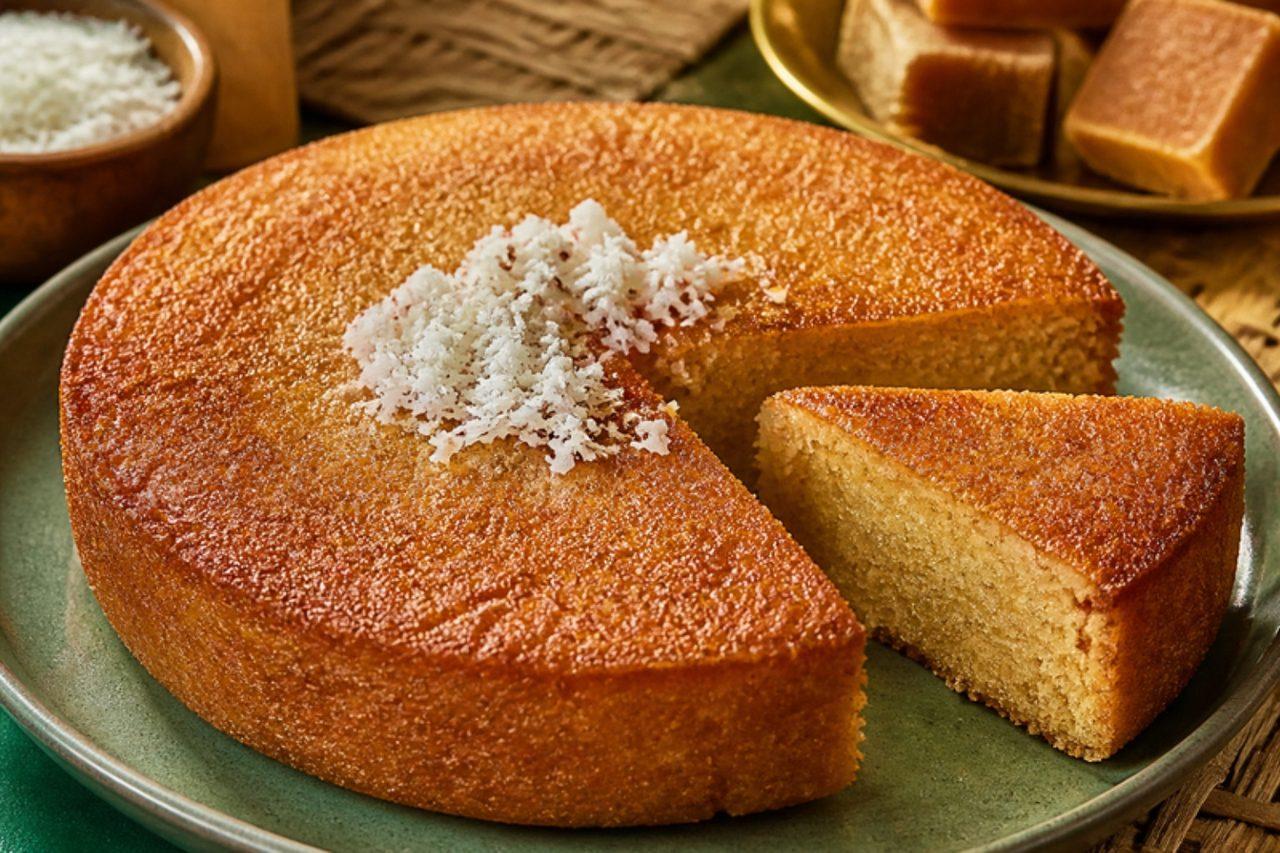
The name means something like a lady's dish, and bibikhana pitha has long been the grand, special-occasion pitha of well-off households in Dhaka, Comilla and Noakhali, made in winter when a son-in-law or important guest is expected. It is closer to a cake than most pithas: rice flour, eggs, milk, grated coconut and date-palm jaggery are beaten together and baked slowly, traditionally in a heavy pan over charcoal with more coals heaped on the lid, until it sets into a dense, moist, caramel-brown cake. It is cut into wedges and served with tea in the afternoon. Baking too hot is the typical slip, so the jaggery burns before the middle sets; a moderate oven and patience give an even colour. Chef's tip: let it cool completely before cutting, as it firms up and slices cleanly only once cold.

by KrazyBadal 0 views

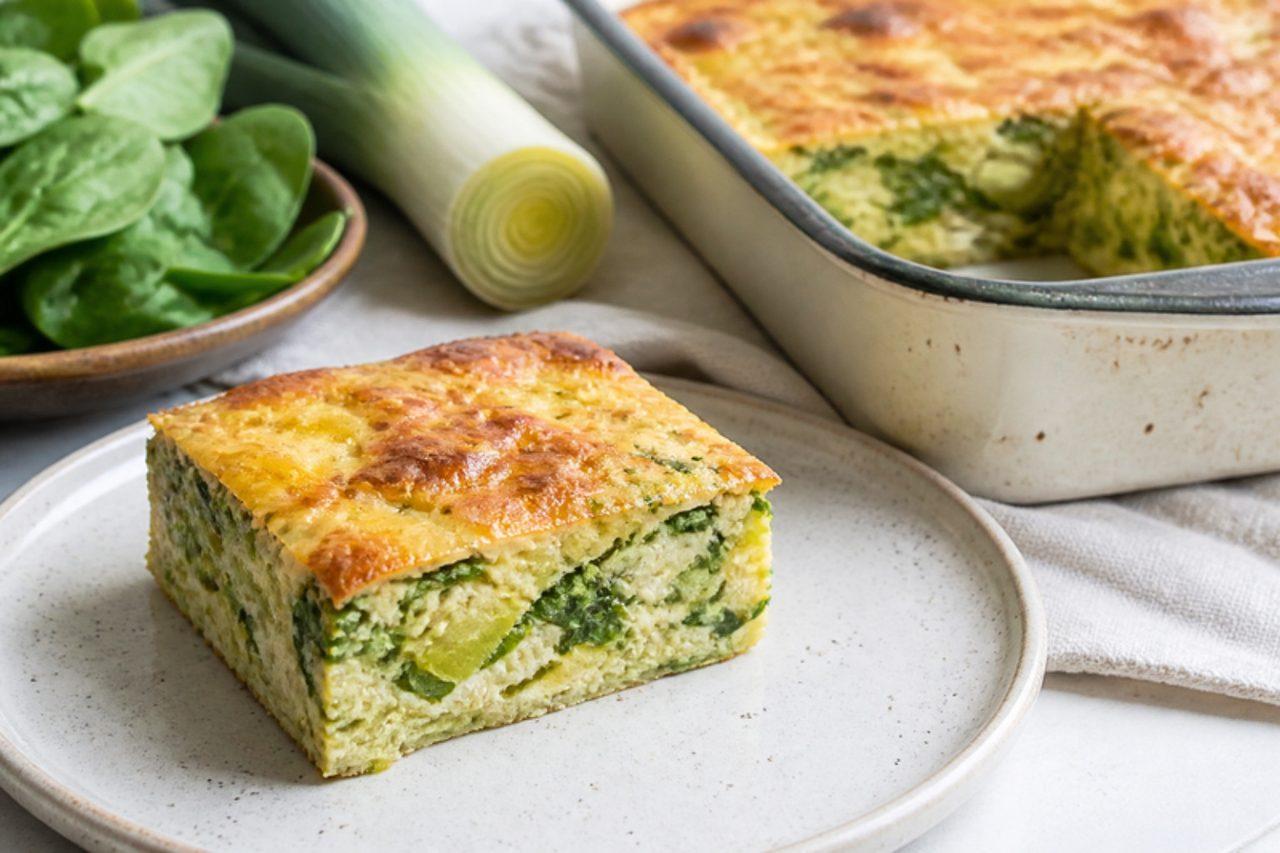
PashtidaCrustless vegetable and cheese bake

Pashtida is the dish every Israeli home cook can make without a recipe: vegetables, eggs and cheese baked in a dish until set, sliced in squares for Shavuot dairy meals, kibbutz dining rooms or a weekday supper in Kfar Saba. This version uses courgette, spinach and leek with salty white cheese and soft gvina levana, so it is golden on top, moist and savoury inside, and good warm or cold. Many white and hard cheeses are made with animal rennet, so choose ones marked vegetarian if you need to. The mistake is putting in vegetables wet, which makes the pashtida weep; squeeze them well. Chef's tip: rest it for 10 minutes before cutting so the squares hold their shape.

by KrazyBadal 0 views

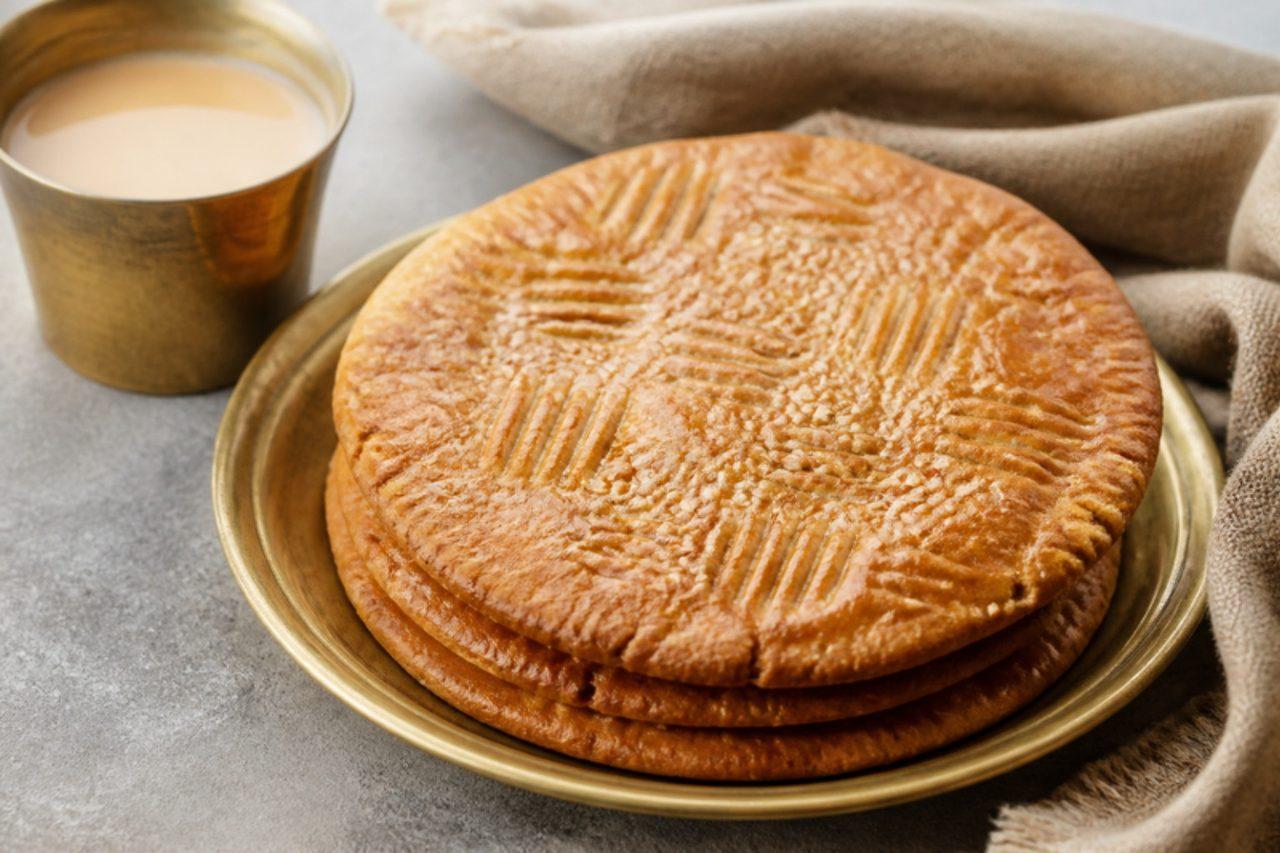
Mitho loloSweet jaggery flatbread

Thick, crumbly and caramel-sweet, mitho lolo is the Sindhi tea-time bread, made in batches in Karachi and Hyderabad homes and kept in a tin for a week of breakfasts, and Sindhi Hindu families bake it for Thadri, the summer festival when only food cooked the day before is eaten. Wholewheat flour is kneaded with jaggery dissolved in warm water and a generous amount of ghee, pressed into thick rounds, patterned with a fork and cooked slowly on a tawa until crisp outside and short and biscuity inside, fragrant with cardamom. It is dunked into milky tea or eaten with a little white butter. Too much heat is the downfall: the sugar scorches long before the middle cooks through. Chef's tip: keep the flame low and turn the lolo often, and let them cool on a rack, because they crisp up only as they cool.

by KrazyBadal 0 views

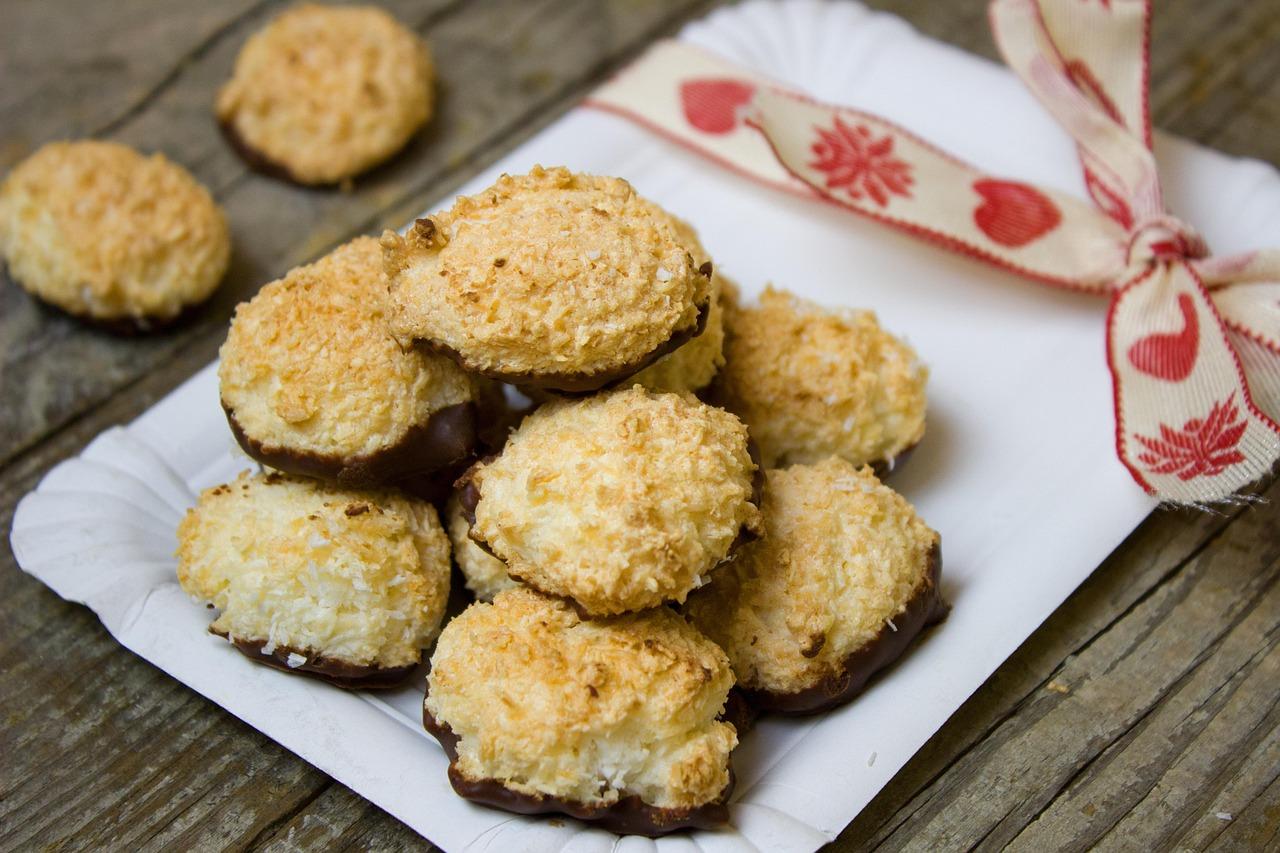
Coconut macaroons

Coconut macaroons are the Passover biscuit in Israel: every supermarket stacks them high before the holiday, but homemade ones from a Haifa or Jerusalem kitchen are far better, crisp and golden on the outside and moist and chewy inside. They need just desiccated coconut, egg whites, sugar and vanilla, with no flour or leavening, so they suit the Passover rules and are naturally gluten free and dairy free. Dip the bases in dark chocolate if you like. The common mistake is baking them on a hot tray straight from a previous batch, which burns the bases before the tops colour. Chef's tip: let the mixture rest for 15 minutes so the coconut soaks up the whites and the mounds hold their shape.

by KrazyBadal 0 views

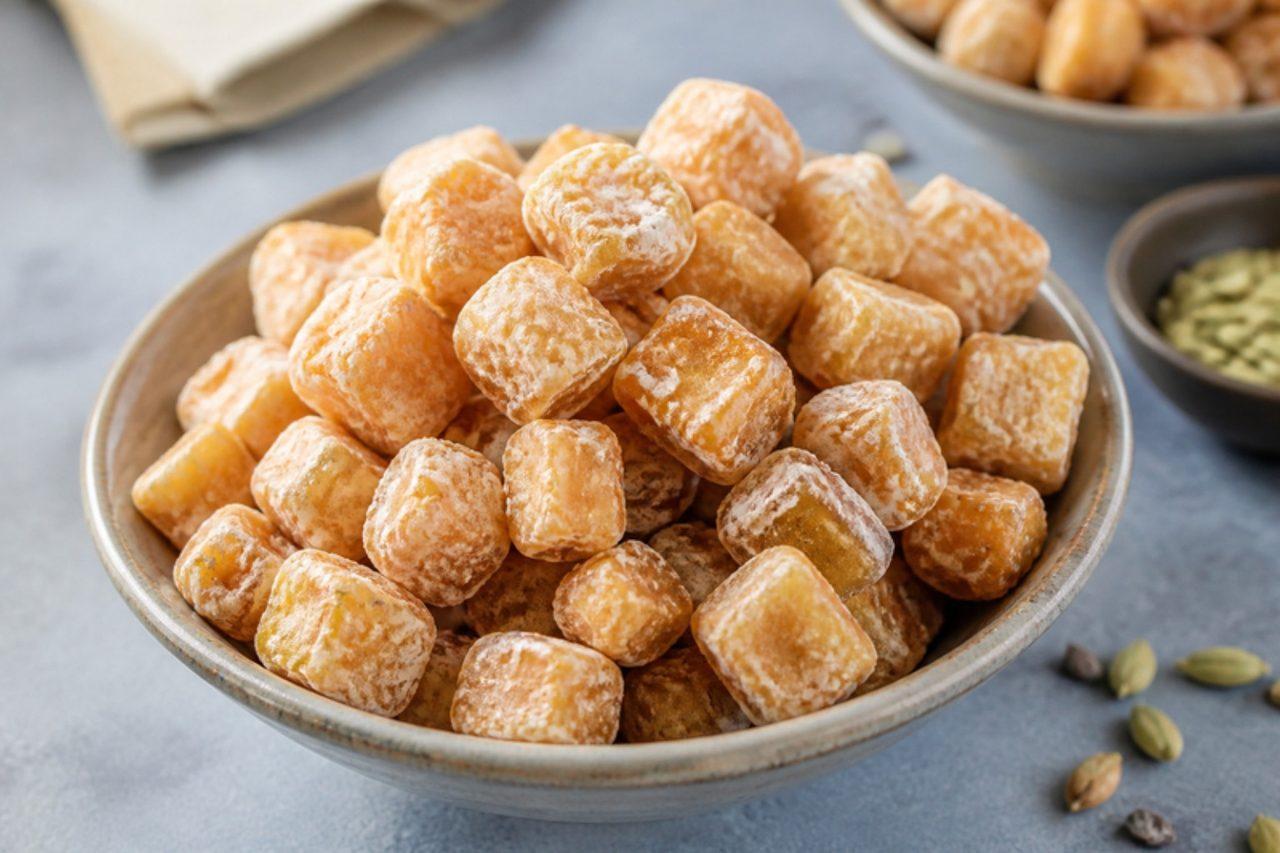
Kac kac (Somali fried dough cubes in cardamom sugar)

Jars of kac kac sit on the table at Somali weddings, Eid gatherings and afternoon tea across the country and in the diaspora, ready to be handed round by the fistful. The dough is enriched with egg and butter, cut into small cubes, fried until hard and golden, then tossed in hot cardamom syrup that dries to a frosty white crust. Each piece cracks loudly when bitten, which is how it got its name. Undercooking the syrup is the usual problem: it stays sticky instead of turning to a dry, sugary coat, so boil it until it forms a thread and keep stirring the cubes as it cools. Chef's tip: cut the cubes no bigger than 1.5 cm; small pieces fry right through and stay crunchy for weeks in an airtight jar.

by KrazyBadal 0 views

Mango pudding

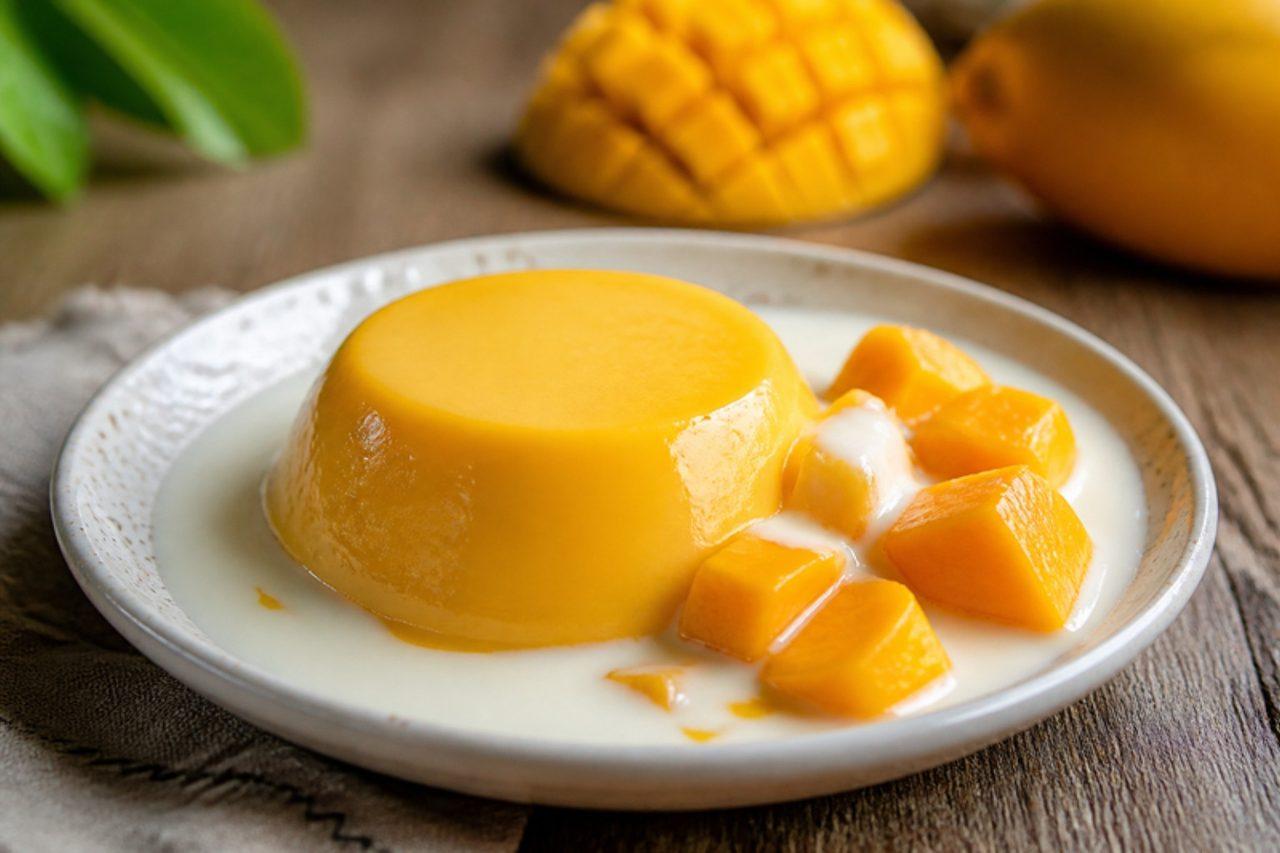
Wobbling out of fish-shaped moulds at the end of a Hong Kong dim sum lunch, mango pudding is just as popular in small cups from dessert chains, which sell it through the sticky summer months when Philippine and Thai mangoes flood the markets. It's smooth, creamy and full of fruit, with pieces of fresh mango through it and a drizzle of cold evaporated milk on top. Restaurants usually set it with gelatine; this version uses agar, which keeps it vegetarian and sets slightly firmer and cleaner. The problem with agar is impatience: it begins to set below about 40 °C, so cold purée added too slowly turns into lumpy strands. Chef's tip: warm the mango purée before you mix it in, then whisk briskly and pour into the moulds right away.

by KrazyBadal 0 views

MallorcasCoiled sweet egg rolls

In Old San Juan's old-fashioned cafés and neighbourhood bakeries serve mallorcas split, pressed on a hot griddle with butter and buried in icing sugar, often with a slice of melted cheese inside for a sweet-salty breakfast (many cheeses are made with animal rennet, so pick a vegetarian one). The dough is rich with egg yolks, milk and butter, coiled like a snail shell so it bakes into soft, pull-apart layers. The common mistake is under-proving the coils, which gives tight, bready rolls instead of feathery ones. Chef's tip: brush the coils with melted butter before the last rise and again straight out of the oven; that buttery skin is what holds the snowy sugar.

by KrazyBadal 0 views

Torticas de MorónLime shortbread

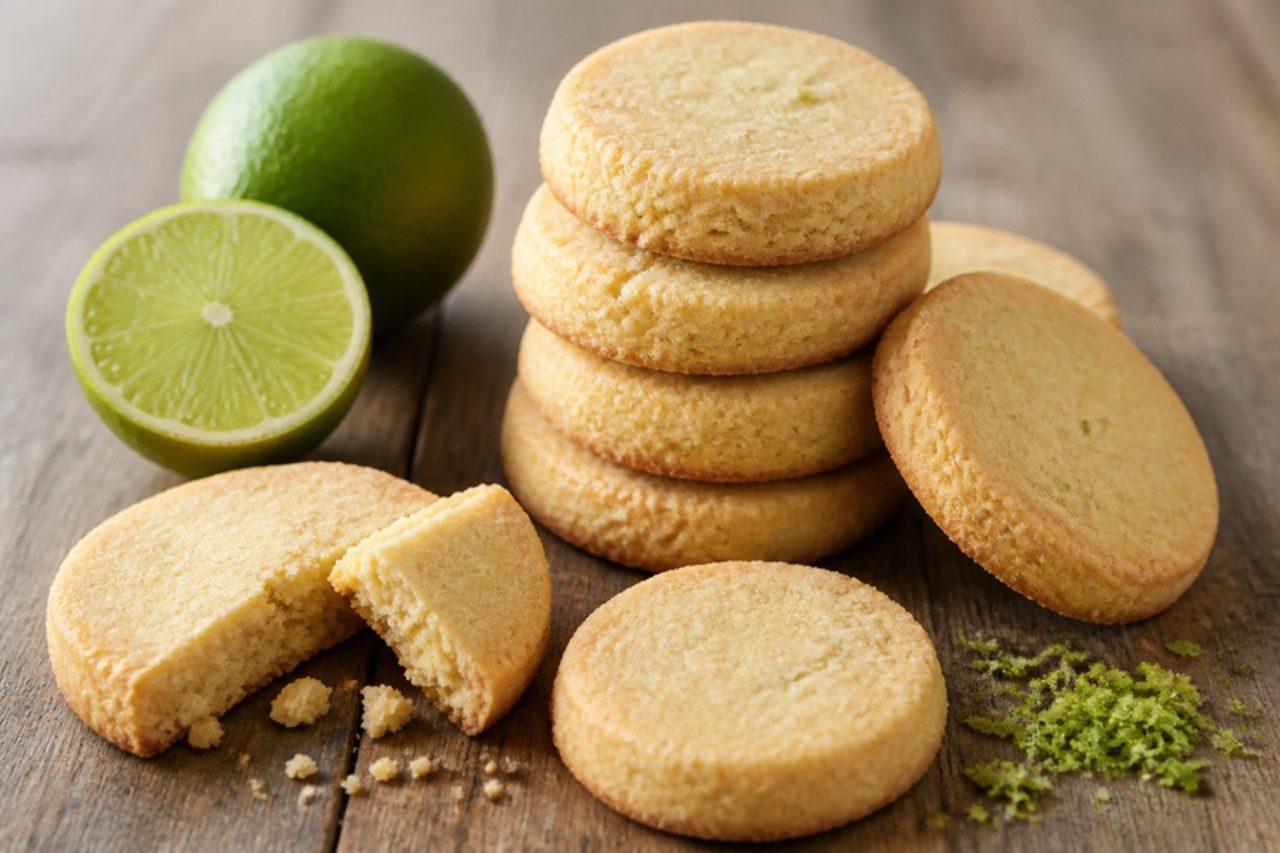
The town of Morón in Ciego de Ávila gave its name to these crumbly little cookies, which Cuban bakeries sell in paper bags and grandmothers keep in a tin for visitors with coffee. They are pale, short and melt quickly, with a clear scent of lime zest. The common mistake is overworking the dough or baking until brown, which makes them hard rather than sandy, so pull them out while they are only just golden underneath. Chef's tip: chill the rolled dough for 20 minutes before cutting; the edges stay sharp and the cookies don't spread.

by KrazyBadal 0 views

Ensalada de coditosMacaroni salad

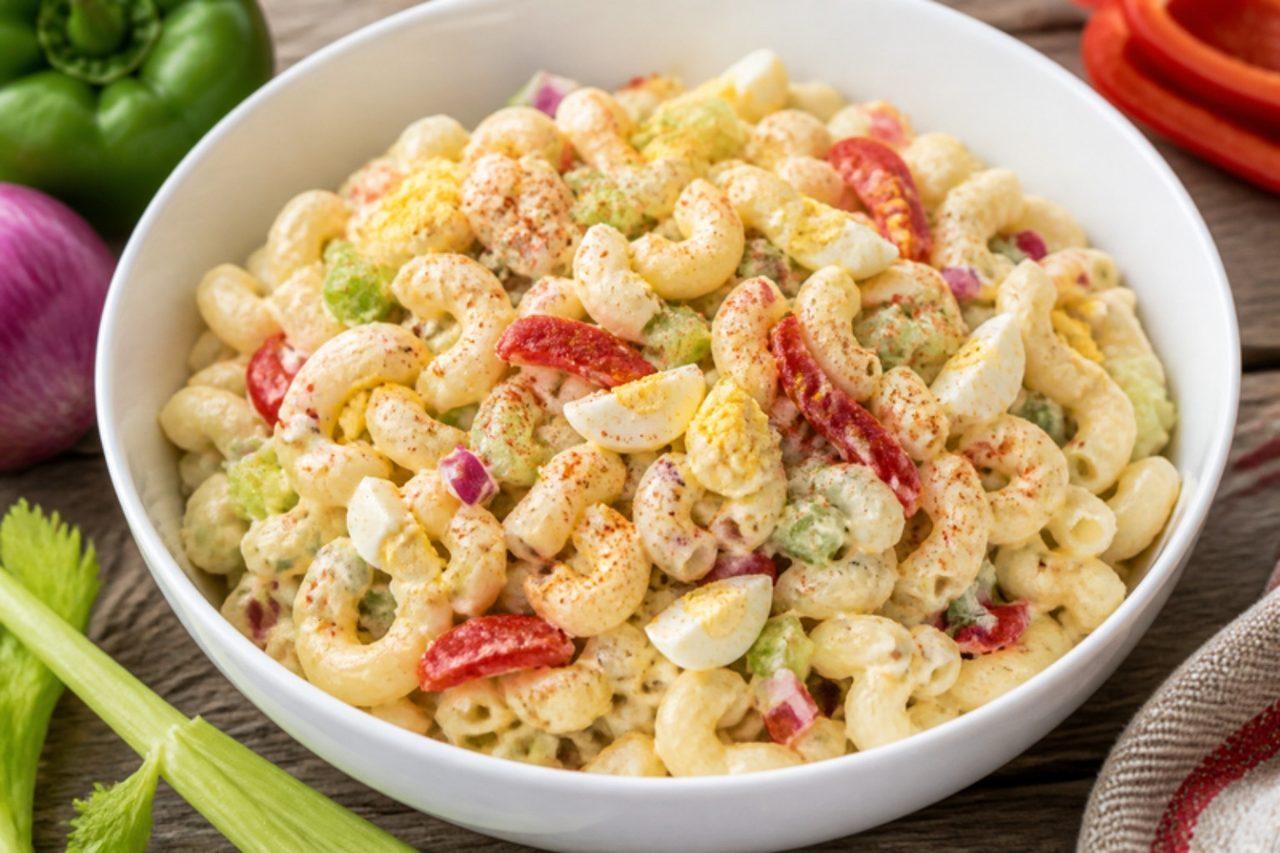
No Puerto Rican cumpleaños, baby shower or Thanksgiving-style family spread feels complete without a big bowl of coditos sitting next to the arroz con gandules. Elbow macaroni is folded through creamy mayonnaise with crunchy pepper, onion and celery, chopped hard-boiled egg and sweet pimientos, then chilled until the pasta drinks up the dressing. The common mistake is dressing the pasta piping hot, which makes the mayonnaise oily and split; let it cool first. Keep it in the fridge and don't leave it out in the sun for more than 2 hours. Chef's tip: toss the drained pasta with a splash of the pimiento liquid while it is still warm, so it is seasoned all the way through.

by KrazyBadal 0 views

Tahini cookies

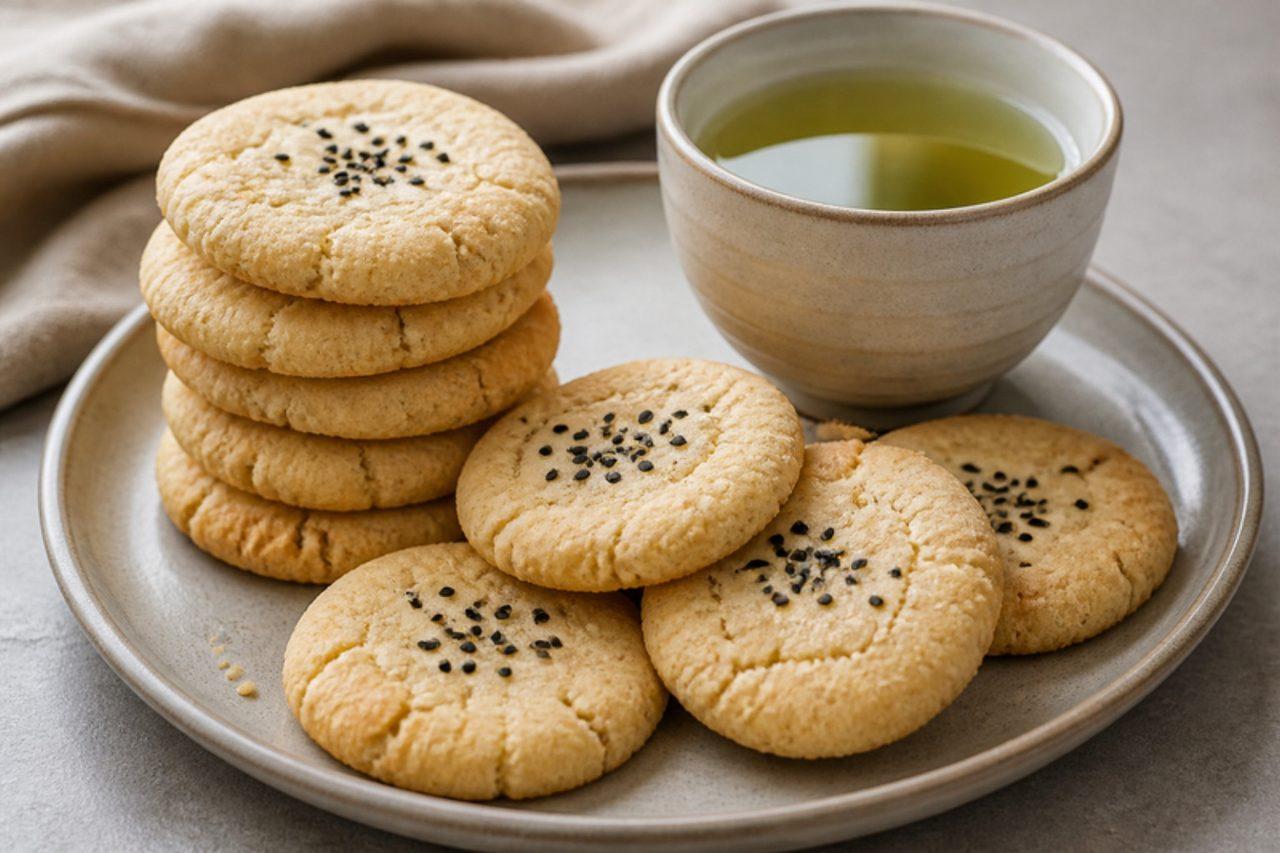
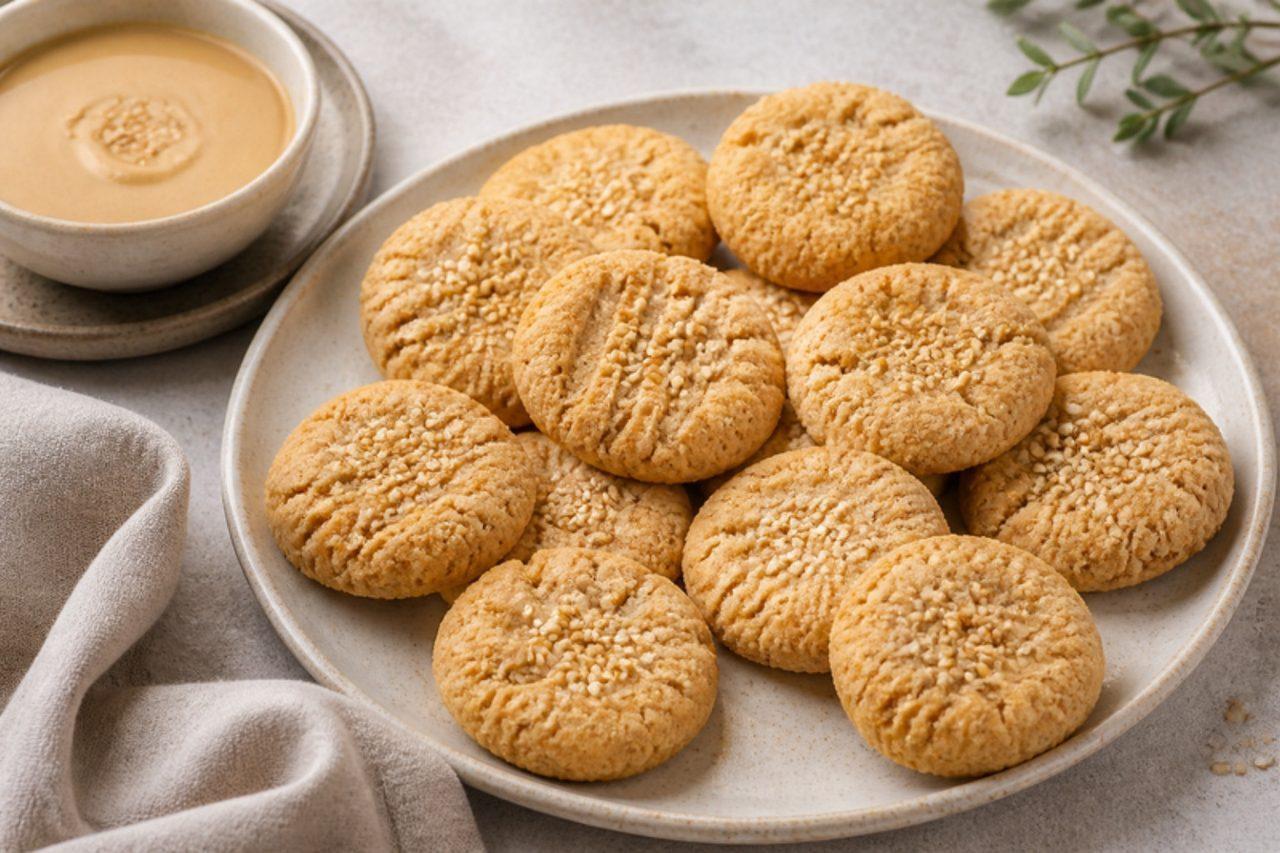
Every Israeli bakery and grandmother's biscuit tin has ugiyot tahini, little domed cookies that crumble and melt on the tongue with a deep, toasty sesame flavour. They are baked for Shabbat coffee, for guests dropping by in Haifa or Jerusalem, and as an easy dairy-free sweet to follow a meat meal. This version uses oil rather than butter, so it is vegan. The mistake is baking until they turn golden all over; they firm up as they cool and should leave the oven pale with just-coloured bases. Chef's tip: stir the tahini jar thoroughly first, since the oil separates and a dry spoonful from the bottom makes sandy, dry cookies.

by KrazyBadal 0 views

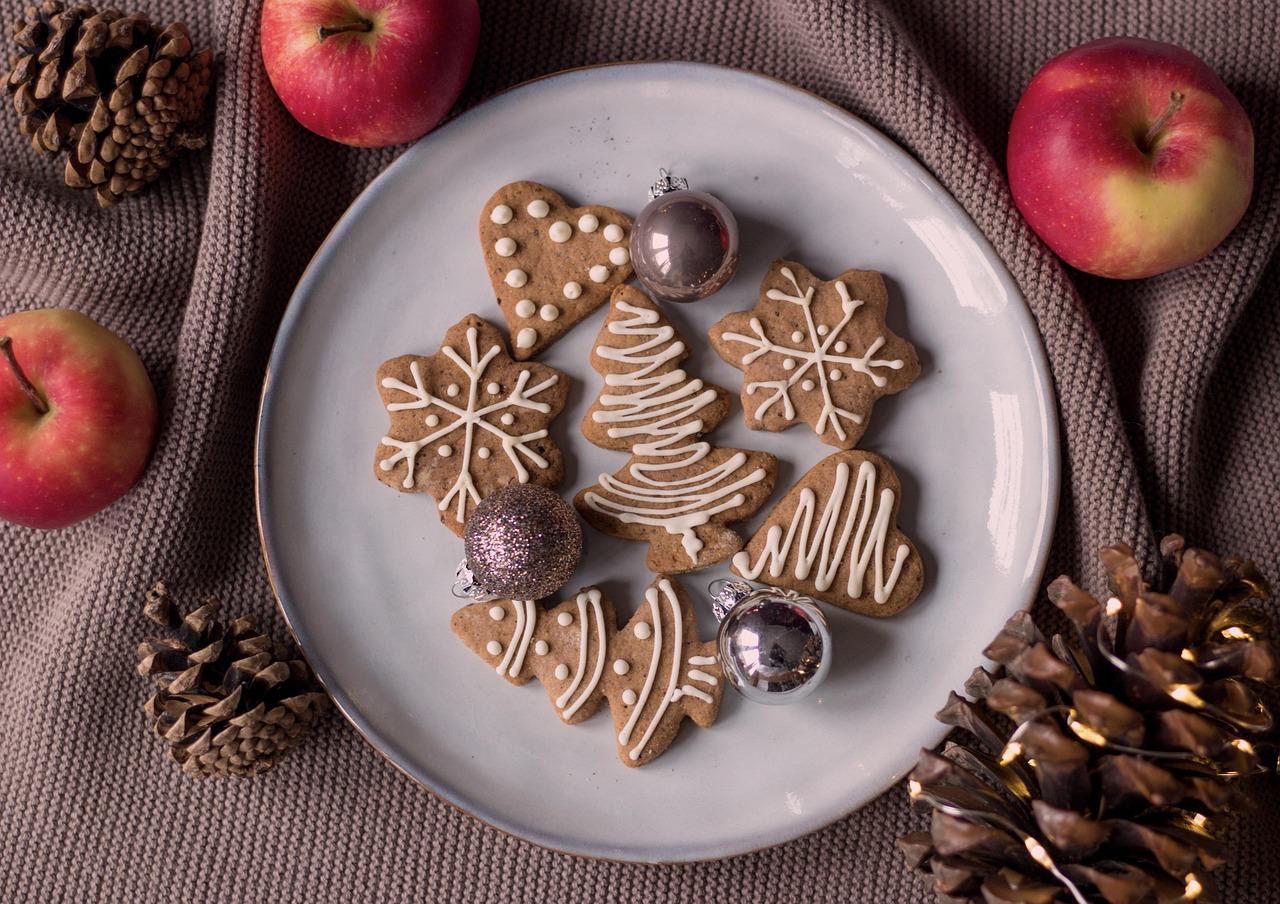
PepparkakorThin gingerbread biscuits

Pepparkakor, pepperkaker in Norway, are the thin, snappy spiced biscuits of the Scandinavian Christmas, cut into hearts, stars and pigs, hung on trees and eaten with glögg and blue cheese. Families make the dough in early December and bake through Advent; Swedish tradition says if you break a biscuit into three pieces with a press of your finger, you may make a wish. A common mistake is rolling the dough thick, which makes soft biscuits. Chef's tip: rest the dough overnight in the fridge, then roll it paper-thin, 2 mm, between sheets of baking paper.

by KrazyBadal 0 views

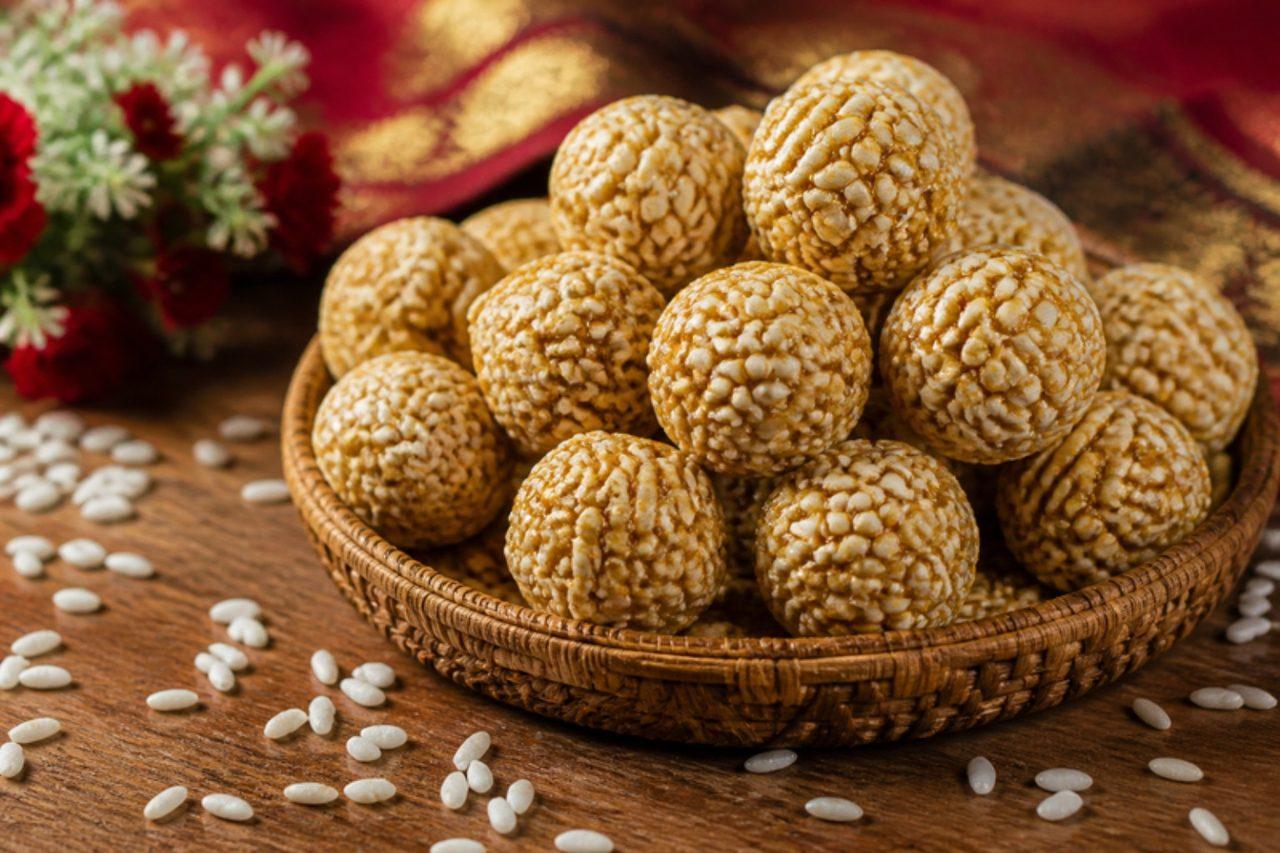
KasarPuffed rice and jaggery balls

Kasar is a sweet of good fortune: Bahun and Chhetri families in the hills make it by the basketful to send with a bride to her new home, to hand out at bratabandha thread ceremonies and to fill the Tihar plates. It is the simplest of sweets, puffed rice stirred into bubbling jaggery syrup flavoured with cardamom and pressed into balls while warm, sometimes with sesame, coconut or peanuts added, and it is crunchy, light and caramel-sweet. Children love making it because it is all about quick hands and a bowl of cold water. The pitfall is syrup that is not cooked far enough, which gives soft, sticky balls that collapse in a day. Chef's tip: test the syrup by dropping a little into cold water; when it sets into a firm ball that cracks if you squeeze it, it is ready.

by KrazyBadal 0 views

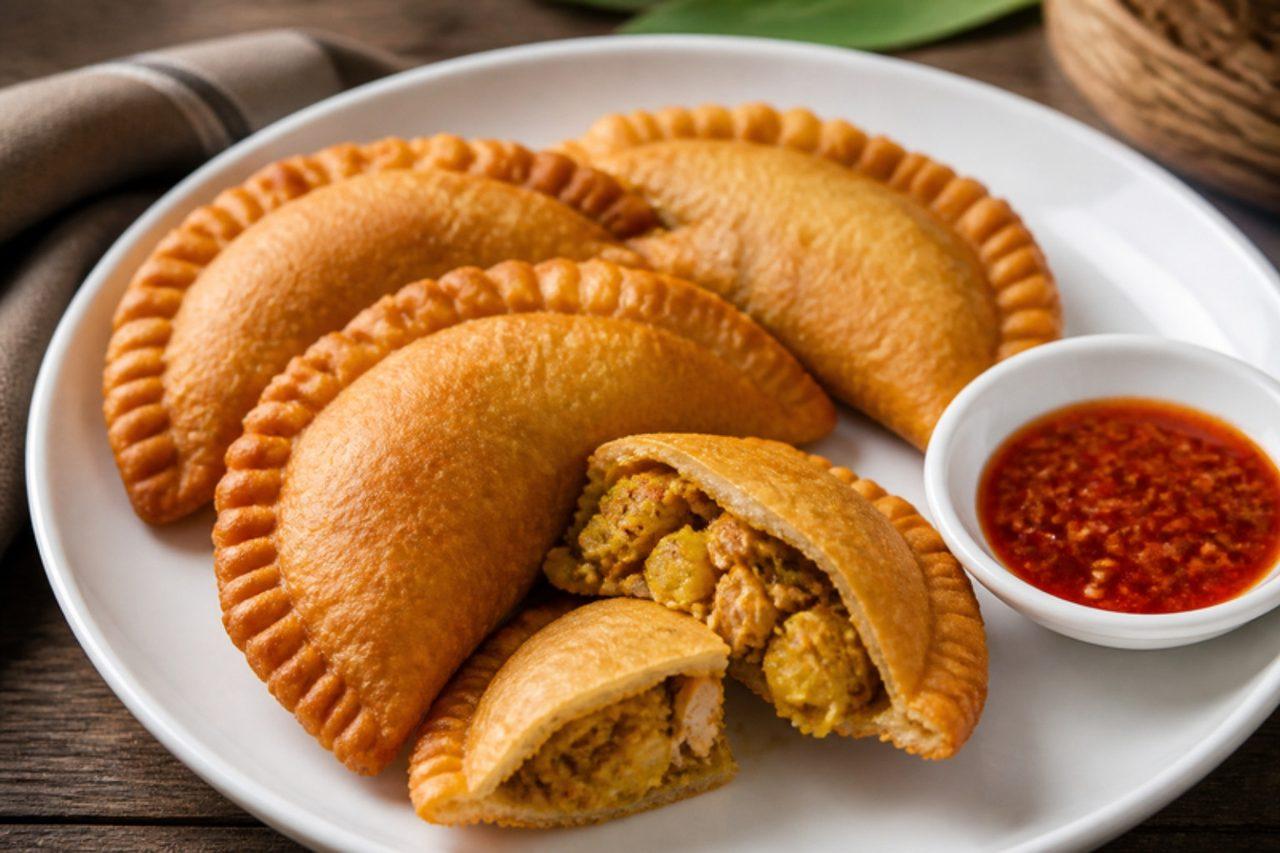
Sri Lankan patties

Patties are the short eat that marks a Sri Lankan celebration, made by the hundred for weddings, Avurudu New Year visits and Christmas open houses, and sold warm from bakeries in paper bags. The pastry is the clue to their identity: rich with butter, egg and coconut milk, rolled thin, folded into half-moons and crimped with a fork, then fried until blistered and flaky. Inside is a gently spiced mix of chicken, potato and leeks with a hint of cinnamon, and a vegetable filling of potato, carrot and leek is equally common when guests are vegetarian. It goes wrong when the filling is still warm when it meets the pastry, which then softens, tears and leaks in the oil. Chef's tip: rest the pastry in the fridge for half an hour before rolling, and press the edges with a fork dipped in flour so they seal firmly.

by KrazyBadal 0 views

Showing 48 of 236 recipes

Show more recipes

Page 3 of 10

More collections