


Skip to content
Zagorski štrukli
Featured recipe

Zagorski štrukli

Baked cheese dough rolls

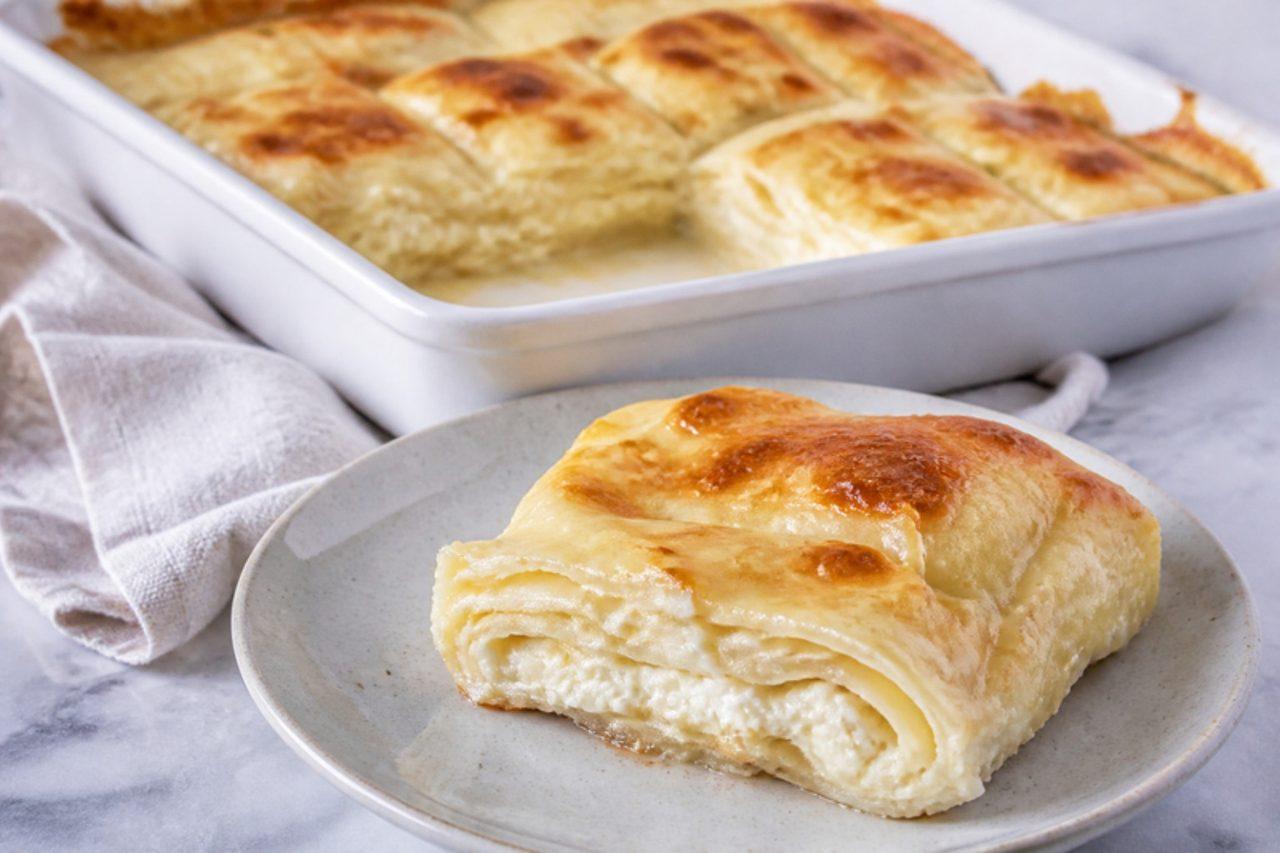
In Hrvatsko Zagorje, the green hill country north of Zagreb, štrukli are Sunday food: paper-thin dough is spread with fresh cow's cheese, rolled up, pinched into pieces with the edge of a plate, then boiled and finished in the oven under a blanket of cream. Zagreb restaurants serve them as a starter or a main, blistered golden on top and soft and custardy inside. The dough is stretched by hand over a tablecloth, which is easier than it sounds once it has rested. Chef's tip: squeeze the cheese if it is wet; a runny filling soaks the thin dough and makes the rolls tear when they boil.

Read more 0 views

What to eat today?

Around the world

Today's trip: Persian

A new country every day, from every cuisine on the site.

Persian

Ash-e doogh

Yogurt soup with rice and chickpeas 60 minMore from Persian (131) →

This week's collection

Kid-friendly dinners
537 recipes · a new collection every Monday

Latest recipes

Ají amarillo pasteYellow chilli paste

In Lima's markets ají amarillo is sold fresh all year, and most Peruvian cooks keep a tub of this paste in the fridge the way others keep tomato purée: it is the golden base of causa limeña, ají de gallina, papa a la huancaína, chupe and the sauce for tiraditos. The chillies are seeded, de-veined and blanched in three changes of water, which tames the heat and the raw grassiness, then peeled and blended with oil into a thick, silky, saffron-orange paste. It tastes fruity and sunny, almost like apricot and passion fruit, with a rounded, medium heat. Abroad, buy whole frozen ají amarillo from Latin grocers; dried ají mirasol, soaked, gives a darker, earthier paste. Common mistake: skipping the peeling; the thin skins leave papery flecks and a bitter edge. It is ready when it is completely smooth and holds a soft peak like thick hummus. This is a low-acid paste: keep it in the fridge for a week or freeze it, never on the shelf. Chef's tip: freeze it in an ice-cube tray; one cube is about a tablespoon, just right for a pot of ají de gallina.

by KrazyBadal 0 views

Cơm nắm muối vừngRice blocks with sesame salt

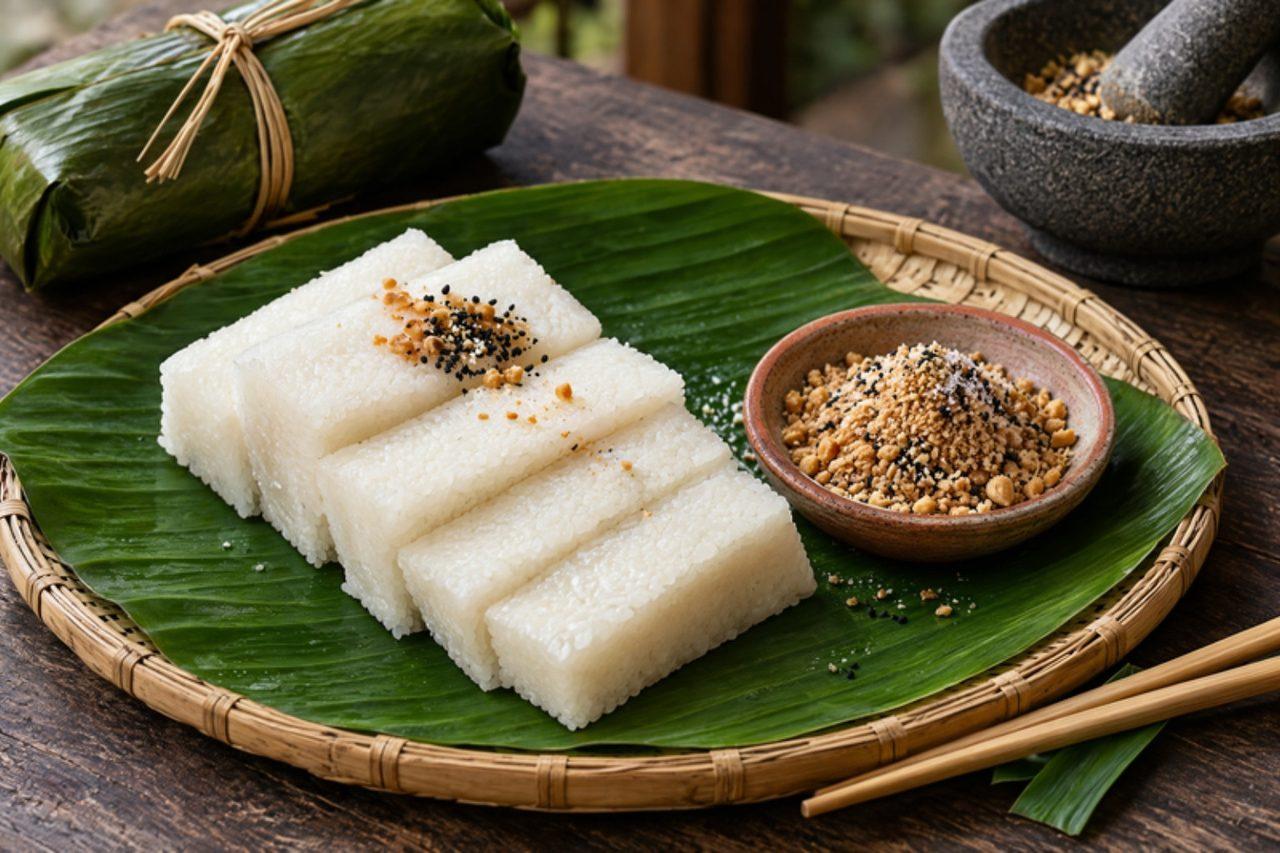
Before trains, buses and school trips, families in northern Vietnam press warm rice into firm, dense blocks and wrap them in banana leaf or paper with a twist of muối vừng, toasted sesame and peanut salt, for dipping. It is humble, filling and keeps its shape for a whole day's journey. Peanuts and sesame are both allergens. The common mistake is using cold or loose rice, which will not stick; it must be pressed hot. Chef's tip: mix a handful of sticky rice into ordinary jasmine rice before cooking, and the blocks hold together firmly without being gluey.

by KrazyBadal 0 views

Godamba rotiThin griddle flatbread

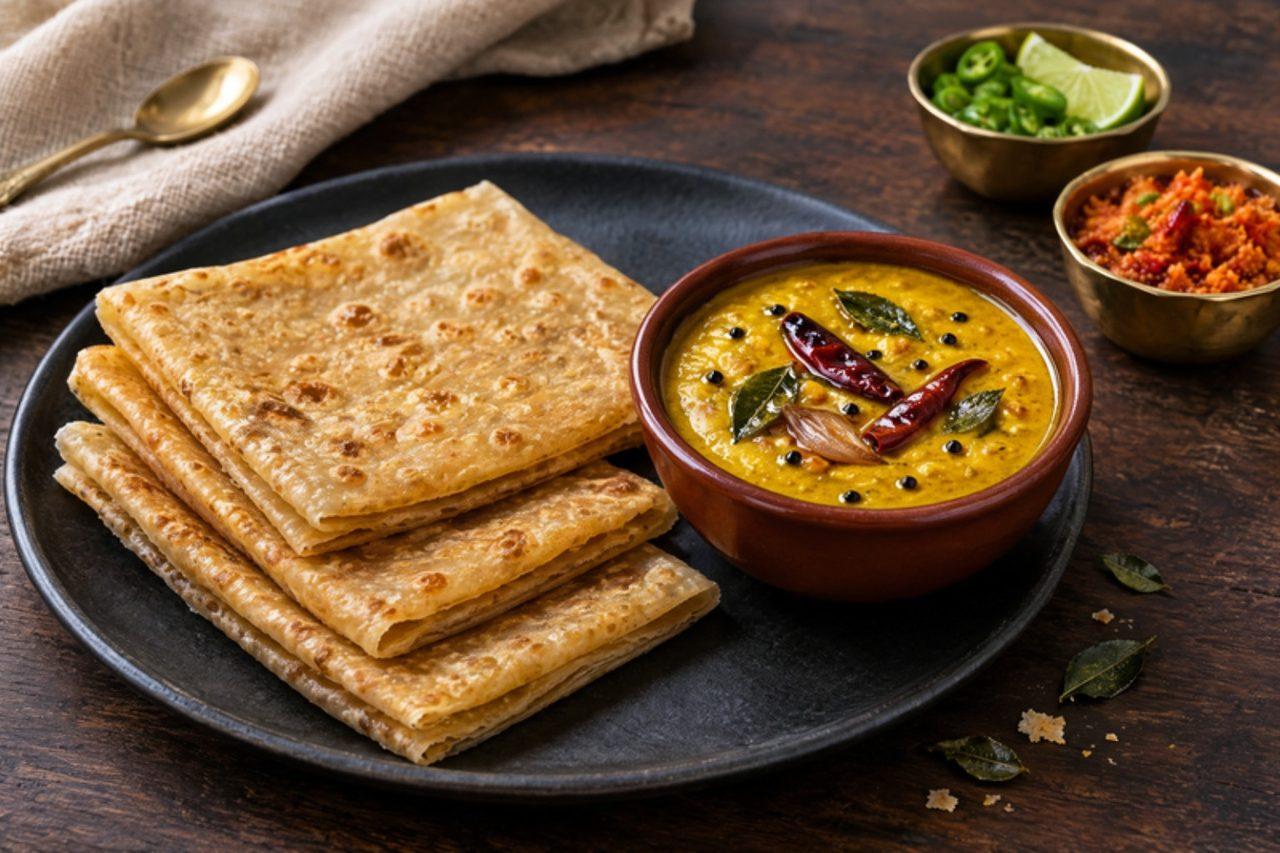
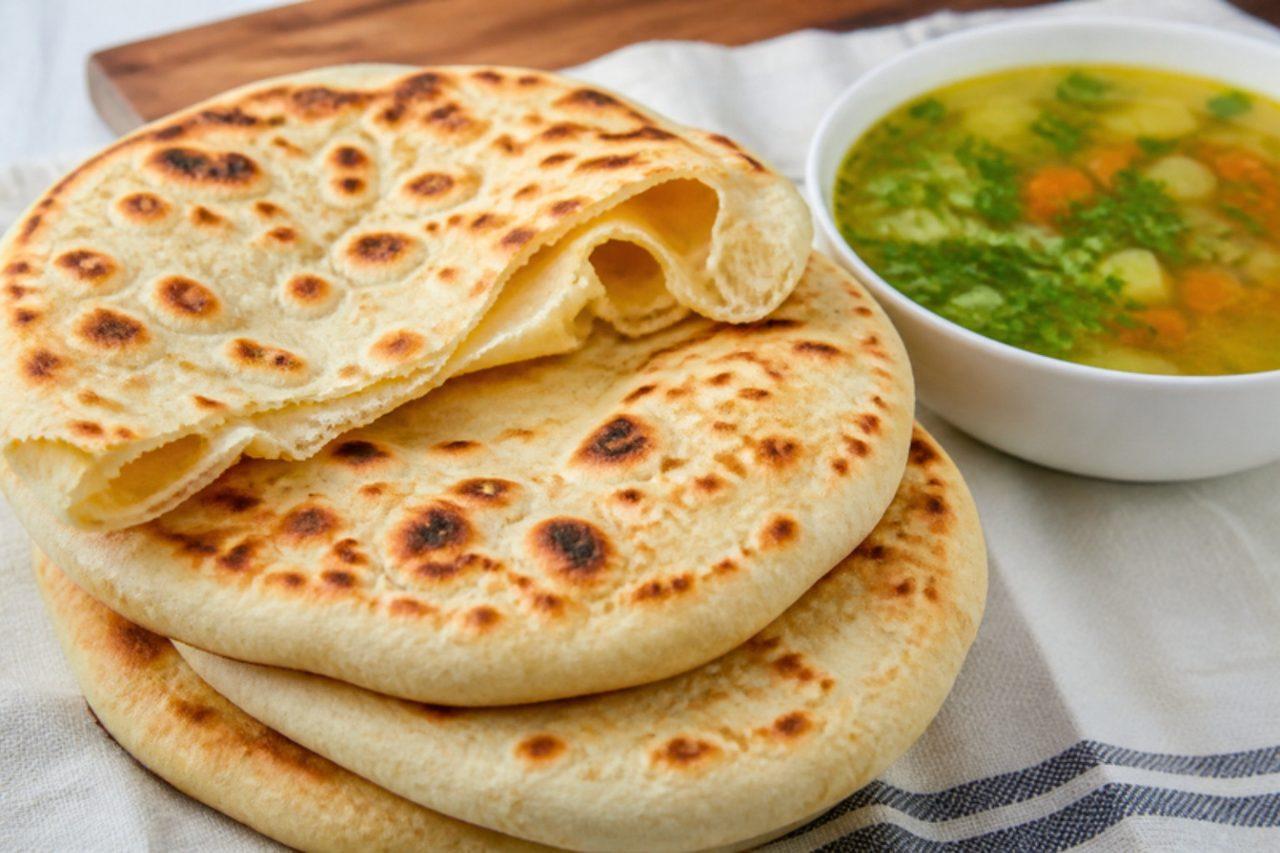
Walk down Galle Road through Wellawatte or Bambalapitiya in the evening and you hear the roti shops before you see them: one cook slapping balls of oiled dough into sheets so thin you can read through them, another clattering the kottu blades. That stretched sheet, folded into a square and cooked on the iron plate, is godamba roti, flaky and chewy, torn to scoop up dhal and chicken curry, or chopped up for kottu. Contains wheat. Chef's tip: rest the oiled dough balls for at least 2 hours; the gluten relaxes so the dough stretches thin without tearing.

by KrazyBadal 0 views

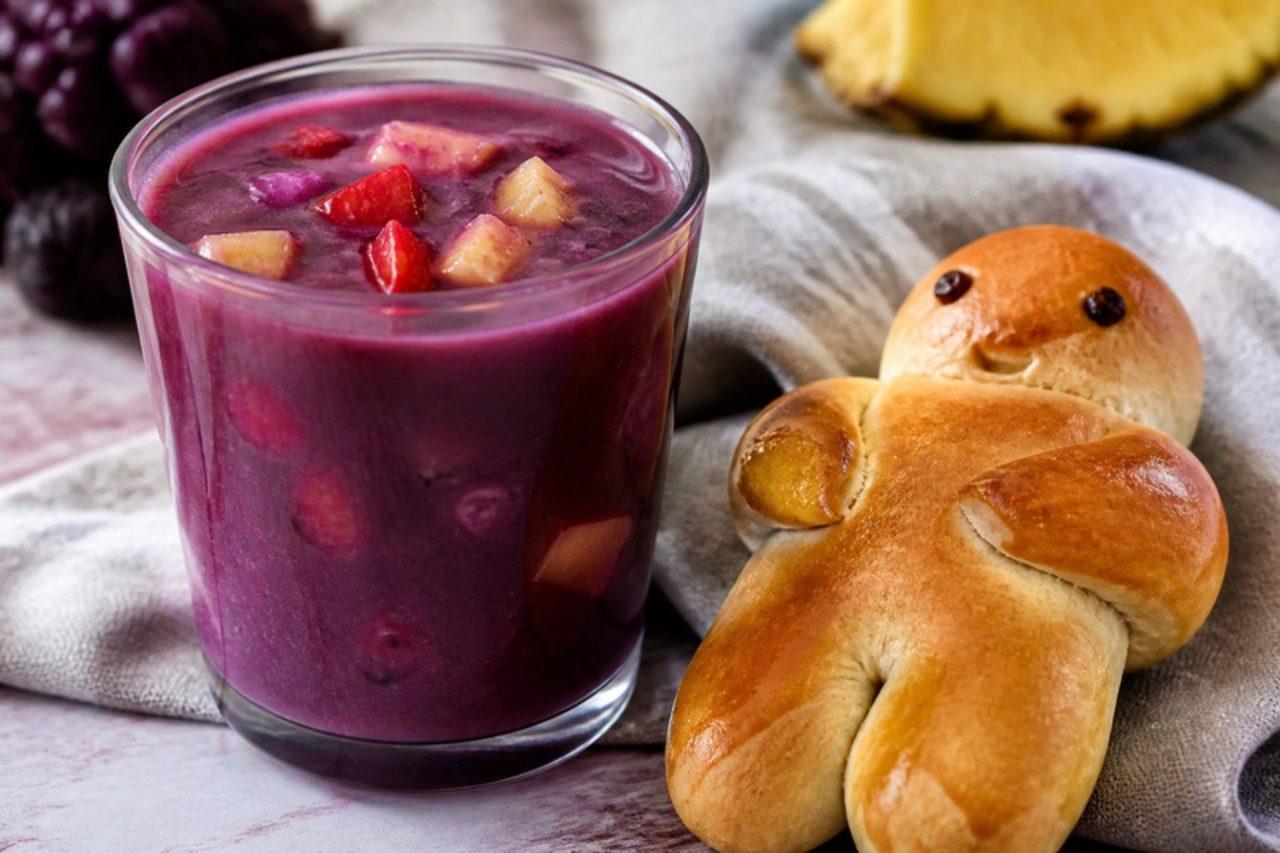
Colada moradaPurple corn and berry drink

Every year in the days before 2 November, the Día de los Difuntos, Quito's kitchens and bakeries fill with the smell of colada morada: a warm, spoon-thick drink of purple corn flour cooked with blackberries, blueberries, pineapple and a bundle of fragrant herbs and spices. It is deep violet, sweet-tart and full of chopped fruit, and it is always served with guaguas de pan, the bread babies, often shared with family at the cemetery. The most common mistake is stirring the corn flour straight into hot liquid, which makes lumps: whisk it into cold water first. Chef's tip: lemon verbena and lemongrass give the authentic perfume; if you can find naranjilla or a few orange leaves, add them to the spice pot too.

100 minAndeanDrinksVeganGluten free
by KrazyBadal 0 views

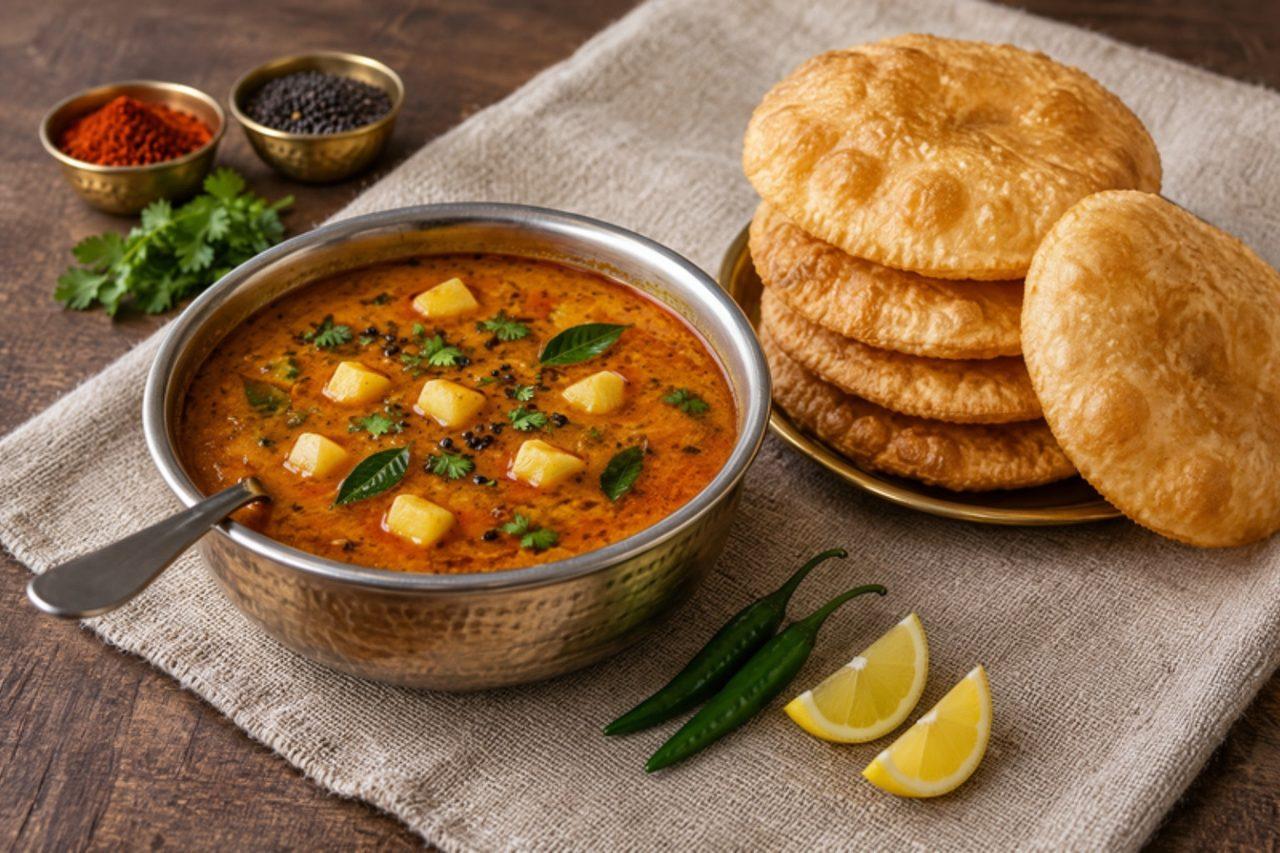
Batata nu rasawalu shaakPotato curry in thin gravy

Batata nu rasawalu shaak is the potato curry that arrives with hot puris at Gujarati wedding breakfasts, Sunday brunches and festival thalis, and it is one of the first curries children in Gujarat love. Soft potato chunks float in a thin, red, sweet-and-sour gravy with mustard seed, curry leaves and hing, lightly spicy and very comforting. Serve with puri, rotli or plain rice. The usual mistake is cutting the potatoes in uneven pieces, so some fall apart while others stay hard; cut them all the same size. Chef's tip: once the potatoes are cooked, mash a few against the side of the pan; the starch gives the rasa (gravy) body without any flour.

by KrazyBadal 0 views

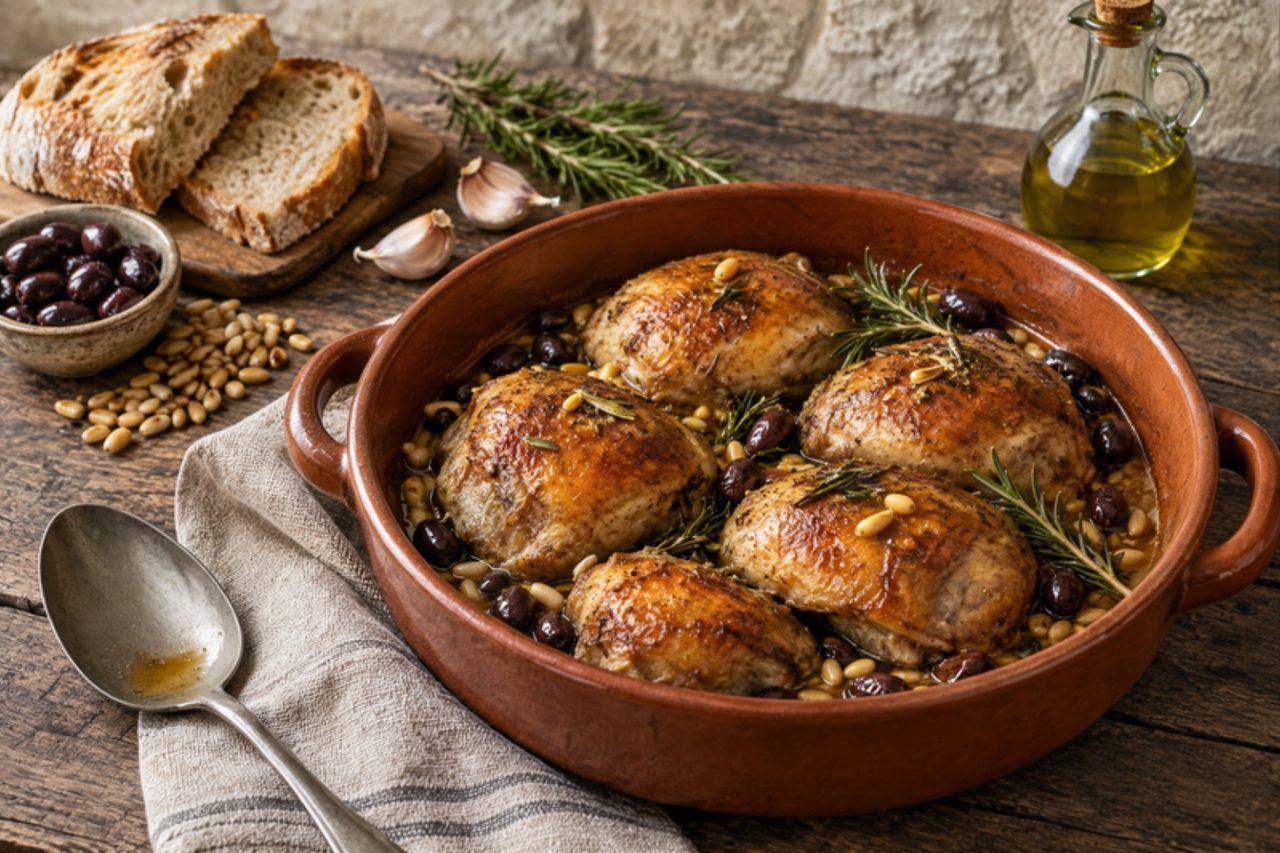
Coniglio alla ligureRabbit with olives and pine nuts

Coniglio alla ligure is the Sunday dish of the Ligurian hills behind Genoa and Imperia, where rabbits were raised in every farmyard and olives and pine nuts came from the slopes around the house. Rabbit pieces are browned in olive oil, splashed with white wine and braised with garlic, rosemary, thyme and bay, then finished with small black olives and toasted pine nuts until the sauce is glossy and fragrant. Serve with roast potatoes or bread. This recipe uses wine; for an alcohol-free version use 150 ml chicken stock with 1 tbsp white wine vinegar. The usual mistake is cooking the lean rabbit too fast, which makes it dry and stringy; keep the heat low and the pot covered. Chef's tip: ask the butcher for the liver and add it, chopped, for the last 5 minutes to enrich the sauce.

by KrazyBadal 0 views

Bol renverséUpside-down rice bowl

Order a bol renversé in a Port Louis canteen or a Grand Baie food court and it arrives as a neat dome of rice with a fried egg perched on top; break into it and a glossy stir-fry of chicken, prawns, mushrooms and Chinese leaves spills out. The trick is building it backwards in a bowl, egg first, then the stir-fry, then rice packed down, before flipping it onto a plate. The sauce should be thick enough to coat the vegetables but loose enough to soak into the rice. People often make the sauce too thin and the dome slides apart in a flood, so simmer it until it glazes the back of a spoon. Chef's tip: fry the eggs only until the whites are set and the edges are crisp, and lay them yolk-side down in the bowl so the yolk faces up and stays runny when you turn it out.

by KrazyBadal 0 views

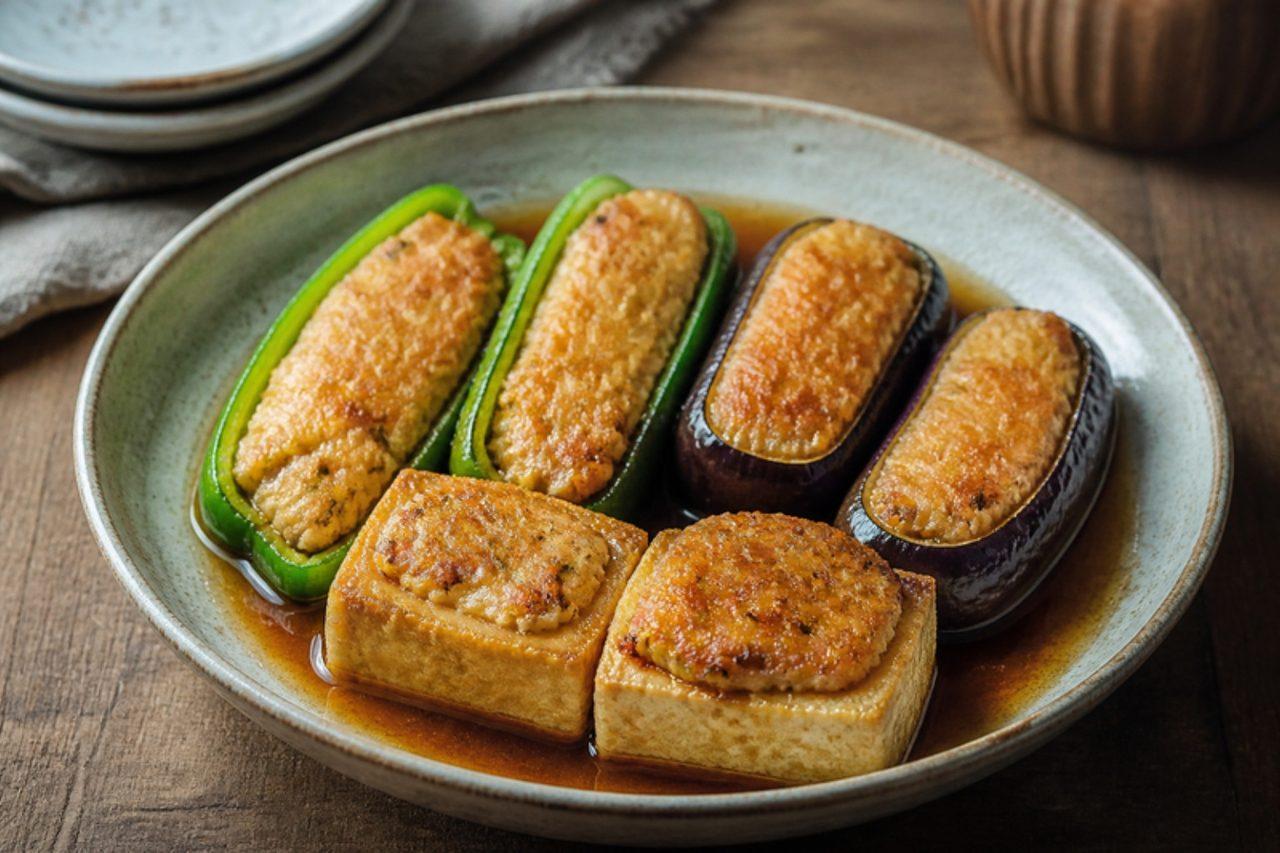
Stuffed three treasures with fish paste

Walk past the street stalls of Mong Kok or Sham Shui Po in the afternoon and you will smell jin yeung saam bou sizzling on wide griddles: chunks of green pepper, aubergine and tofu, each pressed full of bouncy white fish paste and fried until golden, then splashed with a little soy or a glossy oyster sauce gravy. People point at the pieces they want, take them in a paper bowl with a bamboo skewer and eat them while walking; at home they become a side dish with rice. The fish paste should be springy, the vegetables soft, the tofu creamy. The trap is wet vegetables: unless you dust the cut sides with cornflour first, the paste slides straight off in the pan. Chef's tip: slap the fish paste against the bowl for a few minutes; it gets bouncier the more you work it.

by KrazyBadal 0 views

Bajan pumpkin fritters

Barbadian grandmothers turn leftover boiled pumpkin into these little fritters for Sunday tea, frying spoonfuls of a soft, spiced batter until puffed and golden, then rolling them in sugar while still hot. Inside they are tender and custardy, with cinnamon, nutmeg and a hint of vanilla. They're best eaten warm, straight from the paper towel. The common mistake is a watery batter from wet pumpkin, which makes flat, greasy fritters: drain the cooked pumpkin well. Chef's tip: use the dense, orange West Indian pumpkin or butternut squash; watery jack-o'-lantern pumpkins don't work well.

by KrazyBadal 0 views

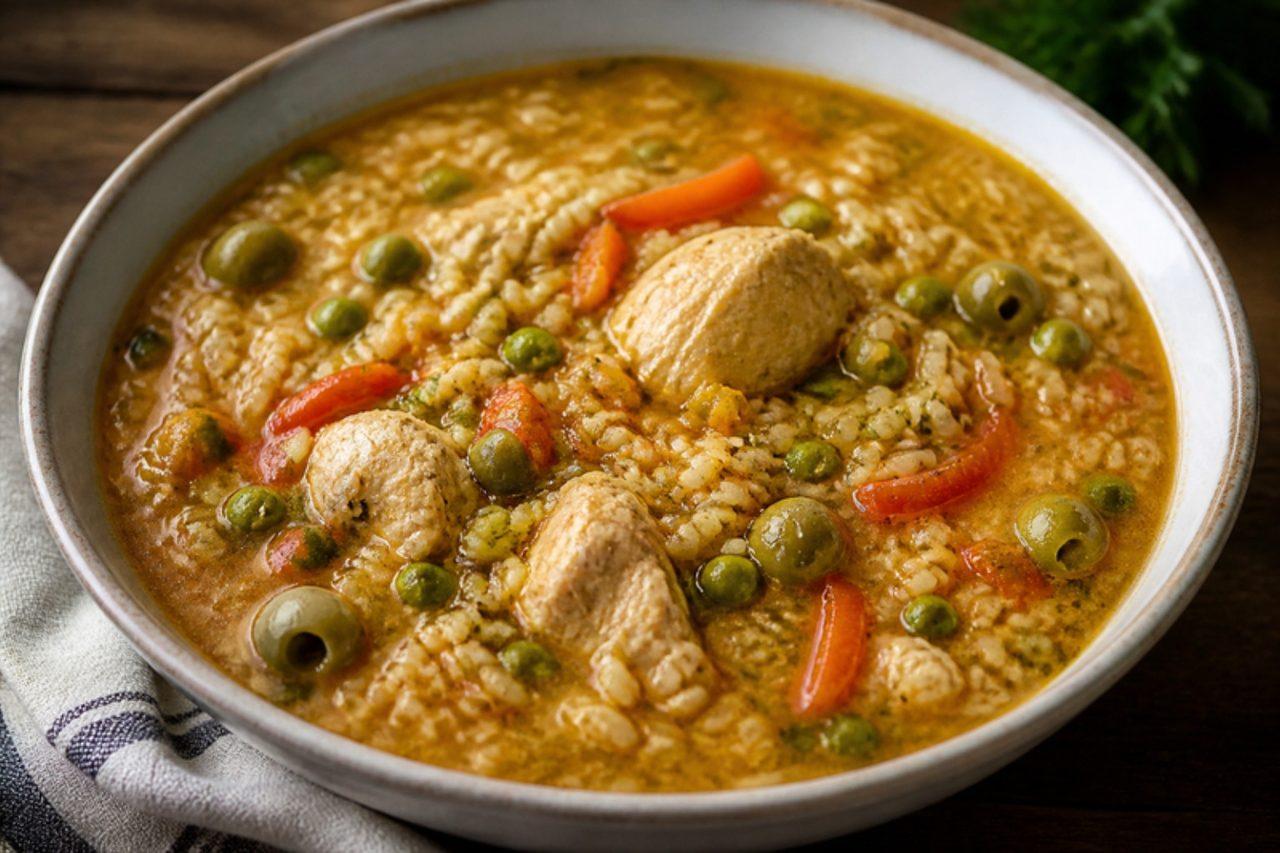
Asopao de polloSoupy chicken and rice

Somewhere between a soup and a risotto, asopao is the pot Puerto Rican mothers put on for a rainy Sunday, a cold, or a hangover after a long party night, and it is spooned straight from deep bowls with tostones on the side. Bone-in chicken is seasoned with garlic, oregano and lime, simmered in a sofrito broth, then rice goes in until the whole pot turns thick and brothy, finished with olives, capers, peas and strips of roasted pepper. The common mistake is making it ahead: the rice keeps drinking the broth and turns stodgy, so cook it just before eating, or keep extra stock to loosen leftovers. Chef's tip: take the pot off the heat while the rice is still a touch firm; it carries on cooking in the bowl.

by KrazyBadal 0 views

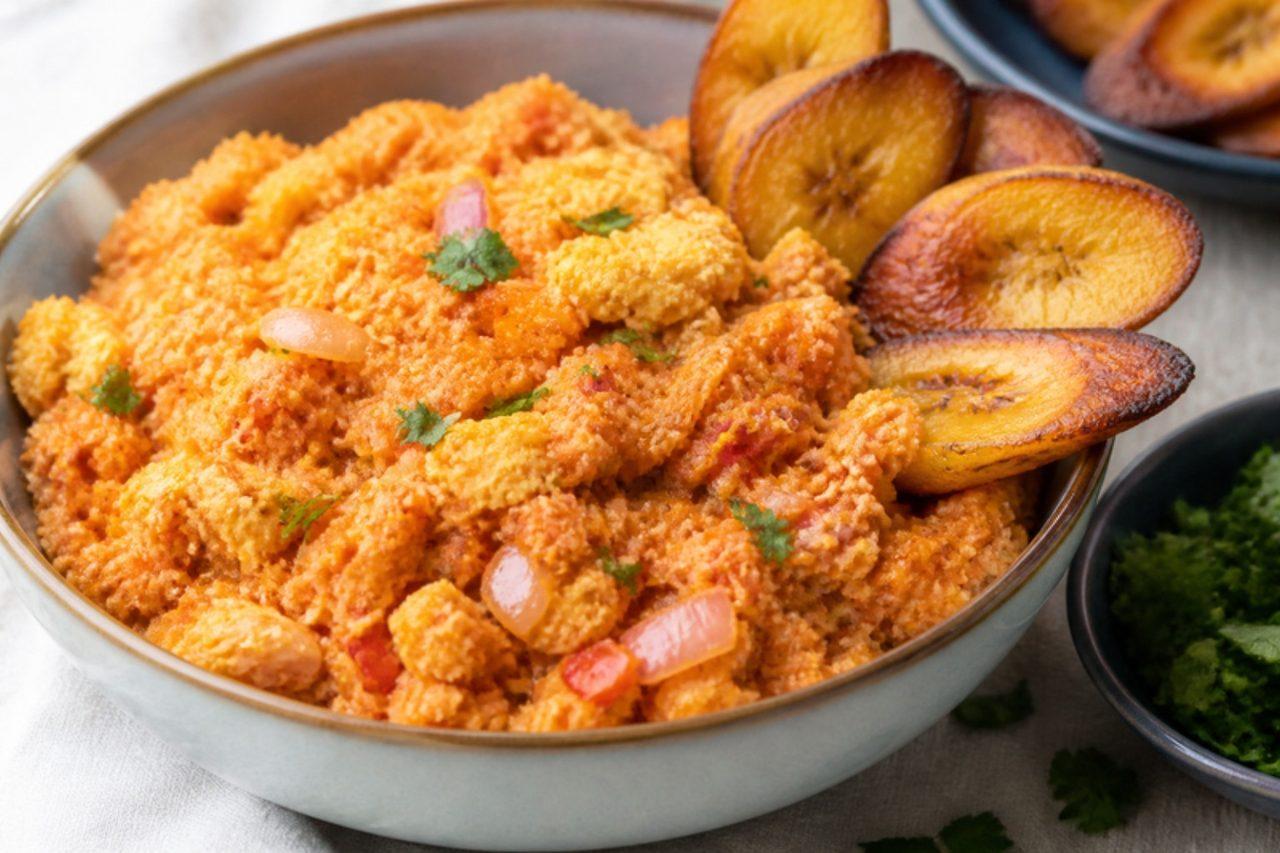
Gari fotoGari with tomato and egg

Gari foto is Ghanaian fast home cooking at its best, most associated with the Volta Region but made in student hostels everywhere: a quick tomato and onion sauce, eggs scrambled into it, then gari folded through until it soaks up the juices and becomes moist and fluffy. It is savoury, slightly tangy and comforting, and it is eaten with fried ripe plantain or avocado on the side. Many cooks add tinned sardines or corned beef; this egg version is vegetarian. The common mistake is adding gari dry, which makes it sandy and heavy, so sprinkle it with water first. Chef's tip: take the pan off the heat before folding in the gari, so it absorbs the sauce gently without sticking.

by KrazyBadal 0 views

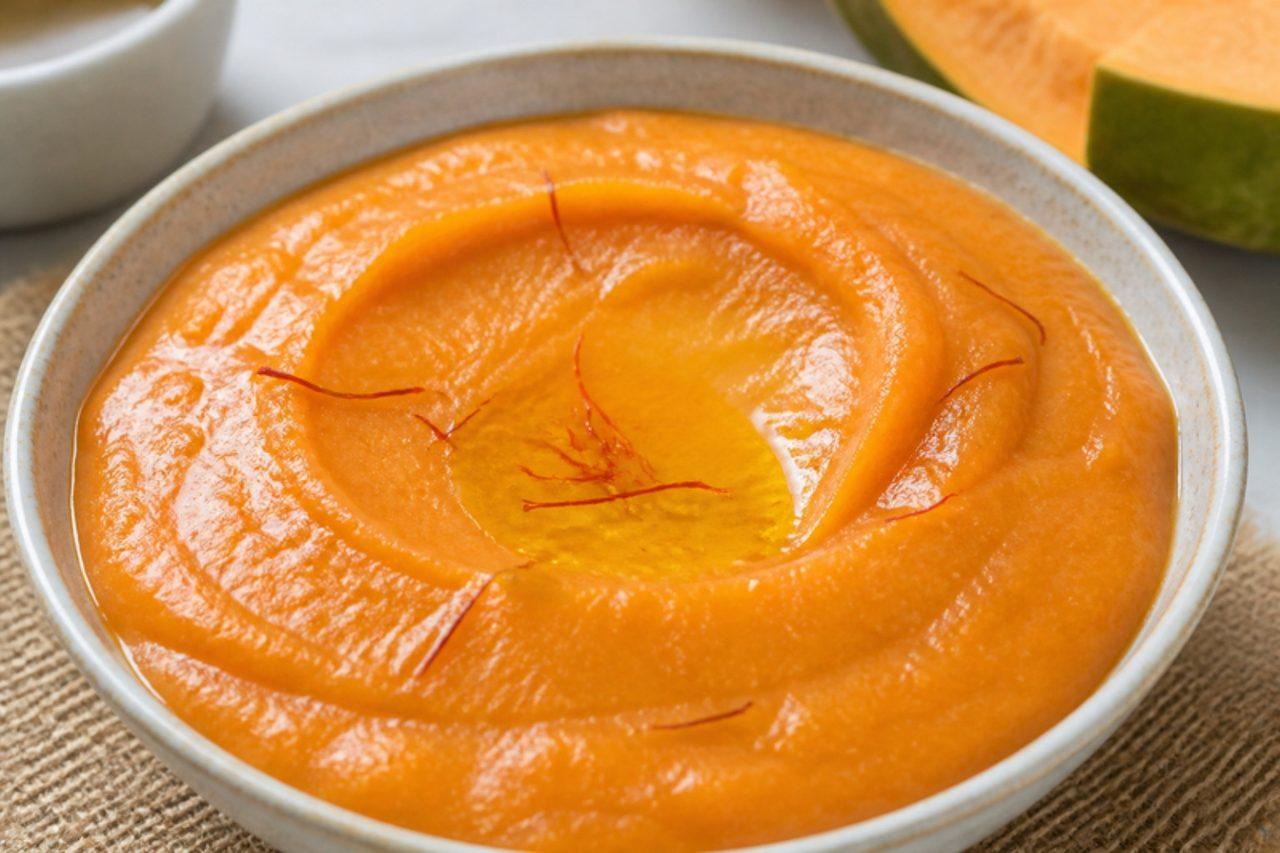
Aseedat bobarPumpkin pudding with ghee

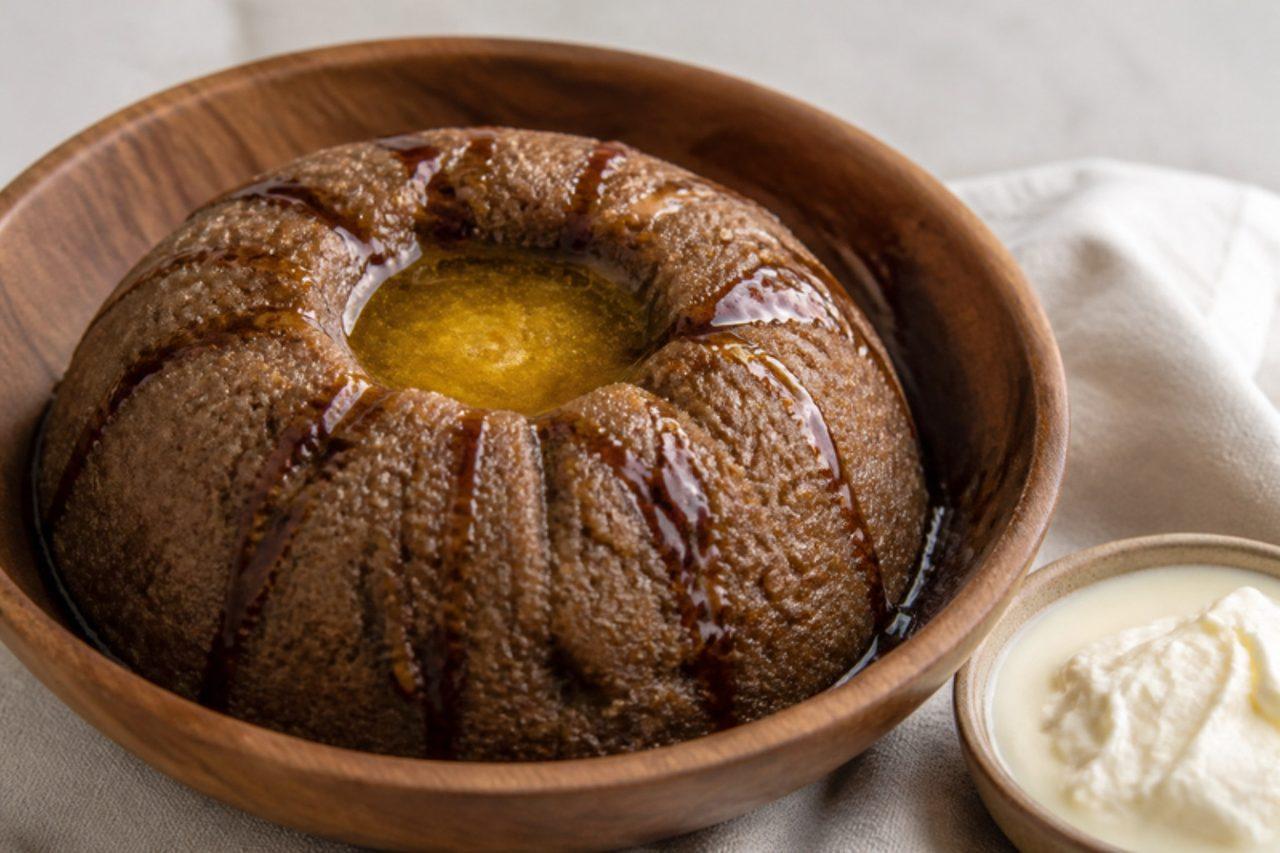
In Doha and Kuwait City, aseedat bobar arrives on winter evenings and at Ramadan iftar in a shallow dish, smooth and orange, with a little pool of melted ghee in the centre. Bobar is the Gulf word for red pumpkin, cooked down and thickened with toasted flour, sugar and cardamom into a soft, spoonable sweet that tastes a bit like a spiced pumpkin pie filling. Scoop it warm with a spoon or with pieces of bread, alongside Arabic coffee. Stopping the stirring too soon is the usual mistake: the pudding must cook until it pulls away from the sides, or it tastes of raw flour. Chef's tip: toast the flour in a dry pan until it smells like biscuits before it goes in; that nutty note is what makes it.

by KrazyBadal 0 views

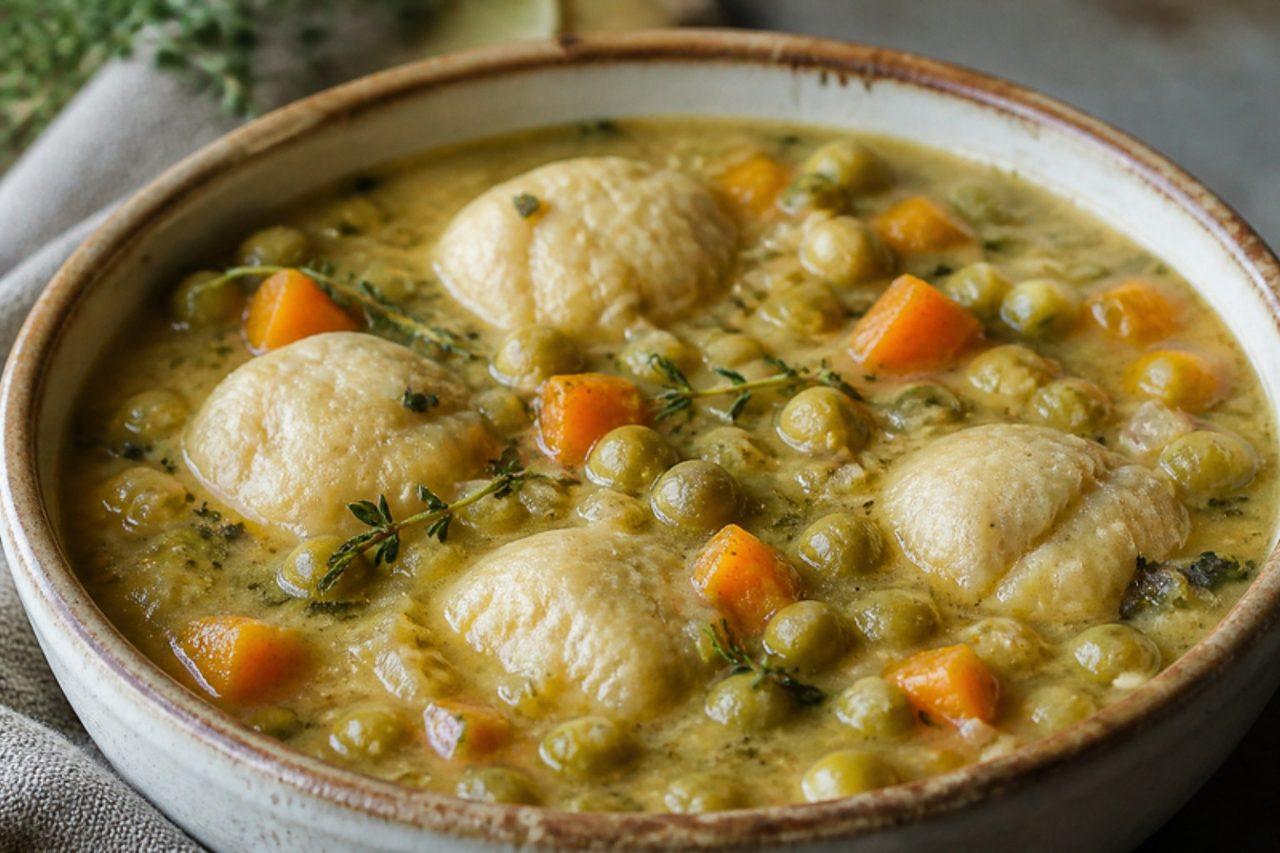
Jamaican gungo pea soup

Gungo peas ripen around December, so this soup belongs to the Christmas season in Jamaica, when the same peas also go into the festive rice and peas. Fresh or frozen green pigeon peas give a nutty, earthy broth that coconut milk, thyme and pumpkin turn rich and golden, and flour dumplings make it a meal. A common mistake is boiling the coconut milk hard for the whole time, which makes it split and oily; add it once the peas are soft and keep the pot at a simmer. Dried pigeon peas work too: soak them overnight and allow an extra 40 minutes. Chef's tip: blitz about a quarter of the soup and stir it back in for body while keeping plenty of whole peas.

by KrazyBadal 0 views

Burmese pumpkin curry

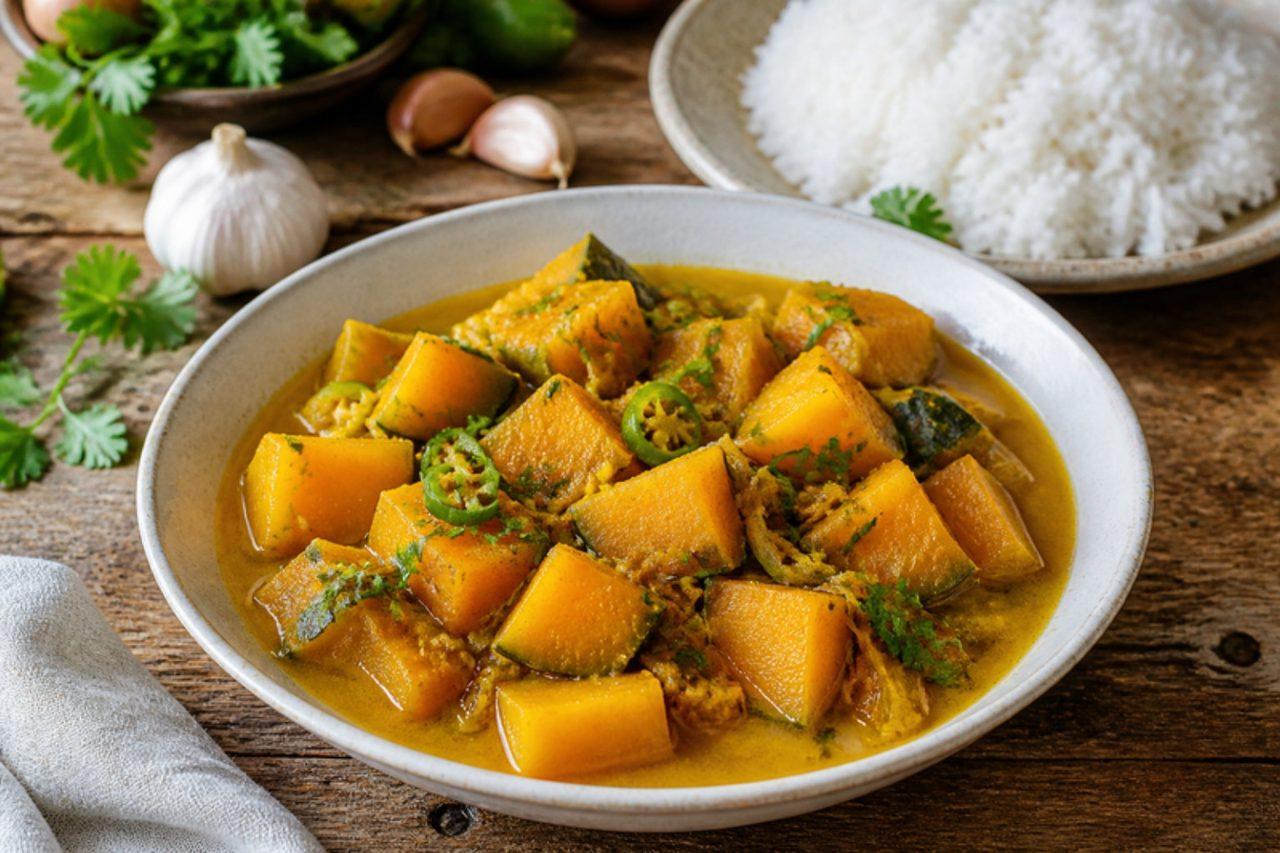
On a weekday lunch table in a Yangon home, this soft orange curry usually sits beside a sour leaf soup, a plate of boiled greens and a mound of plain rice. Wedges of pumpkin are cooked slowly in a pounded paste of onion, garlic and ginger with turmeric and chilli, until the flesh turns tender and glossy and the oil rises to the top, the sign of a well-made Burmese hin. It tastes sweet, gently hot and savoury all at once; many households stir in dried shrimp, but this version keeps it plant-based with a little salt and sugar. Where cooks go wrong is stirring the pot every few minutes: the pumpkin breaks into mash, so shake the pan instead. Chef's tip: leave the skin on a firm, dense pumpkin such as kabocha; it holds the pieces together and softens enough to eat.

by KrazyBadal 0 views

SalufPuffy flatbread

Saluf is the everyday bread of Yemenite Israelis, slapped onto a hot pan or taboon in Rosh HaAyin and Sha'arayim in Rehovot and eaten with marak temani, hilbe and zhug. It is soft and blistered, thicker than pita and with no pocket, made to tear and dunk. Home cooks often roll it too thin, which gives a cracker; it should be about 1 cm thick so it stays pillowy. Chef's tip: cook it under a lid on a very hot dry pan for the first minute, which traps steam and puffs it the way a taboon does.

by KrazyBadal 1 views

Asun peppered goatPeppered grilled goat

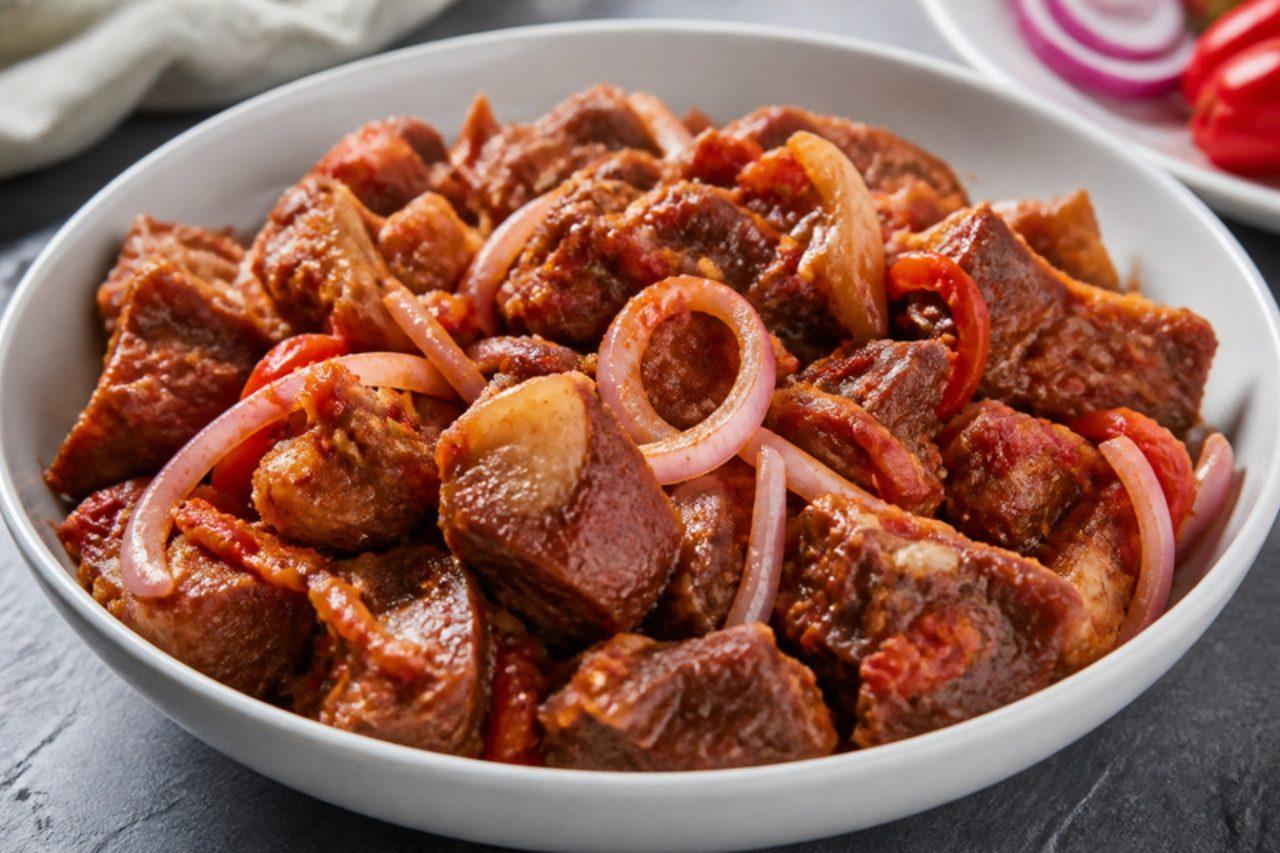
Asun started in Ekiti, where goat was roasted whole over an open fire, and it has become the star of Lagos owambe parties and Friday evenings at the bar. Skin-on goat is boiled with seasoning until just tender, grilled until smoky and charred at the edges, chopped into bite-size pieces, then tossed in a hot sauce of scotch bonnet, onion and a little oil. It is chewy in a good way, smoky and very spicy, eaten on its own, with jollof rice or with cold drinks. Cook the goat until tender and no pink remains. Chef's tip: dry the boiled goat well before grilling; wet meat steams and never takes on the charred, smoky flavour that makes asun.

by KrazyBadal 0 views

GarnaalkrokettenGrey shrimp croquettes

Along the Flemish coast, from De Panne to Knokke, the North Sea grey shrimp is king, and garnaalkroketten are the dish every seaside restaurant is judged by: a molten, creamy shrimp-flavoured béchamel packed with little brown shrimps, set firm, crumbed and fried until golden, served with fried parsley and lemon. In Oostduinkerke, shrimp fishers on horseback still drag their nets through the shallows. A common mistake is a béchamel that isn't thick enough, so the croquettes burst in the oil. Chef's tip: make a strong shrimp stock from the shells, if you have them, for the béchamel, and chill the mix overnight so it is firm to shape. The shrimp are already cooked; fry until golden and hot through.

by KrazyBadal 0 views

Asa tibsFried tilapia pieces

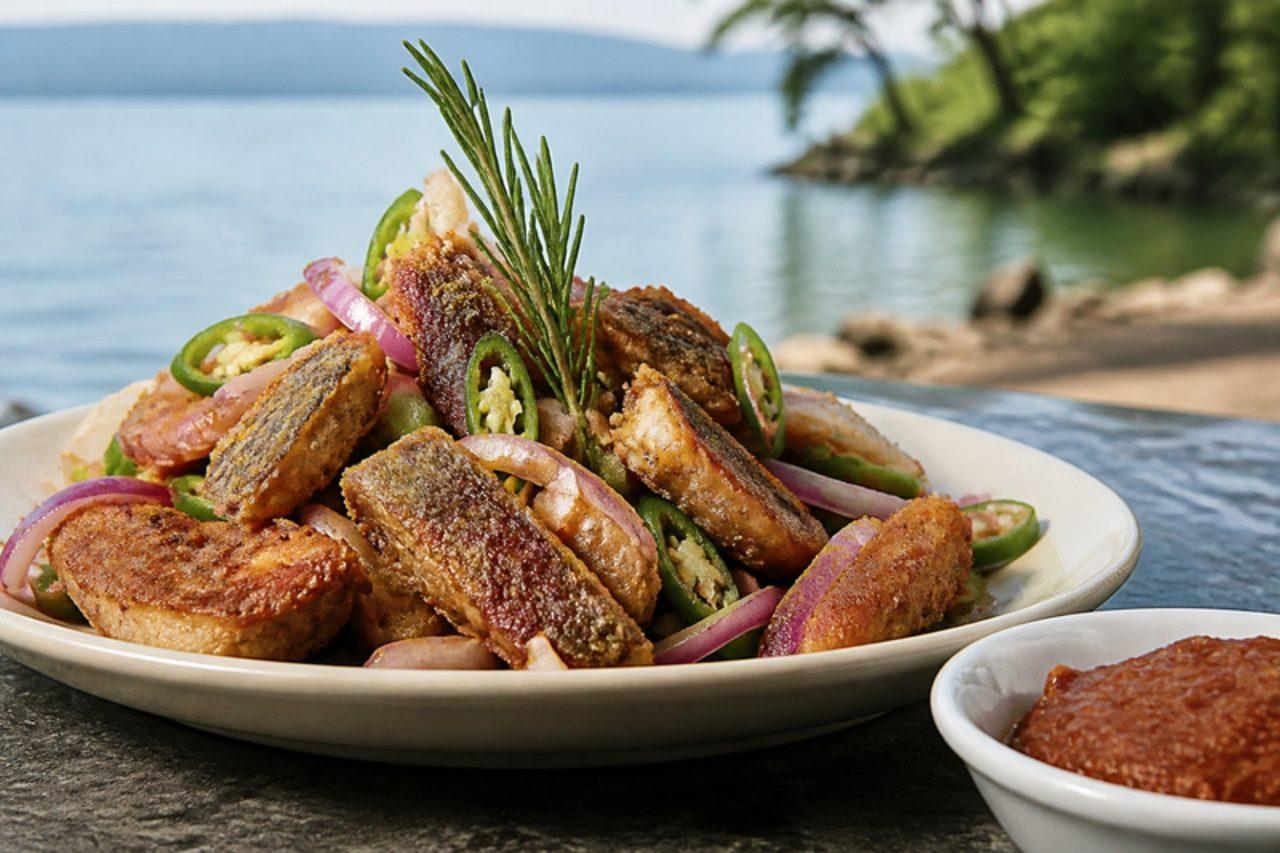
Down by the fish market on the shore of Lake Hawassa, cooks fry tilapia straight from the boats and serve it with injera, bread and a fiery dip, and asa tibs is the version you can easily make at home. Bite-sized pieces of fillet are dusted, fried until crisp and golden, then tossed briefly with soft onion, green chilli and a spoon of awaze, so the fish is crunchy outside, flaky and sweet inside, and coated in a spicy glaze. It is a favourite on fasting days for people who eat fish, and quick enough for a weeknight. Chef's tip: leave each piece undisturbed until it releases from the pan by itself; moving fish too early is the common mistake, and it tears the coating and breaks the flesh.

by KrazyBadal 0 views

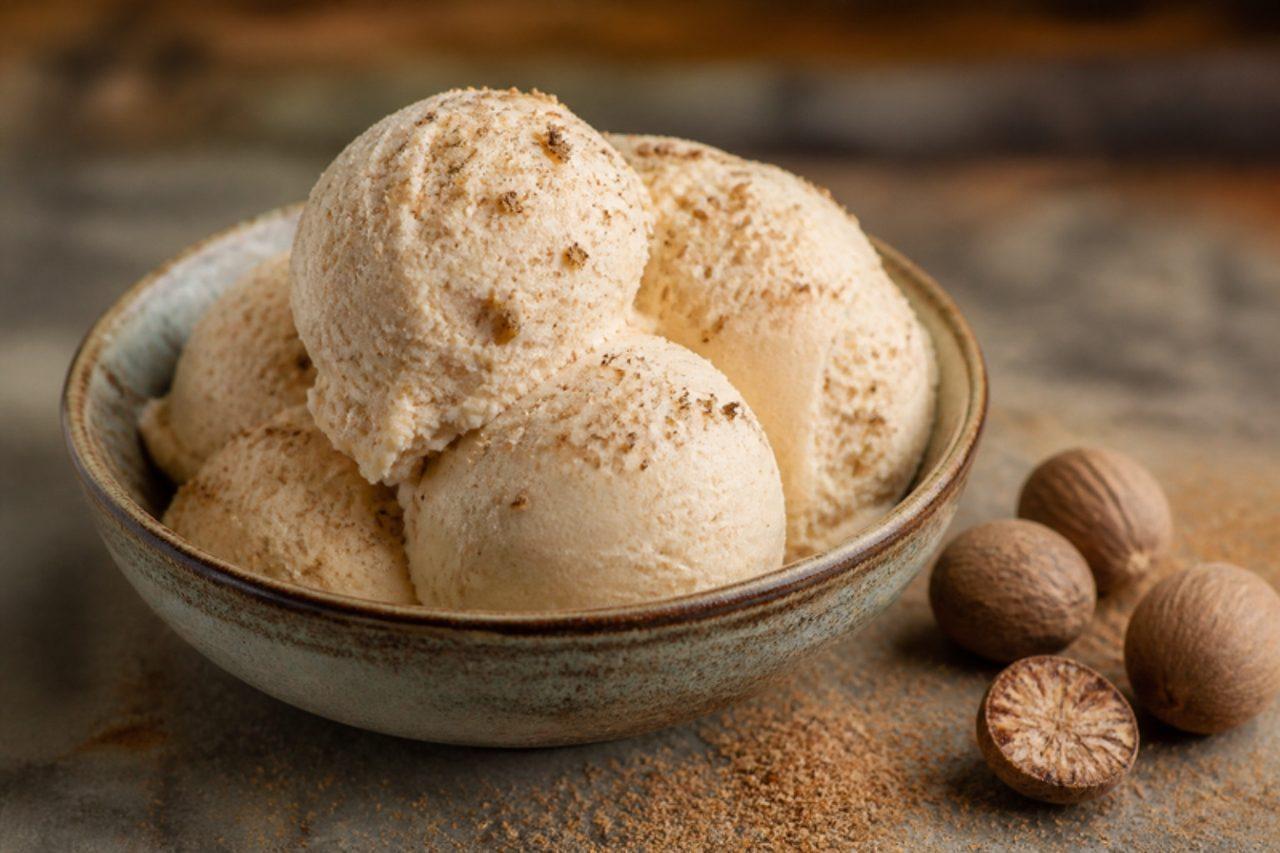
Grenadian nutmeg ice cream

Grenada, the Spice Isle, grows much of the world's nutmeg, and in St George's ice cream parlours the local favourite is a rich egg-custard ice cream scented with freshly grated nutmeg. The flavour is warm and almost floral, nothing like the dusty jar spice, and it is lovely with fried plantain or a slice of black cake. The common mistake is overheating the custard so the eggs scramble; take it off the heat as soon as it coats a spoon. Chef's tip: grate the nutmeg straight into the hot milk and let it steep for 20 minutes before making the custard, so the flavour runs all the way through.

by KrazyBadal 0 views

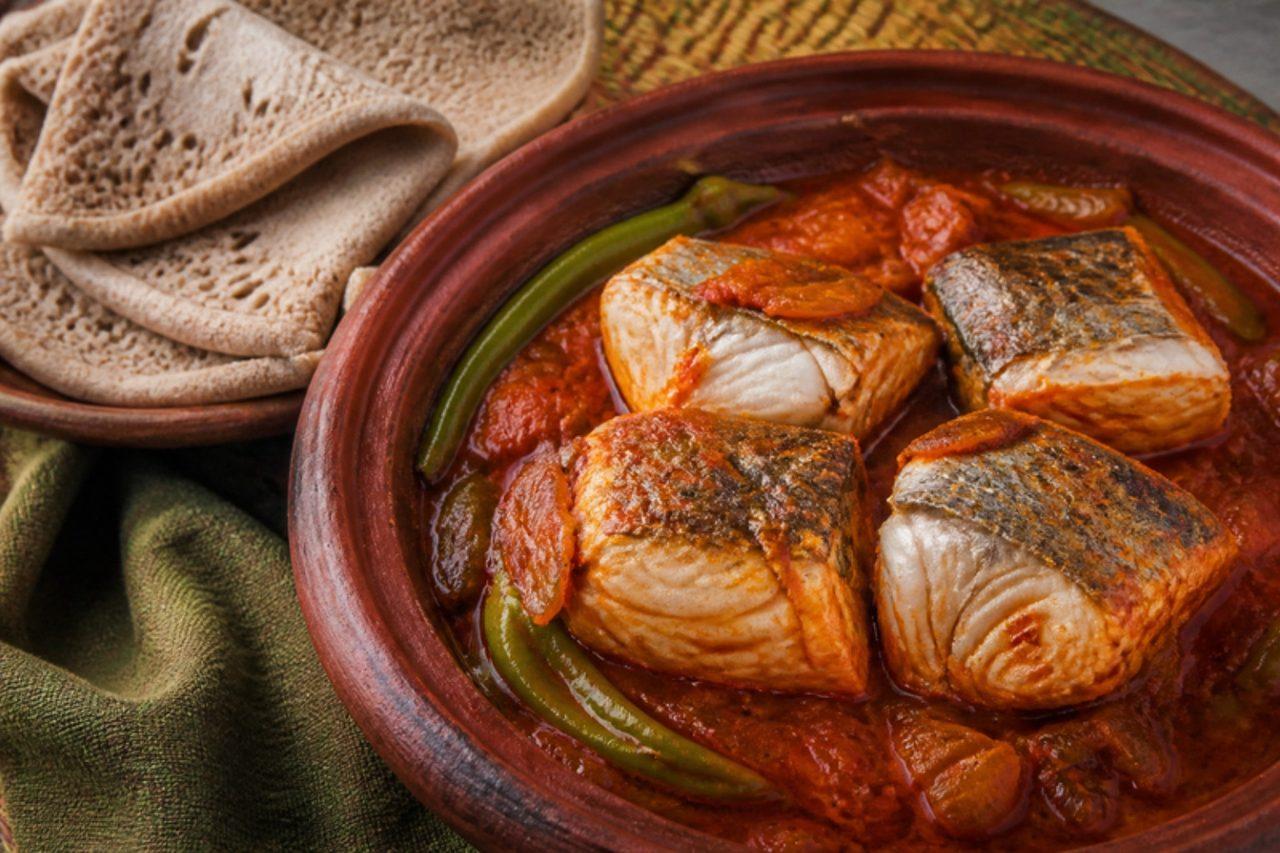
Asa watFish in berbere stew

Around Lake Tana in Bahir Dar and on the shores of Lake Hawassa, fresh tilapia, Nile perch and catfish are cheap and plentiful, so fish goes into the same deep red berbere sauce that elsewhere would hold beef or chicken. Asa wat has the familiar long-cooked onion base and warming spice, but it is lighter than a meat wat, with tender, sweet chunks of fish soaking up the sauce. It is eaten with injera, often alongside a lentil or greens dish, and is a popular choice on fasting days for those who eat fish. Stirring once the fish is in is the classic mistake; it breaks into shreds, so shake the pan instead. Chef's tip: add the fish only once the sauce is fully cooked and thick, then give it no more than 10 minutes.

by KrazyBadal 0 views

Bajan salt bread

Every rum shop and fish fry in Barbados sells "bread and two", and the bread is almost always salt bread: plain, crusty rolls with a soft, slightly chewy crumb and a split down the top, made for stuffing with fish cakes, a slice of cheese or fried flying fish as a cutter. Despite the name, they aren't especially salty; the name sets them apart from sweet bread. The usual mistake is pale rolls with a soft crust from too cool an oven. Chef's tip: put a tray of boiling water in the bottom of the oven for the first 10 minutes for a properly crisp crust.

by KrazyBadal 0 views

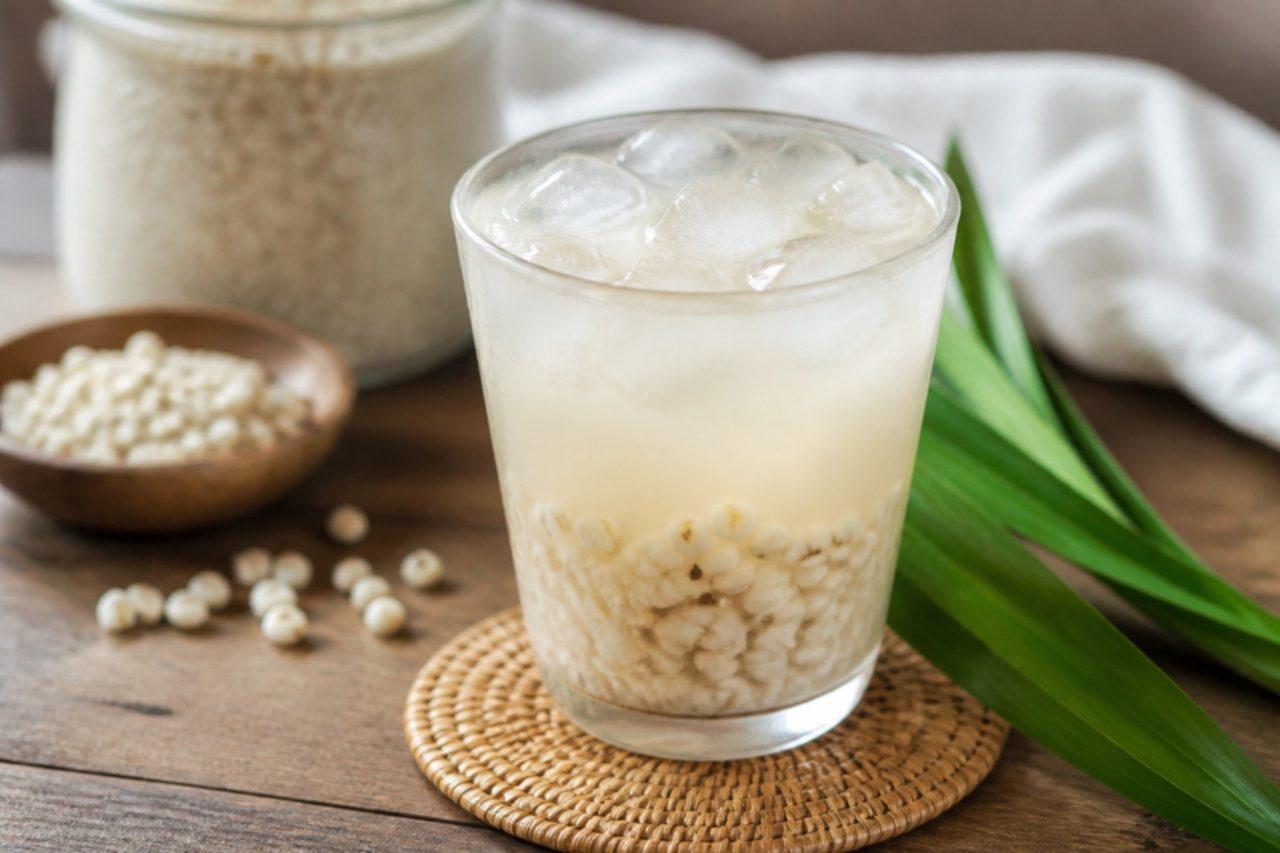
Barley water

Ask for 'barley' at any drinks stall in a Singapore kopitiam and you get a tall glass of cloudy, faintly sweet barley water, the drink older relatives swear by on the hottest afternoons because it is said to cool the body. Home cooks simmer pearl barley for an hour with knotted pandan leaves, and in Teochew and Cantonese households chunks of winter melon go in as well for a gentle, cucumber-like sweetness. The result is light and clean, ideal beside a plate of chicken rice, char kway teow or anything greasy and salty. The usual mistake is boiling it hard, which turns the liquid starchy and slimy instead of smooth and pale; keep it at a gentle simmer. Chef's tip: don't throw away the softened barley grains; spoon some into each glass, as the stalls do, or eat them warm with a little rock sugar as a light dessert.

by KrazyBadal 0 views

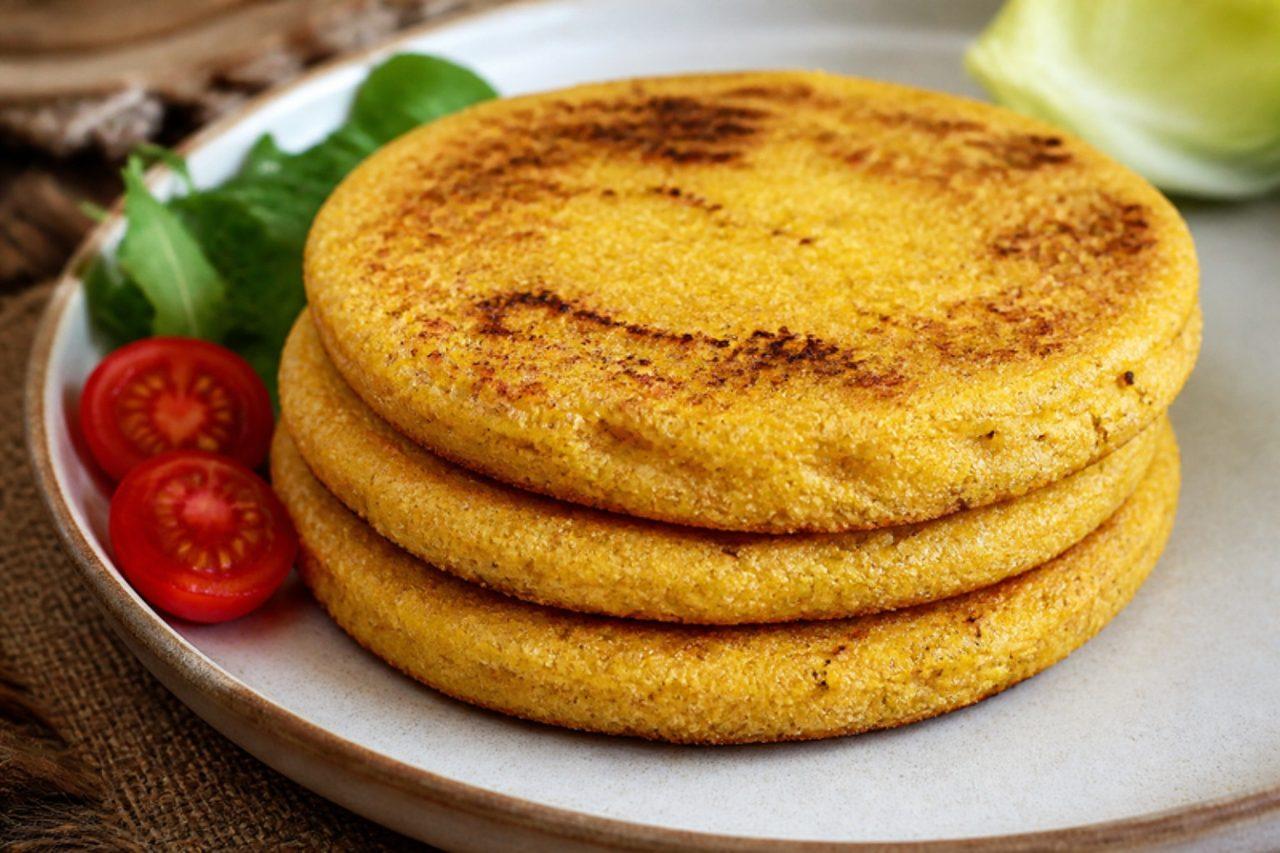
Aruban pan batiSweet cornmeal pancakes

Aruban families put a stack of pan bati on the table with almost every bowl of soup or stew, from sopi di pisca to kabritu stoba: thick, slightly sweet pancakes of cornmeal and flour, cooked on a dry griddle and torn to mop up the broth. They are soft, a little grainy and golden at the edges. The mistake is cooking them too fast, so they burn outside and stay raw in the middle. Chef's tip: let the batter rest for 10 minutes so the cornmeal softens and the pancakes come out tender.

by KrazyBadal 0 views

GánicaPotato and flour crumble

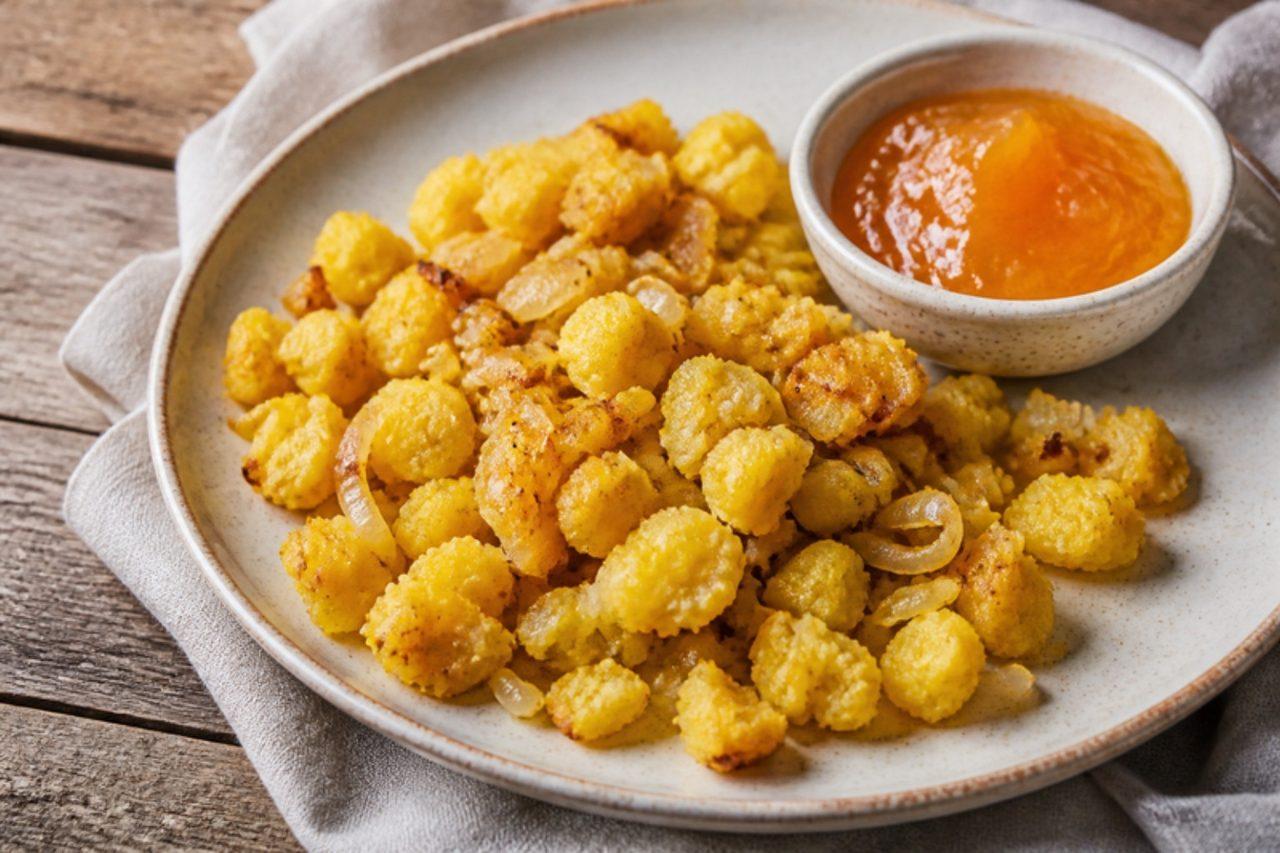
Up in the hills of northern Hungary, in Nógrád and Borsod, potatoes and flour were often all a farmhouse kitchen had in late winter, and gánica made a meal of them. The potatoes are mashed with flour into a heavy dough, then torn apart with two forks into small, uneven crumbs, which are tossed in a pan of onion-scented oil until golden in places. The result is soft and fluffy with crunchy edges, more like a savoury crumble than a dumpling. Eat it as a side with a mushroom stew, or sweet, spooned over with plum jam. The usual slip is under-cooking the flour, which leaves the crumbs pasty; give it the full time over the heat while you beat it. Chef's tip: tear the dough while it is still hot; once it cools it sets into a lump and will not crumble.

by KrazyBadal 0 views

Lo mai gai (sticky rice in lotus leaf)

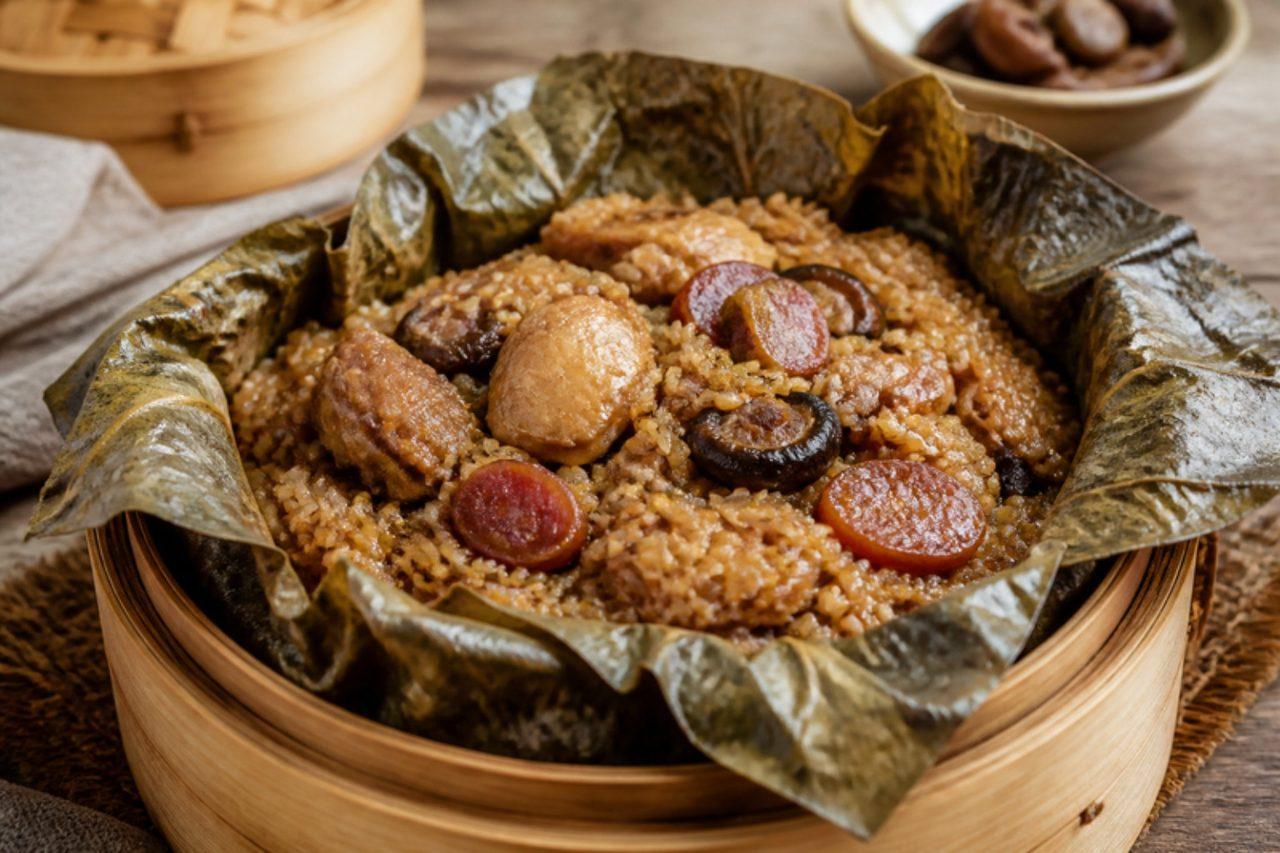
Unfold the dried lotus leaf at a Hong Kong yum cha table and a cloud of tea-scented steam rises from a parcel of glossy sticky rice, hiding a centre of soy-braised chicken thigh, shiitake and slices of lap cheong, the sweet Chinese pork sausage. Teahouses from Sheung Wan to Mong Kok sell it from the morning trolleys, and office workers grab one as a filling breakfast with a pot of pu'er. The rice is chewy and sticky but each grain stays whole, and the leaf gives it a faint grassy perfume. Shaoxing rice wine goes into the filling; an alcohol-free swap is given in the ingredient list. The most common mistake is cooking the rice in water like plain rice: soaked glutinous rice must be steamed, or it turns into paste. Chef's tip: wrap the parcels tightly and steam them again from cold or frozen; they reheat better than almost any dim sum.

by KrazyBadal 0 views

Jamaican pumpkin rice

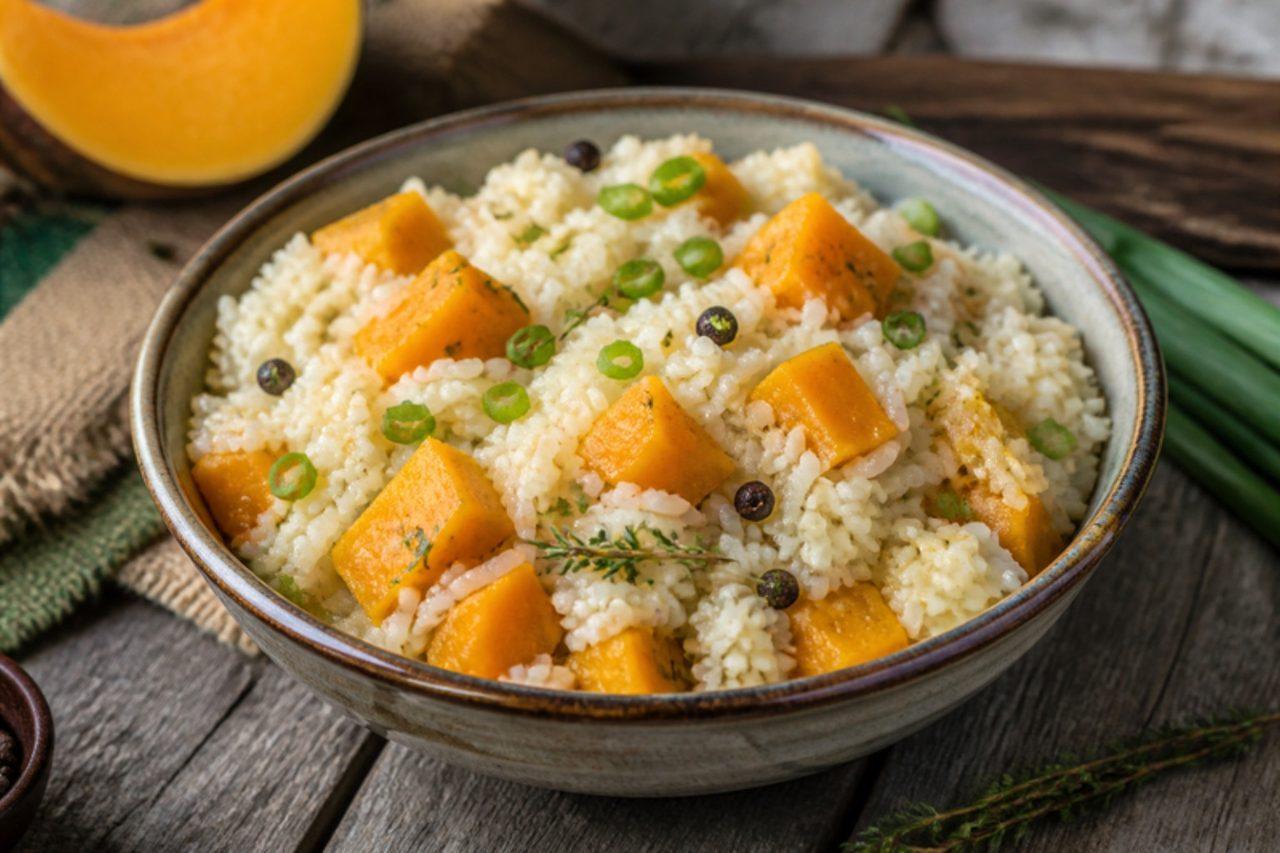
Along the north coast between Montego Bay and Ocho Rios, pumpkin rice turns up beside escovitch fish and steamed vegetables at Sunday lunch, the soft orange squash melting into the grains as they cook. Coconut milk, a sprig of thyme, scallion and a few pimento berries give it a gentle, savoury sweetness, and a whole scotch bonnet adds fragrance without much heat as long as it stays unburst. The common mistake is cutting the pumpkin too small, so it vanishes completely; 2 cm cubes partly melt and partly hold. Serve it with stew peas, jerk tofu or fried plantain. Chef's tip: rinse the rice until the water runs nearly clear, or the starch and pumpkin turn the pot sticky.

by KrazyBadal 0 views

Guda cheese

Tush shepherds make guda in summer huts high above the Alazani valley, pressing sheep's-milk curd into bags sewn from sheepskin, where it ripens into a crumbly, pungent cheese that travels down to Telavi markets in autumn. You cannot copy the sheepskin at home, but you can make a firm, salty sheep's-milk cheese and ripen it in a cloth in the fridge for two to three weeks, which gives a similar sharp, grassy bite. Traditionally the milk is set with animal rennet; vegetarian (microbial) rennet works the same way. A common mistake is cutting the curd before it gives a clean break, which leaves a soft, wet cheese that sours instead of ripening. Chef's tip: grate aged guda over hot ghomi or khinkali; its strong flavour goes a long way.

by KrazyBadal 0 views

Bahamian conch salad

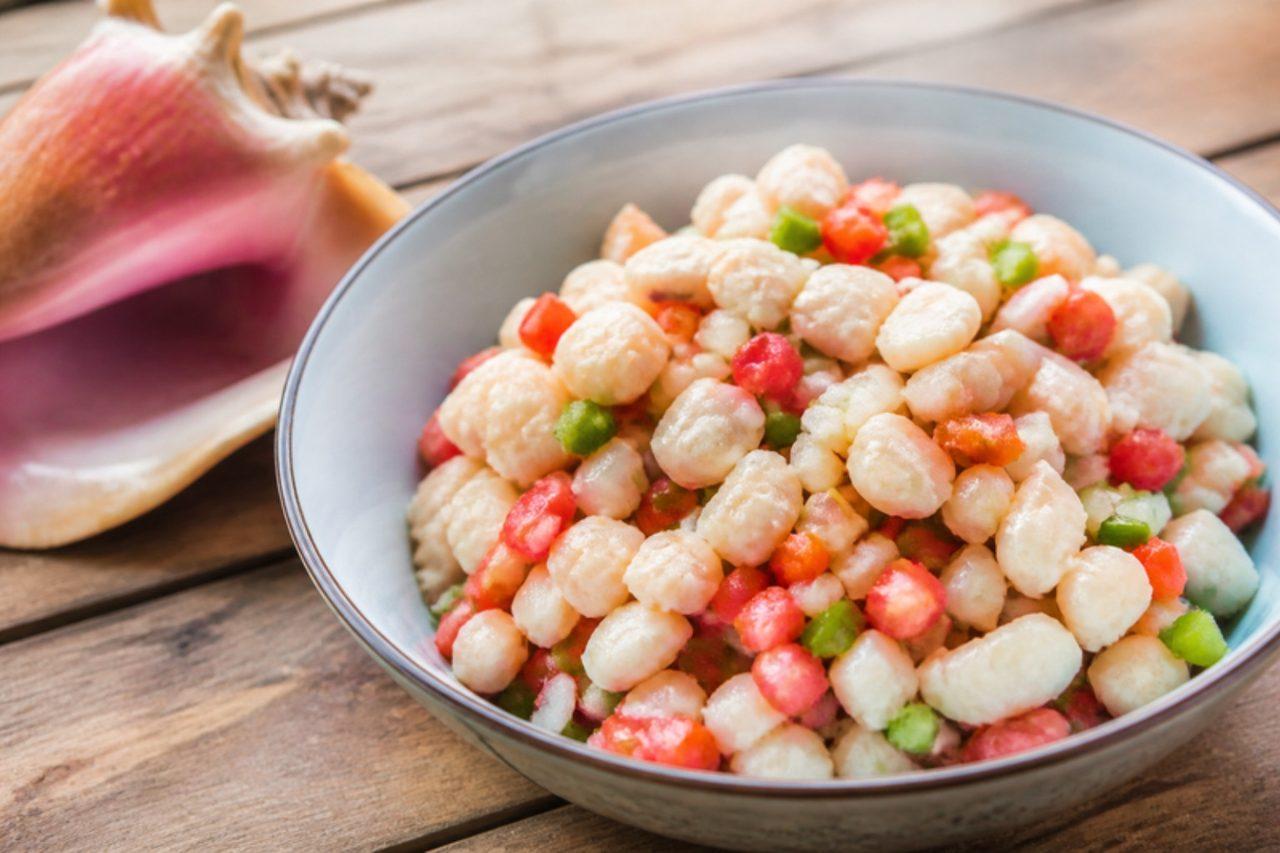
At the Fish Fry on Arawak Cay in Nassau, conch salad is made to order: a vendor cracks the shell, dices the conch with tomato, onion, sweet peppers and goat pepper, and drowns it in lime and sour orange in front of you. Traditionally the conch is eaten raw, "cooked" only by the citrus; that raw version is not for pregnant women, young children or anyone with a weakened immune system, and this recipe gives a safer version in which the conch is poached briefly first. Buy cleaned conch from a trusted fishmonger and discard any that smells of ammonia. The common mistake is dicing unevenly; everything should be in small, matching cubes. Chef's tip: make it no more than an hour ahead, or the lime turns the vegetables limp.

by KrazyBadal 0 views

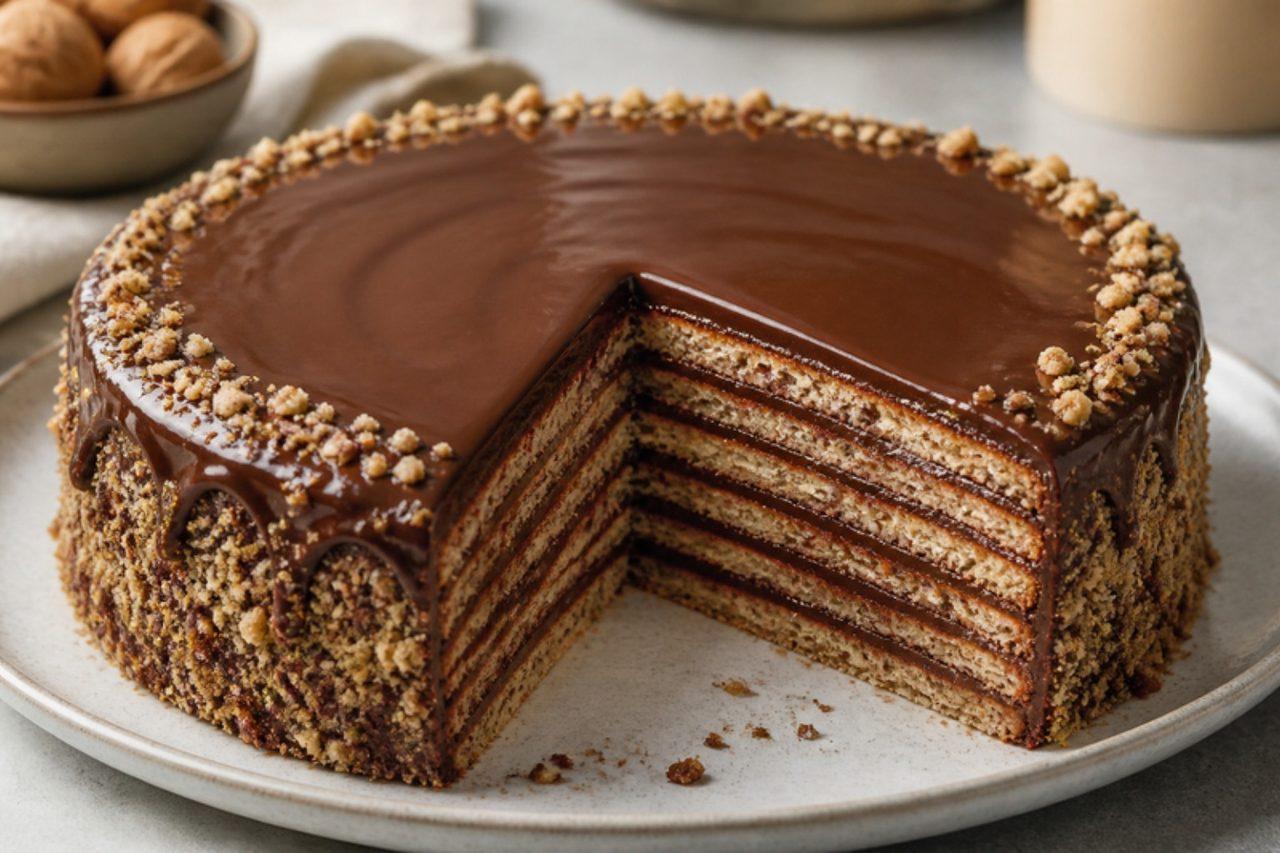
Garash tortaWalnut meringue chocolate cake

In 1885 a Hungarian confectioner named Kosta Garaš created this cake in Ruse, the elegant Danube town, and it has been the pride of Bulgarian patisseries ever since. Five thin, chewy layers of walnut meringue are stacked with a dark, glossy chocolate ganache and finished with a mirror-like chocolate glaze. Because it uses no flour, it is naturally gluten-free; it is rich and dense, so slices are thin, served with black coffee on name days and anniversaries. The cake is best made a day ahead and chilled so the meringue softens slightly into the ganache. Where most people go wrong is grinding the walnuts to an oily paste; pulse them only until like coarse sand. You will have ten yolks left over: use them for custard or pasta. Chef's tip: bake each layer on a circle drawn on baking paper and trim them all to the same size while still warm, when they cut cleanly.

by KrazyBadal 0 views

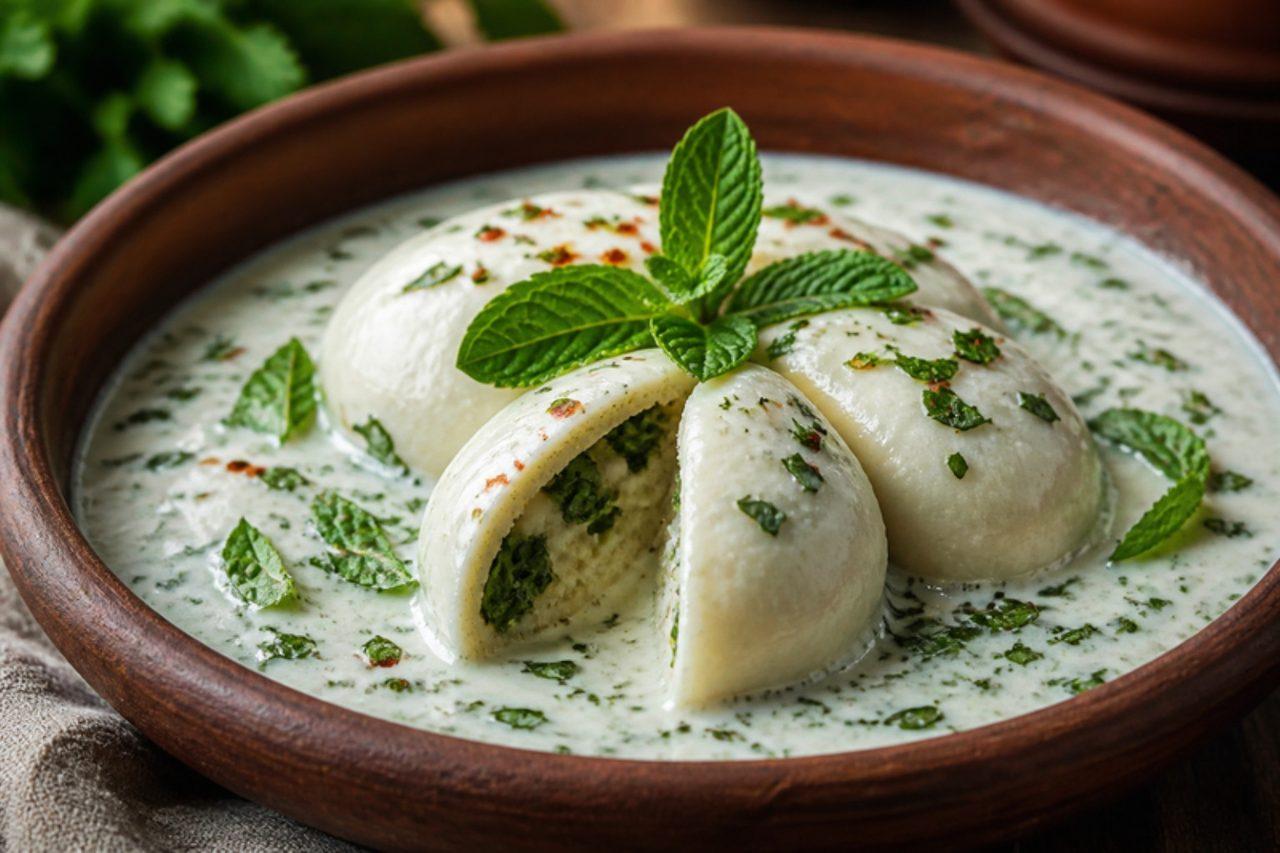
GebzhaliaCheese rolls in mint yogurt sauce

Gebzhalia is one of the dishes Mingrelian hosts in Zugdidi and Martvili bring out when guests arrive: soft, freshly made cheese is warmed in hot milk until pliable, flattened into sheets, scattered with mint and rolled up, then served in a cool, minty yogurt sauce. It is mild, salty and refreshing, served as a starter at a supra. Fresh imeruli cheese is the traditional choice; fresh mozzarella curd works well too. A common mistake is overheating the cheese, which makes it squeaky and tough instead of silky. Chef's tip: keep the milk just below a simmer and work the cheese with a spoon until it is soft enough to stretch, then roll while it is still warm. Fresh cheeses are often made with animal rennet, so choose a vegetarian one.

by KrazyBadal 0 views

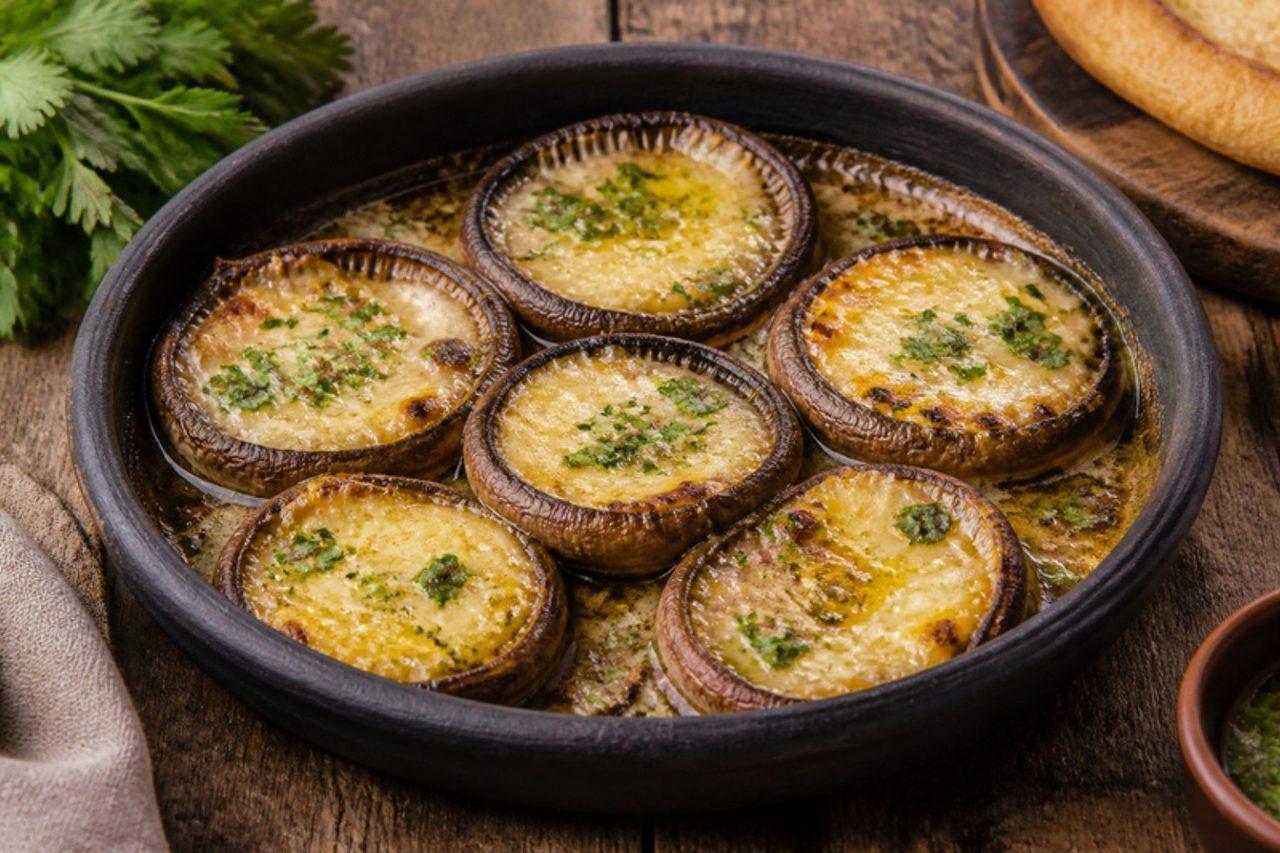
Mushrooms on ketsi

Every Tbilisi tavern has its sizzling ketsi, a shallow clay dish heated on the fire, and mushrooms baked in one with butter and a crust of melted sulguni are among the most ordered starters, brought to the table still crackling. In autumn, Georgian cooks use wild oyster mushrooms or field mushrooms; cups set gills up hold the butter like little bowls. A common mistake is overcrowding the dish, which makes the mushrooms steam instead of browning. Chef's tip: salt the mushrooms only after the first 10 minutes, so their juices stay inside and they cook in their own butter. Sulguni is usually made with animal rennet, so choose a vegetarian cheese.

by KrazyBadal 0 views

Trini curry duck

Curry duck is the dish of the riverside lime in south and central Trinidad, cooked in a big iron pot over a wood fire while friends cool off in the water. The duck is chopped small, marinated in green seasoning, then "burnt" into a curry paste fried until almost black, which gives the sauce its dark colour and deep, slightly bitter edge. It's served with rice, dhal and sada or paratha roti. A common mistake is serving it before the duck has fully broken down: duck is chewy and needs long, slow cooking. Chef's tip: spoon off the yellow duck fat that rises during cooking and keep it for roasting potatoes.

by KrazyBadal 0 views

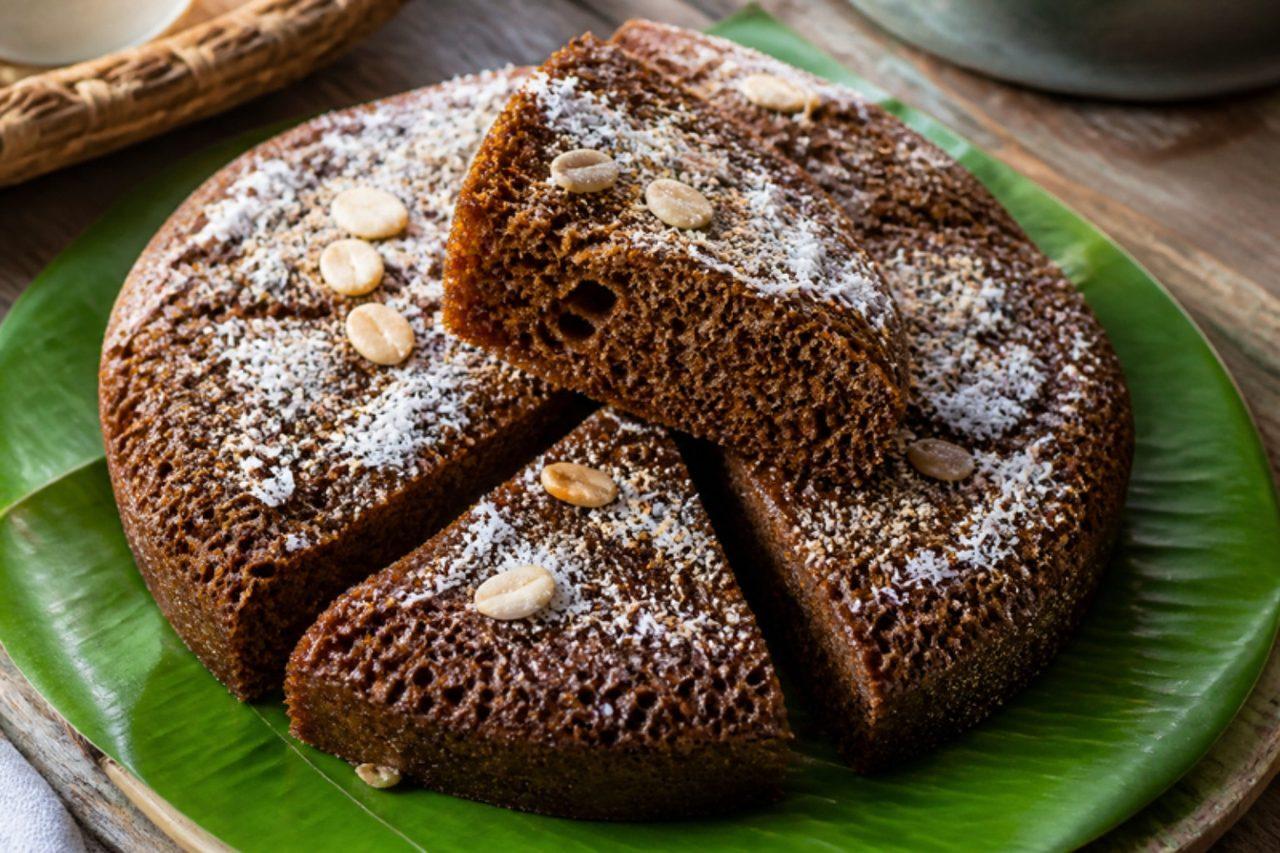
Bein montJaggery coconut rice pancake

When the November nights cool down for the Tazaungdaing festival, food stalls outside pagodas in Yangon and Mandalay start cooking bein mont in small, lidded iron pans with embers piled on top, so the cake bakes from above and below at once. The batter is rice flour sweetened with dark jaggery, so it cooks into a thick, springy, brown pancake with a crisp base, studded on top with shreds of coconut and sliced peanuts; some vendors still scatter poppy seeds, the bein that may have given the snack its name. It is eaten warm in wedges with hot green tea. High heat is what usually goes wrong: the base scorches while the centre stays raw, so keep the flame low and the lid on. Chef's tip: a small cast-iron pan finished under the grill copies the charcoal top heat at home.

by KrazyBadal 0 views

GajakSesame jaggery brittle

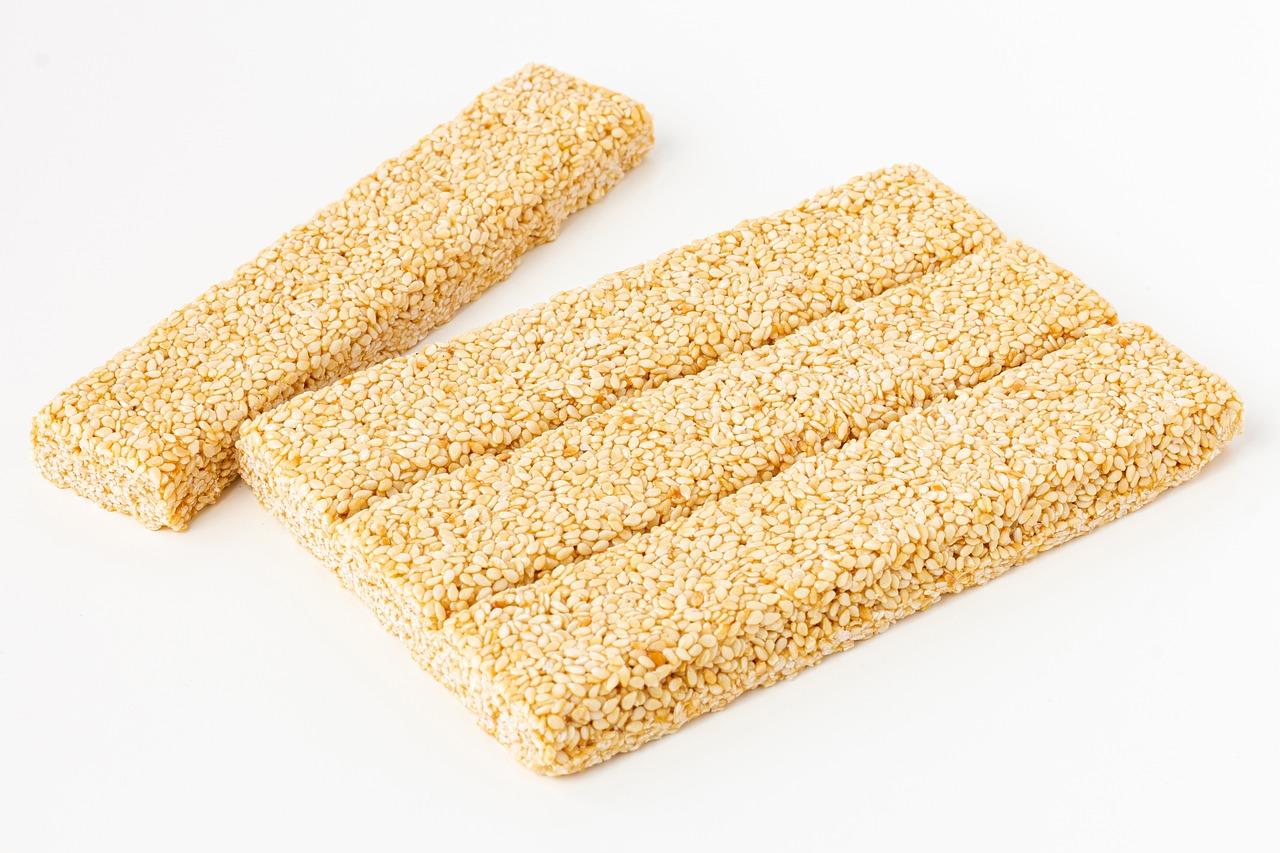
Winter in Punjab has a sound, and it is the snap of gajak: thin, glossy sheets of toasted sesame bound in jaggery, sold from piled trays outside the sweet shops of Multan, Gujranwala and Lahore from the first cold week of December. It is nutty, crunchy and toffee-sweet, with the earthy depth of gur, and families keep a tin of it beside the heater to nibble after dinner with green tea or to share with visitors. The commercial kind is hammered and pulled into flaky layers, but the home version poured thin and rolled flat is what most households make. The pitfall is pulling the jaggery off the heat too early, which gives a brittle that turns chewy and sticky after a day. Chef's tip: test the syrup by dropping a little into cold water; it must snap cleanly at once, and that hard-crack stage is reached quickly, so have the sesame warm and ready. Take care: the syrup is far hotter than boiling water.

by KrazyBadal 0 views

Jamaican roast breadfruit

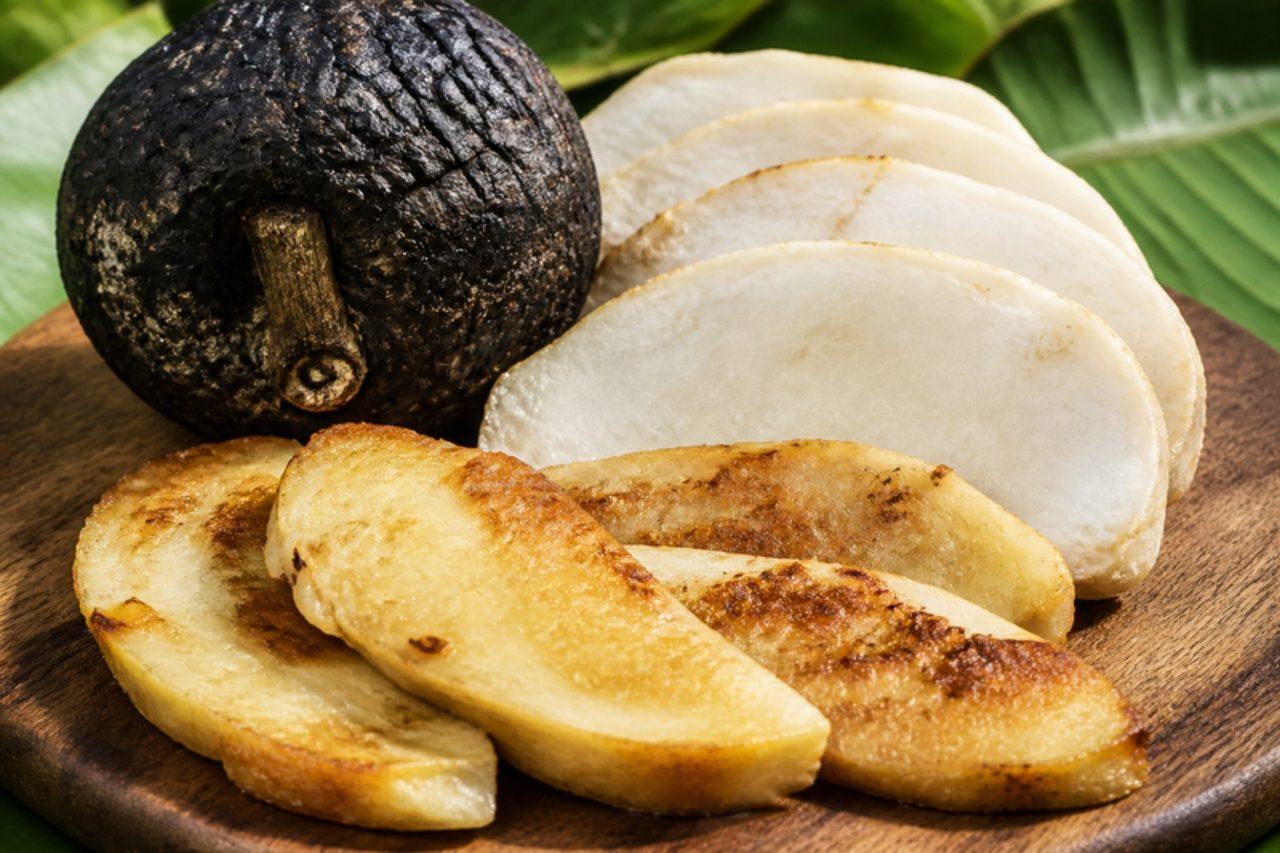
Portland roadsides smell of smoke when breadfruit is in season, with whole fruit sitting straight in wood fires until their green skins turn black. Inside, the flesh steams to a soft, fragrant cream somewhere between potato and fresh bread, and it is eaten in thick slices with ackee and saltfish, callaloo or a knob of butter, or fried the next morning. People often pick a fruit that is either too ripe (it turns mushy and sweet) or too young (it stays hard and gluey); you want a heavy, firm one with a little sap beading on the skin. A gas hob or a hot oven works when there is no open fire. Chef's tip: cut a small cross in the stem end before roasting so steam can escape, and push a skewer into it to check doneness without opening the fruit.

by KrazyBadal 0 views

Trini curry shrimp

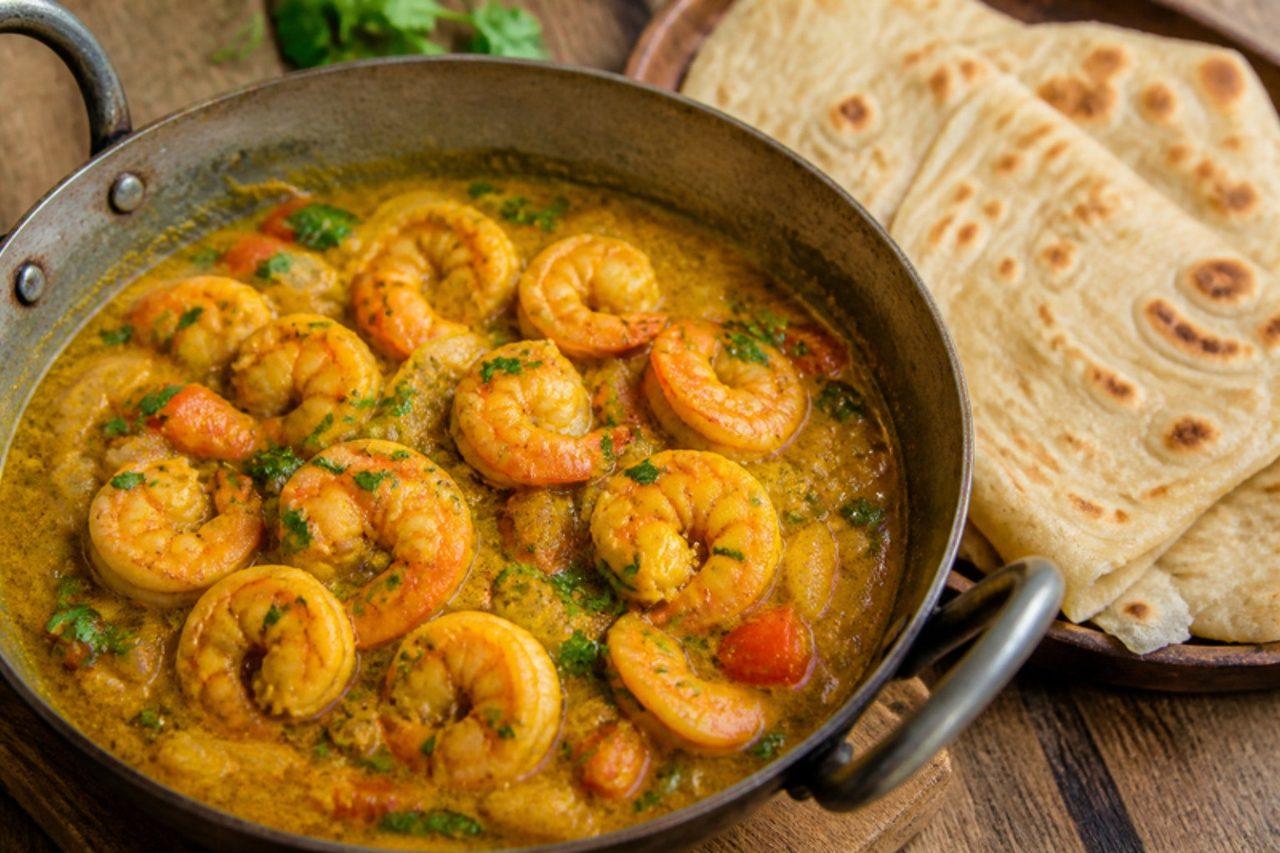
Sold from food stalls in San Fernando and eaten at south Trinidad family lunches, curry shrimp is the fast curry of the island: the sauce is built in minutes, and the shrimp go in only at the very end. Plenty of garlic, roasted geera and hot pepper give a bright, punchy curry that you wipe up with dhalpuri or spoon over rice. The mistake nearly everyone makes the first time is stewing the shrimp, which turns them rubbery; they need three or four minutes, no more. Chef's tip: save the shells, simmer them in the water for 10 minutes and use that stock in the curry for a much deeper seafood flavour.

by KrazyBadal 0 views

Cocktail bunCoconut-filled sweet buns

Bakeries across Hong Kong pull trays of cocktail buns from the oven before the morning rush, and schoolchildren and commuters buy them warm in paper bags to eat on the bus or with milk tea at a cha chaan teng. The story goes that 1950s bakers invented them to use up day-old bread mixed with sugar and coconut, so the name is a playful nod to a cocktail of leftovers. Today the soft, milky roll holds a sweet, buttery coconut filling that's slightly sandy and chewy, under two piped stripes and a scatter of sesame seeds. A soft, warm filling tends to ooze out during proving and baking, so chill it until firm before you roll the buns. Chef's tip: roll each bun up tightly from the long side and pinch the seam well, then place it seam-down; loose rolls split open in the oven.

by KrazyBadal 0 views

Gammeldags æblekageLayered apple compote dessert

'Old-fashioned apple cake' is not a cake at all but a Danish trifle, made on autumn weekends when the apple trees are heavy: tart apple compote layered in a glass bowl with breadcrumbs or crushed macaroons toasted in butter and sugar, topped with whipped cream and a few dots of redcurrant jelly. The crumbs stay crunchy against the soft fruit. A common mistake is assembling it hours ahead, which turns the crumbs soggy. Chef's tip: toast the crumbs until deep golden and crisp, and assemble within an hour of serving.

by KrazyBadal 0 views

Hong Kong iced lemon tea

Ask for 'ling cha, dung' at any Hong Kong cha chaan teng and a tall glass arrives crammed with ice, a heap of thin lemon slices and a long spoon for pounding them, the default thirst-quencher with set lunches all year round. The tea is brewed almost bitter, so it holds its own against the ice, and the sharp lemon and simple syrup turn it bright, tangy and refreshing. It is drunk with everything from macaroni soup breakfasts to afternoon pineapple buns. The common slip is brewing tea at normal strength, which tastes thin and watery once the ice melts; double the tea. Chef's tip: press the lemon slices with the back of the spoon only a few times to release juice and oil from the zest; grinding them to a pulp brings out bitterness from the pith.

by KrazyBadal 0 views

Arroz con maízRice with sweetcorn

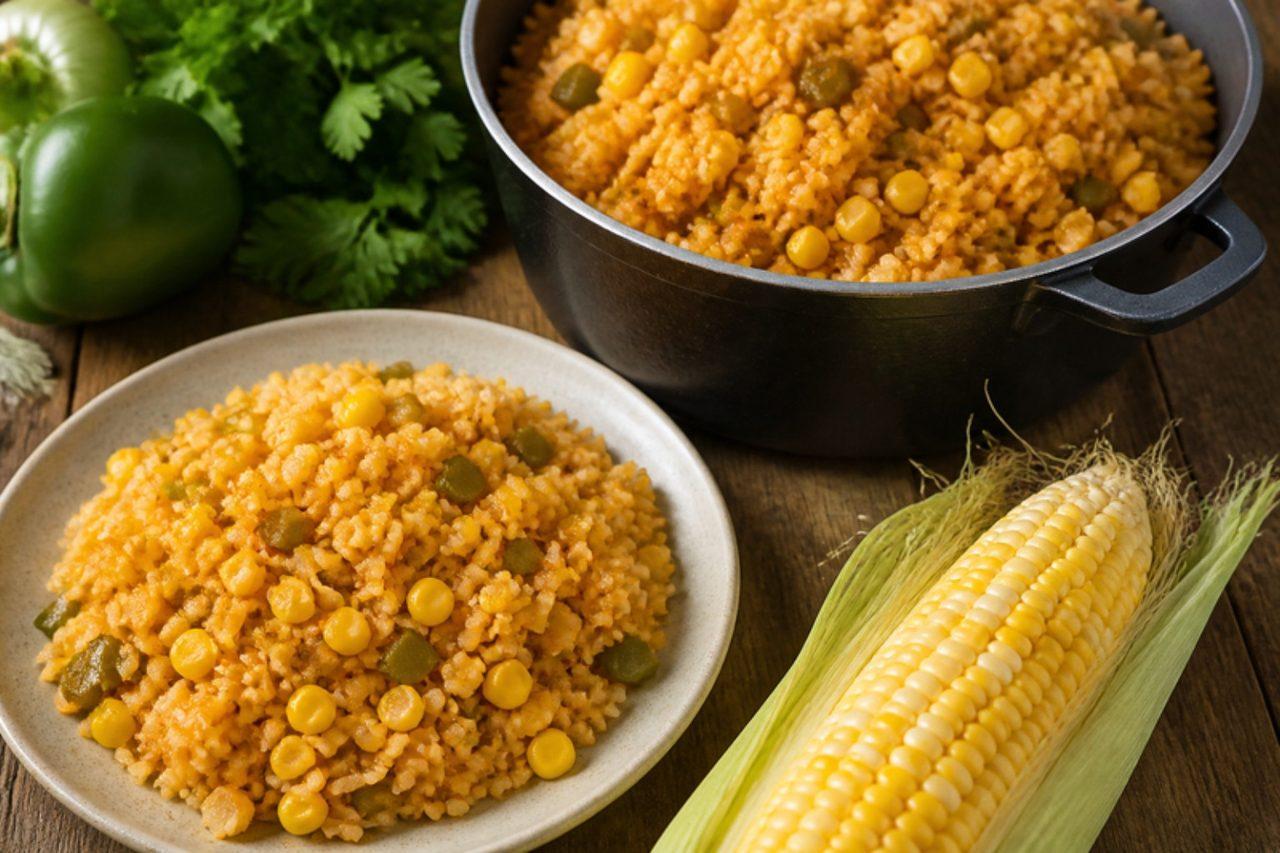
In central Cuba, when the fields are full of young corn, families cut the kernels straight off the cob into the rice pot with a sofrito of onion, pepper, garlic and annatto, cooking everything together until golden and sticky at the base. Many farm cooks add salt pork; this vegan version leans on cumin and a little smoked paprika. A common mistake is using too much water, as fresh corn releases its own milk, so keep to the amounts given. Serve with black beans or a tomato and avocado salad. Chef's tip: scrape the cobs with the back of the knife after cutting off the kernels and add that milky pulp; it gives the rice a creamy sweetness.

by KrazyBadal 0 views

Atama soupPalm nut and atama leaf soup

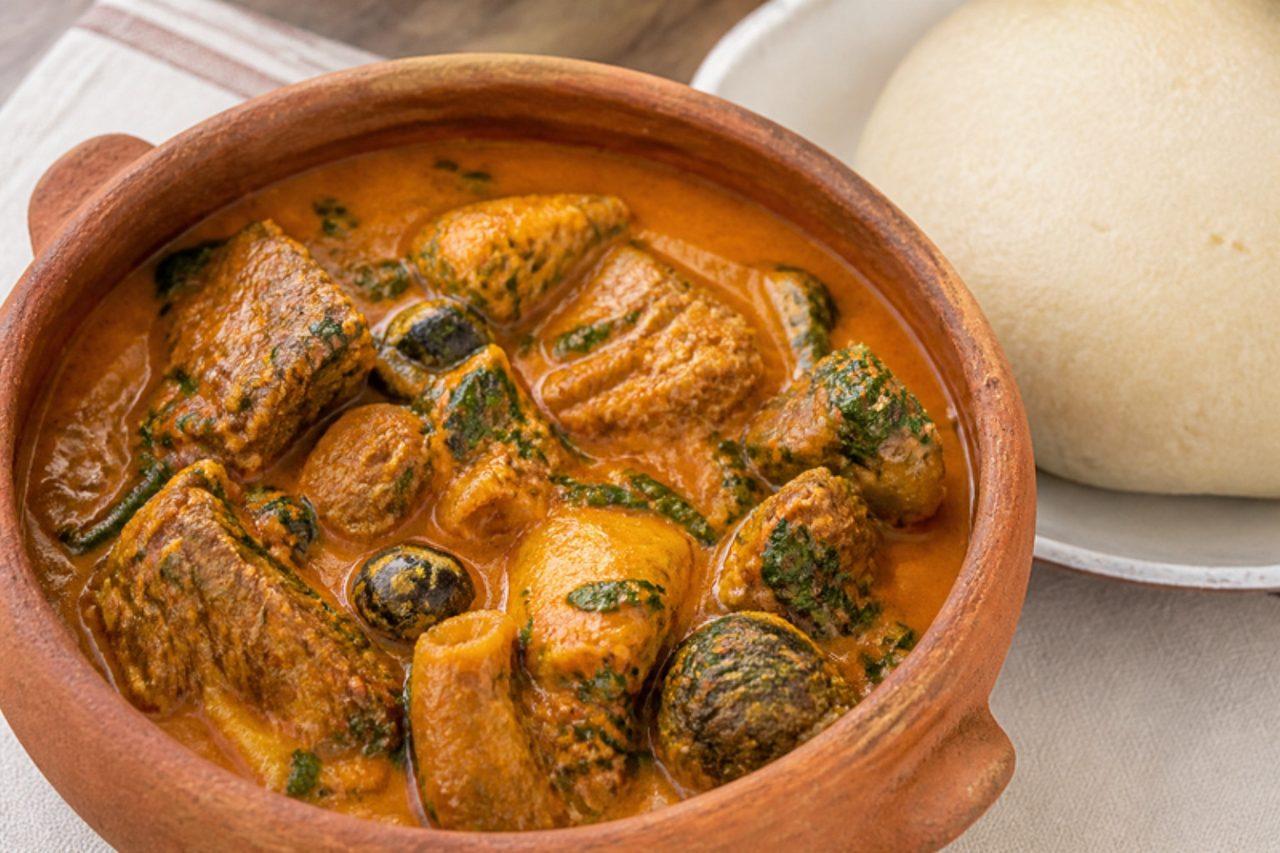
From Abak and the Ibibio heartland of Akwa Ibom comes this palm-nut soup with a perfume all its own: atama leaves, which smell somewhere between mint, anise and fresh hay. The palm cream is cooked with assorted meat, stockfish, dried fish and periwinkles until the oil glistens on top, then the atama goes in near the end. It is weekend and visitors' food, eaten with pounded yam, fufu or eba. Dried atama is sold in African shops; dried tarragon is the closest substitute. Periwinkles should be bought cleaned, and any with cracked shells thrown away. Avoid adding the atama leaves too early: long boiling dulls their perfume. Chef's tip: go easy on the atama, as too much turns the soup bitter, so start with the amount below and taste before adding more.

by KrazyBadal 0 views

GaboutStuffed dumplings in tomato stew

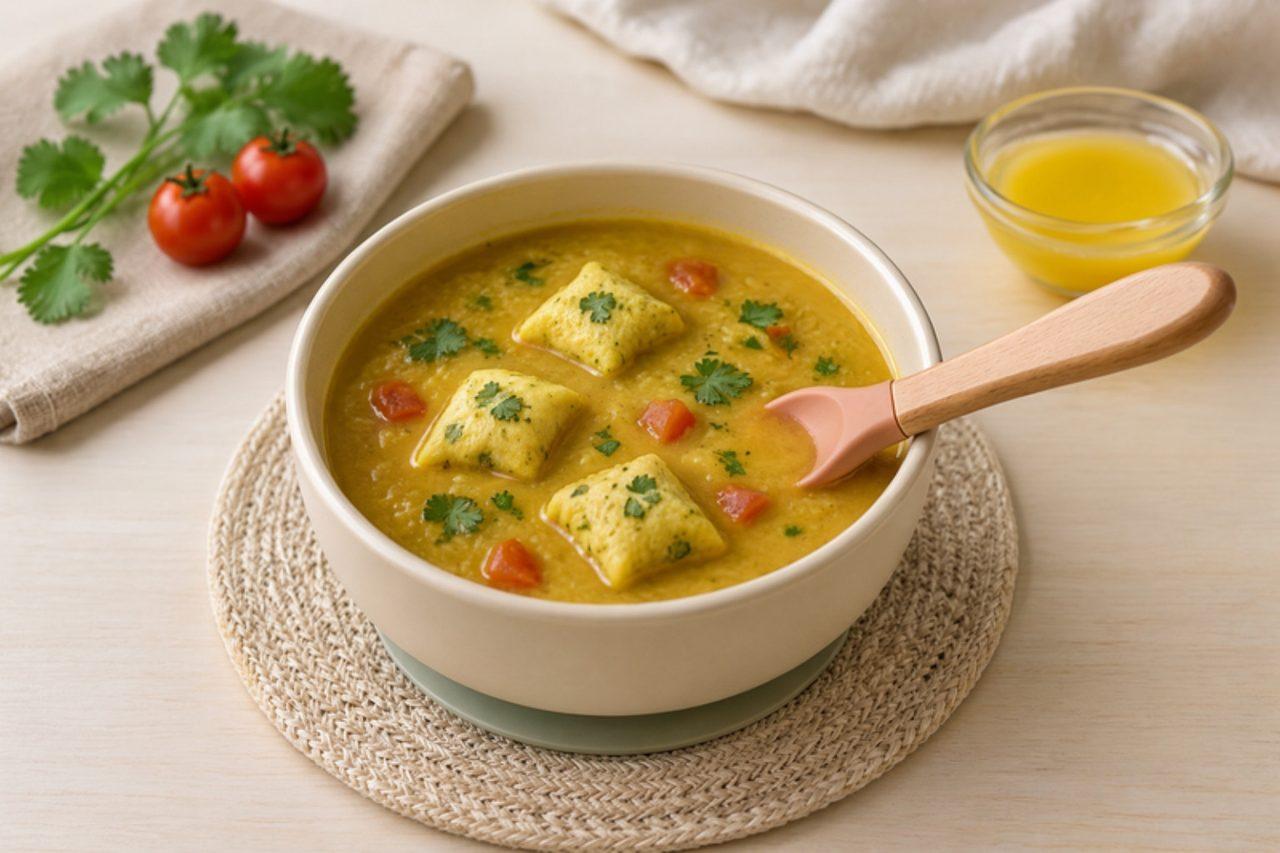
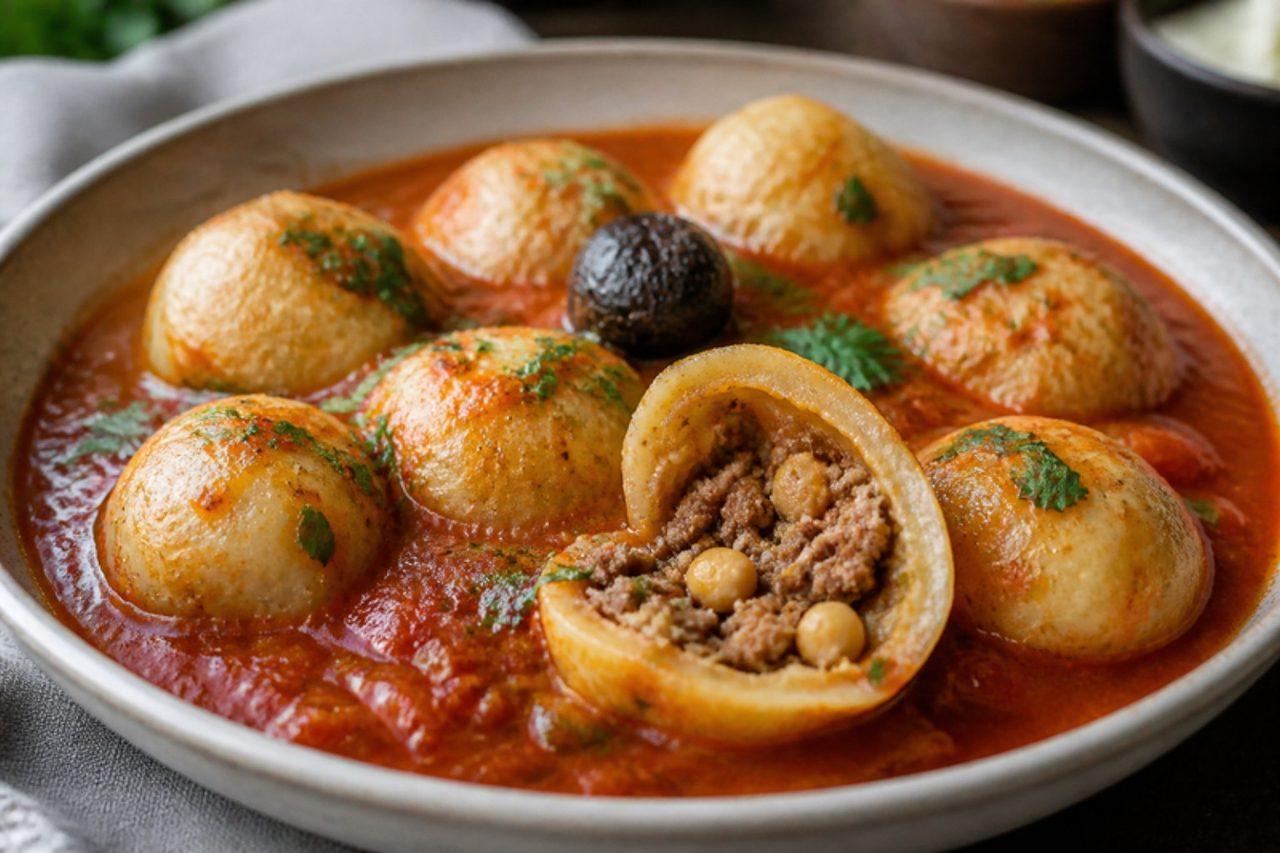
Gabout is old Kuwaiti home cooking, the kind grandmothers in Kuwait City still make for family lunches in winter, and a close relative of the Iraqi dumplings brought along the trading routes of the Gulf. Soft flour dough is wrapped around spiced lamb or beef mince with chickpeas, and the dumplings are simmered in a sour tomato and dried-lime stew until they are tender and plump. It is filling and comforting, eaten with bread or on its own. The mistake people make is rolling the dough too thick, which makes the dumplings heavy and doughy. Chef's tip: wet your fingers when sealing, the dough must close tightly or the filling leaks into the stew.

by KrazyBadal 0 views

Taiwanese radish omelette

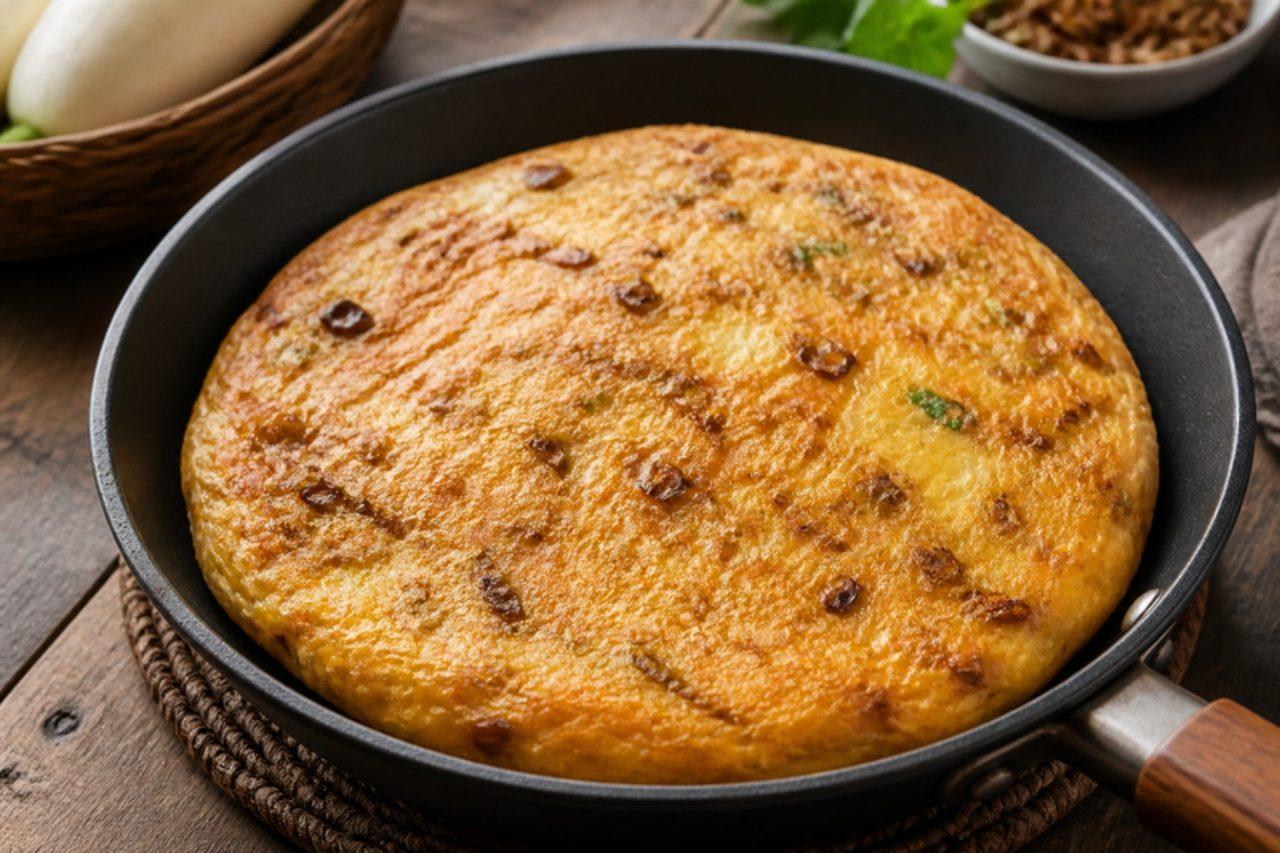
Ask a Taiwanese grandmother what to cook when there's nothing in the fridge and the answer is often this: a few eggs and a handful of preserved radish turned into a thick, golden omelette, cut into wedges and passed round. It's a staple of the rice-and-small-dishes spread at Taipei breakfast shops and late-night congee counters, and it reappears on the stir-fry restaurant table and in home lunchboxes. The chopped radish fries up crunchy and caramel-sweet inside soft, puffy egg, with crisp brown lacy edges. Skipping the rinse is where most go wrong: unrinsed radish makes the omelette far too salty. Chef's tip: dry-fry the radish first until it smells toasty, then use plenty of oil and a hot pan so the egg puffs and the edges frill.

by KrazyBadal 0 views

Galinha à portuguesa (Portuguese chicken)

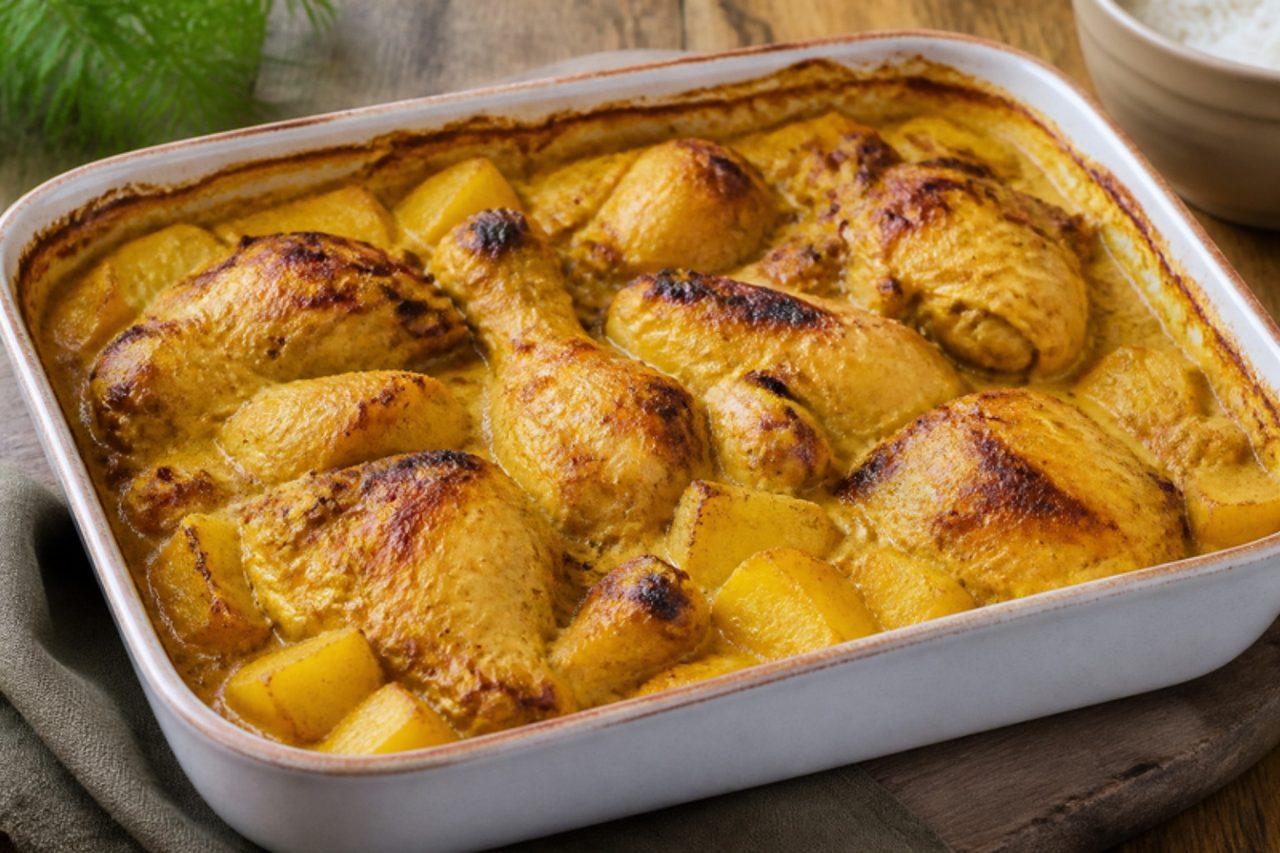
Puzzlingly, you will not find this in Portugal: galinha à portuguesa belongs to Macau, where cooks mixed a Portuguese idea of a creamy baked chicken with the turmeric, curry powder and coconut milk that came through the Portuguese trading routes from Goa and Malacca. Macanese restaurants and Hong Kong's cha chaan teng serve it bubbling in a clay pot or baking dish, golden on top, with chicken and potatoes in a mild, yellow, gently sweet coconut sauce, always with white rice to soak it up. It is a favourite for family dinners and Christmas tables. The thing people get wrong is boiling the coconut sauce hard, so it splits and turns oily; keep it at a gentle simmer. Chef's tip: brown the chicken well first, and finish under a hot grill for the speckled golden top that Macau restaurants are known for.

by KrazyBadal 0 views

Jamaican sweet potato pudding

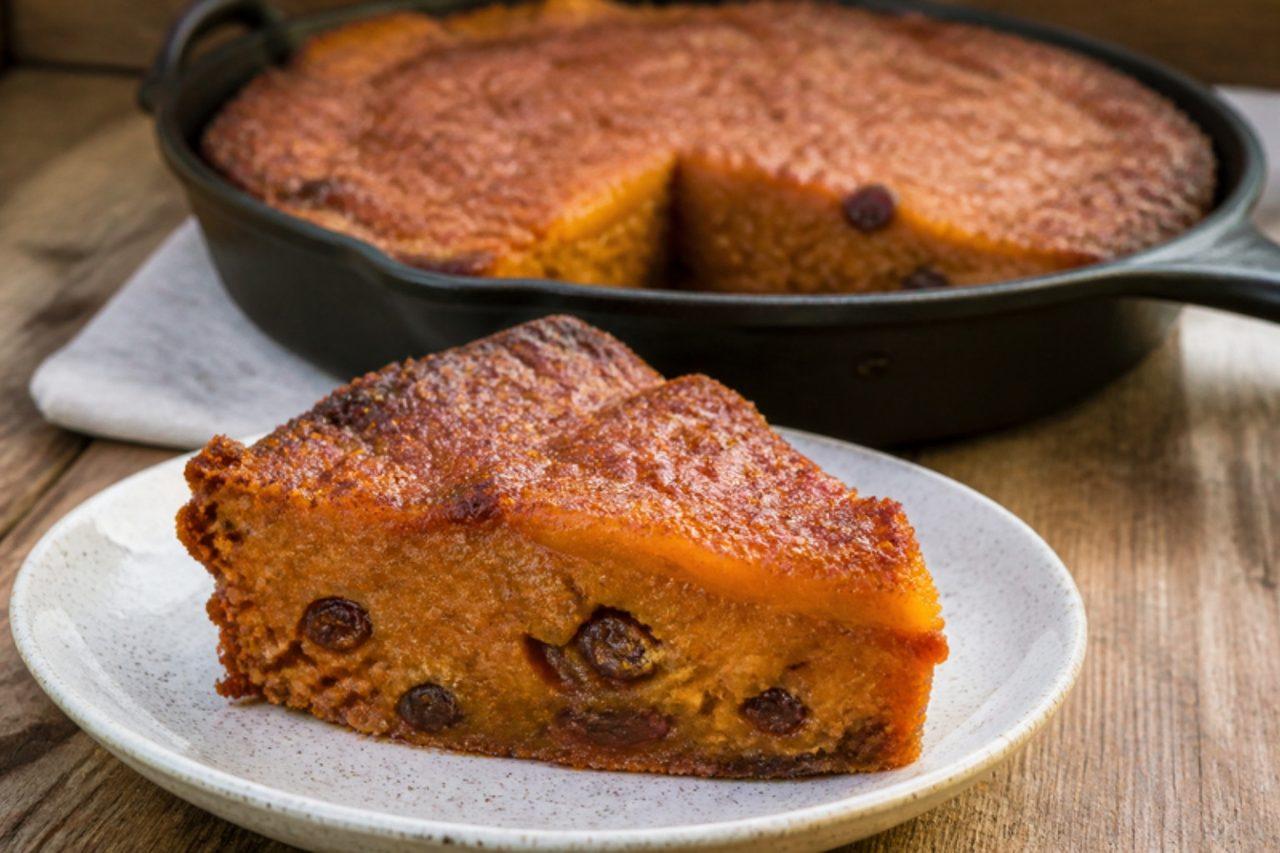
Once baked in Dutch pots with coals heaped on the lid, Jamaica's sweet potato pudding gave rise to the saying "hell a top, hell a bottom, hallelujah in the middle", and it is still a Sunday and Christmas favourite in homes across the island. Grated sweet potato, coconut milk, a little flour-free cornmeal and spice bake into a dense, moist slab with a soft, custardy layer on top. People often cut it hot, but it needs to cool for at least an hour to set. Chef's tip: grate the sweet potato on the fine side of the grater; coarse shreds make a grainy pudding.

by KrazyBadal 0 views

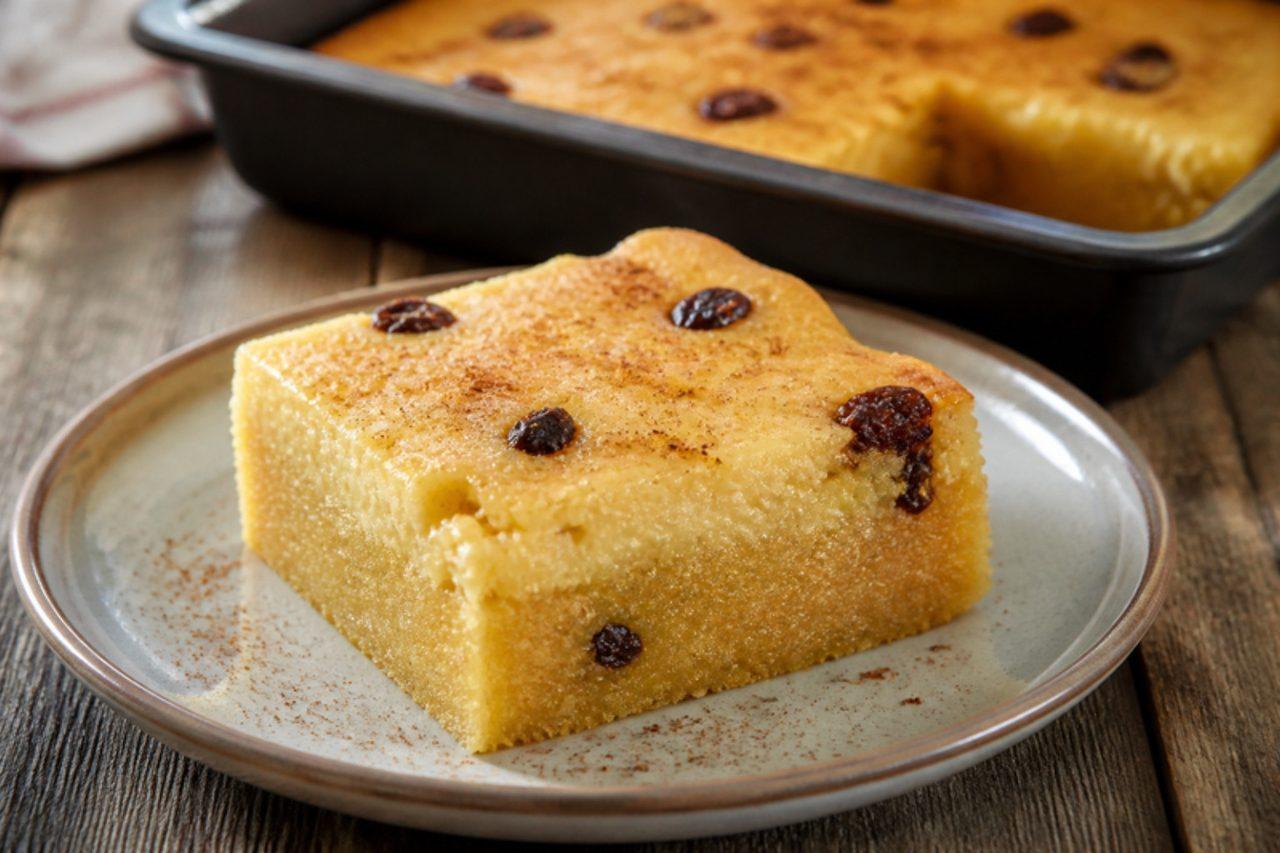
Arroz con dulceCoconut rice pudding

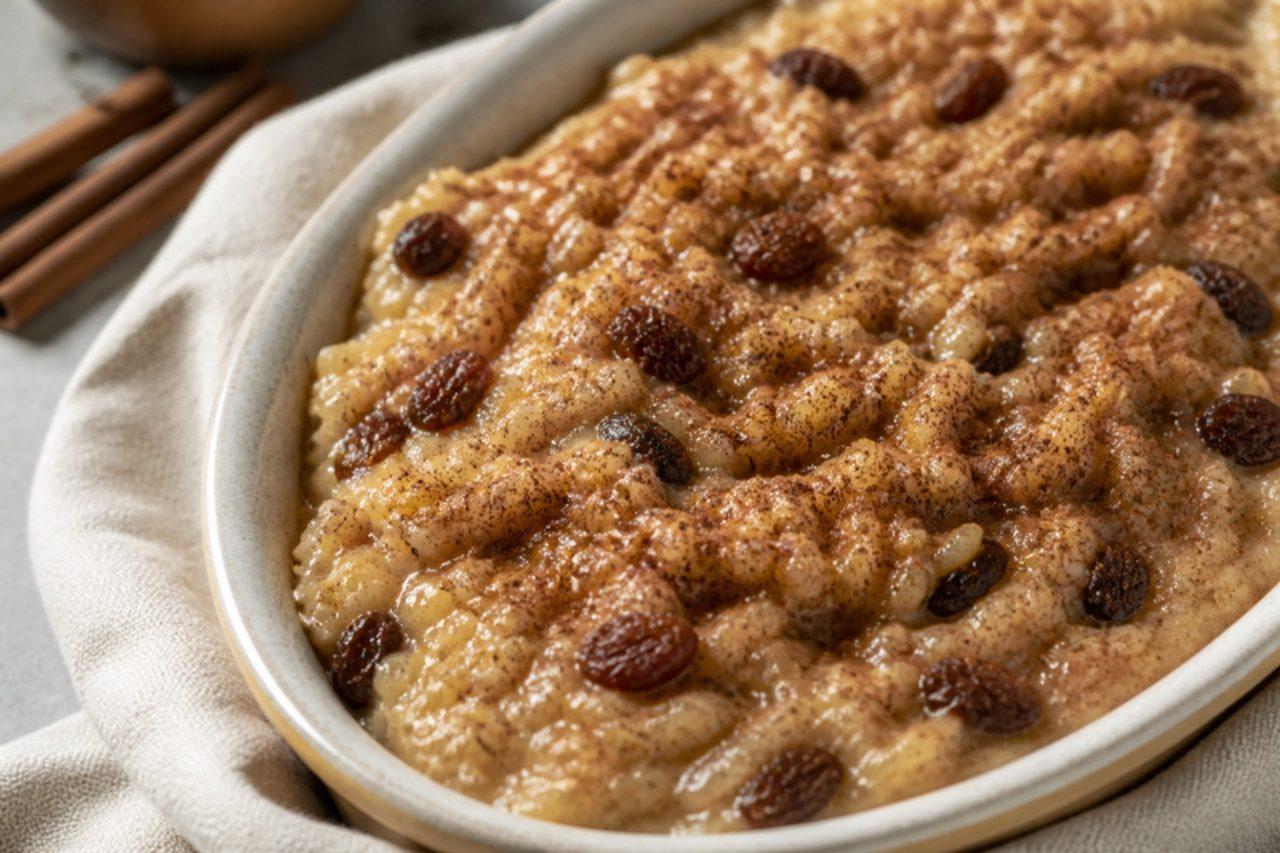
From the start of December to the Three Kings in January, trays of arroz con dulce cool on Puerto Rican kitchen counters, sliced into squares and handed round at parrandas when carollers arrive at the door late at night. Unlike a milky rice pudding, it is cooked in a water steeped with fresh ginger, cinnamon, cloves and star anise, then finished with coconut milk and raisins, so it is fragrant, firm enough to cut and dairy free. The common mistake is adding the sugar too early, which keeps the rice grains hard; sweeten only once they are soft. Chef's tip: soak the rice for an hour first, and it cooks evenly and absorbs the spiced coconut far better.

by KrazyBadal 0 views

Arroz mamposteaoFried rice and stewed beans

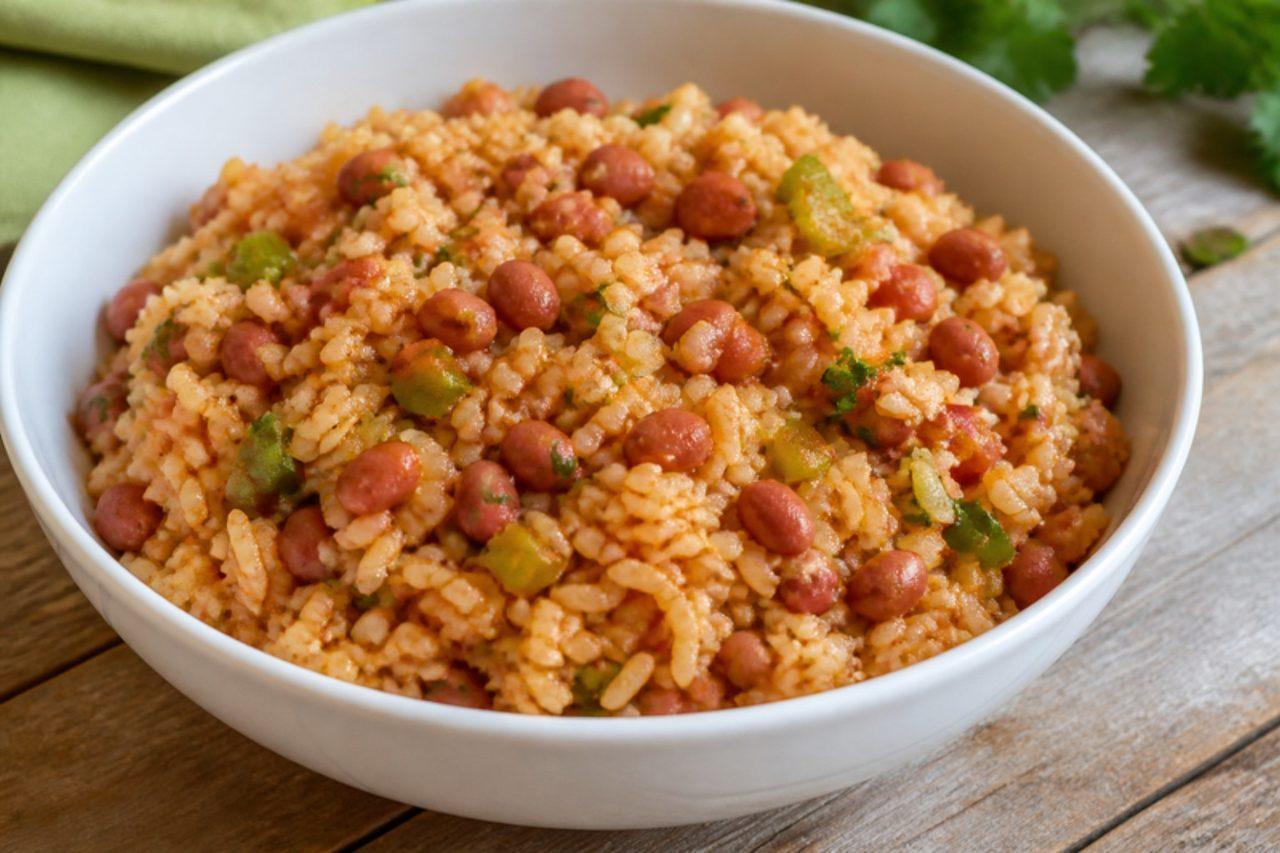
Fondas around San Juan put arroz mamposteao on the menu as a way to use yesterday's white rice and the last ladle of habichuelas, and at home it is the Sunday-night fix when the pots from lunch come out of the fridge. The rice is fried in olive oil with a fresh sofrito, then the beans and their sauce go in until every grain is stained pink and the edges catch and crisp. Many cooks add ham or bacon; this version stays meat-free and gets its depth from the sofrito and a little smoked paprika. The common mistake is using freshly cooked rice, which turns to paste; cold, day-old rice keeps separate grains. Chef's tip: leave the pan alone for the last few minutes so a crunchy layer forms on the bottom, then fold it through.

by KrazyBadal 0 views

GanfanRice with stir-fried beef and peppers

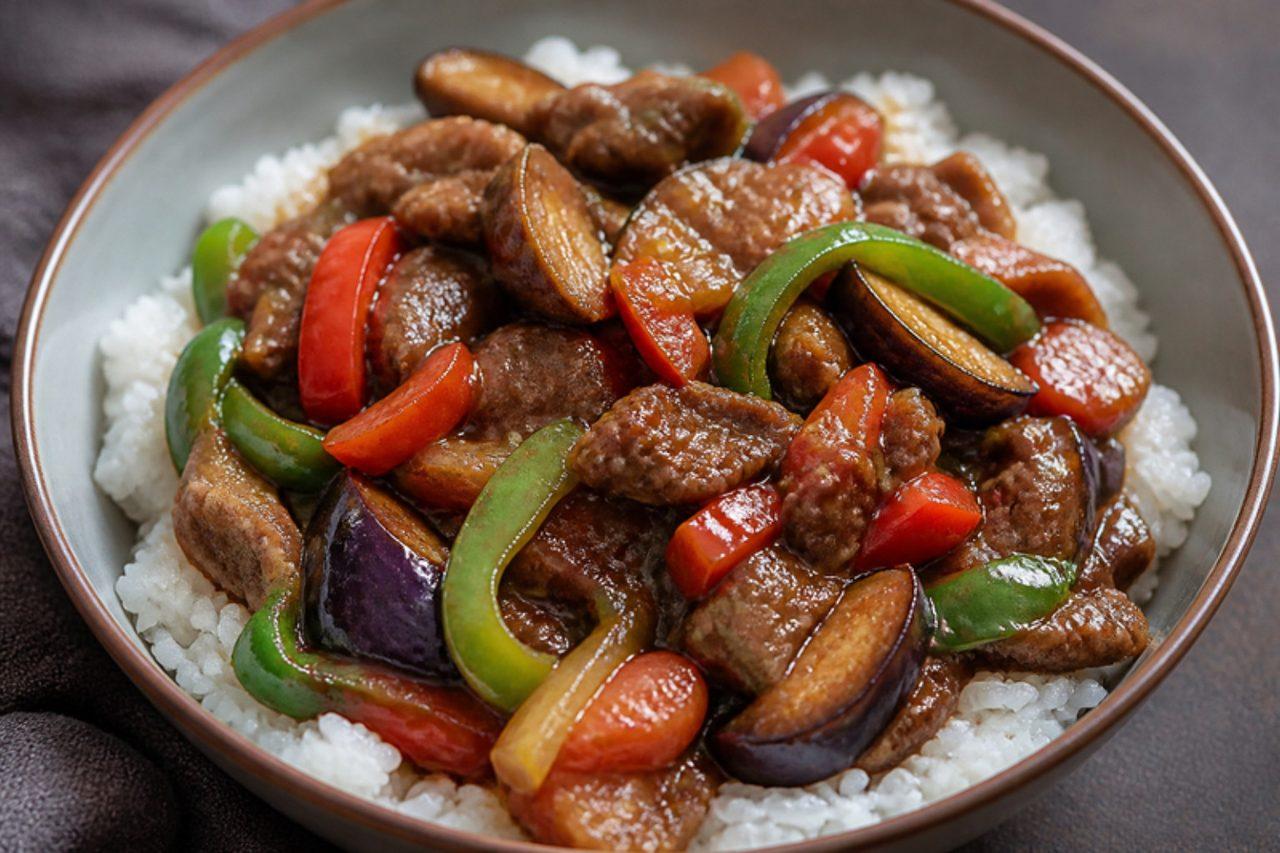
Ganfan is a dish of the Dungan people, Chinese Muslim communities who settled in Kyrgyzstan and Kazakhstan in the 1870s, and it is ordered in every Dungan café in Bishkek and Karakol: a plate of plain rice with a ladle of stew on top, made by stir-frying thin strips of beef or lamb with peppers, aubergine, celery, tomato and garlic, seasoned with soy sauce and vinegar. A common mistake is crowding the wok, which makes the meat grey and watery. Chef's tip: cut the beef into thin strips against the grain and stir-fry it first in small batches over a fierce heat, then return it at the end. No pork is used in Dungan cooking. Beef strips are done when no pink remains.

by KrazyBadal 0 views

GazozFruit syrup soda

Before bottled soft drinks, the kiosks along Rothschild Boulevard and in Florentin sold gazoz: a squirt of fruit syrup topped up with fizzy water from a tap. Tel Aviv cafés have revived it as a glass crammed with fresh and lightly fermented fruit, flowers and herbs, so it is pretty, tart and only gently sweet. Make it on hot afternoons, for children's birthdays or as an alcohol-free welcome drink. The mistake is pouring the soda too early, so it goes flat before you drink it. Chef's tip: macerate the fruit in syrup for at least 30 minutes, ideally overnight in the fridge, so it bleeds colour into the glass.

by KrazyBadal 0 views

Gefilte fishPoached fish dumplings

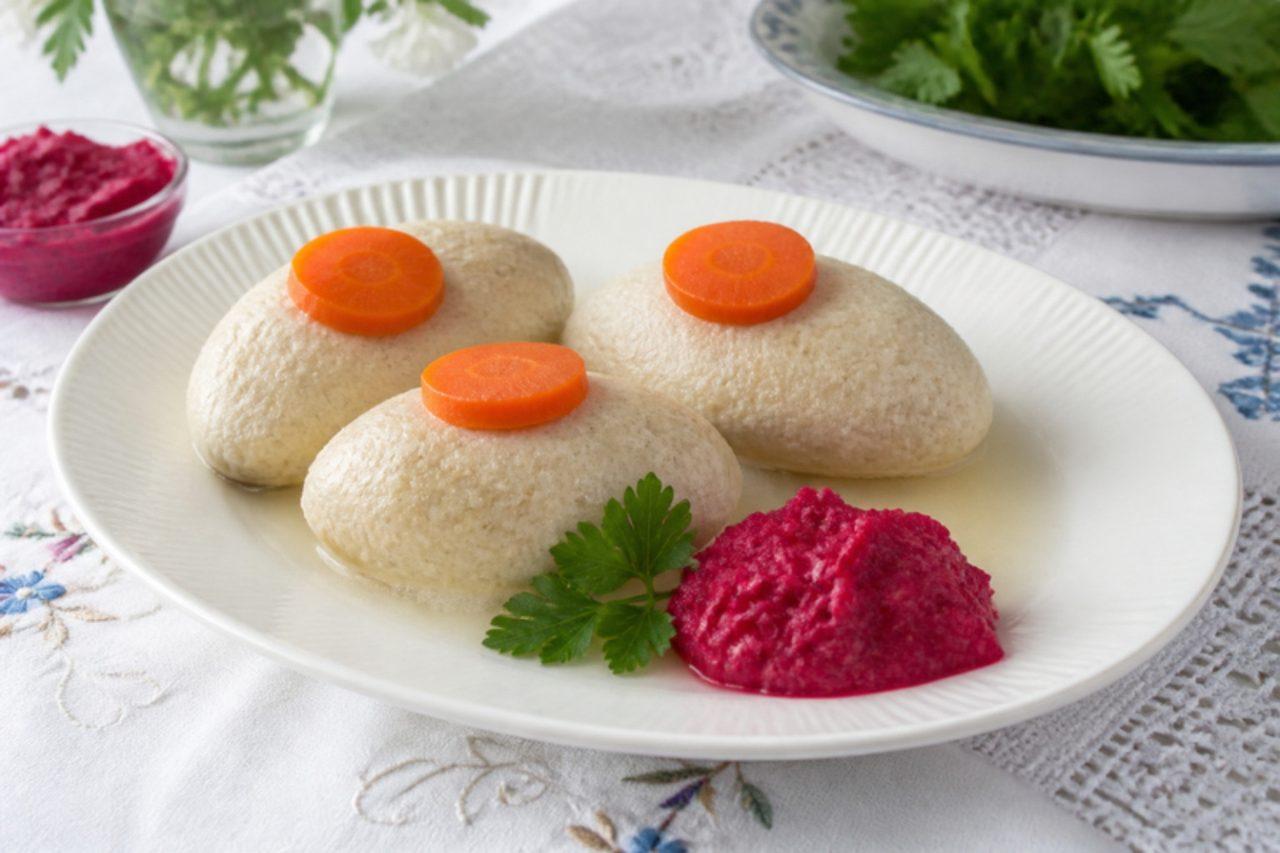
Poached fish dumplings start the Shabbat and Passover meal in many Ashkenazi homes across Israel, and families still argue about whether they should be sweet, Polish-style, or peppery like the Lithuanian version. Minced carp, pike or whiting is beaten with onion, egg and matzo meal, shaped into ovals and simmered in a broth made from the fish bones and vegetables, which sets into a light jelly when chilled. Each piece is served cold with a coin of carrot on top and a spoonful of sharp beetroot horseradish. The commonest mistake is boiling the broth hard, which makes the dumplings tough and breaks them up; it should barely tremble. Chef's tip: wet your hands with cold water before shaping each dumpling so the soft mixture does not stick.

120 minIsraeliFish
by KrazyBadal 0 views

Tlitli (Algerian rice-shaped pasta with chicken)

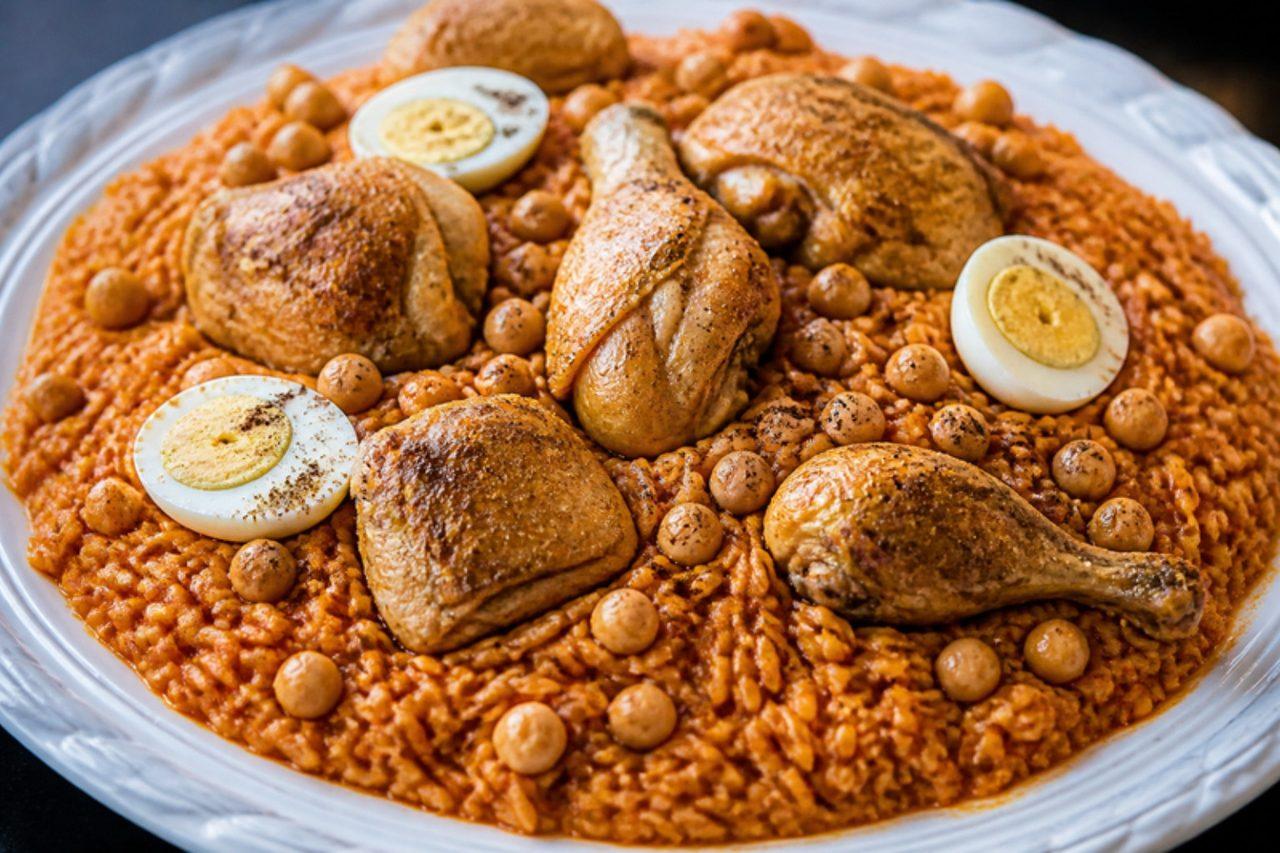
Tlitli is a tiny pasta shaped like grains of rice, once rolled by hand and now sold dried, and in Algiers and Constantine it is cooked for family feasts such as Ennayer, the Amazigh New Year, or the return of a pilgrim. The pasta soaks up a red sauce of chicken, onion, tomato, paprika, cinnamon and chickpeas, and is piled on a platter with the chicken and halved boiled eggs on top. Expect a cosy, gently spiced dish, a bit like a red risotto, with soft pasta and tender chicken. Orzo is a good stand-in if you cannot find tlitli. Chef's tip: toast the pasta in oil before adding sauce; untoasted tlitli tends to clump and turn mushy, a common mistake.

by KrazyBadal 0 views

Arroz a la cubanaRice with tomato and egg

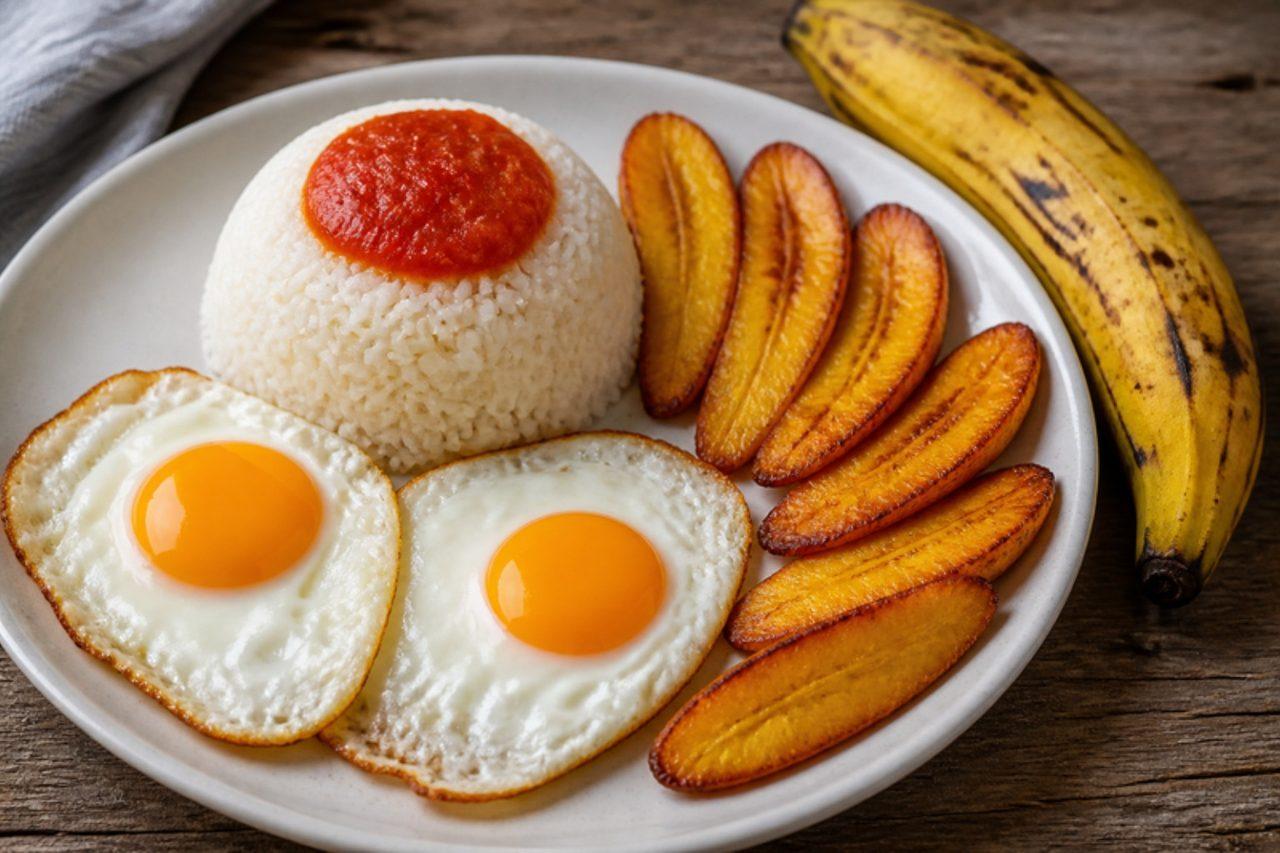
Havana cafeterías put this plate on the lunch board when cooks want something cheap, fast and filling: a mound of plain white rice, a ladle of garlicky tomato sauce, a fried egg with a runny yolk and slices of caramelised ripe plantain. Breaking the yolk into the rice and sauce is the whole point, so the eggs should be fried at the last minute. The usual mistake is using plantains that are still yellow-green; they need black-spotted skins to turn soft and sweet in the pan. Serve with a simple avocado salad. Chef's tip: baste the egg whites with hot oil from the pan so they set with lacy edges while the yolks stay liquid.

by KrazyBadal 0 views

FrüchtewäheFruit custard tart

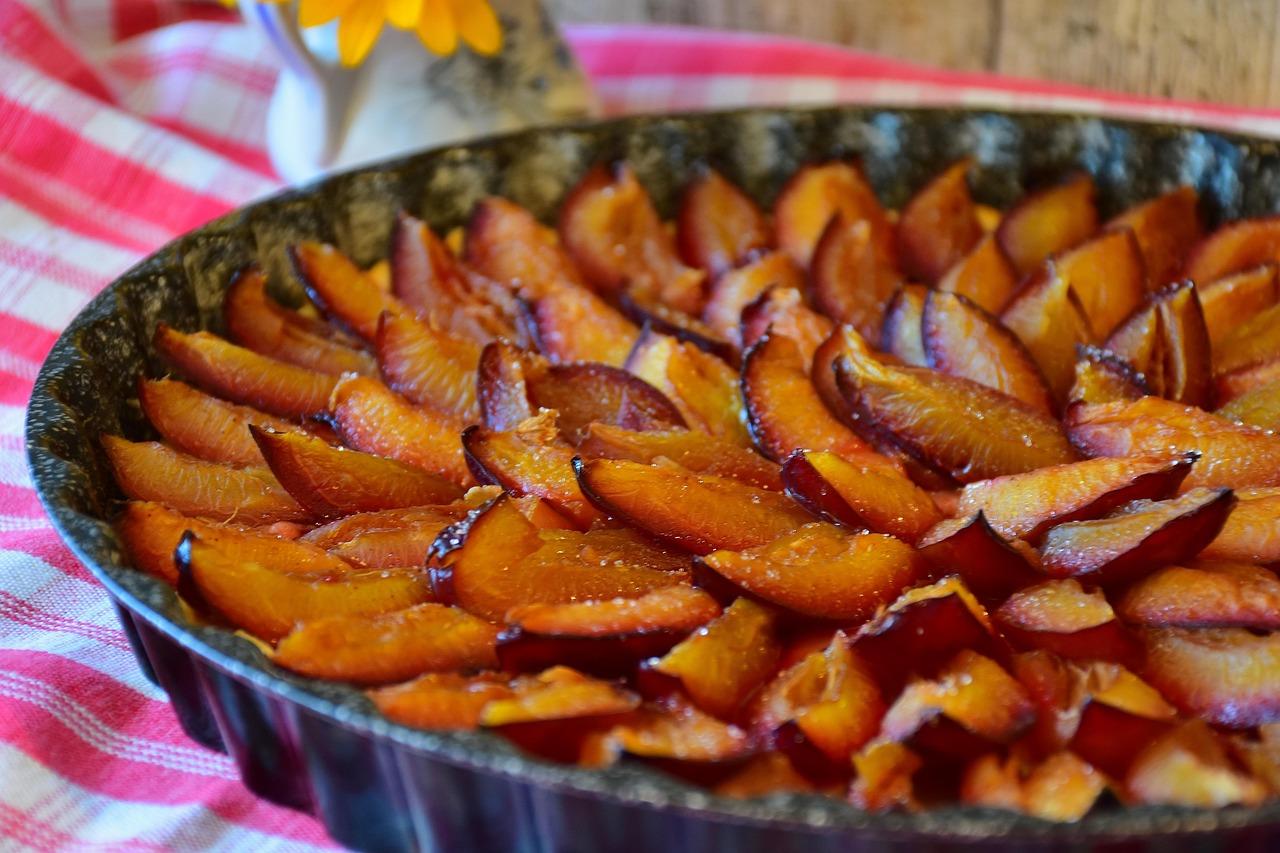
The Wähe is the open tart of German-speaking Switzerland, known as Kuchen or Fladen depending on the canton: a thin pastry base covered with sliced apples, plums, apricots or cherries, then a simple custard of cream, egg and sugar poured around the fruit and baked until set. Swiss families eat it as a light supper on Fridays, sometimes after a bowl of soup, and fruit Wähe is often dusted with cinnamon sugar. A common mistake is skipping the ground nuts on the base, which lets the fruit juice soak the pastry. Chef's tip: scatter ground hazelnuts on the pastry first; they soak up the juice and keep the base crisp.

by KrazyBadal 0 views

FrikkadelsFried spiced meatballs

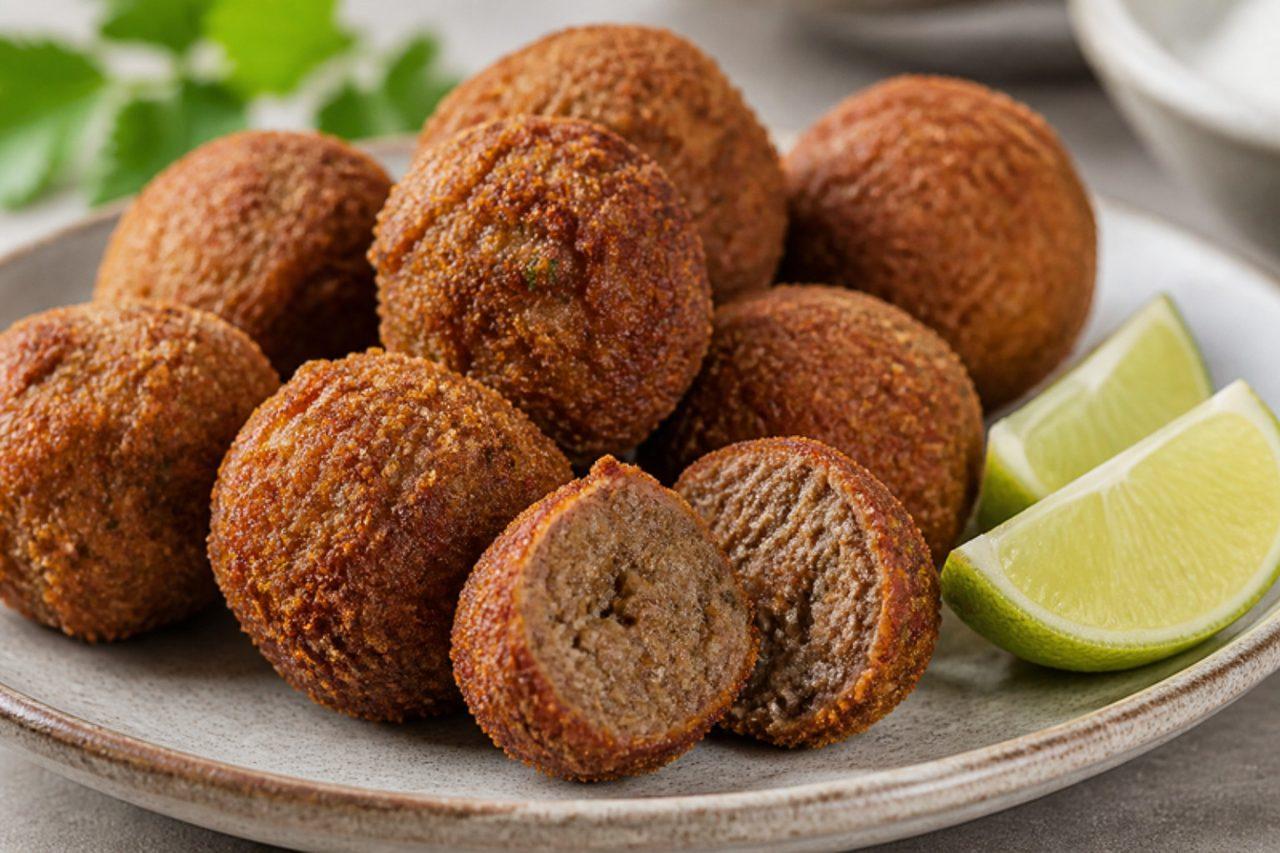
Frikkadels came to Sri Lanka with the Dutch in the 1600s and were reinvented by the Burgher community into small, crumbed, deep-fried meatballs scented with onion, garlic, cinnamon, cloves and dill. They are party food first, piled on platters at Burgher Christmas gatherings, christenings and Colombo club teas, and they are also tucked into lamprais parcels or eaten with a sharp seeni sambol and bread. Good ones are crunchy outside and very juicy within, never dense or dry. The trap to avoid is overworking the mince and skipping the soaked bread, which together make the balls tough. Chef's tip: shape them the size of a walnut and chill them for 30 minutes before crumbing, so the coating sticks and they hold their round shape in the hot oil.

by KrazyBadal 0 views

Ensalada de coditosMacaroni salad

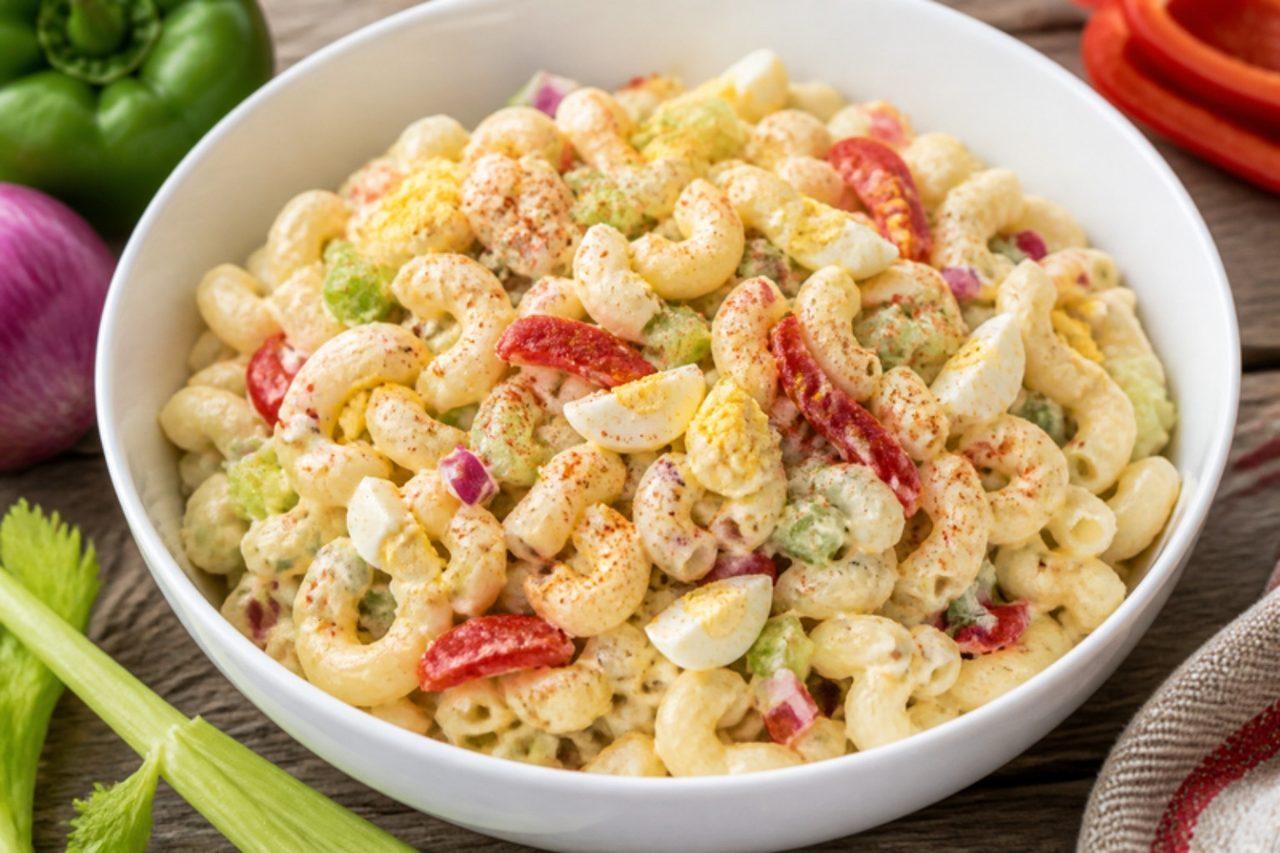
No Puerto Rican cumpleaños, baby shower or Thanksgiving-style family spread feels complete without a big bowl of coditos sitting next to the arroz con gandules. Elbow macaroni is folded through creamy mayonnaise with crunchy pepper, onion and celery, chopped hard-boiled egg and sweet pimientos, then chilled until the pasta drinks up the dressing. The common mistake is dressing the pasta piping hot, which makes the mayonnaise oily and split; let it cool first. Keep it in the fridge and don't leave it out in the sun for more than 2 hours. Chef's tip: toss the drained pasta with a splash of the pimiento liquid while it is still warm, so it is seasoned all the way through.

by KrazyBadal 0 views

Rachan ham

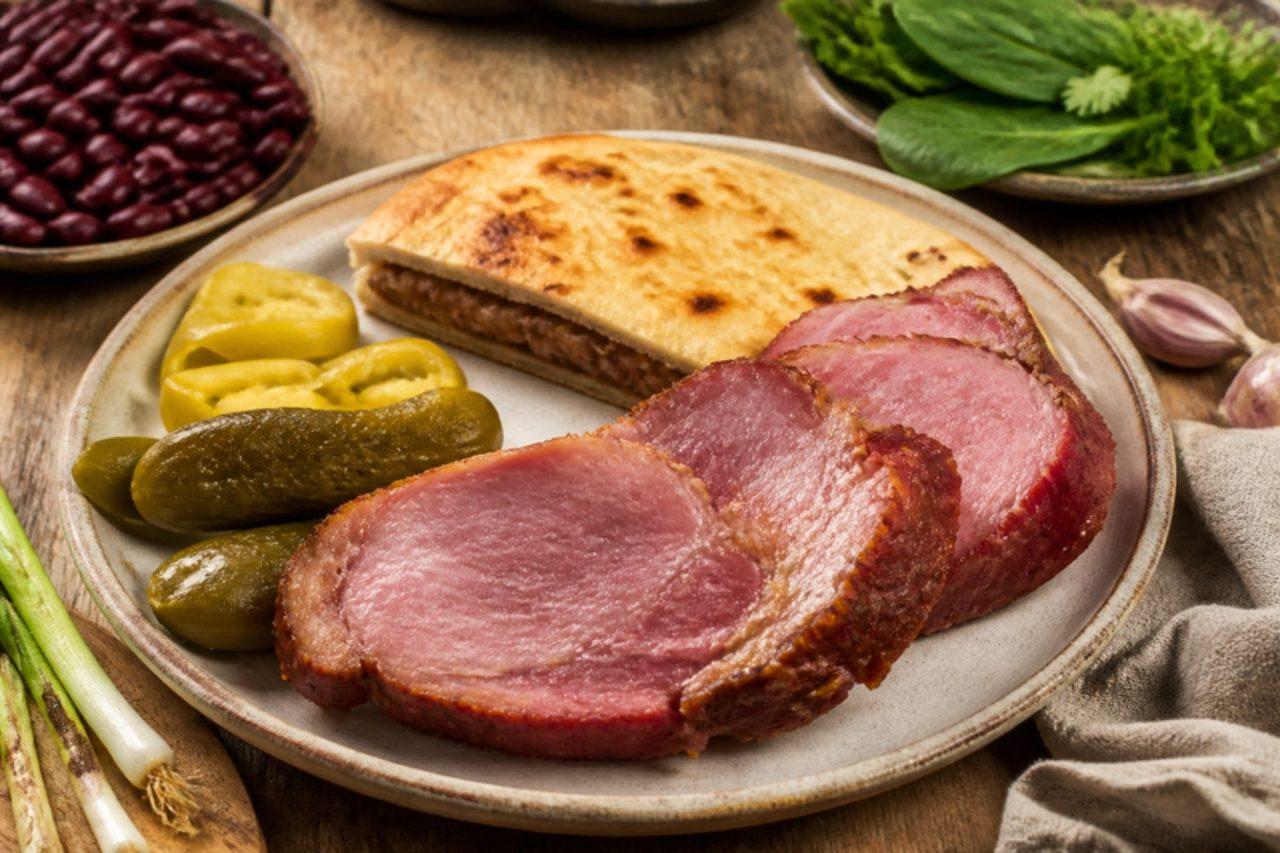
Rachuli lori is the pride of Racha: pork legs salted and hung in the smoky rafters above a wood fire, then sliced and fried until crisp, and above all eaten with lobiani bean bread, which in Racha is made with fried ham inside. This is a pork dish. Home kitchens cannot copy months in a chimney, so this version brines a boneless pork leg joint for two days in the fridge and then hot-smokes and roasts it until cooked through, giving a ham you can slice cold or fry. A common mistake is skipping the rinse after brining, which makes the ham far too salty. Chef's tip: smoke over fruit wood with a few dried bay leaves for the dark, sweet smoke of a Rachan kitchen. Whole pork joints are safe at 63 °C followed by a 10-minute rest.

240 minGeorgianMeatGluten free
by KrazyBadal 0 views

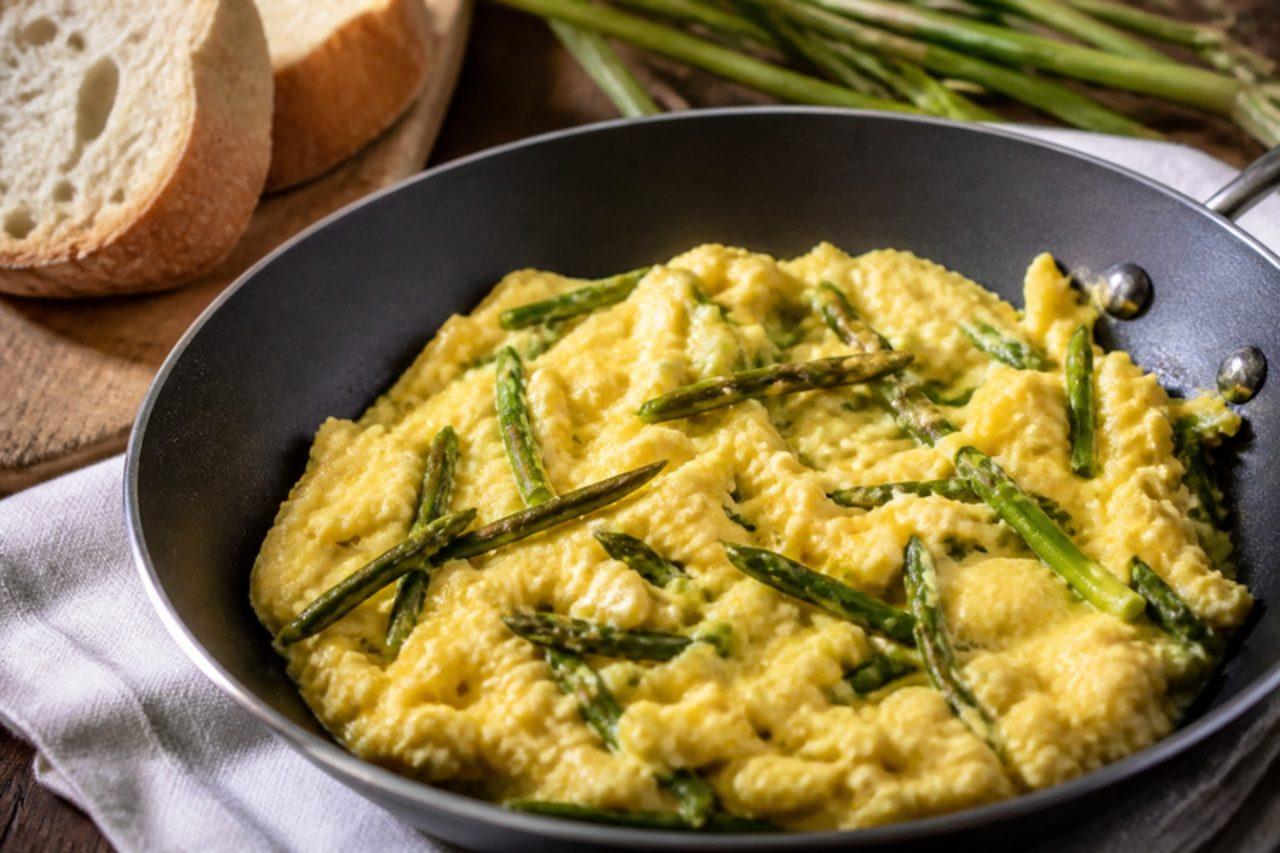
Fritaja sa šparogamaWild asparagus scrambled eggs

Come April, families across Istria and the Kvarner coast of Croatia walk the hedgerows picking thin, dark wild asparagus, and the first bunch nearly always becomes fritaja. Despite the name it is softer than an omelette: the spears are fried in olive oil, then beaten eggs are stirred through until they set in loose, creamy curds. Wild asparagus tastes greener and slightly bitter, which is lovely against the rich egg; thin garden asparagus works if you can't forage. Eat it for breakfast or a light supper with crusty bread and a glass of cold water or fresh juice. The usual slip is cooking the eggs hard and dry; stir gently over a low heat and stop while they still look moist. Chef's tip: snap each spear and keep only the part that breaks cleanly; the woody ends never soften.

by KrazyBadal 0 views

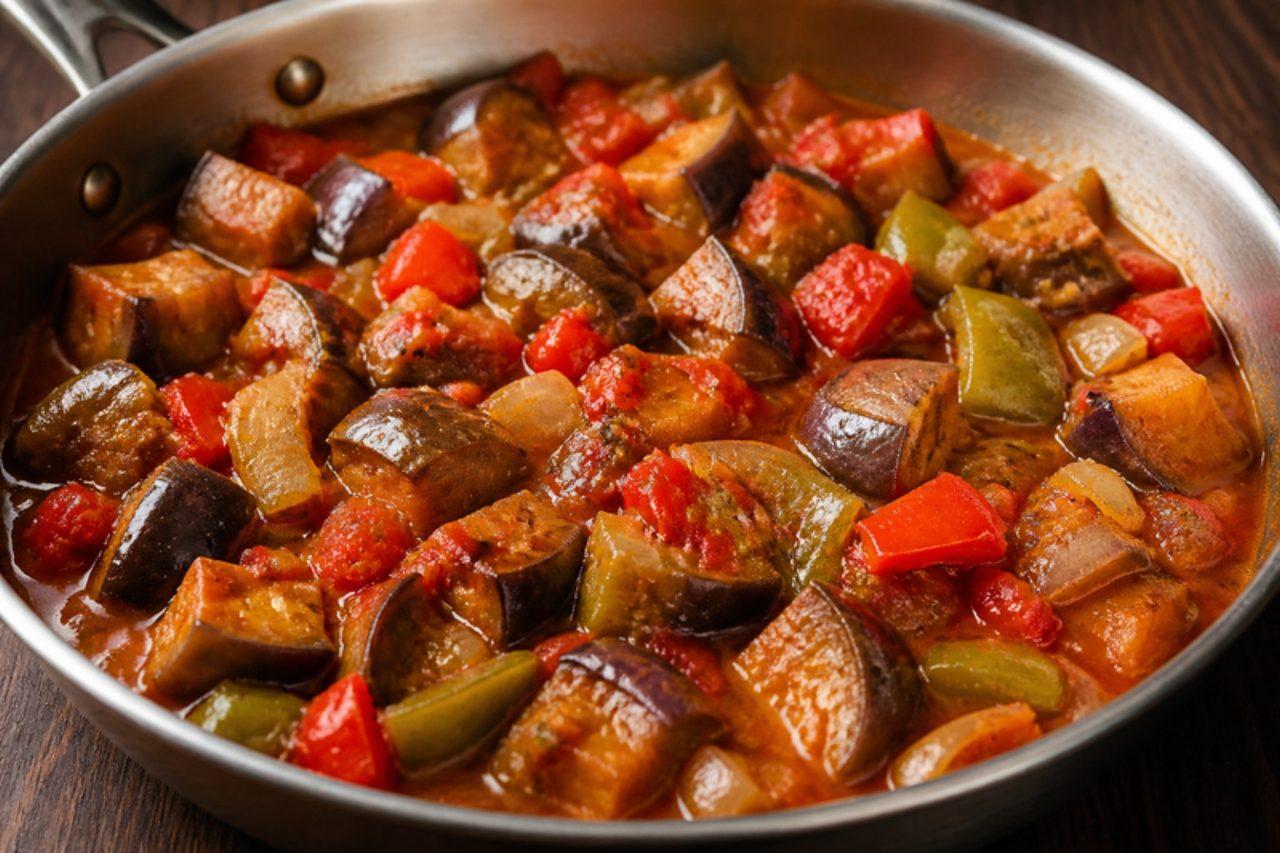
Dominican berenjena guisadaStewed aubergine

Dominican home cooks make berenjena guisada as a weekday side next to white rice and beans, the aubergine stewed down with tomato, sweet peppers and plenty of dried oregano into a soft, savoury guiso. It is light, quick and good hot or at room temperature. The common mistake is adding all the water at the start, which boils the aubergine grey; let it soak up the oil and sofrito first, then add liquid a little at a time. Chef's tip: rub the dried oregano between your palms as it goes in, to release the oils; Dominican cooks swear by it.

by KrazyBadal 1 views

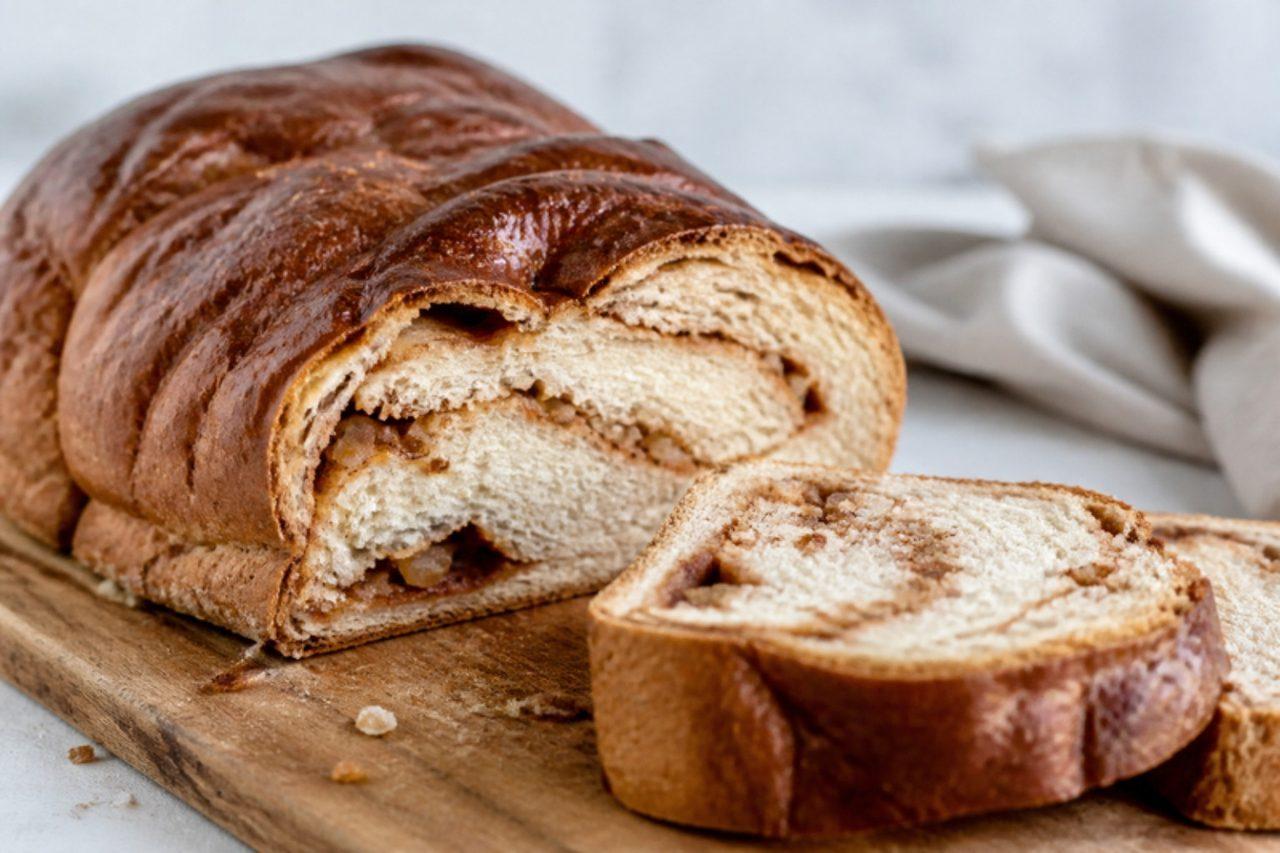
Fries suikerbroodCinnamon sugar bread

Fries suikerbrood, sûkerbôle in Frisian, is the bread Frisian families bring when a baby is born: a soft white loaf filled with large sugar nibs and cinnamon, so that as it bakes the sugar melts into sticky, crunchy pockets. Leeuwarden bakeries sell it every day, sliced and buttered with coffee. A common mistake is using fine sugar, which dissolves completely; it must be the big pearl sugar nibs. Chef's tip: knead in the sugar only at the end and gently, and bake the loaf in a tin so the melting sugar caramelises against the sides.

by KrazyBadal 0 views

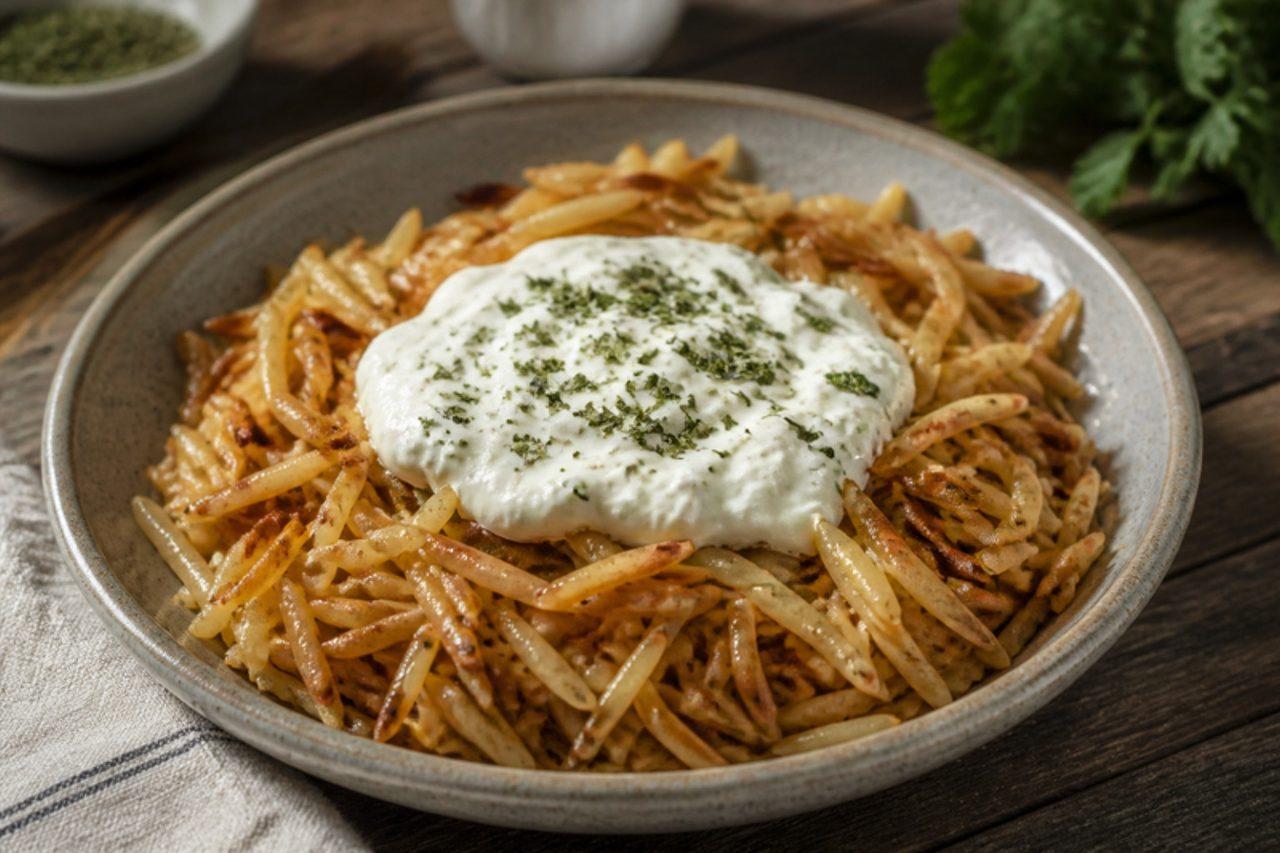
ArishtaButtered egg noodles

In Gyumri and the villages of Shirak, grandmothers still roll arishta by hand, cut it into thin strips and dry it in the sun to store for winter. To serve, the noodles are first toasted in butter until they turn golden and nutty, then boiled until tender and topped with garlicky matsun yogurt. It is simple, filling food for cold days on the Shirak plateau. A common mistake is skipping the toasting step, which gives soft, plain noodles without the characteristic roasted flavour. Chef's tip: dry the cut noodles for at least an hour before toasting, so they brown evenly instead of clumping.

by KrazyBadal 0 views

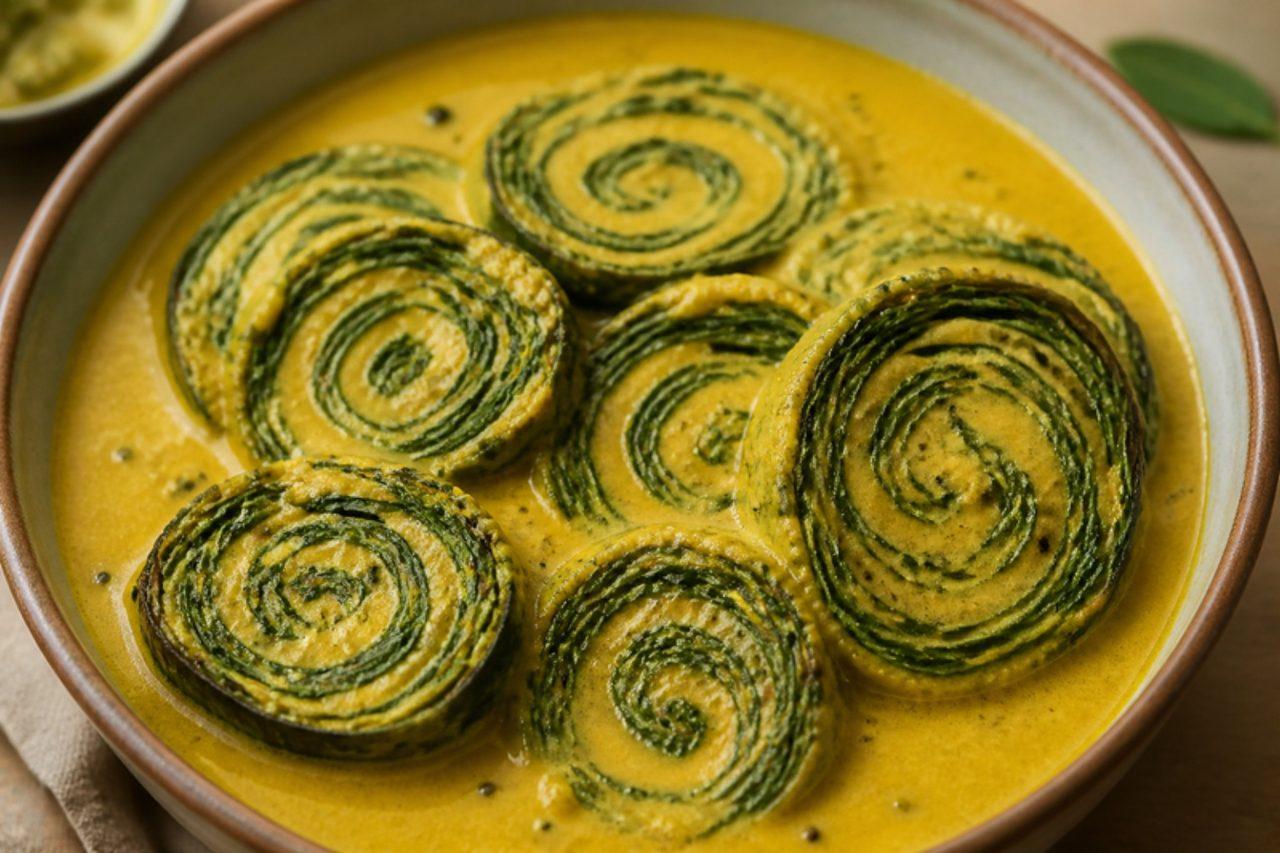
ArikanchanTaro leaf rolls in mustard gravy

Arikanchan is a monsoon speciality of Maithil kitchens in Janakpur and the eastern Terai, cooked when the taro plants in the courtyard put out huge, tender leaves. A spiced chickpea-flour paste is spread over the leaves, which are rolled up tight like a Swiss roll and steamed, then the rolls are sliced into spirals, fried and simmered in a punchy gravy of ground mustard seed, garlic, chilli and tomato cooked in mustard oil. The result is soft and layered, with a gentle sourness and the nose-tingling heat of fresh mustard, eaten with rice and a dal. The biggest risk is undercooking the taro leaves, which can leave an itchy, scratchy feeling in the throat. Chef's tip: use only young leaves, strip the thick ribs, and always include the tamarind in the paste, because the sourness neutralises the irritant in the leaves.

by KrazyBadal 0 views

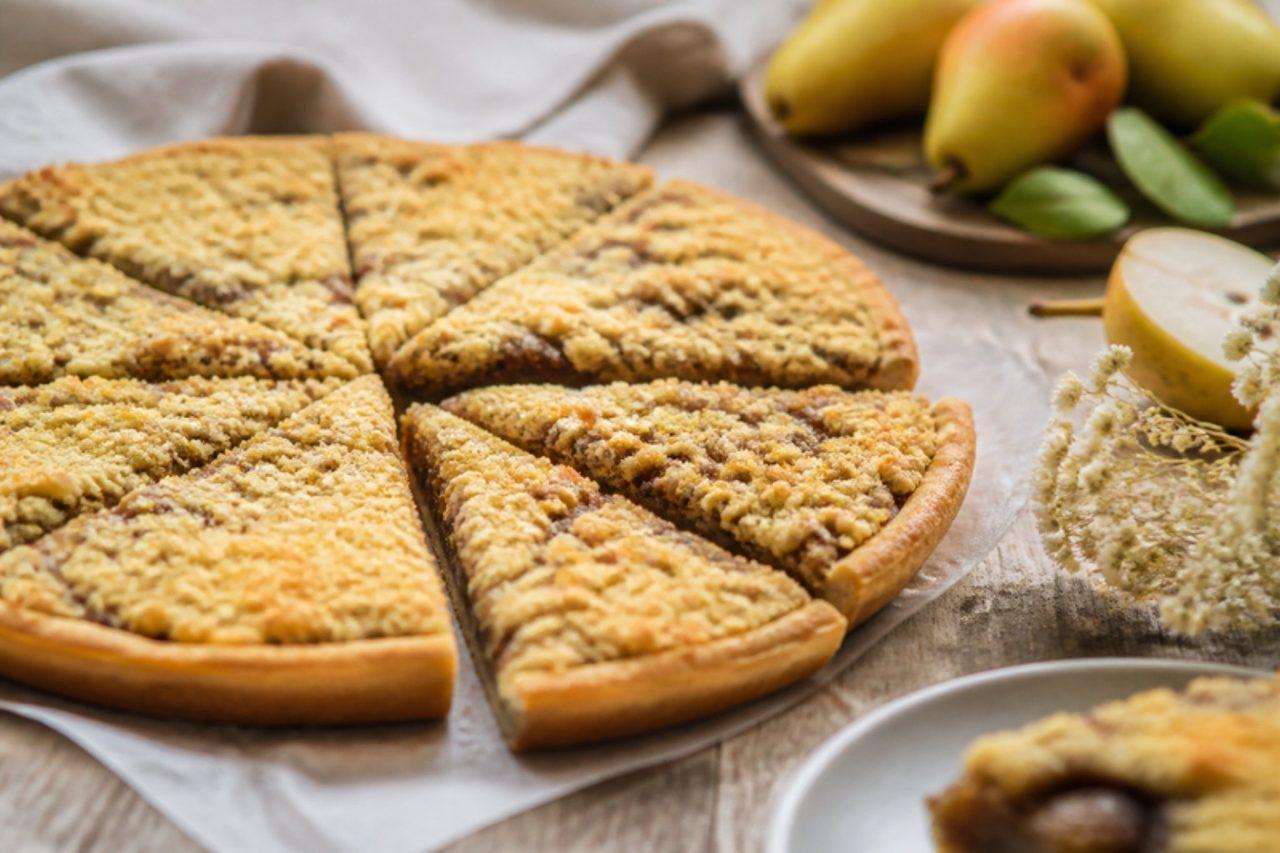
FrgályYeast tarts with pear or cheese

At weddings and church fairs in Moravian Wallachia, in the hills around Rožnov and Vsetín, tables are stacked with frgály: yeast tarts as wide as a dinner plate, rolled so thin the filling seems to sit on a crisp, chewy disc. The classic toppings are dried pear mixed with plum butter, sweet tvaroh (Czech quark), or poppy seed, all scattered with a buttery crumble. This recipe makes four, two with each of the first two fillings. Tvaroh is usually set without rennet, but some brands use it, so check the label. The usual slip is leaving the dough thick in the middle, which makes a bready tart; roll right to the edge, about 3 mm thick. Chef's tip: bake on the lowest oven shelf on a hot tray, so the base browns before the filling dries.

150 minCzechBaking
by KrazyBadal 0 views

Green beans with egg

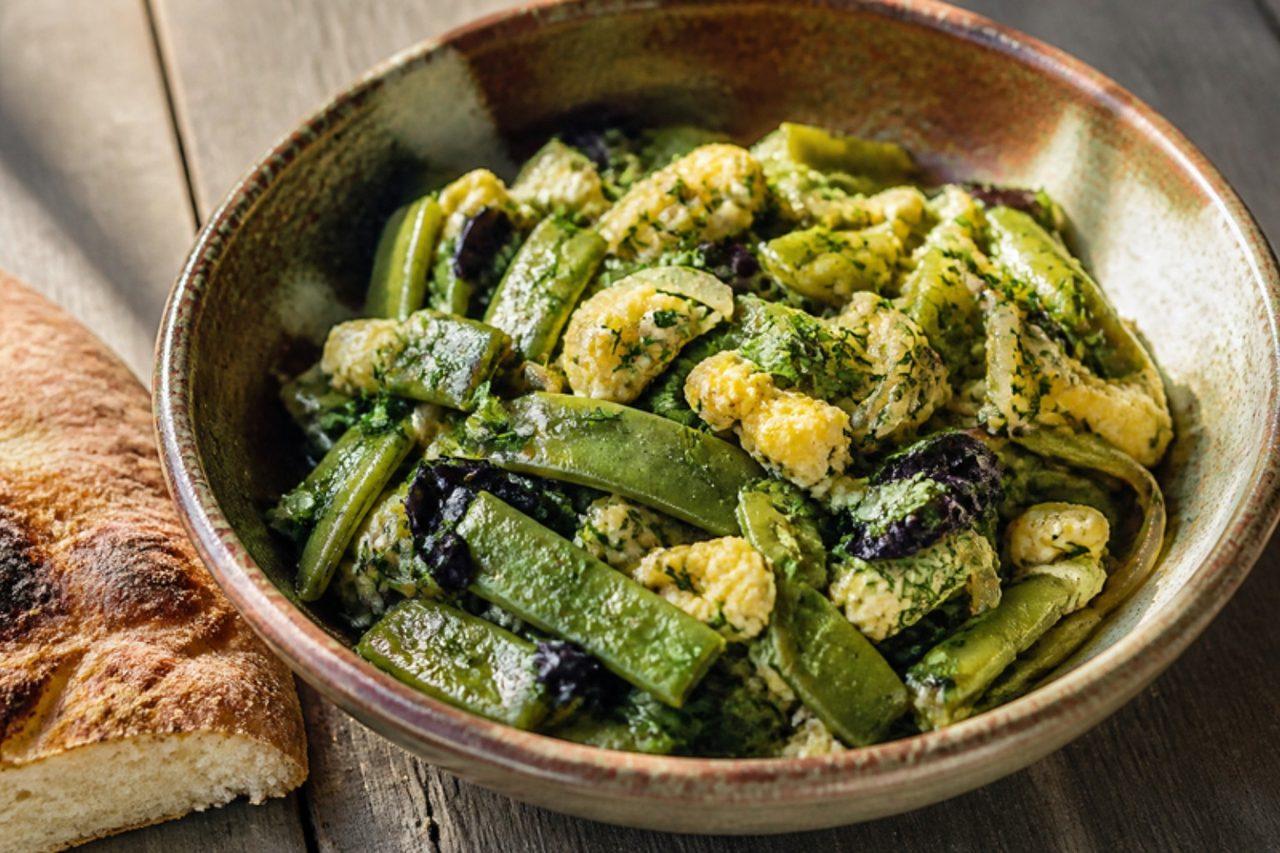
In the villages around Gori and Mtskheta, high summer brings sacks of flat green beans, and this is how many Kartli families eat them on a weekday: slowly softened with onion, then tossed with coriander, basil and garlic and bound at the last minute with beaten egg. The result sits halfway between a warm salad and a soft scramble, eaten with a hunk of shoti bread and a few slices of cheese. A common mistake is adding the eggs while the pan is still wet with bean water; they turn watery and grey instead of clinging in golden curds. Chef's tip: Georgian cooks use purple basil (reyhan), and its clove-like scent is what makes the dish taste of home, so look for it at Turkish or Georgian grocers.

by KrazyBadal 0 views

Chbah essafra (almond fritters in lamb sauce)

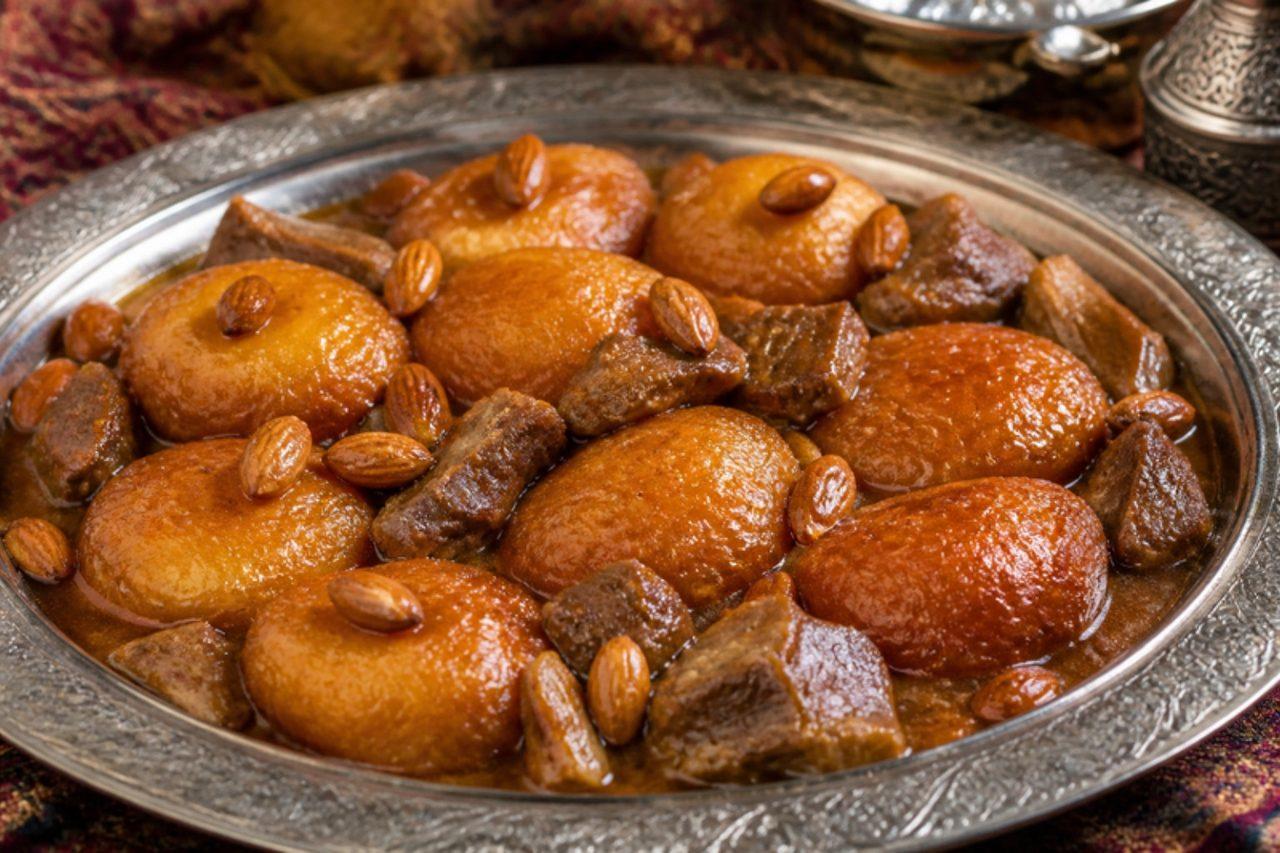
Cooks in Algiers bring out chbah essafra for weddings and grand family dinners, where it is served as the sweet main course: diamonds of almond paste scented with lemon and cinnamon are dipped in egg, fried golden and laid around tender lamb in a pale, buttery sauce sweetened with sugar and orange-blossom water. The contrast of savoury meat and soft, sweet almond is the point, and the dish is rich, so small portions with bread are usual. Chicken can replace the lamb, with a shorter cooking time. Chef's tip: warm the fritters in the sauce only at the table; dropping them into bubbling sauce is a common mistake, and they fall apart.

130 minAlgerianMeat
by KrazyBadal 0 views

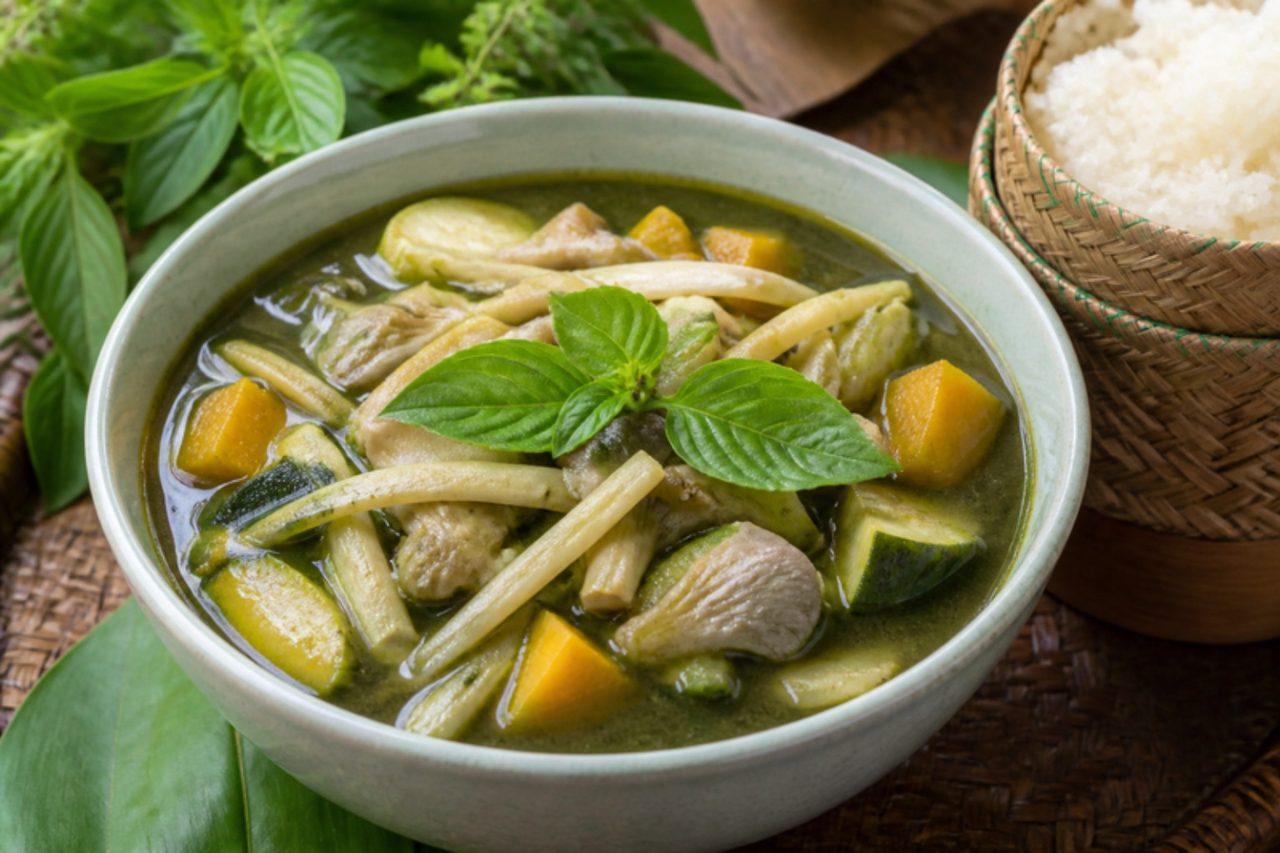
Lao bamboo shoot soup

When the rains arrive in June, Vientiane's morning markets fill with pale, freshly dug bamboo shoots, and pots of kaeng nor mai start simmering in kitchens across the city for the family lunch. The broth is a deep olive green, tinted by the juice squeezed from yanang leaves, and thickened with a spoonful of pounded soaked sticky rice so it coats the spoon. Earthy bamboo, sweet pumpkin and slippery mushrooms float in it with lemon basil on top, and a basket of sticky rice and a dish of jeow sit alongside. Skipping the pre-boil of the bamboo is where most cooks go wrong: raw shoots taste bitter and need cooking through to be safe, so always blanch fresh ones and drain. This version leaves out the fermented fish of village kitchens and seasons with salt and tamari. Chef's tip: squeeze the yanang leaves in cold water, never hot, or the broth turns brown and loses its grassy freshness.

60 minLaoSoupsVeganGluten free
by KrazyBadal 0 views

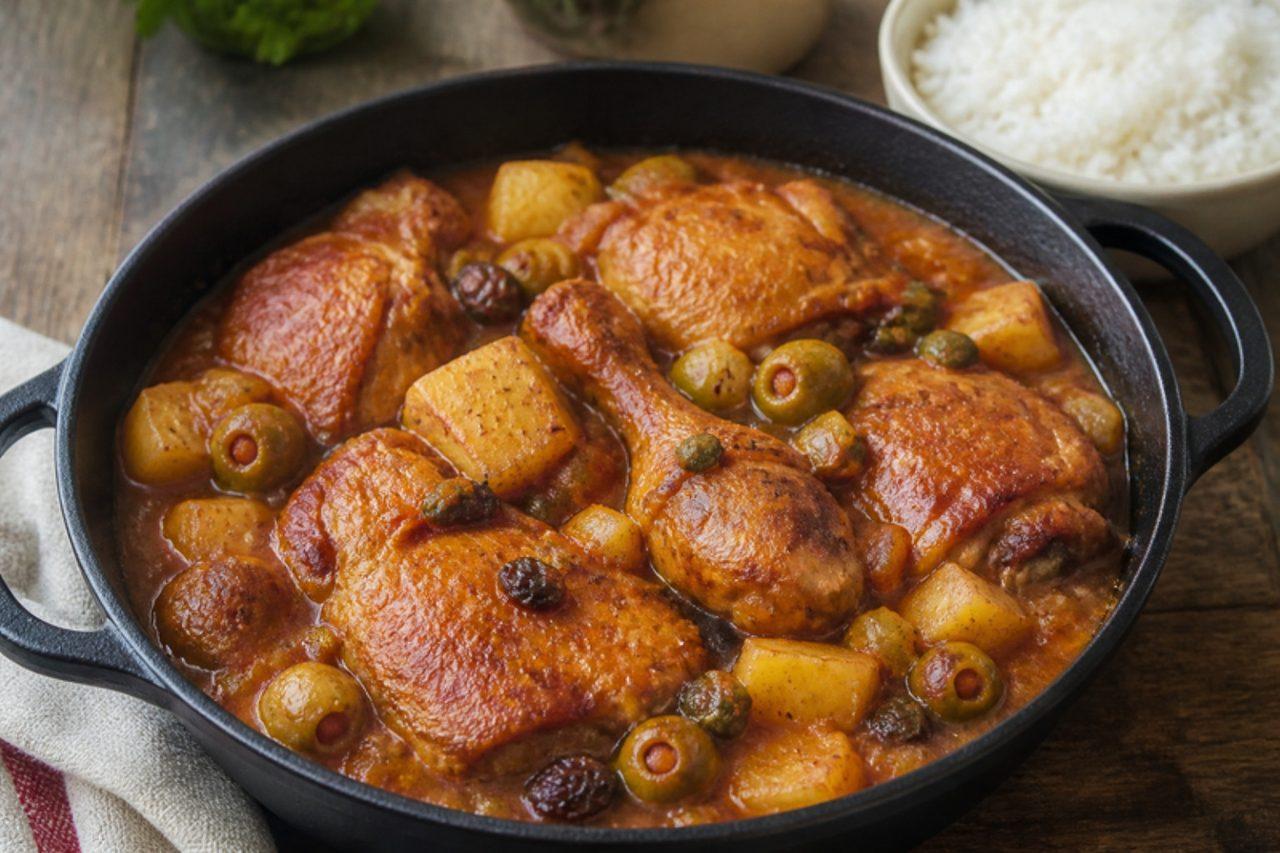
Fricasé de polloChicken stew with olives and raisins

Fricasé de pollo is a family dinner all over Cuba: chicken pieces marinated in sour orange and garlic, browned, then simmered with potatoes, green olives, capers and a few raisins in a light tomato sauce. The sweet-salty balance is what makes it so Cuban. A frequent mistake is skipping the marinade time; even an hour in the fridge seasons the meat right through. Serve with white rice. Chef's tip: add the raisins with the potatoes rather than at the start, so they plump up but don't melt into the sauce.

by KrazyBadal 0 views

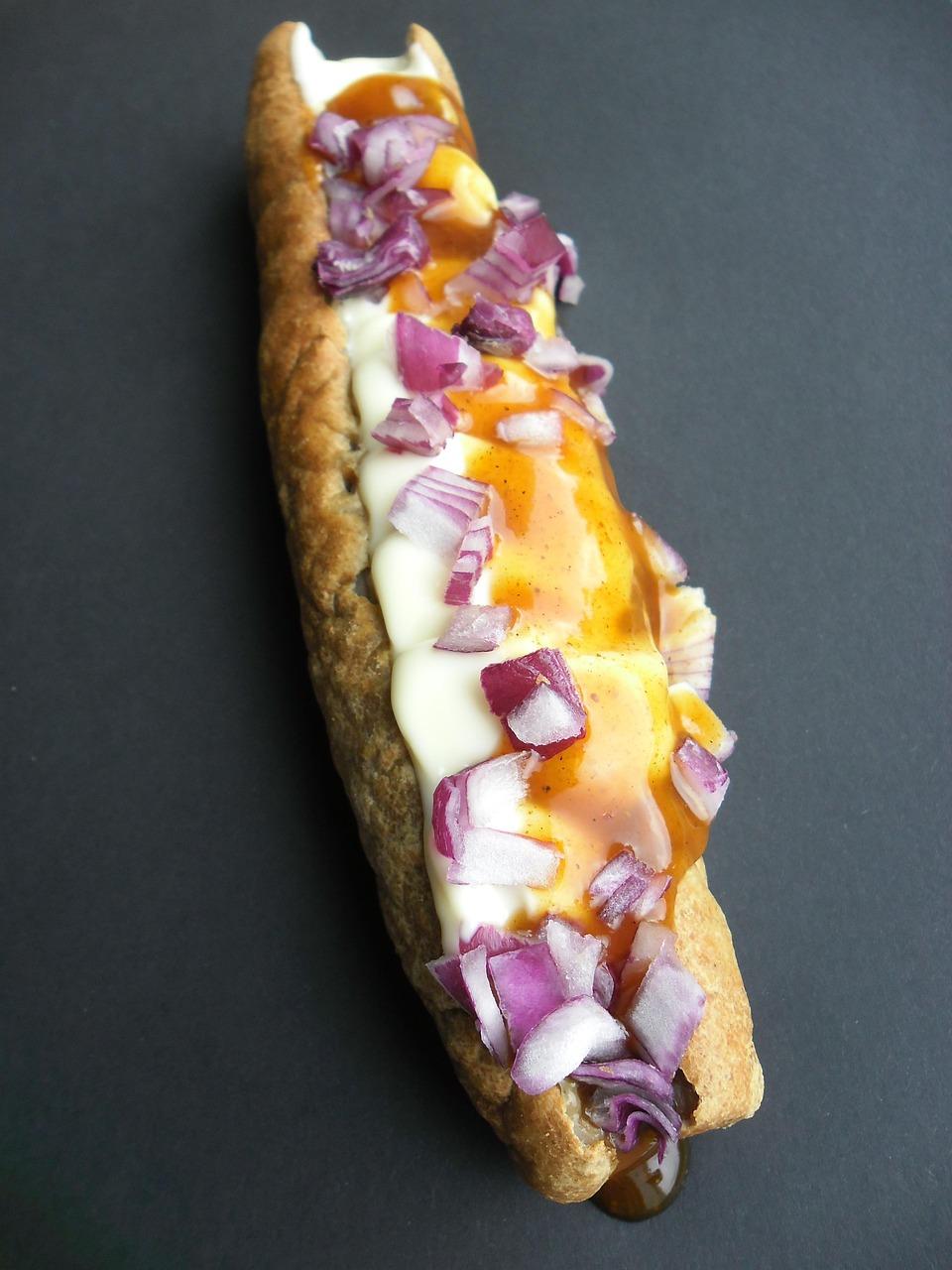
Frikandel speciaalSausage with mayo and onion

The frikandel is the snack-bar sausage of the Netherlands, fried from frozen in every cafetaria and eaten at football matches and after a night out: a long, skinless sausage of finely minced meat, and 'speciaal' means split open and topped with mayonnaise, curry ketchup and raw chopped onion. Factory frikandellen use a mix of meats; this homemade version uses beef and pork mince, so it contains pork. A common mistake is skipping the poaching step, so the sausages break up in the fryer. Chef's tip: roll them in cling film and poach first, then chill; they hold their shape and fry crisp in minutes. Minced meat must reach 71 °C.

by KrazyBadal 0 views

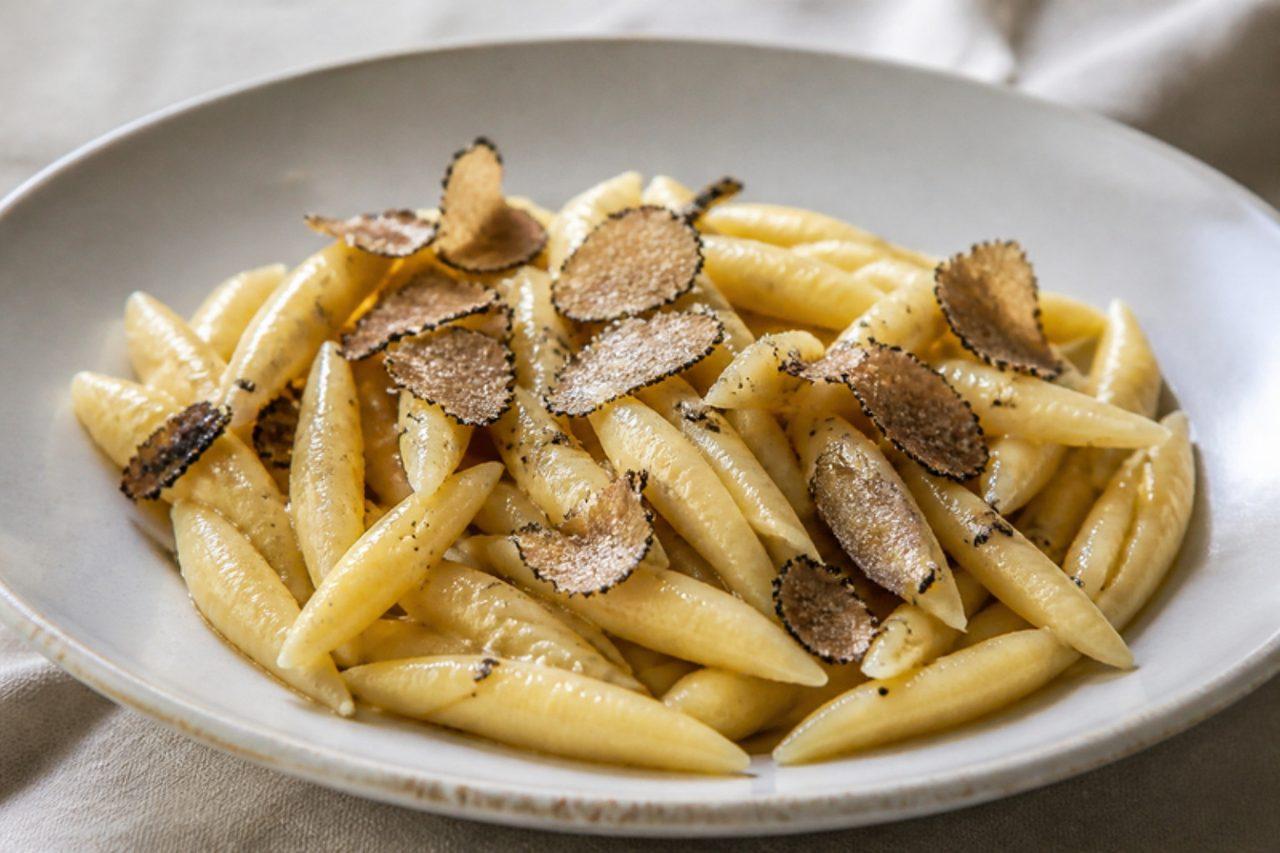
Fuži s tartufimaHand-rolled pasta with truffle

Autumn in the Mirna valley of inland Istria, around Motovun and Buzet, means truffle hunters and dogs in the oak woods and plates of fuži in every village konoba. Fuži are small squares of egg pasta wrapped round a stick into quills, and here they are tossed with butter, a splash of their cooking water and grated truffle, so each one carries a glossy, earthy coat. Fresh black or white truffle is best; a little truffle paste works too, but read the label and avoid products that rely on artificial truffle aroma. The aged hard cheese is often made with animal rennet, so choose a vegetarian hard cheese if you need to. Where most people go wrong is cooking the truffle: heat kills its scent, so add it off the heat. Chef's tip: store the fresh truffle overnight in a closed jar in the fridge with the eggs for the dough; they soak up its perfume through the shell.

by KrazyBadal 0 views

Arepa di pampunaCinnamon pumpkin pancakes

Curaçao and Aruba use the word arepa differently from their South American neighbours: arepa di pampuna are not corn arepas but small, sweet pumpkin pancakes, fried in a little oil and eaten warm for breakfast, or alongside a bowl of soup or stoba at lunch. The mashed pumpkin makes them tender and bright orange, with cinnamon and a little sugar. The mistake is too much flour, which makes them dense; the batter should be thick but soft. Chef's tip: cook the pumpkin the day before and drain it overnight in the fridge for the lightest pancakes.

by KrazyBadal 0 views

Dundun (fried yam)

In the evenings, Lagos street corners fill with the smell of dundun: big woks of oil, sliced white yam frying next to plantain and akara, sold by the piece in a twist of paper with a spoon of pepper sauce. Good dundun is golden and crisp outside and soft and fluffy as a baked potato inside, with a faint sweetness from the yam. At home it is a favourite Saturday breakfast or a quick supper, and children happily eat it on its own while the adults pile on the sauce. Don't fry over a very high heat: the outside browns before the middle cooks, the commonest dundun mistake. Chef's tip: soak the yam pieces in salted water for 5 minutes and pat them dry; the salt seasons them through and they fry crisper.

by KrazyBadal 0 views

Arepa dominicanaSweet cornmeal coconut cake

Not the stuffed corn patty of Venezuela: in the Dominican Republic arepa means a dense, sweet cornmeal cake that grandmothers once baked in a covered pot with hot coals on the lid. The cornmeal is first cooked with coconut milk, milk, butter, sugar and cinnamon into a thick porridge, then baked until it sets with a dark, caramelised crust and a soft, pudding-like centre. It is eaten at merienda with coffee or a glass of cold milk. The common mistake is not cooking the cornmeal long enough on the hob, which leaves the cake gritty. Chef's tip: let the arepa cool completely before slicing; warm, it is too soft to cut cleanly.

by KrazyBadal 0 views

AreekaWholemeal bread with ghee and honey

In the green mountains of Asir in south-west Saudi Arabia, areeka is the breakfast for guests, weddings and cold mornings in Abha: thick wholemeal breads are torn while still hot and kneaded with ghee into a smooth, soft dome, then hollowed out and filled with a pool of warm ghee, mountain honey and date syrup. Everyone eats from the same plate, pinching off pieces and dragging them through the sweet centre. It is rich, warm and comforting, with a nutty wheat flavour. The usual mistake is letting the bread cool before kneading; it must be worked hot or it will not bind. Serve with cardamom coffee or milky tea, and a spoonful of cream if you like. Chef's tip: wear clean rubber gloves so you can knead the bread while it is properly hot.

by KrazyBadal 0 views

Moukhbaza (Kassala mashed banana)

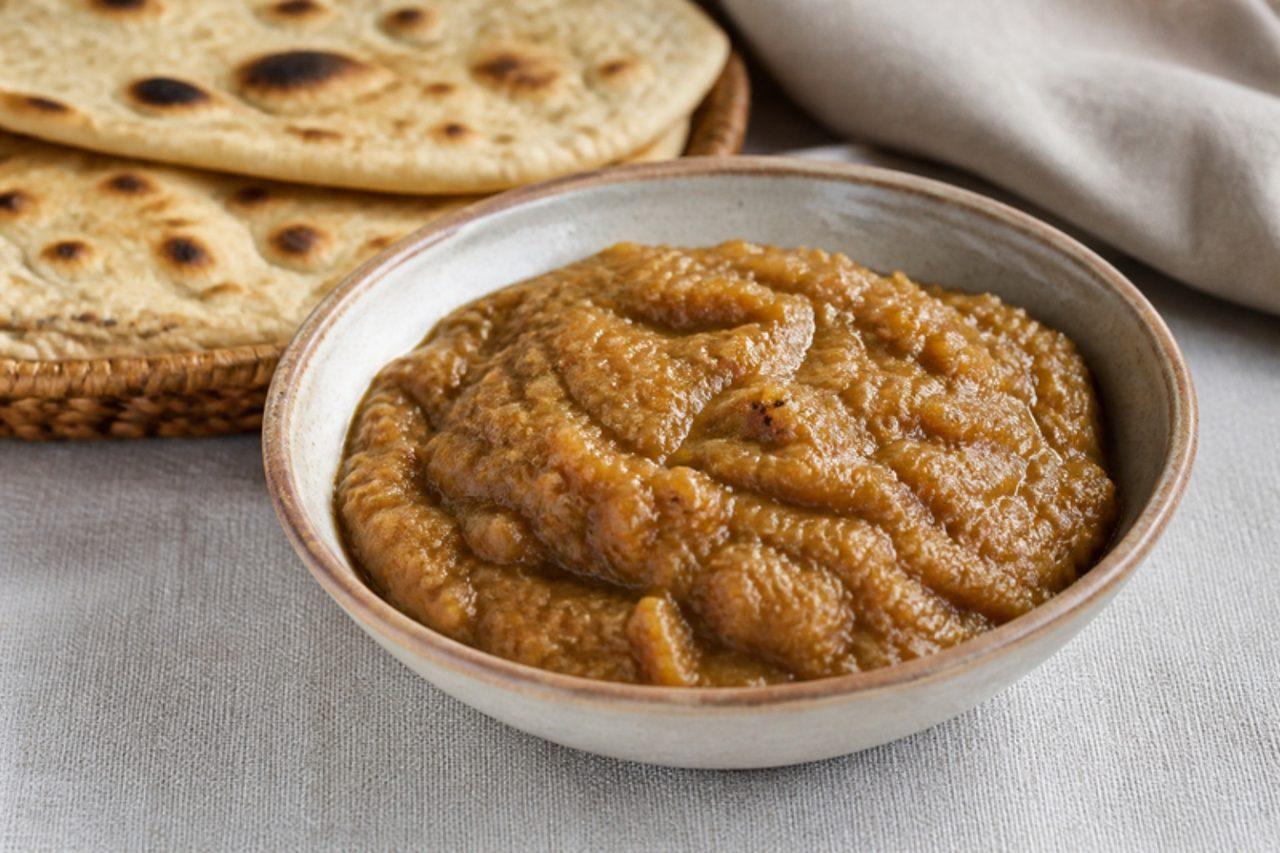
Kassala, in the green orchard country of eastern Sudan near the Eritrean border, grows bananas in abundance, and its signature dish uses them very simply: very ripe bananas mashed with a little sugar and cooked briefly until thick and jammy. Moukhbaza is eaten as a snack or light breakfast, torn kisra or soft gurasa pancakes dragged through it, and children adore it. It tastes like warm banana bread without the oven. Under-ripe fruit is the usual mistake; you want bananas with heavily speckled, almost black skins, or the mash is starchy and bland. Chef's tip: a squeeze of lime at the end keeps the colour bright and balances the sweetness.

by KrazyBadal 0 views

AranygaluskaGolden walnut yeast dumplings

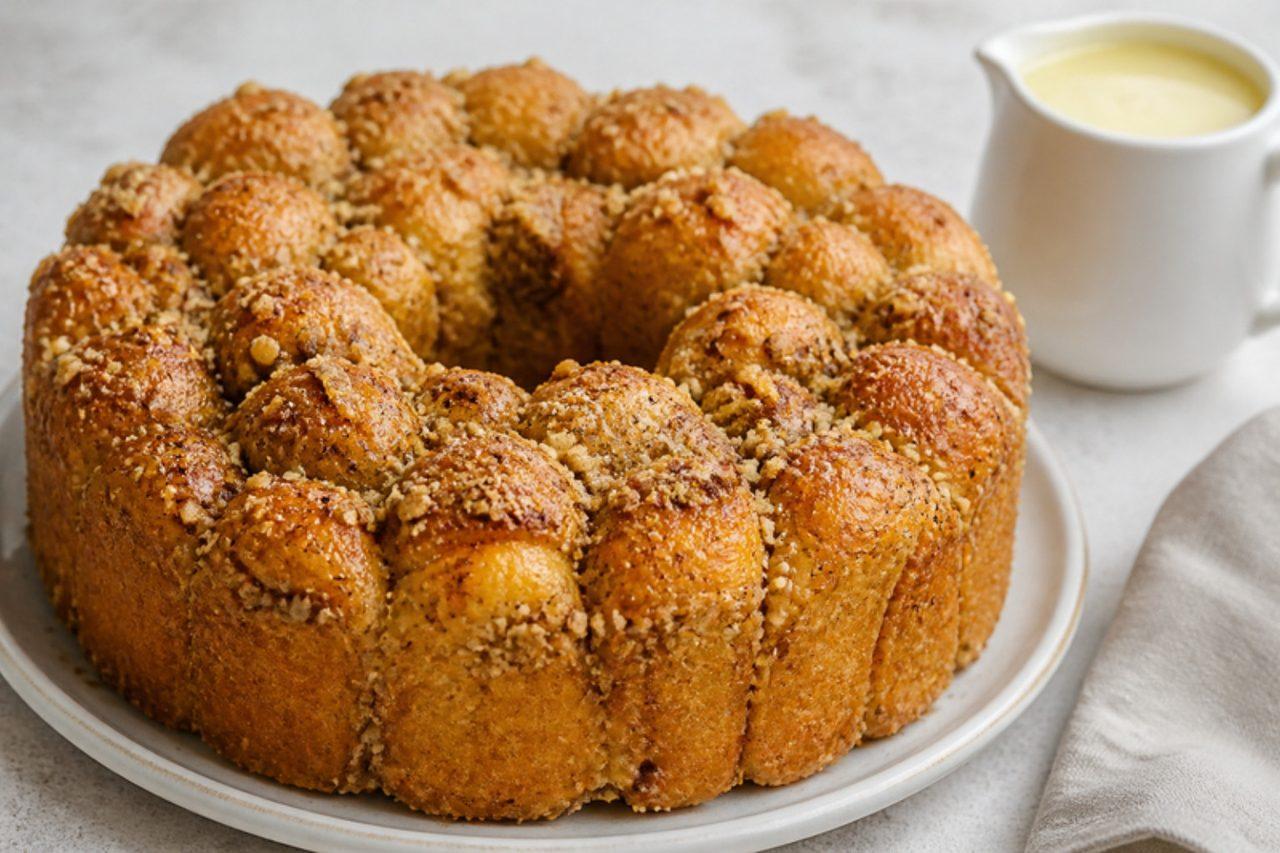
Aranygaluska means golden dumplings, and the pull-apart cake really does come out of the oven bronze and gleaming. Walnut-sized balls of sweet yeast dough are dipped in melted butter, rolled in ground walnuts and sugar, stacked loosely in a ring tin and baked, so the nuts caramelise into a sticky crust. It is a family Sunday pudding all over Hungary and a favourite at school canteens, and Hungarian emigrants took it to America, where it became monkey bread. Pour warm vanilla custard over each helping. Some cooks serve it with a wine custard; this version keeps to vanilla, so it is alcohol-free. Where it goes wrong is packing the balls tightly; leave gaps so they can rise and the walnut coating reaches every side. Chef's tip: spoon a little apricot jam between the layers for a tart note.

by KrazyBadal 0 views

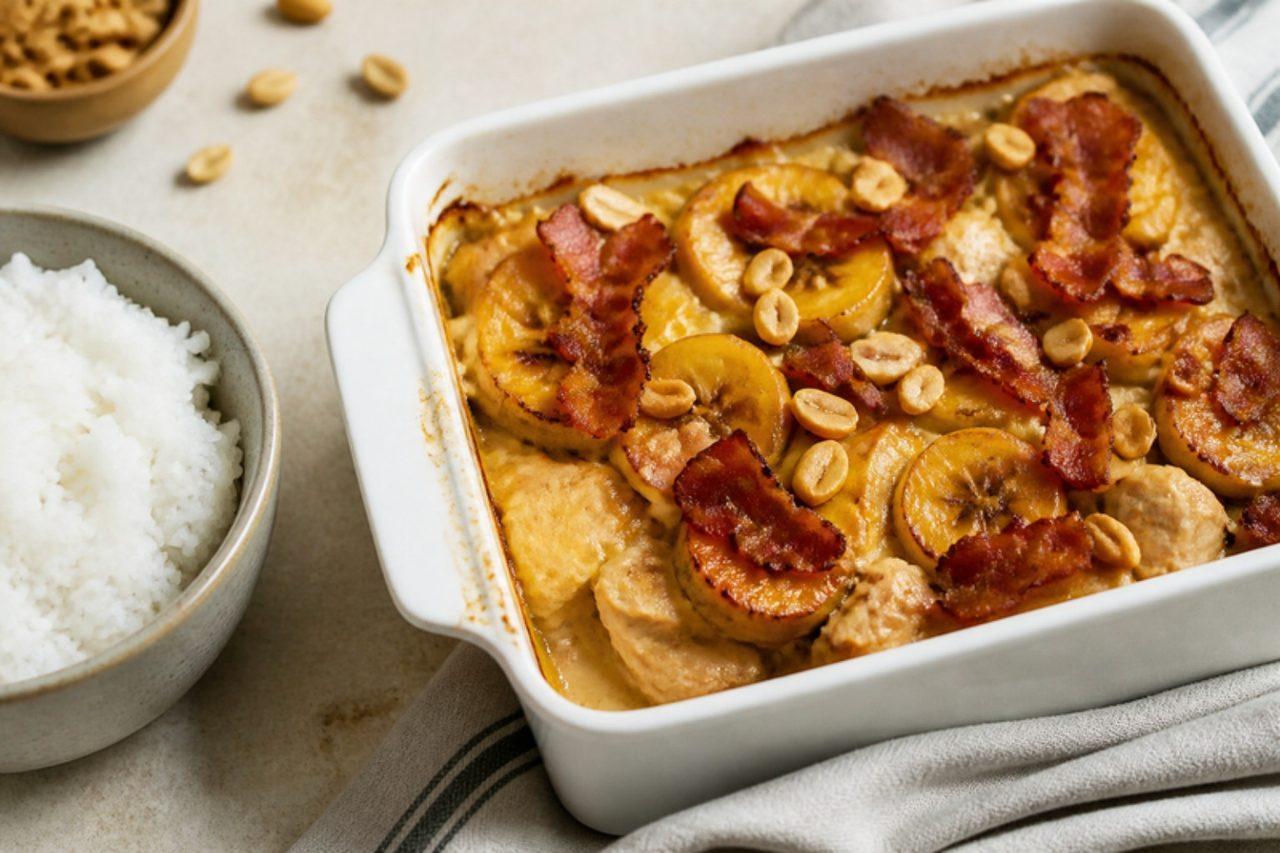
Flygande JacobChicken, banana and bacon bake

Flygande Jacob, 'flying Jacob', was invented in 1976 by Ove Jacobsson, an air-freight worker, and the recipe appeared in a Swedish magazine; within years it was one of the most-made party dishes in Sweden. Cooked chicken is mixed with whipped cream and chilli sauce, layered with sliced banana, baked, then topped with crisp bacon and salted peanuts and served with rice. This dish contains pork, in the bacon. It is sweet, salty and creamy, and gloriously retro. A common mistake is using raw chicken, which leaks juice and makes the sauce thin. Chef's tip: use roast chicken from the day before; it must already be cooked to 74 °C.

by KrazyBadal 0 views

Jamaican cornmeal pudding

Jamaican cornmeal pudding is the cousin of sweet potato pudding, cheaper and quicker to make, and a fixture at Sunday dinner and church harvest suppers from Kingston to the hills of Manchester. Cornmeal is first cooked on the stove in coconut milk with sugar and nutmeg, then baked until firm, sliceable and caramel-edged, with a thin, soft layer on top. The classic mistake is pouring raw cornmeal straight into hot liquid, which makes lumps; whisk it into cold liquid first. Chef's tip: pour a little extra coconut milk over halfway through baking to get that custardy "hallelujah" top.

by KrazyBadal 0 views

FogueteFried pastry tubes with pumpkin preserve

Foguete means rocket in Portuguese, and these slim, golden pastry tubes, fried crisp and stuffed with sticky ash-pumpkin preserve, really do look like little fireworks lined up on the Christmas tray of a Portuguese Burgher household. A rich dough of flour, egg, butter and coconut milk is rolled thin, wrapped around metal tubes and fried until blistered, then filled with chopped preserve mixed with cashews, cardamom and rosewater. They shatter when you bite, then give way to a soft, fragrant, honeyed centre, and are eaten with tea through the Christmas week. The trap is frying in oil that is too hot, so the pastry browns before it crisps and goes soft once cool; keep it steady at about 170 °C. Use cannoli tubes, or short lengths of thick, clean wooden dowel. Chef's tip: grease the tubes well and seal each pastry with egg white only along the overlap, never on the tube, or the tubes will be impossible to slide out.

by KrazyBadal 0 views

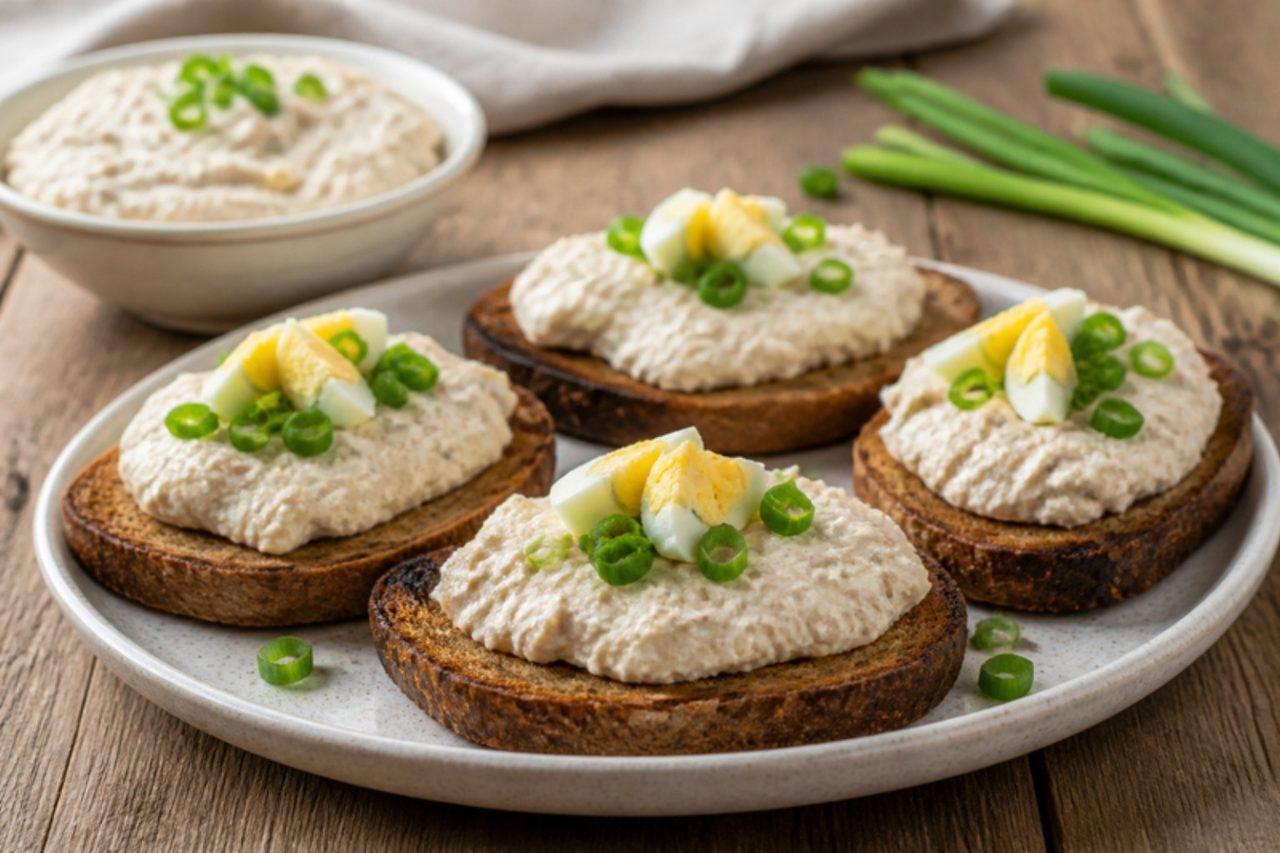
ForshmakChopped herring pâté

Forshmak came to Odesa with its Jewish community and became a citywide favourite, spread on toast at family celebrations, in Moldavanka courtyards and on restaurant zakuska boards. Salted herring is chopped with tart apple, hard-boiled egg, onion and bread soaked in milk, then whipped with soft butter into a pale, creamy pâté that is salty, sweet and gently sharp all at once. Serve it on toasted rye or white bread with spring onion. Herring for forshmak is cured but not cooked, so buy ready-salted fillets from a good fishmonger, commercially prepared or previously frozen, keep everything cold and eat within 2 days; it is not for pregnant women, young children or anyone with a weakened immune system. Blitzing it to a smooth paste is the usual error; Odesa cooks like a little texture. Chef's tip: grate the apple at the last moment and add a squeeze of lemon, so it stays white and fresh.

by KrazyBadal 0 views

Shoti bread

Every Kakhetian village has a bakery where the baker leans into a round, pit-like tone oven and slaps long, pointed loaves onto its hot clay wall; the bread comes out crackly at the tips and soft in the middle, and it is bought warm every morning in Telavi and Sighnaghi. Shoti is just flour, water, yeast and salt, so the shape and the blast of heat do the work. At home a pizza stone or an upturned heavy baking tray, heated for a long time, gives a good copy. A common mistake is a dry, stiff dough; it should be soft enough to stretch into a long canoe without tearing. Chef's tip: spray the oven walls with water as the bread goes in; the burst of steam gives the blistered, glossy crust of the tone.

by KrazyBadal 0 views

HurmašiceDate-shaped biscuits in lemon syrup

Plates of hurmašice come out for Bajram in Bosnia, offered to every visitor with a small cup of Bosnian coffee. The name comes from hurma, the date, because each little cookie is rolled into a date-like oval and pressed on the fine side of a grater to give it ridges. After baking they are soaked in cool lemon sugar syrup until they are moist, sticky and sweet right through, yet still hold their shape. A walnut half on top is a nice touch. Where most people go wrong is pouring hot syrup over hot biscuits, which turns them to mush; one of the two must be cool. Chef's tip: make them a day ahead; overnight the syrup spreads evenly and the texture becomes soft and tender.

by KrazyBadal 0 views

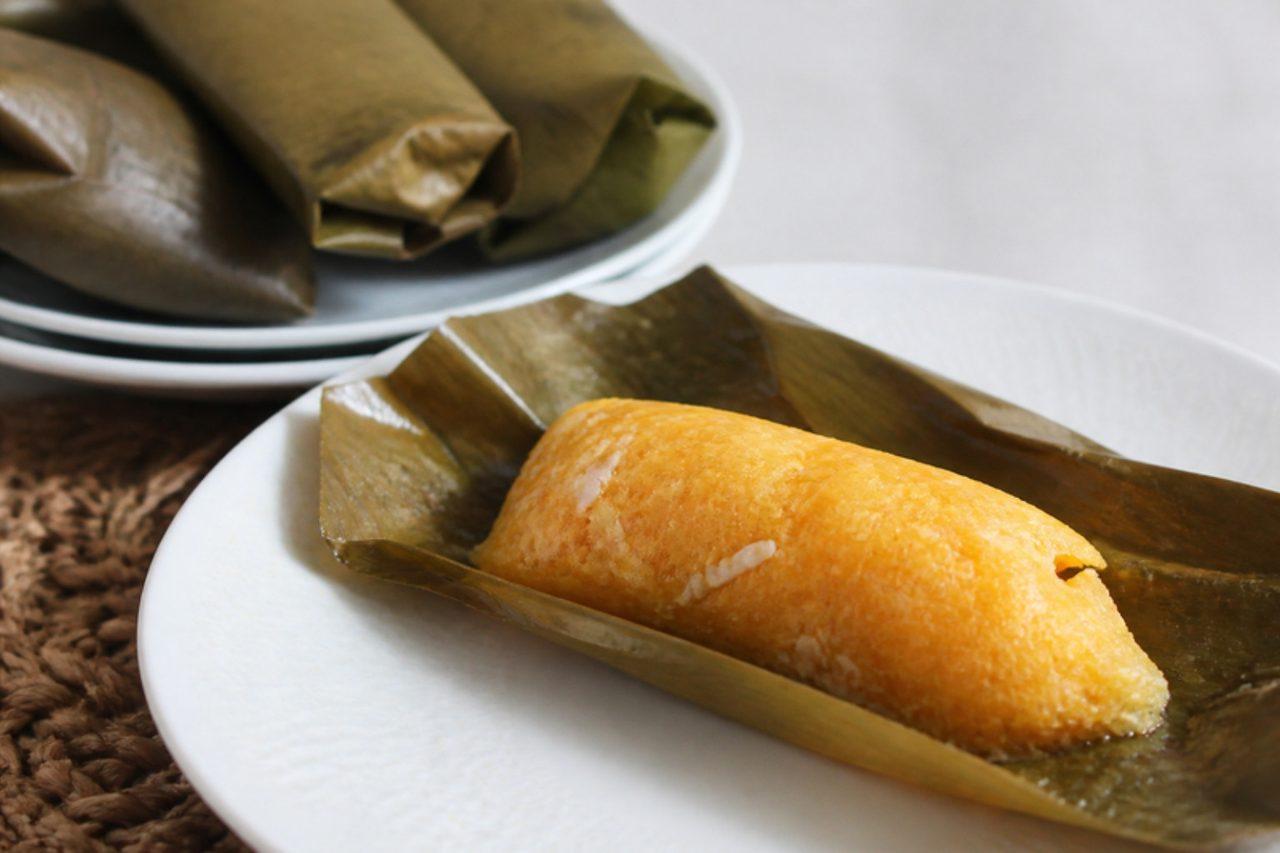
Antiguan ducanaSweet potato coconut dumplings

In Antigua, ducana turns up beside saltfish and chop up on Saturday plates and at Independence celebrations in November, little leaf-wrapped parcels of grated sweet potato and coconut with sugar, raisins and spice, boiled until set. It cuts through the salty fish with a soft, sticky sweetness. Many cooks add a little flour; this version keeps to sweet potato and coconut and is gluten free. The common mistake is wrapping the parcels loosely, so water seeps in and they turn mushy. Chef's tip: grate the sweet potato finely on the small holes and the ducana will hold together without any flour.

by KrazyBadal 0 views

Showing 81 of 7,762 recipes

Show more recipes

Page 175 of 863