


Skip to content
Couscous tfaya
Featured recipe

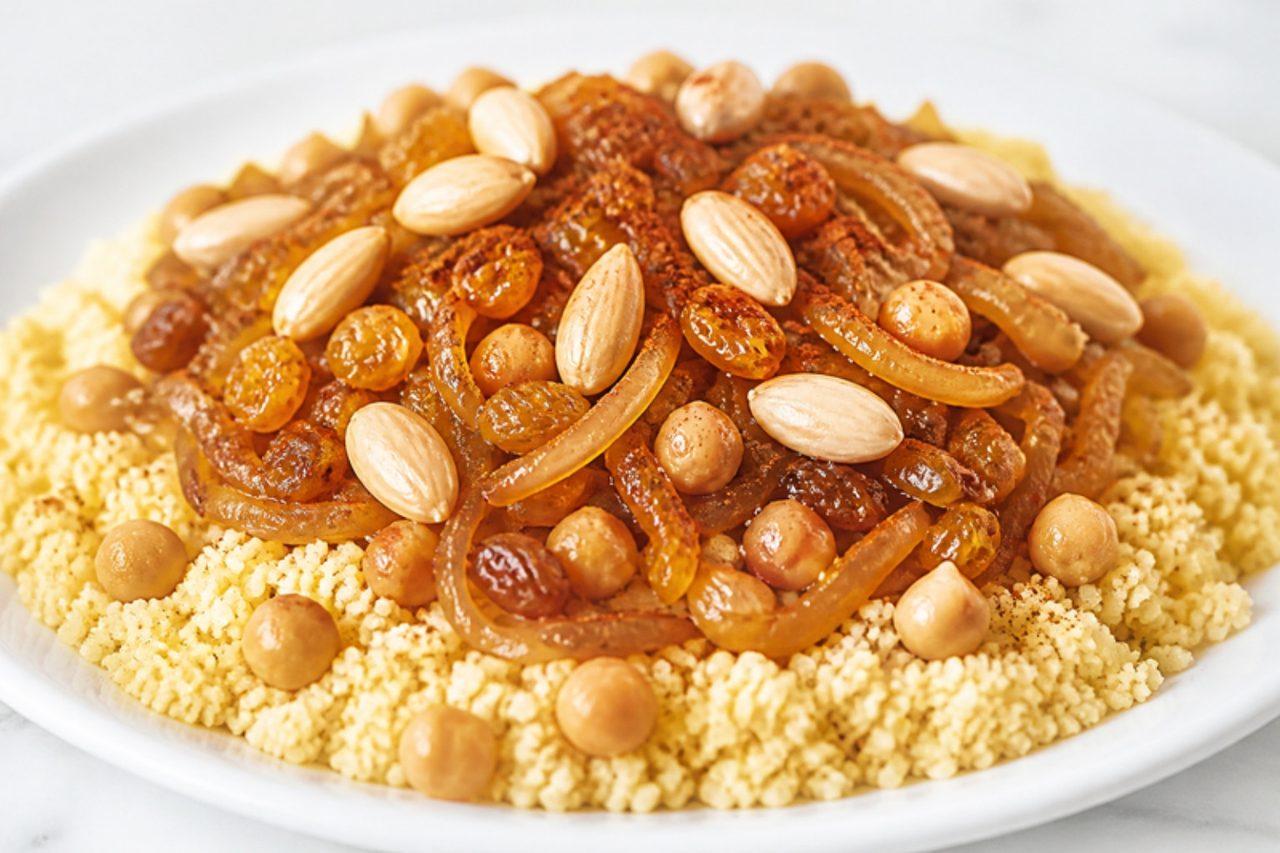
Couscous tfaya

Couscous with caramelised onions

Tfaya is the sweet onion topping that turns a plain couscous into a celebration dish; in Fez and Rabat it is made for weddings, naming ceremonies and Eid, and families in Tétouan add it to Friday couscous too. Onions are cooked slowly with raisins, cinnamon, honey and a little saffron until they collapse into a sticky, mahogany jam, then piled over the couscous with chickpeas and fried almonds. Traditionally it crowns couscous with meat; here the chickpeas and almonds carry the dish, making it a sweet-savoury vegetarian main for a feast. Chef's tip: soak the raisins first, or they draw liquid from the onions and the tfaya catches before it caramelises.

Read more 0 views

What to eat today?

Around the world

Today's trip: Persian

A new country every day, from every cuisine on the site.

This week's collection

Kid-friendly dinners
537 recipes · a new collection every Monday

Latest recipes

Capeletis a la CarusoStuffed pasta in cream sauce

Capeletis a la Caruso were created in a Montevideo restaurant in the 1950s and named after the great tenor, and they are still a Sunday lunch favourite in Uruguayan homes: little stuffed pasta hats in a rich sauce of cream, cooked ham (pork), mushrooms and onion, finished with grated cheese. Buy good fresh capeletis or tortellini; the sauce is what you make. The usual mistake is boiling the cream sauce hard, which makes it oily and grainy. Chef's tip: cook the mushrooms in a dry hot pan first until they squeak and brown, before any butter goes in, for a deeper taste.

by KrazyBadal 0 views

Lagmi (fresh palm sap)

In the oases of the Tunisian south, in Gabès, Tozeur, Nefta, Kebili and on Djerba, palm climbers cut a small wound at the crown of an ageing date palm and hang a clay pot under it overnight. By sunrise it holds lagmi: cloudy, ivory-white sap, cool and sweet, with notes of coconut water and fresh dates. It is sold in recycled bottles at the roadside and drunk the same morning, because the wild yeasts in it begin to ferment almost at once. By afternoon it is fizzy and sour, and by the next day it has become an alcoholic palm wine, also called lagmi, which is a different drink altogether. The common mistake is buying more than you can drink by lunchtime or leaving it in the sun: keep it on ice from the moment you get it. Fresh lagmi is ready to drink when it is sweet, smells clean and milky, and only a few tiny bubbles rise; once it tastes sour or prickles on the tongue, it has started to turn. It is raw and unpasteurised, so pregnant people, babies, older people and anyone unwell should skip it. Outside the oases, fresh coconut water is the closest stand-in. Chef's tip: chill the glasses too; lagmi is at its best ice-cold.

by KrazyBadal 0 views

Ginataang puso ng sagingBanana blossom in coconut milk

Every banana tree in the Philippine countryside gives a heavy purple flower, and in Bicol, Batangas and the Visayas it is shredded and stewed in coconut milk as an everyday ulam for lunch with rice. The banana blossom has a tender, slightly flaky texture and soaks up the ginger, garlic and chilli. The traditional version includes shrimp or fish; this one is vegan. The usual mistake is skipping the salt rub: unrubbed banana blossom stays bitter and turns the sauce grey, so squeeze out its dark sap first. Chef's tip: keep the shredded blossom in water with a spoon of vinegar while you work, so it stays pale.

by KrazyBadal 0 views

Mula ko tarkariRadish curry

In the hills around Kathmandu and Pokhara, long white winter radishes are pulled with their leaves still on, and both go into this simple tarkari served beside dal-bhat. The radish is cut into thin batons and cooked down in mustard oil with a sizzle of fenugreek seed, turmeric and tingly timur pepper until it turns sweet and translucent, while the greens wilt in at the end. The usual mistake is adding too much water: radish releases plenty of its own juice, and extra water turns it into a bland soup. Chef's tip: let the fenugreek seeds turn dark brown, almost black, before the radish goes in; that toasty bitterness is what makes Nepali radish taste right.

by KrazyBadal 0 views

Sem ki sabzi (flat beans with potato)

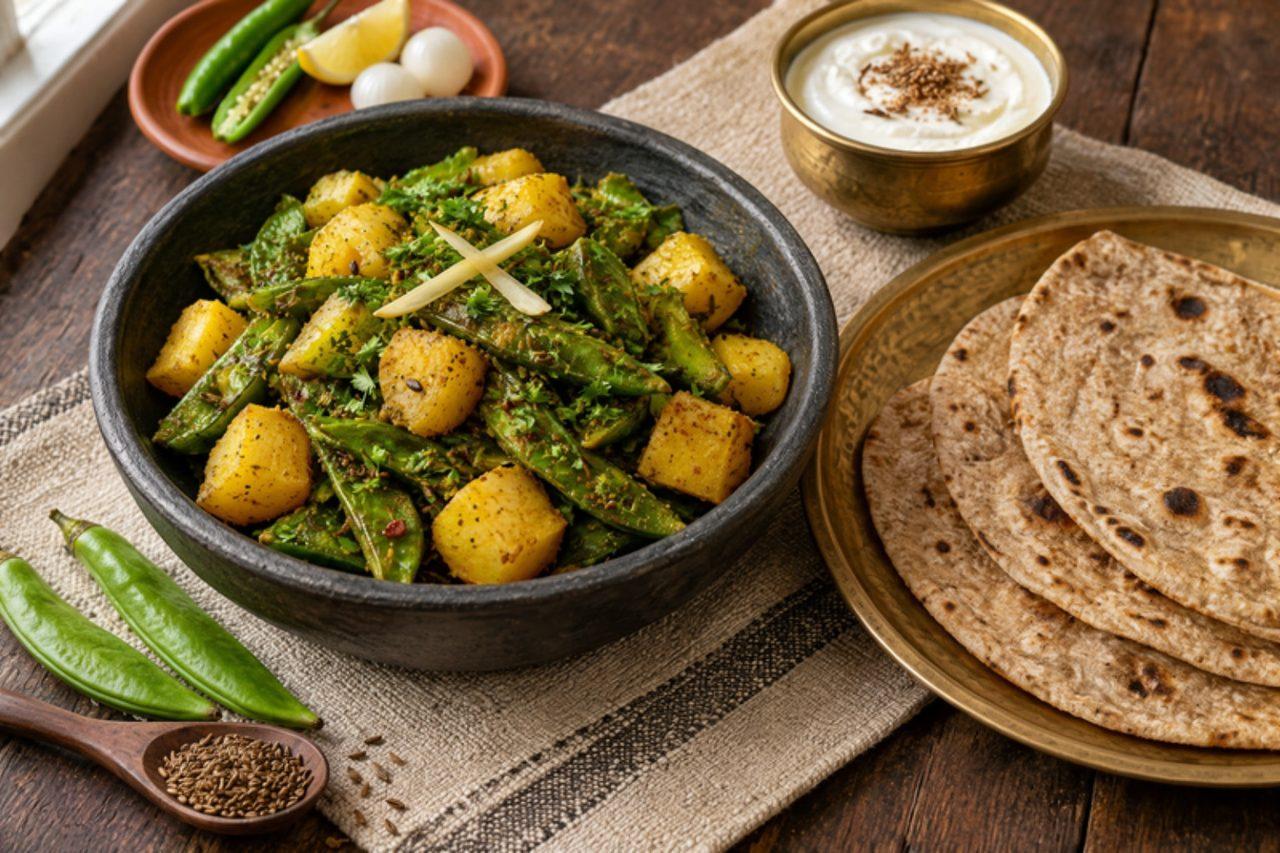
When flat green sem pods fill the sabzi carts in Lucknow and Jaipur in winter, they go into this dry stir-fry with potato and a crackle of ajwain, the classic partner for paratha in an office dabba. The beans stay a little firm and sweet, the potato soaks up the spices, and nothing drips into the roti. The mistake is leaving the stringy edges on the pods; they never soften. Snap the tip and pull the string down each side before chopping. Chef's tip: cook covered for the first half to steam the beans tender, then uncover and turn up the heat so the potatoes catch and brown.

by KrazyBadal 0 views

Taiwanese grilled corn

At Raohe and Shilin night markets the grilled-corn stalls are easy to find: look for the queue and the smoky, sweet smell. Cobs are par-cooked, then turned slowly over charcoal while the cook brushes them with a dark glaze of sacha sauce, thick soy paste, garlic and chilli, layer after layer, until the kernels are sticky, slightly charred and deeply savoury. It is eaten hot from a paper sleeve while walking the market. Sacha (shacha) sauce, a Taiwanese barbecue paste, usually contains dried fish and shrimp; vegetarian sacha is sold in Asian shops. Contains soy, wheat and fish. Chef's tip: brush thin coats and turn often; one thick coat burns before the corn chars.

by KrazyBadal 2 views

Dragon's beard candy

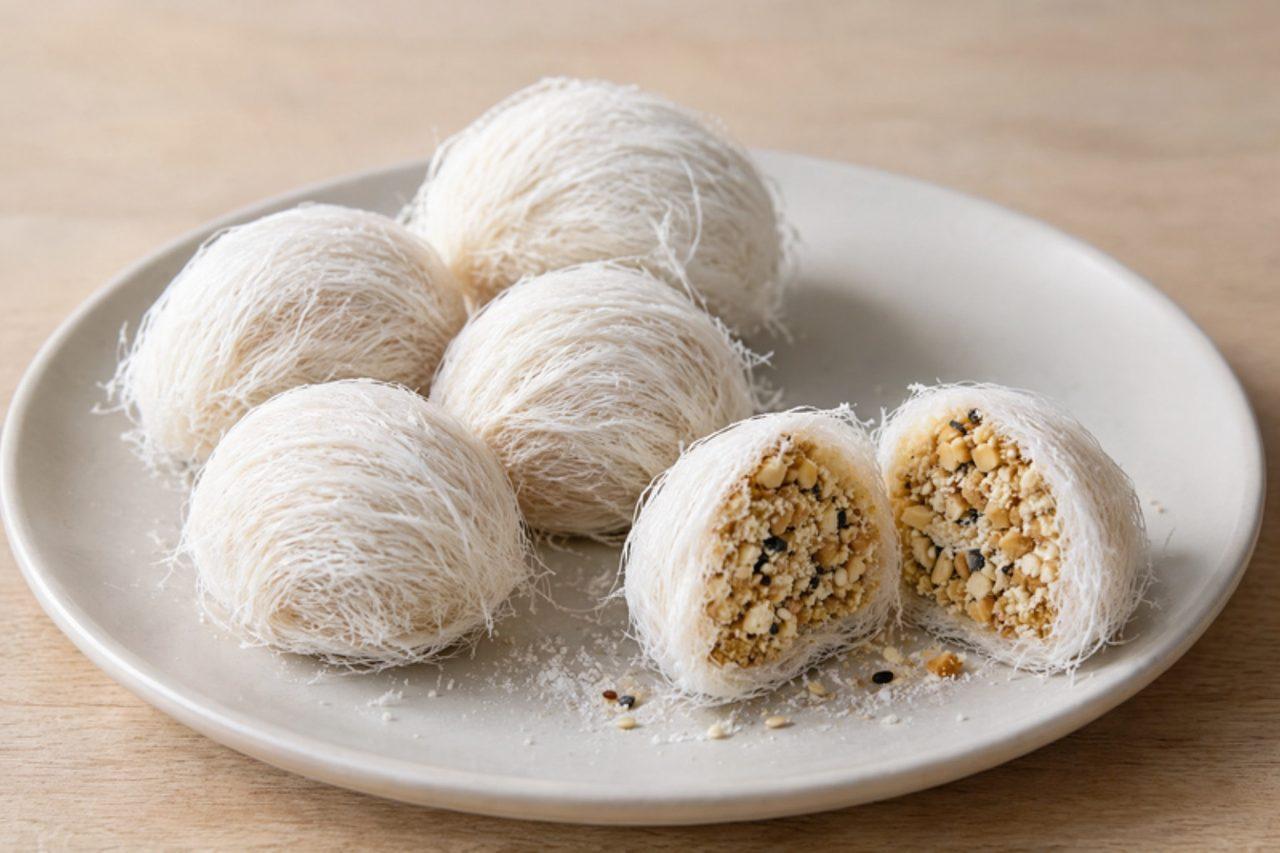
Dragon's beard candy is one of the old street crafts of Hong Kong, still demonstrated by a few hawkers in Tsim Sha Tsui and at Kowloon City snack shops, where children watch a hard disc of sugar stretched and folded in starch until it becomes a skein of hair-fine threads. Each cocoon is wrapped around a crunchy filling of peanuts, sesame and coconut and must be eaten within minutes, before it melts in the humidity. It takes practice; your first batch may be thicker threads, and that is fine. Contains peanuts and sesame; not for children under five, who can choke on the filling. Chef's tip: toast the cornflour first, as raw starch tastes chalky and is not safe to eat uncooked.

by KrazyBadal 0 views

Escabeche guatemaltecoPickled vegetables

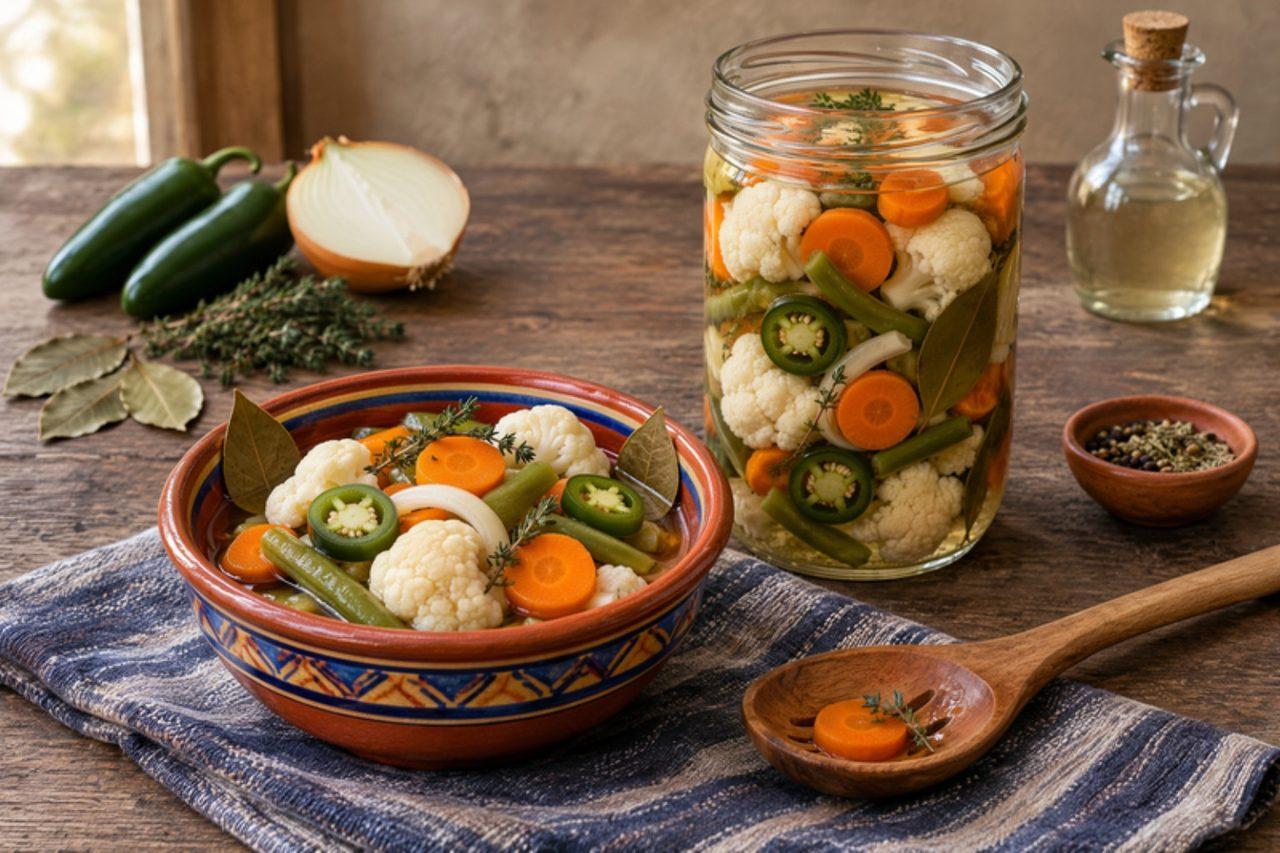
Guatemalan families keep a big jar of escabeche in the fridge for weeks: it goes into the bread rolls of shucos and panes con chile, beside fried fish during Lent and, above all, into fiambre, the enormous cold salad assembled for Día de Todos los Santos on 1 November. Carrots, cauliflower, green beans, onion and jalapeños are blanched just enough to lose their raw edge, turned briefly in oil with garlic, then left to soak in vinegar seasoned with thyme, bay, oregano, cloves and black pepper. The result is tangy, aromatic and only mildly hot, with vegetables that stay crisp-tender in a golden, lightly oily brine. The common mistake is boiling the vegetables until soft; they keep softening once the hot vinegar goes on, so blanch each one briefly and cool it at once in cold water. It is ready after a night in the fridge, when the carrots taste sour right through and the onion has turned soft, sweet and translucent. Chef's tip: blanch the vegetables one after another in the same pot, cauliflower first and carrots last, so the cauliflower stays snowy white.

by KrazyBadal 0 views

Kari gros poisButter bean curry

In Mauritius, gros pois (butter beans) are a pantry staple, and kari gros pois is cooked in Creole and Indo-Mauritian homes alike for weekday lunches and Friday meat-free meals. The beans simmer in a curry of onion, tomato, garlic and ginger, flavoured with curry powder, fresh thyme and curry leaves, so it tastes of both India and the island's French side. It is served with rice, farata flatbreads and a tomato or chilli chutney. The usual mistake is frying the curry powder on high heat; it scorches in seconds and turns bitter. Pressure cooker option: cook the soaked beans for 15 minutes at pressure. Chef's tip: crush a few beans into the sauce at the end, which thickens it without any flour.

by KrazyBadal 0 views

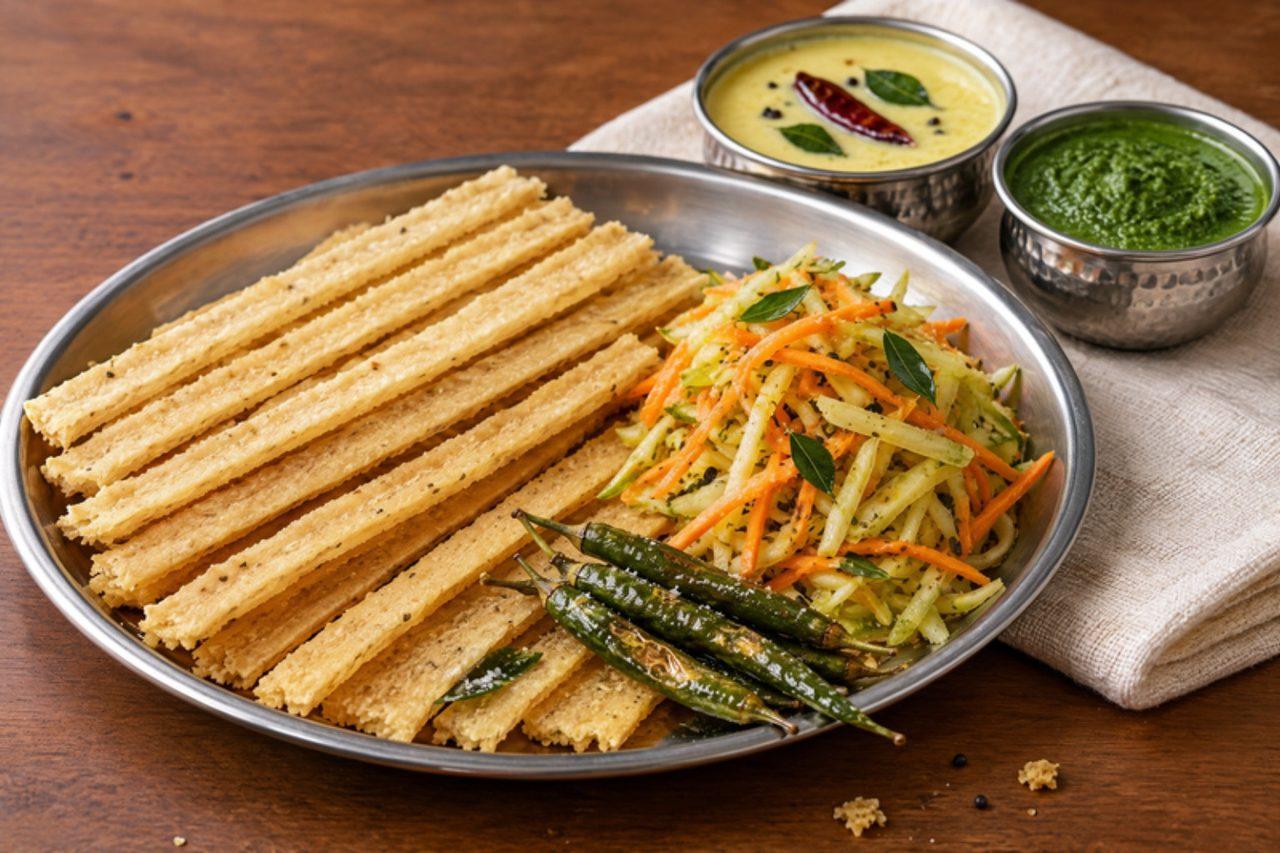
FafdaGram flour strips with papaya salad

On Sunday mornings, and above all on Dussehra, Ahmedabad queues outside its farsan shops for paper parcels of fafda: long, pale-gold strips of gram flour dough, crisp and gently salty with carom, eaten beside hot jalebi, a sour-sweet raw papaya relish called sambharo and whole fried chillies. The real craft is the shaping, done by pushing a little log of dough along a wooden board with the heel of the hand until it stretches into a thin ribbon. Chef's tip: knead the dough with your knuckles for a full 5 minutes until it turns smooth and slightly shiny, or the strips tear as you push them.

by KrazyBadal 0 views

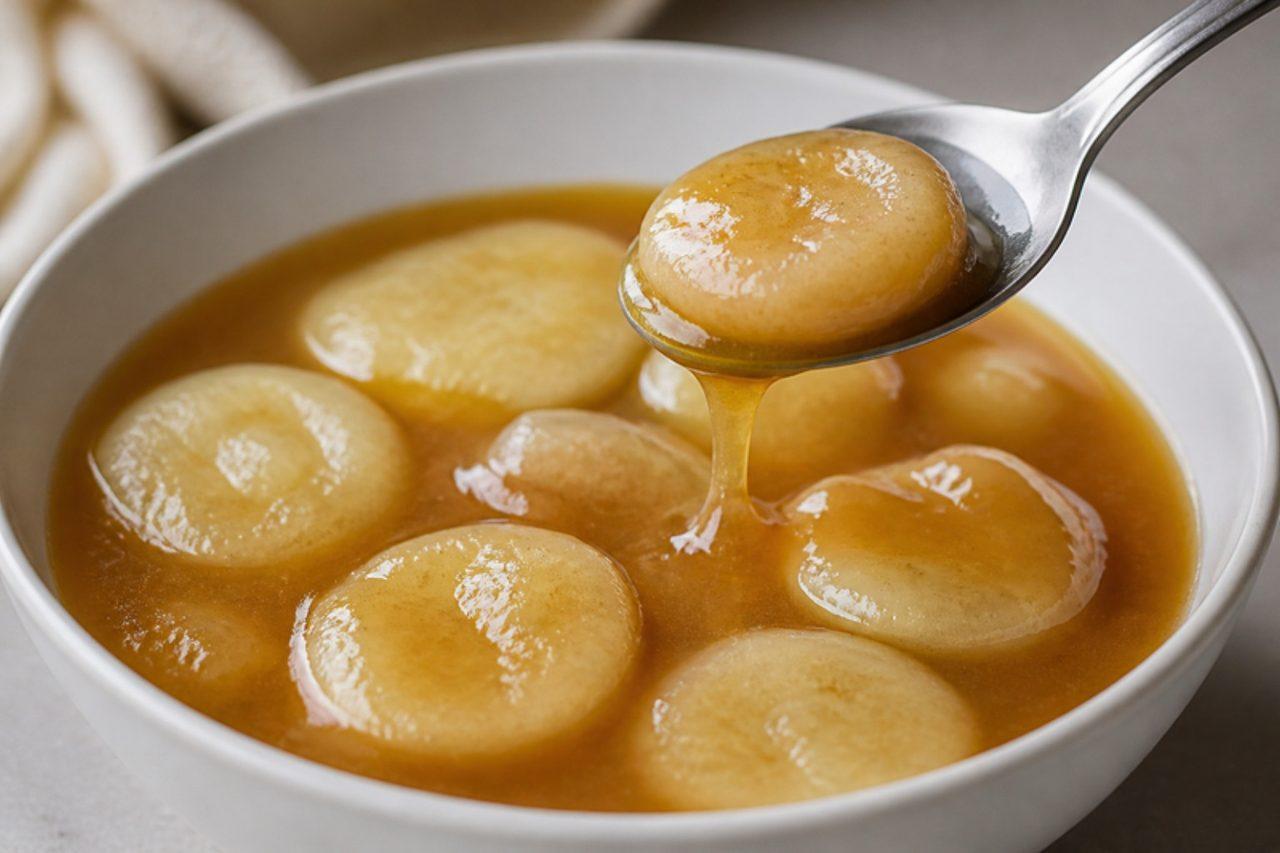
Faikakai topaiDumplings in caramel coconut syrup

Faikakai topai is a much-loved Tongan pudding, served at Sunday feasts and family celebrations in Nuku'alofa and in Tongan communities from Auckland to Utah. Simple flour dumplings are boiled, then smothered in a thick, toffee-like syrup of caramelised sugar and coconut cream called lolo. It is very sweet and best eaten warm. A common mistake is pulling the caramel off the heat too pale; let it turn a deep amber before adding the coconut cream. Chef's tip: roll the dumplings thin and flat so they cook quickly and soak up more syrup.

by KrazyBadal 0 views

Lolo bunsCoconut cream baked buns

Lolo buns are the Sunday treat of Fijian kitchens, made for church lunches and family get-togethers in Lautoka and Suva: soft yeast buns packed into a tin and baked in a bath of sweetened coconut cream (lolo), which soaks into the bottoms and bakes into a sticky, caramel-edged sauce. Everyone pulls one out warm from the tin. A common mistake is pouring the coconut cream on too early; add it just before baking so the buns have risen fully. Chef's tip: use thick, full-fat coconut cream for a rich glaze.

by KrazyBadal 0 views

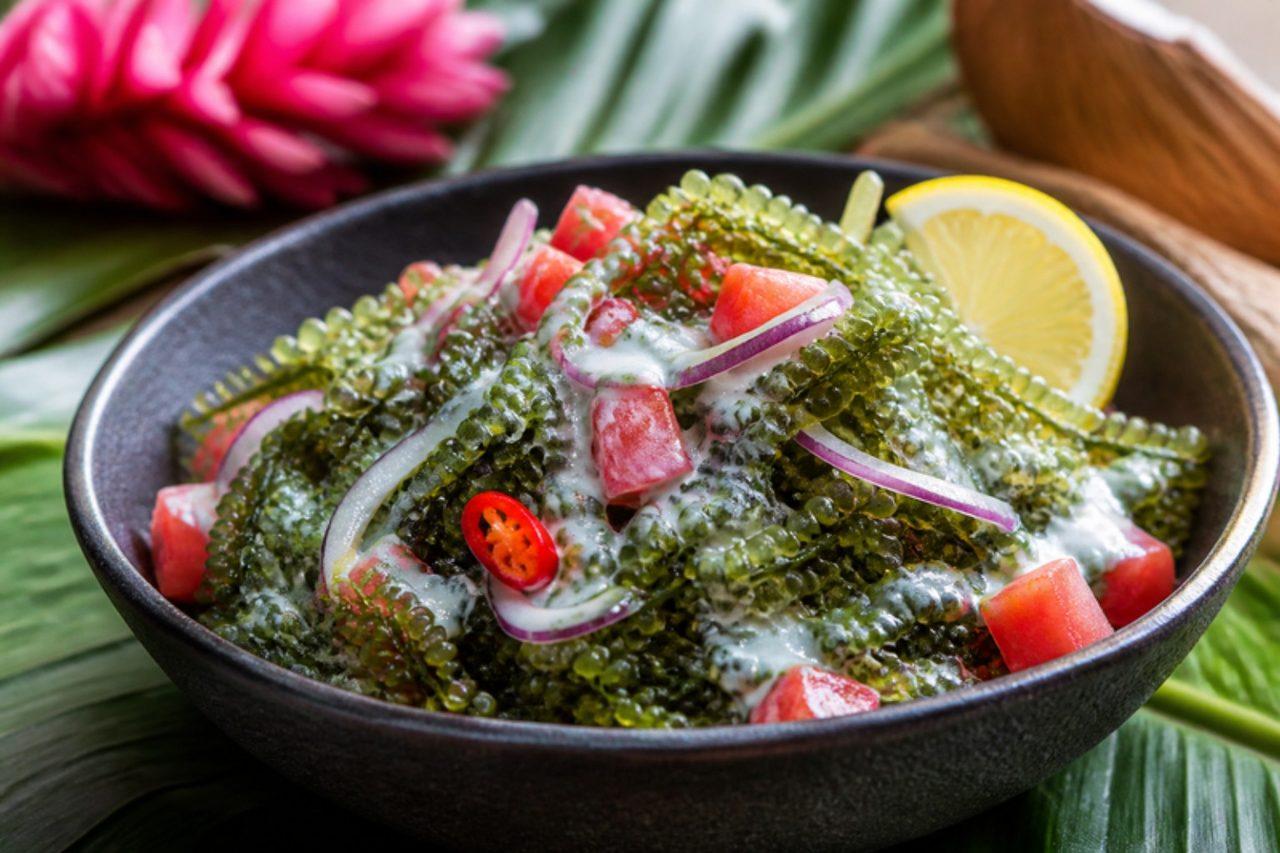
Nama saladSea grapes with coconut milk

Nama, the glossy green sea grapes that grow on the reef flats of Fiji's Lau and Kadavu islands, are sold in bundles at the Suva market and eaten as a fresh, salty salad with almost every iTaukei lunch of fish and cassava. The little bubbles pop in the mouth with a taste of the sea. They are dressed in lolo (coconut milk) with lemon, onion, tomato and chilli just before eating. A common mistake is dressing them too early; the salt and acid make the grapes collapse. Chef's tip: soak them in cold water for 5 minutes to plump them and wash away grit.

by KrazyBadal 0 views

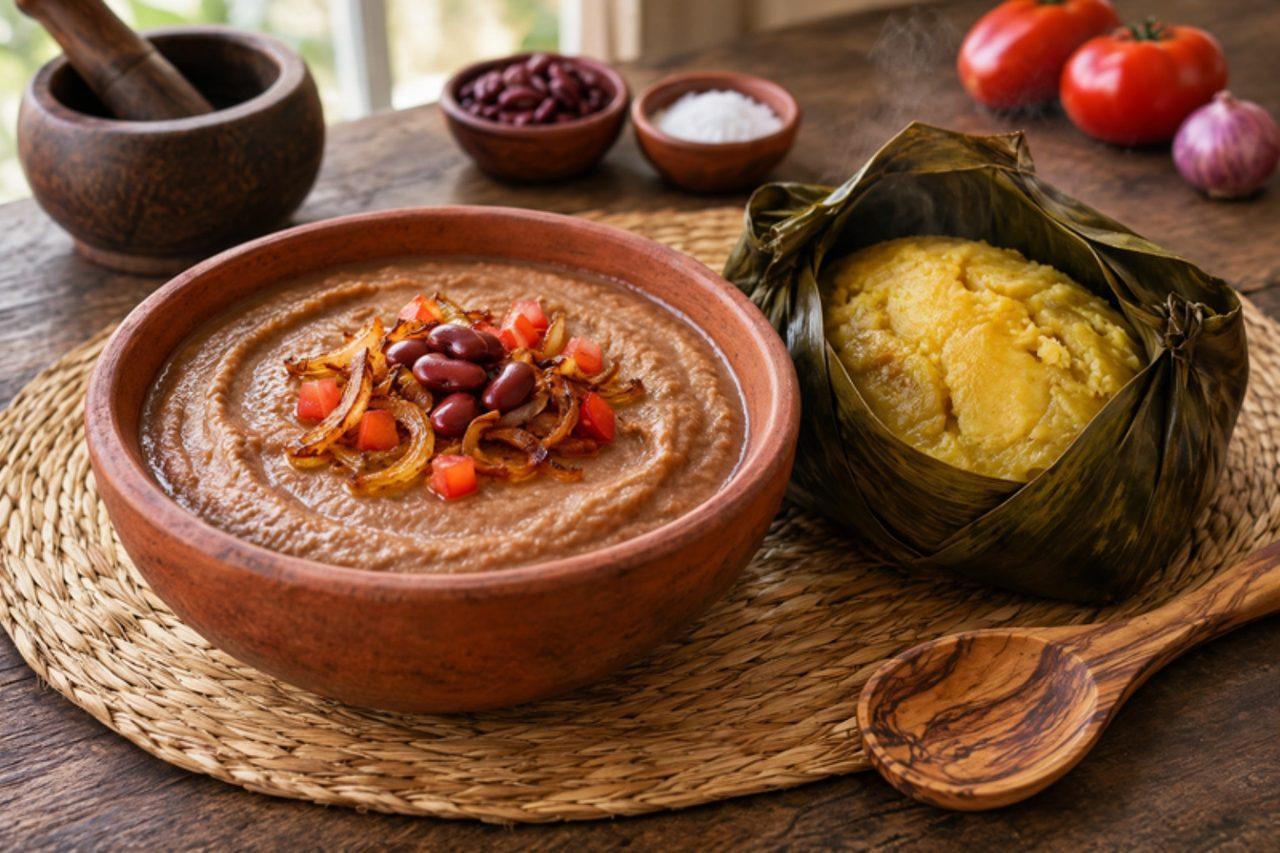
FirindaMashed bean stew

Firinda comes from Ankole and Kigezi in western Uganda, where beans are the backbone of daily meals, eaten at lunch with matooke, millet bread or sweet potatoes. Red beans are boiled until completely soft, then mashed and cooked down with fried onion and tomato into a thick, smooth stew that hugs whatever is beside it. The usual mistake is skimping on the cooking: firinda only gets its creamy texture when the beans are really soft, and dried red beans must be boiled hard for 10 minutes before the long simmer. Pressure cooker option: after the hard boil, cook for 25 minutes at pressure. Chef's tip: mash only two-thirds of the beans and leave the rest whole, for a stew that is creamy but still has some bite.

by KrazyBadal 0 views

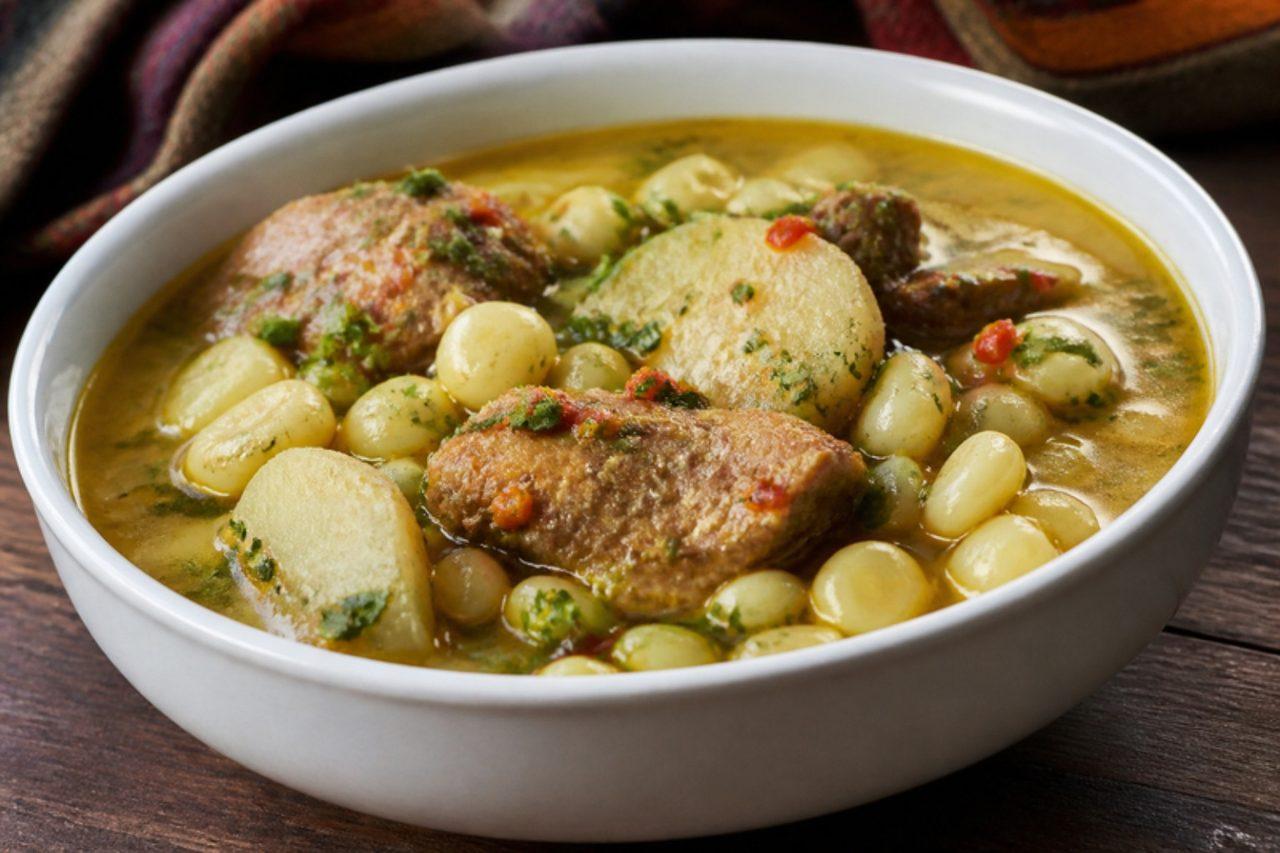
Fricasé paceñoSpicy pork stew with chuño

On Sunday mornings in La Paz, after a long night out or simply because it is cold, people head to the comedores for fricasé: a pork stew of ribs and shoulder in a yellow broth of ají amarillo, cumin and black pepper, with chuño (freeze-dried potato) and big white corn kernels in each bowl. This recipe is made with pork. Many cooks thicken it with breadcrumbs; we use ground chuño or cornflour so it stays gluten free. The usual mistake is boiling it hard, which makes the pork stringy; it should barely tremble. Chef's tip: soak the chuño overnight and squeeze it in several changes of water, which removes its earthy bitterness.

180 minAndeanMeatGluten freeSpicy
by KrazyBadal 0 views

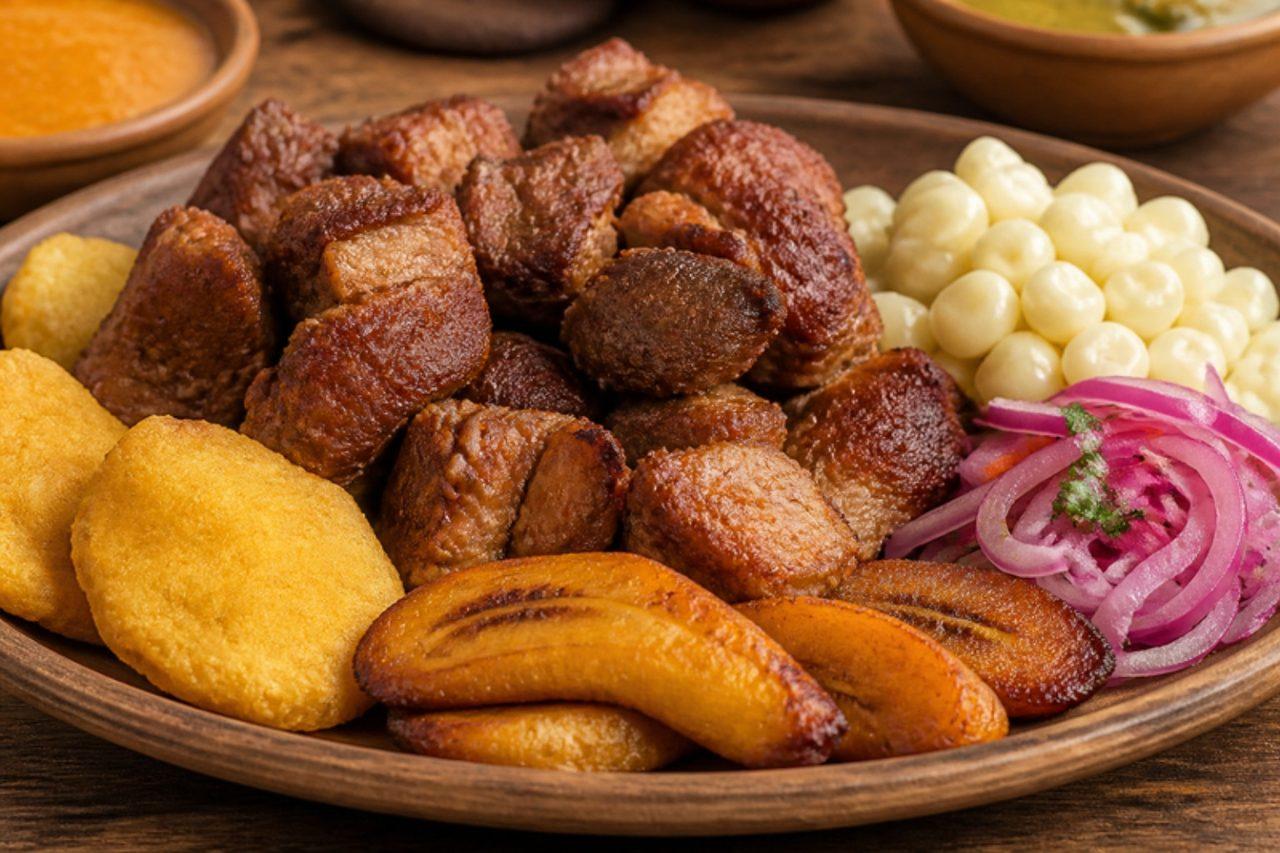
FritadaGarlic and cumin fried pork

Fritada is weekend food all over the Sierra, from roadside stops in Sangolquí to family lunches in Ibarra: chunks of pork shoulder simmered in water with garlic, cumin and orange juice in a wide pan until the water boils away and the meat fries in its own rendered fat, turning sticky and deep golden. It is served with mote, fried ripe plantain, potato cakes and a sharp onion curtido. The usual mistake is using a lean cut and stirring constantly; shoulder with some fat, and patience while it browns, give crisp edges and juicy centres. The pork is cooked well past 71 °C by the time it browns. Chef's tip: use a wide, heavy pan so the liquid evaporates evenly and every piece touches the bottom.

95 minAndeanMeatGluten free
by KrazyBadal 0 views

Frittatina di pastaFried pasta rounds

The frittatina is Naples' way of turning a pot of pasta into street food: bucatini bound with thick béchamel, cooked ham (pork), peas and grated cheese, set in rounds, dipped in a flour batter and deep-fried. Pizzerias from Via dei Tribunali to Fuorigrotta fry them as a starter while your pizza bakes, and friggitorie sell them in a napkin to eat on the go, often in the late afternoon. The crust is crisp, the inside creamy with a little chew from the pasta. Chef's tip: chill the shaped rounds overnight; cold, firm frittatine hold their shape in the batter and the oil.

by KrazyBadal 0 views

Gobi matar (cauliflower and peas)

In Punjab and Uttar Pradesh, winter means cauliflower and fresh peas, and gobi matar is what fills countless school and office dabbas between November and February. It is cooked dry, so the florets brown a little at the edges, sweetened by the peas and sharpened by plenty of ginger. The mistake is cooking the cauliflower covered with water until it is soft and smells of cabbage; steam it briefly in its own moisture, then fry it uncovered. Chef's tip: cut the florets so they have one flat side; that face sits on the pan and browns while the rest steams tender.

by KrazyBadal 0 views

Mazorcada (Bogotá loaded corn bowl)

Late at night, when the bars of the Zona T and Usaquén empty, the food trucks and carts around Bogotá's Parque de la 93 do a roaring trade in mazorcada, a huge tray of sweetcorn buried under shredded chicken or beef, melted cheese, salsa rosada and crunchy potato sticks. It is messy, salty-sweet and very filling, and Colombians argue about whether pineapple sauce belongs on top. Chef's tip: melt the cheese first and add the potato sticks at the very end, so they stay crunchy.

by KrazyBadal 0 views

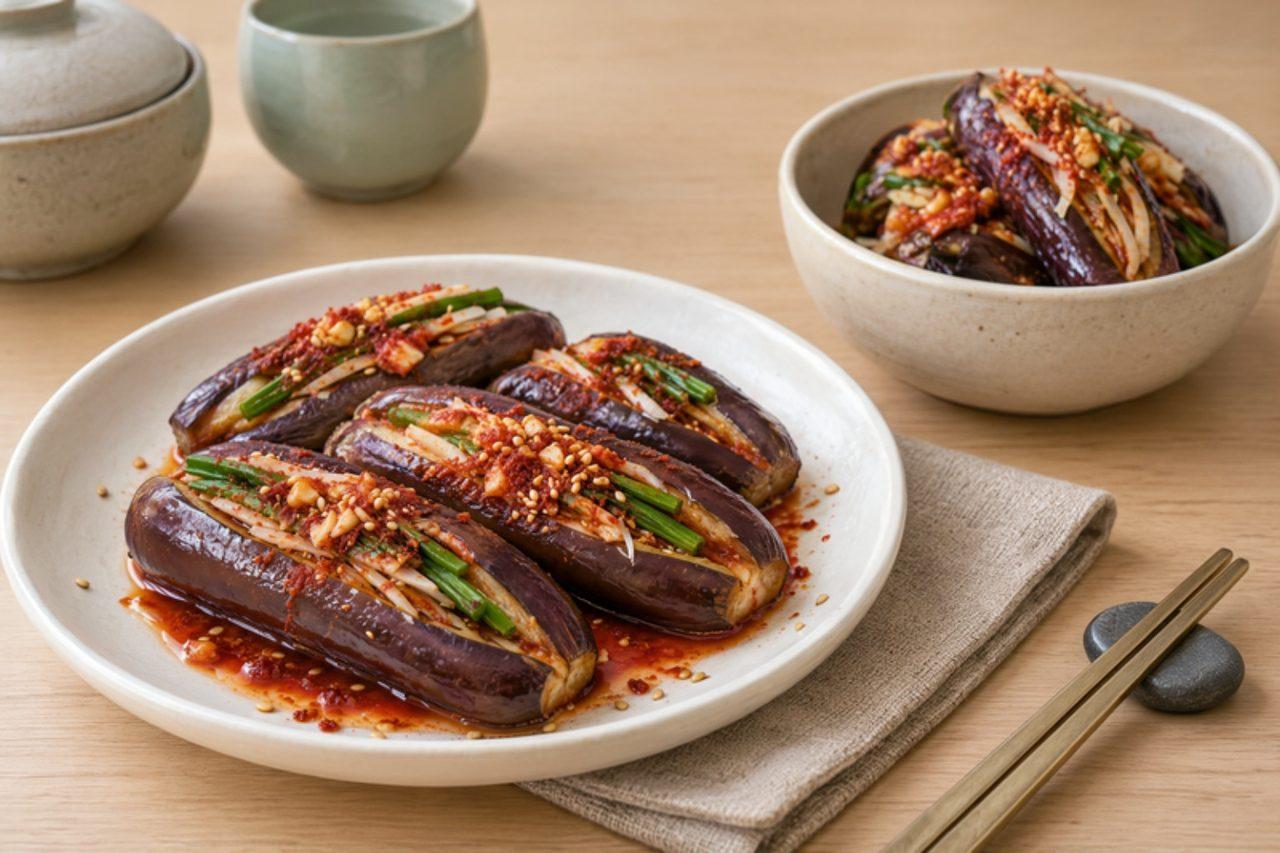
Gaji kimchiStuffed aubergine kimchi

When the long jangma rains end and markets across Korea are heaped with slim purple eggplants in July and August, home cooks turn some of them into gaji kimchi, a short-lived summer kimchi eaten cold beside barley rice, cucumber naengguk or a simple grilled fish. The eggplant is steamed just long enough to soften, then split into a cross and stuffed with garlic chives, shredded radish and a bright chilli dressing seasoned with fish sauce. It is silky and juicy, almost melting, with a crunchy, garlicky centre, and after a day the juices turn gently tangy. The usual mistake is steaming too long: the pieces collapse when you stuff them and go mushy in the jar, so pull them as soon as the skin darkens and the flesh bends but still springs back. It is ready to eat after a few hours, best on day two, when the brine in the box tastes lightly sour and the eggplant has turned deep red at the cuts. For a vegetarian version use tamari in place of fish sauce. Chef's tip: choose slim Korean or Japanese eggplants with few seeds; fat globe eggplants hold too much water.

by KrazyBadal 0 views

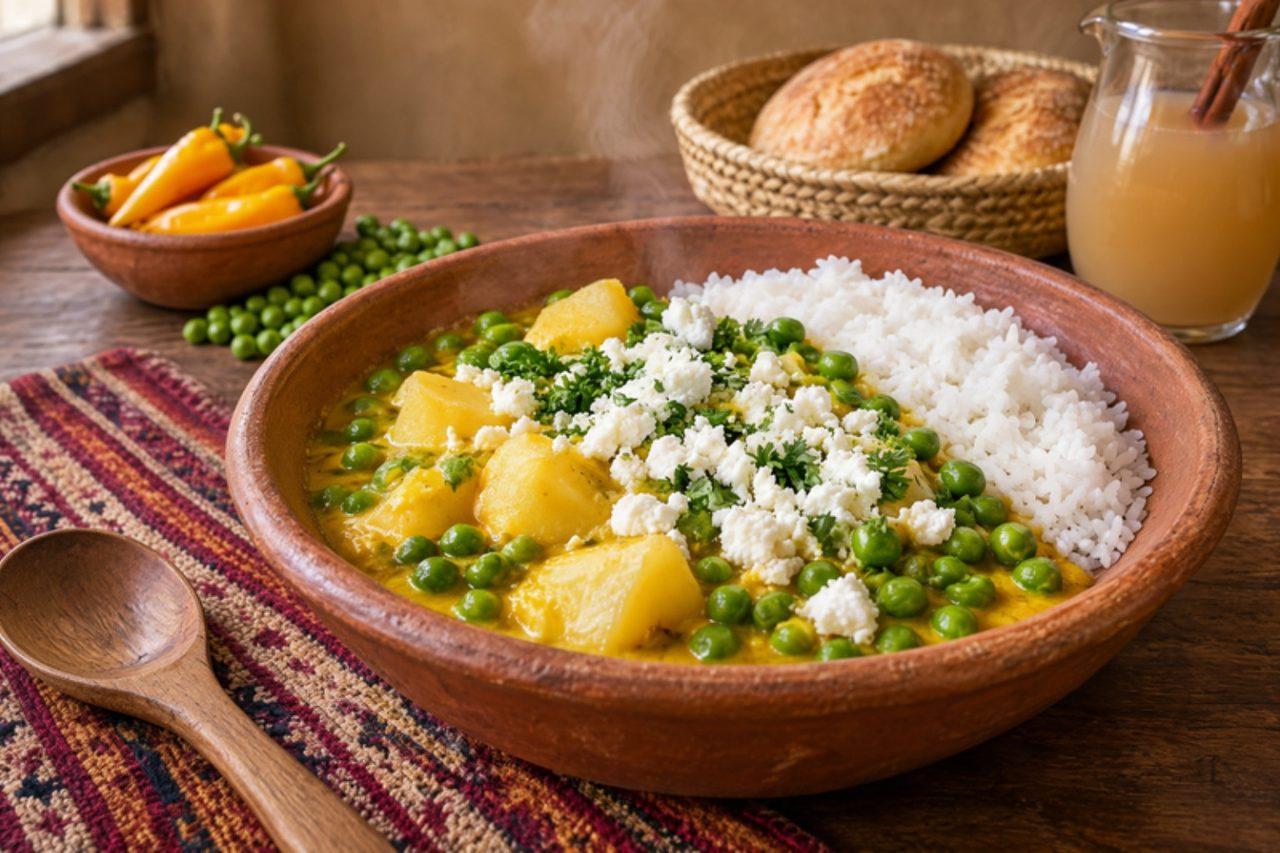
Ají de arvejasPeas and potatoes in chilli sauce

Ají de arvejas is a homely Bolivian stew from La Paz and Cochabamba, cooked for weekday lunch or on Fridays and in Lent, when many families eat no meat. Green peas and potatoes simmer in a golden sauce of onion, tomato and ají amarillo (yellow chilli), and cubes of fresh white cheese are stirred in at the end so they soften without melting away. It is served with plain white rice and sometimes a boiled egg. Bolivian queso fresco is often made with animal rennet; for vegetarians, use a paneer or a fresh cheese labelled vegetarian. The usual mistake is boiling the cheese, which turns it rubbery. Chef's tip: cook the ají paste with the onion until it darkens slightly, which takes the raw edge off the chilli.

by KrazyBadal 0 views

Ahmedabad chocolate sandwich

Manek Chowk is a jewellery market by day; at night its square fills with stalls, and among the pav bhaji and sandwich carts the chocolate sandwich is the one children beg for. Buttered white bread is packed with grated chocolate, sometimes with a layer of grated cheese for a salty edge, then toasted in a long-handled iron until crisp and dripping. Contains wheat and dairy, and the chocolate may contain soya and traces of nuts. If you add cheese, many cheeses are made with animal rennet; pick one labelled vegetarian. Chef's tip: toast it slowly over a medium-low heat, so the chocolate melts before the bread browns.

by KrazyBadal 0 views

Thabdi pendaCaramelised milk pendas

Rajkot's sweet shops are famous across Gujarat for thabdi, a crumbly, toffee-brown penda that starts as plain milk and sugar and ends, two hours later, as something close to caramel fudge. The milk is boiled down in a wide iron kadai, a spoon of curd splits it slightly to give the trademark grainy texture, and the sugar browns slowly with it until the whole mass is the colour of milky tea. The usual mistake is rushing on high heat: the milk catches and tastes burnt rather than caramelised. Chef's tip: use a wide, heavy pan and a flat wooden spatula, and keep scraping the bottom and sides every minute once the milk is half reduced.

by KrazyBadal 0 views

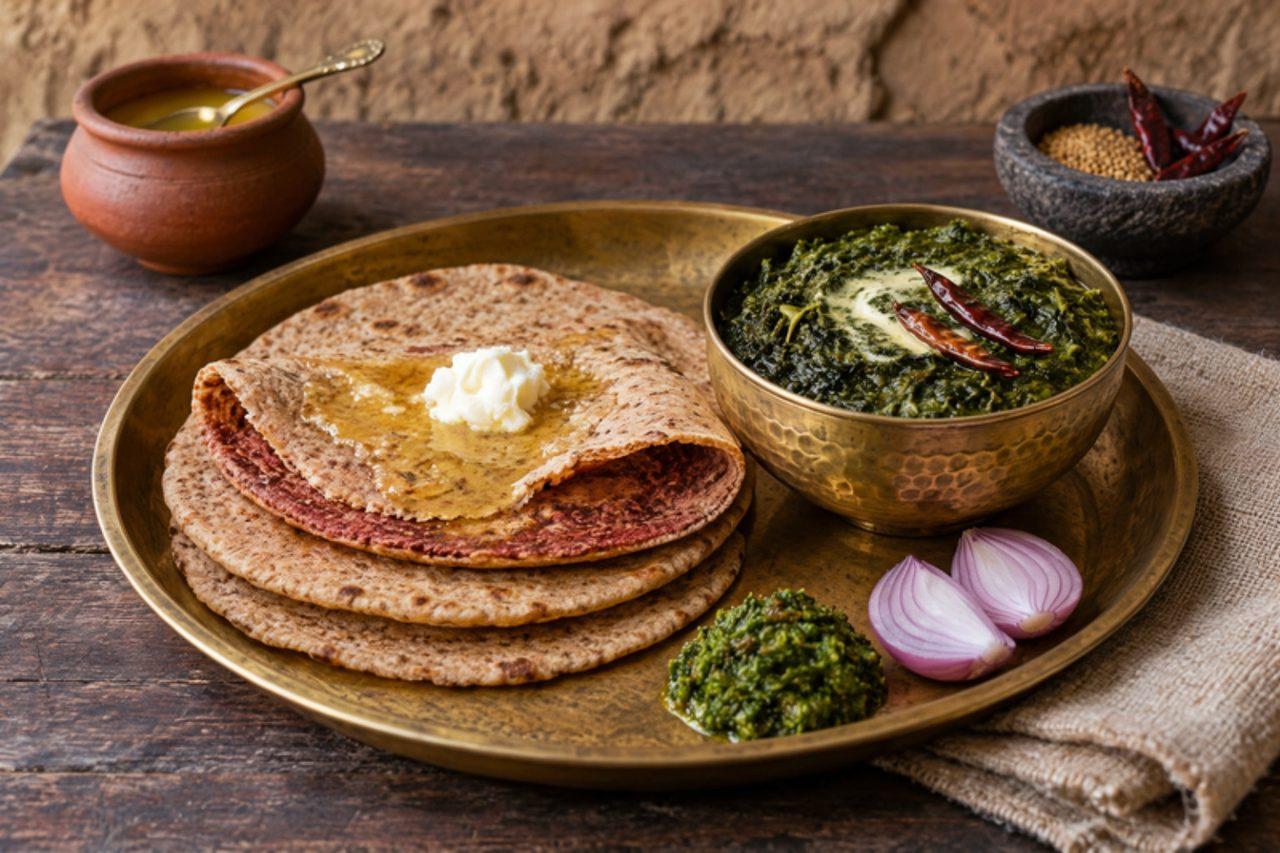
LesuWheat and finger millet roti

Lesu is a clever Garhwali farmhouse roti in which a small ball of mandua (finger-millet) dough is wrapped inside wheat dough and rolled out, so each bite has a soft wheat outside and a dark, earthy layer within. Families eat it for breakfast or dinner in winter with a big dollop of ghee, jaggery or a green saag. The millet adds minerals and a pleasant nutty taste. The common mistake is making the millet dough too dry, which cracks and pokes through the wheat when you roll. Chef's tip: knead the mandua dough with hot water and keep it as soft as the wheat dough, so the two roll out together.

by KrazyBadal 0 views

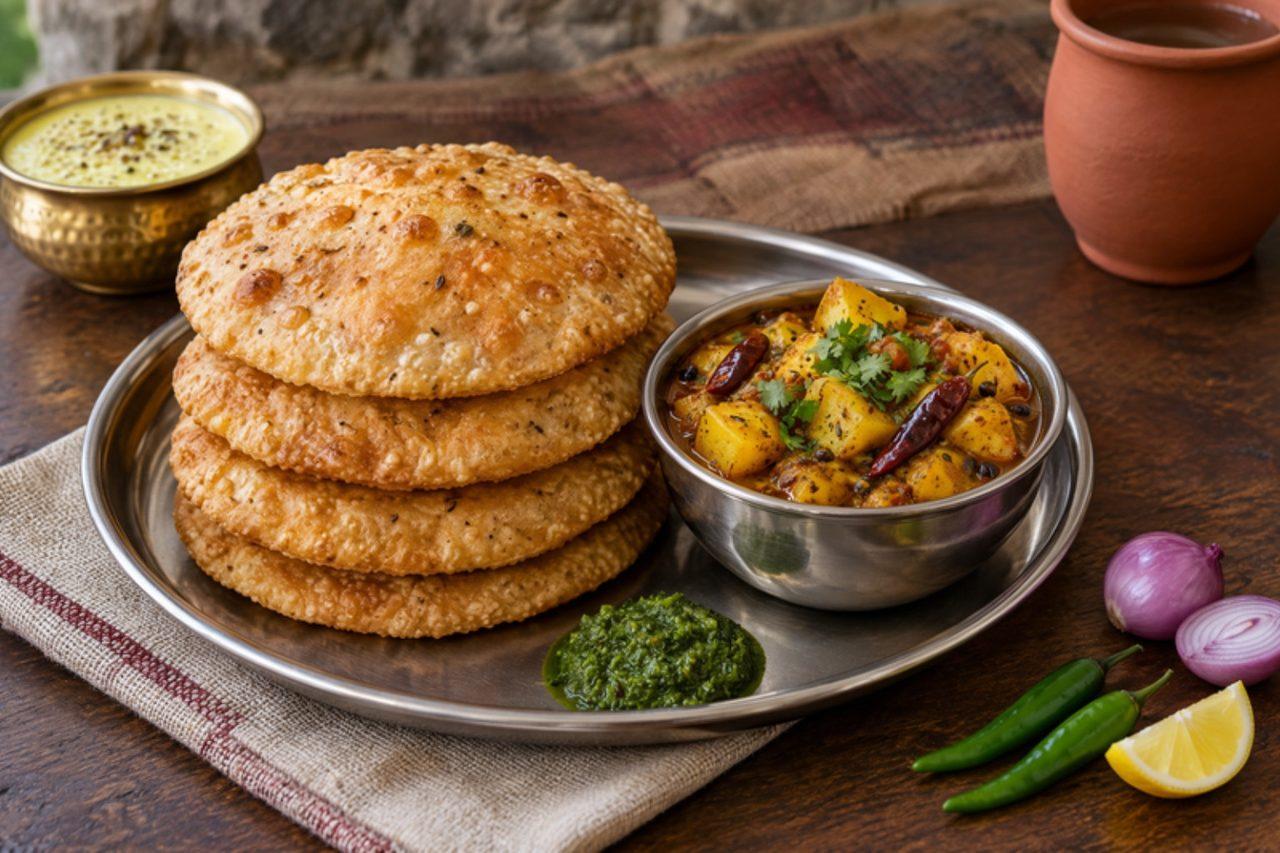
SwaleFried lentil-stuffed breads

In Garhwal, swale are fried in huge batches for weddings, for the bride's send-off parcel and for festivals like Basant Panchami, then eaten warm or cold over the next couple of days. Soaked urad or gahat dal is ground with ginger and spices and sealed inside wholewheat dough, then fried until the breads puff and blister. They travel well and taste good with raita or a hill pickle. The common mistake is overfilling, which tears the dough and makes the oil spit. Chef's tip: roll them gently from the centre outwards with almost no dusting flour, so the edges seal and the swale puffs evenly.

by KrazyBadal 0 views

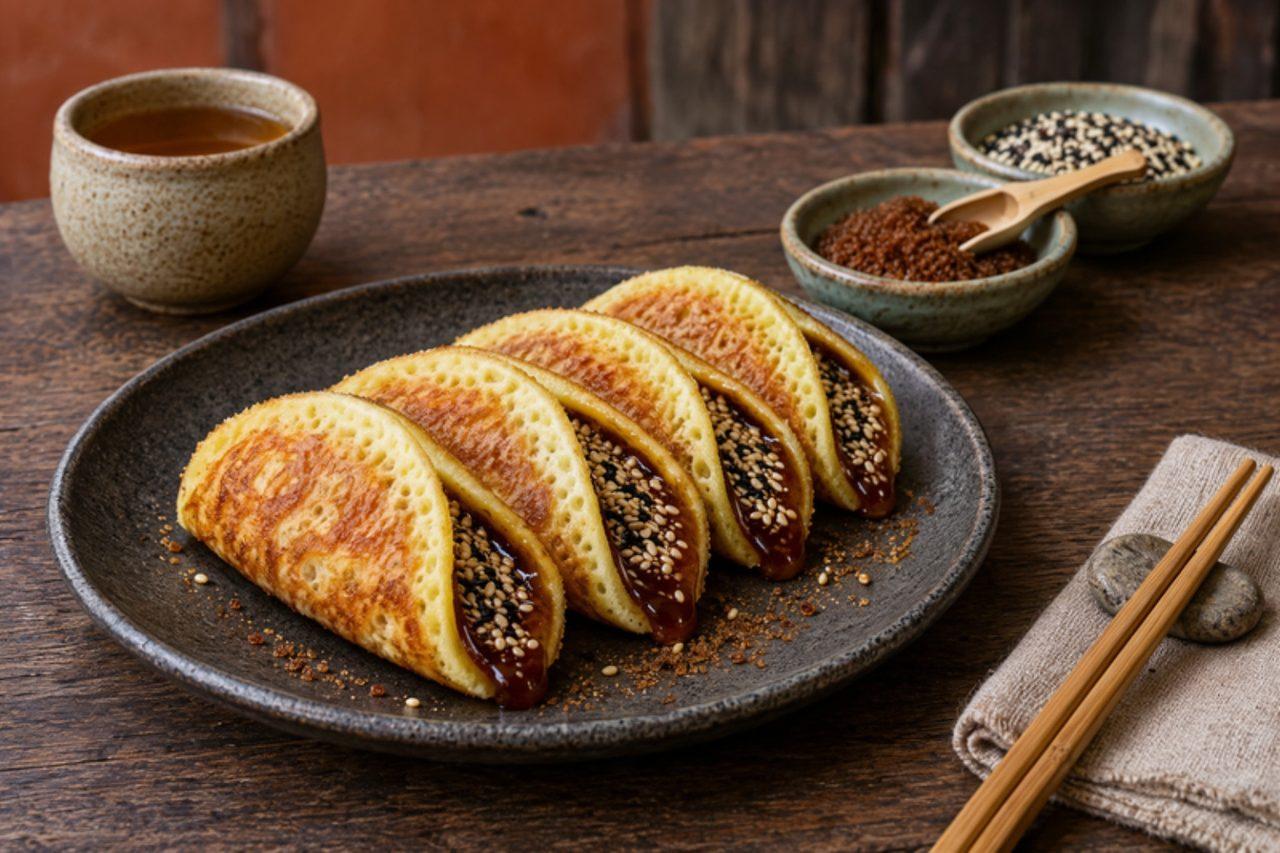
Dan hong gaoGriddle egg cakes

On Chengdu's back streets, dan hong gao vendors work a row of tiny copper pans, pouring in a sweet egg batter, adding a spoon of filling and folding each cake in half like a soft taco. Breakfast-goers order a few with brown sugar and sesame, and a few with savoury fillings like pickled mustard greens. The mistake is a lid-less pan: the cakes must be covered so the top steams through while the base turns golden. A small 10–12 cm frying pan works at home. Chef's tip: let the batter rest 10 minutes after adding the raising agent so tiny bubbles form; the cakes come out spongy rather than flat.

by KrazyBadal 0 views

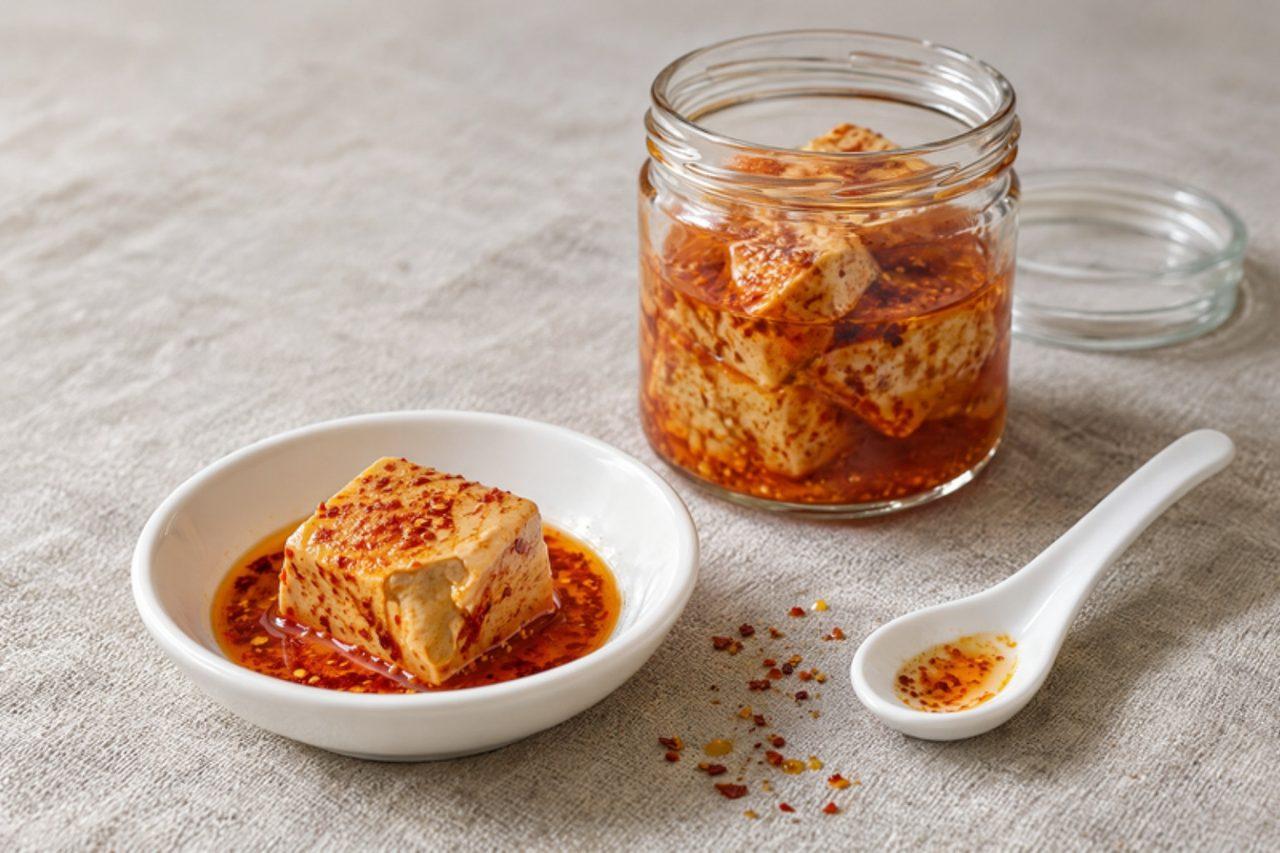
Fermented bean curd

Fu ru is made all over China, from Guilin's chilli-red cubes to Shaoxing's pale ones, and is usually prepared in the cool months between late autumn and early spring, when the moulds grow slowly and cleanly. Firm tofu cubes sit on rice straw or a rack until a soft white fuzz covers them; they are then rolled in salt and chilli and aged in brine until the centre turns custard-soft and the flavour becomes deep, cheesy and savoury. A quarter of a cube is mashed over plain rice congee for breakfast, or stirred into a sauce for stir-fried water spinach. Common mistake: making it in a warm kitchen; above about 20 °C the wrong moulds and bacteria take over. The bloom must be white or greyish-white and fluffy, smelling mildly of mushrooms; throw away any cube with green, black, pink, orange or yellow spots, sliminess or an ammonia or rotten smell, and if many are affected discard the whole batch. Do not reduce the salt: it is what keeps this low-acid soy ferment safe, and the whole ageing happens in the fridge. It is ready after 6–8 weeks, when a cube is soft right through. Chef's tip: press the tofu overnight first, drier cubes grow a cleaner bloom.

by KrazyBadal 0 views

GhiveciBaked mixed vegetable stew

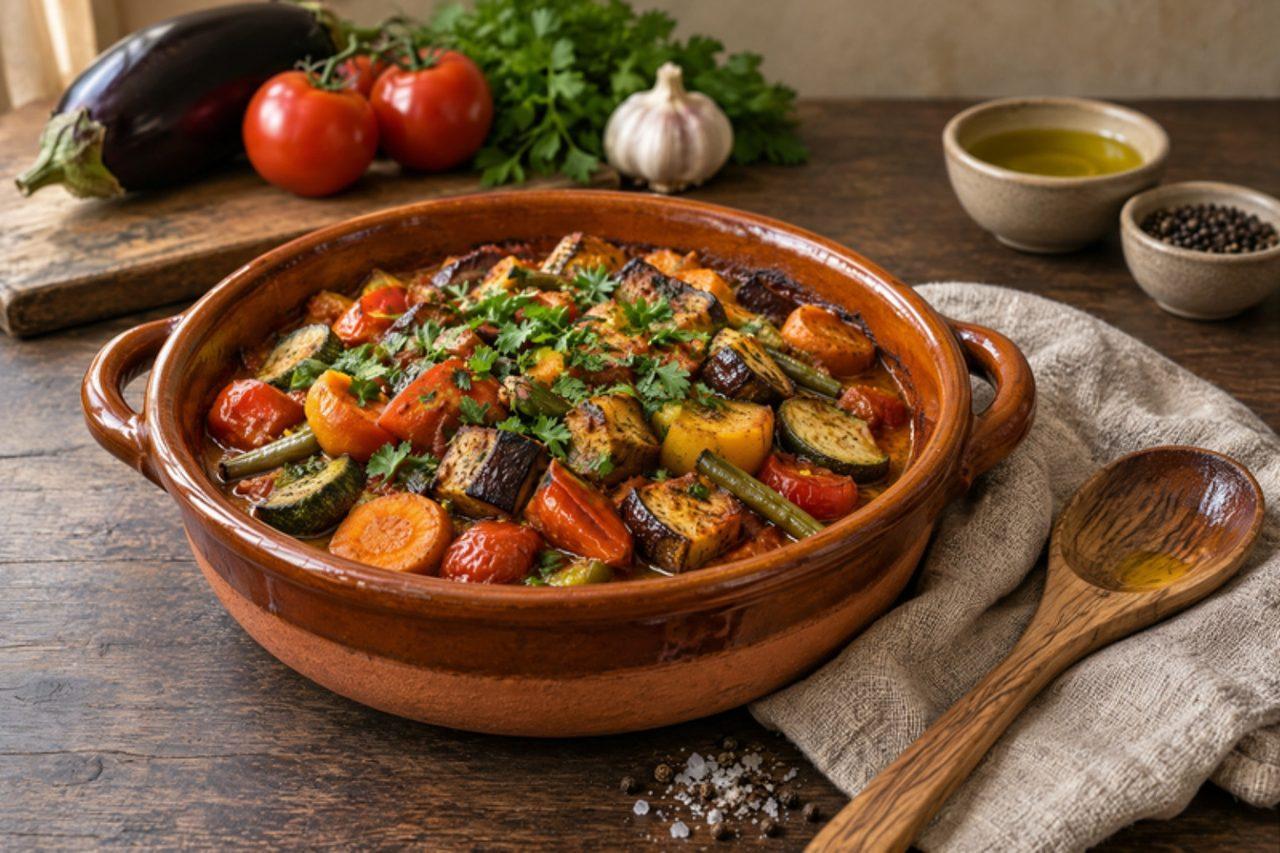
Ghiveci is the Romanian answer to a late-summer glut, made in August and September and often bottled for winter, and it is a mainstay on Orthodox fasting days because it contains no animal products. Aubergine, peppers, courgette, green beans, carrots and onion are layered with tomato and herbs and baked slowly until soft and sweet, with a little browned crust on top. Serve warm or cold with bread, or beside beans. Suitable as part of a balanced diet. About 190 kcal and 20 g carbohydrate per portion. The usual mistake is cutting the vegetables all the same size: harder carrots and beans need smaller pieces than courgette and aubergine so everything is tender at once. Chef's tip: bake uncovered for the last 20 minutes so the juices reduce and the top caramelises.

by KrazyBadal 0 views

Gilgeori toastStreet toast with cabbage omelette

Outside Seoul subway stations at 7 am, stall owners butter bread on a big griddle, fry a thick omelette packed with shredded cabbage and carrot, and stack it all with a slice of cheese, a sprinkle of sugar and a squiggle of ketchup. Sweet and savoury together sounds odd but is exactly why commuters queue for it. The common mistake is a thin, floppy omelette: make it as wide as the bread and about 2 cm thick so it holds the vegetables. Processed cheese slices are often made with animal rennet; choose a vegetarian slice if that matters to you. Chef's tip: shred the cabbage as thinly as you possibly can, almost like hair, so it softens in the egg in the short frying time.

by KrazyBadal 0 views

Daging masak hitamBlack braised beef

Daging masak hitam, 'black-cooked beef', is a centrepiece of Hari Raya open houses and kenduri feasts across Malaysia, and it is just as good on an ordinary weekday with rice and cucumber. Beef is braised slowly with blended shallots, garlic, ginger and dried chillies, whole spices, tamarind and both sweet and dark soy sauce until the gravy reduces to a sticky, almost black glaze. It tastes better the next day, which is why cooks make it ahead for festivals. The usual mistake is reducing too fast over a high heat: the sugar in the sweet soy scorches and turns bitter. Chef's tip: once the gravy starts to thicken, stir from the bottom every few minutes and lower the heat.

by KrazyBadal 0 views

DhansakMutton and lentil curry

Dhansak is the Parsi Sunday lunch in Mumbai and the old Gujarat towns of Navsari and Surat, traditionally the first meat dish cooked when the meatless days after a death are over, and a weekend favourite the rest of the time, always with brown rice (rice browned in caramelised sugar and onion) and kachumber. Mutton is cooked together with toor, masoor, moong and chana dal, pumpkin, aubergine, tomato and fenugreek leaves, then the dal and vegetables are pureed into a thick, gently spiced sauce with dhansak masala. Veg version: leave out the mutton and cook the same dal and vegetables with vegetable stock. The usual mistake is not pureeing the dal finely; it should be smooth and velvety around the meat. Slow-cooker option: everything except the tempering on low for 8 hours, then blend. Chef's tip: fry the dhansak masala in ghee at the end and pour it over; it gives the dish its aroma.

by KrazyBadal 0 views

Sev tameta nu shaakSev and tomato curry

Sev tameta nu shaak is roadside-dhaba and home food from Kathiyawad in Saurashtra, cooked when the vegetable basket is nearly empty but there are tomatoes and a tin of sev. Ripe tomatoes simmer with garlic, red chilli and a little jaggery into a thin, sweet-sour-hot gravy, and a handful of crisp gram-flour sev goes on top at the very last moment, so it is half-crunchy, half-soft when you eat it with bajra rotla, thepla or rotli. The usual mistake is stirring the sev in too early, which turns the curry into a paste. Most sev is made from gram flour, but check the packet if you avoid gluten. Chef's tip: use thick sev (ratlami or bhavnagari), which holds its crunch far longer than nylon sev.

by KrazyBadal 0 views

Goan pezRice porridge with pickle and papad

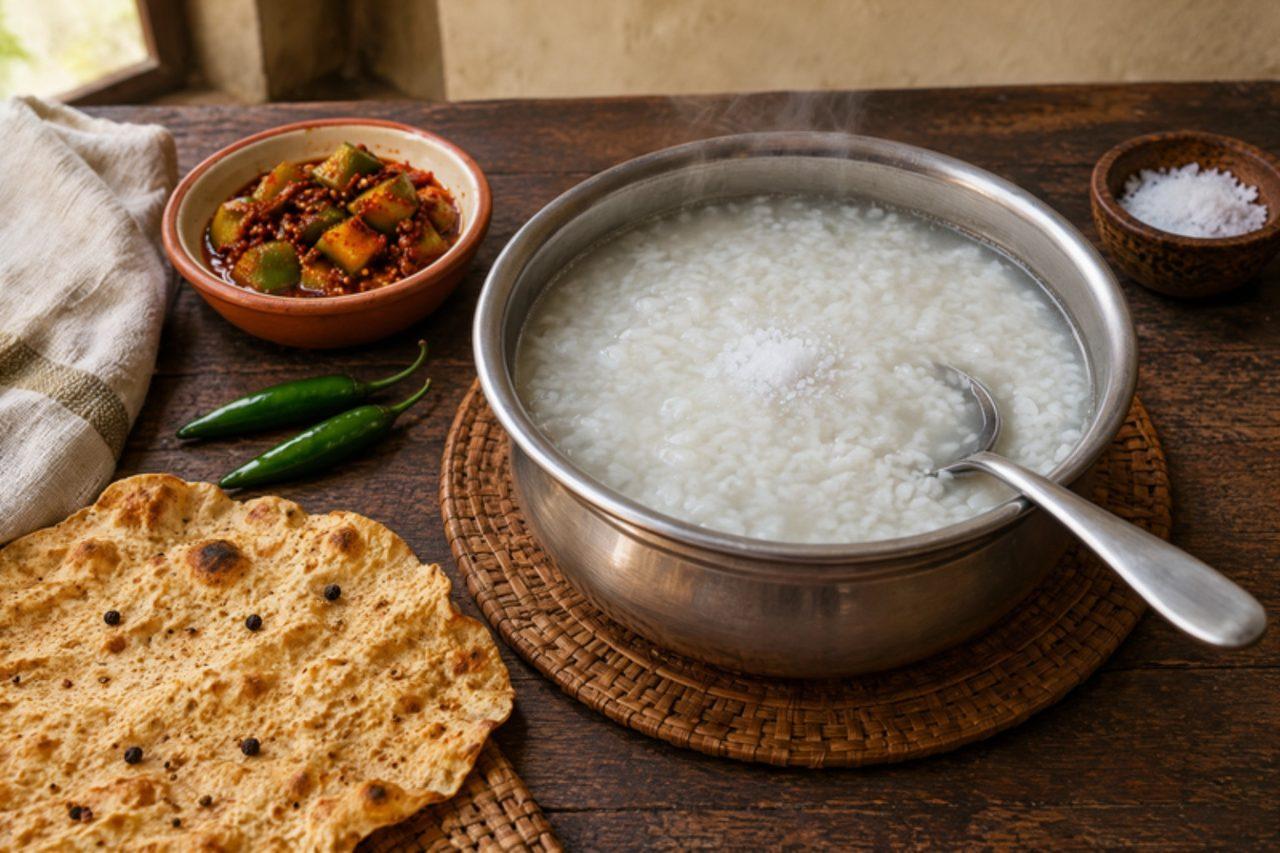
Pez is the plainest food in a Goan kitchen and one of the most loved: red parboiled rice simmered in plenty of water until the grains burst and the liquid turns milky. Fishermen and farmers ate it before a day's work, mothers serve it to anyone who feels unwell, and on heavy monsoon evenings it comes with a spoon of mango or lime pickle, a roasted papad and sometimes a dry fish or vegetable on the side. The mistake is cooking it in too little water so it becomes a sticky porridge; good pez has whole soft grains floating in thin, starchy broth. Chef's tip: stir in a little salt only at the end and let everyone add buttermilk or coconut milk to their own bowl.

by KrazyBadal 0 views

KongjukSoybean and rice porridge

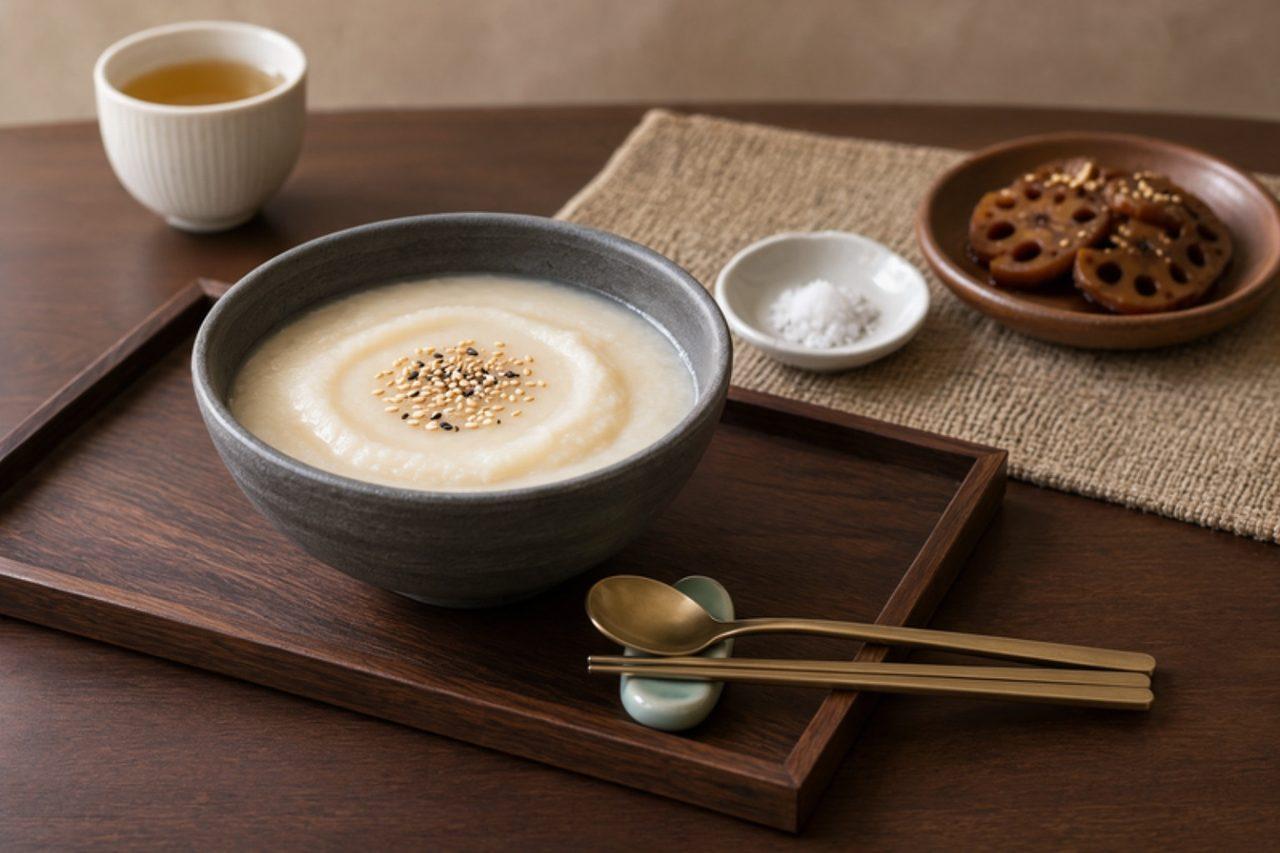
Kongjuk is the porridge Korean families make when they want something filling but plain: soaked soybeans ground into a milk with rice and cooked until it is thick, pale and creamy. It is a breakfast and a summer staple in the countryside, eaten with a little salt and some kimchi or radish on the side. The mistake to avoid is under-blending the beans: gritty bean skins make the porridge grainy, so blend long and fine, or sieve it. Stir often too, because soy milk catches on the bottom quickly. Chef's tip: skim off the loose skins after soaking by rubbing the beans between your palms under water; the porridge comes out silkier and whiter.

by KrazyBadal 0 views

Golichina mamsamDry-fried mutton

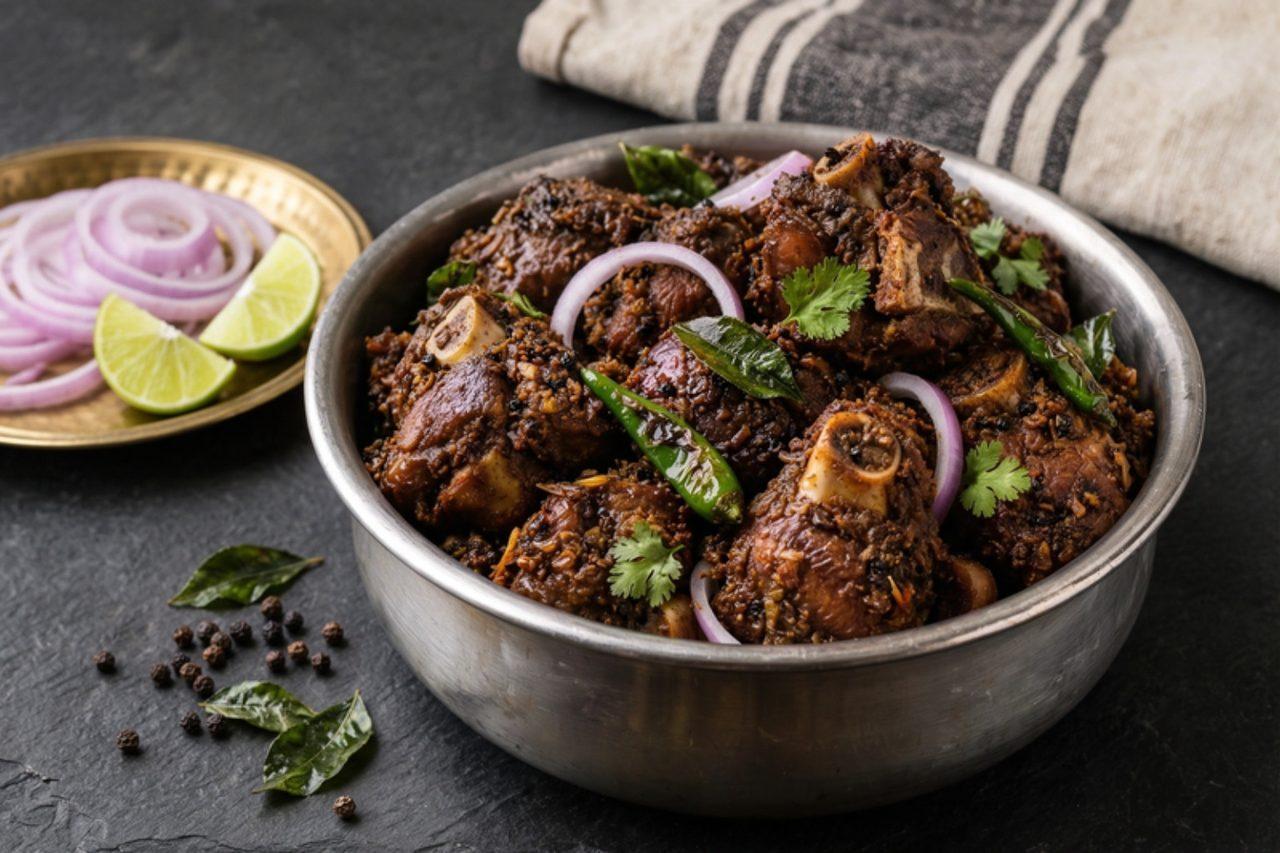
Golichina mamsam is the dark, dry mutton fry of Telangana's village kitchens and Bonalu feasts, where mutton on the bone is first cooked soft with ginger-garlic and then fried with onions in plenty of oil until every piece is nearly black and crusted with masala. It is eaten with rice, sarva pindi or jonna rotte. The usual mistake is rushing the final fry on high heat; the masala burns before the meat darkens, so keep the heat medium and stir patiently. Food safety: cook the mutton until it reaches 71 °C inside and is tender before the final fry. Chef's tip: grind black pepper and cumin fresh just before they go in; that aroma defines the dish.

105 minIndianMeatGluten freeSpicy
by KrazyBadal 0 views

IsijingiPumpkin and maize porridge

When the big grey-skinned pumpkins come in at the end of summer, Xhosa grandmothers around Butterworth and Ngcobo stew them down and stir in maize meal to make isijingi, a bright orange porridge that children love and adults secretly do too. It is soft and spoonable, gently sweet from the pumpkin and a little sugar, with the faint corn flavour of the meal underneath. Serve it as a side to beans or a vegetable stew, or eat a bowlful on its own for supper on a cold evening. Watery pumpkin is the classic mistake, so cook the pumpkin until most of its liquid has evaporated before the meal goes in. Chef's tip: use a dense, deep orange pumpkin or butternut, not a watery jack-o'-lantern type, for the sweetest flavour.

by KrazyBadal 0 views

Showing 36 of 7,762 recipes

Show more recipes

Page 89 of 863