


Skip to content
Vadukapuli naranga achar
Featured recipe

Vadukapuli naranga achar

Wild lime pickle

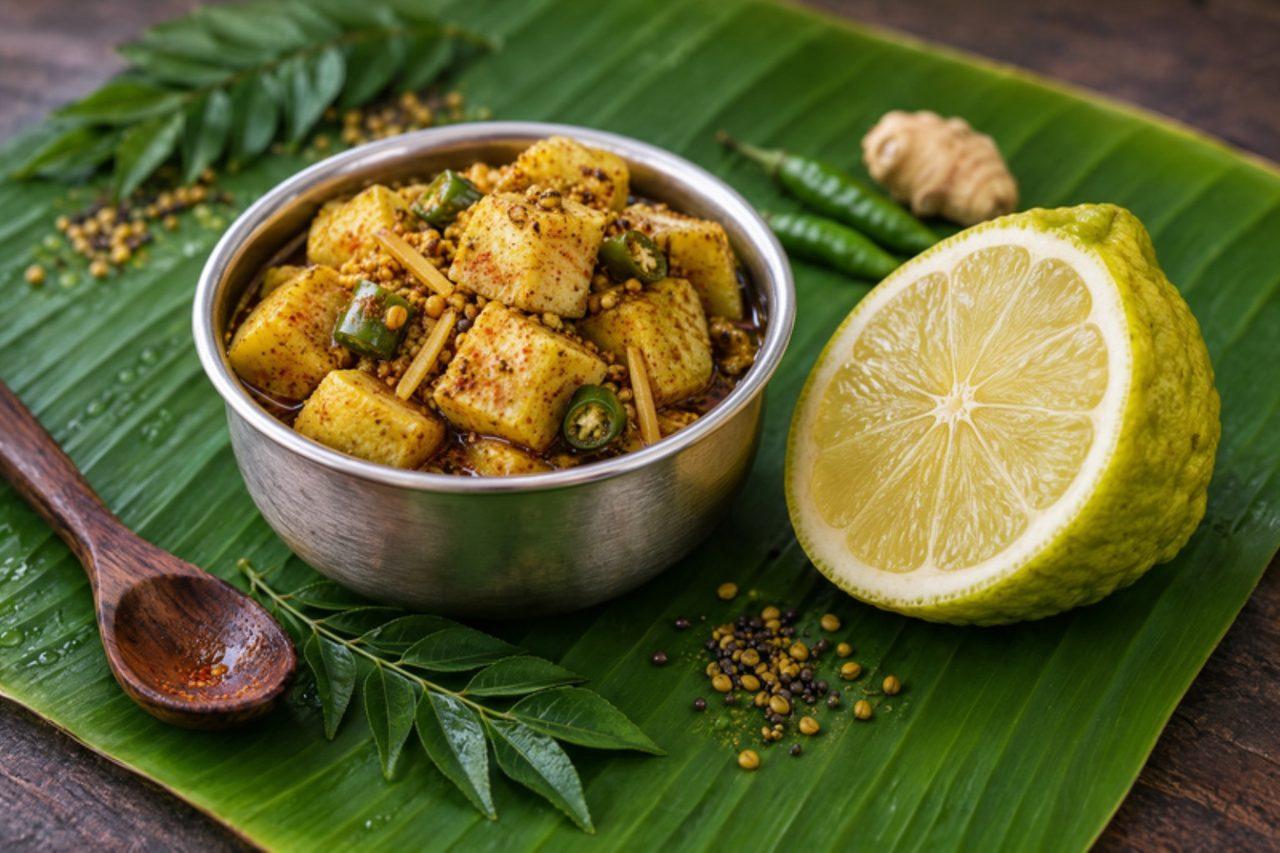
Vadukapuli naranga is a large, knobbly, thick-skinned wild lemon grown in Kerala backyards, and it is ripe just in time for Onam in August–September. Cut into small cubes with its spongy white pith and mixed with green chilli, ginger, chilli powder and a sesame-oil tempering, it becomes the pale yellow pickle dabbed on the end of every sadya banana leaf, next to inji puli and mango. It is sour, bitter and fresh at once, with juicy flesh and a soft, absorbent pith that soaks up the spices. It is just as welcome with curd rice or a simple moru curry. The common mistake is leaving the bitter seeds and the tough central core in; take them out or the whole jar turns harsh. It is ready to eat after a day, once the salt has drawn out the juice and the pieces look moist and slightly translucent. Because it has fresh ginger, green chilli and curry leaves, keep it in the fridge and eat within a month. Outside Kerala, use a citron or the biggest thick-skinned lemons you can find. Chef's tip: a spoon of vinegar sharpens the pickle and helps it keep; Kerala Christian homes often add one.

Read more 0 views

What to eat today?

Around the world

Today's trip: Paraguayan

A new country every day, from every cuisine on the site.

Paraguayan

Chipa

Cheese bread rings 50 minMore from Paraguayan (27) →

This week's collection

Kid-friendly dinners
537 recipes · a new collection every Monday

Latest recipes

Lagmi (fresh palm sap)

In the oases of the Tunisian south, in Gabès, Tozeur, Nefta, Kebili and on Djerba, palm climbers cut a small wound at the crown of an ageing date palm and hang a clay pot under it overnight. By sunrise it holds lagmi: cloudy, ivory-white sap, cool and sweet, with notes of coconut water and fresh dates. It is sold in recycled bottles at the roadside and drunk the same morning, because the wild yeasts in it begin to ferment almost at once. By afternoon it is fizzy and sour, and by the next day it has become an alcoholic palm wine, also called lagmi, which is a different drink altogether. The common mistake is buying more than you can drink by lunchtime or leaving it in the sun: keep it on ice from the moment you get it. Fresh lagmi is ready to drink when it is sweet, smells clean and milky, and only a few tiny bubbles rise; once it tastes sour or prickles on the tongue, it has started to turn. It is raw and unpasteurised, so pregnant people, babies, older people and anyone unwell should skip it. Outside the oases, fresh coconut water is the closest stand-in. Chef's tip: chill the glasses too; lagmi is at its best ice-cold.

by KrazyBadal 0 views

Matzah

Matzah is the flat unleavened bread eaten at Passover, recalling the Israelites leaving Egypt in too much haste for their bread to rise, and in Israel and Jewish homes worldwide it is also eaten as a crisp everyday cracker with soups and dips. The dough is only flour and water; by tradition it is mixed, rolled and baked within 18 minutes so it cannot ferment. This home version follows that rhythm but is not certified for Passover use. There is no salt: about 0.0 g salt per sheet. The usual mistake is rolling too thick, which gives a tough, chewy bread; roll until you can almost see the counter through it. Chef's tip: prick the dough all over with a fork before baking so it stays flat and blisters evenly.

by KrazyBadal 0 views

Grünkohl mit PinkelBraised kale with smoked sausage

In Bremen and Oldenburg, Grünkohl mit Pinkel is the dish of the winter Kohlfahrt, when groups walk out into the frosty countryside and finish at an inn for kale, smoked pork and Pinkel, a smoked sausage of pork, bacon and oats. The kale is braised for hours with onions, lard and smoked pork until dark, soft and almost creamy, then the sausages warm through on top. Serve with boiled potatoes or small caramelised ones and mustard. The usual mistake is cooking the kale briefly like a vegetable side; it needs the long braise to lose its bitterness. Chef's tip: kale is best after the first frost, which makes the leaves sweeter; frozen chopped kale is a good shortcut.

160 minGermanMeat
by KrazyBadal 0 views

Irumban puli acharBilimbi pickle

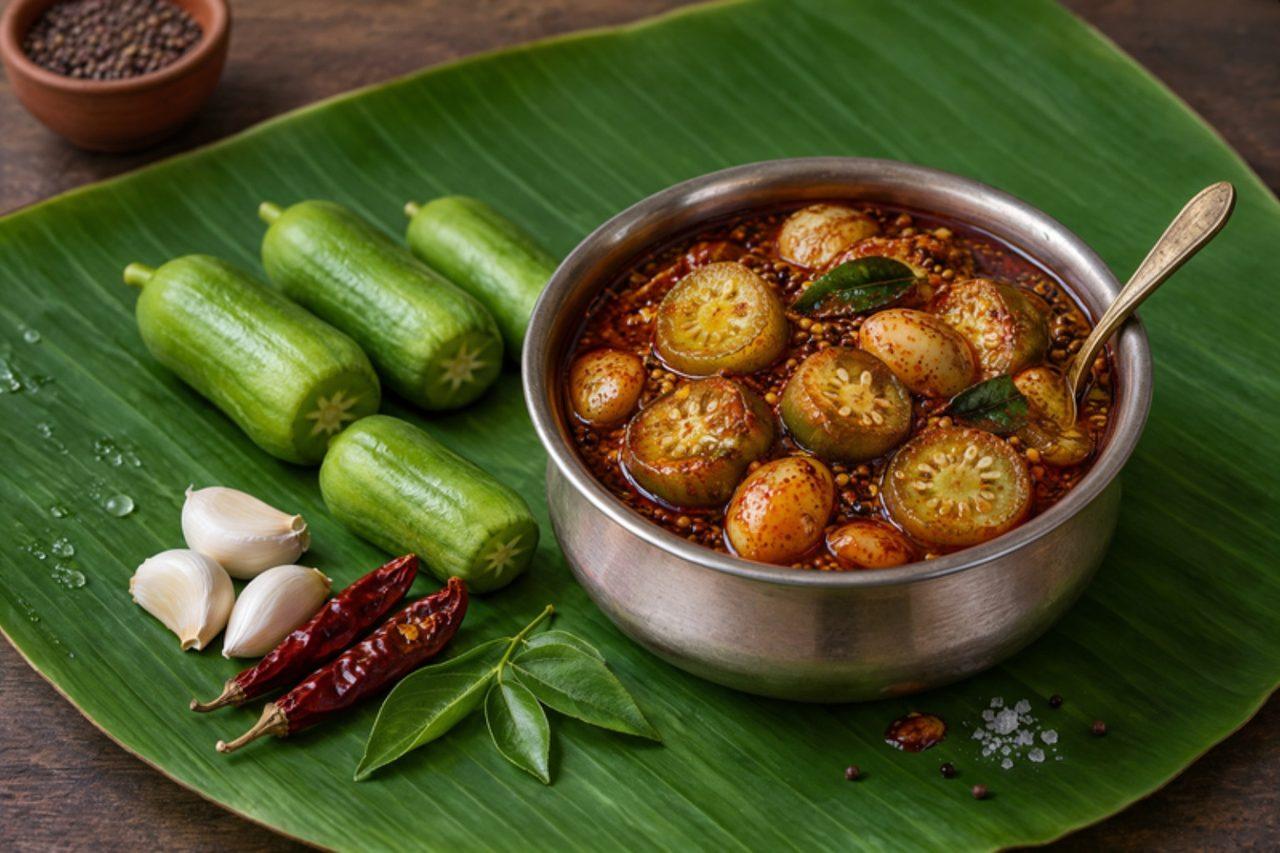
Almost every Kerala compound has an irumban puli tree, its trunk studded with clusters of small, cucumber-shaped green fruit so sour they make your eyes water. Through the monsoon months the tree fruits non-stop, and the surplus is salted and turned into this pickle. The bilimbi pieces soften into a tangy, juicy mass in a red masala of chilli, garlic and ginger cooked in gingelly oil, with roasted fenugreek giving a gentle bitterness. Eat it with kanji and payar (rice gruel and green gram), with a simple meal of rice, thoran and moru curry, or with chapati. The common mistake is cooking the fruit for too long: bilimbi is very watery and soft, and if stewed it breaks down to mush. Salt it first to draw out the water, then just warm it through in the masala for a couple of minutes. It is ready when the masala clings to the pieces and the oil glistens on top. Very acidic, but with fresh garlic and ginger, so store it in the fridge and use within a month. Abroad, use sour, green, unripe star fruit (its close relative) or green gooseberries. Chef's tip: dry the salted pieces in the sun for an afternoon for a firmer, chewier pickle.

by KrazyBadal 0 views

RinderrouladenStuffed beef rolls

Rinderrouladen are the Sunday and holiday roast of Germany, made by grandmothers from the Rhineland to Saxony and served at Christmas with red cabbage and potato dumplings. Thin slices of beef are spread with mustard and rolled round smoked bacon (pork), onion and gherkin, then browned and braised for two hours in red wine and stock until tender, giving a deep, glossy gravy. For an alcohol-free version use extra stock with a tablespoon of red wine vinegar. The usual mistake is rolls that unravel in the pot; tie them firmly or pin with two cocktail sticks. Slow-cooker: after browning, cook on low for 7 hours, then thicken the sauce in a pan. Chef's tip: ask the butcher for topside sliced 5 mm thick and beat it a little thinner, so it rolls easily without tearing.

165 minGermanMeat
by KrazyBadal 0 views

Ash-e dooghYogurt soup with rice and chickpeas

Ash-e doogh is the summer and autumn soup of Ardabil and the Azeri north-west of Iran, cooked in big pots for family gatherings and sold in bowls in the bazaars. Rice and chickpeas are simmered in tangy yoghurt with handfuls of dill, coriander, spinach and mint, and the soup is topped with crisp fried onion and dried mint. It is creamy and sour, never heavy. The usual mistake is stopping stirring: the yoghurt splits into grains if left to boil alone, so stir in one direction without stopping until it comes to the boil. Chef's tip: beat a spoonful of rice flour into the yoghurt before heating; it stabilises it and keeps the soup silky.

by KrazyBadal 0 views

Caipirinha

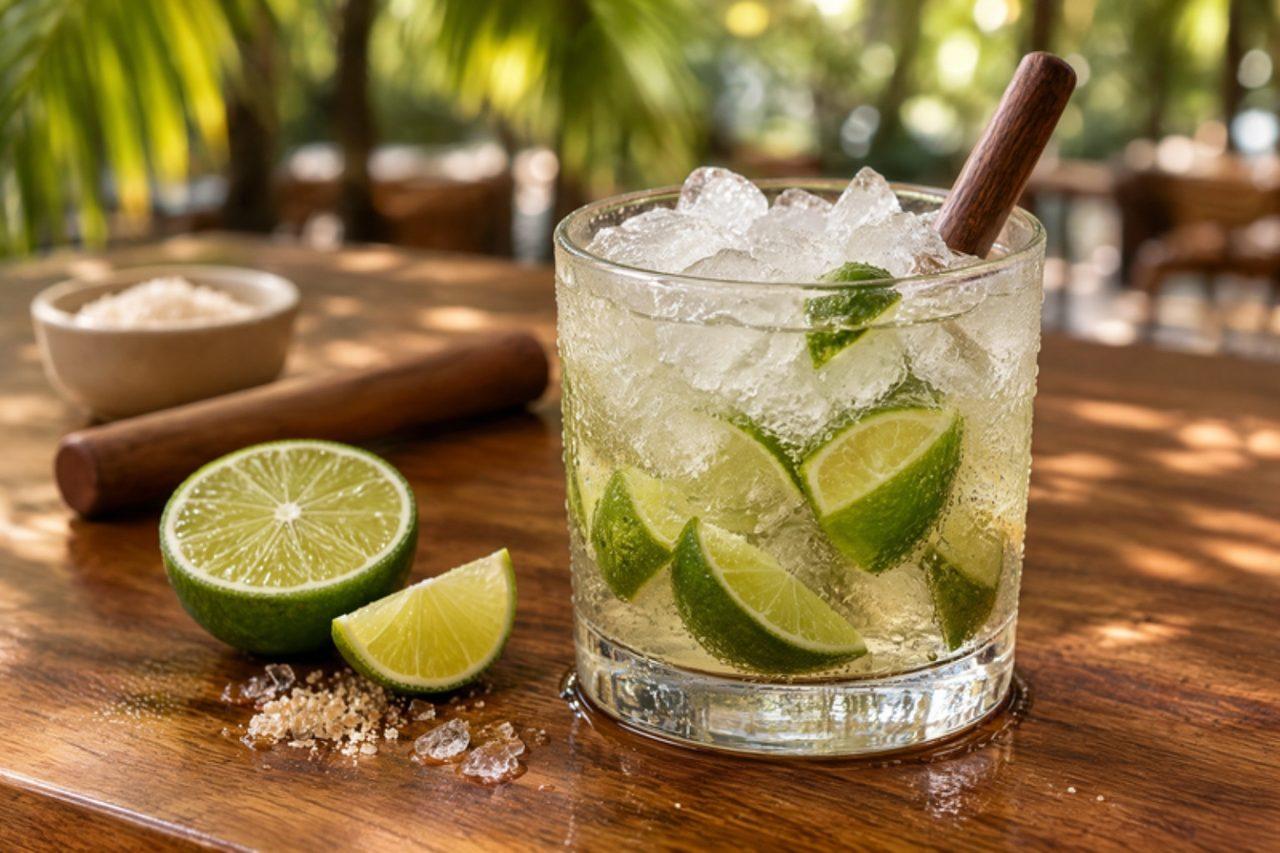
Brazil's national drink lives on every boteco counter in São Paulo, but it tastes best on a hot Saturday beside a pot of feijoada, or handed over from a beach vendor's cart. It is a short, rough-cut drink for adults only: a whole lime chopped into wedges, crushed with sugar right in the glass, packed with crushed ice and drowned in cachaça, the sugarcane spirit with a grassy, faintly funky edge that rum does not have. Each sip moves from sharp lime oil to cold sweetness to a warm cane finish, with a little crunchy sugar at the bottom to stir back up. The usual mistake is pounding the lime to a pulp: the white pith and the core turn bitter within minutes. Cut out the central white strip, press each wedge only until the juice runs and the skin smells of lime oil, then stop. It is ready when the sugar has mostly melted into a cloudy syrup and the glass frosts on the outside. Cachaça is strong, so sip slowly and drink responsibly. Chef's tip: roll the lime hard on the board before cutting and choose thin-skinned, heavy limes; a thick-skinned lime makes a bitter caipirinha however gently you muddle.

by KrazyBadal 0 views

Agua de tuna (prickly pear drink)

Late summer is tuna season across the central highlands, from Hidalgo and the Estado de México down to Puebla's Teotihuacán valley, and that is when the big vitroleros in markets and taquerías turn shocking pink. Agua de tuna is just the cactus fruit blended with water, lime and a little sugar, strained, and poured over ice with lunch. Red tunas give a vivid colour and a taste between watermelon and pear; green ones make a paler, more herbal drink. It should be light and thirst-quenching, never syrupy. The commonest mistake is blending too long: the hard seeds crack and the agua turns gritty and slightly bitter. Pulse briefly, just enough to free the pulp, then strain well. It is ready when the liquid runs smooth through the sieve and tastes clearly of fruit with only a lift of lime. Handle unpeeled tunas with tongs or gloves: even 'cleaned' ones keep tiny glochids. Chef's tip: chill the peeled fruit before blending; cold pulp keeps its colour bright and needs less ice to dilute it.

by KrazyBadal 0 views

Kiri kosJackfruit in coconut milk

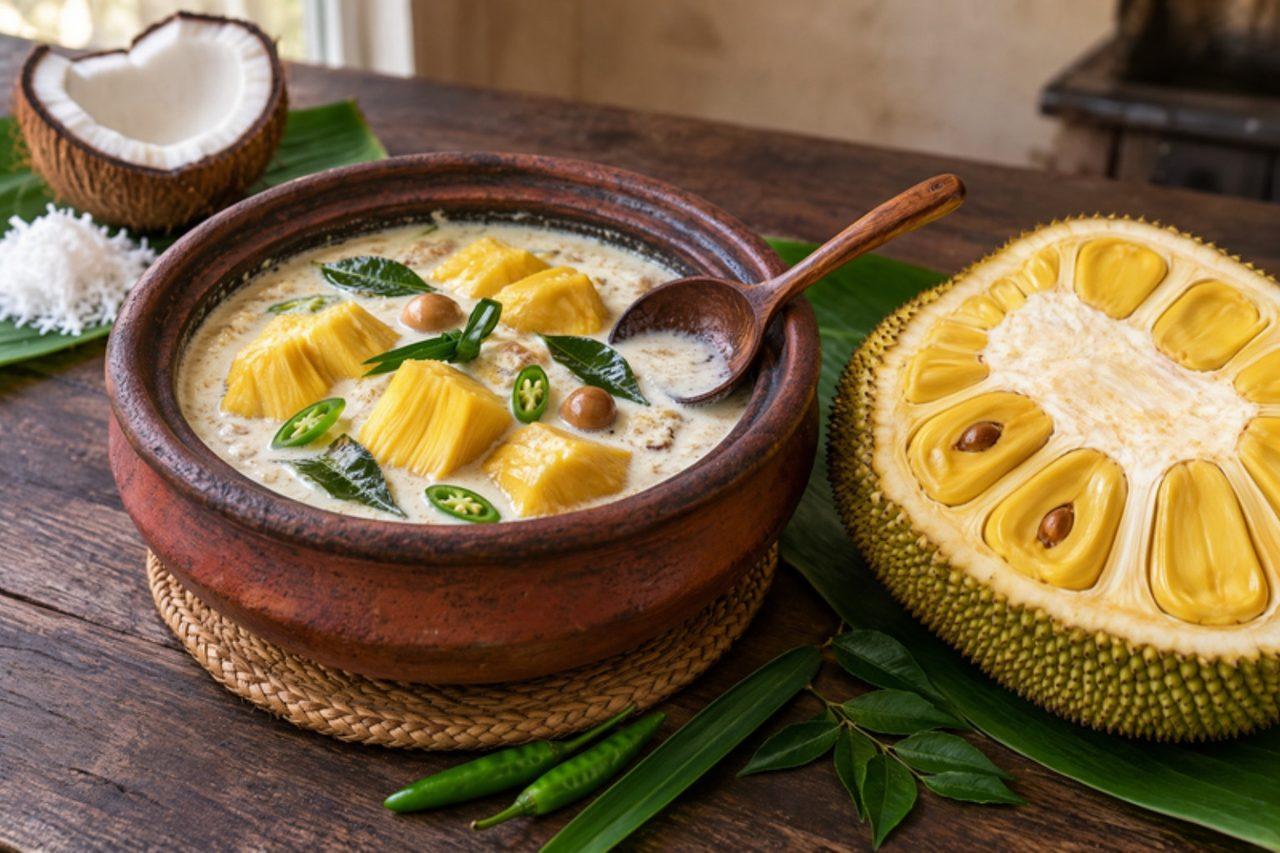
Kiri kos, 'milk jackfruit', is a mild white curry from the villages of Sri Lanka's wet zone, cooked when the jackfruit is mature but not yet sweet, and often served at lunch or at almsgivings beside red rice and a spicy sambol. The yellow bulbs are simmered with turmeric, pandan, cinnamon and green chilli in thin coconut milk until tender, then finished with thick milk so the curry is creamy and soothing. The usual mistake is using ripe, sweet jackfruit, which turns to jam; ask for mature 'kos' with firm, pale bulbs, or use tinned young jackfruit in brine. Chef's tip: oil your knife and hands before cutting fresh jackfruit so the sticky latex wipes off easily.

by KrazyBadal 0 views

Showing 9 of 7,762 recipes

Show more recipes

Page 98 of 863