


Skip to content
Govurga
Featured recipe

Govurga

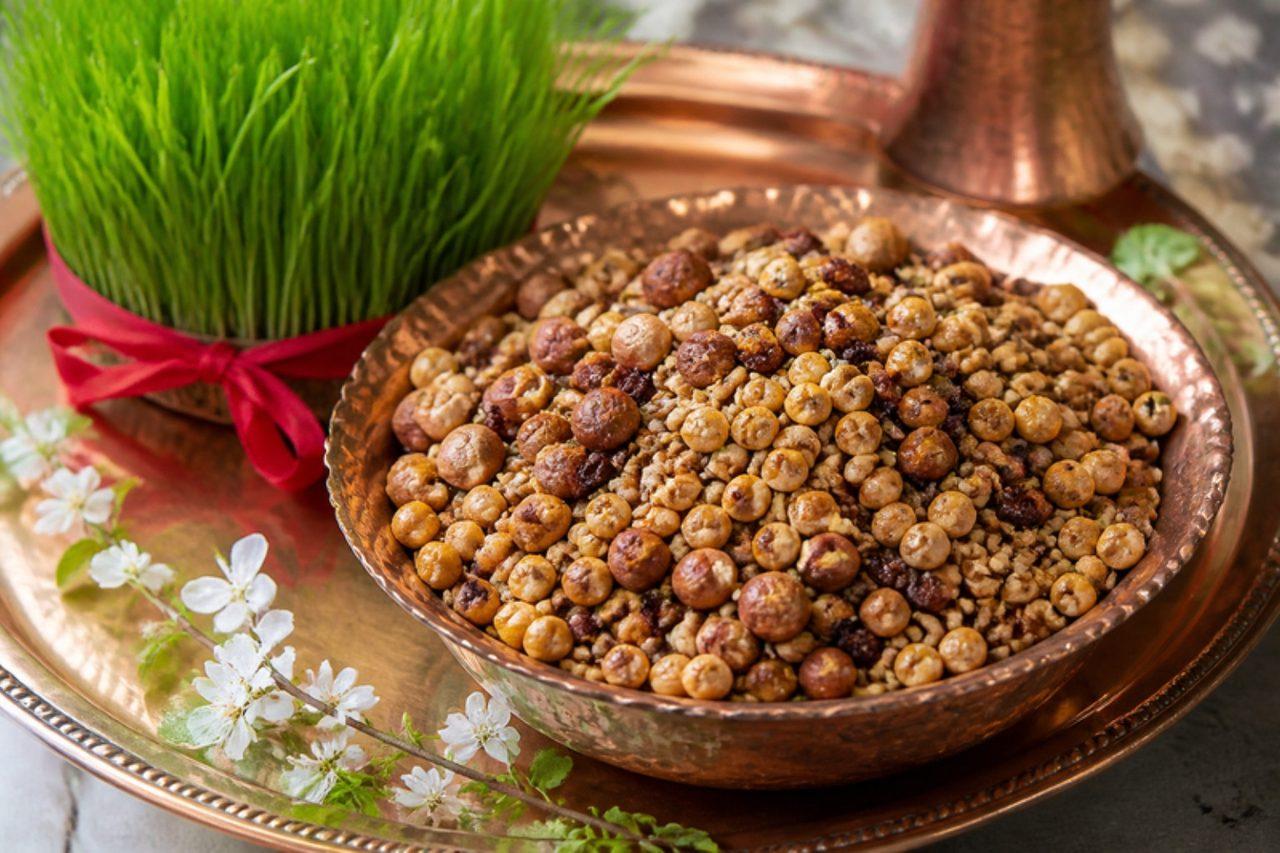
Roasted wheat and nut mix

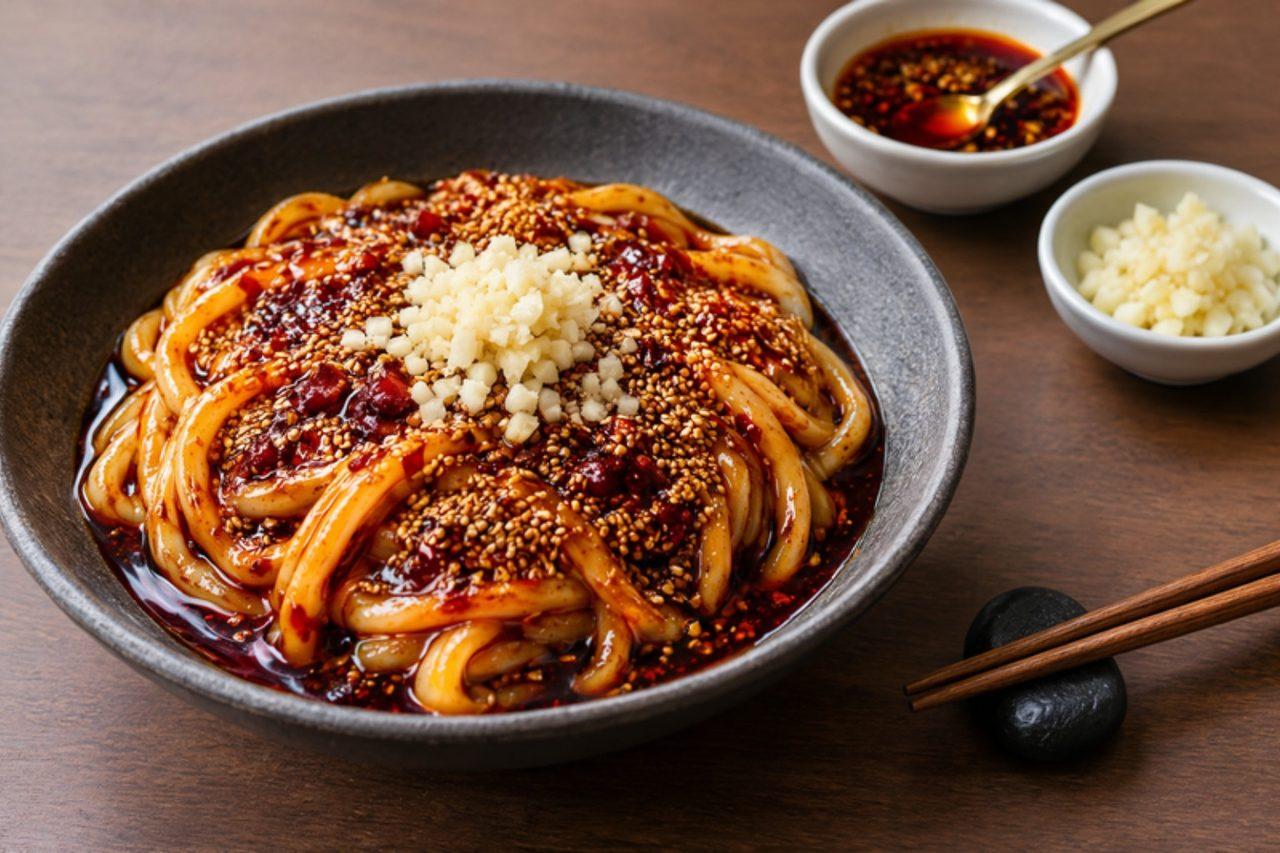
Govurga is one of the small symbolic foods on the Novruz table in Baku and the Absheron villages: wheat grains roasted in a dry pan until they crack, mixed with roasted hemp seeds, chickpeas, hazelnuts and raisins, and eaten by the handful through the festival. Children fill their pockets with it. A common mistake is roasting everything together; each part browns at a different speed. Chef's tip: shake the pan constantly and stop each batch as soon as it smells toasty and starts to pop. Hulled hemp seeds sold for cooking are fine to use.

Read more 0 views

What to eat today?

Around the world

Today's trip: Persian

A new country every day, from every cuisine on the site.

This week's collection

Kid-friendly dinners
537 recipes · a new collection every Monday

Latest recipes

Mizo panch phoran tarkariMixed vegetables with five spices

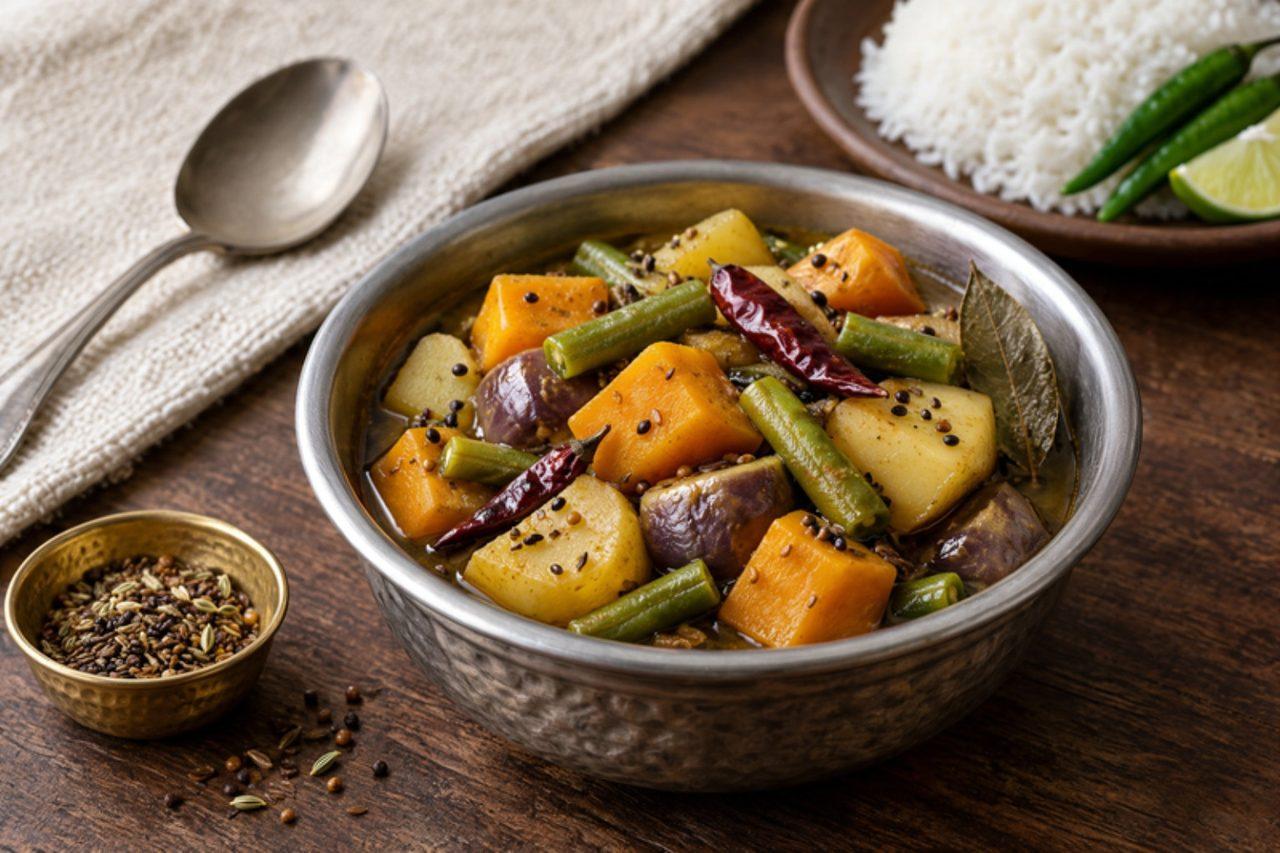
Mizo cooking uses very little oil and few spices, and this Aizawl tarkari of pumpkin, potato, brinjal and beans is a good example: a few seeds of panch phoron bloom in a spoonful of oil, the vegetables steam in their own juices and dinner is ready. It is eaten on weekdays with rice, dal and a sharp chilli relish. The common mistake is stirring too often, which mashes the pumpkin; turn it gently only once or twice. Chef's tip: cut everything about the same size so it cooks evenly.

by KrazyBadal 0 views
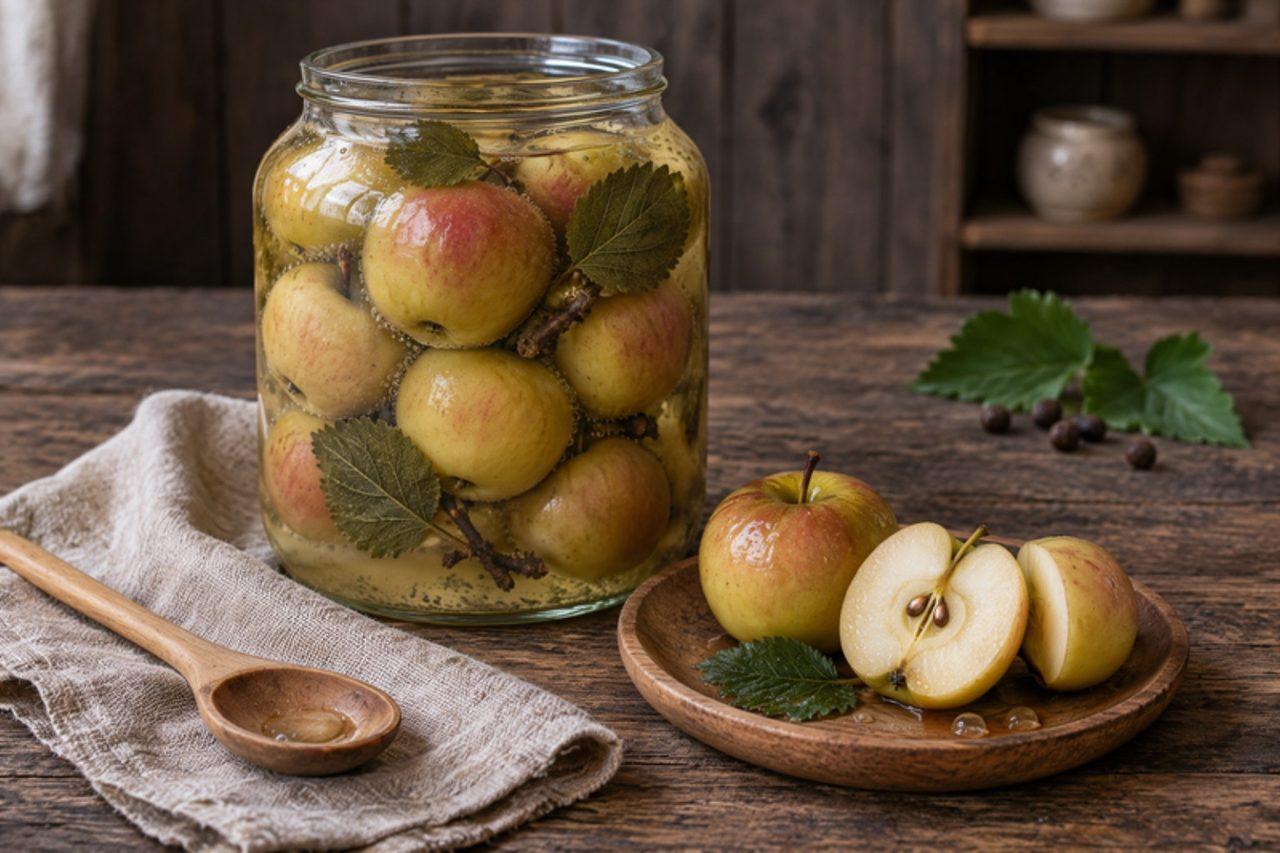
Mochenye yablokiFermented apples

In the villages of central Russia, around Ryazan, Tula and Kursk, late autumn meant packing an oak barrel with whole Antonovka apples between layers of blackcurrant and cherry leaves, then pouring over a brine of water, salt, honey and a little rye flour. A month later, in the cold of the cellar, they had become mochenye yabloki: still crisp, very juicy, tart and lightly sweet, with a faint fizz on the tongue and an aroma close to cider. Through the winter they come out with roast goose or duck, on the zakuski table beside sauerkraut and salted cucumbers, and as a snack with tea. Like any lactic ferment they produce a trace of alcohol, well under 1% while young. The most common mistake is using soft, sweet dessert apples, which go mealy and fall apart; choose hard, sour, late-season apples without a single bruise and pack them tightly. They are ready when the brine is cloudy and smells pleasantly sour and a slice tastes tangy right to the core. Chef's tip: lay a clean cabbage leaf on top under the weight; it keeps the apples down and catches any surface yeast.

by KrazyBadal 0 views

MocochinchiDried peach and cinnamon drink

Walk through any Bolivian plaza on a warm afternoon and someone will be selling mocochinchi from a big glass jar: a cool, amber drink of sun-dried peaches simmered with cinnamon and cloves, served with a whole wrinkled peach at the bottom of the glass to eat at the end. It is the classic drink with lunch from Cochabamba to Tarija. People often skip the overnight soak, and then the peaches stay leathery and the drink tastes thin. Chef's tip: rub the soaked peaches between your hands under water to clean off dust and loosen the skins, which also releases more flavour.

by KrazyBadal 0 views

Louise sliceJam and coconut meringue slice

Louise slice, or Louise cake, is a New Zealand tea-time classic found on church cake stalls and in grandma's tins from Invercargill to Whangārei. A buttery shortcake base is spread with raspberry jam and topped with a chewy coconut meringue that bakes to pale gold. It is light and pretty, and very easy. A common mistake is baking the meringue too hot, which browns it before it sets inside. Chef's tip: spread the meringue right to the edges so the jam doesn't bubble through.

by KrazyBadal 0 views

Mofo ananaGreens fritters

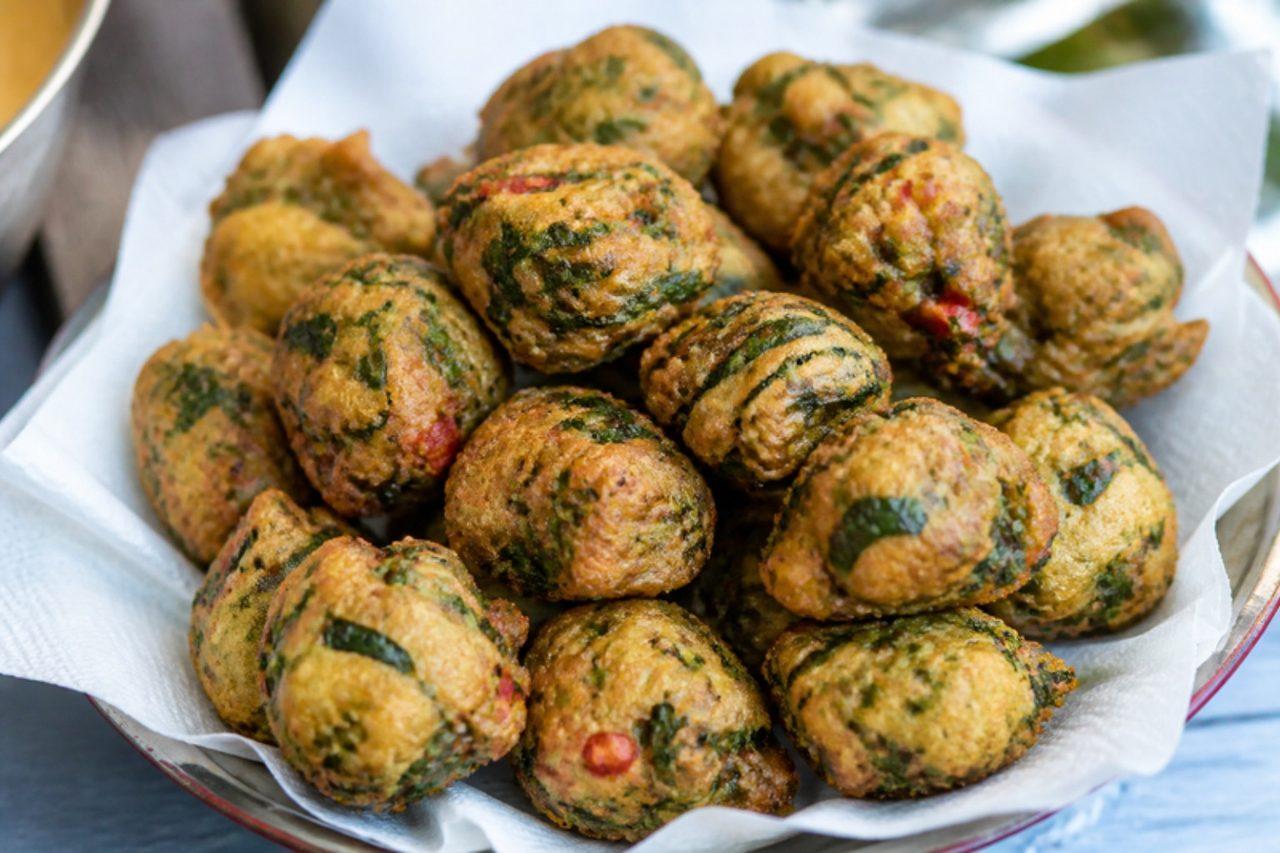
Stalls along Analakely market in central Antananarivo stack mofo anana in paper cones from mid-morning, and they rarely last past lunch. Each fritter is mostly leaves held together with a thin, savoury batter, so the outside fries lacy and crisp while the inside stays soft and grassy, with a lift from spring onion, garlic and chilli. Eat them hot as a snack with a cup of ginger tea, or set a plate of them beside a bowl of broth and some sakay for dipping. The usual mistake is a batter that is too thick: it should only just bind the greens, otherwise you end up with a heavy, doughy pancake. Chef's tip: squeeze the chopped leaves in a clean tea towel before mixing; wet greens spit in the oil and make the fritters soggy.

by KrazyBadal 0 views

BelgramiChewy fresh cheese sweet

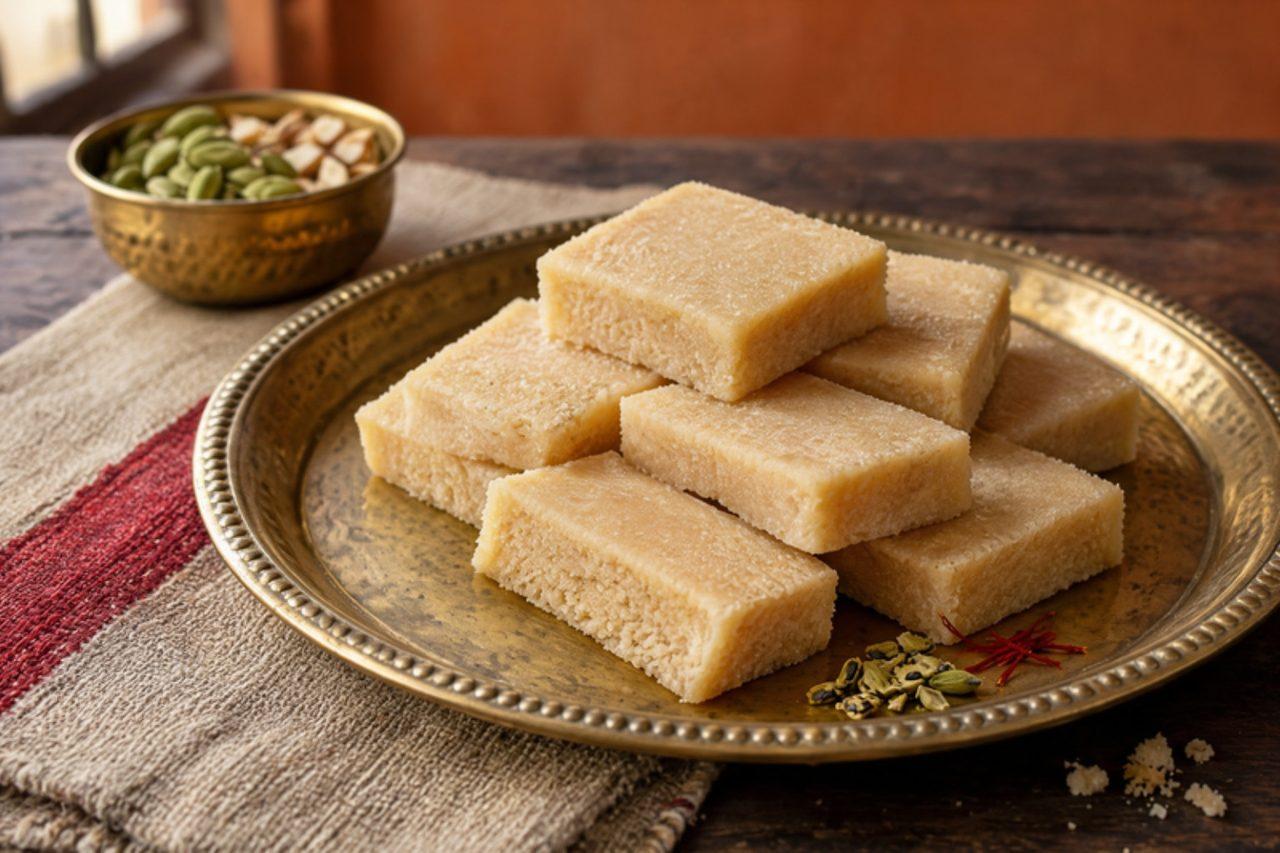
Belgrami belongs to Udwantnagar in Bihar's Bhojpur district, where sweet makers have cooked it for generations and travellers buy boxes on the way through. Fresh chhena is cooked down with sugar until it firms into a dense, slightly chewy, pale cream block with a gentle caramel note, then cut into pieces. It keeps for days, which makes it a favourite gift at weddings and Chhath. The common mistake is stopping too early: it must cook until the mass pulls into one lump and no longer sticks to the pan, or the pieces stay soft and weep. Chef's tip: use chhena from full-fat cow's milk and hang it for an hour, so it is dry enough to cook down quickly.

by KrazyBadal 0 views

Bellam avakayaSweet raw mango pickle

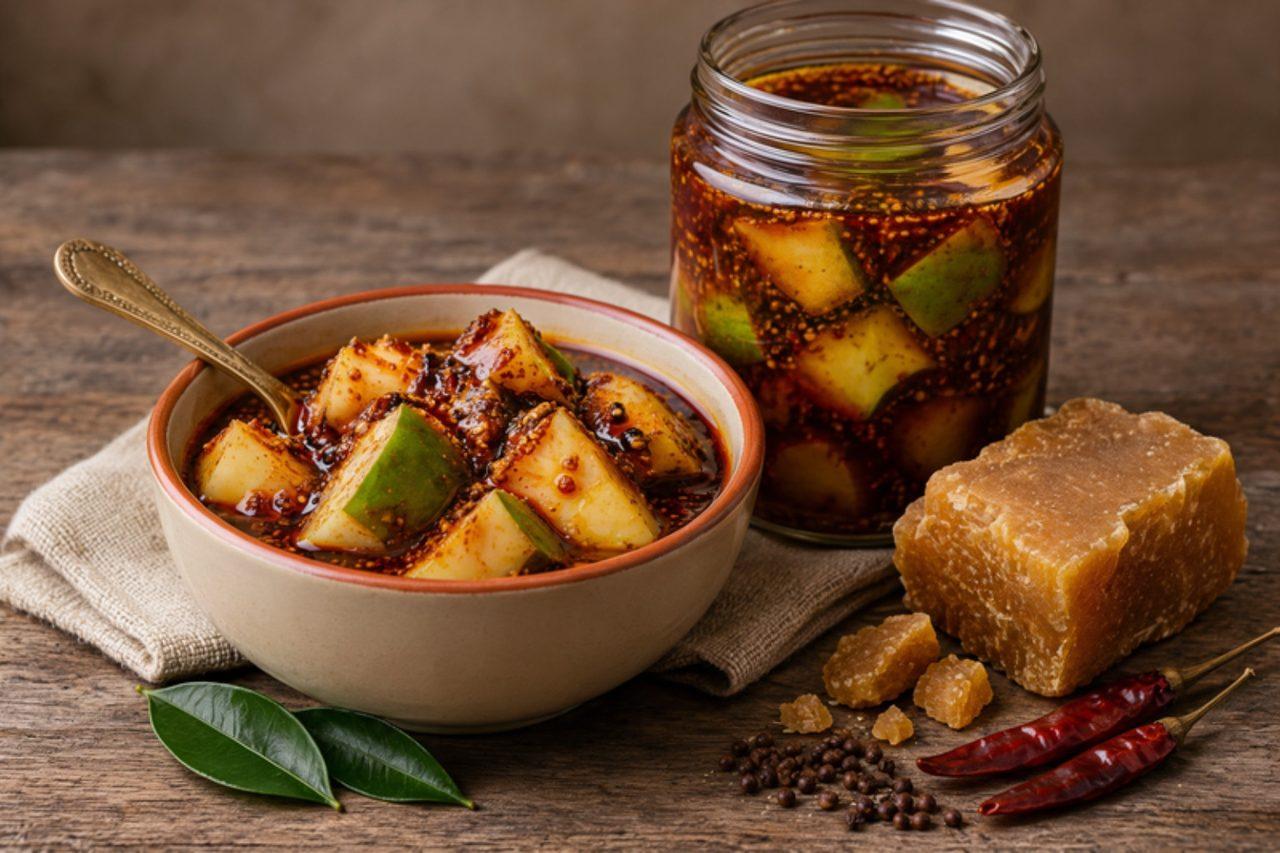
In the Godavari districts of coastal Andhra, the same May afternoon that produces a jar of fiery avakaya usually produces a second jar of bellam avakaya for the children and anyone who likes it sweet. The mangoes are hacked into chunks with their skin and the hard shell of the stone still attached, then tossed with chilli, mustard powder, salt and plenty of grated jaggery. Over three or four days the jaggery melts into a dark, glossy syrup that clings to every piece. It tastes sweet first, then the mustard catches the nose and the chilli warms the back of the throat; the mango stays firm and sour. Eat it with pesarattu, dosa, chapati or curd rice. The salt is about 8% of the mango weight and the fruit is acidic, so it keeps all year under oil in a dry jar. Common mistake: cutting the mangoes wet or leaving sap and water on them; any moisture invites mould, so dry each piece with a cloth. It is ready when no jaggery grains remain and a film of oil rises to the top. Chef's tip: wipe off the milky sap at the stalk end before cutting; it stings the skin and tastes bitter.

by KrazyBadal 0 views

Besan chillaGram flour pancakes

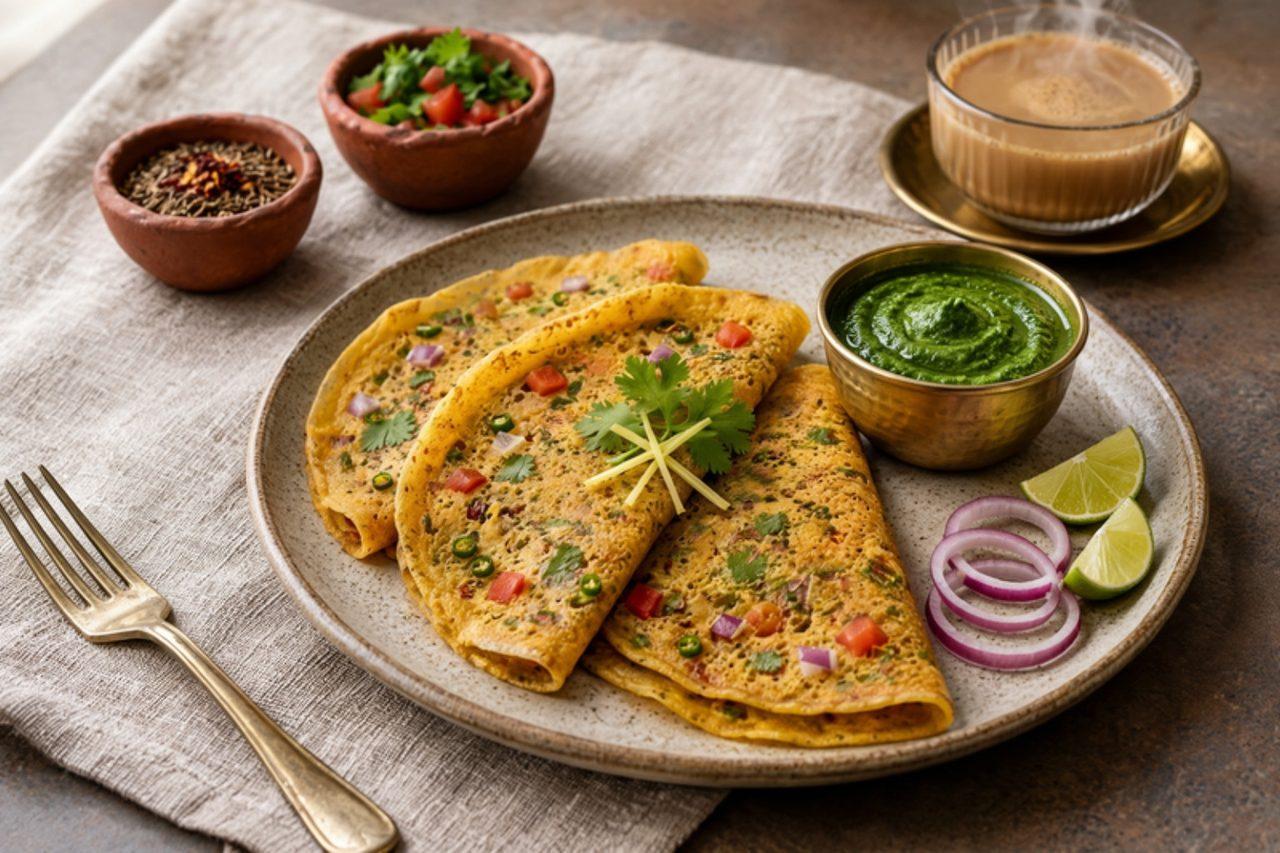
Across North India, besan chilla is the answer when the tiffin needs packing in fifteen minutes: a pourable gram flour batter studded with onion, tomato, chilli and coriander, cooked thin on a tawa, then rolled up with chutney or ketchup. It is naturally egg-free and filling. The common mistake is a thick batter, which gives a heavy, raw-tasting pancake; it should flow like single cream. Chef's tip: spread the batter with the back of a ladle in quick circles from the centre outward, and cover the pan for the first minute so the top steams set.

by KrazyBadal 0 views

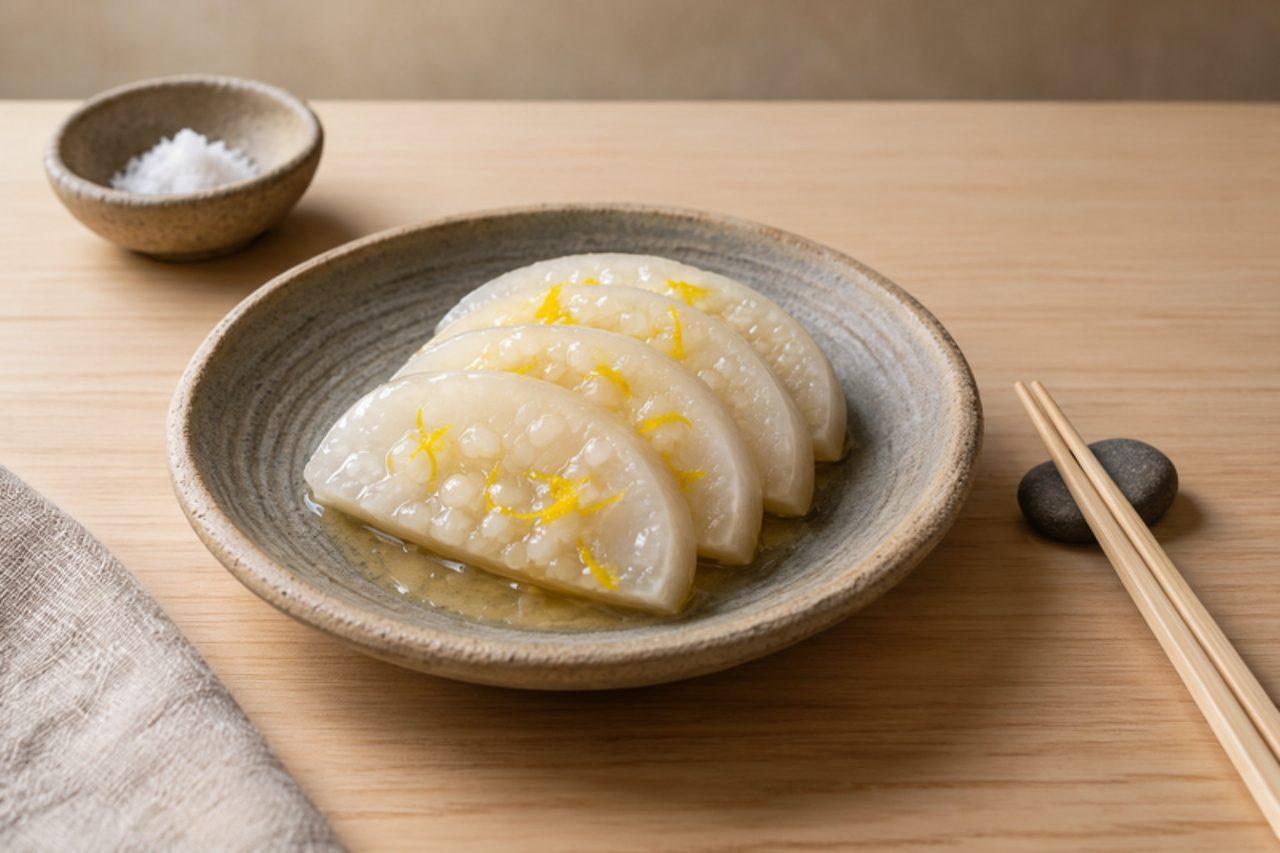
BettarazukeSweet koji-cured daikon

Every 19 and 20 October, the lanes around Takarada Ebisu Shrine in Nihonbashi fill with stalls for the Bettara-ichi, Tokyo's old pickle fair, where vendors hold up whole daikon dripping with rice koji and passers-by try not to get 'bettari', sticky. The pickle has been an Edo favourite since the 1700s: daikon salted, then buried in amazake, the sweet porridge that koji makes from rice. It tastes mild, sweet and fresh, with a clean crunch and a faint fermented, sake-lees perfume, which makes it a favourite with children and a pause between salty dishes. Bettarazuke is low in salt and acid, so it lives in the fridge from start to finish. The common mistake is adding the daikon while the amazake is still warm: it cooks the surface and softens the crunch, so cool it fully. It is ready when the daikon is translucent at the edges, juicy, and the koji coating tastes sweet with a light tang. Chef's tip: make the amazake in a rice cooker on keep-warm with the lid ajar and a cloth over it, so it holds about 60 °C; a thermometer helps the first time.

by KrazyBadal 0 views

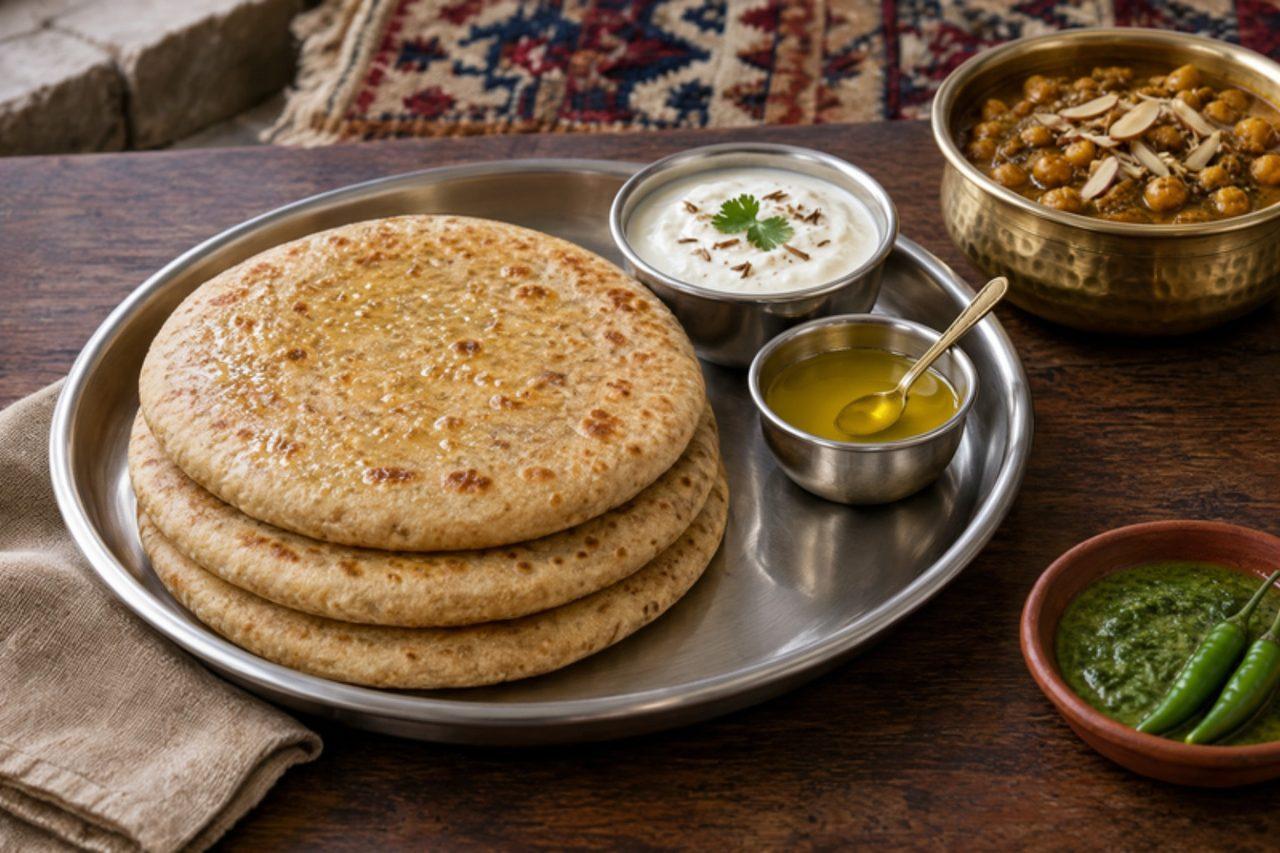
BhaturuStuffed fermented wheat bread

Bhaturu is the breakfast bread of the Kangra and Kullu valleys, made from wheat dough left to ferment overnight with a little old starter or curd until it is light and sour, then rolled out, sometimes stuffed with a spiced lentil filling, and baked on the griddle. It is eaten hot with ghee, a tangy chutney or the madra left from the night before, and is a fixture at village fairs. Ferment it somewhere warm (25–30 °C) for 8–10 hours; it should smell pleasantly sour and be bubbly. Discard the dough if it smells of nail varnish, turns pink, grey or fuzzy, or has a slimy feel. The common mistake is rolling it thin like a chapati, which loses the soft crumb; keep it as thick as your little finger. Chef's tip: cook it on a medium, not fierce, tawa so the centre bakes through before the outside burns.

by KrazyBadal 0 views

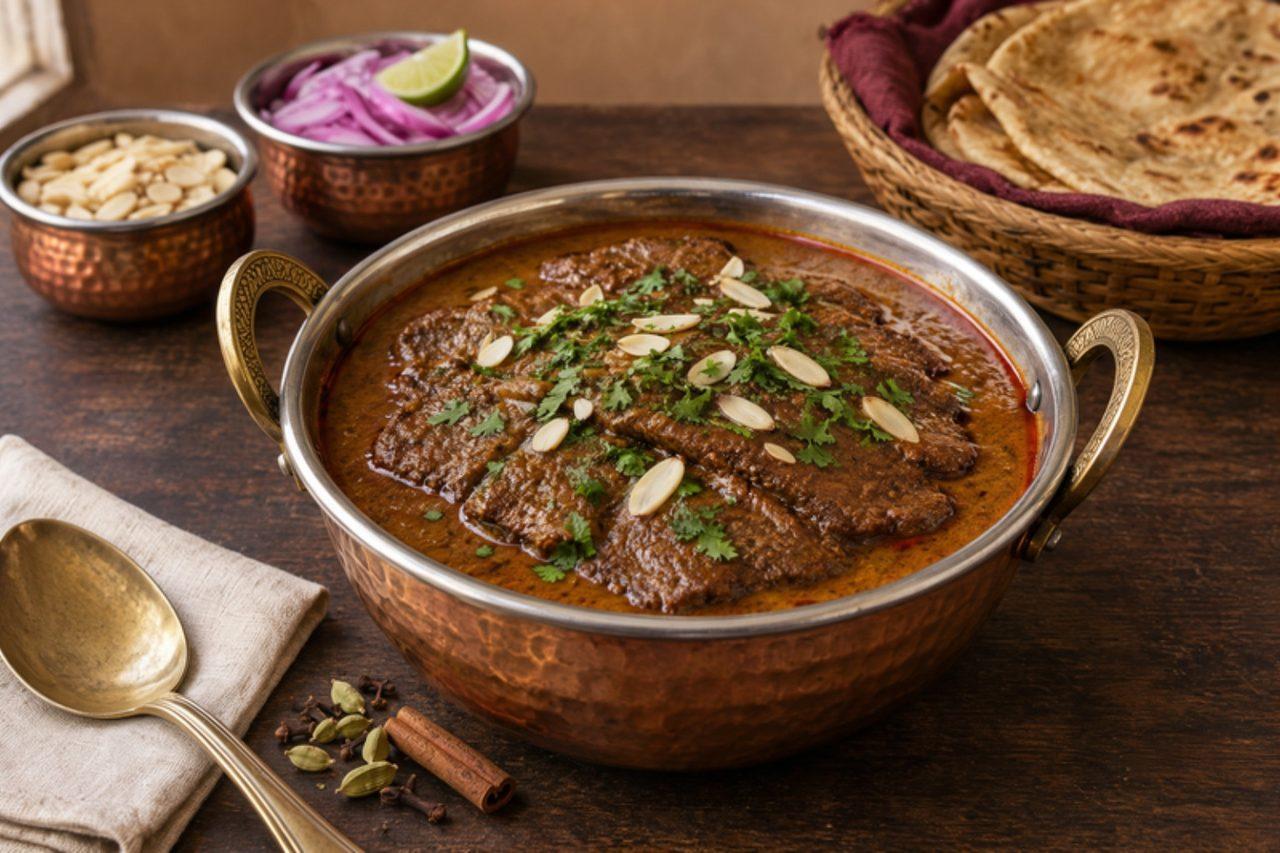
Bhopali mutton pasandeMarinated mutton escalopes

Pasande come from the Nawabi kitchens of Bhopal, where boneless leg of mutton is cut into thin slices and beaten flat, then marinated in yogurt, raw papaya, ground fried onion and spices and cooked low until meltingly tender. They are made for Eid, weddings and dawats and eaten with sheermal or rotis. This dish contains mutton: marinate it in the fridge and cook it until the meat reaches 71 °C and is fork-tender. The common mistake is cooking on high heat, which seizes the thin slices and toughens them. Chef's tip: beat the slices between cling film with a rolling pin to an even 5 mm; even thickness means every piece is tender at the same time.

100 minIndianMeatGluten free
by KrazyBadal 0 views

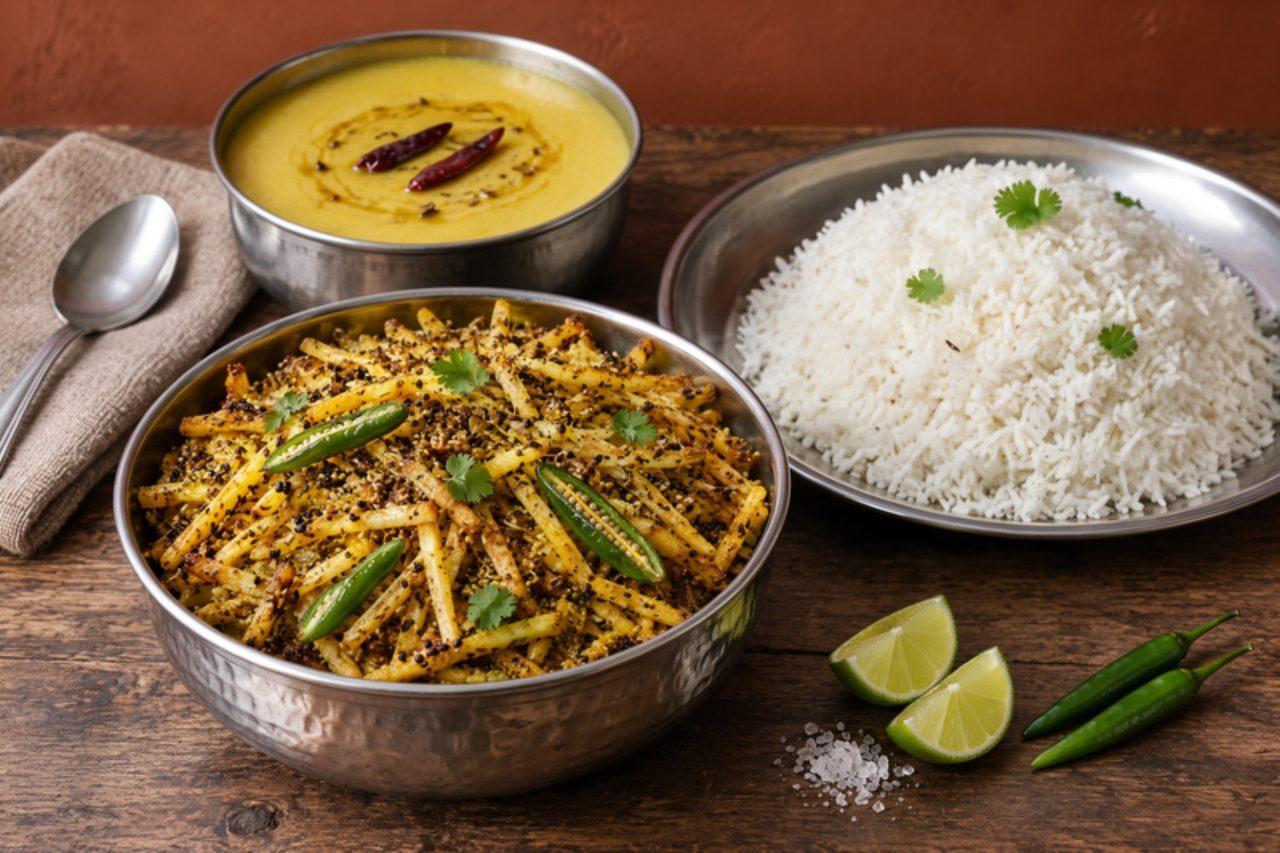
Bihari aloo bhujiaFried potato sticks

In Bihar, aloo bhujia is not the packaged snack but the everyday matchstick-potato fry that sits beside dal, bhaat and chokha on the lunch plate, cooked in mustard oil with panch phoron and a slit green chilli. Patna households make it most days of the week because it takes twenty minutes and pleases everyone. The common slip is crowding the pan and stirring too much, which turns the sticks to mash; give them room and toss gently. Chef's tip: soak the cut potatoes in cold water for 10 minutes and dry them well; washing off surface starch keeps the sticks separate and lightly crisp.

by KrazyBadal 0 views

Bilahi chutneySweet-sour tomato chutney

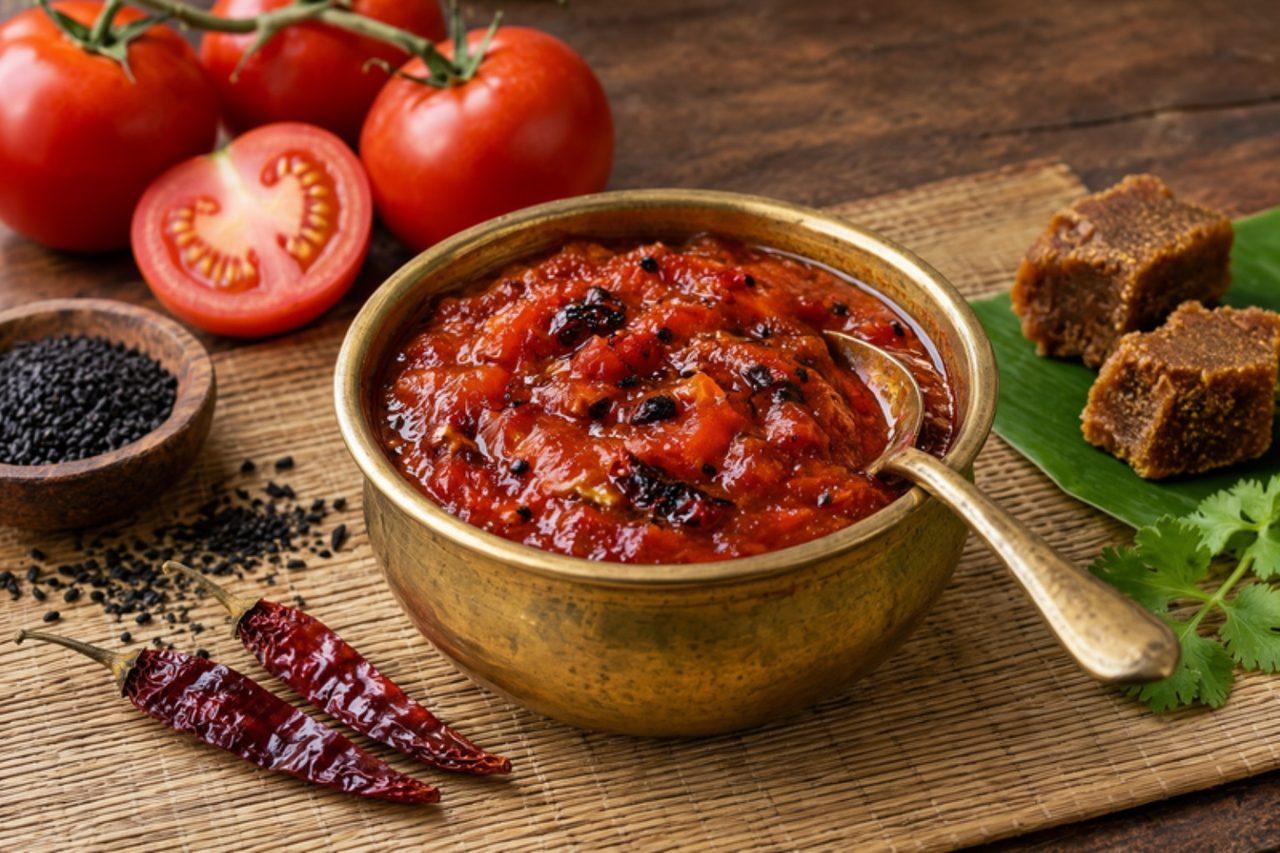
Bilahi is the Assamese word for tomato, and this glossy red chutney, sweet with jaggery and warmed with nigella and dried chilli, closes a festive Assamese meal, especially at weddings and on Bihu, as the sweet-sour last course before curd and sweets. Everyday cooks in Jorhat and Guwahati make a quick batch in winter when tomatoes are cheap. The mistake to avoid is adding the jaggery too early, which scorches before the tomatoes have broken down. Chef's tip: a few dates or raisins added with the jaggery give the chutney a deeper, jammy sweetness.

by KrazyBadal 0 views

Passionfruit sponge

The passionfruit sponge is the star of the Australian country show cake table and every Sunday afternoon tea, made from the vines that cover back fences from Sydney to the Sunshine Coast. Two airy, fatless sponges are filled with whipped cream and topped with a tangy passionfruit icing. A common mistake is knocking the air out when folding in the flour; use a light hand and a big metal spoon. Chef's tip: beat the eggs and sugar for a full 8–10 minutes until thick enough to hold a trail.

by KrazyBadal 0 views

Frozen Christmas pudding

In the heat of an Australian December, many families swap the steamed pudding for a frozen one, ice cream packed with fruit, nuts and chocolate and set in a pudding basin so it still looks the part on the Christmas table in Brisbane or Perth. It is made days ahead and turned out just before serving. A common mistake is letting the ice cream melt too much while mixing, which makes it icy when refrozen; soften it only until stirrable. Chef's tip: soak the fruit in orange juice the night before so it stays soft when frozen.

by KrazyBadal 0 views

Blote billetjes in het grasWhite and green beans with butter

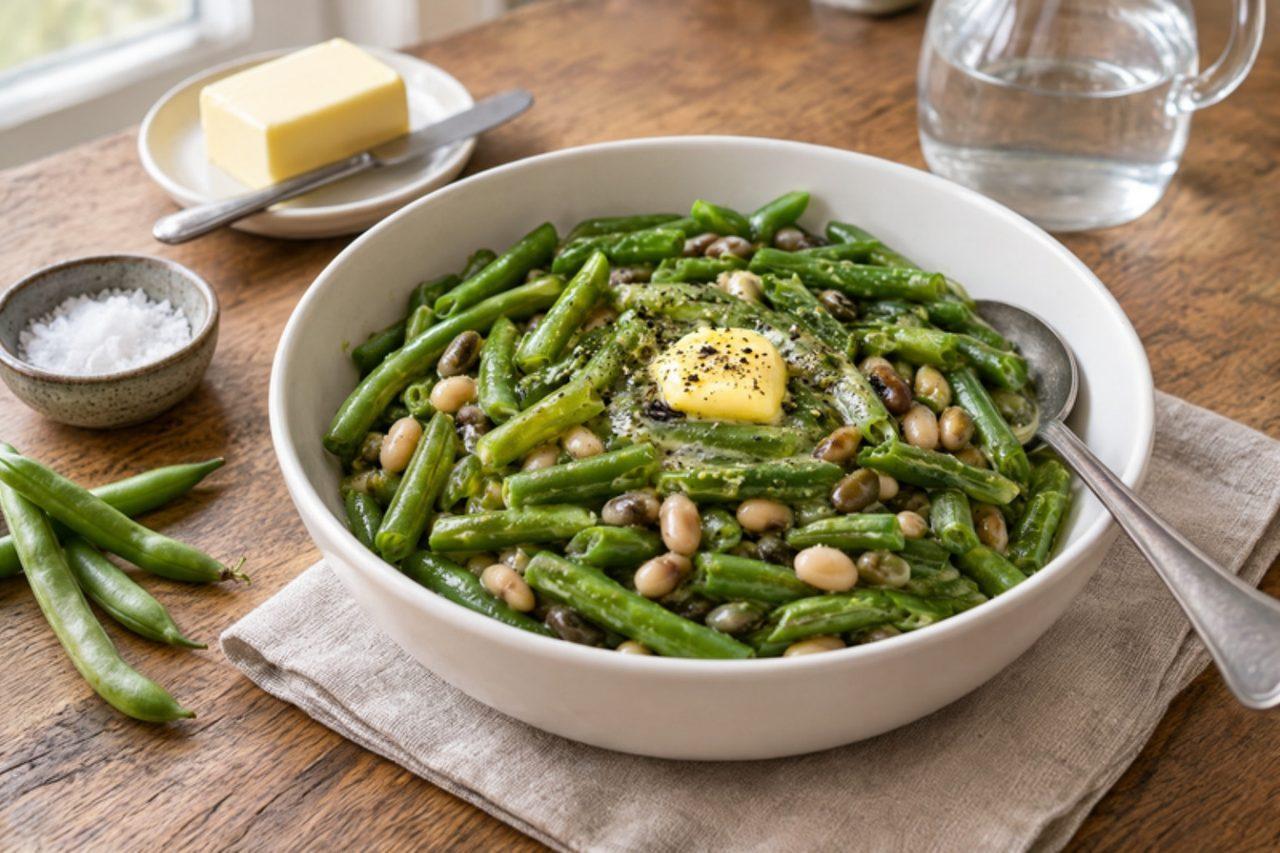
Dutch grandmothers named this dish 'bare bottoms in the grass' for the pale white beans peeping out between the green ones, and it is a summer weekday supper all over the Netherlands, when runner and French beans are cheap. Green beans and cooked white beans are simmered together, then stirred with butter, a little stock and plenty of pepper, often with boiled potatoes on the side. Many families add bacon or a smoked sausage; this version keeps it vegetarian, so serve it with a fried egg or a vegetarian sausage if you want more. The usual mistake is boiling the green beans until grey: they should stay bright with a slight bite. Chef's tip: a splash of the bean-cooking liquid stirred in with the butter makes a glossy little sauce that clings to everything.

by KrazyBadal 0 views

Bohar bhajiFlower bud curry

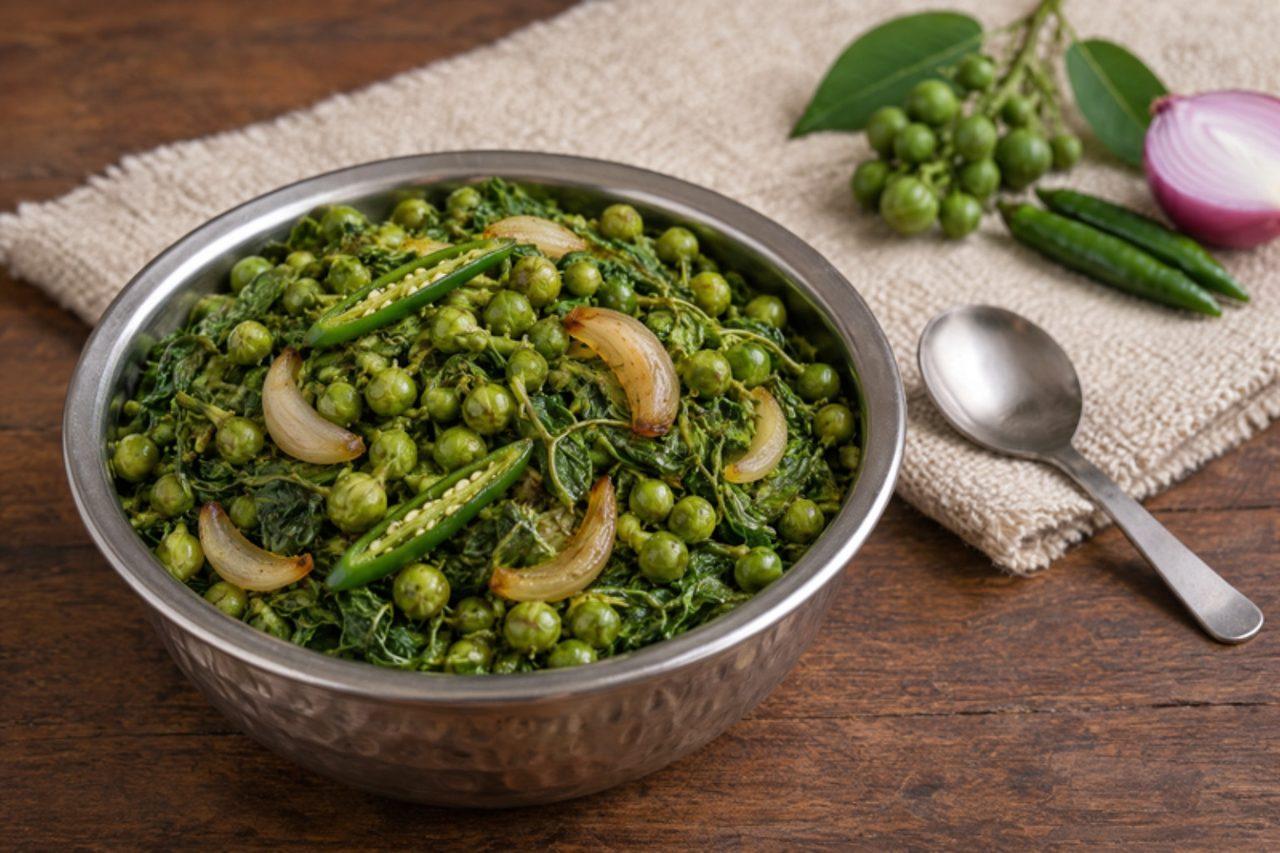
For a few weeks each spring, Raipur's markets sell small heaps of bohar, the young buds of the lasoda (Cordia) tree, and they are one of the most prized and pricey vegetables in Chhattisgarh. Cooked with onion, chilli and a spoon of curd, they have a pleasant, slightly sticky bite and an earthy taste, and families eat them with rice and dal for as long as the season lasts. People often skip the boiling step; without it the buds stay gummy and slightly bitter. Chef's tip: if you cannot find bohar, the same masala works with tender lasoda (gunda) fruit from Indian grocers, which is the same tree.

by KrazyBadal 0 views

Bolo de pubaFermented cassava cake

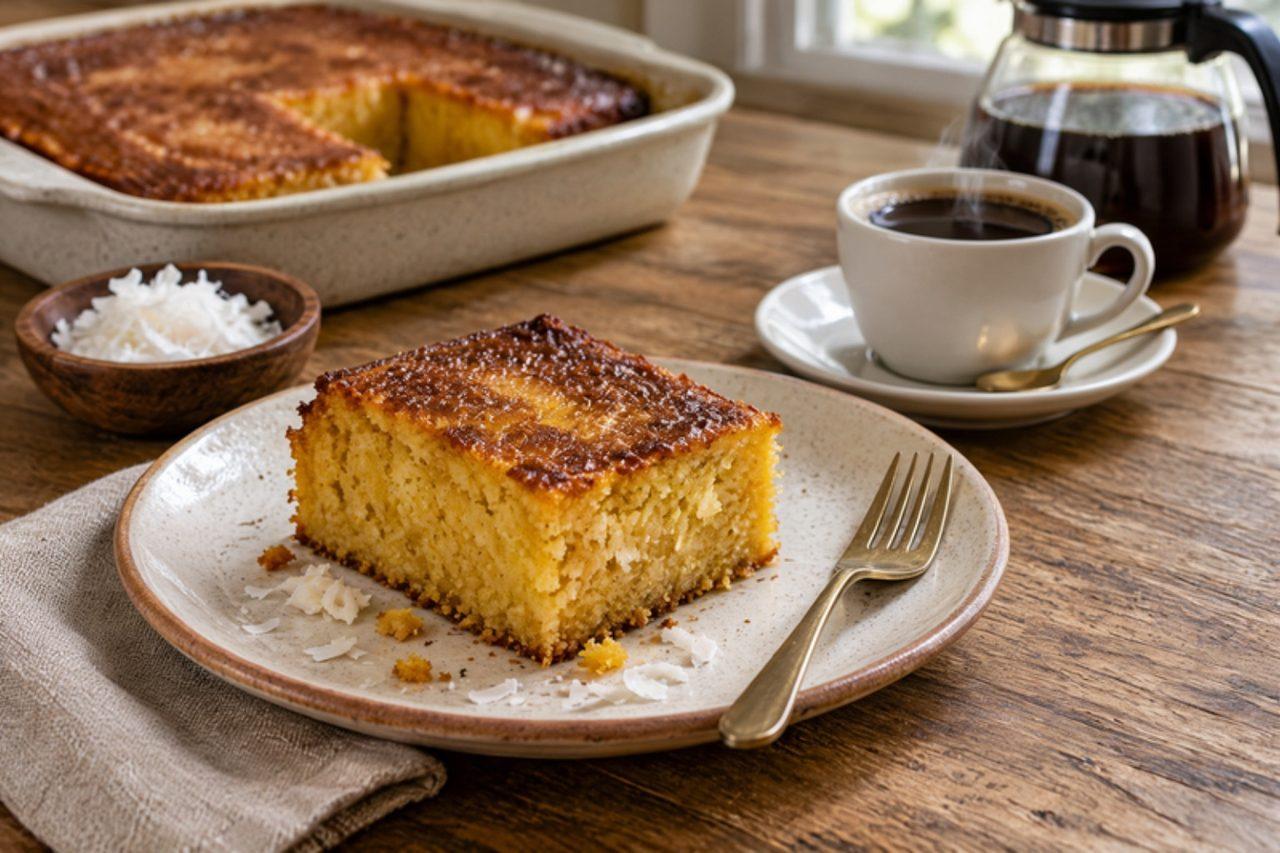
In Bahia, Pernambuco and Maranhão the afternoon and early-morning coffee table often carries a slab of bolo de puba, a dense, custardy cake made from puba, cassava that has been soaked until it ferments and softens into a tangy white paste. Coconut milk, grated coconut, eggs and butter turn it into something between a cake and a pudding, with a caramel-brown crust and a moist, slightly springy middle; it is especially loved around the June São João festivals. Puba is sold in Brazilian and African grocers as massa puba or carimã; it contains no wheat, so the cake is naturally gluten free. The common mistake is cutting it hot: it sets as it cools and will be gummy if sliced too early. Chef's tip: squeeze the puba in a clean cloth first if it is very wet, so the batter is thick enough to hold the coconut in suspension rather than letting it sink.

by KrazyBadal 0 views

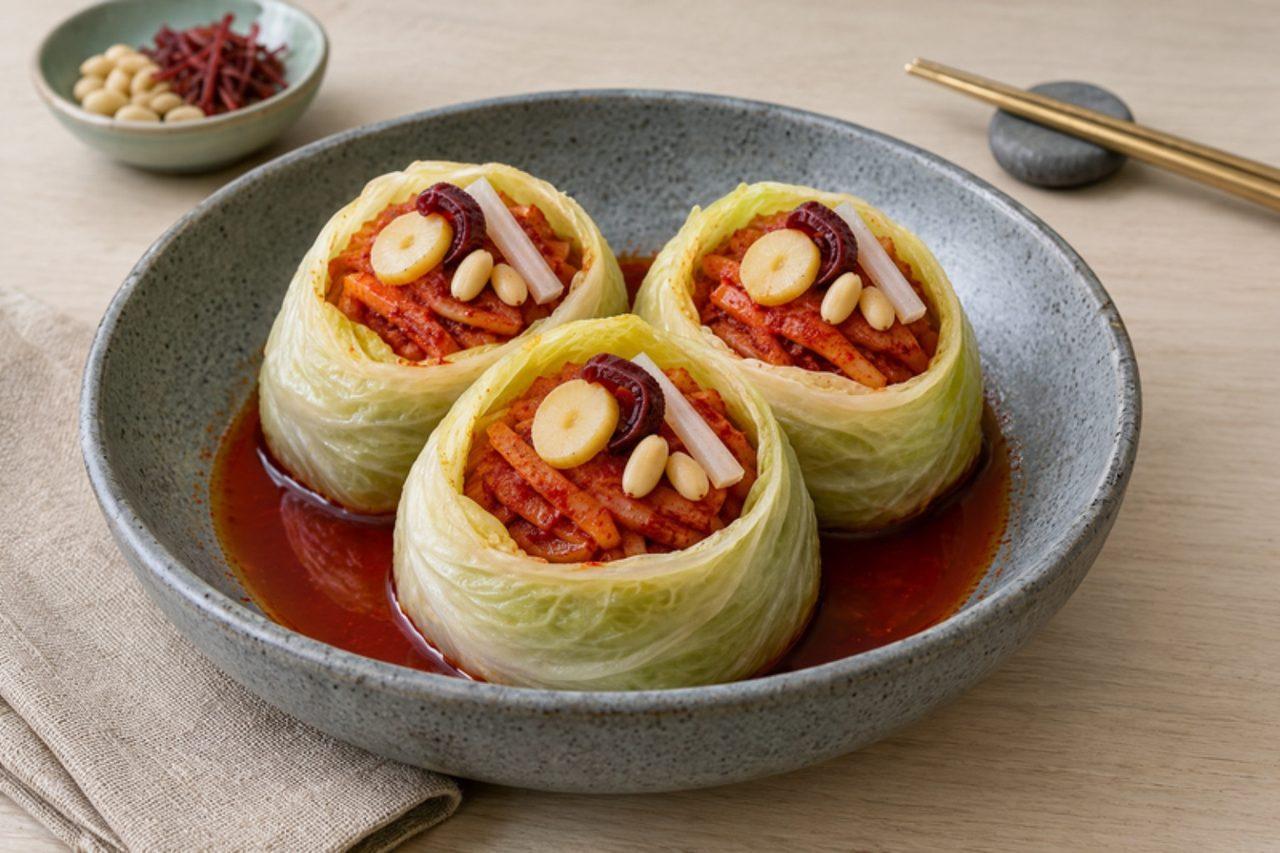
Bossam kimchiWrapped cabbage kimchi

Bossam kimchi comes from Gaeseong, the old Goryeo capital just north of today's border, and it is the kimchi families make with special care at kimjang time in late November and set out for Seollal guests. Instead of rubbing seasoning into whole cabbage halves, the inner leaves are folded around a rich filling of radish, Korean pear, chestnut, jujube, pine nuts and herbs, then wrapped in large outer leaves like a gift. Unwrapped at the table, it is crisp, juicy and sweet from the pear, with mellow chilli heat and the savoury depth of salted shrimp. Traditional versions add raw oysters; here they are optional. Raw oysters are not safe for pregnant people, babies, older people or anyone with weak immunity, so leave them out for those guests or for any kimchi you mean to keep beyond 3 days. The common mistake is under-rinsing the cabbage, which makes every parcel too salty; rinse three times and taste a stem. It is ready after 3–4 days in the fridge, when the juice turns pleasantly sour and slightly fizzy. Chef's tip: tie each parcel with a blanched scallion if the leaves won't stay closed.

by KrazyBadal 0 views

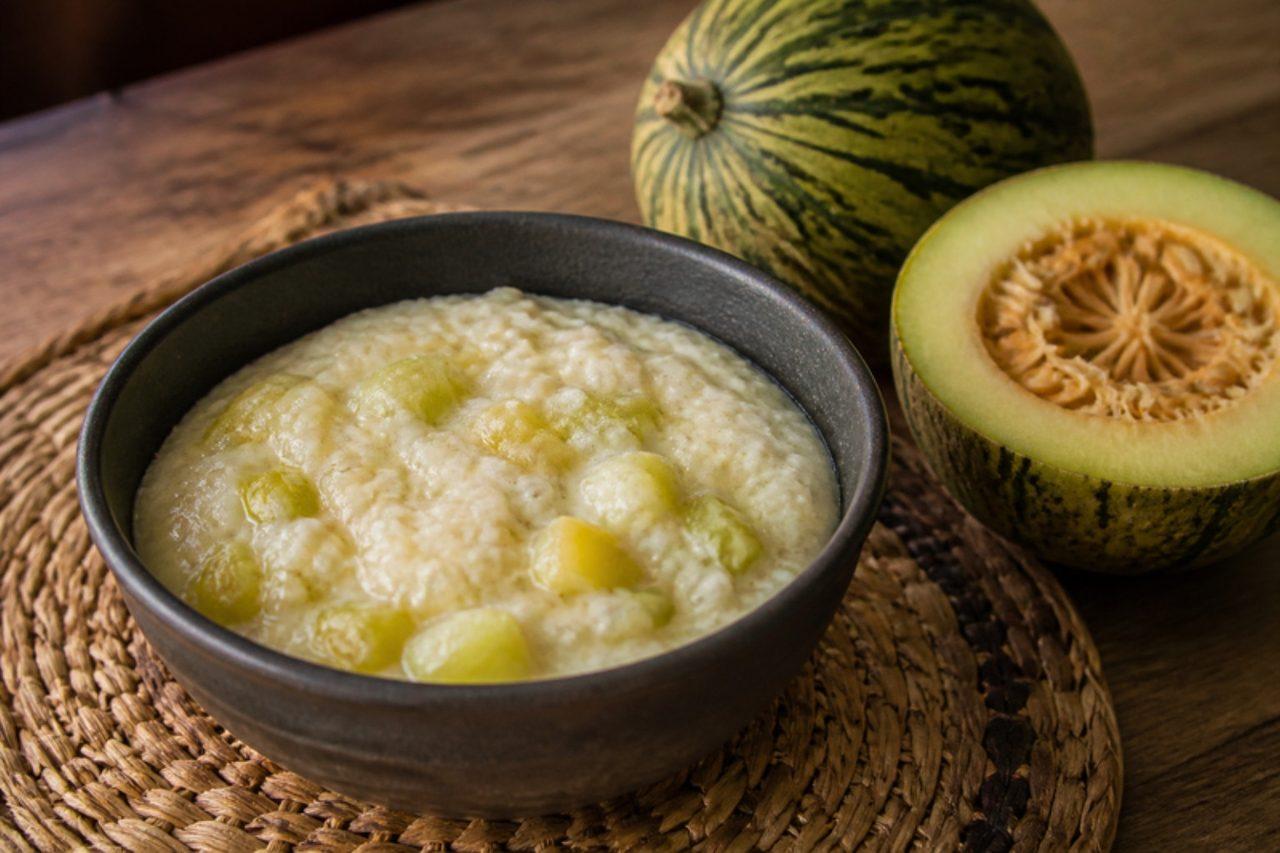
Bogobe jwa lerotseSorghum and melon porridge

When the lerotse melons ripen on the lands around Serowe and Mahalapye after the summer rains, households stir their pale flesh into the evening pot of sorghum, and the porridge turns soft, smooth and quietly sweet. Lerotse is a hard-skinned field melon, closer to a mild marrow than a dessert melon, so it melts into the bogobe and gives it a light, fresh taste against the sour, nutty grain. It is eaten as a side with seswaa, beans or morogo, or on its own for supper with a sprinkle of sugar. Outside Botswana, look for lerotse at African grocers; otherwise a firm cooking melon or a winter melon gives a very close result. Chef's tip: the mistake people make is dumping the sorghum in at once, which gives lumps; rain it in slowly while you whisk.

by KrazyBadal 0 views

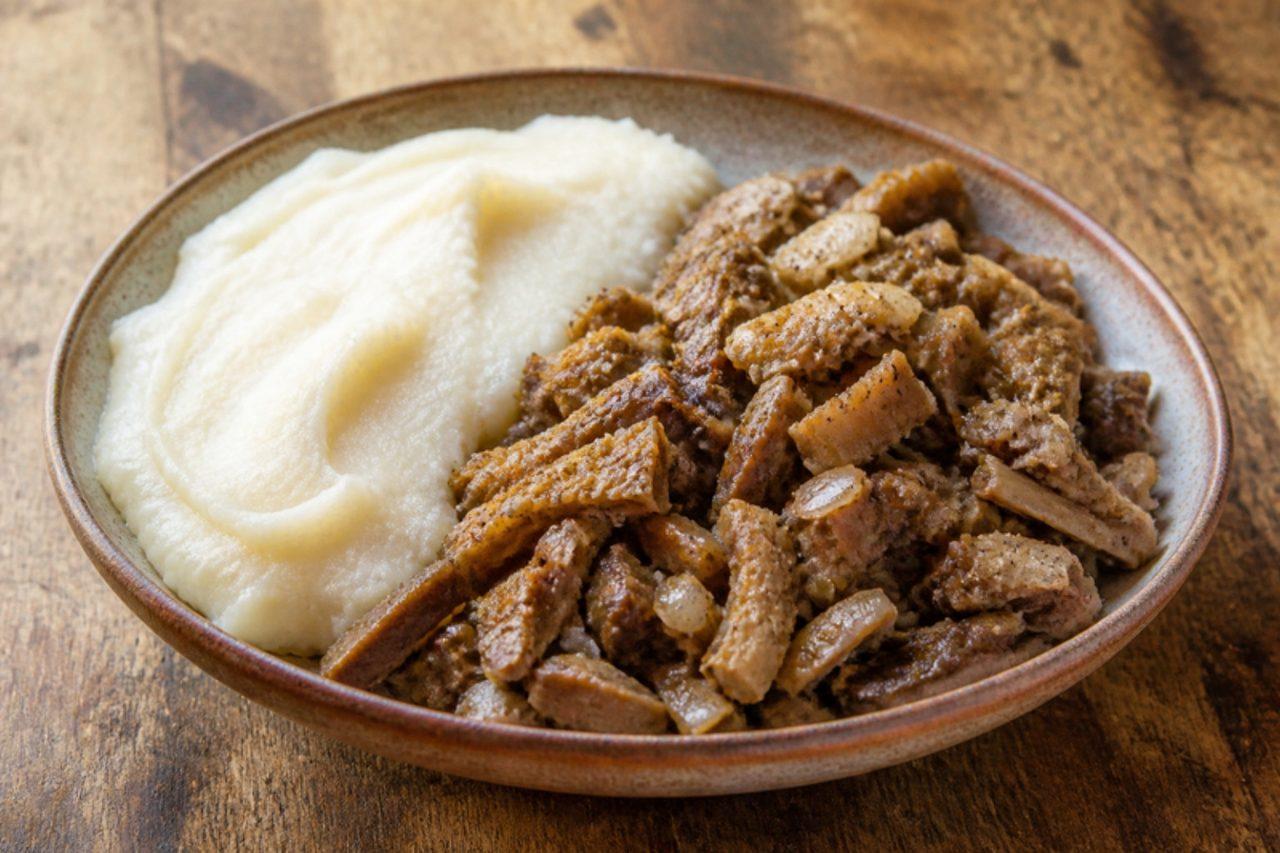
SerobeChopped tripe and offal

At a Tswana wedding or a funeral gathering, the men tending the three-legged pots will make serobe from the insides of the slaughtered goat or ox while the seswaa cooks alongside, and it is served first to the elders. Tripe, heart and liver are boiled until tender, chopped very fine and seasoned simply with salt, onion and a little of the rich broth, so it comes out soft, chewy in places and deeply savoury. Eat it with bogobe, pap or samp and a spoonful of morogo. Buy dressed (cleaned and scalded) tripe from a butcher, and cook everything right through. Chef's tip: chopping it fine by hand is the whole point; a food processor turns it into paste, so take your time with a heavy knife.

by KrazyBadal 0 views

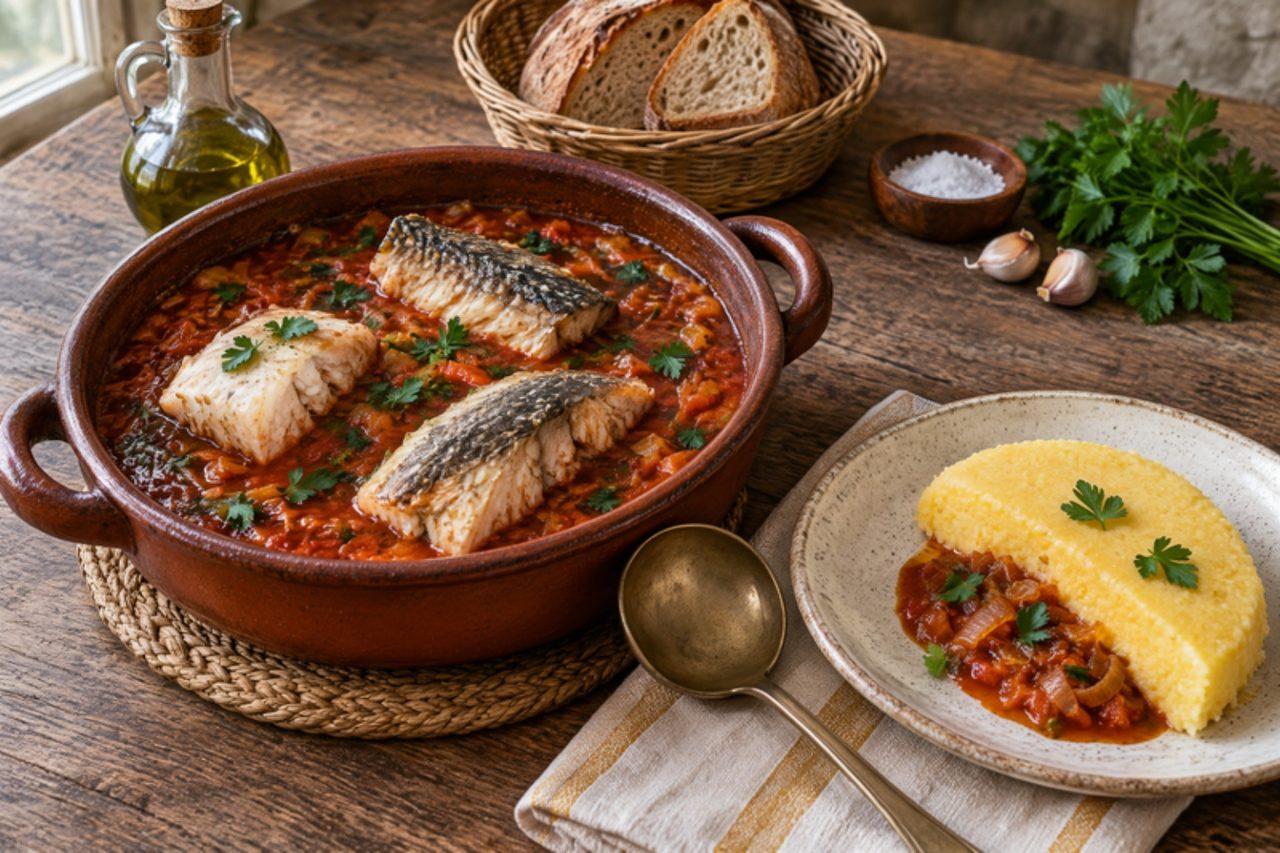
BrudetFisherman's fish stew

Brudet (or brodetto) is the fisherman's stew of the Dalmatian coast and islands, cooked in Split, Hvar and Korčula with whatever the morning's catch brings, and eaten for Friday lunch and summer suppers. Thick fish steaks on the bone stew slowly in olive oil with onion, garlic, tomato and a dash of wine vinegar, and the pot is shaken, never stirred. It is high in protein and suitable as part of a balanced diet; polenta is the classic partner, but grilled courgettes, chard or a small portion of soft polenta keep the carbohydrate down. About 330 kcal and 10 g carbohydrate per portion. The usual mistake is stirring with a spoon, which breaks the fish into shreds. Chef's tip: use at least three kinds of fish, mixing firm and softer ones, for a deeper broth.

60 minBalkanFishGluten free
by KrazyBadal 0 views

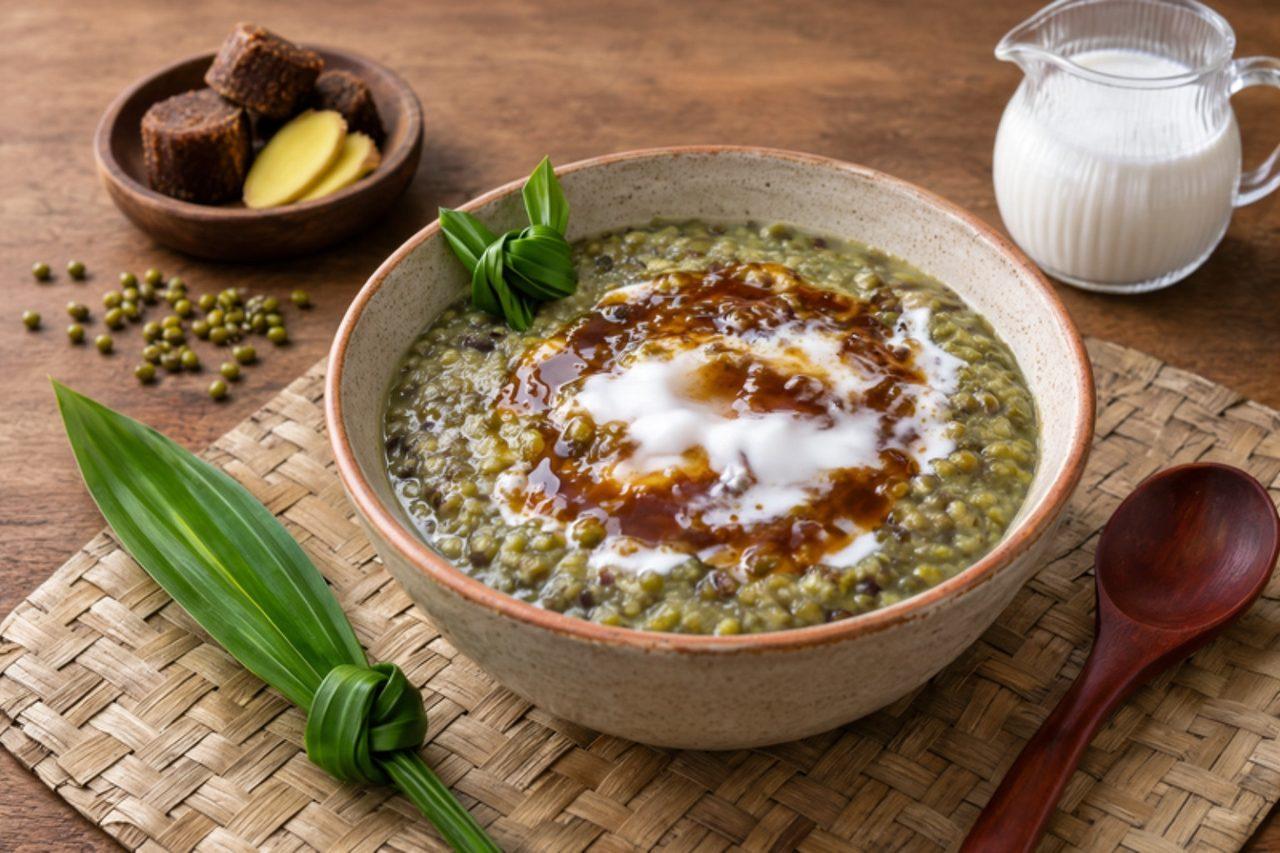
Bubur kacang hijauSweet mung bean porridge

In Java, the bubur kacang ijo seller pushes a cart through the neighbourhood from early morning, ladling warm mung bean porridge sweetened with palm sugar and topped with thick coconut milk. Many people eat it with a slice of white bread dunked in, and late-night stalls in Jakarta sell it alongside instant noodles. The common mistake is adding the sugar too early, which keeps the beans firm; cook them soft first. Chef's tip: cook the coconut milk separately with a pinch of salt and a pandan leaf and pour it on top, so the bowl has a sweet layer and a slightly salty, creamy one.

by KrazyBadal 0 views

Karuveppilai sadam (curry leaf rice)

Around Madurai and Tiruchirappalli this dark, peppery rice comes out when there is a big handful of curry leaves and very little else in the kitchen, and it keeps so well that it goes into lunch boxes and onto long bus journeys. The leaves are roasted until crisp with chana and urad dal, black pepper, cumin and red chilli, then ground into a fragrant podi. The common mistake is roasting wet leaves: they steam instead of crisp, and the powder clumps. Dry them well on a towel first. Chef's tip: grind a double batch of the podi and store it airtight; it keeps for two weeks and makes lunch in five minutes.

by KrazyBadal 0 views

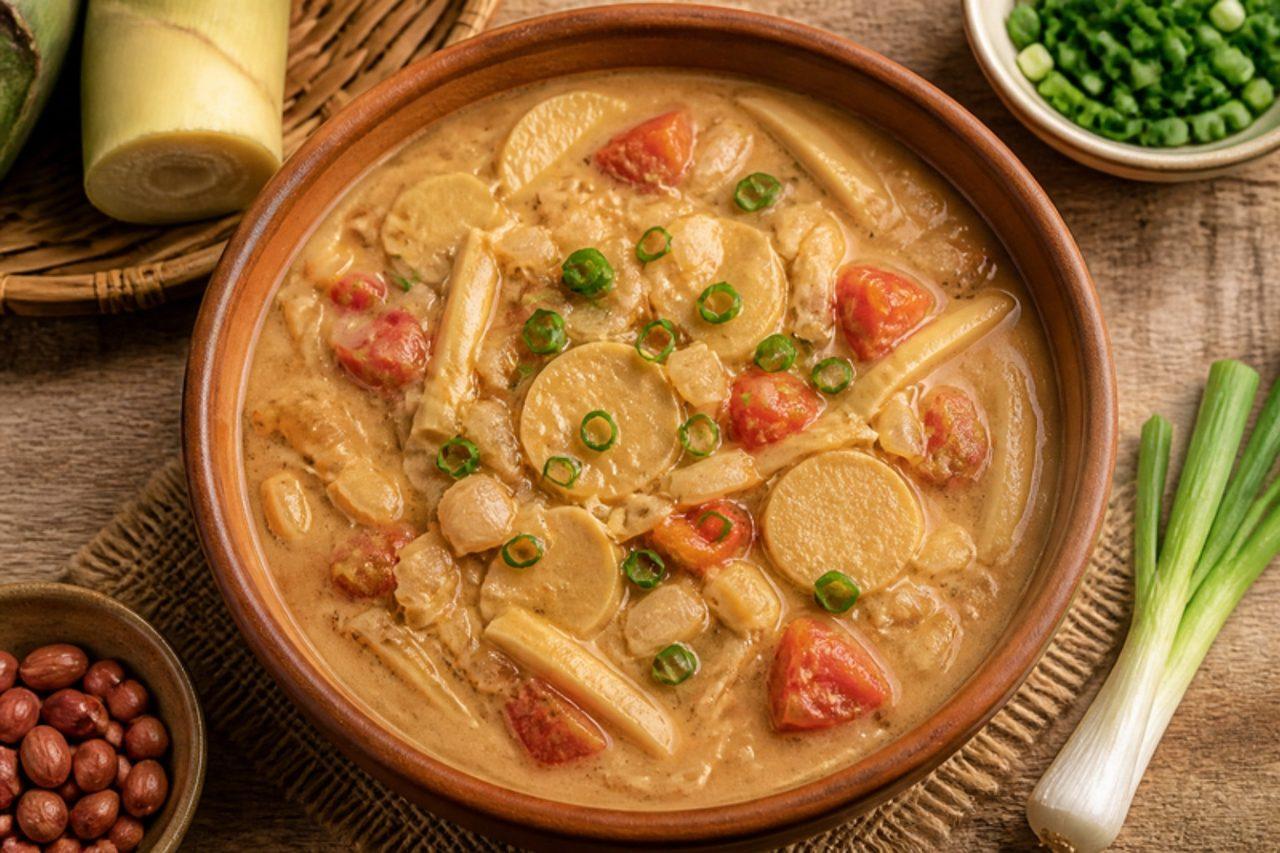
MalewaSmoked bamboo shoots in peanut sauce

On the slopes of Mount Elgon, the Bagisu harvest young bamboo shoots, smoke and dry them, and keep them for months; a pot of malewa is the dish every Mugisu living away from home misses, and it is a must at imbalu circumcision celebrations. Soaked and simmered in a pale, creamy groundnut sauce, the shoots stay slightly chewy and taste smoky, earthy and faintly sweet. Serve with steamed matoke, kalo or posho. Dried smoked malewa is sold in East African grocers and Ugandan shops abroad; if you cannot find it, tinned bamboo shoots with a little smoked paprika give a fair imitation. Chef's tip: do not rush the soak and first boil, as under-soaked shoots stay woody however long they sit in the sauce.

by KrazyBadal 0 views

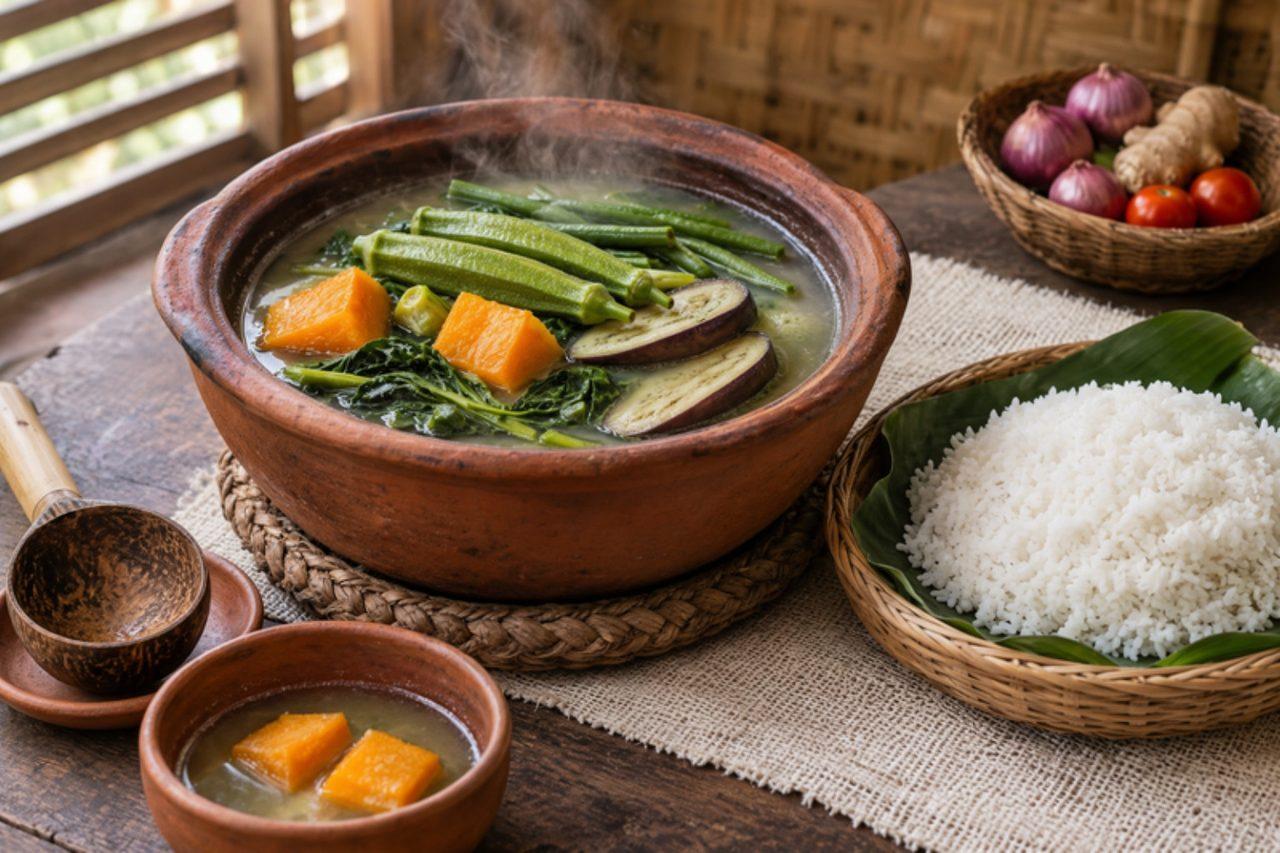
BulanglangMixed vegetable stew

Bulanglang is the plain, light vegetable soup of Batangas and the Tagalog provinces, made in farmhouses at lunchtime from whatever is in the garden: squash, okra, string beans, eggplant and a handful of malunggay or sweet potato leaves. Instead of stock it uses hugas bigas, the cloudy water from washing rice, which gives the broth a soft, milky body. It is often eaten with grilled fish and a dip of bagoong; this version stays vegan and is served with a soy-and-calamansi dip. The usual mistake is boiling everything together from the start, which leaves mushy squash and raw-tasting okra; add the vegetables in order of firmness. Chef's tip: save the second rice wash, not the first, for the cleanest, creamiest broth.

by KrazyBadal 0 views

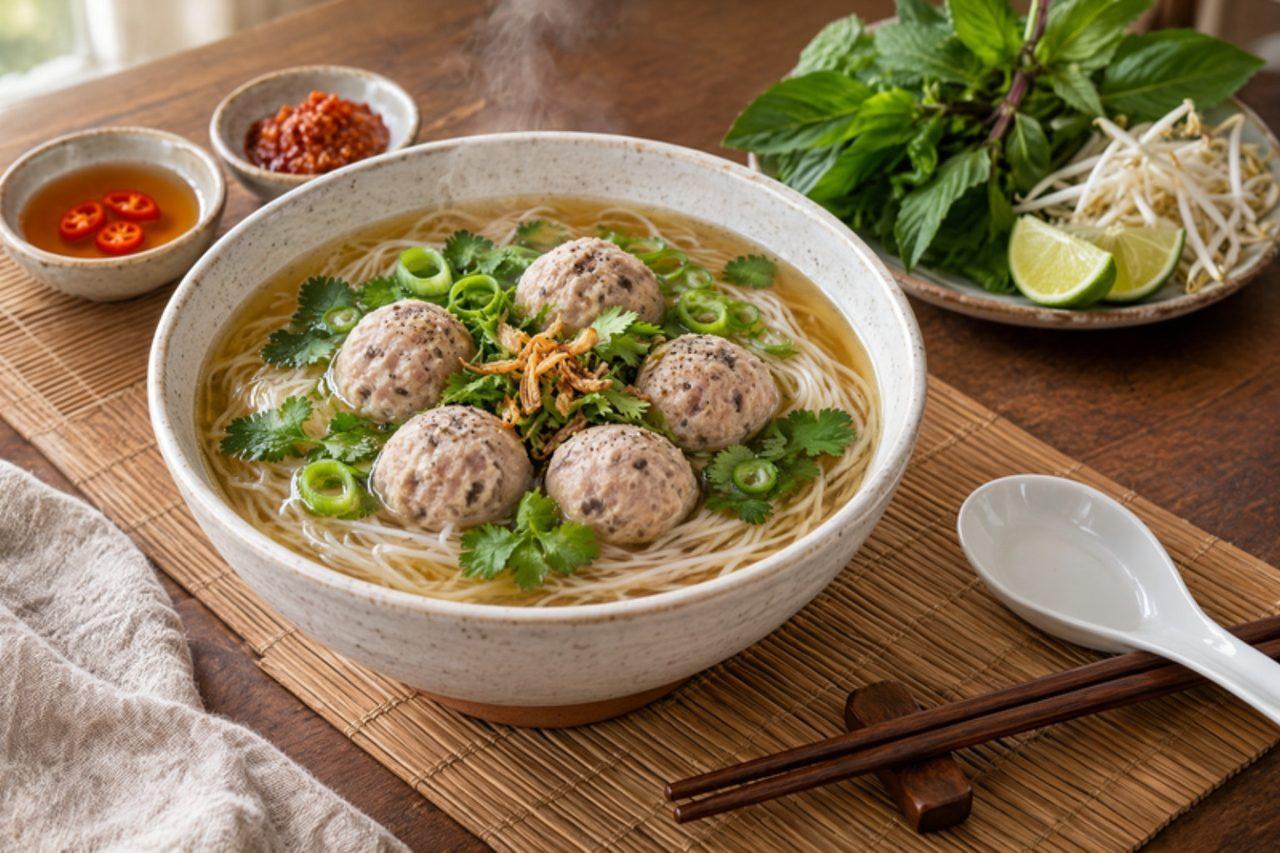
Bún mọcVermicelli with pork balls

Bún mọc is a Hanoi breakfast from the old Mọc village, now swallowed by the city: a clear, gently sweet pork broth poured over soft rice vermicelli, with bouncy balls of pounded pork and wood ear mushroom, slices of pork and a fistful of herbs. Locals eat it early at low plastic stools before work. The common mistake is mixing the pork paste with a spoon; it needs a hard beating so the balls turn springy instead of crumbly. Chef's tip: wet your hands and slap the paste against the bowl twenty times, and chill it for 15 minutes before shaping.

by KrazyBadal 0 views

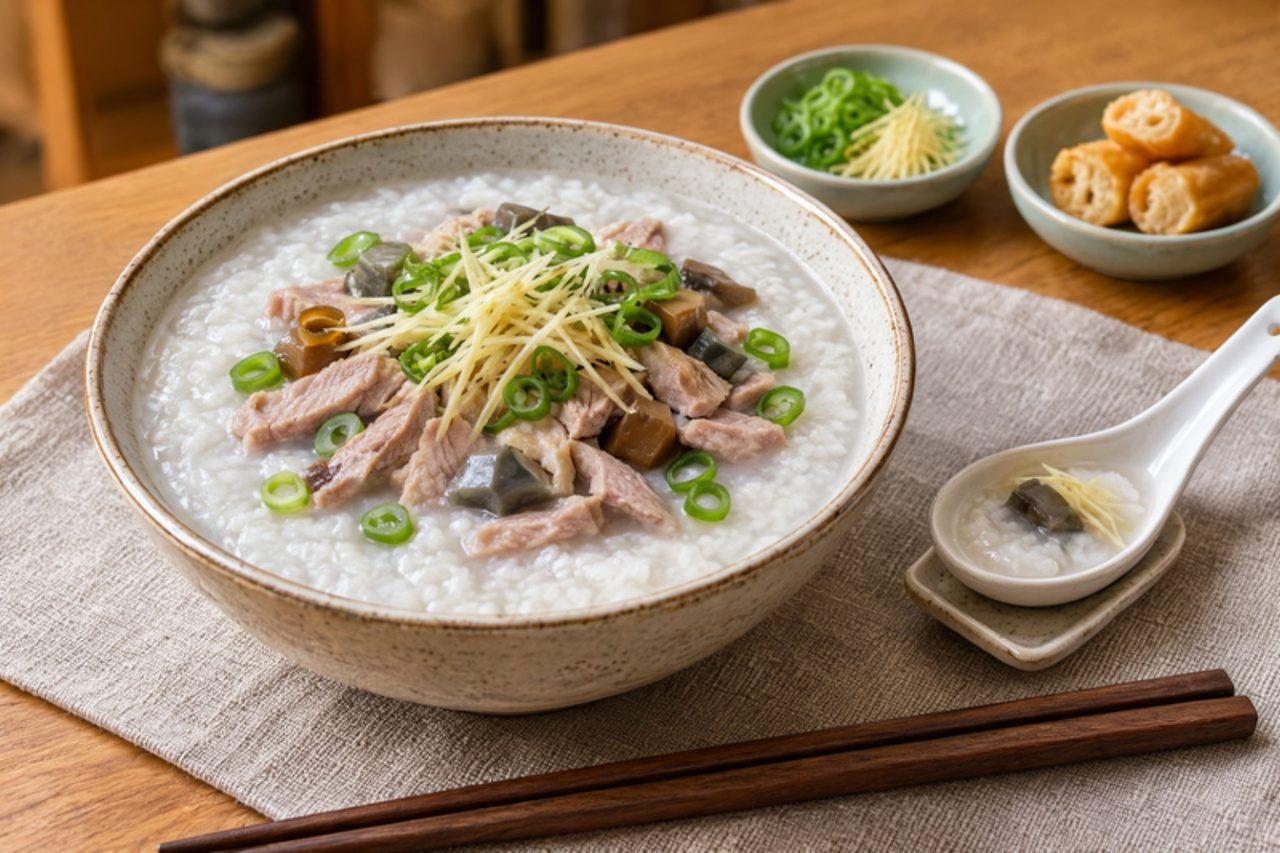
Century egg and pork congee

Across Guangdong and in Hong Kong's congee houses, this is the morning order everyone knows: a silky congee with nuggets of salted lean pork and dark, jelly-like century egg, finished with ginger and spring onion and eaten with a crisp youtiao on the side. The pork is salted the night before, which firms it and seasons it to the middle. The usual mistake is adding the pork at the end in big lumps; it should simmer long enough to turn tender and reach 71 °C. Chef's tip: mash one of the century eggs into the congee as it cooks and save the other for the top, so the whole pot carries its rich, savoury flavour.

by KrazyBadal 0 views

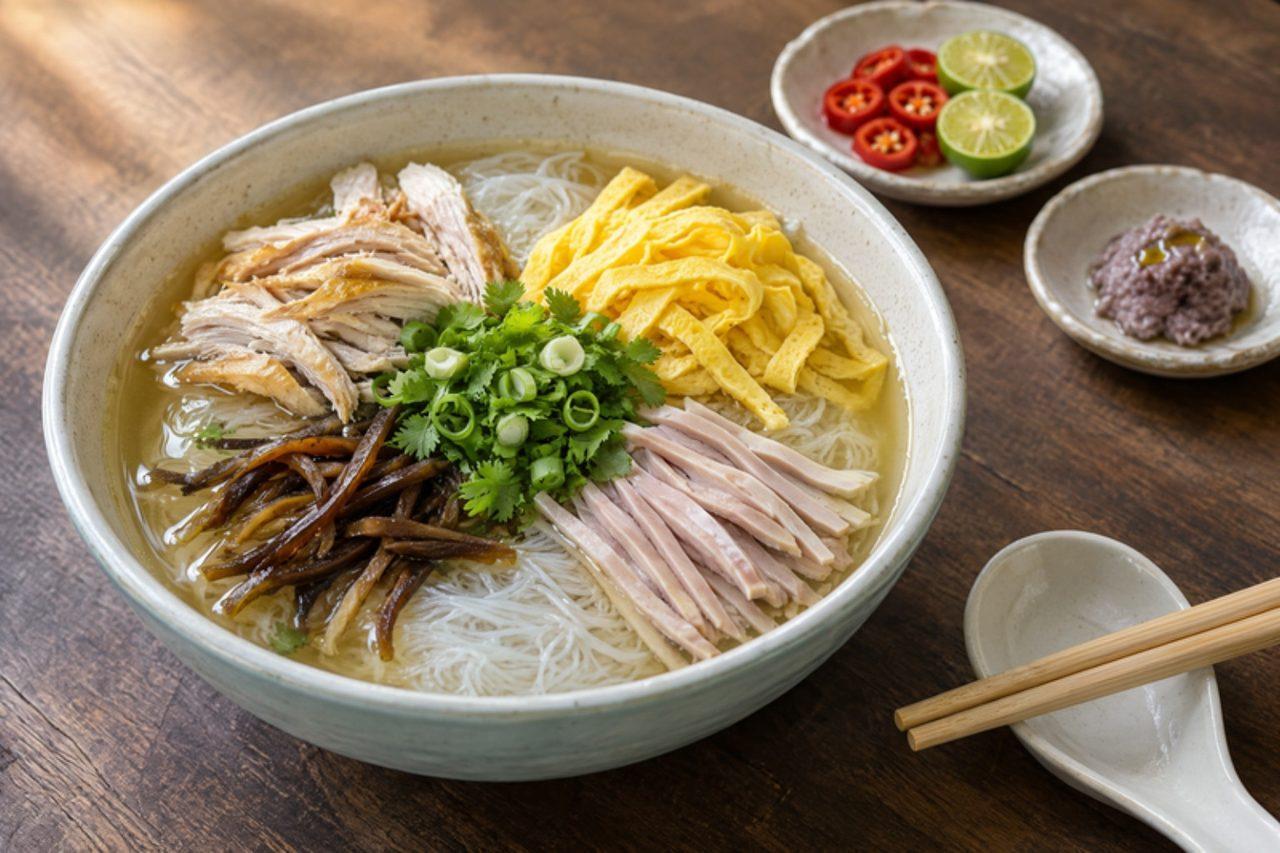
Bún thangVermicelli with chicken and egg

Bún thang began as a thrifty Hanoi meal made from the leftovers of Tết, the lunar new year feast, and it is still the most delicate noodle soup in the city, served in small, careful bowls on Cầu Gỗ Street near Hoàn Kiếm Lake. Fine vermicelli sits under neat piles of shredded chicken, thread-thin omelette strips and giò lụa, a smooth Vietnamese pork roll, all covered with a clear broth sweetened by dried shrimp and shiitake. It is eaten for a light lunch or a late breakfast. Chef's tip: keep the broth at a bare simmer and skim often; boiling makes it cloudy.

by KrazyBadal 0 views

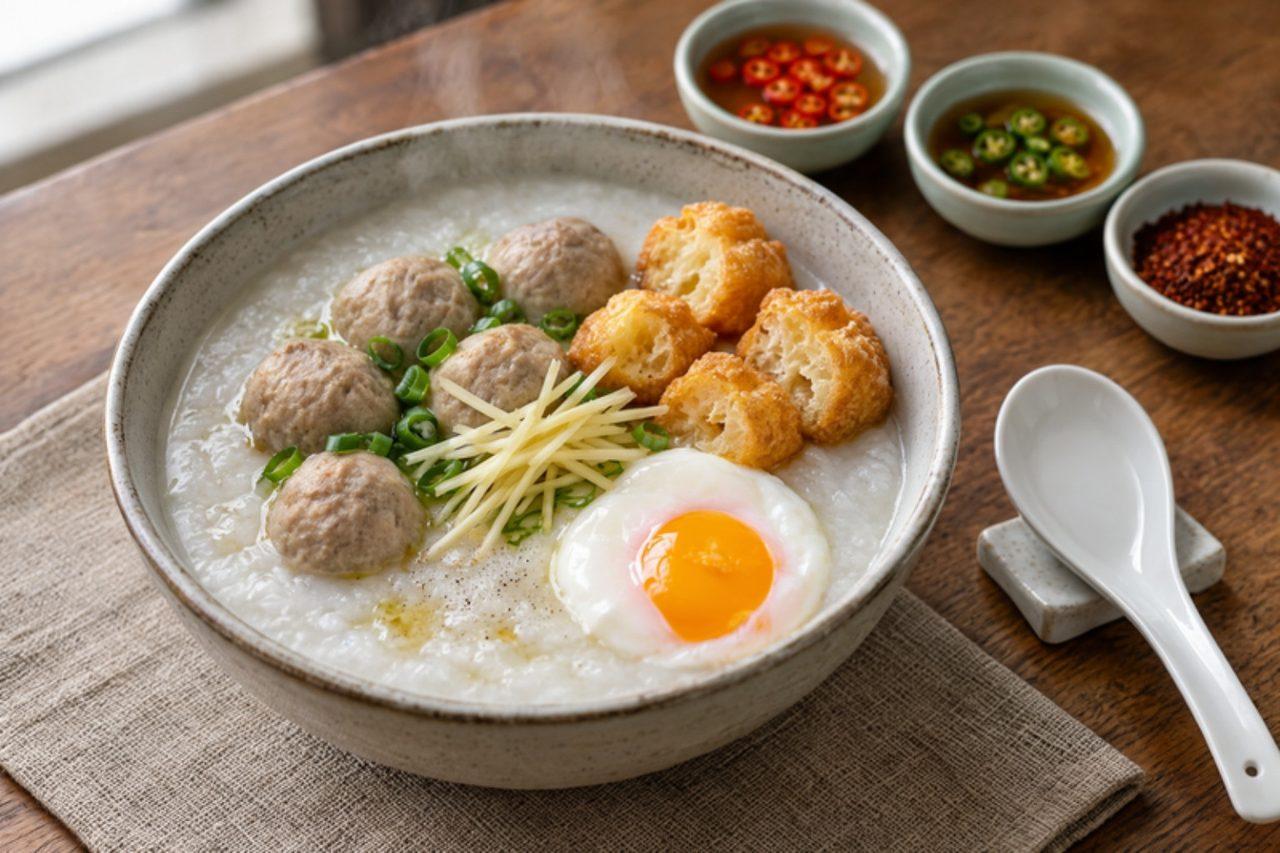
Jok mooRice porridge with pork balls

In Bangkok, jok is breakfast at a roadside stall or the market at 6 am: broken jasmine rice cooked until almost smooth, with tender pork balls, an egg cracked in at the last moment, and heaps of ginger, spring onion and crisp patongko or fried dough. Seasoning sits on the table, so everyone adds soy, white pepper and chilli vinegar to taste. For a meat-free bowl, swap the pork balls for shiitake mushrooms and cubes of silken tofu, and use soy instead of fish sauce. The common mistake is a thin, watery jok; keep simmering until it holds a soft ribbon. Chef's tip: whisk the cooked rice hard for a minute at the end; it breaks the last grains and makes the porridge creamy.

by KrazyBadal 0 views

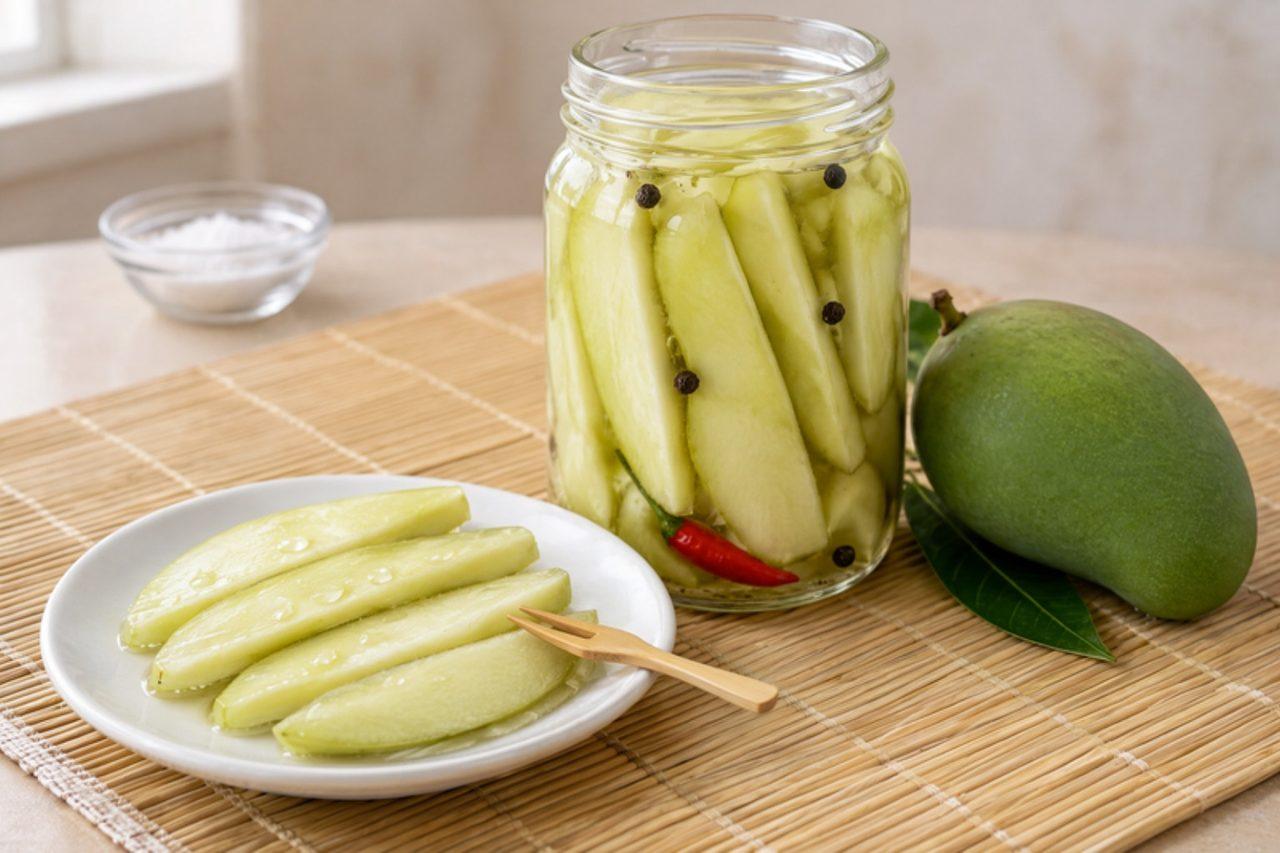
Burong manggaPickled green mango

From Pampanga to Pangasinan, the hot months of March to May bring piles of hard green carabao mangoes to every palengke, and many households slice them into a jar of burong mangga. A week in a sweet salt brine turns the mango from mouth-puckering to bright and juicy: still crunchy, sour at the core, salty-sweet on the outside. It is eaten on the side of inihaw na isda and pritong tilapia, with rice and fried pork at lunch, or as an afternoon merienda straight from the jar, and the brine is sometimes sipped too. Common mistake: using mangoes that have started to ripen; a yellow blush makes the slices go soft and slimy, so choose rock-hard, deep-green fruit. Because the brine has no vinegar it keeps only in the fridge. It is ready when the slices have turned from opaque white to a translucent yellow-green and taste evenly seasoned right through. Chef's tip: let the boiled brine cool completely before pouring, and add a few slices of fresh chilli if you like heat. Outside Asia, use firm green Thai or Indian mangoes from an Asian grocer.

by KrazyBadal 0 views

Khai kataPan eggs with pork and sausage

Khai kata, "pan eggs", came to Thailand through the Vietnamese communities of Isan, and in Udon Thani and Nong Khai, and now in Bangkok cafés too, it arrives sizzling in its own little metal pan with toppings of pork mince and sweet Chinese sausage, plus a crusty roll and a strong coffee. The eggs are cooked just until the whites set. The common mistake is cracking the eggs onto raw mince; cook the pork through first, then add the eggs. Chef's tip: heat the pan before the eggs go in, so the whites set at the edges with lacy, crisp frills.

by KrazyBadal 0 views

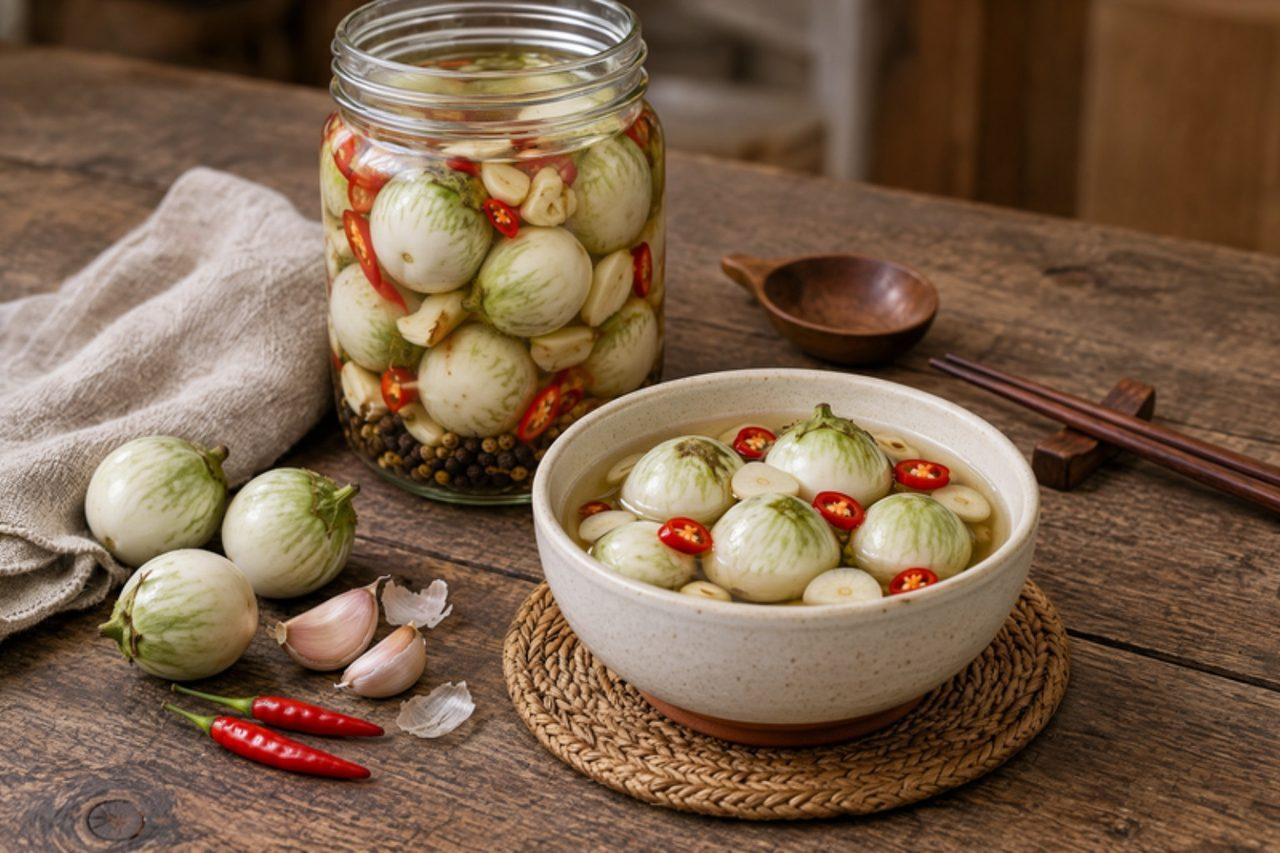
Cà pháo muốiPickled white aubergines

In northern Vietnam, a bowl of cà pháo muối is part of the plain summer meal: boiled water spinach, a light crab and jute-leaf soup, a few slices of braised pork and these small, round, white eggplants, crunched whole or halved with a dab of mắm tôm. Hanoi families pack them into jars in the hot months, when the eggplants are cheapest, with garlic, chilli and a few slices of galangal. After three to five days the skins turn an olive-yellow, the flesh goes creamy-ivory and the taste becomes clean, salty-sour and juicy, with a gentle crunch and no raw bitterness. Abroad, use firm green-and-white Thai eggplants about 3 cm across. Common mistake: letting the eggplants float above the brine; the exposed tops turn black and soft, so weigh them down. They are ready when the brine is cloudy, smells pleasantly sour and a halved eggplant has no white, raw-tasting core. Eat them only once fully soured, and in side-dish amounts. Chef's tip: soaking the cut eggplants in salted water first keeps their flesh pale and draws out bitterness.

by KrazyBadal 0 views

Café chorreadoCloth-filtered coffee

Every Costa Rican grandmother has a chorreador: a small wooden stand holding a cloth bag, the bolsita, over a cup or jug. Hot water is poured through the grounds by hand, a little at a time, and the result is the coffee drunk at breakfast with gallo pinto and again at the afternoon cafecito around three, with a tamal, a slice of pan casero or a rosquilla. The cloth catches the oils and fine grounds, so the cup is clean, bright and smooth, with the soft acidity and caramel sweetness of Tarrazú and Central Valley beans. In the countryside the water is sometimes sweetened with tapa de dulce before it goes through. It is strong coffee, so mind the caffeine late in the day. The common mistake is pouring all the water in at once, which floods the bag and leaves weak, uneven coffee; pour in slow circles, in four or five goes. It is ready when the drips slow to a trickle and the coffee is dark reddish-brown and smells of toasted caramel. Never wash the bag with soap; rinse it in hot water and hang it to dry. Chef's tip: boil a new bag once with a spoonful of coffee before using it, to season the cloth.

by KrazyBadal 0 views

Café con lecheCoffee with hot milk

Every morning from Havana to Miami's Little Havana, breakfast is a big cup of café con leche with a length of buttered, pressed Cuban bread (tostada) to dunk in it. A moka pot of dark espresso-style coffee is whipped with sugar into a pale foam, the espumita, and poured into a mug of hot, lightly salted milk. The usual mistake is boiling the milk, which gives it a skin and a cooked taste; heat it only until it steams. Coffee contains caffeine, so this is a grown-up drink; children traditionally get a cup that is mostly milk. Chef's tip: whisk the first few drops of coffee hard with the sugar to a thick paste before adding the rest; that is what makes the creamy espumita on top.

by KrazyBadal 0 views

Wali wa naziCoconut rice

Coconut rice sits under almost every coastal plate from Mombasa's Old Town to Malindi, beside bean stews, mchuzi wa samaki or a simple tomato salad. Swahili cooks use two coconut milks: a thin one to cook the grains, and the rich first pressing poured over at the end, so the rice is fluffy, faintly sweet and fragrant rather than greasy. Done right, the bottom of the pot forms ukoko, a golden crust that families argue over. Long-grain pishori or basmati works best, and stirring after the thick milk goes in is the mistake that turns it gluey, so leave it alone. Chef's tip: lift the lid only once, at the end; the trapped steam finishes the grains and sets the crust.

by KrazyBadal 0 views

Showing 36 of 7,762 recipes

Show more recipes

Page 117 of 863