Skip to content
Miso nikomi udon
Featured recipe

Miso nikomi udon

Udon in miso broth

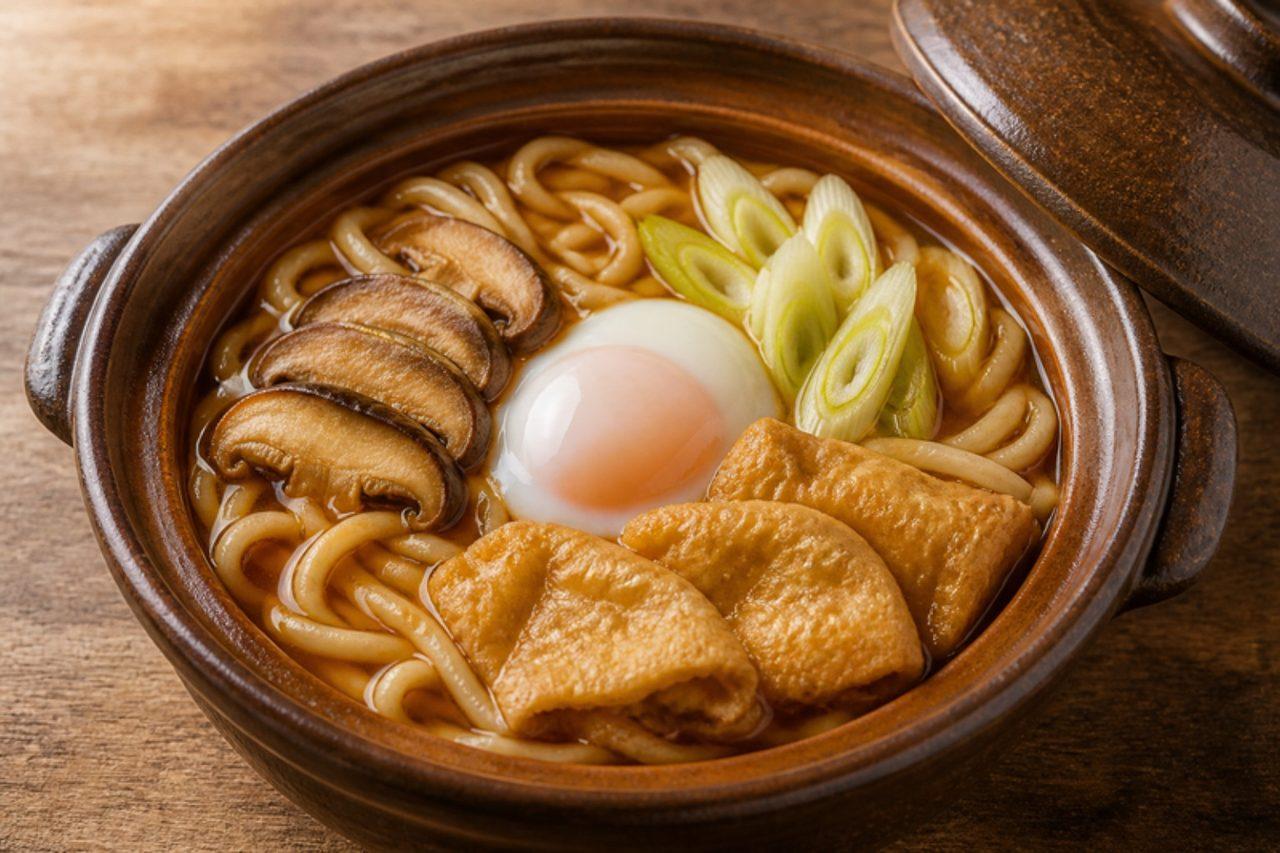
In Nagoya, udon is cooked in its broth rather than boiled separately, in a small clay pot called a donabe that comes to the table still bubbling. The broth is made with Aichi's famous dark soybean miso, hatcho miso, which is aged for years and tastes deep, slightly bitter and chocolatey. Nagoya's noodles are deliberately firm, almost chewy at the centre, and locals use the pot's lid as a plate to cool each mouthful. It is a cold-weather lunch, and the egg poached on top is part of the ritual. Our version uses kombu-shiitake dashi and fried tofu instead of chicken. Chef's tip: dissolve the miso in a ladle of broth before adding it. Hatcho miso is dense and stays in lumps if it goes straight in.

Read more 1 views

What to eat today?

Around the world

Today's trip: Paraguayan

A new country every day, from every cuisine on the site.

Paraguayan

Chipa

Cheese bread rings 50 minMore from Paraguayan (27) →

This week's collection

Kid-friendly dinners
537 recipes · a new collection every Monday

Latest recipes

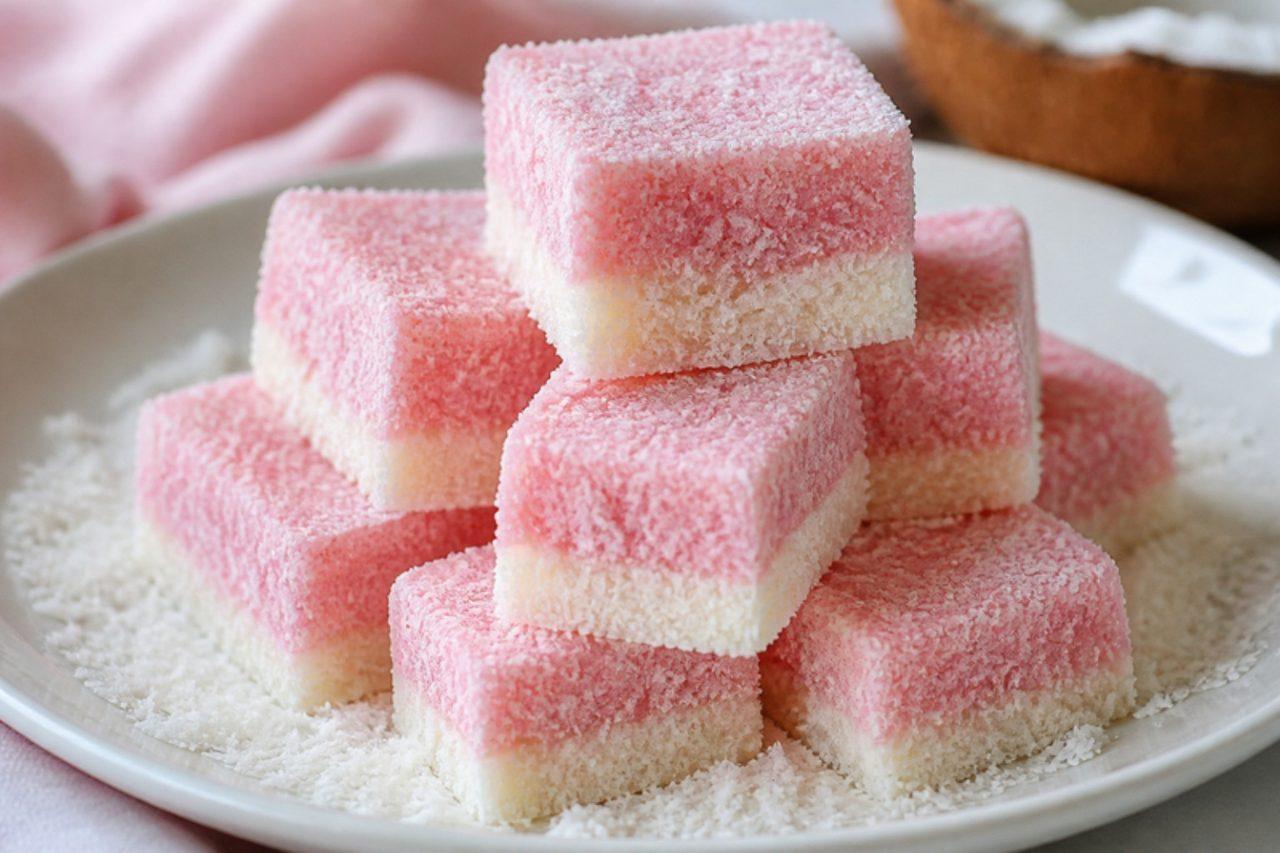
Coconut icePink and white coconut fudge

Coconut ice is the pink and white sweet that fills Australian school fete stalls, Christmas hampers and CWA cake tables, a no-cook fudge of desiccated coconut, condensed milk and icing sugar. It is soft, chewy and very sweet, so cut small squares. A common mistake is a mixture that's too wet to hold; add more coconut until it's firm enough to press. Chef's tip: press the white layer first, then the pink, and chill before cutting for sharp stripes.

by KrazyBadal 0 views

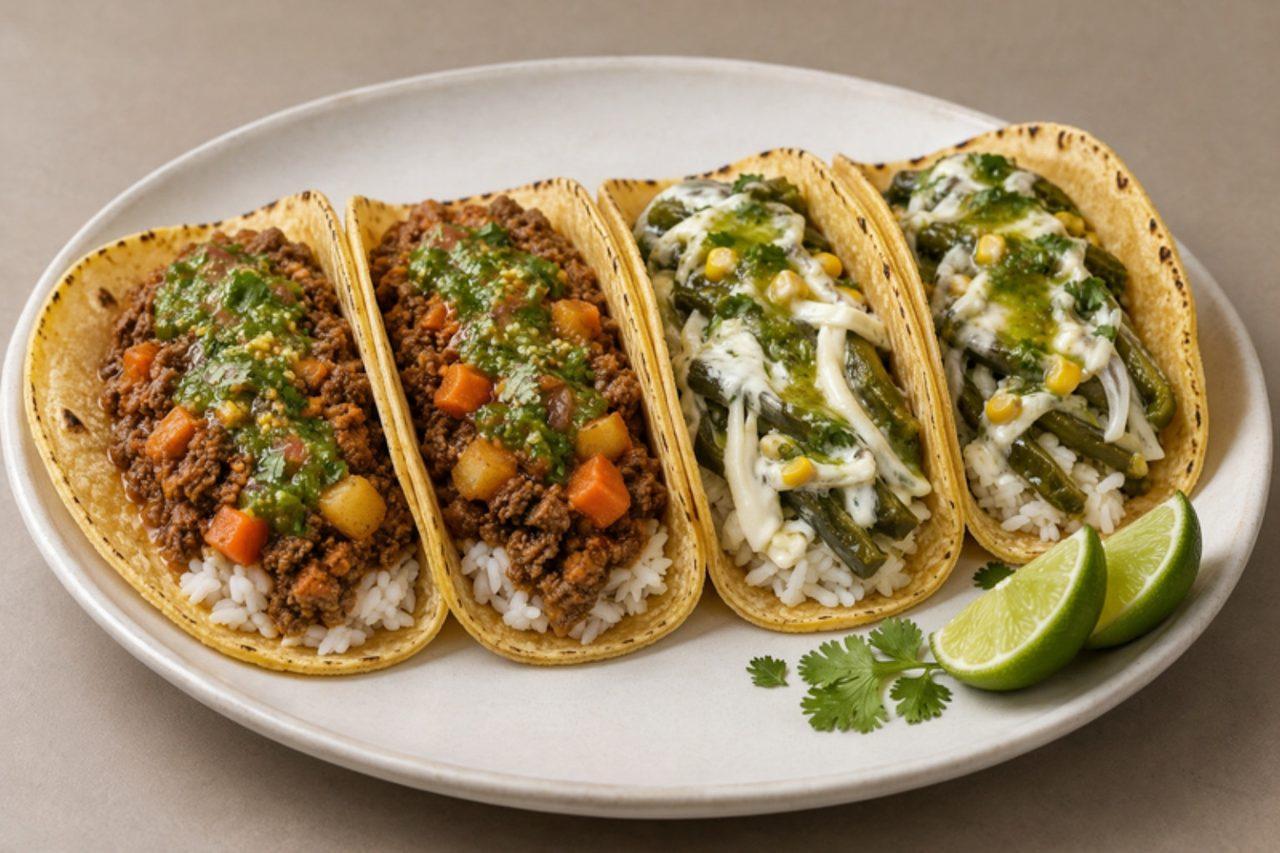
Tacos de guisado (picadillo and rajas con crema)

From about nine in the morning, guisado stalls set up on corners near offices and markets all over Mexico City, from the famous counters on Calle Ámsterdam in the Condesa to the stands outside the Mercado de Medellín. Clay pots line the counter, each with a different home-style stew: chicharrón in salsa verde, potato with chorizo, mole and many more. You point, and they spoon it into two warm tortillas. This home version makes two of the favourites, a tomatoey beef picadillo with potato and carrot, and smoky poblano strips with corn in cream. Chef's tip: always double the tortillas, as the stalls do; one tortilla tears under a juicy stew.

by KrazyBadal 0 views

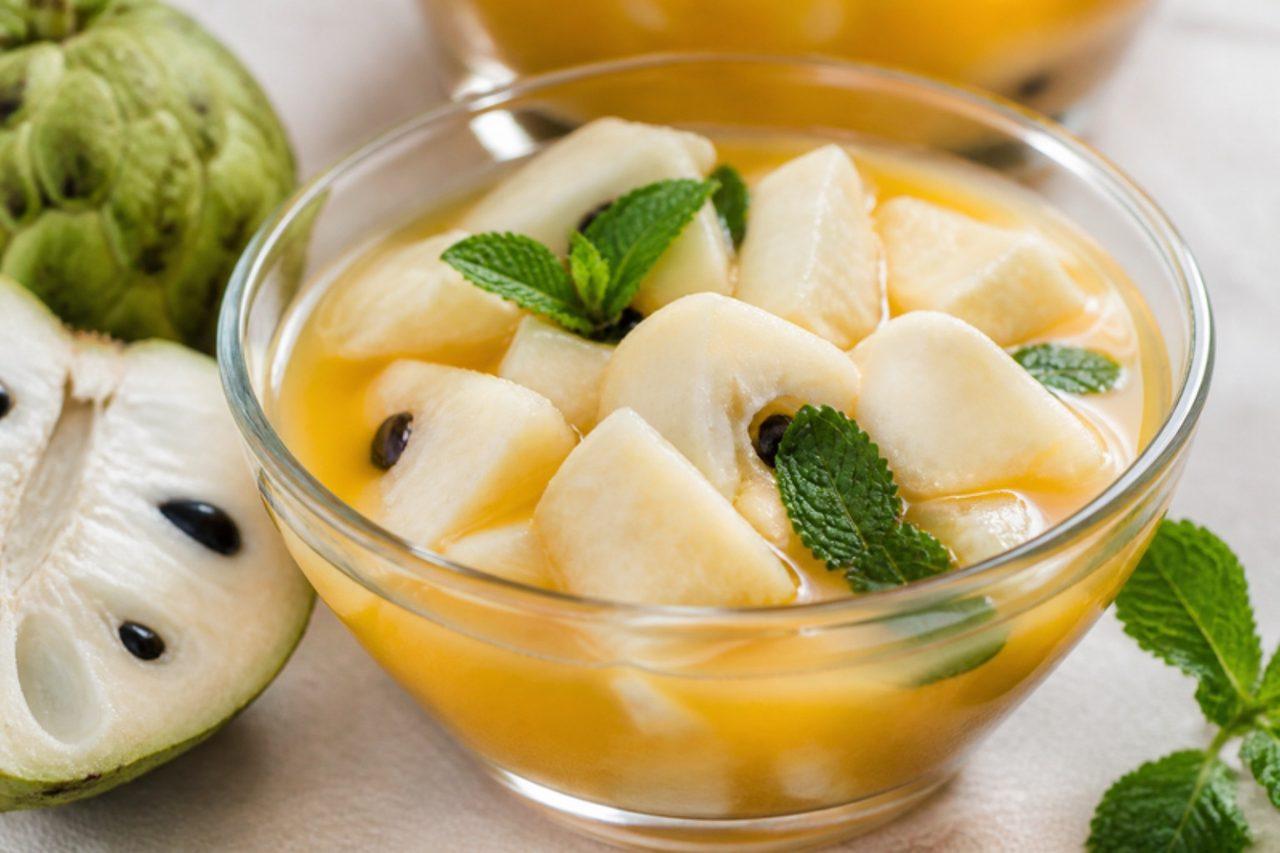
Chirimoya alegreCherimoya in orange juice

Chileans call it 'happy cherimoya': ripe custard-apple pulp dropped into fresh orange juice and served ice-cold. It turns up as the summer dessert after a big lunch in the Central Valley and in the Aconcagua valley, where much of Chile's cherimoya grows. The fruit should be soft like a ripe avocado; a hard one tastes starchy. The most common mistake is preparing the fruit ahead without juice, so it turns brown and loses its perfume: drop each piece straight into the orange juice. Remove every black seed, as the seeds must not be eaten or crushed. Chef's tip: squeeze the oranges yourself and taste before you sweeten; good juice often needs no sugar at all.

by KrazyBadal 0 views

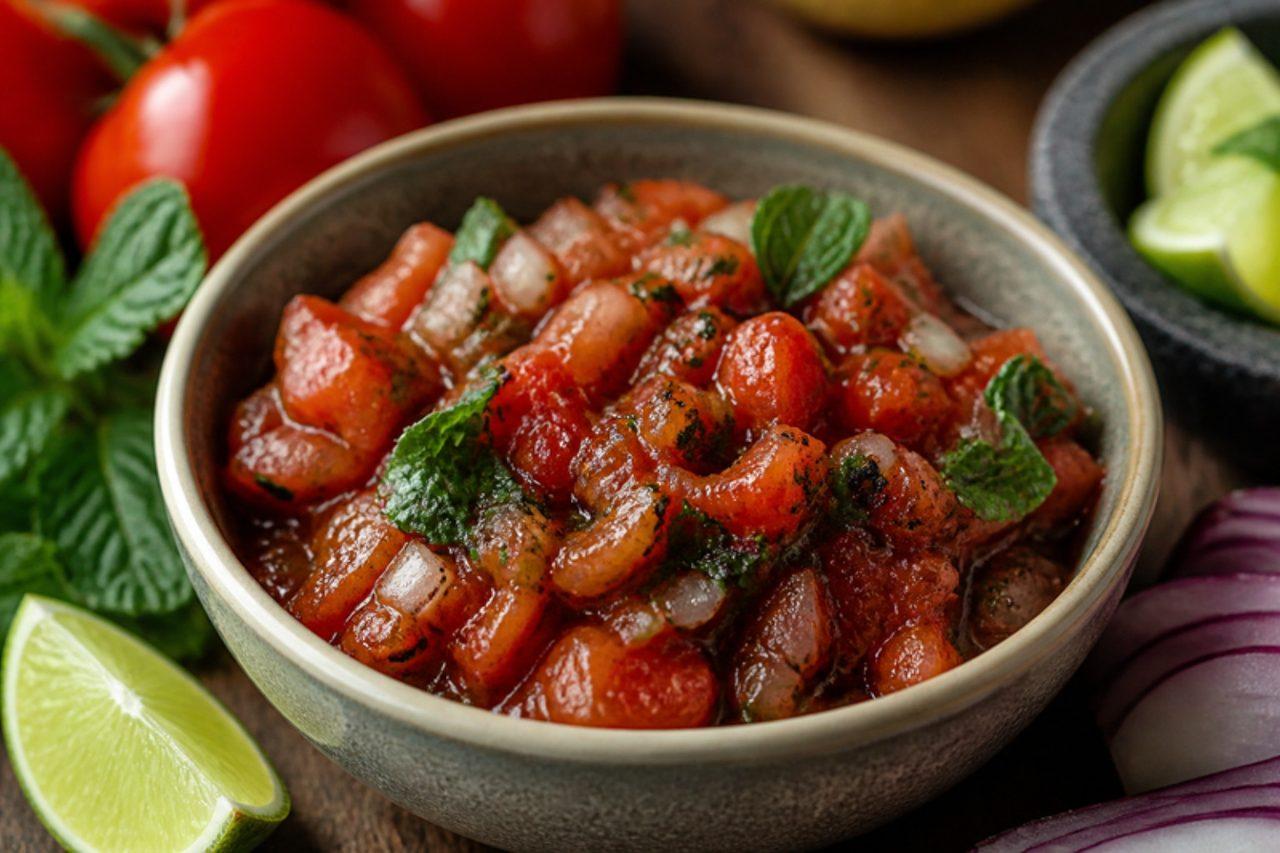
ChirmolCharred tomato and mint salsa

Wherever Guatemalans light a grill for Sunday carne asada, a bowl of chirmol sits beside it. The tomatoes are blackened on a comal until their skins split, then crushed with raw onion, lime and fresh mint, which is the herb that sets it apart from Mexican salsas. It is smoky, sharp and loose, meant to be spooned over grilled meat, black beans, eggs or plain rice. A common mistake is blending it smooth; chirmol should be chunky and juicy, crushed by hand or with a fork. Chef's tip: leave some of the charred skin in; those black flecks carry most of the smoky flavour.

by KrazyBadal 0 views

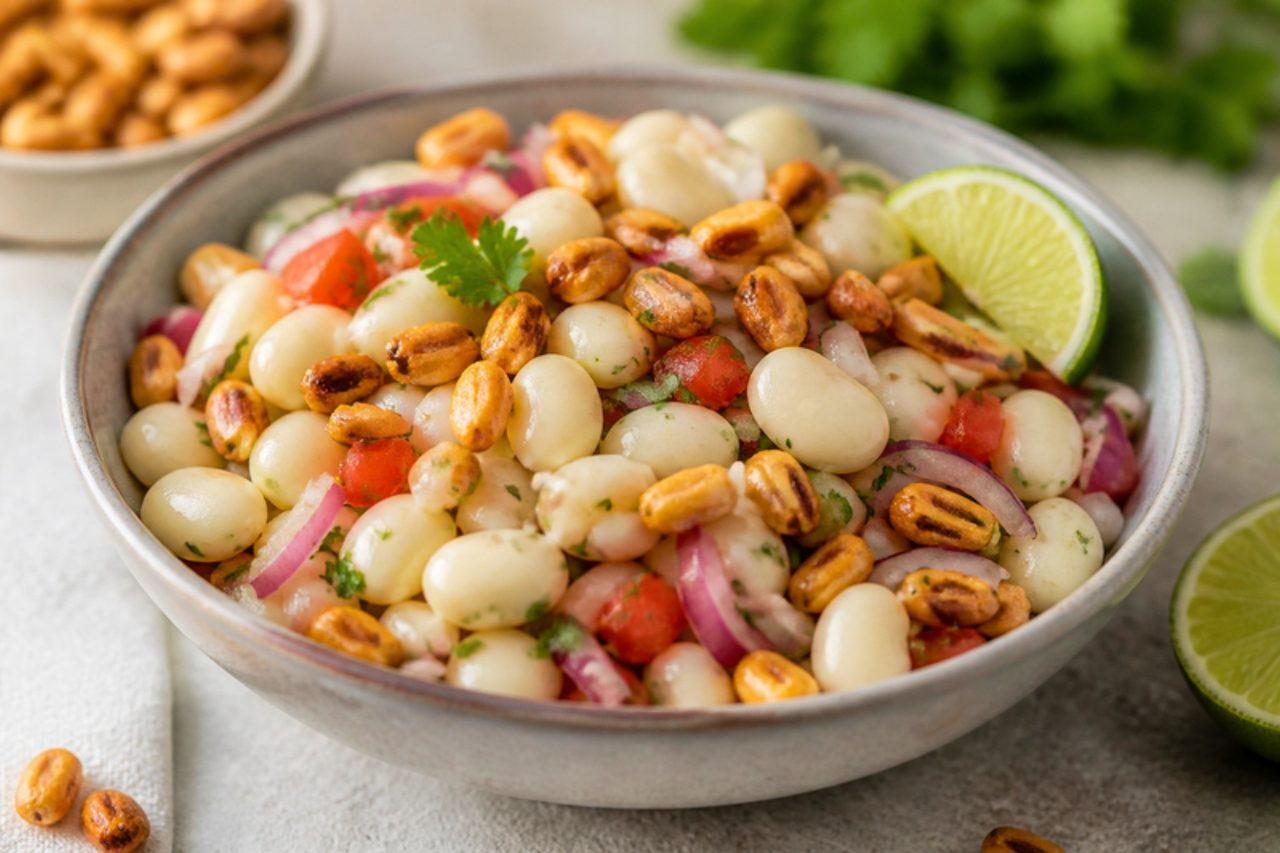
Chochos con tostadoLupin bean and toasted corn salad

On street corners in Quito and Latacunga vendors pile paper cups with chochos, the pale Andean lupin beans, tossed with lime-soaked red onion and tomato and showered with crunchy toasted corn. It is a cheap, filling mid-morning snack, sour and salty with a nutty crunch, and it doubles as a light lunch with a fried plantain on the side. Buy chochos ready debittered, sold cooked in jars or vacuum packs: raw lupins are bitter and contain toxic alkaloids until they have been soaked and boiled for several days, so never use dried ones without that long treatment. Lupin is also a declared allergen and can affect people with peanut allergy. The common mistake is skipping the rinse, which leaves the beans tasting of brine. Chef's tip: salt the onion with the lime juice 10 minutes ahead so it softens and turns pink.

by KrazyBadal 0 views

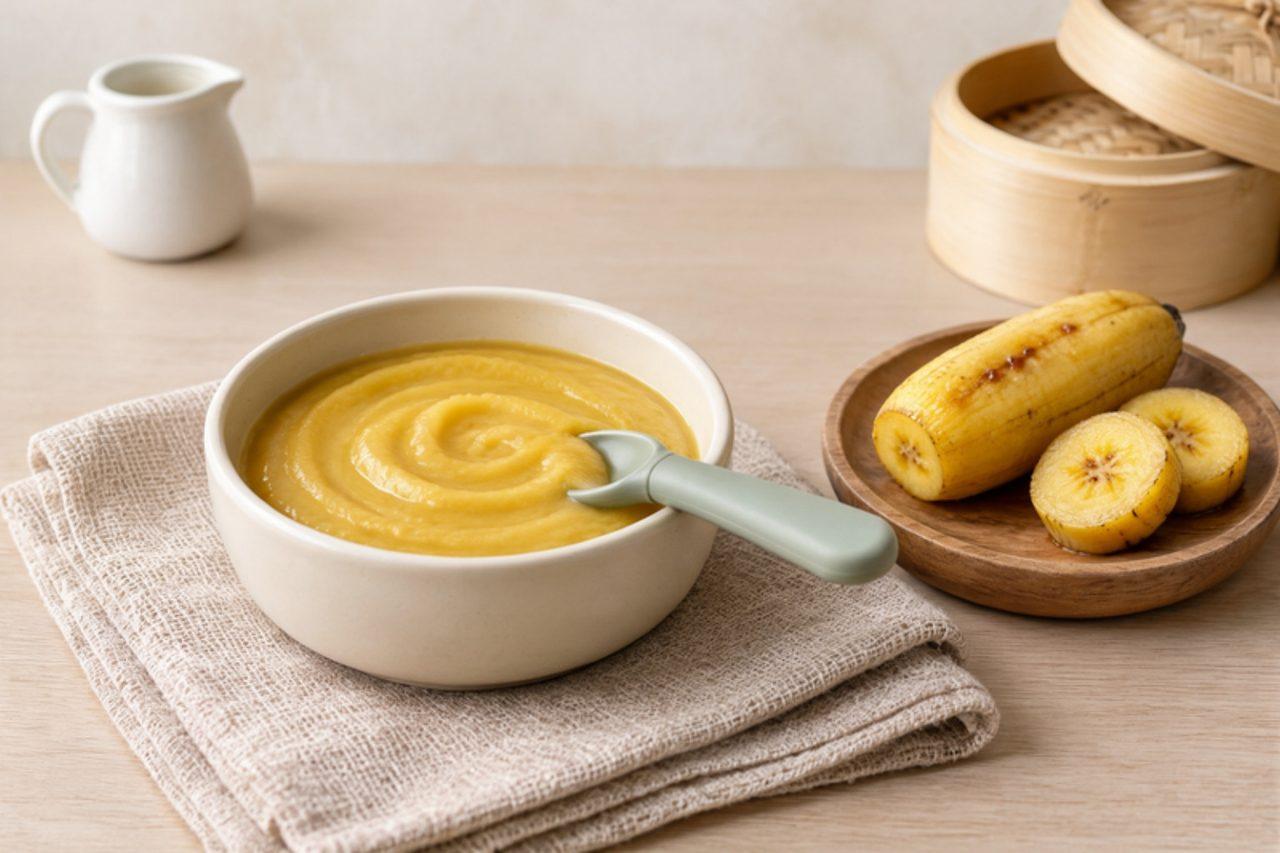
Steamed Nendran banana mash

Nendran is the long, golden plantain of Kerala, sold in hands at every market from Palakkad to Thiruvananthapuram, and a steamed ripe Nendran is one of the first fruits a Malayali baby tastes. Raw, it is too firm and starchy for a six-month-old, so it is steamed in its skin until the flesh turns soft and orange-gold, the dark string of seeds in the centre is pulled out, and the rest is mashed smooth. It is naturally sweet, so nothing is added: no sugar, jaggery, honey or salt. It is free of the major allergens. Chef's tip: wait until the skin is fully yellow with black freckles; a green Nendran stays chalky however long you steam it.

by KrazyBadal 0 views

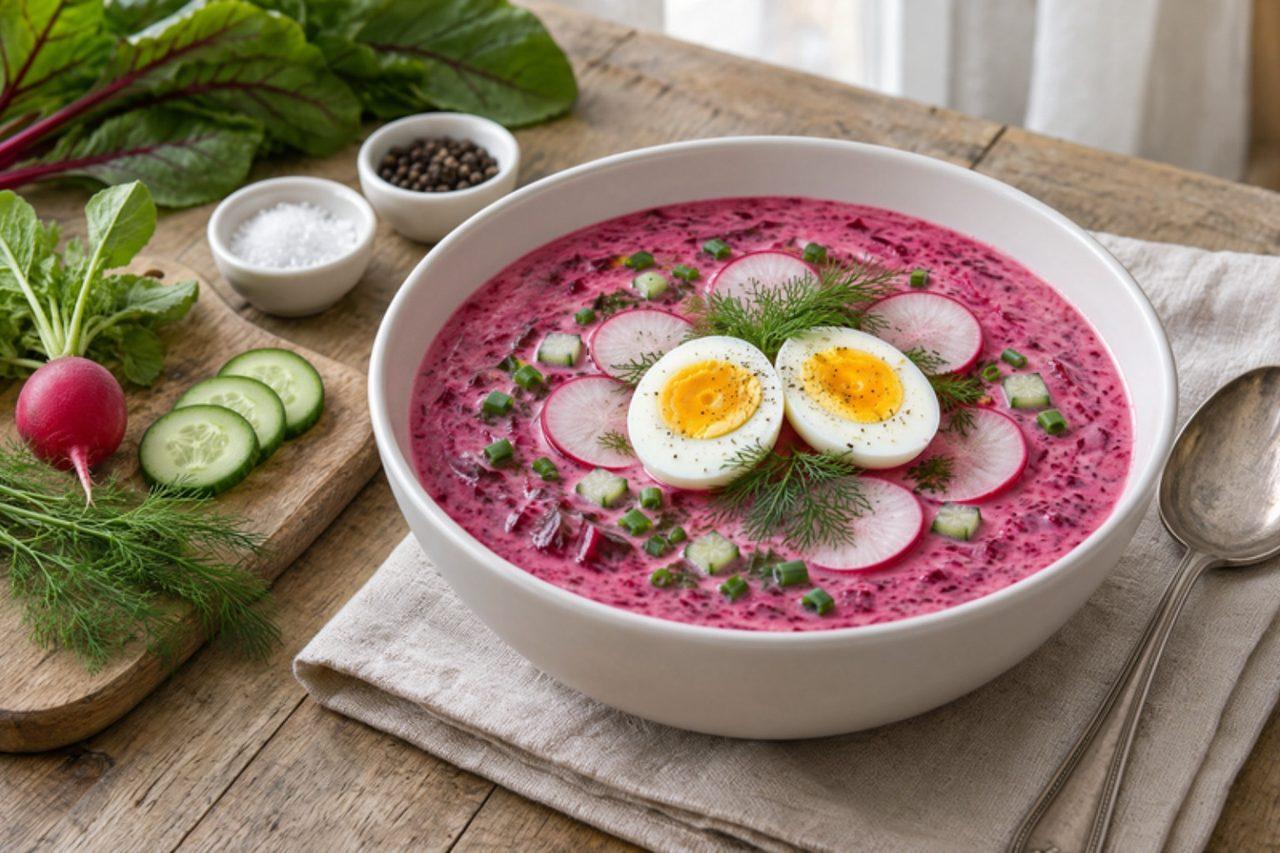
Chłodnik litewskiChilled beet leaf soup

In Podlasie and the lake country of north-east Poland, chłodnik is the soup of hot June and July days, when young beets are pulled with their leaves still tender. The beet greens and baby beets are cooked briefly, chilled, then stirred into kefir with cucumber, radish, spring onion and lots of dill, so the soup turns shocking pink, tangy and cold. It is served as a starter or a light lunch with half a hard-boiled egg in each bowl. Suitable as part of a balanced diet. About 170 kcal and 13 g carbohydrate per portion. The usual mistake is mixing the kefir into warm beets, which makes it split and dulls the colour, so chill them completely first. Chef's tip: add a squeeze of lemon to the cooking beets; the acid keeps the colour a vivid pink instead of brownish.

by KrazyBadal 0 views

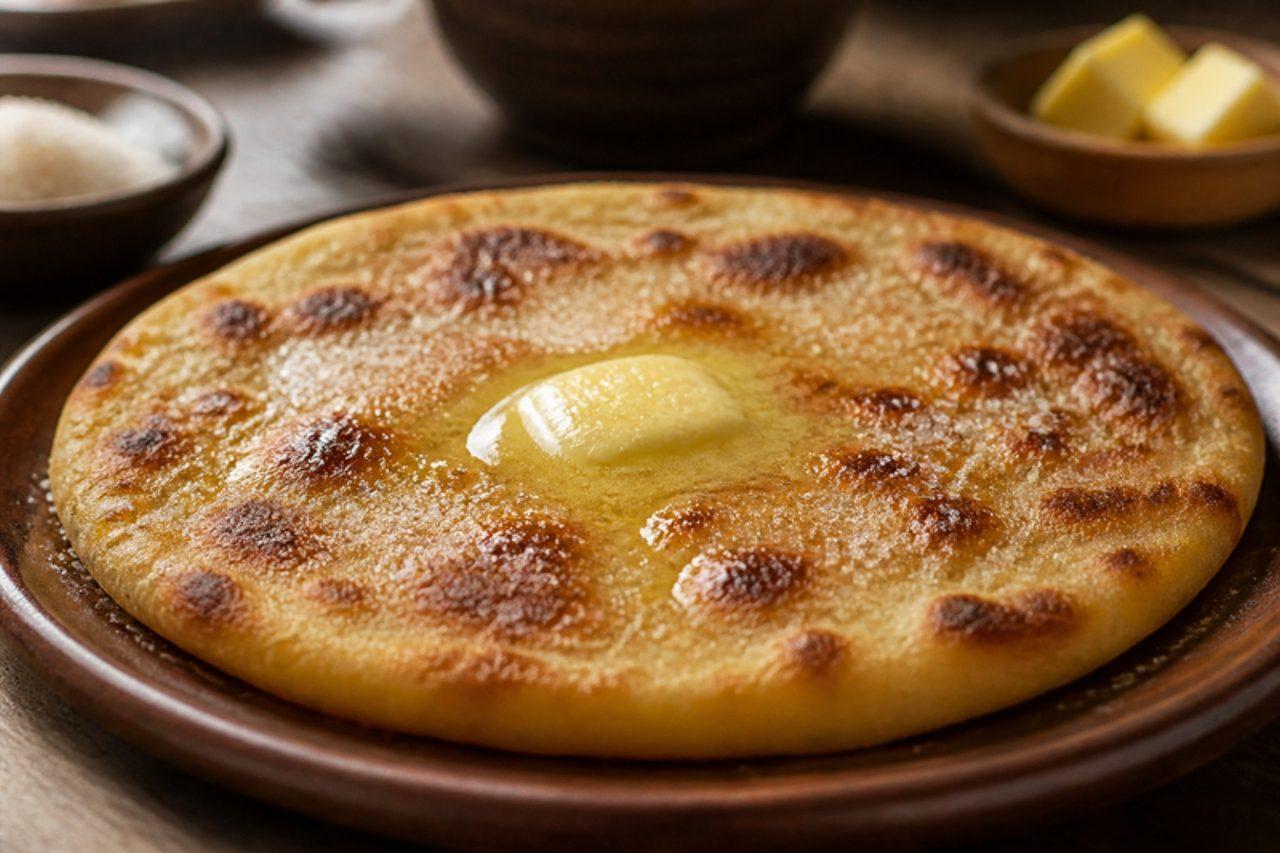
ChochocaPotato flatbread

On Chiloé, chochoca is a feast-day sight: potato dough wrapped round a thick wooden pole and turned slowly in front of the fire until it browns, then sliced off, filled and rolled up. Islanders often fill it with pork crackling; this vegetarian version uses butter and sugar, or cheese. Without a fire pit, roll the dough into thin rounds and cook them on a hot griddle, which gives the same chewy, toasty bread. The usual mistake is a wet dough: squeeze the grated potato really dry or the sheets tear. Chef's tip: if you have a barbecue, wrap the dough round a foil-covered rolling pin or thick metal pipe and turn it over glowing coals for the true smoky crust.

by KrazyBadal 0 views

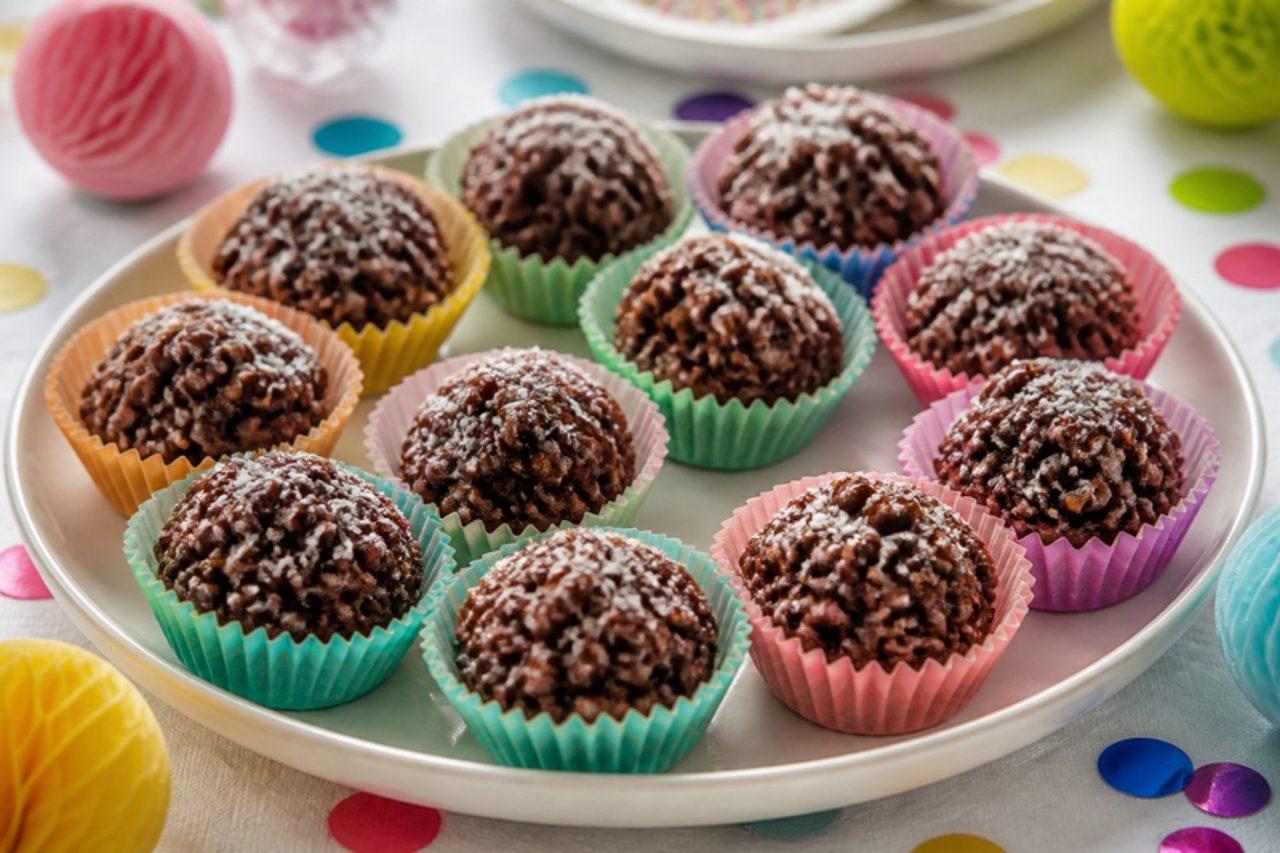
Chocolate cracklesChocolate puffed rice cakes

No Australian child's birthday party is complete without chocolate crackles, served in paper patty cases alongside fairy bread at backyard parties from Adelaide to Cairns. Puffed rice cereal is bound with melted solid coconut fat, icing sugar, cocoa and desiccated coconut, then set in the fridge. Kids can make them almost entirely on their own. A common mistake is using hot fat, which makes the mixture greasy; let it cool a few minutes. Chef's tip: use solid white hydrogenated coconut fat sold in blocks, not jarred coconut oil, which won't set firm at room temperature.

by KrazyBadal 0 views

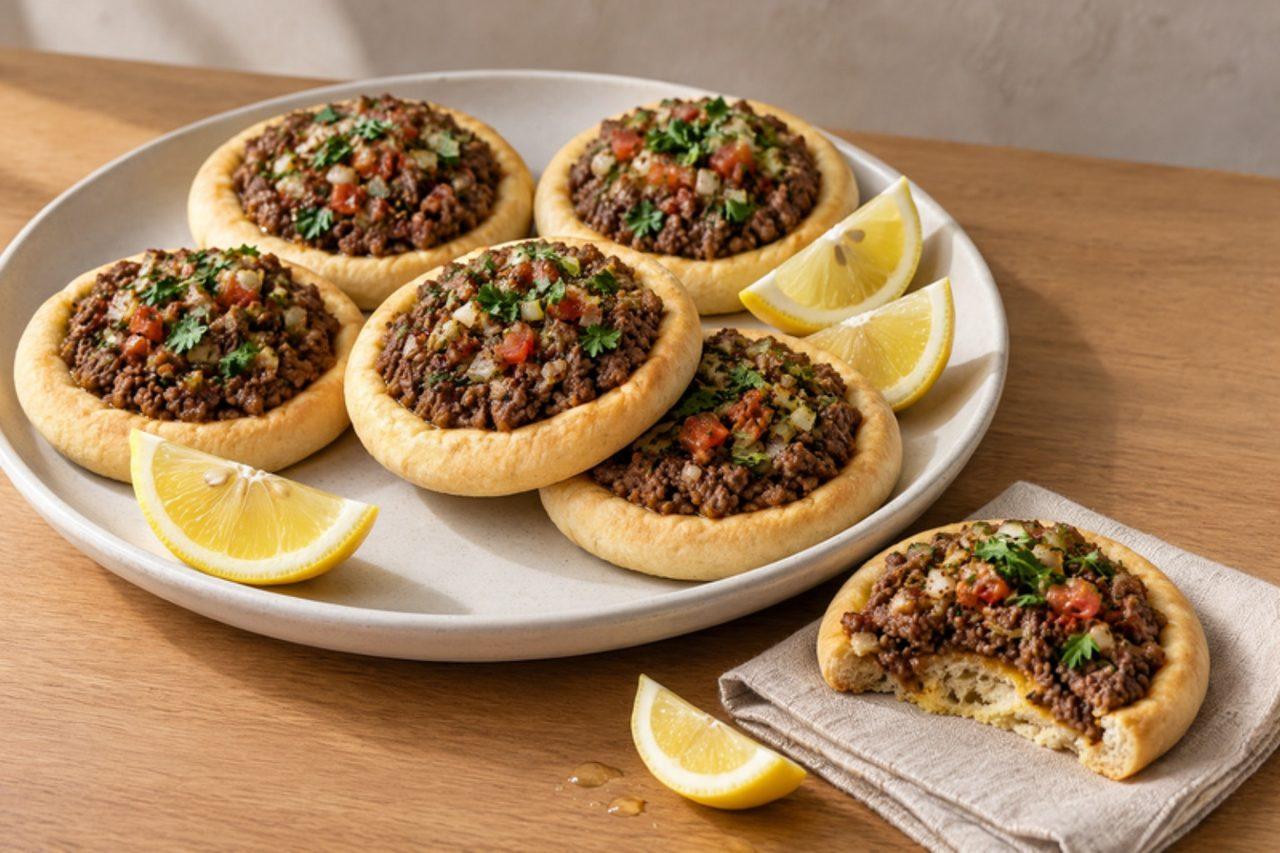
Esfiha de carne (São Paulo open beef pies)

The Syrian and Lebanese families who settled around Rua 25 de Março in central São Paulo brought sfiha with them, and the city made it its own: esfihas are now sold by the dozen from counters all over town, eaten standing up with a squeeze of lemon at lunchtime or as a cheap late snack. The dough is soft and lightly crisp at the base, and the topping of raw spiced beef, onion and tomato cooks on the pie in a hot oven. Chef's tip: squeeze the onion and tomato hard in a cloth before mixing; a wet topping makes the dough soggy.

by KrazyBadal 0 views

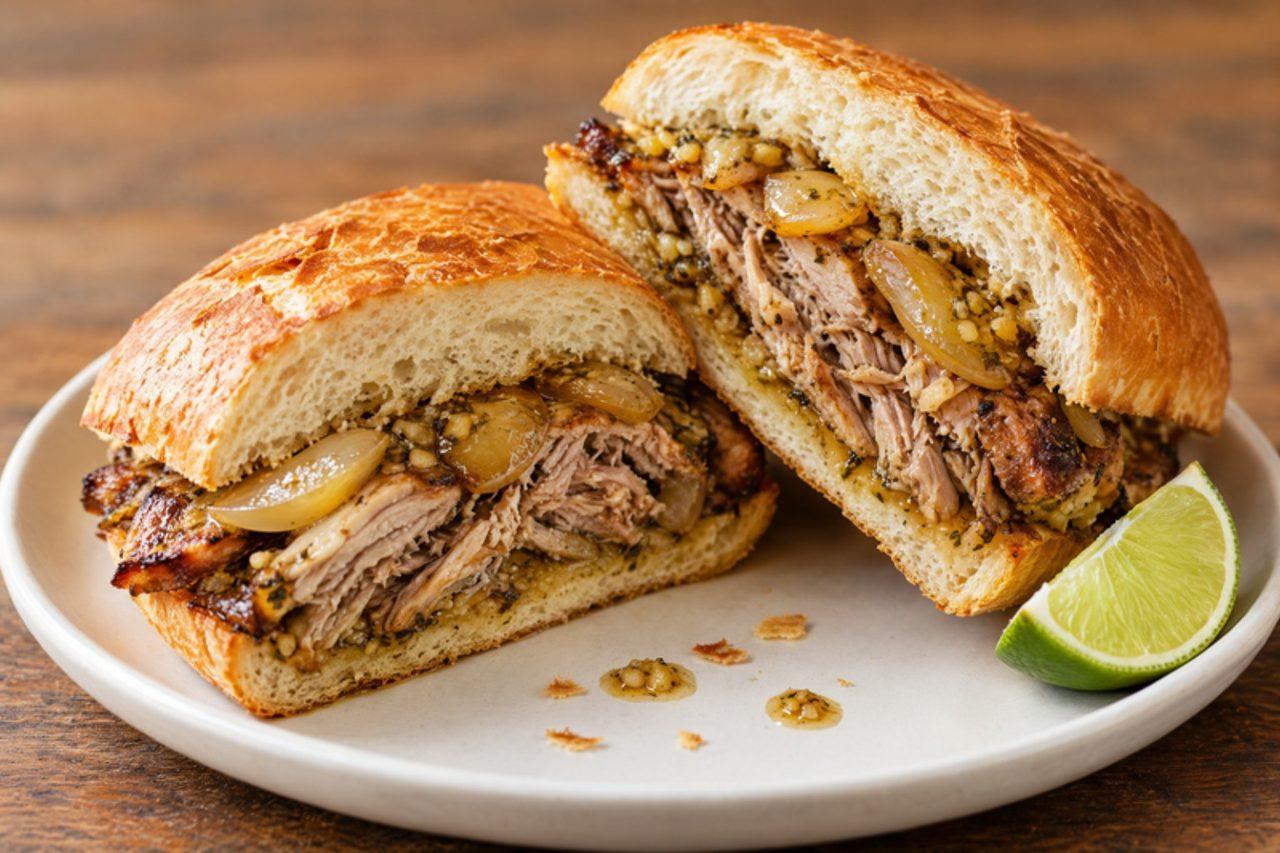
Pan con lechónRoast pork sandwich

Cuba's great feast is a whole roast pig for Noche Buena on Christmas Eve, and the next best thing is pan con lechón: slices of juicy roast pork stuffed into soft Cuban bread with onions and plenty of mojo. In Havana it is sold from cafeterías and street windows in Centro Habana and along Calle Obispo, especially at weekends, and it is a favourite lunch or late-afternoon bite. This home version uses a boneless pork shoulder marinated overnight in sour orange, garlic, cumin and oregano and roasted until it falls apart, with crackly edges. Chef's tip: keep a few spoons of fresh mojo aside before the raw pork goes in, so you have a clean sauce to spoon over the sandwiches.

240 minCubanMeat
by KrazyBadal 0 views

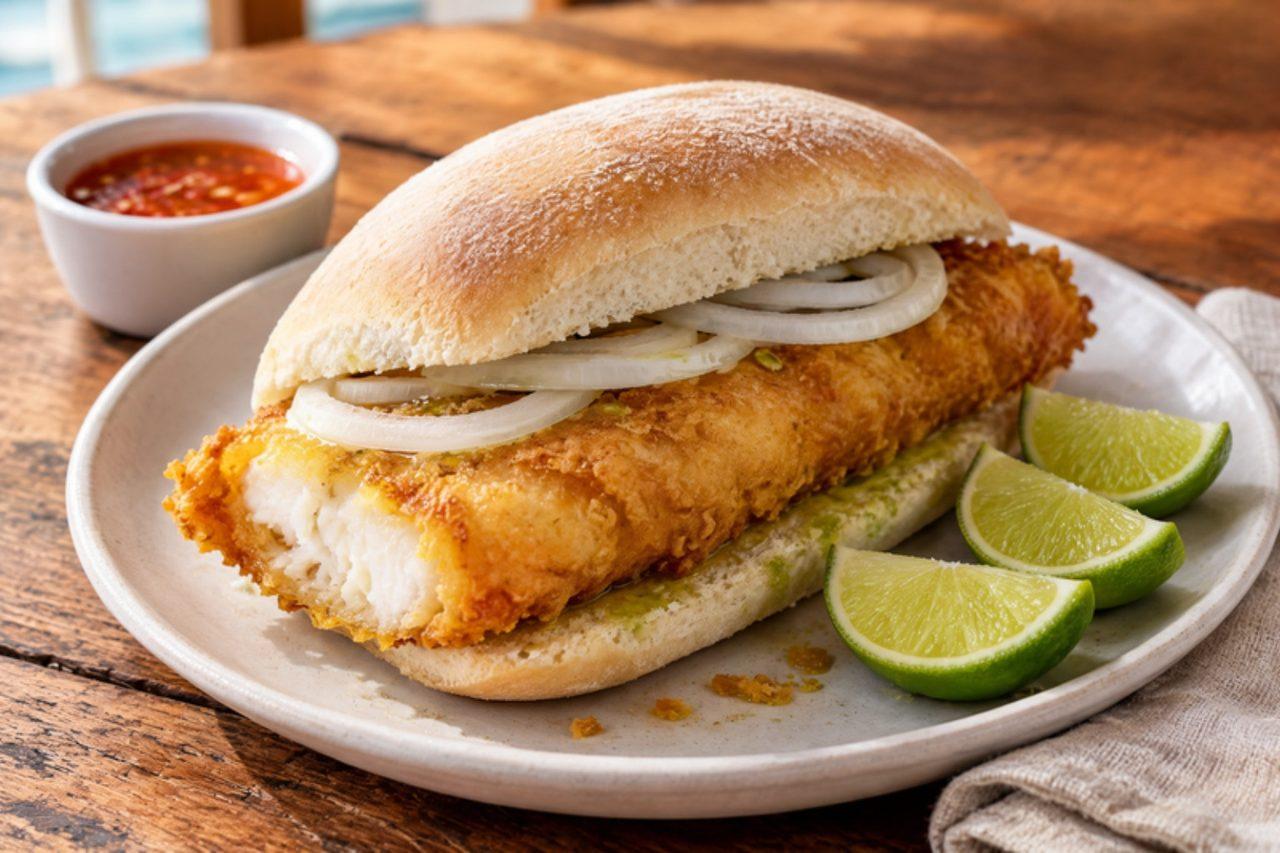
Pan con minutaFried fish sandwich

Minuta is what Cubans call a quick-fried fish fillet, cooked "in a minute" while you wait, and in a soft roll it becomes one of Havana's simplest street lunches. Look for it at kiosks along the Malecón near La Punta and in the fishing village of Cojímar, east of the city, where small boats bring in snapper. The fish is marinated briefly in lime and garlic, dipped in a light batter and fried until the crust crackles, then tucked into bread with sharp raw onion and another squeeze of lime. Chef's tip: keep the lime marinade short; after 15 minutes the acid starts to turn the fish chalky.

30 minCubanFish
by KrazyBadal 0 views

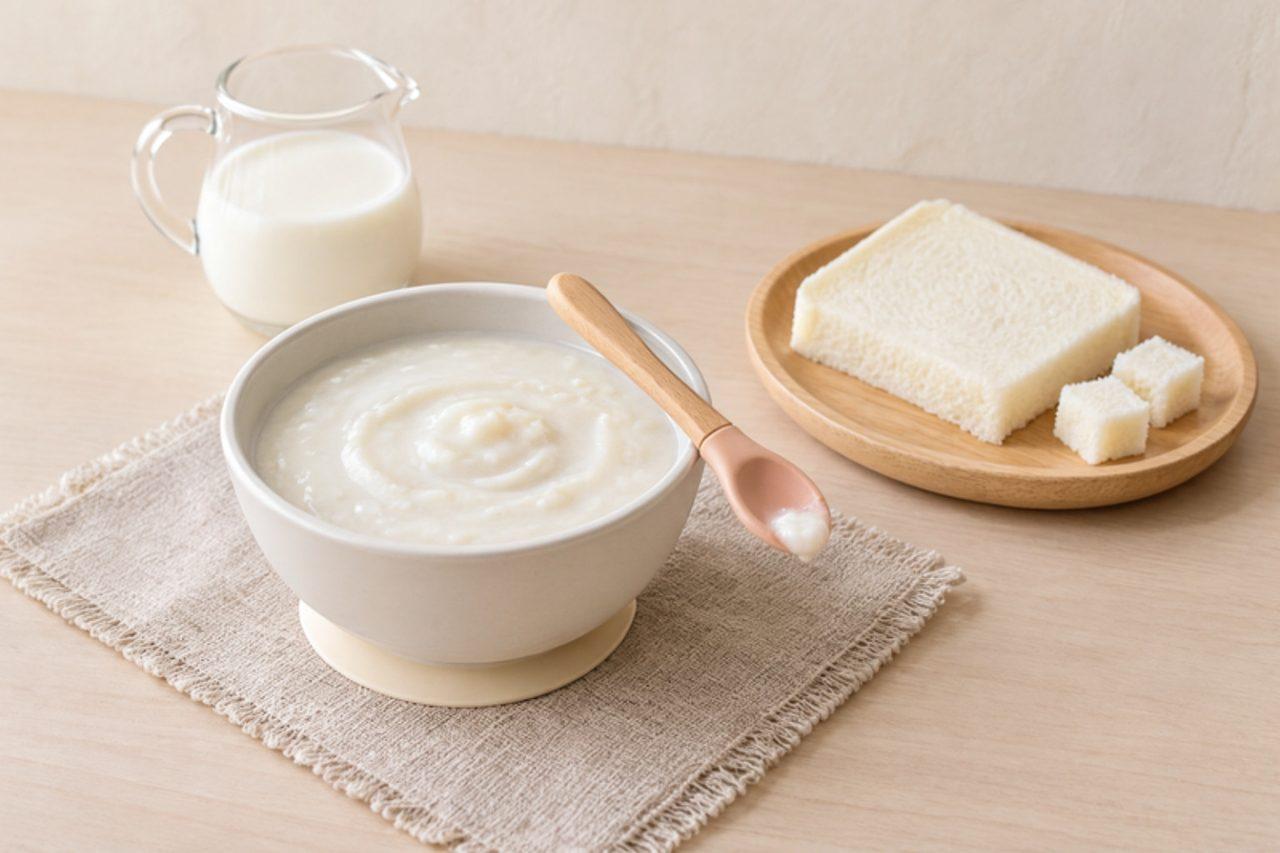
Pan-gayu (bread porridge)

Pan-gayu is a staple of the early rinyushoku (weaning) stage in Japan, the second grain after rice porridge, and it fills the 'first foods' pages of every baby magazine sold in Tokyo convenience stores. Crustless white bread is torn into a pan of water, breast milk or formula and simmered until it collapses, then mashed smooth for a soft, milky, faintly sweet porridge. Bread already contains a little salt, so this is an occasional porridge rather than an everyday one, and no extra salt, sugar or honey goes in. It contains wheat (gluten) and milk if made with milk. Chef's tip: choose the softest, plainest white sandwich loaf with the lowest salt on the label, and cut away every bit of crust.

by KrazyBadal 0 views

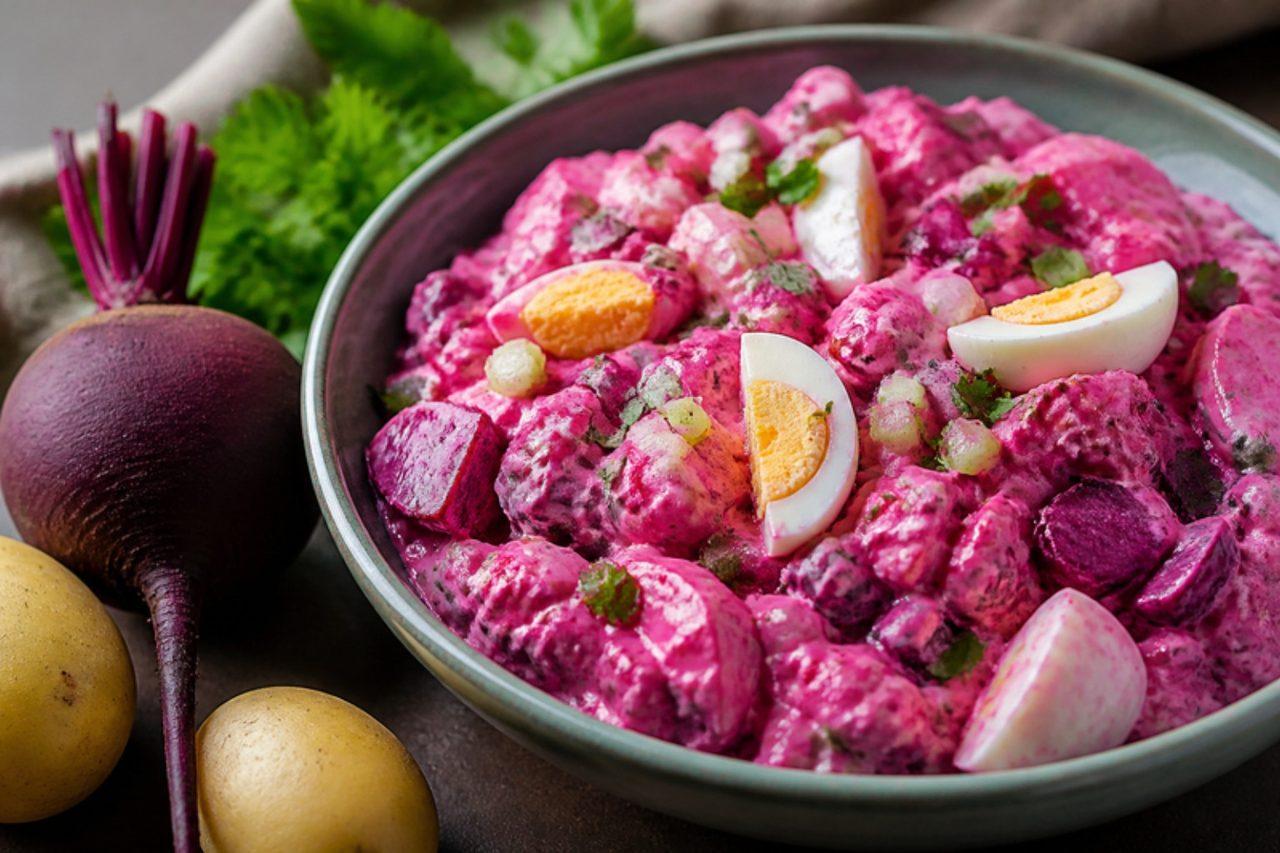
Ensalada de feriaBeetroot potato salad

No Panamanian Christmas, birthday or town feria table is complete without this bright pink potato salad: cubed potato, beetroot, chopped egg, onion and celery bound in mayonnaise, the beet staining everything a vivid rose. It is served cold next to arroz con pollo, tamales and roast meats. Overcooked potatoes are the usual mistake, turning the salad to mush; boil them whole and cube them once cool. Keep it chilled because of the eggs and mayonnaise, and don't leave it out more than two hours. Chef's tip: dress the warm potatoes with a little vinegar first; they absorb it and the salad tastes brighter.

by KrazyBadal 0 views

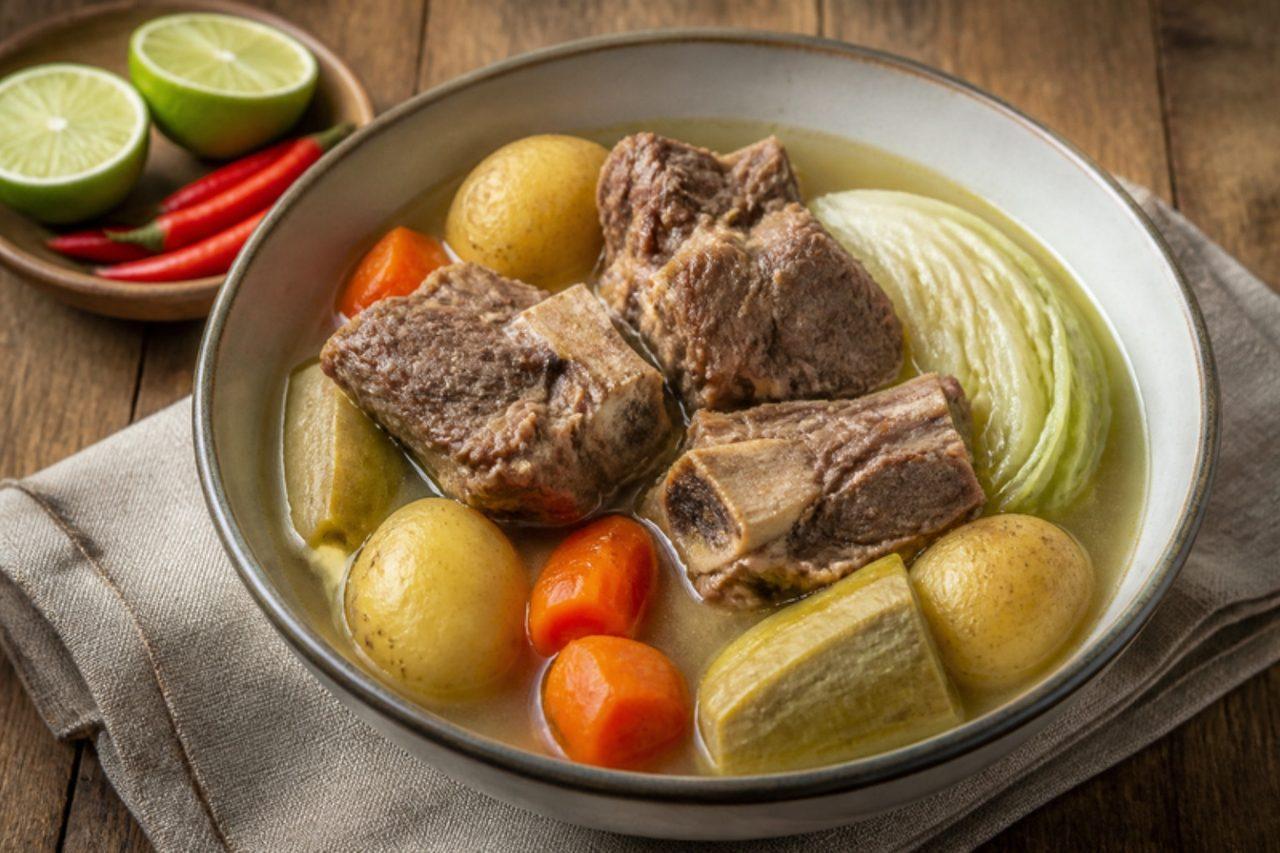
MchemshoBeef and vegetable pot

The name just means 'boiled', but Dar es Salaam families treat mchemsho as comfort food, made on a cool rainy evening or for anyone feeling under the weather. Beef on the bone simmers with garlic and ginger into a clear, savoury broth, and whole potatoes, carrots, green bananas and wedges of cabbage go in late so each stays distinct. It arrives in wide bowls, everything in big pieces, with lime and fresh chilli on the table to sharpen it to your taste; some cooks make it with chicken instead. Adding all the vegetables at once is the common error, leaving the cabbage grey and the potatoes in pieces. Chef's tip: blanch and rinse the beef first, then start again in fresh water, for a broth that stays clear.

by KrazyBadal 0 views

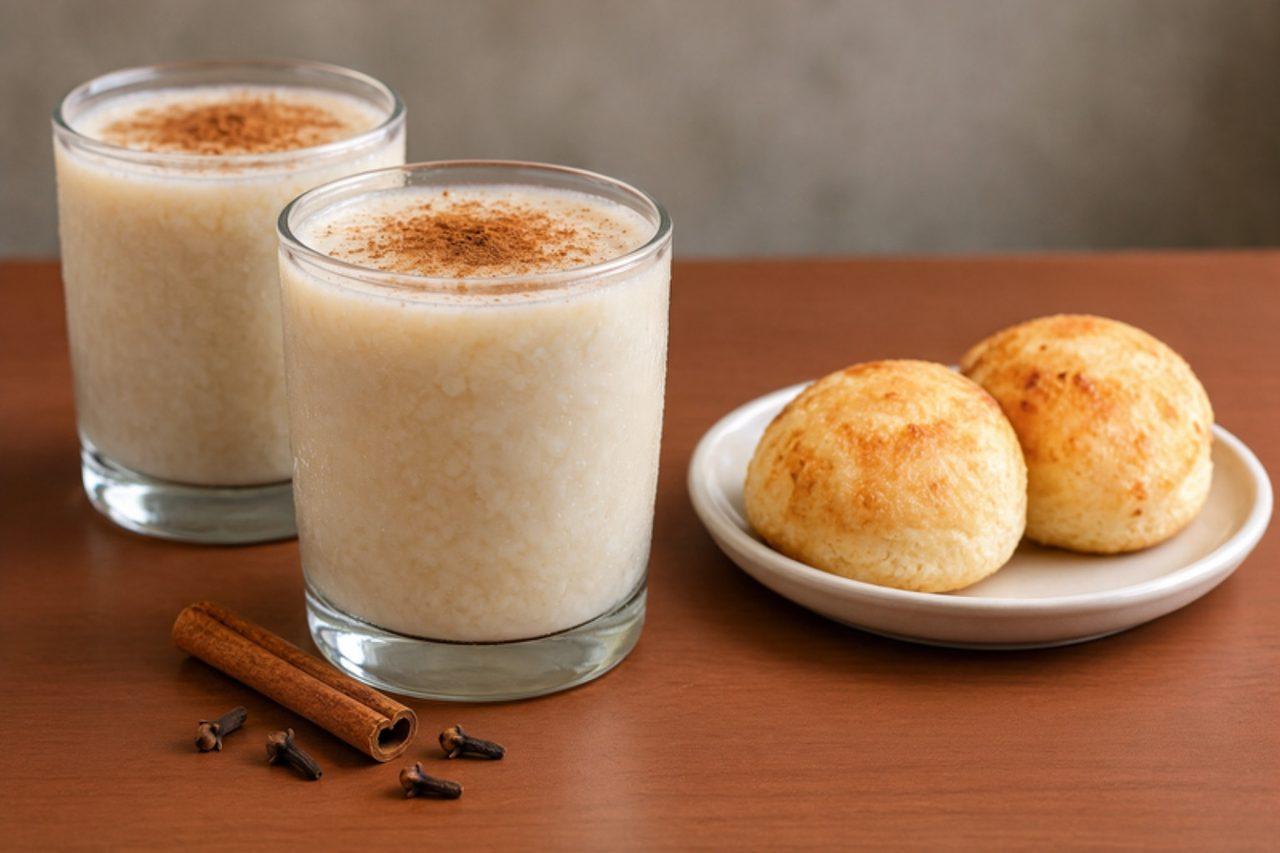
Masato de arroz (Bogotá spiced rice drink)

In the old bakeries of La Candelaria and at the juice stands of the Paloquemao market in Bogotá, masato is poured from big jugs to go with warm almojábanas and pandebono at mid-morning or with the afternoon onces. It is cooked rice blended with spiced syrup and left to rest until it turns gently tangy, so it tastes like a cross between rice pudding and a cool, creamy lemonade. Any natural fermentation produces a trace of alcohol the longer it goes on; this version rests only overnight and is then chilled, and for a completely alcohol-free drink skip the rest and add lime juice for the tang. Chef's tip: keep the rest short and taste it; it should be lightly sour and sweet, never fizzy or boozy.

by KrazyBadal 0 views

Adrak ka acharGinger pickle

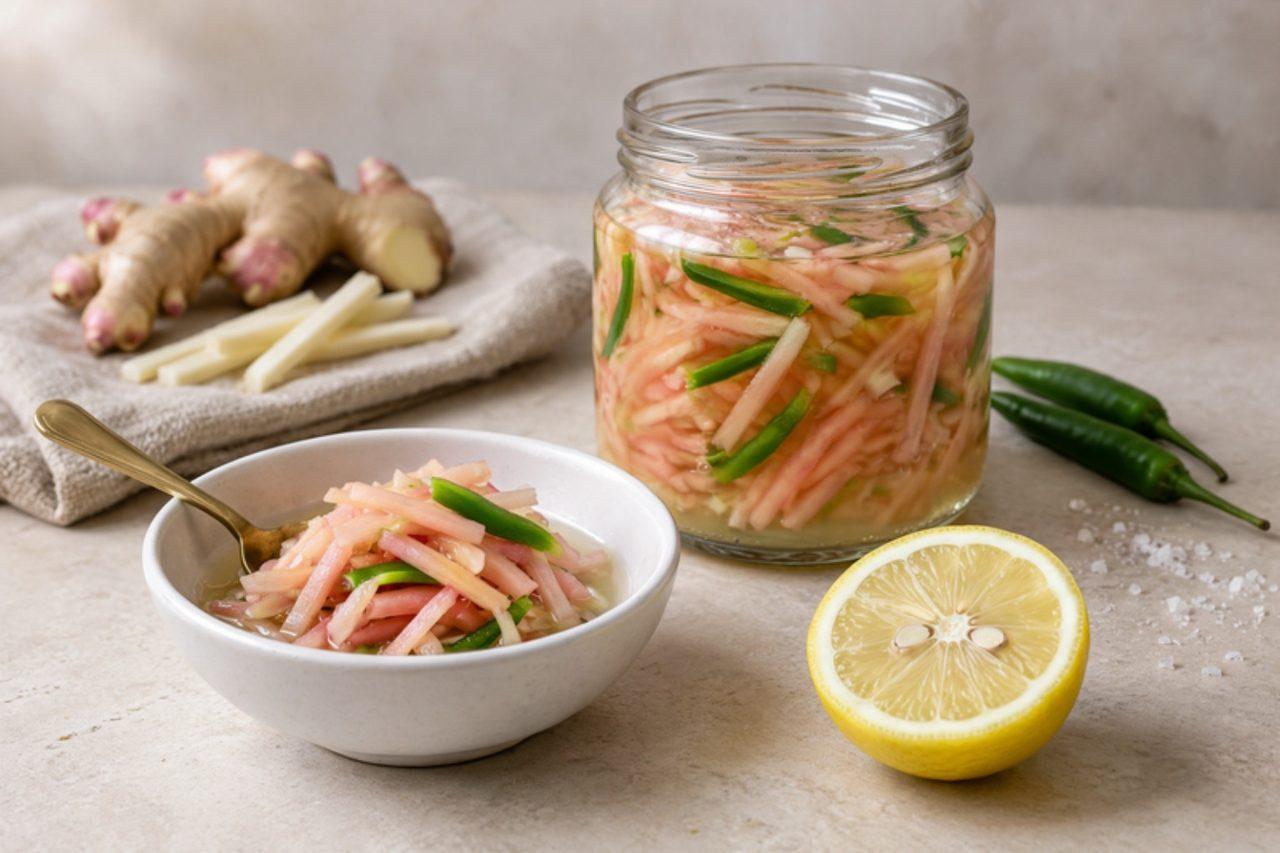
Walk into a Punjabi dhaba in winter and there is often a steel bowl of ginger matchsticks soaking in lemon juice beside the onion rings. Adrak ka achar is the simplest pickle of all: tender ginger, green chilli, salt and lemon, nothing cooked. Young ginger with thin, pinkish skin reacts with the acid and turns a pretty pale pink within a day; older ginger stays yellow but tastes just as good. The flavour is clean, hot and sour, with crunch, and a forkful cuts the richness of sarson ka saag, makki ki roti, chole bhature or a heavy dal makhani. Common mistake: cutting the ginger thick or using fibrous old roots, which stay woody and harsh; slice thin enough to see light through. It is ready when the ginger has softened slightly, the juice tastes less sharp and the slices have taken colour. Fresh ginger in lemon juice keeps in the fridge for up to 2 weeks; discard it if mould appears, the juice turns slimy or the smell turns from fresh-sour to musty. Chef's tip: a pinch of black salt (kala namak) added at the end gives it that dhaba-style sulphurous edge.

by KrazyBadal 0 views

YukgaejangSpicy shredded beef soup

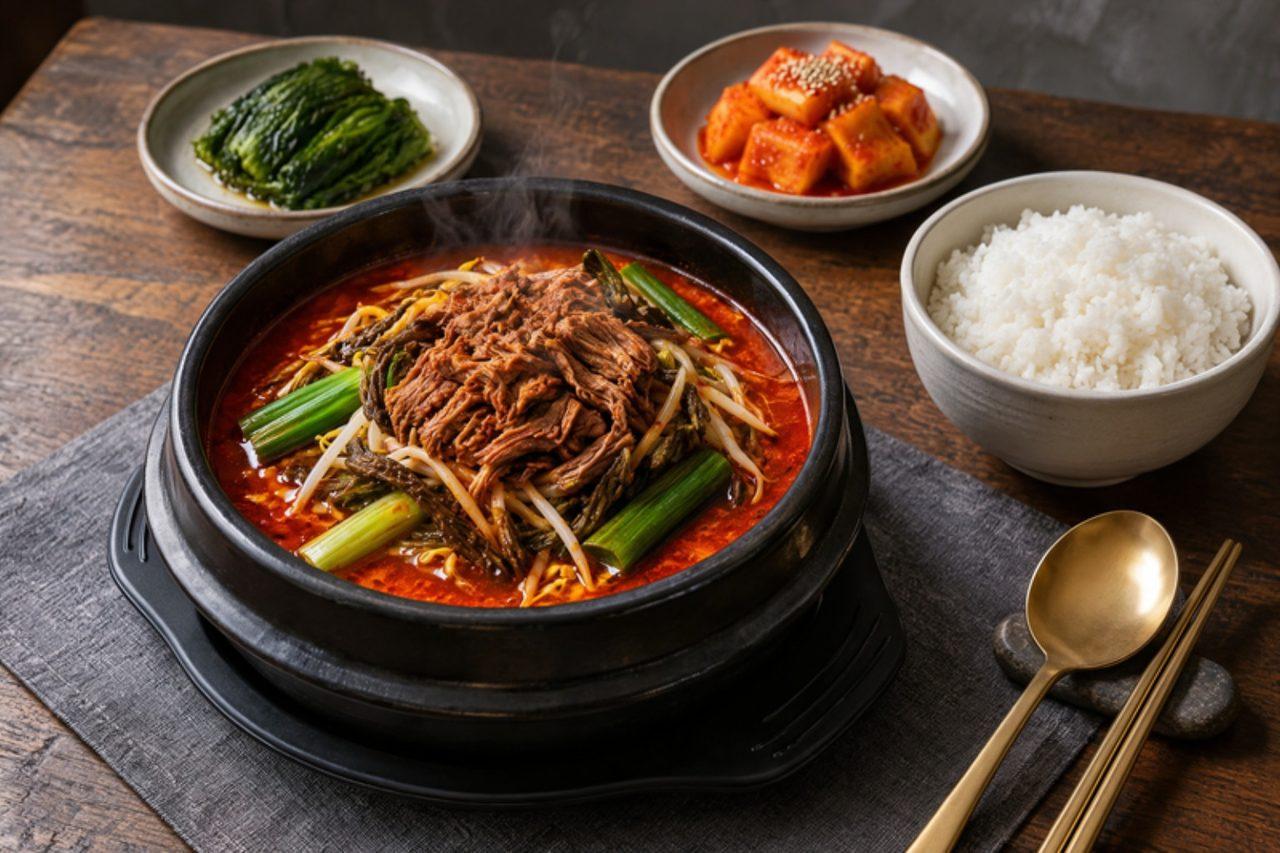
Yukgaejang is the red, chilli-slicked beef soup Koreans eat on the hottest days of summer to sweat out the heat, and it is also the soup served to mourners at funerals all over the country. Beef brisket is simmered for a couple of hours, shredded by hand and tossed with chilli flakes, garlic and soy, then returned to the broth with soaked bracken (gosari), bean sprouts and armfuls of leek. The flavour is deep and beefy with a slow chilli burn. Serve with a bowl of rice and kimchi. The usual mistake is adding the chilli flakes straight to the soup, where they taste raw and dusty; cooking them first in oil turns them sweet and red. A pressure cooker gets the brisket tender in 40 minutes. Chef's tip: shred the beef along the grain with your fingers rather than slicing it, so every strand soaks up the seasoning.

180 minKoreanSoupsSpicy
by KrazyBadal 0 views

Showing 18 of 7,762 recipes

Show more recipes

Page 164 of 863