Skip to content
Sayur lodeh
Featured recipe

Sayur lodeh

Sayur lodeh is everyday cooking in Central Java, made in big pots in Solo and Semarang kitchens and ladled over rice, with lontong rice cakes at Lebaran, or alongside opor and sambal goreng on festive tables. It's soupy rather than thick: a fragrant broth of coconut milk, galangal, lemongrass and lime leaf that carries chunks of aubergine, long beans, chayote and sweetcorn, plus tempeh and tofu to make it a meal. The flavour is mellow and slightly sweet, so the heat comes from sambal on the side. Chef's tip: keep the pot at a gentle simmer once the coconut milk goes in and stir now and then — a rolling boil splits the coconut milk into oily curds.

Read more 3 views
Can't decide?

What to eat today?

Spin the randomizer, search with what's already in your fridge, or browse recipes from our chefs.

Latest recipes

Tatale

Tatale is how Ghanaian cooks rescue plantains that have gone soft and black: they are mashed with onion, ginger and chilli, bound with a little flour, and fried as thick pancakes. In Accra and the Volta region they are sold warm from roadside pans and eaten as a snack or with a bowl of bean stew (aboboi). The outside crisps and caramelises while the inside stays soft and sweet. This version uses fine cornmeal, which keeps it gluten free. Chef's tip: the blacker the plantain skins, the better; they should feel soft like an overripe banana.

by KrazyBadal 0 views

Groundnut soup (nkatenkwan)

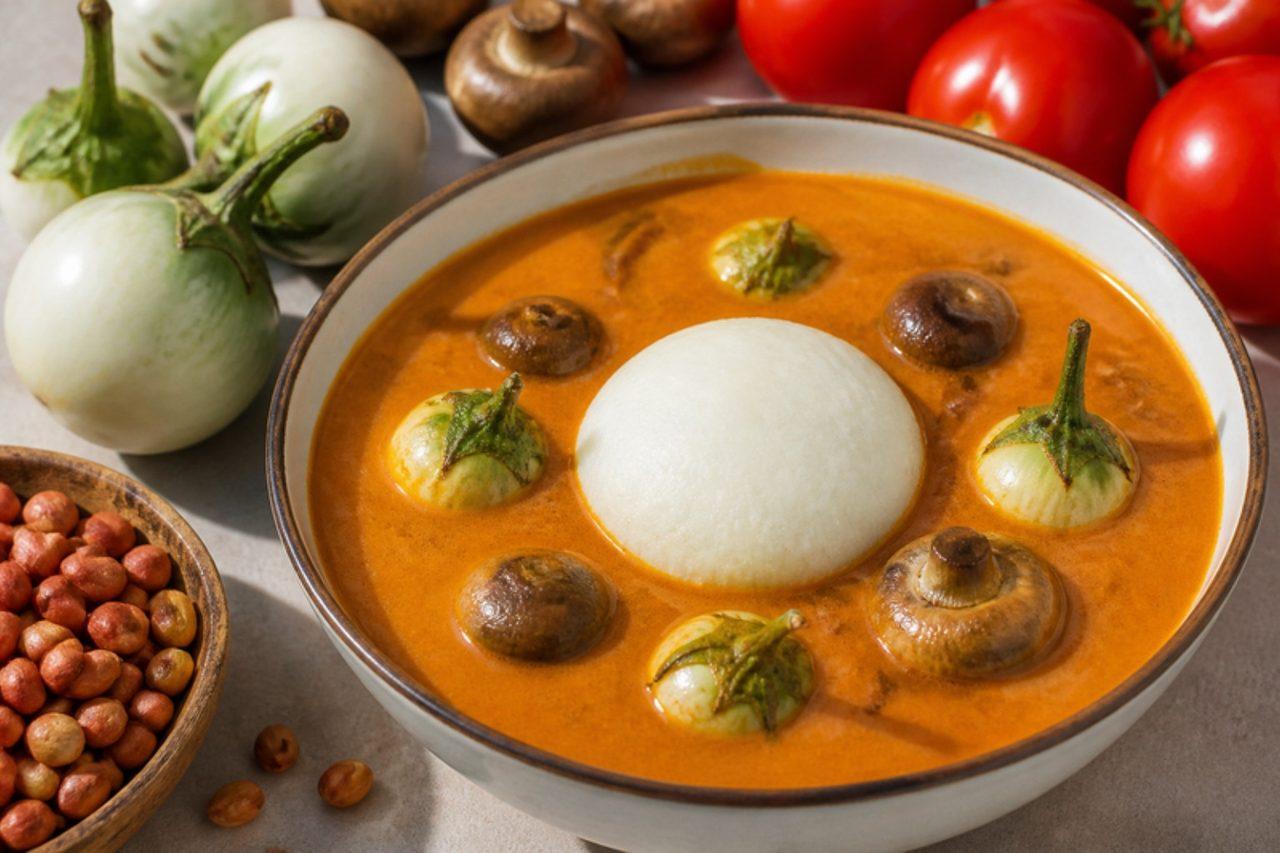
Nkatenkwan is the Sunday soup of Ghanaian homes, simmered while families are at church and eaten afterwards with omo tuo (soft rice balls) or fufu. Roasted groundnut paste is cooked slowly in a peppery tomato and ginger broth until the oil separates and turns the soup a rich orange-brown. It usually carries chicken or goat; here garden eggs (small African aubergines) and mushrooms keep it meaty without meat. Chef's tip: cook the groundnut paste long and slow; it is ready only when reddish oil rises and pools on top, and rushing it leaves a raw, pasty taste.

by KrazyBadal 0 views

Kontomire stew

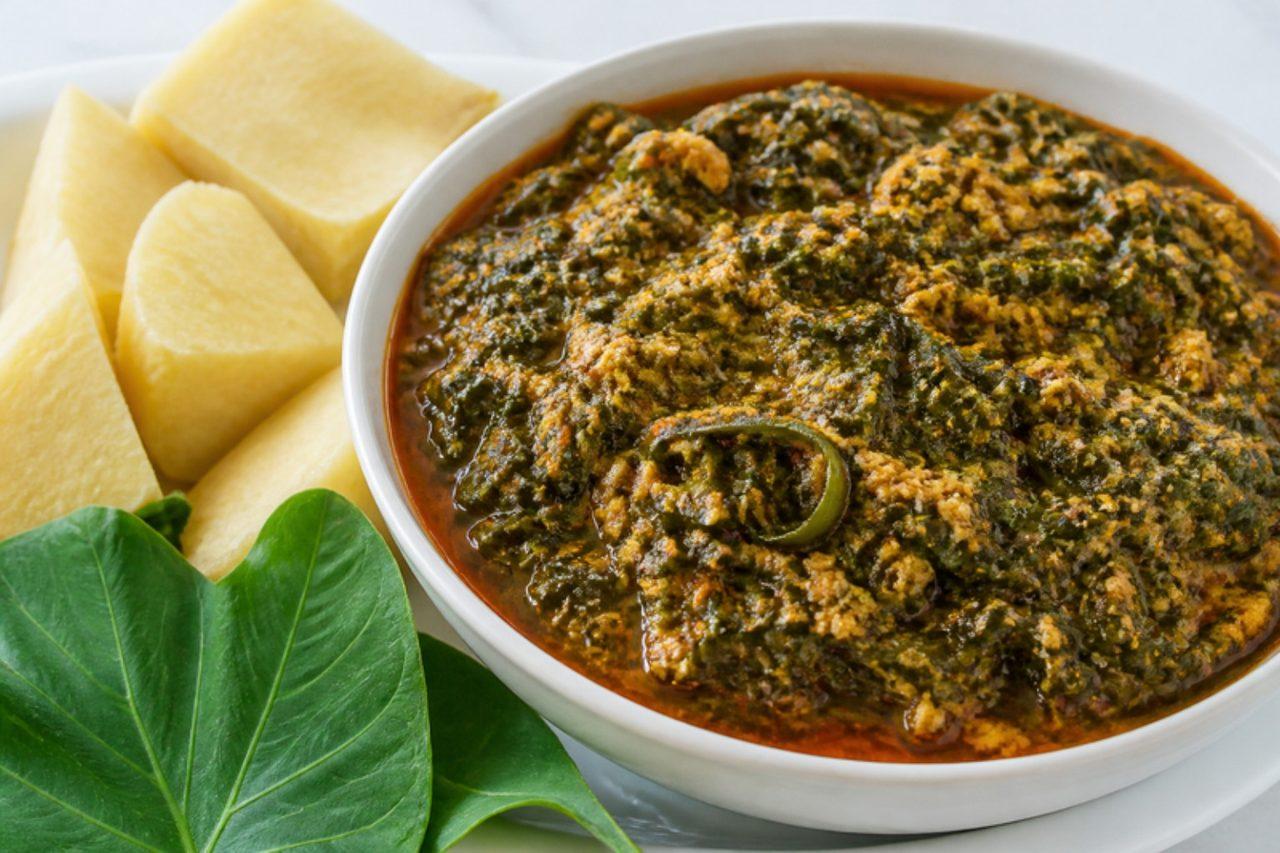
Kontomire stew comes from the Ashanti region around Kumasi, where young cocoyam (taro) leaves are picked from farms and cooked down with palm oil, tomatoes and ground agushie (egusi) seeds. It is a thick, dark green, nutty stew eaten with boiled yam, ampesi (boiled plantain) or rice. Many families add smoked fish or salted fish; this version uses boiled eggs instead, which is also common. Spinach is the best stand-in when fresh cocoyam leaves are not available. Chef's tip: cocoyam leaves must be cooked thoroughly; under-cooked ones leave an itchy, scratchy feeling in the throat.

by KrazyBadal 0 views

Shepherd's pie

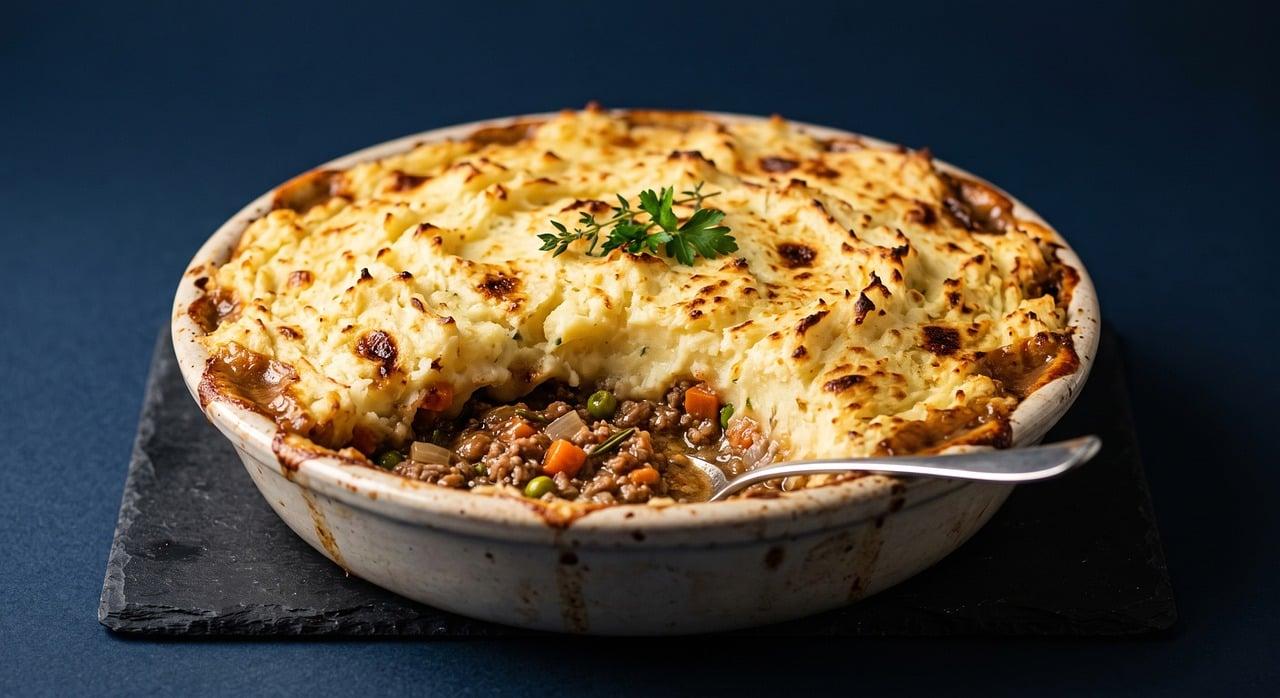
Shepherd's pie comes from the sheep-farming hill country of northern England and Scotland, where Monday's pie once used up Sunday's roast lamb; with minced beef the same dish is called cottage pie. Minced lamb simmers with onion, carrot, a little tomato and Worcestershire sauce into a deep gravy, then hides under a thick layer of buttery mash that browns in the oven. A family supper all over Britain, it is served with peas or buttered cabbage. Chef's tip: rough up the top of the mash with a fork; the ridges catch the heat and turn crunchy.

100 minBritishMeat
by KrazyBadal 0 views

Sunday roast chicken

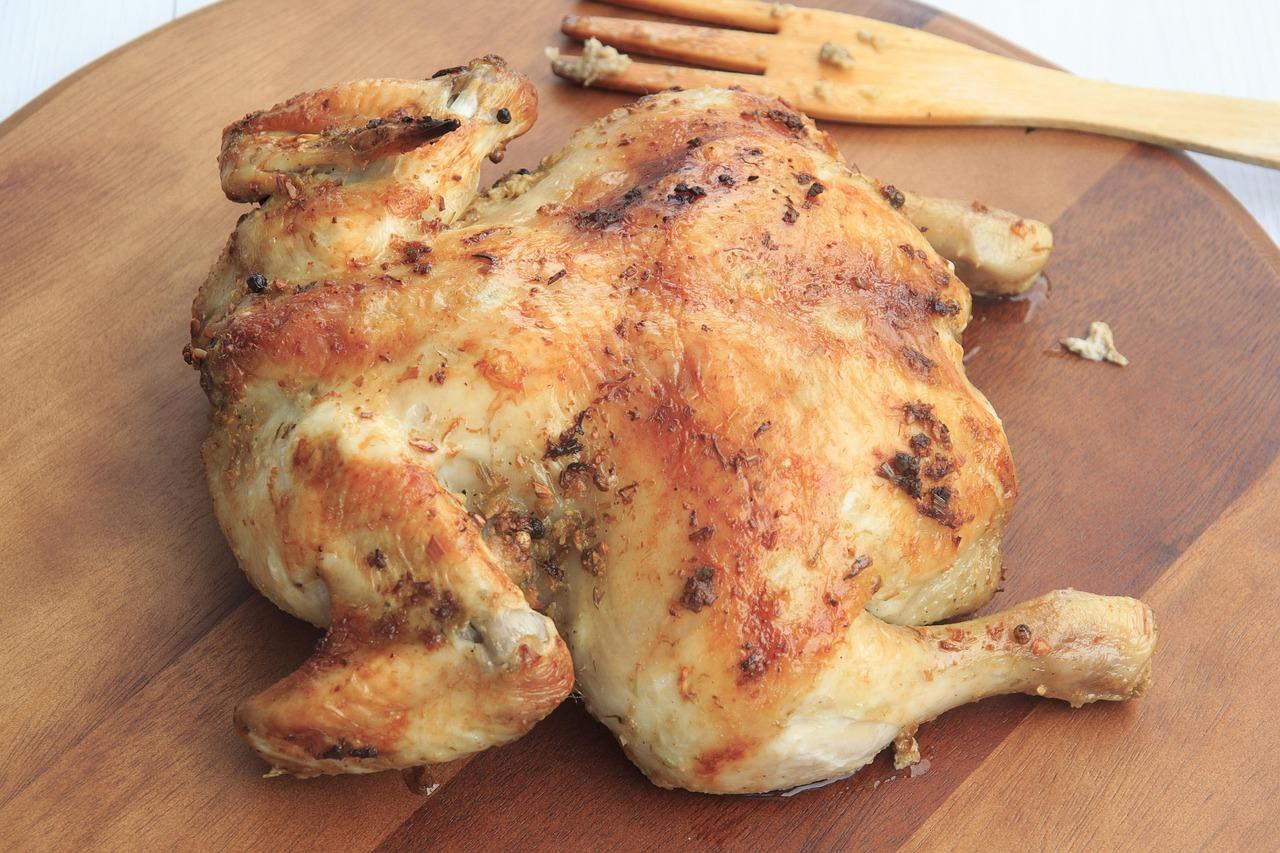
Sunday lunch across England and Wales means a roast, and a golden chicken is the most common one on family tables, with crisp roast potatoes, vegetables and gravy made in the roasting tin. A lemon and herbs perfume the bird from inside, and a sage-and-onion stuffing is baked alongside so the chicken cooks evenly. The stuffing can include sausage meat (pork) if you like; leave it out for a pork-free roast. Chef's tip: dry the skin with kitchen paper and leave the bird uncovered in the fridge overnight; dry skin is crisp skin.

by KrazyBadal 0 views

Red red

Red red is Ghanaian chop-bar comfort food, eaten at lunchtime from Kumasi to Cape Coast, and it gets its name from its two reds: the bean stew glowing with palm oil and the fried ripe plantain served alongside. Black-eyed beans simmer in a tomato and onion sauce until creamy, then a sprinkle of gari on top adds crunch. It is often made with smoked fish or momoni; this meat-free version uses smoked paprika for the same savoury edge. Chef's tip: choose plantains with mostly black skins; they fry up sweet and caramelised, the perfect partner for the salty stew.

by KrazyBadal 0 views

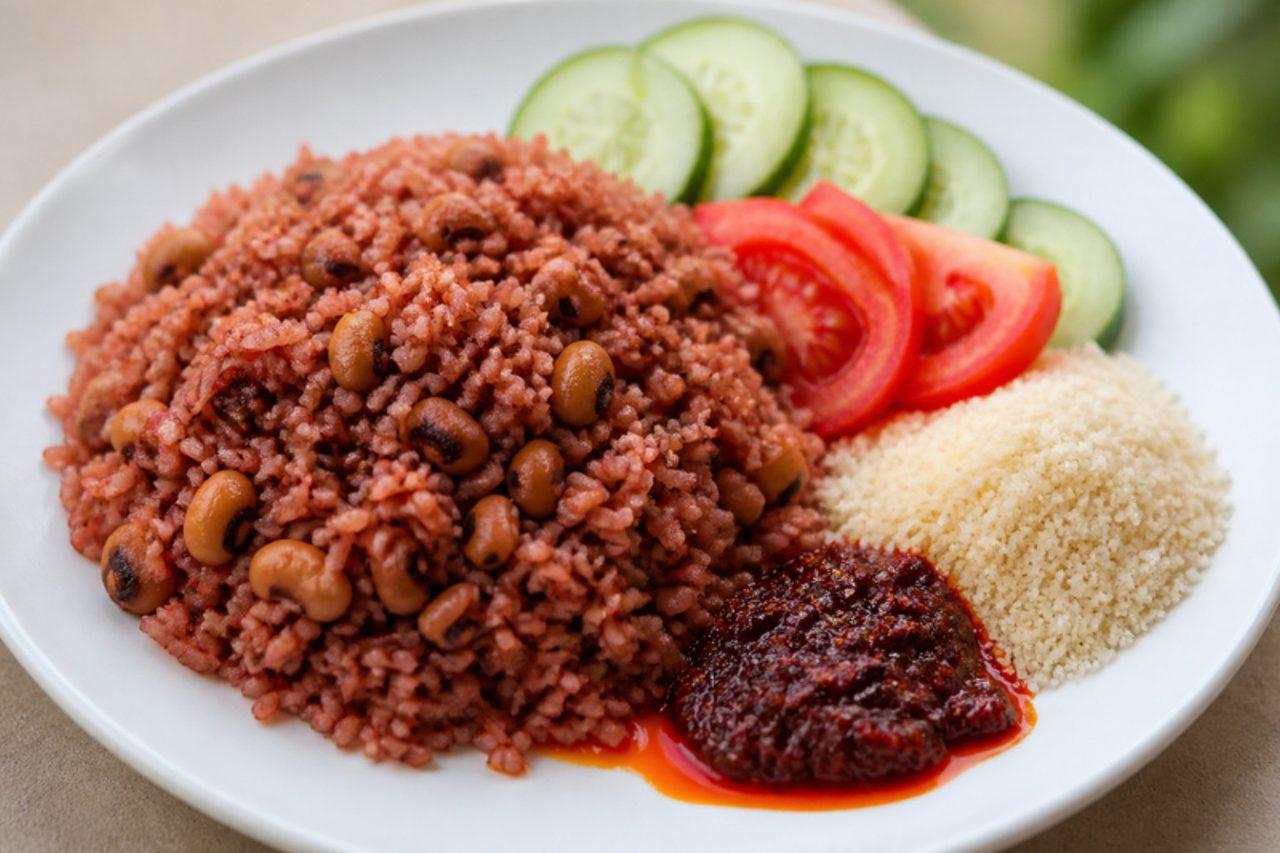
Waakye

Waakye (say 'waa-chay') came south from the Hausa communities of northern Ghana and is now Accra's favourite breakfast and lunch, sold from big pots wrapped in leaves at roadside stalls before most offices open. Rice and black-eyed beans are cooked together with dried sorghum leaf stalks (waakye leaves), which dye the pot a deep reddish brown and add a faint earthy note. A full plate comes loaded with shito, gari, spaghetti (talia), salad and fried plantain. Chef's tip: cook the beans almost soft before the rice goes in; beans and rice finishing together is the whole trick.

by KrazyBadal 0 views

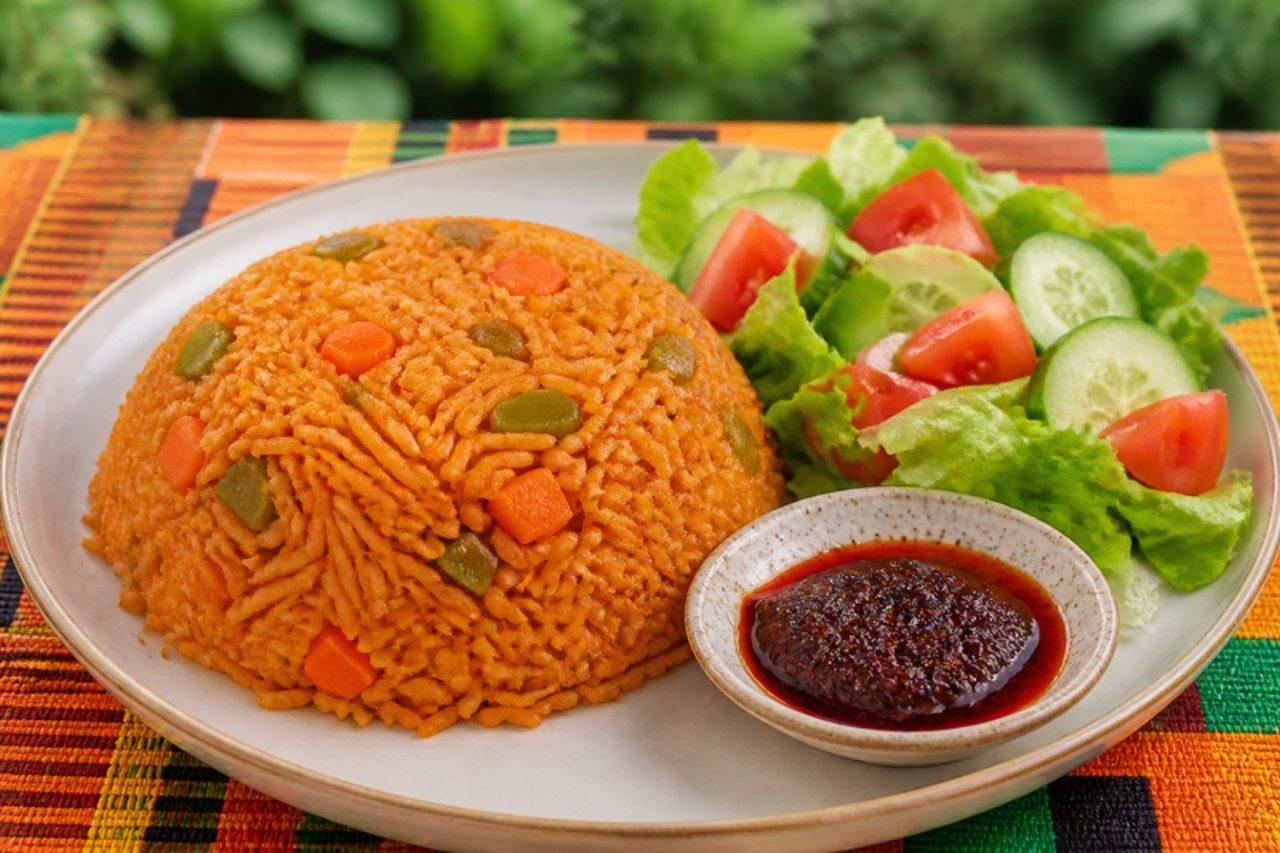
Ghana jollof rice

Ask anyone in Accra and Ghana jollof is the only jollof worth arguing about, a friendly rivalry with Nigeria that plays out at every West African party and all over social media. The difference is real: Ghanaians favour long, fragrant basmati or jasmine rice rather than parboiled rice, a base heavier on ginger and garlic, and a softer, more aromatic finish without the smoky 'bottom pot'. It is served with fried plantain, a fresh salad and shito, Ghana's dark pepper sauce, on the side. Chef's tip: wash the basmati until the water runs clear and keep the liquid tight; fragrant rice turns sticky very quickly if it swims in sauce.

by KrazyBadal 0 views

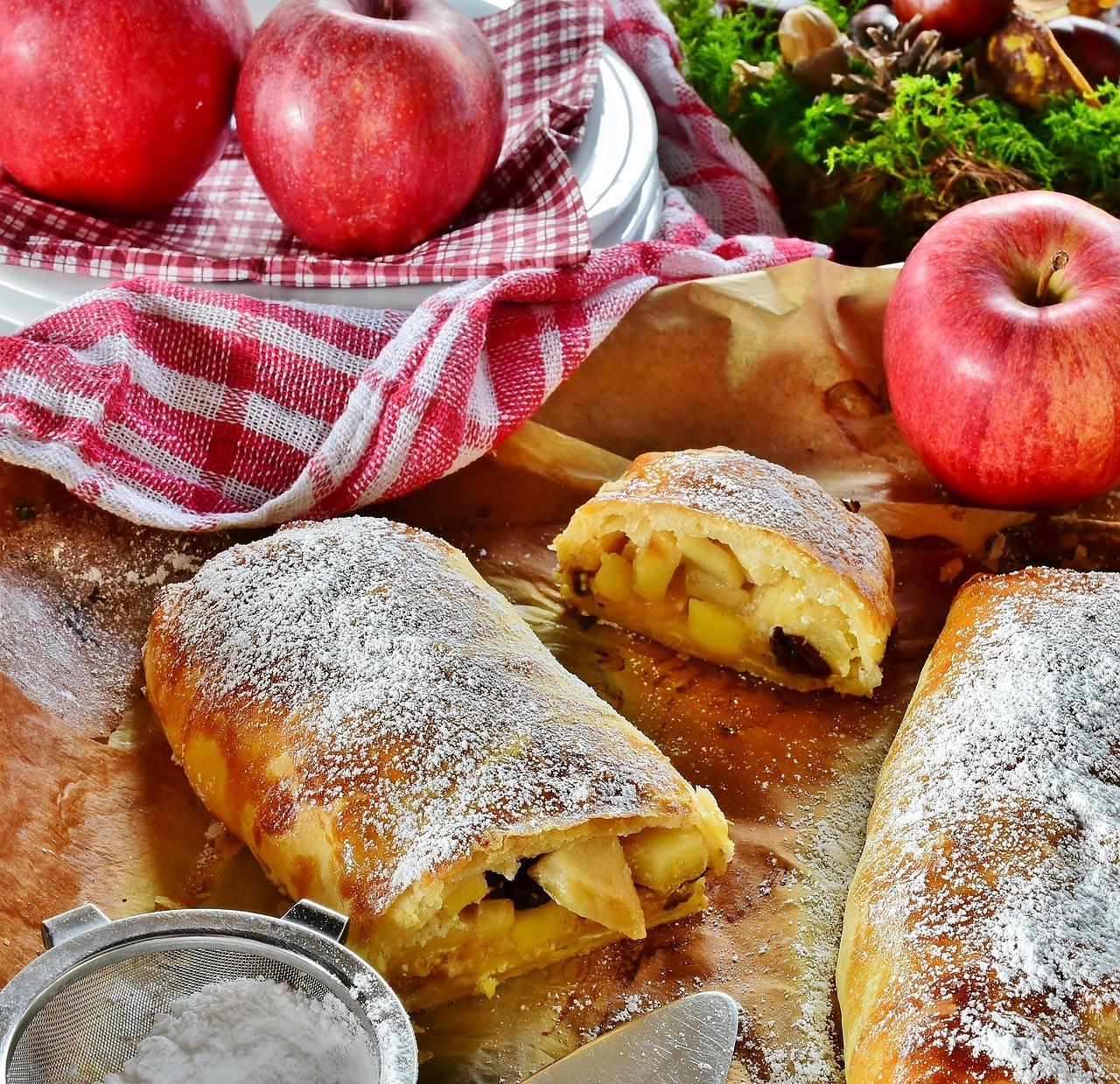
Apfelstrudel

Apfelstrudel is the pride of Vienna's coffee houses, eaten warm in the afternoon with Schlagobers (whipped cream), vanilla sauce or ice cream. The secret is the dough: a soft, oiled dough stretched by hand over a floured cloth on the kitchen table until it is so thin you could read a newspaper through it, then rolled around tart apples, raisins, cinnamon and butter-fried breadcrumbs. It takes practice but not special skill. Chef's tip: fry the breadcrumbs in butter until golden before scattering them over the dough; they soak up the apple juices and stop the bottom of the strudel going soggy.

by KrazyBadal 0 views

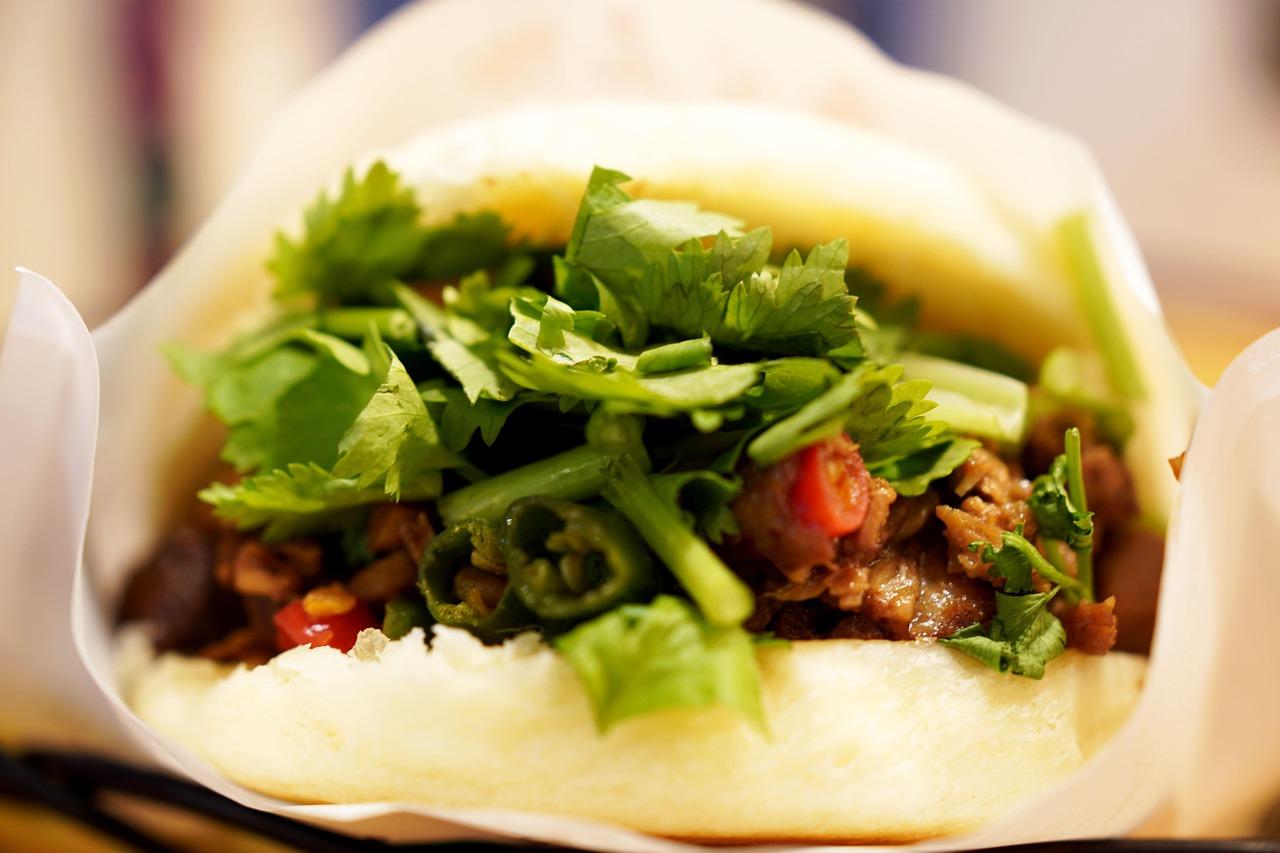
Rou jia mo

Walk through Xi'an's Muslim Quarter or any Shaanxi bus station and you will see cooks chopping steaming braised pork on thick wooden blocks and stuffing it into split, griddle-crisped buns. The bread, called baijimo, has a crackly shell with an 'iron ring' edge, a 'tiger-back' top and a spiral 'chrysanthemum heart' inside; the pork is slow-cooked in a soy broth with a dozen warm spices until it falls apart. Chopped with green chilli and coriander and moistened with the braising juices, it makes one of the world's oldest sandwiches. Eat it hot in the hand, with cold liangpi noodles or a bowl of soup alongside. Chef's tip: keep the braising liquid as a master stock in the freezer; the next batch of pork tastes even better.

by KrazyBadal 0 views

Vegetarian Flammkuchen

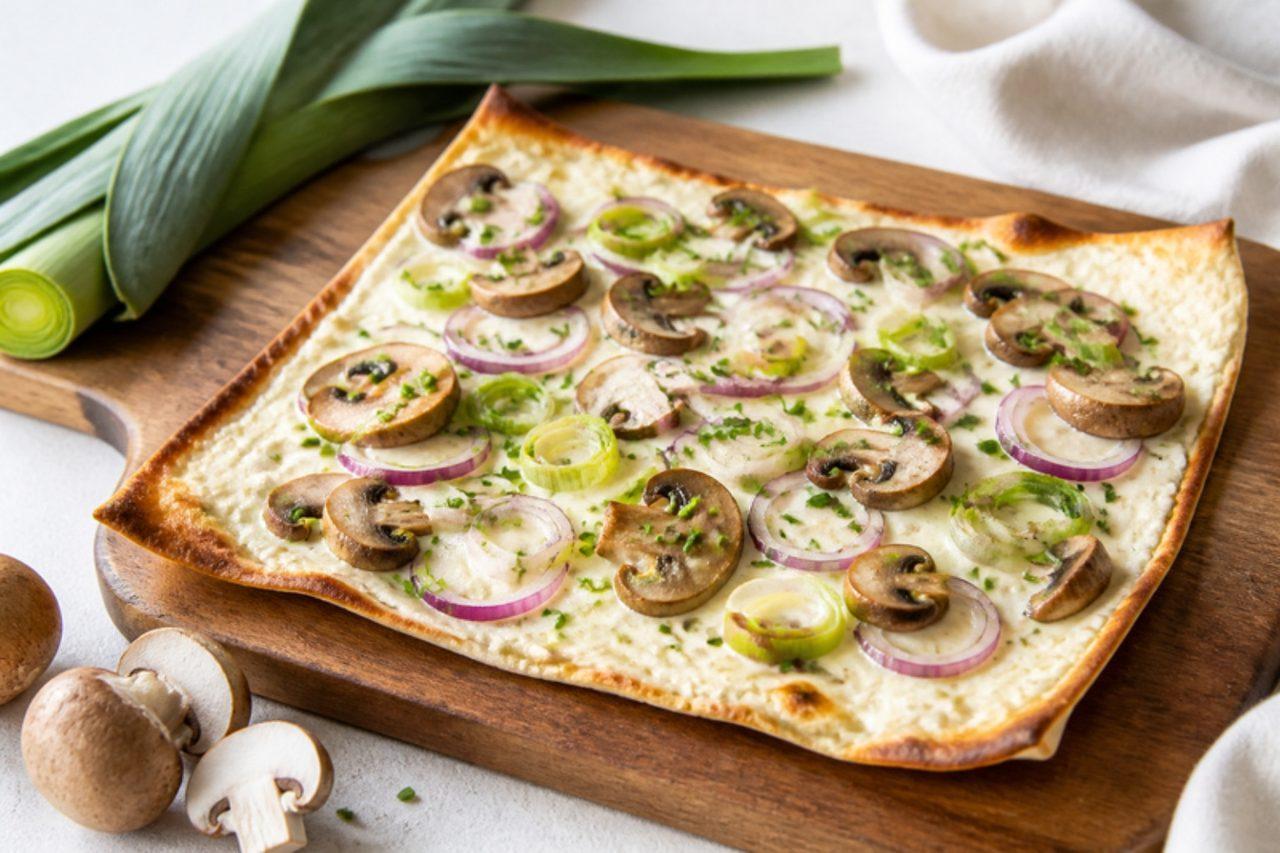
Flammkuchen comes from the borderlands of Alsace, Baden and the Palatinate, where farmers baked it on bread day to test the heat of the wood oven. The dough has no yeast and is rolled almost as thin as paper, spread with crème fraîche or quark and baked hot and fast so the edges blister and char in spots. The classic topping is onion and bacon; around Strasbourg and Freiburg the leek and mushroom version is a popular meat-free choice, often eaten with a glass of new wine in autumn. Chef's tip: bake it as hot as your oven will go, on a preheated tray or stone; a Flammkuchen baked at a moderate heat turns out bready instead of crisp.

by KrazyBadal 0 views

Bhorta platter (aloo, begun and dal bhorta)

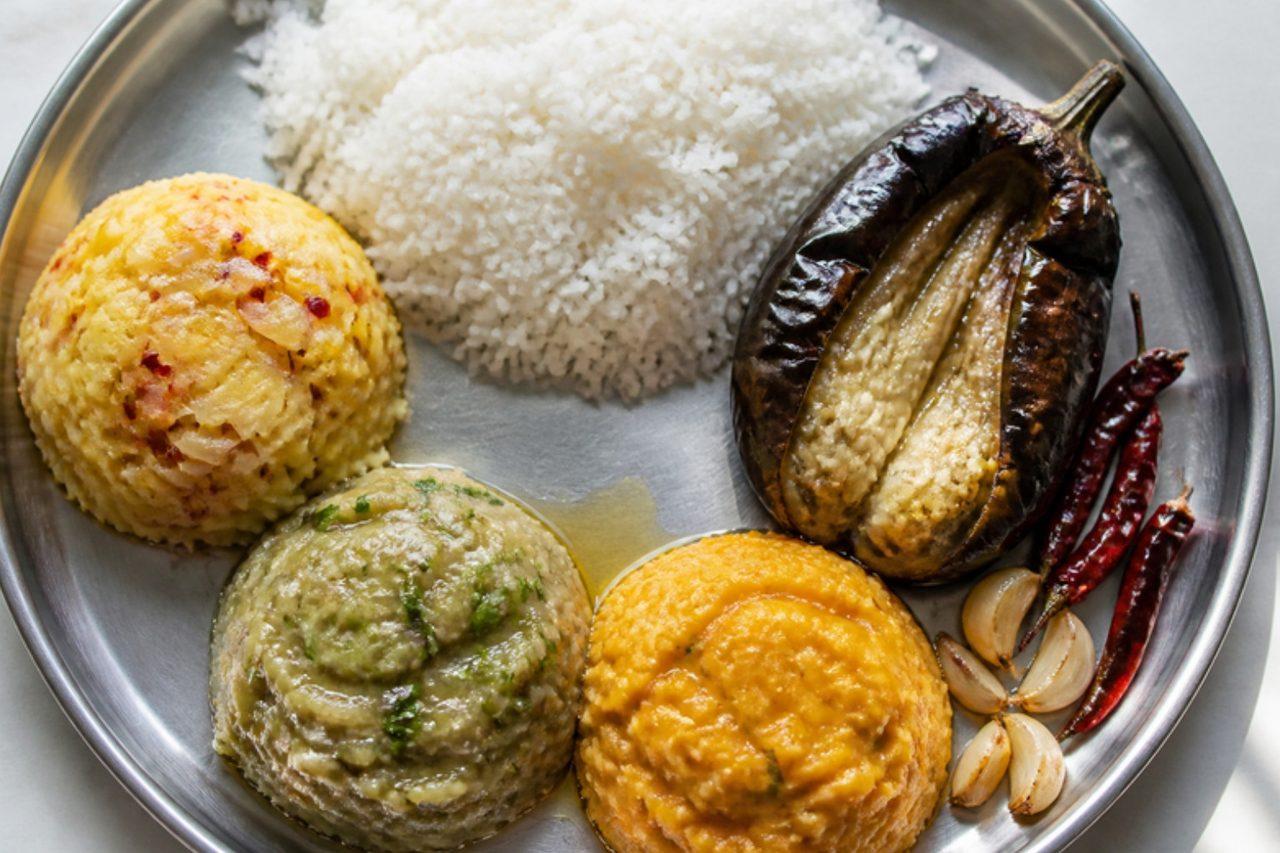
No word says home cooking in Bangladesh like bhorta: anything boiled, roasted or fried, then mashed by hand with raw mustard oil, sliced onion, green or burnt chillies and coriander. A family lunch in Dhaka or Khulna might set out three or four bhortas in little heaps around a mound of rice, and this page makes the classic trio: aloo (potato), begun (fire-roasted aubergine) and dal (dry-fried red lentil). They share one method, so they live together here. Chef's tip: mash with your fingers, not a fork, rubbing the onion and chilli into the oil first; it bruises them and releases their sharpness into every bite.

by KrazyBadal 0 views

Begun bhaja

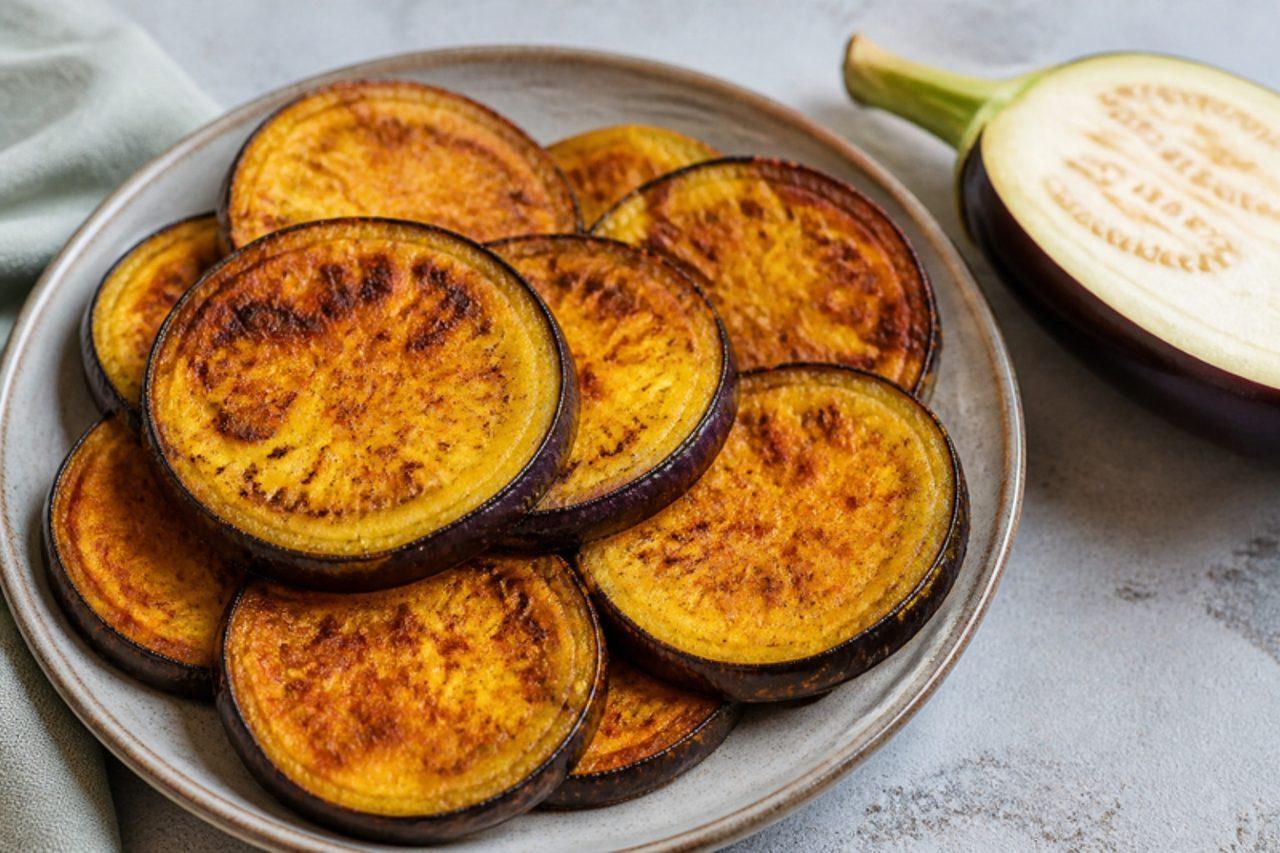
Begun bhaja is the crisp-edged, creamy aubergine slice that sits beside dal and rice on almost every Bangladeshi lunch plate, from Chittagong to Sylhet, and it is a must with bhuna khichuri on a rainy afternoon. Thick rounds are rubbed with turmeric, chilli and salt, then shallow-fried in mustard oil until the outside is caramelised and the inside melts like custard. Chef's tip: salt the slices and leave them for 10 minutes, then pat dry; they drink up far less oil and brown more evenly.

by KrazyBadal 0 views

Bhuna khichuri

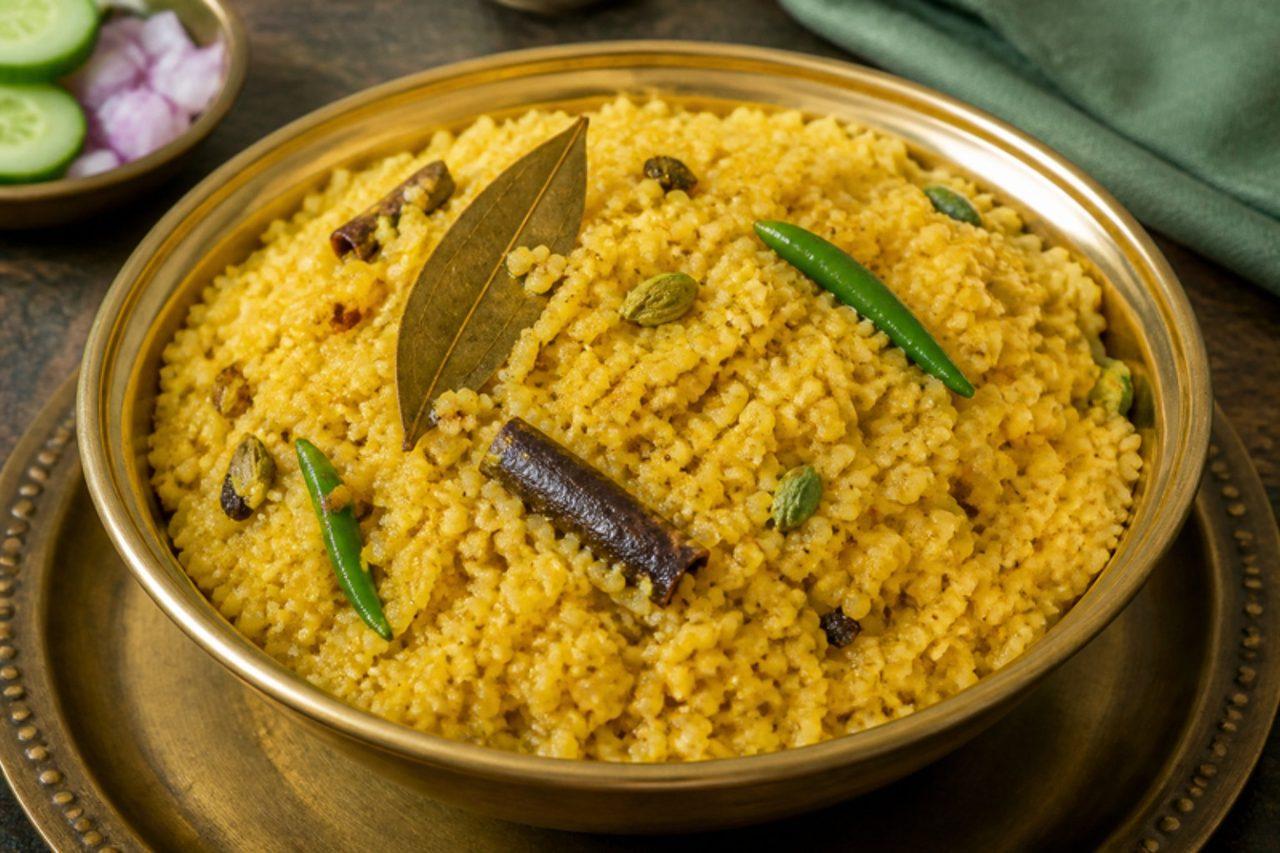
In Dhaka, the first heavy monsoon downpour sends people home craving bhuna khichuri, and Eid mornings in old Dhaka often start with a pot of it too. Unlike the loose, porridge-like khichdi of north India, the Bangladeshi bhuna version is dry and fluffy: dry-roasted moong dal and short-grain rice are fried in ghee with onions and whole spices until fragrant, then cooked with just enough water so the grains stay separate. Serve it hot with begun bhaja, a bhorta or two and a spoon of pickle. Chef's tip: roast the moong dal in a dry pan until it smells like toasted nuts before you wash it; that roasted note is what makes this khichuri taste of Bangladesh.

by KrazyBadal 0 views

Toad in the hole

Toad in the hole has been a thrifty family supper across northern England for two centuries, and children still love it for the name as much as the taste. Plump pork sausages are browned in a hot tin, then a simple egg-and-milk batter is poured around them and puffs up into a golden, crisp Yorkshire pudding. It is always served with onion gravy and green vegetables. Chef's tip: the fat must be smoking hot when the batter goes in, and the oven door must stay shut for the first 25 minutes, or the batter will not rise.

by KrazyBadal 0 views

Rooibos iced tea

Rooibos grows only in the Cederberg mountains north of Cape Town, and on hot Western Cape afternoons it is brewed strong and poured over ice rather than drunk hot. The tea is naturally caffeine-free and slightly sweet with notes of honey and vanilla, so it needs little added sugar. Orange, lemon and fresh mint make it a summer jug for the stoep (veranda). Chef's tip: brew the tea double strength and pour it straight over plenty of ice; it chills in seconds and the melting ice dilutes it to the right strength.

by KrazyBadal 0 views

Buttermilk rusks (beskuit)

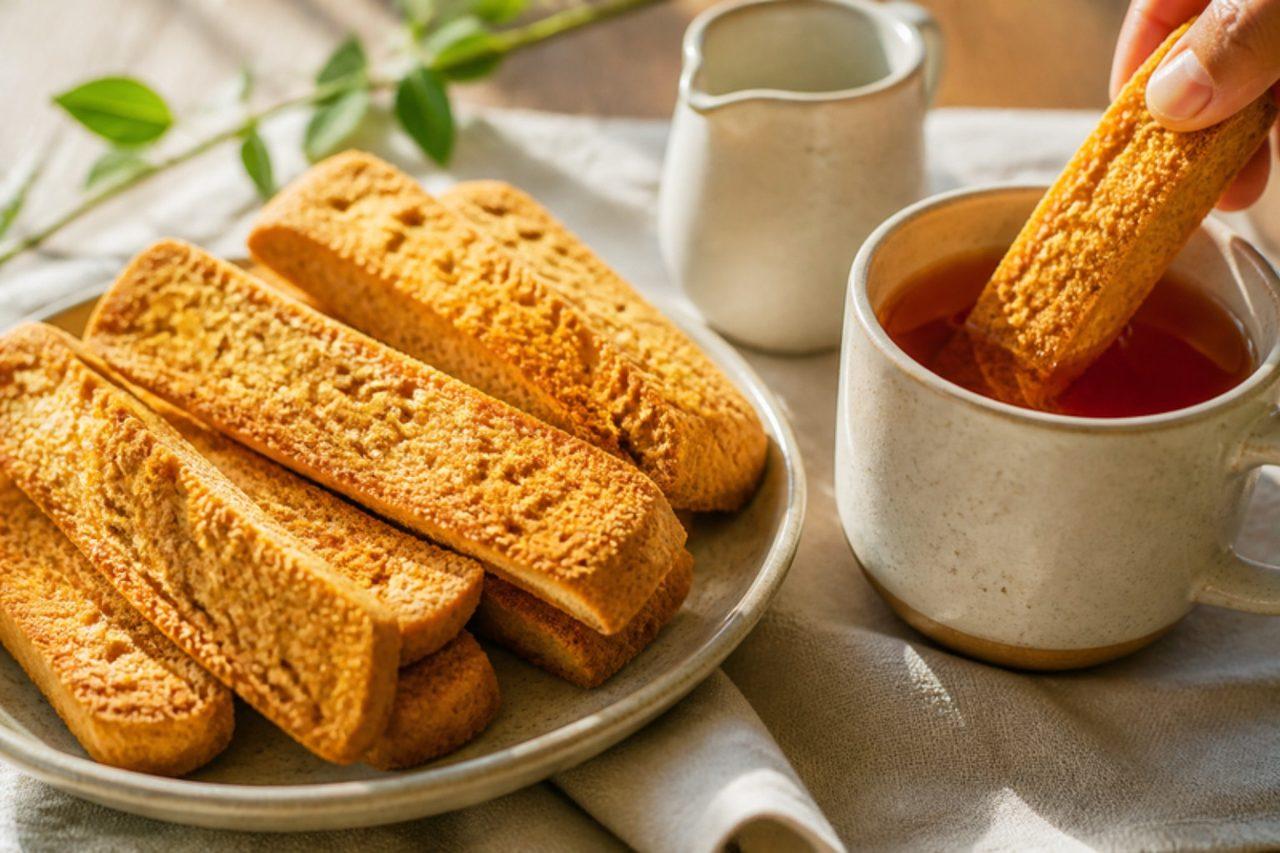
Beskuit grew out of the Voortrekker need for bread that kept on long ox-wagon journeys; today a tin of rusks sits next to the kettle in homes from the Karoo to Pretoria, and they are dunked in early-morning coffee or rooibos. A soft buttermilk dough is baked as a loaf, cut into fingers and then dried in a low oven for hours until rock hard and crunchy. Chef's tip: dry the rusks slowly at a very low heat with the oven door slightly open; they should dry out completely, not brown further.

by KrazyBadal 0 views

Milk tart (melktert)

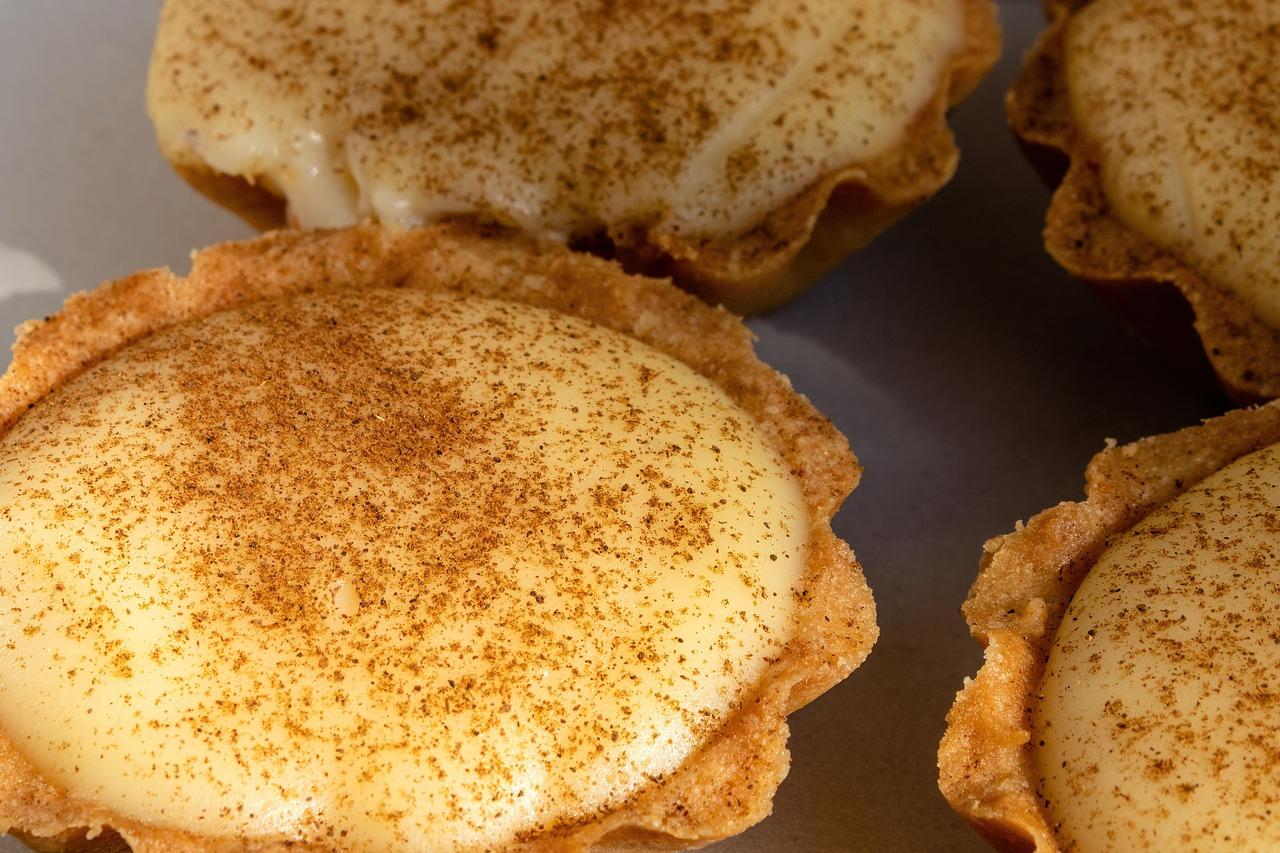
Melktert is South Africa's coffee-time tart, made by Afrikaner and Cape Malay families alike, sold at church bazaars and in farm stalls along the Garden Route, and even celebrated with its own National Milk Tart Day on 27 February. A crisp sweet pastry case holds a thick, wobbly custard made with milk and flavoured with a cinnamon stick, then finished with a heavy dusting of ground cinnamon. It is lighter and more milky than a baked egg custard tart. Chef's tip: stir the custard constantly as it thickens and keep cooking for 2 minutes after it bubbles so the flour loses its raw taste.

by KrazyBadal 0 views

Linseneintopf

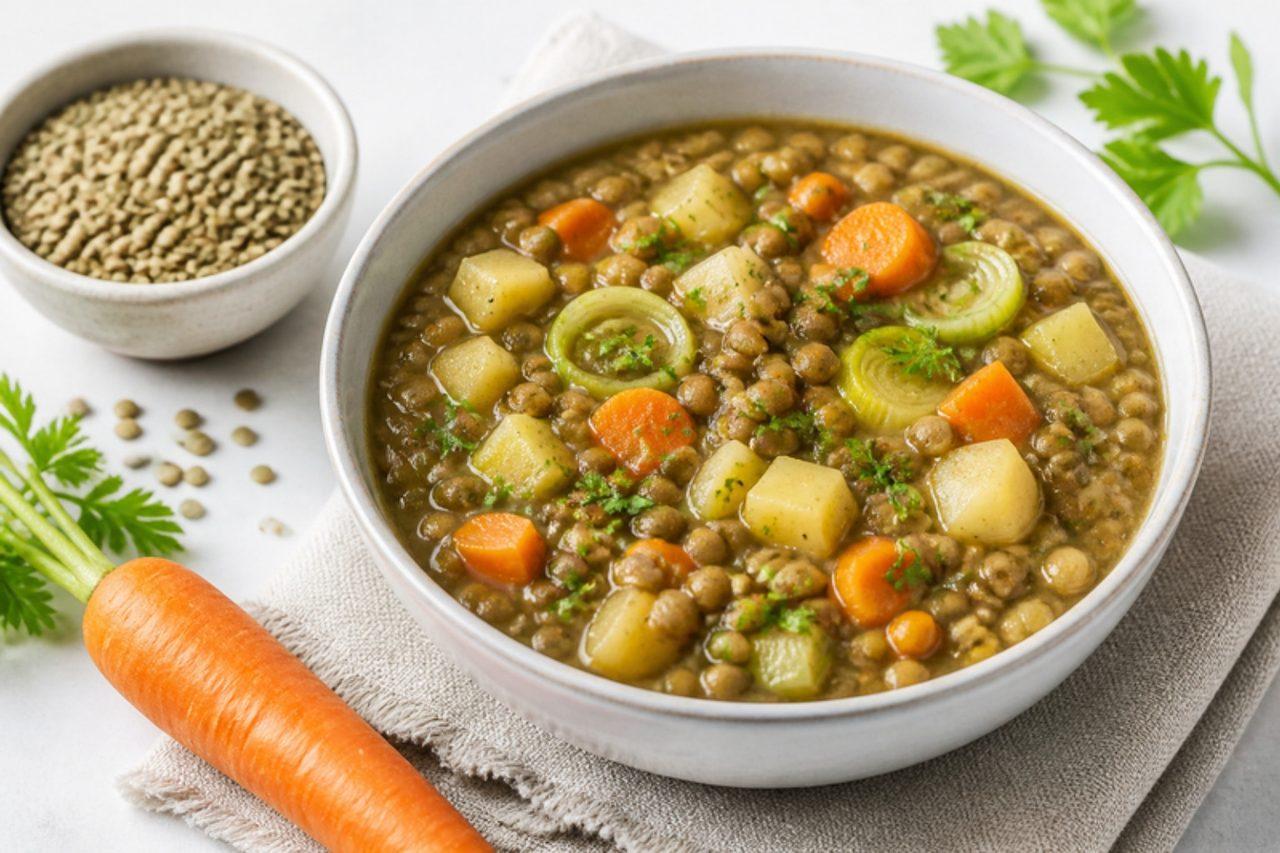
Linseneintopf is the one-pot lentil stew that German families cook on cold weekdays, and in many school and works canteens it's still the Thursday or Saturday lunch. Brown lentils simmer with potatoes, carrots, celeriac and leek until thick and soft; the finishing touch, all over Germany, is a good splash of vinegar at the table, which wakes the whole bowl up. It's usually made with smoked sausage or bacon; here smoked paprika and vegetable stock give the smoky depth instead. Chef's tip: add the vinegar only at the end, because acid added early keeps the lentils hard.

by KrazyBadal 0 views

Smash burger

Diners and drive-ins across the American Midwest have smashed burgers on hot griddles for a century, and the style is now everywhere from food trucks to backyard cookouts. A ball of beef is pressed hard onto a very hot pan so it spreads thin and develops a deep brown, lacy crust, then gets a slice of cheese and goes into a soft toasted bun with pickles and a tangy sauce. Two thin patties per burger is the classic. Chef's tip: smash within the first 30 seconds only; pressing later squeezes out the juice.

by KrazyBadal 0 views

Sauerkraut

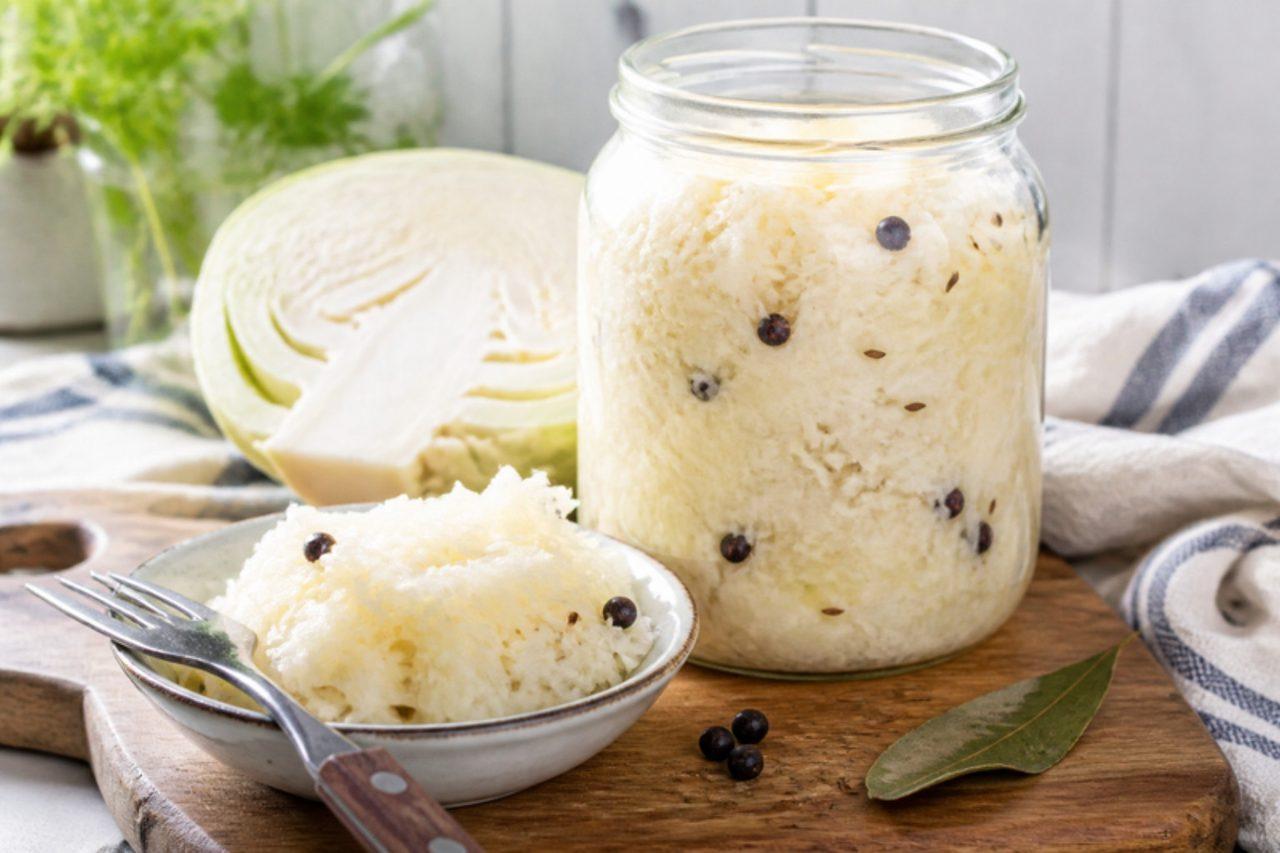
Sauerkraut is how German households have kept cabbage through the winter for centuries, and autumn is still when families in Baden, Franconia and Alsace shred the new white cabbage into stoneware crocks. It's nothing but cabbage and salt: the salt pulls out the juice and natural lactic acid bacteria do the rest, turning it sour, crunchy and full of flavour in a few weeks. Raw homemade sauerkraut tastes far fresher than the jar and is a lovely side for Kartoffelpuffer or potato mash; for a warm side, simmer it with onion and a grated apple. Chef's tip: weigh the cabbage and use exactly 2% of its weight in salt; too little and it goes soft and mouldy, too much and it won't ferment.

by KrazyBadal 0 views

Rotkohl

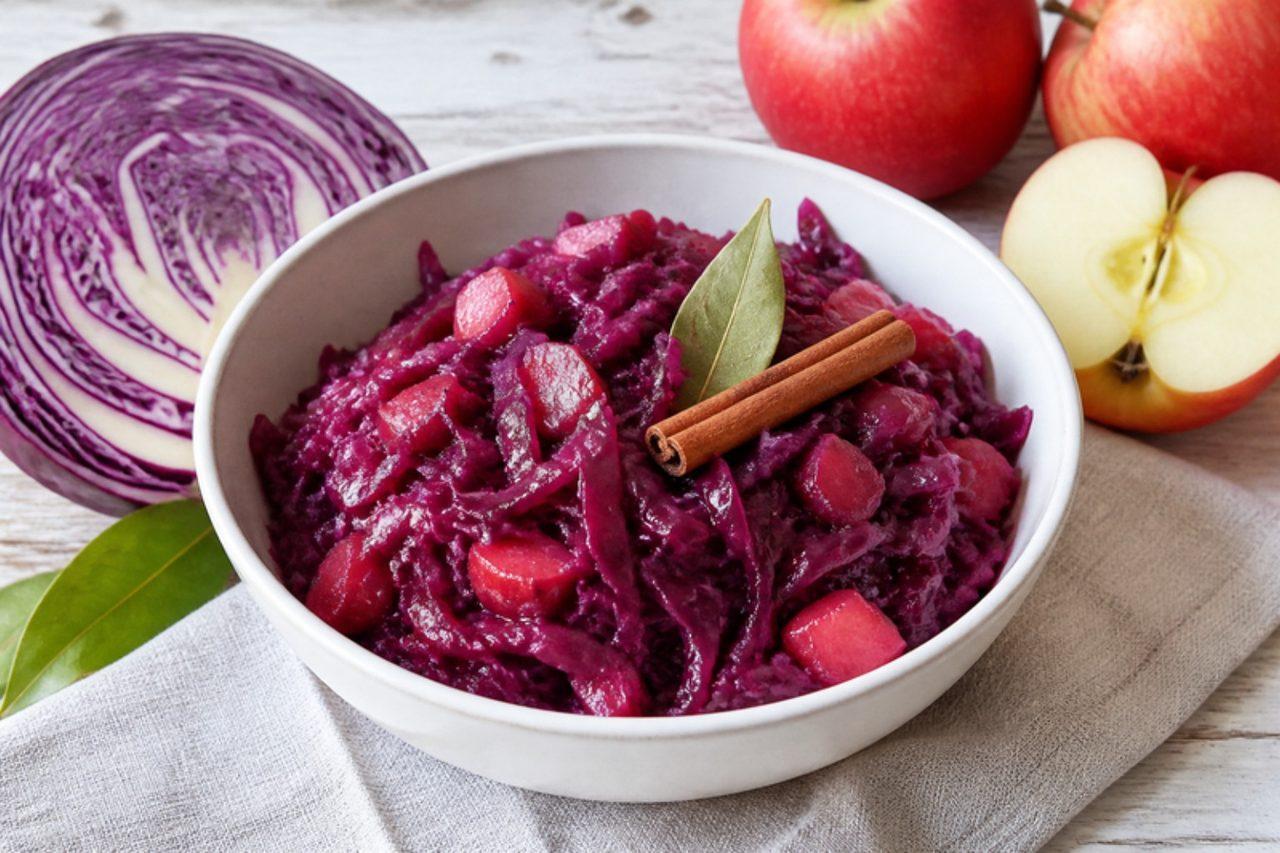
Rotkohl, called Blaukraut in Bavaria and Austria, is the purple braised cabbage that sits next to dumplings and potatoes on German plates from autumn to Christmas. Red cabbage is cooked slowly with apple, onion, vinegar, bay and clove until meltingly soft, sweet-sour and glossy, a deep wine-red because the acid keeps the colour bright. Traditionally it's started in goose fat or lard; oil works perfectly and keeps it vegan. It's one of those dishes that is better the next day, so families make a big pot before Christmas. Chef's tip: add the vinegar at the start, not the end; without acid the cabbage turns an unappetising blue-grey as it cooks.

by KrazyBadal 0 views

Semmelknödel with mushroom sauce

Semmelknödel are the bread dumplings of Bavaria and Austria, made to use up yesterday's rolls (Semmeln) soaked in warm milk and bound with egg, onion and parsley. With a creamy mushroom sauce, Semmelknödel mit Schwammerlsoße, they become a full meal and a favourite in Munich beer gardens and Alpine inns from late summer, when foraged chanterelles and ceps reach the markets. Chef's tip: simmer the dumplings in barely trembling water, never a rolling boil; hard boiling breaks them apart, which is the most common Knödel disaster.

by KrazyBadal 0 views

Kartoffelpuffer

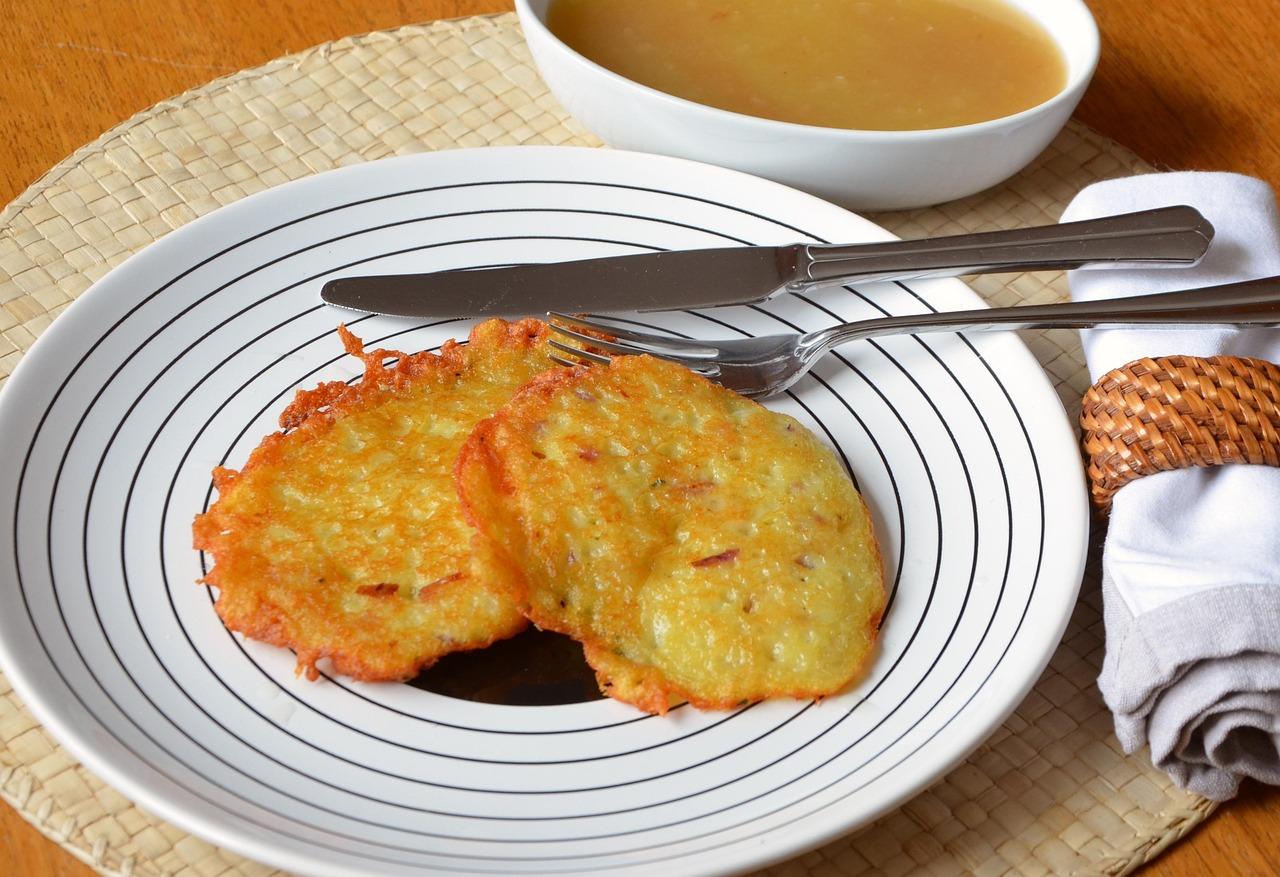
In Cologne and Düsseldorf they're called Reibekuchen, and they are the smell of the Christmas markets and autumn fairs: thin, lacy potato fritters fried in oil until golden and crunchy at the edges. At home in the Rhineland they're traditionally a Friday dish, eaten hot with apple sauce or on buttered dark rye bread. They are simple, but timing and heat matter. Chef's tip: squeeze the grated potato really hard in a tea towel and keep the starch that settles at the bottom of the liquid; it binds the mixture so you need very little flour.

by KrazyBadal 0 views

Cobb salad

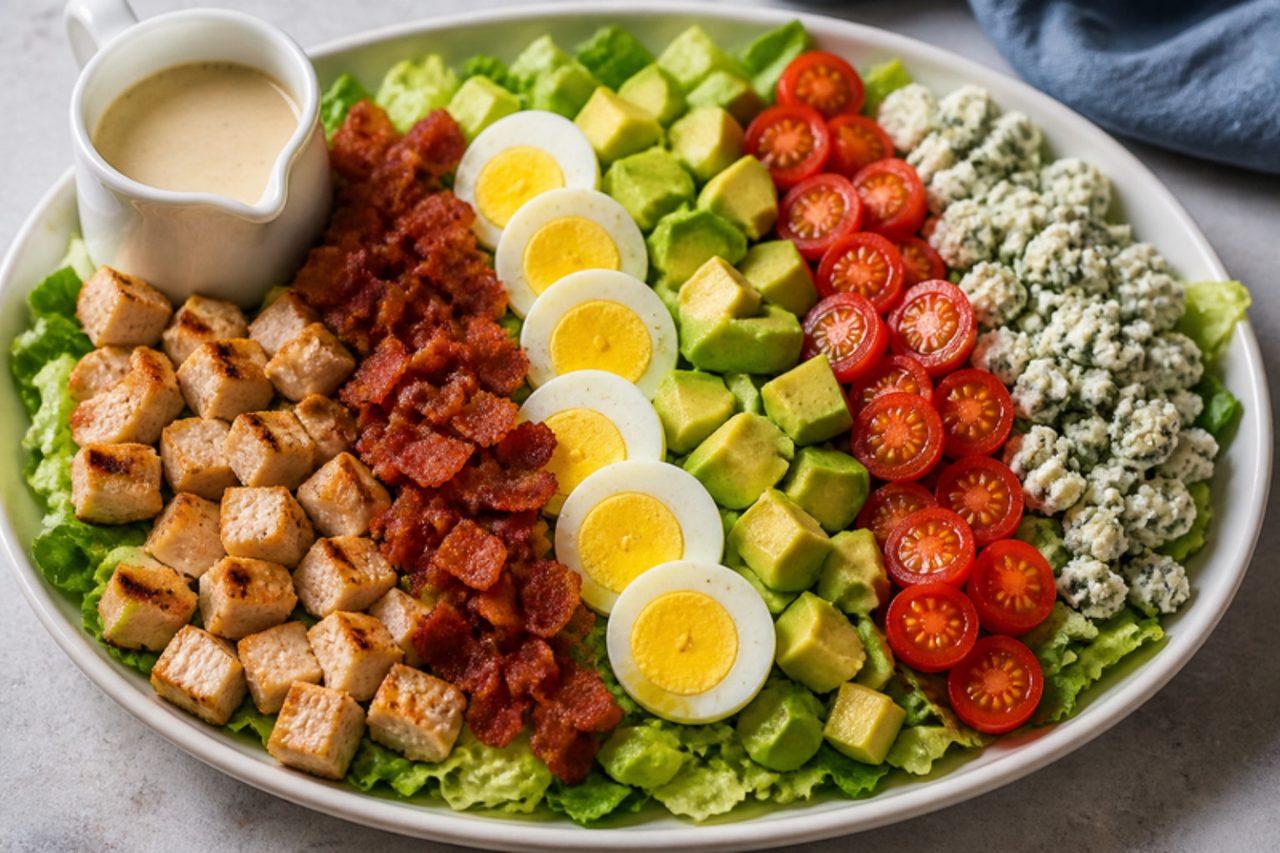
The Cobb salad was born at the Brown Derby restaurant in Hollywood in the 1930s, and it is still a lunch classic in Los Angeles delis and hotel coffee shops. Rows of chopped chicken, crisp bacon (pork), hard-boiled egg, avocado, tomato and blue cheese sit on crisp lettuce, and everyone mixes them with a sharp red wine vinegar dressing at the table. Chef's tip: chop everything to roughly the same small size so each forkful gets a bit of everything.

by KrazyBadal 0 views

Cornish pasty

The Cornish pasty fed tin miners and fishermen in Cornwall for centuries, its thick crimped edge a handle for dirty hands, and today bakeries from Penzance to St Ives sell them warm all day. The filling goes into the pastry raw: thinly sliced beef skirt, potato, swede and onion, seasoned only with salt and plenty of pepper, so everything steams in its own juices inside the crust. Chef's tip: slice the vegetables thinly and evenly, not in cubes; thin pieces cook through in the same time as the beef.

by KrazyBadal 0 views

Schwäbischer Kartoffelsalat

Swabian potato salad is nothing like the creamy kind. In Stuttgart and across Baden-Württemberg it is made with waxy potatoes sliced while still warm and soaked in hot stock, vinegar, onion and oil until it turns glossy and slightly 'schlonzig', a local word for that loose, juicy texture. It is eaten lukewarm, never fridge-cold, beside Maultaschen or vegetarian schnitzel, and at every summer garden party. This version uses vegetable stock. Chef's tip: pour the hot dressing over the potatoes while they are still warm; cold potatoes won't drink it in and the salad stays dry.

by KrazyBadal 0 views

Showing 27 of 4,484 recipes

Show more recipes

Page 284 of 499