


Skip to content
Badam ka halwa
Featured recipe

Badam ka halwa

Almond halwa

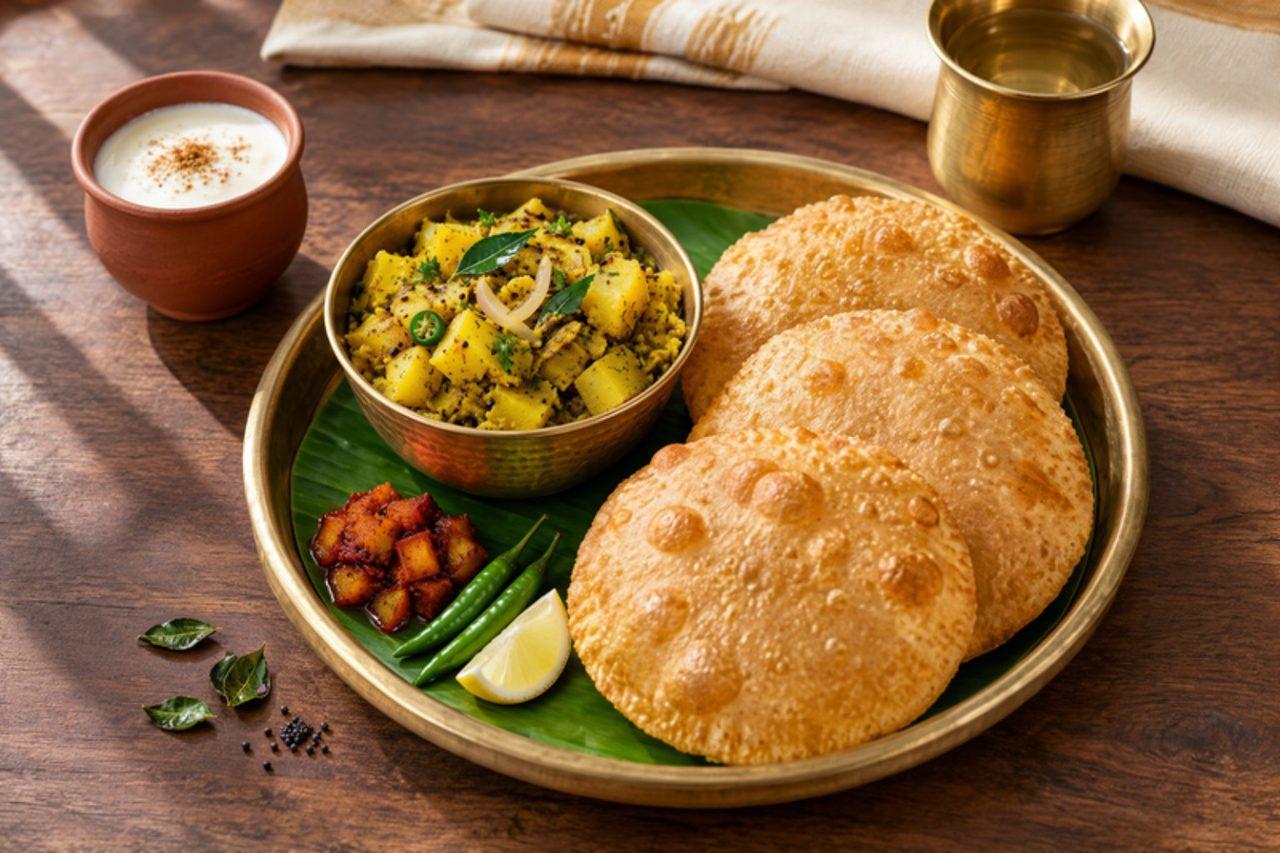
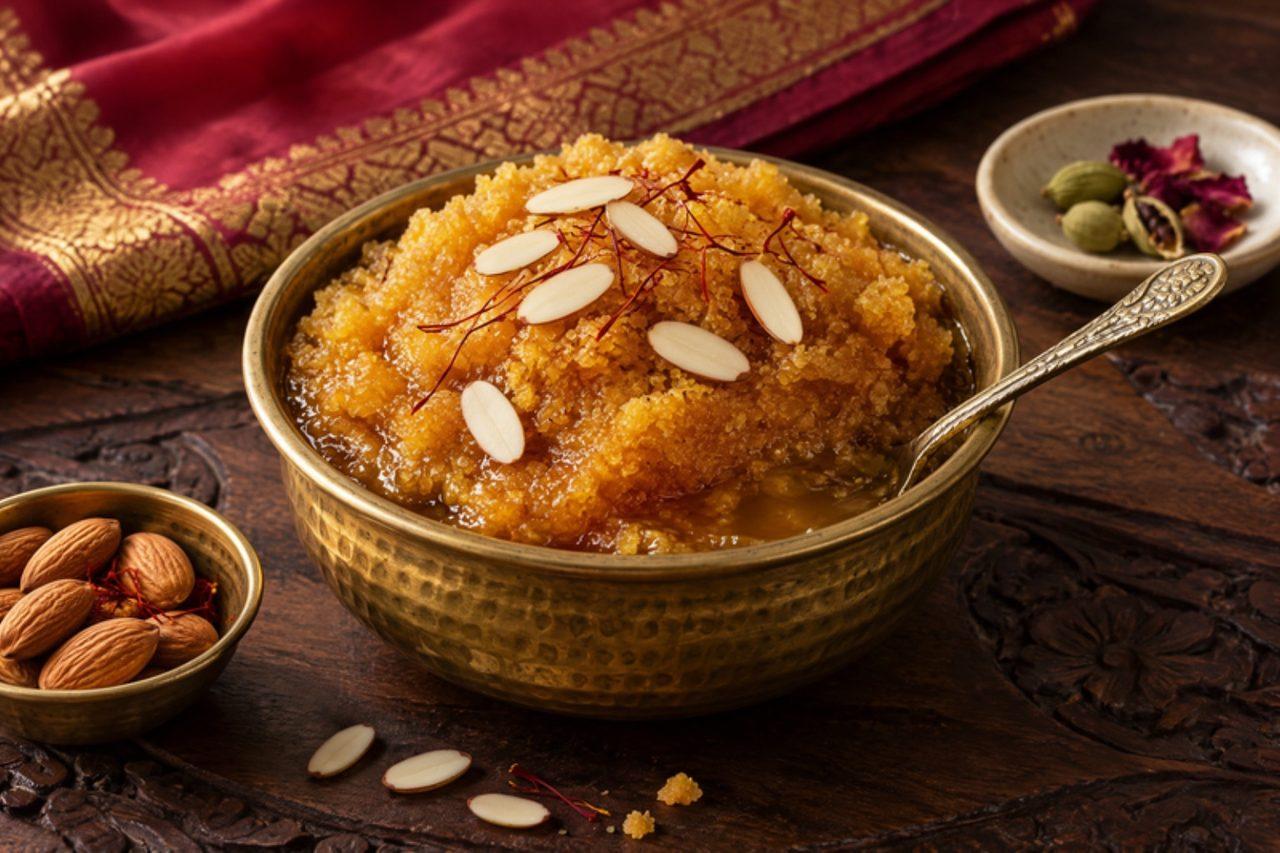
In Jaipur, badam ka halwa came out of the royal kitchens and now appears at winter weddings and on cold nights when someone wants a real treat. Soaked, peeled almonds are ground to a coarse paste and cooked slowly in ghee with milk, sugar and saffron until the halwa turns golden, glossy and leaves the sides of the pan. It is very rich, so a small bowl is enough. The common mistake is grinding the almonds too fine, which gives a pasty halwa instead of a soft, grainy one. Chef's tip: stop grinding when the almonds look like wet semolina and add the milk only during grinding, never water.

Read more 0 views

What to eat today?

Around the world

Today's trip: Paraguayan

A new country every day, from every cuisine on the site.

Paraguayan

Chipa

Cheese bread rings 50 minMore from Paraguayan (27) →

This week's collection

Kid-friendly dinners
537 recipes · a new collection every Monday

Latest recipes

Yayla çorbasıYoghurt, rice and mint soup

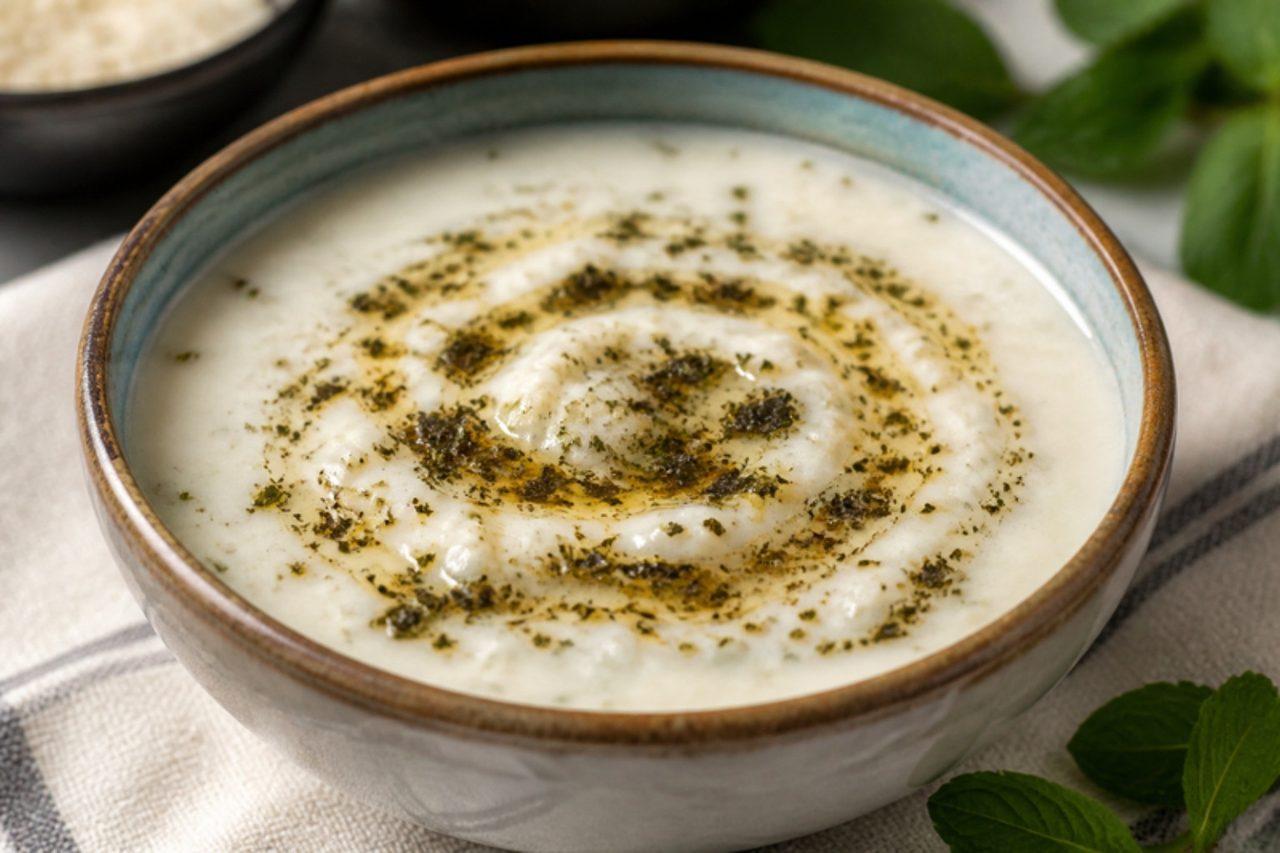
Named for the high summer pastures of Anatolia, yayla çorbası is the soup that tradesmen's restaurants in Ankara and Kayseri ladle out from morning onwards: soft rice in a silky, gently sour yoghurt broth, finished with a slick of mint butter. It is light enough for breakfast yet filling with bread, and many families make it when someone is unwell. Common mistake: pouring cold yoghurt straight into the boiling pot, which splits it into grainy curds; temper it first with hot liquid and keep the soup below a boil afterwards. Chef's tip: whisk an egg yolk and a spoon of flour into the yoghurt; they stabilise it and give a velvety body.

by KrazyBadal 0 views

Sopa tarascaBean and tomato soup

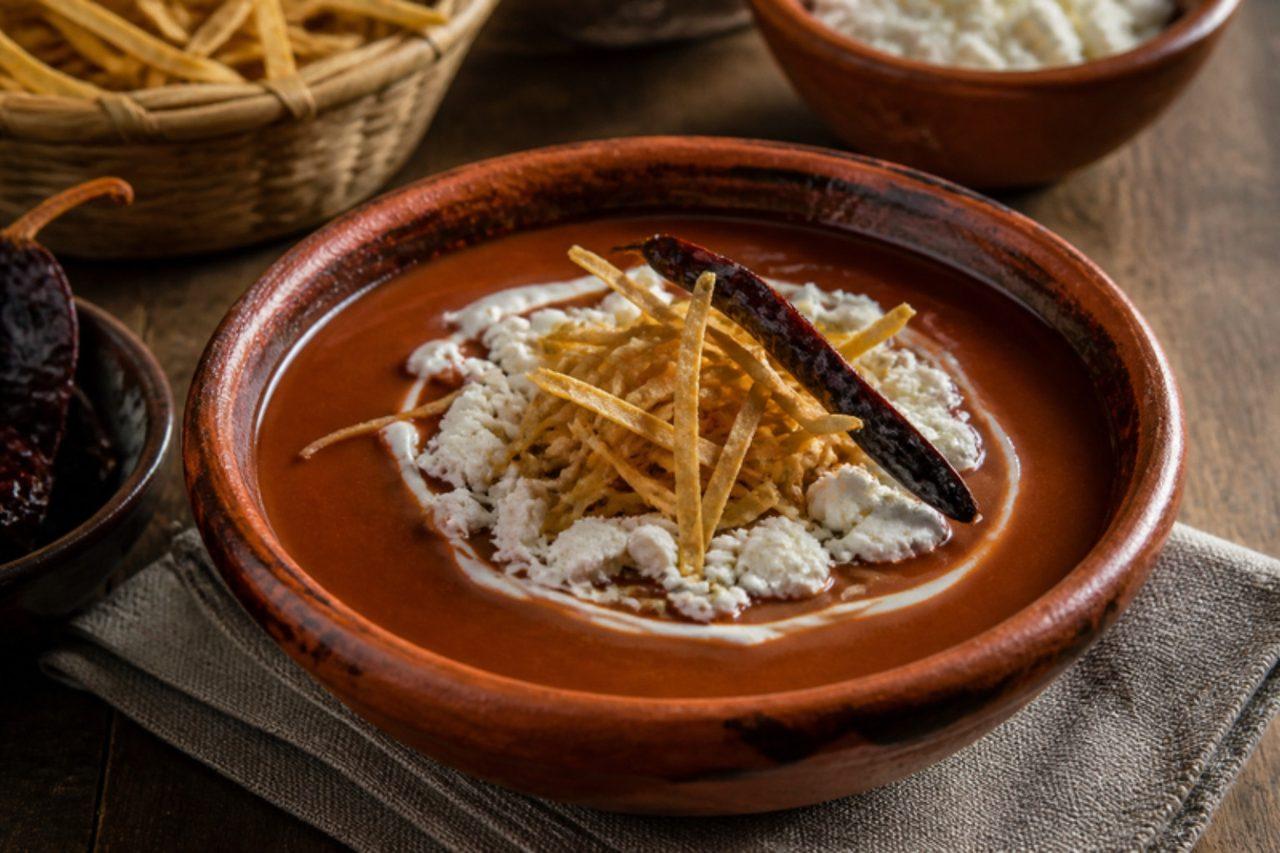
Named after the Tarascan (Purépecha) people of Michoacán, sopa tarasca is the soup served in the restaurants around the plazas of Pátzcuaro and Morelia, especially on cool highland evenings. It is a smooth, brick-red purée of beans, tomato and ancho chilli, poured over crisp tortilla strips and finished with cream, fresh cheese and fried chilli rings. Some versions use chicken stock; this one uses vegetable stock and loses nothing. Fresh cheese may be made with animal rennet, so use a vegetarian one if needed. Chef's tip: fry the blended soup base in hot oil before adding the stock; it cooks out the raw tomato taste and deepens the colour.

by KrazyBadal 0 views

Rajas con cremaPoblano strips in cream

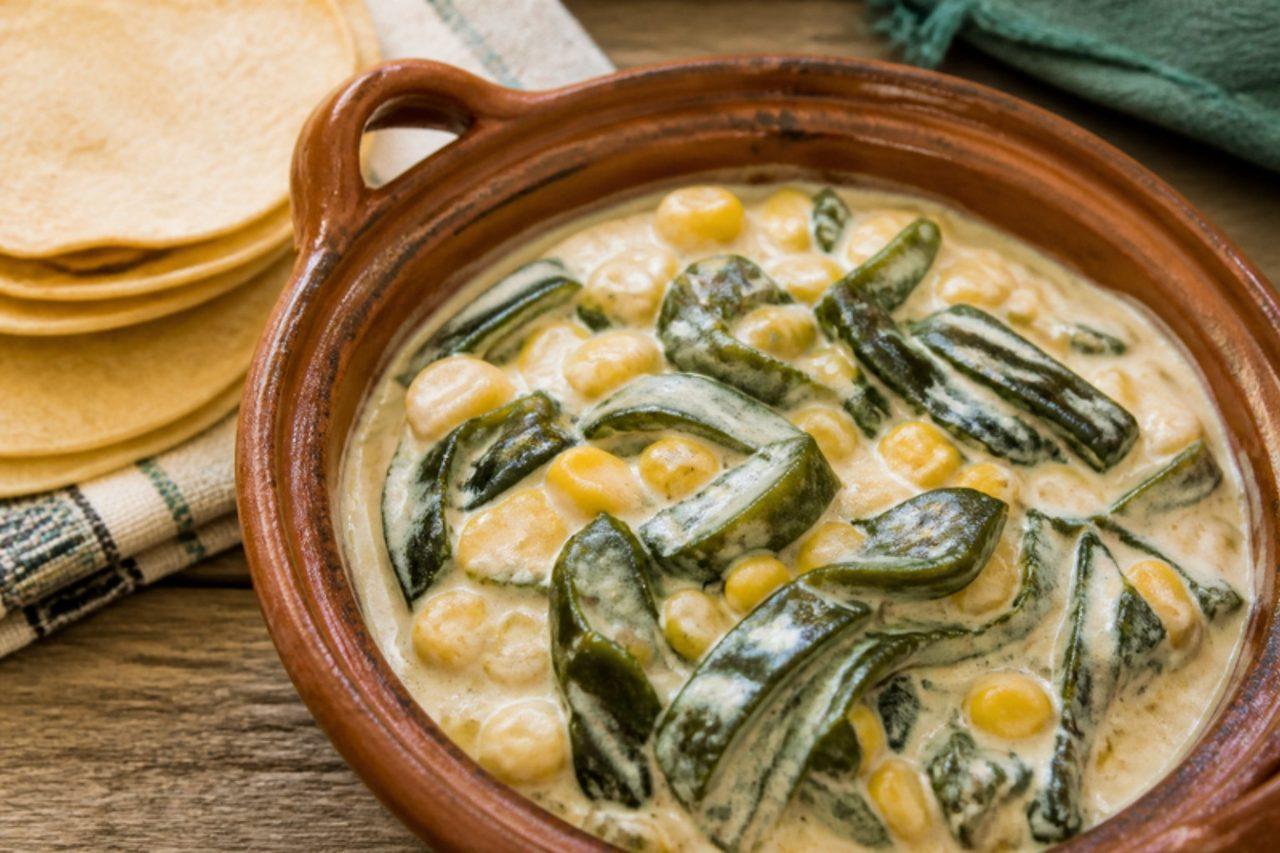
Rajas means strips, and in Puebla they mean poblano chillies, the dark green pepper the state is named after, charred, peeled and sliced, then simmered with onion, sweetcorn and cream. Poblanos are mild with a grassy, gently smoky bite, so the dish is rich rather than fiery. It turns up on Puebla tables as a side for rice, as a taco filling at fondas, or in a tamal for breakfast. Some cooks melt in Chihuahua or Oaxaca cheese, which may be made with animal rennet; use a vegetarian melting cheese if needed. Chef's tip: sweat the peeled chillies in a covered bowl for 10 minutes; the steam lifts the skins off cleanly without rinsing away the smoky flavour.

by KrazyBadal 0 views

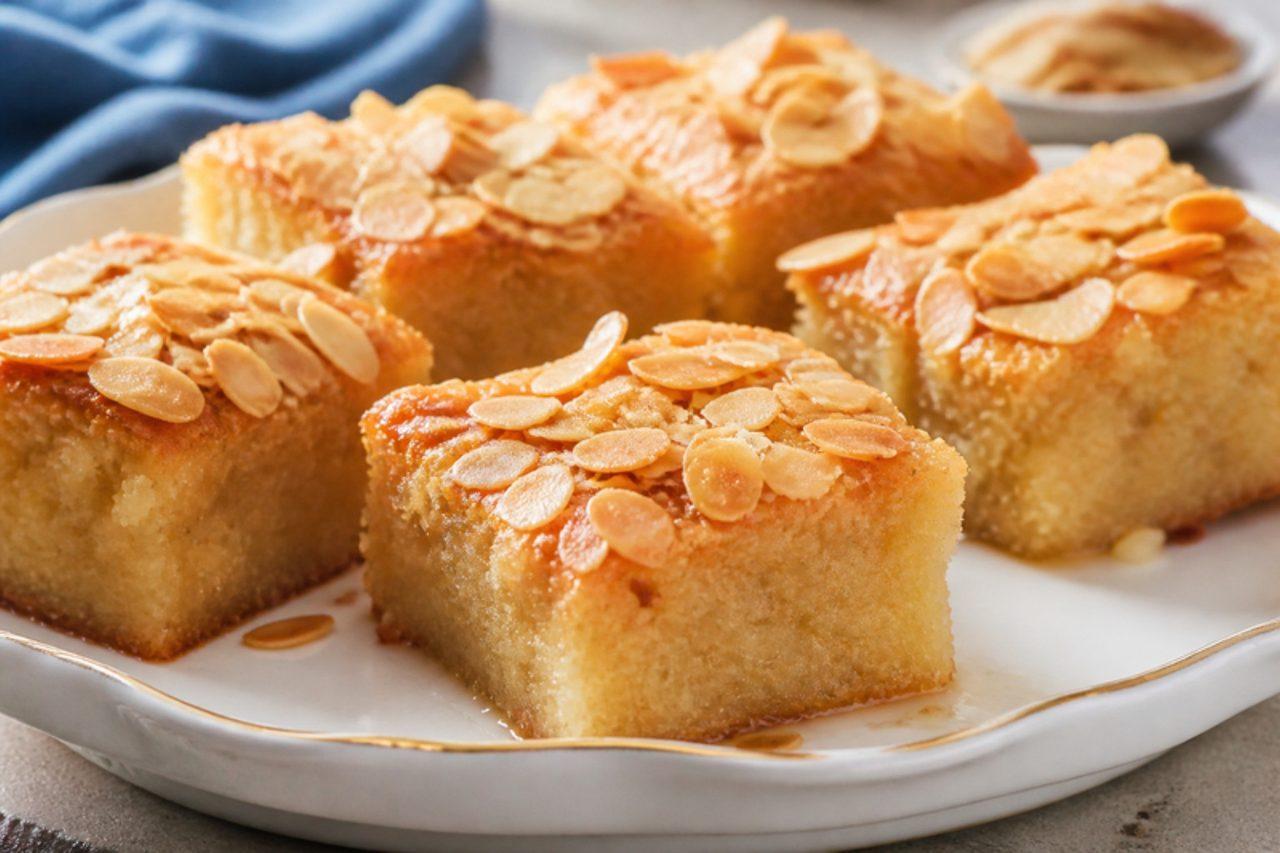
AmygdalopitaAlmond syrup cake

Kefalonia is almond country, and amygdalopita is what islanders bake for the feast of Agios Gerasimos in August and for guests all year round: a moist, flourless-leaning cake of ground almonds, eggs and breadcrumbs, soaked in light lemon syrup until it's dense and fragrant. Serve a small square with coffee or a spoon of thick yoghurt. Common mistake: grinding the almonds too long, so they turn oily and the cake heavy — pulse them until just sandy. Chef's tip: toast half the almonds before grinding for a deeper, nuttier flavour.

by KrazyBadal 0 views

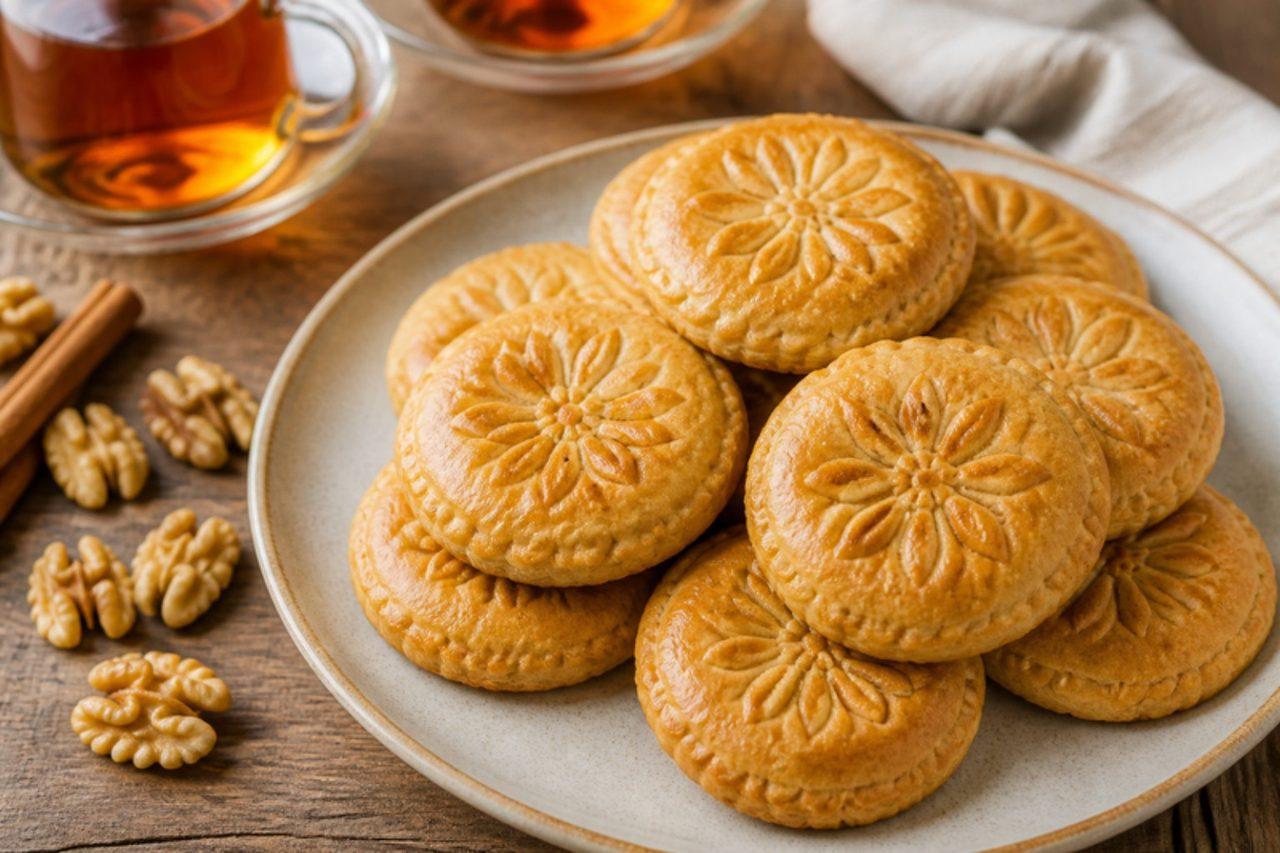
Koloocheh FumanWalnut-filled cookies

On the road from Rasht up to the hill village of Masuleh, the little town of Fuman is lined with bakeries selling koloocheh: thick round cookies, crisp outside and cake-like inside, filled with ground walnut, sugar and cardamom and stamped with a pattern on top. Travellers buy them by the box for tea, and they are a favourite gift at Nowruz. A common mistake is overworking the dough, which makes them tough rather than tender and crumbly. Chef's tip: chill the filled discs for 15 minutes before stamping and baking, so the pattern stays sharp and the walnut filling does not burst through.

by KrazyBadal 0 views

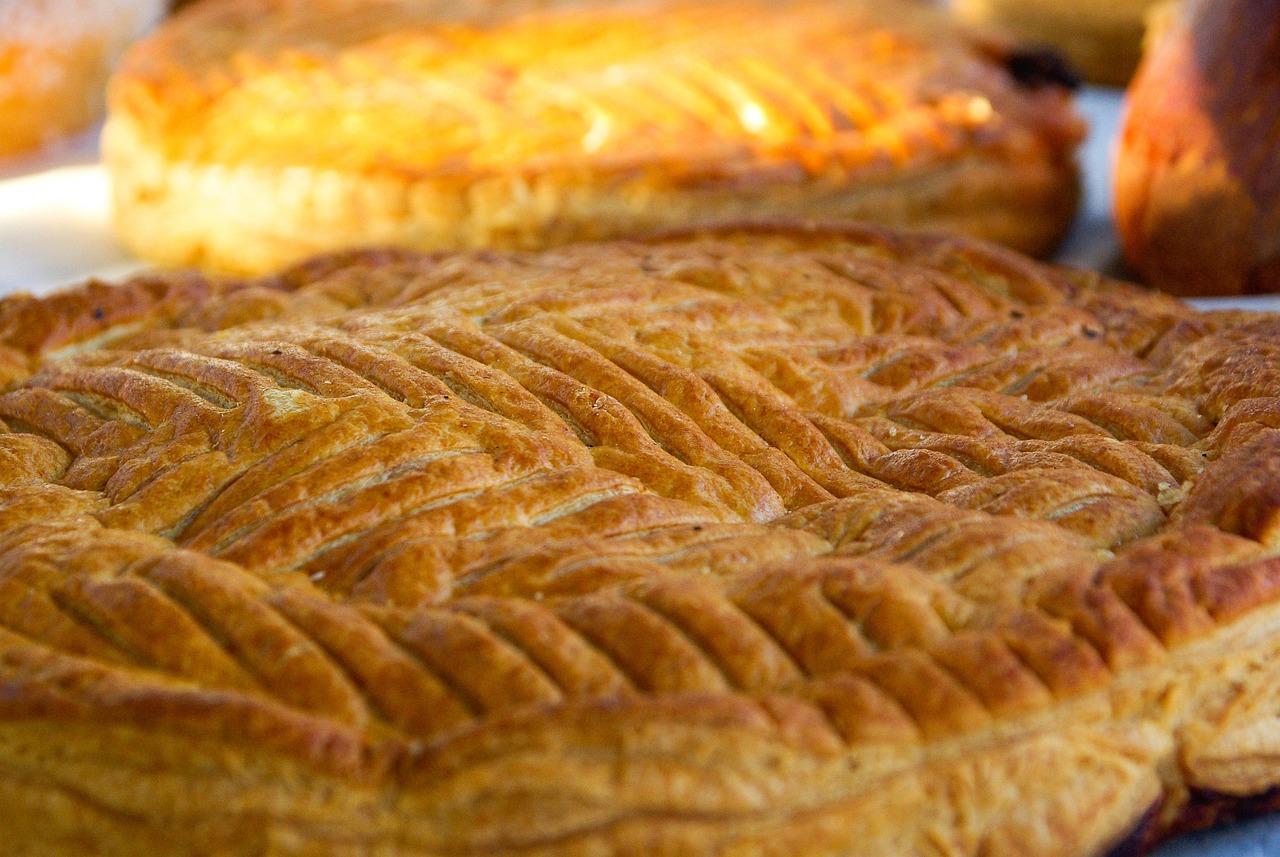
PithiviersAlmond cream puff pastry

The small town of Pithiviers, between Orléans and Paris, gave its name to this domed puff-pastry pie filled with almond cream, its top scored in curved lines like the petals of a flower. It is close to the galette des rois that French families share at Epiphany in January, but in Pithiviers it is eaten all year as a Sunday dessert. The almond cream is traditionally flavoured with a spoonful of rum; leave it out and add orange zest or vanilla for an alcohol-free version. All-butter shop puff pastry works well. Chef's tip: chill the assembled pie for 30 minutes before scoring and baking; cold pastry rises tall and the pattern stays crisp.

by KrazyBadal 0 views

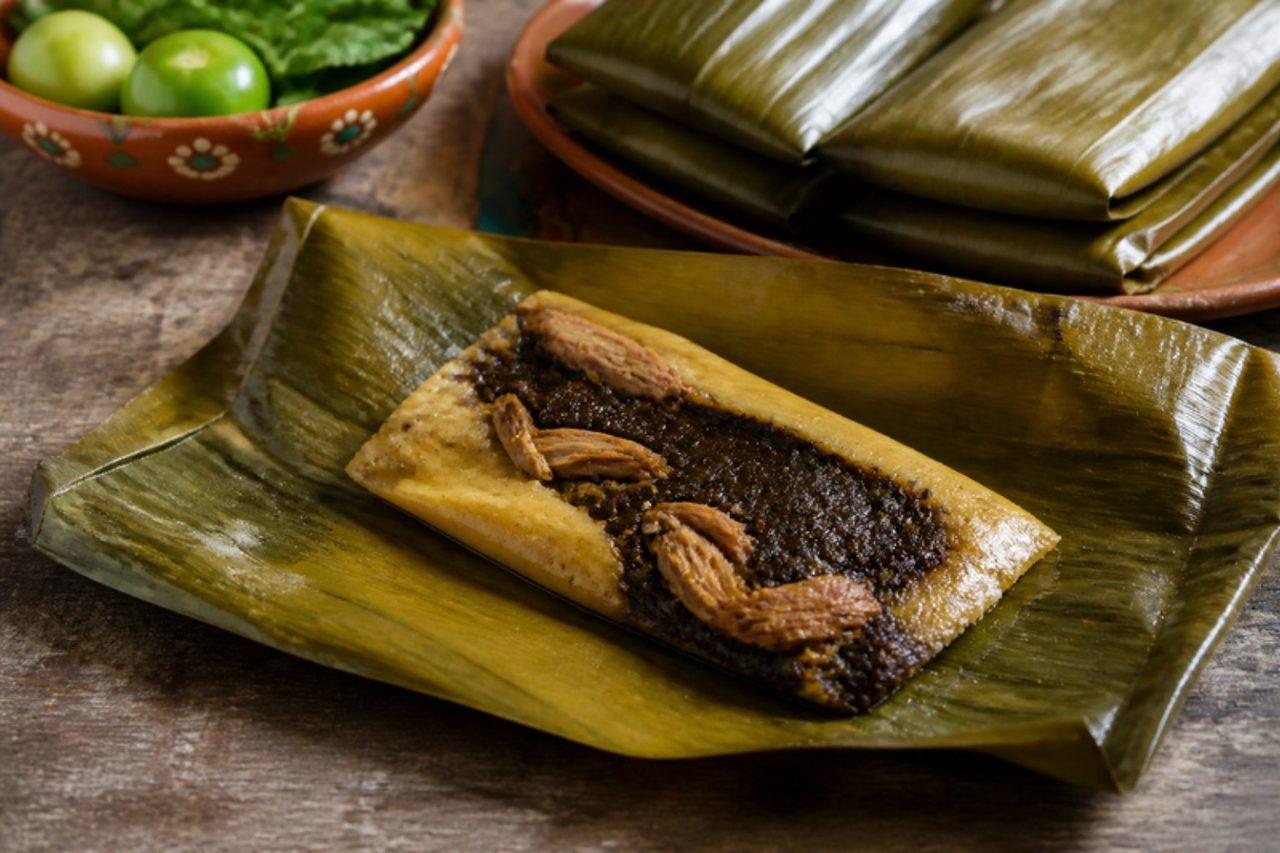
Tamales oaxaqueñosTamales with black mole and chicken

In Oaxaca, tamales are wrapped in banana leaves rather than corn husks, which makes them flat, square and very moist, with a faint grassy scent from the leaf. These are the classic version filled with mole negro and shredded chicken, sold from steaming pots at morning markets and made by the dozen for Christmas, Candlemas on 2 February and the Day of the Dead. The masa is beaten with pork lard, which gives the traditional light, rich texture; vegetable shortening works if you avoid pork. Use leftover mole negro, or a simplified mole made from good ready-made paste thinned with broth. Eat them with hot chocolate or atole. Chef's tip: keep a coin in the bottom of the steamer; when it stops rattling, the water has run low and needs topping up.

by KrazyBadal 0 views

KispiñoSteamed quinoa cakes

Pressed in a fist so each one carries the marks of the cook's fingers, kispiño are small, dense quinoa cakes from the Puno highlands, steamed and then left to dry so they keep for weeks on journeys, herding trips and pilgrimages. Traditional ones are bound with a little lime water (from cal, the mineral) and fat; this home version uses oil and a pinch of aniseed and sugar, so they're vegan and pleasantly savoury-sweet. They're firm and chewy, a little like a grain cake, and good with hot tea, coca tea or a soup on a cold day. The common mistake is making the dough too wet, so the cakes slump in the steamer; it should feel like damp sand that holds its shape when squeezed. Ground quinoa is quinoa flour; grind your own from rinsed, dried and toasted grain, or buy it ready ground. Chef's tip: toast the ground quinoa in a dry pan first until it smells nutty, which takes away any bitterness.

by KrazyBadal 0 views

Rojões à minhotaMarinated fried pork with potatoes

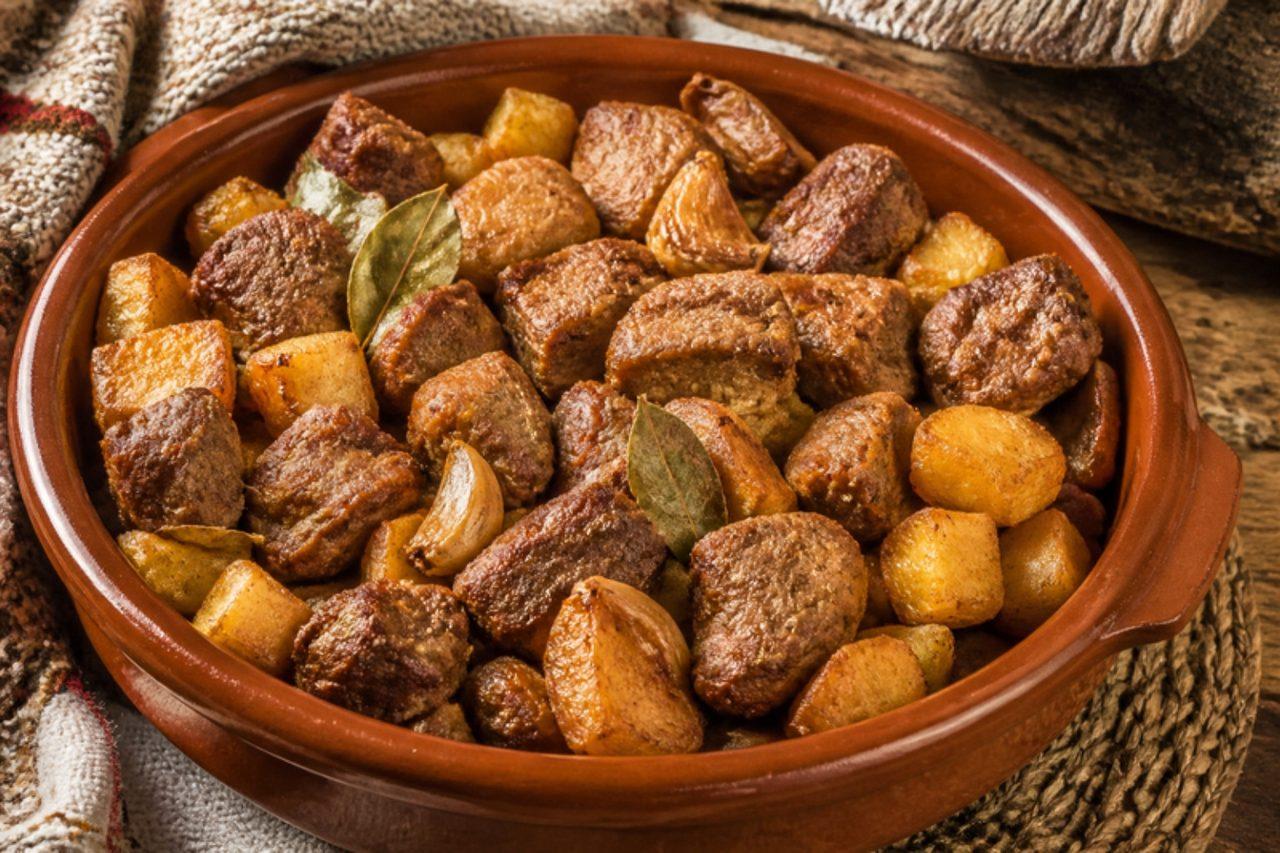
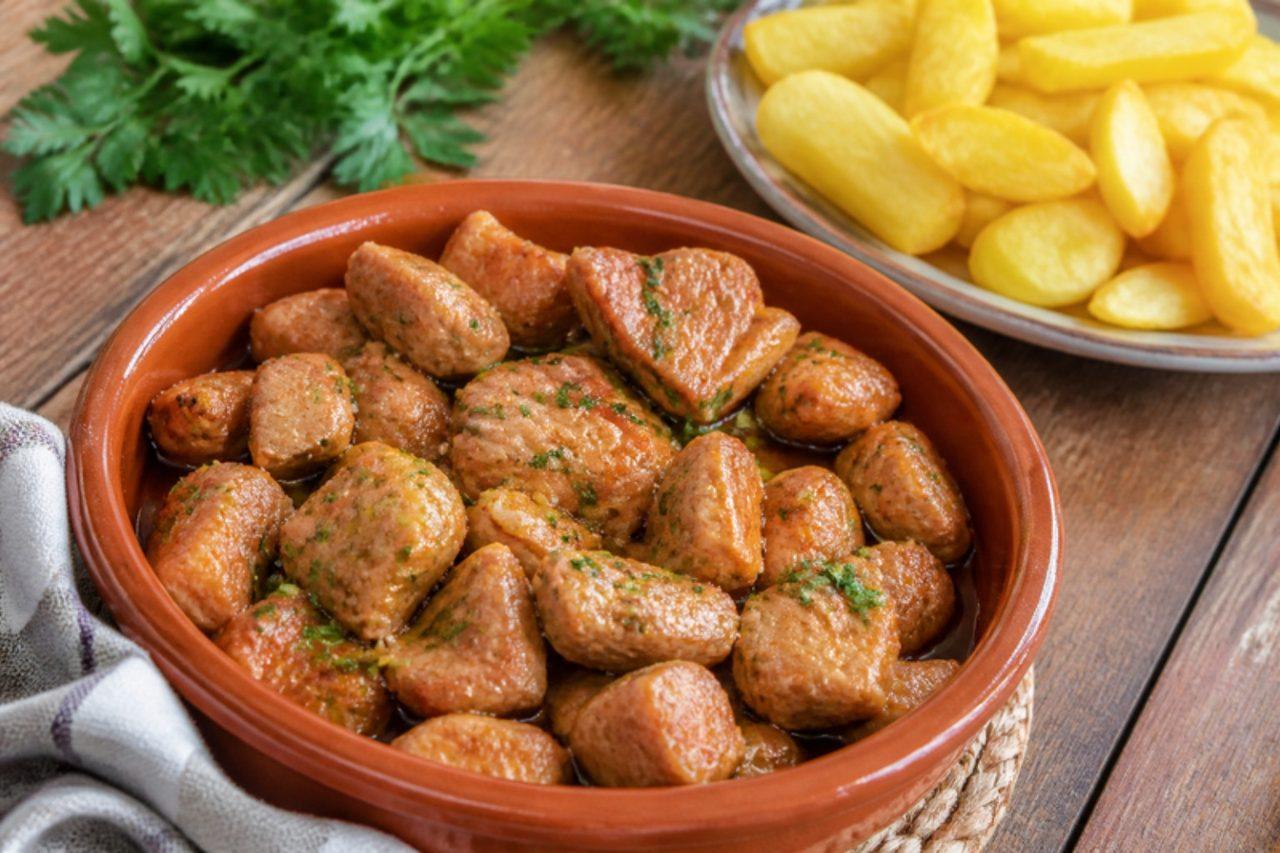
Rojões are the centrepiece of a Minho winter feast, traditionally cooked in the weeks after the family pig was killed and still served in Braga and Ponte de Lima restaurants with arroz de sarrabulho alongside. This contains pork (pork shoulder and lard). Chunks of pork shoulder spend a night in white wine, garlic, paprika and bay, then cook slowly in their own fat until the outsides are crusty and the insides tender. The dish uses wine; an alcohol-free option is given in the ingredient list. A common mistake is crowding the pan, so the pork stews in its juices instead of browning in its own fat. Chef's tip: dry the pork well after marinating, or it will stew rather than brown.

by KrazyBadal 0 views

Pitta 'mpigliataHoney and walnut pastry spiral

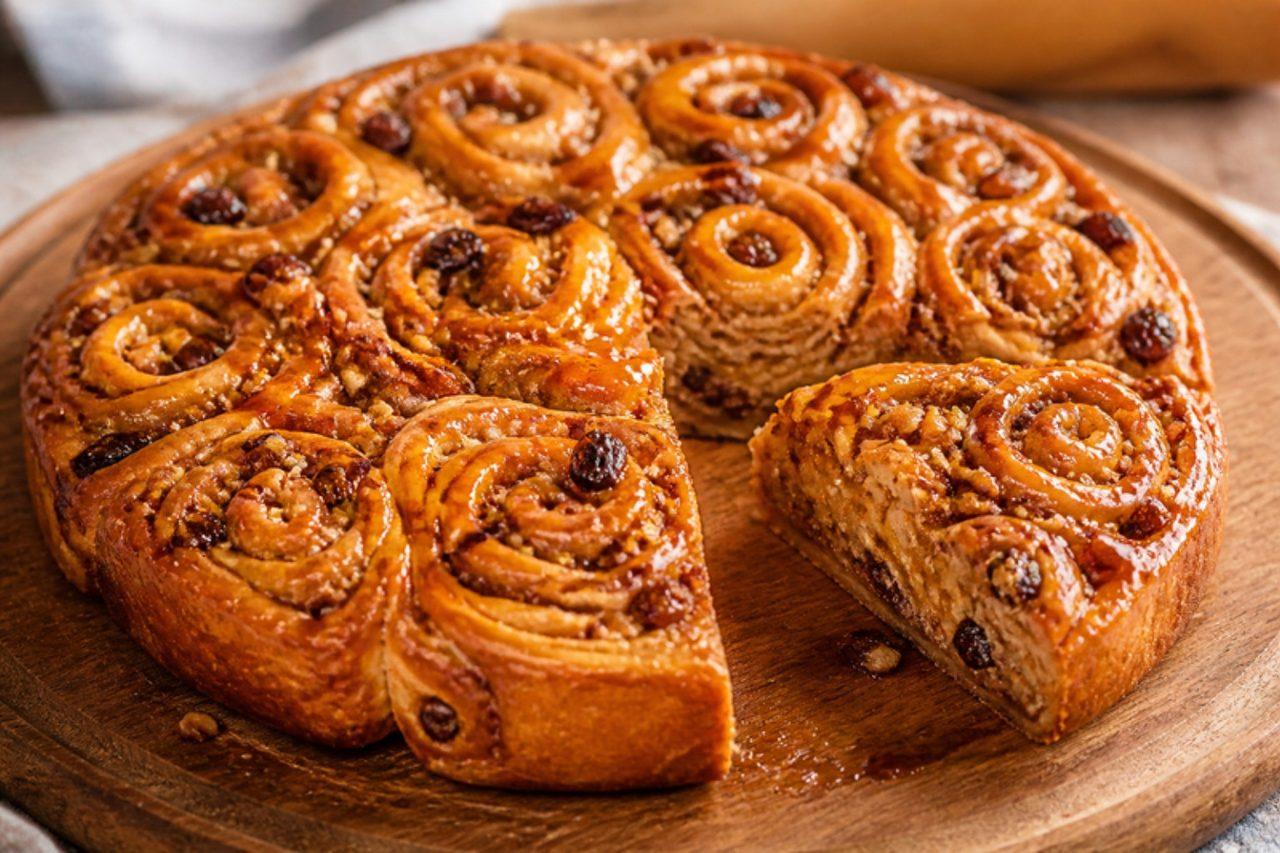
High in the Sila mountains, the town of San Giovanni in Fiore bakes pitta 'mpigliata for Christmas and for weddings: ribbons of thin pastry rolled up with walnuts, raisins, cinnamon and cloves into little rosettes, packed side by side in a round tin and soaked in warm honey once baked. The name means something like 'wrapped-up cake', and it looks like a dish of flowers. It keeps for days, growing stickier and more fragrant. The dough is traditionally made with white wine and a splash of anise liqueur; this version uses orange juice and ground anise, with no alcohol. Chef's tip: roll the pastry as thin as you can; thick ribbons bake doughy in the middle.

by KrazyBadal 0 views

Tamalitos verdesGreen fresh corn tamales

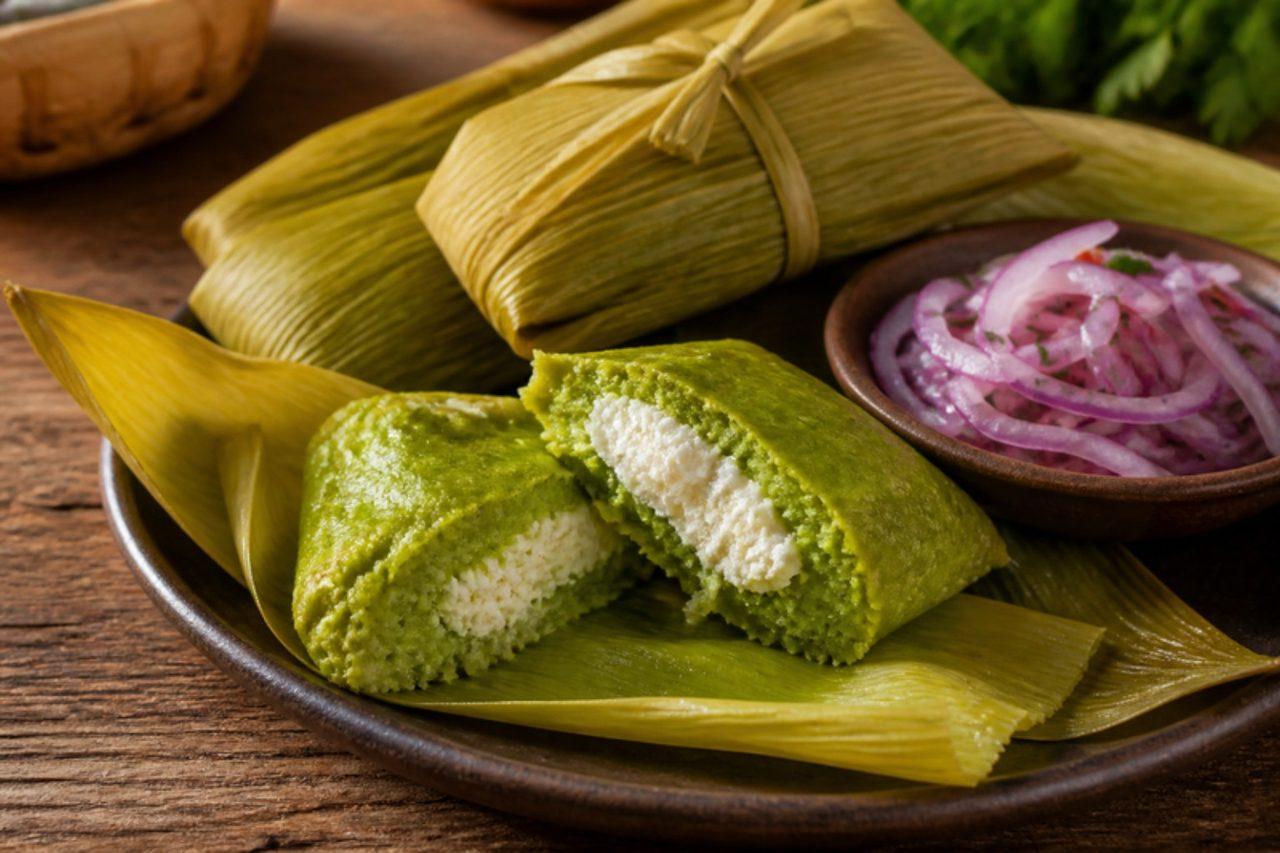
Bright green from a whole bunch of coriander, tamalitos verdes are the morning snack of Chiclayo and Trujillo, sold warm at market stalls and bakeries and unwrapped at the table with a heap of salsa criolla on top. Fresh corn is ground with coriander, onion and ají amarillo into a soft dough, wrapped around a strip of fresh cheese in corn husks and steamed. They should be tender, moist and herby, with a slightly sweet corn flavour and a salty melting middle. Traditional ones are made with lard; this version uses vegetable oil to stay vegetarian. The classic problem is a dough that's too wet, which makes the tamales fall apart; the starchy Peruvian choclo is ideal, and if you use sweet corn, add the cornmeal to firm it up. Queso fresco is usually made with animal rennet, so look for a vegetarian fresh cheese. Chef's tip: keep the steamer water at a steady simmer and top it up with boiling water, never cold, so the steam never stops.

by KrazyBadal 0 views

Ankara tavasıBraised lamb on orzo pilaf

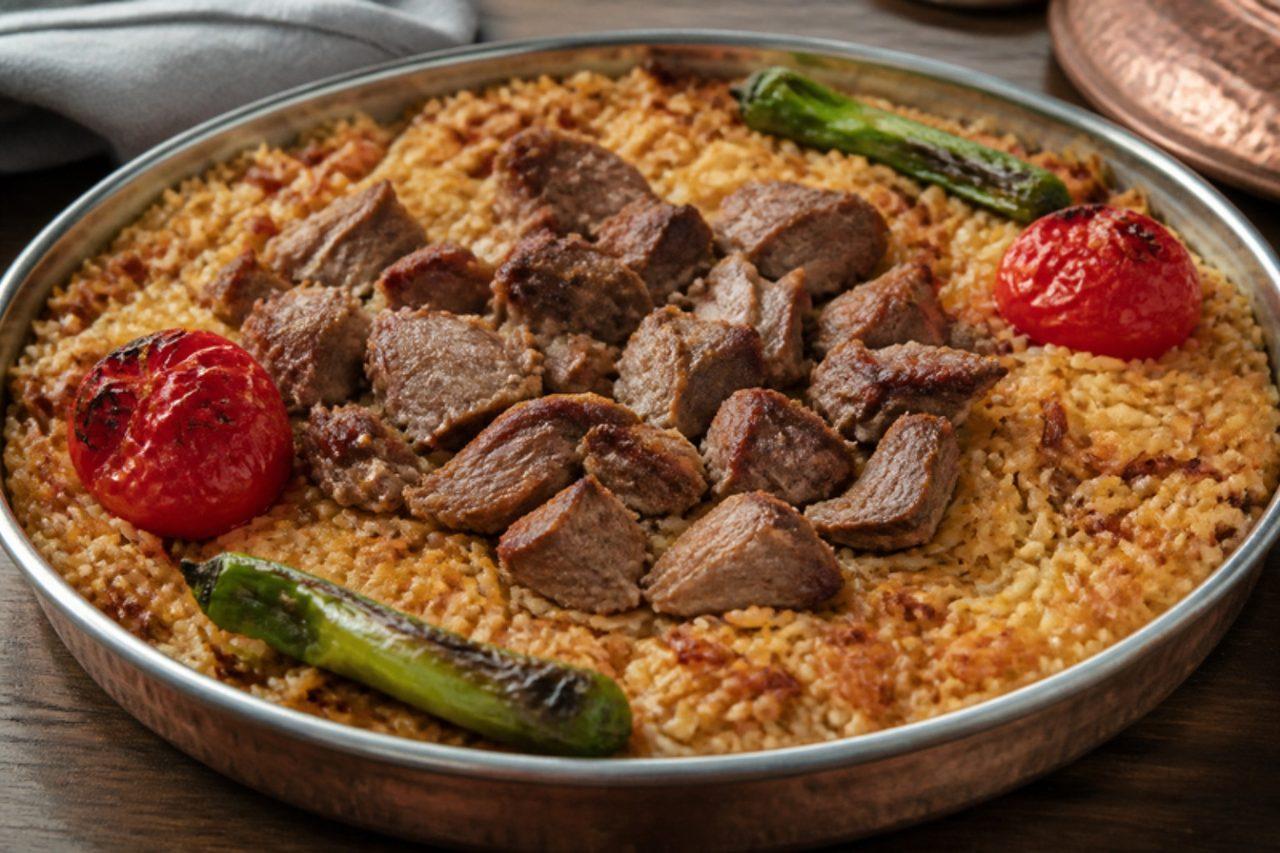
Ankara's signature dish is a tava, a baking pan, in which tender braised lamb is laid over a pilaf of rice and orzo and finished in the oven so the top grains go crisp and the meat juices soak right through. Old Ankara families serve it for guests and at festival lunches, with a bowl of cacık and pickles. Common mistake: using fully cooked pilaf, which dries out and turns hard in the oven; cook the rice only halfway. Chef's tip: save every spoon of the lamb's braising liquid; it's what flavours and finishes cooking the rice underneath.

150 minTurkishMeat
by KrazyBadal 0 views

Bacalao al ajoarrieroSalt cod with garlic and pepper

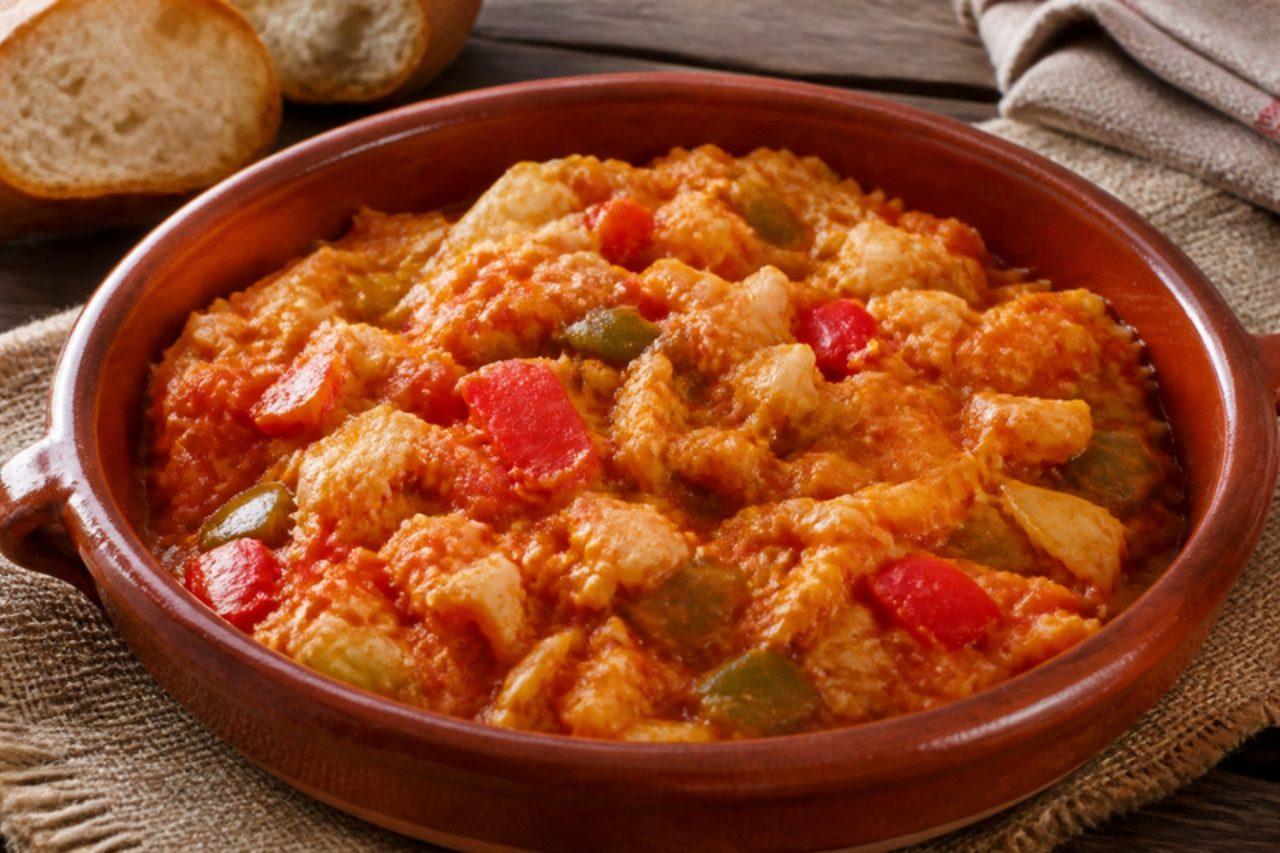
The muleteers who carried goods over the mountain roads into Pamplona, the arrieros, lived on salt cod because it kept for weeks, and the garlicky way they cooked it took their name. Today ajoarriero is ordered in the bars around Pamplona's Plaza del Castillo, especially during San Fermín, and served in small earthenware dishes with bread. The Navarrese version is red with peppers, tomato and dried choricero pepper, and many cooks stir in egg at the end. Chef's tip: taste the cod after soaking and only salt the dish at the very end, if at all.

by KrazyBadal 0 views

AguachilePrawns in lime and chilli water

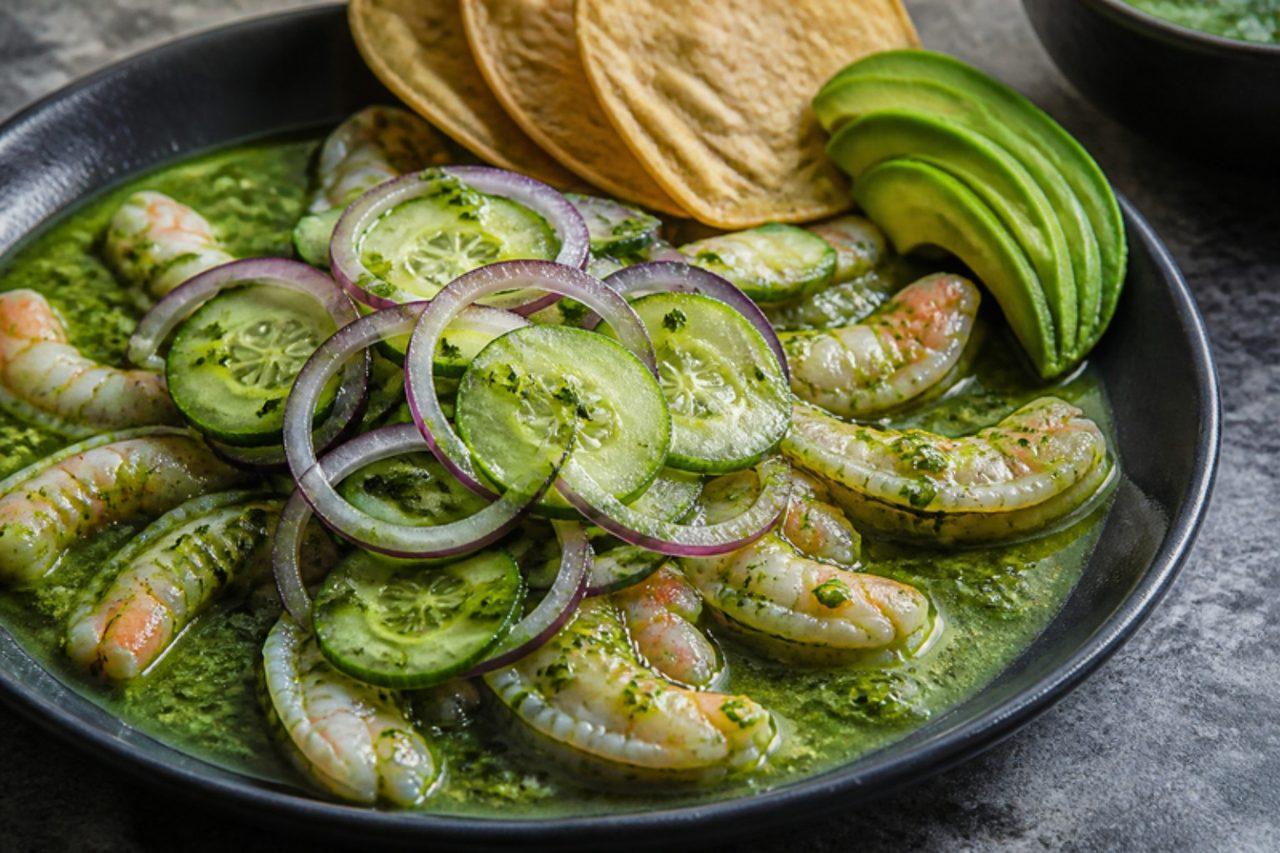
Along the Sinaloa coast, from Mazatlán to Culiacán, aguachile is the cold plate that starts a long seafood lunch at the beachside palapas, eaten straight from a stone molcajete with tostadas and a cold drink. The classic version is raw prawns cured only in lime, and that raw version is the risky one: lime juice does not kill bacteria or parasites the way heat does. This safer version poaches the prawns for a minute or two until just pink and opaque, chills them and then dresses them, so you keep the snap and the fierce, grassy chilli heat. Even so, treat any cold seafood dish with care: the raw classic is not for pregnant women, young children or anyone with a weakened immune system. Serve with crisp corn tostadas and slices of avocado. Chef's tip: blend the chilli water with ice-cold water and pour it on at the last minute, so it stays vivid green and the prawns stay crisp.

by KrazyBadal 0 views

AmygdalotaAlmond sweets

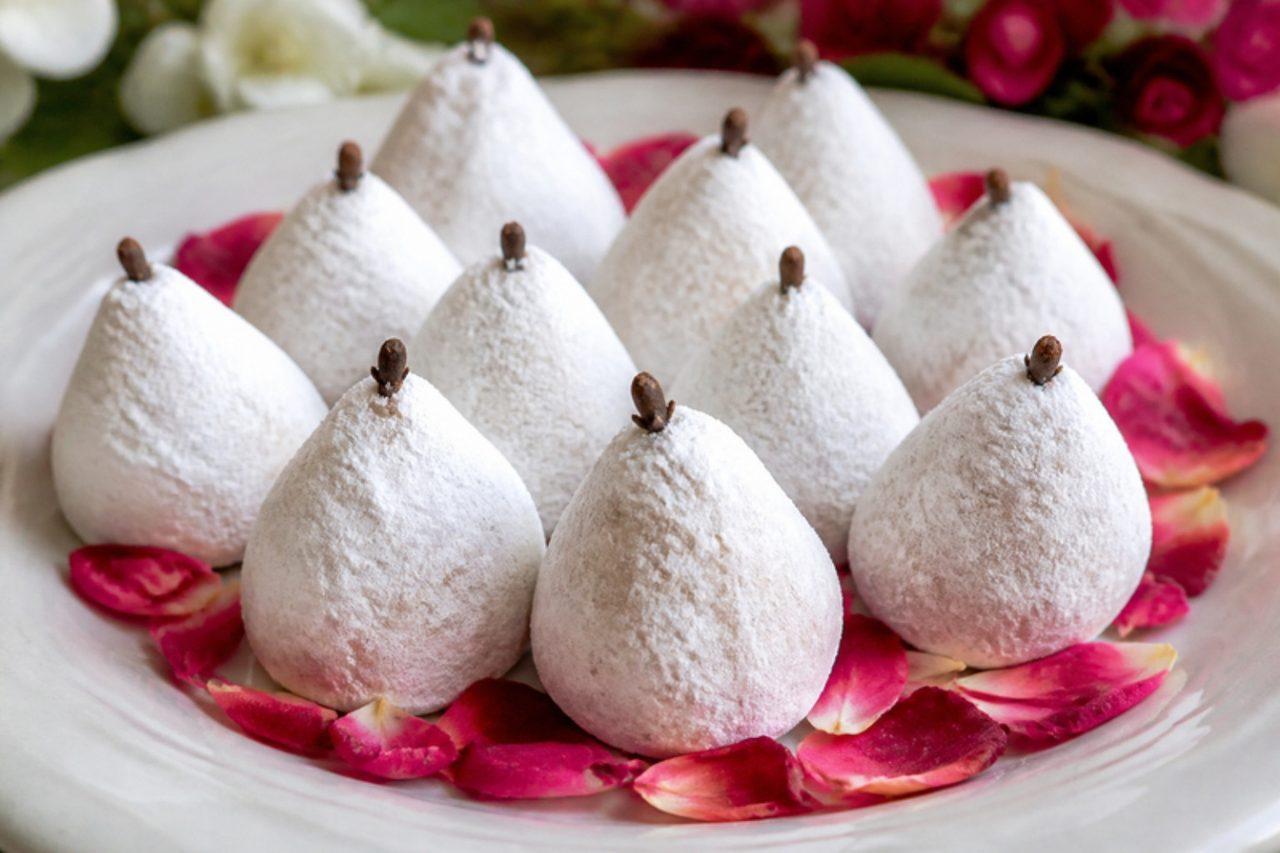
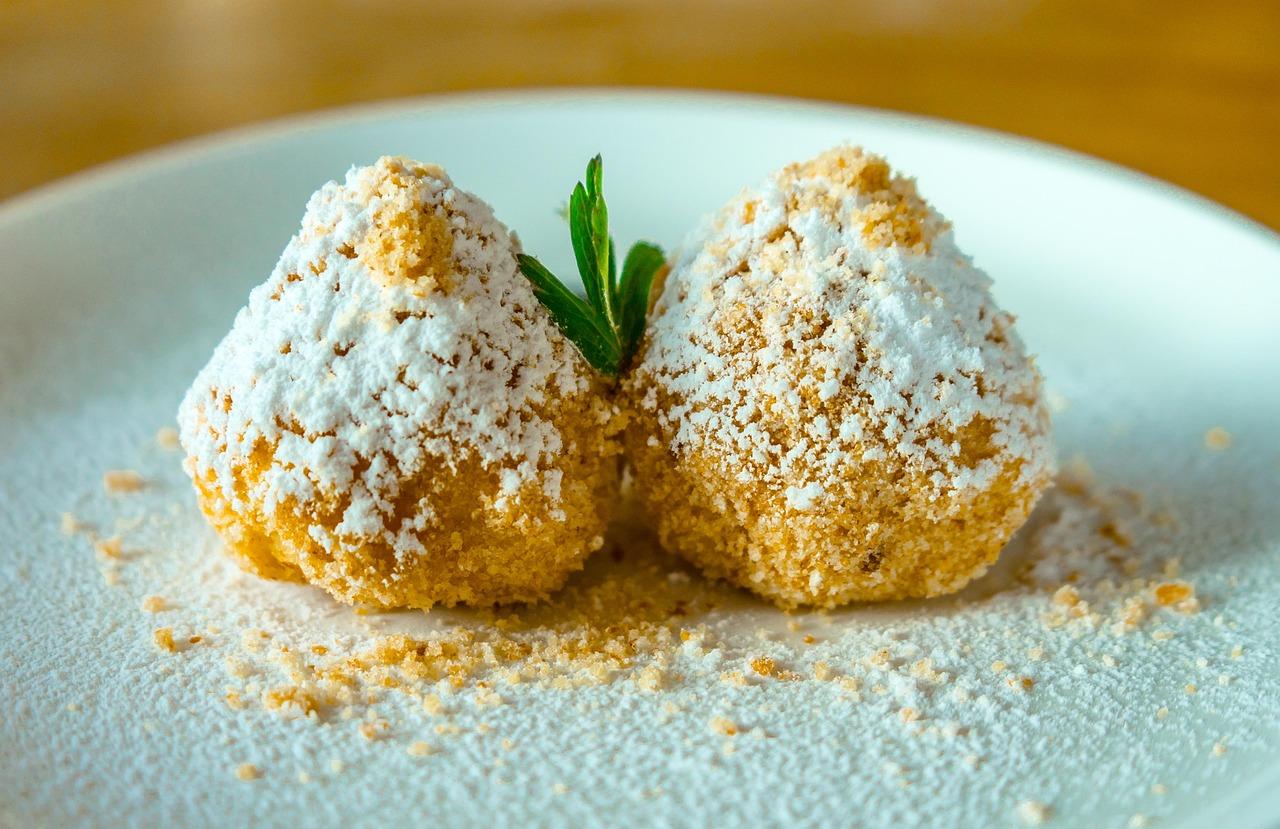
Andros is famous for its almonds, and the island's amygdalota are handed round at weddings, baptisms and Easter: little pear-shaped sweets of ground almond and sugar, baked just long enough to set, then splashed with rosewater and buried in icing sugar. They are soft and chewy inside, perfumed and pure white, and they go with a small cup of Greek coffee. Common mistake: baking them until golden, which turns them dry and hard; they should stay pale. Chef's tip: grind the almonds with some of the sugar so they release less oil and the paste stays light.

by KrazyBadal 0 views

YatimchehAubergine and tomato stew

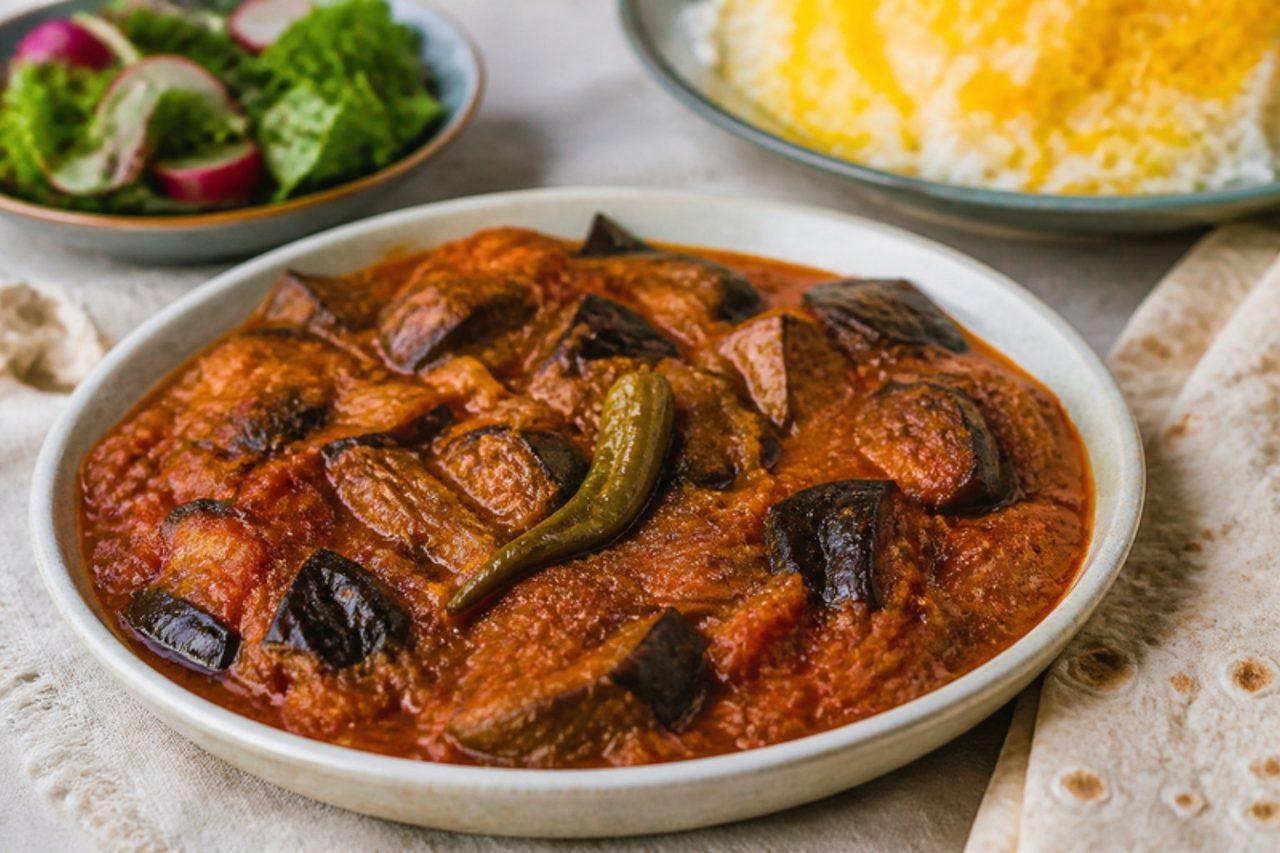
Yatimcheh means 'little orphan', the joke being that this Isfahan stew has no meat to look after it. Cooks in Isfahan and the towns around Kashan make it in late summer when aubergines are glossy and cheap, frying them until silky and then letting them collapse into onion, garlic, turmeric and ripe tomato. It is eaten warm with plain rice or torn lavash, with a bowl of yogurt and a plate of herbs on the side. A common mistake is frying the aubergine pale: it needs a deep golden colour or the stew tastes flat and spongy. Chef's tip: a spoon of verjuice or lemon juice stirred in at the very end lifts the sweetness of the tomato.

by KrazyBadal 0 views

Romeu e JulietaGuava paste with fresh cheese

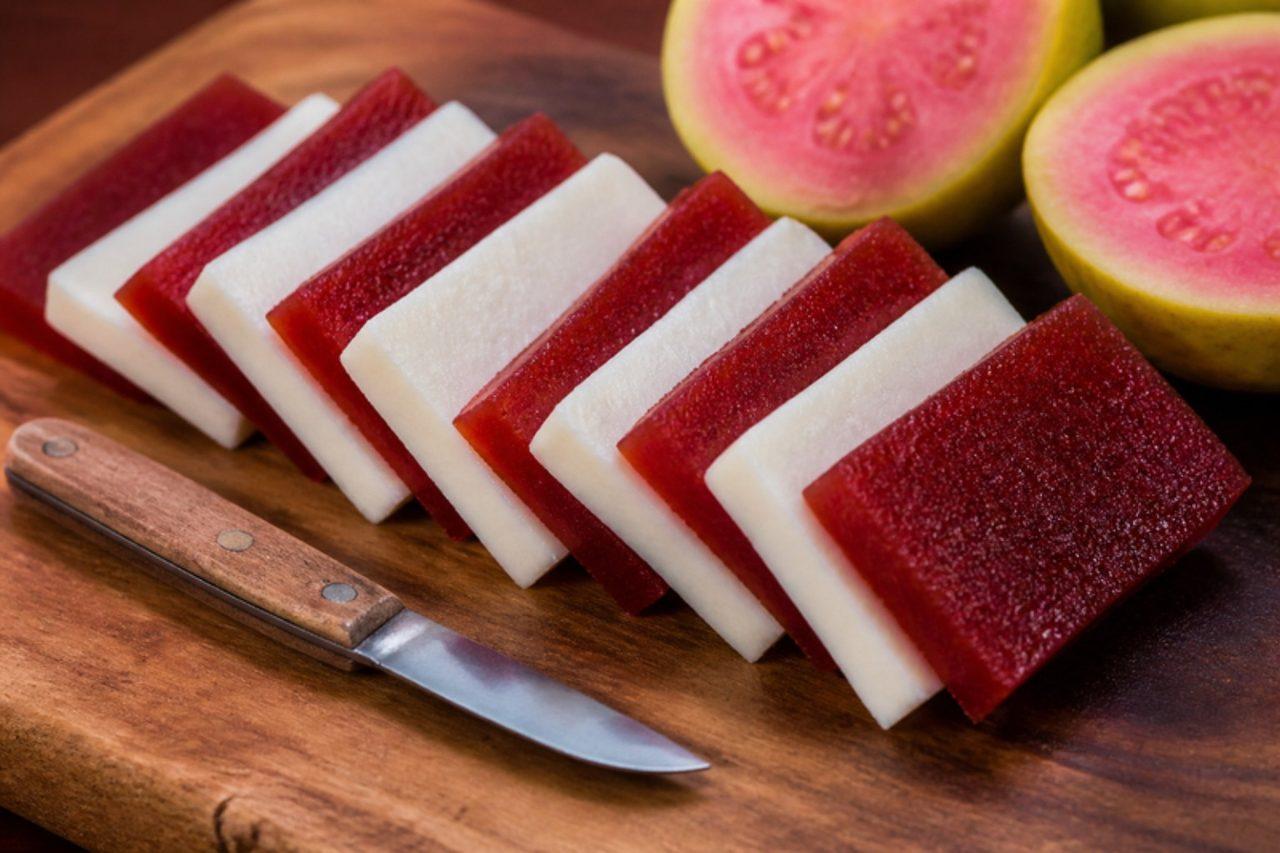
Two ingredients, no cooking, and a name every Brazilian knows: Romeo is the dark red goiabada, Juliet the mild white queijo Minas frescal, and they are always eaten together. Mineiros serve it after lunch on a saucer, at the end of a feast in a roadside restaurant, or as a mid-afternoon snack with coffee; the sweet, dense guava and the cool, milky, lightly salty cheese balance each other perfectly. Variations melt the guava into a warm sauce over the cheese, or bake both inside a pastry. Queijo Minas frescal is often made with animal rennet, so pick one labelled vegetarian, or use a young vegetarian farmer's cheese or paneer-style fresh cheese. The usual fault is cutting the guava thicker than the cheese, which buries Juliet; keep both slices the same size. Chef's tip: take the cheese out of the fridge 15 minutes ahead so it tastes of fresh milk rather than cold rubber.

by KrazyBadal 0 views

Pan de CalatravaCaramel bread pudding

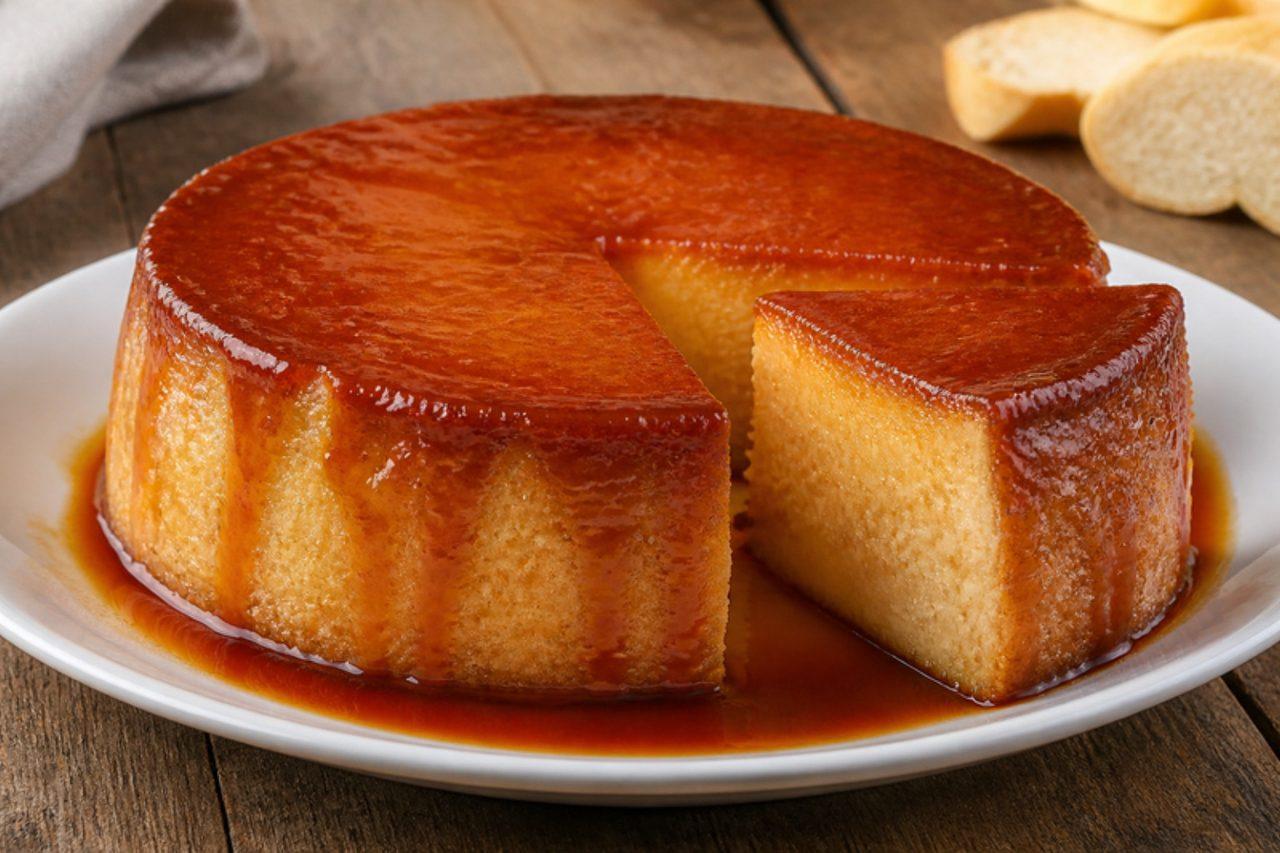
Pan de Calatrava is Murcia's thrifty Sunday dessert, a flan thickened with yesterday's bread or leftover sponge and baked over a layer of dark caramel. Murcian grandmothers made it to use up the end of a loaf, and it is still on the menu at family-run restaurants across the region, cut into slices and served cold with the caramel running down. The milk is infused first with lemon peel and cinnamon. Chef's tip: let it chill overnight before turning it out, so it slices cleanly and the caramel turns to syrup.

by KrazyBadal 0 views

Sopes mallorquinesCabbage broth with brown bread

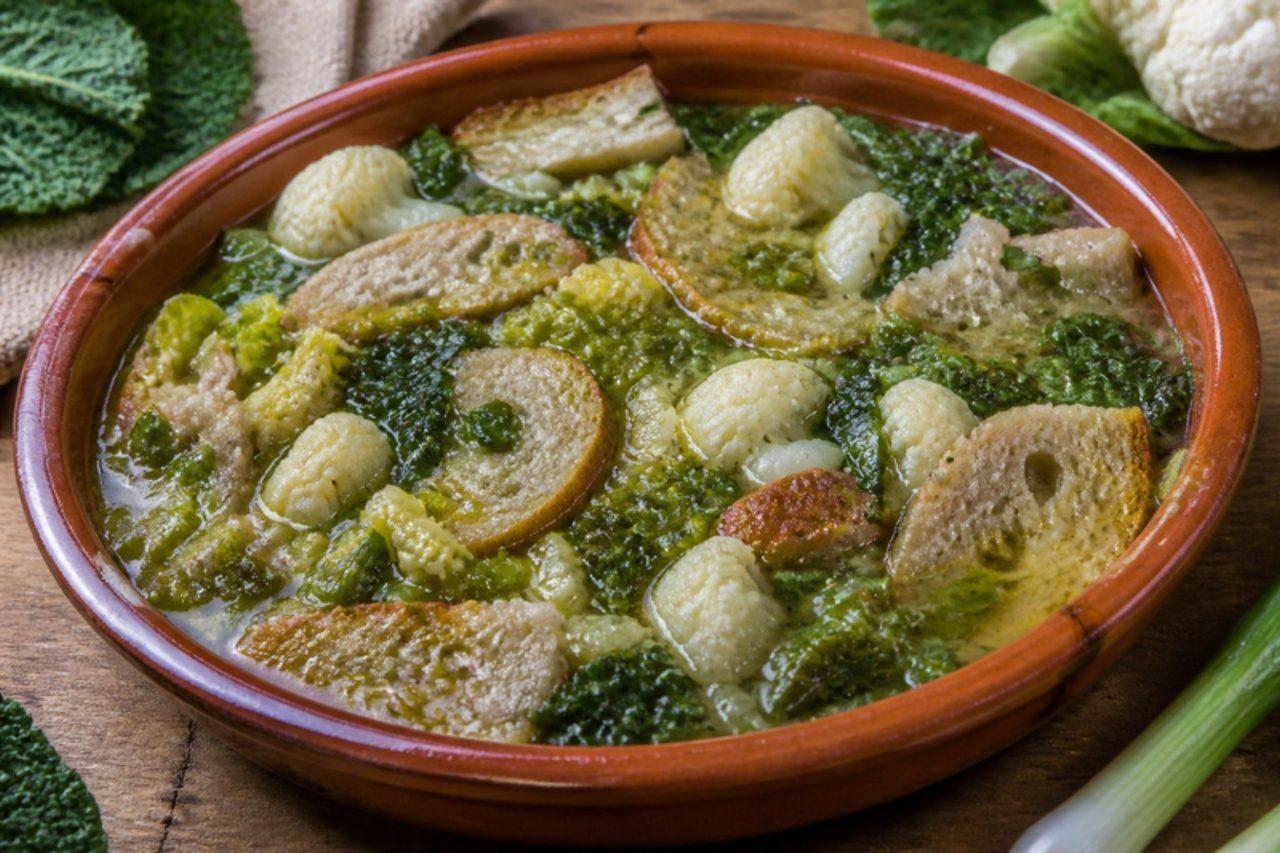
Sopes are a winter ritual in Mallorca, simmered in a wide clay greixonera and eaten for breakfast by country people and for Sunday lunch by everyone else. Cabbage, chard, cauliflower, artichoke and mushrooms cook in a garlicky, paprika-tinted broth, which is then poured over wafer-thin slices of dry brown bread until it soaks it all up into a spoonable mass, more stew than soup. Pork ribs often go in; this version is all vegetables. Serve with pickled chillies and black olives on the side. Chef's tip: buy the bread sliced for sopes at a bakery or slice a hard loaf on a mandolin, as thin bread is the whole texture of the dish.

by KrazyBadal 0 views

Tamar hindiTamarind drink

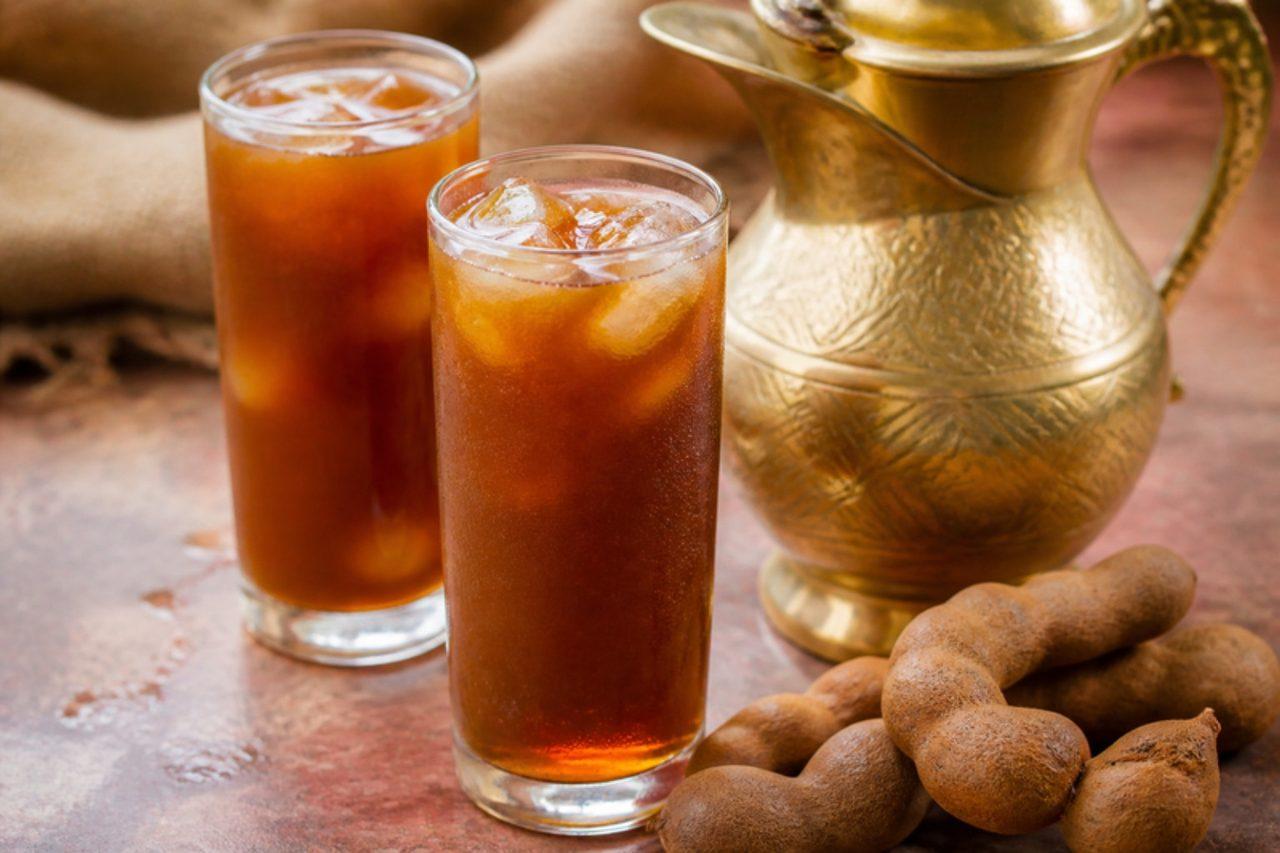
During Ramadan in Damascus, street sellers in bright waistcoats pour tamar hindi from tall brass jugs on their backs, clinking cups to call buyers before iftar. The drink is a deep brown infusion of tamarind, sweetened and sharpened with lemon and a touch of rose or orange blossom, served ice cold to quench a day's thirst. It is fruity, tangy and refreshing, and made in a big batch to keep in the fridge. Common mistake: boiling the tamarind hard — gentle soaking gives a clean taste, while boiling makes it muddy. Chef's tip: strain twice, the second time through a cloth, for a clear, glossy drink.

by KrazyBadal 0 views

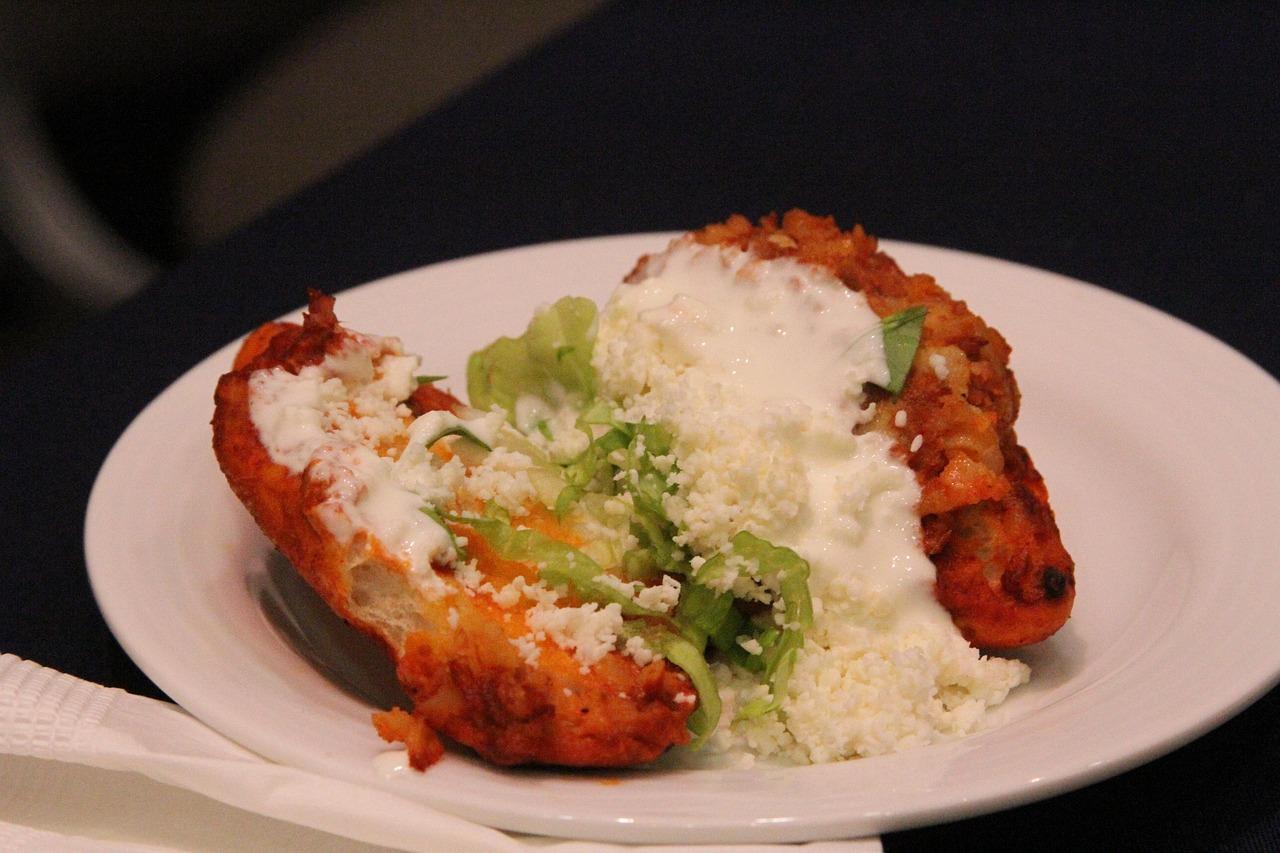
PambazoDipped roll with potato and chorizo

Pambazos are a Mexico City street classic, sold at night from griddles outside metro stations and at the fondas that open for Lent and village fiestas. A soft, light roll is split, filled with potato fried with pork chorizo, then dipped in a garlicky red guajillo sauce and crisped on the griddle, so the outside turns deep red, slightly crunchy and a little messy. Inside go shredded lettuce, cream and crumbled cheese, with salsa verde for heat. Eat it straight off the griddle with plenty of napkins. Chef's tip: use day-old rolls; fresh, soft bread soaks up too much sauce and falls apart on the griddle.

by KrazyBadal 0 views

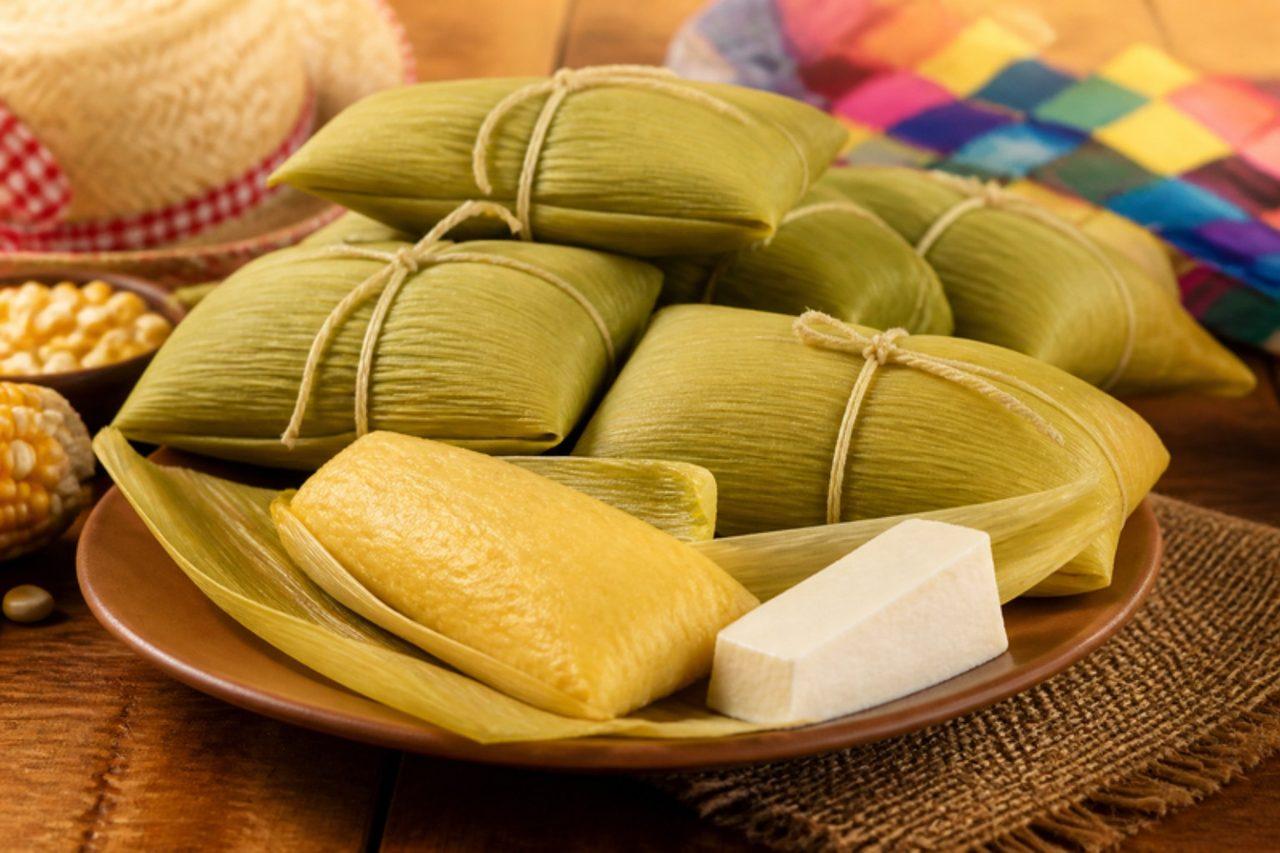
PamonhaSteamed fresh corn parcels

Corn season in Goiás and across the Northeast means pamonharias, roadside shops where pamonha comes out of huge steaming pots all afternoon, and in June it is one of the anchors of the festa junina table. Freshly grated green corn is mixed with milk and sugar, wrapped in its own husks, tied and boiled until it sets into a soft, sweet, slightly chewy parcel that smells of fresh corn. The Goiás way is also savoury, with salt instead of most of the sugar and cubes of cheese inside; that option is in the last step. Traditional queijo minas or curd cheese is often made with animal rennet, so pick a vegetarian cheese made with microbial rennet. Serve hot, with coffee, or with butter melting on top. The usual mistake is using mature, starchy supermarket corn or tinned kernels: the mixture will not set properly and the flavour is flat. Chef's tip: use corn so young that a fingernail pressed into a kernel squirts milky juice, and save every intact husk for wrapping.

by KrazyBadal 0 views

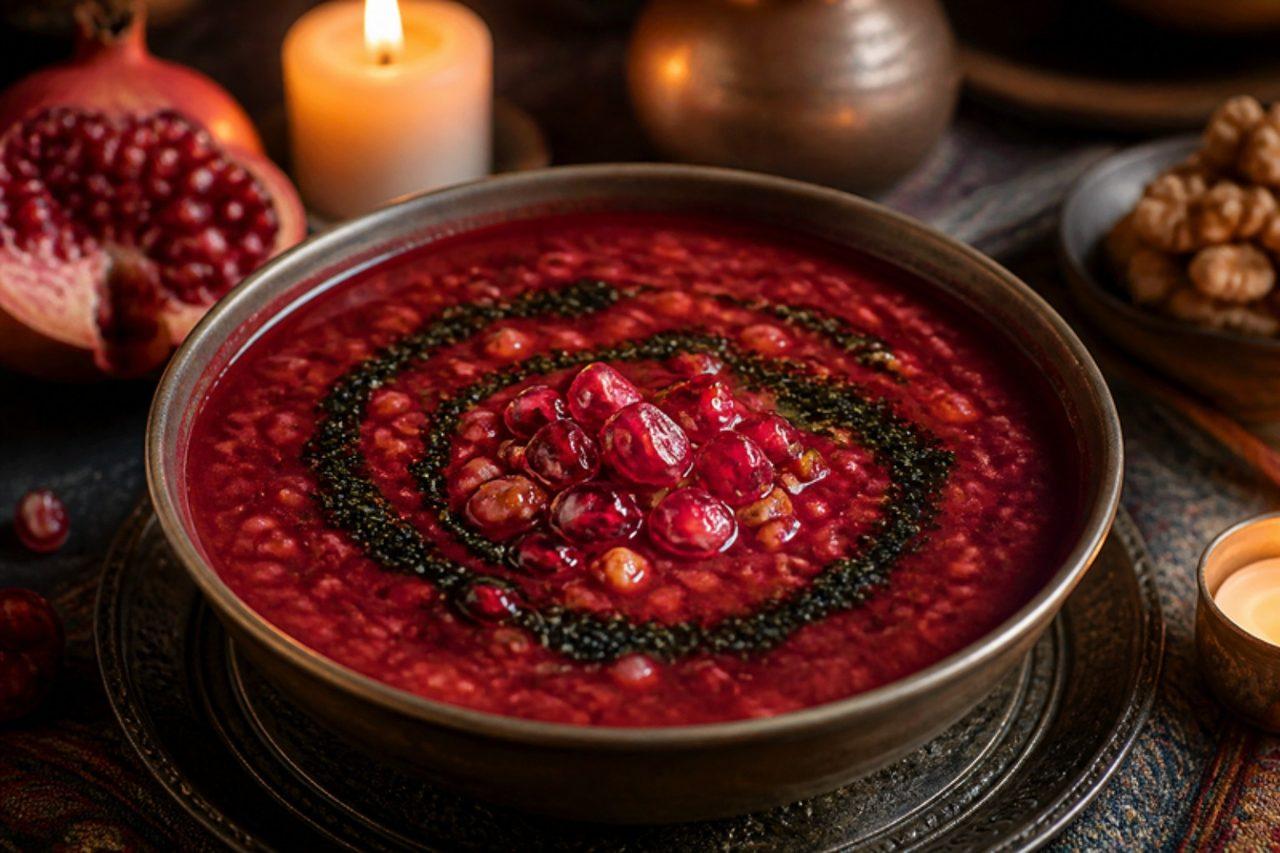
Ash-e anarPomegranate soup with herbs and rice

Ash-e anar is a soup for Yalda, the long December night when families across Tehran, Tabriz and Mashhad stay up late with pomegranates, watermelon and poetry. Fresh pomegranate juice and molasses give the broth a sour-sweet ruby colour, thick with split peas, rice and a mass of parsley, coriander, mint and spring onion. Many families drop in small meatballs; this version leaves them out and finishes with a sizzling garnish of dried mint in oil (nana dagh) for depth. The common mistake is adding the pomegranate too early, which dulls the colour to brown; it goes in for the last half hour. Chef's tip: taste and balance at the end with sugar or more molasses; the soup should make your mouth water, sour first and sweet after.

100 minPersianSoupsVeganGluten free
by KrazyBadal 0 views

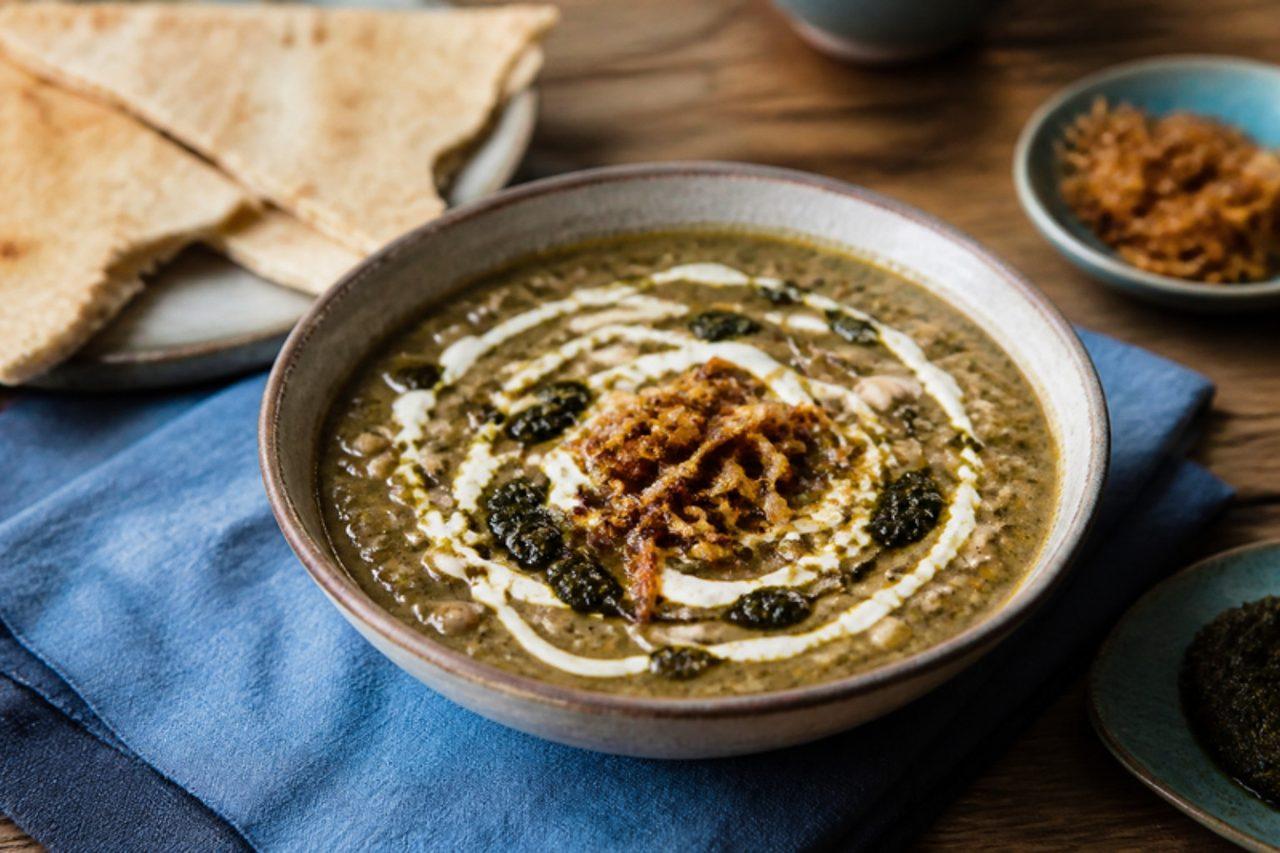
Ash-e kashkWheat, bean and herb soup

Ash-e kashk is the winter ash of Khorasan and the central plateau, simmered in big pots in Mashhad and Neyshabur homes and served from the pot for long Friday lunches. Cracked wheat, chickpeas, beans and lentils cook down with a mountain of herbs until creamy and thick, then each bowl gets a swirl of kashk, crisp fried onion and sizzling mint oil. Kashk is fermented dried whey, made without rennet, so it is vegetarian. A common mistake is adding the herbs too early, which turns them grey and muddy; stir them in for the last 30 minutes only. Chef's tip: stir the kashk in a little hot broth before swirling, so it blends smoothly rather than splitting.

125 minPersianSoups
by KrazyBadal 0 views

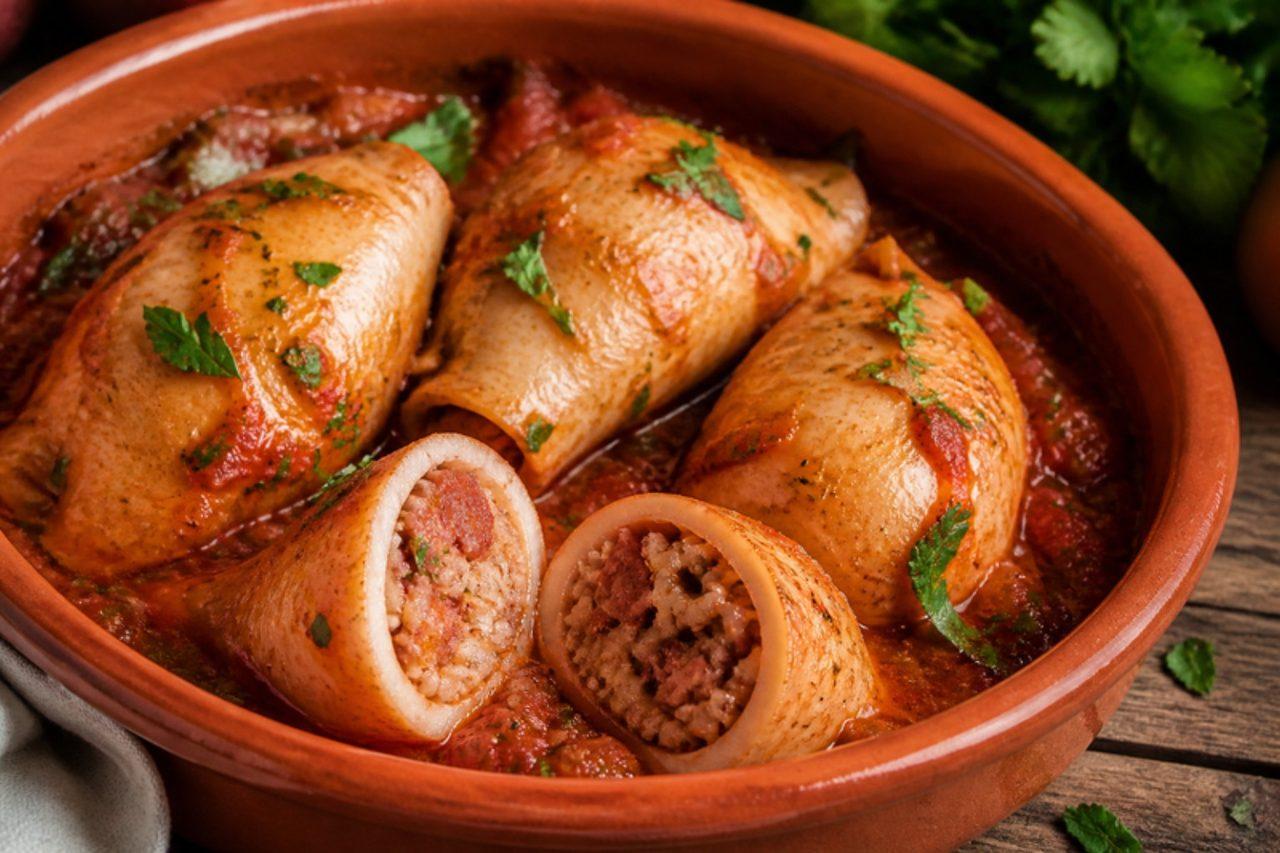
Lulas recheadasSquid stuffed with chouriço and rice

Fishermen's wives in Portimão stretched a modest catch of squid by filling the bodies with chopped tentacles, rice and a little chouriço, then simmering them slowly in tomato sauce until meltingly tender. It is a Sunday dish in the western Algarve, served sliced into rounds with boiled potatoes or more rice. This contains pork (chouriço), and the sauce uses white wine; replace it with the same amount of fish or vegetable stock for an alcohol-free version. Chef's tip: fill the squid only two-thirds full, because the rice swells and can split them.

by KrazyBadal 0 views

PepitoriaRice with goat offal

Santander's famous plate of cabrito (roast kid goat), sold in Bucaramanga, Barichara and the canyon towns, always comes with pepitoria next to it: rice cooked with the kid's chopped heart, liver and kidneys, a refrito of onion and tomato, and blood, which turns it a deep reddish-brown and gives it a rich, mineral flavour, a little like a soft black pudding. It's a dish that uses the whole animal, and it is worth trying if you like morcilla. Ask a halal, Caribbean or specialist butcher for very fresh goat offal and fresh blood (pig blood works if goat isn't available); keep both cold and cook them the same day. Offal must be cooked right through, and the blood until it has set and darkened with no liquid red left. The usual misstep is adding the blood too early, so that it scorches on the bottom; it goes in when the rice is nearly done. Chef's tip: if blood is impossible to find, double the offal and add 1 tsp extra achiote; you'll get a lighter but still very good rice.

by KrazyBadal 0 views

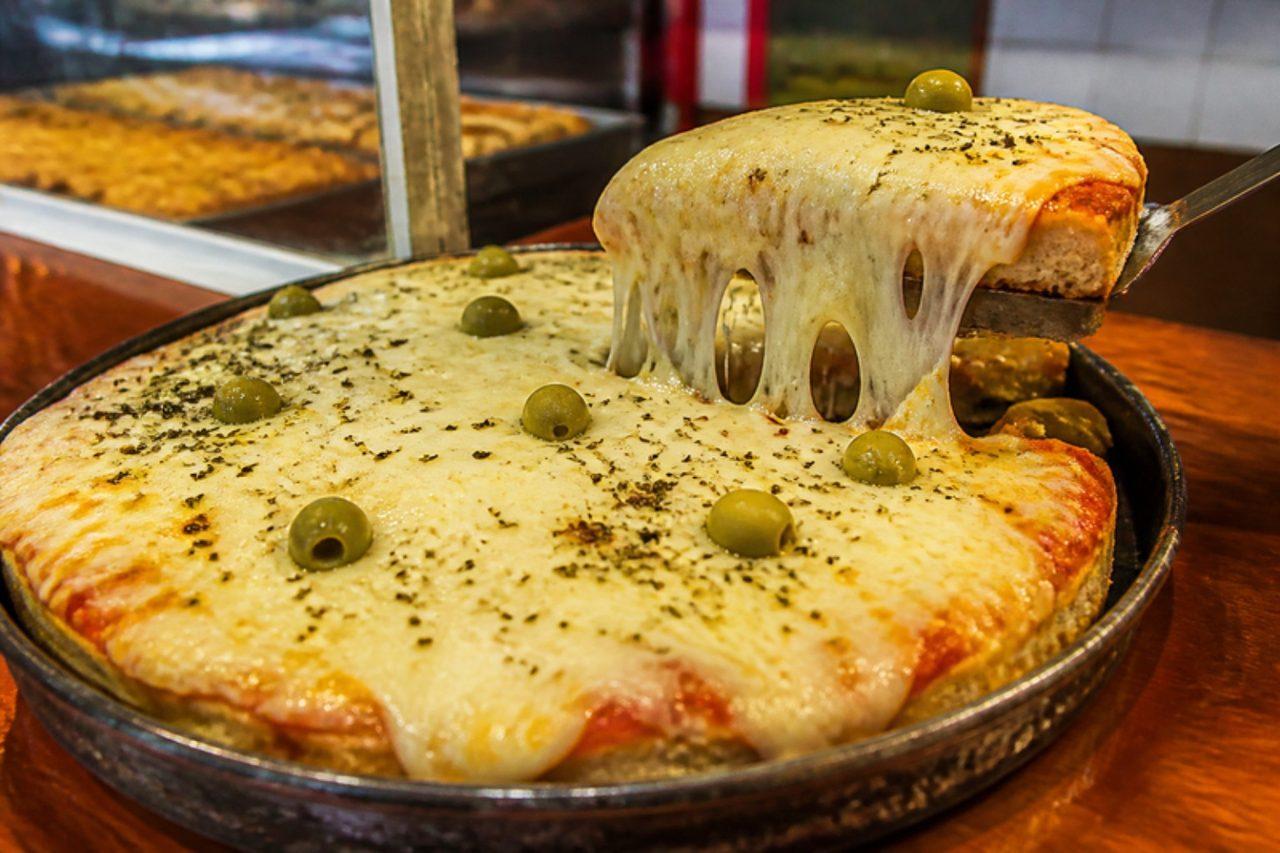
Pizza al moldeThick pan pizza

Order "una grande de muzza" at a Corrientes Avenue pizzería and this is what lands on the metal stand: a tall, airy base baked in a round black tin, a thin layer of tomato sauce and so much mozzarella it spills over the edge and fries against the metal. Porteños eat it standing at the counter or at a Formica table, often with a wedge of fainá on top and a cold soda beside it, and at home it is Friday-night food the whole family agrees on. The crumb should be soft and bready like focaccia, the base crisp from the oiled tin. Most home cooks go wrong by loading the cheese on raw dough: by the time the base has baked the mozzarella has split into grease. Here the base is part-baked with its sauce first, the way pizzerías keep pre-pizzas ready, and the cheese only goes in for the last minutes. The mozzarella is usually made with animal rennet, so pick a vegetarian one if that matters to you. Chef's tip: let the dough rise a second time inside the oiled tin; that last proof is what gives the high, open edge.

by KrazyBadal 0 views

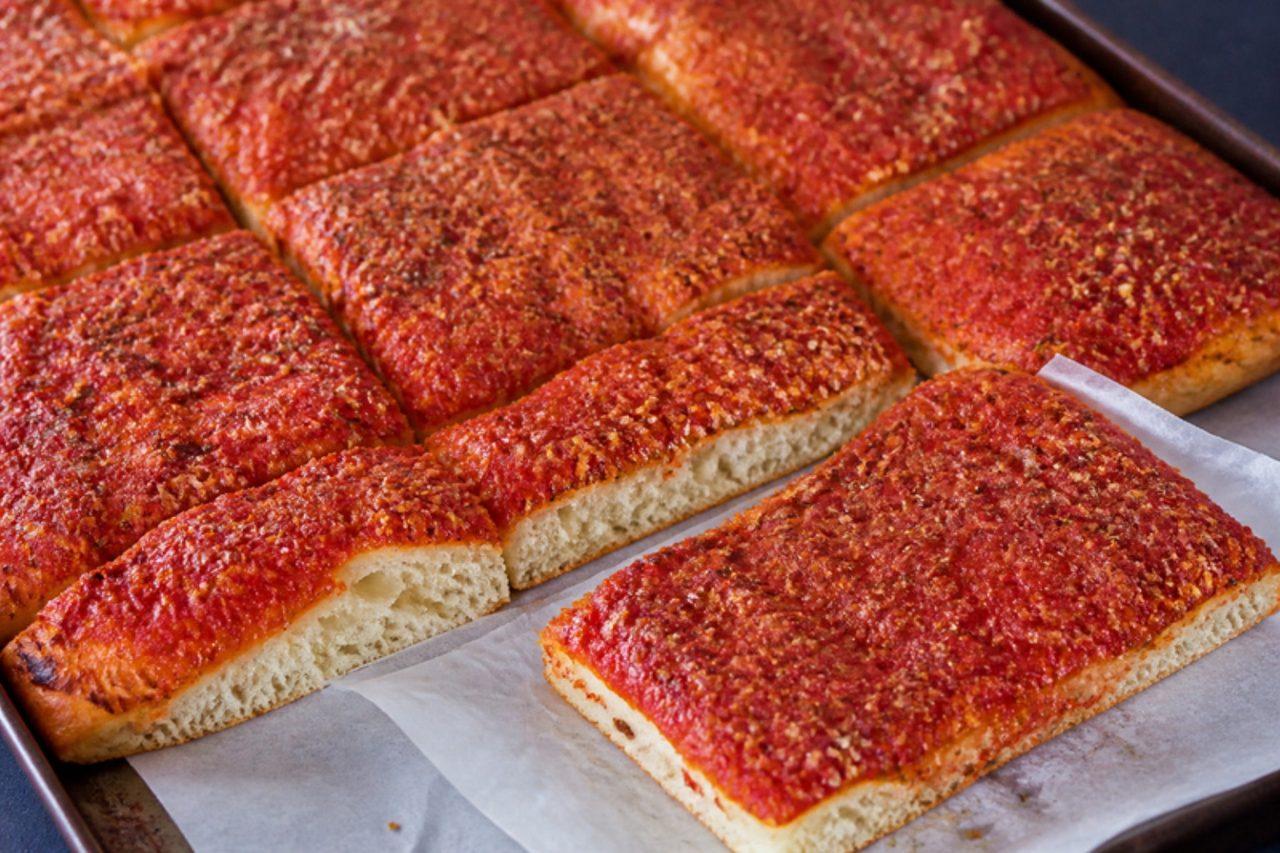
Pizza cancheraCheeseless thick tomato pizza

No cheese at all: that is the whole point of pizza canchera. Vendors walk the terraces at Buenos Aires football grounds with a wicker basket of these thick rectangles wrapped in paper, and the name comes from la cancha, the pitch. Because it is eaten at room temperature, the topping is a heavy, garlicky tomato paste, almost jammy, with dried oregano, a pinch of ají molido (crushed red chilli) and a good slick of olive oil; the base underneath is soft, a little oily and chewy, more focaccia than Neapolitan. Today it also turns up at kids' parties and on Sunday tables as a snack before the asado. Where people slip up is the sauce: a thin, watery sauce soaks the dough and turns it soggy by the time it has cooled, so the tomato has to be cooked down until a spoon leaves a trail. Chef's tip: cut it into squares only once it has cooled for 15 minutes; it will hold its shape like the slices sold in the stands.

by KrazyBadal 0 views

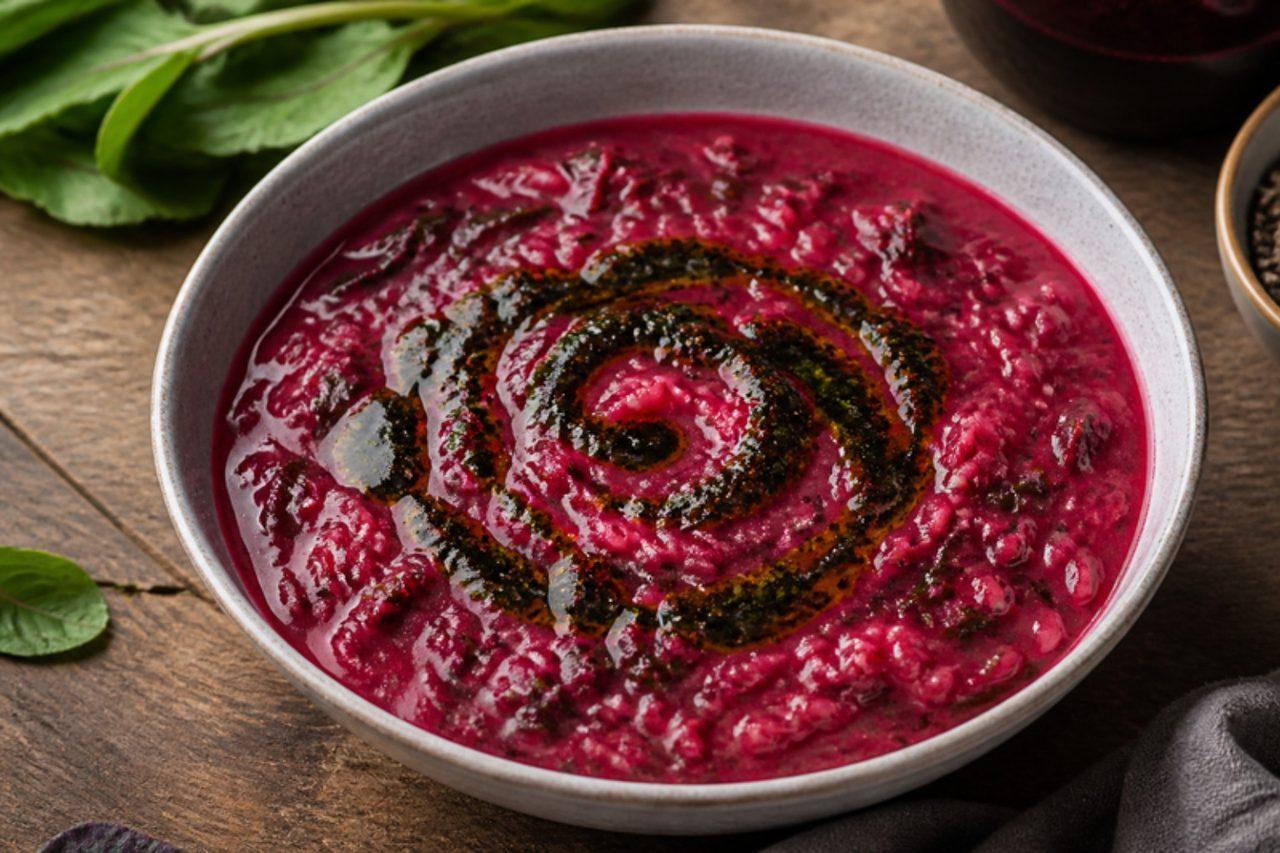
Ash-e shooliBeetroot, spinach and herb soup

In the desert city of Yazd, ash-e shooli is what grandmothers cook on the first cold nights of autumn and through winter, and what they bring to anyone with a cold. It is a thick, deep-red soup of beetroot, spinach and green herbs, thickened with a little flour and balanced between vinegar and a touch of sugar or date syrup, finished with fried mint. Nothing else in Iran tastes quite like it. A common mistake is adding the vinegar early, which keeps the beetroot hard; put it in once everything is tender. Chef's tip: taste and adjust at the very end, adding sour and sweet a spoon at a time until neither one wins.

by KrazyBadal 0 views

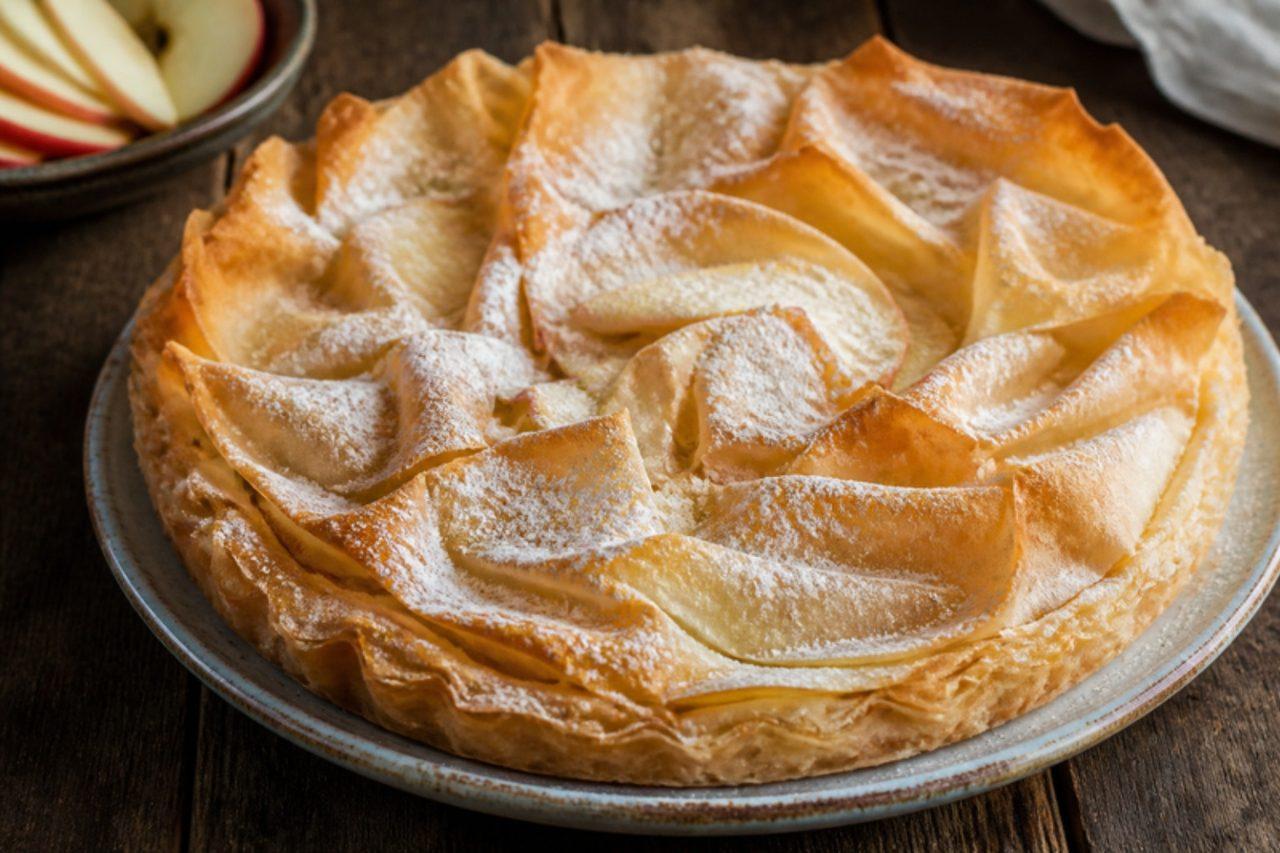
Pastis gasconCrackling apple pastry

In the Gers and the Lot-et-Garonne, grandmothers once stretched pastis dough over the kitchen table until it was thin enough to read a newspaper through, then layered it with apples and butter into a crackling, golden dome. Called pastis in Gascony and croustade in Quercy, it is served at Sunday lunch, weddings and village fêtes. The apples are traditionally soaked in Armagnac, the local brandy; this home version uses filo pastry and gives an alcohol-free soak of apple juice and orange flower water, with Armagnac as the option. Chef's tip: scrunch the top sheets loosely like crumpled silk; the folds turn into the crisp, shattering crown.

by KrazyBadal 0 views

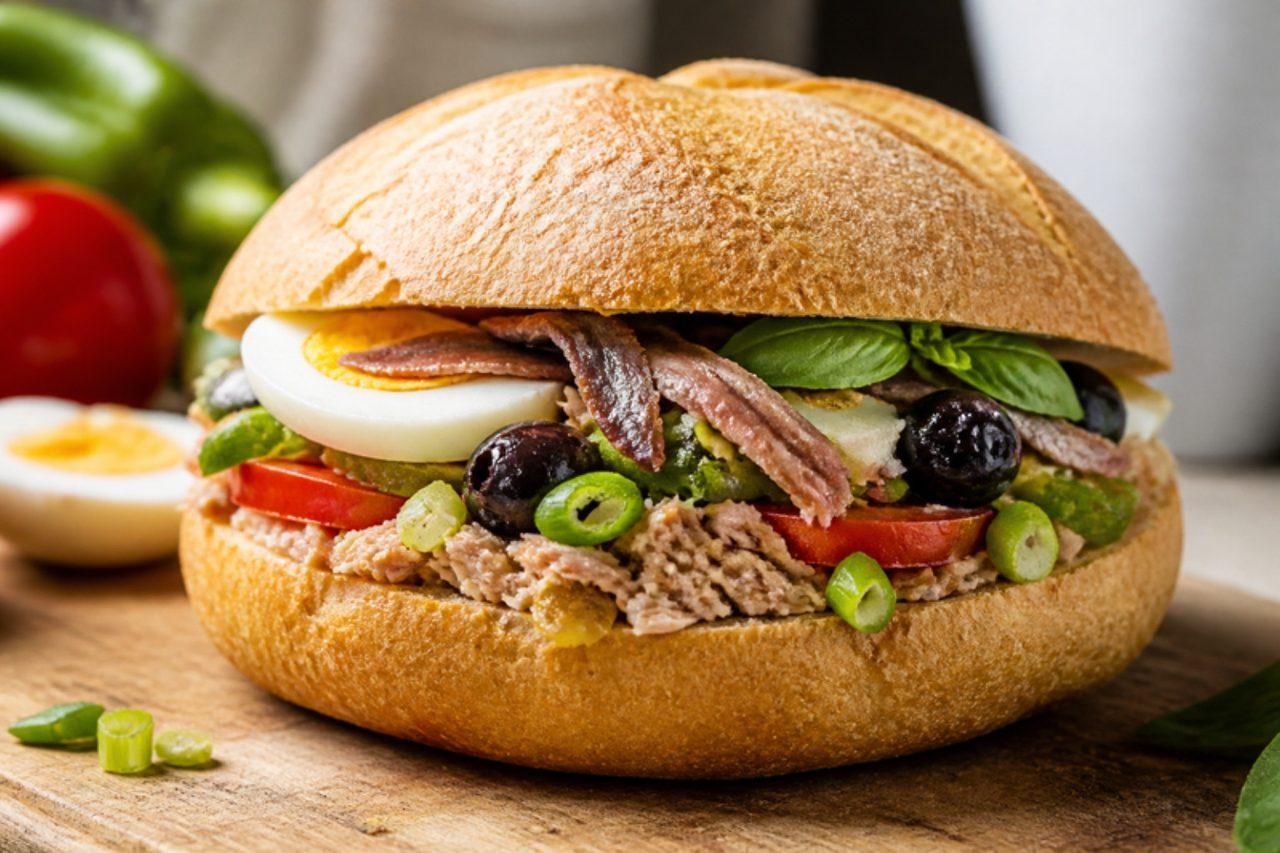
Pan bagnatPressed tuna and anchovy sandwich

Pan bagnat, 'bathed bread' in Niçois, is the beach and market lunch of Nice, sold wrapped in paper from kiosks around the Cours Saleya and packed for picnics on the pebbles of the Promenade. A round crusty roll is soaked with fruity olive oil and filled with everything that goes into a salade niçoise: tuna, anchovies, hard-boiled egg, tomato, sweet green pepper, spring onion and black olives. Pressed for an hour, it turns juicy, compact and easy to eat in big, messy bites. Serve it on its own or with a few radishes and a glass of something cold. Chef's tip: rub the cut bread with garlic before the oil goes on; it perfumes every bite without overpowering the fish.

by KrazyBadal 0 views

Pastissets de moniatoSweet potato pastry half-moons

As Christmas nears, bakeries and home kitchens from Valencia to Alicante turn out trays of pastissets, little half-moon pies of crumbly olive-oil pastry wrapped around a filling of sweet potato cooked with sugar, lemon and cinnamon, finished with a snowy dusting of sugar. They are eaten with coffee or a glass of mistela after the big family meals, and also for All Saints in November. The pastry traditionally includes a splash of sweet mistela wine; orange juice works just as well for an alcohol-free version. A common mistake is overfilling, which splits the seams in the oven; a heaped teaspoon is enough. Chef's tip: chill the filling until firm before you shape, so it sits neatly in the centre and is easy to seal.

by KrazyBadal 0 views

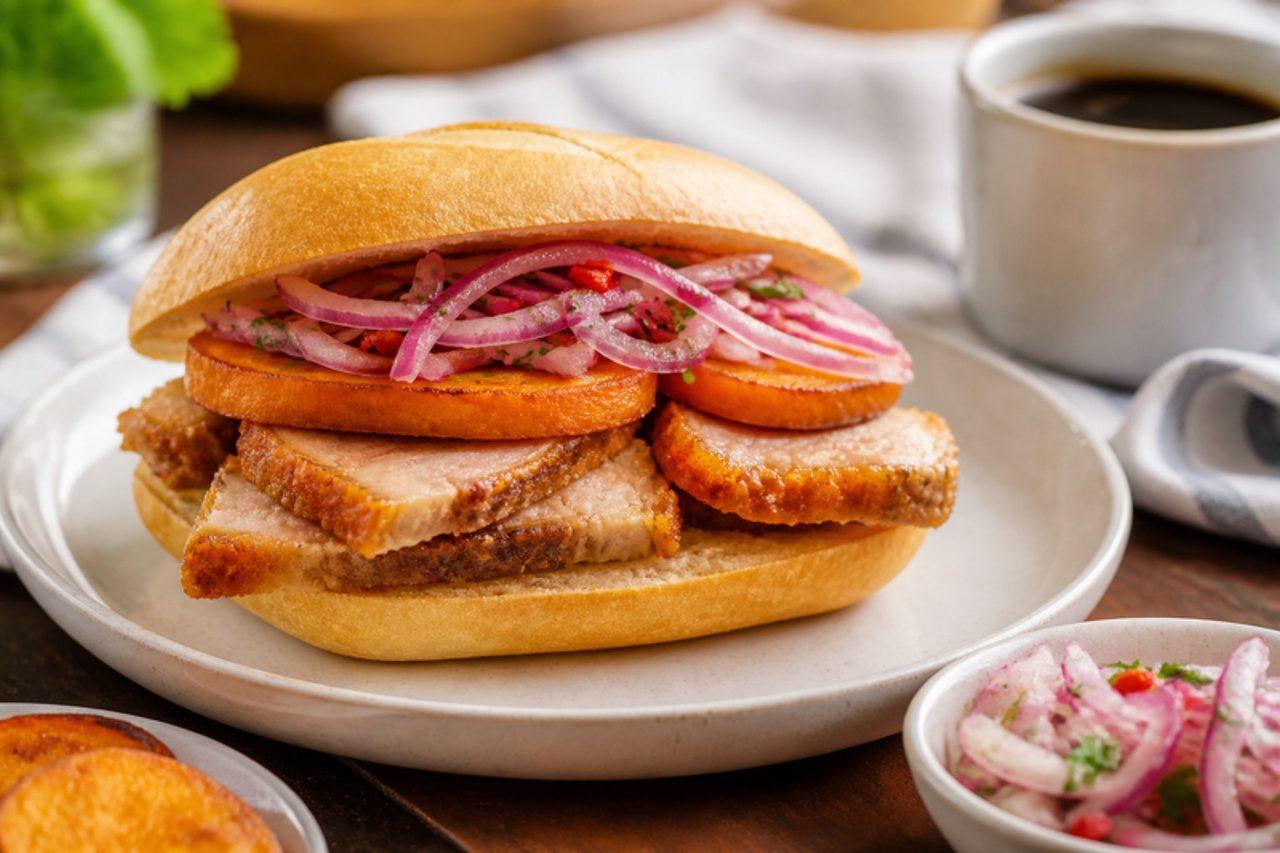
Pan con chicharrónCrisp pork sandwich

Sunday mornings in Lima mean a queue at the neighbourhood sanguchería or a stop at Barranco's old cafés for this: a crusty pan francés roll stuffed with chicharrón, pork that has been simmered in salted water until the water evaporates and then fried in its own fat, layered with slices of fried sweet potato and a crown of salsa criolla. The pork is crisp at the edges, juicy inside, the sweet potato sweet and soft, the onion sharp and cold. It comes with coffee or a hot drink. The usual mistake is frying the pork in extra oil from the start; the water has to boil off first so the meat renders and fries in its own fat, otherwise it stays pale and tough. Chef's tip: use pork belly mixed with shoulder for the right balance of crackle and meat.

by KrazyBadal 0 views

PlinsenBuckwheat pancakes with quark

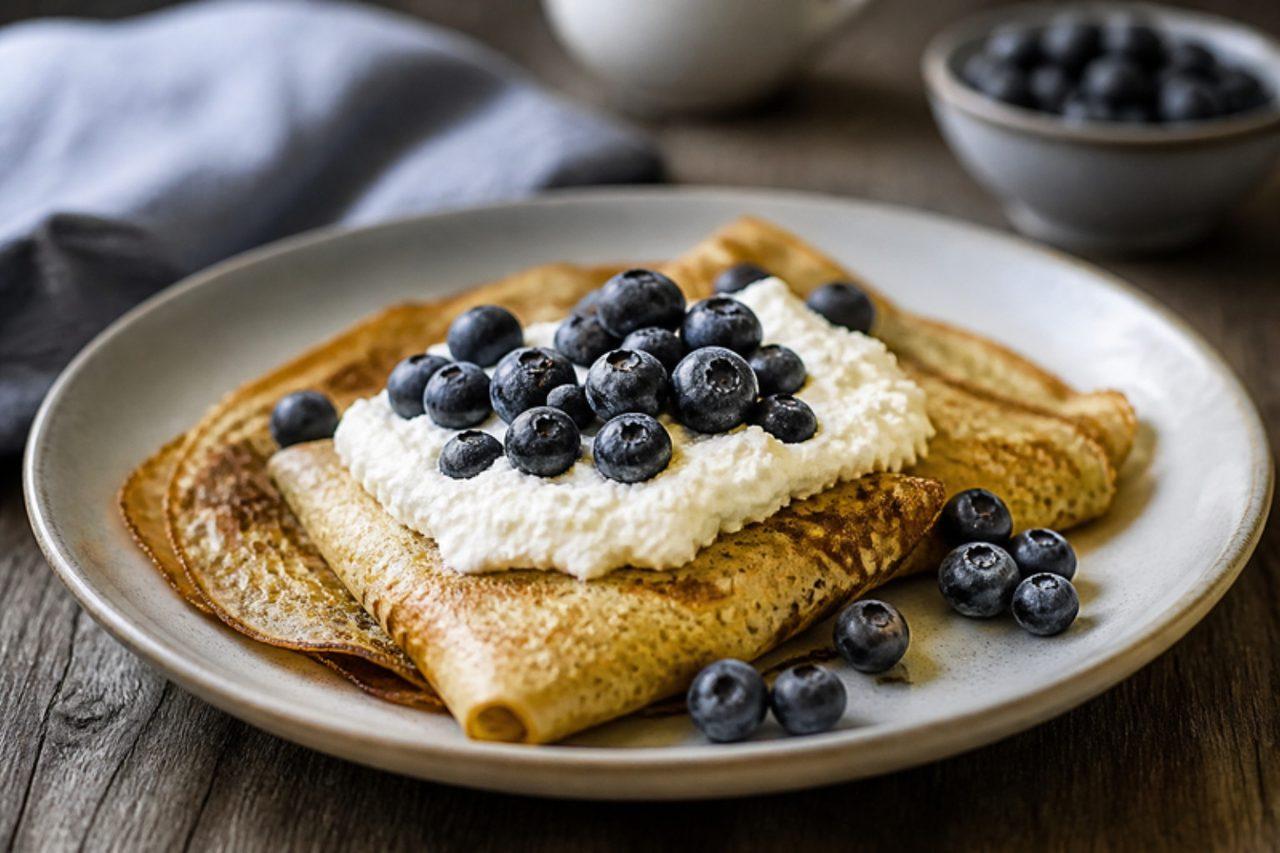
Plinsen come from Lusatia, the Sorbian-speaking borderland of Brandenburg and Saxony, where buckwheat once grew in the sandy soil. They are thin, soft pancakes, slightly thicker than a crêpe, made with buckwheat or a mix of buckwheat and wheat, and they are eaten for breakfast or as a sweet supper with sweetened quark, apple sauce or, in July, wild blueberries from the Lusatian pine woods. The buckwheat gives a nutty, earthy edge. A common mistake is cooking them in a too-cool pan, which makes them pale and rubbery; the butter should sizzle as the batter hits it. Chef's tip: rest the batter for 30 minutes so the buckwheat swells and the pancakes don't tear.

by KrazyBadal 0 views

ReviroFried flour and egg scramble

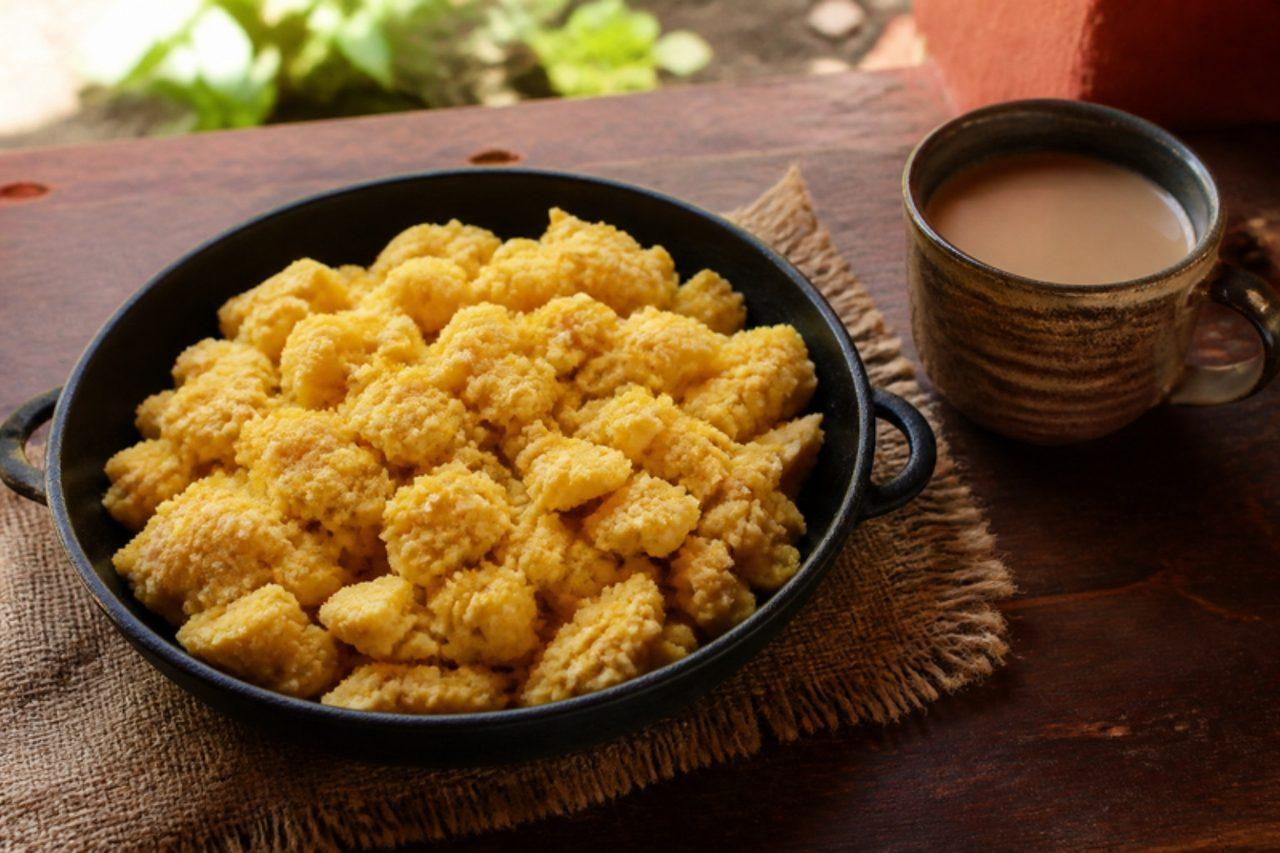
For field workers in the yerba-mate plantations of Misiones, the morning starts with reviro: a simple dough of flour, egg, water and salt fried in plenty of fat and then broken up with a spatula as it cooks, until it becomes a pile of crisp, golden, irregular crumbs with soft centres. It is filling, cheap and very good dunked in a mug of mate cocido or milky coffee, and it shares its roots with the Guaraní and Paraguayan kitchen across the river. Traditionally it is fried in lard or beef fat; this version uses butter and oil so it is vegetarian. Turning it too early is the classic blunder: the batter needs to fry undisturbed until a crust forms, or it turns into a pale, doughy mash. Chef's tip: keep chopping and turning with the edge of a metal spatula for the last 10 minutes; the more edges you make, the more crunch you get.

by KrazyBadal 0 views

ObatzdaBeer-garden cheese spread

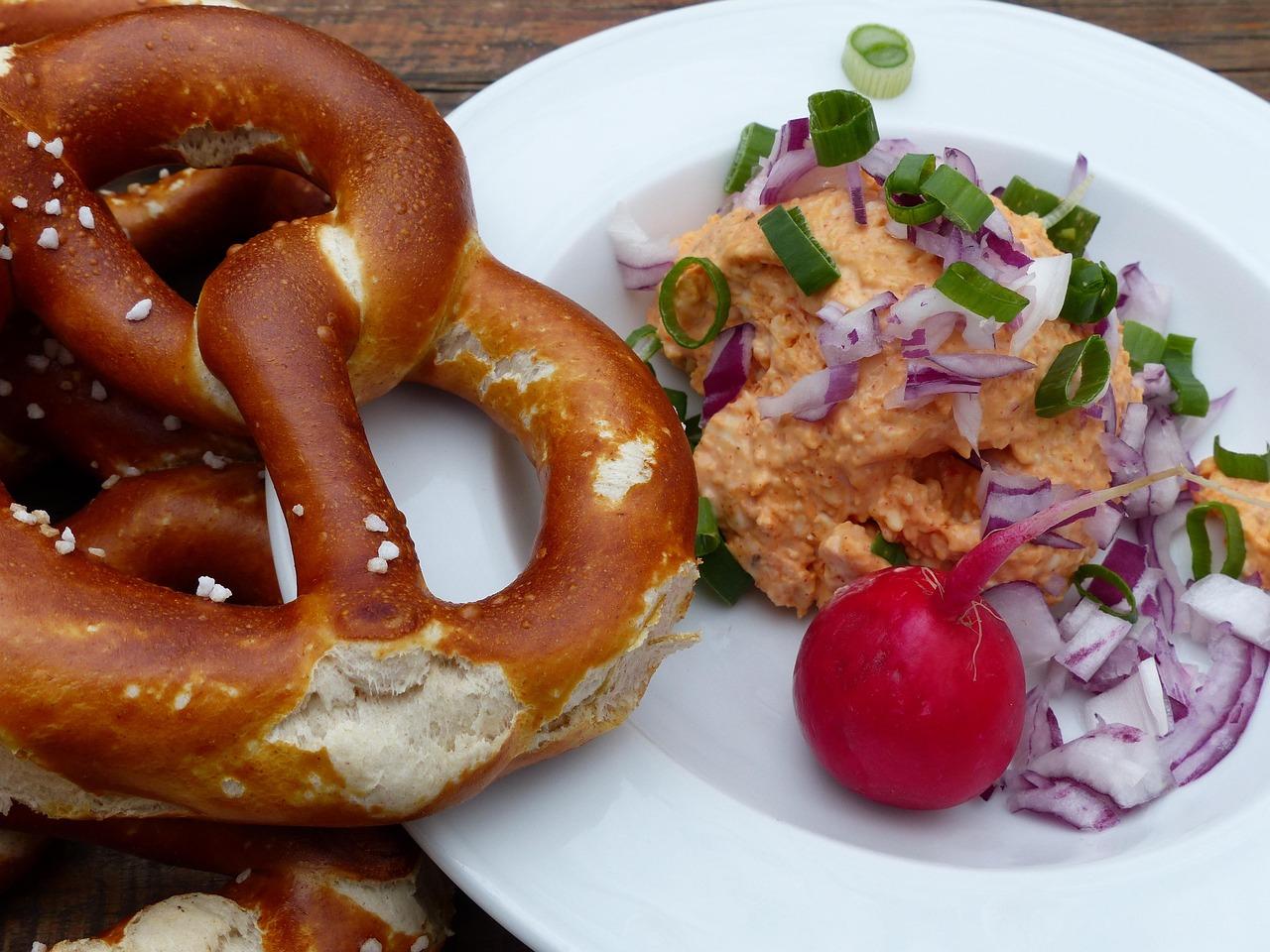
Obatzda is what a Munich beer garden puts beside a giant soft pretzel: overripe Camembert mashed with soft butter, sweet paprika, caraway and raw onion until it turns a creamy, rusty orange. It is a thrifty spread that grew up in Bavarian taverns as a way to use cheese that had gone a little too far, and it is still eaten in the afternoon sun with radishes and dark bread. Camembert is usually made with animal rennet, so pick one labelled vegetarian if that matters to you. A common mistake is blitzing it in a processor, which makes it gluey; mash with a fork so a few soft lumps stay. Chef's tip: make it an hour ahead and chill it, then let it stand 15 minutes before serving, so the paprika flavour blooms and it spreads easily.

by KrazyBadal 0 views

Pimenta da terraFermented red pepper paste

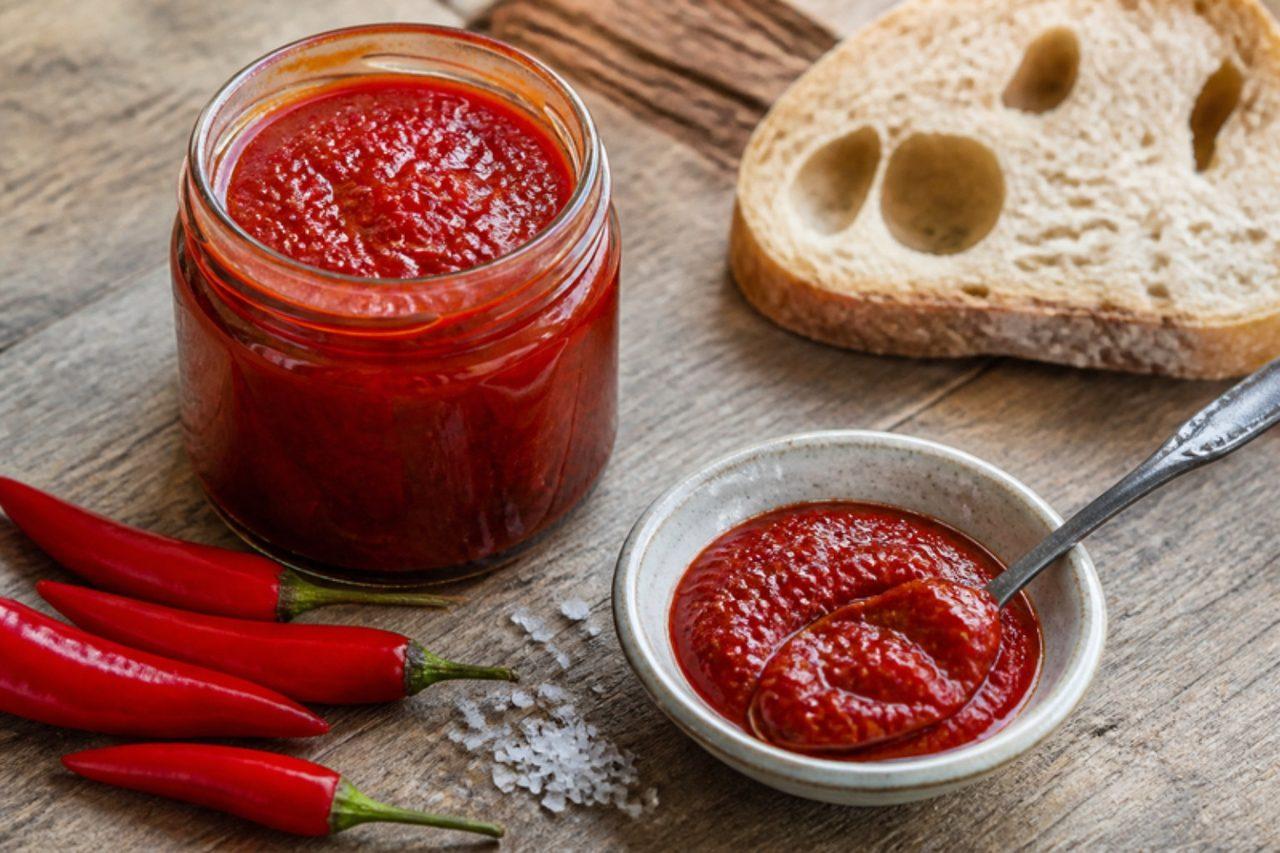
On São Miguel, nearly every kitchen has a jar of pimenta da terra, crushed red peppers salted and left to ferment for a few days until they turn tangy and deep red. It goes into stews, octopus, beans and sausages, onto grilled fish and into sandwiches of bolo lêvedo. It can be mild or fiery depending on the peppers. Make it in late summer when red peppers are cheap. Chef's tip: weigh the salt; too little lets the wrong bacteria take over, while the right amount keeps it safe and lets it ferment slowly.

by KrazyBadal 0 views

Sagu de vinhoTapioca pearls in red wine

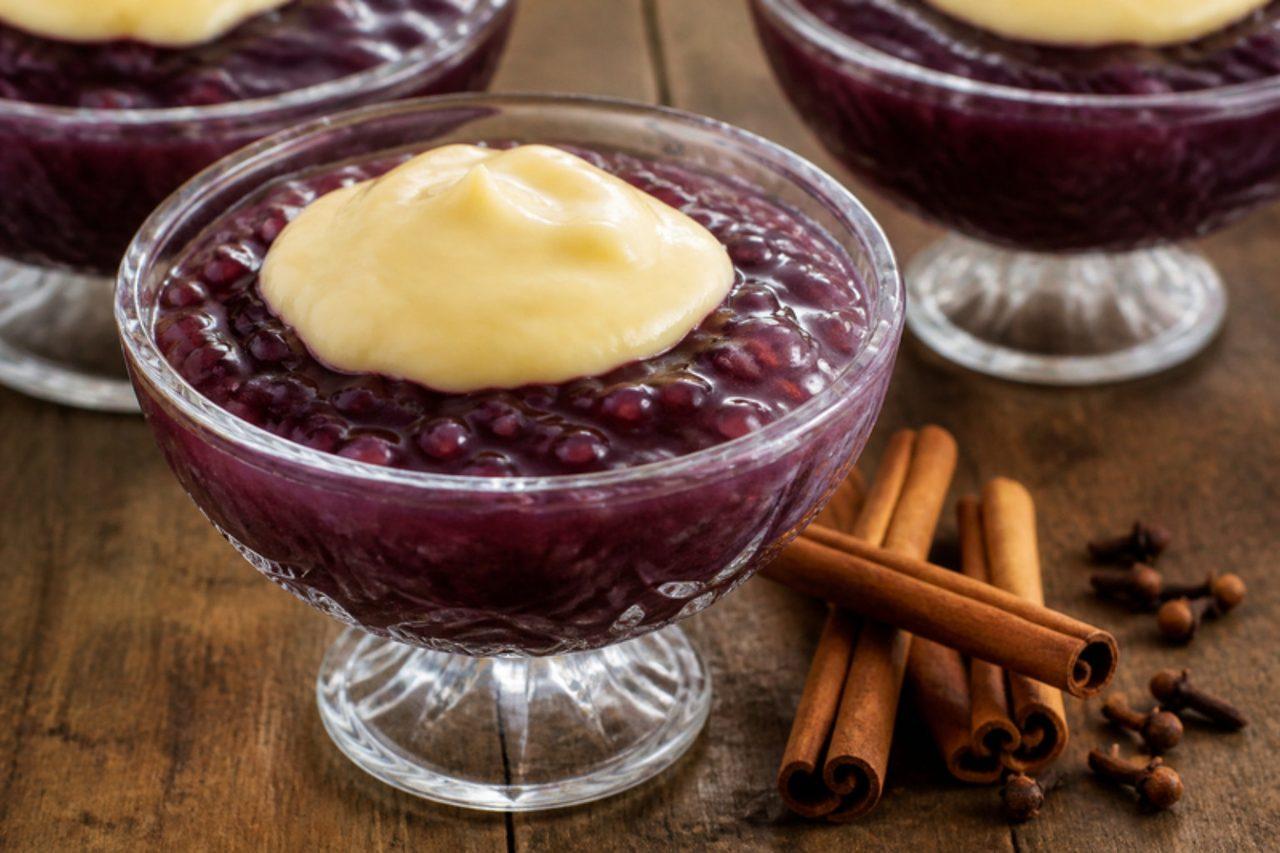
Glossy, wine-dark and wobbling with little translucent pearls, sagu is the dessert of the serra gaúcha, the Italian-settled wine country around Caxias do Sul and Bento Gonçalves, where it ends Sunday lunch at family tables and galeteria buffets. Tapioca pearls are cooked until clear, then simmered in red wine with sugar, cloves and cinnamon so they soak up the colour and spice. Locally it comes with a spoon of vanilla custard on top. The dish contains red wine, and simmering does not remove all the alcohol; for an alcohol-free version, use red grape juice and cut the sugar by half. Choose a vegan wine if that matters to you, as some are fined with egg or fish products. The common mistake is adding the wine before the pearls are clear, which leaves white chalky centres. Chef's tip: rinse the cooked pearls under cold water before they go into the wine, so the starch washes off and the dessert stays glossy.

by KrazyBadal 0 views

TootAlmond rosewater marzipan

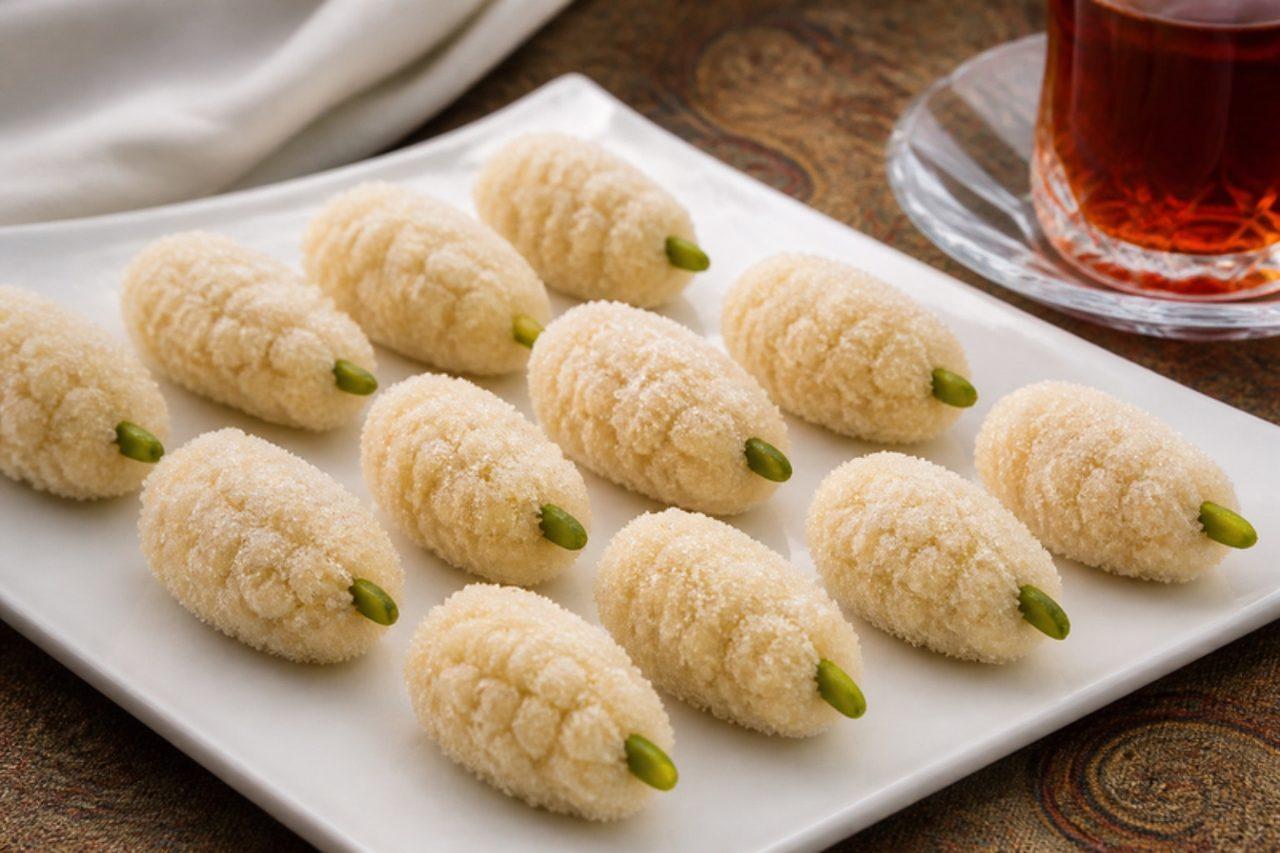
Little white toot sit on silver dishes at Nowruz and at weddings in Tehran and Isfahan, shaped and named after the pale mulberries that grow all over Iran. They are a soft, fragrant almond paste bound with rosewater, rolled in sugar and finished with a sliver of pistachio for the stalk. No cooking is needed, so children can help shape them. Chef's tip: add the rosewater a spoonful at a time; the paste should just hold when squeezed, and a wet paste won't keep its mulberry bumps.

by KrazyBadal 0 views

TopfenknödelQuark dumplings in buttery crumbs

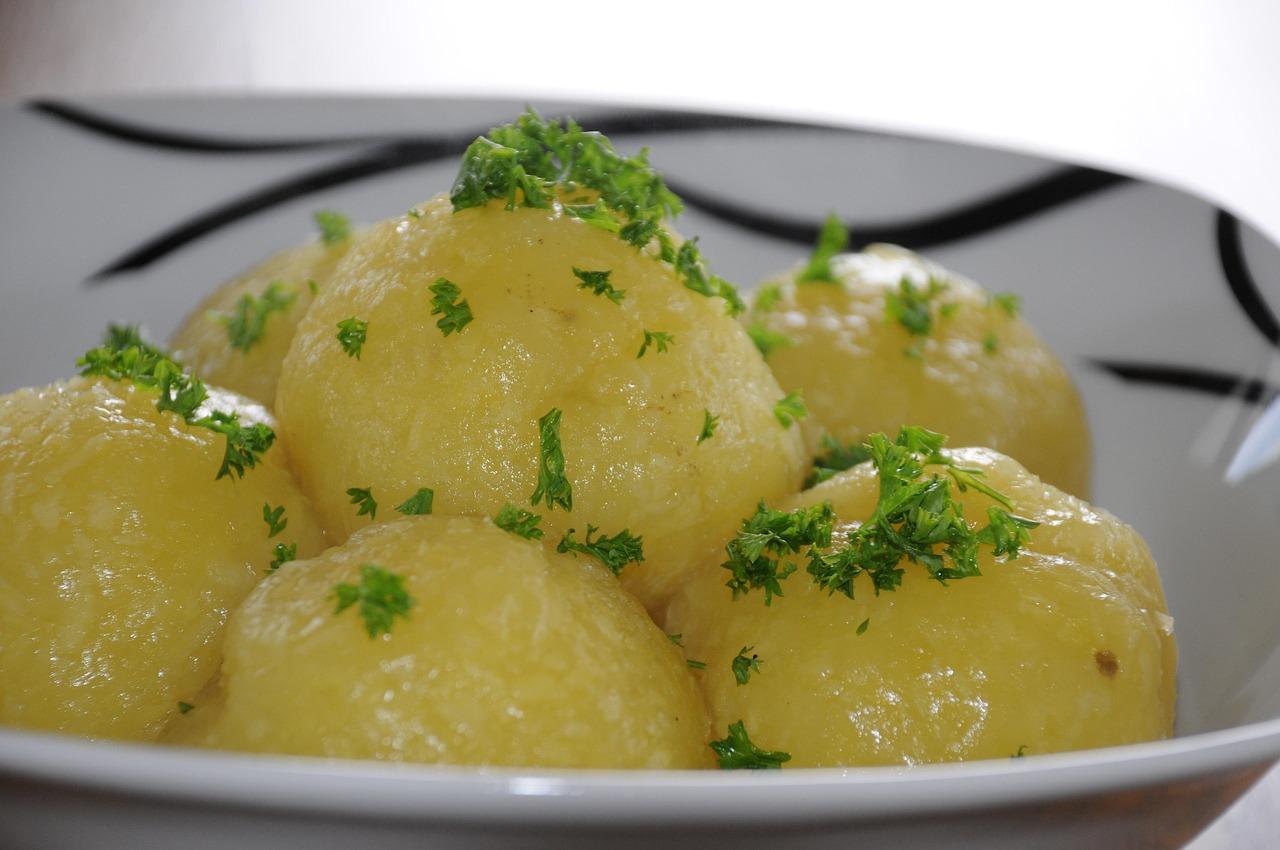
Topfenknödel belong to the long Austrian tradition of sweet main courses: in Viennese homes and Lower Austrian inns they are often served as a light Friday lunch, or as dessert after soup. Fresh quark, butter, egg and semolina make a dough that cooks into soft, tangy, almost cheesecake-like dumplings, which are rolled in breadcrumbs toasted in butter with cinnamon sugar and served with a warm fruit compote. A common mistake is boiling them hard; they puff, crack and fall apart, so keep the water just shivering. Most quark is made without animal rennet, but check the label and choose one marked vegetarian. Chef's tip: rest the dough for at least 30 minutes so the semolina can swell; it makes the dumplings hold together.

by KrazyBadal 0 views

LemonanaFrozen mint lemonade

From café terraces in Ramallah and Jaffa to juice bars along Hamra Street in Beirut, summer means tall glasses of lemonana: lemons and fistfuls of fresh mint blended with ice into a sharp, sweet, electric-green slush. It is the drink handed to you after a walk through the market at noon, and it cools a mezze lunch like nothing else. Everything goes in a blender, but the mint must be fresh and plentiful. The common mistake is blending the mint for too long, which bruises it and turns the drink murky and grassy. Chef's tip: make a lemon-sugar syrup first and chill it; dissolved sugar sweetens evenly and lets you blend for only a few seconds.

by KrazyBadal 0 views

Torshe tarehSour herb and bean stew

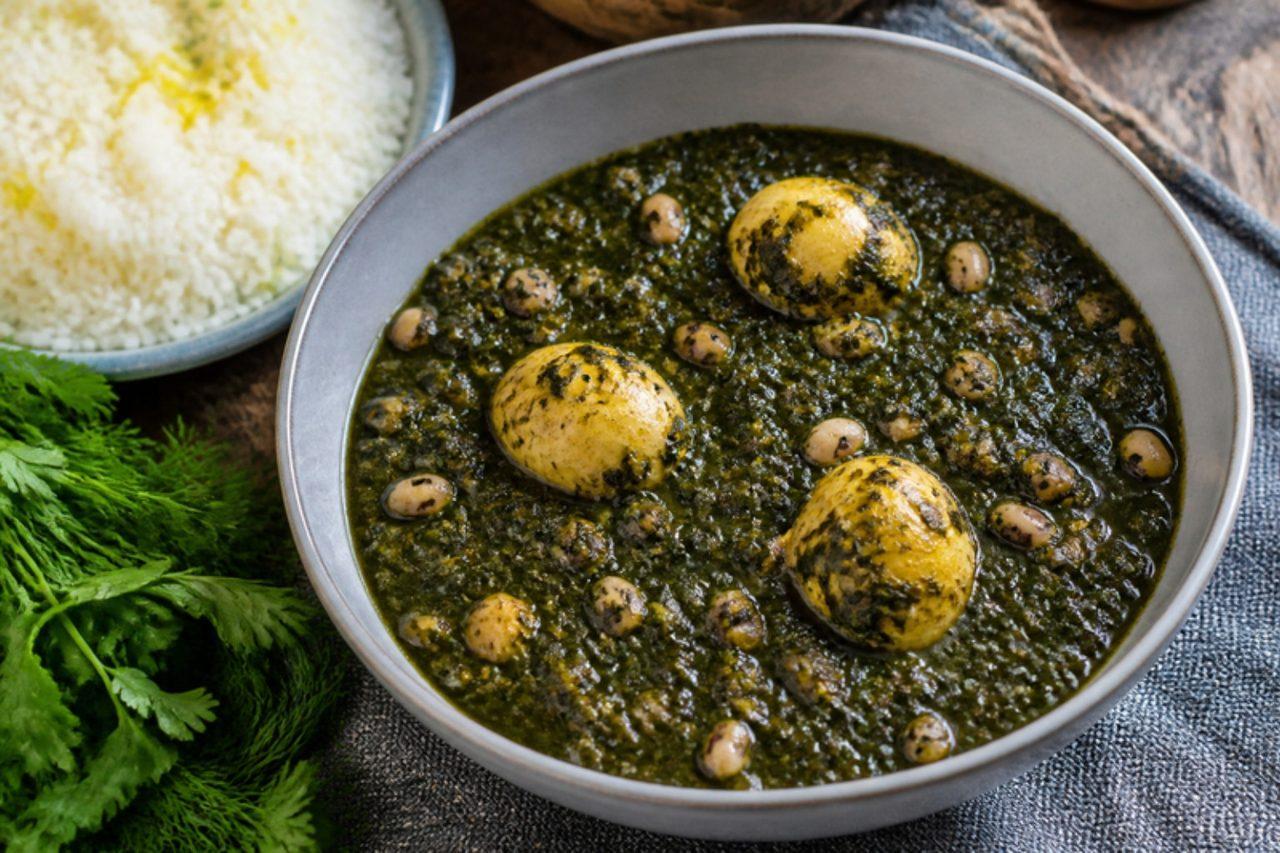
Torshe tareh is one of the dishes that marks Gilan's cooking as different from the rest of Iran: a dark, sour, garlicky stew of finely chopped greens, cooked down with rice flour and soured with bitter orange juice or dried sour plums, then finished with eggs. It is made in the Rasht area all year round and eaten with kateh rice, often alongside salted fish for those who eat it; this version is vegetarian with black-eyed beans for body. The common mistake is undercooking the herbs, which leaves the stew grassy instead of deep and savoury. Chef's tip: fry the chopped herbs until they turn almost black-green and stop smelling raw before any liquid goes in.

by KrazyBadal 0 views

PfitzaufEgg-batter puffs with apple sauce

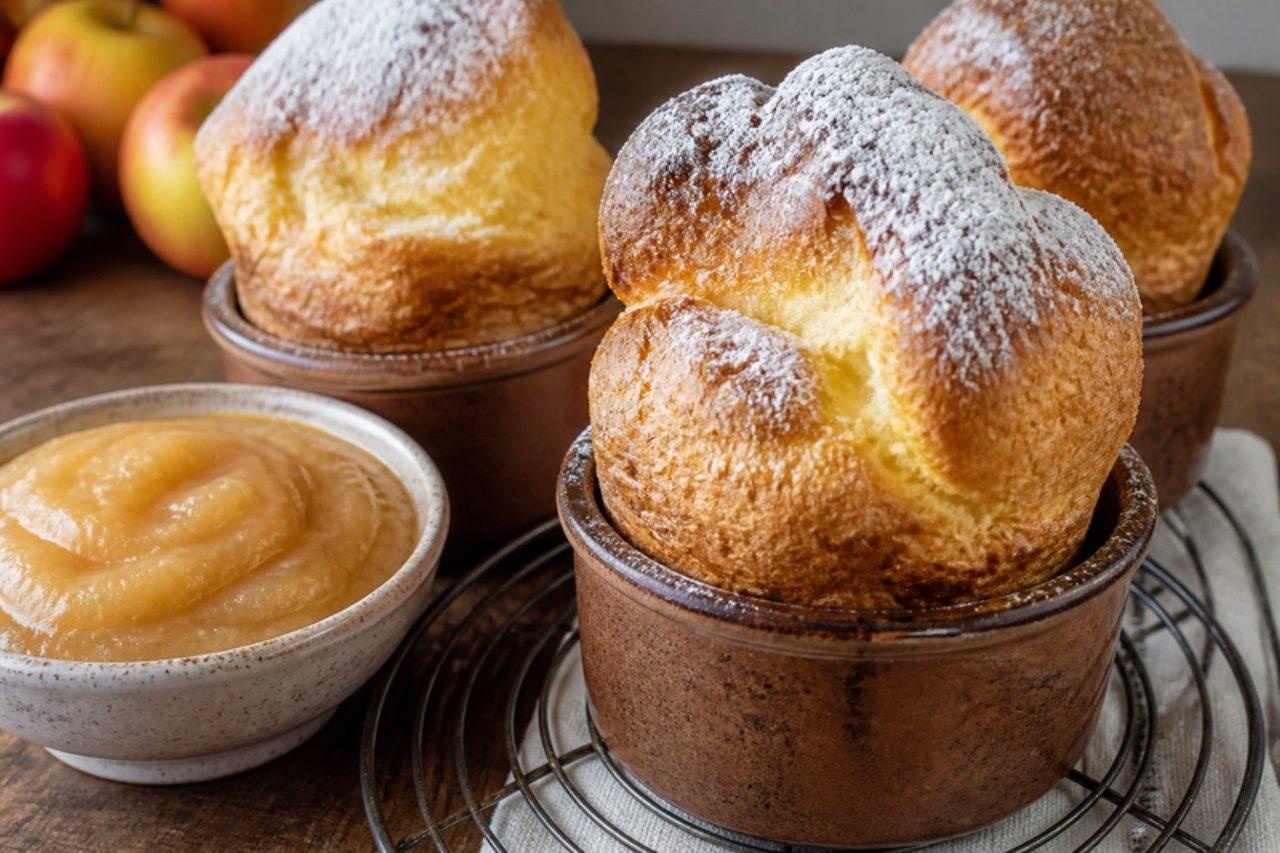
Pfitzauf is a Swabian Sunday-afternoon treat: a thin egg and milk batter poured into a heavy clay or tin mould with deep cups, which rises in the oven like a soufflé and 'pfitzt auf', pops up, far above the rim. Grandmothers on the Swabian Alb served it hot with apple sauce or vanilla sauce, sometimes with stewed cherries. A muffin tin or popover tin works too. The classic mistake is opening the oven during baking: the puffs collapse and never come back. Chef's tip: get the buttered tin really hot in the oven before pouring in the batter; the shock of heat is what makes them climb.

by KrazyBadal 0 views

BackhendlCrumbed fried chicken

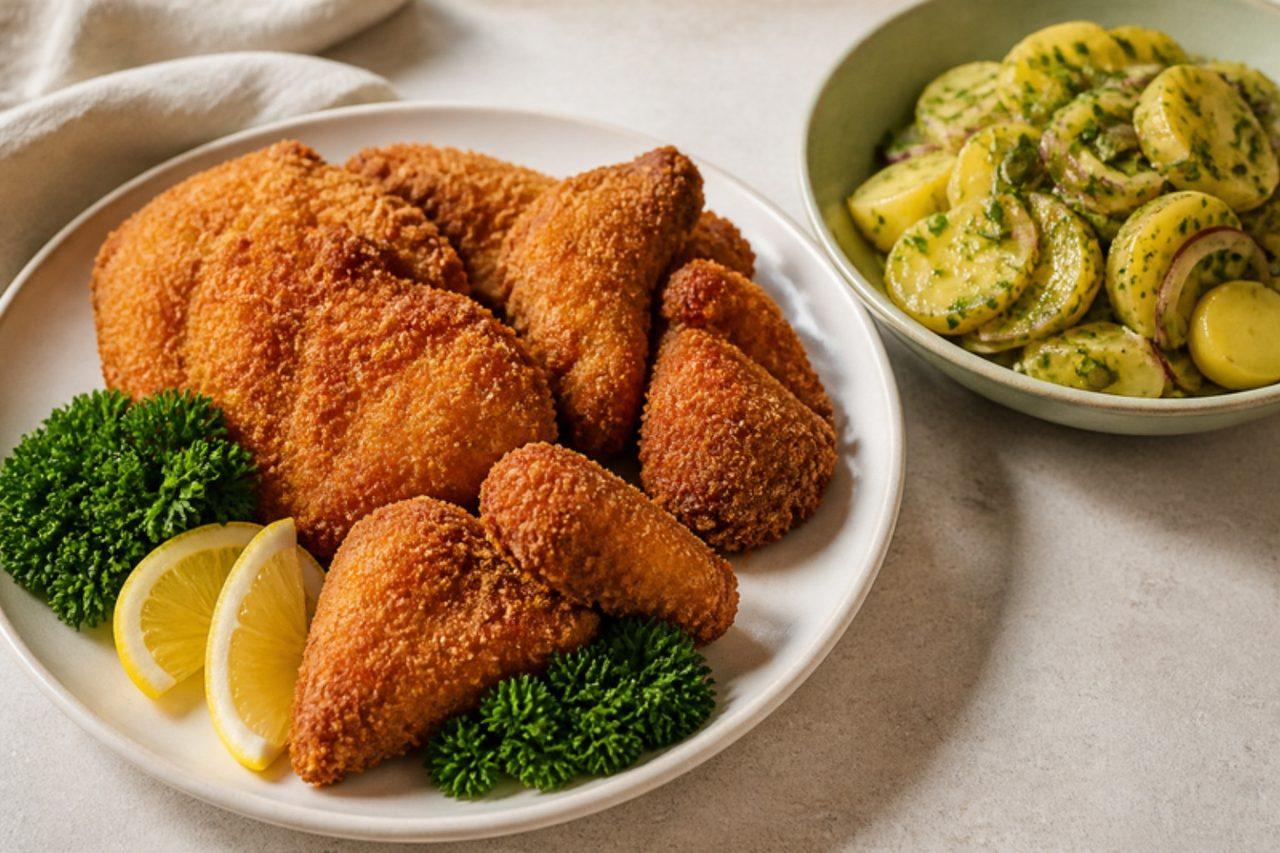
Backhendl, crumbed fried chicken, was the treat of 19th-century Viennese Sunday outings to the Prater and the wine villages, and it is still the star of Styrian taverns, served with lemon and a lukewarm potato salad glossy with pumpkin seed oil. Chicken pieces on the bone are seasoned with lemon, coated in flour, egg and fine breadcrumbs and fried slowly so the crust puffs and stays crisp while the meat cooks through. Chef's tip: fry at a moderate heat, not a fierce one; bone-in pieces need time for the centre to reach a safe temperature before the crumbs burn.

by KrazyBadal 0 views

BasloghRosewater starch sweet with walnuts

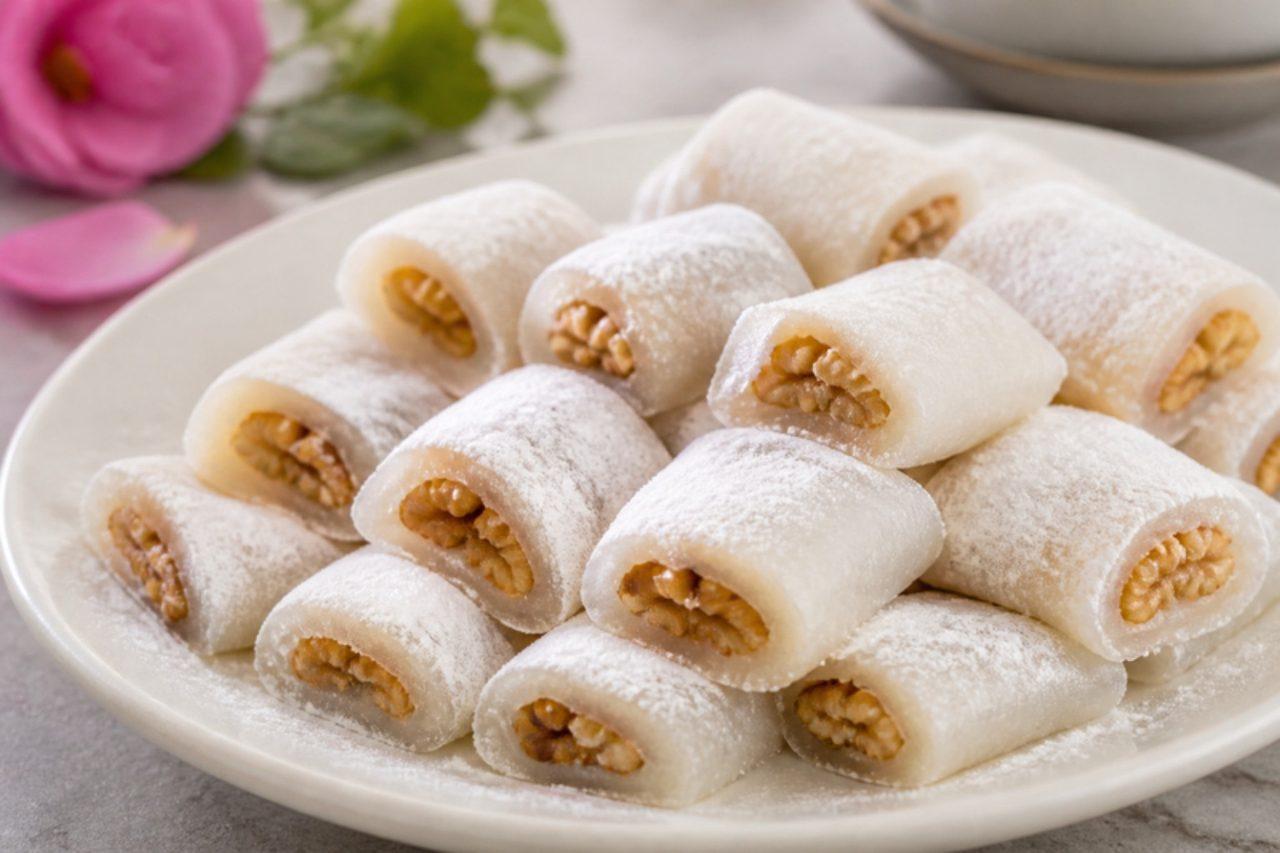
Baslogh is one of the soft confections that fill the sweet shops of Tabriz's covered bazaar, especially before Nowruz and at Ramadan: a pale, wobbly slab of starch cooked in rose-scented syrup, studded with walnuts, cut into squares and dusted so it does not stick. It is related to Turkish lokum but softer and less sweet, eaten with tea in the afternoon. A common mistake is stopping the cooking too early; undercooked baslogh never sets and weeps syrup. Chef's tip: cook until the paste turns translucent and pulls away from the pan in one mass, which takes longer than you expect.

by KrazyBadal 0 views

Nürnberger RostbratwürsteSmall marjoram pork sausages

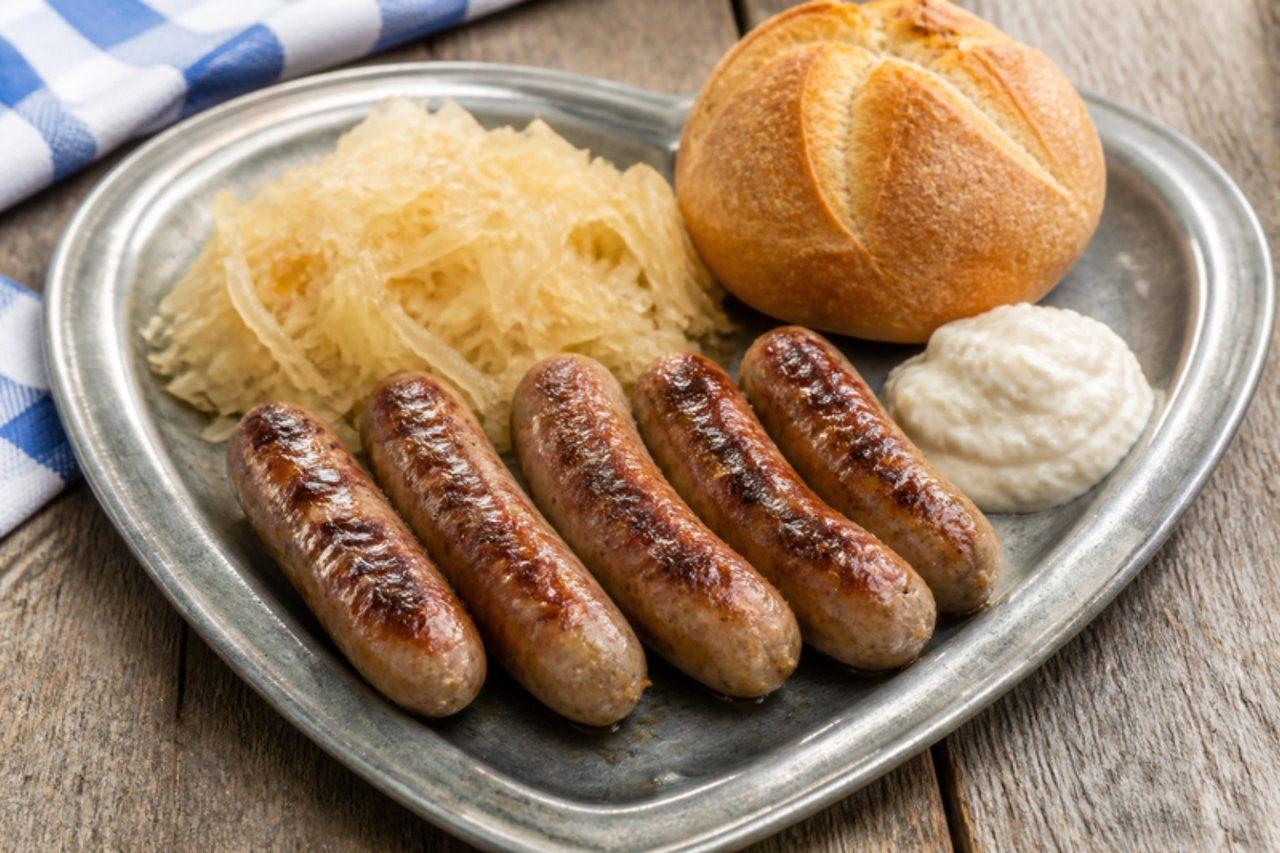
Nuremberg's little pork sausages are barely longer than a finger, grilled over beechwood in the old town's sausage kitchens and sold three at a time in a crusty roll, 'Drei im Weggla', at the Christmas market and all year round. They are delicate, coarse-ground and fragrant with marjoram, mace and lemon zest, and at a sit-down meal six or twelve come on a pewter plate with sauerkraut and horseradish. Making them at home needs a mincer with a sausage nozzle and narrow sheep casings, and is a satisfying weekend project. Vegetarians can buy small vegetarian bratwursts and grill them with the same sides. Chef's tip: keep the meat and mincer ice-cold; warm fat smears and the sausages turn crumbly.

75 minGermanMeat
by KrazyBadal 0 views

Pastel de carne murcianoMinced beef and chorizo pie

Murcia's bakeries sell pastel de carne from first thing in the morning: a round pie with a crisp, coiled puff pastry lid, filled with spiced minced meat, chorizo and hard-boiled egg. People eat one standing at the counter with coffee, or buy a big one for Sunday lunch. Bakers make the coiled lid from a long rope of pastry; at home a scored spiral on a puff pastry lid gives the same look. This contains pork (chorizo). Chef's tip: let the filling cool completely before it goes into the pastry, otherwise the base melts and turns soggy.

by KrazyBadal 0 views

QuarkkeulchenPotato and quark pancakes

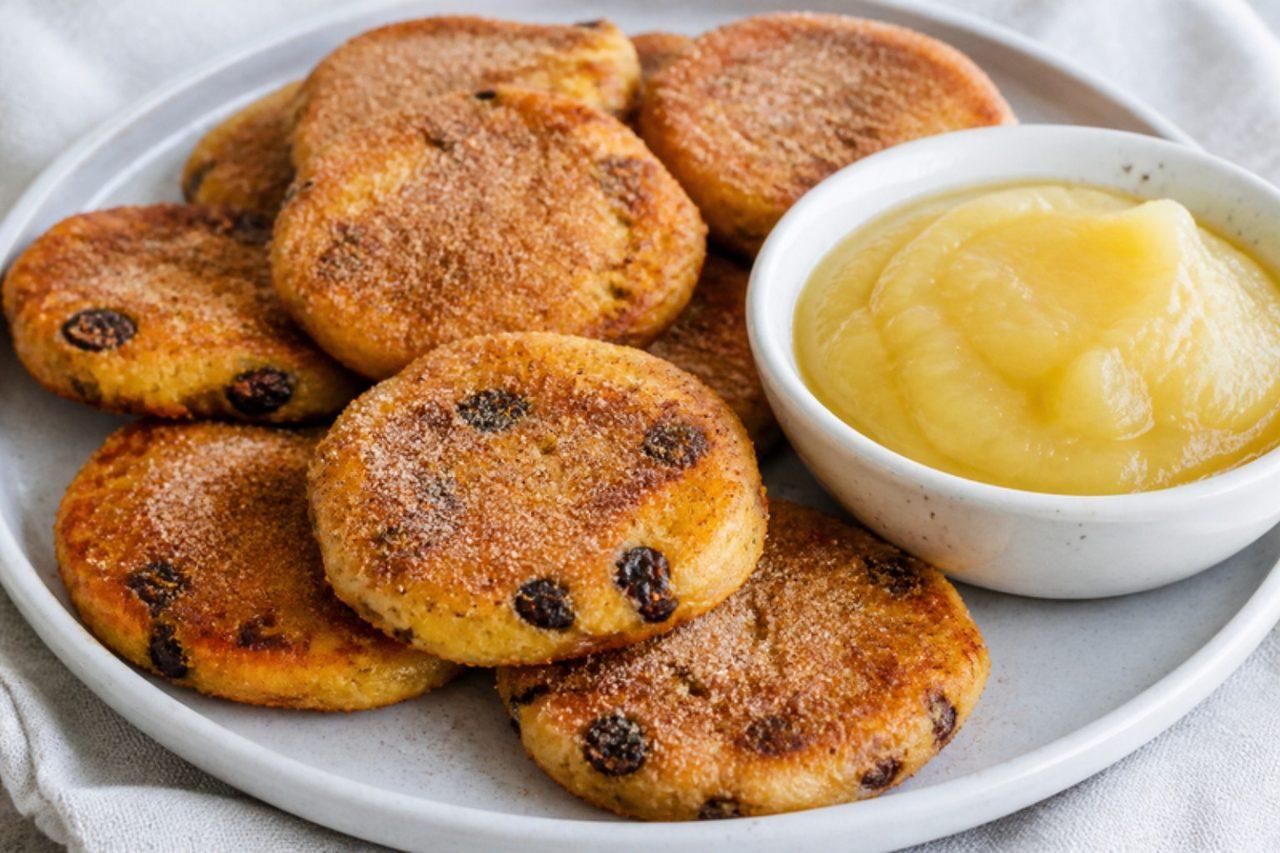
Quarkkeulchen are the sweet little pancakes of Saxony, the kind a Dresden or Leipzig grandmother makes on a Saturday afternoon from yesterday's boiled potatoes: mashed potato, quark, egg, a little flour and sugar, lemon zest and raisins, shaped into small thick discs and fried in butter until golden. They are crisp outside, soft and slightly tangy inside, and come dusted with cinnamon sugar beside a bowl of apple sauce. A common mistake is using freshly boiled warm potatoes, which make a sticky dough; use cold ones from the day before. Chef's tip: soak the raisins in hot water for 10 minutes so they plump up and don't burn in the pan.

by KrazyBadal 0 views

Bastani sonnatiSaffron rosewater ice cream

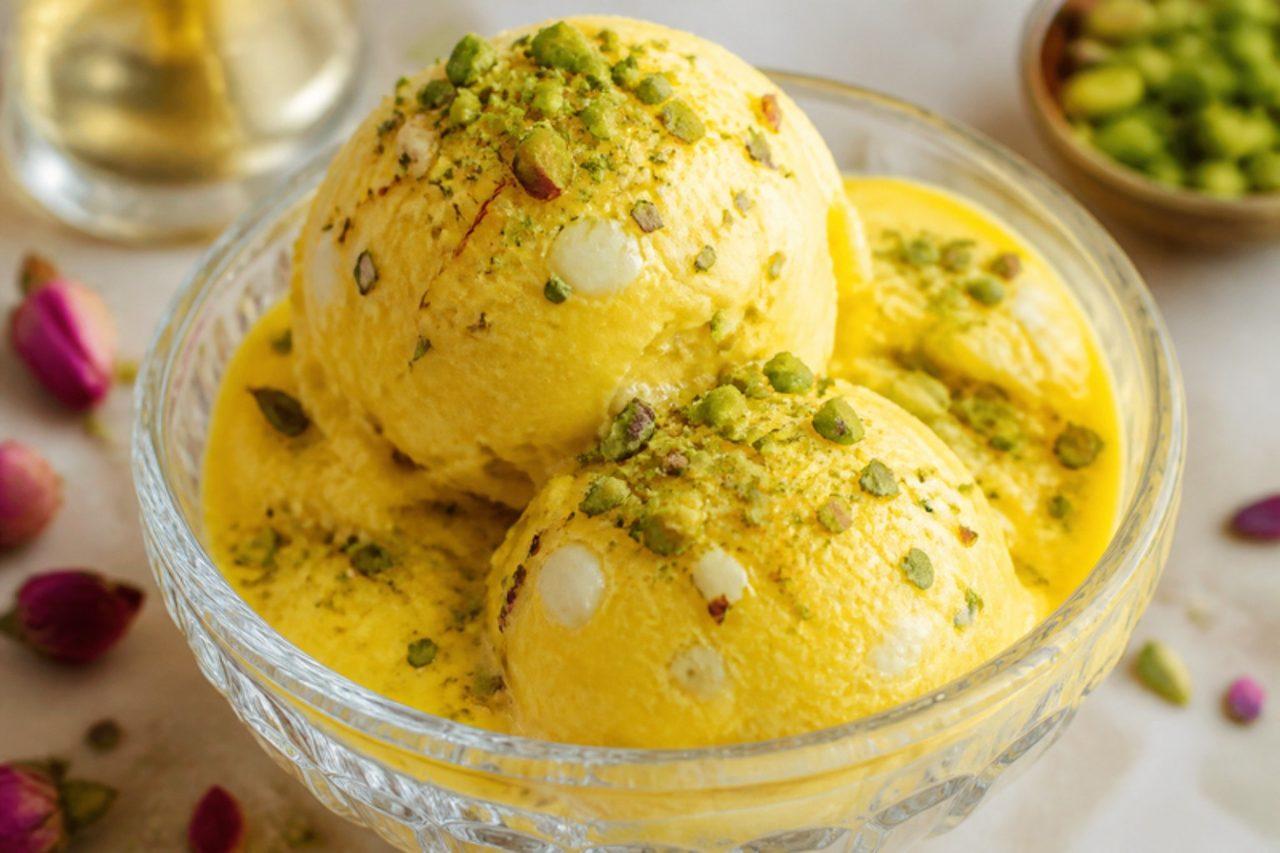
On summer evenings in Tehran, queues form outside old ice-cream shops for bastani sonnati, scooped between two thin wafers or into a glass beside faloodeh. The custard is rich with egg yolks and coloured deep gold with saffron, perfumed with rosewater and studded with pistachios and little shards of frozen cream that melt on the tongue. This home version uses an ice-cream machine or a fork-and-freezer method. Chef's tip: freeze the cream chips in a thin sheet the day before, so they are hard enough to stay as separate shards when folded in.

by KrazyBadal 0 views

LabooHot slow-cooked beetroot

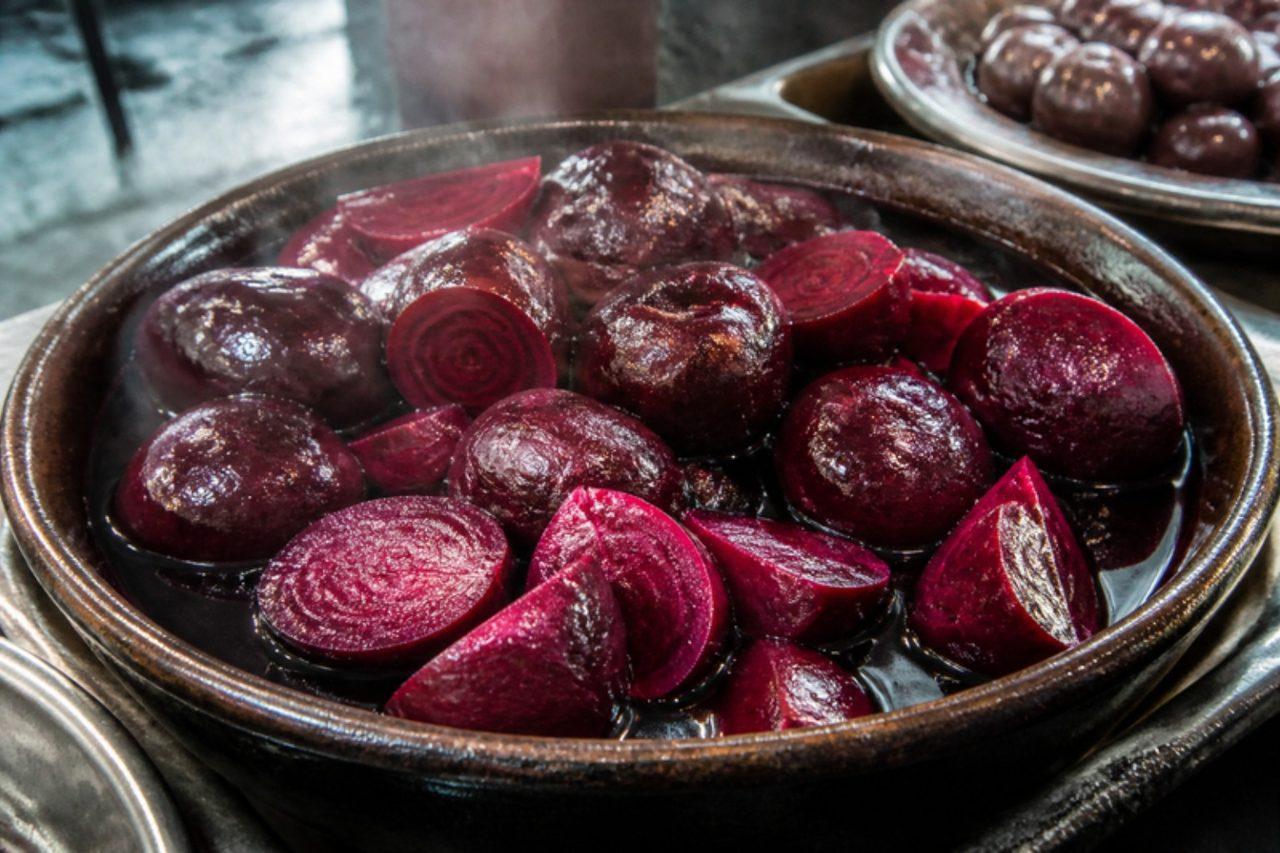
On cold Tehran evenings, vendors push carts piled with steaming beetroot through the bazaars and past school gates, and a paper cup of laboo is what people reach for when the first snow falls. Whole beets are simmered for well over an hour with a little sugar until the cooking water reduces to a glossy, almost purple syrup that clings to every slice. You eat it hot, cut into chunks and spooned with the syrup, sometimes with a pinch of salt to wake up the sweetness. The common mistake is peeling or cutting the beets before cooking, which bleeds out the colour and leaves them pale and watery. Chef's tip: choose beets of the same size so they finish together, and keep the skins on until the very end.

by KrazyBadal 0 views

Pica-pauBeef in garlic mustard sauce

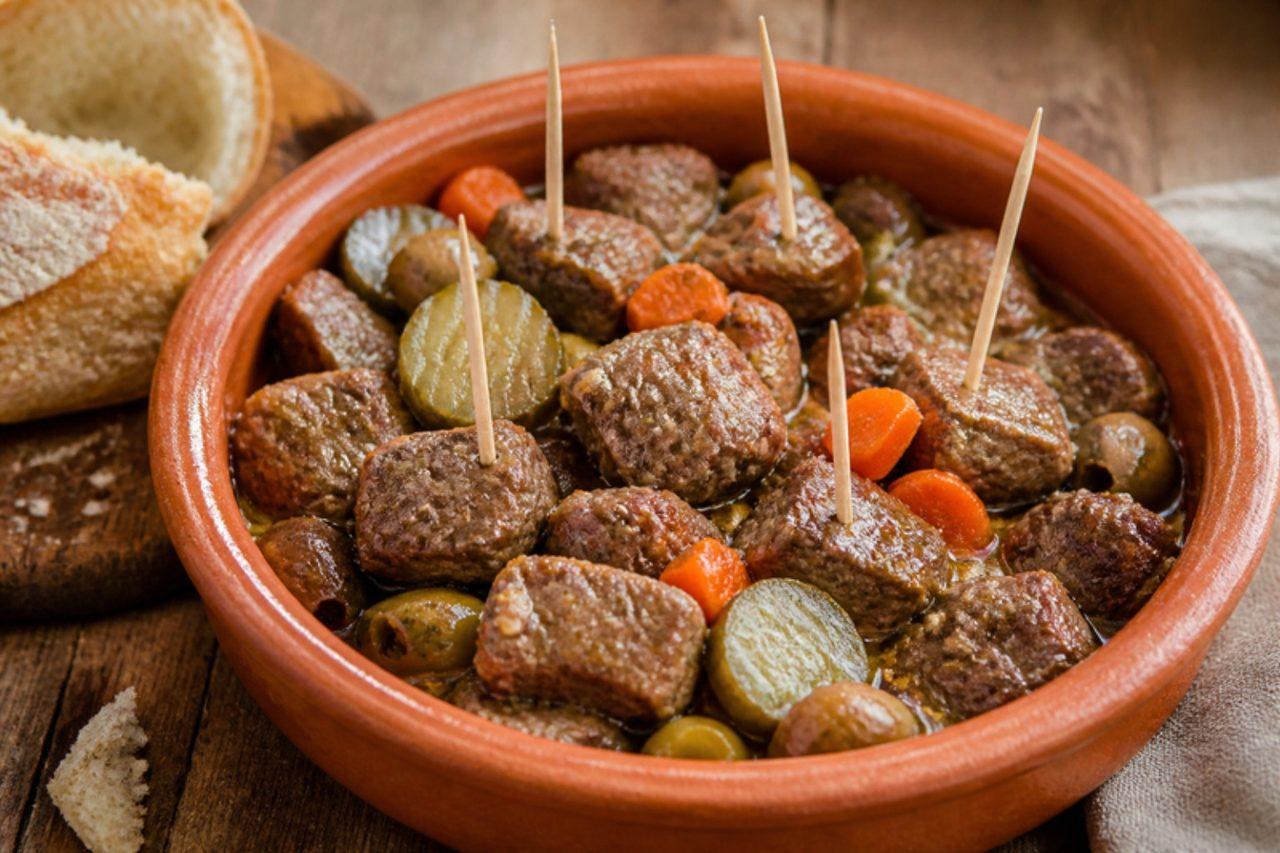
Pica-pau means woodpecker, and that is how you eat it: a crowd round a shared dish in a Lisbon cervejaria, pecking cubes of beef out of the sauce with toothpicks and dunking bread into the rest. The beef is seared quickly, then bathed in garlic, butter, mustard and a splash of white wine, and finished with tangy pickled vegetables. The wine contains alcohol; use stock with a teaspoon of vinegar instead. A common mistake is putting in all the meat at once: it stews grey instead of browning. Chef's tip: cut the beef into small, even 2 cm cubes so every piece browns fast and stays tender.

by KrazyBadal 0 views

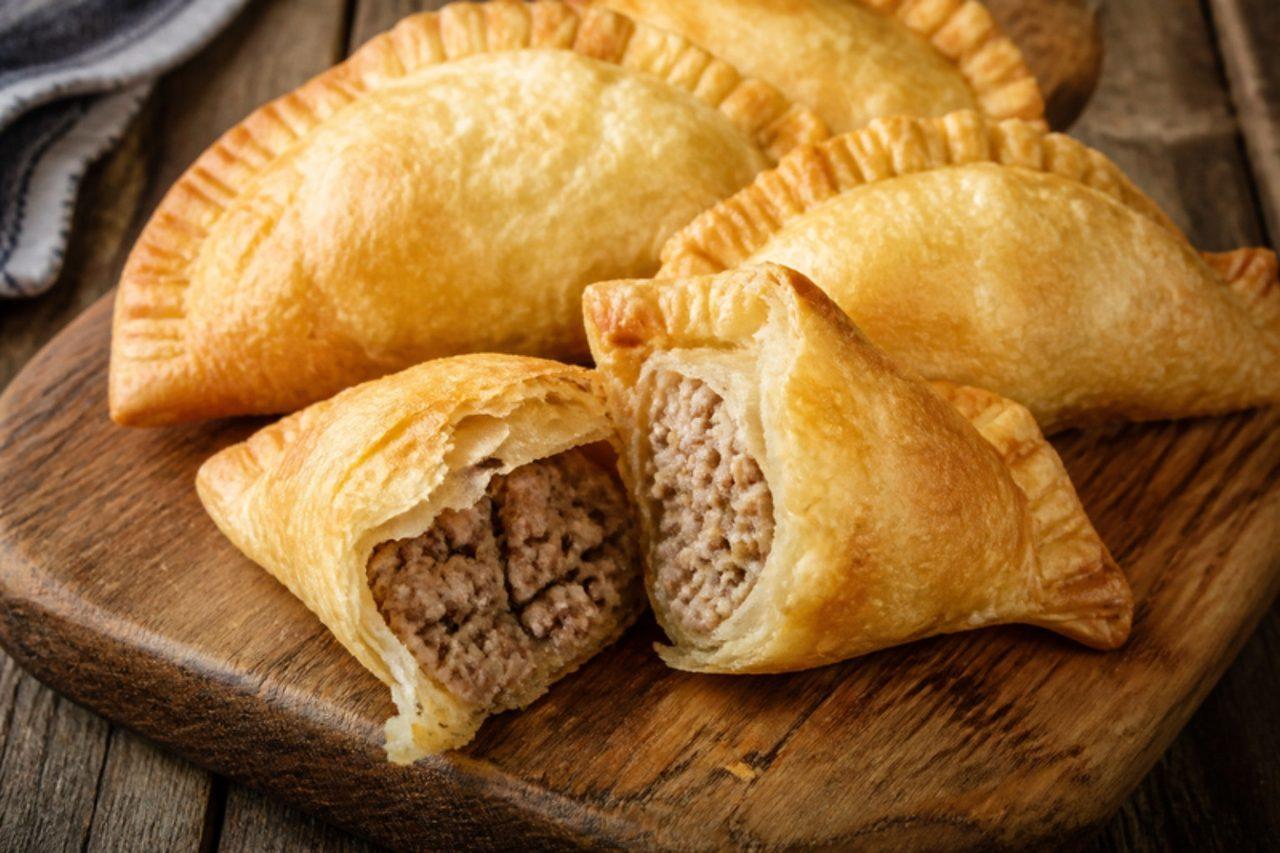
Pastel de ChavesMinced veal puff pastry pies

In the spa town of Chaves near the Spanish border, these crescent-shaped pasties are sold warm from bakeries all day and eaten for breakfast, lunch or with a coffee on the old Roman bridge. Many crisp, buttery layers enclose a savoury filling of minced veal. Chaves bakers use their own protected dough; at home, good all-butter puff pastry gets very close. A common mistake is a warm filling; it melts the butter in the pastry, so cool the meat completely before shaping. Chef's tip: cook the filling and let it cool completely before filling, or it melts the butter in the pastry and the layers will not rise.

by KrazyBadal 0 views

SamanuSprouted wheat pudding

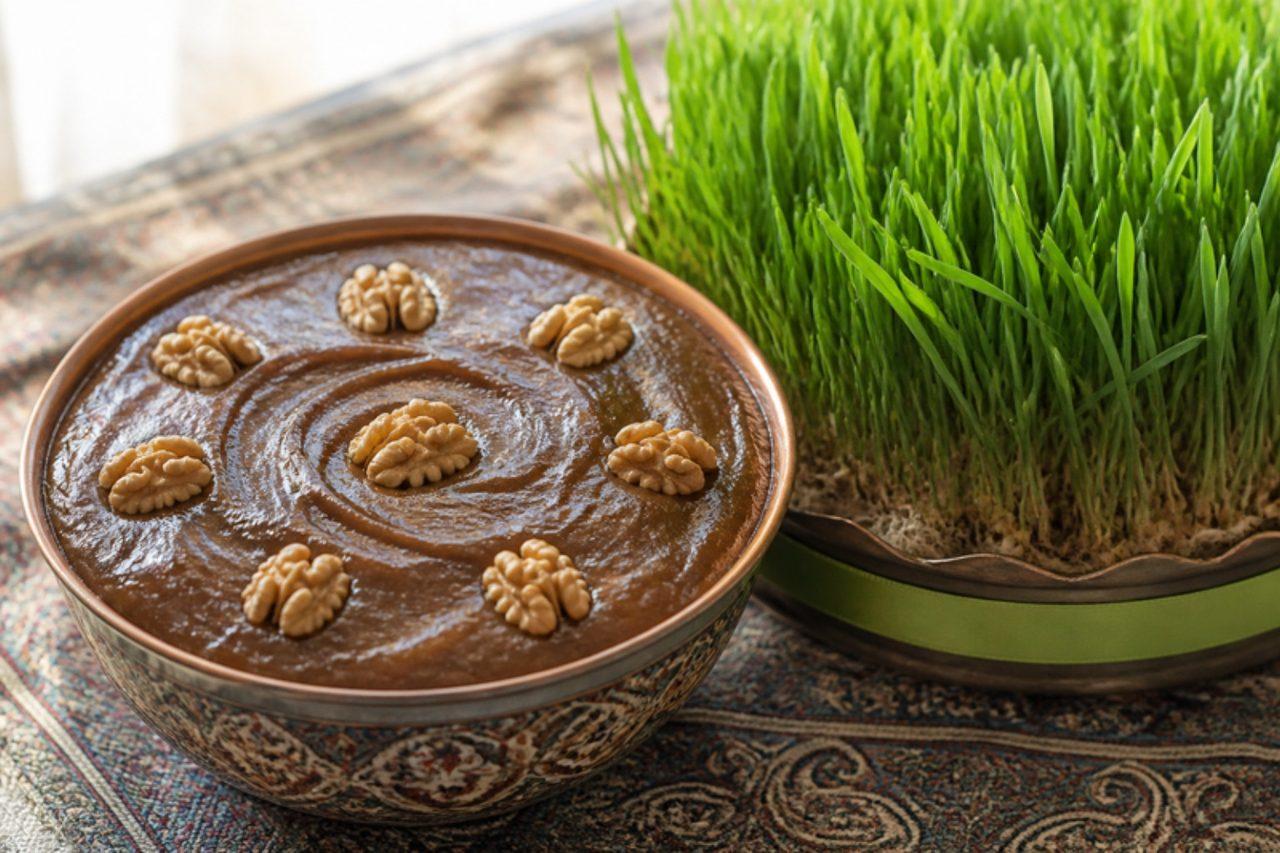
Samanu is one of the seven 's' items on the Nowruz haft-sin table, standing for strength and abundance, and in many neighbourhoods of Tehran and Shiraz women still gather to stir the great pot through the night, singing and taking turns. It is made from nothing but sprouted wheat juice and flour, cooked very slowly for many hours until the natural malt sugars caramelise into a thick, toffee-brown, gently sweet pudding. This home version uses a smaller batch, but it still takes days of sprouting and a long, patient simmer. The common mistake is turning the heat up to rush it, which scorches the base and makes the samanu bitter. Chef's tip: drop a few clean walnut halves into the pot near the end; tradition says whoever finds one in their bowl will have a lucky year.

by KrazyBadal 0 views

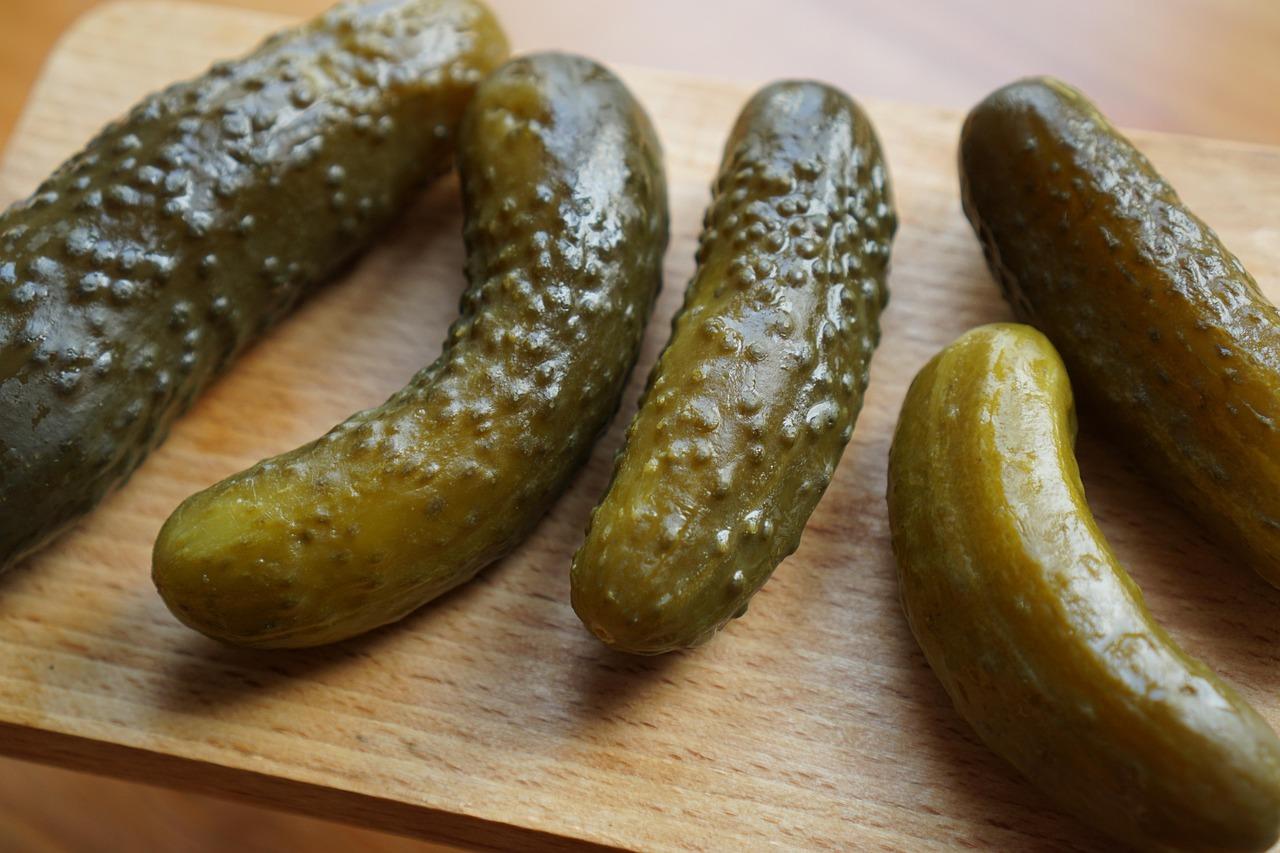
Khiar shoorBrined cucumber pickles

Khiar shoor, salty cucumber, is the pickle that turns up in every Iranian sandwich shop: sliced into olivieh and kalbas rolls in Tehran, eaten whole beside a plate of polo, or offered from a jar with bread and cheese. Small, firm Persian cucumbers are packed upright with garlic, dill, tarragon and chilli, then covered with a vinegar-sharpened brine. They are ready in about ten days and stay snappy for months. Chef's tip: pickle the cucumbers within a day of buying them; even a few days in the fridge makes them hollow inside.

by KrazyBadal 0 views

TipakayChicken in sweet-sour tamarind sauce

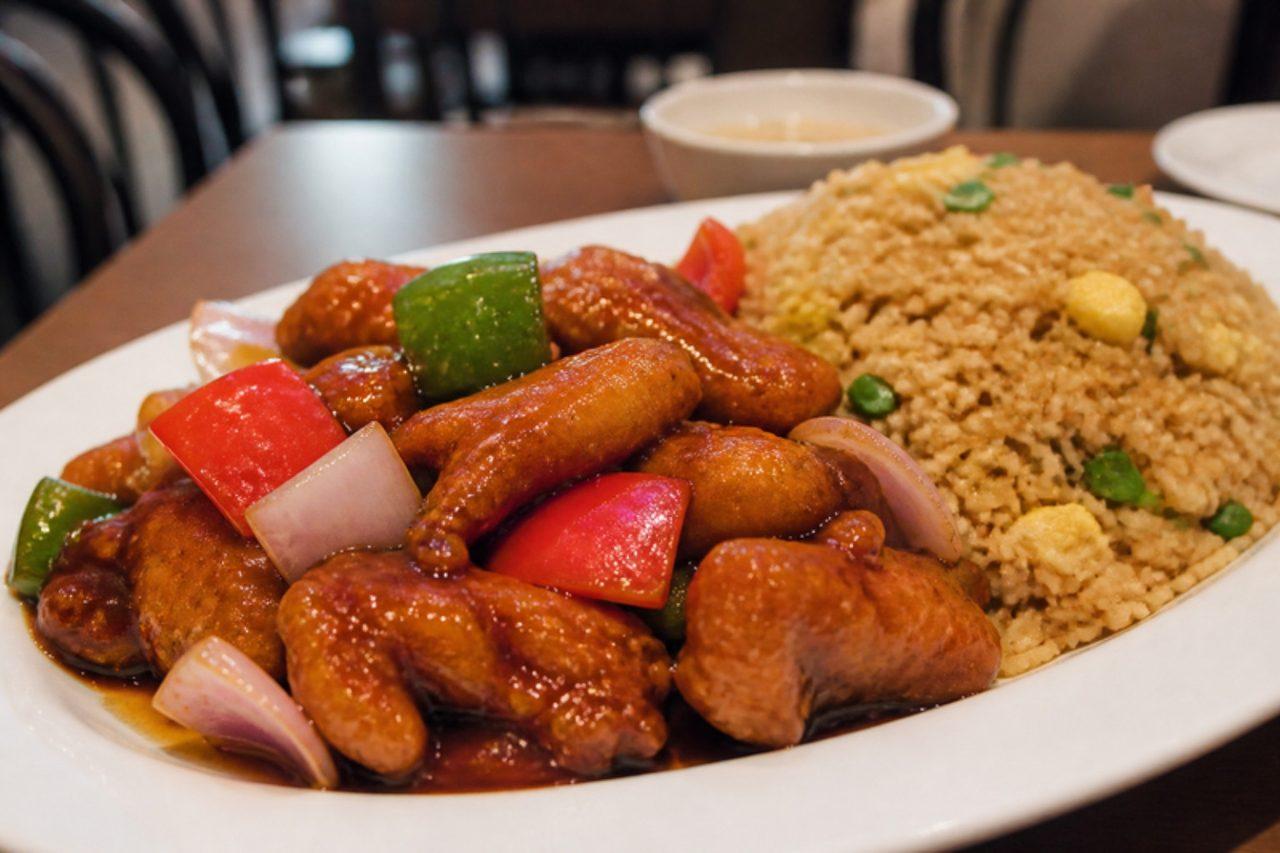
Sweet, tangy and a little sticky, tipakay is the chifa order for people who like their sauce on the fruity side: battered pieces of chicken fried crisp, then dressed in a dark, glossy sauce built on tamarind, panela and soy, with strips of red and green pepper and onion that keep some crunch. It is one of the most popular platters in Lima's family-run chifas, eaten with white rice or chaufa. Its sauce is darker and less candy-sweet than kam lu's, with tamarind's sour depth. The mistake most home cooks make is letting the peppers stew until soft; give them only a minute in the wok so they stay bright. Chef's tip: taste the sauce before thickening and balance it: more lime if it's cloying, a pinch more panela if it's too sour.

by KrazyBadal 0 views

RaxoMarinated pork loin cubes

Order a ración of raxo in a tavern in Santiago or A Coruña and it comes sizzling on a metal plate: little cubes of pork loin marinated with garlic, paprika and oregano, fried until browned, with chips and sometimes Padrón peppers alongside. This contains pork. Unlike zorza, which is chopped like chorizo filling, raxo keeps its meat in neat cubes and is gentler on the paprika. Marinate the pork in the fridge, covered. A common mistake is crowding the pan, which stews the meat instead of browning it, so fry in two batches. Chef's tip: let the cubes sit for a minute without stirring when they first hit the pan, so they form a golden crust.

by KrazyBadal 0 views

ZwetschgendatschiPlum yeast sheet cake

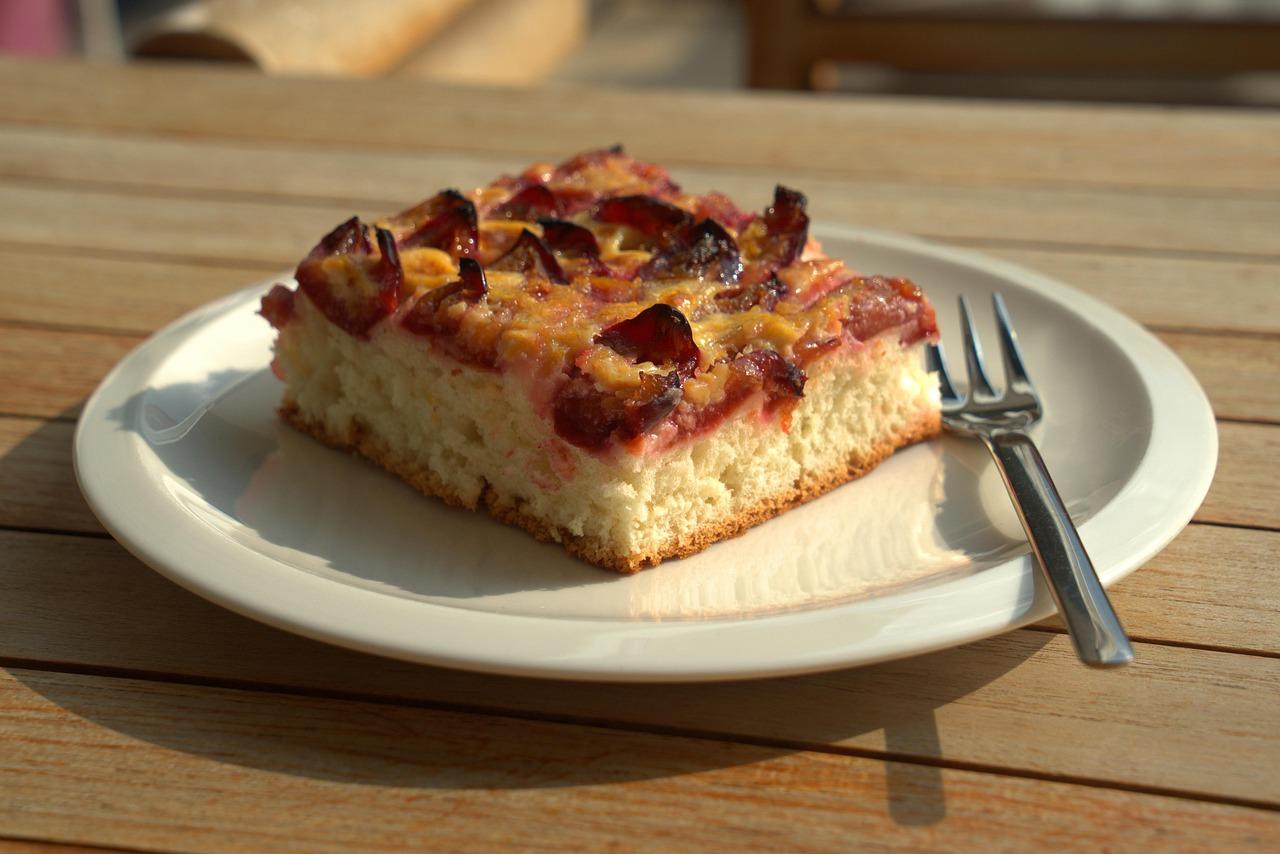
When the late-summer Zwetschgen (small, oval damson-type plums) arrive at the markets of Augsburg and Munich, every Bavarian and Swabian kitchen bakes a Datschi on the biggest tray it owns. A thin, soft yeast dough is covered edge to edge with plum halves stood upright in tight, overlapping rows, so the juices run and caramelise as it bakes. It is eaten in the afternoon, cut in squares, with a big spoon of whipped cream. A common mistake is using large round plums, which flood the dough with juice and leave it soggy; the firm, oval Zwetschgen hold their shape. Chef's tip: scatter a thin layer of fine breadcrumbs or ground almonds over the dough before the plums go on to catch the juice.

115 minGermanBaking
by KrazyBadal 0 views

StuffiesStuffed clams with chouriço

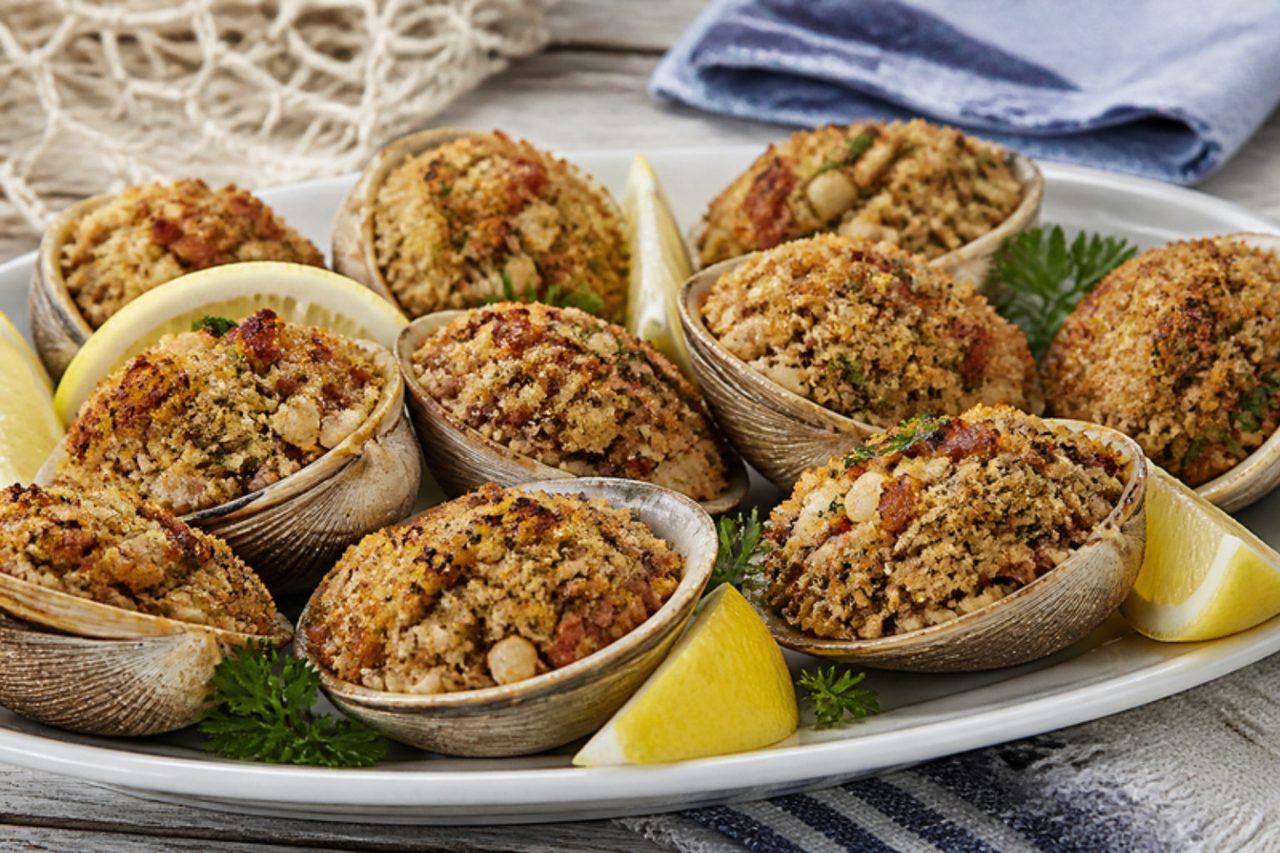
Stuffies are Rhode Island's summer starter, sold at clam shacks in Warwick and Bristol and made at home for Fourth of July cookouts: big hard-shell quahog clams are steamed, the meat chopped and mixed with buttery breadcrumbs, peppers and spicy Portuguese chouriço (pork sausage), then baked back in the shells. Chef's tip: save the steaming liquid and use it to moisten the stuffing; plain water makes it bland.

by KrazyBadal 0 views

Queijadas de SintraFresh cheese and cinnamon tarts

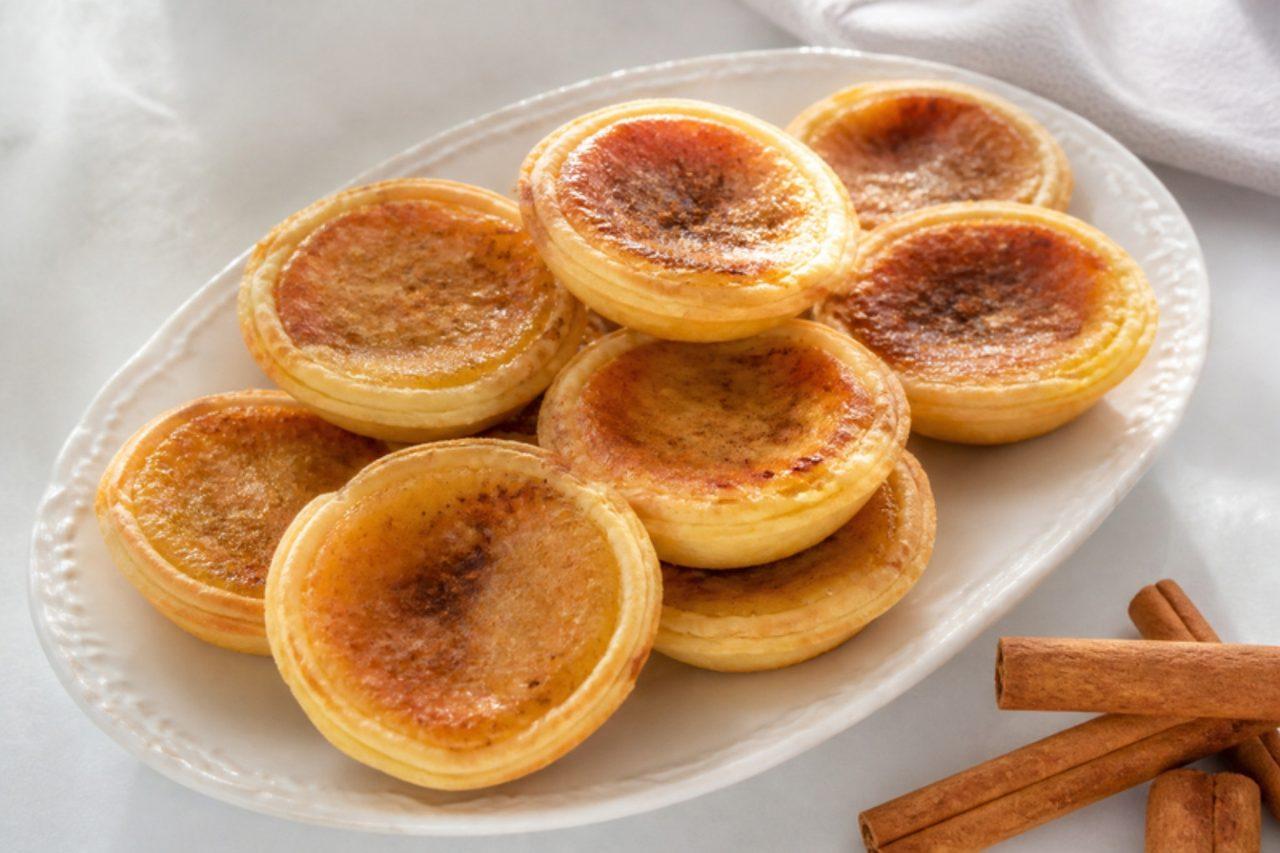
Day-trippers queue for these in Sintra's old town, buying them by the paper-wrapped half dozen to eat on the train back to Lisbon. They have been made around the palace town for centuries: a creamy filling of fresh cheese, sugar, egg yolk and cinnamon, baked in a thin, crisp case until the top blisters brown in patches. Traditional fresh cheese is curdled with animal rennet; look for ricotta or curd cheese made with vegetarian (microbial) rennet if that matters to you. A common mistake is rolling the pastry too thick: it should be almost see-through, so it crisps instead of turning bready. Chef's tip: press the cheese through a sieve before mixing, so the filling bakes silky rather than grainy.

by KrazyBadal 0 views

Arroz clavadoCoconut rice with cheese

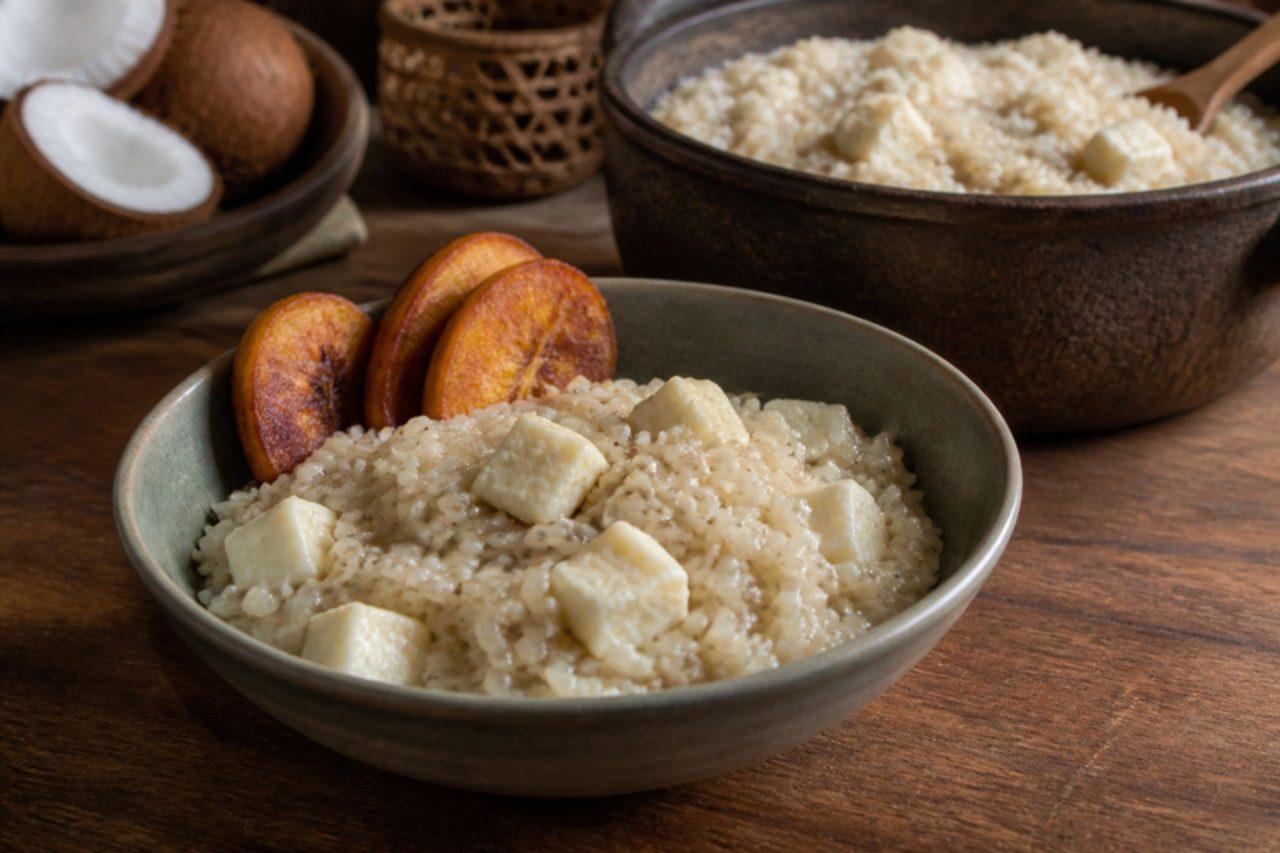
From Quibdó and the river towns of the Chocó comes a rice dish built on coconut, where cubes of white cheese are pushed into the pot near the end and left to melt into sticky, golden pockets; clavado means nailed in. The coconut milk, ideally pressed from freshly grated coconut, gives the rice a creamy, gently sweet base, and the Pacific herbs of the azotea, the raised kitchen garden, add a sharp green note. It is a weekday lunch at home, eaten with fried plantain, avocado or alongside fried fish for those who eat it. White cheese in Colombia is usually set with animal rennet, so use a vegetarian (microbial-rennet) halloumi or mozzarella-style cheese if needed. Stirring after the cheese goes in is the slip that turns it to mush, so poke the cheese into the rice and then leave the lid on. Chef's tip: culantro (long-leaf coriander) from Asian or Caribbean shops is close to the Chocó herbs; use ordinary coriander stems if not.

by KrazyBadal 0 views

Queijo coalho assadoGrilled squeaky cheese skewers

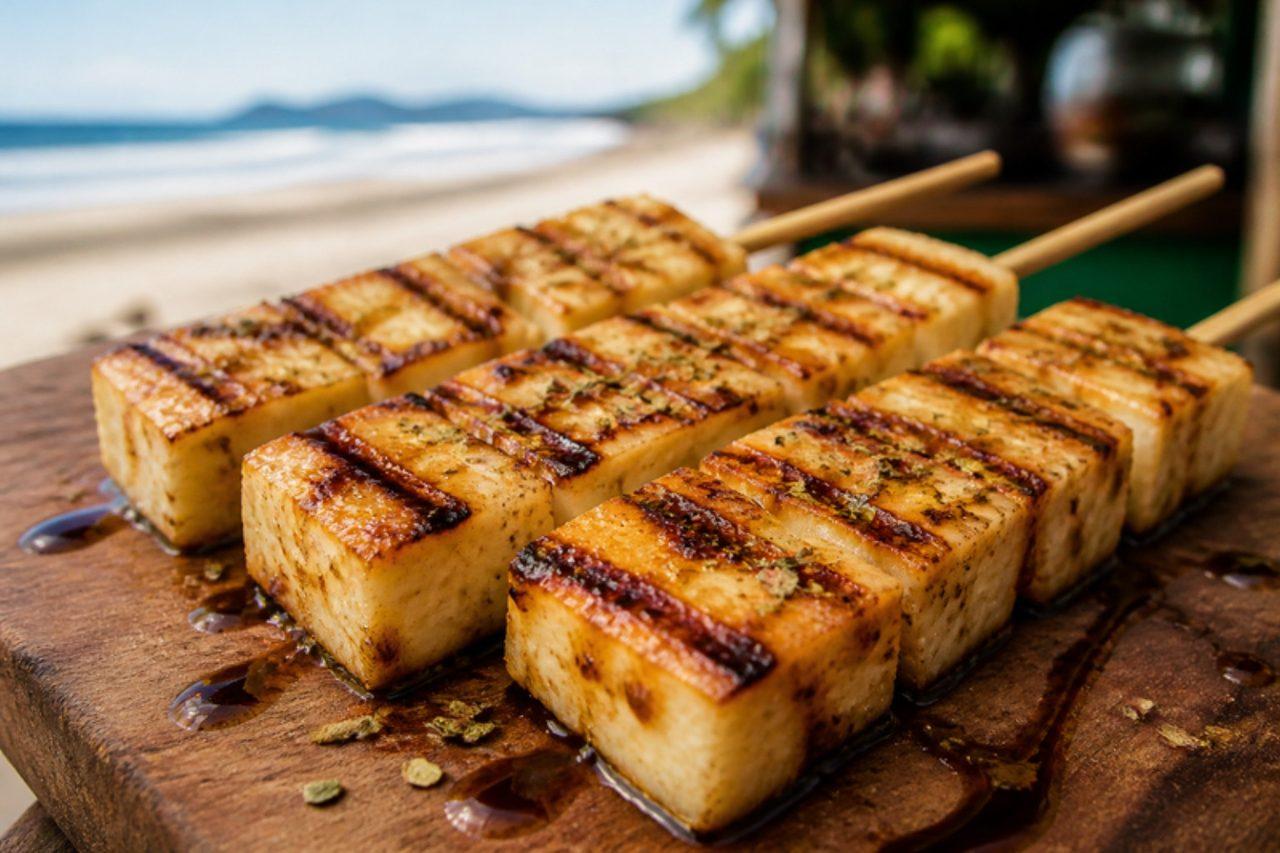
Along the beaches of Recife, Porto de Galinhas and Fortaleza, vendors walk the sand with a small charcoal brazier, toasting sticks of coalho cheese to order. Coalho is a firm, salty curd cheese that holds its shape over the heat, so it browns and blisters on the outside while the inside turns soft and squeaky. Buyers choose it plain, sprinkled with dried oregano, or drizzled with dark sugarcane molasses for a salty-sweet bite. At home it works on a barbecue, a ridged griddle or under a hot grill, and makes a good starter for a churrasco. Most coalho is made with animal rennet, so look for one labelled vegetarian or with microbial rennet, or use a vegetarian halloumi. Everyone's first error is turning the cheese too soon: it tears and sticks until a crust has formed. Chef's tip: pat the sticks dry and brush the grill, not the cheese, with oil, so the crust forms quickly and releases cleanly.

by KrazyBadal 0 views

Queijo da Serra no fornoBaked cheese with garlic and herbs

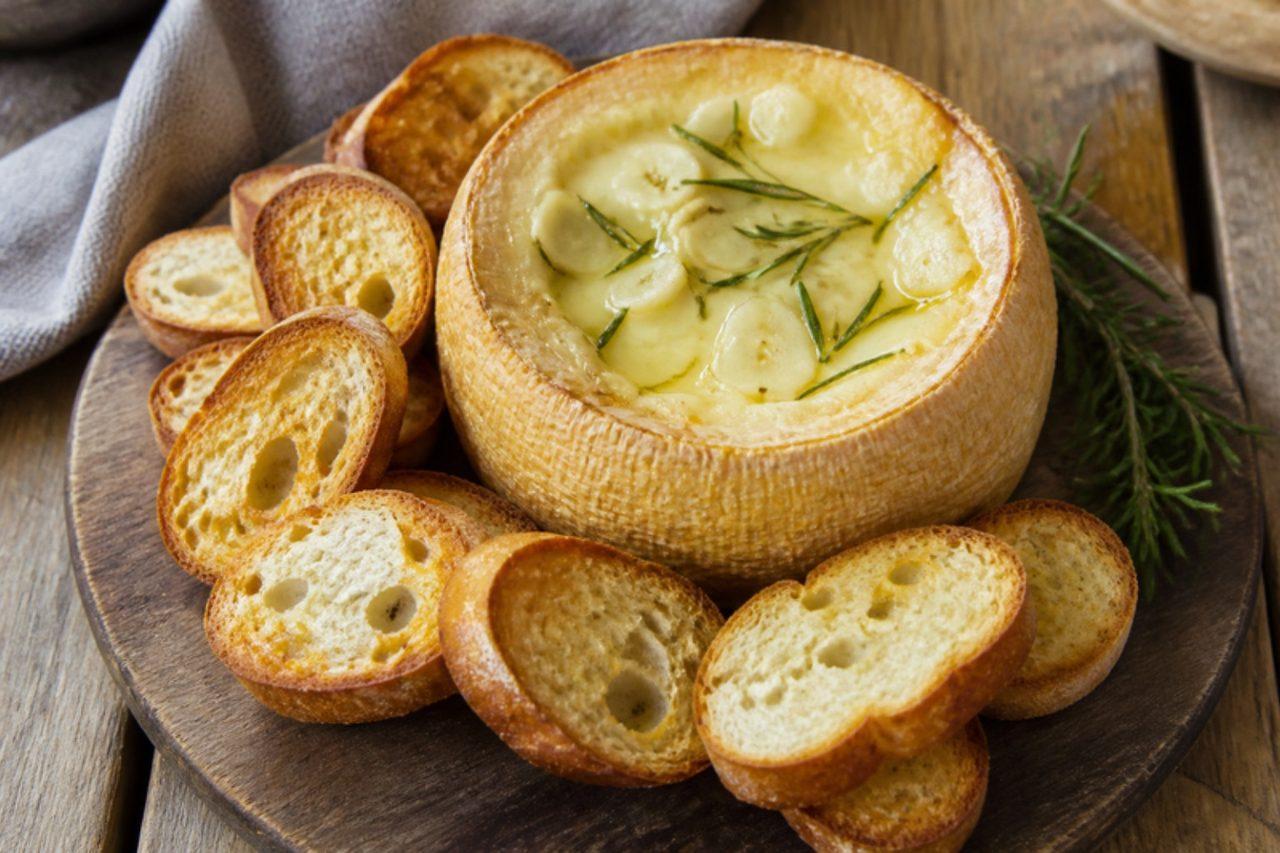
High in the Serra da Estrela, shepherds still make Portugal's most famous cheese from raw ewe's milk, curdled with the flowers of the wild cardoon thistle, which also means it uses no animal rennet and suits vegetarians. In mountain villages such as Seia and Manteigas it is served whole, the rind cut open and the runny inside scooped onto bread, and a short bake makes it even more molten. If you use another soft cheese instead, check the label for vegetarian rennet. Raw-milk soft cheese is not for pregnant women, young children or anyone with a weakened immune system unless it is baked until piping hot throughout. Chef's tip: bake it in a dish only just bigger than the cheese, so it melts without spreading.

by KrazyBadal 0 views

Quenelles lyonnaises natureBaked quenelles in mushroom sauce

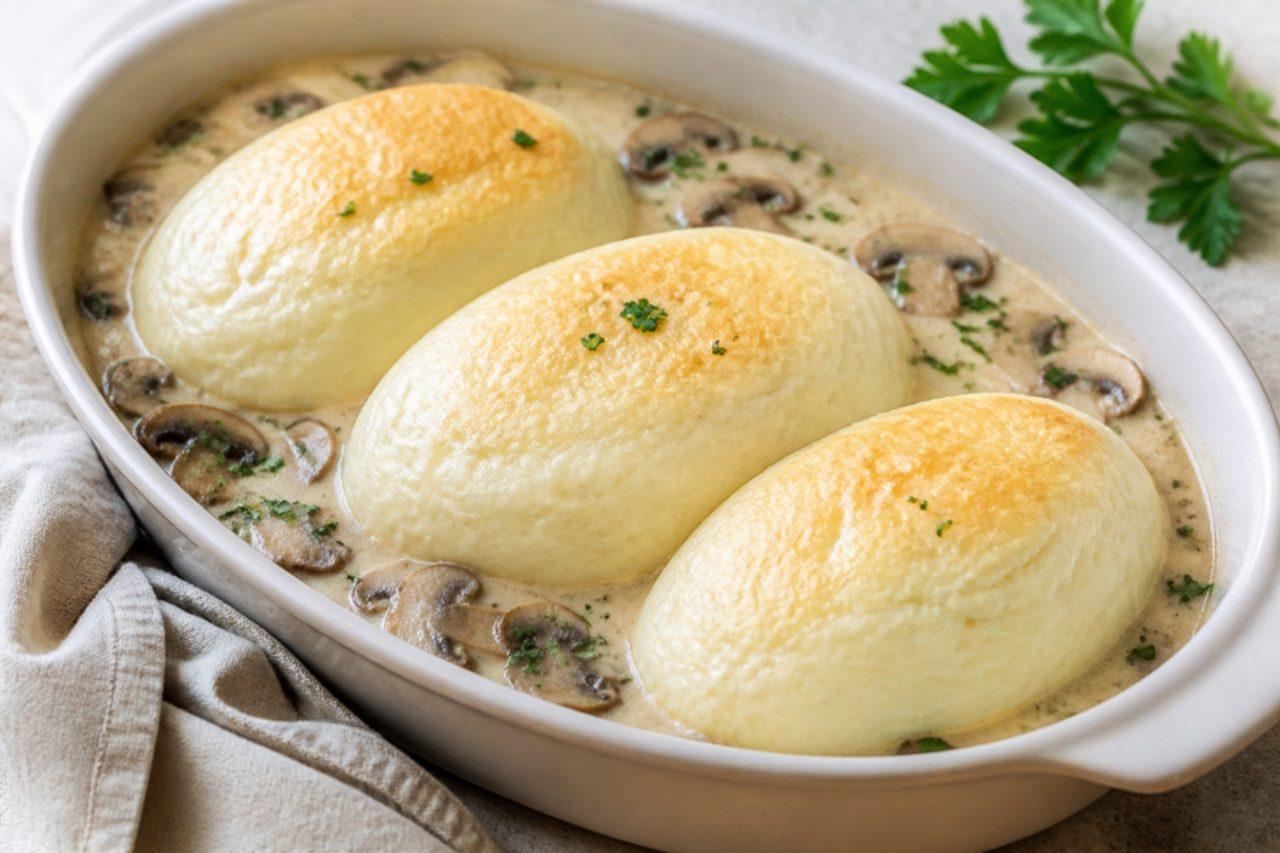
Every charcuterie and traiteur in Lyon sells quenelles, the soft oval dumplings that the city's bouchons bake until they swell to twice their size in a bubbling dish. The famous version contains pike, but Lyonnais families also buy quenelles nature, plain ones made from a flour, milk, butter and egg panade, and bake them for a weeknight supper with a mushroom or tomato cream sauce and a green salad. Made at home they are light and wobbly, with a hint of nutmeg. Gruyère for the top is usually made with animal rennet; use a vegetarian alternative if you prefer. Chef's tip: chill the dough well and shape it with two wet spoons; cold dough holds a neat shape and puffs evenly.

by KrazyBadal 0 views

KougelhopfYeasted ring cake with raisins

Walk into any bakery in Colmar, Ribeauvillé or Strasbourg on a Sunday morning and the kougelhopf sits in the window, tall and fluted, wearing a snowfall of icing sugar and a crown of whole almonds. Alsatian families buy or bake one for weekend breakfast with coffee, and slices that go stale are toasted the next day. The crumb sits halfway between brioche and cake: soft, buttery and only lightly sweet, studded with plump raisins. Many bakers soak the raisins in kirsch (cherry brandy); this recipe uses warm black tea, which plumps them just as well without alcohol. You need a kougelhopf or bundt tin of about 22 cm. Chef's tip: chill the buttered tin for 10 minutes and press the almonds into the grooves before the dough goes in, so they stay put and toast as the cake bakes.

by KrazyBadal 0 views

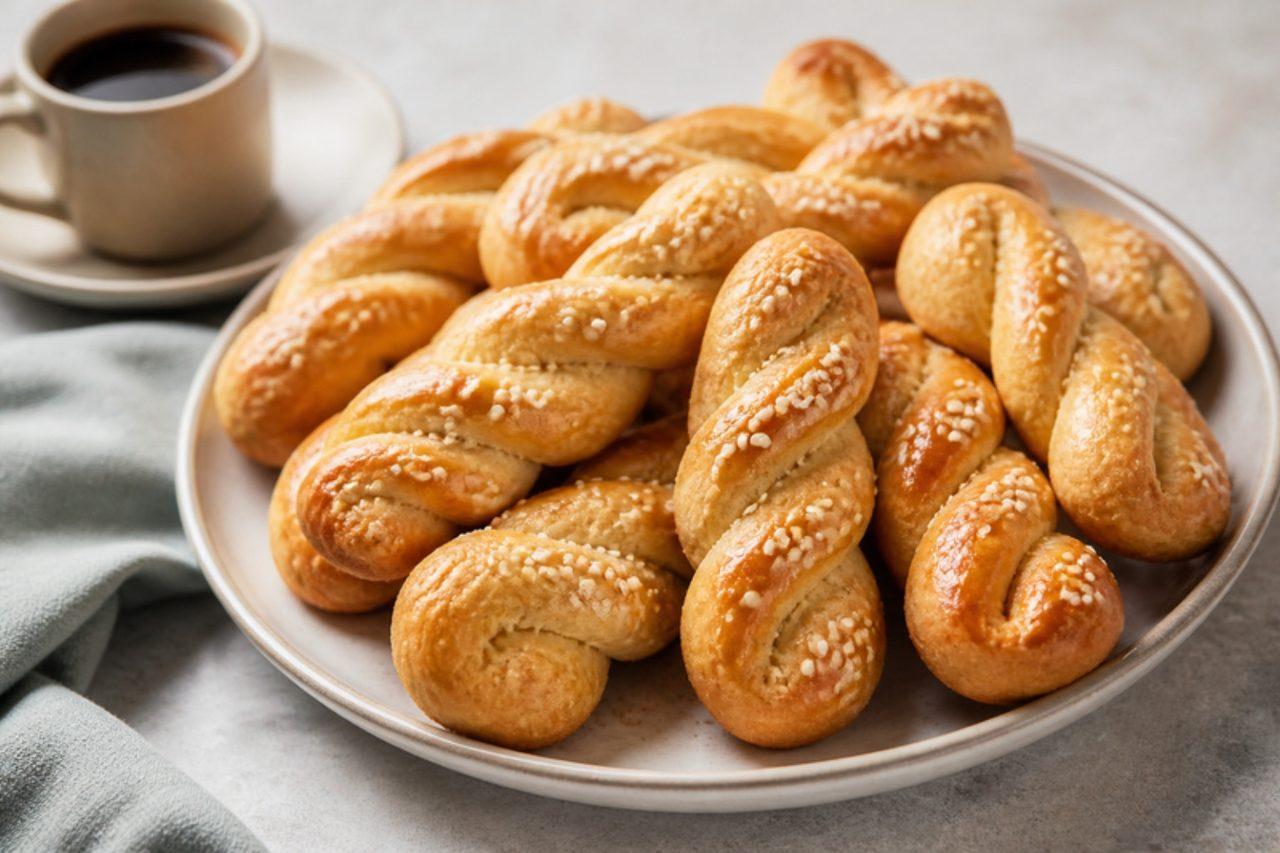
KoulourakiaButter cookie twists

Easter Saturday morning in Greece smells of koulourakia: buttery cookie dough rolled into ropes, twisted into braids, coils and S-shapes, glazed with egg and baked to a deep shine. Children help shape them, and the tins last through Easter week for dunking in coffee or milk. The texture is crisp outside and tender within, with orange zest and vanilla. Common mistake: rolling the ropes too thick; anything wider than a pencil turns cakey rather than crisp. Chef's tip: chill the dough for 20 minutes before rolling and the twists keep their sharp edges in the oven.

by KrazyBadal 0 views

PastitsadaSpiced beef with thick pasta

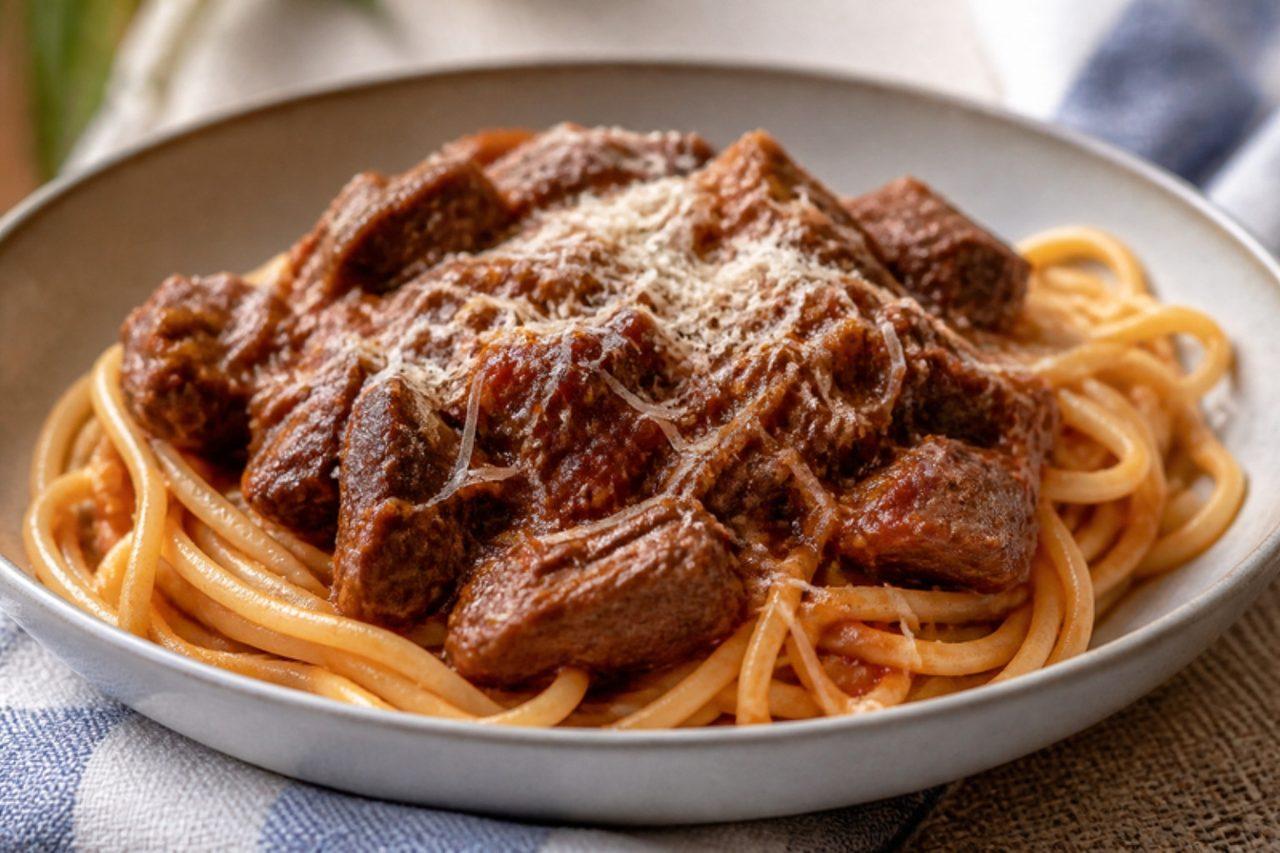
Pastitsada is Corfu's great Sunday and feast-day dish, a legacy of four centuries of Venetian rule: big pieces of beef (or rooster) slowly braised in tomato with a heady spice mix of cinnamon, clove, allspice, nutmeg and sweet paprika, sharpened with vinegar, then served over bucatini with grated cheese. The sauce should be thick enough to coat the pasta and taste warm rather than hot. Many Corfiots add red wine; this version uses red wine vinegar and stock, so it's alcohol-free (swap 150 ml of the stock for red wine if you like). Common mistake: rushing the braise — beef shin needs a long, gentle simmer to turn soft. Chef's tip: make it a day ahead; the spices settle and the sauce tastes rounder.

175 minGreekMeat
by KrazyBadal 0 views

Sorrentinos de calabazaSquash and ricotta pasta parcels

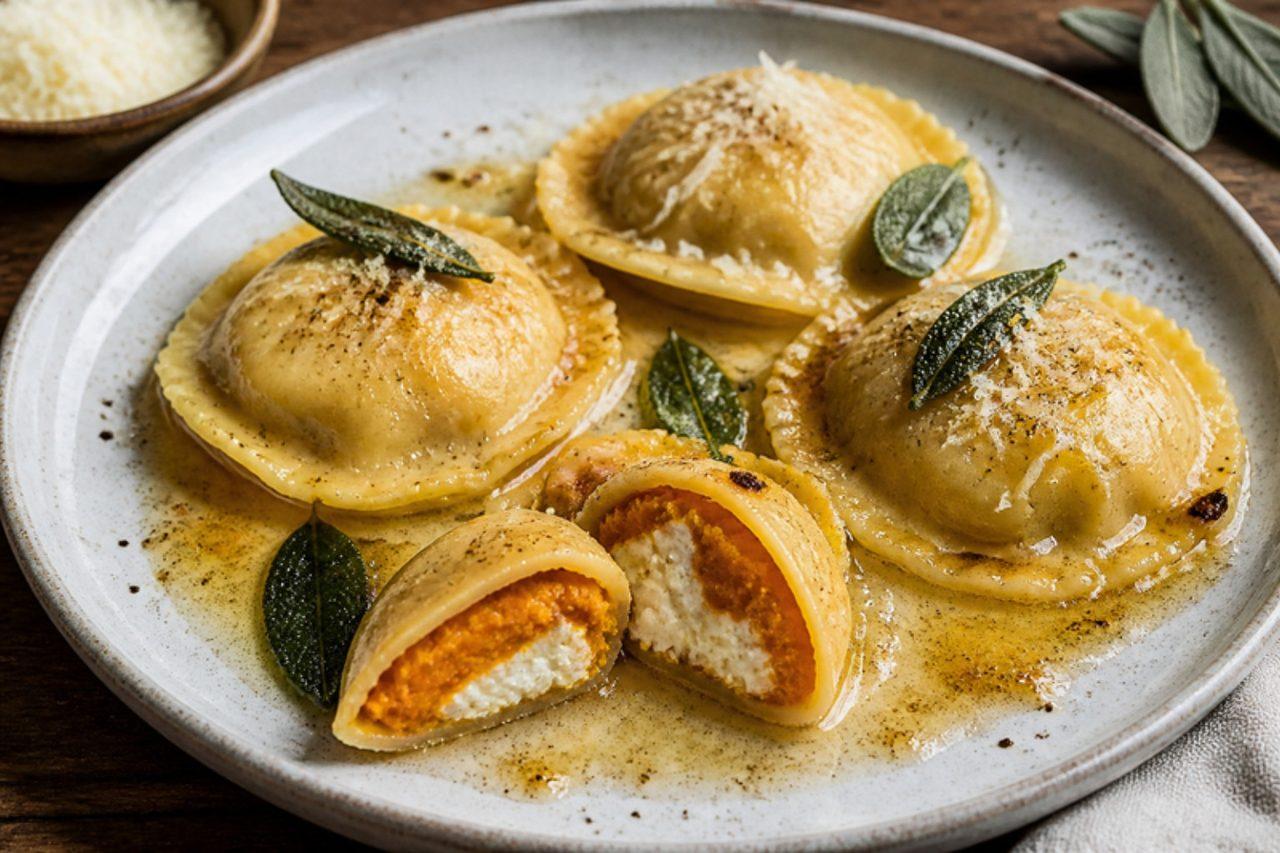
Mar del Plata claims the sorrentino, a big round stuffed pasta about the size of a jam-jar lid that Italian-Argentine cooks made their own in the mid-20th century; despite the name, you won't find it in Sorrento. Every fresh-pasta shop in Buenos Aires province sells them by the dozen on Sunday mornings, and the squash version, with roasted calabaza, ricotta and nutmeg, is the most loved. The filling is sweet and soft, the pasta thin but sturdy, and the sauce is either brown butter with sage or a plain tomato filetto. The classic mistake is boiled squash: it carries too much water, the filling weeps and the parcels burst in the pot, so the squash is roasted until dry and caramelised. Grated hard cheese is usually made with animal rennet; choose a vegetarian hard cheese if needed. Chef's tip: chill the filling until firm before you shape it; a cold, stiff filling is far easier to seal without air pockets.

by KrazyBadal 0 views

Tiroler GröstlFried potato and pork with egg

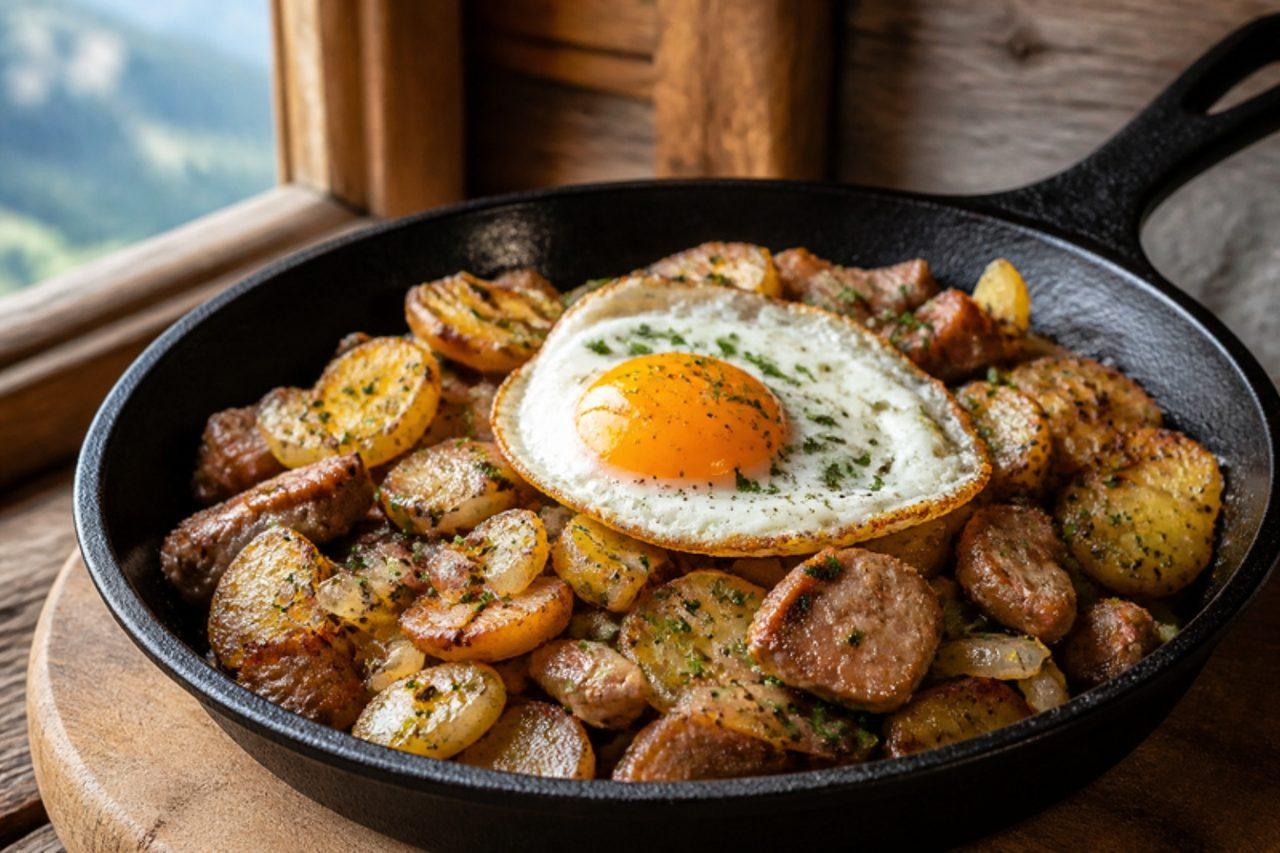
Tiroler Gröstl is what Tyrolean mountain huts serve to skiers and hikers coming in from the cold, and what farmhouse kitchens around Innsbruck make on Monday from Sunday's roast. Cold boiled potatoes are fried until crusty with onions, then tossed with cubes of leftover roast pork or smoked pork, caraway and marjoram, and crowned with a fried egg. It is made in one big pan and brought to the table in it. Chef's tip: let the potatoes fry undisturbed for the first few minutes; the brown crust is the whole dish.

by KrazyBadal 0 views

Ma'aroukMahlab-scented sweet bread

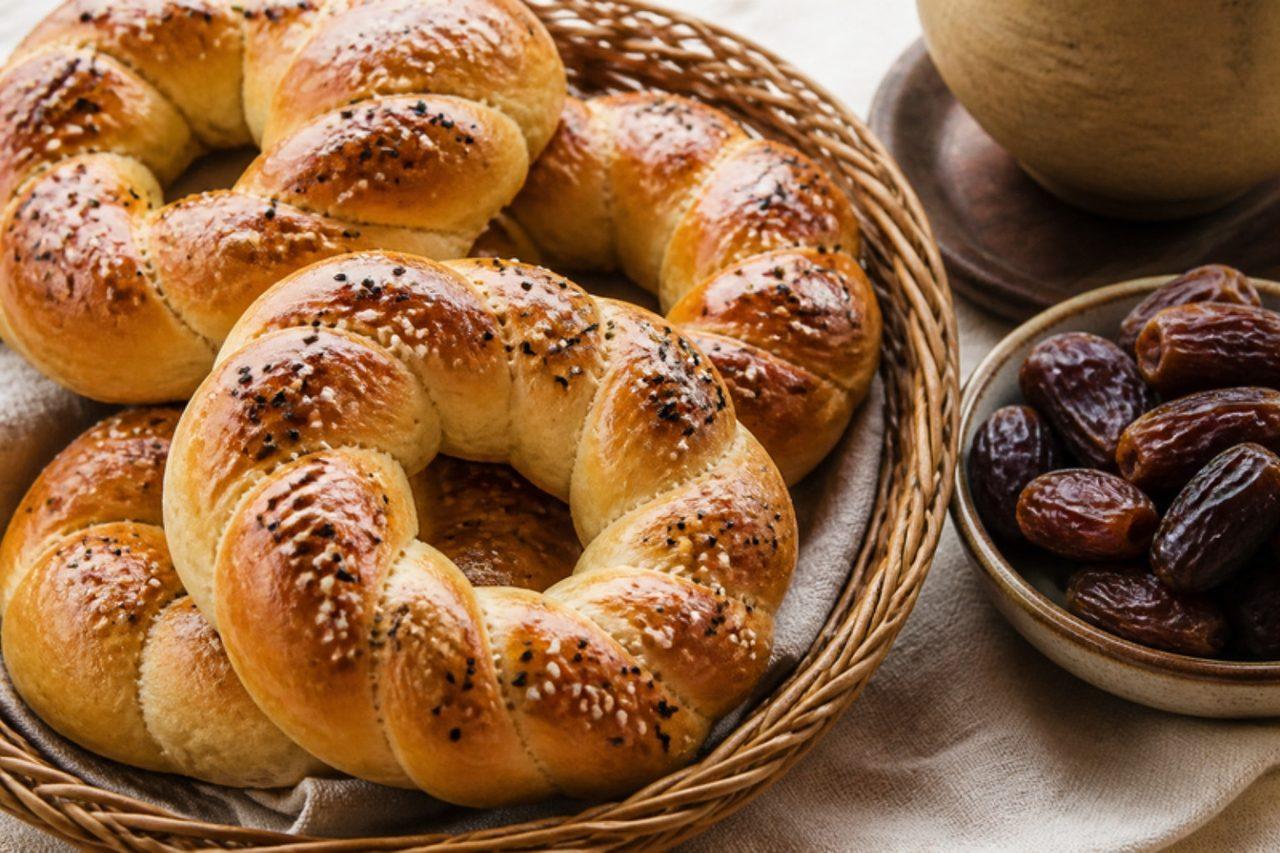
As soon as Ramadan begins, bakeries in Damascus and Aleppo stack up golden loaves of ma'arouk, a soft, slightly sweet brioche-like bread that people buy on the way home to break the fast. The dough is perfumed with mahlab (ground cherry stones), topped with nigella and sesame seeds, and is often braided or filled with date paste. Eat it warm with tea, or toasted the next morning with white cheese. Common mistake: adding too much flour while kneading; the dough should stay soft and a little tacky for a tender crumb. Chef's tip: brush with sugar syrup as soon as the loaves leave the oven — it gives the classic shine and keeps the crust soft.

by KrazyBadal 0 views

RondónCoconut fish and conch stew

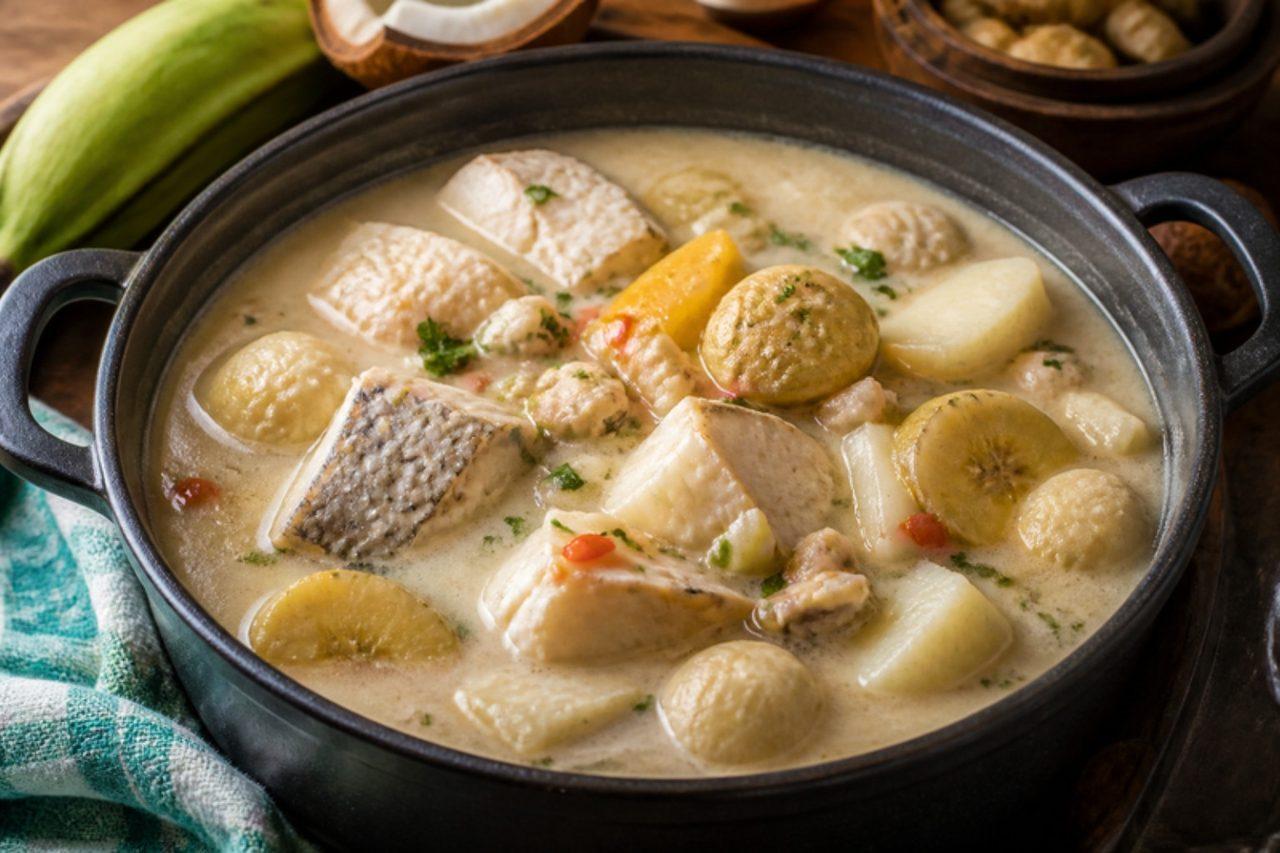
The English-speaking Raizal islanders of San Andrés and Providencia call it rundown, and it is cooked for a crowd on weekends and at beach gatherings: coconut milk boiled down until it 'runs down' and starts to release its oil, with cassava, green plantain, breadfruit or sweet potato, flour dumplings, salted pig tail and, on top, fish and conch steamed in the creamy broth. Pork appears as the salted tail, which seasons the pot. The broth is rich, coconut-sweet and herby with thyme, with a perfume of whole Scotch bonnet that gives aroma rather than fire as long as it doesn't burst. Start the day before: the pig tail needs overnight soaking. A common mistake is stirring once the fish goes in, which breaks it up; layer it and let the steam do the work. Chef's tip: queen conch is protected in much of the Caribbean, so buy only legally sourced frozen conch, or swap in large raw prawns added with the fish.

by KrazyBadal 0 views

Maçã do amorToffee apples

A shiny red apple on a stick is the picture of a Brazilian festa junina stall, lined up in rows beside the quentão and pipoca. The 'love apple' is a small, tart apple dipped in hot sugar syrup that hardens into a thin, crackling, ruby-red shell; you bite through glass and hit crisp fruit. It is a good one to make at home for a June party because the syrup takes 15 minutes and the apples are ready as soon as the shell cools. Choose a plant-based red colouring to keep it vegan. Where it tends to fail: any water or wax on the apple skin stops the syrup sticking, so it slides off in a puddle. Chef's tip: dip the apples in boiling water for 10 seconds and dry them thoroughly to remove the wax before you start.

by KrazyBadal 0 views

Macaxeira fritaFried cassava sticks

Northeastern Brazilians call cassava macaxeira, and fried sticks of it come out with carne de sol, with grilled cheese at beach shacks, and in a bowl beside a cold drink at any bar from Natal to Maceió. Boiling first makes the inside soft and floury; frying afterwards gives a thick, blistered crust that stays crunchy far longer than potato chips. They need only coarse salt, though a dip of vinagrete or garlic mayonnaise is common. Buy sweet cassava, cook it fully, and never eat it raw. The frequent mistake is boiling until the cassava falls apart, which makes sticks that break up in the oil; stop as soon as a knife slides in. Chef's tip: let the boiled sticks steam dry and cool completely, even chill them for an hour, before frying; the drier surface is what makes them crackle.

by KrazyBadal 0 views

Machaca con huevoDried beef scrambled with egg

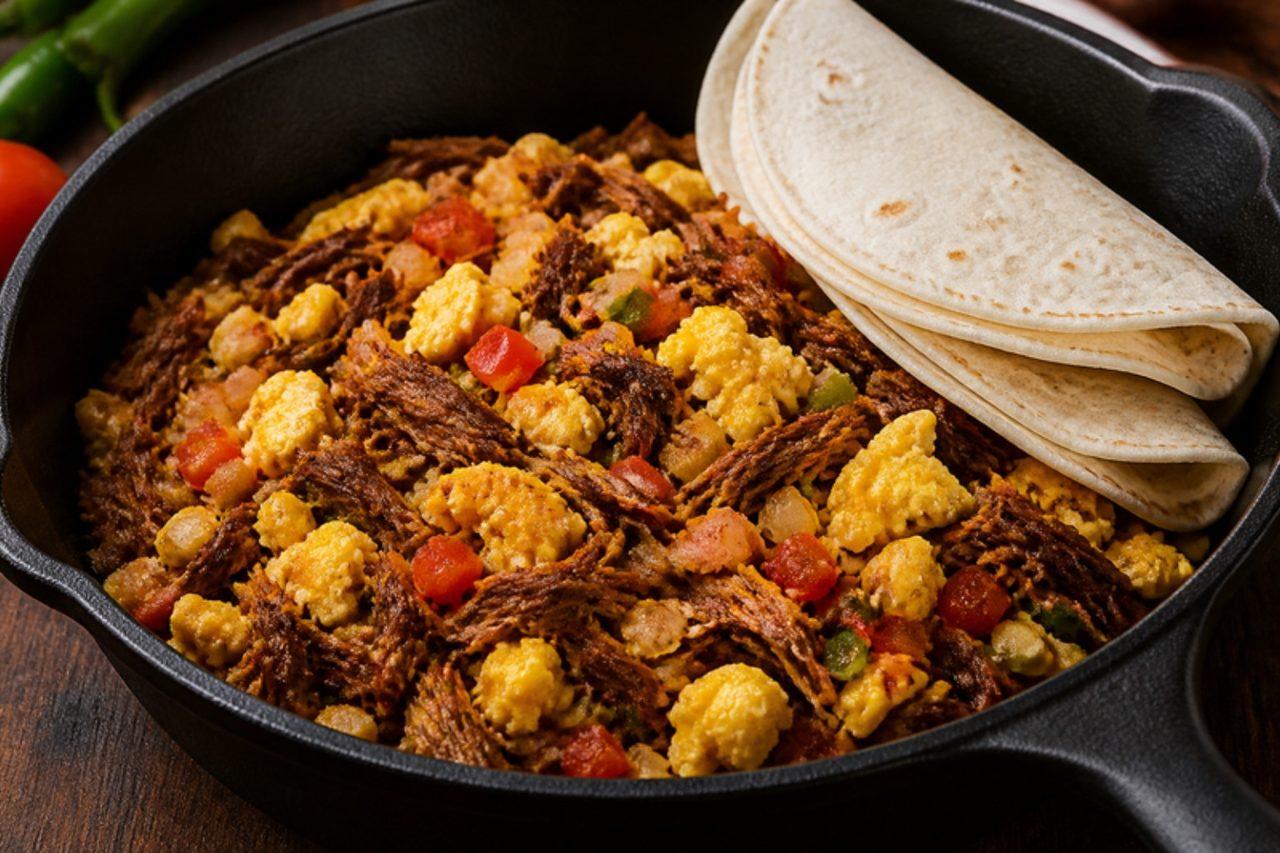
Monterrey and Sonora both claim machaca, the dried, pounded beef that once let ranchers carry meat across the desert. At breakfast it is fried with onion, tomato and green chilli, then scrambled with eggs and rolled into soft flour tortillas, and it turns up in every lonchería and roadside café in the north. The beef is savoury, salty and chewy against the soft egg. Proper machaca is hard to find outside Mexico; shredded leftover roast beef or brisket, dried out in the pan until crisp, makes a good substitute, as does unsweetened beef jerky pounded into shreds. Chef's tip: fry the machaca on its own first until the edges crackle, which brings back the toasty flavour before anything wet goes in.

by KrazyBadal 0 views

Machaca de pescadoShredded fish with tomato and pepper

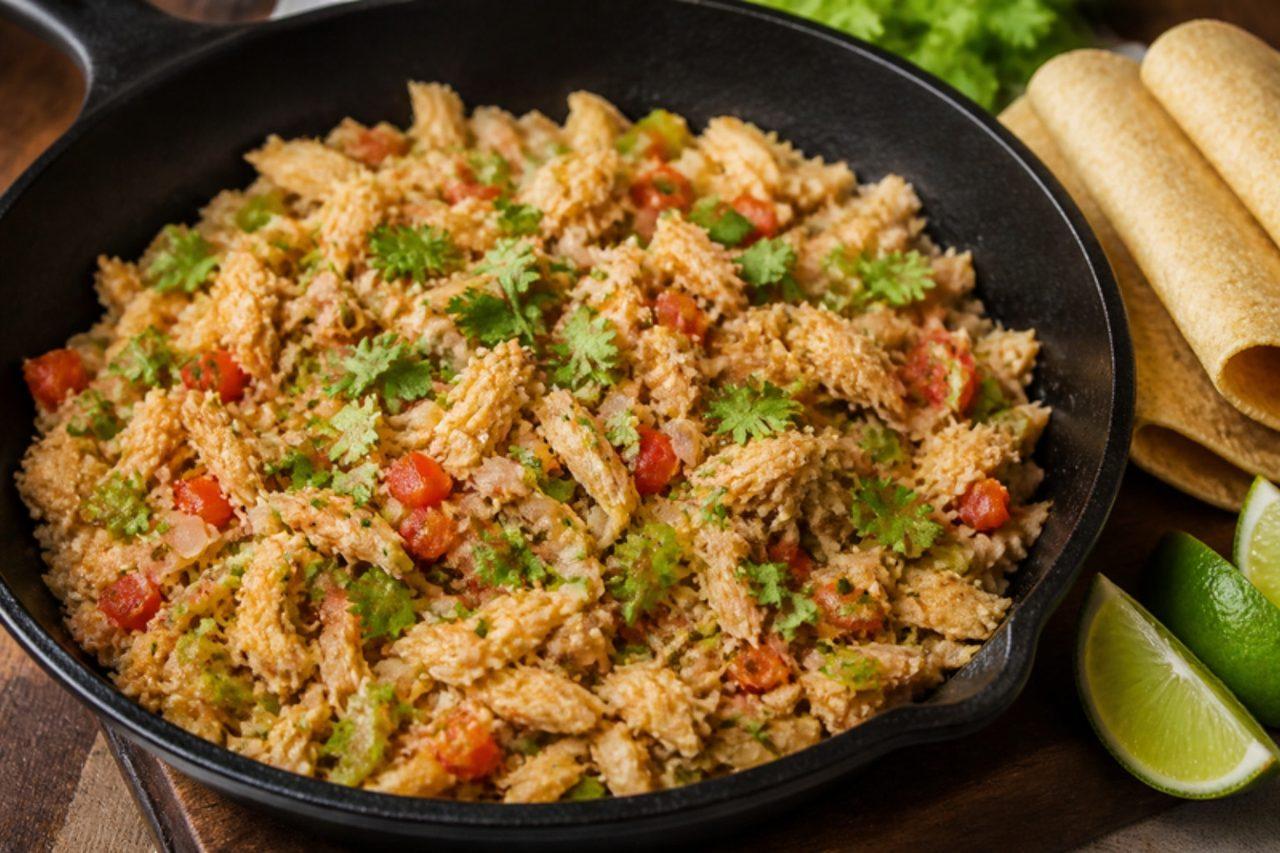
On the waterfront in La Paz, Baja California Sur, machaca de pescado is the sea's answer to beef machaca: firm fish is poached, shredded and fried with onion, pepper, tomato and chilli until almost dry and full of flavour. Fishermen's families once made it with shark or smoked marlin, and today it fills breakfast burritos, tacos and tostadas in cafés along the malecón. Any firm white fish such as cod, hake or mahi-mahi works well. It is savoury, lightly spicy and tender. Serve it with corn tortillas, rice or refried beans. Chef's tip: squeeze the shredded fish in your hands to get rid of excess water before it hits the pan, so it fries rather than stews.

by KrazyBadal 0 views

Thüringer KlößePotato dumplings

In Thuringia, Sunday lunch without Klöße hardly counts: big, pale, springy dumplings made from two-thirds raw grated potato and one-third hot cooked potato paste, each hiding a few butter-fried croutons in the middle. They come to the table beside roasts with lots of gravy, red cabbage or a mushroom sauce, and the texture is unique, smooth, slightly chewy and very good at soaking up sauce. A common mistake is letting the water boil once the dumplings are in, which makes them fall apart; they should only just tremble. Chef's tip: work fast once the raw potato is pressed, because it greys as it meets the air.

by KrazyBadal 0 views

Sakızlı muhallebiMastic milk pudding

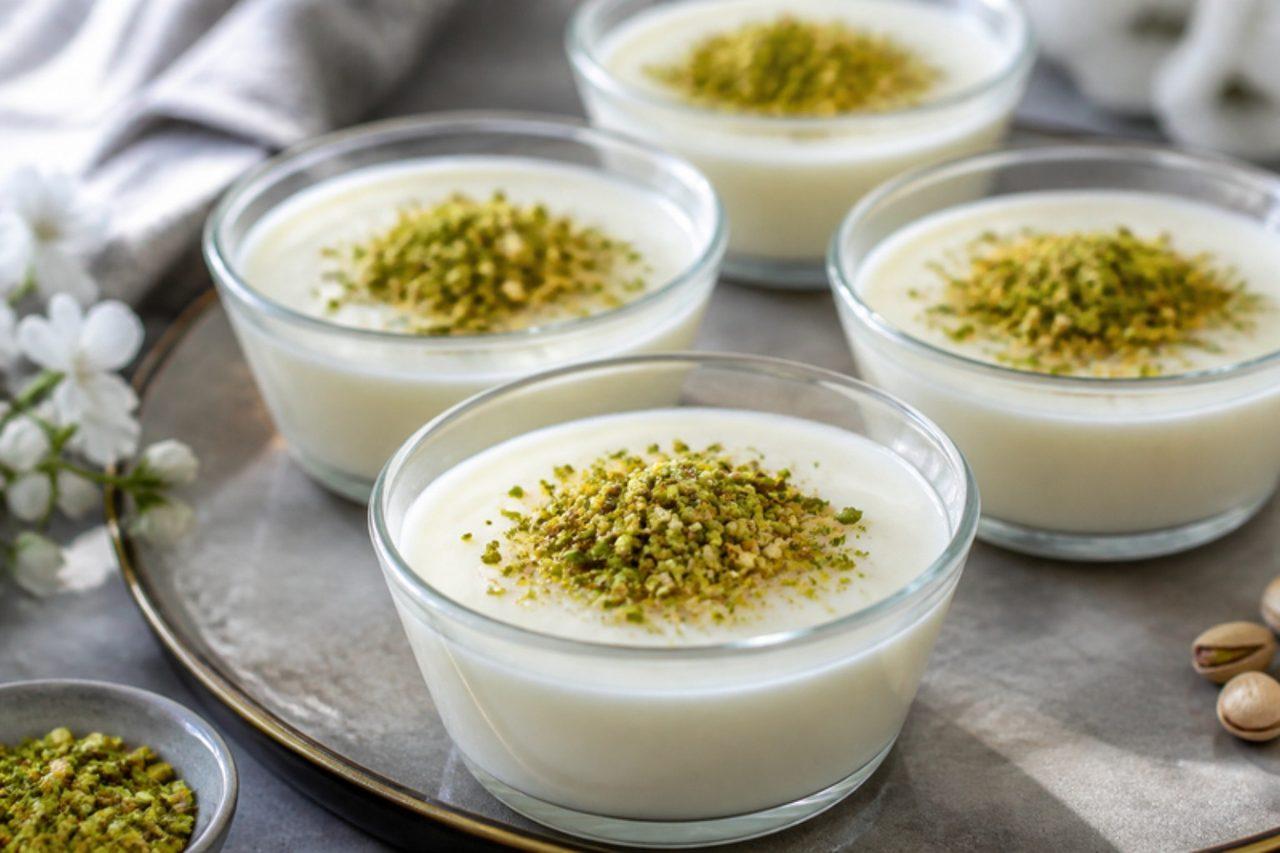
Çeşme looks across the water to Chios, the island where mastic trees weep their resin, and the town's pudding shops have long used it to perfume a simple, wobbly milk pudding. The flavour is hard to describe: piney, a little floral, very fresh against cold creamy milk. It is the dessert to order after a long fish lunch in Alaçatı. Chef's tip: grind the mastic with a teaspoon of sugar in a mortar; on its own it gums up into sticky lumps.

by KrazyBadal 0 views

Pan de arrozRice flour cheese rings

Coffee in Arauca or Casanare rarely comes alone: there is usually a basket of pan de arroz, small golden rings made from rice flour and grated salty cheese, sold at roadside stalls, bakeries and village fiestas across the plains. They bake crisp on the outside and soft, slightly chewy and cheesy within, a cousin of pandebono but lighter and more crumbly. Eat them warm with a cup of tinto or hot chocolate in the afternoon. The cheese on the plains is queso llanero, a firm, salty farm cheese; mix feta-style cheese with a little mozzarella if you cannot find it, and as both are usually made with animal rennet, choose vegetarian (microbial-rennet) ones. The mistake that causes trouble is coarse, lumpy cheese, which makes the dough crack as you shape it; crumble or grate it very finely. Chef's tip: rest the dough for 10 minutes before shaping so the rice flour hydrates and the rings close without splitting.

by KrazyBadal 0 views

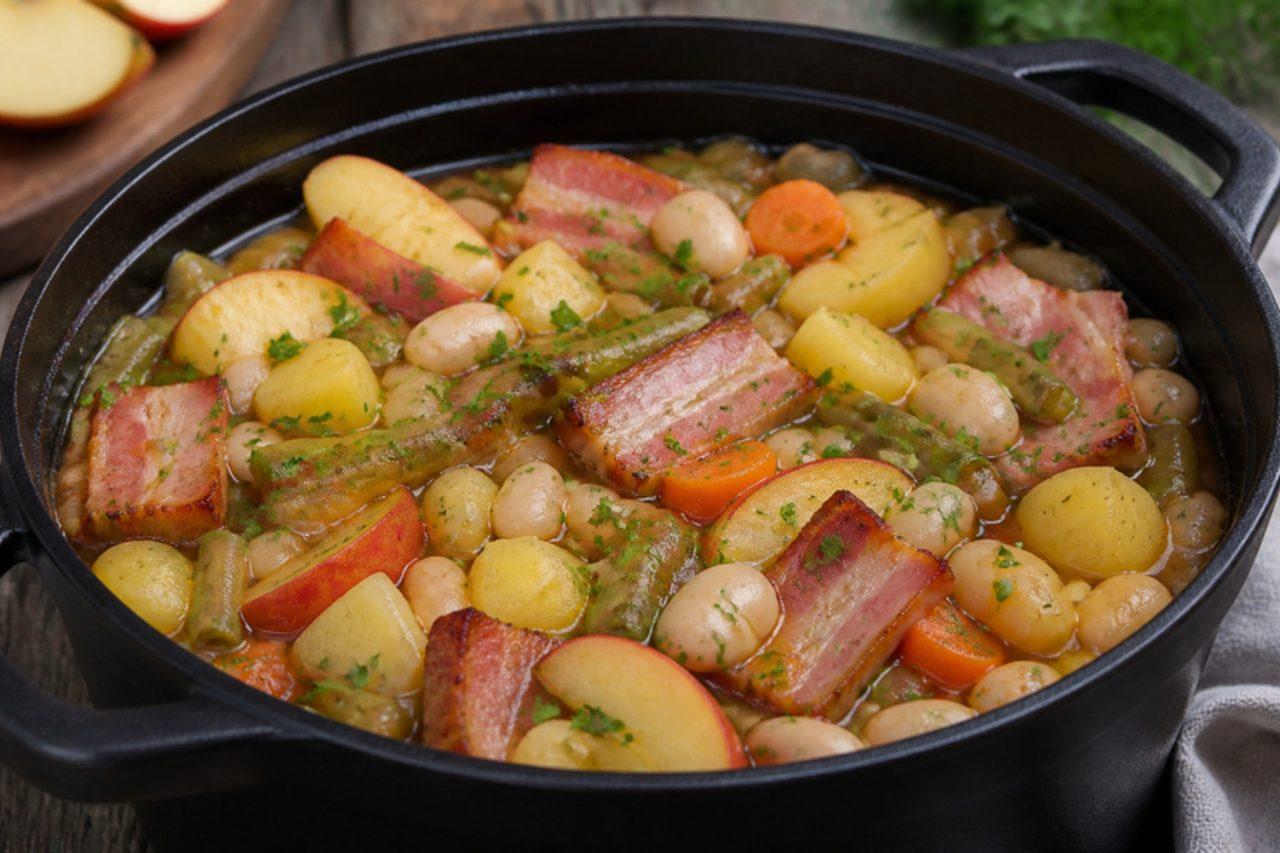
Westfälisches BlindhuhnBean, apple and bacon stew

Blindhuhn, "blind hen", is a late-summer pot from the farms of Westphalia and the Münsterland, made when the garden and orchard give green beans, carrots, apples and pears all at once. It is called blind hen because, as farmers joked, even a blind hen finds a grain in it: the pot holds a bit of everything. White beans, vegetables and fruit cook together with smoked streaky bacon into a sweet-savoury one-pot supper. Leave out the bacon and add a spoon of smoked paprika for a vegetarian pot. Chef's tip: add the apples and pears only for the last 15 minutes so they stay in soft pieces instead of melting away.

by KrazyBadal 0 views

Sosis bandariSpicy sausage and tomato sandwich

Sosis bandari, 'port-style sausage', began in the Gulf ports of Bushehr and Bandar Abbas and is now the late-night snack of sandwich shops all over Iran, from Tehran to Shiraz. Sliced beef or chicken frankfurter-style sausages (Iranian sausages are never pork) are fried with lots of onion, potato, tomato paste and chilli until sticky and hot, then stuffed into a soft baguette with pickles and tomato. It is spicy, greasy in the best way and ready in minutes. A common mistake is crowding the pan; the onion steams instead of browning, so use your widest pan. Chef's tip: a pinch of curry powder and a squeeze of lemon at the end is how the bandari shops give it their southern kick.

by KrazyBadal 0 views

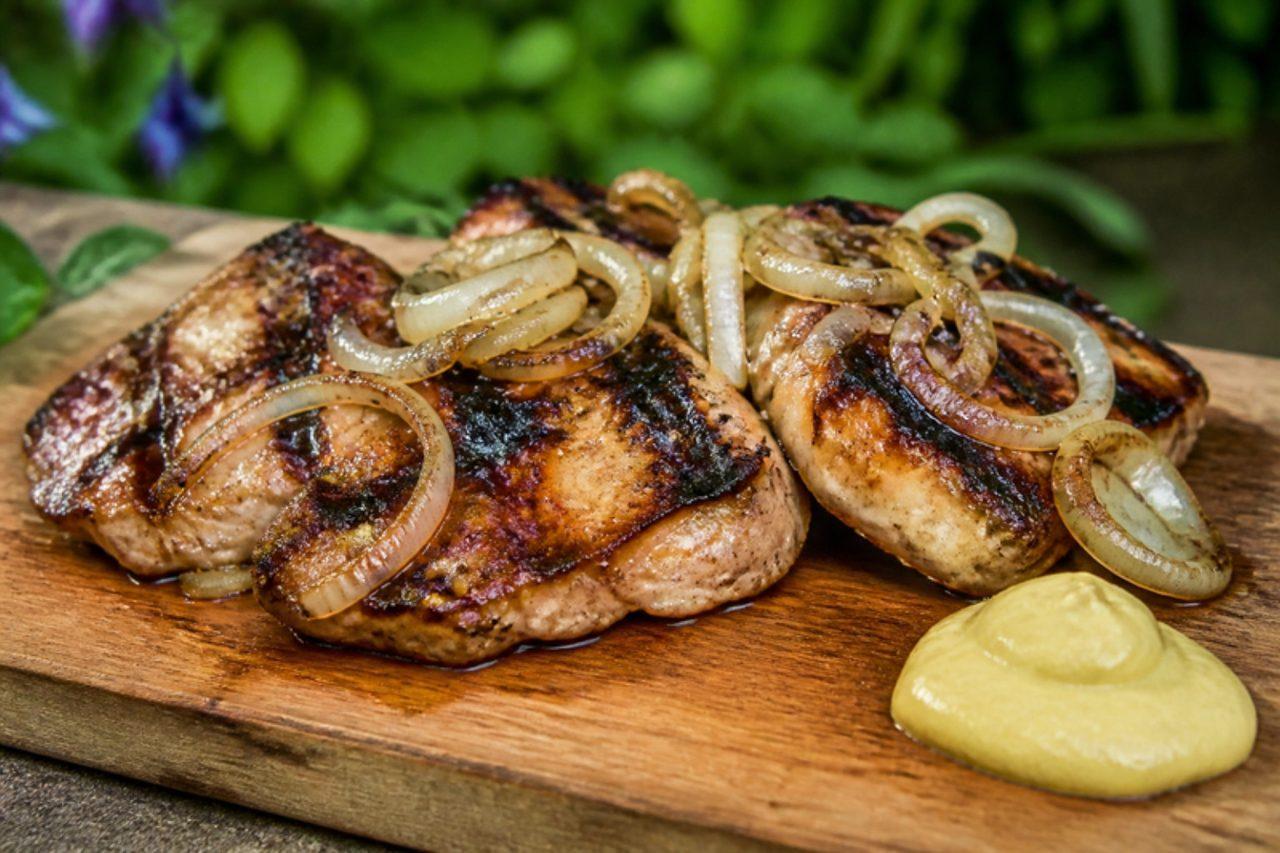
Thüringer RostbrätelMarinated grilled pork neck steaks

In Thuringia, a summer garden party or village fair isn't complete without a Rost, the charcoal grill, loaded with Rostbrätel: pork neck steaks that have spent a night in mustard and plenty of sliced onion. The fat in the neck keeps the meat juicy over the coals, and the onions from the marinade are fried and piled on top, with rye bread on the side. Many Thuringian grillers splash beer over the meat while it cooks; this version needs no alcohol. Chef's tip: scrape most of the onion off before grilling, as it burns on the coals; fry it separately instead.

35 minGermanMeatGluten free
by KrazyBadal 0 views

Pan de milloGalician cornbread

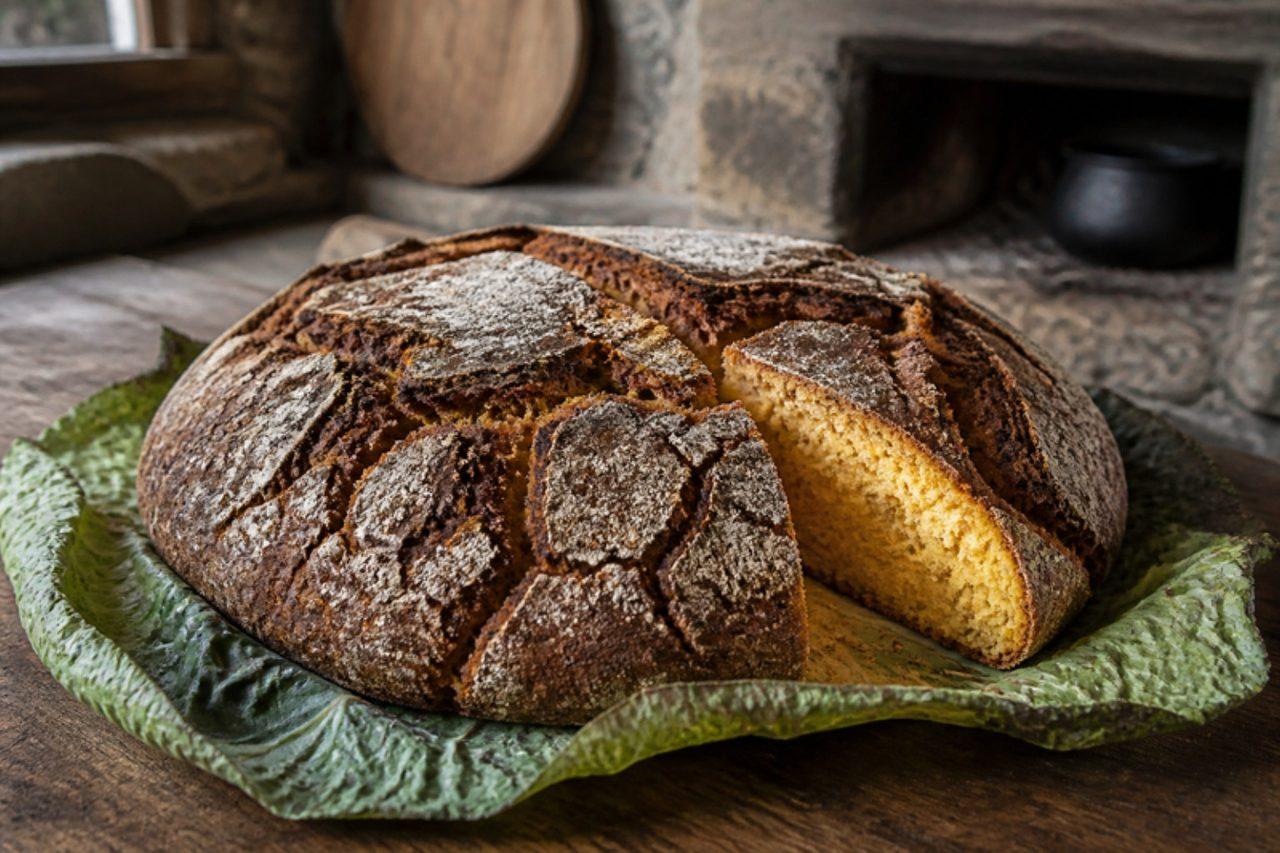
In the inland villages of Lugo and Ourense, and in the Deza area of Pontevedra, pan de millo, also called broa, was the everyday bread before wheat became common, baked in wood ovens and sometimes on a cabbage leaf. It is heavy, moist and slightly sweet inside, with a thick, cracked crust, and it is eaten with caldo, cheese or simply olive oil. Maize flour has no gluten of its own, so this version mixes in some wheat flour to help it rise; it is vegan. A common mistake is expecting a light loaf: it should feel heavy and close-textured. Chef's tip: scald the maize flour with boiling water first, which makes the crumb tender and stops it crumbling.

by KrazyBadal 0 views

Showing 81 of 7,762 recipes

Show more recipes

Page 502 of 863