


Skip to content
Beef Wellington
Featured recipe

Beef Wellington

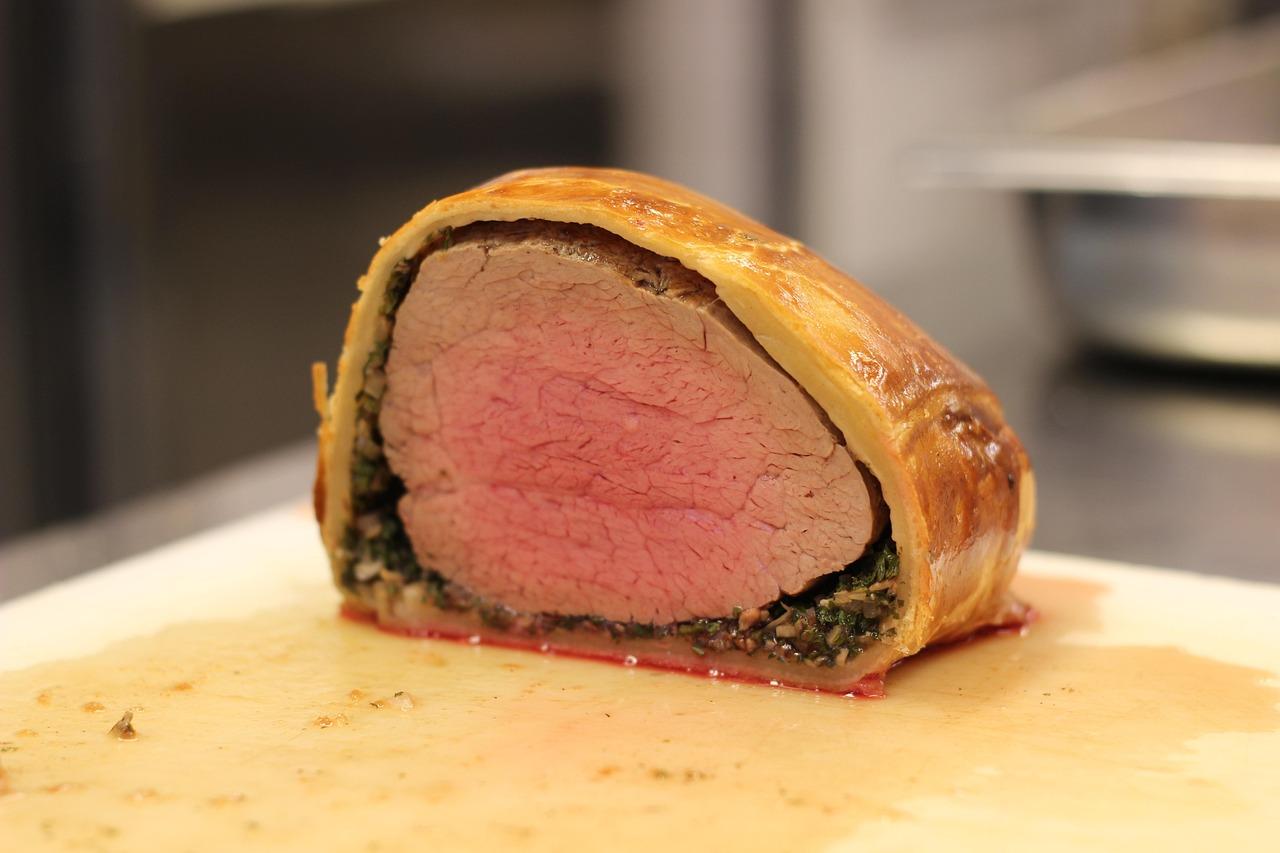
Beef Wellington is the grand centrepiece of British Christmas and celebration dinners, a whole beef fillet coated in finely chopped mushroom duxelles, wrapped in thin pancakes or ham and golden puff pastry, then sliced at the table to show a pink middle. It is linked, without much proof, to the Duke of Wellington. This version wraps the fillet in crêpes instead of the usual Parma ham. The duxelles is deglazed with a splash of white wine, which contains alcohol; use a little stock for an alcohol-free version. Chef's tip: chill the wrapped fillet before it goes in the pastry so everything stays tight and the base doesn't go soggy.

Read more 0 views

What to eat today?

Around the world

Today's trip: Persian

A new country every day, from every cuisine on the site.

This week's collection

Kid-friendly dinners
702 recipes · a new collection every Monday

Coming up

All occasions →

Latest recipes

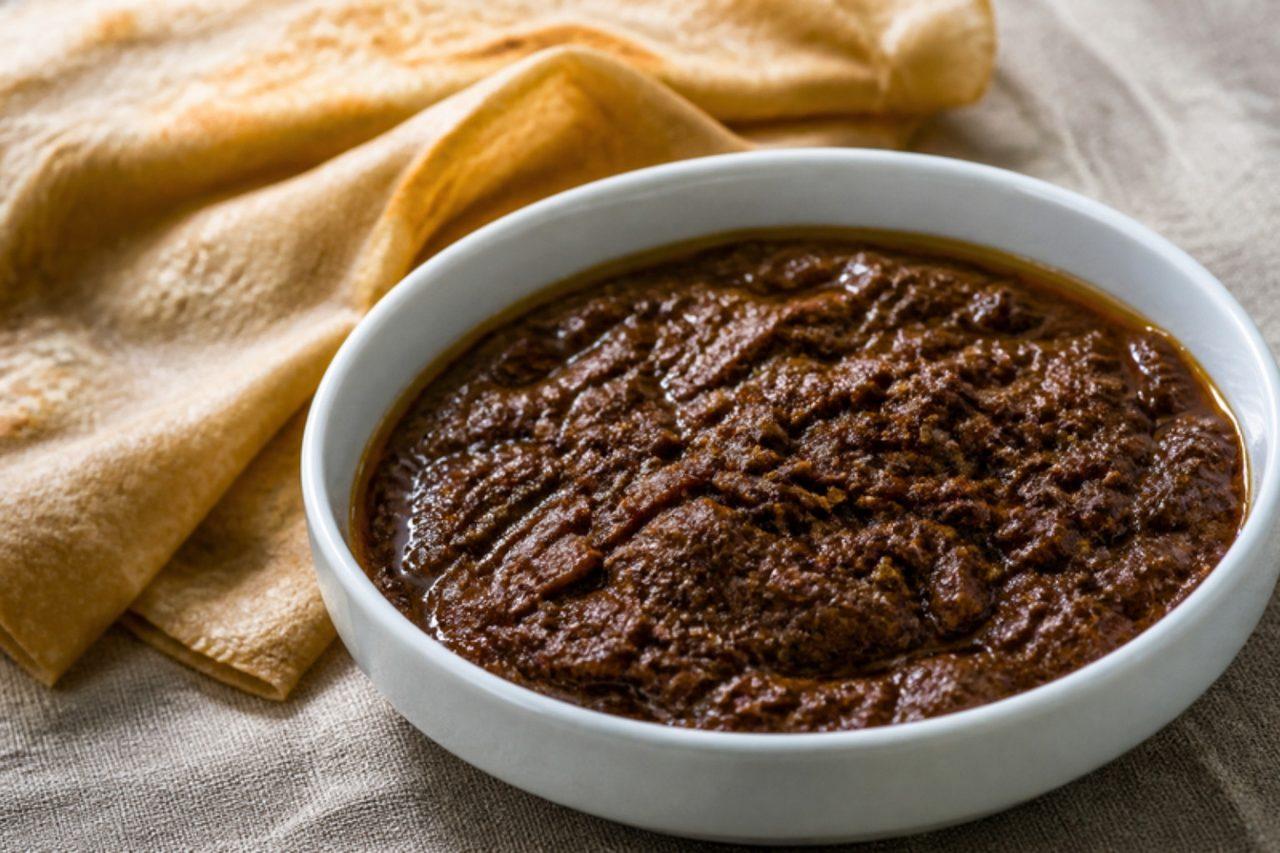
Ye-dinich wat (spicy Ethiopian potato stew)

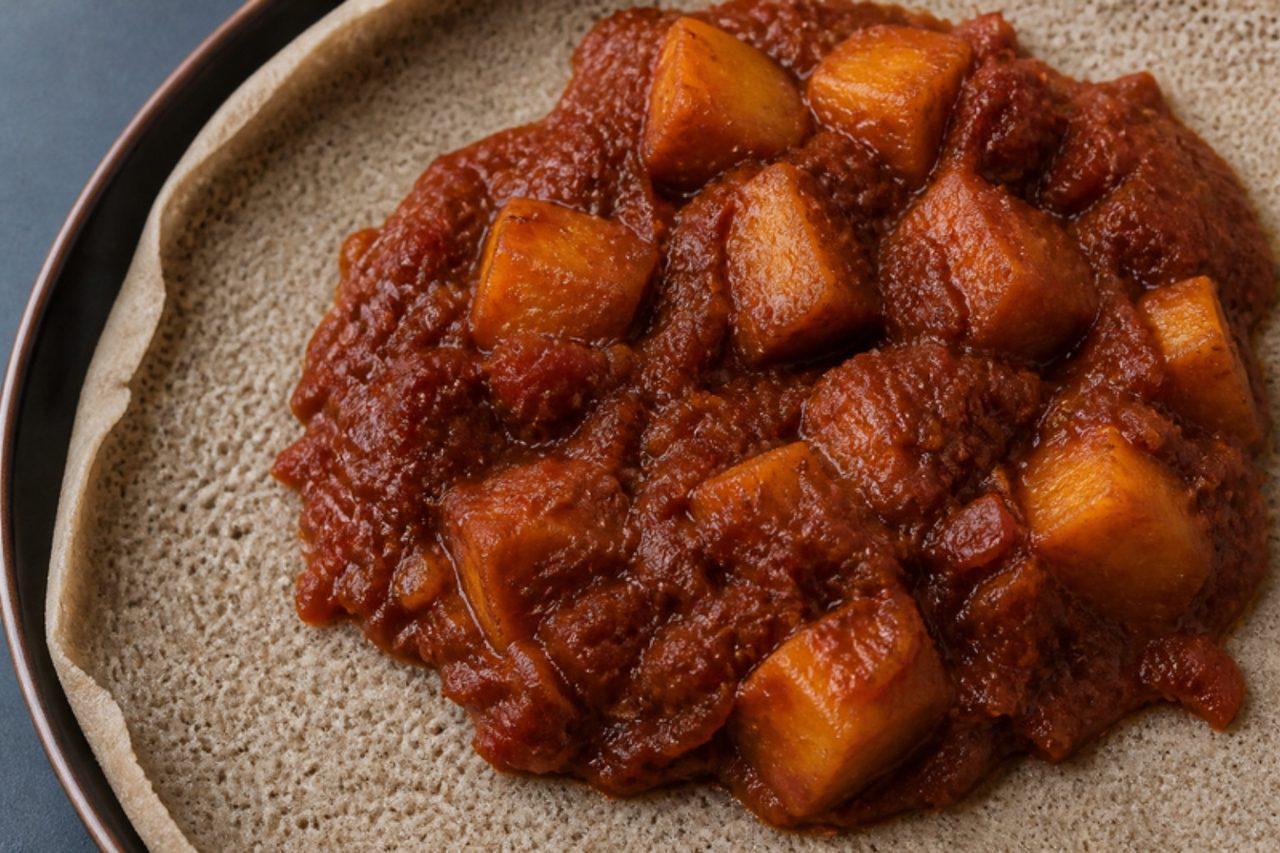
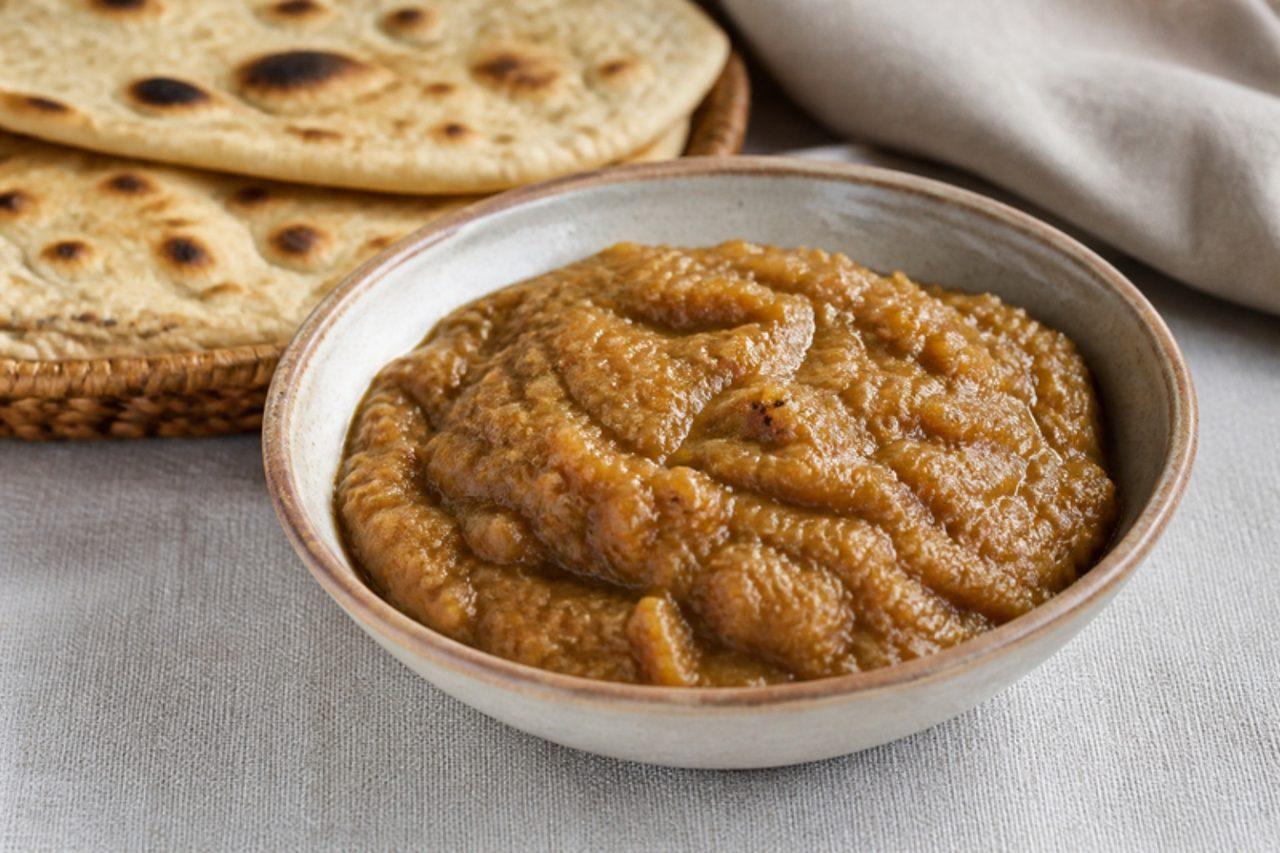
Wednesday and Friday lunch in countless Ethiopian homes and canteens includes a pot of ye-dinich wat, the potato stew that turns a few cheap ingredients into something deeply savoury. Red onions are cooked down slowly, then berbere, garlic and ginger go in with oil to build a dark, glossy sauce, and cubes of potato simmer in it until they soften and start to thicken it at the edges. It is hot, earthy and comforting, and scooped up with injera next to shiro, misir and gomen on a fasting platter. Because it uses oil and no butter, it is fully vegan. Hurrying the onion base is the usual mistake; give it the full time or the sauce tastes thin and raw. Chef's tip: cut the potatoes into even 2 cm cubes, so they cook at the same rate and hold their shape.

by KrazyBadal 0 views

Buticha (whipped chickpea flour dip)

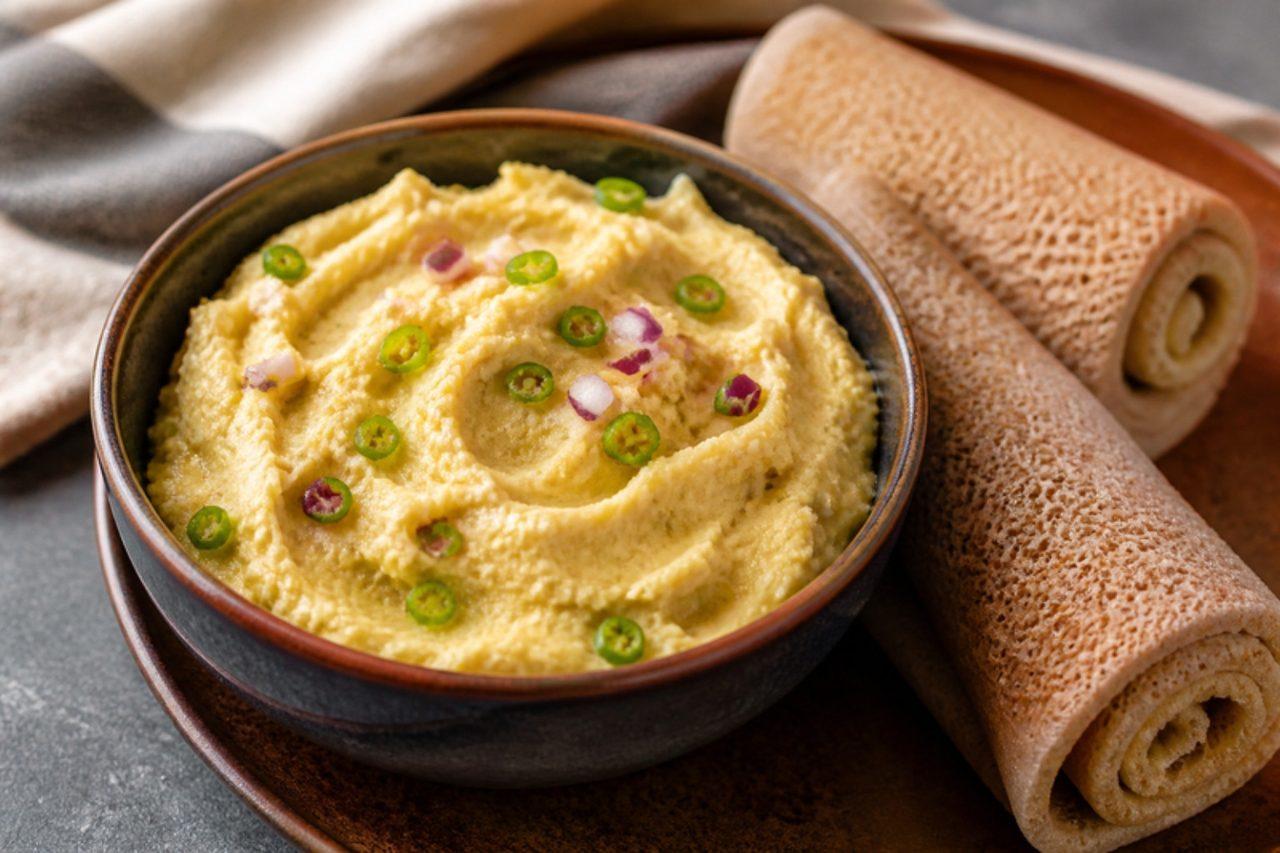
Ethiopian Orthodox kitchens make buticha on fasting days as a plant-based stand-in for scrambled egg or fresh cheese, and it often sits as a pale, fluffy mound on the vegan platters of Addis Ababa's restaurants. Chickpea flour is cooked with water into a thick paste, cooled, then beaten with oil and plenty of lemon juice and mixed with raw red onion and green chilli. The texture is soft, crumbly and light, the flavour tangy and fresh against the rich, red wats. Serve it cool with injera, or as a dip with kita. A common mistake is beating it while still hot, which makes it gluey instead of fluffy; let it cool completely first. Chef's tip: cook the paste a full eight minutes after it thickens, so no raw, beany taste is left.

by KrazyBadal 0 views

Timatim fitfit (torn injera with fresh tomato)

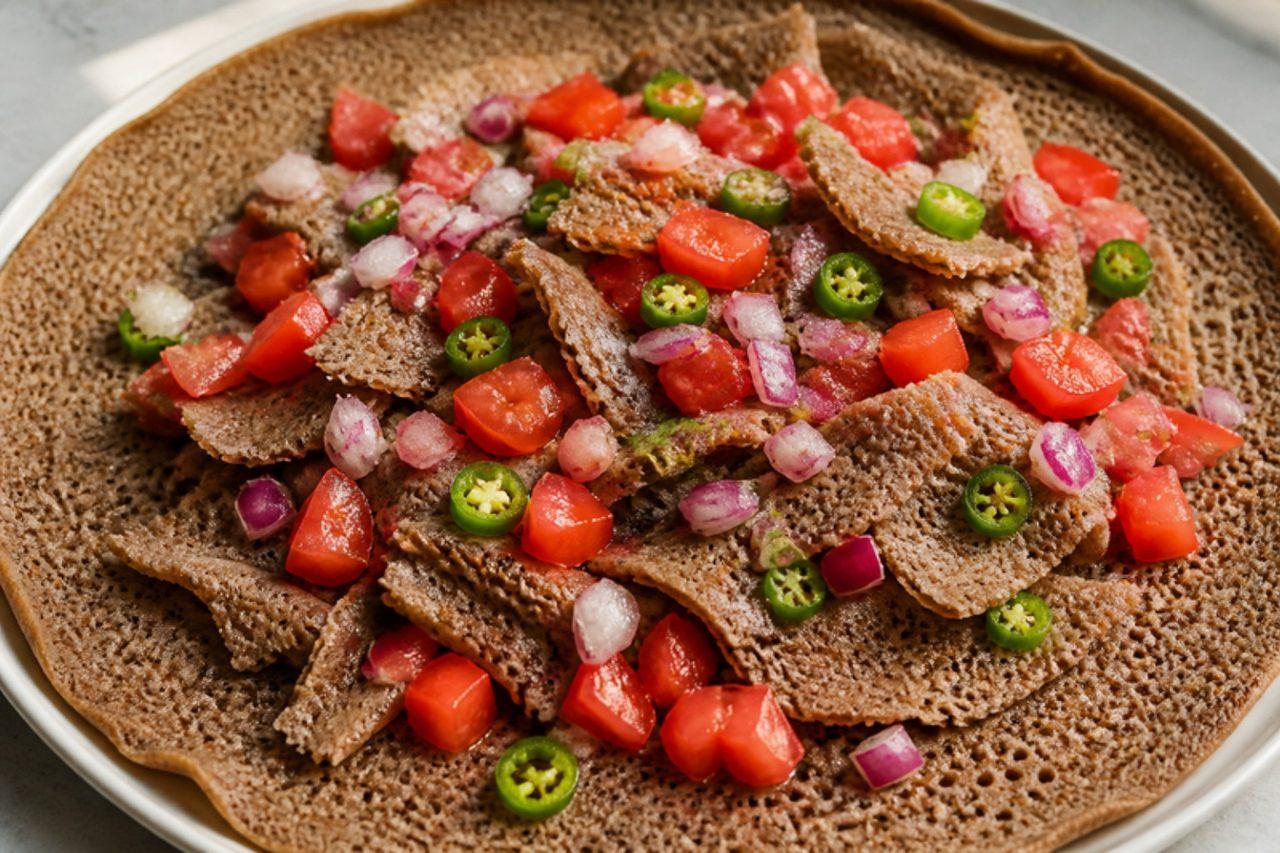
Leftover injera never goes to waste: torn into bite-sized pieces and tossed with juicy chopped tomato, red onion, green chilli, lemon and oil, it becomes timatim fitfit, a cool, tangy salad eaten for a light lunch on hot days and on fasting days all over the country. Unlike timatim salata, which is just the tomato salad, this version is a meal in itself: the injera drinks up the dressing and turns soft and spongy while keeping a little chew. It is usually served in a bowl and eaten with more injera or with a spoon. The common mistake is mixing it too early, which turns the bread soggy; toss it no more than ten minutes before eating. It is gluten free only if your injera is made from 100% teff. Chef's tip: use day-old injera, which is slightly drier and holds its shape better than fresh.

by KrazyBadal 0 views

Sinig karia (stuffed green chillies)

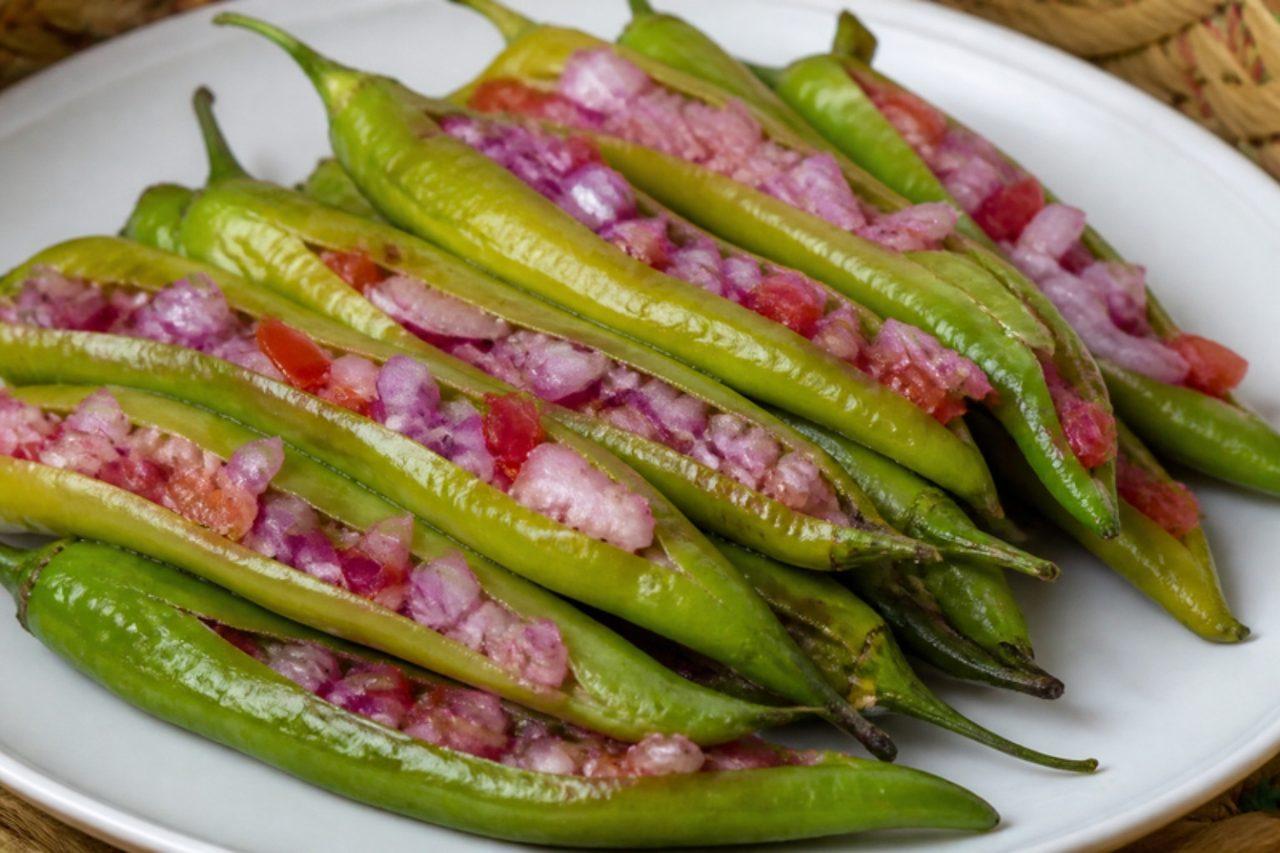
Long, pale green karia chillies are piled high in the markets of Addis Ababa, and on fasting days cooks slit them, scrape out the seeds and fill them with a sharp little salad of onion and tomato soaked in lemon. The result is crunchy, fresh and juicy, with a mild chilli warmth, and the chillies are eaten with the fingers between mouthfuls of injera and spicy wat, or set out as a starter. Choose mild long peppers such as Anaheim, Hungarian wax or long sweet green peppers. A common mistake is leaving the white ribs in, which keeps the heat high and can make them bitter; scrape them out with a teaspoon. Chef's tip: dip the chillies in boiling water for one minute and cool them in cold water first if you want them a little softer and easier to stuff.

by KrazyBadal 0 views

Senafich (Ethiopian mustard seed paste)

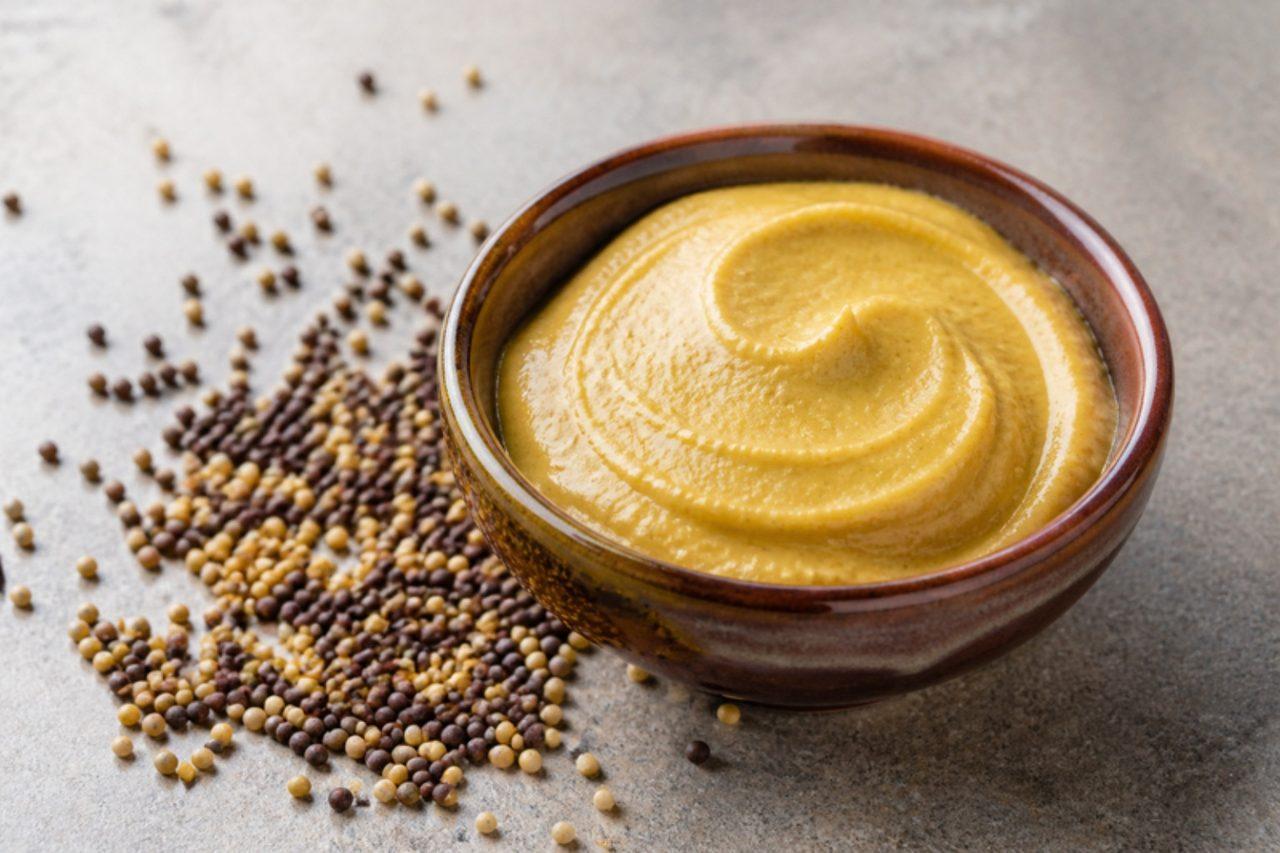
On Ethiopian fasting platters there is often one little dab of yellow among the reds and greens: senafich, a punchy mustard paste that clears the nose and cuts through the oil of the wats. Brown or yellow mustard seed is ground, mixed with warm water and left to rest, which takes the bitterness away, then beaten with lemon, oil, ginger and garlic until it is smooth and creamy. It is served with injera, shimbra asa and boiled vegetables, and some cooks thin it into a sauce for raw chillies. A common mistake is serving it straight after mixing, when it is harsh and bitter; let it stand for at least an hour (it is even better the next day). Chef's tip: use warm water rather than boiling for the soak; very hot water kills the mustard's heat and leaves it flat.

by KrazyBadal 0 views

Kita (quick Ethiopian flatbread)

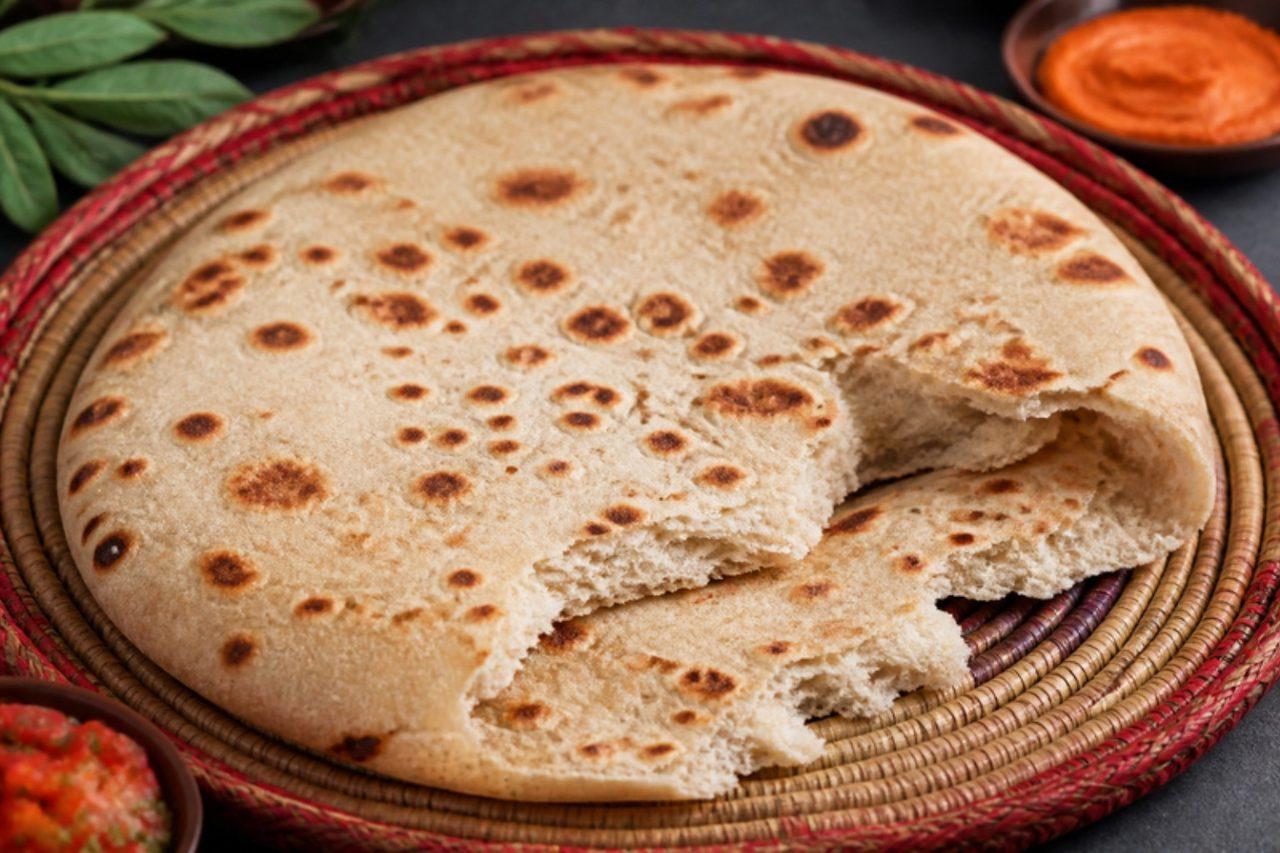
When there is no fermented injera batter ready, households across Ethiopia make kita: a plain unleavened flatbread of flour, water and salt, spread thin and cooked on the mitad or a heavy pan in minutes. It is soft and slightly chewy with toasty brown spots, and is eaten hot with tea, with shiro or buticha on fasting days, or torn up for kita firfir. Children often eat it warm with a sprinkle of berbere and oil. A wheat dough is easiest at home; mixing in a portion of teff flour adds an earthy flavour. Too thick a layer is the common mistake, as the middle stays raw; spread it thin and cook it covered. Chef's tip: wet your fingertips or the back of a spoon to press the batter-like dough out evenly in the hot pan.

by KrazyBadal 0 views

Honey and milk bread (yemarina yewotet dabo)

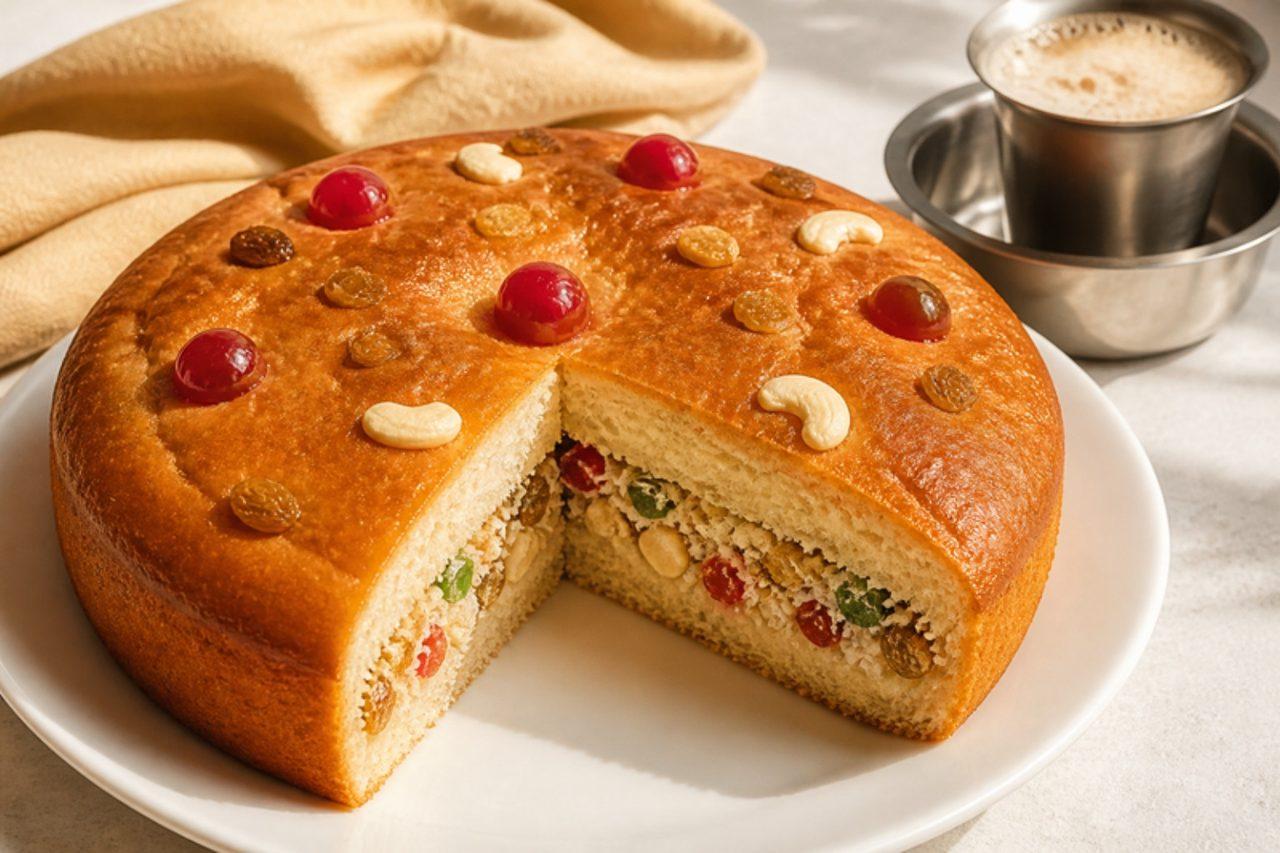
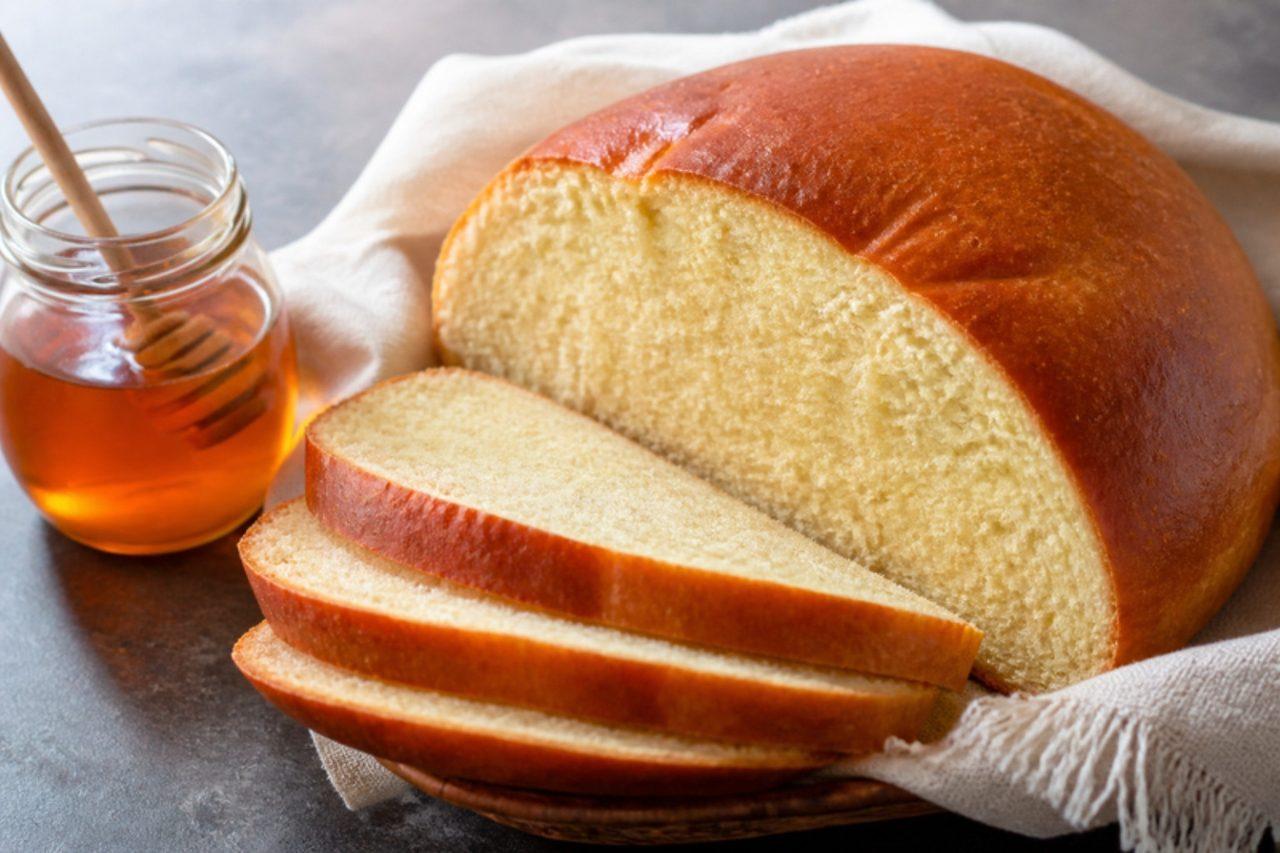
Softer and sweeter than everyday ambasha, this round loaf is the bread Ethiopian families bake for a holiday table, a christening or guests at a coffee ceremony, when there is milk and good honey in the house. The dough is enriched with egg and butter, so it bakes up tender with a fine, cake-like crumb, and the spices are gentle: toasted coriander, a whisper of fenugreek and cardamom that perfumes the kitchen. It is sliced and eaten as it is, with spiced tea or coffee, or spread with a little honey. Allow about 1¾ hours for the two rises. Chef's tip: keep the fenugreek to a quarter teaspoon; any more and its bitterness takes over the honey.

by KrazyBadal 0 views

Massawa oven fish

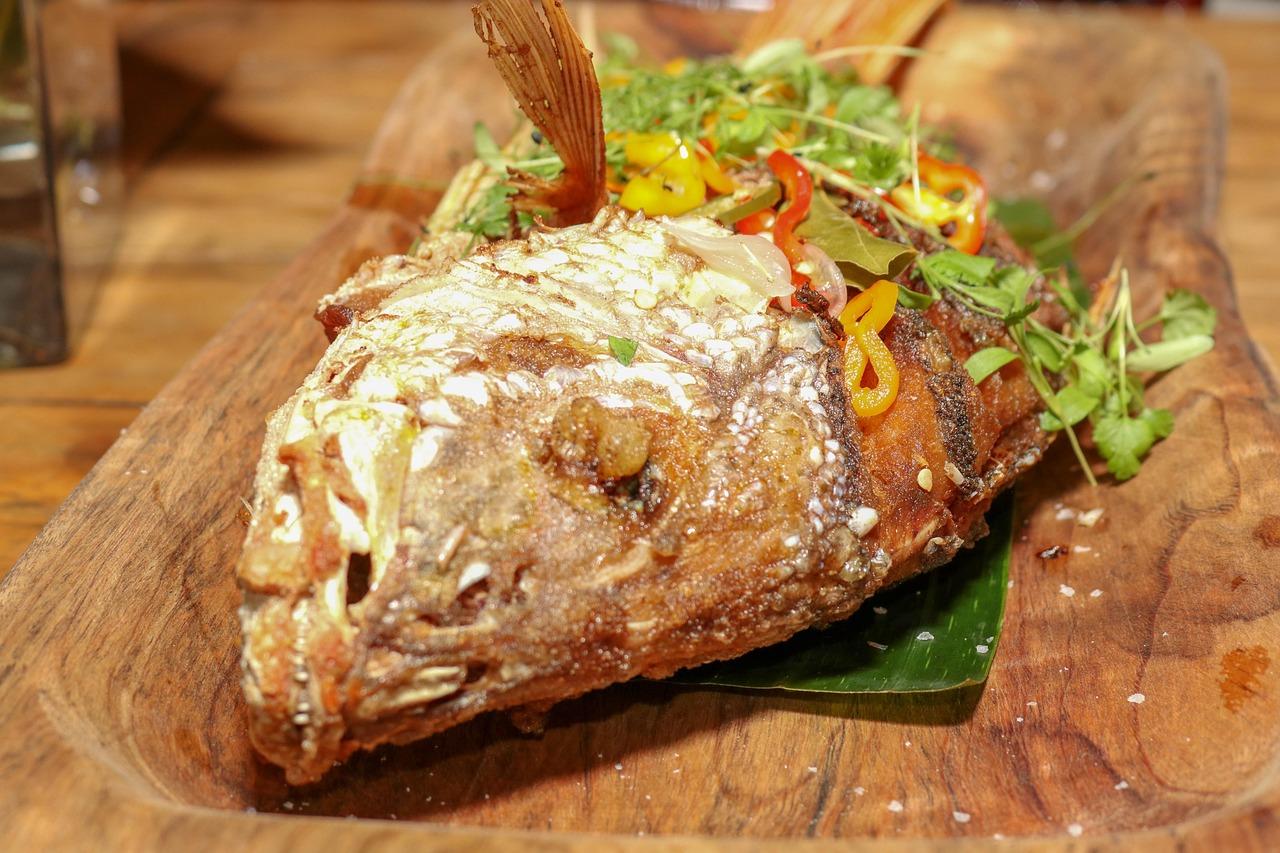
Along the waterfront in Massawa, on Eritrea's Red Sea coast, fish restaurants slap whole snapper and grouper with a red berbere paste and lower them into scorching clay ovens, then bring them to the table on a tray with flatbread, lime and a fresh chilli relish. The skin chars and blisters, the spice paste turns smoky, and the flesh stays moist and sweet underneath. Everyone tears off pieces of bread and pulls the fish from the bone with their fingers. A domestic oven turned up as high as it goes gives a very good result. Chef's tip: score the fish deeply down to the bone and push the paste into the cuts, so the flavour reaches the middle and the thickest part cooks as fast as the tail.

by KrazyBadal 0 views

Moukhbaza (Kassala mashed banana)

Kassala, in the green orchard country of eastern Sudan near the Eritrean border, grows bananas in abundance, and its signature dish uses them very simply: very ripe bananas mashed with a little sugar and cooked briefly until thick and jammy. Moukhbaza is eaten as a snack or light breakfast, torn kisra or soft gurasa pancakes dragged through it, and children adore it. It tastes like warm banana bread without the oven. Under-ripe fruit is the usual mistake; you want bananas with heavily speckled, almost black skins, or the mash is starchy and bland. Chef's tip: a squeeze of lime at the end keeps the colour bright and balances the sweetness.

by KrazyBadal 0 views

Nafaqo (Somali potato-wrapped eggs)

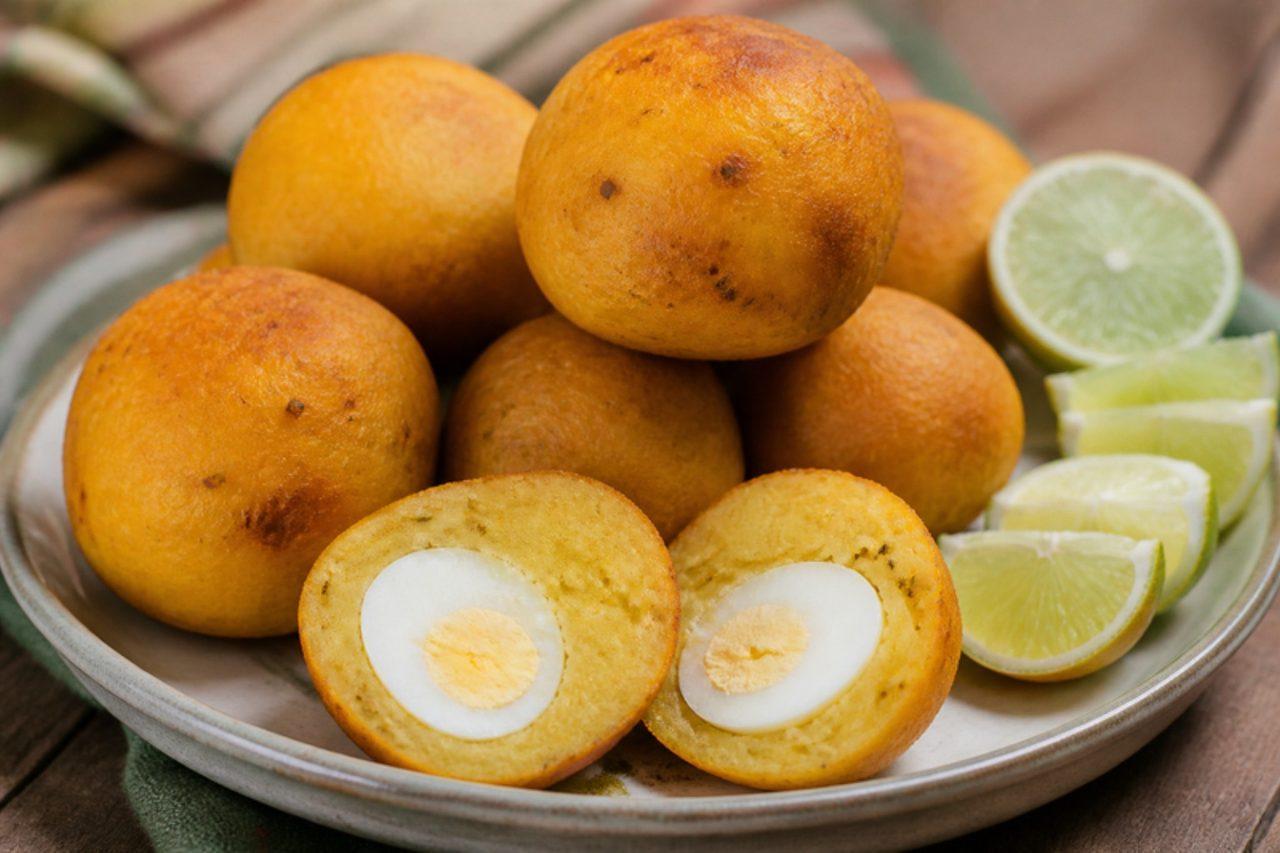
Sold warm from street stalls and cafés around Mogadishu, especially in the late afternoon and at iftar in Ramadan, nafaqo is a fried snack with a surprise inside: a whole boiled egg wrapped in mashed potato seasoned with onion, coriander and xawaash. A light chickpea-flour batter gives it a crisp golden shell, and it is cut in half to show the yolk and eaten with a squeeze of lime and hot green chilli sauce. Kids love it, and it travels well in a lunchbox. A common mistake is using wet, freshly boiled mash, which slides off the egg and splits in the oil; steam-dry the potatoes and let the mash cool before shaping. Chef's tip: roll the peeled eggs in a little chickpea flour before wrapping them, so the potato grips the slippery white.

by KrazyBadal 0 views

Eritrean frittata

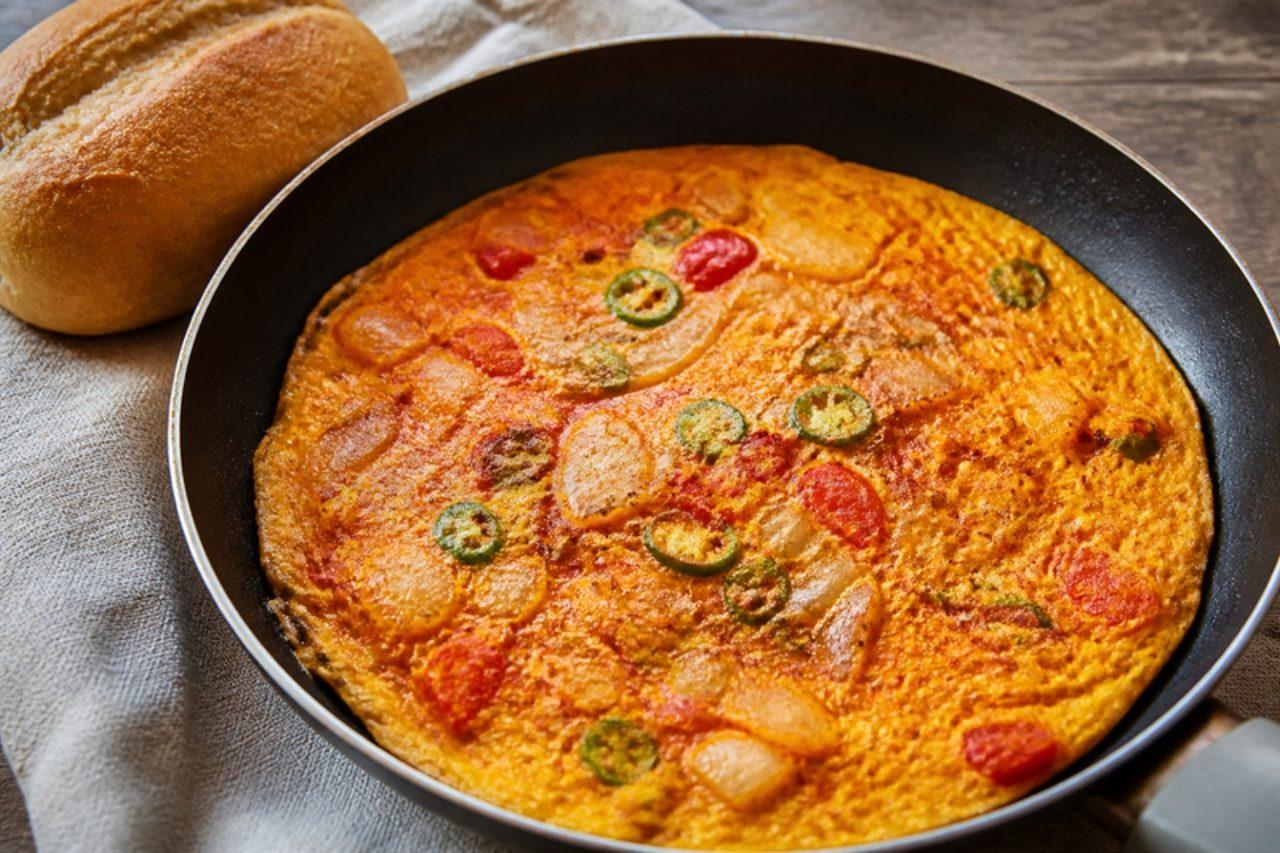
Asmara's cafés kept the Italian word but changed the flavour: an Eritrean frittata is eggs beaten with softened onion, tomato and green chilli, warmed with berbere and cooked flat in a small pan until just set. It comes to the table in its pan with fresh bread and a coffee or sweet tea, and some places fold in a little extra chilli for those who ask. The texture is soft and moist in the middle, with sweet tomato and a gentle heat running through it. A common mistake is cooking the eggs over a high flame, which makes the base tough and brown before the top sets; keep the heat low and cover the pan. Chef's tip: cook the tomato until its juice has evaporated before the eggs go in, or the frittata turns watery.

by KrazyBadal 0 views

Muufo (Somali maize flatbread)

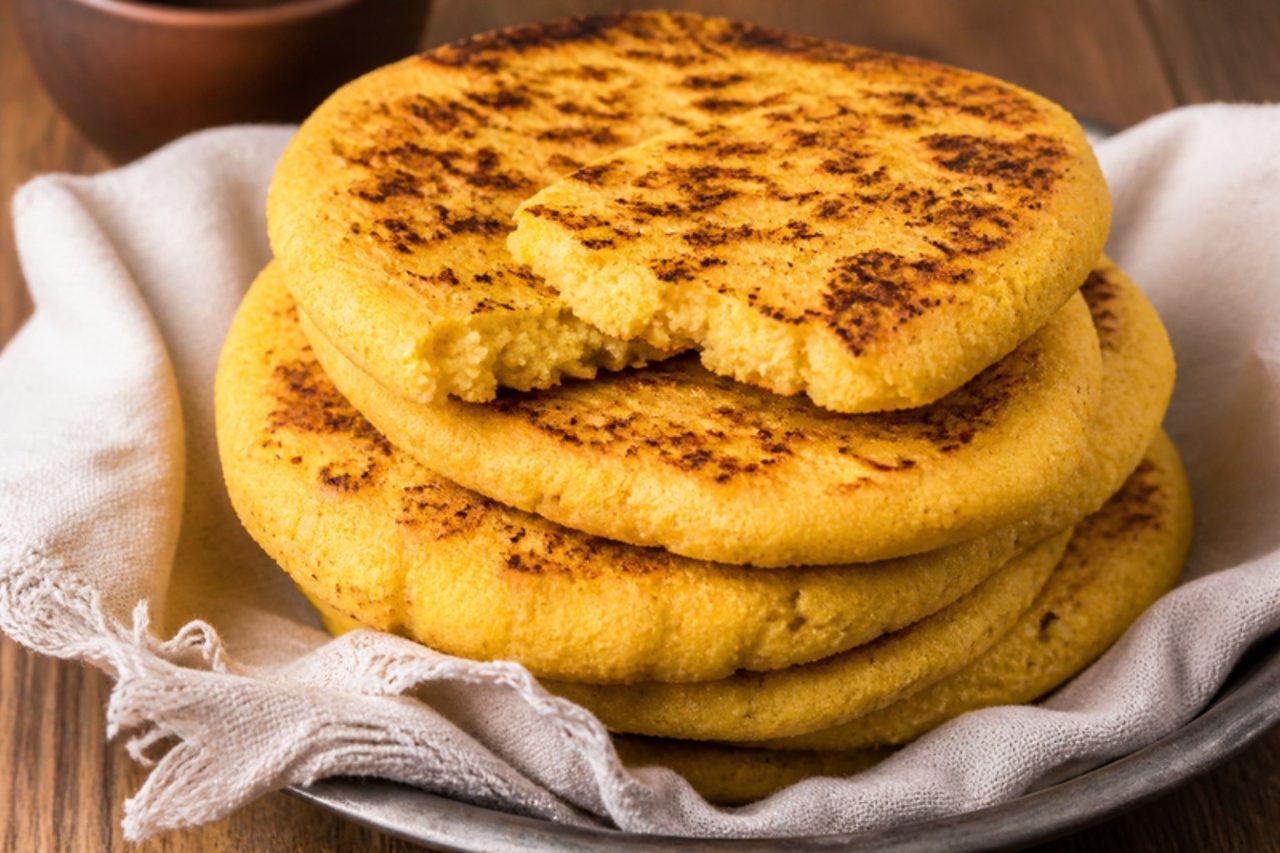
Along the southern Somali coast and in the farming areas of the Shabelle valley, muufo is baked by pressing rounds of maize dough against the hot inner wall of a clay oven, where they puff and char in minutes. The bread is thick, a little sweet from the corn and slightly tangy, and its dimpled surface is perfect for soaking up digir, maraq or a drizzle of sesame oil and sugar at breakfast. At home a heavy pan and a very hot grill do a good job. Most cooks mix maize flour with some wheat flour so the dough holds together; this version uses yeast and oil, so it is vegan. The usual mistake is an oven or pan that is not hot enough, which gives a pale, dense bread; let the pan heat for a full 5 minutes. Chef's tip: wet your hands when shaping, as the sticky dough is far easier to pat out.
by KrazyBadal 0 views

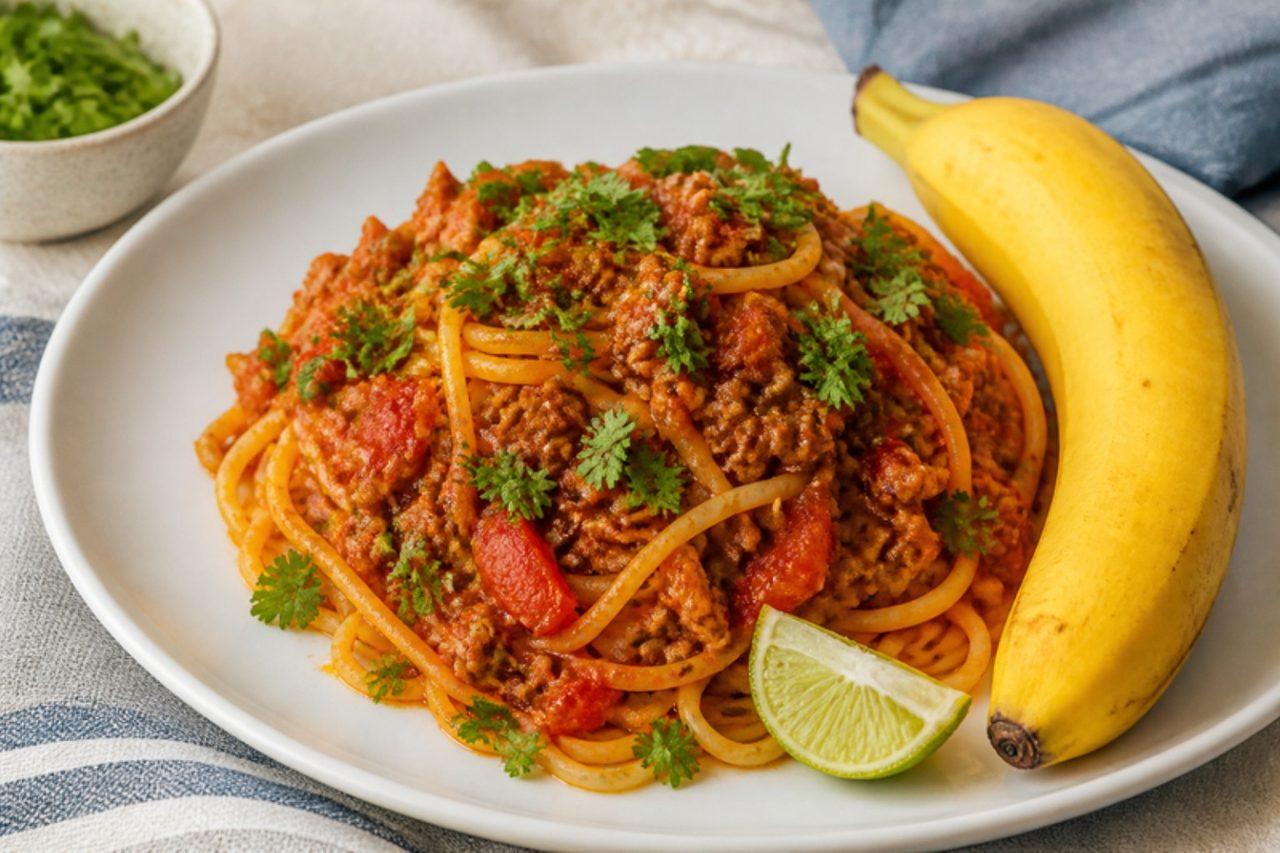
Baasto (Somali spaghetti with spiced beef sauce)

Pasta arrived in Mogadishu during the Italian colonial period and was firmly adopted, so that today baasto with suugo is a standard Friday lunch and a staple of the city's restaurants. The sauce is a long-cooked mix of minced beef, onion, peppers and tomato seasoned with xawaash, garlic and a little chilli, closer to a spiced Somali stew than to an Italian ragù. A ripe banana is served alongside and eaten in alternate bites, cooling and sweet against the spice; a green chilli sauce and a squeeze of lime finish the plate. Overcooking the spaghetti is the usual error, because it carries on softening in the hot sauce; drain it a minute before the packet time. For a meat-free version simply leave out the beef and add a tin of chickpeas. Chef's tip: let the beef brown properly before the tomato goes in; that colour gives the sauce its depth.
by KrazyBadal 0 views

Beer (Somali fried liver)

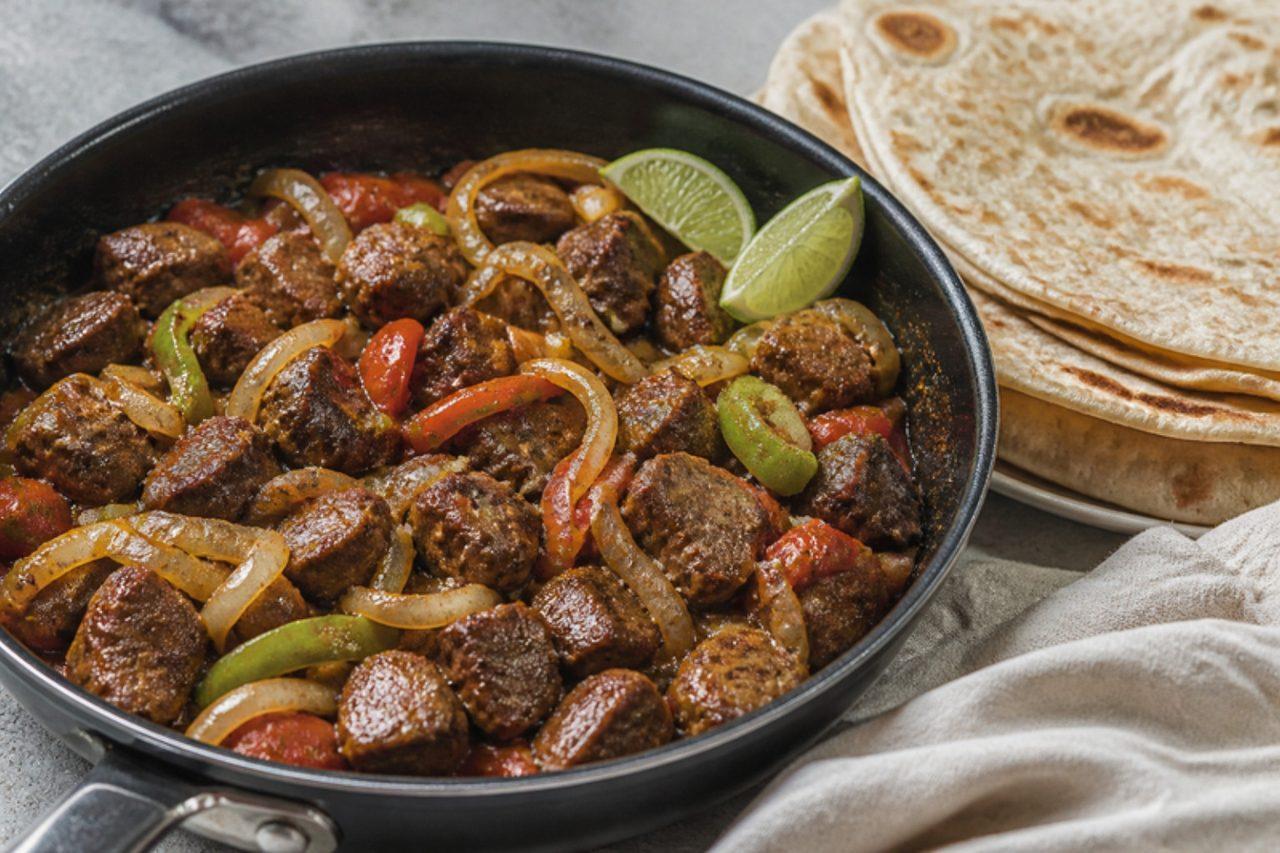
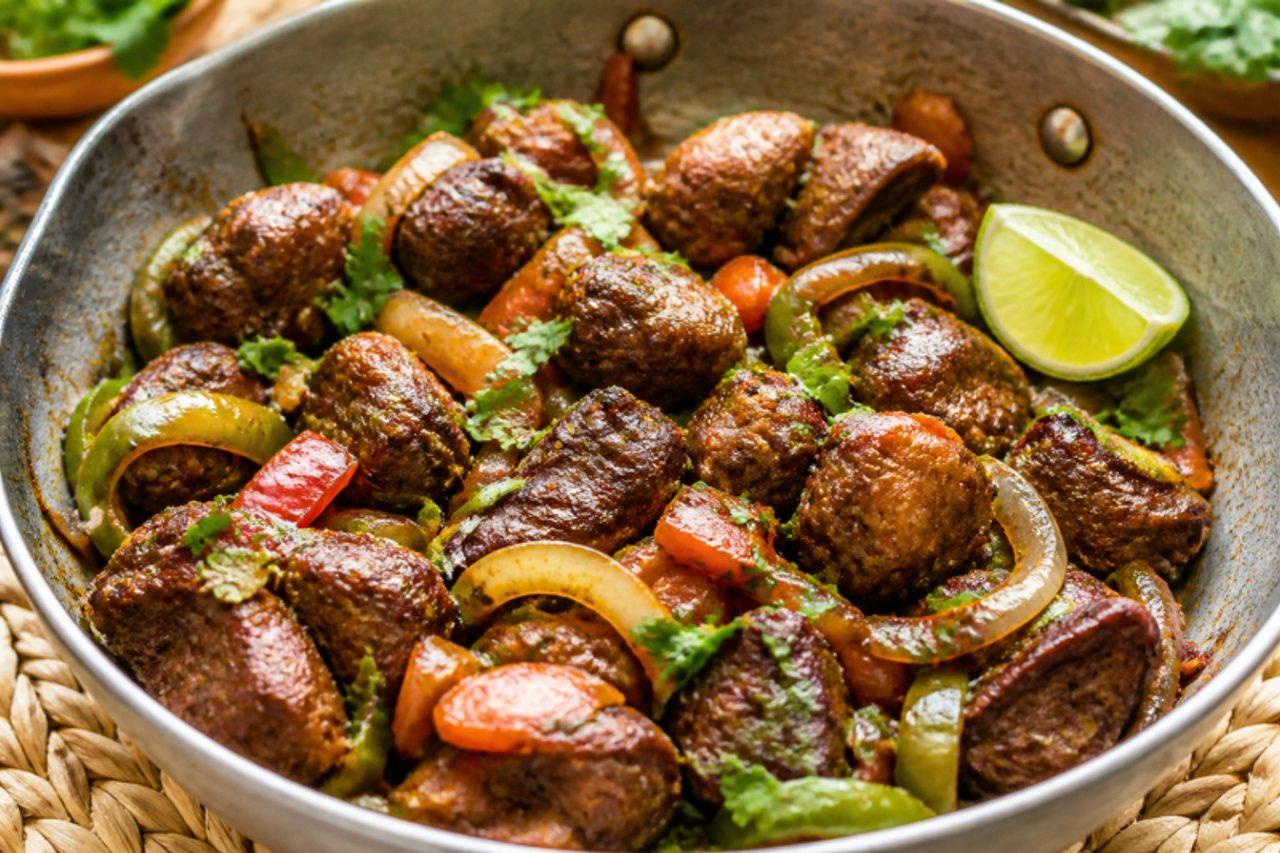
Beer means liver in Somali, and a plate of it, cut into small cubes and fried hard with onion, green pepper and xawaash, is a breakfast institution in Mogadishu cafés, especially on weekends and through Eid when there is fresh lamb or goat liver at hand. It arrives sizzling, with canjeero or sabaayad to scoop it up, a wedge of lime and a cup of sweet spiced tea. Good beer is tender and browned on the outside, cooked through with no pink left in the centre. The classic mistake is salting the liver at the start, which draws out moisture and makes it tough; add the salt at the very end. Lamb, goat, calf or beef liver all work. Chef's tip: cut the liver into even 2 cm cubes so every piece cooks through in the same few minutes.

22 minSomaliMeatGluten free
by KrazyBadal 0 views

Hilib ari (Somali slow-cooked goat with xawaash)

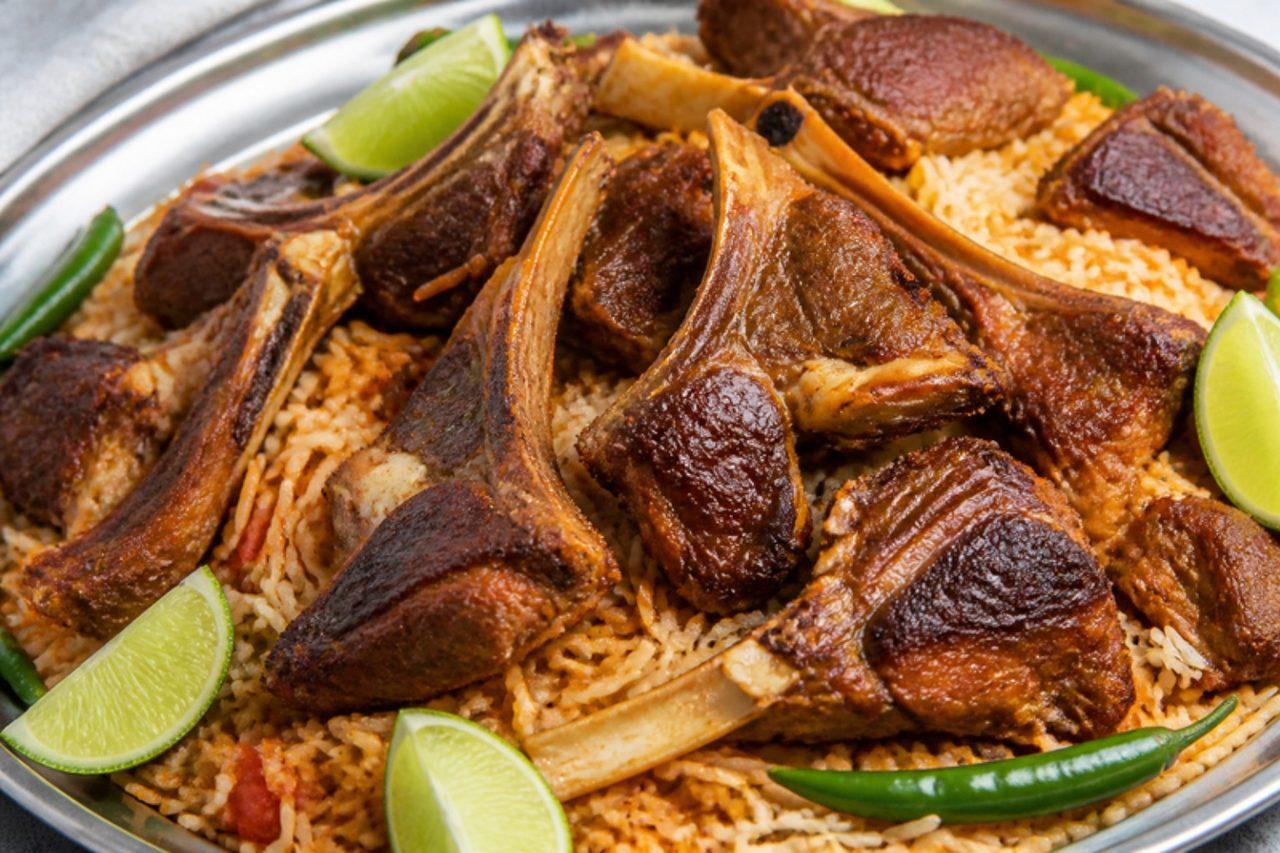
Goat is the festive meat of Somaliland, slaughtered for weddings, Eid and the arrival of guests, and hilib ari, goat on the bone cooked until it falls away, is the centrepiece of those meals. The meat is first simmered slowly with onion, garlic and xawaash, then the liquid is boiled away and the pieces are fried in their own fat until browned and crisp at the edges, so you get both tenderness and crunch. It is piled on a big platter of spiced rice with banana, lime wedges and green chilli sauce. Rushing the first stage is the mistake to avoid: goat stays chewy unless it simmers gently until a knife slides through. Chef's tip: ask the butcher for shoulder or leg cut into 5 cm pieces on the bone; the bones give the meat flavour and the leftover broth makes a good maraq.

125 minSomaliMeatGluten free
by KrazyBadal 0 views

Cambuulo (Somali adzuki beans with butter and sugar)

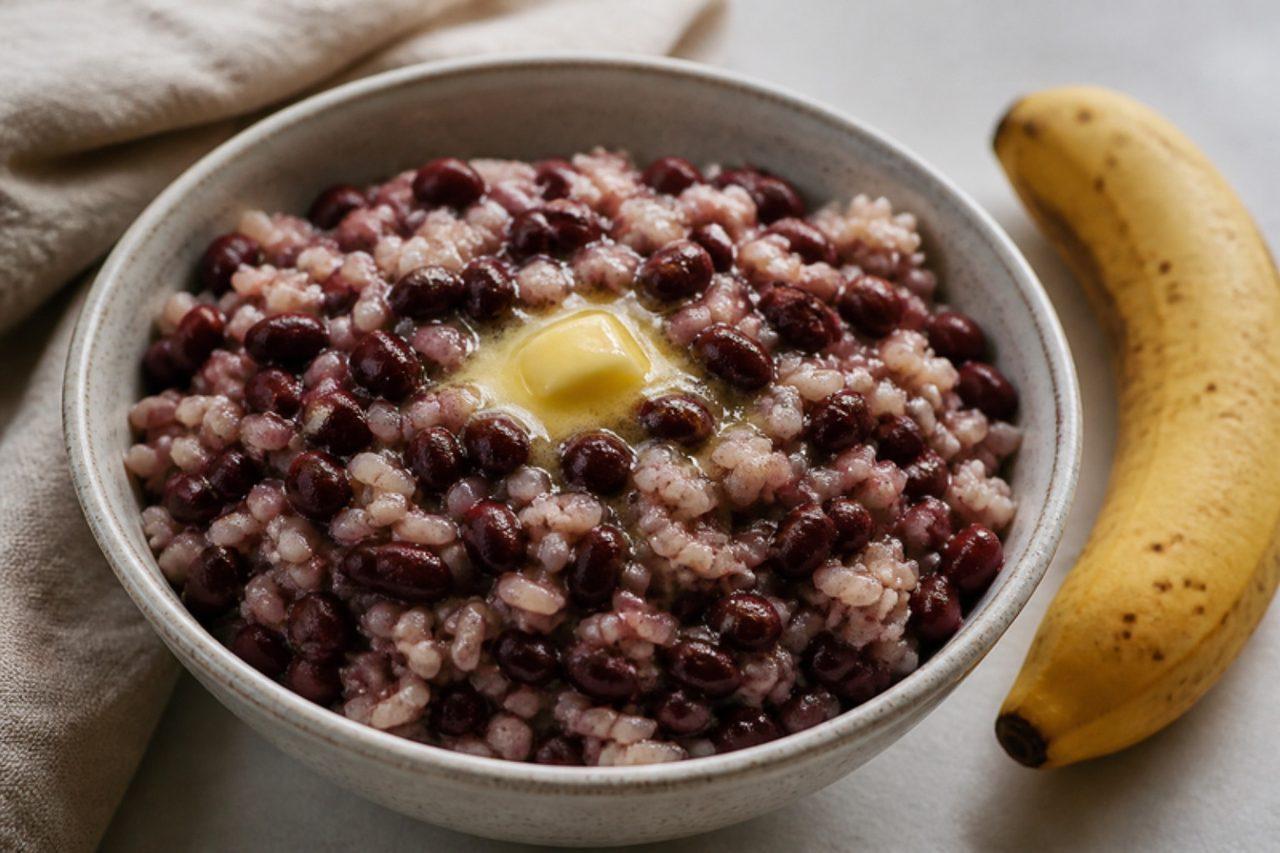
Small red adzuki beans, cooked slowly until they almost collapse, are the heart of cambuulo, a dish Mogadishu households make for a cheap, filling evening meal. Once the beans are soft they are glossed with butter, a spoonful of sugar and a pinch of salt, so the flavour lands somewhere between savoury and gently sweet. Many families stir the beans into plain rice or serve the two side by side, with a drizzle of sesame oil and a banana on the plate. The texture should be creamy, with some beans still whole. The usual mistake is pulling the pot off too early: firm beans never turn creamy, so keep simmering until one crushes easily against the side of the pan. Chef's tip: soak the beans overnight and change the water before cooking; they cook more evenly and are easier to digest.

by KrazyBadal 0 views

Muqmad (Somali spiced meat preserved in ghee)

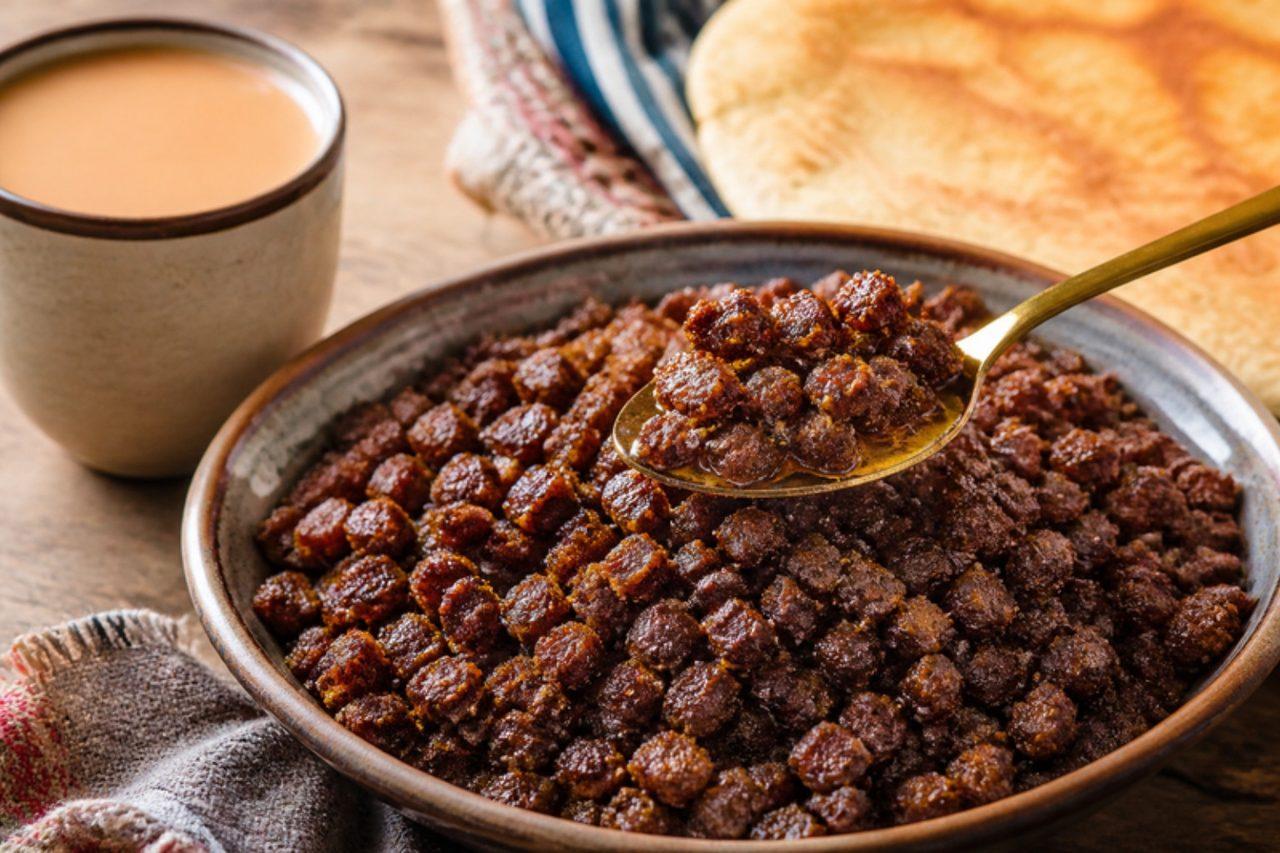
Before fridges, nomadic families in Somaliland preserved meat as muqmad, also called oodkac: beef or camel cut into tiny cubes, dried in the sun, fried in ghee with garlic and spices and packed into a container topped with more ghee. A spoonful is eaten for breakfast with sabaayad or canjeero and tea, and jars are made for Eid, weddings and travellers. Sun-drying raw meat is risky in a home kitchen, so this safer version cooks the cubes through to 71 °C first, then dries them in a low oven and keeps the finished jar in the fridge. The traditional raw-dried version is not for pregnant women, young children or anyone with a weakened immune system. Cutting the cubes unevenly is the common mistake: big pieces stay moist inside while small ones burn, so aim for 1 cm all round. Chef's tip: partly freeze the meat for 45 minutes and it cuts into neat cubes far more easily.

240 minSomaliMeatGluten free
by KrazyBadal 0 views

Hilib geel (Somali fried camel meat)

Camels are wealth in Somaliland, and their meat, lean and slightly sweet with a deep red colour, is a favourite in Hargeisa restaurants, where hilib geel is served fried with onion, garlic and xawaash alongside rice or sabaayad, banana and lime. Camel is a hard-working muscle, so it is first simmered until tender and then fried quickly in a hot pan until browned and fragrant. Halal butchers serving East African communities often sell it; if you cannot find it, beef chuck is the closest substitute and cooks the same way. Skipping the simmer and frying the raw meat straight away is the usual mistake, and it leaves the cubes tough as boots. Chef's tip: keep the simmering liquid; a ladle of it in the pan at the end makes a little glossy sauce for the rice.

85 minSomaliMeatGluten free
by KrazyBadal 0 views

Kalluun duban (Somali grilled whole fish)

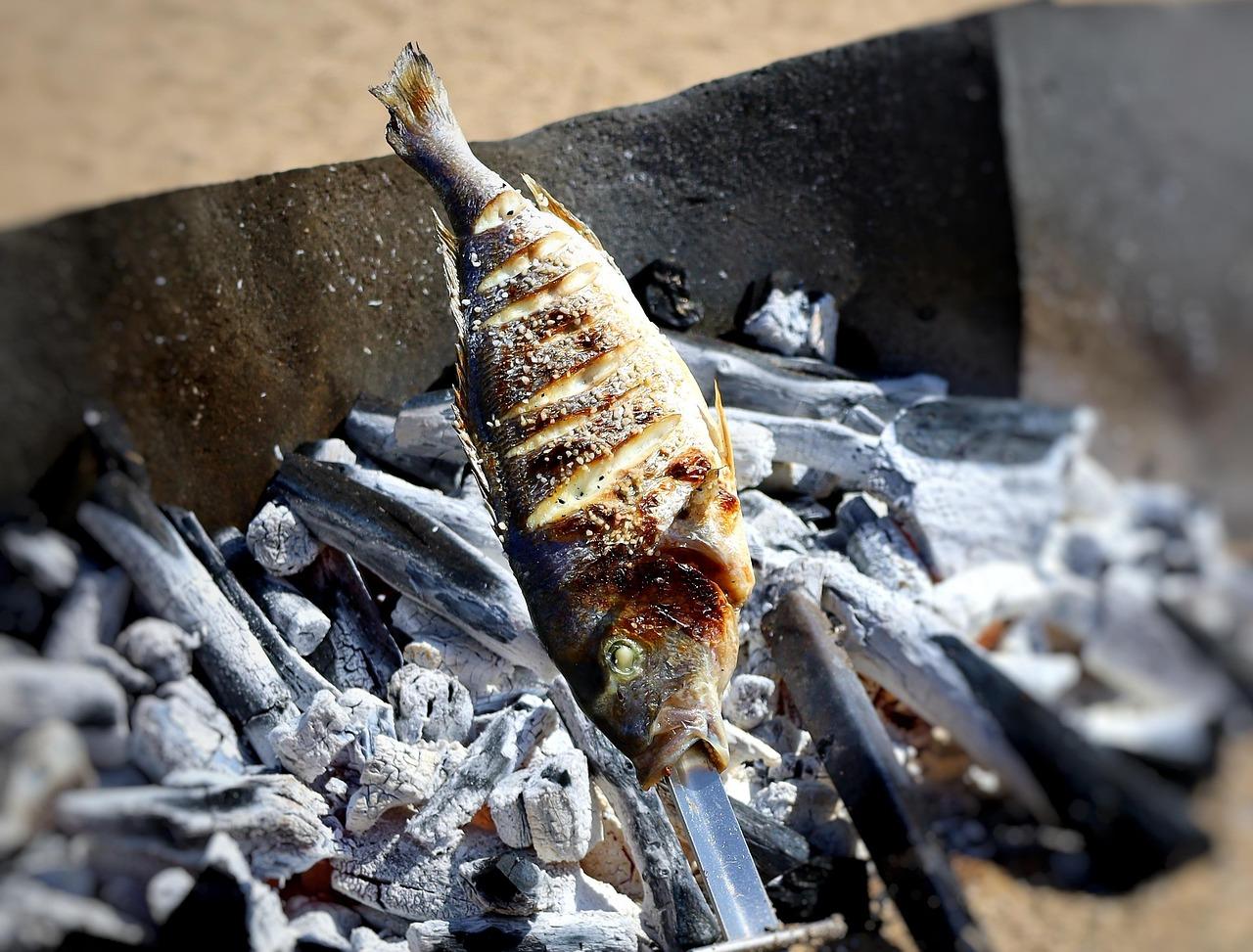
Seafront restaurants on Mogadishu's Lido beach are famous for kalluun duban, whole fish rubbed with a paste of garlic, lime, chilli and xawaash and grilled over charcoal until the skin blisters. Diners pick a fresh catch, often snapper, grouper or kingfish, and it comes to the table on a platter of spiced rice with lime, salad, banana and fiery basbaas. The flesh should be moist and smoky, tangy with lime. Marinating fish for hours in lime juice is a mistake: the acid starts to 'cook' it and the flesh turns mushy, so 20–30 minutes in the fridge is plenty. Chef's tip: slash the fish deeply down to the bone on both sides, so the marinade gets in and the thick part cooks as fast as the tail.

40 minSomaliFishGluten free
by KrazyBadal 0 views

Digaag qumbe (Somali chicken in coconut milk)

Coconut milk is the signature of the Benadir coast from Mogadishu south to Kismayo and Barawa, where the Swahili-speaking world meets Somali cooking, and digaag qumbe shows it off: chicken pieces simmered in a creamy coconut sauce with tomato, garlic, a hint of turmeric and xawaash. The sauce is mellow and gently spiced, coloured golden-orange, and generous enough to soak into rice, canjeero or sabaayad. Families make it for Friday lunch and to welcome guests. Boiling the sauce hard after the coconut milk goes in is the mistake to avoid, as it splits and turns oily; keep it at a gentle bubble. Chef's tip: brown the chicken well first, as the caramelised skin gives the mild sauce its savoury backbone.
by KrazyBadal 0 views

Malawax (Somali cardamom crepes)

Fragrant with cardamom and just sweet enough, malawax are the thin, soft pancakes Somali families make on weekend mornings and for guests, stacked high and eaten with honey, sugar or a smear of ghee beside a pot of shaah. They are thinner than canjeero and contain egg and milk, so they cook in a minute and stay tender rather than spongy. Children roll them up and eat them in their hands; adults tend to tear them and dip them in tea. The batter should be as thin as single cream, and the classic mistake is a pan that is not hot enough, which gives pale, rubbery crepes that stick. Chef's tip: let the batter rest for 10 minutes so the flour hydrates; the first crepe is always a tester, so adjust the heat after it.

by KrazyBadal 0 views

Kac kac (Somali fried dough cubes in cardamom sugar)

Jars of kac kac sit on the table at Somali weddings, Eid gatherings and afternoon tea across the country and in the diaspora, ready to be handed round by the fistful. The dough is enriched with egg and butter, cut into small cubes, fried until hard and golden, then tossed in hot cardamom syrup that dries to a frosty white crust. Each piece cracks loudly when bitten, which is how it got its name. Undercooking the syrup is the usual problem: it stays sticky instead of turning to a dry, sugary coat, so boil it until it forms a thread and keep stirring the cubes as it cools. Chef's tip: cut the cubes no bigger than 1.5 cm; small pieces fry right through and stay crunchy for weeks in an airtight jar.

by KrazyBadal 0 views

Doolsho (Somali cardamom sponge cake)

Ask a Somali host what goes with afternoon shaah and doolsho will be near the top of the list: a plain, airy sponge flavoured with cardamom and sometimes a little vanilla, baked in a tray and cut into generous squares. It turns up at Eid visits, weddings and family get-togethers, and is just as welcome at breakfast. The crumb should be fine and springy, never dense, which comes from whisking the eggs and sugar for a long time. Knocking the air out when the flour goes in is the mistake that ruins it; fold gently with a large spoon, in three goes, and stop as soon as no dry flour shows. Chef's tip: use eggs at room temperature; cold eggs never whip to the thick, pale ribbon that holds the cake up.

by KrazyBadal 0 views

Shushumow (Somali syrup-soaked rolled pastries)

Trays of shushumow appear for Eid across Somalia and in Somali homes abroad, made by the dozen a day or two ahead so there is plenty for visitors. A soft, buttery dough is rolled very thin, rolled up like a cigar, sliced and pressed so the layers show, then fried until crisp and soaked briefly in cardamom syrup. The result is flaky and crunchy at the edges with a sticky, sweet centre that is perfect with black tea. Soaking for too long is the usual error; a quick dip of a few seconds keeps the crunch, while minutes in the syrup leaves them soggy. Chef's tip: have the syrup warm and the pastries hot from the oil when they meet, so the syrup soaks in evenly without making them heavy.

by KrazyBadal 0 views

Sabaayad (Somali flaky layered flatbread)

Hargeisa cooks are proud of their sabaayad, a soft, flaky flatbread made by brushing a thin sheet of dough with oil or ghee, rolling it into a coil and flattening it again so it cooks into dozens of buttery layers. It is eaten for breakfast with sugar and shaah, torn into pieces with muqmad or liver, and served at lunch with beef or chicken stews; at Eid and weddings it is made in big stacks. The texture should be tender and pliable with crisp spots, never dry. Rolling the dough straight after kneading is a common mistake: it springs back and tears, so give it at least 20 minutes to relax. Chef's tip: once each bread is cooked, scrunch it between your hands while hot to open up the layers.

by KrazyBadal 0 views

Kimis (Somali thick pan bread)

Thicker and plainer than sabaayad, kimis is the everyday bread of Hargeisa and the north, cooked in a heavy pan and cut into wedges to soak up maraq, the thin spiced meat or vegetable broths eaten at lunch. The dough is simple flour and water raised with a little baking powder, so it puffs into a soft, bready round about 2 cm thick with a lightly freckled crust. It is also good for breakfast with tea and a spoonful of sugar or honey. This version uses oil, so it is vegan. Cooking over too high a heat is the classic mistake: the outside scorches before the middle is done, so keep the flame medium-low and cover the pan. Chef's tip: knock the bread on its base when you think it is ready; it should sound hollow.

by KrazyBadal 0 views

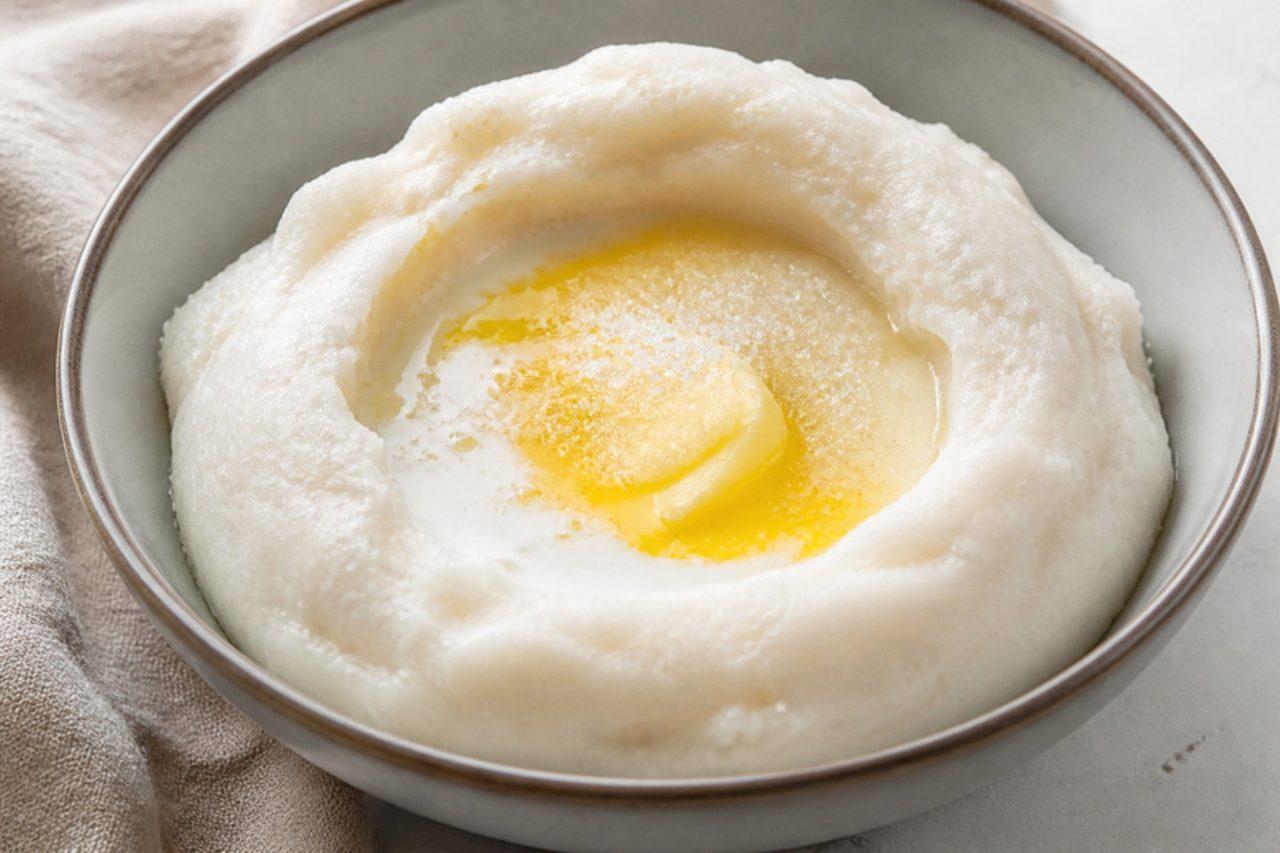
Soor (Somali maize porridge with butter and milk)

Herding families in Somaliland and the countryside around Hargeisa have long relied on soor, a thick porridge of maize meal stirred until it holds its shape on a plate. It is shaped into a mound, a well is pressed into the centre and filled with melted butter or ghee, then warm milk and a little sugar are poured round the edge; on other days the well is filled with a meat sauce instead. You eat it with your right hand or a spoon, scooping porridge through the butter. The result is mild, sweet and very filling. Lumps are the usual complaint, and they come from tipping the meal in all at once; mix part of it with cold water first, then rain the rest in while stirring. The usual mistake is adding the maize meal too fast, so it goes lumpy; whisk constantly as you pour. Chef's tip: cover the pan and let the porridge steam for 5 minutes at the end to cook out any raw taste.

by KrazyBadal 0 views

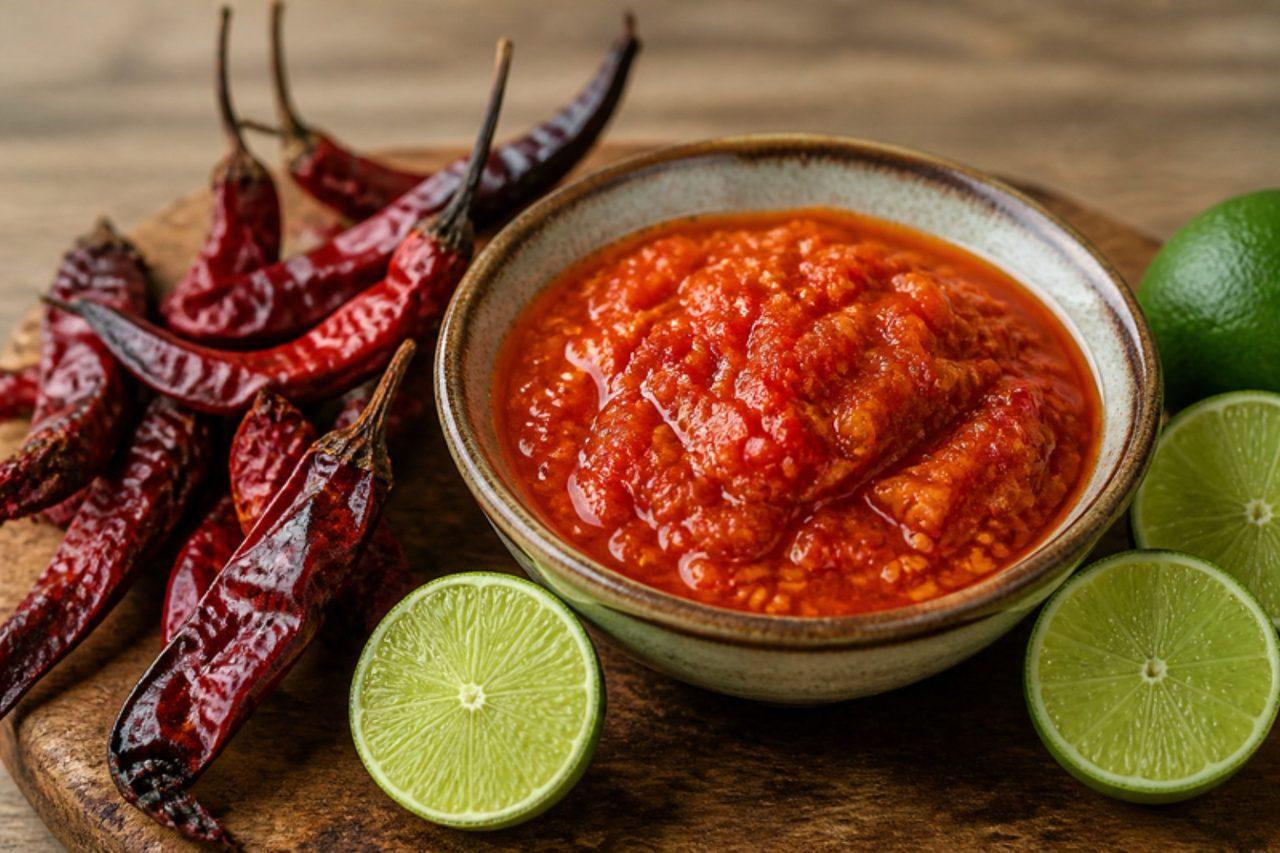
Sudanese shata (dried chilli, garlic and lime sauce)

No Sudanese meal is complete without a little dish of shata on the side, and every household and roadside grill from Port Sudan to Nyala has its own version. This one is the classic everyday type: dried red chillies soaked soft and pounded with raw garlic, salt and plenty of lime juice into a loose, brick-red sauce that is fiery, sour and garlicky all at once. A spoonful goes over ful, fried fish, grilled meat, salads and stews. Wear gloves when handling the chillies, and do not rub your eyes. Using the soaking water in place of fresh water is a mistake, as it can taste bitter and dusty; drain it off. Chef's tip: make it a few hours ahead and keep it in the fridge; the heat settles and the garlic mellows.

by KrazyBadal 0 views

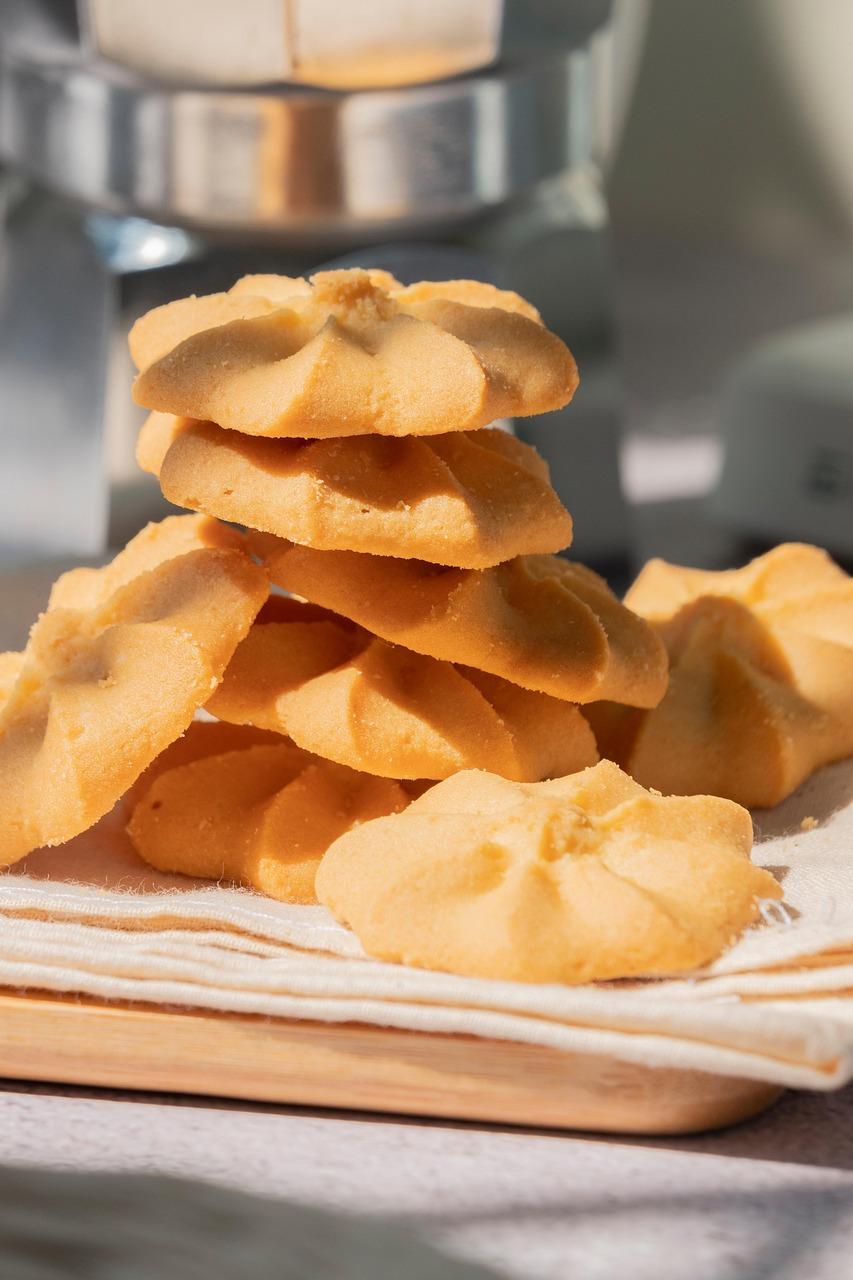
Bitifoor (Sudanese Eid butter biscuits)

During the last days of Ramadan, Khartoum neighbourhoods smell of butter and vanilla as women bake bitifoor, the piped biscuits whose name comes from the French petit four, for the Eid visits that follow. They are piped into rosettes, fingers and swirls, sometimes topped with a piece of glacé cherry or dipped in chocolate, and arranged on platters with ka'ak and sweets for guests. The texture is melt-in-the-mouth, short and delicate. Over-soft butter is the classic mistake, giving biscuits that spread into flat puddles; use butter soft enough to dent, not oily, and chill the piped trays for 15 minutes. Chef's tip: a little cornflour in the flour keeps them extra tender and crisp.

by KrazyBadal 0 views

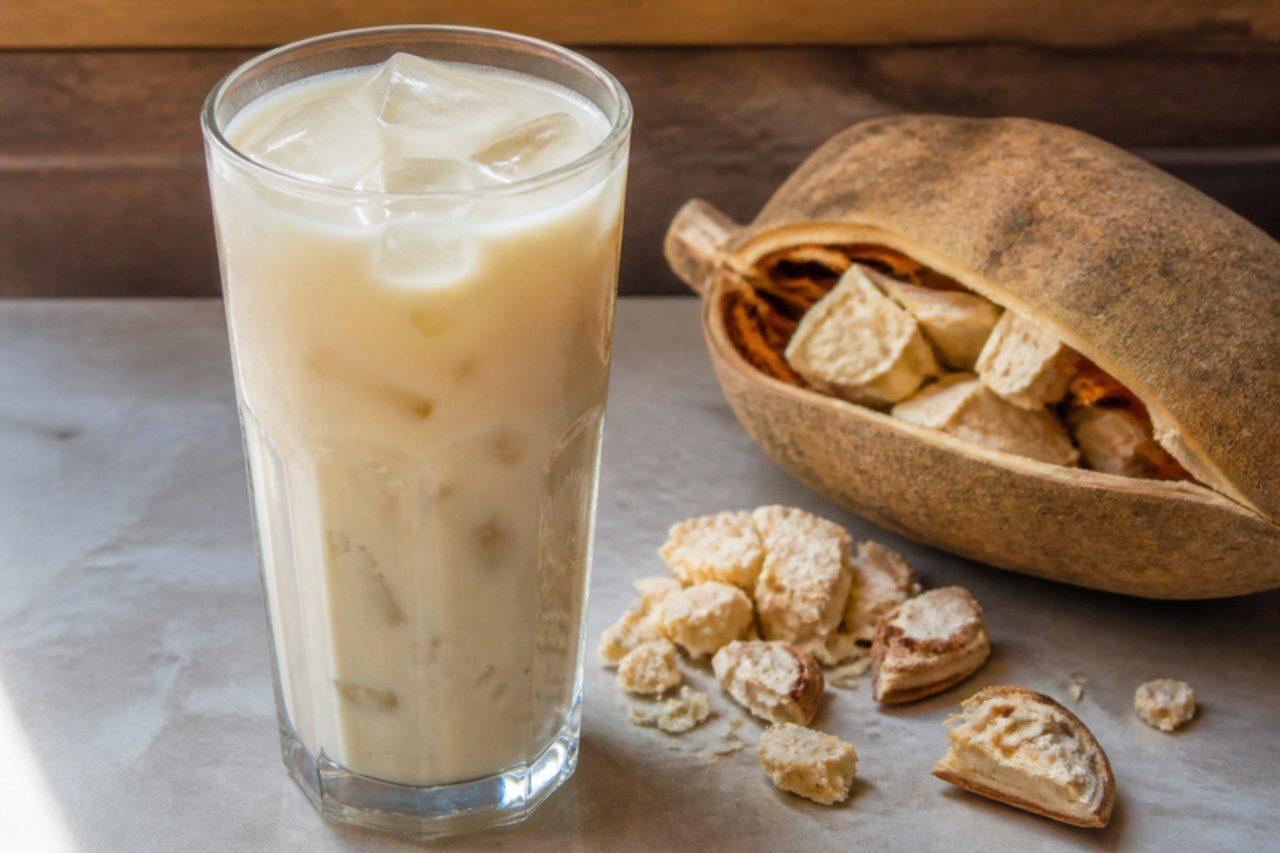
Tabaldi (Sudanese baobab drink)

The great baobab trees of Kordofan and Darfur drop hard pods full of chalky, cream-coloured pulp, and Sudanese cooks soak it in water to make tabaldi, a thick, milky-looking drink with a sherbet-like tang. It is sold from big cool-boxes in Khartoum markets in summer, served at weddings, and appears on the iftar table during Ramadan. Fresh pulp pieces with seeds are sold in African and Middle Eastern shops; baobab powder is a good substitute and needs no straining. Leave the drink to soak for an hour in the fridge before straining (soaking time is not counted in the total). The usual mistake is blending the seeds, which makes the drink bitter; rub the pulp off by hand instead. Chef's tip: a few drops of rose water or a pinch of ground cardamom makes it feel festive.

by KrazyBadal 0 views

Guddaim (Sudanese grewia berry drink)

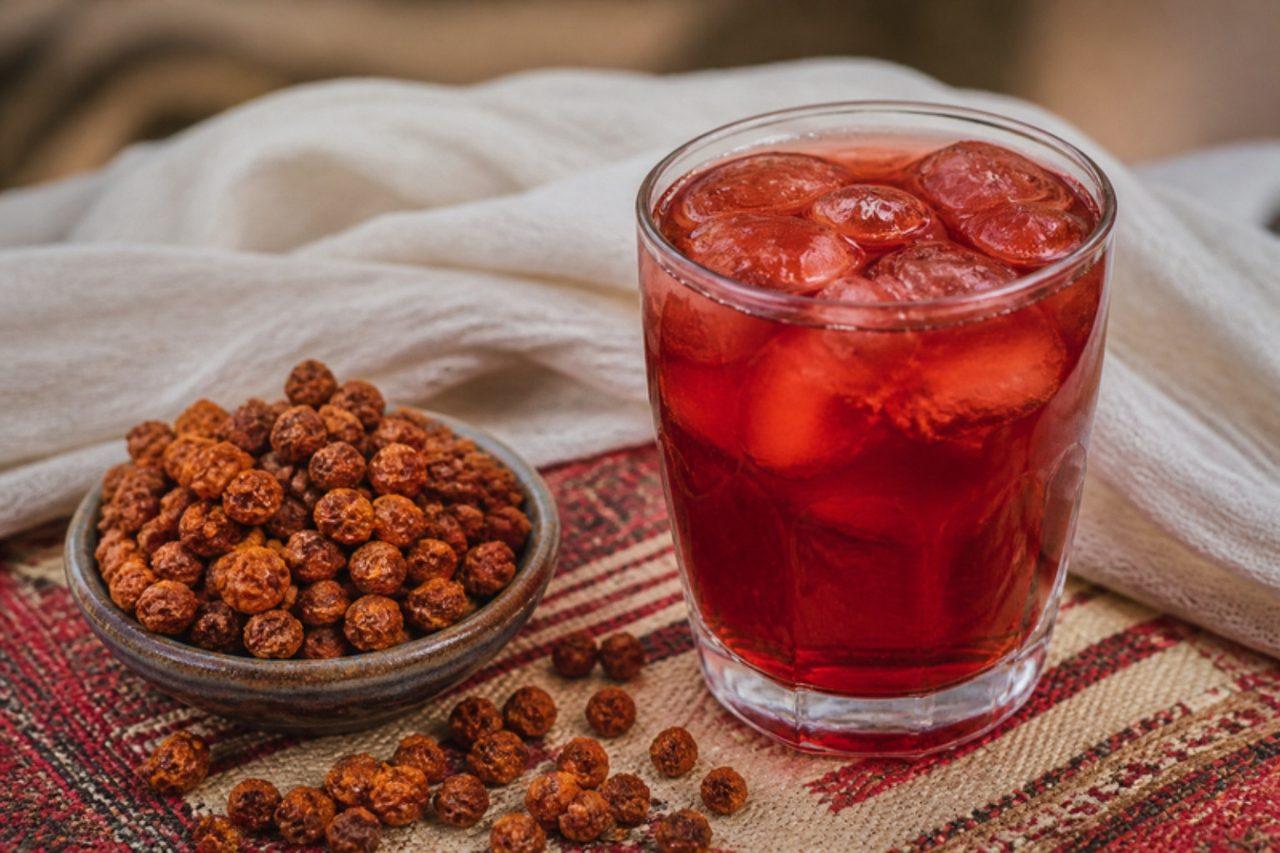
Small, round guddaim berries, the fruit of a wild grewia shrub that grows across Kordofan and Darfur, are dried and sold by the cupful in Sudanese markets. Soaked in water and rubbed off their stones, they give a cloudy reddish-brown drink that tastes a little like dates and sour cherries, with a pleasantly sharp finish. It is drunk ice-cold in the heat of the day, at iftar and to welcome guests. Look for dried guddaim in Sudanese or East African shops. If you cannot find it, a mix of 150 g pitted dates and 50 g tamarind pulp soaked the same way gives a similar sweet-sour drink, though not the same. Rubbing too hard and breaking the stones is the usual mistake, as it clouds the drink with grit; rub gently. Chef's tip: soak the berries in cool water overnight in the fridge for the fullest flavour.

by KrazyBadal 0 views

Aradeib (Sudanese tamarind drink)

Tamarind trees shade villages throughout Darfur and Kordofan, and their sticky brown pods become aradeib, one of the best-loved Sudanese cold drinks. The pulp is soaked, rubbed and strained, then sweetened to make a deep amber, puckeringly sour drink that cuts through rich food and is much loved at iftar through Ramadan. It is also drunk as a home remedy for upset stomachs and heat. Seedy block tamarind from any Asian or African shop works perfectly. Pouring boiling water straight onto the pulp and leaving it too long draws out a harsh, tannic edge, so use hot rather than boiling water and strain after an hour. Avoid squeezing the soaked tamarind through a cloth too hard; fibres get through and make the drink cloudy and gritty. Chef's tip: make a concentrate and keep it in the fridge for up to a week; dilute with cold water by the glass.

by KrazyBadal 0 views

Madeeda (Sudanese warm millet and milk drink)

Thick enough to sip slowly from a glass but thinner than porridge, madeeda is a warming drink from northern Sudan made by cooking flour, often pearl millet, in milk and sweetening it with sugar or dates. Families make it on cool winter mornings, for anyone feeling under the weather and for new mothers, and it is a gentle way to break the fast in Ramadan. This version uses millet flour with cardamom and a little cinnamon, so it is smooth, nutty and lightly spiced. Lumps are the usual problem: whisk the flour into cold milk before it goes onto the heat. A frequent slip is not stirring enough, so the millet catches and the milk scorches. Chef's tip: for a date version, blitz 6 soft pitted dates with the milk and halve the sugar.

by KrazyBadal 0 views

Hilu-mur (Sudanese spiced sorghum Ramadan drink)

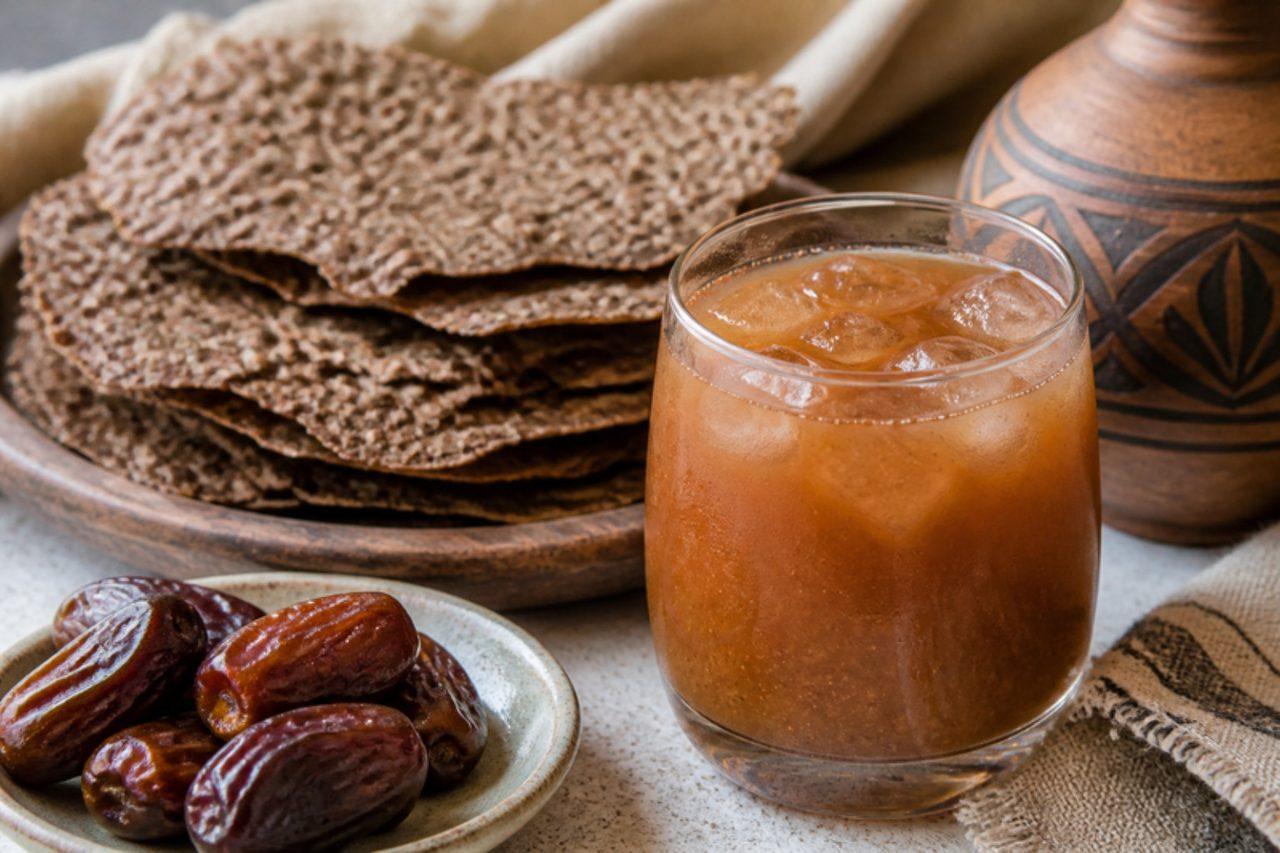
Weeks before Ramadan, households across Sudan fill with the smell of hilu-mur, literally 'sweet-bitter', as sorghum is sprouted, dried, ground and mixed with flour, dates and a heady spice blend, left to sour for a day, then spread paper-thin on a hot griddle into brittle reddish-brown flakes. Each evening during the month a handful is soaked in water, strained and sweetened, giving the dark, tangy, clove-and-ginger-scented drink that breaks the fast. The souring is short, like a sourdough, and the flakes are cooked dry; the drink is non-alcoholic and served to the whole family. The full process takes about 5 days: 3 days to sprout, 1 to dry and a night to sour, so only active and cooking time are in the totals. Many people buy ready-made flakes from Sudanese shops. Discard any grain that smells musty or shows mould while sprouting. The usual mistake is pouring the batter too thick on the griddle; the flakes should be paper-thin to dry crisp. Chef's tip: spread the batter as thinly as you can; thick flakes stay chewy and go mouldy in storage.

by KrazyBadal 0 views

Abreh (Sudanese white sorghum flake drink)

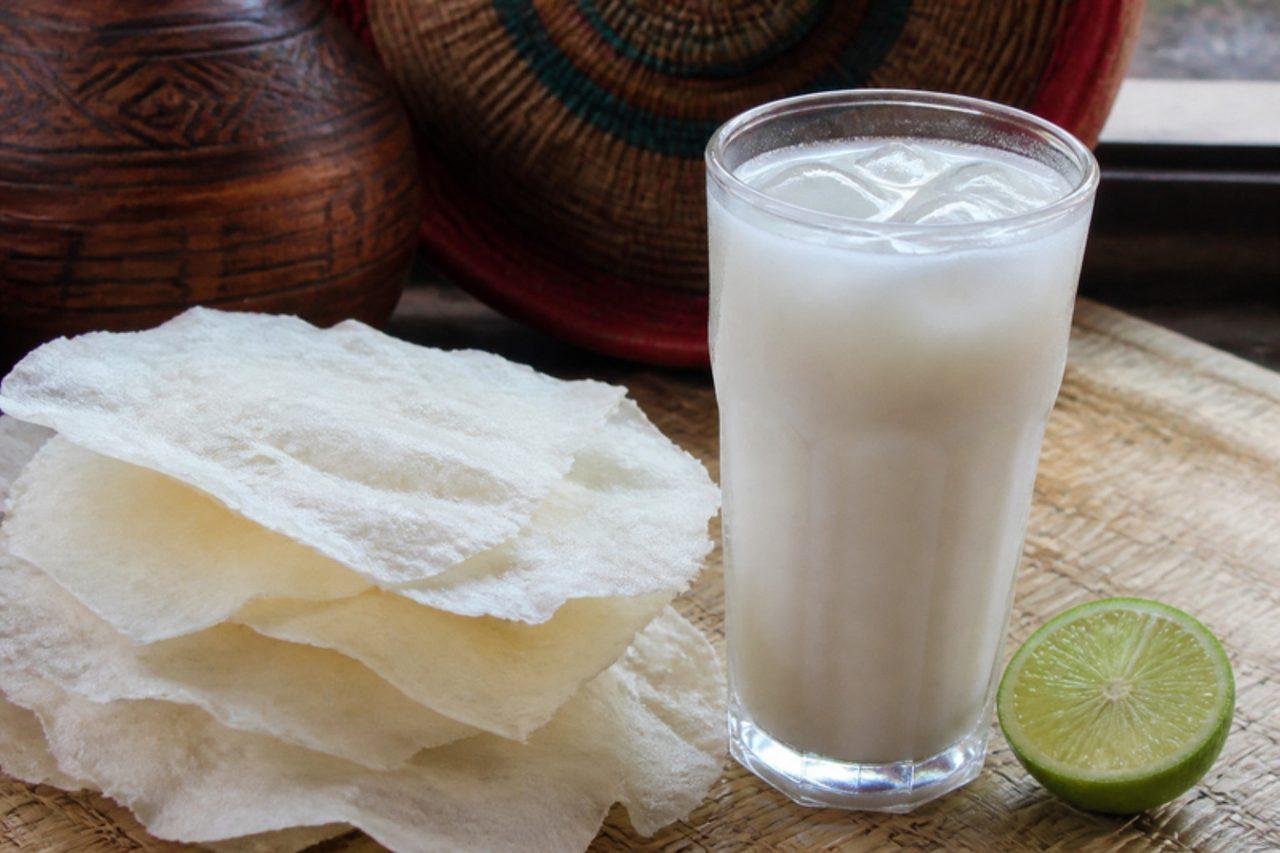
Where hilu-mur is dark and spiced, abreh abyad, white abreh, is its pale, gentle partner: a batter of white sorghum flour is left to sour lightly, then baked into thin cream-coloured flakes that are soaked in cold, sweetened water and served at iftar across northern Sudan. The drink is cloudy, refreshing and faintly tangy, a good way to rehydrate after a long day of fasting; some families add a splash of lime or a little cardamom. The overnight souring takes 12–18 hours and is not counted in the totals; it is non-alcoholic, and the flakes are dried hard on the griddle. Spreading the batter too thickly is the classic mistake, so work fast and thin. Chef's tip: make a big batch in one session; the dry flakes keep for months in a tin, so a jug of abreh is only an hour away.

by KrazyBadal 0 views

Dama (Sudanese beef and tomato stew)

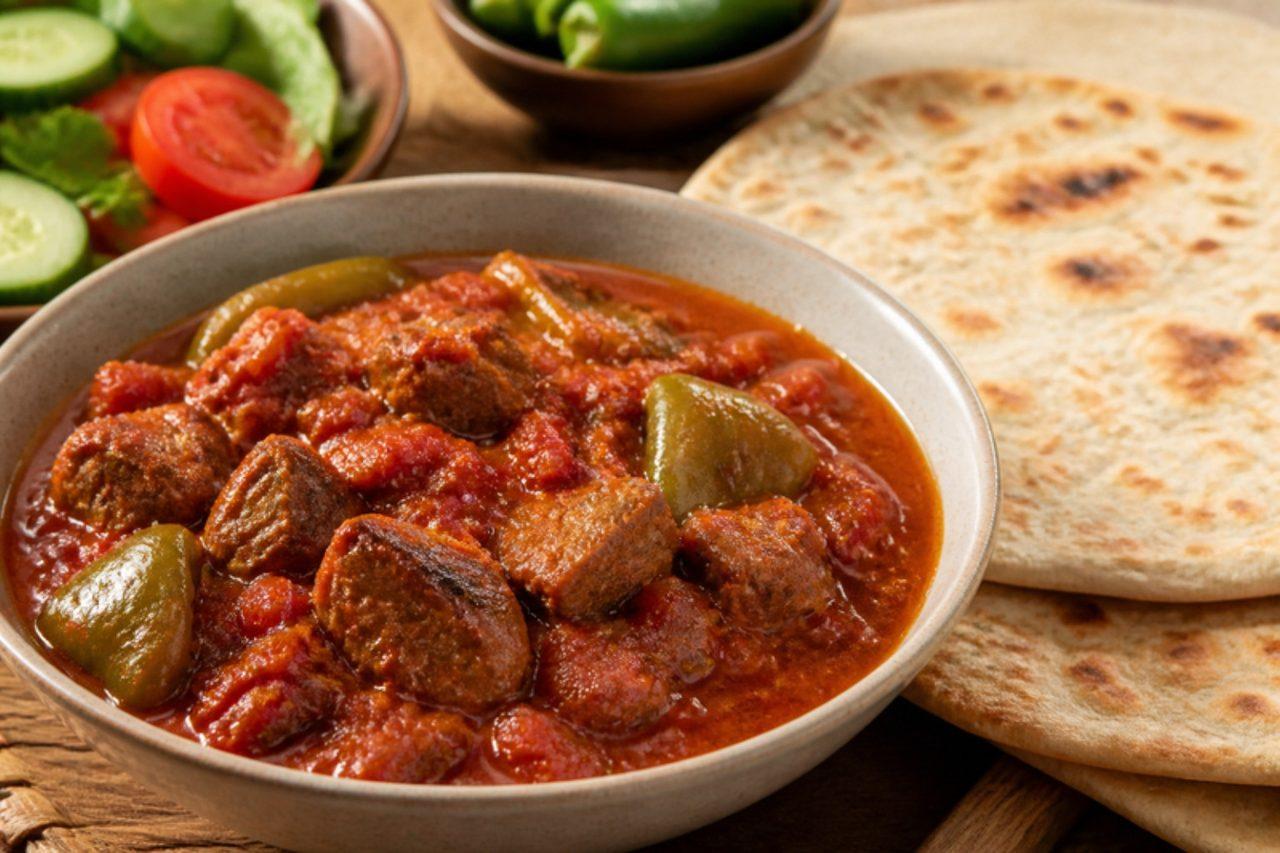
Thick, red and full of garlic, dama is the tomato stew that Khartoum families make for weekday lunches and that restaurants serve in shiny steel bowls with gurasa, the soft, thick Sudanese pancake, or with bread and rice. Beef is browned, then simmered with a generous amount of onion, fresh tomato, tomato paste and gentle warm spices, cardamom and a little cinnamon, until the sauce is rich enough to cling to every piece. The meat ends up spoon-tender. Adding all the liquid at once is the common mistake; it gives a thin, watery sauce, so add water little by little as the stew needs it. Chef's tip: grate the onions rather than chopping them, so they melt into the sauce and thicken it without flour.

105 minSudaneseMeatGluten free
by KrazyBadal 0 views

Sudanese shorba (lamb and peanut Ramadan soup)

Every evening during Ramadan, Khartoum tables are set with dates, juices and a big pot of shorba, a lamb broth full of carrots, potato and onion made creamy with peanut butter and sharpened with lime. It is the first thing many families eat after the dates, warm and gentle on an empty stomach, and it is made in quantity to share with neighbours. The soup is savoury, nutty and lightly spiced, thick enough to coat a spoon. Adding peanut butter straight into the pot is a mistake, as it clumps; whisk it smooth with hot broth first. Chef's tip: skim the broth carefully in the first 10 minutes for a clean taste, and finish with lime just before serving.

by KrazyBadal 0 views

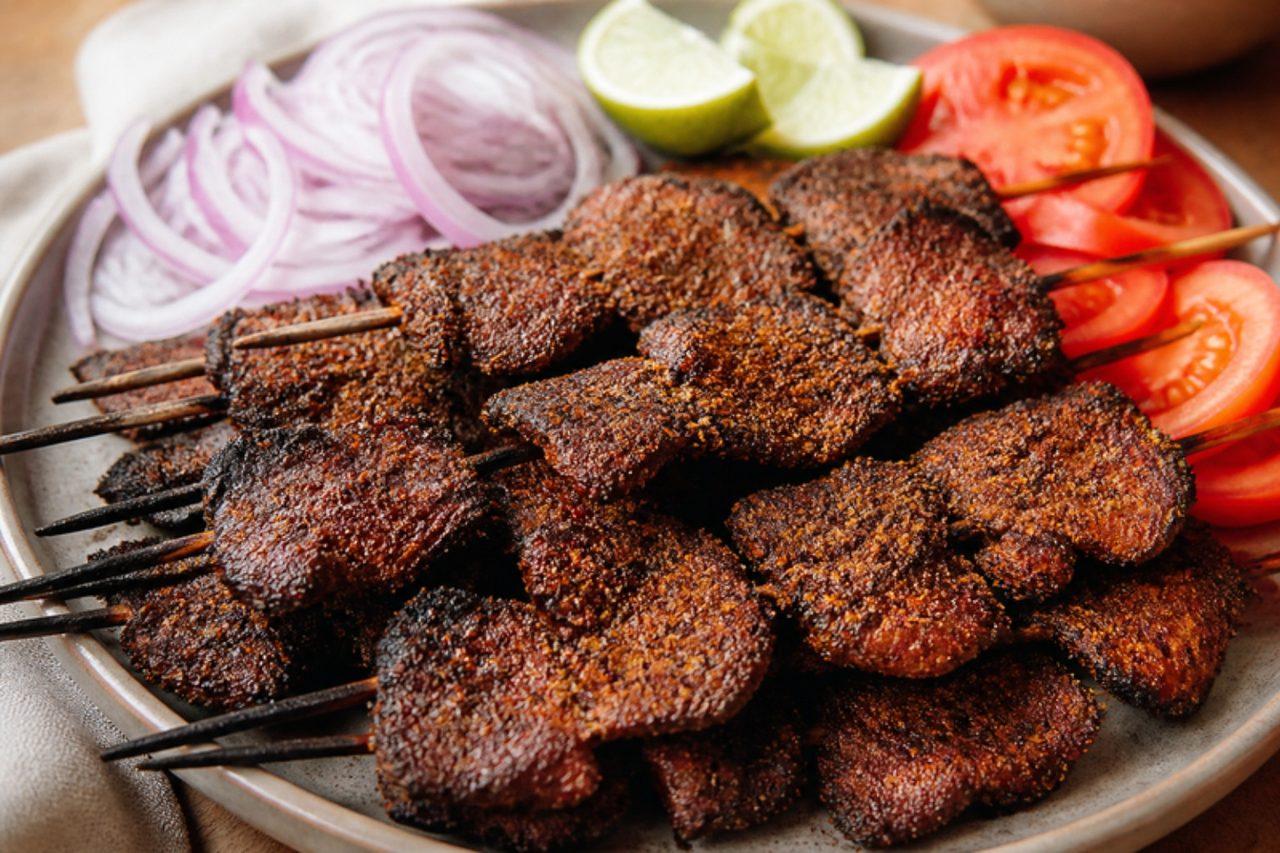
Agashe (Sudanese peanut-crusted beef skewers)

On Khartoum evenings the smoke from agashe grills drifts across the streets: thin slices of beef threaded onto sticks, coated in a dry rub of ground roasted peanuts, ginger, chilli and garlic, and grilled fast over charcoal until crusty and fragrant. The style came to Sudan with West African communities and is close cousin to Nigerian suya, but it has become a Khartoum favourite in its own right, served with sliced onion, tomato, lime and a sprinkle of extra spice. Slicing the beef too thick is the usual error, because the crust burns before the inside is done; aim for 5 mm. Marinate in the fridge, never on the counter. Chef's tip: dust the skewers with a second coat of peanut mix halfway through grilling for the best crust.

by KrazyBadal 0 views

Mullah kawal (Darfur fermented-leaf stew)

Kawal is one of Darfur's great pantry secrets: the leaves of a wild legume that grows among the sorghum are pounded, fermented in a buried pot for a couple of weeks and dried into dark little balls with a smell as strong as blue cheese. Crumbled into a stew of fried onion, dried meat and tomato and thickened with okra powder, it gives a deep, savoury, almost meaty flavour that people in Darfur and Kordofan crave, and the stew is eaten with aseeda or kisra. Kawal is very hard to find outside Sudan; fermented locust beans (dawadawa or iru) from West African shops are the closest substitute, or use mashed fermented black beans. Too much kawal is the beginner's mistake; start with a little and taste. Chef's tip: soak the kawal in warm water for 10 minutes and mash it before it goes in, so it dissolves evenly.

by KrazyBadal 0 views

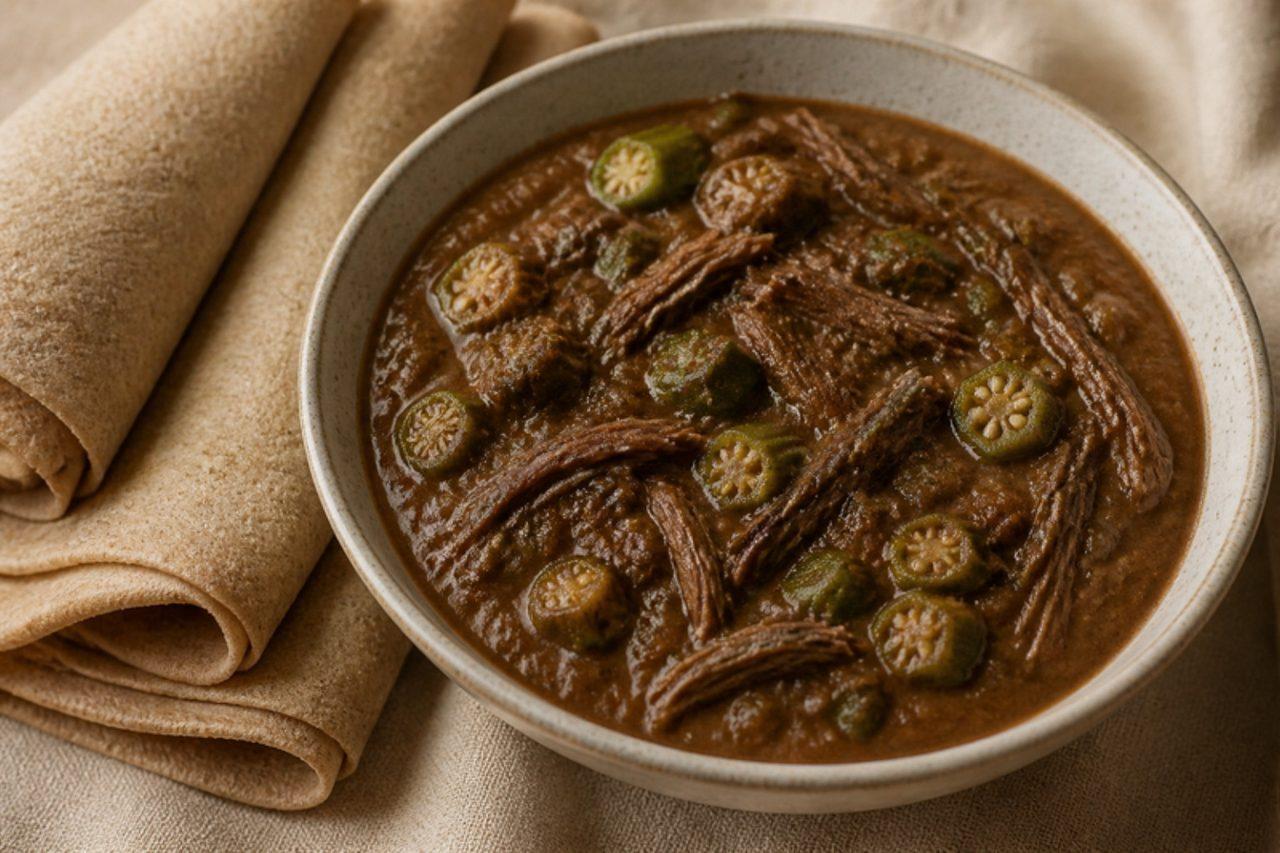
Mullah tagalia (Sudanese dried-meat and okra stew)

Tagalia is the stew northern Sudanese families turn to for everyday lunches and when guests arrive unannounced, because it is made almost entirely from the store cupboard: pounded sharmout, dried okra powder called weika and a mountain of onions fried slowly until dark. Unlike mullah bamia, which uses fresh okra, it is smooth, thick and dark brown, with a rich, savoury, slightly smoky taste, and it is scooped up with kisra or aseeda from one shared bowl. Cooks in Nubia and along the Nile say good tagalia is all in the onion. Dumping the weika in at once is the classic mistake, and it sets into slimy lumps; sprinkle it slowly while whisking. Chef's tip: keep frying the onions until they are a deep chestnut colour but never black; burnt onion makes the whole pot bitter.

by KrazyBadal 0 views

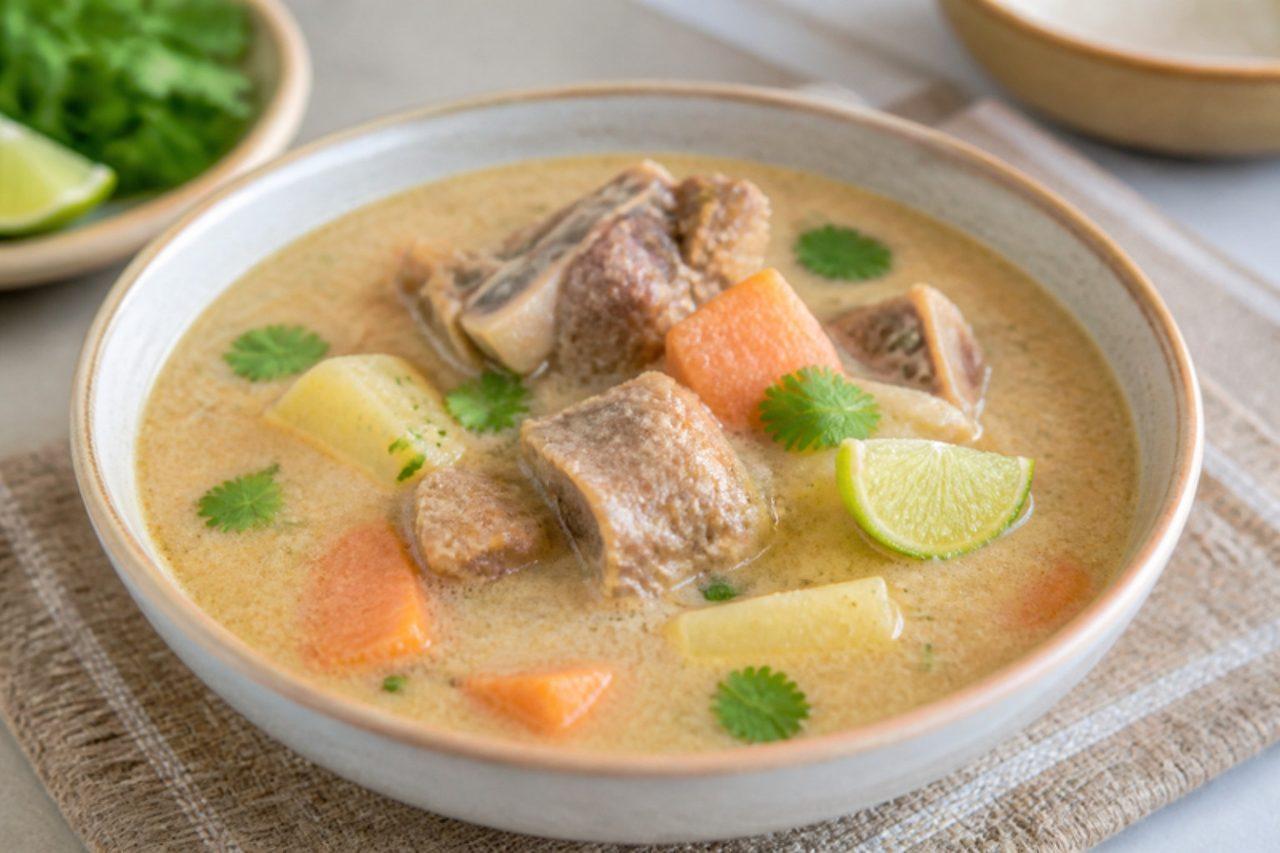
Kawari (Sudanese trotter soup)

Small restaurants in Khartoum's markets open early to sell bowls of kawari, a soup of cow's or sheep's trotters cooked for hours until the meat and gelatinous skin slip off the bone and the broth turns rich and sticky. It is seasoned simply with onion, garlic, cardamom and black pepper and then brightened at the table with lime, chilli and raw garlic, and it is eaten with bread, especially on cold mornings and as a reviving breakfast. The flavour is deep and meaty, the texture silky. Skipping the first blanch is the usual mistake: it leaves the soup murky and smelling of the farmyard. Buy trotters already cleaned and cut by the butcher, and scrape off any remaining hair. Chef's tip: a pressure cooker cuts the simmering to about 1½ hours.

by KrazyBadal 0 views

Kamounia (Sudanese cumin offal stew)

Named after kammoun, cumin, this Sudanese stew of lamb offal is a Khartoum favourite after Eid al-Adha, when every household has fresh heart, kidneys and liver from the sacrifice, and it is also sold in restaurants for breakfast and lunch. The meat is cooked with lots of onion, garlic, tomato and a heavy hand of cumin until the sauce is thick and dark and smells wonderful. It is eaten with bread or kisra and a squeeze of lime. Putting the liver in with the heart is the classic mistake: liver turns grainy and dry when overcooked, so add it only in the last 10 minutes. Chef's tip: toast whole cumin seeds in a dry pan and grind them yourself; the flavour is twice as strong.

by KrazyBadal 0 views

Sharmout (Sudanese dried beef, oven method)

Across Darfur and Kordofan, and in kitchens throughout Sudan around Eid al-Adha, strips of lean beef are salted and hung to dry in the hot, dry air for several days until they turn hard and dark. That sharmout is then pounded and fried with onion to give tagalia, kawal and other stews their rich, savoury depth. Air-drying raw meat at home is risky, so this safer version heats the strips to 71 °C first and then dries them slowly in a low oven, and the finished sharmout is kept in the fridge. The traditional raw air-dried version is not for pregnant women, young children or anyone with a weakened immune system. Leaving fat on the strips is the usual mistake: fat does not dry and turns rancid, so trim every bit. Chef's tip: partly freeze the beef so you can slice it into even 5 mm strips along the grain.

by KrazyBadal 0 views

Seven-layer tea

Visitors to the tea gardens of Srimangal, in Sylhet's Moulvibazar district, queue at small tea cabins to see a glass of tea striped in seven distinct bands, from creamy white at the bottom to pale green-gold at the top. The original recipe is a closely guarded secret of the tea-maker who made it famous, but the principle is simple physics: each layer carries a different amount of sugar, so the heaviest sits at the bottom and the lightest floats on top. This home version uses condensed milk, green tea, strong black tea, milk tea, lemon tea, spiced tea and plain tea, and it is drunk slowly, layer by layer, with a long spoon. Pouring too fast is what ruins it; each layer should trickle down the inside of the glass over the back of a spoon. Chef's tip: let all the brews cool to warm, about 50 °C, so temperature differences don't stir the layers.

by KrazyBadal 0 views

Arayeche (almond star pastries)

Picture a star with three plump arms: arayeche are shaped from a ball of orange-blossom almond paste wrapped in very thin pastry and pinched into points, baked pale, dipped in honey and then rolled in icing sugar until snow-white. Along with dziriettes and makrout, they are fixtures of the sweet trays at weddings and Eid in Algiers, set out in paper cases with mint tea. The pastry is crisp and fine, the almond filling dense and fragrant, and the coating of sugar sticks to the honey in a sweet crust. Chef's tip: pull them out of the oven while still pale with barely golden tips; browned arayeche are a common mistake and taste dry once the sugar goes on.

by KrazyBadal 0 views

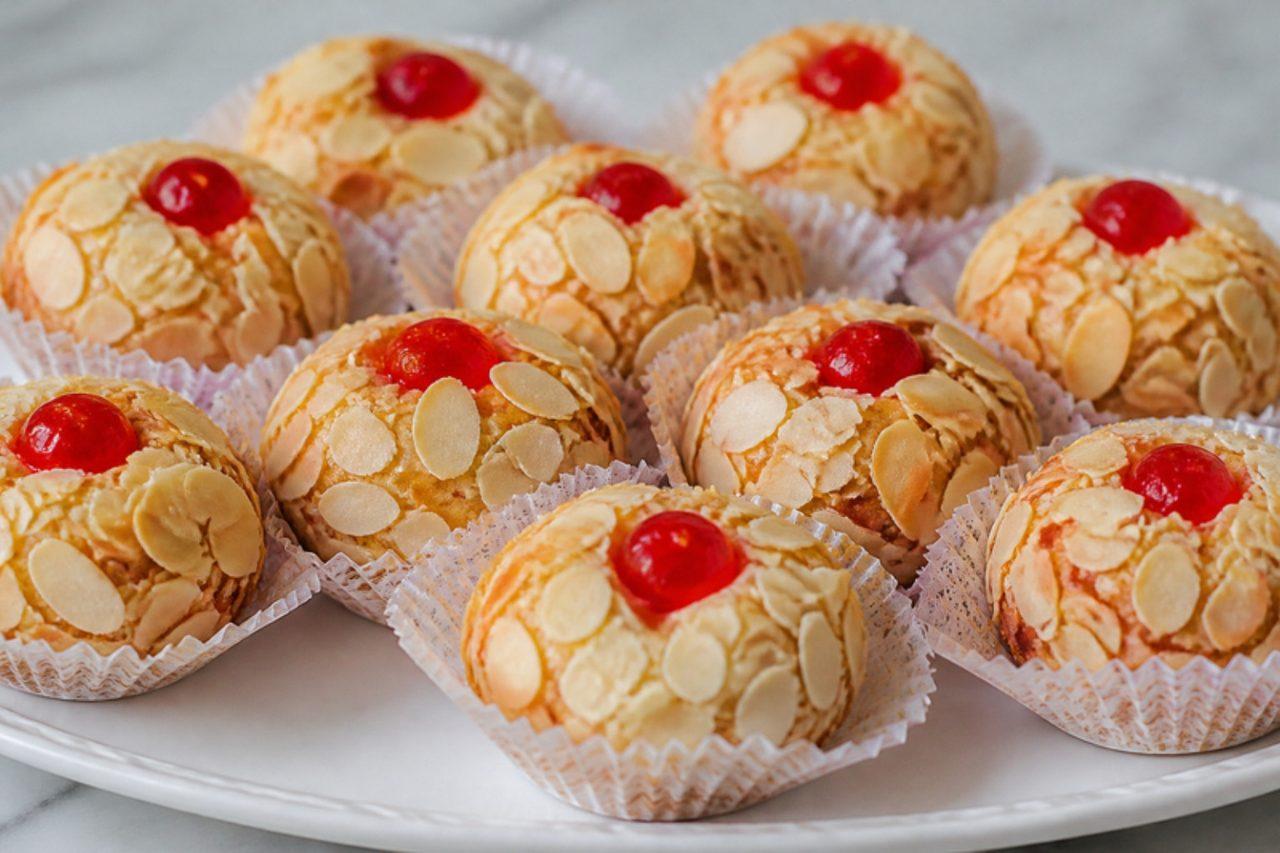
Mchewek (almond cookies)

Mchewek means something like 'prickly', which is exactly how these cookies look: balls of almond paste rolled in flaked almonds so the flakes stick out like spines, each topped with half a candied cherry and baked only until the tips turn gold. Inside they stay soft and chewy, like a rustic macaroon. Being made with no flour, they suit anyone avoiding gluten, and they appear on Eid and wedding trays all over Algeria, often brushed with a little honey syrup for shine. Chef's tip: take them out when the edges are just golden and the centres still feel soft; overbaking is the classic mistake and leaves them dry and crumbly once cool.

by KrazyBadal 0 views

Jamaican roast corn

Drive the road over Mount Diablo or past Faith's Pen and you will see vendors fanning half-drums of glowing coal, with corn cobs turning slowly until the kernels are charred, chewy and smoky. Jamaican roast corn is drier and nuttier than boiled corn, closer to a snack to gnaw on the move, sometimes rubbed with salted butter and sometimes eaten plain with a cup of hot "fish tea" soup. The most common mistake is roasting over flames rather than embers, which blackens the outside before the inside cooks. Starchy, slightly mature cobs are traditional; very sweet corn burns faster, so keep it moving. Chef's tip: pull off the husks before roasting, as the vendors do, so the kernels char directly and pick up all the smoke.

by KrazyBadal 0 views

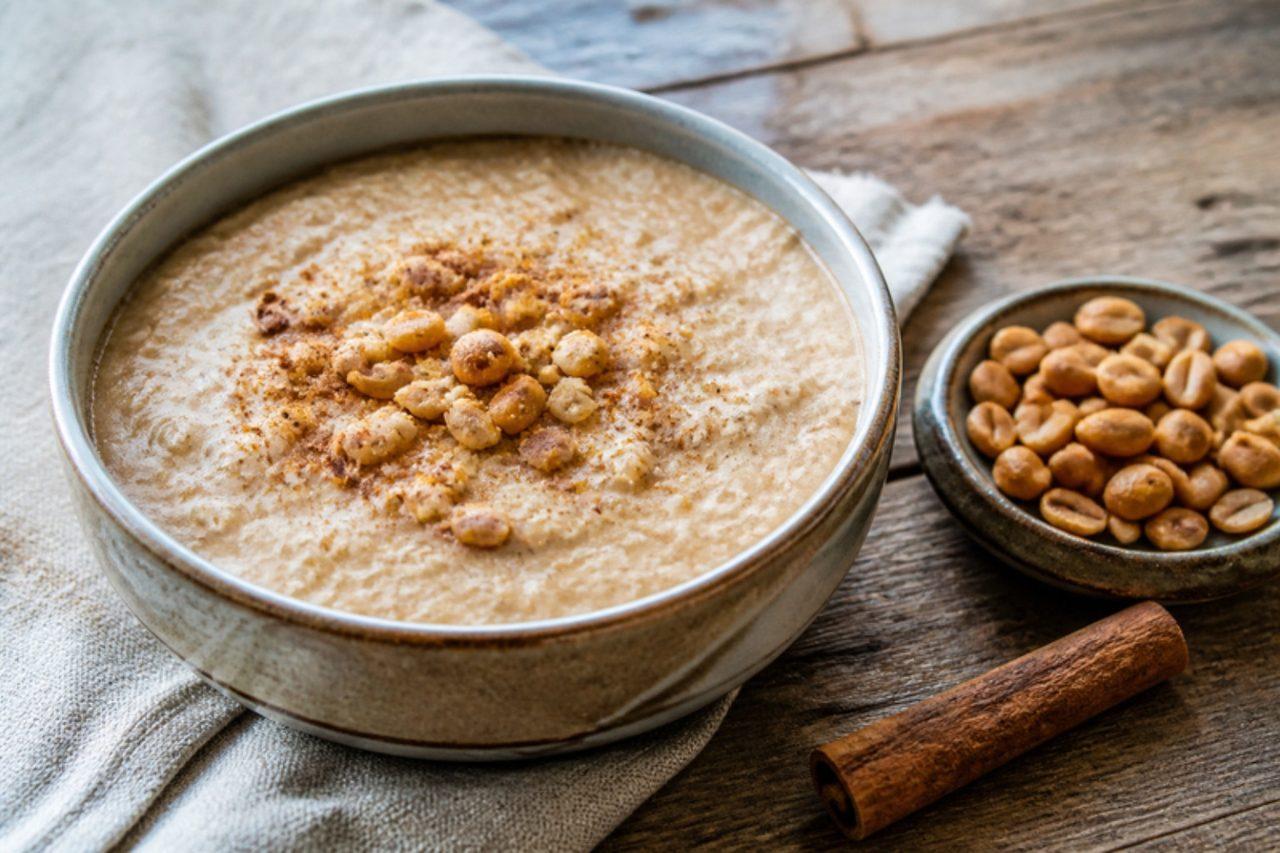
Jamaican peanut porridge

Before an early shift or a long day in the field, plenty of Jamaicans swear by peanut porridge, thick, nutty and filling enough to last until lunch; it is sold hot in cups from carts in downtown Kingston in the mornings. Roasted peanuts are blended with oats and water into a smooth paste, then cooked with milk until creamy and finished with nutmeg, vanilla and condensed milk. The mistake people make is cooking it over too high a heat, which scorches the bottom within minutes; peanuts burn easily, so stir and keep it at a simmer. This contains peanuts, milk and oats (gluten unless certified gluten-free). Chef's tip: toast the peanuts in a dry pan until they smell rich before blending, which deepens the flavour enormously.

by KrazyBadal 0 views

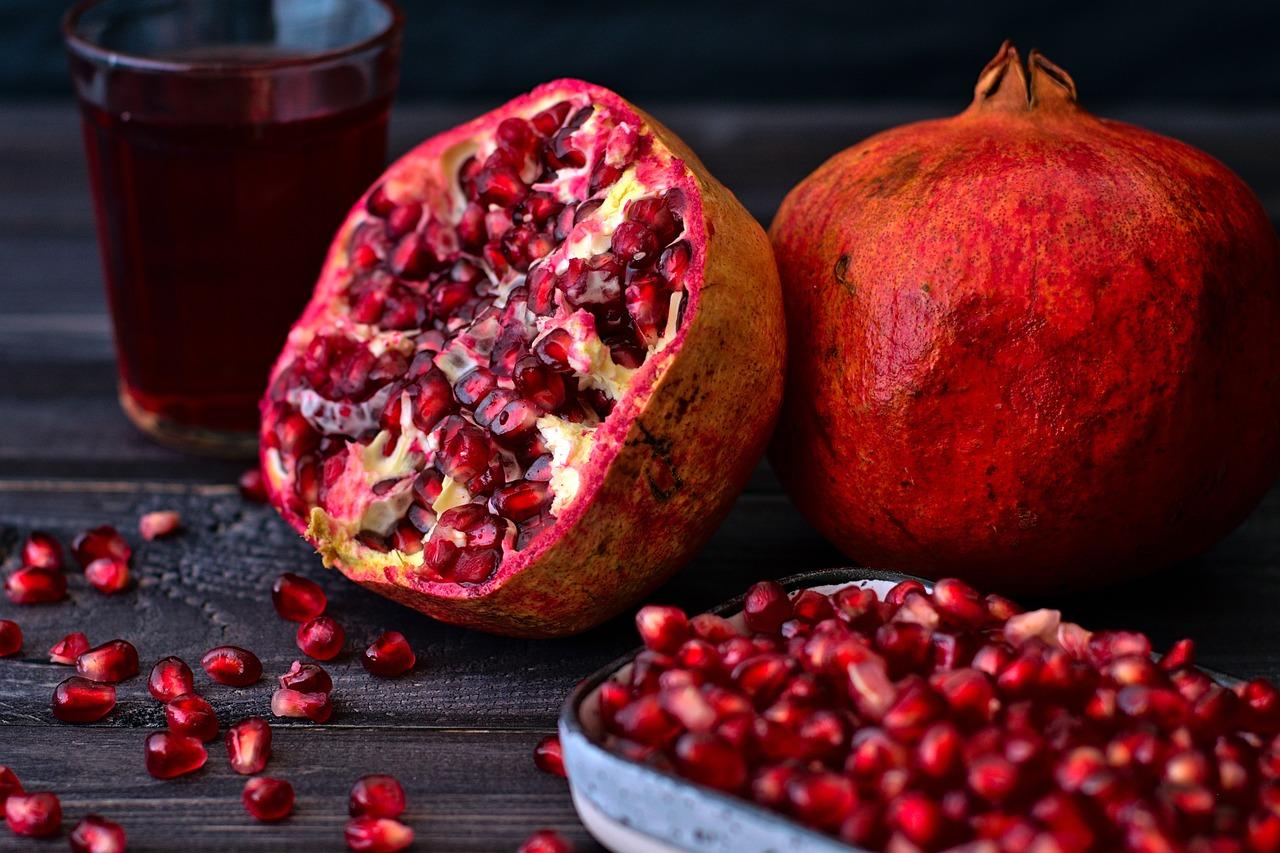
Kandahari pomegranate juice

Kandahar's pomegranates, heavy fruits with dark ruby seeds and soft pips, are the pride of southern Afghanistan, and in October and November juice stalls in the city's bazaars press them to order in big iron hand presses. The juice is deep red, sweet with a clean sour finish and a faint tannic grip, drunk on its own in a tall glass, often with a pinch of salt. At home you can get almost the same thing with a citrus press or a blender. The bitterness that ruins many homemade glasses comes from crushing the white pith and hard pips, so blend the seeds only for a few seconds, or press the halves gently. Chef's tip: roll each whole pomegranate firmly on the worktop before cutting it, which bursts many of the seeds inside and makes juicing faster.

by KrazyBadal 0 views

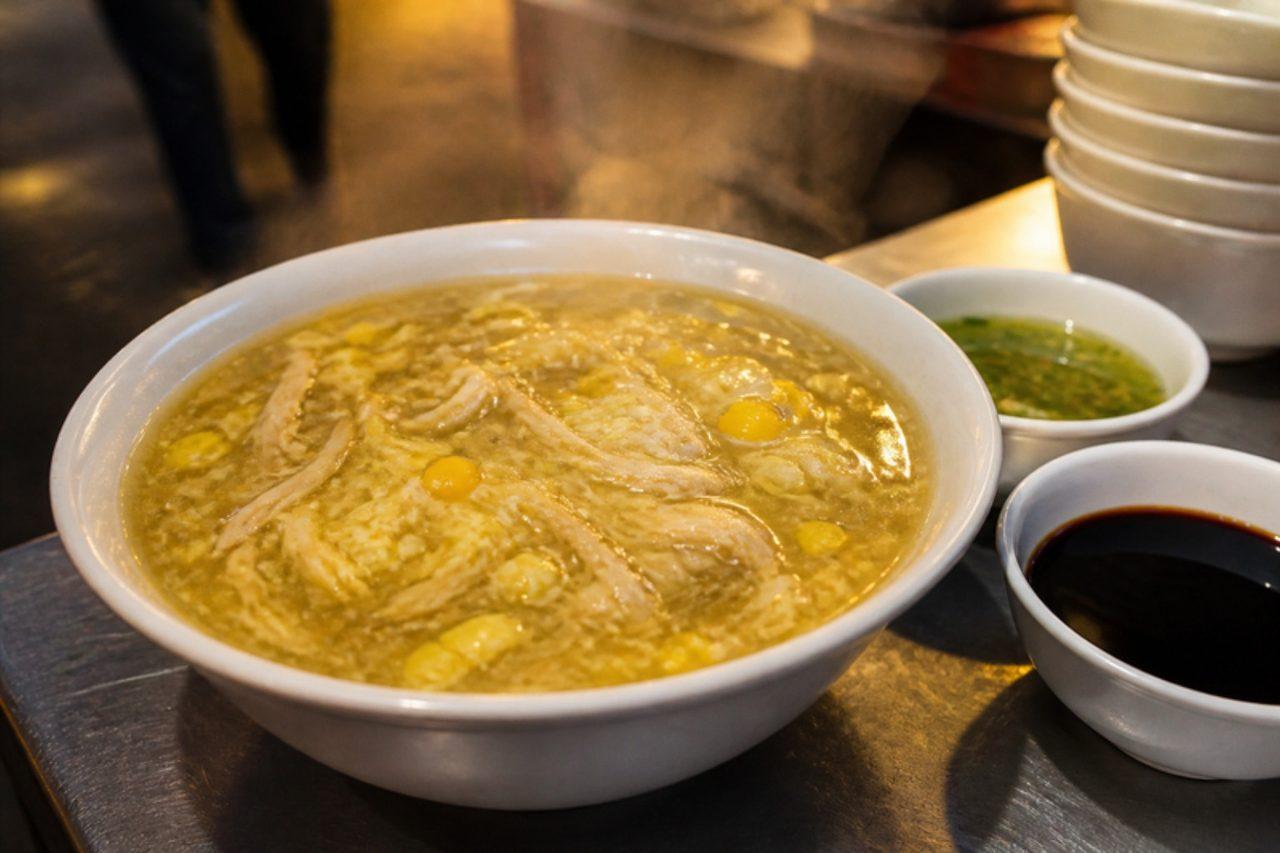
Pakistani chicken corn soup

Come the first cold evening of winter, carts with steaming steel pots appear on Karachi's Tariq Road and Lahore's Liberty Market, and queues form for chicken corn soup in disposable cups. It is Pakistani-Chinese food at its most loved: a thick, glossy soup of shredded chicken, creamed sweetcorn and silky egg ribbons, which each person seasons at the cart with chilli vinegar, soy sauce and chilli sauce from squeezy bottles. Children love it plain; adults douse it. Pouring the egg into a rapidly boiling soup turns it into scrambled lumps, so keep it at a gentle simmer and stir slowly in one direction. Chef's tip: for a vegetarian version, use a good vegetable stock, leave out the chicken and add a handful of finely chopped carrot and cabbage.

by KrazyBadal 0 views

Kata-kat

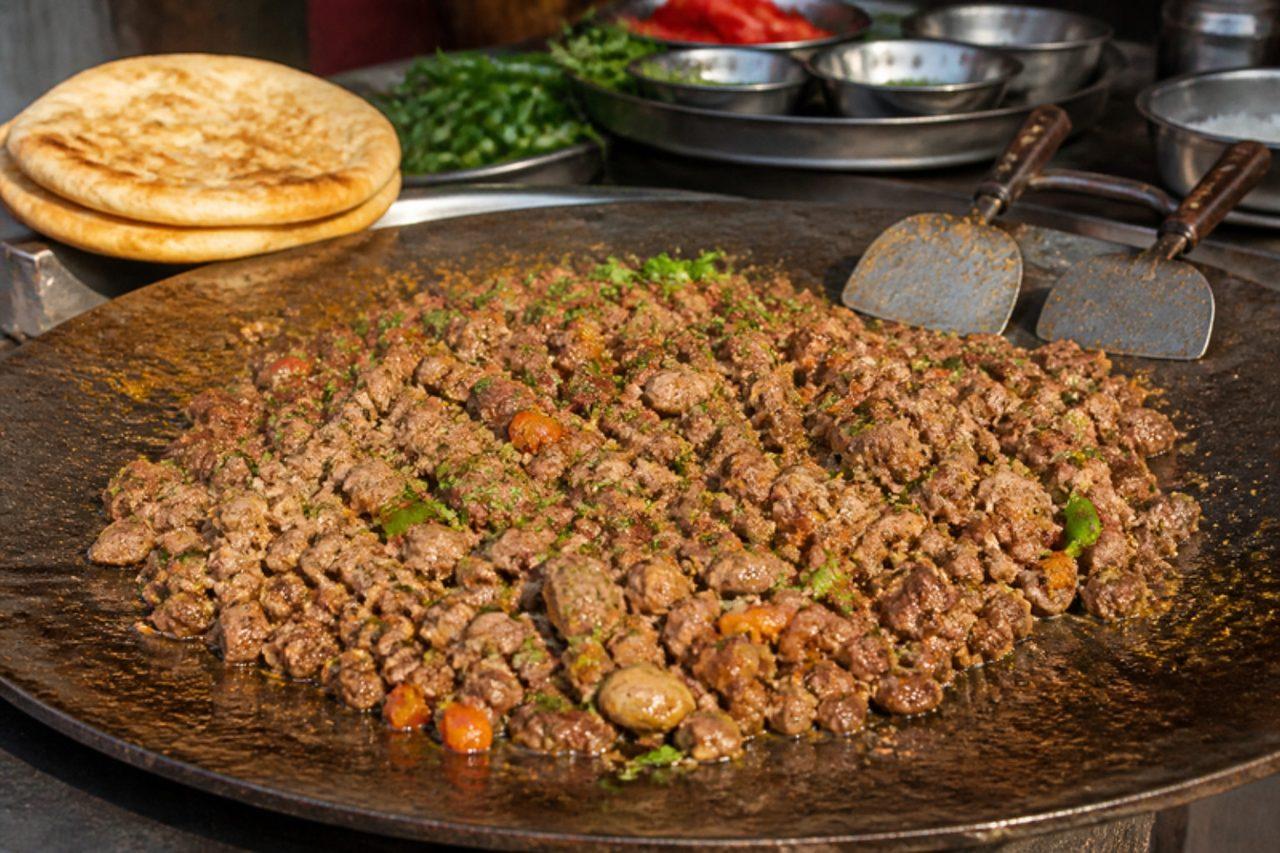
You hear kata-kat before you see it: on Karachi's Burns Road and around Lahore's Gawalmandi, the cook stands over a tawa a metre wide, chopping kidneys, hearts and meat with two heavy steel blades in a clattering rhythm that gives the dish its name. Butter, tomatoes, green chillies and spice go in by the handful, and the mix is cooked down until rich and sticky, then scooped up with naan late at night. Traditional versions include brains, cooked in at the end; here they are optional. The danger is undercooking the offal while the meat is still chewy, so start the meat first and add kidney and heart later, cooking until there is no pink at all. Chef's tip: soak the kidneys in salted water for 20 minutes after removing the white core, which takes away any strong smell.

by KrazyBadal 0 views

Afghan green chutney

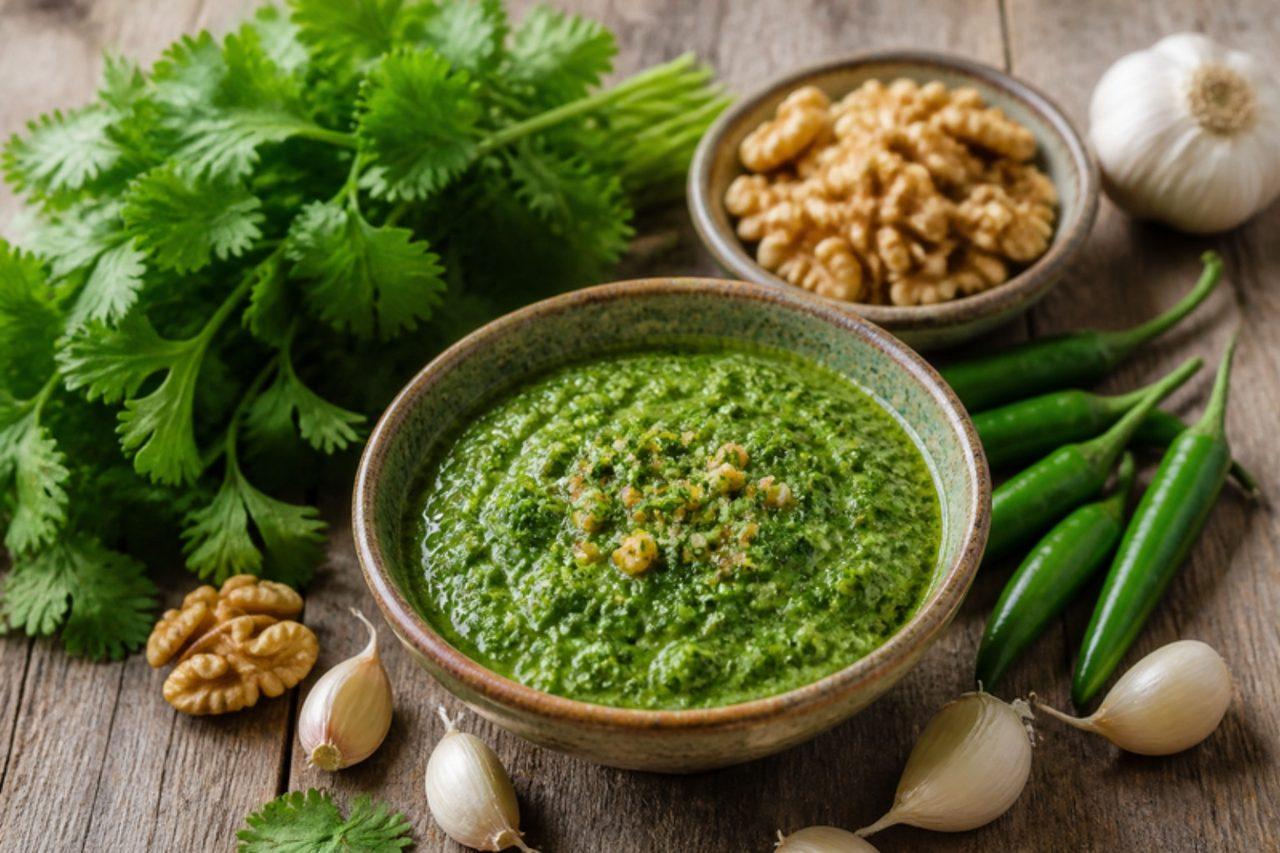
No Afghan table of kebab or palaw feels complete without a little bowl of green chutni, the sharp, fiery relish spooned beside the rice, onto bolani and over grilled meat from Kabul to Kandahar. Unlike many South Asian green chutneys, the Afghan one leans on vinegar rather than lime and is thickened with walnuts, so it is slightly creamy, bright green and properly hot, with a pungent hit of raw garlic. Households make a jar at a time and keep it in the fridge through the week. People often blitz it into a thin juice; pulse it instead so you can still see flecks of leaf and nut. Chef's tip: keep the coriander stalks in, as they have more flavour than the leaves and help the chutney stay green for days.

by KrazyBadal 0 views

Chakma bamboo shoot curry

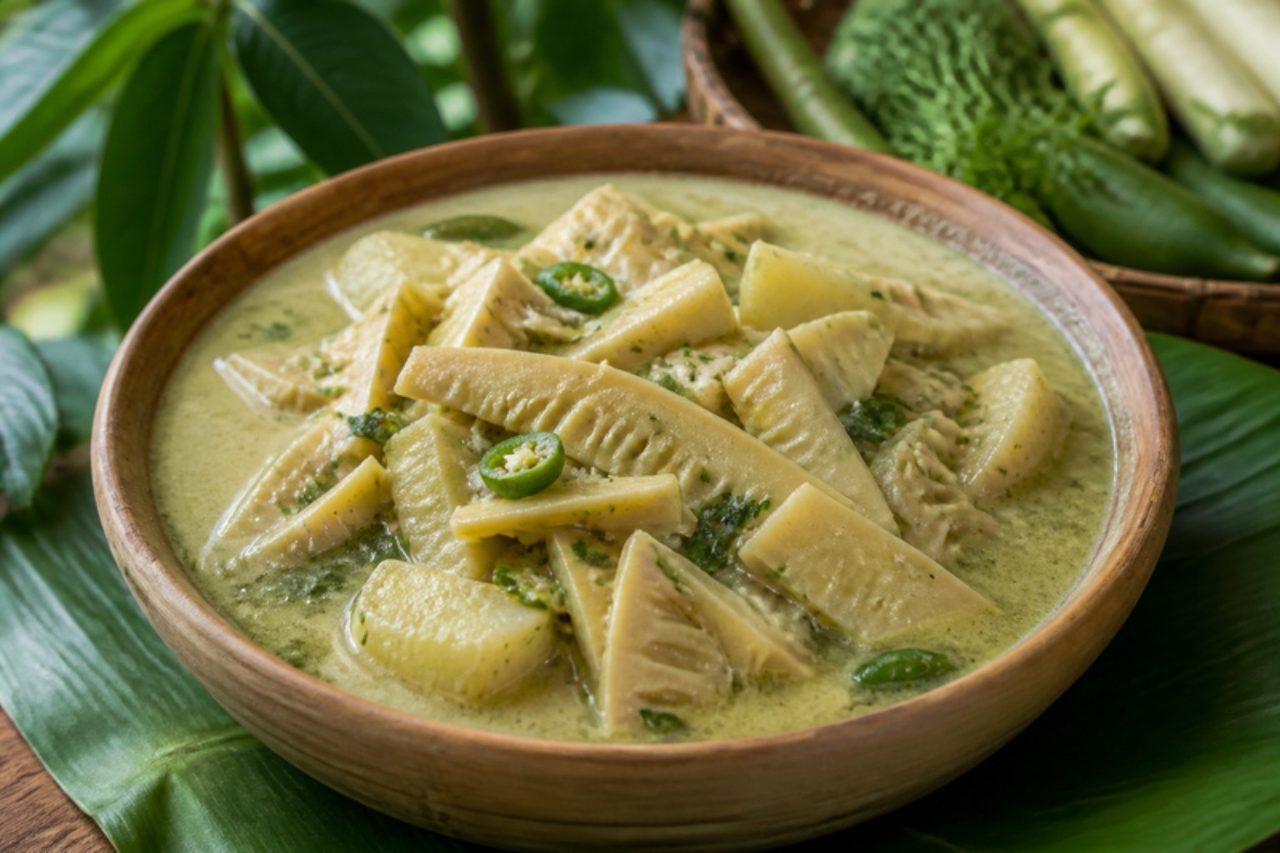
When the monsoon reaches the Chittagong Hill Tracts, young bamboo shoots push up through the forest floor around Rangamati and Bandarban, and Chakma and Marma families cut them for a quick, clean-tasting curry. Hill cooking uses very little oil and few dry spices; the flavour comes from fistfuls of green chilli, garlic and herbs such as culantro (sawtooth coriander), and a spoon of ground rice thickens the broth. At home it is very often cooked with shidol, a fermented dried fish paste, or nappi; this version is fully vegetarian. The shoots are crunchy and faintly sweet, and the curry is eaten with plenty of plain rice. Raw fresh bamboo shoots contain natural toxins, so they must always be boiled first and the water thrown away; skipping that step is the one mistake you cannot make here. Chef's tip: if you use canned or vacuum-packed shoots, rinse and boil them for 5 minutes anyway to freshen their taste.

by KrazyBadal 0 views

Bangladeshi dal puriLentil-filled puri

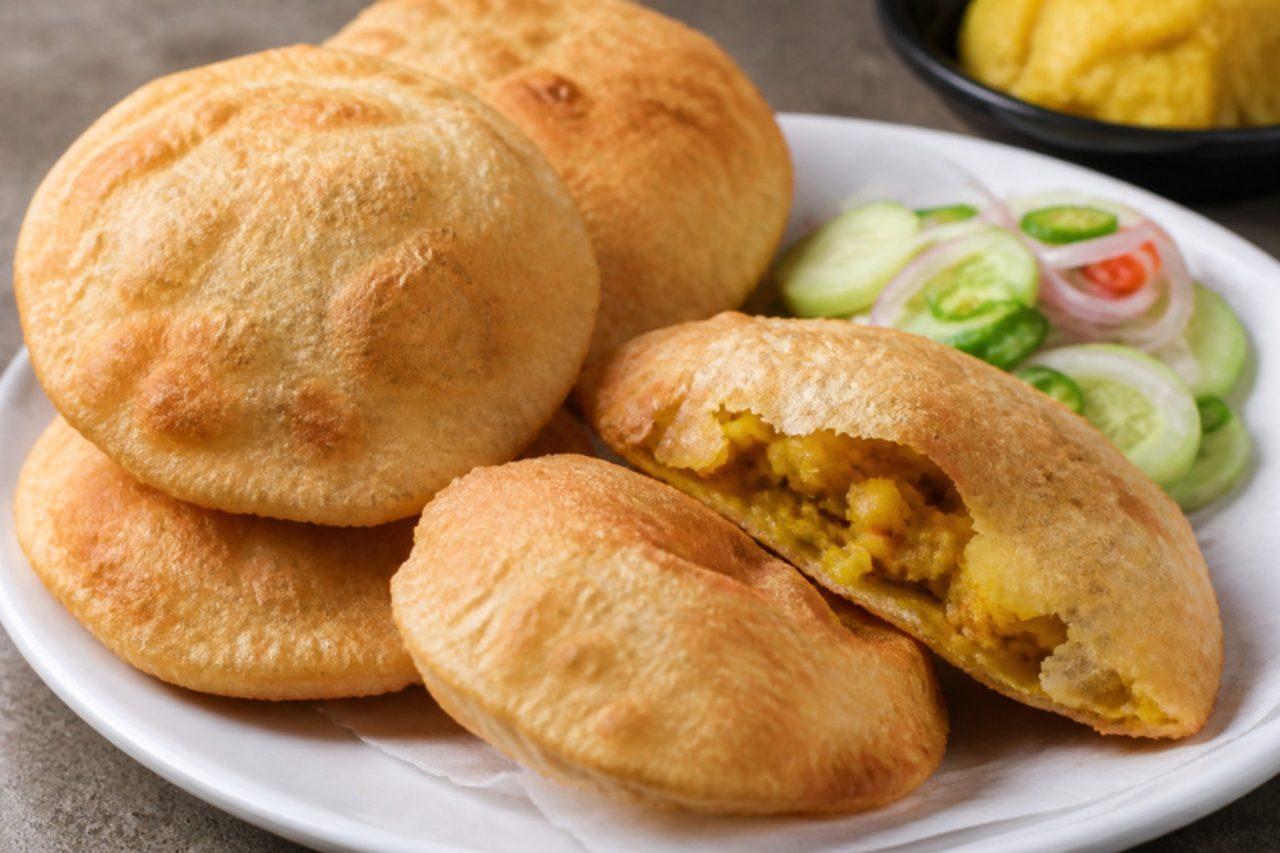
Wherever there is a tea stall in Dhaka, from the Nilkhet book market to the gates of the university, there is a wok of oil and a man rolling dal puri at speed, three or four at a time. These are thin and flat, not puffed, with a seam of dry, cumin-scented red lentil filling that you can see through the blistered skin; they are eaten straight from the wok with a cup of sweet tea, a spoon of tamarind chutney or just a pinch of raw onion and green chilli. Students treat them as lunch and office workers as an afternoon snack. Where people usually go wrong is a filling that is too wet, which bursts through the dough and spits in the oil. Chef's tip: cook the lentils just until they crush, then dry the mash in the pan with the onions until it holds together like crumbly dough.

by KrazyBadal 0 views

Muri ghonto

For a Bengali family, the head of a big rohu is the part saved for the guest of honour or the new son-in-law at Jamai Shashthi, and the finest thing to do with it is muri ghonto. The head is fried in mustard oil, broken into pieces and cooked with a handful of fragrant short-grain rice, diced potato and warm spices until it becomes a thick, almost dry mash, finished with ghee and garam masala. In Dhaka homes it is eaten in the middle of a meal, after the shak and dal and before the main fish curry, with plain rice. Many cooks leave the head in big lumps, but it should be broken up after frying so the rich flavour from the head spreads through the rice. Chef's tip: buy the head from a large fish of at least 2 kg and ask the fishmonger to remove the gills and split it for you.

by KrazyBadal 0 views

Norwegian heart waffles

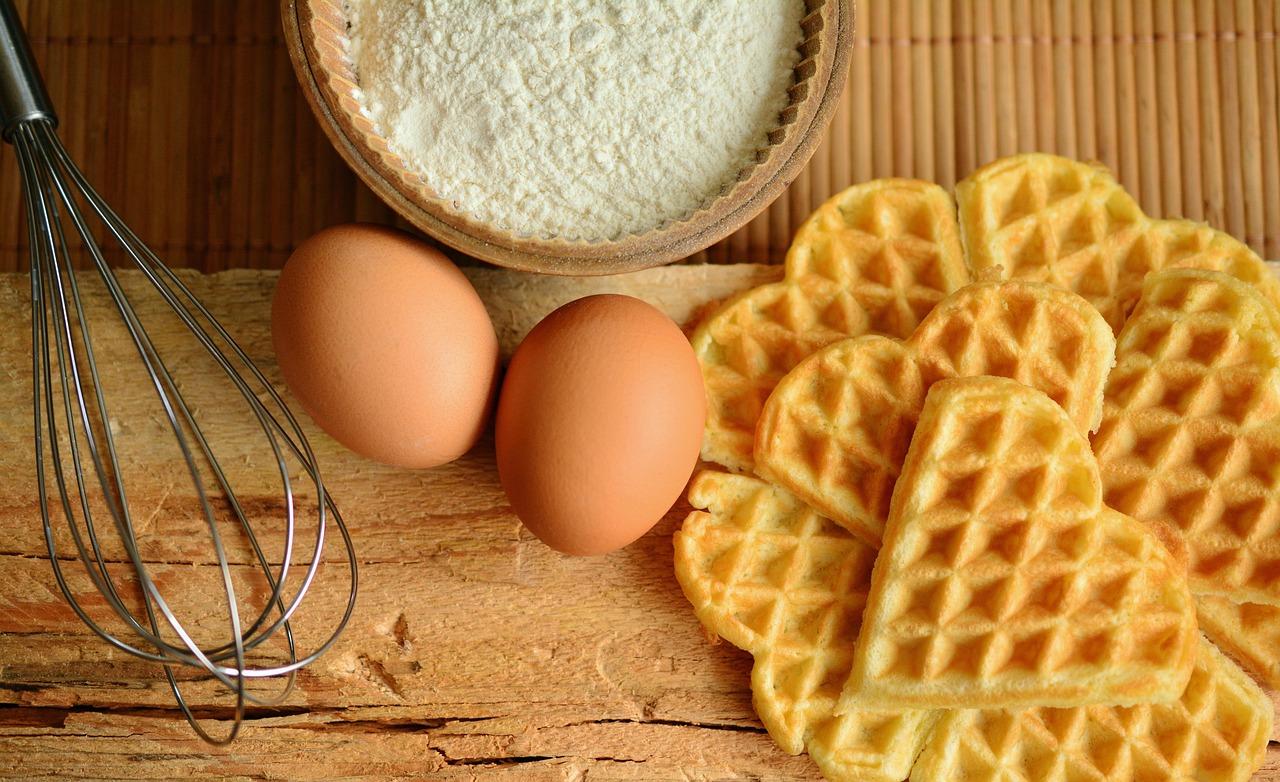
In Norway, waffles are not a breakfast but an everyday treat: thin, soft heart-shaped vafler made with sour cream and cardamom, sold at school fairs and football matches and made at home on Sunday afternoons, eaten folded with strawberry jam and sour cream or brown cheese. Their texture is soft rather than crisp. A common mistake is opening the iron too early, which tears them. Chef's tip: let the batter rest for 30 minutes and brush the iron with butter before each waffle; they lift out whole and golden.

by KrazyBadal 0 views

Sambal goreng boontjesGreen beans in coconut sambal

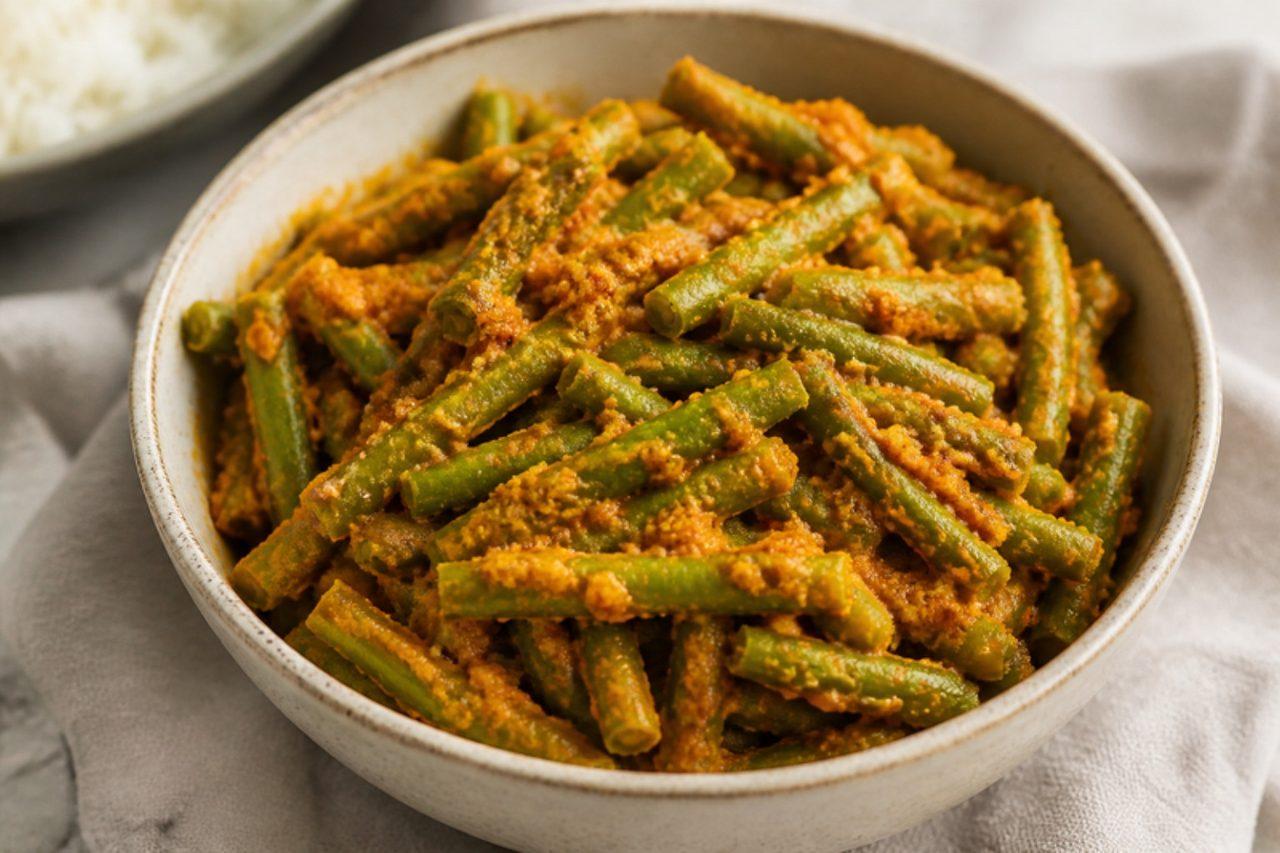
Sambal goreng boontjes is one of the most loved dishes in Dutch-Indonesian homes and toko takeaways: green beans fried in a spice paste of shallot, garlic, chilli and galangal, then simmered in coconut milk with lime leaves until just tender and coated in a rich, spicy, slightly sweet sauce. It is a regular part of a rijsttafel. Traditional versions include shrimp paste (trassi); this one is vegan. A common mistake is overcooking the beans until khaki. Chef's tip: fry the spice paste until the oil separates and it smells sweet, which takes the raw edge off the chilli and garlic.

by KrazyBadal 0 views

PonchikCustard-filled doughnuts

In Yerevan and Gyumri, the ponchik is a street-corner institution: soft yeast doughnuts fried to order in small shops, slit and piped full of cool vanilla custard, then dusted heavily with icing sugar. Students buy them in paper bags after class and families queue on Sunday mornings. A common mistake is frying in oil that is too hot, which browns the outside before the middle cooks. Chef's tip: keep the oil at 170 °C and fry until the doughnuts have a pale ring around the middle; that ring shows they are light enough to float, and cooked through.

by KrazyBadal 0 views

PoparaBread in hot milk with cheese

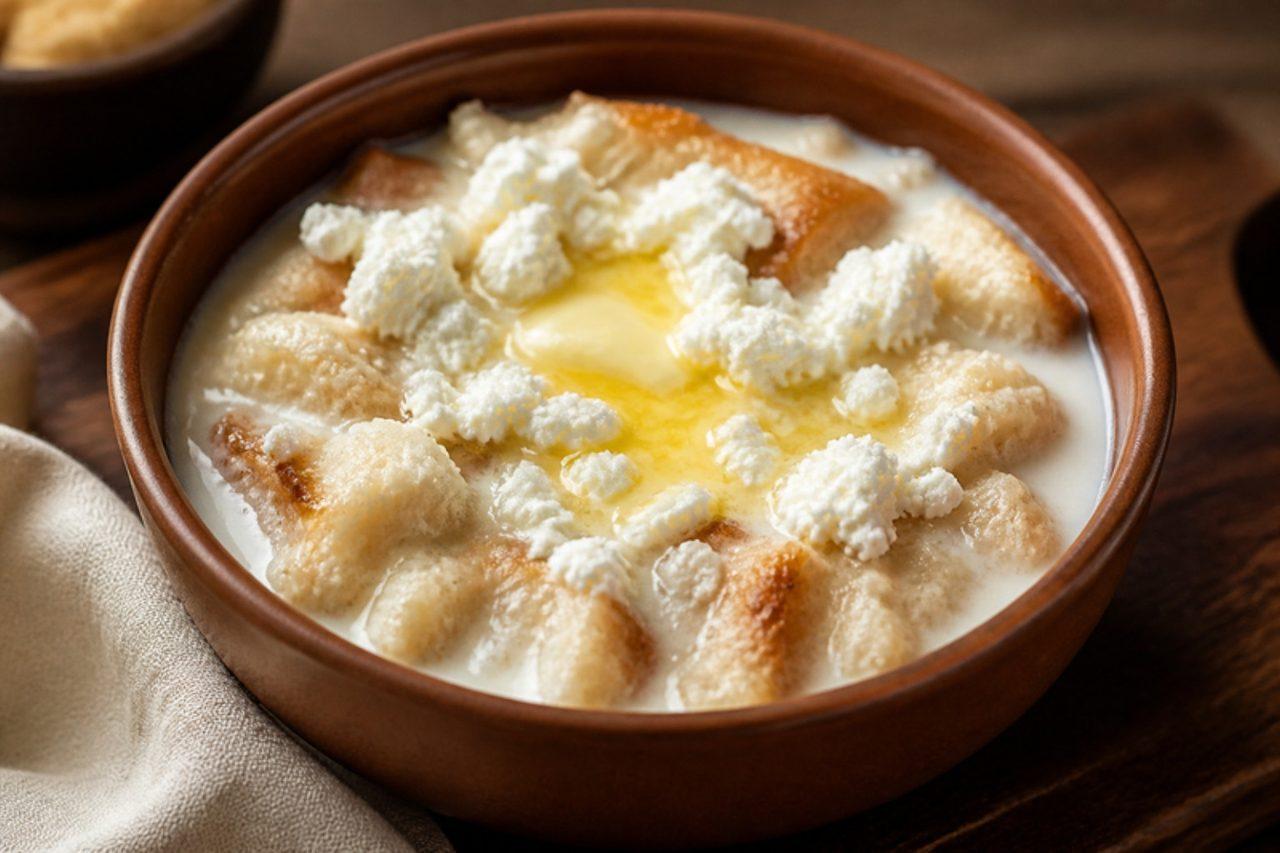
Ask Bulgarians about popara and most will smile about childhood: a bowl of yesterday's bread torn into chunks, scalded with hot milk or sweet tea, then stirred with a knob of butter and a handful of crumbled white cheese. It is what grandmothers in villages from the Balkan Mountains to Sofia made on cold mornings, and what students still cook when the cupboard is empty. Soft, warm, salty and comforting, it should be spoonable but not a soup. Some families make it sweet with sugar instead of cheese. Bulgarian sirene is usually made with animal rennet, so pick a white cheese labelled vegetarian if that matters to you. Where most people go wrong is using soft fresh bread, which dissolves into paste; it must be properly stale and dry. Chef's tip: cover the bowl with a plate for two minutes after pouring the milk, so the bread swells evenly before you stir in the butter.

by KrazyBadal 0 views

Porabari chomchomLong chhana sweet in syrup

Porabari is a small village on the river Dhaleshwari near Tangail town, and for more than a century its sweet-makers have been turning out the most famous chomchom in Bangladesh: oblong, dense chhana sweets cooked for a long time in syrup until their outsides turn a deep reddish brown and the inside is juicy, fine-grained and slightly firm. Each one is rolled in a dusting of mawa, dried milk, and they are bought by the box for weddings, Eid and every kind of good news. Undercooked chomchom are pale and spongy instead of dense, so the cardinal sin here is rushing the syrup; the sweets need well over an hour. Chef's tip: caramelise a few spoons of sugar before adding the rest of the syrup ingredients, which gives the authentic burnished colour without burning the sweets.

by KrazyBadal 0 views

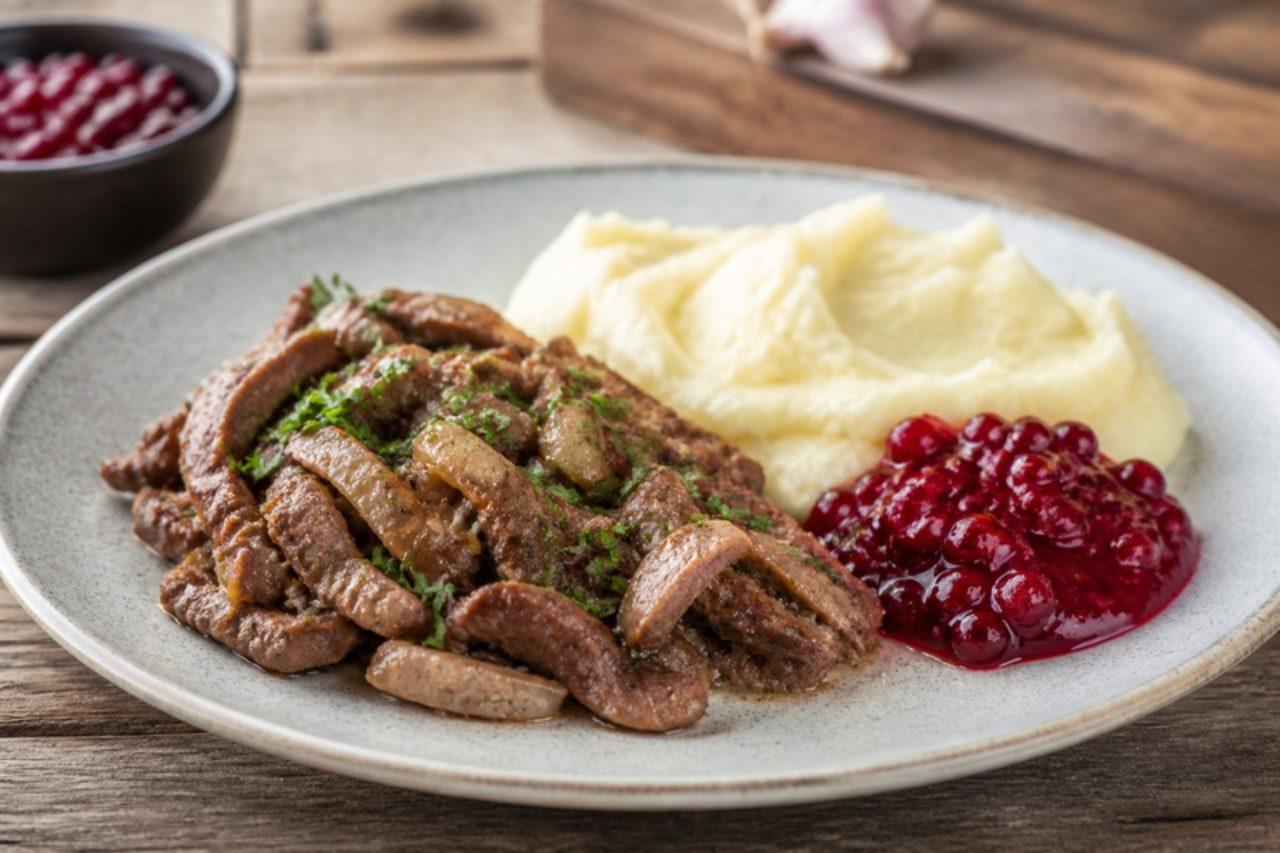
PoronkäristysSautéed reindeer with mash

Poronkäristys is the dish visitors to Lapland eat first, and the one Lapland families make most: frozen reindeer meat shaved into paper-thin curls, fried in butter with onion and then simmered briefly in a splash of water or beer until tender, served with buttery mashed potato, lingonberries and pickled cucumber. Reindeer is sold ready-shaved and frozen in Finnish and Nordic shops; very thinly sliced beef or venison also works. A common mistake is thawing the meat first; shaved from frozen, it curls and cooks evenly. Chef's tip: fry the frozen curls in batches until browned before adding the onion, so they sear instead of stewing.

by KrazyBadal 0 views

Poul ak nwaChicken with cashews

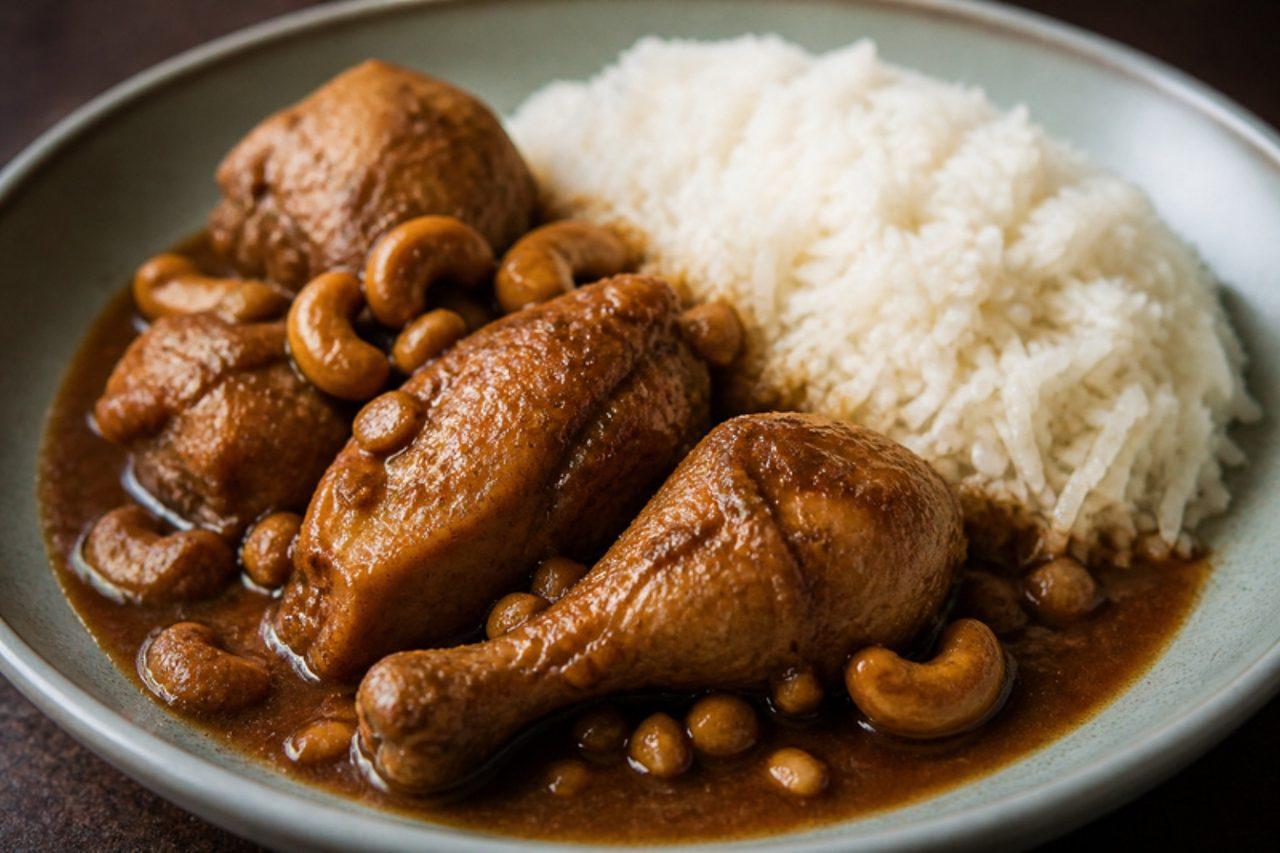
Cap-Haïtien, Haiti's northern port, claims poul ak nwa as its own: chicken braised in a tomato and epis creole sauce and finished with toasted cashew nuts, which grow on the northern hillsides and are sold in paper cones by the roadside. The nuts soften slightly in the sauce, giving it body and a buttery sweetness, and the dish is a favourite for Sunday lunch with white rice and fried plantain. The common mistake is adding the cashews at the start, so they turn soggy; they go in for the last 15 minutes. Contains tree nuts. Chef's tip: dry-toast the cashews until golden before they meet the sauce; it deepens the whole dish.

by KrazyBadal 0 views

Powidła śliwkowePlum butter

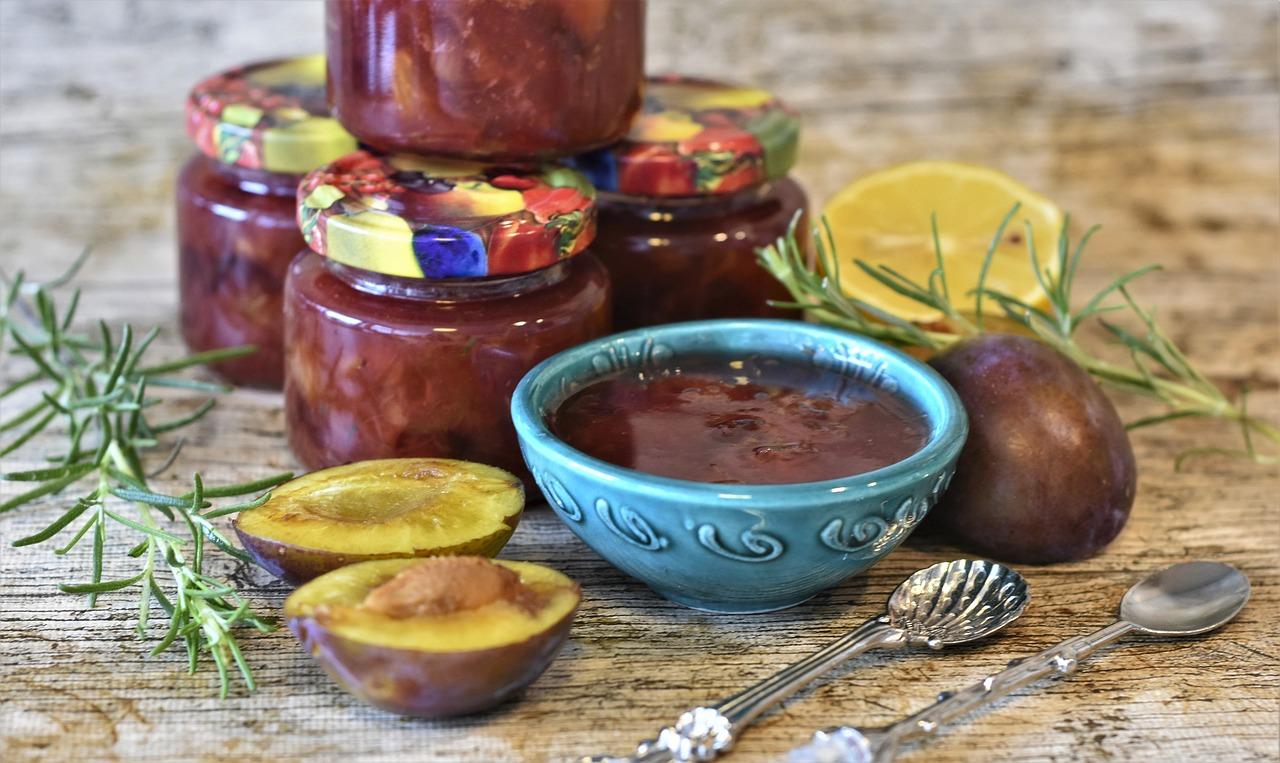
In the villages around Szydłów in the Świętokrzyskie hills, late-season Hungarian plums were once stirred in copper cauldrons over a fire for a day or more, until they became powidła, so thick a spoon stands up in it. The sugar in very ripe plums caramelises, turning the purée nearly black, glossy and intensely fruity with a slight bitterness. It fills pączki, drożdżówki and pierogi, and is spread on bread with butter. Traditional cooks spread the cooking over three days, letting the pot cool between sessions; an oven gets you there in an afternoon. The usual slip is cooking on the hob on high heat, which burns the bottom long before the plums thicken. Chef's tip: use the latest, ripest, wrinkly-skinned plums you can find; they need no sugar at all.

by KrazyBadal 0 views

Pozharsky cutletButter-centred chicken cutlet

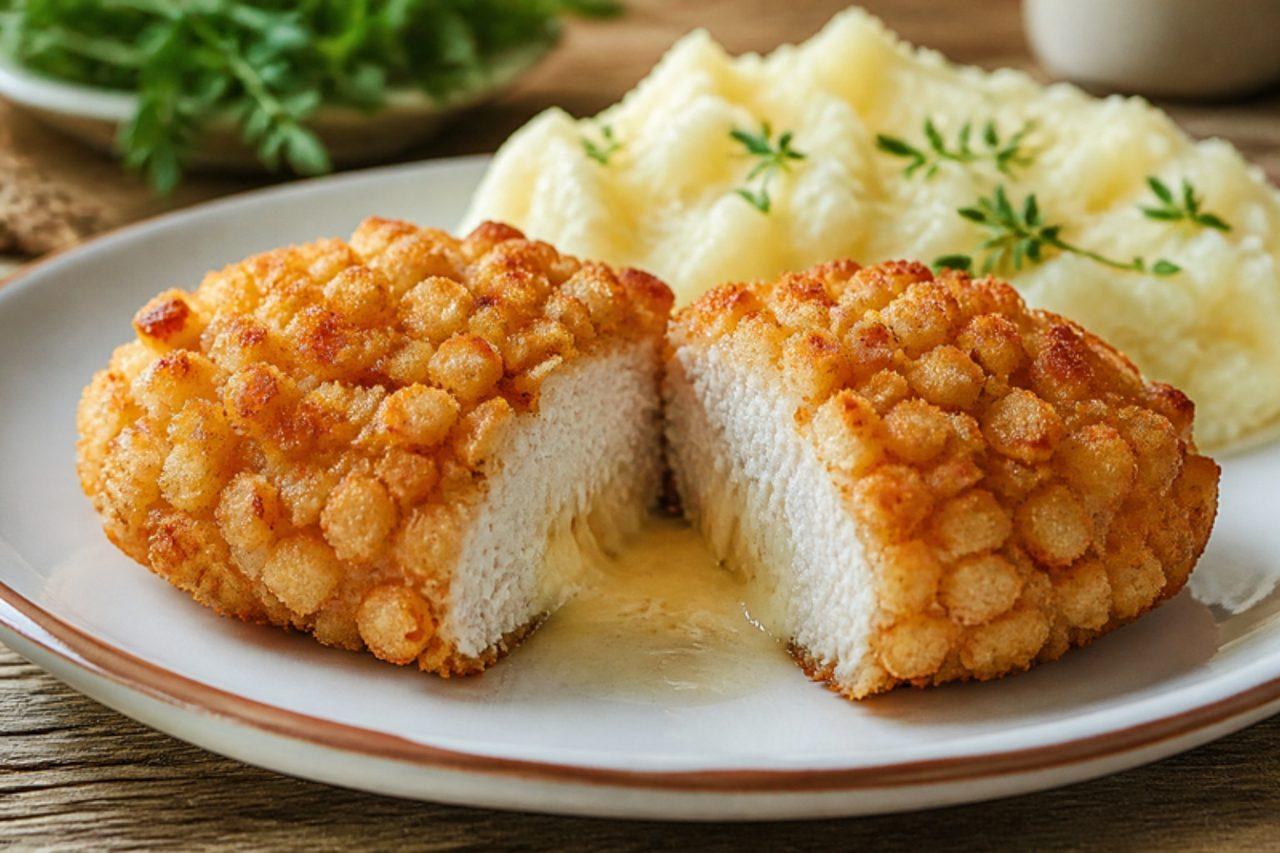
Torzhok, a coaching town on the road between Moscow and St Petersburg, was famous for the tavern of the Pozharsky family, and travellers spread the word of its tender cutlets of chopped chicken bound with milk-soaked bread and cream. They became a classic of grand Russian restaurants and later of Soviet menus. Each cutlet hides a cube of cold butter that melts into the meat, and the coating of tiny bread cubes fries into a crunchy, golden shell. Serve with mashed potatoes or buttered peas. The usual slip is overworking the mince in a processor, which makes it rubbery; chop it by hand or pulse briefly. Cook until the centre reads 74 °C. Chef's tip: freeze the butter cubes for 15 minutes so they stay inside rather than leaking out in the pan.

by KrazyBadal 0 views

Pozsonyi kifliWalnut or poppy seed crescents

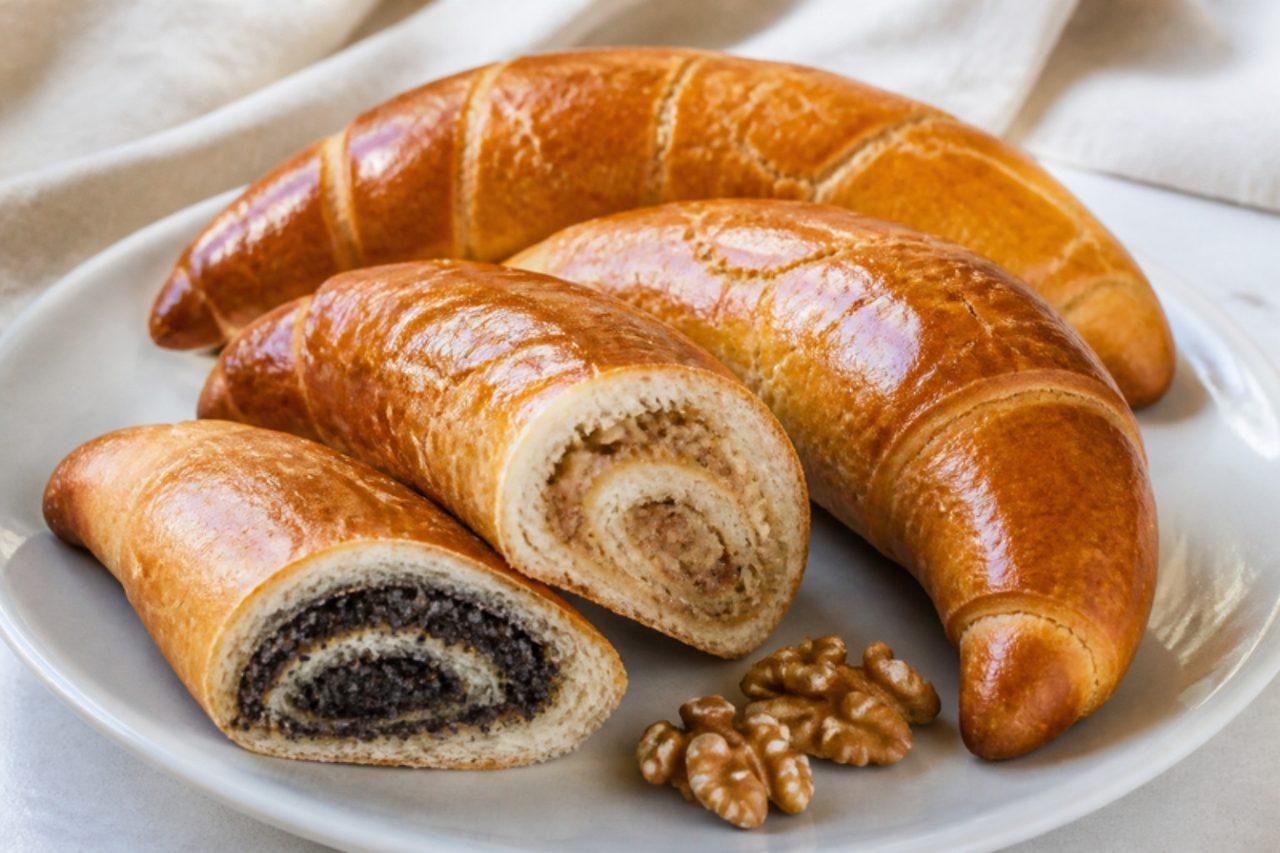
These little crescents take their name from Pozsony, the Hungarian name for Bratislava, where bakers made them famous in the nineteenth century, and today they fill Christmas cookie tins across Hungary alongside bejgli. A short, buttery yeast dough is wrapped around a walnut or poppy seed filling, then glazed first with yolk and then with white, which gives the shiny, crackled, marbled top that marks a good batch. They are rich but not too sweet: eat them with coffee or tea through the holidays. Where most people go wrong is letting the dough rise in a warm spot; this is a cold dough, and if it gets warm the butter melts and the kifli split open. Chef's tip: let the yolk glaze dry fully before the white goes on, or you will not get the crackle.

by KrazyBadal 0 views

Prahok ktisFermented fish and pork dip

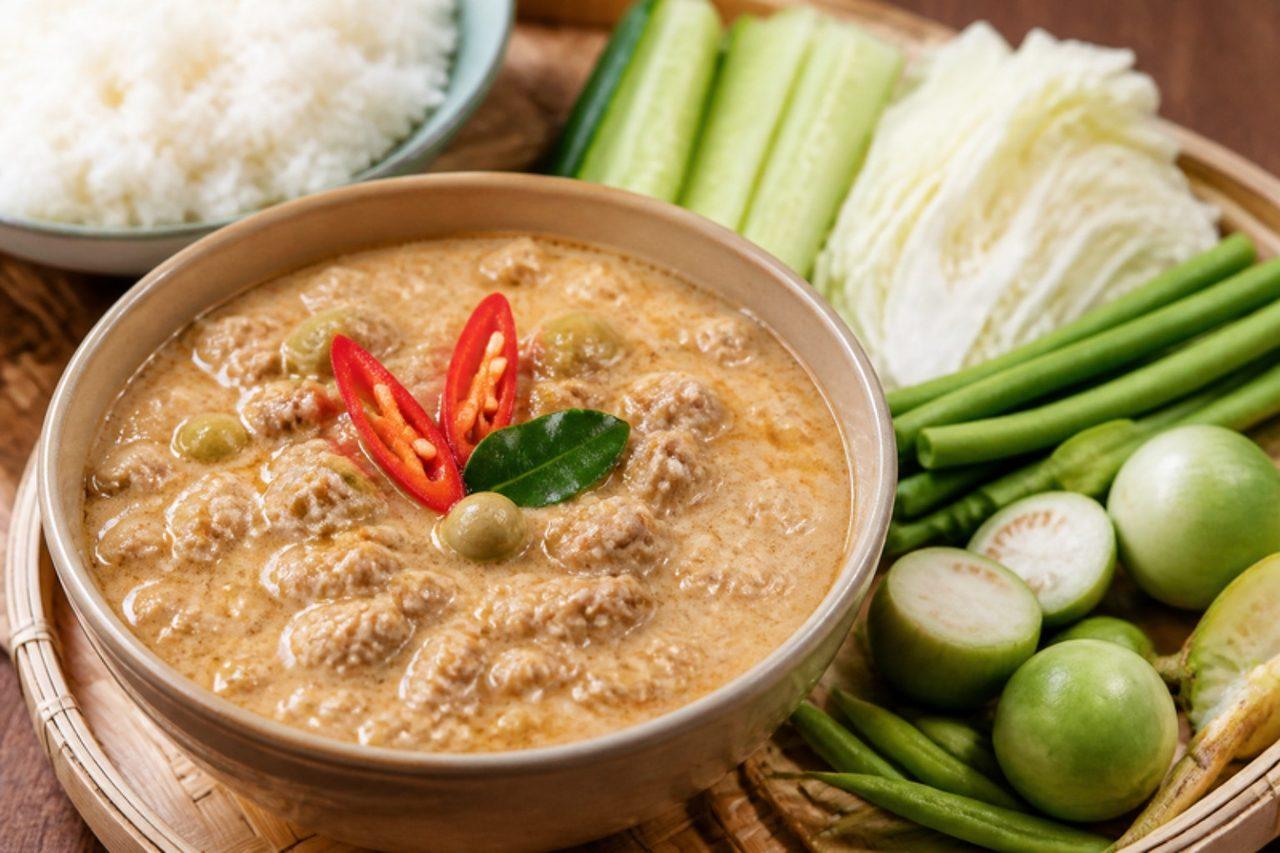
Prahok, the pungent fermented fish paste of the Tonlé Sap, is softened here into something mellow and moreish: it is simmered with coconut cream, minced pork, a fragrant lemongrass paste and pea aubergines until thick and orange-flecked. In Phnom Penh it is a family-table dish for lunch or a weekend feast, set in a bowl in the middle with a platter of crisp raw vegetables (cucumber, cabbage wedges, long beans, Thai aubergines) and steamed rice for everyone to scoop with. Salty, sweet, funky and creamy all at once, it tastes far gentler than the jar smells. Prahok tossed in at the end goes wrong: it stays harsh and is not cooked through, so it must simmer properly with the pork. Chef's tip: buy prahok in jars from an Asian grocer, mash it with a splash of hot water before adding, and let the dip simmer for a full 10 minutes after the pork is cooked.

by KrazyBadal 0 views

PrażonkiLayered potato, cabbage and sausage

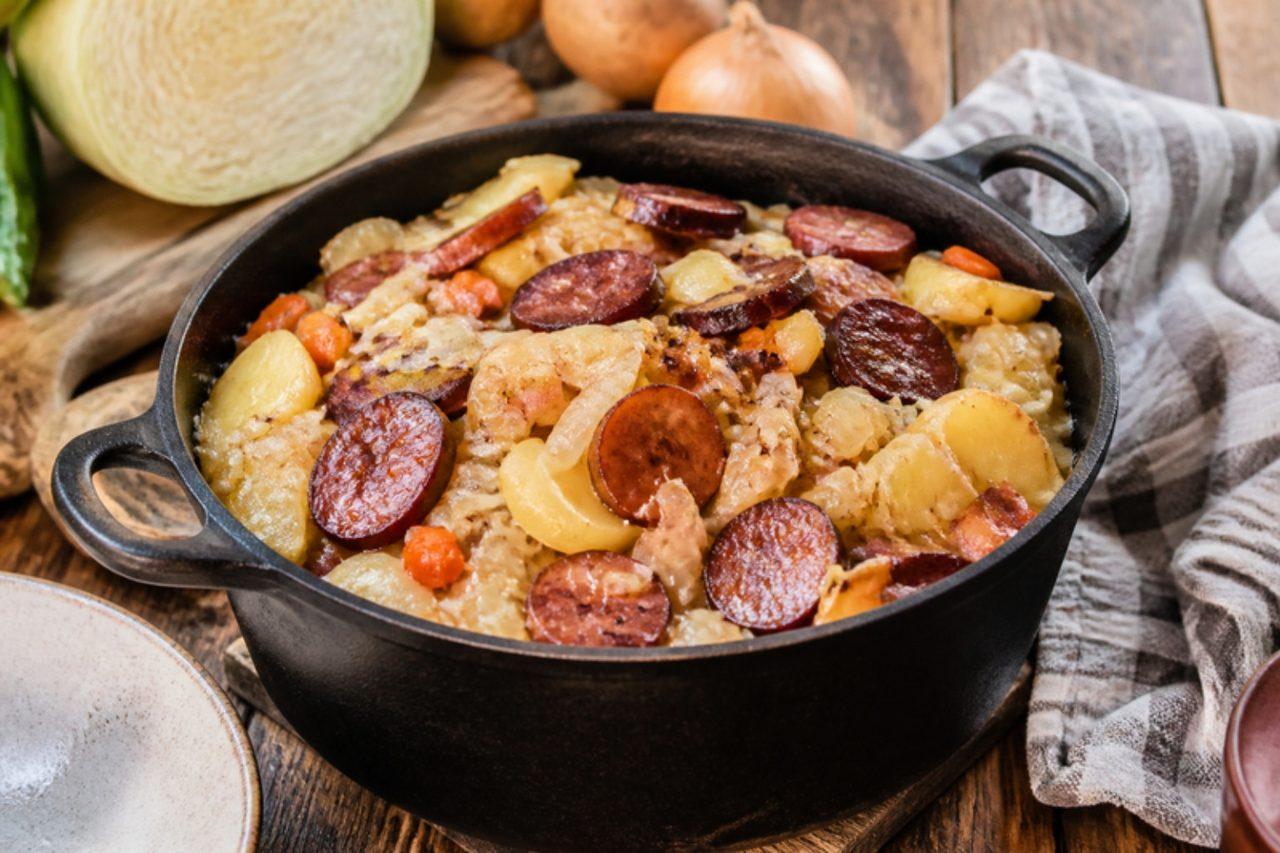
Come late summer, villages around Kraków, the Jura uplands and the Beskid foothills hold prażonki parties, where a heavy cast-iron pot called a kociołek sits in the embers of a bonfire and everyone waits for the lid to come off. Inside are layers of smoked pork belly, onion, potato, cabbage and smoked pork sausage that steam in their own juices with only a splash of water, so the potatoes turn buttery and the cabbage sweet and smoky. It is eaten straight from the pot with buttermilk or kefir and a pickle. The usual slip is adding too much liquid: the pot should hiss and steam, not boil, or you end up with soup. A heavy casserole on the hob works just as well as a campfire. Chef's tip: put the bacon and onion at the very bottom; they protect everything above from burning and season the whole pot as their fat melts.

120 minPolishMeatGluten free
by KrazyBadal 0 views

PrebranacBaked white beans with onion

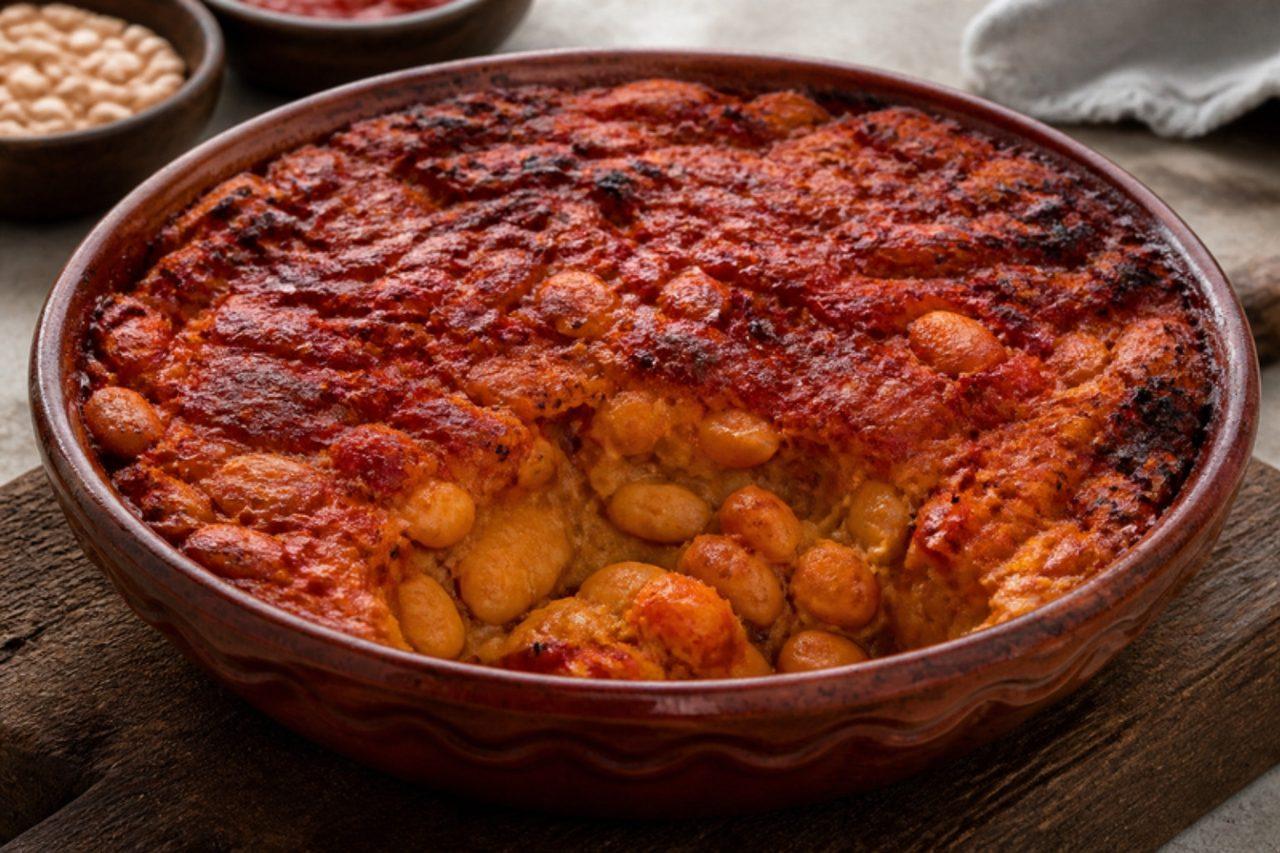
Serbian Orthodox fasting days, and Christmas Eve above all, call for a big clay dish of prebranac, because it is rich and filling without a scrap of meat or dairy. Cooked white beans are layered with a mountain of onions stewed slowly in sunflower oil and red paprika, then baked until the top turns into a dark, chewy crust while the inside stays creamy. Expect sweet onion, earthy beans and a gentle warmth from hot paprika; eat it with crusty bread, pickled peppers and a sharp cabbage salad. The beans need soaking overnight before you start. Where most people go wrong is adding the paprika to sizzling oil, where it scorches in seconds and makes the whole dish bitter, so always take the pan off the heat first. Chef's tip: make it a day ahead and bake it again before serving, as Serbian cooks say prebranac is only properly good the second time.

by KrazyBadal 0 views

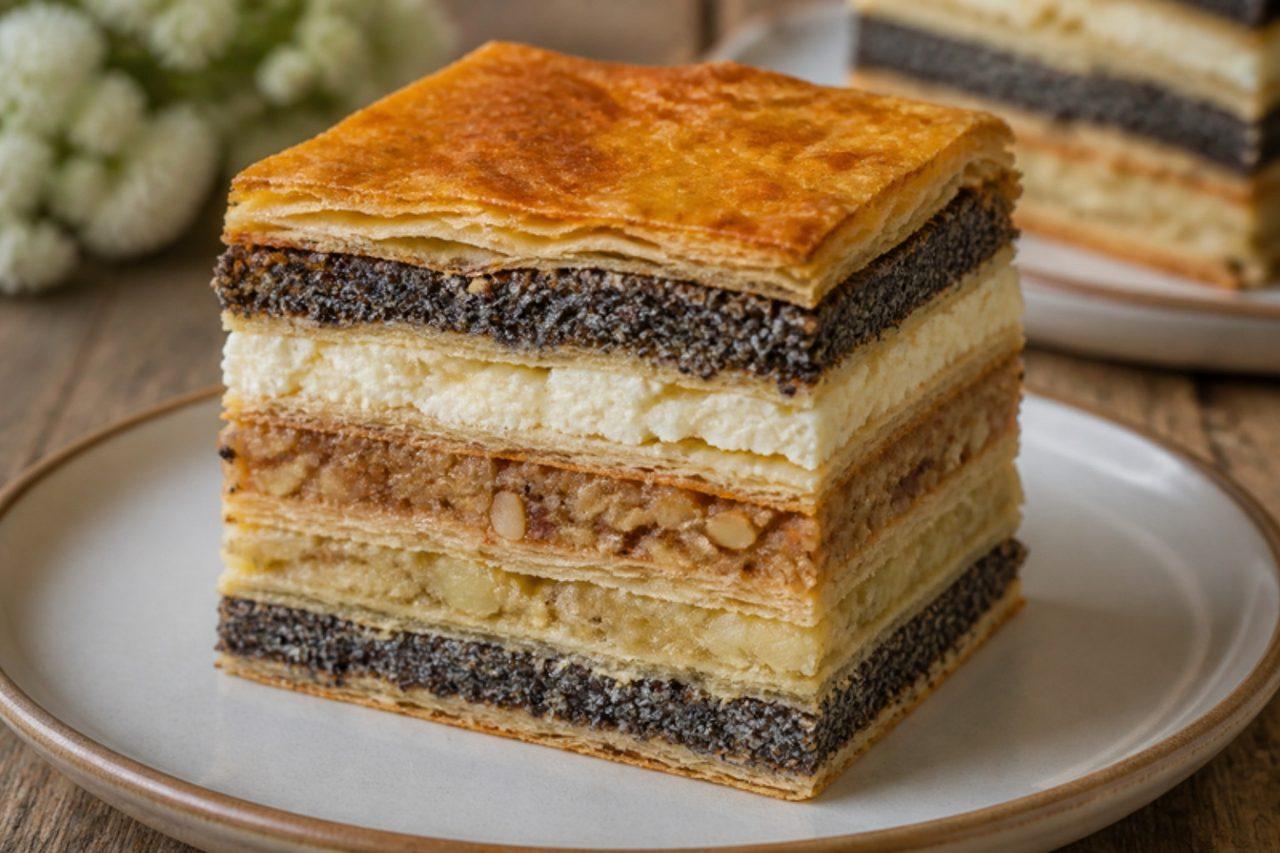
Prekmurska gibanicaLayered poppy seed and apple cake

Prekmurje, the flat north-eastern corner of Slovenia on the Mura river near the Hungarian border, built this towering cake for weddings and harvest feasts, and it is now protected as a traditional speciality. On a shortcrust base sit eight thin layers, four fillings repeated twice: poppy seed, curd cheese, walnut and apple, each separated by thin pastry and soaked with sour cream and melted butter, so every slice shows neat stripes of grey, white, brown and gold. Serve it warm or the next day with coffee; it keeps for 3 days in the fridge and freezes well. Curd cheese (skuta or quark) is usually rennet-free, but check the label. Going heavy on the fillings is the classic trap: each layer should be about 1 cm, or the cake won't bake through and the stripes blur. Chef's tip: make all four fillings the evening before, and assembly the next day takes just 20 minutes.

180 minBalkanBaking
by KrazyBadal 0 views

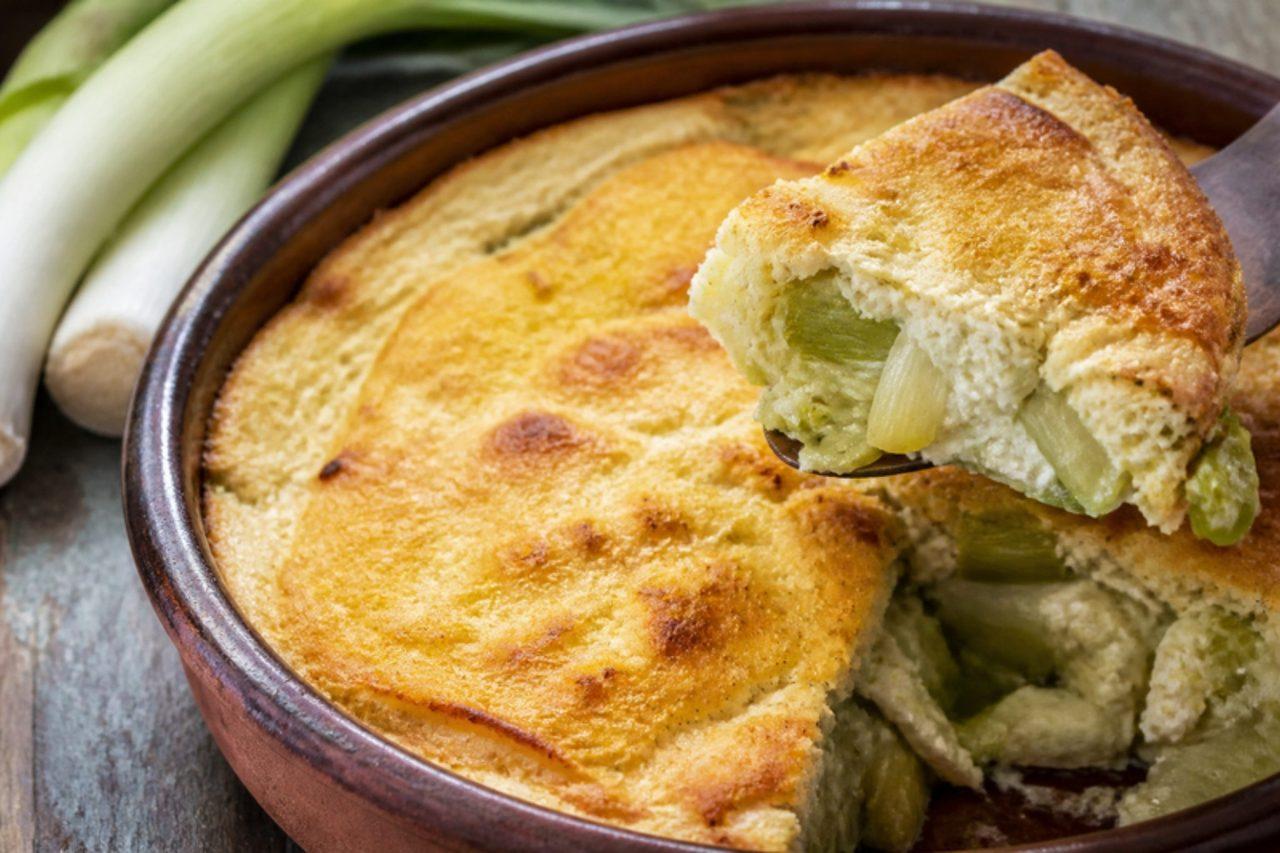
Presh në tavëBaked leeks with yogurt

Leeks are the backbone of winter cooking in central Albania, and presh në tavë, leeks in the baking dish, is how families in Tirana and Elbasan turn a big bundle into a meal. The leeks are sweated slowly in butter, bound with a little cornmeal, milk and tangy yogurt, then baked under crumbled white cheese until bubbling and freckled brown. It is soft, creamy and sharp at once; serve it hot with a green salad and pickled peppers, or as a side to beans. Most white cheese and feta use animal rennet, so pick a vegetarian feta-style cheese if that matters to you. Rushing the leeks is where this goes wrong: fried hot and fast they stay raw-tasting and stringy, while 15 gentle minutes makes them silky and sweet. Chef's tip: let the dish stand for 10 minutes before cutting, so the cornmeal sets and it slices cleanly.

by KrazyBadal 0 views

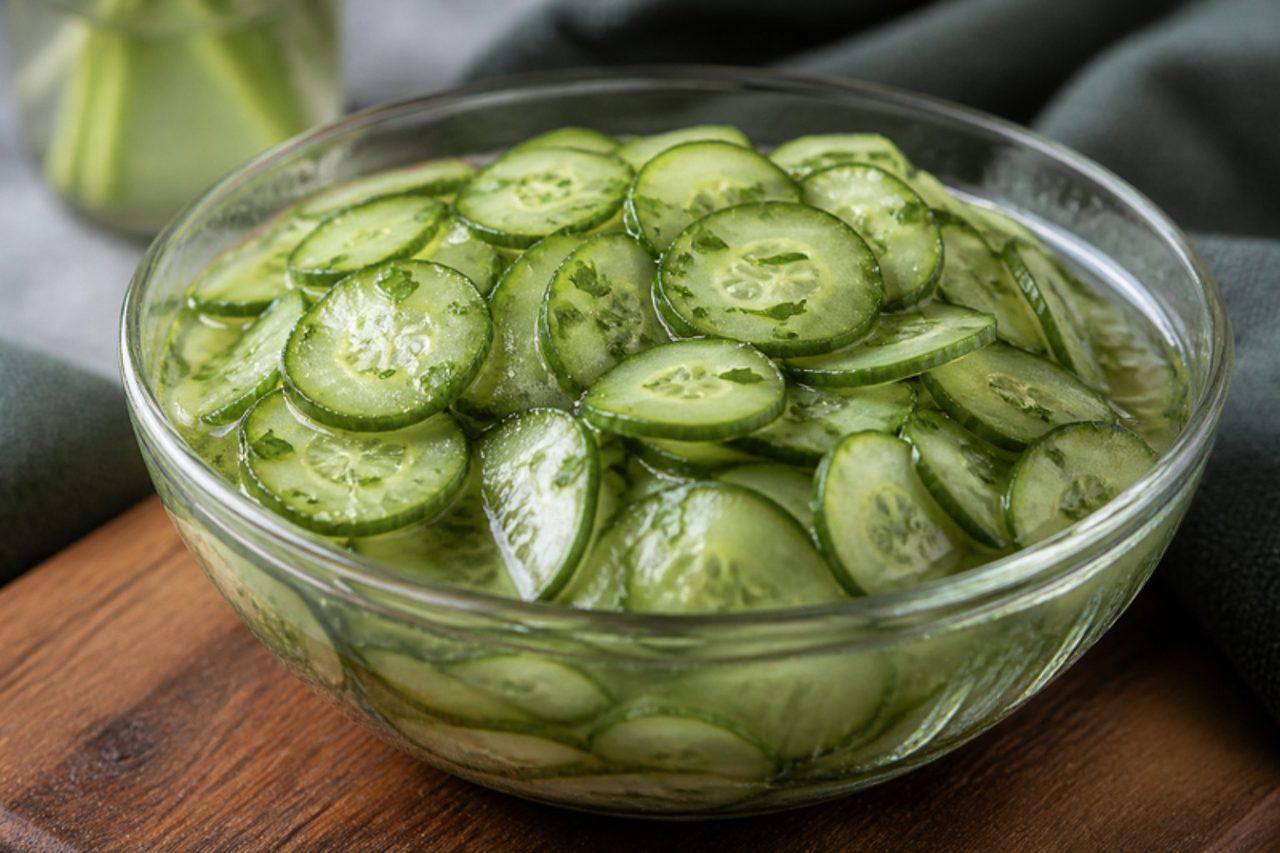
PressgurkaPickled cucumber

Pressgurka, 'pressed cucumber', is the quick, sweet-sour cucumber pickle that goes with Swedish meatballs, fish, roast chicken and the Christmas julbord: very thin cucumber slices salted and pressed to soften, then covered in a light vinegar-sugar brine and scattered with parsley. A common mistake is skipping the press, which leaves the slices stiff and the brine watery. Chef's tip: slice on a mandoline as thin as paper, salt for 10 minutes and squeeze gently before adding the brine.

by KrazyBadal 0 views

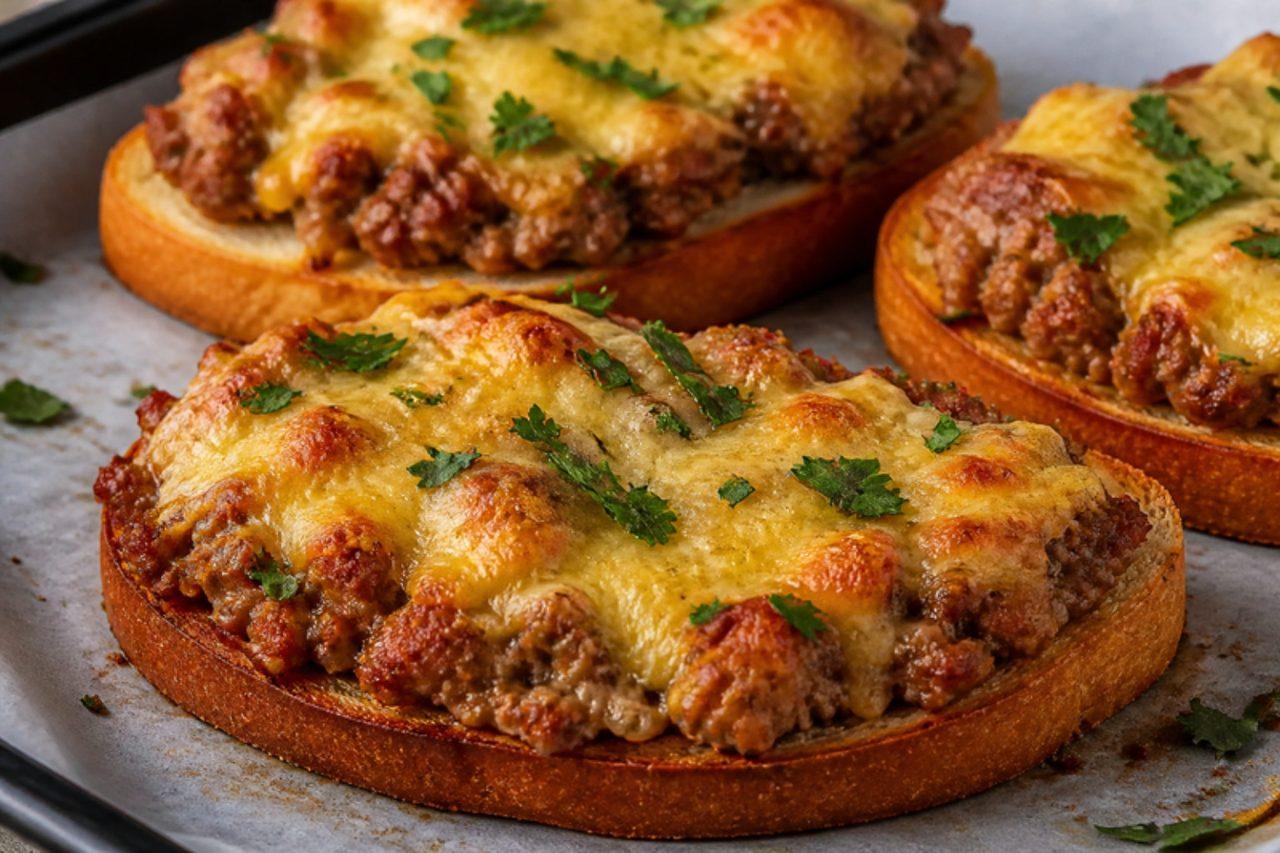
PrincesiToasted open sandwiches with mince

Bulgarian children grow up on princesi, the 'princesses' that parents slide into the oven for a quick Saturday breakfast or a late supper, and Sofia cafés sell them by the plateful. Slices of bread are spread with a thin layer of mince, usually half pork and half beef, seasoned with grated onion, cumin, savory and paprika, then baked until the meat is browned and the bread underneath turns crunchy; grated kashkaval cheese on top is a popular extra. A meat-free version uses egg and white cheese instead. Serve hot with a tomato and cucumber salad or a glass of ayran. Where most people go wrong is spreading the mince too thickly, so the top browns before the meat is cooked through; keep it to about 5 mm. Chef's tip: spread the mince with a wet spoon right to the crust edges, which stops the exposed bread from burning.

by KrazyBadal 0 views

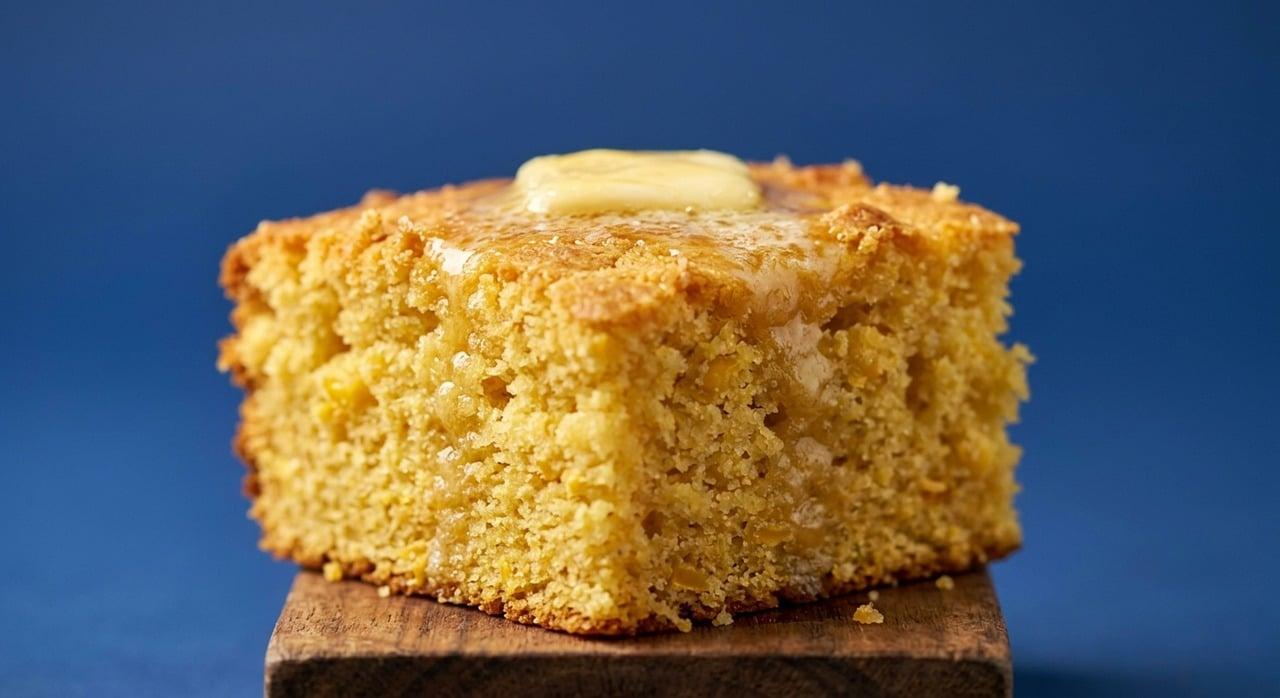
ProjaSerbian cornbread with cheese

Golden squares of proja sit on breakfast tables all over Serbia, from Šumadija farmhouses to Belgrade flats, next to a bowl of plain yogurt or a spoon of kajmak. This is the rich, cheesy kind: fine cornmeal is stirred with eggs, yogurt, oil and a fizz of sparkling water, then baked until the crust crackles and the inside stays moist and slightly crumbly, with salty pockets of white cheese. White brined cheese is usually made with animal rennet, so pick one labelled vegetarian if that matters to you. The usual slip is using coarse polenta, which bakes up gritty; look for finely ground yellow cornmeal. Chef's tip: heat the oiled tin in the oven before the batter goes in, so the base and edges start crisping the moment they hit the metal.

by KrazyBadal 0 views

PrószaCornmeal cake with sour cream

Before wheat was common in the Őrség and Göcsej, the wooded border country of western Hungary, cornmeal was the everyday flour, and prósza was what came out of the bread oven on baking day. It is a moist, golden cornbread cake, made rich and tender with sour cream, sweet but not sugary, with a crumbly crust. Families in the region eat it warm for breakfast or afternoon coffee, either plain, spread with plum jam, or baked with a layer of sweet túró and sour cream on top, as here. Túró is normally made without rennet, but check the label. The usual slip is using coarse polenta, which stays gritty; choose fine cornmeal, and let the batter rest so it softens. Chef's tip: scald the cornmeal with the hot milk first; it swells and gives a much softer crumb.

by KrazyBadal 0 views

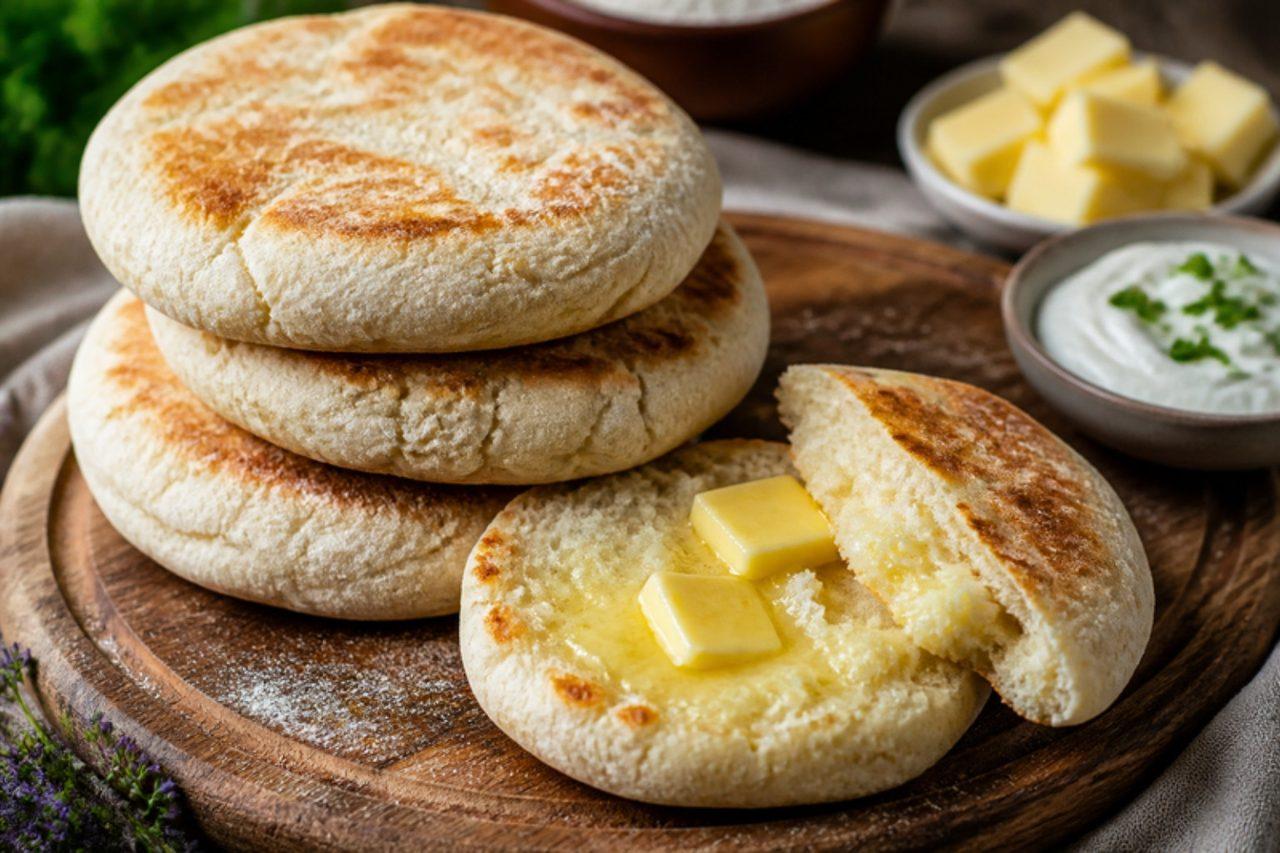
ProziakiSoda flatbreads

Farm kitchens around Rzeszów and Krosno made proziaki when there was no time to wait for yeast: sour milk, flour and a spoon of soda, patted into rounds and cooked on the hot iron top of the stove. They rise into soft, scone-like breads about 2 cm thick, lightly charred outside, with a tender, faintly tangy crumb, and they are split while hot and spread with butter or jam, or eaten with soup. A common mistake is overworking the dough, which knocks out the gas and makes them tough. Chef's tip: keep the pan on a medium-low heat; if they brown in under 3 minutes, the middle will still be doughy.

by KrazyBadal 0 views

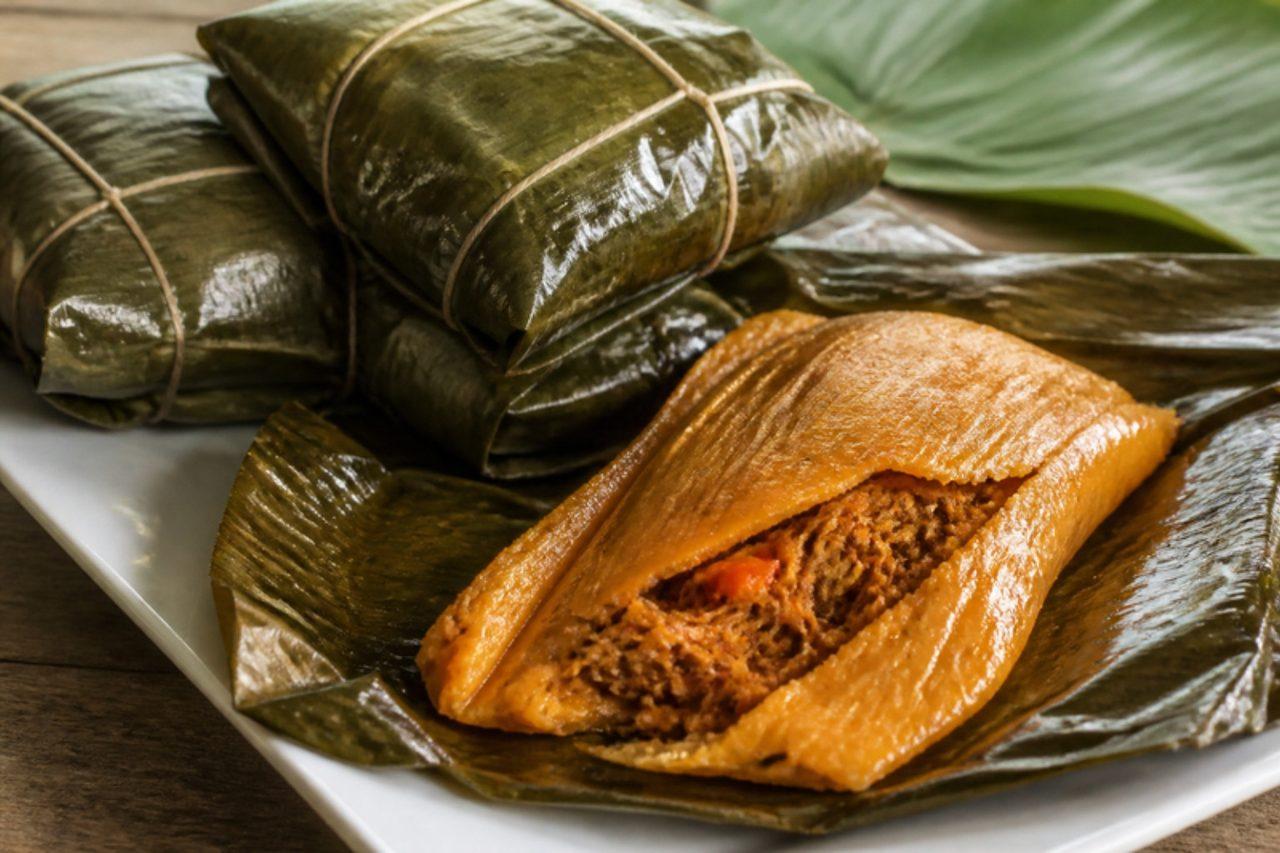
Puerto Rican pastelesPork-filled green banana parcels

Making pasteles is a December production line in Puerto Rican homes, from Orocovis in the mountains to the Bronx: one person grates, one seasons, one spreads masa on plantain leaves and someone else ties the strings, and dozens go into the freezer for Nochebuena. The masa is grated green banana, yautía and a little calabaza coloured with annatto oil; the filling is diced pork shoulder stewed with sofrito, olives, capers and chickpeas. Each parcel is boiled until the masa sets into a soft, savoury pudding. The common mistake is spreading the masa too thick, which leaves a raw, gummy centre. For a vegetarian version, fill them with chickpeas and diced vegetables stewed in the same sauce. Chef's tip: grate the roots on the finest side of the grater (or blitz them with a little of the annatto oil) for the smooth, silky masa that marks a good pastel.

by KrazyBadal 0 views

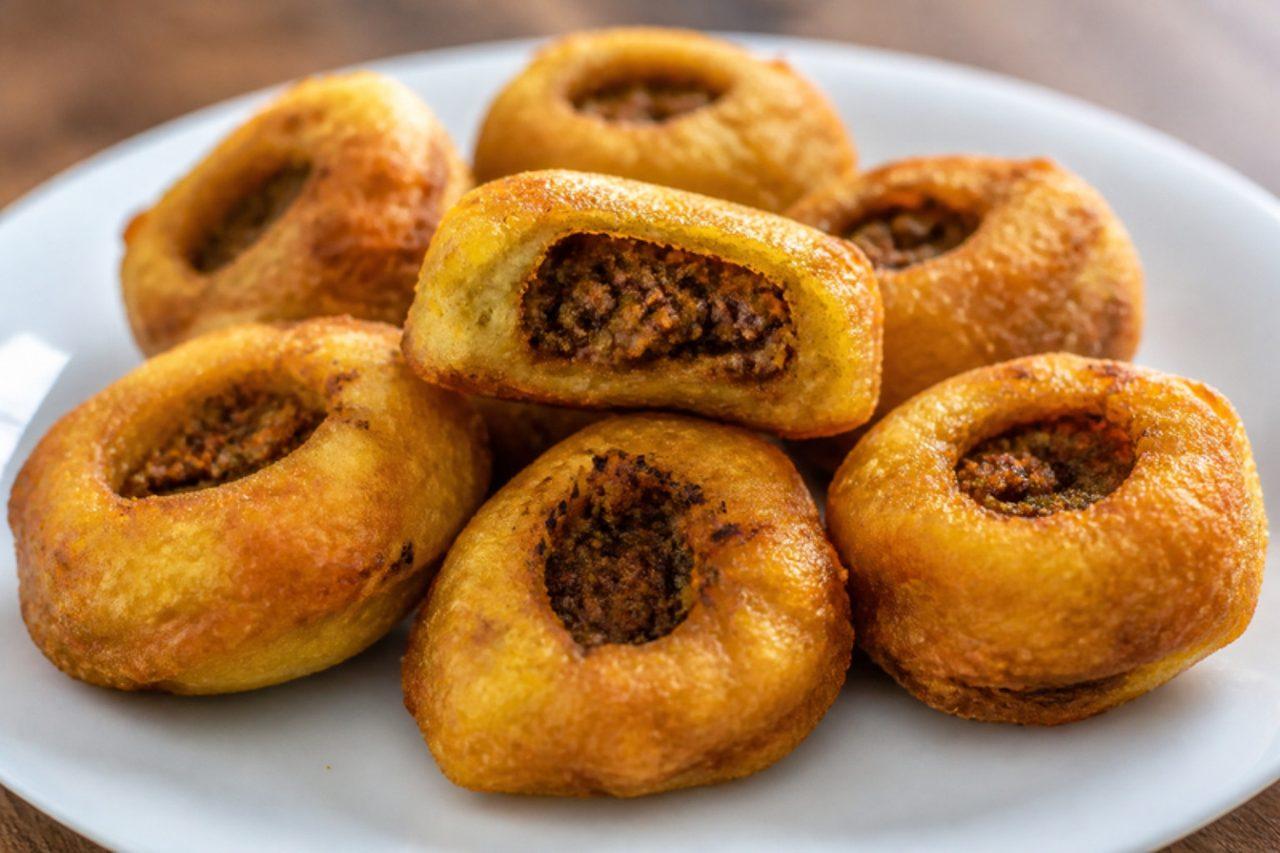
Puerto Rican piononosBeef-stuffed plantain rings

Around Loíza and in the frituras kiosks of Piñones, piononos are sweet-and-savoury rings of ripe plantain wrapped around beef picadillo, sealed with beaten egg and fried until golden. The sugar in very ripe plantain caramelises against the salty, olive-studded filling, and they are served hot as a starter or a whole lunch with salad. The common mistake is using yellow plantains that are only just ripe; they crack when bent, so wait until the skins are mostly black. Chef's tip: fry the plantain strips only until soft and pliable, not crisp, so they wrap round the filling without snapping.

by KrazyBadal 0 views

Pui shak bhajiStir-fried Malabar spinach

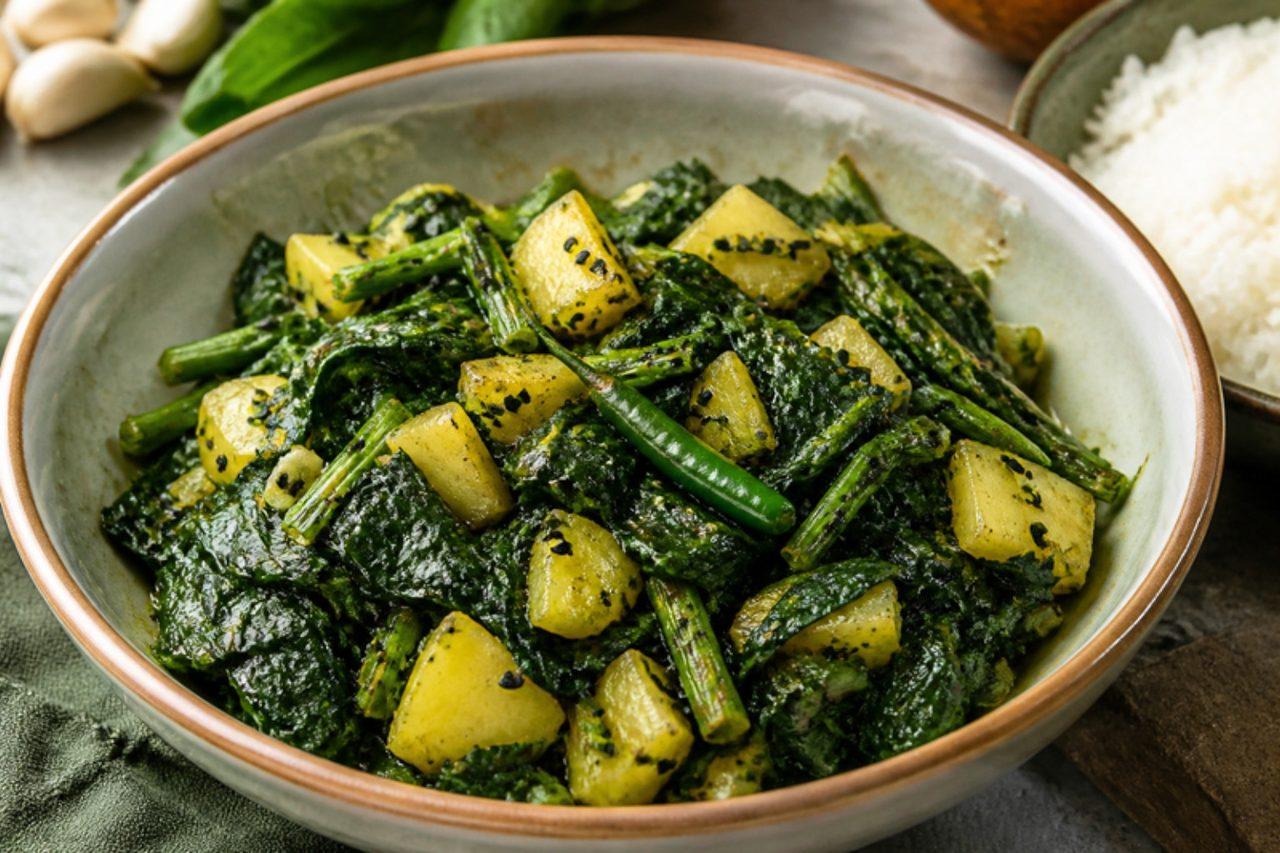
Pui shak climbs over the tin roofs and fences of village homes all through the monsoon, and its thick, glossy leaves and succulent stems cook down into a soft, slightly silky side dish that people either love or find a little slippery. In most homes it is cooked with small shrimp, or with a fish head, and with chunks of pumpkin or potato; this is the plain vegetarian version, with garlic, green chilli and a pinch of nigella, plus a few cubes of potato for body. It is eaten with hot rice and dal at lunch, especially in July and August when the vine is at its best. Covering the pan is the misstep that makes it watery and slimy; keep it open and let the moisture cook off. Chef's tip: cut the thick stems into short pieces and give them a 3-minute head start before the leaves go in.

by KrazyBadal 0 views

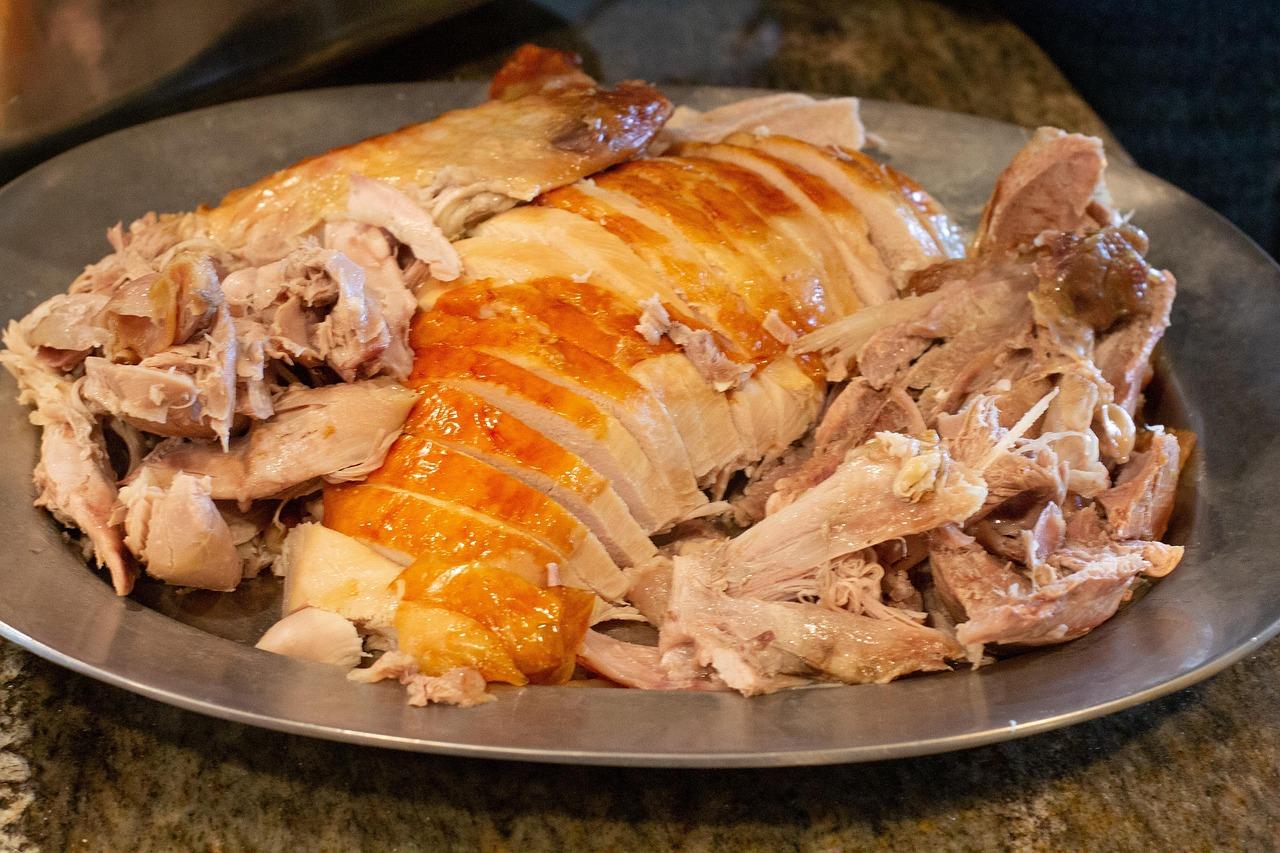
Purica s mlincimaRoast turkey with flatbread

Up in Zagorje, the green hill country north of Zagreb in Croatia, this is the Sunday and Christmas roast: turkey roasted slowly and basted until the skin is crackling-brown, then served with mlinci, thin dried flatbreads broken into pieces, scalded and tossed in the roasting juices until they turn soft, chewy and glossy like rustic pasta. Serve it with a sharp cabbage or green salad. Where most people go wrong is soaking the mlinci too long, so they turn to porridge; one minute in hot water is enough. Chef's tip: bake the mlinci yourself the day before, but if you are short of time, good dried shop mlinci work beautifully.

by KrazyBadal 0 views

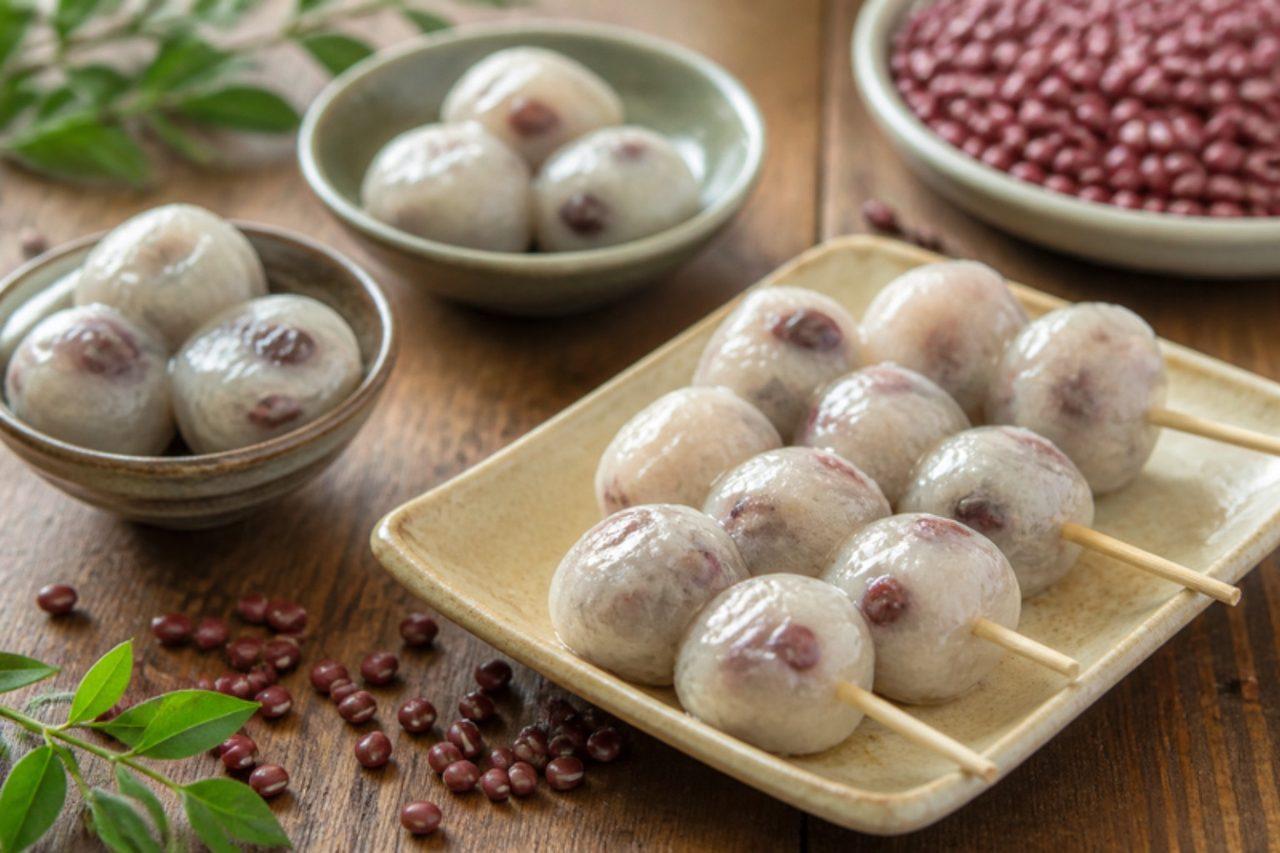
Put chai koRed bean rice cakes

Handed out on a pair of bamboo skewers from the glass cabinets of old-style snack stalls in Sham Shui Po and Yau Ma Tei, put chai ko is a nostalgic after-school treat that Hong Kong grandparents still queue for. Each little cake is steamed in its own porcelain bowl, then popped out whole: smooth, slightly bouncy and chewy, either pale and sweet or golden with brown sugar, studded with soft red beans. It is eaten at room temperature while walking down the street, no plate or cutlery needed. The red beans sinking to the bottom is the most frequent letdown, which happens when they go into thin, raw batter. Chef's tip: half-cook the batter by stirring the boiling syrup into the rice flour slurry, so it thickens just enough to hold the beans in place.

by KrazyBadal 0 views

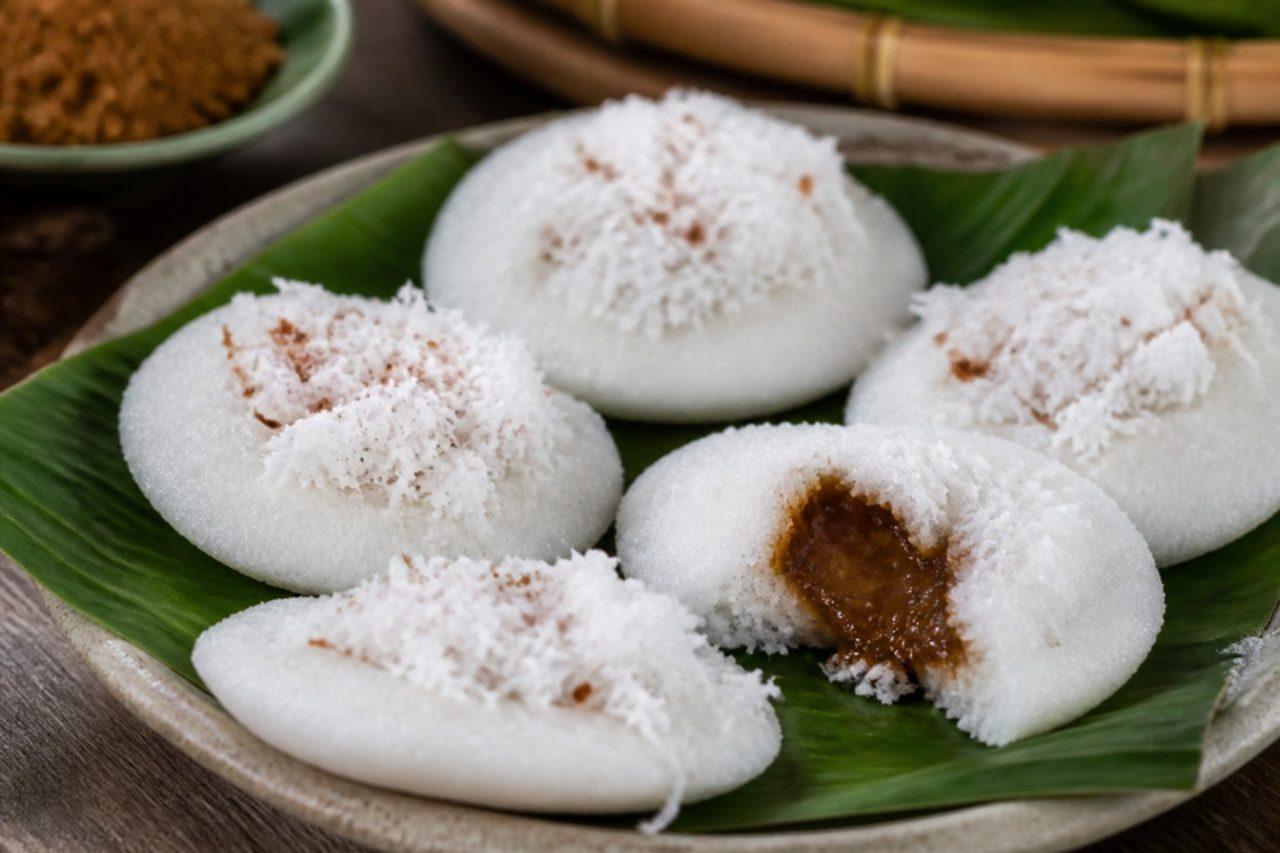
Putu piringPalm sugar steamed rice cakes

Long lines form outside the putu piring stalls around Haig Road and Geylang Serai, especially in the evenings of Ramadan, for these soft white discs steamed one by one in shallow cone-shaped moulds. Each one hides a centre of gula melaka that melts into a dark, smoky syrup, and the cakes come off the steamer on a pandan leaf with a heap of fresh grated coconut, lightly salted, on top. The texture is crumbly and light, and the salt in the coconut keeps the palm sugar from cloying; eat them hot, with a cup of teh. The usual mistake is chopping the gula melaka too coarsely, so the big chunks never melt and stay grainy; shave or chop it fine. Chef's tip: steam the grated coconut with a pinch of salt and a pandan leaf for a few minutes first, so it stays fresh-tasting and keeps longer.

by KrazyBadal 0 views

Pwason gwo sèlFish poached in lime broth

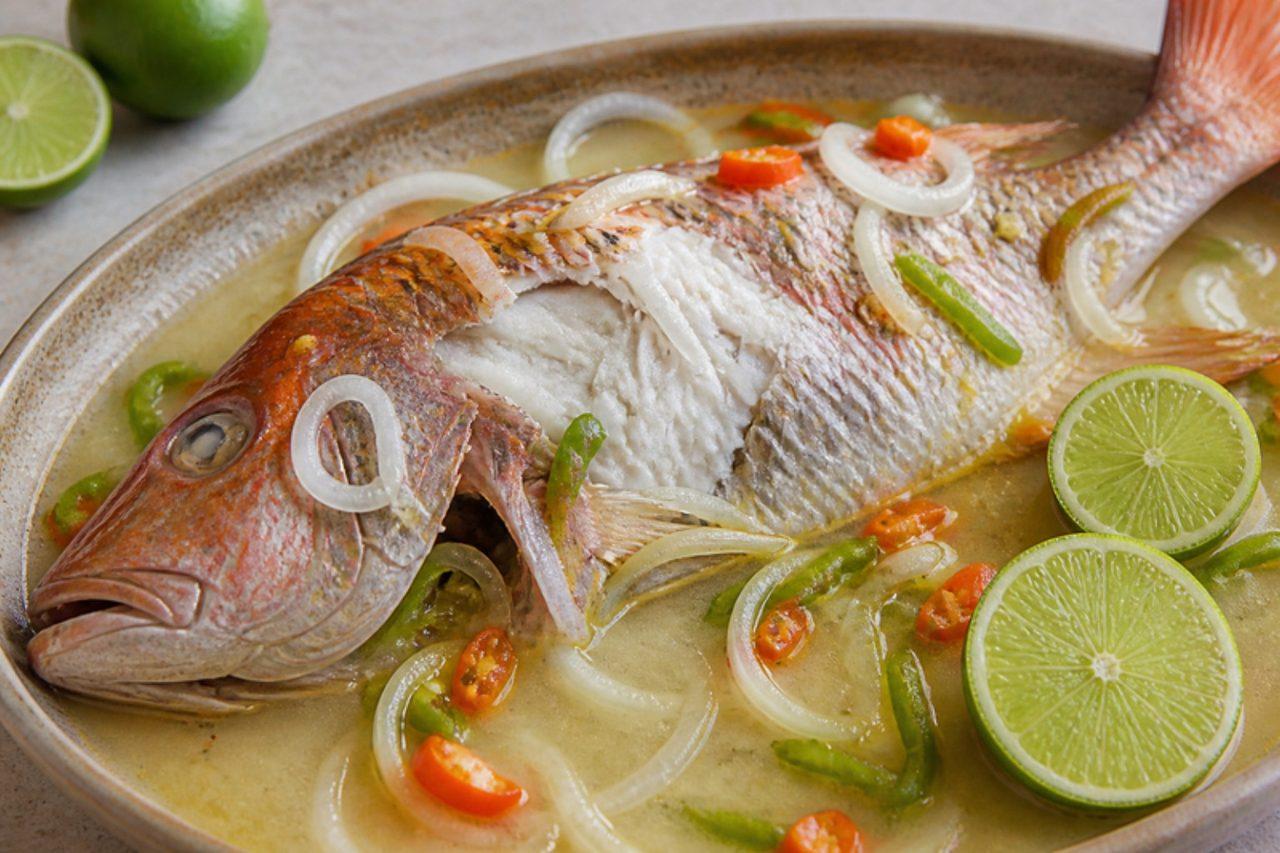
Fishing villages on Haiti's southern coast make pwason gwo sèl, "big-salt fish", when the catch is fresh: whole snapper rubbed with lime and coarse salt, then gently poached in a peppery broth with onion, peppers, thyme and a whole scotch bonnet. The fish stays moist and clean-tasting, and the light broth is spooned over boiled plantain or rice. The common mistake is boiling it hard, which breaks the flesh; keep it at a gentle shiver. Ask for the fish scaled and gutted. Chef's tip: slash the fish twice on each side and push epis into the cuts so the flavour reaches the bone.

by KrazyBadal 0 views

PyshkiRing doughnuts

On Bolshaya Konyushennaya street in St Petersburg a small pyshechnaya has been frying these since the 1950s, and locals will tell you firmly that a pyshka is not a ponchik, the filled Moscow doughnut. They come in a paper bag five or six at a time, so hot that the icing sugar melts at the edges, with a glass of sweet milky coffee from a big urn. The soft, fairly wet yeast dough gives a light, open crumb inside a thin golden shell. The usual slip is oil that is too cool: the rings soak it up and turn heavy, so keep a thermometer in the pan at 175 °C. Chef's tip: set each shaped ring on its own small square of baking paper and lower the paper into the oil with it; the paper slips off after a few seconds and the ring stays perfectly round.

by KrazyBadal 0 views

Pyzy z mięsemPork-filled potato dumplings

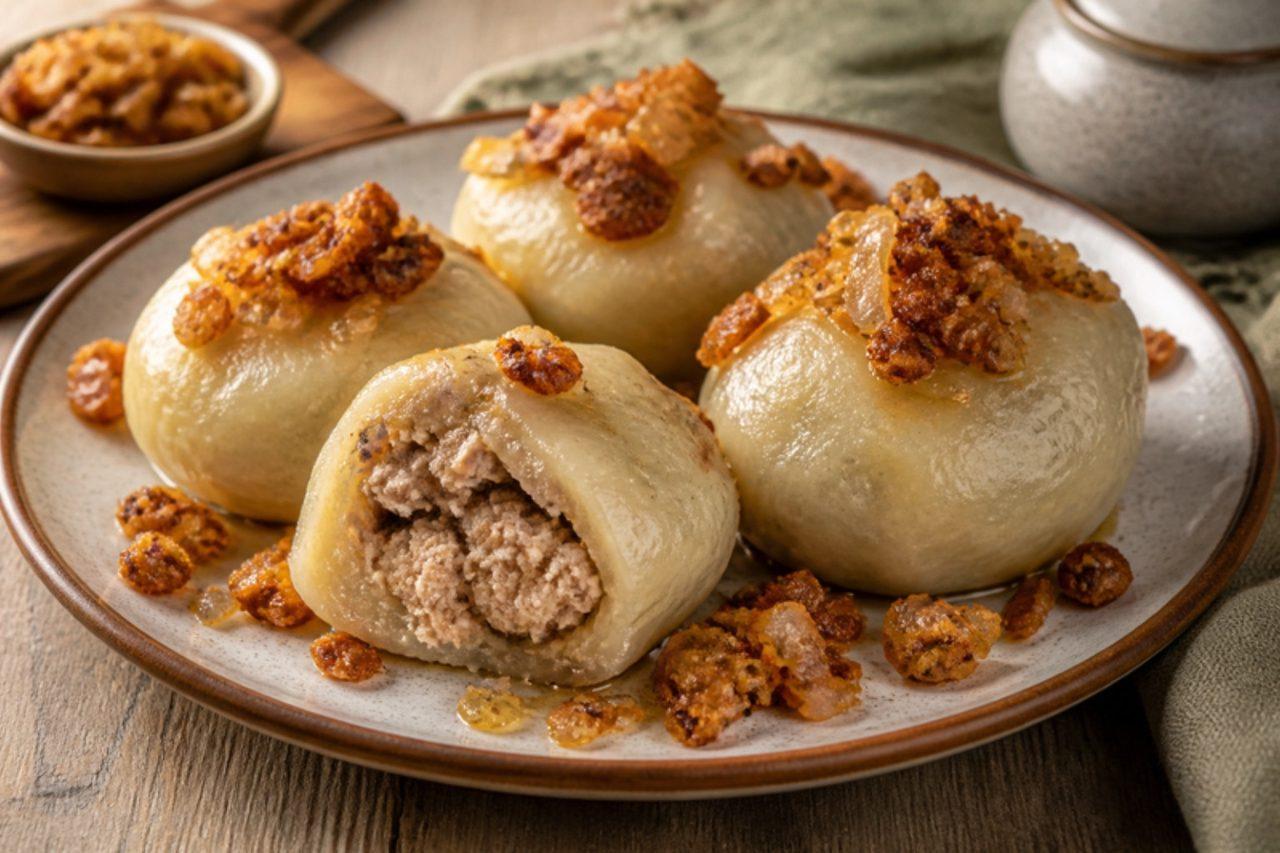
Old Warsaw's Praga district made pyzy famous: at the Bazar Różyckiego market, traders once ladled them hot from jars wrapped in blankets. These are large, soft balls of raw and boiled potato, filled with seasoned minced pork and topped with fried onion and crisp pork crackling (skwarki) that drips its fat over the plate. The outside is silky and slightly chewy, the middle savoury with marjoram. A glass of kefir or a bowl of sauerkraut salad cuts the richness. The pitfall is leaving too much water in the grated raw potato, so the dough is sticky and the dumplings fall apart. Chef's tip: let the squeezed potato liquid stand for 10 minutes, pour off the water and scrape the white starch at the bottom back into the dough; it binds everything for free.

90 minPolishMeat
by KrazyBadal 0 views

Qeema parathaMince-stuffed paratha

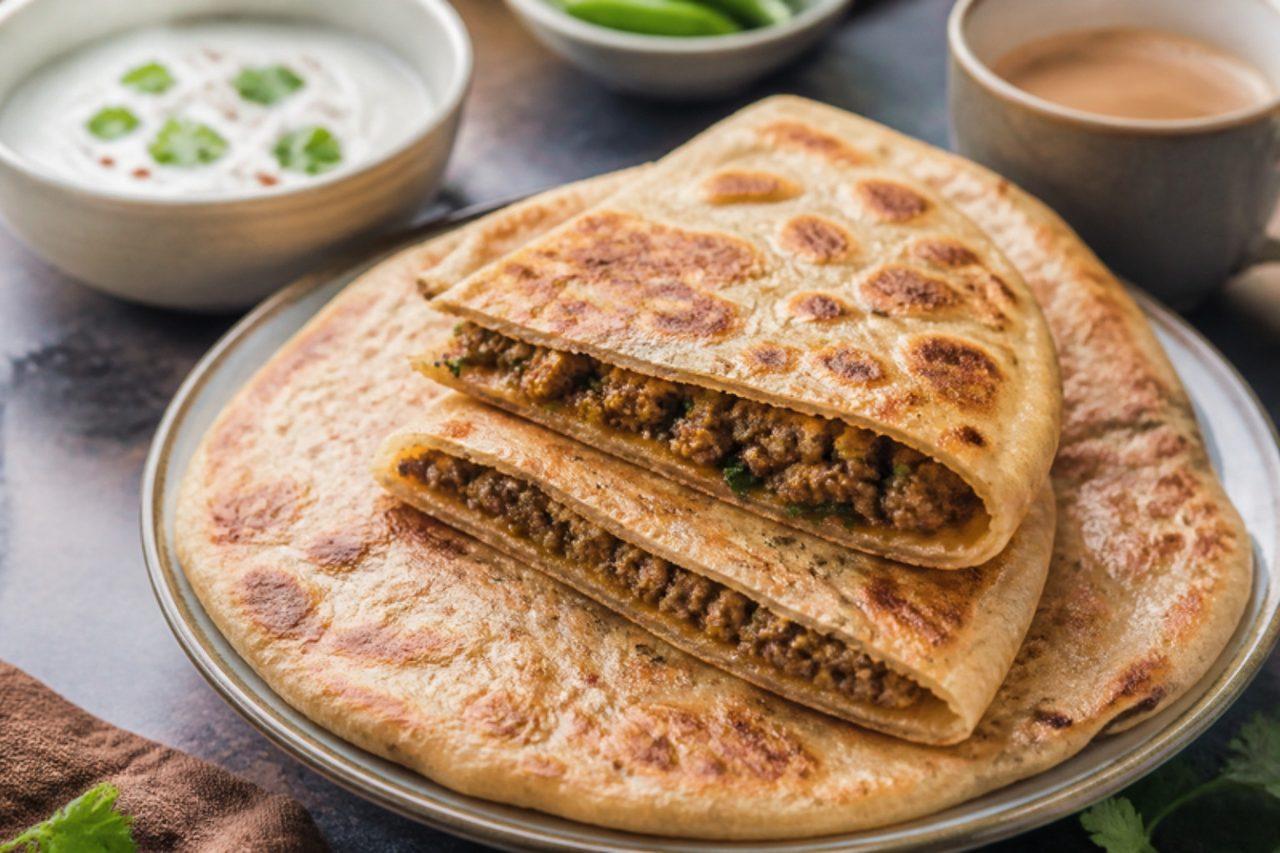
Leftover keema from last night's dinner becomes the best breakfast in a Pakistani kitchen, cooked dry, packed into paratha dough and fried on a tawa until crisp and flaky, then served with a cup of strong doodh patti chai and a bowl of yogurt. It is weekend nashta from Islamabad to Hyderabad, and roadside dhabas on the GT Road make it to order for truck drivers before dawn. The filling is savoury, fragrant with cumin and green chilli, and lifted with onion and coriander. A wet filling is the big hazard; it tears the dough and steams instead of crisping, so cook the mince until completely dry and let it cool before stuffing. Chef's tip: mince the cooked keema briefly in a food processor so it is fine and spreads evenly, giving thinner, flakier parathas that do not split.

by KrazyBadal 0 views

QifqiRice balls with egg and mint

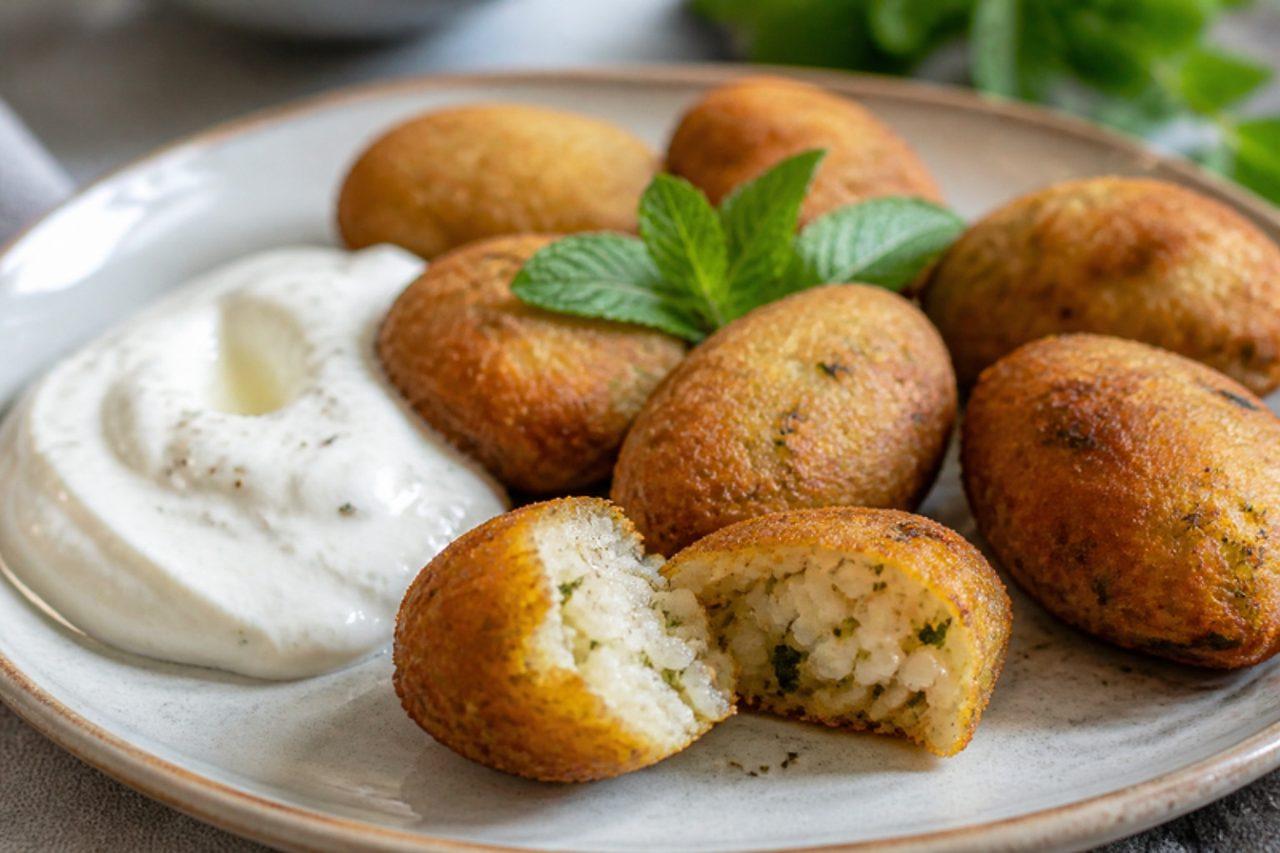
Walk the steep cobbled lanes of Gjirokastër, the stone city of southern Albania, and you may catch the smell of qifqi frying: small egg-bound rice balls flavoured with dried mint and plenty of black pepper, traditionally cooked in a heavy pan with round hollows called a qifqilore. Golden and crisp outside, soft and slightly sticky inside, they appear as a meze with yogurt and pickles, or as a light supper with a tomato and cucumber salad. A frying pan works perfectly well at home. Rice cooked too wet is the classic error, because sloppy grains never hold a shape; cook it until every drop of water is absorbed and let it cool before mixing. Chef's tip: wet your hands and squeeze each ball firmly, like a snowball, before flattening it slightly; a loosely packed ball splits as soon as it hits the oil.

by KrazyBadal 0 views

Qorma-e-alu bukharaLamb stew with dried plums

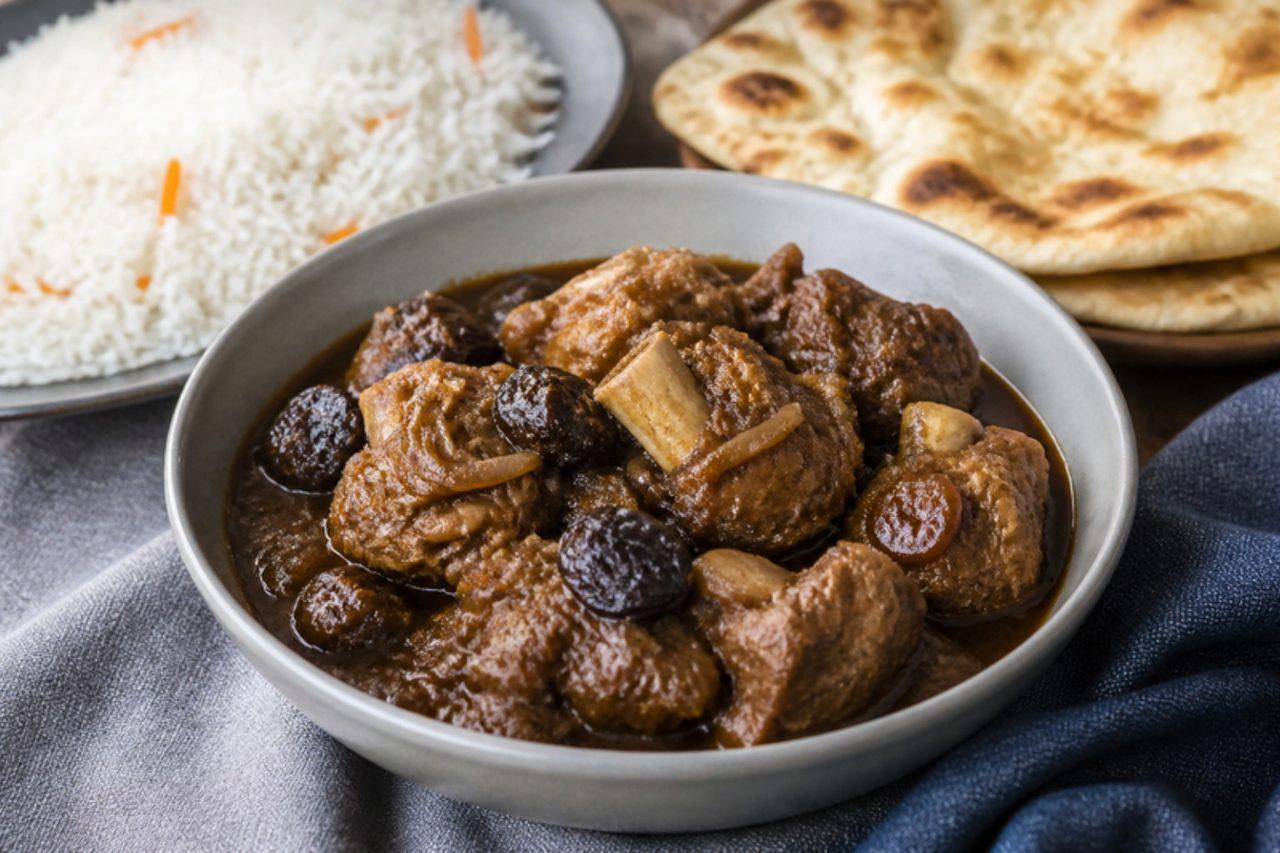
Of all the qormas served at Kabul dinner parties, the one with alu bukhara, small sour dried plums, is the one guests remember: lamb braised slowly in a dark sauce of caramelised onion, garlic and warm spices, with plums that collapse into it and leave a sweet-sour tang that cuts through the richness. It is ladled over chalow or eaten with naan, often alongside a lighter vegetable dish and a bowl of yogurt. Chicken works too, using thighs on the bone and halving the simmering time. Pale, half-fried onions give a thin, sweet sauce with none of the proper colour, so be patient and take them to a deep chestnut brown. Chef's tip: add the plums for the last half hour only; if they cook from the start they vanish completely and make the sauce too sour.

105 minAfghanMeatGluten free
by KrazyBadal 0 views

Qorma-e-kachalooPotato and lamb stew

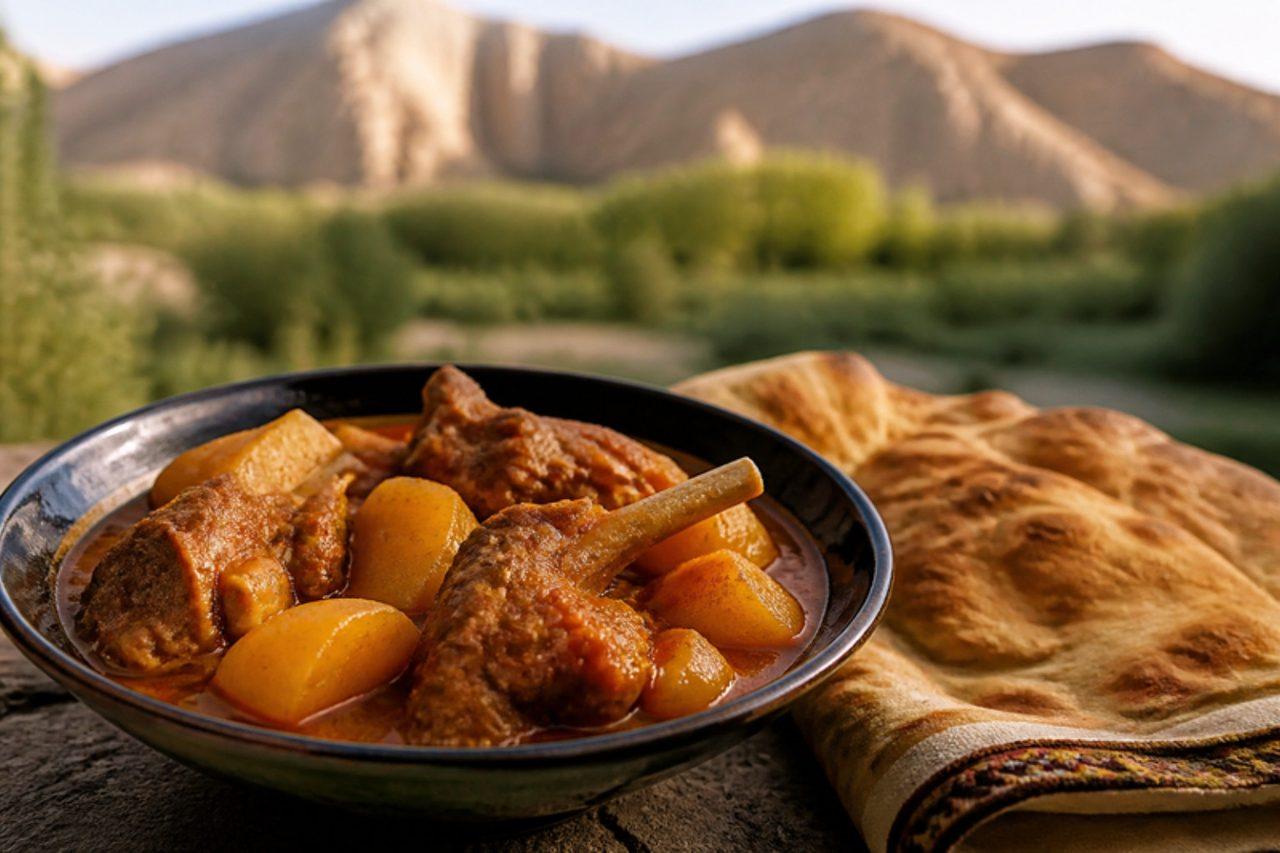
The Bamiyan valley is famous across Afghanistan for its potatoes, grown in terraced fields below the cliffs, and Hazara families turn them into qorma-e-kachaloo, a homely stew where chunks of potato soak up an onion and tomato sauce made rich by a modest amount of lamb. The potatoes go soft and slightly floury at the edges, thickening the sauce, and the dish is eaten with naan or bata on long winter evenings. It is just as often made without meat: use a tin of chickpeas instead of the lamb and cut the cooking time to about 35 minutes. Potatoes added at the start disintegrate long before the lamb is tender, so give the meat a head start. Chef's tip: cut the potatoes into large chunks and fry them briefly in the oil before they join the stew, so they hold their shape.

by KrazyBadal 0 views

Qorma-e-lawandChicken in yogurt coriander sauce

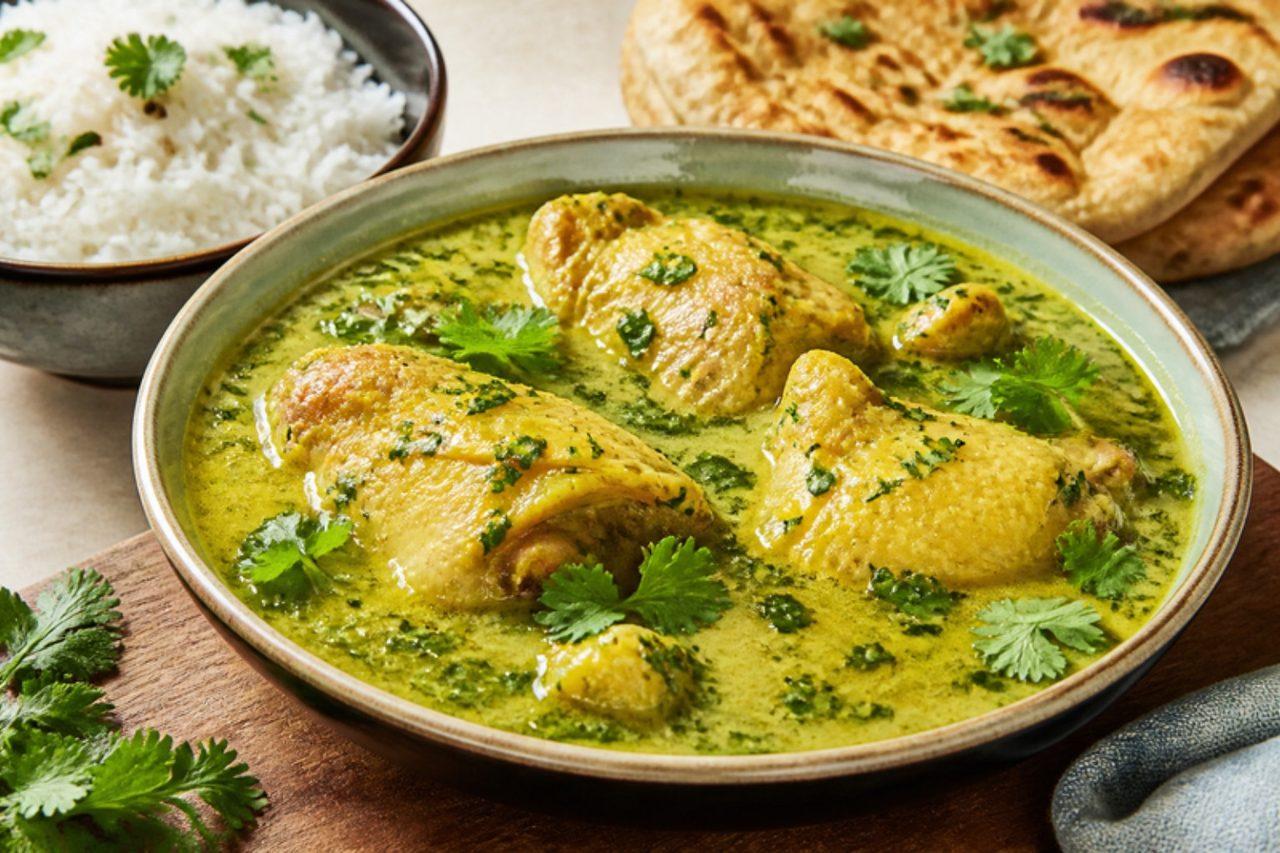
Lawand is the gentle member of the Kabul qorma family, the one cooked for children, for guests who don't eat chilli and for anyone recovering from illness: pieces of chicken simmered with onion, garlic and turmeric, then folded into a creamy yogurt sauce thick with chopped fresh coriander. The sauce is pale gold, tangy and smooth, and it is always served with rice, usually chalow or soft bata, to soak it up. Lamb can be used instead; simmer it for about 70 minutes before the yogurt goes in. Boiling the sauce once the yogurt is added makes it curdle into grainy specks, which is why it must only shiver gently. Chef's tip: beat a teaspoon of cornflour into the yogurt first; it stabilises it so the sauce stays silky.

by KrazyBadal 0 views

GovurgaRoasted wheat and nut mix

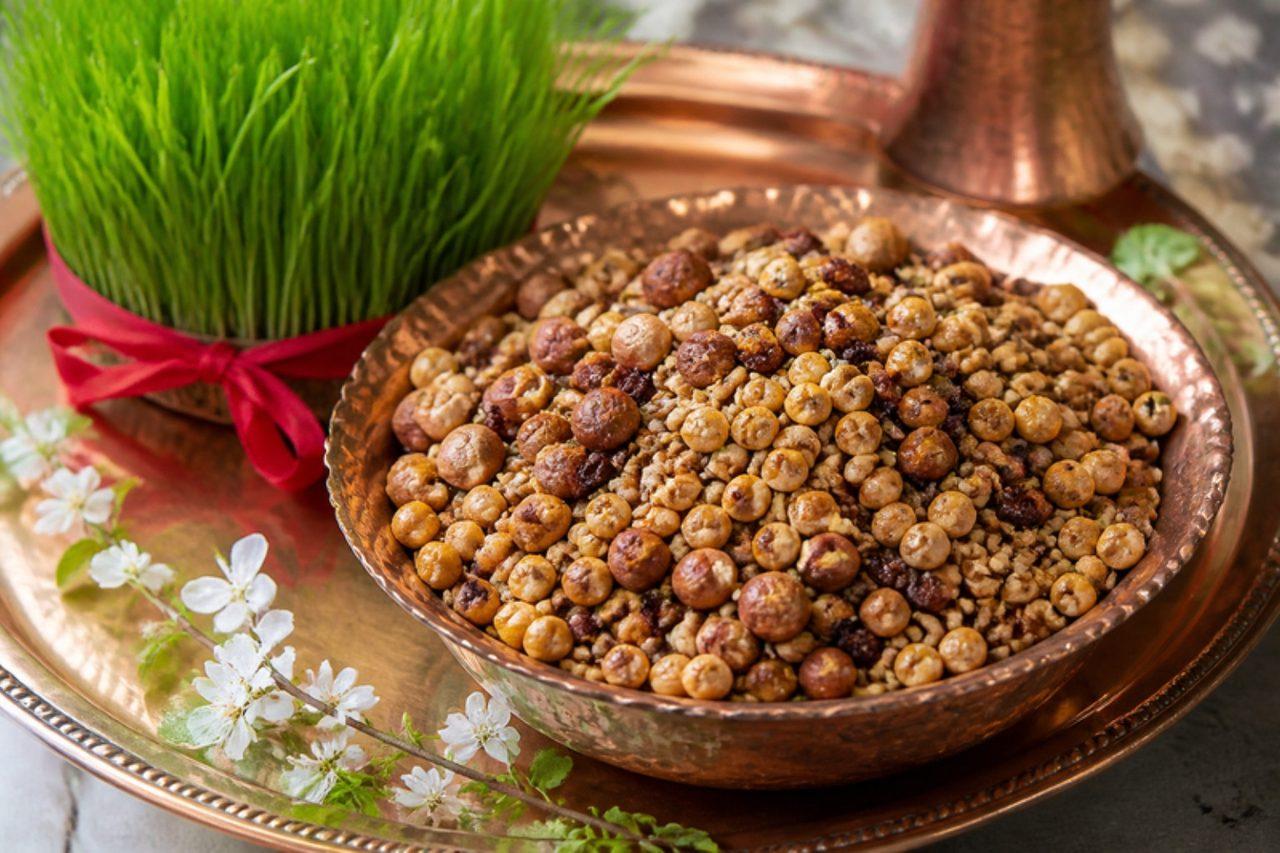
Govurga is one of the small symbolic foods on the Novruz table in Baku and the Absheron villages: wheat grains roasted in a dry pan until they crack, mixed with roasted hemp seeds, chickpeas, hazelnuts and raisins, and eaten by the handful through the festival. Children fill their pockets with it. A common mistake is roasting everything together; each part browns at a different speed. Chef's tip: shake the pan constantly and stop each batch as soon as it smells toasty and starts to pop. Hulled hemp seeds sold for cooking are fine to use.

by KrazyBadal 0 views

Showing 90 of 9,592 recipes

Page 527 of 1,066