


Skip to content
Prawn balchão
Featured recipe

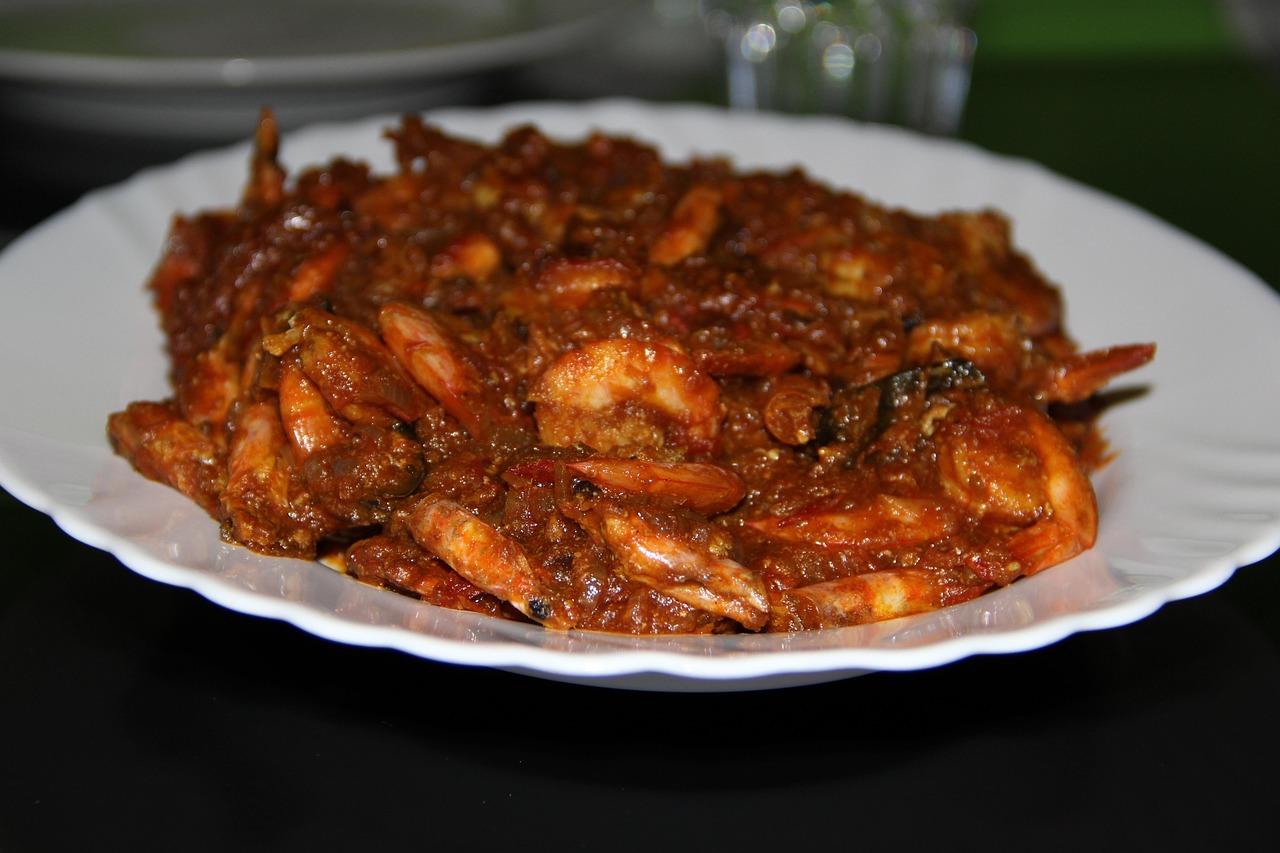
Prawn balchão

Sweet-sour prawn pickle curry

Balchão started as a way to keep the catch from the Goan monsoon season: prawns cooked down in a fierce red masala with vinegar and sugar until they keep like a pickle. In Goan homes a jar sits in the fridge to spoon beside rice and dal, and a fresh batch is served as a main curry on Sundays. Its taste is bold: hot, sharp and sweet all at once. Chef's tip: fry the masala slowly until the oil separates and it turns a deep brick colour; undercooked balchão tastes raw and vinegary.

Read more 0 views

What to eat today?

Around the world

Today's trip: Paraguayan

A new country every day, from every cuisine on the site.

Paraguayan

Chipa

Cheese bread rings 50 minMore from Paraguayan (27) →

This week's collection

Kid-friendly dinners
537 recipes · a new collection every Monday

Latest recipes

Sharbat-e khakshirIced rosewater drink with seeds

Khakshir are the tiny reddish seeds of flixweed, and in Yazd, Kashan and across the hot centre of Iran a glass of khakshir sharbat is what people drink on scorching summer afternoons and to break the fast on long Ramadan days. The seeds swell slightly and float through sweet iced water perfumed with rosewater, giving a gentle crunch; some add a squeeze of lime or a little sour cherry syrup. Find khakshir at Iranian grocers. Chef's tip: rinse the seeds in several changes of water and pour off anything that floats; dust and grit come away with it.

by KrazyBadal 0 views

Tamales de chipilínChipilín leaf tamales

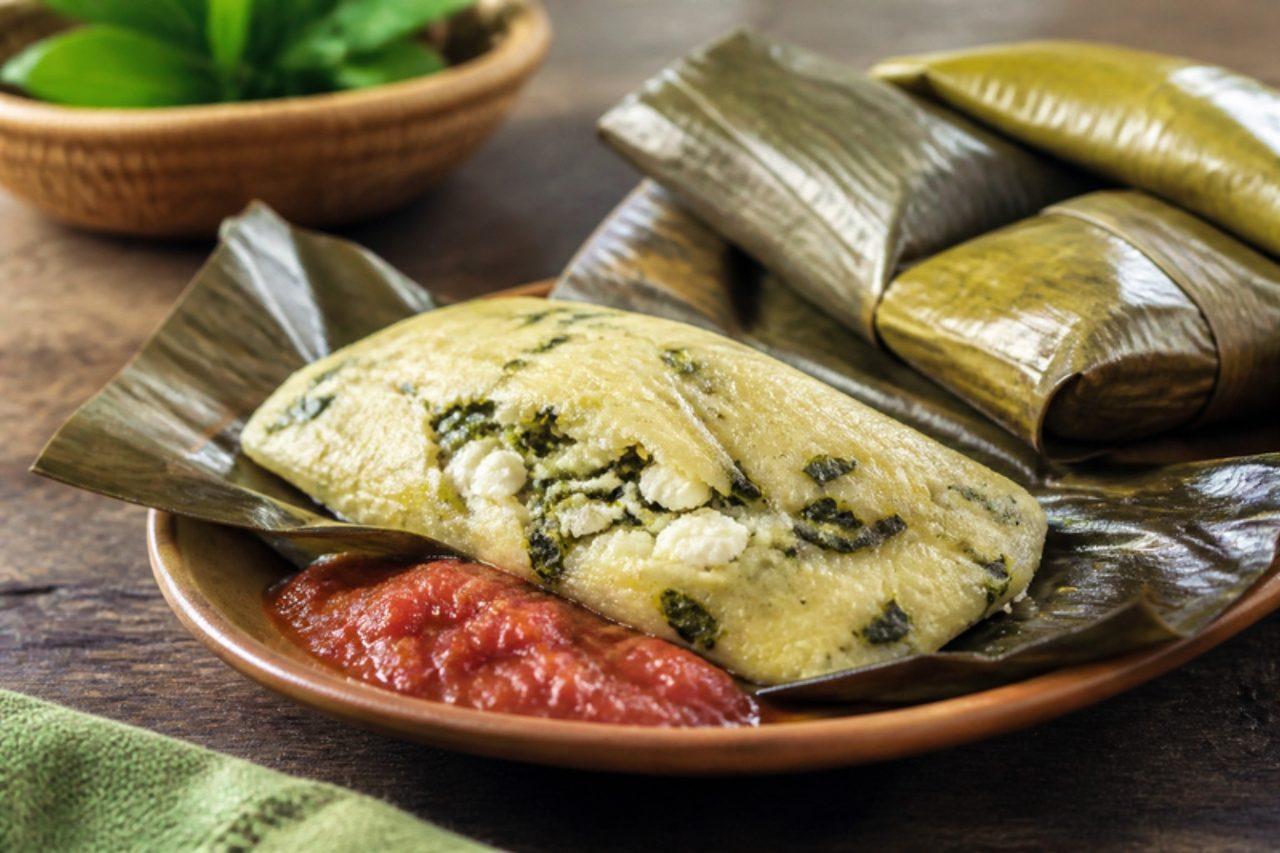
Chipilín is a small-leaved wild legume that grows along the fields of Chiapas and Tabasco, and its grassy, faintly bitter leaves turn up in soups, rice and, most of all, these tamales. In Tuxtla Gutiérrez and San Cristóbal they are sold from steaming pots in the early evening and taken home for supper with hot chocolate or atole: soft, pale green-speckled masa wrapped around a cube of fresh cheese, often with a spoon of tomato salsa. Cooks there beat the masa with lard; vegetable shortening gives the same light texture. Frozen chipilín is sold at Central American grocers; spinach with a few watercress leaves is a fair stand-in. Chef's tip: strip the leaves from the stems by pinching and pulling down; stems make the masa stringy.

by KrazyBadal 0 views

Tamales norteñosBeef corn tamales

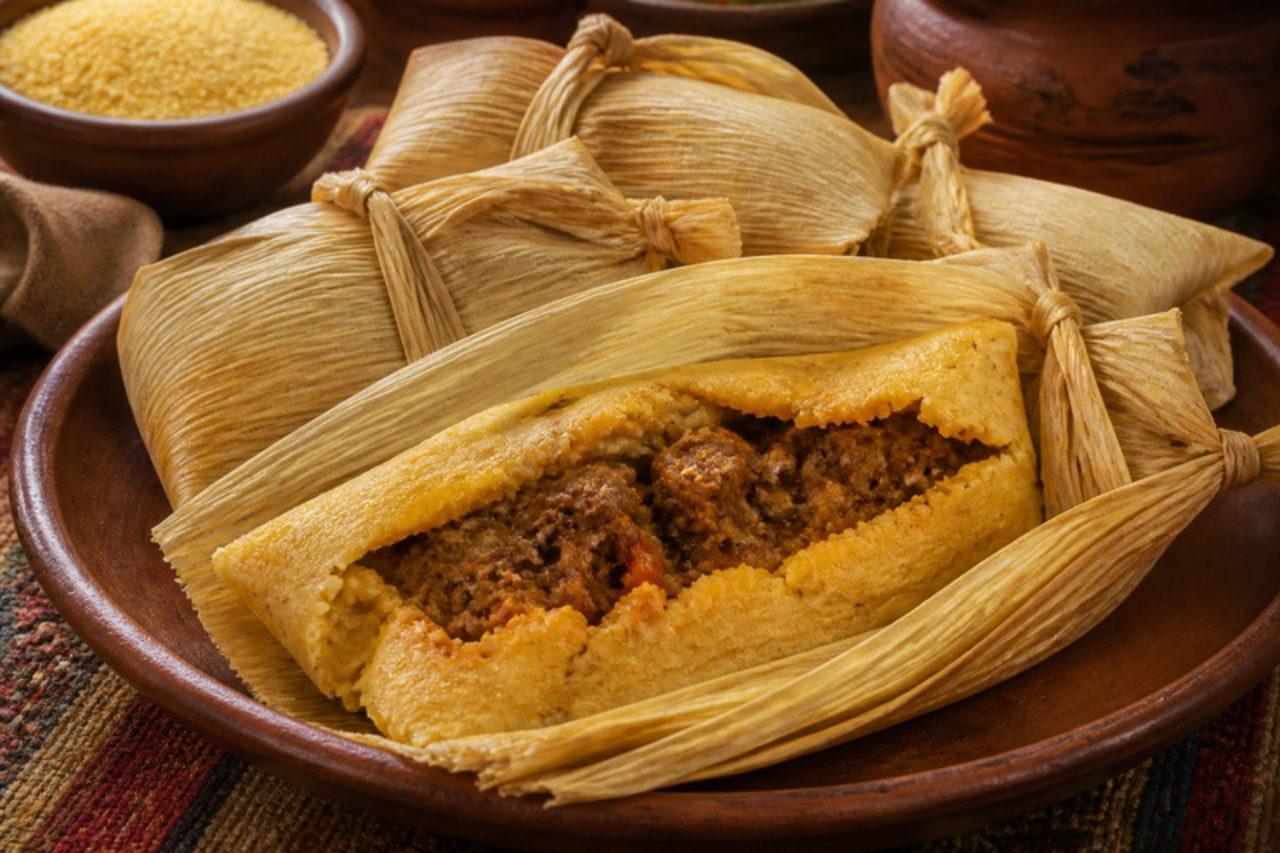
Families in Salta and Jujuy make tamales by the hundred, usually for the national holidays or for the winter fiestas in the Quebrada, with everyone at the table spreading dough onto husks, spooning in filling and tying parcels. The northern Argentine tamal is different from the Mexican one: the dough is made from finely ground white or yellow maize cooked with squash and beef fat, and the filling is a red, peppery mix of beef (traditionally from the head or charqui, dried beef) with onion, ají molido and cumin. Each parcel is folded and tied with a strip of husk into a little bundle, then boiled. Expect a long, hard afternoon, but they freeze well. Look for dried corn husks and fine maize flour in Latin American shops; masa harina also works. The filling must reach 71 °C, as for any mince, before it goes into the husks. Dough that is too dry is the usual mistake and cracks as it cooks; it should feel like soft polenta. Chef's tip: soak the husks in hot water for 30 minutes so they fold without splitting.

by KrazyBadal 0 views

Lorne sausageSquare beef and pork sausage

Lorne sausage, better known in Scotland simply as square sausage or slice, is a skinless loaf of seasoned beef and pork mince that is cut into squares and fried for the full Scottish breakfast, or slapped in a morning roll with brown sauce. It is easy to make at home and freezes well. Chef's tip: freeze the shaped block for an hour before slicing; it cuts into neat, thin squares.

by KrazyBadal 0 views

Loobia poloGreen bean rice with spiced lamb

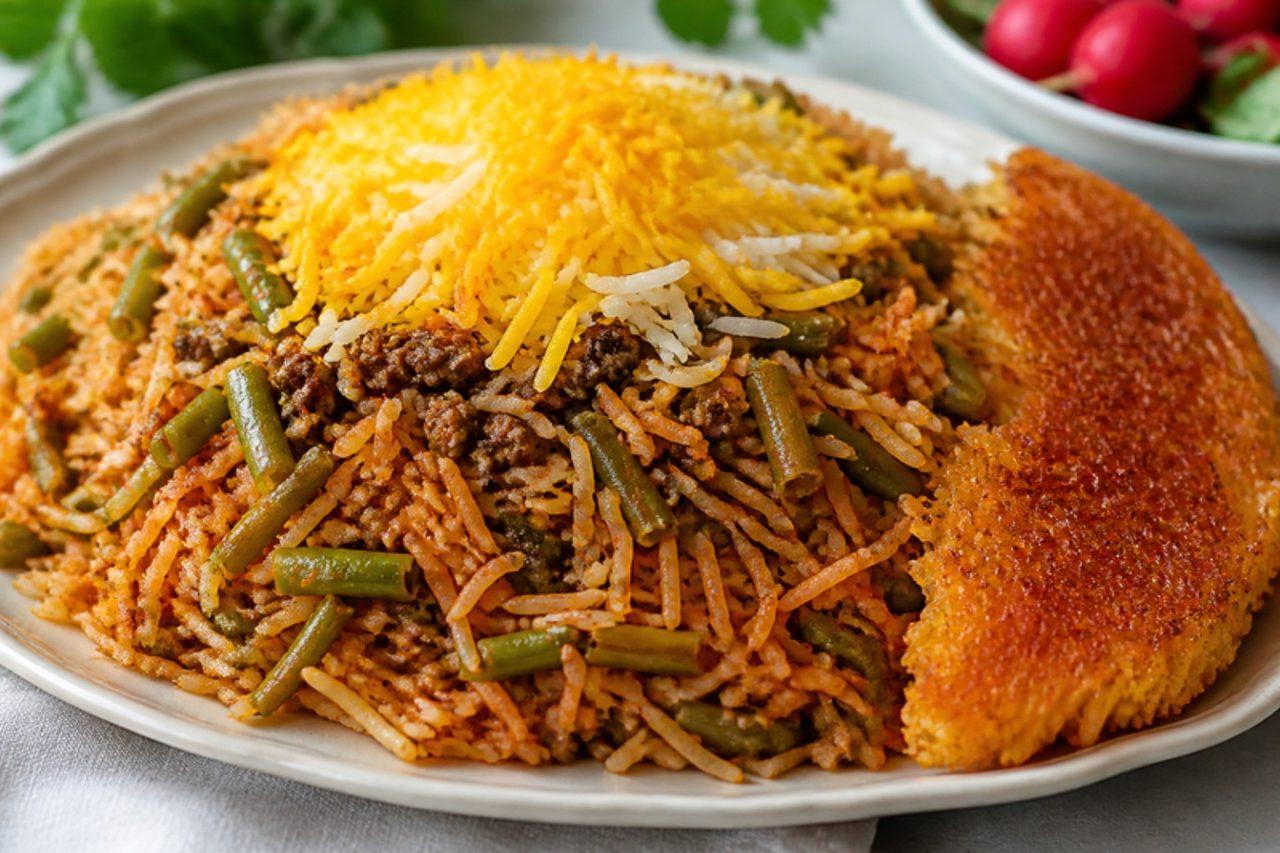
Loobia polo is a weeknight favourite in Tehran homes, the rice dish children ask for when they come home from school and the one packed for picnics on the slopes of Darband. Parboiled basmati is layered with a sauce of minced lamb or beef, short pieces of green bean, tomato paste and a warm hint of cinnamon, then steamed slowly until every grain is stained a soft orange and a crisp tahdig forms underneath. For a meat-free pot, swap the mince for diced potato and keep everything else the same. Serve with mast-o khiar, salad shirazi and torshi. A common mistake is adding the beans raw to the rice layers: brown them in the sauce first or they stay squeaky and pale. Chef's tip: let the tomato paste fry in the oil until it turns brick red before adding water; that is where the deep, sweet flavour comes from.

by KrazyBadal 0 views

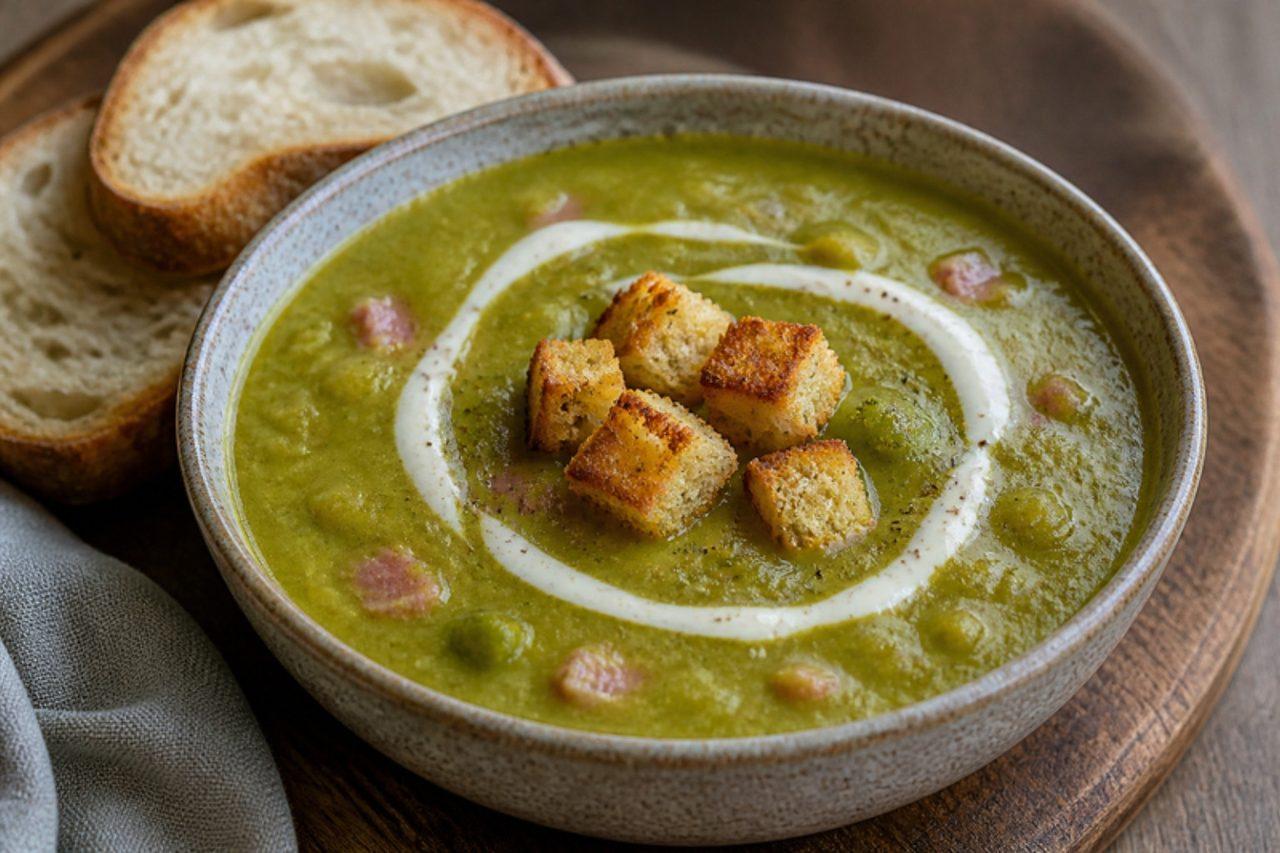
London particularSplit pea and ham soup

London particular is a thick, yellow-green soup of split peas and smoked pork ham hock, named after the pea-souper smogs that once smothered the city. It was a cheap winter warmer in Victorian London eating houses and is still on menus in pubs and cafés when the weather turns. The hock gives a deep smoky saltiness and shreds of soft meat. Chef's tip: skim the grey foam off as the water first boils, for a cleaner taste.

135 minBritishSoupsGluten free
by KrazyBadal 0 views

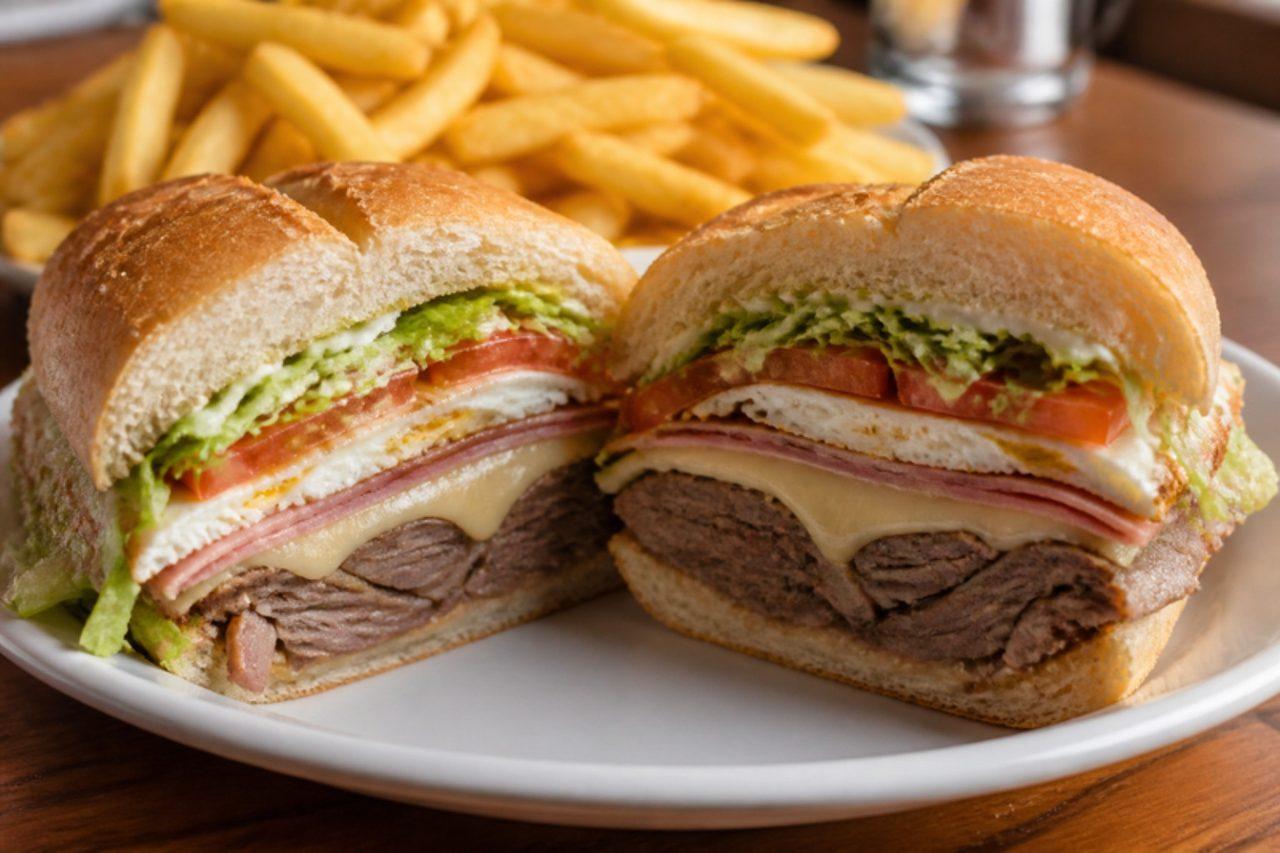
Lomito completoLoaded tenderloin sandwich

Córdoba claims the lomito as its own, and at lomiterías and late-night carts in the city it comes completo: thin, quick-seared slices of beef tenderloin piled into a big soft roll with cooked ham (pork), melting cheese, a fried egg, lettuce, tomato and mayonnaise. It is messy, juicy and filling, the classic end to a night out or a Saturday football match, usually with chips on the side. The meat is only a few millimetres thick, so it cooks in a minute; Córdoba grills cook it through, but as a whole steak you can leave it a little pink to taste. The big error is a lukewarm pan, which boils the thin beef grey instead of searing it. Chef's tip: lay the cheese on the ham in the hot pan to melt while the egg fries, so everything goes into the toasted roll hot at once.

by KrazyBadal 0 views

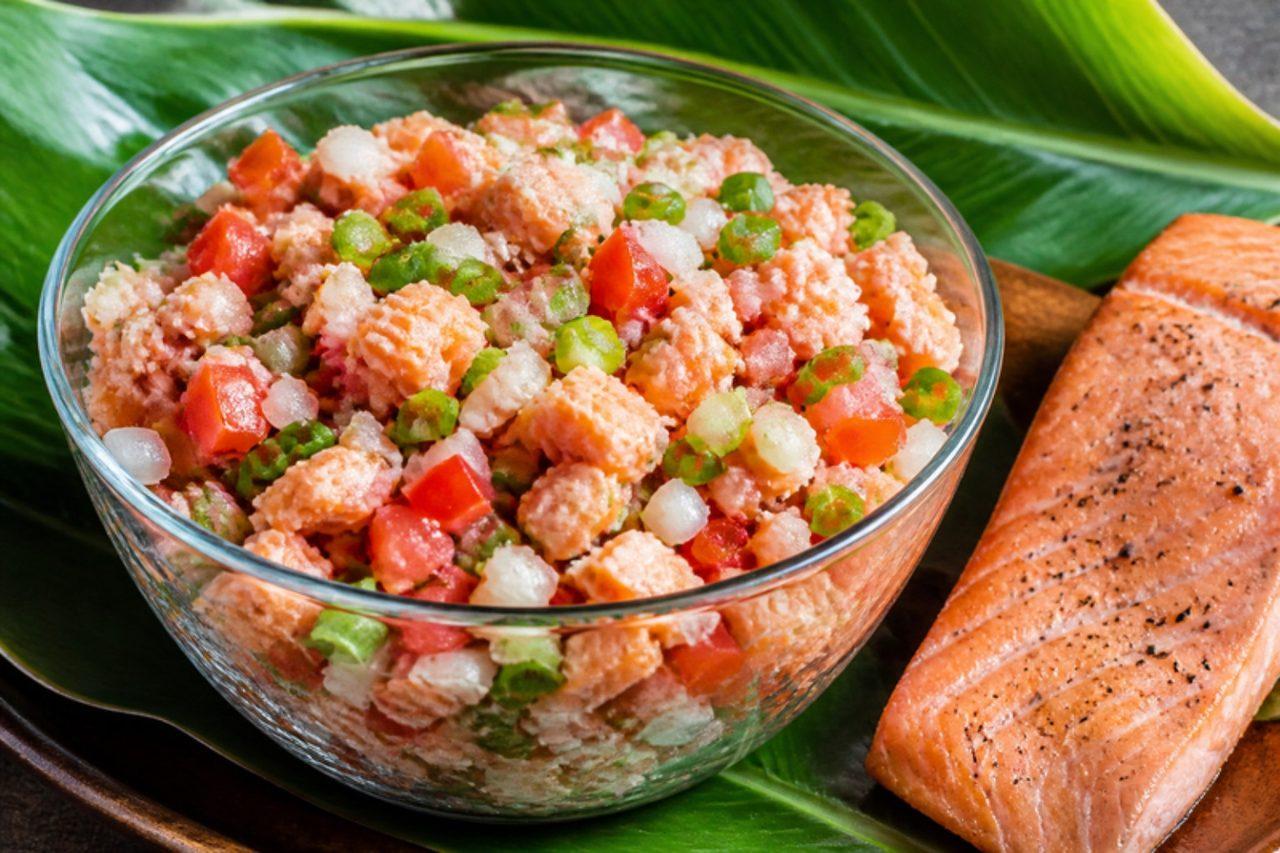
Lomi lomi salmonSalmon, tomato and onion relish

Lomi means to massage: at Hawaiian lūʻau and graduation parties, salted salmon is squeezed by hand with diced tomatoes, sweet onion and spring onions into a cold, juicy relish that cuts through rich kalua pig and poi. It arrived with salted salmon traded from the Pacific Northwest by nineteenth-century whalers. The traditional version uses raw salt-cured salmon, which is not for pregnant women, young children or anyone with a weakened immune system; this safer version gently poaches the salmon first. Chef's tip: chill everything well and drain the tomatoes, so the relish stays bright rather than watery.

by KrazyBadal 0 views

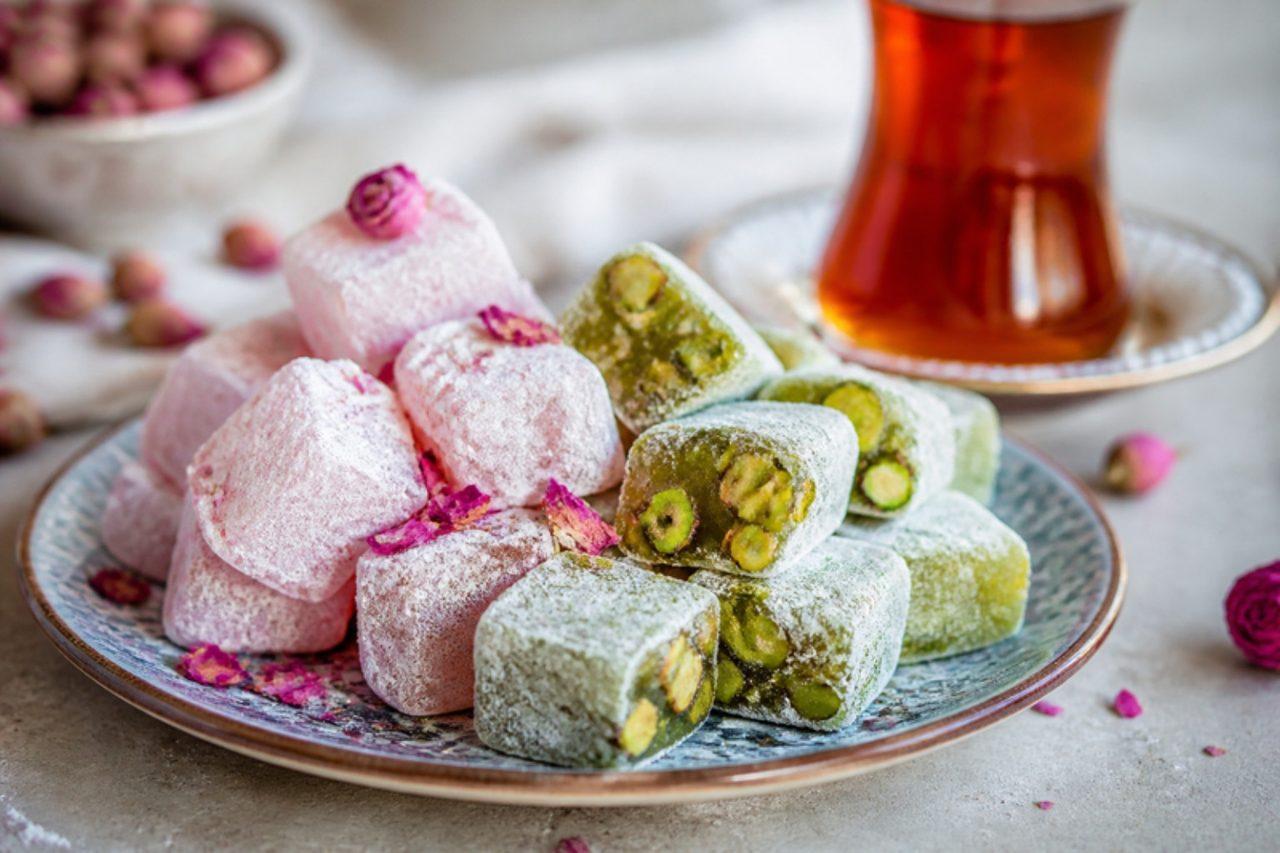
LokumTurkish delight

Istanbul's confectioners have been cooking lokum since the 18th century, and boxes of it still go to every host, office and family on holiday visits. Real lokum is nothing more than sugar syrup, lemon and cornflour, stirred for an hour until it turns translucent, firm and springy, then scented with rosewater and studded with pistachios. It is a test of patience, not skill. Common mistake: stopping too soon; undercooked lokum is sticky and never sets cleanly. Chef's tip: it is ready when a little dropped into cold water forms a soft, pliable ball and the mixture is the colour of pale honey.

by KrazyBadal 0 views

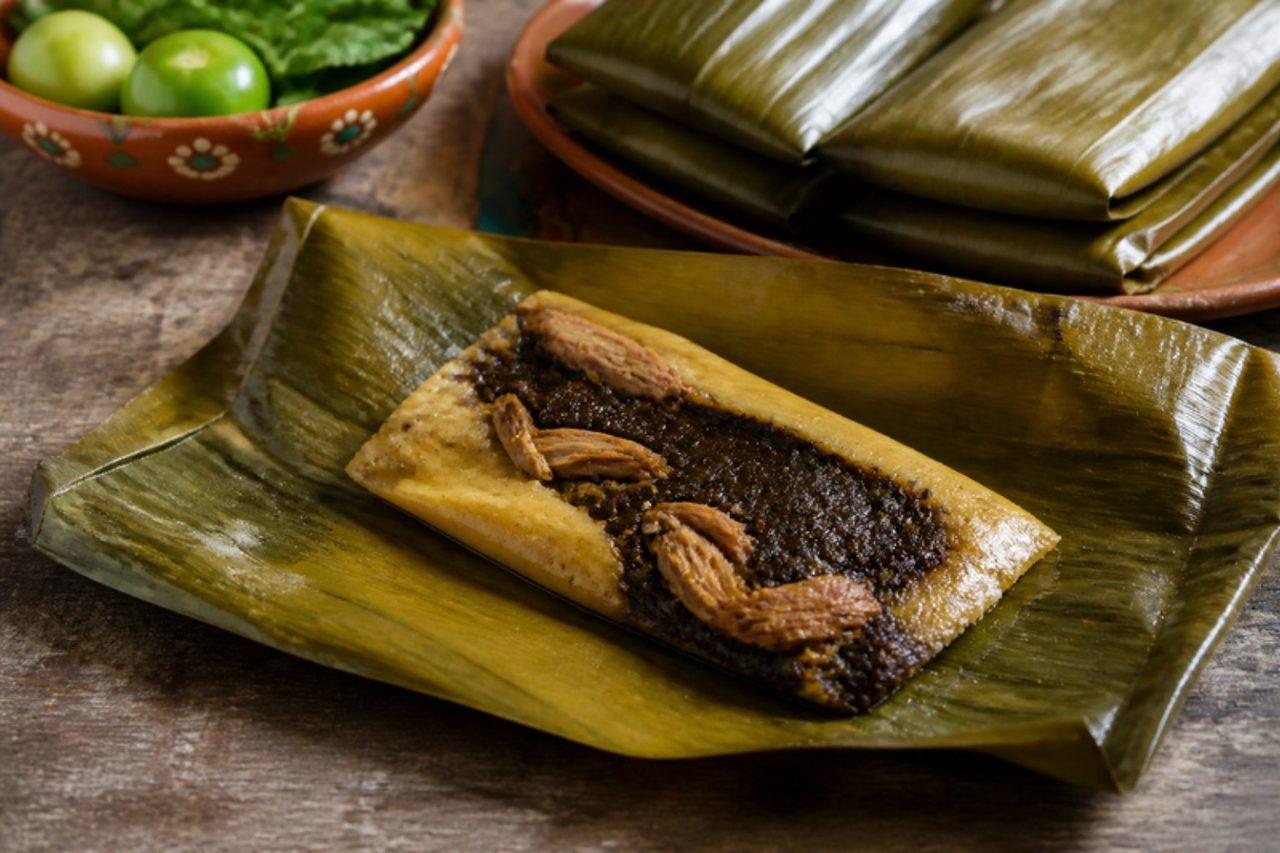
Tamales oaxaqueñosTamales with black mole and chicken

In Oaxaca, tamales are wrapped in banana leaves rather than corn husks, which makes them flat, square and very moist, with a faint grassy scent from the leaf. These are the classic version filled with mole negro and shredded chicken, sold from steaming pots at morning markets and made by the dozen for Christmas, Candlemas on 2 February and the Day of the Dead. The masa is beaten with pork lard, which gives the traditional light, rich texture; vegetable shortening works if you avoid pork. Use leftover mole negro, or a simplified mole made from good ready-made paste thinned with broth. Eat them with hot chocolate or atole. Chef's tip: keep a coin in the bottom of the steamer; when it stops rattling, the water has run low and needs topping up.

by KrazyBadal 0 views

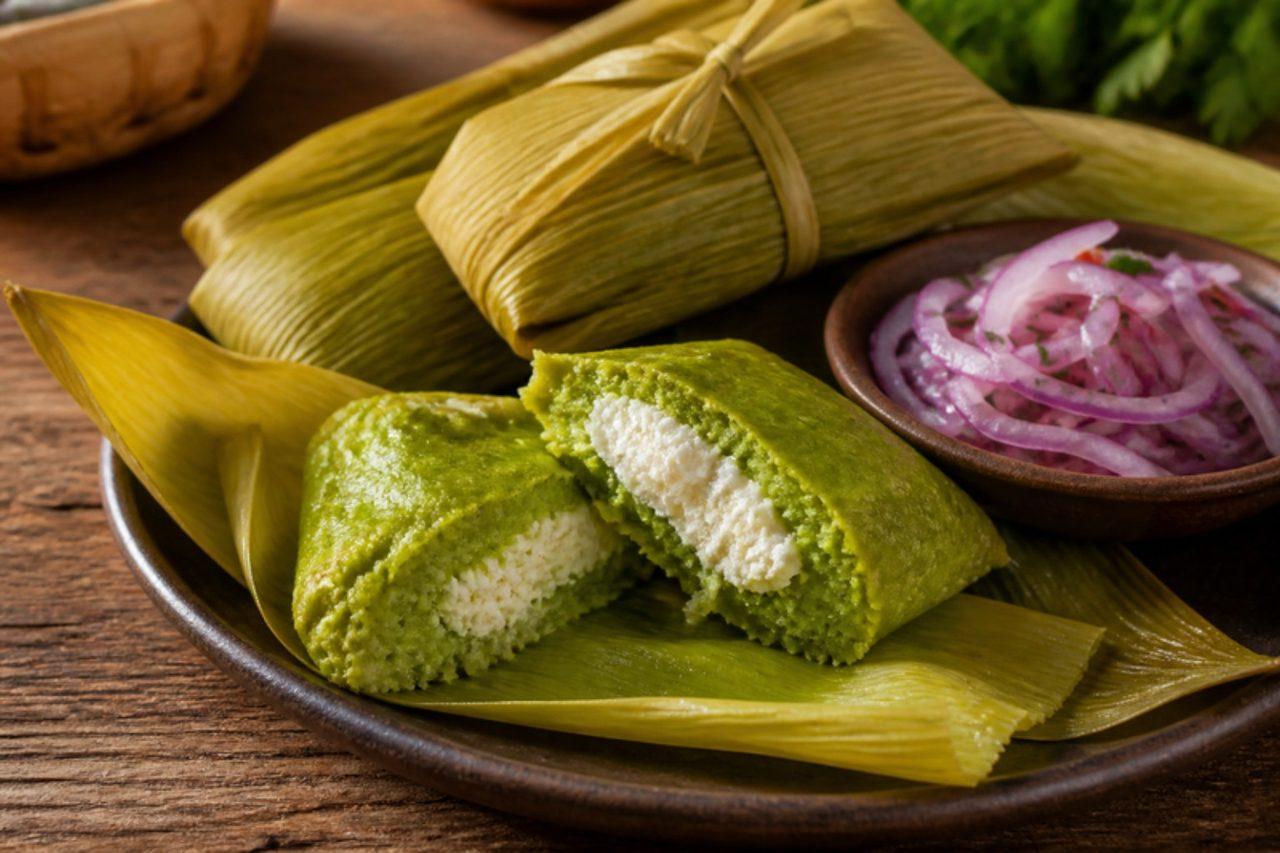
Tamalitos verdesGreen fresh corn tamales

Bright green from a whole bunch of coriander, tamalitos verdes are the morning snack of Chiclayo and Trujillo, sold warm at market stalls and bakeries and unwrapped at the table with a heap of salsa criolla on top. Fresh corn is ground with coriander, onion and ají amarillo into a soft dough, wrapped around a strip of fresh cheese in corn husks and steamed. They should be tender, moist and herby, with a slightly sweet corn flavour and a salty melting middle. Traditional ones are made with lard; this version uses vegetable oil to stay vegetarian. The classic problem is a dough that's too wet, which makes the tamales fall apart; the starchy Peruvian choclo is ideal, and if you use sweet corn, add the cornmeal to firm it up. Queso fresco is usually made with animal rennet, so look for a vegetarian fresh cheese. Chef's tip: keep the steamer water at a steady simmer and top it up with boiling water, never cold, so the steam never stops.

by KrazyBadal 0 views

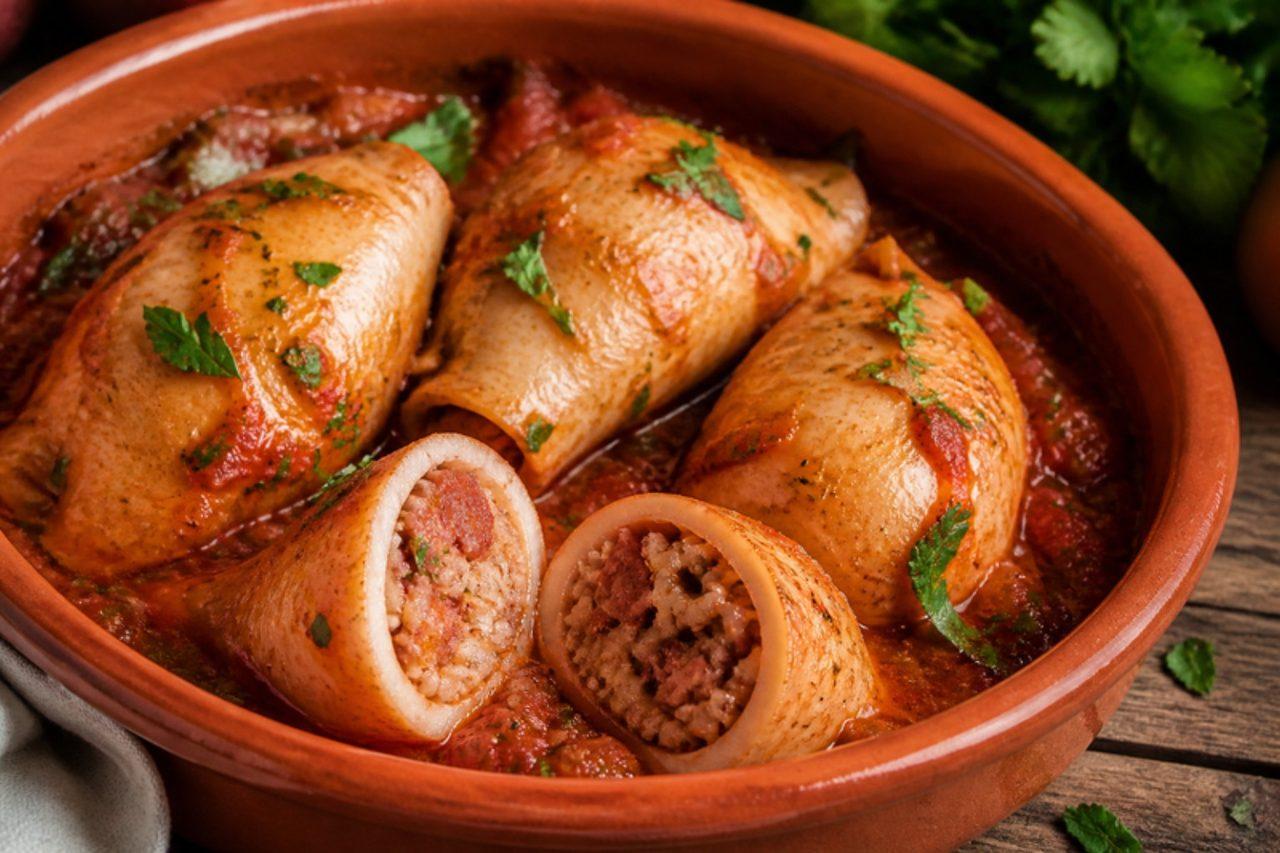
Lulas recheadasSquid stuffed with chouriço and rice

Fishermen's wives in Portimão stretched a modest catch of squid by filling the bodies with chopped tentacles, rice and a little chouriço, then simmering them slowly in tomato sauce until meltingly tender. It is a Sunday dish in the western Algarve, served sliced into rounds with boiled potatoes or more rice. This contains pork (chouriço), and the sauce uses white wine; replace it with the same amount of fish or vegetable stock for an alcohol-free version. Chef's tip: fill the squid only two-thirds full, because the rice swells and can split them.

by KrazyBadal 0 views

Tamar hindiTamarind drink

During Ramadan in Damascus, street sellers in bright waistcoats pour tamar hindi from tall brass jugs on their backs, clinking cups to call buyers before iftar. The drink is a deep brown infusion of tamarind, sweetened and sharpened with lemon and a touch of rose or orange blossom, served ice cold to quench a day's thirst. It is fruity, tangy and refreshing, and made in a big batch to keep in the fridge. Common mistake: boiling the tamarind hard — gentle soaking gives a clean taste, while boiling makes it muddy. Chef's tip: strain twice, the second time through a cloth, for a clear, glossy drink.

by KrazyBadal 0 views

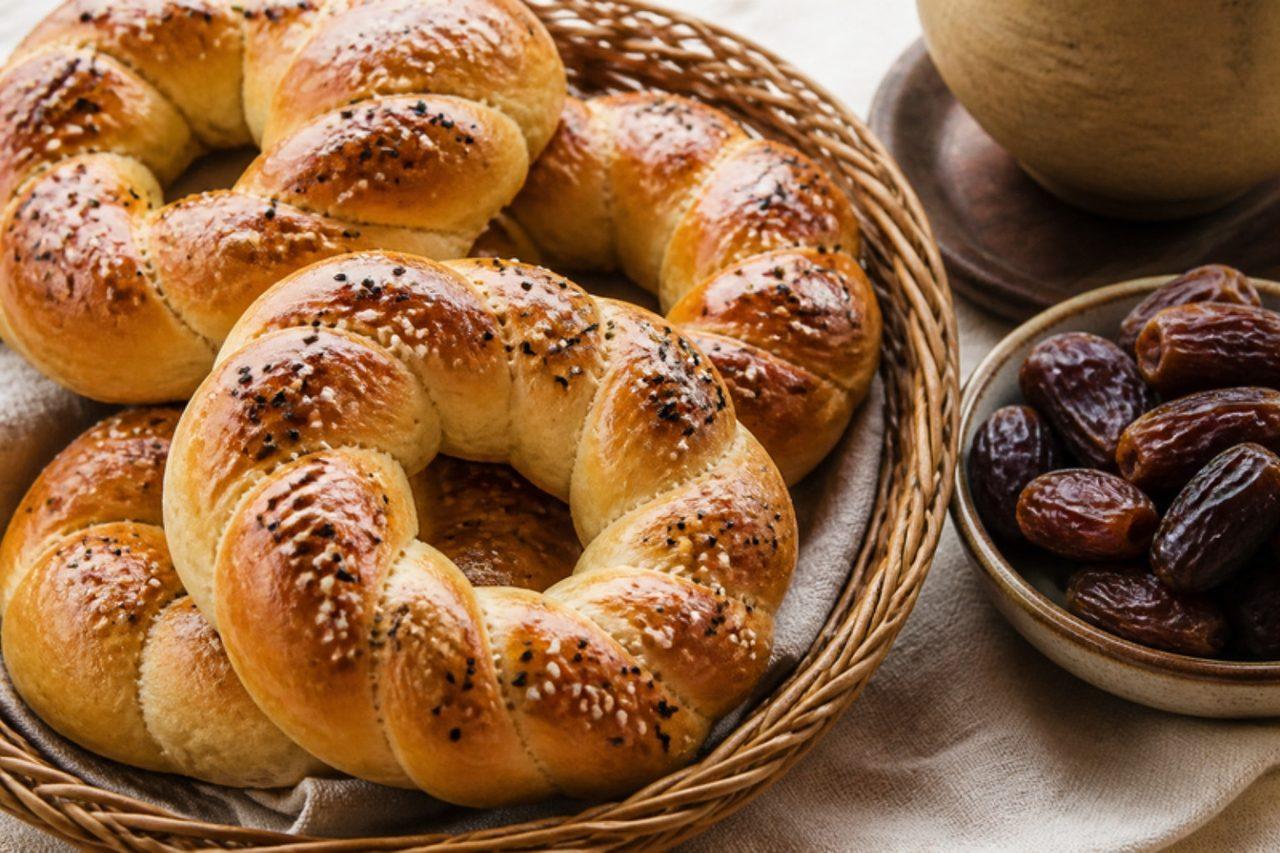
Ma'aroukMahlab-scented sweet bread

As soon as Ramadan begins, bakeries in Damascus and Aleppo stack up golden loaves of ma'arouk, a soft, slightly sweet brioche-like bread that people buy on the way home to break the fast. The dough is perfumed with mahlab (ground cherry stones), topped with nigella and sesame seeds, and is often braided or filled with date paste. Eat it warm with tea, or toasted the next morning with white cheese. Common mistake: adding too much flour while kneading; the dough should stay soft and a little tacky for a tender crumb. Chef's tip: brush with sugar syrup as soon as the loaves leave the oven — it gives the classic shine and keeps the crust soft.

by KrazyBadal 0 views

Maçã do amorToffee apples

A shiny red apple on a stick is the picture of a Brazilian festa junina stall, lined up in rows beside the quentão and pipoca. The 'love apple' is a small, tart apple dipped in hot sugar syrup that hardens into a thin, crackling, ruby-red shell; you bite through glass and hit crisp fruit. It is a good one to make at home for a June party because the syrup takes 15 minutes and the apples are ready as soon as the shell cools. Choose a plant-based red colouring to keep it vegan. Where it tends to fail: any water or wax on the apple skin stops the syrup sticking, so it slides off in a puddle. Chef's tip: dip the apples in boiling water for 10 seconds and dry them thoroughly to remove the wax before you start.

by KrazyBadal 0 views

Macaxeira fritaFried cassava sticks

Northeastern Brazilians call cassava macaxeira, and fried sticks of it come out with carne de sol, with grilled cheese at beach shacks, and in a bowl beside a cold drink at any bar from Natal to Maceió. Boiling first makes the inside soft and floury; frying afterwards gives a thick, blistered crust that stays crunchy far longer than potato chips. They need only coarse salt, though a dip of vinagrete or garlic mayonnaise is common. Buy sweet cassava, cook it fully, and never eat it raw. The frequent mistake is boiling until the cassava falls apart, which makes sticks that break up in the oil; stop as soon as a knife slides in. Chef's tip: let the boiled sticks steam dry and cool completely, even chill them for an hour, before frying; the drier surface is what makes them crackle.

by KrazyBadal 0 views

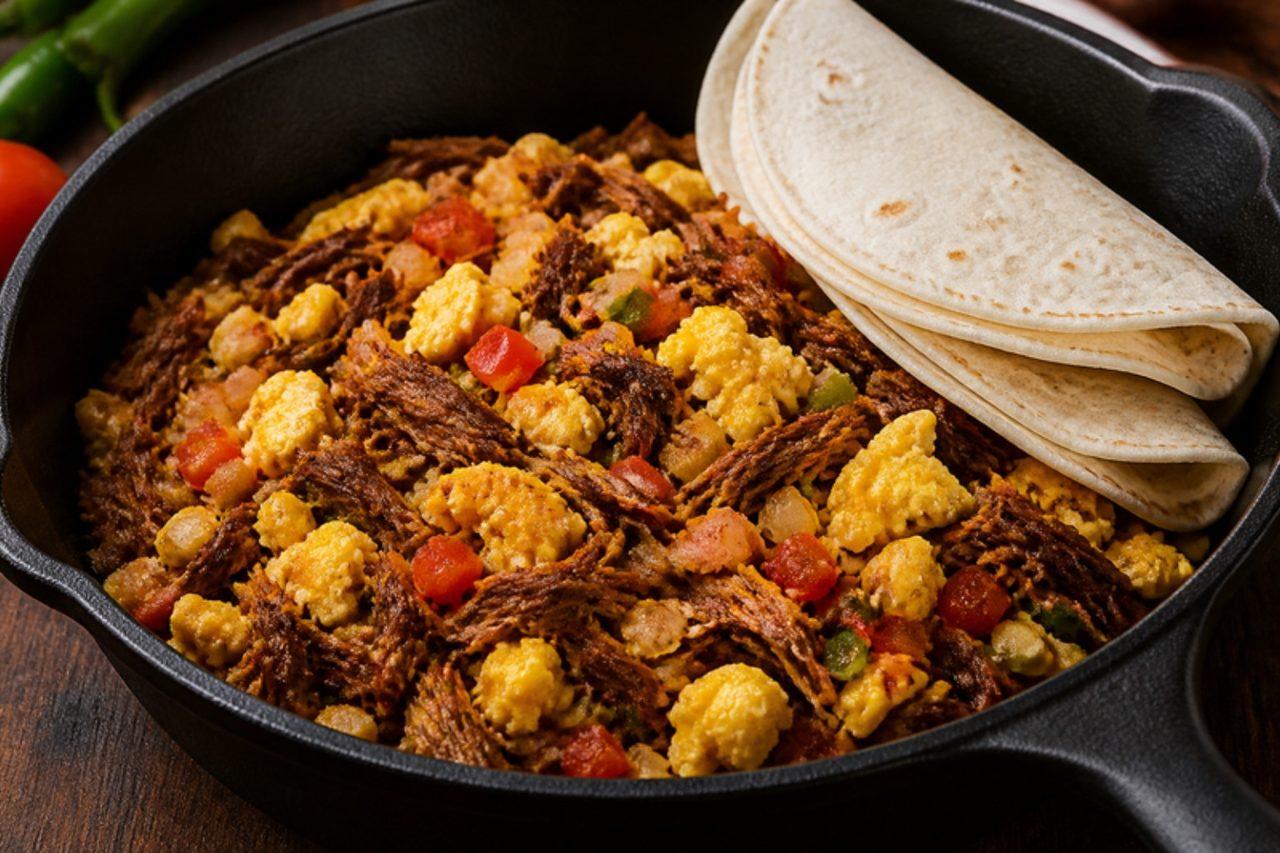
Machaca con huevoDried beef scrambled with egg

Monterrey and Sonora both claim machaca, the dried, pounded beef that once let ranchers carry meat across the desert. At breakfast it is fried with onion, tomato and green chilli, then scrambled with eggs and rolled into soft flour tortillas, and it turns up in every lonchería and roadside café in the north. The beef is savoury, salty and chewy against the soft egg. Proper machaca is hard to find outside Mexico; shredded leftover roast beef or brisket, dried out in the pan until crisp, makes a good substitute, as does unsweetened beef jerky pounded into shreds. Chef's tip: fry the machaca on its own first until the edges crackle, which brings back the toasty flavour before anything wet goes in.

by KrazyBadal 0 views

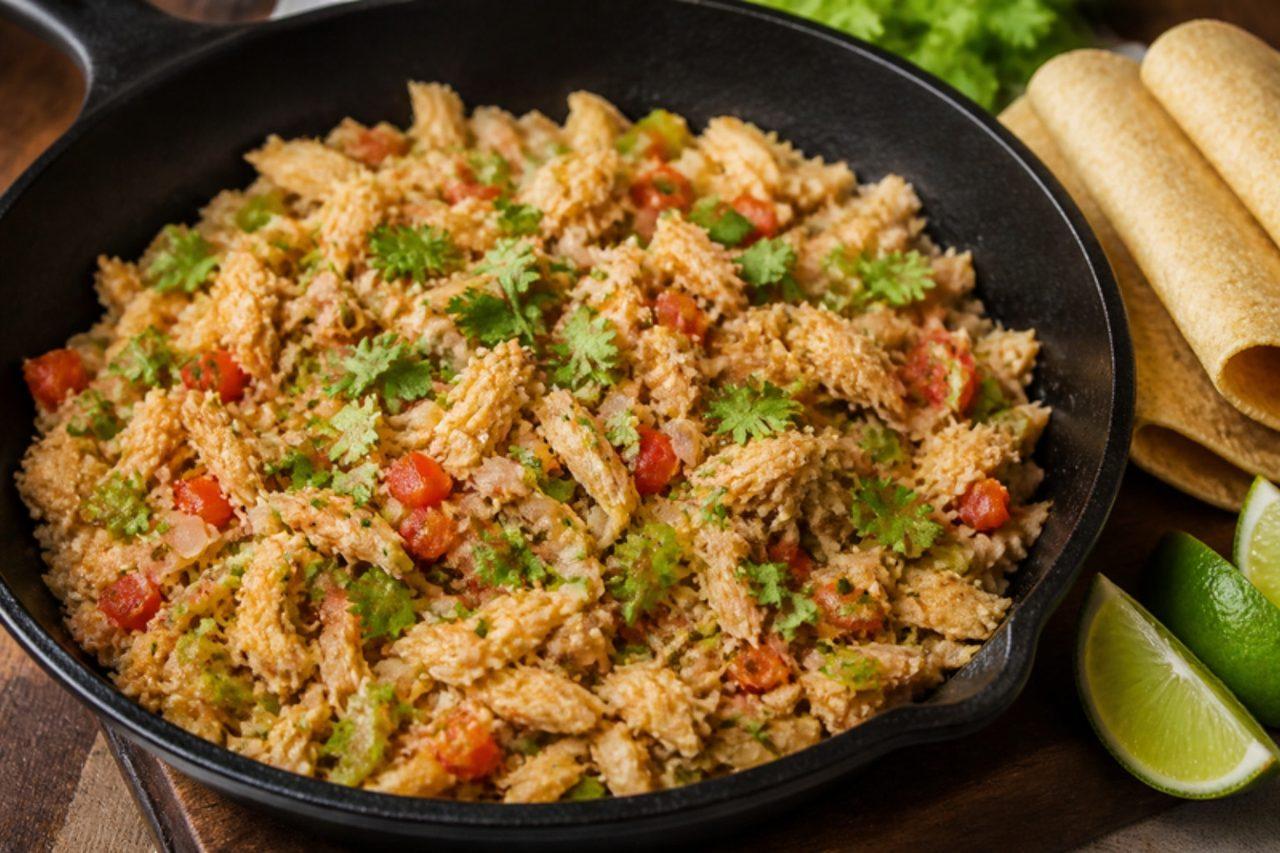
Machaca de pescadoShredded fish with tomato and pepper

On the waterfront in La Paz, Baja California Sur, machaca de pescado is the sea's answer to beef machaca: firm fish is poached, shredded and fried with onion, pepper, tomato and chilli until almost dry and full of flavour. Fishermen's families once made it with shark or smoked marlin, and today it fills breakfast burritos, tacos and tostadas in cafés along the malecón. Any firm white fish such as cod, hake or mahi-mahi works well. It is savoury, lightly spicy and tender. Serve it with corn tortillas, rice or refried beans. Chef's tip: squeeze the shredded fish in your hands to get rid of excess water before it hits the pan, so it fries rather than stews.

by KrazyBadal 0 views

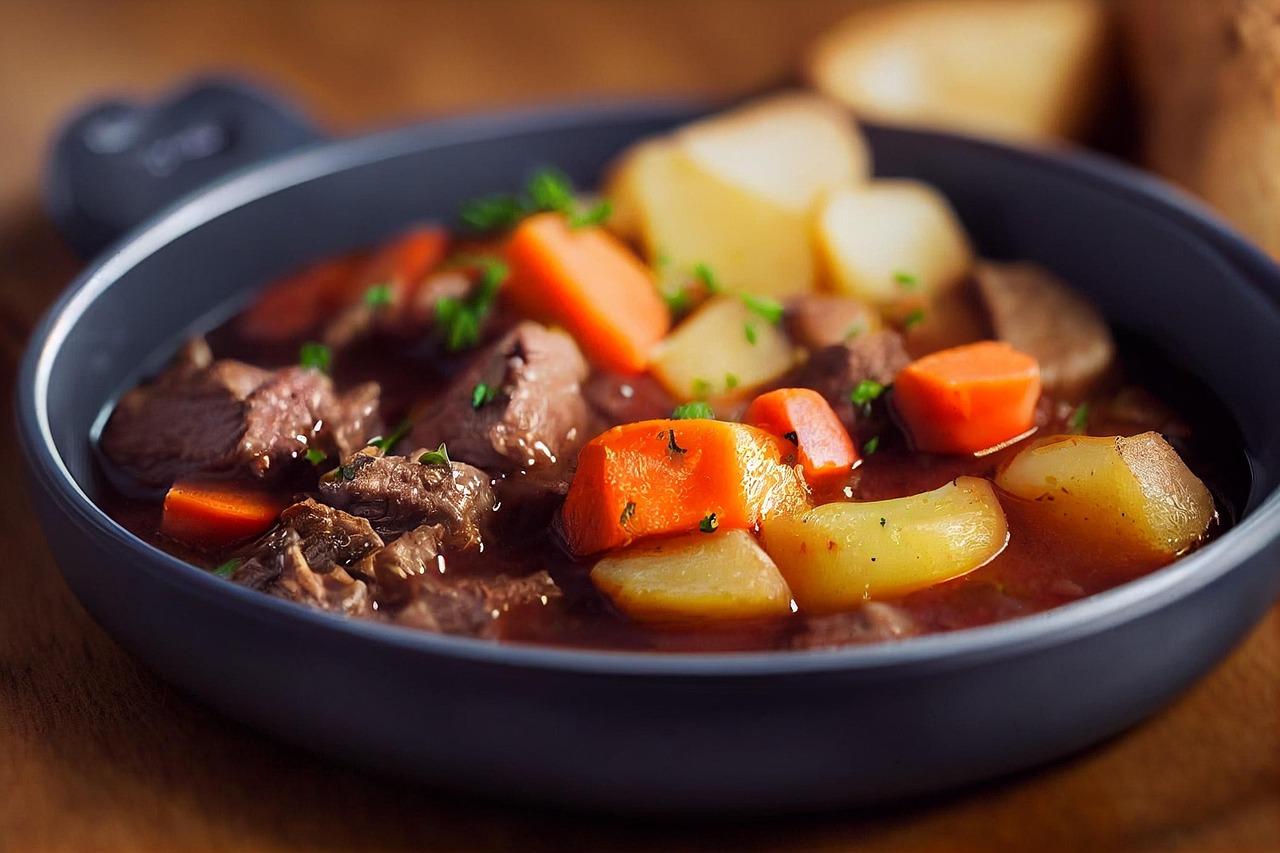
Liverpool scouseBeef and lamb stew

Scouse is so central to Liverpool that its people are named after it; the thick stew of meat, potatoes and onions was carried from the Baltic by sailors and cooked for dockers' families, and city restaurants still celebrate Global Scouse Day each February. Some of the potatoes cook down into the gravy, making it thick and hearty. Serve it with pickled red cabbage or beetroot and crusty bread. Chef's tip: cut half the potatoes small so they collapse and thicken the stew, and leave the rest in chunks.

170 minBritishMeat
by KrazyBadal 0 views

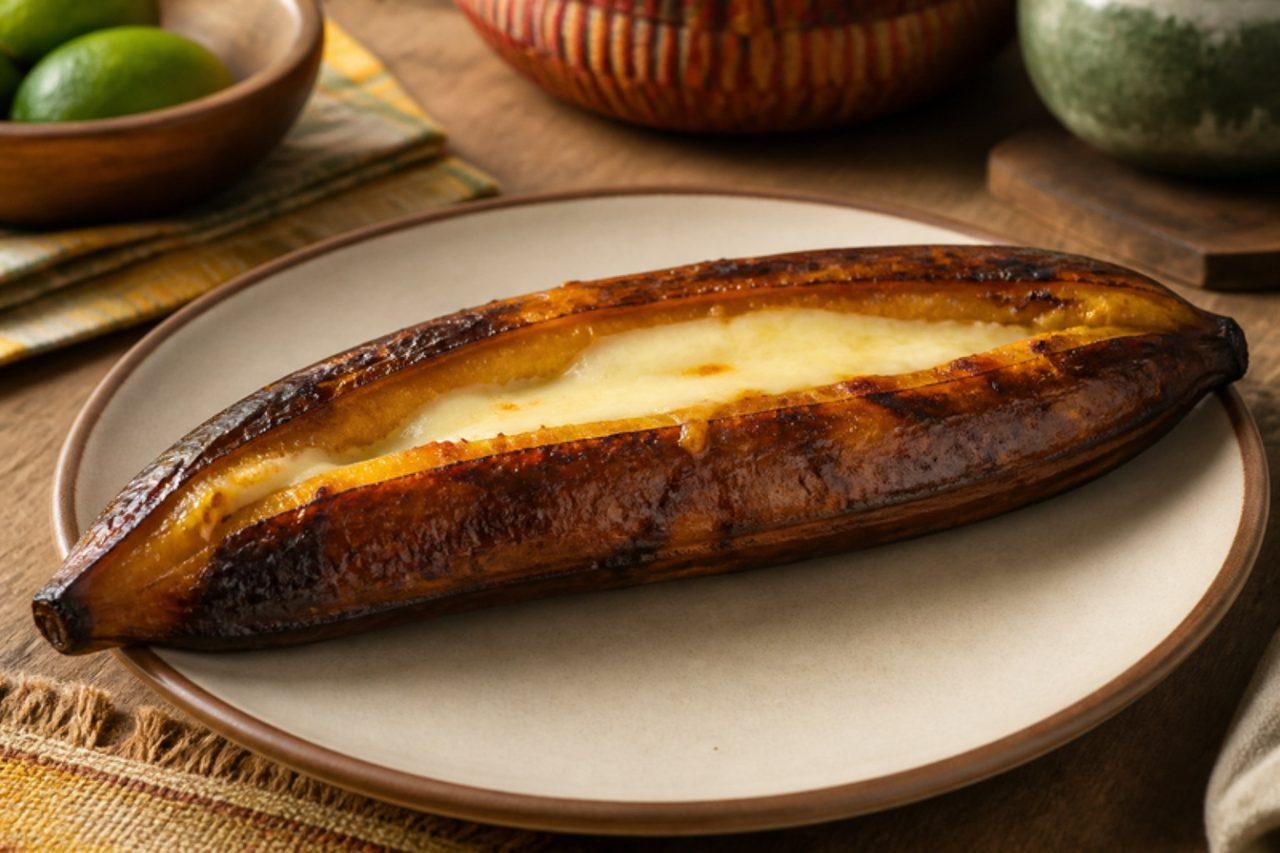
Maduro con quesoBaked plantain with cheese

Cali cooks treat a black-skinned plantain as a treat rather than a fruit past its best, and maduro con queso shows why. The plantain bakes in its own skin until the flesh turns sticky and caramel-sweet, then it is split lengthways and packed with soft white cheese that melts into the hot fruit. In the Valle del Cauca it turns up at home lunches beside rice, beans and a sudado, and at weekend corrientazo counters as the sweet note on a savoury plate. The cheese of choice is a mild, stretchy quesillo or queso campesino, both normally set with animal rennet, so pick a vegetarian mozzarella-style cheese if that matters to you. Where it goes wrong is the plantain: a yellow one with a few spots stays starchy and dry, so wait until the skin is almost completely black and the fruit gives when pressed. Chef's tip: bake the plantains on a tray lined with baking paper, because the sugars leak out of the skins and burn onto bare metal.

by KrazyBadal 0 views

LiptauerPaprika curd cheese spread

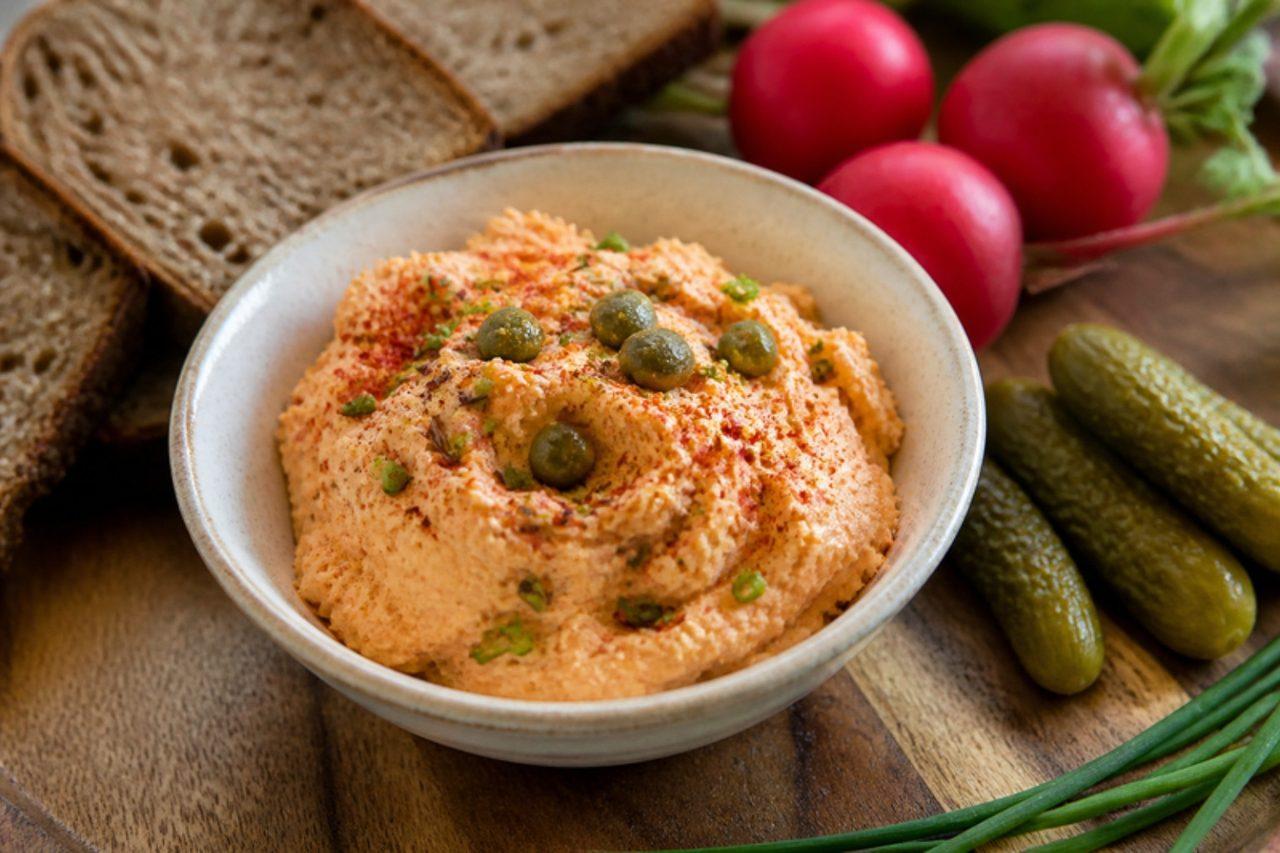
No Heuriger, the wine tavern on the vineyard slopes at the edge of Vienna, is complete without a bowl of rust-red Liptauer next to the bread basket. Quark and soft butter are beaten with sweet paprika, ground caraway, mustard, onion and capers into a spread that is creamy, tangy and gently warm. Spread it thick on dark rye bread with radishes and chives, or pipe it onto halved peppers for a snack board. A common mistake is using wet quark straight from the tub, which makes the spread runny; drain it in a sieve first. Most quark is set without rennet, but some brands use a little animal rennet, so pick one labelled vegetarian. Chef's tip: make it a few hours ahead; the paprika colour deepens and the caraway softens as it sits.

by KrazyBadal 0 views

İzmir köfteMeatballs baked with potatoes and peppers

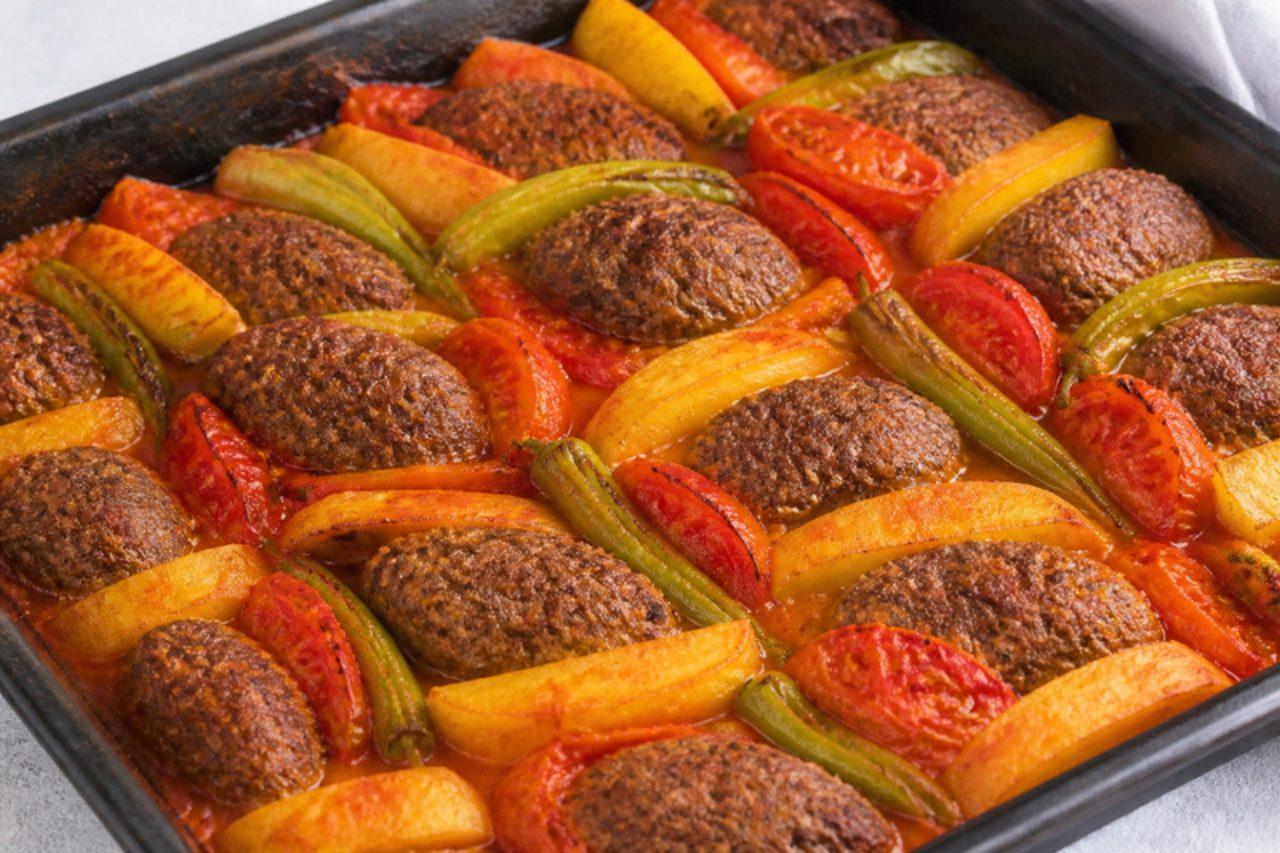
Ask anyone from İzmir what their mother cooked on weeknights and İzmir köfte comes up: fingers of cumin-scented köfte, wedges of potato and long green peppers, lined up in a tray and baked in a thin tomato sauce until everything is soft and the edges catch. It is a one-tray family supper served with rice pilaf, a bowl of cacık and plenty of bread for the sauce. Chef's tip: fry the köfte and potatoes briefly before baking; that quick browning gives depth the oven alone can't.

by KrazyBadal 0 views

MaftoulHand-rolled couscous with chicken

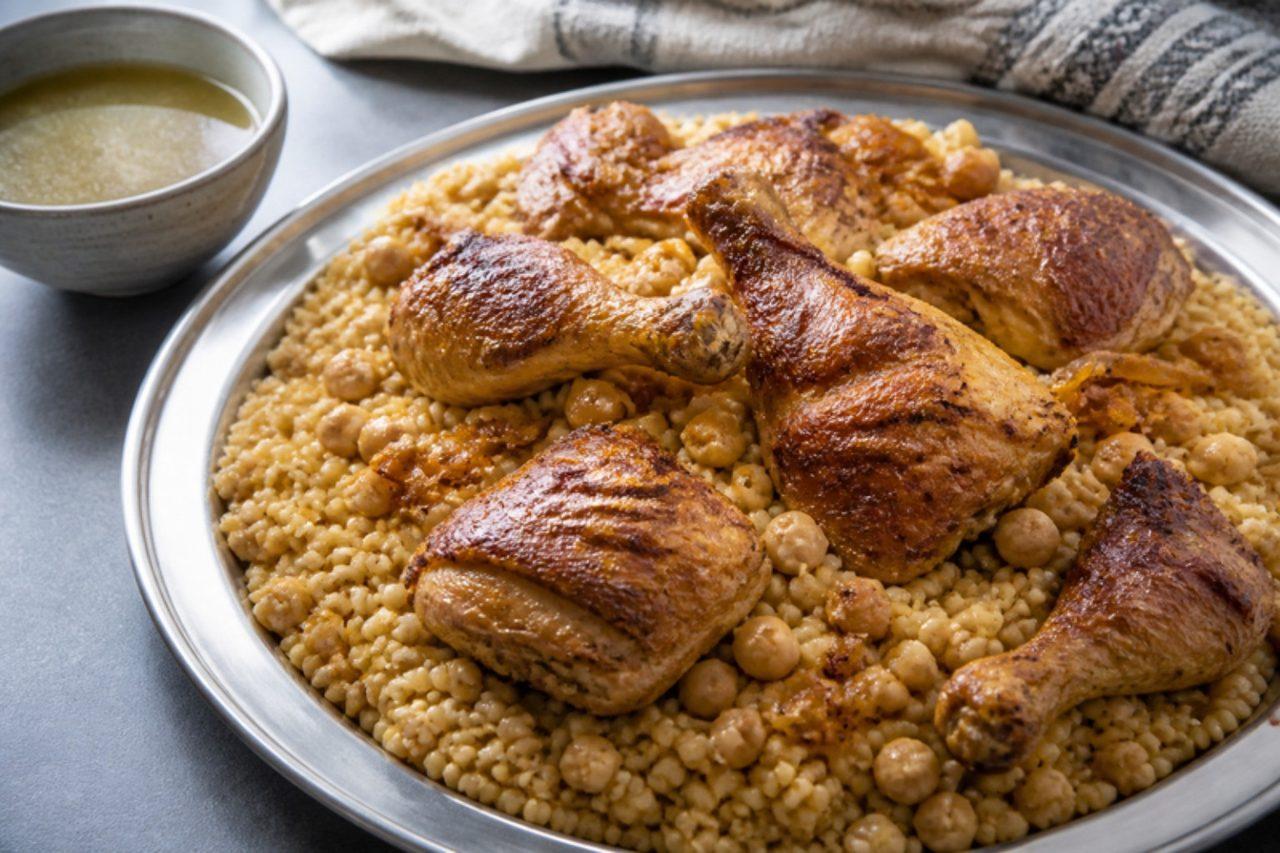
Maftoul means 'rolled', and in Palestinian villages women still sit together in autumn rolling bulgur and flour by hand into pea-sized pearls, drying them in the sun to last the winter. For a family gathering, the maftoul is steamed over a pot of chicken simmering with onions, chickpeas and caraway, then served on a big platter with the chicken on top and the broth in bowls alongside. Bought maftoul or giant couscous is fine. Common mistake: boiling the maftoul like pasta, which makes it gluey; steam it, then moisten with broth. Chef's tip: toss the dry maftoul with oil and spices before steaming so every grain stays separate.

by KrazyBadal 0 views

Linsen mit SpätzleSweet-sour lentils with egg noodles

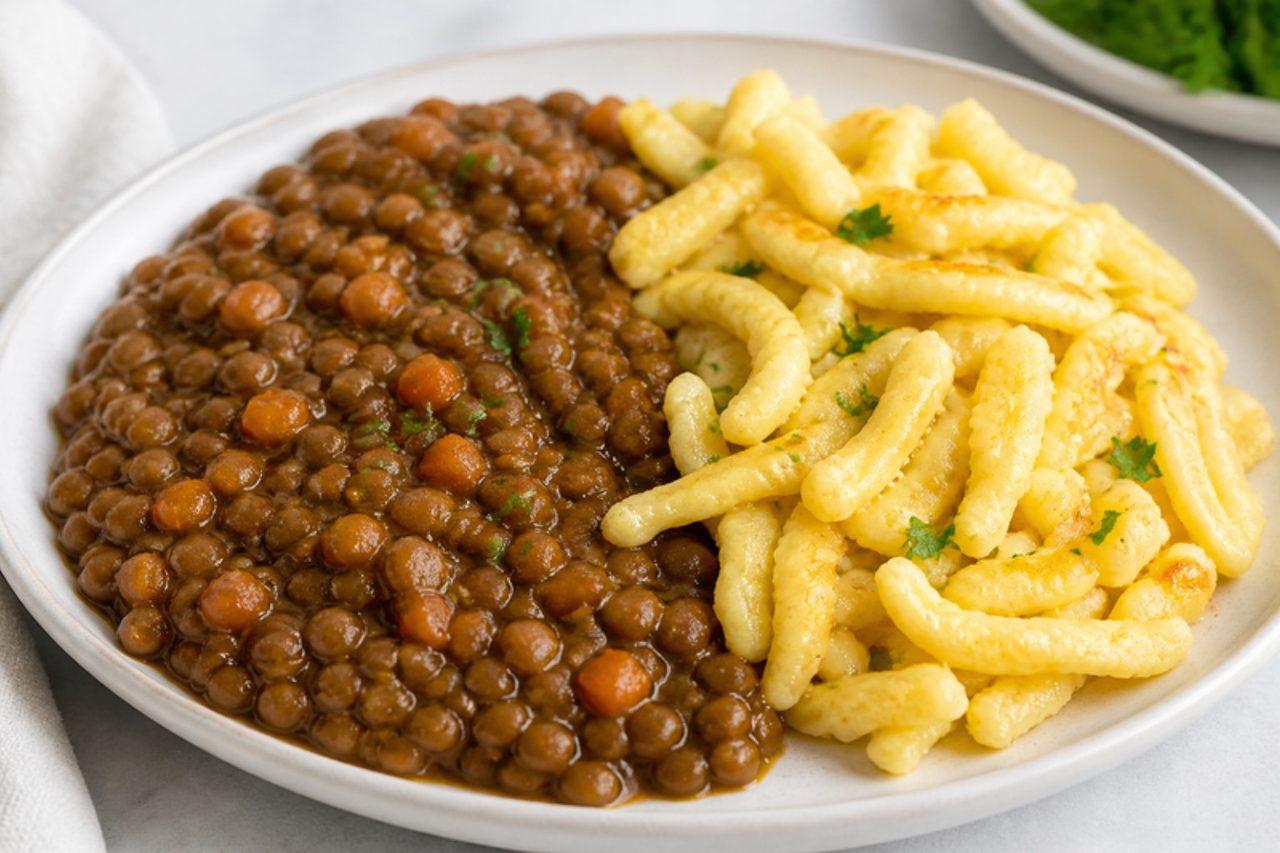
Linsen mit Spätzle is Swabia's Saturday supper, eaten in kitchens from Stuttgart to Ulm when the week's cooking was done and something cheap and filling was needed. Small brown or green Alb lentils are stewed with root vegetables, then sharpened with vinegar and a little sugar, and ladled over freshly scraped Spätzle. Most families add a pair of thin smoked Saitenwürstle; this version skips them, and the smoked paprika keeps a hint of that flavour. A common mistake is adding the vinegar at the start, which stops the lentils softening, so it goes in at the end. Chef's tip: beat the Spätzle batter until bubbles pop on the surface; that air is what makes them springy.

by KrazyBadal 0 views

Limonada de cocoCoconut lime cooler

Cartagena's heat makes limonada de coco almost compulsory: beach kiosks and restaurants in the old walled city blend it to order, and it arrives as a pale, frosty slush, sharp with lime and rich with coconut. It is a drink to sip slowly with fried fish, coconut rice and patacones, or on its own on a hot afternoon. Coconut cream gives the body, sugar balances the lime, and a full load of ice gives the frozen texture. The common slip is blending lime pieces with their peel for too long, which turns it bitter within minutes; use juice plus a little zest instead. Shake the tin of coconut cream before measuring, since it separates. Serve it straight away, before it melts and separates. Chef's tip: freeze some of the coconut cream in an ice-cube tray beforehand and use it in place of half the ice for a thicker, creamier result.

by KrazyBadal 0 views

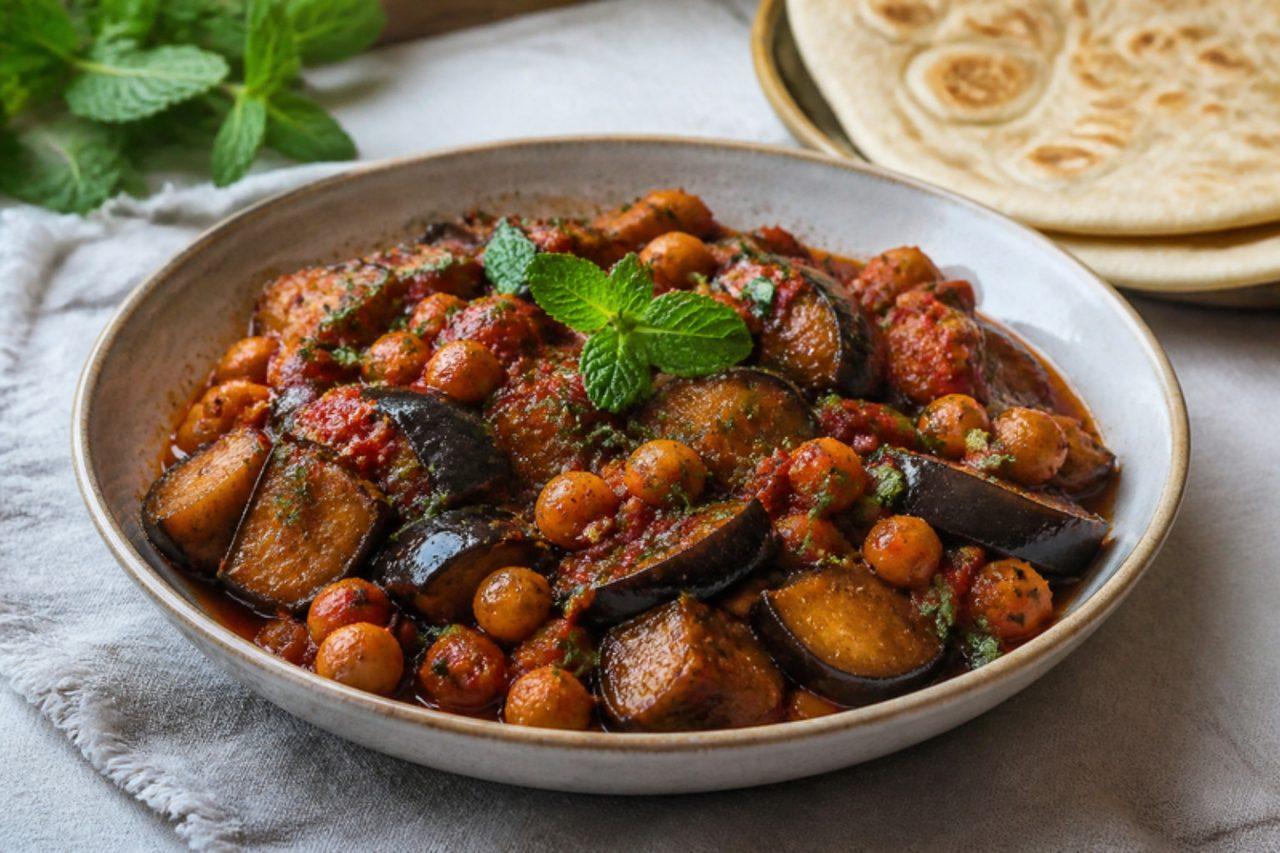
MaghmourAubergine, chickpea and tomato stew

In Lebanese villages from the Chouf to the Bekaa, maghmour turns up on the table during the long Lenten fasts and through the summer, when aubergines are piled high at every greengrocer. Chunks of fried or roasted aubergine collapse into a sweet, garlicky tomato sauce with chickpeas and plenty of olive oil, so the dish is soft and silky rather than chunky. Lebanese cooks serve it at room temperature with flatbread, pickles and a bowl of olives, and it tastes even better on the second day. Roasting the aubergine instead of deep-frying keeps it lighter without losing the melting texture. Common mistake: stirring hard once the aubergine is in; fold gently or it turns to mush. Chef's tip: add a final drizzle of good olive oil and a pinch of dried mint just before serving to lift the deep, sweet flavours.

by KrazyBadal 0 views

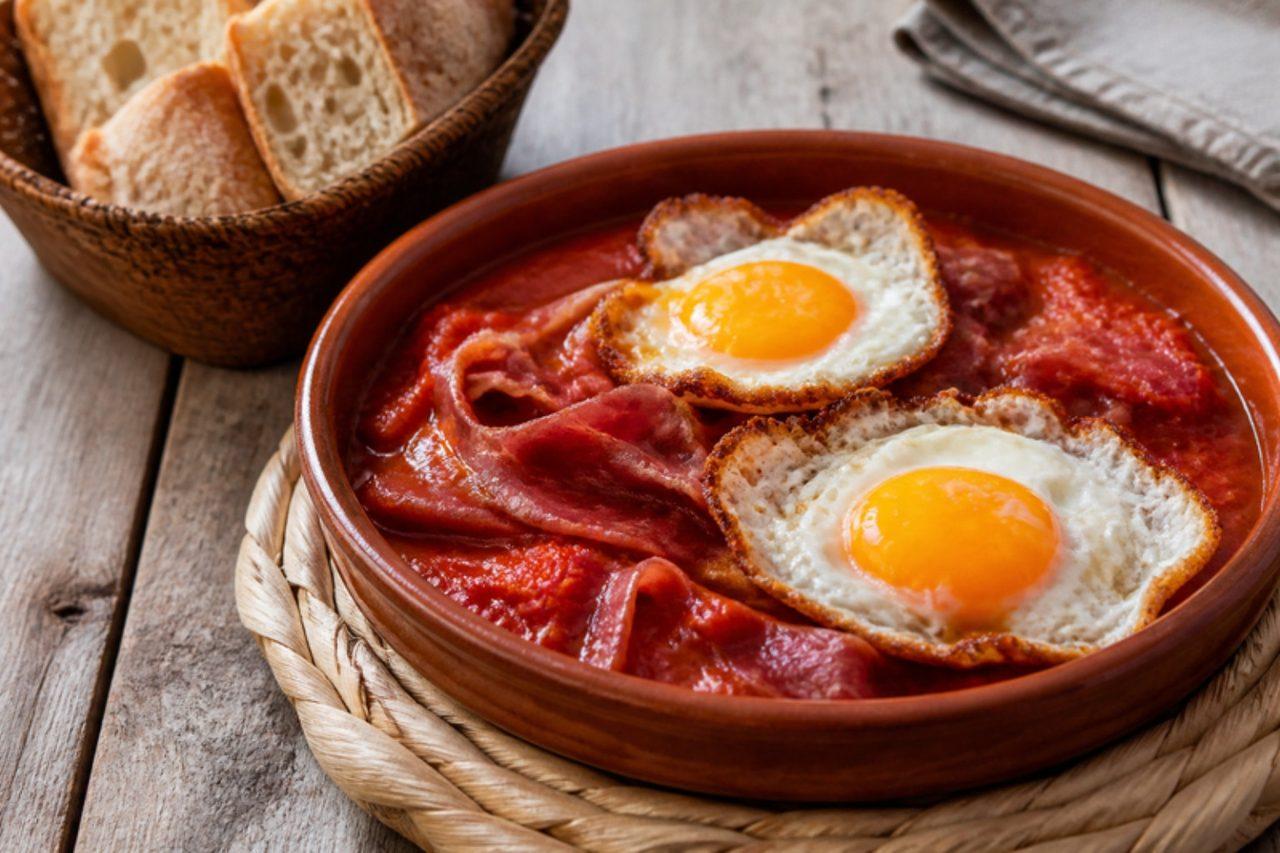
Magras con tomateCured ham in tomato sauce

Teruel is famous for its cured hams, and magras con tomate is how Aragonese home cooks have long turned a few thick slices into supper: the ham is fried briefly, then simmered in a homemade tomato sauce and served with fried eggs and bread for dipping. It is a typical dinner in the Bajo Aragón and at bar counters in Zaragoza's old Tubo district. This contains pork (cured ham). A common mistake is frying the ham too long; it hardens and turns very salty, so give it barely a minute a side. Use hand-cut slices about 5 mm thick if you can. If you serve the eggs with runny yolks, they are not for pregnant women, young children or anyone with a weakened immune system; fry them until the yolks are firm for those diners. Chef's tip: don't salt the sauce until the ham has been in it for a few minutes.

by KrazyBadal 0 views

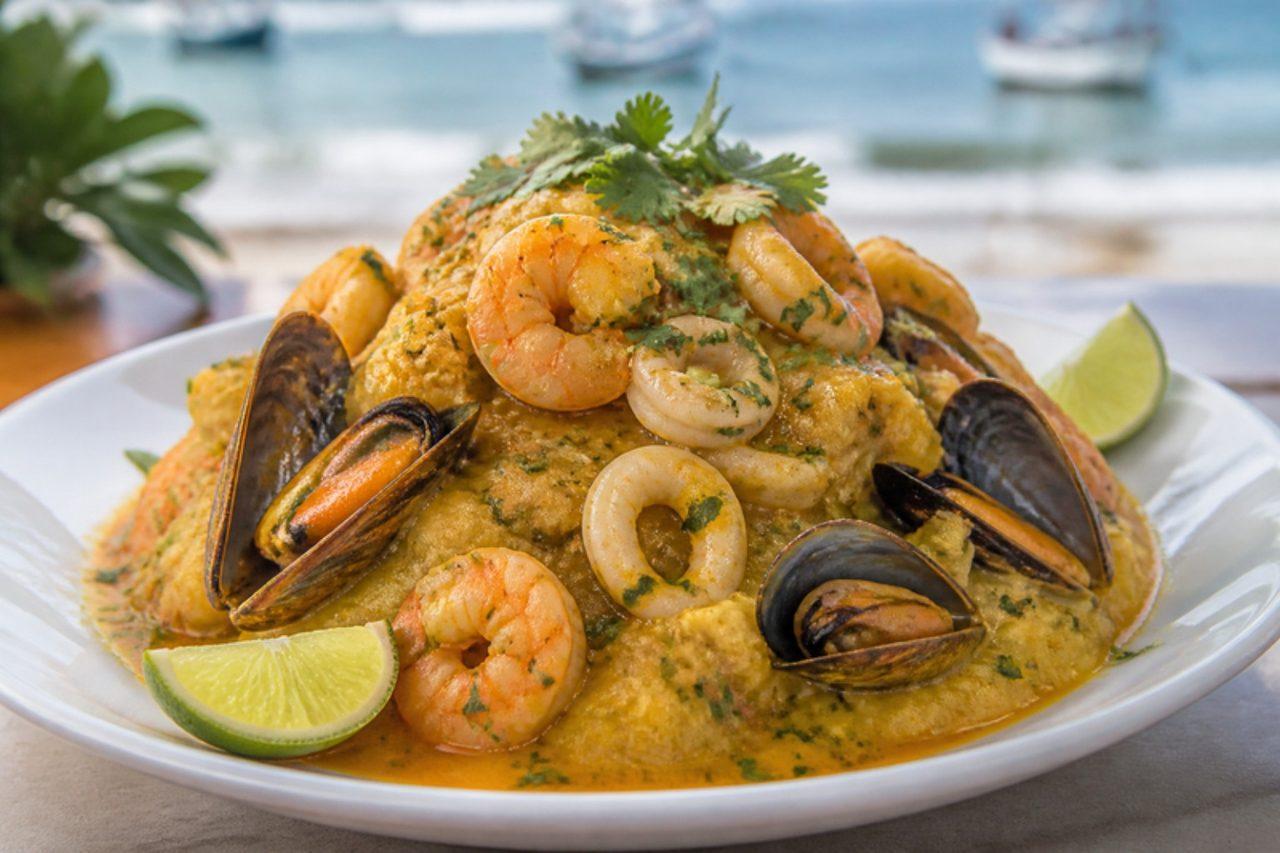
MajariscoPlantain mash with seafood

Its name blends 'majado' (mashed plantain) and 'marisco' (seafood), and along the coast of Piura and Tumbes, near the Ecuadorian border, it's what cevicherías and beach restaurants serve when you want something hot and filling. Mashed green plantain is folded into a sauce of garlic, onion, ají and seafood juices, with prawns, squid and mussels running through it, so every forkful is creamy, garlicky and briny. Serve it with lime and salsa criolla. Mussels must be alive: tap any open ones and discard those that don't close, and discard any that stay shut after cooking. Overcooking the seafood is the most frequent mistake; it goes in at the end, just until pink and opaque. Chef's tip: keep the mussel cooking liquid and use it to loosen the mash; it's pure seafood flavour.

by KrazyBadal 0 views

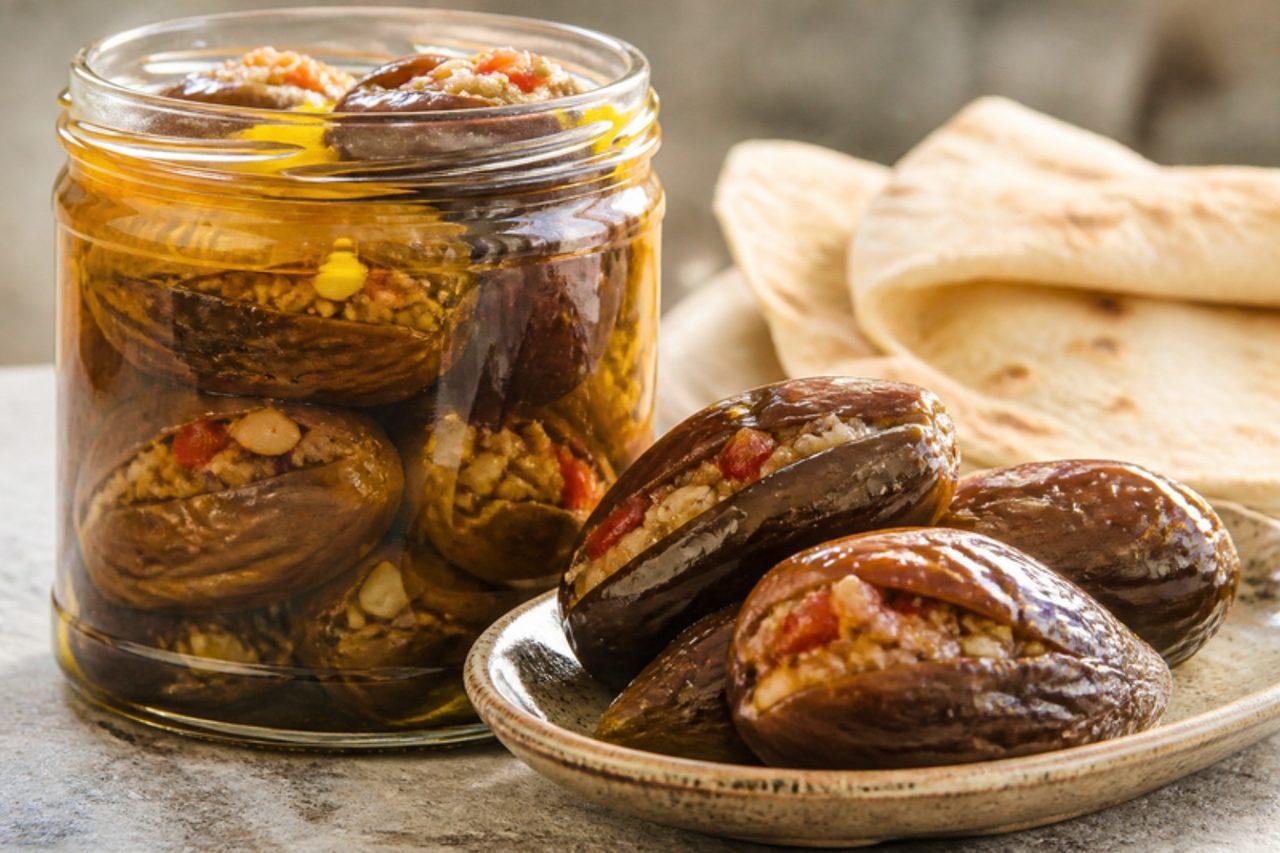
MakdousWalnut-stuffed pickled aubergines

Every autumn, Damascus kitchens fill with jars of makdous as families preserve the last of the small aubergines for the winter breakfast table. The aubergines are boiled, salted and pressed for a day, then stuffed with walnuts, red pepper, garlic and chilli and packed under olive oil to cure until tangy and tender. A couple of them, split on a plate with bread, labneh and tea, is the classic Syrian morning. Common mistake: skipping the pressing — any water left in the aubergines can spoil the jar. Chef's tip: keep the jar in the fridge and always lift them out with a clean fork; homemade preserves in oil should be kept chilled and eaten within a month for safety.

by KrazyBadal 0 views

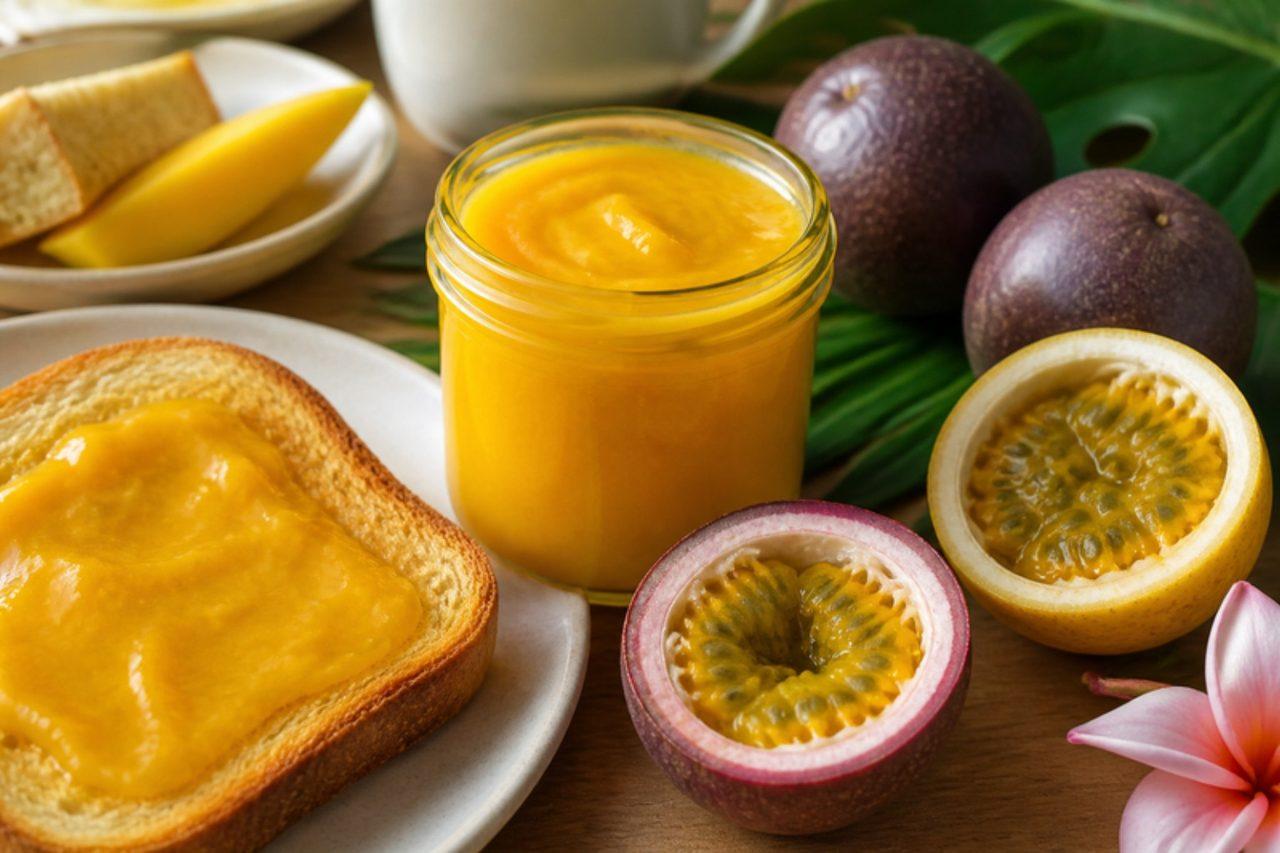
Lilikoi butterPassion fruit curd

Lilikoi is the Hawaiian name for passion fruit, which grows wild on vines all over the islands, and lilikoi butter is the tangy golden curd that farmers' markets on Maui and Kauai sell in jars. It is spread on toast, sweet bread and scones, or spooned onto shave ice and cakes. Chef's tip: keep the heat low and stir constantly; the curd is ready when it coats the back of a spoon and holds a line drawn through it with your finger.

by KrazyBadal 0 views

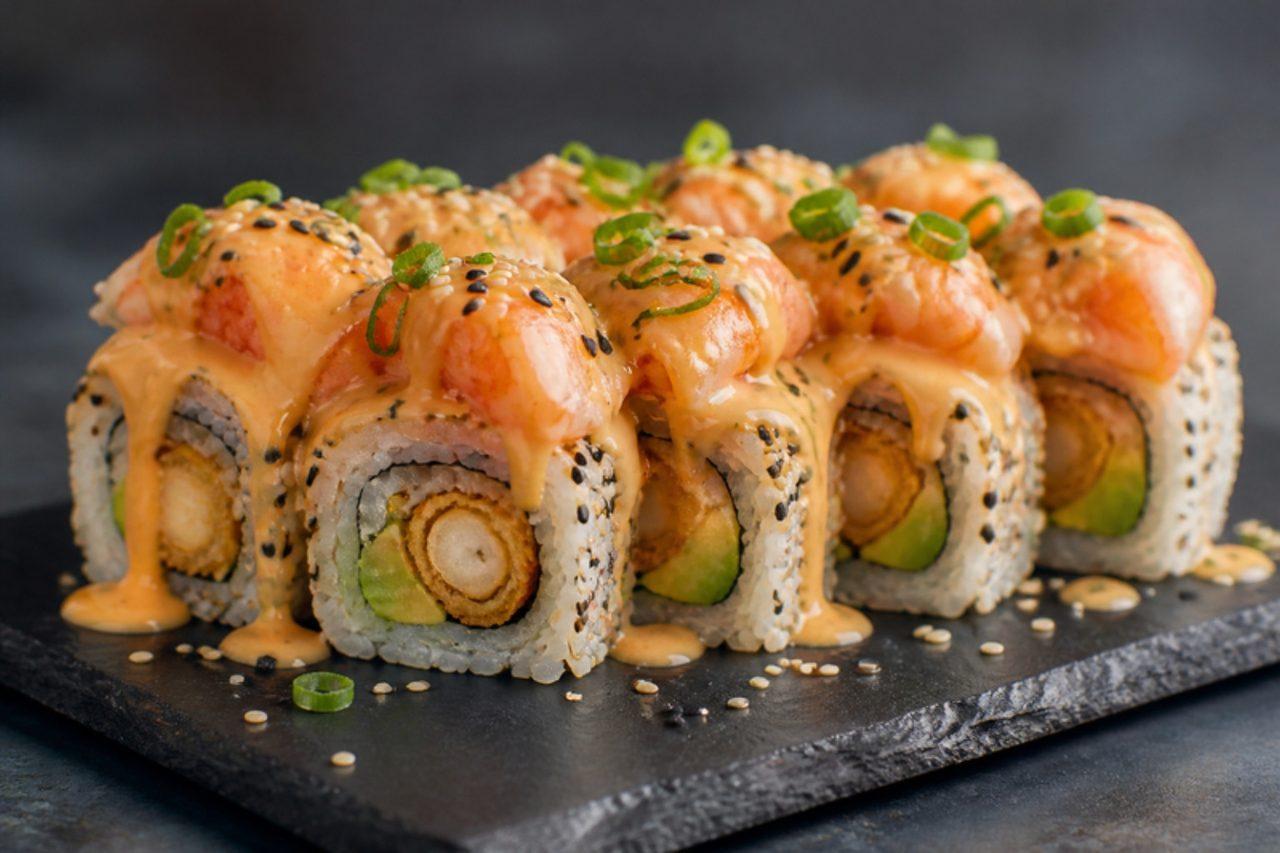
Maki acevichadoPrawn tempura rolls with ceviche sauce

Lima's Nikkei sushi bars invented the acevichado and it has become the roll every Peruvian orders: prawn tempura and avocado rolled in rice, topped with thin slices of fish and drenched in a creamy, lime-sharp sauce built from leche de tigre, ají amarillo and mayonnaise. Crisp, warm, cold and tangy in one bite, it is party food and Friday-night takeaway alike. For a safer topping, use sashimi-grade fish frozen at −20 °C for 24 hours first, keep it cold and eat the rolls at once; you can also sear the slices with a blowtorch or use cooked prawns instead. Even so, the raw-fish topping is not for pregnant women, young children or anyone with a weakened immune system. Overfilling is the usual mistake: the roll won't close and the rice splits. Chef's tip: use a pasteurised-egg mayonnaise and wet your hands with vinegared water so the rice doesn't stick.

by KrazyBadal 0 views

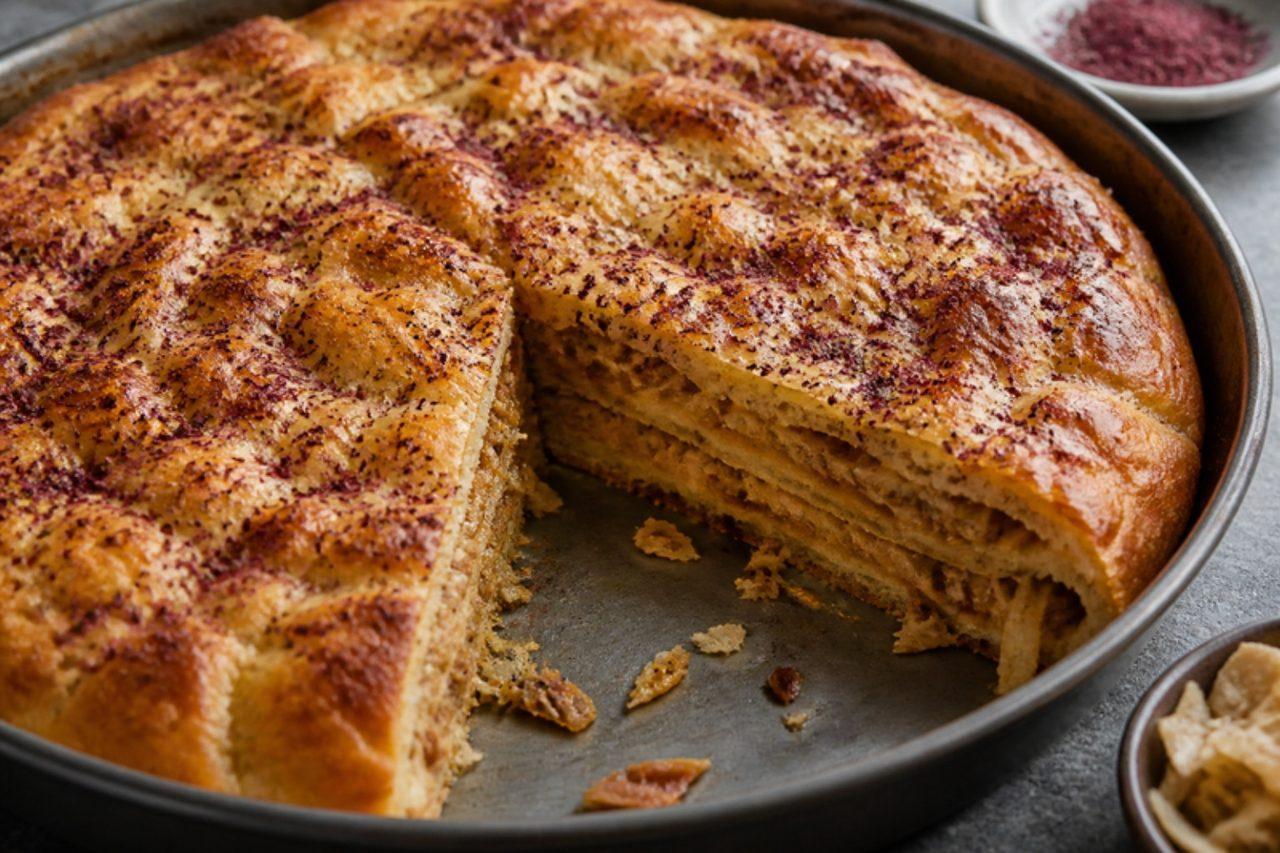
MakmouraLayered chicken and onion bread bake

Makmoura (meaning 'buried') is a village dish from around Jenin in the northern West Bank, made in olive harvest season when there is fresh oil to spare: layers of thin bread dough are baked over chicken and a heap of onions slow-cooked in olive oil with sumac and spice, so the bottom soaks up the juices and the top turns crisp. Families tear it apart by hand and eat it with yoghurt and olives. Common mistake: rushing the onions; they need a full half hour to turn sweet and jammy. Chef's tip: use good, fruity olive oil and don't skimp — it is the soul of the dish.

by KrazyBadal 0 views

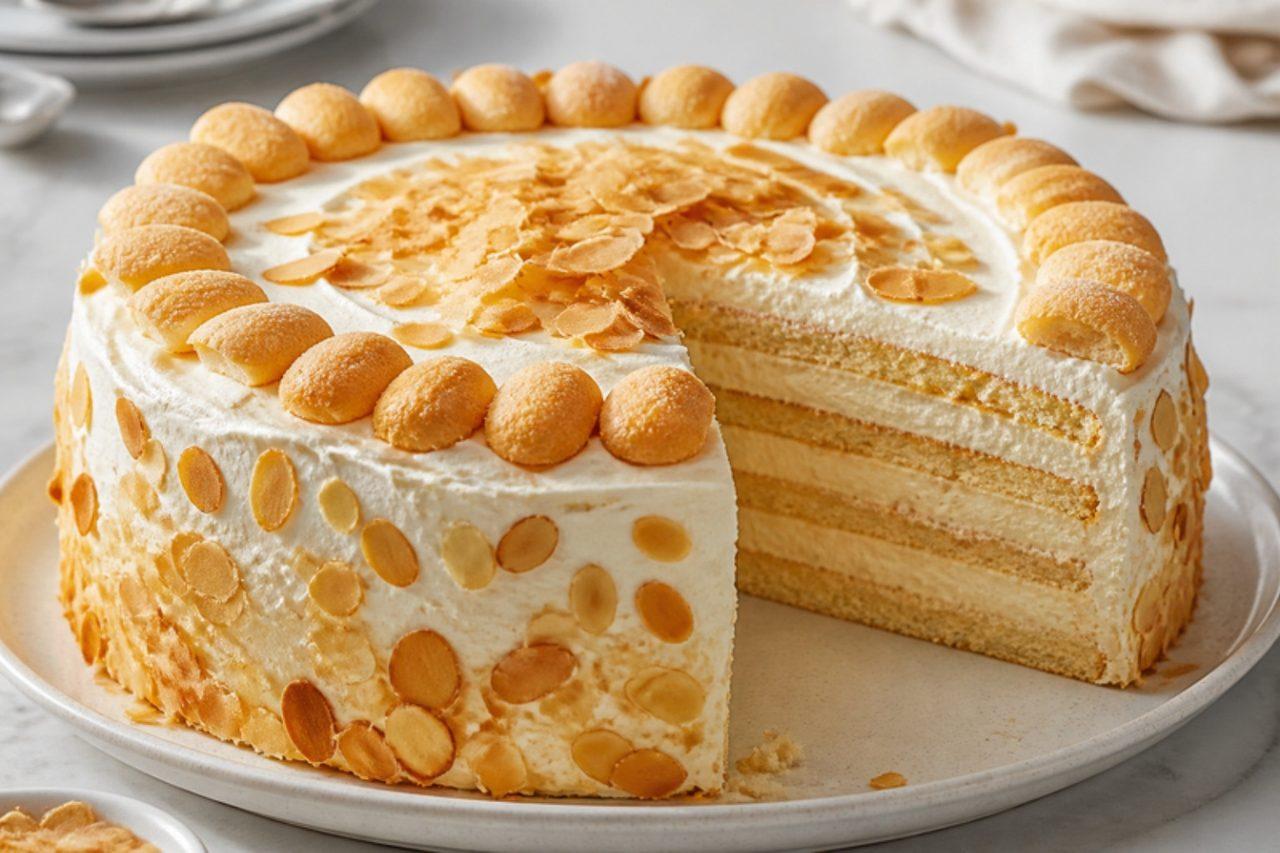
MalakofftorteNo-bake sponge finger torte

Malakofftorte is the cake Viennese families put together for name days and summer parties, because the oven stays off. Sponge fingers are dipped in milk and layered with a rich almond cream made from butter, cooked vanilla custard and whipped cream, then chilled until it slices like a soft mousse cake. In many Austrian homes the soaking milk is laced with rum or almond liqueur; this version is alcohol-free and uses vanilla milk, and you can add 2 tbsp dark rum to the milk if you want the traditional taste. A common mistake is soaking the biscuits too long, so they go soggy and the layers collapse; one quick dip is enough. Chef's tip: make it the day before; it needs at least 6 hours to set and tastes best the next day.

by KrazyBadal 0 views

MalassadasFried yeast doughnuts

On Terça-feira Gorda, the last day before Lent, kitchens all over São Miguel smell of hot oil and sugar, as families fry malassadas to use up eggs and butter before the fast. Emigrants carried them to Hawaii and New England, but on the islands they are still a Carnival treat: irregular, puffy and light, with a crisp sugared outside. Eat them within an hour of frying. Chef's tip: stretch each piece thin in the middle with oiled fingers; it puffs up dramatically and stays airy.

by KrazyBadal 0 views

LemonanaFrozen mint lemonade

From café terraces in Ramallah and Jaffa to juice bars along Hamra Street in Beirut, summer means tall glasses of lemonana: lemons and fistfuls of fresh mint blended with ice into a sharp, sweet, electric-green slush. It is the drink handed to you after a walk through the market at noon, and it cools a mezze lunch like nothing else. Everything goes in a blender, but the mint must be fresh and plentiful. The common mistake is blending the mint for too long, which bruises it and turns the drink murky and grassy. Chef's tip: make a lemon-sugar syrup first and chill it; dissolved sugar sweetens evenly and lets you blend for only a few seconds.

by KrazyBadal 0 views

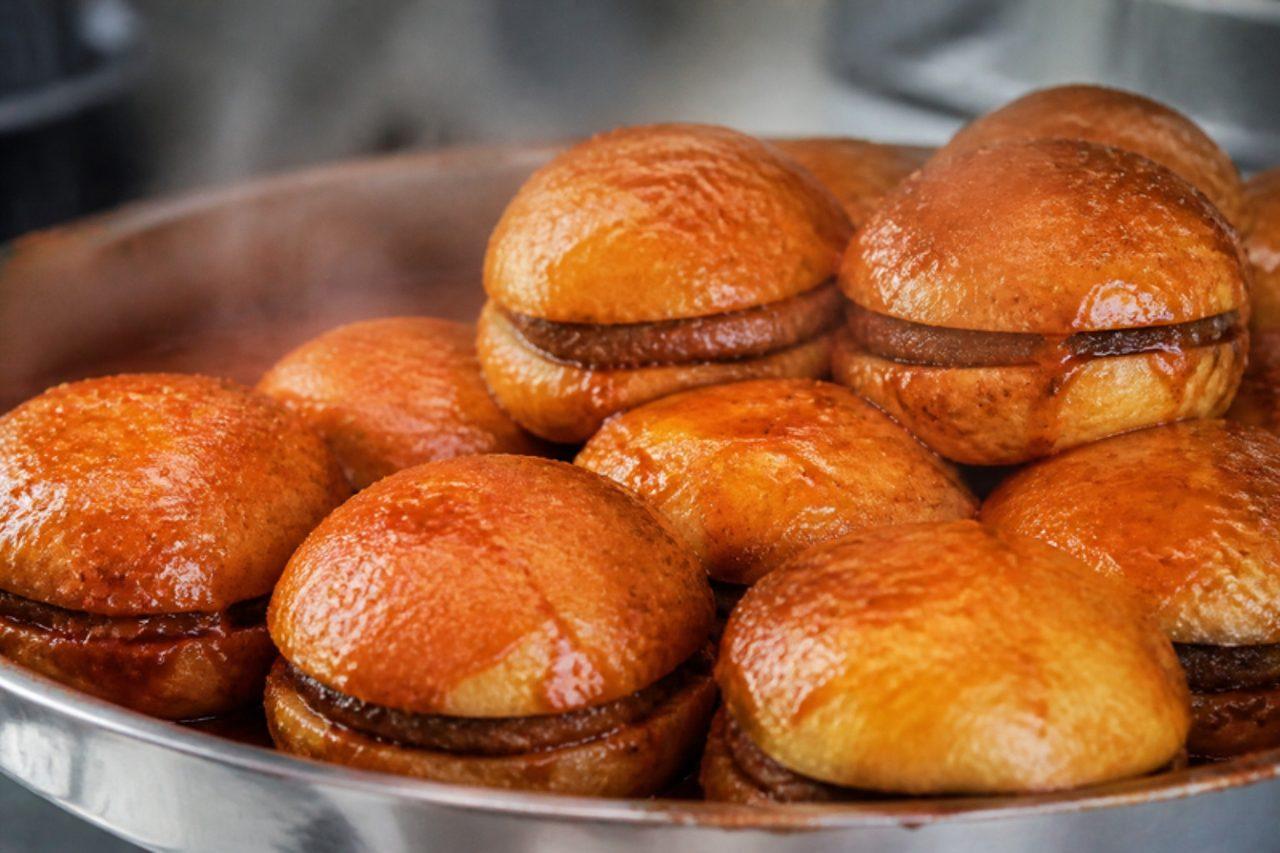
Islak burgerSteamed garlic tomato burger

In the windows of the snack bars on Taksim Square, little burgers sit in a steaming glass box, their buns soaked in a garlic and tomato sauce: the ıslak, or 'wet', burger, eaten by the half-dozen at 3 a.m. after a night out on İstiklal. The beef patty is thin and spiced, the bun turns soft and juicy, and the whole thing is gone in four bites. At home a covered pan does the job of the steam box. Chef's tip: use a soft, slightly sweet bun; crusty rolls stay hard and just get soggy at the edges.

by KrazyBadal 0 views

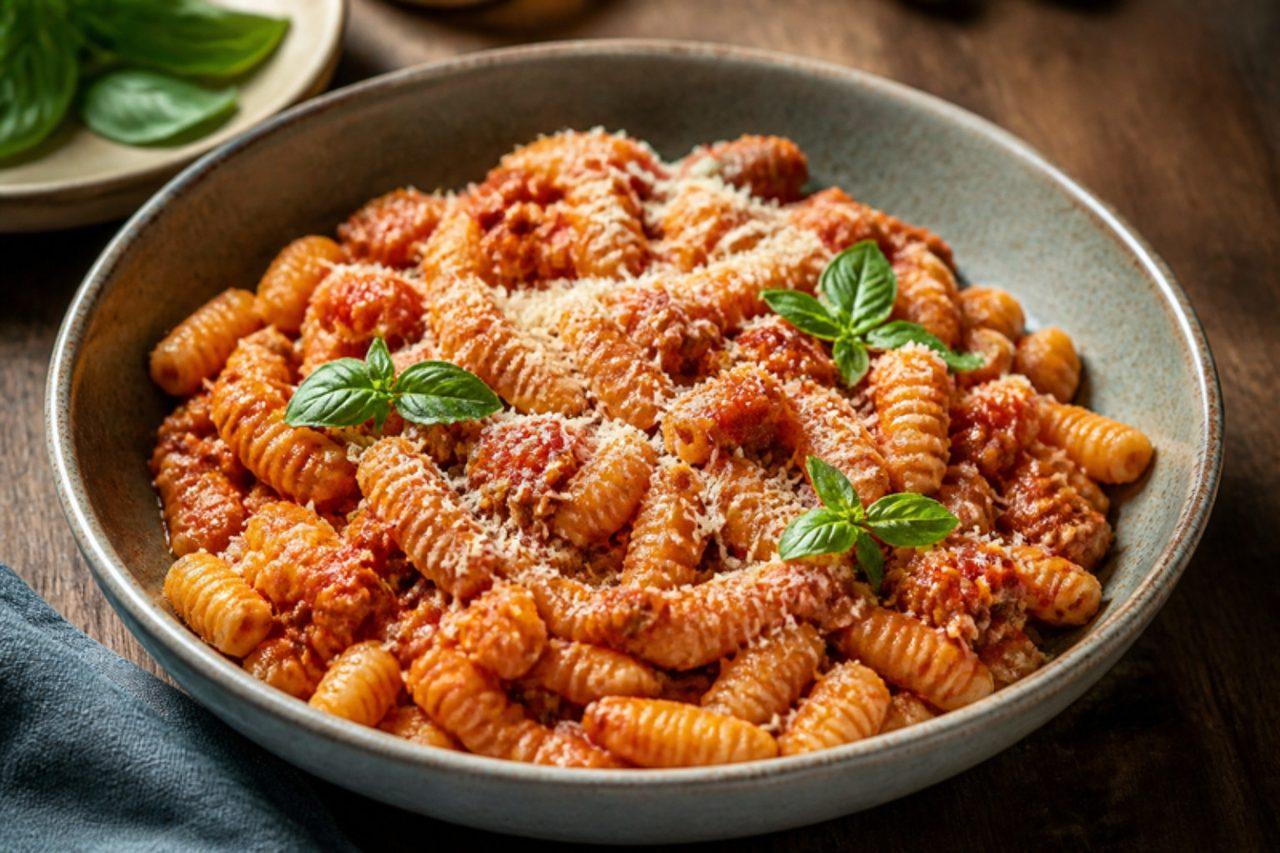
Malloreddus alla campidaneseSaffron gnocchetti with sausage

Malloreddus, small ridged shells of semolina pasta coloured with saffron, are Sardinia's festive pasta, and on the plain of Campidano, north of Cagliari, they're served at weddings, saints' days and Sunday lunch with this sauce. It's a pork dish: crumbled fennel pork sausage is browned, then simmered with tomato until rich, and the little ridged shells catch every bit of it. A shower of sharp pecorino sardo finishes it. Dried malloreddus (sometimes sold as gnocchetti sardi) are easy to find; homemade ones are a lovely weekend project. Chef's tip: steep the saffron in a spoonful of hot water before adding it to the sauce; the colour and perfume spread evenly instead of staying in threads.

by KrazyBadal 0 views

Shirini-ye zabanCaramelised puff pastry tongues

Shirini-ye zaban, tongue pastries, are the long, glossy puff-pastry ovals in every Iranian confectioner's window, from Tabriz to Kerman, and a fixture on the tray of sweets served to Nowruz visitors. The pastry is rolled out on sugar so it caramelises into a crisp, shiny, flaky finger. This version uses good bought all-butter puff pastry, as many home bakers do; check the label for butter rather than lard to keep it vegetarian. Chef's tip: chill the shaped tongues for 15 minutes before baking so the layers rise high instead of melting flat.

by KrazyBadal 0 views

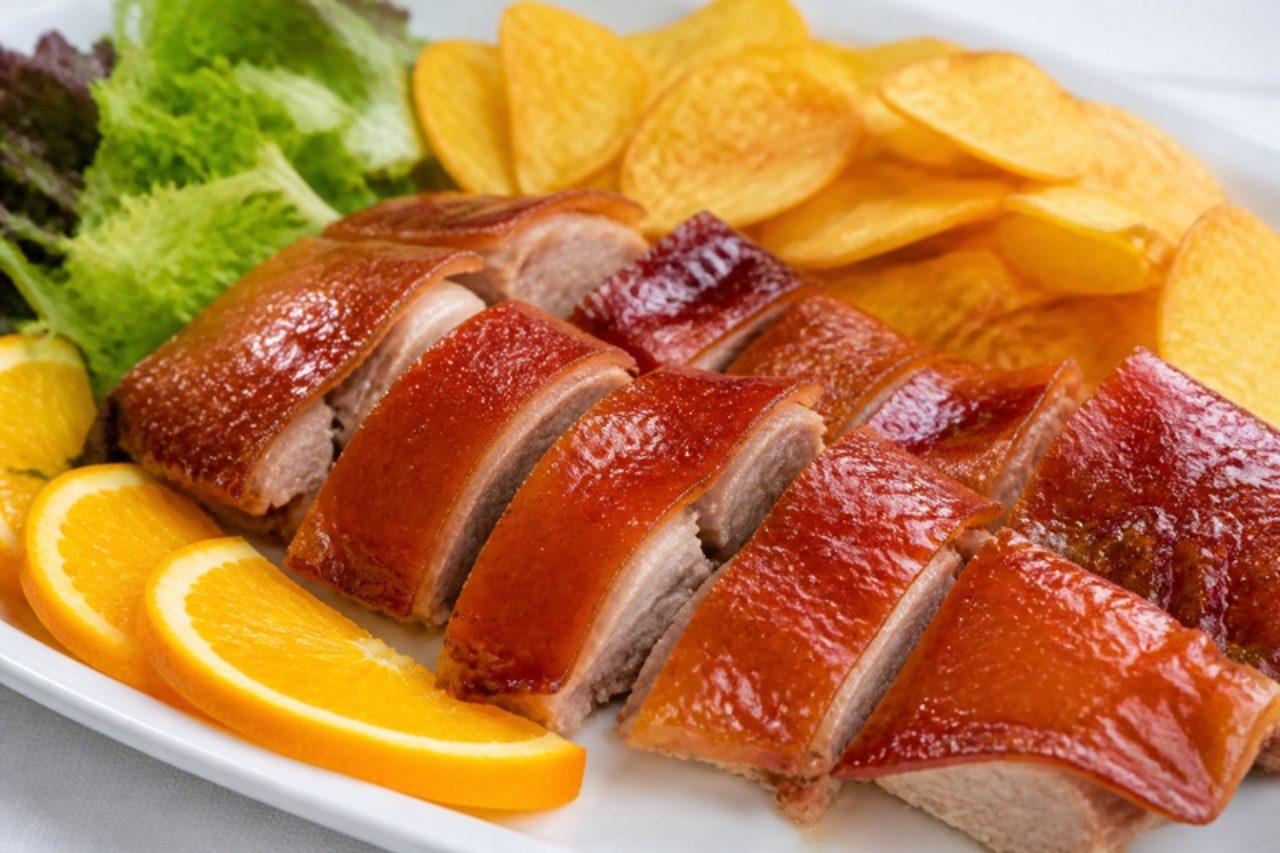
Leitão à BairradaRoast suckling pig

Along the old Lisbon–Porto road through the Bairrada, around Mealhada, restaurant after restaurant roasts suckling pigs whole in wood ovens, and people drive for hours for a Sunday lunch of it. This contains pork (suckling pig and lard). The inside is rubbed with a fierce paste of lard, garlic, black pepper and bay, while the skin roasts to a glassy, crackling sheet. It is served cold or warm with sliced oranges, crisp potato chips and a green salad. A half or quarter pig from a specialist butcher fits a home oven. Chef's tip: keep the skin completely dry and paste only the inside, as any fat or water on the skin stops it crackling.

by KrazyBadal 0 views

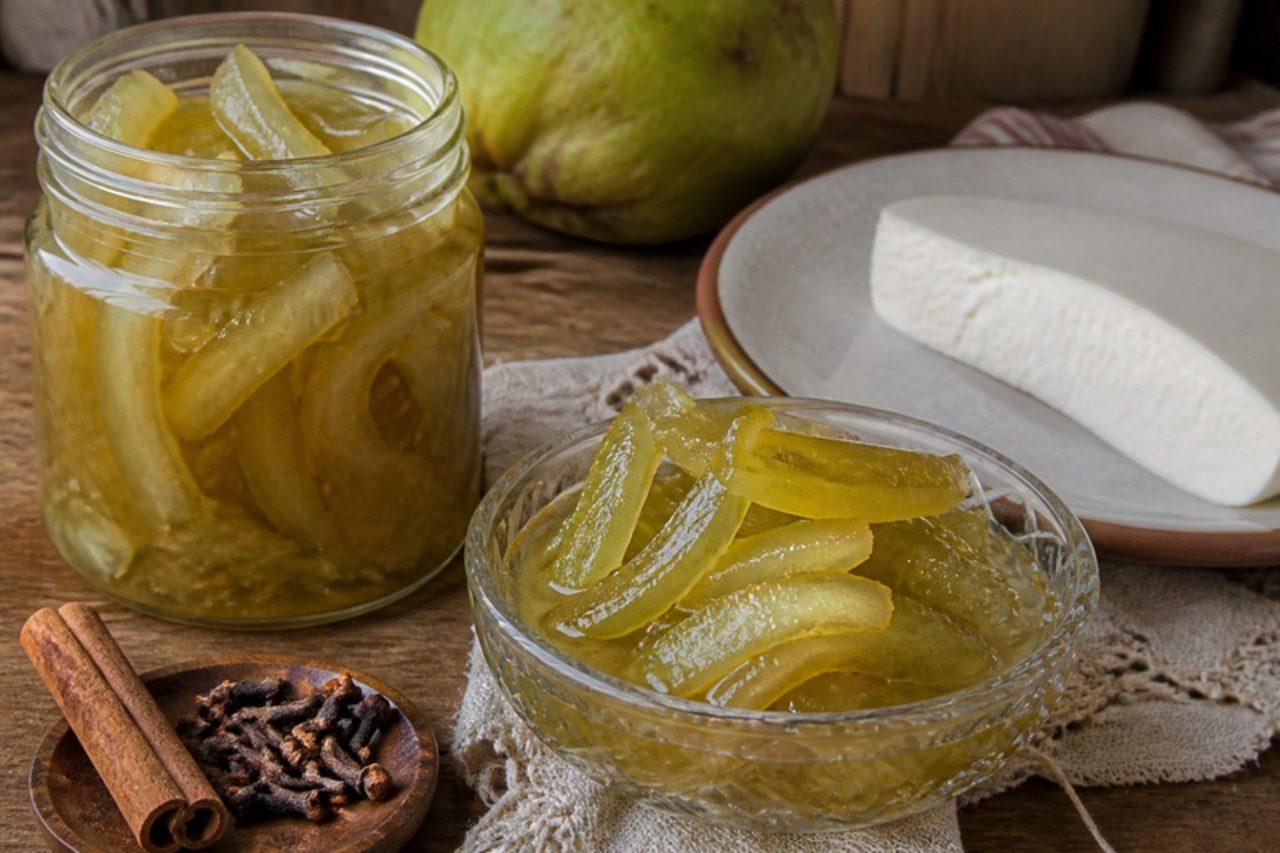
Mamón en almíbarCandied green papaya

Along the subtropical northeast, papaya (mamón) trees grow in backyards from Corrientes to Formosa, and the unripe fruit is turned into this old-fashioned dessert: strips of firm green papaya poached slowly in syrup with cloves and cinnamon until they turn amber and translucent, chewy at the edges and tender inside. It is served cold in little bowls, traditionally next to a slice of fresh cheese for that sweet-and-salty contrast (choose a plant-based cheese to keep it vegan). Rushing the syrup is the misstep that turns the papaya hard and sugary on the outside and raw within, so the heat stays low for well over an hour. Green papaya is sold in Asian and Latin grocers. Wear gloves when peeling; the milky sap can irritate the skin. Chef's tip: soak the strips in water with a teaspoon of bicarbonate of soda for an hour before cooking; it firms the outside so the pieces hold their shape in the syrup.

by KrazyBadal 0 views

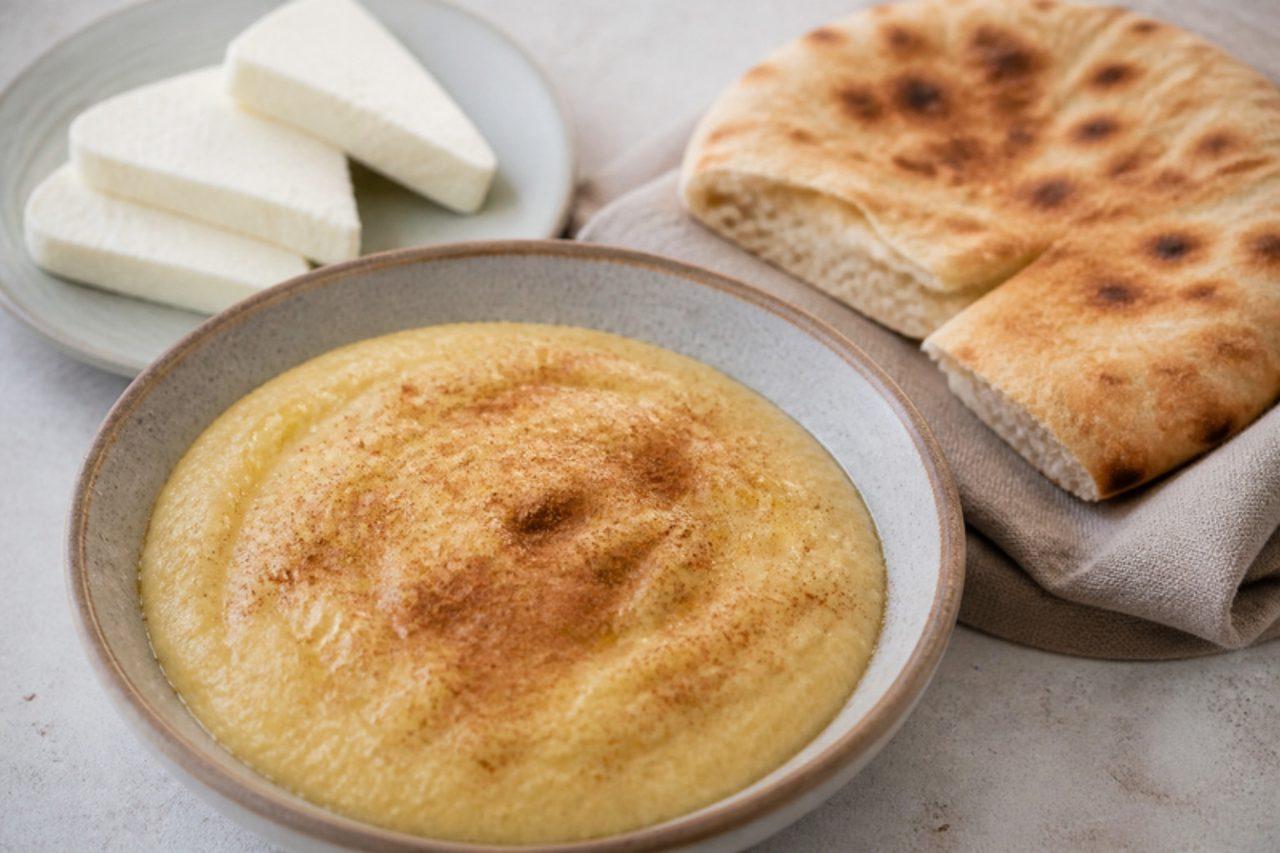
MamouniehSemolina pudding with cinnamon

In the old souks of Aleppo, mamounieh shops open at dawn, serving bowls of this hot, buttery semolina pudding to workers before the day starts. Semolina is toasted in butter, then cooked in a light syrup until it sets soft and spoonable, and dusted with cinnamon; Aleppans eat it with a slice of salty white cheese and warm bread on the side, which makes the sweetness sing. Common mistake: pouring cold syrup onto the hot semolina; use hot syrup so it doesn't seize into lumps. Chef's tip: toast the semolina only to pale straw colour — any darker and it loses its delicate milky flavour. Akkawi and halloumi are often made with animal rennet; choose a vegetarian white cheese if needed.

by KrazyBadal 0 views

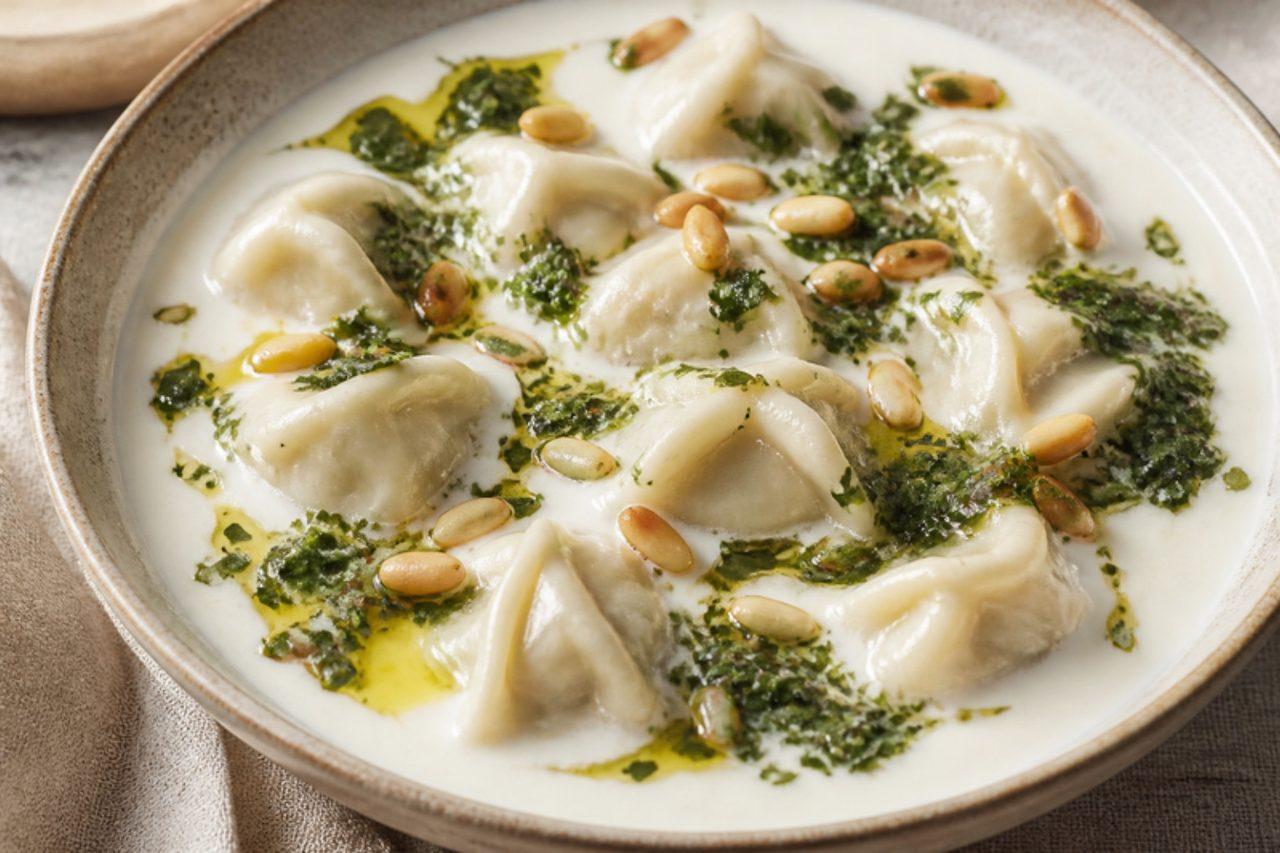
Shish barakLamb dumplings in garlic yoghurt

Shish barak is a labour of love that Lebanese grandmothers turn into a family afternoon: everyone sits round the table pinching hundreds of tiny dumplings filled with spiced lamb and onion. The dumplings are baked until lightly golden, then dropped into hot yoghurt sauce, and the bowl is finished with garlic and coriander fried in butter. It is rich, tangy and deeply comforting, served on its own or with plain rice. Common mistake: rolling the dough thick — it should be thin enough to see the board through, or the dumplings turn stodgy. Chef's tip: baking the dumplings before they go into the sauce sets their shape and adds a toasty flavour; you can freeze them at this stage.

115 minLebaneseMeat
by KrazyBadal 0 views

Leipziger LercheAlmond marzipan tartlets

Leipziger Lerchen began as real roast larks stuffed with herbs, sold in Leipzig until the King of Saxony banned songbird hunting in 1876. The city's bakers answered with a pastry that kept the name: a shortcrust tartlet filled with almond-marzipan cream, a cherry or jam hidden in the middle like the bird's heart, and two crossed strips of pastry on top like the string that tied it. Today you find them in every Leipzig café, especially at the Christmas market. A common mistake is overfilling the cases, so the filling bubbles over and the cross sinks. Chef's tip: chill the lined tins for 15 minutes before filling so the pastry keeps sharp edges.

by KrazyBadal 0 views

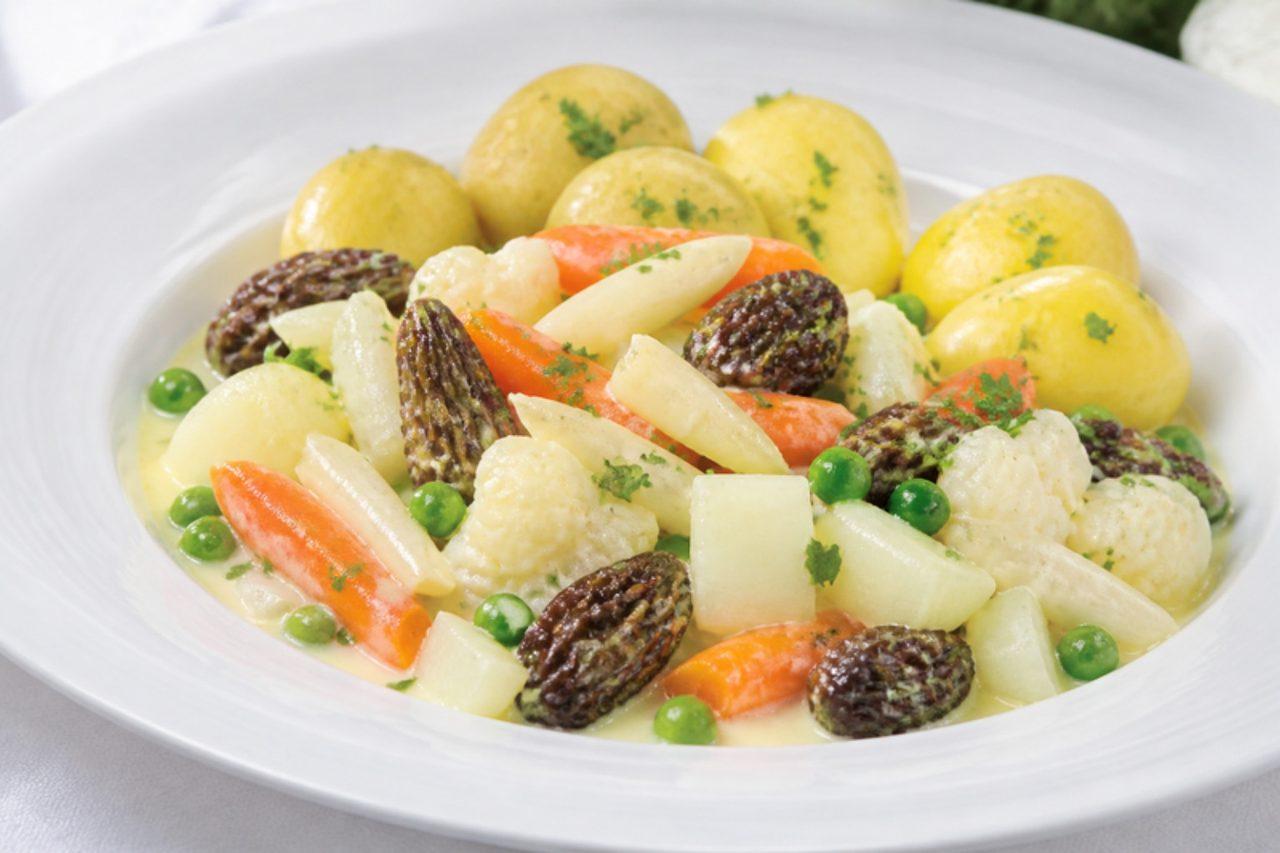
Leipziger AllerleiSpring vegetables with morels

Leipziger Allerlei is Leipzig's showpiece of spring: young carrots, peas, asparagus, kohlrabi and cauliflower, each cooked separately until just tender, then brought together in a light butter sauce with morel mushrooms. The traditional dish also includes crayfish and bread dumplings; this vegetarian version keeps the morels and vegetables, which were always the heart of it, and serves it with new potatoes. Dried morels are easiest to find and give a deep, smoky flavour. A common mistake is boiling everything together in one pot, which turns the dish muddy and over-soft. Chef's tip: save the vegetable cooking water and morel soaking liquid; together they make the stock for the sauce.

by KrazyBadal 0 views

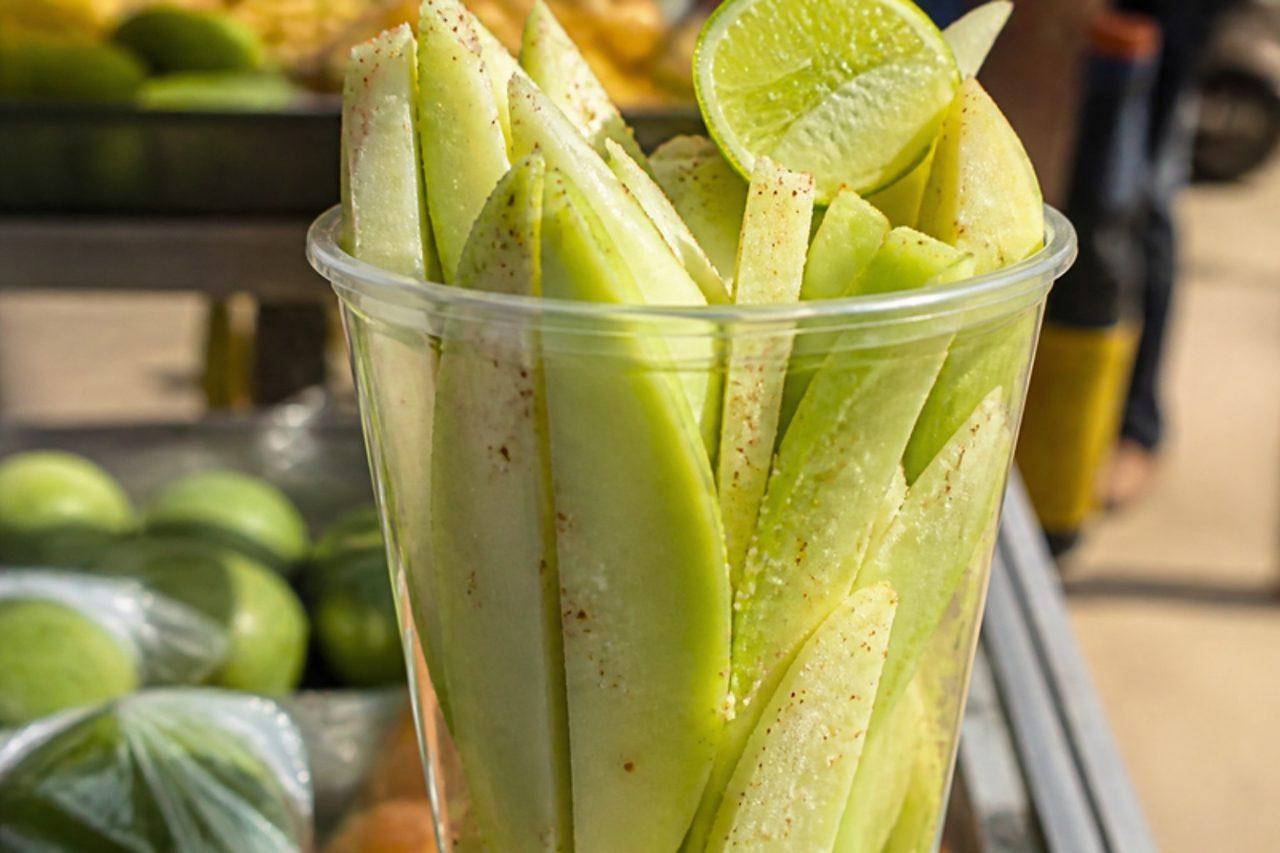
Mango bicheGreen mango with salt and lime

Paper and plastic cones of mango biche are sold from street carts in Cali, Barranquilla and Bogotá, especially around schools, parks and bus stops. Biche means unripe: the mango is still hard and pale green inside, so it is crunchy and mouth-puckeringly sour, and the vendor cuts it into long strips and shakes on salt, lime and black pepper, sometimes a pinch of chilli. It is a refreshing, almost savoury snack, eaten in the afternoon heat. Choosing a mango that has started to ripen is the slip that spoils it: the flesh should be firm and white-green with no yellow, or it turns soft and sweet. Look for green mangoes in Asian and Latin shops. Chef's tip: chill the mango for 30 minutes before cutting; the strips stay crisp and the salt and lime cling better.

by KrazyBadal 0 views

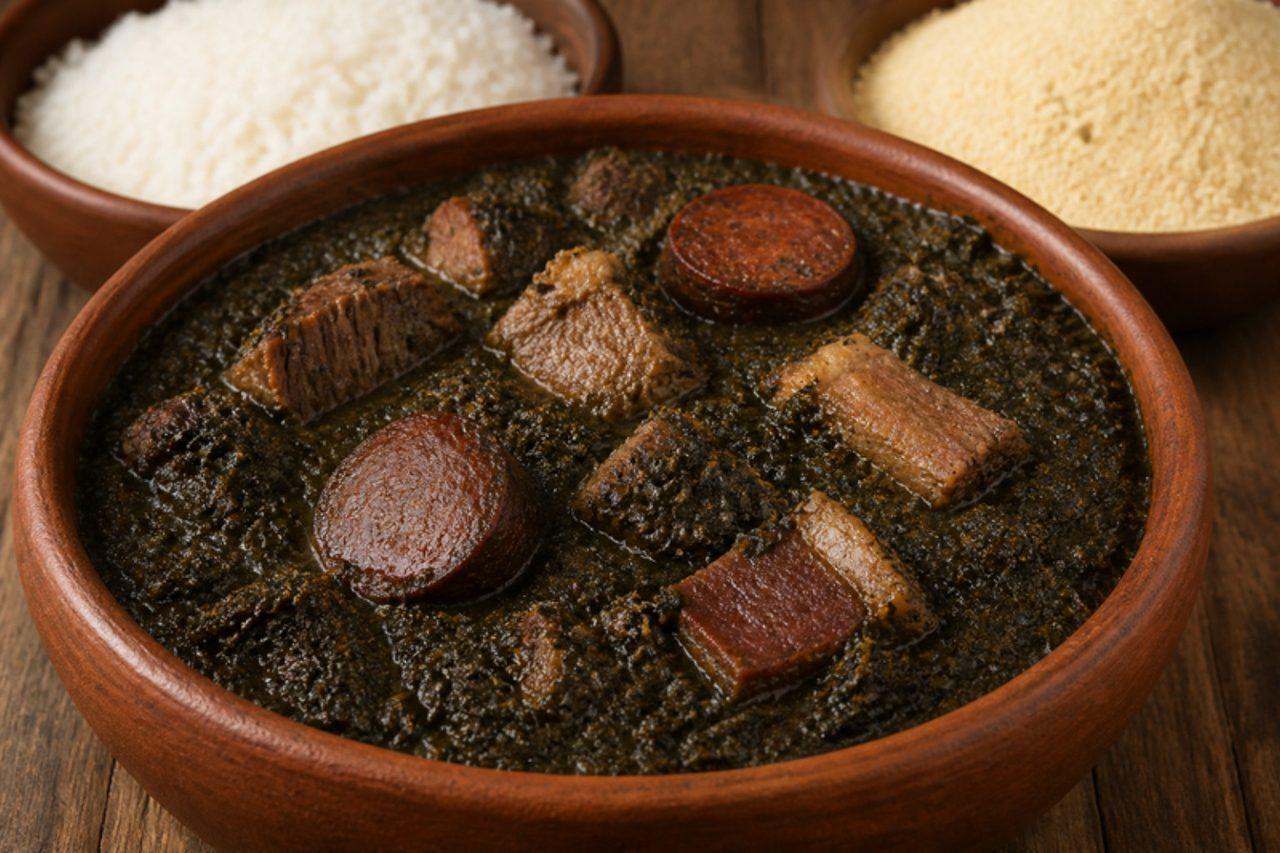
ManiçobaManioc leaf and smoked pork stew

Black-green, smoky and rich, maniçoba is the dish Belém cooks for the Círio de Nazaré in October, when families gather after the great procession, and it is sold all year at the Ver-o-Peso market. Its base is maniva, ground manioc leaves, which contain natural cyanide and must be cooked for days before they are safe; in Pará cooks simmer it for up to a week. Never use raw or home-ground manioc leaves for this dish. Buy only ready-cooked ground maniva (sold frozen in Brazilian shops and labelled pre-cooked), and follow the pack's further cooking time if it is longer than ours. The leaves are then simmered for hours with the cuts of a feijoada: salted pork ribs, smoked bacon, smoked pork sausage, beef jerky and pig's trotter, until the meat falls apart into a thick, smoky, faintly bitter stew. Serve it with white rice, farinha d'água and pimenta-de-cheiro. Plan ahead: the salted meats need soaking overnight. The usual mistake is adding the meat too early, so it disintegrates. Chef's tip: maniçoba tastes even better reheated the next day.

by KrazyBadal 0 views

Manjar de cocoCoconut blancmange with prune syrup

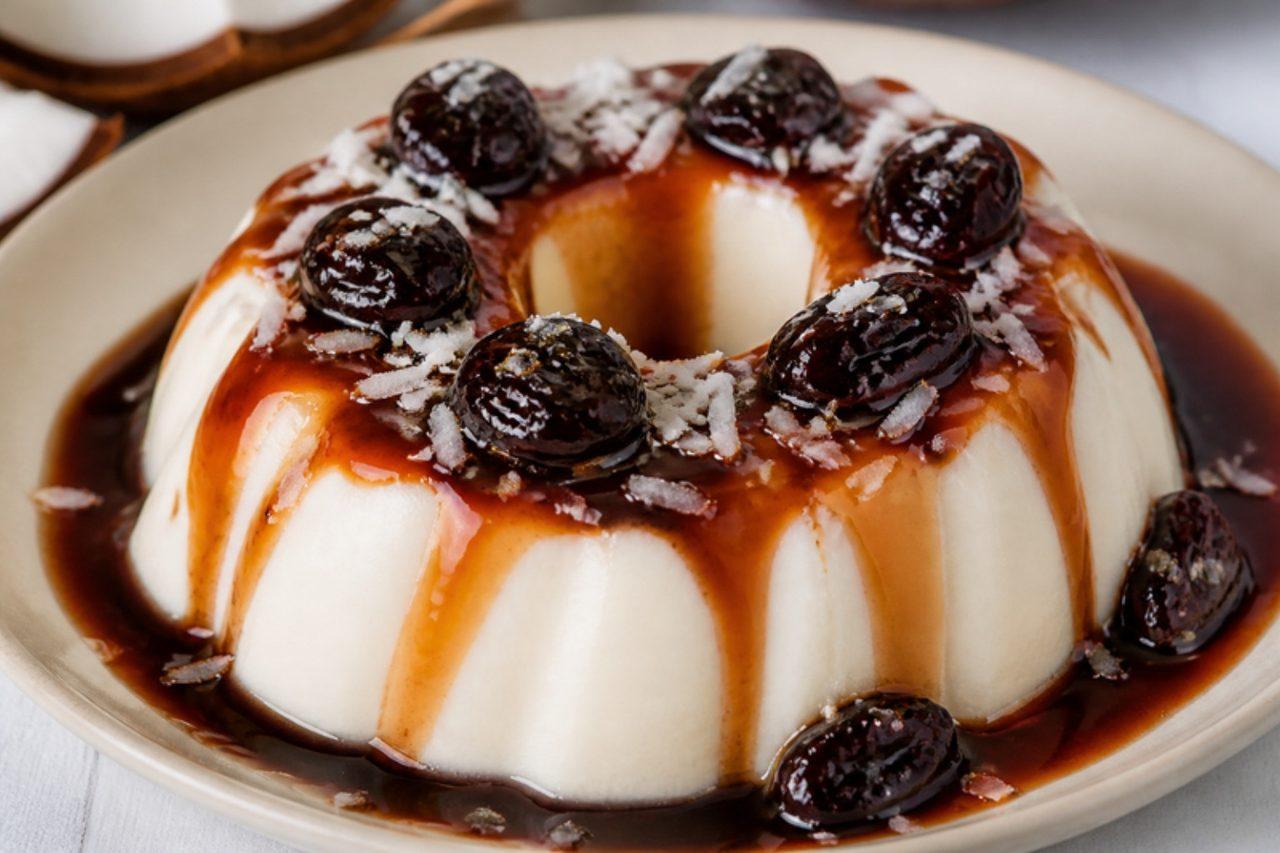
Sunday lunch at a grandmother's in Rio, Minas or Pernambuco often ends with a manjar, a snowy ring of coconut blancmange turned out of its mould and drowned in glossy, nearly black prune syrup. It is smooth and cool, with a soft wobble, the mild sweet coconut cream set off by the deep, winey taste of the prunes. The dessert is set with cornflour alone, so it is gluten free, and it has to be made at least 4 hours ahead. Under-cooking the cornflour is what usually goes wrong: the manjar tastes chalky and breaks when turned out. Chef's tip: wet the mould with cold water instead of greasing it, then shake out the drops; the manjar slides out cleanly with a coconut taste unspoilt by oil.

by KrazyBadal 0 views

Sholeh MashhadiWheat, bean and lamb porridge

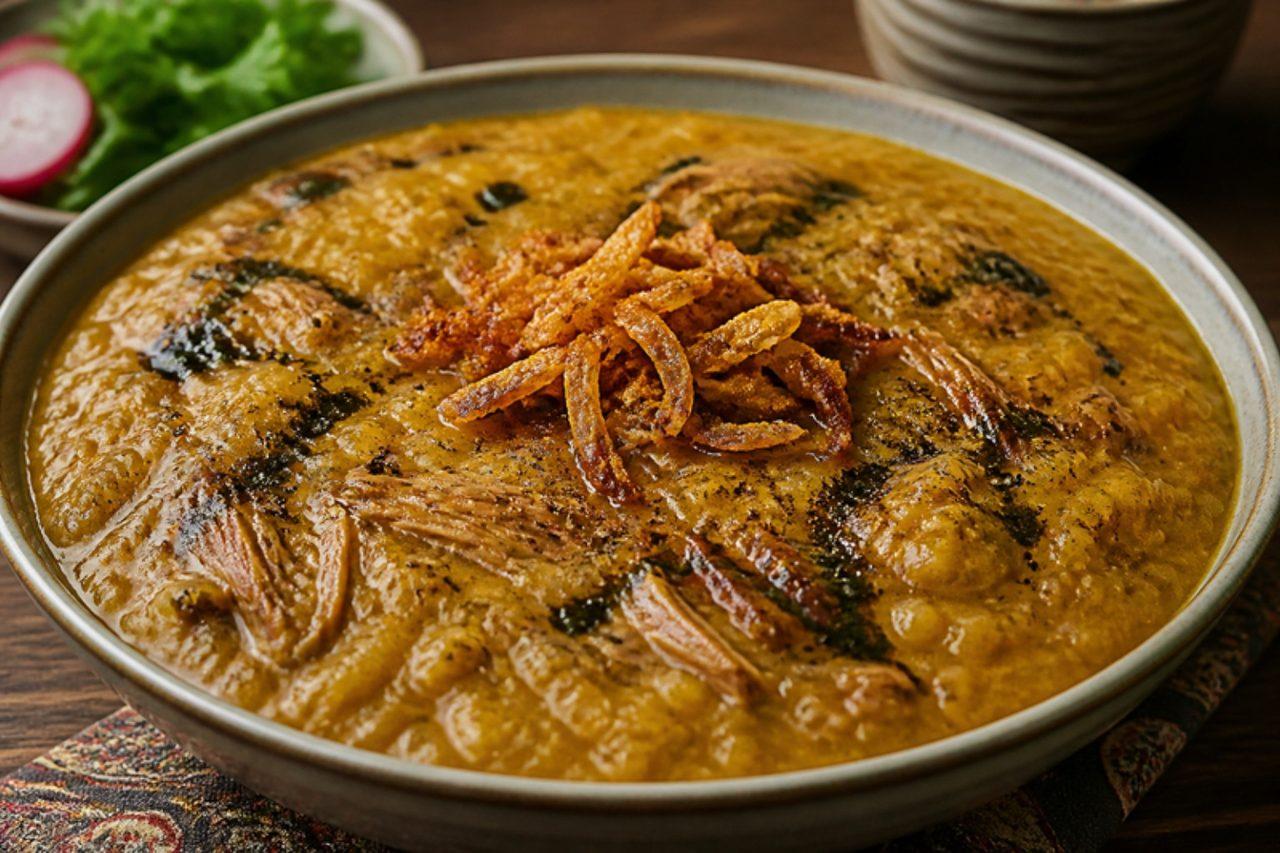
Sholeh Mashhadi is cooked in huge pots in Mashhad, the shrine city of Khorasan, and handed out to pilgrims and neighbours as nazri (a votive offering), especially during the month of Muharram. Wheat, rice, lentils, mung beans, chickpeas and lamb are cooked for hours with onion and spices, then beaten with a wooden paddle until everything melts into one thick, stretchy porridge, topped with fried onion, mint oil and a dusting of cinnamon. A home pot is smaller but follows the same rhythm. A common mistake is leaving it unstirred towards the end; the grains catch and burn, so stir and scrape the base every 10 minutes once it thickens. Chef's tip: cook the lamb on the bone first and shred it; the broth from the bones gives the porridge its body.

by KrazyBadal 0 views

MarathopitesFennel hand pies

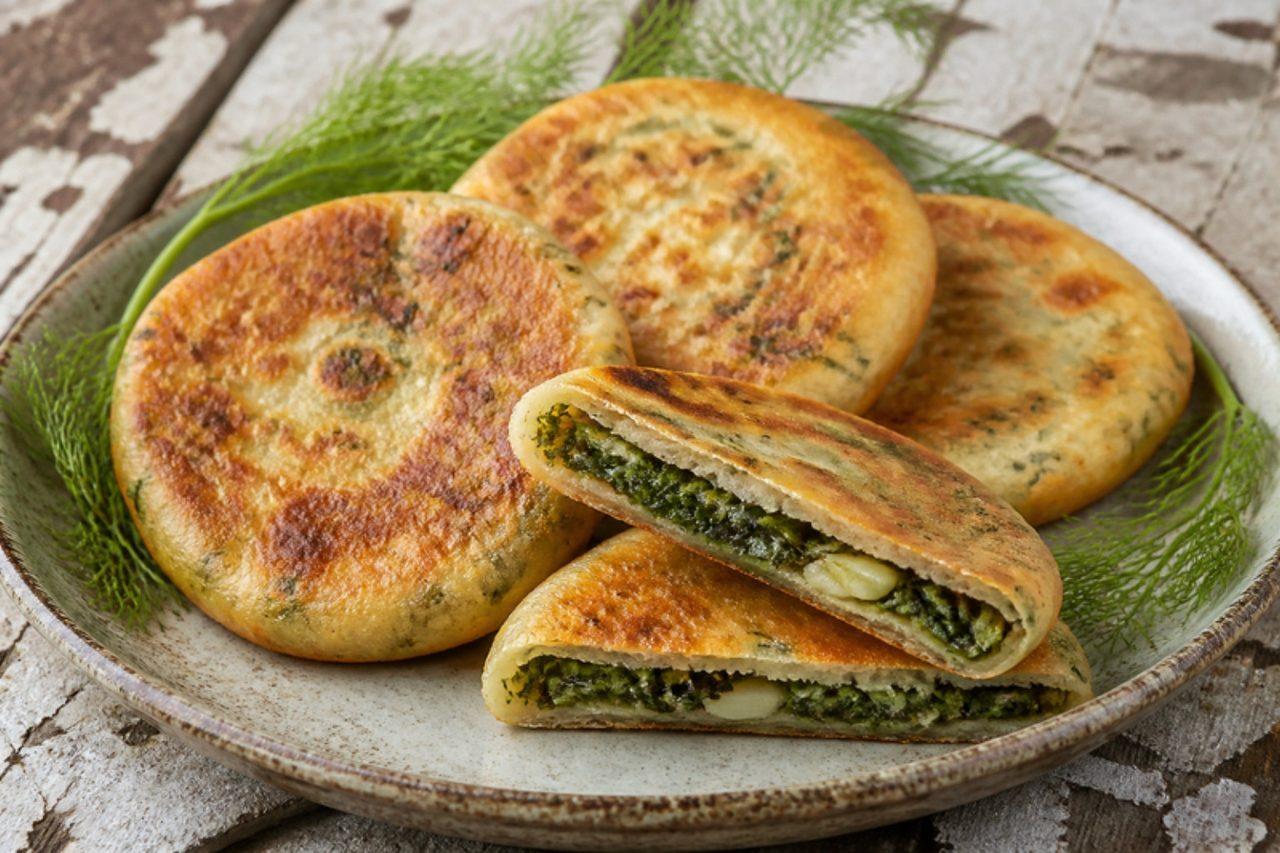
In early spring, when wild fennel sprouts along the field walls around Rethymno, Cretan cooks gather armfuls of the feathery fronds for marathopites, thin olive-oil pastry wrapped round a green, aniseed-sweet filling and cooked in a pan. They are Lenten food, so they contain no cheese or egg, and they are eaten warm with olives and a glass of water or tea. Wild fennel can be hard to find outside the Mediterranean; the fronds from bulb fennel mixed with dill give a close flavour. Common mistake: leaving the greens wet after washing, which steams the pastry from inside and splits it. Chef's tip: salt the chopped greens and squeeze them hard in a cloth before mixing the filling.

by KrazyBadal 0 views

Kaburga dolmasıRice-stuffed lamb breast

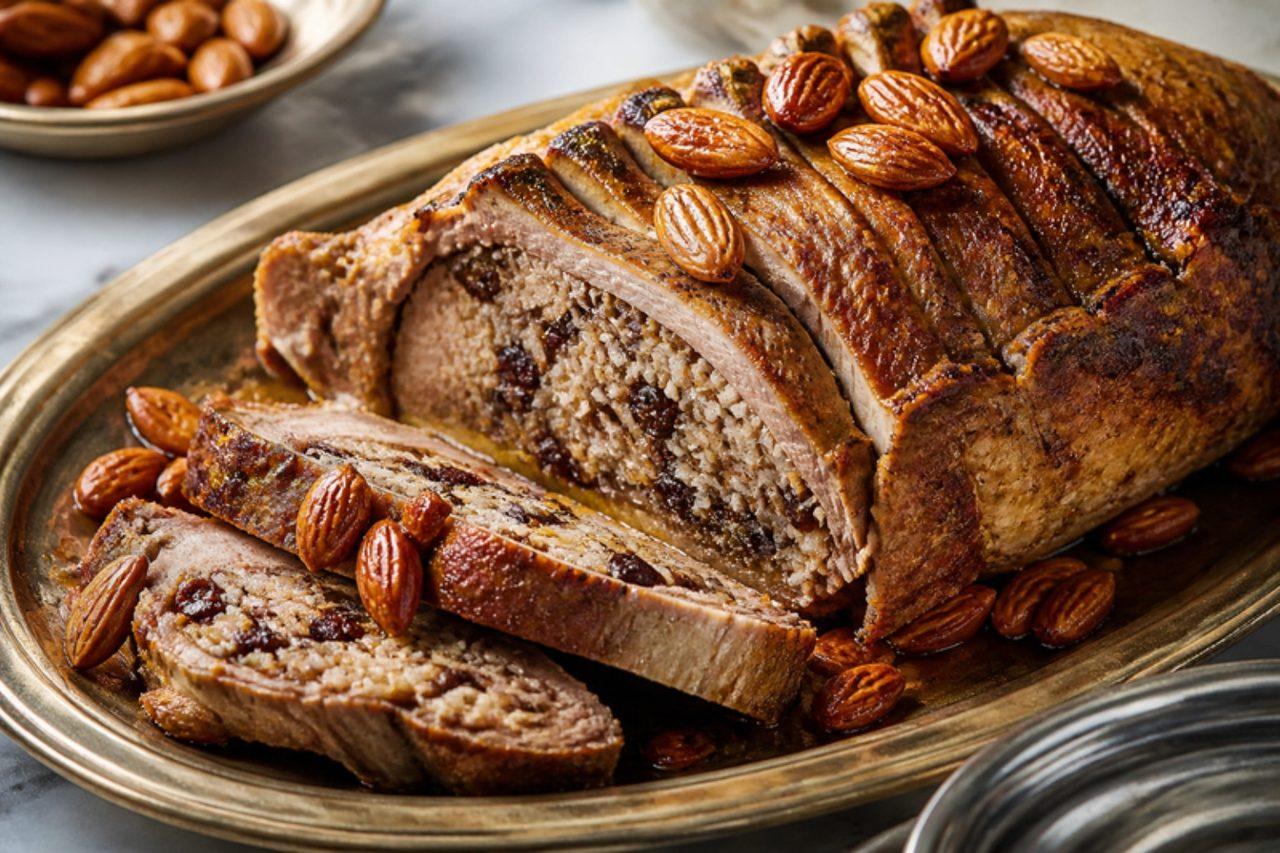
In Mardin and Diyarbakır, a stuffed lamb breast is the centrepiece of bayram and wedding tables: the butcher cuts a pocket between the ribs and the meat, which is filled with rice cooked with almonds, currants, allspice and cinnamon, sewn shut and baked slowly until the meat falls from the bones. The rice inside soaks up all the lamb juices. Ask the butcher to open the pocket for you. Common mistake: packing the rice tightly when it is raw; it needs room to swell or the pocket splits. Chef's tip: roast it covered for most of the time, then uncover and turn the heat up at the end for crackling-crisp fat.

250 minTurkishMeatGluten free
by KrazyBadal 0 views

MarinerasRussian salad and anchovy bread rings

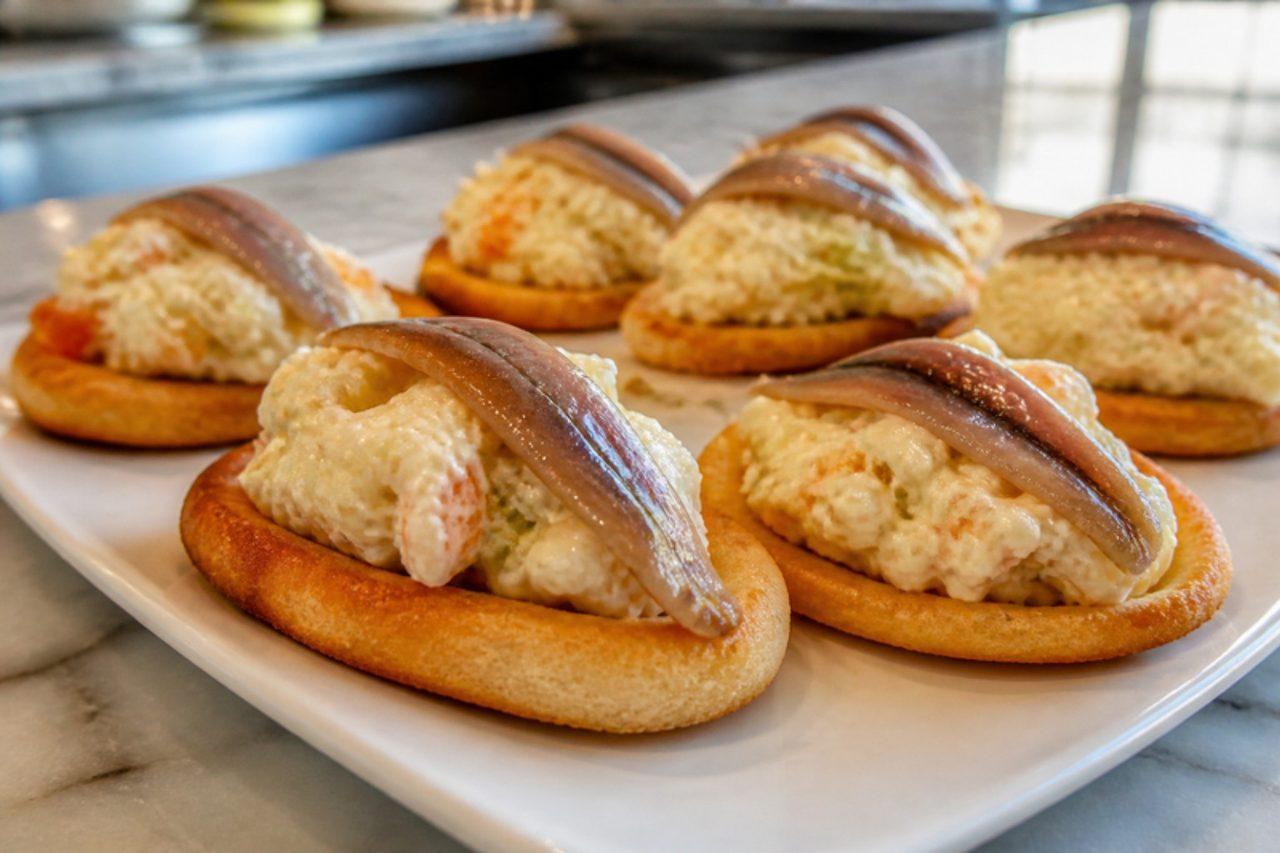
No pre-lunch drink in Murcia is complete without a marinera: a crunchy ring-shaped breadstick, the rosquilla, piled with ensaladilla rusa (potato, carrot and peas in mayonnaise) and crowned with an anchovy. Bar counters in the city line them up from midday, alongside the marinero, topped with a vinegar-cured fresh anchovy, and the bicicleta, which has no fish at all. This version uses salted anchovy fillets in oil and shop-bought mayonnaise, which is made with pasteurised egg. If you use vinegar-cured fresh anchovies instead, they are raw fish: buy them frozen first, and they are not for pregnant women, young children or anyone with a weakened immune system. Chef's tip: assemble them at the last moment so the rings stay crunchy.

by KrazyBadal 0 views

MarmitakoBonito and potato stew

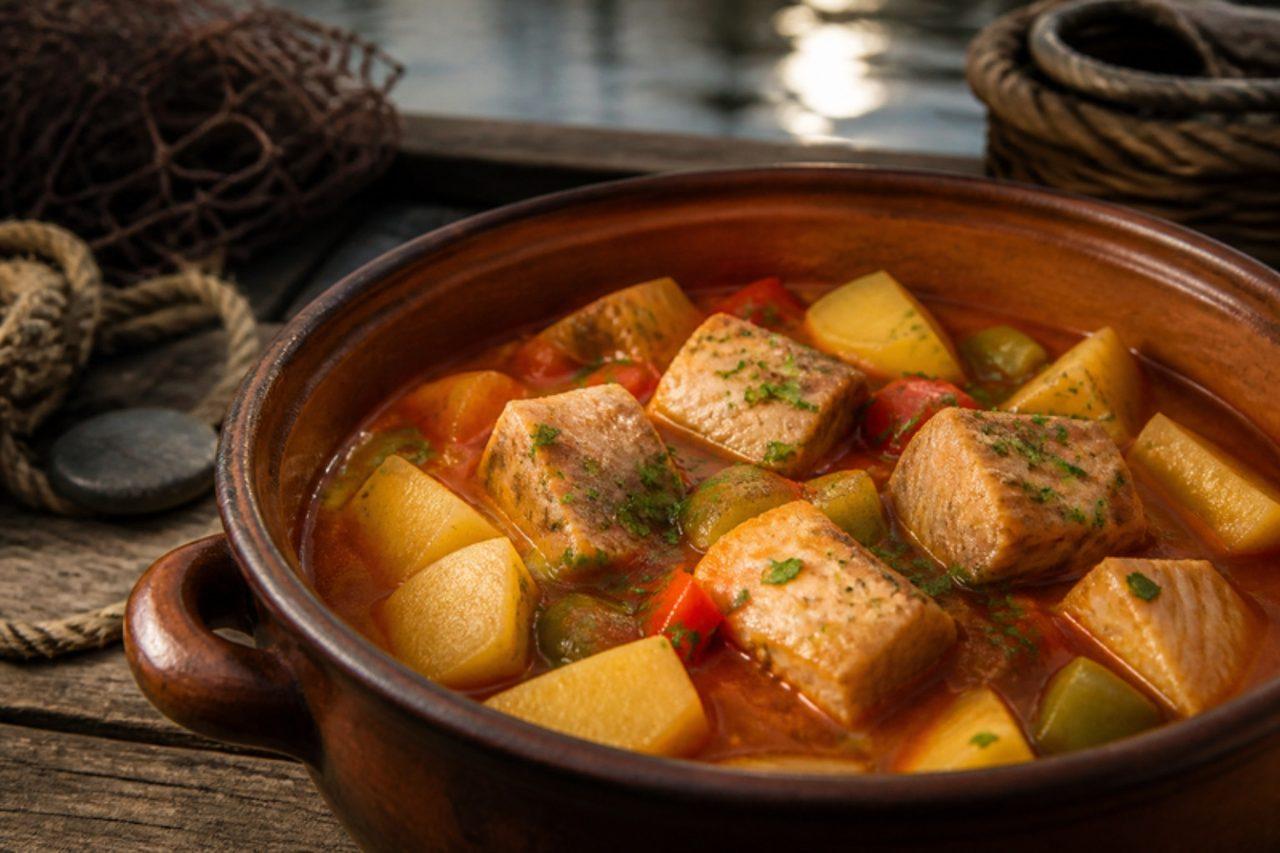
Marmitako takes its name from the marmita, the iron pot that fishermen out of Bermeo and Ondarroa kept on board during the summer bonito season, from June to September. Potatoes simmer in a peppery broth made red with choricero pepper, and chunks of fresh bonito go in only at the very end. Along the coast it is still the summer lunch of fishing towns, eaten from deep plates. A common mistake is boiling the fish with the potatoes, which turns it dry and stringy; it needs just a few minutes of gentle heat. Chef's tip: snap the potatoes rather than cut them, so their starch thickens the broth.

by KrazyBadal 0 views

MarmorkuchenMarble cake

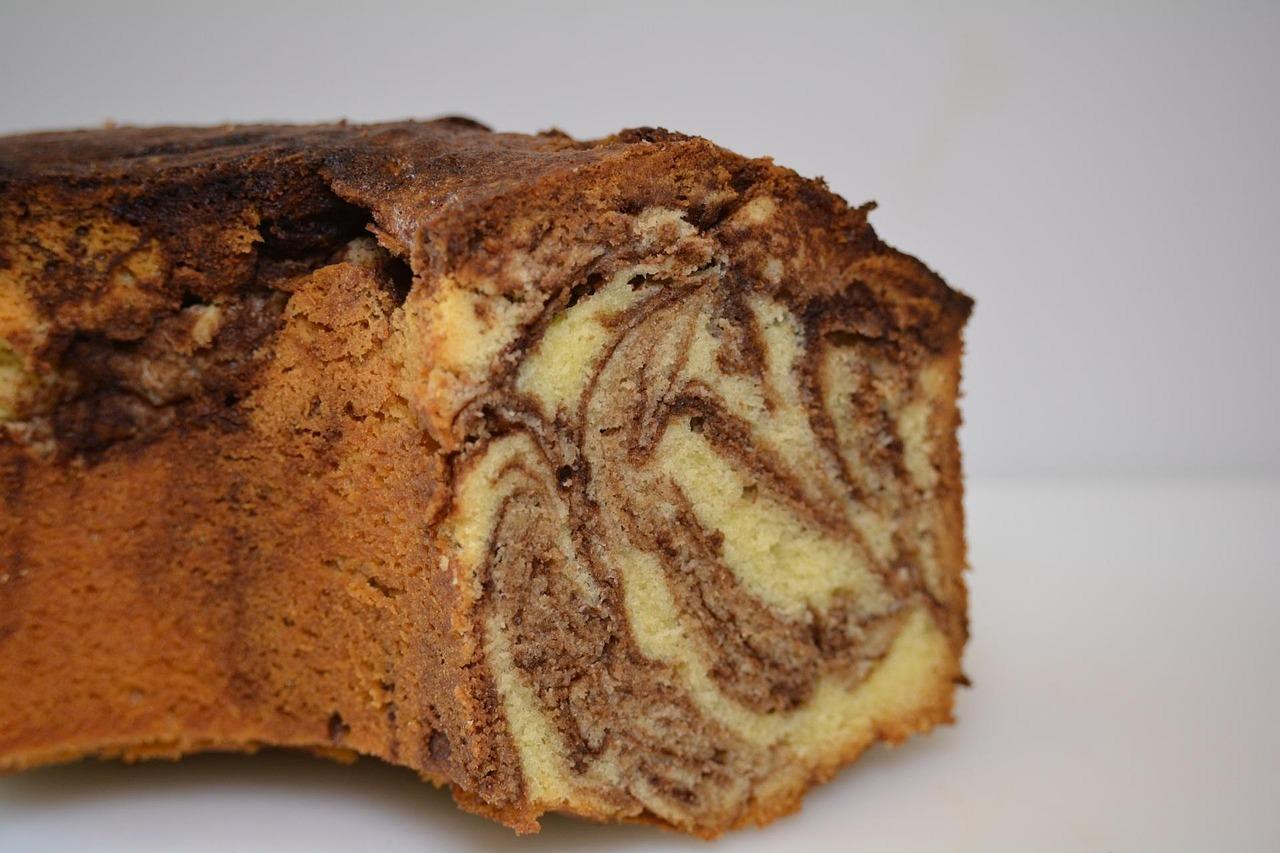
Marmorkuchen is the cake German children grow up with: a tall, buttery ring of vanilla sponge swirled with chocolate, baked for birthdays and kindergarten parties and kept under a glass dome for afternoon coffee all week. It needs nothing but a dusting of icing sugar, though many families pour over a thin chocolate glaze. A common mistake is over-stirring the two batters together, which turns the cake a muddy brown instead of showing clear marbling. Chef's tip: layer the batters in the tin, then pull a fork through just once in a spiral; less is more.

by KrazyBadal 0 views

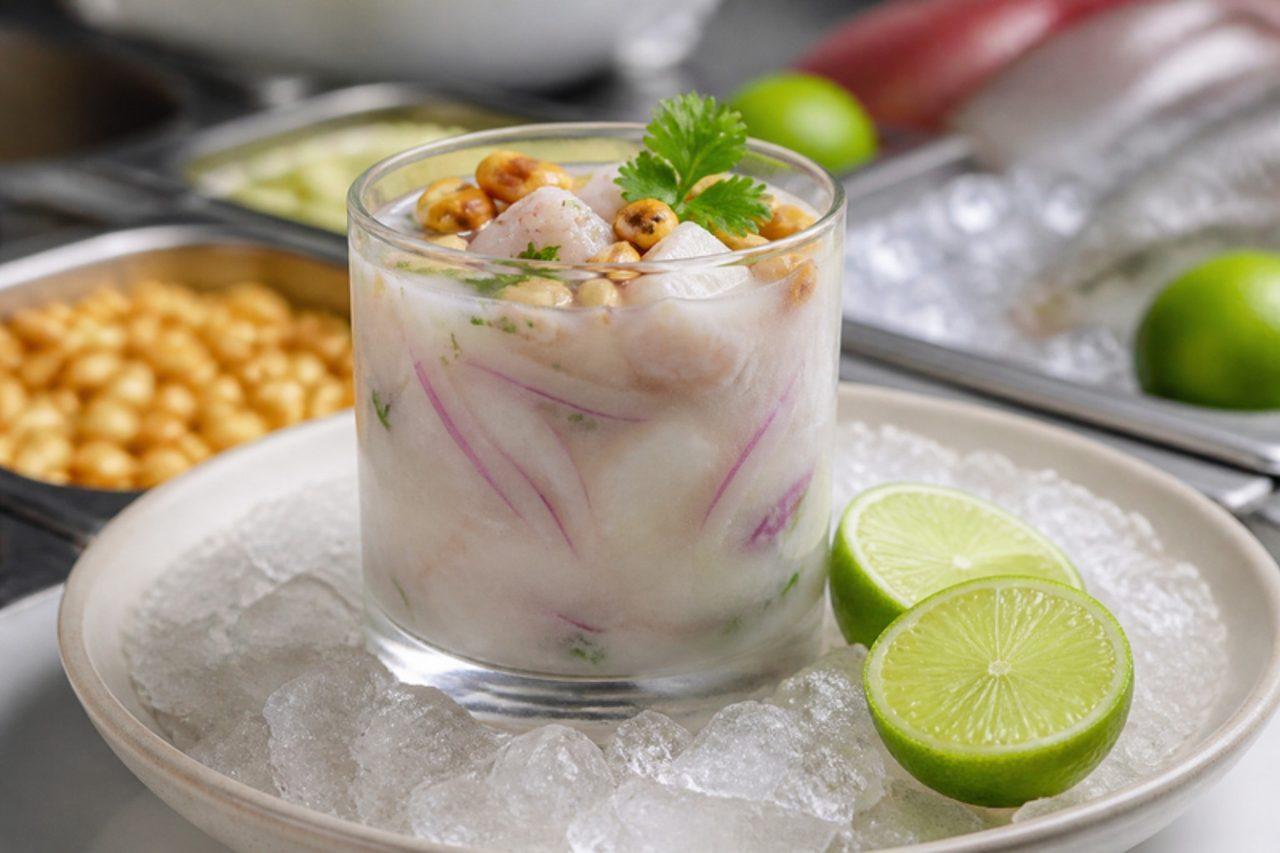
Leche de tigreCitrus ceviche marinade

Every cevichería along Lima's coast, from Chorrillos to the market stalls of Surquillo, sells this as a pick-me-up before lunch: a small glass of milky, lime-sharp juice blitzed with fish, celery, ginger and ají limo, with a few cubes of fish and kernels of cancha floating on top. It is cold, salty, very sour and fiery, and people swear by it the morning after a long night. Because the fish is cured only by lime, this safer version uses very fresh white fish that has been frozen at −20 °C for 24 hours first, keeps everything ice cold and is drunk at once; it is not for pregnant women, young children or anyone with a weakened immune system. The common mistake is blending the lime with the fish for too long, which makes the juice bitter, so pulse only briefly. Chef's tip: squeeze the limes by hand, gently, without pressing the pith; the last hard squeeze is what turns leche de tigre bitter.

by KrazyBadal 0 views

Showing 54 of 7,762 recipes

Show more recipes

Page 548 of 863