


Skip to content
Manipuri bora
Featured recipe

Manipuri bora

Gram flour fritters

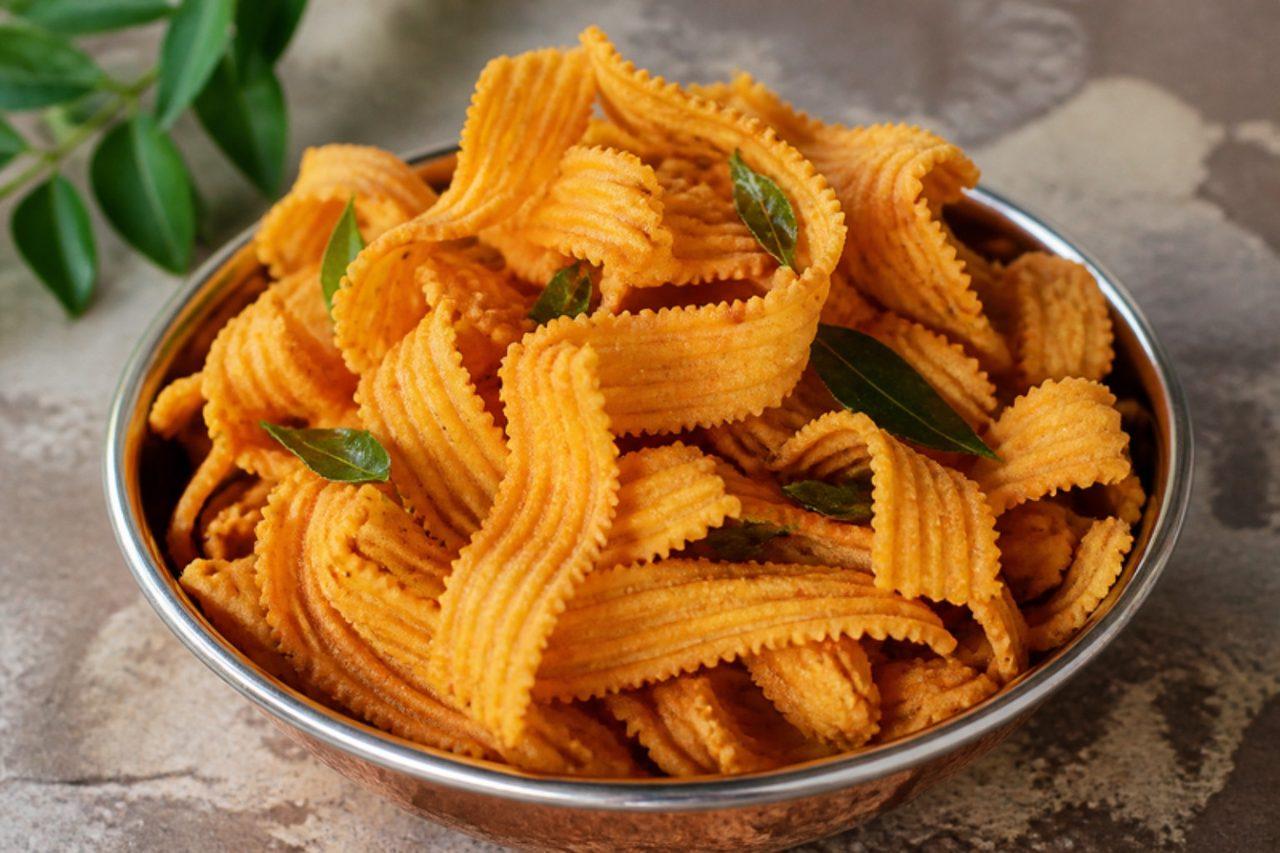
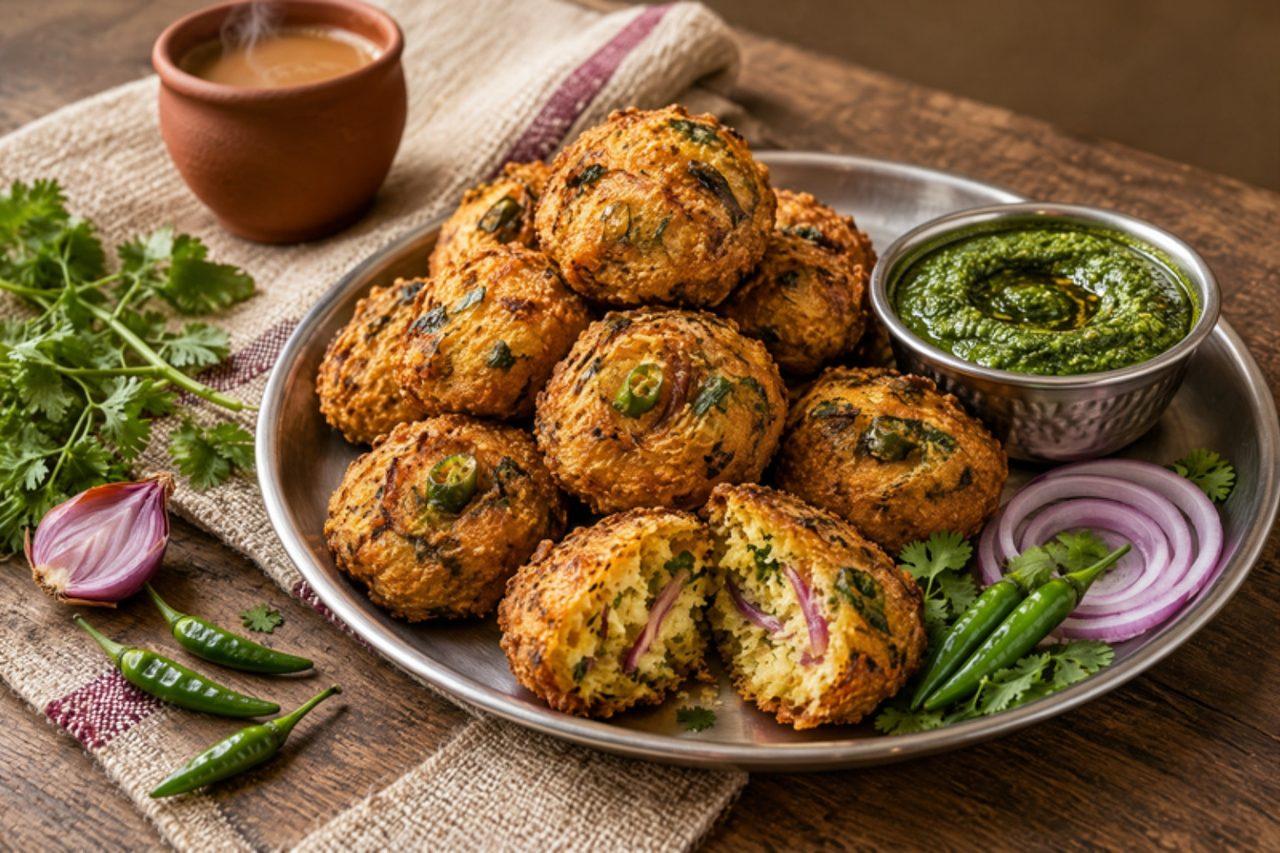
Bora are the crisp fritters that Meitei families fry for evening tea, for guests and for festivals like Cheiraoba, using whatever is in season: onion and herbs, gourd flowers, or tender greens. The batter is gram flour with a little rice flour, so they stay crisp. The common mistake is a thick batter that makes doughy fritters; it should just coat the vegetables. Fill the pan no more than a third deep with oil, test it with a drop of batter (it should rise in 2–3 seconds) and never leave it unattended. Chef's tip: mix the batter just before frying so the vegetables don't weep and make it watery.

Read more 0 views

What to eat today?

Around the world

Today's trip: Persian

A new country every day, from every cuisine on the site.

This week's collection

Kid-friendly dinners
739 recipes · a new collection every Monday

Coming up

All occasions →

Latest recipes

Soto ayamTurmeric chicken soup

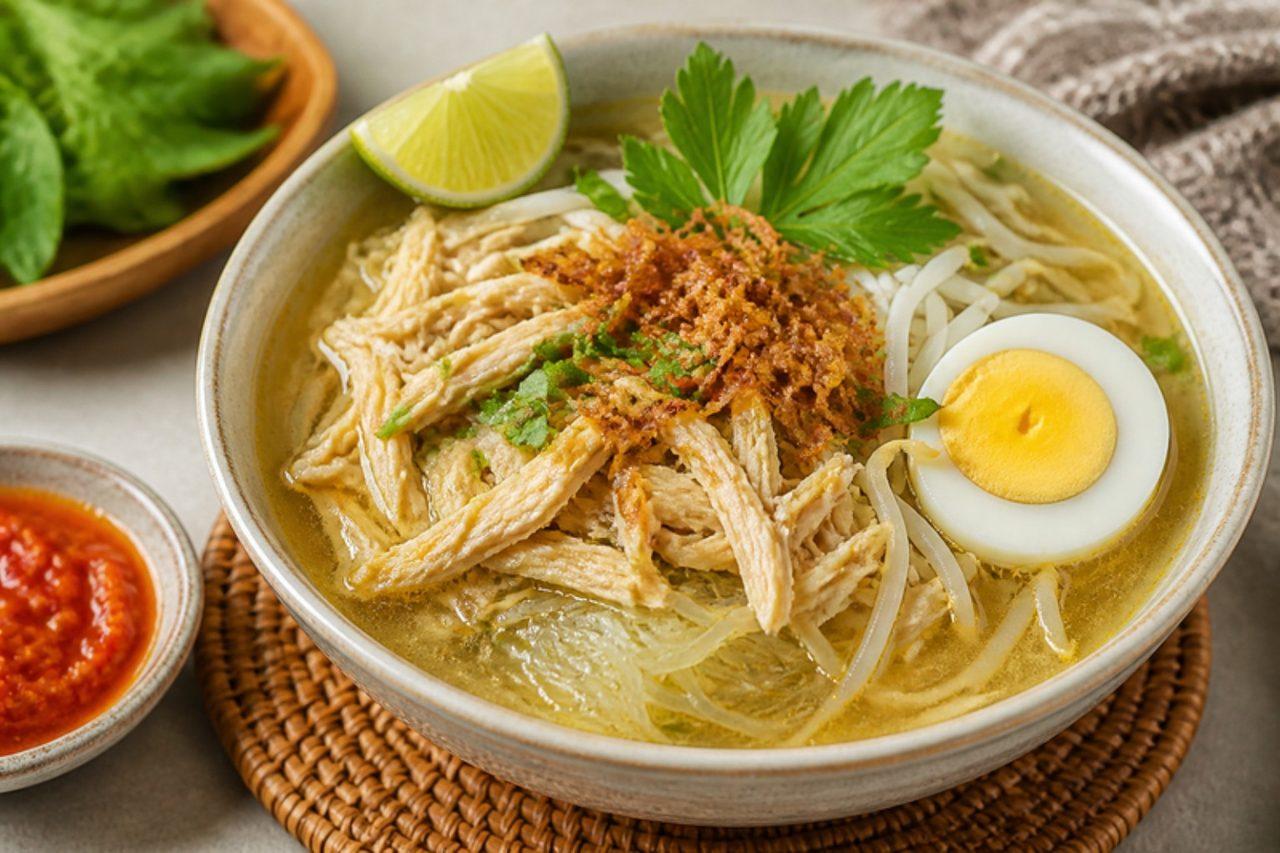
From Lamongan to Semarang, Java's soto carts start ladling before the morning commute, and a bowl of soto ayam is how many people begin a working day. The broth is light but bright yellow with fresh turmeric, scented with lemongrass and lime leaf, and poured over slippery glass noodles, shredded chicken, crunchy bean sprouts and half a boiled egg. Squeeze in lime, stir in as much sambal as you dare and eat it with plain rice or rice cakes on the side. In East Java vendors finish it with koya, a sandy powder of prawn crackers and fried garlic that thickens the broth as you eat. Chef's tip: keep the pot at a lazy simmer the whole time; a hard boil turns the golden broth cloudy and greasy.

by KrazyBadal 0 views

Tobago curry crab and dumpling

On Tobago, curry crab and dumpling is the dish people travel for, eaten with fingers on Sunday afternoons and sold at the Store Bay food huts near Crown Point, where a plate is half the reason to visit. Blue crabs are cleaned, rubbed with green seasoning, 'burnt' in curry and simmered in coconut milk until the shells turn red and the sauce goes rich, spicy and sweet with crab. Long, flat flour dumplings cook right in the gravy and soak it all up. It's messy, so have bowls for shells and plenty of napkins. Chef's tip: crack the claws lightly before they go in the pot, so the curry can get inside and the meat is easy to pull out at the table.

by KrazyBadal 0 views

KurtDried salted yogurt balls

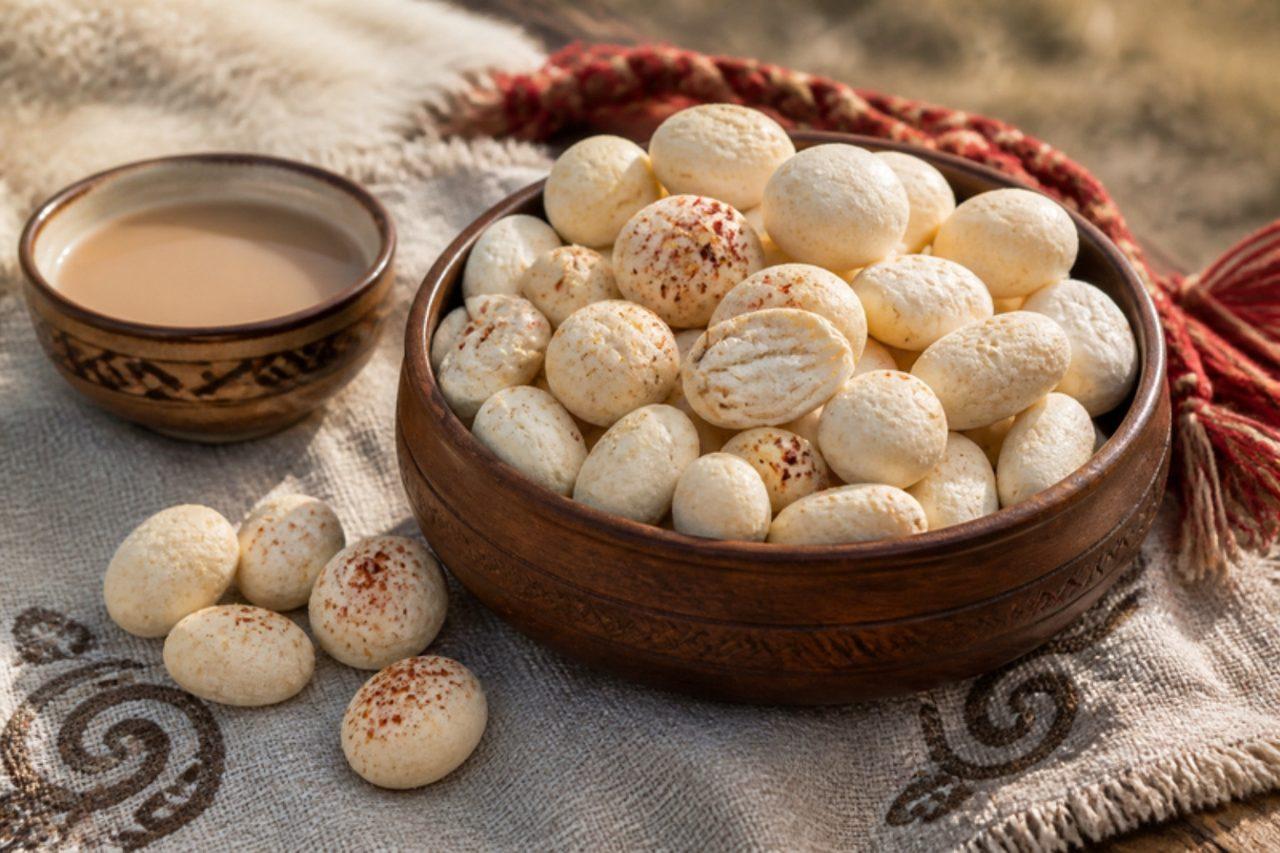
Kurt is the snack of the steppe: thick, salted yogurt pressed into balls and dried until rock-hard, so it keeps for months in a saddlebag. Herders in Kazakhstan and Kyrgyzstan make it in summer, when the animals give the most milk, and dry it on reed mats in the sun. Children suck on it like a sweet, adults crumble it into soups, or dissolve it in hot water to make a sour drink. Bazaars from Shymkent to Bishkek sell it in white, smoked and red-pepper versions. Chef's tip: drain the yogurt until it's as firm as cream cheese; if it's still wet the balls crack and turn mouldy before they dry.

by KrazyBadal 0 views

Kurthi dalHorse gram dal

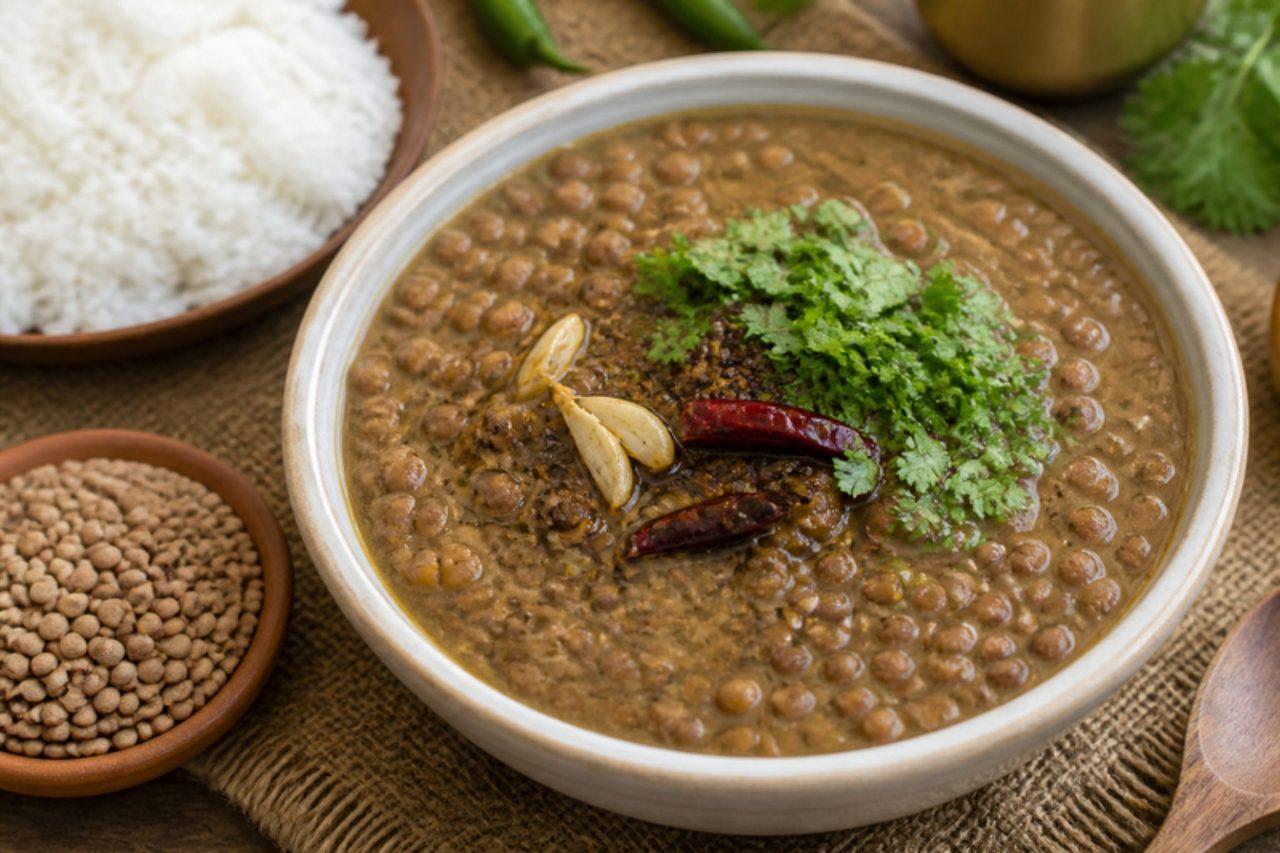
Kurthi, as horse gram is called in Jharkhand, grows on poor, dry upland soil where little else will, and it has fed the plateau's Adivasi and farming families for centuries. Cooked slowly into dal, it is dark, earthy and filling, with a slightly smoky taste, and it is eaten through the cold months with rice and a dry vegetable, as it is believed to warm the body. The tempering of garlic, dried chilli and smoking mustard oil is what makes it Jharkhandi. Chef's tip: mash a ladle of the cooked gram against the side of the pot; it thickens the dal without any flour.

by KrazyBadal 0 views

KürtőskalácsChimney cake

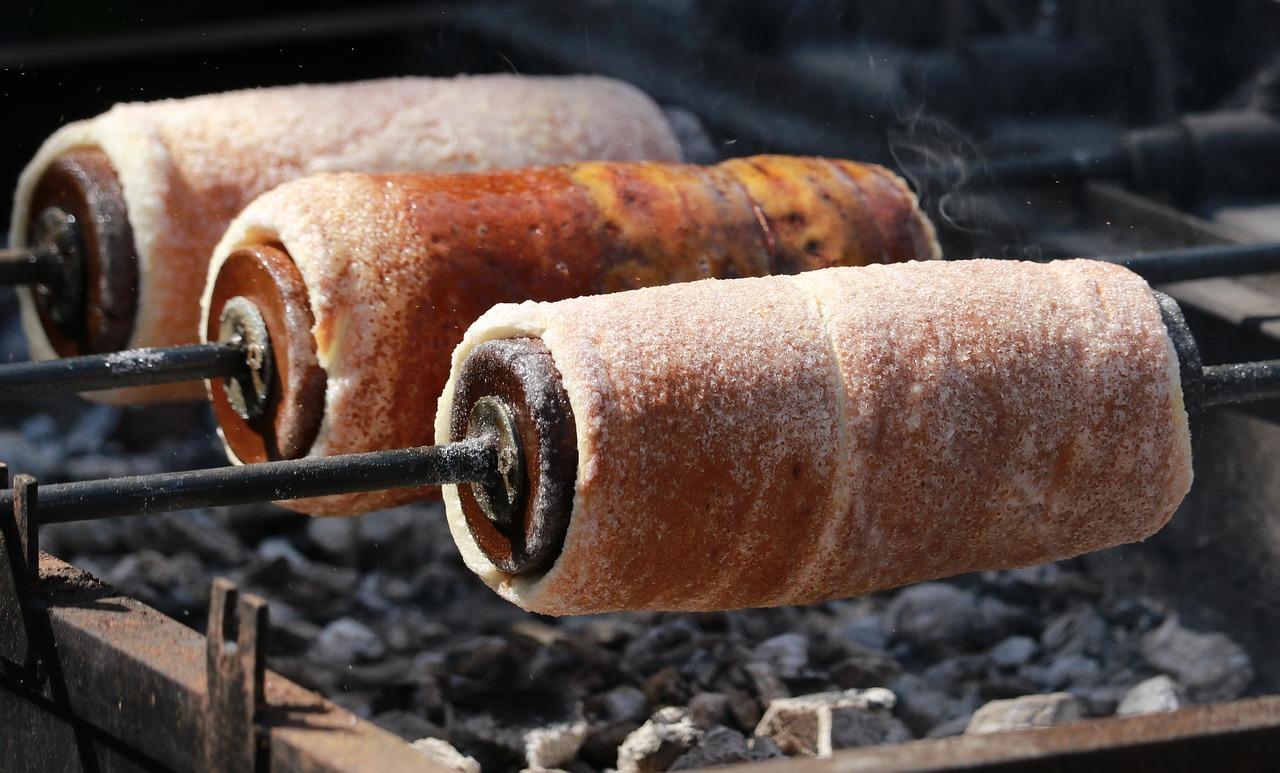
Kürtőskalács, or chimney cake, comes from the Székely Hungarian villages of Transylvania and is now sold at every Budapest Christmas market and summer festival, turning on spits over glowing coals. A strip of sweet yeast dough is wound around a wooden roller, rolled in sugar and baked until the sugar caramelises into a thin, crackling shell; you unwind the soft, steaming spiral as you eat it. At home you can bake it in the oven on foil-wrapped rolling pins or tins. Chef's tip: press the dough spiral firmly into the sugar before baking; loose sugar falls off, but pressed sugar melts into the glassy crust. A common mistake is leaving gaps between the strips, which makes the cake tear apart when you slide it off.

by KrazyBadal 0 views

Kuru fasulyeWhite bean stew

Kuru fasulye is close to a national dish in Turkey: a pot of white beans stewed in a red, paprika-scented sauce, eaten with rice pilaf, pickles (turşu) and raw onion at home and in the bean restaurants of Istanbul's Süleymaniye district. Many versions start with lamb or sucuk; this one leans on good olive oil, sweet and hot pepper paste and slow cooking, so the beans become creamy inside and the sauce silky and rich. It is a winter Friday-night staple for lots of families and tastes even better reheated the next day. Serve with domatesli bulgur pilavı or plain rice, a wedge of onion and crusty bread. Chef's tip: add the salt only once the beans are almost tender; salting at the start keeps the skins tough however long you cook them.

by KrazyBadal 0 views

Oxtail with butter beans

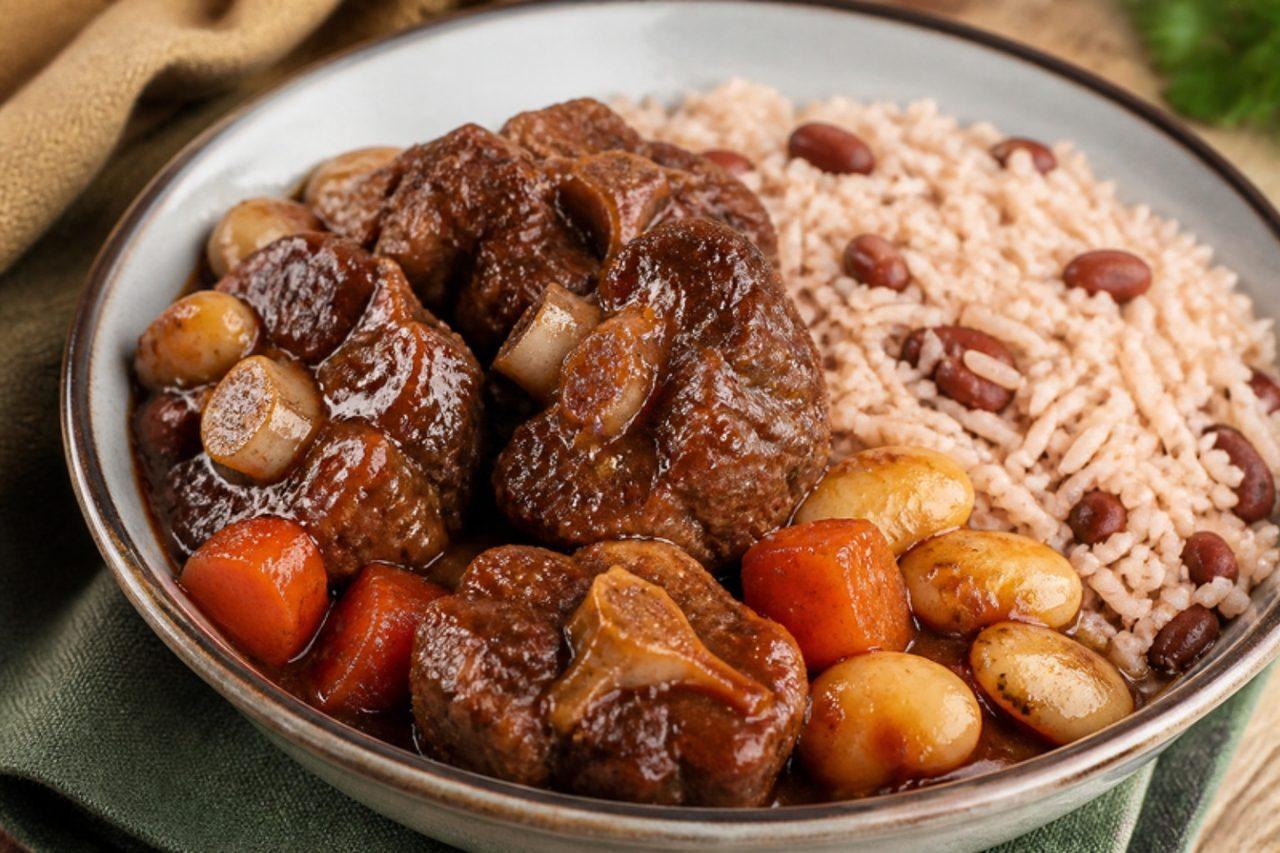
Oxtail started out as a cheap cut in Jamaica and is now the Sunday-best dish that cookshops in Kingston sell out of first, and that people across the diaspora queue for on Saturdays. The bony pieces are seasoned overnight, browned hard, then braised slowly for hours with pimento, thyme and whole scotch bonnet until the meat slides off the bone and the gravy turns glossy with gelatine. Butter beans go in near the end to soak up the gravy. Serve with rice and peas, steamed cabbage and fried plantain. Chef's tip: cook it a day ahead, chill, and lift off the hard layer of fat before reheating; the gravy is cleaner and the flavour deeper.

235 minJamaicanMeat
by KrazyBadal 0 views

Kutchi dabeliSpiced potato buns

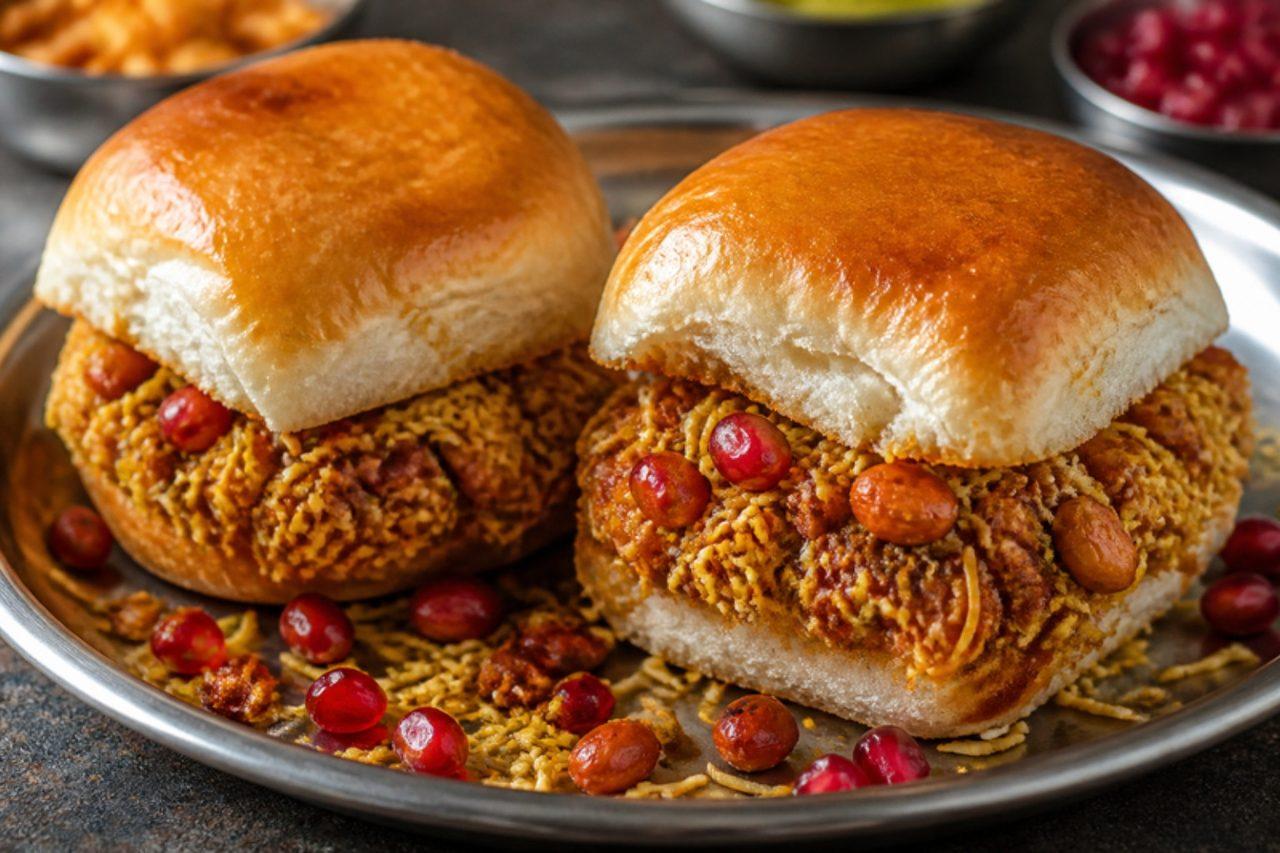
Dabeli was born in Mandvi, a port town in Kutch, Gujarat, and spread from there to every street corner in Mumbai. Soft pav are split, spread with sweet tamarind and fiery garlic chutneys, and stuffed with a potato filling spiced with dabeli masala, a warming blend of roasted coriander, cumin, cinnamon, clove and dried chilli. Masala peanuts, pomegranate seeds, onion and sev add crunch and sparkle, and the buns are toasted in butter until crisp at the edges. Children love them for the sweetness, adults for the heat. Chef's tip: make the dabeli masala yourself and toast the whole spices until they just smell warm; shop-bought powders lack that fresh, smoky sweetness, and a jar keeps for a month.

by KrazyBadal 0 views

KutiaWheat berries with poppy seeds

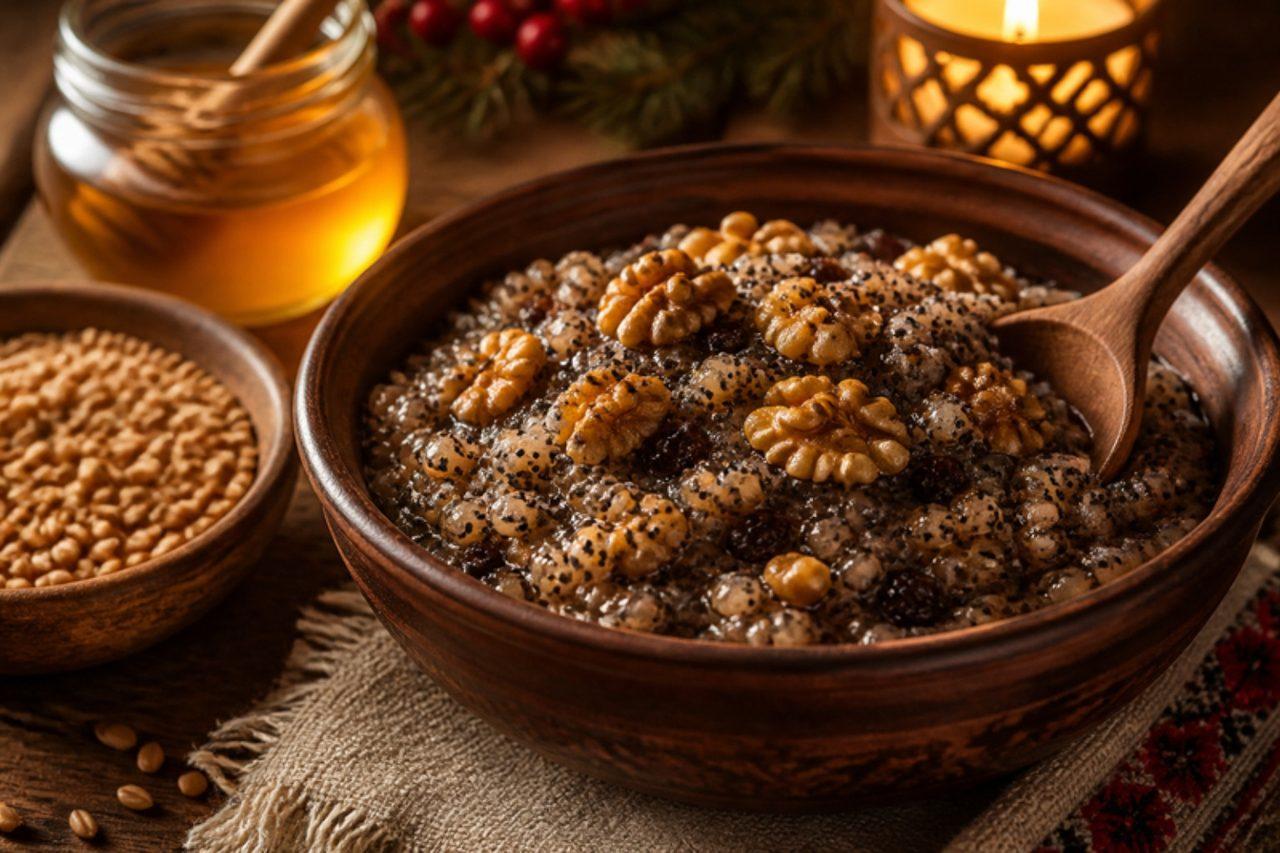
Kutia is the first dish tasted on Ukrainian Christmas Eve, once the first star appears in the sky: a bowl of whole wheat berries mixed with ground poppy seed 'milk', honey, walnuts and raisins. Families in Lviv, Ternopil and the villages of the west traditionally throw a spoonful at the ceiling for luck and set a bowl aside for departed relatives, and the head of the house greets the evening with it. It is eaten at room temperature, sweet, nutty and chewy, and the spoon must touch every guest's plate. Chef's tip: soak and grind the poppy seed until it turns white and milky; common mistake is using it whole, which leaves kutia gritty and grey instead of creamy.

by KrazyBadal 0 views

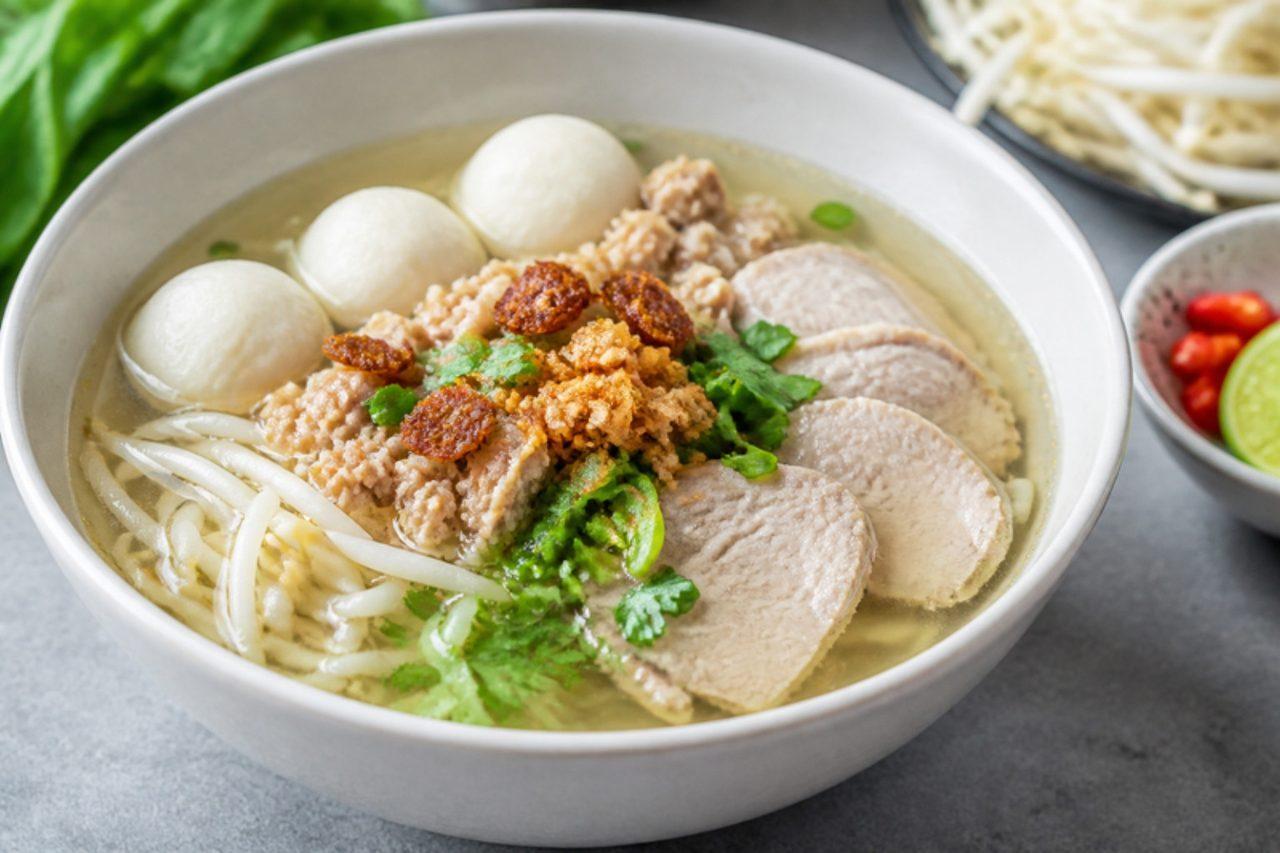
Kuy teavPork bone rice noodle soup

Kuy teav is what Phnom Penh eats for breakfast: before 8 am the city's street stalls and markets are busy with people bent over bowls of it. It is a pork soup: a clear, slightly sweet broth simmered from pork bones with dried squid or shrimp and charred onion is poured over rice noodles, sliced pork, minced pork and prawns, and everyone finishes their bowl with lime, chilli, bean sprouts and fried garlic. Chef's tip: never boil the broth hard; keep it barely trembling so it stays crystal clear.

by KrazyBadal 0 views

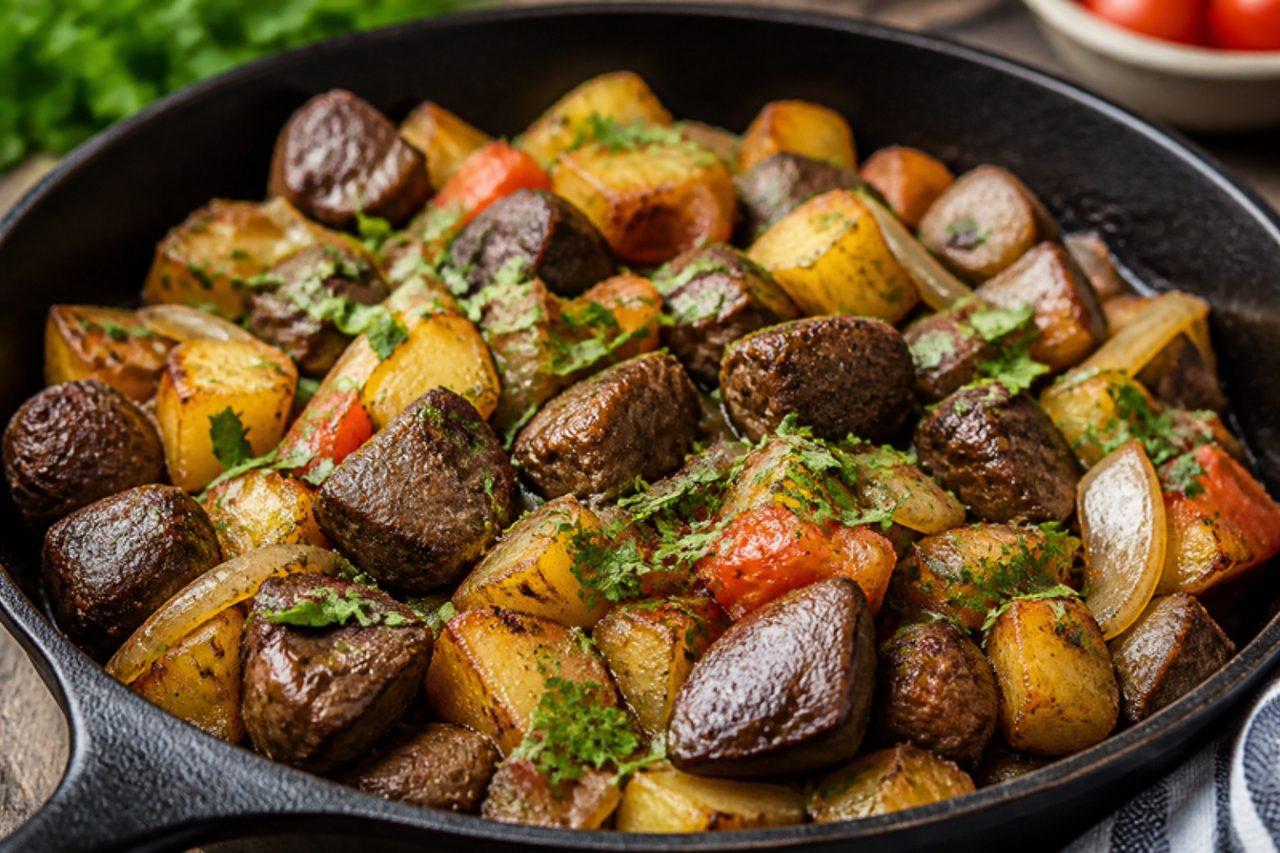
KuyrdakFried lamb with offal

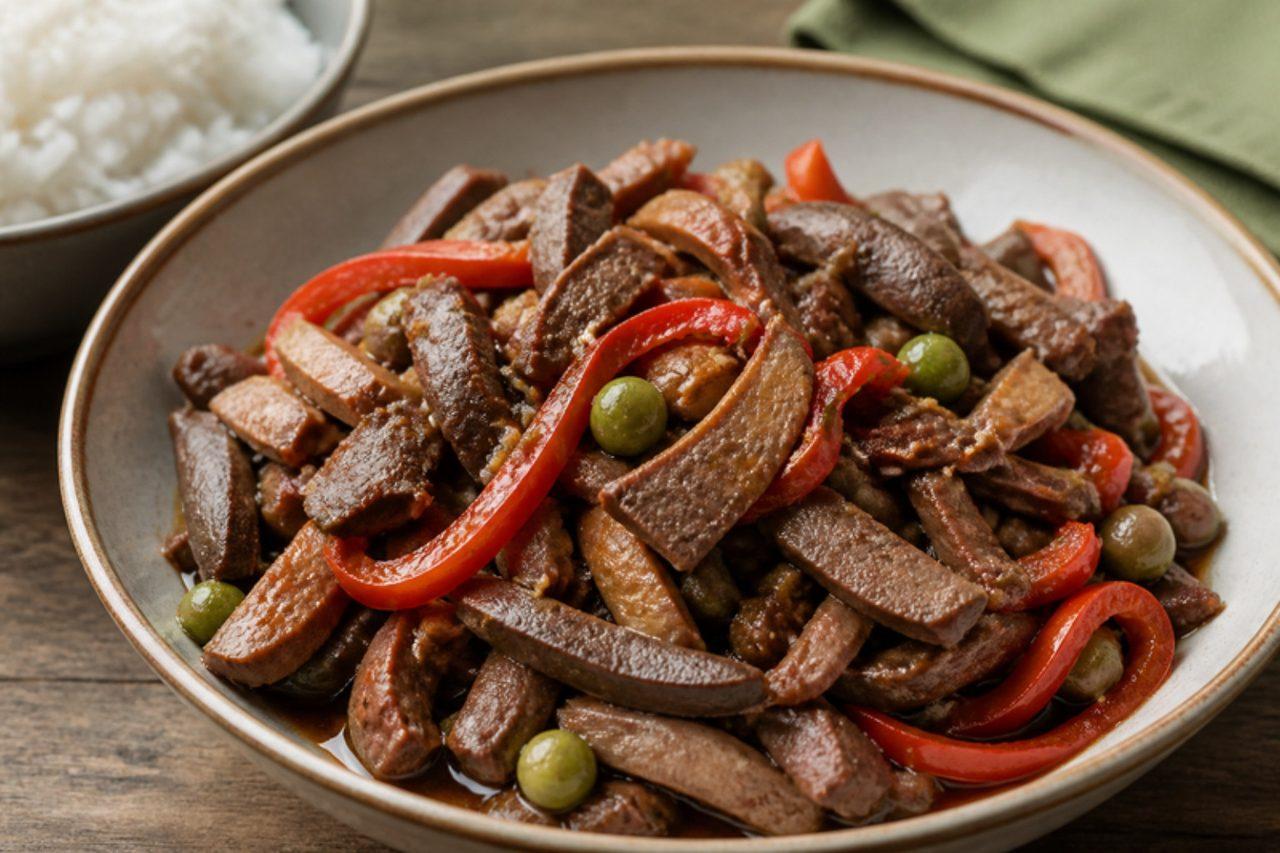
Kuyrdak is the first meal cooked when a sheep is slaughtered on a Kazakh farm, made quickly from the freshest cuts and the offal: lamb meat, liver, heart and kidneys fried in a kazan with onion and potatoes. Today it is an everyday dish in Almaty and the steppe villages, eaten hot from the pan with bread and strong tea. Every part is cut to the same size so it all cooks evenly. Overcooking the liver is the most common fault; it goes in last and should be just cooked through and still soft, not grainy. Chef's tip: soak the kidneys in salted cold water for 30 minutes to remove any strong smell.

80 minKazakhMeatGluten free
by KrazyBadal 0 views

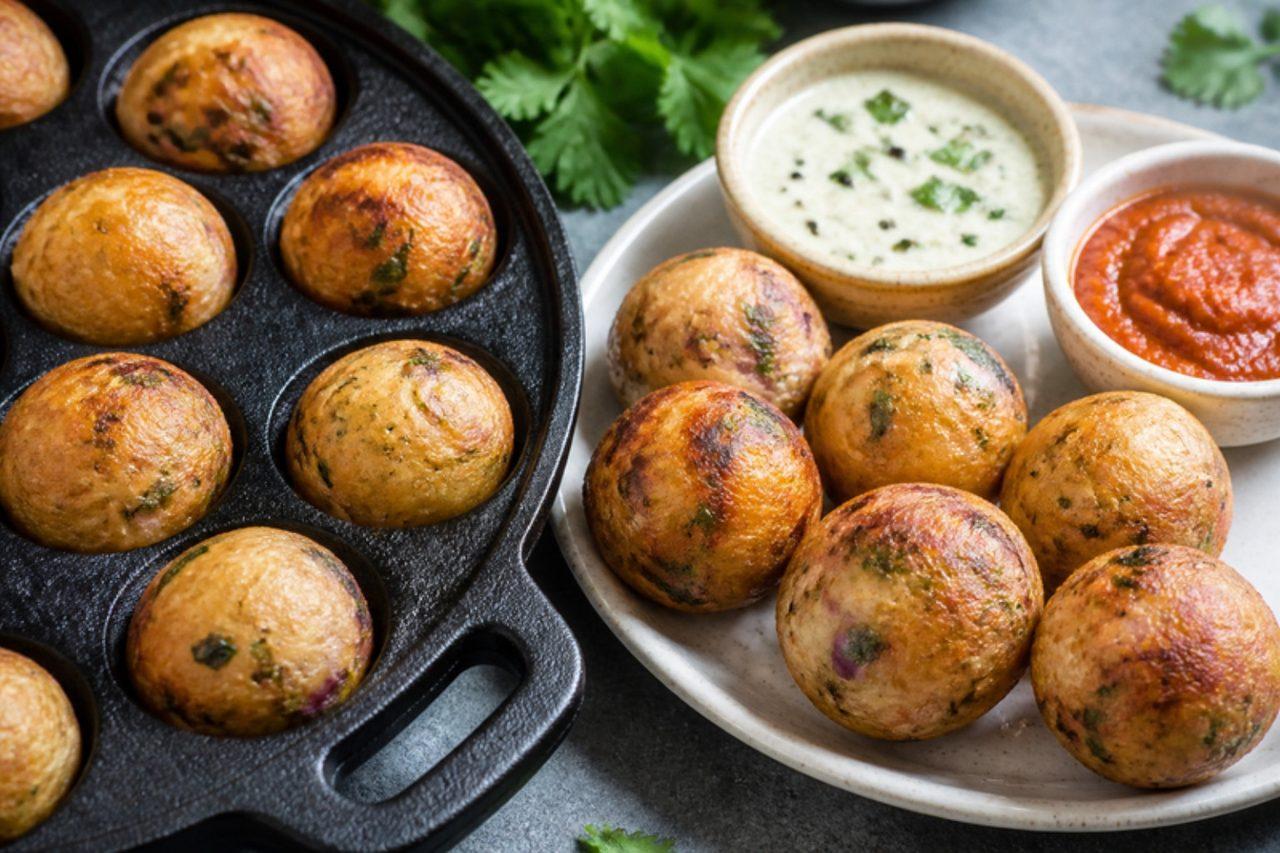
Kuzhi paniyaramSavoury rice dumplings

In Chettinad, kuzhi paniyaram is what happens to the last of the idli and dosa batter: it's mixed with shallots, chilli and curry leaves and cooked in a cast-iron pan full of round hollows until each ball is crisp and golden outside and soft as idli inside. Karaikudi households make them for evening tiffin and they're sold hot from street griddles in Madurai. Eat them straight from the pan with coconut chutney or a red tomato-onion kara chutney. Chef's tip: use batter that's a day or two old and slightly sour; it gives lighter, puffier paniyarams than fresh batter.

by KrazyBadal 0 views

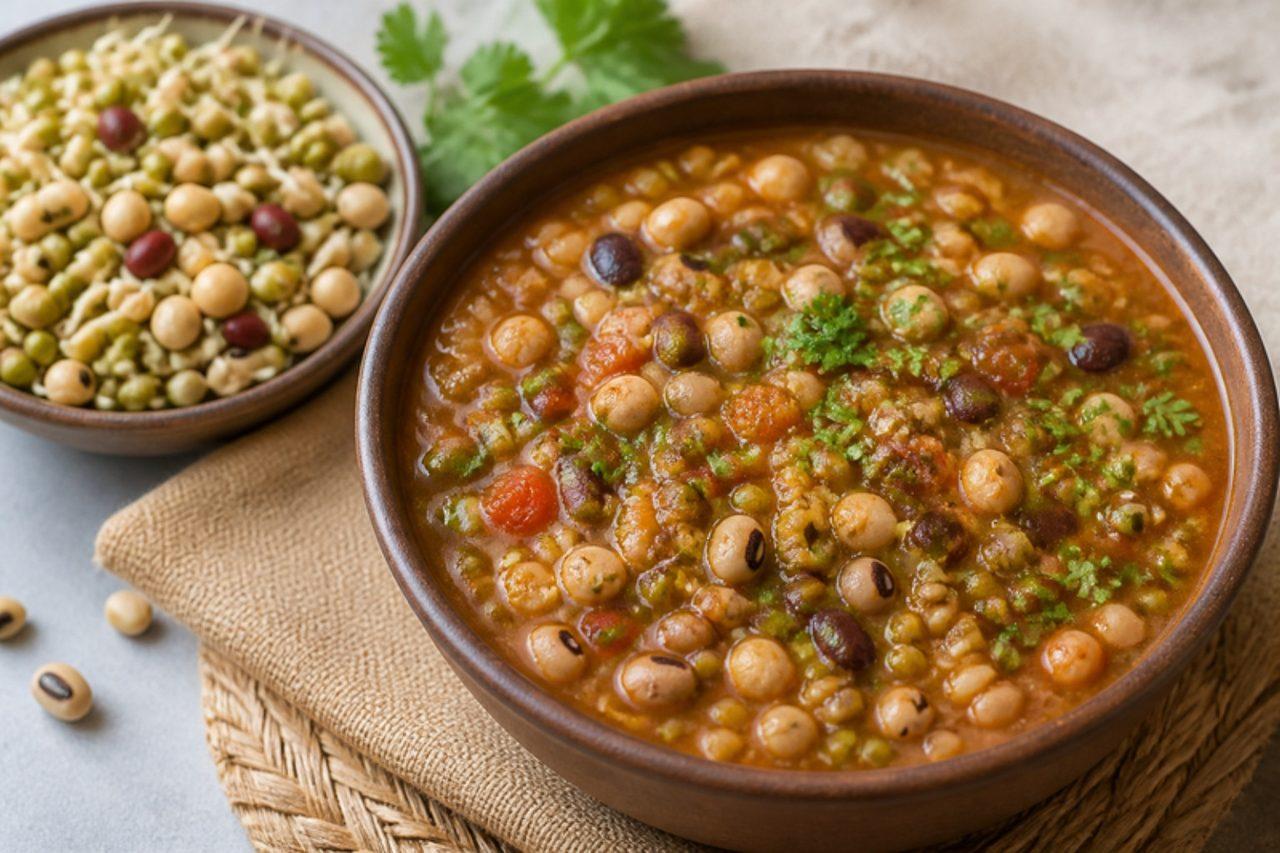
KwatiMixed sprouted bean soup

Kwati is a thick, warming soup of nine kinds of sprouted beans that the Newar families of the Kathmandu Valley cook on Janai Purnima, the August full moon also called Kwati Punhi, when the monsoon is at its height and people are said to need strength against the damp. The mix usually includes black gram, green mung, chickpeas, soybeans, field peas, kidney beans, cowpeas, field beans and rice beans, soaked and sprouted for two or three days beforehand, then cooked with ajwain, ginger, garlic, tomato and a pinch of timur. Markets in Asan sell ready-mixed kwati beans in the week before the festival. It is eaten in bowls with beaten rice or simply on its own. The mistake people make is skipping the sprouting, which leaves the soup heavy and the beans hard. Chef's tip: fry the ajwain until it crackles; its thyme-like warmth makes the beans easier to digest and is the flavour of the festival.

by KrazyBadal 0 views

Kway chapRice sheets in braising broth

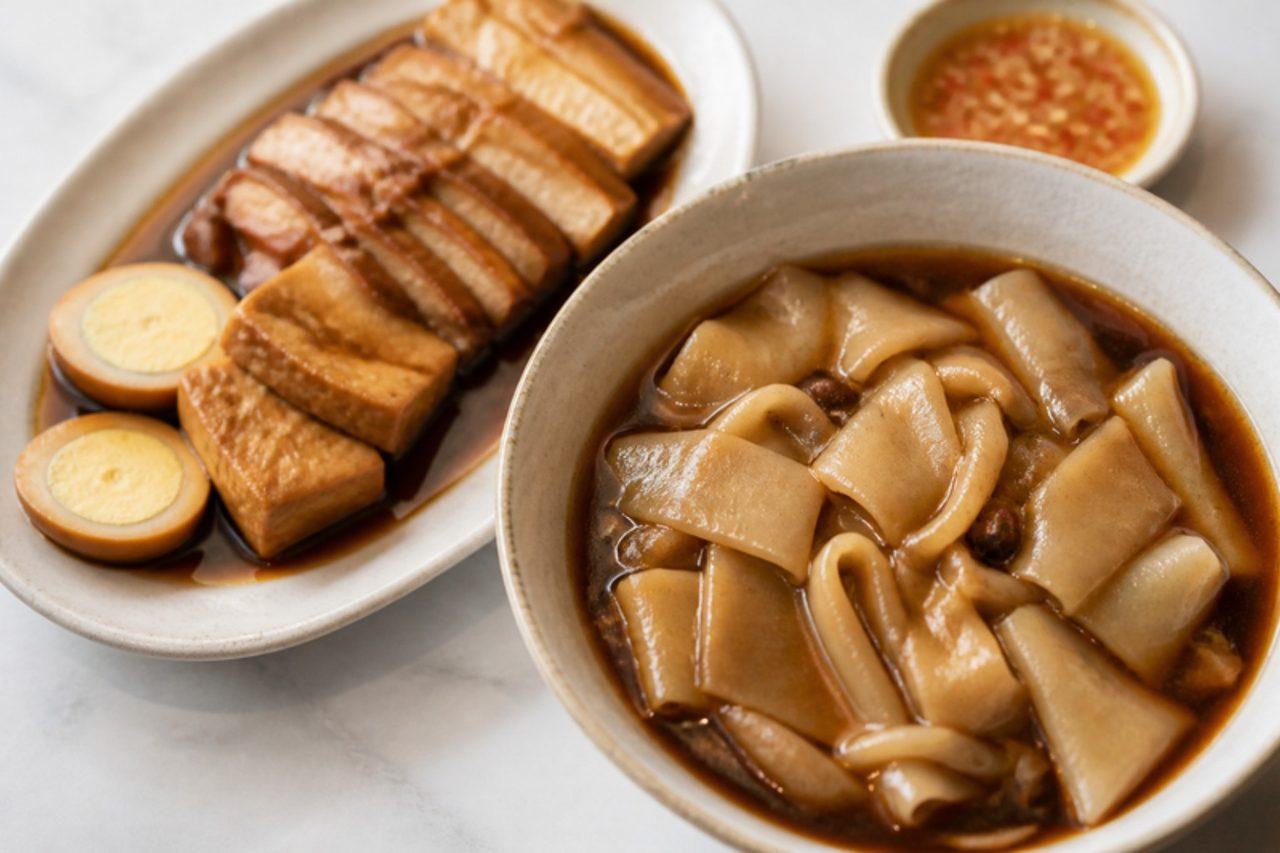
Breakfast in Shantou and Chaozhou often means a steaming bowl of kway chap from a market stall: squares of rice sheet simmered until soft and silky in a dark, gently spiced broth, with braised pork belly, tofu and eggs on the side. Teochew emigrants carried it to Singapore, where it became a hawker centre favourite, but the original is simpler, cheaper and very comforting on a cool morning. The broth tastes of soy, star anise and cinnamon, slightly sweet, and the rice sheets drink it up. Eat it with chilli vinegar, pickled mustard greens and plenty of white pepper. Chef's tip: braise the pork the night before; the flavours settle and you can lift the hardened fat off the top.

by KrazyBadal 0 views

Kyiv cakeHazelnut meringue cake

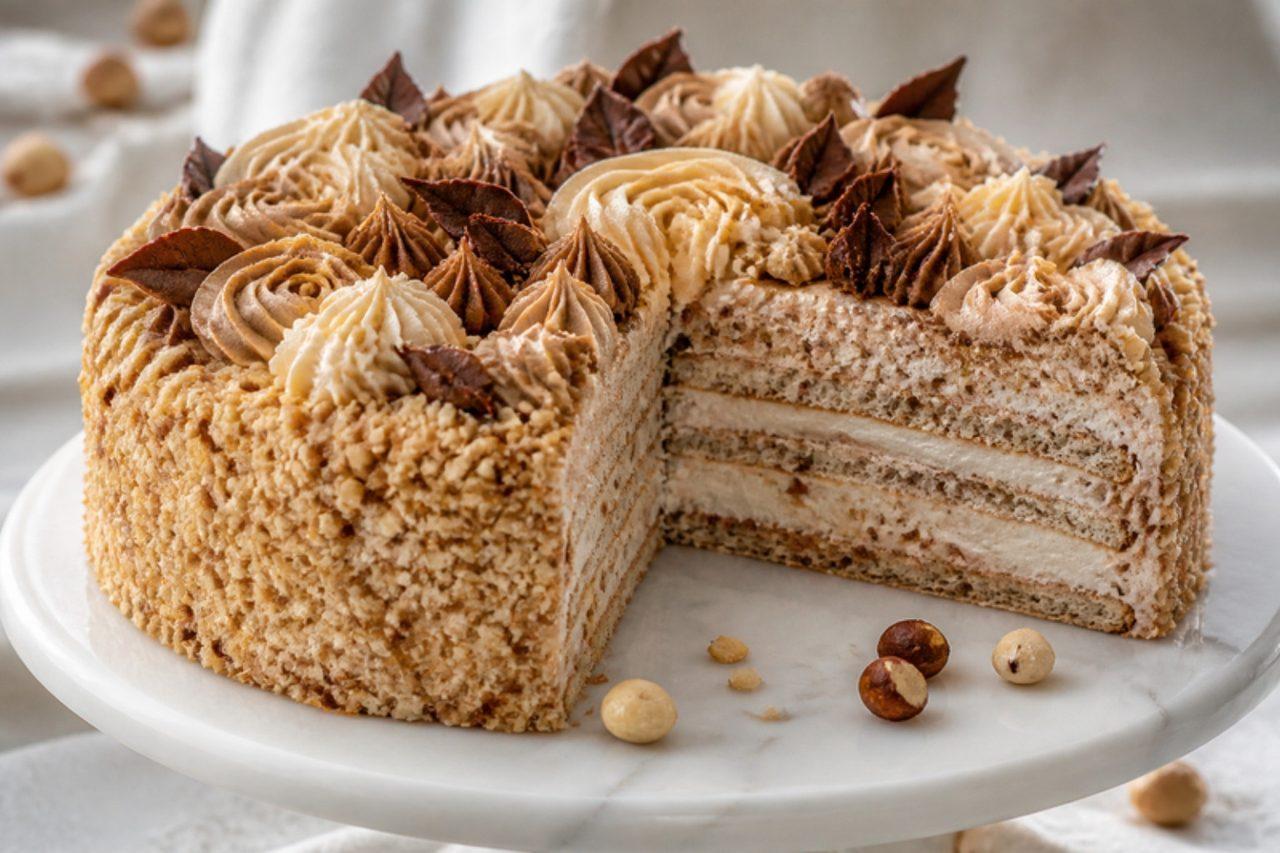
Kyiv cake was created in 1956 at the Karl Marx confectionery factory in Kyiv, and for decades a round box tied with string, bought at the station kiosk, was the souvenir every visitor carried home from the capital. Two crisp, chewy layers of nut meringue are sandwiched with a rich vanilla and cocoa buttercream and decorated with more cream. It contains no flour, so it is naturally gluten free, and no gelatine. Our home version uses hazelnuts, as the original did before cashews became the norm. Chef's tip: dry the meringue long and slow and let it cool in the switched-off oven; common mistake is pulling it out too early, when it is still soft inside, and then it turns sticky and collapses under the cream.

by KrazyBadal 0 views

Kyoto takiawaseSimmered vegetables

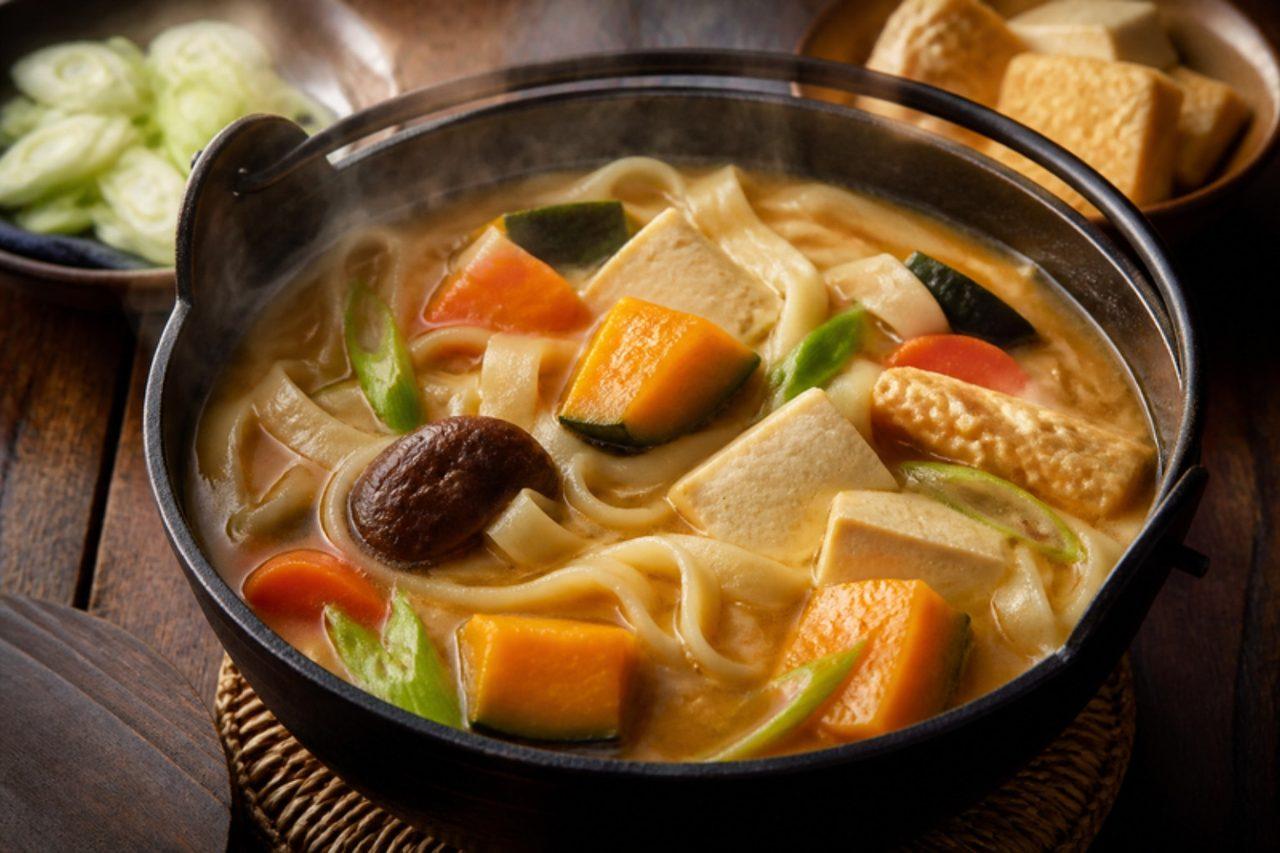
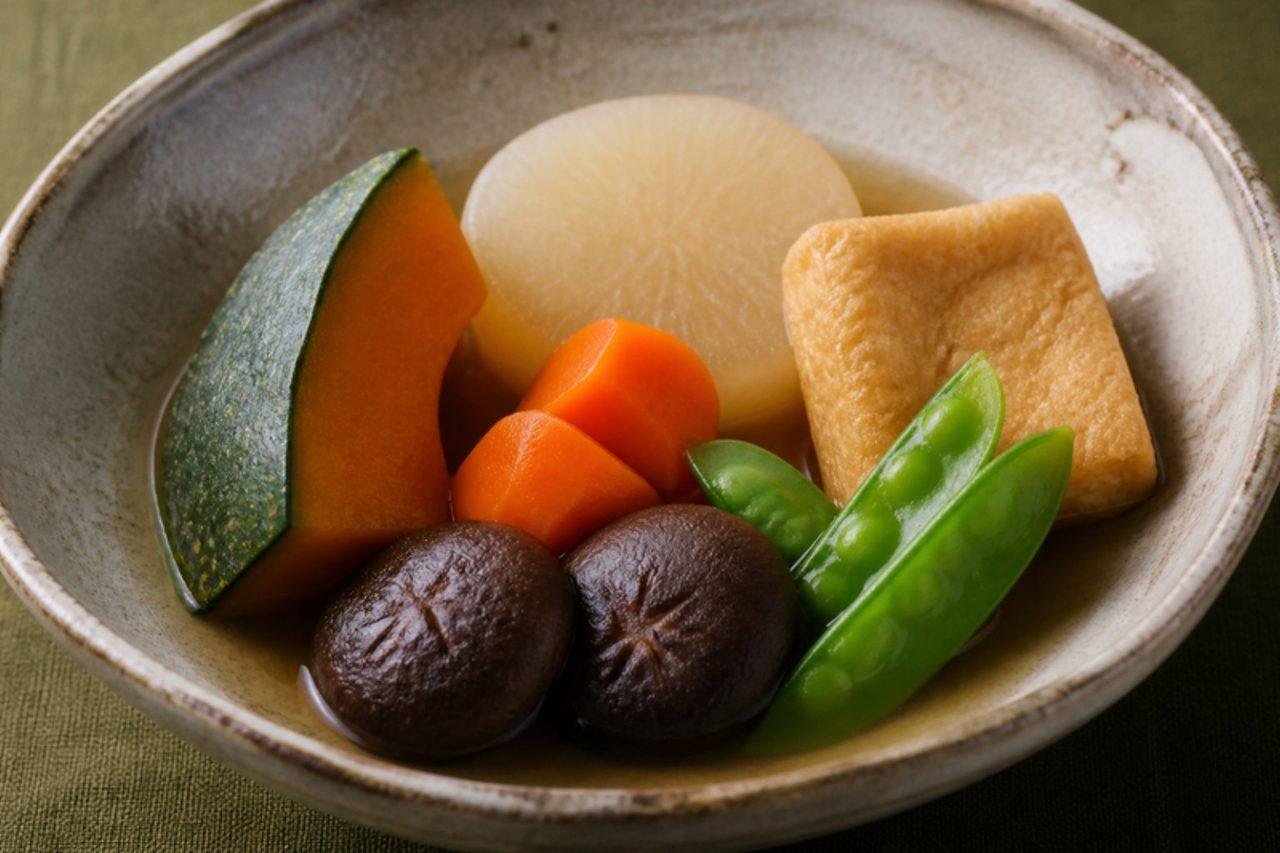
Obanzai is what Kyoto calls its everyday home cooking: thrifty, seasonal side dishes that families keep in the fridge and that small restaurants line up in bowls along the counter. Takiawase, 'simmered together', is one of its finest. Each vegetable is cooked separately in a pale, delicate broth, so the kabocha stays orange, the daikon turns translucent and the carrot keeps its colour, then they are arranged side by side in one dish. Kyoto cooks season with light-coloured usukuchi soy, which is saltier than regular soy but doesn't darken the food. Serve it warm or at room temperature with rice and miso soup. Chef's tip: let everything cool in its broth. The vegetables soak up most of their flavour as they cool, not while they boil.

by KrazyBadal 0 views

Kyrgyz shorpoLamb and vegetable broth

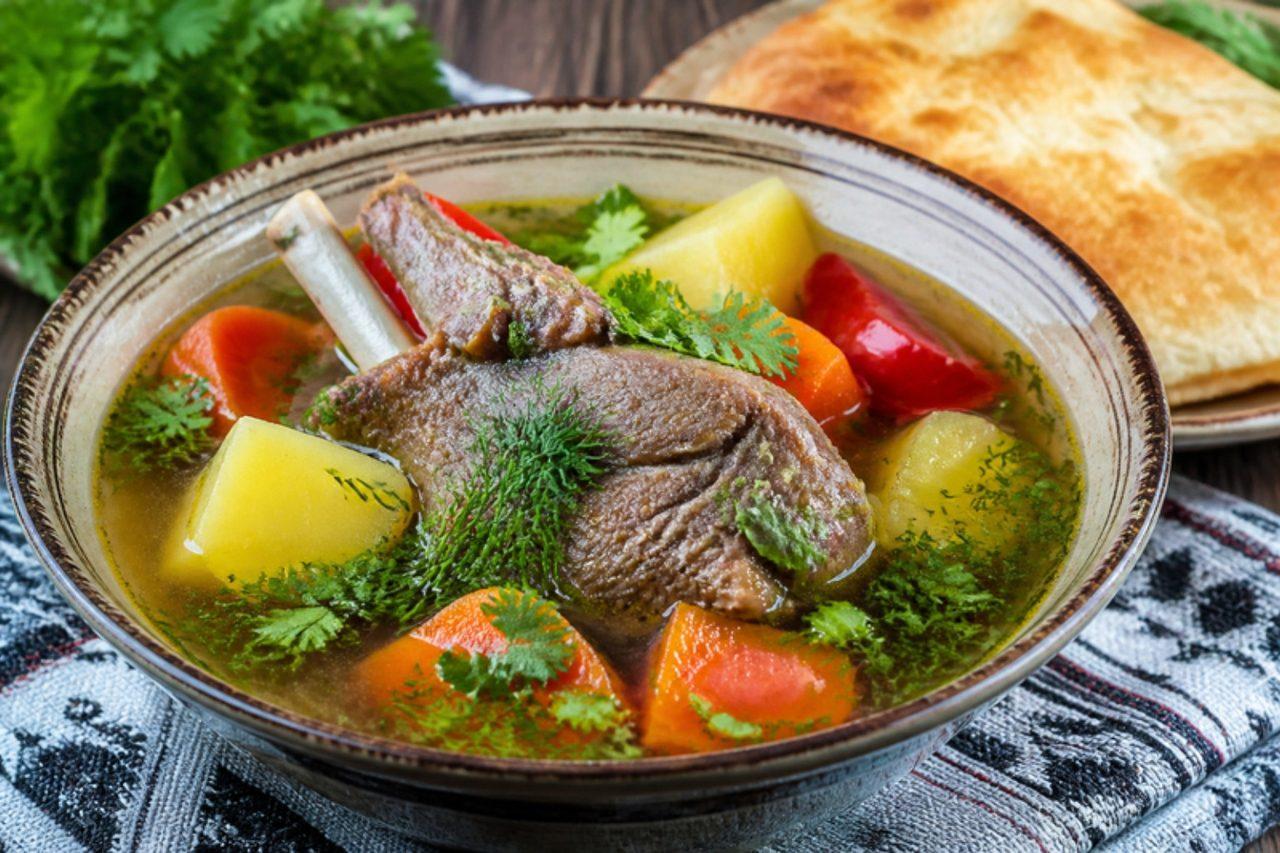
Shorpo is the soup that keeps Kyrgyz herders warm in the summer pastures around Issyk-Kul and in yurts high in the Tian Shan: big pieces of lamb on the bone simmered slowly with whole potatoes, carrots and onion until the broth is clear and golden. The meat and vegetables are often served on a plate and the broth in bowls, with fresh herbs and bread torn into it. It is simple, so the quality of the lamb matters. Letting it boil hard is the usual mistake; a rolling boil makes the broth cloudy and the meat stringy. Chef's tip: start the lamb in cold water and skim patiently for the first 15 minutes.

145 minKazakhSoupsGluten free
by KrazyBadal 0 views

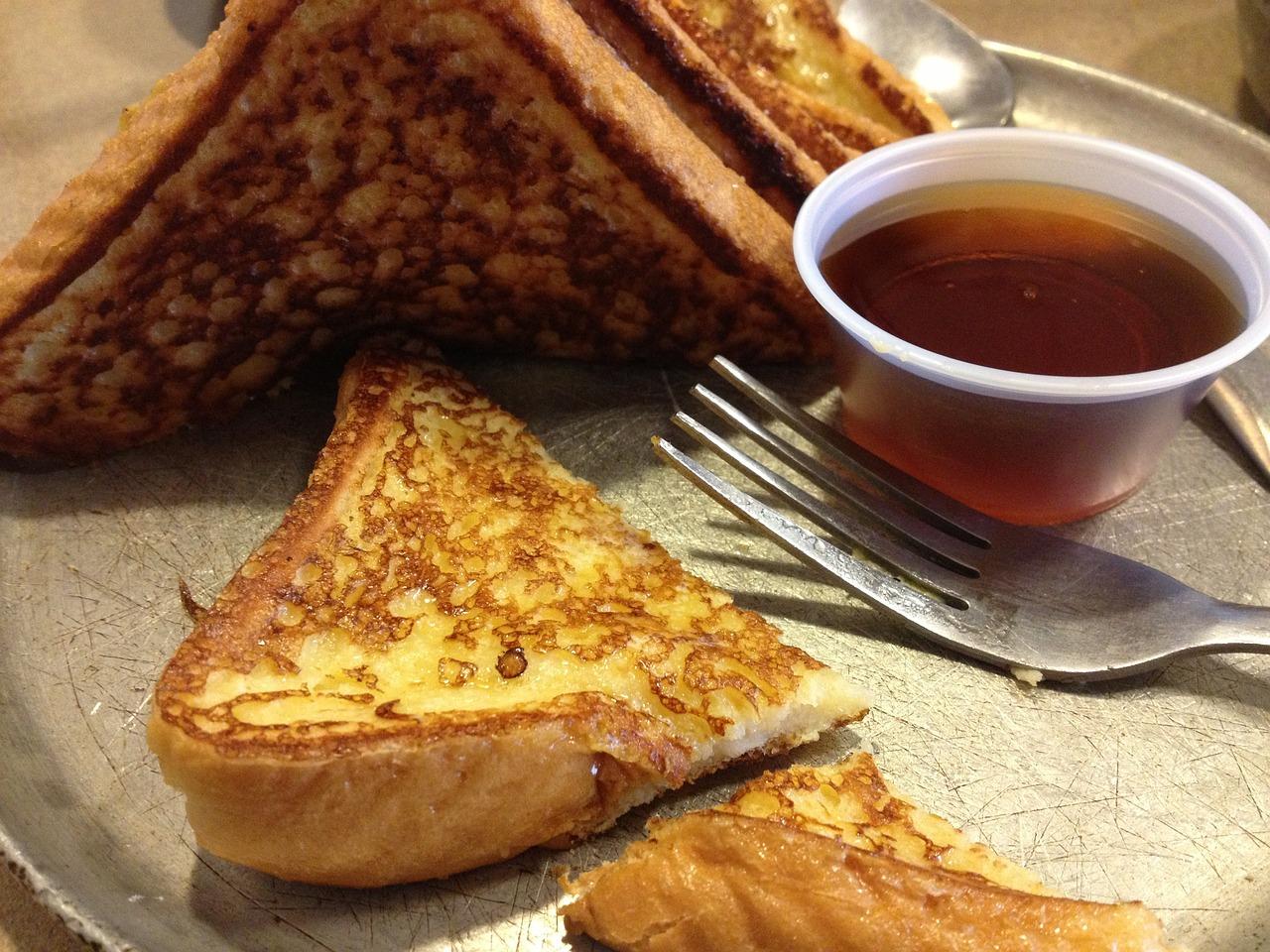
Pain perduFrench toast

Pain perdu means 'lost bread', and French families have always made it from the end of a stale baguette or brioche that would otherwise be thrown away. Thick slices are soaked in milk, eggs, sugar and vanilla, then fried in butter until caramelised outside and soft, almost like custard, inside. In France it is more often a Sunday breakfast or goûter for the children than a brunch dish, eaten with a dusting of sugar, jam or fresh fruit. Chef's tip: use bread that is a day or two old; fresh bread is the common mistake and turns soggy and falls apart in the custard.

by KrazyBadal 0 views

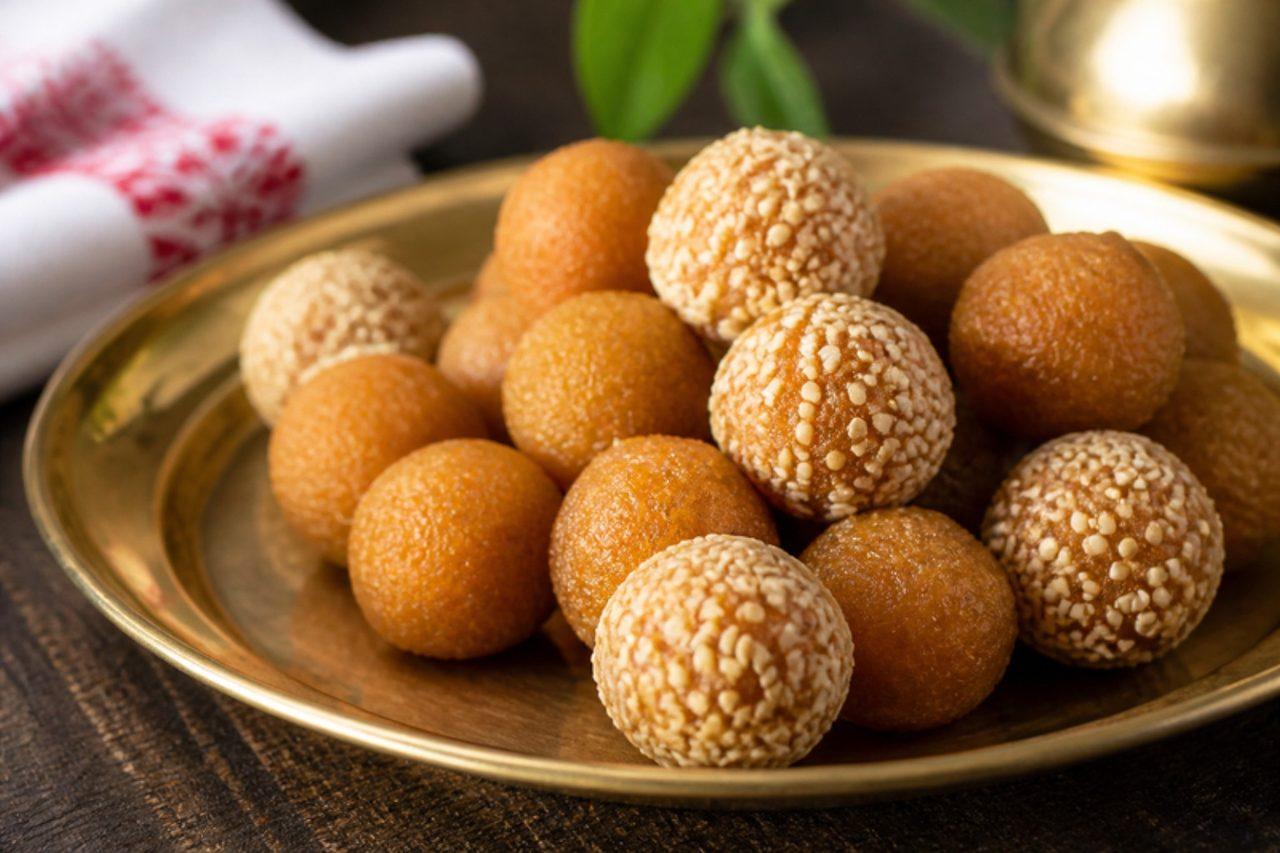
Narikol laruCoconut and jaggery balls

Narikol laru are the small, chewy coconut balls that sit next to til pitha on every Bihu plate in Assam, offered to visitors with tea and jolpan. Fresh coconut is cooked with jaggery until it binds, flavoured with cardamom and rolled warm. They are soft and moist, not dry like desiccated-coconut ladoos, and are made in big batches the night before the festival. Chef's tip: roll them while still warm with damp palms; once cold, the mixture won't hold.

by KrazyBadal 0 views

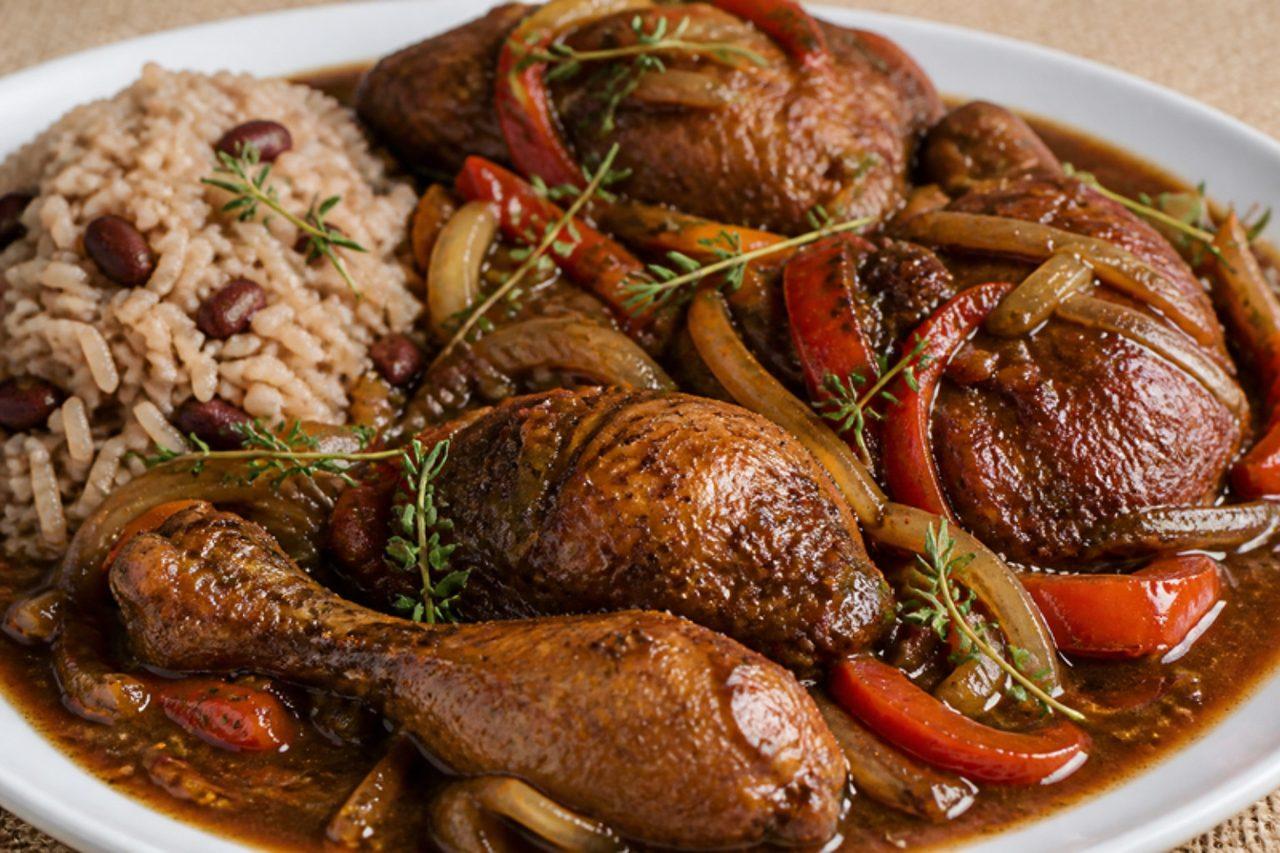
Brown stew chicken

Ask a Jamaican what was on the table for weekday dinner growing up and brown stew chicken will be near the top of the list, served at home and at every cookshop from Montego Bay to Spanish Town. The deep colour comes from 'browning': sugar caramelised in hot oil until it is dark, then the seasoned chicken is turned in it so every piece takes on a mahogany coat. Peppers, onion, tomato and thyme simmer down into a sticky, savoury gravy that begs for a pile of white rice, rice and peas or boiled dumplings. Chef's tip: season the chicken the night before and dry each piece well before it goes into the caramel; wet chicken spits violently and won't take on that deep brown colour.

by KrazyBadal 0 views

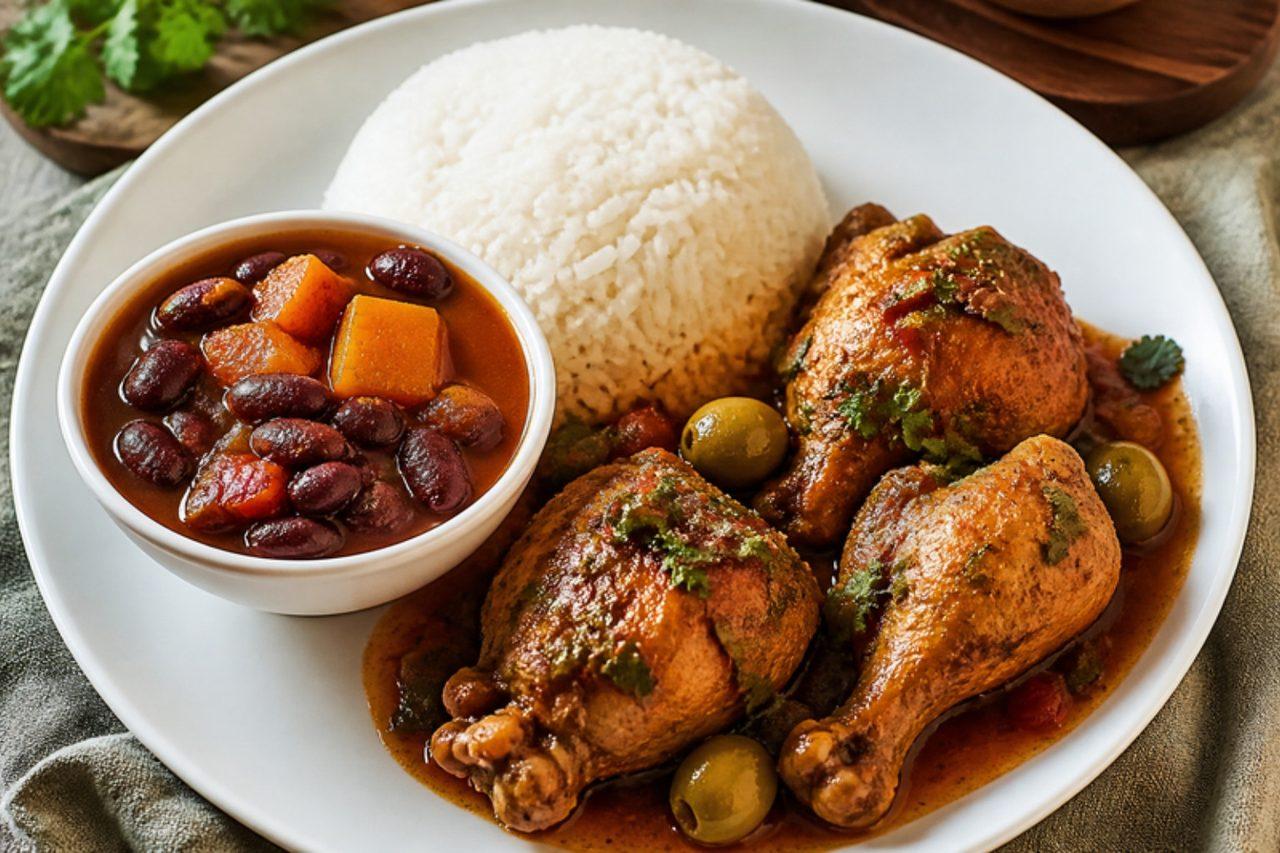
La bandera dominicanaRice, beans and chicken plate

Across the Dominican Republic, from Santo Domingo office canteens to family kitchens in Santiago, the midday meal is la bandera, named after the flag: white rice, red beans stewed with squash, and braised chicken. It is eaten almost every weekday, often with a green salad and fried plantain. Dominican cooks start the chicken by caramelising sugar in the oil, which gives the sauce its deep brown colour, and they prize the concón, the crisp layer of rice at the bottom of the pot. The mistake to avoid is letting the sugar go past dark amber; burnt sugar makes the whole stew bitter. Chef's tip: marinate the chicken with lime, garlic and oregano the night before; it takes on far more flavour than a quick 30 minutes.

by KrazyBadal 0 views

La Paz batchoyPork noodle soup

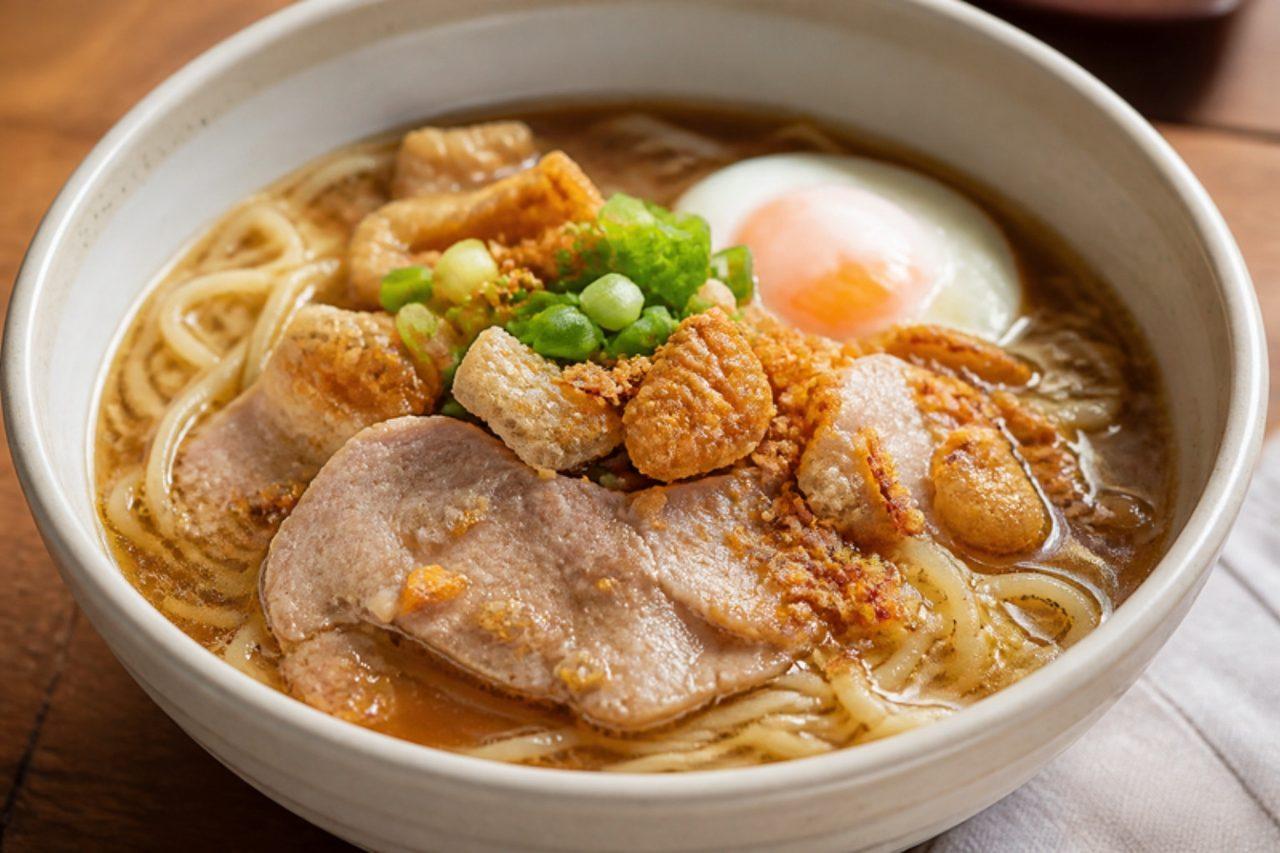
La Paz batchoy was born in the market of La Paz, a district of Iloilo City on Panay, where stalls ladle it out from early morning to late at night. It is a pork noodle soup through and through: fresh egg noodles (miki) in a deep pork-bone broth seasoned with a little shrimp paste, topped with sliced pork, liver, crushed pork crackling (chicharrón) and lots of fried garlic. Locals often crack a raw egg into the bowl and ask for extra broth. It is a warming, savoury bowl for rainy afternoons. Chef's tip: make the broth the day before and chill it; the fat sets on top so you can lift most of it off and fry the garlic in it.

by KrazyBadal 0 views

Laal maasFiery red mutton curry

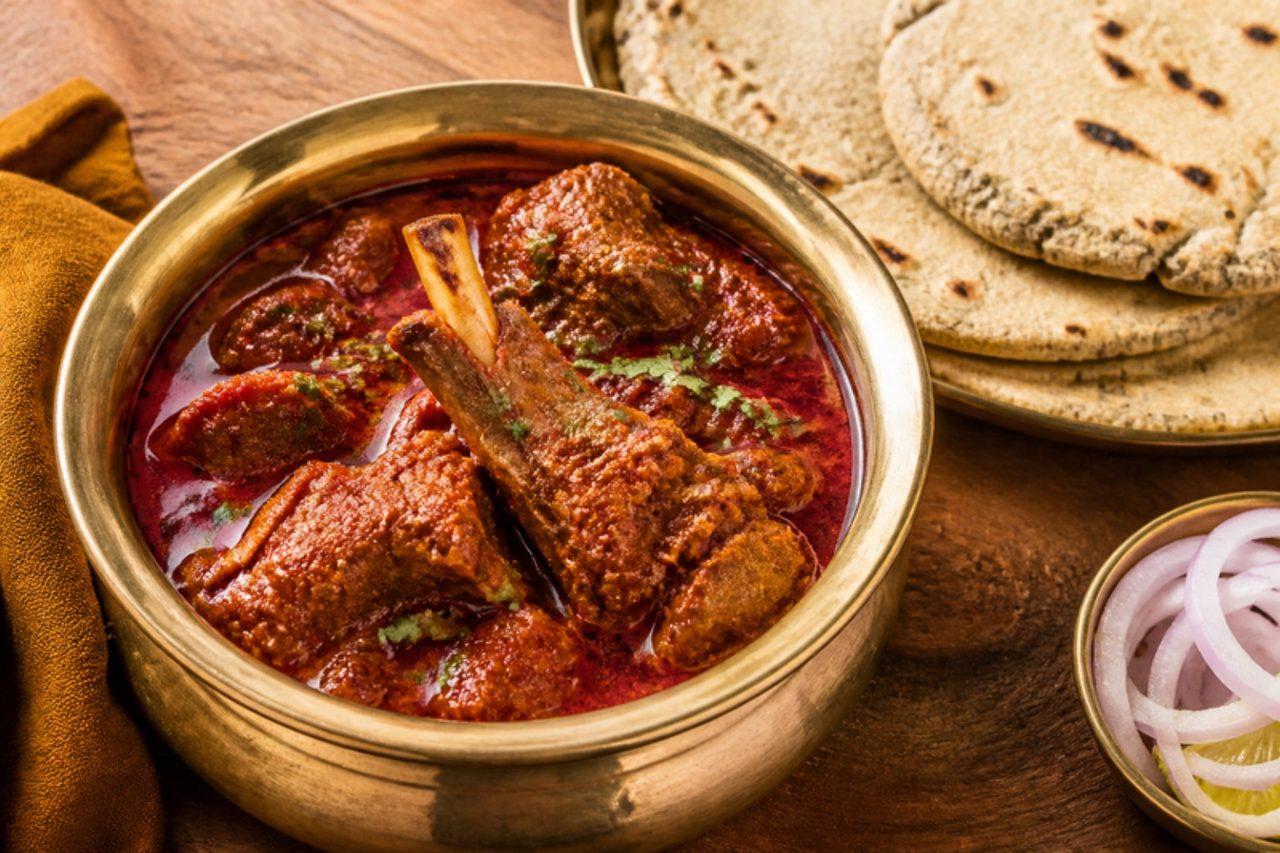
Laal maas grew out of the Rajput hunting tradition in the desert country around Jodhpur and Jaisalmer, where game was cooked with plenty of garlic and red chillies to carry it. Today it's made with goat or lamb and is the dish Rajasthanis cook for a winter feast, served with bajra roti or plain rice and a bowl of yogurt to cool things down. The fierce colour comes from Mathania chillies, grown near Jodhpur, which are deep red, aromatic and properly hot. Some cooks finish it with a burning coal set in the pot to give it a smoky edge, an optional step included here. Chef's tip: soak and grind the dried chillies to a paste instead of using chilli powder; it gives the deep red colour and a rounder heat that doesn't scorch.

140 minIndianMeatGluten freeSpicy
by KrazyBadal 0 views

LablabiChickpea soup with bread

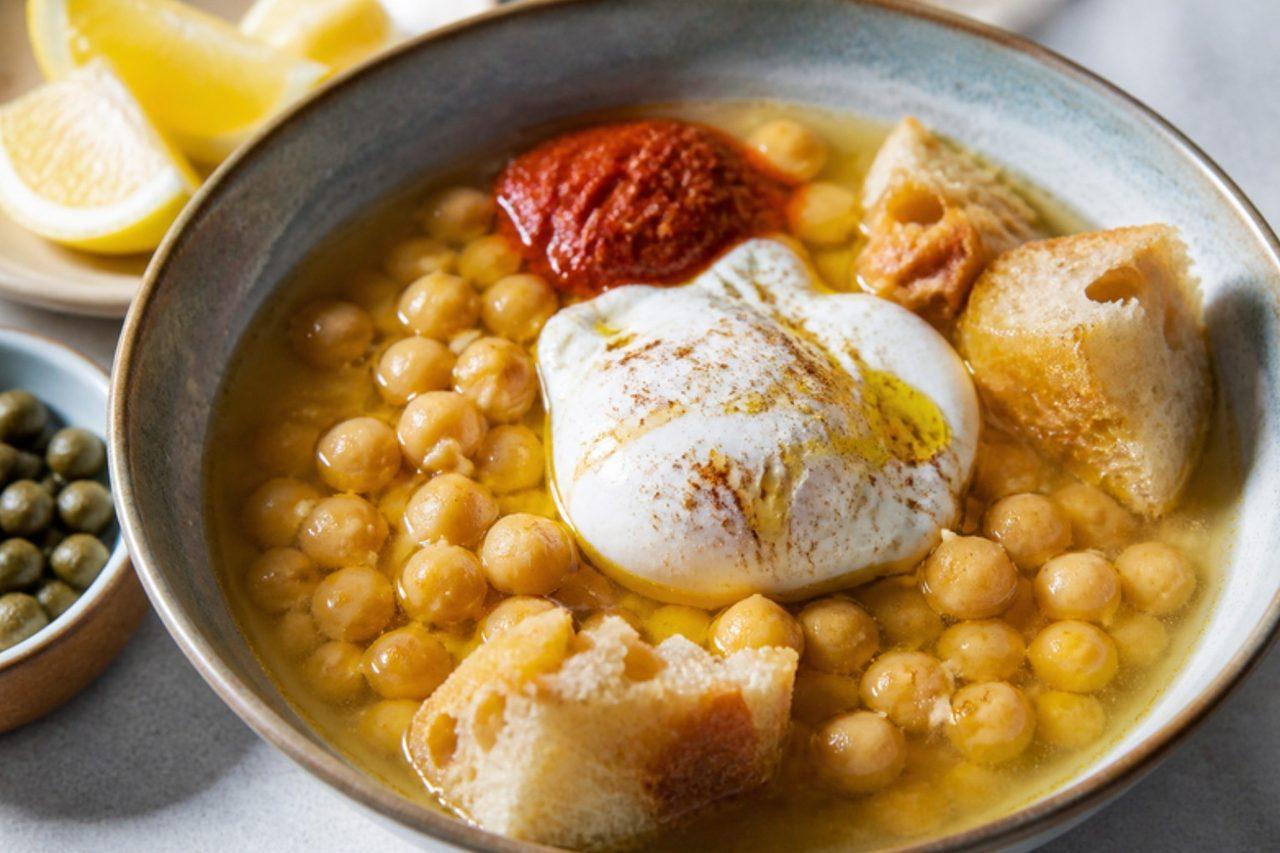
Lablabi is the working breakfast of Tunis, served from steaming cauldrons in tiny shops near the medina and the markets from dawn, and eaten all over Tunisia on cold winter mornings. Torn day-old bread goes into the bowl first, then hot chickpeas and their garlicky broth, and everyone dresses their own with harissa, cumin, olive oil, lemon and capers; many add a soft-poached egg that is broken through the bread. Chef's tip: let the bread soak for a minute before you stir in the harissa, so it turns soft and spoonable but not mushy.

by KrazyBadal 0 views

Labneh with za'atarStrained yogurt with za'atar

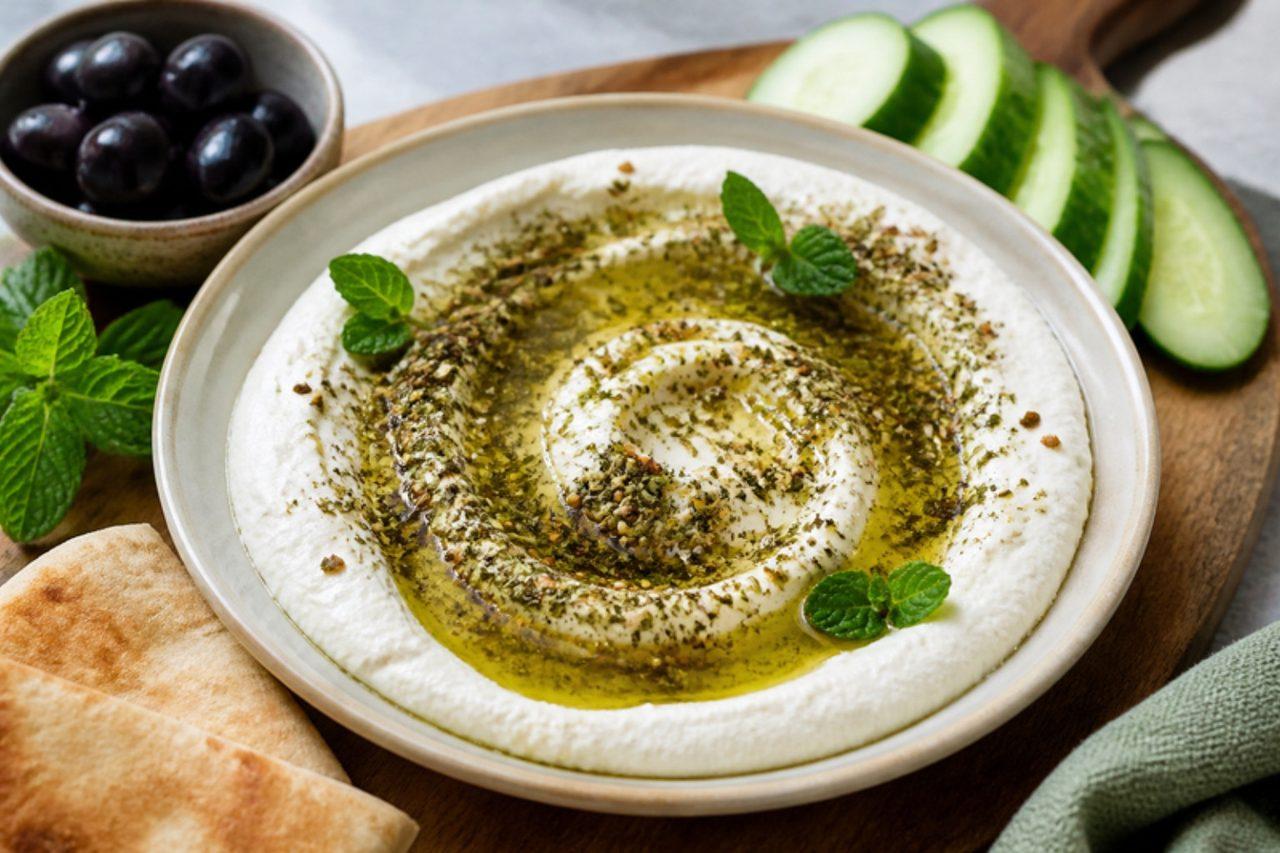
Labneh is the thick, tangy strained yogurt that Lebanese, Syrian and Palestinian families spread on a plate every morning, swirl with olive oil and scatter with za'atar, the wild-thyme, sumac and toasted sesame mix of the Levant. It sits beside olives, cucumber, tomato and warm khubz at breakfast in Beirut and on the mezze table at night, and the firmer version is rolled into small balls and kept in jars of olive oil for weeks. Here salted yogurt hangs for a full day until it is as thick as cream cheese, then goes out two ways: spread in a dish, and rolled into balls. A common mistake is using low-fat or set yogurt with gelatine; it gives a thin, chalky labneh, so choose full-fat plain yogurt with only milk and cultures. Chef's tip: stir the salt in before straining, not after, because it draws out more whey and seasons the yogurt all the way through.

by KrazyBadal 0 views

Jamaican curry goat

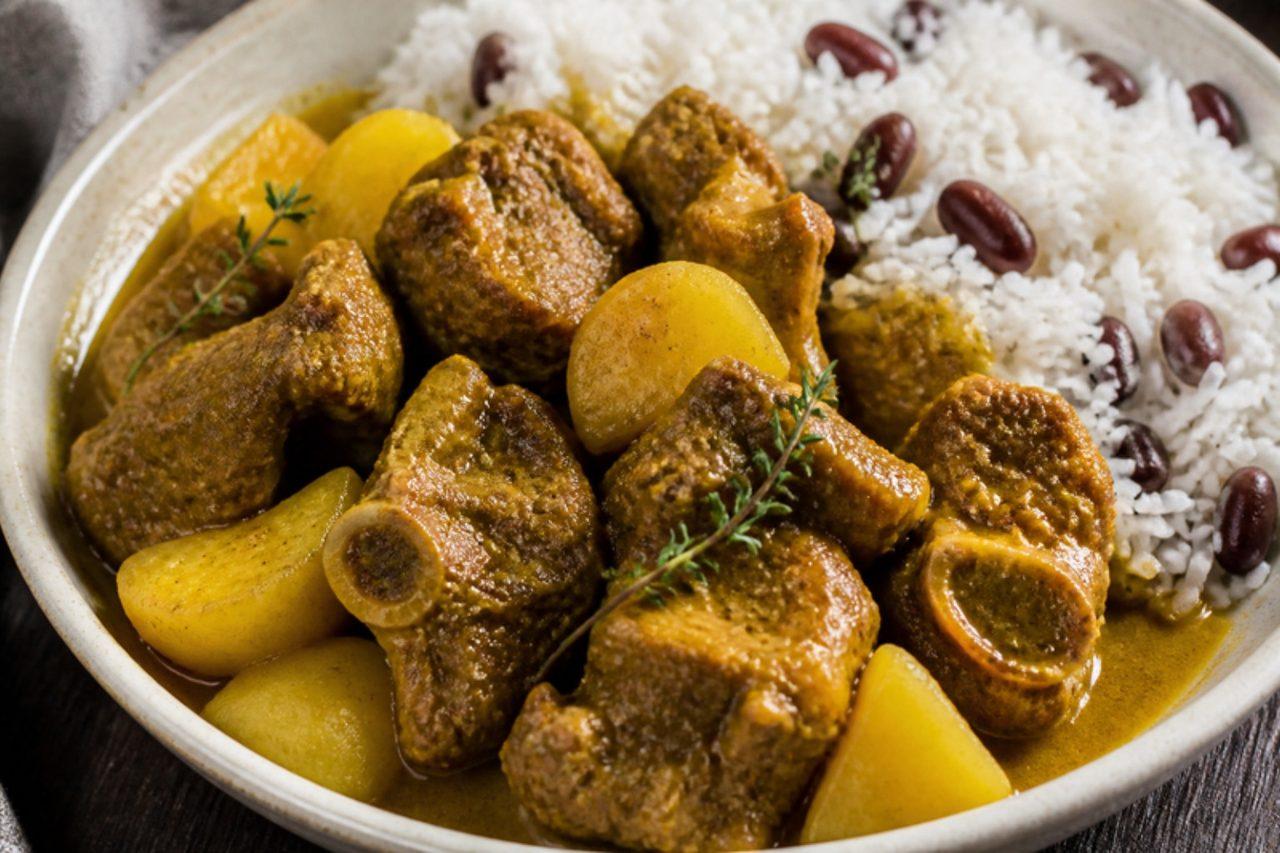
No Jamaican wedding, nine-night or big Sunday family lunch is complete without a pot of curry goat, often cooked outdoors in a huge pot by whoever has the steadiest hand with the seasoning. It came to the island with Indian indentured workers in the 1800s and became fully Jamaican with scotch bonnet, pimento and thyme. The bone-in pieces are seasoned overnight, browned with the curry powder until it darkens, then simmered for a couple of hours into a rich, brick-yellow gravy with soft potatoes that thicken it. Serve with white rice or rice and peas and a little fried plantain. If you can't find goat, bone-in mutton or lamb shoulder works the same way. Chef's tip: 'burn' the curry first; fry the curry powder in hot oil for a minute until it darkens and smells toasty before the meat goes in, and the gravy will never taste raw or chalky.

by KrazyBadal 0 views

LabraMixed vegetable curry

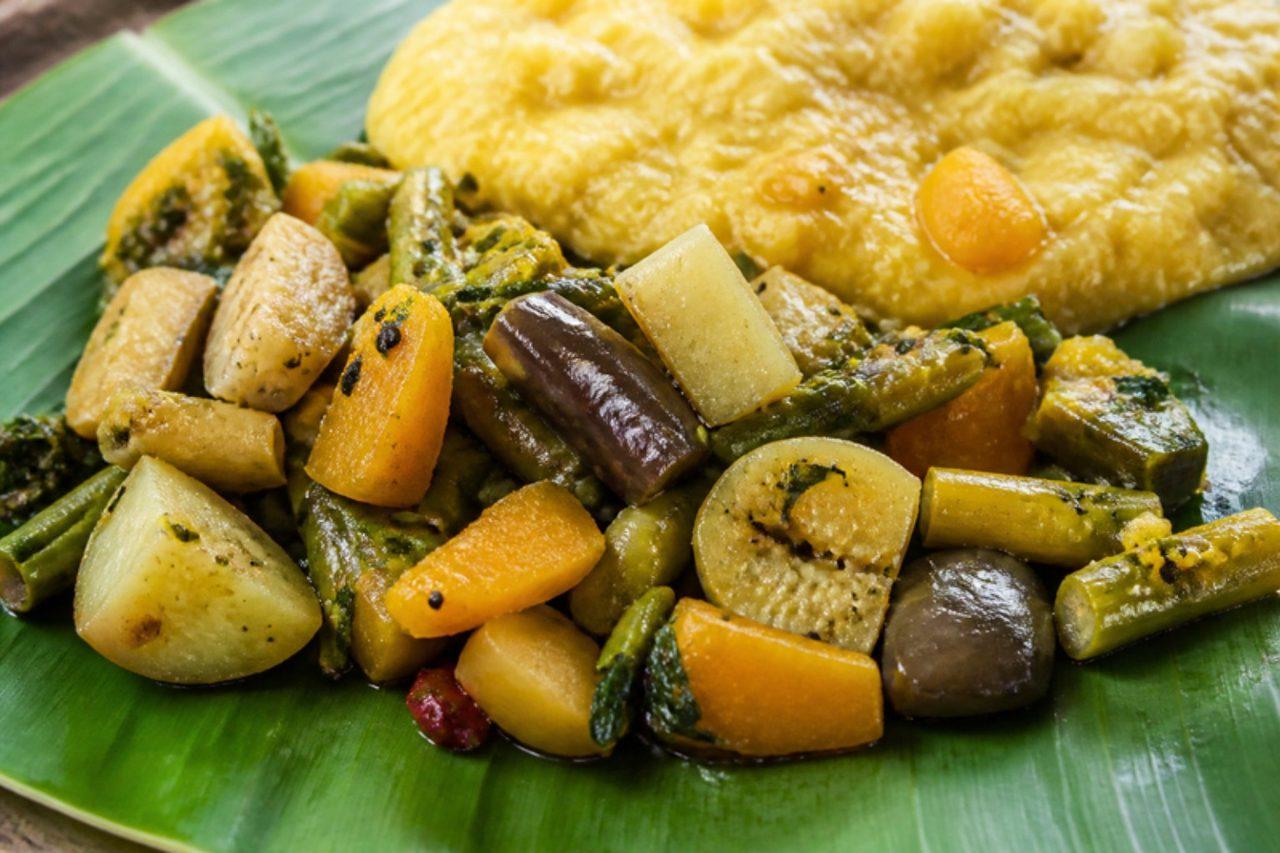
Labra is the vegetable dish of Durga Puja bhog: in community pandals across Bengal it is ladled out beside khichuri and a sweet tomato chutney to hundreds of people sitting in rows. It is a loose jumble of pumpkin, potato, aubergine, radish, sweet potato, raw banana and spinach stalks, cooked with panch phoron and ginger until some pieces melt and others hold. No onion or garlic goes in, because it is temple food. Chef's tip: add the vegetables in order of hardness, so the pumpkin goes soft and sweet while the radish and banana keep their shape.

by KrazyBadal 0 views

Full English breakfast

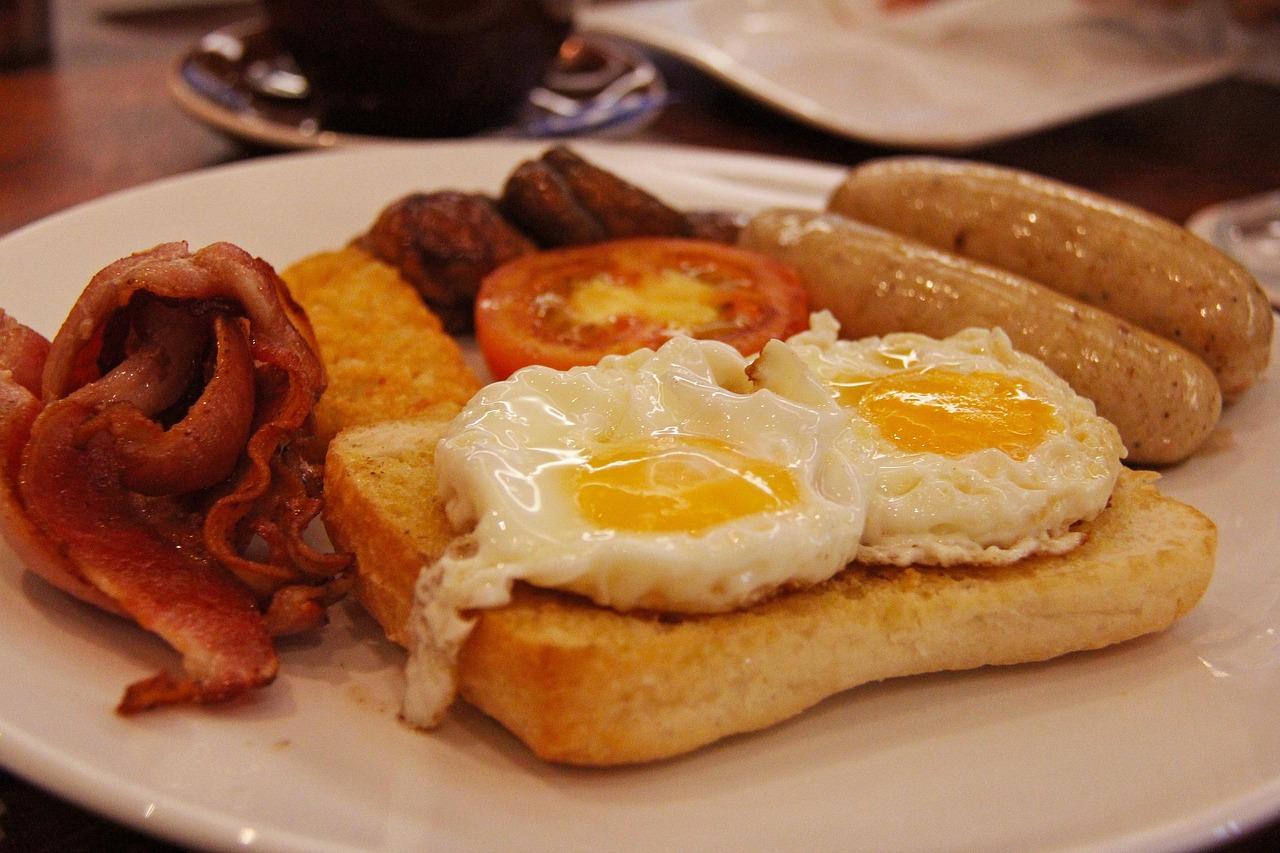
The full English is the weekend fry-up of English homes and the pride of every café and B&B from Cornwall to Yorkshire, a plate built to last until supper. This version contains pork: sausages, back bacon and optional black pudding, with fried eggs, baked beans, mushrooms, grilled tomato and buttered toast. The trick is timing so everything lands hot together. Chef's tip: start the sausages first and slowest; everything else cooks in the time they take.

by KrazyBadal 0 views

Ladakhi skyuWheat dough and root vegetable stew

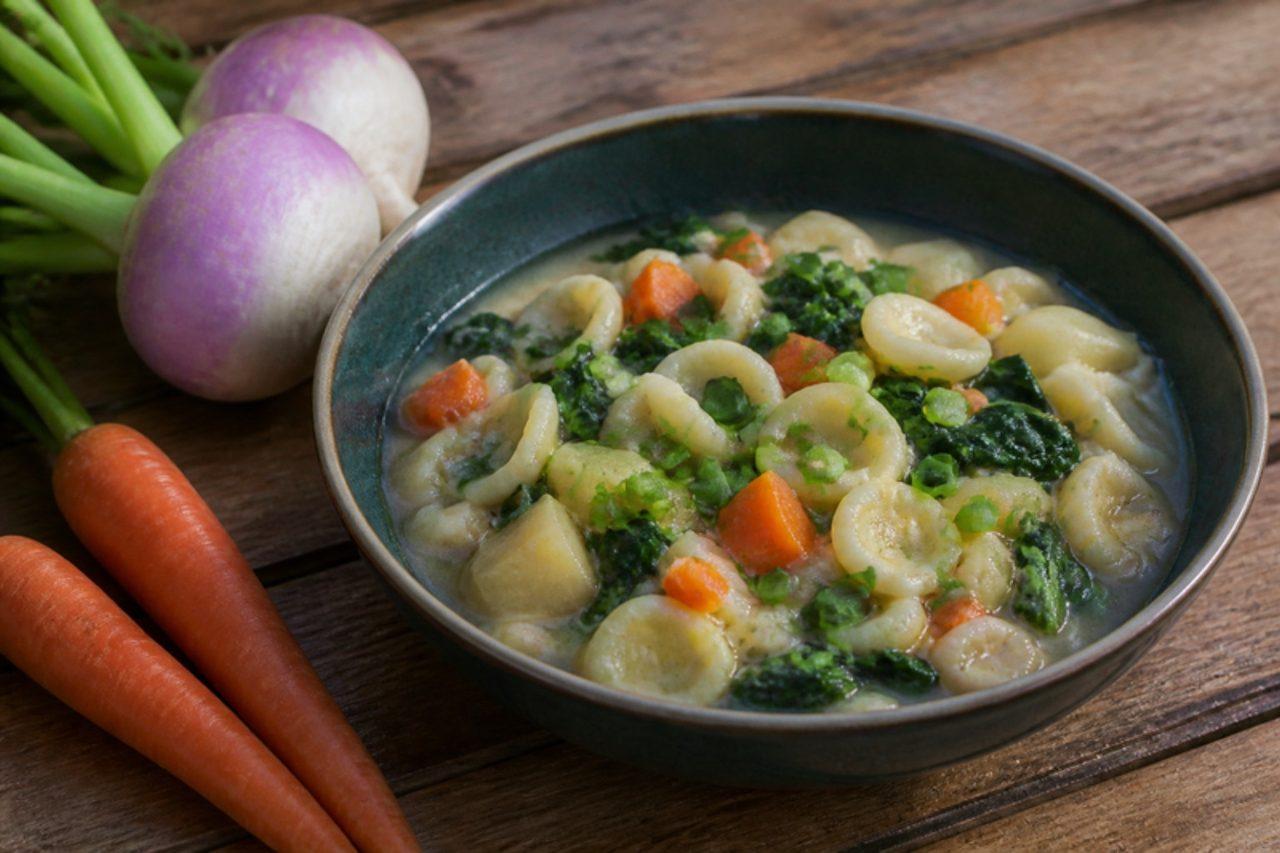
Skyu is what Ladakhi families in Leh and the villages along the Indus cook when the passes close and fresh vegetables run short: a thick stew of turnip, potato and carrot with little cups of wheat dough pressed with the thumb, a bit like orecchiette. It is filling, gently peppery and made in a single pot on the kitchen stove that also heats the house. Some homes finish it with a splash of milk or a crumble of dried cheese; this version keeps it plant-based and lets the vegetables flavour the broth. Chef's tip: press each piece of dough thin enough to see the thumbprint clearly; thick pieces stay doughy in the middle.

by KrazyBadal 0 views

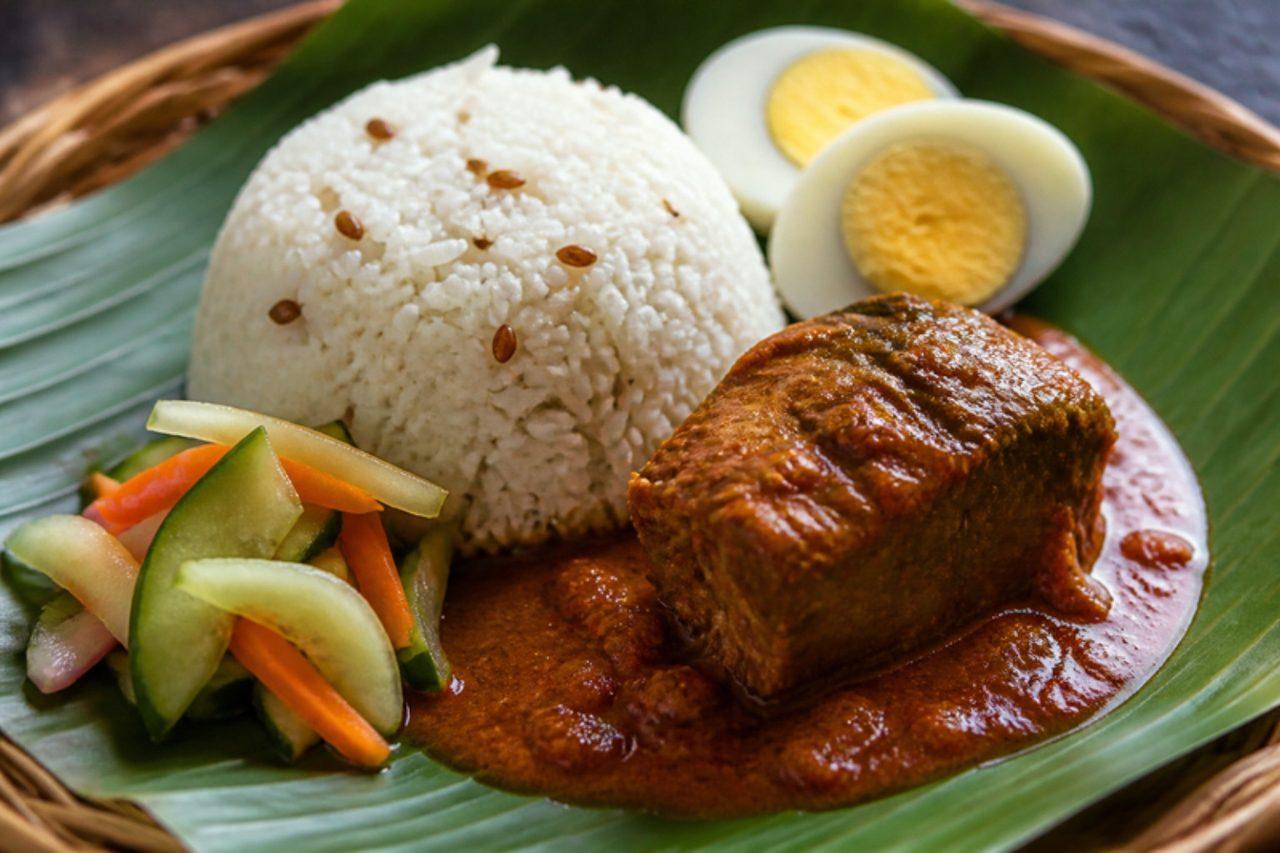
Nasi dagangCoconut rice with tuna curry

Breakfast on the east coast, in Kuala Terengganu and Kota Bharu, very often means nasi dagang: soft, slightly sticky rice steamed twice with coconut milk, ginger and fenugreek seeds, wrapped in paper with a ladle of gulai ikan tongkol, a gentle tuna curry. The rice is fragrant and a little chewy from the glutinous grains mixed in, while the curry is mellow, coconutty and sour from dried tamarind slices. Stalls sell it from dawn, with hard-boiled eggs and cucumber pickle on the side. It also makes a fine weekend brunch at home. Chef's tip: soak the two kinds of rice overnight so the grains steam evenly and turn plump rather than chalky.

by KrazyBadal 0 views

Nasi gorengIndonesian fried rice

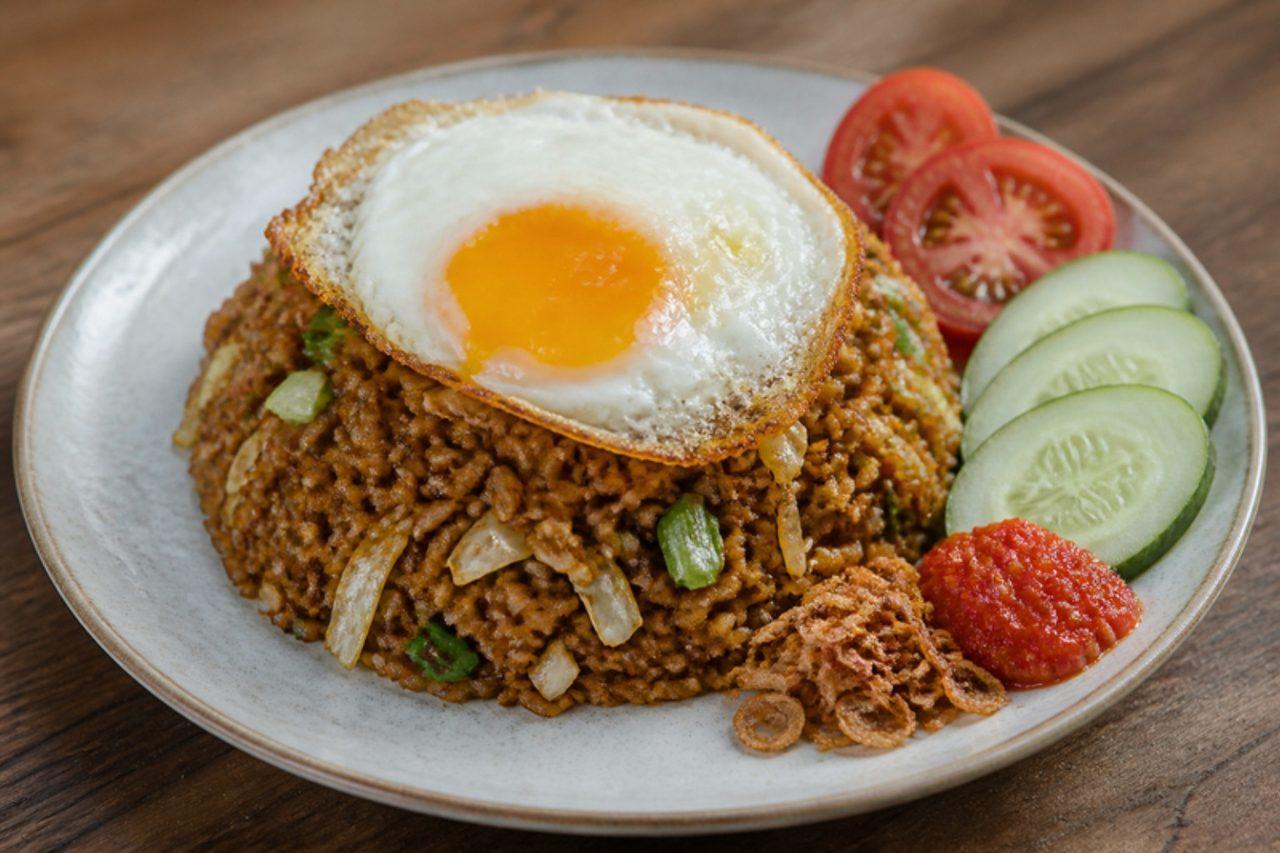
Every warung and night stall from Medan to Makassar has its own nasi goreng, but the starting point is always yesterday's rice, a pounded paste of shallot, garlic and chilli, and a glug of kecap manis that turns the grains glossy and caramel-brown. Indonesians eat it for breakfast as readily as for a late supper, crowned with a fried egg and served with cucumber, tomato and a heap of crackers. This vegetarian version keeps all the smoky-sweet depth without the usual shrimp paste. Chef's tip: get the wok properly hot and add the kecap manis down the side of the pan, not onto the rice, so it sizzles and caramelises before you toss it through.

by KrazyBadal 0 views

LahmacunThin spiced meat flatbread

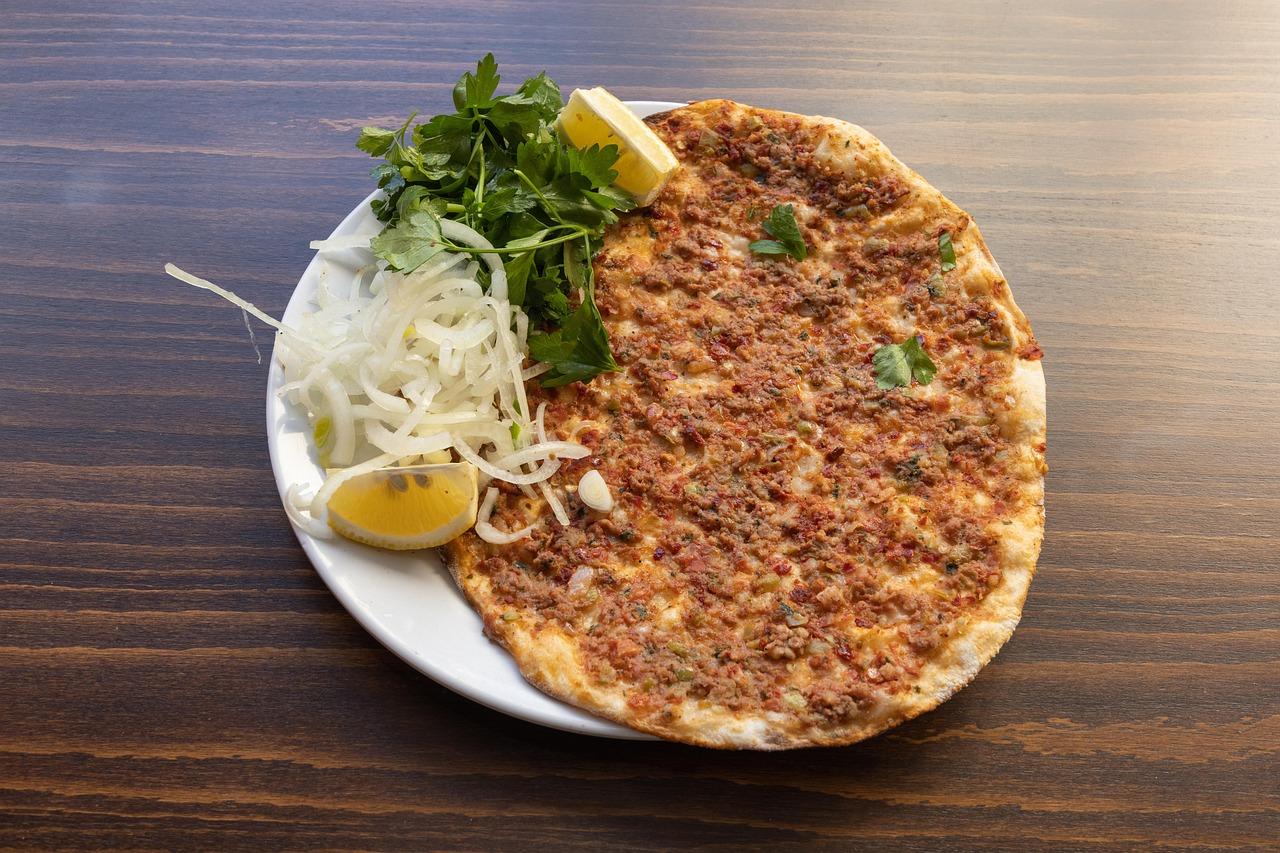
Lahmacun belongs to south-east Turkey, especially Gaziantep and Şanlıurfa, where bakeries slide dozens at a time into wood-fired ovens and people eat them on the street at any hour, often with a cold ayran. The dough is rolled almost see-through and spread with a raw paste of minced lamb, onion, peppers, tomato and herbs that cooks in minutes in fierce heat. To eat, squeeze lemon over, add a handful of parsley and onion, roll it up and fold. Chef's tip: blitz the topping vegetables to a fine paste and squeeze out the excess juice, so the meat spreads in a thin, even layer that bakes crisp rather than soggy.

by KrazyBadal 0 views

Lahori charghaSteamed and fried spiced chicken

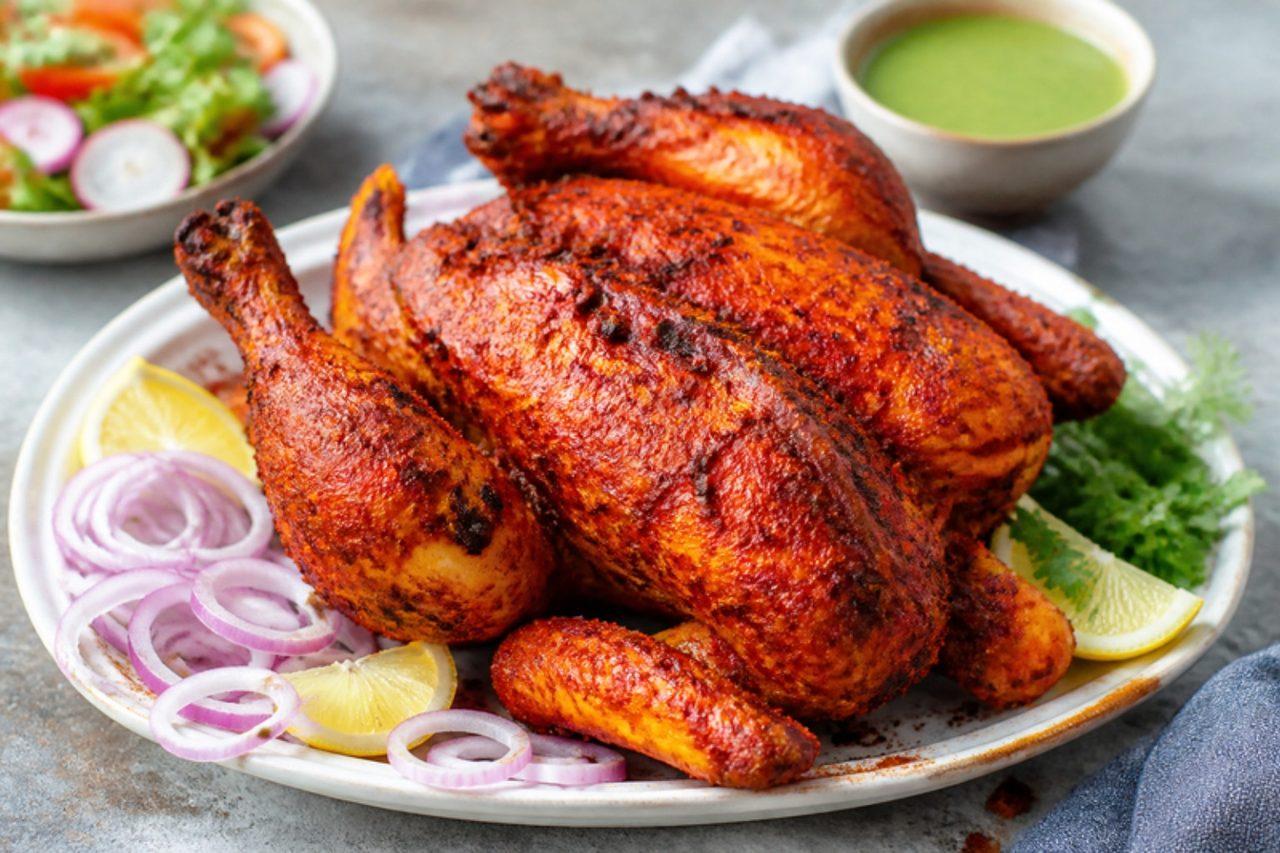
Chargha is a Lahore speciality, sold from the busy food streets of Lakshmi Chowk and the old city, where whole birds are coated in a red, tangy masala, steamed in big pots and then dropped into hot oil to order. It is the centrepiece of wedding dinners and Saturday-night family outings, and makes an impressive home dinner for guests. Steaming keeps the meat moist and cooked through before frying gives it a crisp, spicy skin. Serve it with naan, raita, salad and a squeeze of lime. Chef's tip: slash the chicken deeply to the bone so the masala and steam reach the thickest parts.

by KrazyBadal 0 views

Ackee and saltfish

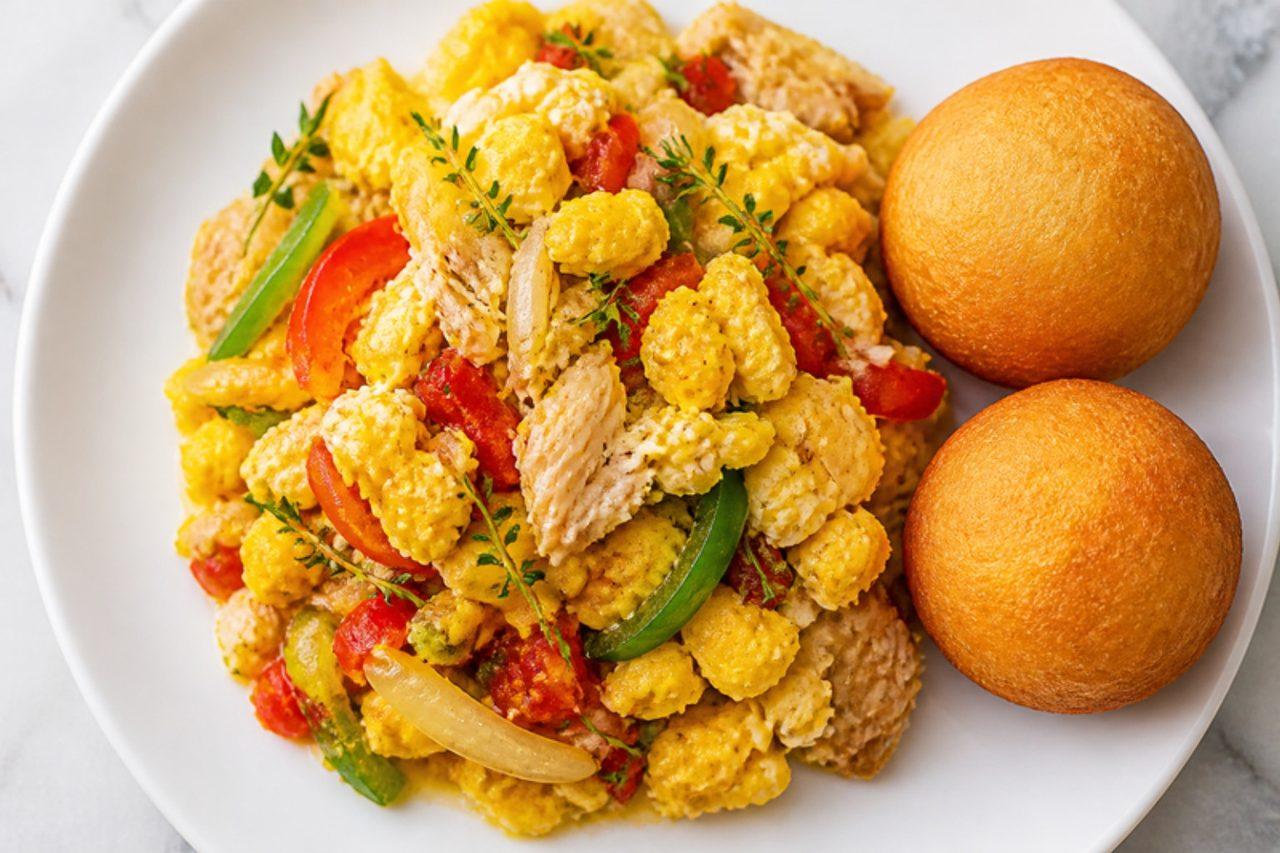
On a Jamaican Sunday morning, from Kingston yards to country kitchens in St Mary, the smell of salt cod frying with onion, thyme and scotch bonnet means breakfast is nearly ready. The ackee itself is a red tree fruit whose cream-coloured flesh cooks up soft and mild, a lot like scrambled egg, and it soaks up the salty fish and peppery oil around it. It is eaten with fried dumplings, boiled green banana, roast breadfruit or hard dough bread, and is just as welcome at lunch. A note on safety: ackee is only safe when the pod has ripened on the tree and opened by itself, and the black seeds and pink membrane are removed. Outside Jamaica, tinned ackee is the safe, easy choice and is what this recipe uses. Chef's tip: soak the saltfish overnight and then boil it once; taste a flake before it goes in the pan, because you can always add salt but you can't take it out.

by KrazyBadal 0 views

Paella valenciana

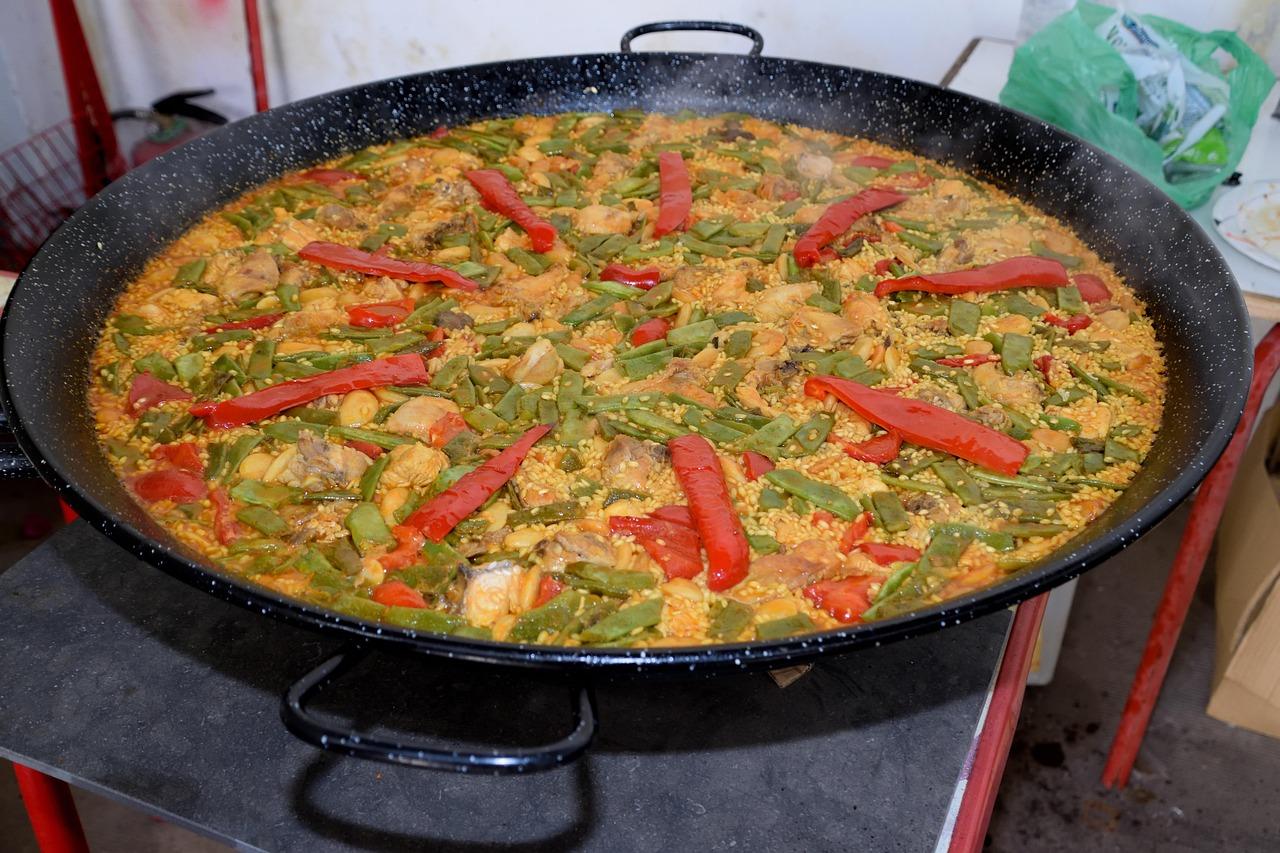
In the villages around Valencia, paella is a Sunday lunch dish, never a dinner one, cooked in the open air by whoever in the family has the steadiest hand and eaten straight from the pan with spoons. The Valencian original has no seafood, no chorizo and no peas: just chicken, rabbit, wide flat green beans (ferraura), big white garrofó beans, tomato, sweet pimentón, saffron and short round rice. If you can't get rabbit, use all chicken; it is still very good. This version is sized for a 38–40 cm paella pan on a large hob ring or a barbecue. Chef's tip: once the rice goes in, smooth it flat and then leave it alone; stirring releases starch and turns paella into risotto.

by KrazyBadal 0 views

Lahpet thokePickled tea leaf salad

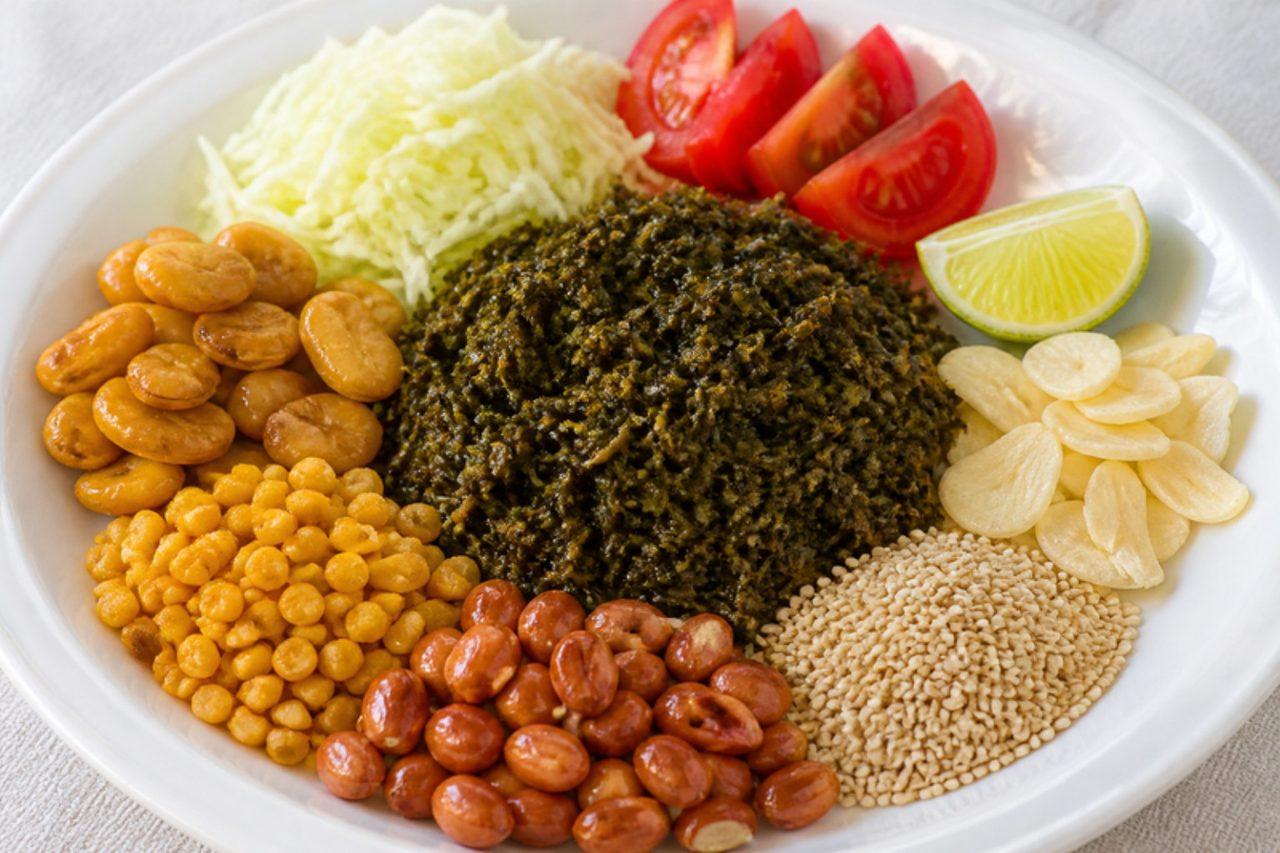
Lahpet thoke is how Myanmar welcomes a guest: a lacquered tray of pickled tea leaves surrounded by fried beans, peanuts, sesame and garlic, offered after meals, at weddings and at monk feasts from Mandalay to Yangon. Mixed into a salad with cabbage, tomato, chilli and lime, it becomes the country's most famous dish: bitter, sour, salty and crunchy at once, with a gentle caffeine lift. Ready-made lahpet sometimes contains fish sauce and the crunchy mix often has dried shrimp, so this version quick-pickles loose green tea at home. Chef's tip: soak the tea in several changes of hot water and squeeze it hard each time; that's what tames the bitterness.

by KrazyBadal 0 views

LaingTaro leaves in coconut milk

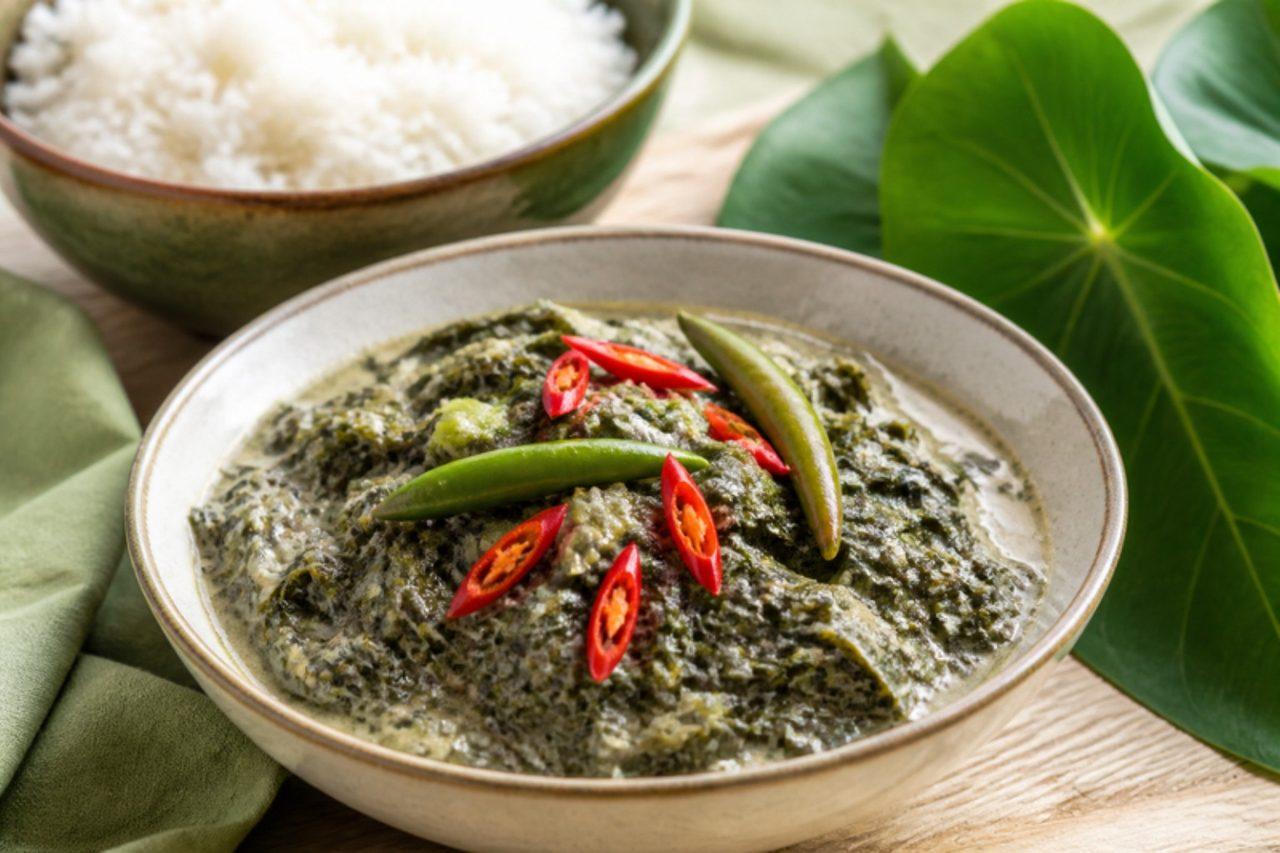
Laing is the pride of Bicol, the chilli-loving region at the southern tip of Luzon. Dried taro leaves are simmered for close to an hour in coconut milk with ginger, lemongrass and siling labuyo until they collapse into a dark, creamy, spicy mass, then finished with thick coconut cream. Bicolano cooks usually add pork or dried fish and shrimp paste; this vegetarian version leans on extra ginger and a little salt and stays rich. Eat it with plain rice, often as a Friday or Lenten dish. Chef's tip: lay the leaves on top of the coconut milk and don't stir until they have soaked it up; stirring raw taro leaves early is said to leave an itchy taste.

by KrazyBadal 0 views

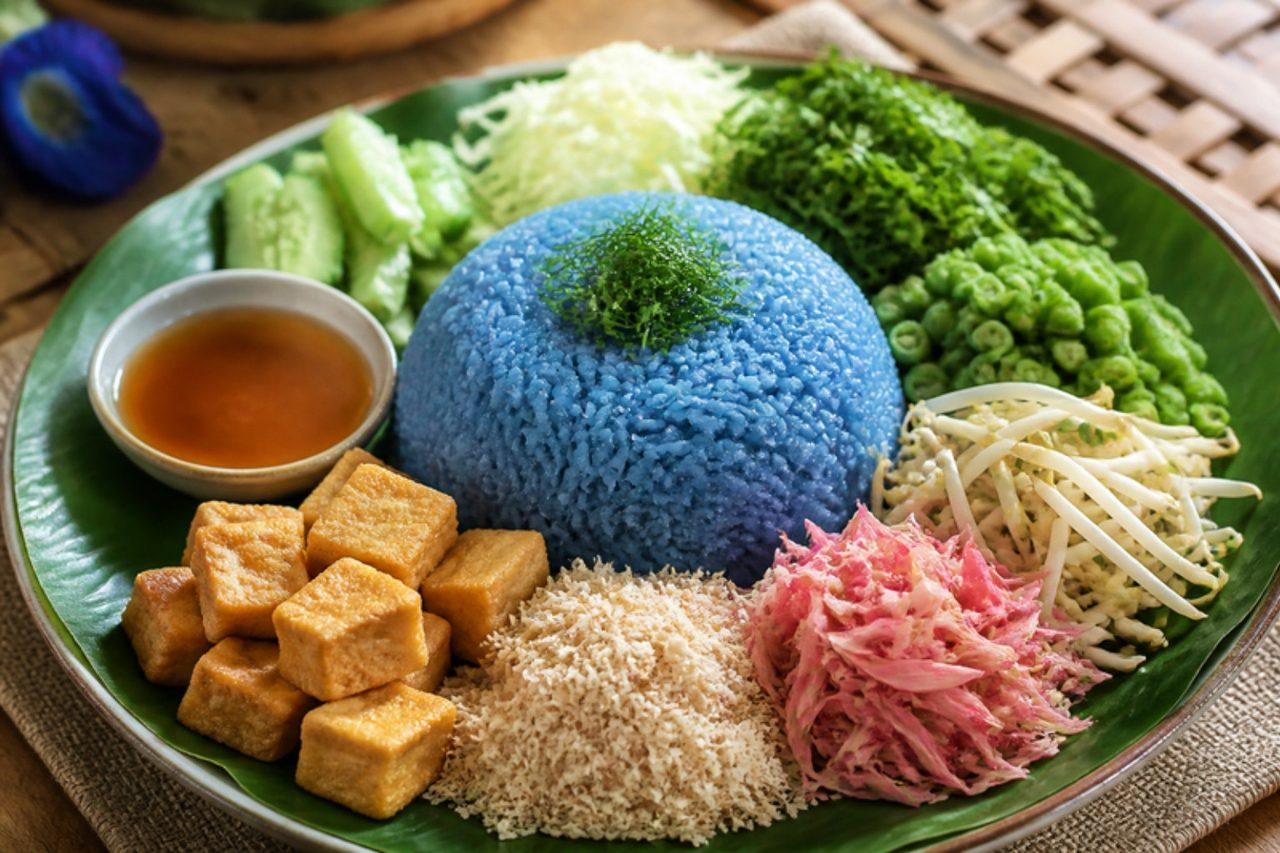
Nasi kerabuBlue rice with herbs

Nasi kerabu comes from Kelantan on the north-east coast, and in Kota Bharu it is a breakfast and lunch staple, sold in the morning markets in mounds of startlingly blue rice. The colour comes from butterfly pea flowers. Around the rice sit 'ulam', raw herbs and vegetables sliced as fine as thread: lime leaves, lemongrass, long beans, bean sprouts, cucumber, mint and basil, with nutty toasted coconut on top. Kelantanese stalls dress it with budu, a fermented fish sauce, so this version uses a sharp tamarind, lime and chilli dressing instead. It's light, crunchy and full of perfume. Chef's tip: slice the herbs as thinly as you can with a sharp knife; the finer the shreds, the more they scent every mouthful of rice.

by KrazyBadal 0 views

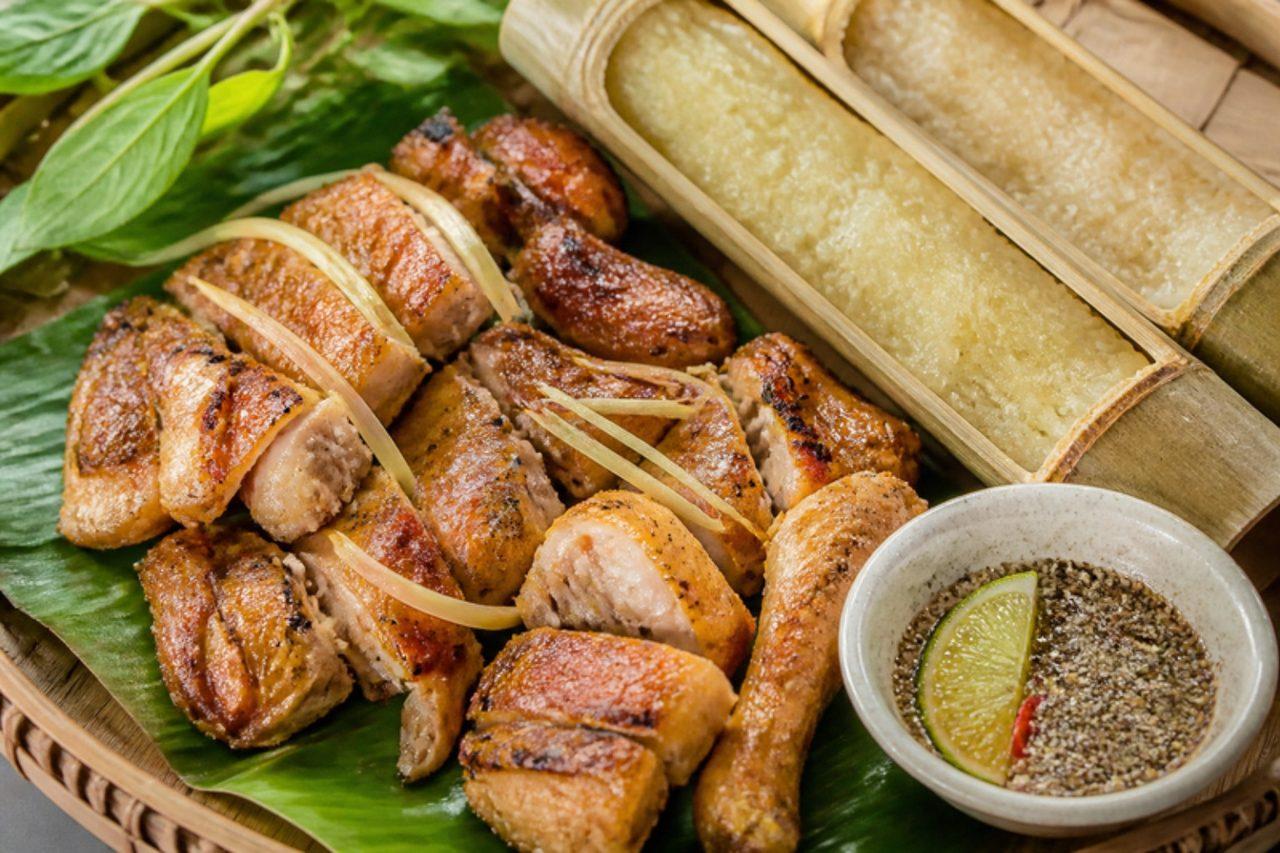
Ga nuong com lam (lemongrass chicken with bamboo rice)

Up in the Central Highlands, around Kon Tum, Pleiku and Buôn Ma Thuột, roadside grills and village homestays serve this pair: chicken marinated in lemongrass and chilli, grilled slowly over charcoal, and cơm lam, sticky rice cooked inside green bamboo tubes laid in the fire. Splitting the charred bamboo reveals a cylinder of rice wrapped in a thin, fragrant skin of bamboo membrane. Both are eaten with the hands and dipped in salt, pepper and lime or a crushed peanut and sesame salt. Without fresh bamboo, rolling the rice in banana-leaf parcels gives a very similar result. Highland rice wine (rượu cần) is the usual drink, but cold jasmine tea goes just as well and is alcohol-free. Chef's tip: brush on the honey only in the last few minutes of grilling so it glazes without burning.

by KrazyBadal 0 views

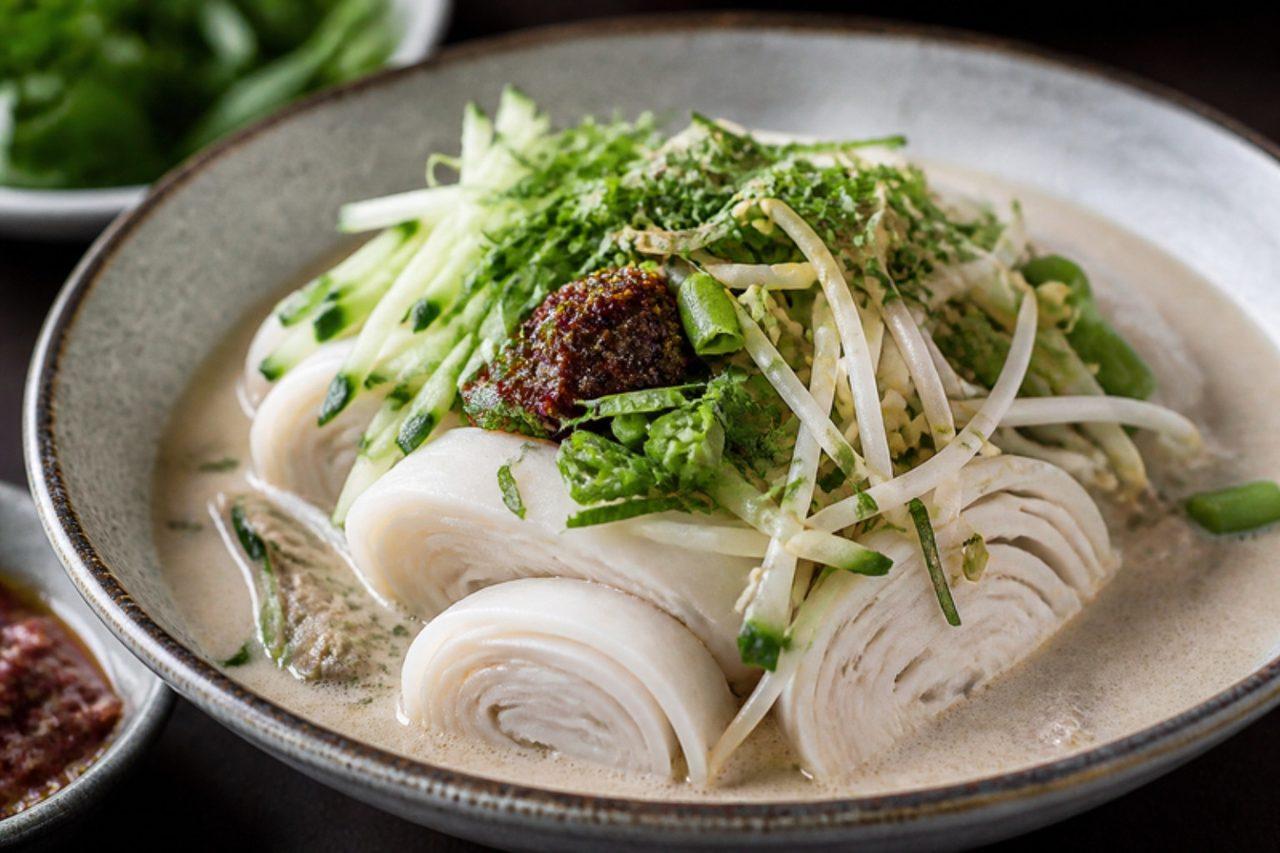
LaksamRice noodles in coconut fish gravy

Kota Bharu's morning market has its own noodle: laksam, thick sheets of steamed rice batter rolled up like little carpets and sliced into wheels. They are drowned in a pale, creamy gravy of pounded fish and coconut milk, then heaped with raw herbs and vegetables (ulam): cucumber, long beans, bean sprouts, daun kesum and torch ginger flower, with a spoonful of fiery chilli and budu, the region's fermented anchovy sauce. The result is soft and slippery, rich and cool at the same time. Locals eat it for breakfast or as a mid-morning snack. Chef's tip: pound the cooked fish with the shallots instead of blending it smooth; the gravy should feel faintly textured, like a thin porridge.

by KrazyBadal 1 views

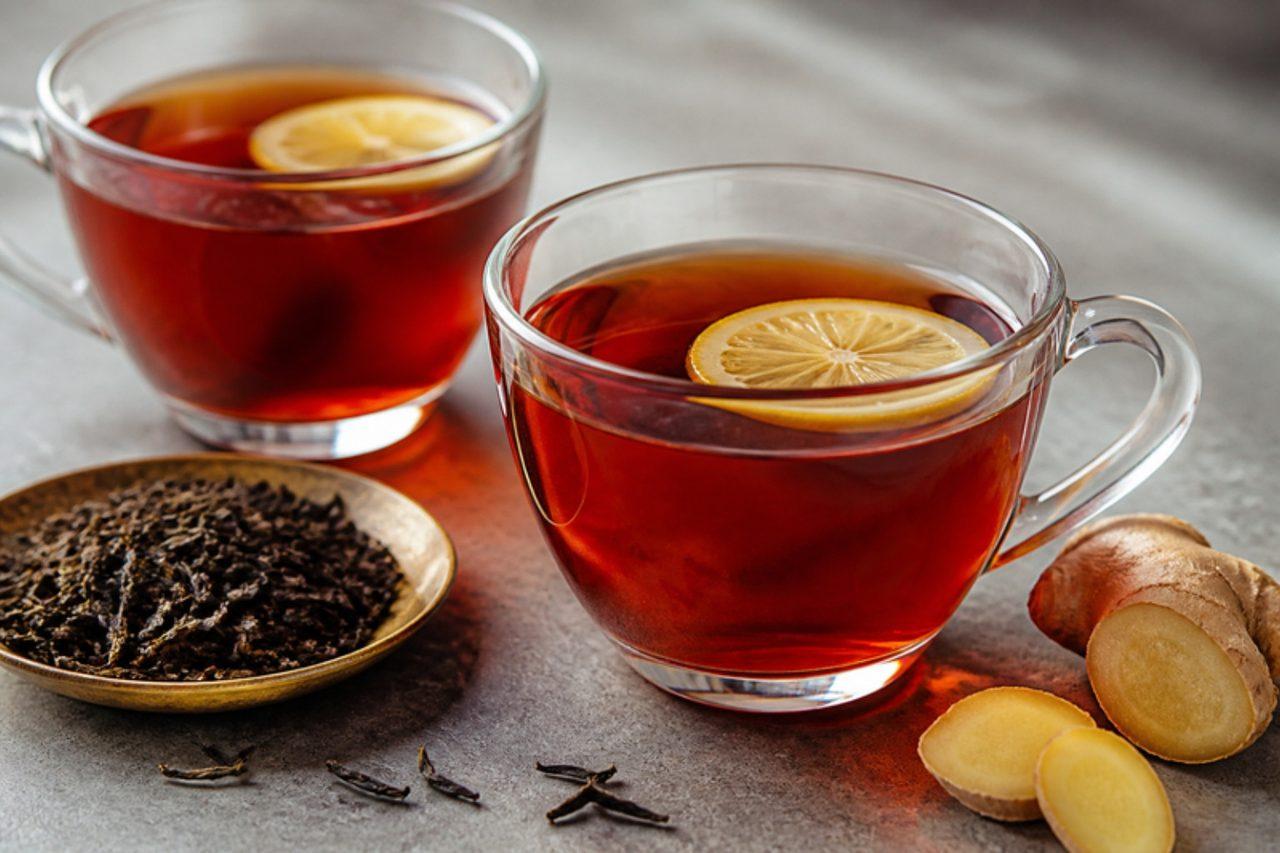
Lal sahRed tea

In Assam, the home of half of India's tea, the everyday cup is lal sah, 'red tea': strong CTC or orthodox Assam leaf brewed briefly, poured off, sweetened and drunk black. It is what tea-garden workers, Guwahati office-goers and grandmothers drink from morning till evening, often with a slice of lemon, a crushed piece of ginger or, in upper Assam, a bay leaf. Its colour is a deep, clear red and its taste is malty and brisk, never stewed. Chef's tip: take the pan off the heat before adding the leaves; boiling them makes the tea harsh and cloudy.

by KrazyBadal 1 views

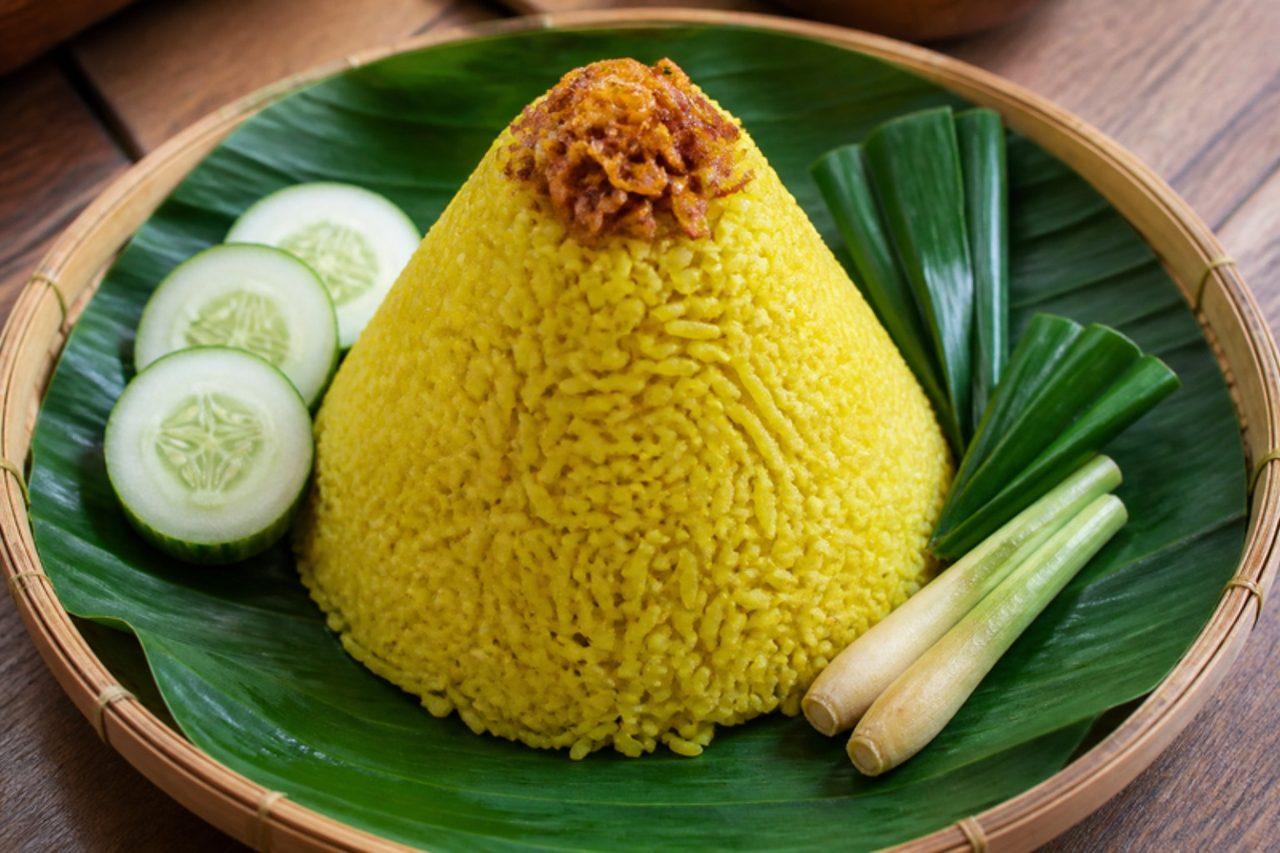
Nasi kuningTurmeric coconut rice

Yellow rice is Indonesia's rice for good news: shaped into a tall cone called tumpeng, it's the centrepiece at birthdays, housewarmings and thanksgiving gatherings across Java, Bali and Sulawesi, and in Manado and Banjarmasin it's also a weekday breakfast wrapped in banana leaf. The grains are cooked in coconut milk with turmeric, lemongrass, salam and lime leaf, so they come out fluffy, golden and gently fragrant, rich without being heavy. Serve it with tempe orek, perkedel, sambal and cucumber for a festive platter. Chef's tip: steam the rice after its first absorption, Javanese style, or rest it covered off the heat for 10 minutes — skipping this gives sticky, uneven grains.

by KrazyBadal 0 views

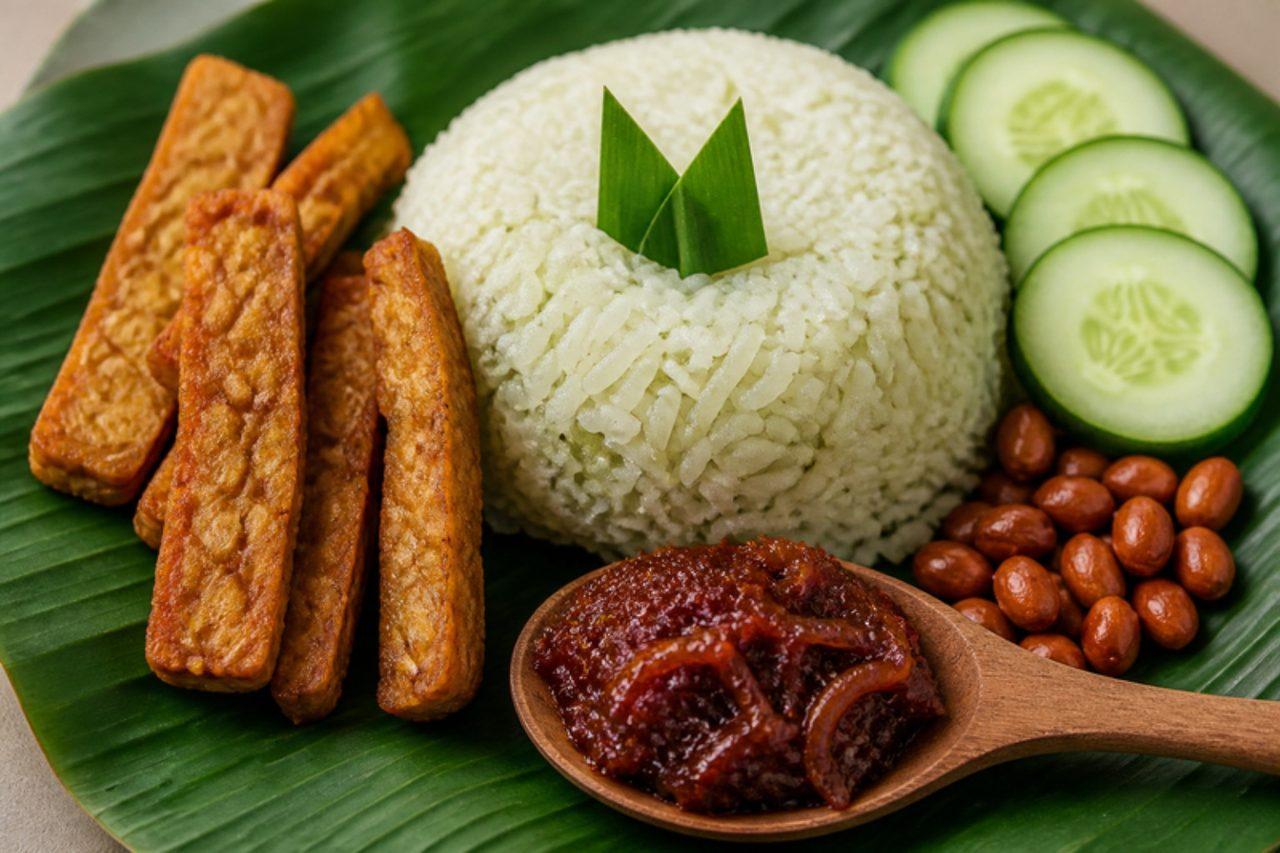
Nasi lemakCoconut rice with sambal

All over Malaysia, nasi lemak is what people grab before work: a pyramid of banana leaf or brown paper from a roadside stall, opened at a desk or on a car bonnet, with fragrant rice steamed in coconut milk, a dab of sticky red sambal, crunchy peanuts and cool cucumber. Stalls usually add fried anchovies and boiled egg; our meat-free plate keeps the morning ritual but swaps the anchovies for thin batons of tempeh fried until they shatter, and the sambal is cooked without belacan, so the depth comes from slow-fried chillies, tamarind and palm sugar. Eat it for breakfast, brunch or a lazy supper. Chef's tip: give the sambal the full time on a low flame; it is ready only when a shiny red oil floats free around the edge.

by KrazyBadal 0 views

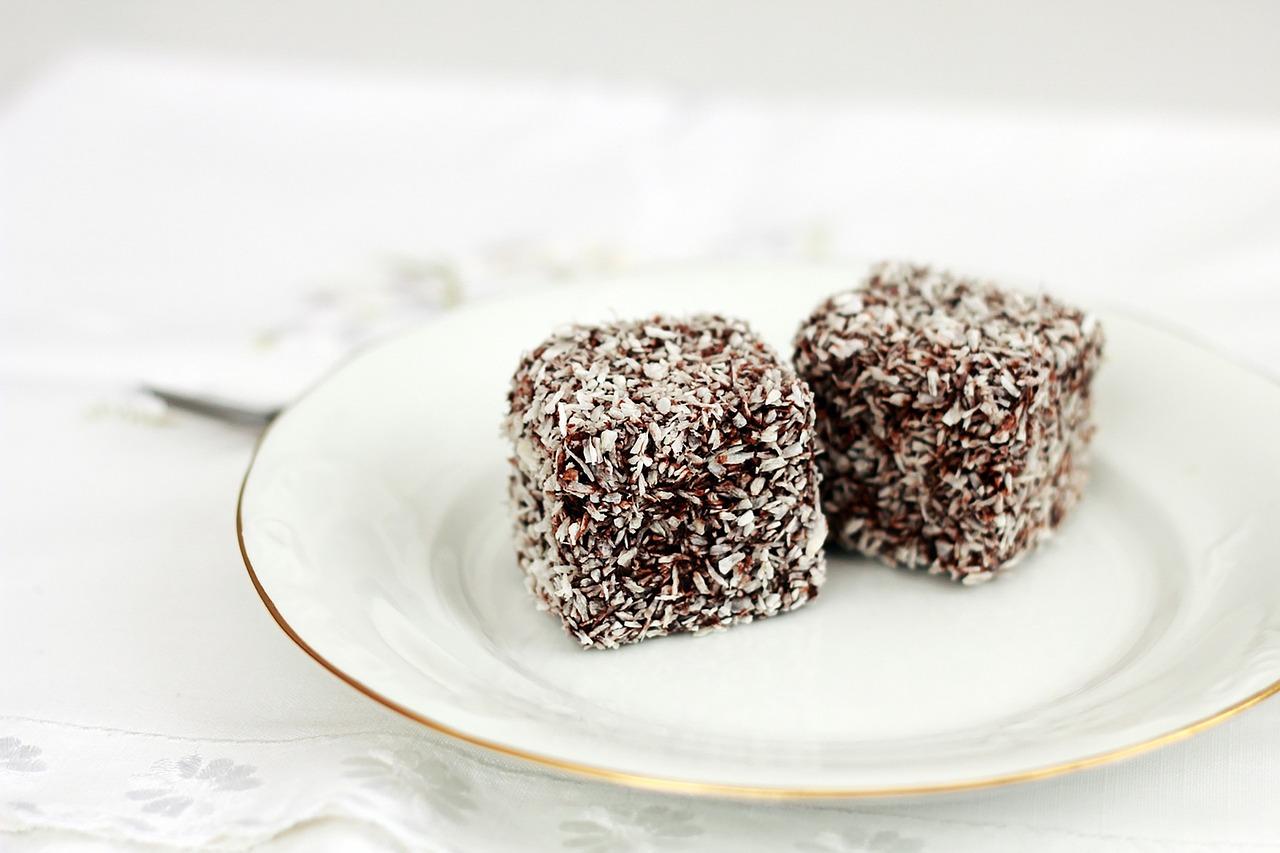
LamingtonsChocolate coconut sponge squares

Lamingtons are said to be named after Lord Lamington, Governor of Queensland at the turn of the twentieth century, and they're the cake of Australian school fundraisers, Country Women's Association stalls and morning tea at work; there's even a National Lamington Day on 21 July. Cubes of light butter sponge are dunked in a thin, glossy chocolate icing and rolled in desiccated coconut, so each one has a soft, chocolate-soaked outside and a fluffy middle. Some bakeries split them and fill them with jam and cream. Chef's tip: bake the sponge a day ahead, or freeze the cut squares for an hour; fresh sponge crumbles in the icing, firm sponge dips cleanly.

by KrazyBadal 0 views

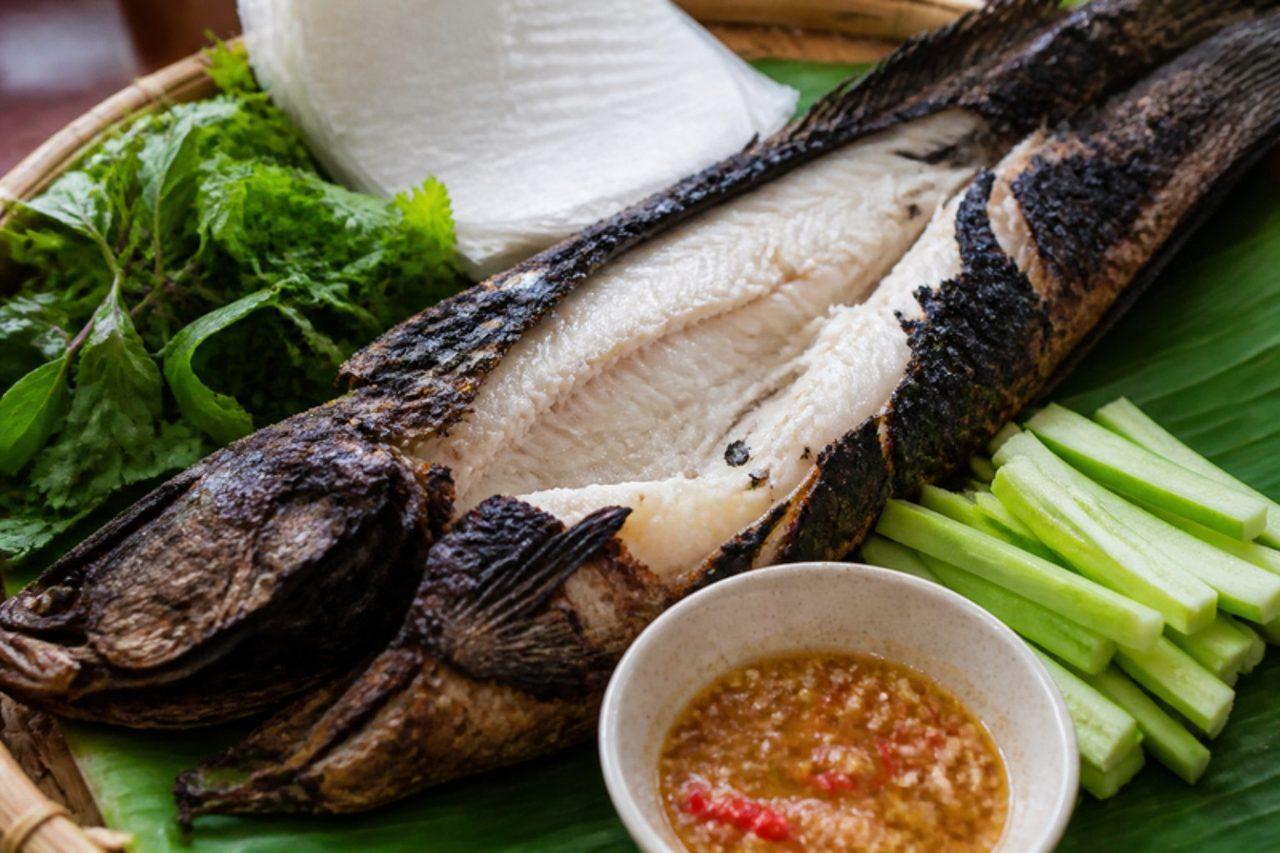
Ca loc nuong trui (straw-grilled whole fish)

After the rice harvest in the Mekong Delta, farmers would catch snakehead from the flooded fields, skewer each fish on a stick, stand it in the ground and pile dry rice straw over it before setting it alight. When the straw burns away the blackened skin peels off to reveal steaming, sweet white flesh, which is rolled in rice paper with herbs, cucumber and rice noodles. Countryside restaurants around Cần Thơ still serve it this way. Snakehead is hard to buy outside Asia, so use sea bass, barramundi or tilapia and a barbecue or a hot oven. Chef's tip: push a long metal skewer from mouth to tail so you can turn the fish over without it breaking.

by KrazyBadal 0 views

Showing 45 of 10,046 recipes

Show more recipes

Page 912 of 1,117