Skip to content

Filipino recipes

148 Filipino recipes to cook at home, each with photos, step-by-step instructions and cook times. The quickest, Mais con yelo, takes 10 minutes. Most take around 50 minutes.

Filter these by time, diet or cuisine

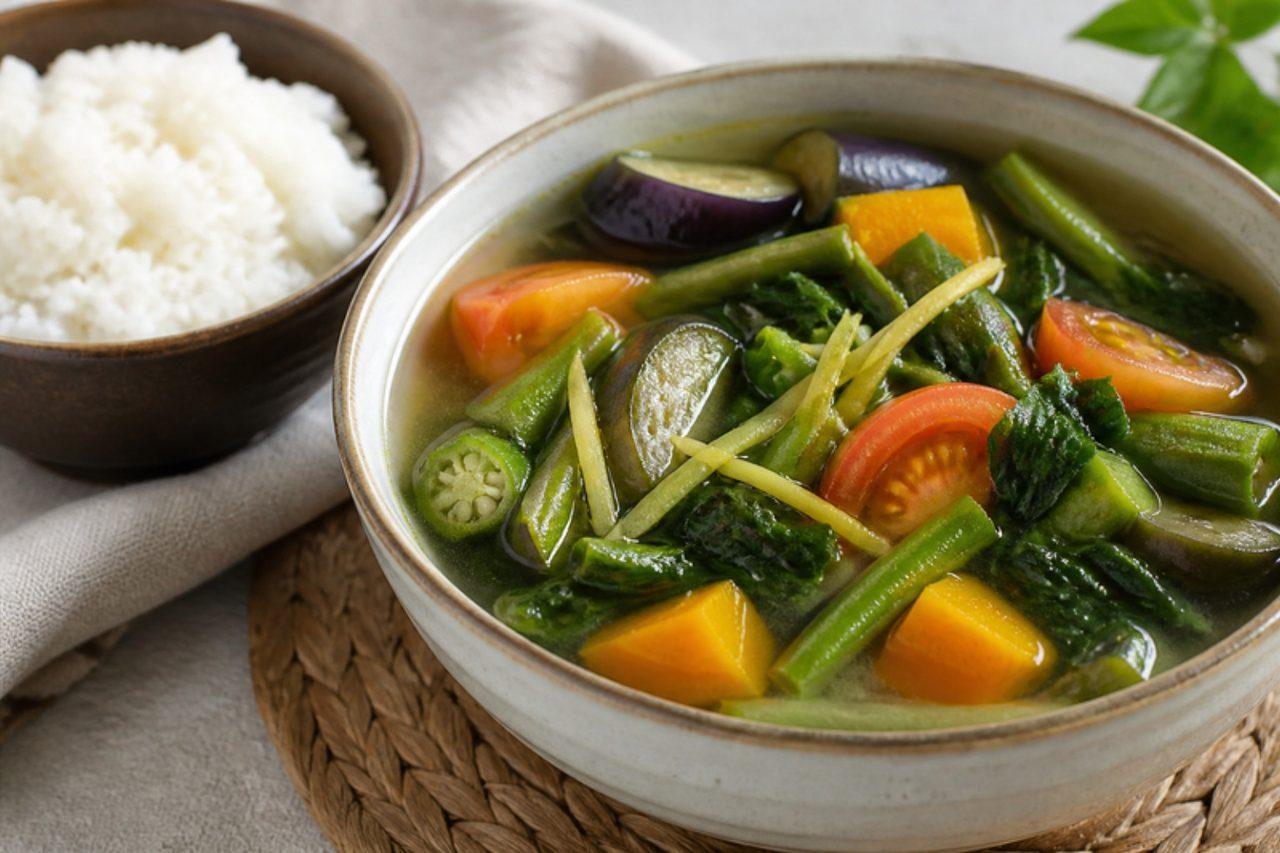
Utan bisayaClear lemongrass vegetable soup

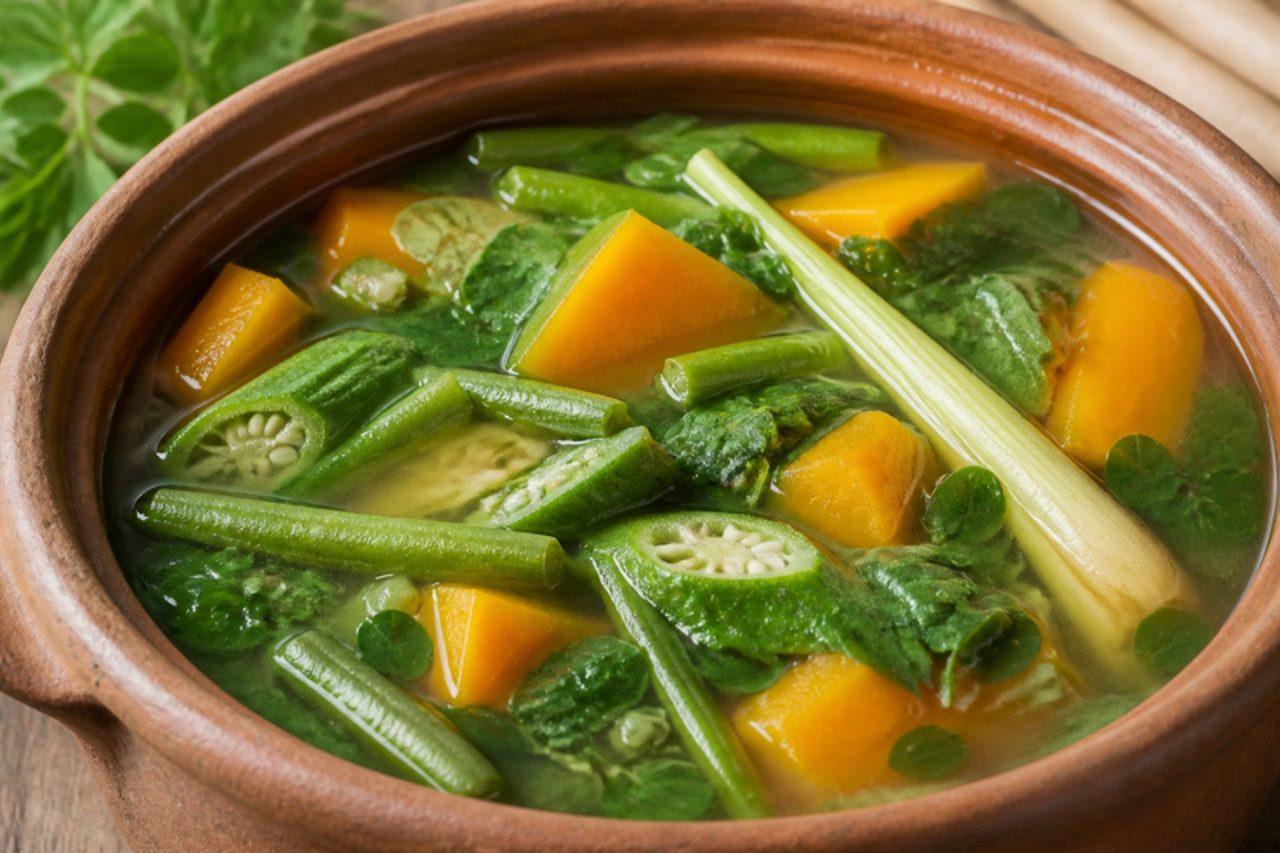
Utan bisaya is the everyday vegetable soup of Cebu and the Visayas, cooked at home for lunch and eaten with rice and something fried or grilled on the side. Lemongrass, ginger and tomato flavour a clear broth full of squash, string beans, okra and malunggay (moringa) leaves. Visayan cooks often add dried fish or a little fish sauce; this is the vegetarian version, so the lemongrass and a pinch of pepper do the work. It is fresh and fragrant, with about 3 g of protein per bowl, much of it from the moringa leaves. The common mistake is adding the malunggay too early: the small leaves need only a minute, or they darken and lose their flavour. Chef's tip: bruise the lemongrass well with the back of a knife and tie it in a knot so it is easy to fish out.

by KrazyBadal 0 views

LaswaOkra and squash vegetable soup

Laswa is the humble vegetable soup of Iloilo and the Western Visayas, cooked on ordinary weekdays with whatever the garden or the market gives: okra, squash, string beans, aubergine and leafy greens, all in a light broth with onion and tomato. Ilonggo cooks often add shrimp; this is the vegetarian version, seasoned with salt and a little ginger. It is light and naturally a little thick from the okra, with about 3 g of protein per bowl; serve it with rice and fried tofu or a boiled egg. The most common mistake is stirring the pot too much once the okra goes in, which breaks it up and makes the soup slimy. Chef's tip: add the vegetables in order of how long they take, squash first and leaves last, so each one is just done.

by KrazyBadal 0 views

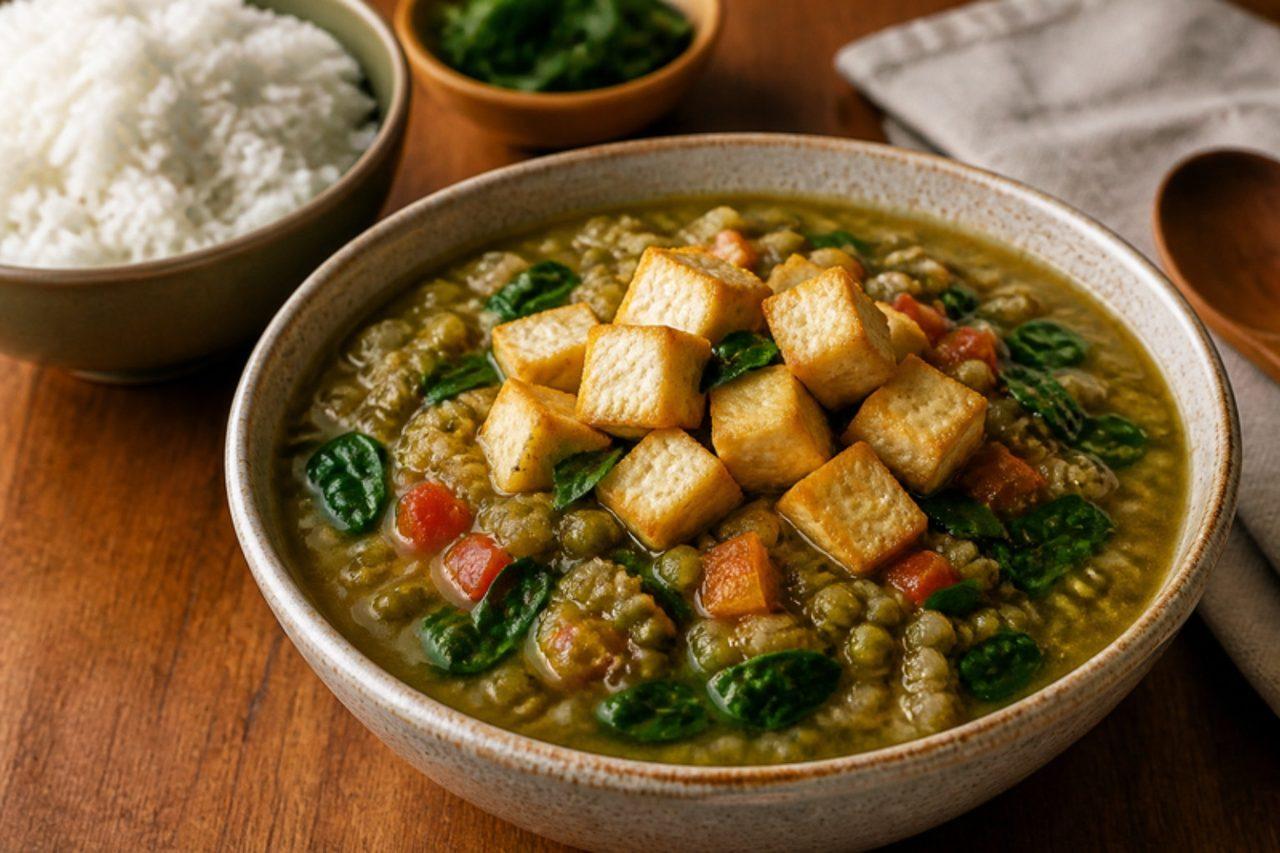
Vegetarian ginisang monggoSautéed mung bean stew with tofu

All over the Philippines, ginisang monggo is what's on the table on Friday, a habit from the days of meatless Fridays that never went away. Whole green mung beans are simmered until they burst into a thick, savoury stew with lots of garlic, onion and tomato and finished with malunggay (moringa) or spinach leaves. Home cooks usually add pork or dried shrimp and season with fish sauce; this vegetarian version uses golden fried tofu and soy sauce instead. A portion gives about 25 g of protein from the mung beans and tofu, and it is filling enough to eat with rice as a whole meal. The most common mistake is adding the greens too early, so they turn grey and slimy; put them in at the very end and turn off the heat. Chef's tip: let the beans simmer until most have split their skins and some collapse into the liquid; that is what makes the stew creamy without any thickener.

by KrazyBadal 0 views

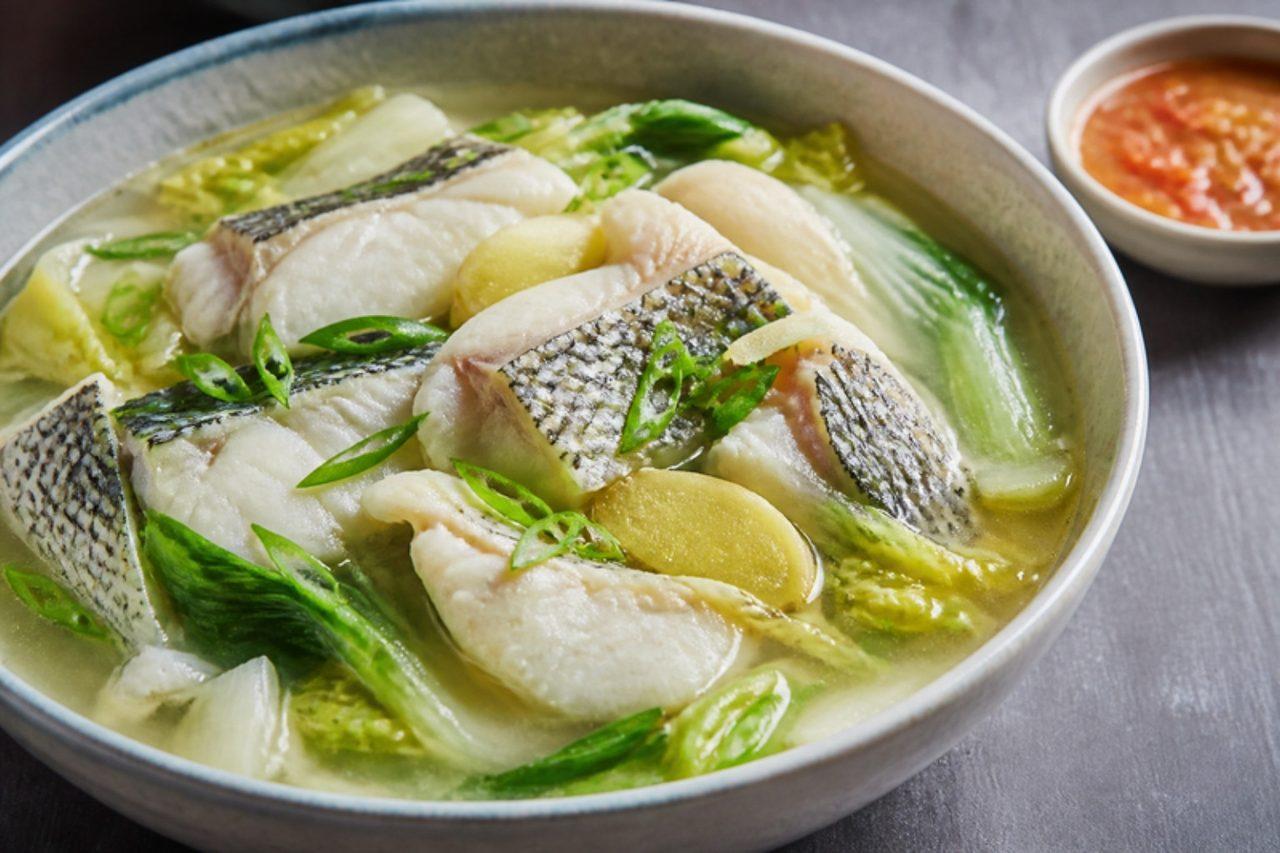
Pesang isdaGinger fish soup

Pesang isda comes from Pampanga and the provinces of Central Luzon, the gentle ginger soup Filipino families make on rainy days and for anyone who is unwell. Fish is poached in water from rinsing rice, which gives a faintly milky, rounded broth, with lots of ginger, onion and whole peppercorns, then cabbage and pechay (pak choi) wilt in at the end. It is mild, soothing and light, with about 25 g of protein a bowl from the fish; it is often served with a sautéed miso and tomato sauce on the side. The common mistake is throwing in the greens too early, so they go grey. Chef's tip: save the second rinsing of the rice, not the first, for the cleanest, creamiest broth.
by KrazyBadal 0 views

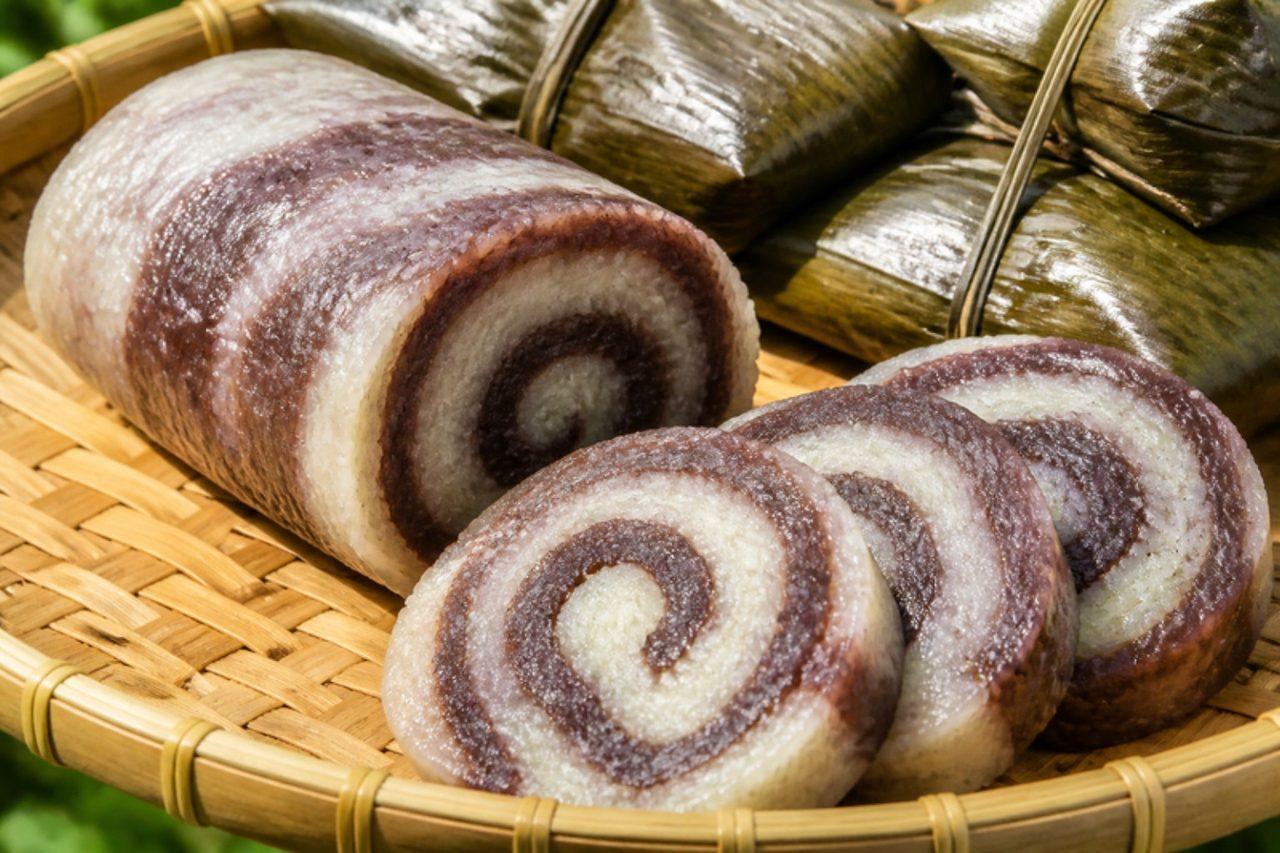
Moron (Leyte chocolate and coconut sticky rice twists)Chocolate sticky rice rolls

Moron is the pride of Leyte and Samar, made for town fiestas and sold all year in Tacloban markets as a merienda. Two doughs of glutinous rice cooked in coconut milk and sugar, one plain and one darkened with tablea, the pure roasted cacao of the Visayas, are rolled into ropes, twisted together and steamed in banana leaves. Each log is chewy and dense, with ribbons of bittersweet chocolate through creamy coconut rice. Unwrap and eat warm or cool, ideally with a mug of thick hot chocolate. Moron is naturally egg-free: the glutinous rice flour is half-cooked in coconut milk first, which swells the starch so it binds into a soft, rollable dough, and steaming sets it. Chef's tip: the common mistake is wrapping the logs loosely; roll the leaf tightly and twist the ends like a sweet wrapper, or water gets in and the logs turn soggy.

by KrazyBadal 0 views

DinengdengVegetables in fish sauce broth

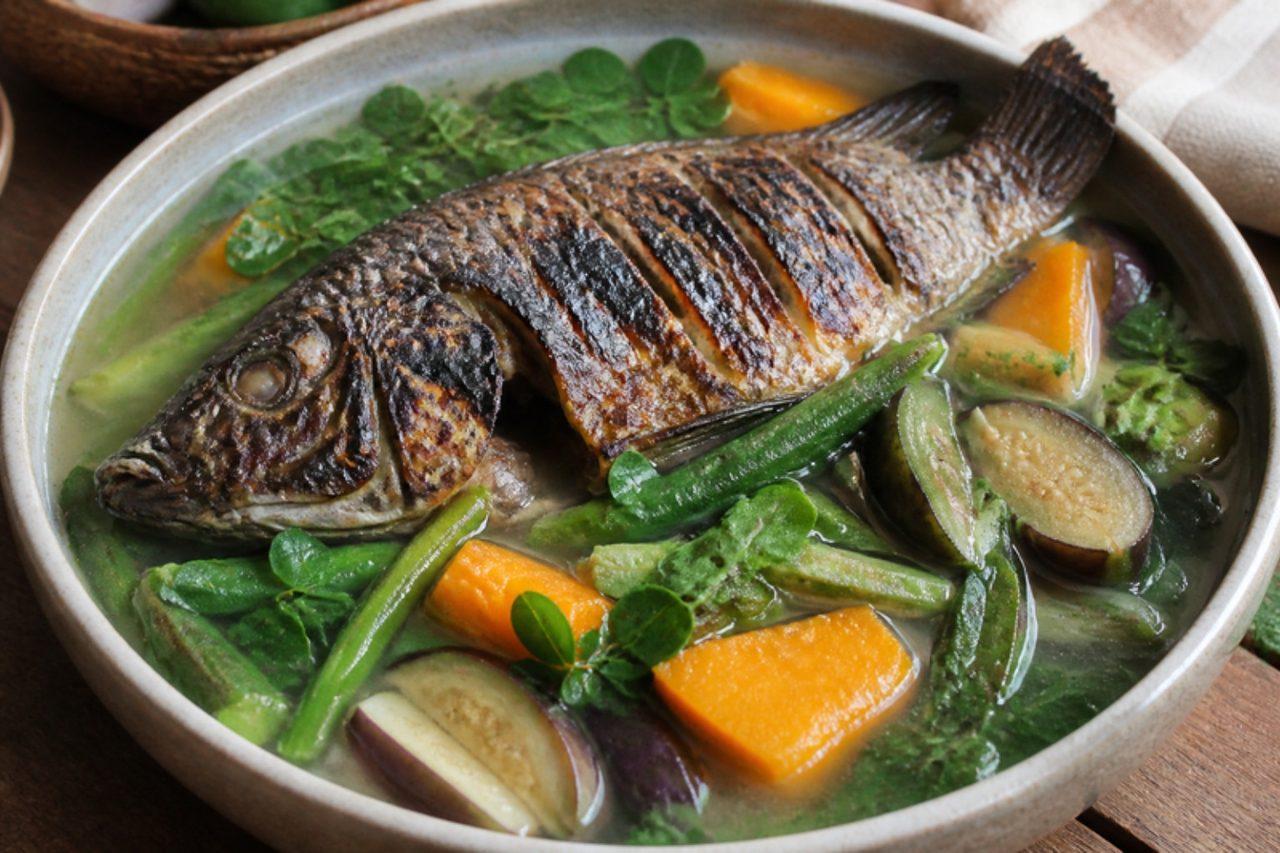
Dinengdeng is the everyday soup of the Ilocos region in the northern Philippines, made from whatever the backyard gives that day: squash and its flowers, string beans, okra, aubergine and moringa leaves, simmered briefly in water seasoned with bagoong (fermented fish sauce) and crowned with a piece of grilled fish. It is thin, savoury and green-tasting, and meant to be eaten with rice. A bowl has about 15 g of protein from the fish and vegetables, so it is a light meal rather than a high-protein one. The common mistake is putting all the vegetables in at once: add them hardest first so the leaves stay bright. Chef's tip: strain the bagoong into the pot through a sieve, so you get its flavour without the bones and grit.

by KrazyBadal 0 views

Paksiw na isdaFish simmered in vinegar

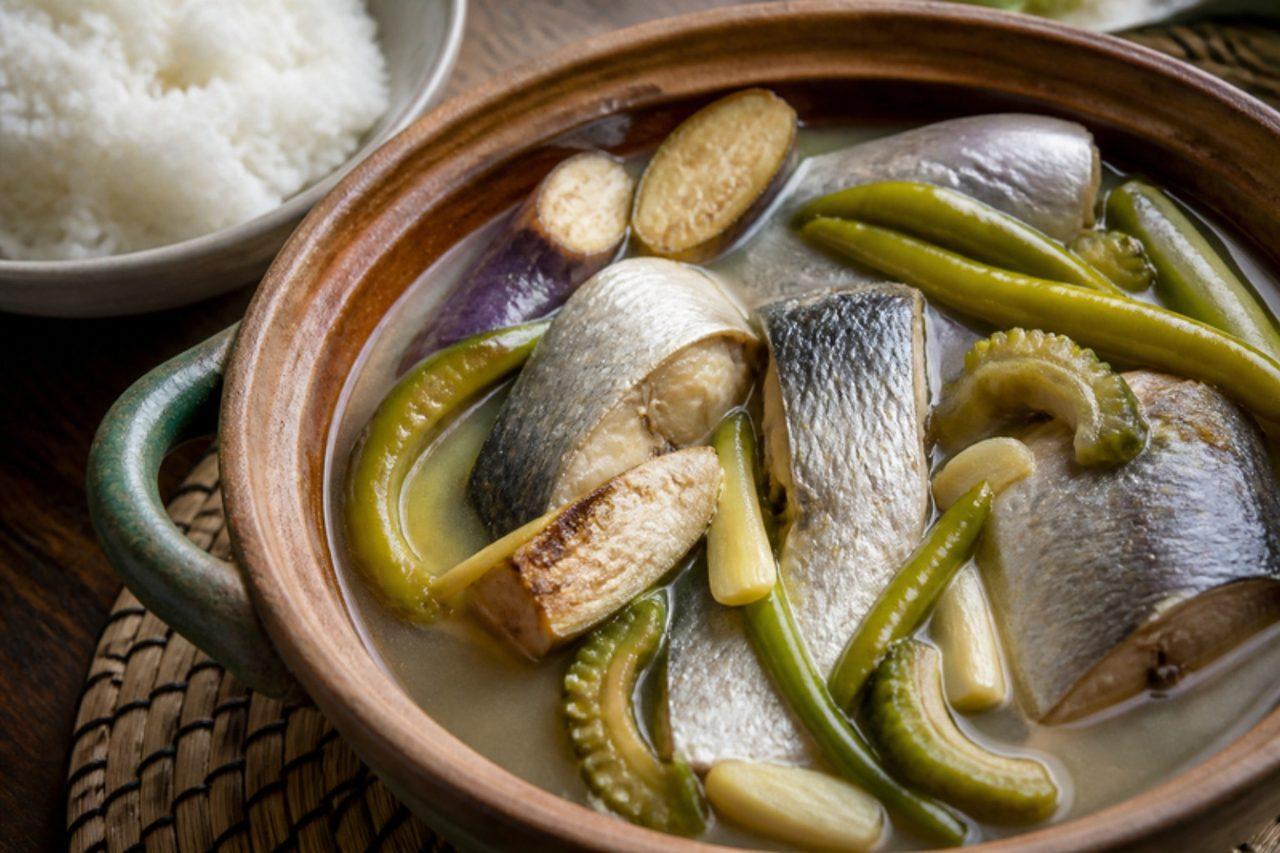
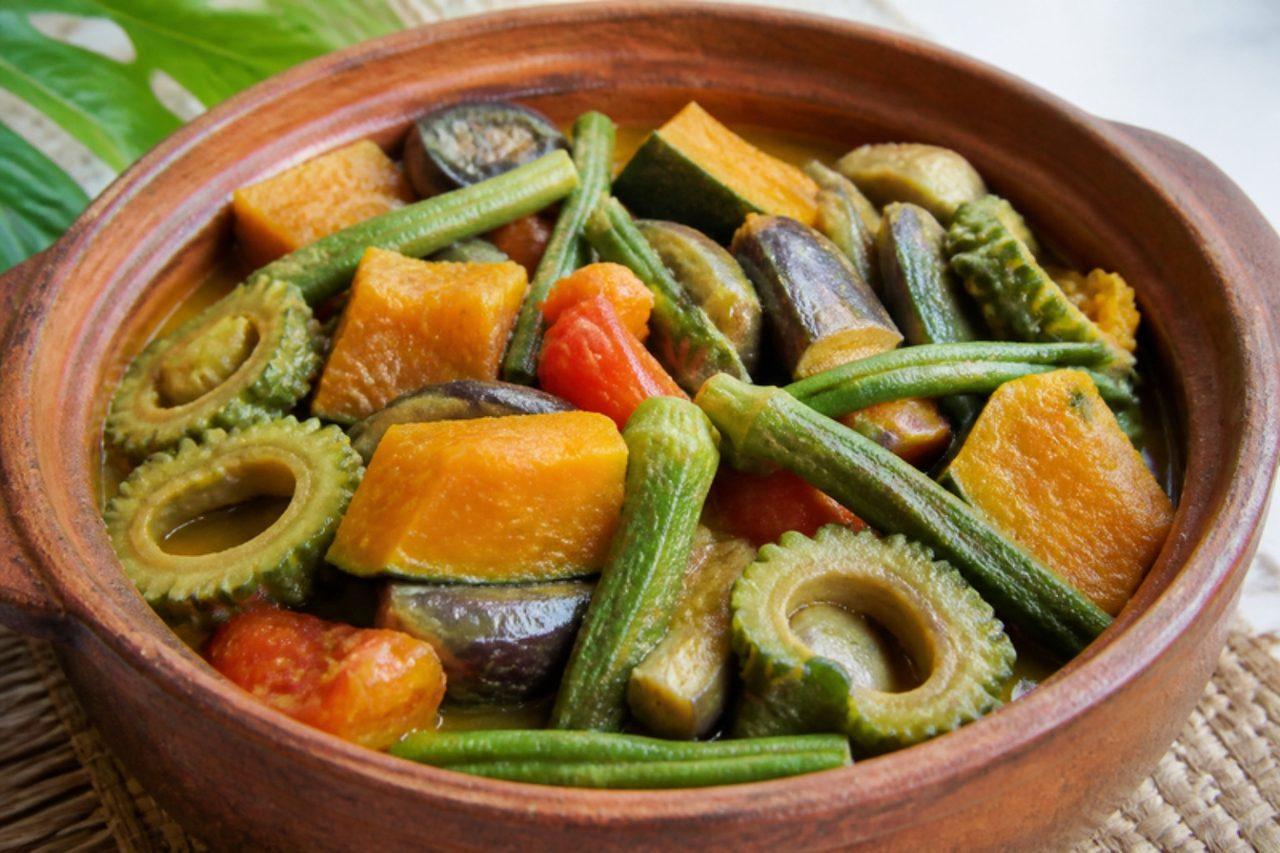
Paksiw na isda is cooked in homes all over the Philippines, from Manila to the Visayas, as an everyday lunch with rice; the vinegar keeps it for a day or two, and many people think it tastes better the next morning. Fish simmers in vinegar and a little water with ginger, garlic, peppercorns and long chillies, with aubergine and bitter melon, until the sauce is sharp, savoury and slightly reduced. A portion has about 26 g of protein from the fish. The classic mistake is stirring the pot before the vinegar has boiled: it leaves a raw, harsh taste, so let it come to the boil uncovered and untouched first. Chef's tip: use cane or coconut vinegar if you can find it; it is gentler than distilled white vinegar.

by KrazyBadal 0 views

Ginisang ampalaya (Filipino bitter gourd with egg)

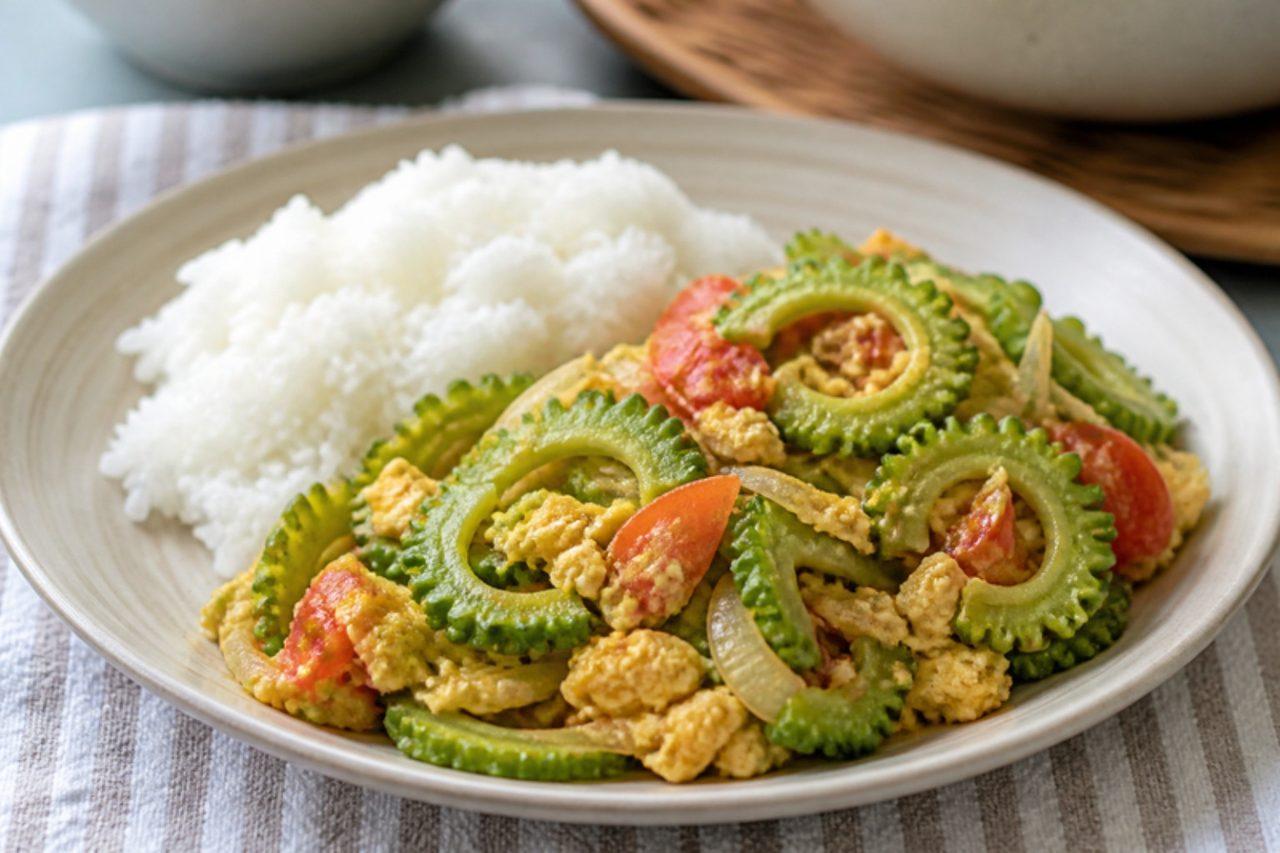
Ginisang ampalaya is a weekday ulam in homes from Manila to Iloilo, cooked in one pan and eaten with a mound of white rice; Filipino parents swear by it as the vegetable that 'cleans the blood'. Thin slices of bitter gourd are sautéed with garlic, onion and tomato, then soft scrambled egg softens the bitterness and ties everything together. It is often seasoned with fish sauce or cooked with pork; this vegetarian version uses salt and a pinch of sugar. The common mistake is overcooking the gourd until it turns olive green and even more bitter; it should stay bright and just tender. Chef's tip: salt the slices for 10 minutes and squeeze them gently before cooking to draw out some of the bitterness, without rinsing all the flavour away.
by KrazyBadal 0 views

Brazo de MercedesMeringue roll with custard filling

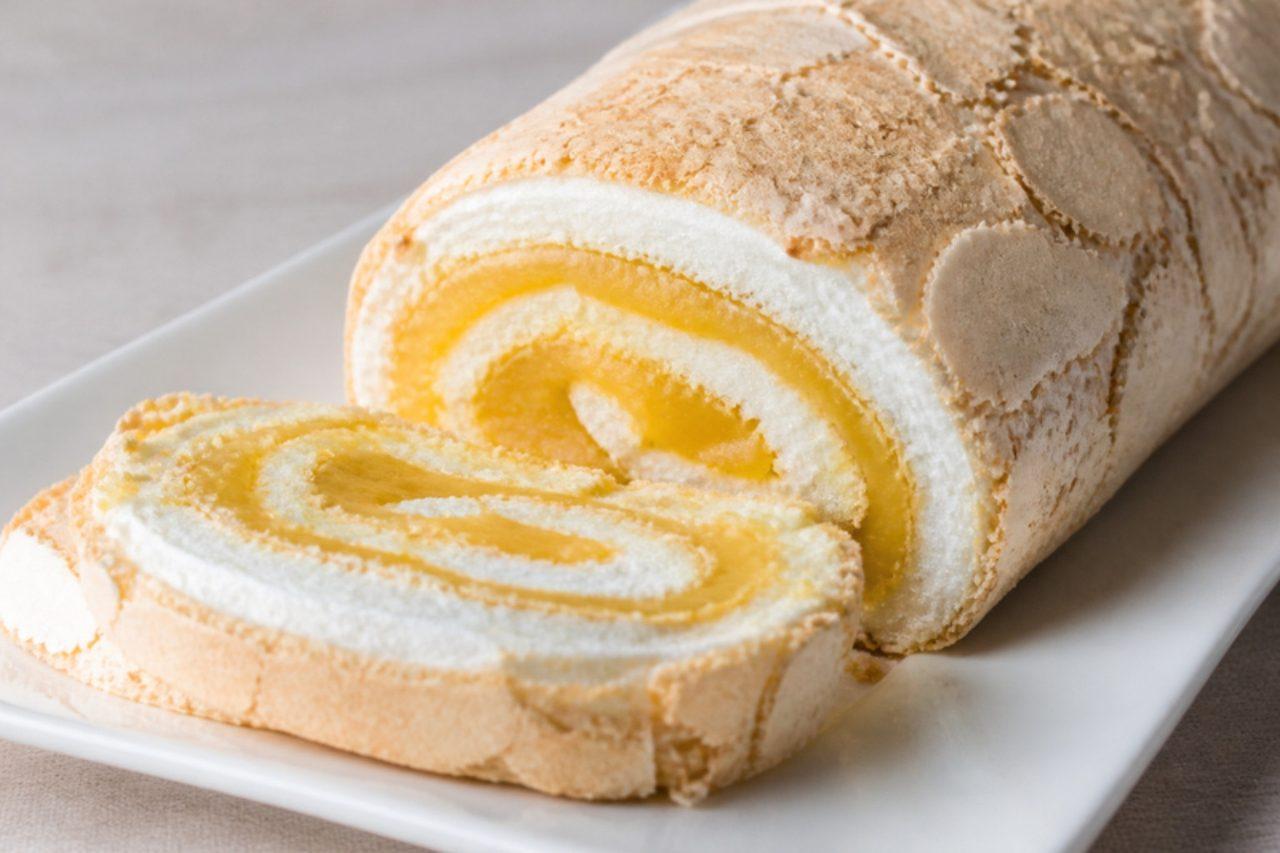
A soft, golden-topped meringue rolled around a thick, sweet custard of egg yolks and condensed milk, brazo de Mercedes ('Mercedes's arm') is a fixture at Filipino parties, handaan feasts and Christmas noche buena. The meringue is marshmallowy inside with a lightly browned skin; the filling is rich and silky, much like yema. It uses up a whole carton of eggs and no flour. A runny custard is the usual letdown; it oozes out when you roll, so cook it until a spoon drawn across the pan leaves a trail that holds. Chef's tip: roll the meringue while it's still warm, using the baking paper to guide it, and don't worry about a few cracks; the icing sugar hides them.
by KrazyBadal 0 views

SilvanasCashew meringue sandwich cookies

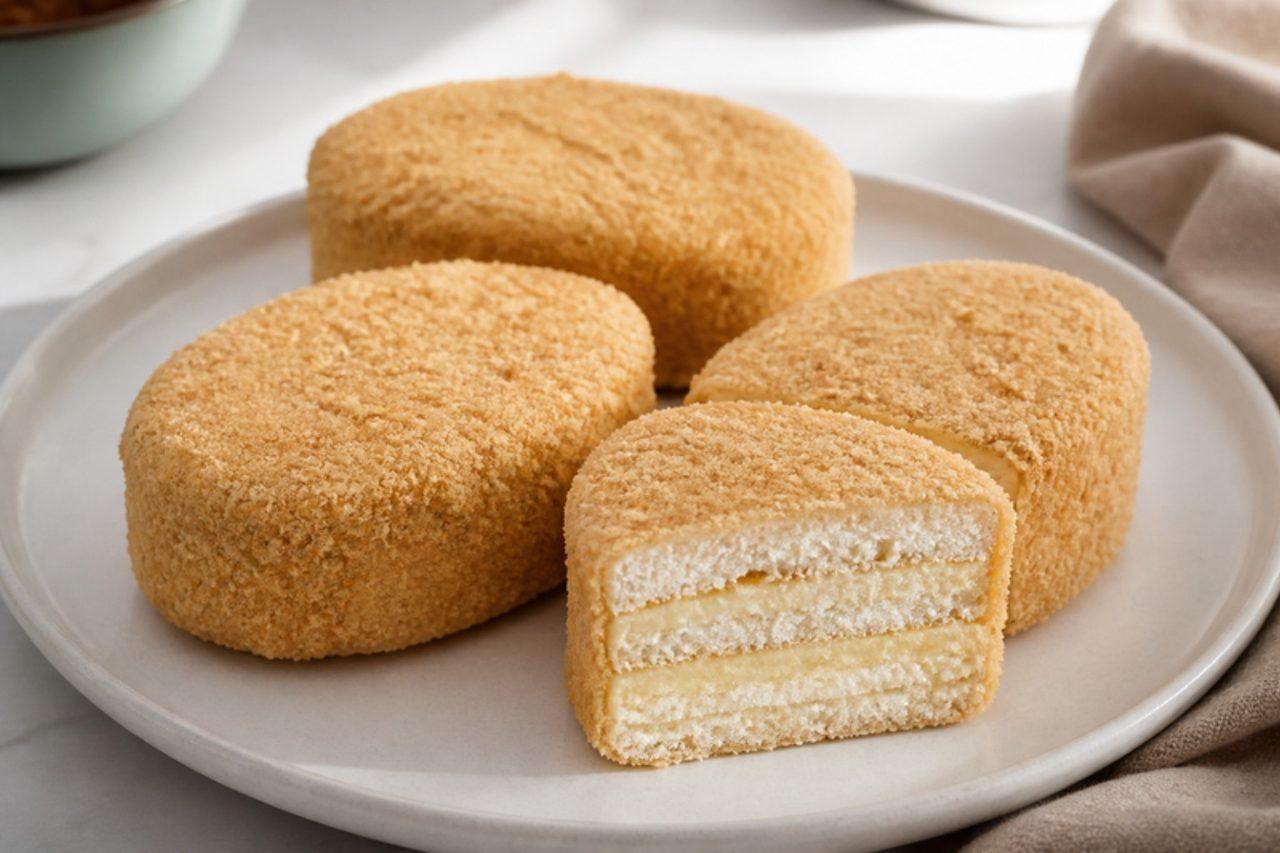
Dumaguete, the university town on Negros Oriental, made silvanas famous: oval wafers of chewy cashew meringue sandwiched with rich yolk buttercream, coated all over in more buttercream and crumbs, then frozen. Visitors take boxes home in cool bags, and across the Philippines they are a birthday and pasalubong (homecoming gift) treat, eaten straight from the freezer when they are firm, crunchy and creamy at once. They are a cousin of the larger sans rival cake. The meringue needs patience; underbaked wafers go sticky and soft as soon as the buttercream touches them, so bake until they lift cleanly off the paper. Chef's tip: use the yolks left from the meringue for the buttercream, and pour the hot syrup down the side of the bowl, not on the whisk, or it spins into threads.

by KrazyBadal 0 views

Bistek TagalogSoy and calamansi beef with onions

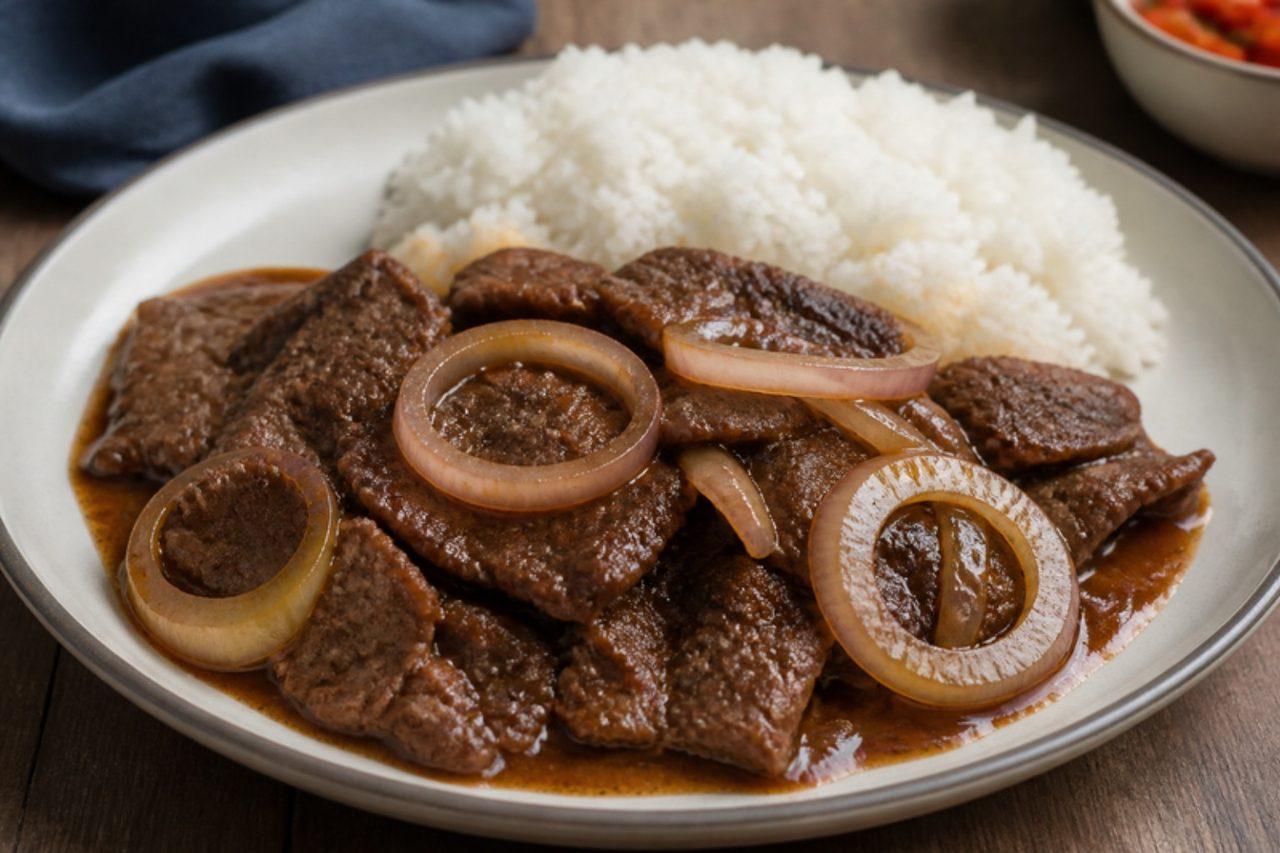
Bistek Tagalog is the Luzon home cook's answer to steak and onions: thin slices of beef soaked briefly in soy sauce and sour calamansi, seared hot, then bathed in their own glossy, salty-tart sauce with tumbles of soft onion rings. In Manila and the Tagalog provinces it turns up on weeknight tables with a mound of steamed white rice to catch every drop of sauce. The commonest mistake is crowding the pan, which stews the beef grey and tough instead of browning it, so sear in two batches. Calamansi is sold frozen in Asian shops; a mix of lime and lemon juice is a fair stand-in. Chef's tip: slice the beef across the grain while it is still very cold from the fridge, and it will be both thinner and more tender.

by KrazyBadal 0 views

Tortang ginilingMinced pork and potato omelette

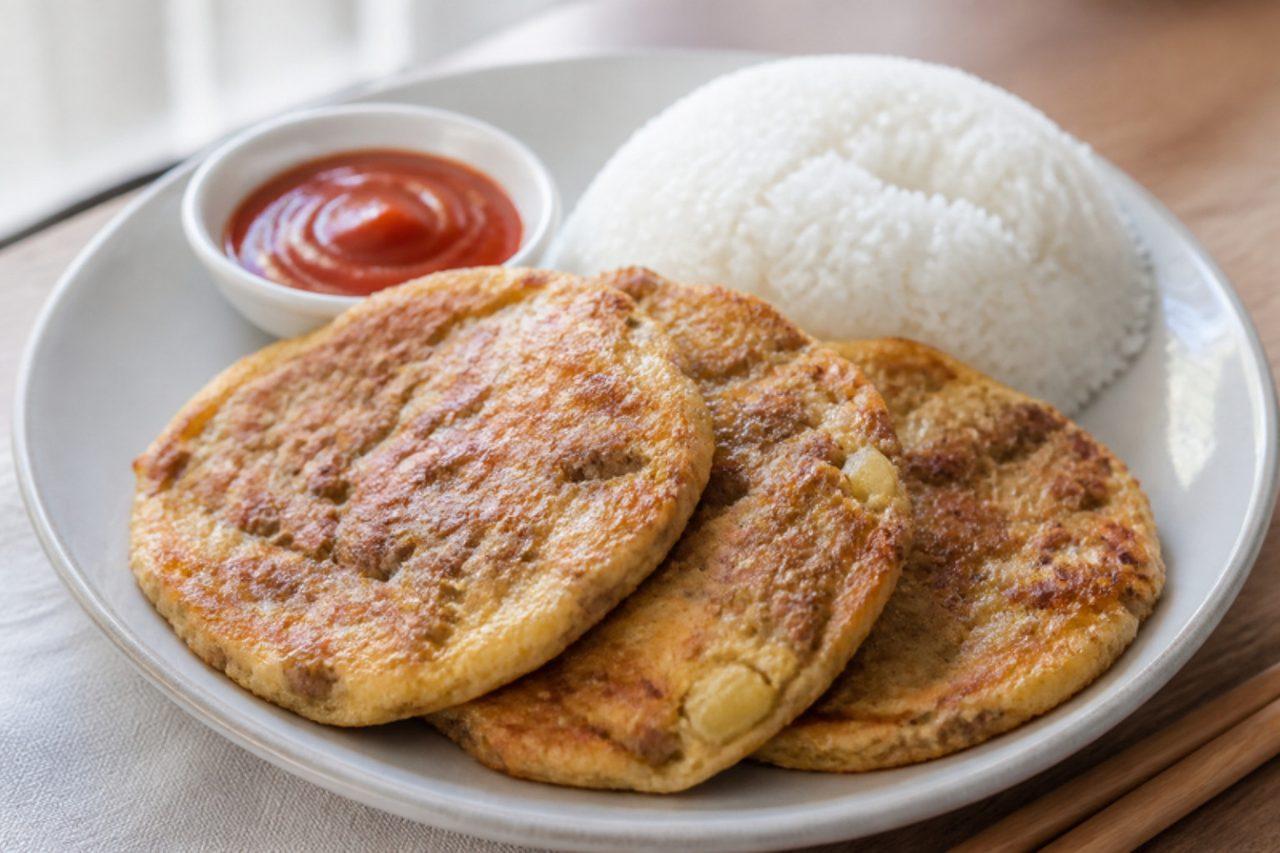
Tortang giniling are small, thick omelettes packed with minced pork that has first been sautéed with garlic, onion, tomato and tiny cubes of potato. All over the Philippines they are a thrifty baon (packed lunch) and weeknight dish, eaten hot with rice and a dip of banana ketchup or vinegar with chilli. Most cooks get into trouble by adding the egg while the filling is still raw or wet, which gives soggy patties and undercooked pork, so cook the pork through and let the pan juices dry off first. Chef's tip: fry each torta in a small saucepan or a ladleful at a time in a frying pan, so they stay thick and fluffy rather than spreading thin.

by KrazyBadal 0 views

Adobong sitaw (Filipino long beans in vinegar and soy)
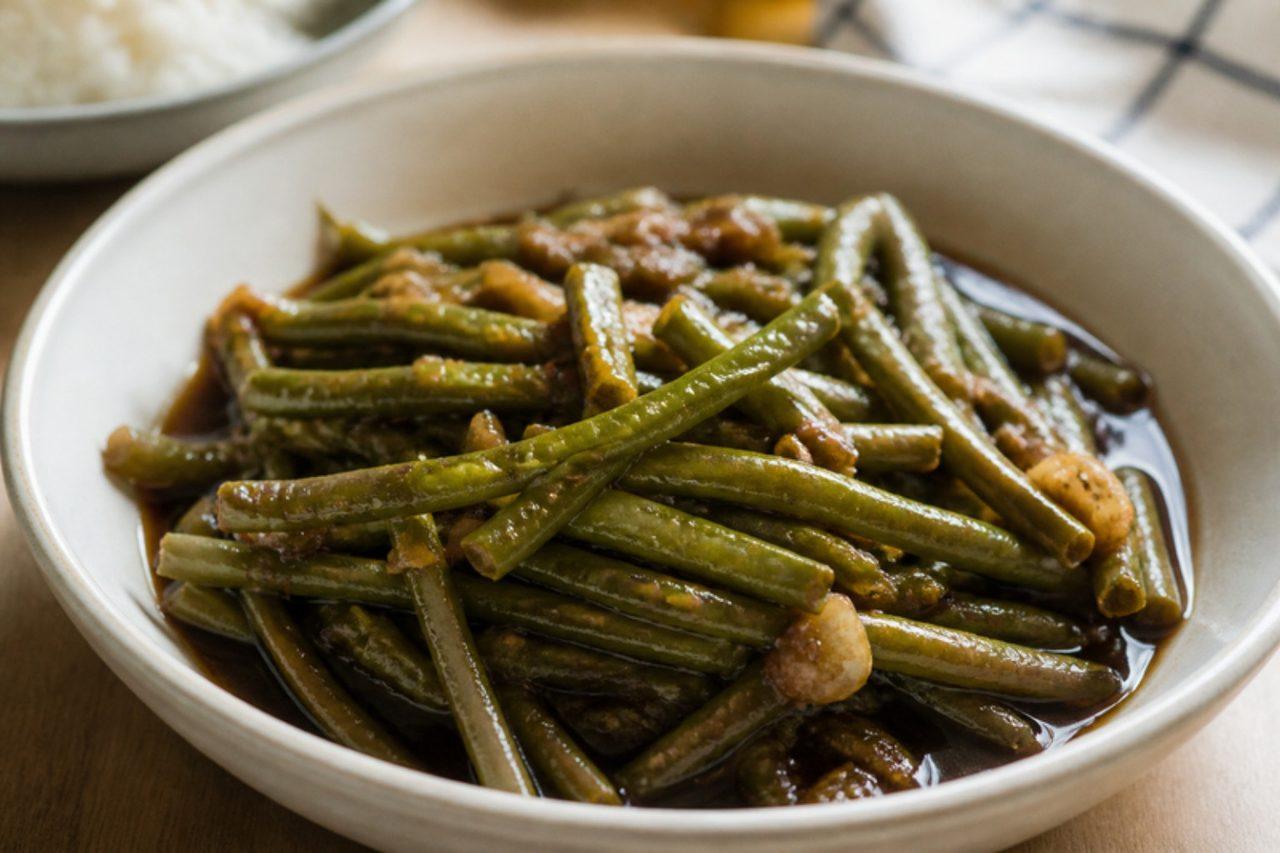
Adobong sitaw takes the Philippines' best-known cooking method, adobo, and applies it to long beans: a quick, thrifty dinner in homes across Luzon and the Visayas, eaten with rice and often a fried egg on top. The beans soak up a sharp, savoury, peppery sauce of cane vinegar, soy sauce and plenty of garlic, and stay just tender. Many families add pork; this version keeps it vegan. The classic mistake is stirring the pan straight after the vinegar goes in; Filipino cooks let it boil untouched for a minute first, so the raw, harsh edge cooks off. Chef's tip: lightly crush the peppercorns rather than using ground pepper; you get little bursts of heat in each bite.
by KrazyBadal 0 views

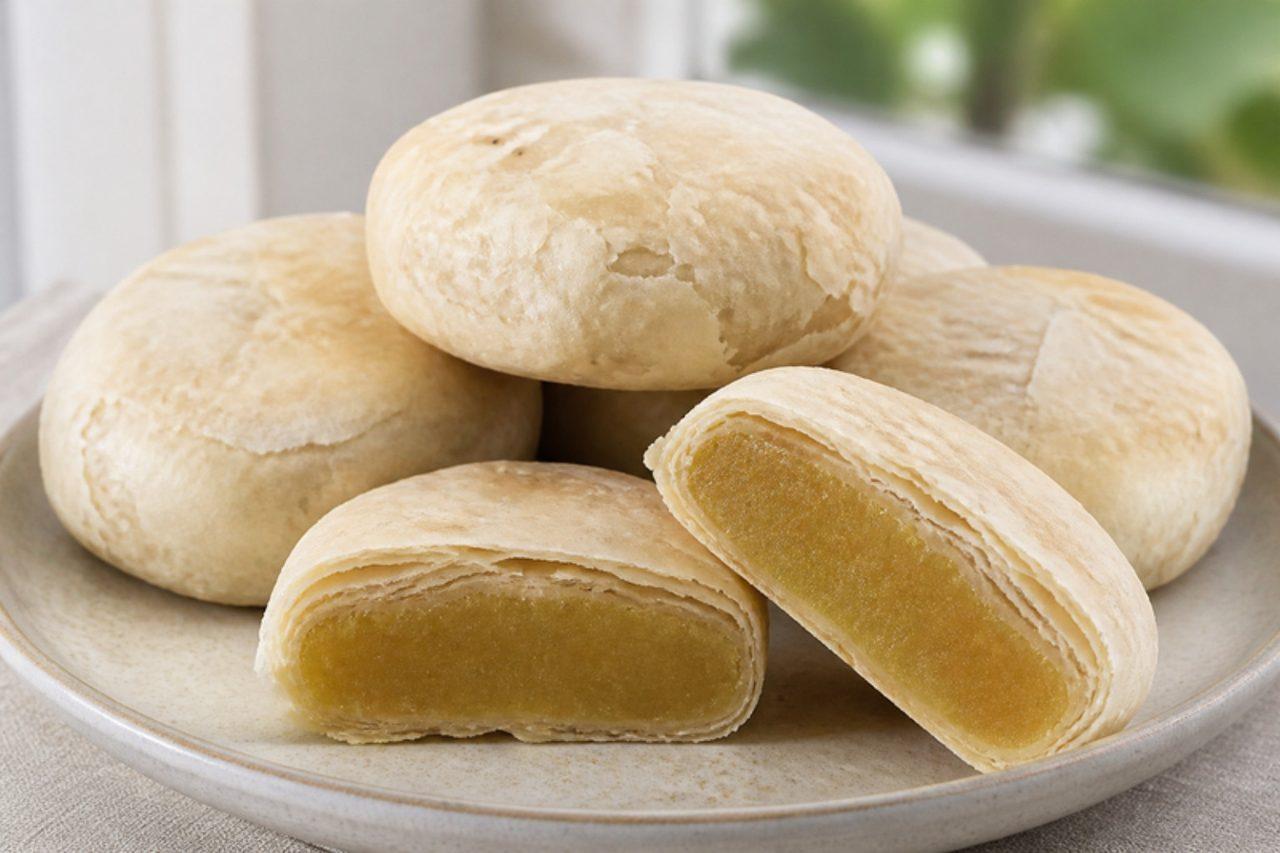
Hopia mungoMung bean pastries

Binondo, Manila's old Chinatown, is where Filipinos queue for hopia, flat little pastries with a paper-thin, flaky skin and a dense, sweet filling. Brought over by Hokkien bakers, they are now sold everywhere from provincial bus stations to convenience stores, and a box is a standard pasalubong (gift) after a trip. The classic is hopia mungo, filled with yellow mung bean paste; purple ube is the other favourite, and you can swap 300 g of sweetened ube halaya for the mung beans. Hopia pastry is traditionally made with lard; this version uses vegetable oil and shortening, so it is vegan. Chef's tip: dry the mung bean paste in the pan until a spoonful holds its shape when rolled; a soft paste is the commonest mistake, and it squeezes out of the seams as you flatten the pastries.

by KrazyBadal 0 views

Filipino egg pieBaked custard pie
Walk into a neighbourhood panaderya in Manila or Cebu in the afternoon and there is usually a round egg pie on the counter, sold by the slice for merienda. It is a deep, creamy custard of eggs and evaporated milk in a short, buttery crust, and its trademark is the top: some of the egg whites float up during baking and turn into a speckled brown skin. Eat it at room temperature or chilled, with a mug of coffee or a cold soft drink. Baking it too hot is the classic error, since it makes the custard puff, crack and weep. Chef's tip: beat the eggs gently with a fork rather than a whisk, so you don't whip in air; the fewer bubbles, the silkier the custard and the darker the top.

by KrazyBadal 0 views

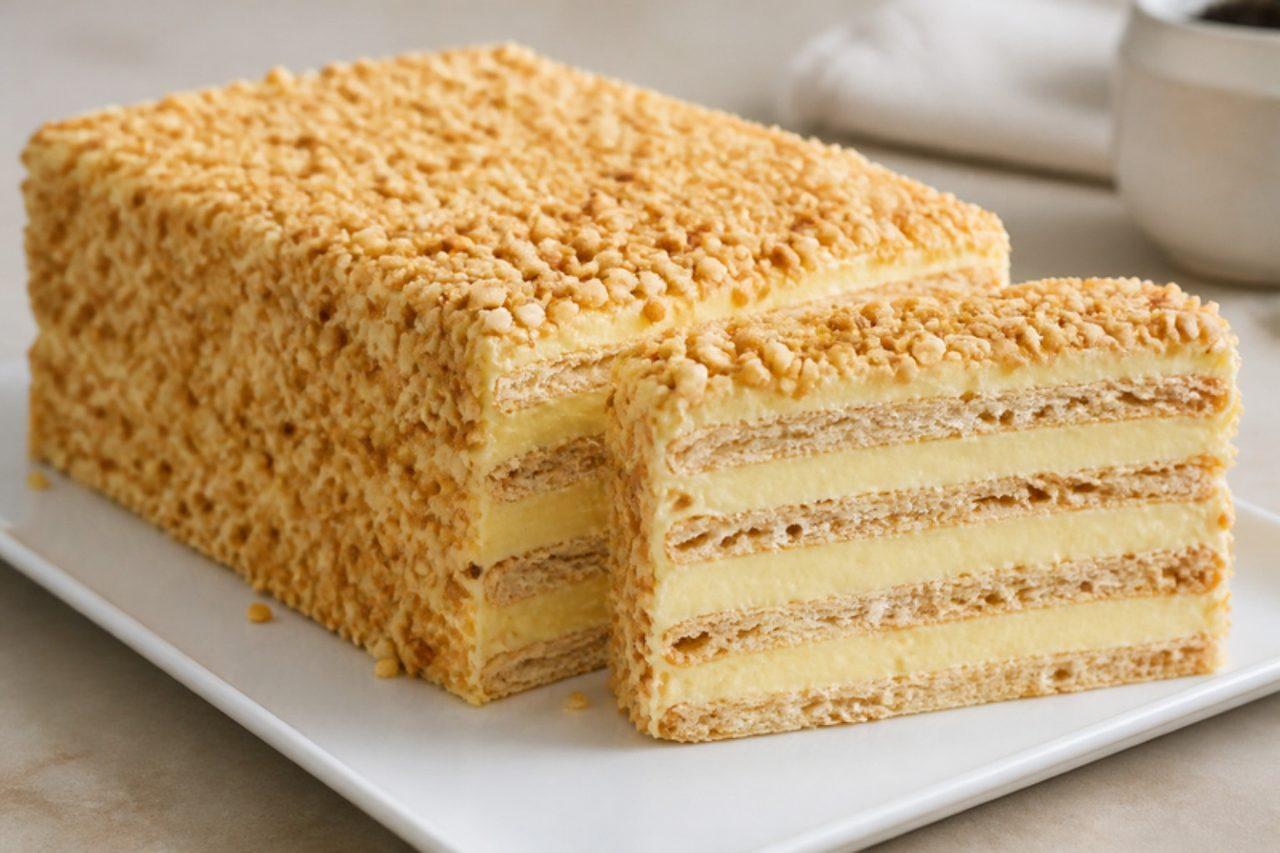
Sans rivalCashew meringue buttercream cake

Sans rival ('without rival') took its French name in the mid-twentieth century and has become a Filipino celebration cake, most famously from Dumaguete in Negros Oriental, where it is boxed up for visitors. Four or more sheets of chewy-crisp cashew meringue are stacked with rich French buttercream and covered in chopped toasted cashews, then served cold from the fridge in thin slices for fiestas, Christmas and birthdays. There's no flour at all. Adding the butter while the yolk mixture is still warm is the classic disaster; the buttercream turns to soup, so beat until the bowl feels cool to the touch first. Chef's tip: draw rectangles on the baking paper and spread the meringue right to the lines; even layers stack straight and slice cleanly.
by KrazyBadal 0 views

MamonButter chiffon cupcakes

Filipino bakeshops sell mamon by the dozen, each tall, fluffy little cake baked in a fluted tin, brushed with butter and rolled in sugar, sometimes with grated cheese on top. They go into merienda boxes, children's party bags and pasalubong (gifts brought home), and they're best with hot chocolate or coffee. The crumb is a soft, buttery chiffon that squashes and springs back. Taking them out too soon is what makes them shrink and wrinkle as they cool, so wait until the tops spring back fully. Chef's tip: turn the tin upside down as soon as it comes out of the oven, resting the rim on two cups, and cool them that way for 10 minutes; they keep their height.
by KrazyBadal 0 views

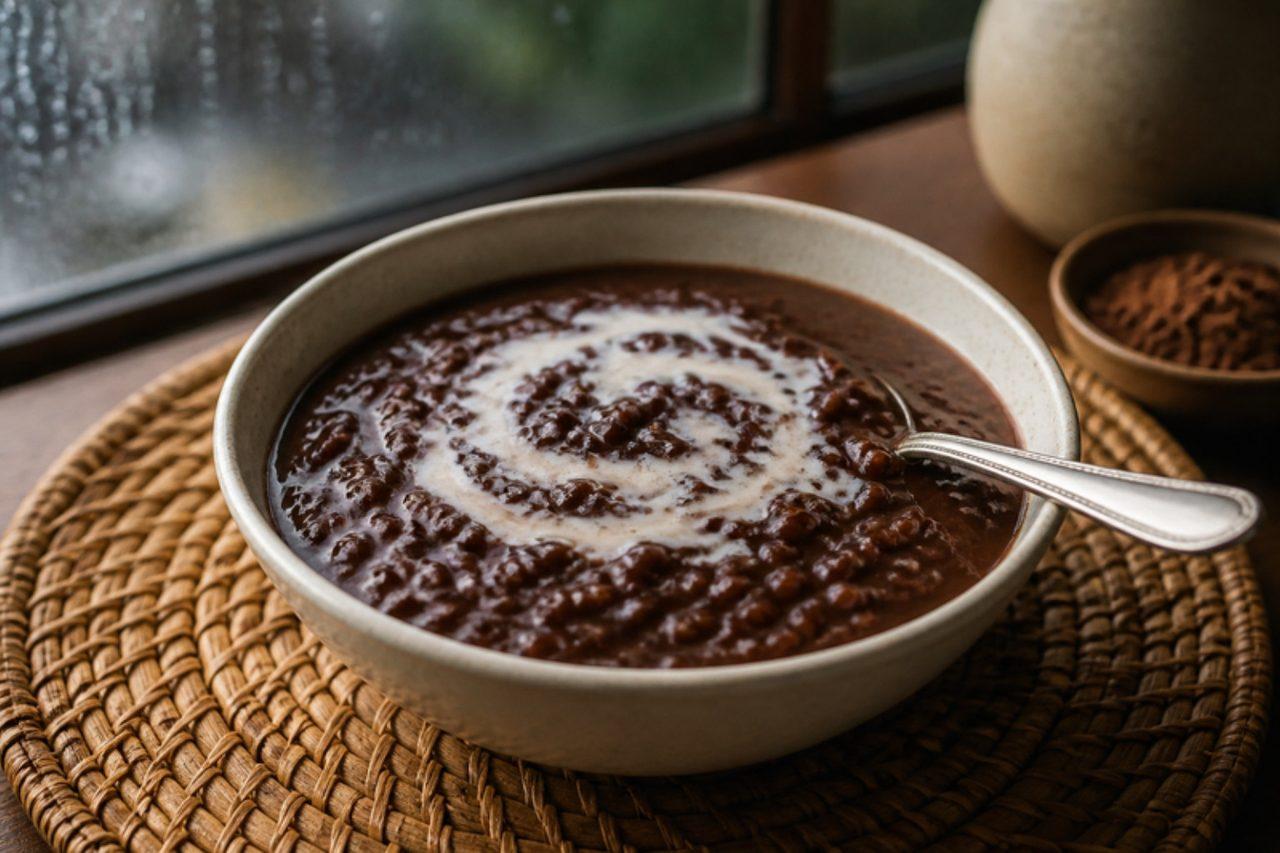
Champorado (Filipino chocolate rice porridge)
Champorado is the Filipino comfort bowl for rainy-season mornings and afternoon merienda, when children come home soaked from school in the monsoon. Glutinous rice is simmered with tablea, the pure roasted cacao tablets from Batangas and Cebu, into a thick, glossy, chocolatey porridge, then swirled with milk at the table. It is sweet, so this version uses less sugar than most and leans on the dark chocolate. It contains milk (and may contain soya in the chocolate). Chef's tip: keep stirring once the rice thickens; glutinous rice catches on the bottom of the pan very quickly.
by KrazyBadal 0 views

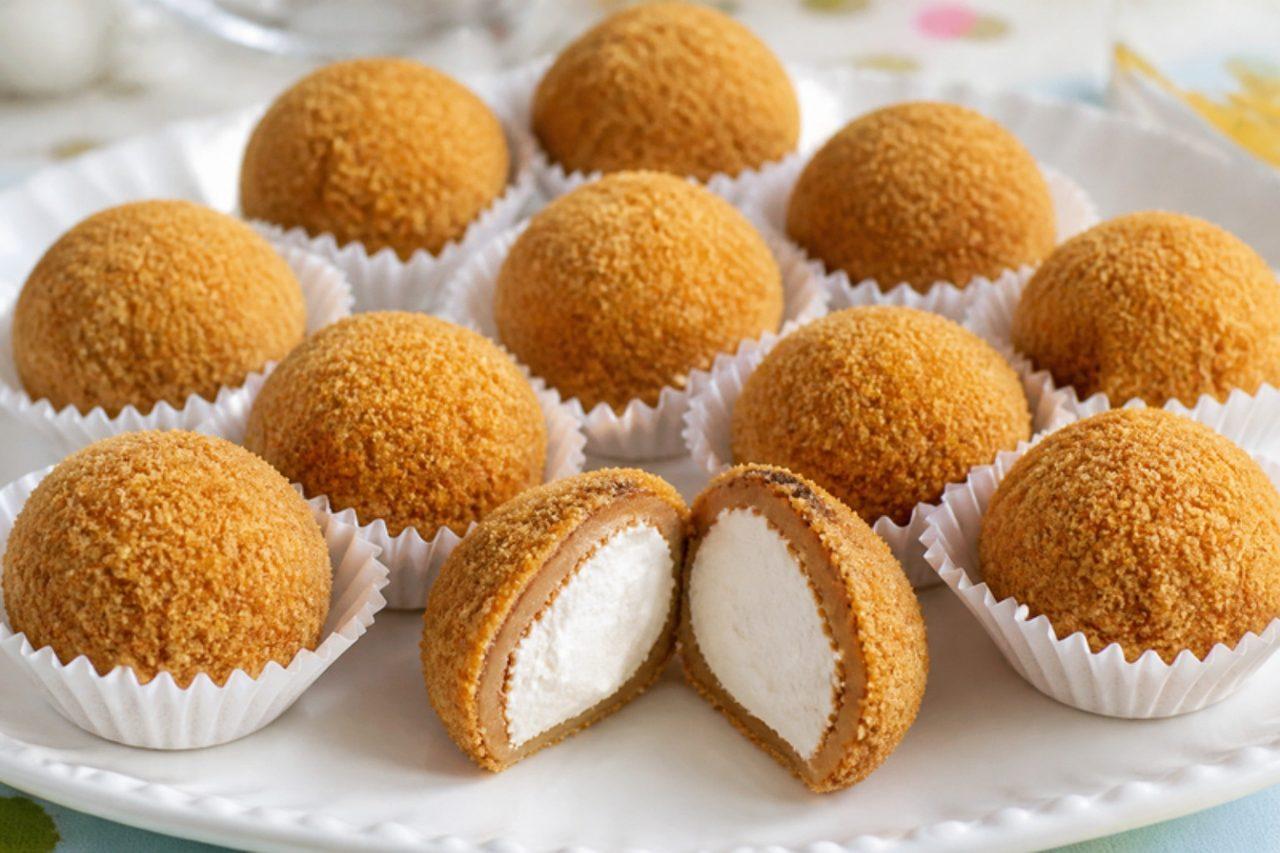
Graham balls

Graham balls are often the first sweet a Filipino child makes, usually for a class party or a cousin's birthday: crushed graham crackers kneaded with condensed milk into a dough, wrapped round a mini marshmallow and rolled in more crumbs, then set in paper cases in the fridge. They need no oven, just clean hands. They contain gluten and milk, and marshmallows usually contain gelatine, so they are not vegetarian unless you use gelatine-free marshmallows or a vegetarian gelling agent version. Graham crackers can be swapped for digestive biscuits. Chef's tip: chill the mixture for 20 minutes before rolling and it stops sticking to your palms.

by KrazyBadal 0 views

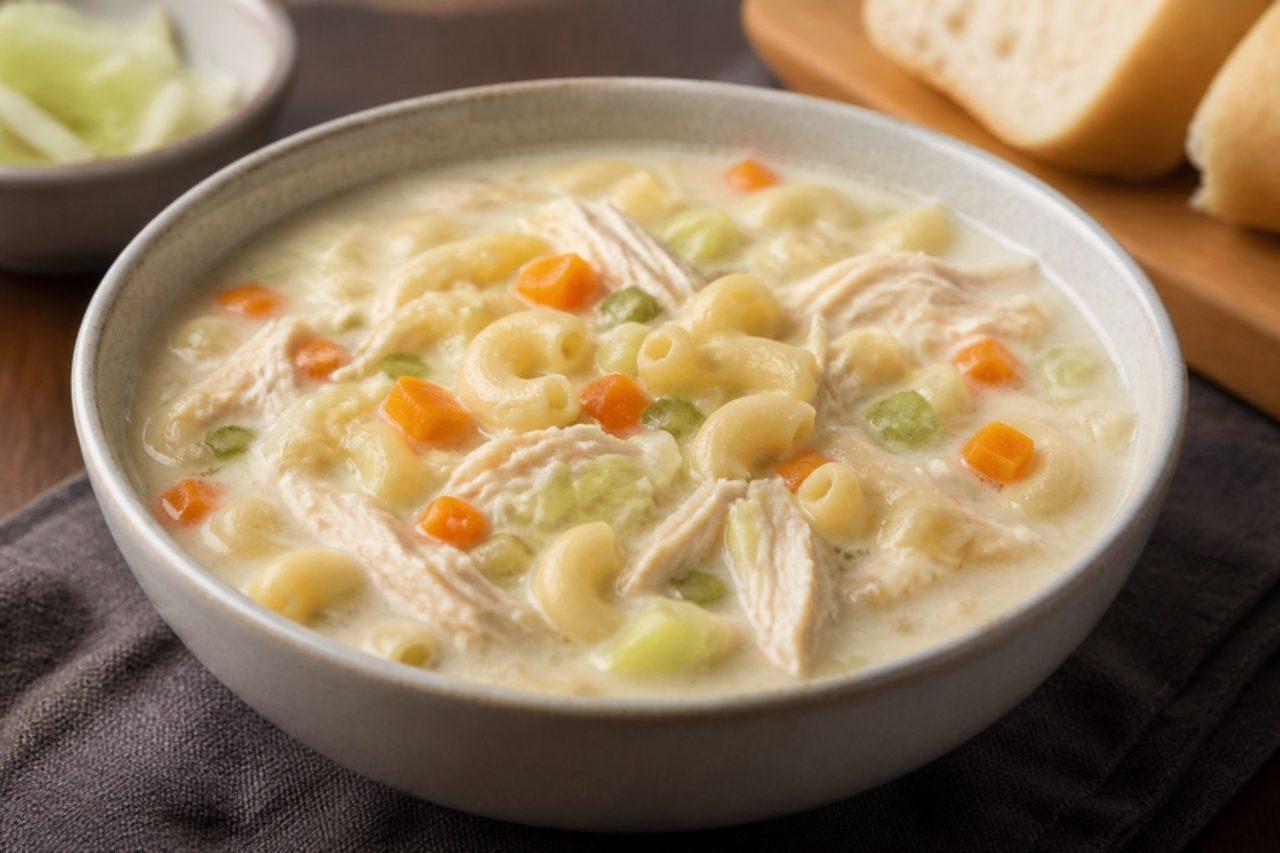
Sopas for toddlersCreamy chicken macaroni soup

Sopas is the creamy chicken macaroni soup that Filipino mothers make on rainy afternoons, and it is a childhood favourite across the islands: soft elbow pasta, shredded chicken, carrot and cabbage in a broth made milky with evaporated milk. This toddler version leaves out the usual sliced hot dogs and patis and uses no-salt stock, so it suits little ones from a year old. It contains gluten (wheat pasta) and milk. Chef's tip: add the evaporated milk at the end and keep the soup just below a boil, so it stays smooth and doesn't split.
by KrazyBadal 0 views

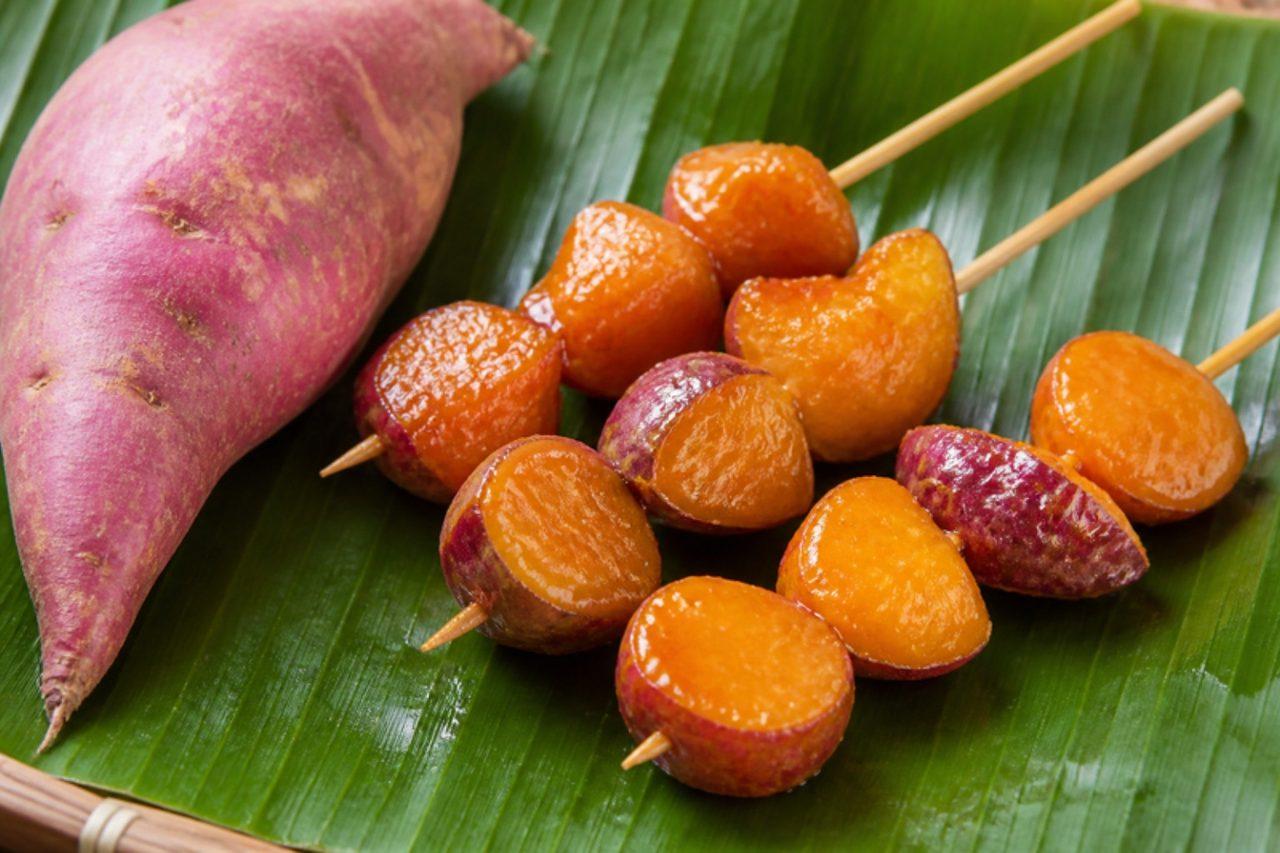
Kamote cueFried caramelised sweet potato

Kamote cue is merienda sold from roadside woks across the Philippines, and children buy a stick or two on the walk home from school. Chunks of sweet potato are fried with brown sugar, which melts and wraps them in a crackly, shiny caramel crust while the inside goes soft and fluffy. It is a sweet treat, so portions are small. None of the common allergens are in it. Chef's tip: add the sugar only once the oil is hot and let it float and melt on the surface before stirring; stirring too early clumps it.

by KrazyBadal 0 views

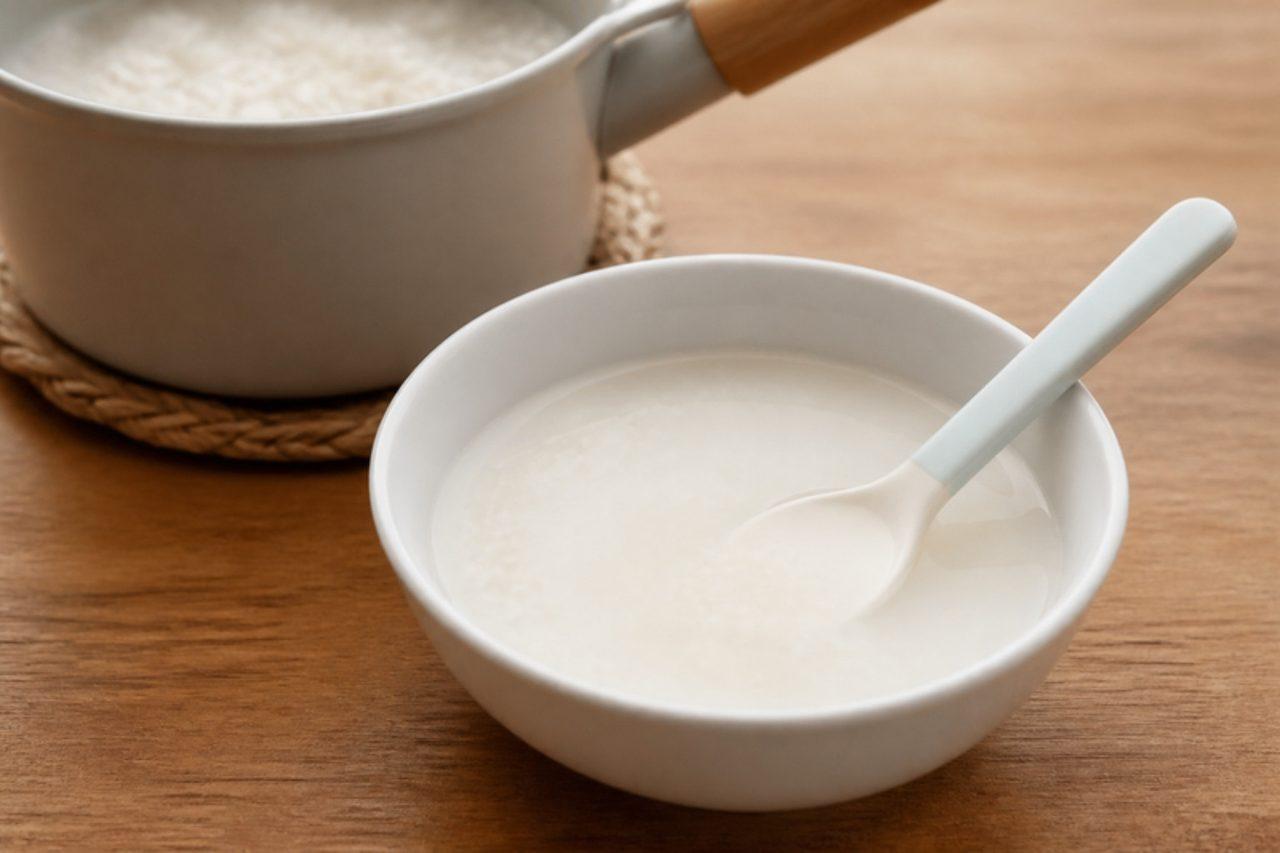
Am (Filipino rice-water first porridge)
Filipino lolas remember giving babies am, the thick, cloudy liquid that rises to the top as rice boils, ladled off and cooled before the rest of the pot is cooked for the family's lunch. Today it is offered as a thin, smooth first porridge, a few spoonfuls alongside other first foods such as mashed squash or banana, rather than on its own. It tastes mild and slightly sweet. It contains none of the common allergens (milk, egg, gluten, peanut, tree nuts, soya, sesame, fish). Chef's tip: use more water than usual and keep the lid off, so the liquid thickens into a creamy am instead of evaporating away.

by KrazyBadal 0 views

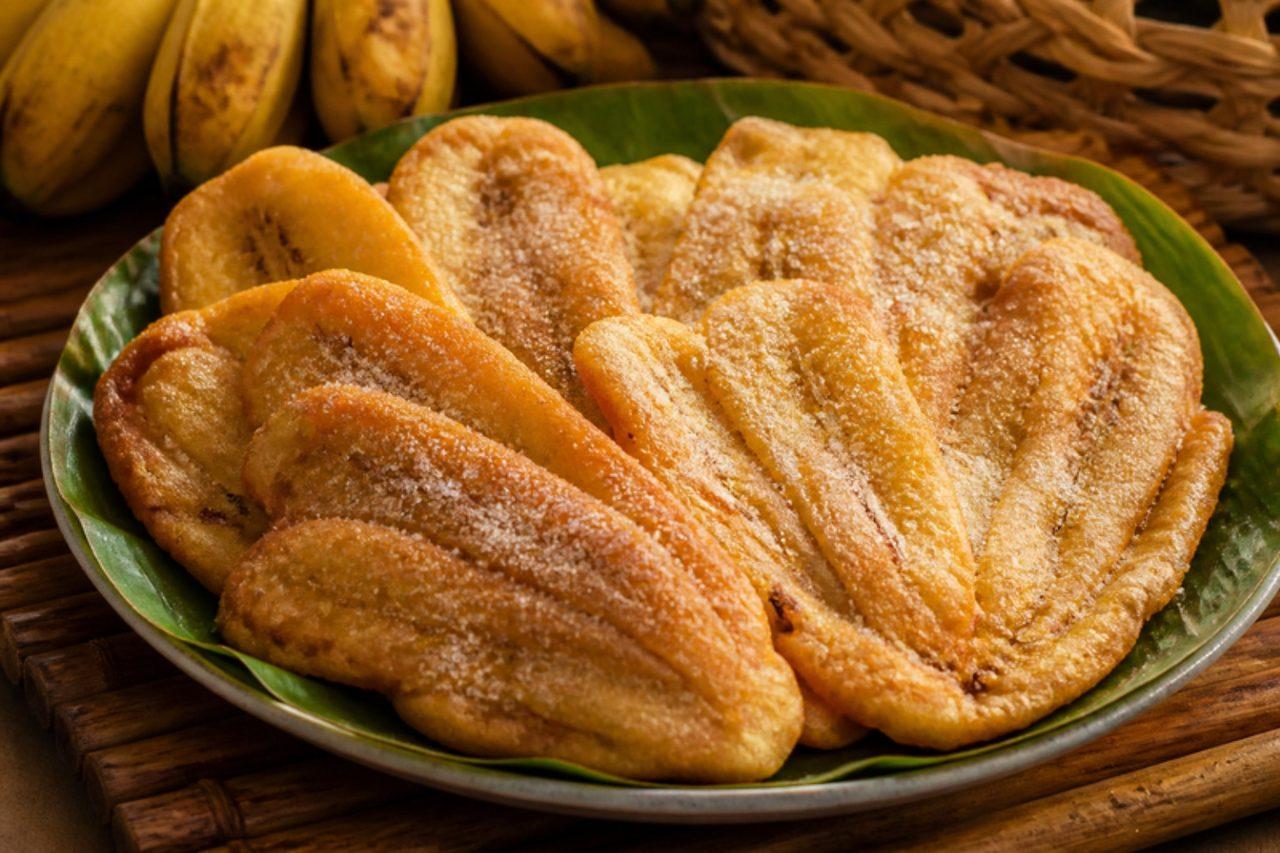
Maruya (Filipino banana fritters)
Maruya is classic Filipino merienda: in barrios from Luzon to Mindanao, saba bananas are sliced into fans, dipped in batter and fried for the children's afternoon snack. Outside is crisp and lacy, inside the banana turns soft, sticky and tangy-sweet. A light dusting of sugar is enough because the fruit is sweet. It contains gluten, milk and egg. Saba bananas can be found in Asian shops; firm, just-ripe plantains work too. Chef's tip: choose bananas that are yellow with a few brown spots; under-ripe saba stays starchy, overripe falls apart in the oil.
by KrazyBadal 0 views

Hotdog and marshmallow skewers

No Filipino children's party, from a seventh birthday in Quezon City to a barrio fiesta, is complete without a cabbage or pineapple bristling with sticks of red cocktail hotdogs and soft marshmallows. The sweet-salty pairing sounds odd and is loved by every child at the table, and it doubles as the party centrepiece. Most marshmallows contain gelatine, so this is not vegetarian; look for gelatine-free marshmallows if needed. Chef's tip: fry the hotdogs just until they split slightly and curl, then let them cool before threading so the marshmallows don't melt.
by KrazyBadal 0 views

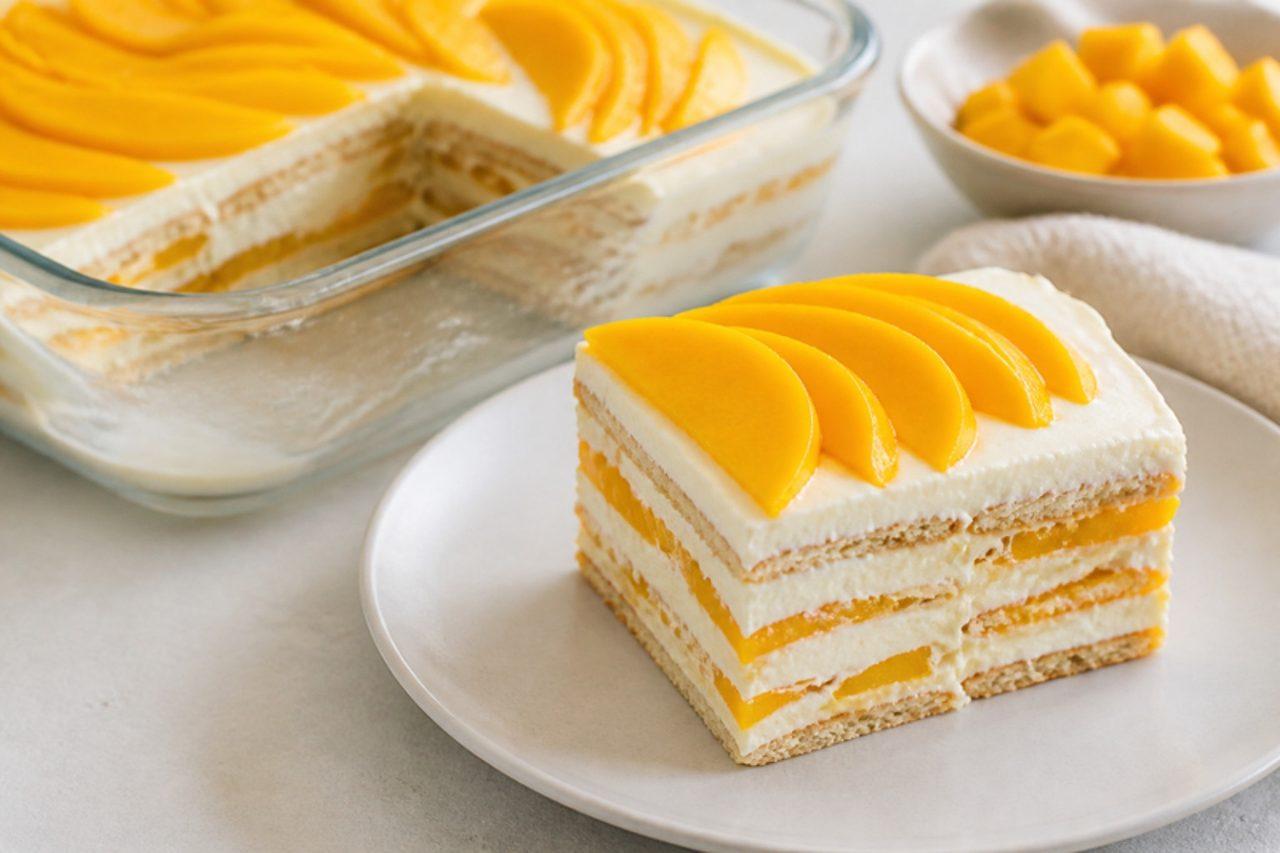
Mango floatMango icebox cake

Mango float is the no-bake party cake of the Philippines, made in a big dish for birthdays, graduations and fiestas when Philippine mangoes are at their sweetest. Layers of crackers soften overnight in sweet cream until they slice like cake, with ripe mango in every forkful. Older children can assemble it themselves. It contains milk and gluten. Chef's tip: use mangoes that are fully ripe and fragrant but still firm enough to slice neatly; stringy, sour mangoes spoil it.

by KrazyBadal 0 views

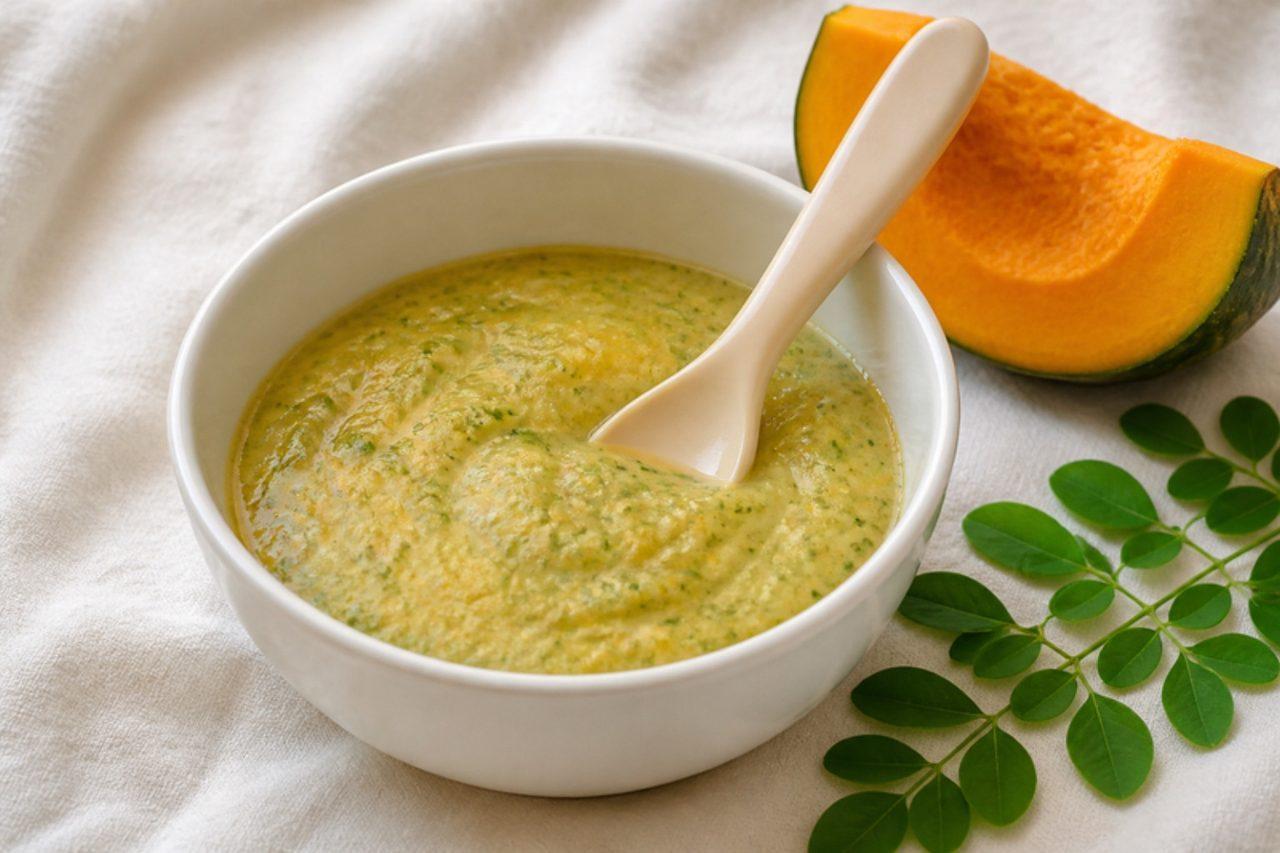
Lugaw for babies with squash and malunggay

In the Philippines, lugaw is the porridge every household turns to, and for babies it is cooked plain and extra soft, without the patis (fish sauce) or salt the family adds. Mothers often stir in mashed kalabasa, the orange squash from the market, and a few malunggay (moringa) leaves picked from the backyard tree, giving a sweet, gently green bowl for lunch or merienda. A slice of ginger in the pot is traditional and adds warmth. It has none of the common allergens (milk, egg, gluten, peanut, tree nuts, soya, sesame, fish). Chef's tip: strip malunggay leaves from their stalks completely; the little stems stay tough even after long cooking.

by KrazyBadal 0 views

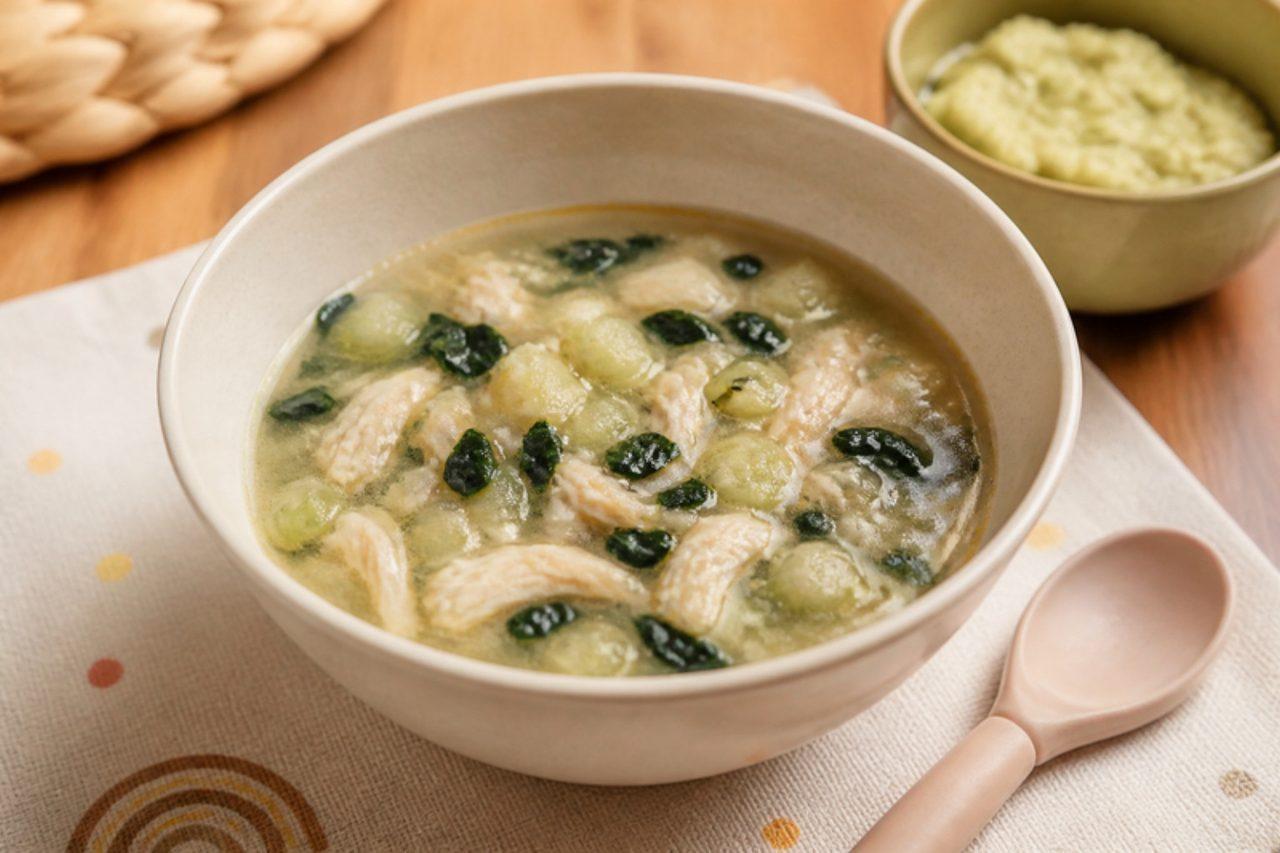
Tinolang manok for babies and toddlersGinger chicken soup for little ones

Tinolang manok, chicken simmered in a clear ginger broth with green papaya or chayote and malunggay (moringa) leaves, is the soup Filipino families make on rainy days and for anyone who needs looking after, and babies get their first taste of it from about nine months. Their portion is taken out before the patis (fish sauce) goes in, with the chicken shredded and the vegetables mashed. The baby's portion has none of the common allergens (milk, egg, gluten, peanut, tree nuts, soya, sesame, fish); the family's patis adds fish. Chef's tip: fry the ginger until it smells sweet before adding the chicken; that is the backbone of the broth.
by KrazyBadal 0 views

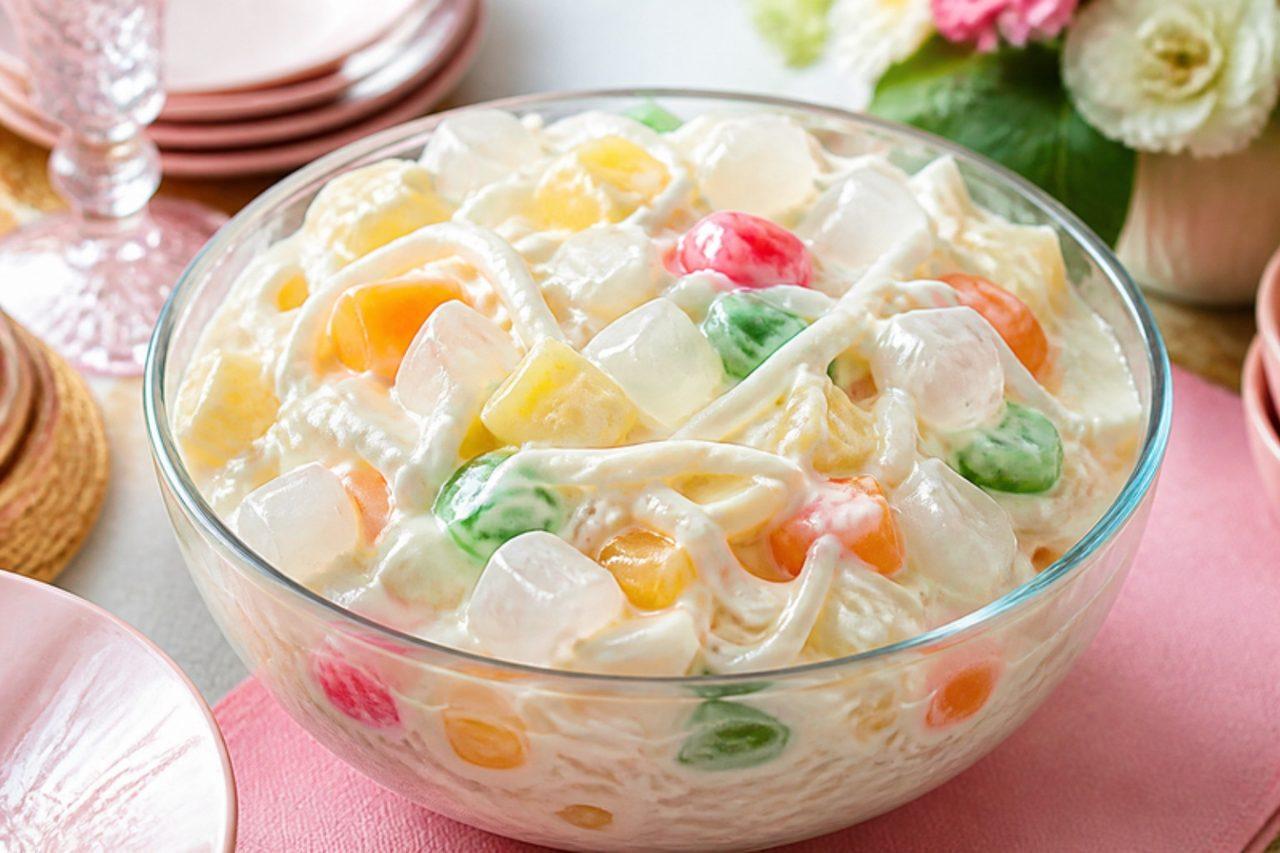
Buko saladYoung coconut fruit salad

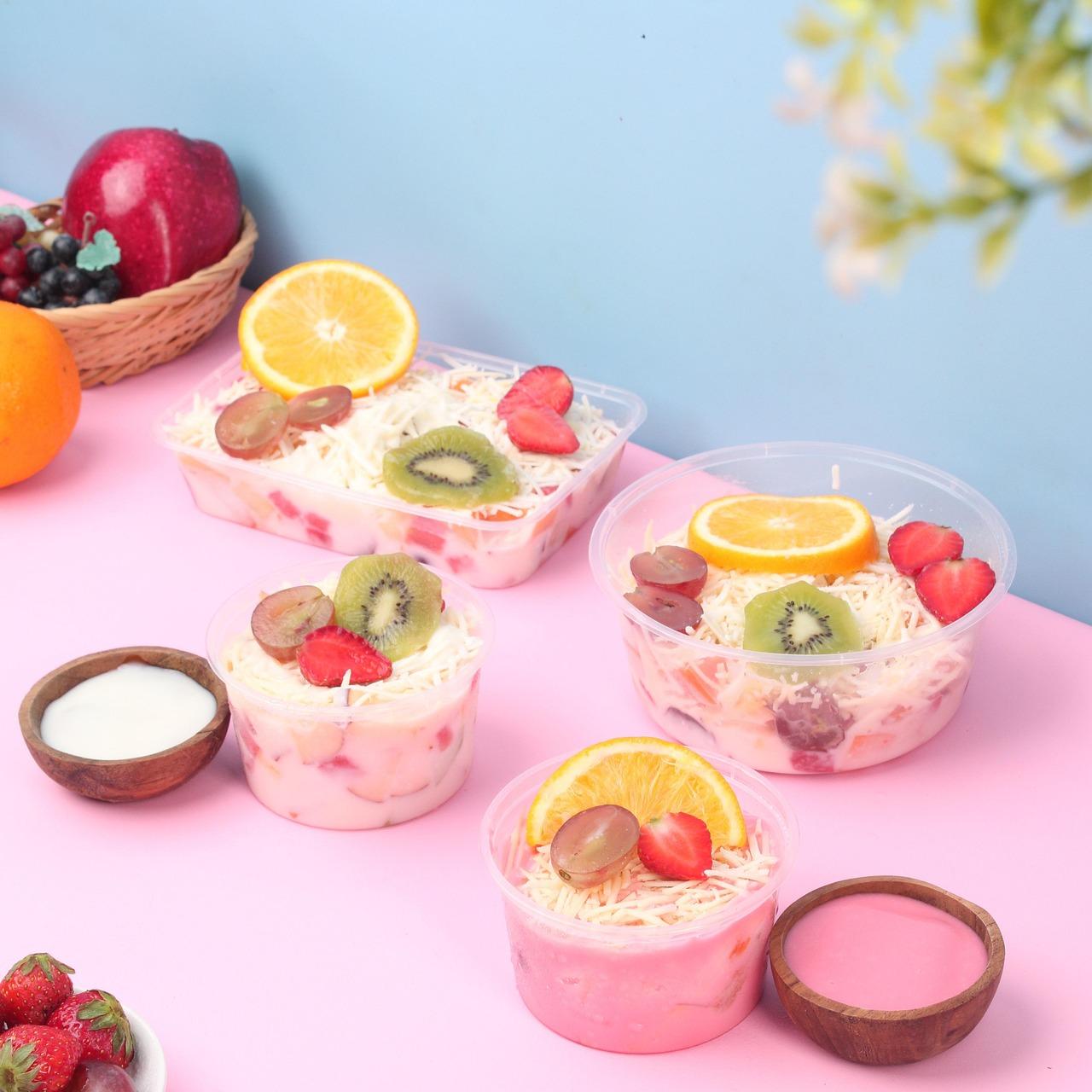
Buko salad is the dessert Filipino families bring to every birthday, christening and Christmas Noche Buena: strips of soft young coconut, mixed fruit, chewy nata de coco and sweet cream, chilled until icy cold. Children fish out the cherries first. It is quick to make the day before and is gluten free; it contains milk. Grapes in tinned fruit are already halved, but quarter any whole grapes lengthwise for younger children. Chef's tip: drain the fruit and nata de coco really well in a sieve for 15 minutes, or the salad turns watery overnight.

by KrazyBadal 0 views

Arroz caldoChicken rice porridge

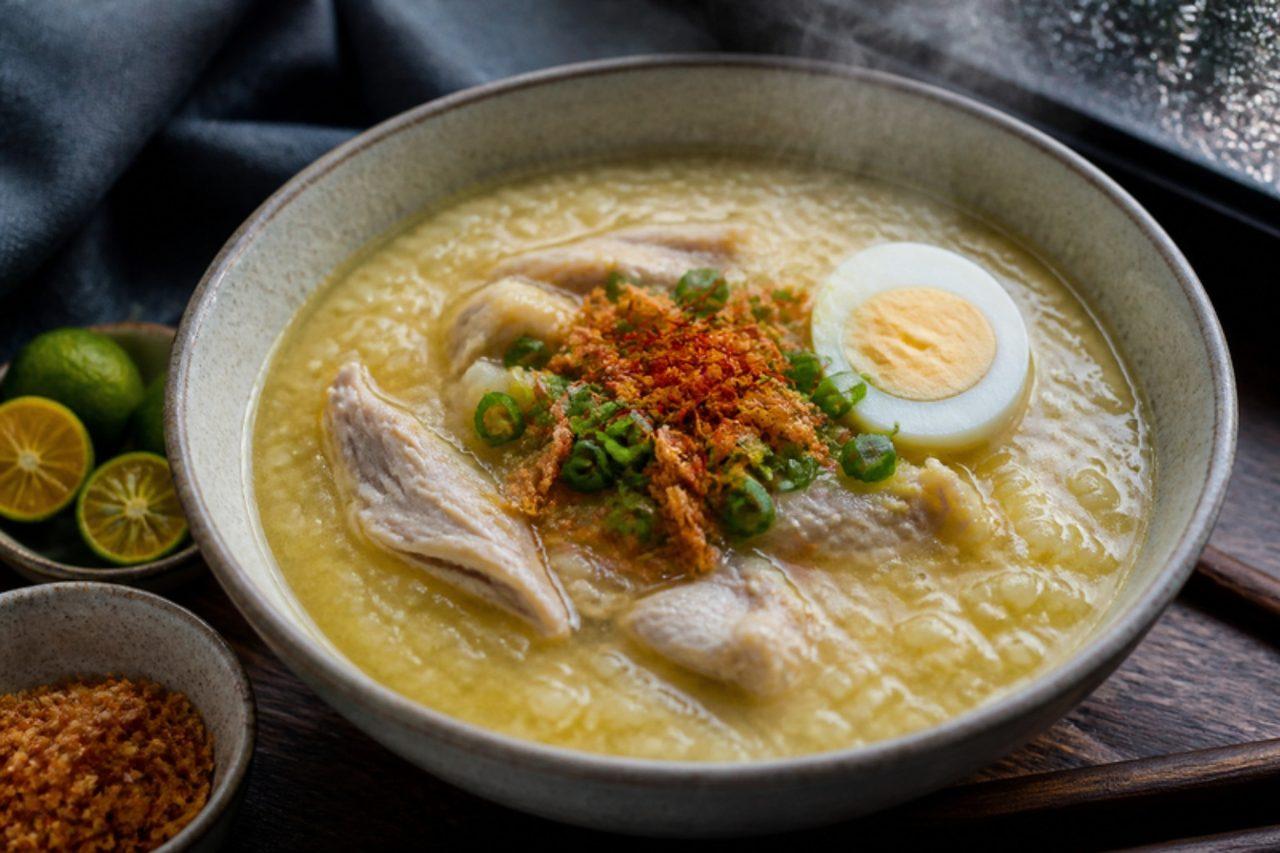
Rainy-season mornings, sick days and late nights after a party all end with a bowl of arroz caldo somewhere in the Philippines. Sticky rice simmers with chicken and a fistful of ginger until it breaks into a thick, savoury porridge, tinted gold with safflower, then each bowl gets crunchy fried garlic, spring onion, a halved boiled egg and a squeeze of calamansi. It is the Filipino cousin of congee, with a sharper ginger bite. Chef's tip: stir often in the last half hour; glutinous rice settles and scorches on the base, and one burnt patch flavours the whole pot.

by KrazyBadal 0 views

EnsaymadaSweet cheese brioche

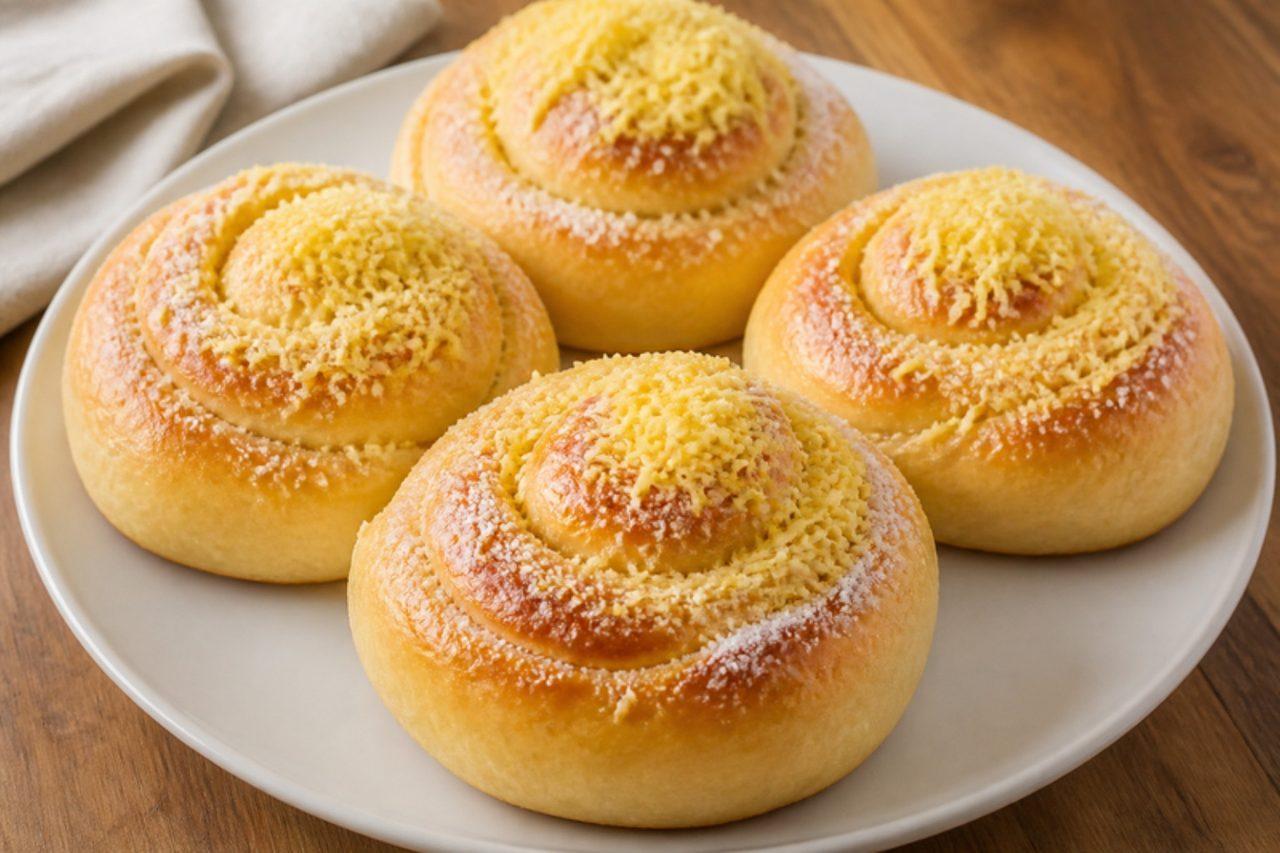
Filipino bakeries took the coiled Mallorcan ensaïmada and made it richer and softer: an egg-yolk brioche rolled with butter into a snail, baked pale gold, then spread with more butter, dusted with sugar and heaped with finely grated cheese. Boxes of them are carried to Christmas visits and town fiestas, and a single one with hot tsokolate makes a proper merienda. The salty cheese against the sweet crumb is the whole point. Chef's tip: the dough must be sticky and soft when you knead it; adding flour until it is easy to handle gives you dry, bready buns instead of feather-light ones.

by KrazyBadal 0 views

Filipino fruit salad

Ask any Filipino family what Christmas tastes like and fruit salad will be near the top of the list: tinned fruit cocktail, chewy nata de coco, sugar-palm kaong and sometimes cubes of cheese, all folded into sweetened cream and chilled until icy. It is made a day ahead for Noche Buena and New Year's Eve and served straight from the coldest corner of the fridge. Chef's tip: drain the fruit really well, even overnight in a sieve; leftover syrup thins the cream into a watery puddle.

by KrazyBadal 0 views

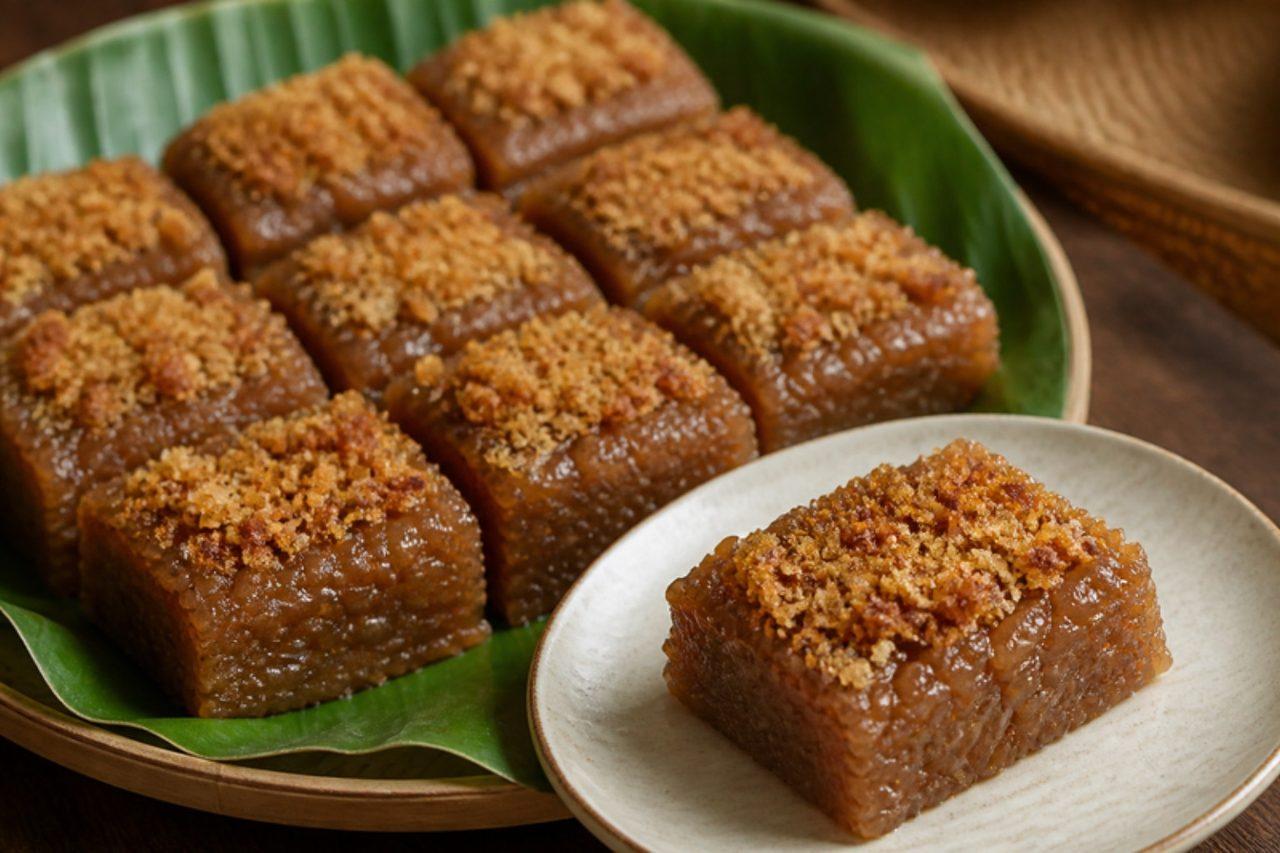
KutsintaSteamed brown sugar cakes

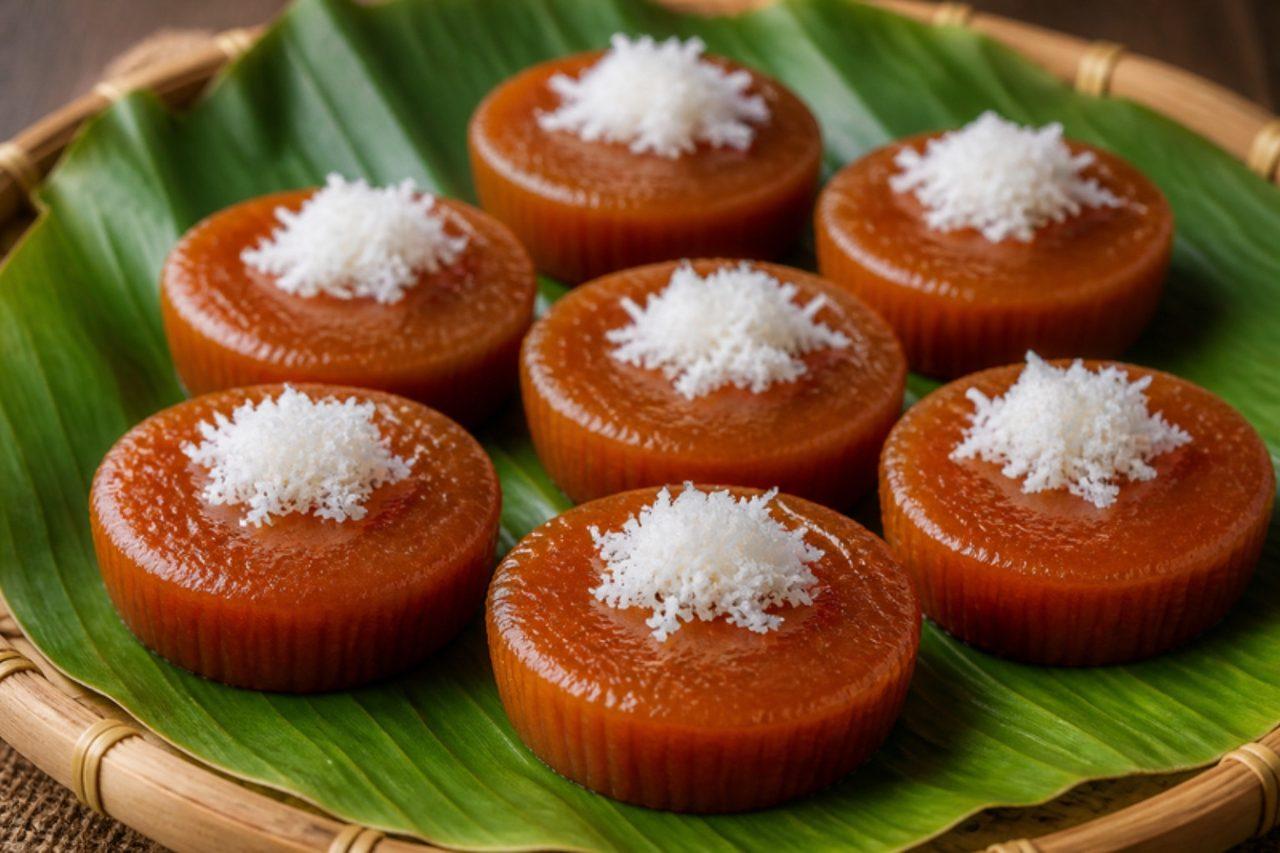
Sold in neat stacks beside puto at every Filipino market and bakery, kutsinta are small, dark amber cakes with a bouncy, jelly-like chew that comes from a few drops of lye water. Steamed in little cups and topped with fresh grated coconut, they are eaten for breakfast or merienda with coffee. Lye water (lihia) is strongly alkaline: buy food-grade only, measure it carefully, keep it away from children and rinse off any splashes on skin at once. Chef's tip: let the batter rest before steaming; skipping the rest gives cakes with a gritty, uneven texture and dark spots of undissolved sugar.

by KrazyBadal 0 views

Tibok-tibokMilk pudding with latik

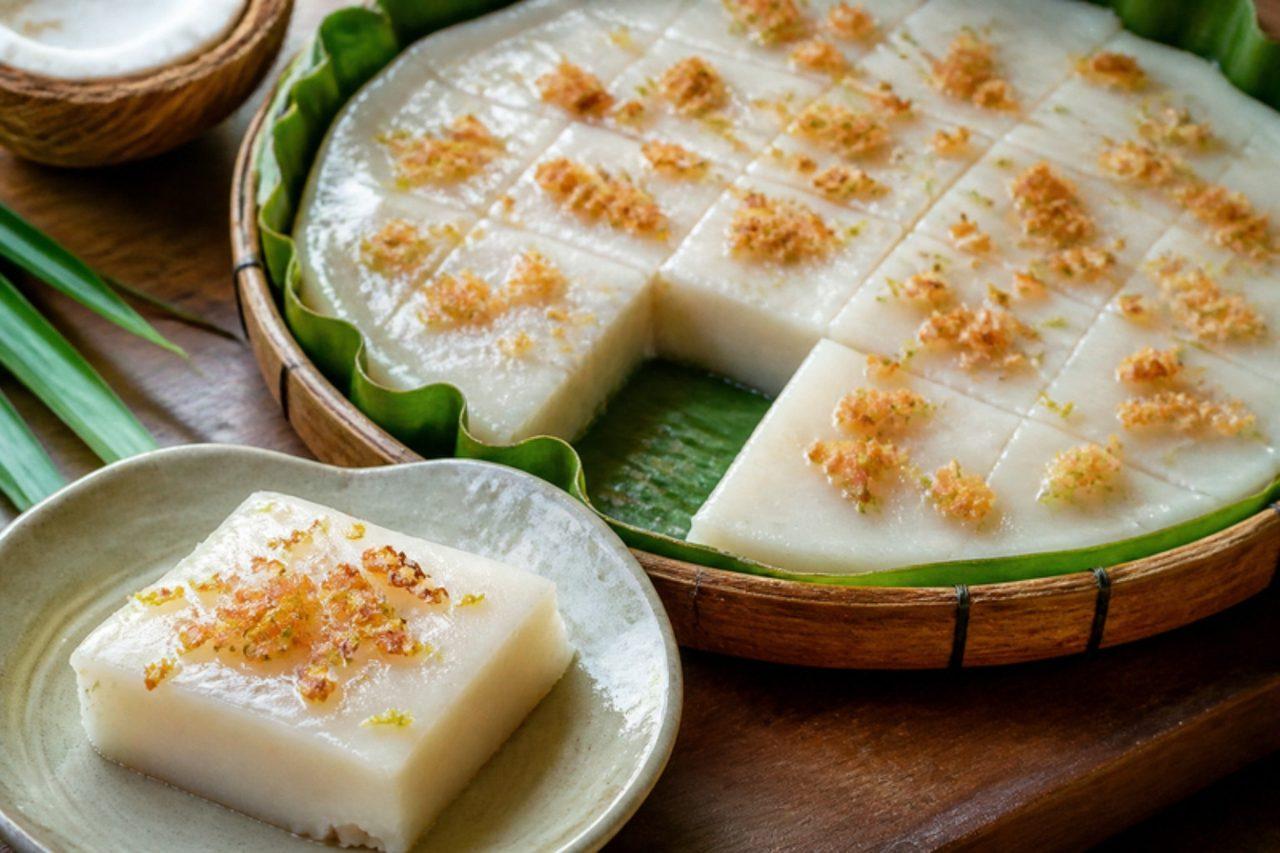
In Pampanga, tibok-tibok is made with rich carabao's milk and served at fiestas in shallow trays lined with banana leaf. Its name means heartbeat, after the slow, pulsing bubbles that rise as it thickens and the gentle wobble when the tray is set down. It is creamy, delicately sweet and scented with dayap (lime) zest, then topped with crunchy latik. Whole cow's milk or buffalo milk makes a good stand-in at home. Chef's tip: grind or blend the soaked rice very fine and strain it; coarse rice leaves a grainy pudding instead of a silky one.

by KrazyBadal 0 views

EspasolRice flour coconut logs

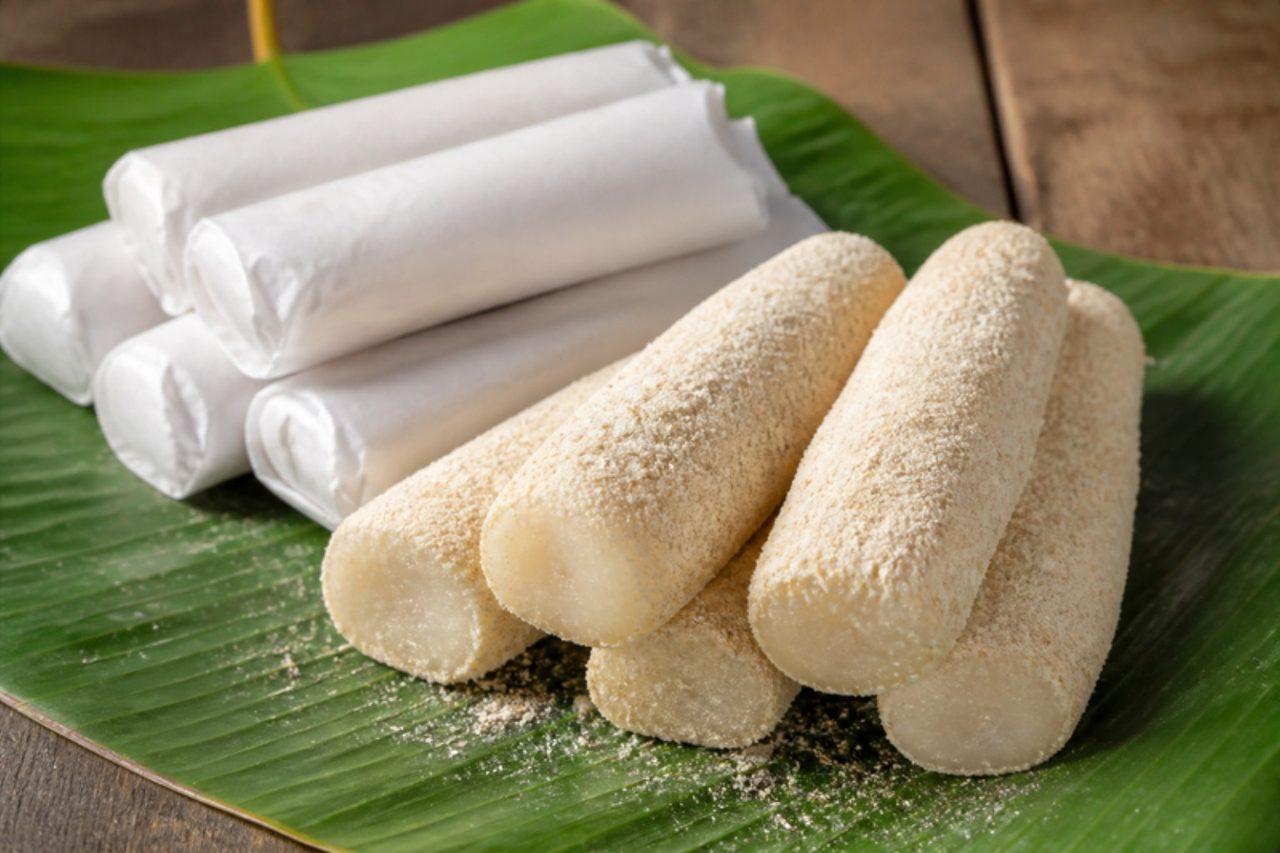
Bus passengers through Laguna buy espasol by the paper-wrapped bundle at stops in Santa Rosa and Calamba. The cylinders are made from glutinous rice flour toasted until nutty, then cooked into a thick dough with coconut milk, sugar and young coconut strips, rolled out and dusted in more toasted flour, so they are soft and chewy inside with a dry, powdery coat. They are eaten for pasalubong (homecoming gifts) and with afternoon coffee. Chef's tip: toast the flour slowly and stir all the time; it goes from cream to burnt in a minute, and burnt flour makes the whole batch bitter.

by KrazyBadal 0 views

Relyenong bangusStuffed milkfish

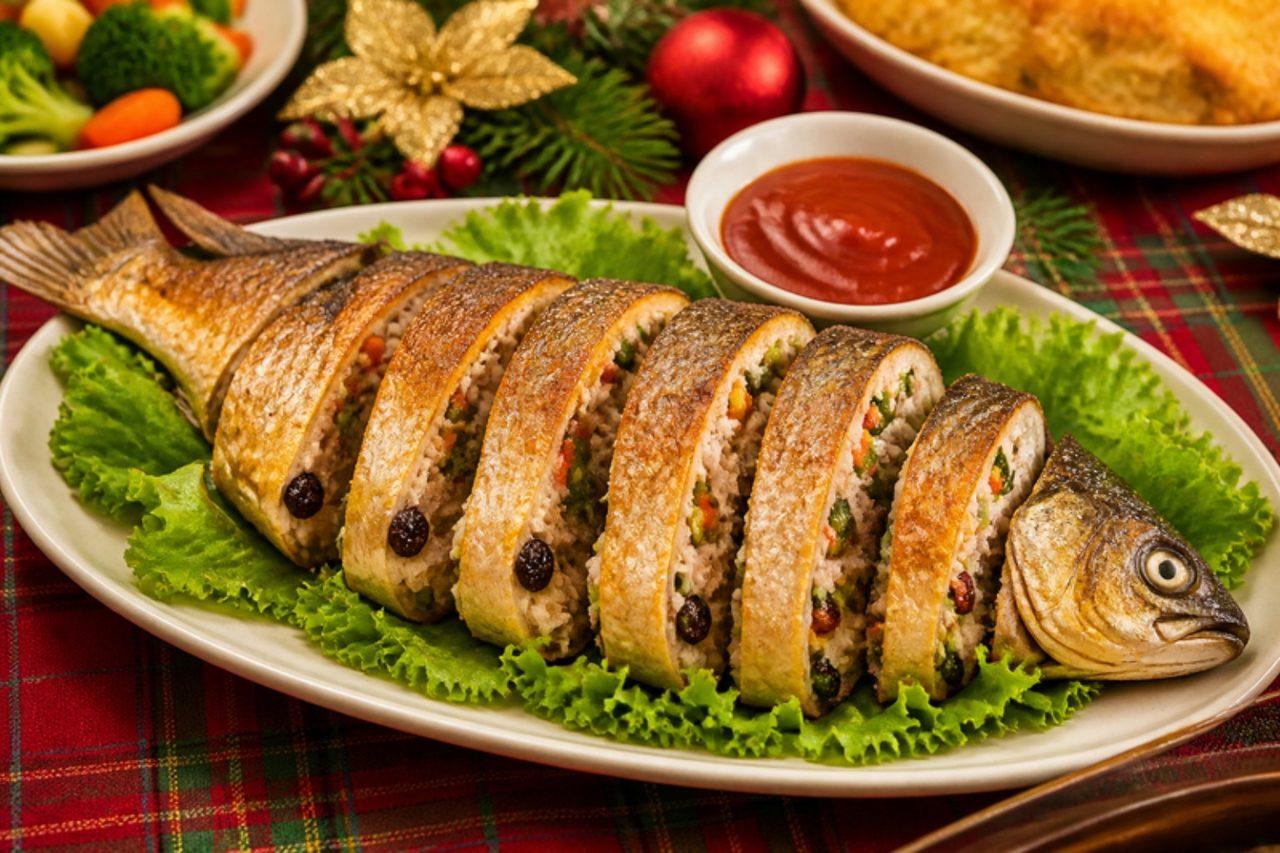
Stuffed milkfish is a party piece in Tagalog homes for Christmas Eve and big fiestas. The cook loosens the skin of a whole bangus and pushes out the flesh in one piece, picks out the many fine bones, sautés the flesh with onion, tomato, carrot, peas and raisins, binds it with egg and packs it back into the skin, so it looks like a whole fish again. It is then fried until golden and sliced crossways, with banana ketchup on the side. Chef's tip: work slowly when separating the skin and use the back of a spoon, not a knife; one tear and the stuffing leaks out in the pan.

110 minFilipinoFish
by KrazyBadal 0 views

PalitawSticky rice discs with coconut

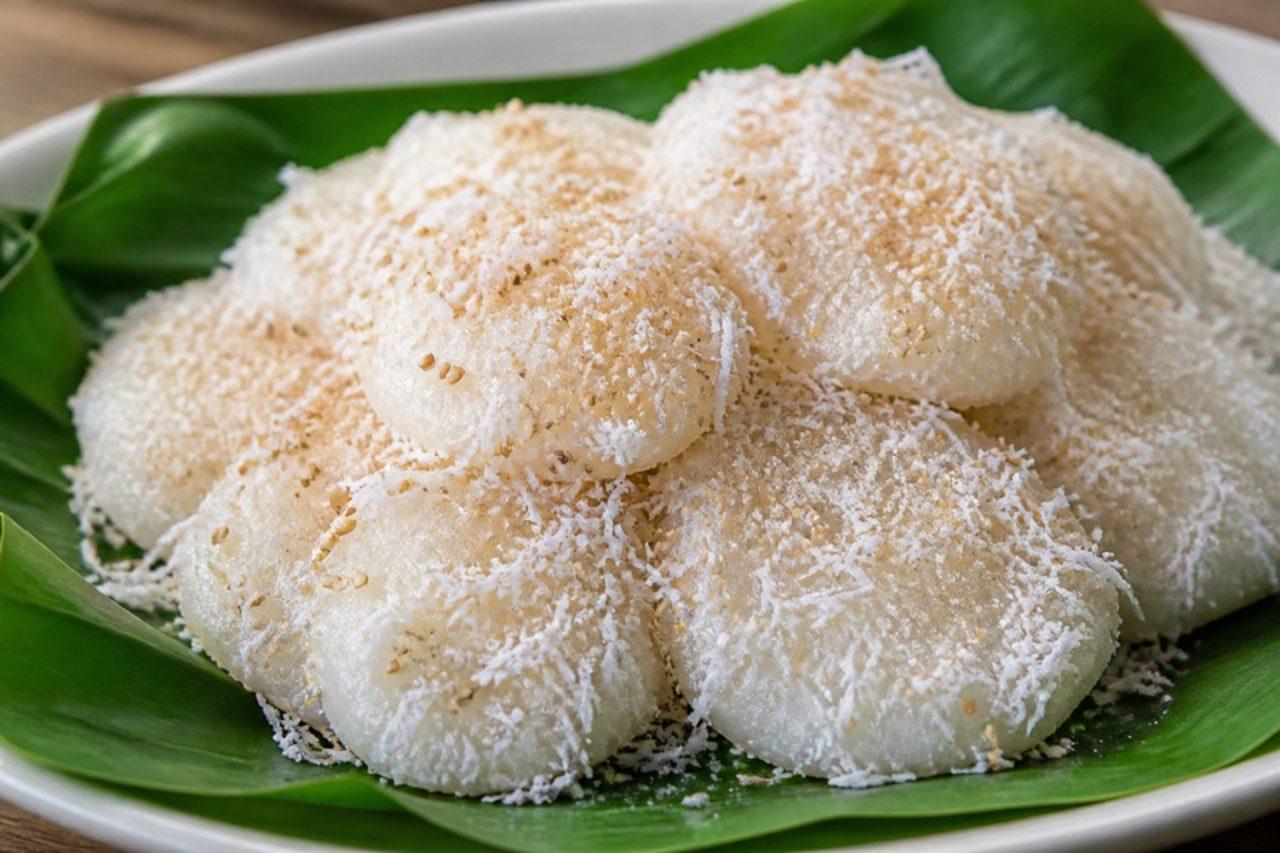
Palitaw comes from the Tagalog word for rising to the surface, which is exactly how you know they are cooked. Flat ovals of glutinous rice dough are dropped into boiling water, sink, then float up a minute later; they are lifted out, rolled in freshly grated coconut and finished with a sprinkle of sugar mixed with toasted sesame. Vendors in Laguna and Batangas sell them warm on banana leaves for merienda. Chef's tip: roll the dough thin, about 5 mm; thick palitaw float before the centre is cooked and stay pasty inside.

by KrazyBadal 0 views

Pichi-pichiCassava gummies with coconut

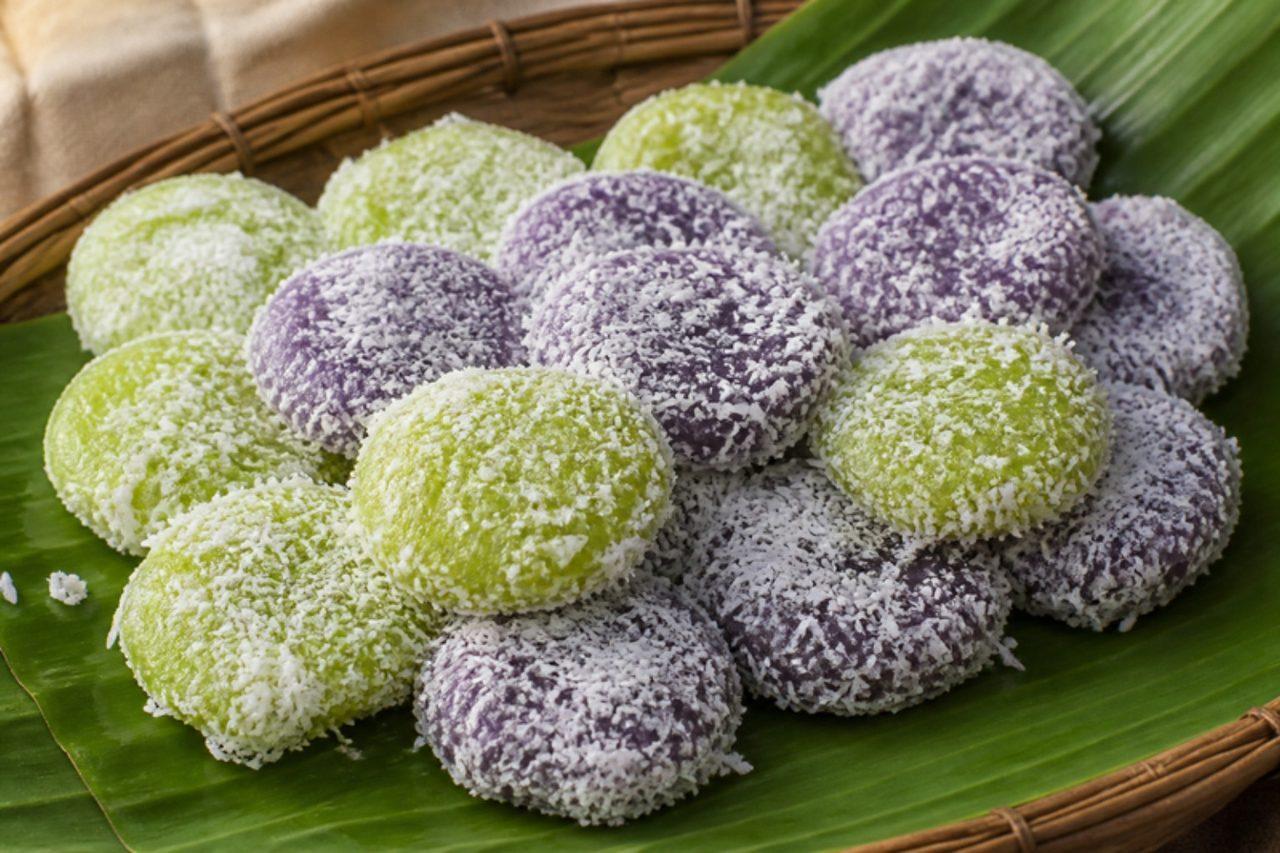
Grated cassava, sugar and water steamed in little cups turn into pichi-pichi: soft, translucent, wobbly bites the colour of amber or tinted with ube or pandan, then rolled in grated coconut. They are a party staple across Quezon and Manila, and bakeshops also roll them in grated cheese, though the coconut version keeps them vegan. Served chilled or at room temperature with coffee. Chef's tip: squeeze the grated cassava only lightly; wringing out all the juice gives you dry, crumbly cakes instead of chewy, glossy ones.

by KrazyBadal 0 views

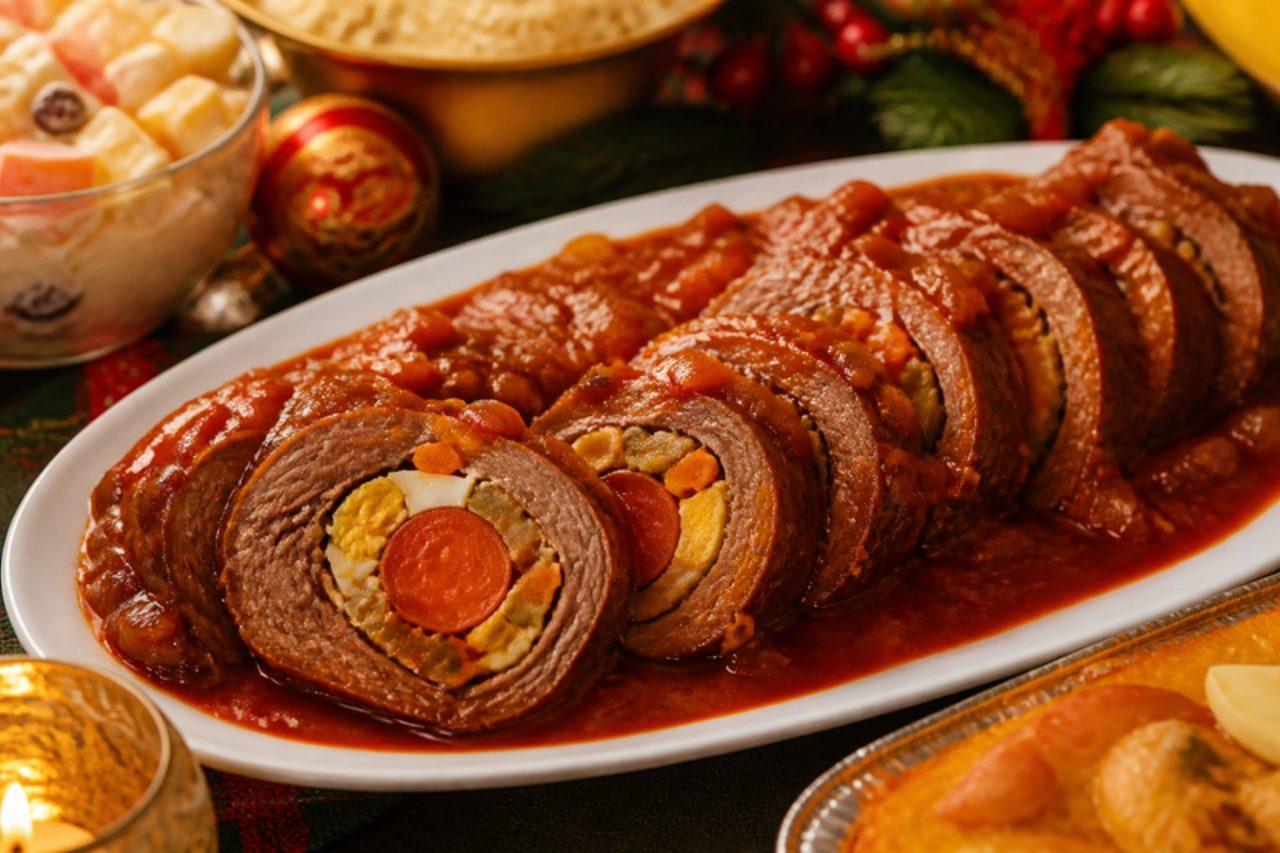
MorconStuffed beef roll

Morcon is a fiesta and Christmas centrepiece from Spanish-era kitchens in Pampanga and Batangas: a thin sheet of beef wrapped around strips of sausage, carrot, pickle and boiled egg, tied up, browned and braised slowly in tomato sauce until meltingly tender. Sliced, it shows a colourful mosaic, and the reduced sauce is spooned over steamed rice. It takes time but can be cooked a day ahead and reheated in its sauce. Chef's tip: pound the beef to an even thickness before rolling; thick patches tear the roll and stay tough while thin ones fall apart.

165 minFilipinoMeat
by KrazyBadal 0 views

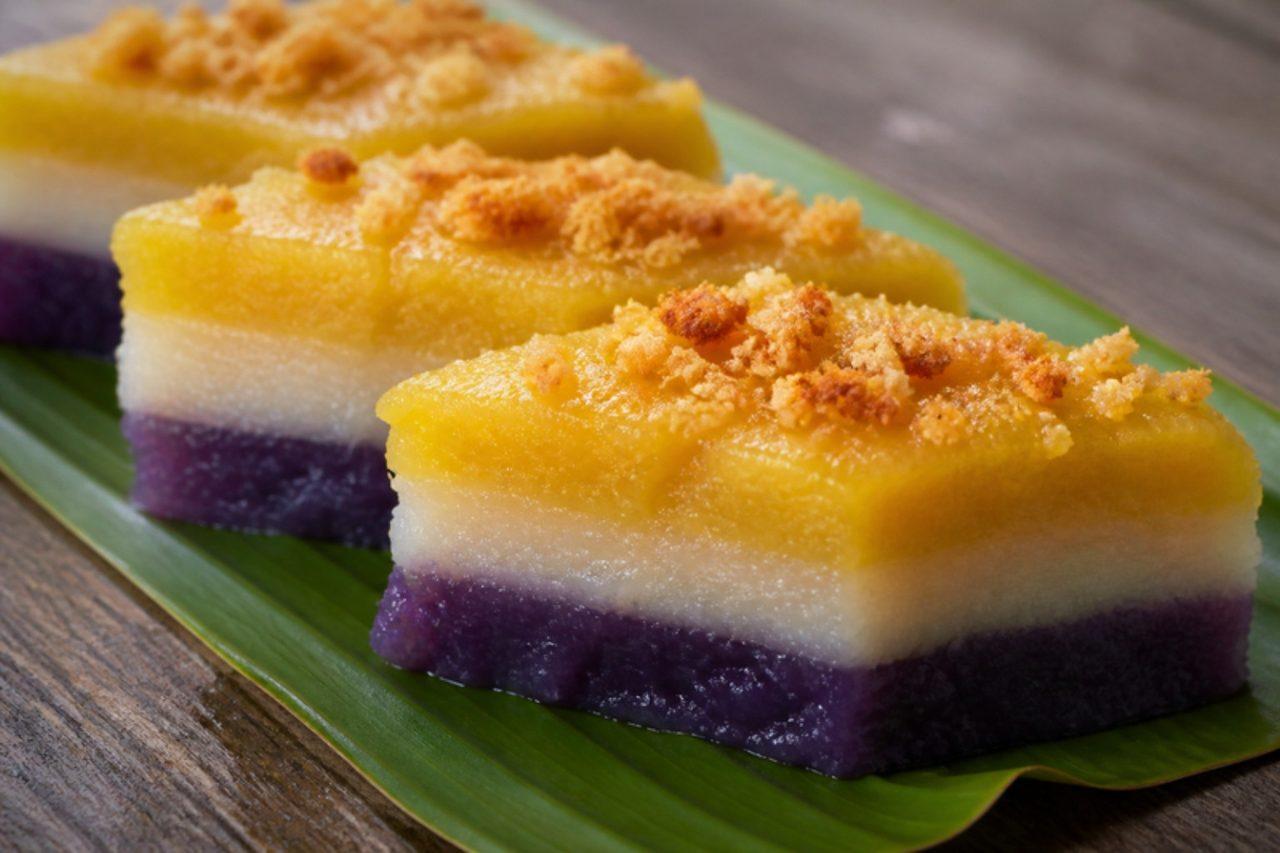
Sapin-sapinLayered sticky rice cake

The name means layered, and in Pampanga, the kitchen of the Philippines, sapin-sapin is a showpiece for fiestas and Christmas tables: a steamed glutinous rice and coconut cake built in stripes of purple ube, plain white and golden jackfruit, each set before the next is poured. It is cut in diamonds and scattered with latik, the toasted coconut curds left when coconut cream is cooked down. The texture is soft, sticky and cool. Chef's tip: steam each layer until it is just set before pouring the next; pour too early and the colours bleed into one muddy layer.

by KrazyBadal 0 views

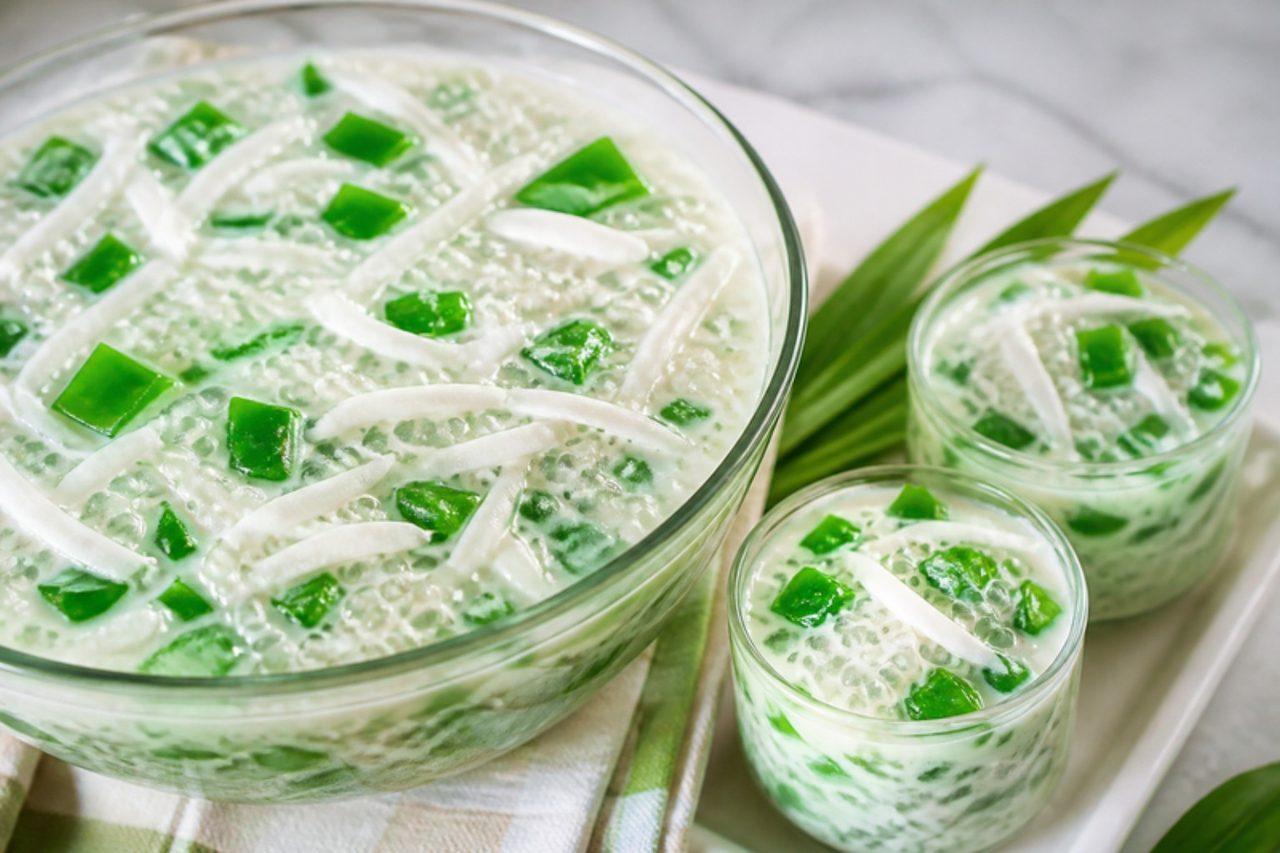
Buko pandanCoconut pandan jelly dessert

Big bowls of buko pandan come out of Filipino fridges for Christmas, New Year and every family reunion in between. Soft strips of young coconut and cubes of bright green pandan jelly are folded into chilled sweetened cream, so each spoonful is cool, fragrant and slightly chewy. This version sets the jelly with agar (gulaman) rather than gelatin, so it is fully vegetarian. Chef's tip: let the jelly set completely before cutting and folding; half-set agar breaks into mush and turns the cream cloudy green.

by KrazyBadal 0 views

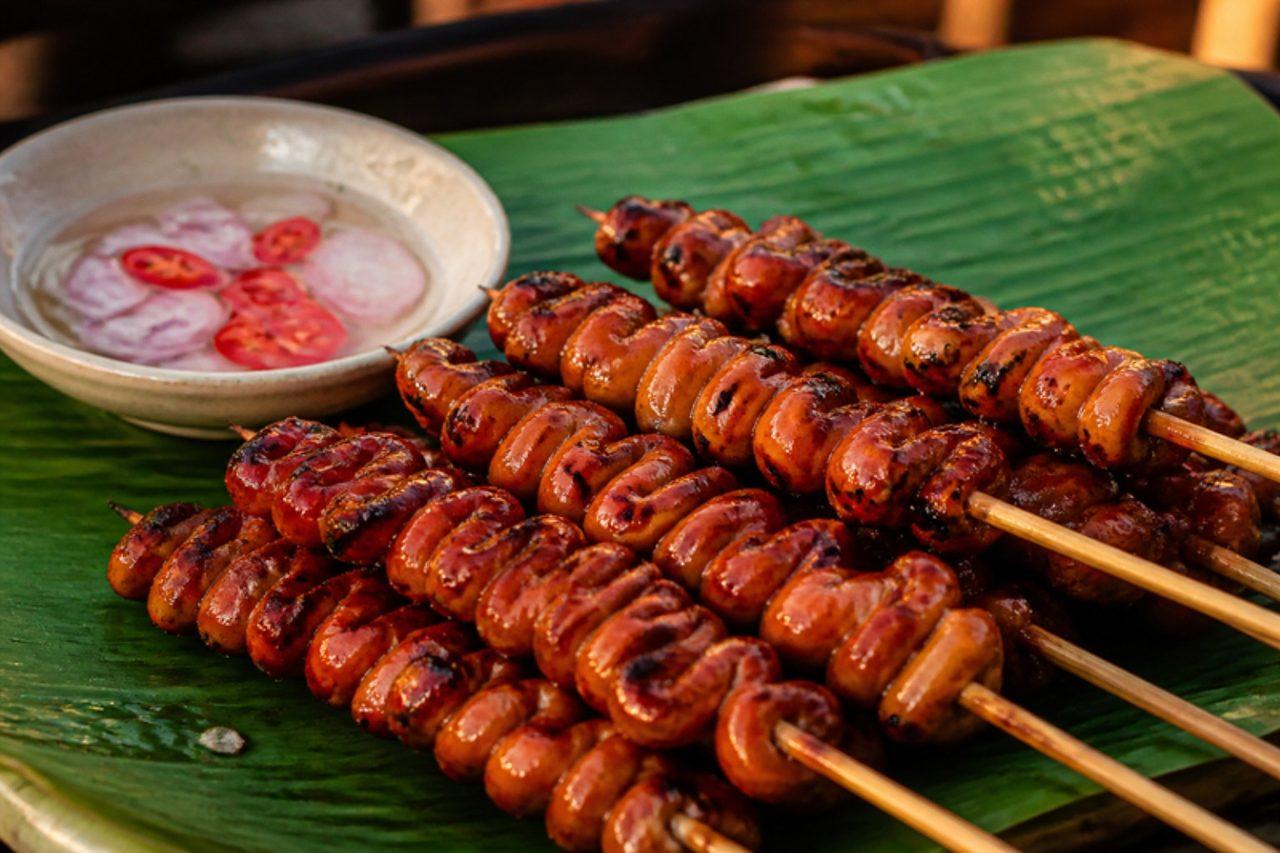
IsawGrilled chicken intestines

Around the University of the Philippines campus in Diliman and in night markets across Manila, isaw is the street-grill snack people queue for: chicken intestines threaded in coils on sticks, grilled over charcoal until crisp and smoky, and dipped in sour, chilli-spiked vinegar. At home the key is hygiene: the intestines are slit open, scrubbed with salt and vinegar, then simmered before grilling, so they are clean and cooked through to 74 °C. Chef's tip: never skip the simmering step; grilled-from-raw intestines char outside long before the inside is safe.

by KrazyBadal 0 views

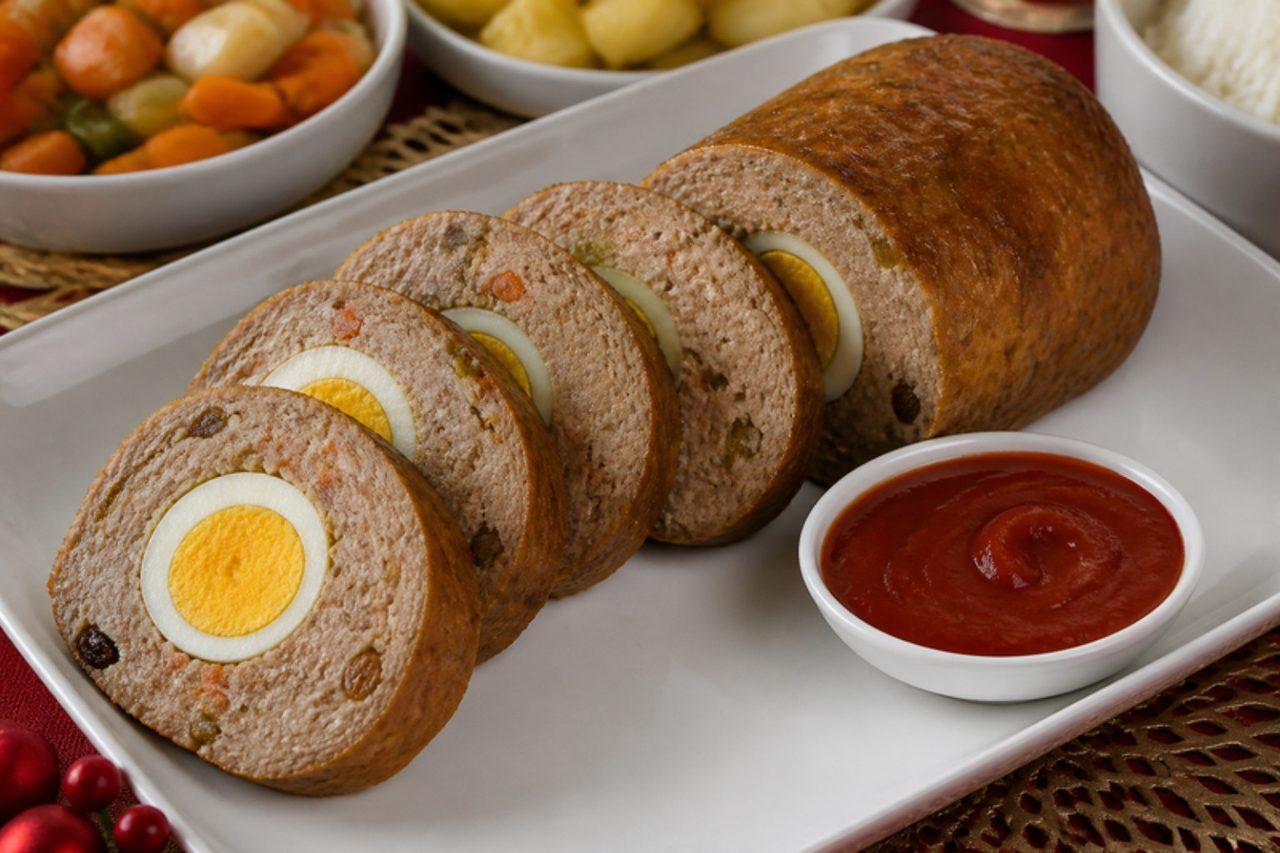
EmbutidoSteamed pork roll

Foil-wrapped logs of embutido are steamed days ahead of Noche Buena in kitchens all over the Philippines, then sliced cold or fried for the Christmas Eve spread. The roll is made from minced pork bound with egg and breadcrumbs and studded with carrot, sweet pickle relish and raisins, with boiled egg running through the middle so each slice shows a yellow-and-white centre. Serve with banana ketchup and rice, or in pandesal. Chef's tip: roll the foil tightly and twist the ends like a sweet; a loose wrap lets steam in and the roll comes out soggy and crumbly.

by KrazyBadal 0 views

Spanish breadSweet buttery bread rolls

Despite the name, nobody in Spain would recognise these: they belong to the neighbourhood panaderya, sold warm from glass cases at dawn and again at four o'clock alongside pandesal. A soft milk dough is rolled around a paste of butter, sugar and breadcrumbs, then coated in more crumbs before baking, so the filling melts into a sticky, caramel-like ribbon. Dunk one in coffee for merienda. Chef's tip: roll the dough thin before adding the filling; thick dough swallows the butter paste and you lose that gooey centre.

by KrazyBadal 0 views

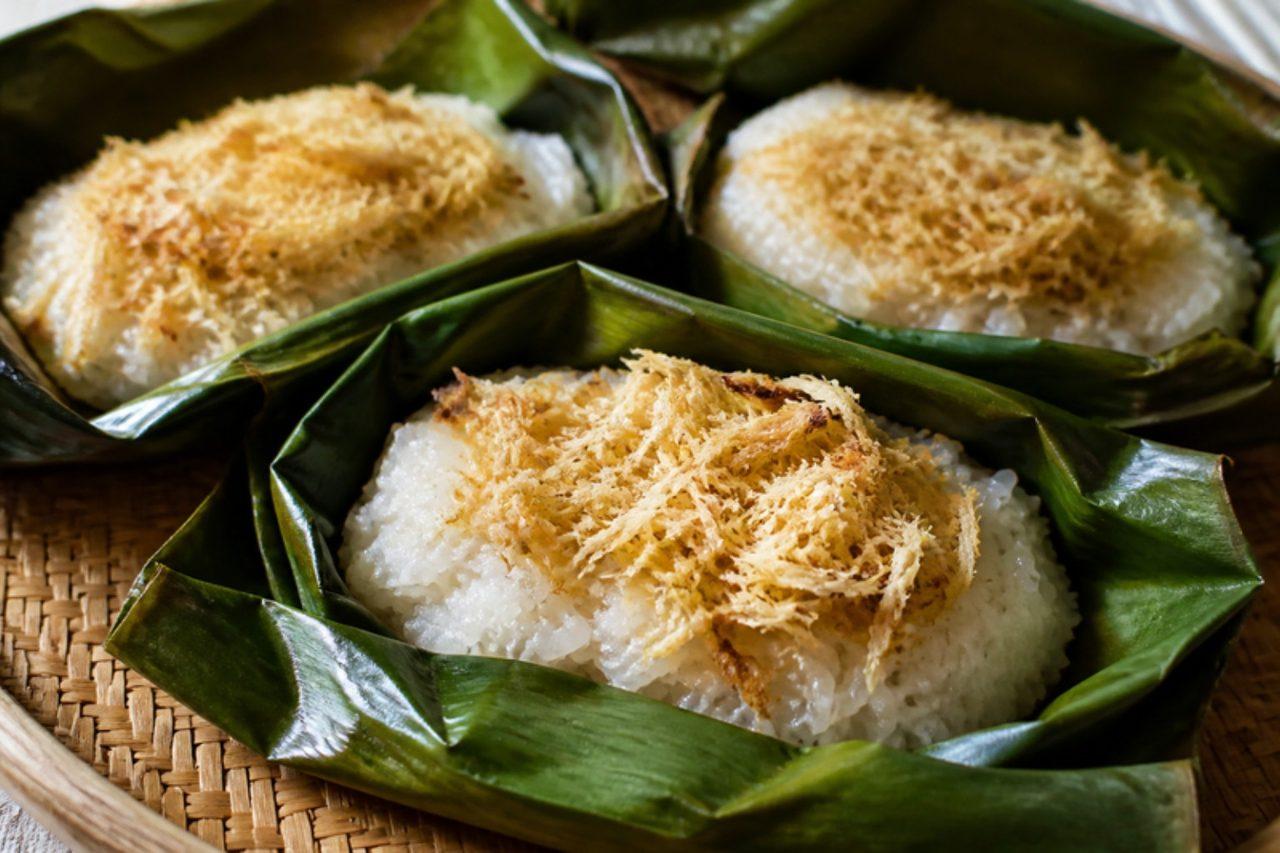
SumanCoconut sticky rice rolls

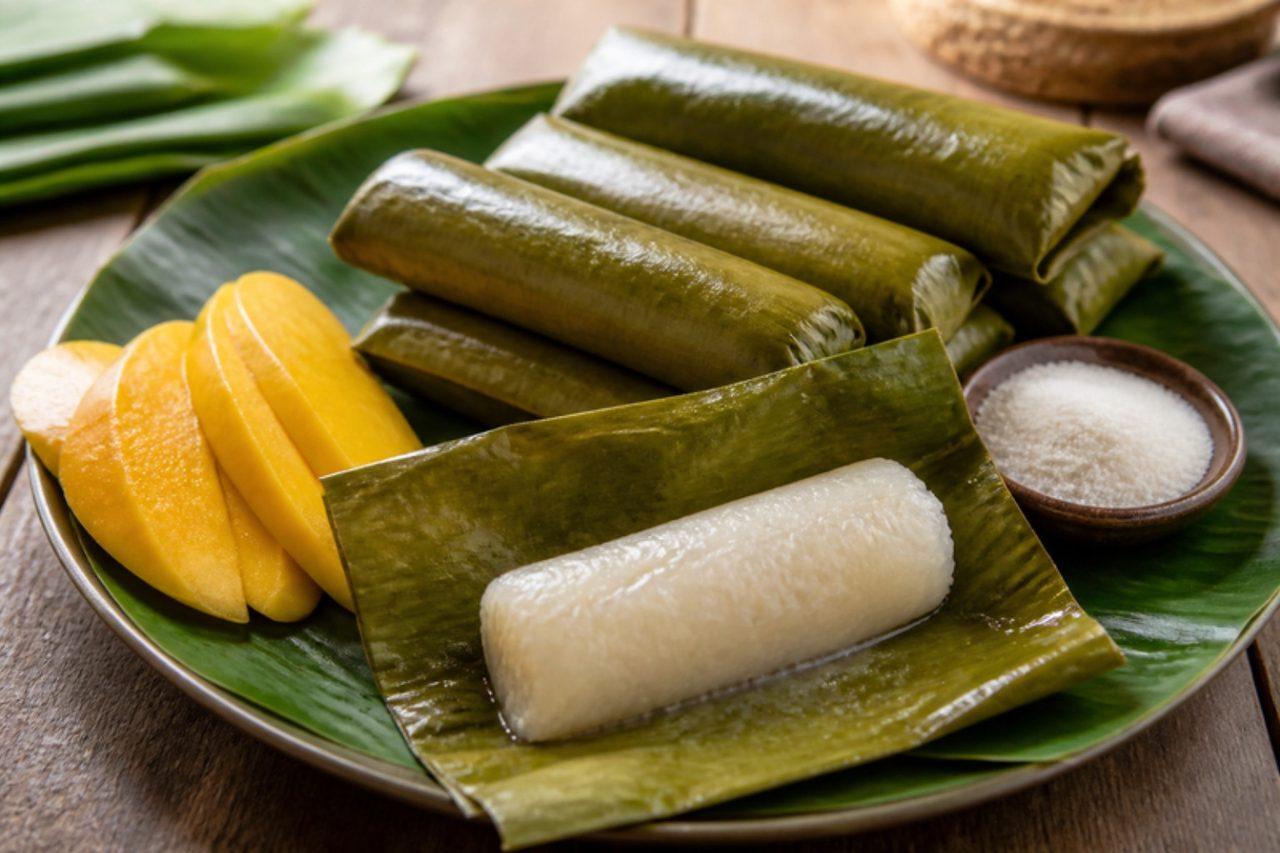
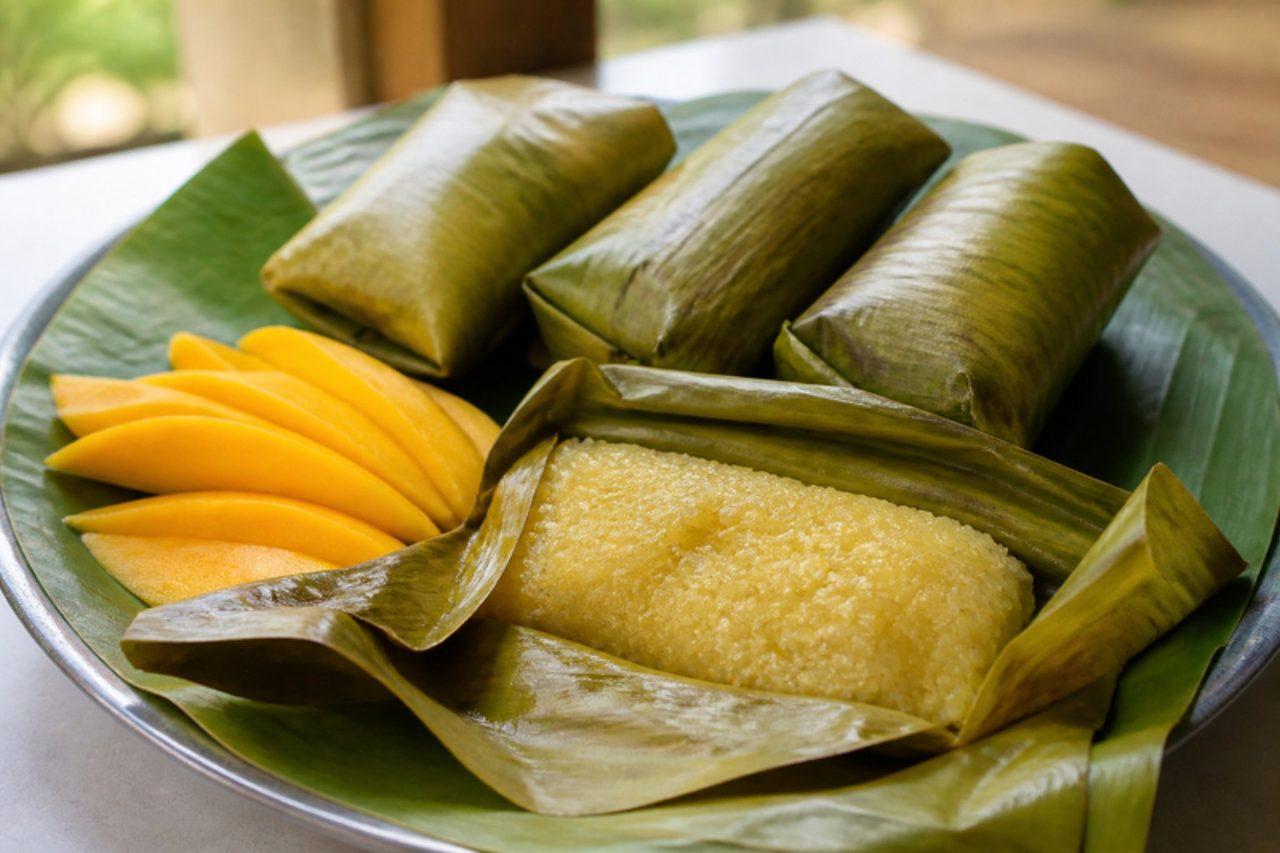
Every province has its own suman, but the everyday one sold in bundles at Antipolo's church steps and on Tagalog breakfast tables is suman sa gata: glutinous rice half-cooked in salted coconut milk, rolled tightly in banana leaf and steamed until dense and chewy. Unwrap one and dip it in sugar, or eat it with ripe mango and hot chocolate in the morning. They travel well and are handed out at fiestas by the dozen. Chef's tip: wilt the banana leaves over a flame or in hot water first; cold leaves crack as you roll and the rice leaks out while steaming.

by KrazyBadal 0 views

Sago't gulamanTapioca and jelly drink

Tall plastic cups of sago't gulaman are what Manila drinks on hot afternoons, ladled from a big drum at street corners and sold next to fried snacks. Chewy tapioca pearls and cubes of firm agar jelly float in cold water sweetened with a dark, almost caramelised brown-sugar syrup scented with pandan. Kids slurp it through a wide straw; adults buy it with every plate of banana cue. Chef's tip: cook the syrup until it smells of caramel but stop before it smokes; pale syrup tastes only of sugar, burnt syrup tastes bitter.

by KrazyBadal 0 views

Okoy (shrimp and squash fritters)

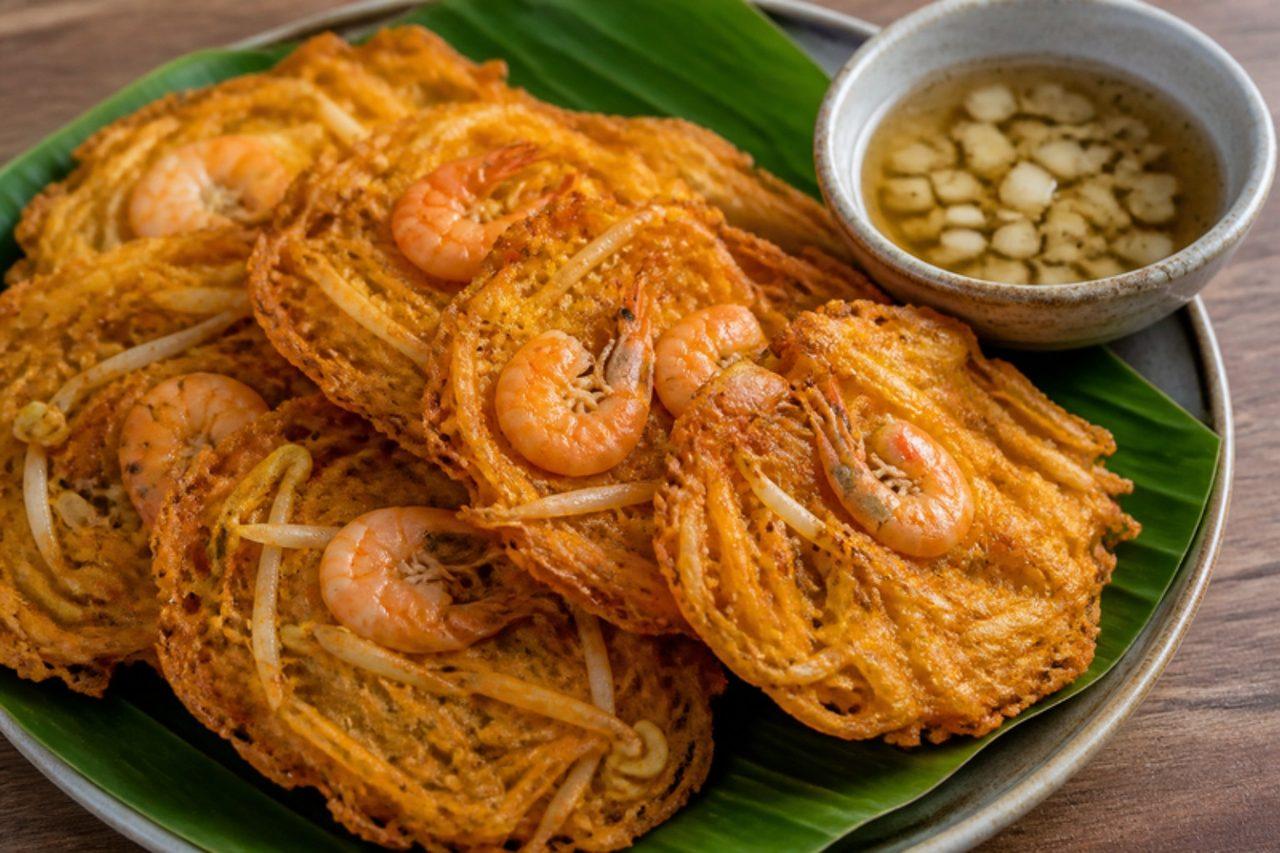
In coastal towns of Laguna and Pampanga, okoy are fried to order at the market: a thin batter barely holding together small shrimp, matchsticks of squash or sweet potato and bean sprouts, flattened on a saucer and slid into hot oil until lacy and shatteringly crisp. They are eaten hot, dipped in garlicky vinegar, as merienda or as a starter before rice. Chef's tip: use just enough batter to bind; a thick batter makes heavy pancakes instead of crunchy, see-through nests.

by KrazyBadal 0 views

TsokolateThick hot chocolate

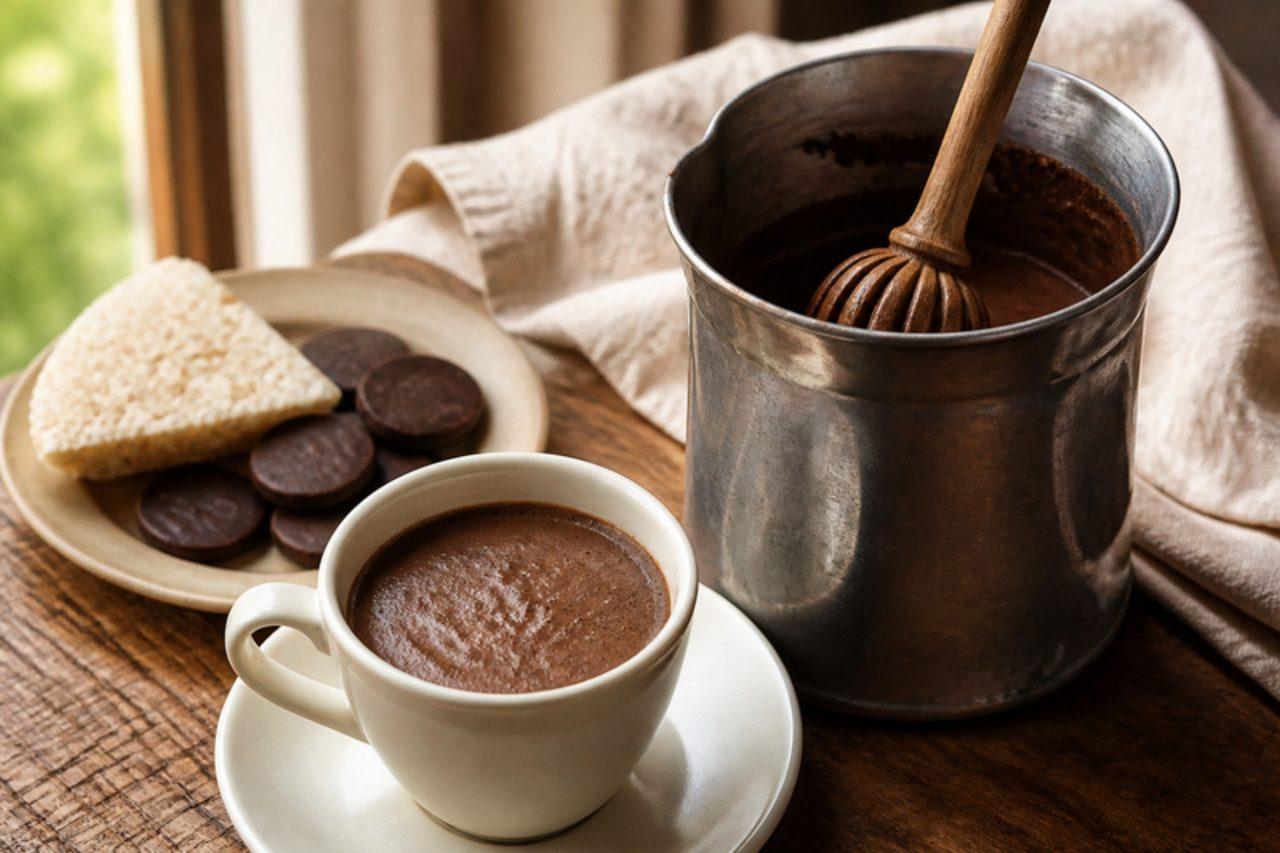
Discs of pure roasted cacao called tablea, pressed by hand in Batangas and Cebu, melt into the thick, slightly gritty tsokolate that Filipinos drink on Christmas mornings with puto bumbong or bibingka. It is whisked in a tall pot with a wooden batidor rolled between the palms until it foams, and it tastes deep, bitter-sweet and earthy rather than milky. A little milk softens it; many families drink it with water only. Chef's tip: keep the heat low once the tablea melts; boiling cacao hard makes it scorch and taste burnt.

by KrazyBadal 0 views

Banana cueCaramelised fried bananas

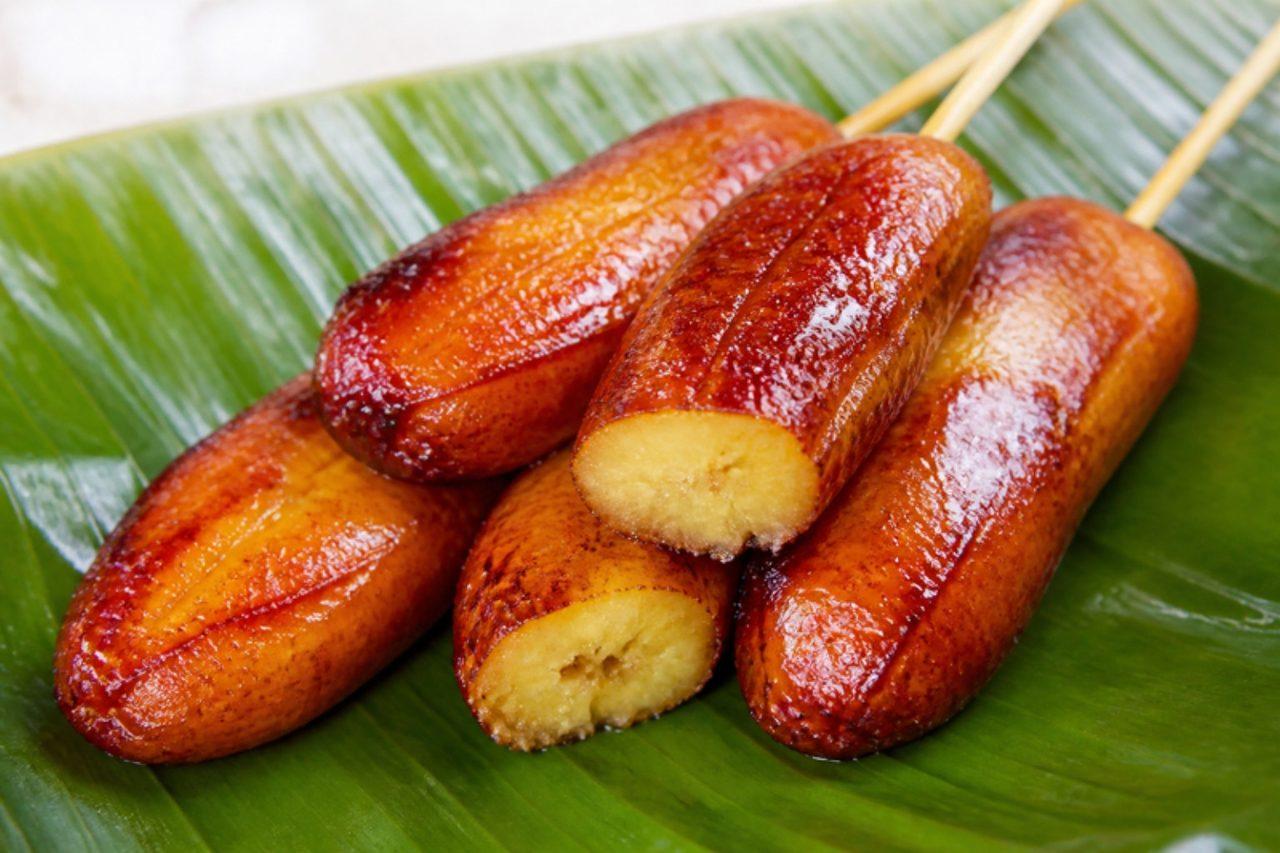
Walk past any Manila school gate or jeepney stop around three in the afternoon and you will find a vendor turning saba bananas in a wok of bubbling oil and brown sugar. The sugar melts and clings to the fruit, setting into a thin, crackly amber shell over soft, slightly tart flesh, and the bananas are sold two or three to a bamboo stick. Sweet potato cooked the same way is called camote cue. Eat them warm with a glass of iced sago't gulaman. Chef's tip: add the sugar only once the bananas are already golden; sugar thrown in at the start burns black before the fruit is cooked through.

by KrazyBadal 0 views

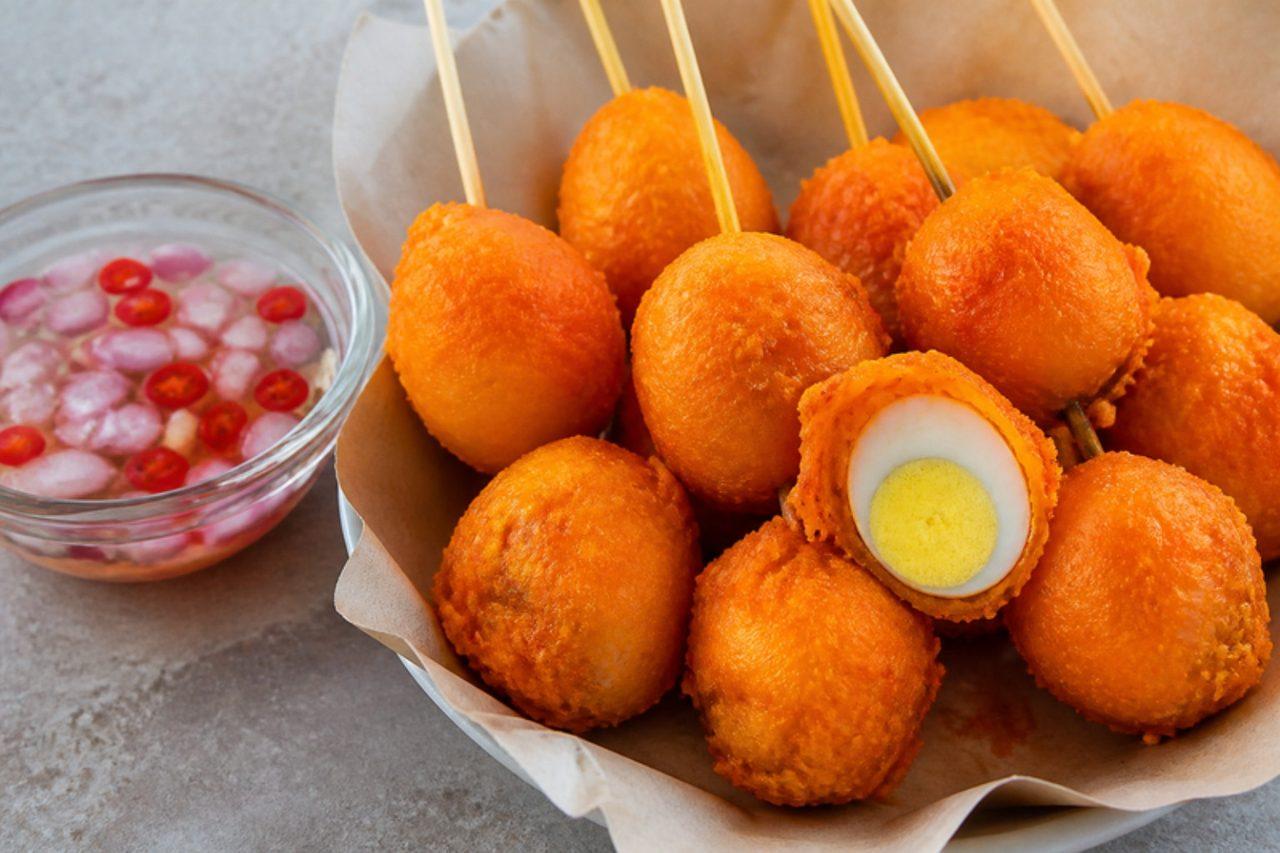
Kwek-kwekBattered fried quail eggs

After dark in Quiapo and around university belts in Manila, fishball carts sell kwek-kwek: hard-boiled quail eggs dunked in a bright orange batter and fried until puffed and crunchy, then speared and dipped in sour vinegar with onion and chilli. The orange comes from annatto, not egg yolk or food colouring, and the batter stays thin so you bite straight through to the creamy egg. Chicken eggs done the same way are called tokneneng. Chef's tip: dust the peeled eggs with cornflour before battering; wet, slippery eggs shed their coat in the oil.

by KrazyBadal 0 views

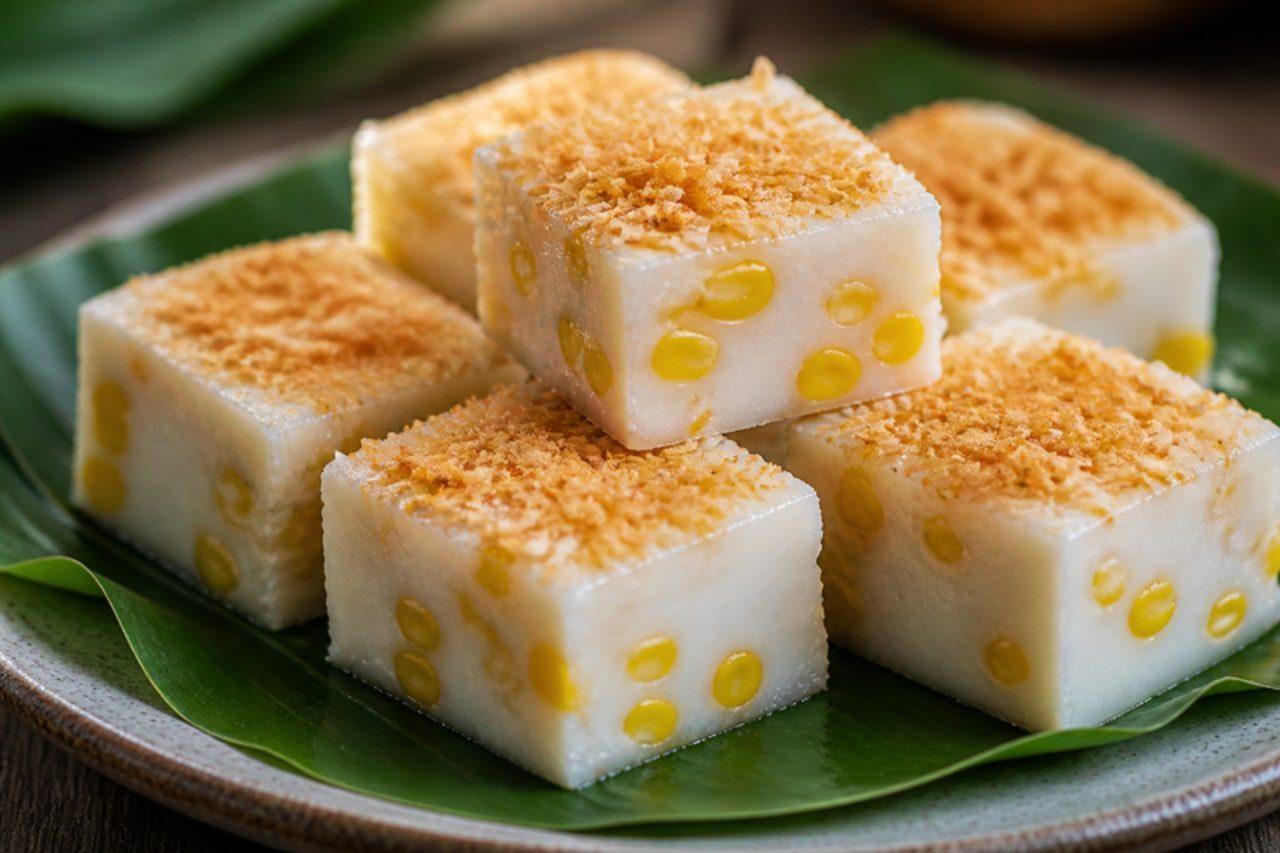
Maja blancaCoconut corn pudding

Wobbly squares of maja blanca sit on almost every Filipino Christmas Eve table, beside the leche flan and the fruit salad. Coconut milk and milk are thickened with cornflour into a smooth white pudding studded with sweet corn, poured into a tray and set firm enough to slice, then crowned with latik or toasted coconut. It tastes cool, milky and gently sweet, and kids love it. Chef's tip: whisk the cornflour into cold liquid first and keep stirring as it heats; added to hot milk it seizes into lumps you can't whisk out.

by KrazyBadal 0 views

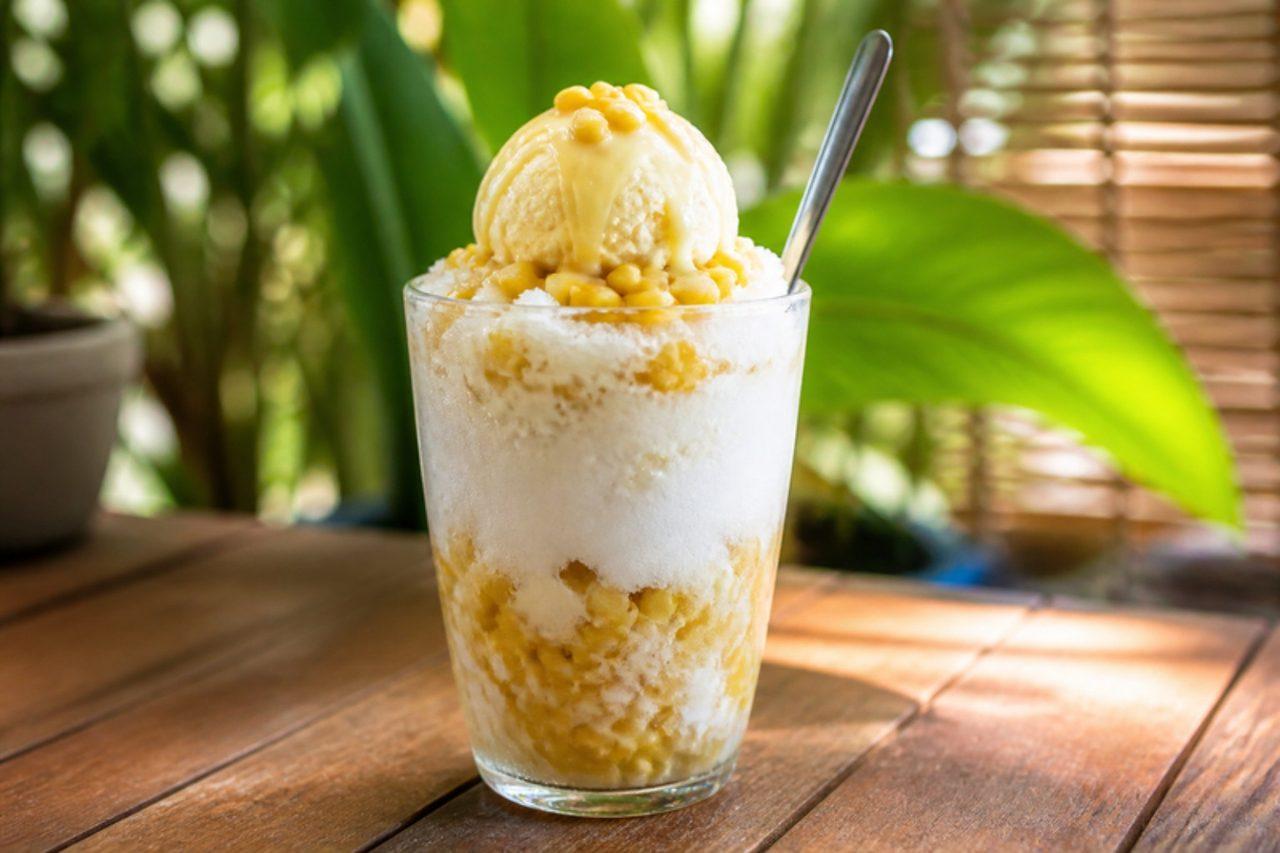
Mais con yeloSweet corn shaved ice

The simplest of the Filipino ice desserts, mais con yelo turns up at carinderias and beach stalls from Batangas to Davao in the dry months of March to May. A tall glass is layered with sweet corn kernels and sugar, buried in finely shaved ice and drowned in evaporated milk, and you stir it all into a cold, milky slush with a long spoon. Some add a scoop of vanilla ice cream or crisp rice cereal on top. Chef's tip: shave or crush the ice as finely as you can; chunky ice cubes leave the milk and corn sitting apart instead of blending into a soft slush.

by KrazyBadal 0 views

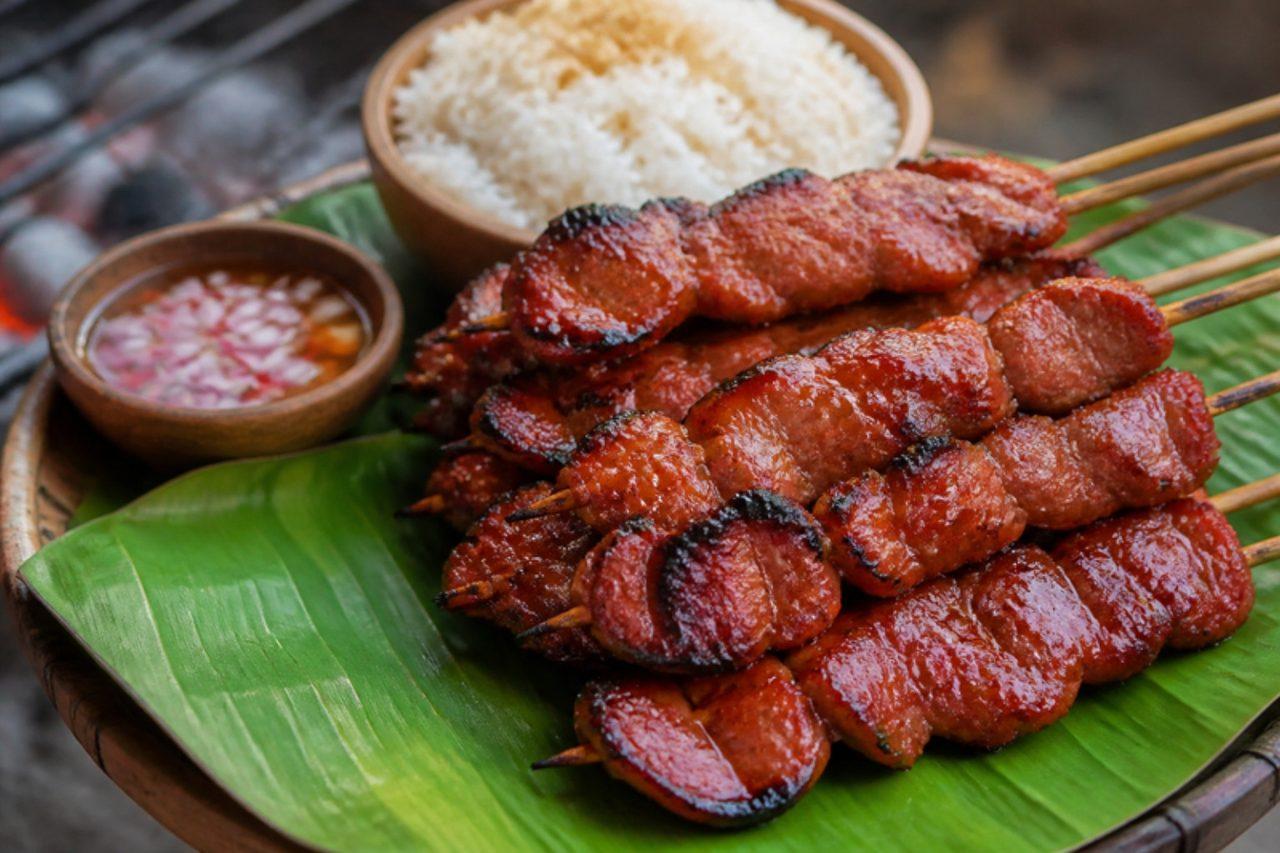
Filipino pork barbecue

Smoke from charcoal grills drifts down every barangay street at dusk, where sticks of Filipino pork barbecue are fanned over coals and brushed again and again with their sweet marinade until the edges caramelise. Thin slices of pork shoulder soak in soy sauce, calamansi, garlic, brown sugar and banana ketchup, and the result is sticky, sweet-salty and a little charred. Eat them with garlic rice and spiced vinegar, or straight off the stick. Chef's tip: slice the pork thin and thread it in loose ribbons; thick chunks char outside before they reach a safe 71 °C inside.

by KrazyBadal 0 views

BikoSweet sticky rice cake

Bring biko to a Tagalog or Visayan gathering, whether a wake, a birthday or a fiesta, and the tray will be scraped clean. Glutinous rice is cooked, then stirred hard in a thick coconut milk and brown-sugar caramel until every grain is coated and the mass is dark, glossy and heavy on the spoon. Pressed into a tray and topped with crisp latik, it is cut into squares that are chewy, sweet and rich. Chef's tip: keep stirring once the rice goes into the caramel; leave it for a minute and the sugar catches and burns on the pan base.

by KrazyBadal 0 views

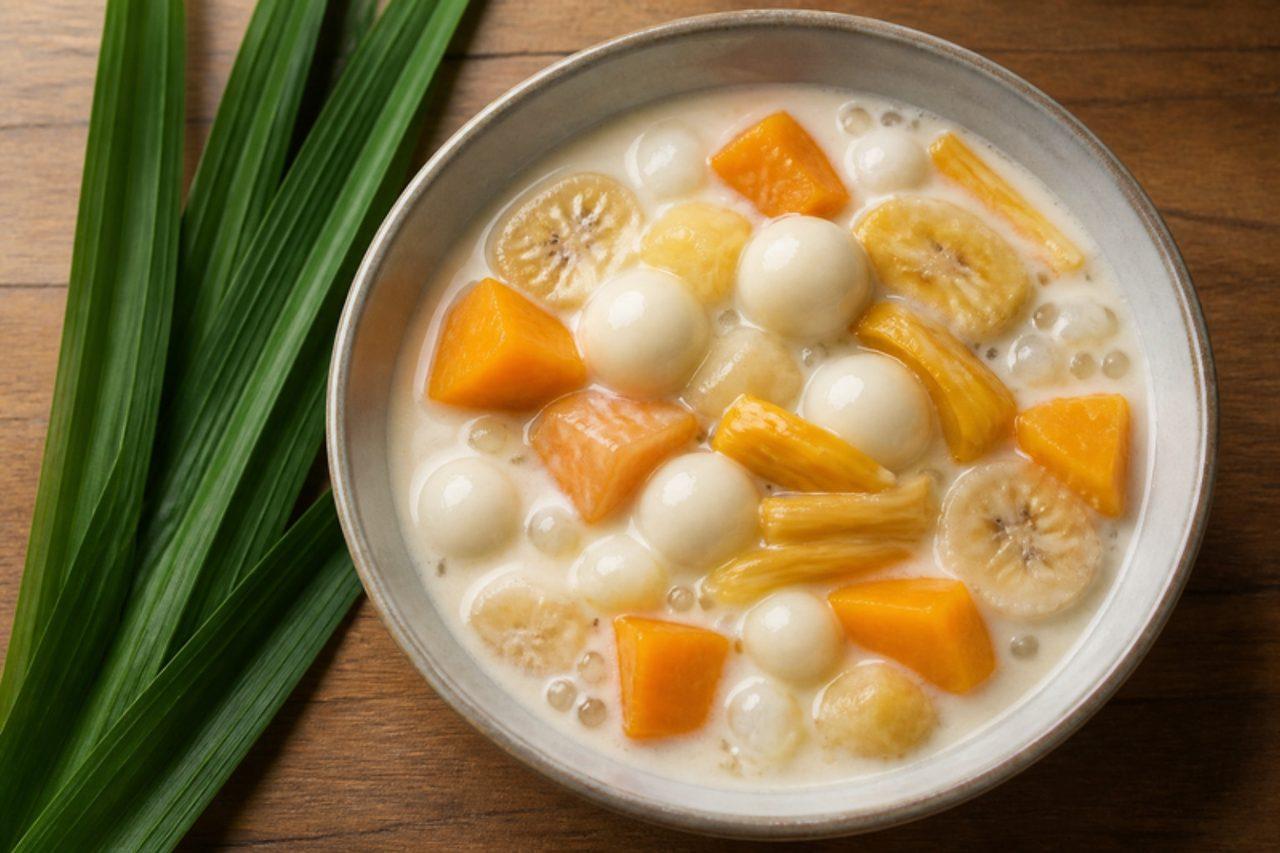
Ginataang bilo-biloRice balls in coconut milk

On rainy afternoons across Luzon, a big pot of ginataan bubbles on the stove and the whole street seems to know about it. Little balls of glutinous rice dough, saba banana, purple and orange sweet potato, strips of ripe jackfruit and sago pearls all simmer together in sweet coconut milk until it thickens into a soft, fragrant soup. Serve it hot in bowls, or cold the next day when it sets almost like pudding. Chef's tip: make the rice balls no bigger than a marble; large ones stay raw and gummy in the middle long after the bananas have collapsed.

by KrazyBadal 0 views

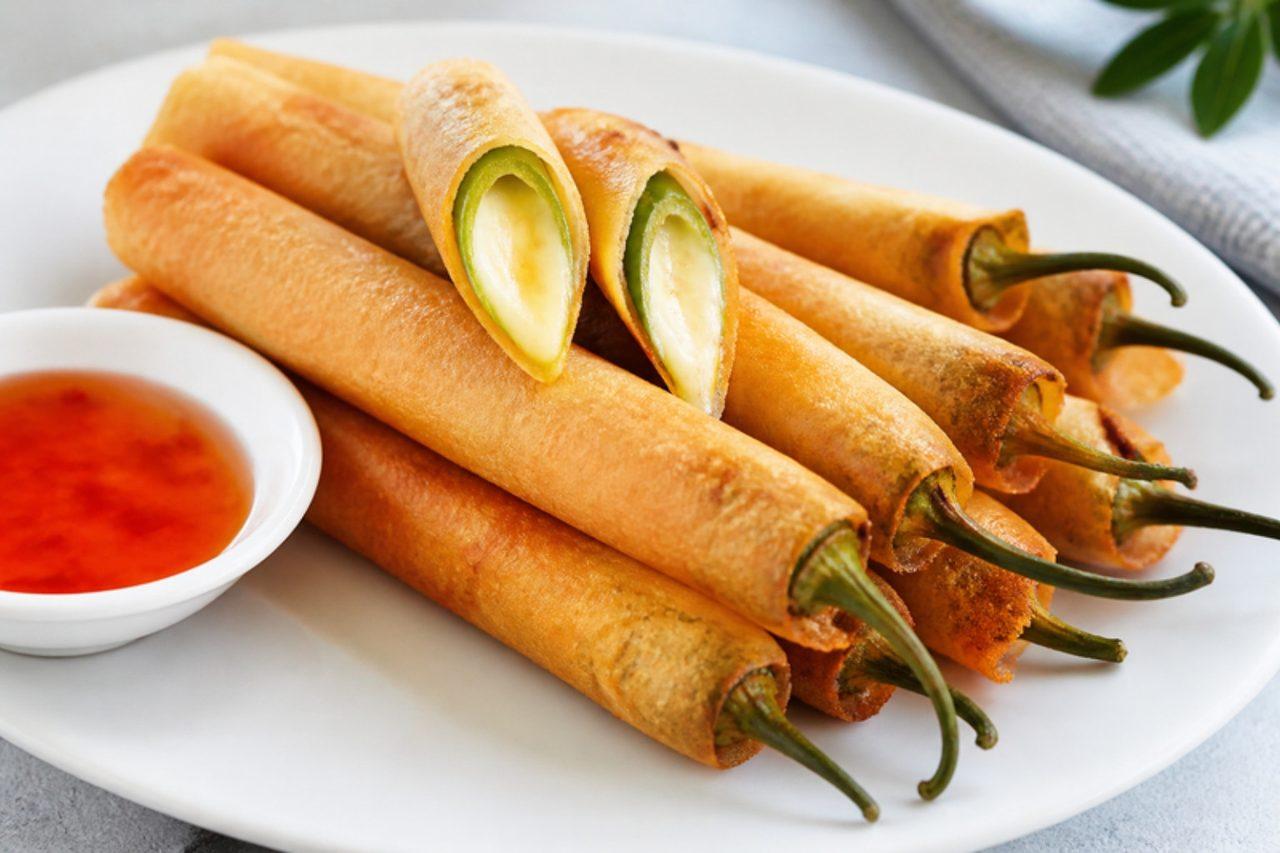
Dynamite lumpiaCheese-stuffed chilli rolls

Bar chow menus in Quezon City and roadside stalls in Pampanga both claim dinamita: a whole long green chilli, seeded, stuffed with a stick of cheese and wrapped tightly in lumpia pastry with its stalk poking out like a fuse. Fried until blistered and crisp, the chilli turns sweet and only mildly hot while the cheese melts into it. A sweet chilli or banana ketchup dip is usual. Many versions add seasoned meat; this one keeps it to cheese. Chef's tip: dry the chillies well inside after seeding; trapped water bursts the wrapper in the hot oil.

by KrazyBadal 0 views

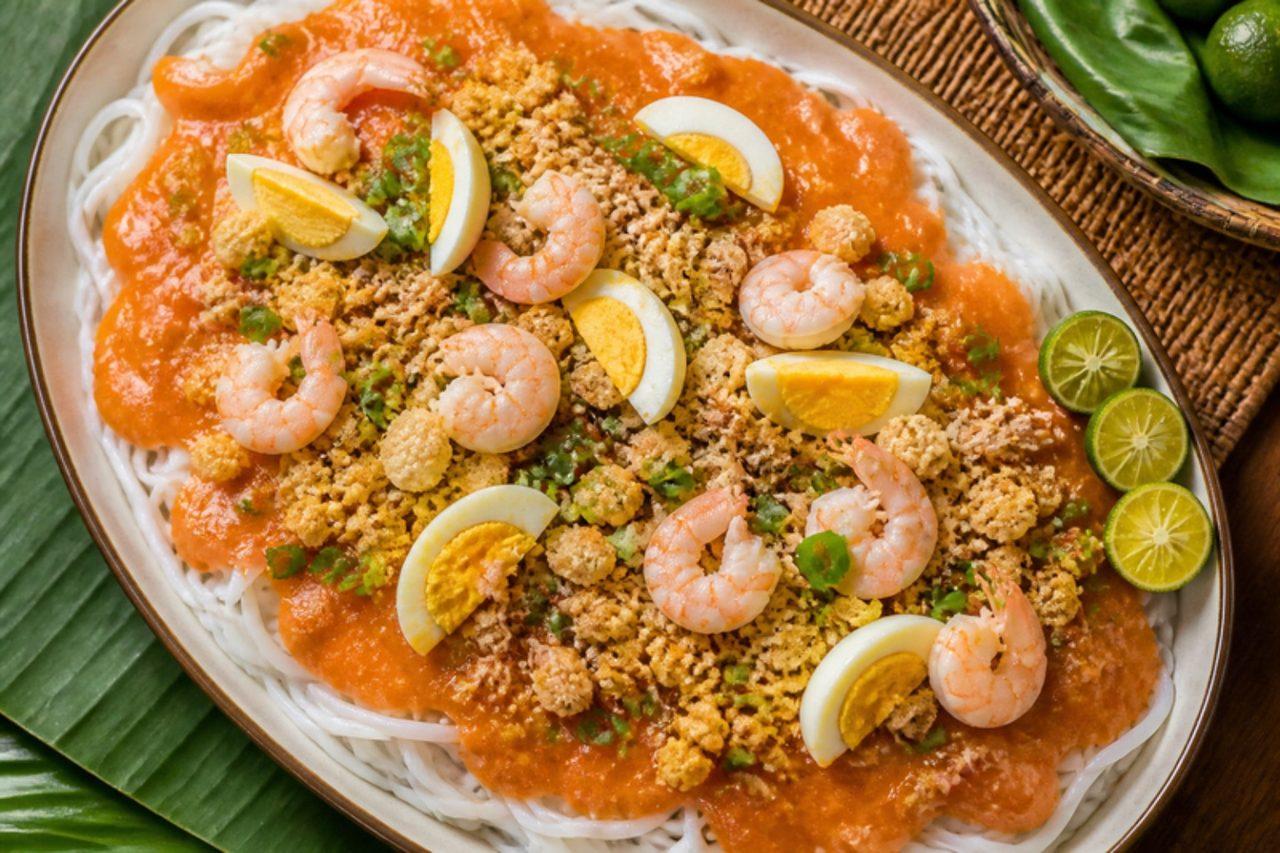
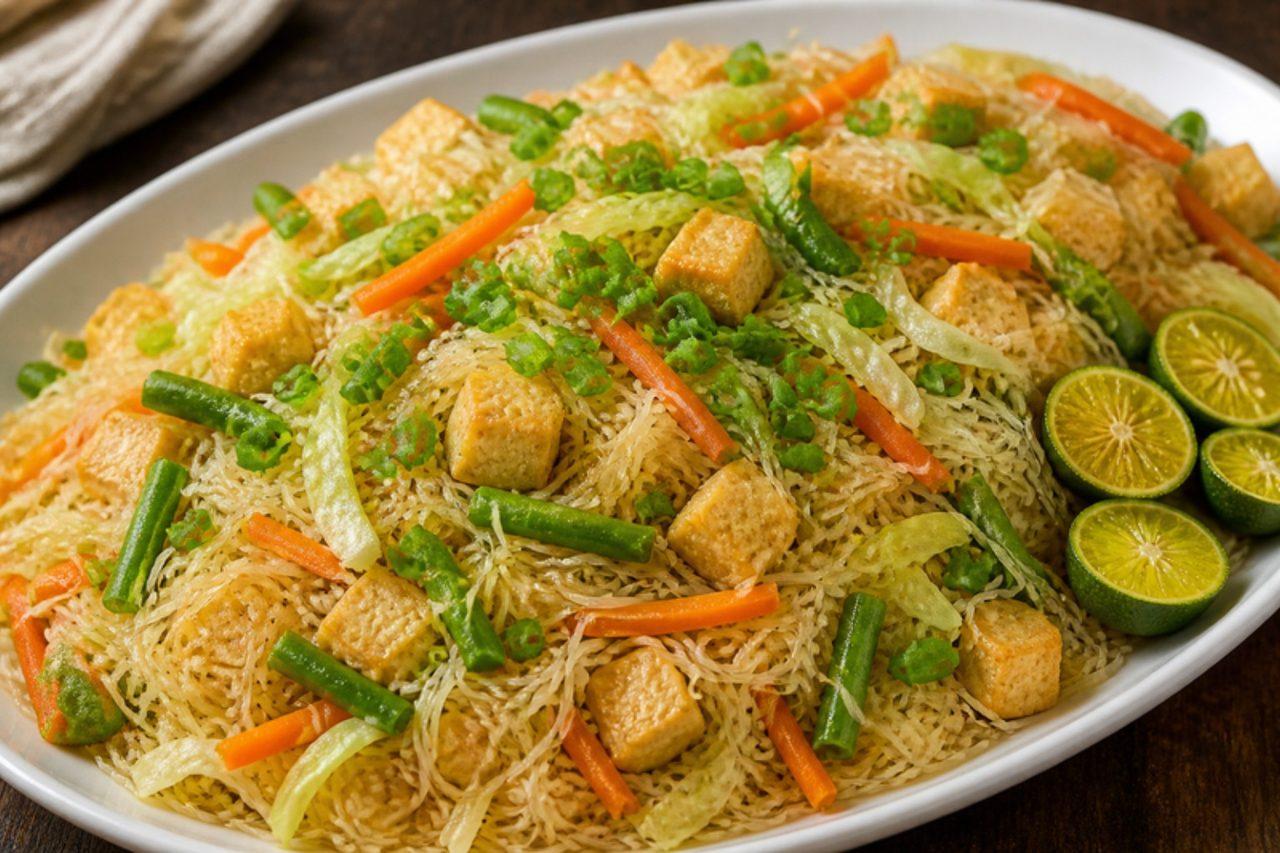
Pancit palabokRice noodles with shrimp sauce

No Manila birthday party or office merienda is complete without a tray of palabok. Soft rice noodles are smothered in a thick, bright orange sauce made from shrimp stock, minced pork and annatto, then scattered with crushed pork crackling (chicharrón), flaked smoked fish, sliced egg, shrimp and spring onion, with calamansi squeezed over at the table. It is rich, savoury and a little smoky. The pork in this recipe is minced pork shoulder, cooked through in the sauce. Chef's tip: simmer the shrimp heads and shells for the stock; sauce made from water and stock cubes tastes flat and dull.

by KrazyBadal 0 views

Puto bumbongPurple sticky rice tubes

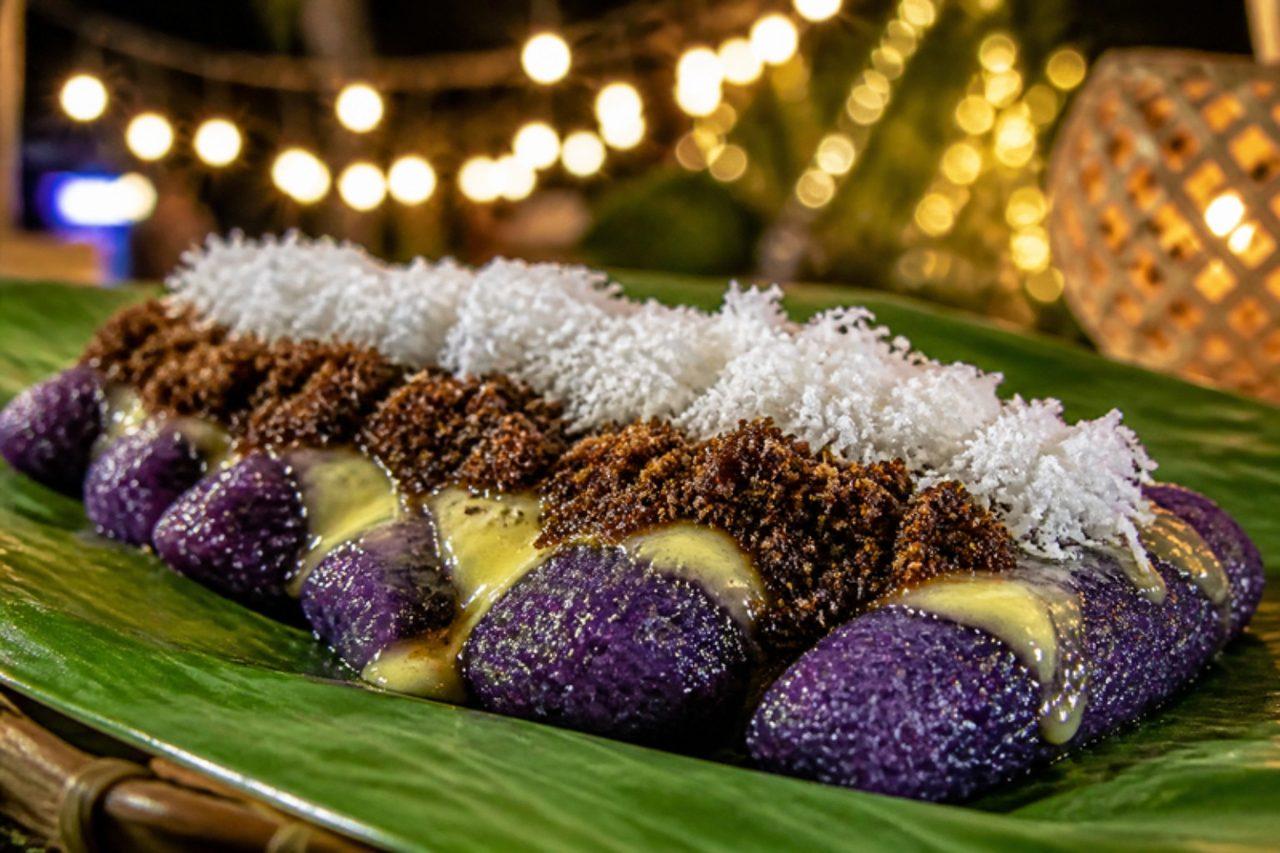
During the nine dawn masses of Simbang Gabi, from 16 to 24 December, vendors outside churches across Luzon steam puto bumbong in bamboo tubes over hissing kettles. The violet logs of ground purple and white glutinous rice are slid onto banana leaf, slathered with butter or margarine and showered with muscovado sugar and grated coconut, then eaten warm in the cold morning air. At home, small heatproof moulds or rolls of banana leaf stand in for the bamboo. Chef's tip: the ground rice must feel like damp sand, not batter; wet dough steams into a heavy paste instead of a loose, fluffy log.

by KrazyBadal 0 views

Filipino spaghetti

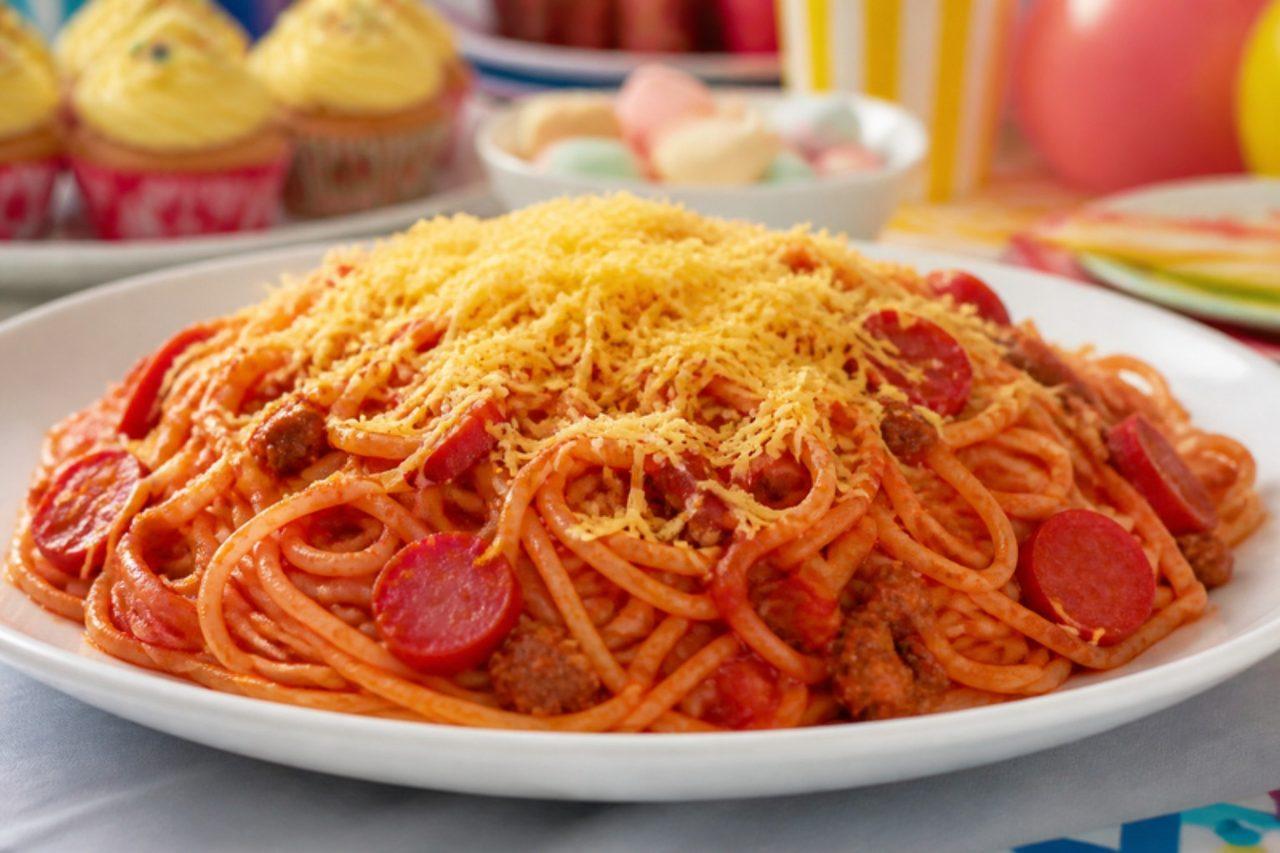
At children's birthday parties and on the Christmas Eve table in the Philippines, spaghetti comes sweet: a tomato sauce sweetened with banana ketchup and sugar, packed with minced pork and coins of red hot dog, and buried under grated cheese. It is pure nostalgia, beloved by kids and adults alike. The pork here is minced pork, simmered until well cooked through. Chef's tip: brown the hot dog slices separately before they go into the sauce; simmered from raw they turn soft and rubbery instead of slightly crisp at the edges.

by KrazyBadal 0 views

Sinamak

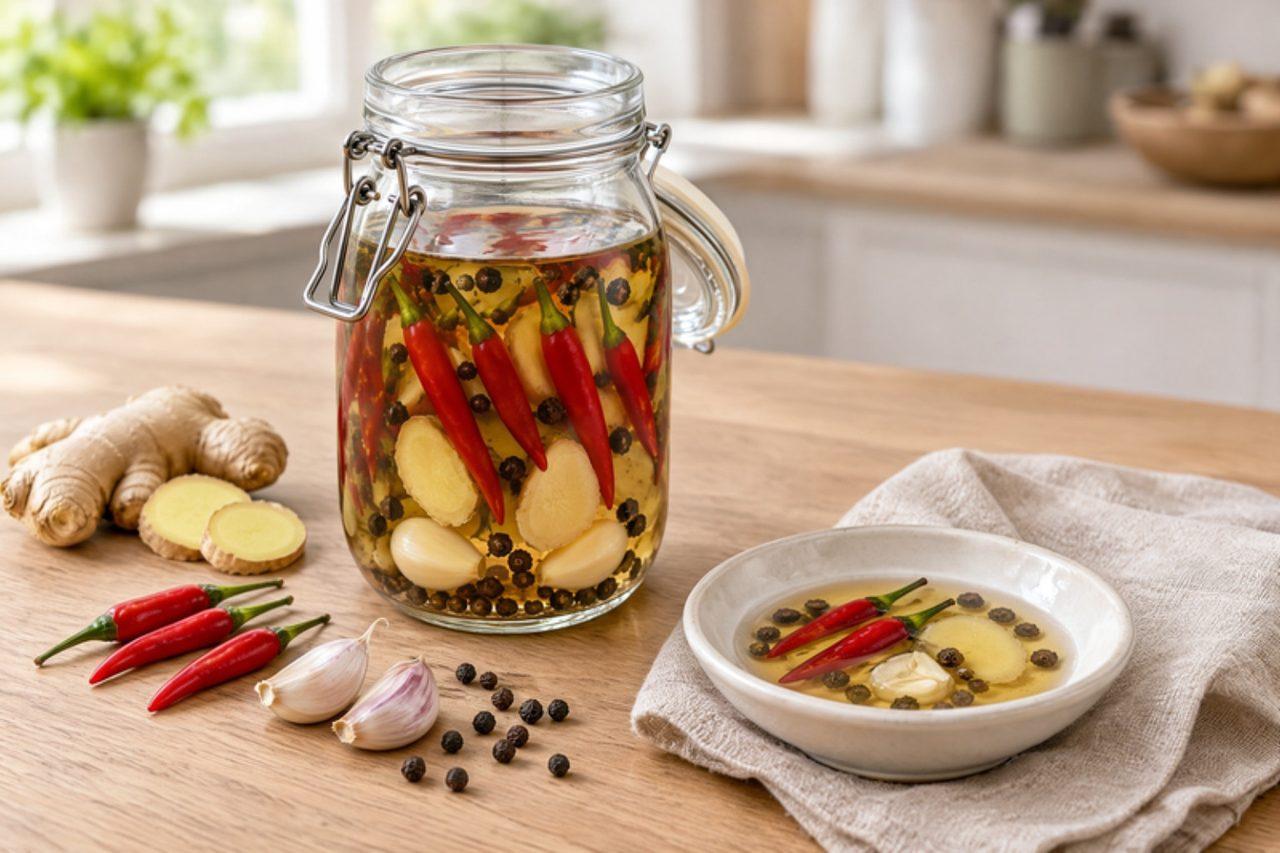
Iloilo is the home of La Paz batchoy and chicken inasal, and on every table there sits a tall bottle of sinamak, cane or coconut vinegar crowded with chillies, garlic and ginger. Visayan families keep a bottle going all year, and the dip turns up with grilled pork belly, crisp lechon kawali, fried fish and longganisa at breakfast. After a few days of steeping it is clean and sour, hot from siling labuyo, warm with ginger and peppery, with a faint sweetness from the cane vinegar. Common mistake: making a huge bottle and leaving it in a warm kitchen for months; fresh garlic and ginger are low-acid, so use full-strength vinegar, keep it in the fridge and make a fresh batch every couple of months. Toasting the garlic is not traditional and is not needed. It is ready when the vinegar has turned faintly golden and smells strongly of chilli and garlic, usually after 3 days. Chef's tip: bruise the chillies with the flat of a knife instead of slicing them; the heat comes out slowly and the vinegar stays clear. Cider vinegar can stand in for cane or coconut vinegar.

by KrazyBadal 0 views

Ginataang sigarilyasWinged beans in coconut milk

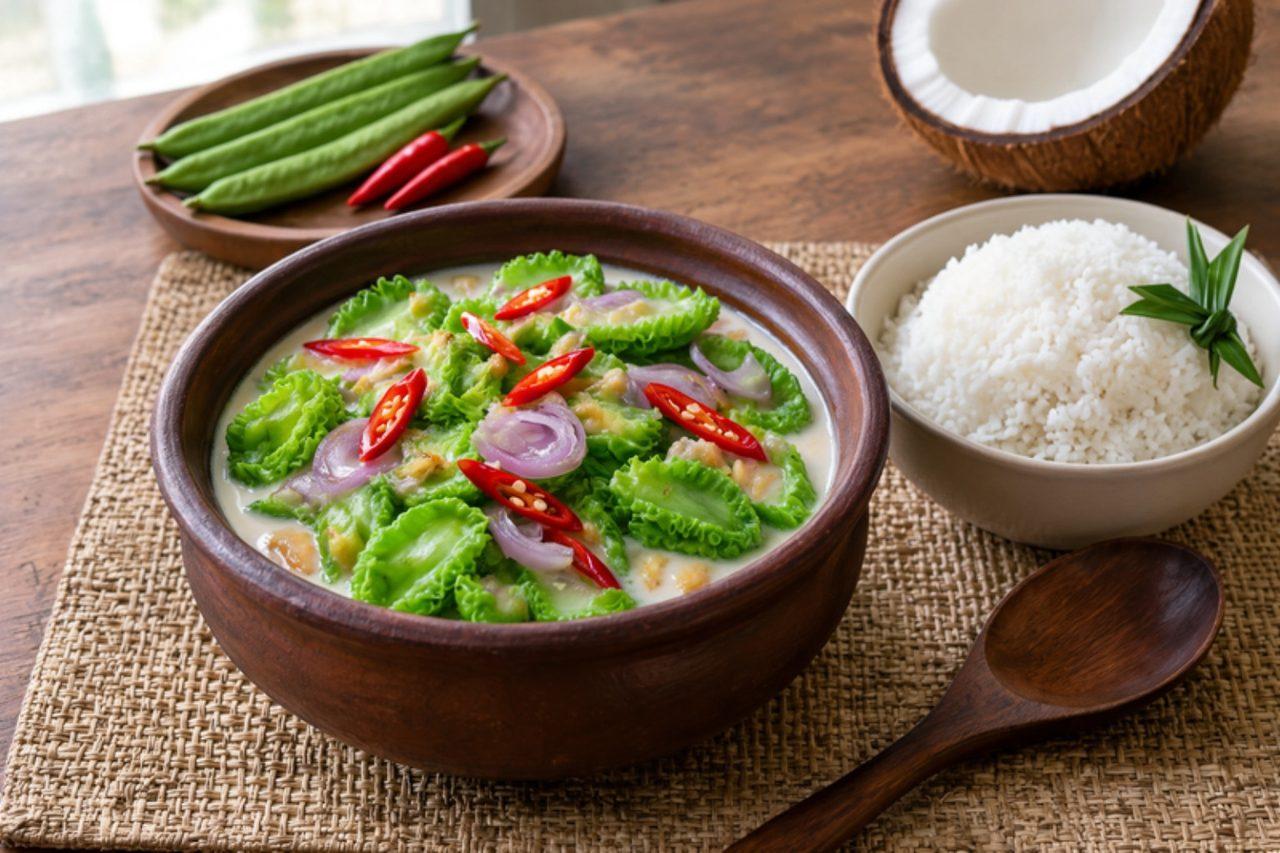
Winged beans, sigarilyas, climb the backyard fences of Luzon and Visayan homes, and on rainy-season weekdays they are sliced and simmered in coconut milk for a quick ulam to go with rice. The frilly beans stay crisp-tender and soak up the garlicky, gently spicy gata. Many cooks add shrimp paste; this version keeps it vegan with a little soy sauce. The usual mistake is overcooking: winged beans lose their crunch and go dull green in minutes, so add them only when the coconut milk has reduced. Chef's tip: cut the beans on a sharp diagonal so each slice shows off the four ruffled wings.

by KrazyBadal 0 views

Ginataang puso ng sagingBanana blossom in coconut milk

Every banana tree in the Philippine countryside gives a heavy purple flower, and in Bicol, Batangas and the Visayas it is shredded and stewed in coconut milk as an everyday ulam for lunch with rice. The banana blossom has a tender, slightly flaky texture and soaks up the ginger, garlic and chilli. The traditional version includes shrimp or fish; this one is vegan. The usual mistake is skipping the salt rub: unrubbed banana blossom stays bitter and turns the sauce grey, so squeeze out its dark sap first. Chef's tip: keep the shredded blossom in water with a spoon of vinegar while you work, so it stays pale.

by KrazyBadal 0 views

Bagoong alamangFried krill paste

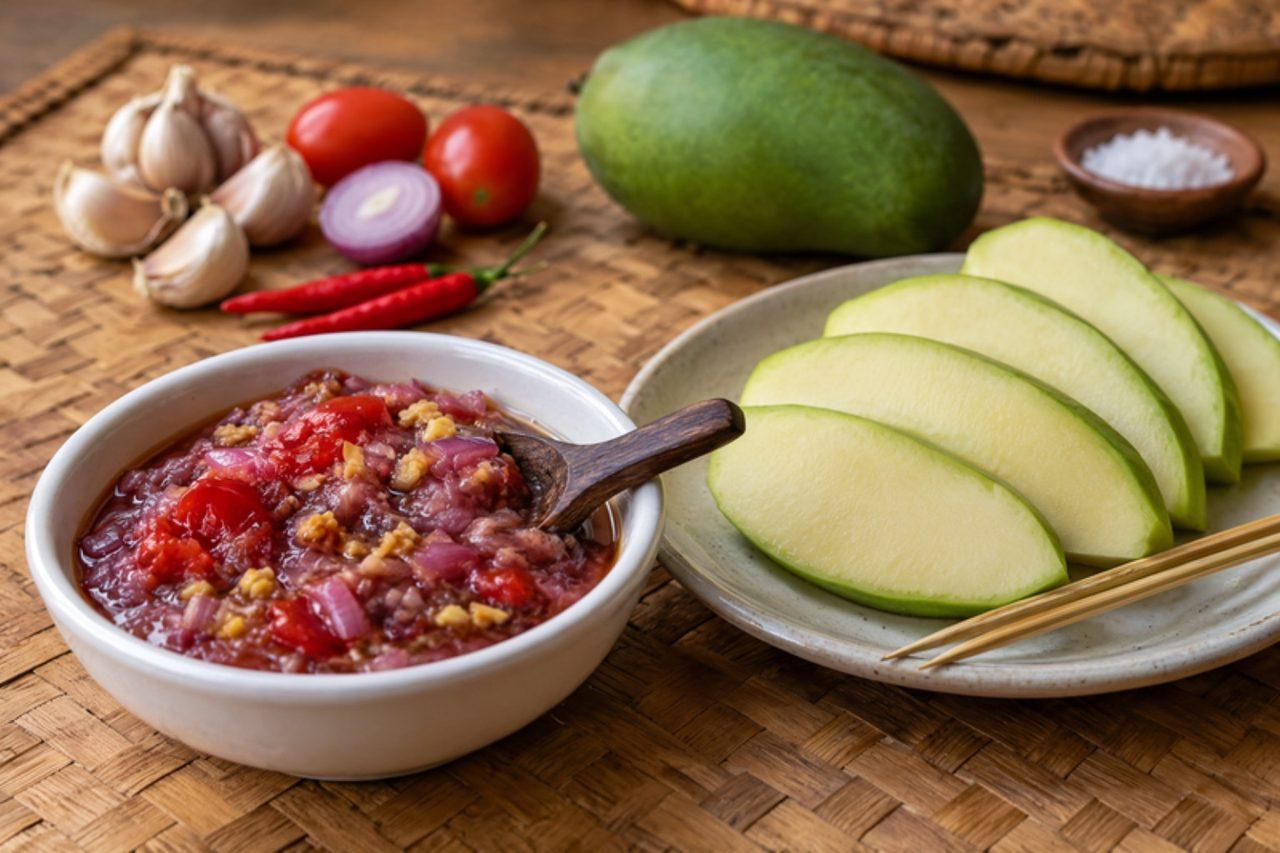
Across Luzon, a jar of ginisang bagoong sits in nearly every kitchen. In the hot months from March to May, when green mangoes are sour and crisp, it becomes the classic merienda: thin slices of unripe mango dragged through sweet, salty, garlicky shrimp paste, often shared on a porch in the afternoon. It is also the essential partner to kare-kare and the base of binagoongang baboy. Raw salted alamang (tiny krill or shrimp) is sold pink and wet; frying it with garlic, onion and tomato, then sugar and cane vinegar, turns it deep reddish brown, thick, glossy and rounded, with the briny punch still there. The raw paste is a raw-cured seafood, so this recipe always cooks it right through; pregnant people, babies, older people and anyone with weak immunity should only eat bagoong that has been fully sautéed and kept cold. Common mistake: high heat after the sugar goes in, which scorches it and turns the bagoong bitter. Keep it at a medium-low simmer. It is ready when the oil separates and shines on top and it smells toasty rather than fishy. Chef's tip: a few slivers of crisp pork belly fried first make it richer.

by KrazyBadal 0 views

LongganisaGarlic pork sausages

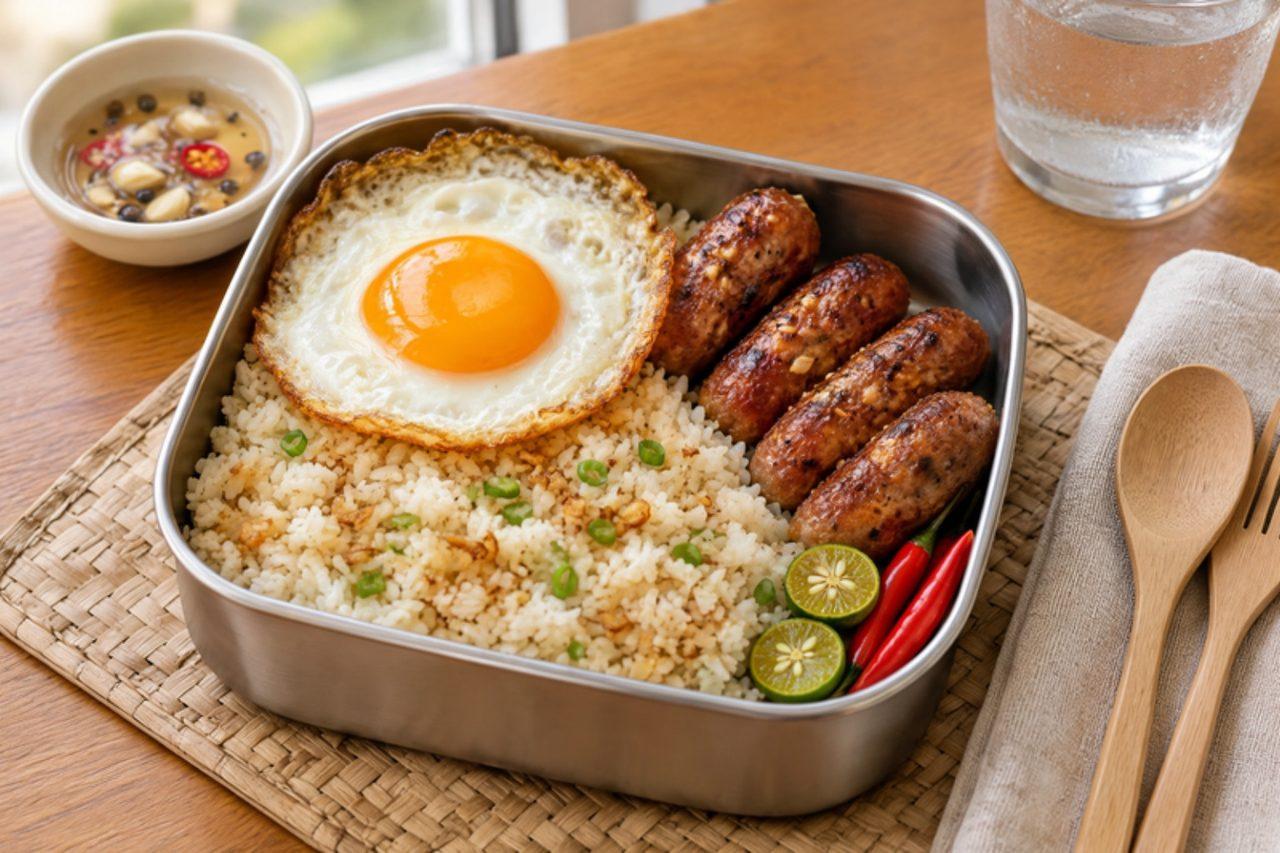
Every Philippine province has its longganisa, from the garlicky, sour sausages of Vigan to the oregano-scented ones of Lucban and the sweet, sticky Pampanga style; this homemade skinless (hubad) version sits between them. These pork sausages are fried until caramelised, then packed into the baon (packed lunch) with sinangag garlic rice and a fried egg. The common mistake is frying them hard from raw, which burns the sugar before the pork is cooked; simmer them in a little water first. Chef's tip: roll the mixture in baking paper and chill overnight, and the sausages slice and fry far more neatly.

by KrazyBadal 0 views

Ensaladang talbos ng kamote (sweet potato leaf salad)

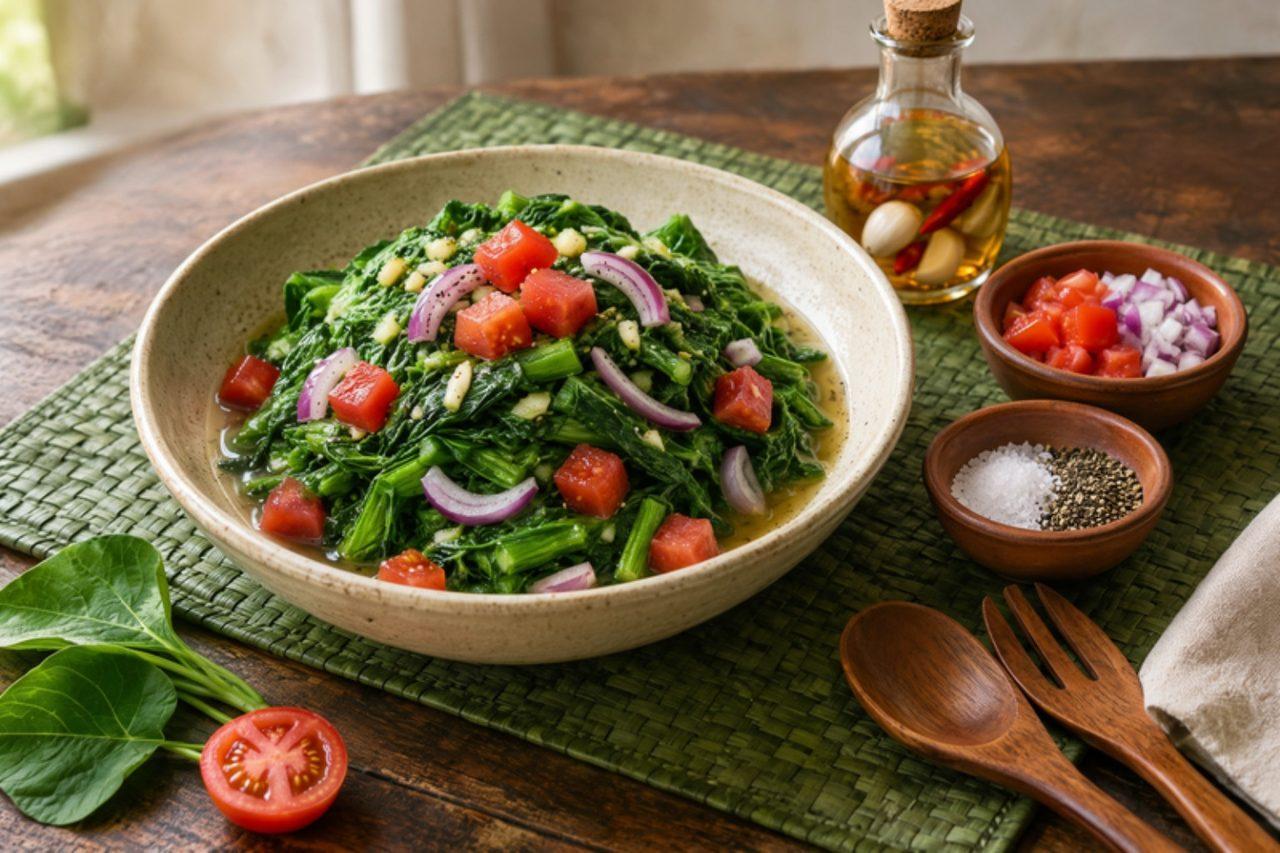
In Filipino provinces from Pampanga to Leyte, the tender tips of sweet potato vines grow by every house, and this quick salad of blanched leaves, ripe tomato and red onion in sukang Iloko vinegar sits beside fried fish or rice in baon and family lunches. The leaves turn silky and mild, and the vinegar keeps it fresh in a closed tub. The mistake is boiling the leaves for minutes until they turn dark and slimy; thirty seconds is enough. Chef's tip: plunge the leaves into iced water straight from the pot, so they stay bright green until lunchtime.

by KrazyBadal 0 views

Nilagang saba mash for babiesBoiled banana mash for babies

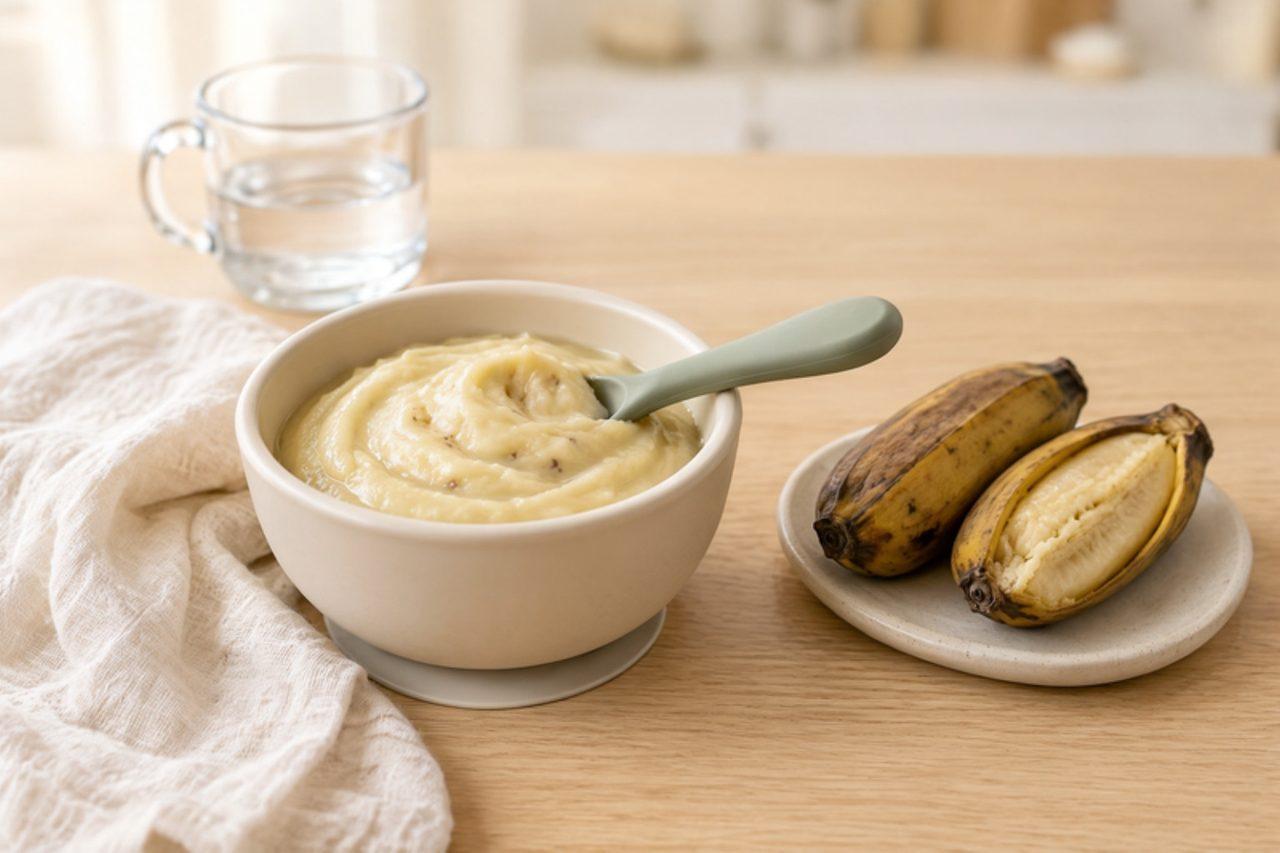
Saba, the short, square-edged cooking banana piled in every palengke from Quezon City to Davao, is boiled in its skin for nilagang saging, a merienda (afternoon snack) eaten with a cup of coffee. For babies, the same boiled saba is peeled and mashed into a soft, peachy, honey-sweet purée, and it is one of the most common first foods in Filipino homes. Saba is firmer and starchier than an eating banana, which is why it is always cooked. Nothing is added: no salt, sugar or condensed milk under one. It is free of the major allergens. Chef's tip: pick saba whose skins are yellow with black spots; green ones are too starchy and can upset small tummies.

by KrazyBadal 0 views

BinatogBoiled hominy with coconut

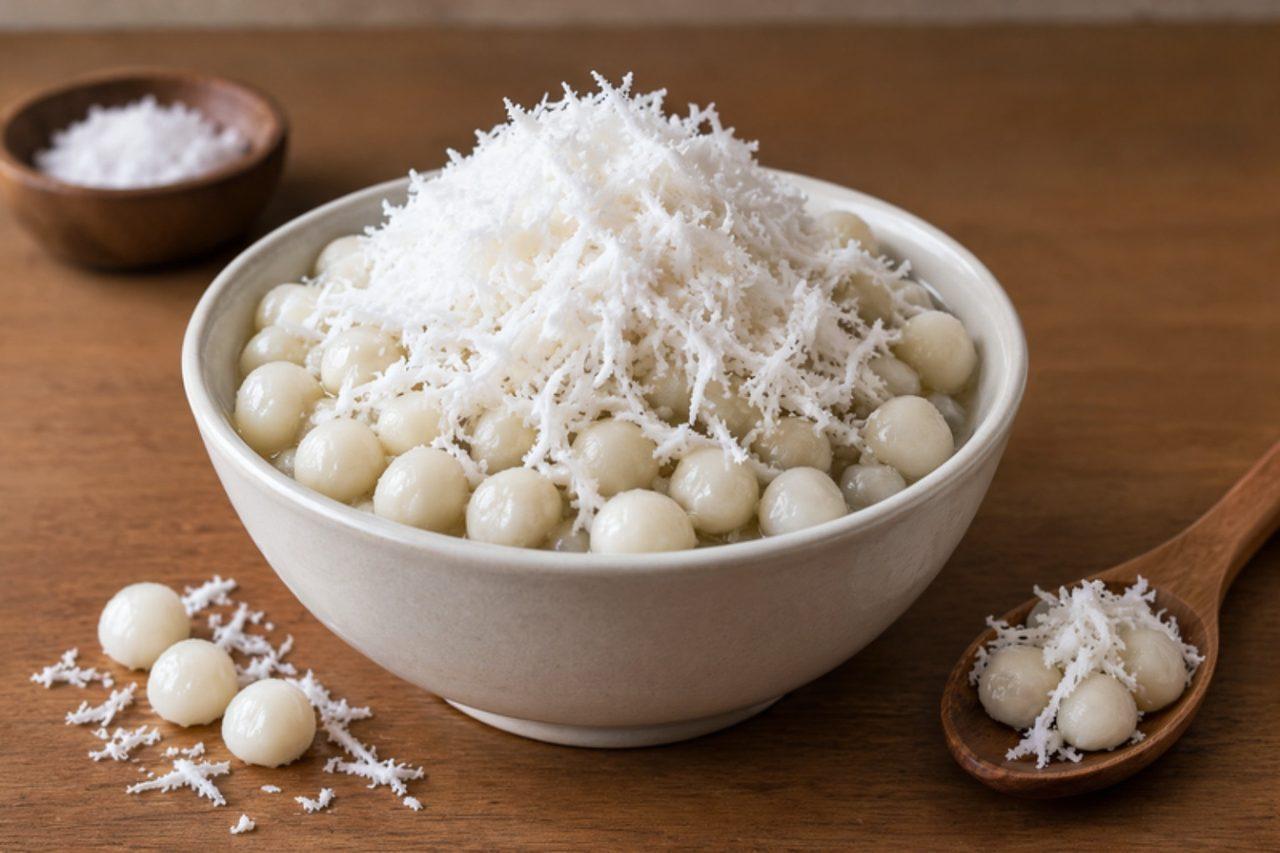
Binatog is an afternoon snack sold from bicycle carts that ring their way through the side streets of Manila, especially around Tondo and Sampaloc, the vendor scooping steaming white corn from a big tin can into small cups. The kernels are plump, chewy and nutty, piled with snowy grated coconut and finished with salt or sugar to taste, so everyone gets it the way they like. It is simple, filling and naturally vegan. Dried white hominy (pozole corn) has already been treated with lime, which gives the chewy, popped kernels; if you can only find canned hominy, rinse it and warm it for 10 minutes instead. Chef's tip: keep the kernels at a gentle simmer; a hard boil splits them before they become tender.

by KrazyBadal 0 views

Cheese pimiento sandwich

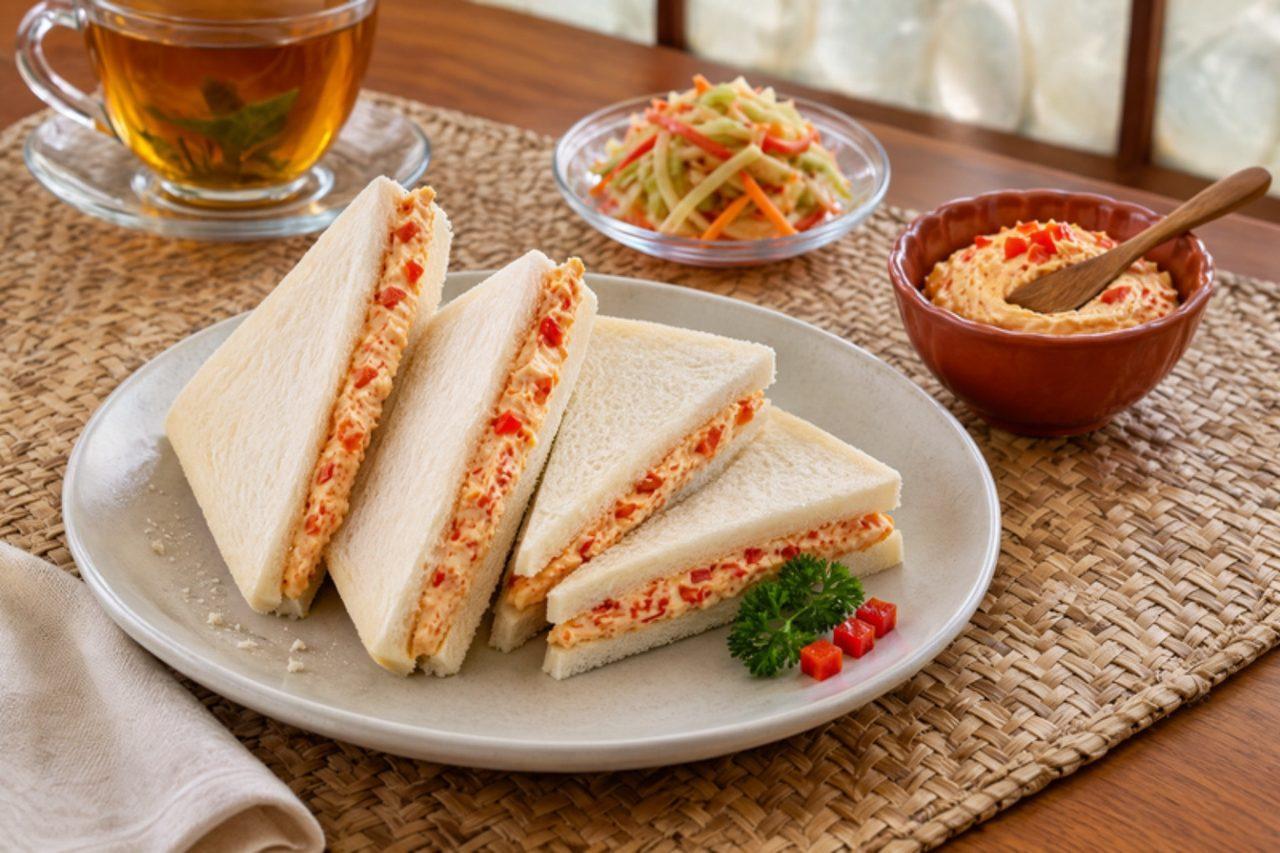
Cheese pimiento is the orange spread every Filipino child knows from school baon, birthday party trays and afternoon merienda in Manila: grated cheese mashed with mayonnaise, chopped pimiento and a little sugar, spread thick on soft white bread with the crusts cut off. The mistake is grating the cheese too coarsely, which gives a lumpy spread that tears the soft bread; grate it finely and let it soften for a few minutes in the mayonnaise. Many processed and cheddar cheeses are made with animal rennet, so choose one labelled vegetarian. Chef's tip: a spoon of evaporated milk makes the spread silkier and easier to spread on soft bread. Contains milk, egg (mayonnaise) and gluten.

by KrazyBadal 0 views

Adobong talong (aubergine adobo)

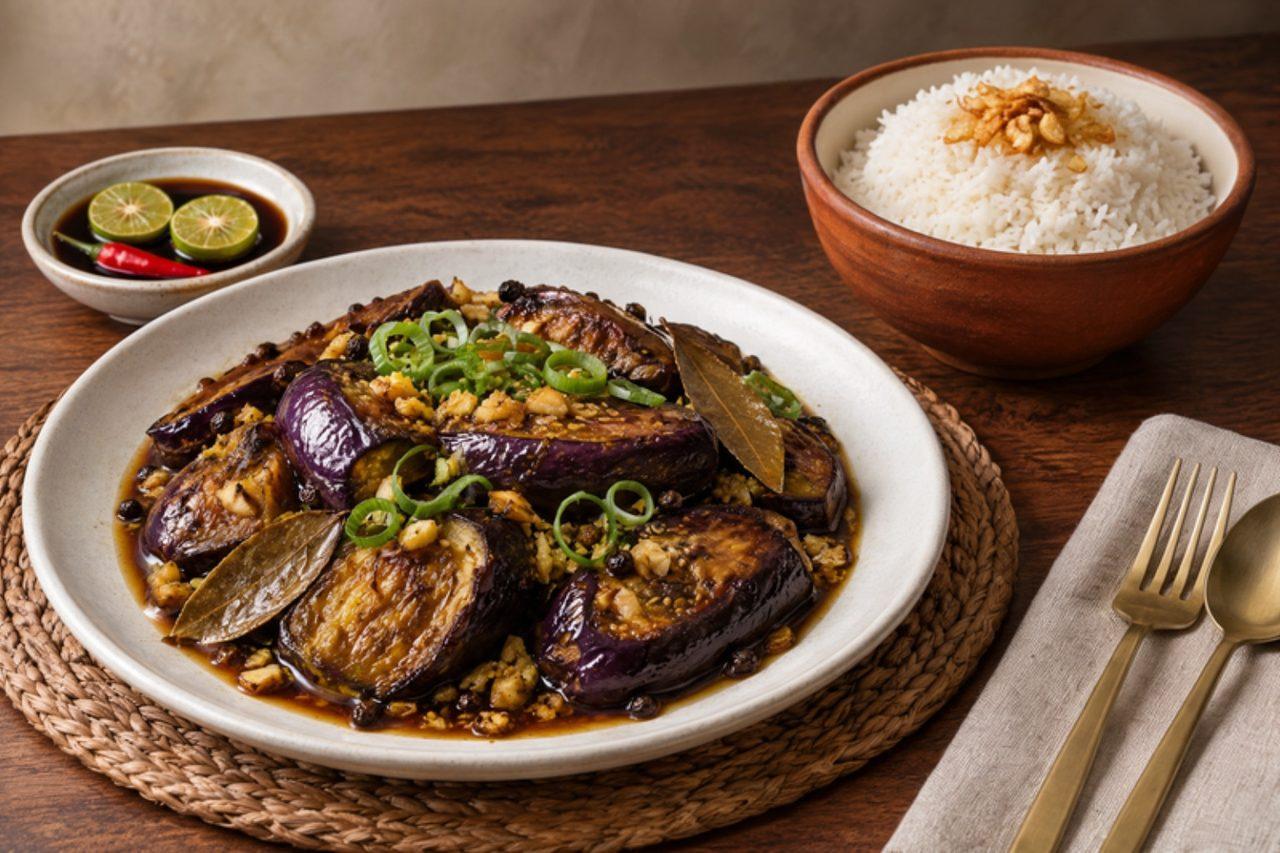
Adobo is a method in the Philippines, not a single dish, and when meat is short or it's Lent, Filipino families make it with long eggplant: fried until soft and browned, then simmered briefly in vinegar, soy sauce, garlic, bay and peppercorns. Like any adobo it tastes better the next day, which makes it a favourite for baon with rice. The common mistake is stirring as soon as the vinegar goes in; let it boil untouched for a minute first, or the sauce keeps a raw, sharp edge. Chef's tip: crush the garlic and fry half of it until golden to scatter on top at the end, for crunch.

by KrazyBadal 0 views

Burong isdaFermented fish and rice

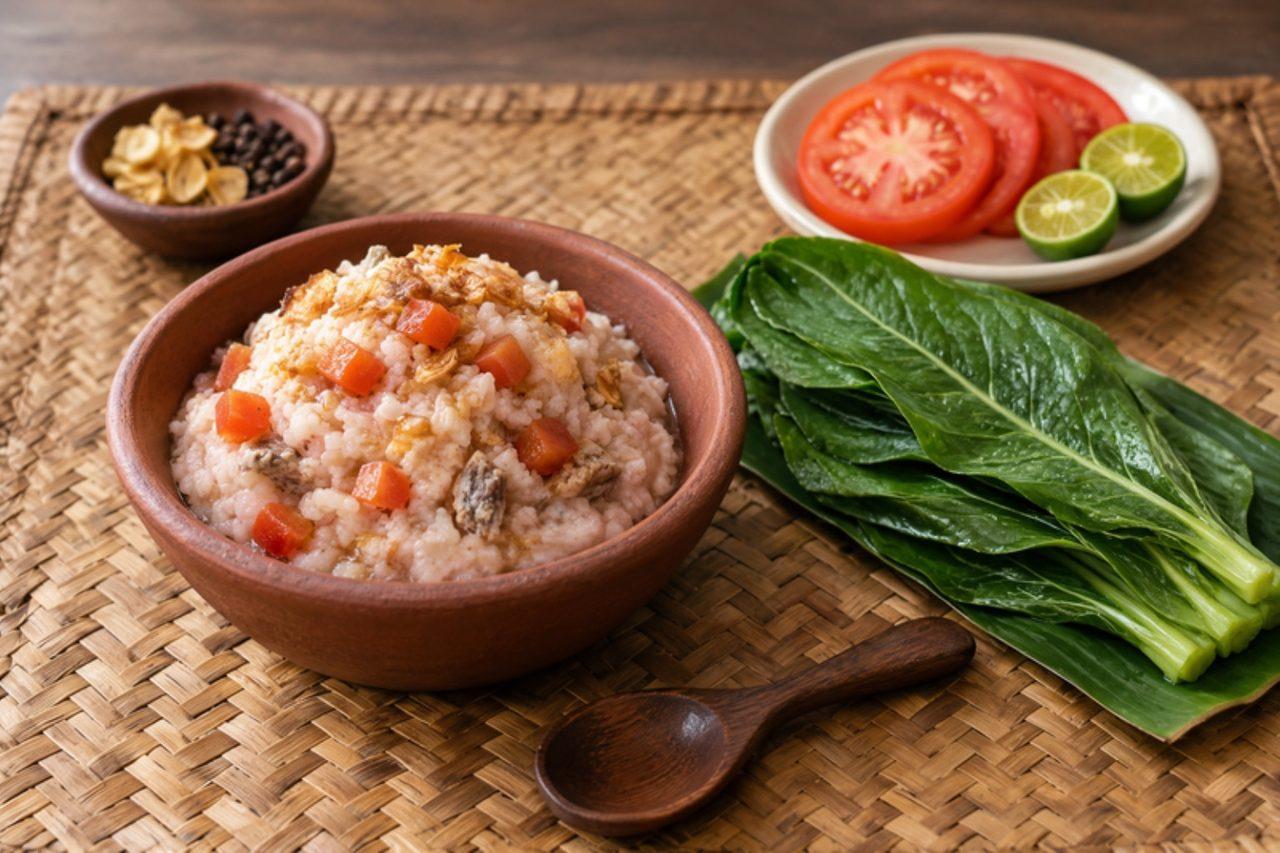
Burong isda is a Kapampangan treasure. In Pampanga, and in neighbouring Bulacan and Tarlac, families make buro in the rainy months when mudfish and tilapia are plentiful, and the sautéed paste is set out at home lunches with fried or grilled fish, steamed okra and eggplant, and blanched mustard leaves (mustasa) to wrap it in. Cooked rice and salted fish ferment together for about a week until the rice has melted into a soft, pinkish porridge and the fish bones soften. Sautéed with garlic, onion and tomato, it becomes creamy, sour, salty and deeply savoury, a little like a cheese spread. Because the fish ferments raw, two rules matter: cure it first in 20% salt, and always cook the buro until bubbling hot before eating; never eat it straight from the jar. Pregnant people, babies, older people and anyone with weak immunity should only eat it freshly cooked, or skip it. Common mistake: packing hot rice, which spoils the ferment; cool it fully. It is ready to cook when it smells pleasantly sour, like sourdough, and the rice is soft. Chef's tip: a teaspoon of angkak (red yeast rice) gives the traditional pink colour.

by KrazyBadal 0 views

Burong manggaPickled green mango

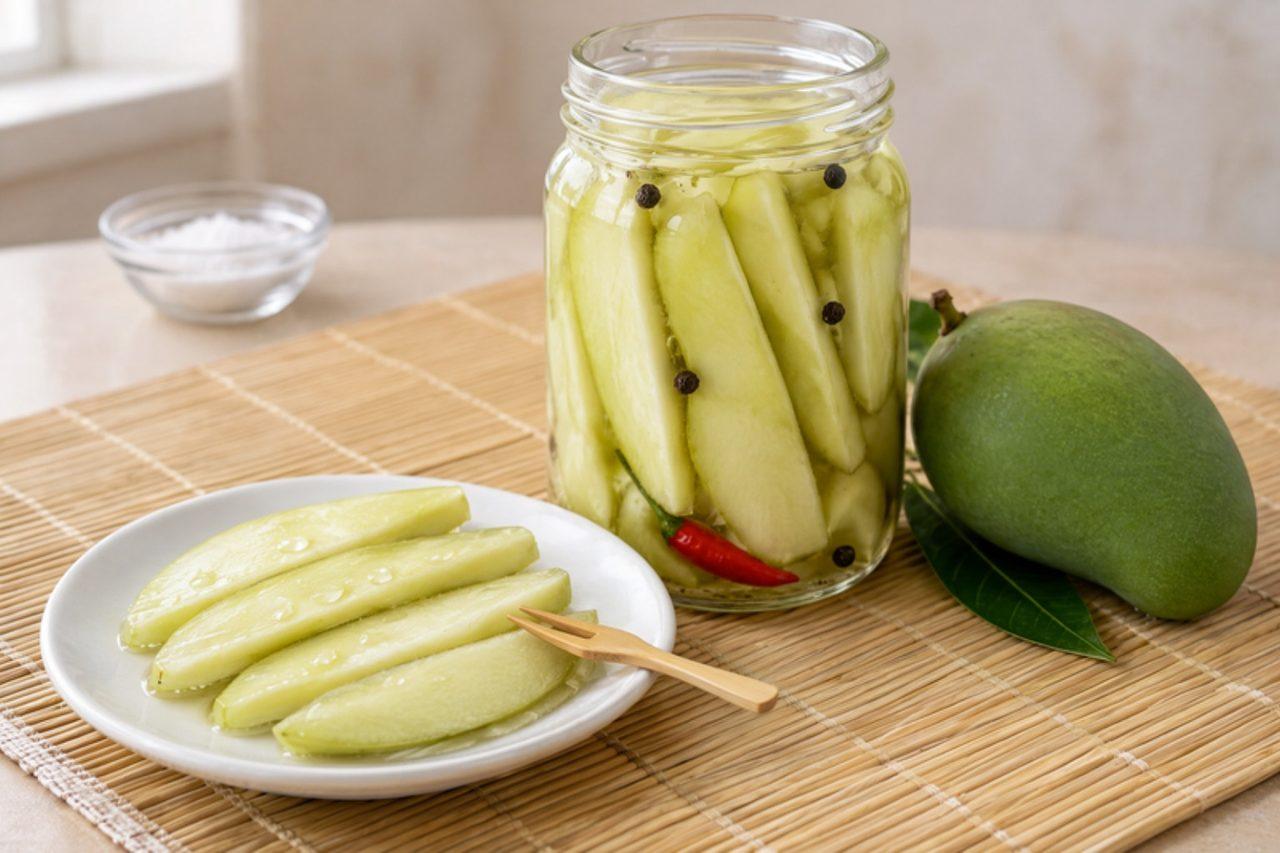
From Pampanga to Pangasinan, the hot months of March to May bring piles of hard green carabao mangoes to every palengke, and many households slice them into a jar of burong mangga. A week in a sweet salt brine turns the mango from mouth-puckering to bright and juicy: still crunchy, sour at the core, salty-sweet on the outside. It is eaten on the side of inihaw na isda and pritong tilapia, with rice and fried pork at lunch, or as an afternoon merienda straight from the jar, and the brine is sometimes sipped too. Common mistake: using mangoes that have started to ripen; a yellow blush makes the slices go soft and slimy, so choose rock-hard, deep-green fruit. Because the brine has no vinegar it keeps only in the fridge. It is ready when the slices have turned from opaque white to a translucent yellow-green and taste evenly seasoned right through. Chef's tip: let the boiled brine cool completely before pouring, and add a few slices of fresh chilli if you like heat. Outside Asia, use firm green Thai or Indian mangoes from an Asian grocer.

by KrazyBadal 0 views

Camote cueCaramelised fried sweet potato

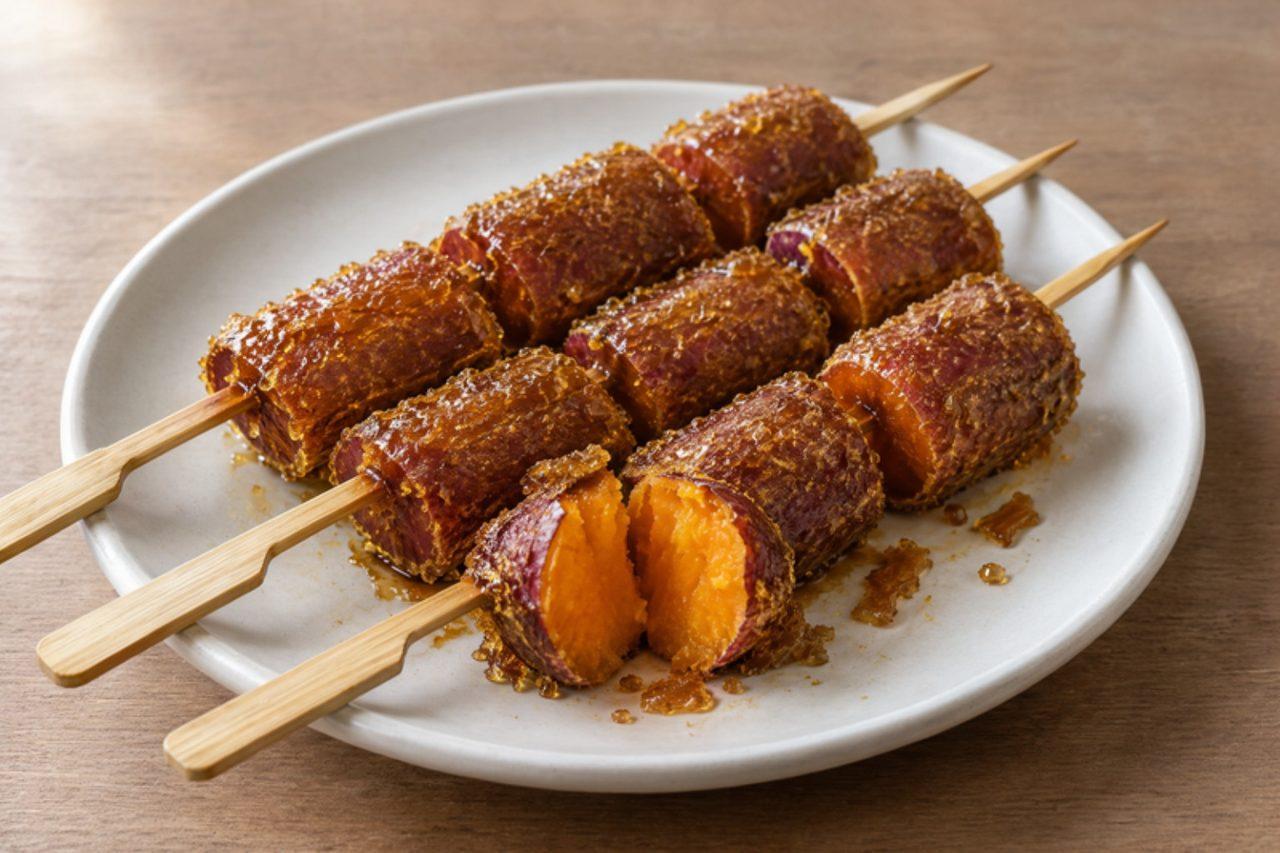
Camote cue is the three-o'clock merienda of Manila, fried in big woks by vendors on the corners of Quiapo, outside university gates on España Boulevard and along every jeepney route, alongside banana cue. Chunks of sweet potato are fried until tender, then brown sugar is scattered into the hot oil, where it melts and wraps each piece in a glassy, crackly caramel coat. They are threaded onto bamboo sticks and eaten warm, with a soft, sweet, chestnut-like centre. Chef's tip: let the oil cool slightly before adding the sugar; sugar dropped into very hot oil burns and turns bitter in seconds.

by KrazyBadal 0 views

Daing na bangusMarinated fried milkfish

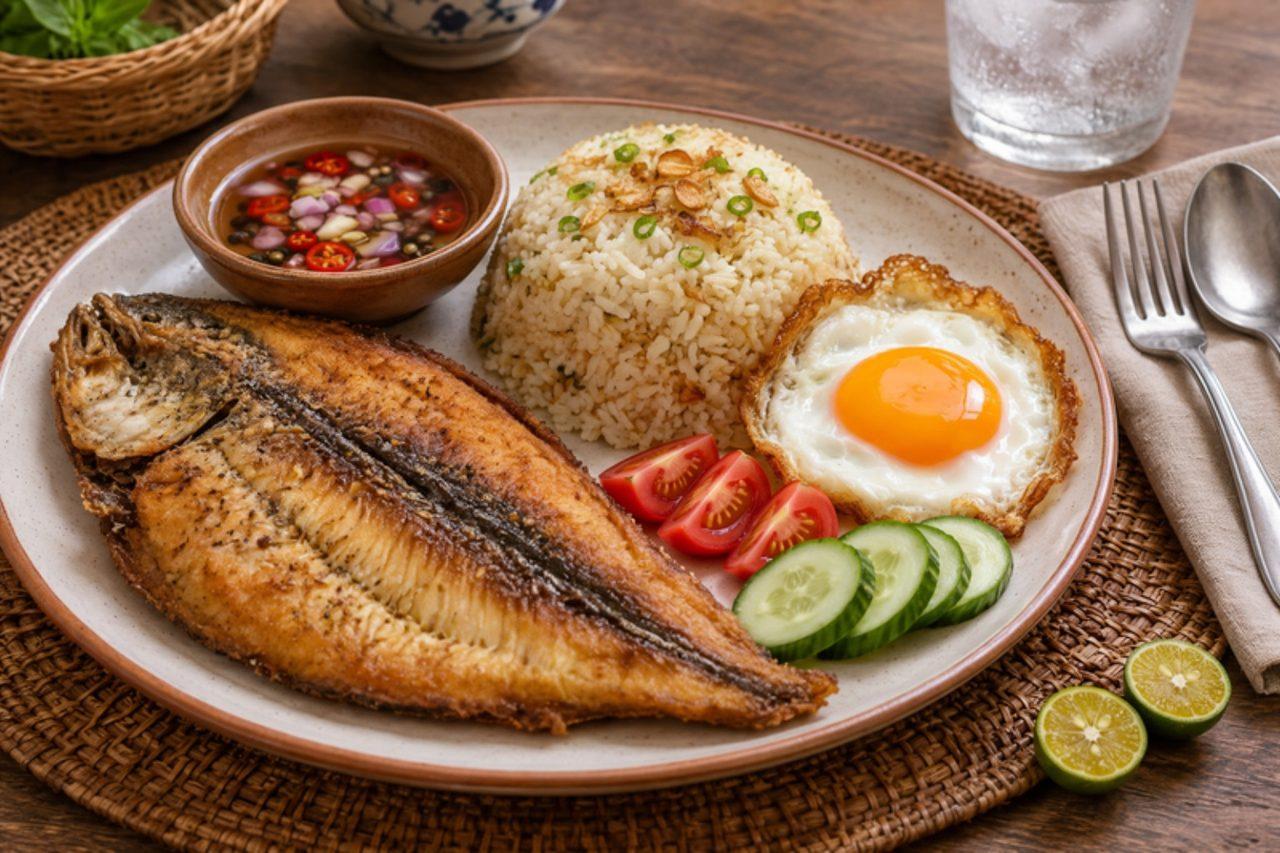
Bangus (milkfish) is the national fish of the Philippines, and daing na bangus, butterflied and soaked overnight in vinegar, garlic and pepper, then fried until the skin shatters, is a favourite morning plate from Pangasinan to Manila. It comes with garlic rice, a fried egg and a dip of spiced vinegar. Buy it boneless (deboned bangus) from Filipino shops, or use mackerel fillets. The usual mistake is putting the wet fish straight into the oil, which spits and stops it crisping. Chef's tip: pat the fish completely dry and fry skin side down first, pressing gently, without moving it for five minutes.

by KrazyBadal 0 views

BulanglangMixed vegetable stew

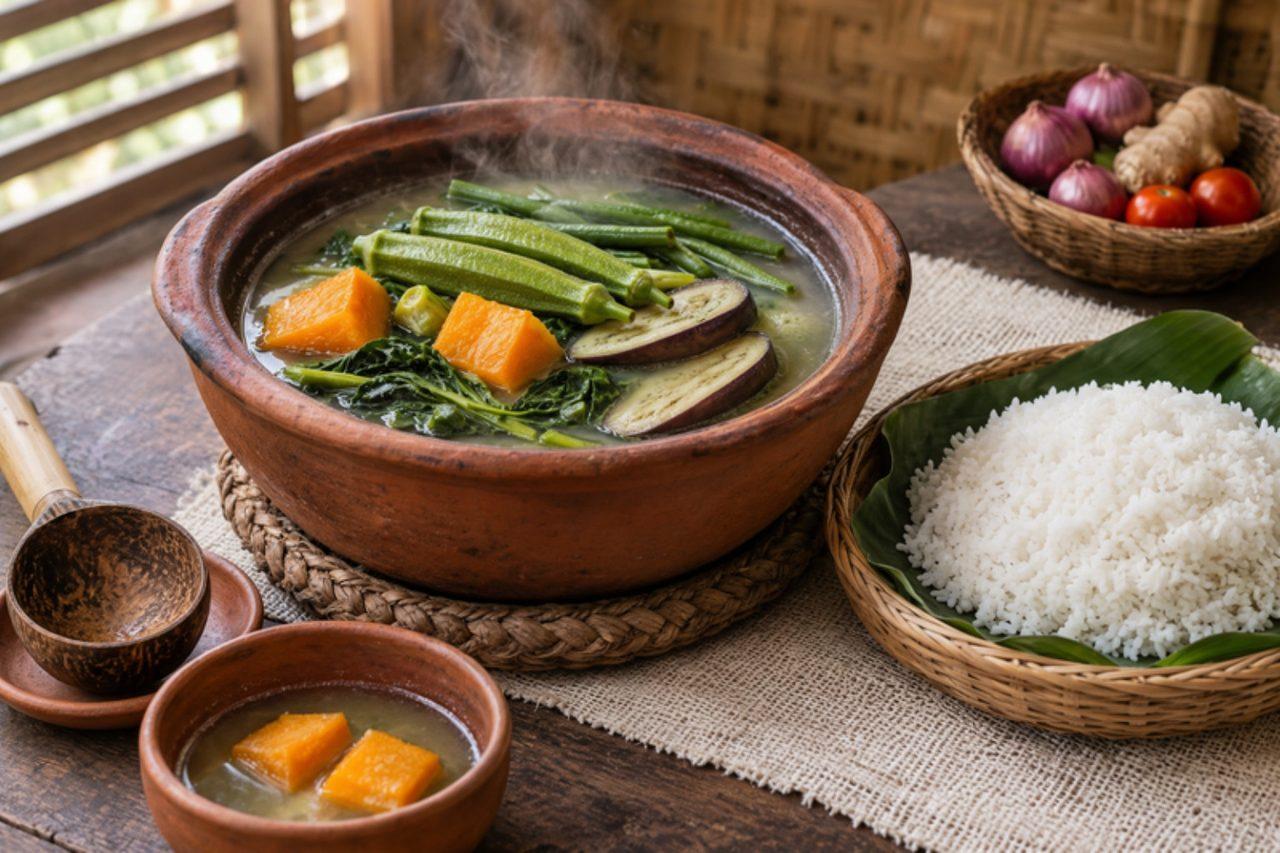
Bulanglang is the plain, light vegetable soup of Batangas and the Tagalog provinces, made in farmhouses at lunchtime from whatever is in the garden: squash, okra, string beans, eggplant and a handful of malunggay or sweet potato leaves. Instead of stock it uses hugas bigas, the cloudy water from washing rice, which gives the broth a soft, milky body. It is often eaten with grilled fish and a dip of bagoong; this version stays vegan and is served with a soy-and-calamansi dip. The usual mistake is boiling everything together from the start, which leaves mushy squash and raw-tasting okra; add the vegetables in order of firmness. Chef's tip: save the second rice wash, not the first, for the cleanest, creamiest broth.

by KrazyBadal 0 views

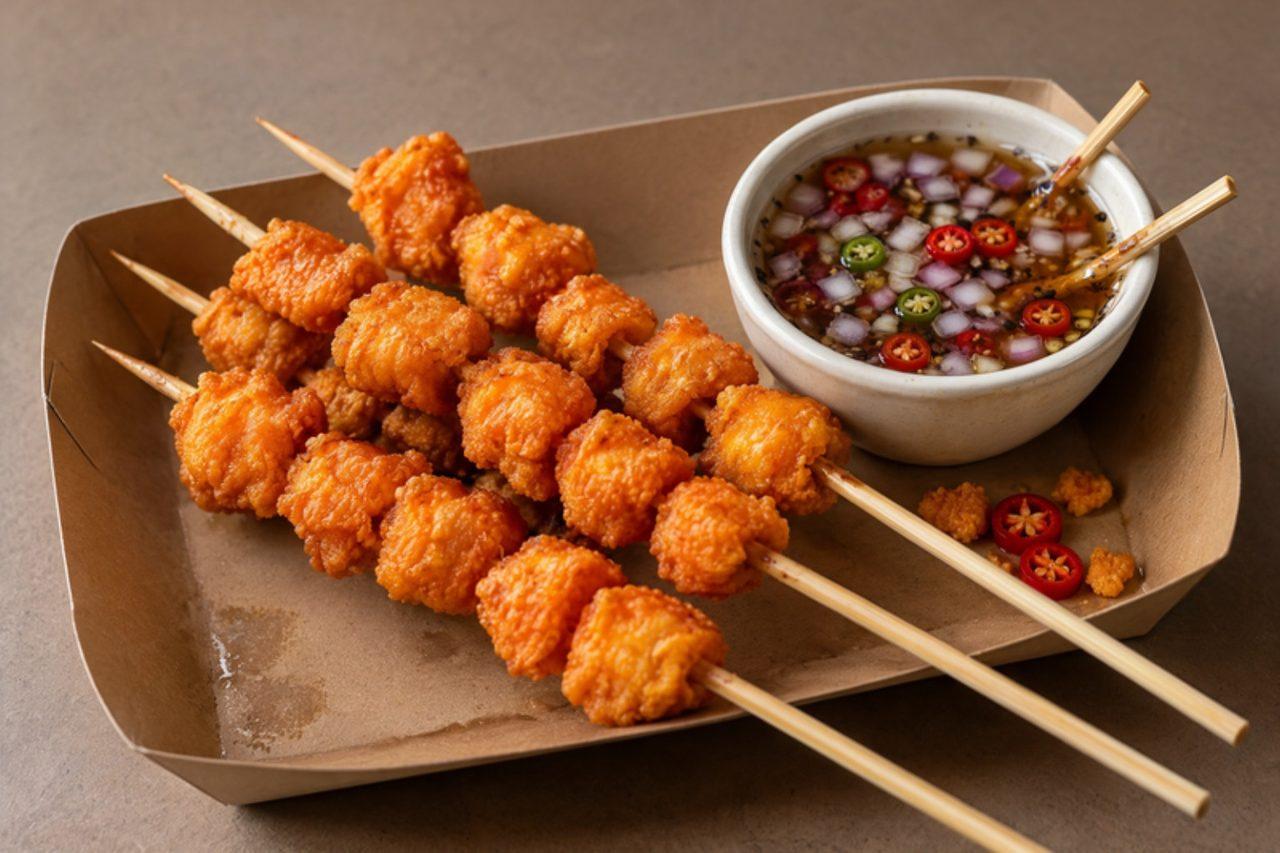
ProbenBattered chicken gizzard skewers

Proben is the cheap, crunchy favourite of Manila's late-afternoon fishball carts, fried beside kwek-kwek and squidballs on the street corners of Cubao and outside the colleges of the University Belt. It is made from the proventriculus, the small glandular part of a chicken's stomach that sits just before the gizzard, boiled until tender, coated in a thin annatto-tinted batter and fried until shatteringly crisp. Diners skewer the pieces themselves and dunk them in sukang maanghang, a vinegar spiked with garlic, onion and chilli. Ask a poultry butcher or an Asian grocery for proventriculus; well-cleaned gizzards cut into small pieces are the closest swap. Contains wheat. Chef's tip: boil the proventriculus first until fully tender; frying alone leaves it rubbery.

by KrazyBadal 0 views

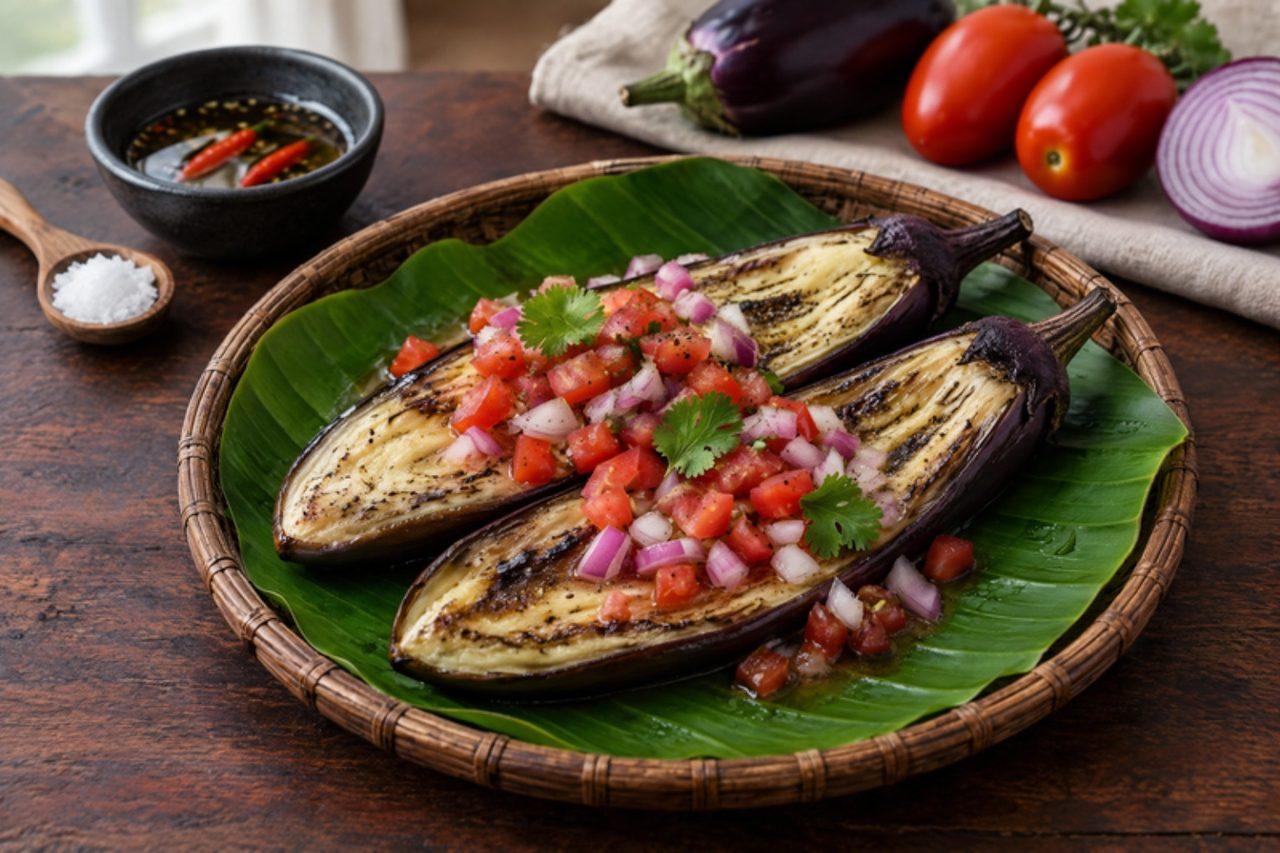
Ensaladang talongGrilled aubergine salad

Ensaladang talong is the smoky side salad that sits beside grilled fish or pork at Filipino family lunches, from Pampanga to Davao, and on the table at weekend beach outings. Long Asian eggplants are charred whole until the flesh collapses, then peeled and topped with diced tomato, red onion and a sharp vinegar dressing. This version leaves out the usual fermented shrimp paste so it is vegan. Suitable as part of a balanced diet, it is low in starch: about 70 kcal and 10 g carbohydrate per portion. The usual mistake is pulling the eggplants off the heat too soon; they must be soft right through, or the flesh is spongy and raw. Chef's tip: peel the hot eggplants under a trickle of water with your fingertips to keep the smoky flesh whole.

by KrazyBadal 0 views

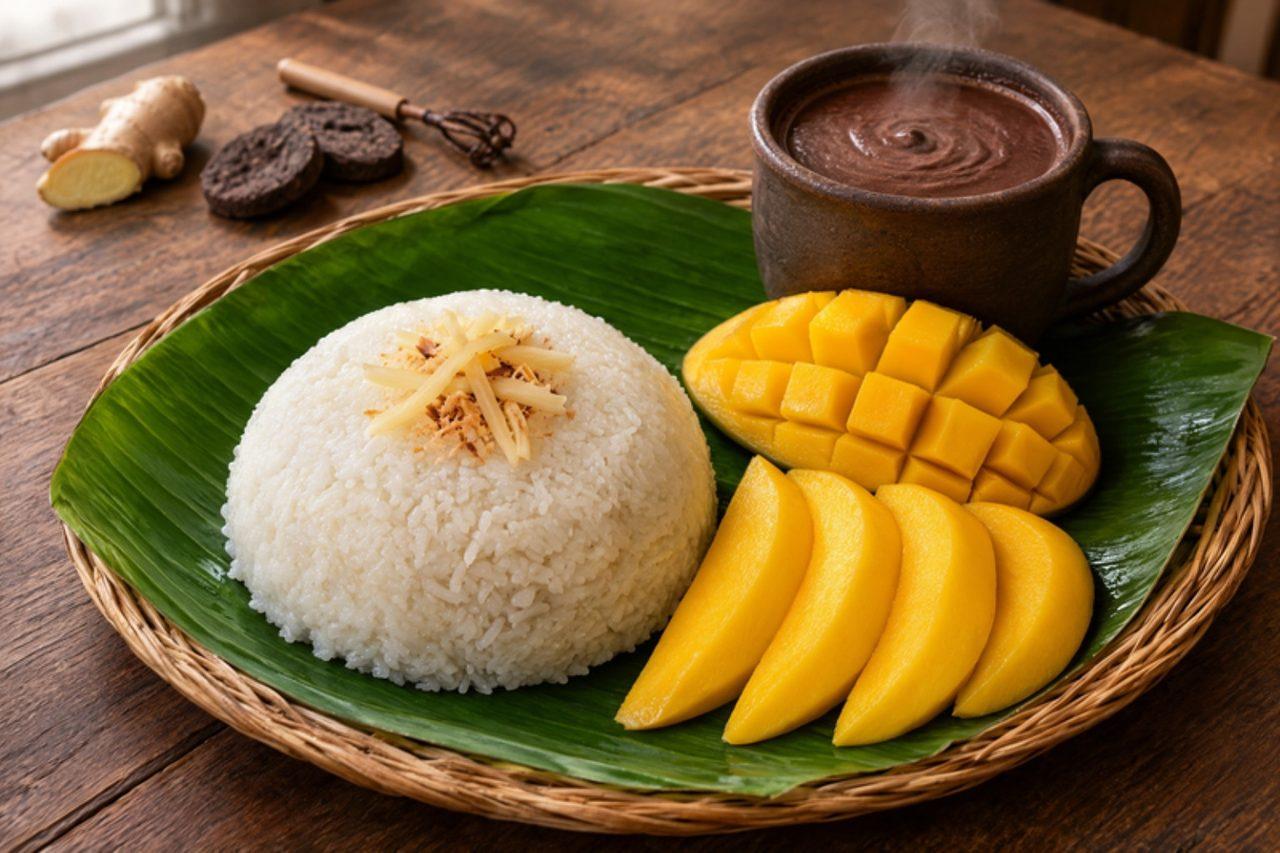
Puto mayaGinger sticky rice with mango

At dawn in Cebu's Carbon Market and in towns across the Visayas, vendors sell puto maya: sticky rice steamed with coconut milk and ginger, often purple from heirloom rice, shaped into little mounds. It is eaten with a cup of sikwate, a thick drink of local tablea cacao, and slices of sweet ripe mango. The mistake is skipping the soak; unsoaked glutinous rice steams up hard in the middle. Soak it for at least 4 hours or overnight. Chef's tip: steam the rice first with half the coconut milk, then fold in the rest and steam again; the rice stays chewy and glossy instead of gluey.

by KrazyBadal 0 views

SalabatHot ginger tea

Salabat is the Filipino early-morning cup, simmered in homes from Luzon to Mindanao when the weather turns cool or a sore throat threatens, and drunk with bibingka and puto bumbong outside churches during the Christmas dawn masses. It is just ginger, water and dark sugar, but the ginger has to be bashed to release its heat. The mistake is slicing the ginger thinly and boiling briefly; you get a pale, weak tea. Crush it and simmer it properly. Chef's tip: leave the skin on young ginger, scrub it well and smash it with the flat of a cleaver, which gives a stronger, rounder heat.

by KrazyBadal 0 views

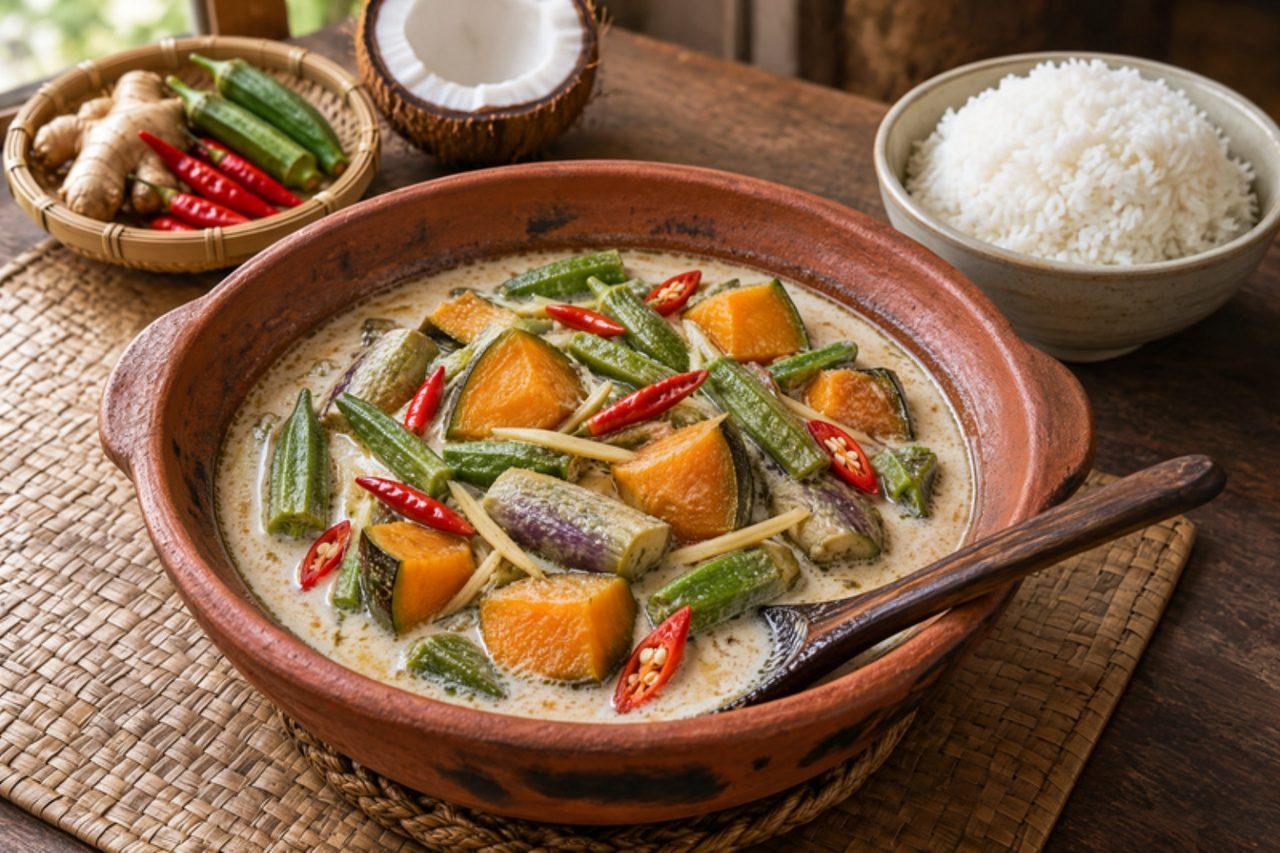
Ginataang gulayVegetables in coconut milk

Bicol is the Philippine region of coconut and chilli, and ginataang gulay is what a Naga or Legazpi household cooks on meatless Fridays and in Lent: squash, string beans, eggplant and okra stewed in coconut milk with ginger and plenty of siling labuyo. The squash melts a little into the sauce and makes it golden and slightly sweet, while the beans stay crisp. Serve with rice. The usual mistake is boiling the coconut milk hard, which splits it into oil and curds; keep it at a lazy simmer. Chef's tip: add the thick first-press coconut cream only at the end so the dish tastes fresh and rich.

by KrazyBadal 0 views

HumbaBraised pork belly

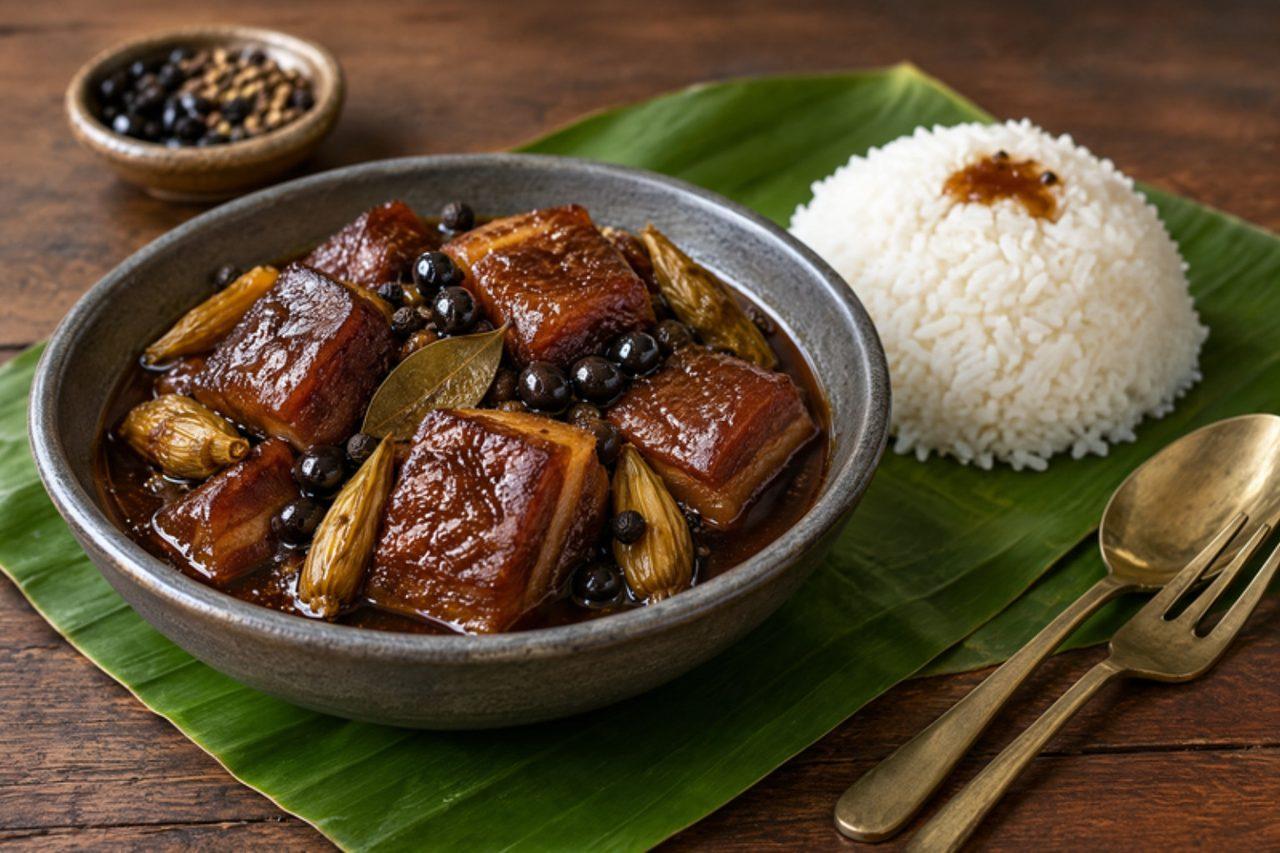
Humba is the sweet, dark braise of the Visayas, cooked in Cebu and Bohol homes for fiestas, birthdays and Sunday lunch. Pork belly simmers in soy sauce, cane vinegar and brown sugar with garlic, bay and peppercorns until the fat turns meltingly soft and the sauce becomes sticky; salted black beans (tausi) and dried lily buds, sold as dried banana blossoms, give it its Visayan character. Eat it with plenty of steamed rice. The usual mistake is stirring as soon as the vinegar goes in: let it boil uncovered for a few minutes first so its raw sharpness cooks off. Pressure-cooker: cook for 35 minutes at high pressure, then reduce the sauce uncovered. Chef's tip: humba tastes even better the next day, when the pork has soaked up the sauce.

130 minFilipinoMeat
by KrazyBadal 0 views

Sorbetes (ube)Purple yam ice cream

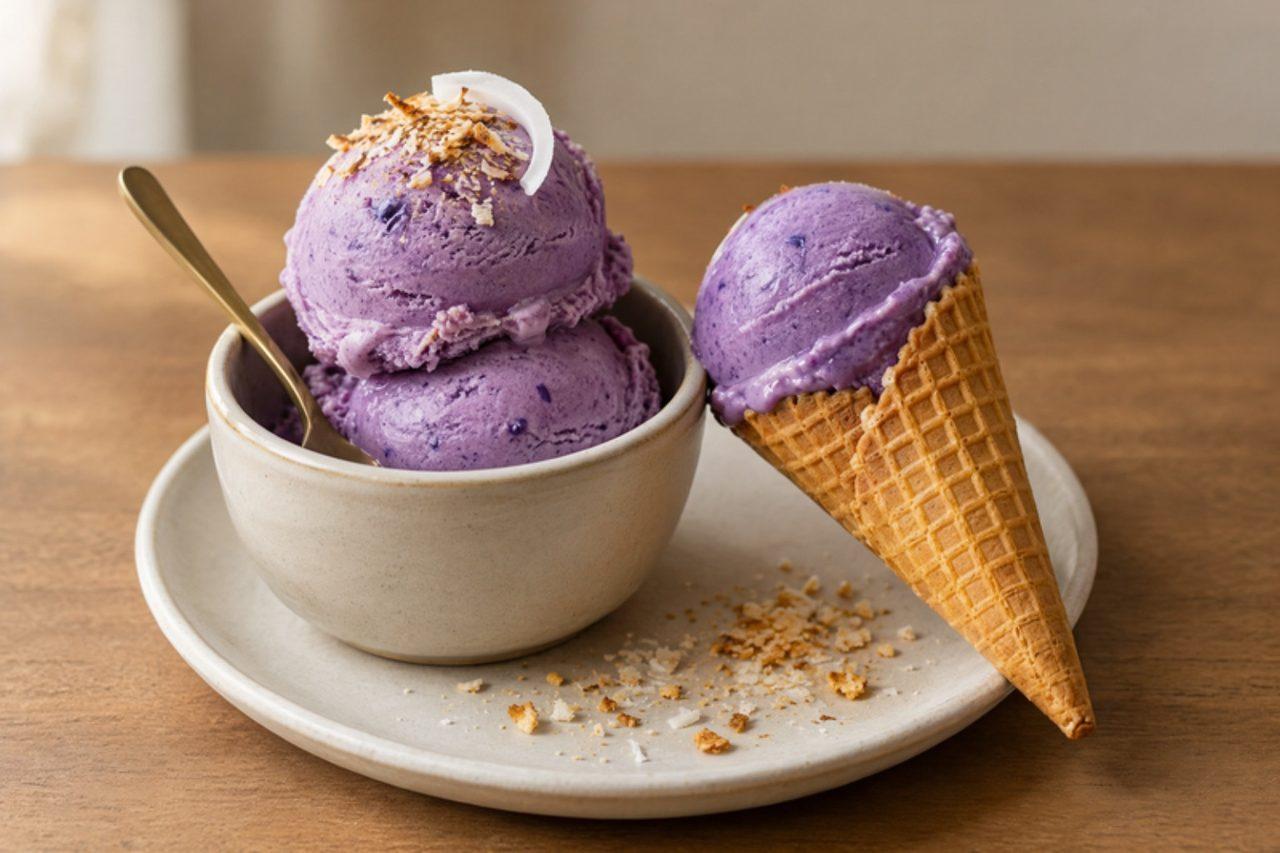
Sorbetes is the Filipino street ice cream that vendors push through Manila in brightly painted wooden carts, ringing a bell outside churches after Sunday Mass, in Luneta Park and at school gates. Fondly called 'dirty ice cream' because it is sold on the street, it is lighter than dairy ice cream, made with milk, coconut milk and a little cornflour, and comes in flavours like ube, mango, chocolate and cheese, scooped into small cones or stuffed into a soft pandesal roll. This is the ube version. Chef's tip: whisk the mixture hard every 45 minutes during freezing; it keeps the ice crystals small without an ice-cream machine.

by KrazyBadal 0 views

TahoWarm tofu with syrup and sago

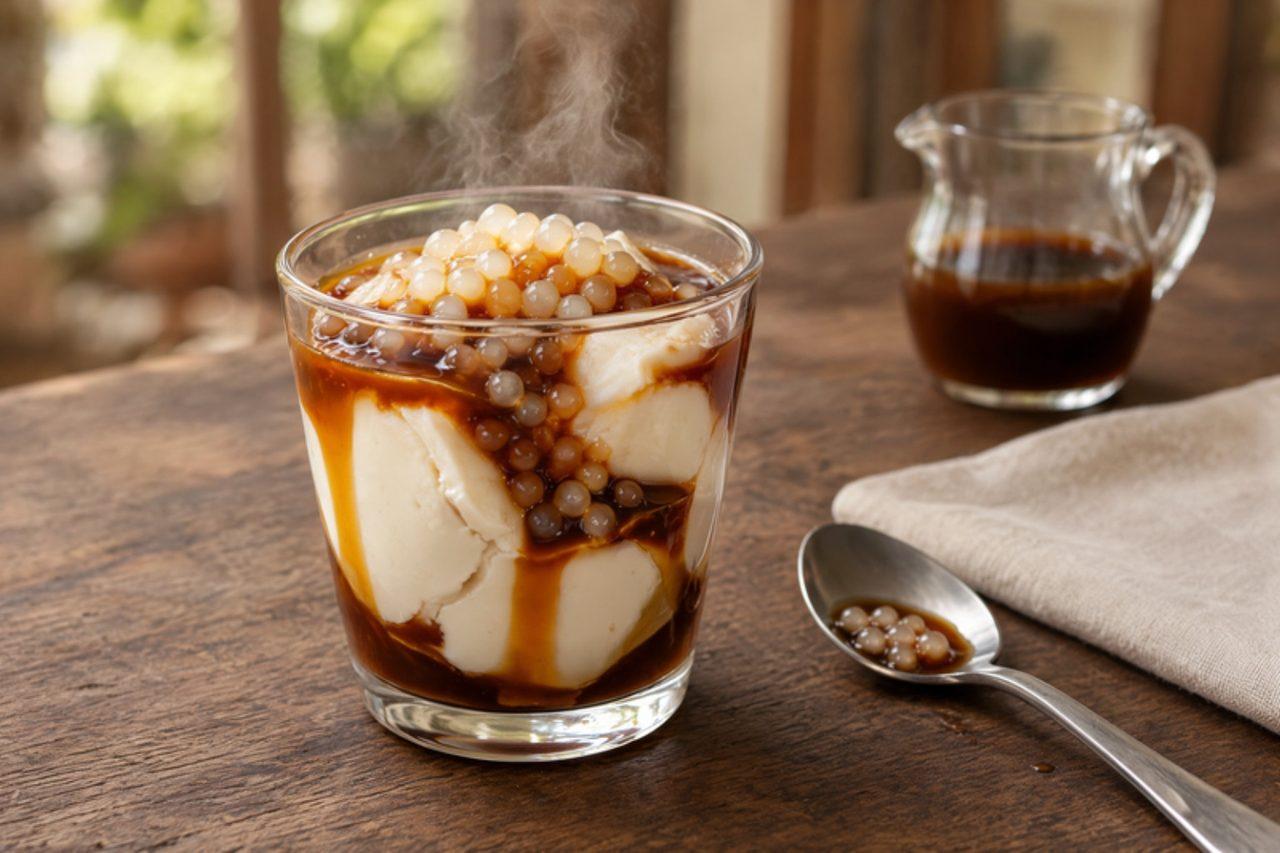
Before eight in the morning in any Philippine barangay you hear the call "Tahooo!" as the magtataho walks past with two aluminium buckets balanced on a shoulder pole: one holds warm, wobbly silken tofu, the other dark arnibal syrup and sago. He scoops paper-thin layers of tofu into a plastic cup with a flat ladle, pours syrup over and adds the pearls, and children eat it standing at the gate with a spoon or slurp it through a wide straw. The taste is caramel and soy milk; the texture is custard-soft tofu against chewy pearls. Baguio has its own pink strawberry version. The common mistake is cooking the sago in too little water or not stirring at the start, so the pearls glue into a lump; use plenty of boiling water and stir for the first two minutes. The sago is ready when the pearls are translucent with only a tiny white dot left in the centre, and the arnibal is right when it coats a spoon like thin maple syrup. Chef's tip: steam the tofu in its box or bowl rather than boiling it, so it stays in one silky piece. Small sago pearls are a choking risk for babies and toddlers, so serve them only to older children.

by KrazyBadal 0 views

TapsilogBeef, garlic rice and fried egg

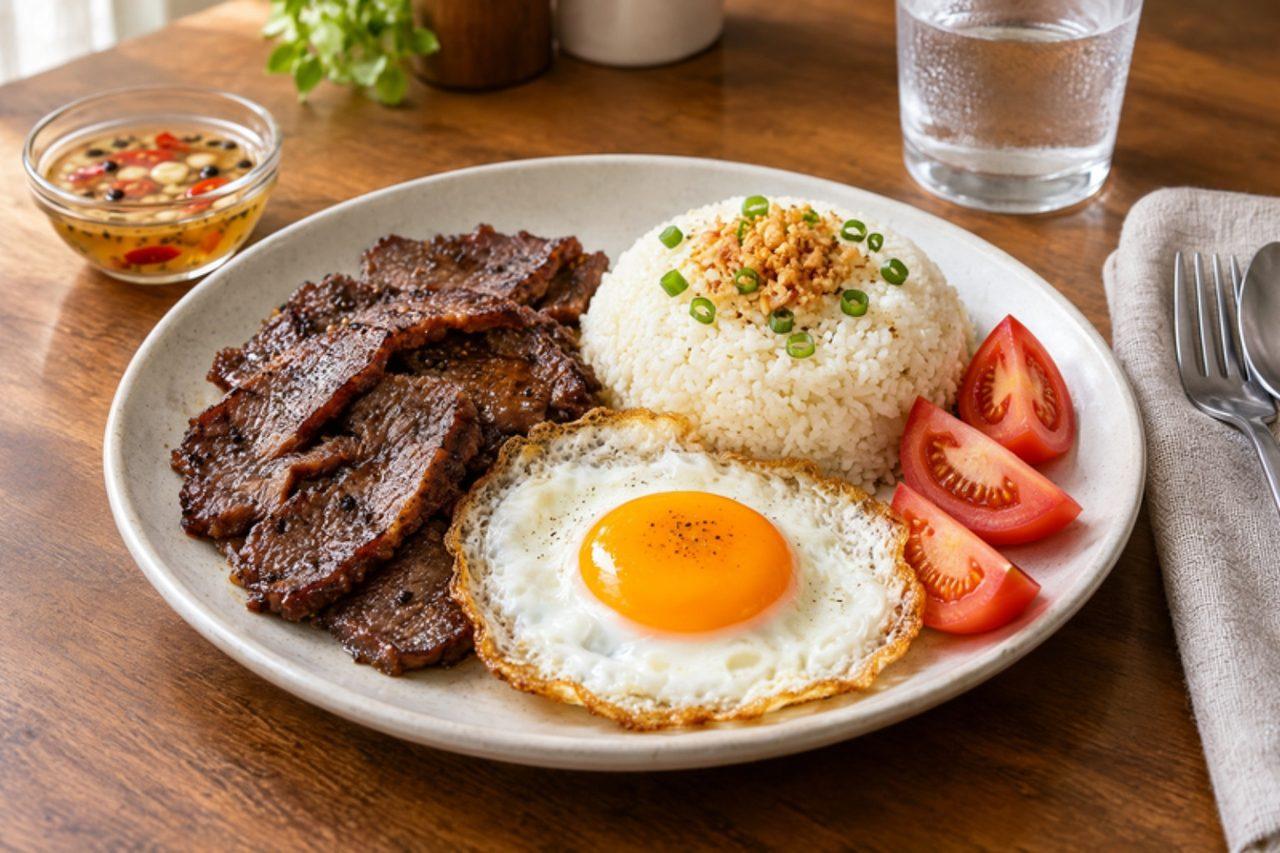
Tapsilog gave its name to the whole family of Filipino silog breakfasts: tapa (cured beef), sinangag (garlic fried rice) and itlog (egg), eaten from Manila carinderias to truck stops on the way north. The beef is sliced paper-thin and cured overnight with garlic, sugar and calamansi, then fried until the edges caramelise. Serve with spiced vinegar and sliced tomato. The usual mistake is cutting the beef thick; it must be thin enough to see the knife through, or it turns chewy. Chef's tip: half-freeze the beef for 40 minutes before slicing, and use day-old cold rice for the sinangag so the grains fry separately.

by KrazyBadal 0 views

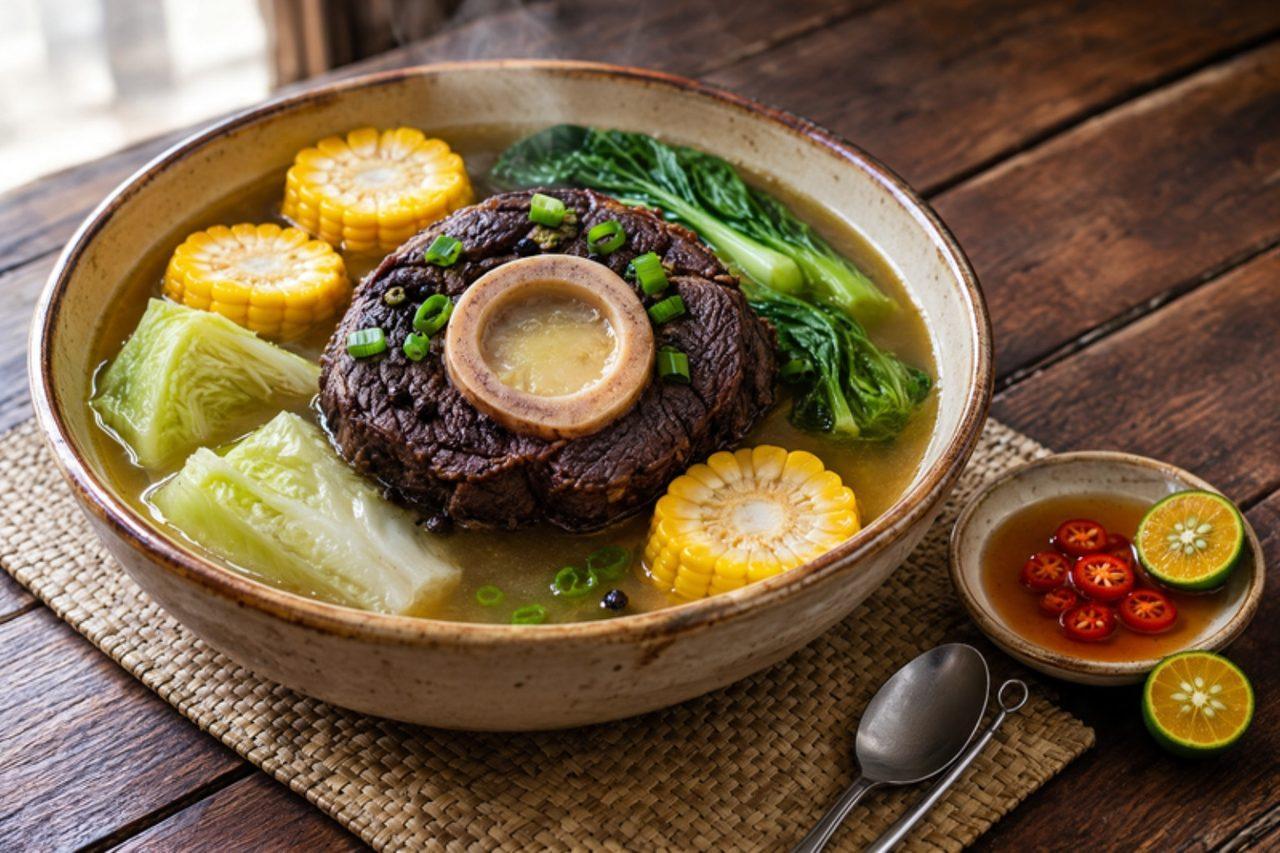
BulaloBeef shank and marrow soup

Bulalo is the pride of Batangas, south of Manila, served at roadside eateries on the way to Tagaytay where the cool upland air makes a steaming bowl the thing to order. Beef shank on the bone simmers for hours until the meat falls away and the marrow turns soft and wobbly, giving a clear, beefy broth seasoned just with fish sauce, onion and peppercorns. Corn on the cob, cabbage and pechay go in at the end. Spoon the marrow onto rice and dip the meat in fish sauce with calamansi and chilli. The usual mistake is skipping the first blanch: the broth turns grey and murky. Slow-cooker: after blanching, cook on low for 10 hours, adding the vegetables for the last 30 minutes on high. Chef's tip: keep the pot at a lazy simmer, never a boil, for the clearest broth.

by KrazyBadal 0 views

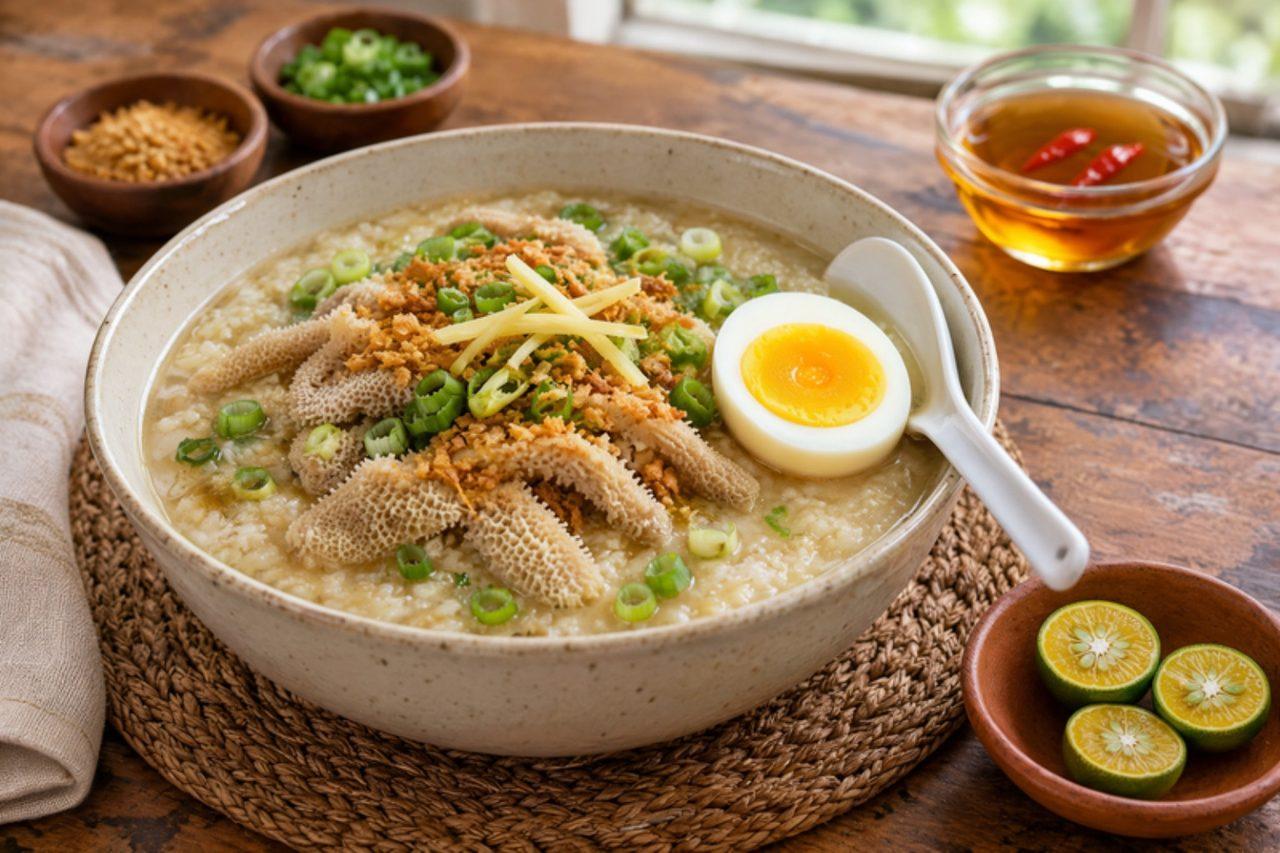
GotoGinger rice porridge with tripe

Goto is the tripe-rich cousin of arroz caldo, sold at dawn and late at night from gotohan stalls across Luzon, especially in Manila and Batangas. Glutinous rice is cooked in a ginger broth with long-simmered beef tripe until thick, then topped with toasted garlic, spring onion, a boiled egg and a squeeze of calamansi. The common mistake is skipping the pre-boil of the tripe, which leaves a strong farmyard smell. Chef's tip: buy cleaned honeycomb tripe and simmer it until a knife slides in easily before it meets the rice; it will not soften further once the porridge thickens.

by KrazyBadal 0 views

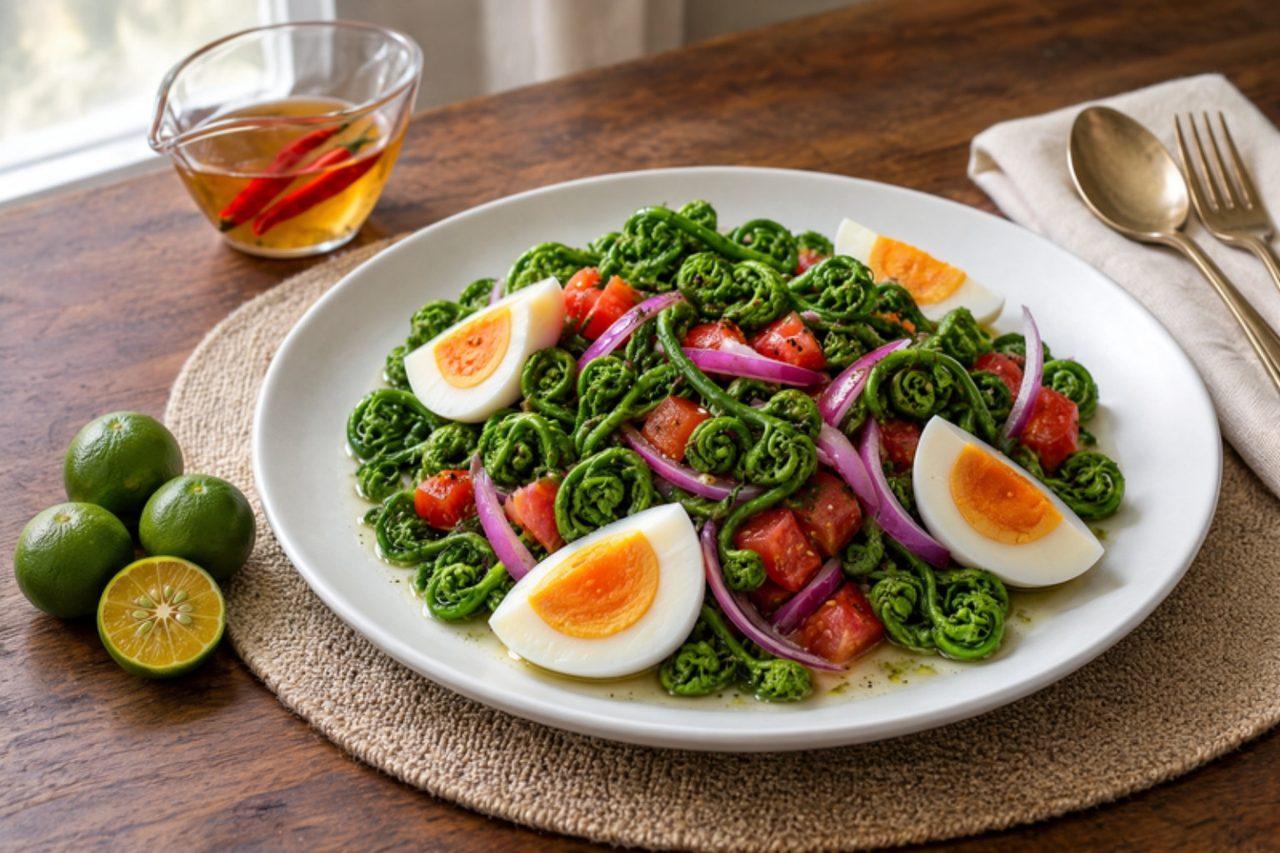
Ensaladang pakoFiddlehead fern salad

Pako, the young curled fronds of the vegetable fern, grow along streams in the Cordillera, Laguna and Mindanao, and in the rainy season they are sold in bundles at roadside stands. Blanched for a moment and tossed with tomato, onion, a calamansi and vinegar dressing and wedges of salted duck egg, they make a crunchy, refreshing side for grilled dishes at lunch. Suitable as part of a balanced diet, it adds greens with some protein: about 120 kcal and 8 g carbohydrate per portion. The usual mistake is eating the fern raw or barely warmed; always blanch it until tender. Chef's tip: plunge the fern straight into iced water after blanching so it stays bright green and crisp.

by KrazyBadal 0 views

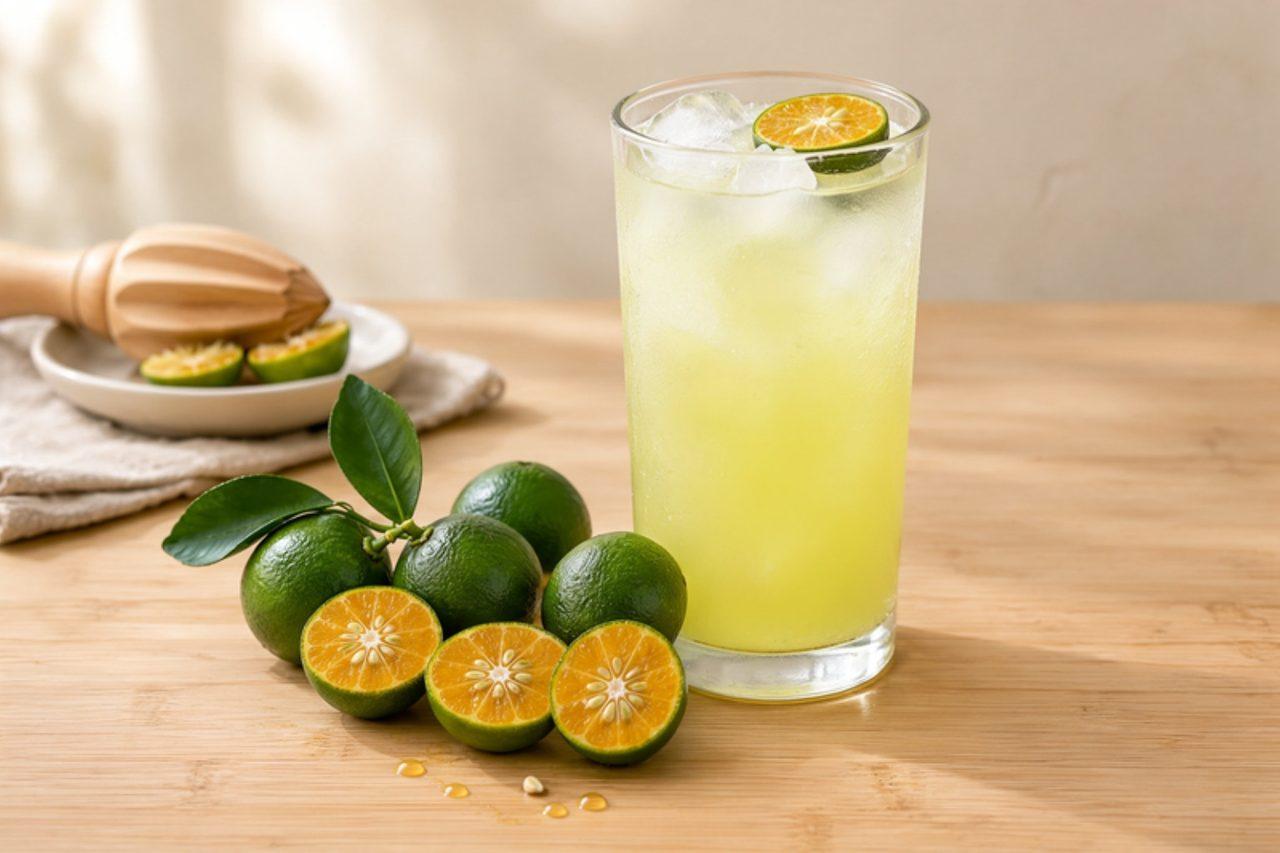
Calamansi juice

Every Filipino household seems to have a calamansi bush or a bag of the little green fruit in the fridge, from Manila condos to farmhouses in Mindoro, the island that grows most of them. At lunch in the dry season the juice comes out iced in a big pitcher; in the rainy months, when everyone has a cough, a lola stirs the same juice into hot water with a little sugar or honey and hands it over at bedtime. It tastes like a lime crossed with a mandarin: sharp, floral and slightly bitter at the edges, with a pale green-gold colour. The usual mistake is squeezing the fruit hard and letting the seeds and pith fall in, which turns the juice bitter within minutes; halve each fruit across, squeeze gently over a small strainer and stop before the peel folds. It is ready when the sugar has fully dissolved, the juice tastes bright rather than harsh and a cold glass fogs on the outside. Chef's tip: dissolve the sugar in a little warm water first, as it never melts properly in iced juice.

by KrazyBadal 0 views

Kapeng barakoStrong Liberica coffee

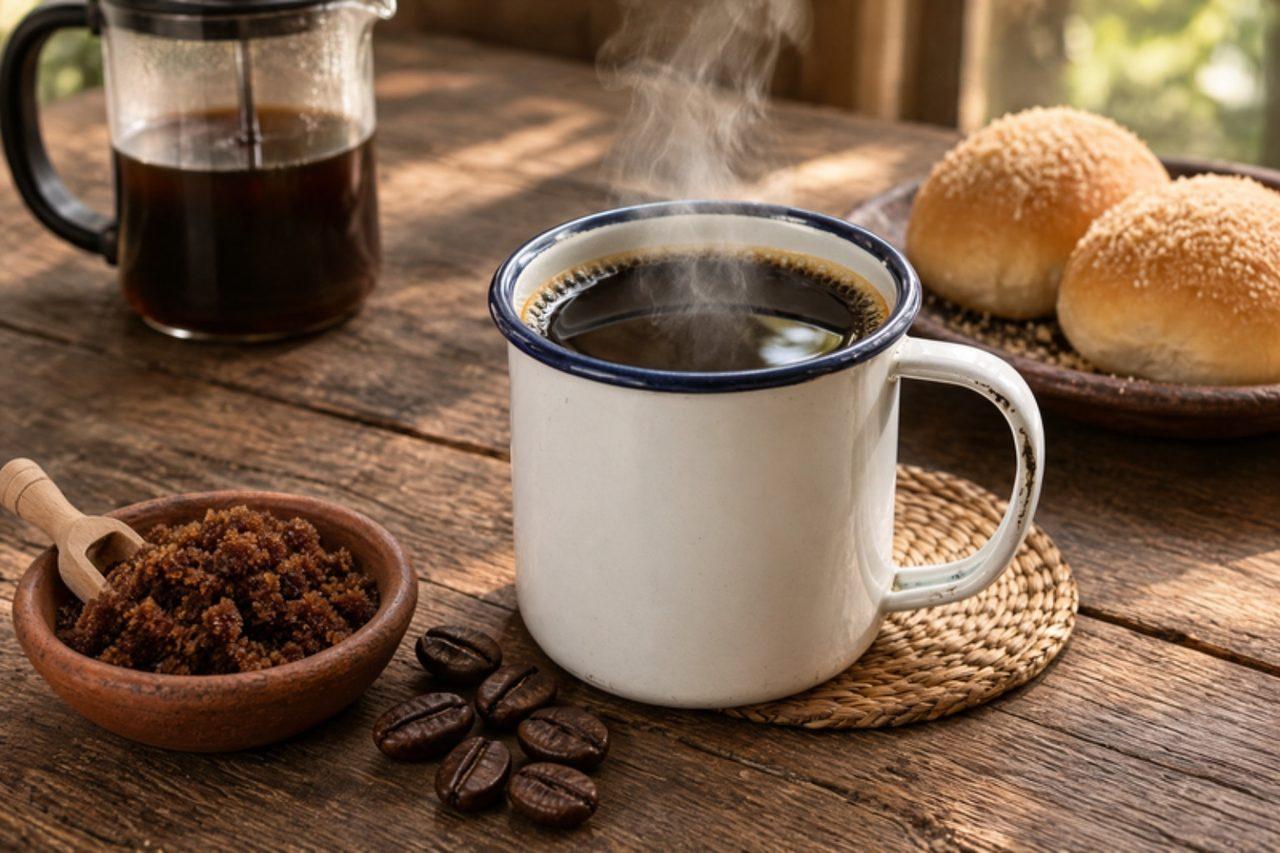
In Lipa and the hill towns of Batangas, mornings start with kapeng barako boiled in a dented aluminium kaldero and poured into enamel mugs, often next to pandesal, a slab of tapang Taal or a plate of suman. Barako is Liberica, a large-beaned coffee that grows on tall trees around Mount Malarayat, and the word itself means a strong, rough-mannered man. The cup is heavy and earthy with notes of jackfruit, dark chocolate and smoke, and it is sweetened with sticky muscovado from Negros or Antique, never with white sugar. It carries plenty of caffeine, so go easy if you are sensitive and keep it away from children. The usual mistake is keeping the pot at a rolling boil once the coffee is in: the grounds stew and the drink turns sour and harsh. Bring the water to the boil, then take it off the heat before adding the coffee. The brew is ready when the crust of grounds sinks after the splash of cold water and the liquid underneath is a clear, deep mahogany. Chef's tip: grind it coarse, like raw sugar, so it settles cleanly in the pot.

by KrazyBadal 0 views

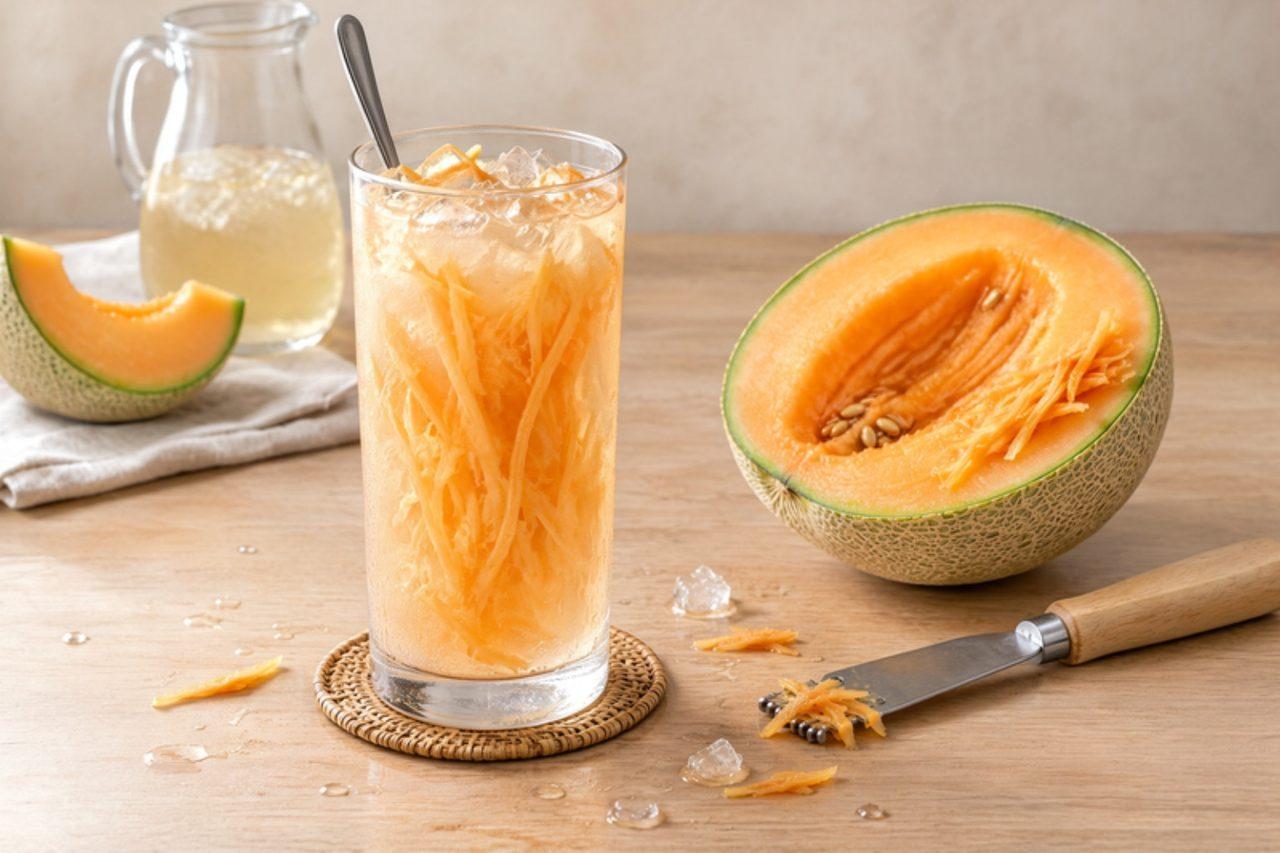
Melon juice (cantaloupe drink)

Afternoon merienda across the Philippines means something cold from a plastic cooler at the school gate, a jeepney stop or a carinderia: sago't gulaman, buko juice or this melon drink, with ribbons of orange cantaloupe suspended in sweet water. Vendors scrape the melon with a special spiral shredder, a kayod ng melon, so you get thin strands to chew through a fat straw. It tastes fresh, sweet and gently musky, more refreshing than a smoothie because the water stays clear and light; some stalls add evaporated milk, but the plain version is the classic. The common mistake is using a melon that is not fully ripe, which gives pale, crunchy strands and a flat drink; choose one that smells sweet at the stem end and gives slightly when pressed there. Shred straight into the jug so the juice from the melon is not lost. It is ready when the strands are soft and floating, the water has turned faintly orange and it tastes of melon rather than plain syrup. Chef's tip: a box grater's coarse side or a fork scraped along the flesh both work if you don't own a melon shredder.

by KrazyBadal 0 views

Tofu adoboTofu braised in vinegar and soy

Adobo is the dish Filipinos call national, cooked in some form in nearly every home from Ilocos down to Mindanao, and the meat versions are what most people know. In Catholic households, though, Holy Week and the Fridays of Lent call for a meatless table, and adobong tokwa (tofu adobo) is the answer many families reach for. Firm tofu is fried until it has a golden skin, then simmered in a reduced sauce of cane vinegar, soy sauce, a whole head of garlic, bay leaves and whole peppercorns until the sauce clings, sour and salty with a little sweetness. It tastes even better the next day and is eaten with mounds of plain rice. Chef's tip: press the tofu well and fry it properly; a dry, golden crust is what soaks up the adobo sauce instead of turning it watery.

by KrazyBadal 0 views

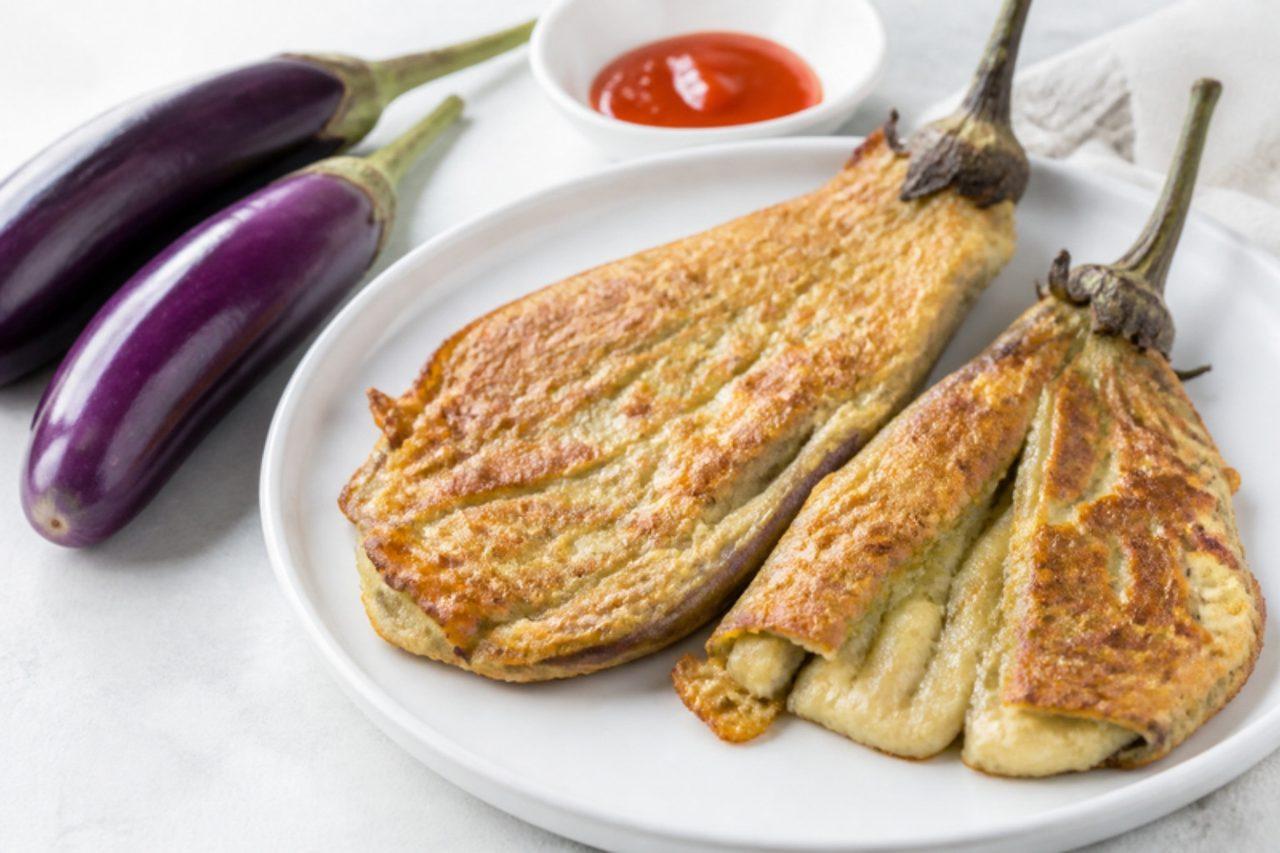
Tortang talongAubergine omelette

Tortang talong is a weekday lunch in Filipino homes from Luzon to Visayas, the dish a mother makes when the fridge holds only a few eggs and some long aubergines from the market. The aubergines are charred whole over a gas flame until the skin blackens and the flesh goes smoky and soft, then peeled (the stem left on as a handle), flattened into a fan with a fork, dipped in seasoned egg and fried until golden. The result is a thin, smoky omelette shaped like an aubergine. Filipinos eat it with rice and banana ketchup or a dish of vinegar with garlic. Chef's tip: char the aubergines right on the flame, not in the oven; that smoky taste is the whole dish.

by KrazyBadal 0 views

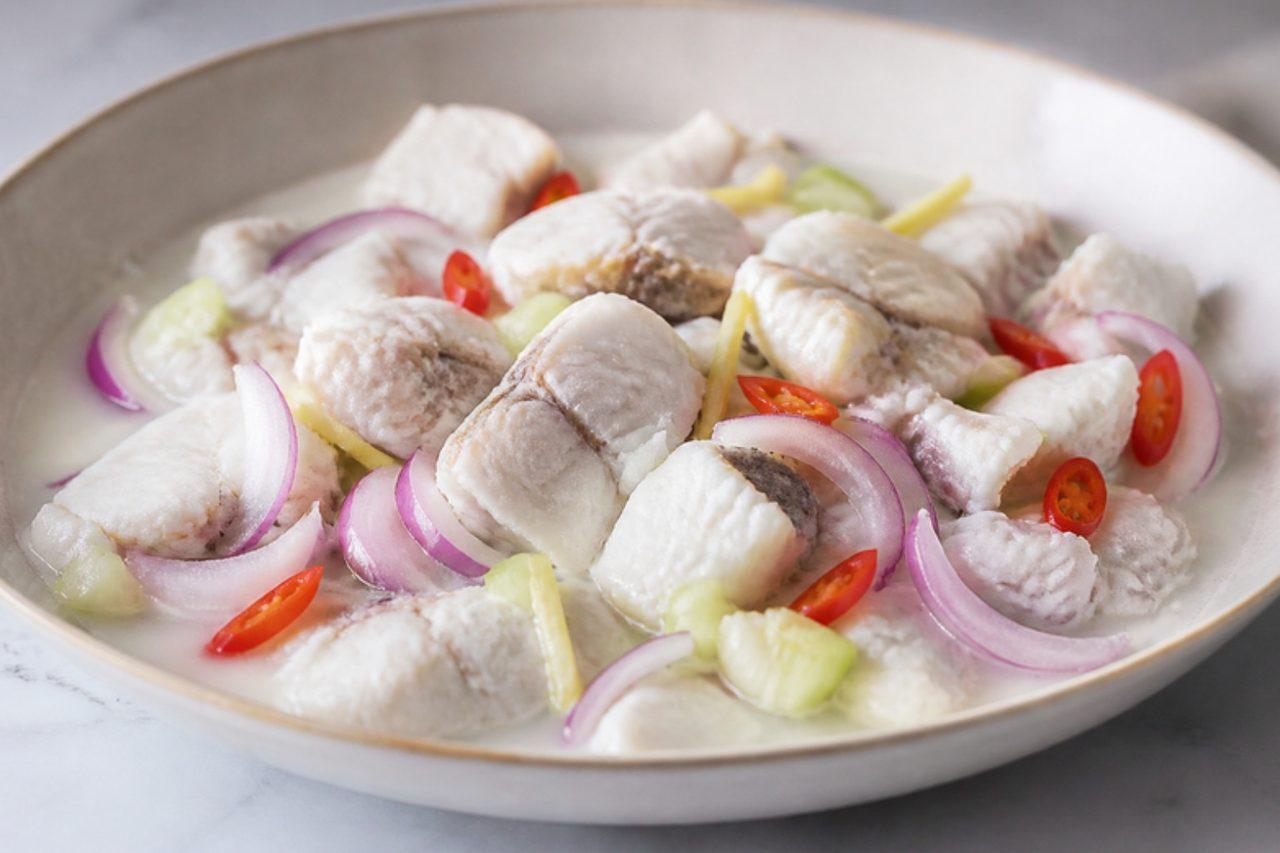
Tuna kinilawRaw tuna in vinegar

Kinilaw is the Visayas and Mindanao way with very fresh fish: raw cubes of tuna or Spanish mackerel (tanigue) cured briefly in coconut or palm vinegar with ginger, red onion, chilli and calamansi. In General Santos, the tuna capital, and on the beaches of Cebu and Siargao, it is made minutes after the catch and eaten as pulutan or a starter on hot afternoons. Please note: the fish is not cooked by heat; the vinegar only firms it and turns it opaque, and it does not kill all bacteria or parasites. Use only sashimi-grade fish that has been frozen to kill parasites, and pregnant women, young children, older people and anyone with a weakened immune system should not eat it. Chef's tip: pour a first splash of vinegar over the fish and drain it off, then dress it; this 'washing' firms the surface and keeps the flavour clean.

by KrazyBadal 0 views

TuronFried banana spring rolls

Turon is the afternoon snack sold by vendors on every Filipino street corner, school gate and jeepney stop around three o'clock, often next to banana cue on bamboo skewers. A slice of saba banana and a strip of ripe jackfruit are rolled in a thin spring roll wrapper with brown sugar, then fried in oil that has more brown sugar sprinkled in it, so each roll comes out wrapped in a crackly, glassy caramel shell. It is eaten hot with your fingers, when the banana inside has turned soft and sticky. Saba is a short, firm cooking banana; ripe plantain is the closest substitute. Chef's tip: roll them tightly with no air pockets, or the caramel blows holes in the wrapper.

by KrazyBadal 0 views

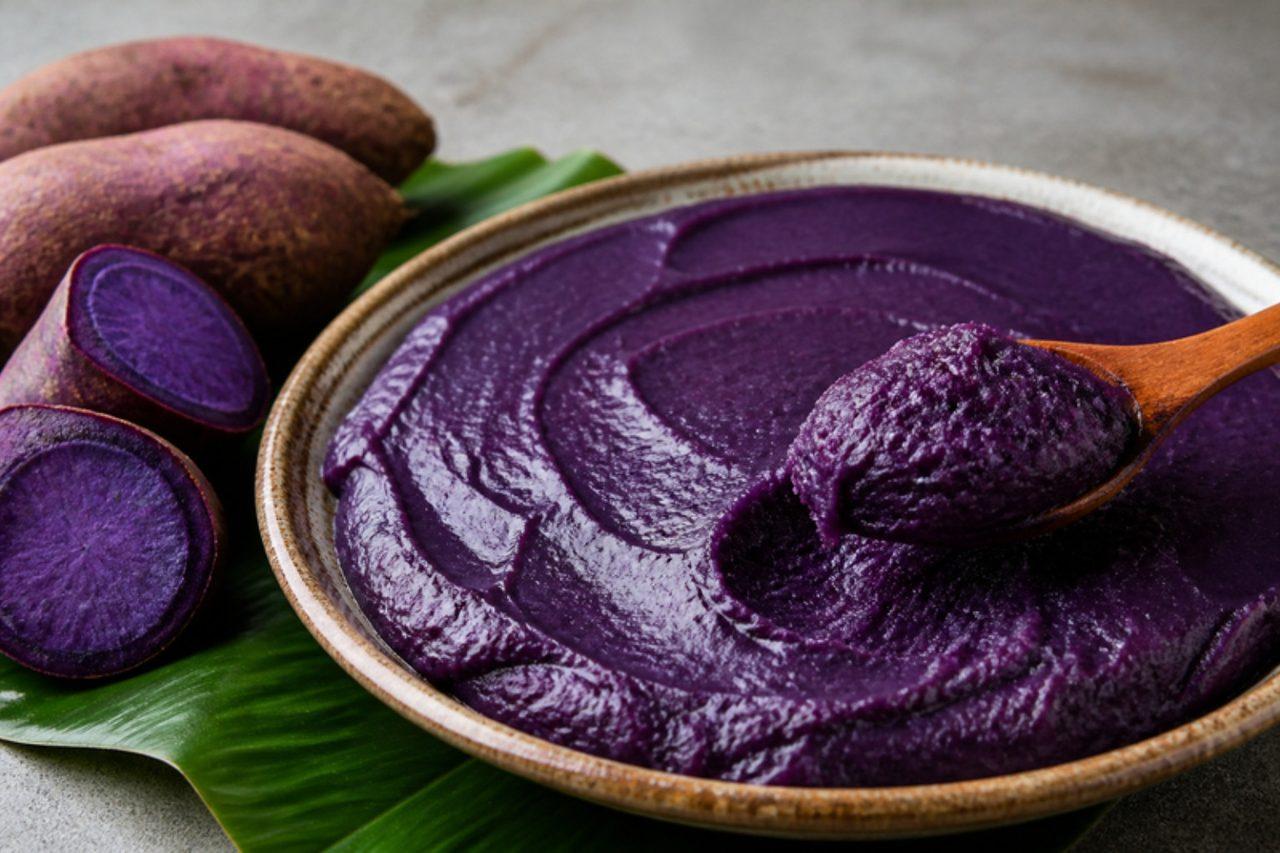
Ube halayaPurple yam jam

Ube halaya is a thick, deep purple jam made from purple yam, slowly stirred with coconut milk, condensed milk and butter until it pulls away from the pan. Bohol, where ube grows in abundance and the province holds a festival for it every January, claims it, and in Baguio jars of it are bought as pasalubong (gifts) to take home. It appears at Christmas and fiestas, spread on bread, eaten by the spoonful, packed into halo-halo or shaped in moulds and topped with latik or grated cheese. Real ube has a gentle, nutty, vanilla-like flavour; purple sweet potato is not the same. Chef's tip: frozen grated ube from Asian grocers works perfectly and saves an hour of peeling and grating.

by KrazyBadal 0 views

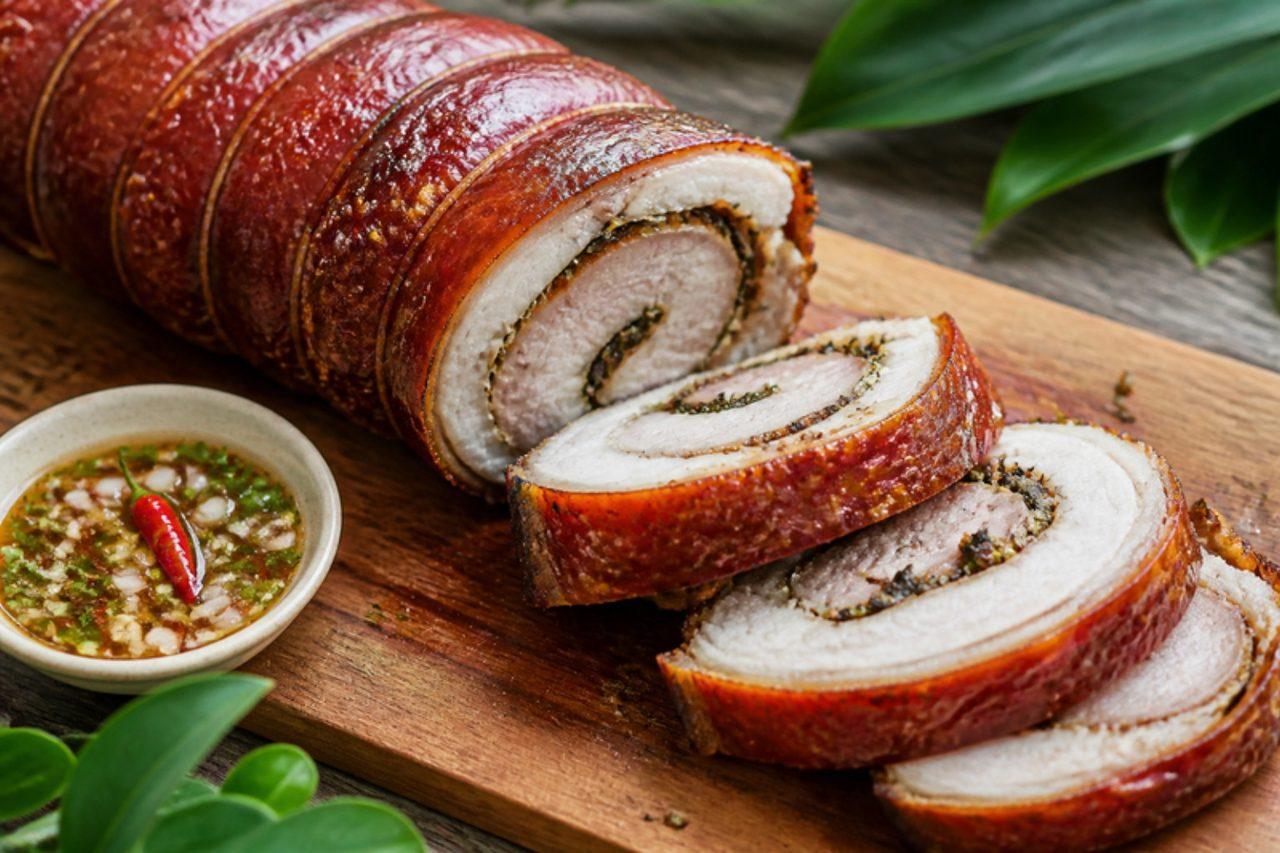
Cebu-style lechon belly

Cebu claims the best lechon in the Philippines, and its whole roast pigs are stuffed with lemongrass, garlic and spring onion so the meat needs no sauce. Lechon belly (lechon belyo) brings that flavour to a home oven: a slab of pork belly is rolled around the same herbs, tied, and roasted slowly, then blasted with heat until the rind turns to crackling. It is the centrepiece for Cebuano fiestas, Christmas and big birthdays, carved at the table and eaten with rice and a little spiced vinegar. Chef's tip: score only the meat side, never the skin, and dry the rind in the fridge overnight; an unbroken, dry skin crackles evenly.

250 minFilipinoMeatGluten free
by KrazyBadal 0 views

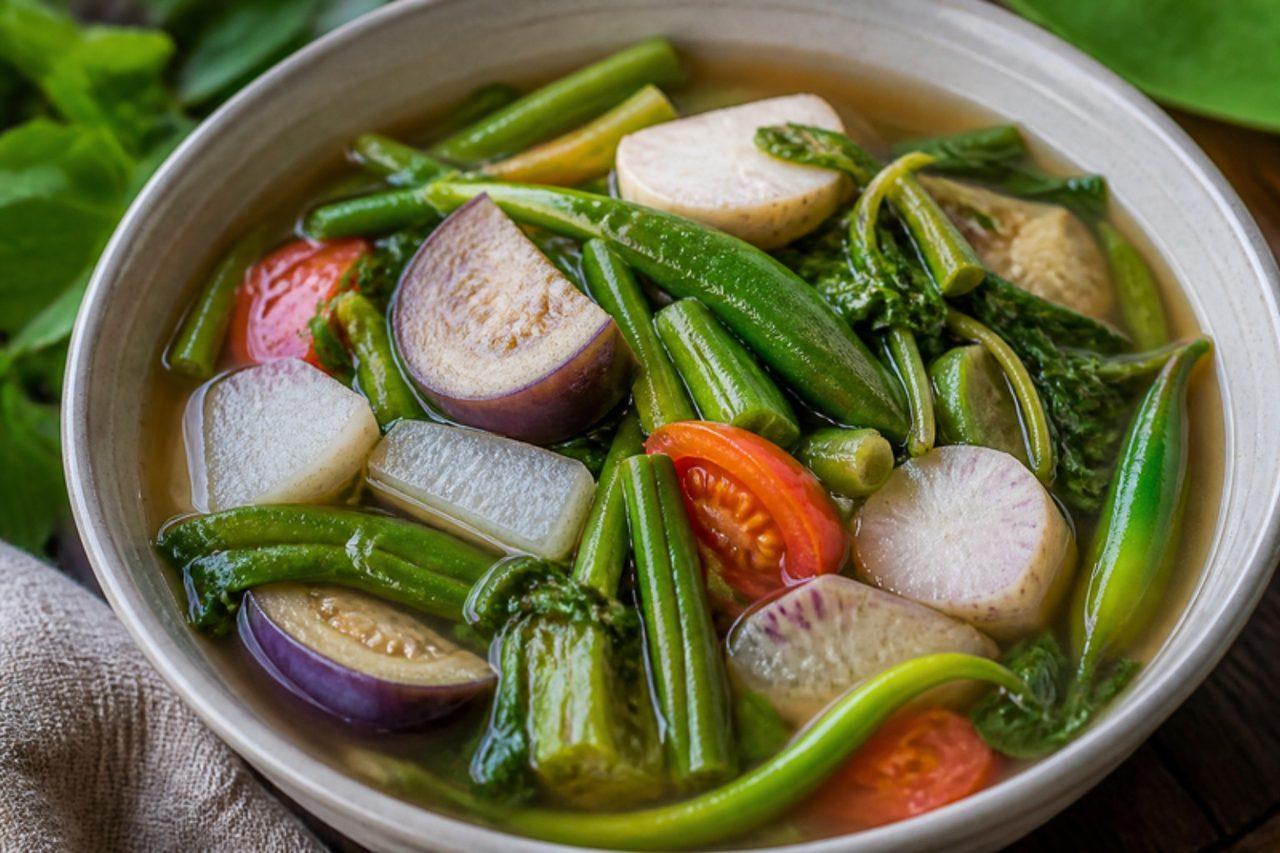
Vegetable sinigangSour tamarind vegetable soup

Sinigang is the sour soup that Tagalog families crave when the monsoon arrives between June and October, when rain hammers the tin roofs and a steaming bowl next to rice feels like the only sensible lunch. The sourness traditionally comes from young tamarind (sampalok) boiled and mashed into the broth, and the vegetables are whatever the market has: white radish, taro to thicken the soup slightly, okra, yard-long beans, aubergine and a final handful of water spinach. This vegetarian sinigang na gulay skips the pork or fish and relies on the tamarind, tomato and onion for flavour. The broth should make you pucker a little on the first sip. Chef's tip: add the tamarind in stages and taste between each, since blocks of tamarind vary a lot in sourness.

by KrazyBadal 0 views

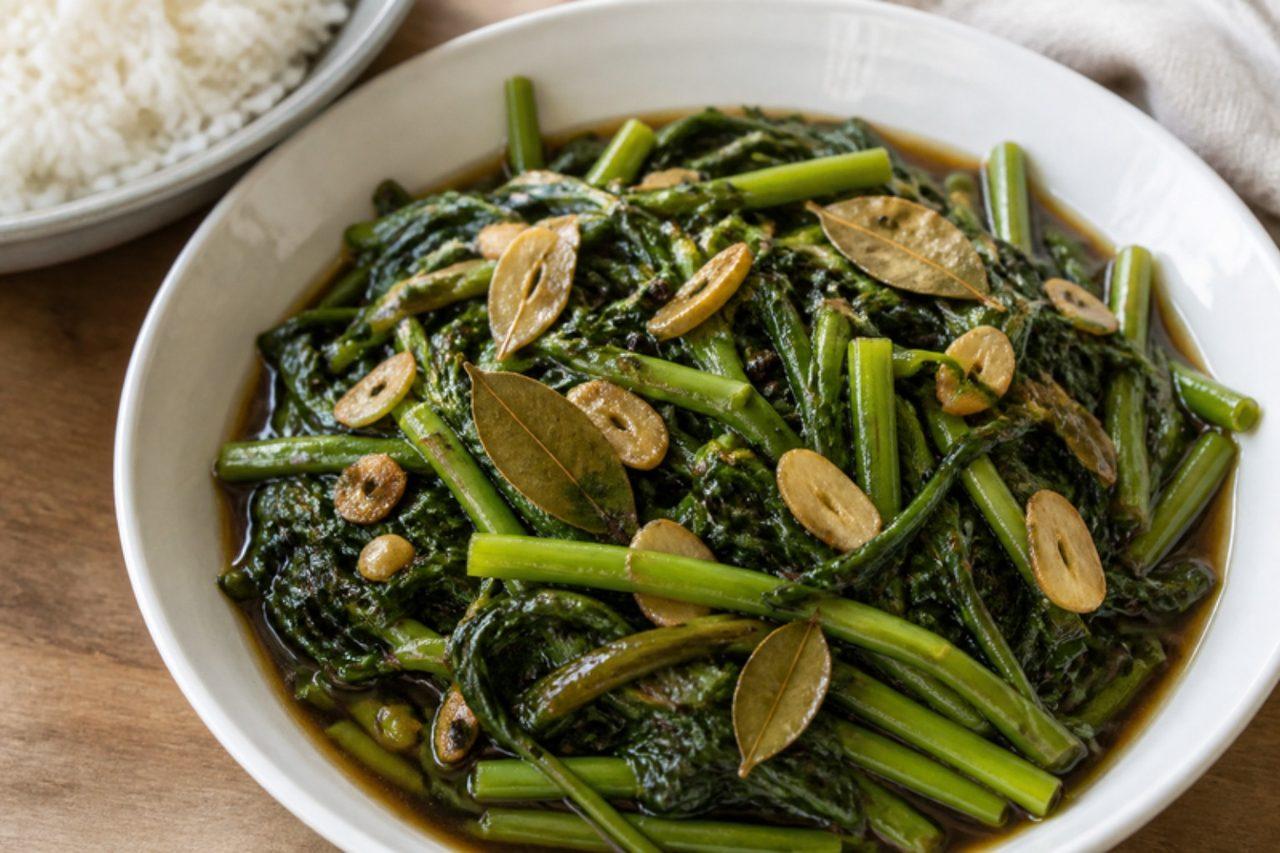
Adobong kangkongBraised water spinach

In Manila and across Luzon, adobong kangkong is the cheap green that sits in a tray at the carinderia, the roadside canteen where office workers and jeepney drivers point at two or three dishes to go with their rice. It is not a stir-fry in the Chinese or Malay sense: the water spinach is cooked briefly in an adobo base of cane vinegar, soy sauce, bay and cracked pepper, so the stems stay crunchy while the leaves soak up a sharp, salty, garlicky sauce that runs into the rice. It costs very little, takes ten minutes and is often the only vegetable on a weekday plate. Chef's tip: let the vinegar boil for a full minute before you stir anything, the way Filipino cooks do; the raw, harsh edge cooks off and the sauce turns mellow.

by KrazyBadal 0 views

BagnetCrispy fried pork belly

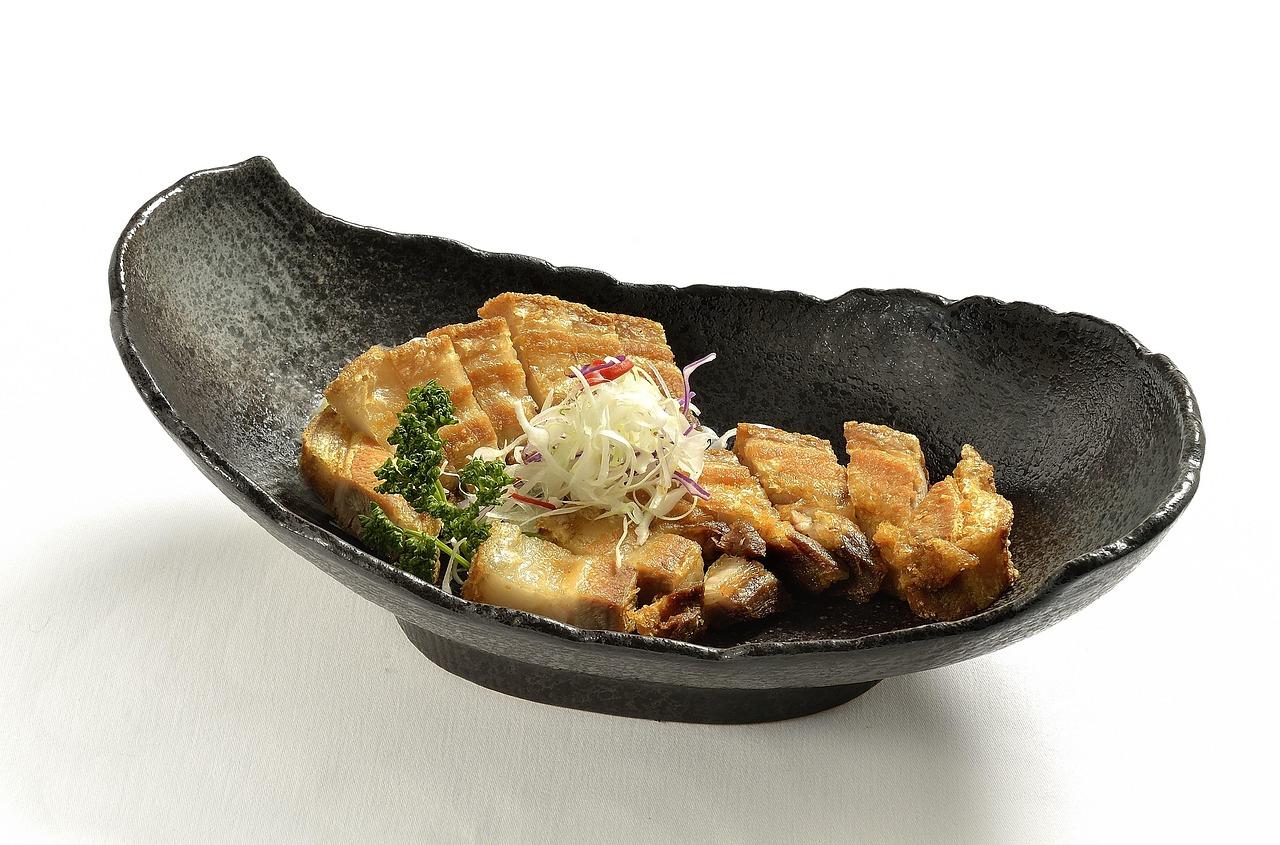
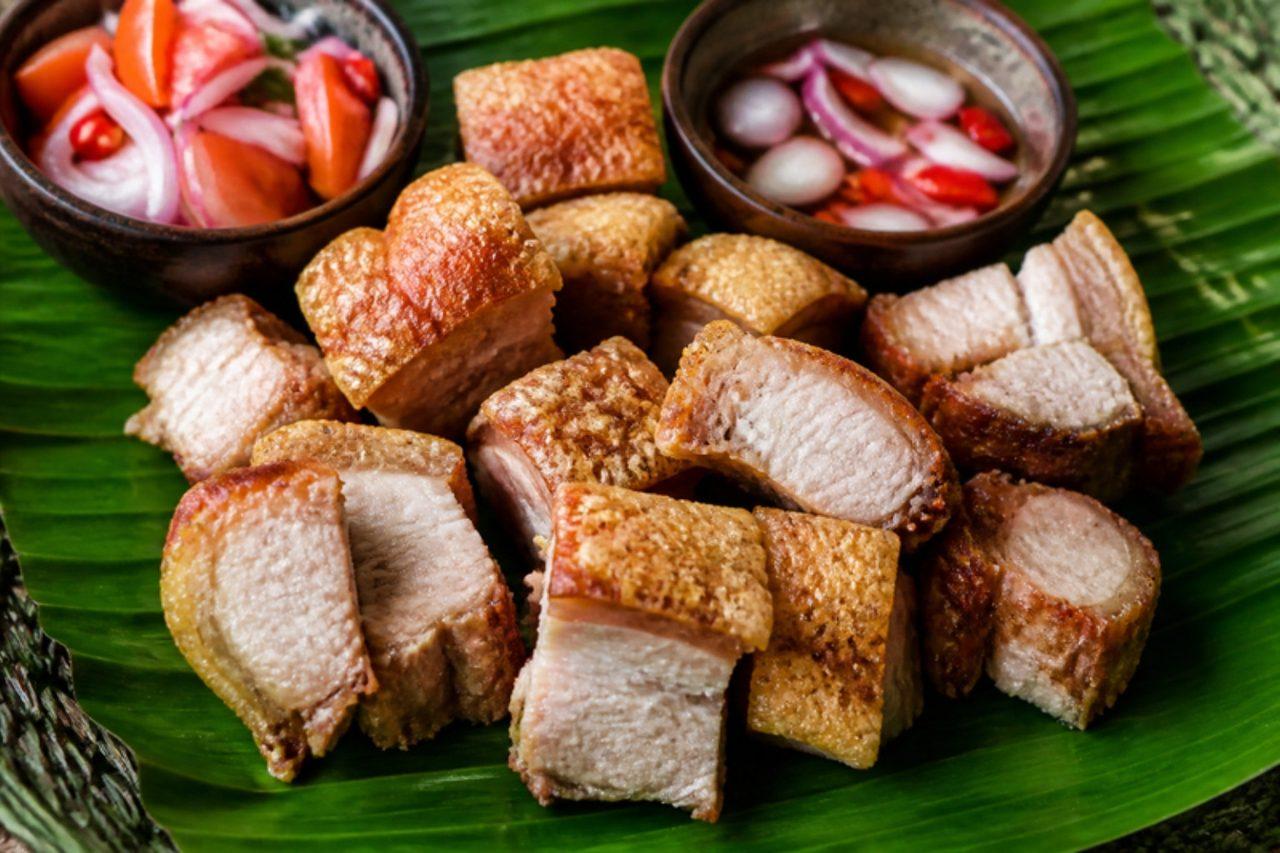
Up in Ilocos Norte and Ilocos Sur, in towns like Vigan and Batac, bagnet hangs in market stalls in golden slabs: pork belly that has been boiled, dried and deep-fried so the rind is puffed and crunchy all the way through. Ilocanos chop it into rice bowls, add it to pinakbet and dinengdeng, or eat it with sukang Iloco, the region's dark sugarcane vinegar. It is richer and crunchier than lechon kawali because it is fried twice. A tomato and onion salad with a little shrimp paste cuts the fat. Chef's tip: the second fry, in hotter oil after a rest, is what makes the rind bubble; skip it and you get chewy skin.

150 minFilipinoMeatGluten free
by KrazyBadal 0 views

BibingkaCoconut rice cake

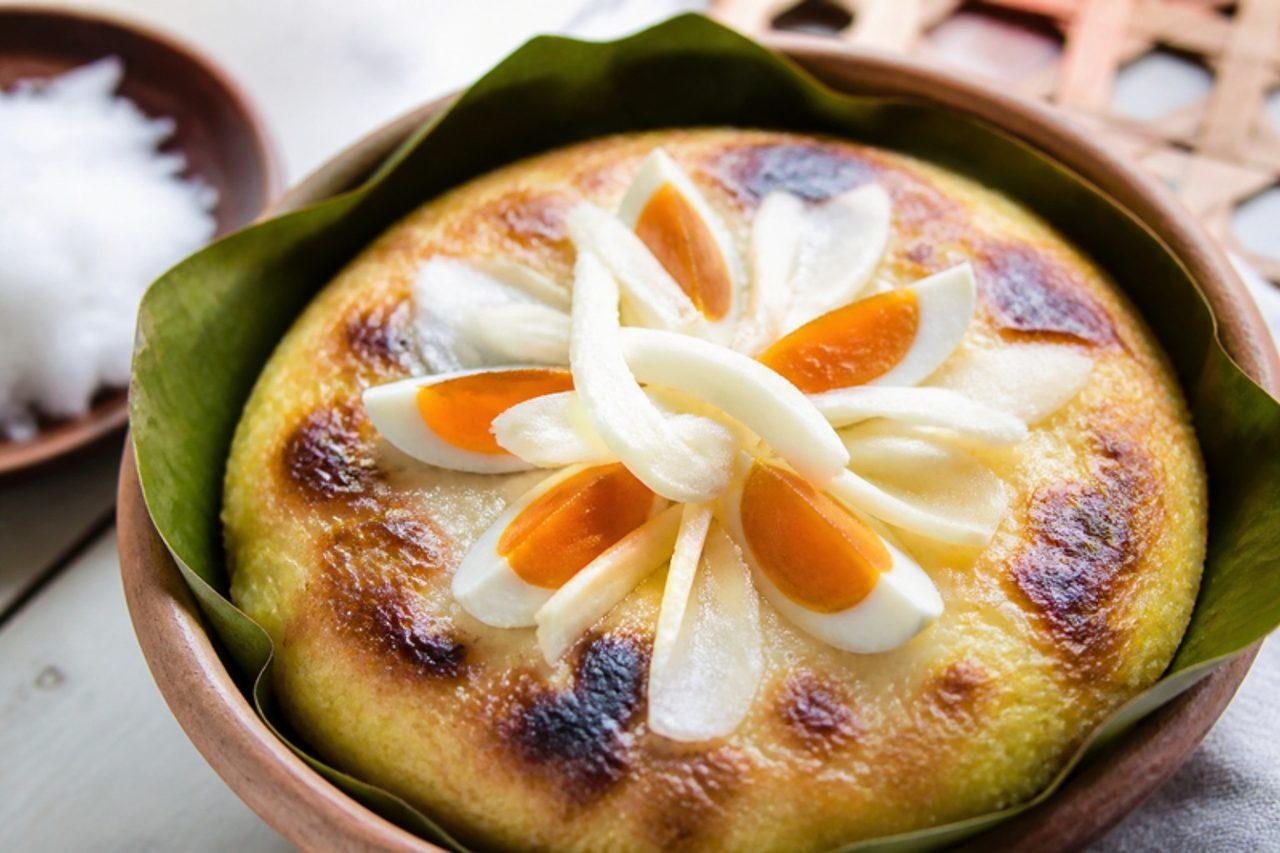
During the nine dawn masses of Simbang Gabi, from 16 to 24 December, vendors set up outside churches across the Philippines baking bibingka in clay pots with hot coals both underneath and on top. Churchgoers buy them on the way out at 5 am, still steaming in their banana-leaf liners, with a hot drink. The cake is made from rice flour and coconut milk, springy and slightly chewy, with a browned, buttery top covered in salty white cheese, slices of salted duck egg, sugar and grated coconut. This version bakes it in an ordinary oven and finishes it under the grill for that charred top. Chef's tip: warm the banana leaves over a flame for a few seconds until they turn glossy and supple; cold leaves crack and the batter leaks under them.

by KrazyBadal 0 views

Bicol expressPork in coconut milk and chilli

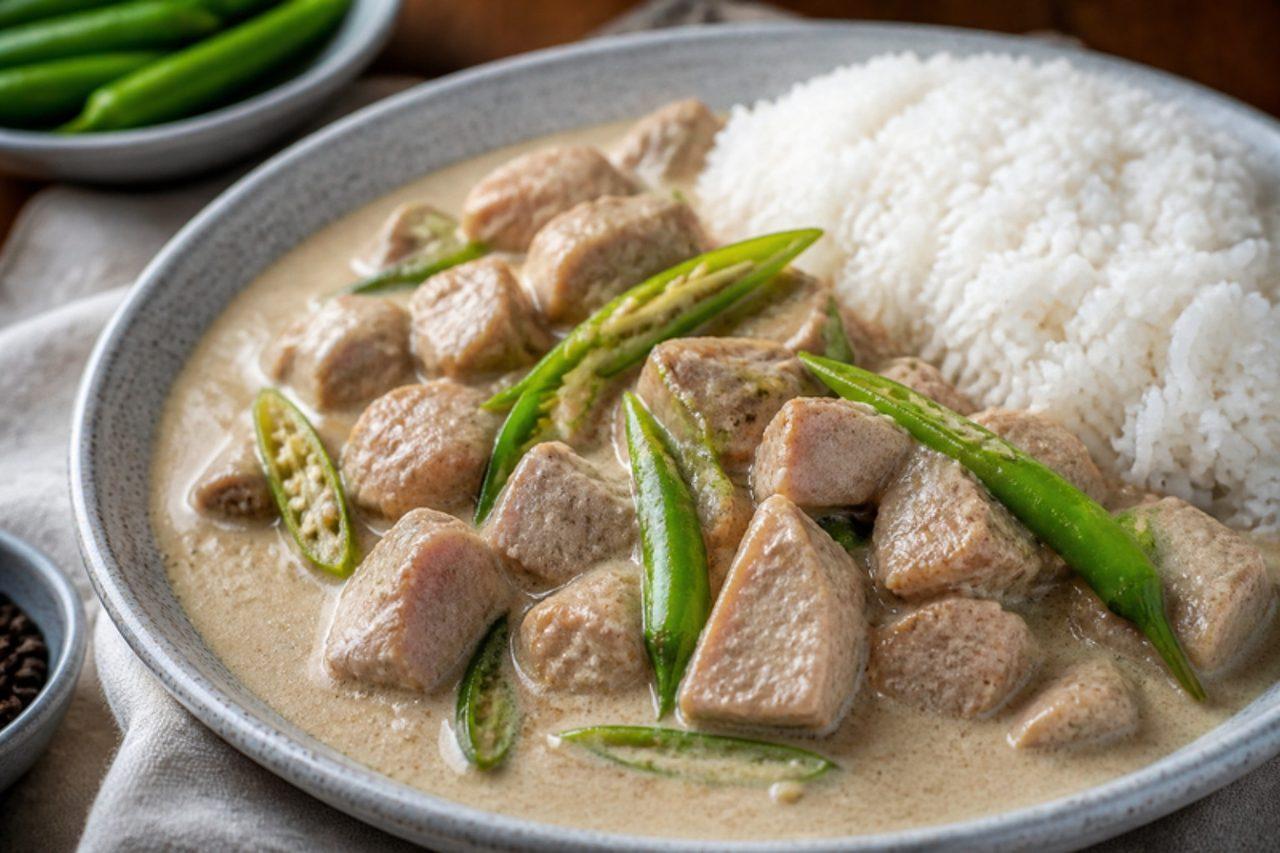
Bicol, the peninsula at the southern tip of Luzon, cooks almost everything in coconut milk with plenty of chilli, and Bicol express is the pork dish that carries the region's name all over the country (locals often call it sinilihan, 'with chillies'). Pork shoulder is cooked down in coconut milk until the liquid turns to oil and the meat is tender, then finished with coconut cream, long green chillies and a spoon of shrimp paste. It is rich, salty and properly hot. Serve it with lots of plain rice. Chef's tip: let the coconut milk reduce until it 'breaks' and you see the oil; that is when the sauce gets its toasty, deep flavour.

by KrazyBadal 0 views

Budbud kabogMillet in coconut milk

Budbud is the Visayan name for sticky rice rolls steamed in banana leaf, and the famous kabog version from Tanjay, Negros Oriental, uses millet instead of rice. The millet is cooked thick in coconut milk and sugar, rolled into banana leaves and steamed until it sets into a soft, slightly grainy log. In Dumaguete it is breakfast with ripe mango and a cup of tablea hot chocolate. Chef's tip: wilt the banana leaves briefly over a flame or in hot water so they fold without splitting.

by KrazyBadal 0 views

Buko pieYoung coconut pie

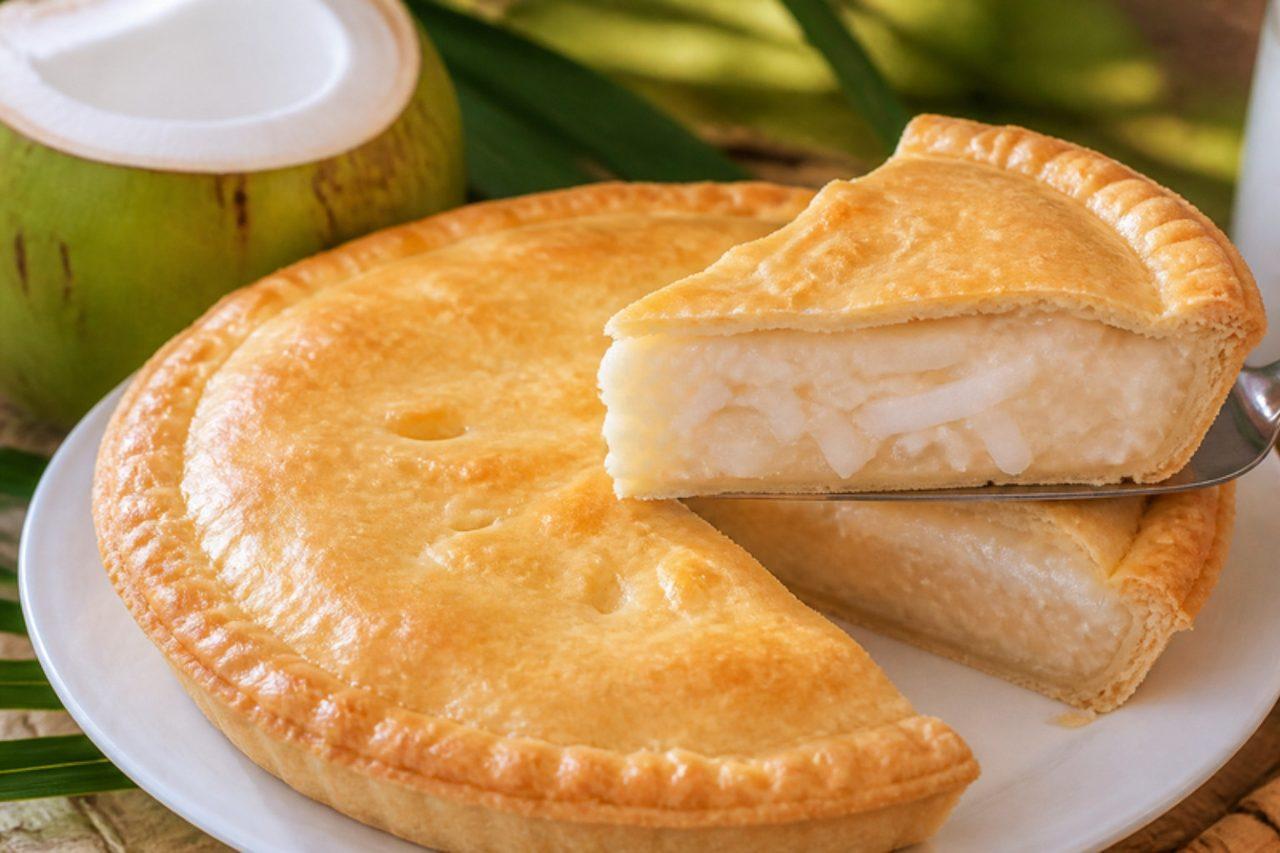
Drive the old highway through Los Baños and Calauan in Laguna and roadside shops sell buko pie in white boxes by the stack, warm from the oven. The filling is tender strips of young coconut set in a creamy custard made with the coconut's own water and milk, sealed in a short, buttery crust. It is a pasalubong, a gift you bring back for people at home. Chef's tip: use only the soft, spoonable flesh of young coconuts; hard mature coconut turns the filling chewy.

by KrazyBadal 0 views

Durian candyDurian milk fudge

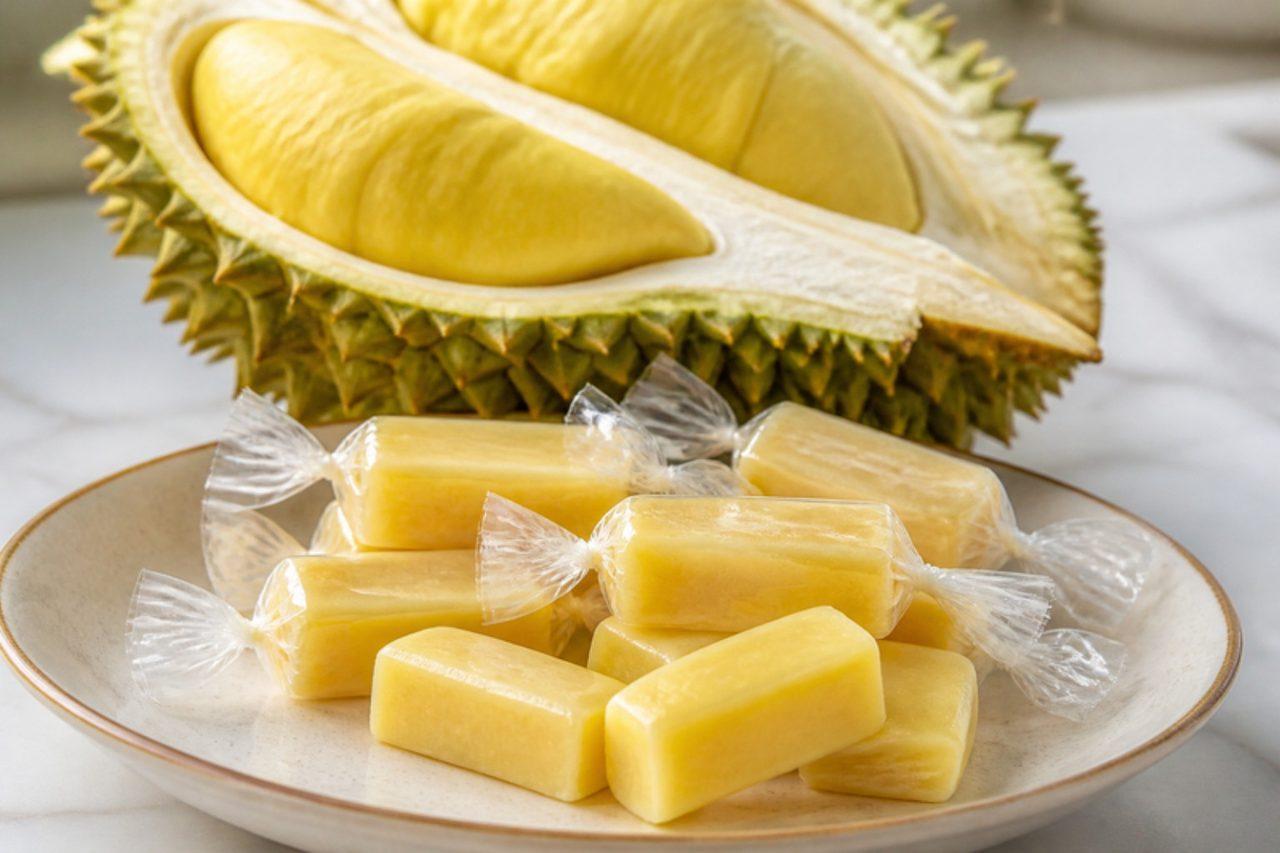
Davao City on Mindanao is the Philippines' durian capital, and its roadside stalls sell the fruit by the kilo next to boxes of durian candy for travellers who can't carry a whole one home. Ripe durian pulp is cooked slowly with condensed milk, sugar and butter until it becomes a dense, chewy fudge that tastes of caramel, custard and that famously strong fruit. Chef's tip: frozen durian pulp works perfectly; thaw it fully and pick out any seeds and fibrous bits before you start.

by KrazyBadal 0 views

Ginataang kalabasa at sitawSquash and long beans in coconut milk

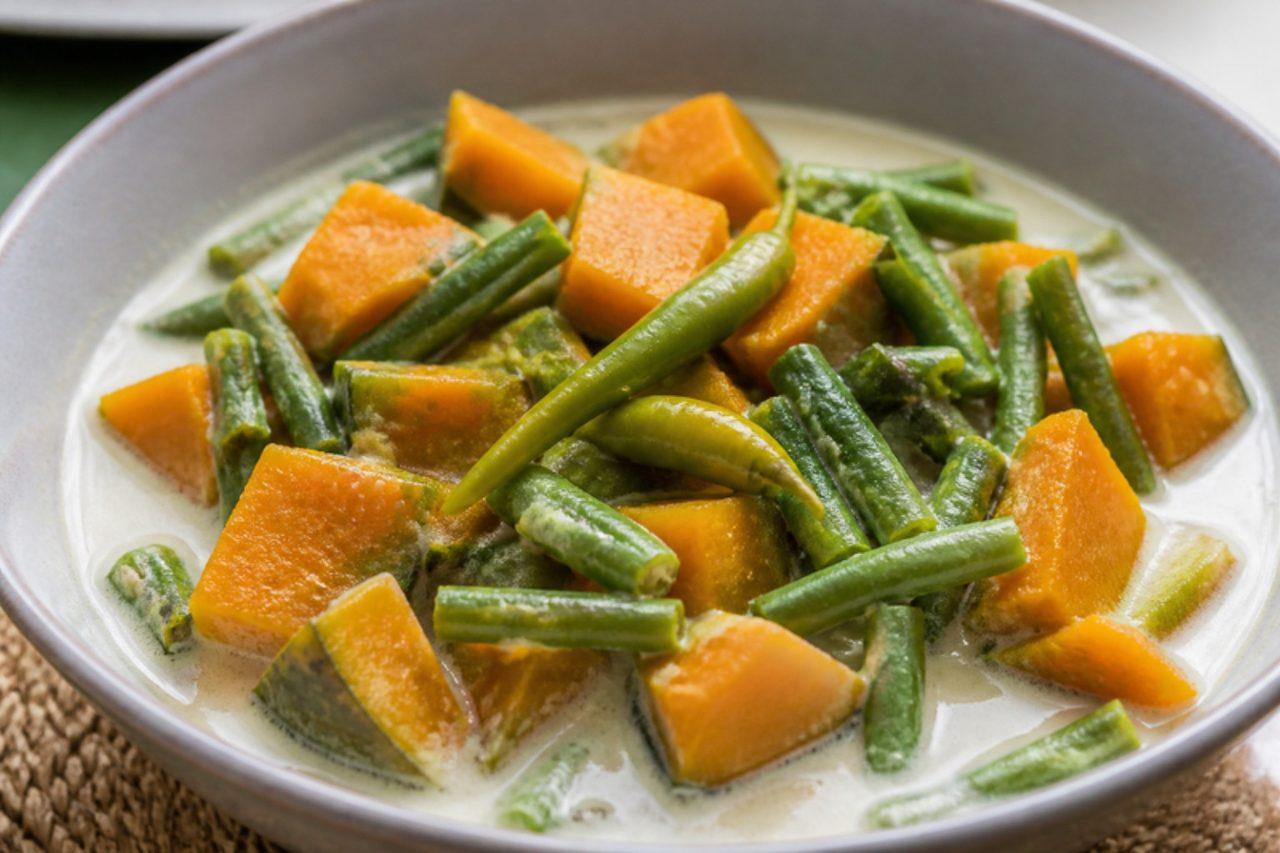
Ginataan means 'cooked in coconut milk', and in the coconut country of Bicol and Southern Tagalog it is how a lot of weeknight vegetables end up on the table. Ginataang kalabasa at sitaw is the homely version: chunks of orange squash and lengths of yard-long beans simmered in coconut milk with garlic, onion and ginger until the squash just starts to melt into the sauce, turning it pale gold and lightly sweet. Bicolano cooks drop in a long green chilli or two for warmth. It is a one-pot dish served with rice, and many families make it on days when there is no money for meat. Chef's tip: keep back a few chunks of squash to mash into the sauce at the end; it thickens it naturally.

by KrazyBadal 0 views

Ginataang langkaYoung jackfruit in coconut milk

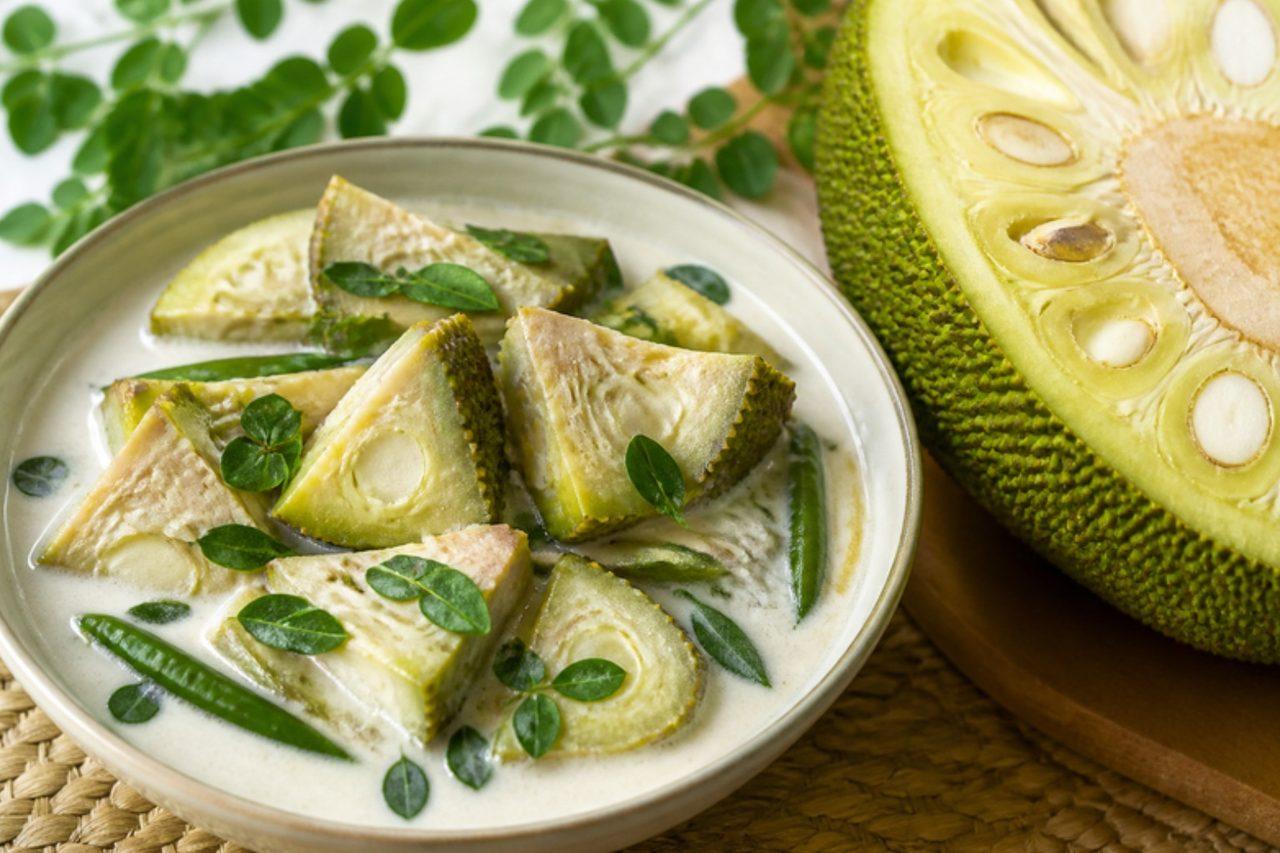
In Bicol and across the Tagalog provinces, ginataang langka is what happens when a jackfruit tree drops its fruit too early: the unripe flesh is sliced and cooked in coconut milk with plenty of ginger until tender and creamy. Unlike Java's sweet, dark gudeg or Padang's turmeric gulai nangka, it is pale, savoury and peppery, lifted at the end with malunggay (moringa) leaves and a splash of vinegar. Home cooks often add shrimp or pork; this version is vegetable-only. Chef's tip: oil your knife and hands before cutting fresh jackfruit, as its sap is very sticky; tinned young jackfruit avoids the problem altogether.

by KrazyBadal 0 views

Halo-haloShaved ice dessert

Halo-halo ('mix-mix') is what the Philippines eats through the hot dry months of March to May, bought from roadside stalls and snack shops and eaten slowly with a long spoon in a tall glass. Sweetened beans and chickpeas, banana cooked in brown sugar, jackfruit, nata de coco and sugar-palm fruit go in first, then a mountain of finely shaved ice, a splash of evaporated milk and a crown of ube halaya, a slice of leche flan or a scoop of ube ice cream, with crunchy pinipig (toasted pounded rice) on top. Unlike Malaysian ais kacang, there's no syrup over the ice: the sweetness comes from the layers and the milk. You stir everything together before eating. Chef's tip: chill the glasses and the toppings first so the ice doesn't melt before you have finished building.

by KrazyBadal 0 views

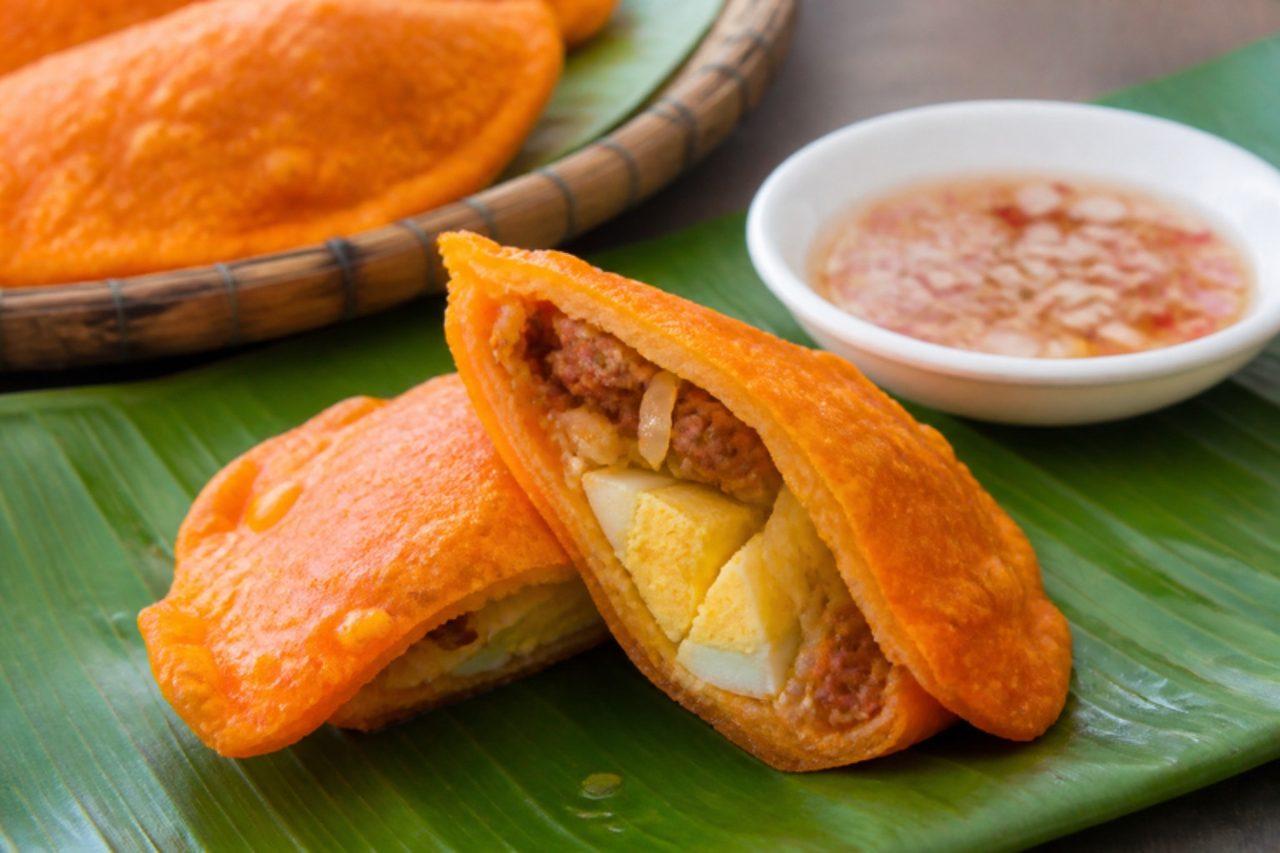
Ilocos empanadaCrisp rice-flour turnovers

In Batac and Vigan, in the Ilocos region, empanada is not a baked pastry but a big, crunchy, bright-orange turnover fried to order at night markets and by the plaza. The thin rice-flour crust gets its colour from annatto, and inside goes shredded green papaya, mung bean sprouts, crumbled Vigan longganisa (a garlicky pork sausage) and a whole egg. Vendors fold it in seconds and slide it into hot oil, then hand it over with a little bowl of spiced sugarcane vinegar to pour in with every bite. It is a pork snack for evenings out. Chef's tip: roll the dough very thin on a banana leaf or baking paper; the leaf lets you flip the dough over the filling without tearing it.

by KrazyBadal 0 views

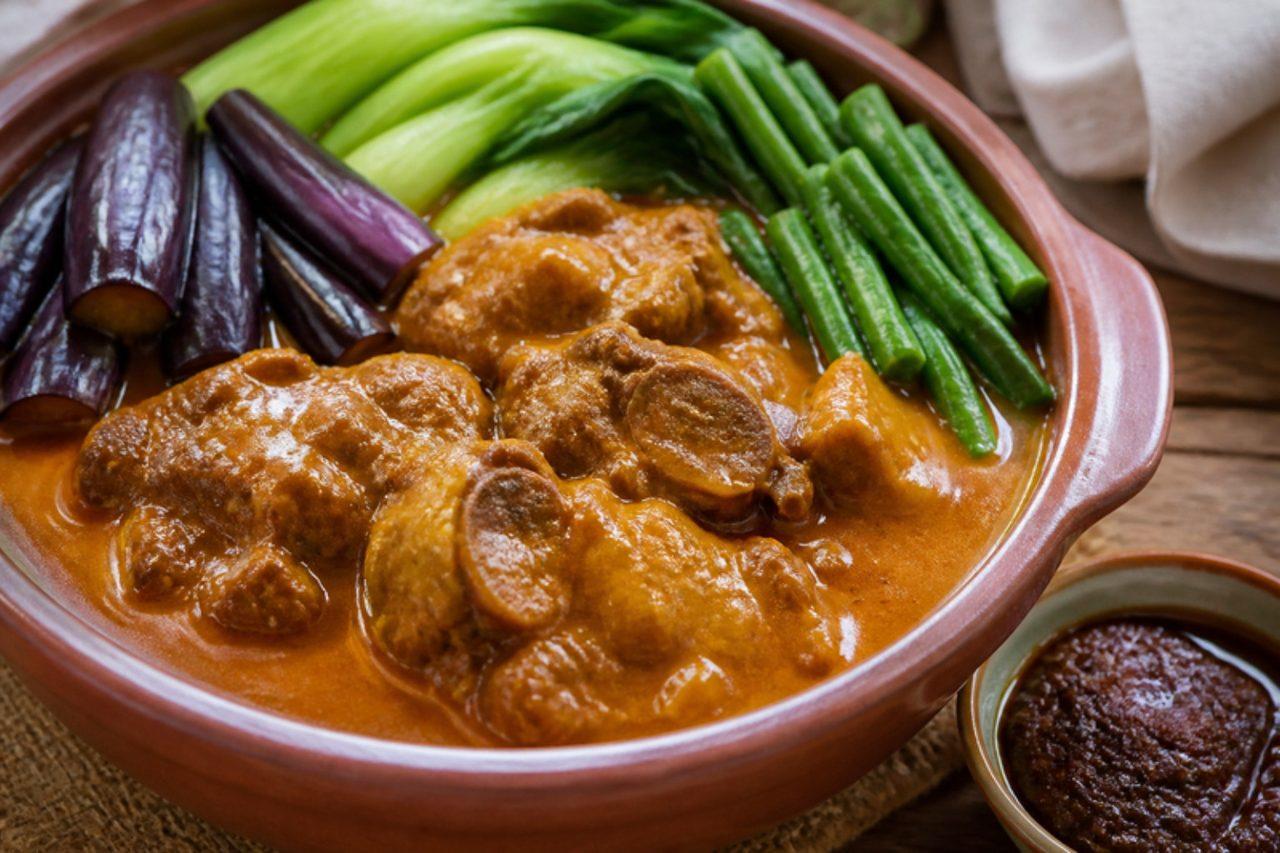
Kare-kareOxtail in peanut sauce

Kare-kare belongs to Pampanga, the province north of Manila that many Filipinos call the country's kitchen, and it is the stew families bring out for fiestas, birthdays and long Sunday lunches. Oxtail and beef shin are simmered until the meat falls from the bone, then finished in a thick, nutty sauce coloured orange with annatto and thickened with toasted ground rice. The sauce itself is barely salted on purpose: everyone adds a little sautéed shrimp paste (bagoong alamang) at the table, so the dish contains shellfish. Pile it over steamed rice with the aubergine, long beans and pak choi. Chef's tip: toast the rice in a dry pan until it is the colour of biscuits before grinding it; that roasted smell is what makes the sauce taste of kare-kare rather than plain peanut butter.

240 minFilipinoMeat
by KrazyBadal 0 views

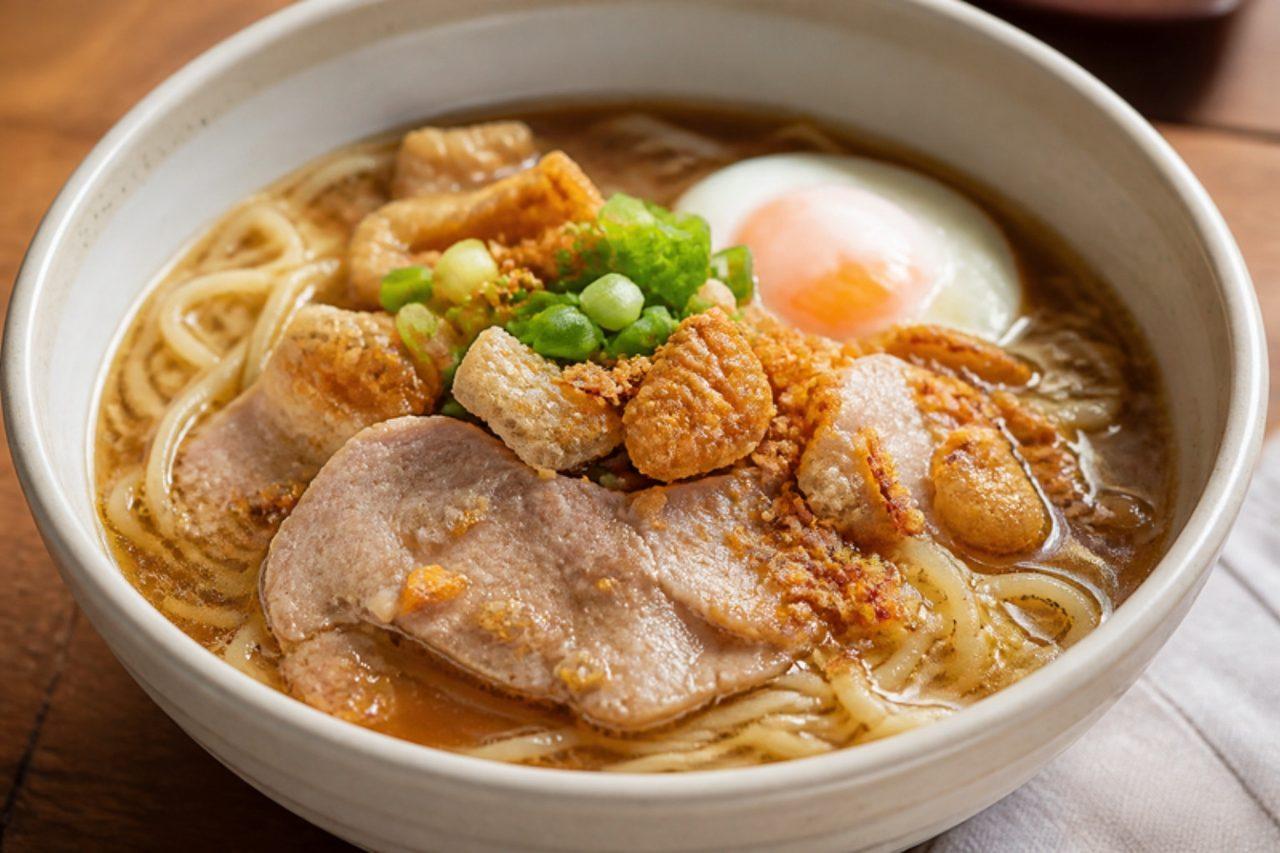
La Paz batchoyPork noodle soup

La Paz batchoy was born in the market of La Paz, a district of Iloilo City on Panay, where stalls ladle it out from early morning to late at night. It is a pork noodle soup through and through: fresh egg noodles (miki) in a deep pork-bone broth seasoned with a little shrimp paste, topped with sliced pork, liver, crushed pork crackling (chicharrón) and lots of fried garlic. Locals often crack a raw egg into the bowl and ask for extra broth. It is a warming, savoury bowl for rainy afternoons. Chef's tip: make the broth the day before and chill it; the fat sets on top so you can lift most of it off and fry the garlic in it.

by KrazyBadal 0 views

LaingTaro leaves in coconut milk

Laing is the pride of Bicol, the chilli-loving region at the southern tip of Luzon. Dried taro leaves are simmered for close to an hour in coconut milk with ginger, lemongrass and siling labuyo until they collapse into a dark, creamy, spicy mass, then finished with thick coconut cream. Bicolano cooks usually add pork or dried fish and shrimp paste; this vegetarian version leans on extra ginger and a little salt and stays rich. Eat it with plain rice, often as a Friday or Lenten dish. Chef's tip: lay the leaves on top of the coconut milk and don't stir until they have soaked it up; stirring raw taro leaves early is said to leave an itchy taste.

by KrazyBadal 0 views

Leche flanCaramel custard

Leche flan is on the table for every Filipino Noche Buena on Christmas Eve, at fiestas and at birthdays, steamed in the oval aluminium tins called llaneras and turned out shining under a dark caramel. Unlike Spanish flan or the Brazilian pudim, it is made with egg yolks only, condensed milk and evaporated milk, so it is much denser and smoother, almost like a firm custard fudge, and a little goes a long way. A grating of calamansi or lime zest cuts the richness, and many cooks steam rather than bake it. The leftover whites go into meringue biscuits. Chef's tip: strain the custard twice and stir, don't whisk; air bubbles become holes in the finished flan.

by KrazyBadal 0 views

Lechon kawaliCrispy fried pork belly

Lechon kawali is pork belly, boiled with garlic and bay, dried, then fried in a wok (kawali) until the rind blisters into crackling. It is the everyday cousin of the whole roast pig: Manila carinderias sell it by the slice at lunchtime, and home cooks make it for weekend lunches all over Luzon. Each piece should be shatteringly crisp on top and juicy underneath. Serve it chopped with rice and a sharp garlic-vinegar dip, or with the sweet liver sauce sold in jars. Chef's tip: after boiling, leave the belly uncovered in the fridge overnight; a bone-dry rind puffs up and spits far less in the oil.

110 minFilipinoMeat
by KrazyBadal 0 views

Lumpiang shanghaiPork spring rolls

No Filipino party table is complete without a platter of lumpiang shanghai, the pencil-thin pork spring rolls that disappear first at birthdays, Christmas Eve (Noche Buena) and family reunions. They came from the Chinese-Filipino cooks of Manila, and the filling is seasoned minced pork with carrot, onion and water chestnut, rolled tight in thin wrappers and fried until they crackle. Dip them in sweet chilli sauce or banana ketchup. Chef's tip: roll them no thicker than your finger; thin rolls cook through in the time the wrapper takes to turn golden.

by KrazyBadal 0 views

NgohiongFive-spice spring rolls

Ngohiong grew from the Chinese-Filipino kitchens of Cebu City and is now street food all over Cebu: a lumpia filled with heart of palm (ubod) or jicama seasoned with five-spice, then dipped in batter and fried, so it has a thick, golden coat rather than a thin crisp skin. It is eaten with a glossy, sweet-hot dipping sauce and often with rice. Cebu stalls mix in a little pork or shrimp; this version is all vegetable. Chef's tip: cook the filling until dry and cool it fully; wet filling tears the wrapper and spits in the oil.

by KrazyBadal 0 views

Vegetable pancit bihonRice noodles with vegetables

No Filipino birthday is complete without a big tray of pancit, because long noodles stand for a long life; aunts arrive at the party carrying it in foil trays, and it sits on the table next to the cake. Pancit bihon uses thin rice vermicelli tossed with sautéed vegetables and a soy-seasoned stock until the noodles drink up every drop and turn light brown and glossy. This version is vegetarian, with fried tofu standing in for the usual chicken, shrimp and sausage, and vegetable stock in the pan. Squeeze calamansi (or lime) over each plate; the sharp citrus is what lifts it. Chef's tip: never cut the noodles before serving, for luck, and cook them in the stock rather than boiling them first.

by KrazyBadal 0 views

Pancit MoloPork dumpling soup

Pancit Molo is named after the Molo district of Iloilo City, where Chinese traders settled centuries ago. Despite the word pancit, there are no noodles: the wonton wrappers are the 'noodle', folded around a filling of pork and prawns and simmered in a clear chicken broth with plenty of fried garlic. Ilonggo families serve it on rainy days, at fiestas and at Christmas gatherings, often as a starter before the main feast. The broth should be light, the dumplings silky. Chef's tip: let the wrappers trail a loose 'tail' when you fold them; those soft, frilly edges are what make molo different from a tight Chinese wonton.

by KrazyBadal 0 views

PandesalSoft bread rolls

Pandesal is the bread of the Filipino morning: small, soft, slightly sweet rolls with a fine breadcrumb coating, bought hot at dawn in brown paper bags from the neighbourhood panaderia (bakery) and eaten before school or work. They are torn open and filled with butter, cheese or peanut butter, or dunked straight into a cup of coffee, and at night the leftovers are toasted. Despite the name ('salt bread'), they are gently sweet, with a pillowy crumb and a thin crust. Home-made ones are best eaten within hours of baking. Chef's tip: the classic shape comes from rolling the dough into a log, coating it in crumbs and cutting slices, which bake into those familiar oval rolls with cut sides up.

by KrazyBadal 0 views

PastilRice parcels with shredded chicken

Pastil is the grab-and-go breakfast of Cotabato City and the Maguindanao region of Mindanao: a mound of warm rice wrapped in a banana leaf, topped with shredded chicken that has been fried dry with garlic and onion (kagikit). Vendors sell them by the dozen from early morning, and Muslim families pack them for the pre-dawn meal during Ramadan. Each parcel is small, cheap and filling. Eat them warm with a hot chilli vinegar. Chef's tip: fry the chicken flakes until they are dry and fluffy, almost like floss; moist chicken makes the rice soggy inside the leaf.

by KrazyBadal 0 views

PiayaMuscovado-filled flatbread

Piaya is the sweet everyone brings home from Bacolod and the sugar-growing island of Negros: a thin, flaky round of unleavened dough with a layer of dark muscovado inside, cooked on a dry griddle until blistered, and dotted with sesame seeds. The sugar melts and turns chewy as it cools. It is eaten with coffee in the afternoon, and newer shops fill it with ube. Lard is traditional in the dough; vegetable shortening gives the same flakiness. Chef's tip: roll the filled dough gently from the centre outward and keep it thin, or the sugar bursts through.

by KrazyBadal 0 views

PinakbetMixed vegetable stew

Pinakbet comes from the Ilocos region in the far north-west of Luzon, where families cook whatever grows behind the house: bitter melon, small aubergines, okra, yard-long beans and tomatoes, simmered with very little water until the vegetables shrink and wrinkle (the name comes from the Ilocano for 'shrivelled'). Ilocanos season it with fermented fish paste; here white miso gives the same savoury, salty depth without any fish, and a little squash (more common in the Tagalog version) adds sweetness. It is an everyday lunch dish, eaten with rice and often a spoonful of extra miso on the side. Chef's tip: choose small, firm bitter melon and don't scrape out every bit of the pith; a little bitterness is the point.

by KrazyBadal 0 views

Pork sisigSizzling chopped pork

Sisig comes from Angeles City in Pampanga, where cooks turned pig's head and ears into a sizzling, sour, peppery bar snack that is now on almost every Filipino menu. This home version is pork, using pork belly (and pig's ears if your butcher has them) that is boiled, grilled until charred, then chopped finely and fried with onion, chilli and calamansi juice. It arrives at the table crackling on a hot cast-iron plate, often with a raw egg stirred in. Eat it with rice, or as pulutan with drinks; a cold calamansi juice works as well. Chef's tip: chop the pork small but not to mince; you want little crisp edges and chewy bits in every spoonful.

110 minFilipinoMeatSpicy
by KrazyBadal 0 views

Showing 120 of 148 recipes

Show more recipes

Page 6 of 7

More Filipino ideas

Other by country