


Skip to content
Hamantaschen
Featured recipe

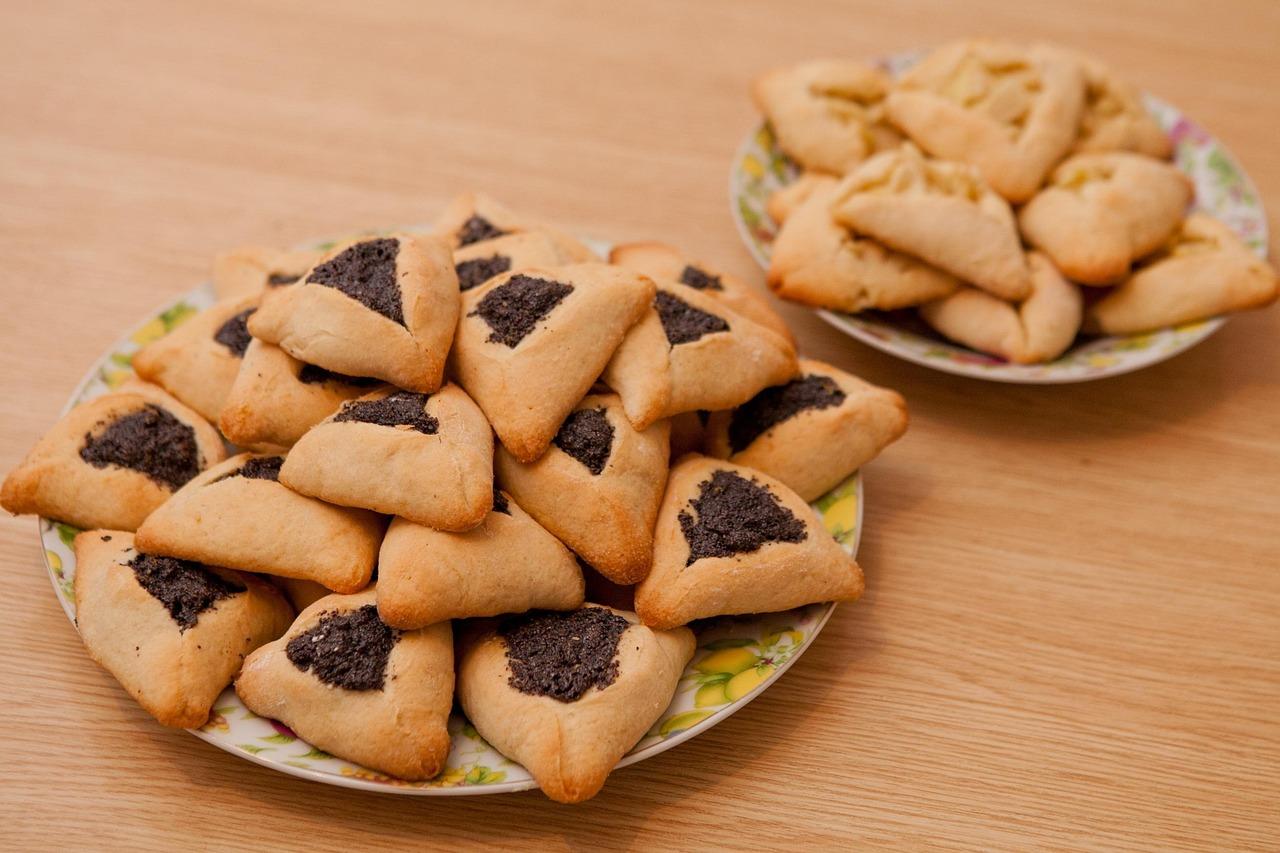
Hamantaschen

Filled triangle cookies

In Israel these are called oznei Haman, 'Haman's ears', and in the weeks before Purim every bakery from Tel Aviv to Be'er Sheva fills its windows with them, while families bake trays at home to pack into mishloach manot gift baskets. A short, lightly orange-scented dough is folded into a three-cornered pocket around a filling of poppy seeds cooked with milk and honey, or a quick date paste. They should be crisp at the edges and tender in the middle. The common mistake is rolling the dough too thin or overfilling, which makes the corners spring open in the oven. Chef's tip: chill the shaped cookies for 15 minutes before baking so the corners keep their sharp pinch.

Read more 0 views

What to eat today?

Around the world

Today's trip: Persian

A new country every day, from every cuisine on the site.

Persian

Nazkhatoon

Smoky aubergine with pomegranate 40 minMore from Persian (131) →

This week's collection

Kid-friendly dinners
578 recipes · a new collection every Monday

Latest recipes

Tarta de zapallitosCourgette and cheese tart

In Buenos Aires every rotisería sells tartas by the slice, and at home a tarta de zapallitos is baked on Sunday evening so that a wedge can go into the vianda (packed lunch) for school and work all week. Zapallitos are round green courgettes; ordinary courgettes work just as well. The common mistake is adding the courgette raw, which floods the pastry; sauté it until the liquid has cooked away. Argentine queso rallado and many hard cheeses are made with animal rennet, so use a vegetarian hard cheese. Chef's tip: bake the tart on a preheated baking tray so the base crisps before the filling soaks in.

by KrazyBadal 0 views

CouacToasted cassava meal

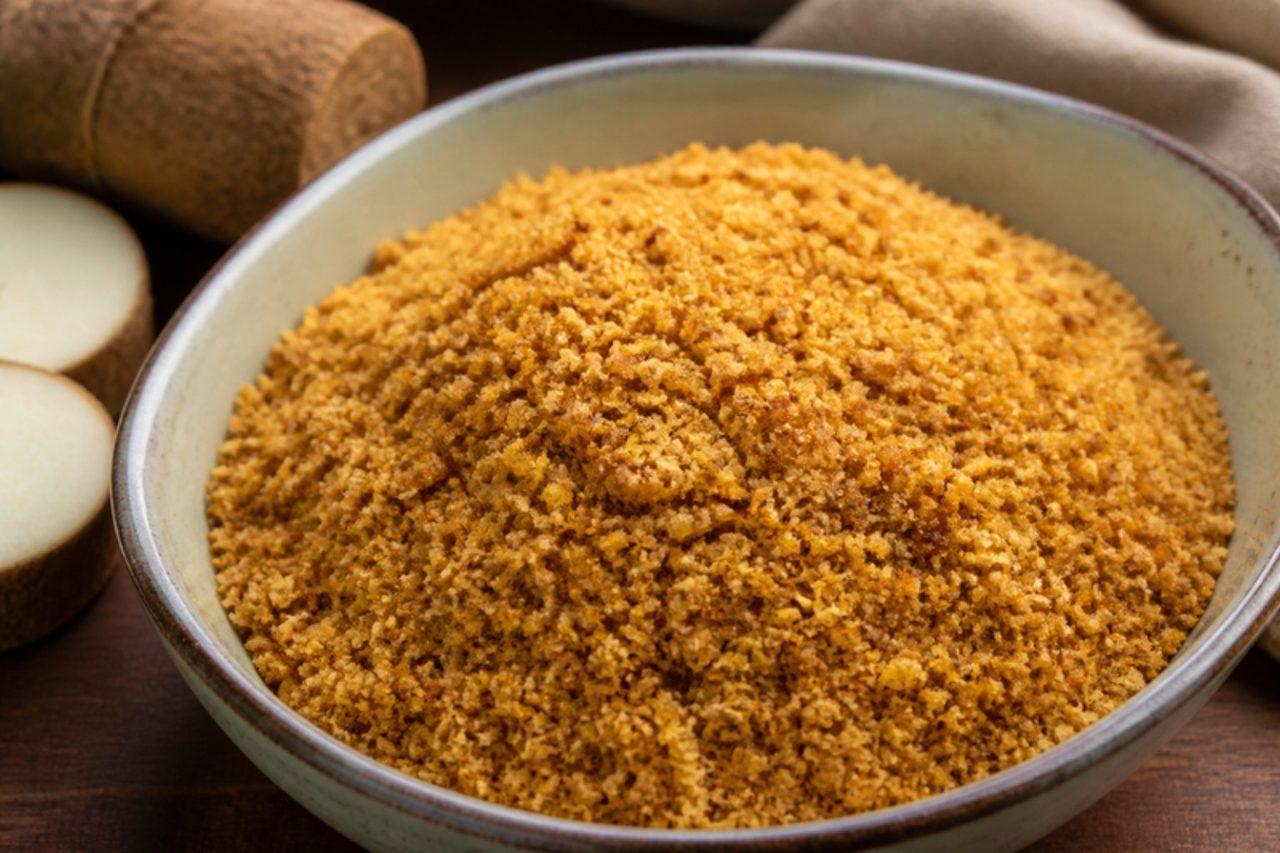
In French Guiana couac is on the table at almost every meal, sprinkled over fish in sauce, stirred into stews or soaked in water with sugar as a snack, and it is still made in the carbets (open-sided sheds) of Amerindian and Maroon villages along the Maroni river. Traditionally it is made from bitter cassava, which is poisonous until its juice has been pressed out and the meal roasted for hours. This home version uses only sweet cassava (yuca), and still presses out and discards all the juice and toasts the meal until fully dry, because cassava must never be eaten raw. The usual mistake is a heat that is too high: the outside scorches while the inside is still damp. Chef's tip: stir almost constantly over a medium-low heat; the couac is done when it rattles in the pan, smells nutty and a grain snaps cleanly between your teeth.

by KrazyBadal 0 views

Curried egg sandwich

A school canteen and church-fete favourite across Australia, the curried egg sandwich is soft white or wholemeal bread filled with hard-boiled egg mashed with mayonnaise and a little mild curry powder, often with lettuce or cress. It goes into lunch boxes cut into fingers. The common mistake is mashing the eggs while warm, which turns the mayonnaise oily and the filling runny; let them cool completely. Chef's tip: warm the curry powder in a dry pan for 20 seconds first, and the raw, dusty taste turns sweet and toasty.

by KrazyBadal 0 views

ChumbequeLayered honey biscuit

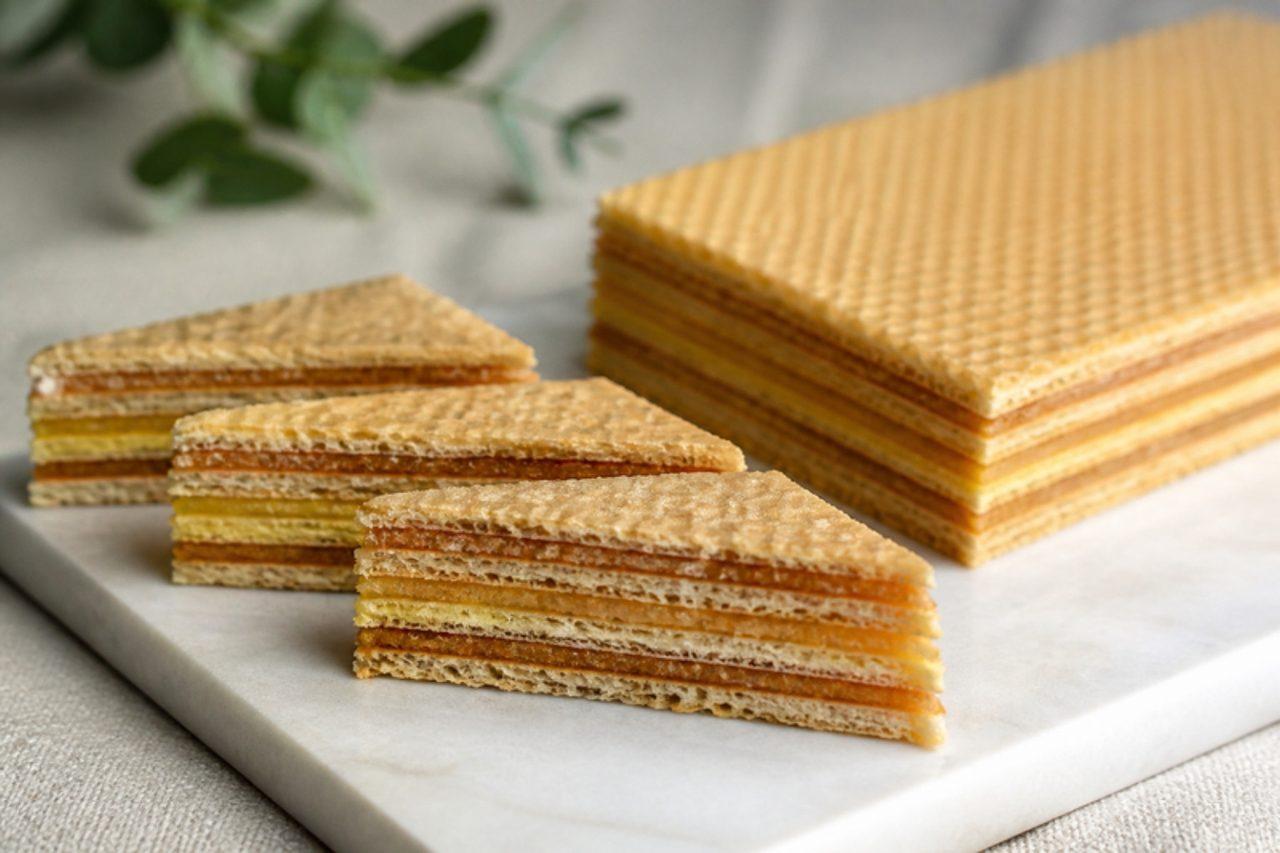
Iquique's Chinese community began baking chumbeque in the port's corner shops more than a century ago, and today it is the city's edible souvenir: crisp, honey-sweet pastry stacked in thin layers with a sharp lemon filling and a sticky guava one, cut into small bricks. People take it home from the Zofri market or nibble it with tea at once. At home, bake it as one slab and slice it when cold. Many people roll the dough too thick, which gives a cakey, dry bar instead of fine layers; aim for 3 mm. Chef's tip: chill the rolled sheets for 10 minutes before you stack them so they don't stretch out of shape.

by KrazyBadal 0 views

Tōge no kamameshiChicken and mushroom pot rice

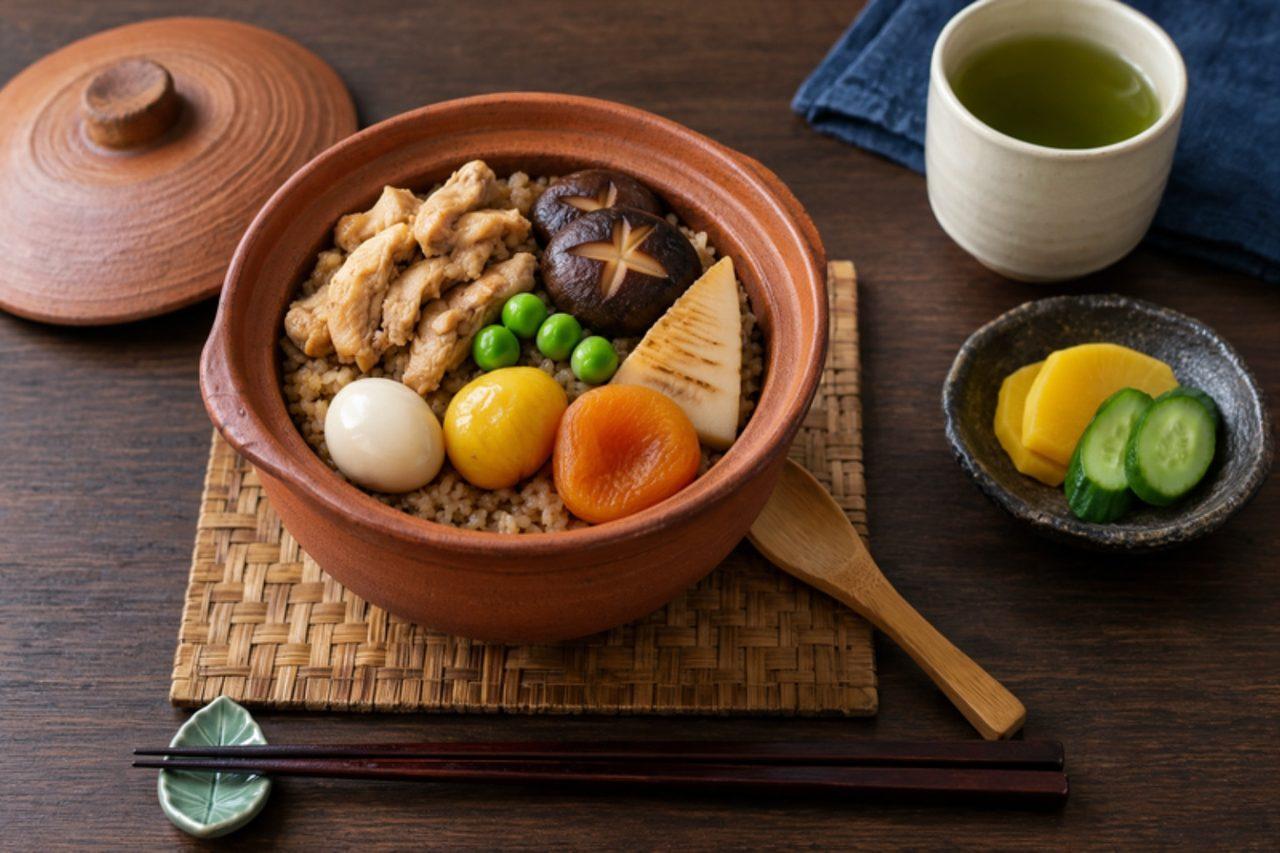
At Yokokawa Station in Gunma, at the foot of the Usui Pass, travellers have bought tōge no kamameshi since 1958: a little clay pot of rice cooked in soy-seasoned dashi and crowded with chicken, shiitake, bamboo shoot, burdock, a sweet chestnut, a dried apricot and a quail egg. It tastes just as good at room temperature on a train. The seasoning includes mirin, a sweet rice wine that bubbles away as it cooks; for alcohol-free, use 1 tbsp sugar instead. The common mistake is lifting the lid while the rice cooks, which lets the steam out and leaves the grains hard. Chef's tip: simmer the chicken and mushrooms first and use that liquid to cook the rice, so every grain tastes of them.

by KrazyBadal 0 views

Chupe de centollaKing crab and cheese stew

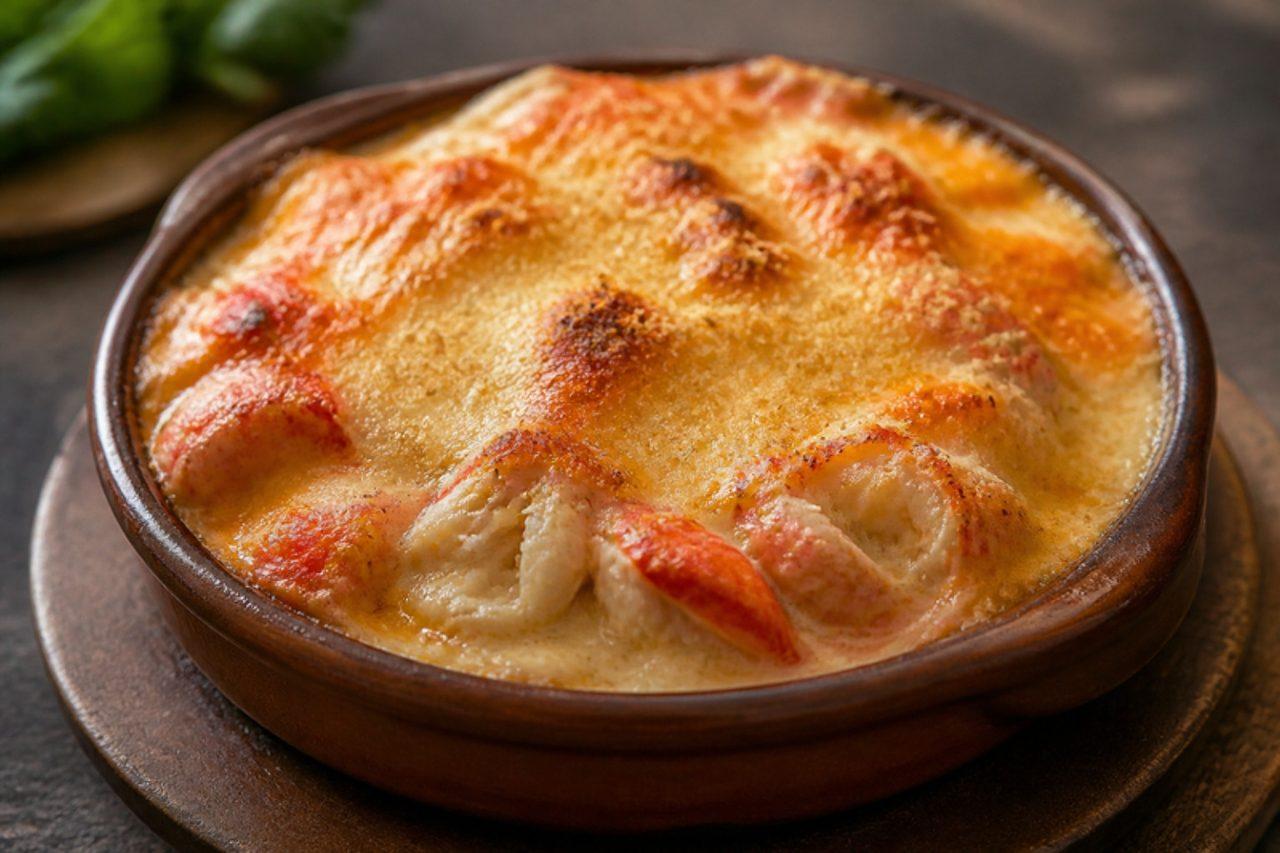
In Punta Arenas and Puerto Natales, at the bottom of Chile, centolla (southern king crab) is the pride of every restaurant, and chupe is how it is served on a cold Magallanes evening: a soft, spoonable stew of crab meat cooked with bread, milk and stock until creamy, then topped with cheese and browned for a minute. It is looser than a crab gratin and eaten with a spoon. Any good cooked crab meat works. The usual mistake is boiling it fiercely once the cheese and cream go in, which makes the chupe grainy; keep it at a gentle bubble. Chef's tip: add the crab right at the end, just to heat through, so the big pieces of king crab stay whole and sweet.

by KrazyBadal 0 views

Ei im GlasSoft-boiled eggs in a glass

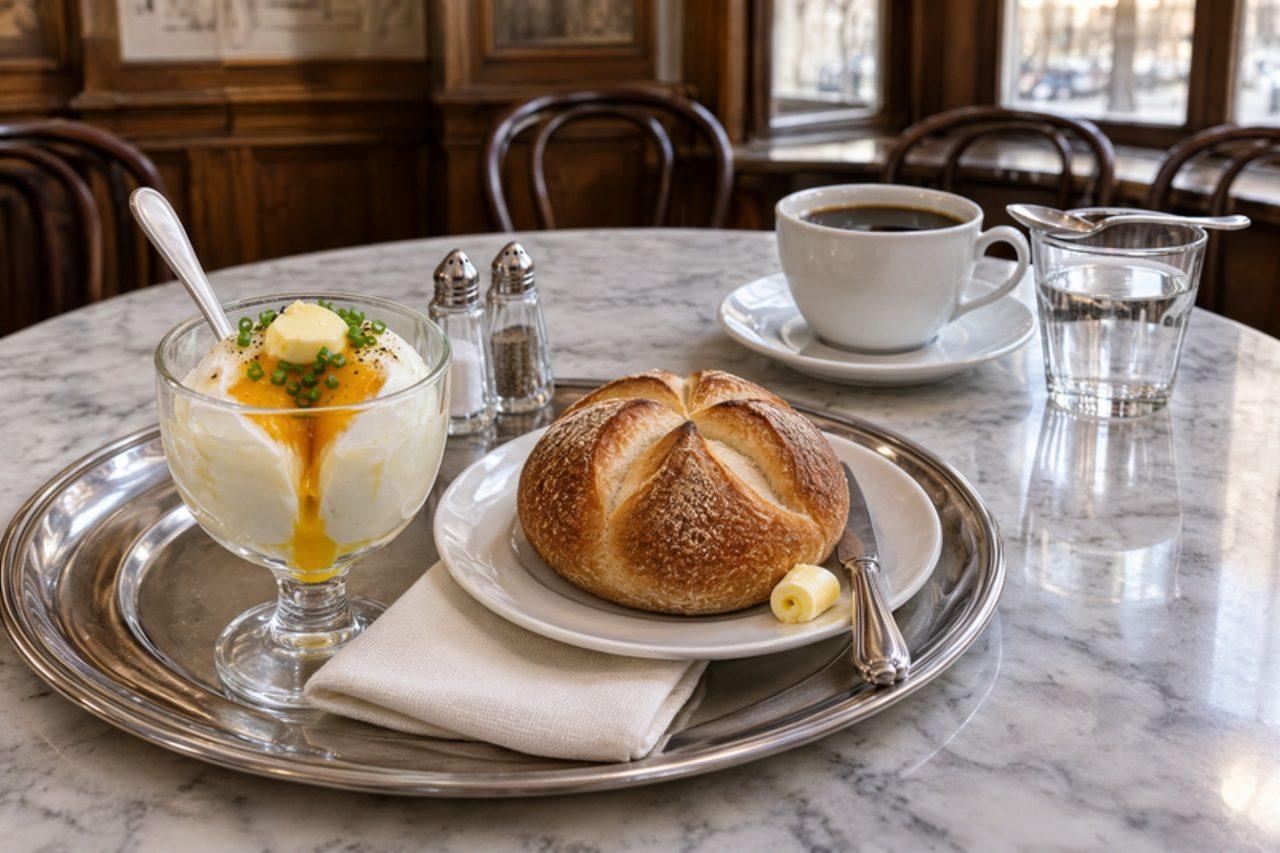
In the old coffee houses of Vienna, the breakfast menu still lists Ei im Glas: two very soft-boiled eggs, scooped warm from their shells into a small glass, with a knob of butter, chives, salt and pepper. You stir it into a golden, custardy mess and eat it with a crisp Semmel roll (gluten-free bread if you need it) and a Melange coffee. The mistake almost everyone makes is boiling the eggs a minute too long, so the yolk sets and the dish turns into plain egg salad. Chef's tip: warm the glass with hot water while the eggs cook, so the butter melts on contact and the eggs stay hot to the last spoonful.

by KrazyBadal 0 views

SaiceSpicy minced beef stew

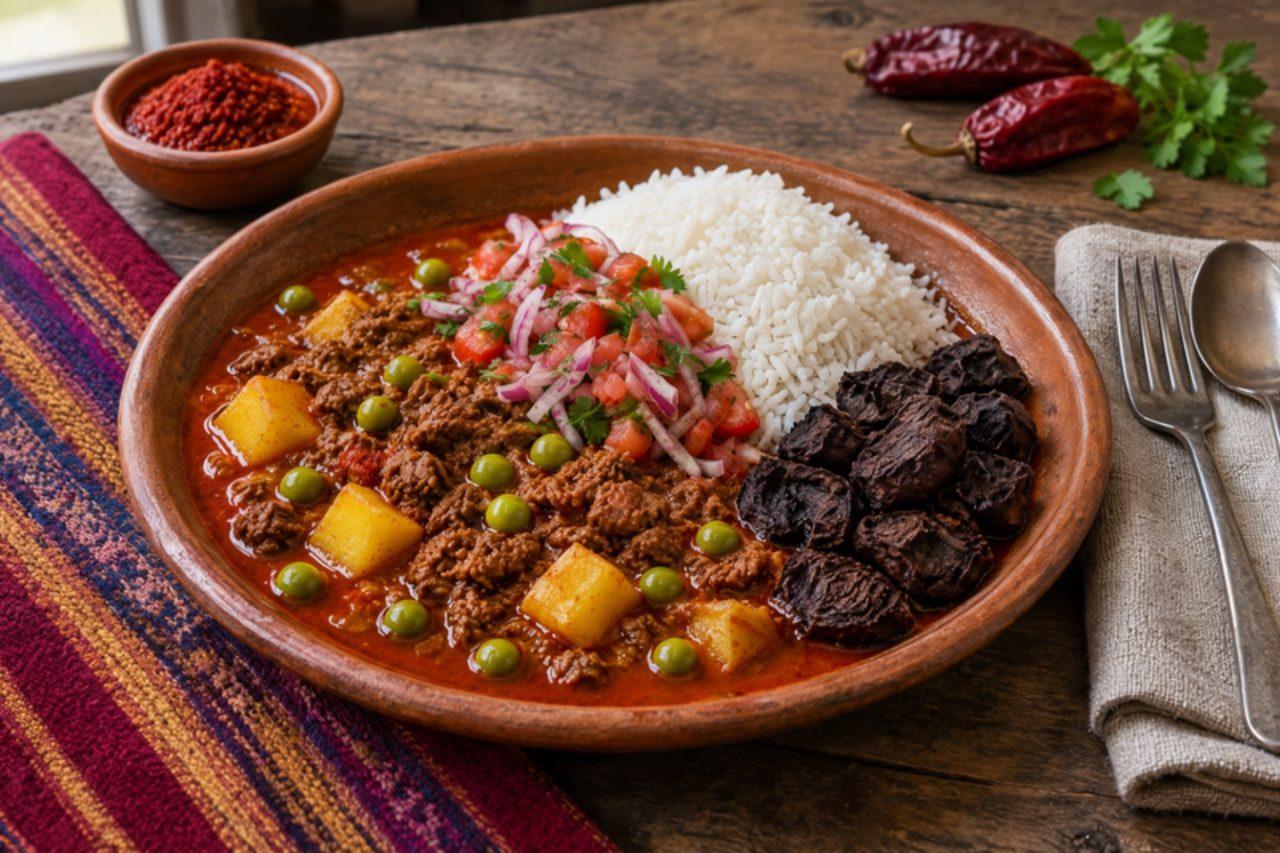
Saice is the signature dish of Tarija in southern Bolivia, eaten at lunchtime in the market comedores and on Sundays at home, especially around the city's spring flower festival. Finely chopped or minced beef is stewed with onion, tomato, peas and ají colorado (dried red chilli) into a spicy, brothy sauce, served with boiled potatoes, white rice, rehydrated chuño (freeze-dried potato) and a fresh salsa of onion and tomato on top. The usual mistake is letting the mince clump: break it up hard as it browns, so it stays fine and soaks up the sauce. Mince is safe at 71 °C. Chef's tip: let the ají colorado simmer for at least 15 minutes, as its raw edge softens into a deep, fruity heat.

60 minAndeanMeatGluten freeSpicy
by KrazyBadal 0 views

Aussie salad sandwich

The salad sandwich is the backbone of the Australian lunchbox and the school tuckshop order: soft bread built up with tinned beetroot, grated carrot, tasty cheese, tomato and crisp lettuce, cut into triangles and wrapped in paper. Beetroot is what makes it unmistakably Aussie. The common mistake is laying wet beetroot and tomato straight on bare bread, so by lunchtime it is pink and soggy. Many Cheddar-style "tasty" cheeses use animal rennet; choose one labelled vegetarian. Chef's tip: butter both slices to the edge and put the cheese and lettuce next to the bread, with the wet fillings sealed in the middle.

by KrazyBadal 0 views

ChutagiWheat pasta in vegetable soup

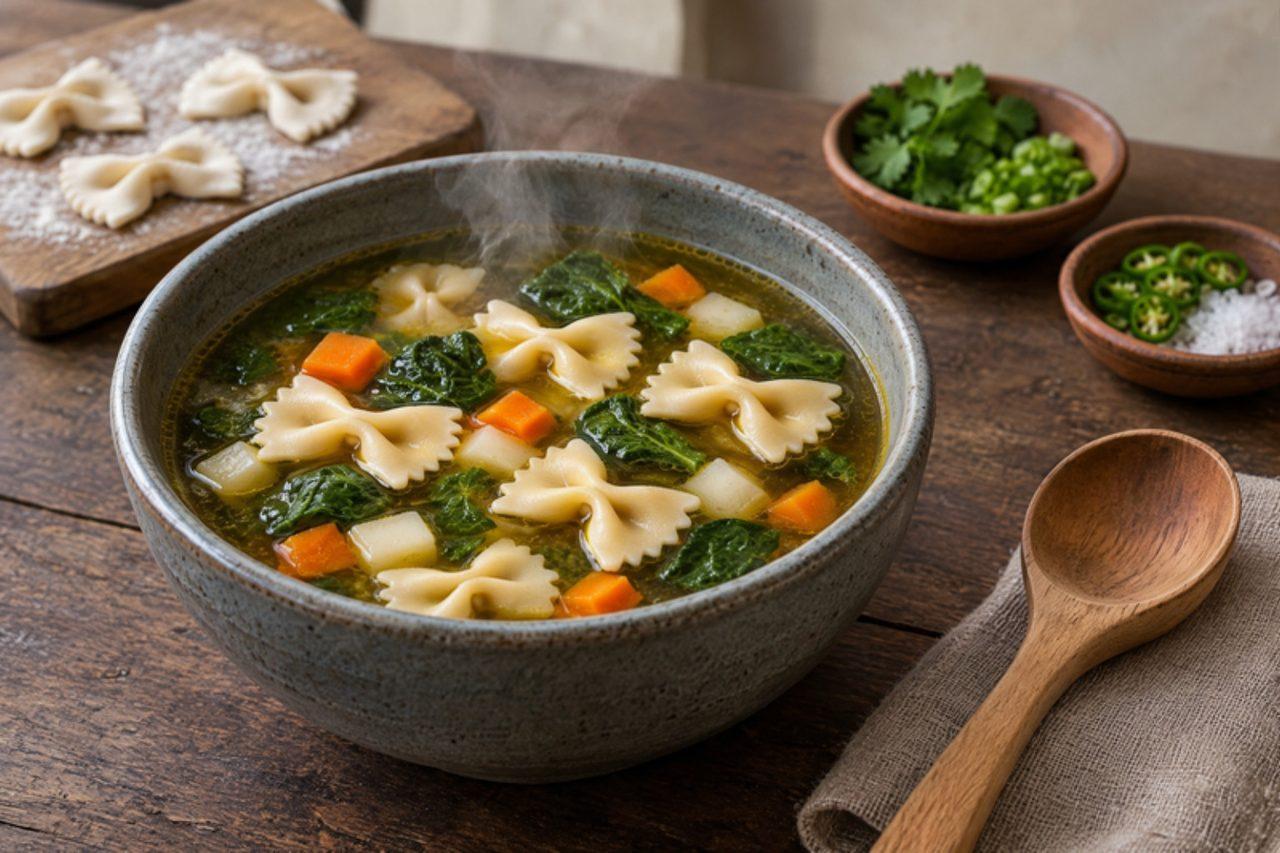
In Leh and the villages along the Indus, chutagi is the one-pot supper of the long winter: little hand-pinched bow-ties of wheat dough dropped into a broth of turnip, carrot, onion and greens. Families sit around the stove pinching the dough together while the pot comes to the boil, and the soup is eaten piping hot, often with a spoon of chilli paste on the side. The broth is light but the pasta makes it filling. The usual mistake is rolling the dough too thick, which leaves the centres of the bows doughy; roll it about as thin as a coin. Chef's tip: let the shaped bows dry on a floured tray for ten minutes before they go in, so they hold their pinched centre instead of opening up in the pot.

by KrazyBadal 0 views

Pâté en croûtePork and veal pie in pastry

Lyon's charcuteries display pâté en croûte like jewellery: a tall loaf of crisp, golden pastry wrapped around a coarse terrine of pork and veal. A slice wrapped in paper is a picnic and lunchbox luxury, and the whole loaf is a Sunday project eaten over several days. The common mistake is undercooking it for fear of drying it out: as it is made with minced pork, the centre must reach 71 °C, so use a probe thermometer. The classic farce has a splash of cognac; it's optional here, and apple juice or extra stock is the alcohol-free swap. Chef's tip: chill the filled, unbaked loaf for 30 minutes before baking so the pastry keeps its shape and pattern.

150 minFrenchMeat
by KrazyBadal 0 views

HumbaBraised pork belly

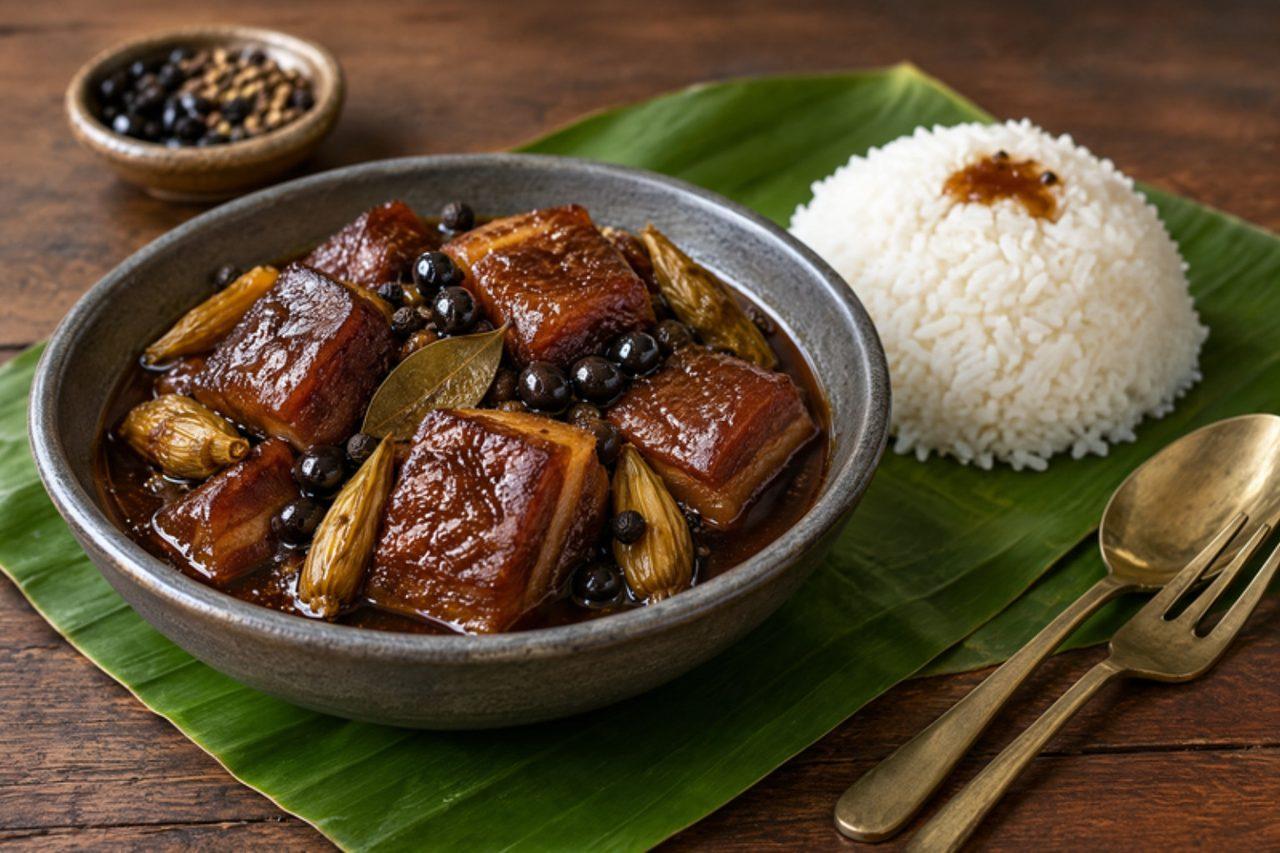
Humba is the sweet, dark braise of the Visayas, cooked in Cebu and Bohol homes for fiestas, birthdays and Sunday lunch. Pork belly simmers in soy sauce, cane vinegar and brown sugar with garlic, bay and peppercorns until the fat turns meltingly soft and the sauce becomes sticky; salted black beans (tausi) and dried lily buds, sold as dried banana blossoms, give it its Visayan character. Eat it with plenty of steamed rice. The usual mistake is stirring as soon as the vinegar goes in: let it boil uncovered for a few minutes first so its raw sharpness cooks off. Pressure-cooker: cook for 35 minutes at high pressure, then reduce the sauce uncovered. Chef's tip: humba tastes even better the next day, when the pork has soaked up the sauce.

130 minFilipinoMeat
by KrazyBadal 0 views

Ensalada salvadoreñaChopped fruit apple drink

Order an ensalada at a pupusería in El Salvador and a tall glass arrives: apple juice crowded with tiny cubes of apple, mango and marañón (cashew fruit), drunk through a straw and finished with a spoon. It is the country's favourite cooler for hot afternoons and Sunday lunches. Outside Central America cashew fruit is rare, so pineapple stands in well. Cutting the fruit too big is the mistake people make; pieces should be small enough to come up a wide straw. Chef's tip: chop the apple last and drop it straight into the juice so it stays white.

by KrazyBadal 0 views

SalabatHot ginger tea

Salabat is the Filipino early-morning cup, simmered in homes from Luzon to Mindanao when the weather turns cool or a sore throat threatens, and drunk with bibingka and puto bumbong outside churches during the Christmas dawn masses. It is just ginger, water and dark sugar, but the ginger has to be bashed to release its heat. The mistake is slicing the ginger thinly and boiling briefly; you get a pale, weak tea. Crush it and simmer it properly. Chef's tip: leave the skin on young ginger, scrub it well and smash it with the flat of a cleaver, which gives a stronger, rounder heat.

by KrazyBadal 0 views

Yuja-cha (citron tea)

Goheung, on the southern coast of South Jeolla, is Korea's yuja country: in November the groves turn gold and families slice the knobbly citrons for yuja-cheong, the honeyed preserve that becomes tea all winter. From December to March a spoonful in hot water is offered to guests, to students cramming late and to anyone with a scratchy throat, as it is traditionally drunk for colds. The tea is sweet, floral and sharp, with soft, chewy strands of peel that you eat at the end with a spoon. The common mistake is leaving the fruit damp or the pith too thick: wet fruit lets mould in, and thick white pith makes the preserve bitter. Scrub, dry completely and pare away any pith thicker than a few millimetres. The cheong is ready after a day or two, when the sugar has dissolved into a clear, glossy syrup around the peel. Keep it in the fridge for up to three months, always with a dry spoon; throw it away if you see fuzzy mould, smell alcohol or it bubbles. No yuja? Japanese yuzu is the same fruit; otherwise use 2 lemons and 2 mandarins. Chef's tip: soak the seeds in a little of the honey and add that liquid back for a silkier syrup.

by KrazyBadal 0 views

MchemshoBeef and vegetable pot

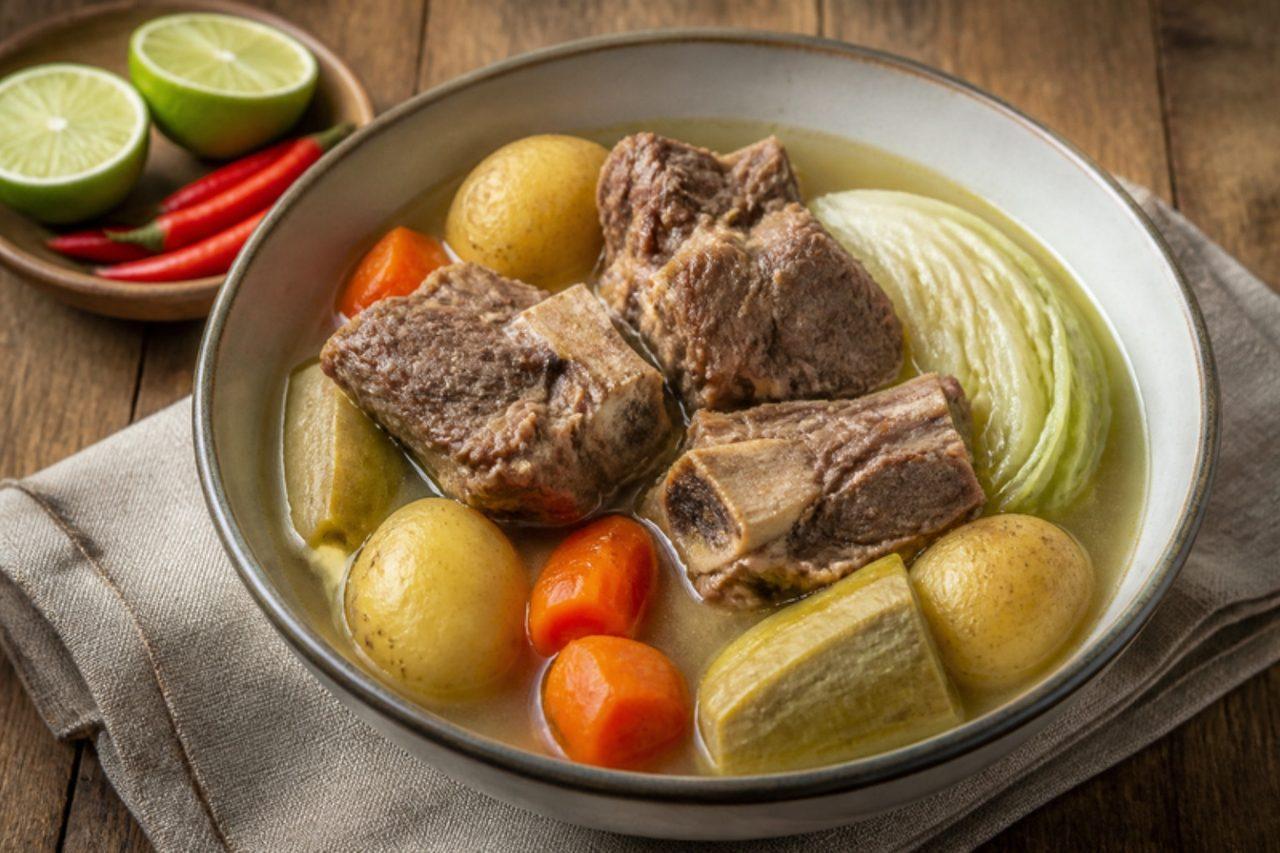
The name just means 'boiled', but Dar es Salaam families treat mchemsho as comfort food, made on a cool rainy evening or for anyone feeling under the weather. Beef on the bone simmers with garlic and ginger into a clear, savoury broth, and whole potatoes, carrots, green bananas and wedges of cabbage go in late so each stays distinct. It arrives in wide bowls, everything in big pieces, with lime and fresh chilli on the table to sharpen it to your taste; some cooks make it with chicken instead. Adding all the vegetables at once is the common error, leaving the cabbage grey and the potatoes in pieces. Chef's tip: blanch and rinse the beef first, then start again in fresh water, for a broth that stays clear.

by KrazyBadal 0 views

Verkadalai sadam (peanut rice)

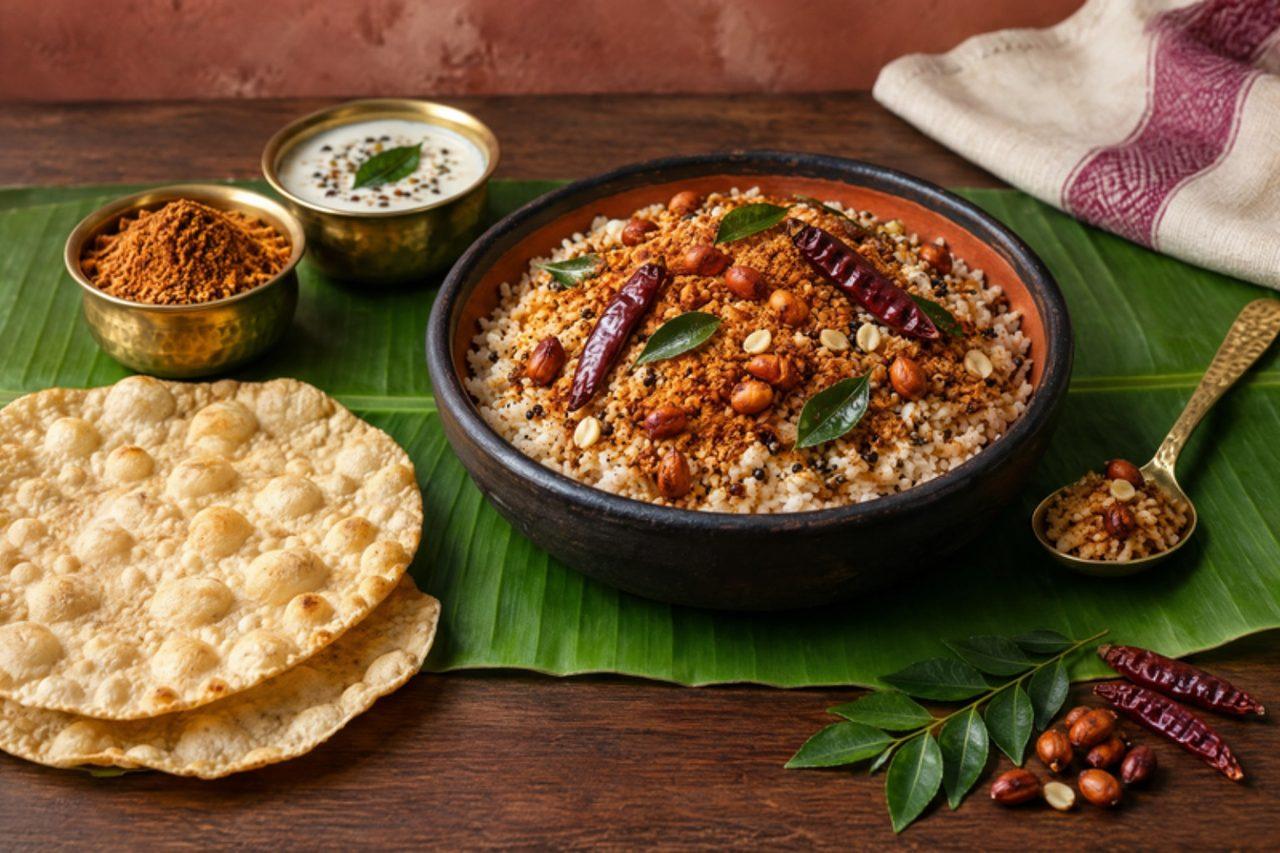
Peanut rice is the filling variety rice that Tamil and Kannada parents send when the school day ends with games: roasted peanuts, dry coconut, sesame and red chillies are ground into a coarse powder and tossed through rice in a curry leaf tempering. It tastes a little like a savoury peanut brittle, and it stays good at room temperature for hours. The mistake is grinding the peanuts too long; they turn into peanut butter and the rice clumps. Pulse in short bursts and stop while it is still sandy. Chef's tip: keep a few whole roasted peanuts aside and add them at the end for crunch.

by KrazyBadal 0 views

SalmoriglioLemon, oregano and oil sauce

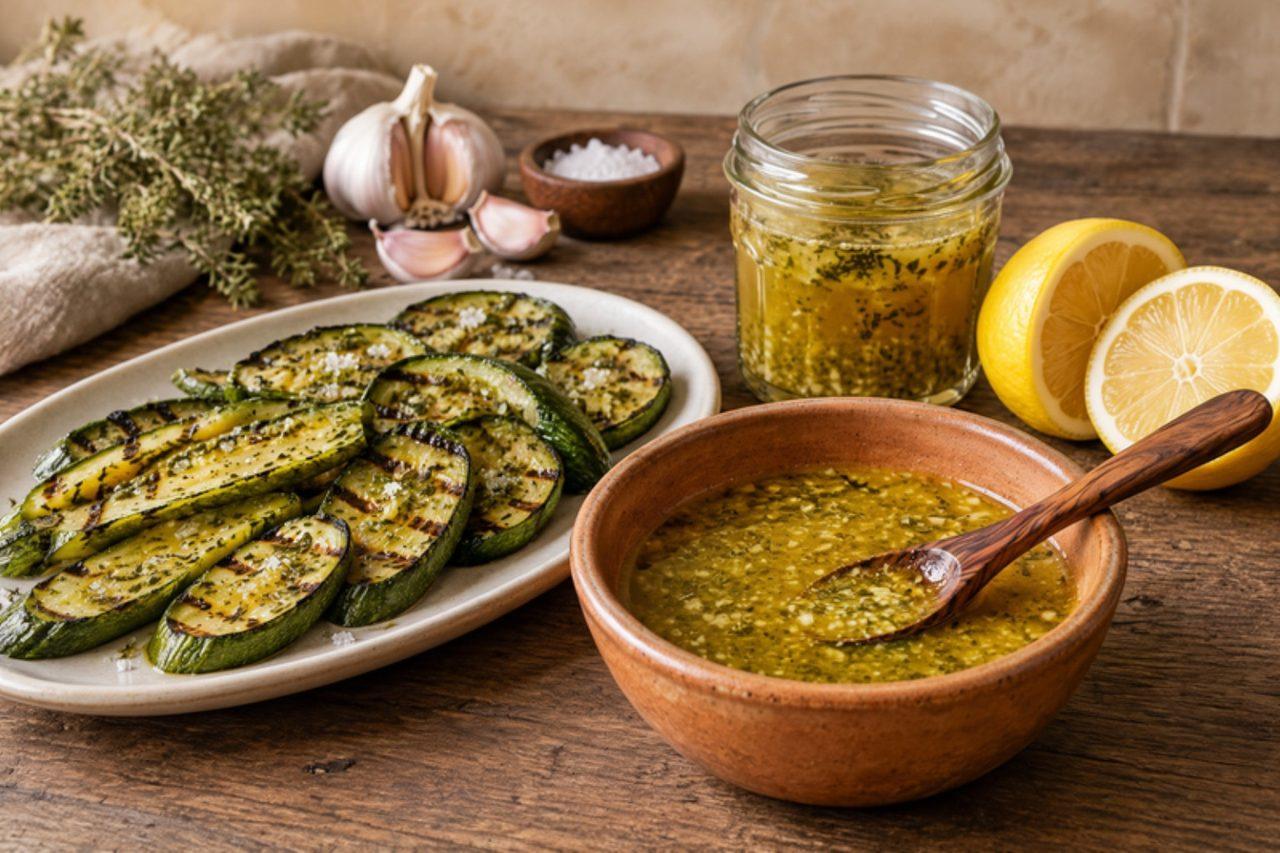
Salmoriglio is the sauce of Sicily and Calabria's summer grills, brushed over swordfish in Messina and over grilled aubergine and peppers in every courtyard from Palermo to Reggio. Olive oil is whisked with lemon juice, a little warm water, dried oregano and garlic until it turns pale and creamy, and the herbs and citrus do the seasoning that salt usually does. This version uses no salt: about 0.0 g salt per portion. The usual mistake is pouring it over cold food; brush it onto food straight off the grill so the heat releases the oregano's perfume. Use Sicilian oregano on the stem if you can find it. Chef's tip: whisk the oil in slowly over a bowl set on warm water, the old way, and the sauce emulsifies and stays creamy.

by KrazyBadal 0 views

Menthya soppu bath (fenugreek leaf rice)

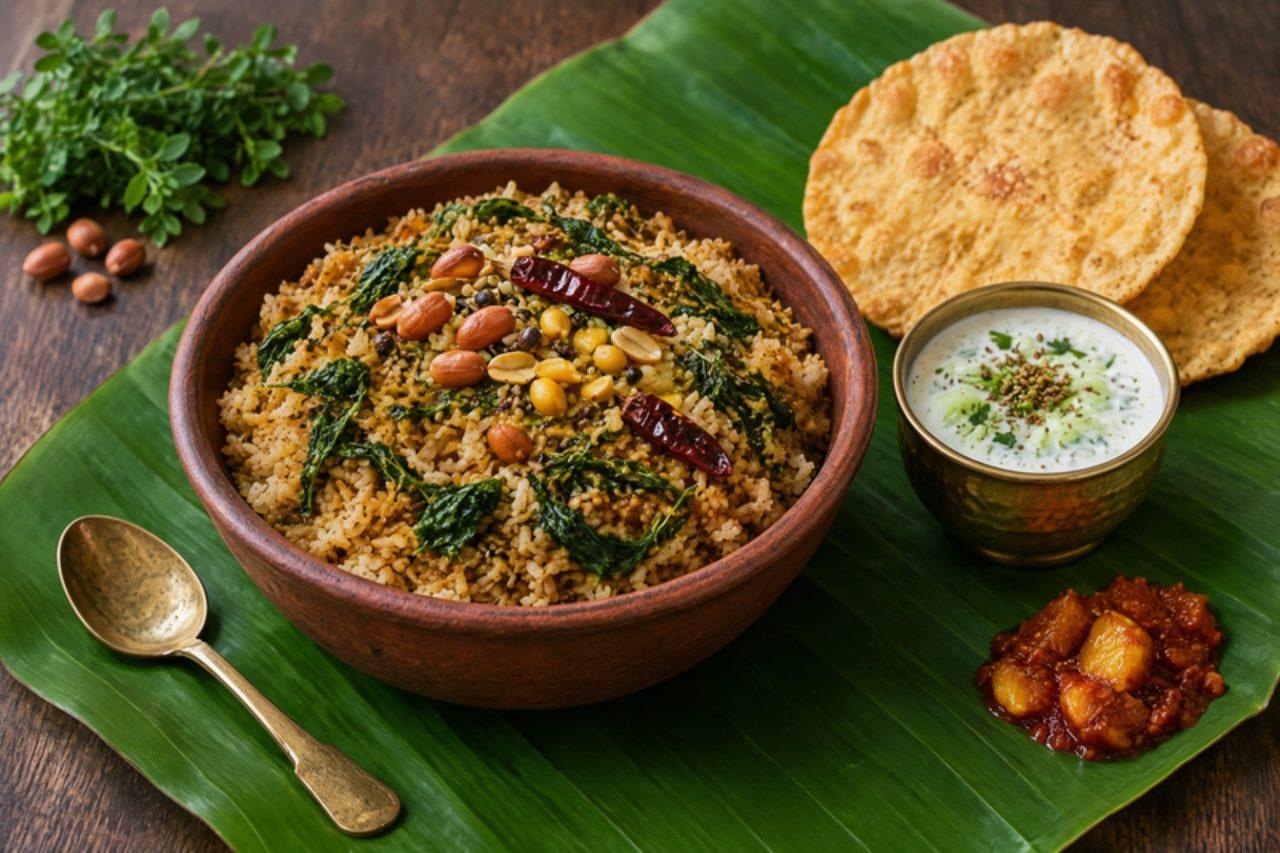
In Bengaluru and Mysuru, a "bath" is a one-pan rice dish seasoned with its own roasted spice powder, and menthya soppu bath is the winter version, made when bunches of fresh fenugreek are cheap. Unlike Tamil variety rices, the rice is cooked right in the masala with the leaves, tamarind and a touch of jaggery, so it comes out soft, tangy and gently bitter. The common mistake is using too much methi stalk, which makes the rice harshly bitter; strip the leaves and use only the softest stems. Chef's tip: a teaspoon of jaggery and a squeeze of tamarind balance the bitterness better than extra salt.

by KrazyBadal 0 views

Citron presséFresh lemon drink

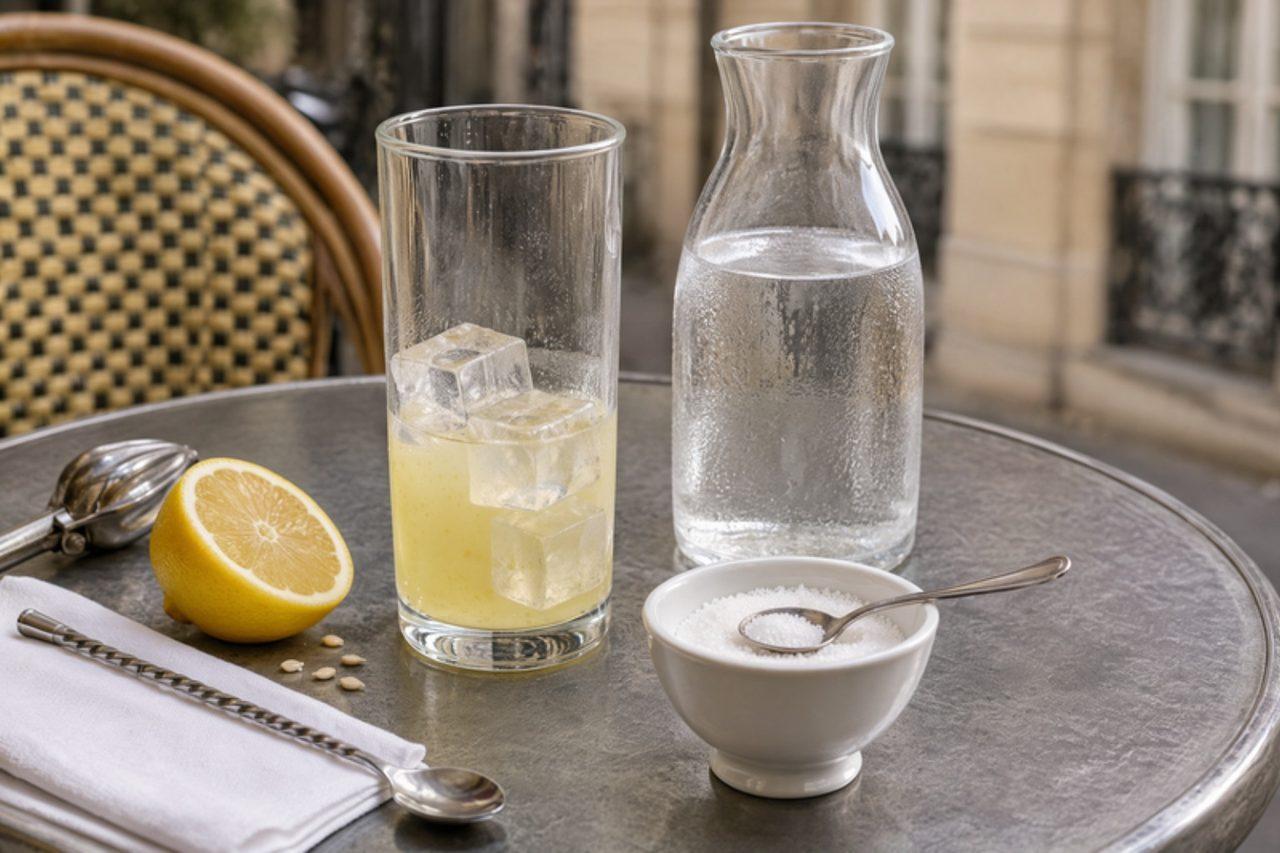
Order a citron pressé on a Paris terrace in July, or at a café in Nice after the beach, and the waiter brings a tall glass with an inch of freshly squeezed lemon juice, a carafe of iced water, a sugar bowl or a little jug of syrup and a long spoon. You build the drink yourself, as sharp or as sweet as you like, which is half the pleasure; French children learn to drink it with plenty of sugar, grown-ups often with almost none. It is bright, sour and cleansing, nothing like bottled lemonade, and best in the late afternoon heat. The common mistake is stirring granulated sugar straight into cold lemon water: it sinks and never dissolves, so the first sips are sour and the last a sludge. Dissolve the sugar in the juice first, or use a quick syrup. It is ready when the sugar has vanished, the drink tastes balanced to you and the glass is beaded with cold. Unwaxed lemons matter if you add a twist of peel. Chef's tip: pour the water over ice slowly and taste after half the carafe; most people find they need less water than they expect.

by KrazyBadal 0 views

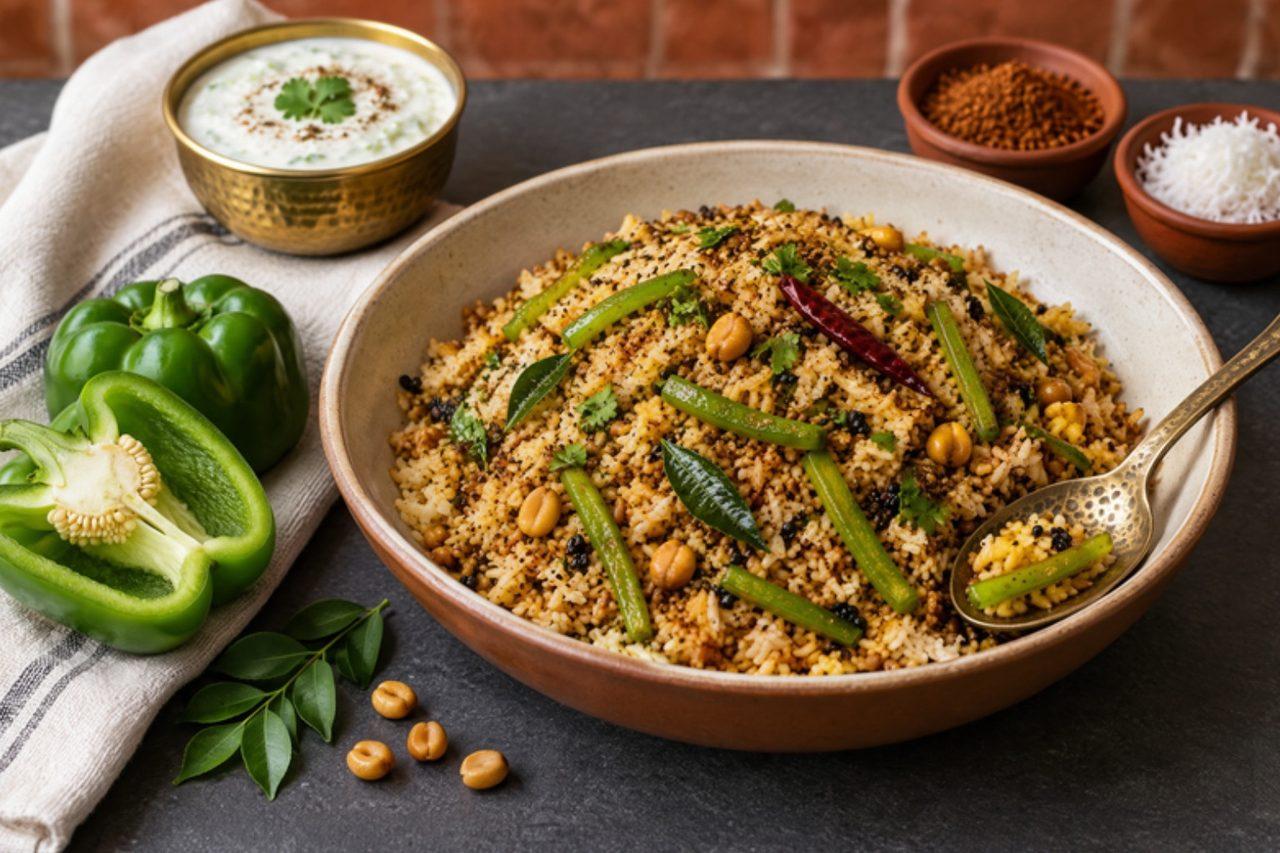
Capsicum rice (capsicum bath)

Every Bengaluru darshini has its own capsicum bath, and at home it is a favourite for office lunch boxes because the peppers stay crunchy until noon. Green peppers are sautéed just until glossy, then tossed with rice and a freshly roasted powder of coriander seeds, chana dal, dry coconut and red chillies. The mistake is cooking the peppers until soft; they release water and the rice turns soggy, so keep them bright and crisp. Chef's tip: add the powder to the hot oil off the heat for a few seconds before the rice goes in; it blooms the spices without burning the coconut.

by KrazyBadal 0 views

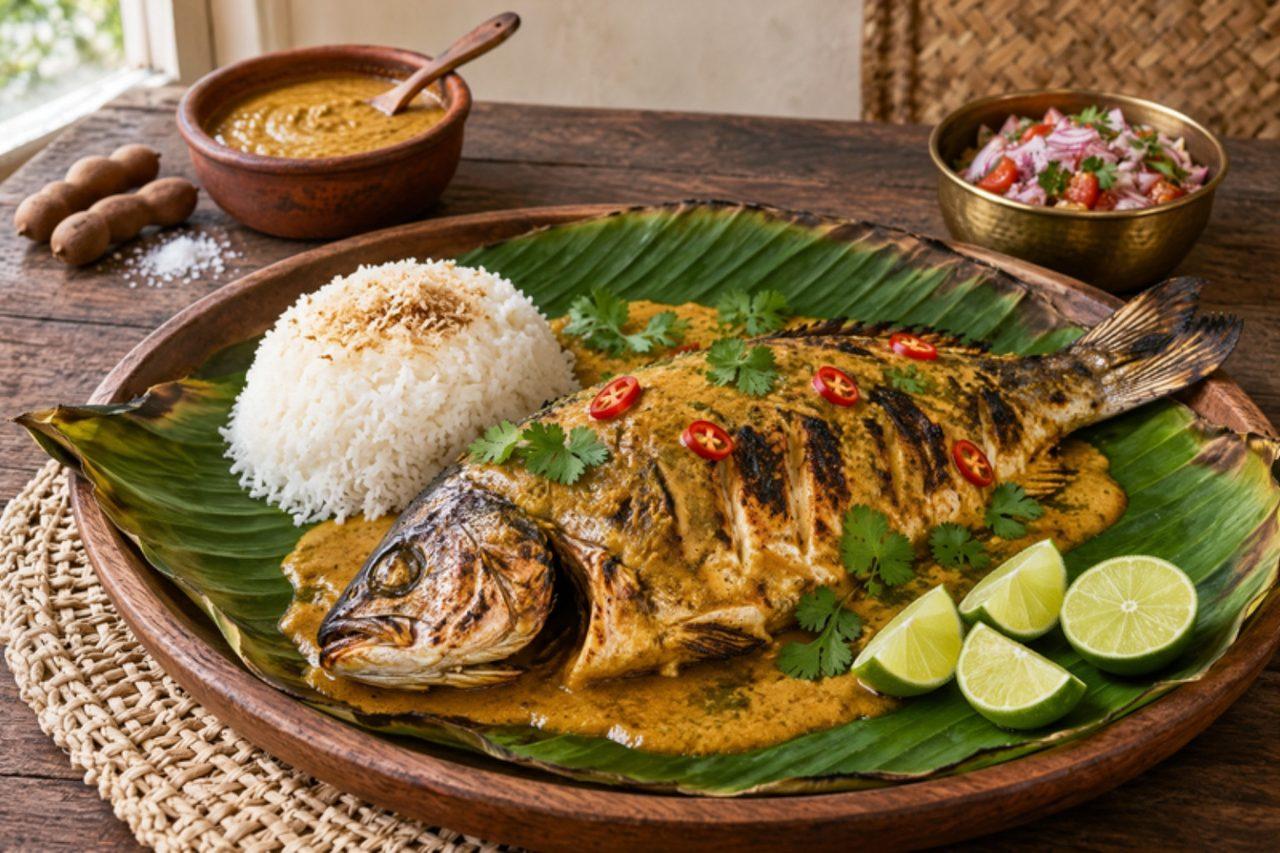
Samaki wa kupakaGrilled fish in coconut tamarind sauce

Samaki wa kupaka is a Swahili coast favourite from Mombasa, Lamu and Zanzibar, grilled over charcoal for family feasts, Eid and evening food markets. Whole fish or thick fillets are marinated with lemon, garlic and turmeric, grilled until charred, then basted again and again with a thick sauce of coconut milk, tamarind, chilli and spices so it forms a sticky, golden coat. This version uses light coconut milk and is suitable as part of a balanced diet; serve with kachumbari and greens, or a small portion of brown rice. About 370 kcal and 8 g carbohydrate per portion. The usual mistake is flipping the fish too soon, before the skin crisps, so it sticks and breaks. Chef's tip: oil the grill rack well and use a fish basket if you have one.

by KrazyBadal 0 views

Brazo de reinaSponge roll with dulce de leche

The 'queen's arm' sits in the glass cabinet of every Chilean bakery: a light sponge rolled around a thick layer of manjar (Chilean dulce de leche) and dusted with icing sugar. At home it is the cake for a birthday tea or an unexpected visitor, because it bakes in 10 minutes. The common mistake is overbaking: a dry sponge cracks as you roll it. Take it out the moment it springs back. Chef's tip: roll the sponge up in a sugared tea towel while it is still hot and let it cool that way; it remembers the shape and won't crack when you fill it.

by KrazyBadal 0 views

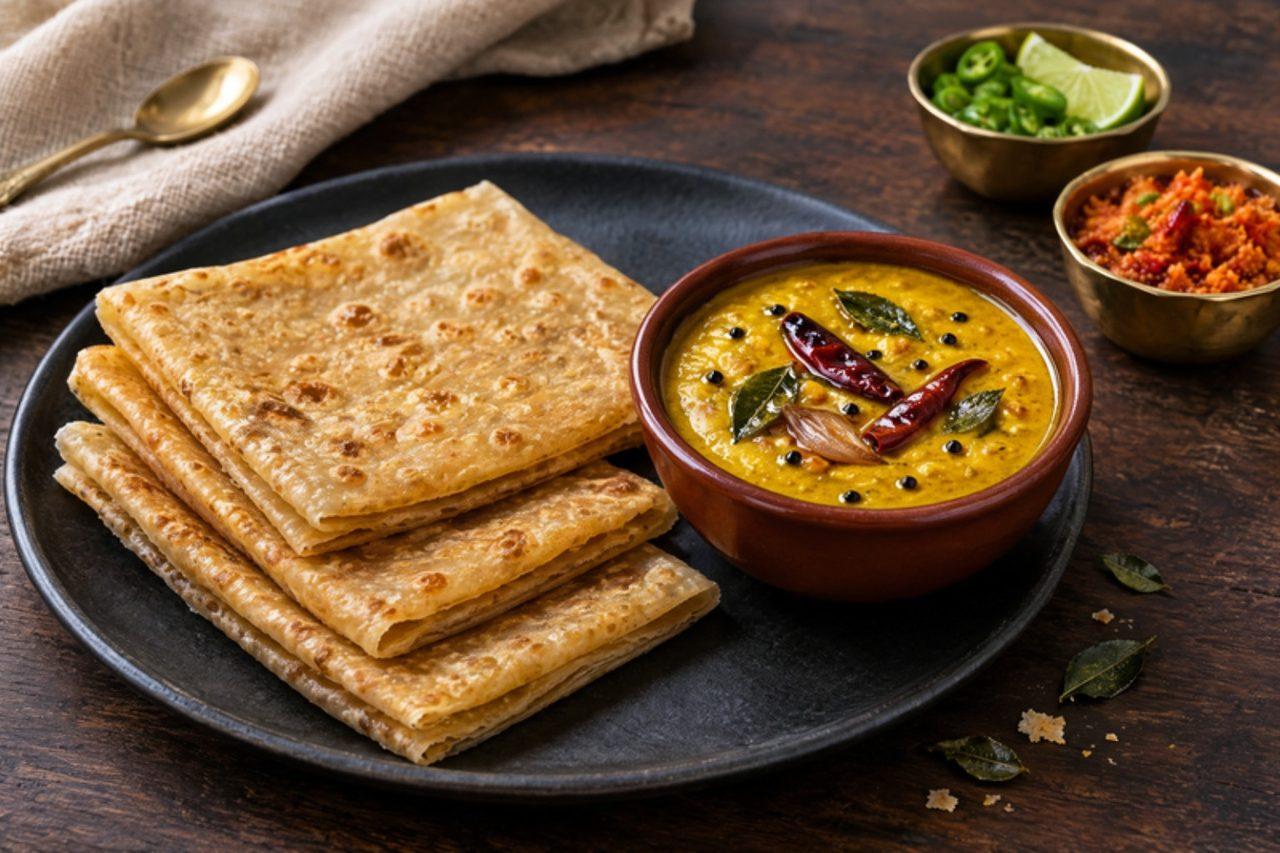
Godamba rotiThin griddle flatbread

Walk down Galle Road through Wellawatte or Bambalapitiya in the evening and you hear the roti shops before you see them: one cook slapping balls of oiled dough into sheets so thin you can read through them, another clattering the kottu blades. That stretched sheet, folded into a square and cooked on the iron plate, is godamba roti, flaky and chewy, torn to scoop up dhal and chicken curry, or chopped up for kottu. Contains wheat. Chef's tip: rest the oiled dough balls for at least 2 hours; the gluten relaxes so the dough stretches thin without tearing.

by KrazyBadal 0 views

Jambon-beurreHam and butter baguette

France sells millions of jambon-beurre every working day: half a crusty baguette, split, spread with good salted butter and filled with thin slices of jambon de Paris, the delicate cooked pork ham. Parisians eat it at the office, on a park bench or on the train. The common mistake is a stingy smear of hard butter; the butter is a filling, not a glue, so spread it soft and generous. Some add cornichons, which purists call a different sandwich. Chef's tip: fold each slice of ham loosely in half rather than laying it flat, so the sandwich is airy and every bite has ham.

by KrazyBadal 0 views

Cola de monoCoffee and milk liqueur drink

In Santiago, December means cola de mono: bottles of cold, coffee-coloured spiced milk that families make days ahead and open on Christmas Eve and New Year's Eve, poured beside slices of pan de pascua, the dense Chilean fruit cake. The traditional version is for adults only, spiked with grape aguardiente; pour small glasses and drink responsibly. It tastes like a sweet, cold café con leche with cinnamon, clove and orange, the aguardiente adding a warm finish, and the texture is smooth and light, never thick. Each glass has about as much caffeine as a small, weak coffee, so use decaf for anyone sensitive. The classic mistake is adding the aguardiente while the milk is still hot: much of the alcohol steams away and the milk can catch and curdle. Let the spiced milk cool completely first. It is ready when the colour is an even tan, the spices smell strong but the milk tastes clean, and it is fridge-cold. It keeps 3–4 days in the fridge in clean bottles; shake before pouring and throw it out if it smells sour. Chef's tip: make it two days ahead; the spices keep blooming and it tastes noticeably rounder.

by KrazyBadal 0 views

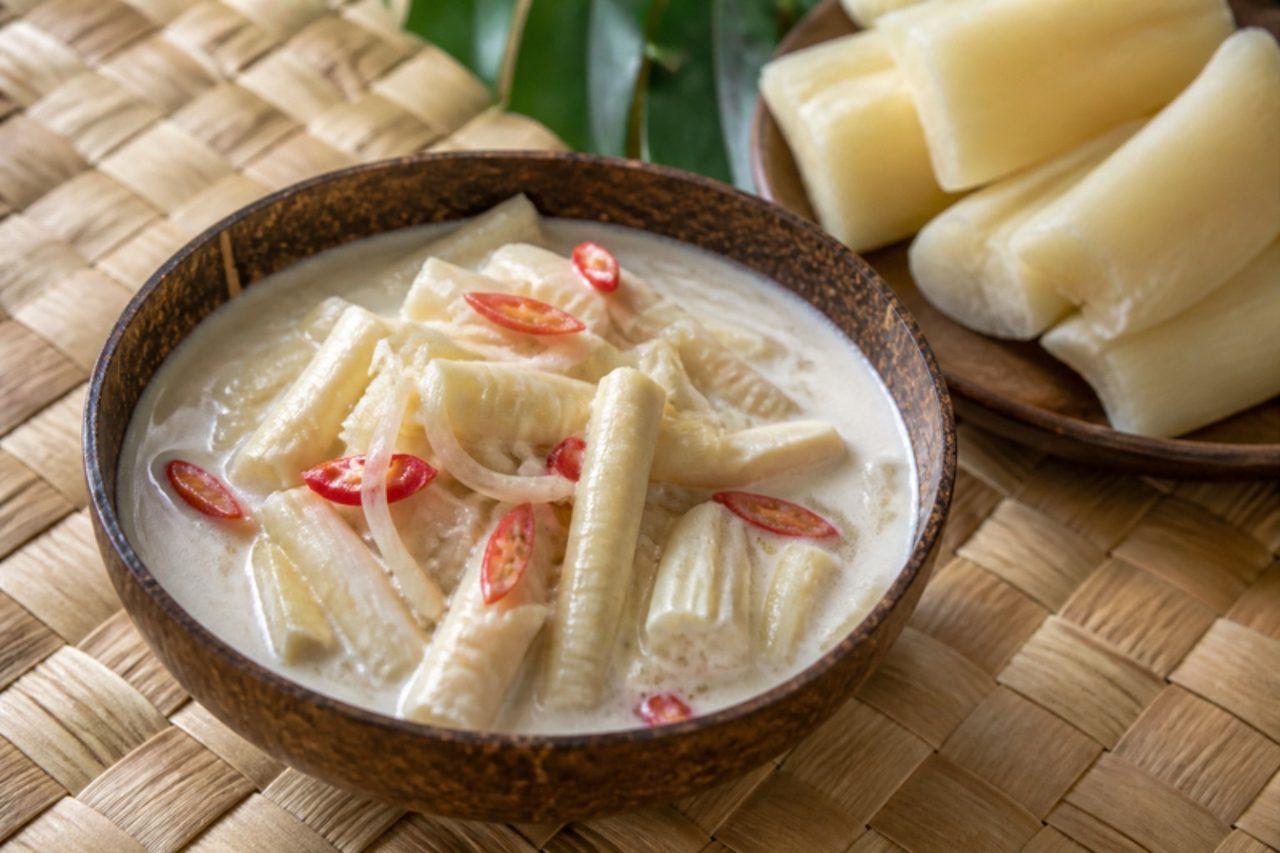
Duruka in coconut milkSugarcane flower in coconut milk

Duruka is the unopened flower of a wild sugarcane that Fijians call Fijian asparagus, in season for a few weeks around April and May when it fills the markets of Suva and Nausori in bundles. Peeled from its husk, it is tender and sweet with a taste between baby corn and asparagus, and the classic iTaukei way is to simmer it in lolo, fresh coconut milk, with onion and chilli. Outside Fiji you'll find it frozen or tinned in Pacific grocery shops; baby corn and asparagus make a fair stand-in. A common mistake is boiling the coconut milk hard, which splits it; keep it at a gentle simmer. Chef's tip: add a squeeze of lemon right at the end to lift the richness.

by KrazyBadal 0 views

Cơm nắm muối vừngRice blocks with sesame salt

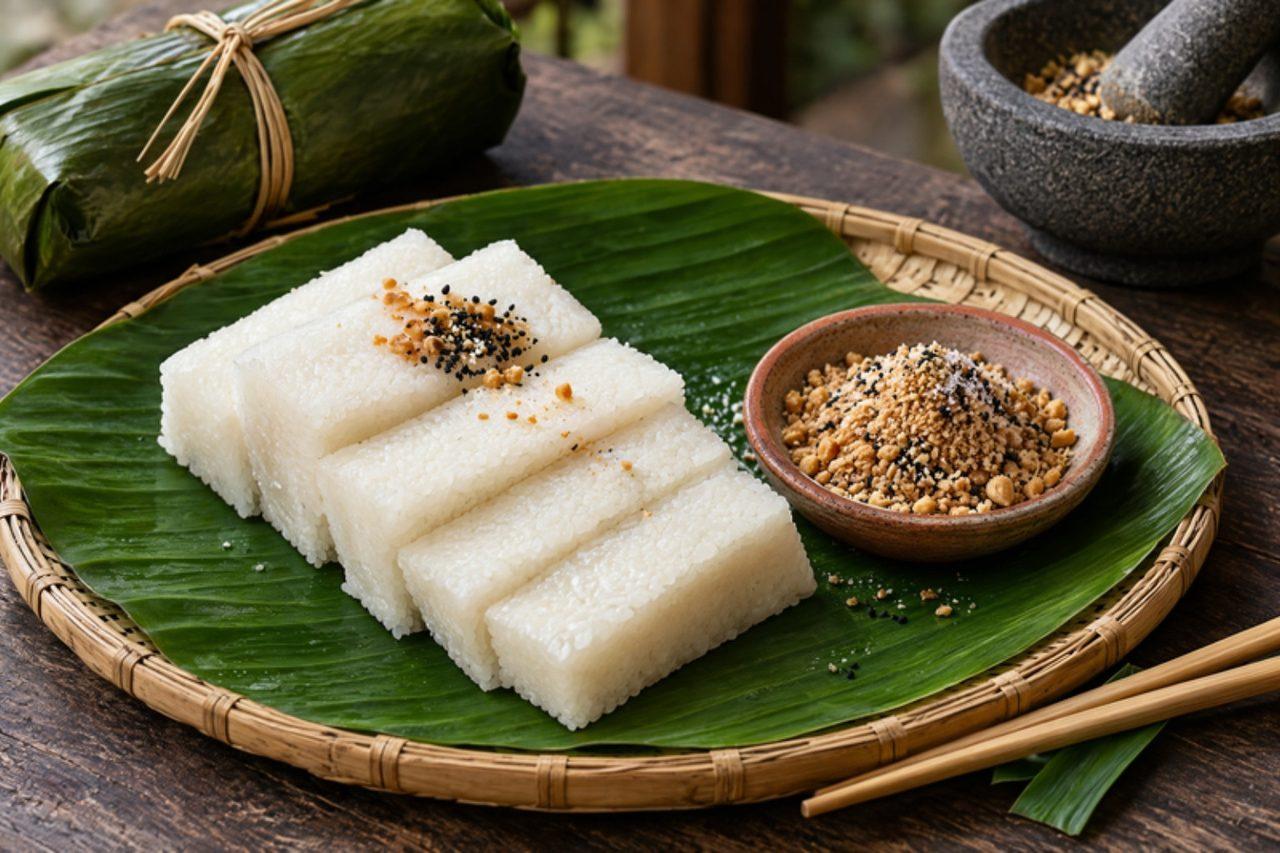
Before trains, buses and school trips, families in northern Vietnam press warm rice into firm, dense blocks and wrap them in banana leaf or paper with a twist of muối vừng, toasted sesame and peanut salt, for dipping. It is humble, filling and keeps its shape for a whole day's journey. Peanuts and sesame are both allergens. The common mistake is using cold or loose rice, which will not stick; it must be pressed hot. Chef's tip: mix a handful of sticky rice into ordinary jasmine rice before cooking, and the blocks hold together firmly without being gluey.

by KrazyBadal 0 views

Pudina pulao (mint pulao)

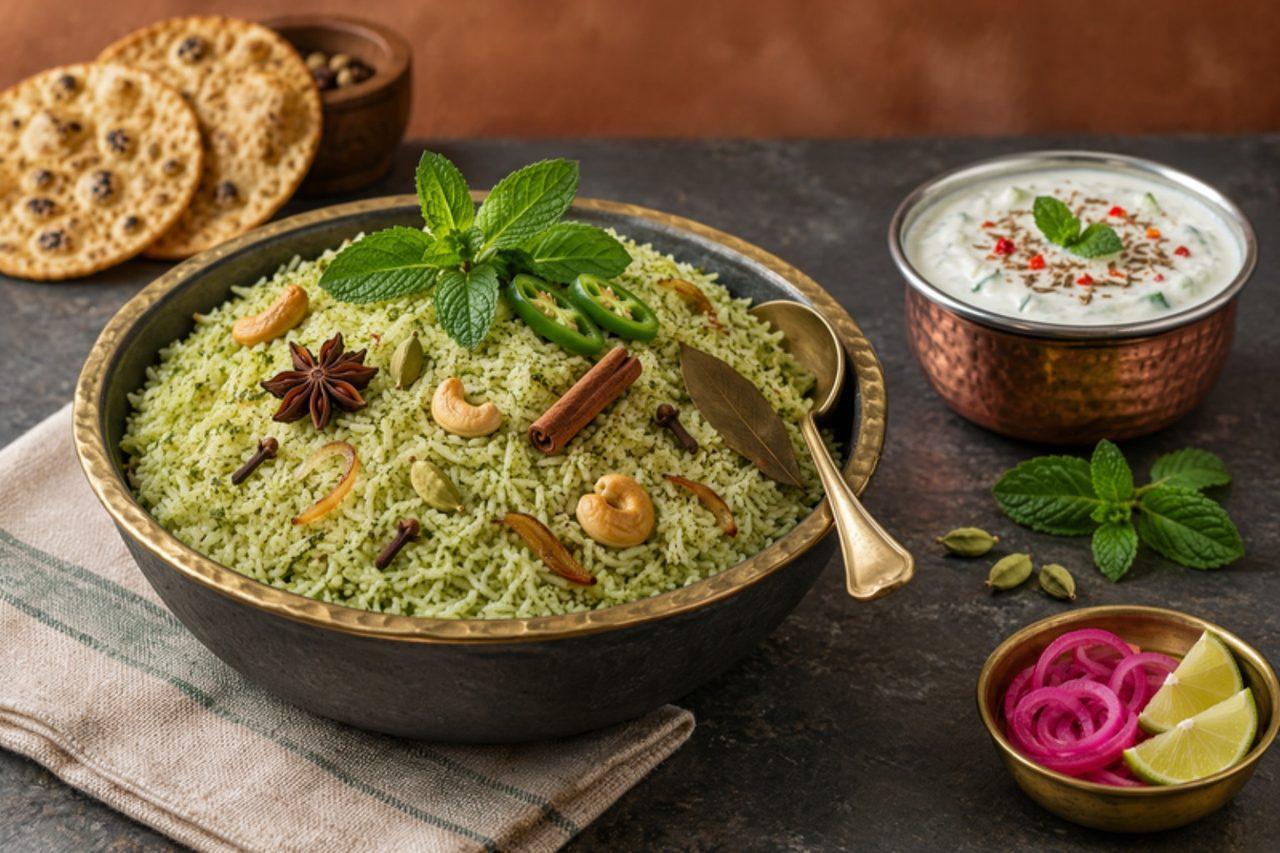
Mint pulao turns up in tiffins from Hyderabad to Delhi in summer, when mint grows like a weed on balconies, and it is a lunch box that still smells fresh at one o'clock. Basmati is fried with whole spices and onion, then cooked in water coloured with a paste of mint, coriander, green chilli and ginger. The mistake is boiling the mint paste for a long time before the rice goes in, which turns it khaki and bitter; add it, stir for a minute, and get the rice in. Chef's tip: a squeeze of lime in the cooking water keeps the green colour brighter.

by KrazyBadal 0 views

Coniglio alla ligureRabbit with olives and pine nuts

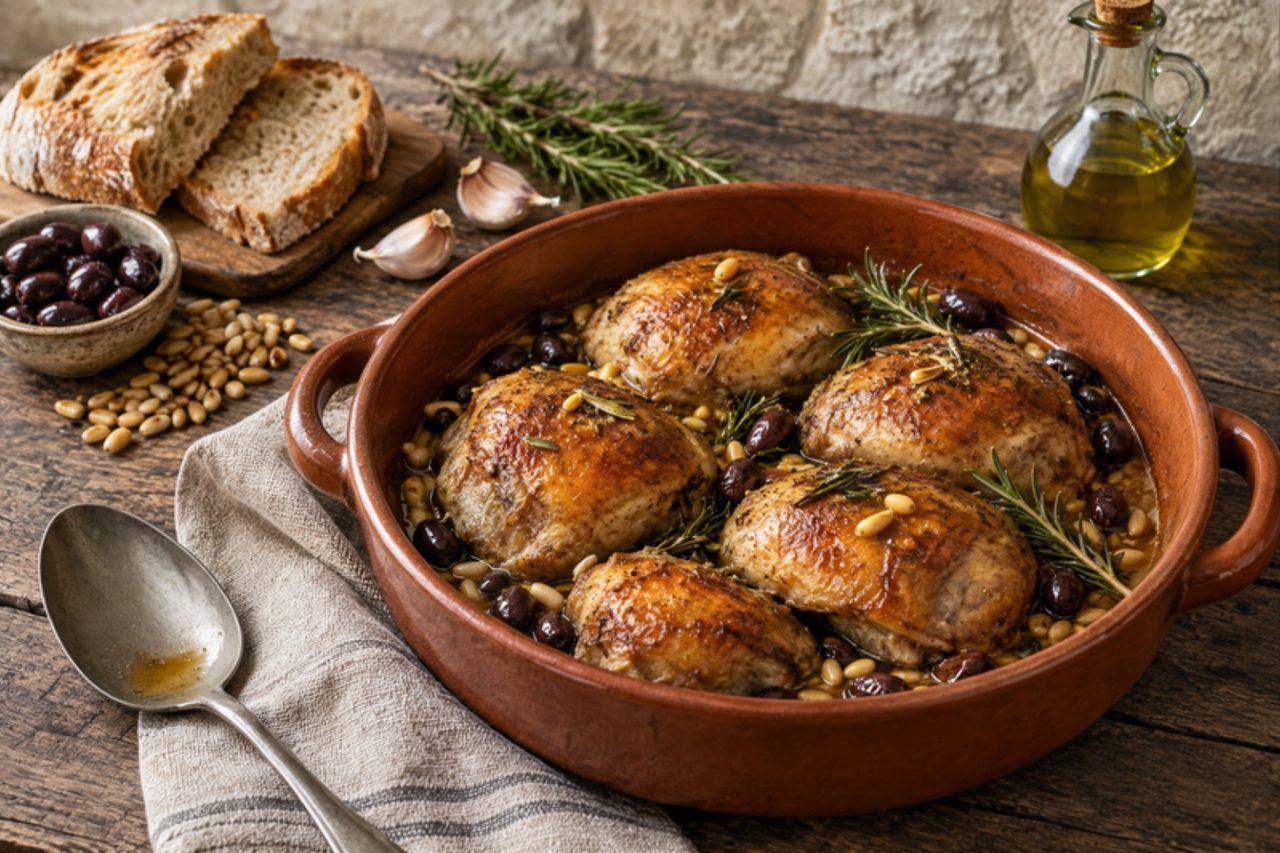
Coniglio alla ligure is the Sunday dish of the Ligurian hills behind Genoa and Imperia, where rabbits were raised in every farmyard and olives and pine nuts came from the slopes around the house. Rabbit pieces are browned in olive oil, splashed with white wine and braised with garlic, rosemary, thyme and bay, then finished with small black olives and toasted pine nuts until the sauce is glossy and fragrant. Serve with roast potatoes or bread. This recipe uses wine; for an alcohol-free version use 150 ml chicken stock with 1 tbsp white wine vinegar. The usual mistake is cooking the lean rabbit too fast, which makes it dry and stringy; keep the heat low and the pot covered. Chef's tip: ask the butcher for the liver and add it, chopped, for the last 5 minutes to enrich the sauce.

by KrazyBadal 0 views

Vegetable pulao

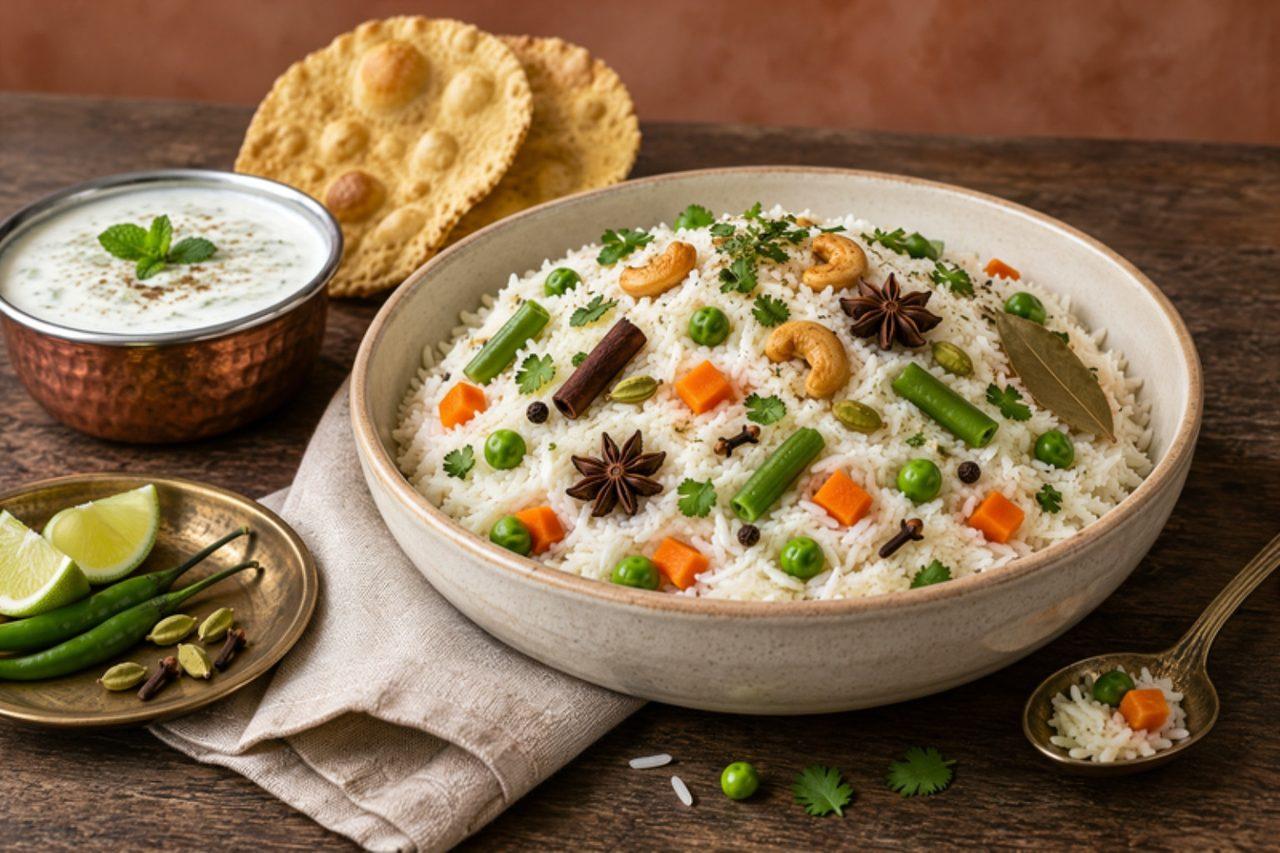
This is the plain, comforting pulao that gets packed for small children all over India, from Kolkata to Bengaluru: no chilli heat, just whole spices, a little fried onion and plenty of carrot, beans and peas. It is just as good warm or at room temperature, with a pot of raita or a few potato wedges alongside. The mistake is stirring the rice once the water goes in, which breaks the grains and makes it gluey; cover the pan and leave it alone. Chef's tip: cut the vegetables the size of a pea, so a child's spoon gets rice and vegetables in every bite.

by KrazyBadal 0 views

BulaloBeef shank and marrow soup

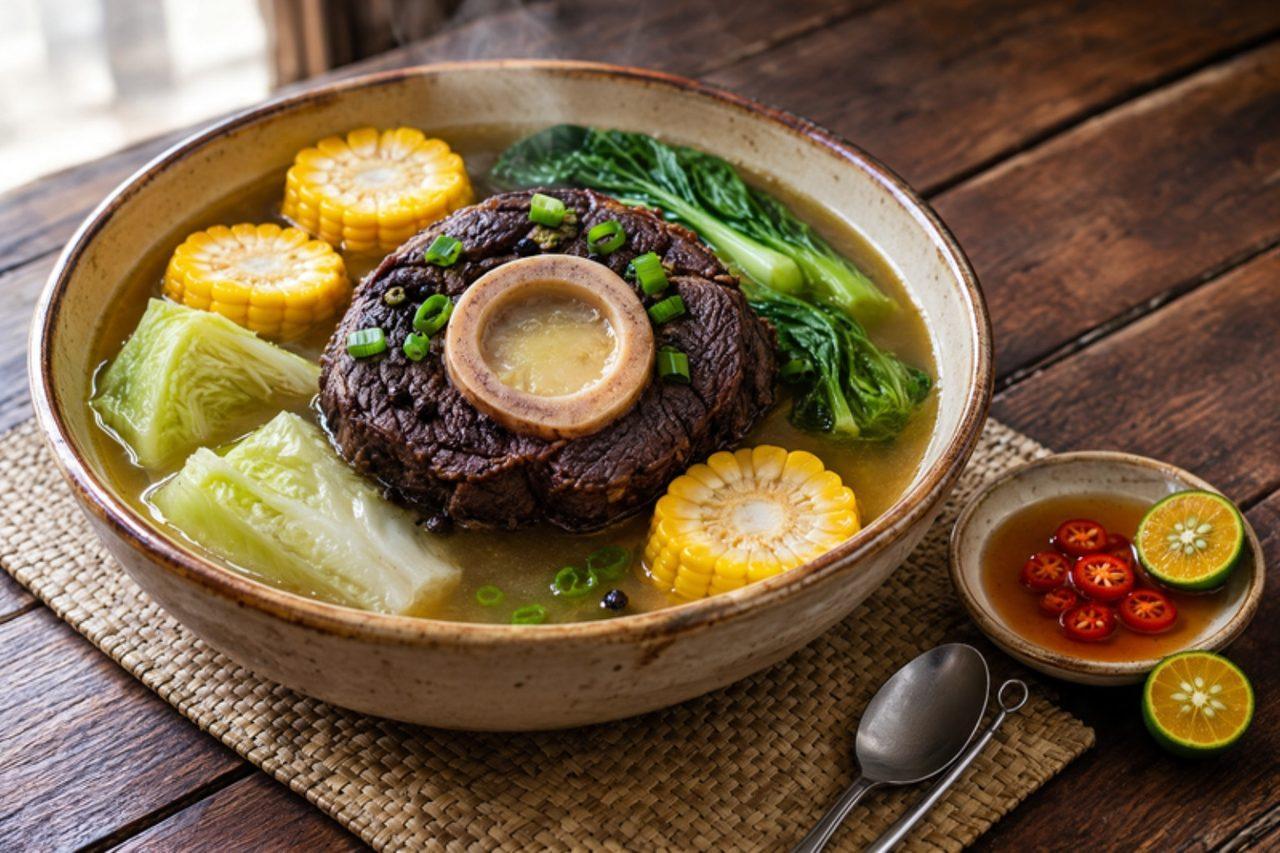
Bulalo is the pride of Batangas, south of Manila, served at roadside eateries on the way to Tagaytay where the cool upland air makes a steaming bowl the thing to order. Beef shank on the bone simmers for hours until the meat falls away and the marrow turns soft and wobbly, giving a clear, beefy broth seasoned just with fish sauce, onion and peppercorns. Corn on the cob, cabbage and pechay go in at the end. Spoon the marrow onto rice and dip the meat in fish sauce with calamansi and chilli. The usual mistake is skipping the first blanch: the broth turns grey and murky. Slow-cooker: after blanching, cook on low for 10 hours, adding the vegetables for the last 30 minutes on high. Chef's tip: keep the pot at a lazy simmer, never a boil, for the clearest broth.

by KrazyBadal 0 views

Urulaikizhangu roast (Tamil potato roast)

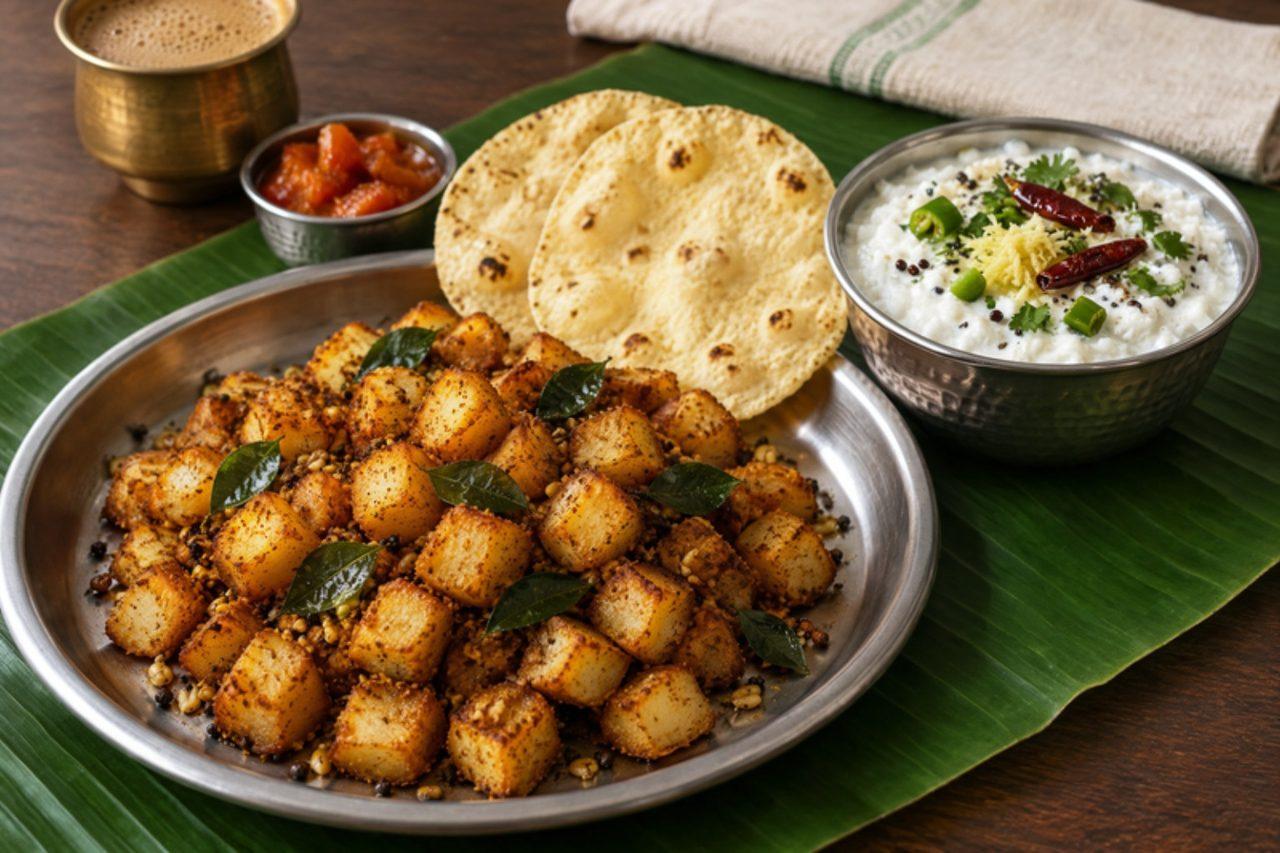
In Tamil lunch boxes, curd rice almost always comes with this: small cubes of boiled potato roasted slowly in a cast-iron pan with sambar powder, chilli and curry leaves until they are dark, crusty and chewy at the edges. It is a dry side, so it does not leak into the rice, and it tastes as good cold as hot. The mistake is stirring all the time; the potatoes need to sit undisturbed against the hot pan for a few minutes at a time to build the crust. Chef's tip: a teaspoon of rice flour scattered over in the last few minutes makes the coating even crisper.

by KrazyBadal 0 views

DakgangjeongSticky glazed fried chicken

Dakgangjeong is the boxed fried chicken of Sokcho's Jungang market on Korea's east coast, carried home by the tub and packed into lunchboxes the next day, because the double-fried pieces in their sticky glaze stay crunchy even when cold. The common mistake is frying only once; the second fry drives out moisture so the crust holds up to the sauce. Chef's tip: coat with potato starch rather than flour, and let the coated chicken sit for 5 minutes so the starch hydrates into a craggy crust.

by KrazyBadal 0 views

Bokkeum kimchiStir-fried kimchi with pork belly

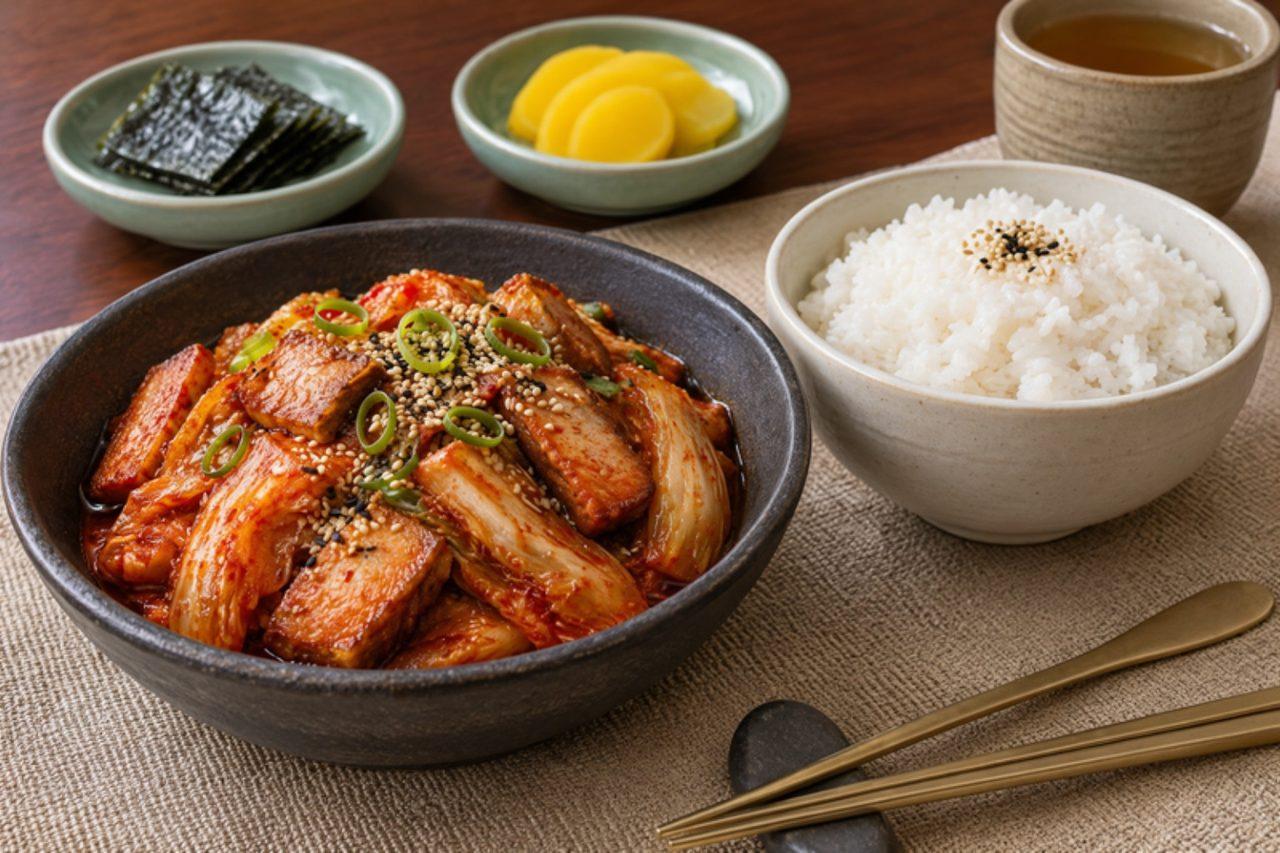
When a jar of kimchi turns very sour in Korean homes, it gets stir-fried with a little sugar and sesame oil, and often with pork belly, into bokkeum kimchi, a deep, mellow side dish that keeps for days and is a favourite in school and office dosirak. For a vegan version, use kimchi made without fish sauce or salted shrimp and leave out the pork. The usual mistake is using fresh, crisp kimchi, which tastes harsh when fried; it needs to be properly sour. Chef's tip: fry the kimchi until the edges just begin to catch and caramelise, which is where the flavour is.

by KrazyBadal 0 views

Sauce gomboOkra and fish sauce

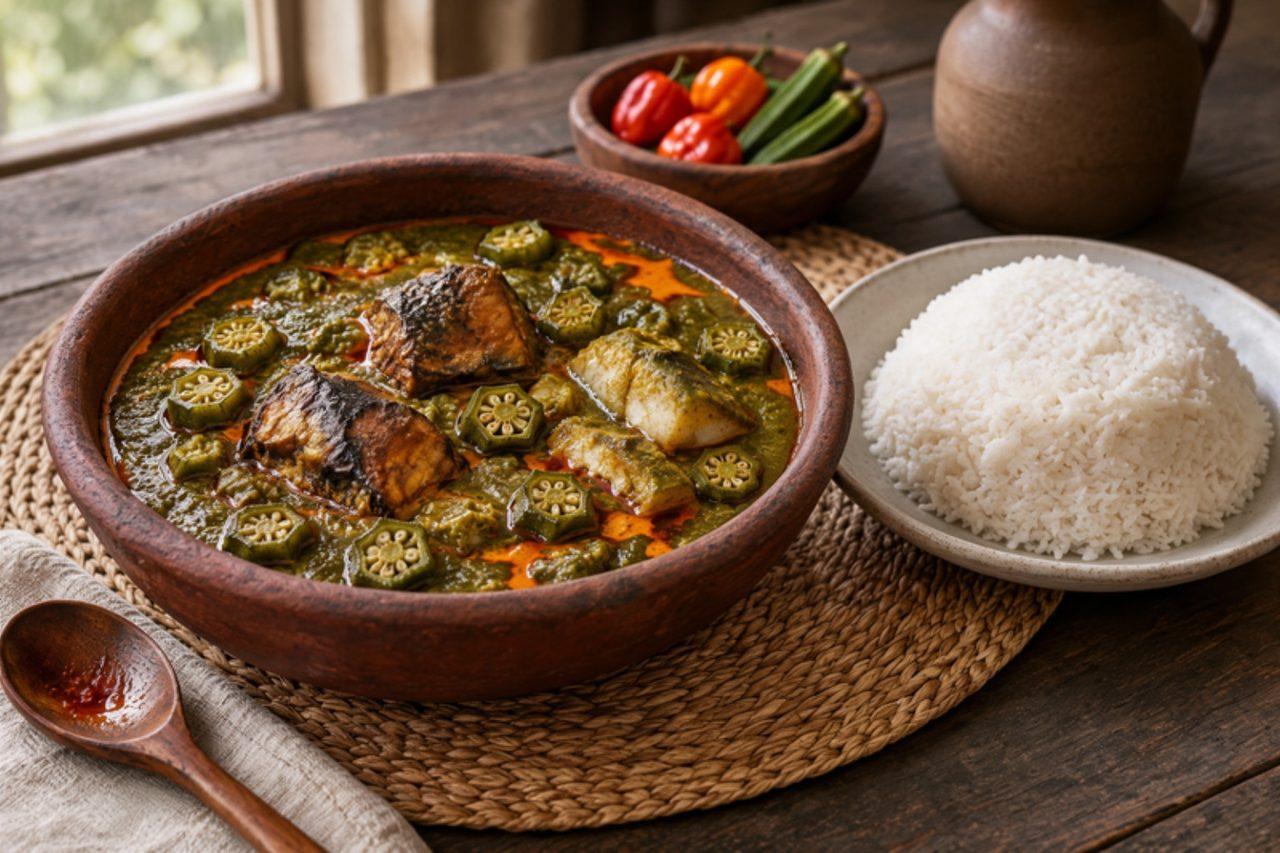
Sauce gombo is one of the everyday sauces of Côte d'Ivoire, simmered in Abidjan compounds and village kitchens for lunch and eaten with foutou, rice or attiéké. Sliced okra cooks down with tomato, onion, chilli and a little red palm oil until it turns pleasantly silky and draws together, and smoked fish gives it a deep savoury flavour, with fresh fish added at the end. High in fibre and protein and suitable as part of a balanced diet; serve with a modest portion of brown rice or attiéké. About 290 kcal and 12 g carbohydrate per portion. The usual mistake is stirring hard and often, which makes the okra stringy; stir gently. Chef's tip: pick small, bright okra pods that snap cleanly, as large pods are woody.

by KrazyBadal 0 views

Dousha bao (red bean buns)

All over China, from Beijing breakfast stalls to Shanghai school bags, dousha bao are the sweet buns people grab in the morning and tuck into a lunch box for later: fluffy white yeasted dough wrapped around smooth red bean paste and steamed until springy. They freeze beautifully, so families make a big batch on Sunday. The mistake is opening the steamer lid as soon as the timer goes; the sudden cold makes the buns wrinkle and collapse. Turn off the heat and wait five minutes before lifting the lid. Chef's tip: chill the bean paste and roll it into balls before wrapping; a firm filling is much easier to seal neatly.

by KrazyBadal 0 views

Saure KartoffelrädlePotato slices in vinegar sauce

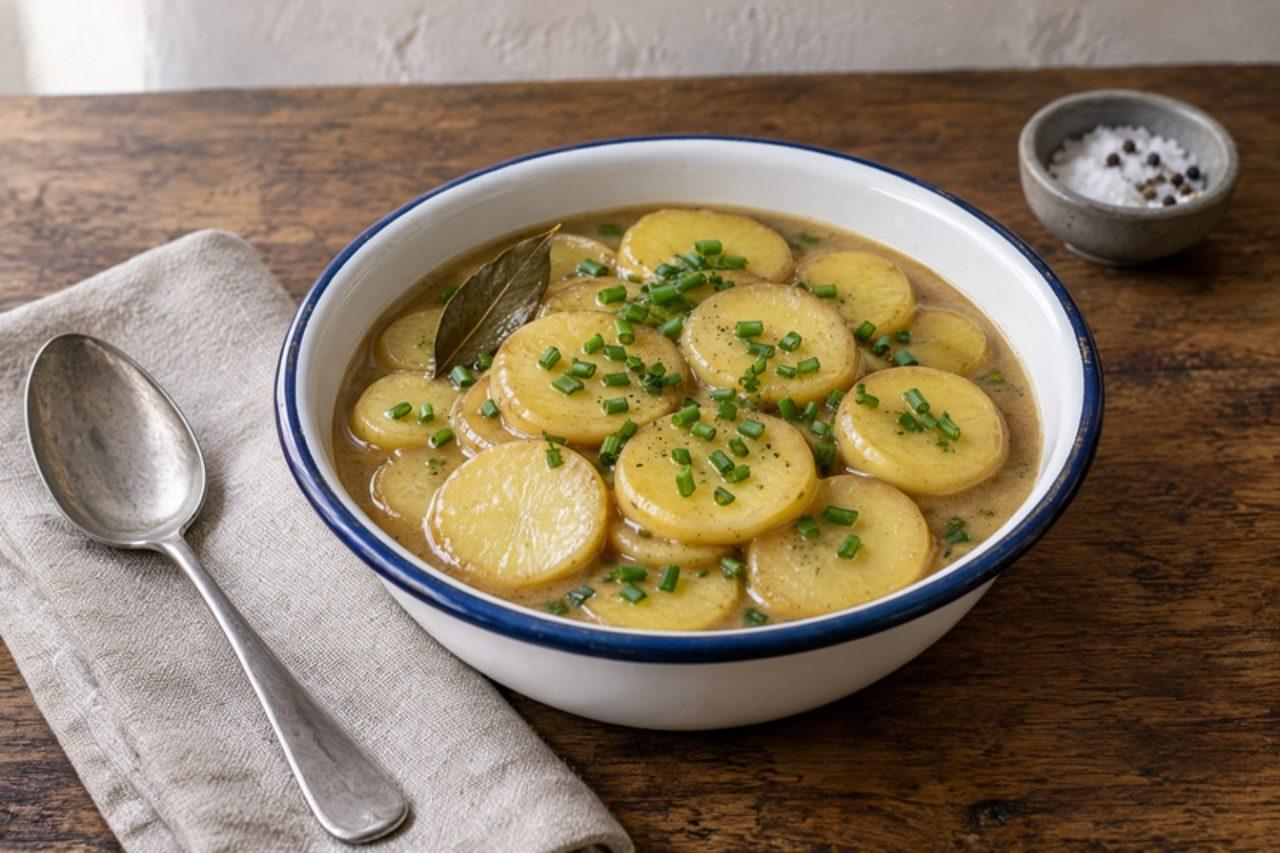
Saure Rädle, 'sour little wheels', are old Swabian farmhouse food from the villages around Stuttgart and the Swabian Alb, cooked on Fridays or at the end of the month when there was no meat. Potato slices simmer in a nutty brown roux sauce sharpened with vinegar and scented with bay and clove, so the slices turn tender and the sauce glossy and tangy. Some families add a few pieces of bacon; this version is meat-free. Eat with a green salad or pickled gherkins. The usual mistake is rushing the roux: pale flour gives a floury, grey sauce, so brown it slowly to the colour of hazelnuts. Chef's tip: add the vinegar at the end, a splash at a time, and taste; the sauce should be pleasantly sour, not sharp.

by KrazyBadal 0 views

Insalata di pastaCold pasta salad

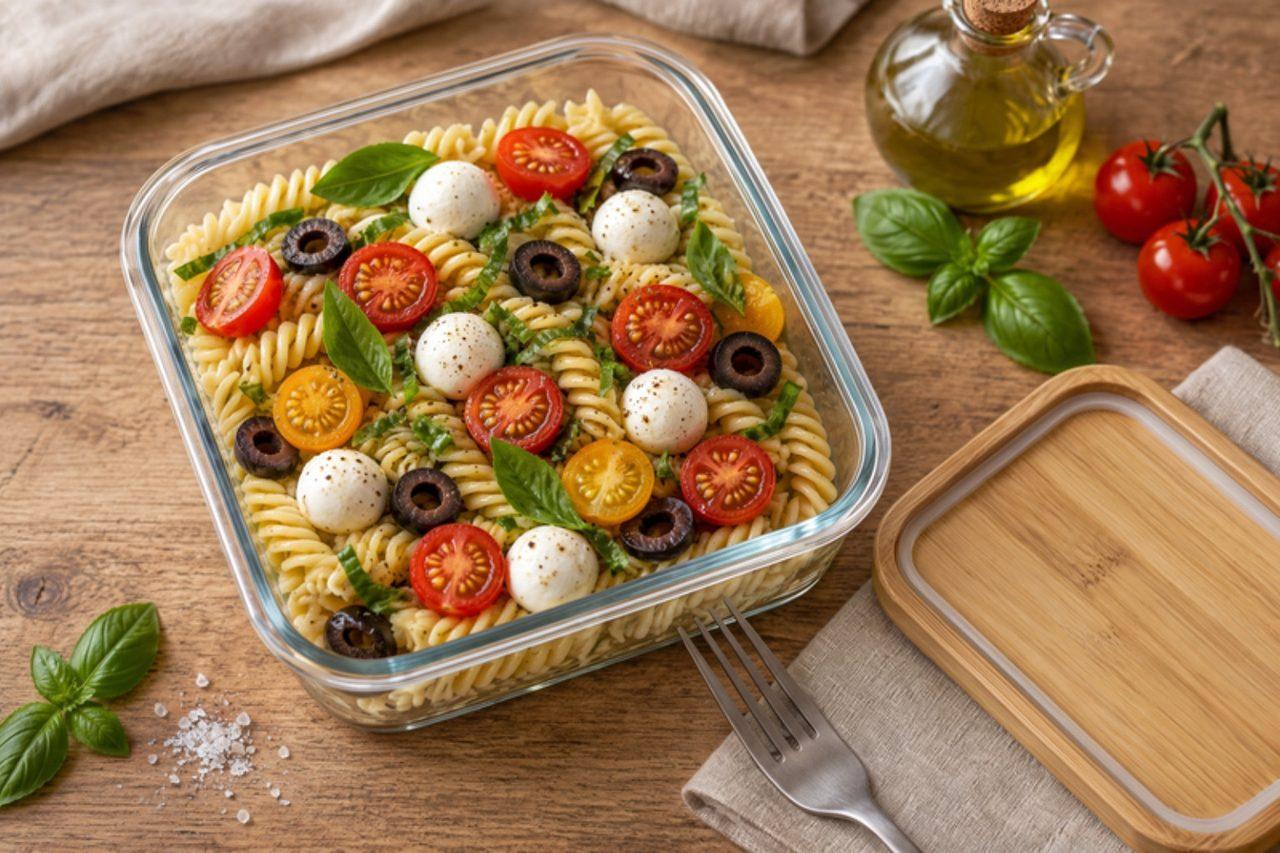
When Milan's offices empty onto park benches in July, the schiscetta (the Milanese word for a packed lunch tin) usually holds pasta fredda: short pasta dressed with olive oil, sweet cherry tomatoes, little mozzarella balls, black olives and torn basil. It is made the night before and tastes best at cool room temperature, never fridge-cold. The common mistake is rinsing the cooked pasta under the tap until it is icy and then dressing it: the starch closes up, the oil slides off and the salad tastes flat. Many mozzarellas are made with animal rennet, so look for one labelled vegetarian, or use cubes of a vegetarian cheese. Pack it with an ice pack and take it out of the bag 20 minutes before eating. Chef's tip: toss the drained, still-warm pasta with half the oil and the salted tomatoes straight away so it drinks up their juice.

by KrazyBadal 0 views

ScagliuozziFried polenta triangles

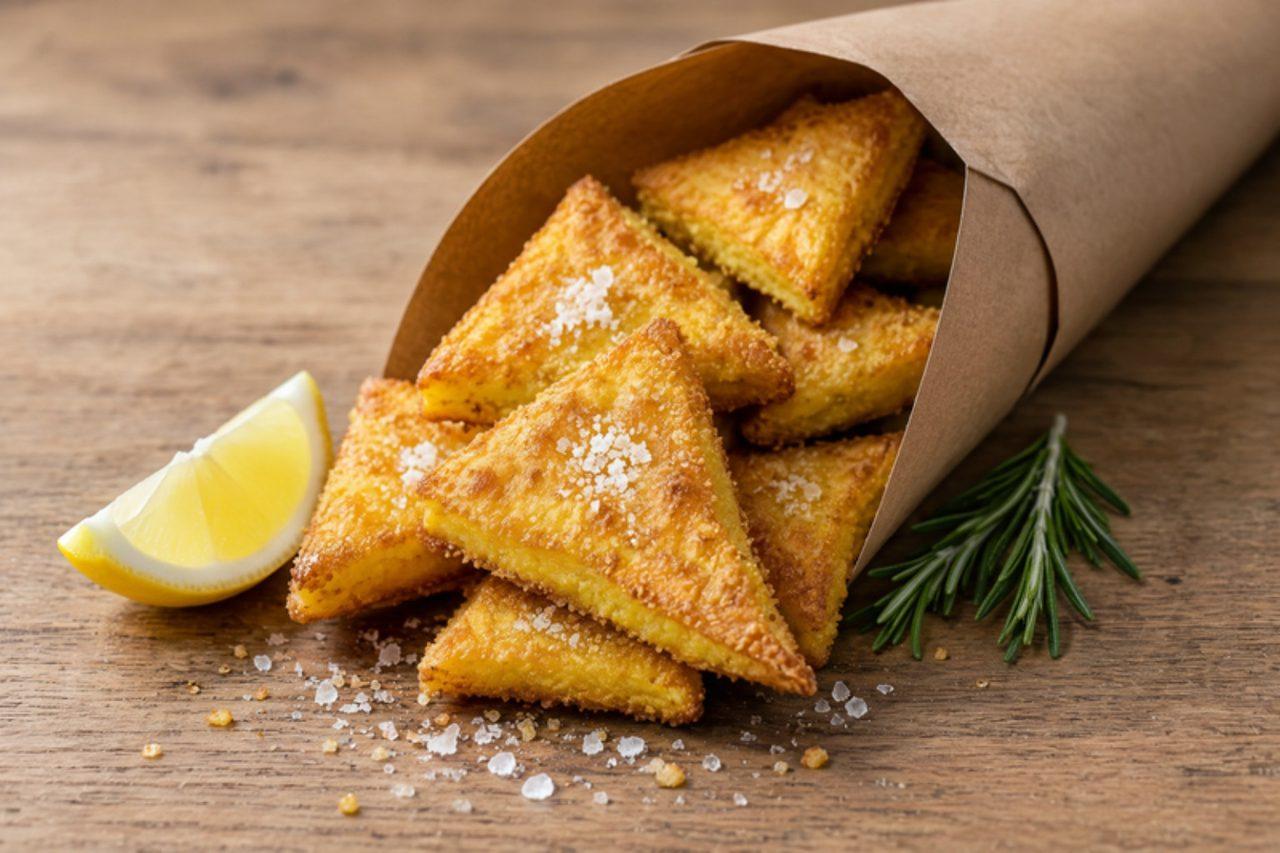
Scagliuozzi are triangles of firm polenta fried until blistered and golden, and in Naples they are rarely eaten alone: the friggitorie of Via dei Tribunali and the Pignasecca market tuck them into a cuoppo, a cone of brown paper, with zeppoline and potato croquettes. People buy them mid-morning or on the evening passeggiata and eat them walking, still too hot to hold. The outside shatters, the inside stays soft and sweet with corn. Make the polenta the day before so it sets firm. Chef's tip: cook the polenta thick enough that a spoon stands up in it; soft polenta spits and falls apart in the oil.

by KrazyBadal 0 views

Aloo sadekoSpiced potato salad

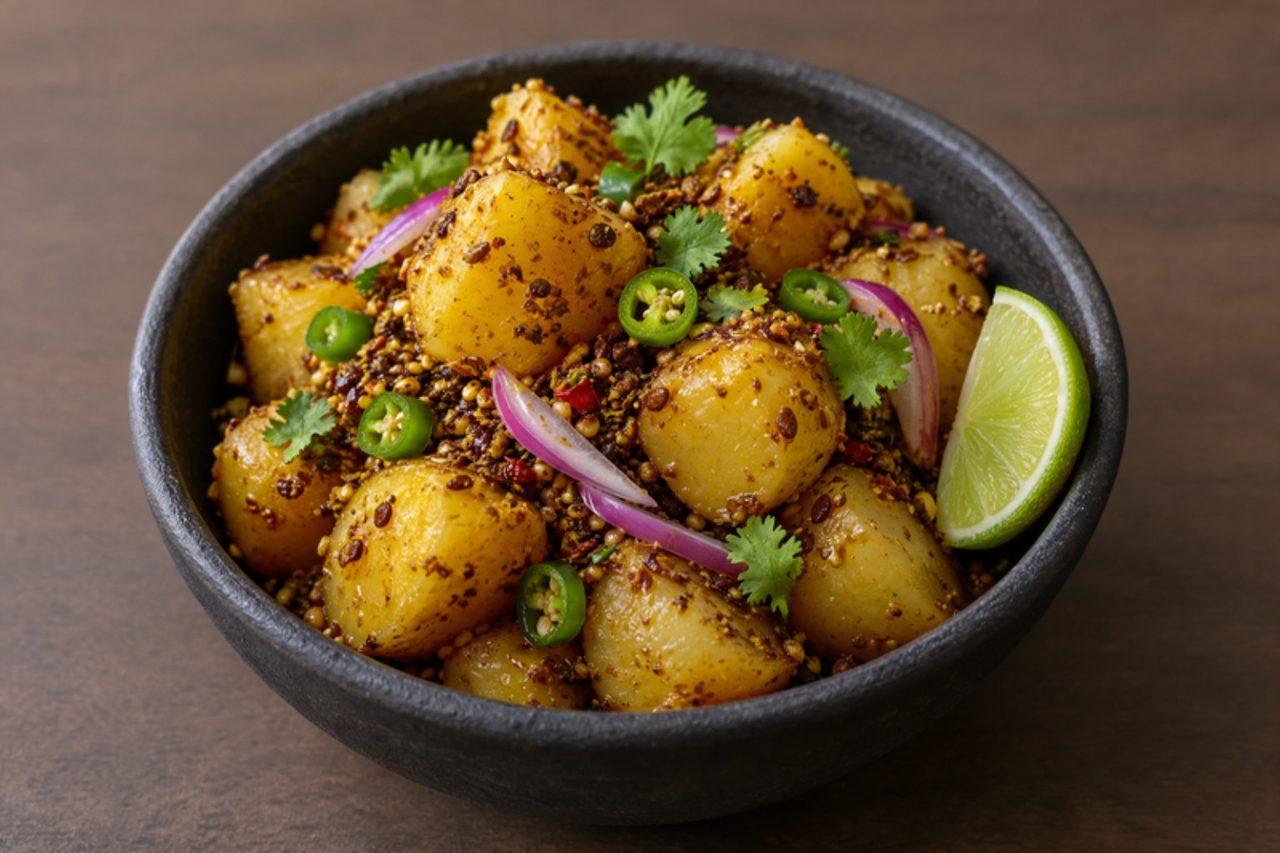
Sadeko means marinated, and aloo sadeko is the sharp, tingly potato salad served in every khaja ghar, the little snack houses round Asan Tole and New Road, as afternoon khaja beside beaten rice and a cup of tea. Cool boiled potatoes are dressed with mustard oil heated with fenugreek seeds until they turn dark and nutty, then timur (Nepal's numbing Sichuan pepper), green chilli, toasted sesame and lots of lime. Contains sesame and mustard. Chef's tip: fry the fenugreek seeds until reddish-brown, not black; burnt fenugreek makes the whole bowl bitter.

by KrazyBadal 0 views

SchnitzelsemmelSchnitzel in a bread roll

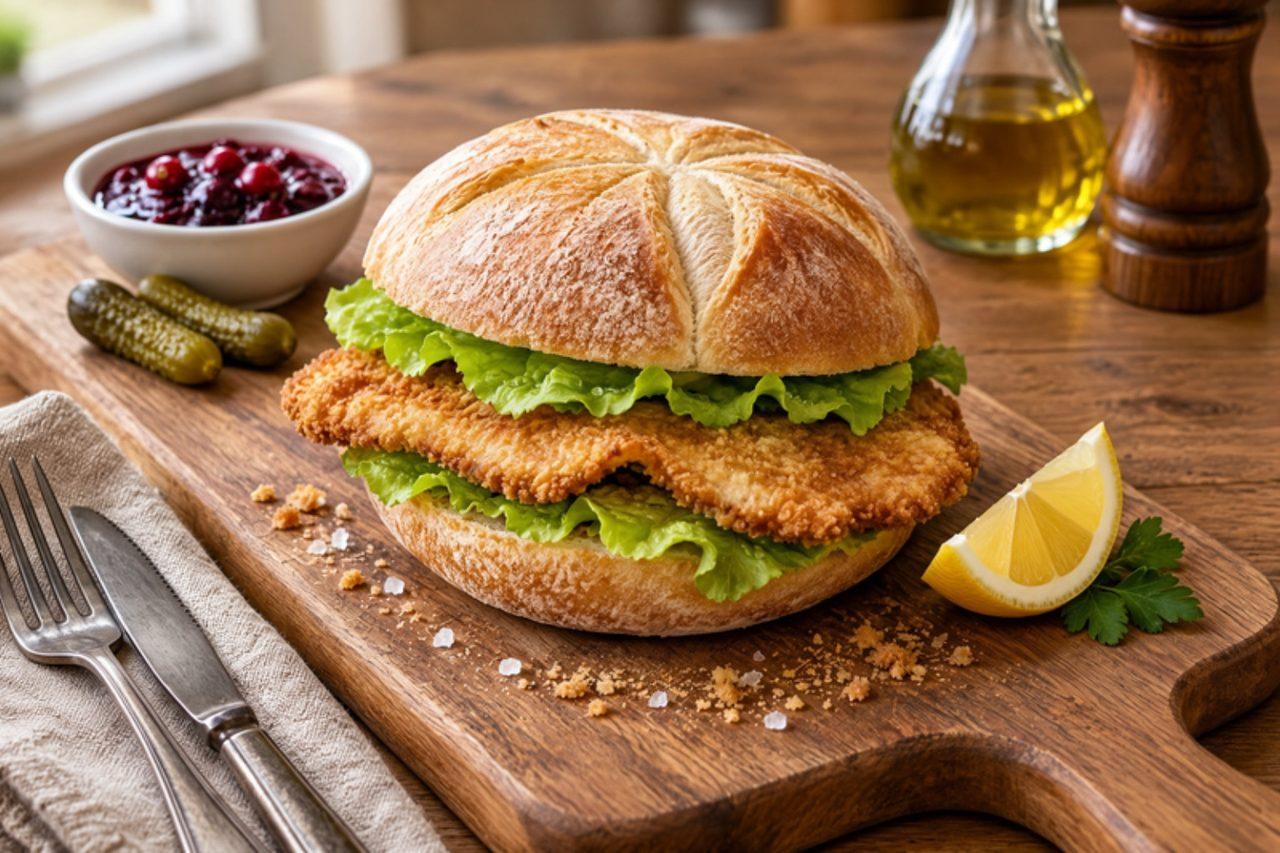
Austrians setting off on a train journey, a ski day or a building-site shift pack a Schnitzelsemmel: a crisp Kaisersemmel roll holding a cold, golden pork schnitzel (veal for special days), a leaf of lettuce and a squeeze of lemon, sometimes with a smear of mustard or a gherkin. Leftover Sunday schnitzels are made for it. The common mistake is pressing the breadcrumbs on hard; they should sit loosely so they puff up and ripple away from the meat as it fries. Chef's tip: shake the pan constantly while frying so hot fat washes over the top, and the crust soufflés into those famous waves.

by KrazyBadal 0 views

Batates sandwichFrench fries sandwich

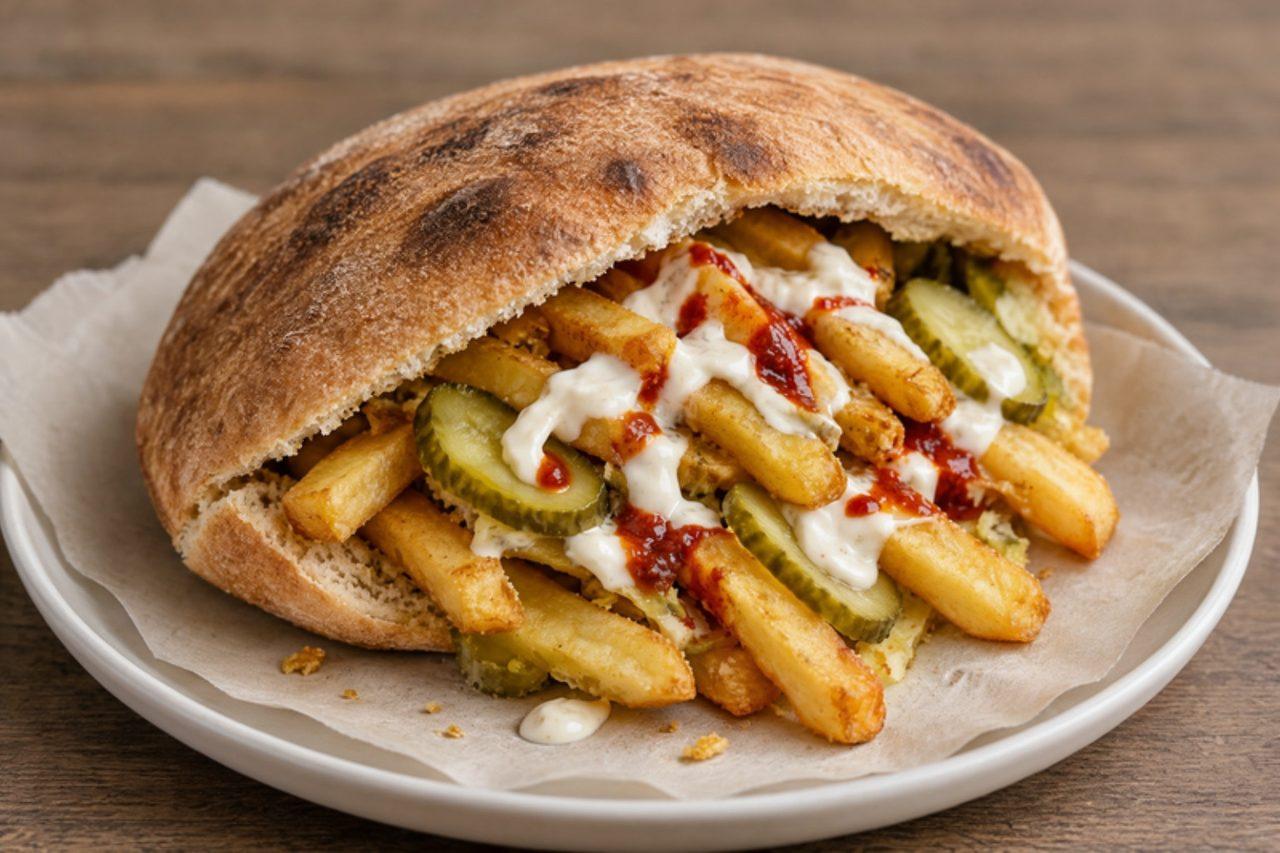
Every foul and ta'meya shop in Cairo also sells sandwich batates, a pocket of baladi bread stuffed with hot, salty fries, and it is one of the cheapest and best late-night bites in the city. In Downtown, around Talaat Harb Square and along Champollion Street, the counters stay busy after midnight as cinema crowds and students order them by the handful, with garlicky tahini, crunchy pickled turnip and cucumber and a hit of chilli. Egyptian baladi bread is a wholemeal flatbread; wholemeal pitta is a good stand-in. It contains sesame and wheat. Chef's tip: salt the fries the moment they leave the oil, while they are still glistening, so it sticks.

by KrazyBadal 0 views

CuzzetielloBread boat filled with ragu

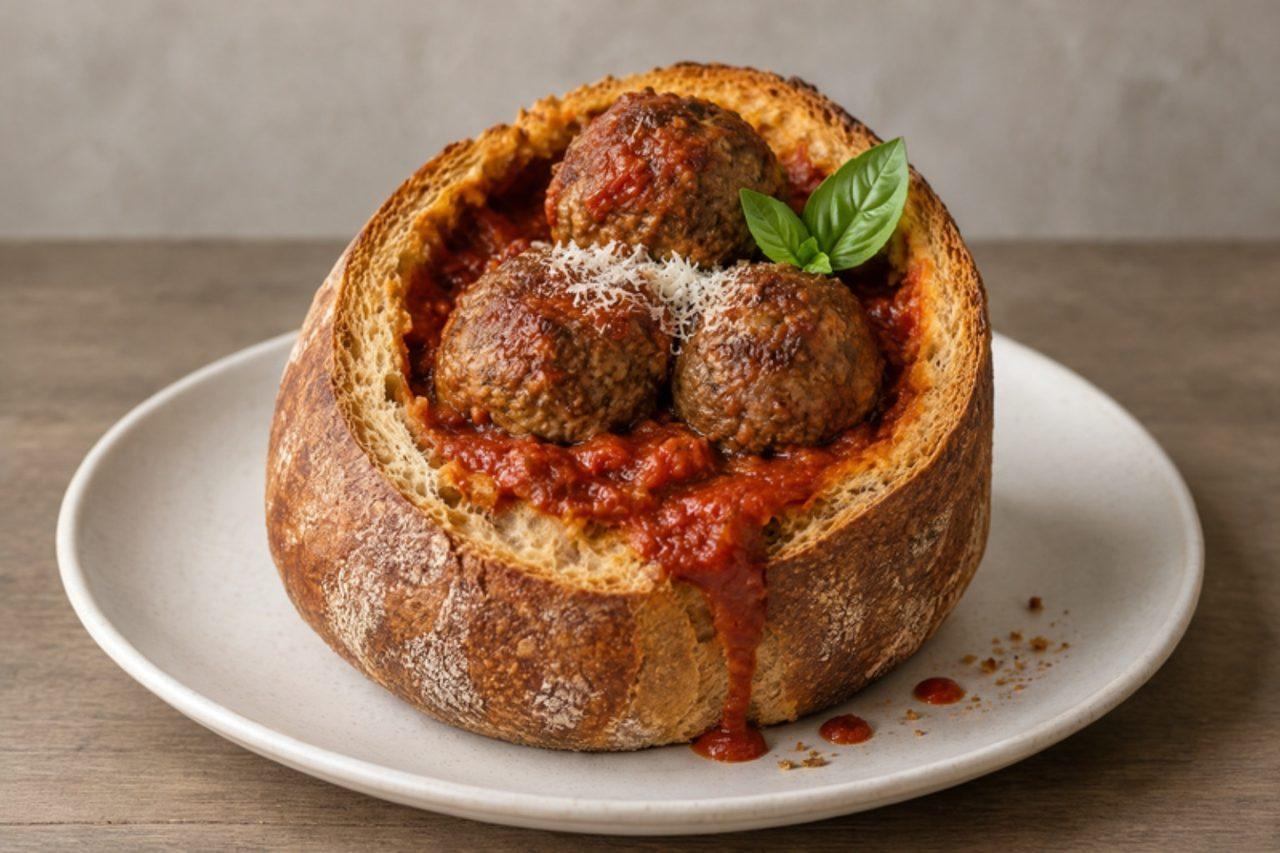
The cuzzetiello is the crusty end of a big Neapolitan loaf, hollowed out and stuffed with whatever is in the Sunday pot, most often the slow ragù and its meatballs. It began as a way for families in the Rione Sanità and Forcella to use up bread and sauce on Monday, and now small shops near Piazza Bellini sell it at lunchtime, wrapped in paper. The meatballs here are pork and beef, and the ragù traditionally takes a splash of red wine, which is boiled off; use extra stock or water with a teaspoon of red wine vinegar instead if you avoid alcohol. Chef's tip: let the sauce soak into the bread for a couple of minutes before biting; that soaked crumb is the point.

by KrazyBadal 0 views

Da chang bao xiao changSausage in a sticky rice bun

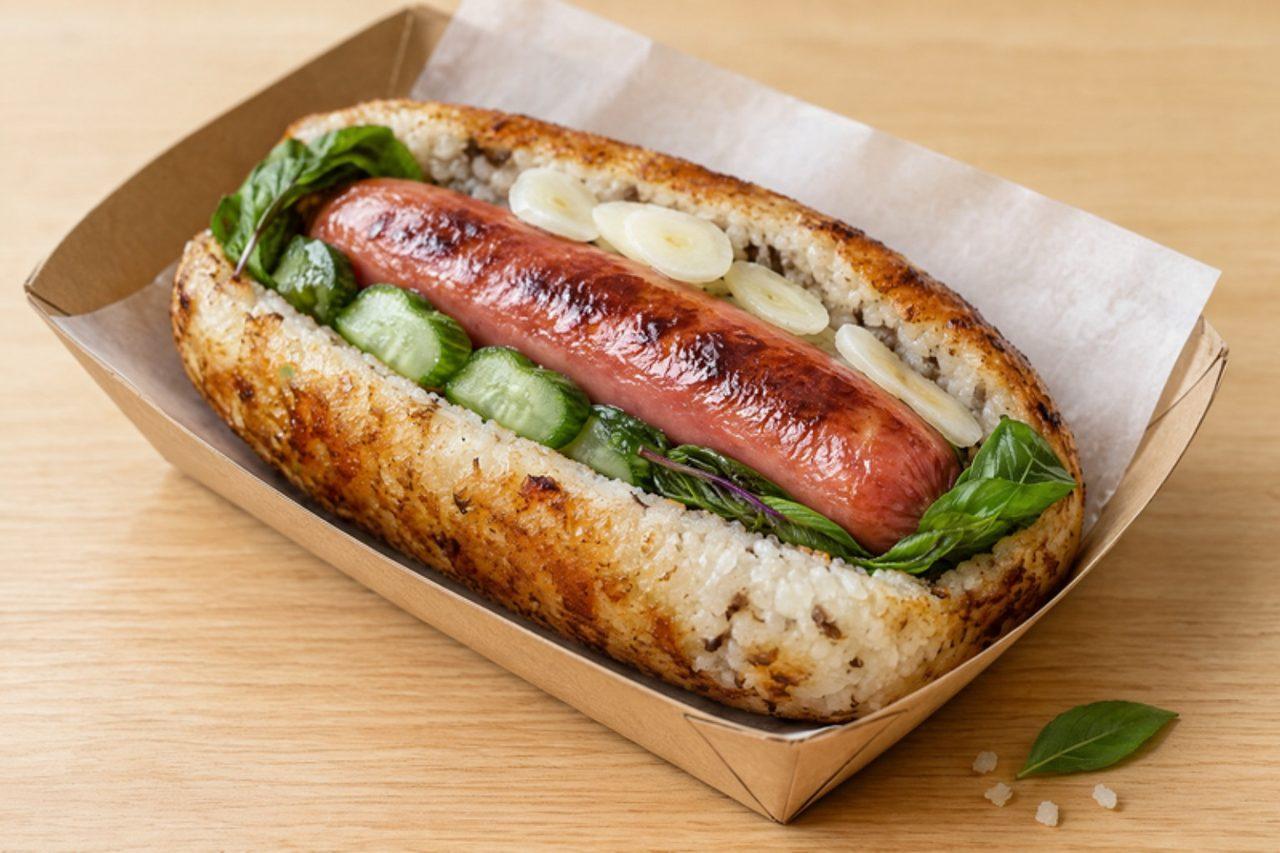
'Big sausage wraps small sausage' is one of the most photographed snacks at Shilin and Raohe night markets in Taipei. A plump, garlicky glutinous-rice sausage is grilled until crisp, split like a hot-dog bun and stuffed with a sweet Taiwanese pork sausage, pickled cucumber, sliced raw garlic, basil and a smear of sauce. This home version shapes the sticky rice in cling film instead of casing, so you do not need intestines. The Taiwanese sausage is pork and must be cooked through. Contains soy and peanuts. Chef's tip: chill the steamed rice log overnight; it slices and grills cleanly and holds its crust.

by KrazyBadal 0 views

SenmaizukePickled sliced turnip

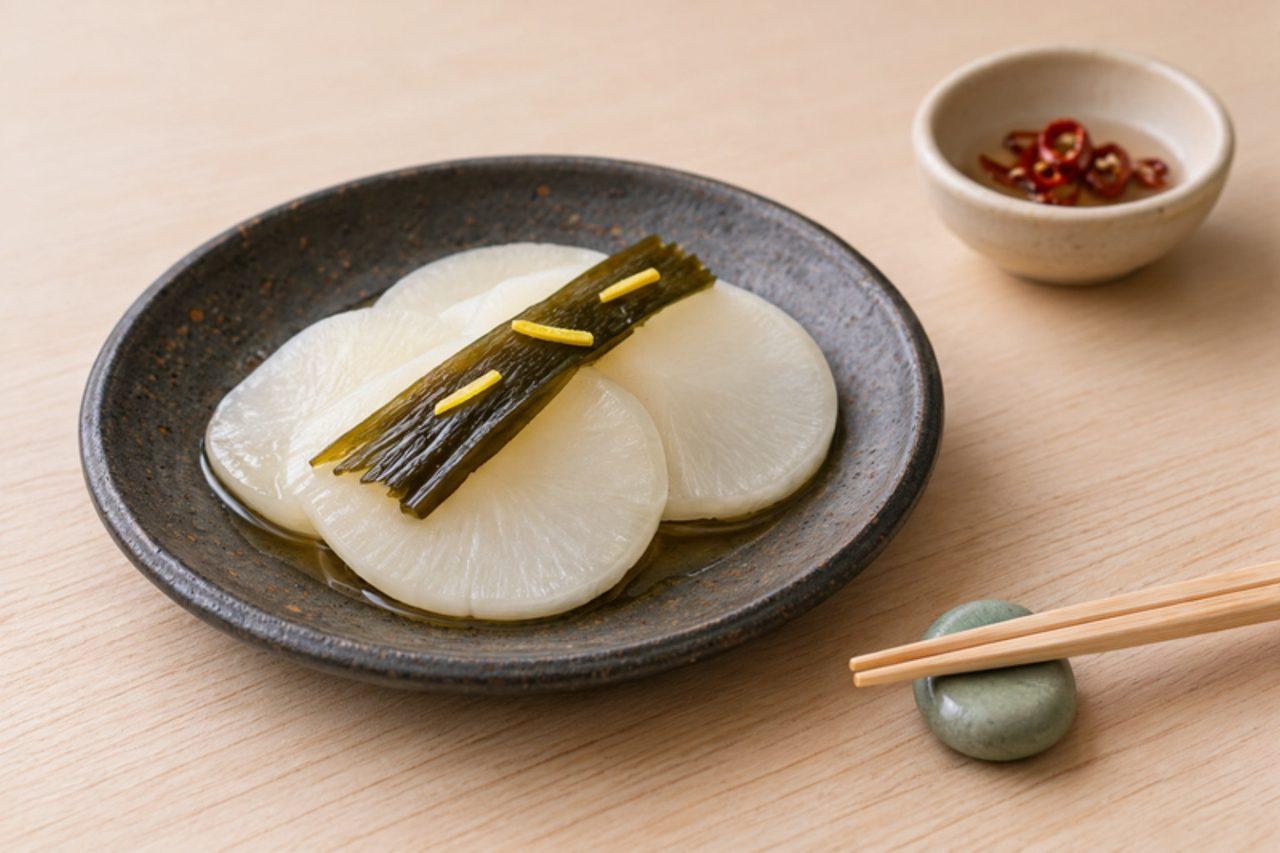
Senmaizuke is the pickle Kyoto sends home with winter visitors: great white Shogoin turnips, sliced so thin you can read through them, layered in fan shapes with kombu and a mild sweet vinegar. Pickle shops along Nishiki Market start making it in November, when the turnips swell and sweeten in the cold, and it stays on New Year tables and beside winter rice through February. It tastes gently sweet and sour with a deep savoury note from the kombu, which turns slightly sticky and coats each slice; the turnip stays crisp at the edge and silky in the middle. Outside Japan use large, firm white turnips (or a young daikon); avoid woody, spongy ones. The common mistake is skipping the first salting: unsalted slices weep water into the vinegar, dilute it and go limp. Salt them, press for an hour and squeeze gently first. It is ready when the slices are translucent, bend without breaking and the kombu feels slick. It is a fridge pickle, not a shelf one. Chef's tip: slice on a mandoline at 2 mm and keep the slices in order, so you can stack them back into a 'turnip' shape for a pretty presentation.

by KrazyBadal 0 views

EinspännerBlack coffee with whipped cream

The Einspänner is named after the one-horse carriages of old Vienna: coachmen waiting outside in winter supposedly liked their coffee under a lid of cream that kept it hot and stopped it slopping. Today it is served in a handled glass at classic coffee houses, a strong black mocha (a double espresso or Großer Brauner without milk) topped with a thick layer of cold, lightly sweetened whipped cream and a pinch of icing sugar. You do not stir it: you sip the hot, bitter coffee through the cold, sweet cream, so each mouthful is two temperatures and two textures. It is an afternoon or late-morning coffee, often with a slice of Sachertorte. The common mistake is runny cream that sinks and turns the drink into a milky latte; whip it until it just holds a peak and spoon it on gently so it floats. It is ready when the cream stands at least 2 cm above the coffee and slowly sinks at the edges. It is strong: a double shot of caffeine in one glass. Chef's tip: pour the coffee in first and wait ten seconds before adding the cream, so the crema settles and helps support the cap.

by KrazyBadal 0 views

Dak hanmariWhole chicken hot pot

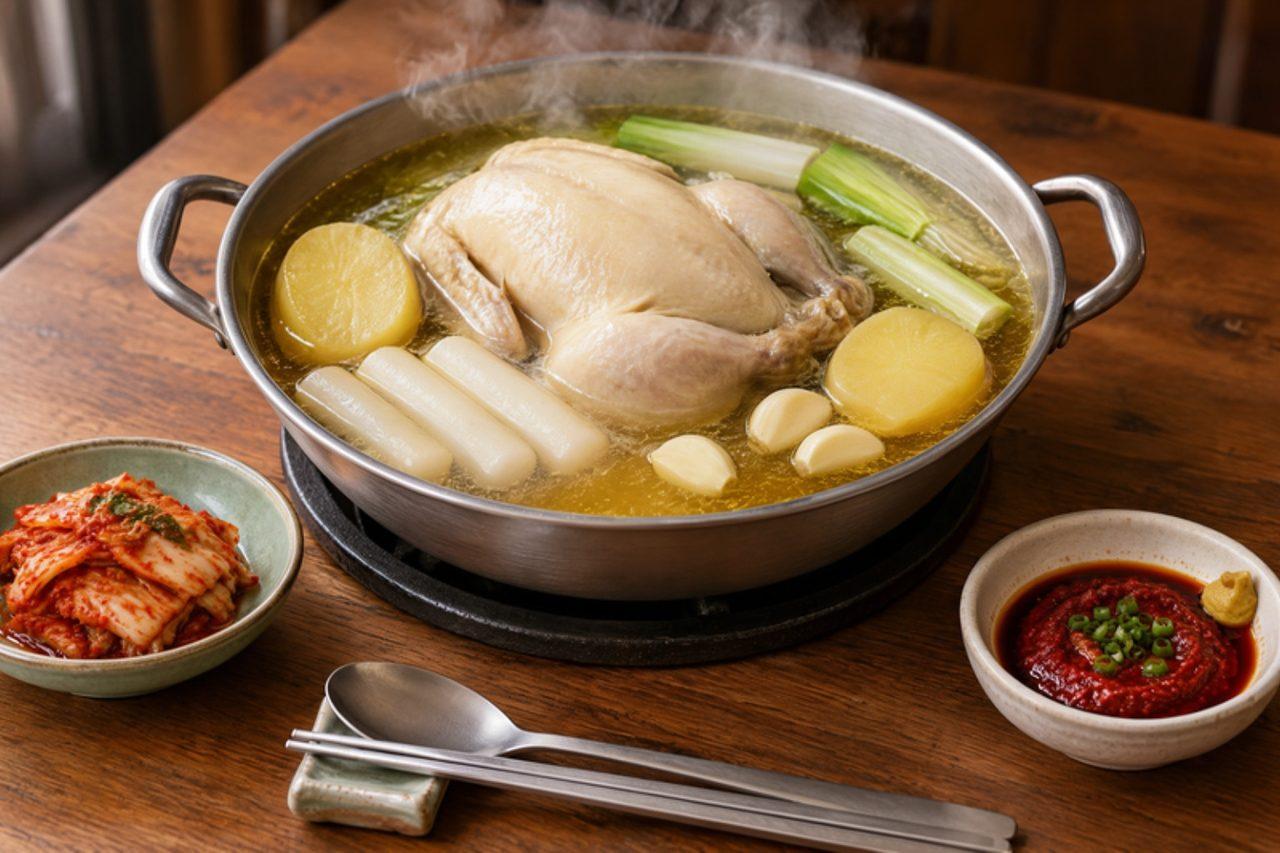
Dak hanmari, literally 'one chicken', comes from the alley of restaurants beside Dongdaemun market in Seoul, where a whole chicken arrives in a basin of pale broth and finishes cooking on a burner at the table. Potatoes and chewy rice cakes simmer alongside, and each piece is dunked in a sharp dipping sauce of chilli, soy, vinegar and mustard that you mix to your own taste. When the chicken is gone, knife-cut noodles go into the broth. The usual mistake is rushing the first simmer: the broth needs its full time with garlic and leek to taste of chicken. Chef's tip: let everyone build their own dip, adding a spoon of hot broth so the chilli flakes bloom.

by KrazyBadal 0 views

Ensaladang talongGrilled aubergine salad

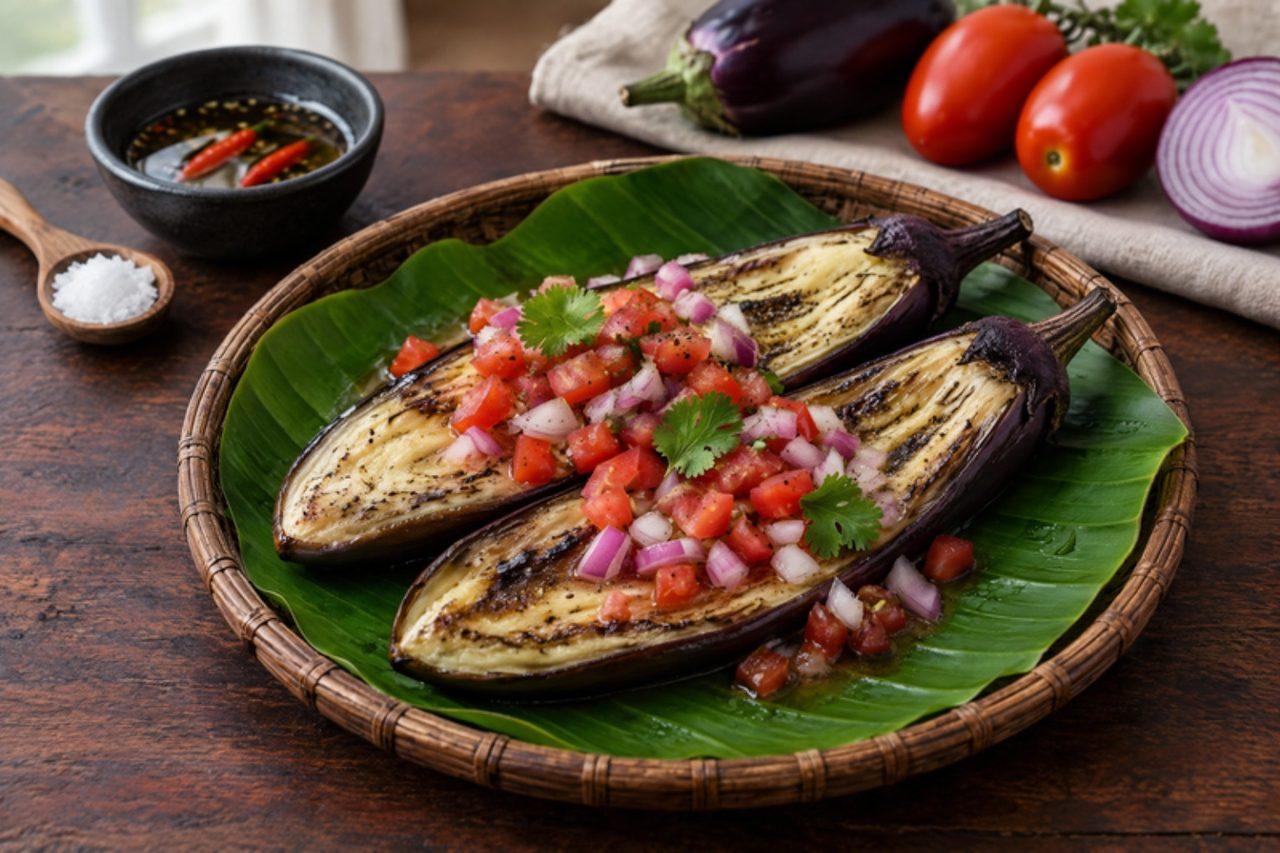
Ensaladang talong is the smoky side salad that sits beside grilled fish or pork at Filipino family lunches, from Pampanga to Davao, and on the table at weekend beach outings. Long Asian eggplants are charred whole until the flesh collapses, then peeled and topped with diced tomato, red onion and a sharp vinegar dressing. This version leaves out the usual fermented shrimp paste so it is vegan. Suitable as part of a balanced diet, it is low in starch: about 70 kcal and 10 g carbohydrate per portion. The usual mistake is pulling the eggplants off the heat too soon; they must be soft right through, or the flesh is spongy and raw. Chef's tip: peel the hot eggplants under a trickle of water with your fingertips to keep the smoky flesh whole.

by KrazyBadal 0 views

Daing na bangusMarinated fried milkfish

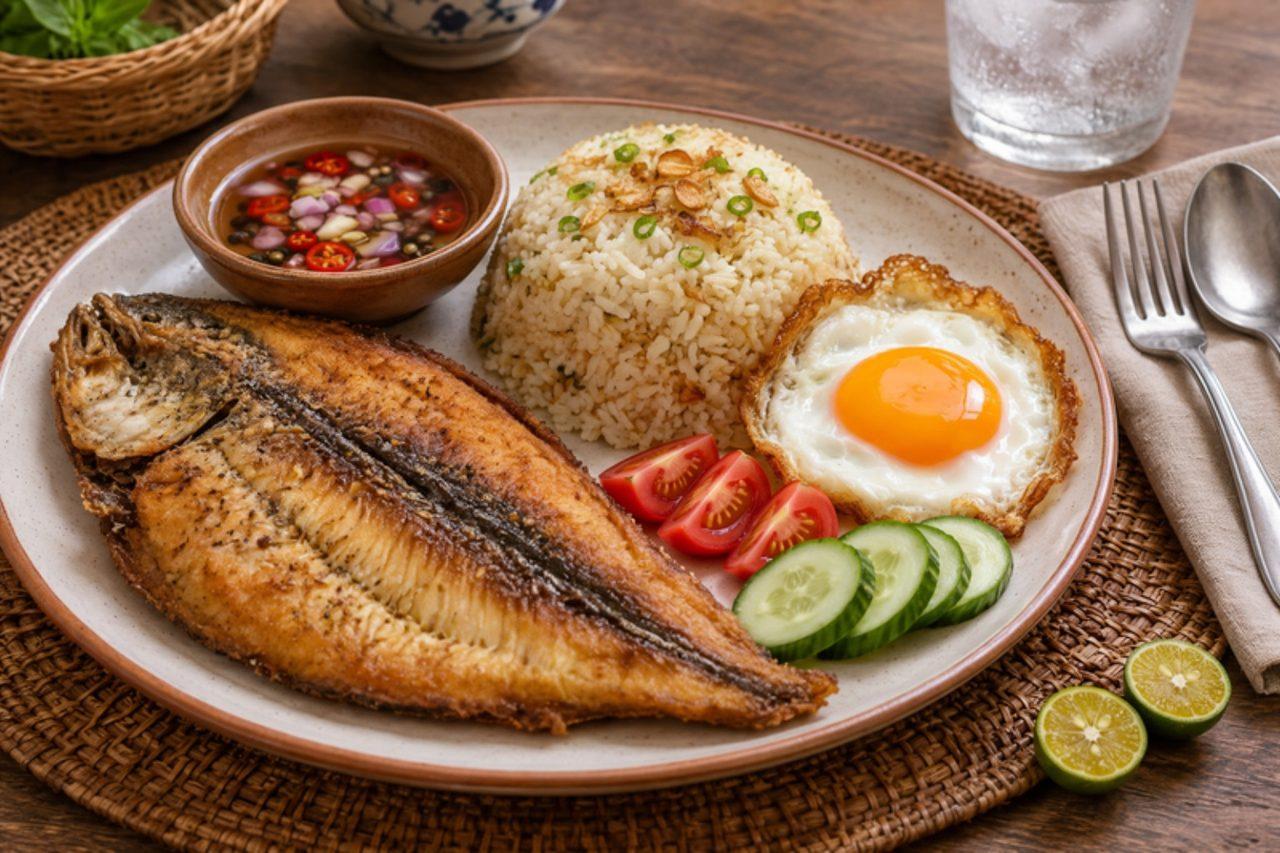
Bangus (milkfish) is the national fish of the Philippines, and daing na bangus, butterflied and soaked overnight in vinegar, garlic and pepper, then fried until the skin shatters, is a favourite morning plate from Pangasinan to Manila. It comes with garlic rice, a fried egg and a dip of spiced vinegar. Buy it boneless (deboned bangus) from Filipino shops, or use mackerel fillets. The usual mistake is putting the wet fish straight into the oil, which spits and stops it crisping. Chef's tip: pat the fish completely dry and fry skin side down first, pressing gently, without moving it for five minutes.

by KrazyBadal 0 views

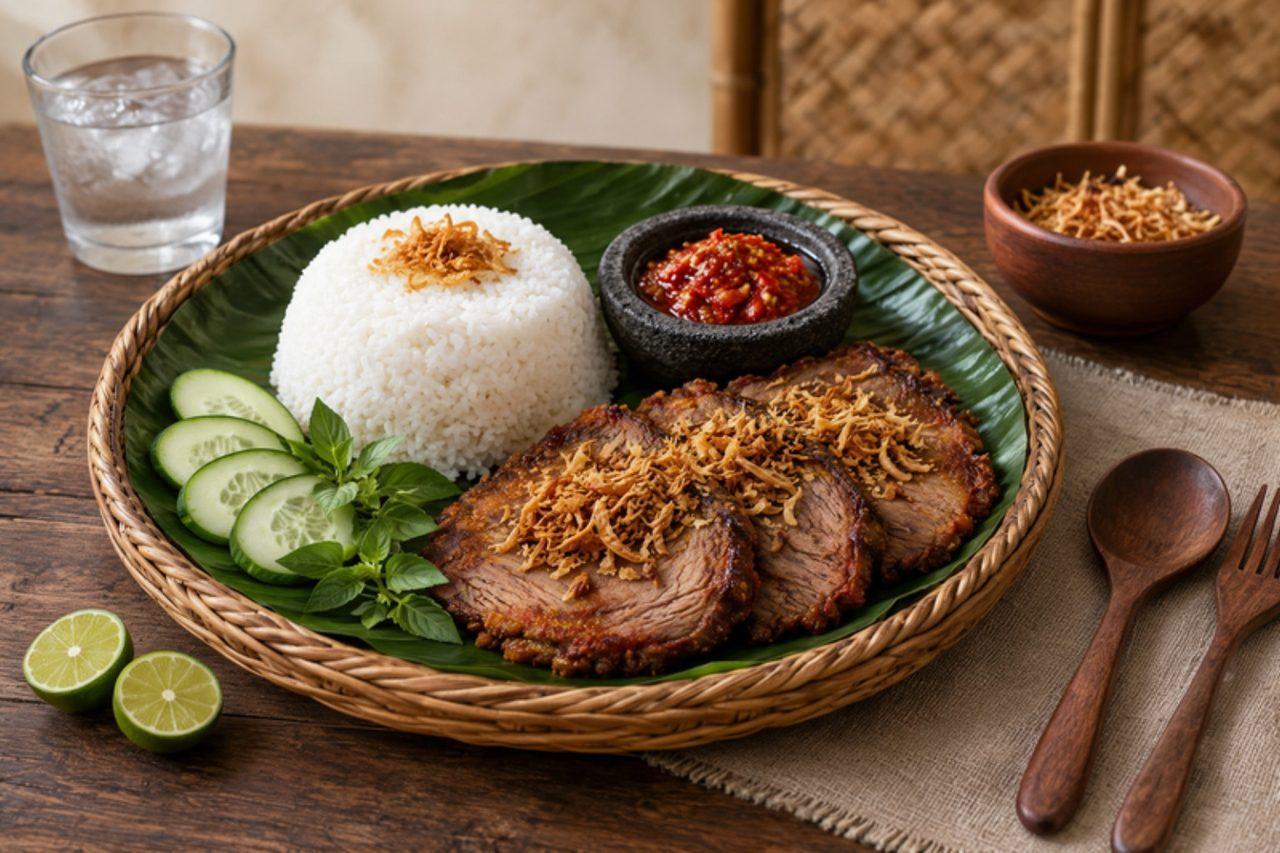
Empal gepukSweet spiced fried beef

Empal gepuk is a Sundanese speciality from Bandung in West Java: beef simmered in coconut water and spices with palm sugar until the liquid is gone, pounded (gepuk) to loosen the fibres, then fried until the edges are crisp and sweet. Because it is dry and keeps for days, it is a classic in Indonesian bekal lunchboxes with rice, sambal and raw vegetables. The common mistake is cutting the beef with the grain, which makes it stringy; slice it across the grain before pounding. Chef's tip: pound gently with a pestle just until the slices fan out, then fry quickly; too long in the oil and they turn hard.

by KrazyBadal 0 views

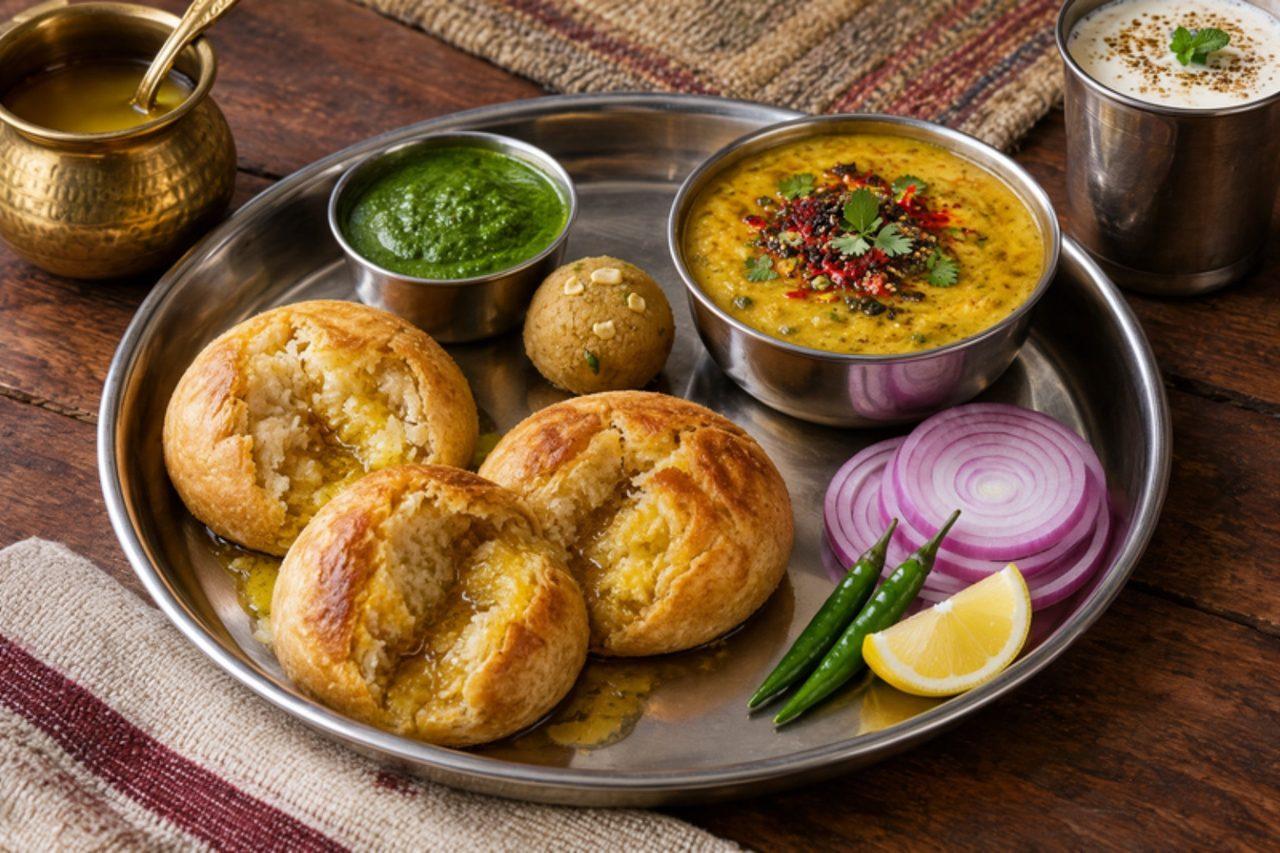
Dal baflaBaked wheat balls with dal

Dal bafla is Malwa's answer to Rajasthan's dal baati: the dough balls are first boiled until they float, then baked until crusty, so they turn out softer inside and lighter than baati. In Indore and Ujjain it is the meal for Sunday lunches, picnics and big family gatherings, broken open and drowned in ghee next to a bowl of tadka dal and garlic chutney. The common mistake is skipping the rest after boiling; wet baflas go straight into the oven and stay pale and leathery. Chef's tip: let the boiled baflas dry for 10 minutes and score a cross on top before baking, so they crack open and soak up the ghee.

by KrazyBadal 0 views

LampreadoCassava starch cheese fritters

Paraguayan grandmothers fry lampreado on Sunday evenings to eat with a mug of cocido, the toasted yerba mate drink: small pan-fried cakes of cassava starch, egg, milk and grated cheese with a little onion, crisp at the edges and stretchy inside. Some families also make it with leftover meat, but this version is all cheese. Queso Paraguay is set with animal rennet; a vegetarian Parmesan-style cheese plus mozzarella works well. The trap is a batter that is too thick, which gives heavy, gluey cakes. Chef's tip: the batter should drop slowly off a spoon like thick pancake batter; add milk a spoonful at a time until it does.

by KrazyBadal 0 views

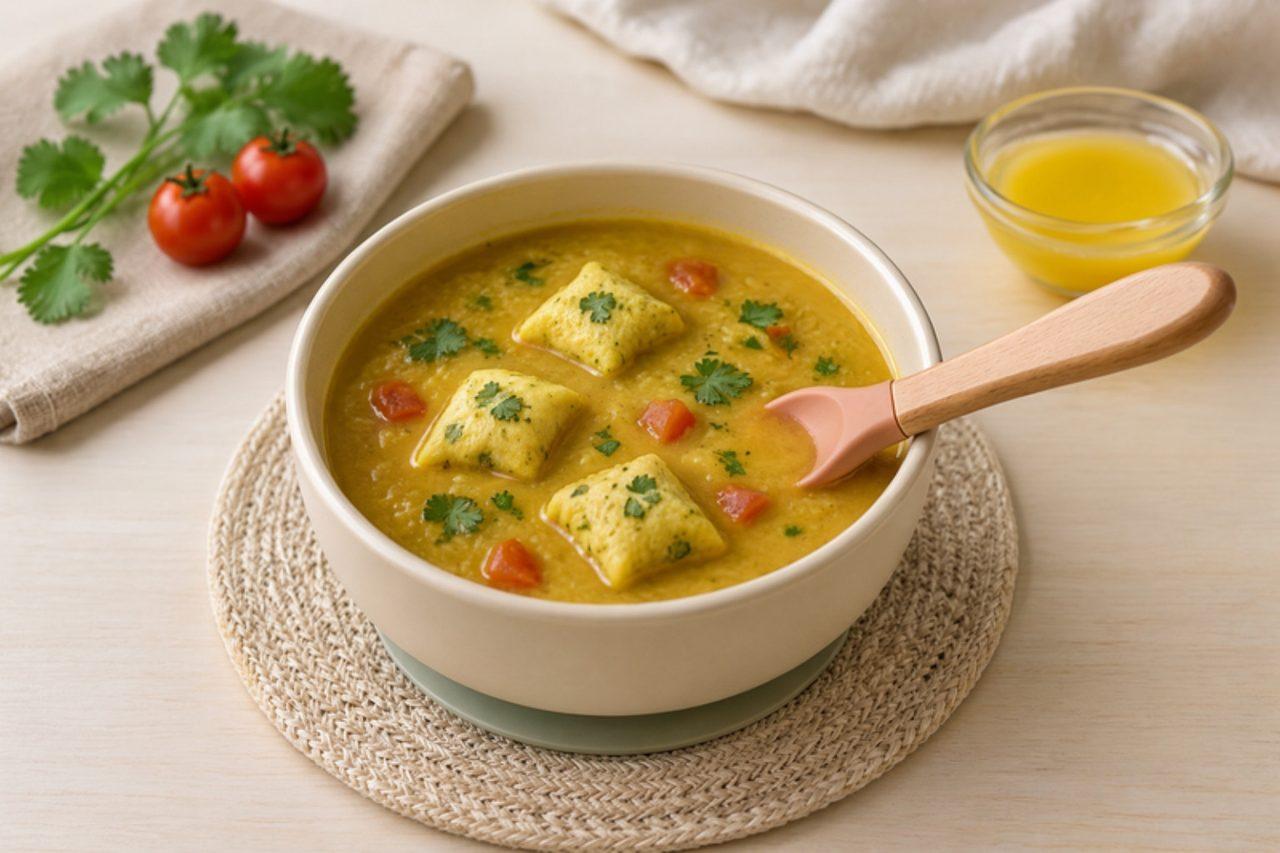
Dal dhokli for toddlersWheat dumplings in dal for toddlers

In Ahmedabad pols and Surat kitchens dal dhokli is the Sunday one-pot lunch: diamonds of spiced wheat dough cooked straight in tangy toor dal. This toddler version, for children from 12 months, keeps the soft pasta-like pieces small, leaves out the chilli, peanuts and cloves, and uses only a pinch of jaggery so the dal stays sweet-sour the way Gujarati families like it. It is cooked in oil, so it is dairy free and vegan. It contains wheat (gluten); there is no milk, egg, nuts or soya. Chef's tip: roll the dough thin, about 2 mm; thick dhokli stay chewy in the middle.

by KrazyBadal 0 views

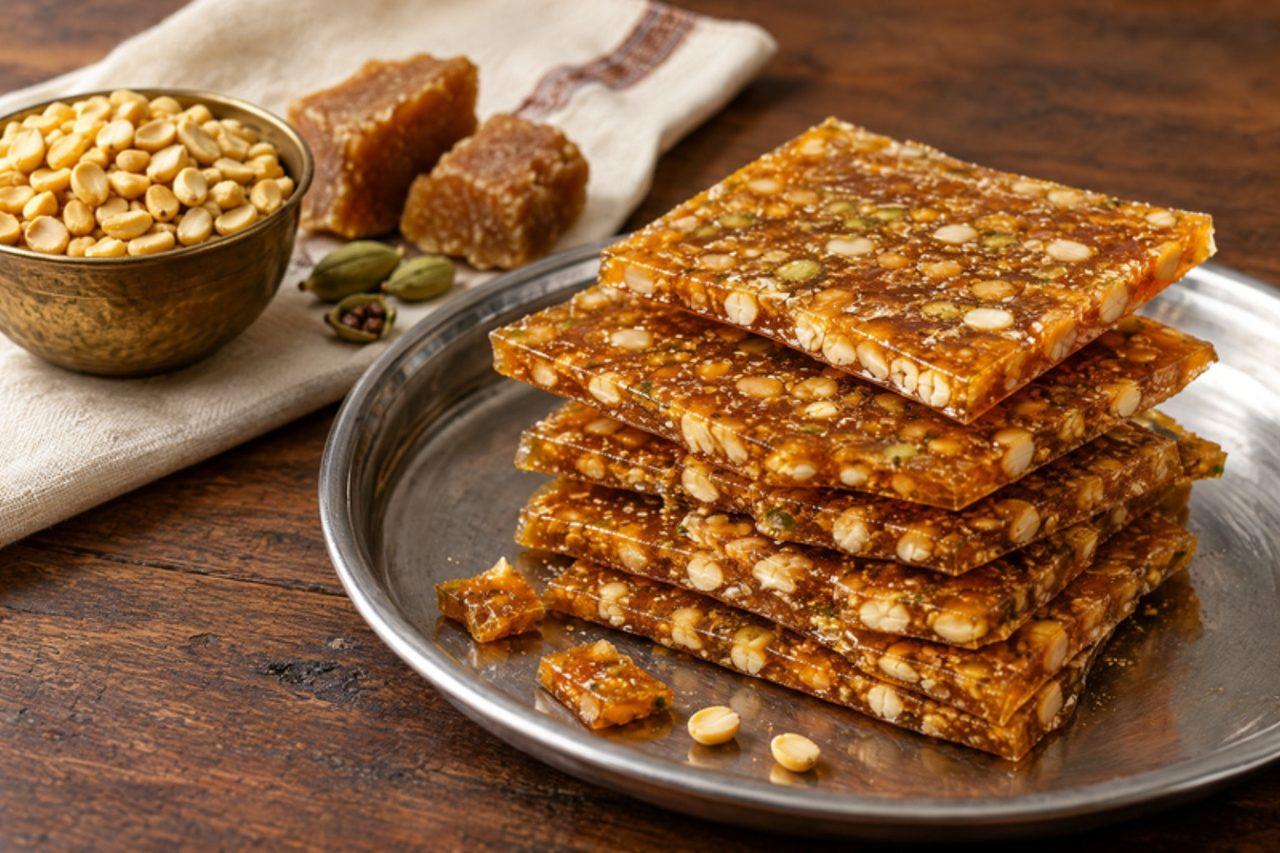
Dalia chikkiRoasted chana and jaggery brittle

For Uttarayan, the January kite festival, every Gujarati kitchen turns out trays of chikki, and dalia (roasted split chana, the yellow dal sold for chutneys) is the one that gets forgotten until someone tastes it. It is lighter and crunchier than peanut chikki, with a toasty, slightly savoury edge from the dal. It is all about the jaggery syrup. The common mistake is pulling the jaggery off too early; underdone syrup gives sticky, chewy chikki that never snaps. Chef's tip: drop a little syrup into cold water: when it sets hard and cracks cleanly (hard-crack stage), tip in the dalia straight away.

by KrazyBadal 0 views

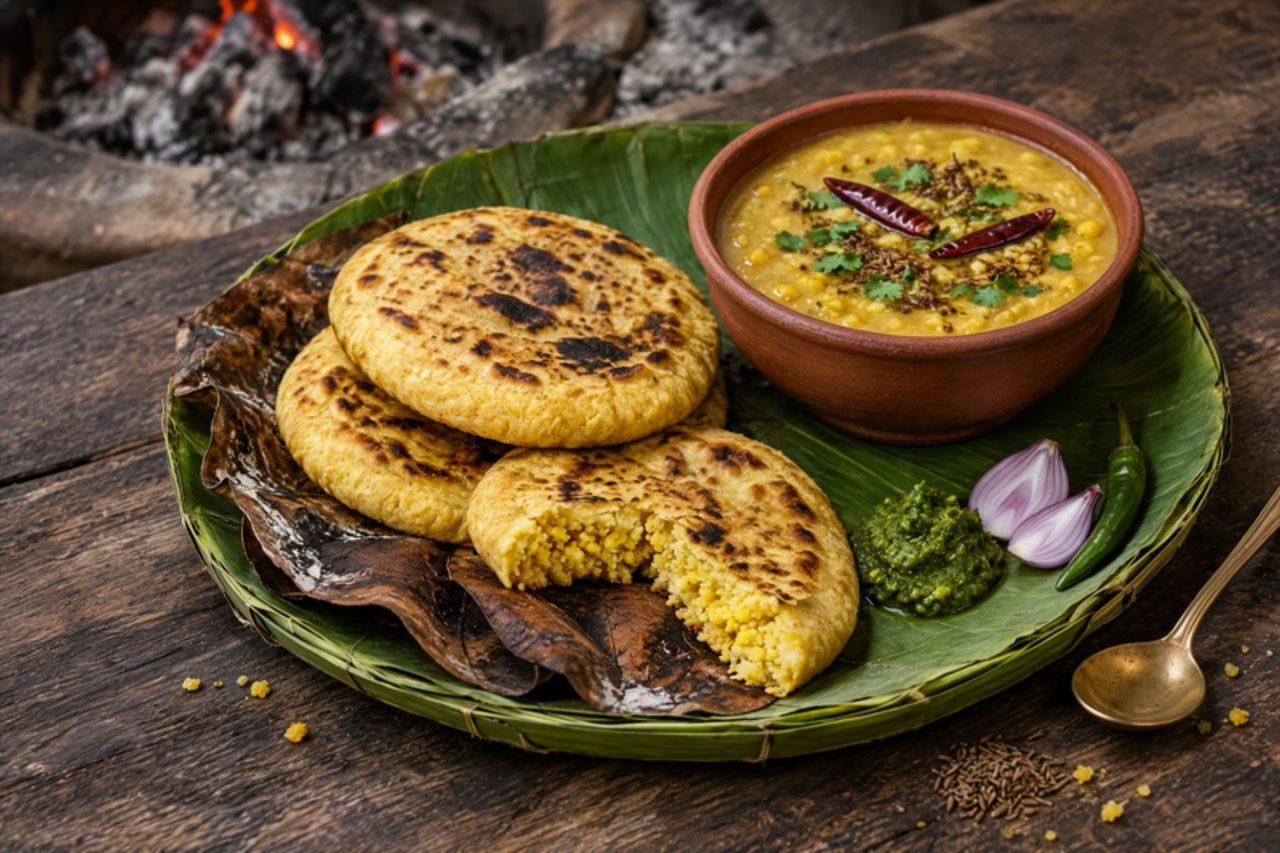
Dal panniyeMaize flour breads baked in leaves

Panniye are the festive breads of the Bhil communities of Jhabua and Alirajpur in western Madhya Pradesh, made for weddings, Bhagoria and harvest gatherings. Thick maize-flour discs are pressed between palash or banana leaves and baked over cow-dung embers until smoky and crisp outside, then served with a garlicky dal and ghee. At home you can bake them on a tawa and finish in the oven. The common mistake is rolling the dough too thin, so it dries out and cracks before it cooks through. Chef's tip: knead the maize dough with warm water and a little curd and let it rest; it holds together much better.

by KrazyBadal 0 views

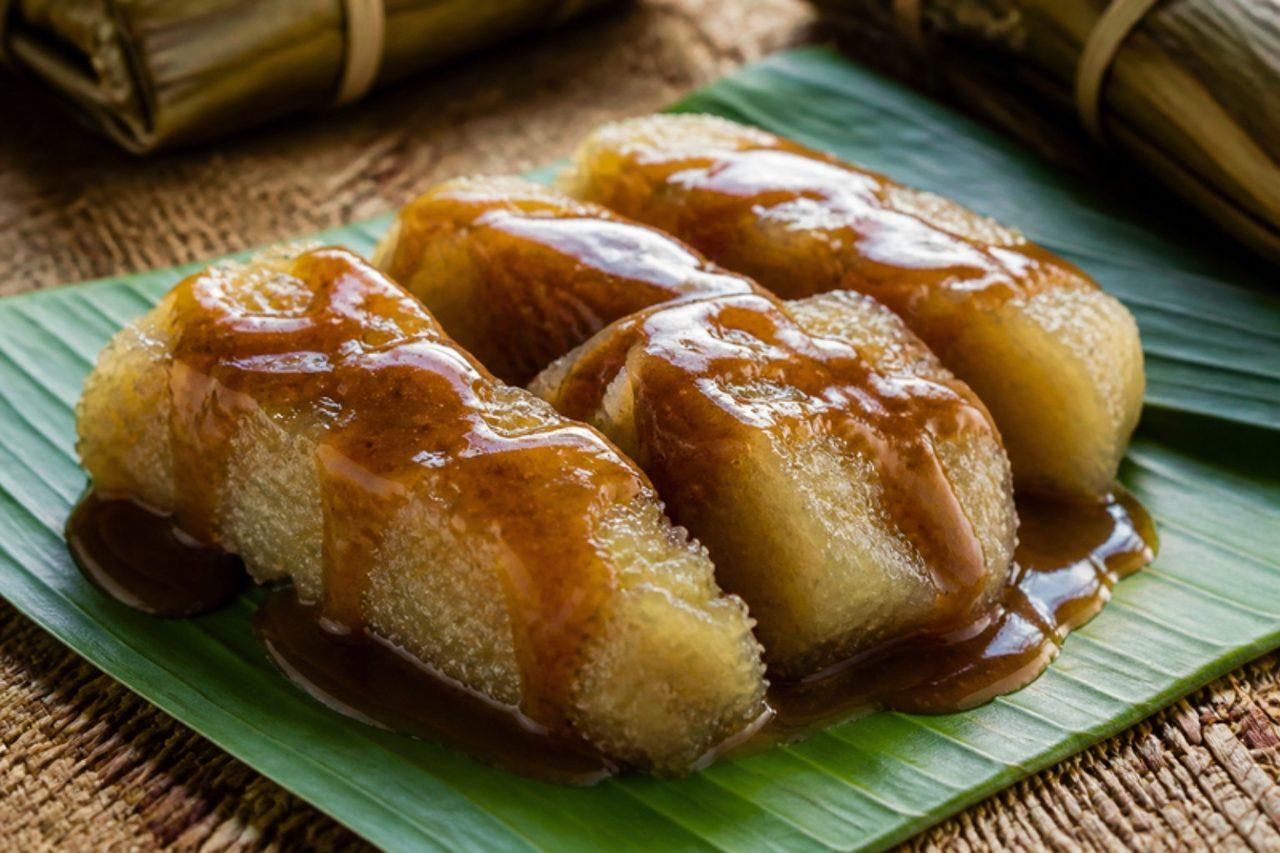
VakaloloSteamed cassava coconut pudding

Vakalolo is an iTaukei celebration pudding, made for church feasts, weddings and Christmas in villages across Viti Levu and Vanua Levu. Grated cassava is mixed with coconut cream and sugar, wrapped in banana or vudi leaves and steamed until it turns sticky and translucent, then served with a thick caramel of coconut cream and brown sugar poured over. Frozen grated cassava from Asian or Pacific shops saves a lot of work. Cassava must always be fully cooked, never eaten raw. A common mistake is wrapping the parcels loosely so water gets in; fold them tightly. Chef's tip: cook the caramel slowly until it's the colour of toffee, which is where all the flavour is.

by KrazyBadal 0 views

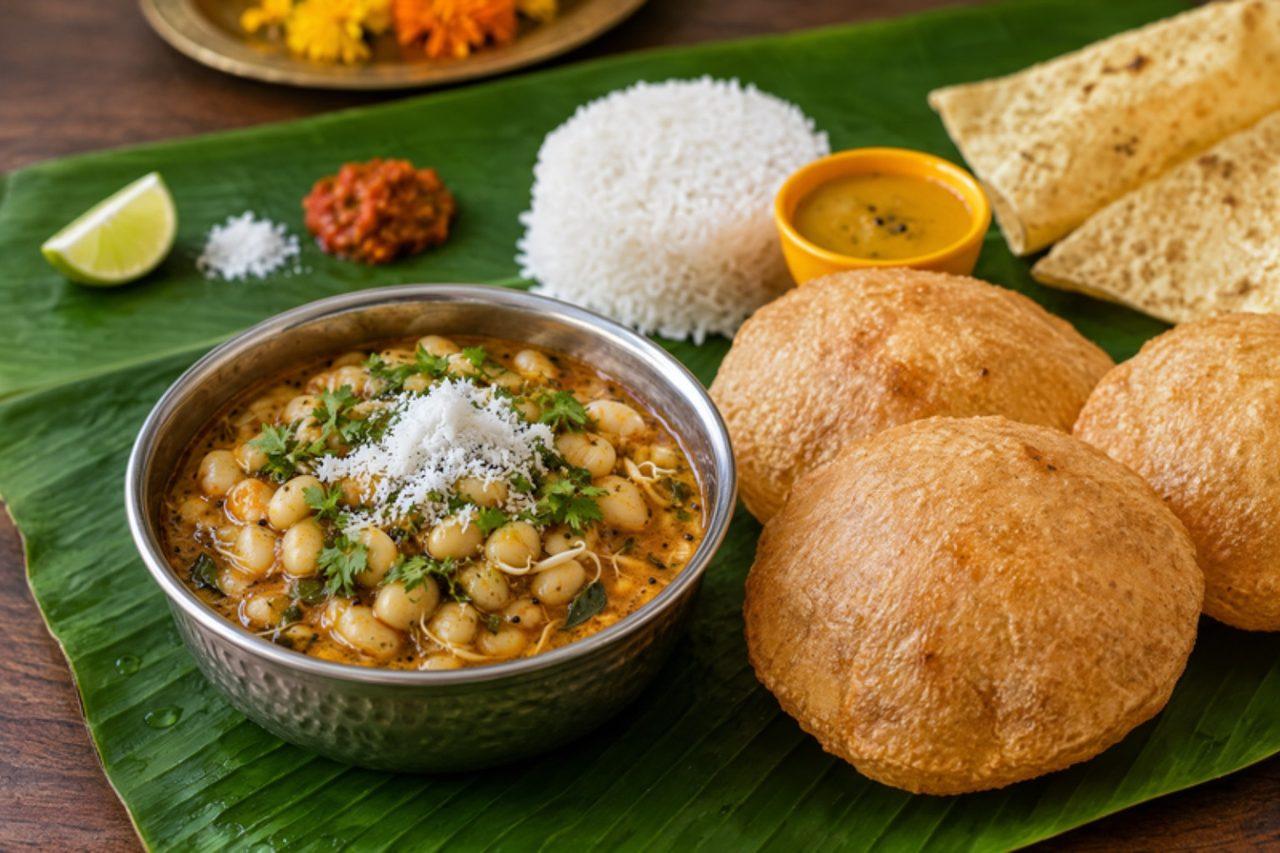
Dalimbi usalSprouted field bean curry

In Konkan and Pune homes, dalimbi usal is a festival dish, cooked for Ganesh Chaturthi, weddings and thread ceremonies and served on the thali beside puran poli and rice. Dalimbi are dried field beans (val) that are soaked, sprouted and peeled; the work takes two days but turns them creamy and sweet. They are simmered gently with fresh coconut, goda masala, kokum and a little jaggery, without onion or garlic. Field beans must always be cooked until fully soft; never eat them raw or half-cooked. The usual mistake is boiling them hard, which bursts the soft peeled beans into mash; keep the simmer gentle. Chef's tip: soak the sprouted beans in warm water for 30 minutes before peeling, and the skins slip off with a pinch.

by KrazyBadal 0 views

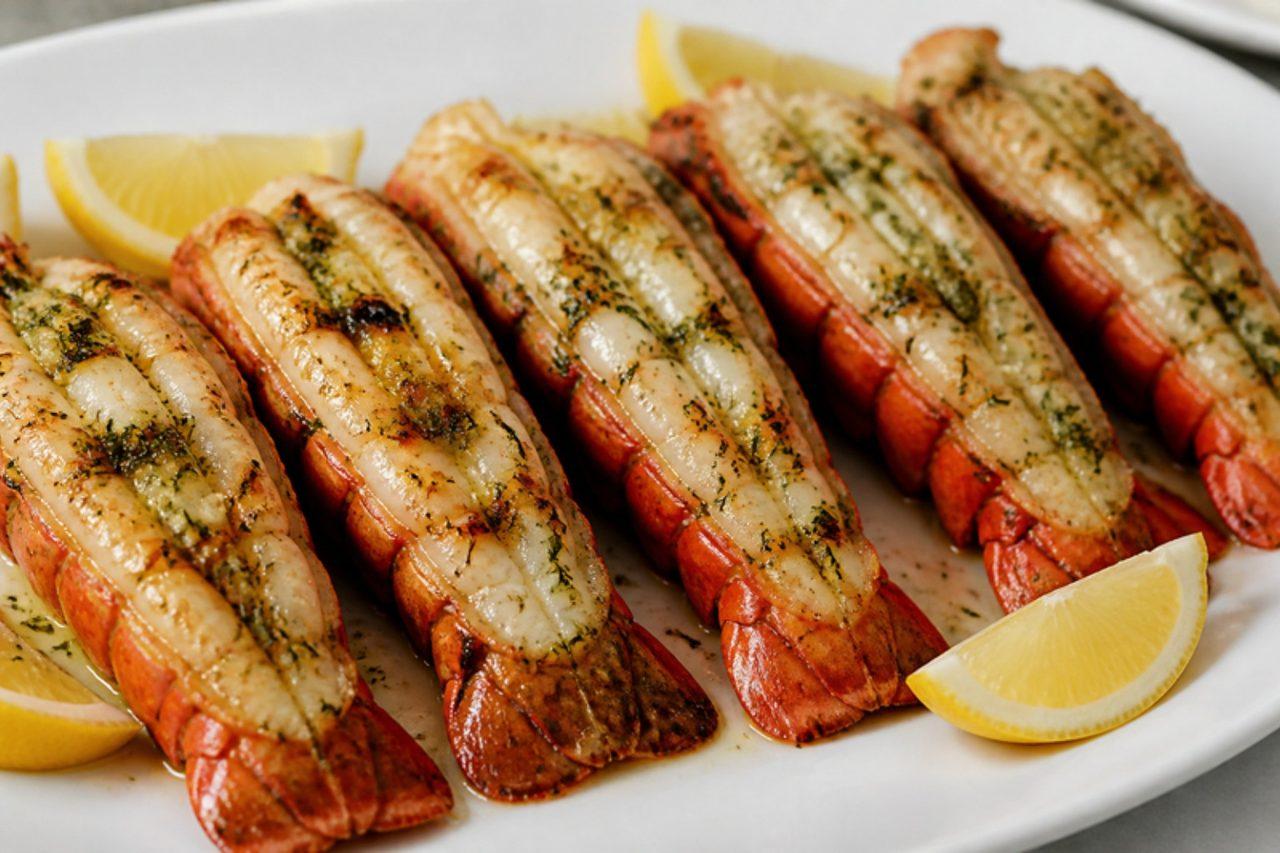
Grilled marronGrilled crayfish with garlic butter

Marron are large freshwater crayfish native to the rivers of south-western Western Australia and farmed around Margaret River and Manjimup, where restaurants serve them split and grilled with garlic butter. The tail meat is sweet, firm and delicate, finer than most lobster. Buy marron already prepared and halved by the supplier, or frozen raw halves, and cook them the same day. A common mistake is overcooking, which makes the meat stringy. Chef's tip: baste continuously so the flesh stays juicy under the grill.

by KrazyBadal 0 views

ShorSalted dry curd cheese

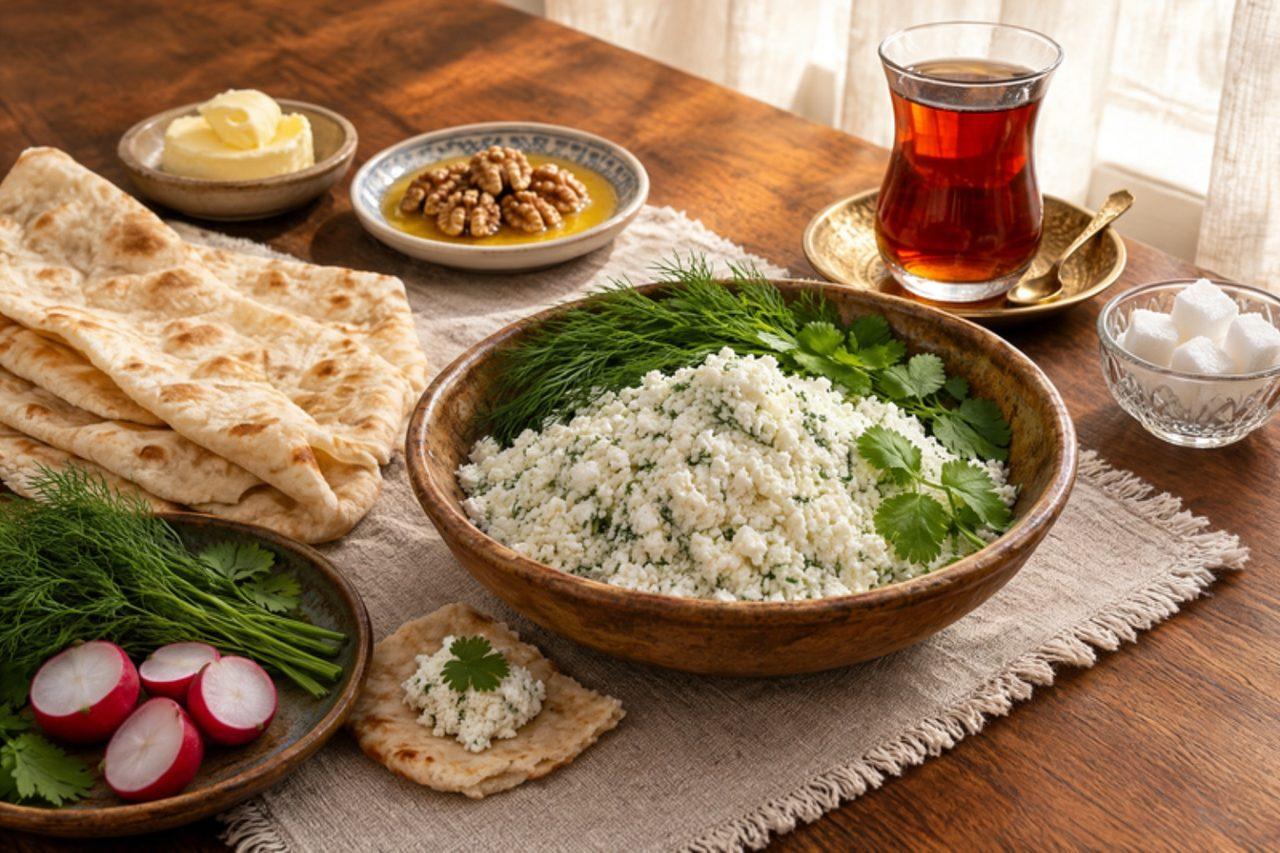
In Azerbaijani villages şor is made from what is left after churning butter from soured milk: the curds are heated, drained in a cloth, salted and left to dry into a crumbly, tangy cheese. On the breakfast table in Shaki or Ganja it sits beside fresh herbs, cucumbers, butter and bread, with tea in pear-shaped glasses. This home version uses natural yogurt and milk, and needs about 12 hours to drain and dry. It is set with acid and heat, so no rennet is used. The mistake is boiling the mixture hard, which makes rubbery curds; heat it gently until it just separates. Chef's tip: add the salt after draining, crumbling it through with your fingers, so you can taste and stop when it is pleasantly salty.

by KrazyBadal 0 views

Hyderabadi keema samosaMinced mutton samosas

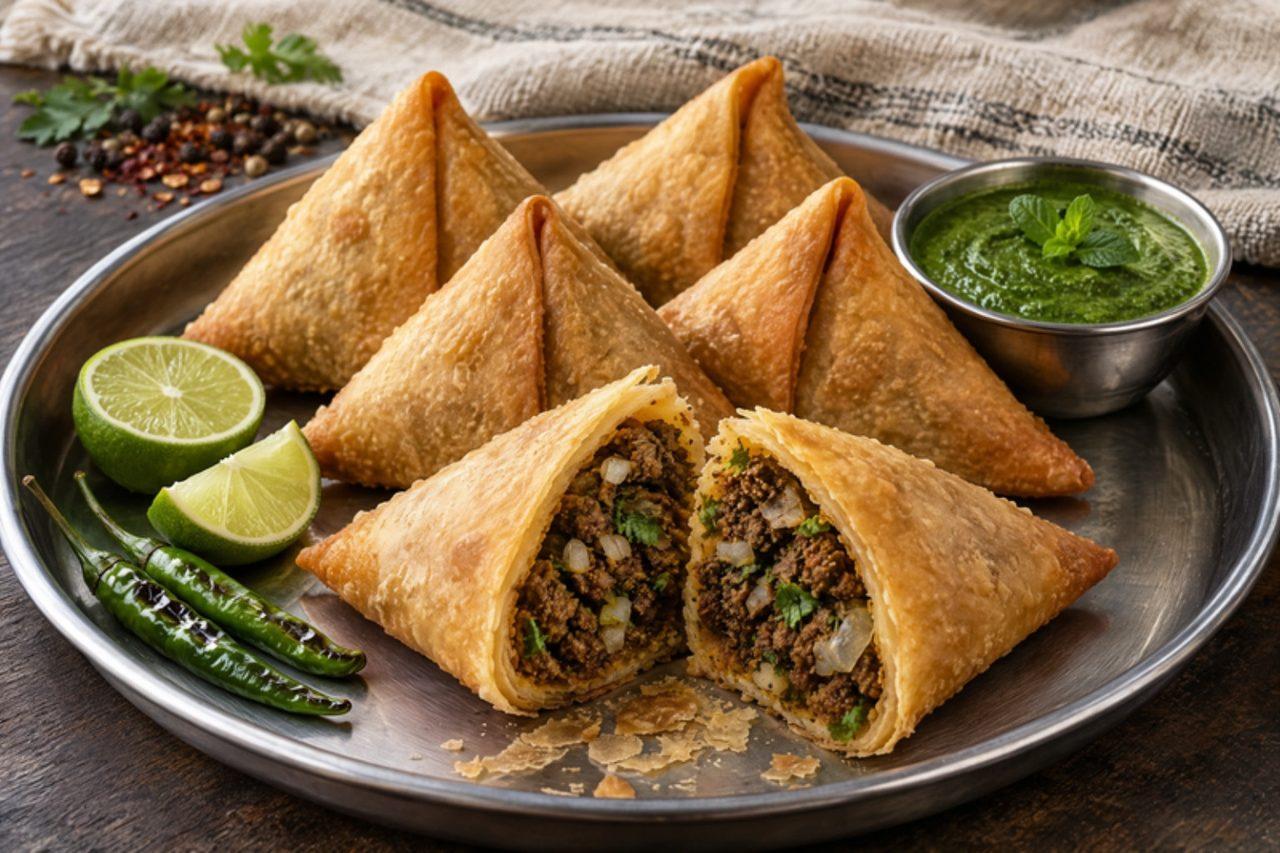
Through Ramadan, the streets around Charminar fill with iftar stalls, and the small, papery keema samosas are among the first things to sell out before the sunset call to prayer. The filling is minced mutton cooked dry with onion, ginger-garlic, green chilli, mint and garam masala, folded into thin strips of samosa pastry and fried until they shatter. Families make them in batches and freeze them for the whole month. The common mistake is a wet filling, which makes the pastry soggy and can burst; cook the mince until every bit of liquid has gone. Chef's tip: cook the mince fully to at least 71 °C before filling, because the quick fry only crisps the pastry; it will not cook raw meat through.

by KrazyBadal 0 views

Daniwal kormaMutton in yogurt and onion gravy

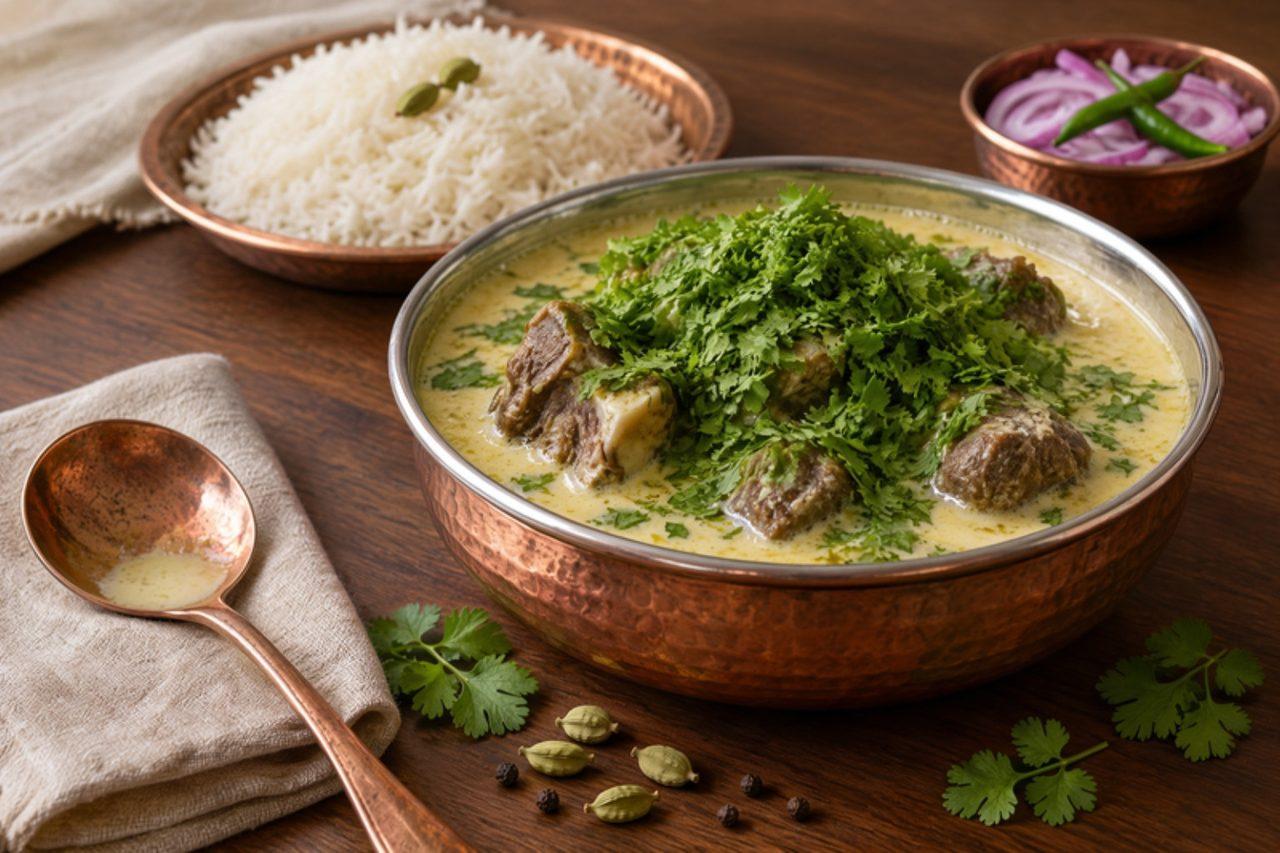
Daniwal korma is one of the gentler dishes of the Kashmiri wazwan, the many-course Muslim wedding feast cooked by the waza, and it is also a favourite for Eid lunches at home. Mutton is cooked with fried onion and whisked yogurt, scented with cardamom and fennel, and finished with a great fistful of fresh coriander, 'daniwal', that turns the pale gravy green-flecked and fresh. It is served with plenty of rice. The common mistake is adding cold yogurt to a hot pan, which makes it split; whisk it smooth and stir it in off the heat. Chef's tip: fry the onions dark gold, then grind them to a paste with the yogurt for a silky, nutty gravy.

95 minIndianMeatGluten free
by KrazyBadal 0 views

Liangban haizheCold jellyfish salad

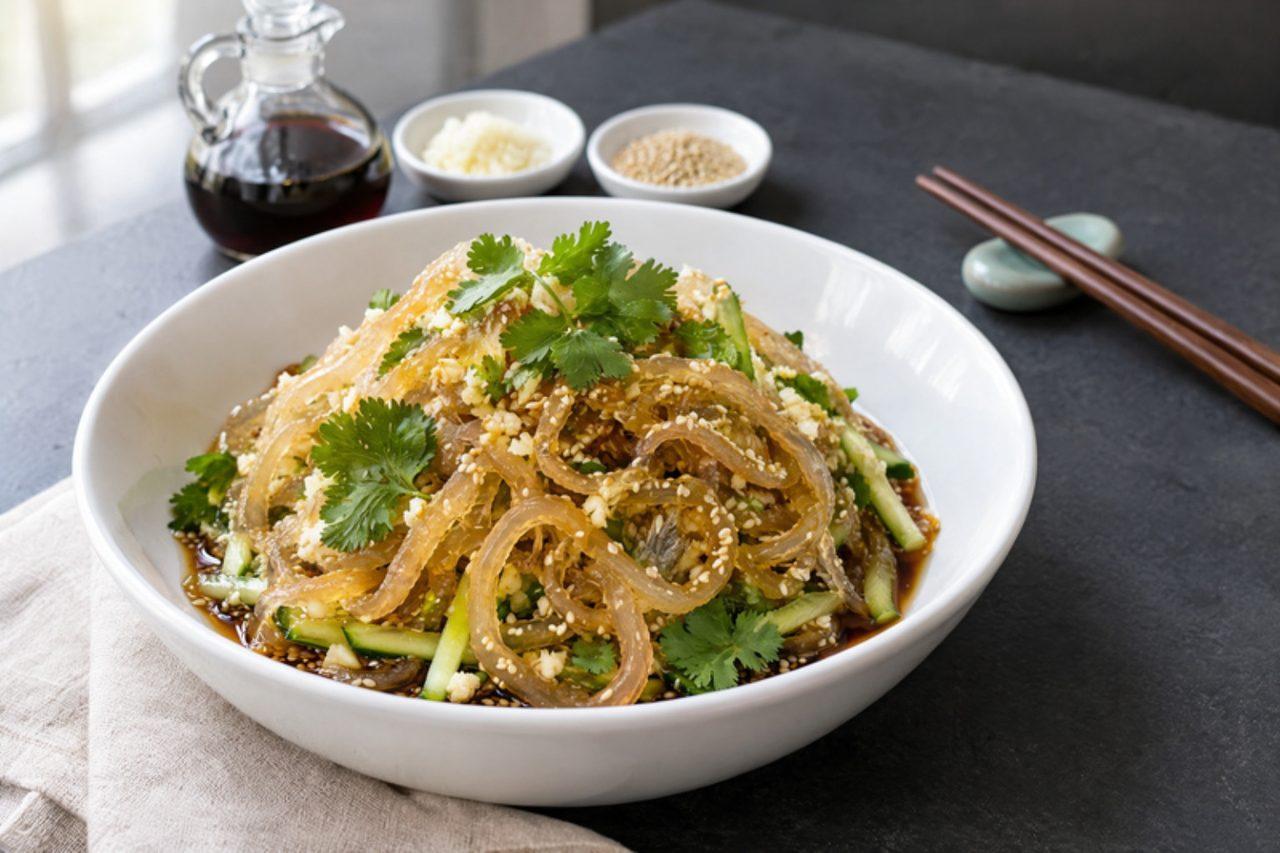
In Shanghai and along the eastern coast, crunchy cold jellyfish is one of the classic cold starters at banquets and summer dinners, served before the hot dishes. Ready-salted jellyfish is soaked, blanched for seconds so it curls and crisps, then tossed with cucumber, garlic, rice vinegar and sesame oil. It has almost no flavour of its own; the pleasure is its springy crunch and the sharp dressing. Very light and suitable as part of a balanced diet. About 90 kcal and 6 g carbohydrate per portion. The usual mistake is skipping the long soak: the jellyfish is packed in salt and stays far too salty and tough. Another is blanching in boiling water, which shrinks it to rubber. Chef's tip: blanch in water just off the boil, around 80 °C, for 10 seconds, then plunge it into iced water.

by KrazyBadal 0 views

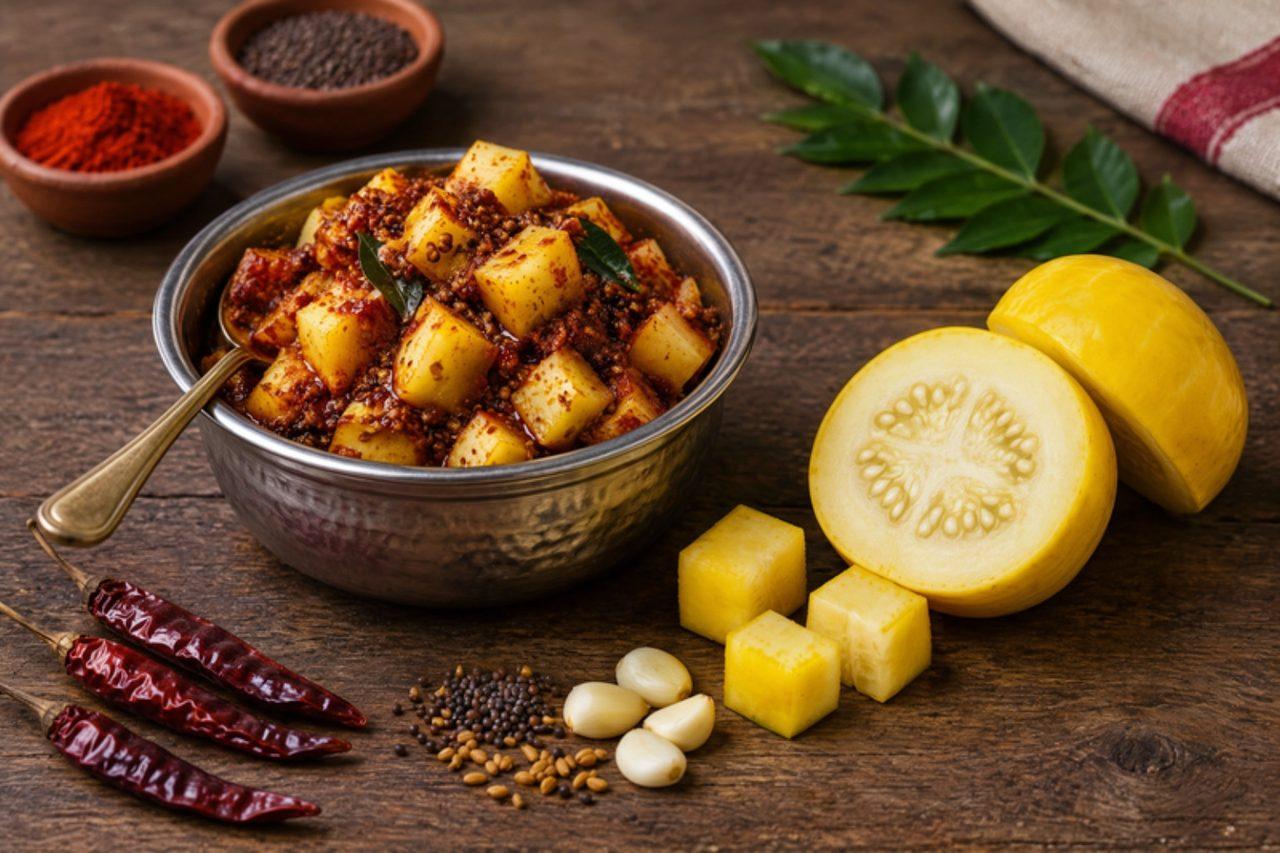
DosavakayaCucumber mustard pickle

Dosavakaya is the everyday pickle of Andhra homes: no waiting for mango season, just a round yellow dosakaya cubed with its skin on and tossed with mustard powder, chilli, salt, garlic and raw gingelly oil. It is made in minutes, often for Sunday lunch or to go with a festive meal, and eaten over the next few days with hot rice and ghee, pappu or curd rice. It is crunchy, juicy and mustard-sharp, hot and tangy, and the cubes give off a little juice that loosens the masala into a sauce. Dosakaya is sold in Indian grocers abroad; if you cannot find it, use a firm field cucumber, seeded, and add a little extra lemon juice for the missing tang. Because it contains raw garlic and cucumber, it is a fridge pickle: acidified with lemon and eaten within a week. Common mistake: using a bitter cucumber; taste a sliver from each end before you cut, and discard any that taste bitter. It is ready 2–3 hours after mixing, when the masala has turned glossy and the cubes taste seasoned through. Chef's tip: keep the skin on; it holds the crunch.

by KrazyBadal 0 views

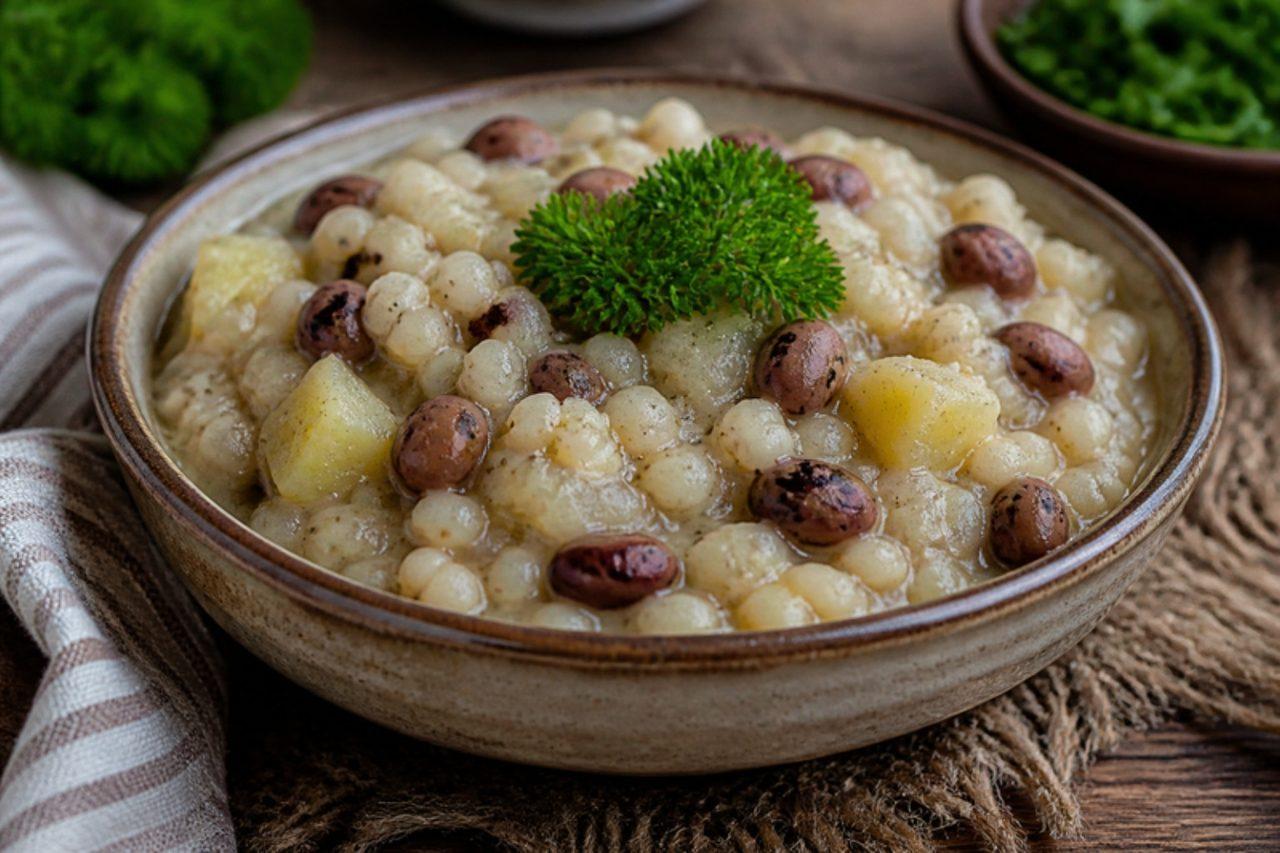
UmngqushoSamp and sugar beans

Xhosa households from Mthatha to Qunu put a pot of umngqusho on the fire on Sunday morning and let it murmur for hours while the rest of lunch comes together; Nelson Mandela famously named it his favourite meal. Crushed maize kernels and speckled sugar beans cook down together into something halfway between a risotto and a bean stew, chewy and creamy at once, sweet with slowly softened onion and thickened by potato that collapses into the pot. Eat it as it is with a spoon of chakalaka, or next to cabbage and a tomato relish. The usual mistake is skipping the overnight soak: unsoaked samp stays chalky in the centre no matter how long you cook it. Chef's tip: hold back the salt until the samp is soft, then season generously, because this dish swallows salt.

by KrazyBadal 0 views

Ají amarillo pasteYellow chilli paste

In Lima's markets ají amarillo is sold fresh all year, and most Peruvian cooks keep a tub of this paste in the fridge the way others keep tomato purée: it is the golden base of causa limeña, ají de gallina, papa a la huancaína, chupe and the sauce for tiraditos. The chillies are seeded, de-veined and blanched in three changes of water, which tames the heat and the raw grassiness, then peeled and blended with oil into a thick, silky, saffron-orange paste. It tastes fruity and sunny, almost like apricot and passion fruit, with a rounded, medium heat. Abroad, buy whole frozen ají amarillo from Latin grocers; dried ají mirasol, soaked, gives a darker, earthier paste. Common mistake: skipping the peeling; the thin skins leave papery flecks and a bitter edge. It is ready when it is completely smooth and holds a soft peak like thick hummus. This is a low-acid paste: keep it in the fridge for a week or freeze it, never on the shelf. Chef's tip: freeze it in an ice-cube tray; one cube is about a tablespoon, just right for a pot of ají de gallina.

by KrazyBadal 0 views

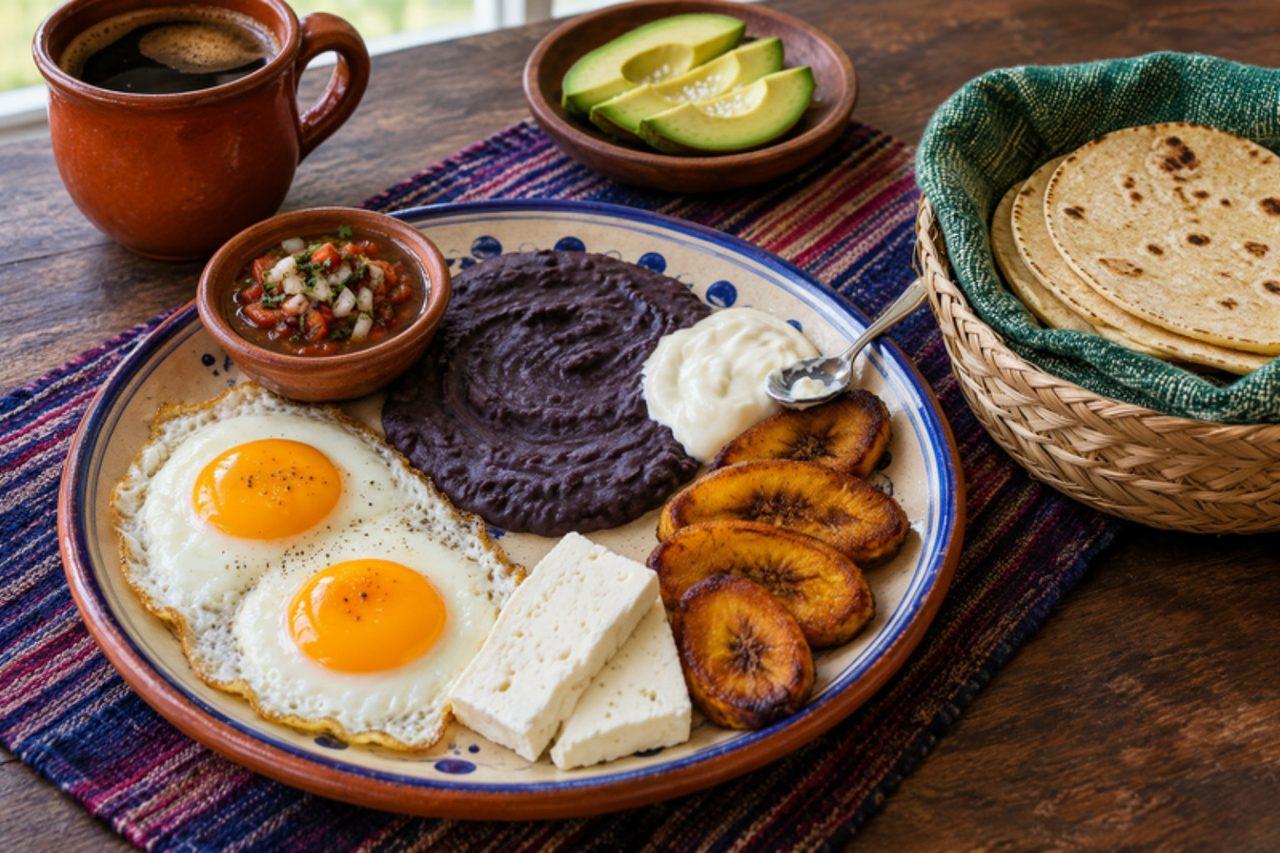
Desayuno chapínEggs, beans and plantain breakfast

In Guatemala City cafés and Antigua guesthouses, the desayuno chapín (chapín being the nickname for Guatemalans) is the big breakfast plate: eggs fried or scrambled, a mound of refried black beans, slices of caramelised ripe plantain, a square of fresh cheese, a spoon of crema, chirmol (charred tomato salsa) and warm corn tortillas. The common mistake is using plantains that are still yellow-green: for sweet, sticky slices they should be almost black. Some queso fresco is made with animal rennet; choose one made with microbial rennet, or use paneer, to keep it vegetarian. Cook eggs fully set for pregnant people, young children, older or vulnerable people. Chef's tip: fry the beans in the oil left from the plantains; they pick up a hint of sweetness and fry to a proper, thick volteados paste.

by KrazyBadal 0 views

SoetkoekiesSpiced almond biscuits

Cape Malay and Dutch kitchens in Stellenbosch and the old Bo-Kaap have been baking soetkoekies for at least two centuries, stacking them in tins for Christmas, New Year and visiting season. They are thin, snappy-edged biscuits with a slightly chewy centre, warm with cinnamon, ginger and a deep note of cloves, and nutty from ground almonds. Old recipes often splash in sweet wine; this one uses milk and a spoon of golden syrup instead, so there is no alcohol at all. The most common mistake is baking until they look firm, which makes them hard once cool: take them out while they still feel soft in the middle. Chef's tip: rest the dough overnight in the fridge if you can, because the spices deepen and the dough rolls more cleanly.

by KrazyBadal 0 views

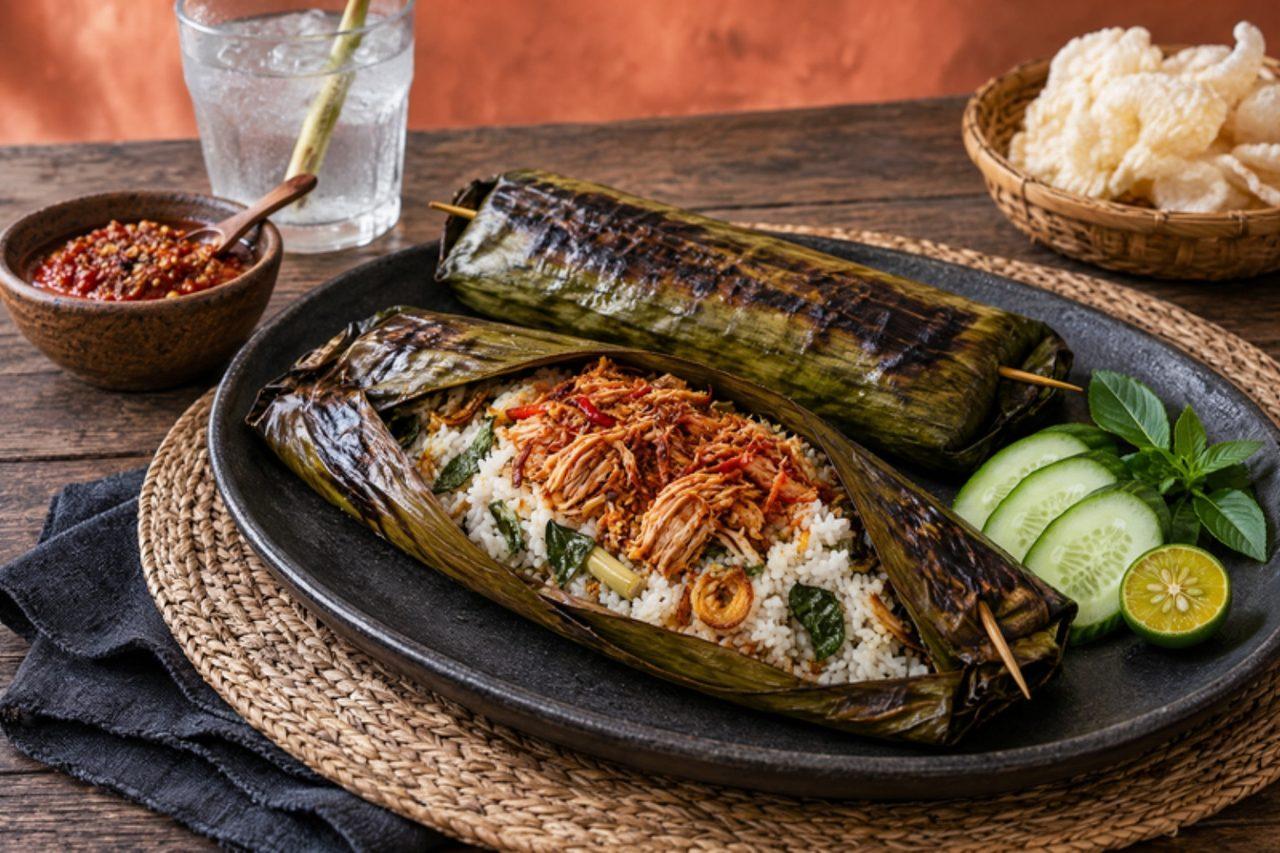
Nasi bakarGrilled banana-leaf rice with chicken

In Jakarta, nasi bakar parcels are sold from warung grills at lunchtime and in office canteens: rice cooked with coconut milk, lemongrass and salam leaves, filled with spicy shredded chicken (ayam suwir) and lemon basil, wrapped in banana leaf and grilled until the leaf chars and the rice crisps at the edges. Small dried anchovies (teri) are the other classic filling. The common mistake is wrapping the parcels loosely, so they fall open on the grill; fold them tight and pin with toothpicks. Chef's tip: grill until the leaf is blackened in patches; the smoke perfumes the rice inside.

by KrazyBadal 0 views

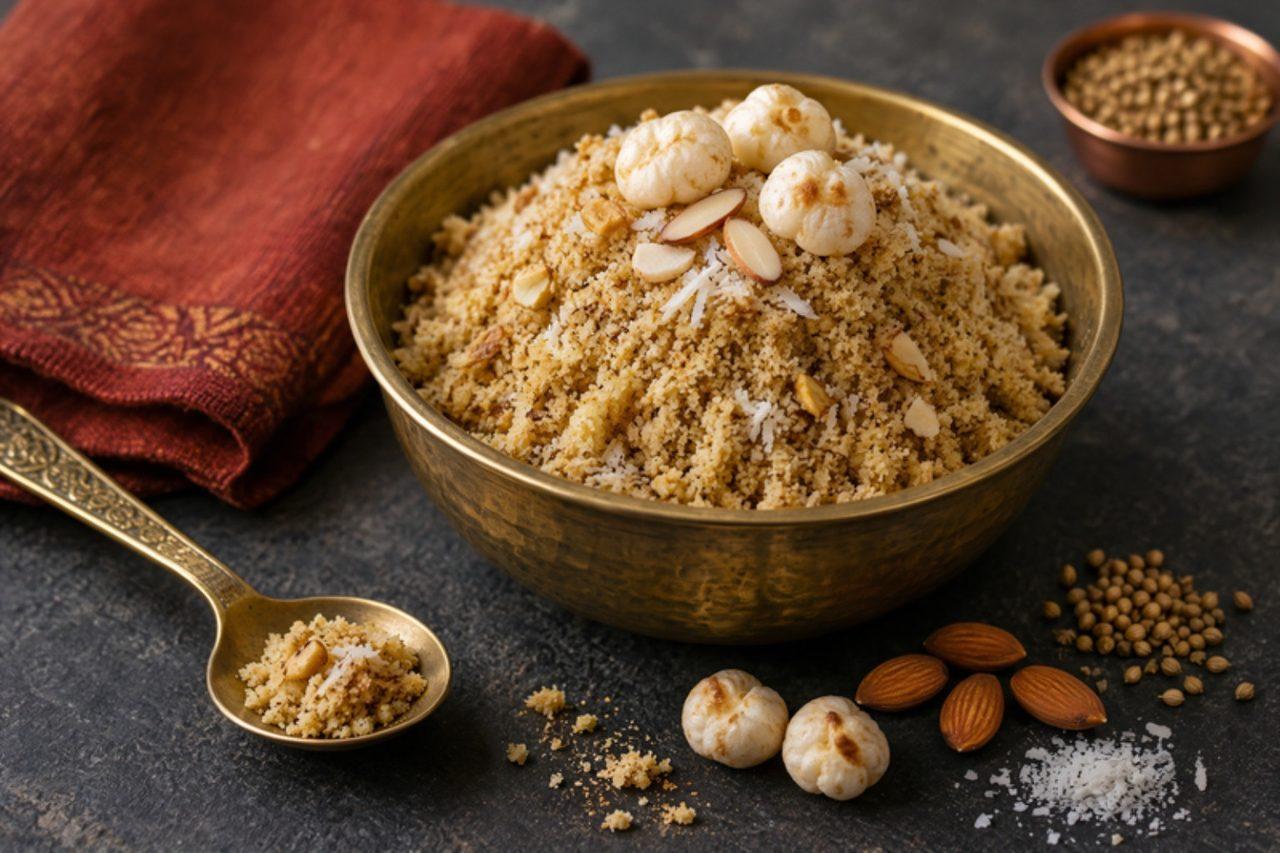
Dhana ni panjiriRoasted coriander and coconut sweet

At midnight on Janmashtami, when Gujarati and Rajasthani families sing to baby Krishna, the prasad handed round is this fragrant panjiri of ground coriander seeds roasted in ghee and mixed with powdered sugar, coconut, makhana and dry fruit. Because it contains no grain, it is also eaten by those who keep the Janmashtami fast. It tastes warm, sweet and surprisingly floral. The common mistake is roasting the coriander powder on high heat; it burns in seconds and turns bitter. Chef's tip: grind the seeds yourself just before roasting, and stop when the kitchen smells like warm citrus, not toast.

by KrazyBadal 0 views

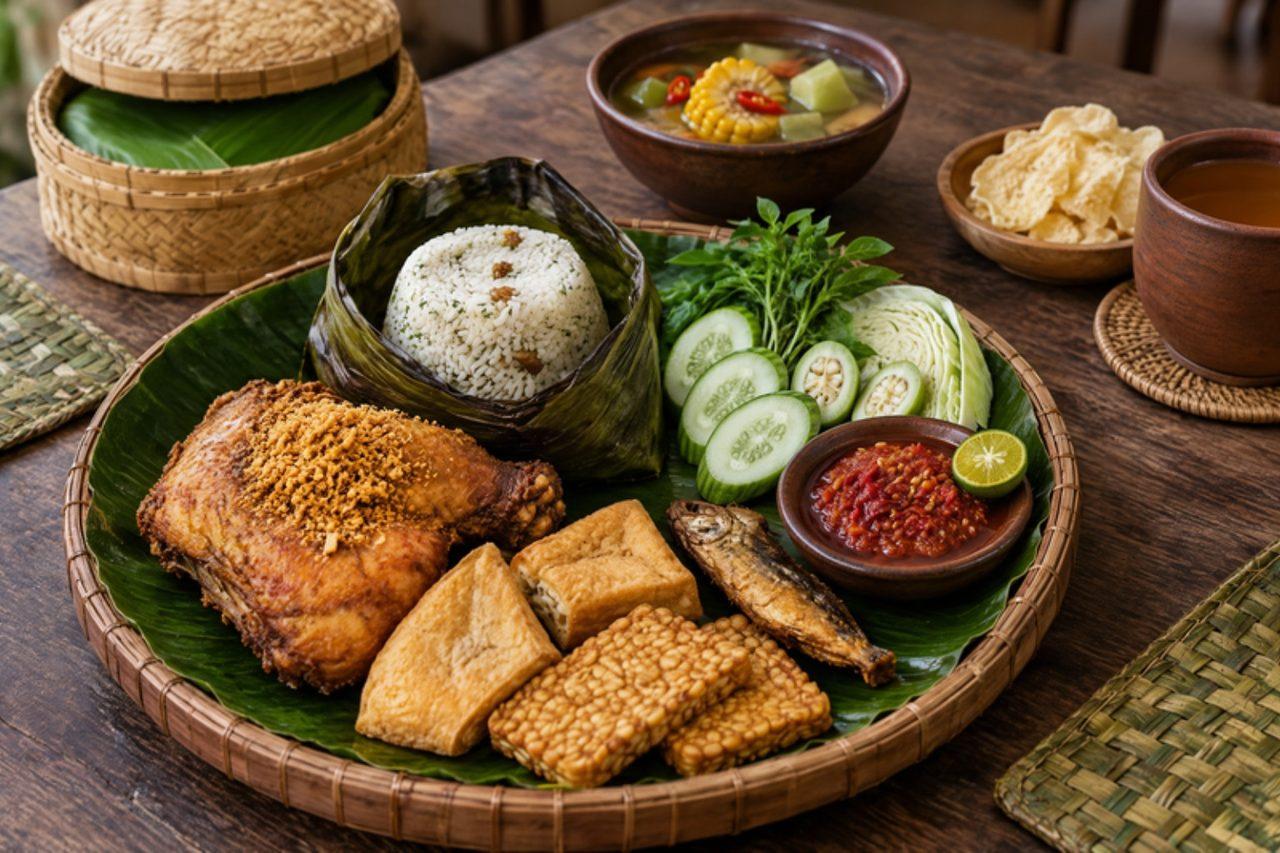
Nasi timbelRice with fried chicken and tofu

Nasi timbel is the packed lunch of West Java: rice pressed tight into a banana leaf, which keeps it warm and fragrant until noon, served with turmeric fried chicken, fried tofu and tempeh, crisp salted fish, raw vegetables (lalapan) and a fiery sambal terasi. Sundanese restaurants in Bandung and Jakarta serve it as a lunch platter. The usual mistake is frying the chicken straight from raw, which browns the outside long before the bone is cooked; simmer it in the spice paste first. Chef's tip: roll the rice in the leaf while it is very hot and wrap it tightly, then let it rest for 10 minutes so it sets firm.

by KrazyBadal 0 views

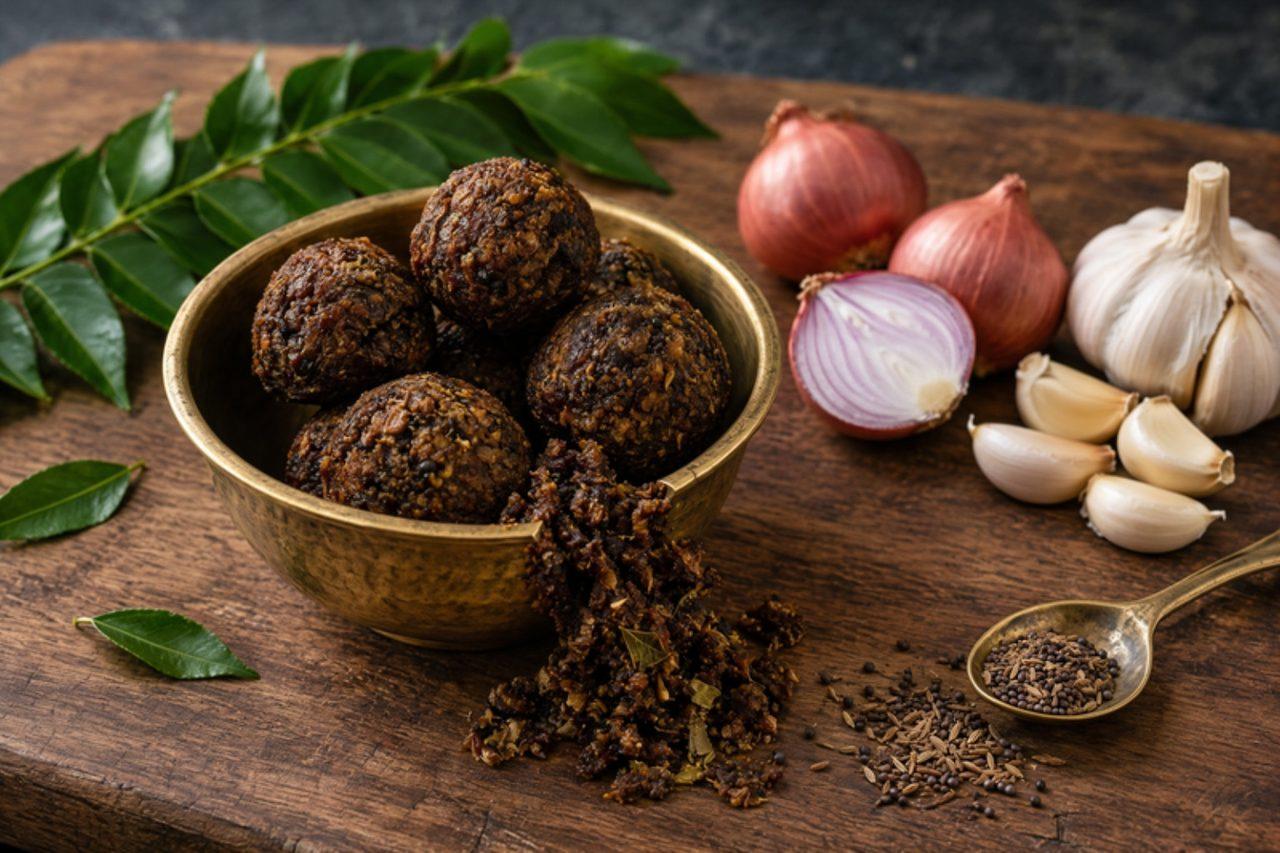
VadouvanDried shallot and spice balls

Vadagam, called vadouvan in Puducherry's French-Tamil kitchens, is a seasoning made in the hot months: shallots and garlic are pounded with mustard seeds, cumin, fenugreek, curry leaves and castor or gingelly oil, rolled into balls and dried in the sun for days. A piece crumbled into hot oil at the start of a sambar, a kuzhambu, a poriyal or even buttered vegetables gives a deep, sweet, smoky onion flavour. This version finishes the drying in a low oven, which is safer and quicker in cooler kitchens. The common mistake is storing the balls before they are bone dry; any softness inside can turn mouldy, so break one open to check. Chef's tip: crush a ball and warm it in ghee, then toss with roast carrots for a very Pondicherry side dish.

280 minIndianBasicsVeganGluten free
by KrazyBadal 0 views

Showing 72 of 8,120 recipes

Show more recipes

Page 200 of 903